
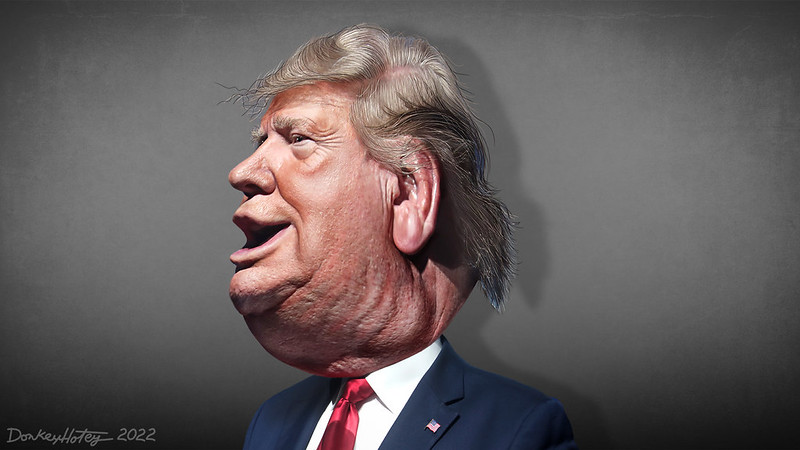
By Michael Meeropol / The Rag Blog / January 1, 2026
The following is an expanded version of a commentary delivered over WAMC-FM on , by Michael Meeropol, Professor Emeritus of Economics at Western New England University. It has been edited for The Rag Blog. Meeropol will be featured on Thorne Dreyer’s Rag Radio program on KOOP 91.7-FM in Austin and streamed at KOOP.org, Friday, January 23, at 2 p.m. to discuss this article and larger issues it raises. They will be joined by Rag Blog associate editor Alice Embree.
Inflation and unemployment are considered the “twin problems” for the macro-economy in the United States. In 2024, the Democrats lost to Donald Trump because inflation had increased to close to 9 percent in 2022 (the rate for the entire year was 8 percent).
This was after a period of over 40 years when the inflation rate averaged less than 3 percent — and only topped 5 percent once in the late 1980s. Ben Bernanke, the former Federal Reserve Chairman, identified the years after 1980 as “the great moderation.” Thus, the big inflation increase of 2022, even though it was followed by a decline, came after over 40 years of very moderate inflation. This had a tremendous impact on the typical citizen, even though on average, wages rose more than prices in 2023 and 2024. (In other words, real wages — the amount of goods and services one could purchase with the money in your paycheck — continued to rise in both 2023 and 2024.)
[For details of the course of real wages earned by the median worker, see https://fred.stlouisfed.org/series/LES1252881600Q
On December 18, Trump gave a virtually incoherent speech that was so full of lies it would take quite a long time to disentangle them. But the first and most deadly lie was that the economy in 2024 was “dead” and that he had inherited the highest inflation rate in 48 years. He then claimed he had revived the economy and brought inflation down dramatically. Now just ELEVEN MONTHS after he took office the “dead” US economy is the ”hottest” in the world — more – the “hottest” it had EVER been! Interestingly enough, he did not claim to have reduced prices across the board — which he had promised during the campaign. Such a reduction is quite different from reducing the rate of inflation.
(To clarify that difference — if prices in general come down that is deflation —a price reduction on average across the board. If the RATE of inflation comes down instead of prices going up 4 percent, they might go up, say, three percent — but they are continuing to rise not fall at all!)
When Trump said that he “inherited” an economy where inflation was at a 48 year high, he was close to being correct inasmuch as the 9 percent inflation rate in 2022 was a 48 year high. But by the time he became President, the rate was down to 3 percent. (Did Trump forget that Biden was President from 2022 to 2025?)
His claim that the economy was in a shambles when he took over is also a bald-faced lie. Unemployment was low and the rate of growth of real GDP was high. (And the inflation ratewas back down to 3 percent.). The Economist magazine from Britain said the US economy wasthe envy of the world. [For details see
https://www.economist.com/leaders/2024/10/17/americas-economy-is-bigger-and-better-than-ever]
Trump’s effort to make believe the decline in inflation and the “revival” of economic growth had solved all the problems of the economy is contradicted by the lived experience of the public. Interestingly, if he had waited one day to give his speech, he could have trumpeted at least one improvement — the fact that the rate of inflation in November had fallen to 2.7 percent which is both a good thing and a dangerous thing. It’s good that inflation is coming down but it is dangerous because that might be an indication of a slowdown in GDP and employment growth which is having a downward pressure on wage and price increases. (And we should always remember that one month’s data is not very helpful – trends are important.). If that 2.7 percent figure is indicative of a long run decline down to the Federal Reserve’s goal of 2 percent inflation, he could have legitimately said that on his watch the rate of inflation is under control.
That certainly worked for Ronald Reagan and George H.W. Bush who were able to take advantage of the decline in the inflation rate to win elections in both 1984 (Reagan) and 1988 (Bush).
Despite the lie about inheriting the worst economy ever (by the so-called “worst” President ever, Joe Biden) in 2024 during his “comeback” campaign for the Presidency Trump had been able to capture the mood of the country. That spike of 9 percent inflation in 2022 was VERY SIGNIFICANT and it did lasting damage to the public’s attitudes towards the economy and the economic policy makers.
In the 1970s, economist Arthur Okun proposed that in judging the macro-economic performance of the economy we should add the rate of unemployment to the rate of inflation to arrive at the “misery index.” And by the end of the 1970s that number was quite high — peaking at 22 percent in 1980.
When I taught Principles of Economics and we came to the discussion of the “twin problems” of unemployment and inflation I would try to provoke my students by arguing that“inflation has gotten a bum rap” from journalists and the public (and lots of economists). I would blame the influence of bankers because they make their living lending money —and usually at fixed interest rates. When inflation goes up, it reduces the real value of the interest bankers are earning so NATURALLY, they oppose inflation. I would argue, however, that for people who borrow (most small businesses, people with mortgages on their home, people withthree-year car loans) inflation helps ease the burden of repayment so long as their wages (or profits) keep pace with inflation.
Unemployment on the other hand, is a total loss to the economy. Output that could have been produced if the economy had been able to employ people willing and able to work is gone forever. If I am unemployed for a full year, my lifespan stays the same. I cannot add another year to my life to make up for a year I was unemployed. Unemployment also hurts people who are still working. Unemployment means a slowdown in total production – that means people working may not get raises. Businesses still in existence may not expand. States and localities may have budget shortfalls. My town might not be able to hire more police officers or put a new roof on a local school.
However, despite the fact that I believe that inflation is much less of a problem for society than unemployment, no matter what I or any other economist says, when inflation rises unexpectedly as it did in the 1970s and as it did with dramatic impact in 2022, it has a very strong impact on the public.
Think of this. In 2022 when inflation jumped to 9 percent in one of the quarters and was 8 percent for the entire year, everyone FIFTY YEARS OLD or younger had no adult memories of inflation over FOUR percent. Thus, this increase came as a shock. AND the next unfortunatething for the Democrats as they attempted to have Biden re-elected and then switched very late in the year to nominating his Vice President, Kamala Harris, was that even though the rate of inflation fell in 2023 and 2024, prices remained high.
This is where some journalists and Trump himself can appear very confused. Unlike the 19th century and the first third of the 20th century, prices almost NEVER fall. The rate of inflation might fall to 2 percent (the target for the Federal Reserve) but prices still keep rising even then. (Actual falls in prices occurred in 1949, 1958, and during the Great Recession of 2008-2009.) So, when Trump promised to reduce prices should he be elected in 2024 he was displaying ignorance. In his December 17 speech he didn’t say that prices had FALLEN, but he did take credit for the decline from 9 to 3 percent which I noted above had actually occurred on Biden’s watch.
The economist Paul Krugman has been writing a number of substacks in which he tries tofigure out why inflation has such a strong impact on the way citizens FEEL about the economy even if their wages are outpacing the rate of inflation — which they were, even in 2022. The reason is almost obvious. Every penny of increased wages or salaries or profits for a small business is EARNED by the worker or business owner. In the face of earned increased wages or profits the worker or business owner sees inflation as ROBBING her or him or their hard-earned gains. This must have been especially galling to the 30, 40 or 50-year-olds in 2022 who had not experienced that significant a bout of inflation for their entire adult lives.
In a recent substack published on December 21, he dove even deeper. The key paragraphs are worth quoting directly:
As I documented in the first installment in this four-part series on affordability, the depth of this [public] negativity far outstrips what standard measures of economic conditions tell us about the current state of the economy….. [I]n an effort to explain this conundrum, I will focus today’s installment, …, on three considerations that go beyond our standard interpretation of affordability. But, … these three considerations significantly affect how people feel about the economy.
The first is inclusion: Do people feel able to afford goods and services that allow them to be full members of society? That is, do the feel able to live the American dream? The second is security: Even when people have reasonably high purchasing power, do they worry that they could easily fall off the edge? Finally, there’s fairness: Do Americans feel that the system is rigged against ordinary people like themselves?
[First issue – inclusion – how many Americans consider themselves part of the “great middle class”?]… Since the early 2000s there has been a significant decline in the percentage of households considering themselves middle-class matched by a rise in those considering themselves lower-class. This decline almost surely reflects rising inequality, with a growing number of Americans admitting that they are not living the American Dream.
While the dynamic revealed by the data is both compelling and alarming, it surely underestimates the extent to which many middle-class families feel that they are falling behind. That’s because human beings are social animals. Almost all of us evaluateourselves by comparing ourselves with others, in particular with what sociologists call“reference groups.” That is why, realistically, poverty as a state of mind has more to do with relative income than with absolute purchasing power. …
[First issue – inclusion – how many Americans consider themselves part of the “great middle class”?]… Since the early 2000s there has been a significant decline in the percentage of households considering themselves middle-class matched by a rise in those considering themselves lower-class. This decline almost surely reflects rising inequality, with a growing number of Americans admitting that they are not living the American Dream.
While the dynamic revealed by the data is both compelling and alarming, it surely underestimates the extent to which many middle-class families feel that they are falling behind. That’s because human beings are social animals. Almost all of us evaluateourselves by comparing ourselves with others, in particular with what sociologists call “reference groups.” That is why, realistically, poverty as a state of mind has more to do with relative income than with absolute purchasing power. …
Half a century ago, middle-income families … made 43 percent as much as upper-income — a large gap, but not enough to put the affluent in a completely different material universe. Now the ratio is down to 31 percent, which may well make an affluent lifestyle seem unattainable to most Americans.
Half a century ago, middle-income families … made 43 percent as much as upper-income — a large gap, but not enough to put the affluent in a completely different material universe. Now the ratio is down to 31 percent, which may well make an affluent lifestyle seem unattainable to most Americans.
[This relates to his second point, security.]. Furthermore, one important penalty face Americans who are in the lower reaches of the middle class is lack of security.
In 2025, … the U.S. labor market “froze”: [Private] employers …. haven’t engaged in mass layoffs, but they have been reluctant to hire new workers, in part because of the uncertainty created by wildly erratic tariff policy. As a result, finding a job has becomemore difficult. Workers certainly see this as a difficult labor market. A monthly surveytaken by the New York Fed finds that the percentage of workers who believe that they could find a new job within three months has fallen sharply, …
[Finally] there’s a growing sense of economic unfairness.
[A] recent Harris survey found more than 70 percent of respondents agreeing that the system is either highly or somewhat rigged in favor of the ultra-wealthy: … Given the obvious power of the ultra-wealthy and the growing sense that their wealth isn’t earned, it’s not surprising that many Americans believe that their social exclusion and financial insecurity reflect a system rigged in favor of a tiny, wealthy elite.
These points are thoroughly documented with statistics and charts. I actually believe all four substacks about affordability are worth reading. Here is a link to the one I just quoted from:
https://mail.google.com/mail/u/0/#search/krugman/FMfcgzQdzvtlrvWwzDqHqwHQwKdHNHxM
For the economy as a whole, here actually was good news in both 2023 and 2024. The Federal Reserve did not have to engineer a recession to defeat this round of inflation — and the rate settled down at about 4 percent in 2023 and 3 percent in 2024. However, that gave cold comfort to the people who had been literally traumatized by the 9 percent inflation during 2022.
And the prices they saw in 2023 and 2024 had not fallen from their peaks from 2022. (And weshould be grateful they hadn’t fallen because if they had, that would have meant a severe recession such as occurred in 2008-2009) Meanwhile, if Krugman is right, the attitudes of the public towards the economy have been souring for so many years and it is unlikely that a short term improvement will affect public opinion significantly.
Yet there was Trump claiming egg prices were way down and gasoline was selling forunder two dollars. And yes, some prices fluctuated wildly. Gasoline had reached over $5 agallon in 2022 only to fall back to around $3 a gallon in 2024. It has since fallen to about $2.94by the end of 2025. (And yes, according to national surveys there are examples in Oklahomaand other states of short run promotionals at some gas stations where the price fell to $1.99.
So Trump may have been exaggerating but technically he wasn’t lying when he mentioned that below $2 price! Obviously, this is definitely not typical, and for Trump to give it as an example of his success is cold comfort for most motorists.) The price of eggs reached its maximum in 2023 — fell back in 2024 and reached an even higher maximum in 2025 before falling towards the end of last year.
But these are anecdotal prices — we need to track the main items on which consumers spend their income: groceries, utilities, etc.
So let’s check up on groceries. According to the US Department of Agriculture foodprice inflation was higher than the overall consumer price index inflation. [For details see
https://www.ers.usda.gov/data-products/food-price-outlook/summary-findings]
When we come to utilities, we get similar bad news. The average price per kilowatt hourin the US kept rising despite Trump’s promise to cut them. [For details see
https://fred.stlouisfed.org/series/APU000072610
Thus, the current short run economic situation has created a negative attitude on the part of the public towards Trump’s handling of the economy. This is significant because the public had previously given Trump relatively high marks as an economic steward. In fact, that was why he was elected in 2024. And, if Krugman is right, there are more deeply entrenched long run attitudes as well.
If Krugman is wrong about long run trends affecting the public’s attitudes the next six months’ experiences with inflation and unemployment become very important. Should the inflation rate stay near 3 percent or even fall towards the Fed’s goal of 2 percent, perhaps the shock of the 2022 spike in inflation will wear off and people settle down with those rates and in effect forget the shock from 2022. Sometime after 1980, the shock from the 1970s inflation spikes wore off and people got very used to “the great moderation.” (On the other hand, thelong run growth in inequality and insecurity had just begun in the 1980s. It took a long time for the perceptions Krugman just described to become ingrained in large percentages of the public.).
It will be very significant to see what occurs during the next six months in terms of public perception about the economy.
And let us not forget that unless Congress rushes through a “fix” on the tax credits to help people buy health insurance on the Obamacare exchanges, health insecurity will rise dramatically as premiums will go up for 24 million Americans.
Now let’s take a small dive into Trump’s speech. [A full transcript is available from the NY Times at
https://www.nytimes.com/2025/12/17/us/politics/trump-speech-transcript-economy.html
And for a detailed set of comments, I recommend the interview given by economist Dean Baker on the show Democracy Now available at
One of my favorite whoppers in Trump’s speech is the claim, that real wages fell under Biden and have risen under him. Yes, there as a fall in 2022 but real wages started to rise in 2023 and were still rising when Trump was elected. (Once again Trump seems to think we have all forgotten that Biden was President in 2023 and 2024.)
Next, let’s get to Trump’s plan to cut prescription drug prices. As economist Baker points out this will be a Trump created discount opportunity which will not affect everyone whose prescription drugs are paid for by employer provided health insurance or government programs like Medicare part D. And there are already other discount opportunities at pharmacies that get advertised on TV. Thus, this Trump-provided discount will affect very few people. (And will be swamped by the probable rise in Obamacare premiums.)
Then we get to the mathematical horror show. Trump’s advisors actually let him say on national television that he was going to cut drug prices 300, 400, maybe 600 percent. Why did they let him display such incredible ignorance of basic mathematics? If you cut a price by 100 percent it has been cut all the way to ZERO. The only way to cut a price more than 100 percent is if the business selling you the produce gives you the product and PAYS YOU.
So imagine a price of $100 for a drug. If you get a cut of 50 percent, the price is now $50. If you get a cut of 100 percent, the price is now ZERO. So what does a cut off, 300 percent mean? The pharmacy gives you the drug and pays you $200? Ridiculous. As I just wrote, I cannot believe his advisors let him say that in a nationally televised speech.
The speech was laughable but also in some ways very scary. Trump is clearly not in control of his faculties and yet he has the power to start a nuclear war anytime he wants. CODA: Just before I submitted this piece to The Rag Blog, Trump announced with great fanfare that he had gotten 10 Drug Companies to “agree to” negotiate the price they charge Medicaid. Getting drug companies to negotiate the prices they charge when they sell to a government entity was one of the great achievements of Biden’s “Inflation Reduction Act.” By the time Biden left the White House, Medicare had already negotiated declines in the prices of nine major drugs. Not one Republican voted for the Inflation Reduction Act and Trump never spoke in favor of it. Yet here he is taking credit for using it!
Again – anyone who wants to subject him or herself to the entire speech is welcome to watch it (it’s only 18 minutes) or read the New York Times transcript.





merci pour ces informations très utiles .ce site est passionnant .
Great article! A real education in ECONOMICS. Republicans (Trump included) taking credit for accomplishments of Democrats has been a pattern of theirs hasn’t it?