Cartoon Tuesday just lives on today. And there may be more …
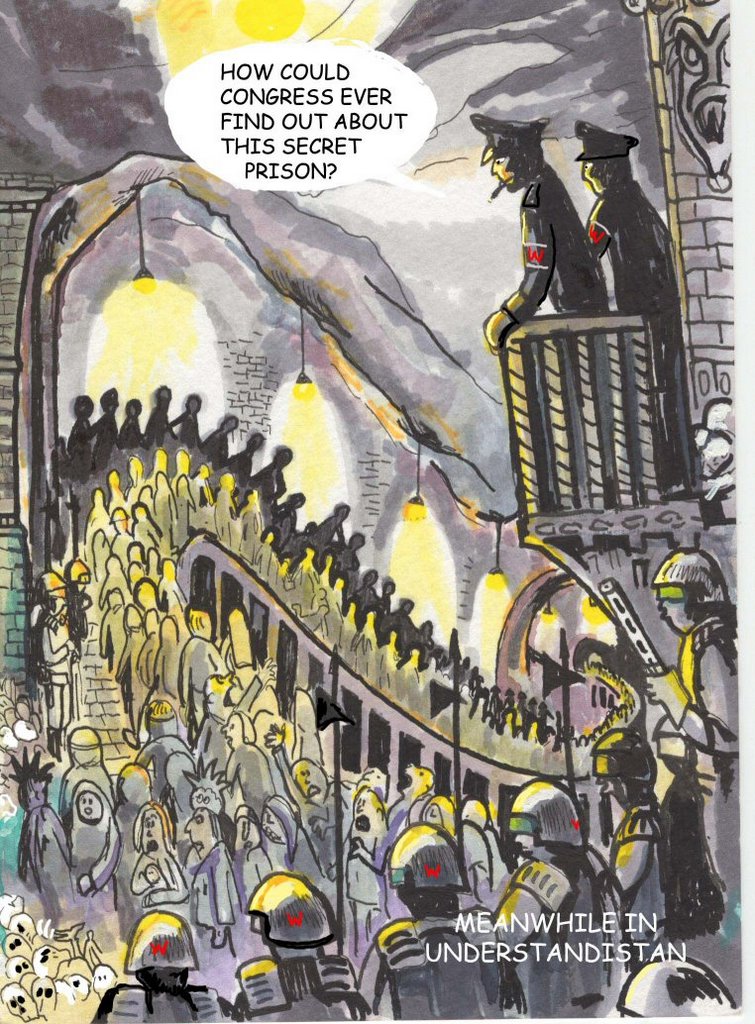
Cartoon Tuesday just lives on today. And there may be more …
Wednesday, September 27th, 8 pm MonkeyWrench Books presents a screening and discussion of “Rebels with a Cause.” Rebels with a Cause is a 2000 documentary that chronicles the movements for social change of the Sixties that began with the civil rights movement and culminated with the angry protests against the US war in Vietnam.
Students for a Democratic Society, the largest and most influential student organization of the ’60s, was a uniquely American movement that grew and evolved in response to the times. At its peak in 1968, SDS had over 100,000 members and 400 chapters. Told through the eyes of SDS members, the film is about far more than SDS. It’s about the values, motivations, and actions of a generation that lost it’s innocence but gained a sense of power and purpose. It’s about a decade that changed America.
The movie will be followed by a discussion with Alice Embree, a former Austin SDS member who is featured in the film, about SDS’s legacy in Austin. LOCATION: MonkeyWrench Books, 110 E. North Loop.
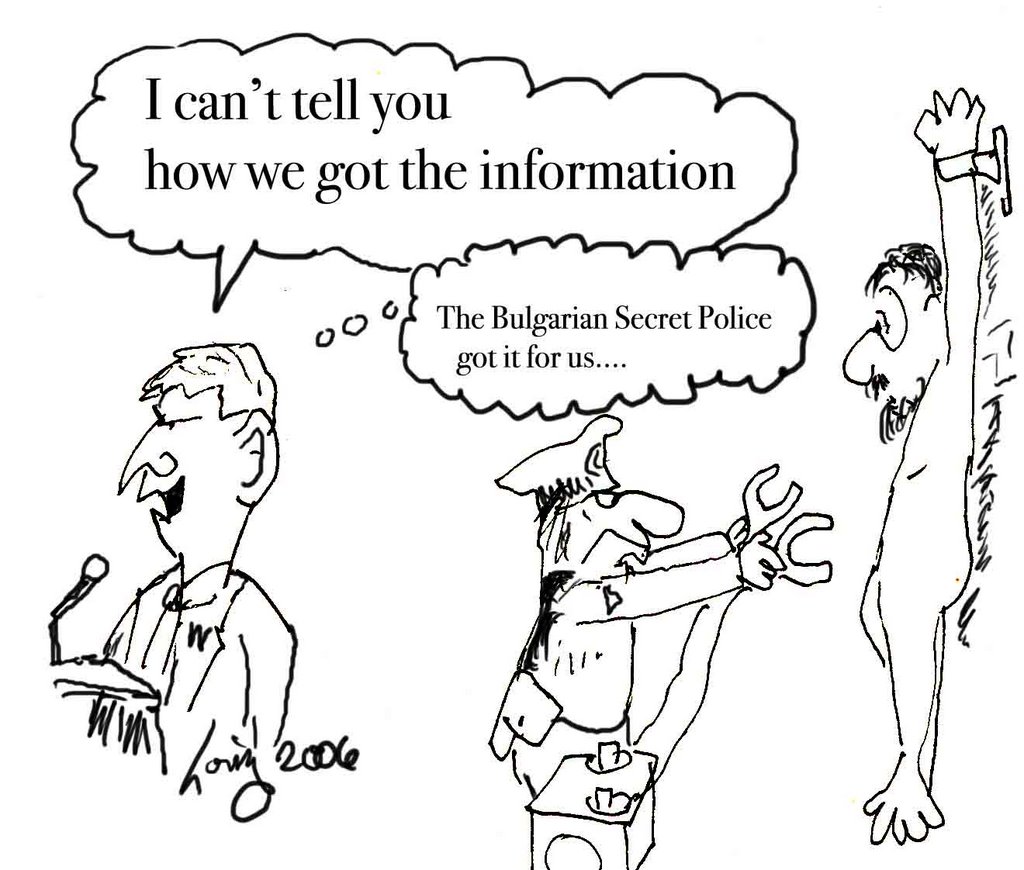
*Note: TT = (car)Toon Tuesday
Today is the Monday Movie. This is a somber video offering, preceded by a somber article from Patrick Cockburn. I credit David Hamilton for ensuring this issue has stayed in the forefront of our ruminations. The truly horrible aspect of ‘Palestine’ is that conditions have not changed very much in 55 years. rdj
*****
September 11, 2006
The Deepening Crisis in Gaza
Palestinians Forced to Scavenge Rubbish Dumps for Food
By PATRICK COCKBURN
Jerusalem.
The Israeli military and economic siege of Gaza has led to a collapse in Palestinian living conditions and many people only survive by looking for scraps of food in rubbish dumps, say international aid agencies.
“The pressure and tactics have not resulted in a desire for compromise,” Karen Abuzayd, the head of the UN Relief and Works Agency is said to have warned. “But rather they have created mass despair, anger and a sense of hopelessness and abandonment.”
Israel closed the entry and exit points into the Gaza Strip, home to 1.5 million Palestinians, on June 25 and has conducted frequent raids and bombings that have killed 262 people and wounded 1,200. The crisis in Gaza has been largely ignored by the rest of the world, which has been absorbed by the wars in Iraq, Afghanistan and Lebanon.
“Women in Gaza tell me they are eating only one meal a day, bread with tomatoes or cheap vegetables,” said Kirstie Campbell of the UN’s World Food Programme, which is feeding 235,000 people. She added that in June, since when the crisis has worsened, some 70 per cent of people in Gaza could not meet their family’s food needs. “People are raiding garbage dumps,” she said.
Not only do Palestinians in Gaza get little to eat but what food they have is eaten cold because of the lack of electricity and money to pay for fuel. The Gaza power plant was destroyed by an Israeli air strike in June. In one month alone 4 per cent of Gaza’s agricultural land was destroyed by Israeli bulldozers.
The total closure imposed by Israel, supplemented by deadly raids, has led to the collapse of the Gazan economy. The 35,000 fishermen cannot fish because Israeli gunboats will fire on them if they go more than a few hundred yards from the shore. At the same time the international boycott of the Hamas government means that there is no foreign aid to pay Palestinian government employees. The government used to have a monthly budget of $180-200m, half of which went to pay 165,000 public sector workers. But it now has only $25m a month.
Aid agencies are frustrated by their inability to persuade the world that the humanitarian crisis is far worse in Gaza than it is in Lebanon. The WFP says: “In contrast to Lebanon, where humanitarian food aid needs have been essentially met, the growing number of poor in Gaza are living on the bare minimum.”
Full Article
*****
If you want to continue with Parts 2 and 3, here they are:
For information, here is what the person who posted this film on YouTube wrote:
I can’t claim to have answers. I know posting this film suggests that I have a strongly pro-Palestinian bias, but that is not entirely the case.
I simply feel that those who have reached moral conclusions regarding the status of things in that part of the world are being premature.
You seldom hear the phrase “The Palestinian Question” any more, the phrase that, until about a decade ago, was most often used to refer to this homeless nation.
In my opinion, there has been such polarization that neither side feels there is any question any longer.
It seems that eradication of either Israel or the Palestinians is the answer that most have accepted in their hearts, whether they speak it or not.
I don’t find either answer acceptable or civilized. As both sides feed upon each others’ intransigence and distrust to feed their own stores of the same, it’s not useful for those who still believe there are questions worth answering to get caught up in that.
The film’s repeated stress on children, the difficulties they endured as refugees, and the hope for a better life, expressed through the filmmaker’s point of view, is in sharp contrast to what has actually occurred. Those children, sixty years later, are mostly dead.
These are not the people that today “act in ways that would destroy or supplant their benefactors.” Today, we deal with their children, and with their grandchildren.
This seems to me not a matter of a child who, growing up, forgot that we gave him powdered milk, flour, beans and a blanket at a time when those things meant a great deal.
The younger generations have a wider view, of good intentions, hopeful promises, and, 60 years later, still-harsh realities.
They are witnesses to their parents’, and their grandparents’, life and death in occupied territories that were for previous generations a part of their own nation. They have been led in prayers for ‘statehood’ their entire lives, and no doubt been led to believe that ‘statehood’ would have an almost-magical ability to solve all their problems. Meanwhile, statehood has been a constantly dimming specter.
Israel’s security — and its huge payday from the US — is dependent on a constant state of war. Many US war industries also have a profitable investment in continued hostilities. In this context, I believe a plausible argument could be made that conservative elements in both the US and Israel are motivated to avoid a resolution to these issues.
There is much on the Internet that argues for this; here’s just one news story from a couple of years ago that makes the case rather well:
One US Rule for Israel, Another for Saddam
I am not saying this is the case, but if one ‘follows the money,’ I think you’ll find strong indications of a money motive in prolonging the problems of the middle east.”
Souldogs
This cut is from the Shiva’s Headband album ‘Coming to a Head.’ It’s a lovely duet from Susan and Spencer Perskin.
Here’s their Web page – Shiva’s Headband. And here’s a little old press from The Rag. Here are some words Spencer wrote 14 years ago for the Austin Chronicle. Many thanks to Spencer, Susan, and the band for allowing us to post their tune.
At yesterday’s news conference in the Rose Garden, the President gave the following response to a question about the legislation he is seeking to have approved by Congress:
Q Thank you very much, sir. What do you say to the argument that your proposal is basically seeking support for torture, coerced evidence and secret hearings? And Senator McCain says your plan will put U.S. troops at risk. What do you think about that?
THE PRESIDENT: This debate is occurring because of the Supreme Court’s ruling that said that we must conduct ourselves under the Common Article III of the Geneva Convention. And that Common Article III says that there will be no outrages upon human dignity. It’s very vague. What does that mean, “outrages upon human dignity”? That’s a statement that is wide open to interpretation. And what I’m proposing is that there be clarity in the law so that our professionals will have no doubt that that which they are doing is legal. You know, it’s — and so the piece of legislation I sent up there provides our professionals that which is needed to go forward.
The first question that we’ve got to ask is, do we need the program? I believe we do need the program. And I detailed in a speech in the East Room what the program has yield — in other words, the kind of information we get when we interrogate people, within the law. You see, sometimes you can pick up information on the battlefield; sometimes you can pick it up through letters; but sometimes you actually have to question the people who know the strategy and plans of the enemy. And in this case, we questioned people like Khalid Sheikh Mohammed, who we believe ordered the attacks on 9/11, or Ramzi Binalshibh, or Abu Zabeda — cold-blooded killers who were part of planning the attack that killed 3,000 people. And we need to be able to question them, because it helps yield information, the information necessary for us to be able to do our job.
[I added the emphasis. If you want to read the entire transcript of the press conference, you can do so here.]
Here is the full text of (common) article 3 of the Geneva Conventions:
ARTICLE 3
In the case of armed conflict not of an international character occurring in the territory of one of the High Contracting Parties, each Party to the conflict shall be bound to apply, as a minimum, the following provisions:
(1) Persons taking no active part in the hostilities, including members of armed forces who have laid down their arms and those placed hors de combat by sickness, wounds, detention, or any other cause, shall in all circumstances be treated humanely, without any adverse distinction founded on race, colour, religion or faith, sex, birth or wealth, or any other similar criteria. To this end the following acts are and shall remain prohibited at any time and in any place whatsoever with respect to the above-mentioned persons:
(a) violence to life and person, in particular murder of all kinds, mutilation, cruel treatment and torture; (b) taking of hostages; (c) outrages upon personal dignity, in particular, humiliating and degrading treatment; (d) the passing of sentences and the carrying out of executions without previous judgment pronounced by a regularly constituted court affording all the judicial guarantees which are recognized as indispensable by civilized peoples.
(2) The wounded and sick shall be collected and cared for.
An impartial humanitarian body, such as the International Committee of the Red Cross, may offer its services to the Parties to the conflict.
[For the complete Geneva Conventions, click here.]
Call me naive, but the language here is not vague to me. Perhaps I can remind our readers of one of the “outrages of personal dignity” which is prohibited under clause (1-c) that the President terms “vague”:

Please remember that those who have been charged in this entire Abu Ghraib fiasco have made clear that their orders were coming from above, and there is plenty of evidence that the general attitude of indifference, and even contempt, to the treatment of any prisoners in US custody comes directly from the Pentagon and its highest circles.
And let’s revisit another tactic employed in Iraq, namely that of taking women hostage to induce their husbands to surrender to US military authorities:
Officially, at least, America condemns hostage taking on both moral and practical grounds. It is both wrong and ineffective.
But that hasn’t deterred some rogue U.S. military units in Iraq from seizing and jailing wives of suspected insurgents — including one young mother of a nursing baby — in hopes of “leveraging” their husbands’ surrender. In military documents detailing the 2004 incidents, none of the unknown number of women were suspects. Instead, they appear to have been detained after raids on suspected male insurgents’ homes turned up empty.
The mother of the infant was held for two days, even after an officer complained that the woman “had no actionable intelligence leading to the arrest of her husband.” After seizing another woman in lieu of her husband, an Army colonel suggested challenging her husband “to come and get his wife.”
It’s unclear how widespread this has become among American forces. The former commander of Abu Ghraib prison has said this tactic has become a part of the war in Iraq.
Perhaps the President finds article 3 vague in exactly the same way that the following words were found vague enough to allow the enslavement of African Americans for almost 100 years after 1776 and to continue to treat them as second class citizens for an additional 100 years, and to disenfranchise women for almost 150 years after the birth of the nation.
“We hold these truths to be self-evident, that all men are created equal, that they are endowed by their Creator with certain unalienable Rights, that among these are Life, Liberty and the pursuit of Happiness.“
Pretty fucking vague, eh? Yes, just as vague as article 3 of Geneva …
This is an argument about Humanity and what we are to define as common decency for all humans. And nothing that the minour league, hypocritical asshole in the White House says is going to change that.
Richard Jehn
The order that discharged me from the United States Air Force was dated April 19, 1967; less than a month later, I passed my 21st birthday in Rio Grande City, trying to help out with the farm worker organizing effort and the strike against La Casita’s melon harvest. The organizers decided I’d be more useful setting up a boycott of La Casita’s melons, in Dallas. The first folks who helped me with the boycott were Ann and Dave Richards. Dave was practicing labor and civil rights law with the Mullinax Wells firm and Ann was an activist in the liberal wing of the Democratic party. We did what we could with the boycott (not much, given Texas labor law), but Ann earned my admiration by suggesting another tactic: the two of us would go into supermarkets selling La Casita’s melons and pierce them repeatedly with long hatpins, trying to make them rot prematurely. We did this, in about half a dozen supermarkets.
In the middle of the 1980’s, when Ann was known to be considering a race for governor, Texas Rural Legal Aid got her to speak at a fundraiser for the Hidalgo County Bar Association’s Pro Bono Project. When her turn came Ann got up on the stage and did her typically funny schtick but she also did something daring. She described her experience, sticking those pins in the melons, and why she did it. Unquestionably, she understood that there were the usual lawyer power-brokers in the audience that night, but she threw down: this is who I am, when it comes to farm worker issues.
People loved her. It’s hard for me to imagine people loving George Bush, Rick Perry, Bill Clinton in the same way.
John Muir
But there never seems to be enough time / To do the things you want to do…”
Saturday, September 23, 2006 marks the Fall Equinox, also known as Mabon. Lady Moon is in her First Quarter in Libra, echoing Lord Sun’s Libran location. Saturday is Saturn’s day, incorporating messages of prudence, caution, and conservatism in all things. Libra’s emblem, the scales, reminds us to enjoy balance in all things. Equinoxes are two times in the year when a raw egg may be balanced on its larger end. The egg symbolizes the world, and performing this “balancing act” helps us remember to keep our own balance within the world’s scope.
While similar to Lammas, Mabon is more emphatic about giving thanks. This is a celebration of Second Harvest: the largesse Planet Earth provides, the joy we take in this fruitfulness, the thanks we give and share in our busy lives. This is a festival when sharing food is a requirement, as doing so implies that your abundance is not only great enough to share now, but that there will be plenty of food for you and your family as the seasons progress. Not only is it appropriate to share the leftovers of your feast with your guests, it is also good to donate some food to charity.
With the long, dark night of Winter approaching, Mabon is also a time to finish old business. First quarter moons are when we make plans; setting the example of making a list of three things you plan to finish between now and Samhain and encouraging your guests to do the same is most appropriate. You could furnish your guests with small notepads and pens for this purpose, using them as place cards on your table.
Decorate your table and altar with colorful autumn leaves, acorns, and ivy. Use the colors red, russet, gold, brown, maroon, orange, and violet. A cornucopia spilling nuts, seeds, apples, and pomegranates makes a nice centerpiece, as does a cauldron full of acorns and pinecones or a representation of the Green Man. Designate your gathering as an occasion to “dress up”; array yourself in magnificence and strongly suggest to your guests to follow your example.
There are so many things to be thankful for: food in our bellies and pantries, good friends, productive work, love, a roof over our heads and a safe place to sleep each night, play, creativity. The list is infinite. During your celebration it is important for each person present to have a chance to express thanks for something.
Berries, especially blackberries, are an important part of the traditional menu for this celebration. All grains, especially corn, may also be included, as well as onions, garlic, potatoes, squash, beans, nuts, seeds, apples, pomegranates, herbs, cider, and fruit wine. Raise your glasses in a toast to friendship and prosperity. You deserve it! Remember to honor the trees that surround you: make a toast to them and pour a bit of wine or cider onto their roots. They are an important part of our ecosystem.
* * * * * * * *
Reminder 1: Mind Body Spirit Expo, October 7 & 8, 2006 in Palmer Events Center. $8 admission, good for both days. 10 AM – 7 PM Saturday, Oct. 7, 11 AM – 6 PM Sunday, Oct. 8. I will be offering 15- and 30-minute Tarot readings in booth 217.
Reminder 2: Sunday, October 15, 2006, from noon to 6 PM Ancient Mysteries will be presenting a mini-Psychic Fair in the parking lot in front of the store. 4315 S. 1st St., across from the St. Elmo School playground. There will be ample parking in the school parking lot. No entry fee. I will be offering a mixed menu of options for attendees. For more information and/or directions, phone (512) 373-4411.
If you come to any of these events because you learned about them by reading this Seasonal Message, please stop by my table and let me know, whether you choose to consult with me or not. By monitoring the results of my mailings I am better able to serve my clients.
www.tarotbykate.bigstep.com Tarot by Kate 512-454-2293 kate_braun2000@yahoo.com
Baked Catfish Filets (23 March 2003)
If you like catfish, this is a nice way to do it. A typical issue that people have with catfish is that it tastes muddy, no surprise as they are scavenger, bottom-feeding fish. This use of a pre-cooking marinade takes care of the problem.
1/2 cup buttermilk
Lots of salt and peppa’
Garlic powder to taste
1/2 teaspoon cayenne chile powder
Mix these ingredients together, then add:
6 ounces fresh catfish filets, cut into pieces
Marinade the catfish for about three hours in the refrigerator – it will do amazing things to the flavour of them, especially if you typically find catfish that tastes the way mud/lake-bottom does. Be sure to drain the fileted fish pieces after marinading and discard the liquid, too.
Preheat the oven to 450° F. Then do a little dance with the following, which is a very typical dance for quick-fried foods:
1/4 cup flour
Salt and pepper to taste
Mix flour and seasoning in a little bowl;
1 large egg, beaten
Beat egg in another bowl, then most importantly:
1/8 cup flour
1/8 cup corn meal
More seasoning of your choosing
Mix flour, etc. in a third bowl. For seasoning, I often use rather spicy things such as pasilla or ancho chile powder, pepper, etc.
The following steps are typical, but not what I did:
For the baked version, follow ONLY steps 1 to 3 just above, then place each filet onto a rack over a baking sheet or dish. Bake for 15 minutes or so until golden brown and crispy.
Serve with cornbread or rice, salad and lemon wedges (latter is for fish).
These little critters are supposed to tell us about the health of the local environment. This one was just telling me not to mince him with our electric mower. I know he looks posed, but it was a real circumstance. Photo taken in Summer 2004 in Shelton, Washington. As the scale is hard to discern, this tree frog is about 0.5″ long. rdj

* WW = Wildlife Wednesday
… Or The Bowl Is Draining
I went back to school in the mid-80s to reenforce my technical experience in foundries with graduate level work in Materials Science. One of the main funding sources for research was federal R&D money for improved reliability of welded steels for use in building/repairing bridges. The rationale was that many welded (as opposed to riveted or reenforced-concrete) bridges were nearing the end of their design, if not their service, lives.
That was 20 years ago. I remember, long before that, the increasing severity of road deterioration (potholes, slumping) across the country – especially the northern half that saw more frost-heaving. This was particularly true in the Northeastern and upper Midwestern industrial towns that were losing their manufacturing base – to the South and the West, then to Japan, Korea, Mexico, and so on. Losing manufacturing meant losing the tax base to support construction and maintenance.
Public transportation in our country is second-rate. The market may have spoken in the last 50 years, but convenience is now running headlong into petroleum reality, when it comes to near-total reliance on private transportation. Our trains are lucky to hit 70 mph on the Great Plains, and railroad accidents are much more common here than in countries where the bullet-trains go 130 mph.
Speaking of accidents, our traffic deaths are a national disgrace – the only “developed” countries that are statistically in our league are Italy and Australia. Part of the reason in all three countries is probably related to cultural attitudes concerning driving under the influence of you-name-it, but that’s another article. In this country, though, a major part is the high amount of vehicular traffic due to lack of effective public transportation.
Should high-tension and feeder electrical lines be underground? It seems likely that there would be a lot less storm-related outages, plus injuries from downed lines. In addition, if the jury is still out concerning the effect of electromagnetic radiation from high-voltage lines on health, it is certain that the radiation would be reduced under five feet of dirt.
Solar-cell and wind-turbine generation of electricity are rapidly catching on in Japan, Europe, China, India, and California. There are some problems still with efficient integration with the existing systems. Where are the development dollars for this work?
We have lost the major part of U.S. basic steel, basic aluminum, ship-building, textile, machine tool, and electronics manufacturing capacity to overseas sites due to “market forces”. The largest polyvinyl chloride plants, the major portion of silicon-wafer and computer-chip production facilities, many “high-tech” manufacturing plants, and even automobile assembly plants in the USA are owned by foreign capital.
We underutilize our timber, our human energy, and our ingenuity. We “own” a lot of nuclear technology (not to mention weapons), but – apparently – do not recyle nuclear fuel in our remaining nuclear-based electrical generation operations (France does). The list goes on and on. On a bad day it makes ex-pat look quite attractive.
The following quote, via Tomgrams, is a good summary of the current situation and implies the prognosis for the near-term: ‘Just last year, the American Society of Civil Engineers gave the country a “D” for “its overall infrastructure conditions, estimating that it would take $1.6 trillion over five years to fix the problem.” The “problem,” put bluntly, is that the country’s basic operating systems are eroding fast and this administration, by all evidence, couldn’t care less.’
We are left with building houses for each other; brewing some of the best beers; buying unnecessary plastic objects (line borrowed from Nanci Griffiths – remember the 5 and dime in downtown Austin?) from China; and litigation. That is an unsustainable economic base.
Do I mean to imply that the USA should monopolize or dominate these fields? Nope. I mean to emphatically state that all of the endeavors mentioned above are part of a healthy regional economy. The people of this country should no more rely on steel from Korea (now China) than oil from Saudi Arabia or than lumber from the trees of the Amazon River rainforests. Part of the reason is in the nature of the word “reliance”, and part of it is the wasteful use of petroleum to transport these materials from far-distant sources.
Infrastructure and manufacturing go hand-in-hand: power, transportation, waste treatment and recycling are all necessary. In our current corporate ethos, however, anything that takes cash away from executive salaries and from net profit is waste.
And that is the essential point – we citizens are being flushed right into the septic tank of imperial decline – where the corrosive effects of greed and lust will dissolve and realign our organic molecules – by the biggest, smelliest shits in our world. Right now most of us are still circling, so centrifugal action is artificially supporting our position near the top of the bowl – but the bottom is dropping out, folks. I suppose that we all end up as fertilizer, but, personally, I take offense at being prematurely transformed.
So what’s my suggestion? It is not to recruit our sons and daughters to reenforce the imperial military. It is, as usual, to agitate and organize our fellow flushees; to attempt to rationalize (regionalize) our economy; to capture our local, regional, and national policy-making institutions. This particular case is just another angle of attack: infrastructure and manufacturing are being decimated in the U.S., and we will all suffer increasingly as a result. A lot of people see the symptoms; we need to help them make the connections to political organization and action.
In practice, then, this fits the PDS (People for a Democratic Society) program in the following particulars:
Paul Spencer
Thorne Webb Dreyer, Editor