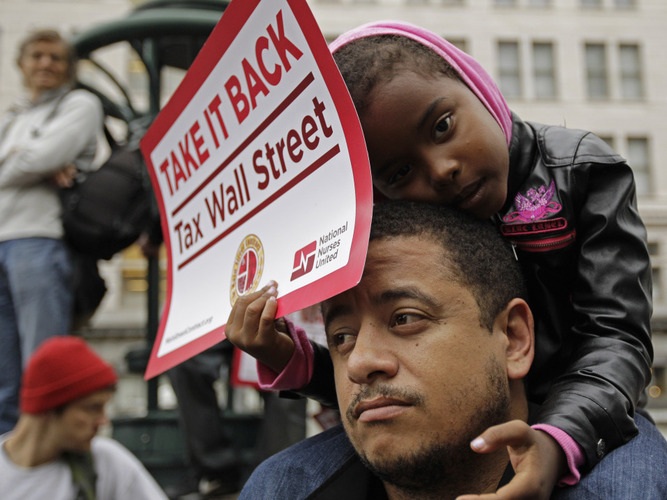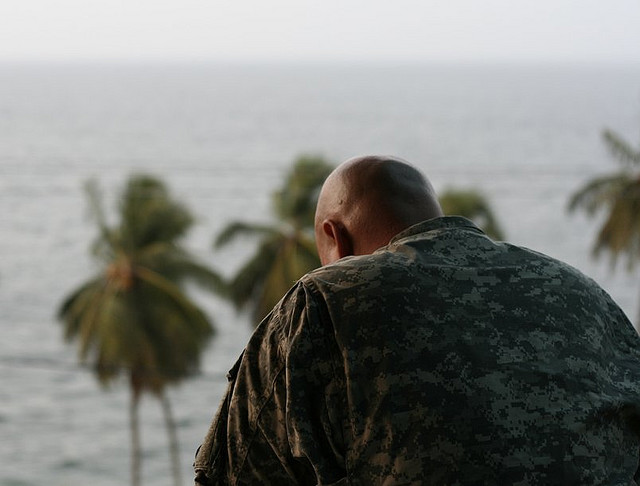
Mike Davis : Ten Immodest Commandments

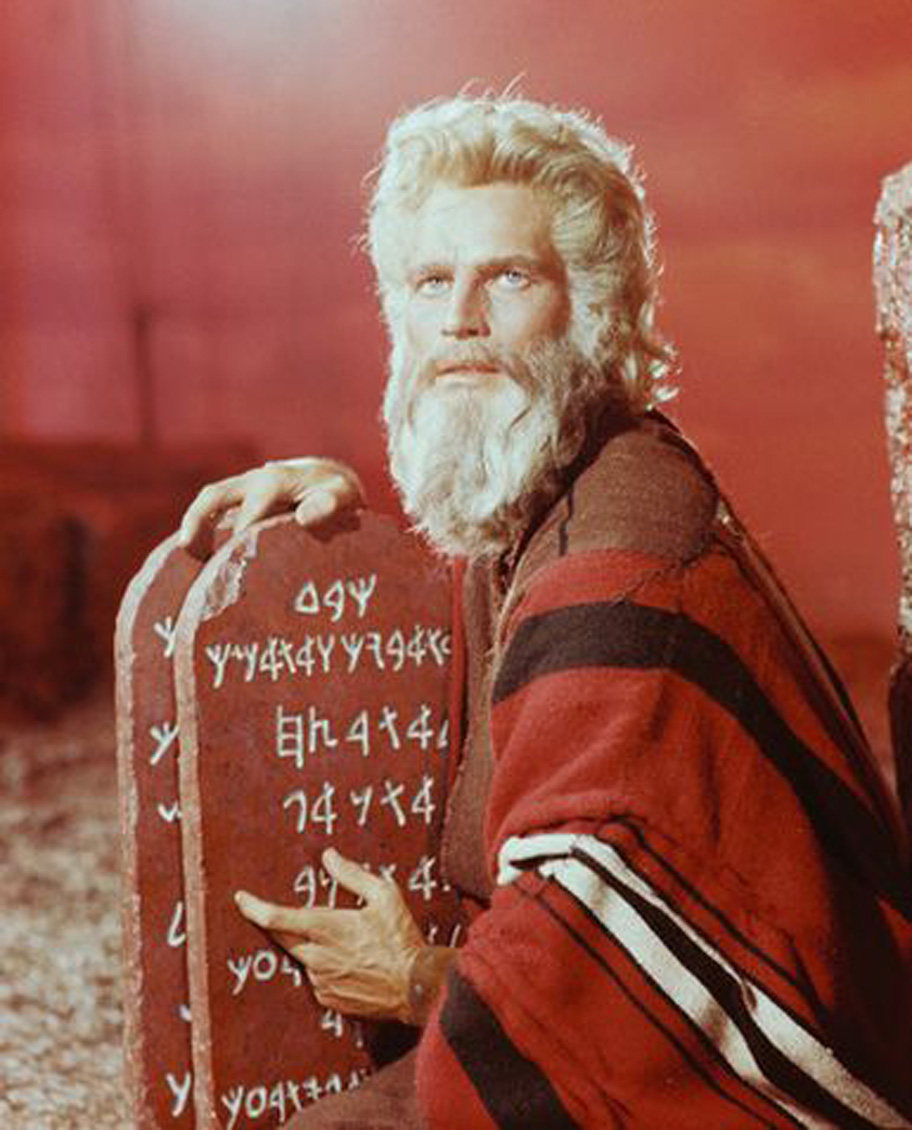
Following in Charlton Heston’s immodest footsteps.

Ten immodest commandments

What, indeed, have I learned from my fumbling-and-bungling lifetime of activism?

By Mike Davis / The Rag Blog / November 17, 2011

A friend in Canada recently asked me if the Sixties’ protests had any important lessons to pass on to the Occupy movement.

I told her that one of the few clear memories that I retain from 45 years ago was a fervent vow never to age into an old fart with lessons to pass on.

But she persisted and the question ultimately aroused my own curiosity. What, indeed, have I learned from my fumbling-and-bungling lifetime of activism?

Well, unequivocally I am a pro at coaxing 1,000 copies of a flyer from a delicate mimeograph stencil before it disintegrates. (I’ve promised my kids to take them to the Smithsonian someday to see one of these infernal devices that powered the civil rights and anti-war movements.)

Other than that, I mainly recall injunctions from older or more experienced comrades that I’ve put to memory as a personal Ten Commandments (like you might find in a diet book or inspirational tract). For what it’s worth:

First, the categorical imperative is to organize or rather to facilitate other peoples’ self-organization. Catalyst is good, but organization is better.

Second, leadership must be temporary and subject to recall. The job of a good organizer, as it was often said in the civil rights movement, is to organize herself out of a job, not to become indispensable.

Third, protesters must subvert the media’s constant tendency toward metonymy — the designation of the whole by a part, the group by an individual. (Consider how bizarre it is, for instance, that we have “Martin Luther King Day” rather than “Civil Rights Movement Day.”) Spokespeople should regularly be rotated and when necessary, shot.

Fourth, the same warning applies to the relationship between a movement and individuals who participate as an organized bloc. I very much believe in the necessity of an organic revolutionary left, but groups can only claim authenticity if they give priority to building the struggle and keep no secret agenda from other participants.

Fifth, as we learned the hard way in the 1960s, consensual democracy is not identical to participatory democracy. For affinity groups and communes, consensus decision-making may work admirably, but for any large or long-term protest, some form of representative democracy is essential to allow the broadest and most equal participation. The devil, as always, is in the details: ensuring that any delegate can be recalled, formalizing rights of political minorities, guaranteeing affirmative representation, and so on.

I know it’s heretical to say so but good anarchists, who believe in grassroots self-government and concerted action, will find much of value in Roberts’ Rules of Order (simply a useful technology for organized discussion and decision-making).

Sixth, an “organizing strategy” is not only a plan for enlarging participation in protest but also a concept for aligning protest with the constituencies that bear the brunt of exploitation and oppression.

For example, one of the most brilliant strategic moves of the Black liberation movement in the late 1960s was to take the struggle inside the auto plants in Detroit to form the League of Revolutionary Black Workers.

Today, “Occupying the Hood” is a similar challenge and opportunity. And the troops occupying the plutocrats’ front yard need to respond unequivocally to the human-rights crisis in working-class immigrant communities.

The immigrant rights protests five years ago were amongst the largest mass demonstrations in U.S. history. Perhaps next May Day we will see a convergence of all movements against inequality on a single day of action.

Seventh, building movements that are genuinely inclusive of unemployed and poor people requires infrastructures to provide for basic survival needs like food, shelter, and healthcare. To enable lives of struggle we must create sharing collectives and redistribute our own resources toward young frontline fighters.

Similarly we must renew the apparatus of movement-committed legal professionals (like the National Lawyers Guild) that played such a vital role in sustaining protest in face of mass repression in the 1960s.

Eighth, the future of the Occupy movement will be determined less by the numbers in Liberty Park (although its survival is a sine qua non of the future) than by the boots on the ground in Dayton, Cheyenne, Omaha, and El Paso. The geographical spread of the protests in many cases equals a diversifying involvement of people of color and trade unionists.

The advent of social media, of course, has created unprecedented opportunities for horizontal dialogue among non-elite activists all over the country and the world. But the Occupy Main Streets still need more support from the better resourced and mediagenic groups in the major urban and academic centers. A self-financed national speakers and performers bureau would be invaluable.

Conversely, it is essential to bring the stories from the heartlands and borders to national audiences. The narrative of protest needs to become a mural of what ordinary people are fighting for across the country, e.g., stopping strip-mining in West Virginia; reopening hospitals in Laredo; supporting dockworkers in Longview, Washington; fighting a fascist sheriffs’ department in Tucson; protesting death squads in Tijuana; or global warming in Saskatoon; and so on.

Ninth, the increasing participation of unions in Occupy protests — including the dramatic mobilization that forced the NYPD to temporarily back down from its attempt to evict OWC — is mutually transformative and raises the hope that the uprising can become a genuine class struggle.

Yet at the same time, we should remember that union leaderships, in their majority, remain hopelessly committed to a disastrous marriage with the Democratic Party, as well as to unprincipled inter-union wars that have squandered much of the promise of a new beginning for labor.

Anti-capitalist protesters thus need to more effectively hook up with rank-and-file opposition groups and progressive caucuses within the unions.

Tenth, one of the simplest but most abiding lessons from dissident generations past is the need to speak in the vernacular. The moral urgency of change acquires its greatest grandeur when expressed in a shared language.

Indeed the greatest radical voices — Tom Paine, Sojourner Truth, Frederick Douglas, Gene Debs, Upton Sinclair, Martin Luther King, Malcolm X, and Mario Savio — have always known how to appeal to Americans in the powerful, familiar words of their major traditions of conscience.

One extraordinary example was Sinclair’s nearly successful campaign for Governor of California in 1934. His manifesto, “End Poverty in California Now,” was essentially the program of the Socialist Party translated in New Testament parables. It won millions of supporters.

Today, as the Occupy movements debate whether or not they need more concrete political definition, we need to understand what demands have the broadest appeal while remaining radical in an anti-systemic sense.

Some young activists might put their Bakunin, Lenin, or Slavoj Zizek temporarily aside and dust off a copy of FDR’s 1944 campaign platform: an Economic Bill of Rights.

It was a clarion call to social citizenship and a declaration of inalienable rights to employment, housing, healthcare, and a happy life — about as far away from the timid concessionary Please-Just-Kill-Half-the-Jews politics of the Obama administration as might be envisioned.

The fourth-term platform (whatever opportunistic motivations existed in the White House) used the language of Jefferson to advance the core demands of the CIO and the social-democratic wing of the New Deal.

It was not the maximum program of the Left (i.e., democratic social ownership of the banks and large corporations), but certainly the most advanced progressive position ever espoused by a major political party or U.S. president.

Today, of course, an Economic Bill of Rights is both an utterly utopian idea and a simple definition of what most Americans existentially need.

But the new movements, like the old, must at all cost occupy the terrain of fundamental needs, not of short-term political “realism.”

In doing so, why not accept the gift of FDR’s endorsement.

[Mike Davis is a Distinguished Professor in the Department of Creative Writing at the University of California, Riverside. An urban theorist, historian, and social activist, Davis is the author of City of Quartz: Excavating the Future in Los Angeles and In Praise of Barbarians: Essays against Empire. Read more articles by Mike Davis on The Rag Blog.]

The Rag Blog

Posted in Rag Bloggers | Tagged , , , , , | 11 Comments

Bill Freeland : With ‘Occupy,’ the People are the Point

Image from Addicting Info.

‘Occupy America’:
The people are the point

By Bill Freeland / The Rag Blog / November 17, 2011

The “Occupy” movement, which began as a small gathering in a private park near Wall Street in New York City in September, has already swept across America and into another dozen countries around the world.

While these gatherings are local, their concerns are global. They are responding to economic and social trends that have been developing for decades. But the catalyst was the financial collapse of 2008.

In the aftermath of that collapse, what has become clear to many Americans­­ — following aggressive bailouts for the banks but inaction on lost jobs and homes — is that the nation’s economic system functions differently depending on which side of this divide you are on.

People in the top 1%, for example, according to the Congressional Budget Office (CBO), between 1979 and 2007 saw their pretax income grow by an average of 275%. That’s an average increase of $700,000. People in the lower 90%, however, saw their pre-tax income actually fall by $900 for the same period.

As a result the CBO reports that now 1% of Americans control 35% of the nation’s wealth, which is the highest level of wealth disparity since 1929, the last great financial crash.

Occupy supporters advocate for the “99%ers,” their now-famous shorthand for the majority of Americans. These are the people who increasingly find themselves with under-water mortgages and dangerously depleted savings. And with persistent 9% unemployment, they are just as likely to be out of work as out of their homes.

But when they look to Washington, what they find is gridlock. Most solutions include severe spending cuts, which many economists warn will likely result in a replay of the Hoover Administration’s policies of the early 1930s that only deepened that generation’s Depression.

And lawmakers are not the only bad actors. While the financial fallout continues to be borne by the victims of the crisis, those on Wall Street and elsewhere who created the mess have kept their profits without ever being held to account.

Unlike with the savings and loan crisis of the 1980s, today — after three years and hundreds of investigations — not a single criminal charge has been filed by the Justice Department, the SEC, or any state Attorney General against a major figure in the financial industry.

For the Occupy movement, all of these developments are interrelated.

Financial and corporate interests hold the money and the influence they buy. That influence has produced the kind of tax code and financial deregulation that, over time, have lead directly to the huge economic imbalances which Occupy exposes.

Critics charge that the movement to date has no agenda to address all it decries. The Occupiers respond that, since the movement is barely 60 days old, the criticism is premature. But more than that, with their bottom-up approach, the process by which solutions are arrived at, they believe, is equally important as the solutions themselves.

It’s impossible to know now how public opinion will ultimately judge this effort. From my perspective, however, the movement at this early stage is similar to the lunch-counter-sit-in stage of the 1960s protests in the South. Except this time the demonstrators are fighting for economic, rather than civil, rights.

The loud turmoil and resulting media scrutiny is similar to those days 50 years ago, but it is also likely that someone is already at work on his or her own “I Have a Dream” speech.

[In the Sixties, Bill Freeland was a contributor to The Rag in Austin and Liberation News Service in New York. Read more articles by Bill Freeland on The Rag Blog.]

The Rag Blog

Posted in Rag Bloggers | Tagged , , , , , | 1 Comment

Eric Newhouse : Half of Returning Warriors are Wounded

Photo by RunItsTheFuz / Flickr / Truthout.

Half of vets returning from Iraq and
Afghanistan need medical attention

By Eric Newhouse / Truthout / November 16, 2011

More than half of America’s former warriors are returning home from Iraq and Afghanistan with medical and mental problems that need treatment, according to new statistics from the Department of Veterans Affairs (VA).

“These are unprecedented numbers,” said Dr. Sonja Batten, assistant deputy chief of patient services care for the VA Mental Health Division.

But they’re surprising numbers, in some ways.

While they bear out the controversial 2008 Rand Report that one soldier in three will return home with post-traumatic stress disorder (PTSD), major depression and/or traumatic brain injury (TBI), the TBI component is dramatically less than predicted.

By last June, Batten said, 1.3 million of the two million-plus soldiers serving in Iraq and Afghanistan since 2002 had left military service and were eligible for VA health care. About 700,000 of them (53 percent) have sought health care from the VA.

While this reflects the difficulties facing today’s vets after 24-7 combat and multiple tours of duty, it also reflects the new resources provided the VA by the Obama administration. The president’s 2012 budget request for the VA was $132.2 billion, a 23 percent increase since he took office in 2009. That’s even more remarkable, considering the collapse of the economy in that period.

But it’s still not enough, according to Mike Zacchea, a Marine Corps lieutenant colonel now retired on a medical disability after serving in Iraq, and a staunch member of Veterans for Common Sense.

“Wait times for VA treatment are still way too long,” Zacchea said last week. “And this is just the beginning. The VA is going to be overwhelmed by vets from Iraq and Afghanistan for health care, and if the VA can’t handle the demand it has now, it’s going to be powerless against the tsunami that’s yet to come.”

Among the returning soldiers, the main complaint was joint pain (neck, back, hips, and knees), all consistent with the kinds of injuries you would expect to find among soldiers with heavy packs jumping in and out of big trucks, said Batten. The VA has treated 396,552 vets for musculoskeletal complaints, about 30.5 percent of the returning soldiers.

But the second largest complaint has been with mental health issues.

According to the VA’s not-yet-published statistics, 367,749 Iraqi and Afghan vets have sought mental health care treatment. That’s 51.7 percent of the total caseload — and also 28.2 percent of the returning 1.3 million vets — a number that’s sure to grow larger as those who returned home recently begin acknowledging cases of delayed PTSD. It’s common for vets not to begin experiencing combat stress until after the euphoria of being home has waned, typically six months to a year or more.

PTSD was the most common mental health complaint with 197,074 vets receiving treatment, which is about 15 percent of the returning vets. The second most common complaint was depression, with VA treatment provided to 147,659 vets, 11.3 percent of the total returning. Third was anxiety disorder, with treatment provided to 126,673 vets, 9.7 percent of those returning. There’s some overlap, with some vets being treated for more than one disorder.

The VA’s real surprise is the low number of diagnoses for traumatic brain injury (TBI), which has become one of the signature injuries in the Iraqi/Afghanistan conflict due to the large number of roadside bombs, mortars and rocket-propelled grenades.

Four years ago, the Rand Corporation interviewed 1,965 vets and projected that 19 percent (about 320,000 soldiers at that time) would experience a probable TBI while overseas. But the VA says only 54,070 vets (a little over 4 percent of the returning vets) qualified for that diagnosis.

“That’s absurd, preposterous, erroneous,” snorted Zacchea, who survived a bomb in a mess hall, almost daily sniper attacks, mortar attacks on his unit’s convoy, and a rocket wound during intense combat in Fallujah in 2004/2005. All of those took a huge physical and emotional toll on Zacchea.

As of last June, the VA had data on 544,481 vets whose brains might have been affected by battlefield explosions, according to Dr. David Cifu, national director of the VA’s Physical Medicine and Rehabilitation program. Of that number, he said, “19.8 percent have screened positive for a mild TBI (concussion), that is were exposed to explosions that might have caused traumatic brain injury.

“When those 19.8 percent of veterans were evaluated by one of the 100 TBI specialty teams across the nation, approximately one third (or 7.8 percent of the original 544,481) tested positive for TBI with persistent symptoms,” said Cifu. “Another approximately 2 percent were found to have a TBI that pre-dated their military service. Those two figures (the 7.8 percent plus the 2 percent) add up to 54,070 veterans.”

The difference, said Cifu, is that the Rand Report used the total number of injuries as its TBI figure, while the VA used only the number of vets still showing TBI symptoms a year after their injuries.

“The Rand Report was pretty accurate on the number of those who may have had injuries due to a blast, but didn’t take into consideration that many of those may have injuries that will fairly quickly get better over time,” said Cifu. “We know that up to 97 percent of those who experience concussions are normal without symptoms within a year. So we’re tracking just the people who continue to have difficulties.”

But Zacchea charged that the VA is trying hard to deny this disability. “Today’s cutting-edge neurology is that any symptoms that last longer than two weeks indicate traumatic brain injury,” said Zacchea. “They’re using the one-year time frame because that benefits them, but that’s just medieval.”

Zacchea said he was quickly diagnosed with PTSD after returning from combat, but that he had to fight for his TBI diagnosis. “They wouldn’t even let me see a neurologist,” he said. So, he took his case to the Yale Medical School, got a private diagnosis of TBI and challenged the VA to disprove it. After a number of verification tests, he was finally granted a TBI diagnosis by the VA in 2008.

His ongoing symptoms include migraine headaches, sensitivity to light and noise, and loss of fine motor skills. “My fingers are numb, and I’m always dropping things,” he said. “I have difficulty tying my shoes so I usually wear slip-on shoes.” He also has a distinct taste in his mouth. “I’ve lost most of my taste sensation,” he explained, “so I put hot sauce on pretty much everything.”

A new book, The Concussion Crisis, concludes that even minor concussions repeated regularly can be harmful, leading to impaired cognition and, ultimately, early-onset dementia among athletes such as boxers and football players, as well as among soldiers. In reviewing the book, Connie Goldsmith wrote:

There is no such thing as a minor concussion. Every concussion is a potentially devastating injury. These stories focus on concussions among athletes of all ages, as well as concussions among soldiers and victims of auto accidents. Some of the stories are heartbreaking: adolescents who suddenly die after what appear to be minor head injuries; boxers and football players with early-onset Alzheimer’s disease and dementia; and returning veterans left to wander through the medical system seeking treatment for their unrecognized or misdiagnosed concussions.

Dr. Allen Brown, head of the Mayo Clinic’s Brain Injury Unit, defines a TBI as an external mechanical force impacting a body and creating a brain injury. Thus, by definition, every concussion is a TBI and should be part of the medical record.

But in the civilian world, he said, only about 8 percent of brain injuries are severe enough to be labeled a “definite TBI,” as opposed to a “probable TBI,” which is milder, or a “possible TBI,” which is symptomatic. A “definite TBI” involves any of the following: loss of consciousness for more than 30 minutes, post-traumatic amnesia for more than 24 hours, significant loss of motor skills as measured on the Glasgow Coma Scale, or intracranial bruising or bleeding.

Brown agreed with Cifu that “an overwhelming majority” of brain injuries resolve themselves, although repeated injuries increase the risk of significant damage. “It’s pretty clear to me that the cumulative effect of any injury increases the risk for secondary problems, including repeated TBIs that could lead to loss of cognition later in life,” he said last week. “It may not happen in every case, but the risk is whoppingly high.”

And he called the disparity between the Rand Report and the VA’s definitions of TBI “one of the most argued-over controversies in medicine.”

[Pulitzer Prize-winning journalist Eric Newhouse is the author of Faces of Combat. His blog, “Invisible Wounds,” on vets’ mental health issues, is at Psychology Today. This article was published and distributed by Truthout.]

The Rag Blog

Posted in RagBlog | Tagged , , , , | 1 Comment

Thomas McKelvey Cleaver : It’s ‘How You Play the Game’

Vince Lombardi was famous for saying, “Winning isn’t everything, it’s the only thing.” Image from Great American Things.

Did winning become everything
for Penn State’s Joe Paterno?

By Thomas McKelvey Cleaver / The Rag Blog / November 16, 2011

Forty-eight years ago, Vince Lombardi was quoted as saying, “Winning isn’t everything, it’s the only thing” (words that were first uttered by UCLA coach Red Sanders). That — to me and a lot of other people at the time — was in complete opposition to what we had learned as members of sports teams: that how you win, how you play the game, is equally as important as what you win.

In the years since, Lombardi’s bastardization of morality has become the guiding philosophy of the entire society, not just in sports, and the result is the moral catastrophe of Wall Street we all now live with.

One of the things Joe Paterno was famous for saying was that he didn’t think winning was everything, if his teams didn’t learn to be better people as part of the process. And then, when it came down to the most important decision of his life, he chose to do the minimum, to not follow up, to not care what the outcome was, to not rock the boat. And everyone above him at Penn State put money and power and prestige above doing the right thing, also.

And then when it came out, Paterno’s arrogant response was to offer to resign when his contract expired. The man had no clue. His indifference, his complicity in Jerry Sandusky’s crimes, is going to overshadow everything else in his life. The fact that Paterno has now hired a criminal defense attorney demonstrates he has some idea of what he faces.

I don’t know why I am really surprised, sports hasn’t been about building better people for a long time. Robert Redford got it right in his 1969 movie, Downhill Racer, where his character was the precedent for the kind of worthless “sports heroes” we have today, guys with no understanding of “it’s how you play the game that counts.” (The movie is available on DVD and I highly recommend it; it has only gotten more timely in the passing years)

Professor Henry Giroux, whose books include the recently-released Youth in a Suspect Society: Democracy or Disposability? and The University in Chains: Confronting the Military-Industrial-Academic Complex, has what I think is the best commentary, as published in Truthout:

There is a lot of talk about the culture of silence as if it is simply an offshoot of the need to protect the wealth and power of those in control of Penn State’s football empire, but the fact of the matter is the real issue is that higher education has been corrupted by big money, big sports, corporate power, and the search for profits for some time, except that in the age of unabashed free market fundamentalism, it has gotten worse.

The issue here is not simply about a morally depraved culture of silence, it is about a university surrendering its mission as a democratic public sphere where students learn to think critically, hold power accountable, and connect knowledge and social relations to the social costs they enact.

A university needs real leadership for this type of task, not managerial clones who confuse education with training and engaged research with Pentagon and corporate handouts. Penn State is now a managerial model of corporate influence and power and the arrogance and bad faith this model breeds is evident in the ways in which everyone acted in the face of this crisis, from Paterno to its ethically challenged president, Graham Spanier.

What the public should be asking about this crisis is not what has happened to Penn State but how have so many universities arrived at a similar place in time and history when they are just like any other mega factory and slick shopping mall, divorced from any viable notion of learning and, as we see with Penn State University, any viable sense of ethical and moral responsibility.

[Thomas McKelvey Cleaver is an accidental native Texan, a journalist, and a produced screenwriter. He has written successful horror movies and articles about Second World War aviation, was a major fundraiser for Obama in 2008, and has been an activist on anti-war, political reform, and environmental issues for almost 50 years. Read more articles by Thomas Cleaver on The Rag Blog.]

The Rag Blog

Posted in Rag Bloggers | Tagged , , , , , , , | Leave a comment

Rabbi Arthur Waskow : Burn Their Books, Mayor Bloomberg

People’s Library at Occupy Wall Street. Photo by David Shankbone / Flickr.

NYPD apparently destroys ‘American cultural history’

More than 5,000 books in the Occupy Wall Street library were reportedly thrown away when police moved in to remove protesters from Zuccotti Park in New York early Tuesday.

During the police raid, Occupy Wall Street librarians tweeted, “NYPD destroying american cultural history, they’re destroying the documents, the books, the artwork of an event in our nation’s history,” Galleycat reports.
[….]
The library, which started out as a box of books and grew to a collection of more than 5,000, was originally out in the open air. Rocker, poet, and National Book Award winner Patti Smith donated a tent to house the library and protect the books from the weather. — Los Angeles Times / November 15, 2011

Burn their books, Mayor Bloomberg!

By Rabbi Arthur Waskow / The Rag Blog / November 16, 2011

Burn Occupy Wall Street’s books? Why would I do that? I had the police dump all 5,000 of their library in a garbage truck. Much less spectacle than burning. The actual stink doesn’t get on TV. Free speech is one thing, but radical sociology, progressive economics, poetry — feh!

That is a made-up quote, but the fact is NOT made up.

Make no mistake, Mayor Bloomberg is a billionaire, high up among the 1%. After serving the two terms allowed by law, he decided he wanted a third. So he used a fraction of his billions — the “philanthropic” fraction — to persuade many New York institutions that had supported the two-term limit, to switch.

That’s what it means to be a billionaire. There’s a limit to how many McMansions, how many bottles of fine wine, you can actually enjoy. But buying power — no limits.

The New York Times called the police action to clear the Occupy Park “almost military.” Here’s one description, vouched for by Rev. John Collins, United Methodist Minister. (After that, some thoughts on what to do.)

The New York Police Department broke up the Occupy Wall Street encampment in Zucotti Park at 1:30 a.m. this morning. Several hours later, on a park bench at the intersection of Sixth Avenue and Canal Street, amid heavy police presence and continuing arrests, I met Jeannie, a woman in her 40’s.

She has been camped in Zucotti Park over a month. She is from California. Her father is a child of the Depression. Her mother and her aunt are out of work, Jeannie has been a financial analyst on Wall Street for 13 years.

I asked why she was part of Occupy. “Because of what I have seen by working on Wall Street.. Goldman Sachs pressured the leaders of Greece and Italy to name bankers to run those countries and bypass the people.”

This is Jeannie’s account of last night.

At about 1:30 I had awakened to get a cup of coffee. Police had surrounded the Park. They put up barricades around the park. I got out of the barricades and tried to get to a nearby mall. The police treated us like the worst kind of terrorists. There were pregnant women in our group.

The police presence was massive, maybe 2,000 police. About 200 people were driven out of the park. Then came the violence. Police started pulling people into the street and then saying, “Now you’re in the street [which is closed]. You’re under arrest.” 10-15 police in full riot gear blocked all the exits. The police then began beating them and using mace and pepper spray right in peoples’ eyes.

It was now 3 a.m. Most of the occupiers had been dispersed. A police helicopter followed our group with searchlights, Police then caught us and arrested many. Those of us who were not arrested walked north to Foley Square near the Federal Court House. Police surrounded us in Foley Square, pushing their billy clubs in front of them and squeezing us into a tight circle.

I learned this morning that they had destroyed our library of several thousand books, many on capitalism, socialism, economics, cooking, children’s stories. They just threw them all into garbage trucks…

Occupy Wall Street library. Photo from LA Times.

What to do? here is a call from MoveOn activists:

This Thursday there will be a national day of action to express our outrage at what the 1% have done to our nation.

To find the action nearest you, click here and then type in your zip code.

Here’s why this action is more important now than even when MoveOn first scheduled it. New York City Mayor Bloomberg and the wealthy and powerful interests behind him are clearly gambling that the Occupy phenomenon is a fad, and that the 99% is not a real movement, but just a small number of people whom they can intimidate.

It’s up to us to prove them wrong. If people take to the streets in massive numbers on Thursday, we will prove that this is a movement, that We are the 99% — and that it is time for major change in the priorities of this country.

MoveOn has a special role to play in all this. With 5 million members across the country, we have the capacity to turn these Thursday rallies into huge events. But we can’t rely upon emails alone. We need to communicate the urgency of the moment.

Here is what the OWS folks wrote last night, in the midst of the assault upon them:

This burgeoning movement is more than a protest, more than an occupation, and more than any tactic. The “us” in the movement is far broader than those who are able to participate in physical occupation. The movement is everyone who sends supplies, everyone who talks to their friends and families about the underlying issues, everyone who takes some form of action to get involved in this civic process.

This moment is nothing short of America rediscovering the strength we hold when we come together as citizens to take action to address crises that impact us all.

Such a movement cannot be evicted. Some politicians may physically remove us from public spaces — our spaces! — and, physically, they may succeed. But we are engaged in a battle over ideas.

Our idea is that our political structures should serve us, the people — all of us, not just those who have amassed great wealth and power. We believe that is a highly popular idea, and that is why so many people have come so quickly to identify with Occupy Wall Street and the 99% movement.

You cannot evict an idea whose time has come.On our shoestring budget, The Shalom Center is vigorously supporting the Occupy movement, MoveOn, and other efforts to combat the pharaohs of our generation — global corporations and the 1%. Please click here to help us do that work. Thanks!

Shalom, salaam, shantih, peace…

[Rabbi Arthur Waskow is director of The Shalom Center. His newest book, co-authored with R. Phyllis Berman, is Freedom Journeys: The Tale of Exodus and Wilderness across Millennia (Jewish Lights), available from Shouk Shalom our on-line bookstore. Read more articles by Rabbi Arthur Waskow on The Rag Blog.]

The Rag Blog

Posted in Rag Bloggers | Tagged , , , , | Leave a comment

Kate Braun : Tie Up Loose Ends During Waning Crescent Moon

Waning crescent moon. Photo by Ed Euthman / Flickr.

Moon Musings:
Waning Crescent Moon
(November 19 – 22, 2011)

By Kate Braun / The Rag Blog / November 16, 2011

The waning crescent moon is a good moon phase to use to tie up loose ends and to consolidate experiences and resources in preparation for the new cycle that begins with the next Full Moon.

It’s all about healing and rest, and is a time to recognize and release old patterns of belief and behavior that are holding us back from easily meeting whatever challenges are now facing us. This is a time of psychic clearing, of sifting out uncertainty and confusion.

When we remember that 2011 is all about change and remember also that the result of the changes won’t be clear until 2012, the need to evaluate where we’ve been and what we’ve tried becomes a more important feature of this moon-phase observance.

Just as this is a good time to physically weed a garden, lop branches that overhang roofs, and trim away dead tree limbs (especially if they are in danger of falling onto houses, cars, or people), it is also a good time for pondering the possibilities and probabilities as we study where we’ve been and what we’ve done and what’s worked and what hasn’t worked. Desires are more likely to be fulfilled if the way is clear.

Lore says that a wish made at this moon phase is more likely to come true because needs are felt more deeply during this moon phase. The more deeply a need is felt, the more invocative energy goes into the moon cycle and the more likely this need will be met.

However, it might be better to phrase your wishes by saying “I desire,” rather than “I wish for,” or “I want.” Frequently the phrase “I wish” or “I want” reinforces a sense of not having; the result can be the opposite of what you intend. The phrase “I desire,” on the other hand, generates a different sort of energy and can draw whatever it is to you rather than emphasize that it is not present. I thank Sara Pencil Blumenthal for this bit of insight.

Lore also says if a young woman dreams of the moon growing dimmer, she should mind her sharp tongue, lest happiness elude her, but to dream of a clear moon indicates success. You may find it helpful to keep a notepad and pen near where you sleep so that you can record your dreams.

Much can be learned from studying dreams: patterns can be recognized, trends can be spotted, sources of negativity can be identified. You, not a purchased dream interpretation book, are the best source for defining the symbolism in your dreams.

Keep in mind that at this moon phase problems are revealed but not solved. Seeing the problem or difficulty is likely to be easy, but give yourself time to consider possible solutions before acting; a too-quick fix will be superficial and is likely to work against a true understanding of all the possibilities.

And there is a Jupiter retrograde (until December 28) to consider as well. Jupiter retrograde makes it very easy to see negatives, to tally up all the reasons that a project won’t work, that it should never have been undertaken in the first place. I recommend taking some extra time to strengthen your connection to Spirit while Jupiter retrogrades. It won’t hurt and it could help a lot. The Big Thing is to lay the groundwork for what you plan to accomplish in the next moon cycle.

If you honor the waning crescent moon on Saturday, November 19, wear black (for lead, the metal associated with Saturn), make sure you are in contact with Mother Earth, and state your desires seven times. Saturn’s energy is useful in rituals that promote self-discipline.

If you choose Sunday, November 20, use the color yellow (for the Sun), make sure to incorporate fire in your ceremonies, and state your desires six times. Use Sun energy for money, health, and friendship-related matters

On Monday, November 21, emphasize Lady Moon with Silver, either as a color or by wearing much silver jewelry. Have containers of water (the moon’s element) indicate the boundaries of your ceremonial area and state your desires nine times. Use moon energy to make rituals for inspiration, change, increased psychic ability

On Tuesday, November 22, Mars’ day, wear red to represent the element Fire and make sure Fire is present. Candles or an oil lamp will do nicely. State your desires five times as you use Mars energy to make rituals for overcoming enmity, developing courage, protecting property.

[Kate Braun‘s website is www.tarotbykatebraun.com. She can be reached at kate_braun2000@yahoo.com. Read more of Kate Braun’s writing on The Rag Blog.]

The Rag Blog

Posted in Rag Bloggers | Tagged , , , , , | Leave a comment

Moon Musings:
Waning Crescent Moon
(November 19 – 22, 2011)

By Kate Braun / The Rag Blog / November 15, 2011

The waning crescent moon is a good moon phase to use to tie up loose ends and to consolidate experiences and resources in preparation for the new cycle that begins with the next Full Moon.

It’s all about healing and rest, and is a time to recognize and release old patterns of belief and behavior that are holding us back from easily meeting whatever challenges are now facing us. This is a time of psychic clearing, of sifting out uncertainty and confusion.

When we remember that 2011 is all about change and remember also that the result of the changes won’t be clear until 2012, the need to evaluate where we’ve been and what we’ve tried becomes a more important feature of this moon-phase observance.

Just as this is a good time to physically weed a garden, lop branches that overhang roofs, and trim away dead tree limbs (especially if they are in danger of falling onto houses, cars, or people), it is also a good time for pondering the possibilities and probabilities as we study where we’ve been and what we’ve done and what’s worked and what hasn’t worked. Desires are more likely to be fulfilled if the way is clear.

Lore says that a wish made at this moon phase is more likely to come true because needs are felt more deeply during this moon phase. The more deeply a need is felt, the more invocative energy goes into the moon cycle and the more likely this need will be met.

However, it might be better to phrase your wishes by saying “I desire,” rather than “I wish for,” or “I want.” Frequently the phrase “I wish” or “I want” reinforces a sense of not having; the result can be the opposite of what you intend. The phrase “I desire,” on the other hand, generates a different sort of energy and can draw whatever it is to you rather than emphasize that it is not present. I thank Sara Pencil Blumenthal for this bit of insight.

Lore also says if a young woman dreams of the moon growing dimmer, she should mind her sharp tongue, lest happiness elude her, but to dream of a clear moon indicates success. You may find it helpful to keep a notepad and pen near where you sleep so that you can record your dreams. Much can be learned from studying dreams: patterns can be recognized, trends can be spotted, sources of negativity can be identified. You, not a purchased dream interpretation book, are the best source for defining the symbolism in your dreams.

Keep in mind that at this moon phase problems are revealed but not solved. Seeing the problem or difficulty is likely to be easy, but give yourself time to consider possible solutions before acting; a too-quick fix will be superficial and is likely to work against a true understanding of all the possibilities.

And there is a Jupiter retrograde (until December 28) to consider as well. Jupiter retrograde makes it very easy to see negatives, to tally up all the reasons that a project won’t work, that it should never have been undertaken in the first place. I recommend taking some extra time to strengthen your connection to Spirit while Jupiter retrogrades. It won’t hurt and it could help a lot. The Big Thing is to lay the groundwork for what you plan to accomplish in the next Moon cycle.

If you honor the Waning Crescent Moon on Saturday, November 19, wear black (for lead, the metal associated with Saturn), make sure you are in contact with Mother Earth, and state your desires seven times. Saturn’s energy is useful in rituals that promote self-discipline.

If you choose Sunday, November 20, use the color Yellow (for the Sun), make sure to incorporate fire in your ceremonies, and state your desires six times. Use Sun energy for money, health, and friendship-related matters

On Monday, November 21, emphasize Lady Moon with Silver, either as a color or by wearing much silver jewelry. Have containers of water (the Moon’s element) indicate the boundaries of your ceremonial area and state your desires nine times. Use Moon energy to make rituals for inspiration, change, increased psychic ability

On Tuesday, November 22, Mars’ day, wear red to represent the element Fire and make sure Fire is present. Candles or an oil lamp will do nicely. State your desires five times as you use Mars energy to make rituals for overcoming enmity, developing courage, protecting property.

[Kate Braun‘s website is www.tarotbykatebraun.com. She can be reached at kate_braun2000@yahoo.com. Read more of Kate Braun’s writing on The Rag Blog.]

The Rag Blog

Posted in RagBlog | Leave a comment

Susan Van Haitsma : Anti-War GI’s March in Killeen Vets Day Parade

Representatives of IVAW and Under the Hood Cafe marched in the Killeen Veterans Day Parade. Photo by Susan Van Haitsma / The Rag Blog.

The burdens of war:
Anti-war GI’s on Veterans Day

By Susan Van Haitsma / The Rag Blog / November 15, 2011

See more photos by Susan Van Haitsma, Below.

KILLEEN, Texas — Usually Veterans Day bums me out big time. War is the worst human invention I know. Sacrificing the lives of young adults to “protect my way of life” is false and backward. I don’t know how to thank veterans for their sincere motivation to help the world when consequences of their roles as soldiers have been so harmful to the world and to themselves.

This Veterans Day, I had an opportunity to reconcile these sentiments in the heart of Texas, in the small town that contains the largest military base in the world.

Staff and volunteers with Under The Hood, the GI Rights Center and Café in Killeen, Texas, teamed with members of the Ft. Hood chapter of Iraq Veterans Against the War (IVAW) to march in the Killeen Veterans Day Parade, and they invited supporters to join them. Several of us drove up from Austin to take part.

The parade entry was designed to promote IVAW’s Operation Recovery project, a campaign for service members’ right to heal. The campaign is calling for increased health services for traumatized troops instead of continued deployments. Surely this is a reasonable demand.

To dramatize the message in the parade, four soldiers marched single file, carrying full army duffel bags on their backs. The bags were labeled “Trauma,” “PTSD,” “MST” (Military Sexual Trauma, and “TBI” (Traumatic Brain Injury). Each bag was also ringed with the word, “Stigma” in bold lettering.

The symbolism of the burdens of war borne by soldiers provided a strong visual message. The soldiers also carried signs calling on Ft. Hood’s base commander, General Donald Campbell, to stop deploying traumatized troops from Ft. Hood.

We civilian supporters walked with the soldiers, carrying an Operation Recovery banner and distributing fliers to the parade audience about Operation Recovery and Under The Hood. We weren’t sure how we would be received by the crowd lining the parade route, but even with red, white and blue everywhere, people were overwhelmingly receptive.

As the parade wound its way through Killeen’s modest downtown streets, we passed deserted storefronts and saw many signs of economic struggle. War does not profit the warrior.

A press release about our parade entry was issued just before we walked the few blocks from Under The Hood, across the railroad tracks to the parade lineup. A local ABC-TV affiliate responded, and a reporter came to the café after the parade. Iraq war vets, Kyle and Curtis, gave excellent interviews for a good report that ran on the evening news and the KXXV-TV home page.

After the interviews, we hung around the café and talked, readying things for the evening’s special Veterans Day poetry event hosted by the phenomenal Killeen poetry slam group. My feelings about the day’s events seemed to find expression in the poems I heard that night. Truths were spoken about military life, death and injury, separation and reconciliation, love and pain. We were drawn together: soldier and civilian, gay and straight, youngadults and older ones.

Under The Hood is a busy place, with lots of good things happening. Current events include weekly “Ribs ‘n Rights” nights, twice monthly poetry slams and an upcoming Warrior Writers workshop. They recently held a community art show and Combat Paper workshop.

Check out www.underthehoodcafe.org to find out more about Under The Hood, and go to www.operationrecoverycampaign.org to register your support for service members’ right to heal.

[Susan Van Haitsma is active in Austin with Sustainable Options for Youth and CodePink. She also blogs at makingpeace. Find more articles by Susan Van Haitsma on The Rag Blog.]

Photos by Susan Van Haitsma / The Rag Blog.

The Rag Blog

Posted in Rag Bloggers | Tagged , , , , , | Leave a comment

Thorne Dreyer’s guests on Rag Radio Friday, Nov. 4, 2011, were Ole Jorgen Hammeken — an indigenous Greenlandic Inuit polar explorer, social worker, and actor — and French filmmaker Marc Buriot, who was executive producer of the award-winning film, Inuk, in which Hammeken stars. The story of Inuk is loosely based on the work Hammeken and his wife, Ann Andreasen, have done at their internationally-acclaimed home for disadvantaged children in Greenland. Hanneken uses dogsledding as therapy in working with troubled Greenlandic youth. We discuss the making of the film and the issues it raises about Greenland and its indigenous people — and the inevitable conflicts between their historic traditions and contemporary culture. Go to this post to listen to the full interview.

Posted in RagBlog | Leave a comment

SPORT / Dave Zirin : The World Joe Paterno Made

Penn State fans. Image from The Big Lead.

Fan culture, rape culture,
and the world Joe Paterno made

The pain might run deeply in Happy Valley but the cancer runs deeper.

By Dave Zirin / The Rag Blog / November 14, 2011

Meet John Matko. John Matko is a 34-year-old Penn State class of 2000 alumnus, distraught by the recent revelations that legendary Coach Joe Paterno and those in charge allegedly shielded a serial child rapist, assistant Jerry Sandusky.

He was livid that students chose to riot on campus this week, more upset about Paterno’s dismissal than anything else. He was disgusted that the Board of Trustees decided to go ahead as planned with Saturday’s Nebraska game just days after the revelations became public. John Matko felt angry and was compelled to act.

He stood outside Saturday’s Penn State-Nebraska game in Happy Valley and held up two signs. One read, “Put abused kids first.” The other said, “Don’t be fooled, they all knew. Tom Bradley, everyone must go.” [Tom Bradley is the interim head coach.]

The response to Matko gives lie to the media portrayal of last Saturday’s game. We were told the atmosphere was “somber,” “sad,” and “heart-rending,” as “the focus returned to the children.” The crowd was swathed in blue, because, we were told, that is the color to awareness of child abuse (also the Penn State colors)

The team linked arms emerging from the tunnel. They dropped to a knee with their Nebraska opponents at midfield before the game. Once again, broadcasters told us, “the players were paying tribute to the victims of child abuse.” We were told all of this, and I wish to God it was true.

I don’t doubt the emotions in Happy Valley are genuine. I don’t doubt the searing shock and pain that must be coursing through campus. But this is the pain of self-pity, not reflection. It’s the pain of the exposed not the penitent.

Let’s go back to John Matko. Matko stood with his signs behind a pair of sunglasses. He wasn’t soapboxing, or preaching: just bearing silent witness. It was an admirable act but no one bought him a beer. Instead, beer was poured on his head. His midsection was slapped with an open hand. Expletives were rained upon him. His signs were also kicked to the ground and stomped.

As The Washington Times wrote, “Abuse flew at Matko from young and old, students and alumni, men and women. No one intervened. No one spoke out against the abuse.”

One disapproving student said, “Not now, man. This is about the football players.”

And with those nine words, we see the truth about Saturday’s enterprise. It was about the football program, not the children. It was morbid theater where people were mourning the death of a jock culture that somewhere along the line mutated into malignancy. It’s a malignancy that deprioritized rape victims in the name of big-time football.

The signs of this malignancy did not emerge overnight. Looking backward, there are moments that speak of the scandals to come. In 2003, less than one year after Paterno was told that Sandusky was raping children, he allowed a player accused of rape to suit up and play in a bowl game. Widespread criticism of this move was ignored.

In 2006, Penn State’s Orange Bowl opponent Florida State sent home linebacker A.J. Nicholson, after accusations of sexual assault. Paterno’s response, in light of recent events, is jaw-dropping. He said,

There’s so many people gravitating to these kids. He may not have even known what he was getting into, Nicholson. They knock on the door; somebody may knock on the door; a cute girl knocks on the door. What do you do? Geez. I hope — thank God they don’t knock on my door because I’d refer them to a couple of other rooms.

Joanne Tosti-Vasey, president of Pennsylvania’s National Organization for Women in Pennsylvania, was not amused. With chilling unintentional prescience, Tosti-Vasey responded, “Allegations of sexual assault should never be taken lightly. Making light of sexual assault sends the message that rape is something to be expected and accepted.”

They called for Paterno’s resignation and short of that, asked to dialogue with Paterno and the team. Neither Paterno nor anyone in the power at Penn State accepted the invitation.

This is the world Joe Pa made. It’s a world where libraries, buildings, and statues bear his name It’s a world where the school endowment now stands at over $1 billion dollars. It’s a company town where moral posturing acted as a substitute for actual morality. In such an atmosphere, seeing the players and fans gather to bow their heads and mourn Saturday wasn’t “touching” or “somber” or anything of the sort. It was just sad. It was sad because they still don’t get it.

One PSU student named Emily wrote the following to si.com’s Peter King,

Truth is, if not for Paterno’s philanthropy and moral code (until his fatal lapse of judgment), I and thousands of others wouldn’t be here right now. If not for Paterno… Pennsylvania State might still be an agriculture school and State College might be lucky if there were a Wal-Mart within a 30-mile radius. Paterno made a huge mistake, but that doesn’t mean he’s not a good man.

Bullshit. Emily’s words ring as false as the apologists for the Vatican, Wall Street, the military command at Abu Ghraib, and any industry deemed “too big to fail.” The same moral code that Emily praises just can’t be the same moral code that covers up child rape. To do so is to make the very notion of morality meaningless.

Emily’s gratitiude that her school isn’t “30 miles from the nearest Wal-Mart” can’t justify defending Paterno. To do so, makes you complicit in the crimes and the cover-up. It also ensures that such a thing could happen again.

On Saturday, while Matko endured the physical and verbal rage of the PSU faithful, hundreds gathered around the Paterno statue outside the stadium, laying down flowers and gifts. To really move forward, the malignancy must be removed. Fire everyone. Shut down Happy Valley football for a year. Do whatever you have to do to make sure that the world Joe Paterno made has seen its last day.

[Dave Zirin is the author of The John Carlos Story (Haymarket) and just made the new documentary Not Just a Game. Receive his column every week by emailing dave@edgeofsports.com. Contact him at edgeofsports@gmail.com. Read more articles by Dave Zirin on The Rag Blog.]
The Rag Blog

Posted in Rag Bloggers | Tagged , , , , , | 1 Comment

Bob Fitrakis and Harvey Wasserman : Post-Buckeye Election Protection?

Political cartoon by Steve Bell / About.com.

Can we transform labor’s Buckeye victory
into a new era of election protection?

By Bob Fitrakis and Harvey Wasserman / The Rag Blog / November 14, 2011

The crushing defeat Ohio’s working people dealt 1% politicians last week has critical implications for a whole other issue — election protection.

In a voting process that might otherwise have been stolen, a concerted effort by citizens committed to democracy — NOT the Democratic Party — guaranteed an official Ohio tally that finally squares with reality. The defeat of millionaire Republican Governor John Kasich’s union-busting Issue 2 by more than 20% actually squared with exit polling and other reliable political indicators.

In the 2008 election, Richard Charnin has demonstrated how there was a more than 5% shift towards the Republican presidential candidate John McCain than predicted by the highly accurate exit polls, the gold standard for detecting election fraud. In Ohio’s 2010 election, exit polls revealed a 5.4% unexplained “red shift” towards the Republican Party. The shift led to the defeat of Democratic Governor Ted Strickland as well as Ohio Attorney General Richard Cordray.

But both of those elections were administered under a Democratic governor and secretary of state. This year’s reasonable vote count on Issue 2 came under Republican Secretary of State John Husted and Republican Governor John Kasich who had a strong interest in seeing the opposite outcome. For those of us in Ohio, that was the REAL groundshaker of Issue 2’s defeat.

The most shocking news from Ohio’s 2011 election was the inability of Franklin County Board of Elections officials to post election results at the precinct level due to faulty software programming. In a close election, this could have been pivotal in allowing electronic election fraud. See: “Election night computer software meltdown in Franklin County.”

Can we now build on this to bring reliable vote counts to the entire nation? See the proposal below.

But first, understand: Since 2004, Ohio has been the poster chlld for the art and science of stealing elections. When Karl Rove and then-Secretary of State J. Kenneth Blackwell flipped a 4%-plus victory for John Kerry into a 2%-plus victory for George W. Bush, they forged overnight a new frontier of high-tech election thievery. See “New court filing reveals how the 2004 Ohio presidential election was hacked.”

The fraud was carried out with a stunning array of techniques. More than 300,000 likely Democratic voters were knocked off the registration rolls. Grassroots registration efforts were intimidated and shredded. Voting machines were shorted, manipulated, and flipped. Voters were misled and misguided. Whole bags of ballots disappeared. Electronic screen tallies jumped from Kerry to Bush. Polls closed illegally and often. You name it, the GOP did it… and then some.

In our How the GOP Stole America’s 2004 Election we documented well over a hundred different ways the Republicans robbed the process to give George W. Bush a second term.

Not only did John Kerry and the Democrats say nothing about it. Kerry conceded with nearly a quarter-million votes uncounted, then used a Republican law firm to attack election rights activists’ attempts to reveal what had been done.

Then, in 2005, Blackwell and Rove outdid themselves. A grassroots-based election reform referendum ran right up to voting day with a 25-plus margin of victory. It mandated extended voting access for all Ohio citizens and a range of other reforms. With clear benefit to the vast majority of Ohio voters, all major polls showed that year’s Issue 2 passing with ease. See “Has American Democracy died an electronic death in Ohio 2005’s referenda defeats?

But somehow, on election day, it went down in flames. Ohio’s electoral process remained a thieves’ paradise.

In 2006, amidst massive GOP scandals and Blackwell’s impossible run for the statehouse, the Democrats swept in. They oversaw Obama’s victory in the Buckeye state, a key to all presidential elections.

They did virtually nothing to reform the structure of Ohio’s electoral process. But the grassroots strength of those committed to democracy became established.

This year, democracy advocates were again out in force. Independent monitors showed up at polling stations throughout the state, sponsored by the Free Press’ Election Protection project and Green Party observers were active as well. A careful eye was kept on electronic voting machines. Ballot custody was tracked and potential fraud was challenged. Numerous pollworkers contacted the Free Press when they were unable to post precinct-level results.

And thus this critical election was not stolen, as well it might have been. Labor’s critical victory was preserved, and perhaps a new era has opened in our national politics, aimed at rolling back the reactionary tide of corporate personhood and its minions of mammon.

But it cannot proceed without election protection. Our voting process is non-transparent, inherently corrupt, unfair, and prone to theft by the highest briber.

So we are now in the process of drafting a constitutional amendment. It can go state by state, and nationwide. Language will vary and evolve. We hope you will join the process and use it to define the electoral process in years to come:

A protection amendment for the states and nation:

  1. All citizens shall be automatically registered to vote upon turning 18 years old. Registration is lost only upon revocation of citizenship or death.
  2. A legal signature, accurately provided under penalty of felony law, shall be sufficient to procure a ballot
  3. Voting shall take place by mail, as prescribed by local officials, and at voting stations open on a designated four-day period including Saturday, Sunday, Monday, and Tuesday.
  4. All ballots shall be printed on recycled paper.
  5. All ballots shall be hand-counted, and preserved for at least 10 years after every election.
  6. All polling places shall host exit polls conducted by independent agencies under the supervision of an independent non-partisan agency.

An informed, committed citizenry will still be needed to guarantee fair elections. Reform of the financial aspects of election campaigns also needs to be addressed.

But in terms of guaranteeing an accurate vote count, we believe these six measures are key. We are sure these reforms will come over a long, difficult process.

But paper ballots are used in Germany, where vote counts square to within 0.1% of exit polls, and in Japan, Switzerland, Canada, and elsewhere. Elections on paper can certainly be stolen, but it’s a lot harder to do than with the absurdly corruptible electronic voting machines and non-transparent hardware and software manufactured by partisan corporations.

No system is flawless. But think about where America would be right now if the 1% had stolen Ohio’s labor law and destroyed its public unions.

Our survival as a nation depends on establishing a fair, reliable voting process. We believe this is a start. Won’t you join us?

[Bob Fitrakis and Harvey Wasserman have co-authored four books about election protection. Bob’s Fitrakis Files are at freepress.org, where this article was first published. Harvey Wasserman’s History of the U.S. is at HarveyWasserman.com, along with Solartopia! Our Green-powered Earth. Read more of Harvey Wasserman and Bob Fitrakis’ writing on The Rag Blog.]

The Rag Blog

Posted in Rag Bloggers | Tagged , , , , | 1 Comment

Can we transform labor’s Buckeye victory
into a new era of election protection?

By Bob Fitrakis & Harvey Wasserman / The Rag Blog / November 14, 2011

The crushing defeat Ohio’s working people dealt 1% politicians last week has critical implications for a whole other issue — election protection.

In a voting process that might otherwise have been stolen, a concerted effort by citizens committed to democracy — NOT the Democratic Party — guaranteed an official Ohio tally that finally squares with reality. The defeat of millionaire Republican Governor John Kasich’s union-busting Issue 2 by more than 20% actually squared with exit polling and other reliable political indicators.

In the 2008 election, Richard Charnin has demonstrated how there was a more than 5% shift towards the Republican presidential candidates John McCain than predicted by the highly accurate exit polls, the gold standard for detecting election fraud. In Ohio’s 2010 election, exit polls revealed a 5.4% unexplained “red shift” towards the Republican Party. The shift led to the defeat of Democratic Governor Ted Strickland as well as Ohio Attorney General Richard Cordray.

But both of those elections were administered under a Democratic governor and secretary of state. This year’s reasonable vote count on Issue 2 came under Republican Secretary of State John Husted and Republican Governor John Kasich who had a strong interest in seeing the opposite outcome. For those of us in Ohio, that was the REAL groundshaker of Issue 2’s defeat.

The most shocking news from Ohio’s 2011 election was the inability of Franklin County Board of Elections officials to post election results at the precinct level due to faulty software programming. In a close election, this could have been pivotal in allowing electronic election fraud. See: “Election night computer software meltdown in Franklin County.”

Can we now build on this to bring reliable vote counts to the entire nation? See the proposal below.

But first, understand: Since 2004, Ohio has been the poster chlld for the art and science of stealing elections. When Karl Rove and then-Secretary of State J. Kenneth Blackwell flipped a 4%-plus victory for John Kerry into a 2%-plus victory for George W. Bush, they forged overnight a new frontier of high-tech election thievery. See “New court filing reveals how the 2004 Ohio presidential election was hacked.”

The fraud was carried out with a stunning array of techniques. More than 300,000 likely Democratic voters were knocked off the registration rolls. Grassroots registration efforts were intimidated and shredded. Voting machines were shorted, manipulated, and flipped. Voters were misled and misguided. Whole bags of ballots disappeared. Electronic screen tallies jumped from Kerry to Bush. Polls closed illegally and often. You name it, the GOP did it… and then some.

In our How the GOP Stole America’s 2004 Election we documented well over a hundred different ways the Republicans robbed the process to give George W. Bush a second term.

Not only did John Kerry and the Democrats say nothing about it. Kerry conceded with nearly a quarter-million votes uncounted, then used a Republican law firm to attack election rights activists’ attempts to reveal what had been done.

Then, in 2005, Blackwell and Rove outdid themselves. A grassroots-based election reform referendum ran right up to voting day with a 25-plus margin of victory. It mandated extended voting access for all Ohio citizens and a range of other reforms. With clear benefit to the vast majority of Ohio voters, all major polls showed that year’s Issue 2 passing with ease. See “Has American Democracy died an electronic death in Ohio 2005’s referenda defeats?

But somehow, on election day, it went down in flames. Ohio’s electoral process remained a thieves’ paradise.

In 2006, amidst massive GOP scandals and Blackwell’s impossible run for the statehouse, the Democrats swept in. They oversaw Obama’s victory in the Buckeye state, a key to all presidential elections.

They did virtually nothing to reform the structure of Ohio’s electoral process. But the grassroots strength of those committed to democracy became established.

This year, democracy advocates were again out in force. Independent monitors showed up at polling stations throughout the state, sponsored by the Free Press’ Election Protection project and Green Party observers were active as well. A careful eye was kept on electronic voting machines. Ballot custody was tracked and potential fraud was challenged. Numerous pollworkers contacted the Free Press when they were unable to post precinct-level results.

And thus this critical election was not stolen, as well it might have been. Labor’s critical victory was preserved, and perhaps a new era has opened in our national politics, aimed at rolling back the reactionary tide of corporate personhood and its minions of mammon.

But it cannot proceed without election protection. Our voting process is non-transparent, inherently corrupt, unfair, and prone to theft by the highest briber.

So we are now in the process of drafting a constitutional amendment. It can go state by state, and nationwide. Language will vary and evolve. We hope you will join the process and use it to define the electoral process in years to come:

An protection amendment for the states and nation:

  1. All citizens shall be automatically registered to vote upon turning 18 years old. Registration is lost only upon revocation of citizenship or death.
  2. A legal signature, accurately provided under penalty of felony law, shall be sufficient to procure a ballot
  3. Voting shall take place by mail, as prescribed by local officials, and at voting stations open on a designated four-day period including Saturday, Sunday, Monday, and Tuesday.
  4. All ballots shall be printed on recycled paper.
  5. All ballots shall be hand-counted, and preserved for at least 10 years after every election.
  6. All polling places shall host exit polls conducted by independent agencies under the supervision of an independent non-partisan agency.

An informed, committed citizenry will still be needed to guarantee fair elections. Reform of the financial aspects of election campaigns also needs to be addressed.

But in terms of guaranteeing an accurate vote count, we believe these six measures are key. We are sure these reforms will come over a long, difficult process.

But paper ballots are used in Germany, where vote counts square to within 0.1% of exit polls, and in Japan, Switzerland, Canada, and elsewhere. Elections on paper can certainly be stolen, but it’s a lot harder to do than with the absurdly corruptible electronic voting machines and non-transparent hardware and software manufactured by partisan corporations.

No system is flawless. But think about where America would be right now if the 1% had stolen Ohio’s labor law and destroyed its public unions.

Our survival as a nation depends on establishing a fair, reliable voting process. We believe this is a start. Won’t you join us?

[Bob Fitrakis and Harvey Wasserman have co-authored four books about election protection. Bob’s Fitrakis Files are at freepress.org, where this article was first published. Harvey Wasserman’s History of the U.S. is at HarveyWasserman.com, along with Solartopia! Our Green-powered Earth. Read more of Harvey Wasserman and Bob Fitrakis’ writing on The Rag Blog.]

The Rag Blog

Posted in RagBlog | Leave a comment