
By Allen Young / The Rag Blog / May 31, 2026
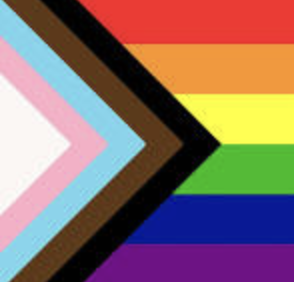
Gay Pride flag.
“June is bustin’ out all over,” says a memorable song composed in the 1940s for the musical Carousel, but more recently, June has become known as “Pride Month.” For those of you who are wondering why, here is my explanation.
“Pride,” in this case, is an abbreviation of “gay pride” or perhaps “lesbian and gay pride,” or “GLBTQ+ pride.” It started with the first of the now traditional “pride marches,” and that one, called Christopher Street Liberation Day March, took place in New York City in June of 1970. That march commemorated the Stonewall Riots, which I prefer to call the Stonewall Uprising.
The Stonewall was a popular gay bar on Christopher Street in New York’s Greenwich Village. I went there myself rather often in the late 1960s. It was a place where same-sex couples could dance together. It was considered a “private club” and was owned by Mafia elements obliged to make police payoffs as part of doing business. When payoffs were delayed or insufficient, police raided the bars, smashing bottles and taking patrons into custody. When such a raid happened on June 28, 1969, patrons valiantly and noisily fought back and many were arrested.
Very soon thereafter, gay men and lesbians formed the Gay Liberation Front, vowing to continue and expand a quest for dignity launched decades earlier by the so-called Homophile Movement. These brave activists declared it was time to “come out of the closet,” to stop hiding in shame. Yes, that’s a key concept because the opposite of shame is pride.
What caused that shame to be such a powerful force on the psyche of millions of men and women, of all ages, in all nations? There were many sources, perhaps the most important one being modern medical science. The psychiatric profession held, with great certainty, that homosexuality was a mental illness. Some of those doctors used electroshock therapy and other cruel methods to “treat” homosexuality. Others concluded that Freudian psychoanalysis could do the trick. Some psychiatrists wrote books on the topic that helped poison the minds of millions of readers, including some homosexuals seeking answers.
Religion has been another big factor. Christian, Jewish and Muslim clergy maintained that homosexuality was a terrible sin, an affront to God.
Legislators participated in the process, passing laws to make oral and anal sex serious crimes, often called “crimes against nature.” There were lesser laws such as the New York City statute that made it a crime to serve alcohol to a homosexual, and laws that made it illegal to wear garments usually associated with the opposite gender.
Since the majority of homosexuals did not get married and bear children, there was an element of shame produced and projected within the nuclear family — for example, the disappointment that parents might feel upon learning that a son or daughter would not be following the expected pathway to marriage and childbearing. Gay people coming out to parents often found mother and/or father bursting into tears, or blaming themselves for doing something “wrong.”
“Say it loud, gay is proud!” was one of the first and most popular chants at gay marches. Pride didn’t come easily to everyone. At some marches, there were schoolteachers and others who came with paper bags over their heads. An earlier example of such hiding took place in a 1967 television news show when CBS anchor Mike Wallace interviewed a gay man obscured by a shadow cast by a potted palm.
For most gay men and lesbians, coming out is a process that takes time, with many steps, starting with self-awareness. For me, an understanding of the origin of my negative feelings (“shame”) did not take place until I learned from other gay people who gathered to spread a message of liberation based on truth and self-awareness. The psychiatric profession finally came to declare that homosexuality was a variance in sexual behavior, not a sickness.
A friend of mine who is a psychiatrist (and who is not gay) commented to me, “It was just a few years after Stonewall that the American Psychiatric Association removed its designation of homosexuality as a disorder, in 1973. More than half a century on, the struggle is far from over, with religious fundamentalists and political reactionaries still urging intolerance. The affirmation of this commemoration remains vitally necessary.”
Many religious leaders agreed there could be true love (and love of God), within same-sex relationships, though other Bible-thumping clergy continued to sow the seeds of hatred. With the help of lawyers and judges, laws were taken off the books, and same-sex marriage was pronounced legal by the U.S. Supreme Court in 2015.
We enjoy Pride Month now in a continued effort to expand and continue that important message of pride, and to celebrate the freedom we have achieved and wish to maintain.
We have allies. When I attended a Pride celebration last year at the venue near my home in rural Massachusetts, hosted by its heterosexual owner, I was pleased to see several heterosexual friends and neighbors in attendance. They had every right to be there, supporting gay people, and while I am proud to be true to myself, I am also proud of a community that welcomes me and my gay brothers and sisters every month of the year, not only in June. It’s still fun and meaningful to have a pride dance or a pride march — or an article in the progressive voice of The Rag Blog.
[Allen Young has lived in rural North Central Massachusetts since 1973 and is an active member of several local environmental organizations. Young worked for Liberation News Service in Washington, D.C., and New York City, from 1967 to 1970. He has been an activist-writer in the New Left and gay liberation movements, including numerous items published at The Rag Blog. He is author or editor of 15 books, including his 2018 autobiography, Left, Gay & Green; A Writer’s Life.]





What a great history lesson. Thank you, Allen, for this very thorough, very thought-provoking article.