
Type your summary here
Type rest of the post here


Thorne Webb Dreyer, Editor

RECENT POSTS
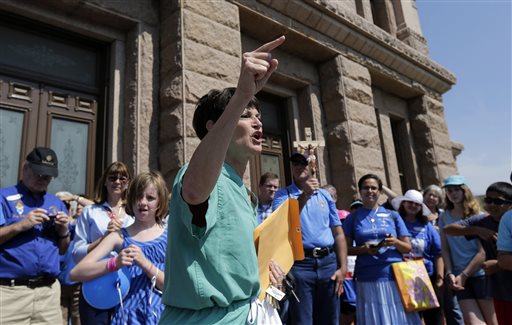 |
| Texas Sen. Donna Campbell, R-New Braunfels, speaks to an anti-abortion group outside the state capitol in Austin, Monday, July 1, 2013. Photo by Eric Gay / AP. |
Extremism trumps libertarian views:
Donna Campbell’s dishonesty on abortion
Campbell allows her extremist views opposing the constitutional right of a woman to seek an abortion to interfere with a physician’s normal practice of medicine.
By Lamar W. Hankins | The Rag Blog | July 23, 2013
Texas State Senator Donna Campbell has been identified as a Libertarian Republican by LibertarianRepublican.net and as a libertarian by the Austin Chronicle.
She is one of the strangest libertarians I know of. She must have great difficulty reconciling her libertarian views with the demands of her right-wing Republican cohorts and constituents. And when it comes to abortion, she allows her religious views to override her libertarian views, and she allows her allegiance to the Tea Party to override the views of physicians who care primarily for women.
On Campbell’s website, in a brief statement about abortion, she exposes a glaring conflict:
God bestowed the gift of life upon us, and this gift begins at conception. I am 100% Pro-Life and believe one of the greatest privileges I will have as a State Senator will be to fight for the rights of the unborn and protect innocent life. No issue is closer to my heart and I will do everything in my power to make abortion as rare as possible. I support strengthening the family at every level and believe parental rights are key to protecting Texas families.
It hardly strengthens families and parental rights to oppose abortion. If a family has three children and does not want another, Campbell would force that mother to have another if she becomes pregnant. The Pope may be proud of her, but her claim about supporting families is deceitful.
Campbell’s efforts to make abortion rarer also deny funding to Planned Parenthood, making contraception harder to obtain and cancer screening less available for poor and uninsured women, effects that are the exact opposite of supporting Texas families.
In her recent op-ed in The Austin American-Statesman Campbell would appear to argue that the opinions of three Republican physicians in the Legislature are more important and should be given greater weight than the views of the medical community that specializes in women’s health care.
The Texas District of the American Congress of Obstetricians and Gynecologists has found that the anti-abortion legislation supported by Campbell is “not based on sound science” and is an “attempt to prescribe how physicians should care for their individual patients.”
The group has concluded: “(The bill) will not enhance patient safety or improve the quality of care that women receive…(and it) does not promote women’s health, but erodes it by denying women in Texas the benefits of well-researched, safe, and proven protocols.”
Campbell claims that the purpose of the new requirement that abortion clinics be fully-licensed surgical centers is for the safety and well-being of the woman seeking an abortion. The best example of Campbell’s deceit about such safety is her support for requiring abortion-inducing drugs to be administered only at fully licensed surgical centers located within 30 miles of a hospital that allows the prescribing physician to practice there.
Yet the FDA-approved practices allow the administration of abortion-inducing drugs (what is called the “Mifeprex regimen” and often referred to as RU-486) in a physician’s office or clinic.
Campbell allows her extremist views opposing the constitutional right of a woman to seek an abortion to interfere with a physician’s normal practice of medicine and a woman’s right to seek a treatment found safe by the FDA. Further, this new regulation will interfere with the right of a woman to terminate a pregnancy within seven weeks of pregnancy — the period during which the Mifeprex regimen is permitted by the FDA.
Roe v. Wade, the Supreme Court’s landmark, four-decade-old ruling on abortion rights forbids state regulation of abortion during the first 13 weeks after conception. Such disregard for the constitutional rights of women cannot be justified by one’s personal religious views or one’s experience as an emergency room physician — Campbell’s current occupation.
The Texas Medical Association opposes the legislation Campbell wholeheartedly endorses. The American Congress of Obstetricians and Gynecologists made this statement about the sort of legislation Campbell advocates:
While we can agree to disagree about abortion on ideological grounds, we must draw a hard line against insidious legislation that threatens women’s health like [the Texas anti-abortion legislation]… That’s why we’re speaking to the false and misleading underlying assumptions of this and other legislation like it: These bills are as much about interfering with the practice of medicine and the relationship a patient has with her physician as they are about restricting women’s access to abortion. The fact is that these bills will not help protect the health of any woman in Texas. Instead, these bills will harm women’s health in very clear ways.
Campbell’s op-ed disingenuously states that “every abortion facility in Texas is within 15 miles of a hospital.” But she provides no evidence that the physicians practicing in those abortion facilities will be granted admission to practice in nearby hospitals.
Many Texas hospitals have moved to a system of using physicians hired directly by the hospital — hospitalists they are called. My primary care physician, who used to be able to treat me and follow my progress in the hospital nearest to my home, is no longer allowed to do so. And most hospitals affiliated with religious groups do not permit physicians who perform abortions at nearby clinics to practice in their hospitals.
Two years ago, a Catholic bishop in Texas forbade physicians at two Catholic hospitals in Texas from performing procedures to tie the fallopian tubes of women at the hospitals. Other Catholic bishops have interfered in other medical practices at Catholic hospitals within their domains.
In a case in Phoenix, Catholic Diocese officials that owned a hospital preferred forfeiting a mother’s life in order to save her fetus. Religiously-controlled hospitals deny both women and men medical treatments and procedures that violate religious dogma, but Campbell doesn’t discuss these obstacles to supporting women and their families.
A 2012 study by a legal group found that
Medicare and Medicaid provide religiously-affiliated hospitals with one-half of their funding. Religious hospitals also enjoy certain benefits like tax exempt status, low-cost financing through government bond programs, and, in some areas, use of municipal buildings. Thus, while reliant on funds from a diverse population of taxpayers and serving a diverse population of patients, religious hospitals use specific institutional doctrine to dictate patients’ medical options. Such choices can be contrary (to) their patient’s health needs and personal beliefs.
In her op-ed, Campbell once again argues for the shibboleth that abortion is a dangerous procedure, ignoring the facts. Numerous studies have concluded that one in every 10,000 women dies during childbirth, and fewer than one in every 100,000 women die from medical abortion.
The book Clinician’s Guide to Medical and Surgical Abortions reports that “Death occurs in 0.0006% of all legal surgical abortions (one in 160,000 cases). These rare deaths are usually the result of such things as adverse reactions to anesthesia, embolism, infection, or uncontrollable bleeding.”
Medical abortions are safer than childbirth and almost as safe as naturally occurring miscarriages. But Campbell would rather make law on the basis of a few anecdotes from her time as an emergency room physician than on the fact that fewer than 0.3% of patients who have had an abortion experience a complication that requires hospitalization.
Something else that Campbell fails to mention is that abortion facilities are few and far between in Texas, largely due to previous Republican efforts to limit the availability of such services to women, in contravention of their rights. There are at present 47 abortion clinics in the entire state of 254 counties, where 13.1 million women live. A report from Media Matters concludes that the legislation Campbell has strongly supported could reduce these 47 clinics to five.
But Campbell’s illogic seems to know no bounds. During a hearing on the abortion legislation during the regular 2013 session of the Legislature, Campbell said:
After a colonoscopy on a man, he comes in bleeding in the emergency room from the rectum and we’ve got a surgeon on call. But we don’t have somebody on call for a lady who is hemorrhaging in the uterus from a procedure that was done at a facility that was held at less standards. So I applaud this bill. I jumped on this bill as a physician and as a woman.
Campbell did not explain why an emergency room would be able to handle a man’s (and presumably a woman’s) bleeding from a colonoscopy, but not a woman’s bleeding from an abortion procedure. There are no reasons why hospitals in Texas can’t have OB/GYNs available to them.
David Leonhardt, writing in The New York Times, provides a view of abortion that is as close to mine as I have found:
Most Americans are uncomfortable with abortion yet believe there are circumstances — and not just a narrow few — when it should be legal. They believe that women should have control over their bodies and also that an abortion is akin to a death. Where they struggle is in deciding when each principle deserves to take priority.
Would that Donna Campbell had as nuanced and thoughtful a view as this. But in the fight over women’s health and reproductive rights, Campbell has shown that her claims to support liberty and freedom are belied by the dominance of her religious views and her distortion of libertarian philosophy, both of which continue to endanger women’s health in support of an extreme agenda.
Generally, libertarians and Republicans claim to want to keep the government out of our private lives, but when it comes to abortion, some libertarians and most Republicans can’t get government involved enough.
[Lamar W. Hankins, a former San Marcos, Texas, city attorney, is also a columnist for the San Marcos Mercury. This article © Freethought San Marcos, Lamar W. Hankins. Read more articles by Lamar W. Hankins on The Rag Blog.]
 |
|
Photo by Joshua Trujillo / AP Images / SeattlePI.com
|
The super-predator myth:
Trayvon died for our sins
The evidence of a violently divided America can be understood in the failure of the criminal justice system, where rationality and objectivity are supposed to prevail.
By Tom Hayden | The Rag Blog | July 23, 2013
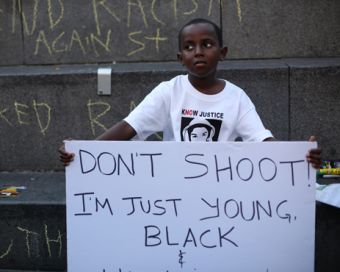
For Trayvon Martin and his family I feel a sadness that will not lift. For America, I feel a dread that certain horrors repeat again and again, chief among them the murder of young men of color, not only with impunity for their killers but under the cover of judicial sanction.
A re-armed George Zimmerman walks free, after a trial in which references to racism were forbidden by the judge. The unarmed Trayvon Martin, under the interpretation of the law, had no right to stand his ground against an armed vigilante. The “incident” considered by the jury, according to the instructions given by the judge, began with a physical confrontation between Trayvon and Zimmerman, not when Zimmerman launched his armed pursuit, muttering, “Fucking punks. These assholes, they always get away.”
Trayvon died bravely. But is that the only option for the many who are targeted deliberately and gunned down from the Arizona border to the boroughs of New York? The norms are broken, the laws are futile, and the Black Panther Party no longer exists to serve notice of vengeance.
The evidence of a violently divided America can be understood in the failure of the criminal justice system, where rationality and objectivity are supposed to prevail. In the case of Trayvon and countless others, however, the courts are where objectivity comes to an end.
The six jurors almost surely did not see themselves as driven by racial prejudice or stereotypes, but were in the grip of those stereotypes unconsciously. In the same way, poll after poll of New Yorkers shows a deep racial divide over the police stop-and-frisk policy, with whites believing it to be justified and people of color sharply opposed.
For a short while it appeared that this case would be different. At first, Trayvon appeared to be a fallen angel, a good boy grabbing some Skittles and iced tea before watching television with his family, a young man with no criminal record, assaulted by a vigilante who was completely out of control.
But gradually the prosecutors and media began dropping suggestions that Trayvon was a potential menace. There was the hoodie. The use of marijuana. The school suspension. Not that these factual crumbs were evidence of anything. But the public and media perception grew that Trayvon was “suspicious,” precisely the conclusion of George Zimmerman on that rainy and fateful night.
Altering this initial — and accurate — perception of Trayvon was necessary to reframe Zimmerman’s account of a struggle in which the killer feared for his life. Trayvon Martin had to fit the profile of a super-predator. Trayvon was no longer an innocent kid in the mainstream view; he was an aggressive young man who considered Zimmerman nothing more than a “creepy cracker.” Having super-masculine powers, his aggression could only be stopped by a bullet directly into his heart of darkness.
And where did the concept of the super-predator originate? One can find it from the beginning of slavery times, but its contemporary resurrection came from neoconservative intellectuals, not from Southern crackers. To be precise:
Politically, the message of “the coming storm of super-predators” swept the nation. The leading perpetrators were New York Mayor Rudolph Giuliani and “Amerca’s cop” William Bratton, not George Wallace and Bull Connor. The super-predator concept was supposedly based on factual research, not age-old prejudice. Even today the image of what Bratton called “homeland terrorists” dominates the American imagination. The research overlays and reinforces the white subconscious to this day.
It is vitally important to understand, however, that the super-predator thesis was without intellectual justification and was promoted for ideological and partisan purposes. The reason that Dilulio rejected his own research was that it was based only on a demographic projection without any consideration of economic, educational, political, or other policy changes.
Only on this basis could a future super-predator be predicted while in diapers. Nothing in that child’s future — jobs for their parents, a good pre-school experience, great teachers, nothing whatever — could prevent the evolution into a beast. And since the teenage demographic was growing, the nation would be overwhelmed, as even Bill Clinton predicted.
The political purpose of the super-predator thesis, according to those like Bennett, was, first, to discredit the idea of rehabilitation, which was “emasculating” the criminal justice system. Instead the view was that youthful super-predators were incorrigible and infected with the disease of “moral poverty.” Private orphanages were often recommended as an alternative to prison.
The second political message was to demolish as “politically incorrect” the notions that poverty causes crime or that there was any such thing as disproportionate mass incarceration. The neoconservatives and their allies were employing public fear of violent crime to carry out their longtime agenda of slashing government social programs. Even prisons were to be privatized.
The neoconservative messaging was tremendously effective. Not until recent years, when the fiscal costs on states and municipalities grew too burdensome, has there been a lull and slight reduction in the incarceration rate, the highest or second highest in the world. The human damage is incalculable, so severe that even the right-wing Supreme Court of Chief Justice John G. Roberts has found California in systemic violation of the Eighth Amendment ban on cruel and unusual punishment.
(Some of the hunger strikers in California’s Pelican Bay prison have been in solitary confinement for decades, precisely because they are considered incorrigible super-predators. The official state hypocrisy is revealed by the policy of easing restrictions on inmates if and only if they provide evidence of gang affiliations among other prisoners with whom they are serving time. The point is that they are not “incorrigible” if they change their behavior by putting their lives at risk.)
The super-predator thesis is racism with a pseudo-academic cover. The irony is that our civil rights progress has driven prejudice underground, into the unconscious, into a discourse and vocabulary of denial. Perhaps I am being too generous, but I believe the judge, prosecution, Florida jury, and most of Mr. Zimmerman’s supporters perceive Trayvon Martin as a super-predator without being aware of the racial filter closing their minds. Those in the mainstream media, which did so much to bring awareness of the historic case, also are likely unaware that they, too, would be afraid of a Trayvon walking anywhere near them, especially at night.
How does one break the grip of what Michele Alexander calls this “new Jim Crow,” if it is both covert and unconscious? First, we need to deepen our understanding that this is the way many in the Tea Party, the white South, and the Republican Party view Barack and Michele Obama. Not that the Obamas are lurking super-predators themselves, although millions of white Americans were stricken with ancient fear when O. J. Simpson — in their eyes, the perfectly acceptable black man — could kill his white ex-girlfriend and a white man in her presence — in such a “savage” act. (See Gilligan, James. Violence, for a brilliant dissection of this point).
The OJ murder case marked the moment that awakened the white fear that even an educated black man was inherently suspicious. (See the 2009 case of Dr. Henry Louis Gates and the Boston police for another example.)
In other words, we need to “get over” the broad assumption that sadistic racism is a thing of the past, when in fact it might increase because certain white people are extremely threatened at the loss of their superiority. (See the 2009 Homeland Security Report on increasing violent threats, including assassination threats, because of the recession and election of Obama. The report was shelved under Republican attack.)
Screen showings of the new documentary, Fruitvale Station, about Oscar Grant who was killed by the Oakland BART police in 2009, and the Ken Burns film, The Central Park Five. Learn about and support juvenile justice organizations in your community. Demand that cities adopt gang intervention programs like those fostered in Los Angeles after decades of community pressure.
Organize the juvenile justice movement with a stepped-up attack on racial profiling, arbitrary stop-and-frisk, and mass incarceration. Demand accountability from the neoconservatives who fabricated the “super-predator” doctrine as surely as their propaganda about “weapons of mass destruction” or the sweeping authorization of the Global War on Terrorism.
Counter the propaganda that government budget cuts and free-market extremism will lift the underclass to a better future. Defend the New Deal as a great beginning, not the cause of our deficits.
Finally, consider building monuments and permanent memorials to the memory of Trayvon Martin. In his death, Trayvon becomes an iconic figure in our history and the future of the younger generation. His story, and the story of George Zimmerman’s trial, will be told and taught for decades to come.
The story will be as sharply contested as the verdict, and Trayvon’s supporters will need to claim his life and story as precious. Politicians at all levels can be challenged to commemorate his name. Public parks and school buildings can be emblazoned with his name as well. The photo of his young face should be included on the rolls of martyrs.
Let the rock be rolled back so his spirit can ascend, while his demonizers are sentenced to oblivion and shame. Let the world know: he died for our sins.
[Tom Hayden is a former California state senator and leader of Sixties peace, justice, and environmental movements. He currently teaches at Pitzer College in Los Angeles. His latest book is The Long Sixties. Hayden is director of the Peace and Justice Resource center and editor of The Peace Exchange Bulletin. Read more of Tom Hayden’s writing on The Rag Blog.]

Waldman’s film and TV
treasures you may have missed:
Alan Davies’s character solves locked-room mysteries and many other crimes with seemingly inexplicable aspects.
By Alan Waldman | The Rag Blog | July 22, 2013
[In his weekly column, Alan Waldman reviews some of his favorite films and TV series that readers may have missed, including TV dramas, mysteries, and comedies from Canada, England, Ireland, and Scotland. Most are available on DVD and/or Netflix, and some episodes are on YouTube.]
Jonathan Creek is an extremely popular mystery TV series that so far, since 1997, has aired 32 episodes in five seasons — four of which are available via Netflix. Most episodes can be seen for free on You Tube, including this one. More episodes are planned.
In this excellent series, eccentric illusionist Jonathan Creek (handsome, long, frizzy-haired Alan Davies) aided by a series of three female aides — Caroline Quentino of Blue Murder, Julia Sawalha of Absolutely Fabulous, and Sheridan Smith of the outstanding recent film Quartet — solve cases containing baffling puzzles.
Jonathan Creek contains many comic touches, some of which involve the buffoon stage magician (Stuart Milligan) Jonathan creates tricks and illusions for. The series has serious guest spots for beloved comic actors such as Joanna Lumley and Rik Mayall (who plays a canny police inspector in the episode linked above).
The series gives away how a number of magician’s tricks are done. Jonathan, who lives in a windmill in Sussex, uses lateral thinking and ingenuity to solve murders and other serious crimes. Over time the show became noticeably darker, with him investigating psychopaths, pimps, gangsters, and corrupt policemen, as opposed to the duplicitous suburbanites of earlier series.
Jonathan Creek won four major awards (including a Best Drama Series BAFTA and an honor for series writer David Renwick) and six nominations (including Davies for Most Popular Actor).
Almost overnight, the series made Davies “the thinking woman’s sex-symbol.” More than 93.3% of viewers polled at imdb.com gave it thumbs-up, and a whopping 37.8%-plus rated it 10 out of 10. It was a hit with all demographics but was liked most by females age 18 and younger.
I think you would find it a treat.
[Oregon writer and Houston native Alan Waldman holds a B.A. in theater arts from Brandeis University and has worked as an editor at The Hollywood Reporter and Honolulu magazine. Read more of Alan Waldman’s articles on The Rag Blog.]
 |
| Muhammad Ali Pasha, Ottoman ruler of Egypt. Painting by Auguste Couder, 1841 / Wikimedia Commons. |
A people’s history:
The movement to democratize Egypt
Part 3: 1805-1849 period — The autocratic rule of Muhammad Ali Pasha.
By Bob Feldman | The Rag Blog | July 21, 2013
[With all the dramatic activity in Egypt, Bob Feldman’s Rag Blog “people’s history” series, “The Movement to Democratize Egypt,” could not be more timely. Also see Feldman’s “hidden history” of Texas series on The Rag Blog.]
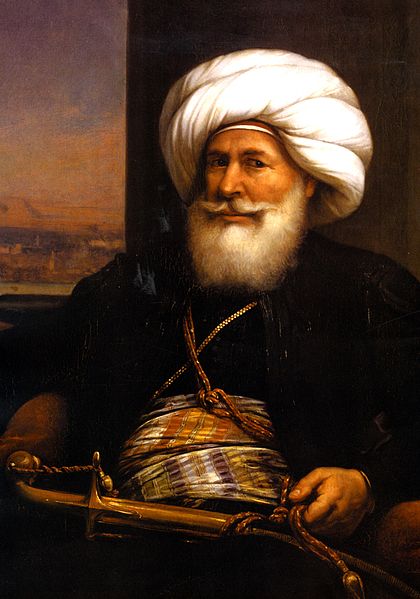
Nearly two years after Muhammad Ali began ruling the Ottoman Turkish Empire’s Egyptian province, UK troops landed in Alexandria in March, 1807, and attempted to establish a permanent military base in Egypt.
But “when the British sought to extend their control…the result was fiasco” and “many British soldiers were killed” by Muhammad Ali’s troops; and the remaining UK troops in Egypt were compelled to withdraw from Egypt after September 1807, according to Jason Thompson’s A History of Egypt.
Then, according to the same book, in 1811 Muhammad Ali ended the remaining influence of the neo-Mamluk military elite in Egyptian society in the following way:
…Muhammad Ali held a celebration in the Citadel [royal palace] on Mar. 1, 1811… He invited all the principal people of Cairo, including nearly 500 Mamluk amirs. Afterward, as the Mamluks were leaving through the Citadel’s descending Interior Road…they found the exit locked… Sharpshooters [of Muhammad Ali’s loyal troops] appeared on the walls and shot them dead. Another thousand were hunted down and killed in Cairo over the next few days…
Egyptian Pasha Muhammad Ali next confiscated “the vast estates” of the slain Mamluks and the 20 percent of all Egyptian agricultural land that was owned by the religious endowments, or waqfs, and revised the Egyptian tax structure, so that “almost all of Egypt’s land came under state ownership” and he “could decree what to plant, then purchase the produce at a low price set by the state and export it for cash,” according to A History of Egypt.
Instead of just subsistence crops being grown on Egyptian agricultural land, more cash crops that earned foreign exchange — like the cotton that became Egypt’s major export crop in the years after it was introduced in Egypt in 1821 — were now grown on the state-owned land; and Muhammad Ali used the foreign exchange income to attempt to modernize Egypt’s economy by “building…factories and canals,” according to The Rough Guide To Egypt.
Muhammad Ali’s public works program of constructing 32 canals, 10 dikes, and 41 dams and barrages with conscripted Egyptian workers brought large amounts of new agricultural land into cultivation. In addition, as a result of his public works program of building factories in Egypt that produced textile, sugar, munitions, ships, and other manufactured goods, “Egypt became the leading industrial nation in the eastern Mediterranean” by the late 1830s, according to A History of Egypt.
By also conscripting Egyptian peasants into his military force, Muhammad Ali increased its size to 250,000 men and used his military force to occupy Sudan in the 1820, and “Egypt became the major military power in the eastern Mediterranean, making Muhammad Ali much stronger than his nominal master, the sultan in Istanbul,” according to the same book.
But after “the pasha became impatient with recognizing the sultan as his master” and “decided to move for independence” for Egypt in 1838, “a British force anchored at Alexandria” in 1839 and compelled him to reduce the size of his Egyptian military and no longer seek Egyptian independence from the Ottoman Empire of Turkey (which the UK government then supported), according to A History of Egypt.
Large numbers of Egyptians who were also drafted to work on Muhammad Ali’s various public works projects, however, lost their lives while working on the canal construction projects. As A History of Egypt, recalled:
One of the canals, the Mahmudiya, ran for 72 kilometers between Alexandria and the western branch of the Nile. It was constructed between 1817 and 1820 with…labor of as many as 300,000 conscripted workers (of whom between 12,000 and 100,000 are said to have died, according to widely varying accounts)…
And the same book also reported how large numbers of Egyptians suffered under Muhammad Ali’s undemocratic rule and his “modernization” policies:
Muhammad Ali’s accomplishments came at a heavy price to the Egyptian people. The degree of control that the pasha exerted in Egypt was probably unprecedented since ancient times… Every productive strip of land, every palm tree, every donkey, everything that could represent value was assessed and taxed at the maximum it could bear… The people complained incessantly, but they obeyed, for the pasha’s authority was absolute. A simple horizontal motion of his hand meant execution…
Although an “outbreak of bubonic plague in 1834-35 carried away as much as a third of Cairo’s population” during the years that Muhammad Ali undemocratically ruled people in Egypt, according to A History of Egypt, some improvement in Egypt’s health care system was achieved by the end of this pasha’s rule in 1848 (when he became insane) and his subsequent death in August 1849.
[Bob Feldman is an East Coast-based writer-activist and a former member of the Columbia SDS Steering Committee of the late 1960s. Read more articles by Bob Feldman on The Rag Blog.]
 |
| Emmett Till, left, and Trayvon Martin. Image from Tumblr. |
Intimations of Emmett Till:
A ‘shocking story of
approved killing’ in Florida
Today the pre-1960s explicit racial ‘code’ has been supplanted by the implicit code upon which ‘profiling’ is based.
By Jay D. Jurie | The Rag Blog | July 18, 2013
The Rag Blog‘s Jay Jurie will discuss issues raised in this article with Rag Blog editor Thorne Dreyer on Rag Radio, Friday, July 26, 2013, from 2-3 p.m. (CDT) on KOOP 91.7-FM in Austin, and streamed live to the world. The show is rebroadcast by WFTE-FM in Mt. Cobb and Scranton, PA, Sunday mornings at 10 a.m. (EDT), and all podcasts are posted at the Internet Archive after broadcast.
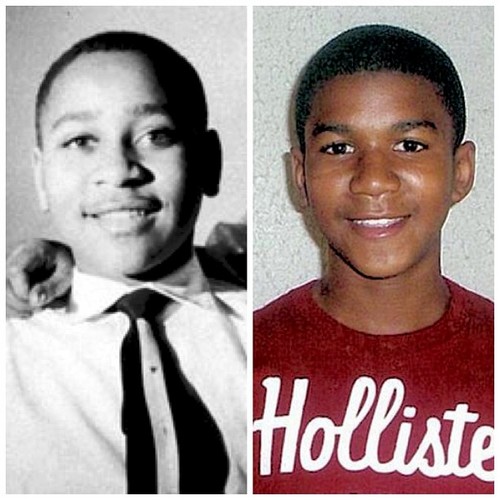
SANFORD, Florida — Inevitable comparisons between Emmett Till and Trayvon Martin have been made by several observers, including Lecia Brooks of the Southern Poverty Law Center and Ben Jealous of the NAACP.
What happened to Emmett Till has been described in numerous accounts. By way of brief recap: In 1955 Till, a 14-year-old African-American from Chicago, was sent by his mother to stay with relatives in rural Money, Mississippi. That August, he entered a “mom and pop” grocery store where an encounter ensued between him and the proprietor, a young white woman named Carolyn Bryant.
What happened isn’t exactly clear. Till supposedly whistled at, or flirted with, the woman. While whatever he said or did may have been inappropriate, only in the South at that time would it have warranted a death sentence. Elsewhere, it would at most have been seen as a minor offense.
Even in 1950s racially-segregated Mississippi, Till had every legal right to be where he was. However, he overstepped the bounds of the “code” of subservient behavior imposed by the white majority on Southern African-Americans at that time. Although his relatives reportedly schooled him on the code, perhaps fueled by the impudence characteristic of teen-aged boys of any race, Till may have had little or no idea of the gravity of his “offense.”
Word of what occurred soon reached the husband of the store owner, Roy Bryant, and several nights later, with his half-brother, J.W. Milam, and possibly another companion, he kidnapped Till from the home of his great-uncle. Till was savagely beaten and tortured, and then shot. A 70-pound cotton mill fan was tied to his neck with barbed wire, and his body was dropped into the nearby Tallahatchie River.
Several days later, his body was discovered in the river and then was shipped back to Chicago. His mother ordered it placed in an open casket, so the extent of Till’s injuries could be seen. This created a sensation, with thousands viewing the body and the story receiving nationwide media coverage.
Seated in the racially-segregated courtroom at the subsequent trial of Bryant and Milam was an all-white jury selected from a part of the county known to be disposed against African-Americans. Not surprisingly, Bryant and Milam were acquitted. Protected against double jeopardy, Milam later admitted in a magazine interview they had in fact murdered Till.
The interview, by journalist William Bradford Huie, was published in Look magazine under the title, “The Shocking Story of Approved Killing in Mississippi” :
As long as I live and can do anything about it, niggers are gonna stay in their place. Niggers ain’t gonna vote where I live. If they did, they’d control the government. They ain’t gonna go to school with my kids. And when a nigger gets close to mentioning sex with a white woman, he’s tired o’ livin’. I’m likely to kill him. Me and my folks fought for this country, and we got some rights.
I stood there in that shed and listened to that nigger throw that poison at me, and I just made up my mind. “Chicago boy,” I said, “I’m tired of ’em sending your kind down here to stir up trouble. Goddam you, I’m going to make an example of you — just so everybody can know how me and my folks stand.”
Milam’s revelation sent shock waves across much of the country, and in its wake, the first of the major post-Reconstruction federal laws, the Civil Rights Act of 1957, was passed to secure the rights of African-Americans. It’s now widely contended the South is a far different place than it was prior to the Civil Rights Movement of the 1960s. Florida, some have argued, was always a much different place than Mississippi. However, that’s not entirely accurate, either then or now.
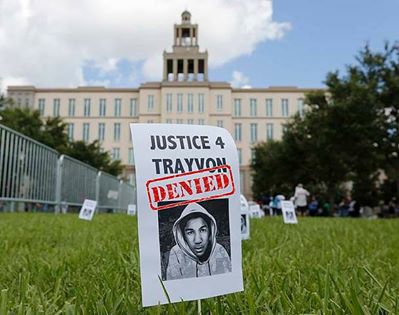
It can be argued that’s particularly not the case when it comes to Sanford, Florida, where 17-year old African-American Trayvon Martin was shot dead by Neighborhood Watch coordinator George Zimmerman on February 26, 2012. Sanford was historically an agricultural community with an African-American population employed as farm labor. When the agriculture industry declined, this population was left stranded economically.
 |
| One more time. Image from Tumbler. |
A very recent movie, 42, about Jackie Robinson, the first African-American major league baseball player, features scenes from Sanford in the late 1940s. One scene, of Robinson being thrown off a playing field by the police chief, is represented as taking place in nearby Deland, when it actually occurred in Sanford. Another scene, showing Robinson being forced to flee Sanford due to threatened Ku Klux Klan violence, is accurate (Goldsboro Historical Museum).
Sanford is where fatally-injured civil rights pioneers Harry T. and Harriette V. Moore were taken after their nearby home was bombed by the Klan in 1951. Sanford filled in its downtown public swimming pool rather than allow it to be integrated, and to this day, the only public swimming pool is in a predominantly African-American part of town.
Like the rest of Florida, and the South, Sanford has experienced change. However, not only is the past still present, but ongoing efforts preserve the status quo ante. While Sanford possesses several diverse neighborhoods, most of the town remains divided into sectors which are either predominantly white or predominantly African-American. Sanford has been the scene of several instances of police abuse or neglect of the African-American population, which have lately been extensively covered in the mass media.
Explicit, hard-core racism, as epitomized by the Milam quote above, is largely part of the past. Nonetheless, even more insidious, and more intractable, is implicit, soft-core racism. Illustrating this is the debate in 1998 to build a hotel-conference center in the same downtown park as the filled-in swimming pool.
Testimony from white residents in support of this proposal was based on the claim that the park was only used by drug-dealers, pimps, and prostitutes. Yet, no evidence was ever produced in support of this assertion, whereas many of the park users consisted of African-American boys and young men playing basketball.
Although not overtly stated that way, this was a not-so-transparent means for whites to reclaim “their” park. Similarly, until met with considerable protest, a recent city ordinance prohibited fishing along portions of the city’s river front, when clearly the large majority of the people who fished there were African-American.
A prominent white citizen, while campaigning for city council, proposed running the homeless out of downtown, and building a shelter on 13th Street, which is the heart of Goldsboro, the most prominent African-American neighborhood in Sanford. This proposal did not meet with success, but instead, Sanford’s imposing new police center was put in the heart of the community.
Incidentally, Goldsboro was once a separate and distinct African-American municipality, which over the objections of its residents, was incorporated into Sanford.
Trayvon Martin was murdered at the Retreat at Twin Lakes subdivision, in a rapidly developing part of Sanford, a somewhat diverse part of town alongside Interstate 4 also featuring other newer housing developments, big box stores, strip malls, including the 7-11 where he bought his last Skittles and iced tea, and auto dealerships. Not far to the east is Goldsboro, placing the newer and unstable identity of the Retreat in proximity to “old” Sanford.
It was into this admixture of past and present that George Zimmerman stepped in his self-appointed role as Neighborhood Watch captain. Speculatively, Zimmerman may be uncertain about, or conflicted with, his own ethnic identity. Of Jewish and Hispanic background, it is unlikely the explicitly racist white supremacists would consider him one of their own.
In addition to being a “wannabe cop,” Zimmerman may also have been asserting his desire for acceptance by “white culture,” he may have sought to protect both this identity, and community, which may have helped frame and foster implicit racist presumptions.
Today the pre-1960s explicit racial “code” has been supplanted by the implicit code upon which “profiling” is based. When Trayvon Martin sought to return to where he was staying with his father, even less knowingly than Emmett Till he violated that code. In today’s “New South,” perhaps especially in “purple” Florida, he may have thought he was more free than he was, not understanding he did not “belong” in that neighborhood, and was expected to react obsequiously if confronted by a “creepy-ass cracker.”
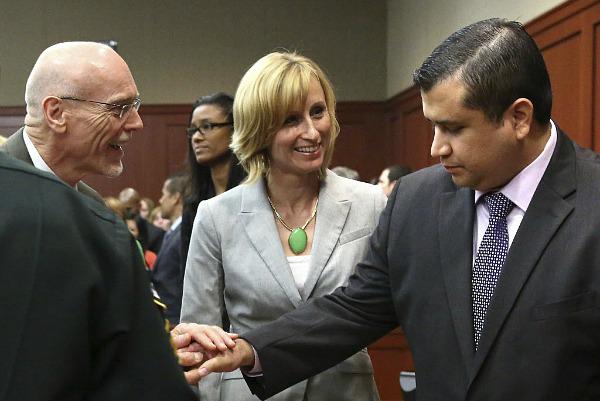 |
| Validation: George Zimmerman congratulated by attorneys Don West and Lorna Truitt after verdict. Photo by Joe Burbank / Reuters. |
Implicit racism should be regarded as part of an entrenched system of values. Like its unwritten code, this system sustains itself through the denial of its existence. Granting a defense motion in the Zimmerman case, Judge Debra Nelson ruled the prosecution could not use the word “race” in describing “profiling.” In a CNN interview with Anderson Cooper after the trial, “Juror A-37” claimed “we didn’t talk about race” during the jury deliberations.
While the jury at the Emmett Till trial, was all white, the jury in the Zimmerman case, with one Hispanic exception, was all white. An interesting question, which the prosecution apparently was not allowed to ask during voir dire, even if they wanted to, was the extent to which prospective jurors might identify with “white culture and values,” or to what extent they were familiar with, or subscribed to, the “code.”
Seminole County, the pool from which the jury pool was drawn, is 81% white, including 65% non-Hispanic white, and 12% African-American (U.S. Census).
A closely-related question not considered is Seminole County’s political climate. Whereas in 2012 Barack Obama won Florida, Mitt Romney won Seminole County 53% against 46% for Obama (Politico.com). Aside from Democratic pockets of the County consisting largely of African-American and Hispanic voters, and a scattering of white liberals, the white population is fairly solidly conservative.
A jury drawn from this political background is more likely to identify with the narrative spun by George Zimmerman, and be unaware of the influence of the “code” or even deny its existence.
Some argue the problem today is no longer race, but gun laws such as “stand your ground” that must be changed. There can be little doubt that such laws cry out desperately for change. But, especially here, the race factor is inescapable.
Critics contend Zimmerman was tried on the grounds of self-defense, not stand your ground. Regardless, it was Zimmerman’s stand your ground claim that allowed him to walk free for a month and a half before public pressure resulted in his arrest.
Evidence at trial indicated Sanford Police believed and supported Zimmerman’s claim, which implicitly denied Trayvon Martin’s legitimate right to be where he was, and dismissed the possibility that an unarmed Martin unsuccessfully attempted to stand his own ground.
Preliminary research has found that stand your ground laws are predominantly biased in favor of whites at the expense of African-Americans (Richard Florida, The Atlantic Cities).
There’s the current case of Marissa Anderson, a black woman in Florida who produced no injury when she fired a warning shot at her abusive husband, but when she claimed a stand your ground defense, received a 20-year prison sentence on a charge brought by Angela Corey, the same state attorney who unsuccessfully prosecuted George Zimmerman.
What happened to Trayvon Martin is not simply an anomaly. Some racial progress has been made. Sanford, Florida, in 2013 is not Money, Mississippi in 1955. But we are not as far removed from that time or place as many would misleadingly have us believe. We need look no further than the approved killing of Trayvon Martin.
[Jay D. Jurie, Ph.D., is an associate professor of public administration and urban and regional planning at the University of Central Florida. He lives in Sanford, Florida. Read articles by Jay D. Jurie on The Rag Blog.]
Also see “Walking while black: Trayvon Martin’s fatal shortcut” by Jay D. Jurie on The Rag Blog, March 22, 2012.
Citations and References:
Richard Florida, The Atlantic Cities article: http://www.theatlanticcities.com/politics/2013/07/its-not-just-zimmerman-race-matters-lot-stand-your-ground-verdicts/6195/
Goldsboro Historic Museum, Sanford, on Facebook: https://www.facebook.com/Foliver1961
Huie, William Bradford, PBS: http://www.pbs.org/wgbh/amex/till/sfeature/sf_look_confession.html
Robin D.G. Kelley article on systematic racism: http://www.counterpunch.org/2013/07/15/the-us-v-trayvon-martin/
Sanford, FL: a place to wait for a verdict: http://tv.msnbc.com/2013/07/12/in-black-sanford-a-place-to-gather-and-wait-for-a-verdict-2/
SPLC compares Emmett Till and Trayvon Martin: http://www.splcenter.org/get-informed/news/statement-from-civil-rights-memorial-center-director-lecia-brooks-in-response-to-v
Washington Post article on the Zimmerman trial verdict and justice: http://www.washingtonpost.com/opinions/ruth-marcus-zimmerman-verdict-in-martin-case-shows-justices-flaws/2013/07/14/7f7eae6a-ecc7-11e2-a1f9-ea873b7e0424_story.html
 |
| This plane carrying Bolivian President Evo Morales was forced to land in Vienna despite Obama’s earlier comment that he “wouldn’t scramble jets against a 29 year old hacker.” Photo by Andres Gutierrez / AP. |
Refs being ‘worked’?
Does Obama control the State?
The executive branch has aided in the unaccountable growth of a Frankenstein-like Leviathan which now is beyond the control of its own makers, operating outside the levers of democratic oversight and control
By Tom Hayden | The Rag Blog | July 18, 2013
It seemed weird, off-handed, President Obama’s comment that he “wouldn’t scramble jets against a 29 year old hacker,” just two days before the U.S. forced down a Bolivian plane carrying Evo Morales on the suspicion that Edward Snowden was smuggled aboard. Diplomatic hell broke loose, with Brazil, Venezuela, Nicaragua, Ecuador, and others all accusing the U.S. of violating their sovereignty.
With all the talk of Big Data, it’s hard to believe that Snowden couldn’t be detected enroute from the Moscow transit lounge to the departure gate for a Bolivian airliner. That aside, one wonders what if any was the connection between Obama’s remark and the forcedown which subsequently happened.
Obama presumably was trying to squelch rumblings coming from within the national security state. After all, if some of the U.S. hardliners want Julian Assange, Snowden, and their ilk executed, or tried for treason before being executed, the same types might contemplate a Special Operation to render Snowden off a foreign airliner.
As for Evo Morales, I was told by a U.S. ambassador during the Clinton administration that he was a “very bad guy” who had tried to kill American diplomats, a good example of our intelligence demented..
The problem revealed by the incident is not a new one, and not for this president alone. Can we be confident that the president controls the permanent executive branch, especially the “intelligence” apparatus? Or is it not possible that key elements of the apparatus have been fabricating intelligence, pulling strings, “working the refs,” boxing in the White House, asking forgiveness rather than permission, whatever one calls it, and running a foreign policy of their own?
If anyone is shocked by this, it’s all happened before. Several presidents were threatened with blackmail by FBI director J. Edgar Hoover who ran what one U.S. senator called a “Gestapo-operation.” John and Robert Kennedy had to go around their own generals and conspire with the Soviets to cool down the Cuban missile crisis when it was at the brink.
JFK circumvented the generals and CIA by fudging an agreement in Laos. Richard Nixon and the China Lobby foiled Lyndon Johnson’s election-year plan for peace talks by getting the Saigon generals to hold out until after the election. Jimmy Carter was forced to keep diplomacy with Cuba secret from his own State Department negotiators in the late Seventies. Bob Woodward’s Obama’s Wars documents how generals Petraeus and McChrystal tried to trap the president into a “forever war.”
And before all of them, President Eisenhower warned that, “In the councils of government, we must guard against the acquisition of unwarranted influence, whether sought or unsought, by the military-industrial complex. The potential for the disastrous rise of misplaced power exists and will persist.” [1961]
And now this: starting with the Bush era, the top-secret Foreign Intelligence Surveillance Court [FISA] has morphed into a de facto parallel Supreme Court writing and implementing a virtual constitution for the War on Terrorism era. This secret court, appointed in its entirety by the right-wing Supreme Court Justice John Roberts, has approved 1,800 surveillance orders during the past year alone, while rejecting none.
There is no adversary proceeding in this new equivalent of a Star Chamber. There are virtually no public findings. The FISA court has ruled, in secret proceedings, that the vacuuming up of “meta data” on many millions of citizens is a “special needs” exception to the Fourth Amendment ban on state searches and seizures without a warrant.
Some of the secret court’s opinions are said to be nearly 100 pages in length, issued without adversarial proceedings and virtually beyond appeal. Just because Obama is a constitutional lawyer doesn’t mean that he’s devoted detailed attention to this runaway construction of a new constitution — until something like the Snowden revelations force his attention.
“It has quietly become almost a parallel Supreme Court,” according to Eric Lichtblau in The New York Times [July 7], providing a veritable new constitutional framework for every agency engaged in activities under the umbrella of “national security.” A similar extra-constitutional project has been underway for decades to rewrite the rules of private marketplace governance in the era of corporate globalization.
Both thrusts, toward privatization and intelligence wars, represent a gradual movement towards a new legal framework for Empire which minimizes or circumvents democratic processes. The NSA plus the WTO are the “new world order” that George Bush I mused about.
Obama, who is responsible for this mushroom cloud of secrecy, seems occasionally to cry for help at his recognition that it’s spiralling out of control. Since 2012, Obama has officially “welcomed” public conversation, debate, and Congressional drafting of a “new legal architecture” in order to “rein in” his growing imperial presidency and those which are likely to follow.
His inability to implement meaningful change, however, is a remarkable illustration of the limits of the presidency. There is no sign either of Congressional willingness to re-draft the 1973 War Powers Act to cover drones, secret wars like Libya, or the growth of executive-branch cyberwar. The federal courts are complicit in the private rewriting of the Fourth Amendment and the democratic guarantees of the Constitution.
It is not only the shadow of secrecy over democracy, but the apparent grip of secret forces in the executive branch over public policy. Last week the U.S. supported a military coup in Egypt in express violation of Congressional funding restrictions, and without public hearings. Last month, the President reiterated his five-year old pledge to close Guantanamo, get detainees off life-threatening hunger strikes, and repatriate many who already are cleared for release.
As of now, those straightforward orders have not been carried out. Someone is blocking them.
A secret coup hasn’t fully happened yet, and may not, given the nature of American pluralism. But the executive branch has aided in the unaccountable growth of a Frankenstein-like Leviathan which now is beyond the control of its own makers, operating outside the levers of democratic oversight and control.
Obama’s occasional comments welcoming a “conversation” may be seen as muted alarms. If he cannot “rein in” the new Imperial Presidency, a populist protest could be slowly building toward either an insurgency presidential campaign, an uprising, or both.
[Tom Hayden is a former California state senator and leader of Sixties peace, justice, and environmental movements. He currently teaches at Pitzer College in Los Angeles. His latest book is The Long Sixties. Hayden is director of the Peace and Justice Resource center and editor of The Peace Exchange Bulletin. Read more of Tom Hayden’s writing on The Rag Blog.]
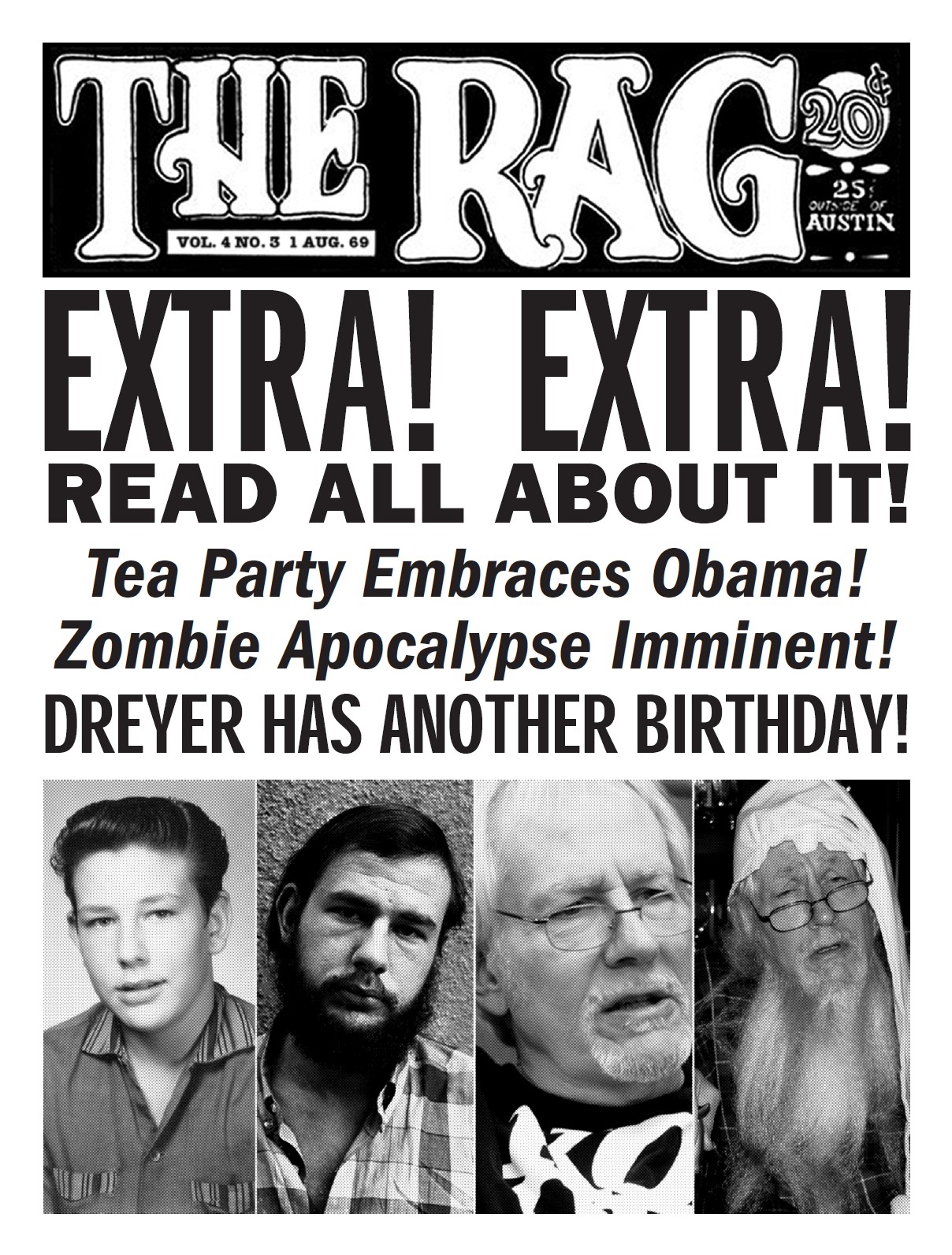 |
| Ridiculous graphic by James Retherford / The Rag Blog. |
Unprecedented development:
Dreyer has another birthday!
Rag Blog editor Thorne Dreyer’s alleged ‘birthday’ event to be held Friday, August 2, from 6-9 p.m., at Maria’s Taco Xpress, 2529 S. Lamar Blvd in Austin.
By Our Special Correspondent / July 18, 2013
AUSTIN, Texas — In a surprising development, usually reliable sources close to the subject report that Rag Blog editor and Rag Radio host Thorne Dreyer actually intends to celebrate another birthday. This will be the 68th straight year that this unprecedented event has occurred.
Dreyer did not return our phone calls, but a close associate, who asked not to be identified, had the following response: “Shameful! He has one every year, and he does it in public!”
Records show that Dreyer was actually born on August 1st, 1945, in Houston, Texas, but, in another twist to this developing story, he has asked his friends and “extended community” (he would also appear to be delusional) to join him Friday, August 2nd, from 6-9 p.m., at Maria’s Taco Xpress, 2529 S. Lamar Blvd in Austin.
Dreyer allegedly suggested that friends and followers, in lieu of gifts, make a small donation to the New Journalism Project, the Texas nonprofit that publishes The Rag Blog. (Like that’s going to happen!)
Maria’s food menu and full bar will be available and blues-rock singer Leeann Atherton and her band will perform — reportedly under protest –- at 7 p.m. on Maria’s patio.
Proprietress Maria, when reached for comment, would only say, “Thorne who?”
 |
| Political cartoon by John Darkow / Columbia Daily Tribune. Image from FireIntheBelly. |
Voter suppression is a hallmark
of today’s Republicans
If it took nearly 100 years to assure racial fairness in voting under law, then it might take longer than 48 years to remedy that problem in actual practice.
By Lamar W. Hankins | The Rag Blog | July 17, 2013
I have never seen a modern definition of democracy that was not based on near-universal suffrage. It seems that the five Republicans on the Supreme Court prefer a political system that allows states to pass voting laws that suppress the vote, denying voting to many U.S. citizens.
They found section 4(B) of the Voting Rights Act (VRA) unconstitutional because it was not based on current data about voting rights violations in the nine states identified by Congress that have historically engaged in race discrimination in voting. As a result, those nine states, including Texas, no longer are required to get pre-clearance of changes to their voting laws from the attorney general or a three-judge court (section 5) until, or unless, the old data are updated.
Because section 2 of the act was unchanged, state and local governments continue to be prohibited from engaging in election practices that discriminate against and disenfranchise minority voters. However, without pre-clearance, costly and time-consuming lawsuits must be brought against discriminatory voting practices to enforce Section 2.
Congress decided in 1965, and most recently in 2006, that section 2 was not a sufficient remedy for voting discrimination. That’s why it established the pre-clearance requirement.
The U.S. began as a political system that distrusted universal suffrage, limiting the right to vote to those who owned property, were male, were not slaves, and were 21 years of age or older. One of our most revered founders and later president, John Adams, explained in a letter written in May 1776, why women, those under 21, and those who do not own property should be excluded from the voting franchise:
But why exclude women? You will say, because their delicacy renders them unfit for practice and experience, in the great business of life, and the hardy enterprises of war, as well as the arduous cares of state. Besides, their attention is so much engaged with the necessary nurture of their children, that nature has made them fittest for domestic cares. And children have not judgment or will of their own.
True. But will not these reasons apply to others? Is it not equally true, that men in general in every society, who are wholly destitute of property, are also too little acquainted with public affairs to form a right judgment, and too dependent upon other men to have a will of their own? If this is a fact, if you give to every man, who has no property, a vote, will you not make a fine encouraging provision for corruption by your fundamental law?
Such is the frailty of the human heart, that very few men, who have no property, have any judgment of their own. They talk and vote as they are directed by some man of property, who has attached their minds to his interest…”
In 1969, an acquaintance who rented an apartment and wanted to vote in a bond election in the City of Georgetown went to City Hall and rendered his wrist watch for taxation and paid the taxes so that he could vote in the election. At that time, only those who paid property taxes were allowed to vote in bond elections in that town. That same year, the Supreme Court found such voting restrictions violated the Equal Protection clause of the Fourteenth Amendment and thereafter bond elections were open to voting by all citizens.
The Voting Rights Act was renewed by Congress in 2006 by overwhelming margins (Senate — 98-0; House — 390-33). The data used in 2006, when the act was reauthorized were data from 1975. However, extensive hearings conducted before the 2006 vote yielded 15,000 pages of new testimony showing that persistent voting discrimination based on race continued to exist in the nine targeted states after the 1975 data were compiled.
And the VRA prevented more than 700 discriminatory laws from taking effect in the last 30 years — over 100 of them occurred in Shelby County, Alabama, since 1982. Shelby County was the plaintiff in the case just decided. Now, many recently-passed laws that suppress the vote (such as the Texas voter ID law) or unfairly discriminate against minorities (such as redistricting that dilutes minority voting) are being implemented.
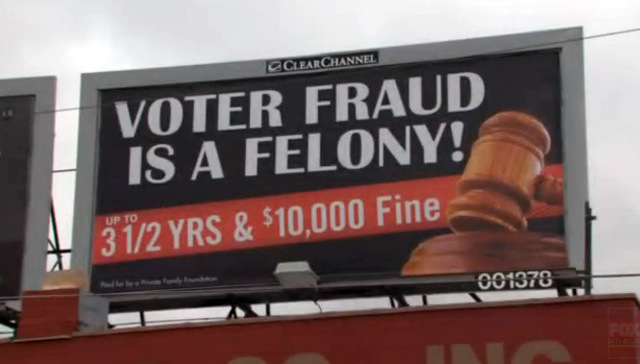 |
| More than 140 billboards, playing on the myth of “voter fraud,” were placed in black and Latino neighborhoods in Ohio and Wisconsin in 2012. Image from Colorlines. |
While the VRA eliminated explicit legal barriers to minority voting registration (such as poll taxes and discriminatory literacy tests), the dissent recognized newer forms of discrimination, such as racial gerrymandering to dilute minority votes; at-large voting in cities with large minority populations, which prevent representative elections; and racially-discriminatory annexation by cities to dilute minority votes.
And more recently, we have experienced voter identification laws that require obtaining expensive documents (which may be impossible for poor people to pay for, even if the documents are available), purges of voting rolls aimed at minorities (which often erroneously delete eligible voters from the voting rolls), voter intimidation at the polls, and practices that have yet to be addressed in most jurisdictions, such as tricking voters to vote on non-election days or at the wrong locations, all of which have the effect of reducing minority voting.
Since the voting rights decision, some states are making plans to eliminate early voting, same-day registration, and Sunday voting hours. But the voter ID laws, which are now being rushed into place (including in Texas) are the least justified because there is almost no in-person voter fraud in the U.S. according to a national investigative reporting project funded by the Carnegie Corporation of New York and the John S. and James L. Knight Foundation, which called such fraud “infinitesimal.”
It found that the “photo ID laws disproportionately affect minorities, students, the disabled and the elderly,” which is just what today’s Republicans want.
Of course, it was Chief Justice John Roberts’ predecessor, Republican William Rehnquist, who was accused by four witnesses, during his 1986 confirmation hearings as Chief Justice, of voter intimidation and harassment at polling locations in Phoenix in the early 1960s. So it is not surprising that the Republican members of the Supreme Court are insensitive to, or look favorably on, minority voting discrimination.
Another insensitive Republican and Arizona member of the Supreme Court famously ridiculed voters in Florida during the 2000 presidential election case decided by the court in favor of George W. Bush. Justice Sandra Day O’Connor thought that any voters who could not follow voting instructions were too stupid to have their votes counted, even if their intent could be determined by a close examination of the ballots. Evidently, she thought confusing ballot presentations should be blamed on the voters, not the election officials who created the confusion.
But not all Republicans seem to agree with the Supreme Court about the Voting Rights Act. House Speaker John Boehner, commenting on the act’s renewal in 2006, said that it is “an effective tool in protecting a right that is fundamental to our democracy.” It is gratifying to see that a majority of Americans seem to agree with Boehner’s assessment. An ABC/Washington Post poll released near the end of June showed that one-third of those polled approve of the Supreme Court’s decision, but just over half (51%) disapprove.
Paul Krugman had this to say in a recent column about voting rights:
America today… (is) a place where everyone celebrates the right to vote, yet many politicians work hard to disenfranchise the poor and nonwhite… But that very hypocrisy is, in a way, a good sign. The wealthy may defend their privileges, but given the temper of America, they have to pretend that they’re doing no such thing. The block-the-vote people know what they’re doing, but they also know that they mustn’t say it in so many words. In effect, both groups know that the nation will view them as un-American unless they pay at least lip service to democratic ideals — and in that fact lies the hope of redemption.
I wish I shared Krugman’s optimism. But I view the likelihood that America will be redeemed from its sins of hypocrisy about discrimination about as much as I believe that most Republicans will embrace the Affordable Care Act. The Americans who work to deny voting rights and disenfranchise minorities without admitting that this is what they are doing are like those who will not utter racially and ethnically derogatory names in polite company, but who are under their skin vicious racists. I know these people because some of them are my relatives and acquaintances.
A few years ago, these people who would deny fundamental rights if they have sufficient cover to do so included both Democrats and Republicans. But now, most of these hypocrites have moved over to the Republican Party or are members of fringe groups. This movement is as true of Supreme Court Justices as it is of politicians. The Republicans on today’s court torture logic and routinely ignore precedent in their efforts to justify their political conclusions. They often seek indirect ways to achieve the results they favor, as they have done in the VRA case.
Justice Ginsburg’s dissent to the VRA ruling raised the point that it took nearly 100 years after passage of the Fourteenth Amendment (adopted in 1866 to guarantee equal protection of the laws for African-Americans) and the Fifteenth Amendment (adopted in 1870 to guarantee the right to vote for African-American men), to pass the Voting Rights Act to end the discrimination those amendments were intended to address.
If it took nearly 100 years to assure racial fairness in voting under law, then it might take longer than 48 years to remedy that problem in actual practice. Fixing society is not a mechanical process like fixing a car that has broken down. Human beings and societies are more difficult to fix than engines.
Republicans want to suppress the vote of people who may vote for Democrats. That is the clear purpose of unneeded and unjustified laws that impact the voter turnout for elections. And gerrymandering is almost always used to reduce the election of members of the opposite party. The evidence supports these facts, even if most Republicans are too disingenuous to admit it.
[Lamar W. Hankins, a former San Marcos, Texas, city attorney, is also a columnist for the San Marcos Mercury. This article © Freethought San Marcos, Lamar W. Hankins. Read more articles by Lamar W. Hankins on The Rag Blog.]
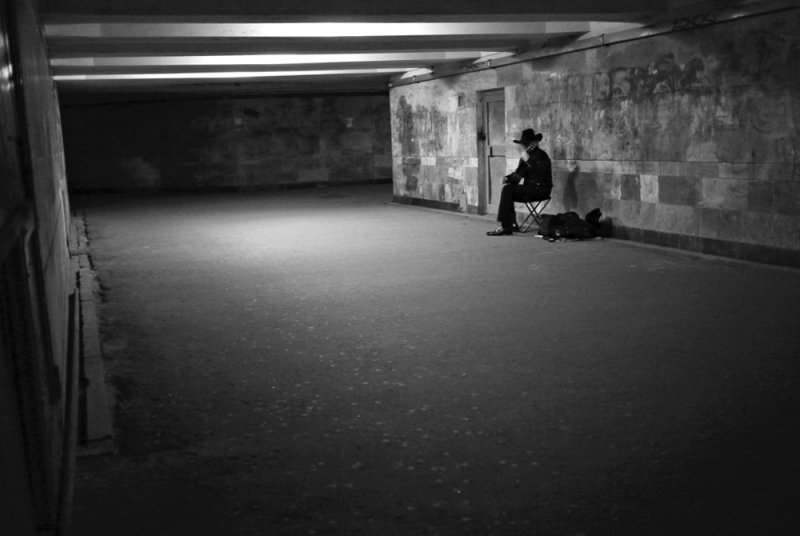 |
| Lonesome cowboy, Kiev, Ukraine, 2009. Photo by Phil Douglis / PBase. |
Spurred by Love
[For Buck Ramsey, Cowboy Poet Laureate]
On his last mount
the cowboy cries
a lonesome roller
and practitioner
of the riding
roping arts
also known
as its poet
laureate supreme
one late night
saying goodbye
please stay
won’t you
please
sobbing alone
one more time
to bay at the soul
of the lifeless moon
alone by the range
in the kitchen
of his exile
from the life
he’d loved
for an accident
thrown by life
from his horse
into the irony
of being the iconic
sad troubadour
of all the cowboys
lonesome yet
for a while
with no end
in sight
and poetry
to write
Larry Piltz / The Rag Blog
Indian Cove
Austin, Texas
July 17, 2013
[Larry Piltz is an Austin-based writer, poet, and musician. Find more articles and poetry by Larry Piltz on The Rag Blog.]
 |
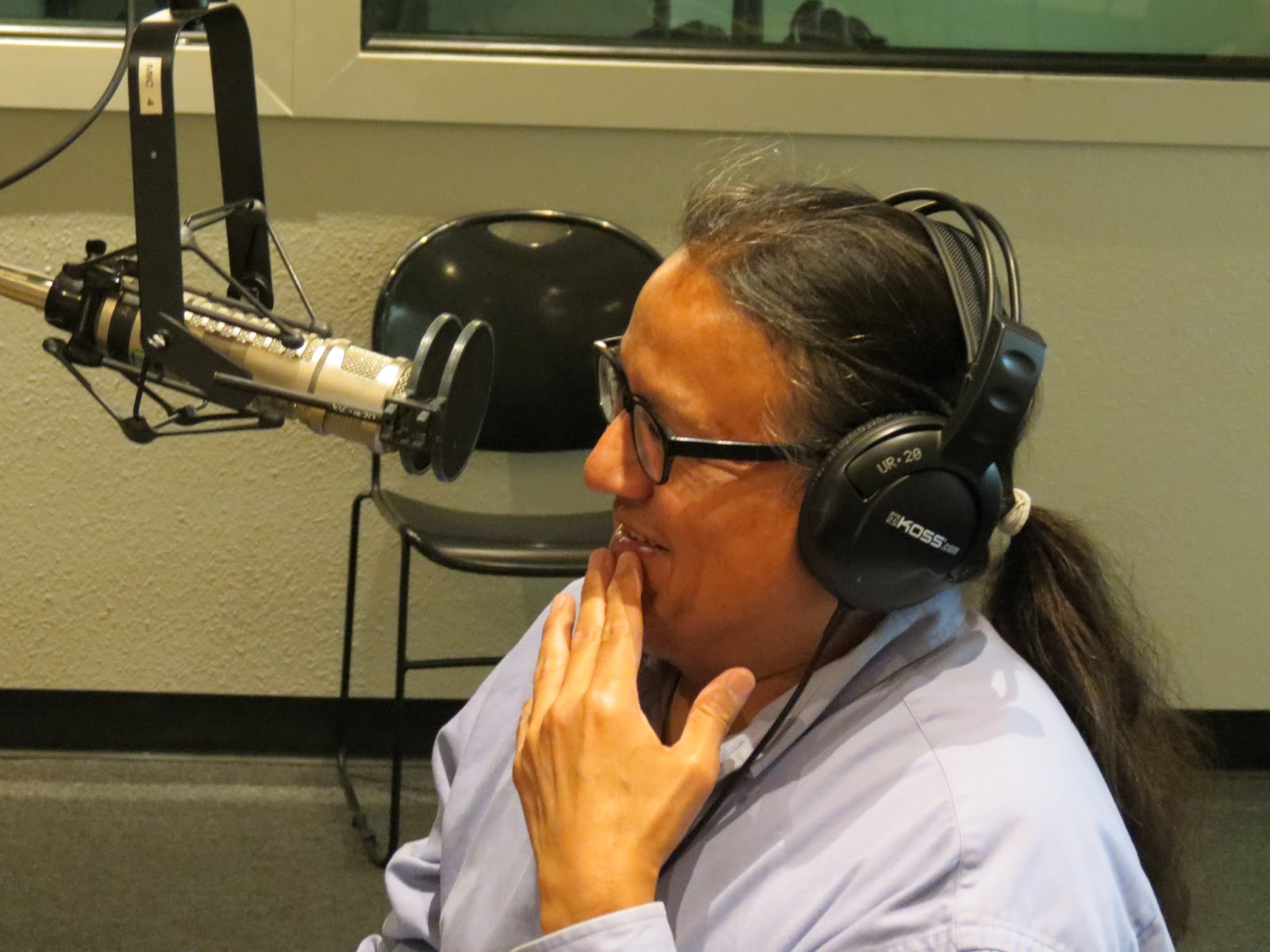
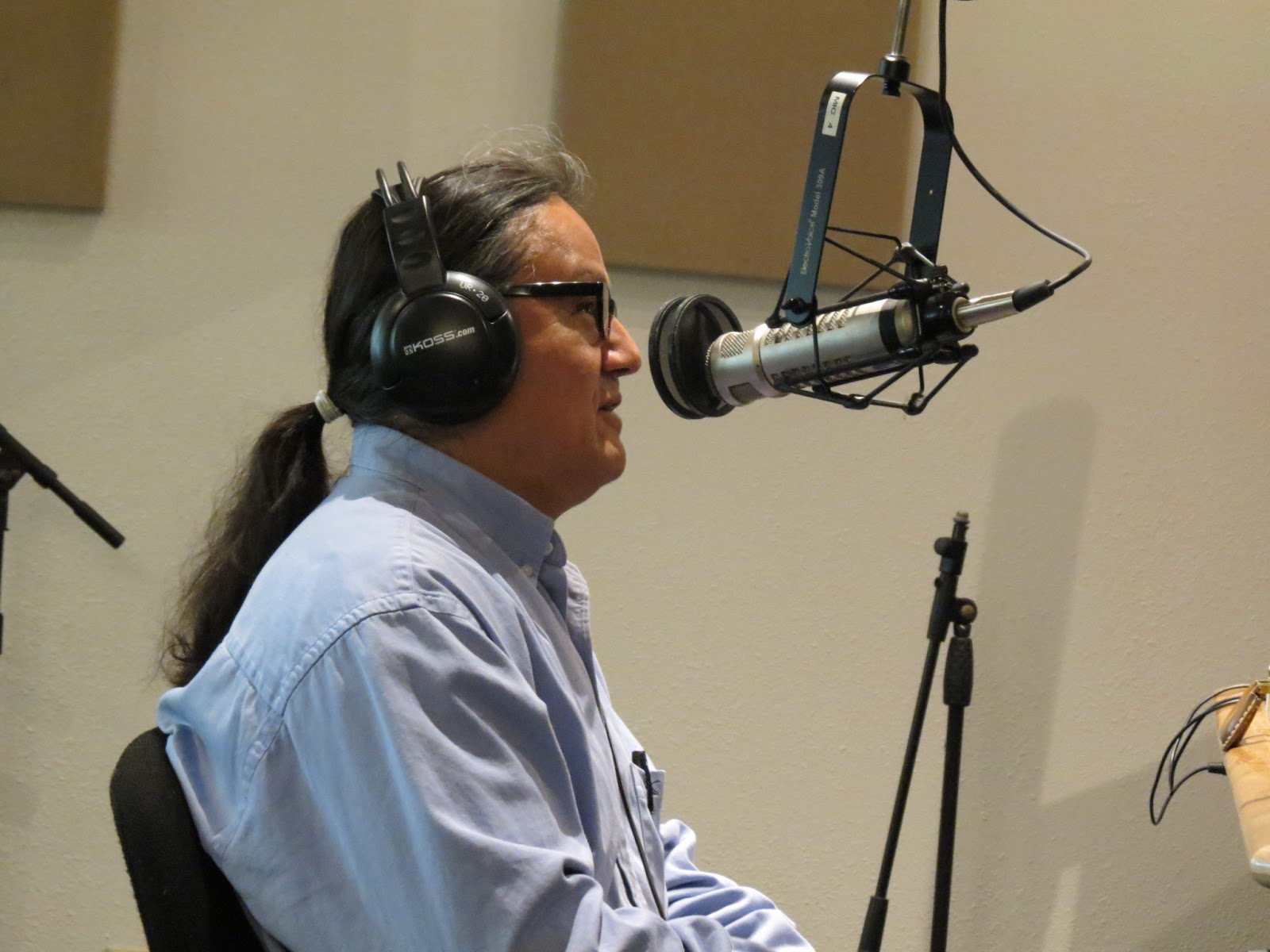
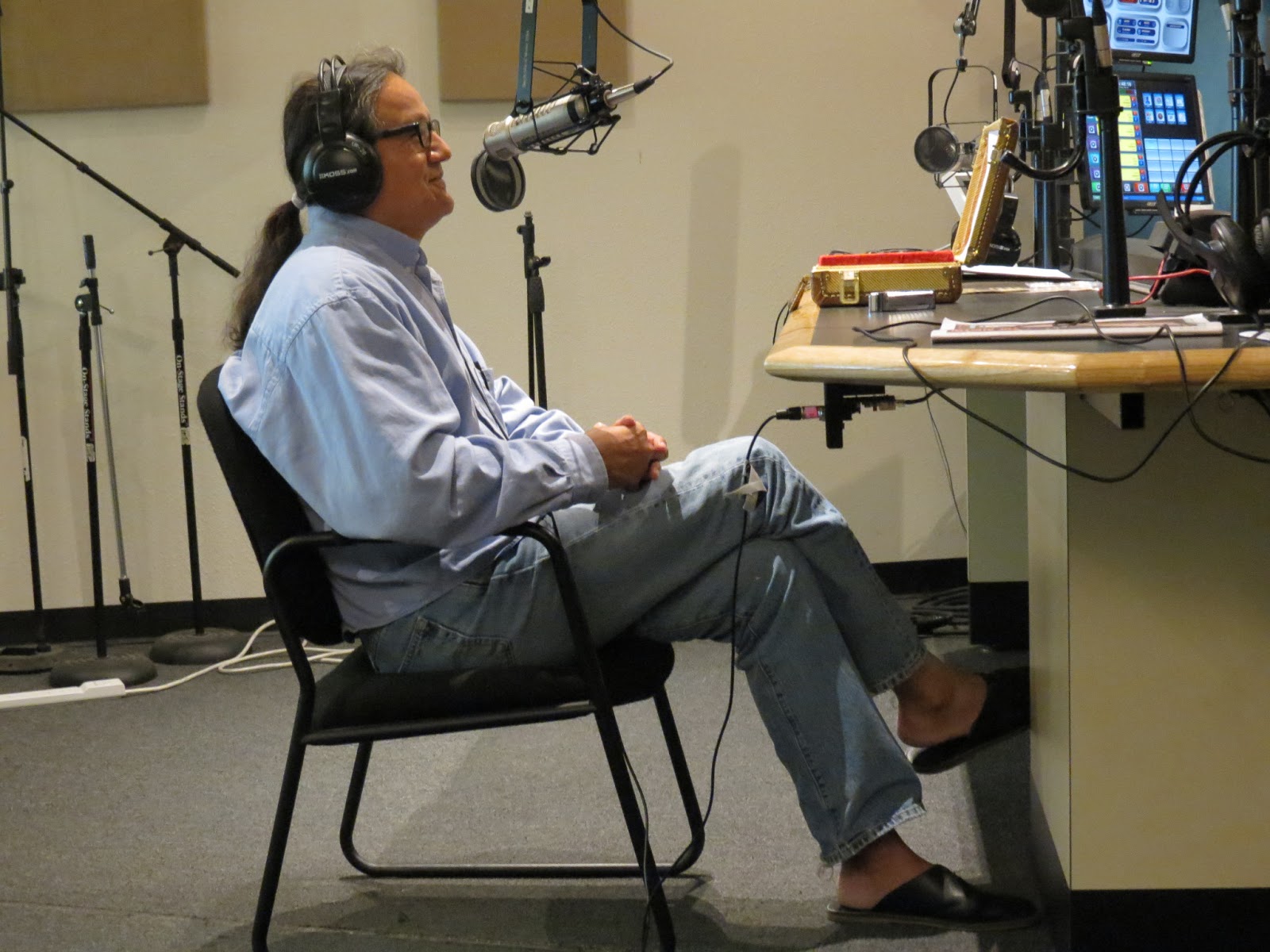
| University of Texas law professor Gerald Torres in the studios of KOOP-FM in Austin, Texas, Friday, July 12, 2013. Photos by Roger Baker / The Rag Blog. |
Rag Radio podcast:
UT-Austin law prof Gerald Torres
joins us on Rag Radio
We discuss the recent U.S. Supreme Court decisions on voting rights and affirmative action, plus immigration reform, Atmospheric Trust litigation, Native American sovereignty, and much more.
By Rag Radio | The Rag Blog | July 17, 2013
University of Texas law professor Gerald Torres was Thorne Dreyer’s guest on Rag Radio, Friday, July 12, 2013. Torres, who holds the Bryant Smith Chair in Law at the University of Texas, is an expert on environmental and agricultural law, critical race theory, and federal Indian law.
And he plays a mean harmonica!
Rag Radio is a syndicated radio program produced at the studios of KOOP 91.7-FM, a cooperatively-run all-volunteer community radio station in Austin, Texas.
Listen to or download this episode of Rag Radio here:
Gerald Torres, who was associate dean of the University of Minnesota Law School before coming to UT-Austin, has served as deputy assistant attorney general for the Environment and Natural Resources Division of the U.S. Department of Justice in Washington, D.C., and as counsel to then U.S. Attorney General Janet Reno.
His book, The Miner’s Canary: Enlisting Race, Resisting Power, Transforming Democracy (Harvard University Press), written with Harvard Law Professor Lani Guinier, was described by Publisher’s Weekly as “one of the most provocative and challenging books on race produced in years.”
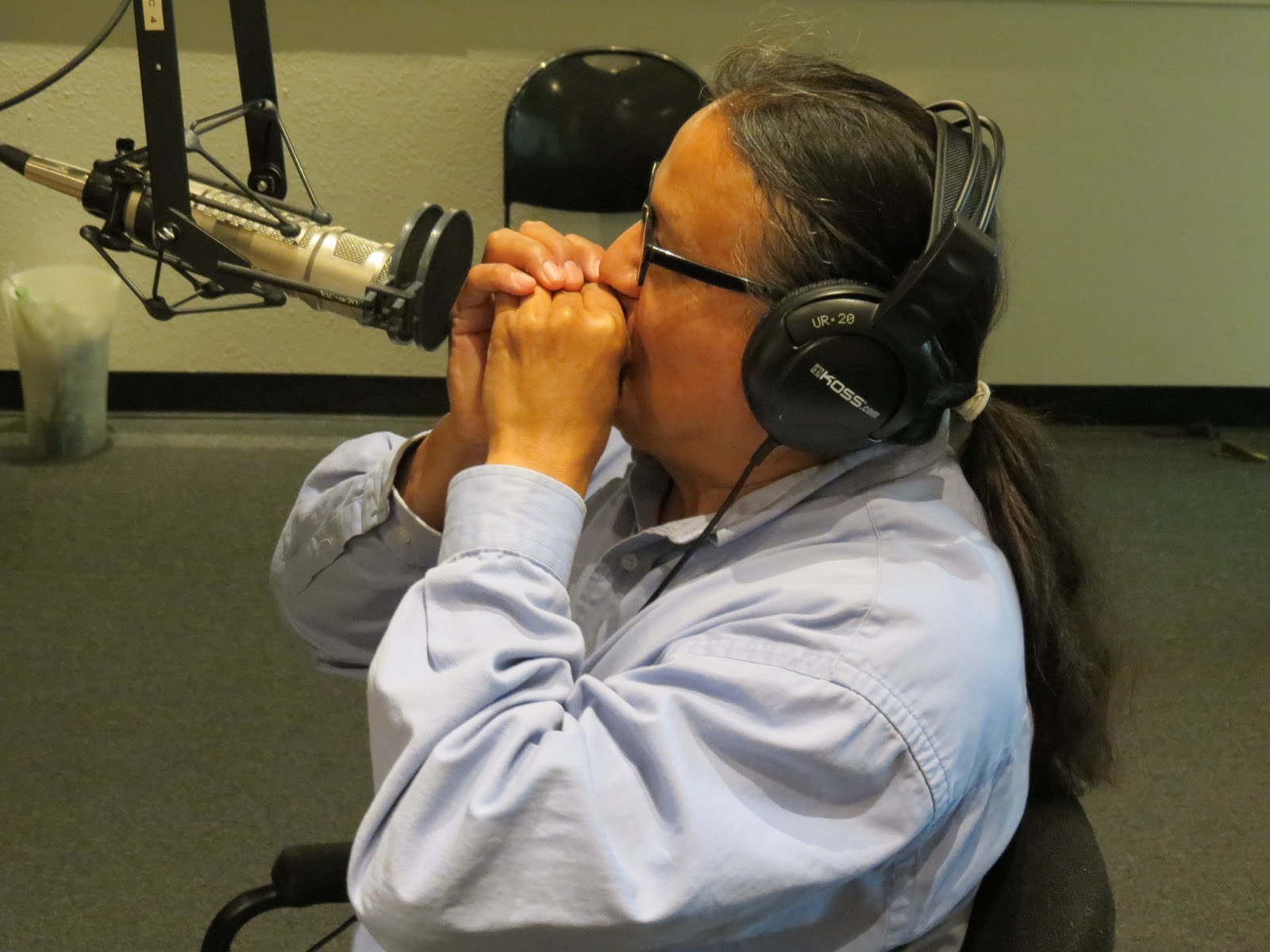 |
| Gerald Torres in performance! |
Professor Torres is a past president of the Association of American Law Schools. He has served on the board of the Environmental Law Institute, the National Petroleum Council, and on EPA’s National Environmental Justice Advisory Council. He is a member of the Council on Foreign Relations and the American Law Institute.
Torres was honored with the 2004 Legal Service Award from the Mexican American Legal Defense and Educational Fund (MALDEF) for his work to advance the legal rights of Latinos. He currently is Board Chair of the Advancement Project, the nation’s leading social and racial justice organization. He is also on the board of the Natural Resources Defense Council and is Vice-Chairman of the Board of Earth Day Network.
He has been a visiting professor at Harvard, Stanford, and Yale law schools.
 Rag Radio is hosted and produced by Rag Blog editor and long-time alternative journalist Thorne Dreyer, a pioneer of the Sixties underground press movement.
The show has aired since September 2009 on KOOP 91.7-FM, an all-volunteer cooperatively-run community radio station in Austin, Texas. Rag Radio is broadcast live every Friday from 2-3 p.m. (CDT) on KOOP and is rebroadcast on Sundays at 10 a.m. (EDT) on WFTE, 90.3-FM in Mt. Cobb, PA, and 105.7-FM in Scranton, PA.
The show is streamed live on the web by both stations and, after broadcast, all Rag Radio shows are posted as podcasts at the Internet Archive.
Rag Radio is produced in association with The Rag Blog, a progressive Internet newsmagazine, and the New Journalism Project, a Texas 501(c)(3) nonprofit corporation. Tracey Schulz is the show’s engineer and co-producer.
Rag Radio can be contacted at ragradio@koop.org.
Coming up on Rag Radio:
THIS FRIDAY, July 19, 2013: Sociologist, media critic, and author Todd Gitlin.
Friday, July 26, 2013: Sanford, FL-based political science prof Jay D. Jurie, on the consequences of the Trayvon Martin verdict.
Thorne Webb Dreyer, Editor




