Lamar W. Hankins : Religion is the Elixir of Republican Politics

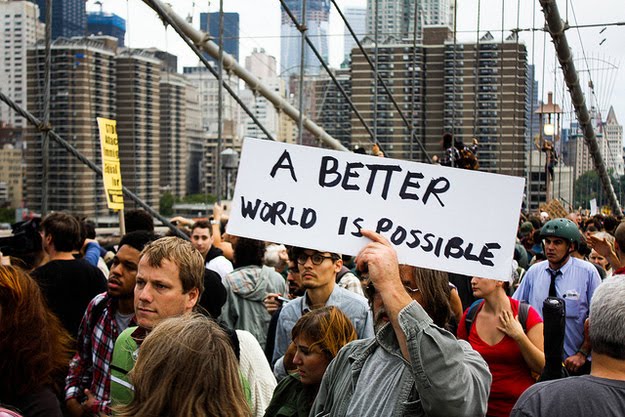
Religion as magic elixir. Image from Photobucket.

Religion:
The elixir of Republican politics

By Lamar W. Hankins / The Rag Blog / October 18, 2011

An elixir is a substance taken to cure one’s ills, or it’s a substance used to carry an ingredient to perform its intended function. Both definitions seem to fit the role religion has played in this year’s Republican politics (though Democrats are not averse to using it, as well).

Most reporters and commentators on the political scene seem to have missed that religion has no constitutional role in U.S. politics, but that hasn’t kept it from being an unnecessary diversion at times, and from being ignored when it should be examined.

The latest unnecessary diversion about religion is the persistent inquiry into Mitt Romney’s Mormonism. CNN host Candy Crowley insisted recently in an interview that two candidates for the Republican nomination for president state whether Mitt Romney’s Mormonism made him a Christian.

What nonsense. Whatever Romney’s religion, it is irrelevant (as those candidates said) to the political position he seeks, because he’s not running for president as a Mormon. He is running as a Republican. And he is a candidate with experience as a governor and as a businessman. Those are relevant qualifications, not his religious views.

As most readers know, Article VI of the U.S. Constitution provides that “no religious test shall ever be required as a qualification to any office or public trust under the United States.” This is what makes Romney’s religion — whether Christian or not — irrelevant politically.

Yet Candy Crowley, in a recent interview, insisted that both Herman Cain and Michele Bachmann give us their opinion on the question. Cain responded, “I’m not running for theologian in chief. I’m a lifelong Christian. And what that means is that one of my guiding principles for decisions I make is I start with ‘do the right thing.’ I’m not getting into that controversy.”

But after more prodding, Cain finally satisfied Crowley to some extent by declaring that a candidate’s religion is a “valid concern.” It’s not, unless the candidate makes it part of the reason that candidate is running for public office. Romney has not done so.

If Cain had just stuck to his decision not to get involved with the “Mormons as Christians” debate, I would have new-found respect for him. But when he decided that it was important to point out that he is a Christian, he revealed that his earlier statement was just a convenient ruse for letting his Republican base know that he is one of the good guys.

And a few days ago, Cain went even further. In an Associated Press interview, Cain pointed out that he has been a Christian since age 10. While he claims falsely not to mention religion often in public settings, he said, “But people can see it on my website, and when they read my credentials they can see that I’m a staunch Christian conservative.”

I guess the Constitution doesn’t really mean much to Cain.

To her credit, Bachmann refused to take the bait in her interview with Crowley, even after Crowley suggested that refusing to answer the question would be perceived as dodging a direct question. Bachmann stuck by her answer: “We have religious tolerance. We understand that people have different views on their faith, and I have a very sincerely held view on faith and I think we just leave it at that.”

Crowley should have taken the hint that being Christian is not a requirement for holding public office. Constitutionally, any religion or no religion is fine. She could have asked whether the candidates agree with that statement, which is a relevant matter under the Constitution.

Crowley typifies the mainstream media’s propensity to focus on the irrelevant, but titillating. If one’s religion is not a prerequisite for political office, there is no reason to deal with it unless the candidate has made it integral to his or her campaign. Both Bachmann and Rick Perry have done so. The mainstream media should be asking these two, along with Herman Cain, their views on the separation of church and state. If there were ever candidates who used religion as a political elixir, it is these three candidates.

But it would be fitting to ask all of the Republican crowd whether they agree with then-candidate John F. Kennedy’s statement about religion and politics: “I believe in an America where the separation of church and state is absolute, where no Catholic prelate would tell the president (should he be Catholic) how to act, and no Protestant minister would tell his parishioners for whom to vote.”

That last point is interesting. In fact, it is illegal for a pastor to tell his congregation how to vote. This ban from such politics is the price churches, along with all other tax-exempt, nonprofit organizations, pay for their tax-exempt status. While the IRS is not terribly diligent in enforcing the politics ban against churches, it does occasionally take legal action against a few churches for overstepping the non-political rules.

My knowledge of Mormonism is limited. I know a few Mormons. I’ve talked with Mormons and listened to their critics and detractors. Nothing I have learned has convinced me that whether or not one is a Mormon has any relevance to his or her ability to hold political office.

Perhaps the Mormon Tabernacle Choir would be asked to sing at the inauguration of a new president who is Mormon. If so, I would probably enjoy the music, just as I enjoyed hearing Pete Seeger and Bruce Springsteen perform at one of President Obama’s inaugural events. Beyond that, I can’t see that presidential governance would be any different with a Mormon as president, any more than it was affected by Richard Nixon’s Quaker upbringing or John Kennedy’s Catholicism.

Nothing that Romney did as Governor of Massachusetts seemed related specifically to his Mormonism.

Religion is relevant only if the officeholder tries to fulfill the responsibilities of office by applying his or her religious precepts and dogma to the public’s business. Based on their previous positions, this possibility does concern me with the candidates Rick Perry and Michele Bachman, who tend toward a theocratic view of governance.

Perry’s official sponsorship as governor of the prayer rally held in Houston in August is one example. Some have even called Perry and Bachmann Dominionists — conservative Christians who want to influence or control secular civil government by imposing their biblical beliefs on the country.

While there isn’t enough evidence for me to call them Dominionists, we do know that both Perry and Bachmann say that God has called them to be president, or at least to run for that office. Now, Anita Perry, Rick Perry’s wife has gone further, explaining in a campaign speech in South Carolina why her husband should be president: “God was already speaking to me, but he [Rick Perry] felt like he needed to see the burning bush. I said, ‘Let me tell you something: You might not see the burning bush but other people are seeing it for you.’”

The Perrys, along with some of their friends, want the rest of us to believe that Rick Perry is the chosen one — chosen by God for the U.S. presidency. Michele Bachmann must feel betrayed since God previously chose her, or so she said. It is wiser probably to ignore all such self-aggrandizing proclamations by politicians and their supporters and pay attention to their actions, their positions on the issues, and the work and views of those close to them.

At the recent Faith and Values Conference, Perry chose the Rev. Robert Jeffress to give his formal introduction before he spoke. Jeffress said that Perry is a true Christian. Jeffress also told the press that he believes Mormonism is a “cult,” and that Mormons aren’t true Christians, views that were well-known to Perry and everyone else who has paid attention to Jeffress. Perry refused to repudiate the injection of such irrelevant and offensive views into his presidential campaign.

What appears to be happening in this political season is that Perry and some others are using religion to send messages to their evangelical supporters and to curry favor with the religious right. Perry may be sincere in his religious beliefs. I can’t judge that. What I can judge is the ways in which he uses religion for political benefit. In this, Perry has no peer.

When it comes to using religion for political benefit, Romney is a no-show. For that, Romney should be commended.

[Lamar W. Hankins, a former San Marcos, Texas, city attorney, is also a columnist for the San Marcos Mercury. This article © Freethought San Marcos, Lamar W. Hankins. Read more articles by Lamar W. Hankins on The Rag Blog.]

The Rag Blog

Posted in Rag Bloggers | Tagged , , , , , | 3 Comments

Religion:
The elixir of Republican politics

By Lamar W. Hankins / The Rag Blog / October 18, 2011

An elixir is a substance taken to cure one’s ills, or it’s a substance used to carry an ingredient to do its intended purpose. Both definitions seem to fit the role religion has played in this year’s Republican politics (though Democrats are not averse to using it, as well).

Most reporters and commentators on the political scene seem to have missed that religion has no constitutional role in U.S. politics, but that hasn’t kept it from being an unnecessary diversion at times, and from being ignored when it should be examined.

The latest unnecessary diversion about religion is the persistent inquiry into Mitt Romney’s Mormonism. CNN host Candy Crowley insisted recently in an interview that two candidates for the Republican nomination for president state whether Mitt Romney’s Mormonism made him a Christian.

What nonsense. Whatever Romney’s religion, it is irrelevant (as those candidates said) to the political position he seeks, because he’s not running for president as a Mormon. He is running as a Republican. And he is a candidate with experience as a governor and as a businessman. Those are relevant qualifications, not his religious views.

As most readers know, Article VI of the U.S. Constitution provides that “no religious test shall ever be required as a qualification to any office or public trust under the United States.” This is what makes Romney’s religion — whether Christian or not — irrelevant politically. Yet Candy Crowley, in a recent interview, insisted that both Herman Cain and Michele Bachmann give us their opinion on the question.

Cain responded, “I’m not running for theologian in chief. I’m a lifelong Christian. And what that means is that one of my guiding principles for decisions I make is I start with ‘do the right thing.’ I’m not getting into that controversy.”

But after more prodding, Cain finally satisfied Crowley to some extent by declaring that a candidate’s religion was a “valid concern.” It’s not, unless the candidate makes it part of the reason that candidate is running for public office. Romney has not done so.

If Cain had just stuck to his decision not to get involved with the “Mormons as Christians” debate, I would have new-found respect for him. But when he decided that it was important to point out that he is a Christian, he revealed that his earlier statement was just a convenient ruse for letting his Republican base know that he is one of the good guys.

And a few days ago, Cain went even further. In an Associated Press interview, Cain pointed out that he has been a Christian since age 10. While he claims falsely not to mention religion often in public settings, he said, “But people can see it on my website, and when they read my credentials they can see that I’m a staunch Christian conservative.” I guess the Constitution doesn’t really mean much to Cain.

To her credit, Bachmann refused to take the bait in her interview with Crowley, even after Crowley suggested that refusing to answer the question would be perceived as dodging a direct question. Bachmann stuck by her answer: “We have religious tolerance. We understand that people have different views on their faith, and I have a very sincerely held view on faith and I think we just leave it at that.”

Crowley should have taken the hint that being Christian is not required to hold public office. Constitutionally, any religion or no religion is fine. She could have asked whether the candidates agree with that statement, which is a relevant matter under the Constitution.

Crowley typifies the mainstream media’s propensity to focus on the irrelevant but titillating. If one’s religion is not a prerequisite for political office, there is no reason to deal with it unless the candidate has made it integral to his or her campaign.

Both Bachmann and Rick Perry have done so. The mainstream media should be asking these two, along with Herman Cain, their views on the separation of church and state. If there were ever candidates who used religion as a political elixir, it is these three candidates.

But it would be fitting to ask all of the Republican crowd whether they agree with then-candidate John F. Kennedy’s statement about religion and politics: “I believe in an America where the separation of church and state is absolute, where no Catholic prelate would tell the president (should he be Catholic) how to act, and no Protestant minister would tell his parishioners for whom to vote.”

That last point is interesting. In fact, it is illegal for a pastor to tell his congregation how to vote. This ban from such politics is the price churches, along with all other tax-exempt, nonprofit organizations, pay for their tax-exempt status. While the IRS is not terribly diligent in enforcing the politics ban against churches, it does occasionally take legal action against a few churches for overstepping the non-political rules.

My knowledge of Mormonism is limited. I know a few Mormons. I’ve talked with Mormons and listened to their critics and detractors. Nothing I have learned has convinced me that whether one is a Mormon has any relevance to holding political office.

Perhaps the Mormon Tabernacle Choir would be asked to sing at the inauguration of a new president who is Mormon. If so, I would probably enjoy the music, just as I enjoyed hearing Pete Seeger and Bruce Springsteen perform at one of President Obama’s inaugural events. Beyond that, I can’t see that presidential governance would be any different with a Mormon as president, any more than it was affected by Richard Nixon’s Quaker upbringing or John Kennedy’s Catholicism.

Nothing that Romney did as Governor of Massachusetts seemed related specifically to his Mormonism.

Religion is relevant only if the officeholder tries to fulfill the responsibilities of office by following his or her religious precepts and dogma by applying them to the public’s business. Based on their previous positions, this possibility does concern me with the candidates Rick Perry and Michele Bachman, who tend toward a theocratic view of governance.

Perry’s official sponsorship as governor of the prayer rally held in Houston in August is one example. Some have even called Perry and Bachmann Dominionists — conservative Christians who want to influence or control secular civil government by imposing their biblical beliefs on the country.

While there isn’t enough evidence for me to call them Dominionists, we do know that both Perry and Bachmann say that God has called them to be president, or at least run for that office. Now, Anita Perry, Rick Perry’s wife has gone further, explaining in a campaign speech in South Carolina why her husband should be president: “God was already speaking to me, but he (Rick Perry) felt like he needed to see the burning bush. I said, ‘Let me tell you something: You might not see the burning bush but other people are seeing it for you.’”

The Perrys, along with some of their friends, want the rest of us to believe that Rick Perry is the chosen one — chosen by God for the US presidency. Michele Bachmann must feel betrayed since God previously chose her, or so she said. It is wiser probably to ignore all such self-aggrandizing proclamations of politicians and their supporters and pay attention to their actions, their positions on the issues, and the work and views of those close to them.

At the recent Faith and Values Conference, Perry chose the Rev. Robert Jeffress to give his formal introduction before he spoke. Jeffress said that Perry was a true Christian. Jeffress also told the press that he believes Mormonism is a “cult,” and that Mormons aren’t true Christians, views that were well known to Perry and everyone else who has paid attention to Jeffress. Perry refused to repudiate the injection of such irrelevant and offensive views into his presidential campaign.

What appears to be happening in this political season is that Perry and some others are using religion to send messages to their evangelical supporters and curry favor with the religious right.

Perry may be sincere in his religious beliefs. I can’t judge that. What I can judge is the ways in which he uses religion for political benefit. In this, Perry has no peer. When it comes to using religion for political benefit, Romney is a no-show. For that, Romney should be commended.

[Lamar W. Hankins, a former San Marcos, Texas, city attorney, is also a columnist for the San Marcos Mercury. This article © Freethought San Marcos, Lamar W. Hankins. Read more articles by Lamar W. Hankins on The Rag Blog.]

The Rag Blog

Posted in RagBlog | Leave a comment

Suzanne Goldenberg : Perry Officials Alter Environmental Report; Scientists Rebel

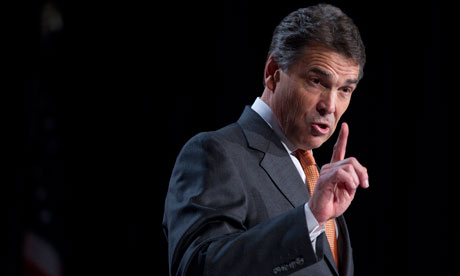
Texas Governor Rick Perry. Censorship of scientists’ report sparks revolt. Photo by Evan Vucci / AP / The Guardian.

Rick Perry officials doctor
scientists’ environmental report

Scientists ask for names to be removed after mentions of climate change and sea-level rise are deleted by Texas officials.

By Suzanne Goldenberg / The Guardian / October 17, 2011

Officials in Rick Perry’s home state of Texas have set off a scientists’ revolt after purging mentions of climate change and sea-level rise from what was supposed to be a landmark environmental report. The scientists said they were disowning the report on the state of Galveston Bay because of political interference and censorship from Perry appointees at the state’s environmental agency.

By academic standards, the protest amounts to the beginnings of a rebellion: every single scientist associated with the 200-page report has demanded their names be struck from the document. “None of us can be party to scientific censorship so we would all have our names removed,” said Jim Lester, a co-author of the report and vice-president of the Houston Advanced Research Center.

“To me it is simply a question of maintaining scientific credibility. This is simply antithetical to what a scientist does,” Lester said. “We can’t be censored.” Scientists see Texas as at high risk because of climate change, from the increased exposure to hurricanes and extreme weather on its long coastline to this summer’s season of wildfires and drought.

However, Perry, in his run for the Republican nomination, has elevated denial of science, from climate change to evolution, to an art form. He opposes any regulation of industry, and has repeatedly challenged the authority of the Environmental Protection Agency.

Texas is the only state to refuse to sign on to the federal government’s new regulations on greenhouse gas emissions. “I like to tell people we live in a state of denial in the state of Texas,” said John Anderson, an oceanographer at Rice University, and author of the chapter targeted by the government censors.

That state of denial percolated down to the leadership of the Texas Commission on Environmental Quality. The agency chief, who was appointed by Perry, is known to doubt the science of climate change. “The current chair of the commission, Bryan Shaw, commonly talks about how human-induced climate change is a hoax,” said Anderson.

But scientists said they still hoped to avoid a clash by simply avoiding direct reference to human causes of climate change and by sticking to materials from peer-reviewed journals. However, that plan began to unravel when officials from the agency made numerous unauthorized changes to Anderson’s chapter, deleting references to climate change, sea-level rise, and wetlands destruction.

“It is basically saying that the state of Texas doesn’t accept science results published in Science magazine,” Anderson said. “That’s going pretty far.”

Officials even deleted a reference to the sea level at Galveston Bay rising five times faster than the long-term average — 3mm a year compared to .5mm a year which Anderson noted was a scientific fact. “They just simply went through and summarily struck out any reference to climate change, any reference to sea level rise, any reference to human influence — it was edited or eliminated,” said Anderson. “That’s not scientific review. That’s just straight forward censorship.”

Mother Jones has tracked the changes. The agency has defended its actions. “It would be irresponsible to take whatever is sent to us and publish it,” Andrea Morrow, a spokeswoman said in an emailed statement. “Information was included in a report that we disagree with.”

She said Anderson’s report had been “inconsistent with current agency policy,” and that he had refused to change it. She refused to answer any questions. Campaigners said the censorship by the Texas state authorities was a throwback to the George Bush era when White House officials also interfered with scientific reports on climate change.

In the last few years, however, such politicization of science has spread to the states. In the most notorious case, Virginia’s attorney general Ken Cuccinelli, who is a professed doubter of climate science, has spent a year investigating grants made to a prominent climate scientist Michael Mann, when he was at a state university in Virginia.

Several courts have rejected Cuccinelli’s demands for a subpoena for the emails. In Utah, meanwhile, Mike Noel, a Republican member of the Utah state legislature, called on the state university to sack a physicist who had criticized climate science doubters.

The university rejected Noel’s demand, but the physicist, Robert Davies, said such actions had had a chilling effect on the state of climate science. “We do have very accomplished scientists in this state who are quite fearful of retribution from lawmakers, and who consequently refuse to speak up on this very important topic. And the loser is the public,” Davies said in an email.

“By employing these intimidation tactics, these policymakers are, in fact, successful in censoring the message coming from the very institutions whose expertise we need.”

[Suzanne Goldenberg is the U.S. environmental correspondent for the London-based Guardian newspaper, where this article was first published. She has won several awards for her work in the Middle East, and in 2003 covered the U.S. invasion of Iraq from Baghdad. She is author of Madam President, about Hillary Clinton’s historic run for the White House.]

The Rag Blog

Posted in RagBlog | Tagged , , , , , | 1 Comment

Posted in RagBlog | Leave a comment

400 richest Americans having more wealth than half of all Americans combined – Amy Goodman

Posted in RagBlog | Leave a comment

Ellen LaConte : Finding Democracy in Unexpected Places

Single-celled amoeba called dictyostelium gather together and turn themselves collectively into a new creature: slime mold. Image from National Center for Biotechnology Information (NCBI).

Finding democracy in unexpected
— and radically green — places

What if nature — life as we know it — rather than our own history, provides ‘the inspiration for genuine democratic thinking’?

By Ellen LaConte / The Rag Blog / October 13, 2011

[This post is adapted from Ellen LaConte’s article in the Fall/Winter 2011 issue of the international journal, Green Horizon.]

“Our capacity for democracy grows from our connection with nature. As we lose that connection, isolation, fear, and the need to control grow — and democracy inevitably deteriorates. It’s easy to forget that a deep connection with nature provides the inspiration for genuine democratic thinking.” — Peter Senge in Presence: Exploring Profound Change in People, Organizations and Society i

In my book Life Rules (the implication being that we don’t), I make the case that the prognosis for global or even national-level solutions for the syndrome of economic, environmental, and political/social crises we presently face is poor.

I take the recent debt-ceiling fiasco as further proof of the pudding. Variously inept, corrupt, craven, bought and paid for, ideologically intransigent, and ignorant of or unwilling to face and make the electorate face hard realities, our leaders are evidently incapable of comprehending or coping with the complexity of the issues before them.

They fail to see, or at least fail to say that they see, the connections between and among these crises. They exhibit an almost pathological inability or refusal to recognize the seriousness of consequences of the convergence of these crises: economic and ecological breakdown and worldwide chaos.

Tackling these crises — or at least seeming to — only one at a time is equivalent to treating AIDS-related cancers without treating the recurrent pneumonia and wasting disease that are also symptomatic of AIDS.

Leaders of both major parties have chosen posturing and pandering as alternatives to governing and Greens haven’t yet the numbers, leverage, or heft to challenge them. For the major media, posturing and pandering are meat, potatoes, trifle, and a raison d’etre. For the American people they’re disastrous. Waiting for politicians and politics as we’ve known them to cure themselves of this life-threatening condition could prove fatal.

Taking to the streets as larger and larger numbers of Americans are, for a variety of causes ranging from climate change to oligarchy removal, is a start. It signals that a critical mass of Americans are dissatisfied.

But nonviolent protests may meet with dismissal at worst and minor concessions at best. Because, whatever else may be said of the present political “process” and the behaviors of the Powers in Washington, it’s not democracy. Genuinely democratic praxis is nowhere to be found inside the beltway. Representative Eric Cantor’s description of the Wall Street justice-and-democracy-starved occupiers as a “mob” is indicative of the present batch of powers’ perspective on the people they are supposed to represent.

As a set of behaviors and relationships that can help people talk through and across their differences, integrate their interests and skills, work for the common good, and organize otherwise fractious and factional humans in common cause, democracy is missing in action in America. It has been co-opted by globalized capitalism much as the human body is co-opted by HIV.

I think, however, that it’s not that democracy has failed us but our way of thinking about it that has. We might say of democracy what Gandhi said when asked what he thought of civilization: “It would be a very good idea.”

What democracy’s not

So far we’ve gotten the idea wrong. We are accustomed to thinking of democracy as a noun. “A democracy” is a physical place, a nation with borders defined on a map such that if we are born within those borders we are somehow born into democracy too.

Democracy is a kind of protective covering “under” which we live, such that it will take care of us and keep us from harm. We treat it as if it were a possession. “Having it,” we are superior to those who don’t. We think of it as a right. Aside from being born within a particular nation’s borders and under the protection of that nation’s government, police, and military, we don’t have to do anything to get democracy.

In fact, we have very little to do with it. It’s just ours, by right. Nonetheless, we go to great lengths to “keep it,” including going to war for it or over it. And we’ve gotten into our minds and political discourse the notion that we ought to try to “give it” to others, as if it were a thing we could give like food or money or weapons.

But what if “democracy” is not a noun? What if, as Frances Moore Lappé and I have proposed in our books Democracy’s Edge and Life Rules, it’s more like a verb. What if it’s not something we have but something we do, together; how we organize ourselves and relate to and behave with each other?

And what if, as MIT management innovator Peter Senge suggests, we’ve been looking for democracy in the wrong places. What if nature — life as we know it — rather than our own history, provides “the inspiration for genuine democratic thinking”? And what if, as Hopi elders proposed some hundreds of years ago, what life tells us is that we really are the ones we’re waiting for.

African buffalo herds stand up and point themselves in the same direction. Image from redbubble.

Democracy all the way up…

It has long been assumed that most animal societies are organized as we are with powers and cowerers, doers and done to, top dogs and underdogs, alpha males and dominance everywhere you look. That view is changing.

Larissa Conradt, an evolutionary biologist at the University of Sussex, UK, writes that,

In social species many decisions need to be made jointly with other group members because the group will split apart unless a consensus is reached. Consider, for example, a group of primates deciding which direction to travel after a rest period, a flock of birds deciding when to leave a foraging patch, or a swarm of bees choosing a new nest site. Unless all members decide on the same action, some will be left behind and will forfeit the advantages of group living. ii

And if too many are left behind the group will fall apart leaving the members in a state of chaos and confusion and at a survival disadvantage. Accordingly, “group decision-making is a commonplace occurrence in the lives of social animals.” iii

In studies of red deer conducted with her colleague Tim Roper, Conradt found that when it comes to making decisions about moving on from a resting place, feeding ground or watering hole, it’s not the sexually dominant alpha male or even a group of sexually-dominant males that make the decision when to go or even necessarily where.

Life has taught red deer the hard way that even the most experienced, strong, clever alpha might decide to move the herd based on nothing more than a sudden urge or misinterpreted sign of danger, even though many members of the herd are still thirsty, tired or hungry.

Barring clear and present danger, members of red deer herds, gorilla bands, African buffalo herds and other close-knit animal societies vote their readiness to move by standing up and pointing themselves in the direction they want to go. When a significant majority have stood and/or pointed themselves in the chosen direction, the group moves on together in the direction they’ve chosen together. In a statement that until recently the scientific community would have considered unorthodox or heretical, Roper and Conradt concluded that “democratic behavior is not unique to humans.” iv

Anna Dornhaus of the University of Arizona and Nigel R. Franks at the University of Bristol in the UK have found that some varieties of bees and ants engage in information pooling and consensus decision making. “Democracy is not something that humanity invented,” Dornhaus concludes.

Radio personality and author Thom Hartmann has written of this new understanding of animal behavior:

Without exception the natural state of group-living animals is to cooperate, not dominate. Democracy, it turns out, is hardwired into the DNA of species from ants to zebras. And it includes all of the hominids from the great apes to Homo sapiens. v

…and all the way down

Examples of democratic activity can be found at levels as far down Life’s food chain as microbes. “In recent years,” Werner Krieglstein wrote in Green Horizon Magazine,

scientists have documented a remarkable sequence of behavior that might well be suited to serve as a metaphor if not as a lived example for how we human beings can and should behave in times of need… Scientists observed this single cell organism cooperating in a quite extraordinary fashion when the food supply was running short.

Facing a life threatening famine, hordes of single-celled amoeba called dictyostelium gather from every direction and every part of famine territory and turn themselves collectively into a new creature: slime mold. “They group together, forming a community, to achieve goals they could not achieve by themselves.”vi

Microbiologist Mahlon Hoagland explains how this works: Recognizing pending catastrophe,

a single amoeba, apparently self-appointed, begins to emit a chemical signal. Near-by neighbors, irresistibly drawn to the signal “ooze” over and attach themselves to the signaler. Each new member of the cluster amplifies the signal by releasing its own signal. More amoeba arrive.

It’s sort of like a grassroots flash mob at this point.

Then a startling transformation occurs: The aggregate shapes itself into a slug and begins to migrate to a new location, leaving a trail of slime behind it. As the slug moves the cells differentiate into three distinct types,

each type taking up a task vital to the group’s survival.vii

They form a creature that looks like a tiny futuristic floor lamp with a base, a post, and a round, covered bulb. The base roots the slime mold in its new food-rich environment. The post raises the bulb high so that its equivalent of light will cover as large an area as possible.

And what’s the equivalent of light in this amoebic democracy analogy? Spores, like tiny eggs. Dispersed like photons in their new space when the bulb “turns on” and emits them, they become new single-celled amoebae. “And then the cycle begins anew.” Individuals do their own thing until collective — democratic — action is required again to deal with another shared crisis.

Dog, meet dog

Dog-eat-dog is, after all, an anomaly. It is not the state of nature. Something closer to democracy is. Red in tooth and claw is a human projection based on incomplete and inaccurate science and biased observation.

Carnivores for the most part turn on each other — the weakened, wasting, wounded, or recently deceased — only when there’s not enough else to eat. And that happens for the most part only when we or natural forces dramatically reduce their territory and/or sources of food. In other words when our activities and presence or natural cycles or cataclysms have caused Critical Mass.

Think urban feral dogs and cats, gorillas when the mist has gone away with the forests, wolves when wildfire or volcanic eruption clears the landscape of herds and small prey. But even in desperate times, most other-than-human species continue to cooperate more like those amoeba than like rabid packs of dogs. Why? Democracy is key to species survival.

We are about to learn that. If the protests in the American Street bear down hard on the Wall Street occupiers intent that Americans work together to “create a process to address the problems we face, and generate solutions accessible to everyone” rather than assuming any elected official or group of them will do these things for us, then we might gather to ourselves the courage and conviction necessary for a Second American revolution, this time not just to topple oligarchs but to declare independence from the Global Economic Order that they support so that it will continue to support them.

References

i Peter Senge, C. Otto Scharmer, Joseph Jaworski, Betty Sue Flowers, Presence: Exploring Profound Change in People, Organizations and Society (Nicholas Brealey Publishing, 2005), p. 173.
ii From the website of the Center for the Study of Evolution at the University of Sussex, www.biols.susx.ac.uk/members/lconradt

iii Ibid.
iv Tim Roper and L. Conradt, “Group Decision-Making in Animals,”
Nature, 421 (January 2003): 155.
v Thom Hartmann,
What Would Jefferson Do? (Harmony Books, 2004), 141.
vi Werner Krieglstein, “How to Feel and Act Like an Amoeba,”
Green Horizon Magazine, Spring 2008.
vii Mahlon Hoagland and Bert Dodson,
The Way Life Works, (Three Rivers Press, 1995), 152-153

[Ellen LaConte’s book Life Rules: Why so much is going wrong everywhere at once and how Life teaches us to fix it (Green Horizon, 2010, orderable from all book sellers) from which parts of this post have been drawn has a diverse and deep list of supporters ranging from Richard Heinberg, Robert Jensen, and William Catton to John Cobb, Joanna Macy, and Derrick Jensen. She will be guiding workshops at the “Brave New Planet: Imagining Ecological Societies ” conference in Claremont CA, Oct. 27-29. Bill McKibben keynotes. McKibben, Cobb, and plenary speaker David Orr will participate in open discussions throughout the conference. You can link to podcasts of LaConte’s radio interviews at www.ellenlaconte.com. Read more articles by Ellen LaConte on The Rag Blog.]

The Rag Blog

Posted in Rag Bloggers | Tagged , , | Leave a comment

Steve Russell : ‘Chief’ Was Born on Death Row

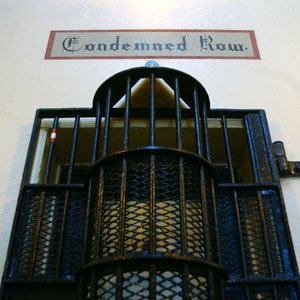
The North Block entrance to Condemned Row at San Quentin. Image from Strong as an Ox.

‘Chief’ Stankewitz:
Born on death row

Just as you can’t discuss federal Indian policy without recourse to history, it’s hard to understand Douglas Stankewitz and his crimes outside of his historical context, which includes the spectacular destruction of California Indians.

By Steve Russell / The Rag Blog / October 13, 2011

Capital punishment, the saying goes, means that those without the capital get the punishment, and over 35 years of labor in criminal law has yet to show me a case that disproves it.

Capital cases are usually defended by court-appointed lawyers, because prosecutors do not typically choose to seek the death penalty against defendants who can afford the stratospheric legal fees of a capital defense. The only capital case I defended in private practice was one of the very few I’ve seen where the lawyers were hired rather than appointed, and we won — victory being defined in that instance as the government was not allowed to kill our client.

Death row, like most poor neighborhoods, has a disproportionate number of minority residents. Those of us who come from poor neighborhoods know that there are mean people there, and plenty of conditions that make even good people mean. We also know that the vast majority of poor people survive those conditions without becoming mean.

Good or mean, the hearty survival rate of poor people justifies in the minds of some what they call “putting down the mad dogs,” in spite of the fact that it is much more expensive to kill sociopaths than it is to lock them up without the possibility of parole. Those are the two choices for dealing with the people who have become too dangerous to live among us, and such people do exist — in all my years of practice, I have had contact with three of them; three out of the thousands of criminal defendants with whom I have dealt.

Based on my many years in the legal system, I do not trust it to pick those three sociopaths out of a crowd. Sociopaths, you see, are not always poor people — some of them are even white. Back in the days (within my lifetime) when we had the death penalty for rape, those executed were most often dark-skinned men accused of raping white women, and thanks to DNA exonerations we now understand that cross-racial identification is highly unreliable.

Even utterly certain eyewitnesses make mistakes, and confessions are so notoriously unreliable that everyone understands why police investigators withhold some details of every crime that makes the newspaper. The more publicity the crime gets, the more disturbed people will line up to confess.

Making things even more confusing is that confessions by persons actually involved in a crime are often given to shift blame, leading to the perverse outcome in some capital cases that the more experienced criminal is able to make a deal to escape the death penalty by testifying against a less savvy co-defendant, without regard to which defendant was more culpable.

Since eyewitness identifications and confessions can be unreliable, it’s easy to see why there are very few trials where everybody agrees on what happened. What may appear crystal clear in the newspapers can only be seen in the courtroom as through a glass, darkly.

A lawyer’s first duty in a capital case is to tell the best story that can be told with the facts as they stand. If you are a juror in such a case, you have buckets of messy facts brought into the courtroom and must listen to lawyers who assemble stories from those facts — often without regard to what they may believe to be the truth.

A lawyer’s second duty in a capital case, should the first not be discharged successfully, is to make absolutely sure that the jury fully understands the life they are being asked to end. Jurors are introduced to a man by way of the worst thing he’s done in his life, a circumstance that would be a mighty challenge to any of us, even if the task were less vital than to befriend 12 strangers who have nothing in common but their sworn willingness to kill you if the government gives them a good enough reason.

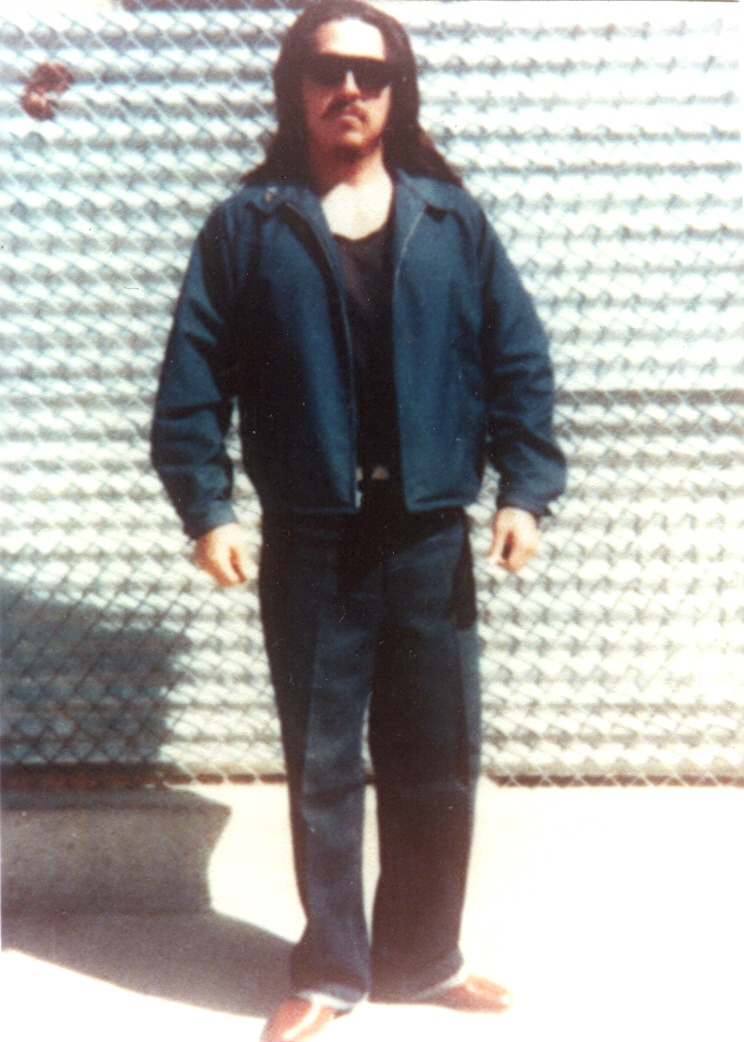
Douglas Ray ‘Chief’ Stankewitz is the longest tenured inmate on California’s death row. Image from freechief.org.

Douglas Ray ‘Chief’ Stankewitz

All this brings me to an Indian I want you to know better than his jury did — Douglas Ray Stankewitz, the longest tenured inmate on California’s death row. Like most Indians who find themselves in a group of non-Indians, he is currently known as “Chief,” but unlike many Indians, he is proud of the nickname.

The government wants to kill Chief because Theresa Greybeal was shot dead in the course of a robbery by a group of people high on heroin, and there is no question that Chief was one of them. There is a serious question about who pulled the trigger, and juries are reluctant to kill individuals who did not pull the trigger. But as far as his jury knew, Douglas Stankewitz pulled the trigger, and he might have, but we will never know, based on his trial.

Just as you can’t discuss federal Indian policy without recourse to history, it’s hard to understand Douglas Stankewitz and his crimes outside of his historical context, which includes the spectacular destruction of California Indians.

Douglas Ray “Chief” Stankewitz is a citizen of the Big Sandy Rancheria, as they call reservations in California. He was born on May 31, 1958, to Marion Sample Stankewitz, the sixth of her eleven children. She was the fifth of seven children. Her father, Sam Jack Sample, was Mono and Chukchansi, and her mother was Mono. She met Douglas’s father, a truck driver of Polish descent, when she was picking grapes and he was her supervisor. They were both practicing drunks.

Douglas was born the year the Big Sandy Rancheria was terminated as part of the national policy to force Indians to assimilate. In other words, for most of the time that the young Douglas was being let down by the adults around him, the Big Sandy Rancheria did not exist in the eyes of the federal government.

His mother had also been raised on the Big Sandy Rancheria, a place until recently blighted by poverty, alcohol abuse, and hopelessness. Marion drank beer by the case while pregnant, and when Douglas was born his father was in jail for beating his mother. His mother had no prenatal care — she first saw a doctor regarding her pregnancy when she was in labor.

Douglas was beaten regularly by both of his parents and was taken to the emergency room three times before his first birthday. At age six, he was found injured and wandering on the streets. The police took him home, where his mother admitted to having beaten him. The police did not remove him from the home, apparently because they decided that the process would have been too complicated. There were nine children in the home at the time, and Douglas’s father was in jail.

Less than three months later, Douglas was brought to the police station by a neighbor who found the boy on his doorstep, again injured. This time, all the children were taken away and Marion was jailed.

After two unsuccessful foster home placements — the foster parents were unable to deal with Douglas’s violent emotional eruptions — the seven-year-old was committed to Napa State Psychiatric Hospital for 90 days. While he received no treatment there (beyond being diagnosed with a severe emotional disturbance), this placement was extended twice, for a total of nine months. This child trapped in an adult institution became easy prey for sexual assault, and that became an unfortunate part of his “education.”

He was then placed in a foster home, where he stayed for nearly four years, the second longest stay at one address he has had in his life. The longest was in is his current address: San Quentin’s death row. He received no visits from his natural family during that placement with the foster family. His foster mother had to make a personal plea to get Douglas into the third grade:

The day I went to pick him up, I’ll never forget. He went down on all fours in a corner, growling and snorting at me. On the way home, he jumped over into the back seat and clawed all the stuffing out of the upholstery. When we walked into the kitchen of my home, he shuffled over to the dish rack, full of dry dishes, and threw the whole thing across the room.

I had been told not to physically restrain or punish him because he would go berserk if touched, but I figured he was already berserk, so being as big as I am, I just grabbed him from behind, wrapped my whole self around him, down we went and I just held on for dear life until he calmed down.

It’s taken me all this time to tame him. I’ve taught him to talk instead of grunt, to use the toilet, to dress himself, to use silverware, to take care of animals without hurting them, to ask instead of grab… He’s been begging me to teach him to read and write and do numbers like the other foster kids, so I think he’s ready for school… Will you take him in your class? If he’s any trouble, just call and I’ll come pick him up.

It is unclear how this foster placement ended, and Chief is in no position to know because of his age at the time. Apparently, the state was motivated by a bureaucratic imperative to keep families together when possible, regardless of the circumstances. What is clear is that from 1970 until his first commitment to the California Youth Authority in 1972, Douglas had at least 13 placements. The longest was for five months. The first was back with his mother, where he learned to sniff paint.

For a short period, he was placed with an aunt back on the reservation, where he lived until her children were taken away because of her drunkenness. The aunt said that before Douglas came to live with her, “a lot of times there was no food in the house. Sometimes we’d save our oatmeal for [the children] because they had nothing.” While Douglas was living with his aunt, his mother was sent to prison for manslaughter.

At age 13, Douglas got his first criminal referral to juvenile court. His earlier visits to juvenile court had been as what the state called a “child in need of supervision.” Douglas had apparently been running with some adults, and when they showed up too late to get fed at a Fresno soup kitchen one day, the adults decided to rob someone to get money for food. Douglas involved himself in this crime by going though the victim’s pockets.

Between 1972 and 1977, Douglas spent all but eight months in either Youth Authority lockups or the Sacramento County Jail. In a little over two months from the time he was released until the arrest that landed him on death row, Douglas Stankewitz consumed (according to the individuals around him) massive quantities of marijuana, alcohol, methamphetamine, and heroin. At the time of the killing that brought him to death row, he had not slept for at least two days.

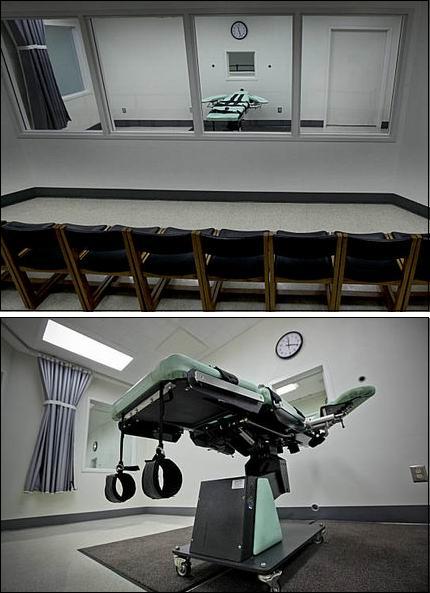
End of the line: Sleek new death chamber at San Quentin. Image from Inland News Today.

The fearsome responsibility

Chief has now spent 33 years of his life on California’s death row, but virtually all of his life before arriving there was spent under the “supervision” of the state of California in one guise or another. We don’t know what the jury on his trial would have made of this, but we do know that Chief’s American Indian identity made their decision to kill him inevitable. That statement may seem shocking, but so are the actions of Douglas Stankewitz’s court-appointed lawyer, the ex-judge Hugh Goodwin.

Since I am a retired judge and know something of the work, I was prepared to think an ex-judge from a criminal court might make a good defense attorney in a capital case, if he had the stomach for it. The problem is that Goodwin became an ex-judge because of his predilection for sentencing criminal defendants to go to church. He was convinced that his job as a judge was to bring people to Jesus. It is clear from reviewing the Stankewitz case that he saw his duty as a criminal defense lawyer the same way.

The fearsome responsibility of a capital defense can keep a lawyer awake at night, but Mr. Goodwin’s sleep was apparently less troubled than mine, because he took the attitude that his client’s life was in God’s hands rather than his own.

Because there was no question that his client was involved in the killing — only whether he pulled the trigger — Mr. Goodwin had ample notice that the main business of this trial would be in the penalty phase. There was much that the jury should have been told in the penalty phase, but Mr. Goodwin did not deem it important to inform them that his client had been born with fetal alcohol syndrome, beaten, starved, sexually assaulted, and deprived of any loving relationship with an adult.

Instead, he called to the stand a jailer and an assistant district attorney to give their opinions that anybody can reform if they allow the Christian God to come into their life. Predictably, the cross-examination of these witnesses bored in on whether they had any reason to believe Douglas Stankewitz had invited God into his life. They did not.

Errors by a lawyer do not require reversal if the lawyer had a tactical reason for making the errors. Hugh Goodwin swore to this statement about his tactics in that trial:

I have never believed in the separation of church and state, as I made clear when I was a judge. I recognize that this is a controversial view which is not widely shared. When I presented the testimony of a Deputy District Attorney and the Fresno County Jail chaplain that they believed people could be transformed by the power of God if they let God into their lives, I knew that it was likely that on cross-examination they would state that there was no evidence that Mr. Stankewitz would let God into his life. Nonetheless, I believed that by presenting this testimony, God’s will would be done, and accordingly I did so.

As idiotic as the “power of God” defense was in a capital murder case, it would have had a prayer of swaying a jury against death if there were a shred of evidence that Douglas Stankewitz had a Christian bone in his body. But Douglas “Chief” Stankewitz is a Mono Indian, born on the Big Sandy Rancheria, raised by the State of California in a parade of incompetent foster homes, mental hospitals and juvenile facilities. His grandfather, Sam Jack Sample, was a ceremonial singer and medicine man who died singing in the roundhouse when Douglas was a small boy. Goodwin might as well have entrusted his client’s life to Zoroaster for all the chance his client had of grabbing hold of that lifeline.

The defense in a capital case must compel the jury to understand the life they are being asked to end. In this case, the jury was told that goodness is linked to being Christian, and the defense lawyer might as well have said plainly that the only good Indians he ever saw were dead.

At this writing, the Big Sandy Rancheria has regained federal recognition and has opened a casino. Using those casino funds, they finally have an office to enforce the Indian Child Welfare Act; they also have a Head Start program.

In another case of poor timing, the name of Sam Jack Sample, Douglas’s grandfather, has turned up on the list of persons for whom the Department of the Interior is holding property in trust. Since Stankewitz’s mother is deceased, he may actually inherit that property, thereby acquiring the funds to pay for his funeral—if he had anyone to attend it.

Chief Stankewitz has no execution date set and the litigation to get him a new trial continues. Until he does get a fair trial, we won’t have any basis to say whether he is among the worst of the worst who deserve the death penalty or whether he is just another man without the capital getting the punishment.

[Steve Russell, Cherokee Nation of Oklahoma, lives in Sun City, Texas, near Austin. He is a Texas trial court judge by assignment and associate professor emeritus of criminal justice at Indiana University-Bloomington. Steve was an activist in Austin in the Sixties and Seventies, and wrote for Austin’s underground paper, The Rag. Steve is also a columnist for Indian Country Today, where a version of this article has also appeared. He can be reached at swrussel@indiana.edu. Read more articles by Steve Russell on The Rag Blog.]

The Rag Blog

Posted in Rag Bloggers | Tagged , , , | Leave a comment

Steve Russell : ‘Chief’ Was Born on Death Row

The North Block entrance to Condemned Row at San Quentin. Image from Strong as an Ox.

‘Chief’ Stankewitz:
Born on death row

Chief has now spent 33 years of his life on California’s death row, but virtually all of his life before arriving there was spent under the ‘supervision’ of the state of California.

By Steve Russell / The Rag Blog / October 13, 2011

Capital punishment, the saying goes, means that those without the capital get the punishment, and over 35 years of labor in criminal law has yet to show me a case that disproves it.

Capital cases are usually defended by court-appointed lawyers, because prosecutors do not typically choose to seek the death penalty against defendants who can afford the stratospheric legal fees of a capital defense. The only capital case I defended in private practice was one of the very few I’ve seen where the lawyers were hired rather than appointed, and we won — victory being defined in that instance as the government was not allowed to kill our client.

Death row, like most poor neighborhoods, has a disproportionate number of minority residents. Those of us who come from poor neighborhoods know that there are mean people there, and plenty of conditions that make even good people mean. We also know that the vast majority of poor people survive those conditions without becoming mean.

Good or mean, the hearty survival rate of poor people justifies in the minds of some what they call “putting down the mad dogs,” in spite of the fact that it is much more expensive to kill sociopaths than it is to lock them up without the possibility of parole. Those are the two choices for dealing with the people who have become too dangerous to live among us, and such people do exist — in all my years of practice, I have had contact with three of them; three out of the thousands of criminal defendants with whom I have dealt.

Based on my many years in the legal system, I do not trust it to pick those three sociopaths out of a crowd. Sociopaths, you see, are not always poor people — some of them are even white. Back in the days (within my lifetime) when we had the death penalty for rape, those executed were most often dark-skinned men accused of raping white women, and thanks to DNA exonerations we now understand that cross-racial identification is highly unreliable.

Even utterly certain eyewitnesses make mistakes, and confessions are so notoriously unreliable that everyone understands why police investigators withhold some details of every crime that makes the newspaper. The more publicity the crime gets, the more disturbed people will line up to confess.

Making things even more confusing is that confessions by persons actually involved in a crime are often given to shift blame, leading to the perverse outcome in some capital cases that the more experienced criminal is able to make a deal to escape the death penalty by testifying against a less savvy co-defendant, without regard to which defendant was more culpable.

Since eyewitness identifications and confessions can be unreliable, it’s easy to see why there are very few trials where everybody agrees on what happened. What may appear crystal clear in the newspapers can only be seen in the courtroom as through a glass, darkly.

A lawyer’s first duty in a capital case is to tell the best story that can be told with the facts as they stand. If you are a juror in such a case, you have buckets of messy facts brought into the courtroom and must listen to lawyers who assemble stories from those facts — often without regard to what they may believe to be the truth.

A lawyer’s second duty in a capital case, should the first not be discharged successfully, is to make absolutely sure that the jury fully understands the life they are being asked to end. Jurors are introduced to a man by way of the worst thing he’s done in his life, a circumstance that would be a mighty challenge to any of us, even if the task were less vital than to befriend 12 strangers who have nothing in common but their sworn willingness to kill you if the government gives them a good enough reason.

Douglas Ray ‘Chief’ Stankewitz is the longest tenured inmate on California’s death row. Image from freechief.org.

Douglas Ray ‘Chief’ Stankewitz

All this brings me to an Indian I want you to know better than his jury did — Douglas Ray Stankewitz, the longest tenured inmate on California’s death row. Like most Indians who find themselves in a group of non-Indians, he is currently known as “Chief,” but unlike many Indians, he is proud of the nickname.

The government wants to kill Chief because Theresa Greybeal was shot dead in the course of a robbery by a group of people high on heroin, and there is no question that Chief was one of them. There is a serious question about who pulled the trigger, and juries are reluctant to kill individuals who did not pull the trigger. But as far as his jury knew, Douglas Stankewitz pulled the trigger, and he might have, but we will never know, based on his trial.

Just as you can’t discuss federal Indian policy without recourse to history, it’s hard to understand Douglas Stankewitz and his crimes outside of his historical context, which includes the spectacular destruction of California Indians.

Douglas Ray “Chief” Stankewitz is a citizen of the Big Sandy Rancheria, as they call reservations in California. He was born on May 31, 1958, to Marion Sample Stankewitz, the sixth of her eleven children. She was the fifth of seven children. Her father, Sam Jack Sample, was Mono and Chukchansi, and her mother was Mono. She met Douglas’s father, a truck driver of Polish descent, when she was picking grapes and he was her supervisor. They were both practicing drunks.

Douglas was born the year the Big Sandy Rancheria was terminated as part of the national policy to force Indians to assimilate. In other words, for most of the time that the young Douglas was being let down by the adults around him, the Big Sandy Rancheria did not exist in the eyes of the federal government.

His mother had also been raised on the Big Sandy Rancheria, a place until recently blighted by poverty, alcohol abuse, and hopelessness. Marion drank beer by the case while pregnant, and when Douglas was born his father was in jail for beating his mother. His mother had no prenatal care — she first saw a doctor regarding her pregnancy when she was in labor.

Douglas was beaten regularly by both of his parents and was taken to the emergency room three times before his first birthday. At age six, he was found injured and wandering on the streets. The police took him home, where his mother admitted to having beaten him. The police did not remove him from the home, apparently because they decided that the process would have been too complicated. There were nine children in the home at the time, and Douglas’s father was in jail.

Less than three months later, Douglas was brought to the police station by a neighbor who found the boy on his doorstep, again injured. This time, all the children were taken away and Marion was jailed.

After two unsuccessful foster home placements — the foster parents were unable to deal with Douglas’s violent emotional eruptions — the seven-year-old was committed to Napa State Psychiatric Hospital for 90 days. While he received no treatment there (beyond being diagnosed with a severe emotional disturbance), this placement was extended twice, for a total of nine months. This child trapped in an adult institution became easy prey for sexual assault, and that became an unfortunate part of his “education.”

He was then placed in a foster home, where he stayed for nearly four years, the second longest stay at one address he has had in his life. The longest was in is his current address: San Quentin’s death row. He received no visits from his natural family during that placement with the foster family. His foster mother had to make a personal plea to get Douglas into the third grade:

The day I went to pick him up, I’ll never forget. He went down on all fours in a corner, growling and snorting at me. On the way home, he jumped over into the back seat and clawed all the stuffing out of the upholstery. When we walked into the kitchen of my home, he shuffled over to the dish rack, full of dry dishes, and threw the whole thing across the room.

I had been told not to physically restrain or punish him because he would go berserk if touched, but I figured he was already berserk, so being as big as I am, I just grabbed him from behind, wrapped my whole self around him, down we went and I just held on for dear life until he calmed down.

It’s taken me all this time to tame him. I’ve taught him to talk instead of grunt, to use the toilet, to dress himself, to use silverware, to take care of animals without hurting them, to ask instead of grab… He’s been begging me to teach him to read and write and do numbers like the other foster kids, so I think he’s ready for school… Will you take him in your class? If he’s any trouble, just call and I’ll come pick him up.

It is unclear how this foster placement ended, and Chief is in no position to know because of his age at the time. Apparently, the state was motivated by a bureaucratic imperative to keep families together when possible, regardless of the circumstances. What is clear is that from 1970 until his first commitment to the California Youth Authority in 1972, Douglas had at least 13 placements. The longest was for five months. The first was back with his mother, where he learned to sniff paint.

For a short period, he was placed with an aunt back on the reservation, where he lived until her children were taken away because of her drunkenness. The aunt said that before Douglas came to live with her, “a lot of times there was no food in the house. Sometimes we’d save our oatmeal for [the children] because they had nothing.” While Douglas was living with his aunt, his mother was sent to prison for manslaughter.

At age 13, Douglas got his first criminal referral to juvenile court. His earlier visits to juvenile court had been as what the state called a “child in need of supervision.” Douglas had apparently been running with some adults, and when they showed up too late to get fed at a Fresno soup kitchen one day, the adults decided to rob someone to get money for food. Douglas involved himself in this crime by going though the victim’s pockets.

Between 1972 and 1977, Douglas spent all but eight months in either Youth Authority lockups or the Sacramento County Jail. In a little over two months from the time he was released until the arrest that landed him on death row, Douglas Stankewitz consumed (according to the individuals around him) massive quantities of marijuana, alcohol, methamphetamine, and heroin. At the time of the killing that brought him to death row, he had not slept for at least two days.

End of the line: Sleek new death chamber at San Quentin. Image from Inland News Today.

The fearsome responsibility

Chief has now spent 33 years of his life on California’s death row, but virtually all of his life before arriving there was spent under the “supervision” of the state of California in one guise or another. We don’t know what the jury on his trial would have made of this, but we do know that Chief’s American Indian identity made their decision to kill him inevitable. That statement may seem shocking, but so are the actions of Douglas Stankewitz’s court-appointed lawyer, the ex-judge Hugh Goodwin.

Since I am a retired judge and know something of the work, I was prepared to think an ex-judge from a criminal court might make a good defense attorney in a capital case, if he had the stomach for it. The problem is that Goodwin became an ex-judge because of his predilection for sentencing criminal defendants to go to church. He was convinced that his job as a judge was to bring people to Jesus. It is clear from reviewing the Stankewitz case that he saw his duty as a criminal defense lawyer the same way.

The fearsome responsibility of a capital defense can keep a lawyer awake at night, but Mr. Goodwin’s sleep was apparently less troubled than mine, because he took the attitude that his client’s life was in God’s hands rather than his own.

Because there was no question that his client was involved in the killing — only whether he pulled the trigger — Mr. Goodwin had ample notice that the main business of this trial would be in the penalty phase. There was much that the jury should have been told in the penalty phase, but Mr. Goodwin did not deem it important to inform them that his client had been born with fetal alcohol syndrome, beaten, starved, sexually assaulted, and deprived of any loving relationship with an adult.

Instead, he called to the stand a jailer and an assistant district attorney to give their opinions that anybody can reform if they allow the Christian God to come into their life. Predictably, the cross-examination of these witnesses bored in on whether they had any reason to believe Douglas Stankewitz had invited God into his life. They did not.

Errors by a lawyer do not require reversal if the lawyer had a tactical reason for making the errors. Hugh Goodwin swore to this statement about his tactics in that trial:

I have never believed in the separation of church and state, as I made clear when I was a judge. I recognize that this is a controversial view which is not widely shared. When I presented the testimony of a Deputy District Attorney and the Fresno County Jail chaplain that they believed people could be transformed by the power of God if they let God into their lives, I knew that it was likely that on cross-examination they would state that there was no evidence that Mr. Stankewitz would let God into his life. Nonetheless, I believed that by presenting this testimony, God’s will would be done, and accordingly I did so.

As idiotic as the “power of God” defense was in a capital murder case, it would have had a prayer of swaying a jury against death if there were a shred of evidence that Douglas Stankewitz had a Christian bone in his body. But Douglas “Chief” Stankewitz is a Mono Indian, born on the Big Sandy Rancheria, raised by the State of California in a parade of incompetent foster homes, mental hospitals and juvenile facilities. His grandfather, Sam Jack Sample, was a ceremonial singer and medicine man who died singing in the roundhouse when Douglas was a small boy. Goodwin might as well have entrusted his client’s life to Zoroaster for all the chance his client had of grabbing hold of that lifeline.

The defense in a capital case must compel the jury to understand the life they are being asked to end. In this case, the jury was told that goodness is linked to being Christian, and the defense lawyer might as well have said plainly that the only good Indians he ever saw were dead.

At this writing, the Big Sandy Rancheria has regained federal recognition and has opened a casino. Using those casino funds, they finally have an office to enforce the Indian Child Welfare Act; they also have a Head Start program.

In another case of poor timing, the name of Sam Jack Sample, Douglas’s grandfather, has turned up on the list of persons for whom the Department of the Interior is holding property in trust. Since Stankewitz’s mother is deceased, he may actually inherit that property, thereby acquiring the funds to pay for his funeral—if he had anyone to attend it.

Chief Stankewitz has no execution date set and the litigation to get him a new trial continues. Until he does get a fair trial, we won’t have any basis to say whether he is among the worst of the worst who deserve the death penalty or whether he is just another man without the capital getting the punishment.

[Steve Russell, Cherokee Nation of Oklahoma, lives in Sun City, Texas, near Austin. He is a Texas trial court judge by assignment and associate professor emeritus of criminal justice at Indiana University-Bloomington. Steve was an activist in Austin in the Sixties and Seventies, and wrote for Austin’s underground paper, The Rag. Steve is also a columnist for Indian Country Today, where this article first appeared. He can be reached at swrussel@indiana.edu. Read more articles by Steve Russell on The Rag Blog.]

The Rag Blog

Posted in Rag Bloggers | Tagged , , , | 1 Comment

Ellen LaConte : Finding Democracy in Unexpected Places

Single-celled amoeba called dictyostelium gather together and turn themselves collectively into a new creature: slime mold. Image from National Center for Biotechnology Information (NCBI).

Finding democracy in unexpected
— and radically green — places

What if nature — life as we know it — rather than our own history, provides ‘the inspiration for genuine democratic thinking’?

By Ellen LaConte / The Rag Blog / October 1e, 2011

[This post is adapted from Ellen LaConte’s article in the Fall/Winter 2011 issue of the international journal, Green Horizon.]

“Our capacity for democracy grows from our connection with nature. As we lose that connection, isolation, fear, and the need to control grow — and democracy inevitably deteriorates. It’s easy to forget that a deep connection with nature provides the inspiration for genuine democratic thinking.” — Peter Senge in Presence: Exploring Profound Change in People, Organizations and Society i

In my book Life Rules (the implication being that we don’t), I make the case that the prognosis for global or even national-level solutions for the syndrome of economic, environmental, and political/social crises we presently face is poor.

I take the recent debt-ceiling fiasco as further proof of the pudding. Variously inept, corrupt, craven, bought and paid for, ideologically intransigent, and ignorant of or unwilling to face and make the electorate face hard realities, our leaders are evidently incapable of comprehending or coping with the complexity of the issues before them.

They fail to see, or at least fail to say that they see, the connections between and among these crises. They exhibit an almost pathological inability or refusal to recognize the seriousness of consequences of the convergence of these crises: economic and ecological breakdown and worldwide chaos.

Tackling these crises — or at least seeming to — only one at a time is equivalent to treating AIDS-related cancers without treating the recurrent pneumonia and wasting disease that are also symptomatic of AIDS.

Leaders of both major parties have chosen posturing and pandering as alternatives to governing and Greens haven’t yet the numbers, leverage, or heft to challenge them. For the major media, posturing and pandering are meat, potatoes, trifle, and a raison d’etre. For the American people they’re disastrous. Waiting for politicians and politics as we’ve known them to cure themselves of this life-threatening condition could prove fatal.

Taking to the streets as larger and larger numbers of Americans are, for a variety of causes ranging from climate change to oligarchy removal, is a start. It signals that a critical mass of Americans are dissatisfied.

But nonviolent protests may meet with dismissal at worst and minor concessions at best. Because, whatever else may be said of the present political “process” and the behaviors of the Powers in Washington, it’s not democracy. Genuinely democratic praxis is nowhere to be found inside the beltway. Representative Eric Cantor’s description of the Wall Street justice-and-democracy-starved occupiers as a “mob” is indicative of the present batch of powers’ perspective on the people they are supposed to represent.

As a set of behaviors and relationships that can help people talk through and across their differences, integrate their interests and skills, work for the common good, and organize otherwise fractious and factional humans in common cause, democracy is missing in action in America. It has been co-opted by globalized capitalism much as the human body is co-opted by HIV.

I think, however, that it’s not that democracy has failed us but our way of thinking about it that has. We might say of democracy what Gandhi said when asked what he thought of civilization: “It would be a very good idea.”

What democracy’s not

So far we’ve gotten the idea wrong. We are accustomed to thinking of democracy as a noun. “A democracy” is a physical place, a nation with borders defined on a map such that if we are born within those borders we are somehow born into democracy too.

Democracy is a kind of protective covering “under” which we live, such that it will take care of us and keep us from harm. We treat it as if it were a possession. “Having it,” we are superior to those who don’t. We think of it as a right. Aside from being born within a particular nation’s borders and under the protection of that nation’s government, police, and military, we don’t have to do anything to get democracy.

In fact, we have very little to do with it. It’s just ours, by right. Nonetheless, we go to great lengths to “keep it,” including going to war for it or over it. And we’ve gotten into our minds and political discourse the notion that we ought to try to “give it” to others, as if it were a thing we could give like food or money or weapons.

But what if “democracy” is not a noun? What if, as Frances Moore Lappé and I have proposed in our books Democracy’s Edge and Life Rules, it’s more like a verb. What if it’s not something we have but something we do, together; how we organize ourselves and relate to and behave with each other?

And what if, as MIT management innovator Peter Senge suggests, we’ve been looking for democracy in the wrong places. What if nature — life as we know it — rather than our own history, provides “the inspiration for genuine democratic thinking”? And what if, as Hopi elders proposed some hundreds of years ago, what life tells us is that we really are the ones we’re waiting for.

African buffalo herds stand up and point themselves in the same direction. Image from redbubble.

Democracy all the way up…

It has long been assumed that most animal societies are organized as we are with powers and cowerers, doers and done to, top dogs and underdogs, alpha males and dominance everywhere you look. That view is changing.

Larissa Conradt, an evolutionary biologist at the University of Sussex, UK, writes that,

In social species many decisions need to be made jointly with other group members because the group will split apart unless a consensus is reached. Consider, for example, a group of primates deciding which direction to travel after a rest period, a flock of birds deciding when to leave a foraging patch, or a swarm of bees choosing a new nest site. Unless all members decide on the same action, some will be left behind and will forfeit the advantages of group living. ii

And if too many are left behind the group will fall apart leaving the members in a state of chaos and confusion and at a survival disadvantage. Accordingly, “group decision-making is a commonplace occurrence in the lives of social animals.” iii

In studies of red deer conducted with her colleague Tim Roper, Conradt found that when it comes to making decisions about moving on from a resting place, feeding ground or watering hole, it’s not the sexually dominant alpha male or even a group of sexually-dominant males that make the decision when to go or even necessarily where.

Life has taught red deer the hard way that even the most experienced, strong, clever alpha might decide to move the herd based on nothing more than a sudden urge or misinterpreted sign of danger, even though many members of the herd are still thirsty, tired or hungry.

Barring clear and present danger, members of red deer herds, gorilla bands, African buffalo herds and other close-knit animal societies vote their readiness to move by standing up and pointing themselves in the direction they want to go. When a significant majority have stood and/or pointed themselves in the chosen direction, the group moves on together in the direction they’ve chosen together. In a statement that until recently the scientific community would have considered unorthodox or heretical, Roper and Conradt concluded that “democratic behavior is not unique to humans.” iv

Anna Dornhaus of the University of Arizona and Nigel R. Franks at the University of Bristol in the UK have found that some varieties of bees and ants engage in information pooling and consensus decision making. “Democracy is not something that humanity invented,” Dornhaus concludes.

Radio personality and author Thom Hartmann has written of this new understanding of animal behavior that

Without exception the natural state of group-living animals is to cooperate, not dominate. Democracy, it turns out, is hardwired into the DNA of species from ants to zebras. And it includes all of the hominids from the great apes to Homo sapiens. v

…and all the way down

Examples of democratic activity can be found at levels as far down Life’s food chain as microbes. “In recent years,” Werner Krieglstein wrote in Green Horizon Magazine,

scientists have documented a remarkable sequence of behavior that might well be suited to serve as a metaphor if not as a lived example for how we human beings can and should behave in times of need… Scientists observed this single cell organism cooperating in a quite extraordinary fashion when the food supply was running short.

Facing a life threatening famine, hordes of single-celled amoeba called dictyostelium gather from every direction and every part of famine territory and turn themselves collectively into a new creature: slime mold. “They group together, forming a community, to achieve goals they could not achieve by themselves.”vi

Microbiologist Mahlon Hoagland explains how this works: Recognizing pending catastrophe,

a single amoeba, apparently self-appointed, begins to emit a chemical signal. Near-by neighbors, irresistibly drawn to the signal “ooze” over and attach themselves to the signaler. Each new member of the cluster amplifies the signal by releasing its own signal. More amoeba arrive.

It’s sort of like a grassroots flash mob at this point.

Then a startling transformation occurs: The aggregate shapes itself into a slug and begins to migrate to a new location, leaving a trail of slime behind it. As the slug moves the cells differentiate into three distinct types,

each type taking up a task vital to the group’s survival.vii

They form a creature that looks like a tiny futuristic floor lamp with a base, a post, and a round, covered bulb. The base roots the slime mold in its new food-rich environment. The post raises the bulb high so that its equivalent of light will cover as large an area as possible.

And what’s the equivalent of light in this amoebic democracy analogy? Spores, like tiny eggs. Dispersed like photons in their new space when the bulb “turns on” and emits them, they become new single-celled amoebae. “And then the cycle begins anew.” Individuals do their own thing until collective — democratic — action is required again to deal with another shared crisis.

Dog, meet dog

Dog-eat-dog is, after all, an anomaly. It is not the state of nature. Something closer to democracy is. Red in tooth and claw is a human projection based on incomplete and inaccurate science and biased observation.

Carnivores for the most part turn on each other — the weakened, wasting, wounded, or recently deceased — only when there’s not enough else to eat. And that happens for the most part only when we or natural forces dramatically reduce their territory and/or sources of food. In other words when our activities and presence or natural cycles or cataclysms have caused Critical Mass.

Think urban feral dogs and cats, gorillas when the mist has gone away with the forests, wolves when wildfire or volcanic eruption clears the landscape of herds and small prey. But even in desperate times, most other-than-human species continue to cooperate more like those amoeba than like rabid packs of dogs. Why? Democracy is key to species survival.

We are about to learn that. If the protests in the American Street bear down hard on the Wall Street occupiers intent that Americans work together to “create a process to address the problems we face, and generate solutions accessible to everyone” rather than assuming any elected official or group of them will do these things for us, then we might gather to ourselves the courage and conviction necessary for a Second American revolution, this time not just to topple oligarchs but to declare independence from the Global Economic Order that they support so that it will continue to support them.

References

i Peter Senge, C. Otto Scharmer, Joseph Jaworski, Betty Sue Flowers, Presence: Exploring Profound Change in People, Organizations and Society (Nicholas Brealey Publishing, 2005), p. 173.
ii From the website of the Center for the Study of Evolution at the University of Sussex, www.biols.susx.ac.uk/members/lconradt
iii Ibid.
iv Tim Roper and L. Conradt, “Group Decision-Making in Animals,” Nature, 421 (January 2003): 155.
v Thom Hartmann, What Would Jefferson Do? (Harmony Books, 2004), 141.
vi Werner Krieglstein, “How to Feel and Act Like an Amoeba,” Green Horizon Magazine, Spring 2008.
vii Mahlon Hoagland and Bert Dodson, The Way Life Works, (Three Rivers Press, 1995), 152-153

[Ellen LaConte’s book Life Rules: Why so much is going wrong everywhere at once and how Life teaches us to fix it (Green Horizon, 2010, orderable from all book sellers) from which parts of this post have been drawn has a diverse and deep list of supporters ranging from Richard Heinberg, Robert Jensen and William Catton to John Cobb, Joanna Macy, and Derrick Jensen. She will be guiding workshops at the “Brave New Planet: Imagining Ecological Societies ” conference in Claremont CA, Oct. 27-29. Bill McKibben keynotes. McKibben, Cobb, and plenary speaker David Orr will participate in open discussions throughout the conference. You can link to podcasts of LaConte’s radio interviews at www.ellenlaconte.com. Read more articles by Ellen LaConte on The Rag Blog.

The Rag Blog

Posted in Rag Bloggers | Tagged , , | Leave a comment

Rag Radio : Activist/Journalist Jonah Raskin, Author of ‘Marijuanaland’

Jonah Raskin, photographed at a Rag Blog Happy Hour at Maria’s Taco Xpress in Austin, Texas, Friday, Oct. 7, 2011, after appearing on Rag Radio with Thorne Dreyer. Photos (above and below) by James Retherford / The Rag Blog.

Activist/journalist Jonah Raskin, author of Marijuanaland
on Rag Radio with Thorne Dreyer. Listen to it here:


Thorne Dreyer’s guest on Rag Radio Friday, October 7, 2011, was California-based activist and journalist Jonah Raskin. Raskin has written about cannabis politics and culture since the 1970s and his latest book is Marijuanaland: Dispatches from an American War, published by High Times Press. Set in California’s “Emerald Triangle” during the unsuccessful Prop. 19 campaign to legalize some marijuana possession, the book looks at marijuana-influenced culture, politics, economics, medicine, and law — and we discuss all this in our Rag Radio interview.

Raskin has authored 12 books, including biographies of Allen Ginsberg, Abbie Hoffman, and Jack London, and he created the story and characters for the stoner movie Homegrown. A professor at Sonoma State University in northern California, Raskin teaches communication law and American literature. He is a longtime contributor to The Rag Blog and has written for the Los Angeles Times, San Francisco Chronicle, and many other publications. Jonah also was active in the Sixties with SDS and the Youth International Party (YIPPIE).

Cannabis activist, science writer, and Rag Blog contributing editor Mariann Wizard, who also participated in this Rag Radio interview, reported on The Rag Blog that Raskin, in researching Marijuanaland, “visited with pot growers young and old, activists for and against legalization, newspaper editors, sheriffs, medical patients, healthcare providers, and friends-of-friends along the way…”

Jonah himself spent some of his early years in the “Emerald Triangle,” the three California counties — Mendocino, Humboldt, and Trinity — that, according to Wizard “produce some of the most legendary smoke grown…” Raskin’s father, an attorney with old-left roots, had been a rumrunner in the latter days of alcohol prohibition and “grew a personal pot patch… where young Jonah shared the sacred herb with his parents and others over the years.”

Jonah Raskin (right) with Rag Radio host Thorne Dreyer at the KOOP studios, Austin, Friday, Oct. 7, 2011. Photo by Mariann G. Wizard / The Rag Blog.

Rag Radio — hosted and produced by Rag Blog editor Thorne Dreyer — is broadcast every Friday from 2-3 p.m. (CDT) on KOOP 91.7-FM in Austin, and streamed live on the web. KOOP is a cooperatively-run community radio station in Austin, Texas.

Rag Radio, which has been aired since September 2009, features hour-long in-depth interviews and discussion about issues of progressive politics, culture, and history. After broadcast, all episodes are posted as podcasts and can be downloaded at the Internet Archive. Tracey Schulz is the show’s engineer and co-producer.

Rag Radio is also rebroadcast on Sundays at 10 a.m. (Eastern) on WFTE, 90.3-FM in Mt. Cobb, PA, and 105.7-FM in Scranton, PA. Rag Radio is produced in the KOOP studios, in association with The Rag Blog, a progressive internet newsmagazine, and the New Journalism Project, a Texas 501(c)(3) nonprofit corporation.

Also see:

The Rag Blog

Posted in RagBlog | Tagged , , , , , , , , | 1 Comment

Robert Creamer : Why the Occupy Wall Street Movement Frightens the Right

Sign from Occupy Wall Street. Image from We Know Memes.

Five reasons the Occupy Wall Street
movement really frightens the right

By Robert Creamer / Progressive America Rising / October 12, 2011

The Occupy Wall Street movement really frightens the Right Wing. It is not frightening to the Right because of Congressman Eric Cantor’s feigned fear of “the mob” that is “occupying our cities.” It is not frightening because anyone is really worried that Glenn Beck is correct when he predicts that the protesters will “come for you, drag you into the street, and kill you.”

That’s not why they are really frightened — that’s the Right trying to frighten everyday Americans.

There are five reasons why the Right is in fact frightened by the Occupy Wall Street movement. None of them have to do with physical violence — they have to do with politics. They’re not really worried about ending up like Marie Antoinette. But they are very worried that their electoral heads may roll.

All elections are decided by two groups of people:

  • Persuadable voters who always vote, but are undecided switch hitters. This group includes lots of political independents.
  • Mobilizable voters who would vote for one party or the other, but have to be motivated to vote.

The Occupy Wall Street Movement is so frightening to the Right because it may directly affect the behavior of those two groups of voters in the upcoming election.

1. The Narrative. People in America are very unhappy with their economic circumstances. As a result the outcome of the 2012 election will hinge heavily on who gets the blame for the horrible economy — and who the public believes, or hopes — can lead them into better economic times.

Political narratives are the stories people use to understand the political world. Like all stories, they define a protagonist and antagonist. And political narratives generally ascribe to those central characters moral qualities — right and wrong.

For several years, the Tea Party-driven narrative has been in the ascendance to explain America’s economic woes. Its vision of the elites in government versus hard-working freedom-loving people has heavily defined the national political debate.

Of course at first glance it’s an easy case for them to make. The president, who is the head of the over-powerful, “dysfunctional” government, is in charge. Things aren’t going well — so he, and the government he runs, must be at fault.

The Occupy Wall Street movement has helped force the alternative narrative into the media and public consciousness. The recklessness and greed of the big Wall Street banks, CEO’s, and top one percent — those are the culprits who sunk the economy and who have siphoned off all of the economic growth from the middle class. They and their enablers in Congress — largely Republicans — are the problem. To address the underlying economic crisis facing everyday Americans we must rein in their power.

This narrative is very compelling and, of course, it is true. It’s not that many voices haven’t framed the debate in these terms for years. But by creating a must-cover story, the Occupy Wall Street movement has forced it onto the daily media agenda. That is great news for progressives. The longer it continues, the better.

Right Wing pundits have disparaged the Occupy Wall Street movement for not having specific “policy proposals” — but the Right knows better. The Occupy Wall Street movement is advocating something much more fundamental. It is demanding a change in the relations of power — reining in the power of Wall Street, millionaires, and billionaires — the CEO class as a whole. It is demanding that everyday Americans — the 99% — share in the increases in their productivity and have more real control of their futures — both individually and as a society. Now that’s something for the Right to worry about.

2. Inside-Outside. Especially in periods when people are unhappy, the political high ground is defined by who voters perceive to be elite insiders and who they perceive to be populist outsiders. Who among the political leaders and political forces are actually agents of change?

In 2008, Barack Obama won that battle hands down. The Tea Party Movement muddied the water. They portrayed themselves as “don’t tread on me” populist outsiders doing battle with President Obama, the elite liberal insider.

Of course this ignores that the Tea Party was in many ways bought and paid for by huge corporate interests — but in the public mind it was a very compelling image.

The Right Wing has always had its own version of “class conflict.” Its “ruling class” is defined as the elite, intellectuals, bureaucrats, entertainers, and academics that are out to destroy traditional values and undermine the well-being of ordinary Americans.

The Occupy Wall Street movement, coupled with the movements in Wisconsin and Ohio earlier this year, presents an entirely different — and accurate — picture of who is on the inside and who is not.

3. Momentum. Politics is very much about momentum. Human beings are herding creatures — they travel in packs. People like to go with the flow. Whether in election campaigns, or legislative proposals, or social movements, or football games — the team with the momentum is much more likely to win.

The Occupy Wall Street movement has put the progressive forces in society on the offense — it has begun to build progressive momentum.

4. Movement. The Occupy Wall Street movement has managed to turn itself into a real “movement.” Movements don’t involve your normal run-of-the-mill organizing. Normally organizers have to worry about turning out people — or voters — one person or one group at a time. Not so with movements.

Movements go viral. They involve spontaneous chain reactions. One person engages another person, who engages another and so on. Like nuclear chain reactions, movements reach critical mass and explode.

That’s what makes them so potentially powerful — and so dangerous to their opposition.

Often movements are sparked by unexpected precipitating events — like the death of the fruit stand vendor in Tunisia that set off the Arab Spring. Sometimes they build around the determined effort of a few until that critical mass is reached.

In all cases movements explode because the tinder is dry and one unexpected spark can set off a wildfire.

Movements mobilize enormous resources — individual effort, money, person power — by motivating people to take spontaneous action.

The Occupy Wall Street movement in New York has spread to scores of cities — and the fire shows no sign of flaming out. It will fuel the engagement and remobilization of thousands of progressive activists and volunteers who had been demobilized and demoralized by the sausage-making of the DC legislative process. That is a huge problem for the right that was counting on despondency and lethargy among progressives to allow them to consolidate their hold on political power in 2012.

5. Inspiration. More than anything else, in order to mount a counter-offensive against the Right wing next year, progressives need to re-inspire our base. We need to re-inspire young people and all of the massive corps of volunteers who powered the victory in 2008.

Inspiration is critical to mobilization. It is also critical to persuasion. Swing voters want leaders who inspire them.

Inspiration is not about what people think — it’s about what they feel about themselves. When you’re inspired you feel empowered. You feel that you are part of something bigger than yourself, and that you — yourself — can play a significant role in achieving that larger goal.

The Occupy Wall Street movement has begun to inspire people all over America. That’s because people are inspired by example. They themselves are inspired if they see others standing up for themselves — speaking truth to power — standing up in the face of strong, entrenched opposition. People are inspired by heroic acts — by commitment — by people who say they are so committed that they will stay in a park next to Wall Street until they make change. That’s what happened in Egypt and Tunisia. That’s what happened in Wisconsin this spring.

The legacy of the Occupy Wall Street movement could very well be the re-inspiration of tens of thousands of Progressives — and the engagement of young people that are so important to the future of the progressive movement in America.

Right-wingers will plant provocateurs in an attempt to stigmatize the Occupy Wall Street movement with violence — to make it look frightening. But if the Movement continues with the kind of single-minded purpose and commitment that we have seen so far, the Occupy Wall Street movement may very well make history. It has already become an enormous progressive asset as America approaches the critical crossroad election that could determine whether the next American generation experiences the American Dream or simply reads about it in their history books.

[Robert Creamer is a long-time political organizer and strategist, and author of the book: Stand Up Straight: How Progressives Can Win, available on Amazon.com. He is a partner in Democracy Partners and a Senior Strategist for Americans United for Change. Follow Robert Creamer on Twitter: www.twitter.com/rbcreamer. This article was originally published at Huffington Post and was distributed by Progressive America Rising.]

The Rag Blog

Posted in RagBlog | Tagged , , , , , | 3 Comments

Five Reasons the Occupy Wall Street
Movement Really Frightens the Right

By Robert Creamer
Progressive America Rising via HuffPost

The Occupy Wall Street movement really frightens the Right Wing. It is not frightening to the Right because of Congressman Eric Cantor’s feigned fear of “the mob” that is “occupying our cities.” It is not frightening because anyone is really worried that Glenn Beck is correct when he predicts that the protesters will “come for you, drag you into the street, and kill you.”

That’s not why they are really frightened – that’s the Right trying to frighten everyday Americans.

There are five reasons why the Right is in fact frightened by the Occupy Wall Street movement. None of them have to do with physical violence – they have to do with politics. They’re not really worried about ending up like Marie Antoinette. But they are very worried that their electoral heads may roll.

All elections are decided by two groups of people:

–Persuadable voters who always vote, but are undecided switch hitters. This group includes lots of political independents.

–Mobilizable voters who would vote for one Party or the other, but have to be motivated to vote.

The Occupy Wall Street Movement is so frightening to the Right because it may directly affect the behavior of those two groups of voters in the upcoming election.

1). The narrative. People in America are very unhappy with their economic circumstances. As a result the outcome of the 2012 election will hinge heavily on who gets the blame for the horrible economy – and who the public believes, or hopes–can lead them into better economic times.

Political narratives are the stories people use to understand the political world. Like all stories, they define a protagonist and antagonist. And political narratives generally ascribe to those central characters moral qualities – right and wrong.

For several years, the Tea Party-driven narrative has been in the ascendance to explain America’s economic woes. Its vision of the elites in government versus hard-working freedom-loving people has heavily defined the national political debate.

Of course at first glance it’s an easy case for them to make. The President, who is the head of the over-powerful, “dysfunctional” government, is in charge. Things aren’t going well – so he, and the government he runs, must be at fault.

The Occupy Wall Street movement has helped force the alternative narrative into the media and public consciousness. The recklessness and greed of the big Wall Street banks, CEO’s and top one percent — those are the culprits who sunk the economy and who have siphoned off all of the economic growth from the middle class. They and their enablers in Congress – largely Republicans – are the problem. To address the underlying economic crisis facing everyday Americans we must rein in their power.

This narrative is very compelling and, of course, it is true. It’s not that many voices haven’t framed the debate in these terms for years. But by creating a must- cover story, the Occupy Wall Street movement has forced it onto the daily media agenda. That is great news for Progressives. The longer it continues, the better.

Right Wing pundits have disparaged the Occupy Wall Street movement for not having specific “policy proposals” – but the Right knows better. The Occupy Wall Street movement is advocating something much more fundamental. It is demanding a change in the relations of power – reining in the power of Wall Street, millionaires and billionaires – the CEO class as a whole. It is demanding that everyday Americans – the 99% — share in the increases in their productivity and have more real control of their futures – both individually and as a society. Now that’s something for the Right to worry about.

2). Inside-Outside. Especially in periods when people are unhappy, the political high ground is defined by who voters perceive to be elite insiders and who they perceive to be populist outsiders. Who among the political leaders and political forces are actually agents of change?

In 2008, Barak Obama won that battle hands down. The Tea Party Movement muddied the water. It portrayed themselves as “don’t tread on me” populist outsiders doing battle with President Obama the elite, liberal insider.

Of course this ignores that the Tea Party was in many ways bought and paid for by huge corporate interests – but in the public mind it was a very compelling image.

The Right Wing has always had its own version of “class conflict.” Its “ruling class” is defined as the elite, intellectuals, bureaucrats, entertainers and academics that are out to destroy traditional values and undermine the well-being of ordinary Americans.

The Occupy Wall Street movement, coupled with the movements in Wisconsin and Ohio earlier this year, present an entirely different – and accurate — picture of who is on the inside and who is not.

3). Momentum. Politics is very much about momentum. Human beings are herding creatures – they travel in packs. People like to go with the flow. Whether in election campaigns, or legislative proposals, or social movements, or football games – the team with the momentum is much more likely to win.

The Occupy Wall Street movement has put the progressive forces in society on the offense – it has begun to build progressive momentum.

4). Movement. The Occupy Wall Street movement has managed to turn itself into a real “movement.” Movements don’t involve your normal run-of-the-mill organizing. Normally organizers have to worry about turning out people – or voters – one person or one group at a time. Not so with movements.

Movements go viral. They involve spontaneous chain reactions. One person engages another person, who engages another and so on. Like nuclear chain reactions, movements reach critical mass and explode.

That’s what makes them so potentially powerful – and so dangerous to their opposition.

Often movements are sparked by unexpected precipitating events – like the death of the fruit stand vendor in Tunisia that set off the Arab Spring. Sometimes they build around the determined effort of a few until that critical mass is reached.

In all cases movements explode because the tinder is dry and one unexpected spark can set off a wild fire.

Movements mobilize enormous resources – individual effort, money, person power – by motivating people to take spontaneous action.

The Occupy Wall Street movement in New York has spread to scores of cities – and the fire shows no sign of flaming out. It will fuel the engagement and remobilization of thousands of progressive activists and volunteers who had been demobilized and demoralized, but the sausage-making of the DC legislative process. That is a huge problem for the right that was counting on despondency and lethargy among progressives to allow them to consolidate their hold on political power in 2012.

5). Inspiration. More than anything else, in order to mount a counter-offensive against the Right wing next year, Progressives need to re-inspire our base. We need to re-inspire young people and all of the massive corps of volunteers who powered the victory in 2008.

Inspiration is critical to mobilization. It is also critical to persuasion. Swing voters want leaders who inspire them.

Inspiration is not about what people think – it’s about what they feel about themselves. When you’re inspired you feel empowered. You feel that you are part of something bigger than yourself, and that you – yourself – can play a significant role in achieving that larger goal.

The Occupy Wall Street movement has begun to inspire people all over America. That’s because people are inspired by example. They themselves are inspired if they see others standing up for themselves – speaking truth to power – standing up in the face of strong, entrenched opposition. People are inspired by heroic acts – by commitment – by people who say they are so committed that they will stay in a park next to Wall Street until they make change. That’s what happened in Egypt and Tunisia. That’s what happened in Wisconsin this spring.

The legacy of the Occupy Wall Street movement could very well be the re-inspiration of tens of thousands of Progressives – and the engagement of young people that are so important to the future of the progressive movement in America.

Right-wingers will plant provocateurs in an attempt to stigmatize the Occupy Wall Street movement with violence – to make it look frightening. But if the Movement continues with the kind of single-minded purpose and commitment that we have seen so far, the Occupy Wall Street movement may very well make history. It has already become an enormous progressive asset as America approaches the critical crossroad election that could determine whether the next American generation experiences the American Dream or simply reads about it in their history books.

Robert Creamer is a long-time political organizer and strategist, and author of the book: Stand Up Straight: How Progressives Can Win, available on Amazon.com. He is a partner in Democracy Partners and a Senior Strategist for Americans United for Change. Follow Robert Creamer on Twitter: www.twitter.com/rbcreamer

Type rest of the post here

Source /

The Rag Blog

Posted in RagBlog | Leave a comment