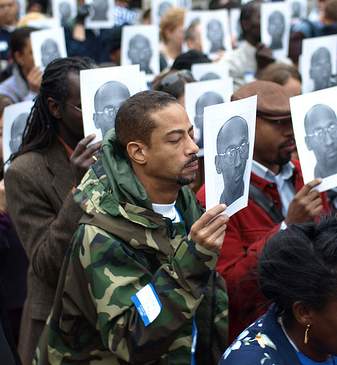
Carl Davidson : Who’s Waging ‘Class Warfare’?

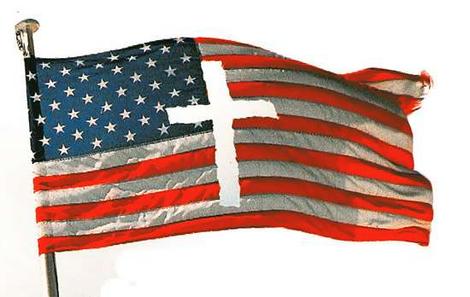
Art from RepublicanDirtyTricks.com / Keep on Keepin’ On.

Talk about your ‘class warfare’:
Shameless opposition to jobs bill
reveals GOP hatred of working class

By Carl Davidson / The Rag Blog / September 20, 2011

If you want to have your class consciousness raised a few notches, all you have to do over the next few weeks is listen to the Republicans in Congress offer up their shameless commentary rejecting Presidents Obama’s jobs bill.

Last week’s doozy came from Texas Congressman Louie Gohmert, who was outraged that capitalists were being restricted from discriminating in hiring the unemployed, in favor of only hiring people who already had jobs elsewhere. I kid you not. Here’s the quote:

“We’re adding in this bill a new protected class called ‘unemployed,'” Gohmert declared in the House Sept. 13, 2011. “I think this will help trial lawyers who are not having enough work. We heard from our friends across the aisle, 14 million people out of work — that’s 14 million new clients.”

One hardly knows were to begin.

First, the Jobs Bill does no such thing as creating a “new protected class.” It only curbs a wrongly discriminatory practice.

Second, so what if it did? Americans who uphold the Constitution, the 14th Amendment’s equal protection clause, and the expansion of democracy and the franchise generally, will see the creation of “protected classes” as hard-won progressive steps forward from the times of the Divine Right of Kings.

Third, if Gohmert had any first-hand knowledge of the unemployed, he’d know they usually can’t afford lawyers, especially when the courts are stacked against them.

Fourth, to create even more confusion, Gohmert raced to the House clerk to submit his own “Jobs Bill” before Obama’s, but with a similar name. Its content was a hastily scribbled two-page screed consisting of nothing but cuts in corporate taxes.

What’s really going on here is becoming clearer every day. The GOP cares about one thing: destroying Obama’s presidency regardless of the cost. They don’t even care if its hurts capitalism’s own interests briefly, not to mention damaging the well being of everyone else. Luckily, Obama is finally calling them out in public — although far too politely for my taste.

The irony will likely emerge if and when they ever do take Obama down. I’d bet good money that a good number of the GOP bigwigs would then turn on a dime and support many of the same measures they’re now opposing.

But most of them, especially on the far right, would still likely press on with their real aim, a full-throated neoliberal reactionary thrust that repeals the Great Society’s Medicaid and Medicare, the New Deal’s Social Security and Wagner Act, and every progressive measure in between.

Their idea of making the U.S. labor market “competitive” and U.S. business “confident” is to make the whole country more like Texas, with its record volume of minimum wage work and poverty, and then Texas more like Mexico — the race to the bottom. They’re not happy with 12% unionization; they want zero percent, where all of us are defenseless and completely under the thumbs of our “betters.”

In brief, prepare for more wars and greater austerity.

If you think I’m exaggerating, over the next months observe how the national GOP is trying to rig the 2012 elections in Pennsylvania, Michigan, and a few other big states. Our Electoral College system is bad enough, but they are going to “reform” it to make it worse by attaching electoral votes to congressional districts, rather than statewide popular majorities.

This would mean Obama could win the popular vote statewide, but the majority of electoral votes would still go to the GOP. Add that to their new “depress the vote” requirements involving picture IDs, which are aimed at the poor and the elderly, and you’ll see their fear and hatred of the working class.

We’ve always had government with undue advantages for the rich. But just watch them in this round as they go all out to make it even more so. We have to call it out for what it really is, and put their schemes where the sun doesn’t shine.

[Carl Davidson is a national co-chair of the Committees of Correspondence for Democracy and Socialism, a national board member of Solidarity Economy Network, and a local Beaver County, PA member of Steelworkers Associates. In the 1960s, he was a national leader of SDS and a writer and editor for the Guardian newsweekly. He is also the co-author, with Jerry Harris, of CyberRadicalism: A New Left for a Global Age. He serves as webmaster for SolidarityEconomy.net and Beaver County Blue. This article was also published on Carl’s blog, Keep On Keepin’ On. Read more articles by Carl Davidson on The Rag Blog.]

  • Listen to Thorne Dreyer‘s Sept. 9, 2011, Rag Radio interview with Carl Davidson about the Mondragon Corporation and the workers’ cooperative movement, here:

The Rag Blog

Posted in Rag Bloggers | Tagged , , , , , | 1 Comment

Lamar W. Hankins : Republican Health Care: ‘Let Him Die’

Thumbs down at Republican debate. Image from The Godless Liberal.

‘Just let him die’:
The Republicans and health care

The indisputable fact is that the U.S. is alone among the advanced societies in failing to assure that health care is available to all its citizens.

By Lamar W. Hankins / The Rag Blog / September 19, 2011

Now that the Republican nomination for president is in full swing, we once again return to the topic of health care, especially the role of government in assuring that all Americans have access to that life necessity.

Living adequately in a modern society requires many things — transportation, housing, food, income, security from crime, education, water, fire protection, fuel for home needs and vehicles, and information about what is going on in our community, state, and nation.

Few people disagree with this list, but when health care is added to it, some people become uncomfortable — some almost apoplectic.

The government at all levels helps provide everything on the list, as does the private sector. We have a mixed economy. Usually, government and the private sector cooperate in providing needed goods and services. Sometimes the government takes the lead role; sometimes it is the private sector leading. Few, if any, vital services are provided exclusively by the private sector.

I may buy natural gas from a private company, but the transmission of that natural gas to my home requires the assistance of government to assure that it is done with sufficient care that no one is put at risk. The public highways and streets are used by the gas company to provide the service. Public rights of way are used for the natural gas lines. The government inspects the company’s installation and maintenance of the company’s gas lines to insure that they are safe and citizens are protected. It is a cooperative endeavor that benefits all of us.

Neither the government nor the company is perfect, however. Mistakes are made by both on occasion, but the system works about as well as any human enterprise can be expected to work. When there is a failure, the causes are determined and actions are taken to correct the deficiencies in the system. If the failures are too great, changes in leadership occur in either the government, the private company, or both.

Few goods and services are provided in our society without this sort of cooperation, coordination, and connectedness between the private sector and government. In fact, I am unable to think of a single 100% private-sector activity; that is, an activity that does not use some resource of the government or the public to carry out its purpose. If you come up with one, please share it.

This system works, more or less, for all of the needs of modern life. But when we start discussing health care, people who believe strongly in self-sufficiency and rugged individualism posit the notion that health care needs must be entirely the responsibility of the individual. This happened at one of the recent Republican presidential nomination debates, as described by The Washington Post’s Eugene Robinson:

The lowest point of the evening — and perhaps of the political season — came when moderator Wolf Blitzer asked Ron Paul a hypothetical question about a young man who elects not to purchase health insurance. The man has a medical crisis, goes into a coma and needs expensive care. “Who pays?” Blitzer asked. “That’s what freedom is all about, taking your own risks,” Paul answered. … Blitzer interrupted: “But Congressman, are you saying that society should just let him die?” There were enthusiastic shouts of “Yeah!” from the crowd.

Paul then mentioned that the churches would take care of such people. Most listeners and watchers to that debate probably missed the irony in this exchange between Paul and Blitzer. Jay Bookman, a columnist and blogger for the Atlanta Journal-Constitution, explained in 2008 what Paul has ignored and Blitzer likely did not know:

Kent Snyder, 49, served as Paul’s 2008 campaign manager but died of complications from pneumonia two weeks after Paul withdrew from the ‘08 race. … However, Snyder did not have health insurance. According to his mother, he had a pre-existing condition that made it financially impossible to buy it on his own. (Interestingly, Snyder is credited with raising $19.5 million for the Paul campaign in the fourth quarter of 2007 alone, but none of that money was apparently used to buy insurance for campaign staffers.)

Because we treat health care as a de facto right in this country, Snyder did get at least some health care, racking up $400,000 in unpaid medical bills before he died. A fundraising effort after his death — the charity approach advocated by Paul — produced only $35,000 toward paying off those bills.

That’s not an unusual story. … [Patients such as Snyder don’t] come close to having the resources to pay off their bills. But somebody paid them. You did, and I did, and we paid Kent Snyder’s bill as well. It’s a convoluted, extremely irrational, unnecessarily expensive and inefficient system, and the only two approaches that show any promise of rationalizing it are the individual mandate or single-payer.

When Bookman writes that “we paid Kent Snyder’s bill,” what he means is that Snyder’s bill was absorbed into the rate structure that all of us who have health insurance support. We pay for all the Snyders by increased premiums and increased co-pays.

What such situations point out to me is that many people in our political system are driven by an ideology that ignores the reality of our lives. Nowhere is this more apparent than in the health care debate. The indisputable fact is that the U.S. is alone among the advanced societies in failing to assure that health care is available to all its citizens.

Access to health care is controlled mostly by health insurance corporations and pharmaceutical giants so that these companies can rake off large profits at the expense of 50 million Americans who do not have insurance, as well as at the expense of every policy-holder.

One of those Americans without health insurance is a friend of mine who has had to take out crushing loans that could leave him penniless to pay for two essential surgeries and other medical procedures as a result of accidental injuries he sustained doing a good deed for another person. He can’t afford health insurance in the present system. Where are the churches that Ron Paul touts as the solution? Where is the compassion?

For the same amount of money we spend in this country for health care and health insurance, we could cover those 50 million uninsured and an equal number of poorly insured with one simple reform — a single-payer system. What we would miss out on is paying millions of dollars to health insurance and pharmaceutical companies to enrich their stockholders and executives for a service that adds nothing to the nation’s well-being and could be provided better by a single-payer system.

They have rigged our system with appeals to the kind of libertarian arguments made by Paul and others, while 45,000 Americans die needlessly each year because they can’t afford health insurance.

The U.S. health care system ranks 37th in the world in its quality of care and its efficiency according to the World Health Organization. It is this way only because too many people have bought the lie that we have a free enterprise system, which is falsely seen by them as the greatest idea in the world, more important even than all the world’s religions.

But we don’t have a free enterprise system. We have a cooperative enterprise system, and that system does not serve the people well when it comes to health care.

It is the government’s responsibility, acting on behalf of the people, to make our society work for the people’s benefit when any system becomes dysfunctional. When that dysfunctionality results in the unnecessary deaths of tens of thousands of Americans each year, that responsibility becomes an imperative.

I am not advocating that government pay everyone’s health care bill. I am advocating that government help create a health care system that everyone can afford to participate in. That’s not socialism, as some falsely charge; it’s American democracy.

For nearly 100 million Americans with no health insurance or inadequate coverage, having meaningful health insurance reform will do more than almost anything else to assure that the promises of the Constitution are fulfilled.

It is past time for us to have a government of, by, and for the people, not of, by, and for the giant corporations who now control access to the health care system. When ideology prevents our system of government from working as was intended by the founders, its adherents are ideologues, not patriots.

[Lamar W. Hankins, a former San Marcos, Texas, city attorney, is also a columnist for the San Marcos Mercury. This article © Freethought San Marcos, Lamar W. Hankins. Read more articles by Lamar W. Hankins on The Rag Blog.]
The Rag Blog

Posted in Rag Bloggers | Tagged , , , , | 3 Comments

From the end of World War II through 1979, the gains in productivity in the U.S. were shared between workers and owners, “and both benefited as wages rose along with company profits.” That was before Reagan and “trickle-down” economics. Ted McLaughlin shows us how unregulated capitalism has led to a “hoarding’ of productivity, resulting in a vast inequality in wealth and income, and has put us on the path to a second Great Depression.

Posted in RagBlog | Leave a comment

The Republicans’ callousness about health care

By Lamar W. Hankins / The Rag Blog / September 19, 2011

Now that the Republican nomination for president is in full swing, we once again return to the topic of health care, especially the role of government in assuring that all Americans have access to that life necessity.

Living adequately in a modern society requires many things — transportation, housing, food, income, security from crime, education, water, fire protection, fuel for home needs and vehicles, and information about what is going on in our community, state, and nation.

Few people disagree with this list, but when health care is added to it, some people become uncomfortable — some almost apoplectic.

The government at all levels helps provide everything on the list, as does the private sector. We have a mixed economy. Usually, government and the private sector cooperate in providing needed goods and services. Sometimes the government takes the lead role; sometimes it is the private sector leading. Few, if any, vital services are provided exclusively by the private sector.

I may buy natural gas from a private company, but the transmission of that natural gas to my home requires the assistance of government to assure that it is done with sufficient care that no one is put at risk. The public highways and streets are used by the gas company to provide the service. Public rights of way are used for the natural gas lines. The government inspects the company’s installation and maintenance of the company’s gas lines to insure that they are safe and citizens are protected. It is a cooperative endeavor that benefits all of us.

Neither the government nor the company is perfect, however. Mistakes are made by both on occasion, but the system works about as well as any human enterprise can be expected to work. When there is a failure, the causes are determined and actions are taken to correct the deficiencies in the system. If the failures are too great, changes in leadership occur in either the government, the private company, or both.

Few goods and services are provided in our society without this sort of cooperation, coordination, and connectedness between the private sector and government. In fact, I am unable to think of a single 100% private-sector activity; that is, an activity that does not use some resource of the government or the public to carry out its purpose. If you come up with one, please share it.

This system works, more or less, for all of the needs of modern life. But when we start discussing health care, people who believe strongly in self-sufficiency and rugged individualism posit the notion that health care needs must be entirely the responsibility of the individual. This happened at one of the recent Republican presidential nomination debates, as described by The Washington Post’s Eugene Robinson:

The lowest point of the evening — and perhaps of the political season — came when moderator Wolf Blitzer asked Ron Paul a hypothetical question about a young man who elects not to purchase health insurance. The man has a medical crisis, goes into a coma and needs expensive care. “Who pays?” Blitzer asked. “That’s what freedom is all about, taking your own risks,” Paul answered. … Blitzer interrupted: “But Congressman, are you saying that society should just let him die?” There were enthusiastic shouts of “Yeah!” from the crowd.

Paul then mentioned that the churches would take care of such people. Most listeners and watchers to that debate probably missed the irony in this exchange between Paul and Blitzer. Jay Bookman, a columnist and blogger for the Atlanta Journal-Constitution, explained in 2008 what Paul has ignored and Blitzer likely did not know:

Kent Snyder, 49, served as Paul’s 2008 campaign manager but died of complications from pneumonia two weeks after Paul withdrew from the ‘08 race. … However, Snyder did not have health insurance. According to his mother, he had a pre-existing condition that made it financially impossible to buy it on his own. (Interestingly, Snyder is credited with raising $19.5 million for the Paul campaign in the fourth quarter of 2007 alone, but none of that money was apparently used to buy insurance for campaign staffers.)

Because we treat health care as a de facto right in this country, Snyder did get at least some health care, racking up $400,000 in unpaid medical bills before he died. A fundraising effort after his death — the charity approach advocated by Paul — produced only $35,000 toward paying off those bills.

That’s not an unusual story. … [Patients such as Snyder don’t] come close to having the resources to pay off their bills. But somebody paid them. You did, and I did, and we paid Kent Snyder’s bill as well. It’s a convoluted, extremely irrational, unnecessarily expensive and inefficient system, and the only two approaches that show any promise of rationalizing it are the individual mandate or single-payer.

When Bookman writes that “we paid Kent Snyder’s bill,” what he means is that Snyder’s bill was absorbed into the rate structure that all of us who have health insurance support. We pay for all the Snyders by increased premiums and increased co-pays.

What such situations point out to me is that many people in our political system are driven by an ideology that ignores the reality of our lives. Nowhere is this more apparent than in the health care debate. The indisputable facts are that the U.S. is alone among the advanced societies in failing to assure that health care is available to all its citizens.

Access to health care is controlled mostly by health insurance corporations and pharmaceutical giants so that these companies can rake off large profits at the expense of 50 million Americans who do not have insurance, as well as at the expense of every policy-holder.

One of those Americans without health insurance is a friend of mine who has had to take out crushing loans that could leave him penniless to pay for two essential surgeries and other medical procedures as a result of accidental injuries he sustained doing a good deed for another person. He can’t afford health insurance in the present system. Where are the churches that Ron Paul touts as the solution? Where is the compassion?

For the same amount of money we spend in this country for health care and health insurance, we could cover those 50 million uninsured and an equal number of poorly insured with one simple reform — a single-payer system. What we would miss out on is paying millions of dollars to health insurance and pharmaceutical companies to enrich their stockholders and executives for a service that adds nothing to the nation’s well-being and could be provided better by a single-payer system.

They have rigged our system with appeals to the kind of libertarian arguments made by Paul and others, while 45,000 Americans die needlessly each year because they can’t afford health insurance.

The U.S. health care system ranks 37th in the world in its quality of care and its efficiency according to the World Health Organization. It is this way only because too many people have bought the lie that we have a free enterprise system, which is falsely seen by them as the greatest idea in the world, more important even than all the world’s religions.

But we don’t have a free enterprise system. We have a cooperative enterprise system, and that system does not serve the people well when it comes to health care.

It is the government’s responsibility, acting on behalf of the people, to make our society work for the people’s benefit when any system becomes dysfunctional. When that dysfunctionality results in the unnecessary deaths of tens of thousands of Americans each year, that responsibility becomes an imperative.

I am not advocating that government pay everyone’s health care bill. I am advocating that government help create a health care system that everyone can afford to participate in. That’s not socialism, as some falsely charge; it’s American democracy.

For nearly 100 million Americans with no health insurance or inadequate coverage, having meaningful health insurance reform will do more than almost anything else to assure that the promises of the Constitution are fulfilled.

It is past time for us to have a government of, by, and for the people, not of, by, and for the giant corporations who now control access to the health care system. When ideology prevents our system of government from working as was intended by the founders, its adherents are ideologues, not patriots.

[Lamar W. Hankins, a former San Marcos, Texas, city attorney, is also a columnist for the San Marcos Mercury. This article © Freethought San Marcos, Lamar W. Hankins. Read more articles by Lamar W. Hankins on The Rag Blog.]
The Rag Blog

Posted in RagBlog | Leave a comment

The Republicans’ callousness about health care

By Lamar W. Hankins / The Rag Blog / September 19, 2011

Now that the Republican nomination for president is in full swing, we once again return to the topic of health care, especially the role of government in assuring that all Americans have access to that life necessity.

Living adequately in a modern society requires many things — transportation, housing, food, income, security from crime, education, water, fire protection, fuel for home needs and vehicles, and information about what is going on in our community, state, and nation.

Few people disagree with this list, but when health care is added to it, some people become uncomfortable — some almost apoplectic.

The government at all levels helps provide everything on the list, as does the private sector. We have a mixed economy. Usually, government and the private sector cooperate in providing needed goods and services. Sometimes the government takes the lead role; sometimes it is the private sector leading. Few, if any, vital services are provided exclusively by the private sector.

I may buy natural gas from a private company, but the transmission of that natural gas to my home requires the assistance of government to assure that it is done with sufficient care that no one is put at risk. The public highways and streets are used by the gas company to provide the service. Public rights of way are used for the natural gas lines. The government inspects the company’s installation and maintenance of the company’s gas lines to insure that they are safe and citizens are protected. It is a cooperative endeavor that benefits all of us.

Neither the government nor the company is perfect, however. Mistakes are made by both on occasion, but the system works about as well as any human enterprise can be expected to work. When there is a failure, the causes are determined and actions are taken to correct the deficiencies in the system. If the failures are too great, changes in leadership occur in either the government, the private company, or both.

Few goods and services are provided in our society without this sort of cooperation, coordination, and connectedness between the private sector and government. In fact, I am unable to think of a single 100% private-sector activity; that is, an activity that does not use some resource of the government or the public to carry out its purpose. If you come up with one, please share it.

This system works, more or less, for all of the needs of modern life. But when we start discussing health care, people who believe strongly in self-sufficiency and rugged individualism posit the notion that health care needs must be entirely the responsibility of the individual. This happened at one of the recent Republican presidential nomination debates, as described by The Washington Post’s Eugene Robinson:

The lowest point of the evening — and perhaps of the political season — came when moderator Wolf Blitzer asked Ron Paul a hypothetical question about a young man who elects not to purchase health insurance. The man has a medical crisis, goes into a coma and needs expensive care. “Who pays?” Blitzer asked. “That’s what freedom is all about, taking your own risks,” Paul answered. … Blitzer interrupted: “But Congressman, are you saying that society should just let him die?” There were enthusiastic shouts of “Yeah!” from the crowd.

Paul then mentioned that the churches would take care of such people. Most listeners and watchers to that debate probably missed the irony in this exchange between Paul and Blitzer. Jay Bookman, a columnist and blogger for the Atlanta Journal-Constitution, explained in 2008 what Paul has ignored and Blitzer likely did not know:

Kent Snyder, 49, served as Paul’s 2008 campaign manager but died of complications from pneumonia two weeks after Paul withdrew from the ‘08 race. … However, Snyder did not have health insurance. According to his mother, he had a pre-existing condition that made it financially impossible to buy it on his own. (Interestingly, Snyder is credited with raising $19.5 million for the Paul campaign in the fourth quarter of 2007 alone, but none of that money was apparently used to buy insurance for campaign staffers.)

Because we treat health care as a de facto right in this country, Snyder did get at least some health care, racking up $400,000 in unpaid medical bills before he died. A fundraising effort after his death — the charity approach advocated by Paul — produced only $35,000 toward paying off those bills.

That’s not an unusual story. … [Patients such as Snyder don’t] come close to having the resources to pay off their bills. But somebody paid them. You did, and I did, and we paid Kent Snyder’s bill as well. It’s a convoluted, extremely irrational, unnecessarily expensive and inefficient system, and the only two approaches that show any promise of rationalizing it are the individual mandate or single-payer.

When Bookman writes that “we paid Kent Snyder’s bill,” what he means is that Snyder’s bill was absorbed into the rate structure that all of us who have health insurance support. We pay for all the Snyders by increased premiums and increased co-pays.

What such situations point out to me is that many people in our political system are driven by an ideology that ignores the reality of our lives. Nowhere is this more apparent than in the health care debate. The indisputable facts are that the U.S. is alone among the advanced societies in failing to assure that health care is available to all its citizens.

Access to health care is controlled mostly by health insurance corporations and pharmaceutical giants so that these companies can rake off large profits at the expense of 50 million Americans who do not have insurance, as well as at the expense of every policy-holder.

One of those Americans without health insurance is a friend of mine who has had to take out crushing loans that could leave him penniless to pay for two essential surgeries and other medical procedures as a result of accidental injuries he sustained doing a good deed for another person. He can’t afford health insurance in the present system. Where are the churches that Ron Paul touts as the solution? Where is the compassion?

For the same amount of money we spend in this country for health care and health insurance, we could cover those 50 million uninsured and an equal number of poorly insured with one simple reform — a single-payer system. What we would miss out on is paying millions of dollars to health insurance and pharmaceutical companies to enrich their stockholders and executives for a service that adds nothing to the nation’s well-being and could be provided better by a single-payer system.

They have rigged our system with appeals to the kind of libertarian arguments made by Paul and others, while 45,000 Americans die needlessly each year because they can’t afford health insurance.

The U.S. health care system ranks 37th in the world in its quality of care and its efficiency according to the World Health Organization. It is this way only because too many people have bought the lie that we have a free enterprise system, which is falsely seen by them as the greatest idea in the world, more important even than all the world’s religions.

But we don’t have a free enterprise system. We have a cooperative enterprise system, and that system does not serve the people well when it comes to health care.

It is the government’s responsibility, acting on behalf of the people, to make our society work for the people’s benefit when any system becomes dysfunctional. When that dysfunctionality results in the unnecessary deaths of tens of thousands of Americans each year, that responsibility becomes an imperative.

I am not advocating that government pay everyone’s health care bill. I am advocating that government help create a health care system that everyone can afford to participate in. That’s not socialism, as some falsely charge; it’s American democracy.

For nearly 100 million Americans with no health insurance or inadequate coverage, having meaningful health insurance reform will do more than almost anything else to assure that the promises of the Constitution are fulfilled.

It is past time for us to have a government of, by, and for the people, not of, by, and for the giant corporations who now control access to the health care system. When ideology prevents our system of government from working as was intended by the founders, its adherents are ideologues, not patriots.

[Lamar W. Hankins, a former San Marcos, Texas, city attorney, is also a columnist for the San Marcos Mercury. This article © Freethought San Marcos, Lamar W. Hankins. Read more articles by Lamar W. Hankins on The Rag Blog.]

The Rag Blog

Posted in RagBlog | Leave a comment

Retired history prof Don Swift paints an alarming picture of Dominionism and what he calls its “threat to American liberties.” “Both Rick Perry and Michele Bachmann have clear ties to the Christian Dominionists,” he warns, “who do not believe in the separation of church and state.” He tells us what dominionism is, how it works, and the influence it is having on today’s religious right.

Posted in RagBlog | Leave a comment

Kate Braun : Fall Equinox is Celebration of Balance

A celebration of balance. Image from Lifehack.

Mabon, Harvest Home:
Friday is the Fall Equinox

By Kate Braun / The Rag Blog / September 19, 2011

“We can’t return we can only look behind
From where we came…” — The Circle Game

Friday, September 23, 2011 is Mabon, Harvest Home, the Fall Equinox.

Friday is Frigga’s day; her power combines with Lady Moon’s waning energies to achieve the harmony traditional to this celebration of balance. When the hours of daylight and darkness are equal, as they are twice a year, there is a quantifiable balance which can be measured. Harmony comes from within and is an immeasurable quality in our lives.

With the loss of homes and trees to wildfires, with the disruption of the rhythms of our lives, not only balance but also harmony is being lost. I strongly recommend making the time on September 23 to perform whatever actions or rituals are helpful to restoring feelings of both balance and harmony. Only then will we be able to create plans for moving forward.

Use the colors red, orange, russet, maroon, brown, deep gold, and violet; select from gourds, pine cones, acorns, apples, dried seeds, grapes, autumn leaves, horns of plenty, cauldrons, and ivy for your decorations; drape your table and clothe yourself in textured fabrics such as velvet, velour, and corduroy.

This is a season sacred to Cerridwen, a Celtic Goddess of Autumn. Her symbol is the cauldron; her fruit is the apple; all nuts and seeds are sacred to her. Lore tells us that when souls leave the body they go to Cerridwen’s cauldron, where she stirs the brew that helps the souls within the cauldron make good sense of the lives they have left. When that lesson is learned, then the soul is ready for the next lesson in another body, another life, another time.

Such is the seasonal progression of the soul, measured in lifetimes, not months, and just as rhythmical as the turning of the Wheel of Life.

Change is inevitable. It will come when it will come, not always when we choose. As we should now be mindful of the needs of others, we should also be mindful of the changes in our lives and not be too quick to label them negative changes. In Brother Cadfael’s Penance: the Twentieth Chronicle of Brother Cadfael, of the Benedictine Abbey of Saint Peter and Saint Paul, at Shrewsbury (Mysterious Press, 1994), Ellis Peters writes:

The year proceeds not in a straight line through the seasons, but in a circle that brings the world and man back to the dimness and mystery in which both began, and out of which a new seed-time and a new generation are about to begin.

Out of the ashes of homes and forests a new beginning shall rise.

[Kate Braun‘s website is www.tarotbykatebraun.com. She can be reached at kate_braun2000@yahoo.com. Read more of Kate Braun’s writing on The Rag Blog.]

The Rag Blog

Posted in Rag Bloggers | Tagged , , , , , | 1 Comment

CARTOON / Joshua Brown : Life During Wartime: Cutting the Deal

Political cartoon by Joshua Brown / The Rag Blog / September 18, 2011.

[Joshua Brown is the executive director of the Center for Media and Learning/American Social History Project, The Graduate Center, The City University of New York and is a professor of history at CUNY. Find more political cartoons by Joshua Brown on
The Rag Blog.]

The Rag Blog

Posted in Rag Bloggers | Tagged , | Leave a comment

Influential writer and political activist Carl Davidson joins Thorne Dreyer on Rag Radio for a lively discussion about the Mondragon Corporation and its role in the international workers’ cooperative movement. They also discuss the burgeoning cooperative movement in the U.S., and Carl’s illuminating vision for a 21st century socialism that incorporates a commitment to ecological sustainablity, a recognition that markets will be a part of any future socialist society, and the fact that human rights are a “natural attribute of our humanity.” You can listen to the show here. The Rag Blog brought Carl to Austin to give a multi-media presentation on Mondragon at the 5604 Manor community center.

Posted in RagBlog | Leave a comment

Former SDS president Carl Oglesby died of cancer on Tuesday, Sept. 13. Author and scholar Mike Davis, who was also active in SDS and the 60s peace movement, discusses Oglesby’s rare oratorical skills, referring to his “unadorned eloquence and moral clarity,” and the “profound role he played in deepening our commitment to the anti-war movement.”

Posted in RagBlog | Leave a comment

Mike Davis : The Eloquence of Carl Oglesby

Carl Oglesby. Image from Kngine.

Eloquent orator of the New Left:
Remembering Carl Oglesby

Carl Oglesby sadly left this world Tuesday morning after a long bout with cancer. President of SDS from 1965-66, he was a passionate American radical and one of the New Left’s most eloquent speakers and critical thinkers. I made several trips to Antioch College in the 1960s just to pick his brain. His main books then were Containment and Change and The Yankee-Cowboy War, from which many of us learned to look at our society in a deeper way, to be better able to change it. — Carl Davidson / The Rag Blog

By Mike Davis / The Rag Blog / September 15, 2011

In my lifetime I’ve heard two speakers whose unadorned eloquence and moral clarity pulled my heart right out of my chest.

One was Bernadette Devlin (nee McAlliskey), speaking from the roof of the Busy Bee Market in Andersonstown in Belfast the apocalyptic day that Bobby Sands died.

The other was Carl Oglesby, president of SDS in 1965. He was 10 years older than most of us, had just resigned from Bendix corporation where he had worked as a technical writer, and wore a beard because his face was cratered from a poor-white childhood. His father was a rubber worker in Akron and his people came from the mountains.

I’m not capable of accurately describing the kindness, intensity, and melancholy that were alloyed in Carl’s character, or the profound role he played in deepening our commitment to the anti-war movement. He literally moved the hearts of thousands of people.

He was also for many young SDSers — like myself and the wonderful Ross Altman (original UCLA SDSer and Carl’s close friend, whom I salute) – both a beloved mentor but also leader of the wild bunch. At a crucial moment in the tragic history of this desert country, he precisely and unwaveringly defined our duty. He was a man on fire.

To those who knew him, I send my deepest love and solidarity — as I do to those yet to discover this great, tormented, and most-old-fashionedly American radical.

[Mike Davis is a Distinguished Professor in the Department of Creative Writing at the University of California, Riverside. An urban theorist, historian, and social activist, Davis is the author of City of Quartz: Excavating the Future in Los Angeles and In Praise of Barbarians: Essays against Empire. Read more articles by Mike Davis on The Rag Blog. This tribute was originally published by counterpunch.]

Also see:

The Rag Blog

Posted in Rag Bloggers | Tagged , , , , , , , | 6 Comments

Jeff Shero Nightbyrd : Skipping Stones With Carl Oglesby

Carl Oglesby at an SDS conference in 1968. Photo by Neal Boenzi / The New York Times.

Seismic shifts and skipping stones:
Memories of Carl Oglesby

By Jeff Shero Nightbyrd / The Rag Blog / September 15, 2011

[Carl Oglesby, a former president of the Students for a Democratic Society (SDS) and perhaps the New Left’s most eloquent orator, died Tuesday of lung cancer. He was 76.]

In 1965 those of us in SDS confronted shifting our focus from organizing the poor and disenfranchised to taking on the war in Vietnam. It was a momentous decision because we understood that the full weight of the government security apparatus would persecute us individually and try to destroy our collective movement.

At our national meeting,
in the best Socratic tradition, the debate about our future moved back and forth, with one articulate and persuasive speaker after another arguing with passion. I still remember that none was more articulate or persuasive than Carl Oglesby.

And his intellect was matched by a soaring vocal cadence that hinted of balmy nights spent at tent revivals with preaching that served as entertainment (pre-internet and cell phones), and choirs with music that could uplift you into heaven.

A lanky, almost raw boned, South Carolinian, Carl was the only white organizer I heard who could match the speaking power of the best civil rights leaders. Years later, I asked how he had learned to speak so well. He answered that it wasn’t tent revivals but that, as a boy sitting in the woods around campfires, he was captivated by the richness and cadence of stories told by the older working men.

That year Carl was elected president of SDS and I was elected vice president. It signaled a gravitational shift in SDS from leadership of sons and daughters of East Coast progressive families to people who were nurtured in but rejected the sensibilities of the right-wing heartland. SDS and our country as a whole were experiencing seismic shifts.

Carl and I hiked down to Lake Kewadin to talk over what we should do. In no time we were throwing stones and challenging each other to see who could throw the furthest. As I remember, Carl was a rangy centerfielder on a semi-pro baseball team and I had been a pitcher who tore up his shoulder in high school.

This moment gave me great confidence. Here we are at the gathering of the white hot center of American radicalism throwing rocks into the lake. Our physical competition seemed so grassroots, so American. I knew for sure in that moment that Carl was the real deal; the embodiment of the heartland we had to touch and organize.

I just took down an old album and looked at photos of my friends at that SDS meeting. Carl looked just a touch older than the rest of us.

But God! We all were so young and… so innocent. And dare I say — so right.

[Jeff Shero Nightbyrd was national vice president of SDS and later was active with the Yippies. Jeff helped start Austin’s original underground newspaper, The Rag, and edited RAT in New York. Jeff now directs Acclaim Talent, one of the largest talent agencies in the Louisiana/Texas region.]

Also see:

The Rag Blog

Posted in Rag Bloggers | Tagged , , , , , , | 3 Comments