THE DAVID AND ALICE DEBATE

By Thomas McKelvey Cleaver / The Rag Blog / April 11, 2010

I’ll say right up front that — at first read — I was surprised by David Hamilton’s announcement of his “retirement” from the movement and radical politics.

I don’t know David face-to-face, as do many readers, but over the past few years that I’ve marginally become re-involved with Austin politics through my involvement with Under The Hood Café [the Killeen-based GI coffehouse], I have come to know David through our e-mail conversations. As with many ex-Weathermen I continue to disagree with him on certain important-to-us topics, but he’s a guy who brings intelligence, knowledge, passion, and commitment to what he says and does, making him someone whose thoughts I respect.

It only took me another few minutes to easily identify with what he was saying about his disillusionment with Obama. I’m the guy who spent the better part of five months in 2008 personally raising $350,000 for the Obama campaign from Democrats all over the country, and as a result I know first-hand the enthusiasm that was out there, the longing from “the rest of us” for real change in this country.

Thus, my disappointment as I have watched Obama the Candidate of Promise become Obama the President who takes every position I oppose on just about everything, is pretty damn strong — perhaps even stronger than David’s disillusionment. Most of my friends greet me nowadays by asking “So, what has Obama done to piss you off today?” It’s said as a joke, but sadly it really isn’t that funny. Thus, it’s easy for me to understand where David’s coming from.

I also know well the decision to withdraw from radical politics out of disappointment and disillusionment with the lack of “progress.” I did that myself for a number of years.

I’ve also been privileged to be a Fan of Embree for 44 years now, ever since Alice showed up looking for me at a college in Colorado where I was one of the few radicals and the only anti-war Vietnam vet. Over those years, she’s been one of my models for how one survives as a leftist in America without going nuts, and when I decided I would see what I could do to help the GIs at Fort Hood start a new coffeehouse, she was the first person in Austin I went looking for, knowing that if I could get her involved, things would be done right.

Reading her response to David, I identified with her decision to focus on the small victories that come along, and to keep working for the big one. My reason for coming back from withdrawal was that I found out that — for me personally — doing as Alice does was essential for my physical, mental, moral, and spiritual health.

It’s easy right now to take David’s way. I fight the urge to do so every morning when I read a blog and get outraged over the latest outrage. But we really can’t afford to do this, not now. Not with what’s out there.

The Washington Post recently documented that threats of violence from the Right are way up: 42 in the first three months of 2010, as opposed to 15 in the last three months of 2009. Who are they targeting?

They’re targeting the people David says are worthless (because they mostly are) — the Democratic members of Congress. They’re doing it over the passage of that worthless piece of legislation, the health care reform bill. Go read about the people being arrested for making credible threats against Speaker Pelosi or Senator Murray. These raving lunatics are only the tip of the iceberg, as was the Hutaree “militia.”

Back 20 years ago, I had the privilege from my work in Hollywood to get to know the legendary motion picture director, Billy Wilder. He told me the story of his years in Berlin in the 1920s and early 1930s. He came to the conclusion in 1928 that Hitler and the Nazis were a “credible threat.” Nearly all of his friends disagreed, and over the years he acquired the reputation of being a crank on the subject of those ridiculous Nazis.

On the night Hitler won the election in January 1933, Wilder packed all he owned into a steamer trunk, went to the Berlin train station, and bought a one way ticket on the Paris Express. As he put it, “I didn’t return for 12 years, and when I did, none of the people who had told me I was crazy to worry about Hitler were still alive. They’d been put to death.”

Back in 1933, the German political radicals refused to support the moderates and liberals against the Nazis, with the Communists calling the Social Democrats “Social Fascists” — a term not too far removed from David’s description of Obama and the Democrats. History has shown that attitude and the political strategy it engendered didn’t work out.

Right now, there is every indication that the Republican Party is about to win back nearly all that it lost in the 2006 and 2008 elections, despite the fact that their political platform is “more of the same” — more of the same of everything that nearly destroyed us over eight years.

Anyone with any brains can see clearly that the Obama Presidency and the Democratic Party have largely brought this on themselves with their fecklessness and their unwillingness to actually be “the party of change” that they campaigned on. This has in turn brought about the disillusionment of all those folks I called over the summer of 2008, the people who had never given money to a political campaign before and who really were giving “till it hurt,” and this disillusionment has created the gap that polls are seeing between Democrats and Republicans when it comes to enthusiasm for participating in this fall’s elections.

Consider, however, what a GOP majority in the House and/or Senate will create. Will it create more chances for the kinds of changes we hope to see? Newt Gingrich was cheered when he spoke to the Southern Republican Leadership Conference and called for a Republican congress to de-fund every progressive change that has been put in place by the Obama Administration.

He specifically mentioned the EPA and their plan to deal with climate change under the powers the Supreme Court says they have under the Clean Air Act. And he also mentioned de-funding the Department of Labor, which for the first time in 30 years has people running it who really are working for the interests of working people. Whatever one wants to say about health care reform, what is going on at EPA and DOL are the kinds of things we on the left want.

If we surrender to David’s attitude, if we decide to take our marbles and go home because everything isn’t perfect and the People’s Revolution hasn’t happened, then we are leaving the field uncontested to the people who would be happy as hell to put every one of us in a concentration camp, the people who have been The Enemy for all the history of this country.

If we want to keep the opportunity of doing the kind of work Alice Embree is the embodiment of, we cannot make the choice David Hamilton has. Not in 2010. Not in the face of what is happening.

Your mileage may vary.


Type rest of the post here

Source /

The Rag Blog

Posted in RagBlog | Leave a comment

Net Neutrality : The Fight Ahead

Image from Francesco Lapenta.

Net Neutrality: All is not lost

By Tim Karr / April 11, 2010

“The Day the Internet Lost” read a full-banner headline on Huffington Post. The New York Times held a wake for the Internet reporting that Internet service providers can now “block or slow specific sites” and demand that content producers now “pay a fee to ensure delivery of material.”

On Tuesday, the DC Circuit court took away the Federal Communications Commission’s to protect our rights on the Internet. The decision has been widely reported as the end of an era for America’s Internet. But what does the future hold? And what can we do to keep the Internet open and democratic?

The ruling echoes the Supreme Court’s Citizens United v. FEC decision, which amounted to a judicial giveaway of our democracy to powerful corporations. Yesterday’s court decision effectively hands the future of communications over to corporations like AT&T, Comcast, Verizon and Time Warner Cable.

This is bad news on several fronts:

Broadband ambitions sidelined: High-speed Internet access is a central component to our economic recovery. Putting high-speed Internet into the hands of the third of the country that now does not connect is Priority #1 of the FCC’s National Broadband Plan. The court decision pulls the carpet from beneath the agency’s plan, effectively leaving this essential job to companies that have failed — by almost every international measure — to deliver a fast and affordable services to Americans stuck on the wrong side of the digital divide.

The end of openness: The decision could mark the beginning of America’s Broadband Dark Age. The court ruled that the FCC has no right to stop carriers from developing a two-tier Internet and blocking Web content that they don’t like. They’ve already indicated their interest in prioritizing certain content over others. As The Economist reported that an ISP could simply “decide to hijack all search queries… and redirect them to its own search site so it could harvest the extra hits, even when users were attempting to use Google or other search engines.” Nice!

It’s Now Their Internet, Not Yours: The decision could bring us a world where Internet users no longer have control over their Internet experience — where we have no protections against ISPs that abuse our Internet rights at will and without repercussions. Increasingly AT&T, Comcast and Verizon have sought to encroach upon user choice online. Net Neutrality is essential to keeping the future of communications in the hands of all Americans — and preventing ISPs from picking winners and losers on the Web. We’ve just lost that guarantee and it’s only a matter of time before the Great Encroachment begins.

But don’t give up hope. There’s a way out of this legal mess. The easiest route to restore an open Internet is for the FCC to simply vote to reclassify broadband under Title 2 of the Communications Act. This move would return to the agency the powers to protect consumers that it had before Bush-era deregulation struck it down.

Other remedies include a Supreme Court appeal or congressional legislation but, as Prof. Jack Balkin notes, such actions run the risk of a conservative Supreme Court that appears to favor corporations over the public interest. And a move in Congress would require 60 votes from a Senate where passing anything is nearly impossible – much less on an issue over which broadband providers like AT&T and Comcast wield a corrupting level of influence in both parties.

The FCC, however, could reclassify by a simple majority vote of commissioners. Chairman Genachowski has made protecting the open Internet a signature effort of his tenure. He has the support of the majority of FCC commissioners on that. He should now move to reclassify with a simple vote at the agency.

Moreover, the Supreme Court case has specifically said the decision to reclassify is up to the FCC, and as long as the Commission gives good reasons for its choice to do so, that action should be upheld in the courts.

Makes sense, right? That’s why Free Press is pushing full throttle to embolden the FCC to reclassify in a way that allows it to protect Net Neutrality and fulfill the universal access goals envisioned in its National Broadband Plan. (You can join the action here.)

In the world of wonky telecommunications policy, reclassification — or returning the Internet to its legal status prior to Bush-era deregulation — is tantamount to declaring World War III with the phone and cable lobby.

That’s a fight that we’re ready to have right now. The future of open communications depends upon it.

Source / Save the Internet / Free Press

Free Press Responds to Comcast Net Neutrality Decision

From Brian Lehrer Live on Vimeo.

Dead? Hardly.
Ruling all but ensures net neutrality

By Johna Till Johnson / March 9, 2010

As I predicted last month, a federal appeals court recently overturned the fines imposed by the Federal Communications Commission on Comcast in 2007. The ruling was overturned on the grounds that the FCC lacks jurisdiction over telco Internet access offerings.

This decision has a number of ramifications, which I’ll go into shortly. But first: Some people are saying this ruling sounds the death knell to net neutrality.

How can I put this delicately? Horsepucky.

The end game is precisely the opposite: This decision has essentially ensured the passage of net neutrality.

Here’s how things are likely to play out. The FCC very likely will move to reclassify Internet services as a Title II common carrier services (which transport people or goods under regulatory supervision). Why? Because the FCC wants to move forward on the broadband stimulus bill, which relies on the ability of the FCC to regulate Internet access providers.

Reclassifying Internet services as a Title II service would provoke a royal catfight with the carriers, which have preemptively warned the FCC not to go there. Back in February, carriers — including Verizon, Time Warner, AT&T, Qwest, the National Cable andTelecommunications Association, and the wireless and phone company trade associations — warned FCC Chairman Julius Genachowski that trying to classify Internet access as a Title II service would provoke “years of litigation and regulatory chaos.”

More pointedly, they indicated such a decision would make them unwilling to invest the billions of dollars required to achieve the government’s goal of 100MBps broadband speeds to 100 million households by 2020.

This is a potent threat, because it shines a spotlight on the real elephant in the corner: Everybody wants broadband Internet access, but nobody knows how to pay for it. Internet connectivity simply doesn’t generate enough profit to justify the investment — whether from carriers, Google, or anyone else. If the carriers decide to pull their investment dollars — or spend them on litigation instead — good luck having a functioning Internet in 2015. (But that’s the subject of another column).

It remains to be seen whether the FCC will cave. I’m betting not — Genachowski doesn’t strike me as the kind of guy who gives in to threats. Regardless, there’s a belt-and-suspenders strategy that the FCC will likely pursue in parallel: petitioning Congress to modify the FCC’s charter to explicitly cover Internet services.

How this will play out depends, of course, on the exact makeup of Congress — and the willingness of lawmakers to cross party lines. My guess, though, is that such a move will ultimately succeed, if for no other reason than common sense. The FCC is set up to regulate “communications,” and it’s ridiculous to argue that the Internet is not a communications service.

And once that happens, the passage of net neutrality is a foregone conclusion. The wild card is how it will be defined. As noted previously, a U.K.-based Web Site recently filed a motion with the FCC requesting enforcement of “open search” rules to complement net neutrality — which could open up a whole new angle.

Pass the popcorn, it’s shaping up to be an interesting couple of years.

Source / Computerworld

Also see:

The Rag Blog

Posted in RagBlog | Tagged , , , , , | 1 Comment

THE DAVID AND ALICE DEBATE

By Thomas McKelvey Cleaver

I’ll say right up front that — at first read — I was surprised by David Hamilton’s announcement of his “retirement” from the movement and radical politics.

I don’t know David face-to-face, as do many readers, but over the past few years that I’ve marginally become re-involved with Austin politics through my involvement with Under The Hood Café, I have come to know David through our e-mail conversations. As with many ex-Weathermen I continue to disagree with him on certain important-to-us topics, but he’s a guy who brings intelligence, knowledge, passion, and commitment to what he says and does, making him someone whose thoughts I respect.

It only took me another few minutes after reading that to easily identify with what he was saying. I’m the guy who spent the better part of five months in 2008 personally raising $350,000 for the Obama campaign from Democrats all over the country, and as a result I know first-hand the enthusiasm that was out there, the longing from “the rest of us” for real change in this country.

Thus, my disappointment as I have watched Obama the Candidate of Promise become Obama the President who takes every position I oppose on just about everything, is pretty damn strong — perhaps even stronger than David’s disillusionment. Most of my friends greet me nowadays by asking “So, what has Obama done to piss you off today?” It’s said as a joke, but sadly it really isn’t that funny. Thus, it’s easy for me to understand where David’s coming from.

I also know well the decision to withdraw from radical politics out of disappointment and disillusionment with the lack of “progress.” I did that myself for a number of years.

I’ve also been privileged to be a Fan of Embree for 44 years now, ever since Alice showed up looking for me at a college in Colorado where I was one of the few radicals and the only anti-war Vietnam vet. Over those years, she’s been one of my models for how one survives as a leftist in America without going nuts, and when I decided I would see what I could do to help the GIs at Fort Hood start a new coffeehouse, she was the first person in Austin I went looking for, knowing that if I could get her involved, things would be done right. Reading her response to David, I identified with her decision to focus on the small victories that come along, and to keep working for the big one. My reason for coming back from withdrawal was because I found out that – for me personally – doing as Alice does was essential for my physical, mental, moral and spiritual health.

It’s easy right now to take David’s way. I fight the urge to do so every morning when I read a blog and get outraged over the latest outrage. But we really can’t afford to do this, not now. Not with what’s out there.

Today’s Washington Post documents that threats of violence from the Right are way up. 42 in the first three months of 2010, as opposed to 15 in the last three months of 2009. Who are they targeting?

They’re targeting the people David says are worthless (because they mostly are) – the Democratic members of Congress. They’re doing it over the passage of that worthless piece of legislation, the health care reform bill. Go read about the people being arrested for making credible threats against Speaker Pelosi or Senator Murray. These raving lunatics are only the tip of the iceberg, as was the Hutaree “militia.”

Back 20 years ago, I had the privilege from my work in Hollywood to get to know the legendary motion picture director, Billy Wilder. He told me the story of his years in Berlin in the 1920s and early 1930s. He came to the conclusion in 1928 that Hitler and the Nazis were a “credible threat.” Nearly all of his friends disagreed, and over the years he acquired the reputation of being a crank on the subject of those ridiculous Nazis. On the night Hitler won the election in January 1933, Wilder packed all he owned into a steamer trunk, went to the Berlin train station, and bought a one way ticket on the Paris Express. As he put it, “I didn’t return for twelve years, and when I did, none of the people who had told me I was crazy to worry about Hitler were still alive. They’d been put to death.”

Back in 1933, the German political radicals refused to support the moderates and liberals against the Nazis, with the Communists calling the Social Democrats “Social Fascists” – a term not too far removed from David’s description of Obama and the Democrats. History has shown that attitude and the political strategy it engendered didn’t work out.

Right now, there is every indication that the Republican Party is about to win back nearly all that it lost in the 2006 and 2008 elections, despite the fact that their political platform is “more of the same” – more of the same of everything that nearly destroyed us over eight years. Anyone with any brains can see clearly that the Obama Presidency and the Democratic Party have largely brought this on themselves with their fecklessness and their unwillingness to actually be “the party of change” that they campaigned on. This has in turn brought about the disillusionment of all those folks I called over the summer of 2008, the people who had never given money to a political campaign before and who really
were giving “till it hurt,” and this disillusionment has created the enthusiasm gap that polls are seeing between Democrats and Republicans when it comes to enthusiasm for participating in this fall’s elections.

Consider however, what a GOP majority in the House and/or Senate will create. Will it create more chances for the kinds of changes we hope to see? Newt Gingrich was cheered when he spoke to the Southern Republican Leadership Conference on Thursday night and called for a Republican congress to de-fund every progressive change that has been put in place by the Obama Administration. He specifically mentioned the EPA and their plan to deal with climate change under the powers the Supreme Court says they have under the Clean Air Act. He specifically mentioned de-funding the Department of Labor, which for the first time in 30 years has people running it who really are working for the interests of working people. Whatever one wants to say about health care reform, what is going on at EPA and DOL are the kinds of things we on the left want.

If we surrender to David’s attitude, if we decide to take our marbles and go home because everything isn’t perfect and the People’s Revolution hasn’t happened, then we are leaving the field uncontested to the people who would be happy has hell to put every one of us in a concentration camp, the people who have been The Enemy for all the history of this country. If we want to keep the opportunity of doing the kind of work Alice Embree is the embodiment of, we cannot make the choice David Hamilton has. Not in 2010. Not in the face of what is happening.

Your mileage may vary.


Type rest of the post here

Source /

The Rag Blog

Posted in RagBlog | Leave a comment

Rabbi Arthur Waskow : Does the Flag Condone Murder?

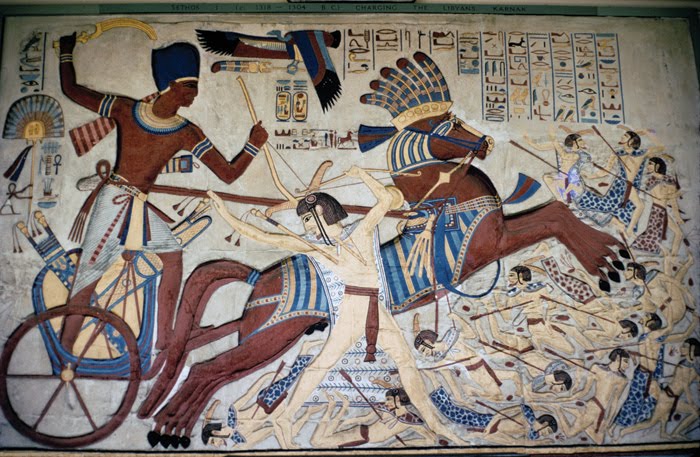
The Pharoah’s chariot army drowned in the Red Sea.

Do our ‘chariots’ impoverish us?
Does the flag condone murder?

By Rabbi Arthur Waskow / The Rag Blog / April 10, 2010

The end of Pesach is said to mark the anniversary of the moment when Pharaoh’s imperial horse-chariot army met disaster in the Red Sea. Just as the festival was ending this year, flashes of truth about our own imperial army appeared in the ways prophetic truth rises up in our day — unveiled videotape, unmuzzled journalism. One from the Iraq War, one from the Afghanistan War.

Is there more of a connection than this seeming accident of dates? Stay tuned, below.

In one of these flashes of truth, a U.S. airplane (July 2007) machine-guns two journalists — and even if you think the U.S. soldiers honestly mistook a camera for an assault rifle and mistook civilians casually strolling on the street for threats to the American occupation, that does not explain why they then killed two clearly unarmed men in a clearly unarmed van who came to help those wounded in the first attack. Nor does it explain why the military realized something had gone wrong, investigated, and then lied about what had happened.

In the other, U.S. “Special Forces” (February 2010) killed three Afghan women — two of them pregnant — and a local police chief and prosecutor, all on the way to a baby shower. Says The New York Times, “It was one of the latest examples of Special Operations forces’ killing civilians during raids, deaths that have infuriated Afghan officials and generated support for the Taliban despite efforts by American and NATO commanders to reduce civilian casualties.”

Then the Special Forces tampered with the evidence to hide what they had done, claiming that the three women had been murdered earlier, by their relatives, in an “honor killing.” (Everyone knows that’s what Muslim men do to their women. “Baby shower”? Only loving Western families do that.)

Once more, twice more, the official position will be that these are unfortunate byproducts of necessary wars.

They are not. If the killers were not waving U.S. flags, they would be called murderers. Terrorists. Terrorizing civilians to achieve political change.

These events, over and over and over, are not only the inevitable result of these specific wars, in which the Government of the United States went (in Iraq) and is still going (in Afghanistan) far beyond what is necessary to protect the United States itself. They are not only the inevitable causes of still more rage against America, not only the recruiting posters for new terrorists.

They are also the inevitable results of an American mindset that has sent U.S. troops and mercenaries and military bases throughout the world, and devoted between 880 billion dollars and 1.03 TRILLION dollars a year — as much as all other governments combined — to the U.S. military budget.

Details: For the 2010 fiscal year, the President’s base budget of the Department of Defense rose to $533.8 billion. Adding spending on “overseas contingency operations” brings the sum to $663.8 billion.

When the budget was signed into law on October 28, 2009, the final size of the Department of Defense’s budget was $680 billion, $16 billion more than the President had requested. Adm. Mike Mullen, the chairman of the Joint Chiefs of Staff, expected an additional supplemental spending bill, possibly in the range of $40-50 billion, by the Spring of 2010 in order to support the wars in Iraq and Afghanistan. Military-related expenditures outside of the Department of Defense constitute between $216 billion and $361 billion in additional spending, bringing the total for military spending to between $880 billion and $1.03 trillion in fiscal year 2010.

(These summaries, and a far more detailed analysis with detailed official sources come from here.)

While American schools rot, while our sewer mains crack, while our bridges fall, while our budgets for art, music, theater are slashed, while our autos speed and even our trains creak along burning oil and coal to send still more CO2 into the atmosphere to scorch our planet and give asthma to our children.

Deliberately, I do not use the words “defense budget.” This is not defense. It destroys others, and ourselves.

Increasingly, we hear talk about cutting the “entitlement” budget to reduce the monstrous deficits that allegedly may haunt our grandchildren. What are these “entitlements”?

  • Social Security. Medicare. The money that lets human beings live in dignity and find healing for their illnesses.
  • Unemployment insurance payments — which the Congress just shrugged and walked away from, while planning to actually increase the military budget and refusing to spend the money to make sure the millions of unemployed can find jobs so as not to need unemployment insurance.
  • And state pension funds.
  • Not to speak of salaries for teachers, cops, social workers, firefighters, who are being laid off because the biggest banks used cute tricks to make huge profits, then got the taxpayers to do what was indeed necessary to save the banks and the system, but made sure Congress did not meet these desperate needs of state and city governments that can’t govern sanely any more.

But the one “entitlement” we must not even mention cutting is the military.

Our own empire is eating us alive. It is a cancer, eating up the body that feeds it.

What does this have to do with religion, with spirituality, with Torah or Islam or mindful meditation or Easter or Pesach?

Murdering pregnant women and tampering with the truth are sins as well as crimes. Murdering civilians who are desperately trying to save the lives of wounded journalists is a sin as well as a crime.

Is it necessary to quote Dwight Eisenhower once again? “Every gun that is made, every warship launched, every rocket fired, signifies in the final sense a theft from those who hunger and are not fed, those who are cold and are not clothed.”

Is this a new idea? Not hardly. The Torah (Deut. 17:16) draws on the story of slavery in Mitzrayyim — geographically, Egypt; linguistically, the Tight/ Narrow Place — to teach that no Israelite king may “send the people back into Mitzrayyim” — forced labor, poverty, despair — “in order to pay for him to buy horses for his Army.”

Those thefts that Eisenhower and the Torah mention — not just the murders recorded in secret videotapes — are sins as well as crimes.

The Flag must not hide, condone, justify those sins, those crimes.

It is time for the American public, for sure including and ideally led by its religious communities, to subject these crimes, these sins, to what we used to call God’s judgment, and our own — and to strip away the mindset, and the decisions that make them happen.

The American people can be “defended” by a military budget far smaller than a trillion dollars a year. And our country can be made healthier, more productive, freer, happier, if we spend most of that money in other ways.

I usually end these letters by saying, “Blessings of shalom, salaam, shantih — peace.”

We will not deserve those blessings — and we will not in fact receive them! — unless we make them happen for others and ourselves. You cannot do it alone, and we at The Shalom Center cannot do it alone. We need your help, you need ours.

Arthur

[Rabbi Arthur Waskow, director, The Shalom Center; co-author, The Tent of Abraham; author of Godwrestling: Round 2, Down-to-Earth Judaism, and a dozen other books on Jewish thought and practice, as well as books on U.S. public policy. The Shalom Center voices a new prophetic agenda in Jewish, multireligious, and American life. To receive the weekly on-line Shalom Report, click here.]

The Rag Blog

Posted in Rag Bloggers | Tagged , , , | 3 Comments

SPORT / Earl From the Grave : Tiger and the Nike Ad

The Nike ad:
Tiger the Brand finally conquers Tiger the Man

By Dave Zirin / April 9, 2010

Why is the new Nike ad with a downcast yet proudly resilient Tiger Woods hearing the voice of his dead father making me so furious? It defies logic.

After all, we just came through a week during which we saw film footage of the U.S. military taking part in what is being called “collateral murder.” Death threats have been sent to Democratic members of Congress by right wing lunatics for the crime of passing a healthcare bill that could have been penned by Mitt Romney. And then take Pope Benedict and his Catholic defenders. Seriously. Please take them. I’d suggest somewhere hot.

In the context of our enduring global fever-dream, a tacky ad in which Nike and Tiger conspire to exploit the memory of Earl Woods is hardly that big a deal — particularly since if Earl Woods were alive, he would have supported this exercise in grave robbing 100 percent.

But the idea that Tiger and Nike would see the incredible turmoil that has engulfed Tiger’s life as an opportunity to rebrand Tiger and sell us more swoosh-laden crap is simply sickening. Every single member of the golf media and every fan who has felt sympathy for his self-destructive plight should feel like a grade-A sucker.

Every person impressed with his professed recommitment to the Buddhist faith and his family should be deeply offended that it was all just a springboard aimed at cashing in. And every golf fan and pro golfer should be furious that he’s shellacked another layer of controversy onto the most prestigious tournament on the tour, the Masters at Augusta.

There is a small part of me delighted that Tiger’s awful ad will further cloud an event whose history of segregation and exclusion would even give pause to our Confederate Governor of Virginia, “Robert E.” McDonnell.

But any joy at the discomfort of grown men with ten-figure bank accounts named Hootie and Billy is outpaced by the sheer cultural rock bottom that this ad represents, not to mention what it says about Woods himself.

I really believed that in the wake of his Odyssey of scandal and humiliation, there would be a showdown inside Tiger’s soul between the brand and the man. I couldn’t have been more wrong. There is no man, only brand.

If he wants to dehumanize himself on his own time then more power to him. But this ad dehumanizes all of us. One thing however is abundantly clear: If Tiger loses this weekend, Nike loses as well. Neither deserve to make the cut, on the course or otherwise. Tiger the brand has now wholly consumed Tiger the man.

[Dave Zirin is the author of the forthcoming Bad Sports: How Owners are Ruining the Games we Love (Scribner) Receive his column every week by emailing dave@edgeofsports.com. Contact him at edgeofsports@gmail.com.]

Source / The Nation

The Rag Blog

Posted in RagBlog | Tagged , , , , , | 2 Comments

New statistics show that an average of 950 veterans attempt suicide every month, and about 7% of those attempts are successful. Even those under VA care have an unacceptably high suicide rate. We are paying an awful price for the unnecessary wars in Afghanistan and Iraq.

Posted in RagBlog | Leave a comment

A critic at a diversity conference contends that the nature of Jensen’s criticism of societal hierarchies makes him part of the problem, not the solution. Professor Jensen responds with a call for personal accountability. “We cannot ignore the systems from which injustice emerges and expect injustice magically to disappear,” he tells us.

Posted in RagBlog | Leave a comment

The Rag Blog’s Sherman DeBrosse earlier wrote about “Protecting Wall Street from the People,” laying much of the problem at the feet of the Republicans. Dr. Steven Porter responds that the problem is less with the political parties, both of which he considers culpable, and more a product of a “culture of greed,” a phenomenon whose roots are in the child-rearing practices and sociological landscape of the society.”

Posted in RagBlog | Leave a comment

In the second of two, Sherm delves further into the Tea Bagger phenomenon — it’s anger, racism, and potential violence. He discusses indoctrination tactics and the nature of the true believer — and how the movement reflects a basic contempt for American democracy.

Posted in RagBlog | Leave a comment

Bill Ayers : Doublespeak at the University of Wyoming


Doublespeak at the University of Wyoming

“President Tom Buchanan’s self-satisfied bromides do nothing to disguise the fact that the principle of free and open intellectual exchange has suffered a defeat at the University of Wyoming. As the AAUP has argued since 1915, it is precisely prevailing public opinion that must not shape what views get heard on campus.” Cary Nelson, national president of the American Association of University Professors

By Bill Ayers / The Rag Blog / April 6, 2010

On March 30, 2010, officials at the University of Wyoming, citing “security threats” and “controversy,” canceled two talks I was invited to give in early April, one a public lecture entitled “Trudge Toward Freedom: Moral Commitment and Ethical Action,” and the other, a talk to faculty and graduate students called “Teaching and Research in the Public Interest: Solidarity and Identity.” I’d been invited in August 2009, but one week before I was to travel to Laramie, I was told I had been “disinvited.”

In February, as the University began to publicize my scheduled visit, a campaign to rescind the invitation was initiated on right-wing blogs, accelerating quickly to a wider space where a demonizing and dishonest narrative dominated all discussion. A wave of hateful messages and death threats hit the University, and was joined soon enough by a few political leaders and wealthy donors instructing officials in ominous tones to cancel my visit to the campus.

On March 28 an administrator wrote to tell me that the University was receiving vicious e-mails and threatening letters, as well as promises of physical disruption were I to show up. This is becoming drearily familiar to me, as I’ll explain.

A particularly despicable note from Frank Smith who lives in Cheyenne and is active in the Wyoming Patriot Alliance, said, “Maybe someone could take him out and show him the Matthew Sheppard (sic) Commerative (sic) Fence and he could bless it or something.” He was referring to Matthew Shepard, the young gay man who was tortured and murdered in 1998, left to die tied to a storm fence outside Laramie.

Republican candidate for Governor Ron Micheli released a letter he’d sent to all members of the University of Wyoming Board of Trustees asking them to rescind the invitation. Matt Mead, another gubernatorial candidate, said through a press release that while he is a self-described “fervent believer in free speech and the free exchange of ideas,” that still allowing me to speak would be “reprehensible.” He concluded that I should have “no place lecturing our students.”

I sympathized with the University, and told the folks I was in touch with how sorry I was that all of this was happening to them. I also said that I thought it was a bit of a tempest in a tea pot, and that it would surely pass. Certainly no matter what a couple of thugs threatened to do, I said, I thought that Wyoming law enforcement could get me to the podium, and I would handle myself from there, as I do elsewhere. I said I thought we should stand together and refuse to accede to these kinds of pressures to demonize someone and suppress students’ right to freely engage in open dialogue.

After all a public university is not the personal fiefdom or the political clubhouse of the governor, and donors are not permitted to call the shots when it comes to the content or conduct of academic matters. We should not allow ourselves to collapse in fear if a small mob gathers with torches at the gates.

I wouldn’t force myself on the University, of course, but I felt that canceling would be terribly unfair to the faculty and students who had invited me, and would send a big message that bullying works. It would be another step down the slippery slope of giving up on the precious ideal of a free university in a free society.

President Tom Buchanan, University of Wyoming.

No good. On March 30, 2010 the University posted an announcement of the cancellation of my visit with a long and rambling comment from President Tom Buchanan. He begins with the obligatory assertion that academic freedom is a core principle of the University, but quickly adds that “freedom requires a commensurate dose of responsibility.” We are charged to enact free speech and thought “in concert with mutual respect.”

Nothing that I did or said in this matter was disrespectful or irresponsible, and yet, in the absence of specific references, readers are led to imagine all kinds of offenses.

The announcement is punctuated with a deep defensiveness: anyone who thinks the University “caved in to external pressure,” Buchanan writes, would be “incorrect.” Anticipating what any casual observer would conclude, he builds a strained and somewhat desperate counter-narrative. Buchanan pleads that UW is “one of the few institutions remaining in today’s environment that garners the confidence of the public,” and that a speech by me would somehow undermine that confidence.

He concludes that “this episode illustrated an opportunity to hear and critically evaluate a variety of ideas thoughtfully, through open, reasoned, and civil debate, it also demonstrates that we must be mindful of the real consequences our actions and decisions have on others.”

That’s some sentence, and while it’s impossible to know definitively what he’s referring to as the “episode” (it might be the public lecture itself, but then it could be the cancellation of the lecture, or even the barbarians at the gates threatening to burn the place down, or withhold funds, that would provide the opportunity to critically evaluate matters).

It has an unmistakable Orwellian ring: we canceled that lecture as an expression of our support for lectures! And it’s eerily similar to the classics: we destroyed that village in order to save it! Work will make you free! War is peace!

One of the truly weird qualities of the Buchanan statement is a hole in its center, the deafening silence concerning why the campaign against me was organized in the first place. The reason is familiar to me as noted: in the 1960’s I was a leader of the militant anti-war group, Students for a Democratic Society, and then a founder of the Weather Underground, an organization that carried out dramatic symbolic attacks against several monuments to war and racism, crossed lines of legality, of propriety, and perhaps even of common sense.

And then during the 2008 presidential election I was unwittingly and unwillingly thrust upon the stage because I had known — like thousands of others — Barack Obama in Chicago. The infamous charge that the candidate was “pallin around with terrorists,” designed to injure Obama, also demonized me.

I’ve been an educator and professor for decades, but the hard right has accelerated the lunacy against thousands of folks — activists and artists, academics and theorists, outspoken radical thinkers — and wherever possible mounted campaigns exactly like the one in Wyoming.

Often university officials stand up on principle and resist the howling mob, as they did recently at St. Mary’s in California; sometimes — as at a student-run conference at the University of Pittsburgh in March — they compromise, restricting access to talks and surrounding a speaker with unwanted and unnecessary police protection; sometimes, as in this case, the university turns and runs. It’s a sad sight.

Of course I wasn’t invited to speak about any of this, and it’s unlikely any of it would have come up without the active campaigning and noisy thunder from the relatively tiny group that is the ultra-right.

I would have focused my talk on the unique characteristics of education in a democracy, an enterprise that rests on the twin pillars of enlightenment and liberation, knowledge and human freedom. Education engages dynamic questions of morality and ethics, identity and location, agency and action.

We want to know more, to see more, to experience more in order to do more — to be more competent and powerful and capable in our projects and our pursuits, to be more astute and aware and wide-awake, more fully engaged in the world that we inherit, the world we are simultaneously destined to change.

To deny students the right to question the circumstances of their lives, and to wonder how they might be otherwise, is to deny democracy itself.

It’s reasonable to assume that education in a democracy is distinct from education under a dictatorship or a monarchy; surely school leaders in fascist Germany or Albania or Saudi Arabia or apartheid South Africa all agreed, for example, that students should behave well, stay away from drugs and crime, do their homework, study hard, and master the subject matter; they also graduated fine scientists and musicians and athletes, so none of those things differentiate a democratic education from any other.

What makes education in a democracy, at least theoretically, distinct is a commitment to a particularly precious and fragile ideal: every human being is of infinite and incalculable value, each a unique intellectual, emotional, physical, spiritual, and creative force. Every human being is born free and equal in dignity and rights; each is endowed with reason and conscience, and deserves, then, a sense of solidarity, brotherhood and sisterhood, recognition and respect.

Democracy is geared toward participation and engagement, and that points to an educational system in which the fullest development of all is seen as the necessary condition for the full development of each, and conversely, that the fullest development of each is necessary for the full development of all.

In a vibrant and participatory democracy, we might conclude that whatever the wisest and most privileged parents want for their children is precisely the baseline and standard for what the wider community wants for all of its children. If children of privilege get to have small classes, abundant resources, and a curriculum based on opportunities to experiment and explore, ask questions and pursue answers to the furthest limit — if the Obama kids, for example, attend such a school, one where they also find a respected and unionized teacher corps — shouldn’t that be good enough for the kids in public schools everywhere?

Any other ideal for our schools, in John Dewey’s words, “is narrow and unlovely; acted upon it destroys our democracy.”

We want our students to be able to think for themselves, to make judgments based on evidence and argument, to develop minds of their own. We want them to ask fundamental questions — who in the world am I? How did I get here and where am I going? What in the world are my choices? How in the world shall I proceed? — and to pursue answers wherever they might take them. Our efforts focus not on the production of things so much as on the production of fully developed human beings who are capable of controlling and transforming their own lives, citizens who can participate fully in civic life.

Professor William Ayers appears during an interview on ABC’s Good Morning America. Photo from AP.

Teaching in a democracy encourages students to develop initiative and imagination, the capacity to name the world, to identify the obstacles to their full humanity, and the courage to act upon whatever the known demands. Education in a democracy is always about opening doors and opening minds as students forge their own pathways into a wider world.

How do our schools at every level — K-16 — measure up to the democratic ideal?

Much of what we call schooling forecloses or shuts down or walls off meaningful choice-making. Much of it is based on obedience and conformity, the hallmarks of every authoritarian regime. Much of it banishes the unpopular, squirms in the presence of the unorthodox, hides the unpleasant. There’s no space for skepticism, irreverence, or even doubt.

While many long for an education that is transcendent and powerful, we find ourselves too-often locked in situations that reduce schooling to a kind of glorified clerking that passes along a curriculum of received wisdom and predigested and often false bits of information. This is a recipe for disaster in the long run.

Educators, students, and citizens must press for an education worthy of a democracy, including an end to sorting people into winners and losers through expensive standardized tests which act as pseudo-scientific forms of surveillance; an end to starving public schools — including public higher education — of needed resources and then blaming teachers for dismal outcomes; and an end to the rapidly accumulating “educational debt,” the resources due to communities historically segregated, under-funded and under-served.

All children and youth in a democracy, regardless of economic circumstance, deserve full access to richly-resourced classrooms led by caring, qualified, and generously compensated teachers.

We might try now to create open spaces in our schools and our various communities where we expect fresh and startling winds to blow, unaccustomed winds that are sure to electrify and confound and fascinate us. We begin by throwing open the windows. We declare that in this corner of this place — in this open space we are constructing together — people will begin to experience themselves as powerful authors of their own narratives, actors in their own dramas, the essential architects and creators of their own lives, participants in a dynamic and inter-connected community-in-the-making.

Here they will discover a zillion ways to articulate their own desires and demands and questions. Here everyone will live in search of rather than in accordance with or in accommodation to. Here we will join one another and our democratic futures can be born.

A primary job of teachers and scholars and journalists, and a responsibility of all engaged citizens, is to challenge orthodoxy, dogma, and mindless complacency, to be skeptical of all authoritative claims, to interrogate and trouble the given and the taken-for-granted. The growth of knowledge, insight, and understanding depends on that kind of effort, and the inevitable clash of ideas that follows must be nourished and not crushed.

As campuses contract and constrain, the main victims become truth, honesty, integrity, curiosity, imagination, freedom itself. When college campuses fall silent, other victims include the high school history teacher on the west side of Chicago or in Laramie or Cheyenne, the English literature teacher in Detroit, or the math teacher in an Oakland middle school. They and countless others immediately get the message: be careful what you say; stay close to the official story; stick to the authorized text; keep quiet with your head covered.

In Brecht’s play Galileo the great astronomer set forth into a world dominated by a mighty church and an authoritarian power: “The cities are narrow and so are the brains,” he declared recklessly.

Intoxicated with his own insights, Galileo found himself propelled toward revolution. Not only did his radical discoveries about the movement of the stars free them from the “crystal vault” that received truth insistently claimed fastened them to the sky, but his insights suggested something even more dangerous: that we, too, are embarked on a great voyage, that we are free and without the easy support that dogma provides.

Here Galileo raised the stakes and risked taking on the establishment in the realm of its own authority, and it struck back fiercely. Forced to renounce his life’s work under the exquisite pressure of the Inquisition, he denounced what he knew to be true, and was welcomed back into the church and the ranks of the faithful, but exiled from humanity — by his own word.

A former student confronted him in the street then: “Many on all sides followed you… believing that you stood, not only for a particular view of the movement of the stars, but even more for the liberty of teaching — in all fields. Not then for any particular thoughts, but for the right to think at all. Which is in dispute.”

This is surely in play today: the right to talk to whomever you please, the right to read and wonder, the right to pursue an argument into uncharted spaces, the right to challenge the state or the church and its orthodoxy in the public square. The right to think at all.

This is some of what I would have discussed in Wyoming, but that will not happen, at least not this week. Canceling this talk underlines the urgency of having multiple and far-ranging speeches, dialogue, and discussions at every level and throughout the public square.

[William Ayers is Distinguished Professor of Education and Senior University Scholar at the University of Illinois at Chicago.]

The Rag Blog

Posted in Rag Bloggers | Tagged , , , , , , , , | 13 Comments

Sherman DeBrosse : Rage, Racism, and the Future of the Tea Bagger Movement


The Tea Baggers:
An identity temper tantrum with a violent edge

By Sherman DeBrosse / The Rag Blog / April 6, 2010

[This is the second in a two-part series on the Tea Bagger movement by Sherman DeBrosse. Go here to read part one.]

Much of Tea Bagger rhetoric reads like some sort of identity temper tantrum and is given to wild claims and exaggerations. Over and over, Tea Bag people talk about getting their country back, and they subscribe to paligenesis, the myth of a national rebirth akin to a phoenix rising from the ashes of destruction.

There is so much anger because on the flip side there is choking fear. These people are afraid that people like them will no longer be dominating this country. They rightly fear that their place in the middle class and future prosperity are threatened by forces they cannot identify. It is no surprise that they are largely whites.

Older voters vote more frequently than younger ones. The older voters were raised with what is called the “strict father morality” and they are deeply attached to the norms and mores of an older America that was less inclusive and tolerant. Though beneficiaries of the New Deal, they respond positively to appeals to Social Darwinism. Many of them were “Reagan Democrats” and were angry about “welfare queens.” The “take back our country” theme, couched in nostalgic patriotic terms, appeals to these voters. They too feel threatened and are often bewildered by contemporary norms and culture.

There is a lot of gender anxiety and white nationalism in the Tea Party movement Sometimes, it seems that many of the Tea Baggers are looking for someone to lead them from the jaws of defeat, a Daddy. Chip Berlet writes that so long as they do not find a charismatic leader, all we have to worry about is the coming of proto-fascism. There is probably too much gender insecurity among Tea Bagger men to permit Sarah Palin to emerge as a Mommy.

All this wild Tea Bagger rhetoric can inspire violence. The same theories led Timothy McVeigh to attack a federal building in Oklahoma City. Perhaps similar talk led a demented man to fly an airplane into an IRS building. Words do have consequences.

By March, 2010, the Tea Bagger rage was moving toward demanding annihilation of liberal enemies and the purgation of the nation of any traces of Democratic policies. A Rush Limbaugh stand in told a joke about what any American soldier would do when left with just two rounds in an elevator with Osama bin Laden, Harry Reid, and Nancy Pelosi. The bottom line was he would shoot the two Democrats and then try to strangle bin Laden. Similarly, Rex Rammell, conservative candidate for governor in Idaho, has joked about hunting President Obama.

Converting people who were not already Republicans

If the Tea Bag strategy only activated the Republican base and people in the various fringe rightist movement, there would be plenty of reason to work. The problem is, as noted in a previous post, that it has attracted so many independents, who by nature look for quick and easy solutions and usually are not very well informed.

As far back as the 1970s, Donald Warren identified another group that he called “Middle American Radicals.” They felt caught between Wall Street and great concentrations of economic power on one side and organized minorities on the other. By no means were they all racists or bent on injuring immigrants. For the most part, they were disconnected from government, unions, churches, and other mediating structures.

In the eighties, more than five million whites fell into poverty, with many more to follow as manufacturing firms moved overseas. Now, there is again a great surge in the number of whites falling below the poverty line. These people think the most important question for debate is, “Who is an American and what will America look like?” The Middle American Radicals have been growing for three decades. We know too little about them, and they are another large, fertile recruiting ground for the militias and Tea Baggers.

These people know that the American system is not working for them, and they think that only the Tea Bag Movement offers an alternative to the status quo. Their situation is analogous to that of many workers in the United Kingdom during the period of economic stagnation prior to Maggie Thatcher’s ascent to power.

They did not like the existing situation and saw in Thatcherism a clear choice. Even though she heaped new tax burdens on them, many British working class folks stuck with her for some years, rewarded with jingoism and Social Darwinist sermons that made them feel good about themselves and superior to those who depended upon the dole.

Many parallels can be found in the history of Europe in the 1920s and 1930s as bewildered and ill-informed working class people sought meaning and comfort by embracing the various forms of right wing populist extremism.

Teabagger Brady LaMotte says “Our government is out of control.” Photo from Snapshots of Teabaggers / The Stranger.

Creating true believers

An economic crisis is the perfect time to recruit people for rightist movements. Political neophytes, independents, and Middle American Radicals who were drawn into the Tea Party Movement were landed by powerful tools of persuasion.

Strong convictions can be created in one’s consciousness through clever external information management. This can be done without engaging reason, and it can be easily deployed in the politics of hatred. Fear and anger are powerful motivators. These appeals to basic emotions are most persuasive at a time when there is great economic insecurity. Some Tea Baggers relate that after listening to Glenn Beck or some other shockjock, they literally had a sort of conversion experience. They were reborn. They no longer felt helpless and now channeled their energies into political militancy.

By repeating the same claims about Barack Obama being a socialist and communist, political operatives can embed that information in people’s memories as fact. It does not matter that his health care proposals were largely borrowed from Republican proposals. Likewise, repeating the claim that there will be death panels trumps the calm display of facts that this simply is not the case.

When these false claims are linked to appeals to patriotism and membership in the ranks of victimized middle Americans, convictions deepen. Victimhood has a strong claim to moral authority. At this point, people relate to a tribe of virtuous, victimized Americans who have every right to hate liberal elitists.

In Going to Extremes, Cass R. Sunstein shows how people then reinforce their convictions by association with others who share their beliefs. Research and reading are unnecessary to validate what they feel so deeply about. At this point, the beliefs promoted by clever propagandists become part of a person’s identity, which is sacred to him or her.

Minimizing the influence of the Tea Party Movement

Some liberal columnists seem to be whistling as they pass the graveyard when they emphasize that there are some libertarians among the Tea Baggers. One says not to worry; they are just a modern version of the anti-federalists of the late 1780s and 1790s. Maybe or maybe not, but those people took up muskets to make their point.

Some dismiss the Tea Baggers as harmless and compare them to the hippies of the 1960s. There are significant differences. The hippies fought against injustice, while Tea Bagger spokesmen like Glenn Beck seem to justify and explain away injustices. The hippies saw through capitalist propaganda while the Tea Baggers have soaked it up and are saturated by it.

It is true that the Tea Bag movement could eventually be a problem for Republicans because these people tend to oppose Republican efforts to reach out to Hispanics. Already, Hispanics in Idaho, Washington, and Oregon are feeling threatened and intimidated by the Tea Baggers.

We are told not to worry too much about the Tea Baggers because libertarians resent the Christian Right’s inclination to interfere in our personal lives, but we should recall that Republican libertarians have a history of bowing to what the pastors want. Bob Barr has forthrightly spoken out against the Prior Act when he told the CPAC convention that people should not be “seduced by that siren of security over freedom.”

However, the vast majority of Tea Baggers have gone along with what the Republican Party has wanted. When Dick Cheney appeared at the CPAC convention there was something like a collective orgasm, so much did the audience approve of torturing detainees and stripping them of the right to civilian trials. Extreme atavism has always been part of right-wing populism, and that fuels militarism, jingoism, a disregard for the requirements of the law when it comes to the rights of enemies.

As the Tea Baggers were ramped up, the national political atmosphere became more and more atavistic. We got a clue of how the media would approach this super-heated atmosphere when Neocon Dick Gregory, Meet the Press host, commented, “I don’t know that Obama has the same ability to reflect the emotions of the country as Bush did at certain points in his presidency.”

On the same program, Newt Gingrich engaged in pure demagoguery, saying that the Obama administration was more interested in “protecting the rights of terrorists… than protecting the lives of Americans.” The former Speaker of the House is a highly intelligent man and holds a Ph.D. in history. He certainly has a better grasp of our laws and judicial system than that.

The problem of race

Most of the Tea Baggers probably do not hate Obama just because he is black, but his race certainly does not help. Some of their anger is at the emergence of a more inclusive nation where there are greater opportunities for blacks and other marginalized people. This is happening at the same time that many in the middle class perceive that their status and economic security is threatened. Unfortunately, the blacks and other marginalized people will not return to the back of the bus, and it may be too late to reverse all the policies that endanger the middle class.

The Democrats have long had a Caucasian problem. Not since Lyndon B. Johnson have they won the white vote. White males are most likely to vote against Democrats. These “angry white men” resent the gains African-Americans, other minorities, and women have made. Rusty De Pass, a rightist in South Carolina claimed that an escaped gorilla was one of Obama’s ancestors.

It could well be that much of this racism is a problem growing out of the unconscious operations of the brain. In The Hidden Brain, Shankar Vedantam talks about unconscious biases that help us “leap to conclusions.” There are unconscious cerebral features that act like an account or reality checker. It tallies information on what are popular views and what are popular biases. It notices economic inequality and discrimination, and this hidden dimension of the human brain might reach some wrong conclusions about African-American people.

Some of the Tea Baggers’ distrust of a black president might come less from real malice than from the brain’s hidden software. Some people, through careful thought and introspection, have managed to overcome unconscious racism; other people are not much into introspection.

At the moment, many Tea Baggers are scapegoating blacks and immigrants. A recent poll showed that 25% of Americans think Jews are responsible for the near meltdown of the banking system. Many on the extreme right share these views and believe the Protocols of the Elders of Zion is legitimate. This conservative anti-Semitism is under wraps now
because the conservatives see the state of Israel as an ally. This could change.

Courting the extremists

The Tea Party movement has clearly activated people who are variously described as survivalists, patriots, militiamen, Constitutionalists, white supremacists, and Christian Identity members. The Southern Poverty Law Center reports that the armed “patriots” are on the rise again and infiltrating the Tea Bagger movement. Oath Keepers, comprised of former policemen, firemen, and servicemen, is growing rapidly. They believe they have the right to ignore laws they dislike.

There is a great danger that these people will be able to recruit and indoctrinate some of the many independents who have been drawn into Tea Baggism. The independents usually have few fixed political principles, do not follow politics carefully, and look for quick easy fixes and simple explanations.

At the moment the Republican Party is appealing to extreme states’ rights doctrines, particularly the pre-Civil War notion that through the Tenth Amendment a state can nullify a federal law. Andrew Jackson took on the nullifiers in the 1830s, and many thought the Civil War settled the legal question once and for all. Then George Wallace and others revived it as “massive interposition” in the 1950s and 1960s to fight desegregation. By reviving a legal doctrine last deployed by segregationists and racists, the GOP seems to be legitimizing the strange and archaic body of doctrines advocated by the white supremacists and many militias.

David Frum, a former George W. Bush speechwriter, has worried that the anger has gone too far and could hurt the GOP. He blames it on FOX News and the cable and radio commentators. Frum suggested that the Republican leadership thought Fox worked for them and discovered, instead, they were working for Fox. “The anger trapped the [Republican] leadership,” Frum noted , and “the leadership discovered they have no room to maneuver as a result of the anger.”

Frum is worried that some independents might be turned off by the Republicans hyperbolic rhetoric and lack of proposals. This matter was obliquely debated within the ranks of elected Republicans, but they seemed to have reached the conclusion that any concrete proposal would provide a target for Democrats. Republicans briefly claimed that Representative Paul Ryan had written a “Republican” health reform plan, but as soon as the press wrote about it, the leadership distanced themselves from it.

No doubt, the GOP think tanks employ experts in cognitive science who have guaranteed that there will be no substantial reaction against extremism so long there is not an economic miracle, with the economy cranking out vast numbers of new jobs. The fact that the think tanks are working so hard to defend the Tea Baggers suggests that eliminationist extremism is not a very short term strategy.

Tea Party indoctrination might be effective

Tea Baggism gives people a collective identity and invites them to buy into a collective memory that could make them committed Rightists for decades to come. Some may also be persuaded to become gun show/gun shop patrons and join one militia or another.

Creating a Tea Bagger collective memory is simply an extension of several decades of Republican mastery of linguistic and cognitive theory. The beauty of collective memory is that it creates memories that can have nothing to do with reality. They can be passionately believed because they become inextricable from identity.

The Tea Baggers are in the process of assuming the identity of American history’s victims — good, patriotic, productive folks who are victimized by big government that spends too much and does not respect their rights. To be sure, this collective memory will include versions of historical events and processes that are far from the truth. Yet, they will be fervently believed and will become nearly impossible for outsiders to challenge with facts, logic, and analysis. The most powerful collective identities have clear enemies. Of course, liberals are at the top of the list. Others who will have this status are black and brown people.

Collective memory works like “mythic history” — in the words of Pierre Nora, a French expert on history and memory; it replaces real history and is fervently believed. Collective memories are about our identities, so strong emotions reinforce them. That is why they are considered sacred.

The term “collective memory” is useful and evolved out of Emile Durkheim’s concept of collective consciousness. Yet, we know that there is no particular place spot or place in a collectivity where a memory is stored. It is a common memory existing in the minds of members of an identity group and also in symbols, texts, and other parts of a culture. Some members have a stronger emotional attachment to it than others. The concept is an effort to get at how people’s thinking is shaped by a culture or subculture and by membership in a group.

According to Peter Novick, “Collective memory simplifies, sees events from a single, committed perspective; is impatient with ambiguities of any kind…” It overlooks historicity, all the complexities involved with examining events in the different contexts and in another time. It provides “imaginary representations and historical realities” that are deeply rooted in cultural identity and the values of an imaginary community.

Collective memory emerges from social arrangements and the “ways minds work together in society,” and “totemic meanings” emerge that are part of a community’s super-ego. It is an imaginative form of historical consciousness based “more on myths than facts.” In brief, collective memory refers to how people recall in the context of a group. It is never objective or value-free, and it reflects simulations of the past shaped by present needs. It can be politicized memory. Its formation is, according to Nora, “largely unconscious” and it “accommodates only those facts that suit it.”

Tactics that demonstrate contempt for American democracy

Recently, Bob Schrum said the Tea Baggers moment will be brief. Three decades ago, most observers thought that right-wing populism of the Christian Right was a brief flash in the pan. The folks in the conservative think tanks found ways to keep it going and expanding for decades. Perhaps maintaining exclusionism at a high level depends on continued economic crisis, but it is possible that Republican strategists have figured out how to sustain it for a long time.

If we are to experience a period of sustained stagnation and high unemployment, it is possible that many more working people will find solace in the Tea Bag movement. The Democrats can attempt to help people who are suffering with unemployment insurance and the promise of health benefits, but man does not live by bread alone. The right-wing populism strategist have long known this and have found contemptible ways of shoring up people’s identities and giving them meaning simplistic things to believe in.

Historian Chip Berlet of Political Research Associates has written that “fascism is the most militant and violent form of right-wing populism.” This is an interesting and useful way of relating the two phenomena, and the concept of eliminationism permits us to locate the Tea Baggers as an extreme form of right-wing populism, one that could be the anteroom to some form of authoritarianism. Tea Baggism is clearly a reactionary political movement and something very different from genuine conservatism. The Tea Partiers are not about preserving what is best in America, and their rhetoric and tactics threaten to seriously disrupt the Democratic process.

Democracy depends upon an open public market place of ideas, but these people try to shut it down. It requires reason, civility, willingness to compromise, and truth-telling. The frenzied Tea Party people reject these ideals.

Perhaps they can be partly excused because, like many of us, they are suffering from serious economic dislocations. But what are we to think of the politicians who know what democracy requires and still use these people, who abuse Senate rules to produce stalemate, and now fold their arms and say they will punish their opponents by refusing to cooperate again in 2010?

They have shown utter contempt for our political system but still stand a good chance of increasing their power in November. Something is very wrong!

[Sherman DeBrosse is a regular contributor to The Rag Blog. A retired history professor, he also blogs at Sherm Says and on DailyKos.]

Also see:

The Rag Blog

Posted in Rag Bloggers | Tagged , , , , , , , | 3 Comments

Mr. Fish : A Conversation with Graham Nash

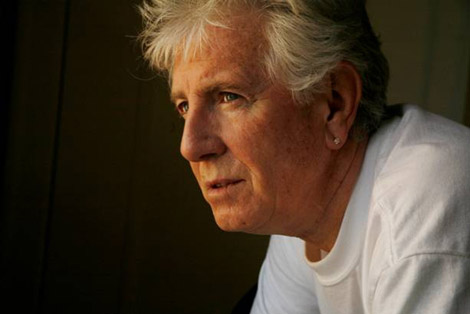
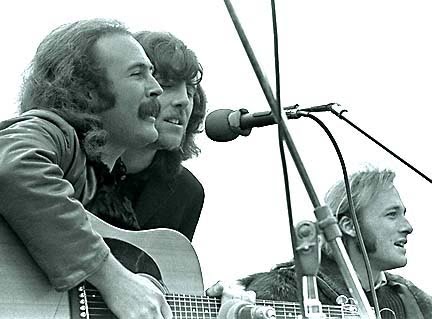
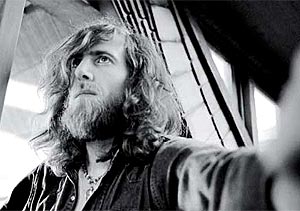
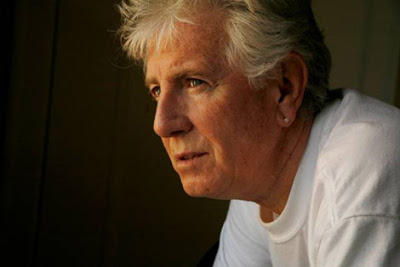
Above, Crosby, Stills and Nash at Atlantic City in 2009. Photo from Vicarious Music. Below, Graham Nash. Photo from last.fm.

A Conversation With Graham Nash:
Vietnam, Diane Arbus,
and Green Day

By Mr. Fish / April 6, 2010

“They got guns, we got guns, all God’s chillun got guns!”

So sang the Marx Brothers during the frenzied buildup to the ridiculous war that finally erupted at the end of the 1933 anarchic comedy, “Duck Soup.” What has always struck me about that film, beyond its satirical strengths and punchy one-liners, was the fact that it was released during the worst year of the Great Depression, after the GNP had fallen a record 13.4 percent and unemployment had risen to 23.6 percent.

It was as if Hollywood were attempting to provide the public with a much needed escape from the agony of the massive financial crisis by allowing them the chance to remember, with some fondness, how preferable war, even a farcical one, was to staring the economic calamity clear in the face. If only a plunging dollar could be bayoneted and ballooning interest rates could be strafed out of existence; to have a mortal enemy to kill is always preferable to having a wound, stabbed into the back and out of reach, that bleeds the strength out of one’s optimism.

I’d gone to Atlantic City in August of 2009 to see Crosby, Stills and Nash to be reminded of the exquisite outrage that they, along with Neil Young, had so famously hurled into the hellish maelstrom that was the Vietnam War and to reapply its relevance to my own opposition to the current wars in Iraq and Afghanistan, desperate to forget how poor I was becoming, how many bills I’d be unable to pay at the end of the month, and how the current financial crisis, like the one almost 80 years earlier, was slowly dimming the lights on every other calamity in the world and making American self-pity the only agony worth woeing over.

Atlantic City in August, while indeed funky — and no stranger to brown acid or vast amounts of illicit sex between strangers — is no Yasgur’s Farm. Sure it is thrilling to approach by air-conditioned car, this metropolis of magnificent lights, skyscraper hotels, insomnia made jubilant by a gazillion flashing light bulbs, all of it pressed right up against the black ocean, but outside of the car it is abscessed New Jersey, the air damp and over-inhaled and brackish, smelling like a drunk octopus riding a horse through stale popcorn.

And then you enter any one of the casinos and immediately find yourself surrounded by the repulsive yin to the outside yang. Thusly, walking into the Borgata Hotel Casino for the CSN show, I found the air to be overly polite, like it had been blown through an Easter basket. And then there was the geometrically cacophonous carpeting as convincing of elegance and luxury as a 300,000-square-foot toupee; Tourette’s woven into a nauseating aesthetic.

And then there were the cheap sonsabitches walking around in loud shirts and crisp white sneakers trying to buy a million dollars with pocket change, their telepathy horse-trading so hard with Jesus Christ that their lips were moving.

With incontinent classical muzak dribbled through the PA system and making me feel more like I was waiting for a teeth cleaning than a mind blowing, I sat down in my assigned seat and, looking at the empty stage before me and the great hive of drums hanging amid a ridiculous contraption of chrome scaffolding and the fake candles wicked with four-volt bulbs placed here and there and the Flying V resting on a guitar stand, I began to worry that the men who I’d come to see might no longer exist; at best, like the candles, they might be poor parodies of themselves, having become so waterlogged by their own celebrity over time that the only thing left linking them to the glory of their past was the names on their drivers licenses.

I had to wonder if I’d made a huge mistake believing that, given the adoration of enough fans, an alligator bag might learn how to swim gracefully again; or that Muhammad Ali might be able to stop shaking just long enough to snatch a fly out of the air and be beautiful again; or that it could be 1969 again.

Then the lights went down. Then the trio of legendary sexagenarians took the stage, Stills in pleated black dress pants, Nash in bare feet and Crosby in an outfit one might throw on to clean out the garage. (Uh-oh.) Then the familiar harmonies were blended. Then, almost immediately, a mood as perfect as a pearl was fashioned right in the middle of all that superfluous and muculent funk surrounding us all.

It was breathtaking.

Five months later I found myself sitting down with Graham Nash at the Waldorf Astoria in New York to talk about both his recent induction, as a Hollie, into the Rock and Roll Hall of Fame and the publication of his new book of photography, Taking Aim, a collection of candid photographs of musicians, past and present, some taken by Nash himself, all of them chosen by him, his commentary captioned on nearly every page.

Predictably, when you have a conversation with somebody as dynamic as Nash it’s easy to ping-pong wildly off topic, which we did. Despite being almost 70, up close his eyes appeared to be brand new and curious about everything. Typically closed when he sings, and he’s been singing for a long time, it made sense to assume that his eyes have probably seen less, though contemplated more, than the average person and, like coins with limited exposure to the outside elements, are now bright and shiny enough to practically emanate their own light.
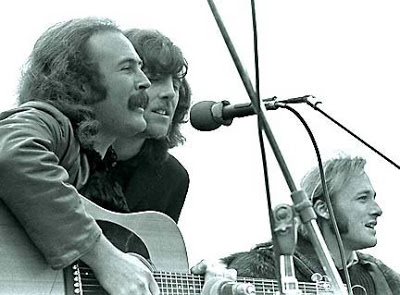
Crosby, Stills and Nash at the Big Sur Folk Festival, September 15, 1969. Photo © Robert Altman / altmanphoto.com

Mr. Fish: Let me start things off with a quote by photographer Robert Frank: “When people look at my pictures I want them to feel the way they do when they want to read a line of poetry twice.” I mention that quote because I think it expresses what is uniquely special about how you seem to approach both your photography and your music, which is with a great respect for the vulnerability of a particular moment.

Graham Nash: It’s all about communication. It has to communicate — that’s all I want to do. I don’t want everybody to agree with me — if they don’t agree with me, that’s fine. I’m just trying to communicate, it’s that simple. And I don’t want to waste your time, because that’s all we’ve got. When you boil it all fucking down, it’s your family and time, that’s what you have and you deal with it however you want. If I’m fine and my wife is fine and my kids are fine, the rest is a fucking joke.

And I can play this game — life — I know how to do it. I’m old. I’m 68 years old, right, and I know how to do this and I don’t want to waste your time. Same thing happens with a song — I do not want to waste your time with a song. Why waste three minutes of a person’s life that they can’t get back by singing them a song that sucks and doesn’t say anything? Why show somebody a photograph that’s a picture of nothing?

M.F.: Right, and that’s precisely what I mean about your focus and the moments you capture — you do have this reverence for time as an incremental measure of a meaningful life. Your best work, like “Our House” and “Simple Man,” “Lady of the Island” and others, reminds us how precious, how sacred, simple experiences can be when they’re unguarded and stripped of pretense.

G.N.: Yes—that is what I try to do, and I can only try.

M.F.: And your photography reflects the same reverence.

G.N.: I think a still photograph has an amazing ability to move. Of course it doesn’t physically move, but it moves you. If I put an image in front of you I want you to be thinking, I want you to be getting angry, I want you to be getting sad, I want you to fucking react — I want you to wake up!

And if I’m writing a song like “Chicago,” I want you to be angry because when you bound and chain and fucking gag a man and call it a fair trial you’re fucked! This is America, for God’s sake. We have a Constitution. We have respect for humanity. I don’t give a shit what Bobby Seale was doing in that courtroom — you cannot bound him and chain him and gag him and call it a fair trial.

And when those kids got killed at Kent State, fucking Neil was furious and the way he dealt with his anger — same as you deal with your cartoons, you fucking pour it onto the page — we pour it onto the page of tape. And, again, we don’t want to waste your time.

M.F.: Which I think is what differentiates an artist from, say, a mainstream journalist or an anchor on the 7 o’clock news [who] want to waste our time and to pacify our anger and to keep us from dissenting against power. An artist’s main responsibility is to be honest and to not bullshit, which is contrary to the job of a politician or somebody whose objective is to preserve the status quo.

G.N.: Absolutely true.

“Child with Toy Hand Grenade in Central Park, New York City.” Photo by Diane Arbus.

M.F.: Now, just to illustrate what you said about the power of a good photograph, I read somewhere that your song, “Teach Your Children,” was inspired by your reaction to the Diane Arbus photograph, “Child with Toy Hand Grenade in Central Park.”

G.N.: I’d actually written the song right before seeing the Diane Arbus, but when I saw that image… what had happened was I’d been collecting photography from 1969 onwards and in a particular show at the de Saisset Gallery in Santa Clara, which was the first show of images I’d collected, I put the “Hand Grenade” photograph next to a picture [by Arnold Newman] of [Arnold] Krupp, who was the German arms magnate whose company was probably responsible for millions of deaths.

It was an eerie photograph, a portrait, and the lighting is weird and his eyes are dark — a great image. And looking at them together I began to realize that what I’d just written [“Teach Your Children”] was actually true, that if we don’t start teaching our children a better way of dealing with each other we’re fucked and humanity itself is in great danger. I mean, look at what’s going on in the world today — look at the Obama administration. What a pile of shit we gave him to deal with, now he’s trying to deal with it all on many fronts and he’s getting shit for not concentrating on one thing.

M.F.: Well, frankly, I don’t think it’s the job of the president to solve many of the problems most threatening to us. I think it’s a mistake to think that the Office of the Presidency of the United States is a humanitarian position. Rather, [the presidency] is a job for somebody with a business mind — somebody who honors the traditional power structures and upholds the absolute authority of multinational corporations and who can manipulate information in such a way as to prevent regular people from noticing how little control they really have.

G.N.: And the dance between them all is insane.

M.F.: But let’s compare what’s going on in the world right now versus what was going on in the 1960s. There are some depressing similarities: We have an unjust and illegal war that we’re fighting — in fact, we have two, some would say more. All unnecessary and brutal and …

G.N.: Silly — yep.

M.F.: And, when you consider the economic crisis, you think of Dr. King and his commitment to helping the poor and lower working class.

G.N.: Sure, and the division between the rich and the poor is getting wider and wider and wider.

M.F.: And there’s the social unrest exploding all over the world in places like Greece and the Occupied Territories, Iran, and there’s the environmental movement still straining its efforts to save the species and now you have Obama talking about building new nuclear power plants, even after people like you fought so hard through the ’70s to stop construction, which was a remarkable victory.

G.N.: Right — when we did the No Nuke concerts at Madison Square Garden, there hasn’t been another nuclear power plant built in this country since.

M.F.: I know — it was such an incredible accomplishment.

G.N.: Well, when I met with Obama’s people, before I decided to support him, that was my first question: What is his stance on nuclear power? I knew about his relationship with Exelon in Chicago and I knew he got money from them, so I wanted to know what the hell his stance was. And they said, well, it’s a very interesting stance because he knows we might need it, but he knows we’ll never get it.

So he can afford to say that we need to do this, but he knows damn well that until we can figure out how to store the waste and until we figure out how to keep it out of the hands of terrorists, it’ll never get done. So I think he’s walking this brilliant line between appearing to support what is an unbelievable industry that has never made a penny and has taken billions from the American taxpayer and knowing that we’ll never get [new operational plants].

M.F.: But the message [Obama] is sending to the anti-nuclear activists, then, is that big business trumps their concerns. The pronouncement that we need to build more nuclear power plants can only be seen as the President turning his back on the left.

G.N.: I think they need to look a little deeper.

M.F.: I’m not so sure. I think the left would prefer a public victory to a private investigation into what may or may not be true about what a politician says.

G.N.: I think that’s right.

M.F.: I think that progressives would rather have an administration that honors their past victories and that doesn’t try to marginalize their deep concerns and send the message that the dominant culture is going to continue pushing liberal values aside.

Your point about Obama’s decision being a political move is not lost on me. However, I feel that I must point out my belief that perhaps the greatest contribution made by your generation was the idea that there should be no compromise on certain issues, particularly when it comes to things like war and pacifism and anything that threatens [to compromise] our humanitarianism or the public health.

In fact, I think that there is a lot of rage and disappointment coming from people who saw some of the liberal principles they believed [Obama] had but was forced to compromise to get elected as never having been part of his core belief system at all. I think that in the back of some people’s heads they thought he was going to be like Gandhi.

G.N.: Where is the disappointment coming from, though? What is he actually doing that is pissing the left off?

M.F.: Maybe it’s what he’s not doing that’s pissing them off.

G.N.: Like what?

M.F.: His amping up of the war in Afghanistan. His secret renditions program. The bank bailout. His position on gay marriage and Don’t Ask, Don’t Tell. The nuclear issue we’ve been talking about. Support of Israel has been a sticking point, although some of the recent news on the illegality of the new settlements is pretty remarkable. The fact that you can all of a sudden criticize the Israeli government and not be called an anti-Semite is amazing.

G.N.: To have even put Israel in the middle of all that stuff is insane. Sometimes I wonder if we didn’t do it all deliberately.

M.F.: Right, like our supplying weapons to both Iran and Iraq during their war in the 1980s in order to help keep the region unstable and reliant upon our intervention for survival.

G.N.: Yeah, that’s right — Eisenhower was right, wasn’t he? But you have to add something else to what he said. It’s not only the military-industrial complex, but the military-industrial-commercial complex, because trying to make sure everybody is in line to buy a new pair of sneakers and a soda is insane.

M.F.: And that brings up another interesting comparison with the past. Back in the 1960s and 1970s, in order to be involved with the anti-war movement and in order to be an effective feminist and in order to fight for civil rights, you needed to do all those things in public. There was no Internet; there was no safety net that allowed you to privately involve yourself in a mass movement.

G.N.: Yeah, you had to do it publicly and there were risks.

M.F.: And that was even part of the appeal. I remember back to when I was seven years old in the early ’70s and how I wanted to grow up to be Angela Davis.

G.N.: Wow! How fantastic!

M.F.: And I really believed it was possible — I mean, why not?

G.N.: Yeah!

M.F.: And now I feel ripped off that I’m not Angela Davis.

G.N.: Well, when we had the opportunity to speak out, we did, even to the detriment to ourselves. But where is that movement now?

M.F.: I think the movement is being controlled.

G.N.: By whom?

M.F.: By the military-industrial-commercial complex. They don’t want us waking up. They just want sheep — go buy your sneakers, man!

G.N.: Exactly — and Old Navy can sell you a T-shirt with a peace sign on it and you can put it on and suddenly think you’re involved in the peace movement.

M.F.: And you don’t even have to do anything—just wear the T-shirt.

G.N.: Yeah, it’s insane. They learned with the Vietnam War, man, you know — when Walter was telling you every fucking night while you were eating your steak dinner how many fucking Americans had just been slaughtered. The public can only take that for a certain amount of time, then they start to write to their congressman, they start to get pissed and they start to rise up and then all of a sudden the Vietnam War stops. Right? Did you ever see any footage of Grenada? Did you see any footage of Panama? Did you see any footage of Iraq?
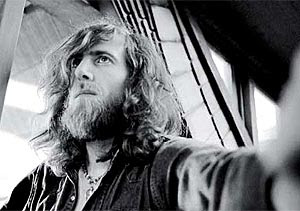
Graham Nash. Photo from last.fm.

M.F.: No.

G.N.: They learned — they learned how to control it. And the media, as you well know — you can count on one hand who owns the media that covers the entire planet. They have no interest in people standing up and saying that the president doesn’t have any fucking clothes on.

M.F.: And what do you think can be done about that? Can the movement be revitalized? Is there a different strategy that people should be using…

G.N.: Sure, and here’s a perfect example. When Jackson Browne, Bonnie Raitt, and I found out that Congress was trying to slip an odd sentence into an energy bill that would make the public responsible for $50 billion to restart the nuclear industry again we did a video of Stephen’s song, “For What it’s Worth,” with Ben Harper, with me and Bonnie and Jackson and we went to the Hill and met with all those people and showed them 126,000 signatures that we’d gotten in three days and we managed to get the sentence taken out.

I mean, we didn’t learn anything from Chernobyl? You know how many people are still fucked up from Three Mile Island? And you know it’s going to happen again. You can’t have 104 plants here and 72 in Japan and 15 in France and expect nothing to go wrong. In the ’50s they used to say that nuclear power would be so cheap that they wouldn’t even have to charge for it — bullshit! Do you know how much energy it takes to build a nuclear plant, to keep all that shit cool and safe so they can store it for thousands of years, the waste I mean?

We’re only 200 years old and we can’t control anything! How the fuck are we going to control this shit for thousands of years? It’s madness! It’s a industry that has no future — they’re only trying to make money on construction. They’re even trying to say it’s green!

M.F.: I guess radioactivity is green because you can’t see it — like it’s only theoretical pollution.

G.N.: Well, water is really the next big thing — there’s going to be wars over water. I knew this 33 years ago. That’s why I moved to the wettest spot on earth, I swear to God. I was in San Francisco and we were being told on billboards to shower with a friend because the drought was coming and stuff like that and I knew what we were doing to the Colorado River, how we were damning it and fucking it up, and all the San Francisco people were saying, “Why are we sending all our water down to that fucking desert?”

And I’m thinking, water, I’ve got to find a place where water will never be an issue. So 33 years ago I moved to Hawaii. Now I’m lucky enough to be able to do that, but that’s how serious I think the water problem is going to be.

M.F.: I think you’re right, and what scares me most is how we don’t currently have any kind of organized mass humanitarian movement that might help us survive such a catastrophe and prevent us from descending into real tribal savagery. I mean, one of the things that your generation had — that my generation doesn’t have — were young people who were able to articulate the politics of dissent and humanitarianism well and who were able to, for want of a better word, make progressiveness and radicalism sexy. That’s what drew people to the counter-culturalism of the time, the music, the fashions, the grooviness of it all …

G.N.: And we knew that, sure.

M.F.: You made it hip to thumb your nose at the Johnson and Nixon White House, but you also grounded [your dissent] in a certain logic — there was a great deal of sanity in wanting to stop the war and to argue against materialism and to live a more spiritual existence. It was more than just an opinion that you were pushing — it was a lifestyle.

G.N.: You’re absolutely right.

M.F.: And I just don’t see that happening nowadays. In fact, most unsettling to me about the recent death of Howard Zinn…

G.N.: What a brilliant man.

M.F.: Right, but what I found so odd about him dying was how unfair his passing seemed. I found myself wondering, “Wow, all the real radicals are disappearing.” It was like he was gunned down in his prime, but he was, what, almost 90? I suddenly realized that most of the people who make me want to be a bigmouth are all over 60, at least.

G.N.: [Progressive humanitarianism] moves forward in small increments. Did you see Pearl Jam on “Saturday Night Live” this past weekend?

M.F.: I didn’t.

G.N.: Right — Eddie Vedder, playing his guitar, and what’s written on his guitar? ZINN! And people can twist their heads up and say, “What’s that written on his guitar? Zinn? What the fuck is that?” And then they go to Google and they type in Zinn and all of a sudden they’re off!

M.F.: Right.

G.N.: I’m not saying that that’s the only way to do it — I’m just saying that that process is still going on. When you give a person too much to think about, they become inactive a lot. They get paralyzed. I mean, look at what kids are faced with today. I heard a thing on NPR the other day while driving around about how some of these medical students owe $300,000 in student loans. Think about that. How the fuck are they supposed to pay that back?

And the woman who they were interviewing said that she wanted to be a family doctor, but she couldn’t afford to be a family doctor. She has to subset and subset and subset and become the only doctor who does operations on ears and then she makes all the money, but it isn’t what she wants to do.

I want to be a pediatrician, I want to be a family doctor for people — you can’t! You can’t afford it! Lawyers are the same way. Accrue massive debt in law school and forget about going into something like civil law. You’re forced to becoming a lawyer for some corporation somewhere.

M.F.: It’s all very carefully designed. Keep the sheep occupied and we’ll rob them blind and they won’t even know. In fact, we’ll even smile at them and tell them they’re doing great — like you said, we’ll sell them a T-shirt and let them think they’re in the peace movement.

G.N.: Right.

M.F.: Keep everybody crazy.

G.N.: Another important lesson that came from the 1960s was the fact that it isn’t necessary to go to every march and to every demonstration and every sit-in and to be an expert on every bit of legislation that might be moving through Congress to be political. I think the notion that you require a vast understanding of every issue in public circulation can become a deterrent to people getting involved in dissent, like they’re not smart enough.

Again, that was the genius of [that] generation: it was enough for a person to remain committed to a lifestyle based on humanitarian ideals, to claim real ownership over his or her values and a lifetime dedicated to peace, love and understanding …

M.F.: Good ol’ Elvis!

G.N.: Right — and that was enough to be effective politically, because it was a way to exist off the grid and not rely so heavily on needing to be subservient to the dominant culture. In other words, so long as you don’t need laws to know that racism is wrong, or that sexism is wrong…

Or that homophobia is wrong …

M.F.: Or murder or stealing, yeah. As long as your ideas and beliefs are not determined by whatever rewards or punishments you feel you might receive from the state, you’re politicized and fighting power. You’re saying that your morality is self-generating and not imposed by an artificial hierarchy.

G.N.: Right, I’ll give you another example: We had my song, “Teach Your Children,” in the middle of 1970, bolting up the charts. …And then Kent State happened. We went down to Los Angeles and we recorded [Ohio], mixed it, recorded “Find the Cost of Freedom” for the B-side and we said we want it out right now. “Well, you can’t do that—you’ve got a hit moving up.”

We want it out right fucking now! We put that out in 12 days and the fucking cover for the 45 was a picture of the Constitution with four bullet holes in it. We killed our own single. You don’t do that — you’re not supposed to do that. We didn’t give a shit. We thought the slaughter of these four kids, which the government still hasn’t apologized for, was more important.

M.F.: And that’s what I’m saying, that that simple understanding doesn’t seem to be part of contemporary culture anymore, particularly when it comes to the arts community and the musicians who have historically been so effective in communicating that message.

G.N.: But they are there.

M.F.: Are they?

G.N.: What about the Beastie Boys? What about their Tibetan campaign? How about Green Day?

M.F.: Well, all right—Green Day is a good example.

G.N.: Let me tell you something—I have never met them, right? And as I was leaving the after party [for the Rock and Roll Hall of Fame Induction Ceremony] at the Bull and Bear, in this hotel, I see Billy Joe [Armstrong] as I’m headed up the stairs and I don’t stop, you know, I just wave respectfully, and he parts the people around him and comes up and he hugs me for two minutes, babbling about what a great songwriter I am and how he wanted to be like me and write melodies that are in people’s hearts all the time and I said, “Wait a second—you have to understand, I am really proud of you.” Wait a minute, why’s that? “Because you’re doing what we did — you’re standing up there and fucking telling it like it is! “American Idiot” was brilliant!”

It kind of shocked him a little bit. But there is this chain of musicians who really do give a shit. They are there, maybe few and far between, but they are there. Tom Morello from Rage Against the Machine is a fucking brilliant man. And we’re trying to influence those people — me, people like James Taylor, we’re all trying to influence those musicians who are coming up and following us because we’re dropping off the other end of this diving board, we can’t help it. It’s called old age and eventually death. But we want to encourage people to stand up and to give a shit and to have courage.

[Dwayne Booth (Mr. Fish) is a renowned cartoonist and freelance writer whose work can most regularly be seen on Harpers.org and Truthdig.com. His website is Clowncrack.com. Dwayne Booth lives in Philadelphia, PA, with his wife and twin daughters.

Source / Truthdig

Thanks to Larry Piltz / The Rag Blog

Posted in RagBlog | Tagged , , , , , , , , , | Leave a comment