
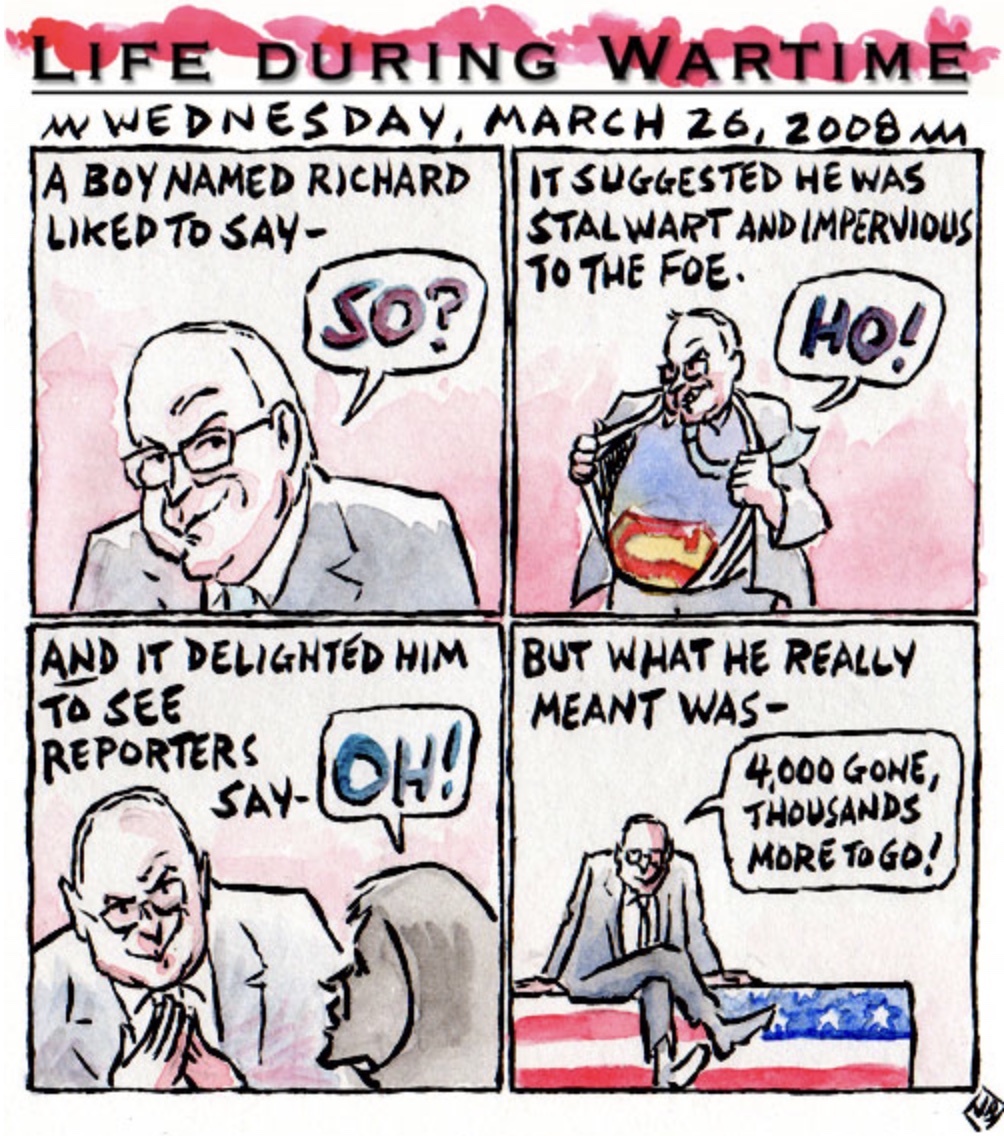
http://www.joshbrownnyc.com/ldw.htm

By Alice Embree / The Rag Blog / September 29, 2025
This review is a cross post from Alice Embree’s Substack.
Rag Radio with guest Martin Murray:
Alice Embree was cohost with Thorne Dreyer on Rag Radio interviewing author Martin Murray on KOOP 91.7 FM in Austin. Listen to the interview.
Austin Book Events featuring author Martin Murray:
4:00 p.m., Tuesday, October 7 / Briscoe Center for American History / Sid Richardson Hall, Unit 2 / 2300 Red River Street, Austin, TX 78712 / Doors open at 4:00 p.m.
1:00 p.m., Thursday, October 9 / Batch Craft Beer and Kolaches / 3220 Manor Road, Austin, TX 78723
Martin Murray’s Insurgent Politics in the Lone Star State provides an insider’s view of Austin’s antiwar movement between 1967 and 1973, exploring that period in depth through his own personal narrative, scholarly research, and a focus on surveillance.
Martin’s own story begins in California where he graduated from the University of San Francisco and decided to file as a conscientious objector rather than be drafted into the war. He arrived in Austin in the fall of 1967 as a graduate student.
His personal journey unfolds with a sense of urgency and unknown outcomes. As the Vietnam War escalates, the protests evolve and tactics change. Martin lets us view this from a participant’s vantage point – the moral outrage as the death toll mounts, the debates as the movement shifts from protest to direct action and disruption, and the organizing taking place on many fronts.
Martin also brings a scholar’s eye to the story, documenting pivotal events in Austin with well-researched detail. He covers the 1968 Don Weedon Conoco demonstrations, and devotes forty pages to two events in 1969 – the Waller Creek tree protest and the Chuck Wagon riot. No writer has covered this period with such detail. Researchers will appreciate his timeline and endnotes for years to come.
Martin writes that “The Austin SDS chapter operated on a model of persuasion and consensus, tapping into the deep roots of Texas irreverent populist traditions.” Martin describes the unique character of the Texas movement and the cast of characters. At a protest of Marine recruiters, he remembers Dick Reavis responding to a heckler who tells him to “Go back to Russia.”
“Dick, who was holding his Coke bottle by the top of the long neck (as he always did), slowly spilled out his words in a distinctive southern drawl: ‘No, I don’t think so. I’m kind of partial to China myself.’” [p. 61]
Martin’s book adds to the Texas lore, something I always appreciate.
In one lengthy sentence, Martin provides this synopsis,
“The thread running through seemingly disconnected events – perhaps starting with the March 1969 SDS National Council meeting in Austin, followed by the 1969 Chuck Wagon uprising, the anti-ROTC demonstrations (spring 1970), the May 1970 mass mobilization after the invasion of Cambodia and the Kent State killings, the Armadillo May Day Tribe and the May Days demonstrations in Washington, DC, (May 1971), the protests at the LBJ Library dedication, and the mass students strike in spring of 1972 — was increasingly heightened security presence.” [pp. 34-35]
The author’s expedition through surveillance was motivated, in part, by a desire to research his own life. What he found instead was a “Historical Doppelganger,” a ghostly representation of his life where he was frequently confused with his twin brother.
Martin’s focus on surveillance is thorough. He has the passion of a sleuth, tracking down material from the FBI through the Freedom of Information Act, and delving into sources at the University of Texas Briscoe Center for American History. He pored over the archived papers of Lt. Burt Gerding, the Austin Police Department’s head of Criminal Intelligence, Allen Hamilton, chief of the University of Texas campus police, and George Carlson, head of security for the University of Texas System.
Martin accessed thousands of pages from FBI reports. He shared some of those as he was finalizing his manuscript. I was surprised to read a lengthy description of Arkansas communes, many of them familiar to me. Martin uncovered some gems at the Briscoe as well, including a taped interview with Burt Gerding conducted by Briscoe archivist Sara Clark. Lt. Burt Gerding was in a class by himself — both blowhard and provocateur. He often bragged about the havoc he was able to create. Martin followed up with several targets of the havoc. They contradicted Gerding’s “intelligence.”

What did the various agencies find out about activists through their surveillance, photographs, and network of informants? Martin argues that those who spied were hobbled by their own biases, always looking for an organization or affiliation to explain the scale of the insurgency. The surveillance apparatus missed the point. The antiwar movement was reacting to an escalating War in Vietnam, to the draft required to feed that war effort, to atrocities like My Lai, and to the official lies used to justify the war.
“The security agencies could not break from their underlying premise that the Austin movement was a creature not of its own making but an entity put in motion by some secret puppet master orchestrating our every move.” [p. 30]
I was eager to see this book make it into print. It describes the history that was adjacent to my own. I was involved in the early years of Students for a Democratic Society (SDS) at the University of Texas at Austin. I left Austin in the summer of 1967, following a major free speech battle in which I was a central figure. Martin arrived in the fall. I missed a lot of the period Martin describes.
Martin was part of a later incarnation of Austin SDS. He documents the vibrant antiwar activity that took place with SDS leadership and continued even as SDS splintered apart in 1969. That is an important contribution for historians — a unique take on the continuity of antiwar activism.
Insurgent Politics in the Lone Star State is a great addition to the history of antiwar activism. What happened in the Lone Star State didn’t always get attention from the national press. Martin’s book is a timely read in an era that once again requires insurgent politics and faces new forms of surveillance.

By Alice Embree / The Rag Blog / September 27, 2025
On September 7, 2025 at a memorial for Sam Jones, there was music. Friends and families shared memories and sang along to songs Sam loved. His younger brother told tales of Sam growing up in Arkansas. Sam’s older daughter shared a poem she had written, Cedar of Lebanon; his younger daughter led a song Sam sang as a lullaby, Sweet Shiny Eyes. She accompanied the final song, I’ll Fly Away, with flute. Music carried the day, as Sam would have wished.
I’m sharing a few memories gathered from email as the news of Sam’s passing and memorial were shared.
Bill Meacham: I’m going to a memorial service today for Sam Jones, with whom Gavan and Paul and Henry and I used to play music back in the day. We called ourselves The Transients, after a disparaging remark by someone in power about folks hanging out on the Drag. Sad times. I’m grateful for those of us still here.
Pat Cuney: I am sorry to hear such a kind soul has departed this plane. I will never forget the night he, Jeff, and I had a car breakdown somewhere in the country in Arkansas that stuck us getting help from a local garage, attached to the family house of a group that is held in my memory as Ma and Pa Kettle and their large family. While I was consigned to the women and tortured to take sides in a preference in the great Rainbow Girls or the Daughters of Job debate; Jeff stayed as quiet as the proverbial mouse and did his best to fade into the walls, and Sam, long ponytail and beard, whipped that accent out and charmed all the men and boys, and we departed in good repair and warm feelings.
Martin Murray: We are losing comrades pretty regularly now. I remember walking with Sam Jones once and a car hit a dog on the Drag. Sam, who was a medic in Vietnam I believe, jumped into action and did the right thing.
Sam would always greet you with these words, “Let me hug your neck.” Then he’d ask about your adventures. My favorite expression from Sam seems to sum up much of life, “If we had some ham, we could have ham and eggs, if we had some eggs.”
He had fashioned the garage at his home into a craftsman’s delight. It was filled with tools and vacuum hoses to remove dust. He made beautiful guitars and other musical instruments there, adorning the necks with lovely inlays.
He also was an accountant. He prepared income taxes for my in-laws for years, putting the reports into three-ring folders, a practice I copied. Sam advised Carlos Lowry on how to pay Varsity mural workers, and helped prepare the forms that needed to be filed. His daughter Alyssa said that he really liked helping musicians who often showed up with long gaps in reporting.
He worked from home, holding down the home front, caring for children and later a grandson. I took Victor Agosto to meet him one day because Sam was a Vietnam Veteran Against the War and lived nearby. Victor, a soldier stationed at Fort Hood, was facing a court-martial for refusing to deploy to Afghanistan. Sam, who was normally so laid back, straightened up to attention to shake Victor’s hand. It was a moment of bonding over shared experience. Then Sam showed off his woodworking space.
Will the Circle Be Unbroken.
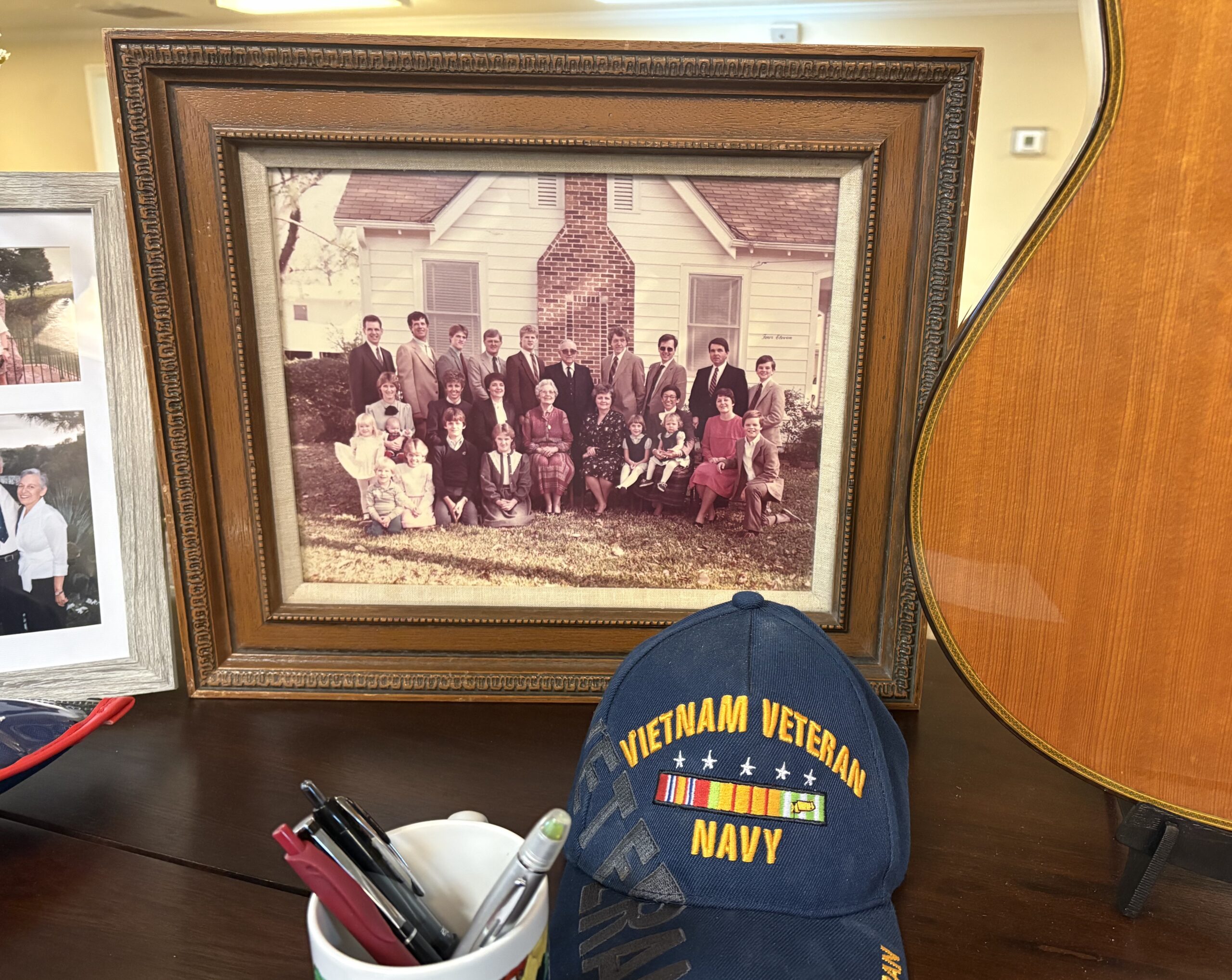
The following obituary was carried in the Austin American Statesman for Sam Charles Jones.
Sam Jones Obituary
September 8, 1942 – June 6, 2025
Sam Charles Jones, beloved husband and father, passed peacefully surrounded by his family. Sam is survived by his wife Regina Rogoff, daughters Sarah Jones and Alissa Zachary, son-in-law Billy Zachary, and grandchild Elijah Zachary. Sam was born in Pasadena, Texas on September 8, 1942 and was raised in Helena, Arkansas as one of six children born to Carol and Inez Jones. He became native to Austin as an active anti-war protestor after serving as a Navy Corpsman from 1962 to 1967. Sam’s life long love was making music and building guitars.
[Alice Embree, an Austin writer and activist, is the author of Voice Lessons, published in 2021. She is an editor of Celebrating The Rag, published in 2016 and Exploring Space City!, published in 2021. She posts on Substack as well as The Rag Blog.]
By Henry Mecredy / The Rag Blog / September 25, 2025

Gavan Duffy was born December 8, 1949, in Massachusetts. He passed away in Syracuse, New York, on September 6, 2025. He graduated from the University of Houston and taught political science at the University of Texas at Austin. At the Massachusetts Institute of Technology, Gavan studied political science and artificial intelligence, earning a Ph.D. in 1987. He joined the faculty of Syracuse University in 1989, specializing in the field of conflict and collaboration. His wife, scholar and educator in the field of international studies, was L.H.M. “Lily” Ling who passed away October 1, 2018. An obituary is available at this site.
Gavan was an anti-war activist and a contributor to both The Rag and Space City! He is remembered by his many friends in Austin, Houston, and Syracuse for his sense of humor and love of music. Gavan’s musical talent is highlighted on a Youtube video. Gavan sings “Spinning Blue Ball,” a song he wrote.
When I met Gavan in 1970, he was new to Austin and was still splitting his time between Houston (where I think he helped create the newspaper Space City! with Thorne Dreyer and others) and Austin. He could often be found around the University of Texas campus though at the time, I believe, he was not a student. Then as well as later he knew many, many people. He was an inveterate name-dropper!
Gavan was on-air at KPFT, Houston’s Pacifica FM station, for a while.
During my acquaintance with Gavan, his time was roughly divided into his Austin-Houston period and his Syracuse period. He said without any rancor at one point that his move to Syracuse was in pursuit much more of his spouse Lily’s academic career than of his own. I do know that if he had moved to Syracuse alone he would have starved to death, as she was an accomplished and enthusiastic cook, and he was neither.
In Austin in the Seventies, we smoked Benson & Hedges Menthol cigarettes. We quoted Bob Dylan to one another. Late at night with the munchies we would eat waffles at 19th and Lavaca at a Dobbs House. He liked his soft and I liked crispy.

When the old YMCA building was still standing (at 22d and Guadalupe in Austin) we sort of practiced there to make a band at one time, along with Paul Spencer and some others. From my association in particular with Gavan and Paul I was dragged out of my faith in the Democratic Party and the liberal understanding of the Vietnam war, and into radicalism.
At one period we hung out together where I lived briefly, at a large boarding-house kind of place in the West Campus area (2202 Nueces, no longer standing) sometimes called the Yellow Bordello for some reason. Bob Bower, anti-war GI, lived there for a while and assorted other hippies and druggies were seen there. None of the people drifting in and out were strait-laced and all of them were open to drug experimentation. Gavan and I would often play guitar while Bill Meacham played harmonica; we would smoke grass to improve the sound of the music. Along with many others in the Austin West Campus community Gavan worked on The Rag, Austin’s alternative, culturally and politically radical newspaper.
Once at the Yellow Bordello under the influence of cannabis and alcohol Gavan and I were sitting on the couch, both of us singing loud while I banged furiously on my old Martin guitar. All at once Gavan started singing even louder, roaring even, inspiring me to strum my guitar even more heartily, until I realized something was wrong. Keeping time by slamming his hand down on the couch arm, Gavan had hit a sewing needle left in the fabric, jamming it into his hand big-end first. He seemed upset when I could not stop laughing.
Gavan went to the Republican National Convention in Miami in 1972, somehow passing himself off as a journalist. When he returned he laughed to me that even some of the hippie-rad journalists there expressed shock at his sloppy and food-stained attire! I guess he was making a statement.
When I had young sons, they would have a great time during Uncle Gavan’s visits. He would accuse them of “crying to get your way,” and would give them “electric spankings,” in which he would rapidly slap their glutes with both hands to general laughter.
A period of time passed during which Gavan obtained some credentials, mostly at the University of Houston, UT and MIT, that enabled him to teach Government at the University, which he did for several years until he moved to Syracuse University. He moved there with his delightful and ebullient wife Lily HM Ling (1955-2018), also an academic (at Syracuse and the New School). Before he met Lily Gavan ate only junk food.
They moved into a huge frame house a short walk east of the SU campus, some of whose rooms I never saw in spite of many visits there. Lily, from a Chinese family, would laugh wildly when Gavan would accuse her of speaking “Linglish” or attempt to imitate, actually parody, her walk.
By great good fortune, I traveled often to Syracuse for work, usually staying with Lily and Gavan, sometimes joined by our friend Carolina Jan Tulloss. They both made many friends in Syracuse.
In one of my visits, Gavan beat Lily and me at Scrabble, expending all seven of his tiles in one play and breaking into a shameless celebration, cackling and crowing like a demented grackle, and describing the suspense of waiting for the right letters.
He played guitar frequently with several Syracuse friends, including a gig or two at a coffee shop.
He loved baseball and watched it frequently on TV. Once, while he was still at MIT, I was visiting in Boston on a work trip and we watched the Astros in the National League Championship against the Phillies. As the last of the five games was nearing its end with the Astros ahead by one run, a Houston friend of Gavan’s called, giddy about the Astros going to the World Series, thereby putting the gris-gris on the team. Slamming down the phone, as we used to do, Gavan almost upchucked with rage and fear, and sure enough the Astros lost. Superstition… that’s what an advanced degree from MIT will do for you.
At some point in his Syracuse days, maybe after he retired from teaching, Gavan became obsessed with gambling and would spend endless hours at a nearby Oneida Indian Nation casino. I know they were endless hours because I went there with him once on the theory that he would play a few hands of poker and then we would leave. I became familiar with every gaming venue and garish advertisement, wandering around in that vast casino, before he cashed out. So regular were his visits, and I guess so much money did he lose, that he and Lily were awarded a free weekend in a nice suite at least once. Possibly this was his way of boosting the finances of indigenous Americans.
As for Gavan’s scholarly work, I am surely one of the least qualified to comment on it other than to say that in thousands of conversations with him I learned far more facts and was stimulated by a far larger number of insights into America than he was. I was always proud if I could insert relevant opinions about, say, George Ball or Daniel Ellsberg into our chats. Otherwise he was far over my head. A thing I always admired was his inability to be awed by people of intellectual accomplishment, and his knack for summarizing and contextualizing their arguments.
Gavan didn’t go in for hugs, but this sometimes-dignified professor enjoyed devising goofy handshakes, of which his favorite was to start with the conventional hand grasp, then leaving thumbs interlocked, rotating the fingers free so as to wave to your esteemed acquaintance from 18 inches away.
Though naturally funny and friendly, even smart-alecky, he affected a certain reserve and was always careful to avoid effusion in his greetings, even of old friends after long separations. Once, having not seen him and Lily for a couple of years, I was eastbound on I-90 toward Syracuse and had sent along an ETA to him. I had with me in the car a tracking device, so Gavan was watching in real-time my travels into town and to the house on his phone. Their house had a big front porch several steps up, overlooking the driveway. As I pulled in I saw Gavan on the porch. I lowered the driver’s window and donned my finest Texas grin, prepared to shout out a happy greeting. He beat me to it: His first words were, “You took the wrong exit.”
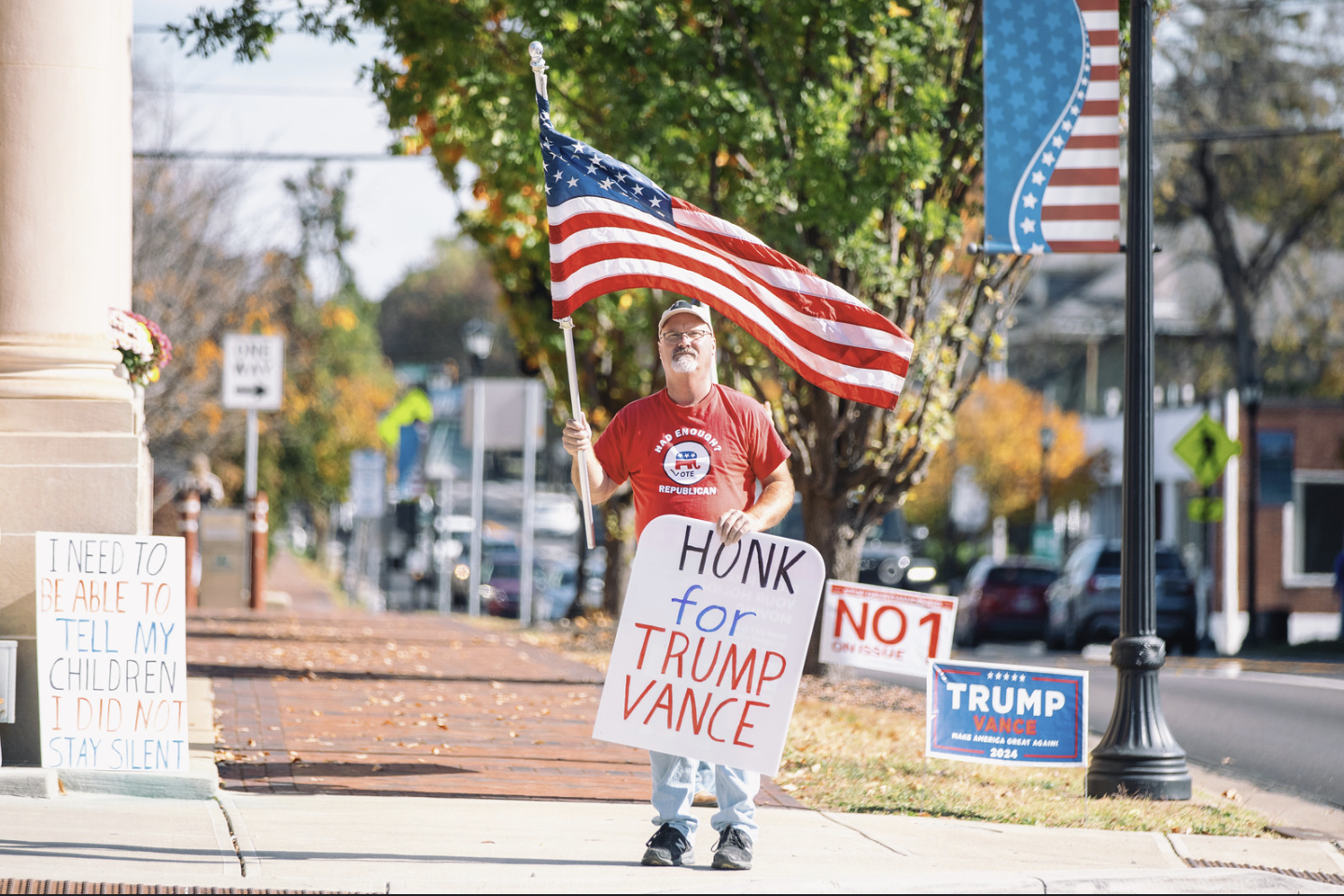
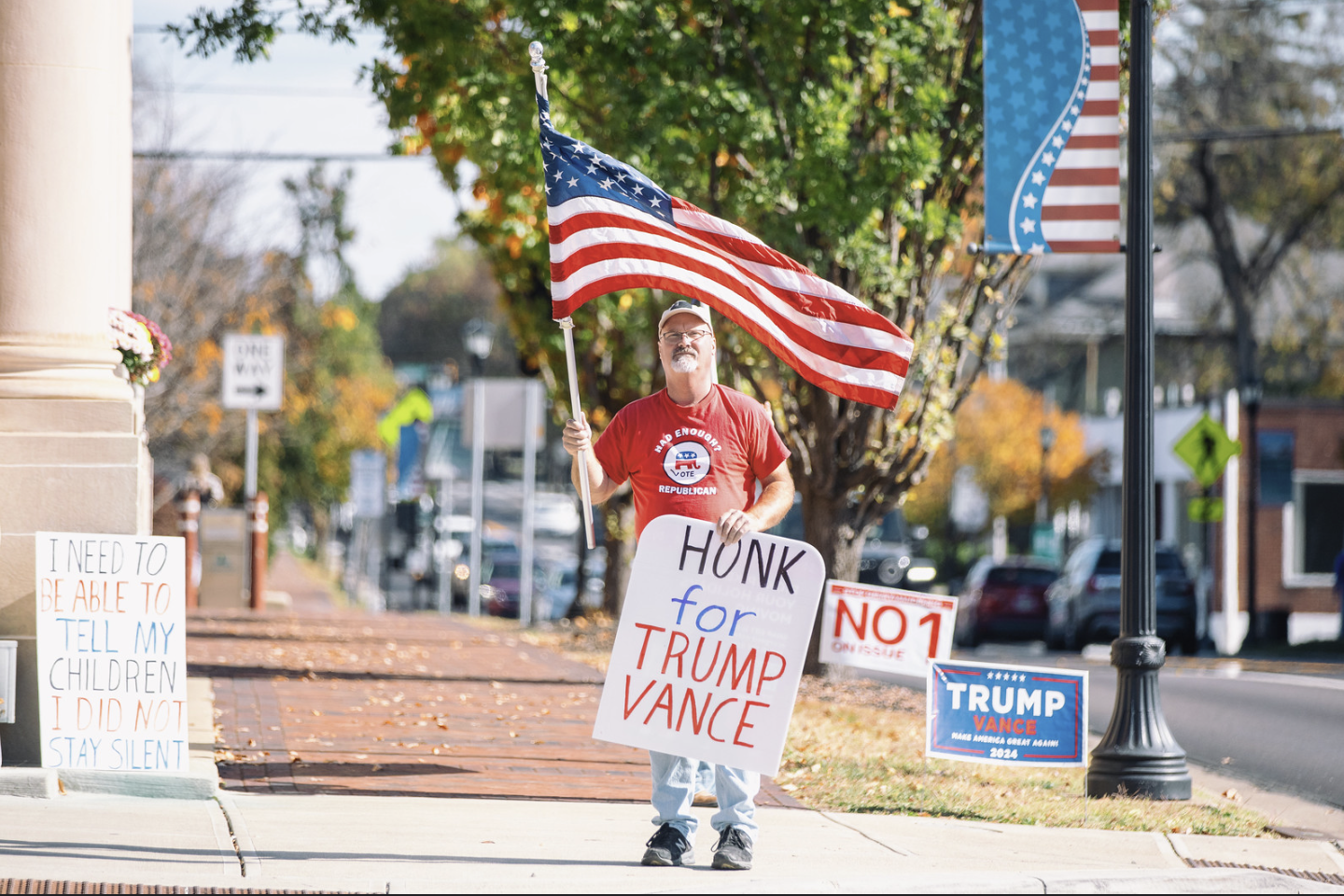
Honk for Trump Vance. Photo by Thomas Hawk / Flickr/ Creative Commons.
By Michael Meeropol / The Rag Blog / September 16, 2025
The following is an expanded version of a commentary delivered by Michael Meeropol, Professor Emeritus of Economics at Western New England University over WAMC-FM on August 29, 2025. It has been adapted for The Rag Blog. Michael Meeropol will be Thorne Dreyer’s guest on Rag Radio, Friday, September 19, 2-3 p.m., on KOOP 91.7-FM in Austin and streamed at KOOP.org.
On Monday, August 11, I joined elected officials, activists, and ordinary citizens at a rally
in Peekskill, NY in Westchester County. We were there to support an Ecuadorean immigrant, Amy Lituma, who had been offered a Hobson’s Choice by ICE — either self-deport and you can take your child with you or we will arrest you and you will be separated from your child while your case is being adjudicated.
This is not an exaggeration. At the rally Attorney Ignacio Acevedo, from the New York Civil Liberties Union, described a case of a mother who was separated from her one-year-old. The baby is in Newburgh, NY in Orange County — the mother is incarcerated in Louisiana.
[See “ ‘When You Take the Mom Away, You Take the Whole Family Away’: Peekskill Rally Condemns ICE Tactics,” The Examiner News, August 12, 2025, available at
https://www.theexaminernews.com/when-you-take-the-mom-away-you-take-the-whole-family-
away-peekskill-rally-condemns-ice-tactics/]
I’d like to skip over the fact that virtually everything the Trump Administration has done
to ramp up deportations has been illegal (though I fear the runaway Supreme Court will make them legal after the fact). Trump and his minions do not care if what they are doing is illegal — they believe they have the power to ignore the law because the 6-3 right-wing majority on the Supreme Court has already given Trump a “get out of jail free” card. Also, many Trump supporters don’t care if what ICE is doing is illegal because they are so convinced that these immigrants are poisoning the blood stream of our country that anything done to get rid of them is all right with them. (Please note – I said many – I didn’t even say a majority because in fact I do not know how deep the fascist belief system has penetrated our population.)
No – I would like to ask and answer the rhetorical question — How does the self-deportation of this mother and her four-year-old son help American citizens and green card holders? To do this, I want to go back to a Rag Blog contribution from four weeks ago which constituted a deep dive into a speech given by Vice President Vance.
(What follows does include a quote from the previous Rag Blog contribution, but the issue explored is a different one from a few weeks ago.)
In that speech he said the following:
“[D]eporting low-wage immigrants will raise the wages of the native-born… [That
would] create higher living standards for those who are born and raised here, whether they’re black, white, or any other skin color. Every Western society, as I stand here today, has significant demographic and cultural problems. There is something about Western liberalism that seems almost suicidal, or at least socially parasitic, that tends to feed off of a healthy host until there’s nothing left. That’s why the demographic trends across the West are so bad… America in ’25 is more diverse than it has ever been. And yet, the institutions that take this incredibly diverse country and form culture are weaker than they have ever been. While our elites tell us that diversity is our greatest strength, they destroy the very institutions that allow us to thrive and build a common sense of purpose and meaning as Americans.
“… Social bonds form among people who have something in common. They share the same neighborhood. They share the same church. They send their kids to the same school. And what we’re doing is recognizing that if you stop importing millions of foreigners into the country, you allow that social cohesion to form naturally. It’s hard to become neighbors with your fellow citizens when your own government keeps on importing new neighbors every single year at a record number.”
Notice that Vance doesn’t dare raise the canard that the Trump Administration is deporting “the worst of the worst” as in violent criminals. That claim may be believed by some but it is a bold-faced lie. According to the Marshall Project:
“People with no criminal convictions at all make up two-thirds of the more than 120,000 people deported between January and May. For another 8%, the only offense on their record was illegal entry to the U.S. Only about 12% were convicted of a crime that was either violent or potentially violent.”
[See: “Ice is Deporting Thousands with Minor Offenses — From Traffic Violations to Weed Possession. Many people with little or no criminal record have been swept into the administration’s immigration dragnet since January, an analysis of deportation data shows.”
(August 15, 2025) available at: https://www.themarshallproject.org/2025/08/15/ice-georgia-
traffic-stop-arrest-immigration.]
Videos are circulating from New York court houses and from street arrests, showing ICE Agents forcibly separating parents from children, breaking car windows and arresting ordinary workers, grabbing a man who had just dropped his kids off at school. I saw these three separate videos during just one evening watching TV news.
The good news is, bystanders are filming these outrageous events with their cell phones and community members are yelling at the ICE Nazis to go home. Demanding to know their names, attempting to photograph them, though most of them are hiding their faces. In a world where justice prevails, these ICE Nazis will someday have to answer for their “work” in courts of law.
And people wrongfully deported are fighting back with the help of courageous lawyers who are not kissing Trump’s behind. Kilmar Obrego Garcia, the man wrongfully deported to a gulag in El Salvador and then arrested when the Trump Administration finally complied with a judge’s order to bring him back to the U.S. (the charge was basically that he drove some undocumented people in his car!) was ordered freed by a Maryland Judge. After a day at home with his family (during which time he took the offensive and sued the government for his unlawful deportation, the government has arrested him again. They offered him a choice of pleading guilty and being sent to Costa Rica or, if he refused to plead guilty, they threatened to send him to Uganda! As of now, a federal judge has ordered the Trump Administration not to deport him till at least
October. Unfortunately, he remains in ICE custody, while members of the Trump
Administration, without any evidence, claim he is a member of a Salvadoran gang called MS-13. This prompted his lawyers to ask a federal judge for a gag order on Trump and members of his administration.

By Alice Embree / The Rag Blog / September 8, 2025
Cross-posted from Alice Embree’s Substack.
The documentary portrait of folk and protest singer Barbara Dane will be shown twice in Austin. A post-screening Q&A with director Maureen Gosling and producer Jed Riffe will follow. Details follow:
Barbara Dane died at the age of 97 in Oakland California in October 2024. As noted in her obituary in The New York Times she “saw music as fuel for social change, not personal fame.”
She used her strong contralto voice as fuel during the 1964 Mississippi Freedom Summer and to protest the war in Vietnam. She crossed genres from folk to jazz and blues. Her collaborators included Muddy Waters, Lightnin’ Hopkins, Earl Hines, and Louis Armstrong as well as Pete Seeger.
The New York Times reported,
She recalled Albert Grossman, who would later manage [Bob] Dylan, telling her that he would be interested in her professionally only when she “got her priorities straight.”
In that sense, she never did. In 1971, she joined Jane Fonda, Elliott Gould, Donald Sutherland and others in a traveling variety show that performed before American soldiers who had turned against the war.
Early in her career, she had declined an invitation to tour with the bandleader Alvino Rey. As she told The Times, “Why would I want to stand in front of a band with a low-cut dress singing stupid words when I could be singing for workers who are on strike?
The 9 Lives of Barbara Dane, explores this life well-lived with archival footing and interviews with friends and admirers that include Jane Fonda and Bonnie Raitt.
Filmmakers Maureen Gosling and Chris Simon and legendary music producer Chris Strachwitz were Thorne Dreyer’s guests on Rag Radio, March 15, 2013. They discussed their film about Strachwitz, This Ain’t no Mouse Music! See the Rag Blog article here.
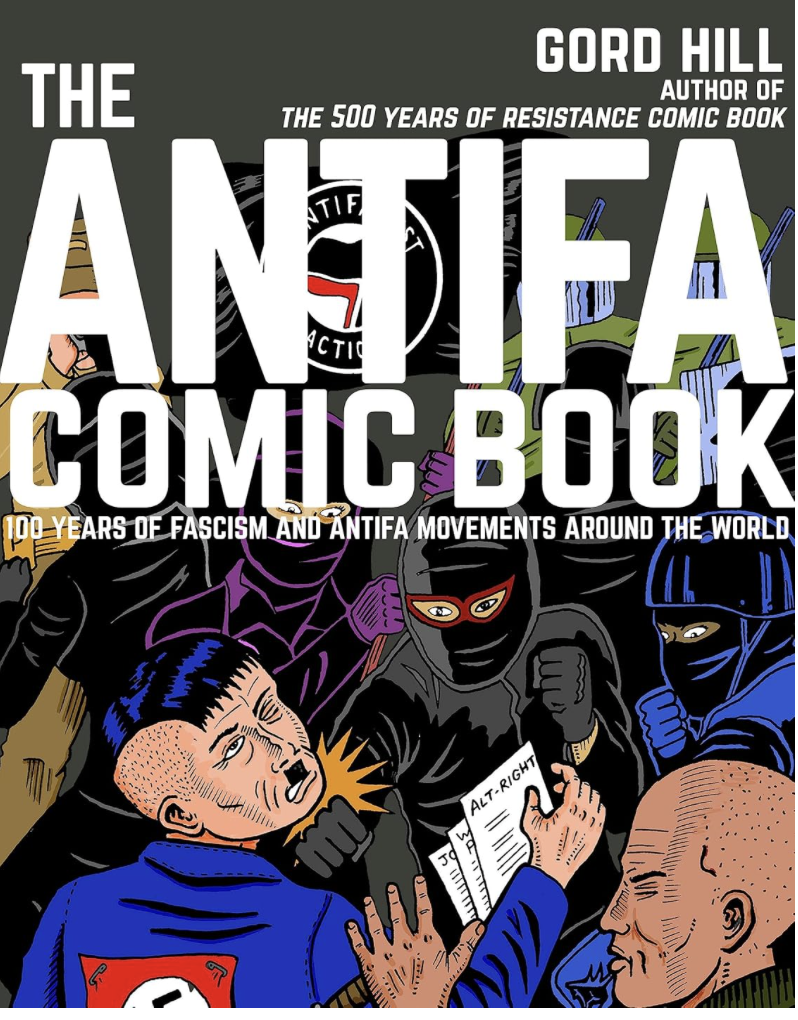
By Paul Buhle / Special to The Rag Blog / August 28, 2025
The understandable fear of an American-style fascism will remind European readers and comics fans that their seemingly all-powerful but culturally backward cousins are slow to understand the gravity or the art of world history.
We note exceptions. Shortly after Pearl Harbor and the entry of the U.S. into the war, two youngsters and future super-notables in comics worked furiously to create The Boy Commandos. Only a few comics had been produced on the European conflict and none with the anti-fascist message. Writer Joe Simon was the son of a union organizer, artist Jack Kirby destined to become an all-powerful industry figure.
The Boy Commandos (I wrote an introduction to the reprint edition) offers a handful of teenagers from assorted national and ethnic backgrounds conducting sabotage behind German and Italian battle lines. French, Dutch, Irish and Brooklyn-American lads, under the direction of Captain Rip Carter. “Satan Wears a Swastika” would be a normal sort of adventure title. They even venture to Africa where uncaricatured natives join the struggle.
The Boy Commandos was a huge hit, with sales in the hundreds of thousands per issue (GIs stationed in Europe were, for a few years, a large part of the comic market), and the series continued until the end of the War. Other war comics abounded, of course, some of them with the enemy Japanese as simians, barely human, colored in vivid yellow. “Terry and the Pirates” may have been the singularly popular Asian-bsdrf adventure with a Dragon Lady but not much struggle behind the lines.
Shortly after the war, comic sales dipped severely. Cold War comics lacked the antifascist quality, of course. The biggest seller for almost a decade (until the repression of unsavory comics in 1953) was “Crime Does Not Pay,” an amazingly sadistic series, along with horror comics. All gone, although GI Joe and other titles made a later, Cold War theme comeback, with precious little anti-fascist content.
The rise of “alternative comics” found Spanish artists and publishers the earliest and most dedicated anti-fascists. Paracuellos (1981, U.S. edition 2020) is considered a global classic in comic art, winner of practically every prize, but is mainly a survivor’s story of children living through the war and the repression that followed until Francisco Franco’s fall from power. Los Arte de Volar by Paco Roca, another classic, is about those who escaped and plotted a counter-offensive. Gimenez’s deeply personal story is said to have offered inspiration for the pained telling of self-history in modern comics, including Art Spiegelman’s Maus.
Continue reading
By Richard Croxdale / The Rag Blog / August 21, 2025
[This article was originally published at People’s History in Texas (PHIT) and was cross-posted to The Rag Blog. The Lone Star Three will be featured on Rag Radio, Friday, August 22, 2025, on KOOP 91.7-FM, 2-3 p.m., in a show co-hosted by Thorne Dreyer and Alice Embree.]
People’s History in Texas attended the opening of Lone Star Three, a documentary on the origins of Roe v Wade. The place was packed with a mixture of oldsters and youngsters.
Lone Star Three is the story of the organizing and the friendship of three women in Austin, Texas, who coalesced around reproductive justice issues in the early ‘70s. The women organized, agitated, and focused on access to abortion and access to birth control which is, boiled-down, access to health care for women.
Victoria Foe, Judy Smith, and Barbara Hines are the three women that are highlighted, but there were many, many more who were involved in the fight. At a minimum, these three should be added to the imaginary University of Texas sculpture garden that PHIT created for Casey Hayden, who is mentioned in an earlier substack.
The three attended the University of Texas at Austin, some in graduate school, some headed to law school, some headed to MacArthur grants.
People’s History in Texas contributed the interview conducted with Judy Smith which was gathered at the reunion of The Rag underground newspaper, when PHIT collected thirty-plus interviews of the Rag staff and of organizing and protests in the ’60s and ’70s. The second part of The Rag: An Underground Newspaper documentary also highlighted other women and other issues in the women’s movement.
All three worked on The Rag. All three were instrumental in the formation of the surge of activity in women’s issues and women’s rights in those years. I think they call that slice of history second-wave feminism in these days. People tell PHIT that if you were living during those days, or were living with someone who was involved, there was no second wave about it. It was just a long overdue demand for some equal treatment.
Continue reading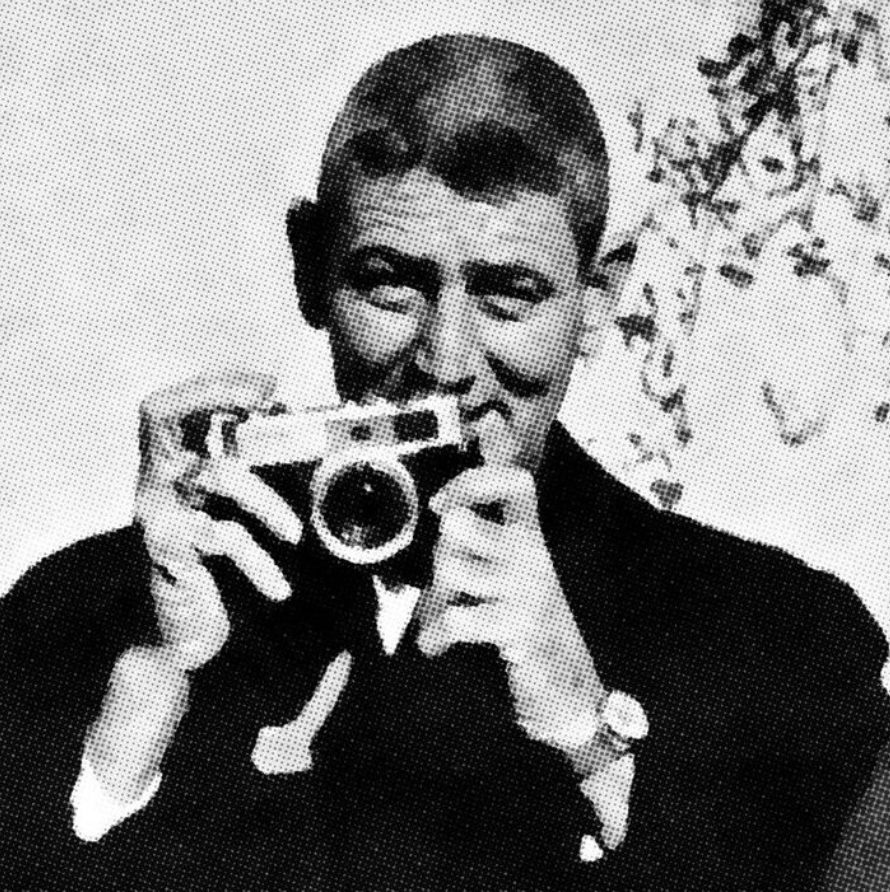
Photo by Belmer Wright published in Austin’s underground paper, The Rag, January 15, 1968.
By Martin Murray / The Rag Blog / August 19, 2025
Lt. Burt Gerding served in the Austin Police Department (APD) in the Criminal Intelligence Division from the early 1960s to some time in 1970, when he was transferred to the APD Narcotics Division. As an APD Intelligence Officer, Gerding worked in concert with the University of Texas Police Department (UTPD) and the FBI. He was primarily responsible for monitoring the activities of suspected campus radicals and leftist student political organizations. Through his friend George Carlson (an FBI agent and Head of Security for University of Texas System), Gerding worked with agents from the FBI’s secret Counterintelligence Program, known as COINTELPRO.
First Encounters of a Special Kind
My first personal encounter with Burt Gerding came in late November 1967, just a few weeks after I starting going to SDS meetings on the University of Texas campus. As I was casually walking along a hallway in the University Union late one morning, I passed two middle-aged men in cheap suits, one of whom I recognized as Burt Gerding. Burt greeted me cheerily with a hearty “Hey, Martin, so you’ve joined SDS.” I realized at that moment my presence had been noticed. That was my introduction to the world of police spying on the anti-war movement.
As I learned later, starting around 1963, and perhaps into late 1968, Burt and his sidekick Allan Hamilton (Head of the UT Austin campus police Department) were regular fixtures around political events on the UT Austin campus. They monitored protest events, spied on political organizations, recorded our names, and identified our “leaders.” We routinely identified them to everyone around whenever they appeared. By the beginning of 1968, I rarely saw Burt Gerding again, except when he hovered around the edges of large demonstrations.
I first learned who Burt Gerding was a few weeks earlier. In mid-November 1967, I accidentally came upon a “sit-in” protest against Marine recruiters in a large alcove room about 30 feet long and 25 feet wide in the University Union. Around eight to 10 people were sitting on the floor, blocking access to the Marines. They were chanting “end the war in Vietnam,” and such. I was captivated. I immediately joined the sit-in. For the next several days during that week, I joined the protest as a participant. During this week of the Marine Recruiters sit-in, counterprotesters jeered at us, pushed their way through the bodies on the floor, stomping and kicking. I noticed several middle-aged men watching the protest from the far edge of the crowd. Some of the protesters blocking access to the Marines told me that the tall thin one with a sly grin on his face was Lt. Burt Gerding, the well-known head of the Austin Police Department Criminal Intelligence Division (euphemistically called the “Red Squad”).
I learned that Students for a Democratic Society (SDS) had sponsored the sit-in protest. I started attending SDS meetings. At last, I had found like-minded people who shared by political views.
Burt Gerding was a visible and ubiquitous presence at political meetings and protest gatherings. He was always lurking around, looking puffed up and self-important. By early 1968, as I recall, whenever we saw him, we pointed him out and heckled him. Soon thereafter, he moved further into the background, giving up on the idea of sitting in on meetings and trying to listen to conversations.
As the antiwar movement expanded from a small group of readily identifiable individuals into a mass movement, the Austin “Red Squad” (with Gerding at the helm) switched strategies and tactics. They began to infiltrate the growing anti-war and anti-racist movement with undercover informants. In retrospect, I now see that police informants consisted of two types. One type was those who attended meetings and hovered at the edges of protests, taking notes and sometimes photographs. These undercover agents pretended they were casual observers. The second type were those who actively participated in organizing efforts, blending into the “movement” as activists, pretending to be our comrades.
When SDS meetings grew in size, sometimes numbering well over 100 or 200 activists prior to planning a major demonstration, it was impossible to detect undercover informants patiently taking notes and preparing reports for whatever policing agency they worked for (the Austin Police Department, the FBI, or the University of Texas Public Security Unit). The role of undercover police agents who actively participated was also difficult to detect. But their purpose was clear: gain access to inside information by “being one of us.” Sometimes this participation spilled over into the role of agents provocateurs, spreading rumors, exaggerating differences, and provoking dissent.
The Gerding Papers at the Briscoe Center for American History (UT Austin)
After he left the APD and then retired from his security job at Westinghouse, Gerding donated a treasure trove of printed materials he had collected over the years to the Dolph Briscoe Center for American History, located (of all places) at the LBJ Library on the UT campus. These materials (and especially a transcribed series of interviews he provided to the Briscoe Center in 1994) provide a window into his modus operandi, his worldview, and his plan of attack to disrupt the antiwar movement.
The Burt Gerding Papers constitute an archive as such: they consist of materials produced at the time and gathered together and stored in six boxes, each of which is divided into individual files. These collected materials resemble something akin to a random assortment of printed materials, the most interesting of which focus on “political activism,” political protests, civil rights and black power, and organizations like Students for a Democratic Society, Student Mobilization Committee, and others. Many of these files contain an assortment of old leaflets, occasional undercover police reports, copies of the underground newspaper, The Rag, and some newspaper clippings.
The files are at best loosely classified, devoid of any semblance of temporal sequence, and incomplete as documentary evidence. What should be clear from the start: the Gerding Papers do not even gesture toward a history of political activism in Austin, the ideologies that drove it, or its wider meanings. There are no reports on particular demonstrations or protest events, with the exception of the Don Weedon Gas Station Protests (3 May 1968), Waller Creek tree removals (21-23 October 1969), and the Chuck Wagon riot (10 November 1969). But even these reports are not historical accounts. They are surprisingly thin on recounting how SDS and other organizations planned marches, what routes protesters selected, and what banners were flown. The materials in the Gerding Papers are devoid of analysis.
The Gerding Papers do include reports from undercover informants. The principle mode of information exchange is contained in what were called “Memos of Information.” Undercover informants submitted short (two-page) summaries of what happened at a particular meeting on a particular date. The ritual included who called the meeting, where it was held, the date it occurred, how many were in attendance, who chaired, what were the main points of contention, what factions were present, and what decisions were reached. Some of these reports talked about divorces, and who was responsible for breaking up marriages.
For example, in one “Memo of Information” the informant claimed that Paul Turner and I were calling for a demonstration to disrupt the annual NAVY ROTC parade. This event never appears in any other files. Another example, there are several “Memos of Information” that turn their attention in late 1968 and early 1969 to the New Left Education Project (NLEP), an SDS-sponsored group, and its literature table. Praise is heaped upon the University administration for waiting for the right moment to act. No mention is ever made that Alan Locklear and I were brought before a University Disciplinary hearing, charged with “selling literature” without authorization on campus. We obtained the services of an ACLU attorney, Gerald Lefcourt, and we argued that we were not “selling literature,” but only accepting donations. Besides that, we also argued that fraternities and sororities openly sold tickets for such revolting events as “Round Up” (where sorority women were lassoed and dragged off to makeshift corrals), and the Old South Day dance and party (where frat boys on horses paid young African-American kids to hand-carry invitations to sorority houses).
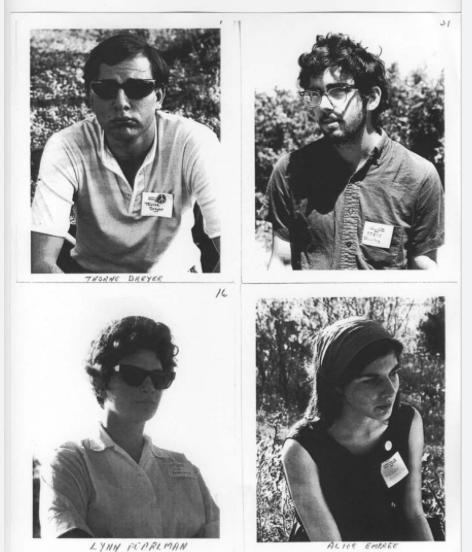
Most likely police surveillance photos. Top on the left is Rag Blog editor Thorne Dreyer, and at the lower right is Rag Blog associate editor Alice Embree.
In 1970, Gerding prepared a Report for Chief Miles, a five-page document included in his Papers. In this document, Gerding offers his assessment of Movement organizations. Indeed, for someone who claims to have reliable undercover informants, and to have infiltrated organizations and secretly reported on meetings, this assessment was pathetic. It was incomplete, relied on deductive tropes about Communist organizations, and was incomplete in its coverage. As our Movement grew in strength and numbers, he seems to have fallen back on well-worn truisms that no longer (if they ever were) instructive. His claims to have his finger on the pulse of the Movement were only matched by his woefully inadequate ignorance of what the Movement – its people and organizations – were actually doing. We were building organizations to confront the war machine, racism, misogyny, and homophobia. Gerding was trapped in old paradigms and analytic frameworks inherited from the 1950s Cold War. He was obsessed with tracing poplar protests back to one of several national “Communist” organizations – CPUSA, Socialist Workers Party, and Progressive Labor. While these organizations had a presence in the Austin Movement, their members were certainly not orchestrating or leading popular protests. By 1970, both the CPUSA and PL were spent forces in Austin, and we regarded the SWP and its offshoot sibling organizations — the “Trots” as we called them — as more or less irrelevant. Gerding seems to epitomize the banality of evil: a self-deluded ordinary “little man” who believed that he could act with impunity because he operated under the official sanction of the security agencies he worked with.
In the Gerding Report, what he ignored was much more important than what he included as part of the official record. CPUSA membership never amounted to more than three or four persons, led by Marian Vizard before she took a decided detour into countercultural and feminist politics. After the break-up of SDS in summer 1968, PL was a spent force in Austin, attracting ever-dwindling numbers to its events. The Spartacists league, never more than perhaps five hardcore fanatics, always carried their banner to every rally and demonstration: “all Southeast Asia must go Communist.” As quasi-Maoists, their political position was that the Vietnamese revolution — both in the North and South — was hopelessly revisionist because of the support the Vietnamese obtained from the Soviet Union. This arcane political position was never going to be a way to build a vibrant political movement in Austin. The “Sparts” were pathetically irrelevant — a nuisance that we tolerated.
Continue reading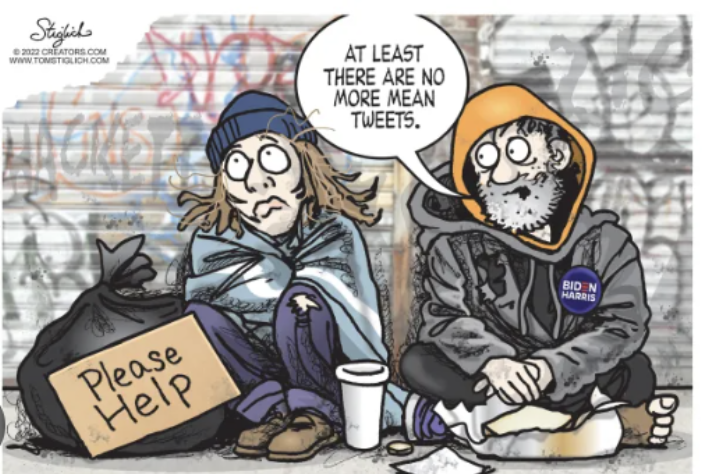
Cartoon courtesy of LeftLinks.
By Carl Davidson / The Rag Blog / August 15, 2025
This article was originally posted on August 15, 2025, as a weekly editorial on LeftLinks by its editor Carl Davidson and is cross-posted to The Rag Blog.
Whenever I hear politicians, especially those like President Donald Trump and his MAGA wannabes, talk about “war on crime” and “letting the police do their job,” my muscles tighten and fists clench. I’m ready to rumble. They have no idea what they’re talking about, save for dead ends that would make matters worse. In a fair debate, I would mop the floor with them.
I’ll start with a short story. I was chatting with a Beaver County DA a few years back, he was an FDR liberal of sorts, who has since passed on. I asked him one day if he saw a connection between the unemployment rate and the arrest rate here locally. He laughed softly and said he kept two charts on his office wall, with the numbers of each, which he updated regularly. “What did they show?” I asked. ‘They match exactly,” he replied, “But too many lack the will or the ideas to do anything about it.”
My lawyer friend had a point. First, we need the will to name and confront the problem as it’s perceived by those who live it. Using statistics of positive change starts on the wrong foot. Second, we need ideas about what to do, and we need to dump some bad ideas along the way.
Which leads to another story. For five years, I worked in a Chicago jobs program I had designed for “at-risk” youth — computer repair and network installation. I ran it successfully in five tough Chicago public high schools. The principals gave me a big room, and I brought boxes of screwdrivers and truckloads of donated older computers. I told the kids:
“You can’t steal anything here. You wouldn’t know what to do with it anyway. But if you can get one of these computers to work, it’s yours. You can take it home with you. And I’ll teach you how to do it, and more. The most crucial product in this class is going to be what’s between your ears, the skills you gain. Computers that work and good spare parts are just byproducts.”
It was a solid success, and one special group heard about it and approached me separately. They were all ex-offenders, recently out of prison. “If we found the space and some funds, could you do this for us, for ex-offenders and some inmates on work release?” I agreed and worked with them for five years, too.
We talked about everything during the classes. 0ne day I dropped the phrase, “Lock ‘em up and throw away the key.” One guy smiled and said, “They don’t get it, not at all.” “What do you mean,” I asked? “Nearly everyone you put in jail will come out some day. It may be five years, seven, or whatever. But nearly all of us come back out. They give us a new suit of clothes, a state I.D. card, a bus ticket to wherever ‘home’ is, and $50. Now think about it. I’m back in the ‘hood’ with less than $50 to buy food. What am I going to do in order to survive?”
“But here’s the next question,” he continued. “What if I were an 18-year-old kid who highjacked a car and got caught, and was sentenced to five years? The reality of most prisons is harsh and stark. This young kid will get nothing in the way of what you’re doing here. First, he’ll be brutalized and hardened. Then he’ll join a prison gang for defense.”
“So he will also learn new skills on how to be a better criminal. Then he gets dumped on the street with his bus ticket. Hardly anyone will hire him for a regular job. Some of his family won’t want to deal with him, either. So he hooks up with the “outside” version of the gang he had joined in prison, and he’ll start at the bottom, finding a corner to sell drugs on the street.
War on crime? In prison, we don’t fight crime. We create schools and conditions to create more and better criminals.
That’s why we laugh at “throwing away the key.” Unless you’re a mass murderer, that key is going to let you out as a new and better criminal in a few years. They want to get tougher, more brutal? They can do that. But what does it produce? A tougher and more brutal criminal.
Not all prisons are simply bleak. Some have decent libraries, where you can study to be a jailhouse lawyer or a Muslim, a Buddhist, or a Christian minister. (I know one guy who did all four). In maintaining the physical plant and structure of the prison itself — a much-desired prison job — some will learn carpentry, sheet metal, and plumbing skills.
Continue reading
J.D. Vance by DonkeyHotey. This caricature of J.D. Vance was adapted from a Creative Commons licensed photo from Gage Skidmore’s Flickr photostream.
By Michael Meeropol / The Rag Blog / August 5, 2025
The following is an expanded version of a commentary delivered over WAMC-FM on July 18, 2025, by Michael Meeropol, Professor Emeritus of Economics at Western New England University. It was adapted by the author to be published on The Rag Blog.
Michael Meeropol will be Thorne Dreyer’s guest on Rag Radio on KOOP-FM Friday, August 8, from 2-3 p.m.
On July 5, Vice President Vance spoke at a right-wing think tank, the Claremont Institute. Allegedly he was there to speak about “statesmanship” but in fact, he decided to use the opportunity to bash what he called “the left” and to present his idea as to what defines American citizenship. Both of these sections of his speech involve dangerous nonsense — as well as outright lies. Unfortunately, even in this longer version I cannot discuss the entire speech so I will restrict myself to his main themes.
[For the entire transcript, see: “JD Vance’s Speech at The Claremont Institute’s Statesmanship Award Event. Available at https://singjupost.com/transcript-jd-vances-speech-at-the-claremont-institutes-statesmanship-award-event/”]
His first theme — to which he returned at the end of his speech — was an attack on the “American left.”
“I think it’s worth reflecting on the American left in 2025 because if you’re anything like me, I was very optimistic that the left had had such a beating in the 2024 elections that they might have a come-to-Jesus moment. They might look around and say, you know, maybe the American people are not going to go for grown men beating up women in girls’ sports. Maybe the American people are not going to go for a wide-open Southern border that has allowed tens of millions of people to come into our country, undercutting the wages of American workers and, of course, making our society much less safe.”
Notice — he doesn’t touch the most important goals of the “American left” — to pass a bill making reproductive rights the law of the land, to reduce economic inequality, restore democratic voting rights, and take action to slow climate change and mitigate the effects of it. That’s of course because, all those goals are wildly popular among the general public.
But let’s take a look at his description of what “the American left” wants.
Let’s start with the idea of “open borders.” According to government statistics, after a big jump in “encounters” on the Southwest border of the U.S. in fiscal year 2023 (October 2022 to September 2023) there was a marked decline for all of calendar year 2023 and that continued through December of 2024. The decline was significant — from 250,000 to 100,000. Note, in no way did that allow “tens of millions” of people to come into our country. The total number of so-called illegals in the country in 2022 was estimated at about 11 million — many of whom have been in the country five, 10, 20 years – even more. So what’s up with “tens of millions” coming into the country while Biden was president? It’s an outright lie — which of course he can get away with because of the audience to which he was speaking and the inability of the mainstream media to call out every dishonest rhetorical flourish. But please note — this is a man with a law degree. He knows the real numbers. [for a detailed diagram see https://www.cbp.gov/newsroom/stats/southwest-land-border-encounters]
Next argument — immigrants are undercutting the wages of American workers. I will discuss that later in this essay.
His third assertion is that the left’s support for the rights of trans-gendered people means they want to see “grown men beating up women in girls’ sports?” The city of San Francisco issued a report responding to the widespread hysteria exemplified by that assertion. [See “Trans Women in Sports: Facts over Fear,” available at https://www.sf.gov/trans-women-in-sports-facts-over-fear#]. Trans-women have been competing at least since Renee Richards played in tennis tournaments in the 1970s. There is no evidence that trans-women have any advantages over people born as women, and as the article points out they represent a miniscule number of participants in women’s sports: “0.002% (10/500.000) of U.S. college athletes and even fewer of recent Olympians — (0.001%) identify as trans.”
Next, he decides to attack the Democratic nominee for Mayor of New York City – Zohran Mamdani: “…a 33-year-old communist… “
That first line is enough to refute Vance. Free buses and a rent freeze is hardly “communism.” But if anyone’s interested there is a detailed presentation of Mamdani’s platform at https://www.zohranfornyc.com/platform. Among other things, he wants to raise the NYC income tax on millionaires and corporations. He wants to raise the minimum wage to $30 an hour by 2030. He wants to try an experiment with city-owned grocery stores in underserved neighborhoods. It’s definitely a left-wing agenda, but “communist”? Come on!
Continue readingThorne Webb Dreyer, Editor





LAMAR HANKINS / COMMENTARY / The death and life of Charlie Kirk
Charlie Kirk. Creative Commons image.
By Lamar Hankins / The Rag Blog / September 21, 2025
It should be axiomatic to any freedom-loving person that no one should be harmed for their beliefs, views, or opinions. Yet our country, the supposed citadel of freedom, has experienced assassinations, firings, and other negative actions toward those who express unpopular ideas. Upon learning of Kirk’s death, I thought of the period from 1963 to 1980, a seminal time of my life, and counted seventeen deaths, by guns, of people on the national stage who meant something to me. We are a tragically violent society.
As a leading constitutional rights organization has said throughout most of its history, the answer to views you don’t like is not violence or intimidation or retribution, but more speech.
Before Charlie Kirk’s killing, he was barely known to me. In fact, if you had asked me whether Turning Point USA, Kirk’s organization, promoted views right, left, or center, I could not have given you an informed answer. Kirk was not on my radar. Since his death, I have learned why; he was a youth-influencer. He could not have cared less about those of us in our 80s. Maybe that was because some of us who lived through the civil rights struggles of the 1950s to 1970s could have educated him about why Martin Luther King, Jr., was not an “awful” person. King practiced non-violence, unlike the white people who killed four little girls with a bomb at the 16th Street Baptist Church in Birmingham in 1963, and the white killers of James Chaney, Michael Schwerner, and Andrew Goodman a year later. Did Kirk ever read King’s Letter From a Birmingham Jail? Had he done so, his views about race in this country might have been changed. Regardless, those of us with 80 years of living and learning could have explained to him that the term “awful” should be reserved for people who indiscriminately kill children because of their race, who murder peaceful civil rights workers trying to help black people register to vote, and those who kill people for what they believe or say.
We could have explained why the Civil Rights Act of 1964 was essential to combat the virulent racism in which we grew up. As a fellow “white” person, I could have explained that that law was not “an anti-white weapon,” but an effort to help black Americans become full participants in our society. It is not apparent in what he said that Kirk was even aware of the 1965 Voting Rights Act, which was aimed at ending a century of unconstitutional black disenfranchisement by white racists, and the 1968 Fair Housing Act, which prohibited real estate advertisements that read “No blacks need apply.”
I grew up in a time when black people had separate water fountains in our local grocery store, were relegated to sitting in the back of city buses, and could not attend school with whites. I might have been able to fill in some gaps in Kirk’s education had I the chance to do so. I could have explained that the 1964 law he opposed made it possible for a black friend to have a career as a pilot for American Airlines, in spite of Kirk’s misgivings about his ability to fly the plane, something he had done for years before as an Air Force pilot.
Had I been able to sit down with Kirk for a talk, I might have helped him see that the color of a person’s skin has nothing to do with that person’s abilities or achievements. Perhaps I could have helped him see that an accomplished African-American woman on the Supreme Court was no more of a diversity hire than is the African-American man who sits on that court. When I was involved with hiring in a job I had before going to law school, all affirmative action meant was that we made sure that minorities and women were aware of job offerings, and their applications for employment were wanted. Discrimination on the basis of race or sex was forbidden.
Of course, this explanation would have meant that I would have to address Kirk’s sexism as well as his racism. He believed women should not have the freedom to work in occupations of their choice until after they stayed home and raised children. “The biggest thing is this: more younger women need to get married at a younger age and start having kids. The single woman issue is one of the biggest issues facing a civilization.” He even criticized birth control, claiming “It is awful, it’s terrible, and it creates very angry and bitter young ladies and young women.”
Continue reading →