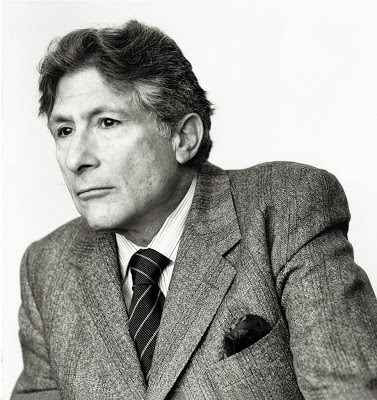
Jonah Raskin : Revisiting Edward Said’s Palestine

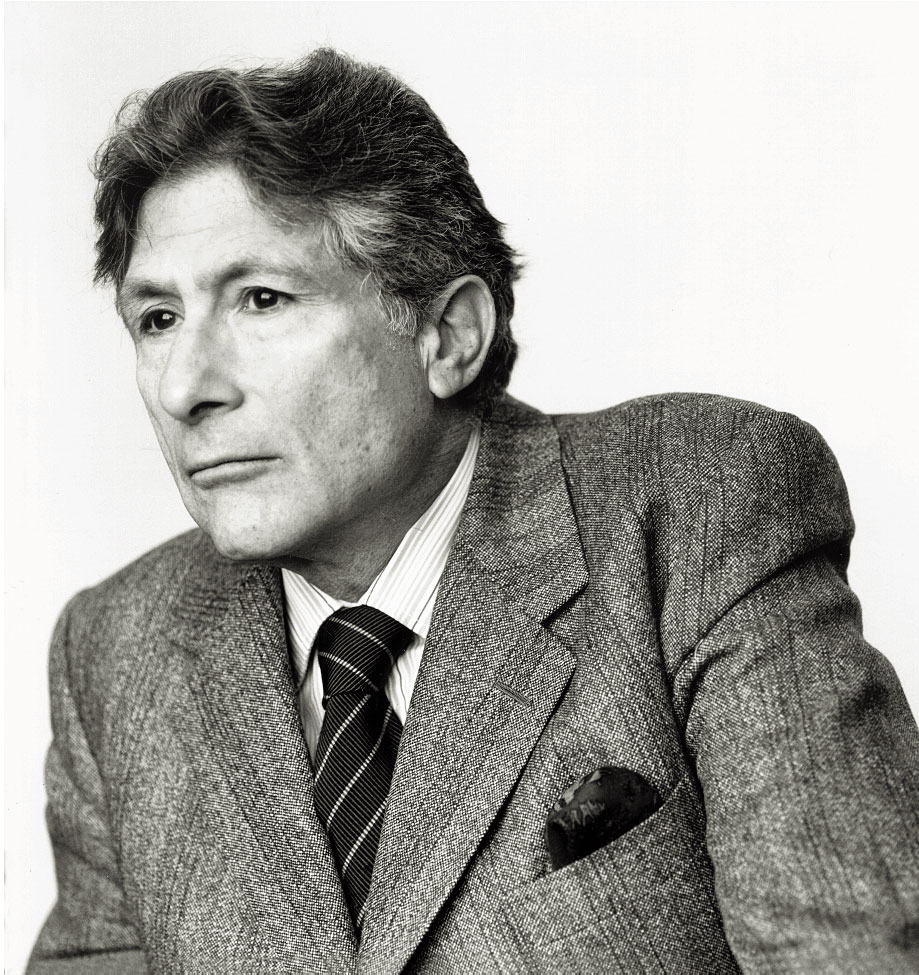
Edward Said: “A scholar, an intellectual and an activist who tried to create a bridge between Arabs and Jews…”

Thirty years later:
Revisiting Edward Said’s Palestine

By Jonah Raskin / The Rag Blog / September 9, 2009

It’s called The Holy Land but unholy wars have been fought on its soil for its very soil for ages. Sometimes it seems the wars will never end. Perhaps they won’t in my lifetime or yours.

But now and then there’s a voice of hope that’s raised above the din. In the last two decades of the twentieth century that voice of hope belonged, at least for a time, to Edward Said, the author of The Question of Palestine, which was originally published 30 years ago in 1979 — and nearly two dozen other books, including Orientalism, a contemporary classic about empire.

Again and again, The Question of Palestine has been the book that I turn to for information about Palestine, and, never having been there, I see the land and its people through Said’s eyes. I know that may sound strange. After all he was an Arab — he died in 2003 at the age of 63 — and I’m Jew, but we both aimed to link politics and culture. We also loved British literature, and taught British literature, though we also knew that it was often implicated in the spoils of empire.

Said was one of a kind, and a completely unique human being. I only met him once — in his office at Columbia College in New York, where I had been an undergraduate. But his appeal as a writer and as an intellectual has never waned for me because he was a complex, sometimes enigmatic figure.

He described himself as a loner, and “not a joiner,” but in 1977 he joined the Palestinian National Council — the government in exile — and served as a member until he resigned in 1991. For a loner he managed to join a great many other organizations, serving as the President of the Modern Language Association, and an executive board member of PEN, the international writers’ organization. He wrote about music for The Nation, and was on the editorial board for years.

Moreover, for a scholar and teacher who insisted that he wanted no followers and no imitators, and who offered “no rules by which intellectuals can know what to say or do,” he gave birth to the academic field known as “post-colonial studies,” and to an influential group of writers and intellectuals — such as Andrew Rubin and Moustafa Bayoumi — who carry on his work.

Like many of his own intellectual heroes, Said crafted a personal and a political identity, and that identity was as much a matter of feelings as facts. Then, too, the feelings were often uncomfortable, even anxiety producing. “Exile is the fundamental condition of Palestinian life,” he wrote. He added that to be a Palestinian was to be an “outlaw” and an “outsider.”

I probably would use the same if not identical words to describe the fundamental condition of Jewish life. I have certainly felt like an outlaw and an outsider for most of my life and part of that identity derives from being a Jew in a world of anti-Semitism. For much of his life — that began in Palestine in 1935, and that ended in New York — Said felt that he belonged nowhere, and everywhere all at once. By his own reckoning, he was “always a traveler” and always “out of place.” He thought of himself as a mongrel intellectual, and he strayed far beyond the world of intellectuals. By straying he found himself, and allied himself with other exiles, refugees, displaced persons, and deportees the world over.

Said’s sense of not belonging came to him first in boyhood. Born to a Palestinian father — with U.S. citizenship and an American passport — and a Lebanese mother, he left Palestine with his parents in 1947 when the state of Israel came into existence. He did not return for 45 years when he sought and found the house that his family once owned, and where he had spent his earliest years, an experience that prompted him to write his memoir, Out of Place, in which he describes growing up as the British Empire declined and the American Empire began to take its place.

In Egypt in the 1940s he attended the Cairo School for American Children and then Victoria College, and felt that he did not have any one single identity — neither British, nor American, nor Egyptian — but a kind of Kiplingesque half-breed on a border that divided colonized from colonizers. The whole subject of Palestine was repressed at home by his parents, and rarely if ever discussed by them. Moreover, his family was Christian not Moslem, and members of what he would later call the “national bourgeoisie,” and so he was far removed from the living conditions that most Arabs faced everyday.

First as a teenager in the United States attending private school, and then as an undergraduate at Princeton, he aimed “to become like the others, as anonymous as possible.” But in 1956, when the British invaded Suez, he identified publicly as an Arab with an Arab point of view for the first time in his life. Still, it would not be for another decade that he began to reveal his politics, and to identify himself as an anti-imperialist.

In his first book, Joseph Conrad and the Fiction of Autobiography (1966), he denounced European colonialism, albeit quietly, and traced what he felt were the links between the narcissism of the self on the one hand, and the narcissism of empire on the other, both of which he found abhorrent.


A decade later, in The Question of Palestine, he held back none of his feelings. The Six-Day War of 1967, when Israeli troops gained military control of the Sinai Peninsula, the Gaza Strip, the West Bank, East Jerusalem, and the Golan Heights, had shaken him to the core of his being. He would say that he was never the same person again.

After 1967, he began in earnest to recall his lost Palestinian identity, and to stake his honor, his career as an intellectual and a professor, on the future of his homeland. In The Question of Palestine, he left no room for doubt about where he stood, and what he stood for. He attacked The New York Times, Commentary, The New Republic, experts on the Middle East, and Zionism, at the same time that he defended Nasser, Arafat, and the Palestinian Communist Party.

What he wanted most of all, he explained in The Question of Palestine, was “an independent and sovereign Palestinian state.” He added that in his view most Palestinians, and most Arabs, too, had come to the realization that they had to live at peace with Jews and Israel. That now seems like wishful thinking.

If there were terrorists in the Middle East, and of course there were, then Israel was to blame for bringing them into existence, he insisted, though he also condemned Palestinian violence, suicide bombers, and the hijacking of airplanes by members of the Palestinian Liberation Organization.

Over and over again he aimed for a balanced perspective, though that proved difficult to attain. He decried “the horrors of European anti-Semitism,” and noted that for Palestinians the Jews were “the most morally complex of opponents.”

Thirteen years later, in 1992, when The Question of was republished in paperback, Said was much less sanguine about the prospects for an independent Palestinian state, and about peaceful co-existence between Jews and Arabs. In his view, history seemed to go around and around without progress or genuine solutions to social problems.

Under the Nazis, the Jews were the “victims of persecution,” he wrote. Then, in the Middle East with the creation of the State of Israel, they became “the victimizers of another people.” In his view, Arabs were “the victims of the victims.” Now, too, in the preface to the new edition, he lambasted Thomas Friedman of The New York Times, along with Kissinger and Reagan, and, with the exception of Antonio Gramsci, the Italian Marxist, he had fewer and fewer heroes. Even Arafat had failed him.

The problem of Palestine was now “intractable,” he wrote; Palestinian history was marked by “catastrophes.” His own resignation from the PLO the previous year seemed to signal his sense of political frustration.

Oddly enough, Said became more hopeful about the prospects for global change again after 9/11. In part, he took on the mantle of French existentialist Jean-Paul Sartre, and aimed to follow in Sartre’s footsteps — to be “optimistic,” to defend “populism” and “public politics.”

In 2000, in an essay for the Egyptian newspaper Al-Ahram, Said acknowledged Sartre’s positive influence on his own thinking as a young man. He praised him for “his courageous positions on Algeria and Vietnam, his work on behalf of immigrants, his gutsy role as a Maoist during the 1968 student demonstrations in Paris.” Said went on to say that he found nearly everything Sartre wrote “interesting for its sheer audacity, its freedom and its generosity of spirit.”

There was only one place where Sartre failed, Said believed, and that was Israel. “Except for Algeria, the justice of the Arab cause simply could not make much of an impression on him,” he wrote. “Whether that was because he was afraid of seeming anti-Semitic, or because he felt guilt about the Holocaust or because he had no deep appreciation of the Palestinians as victims of and fighters against Israel’s injustice, I shall never know.”

Sartre died in 1980, a year after Said met him in Paris — the one and only time they met — and so he never had the opportunity to ask him why he’d been reluctant to defend the Palestinian cause.

Until he died, that cause would haunt Said, though in part it was eclipsed for him — and for others — by the immediacy of the War in Iraq. Said saw Palestine as the “last great cause of the twentieth century,” and last causes seem to have a way of turning into lost causes.

For a time, he envisioned Palestine as a cause he might have had a hand in winning, but increasingly he saw Palestine as a land “saturated with blood and violence” from which there was no exit. It seems today as saturated with blood and violence as ever before. But as Said noted, Arabs and Jews are tied “inexorably together,” and that inexorable link provides a sense of hope. It does for me. Together, we will have to figure a way out of the unholy land and away from violence and blood.

Said himself seems now like one of the last great public intellectuals of the twentieth century: a man who belonged to no place, and nowhere, and who felt permanently out of place, but who identified with what Franz Fanon called “the wretched of the earth.”

“An intellectual is like a shipwrecked person,” Said wrote. “Not like Robinson Crusoe, but more like Marco Polo, whose sense of the marvelous never fails him, and who is always a traveler, a provisional guest, not a freeloader, conqueror or raider.”

The intellectuals with whom Said identified most strongly were men and women who were exiled from their own countries of origin. Many of them, though not all were Jews, forced out of their homelands by Fascism. Said acknowledges all of them in his writings: Hannah Arendt, Erich Auerbach, Jose Marti, Frantz Fanon, and Theodoro Adorno, whom he describes as “the dominating intellectual conscience of the middle twentieth century.”

To the names of Arendt, Auerbach, Marti, Fanon, and Adorno we might think of adding the name Said, and to remember him now as a scholar, an intellectual and an activist who tried to create a bridge between Arabs and Jews. Thirty years after its initial publication The Question of Palestine is well worth revisiting because it shows Said at his most personal and at his most political.

I remember him now, not in his office where we sat and talked about literature, but on the Columbia campus near the height of the Vietnam War. Out of curiosity about the protests and the protesters, he would stand at a distance, watch the crowd as it roared, and listen to the fiery speeches. He never joined us and I never asked him to. I wish that I had.

[Jonah Raskin is the author of The Mythology of Imperialism: Revolutionary Critique of British Literature and Society in the Modern Age. (Monthly Review Press.)

  • Find The Question of Palestine by Edward W. Said on Amazon.com.

The Rag Blog

Posted in Rag Bloggers | Tagged , , , , , | 1 Comment

Hey Blue Dogs : Don’t Make Me Vote Third Party!

Listen up Democrats! If you don’t have or can’t find enough backbone to give the American people substantial health care reform that contains a public health insurance option, then don’t even bother asking for my support.

By Ted McLaughlin / The Rag Blog / September 9, 2009

I am a left-winger. I usually vote for the candidates on the Democratic ticket, but I don’t have to. Along with millions of others, I have voted for third-parties in the past and I’m not afraid to do so again. When the real liberals and other left-wingers vote for third-party candidates, the Democrats do not win.

Once again, it looks like the Democrats are taking the left for granted. The Blue Dogs and others seem to think the left will have to support the Dems no matter what they do or fail to do. Those who believe this are badly mistaken.

I will be blunt. I have been disappointed with the Democrats since they regained power. But there is one issue that will determine how I vote in 2010 and 2012 — health care. It should be obvious to anyone that our health care system is badly broken. If the Democrats don’t pass real reform with the numerical advantage they currently hold, I cannot see any reason why I should continue to support them with my money, my blog and my vote (and I certainly won’t participate in any GOTV effort).

And it looks like they are fast going to wuss out on real health care reform — opting instead to enrich the insurance companies at the expense of the American people. Take the Baucus bill for example. This really bad bill would not have a public option, would require everyone to purchase private insurance, and would fine those who don’t purchase private insurance.

Baucus says he will help those who can’t afford health insurance by giving tax credits. I have to ask, how will getting a tax credit help the poor who don’t pay taxes? And how will fining them help them to buy insurance or get out of poverty? The only real answer for these people is a cheap public option for health insurance.

Since my retirement a couple of months ago, I have joined the ranks of the poor (and with my age and the poor job market, I see little chance to change that anytime soon). I make slightly less that $1600 a month. That will take care of my rent and bills since I don’t owe a lot, but how am I going to buy private health care insurance (especially with a pre-existing condition like diabetes)?

At current rates, private health insurance will cost me over half of my monthly income (if I can even get it at all). Then how am I going to pay rent, bills and eat? And don’t try to tell me a “co-op” will drive down insurance costs with competition. I’m not stupid. I’ve seen how competition did nothing but allow prices to rise for electricity, car and home insurance, and many other things (especially if you are mandated by the government to purchase those things).

Listen up Democrats! If you don’t have or can’t find enough backbone to give the American people substantial health care reform that contains a public health insurance option, then don’t even bother asking for my support. Real health care reform is your last chance to earn my support for the future (and I believe millions of others think the same).

I have never voted for a Republican (and never will), but I (and many others) are not afraid to vote for a third party. When we did it in the past, the Democrats fell from power. Don’t force us to do it again!

The Rag Blog

Posted in Rag Bloggers | Tagged , , , , | 1 Comment

FILM / Abe Osheroff : One Foot in the Grave, the Other Still Dancing

One Foot in the Grave, the Other Still Dancing
An inspirational political life captured on film

by Barbara J. Berg / The Rag Blog / September 8, 2009

[A review of Abe Osheroff: One Foot in the Grave, the Other Still Dancing. Produced and written by Robert Jensen and Nadeem Uddin. Directed by Nadeem Uddin. Featuring Abe Osheroff, Martin Espada, Eduardo Galeano.]

Abe Osheroff leans forward in his chair as he ponders how we can lead the politically engaged life he considers central to being fully alive. Such musings are common, but what’s striking is that the 90-year-old Osheroff is not simply looking back and reflecting on his rich life of activism but thinking about what still lies ahead for him.

So begins the deeply moving documentary Abe Osheroff: One Foot in the Grave, the Other Still Dancing, Abe Osheroff’s story of breathtaking courage and commitment. With Osheroff’s opening monologue, director Nadeem Uddin brilliantly establishes the dominant theme of this work: How does an individual live righteously in an unrighteous world?

Osheroff spent his entire life answering that question — not with erudite philosophical treatises — although as he demonstrated many times, he was more than capable of doing so — but with a simple unfailing passion to better humankind. To become a citizen of the world in the truest, fullest sense of the word. Wavering, quitting, or succumbing to the fear often stalking him were never options. He needed, as he said, to like the face he saw in the mirror each morning.

His was an inner determination sculptured by the inescapable inequities of his youth in a Brooklyn ghetto. The grinding desperation of the factory workers, the execution of Sacco and Vanzetti, the shameless evictions of impoverished tenants, these whittled away all traces of passivity and self-preservation to leave a fierce uncompromising will. From his earliest days he became determined to fight what those on the left call “the good fight.” And he did so wherever it took him.

First to Spain to join the Abraham Lincoln Brigade in its stand against fascism. This decision, daring in itself, became fraught with even more danger when his ship was torpedoed, requiring Abe to swim two miles to shore. He fought in several battles before a bullet destroyed one of his knees.

Abe came back to the states and immersed himself in the labor protests of the late 1930s. With his early call for workers’ compensation, even some of this friends thought he was “nuts.” But Abe never backed down from demanding rights for the downtrodden and disenfranchised.

Using his skills as a carpenter, he traveled to Mississippi during the Freedom Summer in 1964 to construct a community center. Danger dogged him at every turn; his car was blown up the night he arrived, the house he was staying in was riddled with a thousand bullets, but he stayed with his work.

And he built homes, again, in Nicaragua, in the poor rural communities — 30 houses altogether, including the roads and bridges to reach them. Osheroff was a vocal opponent of the war in Vietnam, and continued his activism up until the end of his life at the age of 92, speaking out against the Iraq War.

More than seven decades of Osheroff’s political organizing are brought to life by this captivating documentary. Haunting music by David Brunn, and skillful use of news footage, some culled from Abe’s own earlier award-winning film Dreams and Nightmares, bring a dramatic focus to the narrative. We listen to Osheroff in conversation with the great Uruguayan writer Eduardo Galeano and listen to poet Martin Espada read his tribute to Osheroff. But mostly what we hear is Abe — authentic, irreverent and always challenging complicity in the face of injustice and inequality.

Much as One Foot in the Grave is the story of Osheroff’s life, it’s also a probing and unflinching look at the philosophy behind that life — a philosophy that demands peace instead of war, human cooperation instead of exploitation. Old though he was, Osheroff refused to live in the past. Year after year, he spoke at college campuses and high schools, as he worried with and for his young audiences about our nation’s misdirections. He told students that history is made through organized anger, that dissent brings growth, and, my favorite, that solidarity is love in action.

Abe Osheroff died in April 2008. But because of the dancing beat of his courage and refusal to compromise with injustice, through this poignant documentary he will be heard by new generations. As Osheroff hoped, all that mattered to him will remain fully alive.

[Feminist historian Barbara J. Berg’s new book is Sexism in America: Alive, Well, and Ruining Our Future (Lawrence Hill Books). She is also the author of The Remembered Gate: Origins of American Feminism; Nothing to Cry About, and The Crisis of the Working Mother. For more information go here.

[Abe Osheroff: One Foot in the Grave, the Other Still Dancing, is distributed by the Media Education Foundation. For more information on Osheroff and the film, contact producer Robert Jensen at rjensen@uts.cc.utexas.edu. The transcript of an extended interview Jensen conducted with Osheroff is online at Third Coast Activist, and a print version of that interview in pamphlet form also is available.]

The Rag Blog

Posted in Rag Bloggers | Tagged , , , , | 2 Comments

The Afrikaner Party : GOP vs. Van Jones & Team Obama

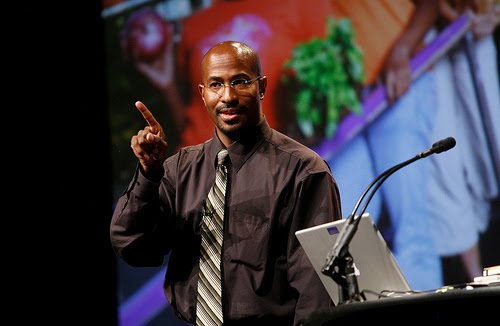
Van Jones (top) “should sue the living shit out of Glenn Beck.”

The Afrikaner Party draws first blood:
Van Jones, Obama and the audacity of capitulation

By Tim Wise / The Rag Blog / September 8, 2009

Van Jones, special advisor to the President’s Council on Environmental Quality, has resigned from the administration. To be honest, he was forced out. Oh, perhaps not directly, but if not, then by the stunning silence of his employer. An employer more concerned about appeasing the right-wing bullies who sought to make Jones a liability for him, than about standing up for a brilliant thinker on both economics and ecological issues, and confronting the conservative talk-show hosts who have libeled and slandered Jones (literally) over the past month.

The right has shown no shame in their relentless pursuit of Jones’s political scalp. They have fabricated from whole cloth details of his life, calling him a convicted felon and instigator of the 1992 Los Angeles riots. This, in spite of the fact that he has no criminal record whatsoever and wasn’t even in Los Angeles when those riots were happening.

His arrest at that time was part of a sweep of dozens of peaceful marchers in San Francisco, involved in a protest at the time of the riots. He was released, charges were dropped, and he was paid damages by the city. This is not what happens to criminals, but rather, innocent people who have done nothing wrong.

Jones should sue the living shit out of Glenn Beck, his employers at Fox News, and every other prominent liar who has repeated the baseless allegations of his criminal record in recent weeks. He should wipe them out, take their money, leave them penniless and begging on the streets, without health care. They would deserve it. Perhaps Beck’s AA sponsor or the Mormons who he credits with “saving” his wretched soul can then take care of him and his family. Since surely he wouldn’t want the government to lend a hand.

They have twisted other aspects of Jones’s past, suggesting his brief stint with a pseudo-Maoist group makes him a secret communist in the heart of government, this despite his more recent break with such groups and philosophies, in favor of a commitment to eco-friendly, sustainable capitalism. They have called him a black nationalist, which he admits to having been for a virtual political minute in his youth, and have suggested he’s a “truther” (one who believes George W. Bush masterminded the 9/11 attacks as an “inside job”).

As for this last charge, their evidence consists of Jones’s signature on a petition, which originally called merely for more openness about the pre-9/11 intelligence available to the former administration, but which was later altered to reflect the conspiratorial lunacy of its creators. Jones, and many others who reject the truthers’ nonsense, were tricked into signing and were appalled by the final product. But none of this matters to the right. Because after all, none of it was ever the point.

This is not about convicted felons. The right loves convicted felons, as long as their names are Oliver North and G. Gordon Liddy. The former of these (whose convictions were eventually vacated on a technicality) helped direct an illegal war from the Reagan White House, which claimed the lives of tens of thousands of innocent Nicaraguans. And the latter helped plan the Watergate break-in, advocated political assassination during his time in the Nixon White House, and even advised folks on how to kill federal agents several years ago, from his radio show perch (“head shots” he roared). But none of his friends on the right ever suggested that such talk put him beyond the pale, or should result in him being silenced.

This is not about having an arrest record. After all, there are many anti-abortion zealots with arrest records, hauled in and then ultimately released after blocking access to family planning clinics. But Glenn Beck doesn’t make them public enemy number one. Nor would he, or any of his political soulmates, seek to prevent such persons from having roles in a future Presidential administration. Indeed, they would likely consider such a record a bonafide qualification for higher office.

This is not about believing in conspiracy theories. Surely not. Beck of all people can hardly condemn anyone for that — even if Jones did subscribe to such things, which he doesn’t — for it is he who believes, among other things that Obama is planning on a mandatory civilian defense corps, which will be like Hitler’s SS, that Obama “hates white people” and has a “deep seated hatred for white culture,” that Obama is pushing health care merely as a way to get reparations for black people, and that he secretly wants to bankrupt the economy to force everyone to work for ACORN.

It is Beck who is among the leading voices suggesting that the President’s upcoming speech to schoolchildren — in which he will implore them to study hard — is really just an attempt to indoctrinate them into a new version of the Hitler Youth. No, these people love to push nonsensical conspiracy theories. It is their bread and butter. It is all they have, in fact.

Nor is this about Jones’s remarks in a speech, given prior to becoming part of the administration, to the effect that the reason Republicans get things done is that they’re willing to be “assholes,” while many Democrats, including Obama, aren’t. Conservatives don’t mind that kind of talk. They loved it when Dick Cheney said go “fuck yourself” to Senator Patrick Leahy in 2004. Not to mention, right-wingers say far more offensive things than that, on a regular basis, but remain in good standing, and are surely never condemned by their fellow reactionaries.

What’s worse: Jones calling Republicans assholes, or Rush Limbaugh saying that most liberals should be killed, but that we should “leave enough so we can have two on every campus — living fossils — so we will never forget what these people stood for?”**

What’s worse, Jones’s asshole remark, or Ann Coulter saying, among the many venomous syllable strings that have toppled from her lips, that the only thing Tim McVeigh did wrong was choosing to blow up the Federal Building in Oklahoma City, rather than the New York Times building?

This is not about socialism, as Jones is not a socialist. Oh sure, he’s associated with some, and might still be friends with several to this day. And so what? Martin Luther King Jr. associated with socialists and communists because they supported the civil rights struggle and the black freedom movement at a time when the rabid anti-communists were at the forefront of attempts to maintain formal white supremacy.

Which is to say that the socialists and the communists were on the right side, and the red-baiters were on the wrong one. Which was also true about the fight for the 40-hour work week, the 8-hour day, the end of child labor, the right of women to vote, and every other advance for freedom and justice in this nation in the past 100 years. But of course, Glenn Beck explained on the radio this past July 4th that he “hates the last 100 years of American history,” so I guess we know what side he would have been on in all those battles.

Let’s be clear, this is about one thing only: namely, the attempt by the right to exploit white reactionary fears about black militancy. It is the same tactic they tried with Rev. Jeremiah Wright in 2008. They did not confront Wright’s narrative — the accuracy of which was far stronger than they would like to admit — nor do they actually grapple with Jones’s ideas (it is doubtful that Beck has even read Jones’s best-selling book, for instance).

Rather, they present a caricature, a bogey man with black skin, an occasional scowl, and an attitude. Angry, confrontational, “uppity,” and too close to the President. Which means that Wright=Obama=Jones=Malcolm X. It’s a trope the right has banked on for years: using racial memes and symbols to scare Jim and Susie Suburb. Put the face of black anger out there and watch your devotees respond like Pavlov’s dog.

It’s something I first saw up close and personal in 1992. The woman I was dating at the time was an interior designer and had scored a contract to decorate the VIP lounges at the Houston Astrodome for the GOP National Convention. I viewed it as a great opportunity to do some enemy reconnaissance, so I lurked around the literature tables and took in the imagery beamed from the jumbotrons to the assembled conventioneers.

One afternoon, we arrived before the main hall was opened to the delegates, and as I looked up at the screens above the floor, I saw the image that would be there to greet them as they entered a half-hour later: a massive, pixillated image of hip-hop artist Ice-T, whose speed metal band Bodycount had recently gotten in trouble for their song, “Cop Killer.” The Republicans wanted their delegates to know who the enemy was. Not just Ice-T, but anyone who listened to his music, anyone who looked like him.

And that is what the attack on Van Jones is about: exploiting white fears and anxieties. Anxieties about a black President, anxieties about a basket-case economy (which they’re trying to blame on the black President even though it was well in the crapper before he came along), anxieties about a changing demographic balance in the nation (which animates their fear and anger over immigration), anxieties about a popular culture whose icons look less and less like them as the years go by.

And so they play up the militant black guy image, turning a low-level bureaucrat into a “Green Jobs Czar,” (the latter of which term they have sought to spin into a communist thing, despite the fact that the Russian Czars were actually the royalist pigs who were thrown out by the Russian left, a small historical detail which doesn’t matter to illiterate people of course), and making him the bad guy who’s running the Obama administration from behind the scenes.

No, it’s not only about race. But if you think it’s merely a coincidence that the right has sought to make Jones such an issue — rather than some of the other administration officials they are now threatening to “expose” (two of whom are white) — then you haven’t been paying attention to Republican and conservative politics for the past forty years.

This is what they do. It’s the only language they speak, at least fluently. Which is why when John McCain — to his credit — tried to move away from this method a bit, and refused to push the Jeremiah Wright theme during the general election campaign, so many on the hard-right criticized him. They didn’t want him to talk about Bill Ayers: they wanted him to talk about Wright. Even though Ayers was the one with the criminal record and the links to political violence, while Wright was the military veteran and preacher with a storied history of community contributions.

Why? Because they knew that Wright would be the better image. To link Obama to a white radical is one thing. But to link him to a black one? Oh, much, much better. This is why, in the instant case, they kept pushing Van Jones’s non-existent connection with the Los Angeles riots, and his supposed felony record. Nothing better than a marauding criminal black man to get white fears into the stratosphere.

This is, it appears, the emerging political agenda of the Republican Party, and certainly its right-wing: a group that has decided, apparently, to go all in as a party of angry white people (and the few folks of color willing to look past their incessant race-baiting). They have circled the wagons, all but given up on reaching out to black and brown voters, and are putting all of their chips on white.

And everything they are saying about Van Jones was what people like them said about civil rights leaders in the 50s and 60s: about Dr. King and Ralph Abernathy, and John Lewis, and Fannie Lou Hamer. They were communists, and revolutionaries, and a danger to the republic.

Make no mistake, had they been old enough in those days, Beck and every modern-day movement conservative would have stood with the segregationists, with the bigots, with the mobs who burned the buses carrying freedom riders. They would have stood with the police in Philadelphia, Mississippi, even as they orchestrated the killing of Andrew Goodman, James Chaney and Mickey Schwerner. They would have stood with Bull Connor in Birmingham.

How do we know? Easy. Because not one prominent conservative spokesperson of that time did the opposite. Not one. That’s who they are. And the minute you forget that, the minute you insist on treating them better than they would treat you, the minute you insist on playing by rules that they refuse to as much as acknowledge, all is lost. They do not believe in democracy. They believe in power. White power. They believe in the past. They are Afrikaners, and it’s about time we started calling them that.

(**) This quote, which appears in David Neiwert’s book The Eliminationists was reported originally in the Denver Post, December 29, 1995.

[Tim Wise is the author of four books on race. His latest is Between Barack and a Hard Place: Racism and White Denial in the Age of Obama (City Lights: 2009). This article was also posted at Progressives for Obama.]

The Rag Blog

Posted in Rag Bloggers | Tagged , , , , , , , , , , | 3 Comments

Texas Tall Tale? Turning West Texas Blue

Image from Jackalope Postcards.

West Texas: Can gray and brown equal blue?

At some point in the future, the Panhandle and the Lower Plains will look and vote much like El Paso and South Texas… The only question is when.

By Ted McLaughlin / The Rag Blog / September 8, 2009

There was a good article in the Amarillo Globe News Monday about the “graying” of the Panhandle and Lower Plains. The percentage of the Texas population that are 65 years-old or older is about 10%. In West Texas, it is much higher in many counties. The U.S. Census estimates there are at least 18 counties in the Panhandle and Lower Plains where the elderly make up at least 15% of the population or even more. In at least six of those counties the population is over 20% elderly.

The twelve counties with the highest percentage of elderly people are:

  1. Kent…….25.4%
  2. Motley…….24.0%
  3. Fisher…….21.9%
  4. Armstrong…….21.1%
  5. Briscoe…….21.0%
  6. Hall…….20.9%
  7. Dickens…….18.9%
  8. Wheeler…….18.9%
  9. Gray…….17.7%
  10. Lamb…….17.0%
  11. Swisher…….17.0%
  12. Floyd…….17.0%

The elderly population has been elevated nationally across the nation by the aging of us Baby Boomers, but in the Panhandle and Lower Plains, there is another phenomenon that makes the elderly percentage even worse — the flight of young people from the area. While most of the elderly are in the area to stay, many of the young are not. They are fleeing to other areas and other states for better opportunities.

So why do I say the future of the area is blue? After all, a smaller or “grayer” population is not necessarily a more Democratic one, is it? No, but there is another phenomenon happening alongside the “graying” of West Texas. That is the growing “Latinization” of this same area.

While the youth in many groups are leaving (especially whites), most of the Hispanic youth are staying put. Added to this is the fact that there is continued Hispanic immigration into the area (and while some of them are undocumented, their children and grandchildren are citizens and potential voters).

Hispanics already are the majority population in 11 West Texas counties, and next year’s census may add some new counties to that list. That’s because with each passing year, the percentage of Hispanics grows in nearly all of West Texas. This is good news for the Democratic Party.

At some point in the future, the Panhandle and the Lower Plains will look and vote much like El Paso and South Texas. That is going to happen. The only question is when. As disorganized as the Democratic Party is currently in this area, it could take 25-30 years.

But I don’t believe it has to be that long. If the racist and anti-immigration views of the Republican Party continue (and it looks like they will since the right-wing has taken over the state party), then the Democrats could hasten their coming majority with a little organization and voter registration.

Personally, I believe we could start electing some Democratic candidates in 8-10 years, and be a blue area in 15 years. But some help is needed — the sooner the better. If the state party was smart (which I question sometimes), they would send some organizers to the Panhandle and Lower Plains. These organizers would do two things — teach the local parties how to organize and run an effective Get-Out-The-Vote effort, and oversee a massive voter registration effort (especially among Hispanics).

The state party needs to make a decision. Is it going to continue to write off West Texas or start to fight for it? The decision they make will determine how long it takes to make the area blue. I hope they decide to make it blue sooner than later.

[Rag Blog contributor Ted McLaughlin also posts at jobsanger, an excellent Texas political blog.]

The Rag Blog

Posted in Rag Bloggers | Tagged , , , | 1 Comment

Juan Cole: Labor Day in a Kleptocracy


Where have All the broad Shoulders Gone? Or, Labor Day in a Kleptocracy
By Juan Cole / September 7, 2009

The unemployment rate as I write is inching toward 10 percent nationally, and that is only counting people who were still looking for a job recently. A vast bank robbery by the corrupt on Wall Street has deprived them of the credit that made the economy go. Labor Day was passed by Congress under Grover Cleveland to celebrate not only the individual American laborer but the labor movement– yes, unions, workers’ parades, hard hats and blue jeans (before the youth movement of the 1960s appropriated them, blue jeans were working class clothing, and my working class relatives upbraided me for wearing them as an undergraduate). It is to celebrate all those icons that shills for the barracuda billionaires, such as Glenn Beck, now castigate as “fascist” and “communist.” It is to celebrate what Carl Sandberg did in his poem, “Chicago:”

Hog Butcher for the World,
Tool Maker, Stacker of Wheat,
Player with Railroads and the Nation’s Freight Handler;
Stormy, husky, brawling,
City of the Big Shoulders;

And of course, the home-makers and retail workers who move the manufactured goods and the teachers are all doing the hard foundational work as well.

Who is not working are the Wall Street thieves who have largely gone unpunished or been actively rewarded for their peculation.

Now Americans have convinced themselves that we don’t have a working class. Everybody is middle class, even those who make minimum wage in the fast food industry, or those who are kept as part-timers so that the store (I’m looking at you, Walmart) doesn’t have to enroll them in a health care program. The closest we get to celebrating the workers who built this country is when we talk about “working families,” an odd locution, since aside from the idle rich who defrauded the country into bankruptcy last fall, wouldn’t that be everyone? While we have lots of workers, we no longer have an effective labor movement, because Ronald Reagan by example essentially overturned the mid-20th century traditions that had made it unseemly for employers to fire striking workers and hire scab labor. Even the anti-worker Taft Hartley law of 1947 prohibited companies from firing workers for their union activities. But the penalties for illegal union-busting are so light that companies frequently fire employees who so much as suggest organizing a union.

Damon Silvers convincingly ties our current economic woes to this union-busting. (H/t Jake McIntyre). Fewer effective unions have left American workers at the mercy of predatory company policies. Government has, since Ronald Reagan (who hated organized workers the way the devil hates holy water), also socially-engineered the tax laws so as to throw enormous further wealth at the wealthy. As a result, the average wage of the average worker in the United States has not increased since 1970 (in 2004 the bottom 60% of the population was actually making less in real terms per capita each year than in 1979). In contrast, the top 1% of the population by income now takes home nearly 20% of the country’s annual income. The top 1%, about 3 million persons, has gone from owning 25% of the privately held wealth in the 1950s under Eisenhower to owning over a third today. The top 10 percent of Americans own almost all the country’s privately-held property.

Now, the US has increased its productivity very substantially since 1970, but working Americans have captured very little of the resulting extra wealth. It has been hogged by the rich. William Domhoff notes, “Although [by 2004] overall income had grown by 27% since 1979, 33% of the gains went to the top 1%.” Silver’s graph is eloquent.

Domhoff adds, “As of 2007, income inequality in the United States was at an all-time high for recent history, with the top 0.01% — that’s one-hundredth of one percent — receiving 6% of all U.S. wages, which is double what it was for that tiny slice in 2000; the top 10% received 49.7%, the highest since 1917 (Saez, 2009).”

Reagan-Cheney between 1980 and 2008 created a new American aristocracy, a small sliver of super-rich, who buy and sell legislators, create whole “news networks” to present far rightwing fantasies as “news,” have their lackeys invade and occupy whole countries, hold themselves above the law, falsify financial statements, and suffer little or no punishment for stealing billions from the pensions of “working families” (i.e. those of us about whom P.T. Barnum remarked, “one is born every minute”.) The Republican Party has come to represent these super-rich. Since .1% of the population couldn’t actually win elections, they ally with other groups in society. About two-thirds of evangelicals have joined up with them, about a third of Latinos, significant numbers of midwestern rural families, and obviously large numbers of white southerners. In some cases these are lower middle class people on the make, who want to hitch their wagons to the brightest stars in the sky. In others, they share with the super-rich various resentments of the federal government. This alliance of odd bedfellows (think of Paris Hilton married to Joe Sixpack) is what produces the wackiness of Republican Party politics and media. They can’t come out and say that they want the country run for the benefit of 300,000 multi-millionaires and billionaires (almost all of them white), so they say they are all in favor of guns, apple pie, Jay-sus and the Confederacy. Sometimes, as with Rudy Giuliani and Mitt Romney, the pretense is so forced as to be implausible even to their minions. Clearly, racism and fear-mongering are also key irrational talking points for the plutocrats seeking support from the white lower middle class (though this route can backfire, as it did in 2008 when Republican fear-mongering about Latino immigration alienated most Latino voters and drove them into the arms of the Democrats.)

The unbalanced and unhealthy distribution of wealth in the United States, which Cheney’s tax cuts accelerated, explains why the Democratic Party faces such difficulties whenever it is allowed into power. It represents the poor schmucks who make up the 80 percent of the population that has been reduced to peasants by our new dukes, viscounts and princesses who have captured the lion’s share of the country’s wealth and income. Obviously, elements in the top 20% (and even moreso in the top 1%) are not happy about any outbreak of democracy. They have been given by tax breaks and union-busting the wherewithal to purchase legislators (including Democratic ones), buy crowds, and put weeping rednecks on their corporate media waxing hysterical about the prospect of a black president being allowed in their childrens’ schoolrooms. It is the unscrupulous super-rich who don’t want universal health care. They think you only get to be super-rich by refusing to pay for the government services you use (via e.g. off-shore registration) and finding ways to make the middle class pay for essential government services to the poor. And they think it helps to be heartless if you want to be super-rich, you have to say of the poor, if they get sick and can’t afford health care, they should just die. (There is nothing wrong with being rich or super-rich in and of itself; Warren Buffett is admirable; it is just that over-concentration of wealth creates temptations for persons in that class that only the principled can resist). And since the middle classes know that many among the rich will try to make them pay for any increased services for the poor, many of them oppose such progressive legislation. If we repealed the law making corporations a person and if we constrained all corporations that do the bulk of their business in the US to pay taxes here, there would be plenty of money to provide health care to everyone.

The ultra-concentration of wealth in so few hands has damaged American democracy because democracy implies equality of rights, and the super-rich have more rights than the rest of us (there are now people on the FBI’s no-fly list who are simple peaceful dissidents from the super-rich program of ‘globalization’).

Many of our corporations are essentially using us as garbage dumps for their unhealthy corporate food, creating a crisis of obesity that in turn is causing our bulging bellies to devour our brains and for men, to make it impossible for them to get it up. A government genuinely concerned with our welfare would outlaw anything but diet sodas. The unwillingness of our government to regulate this assault on our brain mass via our bellies is owed directly to the power of corporate lobbies that shape and even outright author legislation on such issues. (This paragraph is not meant to hurt the feelings of the victims of these policies; I’m saying you are victims– you have a right to expect your food to be healthy, and your government to care if it isn’t.) The super-rich are fattening us up, not for the kill, but for imbecility and impotence. At least we won’t remember to miss the fun.

Not to mention that if the government cared about the people, cigarettes would have been banned as soon as it became clear that they cause lung cancer. Cigarette manufacturers would have been forbidden to spray extra nicotine (yes) on the leaves to hook people. I think it is still the case that if any third world country, whose citizens the US is mowing down with its poisonous weed export, tried to ban the heinous stuff, the US congress would accuse it of unfair trade practices. (In contrast, the US is trying hard to stop Afghan farmers from raising opium poppies, which are also highly addictive but differ from tobacco in not being guaranteed to kill the consumers; questions of what tobacco farmers should raise instead could equally be raised in the case of the poppy farmers; but then they haven’t yet organized a powerful lobby on the Hill.)

There are other dimensions of the crisis. Since for most non-super-rich Americans, the bulk of their wealth is tied up in their homes, the mortgage crisis is the biggest imaginable blow to ordinary people in the United States. And the crisis of health care costs (which are now about 18% of national income, due to double in the next 10 years) has a direct implication for middle class well-being:

Using a conservative definition, 62.1% of all bankruptcies in 2007 were medical; 92% of these medical debtors had medical debts over $5000, or 10% of pretax family income. The rest met criteria for medical bankruptcy because they had lost significant income due to illness or mortgaged a home to pay medical bills. Most medical debtors were well educated, owned homes, and had middle-class occupations. Three quarters had health insurance. Using identical definitions in 2001 and 2007, the share of bankruptcies attributable to medical problems rose by 49.6%. In logistic regression analysis controlling for demographic factors, the odds that a bankruptcy had a medical cause was 2.38-fold higher in 2007 than in 2001. [Himmelstein, D, E., et al, “Medical Bankruptcy in the United States, 2007: Results of a National Study, American Journal of Medicine, May 2009.]”

If this is the situation for middle class families who have health care, imagine the plight of the tens of millions who don’t.

I cannot entirely explain why the American super-rich are so much more heartless and stupid than their counterparts in Europe. In fact, they behave politically much more like Afghan and Pakistani big landlords, who pay their peasants a dollar a day and call in the army to put down any organized protests. In part, they have been offered an irresistible temptation by the destruction of organized labor; French workers wouldn’t put up with a tenth of the insults visited upon us by our overlords. But it is a dead end, even for the uber-rich. Healthy, educated workers will be key to American economic competition in the world in the coming century. Our super-rich and our politicians are hollowing the country out with their ponzi schemes and their Sparta strategy of projecting military force even as the country’s economic base in manufacturing and productivity sinks in comparison to rivals.

As we barbecue on imported grills and watch sports on our foreign-made LCD televisions and lament the bad economy, we should take a moment Monday to celebrate not just the individual worker but what is left of the American labor movement, since only if it is strengthened is our country likely to succeed in stepping back from the abyss. Aristotle warned us that each form of legitimate government is subject to decay. Aristocracies too easily become juntas. And democracies too easily become demogoguery and mob rule. The first eight years of the twenty-first century took us perilously close to both at once.

I celebrate today the organized workers, the ones who can push back against the crooks in pinstripe:

Bareheaded,
Shoveling,
Wrecking,
Planning,
Building, breaking, rebuilding,
Under the smoke, dust all over his mouth, laughing with
white teeth,
Under the terrible burden of destiny laughing as a young
man laughs,
Laughing even as an ignorant fighter laughs who has
never lost a battle,
Bragging and laughing that under his wrist is the pulse.
and under his ribs the heart of the people,

Source / Informed Comment

The Rag Blog

Posted in RagBlog | Tagged , , , | 2 Comments

Calderon’s ‘Informe’ : Mexico as Paradise on Earth

El informe: Mexican President Felipe Calderon presents his third annual report to the legislature at the National Palace in Mexico City, Sept. 2, 2009. Photo by Marco Peláez / La Jornada

Calderon, ‘a small man who stands barely over five feet in his platform loafers, was flanked by two giant television screens that magnified his image to super hero size.’

The imperial president (virtual) vs. the Mexican prostate

For 90 minutes, the lame-duck Mexican president uncorked a cautiously plotted political stream of consciousness invoking a country few could recognize, and painting a portrait of Mexico as paradise on earth…

By John Ross / The Rag Blog / September 7, 2009

MEXICO CITY — “Bueno! Bueno!” my neighbor Marcia shouted into the receiver, Mexican telephonese for “Hello, what do you want?” Felipe Calderon, the president, was on the line — well, not in person, of course.

The automated message invited Marcia to watch Calderon’s upcoming State of the Union address (“El Informe“) and flogged his accomplishments during the first three years of his presidency. My neighbor, not a great fan of the right-wing Calderon, was furious at the intrusion and slammed the receiver into the cradle.

The unprecedented telemarketing campaign to boost audiences for the lame duck president’s annual Informe is thought to have originated from a call center in India.

September 1st used to be designated “The Day of The President” around here, a moment of maximum obeisance to imperial authority. Banks and schools were closed and the capital draped in patriotic bunting. One of the more objectionable features of this political worship service was the “Ley Seca” or “Dry Law.” From midnight to midnight September 1st, the exasperated citizenry could not buy a shot glass of tequila anywhere in town.

In accordance with the Constitution, the President of Mexico is obligated to deliver a report on the State of the Nation to Congress each September 1st. Although the Mexican Magna Carta only calls for a written report, seven decades of ham-fisted rule by the Institutional Revolutionary Party or PRI (through 2000, all presidents were members of the PRI) imposed a magnum Presidential Address to Congress & The Nation as the centerpiece of this yearly pageant of imperial authority. The format was always the same: whatever PRIista was at the helm of state extolled his (there have been no hers) stewardship of the nation and flacked his place in history to the robotic applause of the mostly PRI lawmakers.

Back when the Institutionals ran the show, the reigning PRI “tlatoani” (Aztec for emperor) would arise early on Informe Day, slip into the red, green, and white Presidential sash, and motor in to town from Los Pinos, the Mexican White House out in Chapultepec Park. The masses would be mobilized to line the sidewalks along the route and yodel “Vivas!” Confetti was thrown from the rooftops.

At the portals of the Legislative Palace in San Lazaro, the President would be met by an honor guard of Heroic Cadets who escorted His Imperial Majesty into the vestibule where he was embraced by a delegation of senators and federal deputies who then accompanied him to the podium amidst the cheerleading of members of the mostly PRI Congress and invited dignitaries — Generals and Admirals, Princes of the Catholic Church, Captains of Commerce and billionaire oligarchs, the diplomatic corps, and an occasional foreign head of state.

The Presidente’s spoken Informe could last for hours (Luis Echeverria, 1970-76, once spoke for five.) Decorum was at a premium. Between the orchestrated bursts of applause, you could hear pins drop. There were few members of the opposition in Congress back then and none dared to speak out during the Presidential spiel which always culminated in a ten minute standing ovation and the intonation of the National Anthem.

Once the Chief of State had spoken his piece, the president of Congress, always a PRIista, would thank him ostentatiously and the party would adjourn to the National Palace ten blocks west for the obligatory “Besamanos” (“Kissing of Hands”) — notables lined up dozens deep to offer their loyalties and pump the Presidential flesh. El Presidente would then step out on the balcony to salute a carefully culled mob below on the great Zocalo plaza. If perchance an interloper was discovered in their midst, police and members of the President’s elite military guard would disappear him or her with alacrity.

When, in 1988, Carlos Salinas, who had just stolen the presidency from leftist Cuauhtemoc Cardenas, was confronted by Cardenas’s supporters, he quickly slammed shut the balcony doors. “I do not see them and I do not hear them,” Salinas imperiously declared, provoking nostalgia for Louis XIV.

1988 was a watershed in the political life of Mexico and after Cardenas was fraudulently denied high office in that year’s “Presidenciales,” “The Day of The President” took a sharp turn. That September 1st, when outgoing president Miguel De la Madrid took the podium to present his Informe to the new Congress, Porfirio Munoz Ledo, who had been elected as the first senator of an opposition party to occupy a seat (“curul“) in that not-so-august body, rose to challenge him. Striding down the aisle and mounting the carpeted stairs to the tribune, the one-time PRIista turned leftist mouthpiece, waggled a stubby finger at De la Madrid. “Shame!” he shouted in protest at the Great Fraud. An audible gasp wafted up from the stunned onlookers, 500 members of Congress, their honored guests, and members of the national and international press corps. Suddenly, a rat pack of PRI governors burst from their “curules” and cold-cocked the upstart lawmaker. The session disintegrated into chaos.

Ever since Munoz Ledo (he is a federal deputy for the Party of Labor or PT in the new Congress elected July 5th) tore off the Emperor’s “new clothes,” it has become de rigour for the opposition to act out on Informe day. Sometimes the Left stands for the whole speech with their backs to the Presidente. They bellow rude boos and caustic critiques from their curules. Hand-lettered signs are smuggled past the military guards at the doors of the chamber, accusing the President of crimes against the people. U.S. lawmakers, always shamefully cowed during their own president’s annual State of the Union address, would do well to emulate these noble acts of protest.

In 1996 leftist Marco Rascon, wearing a “Babe the Valiant Pig” masque, was jumped by outraged PRIistas.

Perhaps the high point of all this civic uproar came in 1996 when Marco Rascon, a wide-bodied deputy for the leftist Party of the Democratic Revolution (PRD) donned a “Babe The Valiant Pig” masque and positioned himself beneath the podium, displaying wry banners (“Eat the Rich” was one) while President Ernesto Zedillo droned on above. Much like Munoz Ledo, Rascon was jumped and punched by outraged PRIistas (Zedillo was a PRIista of course) led by railroad union goon Victor Flores who ripped the masque from Rascon’s ears but met with the wrath of Senator Irma Serrano, a former ranchera singer known as “La Tigresa” and a one-time concubine of an infamous PRI president but now a PRDista, who retrieved the pig masque and proceeded to punch out Flores’ lights.

You had to be there to appreciate the mayhem. Indeed, few knew all about it — the cameras of Mexico’s two-headed television monopoly remained steadfastly trained on Zedillo as he fumbled his way through his Informe.

After 2000 when the rightist PAN displaced the PRI from power and became the first (and only) opposition party to ever run the country, the annual September 1st clambake continued but with diminished exuberance. The PRIistas, all of a sudden in the opposition, were too embarrassed to be disruptive and the PRD didn’t quite know how to deal with a president who wasn’t a member of the formerly ruling party.

But “Day of the President” protests escalated out of control in 2006 after yet another presidential election was stolen from the Left and PANista Felipe Calderon awarded victory over Andres Manuel Lopez Obrador (AMLO), the then-wildly popular ex-mayor of Mexico City, amidst allegations of widespread fraud. On the eve of the Informe, members of AMLO’s coalition stormed the podium and refused to relinquish it despite the PAN’s steady barrage of plastic water bottles. Curul to curul fisticuffs soon engulfed the floor of the lower house. When the outgoing president Vicente Fox showed up to deliver his final Informe, he was sent home to Los Pinos unrequited. It looked like the Day of the Imperial President was finally dead and stinking.

The next year, Felipe Calderon delivered his first State of the Nation address to a half-empty Congress. When the PRD and the PRI and their allies walked out, rank and file PANistas rushed to fill the empty curules before the television cameras swept the room. Calderon’s Informe was perfunctory and even conciliatory. There were no cadets and the ballyhoo was stripped bare but the Legislative Palace was closed off to the general public by three meter-tall metal barricades and thousands of army troops to keep Lopez Obrador’s supporters at bay.

Last year, Calderon did not even put in an appearance, sending instead his protégé, Juan Camilo Mourino, a rookie Secretary of the Interior, to hand over the written “Informe” to the Mexican Congress. Two months later, Mourino was dead in a mysterious Mexico City plane crash as he returned from overseeing Calderon’s ill-advised war on the drug cartels in the north of the country.

The 2009 Informe presented formidable obstacles to Calderon’s team. The country has gone belly up and the President’s credibility is at an epic low. Although Calderon and his 350-pound Finance Secretary Augustin Carstens, assured the Mexican people that Wall Street’s catastrophic crash and the subsequent global meltdown would only give the economy “a little cough” (“catarrito“), triple pneumonia has set in. 2,000,000 jobs have gone down the drain in the past 18 months, driving up real unemployment to around 16% of the workforce.

The Gross National Product (PIB) has plummeted 10% and the future wiped out — there will be no foreseeable positive growth for years. 10,000,000 Mexicans have joined the ranks of the poor and extremely poor in the first three years of Calderon’s stewardship — according to numbers tabulated by social economist Julio Boltvitnik, 80% of Mexico’s 107 million citizens have fallen below the poverty line.

The drug war bloodbath has taken 13,000 lives since 2006 — on the day of the Informe, 18 young people were slaughtered at a Ciudad Juarez drug treatment center — and the ranks of the drug fighters have been riddled by blatant corruption. Infrastructure is falling apart and drought and famine threaten to plunge the country into a paroxysm of social unrest.

In July 5th federal mid-term elections, a referendum, on the President’s job performance, Calderon’s PAN suffered its most disastrous defeat since the party was founded in 1939. The PRI now enjoys an absolute majority in the lower house of Congress, thereby thwarting Calderon’s legislative agenda for the three years he has left in Los Pinos and converting him into a lame-duck president.

Moreover, the PRD, split and snarling, was laying in wait to ambush Calderon on Informe Day. Discretion being the better part of valor, the President who AMLO’s supporters denigrate as “Fecal,” again steered away from Congress to deliver his Informe, sending Mourino’s successor with the written version instead.

But the show must go on. If Felipe Calderon could not address the Mexican Congress without being figuratively (and perhaps literally) pelted with over-ripe tomatoes, he would speechify to a select audience of a thousand special guests — members of his cabinet and his party, administration flunkies, governors, and the fabulously wealthy business class — Carlos Slim, the third richest pasha on the planet, sat in the front row close by the masked wrestler “The Son of Blue Demon.” When PT deputy Gerardo Fernandez Norona, a flamboyant AMLO supporter, tried to crash the party he was stomped to the sidewalk outside the National Palace by Calderon’s “Estado Mayor” or elite military guard.

The National Palace was a monumental stage for Calderon’s pseudo-Informe that had once been both Aztec Emperor Moctezuma’s digs and that of the Spanish Crown’s Viceroys. 5000 troops and federal police sanitized the surrounding Zocalo. Pick-up trucks with machine guns mounted in their beds patrolled the old quarter of the capital.

Installed on a stage in the Palace’s central patio, Calderon, a small man who stands barely over five feet in his platform loafers, was flanked by two giant television screens that magnified his image to super hero size but his high-pitched voice echoed less than majestically between the stone walls of the old fortress. For 90 minutes, the lame-duck Mexican president uncorked a cautiously plotted political stream of consciousness invoking a country few could recognize, and painting a portrait of Mexico as paradise on earth despite certain imperfections that he would soon change. U.S. presidents’ State of the Union messages — save for William Jefferson Clinton’s eight endless harangues — always come in in less than an hour.

The economic collapse, the steepest plunge since 1932, had finally touched bottom, Calderon avowed, and it was all up up and away from here on out. Despite the thousands of corpses littering the landscape, Mexico was winning its drug war. Even the arrests of high-level drug warriors for being on the payroll of the cartels, was somehow a sign of impending triumph. His government’s swift action when swine flu descended over the country had been “the salvation of the human race” (sic! Actually, Calderon’s government delayed public notice of the PANdemic for six weeks.)

The President was periodically interrupted by automated applause and serenaded by a standing ovation at the conclusion of his performance piece. Everyone stood at attention as a military band struck up the National Anthem. Aside from Norona’s unfortunate appearance, no pesky leftists had disrupted his Informe. The Imperial Presidency was virtually back in place.

Calderon’s Informe was followed by a deluge of paid TV spots featuring excerpts from his self-congratulatory speech. The President himself gave ten primetime interviews to friendly radio and TV commentators the day after. And, of course, the telephone never stopped ringing.

But Felipe Calderon’s scheme to restore The Day of the President was flawed. Back in the dark ages of the PRI, all seven channels of the two-headed TV demon would have been glued to his every word and this September only two of them lavished their attentions on his Informe.

On Channel 13, svelte men and women in spandex were exercising vigorously. Channel 4 was zooming in on reruns of a space walk by Discovery astronaut Jose Hernandez, the son of migrant workers from Michoacan and the second Mexican to have ever navigated into outer space. The late Michael Jackson was doing his zombie dance on Channel 2 Entertainment News. A schlumpy-looking doctor discussed prostate health and displayed flash cards of the celebrated gland on Channel 7. Cartoon mice were mauling cartoon cats on Channel 5.

These days, it is not uncommon for Mexicans to vote with their remote.

When I went out for “comida corrida” (lunch) a few hours after Felipe Calderon had retired from the screen, I asked Eliseo the waiter what he had thought about the Informe. Eliseo shrugged sheepishly. “Actually, I was watching the program about the prostate gland.”

[John Ross’s monstrous El Monstruo — Dread & Redemption In Mexico City will be published by Nation Books in November. Thanks to all who have sent in venue suggestions for the Ross & Revolution fall-spring tour — keep ’em coming. If you have further info write johnross@igc.org.]

The Rag Blog

Posted in Rag Bloggers | Tagged , , | Leave a comment

BOOKS / Van Jones’ ‘Green Collar Economy’

Environmental activist Van Jones, author of Green Collar Economy.

A Review of ‘Green Collar Economy:
How One Solution Can Fix Our Two Biggest Problems’

‘The best answer to our ecological crisis also responds to our socio-economic crisis. The surest path to safe streets and peaceful communities are not more police and prisons, but ecologically sound economic development. And that same path can lead us to a new green economy’ — Van Jones

By Carl Davidson / The Rag Blog / September 6, 2009

[Green Collar Economy: How One Solution Can Fix Our Two Biggest Problems by Van Jones, Paperback, 272 pp, HarperOne, September 29, 2009, $14.99.]

This review was first published on The Rag Blog on March 17, 2009. We are reposting it today because of the forced resignation of environmental activist Van Jones by the Obama administration. Jones was serving as an advisor to the administration on green jobs.

It’s time to link the newly insurgent U.S. Green Jobs movement with the worldwide efforts for the solidarity economy. Both are answering the call to fight the deepening global recession, and both face common adversaries in the failed “race to the bottom,” environment-be-damned policies of global neoliberalism.

That’s the imperative facing left-progressive organizers with connections to these two important grassroots movements. It’s even more important in the wake of the appointment of a key leader of one of these movements, Van Jones of “Green For All,” to a top environmental and urban policy post in the Obama administration.

Jones is a founder of an urban-based campaign focused on low-income young people, multinational and multicultural, that first developed as a progressive response to police repression, gang killings and all-round “criminalization of youth.” He saw the exclusion of this sector of the population from living-wage work and other opportunities as a key cause of the violence and destruction. Putting young people to work at low-to-medium skill levels retrofitting buildings for energy efficiency seemed like a no-brainer, so the demand for “Green Jobs, Not Jails” was raised.

The slogan found deep resonance as it spread across the country. Its all-round implications were spelled out in Jones’ widely acclaimed book, “The Green Collar Economy: How One Solution Can Fix Our Two Biggest Problems.” It spells out a string of ingenious, interconnected programs aimed at resolving the savage inequalities of structural unemployment and the global dangers of climate change rooted in carbon-based energies systems.

“Let’s be clear,” says Jones in the opening pages of his book, “The main piece of technology in the green economy is a caulk gun. Hundreds of thousands of green collar jobs will be weatherizing and energy-retrofitting every building in the United States.”

He doesn’t leave the matter there, but makes use of this picture to point out what’s “shovel ready,” to use the lingo of debate around stimulus spending. Green jobs span the entire range of occupations, with a special focus on high-tech manufacturing in emerging alternative energy industries.

“Green Collar Economy” was instantly a powerful voice in policy circles. It gained a wider and deeper significance in light of the financial crises that hit the fan soon after it reached the bookstores. Just as the voter revolt against Wall Street helped lift Obama to the Oval Office, so too was Van Jones’s urban policy monograph raised into a “What Is To Be Done” manifesto for deep structural reforms capable of busting the onset of a major depression.

“The best answer to our ecological crisis also responds to our socio-economic crisis,” Jones explains. “The surest path to safe streets and peaceful communities are not more police and prisons, but ecologically sound economic development. And that same path can lead us to a new green economy.”

How does it connect with the solidarity economy? This parallel movement with even earlier roots is widely known throughout the Global South, especially Latin America, as well as Europe and Quebec. It has been comprised of a range of projects where social capital is partnered with worker, community, consumer and peasant cooperative ownership structures. These were designed to fight back against the economic devastation wrought by neoliberal IMF-imposed “solutions” that left people without a safety net or means of survival. People turned to each other at the grassroots in common efforts, hence the term “solidarity economy.”

Both the solidarity economy and the green economy are “value centered” schools of economic thought. They are in the classical tradition of political economy, which in turn is rooted in moral philosophy. They are not simply descriptive of supposedly objective economic processes, but are prescriptive. At full throttle, they are organizing principles for shaping the future, locally and globally, via local organization and mass mobilization. For its part, the solidarity economy stresses the values of cooperation and mutual aid, especially in governance structures of productive, consumer or financial units. The green economy emphasizes ongoing sustainability and harmony between people and the eco-system of which they are a part.

The solidarity economy is about how people relate to each other, while the green economy is about how people relate to their wider environment. Naturally, there is considerable overlap between the two. Both see the current order as destructive of people and planet, and are working to turn things around.

“Equal protection of all people, equal opportunity for all people, and reverence for all creation.” These are what Jones terms the “three pillars” of the new green global economy.

Neither economic vision is monolithic. Both schools of thought span a range of views, some of which are in contention. In the Green Jobs movement for instance there are debates on nuclear power and “clean coal,” and what role, if any, these might have in a low-carbon future. In the solidarity economy movement there are discussions on the place of markets and government, and whether cooperative structures can use either or both to their advantage. There is also debate over the importance of “high road” allies within the business community, “high road” meaning traditional business structures that bring wider community and environmental responsibility into their business plans, rather than simply short-term shareholder profit.

Where Van Jones’ approach to both the green and solidarity economies most compels our attention is that he starts where the need is greatest, the millions of unemployed and underemployed inner city youth. The structural crises of neoliberal capitalism has long ravaged this sector of our society through deindustrialization, environmental racism and a wrecking ball approach to schools in favor of more prisons. To borrow from Marx, these young people are bound with radical chains, and when they break them with the tools suggested in Green Collar Economy, they free not only themselves, but the rest of us are set in a positive direction as well.

“The green economy,” Jones explains, reflecting on Hurricane Katrina, “should not be just about reclaiming thrown-away stuff. It should be about reclaiming thrown-away communities. It should not be just about recycling materials to give things a second life. We should also be gathering up people and giving them a second chance. Formerly incarcerated people deserve a second shot at life-and all obstacles to their being able to find that second chance in the green sector should be removed. Also, our urban youth deserve the opportunity to be part of something promising.”

Jones is a strategic thinker who gives definite answers to the question, “Who are our friends, who are our adversaries?” He narrows the target to speculative capital with roots in carbon-based energy industries and the militarism needed to secure their supplies. He seeks close allies in the wider working class of all nationalities, especially in the Blue-Green Alliance formed on the core partnership of the United Steelworkers with the Sierra Club. He also looks for allies among faith communities, environmentalists in the suburbs and rural populations suffering at the hands of anti-ecological agribusiness, offering a vision of wind farms and solar arrays for sustainable rural development. He sees the importance of cutting back defense spending and opposing unjust wars abroad.

Finally, he holds out a hand to green businesses in alternative energies, the current and future manufacturers of clean power:

“Our success and survival as a species are largely and directly tied to the new eco-entrepreneurs-and the success and survival of their enterprises. Since almost all of the needed eco-technologies are likely to come from the private sector, civic leaders and voters should do all that can be done to help green business leaders succeed.”

Jones is not talking just about mom and pop operations here, but an important and growing sector of productive capital. These will range from small upstarts to T. Boone Pickens-type investors wanting to create giant wind farms and large coastal arrays of wave generators, along with the manufacturing firms that build their equipment. Some on the left who want to see a clean renewable energy future will have to make adjustments in their “anti-corporate” strategies if they want to pursue this goal effectively with these high-road allies. Dan Swinney of the Chicago Manufacturing Renaissance Council explains his current project, the Chicago Green Manufacturing Network, as a case in point:

“CMRC is working with the Cleveland-based Great Lakes Wind Network/WireNET and the City of Chicago in building the capacity of local manufacturing companies to become the supply chain for the explosive wind turbine industry. Illinois and other states currently have ambitious Renewable Energy Portfolios that create a huge market for wind turbine companies and others in the renewable energy field. Currently the components for these companies are principally made by European and Asian suppliers. We will rise to the challenge of building the capacity of local companies to supply the high quality components for wind turbines and other renewable energy companies. This will be a means to diversify the markets for some of the 12,000 manufacturing companies in our region and an opportunity to create hundreds if not thousands of new permanent, full-time jobs in manufacturing.”

But Green Collar Economy’s core mass base remains a united Black and Latino community in close alliance with organized labor, the same engine of change that put Obama in the White House. And by asserting the interests and needs of that base, the green jobs and infrastructure proposals in Obama’s stimulus package serve to drive the entire recovery effort in a progressive direction.

“We want to build a green economy strong enough to lift people out of poverty,” says Jones, “We want this green wave to lift all boats… In the wake of Katrina, we reject the idea of ‘free market’ evacuation plans. Families should not be left behind to drown because they lack a functioning car or credit card…In an age of floods, we reject the ideology that says we must let our neighbors ‘sink or swim’.”

The nature of the Green New Deal’s adversaries — the carbon-based energy speculators and the military industries defending them — is the key reason Jones’ strategy requires a massive mobilized base. The structural reforms needed to dislodge and displace them are going to require a great deal of popular power from below. The petroleum-coal industrial nexus alone is subsidized to the tune of $1 trillion annually, according to Congressman Robert Kennedy Jr. in his foreword to Jones’ book. Some are outright opposed to any “New Deal,” green or otherwise, as the GOP in Congress reveal with their votes against the Recovery Act. The Green Jobs components were often cited by the right as “pork” or “the road to socialism.” Others want to destroy the Green New Deal from within, via “greenwashing.” These are politicians who take their lead from some corporations that have become skilled at changing their ads to “green” but continue producing toxics and other waste from the polluter’s agenda.

Jones singles out Newt Gingrich, the GOP’s neoliberal-in-chief, as particularly devious: “He has skillfully used rising fuel prices to stoke public support for climate-destroying measures…Their new tactic is to spread confusion about the real solutions by deliberately blurring distinctions between themselves and the champions of genuine answers.” Jones has to take the battle into the government and electoral arenas. The resources of state power are required to bring the green economy to scale, even if it requires a gut-wrenching struggle with polluters who have a good number of politicians on their payrolls and with revenue streams long fused to the public trough.

The solidarity economy faces these battles as well. For the most part, it overlaps with the green economy at the grassroots. Its mission can be summarized as generating new wealth in a green way, but with a worker-community ownership or control component built into a project’s agenda from the start. As a major finance capitalist and former oilman who wants to invest in wind farms in a major way, T Boone Pickens is clearly part of the green economy, but not part of the solidarity economy. A wind farm on an Indian reservation cooperatively owned by the tribe and employing its members and selling power both locally and regionally would be very much part of the solidarity economy.

But the picture is more complex. “Stakeholder” solutions are not quite as clear-cut. For instance, GAMESA, a Spanish high-tech firm and a leading European manufacturer of wind turbines, recently opened a plant in Bucks County, PA. To do so, it formed stakeholder partnerships with the county and state governments, getting tax allowances and land-use easements to refit and old closed steel mill. The United Steel Workers union was brought in as a partner: 1000 new union jobs were created, hiring many of the unemployed steelworkers. The “solidarity” here is between high-road capital, the USW, local government and the unemployed of the area, but it’s a stretch for some who might want to reserve ‘solidarity’ strictly to cooperative ownership structures.

The stakeholder solidarity offers practical flexibility in the wider struggle to bring both movements to scale. Cooperative structures that evolve out of deeper structural reforms have the quality of altering the relations of power in production and local governance. Even if on a small scale, they can point to a future of wider economic democracy, acting as a bridge to new socialist relations.

In any case, a powerful high-road alliance opens the door to those on its left wing who want to take it farther. Van Jones himself has no problem with either form; his book celebrates the stakeholder green jobs alliances implemented by the Green Party mayor of Richmond, CA, as well as the Green Worker Cooperatives in building salvaging businesses in the South Bronx, NY.

At one point in his book, Jones uses a metaphor of two ships to sum up the current crossroads facing the American people, the Amistad and the Titanic. The latter carried the wealthy elite indulging in idle pleasures, and a proletarian crew labored below in an unsound structure. The former had been taken over by insurgent slaves, taken to safe harbor, but still lacked wider resources for the crew’s future. The folly of reshuffling the deck chairs on the Titanic has long been a metaphor for doomed tinkering at reforms in a closed system. The Amistad, however, offers a more open future. Those familiar with the story know it involves further complex struggles, with new allies, high born and low, against a dying system. But it offers hope and change, both of which are in high regard these days.

[Carl Davidson is a member of the coordinating committee of the U.S. Solidarity Economy Network, and is webmaster for Progressives for Obama.’ He is co-author of CyberRadicalism: A New Left for a Global Age, and co-editor of Solidarity Economy: Building Alternatives for People and Planet, both available at lulu.com. This article was also posted at SolidarityEconomy.net.]

Find ‘The Green Collar Economy: How One Solution Can Fix Our Two Biggest Problems’ by Van Jones on Amazon.com.

Please see The New McCarthyism : Van Jones Fed to King CONG by Harvey Wasserman / The Rag Blog / September 6, 2009. Post also includes ‘The right wing’s assault on Van Jones and the progressive left,’ by Carl Davidson, and the article that started it all, ‘Van Jones scandal threatens Obama presidency’ by Cliff Kincaid.

And see

The Rag Blog

Posted in Rag Bloggers | Tagged , , , , | 2 Comments

The New McCarthyism : Van Jones Fed to King CONG

Portrait of Van Jones by Robert Shetterly / Americans Who Tell the Truth.

Obama has fed his green Jones to King CONG

With clarity and verve [Van] Jones finally brought to the mainstream the critical message that what’s good for the environment is also good for the economy.

By Harvey Wasserman / The Rag Blog / September 6, 2009

See ‘The right wing’s assault on Van Jones and the progressive left’ by Carl Davidson, and the article that started it all, ‘Van Jones scandal threatens Obama presidency’ by Cliff Kincaid, Below.

Van Jones has been fed to King CONG (Coal, Oil, Nukes & Gas).

Obama’s one serious green bright spot has been sacrificed at the McCarthyite altar of the corporate bloviation machine.

The brilliant, charismatic Jones was responsible for the administration’s single significant accomplishment to date. With clarity and verve Jones finally brought to the mainstream the critical message that what’s good for the environment is also good for the economy.

The convenience of this simple truth has long been known to the green power movement. Since the early 1970s we have argued that converting away from fossil and nuclear fuels — coal, oil, nukes & gas — and onto a Solartopian system based on renewables and efficiency is the only route to long-term prosperity. With community-based solar, wind, tidal, geothermal, mass transit, increased efficiency and efficiency, we can and must build a sustainable economy that will create jobs and geo-political stability.

An early articulation of this green-powered vision came at the “Toward Tomorrow” Fair at the University of Masschusetts, Amherst, in 1975. As the “No Nukes” movement was just gathering grassroots steam, we envisioned a community-based Solartopian energy system that would guarantee full employment and a survivable planet.

For the next quarter century, the No Nukes movement helped drive atomic energy into its economic and ecological black hole. As fossil fuels became ever more unsustainable, the vision took shape. Wind, solar and efficiency technologies boomed ahead.

But the multi-trillion-dollar fossil/nuke industry is nothing if not entrenched. Throughout the Reagan-Bush-Clinton-Bush nightmare it made common wisdom of the Big Lie that saving the environment meant economic sacrifice. In fact, except for King CONG’s short-term mega-profits, the opposite has always been true.

Van Jones finally broke through. As an informed, exciting and compelling presenter, Jones made clear that the “green collar economy” is tangible and terrific. In his writings, mass meetings, television and legislative testimony, Jones turned the corner on the message that what’s good for the environment is not only good for the economy, it’s essential. Appearing with the likes of Robert Redford on Larry King, and much more, Jones finally injected into the mainstream the message that there will be no prosperity, no full employment, and no survivable planet without the necessary and doable conversion to a green-powered Earth.

With Jones running point, Obama has in fact made millions of critical dollars available for renewable energy. The Stimulus Package does include a significant sector of cash for those wishing to bring wind, photovoltaics and other Solartopian systems into their home, office and industrial energy mix.

But we’ve seen this before. Jimmy Carter took halting steps up the Solartopian highway in the late 1970s. Tens of thousands of green jobs were created in California and elsewhere. Then Ronald Reagan ripped the solar water heater off the White House roof and Gov. George Deukmejian killed Gov. Jerry Brown’s tax credit program. The industry went into a tailspin, those thousands of jobs disappeared, and America’s dependency on foreign oil soared out of control.

With Jones gone we have to worry that Obama might now repeat history. The pretext for forcing Jones out was pathetic. Like millions of Americans he signed a petition asking for an investigation into the 9/11 felling of the World Trade Center. He used the dreaded term “asshole” to accurately describe some Republicans, and then used it to describe himself and his friends. He may have said some things that some right winger might’ve construed as racist.

Did he kill someone? Did he engage in torture? Did he steal money? Is he a lousy parent?

This is McCarthyism at its most lethal, and administrative timidity at its most dangerous. If groveling to the corporate bloviators is Obama’s strategy for making change, we are in deep deep trouble.

In fact Van Jones, as imperfect as the rest of us, was Obama’s critical firestarter in a green-powered revolution that is decades overdue. While the likes of Glenn Beck can crow over his demise, it’s the gargantuan King CONG barons of fossil/nuke who are really in the saddle. Pushing Van Jones aside is a major coup for the destroyers of the planet, and a big loss for those of us who would re-power and save it.

We will, of course, continue to fight against fossil and nuclear power and for a green-powered Earth. But as it has been for decades, the going is rough. Will this administration really be with us?

[Harvey Wasserman’s Solartopia: Our Green-Powered Earth is at www.harveywasserman.com. In 1973 he helped coin the phrase “No Nukes.”]

The right wing’s assault on Van Jones and the progressive left

By Carl Davidson / The Rag Blog / September 6, 2009

Here’s the motherlode piece fueling the rightwing blogosphere that helped bring down Van Jones. The text will show you that it won’t stop here. They will use everything they can to cripple and take down Obama from the right, and will use more and more sham “connections,” such as with me, to do it.

The right is aiming at any alliances between the liberals and the progressive left to destroy both. Their success here in this case, thanks to capitulation on this matter by the White House, shows why liberals have always been rather weak and wavering when the right bares its fangs, and why we, the progressive left, have to take up the slack, bringing others along with us. Moreover, it shows we need better and stronger organization to back up our gains.

Finally, it show the stupidity and futility of those on the left who want to aim their main fire at this time at Obama’s presidency, and end up carrying water for the right wing populists and proto-fascists. None of this means we shouldn’t criticize Obama’s wars and take to the streets against them. But it does mean you have to study how to deliver the main blow to the immediate rising danger. If you want to lend a hand, make use of the PayPal button at Progressives for Obama. Even better, join or organize a PDA and/or a CCDS chapter, or something similar that you like better. But get organized.

Van Jones scandal threatens Obama presidency

By Cliff Kincaid / September 5, 2009

Our media have been slow to grasp the significance of the Van Jones story.

Reporting from near the home turf of embattled Green Jobs Czar Van Jones, Joe Garofoli of the San Francisco Chronicle says it’s clearly a bad sign when White House flak Robert Gibbs is asked if Jones still enjoys the confidence of the President and merely replies that Jones “continues to work in this administration.”

But the White House has to know that, if Jones goes, the questions won’t end. Who appointed him? Who looked into his background? Who knew what and when?

Gibbs knows that the Jones controversy undermines confidence in the President, who bears ultimate responsibility for the appointment. Gibbs also has to know that, if Jones’ background can sink Jones, the President himself is in trouble. Obama has decades of friendly associations with communists and terrorists, ranging from Communist Party USA member Frank Marshall Davis in his youth in Hawaii to communist terrorists Bill Ayers and Bernardine Dohrn in Chicago when he was doing community organizing and running for political office.

By comparison to Obama, when it comes to nefarious connections, Jones is a piker.

Curiously, it’s not Jones’ communist background which has proven to be the most controversial. Rather, it’s his two apologies in a week for statements calling Republicans “assholes” and having signed a 9/11 truth statement blaming the terrorist attacks on U.S. officials.

It’s the communism, stupid.

As Professor Paul Kengor points out, “We now know that even the most authoritative sources, such as the seminal Harvard University Press work, The Black Book of Communism, were conservative when estimating only 100 million deaths at the hands of communist governments. The latest research, for instance, claims that Mao Zedong alone was responsible for the deaths of at least 60-70 million in China, and Joseph Stalin alone may well have killed 60 million in the USSR-those are just two communist countries that managed to far surpass the entire combined death toll of World War I and II, the two worst wars in the history of humanity.”

Do we want adherents of this foreign ideology of mass murder holding high government positions?

Van Jones, of course, is only a symbol of the problem. And communists are not required to promote communist policies. The Obama Administration is pursuing the destruction of anti-communist Honduras, in order to please Hugo Chavez, the Marxist ruler of Venezuela currently on a friendly visit to terrorist Iran. This is a scandal that deserves at least as much attention as Van Jones’ communist connections.

Our media have been slow to grasp the significance of the Van Jones story. Some news outlets have only reluctantly covered it because of the Jones statements about Republicans and 9/11.

But Jones’ communist background has been known since April 6, when New Zealand blogger Trevor Loudon revealed it in striking detail. This was only a few weeks after the appointment was announced. Joseph Farah’s World Net Daily then picked up the story and ran several important follow-ups.

While the Jones appointment has now become both a White House and Democratic Party scandal, one prominent Republican has already gotten burned as a result of her association with the identified communist.

Meg Whitman, the former president and CEO of eBay who is running for Governor of California, has been forced by the controversy to disavow her previous comments in support of Jones. She says, “My husband and I met him and many others on a cruise sponsored by National Geographic and The Aspen Institute. He talked about supporting job growth in California, but of course I did not do a background check of his past over dinner.”

Look who else was on the “Arctic Expedition for Climate Action 2008” cruise with Jones:

  • Former Secretary of State Madeleine Albright
  • Larry Brilliant, Director, Google.org
  • President Jimmy Carter & Rosalynn Carter
  • Senator Tom Daschle & Linda Daschle
  • John Fahey, President, National Geographic
  • Mike Finley, President of the Turner Foundation
  • Walter Isaacson, President, the Aspen Institute
  • Andy Stern, President, Service Employees International Union
  • R.E. “Ted” Turner, Chairman, Turner Foundation, Inc.
  • Governor Bill Ritter, Jr., Governor, Colorado>

On March 27, 2009, the Aspen Institute gave its Energy and Environment Award in the category of “Individual Thought Leadership” to Van Jones.

Although Whitman now says that she wasn’t able to do a background check on Jones over dinner, she had previously said that she “got to know him very well.”

Here’s what she said, in comments captured on You Tube: “There’s a guy over in Oakland, I think his name is Van… Jones. And he and I were on a cruise last summer in the Arctic for climate change. And I got to know him very well. And a lot of the work he’s doing to enfranchise broader communities I’m a big fan of. He’s done a marvelous job… I’m a huge fan of his. He is very bright, very articulate, very passionate. I think he is exactly right.”

For someone who “got to know him very well,” she seemed to have some trouble remembering his name. In any event, while Whitman endorsed Jones and his work, at least she didn’t hire him. The White House did.

According to the Van Jones website, “In March 2009 Van went to work as the special adviser for green jobs at the White House Council on Environmental Quality.” What does this phrase “went to work” really mean?

As we have previously reported, the Obama Transition Project developed a 7-page questionnaire of 63 questions for people seeking top administration jobs. Here are some of the questions:

  • Briefly describe the most controversial matters you have been involved with during the course of your career.
  • Please identify all speeches you have given. If available please provide the test [sic] or recordings of each such speech or identify any recordings of speeches of which you are aware.
  • If you have ever sent an electronic communication, including but not limited to an email, text message or instant message, that could suggest a conflict of interest or be a possible source of embarrassment to you, your family, or the President-Elect if it were made public, please describe.

The final question 63 was all-encompassing: “Please provide any other information, including information about other members of your family, that could suggest a conflict of interest or be a possible source of embarrassment to you, your family, or the president-elect.”

But it’s not known if Jones ever filled out the questionnaire. It seems doubtful.

The New York Times said that for those who managed to fill out the questionnaire and clear those hurdles, “the reward could be the job they wanted. But first there will be more forms, for security and ethics clearances from the Federal Bureau of Investigation and the Office of Government Ethics.”

So was Jones subjected to a security investigation by the FBI? No one seems to know. It seems doubtful.

I went to the website of the Office of Government Ethics, which collects and posts “Executive Branch Personnel Public Financial Disclosure Reports or Other Covered Records.” I put the name “Van Jones” into the search engine and “0 records” turned up.

It turns out that this data base only includes individuals “nominated or appointed by President Obama with the advice and consent of the Senate.” Since Jones didn’t have to go through a Senate confirmation hearing, he didn’t have to complete any of these forms.

The President, of course, didn’t have to fill out those forms, either. He didn’t have to go through an FBI background check. So the same questions being asked about Van Jones can be asked about Obama. Van Jones and his supporters know it. They probably know more about the President than we do. And that gives them political leverage and potential blackmail material.

As we argued in a previous column, it appears that a Communist Party spin-off, the Committees of Correspondence for Democracy and Socialism (CCDS), was instrumental in some way in getting Jones his job. A one-time secret member of this network, Rep. Barbara Lee, is a close friend of both Jones and Obama. Jones comes from Oakland, California, and Lee represents Oakland. They worked together on the “green jobs” issue before Jones “went to work” at the White House Council on Environmental Quality. Lee hailed the Jones appointment.

Another key CCDS official is Carl Davidson, a Marxist and former SDS activist described by blogger Trevor Loudon as “a big fan and promoter of Van Jones’ work.” Indeed, the latest edition of the “CCDS Mobilizer” notes that Davidson participated in New York City’s annual “Left Forum” in April of this year where he “presented Van Jones’ program for Green Jobs for inner city youth, but framing it as a larger structural reform project that could, if done right, unite a progressive majority and help get us out of the current crisis.”

In other words, the “Green Jobs” project is a disguised form of socialism.

Loudon reports that Davidson has pushed Van Jones and his agenda at every opportunity — just as he was pushing Obama as a political candidate in the 1990s. “Davidson was an ardent supporter of Obama for several years and helped organize the famous peace rally in Chicago in where Obama pinned his colors to the anti-Iraq war cause,” Loudon explains.

If you go to the CCDS website, you’ll see that one of the speakers at the recent CCDS convention was Angela Davis, former CPUSA candidate for vice president. I saw a picture of Davis on the first floor of the Ella Baker Center in Oakland when I was there in April looking into the Van Jones controversy. Jones founded the Ella Baker Center.

Rep. Lee, in her book, Renegade for Peace & Justice, talks about her work as “Comrade Barbara” in the Black Panther organization with Angela Davis, “the noted African American member of the Communist Party.” Davis was a key endorser of the July 17-19, 1992, national CCDS conference, “Perspectives for Democracy and Socialism in the ’90s.” One of the topics was, “Toward a Socialist United States?” Jones spoke to a CCDS fundraiser in 2006.

It is becoming increasingly clear that the scandal threatens not only the job of Van Jones but the Obama presidency.

The evidence suggests that a communist network has a direct pipeline into the White House. It is a network that includes the President himself.

So how can Obama fire Jones without putting his own presidency in jeopardy? This is the dilemma that grips the White House.

Cliff Kincaid is the Editor of the AIM Report.]

Source /AIM Report

Glenn Beck’s attack on Van Jones

Also see BOOKS / Van Jones’ ‘Green Collar Economy’ by Carl Davidson / The Rag Blog / September 6, 2009

The Rag Blog

Posted in Rag Bloggers | Tagged , , , , , , , , , | 1 Comment

Life During Wartime : We Need More Troops!

Political cartoon by Joshua Brown / Historians Against the War / The Rag Blog

Thanks to Dr. S.R. Keister /The Rag Blog

Posted in Rag Bloggers | Tagged , | 13 Comments

Health Care Blackjack : We Need an Ace from Obama

The Card Player by Pablo Picasso / MoMA Collection.

The stakes are high:
The President and health care reform

I have great concern about whether the President will take a principled stand in favor of a true and unfettered public option.

By Dr. Stephen R. Keister / The Rag Blog / September 5, 2009

In my younger days, in the days of the two dollar table, I would on rare occasion enter into a game of blackjack. In some odd way, these recollections entered my consciousness when I became aware that the President is going to address a joint session of Congress on the subject of health care.

I now am transported back to the table with two cards face up, both of them fives. The croupier awaits my decision to take a hit. If I get an ace, if the President unequivocally announces that he will fight for a decent public option, i.e. Medicare For All, I win. If I am dealt a six, the game is over, the President has conceded to the insurance cartel, the pharmaceutical companies, and the for profit nursing homes and hospitals.

The second option will force those of us who have stood by the nation, the welfare of the American people, the cause of reason, to fold our cards and depart, and hope that the progressive members of the House of Representatives will vote against a bill that is a farce and a concession to the corporations that appear to control both the President and the Congress.

Better the public, which in its lethargy and lack of inquisitiveness to find the truth, continues to suffer under the current system of health care rationed by the insurance industry, under a system where the insurance industry denies the physician his sacred duty to give appropriate care to the sick and injured, where a minimum of 18,000 Americans die each year for lack of health care.

It would seem overly optimistic to expect in the near future that the United States will rise from 26th place among nations of the world, and adopt a health care system approximating that of France, Germany, the Netherlands, or the Scandinavian countries. All these provide decent health care from cradle to grave, with free choice of physician, dentist and hospital and/or nursing home. Care is not rationed as the spokesmen for the corporations would have us believe. Indeed you may well have to wait 6-8 weeks for a total knee transplant for an arthritic knee that has been a burden for many years; however, for an acute illness, or an emergency, you receive immediate care without having to waste time to give a receptionist your insurance information.

Take the oft retold story of the Canadian woman who ostensibly was informed in Canada that she would have to wait a year and a half to have surgery for a brain tumor. She ended up at the Mayo Clinic in Jacksonville where the surgery was done shortly after arrival. The problem is that this lady did NOT have a brain tumor. Rather than a malignancy she had a small congenital cyst in the region of the pituitary gland which over a matter of years might impinge on the optic nerve and cause visual problems. Yet the American public was totally deceived and the media, save for rare instances, did not correct the distortions. Really! One wonders who indeed paid her bill at the Mayo Clinic.

I have great concern about whether the President will take a principled stand in favor of a true and unfettered public option. Thus far he has equivocated, dealt in secret with the pharmaceutical companies, and reportedly has arrived at a ten year arrangement with them. He has had extensive meetings with the health insurance industry, the AMA, AARP, and those who oppose a public option but are in favor of the nebulous bipartisan “health care reform.” By and large physicians groups, nurses organizations, labor unions, and medical academic organizations have been shut out of the discussions, save for a rare photo-op.

Physicians for A National Health Care Program has been developing a plan for a public insurance system — not government managed, but managed by the physicians and representatives of their patients — for the past 30 years. To date this group has been largely ignored, in spite of the fact that their plan would reduce national health care costs by 30-40%, and provide each and every person health care of their choice from cradle to grave. The reason this plan has been ignored? The insurance industry would suffer, thus depriving their executives of multimillion dollar incomes and bonuses, and reducing them to the level of normal profit making businesses. Still, they have had it quite good for the past 30 years.

President Obama has been compared on occasion to President Franklin D. Roosevelt. Absurd… FDR came to the presidency with a long history of public service in the family. His uncle, Teddy Roosevelt, as a Republican had been a “trust buster,” taking on the monopolistic corporations of that era. He broke with the Republican Party to stand with the people as a candidate for president from the Bull Moose Party.

FDR followed in his footsteps, serving in the Department of the Navy in World War I, being elected a state senator and later governor of New York. When he was elected president in 1932 he did not waver, he did not bow in supplication to his political opponents, he did what he felt was in the national interest. Sometimes the President won, other times he lost; however, he unequivocally did what he felt was in the interest of the citizens of the country, and did not bow to corporate power. President Obama appears to feel insecure, and panders to those who obviously dislike him intensely, accomplishing nothing, and leaving those progressive, thoughtful folks who supported him hanging out to dry.

Health care has become the ultimate test for Obama — and we can be legitimately concerned after his visit to Montana where Governor Schweitzer, in his introduction, spoke up for single payer/universal care, and obviously nettled Obama, according to a report by the state coordinator of the Progressive Democrats of America. It seems the President was unhappy with the governor’s allusion to excellent health care in neighboring Saskatchewan.

One wonders if the President is following a pattern of concession to special interests as occurred with the Wall Street bailout, the apparent lack of concern about who was behind the so called CIA torture scandal (remember the Nuremberg Trials of 1945), the concessions to the Dole and United Fruit interests in the Honduran coup, the approval of continued snooping on domestic communications, and most of all, the continued support for an increasingly unpopular war in Afghanistan which lacks a well defined rationale and/or exit strategy. Does he remember President Eisenhower’s advice regarding the industrial/military complex?

I would like to see Mr. Obama disavow the Christian extremists interjecting the end-of-times foolishness into the debate — as exemplified by “Pastor” Rick Joiner, a South Carolina evangelical who bases his spiritual authority, according to his website, on being transported to Heaven for an extended conversation with Jesus. (The Washington Spectator, September 1, 2009) “Pastor” Joiner has informed his believers, through his Liberty Council, that national health care would lead to euthanizing senior citizens as took place in Nazi Germany under Adolph Hitler.

This charlatan also has continued to inject the abortion issue into the debate. No bill in either house has mentioned abortion, which is prohibited in any event by The Hyde Amendment, passed some years ago, forbidding government funds to be used for abortions. This abortion thing is a fraudulent issue designed to mobilize the wingnuts. I am conversant with the PNHP suggestions for national health care and the issue of abortion has never been mentioned and in probability never thought of in their plans.

Obama must disavow these extremist folks, whose foolishness is subsidized by the insurance industries, and be forthright with the American people. He should know that the teabaggers, Birchers, etc., will never follow him, since their dislike has nothing to do with policy but with a deep seated hatred of an educated man of mixed race achieving the presidency. They dislike walking down the street hearing foreign languages spoken; they dislike the fact that Obama believes in sexual equality; they believe that Obama caused the financial depression, when in reality the neo-liberal economics of George Bush was responsible.

Mr. Obama must forget this foolishness regarding “bipartisanship.” The followers of Rush Limbaugh, Bill O’Reilly, Sean Hannity, and Glen Beck will never accept him nor believe him; however, the remaining 60-70% of the American public deserve a forthright discussion. It is time to face issues head on, as did FDR. Obama must show the courage to take on the Blue Dogs who in the last election cycle received $122,370 from their corporate contributors. He must face the fact that members of the Senate Finance Committee have received millions from the health care industries.

If President Obama cannot take up the mantel of leadership one can anticipate mass defections from his progressive base, and his being defined in advance as a one term president. (I have already removed my Obama bumper-sticker.) He must voice support for the House Progressive Caucus and back them in their goal of obtaining a true, undiluted, government option, as part of health care reform, We who desire single payer realize that no mere mortal can alone defeat the corporate interest.

Once again, it’s the special interests against the people. Thornstein Veblen addressed this in his “Theory of Business Enterprise” written in 1904, when he noted: “The big businessman, uninterested in anything but the amassing of money and the accumulation of power, was actually the enemy of his enterprise. He was concerned with earnings not with values, with prices rather than goods. Profit-hungry moguls sabotaged production and held the common man down by the harsh law of diminishing returns.” Veblin as he continued, appealed for a new set of controls, for a society of engineers who recognize the social use of our machines.

Before signing off I would like to call the reader’s attention to a piece in the summer 2009 Wilson Quarterly. There is a dichotomy in the thinking of the “religious” folks who oppose health care reform that has entranced me for some time. The Wilson Quarterly notes the following, in “Porn in the USA: Who subscribes to pornographic websites?”:

“Benjamin Edelman of Harvard Business School summarizes data from a major provider of online porn in The Journal of Economic Perspectives (Winter 2009). Per capita, Utah has the most subscriptions to porn sites, and West Virginia the fewest. Some religious attitudes correlate with subscription rates. Edelman reports: In states where more people agree that ‘Even today miracles are performed by the power of God’ and ‘I never doubt the existence of God,’ there are more subscriptions. Residents of states with high rates of churchgoing prove to be about average in their appetites for porn — the only difference is that fewer of them sign up on Sundays.”

Think about it. The Religious Right rails against large government and “government interference,” yet continues to push for an anti-abortion amendment to the Constitution. These folks seem to have a continuing unnatural level of interest in human genitalia!

Our nation is indeed at a crossroads.

[Dr. Stephen R. Keister lives in Erie, Pennsylvania. He is a retired physician who is active in health care reform.]

The Rag Blog

Posted in Rag Bloggers | Tagged , , , , , | Leave a comment

Firefighters: Mostly Paramedics in Some Places

Firefighters from Company 10 responding to an emergency call in Washington in late August. Photo: Doug Mills/The New York Times.

Firefighters Become Medics to the Poor
By Ian Urbina / September 3, 2009

WASHINGTON — Peeling off his latex gloves after treating a 4-year-old boy having a severe asthma attack, J. R. Muyleart sighed with a touch of frustration. It was 3 a.m. and in the past 24-hour shift, Mr. Muyleart, a firefighter, had responded to at least one emergency call per hour.

But only two of those calls were for fires; most of the others involved heart attacks, diabetic sores, epileptic seizures and people complaining of shortness of breath.

“I joined the force to battle blazes, not to be an emergency room doctor,” Mr. Muyleart, 35, said as he and the rest of Engine Company 10 drove back to their firehouse, which for most of the last 15 years has been the busiest in the country, according to industry surveys.

Among the hidden costs of the health care crisis is the burden that fire departments across the country are facing as firefighters, much like emergency room doctors, are increasingly serving as primary care providers.

About 80 percent of the calls handled by Engine Company 10 are medical emergencies because the firehouse serves one of the city’s poorest areas, where few residents have health insurance, doctors’ checkups are rare, and medical problems are left to fester until someone dials 911.

In many big cities, the problem is compounded by budget shortfalls that have led to the elimination or proposed elimination of 6,000 firefighter jobs in the past year, or about 2 percent of all firefighters, according to the International Association of Fire Fighters. At the same time, emergency calls have increased by 1.2 million, or 3.5 percent, compared with the year before.

Washington’s fire department, which has not faced major layoffs, is dispatched along with Emergency Medical Services to almost all emergency calls in the belief that it can provide the quickest response. It gets more such calls per capita than just about any other fire department in the nation, and a disproportionate number come from poorer neighborhoods like Trinidad, where Engine 10 is based, in the Northeast section of the city.

In New York City, only about 45 percent of the 473,335 calls answered by firefighters last year involved medical emergencies. The city’s Emergency Medical Service handles most medical calls, responding to 1.2 million last year.

Last year, Engine Company 10 handled more than 6,500 calls, about three times the national average, according to Firehouse Magazine. The relentless pace is one reason firefighters across the country compete for a chance to work at the firehouse, which is nicknamed the House of Pain.

“We get our share of fires here,” said Leo Ruiz, 35, as he finished his breakfast after returning from a call involving a woman with abdominal pains. “But what makes this place different is that in the down time you have to be running 24 hours straight to keep up with all the other calls.”

Suddenly, another firefighter yelled “Box!” Within 10 seconds, the fire engine was rolling, four firefighters on board, heading to the day’s first “box alarm,” or building fire.

“This is what we live for,” Mr. Ruiz said as he put on his oxygen tank.

At the scene, flames spilled out of a window. In 10 minutes the blaze was under control.

Shortly after returning to the firehouse, Engine Company 10 was dispatched again. “Man down, possible seizure,” the dispatcher said, to groans from several firefighters.

In the next 24 hours, the company took three calls involving asthma attacks, five for chest pains or shortness of breath, two for assaults and six for unconscious people on the sidewalk. The only other fire was a small one in a trash hauling bin.

“Guys complain about all the medical calls, but to me it’s work,” said Lawrence Jones, 24, a firefighter who grew up in the neighborhood and has been on the force two years.

Indeed, the shift in firefighters’ duties, which has been occurring for decades, is not without its up side for fire departments.

Advances in consumer protection rules and fireproofing technology have led to a drop in the frequency of fires, so medical emergencies have helped keep firefighters employed.

Fire departments nationwide responded to almost 1.5 million fire calls in 2008, compared with 3 million in 1980, according to the National Fire Protection Association. Fire departments went on about 15.8 million medical calls in 2008, up from about 5 million in 1980, a 213 percent increase. The shift has occurred as cities realized that firefighters could respond more quickly than ambulances, and more cities trained firefighters as emergency medical technicians.

For Engine Company 10, drug addiction and violent crime are added reasons there are so many medical emergencies. Last year, the neighborhood had so many drug-related shootings that the police set up checkpoints to inspect cars that entered or left the area.

Around 3 p.m., a call took Engine 10 back to 14th and H Streets, northeast. The corner is known by the firefighters as the “vortex of sickness” because the dispatcher sends them there five or six times per shift.

“Drug overdoses, passed-out drunks, car accidents, heart attacks, seizures,” said Lt. Donald Mayhew, a fourth-generation firefighter. “It all converges right here.”

The four firefighters from the House of Pain arrived first to find a glassy-eyed man lying drunk on the sidewalk. Soon the police and an ambulance arrived, but the firefighters were already checking the man’s vital signs and trying to persuade him to stand up and move along or go to the hospital. Eventually he stood and stumbled away.

“Look around,” Mr. Muyleart said. “We have an ambulance and two cop cars here. Do we really need a fire engine and four firefighters as well?”

Some cities have questioned the cost of dispatching fire engines to medical emergencies, but most have determined that it is too risky not to always send the closest emergency personnel.

In St. Louis, Emergency Medical Services and the Fire Department merged in 1997 to save money. But the city fire chief, Dennis M. Jenkerson, still sends fire trucks on most medical calls.

“People call and say, ‘I’m having trouble breathing,’ ” Chief Jenkerson said. “Can they afford to wait five and a half, six minutes, for an ambulance? No. Seconds count with most medical emergencies.”

Most other departments also dispatch fire trucks to medical calls because firefighters are trained emergency medical technicians, cities have more fire trucks than ambulances, and fire stations are located throughout the city, said Lori Moore-Merrell of the International Association of Fire Fighters.

“If it’s a serious medical call, a fire, we sprint, regardless,” Mr. Muyleart said as he hustled to the truck after a caller reported chest pains. “It just seems like so many people use us as their primary care providers.”

[Al Baker contributed reporting from New York.]

Source / New York Times

The Rag Blog

Posted in RagBlog | Tagged , , , | 4 Comments