Steve Weissman : U.S. and Iran: Nonviolence 101

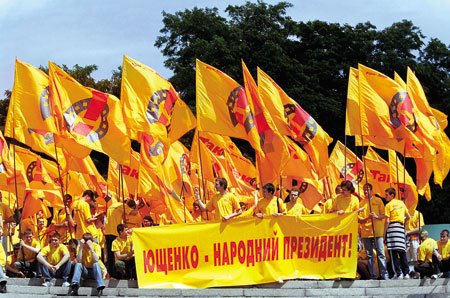
Was there meddling in the Orange Revolution in the Ukraine in 2004-2005?

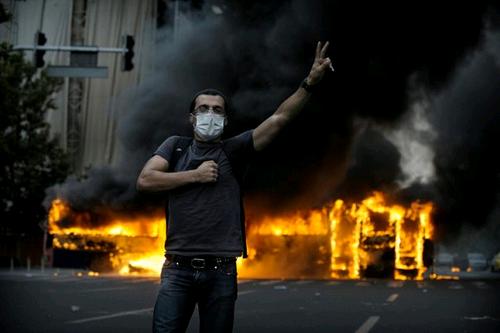
Iran: Nonviolence 101

Washington’s promotion of nonviolent resistance in other countries is already casting suspicion on a number of activists and thinkers who, wittingly or not, have allowed themselves to become pawns in open — and covert — programs to ‘promote democracy.’

By Steve Weissman / June 22, 2009

Peter Ackerman and Ramin Ahmadi called the revolution on January 4, 2006, in an article in the International Herald Tribune with the prophetic title “Iran’s Future? Watch the Streets.”

“Against all odds, nonviolent tactics such as protests and strikes have gradually become common in Iran’s domestic political scene,” they wrote. “Student activists have frequently resorted to, and the violent response of the regime and repeated attacks of the paramilitaries have not succeeded in silencing them.”

Iran’s medical professionals, teachers, workers, bus drivers and women were also using non-violent tactics such as protests, industrial action, and hunger strikes in their fight for equal rights and civil liberties, the authors reported.

These “uncoordinated actions” had created “a grass-roots movement … waiting to be roused,” urged Ackerman and Ahmadi. But, “its cadres so far lack a clear strategic vision and steady leadership.”

Where would the Iranians find this vision and leadership?

“Nongovernmental organizations around the world should expand their efforts to assist Iranian civil society, women’s groups, unions and journalists,” the authors wrote. But, they left out a salient fact. In a chilling mix of Mahatma Gandhi and James Bond, Ackerman and Ahmadi themselves were already working with the United States government to engineer regime change in Iran.

A Wall Street whiz kid who made his fortune in leveraged buy-outs, the billionaire Ackerman was chair of Freedom House, a hotbed of neo-con support for American intervention just about everywhere. In this pursuit, he has promoted the use of nonviolent civil disobedience in American-backed “color revolutions” from Serbia to the Ukraine, Georgia, and Venezuela, where it failed.

Ahmadi teaches medicine at Yale and co-founded the Iran Human Rights Documentation Center, using initial grants of $1.6 million in 2004 from the U.S. Department of State, according to The New York Times. Washington reportedly continued its open-handed support in succeeding years, allowing the center to publicize the abuses of the Ayatollahs in English and Farsi.

Ahmadi and the center also ran regular workshops for Iranians on nonviolent civil disobedience. These were in Dubai, across the straits from Iran. Some of the sessions operated under the name Iranian Center for Applied Nonviolence and included a session on popular revolts around the world, especially the “color revolutions.”

According to The Times, at least two members of the Serbian youth movement Otpor participated, as did the International Center on Nonviolent Conflict, which Peter Ackerman founded and chaired. The sessions taught the Iranian participants how to use Hushmail, an encrypted e-mail account, and Martus software to upload information about human rights abuses without leaving any trace on the originating computer.

“We were certain that we would have trouble once we went back to Tehran,” said one of the Iranians. “This was like a James Bond camp for revolutionaries.”

No one should question the value of nonviolent civil disobedience for those who would bring down an unpopular government. Nor does the American training deny the very real grievances felt by the millions of Iranians who have taken to the streets — or by the lesser numbers of middle class women who banged pots and pans as part of earlier CIA destabilization programs in Brazil and Chile. Even more important, no one should doubt the courage and commitment of anyone who would stand up against the Ayatollahs and their repressive state power.

But the presence of American involvement adds several dynamics of its own, which Ackerman and Ahmadi failed to explain to their Iranian trainees.

First, the Americans decide where to put their efforts — and when to stop them. Washington does not fund or provide training and technology for non-violent revolutions against regimes it backs, as in Egypt, Saudi Arabia, Israel or Colombia.

Second, the American meddling makes it easier for the Ayatollahs to build support within their own ranks and among a large majority of the population for whatever repressive measures they finally decide to take.

Third, the nonviolent participants know nothing of other moves that the dark side of the American government might be making at the same time, whether staging acts of provocation, or supporting terrorist activities by breakaway groups such as the Baluchi Jundallah. Nor do the vast majority of participants know that American intelligence regularly uses training sessions of all kinds to recruit individual agents.

Fourth, the Iranian activists want to win. At least some in the America government might prefer to provoke a brutal defeat, a Tiananmen Square, to further isolate Iran and bring pressure within the Obama administration for a military response to the Iranian nuclear program.

Fifth, nonviolent tactics and organizational discipline offer ways to win the support of soldiers and police officers, isolate would be provocateurs, and avoid giving the government any easy excuse to bang heads and kill people. The same techniques also give the organizers ways to turn off the protest, as appears to have happened during the Orange Revolution in Ukraine.

One other dynamic has more lasting effects. During the Cold War, the CIA funded and manipulated a number of liberal and social democratic intellectuals, labor unions, civil society groups and publications. The CIA-run Congress for Cultural Freedom and its vast network were perhaps the best known. When journalists at Ramparts and elsewhere exposed the CIA’s hand, many of these individuals and groups became discredited for having allowed Cold Warriors and dirty tricksters to use them.

Washington’s promotion of nonviolent resistance in other countries is already casting suspicion on a number of activists and thinkers who, wittingly or not, have allowed themselves to become pawns in open — and covert — programs to “promote democracy.” Nonviolent activists everywhere need to draw a clear line against cooperating with governments of any stripe in this foreign meddling.

[A veteran of the Berkeley Free Speech Movement and the New Left monthly Ramparts, Steve Weissman lived for many years in London, working as a magazine writer and television producer. He now lives and works in France. He is also a regular contributor to The Rag Blog.]

Source / truthout

Also see Iran and the USA: Who’s Diddling Democracy? by Steve Weissman / The Rag Blog / June 21, 2009.

The Rag Blog

Posted in RagBlog | Tagged , , , , , , | 2 Comments

Tangled Web : Tech and the Struggle in Iran


The War in Cyberspace
Web tangled in Iranian struggle

By Martin J Young / June 20, 2009

HUA HIN, Thailand — As Iranians attempt to come to terms with the outcome of their recent presidential elections, battle lines are being drawn in cyberspace. The combatants are the government in Tehran with its heavy-handed censorship of the Internet and media in one corner and the ever-increasing numbers of tech-savvy opposition supporters in the other.

Iran is up there with the likes of China, Vietnam, Thailand and North Korea when it comes to Internet censorship prowess, all of which have in recent years jailed Internet users and violated the rights of online free speech. Iran has more than 20 million Internet users, ranking the country second only to Israel in the Middle East in terms of the percentage of its population using the net.

Iran employs an advanced semantic filtering system in conjunction with an official committee responsible for identifying and reporting websites that violate the government’s stringent guidelines. These basically target all non-Islamic websites, women’s websites, and any that appear to be promoting Western cultural influences, such as movies and music. Every Internet service provider must be approved by both the Telecommunication Company of Iran and the Ministry of Culture and Islamic Guidance. An estimated 10 million websites have already been blocked, and that was before the recent elections.

The media clampdown intensified as everyone from foreign correspondents to Iranian students took to the Internet to spread the word and share the news as events unfolded on the streets of Tehran this week. Social networking websites such as Twitter, Facebook, MySpace, Flickr and YouTube have become the favored platforms of communication as tracking users on these is not an easy task. The government’s only option would be to follow in China’s footsteps and block the websites entirely, which it has done for a number of them.

The US government has taken an unusual step by calling on Twitter to delay scheduled maintenance, which would cause a temporary suspension of service and prevent Iranians sharing information. The move could highlight the Barack Obama administration’s acknowledgement of the power that social websites have in the organization of protests and the flow of information.

Internet users across the globe have pledged to help Iranians avoid detection and possible arrest by attempting to make it harder for the government to track them. By using proxy servers, they are able to change their web addresses or location settings to make it appear as if they are posting information from outside Iran. This gives the Iranian Internet police a tough job in tracking down the genuine bloggers living inside the country. Sympathizers are also setting up their own proxies to help Iranians bypass government filters.

A proxy is essentially a web server or network that bridges the gap between the user and the destination website by masking the Internet address of either connection. By disguising the Internet address (IP) they can make the connection appear anonymous and thus enable access to otherwise blocked websites.

Popular websites themselves have offered support by providing software and means to bypass the censors in Iran. The Pirate Bay, a high-traffic file sharing site has offered support by temporarily changing its name to Persian Bay and linking to a protest forum it helped to setup. The forum “aims to be a secure and reliable way of communication for Iranians and friends”, and offers instructions on how to use proxy servers and access the Internet anonymously along side advice from techies around the world on circumnavigating government blocks.

Websites providing software to surf incognito such as the Tor Project have seen surges in traffic this week and a slew of new sites have appeared offering assistance. The Global Internet Freedom Consortium, or GIF, also provides anti-censorship software and has resumed services to Iran since the election crisis. It predominantly serves China. “Due to the dynamic situation in Iran caused by the election and its protest aftermath, the number of daily ‘hits’ from Iran has tripled during the past week,” said GIF deputy director Shiyu Zhou. The site has experienced server overloads this week from a reported 400,000 unique users accessing it from Iran. GIF last year introduced a Farsi language version of the Freegate software and usage has since surged.

Software solutions such as these have become popular throughout Asia in recent years as more countries stifle the free flow of information over the Internet.

[Martin J Young is an Asia Times Online correspondent based in Thailand.]

Copyright 2009 Asia Times Online (Holdings) Ltd.

Source / Asia Times

Thanks to Roger Baker / The Rag Blog

Posted in RagBlog | Tagged , , , , , , | Leave a comment

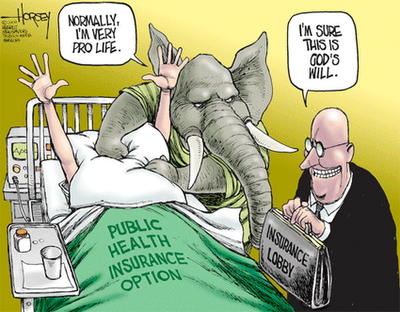
Single Payer: The Republican Perspective

Thanks to Diane Stirling-Stevens / The Rag Blog

Posted in RagBlog | Tagged , , | Leave a comment

Singin’ on Sunday – Craig Cardiff

Craig Cardiff / Thanks for Your Ears

Thanks to Deva Wood / The Rag Blog

Posted in RagBlog | Tagged , , | Leave a comment

A Summary of Internet Surveillance Legislation


Internet surveillance laws in Canada and around the world
June 19, 2009

The Canadian government has been trying to modernize its surveillance and wiretapping laws for years now, to take into account the growth of cellphone and internet communications. Canada’s current telephone wiretap laws are more than 30 years old. Public Safety Minister Peter Van Loan said in June 2009 that the current legal framework was designed “in the era of the rotary telephone.”

In November 2005, the Liberal government at the time introduced legislation to that end. The Modernization of Investigative Techniques Act would have required internet companies to give the police confidential information on their subscribers, including name, address and phone numbers. The bill would also have required cellphone and internet companies to add surveillance hardware and software to their networks.

That bill was introduced about a week before a vote of no confidence and the dissolution of Parliament, and it died when the Liberals lost the election in January 2006.

In 2007, a document obtained by CBC News suggested that government agencies were seeking consultation on how law enforcement and national security agencies could gain lawful access to customers’ information without a court order. Days later, Public Safety Minister Stockwell Day said that warrants would be required to gain customer information under any new surveillance law.

“We have not and we will not be proposing legislation to grant police the power to get information from internet companies without a warrant. That’s never been a proposal,” Day said.

Another law — the Personal Information Protection and Electronic Document Act, or PIPEDA — was passed in 2004 and intended to protect the private information that consumers give to companies in the course of doing business. PIPEDA already allows for internet service providers and other private companies to disclose personal information to law enforcement officials to comply with subpoenas or warrants, or in emergency situations where an individual’s life, health or security is potentially threatened.

In June 2009, Public Safety Minister Peter Van Loan announced the latest bills intended to modernize the Criminal Code.

“We must ensure that law enforcement has the necessary tools to catch up to the bad guys and ultimately bring them to justice. Twenty-first century technology calls for 21st-century tools,” Justice Minister Rob Nicholson said when the bills were announced.

In a reversal from Day’s position in 2007, one of the new bills would require internet service providers and cellphone companies to provide police with “timely access” to personal information about subscribers — including names, address and internet addresses — without the need for a warrant.

The government news release announcing these bills said, “Other countries, such as the United Kingdom, the United States, Australia, New Zealand, Germany and Sweden, already have similar legislation in place.” Here’s the legal situation in those countries.

United Kingdom

The Regulation of Investigatory Power Act of 2000, also called RIPA, is a comprehensive surveillance law that covers everything from the use of closed-circuit TV cameras to the use of moles in criminal investigations. RIPA includes provisions that require ISPs to install systems to aid investigators in tracking electronic communications.

United States

The USA Patriot Act, enacted following the attacks of Sept. 11, 2001, made several changes to U.S. law intended to combat terrorism. It expanded the ability of law enforcement agencies to search communications, medical and financial records. It also extended the use of wiretaps to include internet connections.

Also, the Bush administration authorized the National Security Agency to conduct warrantless domestic wiretaps in 2001, possibly earlier. This was first revealed in the media in The New York Times in December 2005.

Two subsequent laws, the Protect America Act of 2007 and FISA Amendments Act of 2008, extended the NSA’s authority on domestic wiretaps.

In February 2009, a federal Appeals Court in San Francisco rejected the Obama administration’s request to stop a lawsuit challenging the government’s warrantless wiretapping program on the grounds that it is a potential threat to national security.

Australia

The Surveillance Devices Bill of 2004 allows Australian Federal Police to obtain warrants for the use of data, optical, listening and tracking surveillance devices. The Intelligence Services Act of 2001 covers the use of surveillance devices by the country’s security agencies.

New Zealand

The Search and Surveillance Powers Bill was introduced in September 2008 to update the surveillance powers and procedures New Zealand’s law enforcement agencies.

Germany

In 2006, the western German state of North-Rhine Westphalia adopted a law that gave intelligence agencies broad powers to spy on and hack into the computers of terror suspects, including infecting them with spyware viruses. Germany’s highest court overturned that law in 2008, saying: “The law violates the right to privacy and is null and void.”

However, the Constitutional Court also ruled that the government is allowed to conduct surveillance on internet communications in cases where it could prevent loss of life or an attack on the country. The court said agencies must get permission from a judge before they can secretly upload spyware to a suspect’s computer.

Sweden

Sweden’s parliament approved new laws in June 2008 to allow the country’s intelligence bureau to track sensitive words in international phone calls, faxes and emails without a court order. The law took effect in January 2009. Opposition critics and civil liberties organizations have called the law the most far-reaching electronic surveillance law in Europe.

Source / CBC News

The Rag Blog

Posted in RagBlog | Tagged , , | Leave a comment

BOOKS / Jonah Raskin : Eduardo Galeano’s ‘Mirrors’


From Hugo Chavez to Barack Obama and to you, too…

Eduardo Galeano’s Mirrors:
A reflection on Uruguay’s preeminent author

By Jonah Raskin / The Rag Blog / June 21, 2009

He doesn’t have a full beard like Che, doesn’t smoke big cigars like Fidel, or write novels as popular as A Hundred Years of Solitude, but Eduardo Galeano is an icon in Latin America, beloved by readers from Venezuela and Peru to Chile and his own native Uruguay where he was born in 1940, and from where he was exiled for a time because of his radical politics.

There’s no real mystery about the romance that exists between the author and the continent that he has claimed as his own literary territory — without being possessive about it, of course. Galeano speaks and writes in Spanish. He’s a native speaker and native speakers usually win hands down. He knows the gory history of Latin America from the 16th century to the present day to which many other historians have turned a blind eye, and he sees the world from a Latin American point of view, which is all to rare in the profession of history. In Caracas, Buenos Aires, Lima, and all over South America, Galeano is the sort of anti-Yankee imperialist that Latin Americans have loved since the days of Simon Bolivar, and perhaps before that.

No, he’s not as iconic as Che; there are not yet Eduardo Galeano t-shirts that depict the author with his balding head — which is often so shiny it looks polished — and his whimsical smile that makes him so endearing. But there might be t-shirts one day. After all in May, Venezuelan President Hugo Chavez handed Obama a copy of Galeano’s Open Veins of Latin America, which has a kicker of a subtitle — “Five Centuries of the Pillage of a Continent.”

Almost overnight the book, which first appeared in 1973, became a bestseller in the United States, and made Monthly Review Press, the small, leftwing publishing house that put it into print in English very happy, indeed. “We are delighted that the book will be bought and read by new readers,” Monthly Review’s Michael Yates told me. “Galeano’s book shines the light of day on the hidden history of Latin America, revealing truths that we need to know.” In the three weeks after Chavez gave Obama a copy of the book it sold about 1,500 copies a day — a small miracle because Open Veins offers a scalding account of the pillage of the continent that might even shock Obama, who is no slouch when it comes to history.

Galeano’s new book, Mirrors, which is a collection of very short — none more than a page long — essays and vignettes — is published by Nation Books, and parts of Mirrors were published in The Nation this spring. It’s a Nation-kind of book: a book for readers who are disgruntled with the current political and economic mess (or is it a crisis?) who want seismographic changes. The Nation is a good niche for Galeano; he was an editor and journalist in Uruguay and in Argentina, too, after he was forced into exile. He’d be a most reliable Latin American correspondent for The Nation today. Like most Nation readers that I know, he detests dictators, lies, prisons, and torturers, and like most Nation readers he’s not ready to take up arms himself and storm the barricades right now, though he might have done so in his youth. A humanist through and through, he believes in old-fashioned things like human dignity, human rights and the majesty of the human imagination.

Recently, Amy Goodman feted Galeano on her radio show Democracy Now, and sounded in fact like a Galleano groupie, if not a sycophant. But what the heck, every renowned Latin American author deserves his or her fervid fans, and if Goodman wants to shower him with adoration I say let her. On his coast-to-coast tour from New York to Berkeley Galeano was also feted by enthusiastic audiences, which shows, I suppose, that there are many North Americans who see the world through Latin eyes, and who want more of their fellow citizens to understand the toll that those five centuries of pillage has taken on human beings.

Reviewers in national magazines like Harpers have found Mirrors too ideological for their taste, and have largely dismissed it as a left-wing screed. That only makes Latin American readers hug it even more closely to their hearts than they might otherwise have done. One San Francisco Latina journalist, and host on a Spanish-speaking radio station — whom I interviewed — couldn’t hold back her enthusiasm. “I love Eduardo,” she said. “He gives voice to those who are hardly heard, and he illuminates those who have been living in darkness. I feel that we must do something to persuade English speakers to hear him and to see his point of view.”

Galeano’s most enthusiastic fans in the U.S. literary world tend to be Latin Americans, such as Isabel Allende, who was born in Chile and who has lived in California since 1987. “There is a mysterious power in Galeano’s story telling,” she says. “He uses his craft to invade the privacy of the reader’s mind, to persuade him or her to read and to continue reading to the very end, to surrender to the charm of his writing and the power of his idealism.” The word “invade” sounds awfully loaded to me. Knowing Allende, and her work I’m sure that she meant it to be. The word “invade” cannot help but stir up memories of the armed invasion of a whole continent that did not ask to be invaded by the Spanish, the Dutch, the British, the Portuguese, the English and the Yankees to the North who thought of Latin America as their rightful property and ripe for despoiling.

Where Allende, and other Latina authors such as Sandra Cisneros, find charm, gringo critics sometimes feel threatened. That is understandable. Mirrors is at times an angry book that aims to invade the mind of the complacent reader and to overturn his or her fundamental assumptions about North and South, power and powerlessness, Anglos and Latinos. Yes, Mirrors points an accusatory finger at social and racial injustice. It denounces the United States for the War in Iraq. But it is not anti-American. It is a lyrical book with loving tributes to American jazz, Mark Twain, Sitting Bull, Emily Dickinson, and Rosa Parks. Latin Americans, like Pablo Neruda and Isabel Allende, have often had a way of seeing the best of North America, and the best in North Americans, and Galeano belongs to this tradition.

Moreover, Mirrors is at its beating heart an exhilarating book about the origin of things — beauty, fire, the postal service, hell, sugar, and the loving embrace between men and women that seems to make mere mortals feel like gods and goddesses. Using words sparingly, and with maximum power, Galeano gathers his subject matter from around the world, and from prehistoric times to the present. Again and again, he goes back to the beginnings of things — not the endings — and his emphasis on beginnings makes this a hopeful book. It is also a kind of literary olive branch extended from South to North. It is a peace offering from a world that has existed largely in darkness and in silence to a world of blinding brightness and deafening noise that sometimes seems determined to drown out the sounds of other cultures. Perhaps if readers in the United States were to embrace Galeano’s generous new book that does not beg or entreat, but asks resolutely for equal treatment, it might open the way to a new age, and lead to an era of mutual respect.

It might be that that is precisely what President Hugo Chavez of Venezuela had in mind when he handed a copy of Galeano’s Open Veins of Latin America to Barack Obama. In person, as well as in print, Galeano tends to be hopeful about the possibilities for social change. When I asked him for his view of the future he said, “I have written my books, especially my last one, Mirrors, to try to show that no place is more important than any other place, and that no person is more important than another person. Our collective memory has been mutilated by the controllers of the world who day-after-day mutilate our present reality. For real change, the dominant countries have to begin to learn to substitute the word friendship for the word leadership.”

[Jonah Raskin is the author most recently of Field Days: A Year of
Farming, Eating and Drinking Wine in California.]

Find ‘Mirrors: Stories of Almost Anyone,’ by Eduardo Galeano at Amazon.com

The Rag Blog

Posted in Rag Bloggers | Tagged , , , , , , | Leave a comment

Permanent War Economy : Militarism and American Society

Congress has passed continuing funding for Afghanistan and Iraq. This view is from a U.S. Marine guard tower near Golestan in Afghanistan’s Farah Province. Photo by David Guttenfelder / AP.

How militarism impacts our communities

Along with the death and destruction and perpetual fear, the Permanent War Economy has failed in its promise of economic growth.

By Harry Targ / The Rag Blog / June 21, 2009

Congress on Thursday, June 18, 2009, voted to authorize a $106 billion military supplemental appropriation, largely for wars in Iraq and Afghanistan. This is in addition to a 2009 defense budget already in excess of $500 billion.

This supplemental is just the latest way in which the “permanent war economy” is being perpetuated. The PWE has its roots in the World War II plans to keep alive the partnership of corporations, the government, and the military in the post-war world. The PWE was the way to maintain demand for goods and services that would continue economic growth, capital accumulation, and enormous profits for the biggest corporations in the world.

The PWE required demonic enemies, “threats to national security,” to justify the expenditure over the next forty to fifty years of three trillion dollars. The “communist threat,” “the war on drugs,” the threat of “terrorism” and the mystical Al-Qaeda, has kept a pliant public in a state of fear ever since. By the time of the Korean War, the U.S. government, as a national security state, was premised on the prioritization of military spending over spending on any other public issue.

Along with the security threat, Americans have been told that there is a connection between continuous military spending and a robust high job, high wage economy. By the 1960s, one in ten jobs was directly or indirectly connected to military spending. The economies of whole communities were based on corporations engaged in the arms industry. Further, economic recoveries from recessions in the early 1960s and 1980s were largely the resultant of huge boosts in military spending and adventurism abroad.

In the end, United States foreign policy has been significantly driven by this PWE. The impact on people everywhere has been horrific. At least 100,000 U.S. soldiers have died in military actions since the end of World War II and three or more times that figure disabled from participation in war. Almost ten million citizens from countries in which the U.S. had some military operations died, from the Greek civil war in the 1940s, to Korea, Vietnam, to Guatemala, and Iran in the 1950s and 1960s, to El Salvador, Nicaragua, Angola, Ethiopia, and Cambodia and Afghanistan in the 1980s, to Serbia, Somalia in the 1990s, to Afghanistan and Iraq in this century.

Along with the death and destruction and perpetual fear, the PWE has failed in its promise of economic growth. A whole array of studies have shown that public and private investments for non-military purposes, education, health care, transportation, consumer goods, and environmental protection for example, would have led to more secure jobs, research and development, and improved quality of life than investment in war. Looking at the history of the last several decades bursts in military spending used to have short term economic stimulation. That no longer is the case.

The National Priorities Project, provides data on the costs of military spending for wars on Iraq and Afghanistan by nation, state, and congressional district. In addition, they estimate what non-military comparable funding would provide for such political units.

For example, residents of the Fourth Congressional District of Indiana (represented by war-hawk Steven Buyer), paid $1.7 billion for wars on Iraq and Afghanistan since 2001. This money could have provided residents of the district the following instead of investment in the PWE:

  • 496,529 people with health care for one year
  • 1,593,167 homes with renewable electricity for one year
  • 26,094 music and arts teachers for one year
  • 224,694 scholarships for university students for one year
  • 17,550 affordable housing units
  • 250,705 head start places for children for one year
  • 29,362 elementary school teachers for one year

And, of course, the transfer of some of this money from the military to these other programs would mean much less unemployment than the 9.2 per cent currently experienced by residents of Lafayette, Indiana, the largest city in the district.

The War Resisters League has a sensible list of demands that would reduce the threat to national security, help overcome the current economic crisis, and begin the process of environmental rejuvenation. Their list includes:

  • Slash the military budget
  • End the wars in Iraq and Afghanistan
  • Close foreign bases and bring troops home
  • Dismantle nuclear weapons and related systems
  • Adopt a foreign policy based on multilateral negotiation and not military might

In sum, thinking about the PWE necessitates thinking about the fundamental interconnections of military and foreign policy issues with those involving education, health care, the environment, transportation, and economic growth. Also, thinking about the PWE involves thinking about the fundamental connections between global, national, and community policies. Progressives must begin to make the connections between policies and issues, and between problems in different geographic spaces.

These connections are clear in ethical terms as well. As Dr. Martin Luther King suggested: “A nation that continues year after year to spend more money on military defense than on programs of social uplift is approaching spiritual death.”

The Rag Blog

Posted in RagBlog | Tagged , , , | 2 Comments

Iran and the USA : Who’s Diddling Democracy?

The Persian Service of Voice of America (VOA) is said to have sided with the anti-Ahmadinejad candidate Mir Hossein Mousavi. Photo by AP from BBC News.

Who’s Diddling Democracy in Iran?

Does my reading of the tea leaves prove conclusively that the Obama administration was hell-bent on regime change? Not conclusively, but all the evidence points in that direction…

By Steve Weissman / June 21, 2009

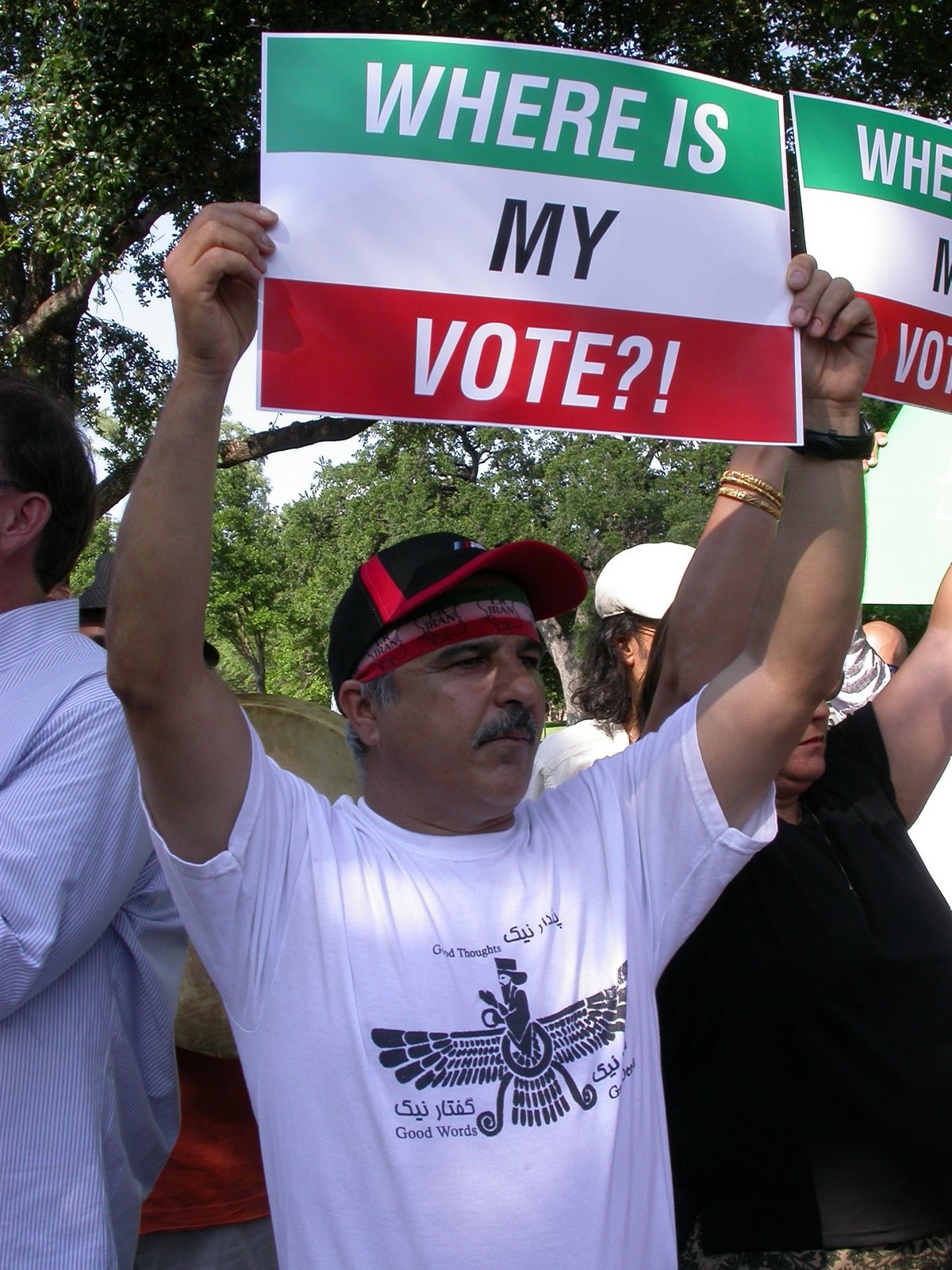
Watching the protesters in Tehran, many Americans feel a strong sense of empathy, exhilaration and hope. I strongly share those feelings, especially since I know firsthand the danger the protesters face from government thugs on motorcycles, provocateurs and the secret police. But none of this should blind us to the likelihood that our own government is dangerously meddling in Iran’s internal affairs and playing with the lives of those protesters.

Back in 2007, ABC News reported that President George W. Bush had signed a secret “Presidential finding” authorizing the CIA to mount covert “black” operations to destabilize the Iranian government. According to current and former intelligence officials, these operations included “a coordinated campaign of propaganda broadcasts, placement of negative newspaper articles, and the manipulation of Iran’s currency and international banking transactions.”

In the language of spookery, this was an updated version of the destabilization campaign that the CIA had earlier used to overthrow the progressive government of Salvador Allende in Chile.

The plan had the strong backing of Vice President Dick Cheney, National Security Adviser Steve Hadley and Deputy National Security Adviser Elliott Abrams. As ABC noted, Abrams had earlier pled guilty to withholding information from Congress about efforts to destabilize the Sandinista government in Nicaragua during the Iran-contra affair of the 1980s.

ABC News also reported that American and Pakistani intelligence were backing a separatist militia of militant Sunni tribesmen from the non-Persian Baluchi region of Iran. The group — Jundallah (Soldiers of God) — conducted deadly raids into Iran from bases in Pakistan’s Baluchistan Province. Funding for this was reportedly funneled through Iranian exiles with connections in Europe and the Gulf States.

U.S. officials denied any “direct funding” of Jundallah, but admitted regular contact since 2005 with Jundallah’s youthful leader Abd el Malik Regi, who was widely reputed to be involved in heroin trafficking from Afghanistan.

“I think everybody in the region knows that there is a proxy war already afoot with the United States supporting anti-Iranian elements in the region as well as opposition groups within Iran,” said Vali Nasr, adjunct senior fellow for Mideast studies at the Council on Foreign Relations.

“And this covert action is now being escalated by the new US directive, and that can very quickly lead to Iranian retaliation and a cycle of escalation can follow.”

The New Yorker’s Seymour Hersh subsequently confirmed the story, reporting that the Presidential finding focused on “on undermining Iran’s nuclear ambitions and trying to undermine the government through regime change.”

He also reported that the Democratic-controlled Congress had approved up to $400 million to fund the destabilization campaign. “The covert activities involve support of the minority Ahwazi Arab and Baluchi groups and other dissident organizations,” said Hersh.

“The irony is that we’re once again working with Sunni fundamentalists, just as we did in Afghanistan in the nineteen-eighties,” he wrote. “Ramzi Yousef, who was convicted for his role in the 1993 bombing of the World Trade Center, and Khalid Sheikh Mohammed, who is considered one of the leading planners of the September 11th attacks, are Baluchi Sunni fundamentalists.”

Flash forward to the new presidency of Barack Obama. Did he and his CIA chief Leon Panetta cancel the destabilization program? Not that I can find. The tea leaves are murky, but they suggest that, so far at least, Team Obama remains wedded to the Bush-Cheney-Abrams destabilization of Iran.

The issue came to a head in the last few weeks. Obama wanted to bring the Iranian regime to the table, and the administration knew through scholars like Selig Harrison that the ayatollahs wanted a signal that the new president would stop supporting terrorists within Iran. At the end of May, the chance to send that signal came when Jundallah claimed credit for a suicide bombing that killed 25 people and injured as many as 125 others at a prominent Shiite mosque in the southeastern city of Zahedan.

Both the White House and State Department immediately denounced the bombing and denied any involvement in what Obama’s spokesman Robert Gibbs explicitly called “recent terrorist attacks inside Iran.”

Several news articles then reported that the administration was considering placing Jundallah on the State’s Department’s list of terrorist organizations, which would have signaled a major shift in policy. But, suddenly, the administration backed away from making the terrorist designation or from otherwise indicating that it would stop the destabilization campaign.

To the contrary, in the build-up to the Iranian election, Washington sharpened its propaganda efforts. According to Ken Timmerman, the executive director of the right-wing Foundation for Democracy in Iran, the Persian Service of Voice of America (VOA) clearly sided with the anti-Ahmadinejad candidate Mir Hossein Mousavi against those dissident groups who wanted to boycott the election entirely, the position Timmerman favored.

Timmerman claims that VOA refused to give the boycotters airtime while giving extensive coverage to a secret fatwa that the Mousavi campaign claim to have discovered, a fatwa that encouraged bureaucrats at the Interior Ministry to do “whatever it takes” to get Ahmadinejad elected.

Timmerman also saw the branding of Mousavi’s “green revolution” as evidence that the US government was using its National Endowment for Democracy to support the former prime minister.

“The National Endowment for Democracy has spent millions of dollars during the past decade promoting ‘color’ revolutions in places such as Ukraine and Serbia, training political workers in modern communications and organizational techniques,” Timmerman wrote on the right-wing newsmax.com.

“Some of that money appears to have made it into the hands of pro-Mousavi groups, who have ties to non-governmental organizations outside Iran that the National Endowment for Democracy funds.”

Please note that this comes from a very involved right-wing critic who personally knows the expatriate Iranian community. It is impossible to know how much government money went to these groups, since Congress has purposely exempted the National Endowment for Democracy from having to make public how it spends taxpayer money. Clearly, Congress should begin to ask some tough questions about funding for Mousavi’s “green revolution” before any more Iranian protesters are killed.

One other clue is worth considering. The State Department somehow knew that the social-networking site Twitter had intended to close down for maintenance earlier this week during what would have been morning in Tehran. So, as The Washington Post put it, the State Department asked Twitter to delay the scheduled maintenance “to avoid disrupting communications among tech-savvy Iranian citizens as they took to the streets to protest Friday’s re-election of President Mahmoud Ahmadinejad.”

At first glance, those of us deeply involved in the new technology thought this was great, a serious affirmation of our own importance. But, to the ayatollahs, the State Department’s intervention sent a clear signal that the Obama administration was siding with Mousavi’s protesters. Ahmadinejad’s government, militia and police had all the internal communications they needed. Only the protesters stood to benefit.

Even more compelling, the benefit went to a particular group — those among the protesters who speak English and particularly those Iranian-Americans working with the National Endowment for Democracy. According to news reports, Twitter does not accept input in Farsi.

Does my reading of the tea leaves prove conclusively that the Obama administration was hell-bent on regime change? Not conclusively, but all the evidence points in that direction, especially now that many extremely reputable scholars are suggesting that Ahmadinejad probably did win more than a majority of the votes cast.

Ahmadinejad is a very bad guy, as I have recently written elsewhere. But our opposition to him does not justify meddling in another country’s election while proclaiming “universal democratic values.”

Source / truthout / Posted June 18, 2009

The Rag Blog

Posted in RagBlog | Tagged , , , | 1 Comment

Judy Gumbo Albert : My Body. My Story.

Flowers outside the Women’s Health Care Services abortion clinic, scene of the murder of Dr. George Tiller on May 31, 2009, in Wichita, Kansas. Photo by Kelly Glasscock / Reuters.

My body, my story: In memory of Dr. George Tiller

We can’t bring back the murdered physicians and clinic staff, but raising our collective voices in protest by telling our personal abortion stories is, in my opinion, a very appropriate way to honor their memories.

By Judy Gumbo Albert / The Rag Blog / June 20, 2009

Talk show host Rachel Maddow recently called on the forty-five million American women who’ve had abortions to speak out, in response to the murder of abortion care provider Dr. George Tiller. I’m very grateful to be among that forty-five million, so, Rachel, here is my abortion story. But I wouldn’t criticize any woman for dealing with her unintended pregnancy differently than I did. It is, after all, your choice.

By the spring of 1972, I’d become a leader of the countercultural group known as the Yippies. I’d dedicated my life to ending the war in Vietnam and had just arrived in San Diego, to organize anti-war protests at the upcoming Republican National Convention. By then, more than 50,000 American lives had been sacrificed and more than 3,000,000 Indochinese — including women and children — had been poisoned, burned, maimed or killed. Yet the war raged on. It would take three more years of intense bombing of Vietnam, Cambodia and Laos, continued resistance on the ground combined with increasingly violent demonstrations at home, for the Nixon Administration to finally admit defeat.

By the time I arrived in San Diego, one member of an anti-war collective had already been wounded by a “stray” bullet of unknown origin. Shortly thereafter, the Republican Convention was moved across the continent to Miami, to escape a corruption scandal involving ITT (later to be absorbed by AT&T) and the Republican National Committee. Naturally, we Yippies claimed the move was prompted by fear of our planned protest activities.

Among the protestors was a 40-something older peace activist, Reverend M. P. Reverend M. was a short, wiry, nice-looking, smart man, with curly gray hair. Born a Jew, he’d rejected Judaism, spent 18 years as a Benedictine monk and had been ordained a priest. By the time I met him, he’d left the Benedictines to become a full-time organizer for one of the anti-war movement’s many pacifist religious peace groups. And, after all those celibate years, he was also pretty horny. The electricity between us felt mutual; it was easy to begin a casual affair.

One morning, I woke up feeling nauseated. My stomach heaved. I could taste bile at the back of my throat. In less than an hour, the nausea passed, I was able to function, but next morning it came back. As it did every morning for a week. This could not be the flu. Finally, it dawned on me that I must be pregnant. My first thought was to blame myself — how could I, a Yippie and a feminist, have failed to take the right precautions? And to have as the father a lapsed Jew who became a monk, was ordained a priest and then left the Church. This was not a joke or Yippie put-on.

Next, my mind jumped to the horror story my former boyfriend, Yippie leader Stew Albert, had told me a few years earlier. In the early 1960s, Stew and his about-to-be first wife Joanne, had travelled to Tijuana for a “back alley” abortion. The procedure room was tiny, cramped and dirty. Instruments lay uncovered on a dingy wooden side table. Stew had to wait outside while Joanne screamed. Back home in Berkeley, a few days later, Joanne developed a high fever; for days they both feared she would die.

By 1972, even in San Diego, that staunchest of Republican cities, abortion wasn’t yet legal, but it was reasonably safe and available. I needed only to ask the women in the local San Diego movement network. The moment I grasped this, my panic ebbed and my heart rate returned to normal. I’m no bionic woman, I’d never had an abortion; so I got a little nervous thinking about the procedure itself, but since I figured I was, at the most, three weeks along, I wasn’t especially worried or scared about what I was about to do. My choice was clear. And, because I felt so personally committed to being in control of the decisions that affected my life, I didn’t feel obligated to consult the father in advance.

I made my appointment at the clinic recommended by my friends, and drove there on my own. The one story, light brown Spanish–style building was located on a wide, not too busy, palm-tree lined San Diego Street. The inside was painted dark olive green, with off-black, cleanly polished tile floors.

The only other person in the waiting area was a young female receptionist who sat behind an old, battered, green and gun-metal grey desk. I paid her thirty dollars — a substantial sum for me in those days — and she led me into a small yellow green room, with a few tiny windows close to the ceiling and bare, lights buzzing overhead. There’s enough room for little more than the gurney. I took off my torn jeans and black canvas sandals, climbed up on the gurney, put my feet in the cold steel stirrups, scrunched my butt down because I’m so short, and stretched my knees as far apart as I could. This really won’t hurt too much,” said the young woman. “Yeah, right,” I think to myself. I’m given no painkillers or sedatives.

The physician enters. I assume he is a doctor only because he wears a white coat. But he could be anybody. He doesn’t introduce himself. Instead, he just starts up a loud, whirring machine that I can’t see from my prone position, and, with a quick not-especially gentle motion, sticks a long cold suction probe deep into my uterus. The pain is immediate, sharp and deep. He stops. Then he begins again, once, twice, “Fuck, Fuck, Fuck.” I scream. After a few more agonizing spasms “it” is gone. The entire process takes no more than ten minutes.

I always thought of “it” as protoplasm, cells accidentally brought together because I likely had neglected to take my pills. I never considered those cells to be a fetus, much less a potential human being. The concept of “fetus as baby” had not yet become part of the public dialogue. Abortion wasn’t talked about publicly as murder. I had never seen a truck covered with pictures of bloody dismembered fetuses — unlike my 32 year old daughter who surprised me recently by confiding that, when she was a teenager in her Portland, Oregon public high school health class, she was shown videos and hundreds upon hundreds of photos of, as she puts it, “chopped up fetuses and screaming women.”

In that year before Roe, for me and for a very large number of American women, having an abortion wasn’t a sin, it wasn’t a crime — and it wasn’t a baby.

As soon as I left the clinic, my nausea evaporated. It was that quick. I felt exhilarated. My entire body relaxed, my hormones met up with my endorphins and went on a rampage, filling me with joy, energy and a profound sense of relief. I jumped into Lindequist, my 1968 dark blue VW Beetle, and made an illegal U turn across four lanes of traffic in front of the clinic. A waiting cop gave me a ticket. I didn’t care, the ticket felt meaningless; getting my body and life back was momentous. I was no longer among those women who’d been held back and held down for so long. When Roe was made law the following year, my generation of women gained a new sense of selfhood: no longer would we be controlled by our reproductive systems.

In bed that night, after a brief internal dialogue as to whether I should say anything at all, I tell M. that I’ve had an abortion earlier that day and that he must have been the father. Color immediately drained from his face. I will never forget his look of horror. “Why didn’t you ask me beforehand?” he asked, his voice trembling. I looked him in the eye and said: “This was my decision, not yours.” He didn’t protest, he just got up, silently, turned his back on me, put on his clothes and left. Since Reverend M. believed strongly in minority and women’s rights, I didn’t think he’d have a problem with my determining my future for myself, without consulting him. Clearly he did.

M. was actually a very sweet guy who I hope, by now, has forgiven my cavalier insensitivity to his religious faith. I didn’t know at the time that such a thing as a pro-choice Catholic could exist. My disregard of M’s feelings taught me that, if at all possible, women who choose to have an abortion should, if they can do it safely, consult with their partner, husband, boyfriend, lover, as well as their medical provider and support network.

I’ve been a widow for more than three years now. I’ve experienced the excruciating pain brought on by the death of a loved one. I can’t excuse actions that result in the death of other human beings. I have also looked deep into my soul on those religious occasions where you are obliged to repent your sins: guilt, regret, shame and remorse about the abortion are just not there. Had I allowed those cells to grow, the course of my life would have been permanently altered in a way which was, at the time, completely untenable to me and absolutely unfair to it. Only occasionally, since Stew died, have I even wondered what those discarded cells might potentially have become.

I believed then and believe today that women have the right to make the decisions that affect our bodies and our lives. The decision whether or not to have an abortion is, in my view, ultimately up to the woman, her conscience and, if she so chooses, her spiritual or religious convictions. Five years after my abortion, Stew and I were blessed when I gave birth to Jessica, our wonderful, planned and much loved baby girl.

So now Dr. George Tiller is dead and his clinic permanently closed. In his lifetime, Dr. Tiller was one of a very few physicians who provided legal, medically indicated, late-term abortion care to women in distress. Last November, in a piece I wrote that touched on the meaning of the phrase ‘domestic terrorism,’ I reminded readers that, just over a decade ago, America witnessed a horrific killing spree, carried out by our own home-grown anti-choice terrorist movement, against pro-choice physicians like Dr. Barnett Slepian and now Dr. George Tiller. I received this e-mail in response:

Dear Judy,

Regarding your comments about Barnett Slepian I need to inform you Barnett Slepian reaped what he sowed. Slepian was a babykilling abortionist and killed babies for money. James Kopp stopped him from murdering any more children and I’m glad he did. Your support for baby murderer Slepian is disgraceful.

Rev. Donald Spitz, Army of God (12/25/08)

Reverend Spitz, you’re the one who’s disgraceful. You and your kind have no qualms about celebrating the deaths of physicians who provide abortion care, while you shed crocodile tears about an alleged holocaust of the “unborn.” Forty-five million women in America have had abortions since they became legal; how many others suffered illegal abortions before Roe will never be known. We can’t bring back the murdered physicians and clinic staff, but raising our collective voices in protest by telling our personal abortion stories is, in my opinion, a very appropriate way to honor their memories.

[Judy Gumbo Albert was an original member of the 1960s countercultural protest group known as the Yippies — along with Abbie and Anita Hoffman, Jerry Rubin, Nancy Kurshan, the journalist Paul Krassner, the folk singer Phil Ochs and her late husband Stew Albert who died on Jan. 30, 2006. Judy co-authored The Sixties Papers: Documents of a Rebellious Decade (Greenwood Press, 1984) and The Conspiracy Trial (Bobbs-Merrill, 1970). Her articles can be found on line at CounterPunch, The Rag Blog, and on her website Yippie Girl.

Albert currently lives in Berkeley and is writing her memoir titled Yippie Girl. She can be reached at yippiegirl@gmail.com.]

The Rag Blog

Posted in Rag Bloggers | Tagged , , , , , | 2 Comments

Starr Takes Shine to Sotomayor

Starr’s attack of rightwing realism is more evidence, if any was needed, of what I said from the get-go: Sotomayor is not a radical.

By Steve Russell / The Rag Blog / June 20, 2009

Kenneth Starr, who certainly lives over the political right edge of the earth, has endorsed Sonia Sotomayor. And even acknowledged that Barack Obama is his President!

Starr’s attack of rightwing realism is more evidence, if any was needed, of what I said from the get-go: Sotomayor is not a radical. More’s the pity. She’s a moderate liberal who will probably rule pretty much like the Justice she is replacing, David Souter.

She was not my candidate. Diane Wood was my candidate, and Diane’s way to the left of Sotomayor while remaining mainstream enough to get confirmed.

That said, I become more rabidly pro-Sotomayor every day.

The right must not be allowed to do what they are trying to do to her. It’s dishonest, and if it succeeds it basically means lots of our kids (in the greater community sense) can never serve on the Supreme Court.

The latest hoo-hah is they got on her for belonging to a women’s club.

If there is anyone here who can’t see the difference between a men only club and a women only club, please go stick your head in a bucket because you are not fit for the real world. And last time I looked, I still had a penis, difficult as it is to see over my stomach. My wife says it’s still there.

And that business about the National Council of La Raza being like the KKK. Oh right. NCLR lynched how many people? NCLR burned how many churches?

I’m disqualified from federal court consideration because I’m too old, but should I be disqualified because I’ve held office in two different Indian Bar Associations? Does that make me a racist?

What I’m getting at is that every possible nominee to the Court who is not a white male is threatened by the nature of the attack on Sotomayor. It’s not that they are against her, it’s HOW they are against her. Those arguments cannot be allowed to stand.

The Rag Blog

Posted in Rag Bloggers | Tagged , , , , | 2 Comments

Rape Not Just South Africa’s Problem

Women place white flowers outside parliament during a demonstration in Cape Town. Photo from AFP.

While the South African numbers may be particularly high, this is a worldwide problem. Men… have been brought up to believe that women are second-class citizens — sometimes little more than property to be used as a man sees fit.

By Ted McLaughlin / The Rag Blog / June 20, 2009

The South African Medical Research Council has just conducted an anonymous survey in that country concering rape, and the results were quite shocking. The survey was conducted in both rural and urban areas and crossed all racial lines. Here is what they found:

  • One out of every four men admitted to committing at least one rape.
  • Of that 25%, nearly half admitted to committing multiple rapes.
  • 73% of those admitting rape committed their first one before age 20.
  • One in 20 men has committed a rape in the last year.
  • Gang rape was common and considered a form of male bonding.

Obviously, that country has a serious problem. Professor Rachel Jewkes, who carried out the research, says, “The absolute imperative is we have to change the underlying social attitudes that in a way have created a norm that coercing women into sex is on some level acceptable… it’s partly rooted in our incredibly disturbed past and the way that South African men over the centuries have been socialised into forms of masculinity that are predicated on the idea of being strong and tough and the use of force to assert dominance and control over women, as well as other men.”

Mbuyiselo Botha, from the South African Men’s Forum, which campaigns for women’s rights, agreed, saying, “I think that yes, the figures are that high and for us, for me in particular, that is a very sad state of affairs. It means that we continue in South Africa to be one of the highest capitals of rape in the world. I don’t think it’s cultural per se; I think it has to do with how a lot of us men worldwide were raised. The issues of dominance against women, issues of inequality, are pervasive and you find them throughout the world.”

Botha is right. While the South African numbers may be particularly high, this is a worldwide problem. Men all over the world have been brought up to believe that women are second-class citizens — sometimes little more than property to be used as a man sees fit.

And we in the United States should not be feeling superior to any other country. Although things are slowly beginning to change here, we have a history of relegating women to an inferior status. It was not until well into the twentieth century that most women in America even gained the right to vote.

In fact, the idea of second-class status for women is so pervasive that it has even been codified by many of America’s religious institutions. And this is true in all religions (with the possible exception of some modern pagan sects), including christianity. It is not uncommon to hear ministers and priests telling women to be obedient to their husbands, and denying them leadership positions in the church.

As long as this type of thinking occurs, as long as women are relegated to an inferior status in our institutions and in our society, rape will continue to be a problem. And America does have a serious rape problem. Consider some of our own statistics:

  • Nearly 15% of American women have been raped.
  • About 15% of rape victims are under age 12.
  • Every two minutes someone in the U.S. is raped.
  • In the last thirteen years, there were 4.2 million rape victims.
  • About 73% of rape victims knew their rapist (acquaintance, family, boyfriend, husband, etc.)
  • And perhaps the worst statistic of all — ONLY 6% OF RAPISTS WILL EVER GO TO JAIL!

Those statistics may not be as high as South Africa’s, but they are just as unacceptable. We preach gender equality in this country, but seldom is it practiced. Far too often, women are relegated to second-class status. And if a man believes women are inferior, it is just one more small step to commit and/or justify a rape. That is the true root of the problem.

Too often our society wants to blame rape on things like movies, magazines, music, books, television or the internet. But these things aren’t the cause or the problem. They are merely symptoms of the real problem — the societal treatment of women as being inferior to men.

The only way to stop rape is to start treating and respecting women as equals to men. Of course, those who commit the rapes must be punished, but this alone will not solve the problem. We must stop mouthing the word equality and make it a reality.

[Rag Blog contributor Ted McLaughlin also posts at jobsanger, an excellent Texas political blog.]

The Rag Blog

Posted in Rag Bloggers | Tagged , , , , | Leave a comment

President Threatens Sanctions on Anti-War Dems

Now, here’s a big surprise! The President of hope and change playing politics as usual by threatening the most vulnerable, new House members on Capitol Hill with sanctions for refusing to support his war-funding package. Deep from the heart of an anti-war activist: Barack – go fuck yourself.

Richard Jehn / The Rag Blog

Photo: Getty Images.

Obama and Anti-War Democrats
By Normon Solomon / June 18, 2009

Days ago, a warning shot from 1600 Pennsylvania Avenue landed with a thud on Capitol Hill near some recent arrivals in the House. The political salvo was carefully aimed and expertly fired. But in the long run, it could boomerang.

As a close vote neared on a supplemental funding bill for more war in Iraq and Afghanistan, The San Francisco Chronicle reported that “the White House has threatened to pull support from Democratic freshmen who vote no.” In effect, it was so important to President Obama to get the war funds that he was willing to paint a political target on the backs of some of the gutsiest new progressives in Congress.

But why would a president choose to single out fellow Democrats in their first Congressional term? Because, according to conventional wisdom, they’re the most politically vulnerable and the easiest to intimidate.

Well, a number of House Democrats in their first full terms were not intimidated. Despite the presidential threat, they stuck to principle. Donna Edwards of Maryland voted no on the war funding when it really counted. So did Alan Grayson of Florida, Eric Massa of New York, Chellie Pingree of Maine, Jared Polis of Colorado and Jackie Speier of California.

Now what?

Well, for one thing, progressives across the country should plan on giving special support to Edwards, Grayson, Massa, Pingree, Polis and Speier in 2010. If we take the White House at its word, they may find themselves running for re-election while President Obama withholds his support – in retaliation for their anti-war votes.

But it’s not enough to just play defense. We also need to be supporting – or initiating – grassroots campaigns to unseat pro-war members of Congress.

In the Los Angeles area, the military-crazed and ultra-corporate Congresswoman Jane Harman will face the progressive dynamo Marcy Winograd in the Democratic primary next year.

Harman’s vote for the latest war funding was predictable. But dozens of Democrats with longtime anti-war reputations also voted yes. Among the most notable examples were Oregon’s Peter DeFazio and Washington’s Jim McDermott, who apparently found their anti-war constituencies in Eugene and Seattle to be less persuasive than the White House chief of staff.

“White House aides worked the halls during the hours before the vote, and chief of staff Rahm Emanuel called some lawmakers personally,” McClatchy news service reports. “DeFazio, who was undecided and wound up voting yes, said he talked to Emanuel by phone for about five minutes as Obama’s top aide explained the administration’s strategy in the war on terror.”

This is a crucial time for anti-war activists and other progressive advocates to get more serious about Congressional politics. It’s not enough to lobby for or against specific bills – and it’s not enough to just get involved at election time. Officeholders must learn that there will be campaign consequences.

When progressives challenge a Democratic incumbent in a primary race, some party loyalists claim that such an intra-party contest is too divisive. But desperately needed change won’t come to this country until a lot of progressive candidates replace mainline Democrats in office.

On behalf of his war agenda, the president has signaled that he’s willing to undermine the political futures of some anti-war Democrats in Congress. We should do all we can to support those Democrats – and defeat pro-war incumbents on behalf of an anti-war agenda.

[Norman Solomon, the author of a dozen books including “War Made Easy: How Presidents and Pundits Keep Spinning Us to Death,” was an elected Obama delegate to the Democratic National Convention. He is on the advisory board of Progressive Democrats of America. For more information, go to: www.normansolomon.com.]

Source / TruthOut

Thanks to Mercedes Lynn de Uriate / The Rag Blog

Posted in RagBlog | Tagged , , | 6 Comments