Norman Pagett : Cheap Food, Our Grand Illusion

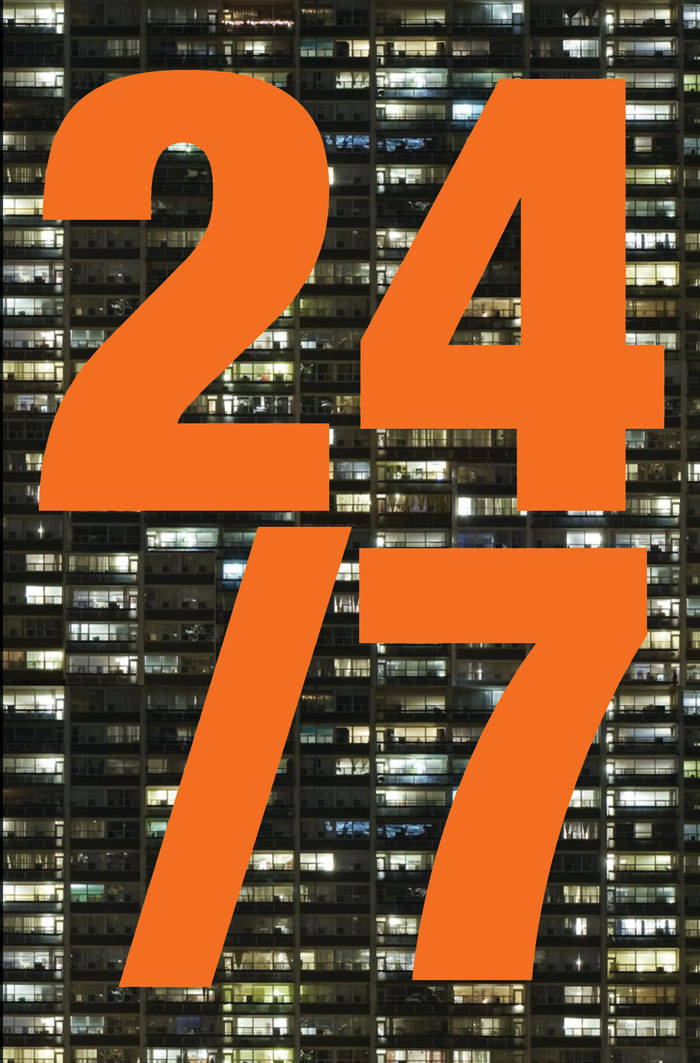
It takes oil, and lots of it, to move our food. Image from Center for a Liveable Future.

Cheap food, our grand illusion

We built an industrial civilization on cheap oil, but now we’ve burned it all. We only have the expensive stuff left but we continue to burn that, believing our system of cheap living can go on forever.

By Norman Pagett | The Rag Blog | July 26, 2013

We are faced with a barrage of bad news about the imminent, and inevitable, rises in the cost of basic foodstuffs. Professor Tim Benton, head of Global Food Security working group, has warned that “meat could become a luxury by 2040, because emerging middle classes in South Asia and going to affect food flows”.

In everyday language, “food flow” is the nice way of saying those who can afford meat and luxury foods will buy them, while those who can’t will go without.

As Professor Benton makes brutally clear, “food is going to be competed for on a global scale and there is going to be a doubling and trebling in price of everything we need to survive.”

Tesco boss Philip Clarke backed up his statements: “The end of cheap food is over because of the surge in demand. Over the long run I think food prices and the proportion of income spent on food will be going up”.

Remember that bit — the proportion of income. It’s going to be critical to your way of life.

Two years ago Oxfam issued the same clear warning: Food prices are set to double by 2030 as the population grows from its current 7 billion to eight then 9 billion. There will be a perfect storm of ecological and sociological factors.

Again, we need clarification of polite-speak: what that really means is that people will not starve to death quietly, they will fight to survive. And that is going to get nasty.

Right now, we can feed ourselves (as an average) by spending only about 10% of our income. Until the 1950s that proportion was nearer 50%

That represents our current unreality of cheap food. We have become used to spending the other 90% on housing, heat, light, clothes, and luxuries. Not only that, but our entire economic system exists on the assumption that we will be able to go on spending it, forever.

We have created an illusion of “employment.”

Stop and consider that: we are all spending (spare) money to keep ourselves employed. As we come to spend more on food, there will be less to spend on other “stuff.”

More clarification here: we will have to use what money we have to buy the food energy necessary to stay alive. Because our economy depends on constant spending, that shortfall is going to increase unemployment. This will be a major consequence of food price rises that must never be mentioned.

Our cheap food has been a direct product of cheap energy. At every point in our food chain we feed oil into the system: diesel in tractors, nitrate fertilizers (natural gas) on the fields to increase yields, processing and packaging, transport, the fuel in your car to go and collect it. We burn 10 calories of energy for every food calorie put on your plate.

That is why cheap food is unsustainable and why promises of “growth” by governments and economists are nonsense. The gentle warnings offered by Oxfam don’t even touch on the reality of our future because doubling and trebling of food prices won’t be matched by doubling and trebling of income.

Our book, The End of More, shows how cheap oil gave money its illusion of value. That value holds only so long as we keep finding more {cheap} oil to top up our economic system.

We built an industrial civilization on cheap oil, but now we’ve burned it all. We only have the expensive stuff left but we continue to burn that, believing our system of cheap living can go on forever.

The forecasts of those at the sharp end of food delivery may yet turn out to be optimistic.

This article was published at The End of More and was cross-posted to The Rag Blog.

[Norman Pagett is a UK-based professional technical writer and communicator, working in the engineering, building, transport, environmental, health, and food industries. He blogs at The End of More. Find more articles by Norman Pagett on The Rag Blog.]

The Rag Blog

Posted in Rag Bloggers | Tagged , , , , , , | Leave a comment

Gary Bledsoe is president of the Texas NAACP, a position he has held since 1991. An Austin attorney who specializes in public interest law, employment and civil rights law, has been a member of the National Board of the NAACP since 2003, and is currently chairs the organization’s National Criminal Justice Committee. Bledsoe earned a Doctorate of Jurisprudence from the University of Texas School of Law, where he was class president in 1976. Bledsoe has received “lawyer of the year” awards from the Texas Attorney General, the Travis County Bar Association, the Austin and national NAACP, and the Austin Area Urban League Jay D. Jurie, Ph.D., is a resident of Sanford, Florida, where he is an associate professor of public administration and urban and regional planning at the University of Central Florida. Jay, a regular contributor to The Rag Blog, is a veteran of SDS at the University of Colorado at Boulder. He has long advocated public policies that promote social and environmental justice and economic democracy. His Rag Blog article, “Trayvon Martin’s Fatal Shortcut,” which has been will appear in a special edition of ProudFlesh: New Afrikan Journal of Culture, Politics and Consciousness.

Posted in RagBlog | Leave a comment

Harvey Wasserman : Fukushima Continues to Spew its Darkness

House in Fukushima. Image from ABC News.

Still on the brink:
Fukushima continues to spew its darkness

A pool containing many tons of highly radioactive used fuel is suspended 100 feet in the air… Should an earthquake or other trauma knock the pool to the ground, there’s a high likelihood the fuel rods could catch fire.

By Harvey Wasserman | The Rag Blog | July 25, 2013

Radiation leaks, steam releases, disease and death continue to spew from Fukushima and a disaster which is far from over. Its most profound threat to the global ecology — a spent fuel fire — is still very much with us.

The latest steam leak has raised fears around the planet. A worst-case scenario of an on-going out-of-control fission reaction was dismissed by the owners, Tokyo Electric, because they didn’t find xenon in the plume. The company says the steam likely came from rain water being vaporized by residual heat in one of  the plant’s stricken reactors.

But independent experts tend to disbelieve anything Tepco says, for good reason. Reactor Units One, Two and Three have exploded at Fukushima despite decades of official assurances that commercial atomic power plants could not explode at all. The company has been unable to clear out enough radioactive debris to allow it to put a cover over the site that might contain further airborne emissions.

Tepco has also been forced to admit that it has been leaking radioactive water into the ocean ever since the disaster began on March 11, 2011. In one instance it admitted to a 90-fold increase of Cesium in a nearby test well over a period of just three days.

Earlier this year a rat ate through electrical cables, shorting out a critical cooling system. When Tepco workers were dispatched to install metal guards to protect the cabling, they managed to short out the system yet again.

Early this month Fukushima’s former chief operator, Masao Yoshida, died of esophogeal cancer at the age of 58. Masao became a hero during the worst of the disaster by standing firm at his on-site command post as multiple explosions rocked the reactor complex. Tepco claimed his ensuing cancer and death were “unlikely” to have been caused by Fukushima’s radiation.

The impact of work in and near the reactors has become a rising concern. Critics have warned that there are not enough skilled technicians willing to sacrifice themselves at the plant. Tepco has worsened the situation by applying to open a number of its shut reactors elsewhere in Japan, straining its already depleted skilled workforce even further.

Meanwhile, a staggering 40 percent rise in thyroid irregularities among young children in the area has caused a deepening concern about widespread health impacts from Fukushima’s fallout within the general public. Because these numbers have come in just two years after the disaster, the percentage of affected children is expected to continue to rise.

And the worst fear of all remains unabated. At Unit Four, which apparently did not actually explode, the building’s structural integrity has been seriously undermined. Debate continues to rage over exactly how this happened.

But there’s no doubt that a pool containing many tons of highly radioactive used fuel is suspended 100 feet in the air, with little left to support the structure. Should an earthquake or other trauma knock the pool to the ground, there’s a high likelihood the fuel rods could catch fire.

In such an event, the radioactive emissions could be catastrophic. Intensely lethal emissions could spew for a very long time, eventually circling the globe many times, wrecking untold havoc.

The Japanese have removed two apparently unused rods from the fuel pool so far. But intense international pressure to clear out the rest of them has thus far been unsuccessful.

So while a depleted, discredited, and disorganized nuclear utility moves to restart its other reactors, its stricken units at Fukushima continue to hold the rest of us at the brink of apocalyptic terror.

This article, first published at www.progressivemagazine.com, was cross-posted to The Rag Blog.

[Harvey Wasserman edits www.nukefree.org. His Solartopia! Our Green-Powered Earth is at www.solartopia.org, along with Harvey Wasserman’s History of the United States. His Solartopia Green Power and Wellness Show is at www.prn.fm. Read more of Harvey Wasserman’s writing on The Rag Blog.]

The Rag Blog

Posted in Rag Bloggers | Tagged , , , , , | Leave a comment

>> Fukushima Continues to Spew Its Darkness >>>> By Harvey Wasserman >>>>>> Radiation leaks, steam releases, disease and death continue to spew from Fukushima and a disaster which is far from over. Its most profound threat to the global ecology—a spent fuel fire—is still very much with us. >>>> The latest steam leak has raised fears around the planet. A worst-case scenario of an on-going out-of-control fission reaction was dismissed by the owners, Tokyo Electric, because they didn’t find xenon in the plume. The company says the steam likely came from rain water being vaporized by residual heat in one of plant’s stricken reactors. >>>> But independent experts tend to disbelieve anything Tepco says, for good reason. Reactor Units One, Two and Three have exploded at Fukushima despite decades of official assurances that commercial atomic power plants could not explode at all. The company has been unable to clear out enough radioactive debris to allow it to put a cover over the site that might contain further airborne emissions. >>>> Tepco has also been forced to admit that it has been leaking radioactive water into the ocean ever since the disaster began on March 11, 2011. In one instance it admitted to a 90-fold increase of Cesium in a nearby test well over a period of just 3 days. >>>> Earlier this year a rat ate through critical electrical cables, shorting out a critical cooling system. When Tepco workers were dispatched to install metal guards to protect the cabling, they managed to short out the system yet again. >>>> Early this month Fukushima’s former chief operator, Masao Yoshida, died of esophogeal cancer at the age of 58. Masao became a hero during the worst of the disaster by standing firm at his on-site command post as multiple explosions rocked the reactor complex. Tepco claimed his ensuing cancer and death were “unlikely” to have been caused by Fukushima’s radiation. >>>> The impact of work in and near the reactors has become a rising concern. Critics have warned that there are not enough skilled technicians willing to sacrifice themselves at the plant. Tepco has worsened the situation by applying to open a number of its shut reactors elsewhere in Japan, straining its already depleted skilled workforce even further. >>>> Meanwhile, a staggering 40% rise in thyroid irregularities among young children in the area has caused a deepening concern about widespread health impacts from Fukushima’s fallout within the general public. Because these numbers have come in just two years after the disaster, the percentage of affected children is expected to continue to rise. >>>> And the worst fear of all remains unabated. At Unit Four, which apparently did not actually explode, the building’s structural integrity has been seriously undermined. Debate continues to rage over exactly how this happened. >>>> But there’s no doubt that a pool containing many tons of highly radioactive used fuel is suspended 100 feet in the air, with little left to support the structure. Should an earthquake or other trauma knock the pool to the ground, there’s a high likelihood the fuel rods could catch fire. >>>> In such an event, the radioactive emissions could be catastrophic. Intensely lethal emissions could spew for a very long time, eventually circling the globe many times, wrecking untold havoc. >>>> The Japanese have removed two apparently unused rods from the fuel pool so far. But intense international pressure to clear out the rest of them has thus far been unsuccessful. >>>> So while a depleted, discredited and disorganized nuclear utility moves to restart its other reactors, its stricken units at Fukushima continue to hold the rest of us at the brink of apocalyptic terror. >>>>>> Harvey Wasserman edits www.nukefree.org and is author of SOLARTOPIA! Our Green-Powered Earth. His SOLARTOPIA GREEN POWER & WELLNESS SHOW is at www.prn.fm. This article was first published at www.progressivemagazine.com

Type rest of the post here

Source /

The Rag Blog

Posted in RagBlog | Leave a comment

RAG RADIO / Thorne Dreyer : Sociologist, Author, and New Left Pioneer and Critic, Todd Gitlin

Todd Gitlin. Photo by David Shankbone / Wikimedia Commons.

Rag Radio podcast:
Sociologist, media critic, author, 
and SDS pioneer Todd Gitlin

Our discussion with the renowned scholar and author ranges from the legacy of the Port Huron Statement and Gitlin’s critical take on the later days of the movement, to the role of mass media in shaping social events.

By Rag Radio | The Rag Blog | July 24, 2013

Todd Gitlin, an American writer, sociologist, and media scholar — and a pioneer of the ’60s New Left and underground press movements — was Thorne Dreyer’s guest on Rag Radio, Friday, July 19, 2013, in the first of two interviews.

Our second on-air visit with Gitlin will take place on Friday, August 9. It will be broadcast live from 2-3 p.m. (CDT) on KOOP 91.7-FM in Austin, Texas, and streamed live on the Internet.

Rag Radio is a syndicated radio program produced at the studios of KOOP, a cooperatively-run all-volunteer community radio station in Austin, Texas.

Listen to or download this episode of Rag Radio here:


Todd Gitlin, an American writer, sociologist, communications scholar, novelist, poet, and public intellectual — and an early president of the Students for a Democratic Society (SDS) — is the author of 15 books, including Occupy Nation: The Roots, the Spirit, and the Promise of Occupy Wall Street.

He is a professor of journalism and sociology and chair of the Ph. D. program in Communications at Columbia University. He holds degrees from Harvard University (mathematics), the University of Michigan (political science), and the University of California, Berkeley (sociology). He lectures frequently on culture and politics in the United States and abroad

Gitlin is on the editorial board of Dissent and is a contributing writer to Mother Jones. His writing has appeared in The New York Times, Los Angeles Times, Washington Post, San Francisco Chronicle, and many more.

His other books, several of which have won major awards, include The Sixties: Years of Hope, Days of Rage, The Whole World Is Watching, Media Unlimited: How the Torrent of Images and Sounds Overwhelms Our Lives, and The Twilight of Common Dreams: Why America Is Wracked by Culture Wars.

Todd Gitlin was the third president of SDS, in 1963-64, and was coordinator of the SDS Peace Research and Education Project in 1964-65, during which time he helped organize the first national demonstration against the Vietnam War and the first American demonstrations against corporate aid to the apartheid regime in South Africa.

During 1968-69, he was an editor and writer for the San Francisco Express Times, and through 1970 wrote widely for the underground press. In 2003-06, he was a member of the Board of Directors of Greenpeace USA.

On the show we discuss the lasting legacy of SDS and the Port Huron Statement; Gitlin’s critiques of the ’60s movement and the Left involving issues like violence — especially in the case of the Weather Underground and later Black Panther Party — and “identity politics”; the role of the mass media in shaping our understanding of events, including social movements; and some reflections on the Occupy Wall Street movement.

Rag Radio is hosted and produced by Rag Blog editor and long-time alternative journalist Thorne Dreyer, a pioneer of the Sixties underground press movement.

The show has aired since September 2009 on KOOP 91.7-FM, an all-volunteer cooperatively-run community radio station in Austin, Texas. Rag Radio is broadcast live every Friday from 2-3 p.m. (CDT) on KOOP and is rebroadcast on Sundays at 10 a.m. (EDT) on WFTE, 90.3-FM in Mt. Cobb, PA, and 105.7-FM in Scranton, PA.

The show is streamed live on the web by both stations and, after broadcast, all Rag Radio shows are posted as podcasts at the Internet Archive.

Rag Radio is produced in association with The Rag Blog, a progressive Internet newsmagazine, and the New Journalism Project, a Texas 501(c)(3) nonprofit corporation. Tracey Schulz is the show’s engineer and co-producer.

Rag Radio can be contacted at ragradio@koop.org.

Coming up on Rag Radio:
THIS FRIDAY,
July 26, 2013: Sanford, FL-based political science prof Jay D. Jurie and Austin lawyer Gary Bledsoe, President of the Texas NAACP, on the consequences of the Trayvon Martin verdict.
Friday, August 2, 2013: Linda Litowsky and Stefan Wray of ChannelAustin on the historic significance of public access television.
Friday, August 9, 2013: We continue our discussion with sociologist, author, and New Left pioneer Todd Gitlin.

The Rag Blog

Posted in RagBlog | Tagged , , , , , , , , , , , , , | Leave a comment

Kate Braun : Lammas is the Fire Festival

Honoring the First Harvest. Image from Asiya.

Honor the harvest:
Lammas is the Fire Festival

By Kate Braun | The Rag Blog | July 24, 2013

“Lord of the Harvest place your fire in me…”

Lammas, a Fire Festival also called First Harvest, Harvest Home, and Lughnasadh, may be celebrated on Wednesday, July 31, 2013, Thursday, August 1, 2013, or Friday, August 2, 2013. If at all possible, celebrate outdoors and have a fire burning.

You may use candles, or a cauldron, chiminea, barbeque pit, or grill. As long as it’s an open flame it will serve the purpose nicely. If you celebrate indoors, I recommend you include a cauldron in your table decorations and have charcoal tablets handy to ignite when your meal is concluded.

Decorations may include sickles, scythes, corn dollies, sun-wheels, bread, and fresh fruits and veggies. Use small brightly-colored notebooks and pens as placecards on your table. Your choice of colors may include red, gold, orange,yellow, bronze, citrine, gray, and green.

A pot-luck feast is most appropriate for this festival, as sharing food with others is a way to manifest prosperity in all its forms. Encourage your guests to bring whole-grain breads, locally-grown produce, summer squash, berry pies and cobblers, cornbread shaped like little ears of corn, ale, and fruit wine, and all you will need to prepare is roast lamb.

This celebration honors the harvest, honors Lord Sun, honors all grain goddesses such as Demeter and Freya. Begin your meal by asking each guest to break off a bit of bread and present it to his neighbor while saying “May you never go hungry” or “May food be always on your table” or a similar sentiment.

As your meal progresses, encourage your guests to tell or retell myths of grain goddesses, family stories about past harvest celebrations, memories of celebrating harvests. Keep the focus on the bounty of Mother Earth, the enjoyment of eating locally-grown foods, the delight in sharing food and companionship with friends. Make any toasts that seem appropriate, too.

At the conclusion of your feast ask your guests to use their notebooks and pens to write or draw symbols of whatever it is they regret from the previous 12 months. Burn these regrets in the ceremonial fire or on the charcoal tablets you ignite in your cauldron; as the smoke rises, the regrets are dissipated into the air, leaving only wisdom behind and a clear path ahead.

Any leftovers should be shared among your guests, making sure that no one takes home any of the food that person brought. If there are more leftovers than guests to take them home, it is strongly recommended to give those leftovers to the needy or the homeless.

It is considered taboo to keep your own uneaten contribution to the festivities. By sharing we generate energies that promote continuing prosperity.

[Kate Braun wrote for the original Rag Her website is www.tarotbykatebraun.com and she can be reached at kate_braun2000@yahoo.com. Read more of Kate Braun’s writing on The Rag Blog.]

The Rag Blog

Posted in Rag Bloggers | Tagged , , , , , , , , | 1 Comment

Michael James : Pledging Allegiance in 1961

Pledging allegiance, Westport, Connecticut, 1961. Photo by Michael James from his forthcoming book, Michael Gaylord James Pictures from the Long Haul.

Pictures from the Long Haul:
Pledging allegiance in
Westport, Connecticut in 1961

Westport is where I learned to love America, where we played in fields, in woods, and on the shores of the Saugatuck River and Long Island Sound.

By Michael James | The Rag Blog | July 24, 2013

[In this series, Michael James is sharing images from his rich past, accompanied by reflections about — and inspired by — those images. This photo will be included in his forthcoming book, Michael Gaylord James’ Pictures from the Long Haul.]

I’m back home in Connecticut, an original colony, the “Nutmeg State” turned “Constitution State.”

I grew up with constant reminders of the Revolutionary War. On Red Coat Road we played “fight the British” near where real Red Coats marched to burn hat factories in Danbury.

Westport is where I learned to love America, where we played in fields, in woods, and on the shores of the Saugatuck River and Long Island Sound. Its where in the late 1940s we hiked along the Wilton Road singing “John Brown’s body lies a-moldering in the grave, but his soul goes marching on; glory, glory hallelujah.” And my town really supported the new United Nations.

My teen-dream romance comes rapidly undone one night at the beginning of the summer. That is it; young love, over and done. I spend the summer in pain, a shredded heart — one mizzable bastard to use one of my Dad’s favorite expressions.

Life goes on. I have a job at the YMCA’s Camp Mahackeno. It’s where artist Eric Von Schmidt (in full Indian dress) taught us about the Sioux. The Camp’s Rotary Pavilion became the Downshifters Hot Rod Club garage during off-camp months, and we were there — and upset — when the Russians and their Sputnik machine beat us into space.

A young trumpeter, I was a Mahackeno bugle boy, blowing reveille in the morning before the Pledge of Allegiance. In the afternoon I blew taps while our beloved flag was lowered. At Camp Mahackeno I suffered major yellow-jacket abuse while trying to save the bees from a clean-up brigade with a forceful hose.

There I earned my Minnow, Fish, Flying Fish, Shark, and Porpoise badges, and grew up through the ranks: a Papoose, Hiawatha, Brave, Sachem, and CIT (counselor in training). Now I was a counselor and unit leader.

We marched our tribe through the woods to my family home on the Wilton Road. My mom Florence fixed lemonade and sandwiches. Mom (Dad didn’t allow me to call her Ma) also gave me an illustrated kid’s book with stories of Bre’r Rabbit, et. al. I read them to campers during rest periods.

I loved Uncle Remus, the storyteller. He took a lot of hits for being an “Uncle Tom” during the Black Power years. It’s hard today to find a copy the Disney film Song of the South. In my mind he was kind and wise, and a cool old dude. I am glad I saw that flick. Bre’r Rabbit was definitely cool!

I head to Rhode Island. Not to Charlestown and the drag races of my high school years, but the Newport Jazz Festival. I’m with high school chum Don Law, his dad a C&W producer with Columbia Records. We party late into the night with Nigerian drums-of-fire-guy Babatunde Olatunji and jazz great Horace Silver.

In 1963 the cultural activities committee will bring Olatunji, his drummers, and wild Haitian (and gay) dancers to campus during Africa Week. Silver’s Sunday school teacher in Norwalk turns out to be the mother of my adopted brother, body builder Jim Arden.

I look forward to heading west and back to school. I do it via a run south to Birmingham with fellow Downshifter John Willoughby. On a late summer night we hit Bristol, Virginia, and Bristol, Tennessee, and I swear the Bristol Stomp was on the radio. The tune is about a dance in another Bristol —  Pennsylvania — and was being played nationwide.

Willoughby’s mom nourishes me for a day, and then I don my sport jacket and hitchhike, mostly up US 41, back to college. Near Pulaski, Kentucky, I get a short ride in a beat up car with a group of juiced up folks, both white and black. They’re having a fun time.

I am crammed into the back seat, surrounded by heat, wind, and people drinking — a scary-reckless-ride. I do accept a hit of whiskey from their pint. A feeling of relief engulfs me when the ride is over and I get to stick out my thumb again.

Back at college I embrace it all. I enjoy debating the issues of the day: birth control, abortion, the death penalty, and the Greek fraternity-sorority system. I pledge the Phipes, a local house, home to football linemen; I resign shortly thereafter over pledging rituals, beliefs, and attitudes.

The new “beatniks” and independents take over the school paper, The Stentor, as well as control of the student government. The administration had been supportive of the Greek decline until they realized they had greater control of students through the Greek system. Civil rights, race, and the teachings of Malcolm X are now real hot topics on campus.

It’s been 53 years since I headed to LFC and I only recently and happily learned that it was started by pro-abolitionist Presbyterians, and that the town was involved in the Underground Railroad.

There was a small black community in town, but very, very few blacks on campus. However, over the next few years the College seemed to make efforts to change that. Black students arrived from the East Coast, the Chicago area, and Africa. Marcia Gillespie, who went on to edit Ms. Magazine, was among them. Randy Holman, Charlie Williams, and others began to stir things up. The son of a left-leaning probation officer in Chicago, Randy was an early-on militant sparking discussion and organizing people to go hear Malcolm X in Chicago.

Joe Obuto from Kenya couldn’t get a haircut; the local barber claimed not to “know how to cut a Negro’s hair.” That led to student action and the intervention of the Illinois Commission on Human Relations. President William Cole would end up being appointed to that Commission, and active students initiated tutorial programs in both North Chicago and Chicago during 1963 and 1964.

Early in the football season I’m in the Lake Forest Hospital with a horrible sore throat. The doc isn’t going to let me out to play on Saturday, but teammate Paul Gilroy helps me climb out of the first floor window, through the pouring rain to his car, and on to the field house. Coach Hanke says I can’t play without the doctor’s permission; I say, “I’m playing today or not anymore.”

I play a strong game in the pouring rain. We lose the game and I have terrible tonsillitis for years until Dr. Quentin Young and the Medical Committee for Human Rights arrange to sneak me into Chicago’s Masonic Hospital to remove those tonsils.

After my stint at Arden Shore I have babysitting and cooking jobs that include a place to live, first for a family named Garfield (descendents of President Garfield), and then a Christian Science and banker family named Thomas where I live in the servant’s quarters.

And for a time I live with one of the Herbert brothers who is a counselor in a makeshift dorm on top of the Administration building. My dad is between his producing jobs for advertising agencies and producing the Broadway hit Man of La Mancha, so these jobs are necessary to supplement my government loans.

I hitchhike back and forth between Connecticut and Lake Forest. I have a lifelong friend whom I met at college, Patrick Sturgis from Massachusetts. Later we would call him Patrix or just Trix. During our senior year we live together in an off-campus crib.

We are together in the frigid weather at Brady’s Leap, the most eastern rest stop on the Ohio Turnpike, hitching home in December of 1961. Some college kids stop to pick us up on the entry ramp and are promptly busted by Ohio State Troopers for “stopping on the ramp.” Taken to a nearby town, a nighttime Justice of the Peace hits us with a fine.

A few years after our time at LFC Patrix and I would run together in Chicago during our active revolutionary years, in Students for A Democratic Society (SDS), JOIN Community Union, and Rising Up Angry. We were photographed together rocking a police paddy wagon that nearly ran people over during the 1968 Democratic Convention battle at Michigan and Balbo. Later we would both have natural food joints: mine the Heartland Café in Chicago, and Patrix’s, Beans and Barley in Milwaukee.

We took the same pledge of allegiance: to social justice and wholesome food.

[Michael James is a former SDS national officer, the founder of Rising Up Angry, co-founder of Chicago’s Heartland Café (1976 and still going), and co-host of the Saturday morning (9-10 a.m. CDT) Live from the Heartland radio show, here and on YouTube. He is reachable by one and all at michael@heartlandcafe.com. Find more articles by Michael James on The Rag Blog.]

The Rag Blog

Posted in Rag Bloggers | Tagged , , , , | Leave a comment

Jean Trounstine : The Plight of California’s Prisons

Cruel and unusual: Overcrowded California prisons. Image from TheBusySignal.com.

The plight of California’s prisons:
Hunger strike, sterilization, and valley fever

While we complain of 100 degree heat and take solace in our air-conditioned homes, prisoners across the country are suffering — and not just for their crimes.

By Jean Trounstine | The Rag Blog | July 24, 2013

It’s been two years since Governor Jerry Brown was court ordered to fix California’s ailing prisons and the situation is still life-threatening and possibly illegal.

It’s been all over the papers and many bloggers are tackling the horrendous conditions in California. A prison system that in 2011 was ordered by the Supreme Court to figure out what to do with 30,000 people who because of the system’s overcrowding were suffering “cruel and unusual punishment.”

As Laura Gottesdiener wrote in The Huffington Post, “The state’s 140,000 inmates, jam-packed into 33 prisons only built to hold 80,000 individuals…commit suicide at double the national inmate average, experience unprecedented rates of lock-downs, receive inadequate medical treatment and sometimes live in continuous fear of violence.”

In early July, the infuriating news broke that between 2006-2010, doctors who were under contract with the California Department of Corrections and Rehabilitation sterilized nearly 150 female inmates without anyone’s approval. Corey G. Johnson, writing for the Center for Investigative Reporting wrote that these doctors were paid $147,460 to perform the procedure and that “at least 148 women received tubal ligations…during those five years — and there are perhaps 100 more dating back to the late 1990s, according to state documents and interviews.”

And it doesn’t get better for prisoners, or for that matter, for any of us who care about how we treat those behind bars. California holds nearly 12,000 people in solitary confinement at a cost of over $60 million per year. The prisoners recognize that they have committed crimes but they are suffering under extreme isolation. U.S. News and World Report called these cells “living tombs.”

I wrote about Massachusetts’ current attempts and need to get rid of these dangerous solitary conditions recently online at Boston Magazine. And Texas prisoners have been known to die in 130 degree heat, reported The Coalition for Prisoners’ Rights, a prisoner-run newsletter.

One of the best websites about the plight of California, Prisoner Hunger Strike Solidarity, says about the state’s Secure Housing Unit (SHU), “The cells have no windows, and no access to fresh air or sunlight. The United Nations condemns the use of solitary confinement for more than 15 days as torture, yet many people in California state prisons have been encaged in solitary for 10 to 40 years.”

The hunger strike began on July 8, when more than 30,000 prisoners in 15 prisons refused meals. They are about to enter their third week. As reported on Democracy Now!, about 2,500 prisoners from across the state are still on “indefinite hunger strike,” calling for Governor Jerry Brown and the CDCR to meet their demands about the inhumane conditions they are suffering.

But as Lois Ahrens of the Real Cost of Prisons Project said in an email, California officials are trying in any way they can to discredit the strike. Brown has not been moved to act. Strikers’ lawyers are not being allowed into the prisons.

Jules Lobel, president of the Center for Constitutional Rights and lead attorney representing Pelican Bay prisoners in a lawsuit challenging long-term solitary, appeared on Democracy Now!. He said

If you’re found guilty of murdering somebody in prison, you’re given a definite term, which can be no more than five years in solitary. If you, on the other hand, are simply labeled by some gang investigator as a member of some gang — and that could be done simply because you have artwork or because you have a tattoo or because you have a birthday card from somebody who’s in a gang… — you then are given an indefinite sentence, which can go on for years and years and years and decades.

This is not the first hunger strike for California. In 2011, over 12,000 prisoners and their family and community members participated in statewide hunger strikes protesting the inhumane conditions in solitary. The core demands for the current strike, one of the largest ever, are below, in their own words, reprinted from the Prisoner Hunger Strike Solidarity website.

  1. End Group Punishment & Administrative Abuse
  2. Abolish the Debriefing Policy, and Modify Active/Inactive Gang Status Criteria -Perceived gang membership is one of the leading reasons for placement in solitary confinement. The practice of “debriefing,” or offering up information about fellow prisoners particularly regarding gang status, is often demanded in return for better food or release from the SHU. Debriefing puts the safety of prisoners and their families at risk, because they are then viewed as “snitches.”
  3. Comply with the US Commission on Safety and Abuse in America’s Prisons 2006 Recommendations Regarding an End to Long-Term Solitary Confinement – [my note — Why is this not so???]
  4. Provide Adequate and Nutritious Food –
  5. Expand and Provide Constructive Programming and Privileges for Indefinite Secure Housing Unit (SHU) Status Inmates.

While this strike rages on, another horrible plague has struck California’s prisoners. Governor Brown has said that California has the greatest health care for prisoners “in the world,” but San Francisco Bay View reported that over 3,300 prisoners in such facilities as Avenal and Pleasant Valley State Prison are at high risk of infection or death from a fungal infection called “valley fever.”

Since 2006, 62 behind bars in California have died from this disease which undoubtedly is related to overcrowding and other unhealthful conditions. And 80% of those contracting the illness have been African-American, reported the Bay View.

Many have joined rallies and protests and signed petitions — all found at the websites I’ve mentioned above. However, while we complain of 100 degree heat and take solace in our air-conditioned homes, prisoners across the country are suffering — and not just for their crimes.

[Jean Trounstine is an author/editor of five published books and many articles, professor at Middlesex Community College in Massachusetts, and a prison activist. For 10 years, she worked at Framingham Women’s Prison and directed eight plays, publishing Shakespeare Behind Bars: The Power of Drama in a Women’s Prison about that work. She blogs for Boston Magazine and takes apart the criminal justice system brick by brick at jeantrounstine.com where she blogs weekly at “Justice with Jean.” Find her contributions to The Rag Blog here.]

The Rag Blog

Posted in Rag Bloggers | Tagged , , , , , , , | Leave a comment

Type your summary here

Type rest of the post here

Source The Rag Blog

Posted in RagBlog | Leave a comment

Lamar W. Hankins : Texas Sen. Donna Campbell’s Dishonesty on Abortion

Texas Sen. Donna Campbell, R-New Braunfels, speaks to an anti-abortion group outside the state capitol in Austin, Monday, July 1, 2013. Photo by Eric Gay / AP.

Extremism trumps libertarian views:
Donna Campbell’s dishonesty on abortion

Campbell allows her extremist views opposing the constitutional right of a woman to seek an abortion to interfere with a physician’s normal practice of medicine.

By Lamar W. Hankins | The Rag Blog | July 23, 2013

Texas State Senator Donna Campbell has been identified as a Libertarian Republican by LibertarianRepublican.net and as a libertarian by the Austin Chronicle.

She is one of the strangest libertarians I know of. She must have great difficulty reconciling her libertarian views with the demands of her right-wing Republican cohorts and constituents. And when it comes to abortion, she allows her religious views to override her libertarian views, and she allows her allegiance to the Tea Party to override the views of physicians who care primarily for women.

On Campbell’s website, in a brief statement about abortion, she exposes a glaring conflict:

God bestowed the gift of life upon us, and this gift begins at conception. I am 100% Pro-Life and believe one of the greatest privileges I will have as a State Senator will be to fight for the rights of the unborn and protect innocent life. No issue is closer to my heart and I will do everything in my power to make abortion as rare as possible. I support strengthening the family at every level and believe parental rights are key to protecting Texas families.

It hardly strengthens families and parental rights to oppose abortion. If a family has three children and does not want another, Campbell would force that mother to have another if she becomes pregnant. The Pope may be proud of her, but her claim about supporting families is deceitful.

Campbell’s efforts to make abortion rarer also deny funding to Planned Parenthood, making contraception harder to obtain and cancer screening less available for poor and uninsured women, effects that are the exact opposite of supporting Texas families.

In her recent op-ed in The Austin American-Statesman Campbell would appear to argue that the opinions of three Republican physicians in the Legislature are more important and should be given greater weight than the views of the medical community that specializes in women’s health care.

The Texas District of the American Congress of Obstetricians and Gynecologists has found that the anti-abortion legislation supported by Campbell is “not based on sound science” and is an “attempt to prescribe how physicians should care for their individual patients.”

The group has concluded: “(The bill) will not enhance patient safety or improve the quality of care that women receive…(and it) does not promote women’s health, but erodes it by denying women in Texas the benefits of well-researched, safe, and proven protocols.”

Campbell claims that the purpose of the new requirement that abortion clinics be fully-licensed surgical centers is for the safety and well-being of the woman seeking an abortion. The best example of Campbell’s deceit about such safety is her support for requiring abortion-inducing drugs to be administered only at fully licensed surgical centers located within 30 miles of a hospital that allows the prescribing physician to practice there.

Yet the FDA-approved practices allow the administration of abortion-inducing drugs (what is called the “Mifeprex regimen” and often referred to as RU-486) in a physician’s office or clinic.

Campbell allows her extremist views opposing the constitutional right of a woman to seek an abortion to interfere with a physician’s normal practice of medicine and a woman’s right to seek a treatment found safe by the FDA. Further, this new regulation will interfere with the right of a woman to terminate a pregnancy within seven weeks of pregnancy — the period during which the Mifeprex regimen is permitted by the FDA.

Roe v. Wade, the Supreme Court’s landmark, four-decade-old ruling on abortion rights forbids state regulation of abortion during the first 13 weeks after conception. Such disregard for the constitutional rights of women cannot be justified by one’s personal religious views or one’s experience as an emergency room physician — Campbell’s current occupation.

The Texas Medical Association opposes the legislation Campbell wholeheartedly endorses. The American Congress of Obstetricians and Gynecologists made this statement about the sort of legislation Campbell advocates:

While we can agree to disagree about abortion on ideological grounds, we must draw a hard line against insidious legislation that threatens women’s health like [the Texas anti-abortion legislation]… That’s why we’re speaking to the false and misleading underlying assumptions of this and other legislation like it: These bills are as much about interfering with the practice of medicine and the relationship a patient has with her physician as they are about restricting women’s access to abortion. The fact is that these bills will not help protect the health of any woman in Texas. Instead, these bills will harm women’s health in very clear ways.

Campbell’s op-ed disingenuously states that “every abortion facility in Texas is within 15 miles of a hospital.” But she provides no evidence that the physicians practicing in those abortion facilities will be granted admission to practice in nearby hospitals.

Many Texas hospitals have moved to a system of using physicians hired directly by the hospital — hospitalists they are called. My primary care physician, who used to be able to treat me and follow my progress in the hospital nearest to my home, is no longer allowed to do so. And most hospitals affiliated with religious groups do not permit physicians who perform abortions at nearby clinics to practice in their hospitals.

Two years ago, a Catholic bishop in Texas forbade physicians at two Catholic hospitals in Texas from performing procedures to tie the fallopian tubes of women at the hospitals. Other Catholic bishops have interfered in other medical practices at Catholic hospitals within their domains.

In a case in Phoenix, Catholic Diocese officials that owned a hospital preferred forfeiting a mother’s life in order to save her fetus. Religiously-controlled hospitals deny both women and men medical treatments and procedures that violate religious dogma, but Campbell doesn’t discuss these obstacles to supporting women and their families.

A 2012 study by a legal group found that

Medicare and Medicaid provide religiously-affiliated hospitals with one-half of their funding. Religious hospitals also enjoy certain benefits like tax exempt status, low-cost financing through government bond programs, and, in some areas, use of municipal buildings. Thus, while reliant on funds from a diverse population of taxpayers and serving a diverse population of patients, religious hospitals use specific institutional doctrine to dictate patients’ medical options. Such choices can be contrary (to) their patient’s health needs and personal beliefs.

In her op-ed, Campbell once again argues for the shibboleth that abortion is a dangerous procedure, ignoring the facts. Numerous studies have concluded that one in every 10,000 women dies during childbirth, and fewer than one in every 100,000 women die from medical abortion.

The book Clinician’s Guide to Medical and Surgical Abortions reports that “Death occurs in 0.0006% of all legal surgical abortions (one in 160,000 cases). These rare deaths are usually the result of such things as adverse reactions to anesthesia, embolism, infection, or uncontrollable bleeding.”

Medical abortions are safer than childbirth and almost as safe as naturally occurring miscarriages. But Campbell would rather make law on the basis of a few anecdotes from her time as an emergency room physician than on the fact that fewer than 0.3% of patients who have had an abortion experience a complication that requires hospitalization.

Something else that Campbell fails to mention is that abortion facilities are few and far between in Texas, largely due to previous Republican efforts to limit the availability of such services to women, in contravention of their rights. There are at present 47 abortion clinics in the entire state of 254 counties, where 13.1 million women live. A report from Media Matters concludes that the legislation Campbell has strongly supported could reduce these 47 clinics to five.

But Campbell’s illogic seems to know no bounds. During a hearing on the abortion legislation during the regular 2013 session of the Legislature, Campbell said:

After a colonoscopy on a man, he comes in bleeding in the emergency room from the rectum and we’ve got a surgeon on call. But we don’t have somebody on call for a lady who is hemorrhaging in the uterus from a procedure that was done at a facility that was held at less standards. So I applaud this bill. I jumped on this bill as a physician and as a woman.

Campbell did not explain why an emergency room would be able to handle a man’s (and presumably a woman’s) bleeding from a colonoscopy, but not a woman’s bleeding from an abortion procedure. There are no reasons why hospitals in Texas can’t have OB/GYNs available to them.

David Leonhardt, writing in The New York Times, provides a view of abortion that is as close to mine as I have found:

Most Americans are uncomfortable with abortion yet believe there are circumstances — and not just a narrow few — when it should be legal. They believe that women should have control over their bodies and also that an abortion is akin to a death. Where they struggle is in deciding when each principle deserves to take priority.

Would that Donna Campbell had as nuanced and thoughtful a view as this. But in the fight over women’s health and reproductive rights, Campbell has shown that her claims to support liberty and freedom are belied by the dominance of her religious views and her distortion of libertarian philosophy, both of which continue to endanger women’s health in support of an extreme agenda.

Generally, libertarians and Republicans claim to want to keep the government out of our private lives, but when it comes to abortion, some libertarians and most Republicans can’t get government involved enough.

[Lamar W. Hankins, a former San Marcos, Texas, city attorney, is also a columnist for the San Marcos Mercury. This article © Freethought San Marcos, Lamar W. Hankins. Read more articles by Lamar W. Hankins on The Rag Blog.]

The Rag Blog

Posted in Rag Bloggers | Tagged , , , , , , , , , | 1 Comment

Tom Hayden : Trayvon Martin and the Super-Predator Myth

Photo by Joshua Trujillo / AP Images / SeattlePI.com

The super-predator myth:
Trayvon died for our sins

The evidence of a violently divided America can be understood in the failure of the criminal justice system, where rationality and objectivity are supposed to prevail.

By Tom Hayden | The Rag Blog | July 23, 2013

For Trayvon Martin and his family I feel a sadness that will not lift. For America, I feel a dread that certain horrors repeat again and again, chief among them the murder of young men of color, not only with impunity for their killers but under the cover of judicial sanction.

A re-armed George Zimmerman walks free, after a trial in which references to racism were forbidden by the judge. The unarmed Trayvon Martin, under the interpretation of the law, had no right to stand his ground against an armed vigilante. The “incident” considered by the jury, according to the instructions given by the judge, began with a physical confrontation between Trayvon and Zimmerman, not when Zimmerman launched his armed pursuit, muttering, “Fucking punks. These assholes, they always get away.”

Trayvon died bravely. But is that the only option for the many who are targeted deliberately and gunned down from the Arizona border to the boroughs of New York? The norms are broken, the laws are futile, and the Black Panther Party no longer exists to serve notice of vengeance.

The evidence of a violently divided America can be understood in the failure of the criminal justice system, where rationality and objectivity are supposed to prevail. In the case of Trayvon and countless others, however, the courts are where objectivity comes to an end.

The six jurors almost surely did not see themselves as driven by racial prejudice or stereotypes, but were in the grip of those stereotypes unconsciously. In the same way, poll after poll of New Yorkers shows a deep racial divide over the police stop-and-frisk policy, with whites believing it to be justified and people of color sharply opposed.

For a short while it appeared that this case would be different. At first, Trayvon appeared to be a fallen angel, a good boy grabbing some Skittles and iced tea before watching television with his family, a young man with no criminal record, assaulted by a vigilante who was completely out of control.

But gradually the prosecutors and media began dropping suggestions that Trayvon was a potential menace. There was the hoodie. The use of marijuana. The school suspension. Not that these factual crumbs were evidence of anything. But the public and media perception grew that Trayvon was “suspicious,” precisely the conclusion of George Zimmerman on that rainy and fateful night.

Altering this initial — and accurate — perception of Trayvon was necessary to reframe Zimmerman’s account of a struggle in which the killer feared for his life. Trayvon Martin had to fit the profile of a super-predator. Trayvon was no longer an innocent kid in the mainstream view; he was an aggressive young man who considered Zimmerman nothing more than a “creepy cracker.” Having super-masculine powers, his aggression could only be stopped by a bullet directly into his heart of darkness.

And where did the concept of the super-predator originate? One can find it from the beginning of slavery times, but its contemporary resurrection came from neoconservative intellectuals, not from Southern crackers. To be precise:

  • In the 1980s and 1990s, the official “wars” against gangs and drugs were unleashed in America, resulting in what Troy Duster has described as “the greatest shift in the racial composition of the inmates in our prisons in all of U.S. history.” By the year 2000, the U.S. had 25 percent of the world’s inmates. The inmate population of California alone rose from 28,000 to over 150,000.
  • Incidents like the rape of a white female jogger in Central Park in 1989 fueled the new racial hysteria. All charges against the so-called Central Park Five — five early Trayvon Martins — were not vacated until 2002.
  • UCLA professor James Q. Wilson predicted in 1995 that a teenage crime wave was inevitable. He said Americans should “get ready” for 30,000 more “young muggers, killers and thieves than we now have.” This plague was as inevitable as demography, Wilson declared, the year Trayvon Martin was born.
  • In 1996, Ronald Reagan’s drug war czar, William Bennett, and another top drug warrior, John Walters, wrote a book predicting that “a new generation of street criminals is upon us — the youngest, biggest and baddest generation any society has ever known.” Trayvon Martin was one-year-old.
  • The Bennett thesis was based on an article titled, “The Coming of the Super-Predators,” by John J. Dilulio, in The Weekly Standard, the house organ of the neoconservatives. Dilulio predicted there would be an additional 270,000 juvenile super-predators who would “terrorize our nation” by 2010, just when a kid like Trayvon would turn 15 years of age. A few years later, Dilulio acknowledged that his research was all wrong, but by then it was too late.

Politically, the message of “the coming storm of super-predators” swept the nation. The leading perpetrators were New York Mayor Rudolph Giuliani and “Amerca’s cop” William Bratton, not George Wallace and Bull Connor. The super-predator concept was supposedly based on factual research, not age-old prejudice. Even today the image of what Bratton called “homeland terrorists” dominates the American imagination. The research overlays and reinforces the white subconscious to this day.

It is vitally important to understand, however, that the super-predator thesis was without intellectual justification and was promoted for ideological and partisan purposes. The reason that Dilulio rejected his own research was that it was based only on a demographic projection without any consideration of economic, educational, political, or other policy changes.

Only on this basis could a future super-predator be predicted while in diapers. Nothing in that child’s future — jobs for their parents, a good pre-school experience, great teachers, nothing whatever — could prevent the evolution into a beast. And since the teenage demographic was growing, the nation would be overwhelmed, as even Bill Clinton predicted.

The political purpose of the super-predator thesis, according to those like Bennett, was, first, to discredit the idea of rehabilitation, which was “emasculating” the criminal justice system. Instead the view was that youthful super-predators were incorrigible and infected with the disease of “moral poverty.” Private orphanages were often recommended as an alternative to prison.

The second political message was to demolish as “politically incorrect” the notions that poverty causes crime or that there was any such thing as disproportionate mass incarceration. The neoconservatives and their allies were employing public fear of violent crime to carry out their longtime agenda of slashing government social programs. Even prisons were to be privatized.

The neoconservative messaging was tremendously effective. Not until recent years, when the fiscal costs on states and municipalities grew too burdensome, has there been a lull and slight reduction in the incarceration rate, the highest or second highest in the world. The human damage is incalculable, so severe that even the right-wing Supreme Court of Chief Justice John G. Roberts has found California in systemic violation of the Eighth Amendment ban on cruel and unusual punishment.

(Some of the hunger strikers in California’s Pelican Bay prison have been in solitary confinement for decades, precisely because they are considered incorrigible super-predators. The official state hypocrisy is revealed by the policy of easing restrictions on inmates if and only if they provide evidence of gang affiliations among other prisoners with whom they are serving time. The point is that they are not “incorrigible” if they change their behavior by putting their lives at risk.)

The super-predator thesis is racism with a pseudo-academic cover. The irony is that our civil rights progress has driven prejudice underground, into the unconscious, into a discourse and vocabulary of denial. Perhaps I am being too generous, but I believe the judge, prosecution, Florida jury, and most of Mr. Zimmerman’s supporters perceive Trayvon Martin as a super-predator without being aware of the racial filter closing their minds. Those in the mainstream media, which did so much to bring awareness of the historic case, also are likely unaware that they, too, would be afraid of a Trayvon walking anywhere near them, especially at night.

How does one break the grip of what Michele Alexander calls this “new Jim Crow,” if it is both covert and unconscious? First, we need to deepen our understanding that this is the way many in the Tea Party, the white South, and the Republican Party view Barack and Michele Obama. Not that the Obamas are lurking super-predators themselves, although millions of white Americans were stricken with ancient fear when O. J. Simpson — in their eyes, the perfectly acceptable black man — could kill his white ex-girlfriend and a white man in her presence — in such a “savage” act. (See Gilligan, James. Violence, for a brilliant dissection of this point).

The OJ murder case marked the moment that awakened the white fear that even an educated black man was inherently suspicious. (See the 2009 case of Dr. Henry Louis Gates and the Boston police for another example.)

In other words, we need to “get over” the broad assumption that sadistic racism is a thing of the past, when in fact it might increase because certain white people are extremely threatened at the loss of their superiority. (See the 2009 Homeland Security Report on increasing violent threats, including assassination threats, because of the recession and election of Obama. The report was shelved under Republican attack.)

Screen showings of the new documentary, Fruitvale Station, about Oscar Grant who was killed by the Oakland BART police in 2009, and the Ken Burns film, The Central Park Five. Learn about and support juvenile justice organizations in your community. Demand that cities adopt gang intervention programs like those fostered in Los Angeles after decades of community pressure.

Organize the juvenile justice movement with a stepped-up attack on racial profiling, arbitrary stop-and-frisk, and mass incarceration. Demand accountability from the neoconservatives who fabricated the “super-predator” doctrine as surely as their propaganda about “weapons of mass destruction” or the sweeping authorization of the Global War on Terrorism.

Counter the propaganda that government budget cuts and free-market extremism will lift the underclass to a better future. Defend the New Deal as a great beginning, not the cause of our deficits.

Finally, consider building monuments and permanent memorials to the memory of Trayvon Martin. In his death, Trayvon becomes an iconic figure in our history and the future of the younger generation. His story, and the story of George Zimmerman’s trial, will be told and taught for decades to come.

The story will be as sharply contested as the verdict, and Trayvon’s supporters will need to claim his life and story as precious. Politicians at all levels can be challenged to commemorate his name. Public parks and school buildings can be emblazoned with his name as well. The photo of his young face should be included on the rolls of martyrs.

Let the rock be rolled back so his spirit can ascend, while his demonizers are sentenced to oblivion and shame. Let the world know: he died for our sins.

[Tom Hayden is a former California state senator and leader of Sixties peace, justice, and environmental movements. He currently teaches at Pitzer College in Los Angeles. His latest book is The Long Sixties. Hayden is director of the Peace and Justice Resource center and editor of The Peace Exchange Bulletin. Read more of Tom Hayden’s writing on The Rag Blog.]

The Rag Blog

Posted in Rag Bloggers | Tagged , , , , , , , , , , | 2 Comments

Alan Waldman: ‘Jonathan Creek’ is Clever Brit Whodunnit Series Featuring an Illusionist

Waldman’s film and TV
treasures you may have missed:

Alan Davies’s character solves locked-room mysteries and many other crimes with seemingly inexplicable aspects.

By Alan Waldman | The Rag Blog | July 22, 2013

[In his weekly column, Alan Waldman reviews some of his favorite films and TV series that readers may have missed, including TV dramas, mysteries, and comedies from Canada, England, Ireland, and Scotland. Most are available on DVD and/or Netflix, and some episodes are on YouTube.]

Jonathan Creek is an extremely popular mystery TV series that so far, since 1997, has aired 32 episodes in five seasons — four of which are available via Netflix. Most episodes can be seen for free on You Tube, including this one. More episodes are planned.

In this excellent series, eccentric illusionist Jonathan Creek (handsome, long, frizzy-haired Alan Davies) aided by a series of three female aides — Caroline Quentino of Blue Murder, Julia Sawalha of Absolutely Fabulous, and Sheridan Smith of the outstanding recent film Quartet — solve cases containing baffling puzzles.

Jonathan Creek contains many comic touches, some of which involve the buffoon stage magician (Stuart Milligan) Jonathan creates tricks and illusions for. The series has serious guest spots for beloved comic actors such as Joanna Lumley and Rik Mayall (who plays a canny police inspector in the episode linked above).

The series gives away how a number of magician’s tricks are done. Jonathan, who lives in a windmill in Sussex, uses lateral thinking and ingenuity to solve murders and other serious crimes. Over time the show became noticeably darker, with him investigating psychopaths, pimps, gangsters, and corrupt policemen, as opposed to the duplicitous suburbanites of earlier series.

Jonathan Creek won four major awards (including a Best Drama Series BAFTA and an honor for series writer David Renwick) and six nominations (including Davies for Most Popular Actor).

Almost overnight, the series made Davies “the thinking woman’s sex-symbol.” More than 93.3% of viewers polled at imdb.com gave it thumbs-up, and a whopping 37.8%-plus rated it 10 out of 10. It was a hit with all demographics but was liked most by females age 18 and younger.

I think you would find it a treat.

[Oregon writer and Houston native Alan Waldman holds a B.A. in theater arts from Brandeis University and has worked as an editor at The Hollywood Reporter and Honolulu magazine. Read more of Alan Waldman’s articles on The Rag Blog.]

The Rag Blog

Posted in Rag Bloggers | Tagged , , , , | Leave a comment