Lamar W. Hankins : The Delusions of War Ten Years and Counting

Austin activist David Hamilton demonstrates against the Iraq War in December 2008. Photo by Sally Hamilton / The Rag Blog

The delusions of war ten years 
after the bombing of Iraq began

Only the willingly deceitful claim anymore that the war was for some noble purpose.

By Lamar W. Hankins | The Rag Blog | March 20, 2013

For most of us, the last 10 years have not involved the personal agony of U.S. troops killed in Iraq (nearly 4500), wounded (perhaps as many as 100,000), suffering brain injuries (320,000), and suffering the psychological effects of war (about 250,000, counting those who served also in Afghanistan).

And we haven’t been affected by the more than one million Iraqis who died between March 2003 and August 2007 (according to the Opinion Business Research survey). Nor have we been affected by the over 2 million Iraqi refugees reported by the BBC.

Only the willingly deceitful claim anymore that the war was for some noble purpose. My activity against the war started in August 2002 when I first became aware of the propaganda from our government. I began writing then to Sen. John Kerry reminding him of the misadventure called Vietnam in which he had participated and about which he became a fierce critic.

Those exchanges were to no avail. Even a warrior who once saw the light could not resist the lure of an easy victory against Saddam Hussein’s pitiful forces that would assure the U.S. of all the oil we needed for the foreseeable future, give us a permanent foothold in the Middle East, and demonstrate our military might for the world to fear. What an easily deluded species we are.

Kerry’s justifications for voting for war in Iraq were not much different from the views of most of those who supported the war, but all those excuses amounted to little more than we should do it because we can and Saddam Hussein is a bad guy (a judgment I have no quarrel with).

That’s what powerful nations do. Kerry and all the others voted to give the President a power that Abraham Lincoln warned us against: “When you allow (the President) to make war at (his) pleasure, study to see if you can fix any limit to his power and disrespect.”

Senator Robert Byrd got it right when he said during the debate on the war resolution that “…nowhere in this constitution is it written that the President has the authority to call forth the militia to preempt a perceived threat.” And those words are just as relevant when applied to the weaponized drones that we are now using wherever the President wants to use them to kill the bad guys, along with 10 times as many innocent men, women, and children.

About the time I started communicating with Sen. Kerry and other politicians, I began an email correspondence with a group of friends and acquaintances. I considered it my Committee of Correspondence Against the Iraq War. My wife June and I joined Military Families Speak Out (MFSO).

Seven years earlier, our only child, after graduating from college, joined the U.S. Army, where she served at Ft. Campbell, Kentucky, with the 101st Airborne for five years. At the start of the Iraq War she was in the National Guard. Her husband had been in the Armed Services for over 15 years. When the war started, he was in a Special Forces unit somewhere in Iraq, preparing for an expected 50 mph dust storm.

On March 24, 2003, we wrote a statement which I read to our city council in opposition to a resolution it was considering that featured praise for President Bush, while offering words of support for our troops. We asked the city council to do more for our troops, but it refused. Unfortunately, the San Marcos, Texas, City Council passed the resolution unanimously after many powerful and heartfelt statements by a handful of citizens opposed to this war, as well as the usual jingoistic support for the war by many other citizens.

Kerry, the San Marcos City Council, and many others proved that Hitler’s understudy Hermann Goering understood something vital about human psychology when he said in an interview over 65 years ago:

…it is the leaders of the country who determine the policy and it is always a simple matter to drag the people along, whether it is a democracy, or a fascist dictatorship, or a parliament, or a communist dictatorship. Voice or no voice, the people can always be brought to the bidding of the leaders. That is easy. All you have to do is tell them they are being attacked, and denounce the peacemakers for lack of patriotism and exposing the country to danger. It works the same in any country.

If anything, Goering overestimated the difficulty of convincing the American people to go to war.

It is worth remembering who was on that city council 10 years ago. It included the then-Mayor Robert Habingreither, our recent Congressional candidate Susan Narvaiz, Bill Taylor, Jacob Montoya (who quoted the Bible in support of the war), Ed Mihalkanin, Paul Mayhew, and Martha Castex Tatum. Their resolution was intended to show that war is patriotic.

But not one of these pro-war people, any other San Marcos supporter of the War in Iraq, or more than a handful of others around the nation has issued a public apology for their disastrous mistake in supporting this war, about which they had no doubts. Apparently none have crossed their minds, or perhaps they are incapable of honest reflection.

Almost all of both Democrats and Republicans in office 10 years ago were willing to both go to war in Iraq and fund it to the tune of over $812 billion, a figure that is still increasing at the rate of about $19,000 a minute — more than $27 million a day.

Our military budget is more than the combined military expenditures of the next 14 highest-spending countries in the world. But Paul Ryan and other delusional politicians as well as many of our citizens who are screaming about deficits never said a word about the costs of war adding to that deficit. After all, wars are so patriotic, especially when God is on our side, that spending should not be a concern.

When most people sign up to serve their country in the military, they do so so because they want to protect the American people from attack by our enemies. They believe, as I do, that we should have a strong military to deter aggression against the United States and protect our shores, our homes, our friends, and our families from attack by foreign foes.

But many become disillusioned by the tasks they are required to perform. As one Gulf War Veteran put it: “American soldiers should protect America, not attack other nations.” What our service men and women do not sign up for is to have their lives put at risk for the political ambition of a corrupt administration, or to fight wars of preemption in violation of the U.S. Constitution, international laws, and treaties.

Americans have not fought a war on our land for nearly 150 years. As a result, most of us do not appreciate what war is all about. That void has been filled by a recently published book about the Vietnam War by Nick Turse, Kill Anything That Moves: The Real American War in Vietnam. It is based on extensive research in Vietnam War archives over the last 12 years.

In a review of the book, author Chris Hedges observes:

The almost unfathomable scale of the slaughter, the contribution of our technical, industrial and scientific apparatus to create deadlier weapon systems, implicates huge sections of our society in war crimes. The military and weapons manufacturers openly spoke of the war as a “laboratory” for new forms of killing. Turse’s book obliterates the image we have of ourselves as a good and virtuous nation. It mocks the popular belief that we have a right to impose our “virtues” on others by force. It exposes the soul of our military, which has achieved, through relentless propaganda and effective censorship, a level of public adulation that is terrifying.

Turse reminds us who we are. And in an age of expanding wars in the Middle East, routine torture, murderous air and drone strikes and targeted assassinations, his book is not so much about the past as about the present. We have worked, consciously and unconsciously, to erase the terrible truth about Vietnam and ultimately about ourselves. This is a tragedy. For if we were able to remember who we were, if we knew what we were capable of doing to others, then we might be less prone to replicating the industrial slaughter of Vietnam in Iraq, Afghanistan, Pakistan, Somalia and Yemen.

One of the problems with having a volunteer military is that many people see those service men and women as disposable, to be used for whatever purpose the President has in mind. After all, they volunteered for military service.

Such a view is, of course, callous and indifferent to human life, and stands in stark contrast to the view of Karen Kwiatkowski, a retired U.S. Air Force Lieutenant Colonel, who said, “If you join the military now, you are not defending the United States of America, you are helping certain policy-makers fulfill an imperialist agenda.”

To read a confirmation of this view by a U.S. Marine who fought in the second siege of Fallujah, go here.

I don’t claim to know all the truth about war, but I find the phrase “industrial slaughter” apt based on what some of our soldiers have revealed to me about our wars in Vietnam, Iraq, and Afghanistan. Mostly, what I try to do is question the actions of our public officials because I have learned that they are only as good as we require them to be. We haven’t been requiring much lately of our national leaders.

In spite of their deceit, ignoring of the constitutional requirement that only Congress can declare war, pandering to emotion, rewarding their supporters with ever more lucrative contracts and giveaways, manipulation of information about what they do, failure to adequately support veterans, failure to adequately equip our soldiers sent to Iraq and Afghanistan, and, finally, their ability to convince a majority that “War is Peace” and “Ignorance is Strength,” we continue to allow them to destroy all of the best values that we as Americans claim are ours.

If we don’t try to become informed and have the courage to act on that information, it doesn’t matter whether “Big Brother is Watching” or not. When we are complacent in our ignorance or cowardly in our actions, politicians can have their way with us without the need for Blackshirts. I hope that soon all our citizens can put aside brand loyalty, face the facts wherever they may lead, and act to hold public officials accountable, something this president is unwilling or unable to do.

After all the phony reasons for war in Iraq were found wanting, Bush and his neoconservative advisers and supporters resorted to saying that the venture was a humanitarian mission to free the Iraqis.

It is now obvious instead that it became a humanitarian nightmare, mainly because in the throes of American arrogance, our “leaders” never understood much about the culture of Iraq, the schism between the two main Islamic groups, the geopolitical relations between the Sunnis and the Saudis and between the Shiites and the Iranians, the desires of the Kurds for autonomy, the nationalism felt by most Iraqis, the hatred engendered toward the U.S. by years of sanctions and killings in the north and south no-fly zones, and the complete folly of occupation by foreign and hostile armies.

Now, some neocons (found in the American Enterprise Institute, for example) are claiming that despite all the lies that led us to invade Iraq, it was worth it because Iraq might have become like Syria, and what a mess that would have been. Such thinking is delusional, after-the-fact speculation based on nothing.

It is time for the American people to find and follow our own moral compasses and say that we will never again be led down the path of grotesque violence that creates its own kind of terror for both those we kill and those we pay to do the killing. But I fear that most Americans will not find their moral compasses. It is too convenient to ignore morality and legality when what we want most is to win and show the world who is boss.

[Lamar W. Hankins, a former San Marcos, Texas, city attorney, is also a columnist for the San Marcos Mercury. This article © Freethought San Marcos, Lamar W. Hankins. Read more articles by Lamar W. Hankins on The Rag Blog.]

The Rag Blog

Posted in Rag Bloggers | Tagged , , , , | Leave a comment

Harry Targ : Expanding the ‘Iraq Syndrome’

Image from Democratic Underground.

Cooperation over conflict:
We need to expand the ‘Iraq Syndrome’

As we reflect on the 10-year anniversary of the launching of the Iraq War, the madmen inside the beltway are talking about increasing U.S. military involvement abroad.

By Harry Targ | The Rag Blog | March 20, 2013

In a November/December 2005 Foreign Affairs article, “The Iraq Syndrome,” I argued that there would likely be growing skepticism about the notions that “the United States should take unilateral military action to correct situations or overthrow regimes it considers reprehensible but that present no immediate threat to it, that it can and should forcibly bring democracy to other nations not now so blessed, that it has the duty to rid the world of evil, that having by far the largest defense budget in the world is necessary and broadly beneficial, that international cooperation is of only very limited value, and that Europeans and other well-meaning foreigners are naive and decadent wimps.”

Most radically, I went on to suggest that the United States might “become more inclined to seek international cooperation, sometimes even showing signs of humility.”

— John Mueller, “The Iraq Syndrome Revisited,” Foreign Affairs, March 28, 2011

David Halberstam reported in his important book,The Best and the Brightest, that President Roosevelt directed his State Department to develop a position on what United States foreign policy toward Indochina should be after the World War in Asia was ended. Two choices were possible in 1945: support the Vietnamese national liberation movement that bore the brunt of struggle against Japanese occupation of Indochina or support the French plan to reoccupy the Indochinese states of Vietnam, Cambodia, and Laos.

As the Cold War escalated the United States rejected Ho Chi Minh’s plea for support for independence and began funding the French in their effort to reestablish colonialism in Indochina. When the French were defeated by the Viet Minh forces in 1954, the United States stepped in and fought a murderous war until the collapse of the U.S. South Vietnamese puppet regime in 1975.

Paralleling the struggle for power in Indochina, competing political forces emerged on the Korean Peninsula after the World War. With the Soviet Union and China supporting the North Koreans and the United States supporting a regime created by it in the South, a shooting war, a civil war, between Koreans ensued in 1950 and continued until an armistice was established in 1953. That armistice, not peace, continues to this day as a war of words and periodic provocations.

Political scientist John Mueller analyzed polling data concerning the support for U.S. military action in Korea and Vietnam, discovering that in both wars there was a steady and parallel decline in support for them. Working class Americans were the most opposed to both wars at every data point. Why? Because working class men and women were most likely to be drafted to fight and their loved ones the most likely to suffer the pain of soldiers coming home dead, scarred, or disabled.

Polling data from the period since the onset of the Iraq war followed the pattern Mueller found in reference to Korea and Vietnam. In all three cases levels of support for U.S. war-making declined as the length of the wars increased and casualties rose. The American people typically gave the presidents some flexibility when the wars started and the rally-round-the-flag phenomenon prevailed. But then resistance grew.

Throughout the period from the end of the Vietnam War until the 1990s, each presidential administration was faced with what foreign policy elites called “the Vietnam Syndrome.” This was a pejorative term these elites used to scornfully describe what they correctly believed would be the resistance to foreign military interventions that they periodically wished to initiate.

President Reagan wanted to invade El Salvador to save its dictatorship and to overthrow the Sandinista regime in Nicaragua. He would have preferred to send troops to Angola to defend the anti-communist forces of Jonas Savimbi of UNITA.

To overcome the resistance to launching what could become another Vietnam quagmire, policymakers had to engage in “low intensity conflict,” covert operations that would minimize what the American people could learn about what their government was doing and who it was supporting. Reagan did expand globally and sent troops to tiny Granada, but even Reagan’s globalism, militarism, and interventionism were somewhat constrained by the fear of public outrage.

President George Herbert Walker Bush launched a six-month campaign to convince the American people that military action was needed to force Iraqi troops out of Kuwait. Despite a weak endorsement of such action by the Congress, the American people supported Gulf War I because casualties were small and the war lasted only a month. During a press conference announcing the Gulf War’s end in February 1991, Bush proclaimed that “at last we licked the Vietnam Syndrome.”

Clinton knew better. He limited direct U.S. military action to supporting NATO bombing in the former Yugoslavia in 1995, bombed targets in Iraq in so-called “no-fly zones in 1998,” bombed Serbia in a defense of Kosovo in 1999, and used economic embargoes to weaken so-called “rogue states” throughout his eight years in office.

It was President George Walker Bush who launched long and devastating wars in Afghanistan in 2001 and Iraq in 2003. The Bush administration used the sorrow and anger of the American people after the 9/11 terrorist acts to lie, deceive, aggress, and qualitatively increase the development of a warfare state.

As Mueller has suggested, an “Iraq Syndrome” had surfaced by 2005 as the lies about that war became public, the war costs were headed toward trillions of dollars in expenditures, and troop deaths and disabilities escalated. And of course an historically repressive society, Iraq, was so destroyed that U.S. troops left it in shambles with hundreds of thousands dead, disabled, and in abject poverty.

As we reflect on the 10-year anniversary of the launching of the Iraq War in March 2003, the madmen inside the beltway are talking about increasing U.S. military involvement in Syria, not “taking any options off the table” in Iran, and threatening North Korea.

Meanwhile the United States is beefing up its military presence in the Pacific to “challenge” rising Chinese power, establishing AFRICOM to respond to “terrorism” on the African continent, and speaking with scorn about the leadership in Latin America of recently deceased Hugo Chavez.

The American people must escalate commitment to its “syndromes,” demanding in no uncertain terms an end to United States militarism. Mueller’s call for a U.S. foreign policy that emphasizes cooperation over conflict motivated by humility over arrogance is the least the country can do to begin the process of repairing the damage it has done to global society.

[Harry Targ is a professor of political science at Purdue University and is a member of the National Executive Committee of the Committees of Correspondence for Democracy and Socialism. He lives in West Lafayette, Indiana, and blogs at Diary of a Heartland Radical. Read more of Harry Targ’s articles on The Rag Blog.]

The Rag Blog

Posted in Rag Bloggers | Tagged , , , , , , | Leave a comment

Ron Jacobs : Raining Shock and Awe in Iraq

Image from Popular-Pics.com.

Raining shock and awe:
‘Mission accomplished’ in Iraq?

There was nothing good about this war unless you owned stock in the arms industry. Thousands of U.S. men and women were sent to Iraq over and over again to fight against an enemy that was essentially created by the U.S. invasion.

By Ron Jacobs | The Rag Blog | March 20, 2013

The news had come overnight. U.S. planes were raining a shock and awe of murderous destruction on the people of Baghdad, rendering parts of the city into ruins. The residents hid in shelters if they could and prayed their children would survive.

Meanwhile, soldiers and marines clad in the desert-camouflaged fatigues of their respective branches, began their trek up various Iraqi highways shooting, hiding, and killing. The war they were bringing was not a new one, although this facet of it was. Previous engagements had been extremely one-sided, with deaths of the Iraqi “enemy” being more than 20,000 times greater than those of the invading U.S. in the salvo called Desert Storm; and 500,000 to perhaps 50 in the years between when the U.S. and Britain enforced their “no-fly” zone and sanctions against Iraq.

This new invasion would not be such a cakewalk, however.

One of the lasting images of Desert Storm is the carnage of the so-called Highway of Death. The photographs of this savage and criminal event show human corpses literally burnt to a charcoal crisp, rendered to ash by incendiary weapons and napalm by U.S. weaponry as the Iraqis who became these corpses retreated in defeat.

There were no apologies forthcoming from the command that ordered this massacre. As for the Pentagon and its civilian paymasters, the crows over their victory were appalling in their brashness and delight. As the Tao te Ching tells us: “He who rejoices in victory, delights in killing (31).” It can be argued that this epigram defined the U.S. mindset at the time. As we reach the tenth anniversary of the second U.S. attack on Iraq, perhaps the only solace we can take is that the sentiment described by it is not so popular as it was in 1991.

Back to those soldiers and marines on the road to Baghdad in 2003. By the third day of fighting, the casualties of the invaders were rising. Yet, there was little to indicate anything but another devastating massacre perpetrated on the Iraqis in the name of liberation.

Indeed, by May 1, 2003, George Bush felt confident enough to stride onto the deck of the U.S. Navy carrier Abraham Lincoln in a flight suit straight out of central casting and announce to the world that the U.S. military had accomplished its mission. In a public relations episode that would be mocked for years, Bush boldly told those listening that the U.S. and its allies (read Britain) had “prevailed.”

Less than two years later, U.S. casualty numbers were climbing and the media commentators who had championed every move George Bush had made since September 12, 2001, were beginning to mildly question his war. The Iraqi resistance was becoming better organized and was more than just a few thousand angry Baathists and Sunni citizens who had lost power in the wake of the Hussein government’s overthrow.

It would not be long before various terror organizations began their own war against the occupation troops and, eventually, their Shia cousins.

In the months that followed, the acronym IED became a familiar one to Iraqis and Americans. Humvees and body armor became part of the common parlance too, especially in relation to the lack of the latter for U.S. troops, despite the billions of dollars being spent to protect the generals and their civilian counterparts inside the relatively luxurious air-conditioned buildings of Baghdad’s Green Zone.

There was nothing good about this war unless you owned stock in the arms industry. Thousands of U.S. men and women were sent to Iraq over and over again to fight against an enemy that was essentially created by the U.S. invasion. Defense spending in the United States went from around $450 billion to almost a trillion dollars between the years 2003 and 2010, when the withdrawal of most U.S. troops from Iraq was completed.

Most of that money went straight into the war industry’s profit columns. These increases are replicated in many other countries, as well. Those who argue that the only reason for this war was to improve war industry profits have a lot of fuel for their argument in those figures alone.

The invasion and occupation of that nation remains a vile and reprehensible stain on the U.S. national conscience, or at least what remains of it. Those officials, politicians, and military officers who planned and fought it; the CEOs, board members, and major stockholders of the corporations and banks that profited from it; and the sycophantic media who trumpeted it as shamelessly as Goebbels championed Hitler’s heinous deeds; all of them deserve their own special trial before a jury of those whose families they killed, maimed and otherwise destroyed.

Unfortunately for those survivors, the only justice these sociopaths might ever find will be in their afterlife, if such a thing exists. We can’t change that past. We can prevent such a thing from happening in the future. Don’t forsake the opportunity.

[Rag Blog contributor Ron Jacobs is the author of The Way The Wind Blew: A History of the Weather Underground. He recently released a collection of essays and musings titled Tripping Through the American Night. His novels, The Co-Conspirator’s Tale, and Short Order Frame Up will be republished by Fomite in April 2013 along with the third novel in the series All the Sinners Saints. Ron Jacobs can be reached at ronj1955@gmail.com. Find more articles by Ron Jacobs on The Rag Blog.]

The Rag Blog

Posted in Rag Bloggers | Tagged , , , , , , | 1 Comment

Ten Years After

By Larry Piltz / The Rag Blog / March 20, 2013

The article below was written five days after the 2003 American invasion of Iraq began. At the time, I thought it might have overindulged in metaphor and hyperbole. Now looking back through the bizarre sad prism of the unnecessarily difficult and tragic last 10 years, I see that it was impossible to have overindulged.

Nothing could have been written that wouldn’t have been worth it if it could have even in the least helped delay, stop, or prevent the wild-hair Texan’s demented geopolitical decision that unraveled the imperfect but still much more peaceable world that existed prior. It wasn’t 9/11/2001 that changed everything. It was 3/19/2003. It was Uncle Sam transforming yet again into Yosemite Sam, and no writing, speech, protest, or sacrifice could have been drawn too broadly to have not been worth trying.

In the living air that early spring was an overwhelming feeling of utter dread that led one to wonder aloud:  how actually stupid are Cheney and his people? And there was an overriding and deadening deja vu — that  this could be far worse than Vietnam, Laos, and Cambodia in long-term side effects alone, like a very long bad drug reaction. Now veterans are overdosing in record numbers and otherwise succumbing to the effects of the neocon imprimatur, their signature book of hubris and death, and every day it’s still fatal for the Iraqi people and beyond.

The cuneiform had indeed been written on the wall, but suddenly the American military in a blaze of gore destroyed the wall, cheered and abetted by the force majeure news media, wan accomplices almost all. Another wall was finally found years later on which could be written a very different story, describing how things had gone to hell and how the Texas oiligarchy boys had sent them there (Remember the Fallujah would be an apt slogan for it all). Then someone was elected who promised to pull us out of Iraq, or the little bit that was left of it, then actually did so but after first luring us deeper into a nightmare of necessity, a quagmire too far.

Now we meet on that great battlefield of Ten Years After, exhausted, broke, great hopes worn deeply around the edges by assault and attrition, and smaller hopes more likely to succeed appearing and beginning to be refined and to grow. Drones to the left of us, drones to the right of us, half fatigued, half fatigued, half fatigued onward, we more than ever need to consecrate ourselves to preserving what hallowed shredded ground of democracy and justice and honesty of government we still can; and we can, even if it’s merely ‘of’ and ‘by’ the people, ‘for’ the people having been tabled for now by Tim Geithner and Mike Bloomberg, but not forever. Forever would be hyperbole.

Better luck to us next time. Let the new metaphor be Now.

V’s Iraq War Coverage Is A Pentagon Snuff Film

Remembering Precious Life Amidst the Unnecessary Carnage and Special Effects of the Iraq Invasion’s Vast TV Wasteland: Bush Creates Desolation and Calls It Peace.

Now that the Bush administration’s Iraqi war campaign has begun in holy earnest, the way that the monopoly U.S. media present this attack needs to come into sharp focus and graphic relief.

I’m talking about the inherently gratuitous prurience of war video footage, which in ethic and effect are no better than the craven exploitation and murderous lust of the fabled snuff film, a mostly urban legend with some rare basis in fact, which shows the literal torture and murder of an unwilling innocent victim.

Viewers worldwide will be watching living, breathing people blown to bloody bits. People will be dying and maimed in real-time video, in loving slow-motion pan and zoom. This will be replayed endlessly as if it’s NFL Sunday or the World Cup. Commentators will clinically describe target acquisition and payload technology, laser-guided to locations very much smaller than the metaphoric football field.

For the most part, newspeople will meticulously avoid dwelling on the suffering of their fellow humans, as well as of animals, who are all 10,000 feet below and a world away. For the embedded and censored lackey journalist and windblown coiffured news-speakmodel, the victims may as well be made of sheetrock, or never have existed at all.

Yet even survivors will horribly suffer. And they will die. From grievous wounds, exposure, thirst, starvation, persecution, continued medicine blockade, diseases caused by intentional destruction of water treatment plants as in Gulf War I, and more cancer from tons more radioactive ammunition, also as used in the first Persian Gulf War as well as now in the present invasion and occupation.

However, because of the way that the war’s presented, its victims will disappear beyond most people’s consciousnesses as surely as people disappeared into the labor and death camps of the 1930s and 1940s, as two million Vietnamese dead seemed to disappear into history, as Rwandans, Bosnian Muslims and Palestinians ethnically disappeared, as Russians disappear Chechens by gradual decimation, and as the POWs at Guantanamo today remain disappeared in an intentionally purgatorial, dehumanizing anonymous nihilism.

This institutionalized and televised desensitization of the public will again be accomplished by willful legerdemain. Nothing up my sleeve here in the Humvee, nothing to look at there in the ruins, and presto change-o-regime, it’s over. No harm done to my recliner. It’s an electronic sleight of omission used as weapon of mass hypnosis. What you don’t see is what they get.

This macabre illusion, however, actually shields a very real torture by voodoo, with countless innocents suspended as helpless as dolls, human sacrifices who never volunteered for the grisly duty, gruesomely struck with calibrated, precision instruments of havoc and doom, in often pinprick-accurate military strike, backlit by media’s proxy acceptance, as well as by bombardment with who-gives-a-shit let god sort them out headrolling.

Deprived of context, they suffer and die, offstage, invisible but omnipresent, yet never to be heard from again, and, therefore, seemingly never to have existed at all. If a bomb falls in a village, and you don’t know to care, was there ever a village in the first place? We know, but we don’t know.

Many viewers will be made to feel safe, thinking they’re watching their fears bombed into oblivion, appreciating only that they’ll continue to see these Pentagon snuff films in the haven of their private homes and thoughts. They won’t make the connection that the people they’re not seeing won’t even have homes or thoughts any more.

They can change the channel, record it for posterity, turn it off or walk away. They will have this choice, even as they rationalize that the people of Iraq have had their choice as well, no matter how ludicrous and self-serving this sop to their consciences would be. It’s a personal whitewash, taking its cue from the collective eye. It’s a dodge from responsibility and feigned personal absolution.

Even TIVO will get into the act, dutifully recording “The Littlest Caesar, Episode I, Revenge of the Prodigal Son, the Emperor’s Cut”, as part of some Stepford family’s preferred viewing choices. Too bad February Sweeps has passed, though the networks could blame the U.N. and the French for that. Oh, well, there’s always Fall Sweeps.

This footage is a 21st-century satellite version of Nazi Germany’s choreographed Riefenstahlian cinema propaganda newsreels, of torchlight parades, blitzkrieg onslaughts, menacing Panzer tanks, and terrifying Stuka divebombers. Today’s version shows the goosestepping automatons from der old neighborhood, sporting the refashioned Nazi military helmets of the modern U.S. military. Deja vu and General Tommy Franks too.

This footage invokes the cathartic apostasy of Orwell’s two-minute hate, stretched to fit the evening news, transforming historic cautionary fiction into great mindless TV. So crucial must this carnage be to the smooth operation of our political ways and means, that the TV networks suspend regular programming. We brake for war, they seem to say, bowing down to face their Mecca – and the real Mecca – yet again.

However, a more important kind of programming, of the viewers, is actually taking place. In a sense, the Bush administration is throwing a real “Heil Mary” pass, desperately trying to both distract from the crashing economy and to condition its citizen-consumers to the junta’s realpolitik: War is good for business; get used to it. SUV’s, stocks, and diamonds can always be sold later, after war boosts confidence in spending. The media are spared a choice between Caesar and Mammon and will have no other gods before them.

The thrills are vicarious and the spills tax-deductible. There’s mayhem every minute and both sexes in the bunkers. It’s war, folks, and since the real thing would be too graphic, instead we get brainstem-tingling special effects from Military-Industrial Light and Magic. Real enough to titillate and excite, and illusion enough to disappear the dead and discomfort. Caveat pre-emptor. Chauncey Gardner wouldn’t watch this must-be TV.

Tolstoy wrote, “And so once more the men who reaped profit from it all will assert with assurance that since there has been a war there must needs have been one, and that other wars must follow, and they will again prepare future generations for a continuance of slaughter, depraving them from childhood”. In “The Aeneid” Virgil adds, “Hysteria soon finds a missile”. News feed frenzy at 11.

War has always been violently obscene. The major media now cynically filter the violence and obscenity, projecting and personifying Hannah Arendt’s banality of evil characterization for yet another generation. Evil does triumph when good people do nothing but watch it. Does your disgust about the war and its coverage always outweigh your fascination? Isn’t it still transfixing?

This media coverage debases all who see it, converting passive observers into material witnesses and war supporters into accomplices, while hiding in plain sight the amorality and sadism of war crimes. Many will say “I didn’t know” that there were people in those buildings, but if they’re honest they’d actually say they didn’t care that there were souls in those people.

Pentagon snuff films assault the mind, subtly alter who we are, and cause profound change in the body politic, introducing serial chaos into the social contract. This causes the very violence that we inevitably observe infiltrating society, after the fact, propagating nihilism like a virus. It eventually takes its toll, usually on the most vulnerable, through scapegoating, ostracism, domestic violence, and random acts of psychotic blindness. However, these films can be antidote, the beginning of knowledge if used as teaching tools. The antidote is to use them as gentle instruments of peace, resurrecting from within their tragic core of pathos, the cherished values of humaneness, compassion and cooperation. There are people in that rubble, and there are hearts in those people watching war coverage. Linking the two together is peace education, and everyone’s an instructor.

We have to keep educating, keep researching, keep writing, keep learning, keep organizing, keep protesting, keep campaigning, keep hoping, keep praying, keep playing, keep loving, and keep the pressure on the media, even locally. They’re all human too and will eventually respond as such.

Keep at it, and ultimately there could be less war to film, and then let’s snuff it out.

[Larry Piltz is an Austin-based writer, poet, and musician. Find more articles and poetry by Larry Piltz on The Rag Blog.]


Type rest of the post here

Source /

The Rag Blog

Posted in RagBlog | Leave a comment

Posted in RagBlog | Leave a comment

After the war

By Ed Felien

Americans feel pretty good about the ending of the Afghan war. Obama says he will withdraw 34,000 troops (more than half the total U.S. troops in Afghanistan) by the end of 2013 and turn all responsibility for military operations over to the Afghan government.

In his State of the Union Address, he said, “[W]e can say with confidence that America will complete its mission in Afghanistan, and achieve our objective of defeating the core of al Qaeda.”

Was that what it was all about?

Getting al Qaeda?

Was that the whole story?

In the nineteenth century Afghanistan was a pawn in the Great Game that Russia and Great Britain played in Central Asia. Britain insisted it was essential for them to maintain influence in Afghanistan to protect their colony in India. But there was an even darker and more immediately profitable motivation. Afghanistan produced the opium that Britain forced on the Chinese.

When Chinese authorities stopped the opium trade in 1838, the British invaded in 1839, defeated the Chinese troops by 1842 and reasserted their right to sell opium in China. They also forced the Chinese to concede Hong Kong and other ports. By 1858 they were importing about 4,480 tons of opium a year to their Chinese markets. The Chinese again resisted and were again defeated in 1860 and forced to concede unrestricted foreign trade and a continuation of the importation of Afghan opium.

After World War II the U.S. and Britain agreed to let Russia have dominant influence in Afghanistan, Iraq, and Syria in exchange for Western influence in Iran. The U.S. promptly overthrew the democratically elected Mossadegh government and installed the Shah on a Peacock Throne. Opium cultivation continued predominantly in Helmand Province in Afghanistan and with British help and tactical support was transported to labs in Pakistan and refined into heroin, then transported over the mountain ranges in Iran (The Golden Route) to Beirut and then to markets in Europe and the U.S.

The Iranian Revolution in 1979 disrupted the Golden Route. The Islamists refused to collaborate with opium smuggling, and after fierce gun battles smugglers had to settle for new and longer routes. Also, once the U.S.-backed Mujahideen beat the Soviets in Afghanistan, like their cousins in Iran, they systematically eliminated their secular fellow freedom fighters and established an Islamic republic. And one of the first things the Taliban government did was to outlaw the cultivation and exporting of opium.

In recognition of their efforts and as a reward for successfully supporting the War on Drugs, in 2002 Secretary of State Colin Powell awarded the Taliban government $43 million for eliminating opium production in Afghanistan. That was the public face of the Bush Administration. Privately, the CIA was working with Opium warlords to overthrow the Taliban and a few months later with Hamid Karzai as their fig leaf of legitimacy the U.S. invaded.

Today, as Obama has said, we have completed our mission and achieved our objectives. We have reestablished a narco-terrorist state ruled by Opium warlords. Afghanistan is once again the leading producer of opium, contributing 90% of the world’s supply. According to Ghanizada in his April 29, 2012, piece for Khamma Press, the Ministry of Counter Narcotics in Afghanistan has said that the opium trade is worth $70 billion a year.

The CIA has a long history of working with the drug warlords. When the U.S. needed to invade Italy in World War II the OSS (Wild Bill Donovan’s precursor to the CIA) made a deal with the Mafia: they would get Lucky Luciano released from prison in exchange for Mafia support for an Allied invasion of Sicily. No doubt it was to the Mafia that Ollie North turned when he needed cash for the cocaine he was smuggling into the U.S. as part of his arms for the Contras caper hatched in the basement of the Reagan White House.

So, what will happen when the U.S. leaves?

Well, of course, the U.S. isn’t leaving. The uniformed troops may stop military operations, but the CIA, and the muscle they provide for the Opium warlords, will stay. Peter Apps of Reuters reported, “At its peak, the U.S. Commission on Wartime Contracting, a bipartisan legislative commission established to study wartime contracting in Iraq and Afghanistan, estimated there might have been as many as 260,000 contractors in the two countries.”

Time Magazine said in October of 2012 that, according to the most recent quarterly contractor census report issued by the U.S. Central Command, there were 113,376 private contractors in Afghanistan working for the CIA and the U.S. government. That figure does not include private contractors working for the Afghan government or local warlords. And it does not include the number of contractors protecting private mining exploration that is underway.

Private security firms have had a generally horrific history in Iraq and Afghanistan. In 2007 Blackwater was banned from Iraq because some of their gunmen opened fire and killed several civilians. Similar incidents in Afghanistan led Hamid Karzai to try to ban them as well, but he became convinced by his U.S. advisors that they were essential to business as usual.

When his brother, Ahmed Wali Karzai, was assassinated in his own home by one of his personal bodyguards in 2011, Hamid began to appreciate the value of professional security teams. Most analysts agree that Ahmed was probably the leader of the opium trade in Afghanistan and, at the same time, on the pay of the CIA.

But Hamid Karzai is concerned that these private security firms are becoming little more than armed gangs. Student Pulse, citing a New York Times article by Dexter Filkins from June 6, 2010, reported in 2012:

After a pair of bloody confrontations with Afghan civilians, two of the biggest private security companies — Watan Risk Management and Compass Security — were banned from escorting NATO convoys on the highway between Kabul and Kandahar. The ban took effect on May 14. At 10:30 a.m. that day, a NATO supply convoy rolling through the area came under attack. An Afghan driver and a soldier were killed, and a truck was overturned and burned.

Within two weeks, with more than 1,000 trucks sitting stalled on the highway, the Afghan government granted Watan and Compass permission to resume. Watan’s president, Rashid Popal, strongly denied any suggestion that his men either colluded with insurgents or orchestrated attacks to emphasize the need for their services. Executives with Compass Security did not respond to questions. But the episode, and others like it, has raised the suspicions of investigators here and in Washington, who are trying to track the tens of millions in taxpayer dollars paid to private security companies to move supplies to American and other NATO bases.

Although the investigation is not complete, the officials suspect that at least some of these security companies — many of which have ties to top Afghan officials — are using American money to bribe the Taliban. The officials suspect that the security companies may also engage in fake fighting to increase the sense of risk on the roads, and that they may sometimes stage attacks against competitors.”

So, it seems, Afghanistan has come full circle. They are now back to the era of Opium Warlords defending their little kingdoms with terror and murder, and there are Taliban in the hills who want to end the opium trade and drive out the CIA and foreign mercenaries. Most Americans don’t want to be involved. They don’t want to know about tribal loyalties in Kandahar or opium production in Helmand. But, as long as the CIA is directing this tragedy, they are involved.

We are involved.

And we are responsible.

[Ed Felien is publisher and editor of Southside Pride, a South Minneapolis monthly. Read more articles by Ed Felien on The Rag Blog]

Type rest of the post here

Source /

The Rag Blog

Posted in RagBlog | Leave a comment

Robert Jensen : Important Truths Behind an Anti-War Slogan

Image from deepforest.org.

‘No blood for oil!’ 
Important truths behind 
an anti-war slogan

Underneath the complex relationships and shifting strategies, the obvious question lingers: If the Middle East were not home to the largest reserves of the most easily accessible oil in the world, would we have gone to war in Iraq?

By Robert Jensen | The Rag Blog | March 19, 2013

I have never been big on chanting, which means I have spent lots of time at anti-war protests shuffling uncomfortably, mouthing words that others are shouting out.

“What do we want?” JUSTICE! (and a quick end to the chanting, please). “When do we want it?” NOW! (or as soon as possible, please).

Part of my discomfort no doubt comes from the fact that I’m tone-deaf with no sense of rhythm (have I mentioned that I’m a white guy from North Dakota?). But there’s also my frustration with condensing a complex analysis into a chantable sentence (have I mentioned that I’m a nerdy professor?).

Still, chants are part of political rallies, and I’m part of political movements that rally. So, I try to use the slogans as a starting point to explore issues in more depth. One of the most important of those chants from anti-war rallies of the past couple of decades is “No blood for oil.” On the 10th anniversary of the U.S. invasion of Iraq, that slogan remains as important as ever.

Sophisticated and/or respectable people tend to reject the underlying claim as crude and/or unpatriotic. How can anyone believe in such a simplistic explanation, that wars are fought for oil? How could anyone imagine the United States pursuing such a crass and greedy goal?

These more enlightened folk will allow, and even encourage, critique of the invasion of Iraq — maybe the military campaign was ill-conceived and poorly executed, maybe the intelligence about weapons was fraudulent, maybe plans for the so-called democratizing of Iraq were naïve — but they scoff at the idea that the United States would go to war over the most crucial commodity in an industrialized world. Certainly anyone who suggests countries fight over energy resources is out of touch with reality, right?

That’s what conservative commentator Bill Kristol suggested when it was widely circulated that former U.S. senator and new Secretary of Defense Chuck Hagel had said in 2007, “People say we’re not fighting for oil. Of course we are.”

Kristol described “this vulgar and disgusting charge” as a “far-left trope” so ludicrous that mainstream opponents of the war had renounced it. Indeed, Hagel didn’t defend that statement during the confirmation process, and the Obama administration wasn’t eager for a debate of this crucial question.

So, conservatives demand ideological allegiance to the idea that the United States is a uniquely benevolent great power that doesn’t go to war for economic reasons, and centrist/liberals play along, sometimes repeating the same “mainstream trope” and other times remaining strategically silent.

Whether some policymakers internalize this mythology so thoroughly that they believe it — and no doubt some do — the rhetoric doesn’t prevent the United States from acting on the long-term goal of maximizing influence over the region.

This control doesn’t follow the old European colonial model; the United States didn’t invade Iraq to rule by force permanently or to take direct possession of its oil industry. Instead, policymakers over the years have patched together a patchwork that changes tactics as necessary. That’s why the United States strongly supports both the fundamentalist Islamic monarchy in Saudi Arabia and the Western-oriented Israeli government that occupies Arab land.

We back brutal Middle Eastern dictators as long as they advance our policy goals, and then express horror at their crimes when they get uppity (for example, our quiet alliance with Saddam Hussein when he was attacking Iran in the 1980s ended when he invaded Kuwait in 1990).

But underneath the complex relationships and shifting strategies, the obvious question lingers: If the Middle East were not home to the largest reserves of the most easily accessible oil in the world, would we have gone to war in Iraq? Would so much of U.S. military power in recent decades have been focused on the Middle East if the main export from the region were figs?

I ask ordinary people this question all the time: Why do U.S. policymakers care so much about the Middle East? Whether the audiences are young or old, conservative or liberal, the answer is always the same: Oil, of course.

While it may not be polite to admit this in sophisticated and respectable circles today, U.S. policy in the Middle East since the end of World War II has been about maintaining a flow of oil and — just as important — a flow of oil profits that is advantageous to U.S. economic interests, especially as defined by elites.

That doesn’t mean there is a single clear policy in every moment. But scare tactics about weapons of mass destruction and empty rhetoric about promoting democracy are cover stories, used by Republicans and Democrats alike, to justify the U.S. military presence in region.

Whether it’s WMD in Iraq or a nuclear weapons program in Iran, the players change and the script stays the same — to quote former President George H.W. Bush, “What we say goes.” On the heels of military defeats in Iraq and Afghanistan, the United States these days has a harder time dictating terms; Obama isn’t pushing new aggression, but neither is he arguing for a significant shift in policy.

Our industrial world runs on oil, and it won’t be easy to reshape that world to wean ourselves off this dirty and dwindling fuel. There’s no guarantee that we can even do it, and there’s no use pretending that the flow of Middle East oil doesn’t matter as we struggle to face these realities.

But to bolster our commitment to the difficult work needed for the transition to a sustainable energy system, we can start the process by acknowledging that the quest to control the flow of oil and oil profits has meant death and destruction in the Middle East, leaving us neither safe nor economically secure.

On moral and practical grounds, future policy should be guided by a simple principle: No blood for oil.

This article was also posted to and first published by the Austin American-Statesman.

[Robert Jensen is a professor in the School of Journalism at the University of Texas at Austin and board member of the Third Coast Activist Resource Center in Austin. He is the author of Arguing for Our Lives: A User’s Guide to Constructive Dialogue (City Lights, 2013). His writing is published extensively in mainstream and alternative media. Robert Jensen can be reached at rjensen@austin.utexas.edu. Read more articles by Robert Jensen on The Rag Blog.]

The Rag Blog

Posted in Rag Bloggers | Tagged , , , , , , , | 2 Comments

Jean Trounstine : Texas Calls it ‘Ad Seg’ but Prisoners Call It Torture

Image of life in solitary via Buried Alive in Texas Prisons.

Solitary confinement:
Texas calls it ‘Ad Seg’ but
prisoners call it torture

A recent conference on solitary confinement at Harvard University prompted prisoners at Between the Bars to tell their side of the story. Here’s what they say about being caged within a cage.

By Jean Trounstine /The Rag Blog / March 19, 2013

This past February 25th, a panel of experts on solitary confinement converged at Harvard University in Cambridge, Massachusetts, to discuss the horrendous practice in our U.S. prisons that many call “cruel and unusual punishment.”

While the panel detailed the disastrous effects such isolation causes, the legal challenges through the years and the “judicial and institutional apathy” towards our 80,000 people in solitary confinement nationwide — as of 2012, 8,100 of those in Texas alone — what was most intriguing to me was the response to the panel by the real experts — prisoners.

You can read their words at Between the Bars, which describes itself as “a weblog platform for people in prison, through which the 1% of Americans who are in prison can tell their stories.” Prisoners from across the country have created over 5,000 documents for BTB since the site began in 2008. Before the panel was held, Massachusetts Institute of Technology whiz kid Charlie Tarr and assistants, Carl McLaren and Benjamin Sugar, who maintain the site, put out a call to hundreds of prisoners telling them about the conference.

While I’ve written about Between the Bars before (see “Behind Bars and Blogging for Human Rights“), this time prisoners were asked to share their experience with solitary confinement through their blogs. Documents were posted online where anyone could post a response. The responses were then mailed to the prisoners who have a chance to reply. The circle continues: prisoners’ thoughts get voice; they have access to the online world; they become part of the conversation.

Texas prisoner, Guy S. Alexander, described his recent stay at the Allen B. Polunsky Unit in Livingston before his sentence of death was overturned in May 2012. Polunsky, he wrote, takes away “more of your dignity than anything… mental and long-term isolation of human contact… We had no television, or group recs, no contact visits ….a small narrow window at the top back of the cells… they made a day feel horrible… the so called paranoid rules.”

Alexander, who was in solitary at Polunsky for 12 years, is now in the Harris County Jail, close to his home in Houston. But he is still “in a cell 24 hours a day and it’s bad, they don’t even have air here… no circulation vents… I do have a TV and it helps, but a person needs input, friends to write and see and talk to.” On his profile page, Alexander wrote “I’m locked up but my soul and heart aren’t. I’m lonely and alone… an open book, not a monster.”

Jeremy Pinson, who made substantial threats against the government, is housed in a Colorado federal prison in solitary confinement in spite of the fact that he was diagnosed as mentally ill — which he writes about in his over 77 blogs. Sadly, this is not uncommon. According to Solitary Watch, as of 2012, more than 2,000 Texas prisoners in Ad Seg were diagnosed with a “serious mental illness or a developmental disability.”

Obviously bright, obviously tormented, Pinson wrote:

For 943 days I have eaten meals alone. For 943 days I have watched men’s minds break down in a painfully slow process. First they become eccentric. Then they become antisocial and belligerent. Next comes anger and they lash out at their captors only to be pepper sprayed and beaten into submission. Next comes despair as they realize that they are utterly helpless. For many the next step involves a noose, a bottle of pills, or a razor blade. For a few their misery ends in death. For 943 days I have wanted to and even tried to die… How many shattered minds, bodies and souls will it take before this practice, this cruelty, this barbaric evil is ended?

About solitary-confinement, Pinson wrote a series of questions for the panel, which included: Dr. Stuart Grassian, a psychiatrist who has extensively researched the psychological effects of solitary confinement; Professor Jules Lobel, the president of the Center for Constitutional Rights; Mikail DeVeaux, himself a former prisoner who experienced solitary and who is now executive director and founder of Citizens Against Recidivism, an NYC advocacy group; and Bobby Dellelo, an activist working for the American Friends Service Committee who spent five years in solitary — or what he calls the “monster factory” — at Walpole Prison in Massachusetts.

Hopefully, Pinson will receive responses to questions such as “Why do civil rights groups allow mentally ill inmates to be kept in solitary confinement?” and “How can individual inmates in solitary effectively challenge their abuse and that which they witness?”

L. Samuel Capers, a prisoner on Death Row in California’s San Quentin Prison, wrote of the smell of the ocean so close to their walls as “torture… We look at dirty tan brick walls, razor wire and guns all day. We breathe in frustration, we eat anger, we walk in despair.” He asked in his blog why so few people know what solitary can do to prisoners, “especially when they are returned back to society without the proper psychological treatment.”

This past September, Grits for Breakfast reported on the perils of reentry following solitary. The Texas Senate Criminal Justice Committee was told that in 2011, 878 prisoners who’d been locked in Ad Seg “were released directly to the streets without parole supervision of any type after finishing out their full sentence.” Another “469 were paroled directly” from Ad Seg.

While parole has proven to be more successful than direct release to the streets, under the best of situations it still is a recipe for disaster to send someone who has lived in solitary directly to the free world. Without time in lower security where he or she can do programs, prepare a home plan, and try to get job leads, a person is almost bound to return to captivity.

A Wisconsin prisoner, La Ron McKinley-Bey, an artist on BTB who has his artwork posted online, theorized what many others have written about — that prison rehab is difficult when over 2.5 million people crowd our prisons. He wrote about people going to solitary as “those who couldn’t adapt or conform to the structured demands of the prison environment,” and pointed out why we’ve confined so many to solitary:

Prison officials, having given up on the concept of rehabilitation, without resources or experience on how to effectively treat the mentally ill or the drug addicted, consigned many to languish in solitary confinement with the rest of the undesirables, and to add more chaos to that environment.

While excellent websites like Solitary Watch take apart the destructive practices in prisons that these prisoners have lived through (See “Texas Lockdown: Solitary Confinement in the Lonestar State“), it is the voices of those behind bars that give us the truest picture of a practice that we must work to change, the cage within the cage.

[Jean Trounstine is an author/editor of five published books and many articles, professor at Middlesex Community College in Massachusetts, and a prison activist. For 10 years, she worked at Framingham Women’s Prison and directed eight plays, publishing Shakespeare Behind Bars: The Power of Drama in a Women’s Prison about that work. She blogs for Boston Magazine and takes apart the criminal justice system brick by brick at jeantrounstine.com where she blogs weekly at “Justice with Jean.” Find her contributions to The Rag Blog here.]

The Rag Blog

Posted in Rag Bloggers | Tagged , , , , , , , , | Leave a comment

Type your summary here

Type rest of the post here

Source /

The Rag Blog

Posted in RagBlog | Leave a comment

Kate Braun : Vernal Equinox Combines Customs from Many Cultures

“Eoster” was an Anglo-Saxon maiden goddess of the dawn. Image from Vita Marie Lovett.

Vernal Equinox:
A renewal of the land’s fertility

By Kate Braun | The Rag Blog | March 18, 2013

“Green, green, it’s green they say, on the far side of the hill…”

Wednesday, March 20, 2013 is the Vernal or Spring Equinox, which may also be called Ostara or Lady Day. Lady Moon is in her 2nd quarter in Cancer; Lord Sun is entering Aries. The blend of Water and Fire can be volatile, producing lots of steam; it can also be gentle, resulting in the balance of energies necessary to properly boil an egg.

The name “Ostara” comes from “Eoster,” an Anglo-Saxon maiden goddess of the dawn. Many cultures have contributed to the customs associated with the Vernal Equinox. In the Long-Ago it was believed that the hare was a hermaphrodite and could reproduce without loss of virginity. This belief led to associating hares with maiden goddesses such as Diana.

In the Pennsylvania Dutch area of the United States in the 18th century, German tradition was added with the tale of the “Osterhase” (“hase” means “hare”) who brings good children gifts at Easter, putting the gifts in the “nests” made in caps and bonnets; is it so surprising that today we mention the Easter Bunny with his basket of treats? You may honor the maiden goddess of your choice.

This celebration is centered on balance: balancing a raw egg on its larger end; creating a menu to include legumes, dairy, and grains for balanced protein; remembering the past as we move into the future. Traditionally, the Vernal Equinox was the day on which to begin planting an herb garden; with global warming affecting us as it is, this may no longer be the case. Consider the weather in your area and make your gardening plans accordingly.

All pastels are appropriate colors for this day, but be sure to include pink, to represent fire; green, to represent water; and yellow, to represent Lord Sun as he continues to grow in strength.

Decorate with living plants, equal-armed crosses, representations of rabbits and eggs.

A suggested menu: salad of sprouts and leafy greens such as spinach and lettuces garnished with slices of hard-boiled eggs, crumbled blue cheese, toasted pumpkin and/or sunflower seeds, and toasted pine nuts. Ham-and-cheese quiche. Hot cross buns. Chocolate. (The representations of rabbits and hares in chocolate reflects the lore that Eoster enjoyed sweets.)

At the Vernal Equinox we celebrate the renewal of the land’s fertility. One custom to ensure fertility in the garden is to “plant” (i.e. bury) an egg, raw or boiled or dyed or not, in the east corner of the garden. This is an activity that could be easily incorporated into your festivities with you and your guests singing or chanting as the hole is dug and the egg planted.

A suggested chant: “Grow, grow, my garden grow, this is just the start; sun and rain and hands and hoe, each will do their part.” Or create a chant of your own.

[Kate Braun‘s website is www.tarotbykatebraun.com. She can be reached at kate_braun2000@yahoo.com. Read more of Kate Braun’s writing on The Rag Blog.]

The Rag Blog

Posted in Rag Bloggers | Tagged , , , , , , | Leave a comment

RAG RADIO / Thorne Dreyer : An Interview with Novelist and Immigrant Rights Activist David McCabe

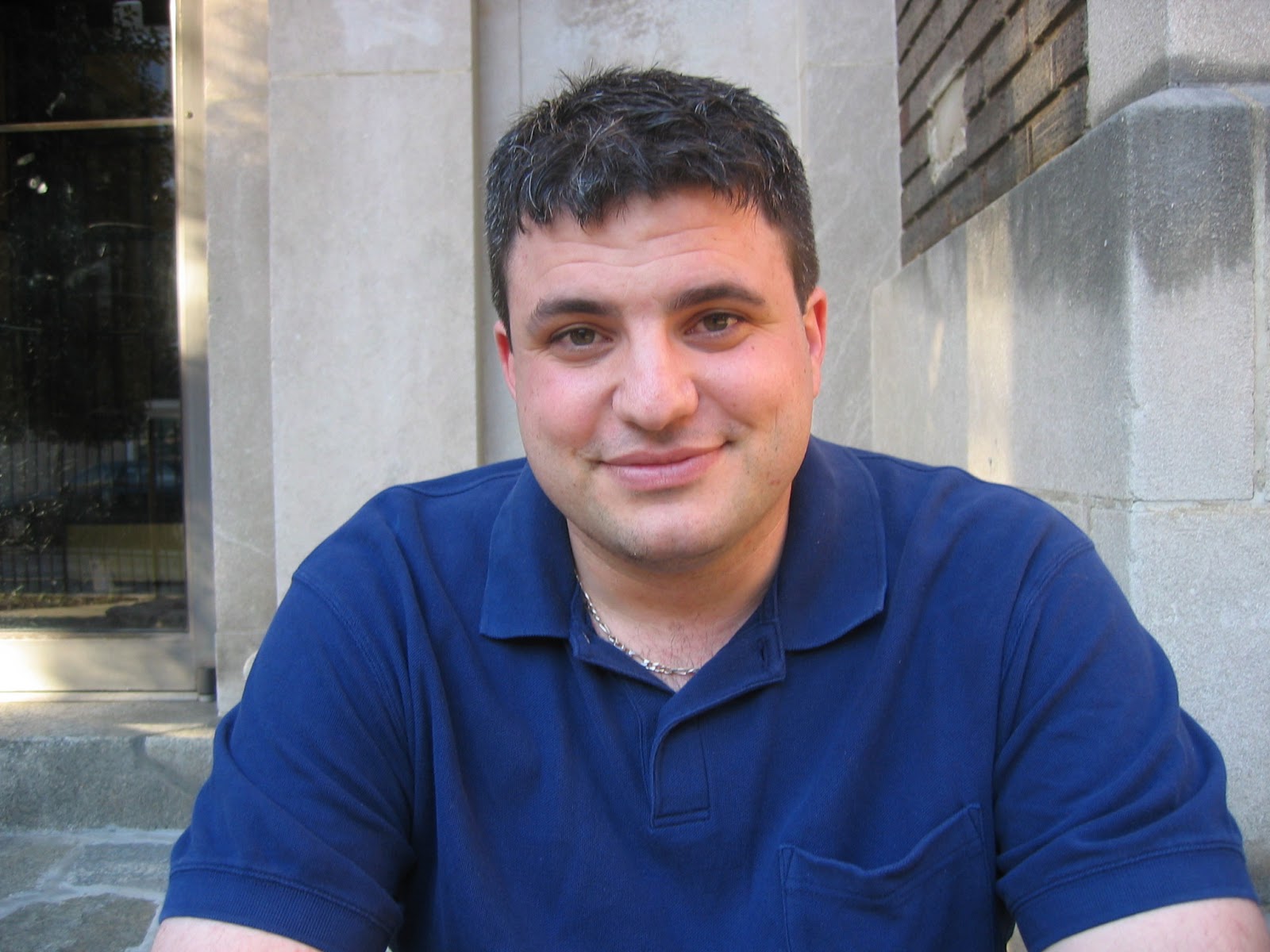
Novelist and immigrant rights activist David McCabe at the studios of KOOP-FM in Austin, Texas, March 8, 2013. Photo by Thorne Dreyer / The Rag Blog.

Rag Radio Podcast:
Novelist and immigrant rights activist 
David McCabe, author of ‘Without Sin’

“When love for family is stronger than fear /
when the desperation sets in /
A man will cross any line that is drawn, /
and who’s to say it’s a sin?”

— Slaid Cleaves from “Borderline,” epigraph in Without Sin

By Rag Radio | The Rag Blog | March 18, 2013

Novelist and immigrant rights activist David McCabe was Thorne Dreyer’s guest on Rag Radio, Friday, March 8, 2013. Rag Radio is a syndicated radio program produced at the studios of KOOP 91.7-FM in Austin, Texas.

Listen to or download our interview with David McCabe here:


David McCabe is the author of Without Sin, a novel inspired by actual events in Oceanside, California, where federal and county officials shut down a sex trafficking ring that exploited young, undocumented women. The novel chronicles the exploits of a young border patrol agent and a 17-year-old Mexican prostitute as they struggle to come to terms with the increasing violence and changing politics that govern the borderlands dividing their countries.

David is also an educator and an activist in the immigrants rights movement.

Without Sin won the Book to Action award from the California State Library and the California Center for the Book, and was a semifinalist in the New Orleans Faulkner Society’s William Faulkner-Wisdom Competition.

From left: Thorne Dreyer, David
McCabe, and Tracey Schulz.

Marisa Ugarte wrote that in Without Sin, David McCabe “renders personal the horror that thousands of young undocumented women experience daily,” and Rosemary James of the Pirate’s Alley Faulkner Society, called it “a must read for all who would understand the complexities, as well as horrors, of the lives of undocumented immigrants in the United States.”

McCabe, who lives with his wife and son and a menagerie of animals on a small ranch in Southern California, has worked in public education for over 20 years — as an elementary school teacher and a principal — and currently serves as a school board trustee at the Nuview Union School District and as an associate professor of education and coordinator of the Teacher Preparation Program at Pasadena City College.

McCabe, who has also written and spoken extensively on education-related issues, is the author of Toward a More Perfect Union: Creating Democratic Classroom Communities. He recently spoke at St. Edward’s University in Austin and at Texas A&M University about human trafficking, xenophobia, immigration, and the abuse and sexual exploitation of children.

Rag Radio has aired since September 2009 on KOOP 91.7-FM, an all-volunteer cooperatively-run community radio station in Austin, Texas. Hosted and produced by Rag Blog editor and long-time alternative journalist Thorne Dreyer, a pioneer of the Sixties underground press movement, Rag Radio is broadcast every Friday from 2-3 p.m. (CDT) on KOOP, and is rebroadcast on Sundays at 10 a.m. (EDT) on WFTE, 90.3-FM in Mt. Cobb, PA, and 105.7-FM in Scranton, PA.

The show is streamed live on the web by both stations and, after broadcast, all Rag Radio shows are posted as podcasts at the Internet Archive.

Rag Radio is produced in association with The Rag Blog, a progressive internet newsmagazine, and the New Journalism Project, a Texas 501(c)(3) nonprofit corporation. Tracey Schulz is the show’s engineer and co-producer.

Rag Radio can be contacted at ragradio@koop.org.

Coming up on Rag Radio:
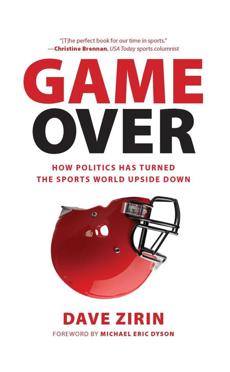
THIS FRIDAY, March 22: Progressive sportswriter Dave Zirin, Sports Editor at The Nation and author of Game Over: How Politics Has Turned the Sports World Upside Down.
Friday, March 29:
“Bronx Butch” poet, performance artist, and memoirist Annie Rachele Lanzillotto.
Friday, April 12: Sixties activists and Yippie founders Judy Gumbo Albert and Nancy Kurshan.

The Rag Blog

Posted in Rag Bloggers | Tagged , , , , , , , , , | Leave a comment

Jonah Raskin : Lay Monk Tolbert McCarroll on the Pope, the Church, and the Crisis in Catholicism

Brother Toby at Starcross Community.

Interview with Brother Toby:
Author, heretic, and spiritual 
pilgrim at Starcross Community

“The Catholic Church today is an absolute monarchy and an absolute patriarchy that puts you right back in the Medieval Ages.” — Tolbert McCarroll

By Jonah Raskin | The Rag Blog | March 18, 2013

Tolbert McCarroll — better known to friends and family members as Brother Toby — would make a strange and wonderful Pope. Better yet, he’d make a passionate anti-Pope — a one man wrecking crew to batter down orthodoxy, patriarchy, and centuries old dogma.

Born in 1931 and raised in a poor, white, Catholic family in Picayune, Mississippi, he’s been a lifelong Catholic and a soul mate to obstreperous priests such as Daniel and Philip Berrigan, and nuns such as Mary Moylan, all of whom famously burned draft cards in Catonsville, Ohio, to protest the War in Vietnam.

Ever since the 1960s, Brother Toby has aimed to beat swords and B-52s into plowshares, to serve as a gadfly to the comfortable, and to comfort those afflicted with AIDS, HIV, and PTSD. He’s adopted six children and written 10 books including Seasons, A Winter Walk, and Thinking With the Heart.

Now, at the age of 82, he’s a lay monk at Starcross, a rural California monastic order that draws its spiritual nourishment from the original teachings of Jesus Christ. Like the early Christians, Brother Toby is wedded to the simple life close to the earth and in harmony with the seasons and all living creatures.

From Starcross in California to the Vatican in Italy, it’s a long way — some 6,270 miles. But when a new Pope is selected, it feels to Brother Toby as though geographical distances collapse. Along with the sisters at Starcross — Marti Aggeler and Julie DeRossi — and the billion or so Catholics around the world, he trains his eyes and ears on the Conclave – albeit with a certain skepticism. As the Cardinals began to meet, he wrote a letter to followers urging them to wear simple clothes and remain undistracted by the gaudy spectacle in Rome.

Jonah Raskin: What do you make of Pope Francis I?

Brother Toby: He’s the first Jesuit ever to be elected Pope. On matters of doctrine, he’s conservative. He fought against Argentina’s liberalization of gay rights legislation and strongly condemned gays adopting children. He’s also strongly opposed to abortion and euthanasia, but he may be looking for middle ground on issues like birth control.

What’s his reputation in Buenos Aires, Argentina, where he was the archbishop?

His personal lifestyle is radically different from that of the Vatican bureaucrats. He didn’t live in the archbishop’s Palace in Buenos Aires, but in a small rented apartment. Moreover, he didn’t use his chauffeured limousine, but took public transportation — he cooks for himself, too.

What about his first appearance as Pope in St. Peter’s Square?

The scene was like the Super Bowl gone wild until he came out as a simple, and, indeed, humble man asking for the crowd’s blessing before giving his traditional blessing to the city and the world. Choosing the name “Francis” after the beloved “poor man of Assisi” fits in with his image. What does the future hold? That’s hard to say.

Would you go out on a limb and make a prediction?

I don’t think he’ll do a lot to solve the painful problems facing the Catholic Church, though the tone at the Vatican will probably be gentler.

A Jesuit friend once said that the Roman Catholic Church had been “a truant in the school of history.” Will Pope Francis I be less truant? 

I hope so. I have never heard his name connected with sexual abuse. That’s a good sign.

Is there anyone you would want for pope?

There’s Gene Robinson, an Episcopal Bishop. He’s openly gay; I’d cast a ballot for him.

How would you characterize the Catholic Church today?

It’s an absolute monarchy and an absolute patriarchy that puts you right back in the Medieval Ages. You can’t have a monarchy like it and accept global responsibility for building a good world.

How do you remember the Popes who have reigned in your own lifetime?

Pius XII shipped Jews off to concentration camps right under his own window. John XXIII was a nice fellow and so was Paul VI. You would have liked to have him over for dinner. John Paul I was Pope for 30 days; he had a heart attack, though conspiracy theorists say he was done in. John Paul II, a superstar and extremely conservative, saw the world as a fight between evil communism and good Christianity. Benedict XVI — known as “God’s Rottweiler” — got rid of the people who wanted to change the church and let it return to the dry, barren ground it is today.

When I think of Catholicism I think of guilt and confession. Is there more than that?

We do make a virtue of guilt, don’t we? Thomas Merton, a wonderful monastic writer, said that any spiritual book had to be autobiographical to be authentic. The confessional has an important place in spirituality. Finding the sacred in nature — that’s a vital part of Catholicism, too.

Has the Catholic Church in America made positive contributions to our society?

It has always been at its best in times of persecution and at its worst when it has had the upper hand. When I was a boy in Mississippi the Ku Klux Klan broke into the chapel we attended and smashed the furniture. Catholics were on the KKK hate list after blacks and Jews. Everyone I knew was left leaning and a Roosevelt democrat.

Brother Toby and friend.

Your parents were church-going Catholics?

My mother was French Catholic. My father was from Arkansas. When he first came to Mississippi he saw a crowd of white men shooting into the corpse of a black man. He asked them why? No one had an answer for him. In the 1930s, a major concern of his was justice for the nine African-American men known as “the Scottsboro Boys” who were charged with raping two white women.

Where did your mother stand on racial issues?

When a black family moved into our neighborhood — after we moved to Oregon — white neighbors assumed she would be afraid of black people and would want them out. Instead, she befriended them.

What happened to Catholics like them?

After World War II and the economic boom, everything changed in the world of Catholicism. It wasn’t just a church for the poor and for immigrants anymore. Catholics moved up in the world and forgot their humble origins. We even had a Catholic president.

I have friends who stopped attending church after they lost a mother, a father, a close friend.

That’s a common phenomenon. One of my colleagues never got over the death of a three-year old child. We’ve had kids with AIDS here at Starcross who died terrible deaths. If there’s a God and he’s good — why does he allow evil? That’s a tough question to answer. And why do bad things happen to good people? That’s another one. Buddhists say that the only sure thing is suffering. I think that’s a helpful way to look at the world.

You’re a Buddhist Catholic, aren’t you?

I’m writing a piece now about Palm Sunday and I’m starting with a quotation from the Dalai Lama who said, “Our prime purpose in this life is to help others. If you can’t help at least don’t hurt.”

These same friends of mine who were born Catholic often attend church on Easter Sunday, but not on any regular basis. The Pope doesn’t own the Church. It’s their church, too, and they have as much of a right to be there as anyone else. Maybe they like the incense or the singing of the psalms. If it’s their heritage they shouldn’t give it up.

You started Starcross in 1968 in San Francisco, didn’t you?

We couldn’t have picked a better year to begin. We knew we were in a period of radical change. It became a crazy environment and I’m glad we came through it. I remember a discussion with a nun who wanted to bring a camel into Grace Cathedral. That was typical of the atmosphere at the time. Finally, she agreed to bring in kids with balloons rather than a camel and have them release the balloons. Predictably, the balloons stayed under the ceiling for a long time.

Why the name Starcross?

It’s from the I Ching: or Book of Changes; there’s a pictogram that looks like a cross and a star. The cross represents suffering and the star represents hope. There has to be balance.

I’ve been to mass at St. Mary Cathedral in San Francisco for Easter Sunday. I’m always surprised when I see women taking a leading role in the ritual itself. I thought that women weren’t allowed to do that.

Women can be lectors. They’re allowed to read from the Bible and they can perform the Eucharist if no men are available.

Are there any women who are Catholic priests anywhere in the world?

A small number of women claimed they were ordained in secret in Poland in a concentration camp. The Vatican has never recognized them.

The Church is so very intensely male.

If there’s a break from the past it will be around the issue of women who, after thousands of years, still don’t have a full voice in the church.

Catholicism is in an acute crisis now isn’t it? I’m thinking of the scandals and cover-ups of sexual abuse.

Sexual abuse goes on and on, though there is less now than there used to be. There is no real transparency in the Church. The underlying principle is “protect the institution.” When the Cardinals gather in Rome it’s like a meeting of the board of directors of a major corporation, say, U.S. Steel.

It’s still bizarre to me — especially with sexually transmitted diseases — that the Church is against birth control.

It’s crazy. We combat AIDS at Starcross and the Church says we can’t use condoms. There are priests who don’t even know what a condom is.

You were once married and had a sex life. You have an advantage over most priests.

I’m a celibate now; I have been since my wife died. Celibacy has to be voluntary. You can’t force it on people. Becoming a priest is a very lonely process. Other priests are supposed to be one’s family, but they don’t meet the emotional needs that a real family provides.

Priests hear the most intimate confessions; they’re inextricably connected to parishioners, but they’re also often ill-equipped to meet the needs of their communities.

Priests are underdeveloped in many basic human ways. They don’t understand a lot of things. Like the priest who complained not long ago to a mother whose kids came to mass with dirty fingernails. She had six kids; he might have praised her for getting them to church, not berated her about a little dirt.

What other trends do you see in the church today?

I see a lot of people, including gays, who want to be Catholics, but who are profoundly dissatisfied with the Church and with its priests. It’s difficult for them to find a spiritual home. There’s mass defection all over Europe and across America, too. At Starcross, we made a total break. We’re separate from the Church and receive no financial support whatsoever from it.

How does Starcross survive financially?

We grow olives that we make into excellent olive oil. A tractor is at work in the orchard right now. It’s the time of year to add manure. At Christmas, we make and sell wreaths.

Do you have any final words of wisdom?

Never let the Church interfere with your religion.

[Jonah Raskin, a professor emeritus at Sonoma State University and a frequent contributor to The Rag Blog, is the author of Rock ‘n’ Roll Women: Portraits of a Generation and Storm City: Ten Prayerful Poems. Read more articles by Jonah Raskin on The Rag Blog.]

The Rag Blog

Posted in Rag Bloggers | Tagged , , , , , , , | 1 Comment