Ivan Koop Kuper : Huey P. Meaux Was the Crazy Cajun


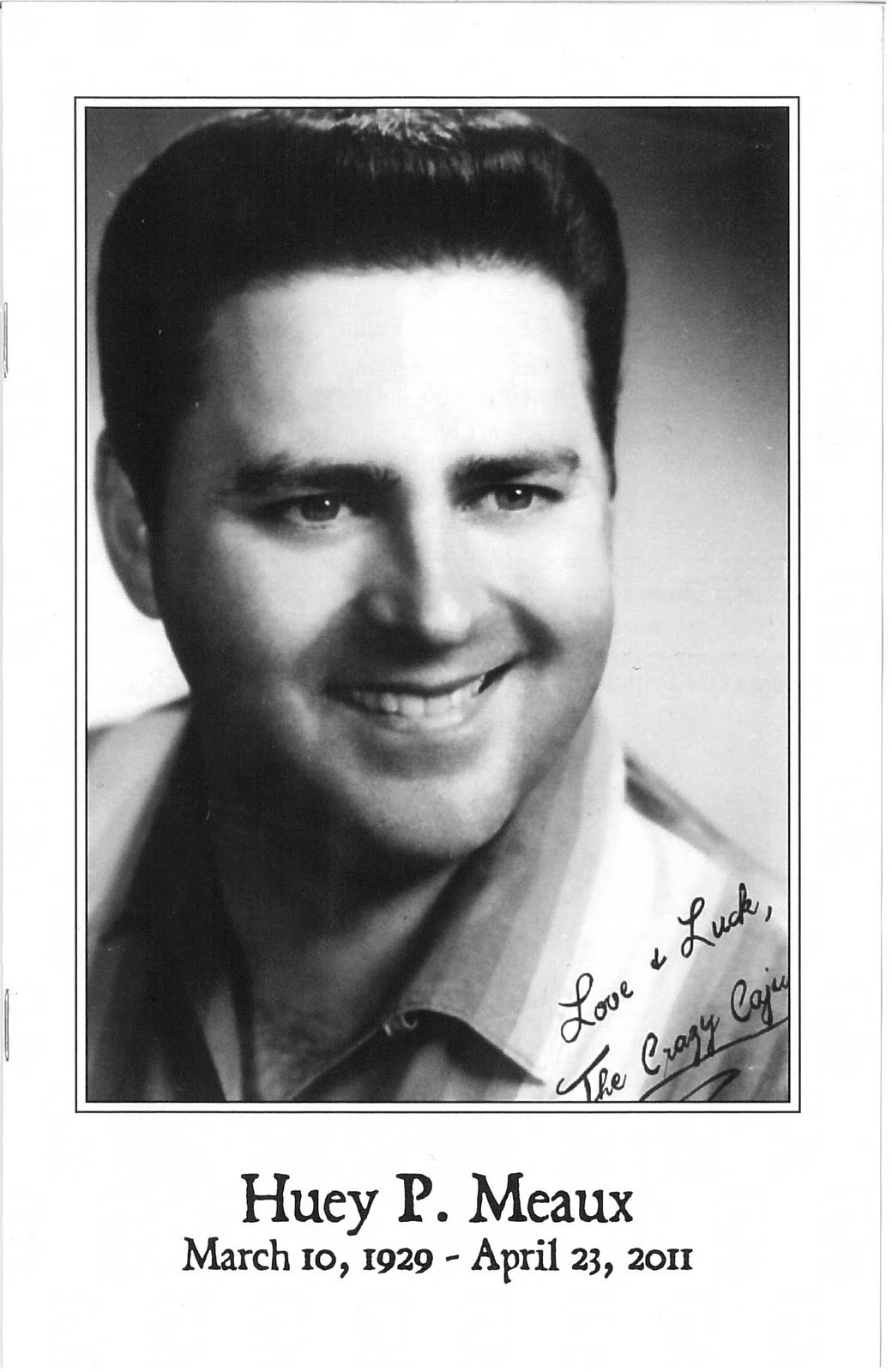
Huey P. Meaux was the Crazy Cajun

By Ivan Koop Kuper / The Rag Blog / September 22, 2011

One Friday evening in 1973, a burly looking biker entered the control room of community radio station KPFT FM, the Pacifica station that broadcast from the second floor of the since demolished Atlanta Life building in downtown Houston.

He was there to visit “The Crazy Cajun Radio Show,” and to ask host Huey P. Meaux to play a track from an old Eddy Arnold album that he brought with him. The biker told Meaux the record was the only possession of his late father’s that he owned, and that it was also the anniversary of his father’s death.

In his thick Cajun-French accent, Meaux dedicated a selection from the album to the memory of the biker’s father, and as the scratchy vinyl record spun on the turntable, the biker stood in the corner of the room and wept. It was from personal experiences like this one that Meaux developed his keen sense of reading people and knowing how music can trigger an emotional response.

Huey Purvis Meaux made his living as an independent record producer. It was a talent he honed in the 1950s while working as both a barber in Winnie, Texas, and a disc jockey at KPAC-AM in Port Arthur. It was there the naïve Meaux was first introduced to the magic of magnetic recording tape and analog reel-to-reel tape recorders.

Meaux’s mission in life was to discover local musical talents, take them into the recording studio, manufacture phonograph records from the master sound recordings, and promote the records to regional radio stations in hopes of receiving the much-coveted radio exposure necessary to make a record into a hit.

Similar to the east Texas “wildcatters” of days-gone-by who drilled oil wells on speculation of striking it rich, Meaux would also speculate on the abundance of homegrown talent, of all musical genres, he found in the night clubs and road houses of East Texas and Louisiana.

Raised “dirt poor” with barely a high school education, Meaux would leave his mark on the music industry and become a significant contributor to popular American culture.

Meaux followed a specific business model that he perfected over 30 years. He learned that after first breaking a single regionally, and with the right amount of radio exposure and sales from independent record distributors, he could then have the leverage necessary to license both the master sound recording and the copyright of the composition to the larger independents and the once prevalent major labels.

Meaux was no novice to this process or to the business of music. Between 1959 and 1985, his name would be associated with 55 gold singles and albums, and eight platinum albums that were produced in recording studios primarily in New Orleans, Houston, and Pasadena, Texas.

“I was so nervous and my hands were shaking as I was fading out that song,” Meaux would always recall when discussing “I’m Leaving It Up To You,” a track he produced from the Louisiana singing duo known as Dale and Grace, “because in my heart I just knew I had a hit on my hands.”

Meaux’s intuition was on target because by October, 1963, the remake of the composition originally penned and recorded by California’s Don “Sugarcane” Harris and Dewey Terry, reached the No. 1 position on Billboard Magazine’s Hot 100 chart, and remained on the chart for 12 weeks. The selection that Meaux chose for the Louisiana duo to record resurfaced nine years later when it charted again when it was recorded by America’s “squeaky-clean” brother and sister singing duo, Donny and Marie Osmond.

“My records are so bad that the only reason people buy so many is to keep them off the market,” Meaux would always boast to those held captive by his bravado and flamboyant personality. With his gift for gab, Meaux could charm both his small town radio audience and the most jaded of big city music industry veterans. If you were to ask Huey Meaux how he was doing or how he was feeling at any given time, his stock comeback would be, “If I felt any betta’ bruddah, I’d run for gouvna,’ you betta’ sho’ believe it.”
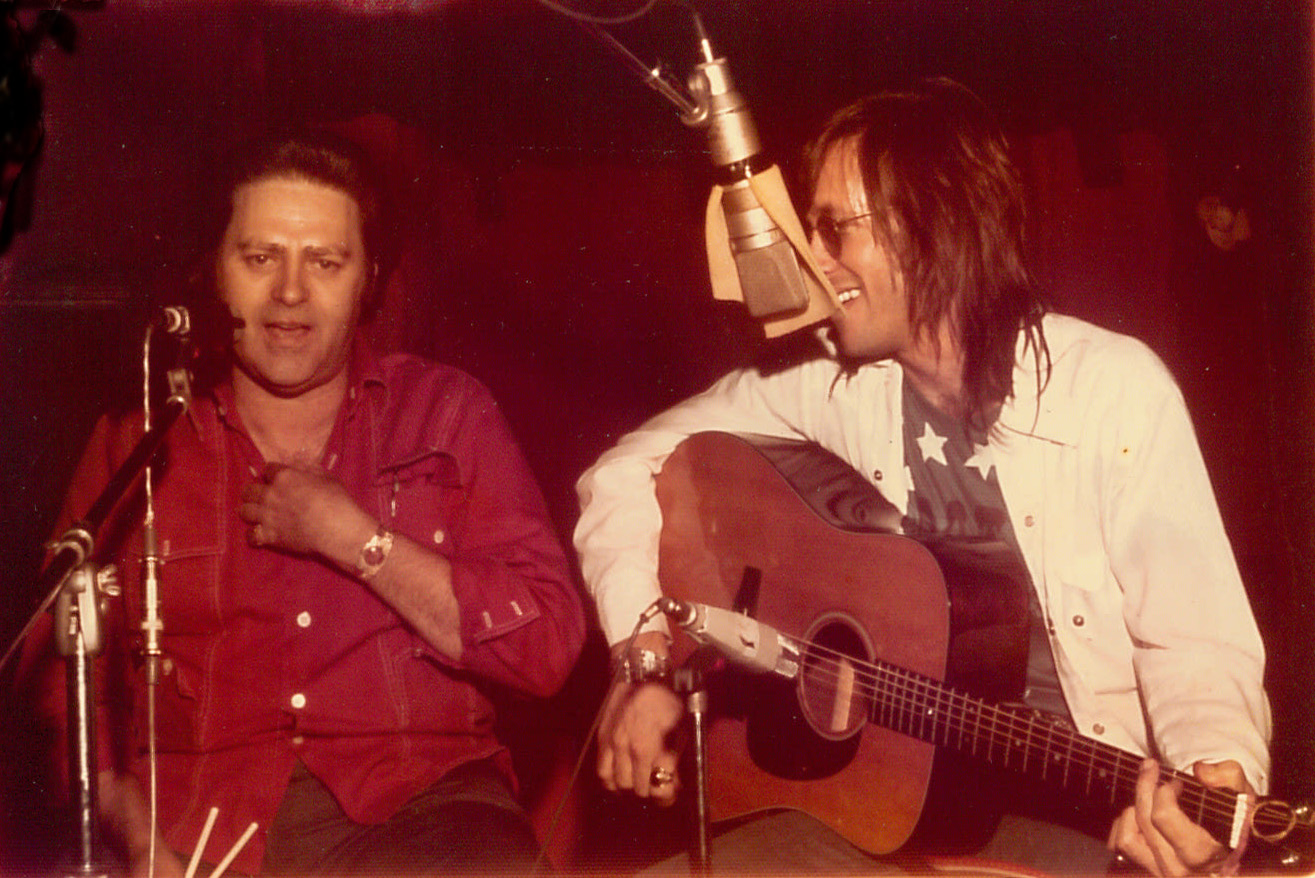
Huey P. Meaux and Doug Sahm at Sugar Hill Studios in Houston, 1974. Photo by Hank Lam.

Meaux would become close friends and business associates with many of the music industry’s power brokers of the era, including the late Shelby Singleton of Mercury Records, the late Jerry Wexler of Atlantic Records, and Aaron Schechter, the low-profile New York-based CPA who Meaux affectionately referred to as “Junior.” The unlikely team of Schecter and Meaux, reminiscent of Felix Ungar and Oscar Madison from the Neil Simon stage play, The Odd Couple, maintained a successful professional relationship and a personal bond that endured for more than 25 years.

“I saved his neck many times from the IRS and on many other occasions and there was never any appreciation shown from him,” said the 85-year-old Schecter who has made a career of keeping the books for a who’s-who of rock royalty.

I quit Huey twice but he chose to ignore me.

I first met Huey way back in 1969 after he got out of jail. He came to New York to visit his lawyer Paul Marshall and he asked Paul to find him a “Jewish New York accountant.” Marshall referred him to me and he came by the office and I began doing business for him. Our first order of business was an audit of Scepter Records owned by Florence Greenberg who owed Huey back royalties.

Huey was a real character. He was fascinating, yet he could also be repulsive at times. The last time I saw him was in 1996 right before he went away to prison again.

Born March 10, 1929 in Wright, Louisiana and raised in Kaplan in the heart of “Acadiana,” Meaux always recalled a time growing up when only French was spoken at home and English was his second language.” My teachers used to whip your ass if they caught you speaking French in public school,” Meaux would say about his grade school days.

Meaux’s family settled in East Texas in the town of Winnie, 23 miles south of Beaumont, in 1940 when he was 12. Winnie was in the rich, culturally fertile region of east Texas near the Louisiana border known as “The Golden Triangle.” This region incubated the musical talents of Aubrey “Moon” Mullican, George Jones, Johnny Winter, Edgar Winter, “Barbara Lynn” Ozen, Janis Joplin, Johnny Preston, Barbara Mauritz, and J.P. Richardson aka “The Big Bopper.”

Meaux came of age at a time when commercial “terrestrial” radio stations were still independently owned and music programming decisions were made based on local sales figures. It was also a time in history when the frequency of a particular record’s radio airplay could be monetarily manipulated by independent record producers and radio promoters.

“Is it true that payola is dead?” a young man asked Meaux in the lobby of the former Marriott Hotel in downtown Austin after he delivered a colorful keynote address at the South by Southwest Music and Media Conference in 1987. A puzzled-looking Meaux stared at the young man and replied, “Dead? I didn’t even know it was sick, little bruddah.”

Meaux’s special talent in the music business was mastery over the discipline of A & R, or “artist and repertoire” as it was originally known. He had an uncanny knack for selecting the right musical material for the right recording artist to elicit the right vocal interpretation in the recording process.

The objective of this equation was to maximize the greatest profit potential for the master tape owner, the music publisher, the distributing label, the artist manager, and the booking agent. Then as now, it is to one’s financial benefit to wear as many of these “hats” as legally possible, a business philosophy that Meaux subscribed to and practiced throughout his professional career.

Not all of the musical groups Meaux had under contract always agreed with or trusted Meaux’s choice of material. A young, unknown singer from Rosenberg, Texas named Billy Joe Thomas who fronted a band called the Triumphs can still be heard complaining on the eight-track master recording to the studio engineer one evening: “Let’s get this over with and record that damn song just to get Huey off my ass.”

The selection he was referring to was “I’m So Lonesome I Could Cry,” a song penned and originally recorded by Hank Williams. The B.J. Thomas version, released on Meaux’s Pacemaker label and then licensed to New York’s Scepter Records, reached the No. 8 position on Billboard’s Hot 100 by March, 1966, and stayed on the chart for 10 weeks before its demise.

Although Meaux was the proud father of an adopted son, he was known to brag about all the musicians and singers he nurtured throughout the years who he also referred to as his sons. He especially spoke highly of Douglas Wayne Sahm and August “Augie” Meyers of San Antonio and would always say, “I raised those boys.”

Meaux would often recall the story of the hyperactive, multitalented teenage Sahm who was always “pestering” Meaux to record his compositions. This relationship ultimately produced Texas’ contribution to the “British Invasion” in the early 1960s with the creation of the Sir Douglas Quintet and the release of the single, “She’s About a Mover.” Originally titled “She’s a Body Mover,” Meaux believed the title sounded too sexually suggestive and made Sahm change it.

The Tribe/London release of this single reached the No. 13 position nationally by April 1965, and remained on Billboard’s Hot 100 chart for nine weeks. “I love Doug like my own son,” Meaux would always say about the late Doug Sahm, “but he was so mean to Augie. Doug used to make Augie carry all the equipment to the gigs and with his bad leg too,” referring to Quintet collaborator and organist Meyers who was afflicted with polio as a child.
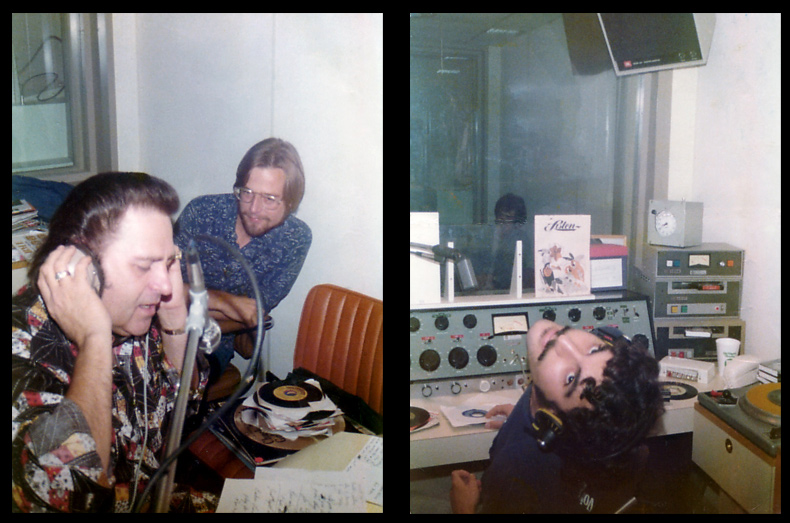
Left to right: Huey P.Meaux, Joe Nick Patoski, and The Rag Blog‘s Ivan Koop Kuper at KUT-FM in Austin, 1975. Photo by Kirby McDaniel.

Life and business were good for Meaux during the 1960s and many of the records he produced became hits. However in October 1966, the winning streak was interrupted after Meaux and his then business partner, Charlie Booth, attended a disc jockey convention in Nashville accompanied by a 15-year-old girl. Their underage passenger was brought on the trip for the purpose of entertaining the conventioneers with whom they intended to network.

One year later, Meaux and Booth found themselves charged in federal court with conspiracy to transport a minor across state lines for the purpose of prostitution in violation of the Mann Act. Meaux and Booth appealed their case, and although they were represented by high-profile Houston attorney Percy Foreman, their rehearing was denied by the United Stated Court of Appeals, Fifth Circuit.

In February, 1968, Meaux was sentenced to three years in prison. He would only serve eight months at the low security Federal Correctional Institution in Seagoville, Texas, near Dallas, before being released for good behavior.

In January 1981, at the end of his term as 39th President of the United States, Jimmy Carter granted Meaux a full pardon for his transgression as Carter was leaving office “That’s when I went away to college,” Meaux would always tell those who asked him about the time he spent in prison during this period.

Not all the hit records that Meaux is associated with were a direct result of his personal production efforts. Sometimes he acted as middle man and brokered the licensing deal to larger labels on behalf of other independent producers, as in the case of a track called “Tighten Up” by Archie Bell and the Drells.

Produced by legendary Houston DJ “Skipper” Lee Frazier, this track was licensed to Atlantic Records with Meaux’s help after first being released in Houston on Frazier’s Ovid label. Frazier, like most independent producers, would first sell his records on consignment to retailers “out of the trunk” before they were picked up for distribution by a larger label.

However, with the help of Atlantic Records, while Meaux was serving time in prison, this R&B crossover hit simultaneously reached the No. 1 position on both the Billboard Hot 100 and the Billboard R&B charts for two weeks by April, 1968, and remained on the charts for 13 weeks.

“I first met Huey when I was a disc jockey with KCOH-AM radio in Houston,” Frazier recalled.

He had a relationship with most the DJs in Houston and throughout the country for that matter, and Huey was always promoting his records to all the DJs. He was a very personable man and he would bring his records around to the station and ask me to play them.

We had a personal relationship, so when I recorded a record by a band I was managing and it started selling locally, Huey came to me and said I think can get that record placed with Atlantic Records but I want a piece of the action. I told Huey I wouldn’t mind that because I knew Huey had a good relationship with Atlantic because he recorded “You’ll Lose a Good Thing” by Barbara Lynn, and I also knew that he knew everybody in that New York office.

So Atlantic took the record and boom, it went to number one on the R&B charts and then, boom, it became a million seller. I found out years later that Huey knew how many records I was selling locally when he contacted me because he kept up with how many records I was ordering from the local record presser.

After Meaux was released from prison in 1968, the magic of producing another hit record eluded him for several years. Music industry insiders told him that he was “beating a dead horse” when he informed them he was thinking of recording “El Be Bop Kid,” Baldemar Huerta from San Benito, Texas aka Freddy Fender.

“Before The Next Teardrop Falls,” written by the Nashville songwriting team of Vivian Keith and Ben Peters, had been recorded more than a dozen times throughout the years, but had never struck gold. By the mid-1970s, Meaux’s intuitive A&R talent was on target once again with his production of the sentimental bilingual ballad with its Tex-Mex flavor. Originally released on Meaux’s Crazy Cajun label and then licensed to ABC/Dot, “Before the Next Teardrop Falls” would become a No. 1 crossover single on both the Pop and Country charts by March, 1975, and would remain on the Billboard Hot 100 chart for another 15 weeks.

The single not only revived Fender’s career, but it also won “Single of the Year” at the 9th Annual Country Music Association Awards in 1975. In addition, the composition also earned nominations for “Best Country Song” and “Best Country Vocal Performance” at the 18th Annual Grammy Awards in 1976.

In 1985, Meaux brokered his last major licensing deal for long-time friend and business associate Floyd Soileau of Ville Platte, Louisiana. Meaux had produced sessions for Soileau with artists Soileau had under contract beginning in the 1950s. In 1984, Soileau brought Meaux the single, “(Don’t Mess With) My Toot Toot” that had broken out in New Orleans by Zydeco/R & B artist, Rockin’ Sydney Simien on Soileau’s label, Maison de Soul.

Meaux arranged a licensing deal for Soileau that year with multinational Epic Records. Although never breaking into Billboard’s Hot 100 Pop chart, the single did reach platinum status and peaked in the No. 19 position on Billboard’s Country chart. “My Toot Toot” would also win a Grammy Award for Soileau and the late Sydney Simien for “Best Ethnic and Traditional Folk Record,” in 1986.

1986 was also the year Meaux surprised friends and industry associates when he appeared on the big screen in the David Byrne feature-length movie True Stories. Meaux made a brief, cameo appearance during the “Wild Wild Life” segment of the film playing the role of a patois-speaking “Crazy Cajun” disc jockey.

Always generous with his time and advice, Meaux was also known to mentor aspiring young music producers because he believed his good deeds would be reciprocated and the relationships he developed would prove to be mutually beneficial. That was not the case however with ZZ Top personal manager and producer, Bill Ham.

Meaux was disappointed that Ham never booked studio time at his Sugar Hill Studios in Houston, choosing to record in Tyler, Texas and Memphis instead. He would repay the snub in 1986 by suing Ham and ZZ Top for copyright infringement on behalf of Houston songwriter and former rock DJ, Linden Hudson. Hudson’s composition “Thug,” found its way onto the multiplatinum ZZ Top album, Eliminator, without the proper writer credit or music publisher credit which, coincidently, was Crazy Cajun Music. With the assistance of Houston attorney David W. Showalter, Meaux and Hudson (and Showalter) were awarded a $600,000 out-of-court settlement in compensatory damages from Ham and that “Little Ol’ Band from Texas.”

Huey Meaux, Winnie, Texas, April 2011. Photo courtesy of Nick de la Torre.

In 1996, Meaux experienced his second major brush with the law. No one expected what a a January 29 raid by Houston police raid on a backroom of Sugar Hill Studios, which Meaux now leased from its new owners, would reveal. There, HPD found incriminating evidence, including a gynecological examination table, illicit drugs, and photos and videotapes of underage girls in compromising positions.

Meaux would plea guilty to five felony charges including possession of cocaine, possession of child pornography, sexual assault and jumping bail. The Honorable Judge Michael McSpadden of the 209th District Court of Harris County would assess his punishment at 15 years for cocaine possession and sexual assault, and 10 years for possession of child pornography and bail jumping, to be served concurrently.

However, before Meaux’s criminal trial would begin, the two daughters of Meaux’s former girlfriend filed a civil lawsuit for alleged sexual abuse and emotional distress they were subjected to during the seven years Meaux lived with them and their mother. In mid-February, the now adult McDowell Sisters, represented by attorney Dick Deguerin, brought a suit against Meaux in Harris County’s 61st Civil District Court for the sum of 10 million dollars in punitive damages in their request for relief. By October, the plaintiffs agreed on a final judgment of $900,000, and to dismiss all further claims against defendant Meaux.

In June 1996, Meaux was sent to prison for his criminal offenses and would remain incarcerated for the next six years. Meaux served time at both the privately owned Lockhart Work Facility near Austin, and the Texas Department of Criminal Justice’s Ellis Unit in Huntsville.

In September, 2002, he was paroled to the Beaumont Center Halfway House, and was then placed on “house arrest” with his mobility restricted and was electronically monitored by the Texas Department of Criminal Justice (TDCJ). After four years of enforced detention, Meaux was looking forward to freedom on the rural property he owned on the outskirts of Winnie where he was living in his doublewide mobile home.

“I go to Beaumont every month now to see my probation officer and go shopping, but I’ll be getting my ankle bracelet off March 4th,” Meaux said during our last telephone conversation in January 2011. “The first thing I’m gonna do is go to New Orleans and get me some gumbo, and after that, I’m going to Austin to see some friends.”

Meaux never made it to New Orleans or to Austin, and on April 23, 2011, at 82, after four months of poor health, Meaux died from multiple organ failure. Meaux was found in his double wide trailer and scattered about the floor in no particular order were old boxes of magnetic recording tape and photographs that chronicled his 40 plus years in the music business.

Many friends and music industry associates chose to distance themselves from the controversial Meaux, and his funeral service at Broussard’s Funeral Home was attended mainly by immediate family members.

However, even after death, the defiant self-proclaimed “producer extraordinaire” still had the ability to surprise and even shock those in attendance at Winnie’s Fairview Cemetery. Inscribed on the back side of his “supersized” tombstone was a list of underwriters who Meaux had solicited during the time of his incarceration to help defray the cost of his funeral.

On the front side was inscribed an epitaph of Meaux’s personal life philosophy: “Did It My Way – No Regrets – Love Ya – Bye Now – Huey.” Once more Meaux was able to get in the last word, prove he was still an innovator and a proponent of crass commercialism who never showed any sign of remorse.

[Ivan Koop Kuper is a graduate student at the University of St. Thomas, Houston, Texas, and maintains a healthy diet of music, media, and popular culture. Ivan worked with Huey P. Meaux at KPFT-FM in Houston. He can be reached at kuperi@stthom.edu. Find more articles by Ivan Koop Kuper on The Rag Blog.]
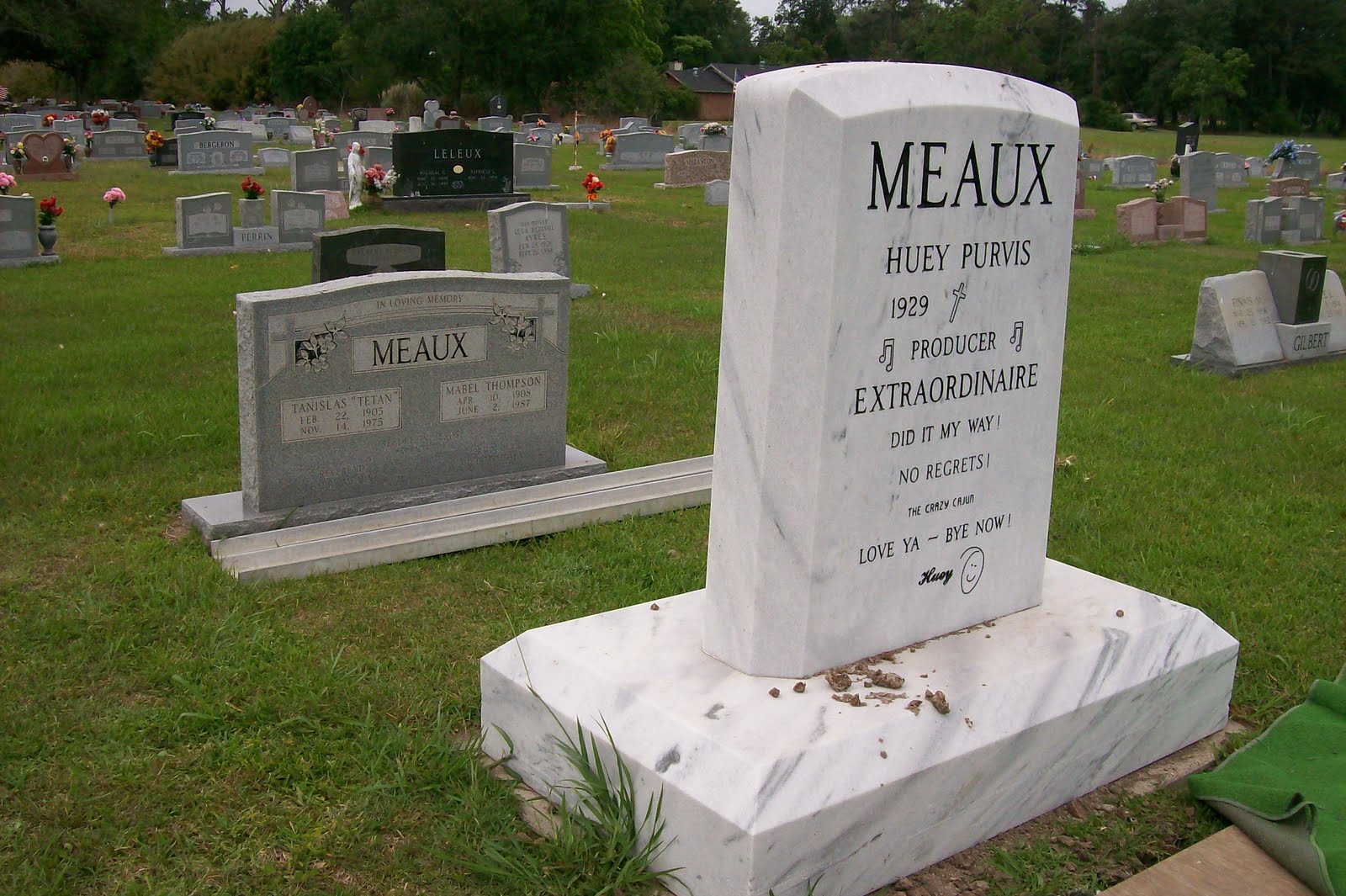
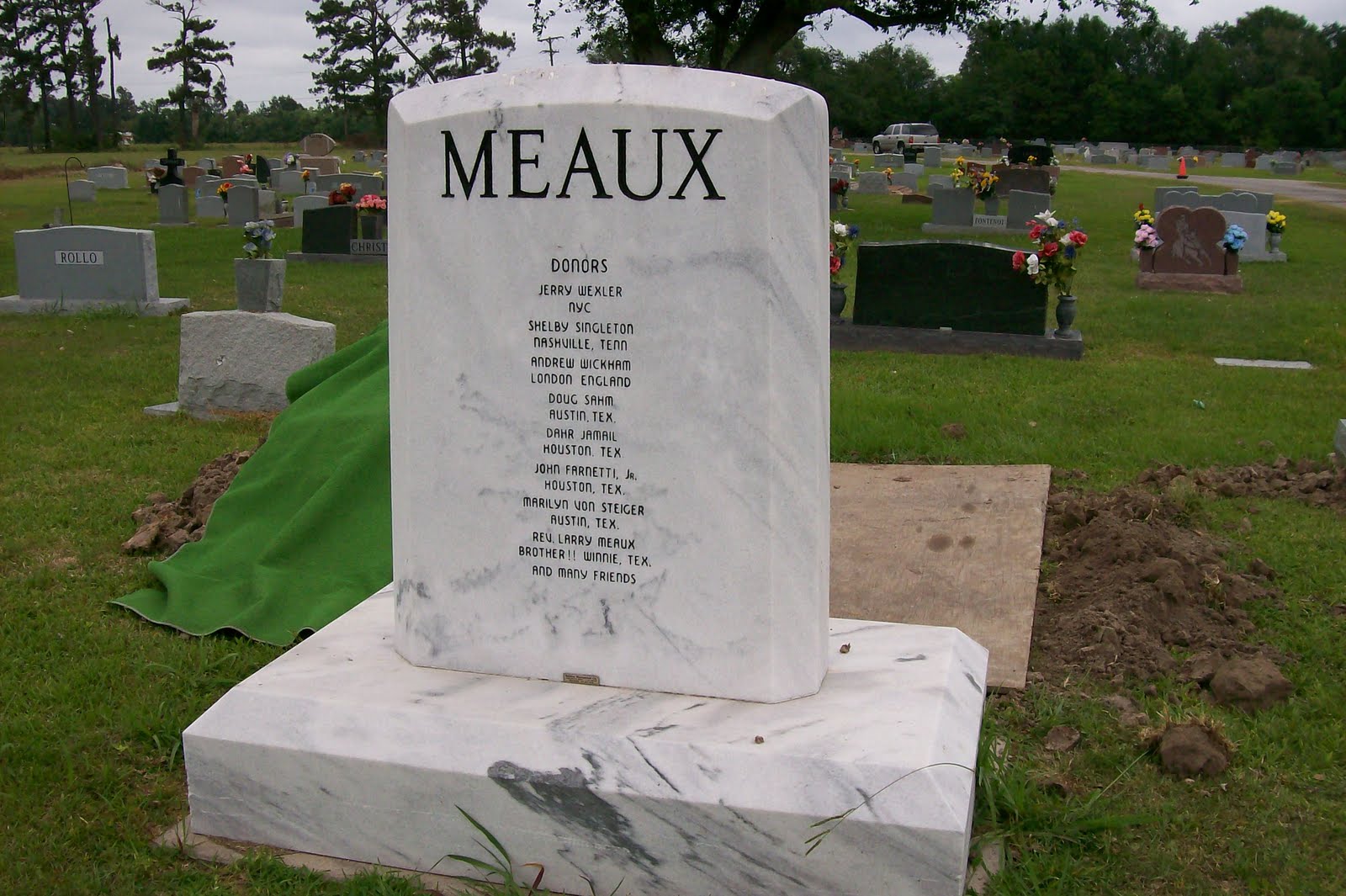
Photos courtesy of Hank Lam.

The Rag Blog

Posted in Rag Bloggers | Tagged , | Leave a comment

Dr. Stephen R. Keister : Approaching 90, I Despair for my Country

Image from Free Health Care News.

As I approach my 90th year:
I despair for the state of my country
(and its corrupted health care system)

I look at the Republican ‘debates’ and wonder, where did we — as a supposedly enlightened society — dig up this bunch of morons?

Dr. Stephen R.Keister / The Rag Blog / September 21, 2011

I have come a long way in this world as I anticipate my 90th birthday on October 9. In those many years I have experienced periods of contentment and periods of unhappiness. But never have I seen my country so fraught with danger and despair. Never have I seen such nihilism and cruelty expressed in public view.

The response of the audience to Texas Gov. Rick Perry’s pride in multiple executions confirms a nagging feeling I’ve had for many years that a great percentage of the American public would revel in public executions: public hangings, beheadings, or even hanging, drawing, and quartering. Sometimes it seems like we’re descending into the kind of society that would accept a leader along the lines of Vlad The Impaler or Ivan The Terrible.

Yet, paradoxically, it is many of these folks who adhere to “the right to life” concept, idealizing the fetus but not giving a tinker’s damn about the children we bomb in Iraq, Afghanistan, or Pakistan, or the infants in this nation who die due to lack of medical care or from malnutrition.

I entered the practice of medicine in 1950, an idealist, believing in the lesson of the Good Samaritan. I believed that all persons should be provided with medical care as was done at the great middle age hospitals in Europe, founded by orders of Sisters who turned away no one from their doors.

For some 30 years my idealism was validated, as no one in our area went without medical care. Those who could not pay were provided for at free clinics sponsored by the nonprofit hospitals, and each of us on the staff of those hospitals took care of, with help of an intern or resident, some 20-30 indigent inpatients. In our private offices money was never an issue until the patient was ready to leave and make a subsequent appointment, when our secretary would ask, “Do you want to pay now or shall we send you a bill?”

Somewhere in the 1980s medical care, with great planning and premeditation, was usurped by the health insurance cartel in collusion with the pharmaceutical industry. Medicine was changed from a proud profession to a business, and the physician degraded to a “health care provider.”

Now when one enters any medical facility the first question asked by the receptionist involves the patient’s manner of payment: “May I see your insurance card?” Instead of an initial hour-long interview with the physician, one is quizzed by a PA, followed by a cursory visit with the doctor. Multiple tests are frequently ordered when a detailed initial interview would have sufficed, and more often than not the patient leaves the office with many unanswered questions.

To add to the immorality of our system we have some 40 million citizens without medical care because they are unable to buy insurance. Yet, this is countenanced by those who claim allegiance to the Christian Right — a group that appears to be as oblivious to the Sermon on the Mount and the Beatitudes as to the Book of Matthew.

I watch the Tea Baggers docilely follow the propaganda of the billionaire Koch Brothers and propose elimination or substantial modification of Social Security and Medicare, under the illusion that these programs are undermining the national budget — when indeed these social safety nets are not paid out of the national budget (as are our ongoing wars which are never mentioned), but out of the Social Security trust and Medicare funds that we have all contributed to through wage taxes during our working years.

Now the Republicans would take advantage of a naive public and further drive us into the health care status of a third-world nation. We already rate 26th in the world in health care quality and delivery.

Never mind that the scions of the political Right lie to the people of the United States, with their claims that the Europeans and Canadians have “Socialized Medicine,” which is absolutely untrue. The only Western nation with something like socialized medicine is the U.K. and the present Tory Government is trying madly to privatize same in spite of united opposition from physicians, nurses, and other health care professionals. Both the public and health care providers have been generally happy with the health care system conceived and instituted by the conservative Winston Churchill.

I am at the stage of life where I hear the faint splash of old Charon’s oars as his barge moves up the Styx, so I have great interest in the hospice movement. Hospice was introduced to the Erie, Pennsylvania area, where I live, by Dr. David Dunn who had studied in depth the well-established British hospice system. The Great Lakes Hospice and V.N.A. Hospices are outstanding, caring, efficient, volunteer organizations.

Now, as with nearly everything, corporate for profit hospice movements have appeared on the scene to feed off of Medicare payments. Several of these organizations, not driven by humanitarian idealism but by corporate greed, have been cited by the Medicare watchdogs for their part in bleeding the Medicare trust fund.

We should all investigate hospice care well before the need arises, just as we should arrange advance directives, and make certain that we will be dealing with a local organization driven by compassion and caring and not by corporate profit. Ideally, we should consider a version of the Swiss Dignitas; however, this would be a pipe dream considering the influence the “religious” element has in the corporate-driven U.S. society.

The June 2011 issue of Forbes has a first-rate article by Rick Ungar entitled “The Coming Crash of the American Health Care System.” A few dedicated folks within the profession are still continuing the fight for a decent, affordable health care system in our country, groups like Physicians for a National Health Program and National Nurses United, but the average elected politician turns a blind eye to the situation.

If health care is a priority while you are still young, head for Canada where the health care system, founded by the late Tommy Douglas, is still appreciated by the vast majority of Canadians, or learn French and move to France, which has the top-rated health care system in the world.

Sidney Wolfe, M.D. points out in Public Citizen that our mental health treatment system has returned to a level of the 19th century. No longer are there decent mental hospitals available, but the mentally ill are confined to penal institutions as they were in Dickinsonian times. Over the past two decades, as state psychiatric hospitals have shut down, many with schizophrenia and bipolar disease have been left to wander the streets untreated.

The number with mental illness in our penal facilities has increased 20% since 2000. As early as 2006 the U.S. Department of Justice reported that 24% of inmates in county jails and 15% of inmates in state prisons were psychotic. Under these circumstances how do these folks get treatment? When have you last heard about this problem on a TV news program? Where are our values? Where is our moral backbone?

As the drumbeat of ill news and deception continues, why aren’t we told the truth about the cost to Medicare of Medicare Part D, or the fleecing of the trust fund by Medicare Advantage Plans? The American public gets less and less information about what really matters as the Republicans distract us from the everyday issues relevant to our lives and feed us drivel about the “national debt.”

Joseph Goebbels was a piker compared to the propagandists now feeding pure and simple bull to the uninformed, unsophisticated American people. I look at the Republican “debates” and wonder, where did we — as a supposedly enlightened society — dig up this bunch of morons?

I would urge all my readers to follow ProPublica’s ongoing investigation into the collusion between the drug manufacturers and many of the physicians in the current medical community — physicians who, in true American manner, place wealth and income above patient care, ethics, and duty.

A final word of advice. Disregard all pharmaceutical ads on TV — and there are hundreds — and just hope your physician is conscientious enough to prescribe what you need at the least cost rather than shill for the drug manufacturers.

[Dr. Stephen R. Keister lives in Erie, Pennsylvania. He is a retired physician who is active in health care reform and is a regular contributor to The Rag Blog. Read more articles by Dr. Stephen R. Keister on The Rag Blog]

The Rag Blog

Posted in Rag Bloggers | Tagged , , , , | 5 Comments

Rag Radio : Legendary Houston Folksinger Don Sanders

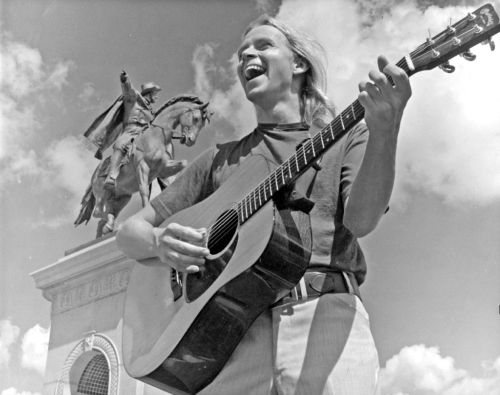
Don Sanders sings in front of the Sam Houston statue at Hermann Park in 70s Houston.

Legendary Houston folksinger Don Sanders on
Rag Radio with Thorne Dreyer. Listen to it here:


Don Sanders was a central figure in the early Houston folk scene, playing all the landmark venues — from Anderson Fair, Sand Mountain, the Old Quarter, and Liberty Hall to Austin’s Armadillo World Headquarters and the Kerrville Folk Festival.

He has shared the stage with Lyle Lovett (who considers him an important influence), Nanci Griffith, Pete Seeger, Arlo Guthrie, Lightin’ Hopkins, Guy Clark, Townes Van Zandt, and Janis Joplin. He performed at countless peace rallies, benefits, progressive political events, and street concerts in Houston’s Montrose.

He was known for his unique vision and for his quirky and highly personal songs; among the best known are “Third Eye” (“Open my third eye, mama / Free me from my chains tonight”), “Coffee Song,” “Head Full of Reds,” “Southern Coast of France,” and “Heavy Word User,” where he admits to being a “greasy, sleazy information abuser.”

Some of Don’s later work was inspired by Spanish folk tales, by the nueva trova movement that originated in Cuba, and by Latin American social justice issues, and he has written and sung in both Spanish and English.

Don Sanders also worked with Pacifica Radio’s KPFT-FM (as “Donnie Jo DJ”) and in Houston theater, writing, producing, and performing in a one-man show called Peregrino at Houston’s Main Street and Chocolate Bayou theaters and at theaters in Austin and San Antonio. In recent years he has devoted much of his time to performing for school children, singing and spinning yarns as the “Sourdough Cowboy.”

Don was featured in For the Sake of the Song, the critically acclaimed documentary film about Anderson Fair, Houston’s venerable acoustic venue that served as an incubator for such talent as Townes Van Zandt, Guy Clark, Nanci Griffith, Lucinda Williams, Robert Earl Keen, Steven Fromholz, and Lyle Lovett.

Rolling Stone called Don Sanders Houston’s “spritely local folkie,” and Lyle Lovett, then a Texas A&M student writing in the school paper, The Batallion, tagged him the “grand old man of Houston folk music.” John Wilson wrote on The Rag Blog that, “Over a five year period from 1970 to 1975, Don wrote and performed a suite of songs that pretty much provided the soundtrack for that tumultuous and intensely musical period of Houston’s history.”

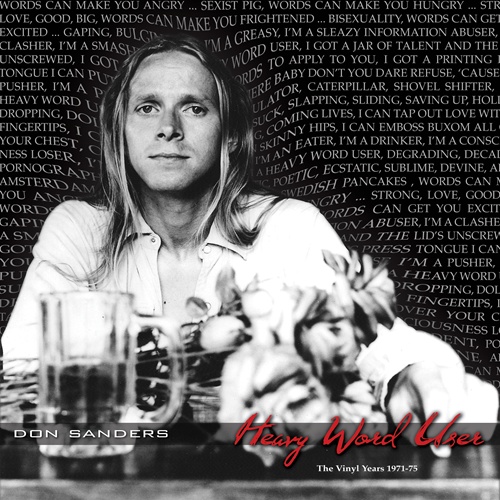
Many of those historic songs (some of which were mentioned above) have been released on a new CD titled Heavy Word User“> which came out during the Kerrville Folk Festival. It is available at YourTexasMusic and recently was accepted by Pandora into the Music Genome Project.

Don Sanders dicusses his career and sings several songs on this episode of Rag Radio.

Rag Radio — hosted and produced by Rag Blog editor Thorne Dreyer — is broadcast every Friday from 2-3 p.m. (CDT) on KOOP 91.7-FM in Austin, and streamed live on the web. KOOP is a cooperatively-run community radio station in Austin.

Rag Radio, which has been aired since September 2009, features hour-long in-depth interviews and discussion about issues of progressive politics, culture, and history. After broadcast, all episodes are posted as podcasts and can be downloaded at the Internet Archive. Tracey Schulz is the show’s engineer and co-producer.

Rag Radio is also rebroadcast on Sundays at 10 a.m. (Eastern) on WFTE, 90.3-FM in Mt. Cobb, PA, and 105.7-FM in Scranton, PA.

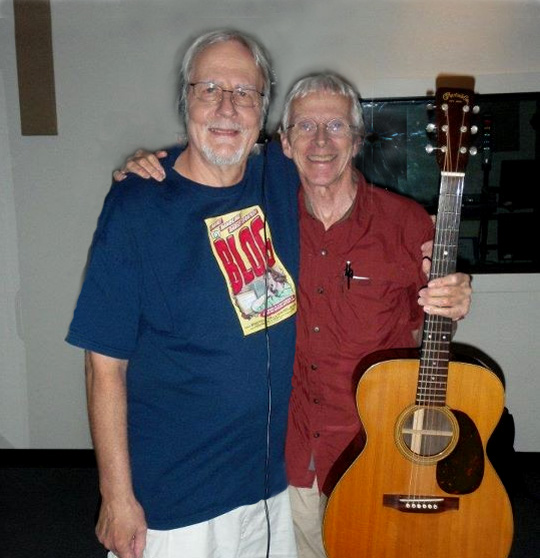
Houston singer/songwriter and storyteller Don Sanders (right) with Rag Radio host Thorne Dreyer at the KOOP studios in Austin. Photo by Tracey Schulz / Rag Radio / The Rag Blog.

The Rag Blog

Posted in RagBlog | Tagged , , , , , , , | Leave a comment

Rag Radio : Legendary Houston Folksinger Don Sanders

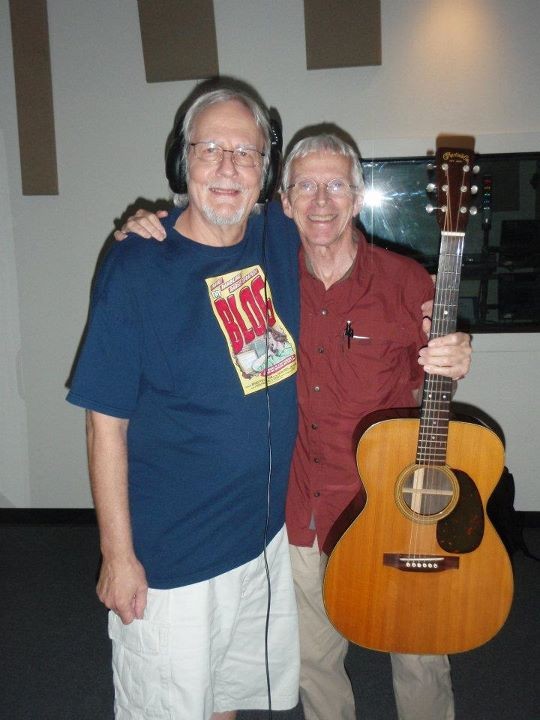
Houston singer/songwriter and storyteller Don Sanders (right) with Rag Radio host Thorne Dreyer at the KOOP studios in Austin.

Legendary Houston folksinger Don Sanders on
Rag Radio with Thorne Dreyer. Listen to it here:


Don Sanders was a central figure in the early Houston folk scene, playing all the landmark venues — from Anderson Fair, Sand Mountain, the Old Quarter, and Liberty Hall to Austin’s Armadillo World Headquarters and the Kerrville Folk Festival. He has shared the stage with Lyle Lovett (who considers him an important influence), Nanci Griffith, Pete Seeger, Arlo Guthrie, Lightin’ Hopkins, Guy Clark, Townes Van Zandt, and Janis Joplin. He performed at countless peace rallies, benefits, progressive political events, and street concerts in Houston’s Montrose.

Don also worked with Pacifica Radio’s KPFT-FM (he was Donnie Jo DJ) and in Houston theater, producing and performing El Peregrino a one-man show at Houston’s Main Street and Chocolate Bayou theaters. In recent years he has devoted much of his time to performing for school children as the “Sourdough Cowboy.” Don was featured in For the Sake of the Song, the documentary film about Houston’s venerable acoustic venue, Anderson Fair, that incubated such major talent as Townes Van Zandt, Nanci Griffith, Lucinda Williams, Guy Clark, and Lyle Lovett.

Don has always been known for his unique vision and his quirky, personal songwriting style. Among his best-known songs were “Third Eye,” the “Coffee Song,” and “Heavy Word User,” in which he describes himself as a “greasy, sleazy information abuser.”

Rolling Stone called Don Sanders Houston’s “spritely local folkie,” and Lyle Lovett, then a Texas A&M student writing in the school paper, The Batallion, tagged him the “grand old man of Houston folk music.” John Wilson wrote on The Rag Blog: “Over a five year period from 1970 to 1975, Don wrote and performed a suite of songs that pretty much provided the soundtrack for that tumultuous and intensely musical period of Houston’s history.”

Many of those historic songs have been released on a new CD titled Heavy Word User which came out during the Kerrville Folk Festival. It is available at YourTexasMusic and recently was accepted by Pandora into the Music Genome Project.

This show includes live performance by Don Sanders.

Rag Radio — hosted and produced by Rag Blog editor Thorne Dreyer — is broadcast every Friday from 2-3 p.m. (CDT) on KOOP 91.7-FM in Austin, and streamed live on the web. KOOP is a cooperatively-run community radio station in Austin.

Rag Radio, which has been aired since September 2009, features hour-long in-depth interviews and discussion about issues of progressive politics, culture, and history. After broadcast, all episodes are posted as podcasts and can be downloaded at the Internet Archive. Tracey Schulz is the show’s engineer and co-producer.

Rag Radio is also rebroadcast on Sundays at 10 a.m. (Eastern) on WFTE, 90.3-FM in Mt. Cobb, PA, and 105.7-FM in Scranton, PA.

The Rag Blog

Posted in RagBlog | Tagged , , , , , , | Leave a comment

From the end of World War II through 1979, the gains in productivity in the U.S. were shared between workers and owners, “and both benefited as wages rose along with company profits.” That was before Reagan and “trickle-down” economics. Ted McLaughlin shows us how unregulated capitalism has led to a “hoarding’ of productivity, resulting in a vast inequality in wealth and income, and has put us on the path to a second Great Depression.

Posted in RagBlog | Leave a comment

Carl Davidson : Who’s Waging ‘Class Warfare’?

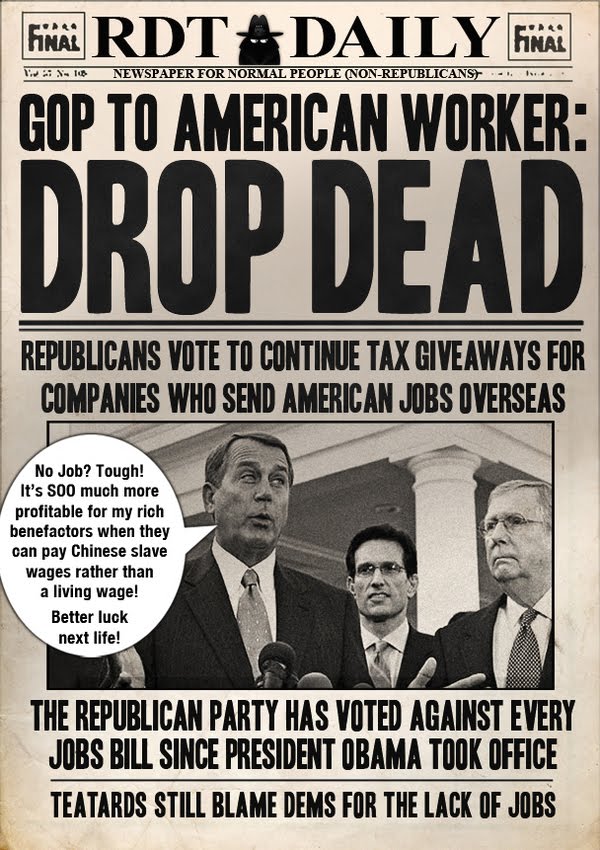
Art from RepublicanDirtyTricks.com / Keep on Keepin’ On.

Talk about your ‘class warfare’:
Shameless opposition to jobs bill
reveals GOP hatred of working class

By Carl Davidson / The Rag Blog / September 20, 2011

If you want to have your class consciousness raised a few notches, all you have to do over the next few weeks is listen to the Republicans in Congress offer up their shameless commentary rejecting Presidents Obama’s jobs bill.

Last week’s doozy came from Texas Congressman Louie Gohmert, who was outraged that capitalists were being restricted from discriminating in hiring the unemployed, in favor of only hiring people who already had jobs elsewhere. I kid you not. Here’s the quote:

“We’re adding in this bill a new protected class called ‘unemployed,'” Gohmert declared in the House Sept. 13, 2011. “I think this will help trial lawyers who are not having enough work. We heard from our friends across the aisle, 14 million people out of work — that’s 14 million new clients.”

One hardly knows were to begin.

First, the Jobs Bill does no such thing as creating a “new protected class.” It only curbs a wrongly discriminatory practice.

Second, so what if it did? Americans who uphold the Constitution, the 14th Amendment’s equal protection clause, and the expansion of democracy and the franchise generally, will see the creation of “protected classes” as hard-won progressive steps forward from the times of the Divine Right of Kings.

Third, if Gohmert had any first-hand knowledge of the unemployed, he’d know they usually can’t afford lawyers, especially when the courts are stacked against them.

Fourth, to create even more confusion, Gohmert raced to the House clerk to submit his own “Jobs Bill” before Obama’s, but with a similar name. Its content was a hastily scribbled two-page screed consisting of nothing but cuts in corporate taxes.

What’s really going on here is becoming clearer every day. The GOP cares about one thing: destroying Obama’s presidency regardless of the cost. They don’t even care if its hurts capitalism’s own interests briefly, not to mention damaging the well being of everyone else. Luckily, Obama is finally calling them out in public — although far too politely for my taste.

The irony will likely emerge if and when they ever do take Obama down. I’d bet good money that a good number of the GOP bigwigs would then turn on a dime and support many of the same measures they’re now opposing.

But most of them, especially on the far right, would still likely press on with their real aim, a full-throated neoliberal reactionary thrust that repeals the Great Society’s Medicaid and Medicare, the New Deal’s Social Security and Wagner Act, and every progressive measure in between.

Their idea of making the U.S. labor market “competitive” and U.S. business “confident” is to make the whole country more like Texas, with its record volume of minimum wage work and poverty, and then Texas more like Mexico — the race to the bottom. They’re not happy with 12% unionization; they want zero percent, where all of us are defenseless and completely under the thumbs of our “betters.”

In brief, prepare for more wars and greater austerity.

If you think I’m exaggerating, over the next months observe how the national GOP is trying to rig the 2012 elections in Pennsylvania, Michigan, and a few other big states. Our Electoral College system is bad enough, but they are going to “reform” it to make it worse by attaching electoral votes to congressional districts, rather than statewide popular majorities.

This would mean Obama could win the popular vote statewide, but the majority of electoral votes would still go to the GOP. Add that to their new “depress the vote” requirements involving picture IDs, which are aimed at the poor and the elderly, and you’ll see their fear and hatred of the working class.

We’ve always had government with undue advantages for the rich. But just watch them in this round as they go all out to make it even more so. We have to call it out for what it really is, and put their schemes where the sun doesn’t shine.

[Carl Davidson is a national co-chair of the Committees of Correspondence for Democracy and Socialism, a national board member of Solidarity Economy Network, and a local Beaver County, PA member of Steelworkers Associates. In the 1960s, he was a national leader of SDS and a writer and editor for the Guardian newsweekly. He is also the co-author, with Jerry Harris, of CyberRadicalism: A New Left for a Global Age. He serves as webmaster for SolidarityEconomy.net and Beaver County Blue. This article was also published on Carl’s blog, Keep On Keepin’ On. Read more articles by Carl Davidson on The Rag Blog.]

  • Listen to Thorne Dreyer‘s Sept. 9, 2011, Rag Radio interview with Carl Davidson about the Mondragon Corporation and the workers’ cooperative movement, here:

The Rag Blog

Posted in Rag Bloggers | Tagged , , , , , | 1 Comment

Lamar W. Hankins : Republican Health Care: ‘Let Him Die’

Thumbs down at Republican debate. Image from The Godless Liberal.

‘Just let him die’:
The Republicans and health care

The indisputable fact is that the U.S. is alone among the advanced societies in failing to assure that health care is available to all its citizens.

By Lamar W. Hankins / The Rag Blog / September 19, 2011

Now that the Republican nomination for president is in full swing, we once again return to the topic of health care, especially the role of government in assuring that all Americans have access to that life necessity.

Living adequately in a modern society requires many things — transportation, housing, food, income, security from crime, education, water, fire protection, fuel for home needs and vehicles, and information about what is going on in our community, state, and nation.

Few people disagree with this list, but when health care is added to it, some people become uncomfortable — some almost apoplectic.

The government at all levels helps provide everything on the list, as does the private sector. We have a mixed economy. Usually, government and the private sector cooperate in providing needed goods and services. Sometimes the government takes the lead role; sometimes it is the private sector leading. Few, if any, vital services are provided exclusively by the private sector.

I may buy natural gas from a private company, but the transmission of that natural gas to my home requires the assistance of government to assure that it is done with sufficient care that no one is put at risk. The public highways and streets are used by the gas company to provide the service. Public rights of way are used for the natural gas lines. The government inspects the company’s installation and maintenance of the company’s gas lines to insure that they are safe and citizens are protected. It is a cooperative endeavor that benefits all of us.

Neither the government nor the company is perfect, however. Mistakes are made by both on occasion, but the system works about as well as any human enterprise can be expected to work. When there is a failure, the causes are determined and actions are taken to correct the deficiencies in the system. If the failures are too great, changes in leadership occur in either the government, the private company, or both.

Few goods and services are provided in our society without this sort of cooperation, coordination, and connectedness between the private sector and government. In fact, I am unable to think of a single 100% private-sector activity; that is, an activity that does not use some resource of the government or the public to carry out its purpose. If you come up with one, please share it.

This system works, more or less, for all of the needs of modern life. But when we start discussing health care, people who believe strongly in self-sufficiency and rugged individualism posit the notion that health care needs must be entirely the responsibility of the individual. This happened at one of the recent Republican presidential nomination debates, as described by The Washington Post’s Eugene Robinson:

The lowest point of the evening — and perhaps of the political season — came when moderator Wolf Blitzer asked Ron Paul a hypothetical question about a young man who elects not to purchase health insurance. The man has a medical crisis, goes into a coma and needs expensive care. “Who pays?” Blitzer asked. “That’s what freedom is all about, taking your own risks,” Paul answered. … Blitzer interrupted: “But Congressman, are you saying that society should just let him die?” There were enthusiastic shouts of “Yeah!” from the crowd.

Paul then mentioned that the churches would take care of such people. Most listeners and watchers to that debate probably missed the irony in this exchange between Paul and Blitzer. Jay Bookman, a columnist and blogger for the Atlanta Journal-Constitution, explained in 2008 what Paul has ignored and Blitzer likely did not know:

Kent Snyder, 49, served as Paul’s 2008 campaign manager but died of complications from pneumonia two weeks after Paul withdrew from the ‘08 race. … However, Snyder did not have health insurance. According to his mother, he had a pre-existing condition that made it financially impossible to buy it on his own. (Interestingly, Snyder is credited with raising $19.5 million for the Paul campaign in the fourth quarter of 2007 alone, but none of that money was apparently used to buy insurance for campaign staffers.)

Because we treat health care as a de facto right in this country, Snyder did get at least some health care, racking up $400,000 in unpaid medical bills before he died. A fundraising effort after his death — the charity approach advocated by Paul — produced only $35,000 toward paying off those bills.

That’s not an unusual story. … [Patients such as Snyder don’t] come close to having the resources to pay off their bills. But somebody paid them. You did, and I did, and we paid Kent Snyder’s bill as well. It’s a convoluted, extremely irrational, unnecessarily expensive and inefficient system, and the only two approaches that show any promise of rationalizing it are the individual mandate or single-payer.

When Bookman writes that “we paid Kent Snyder’s bill,” what he means is that Snyder’s bill was absorbed into the rate structure that all of us who have health insurance support. We pay for all the Snyders by increased premiums and increased co-pays.

What such situations point out to me is that many people in our political system are driven by an ideology that ignores the reality of our lives. Nowhere is this more apparent than in the health care debate. The indisputable fact is that the U.S. is alone among the advanced societies in failing to assure that health care is available to all its citizens.

Access to health care is controlled mostly by health insurance corporations and pharmaceutical giants so that these companies can rake off large profits at the expense of 50 million Americans who do not have insurance, as well as at the expense of every policy-holder.

One of those Americans without health insurance is a friend of mine who has had to take out crushing loans that could leave him penniless to pay for two essential surgeries and other medical procedures as a result of accidental injuries he sustained doing a good deed for another person. He can’t afford health insurance in the present system. Where are the churches that Ron Paul touts as the solution? Where is the compassion?

For the same amount of money we spend in this country for health care and health insurance, we could cover those 50 million uninsured and an equal number of poorly insured with one simple reform — a single-payer system. What we would miss out on is paying millions of dollars to health insurance and pharmaceutical companies to enrich their stockholders and executives for a service that adds nothing to the nation’s well-being and could be provided better by a single-payer system.

They have rigged our system with appeals to the kind of libertarian arguments made by Paul and others, while 45,000 Americans die needlessly each year because they can’t afford health insurance.

The U.S. health care system ranks 37th in the world in its quality of care and its efficiency according to the World Health Organization. It is this way only because too many people have bought the lie that we have a free enterprise system, which is falsely seen by them as the greatest idea in the world, more important even than all the world’s religions.

But we don’t have a free enterprise system. We have a cooperative enterprise system, and that system does not serve the people well when it comes to health care.

It is the government’s responsibility, acting on behalf of the people, to make our society work for the people’s benefit when any system becomes dysfunctional. When that dysfunctionality results in the unnecessary deaths of tens of thousands of Americans each year, that responsibility becomes an imperative.

I am not advocating that government pay everyone’s health care bill. I am advocating that government help create a health care system that everyone can afford to participate in. That’s not socialism, as some falsely charge; it’s American democracy.

For nearly 100 million Americans with no health insurance or inadequate coverage, having meaningful health insurance reform will do more than almost anything else to assure that the promises of the Constitution are fulfilled.

It is past time for us to have a government of, by, and for the people, not of, by, and for the giant corporations who now control access to the health care system. When ideology prevents our system of government from working as was intended by the founders, its adherents are ideologues, not patriots.

[Lamar W. Hankins, a former San Marcos, Texas, city attorney, is also a columnist for the San Marcos Mercury. This article © Freethought San Marcos, Lamar W. Hankins. Read more articles by Lamar W. Hankins on The Rag Blog.]

The Rag Blog

Posted in Rag Bloggers | Tagged , , , , | 3 Comments

From the end of World War II through 1979, the gains in productivity in the U.S. were shared between workers and owners, “and both benefited as wages rose along with company profits.” That was before Reagan and “trickle-down” economics. Ted McLaughlin shows us how unregulated capitalism has led to a “hoarding’ of productivity, resulting in a vast inequality in wealth and income, and has put us on the path to a second Great Depression.

Posted in RagBlog | Leave a comment

The Republicans’ callousness about health care

By Lamar W. Hankins / The Rag Blog / September 19, 2011

Now that the Republican nomination for president is in full swing, we once again return to the topic of health care, especially the role of government in assuring that all Americans have access to that life necessity.

Living adequately in a modern society requires many things — transportation, housing, food, income, security from crime, education, water, fire protection, fuel for home needs and vehicles, and information about what is going on in our community, state, and nation.

Few people disagree with this list, but when health care is added to it, some people become uncomfortable — some almost apoplectic.

The government at all levels helps provide everything on the list, as does the private sector. We have a mixed economy. Usually, government and the private sector cooperate in providing needed goods and services. Sometimes the government takes the lead role; sometimes it is the private sector leading. Few, if any, vital services are provided exclusively by the private sector.

I may buy natural gas from a private company, but the transmission of that natural gas to my home requires the assistance of government to assure that it is done with sufficient care that no one is put at risk. The public highways and streets are used by the gas company to provide the service. Public rights of way are used for the natural gas lines. The government inspects the company’s installation and maintenance of the company’s gas lines to insure that they are safe and citizens are protected. It is a cooperative endeavor that benefits all of us.

Neither the government nor the company is perfect, however. Mistakes are made by both on occasion, but the system works about as well as any human enterprise can be expected to work. When there is a failure, the causes are determined and actions are taken to correct the deficiencies in the system. If the failures are too great, changes in leadership occur in either the government, the private company, or both.

Few goods and services are provided in our society without this sort of cooperation, coordination, and connectedness between the private sector and government. In fact, I am unable to think of a single 100% private-sector activity; that is, an activity that does not use some resource of the government or the public to carry out its purpose. If you come up with one, please share it.

This system works, more or less, for all of the needs of modern life. But when we start discussing health care, people who believe strongly in self-sufficiency and rugged individualism posit the notion that health care needs must be entirely the responsibility of the individual. This happened at one of the recent Republican presidential nomination debates, as described by The Washington Post’s Eugene Robinson:

The lowest point of the evening — and perhaps of the political season — came when moderator Wolf Blitzer asked Ron Paul a hypothetical question about a young man who elects not to purchase health insurance. The man has a medical crisis, goes into a coma and needs expensive care. “Who pays?” Blitzer asked. “That’s what freedom is all about, taking your own risks,” Paul answered. … Blitzer interrupted: “But Congressman, are you saying that society should just let him die?” There were enthusiastic shouts of “Yeah!” from the crowd.

Paul then mentioned that the churches would take care of such people. Most listeners and watchers to that debate probably missed the irony in this exchange between Paul and Blitzer. Jay Bookman, a columnist and blogger for the Atlanta Journal-Constitution, explained in 2008 what Paul has ignored and Blitzer likely did not know:

Kent Snyder, 49, served as Paul’s 2008 campaign manager but died of complications from pneumonia two weeks after Paul withdrew from the ‘08 race. … However, Snyder did not have health insurance. According to his mother, he had a pre-existing condition that made it financially impossible to buy it on his own. (Interestingly, Snyder is credited with raising $19.5 million for the Paul campaign in the fourth quarter of 2007 alone, but none of that money was apparently used to buy insurance for campaign staffers.)

Because we treat health care as a de facto right in this country, Snyder did get at least some health care, racking up $400,000 in unpaid medical bills before he died. A fundraising effort after his death — the charity approach advocated by Paul — produced only $35,000 toward paying off those bills.

That’s not an unusual story. … [Patients such as Snyder don’t] come close to having the resources to pay off their bills. But somebody paid them. You did, and I did, and we paid Kent Snyder’s bill as well. It’s a convoluted, extremely irrational, unnecessarily expensive and inefficient system, and the only two approaches that show any promise of rationalizing it are the individual mandate or single-payer.

When Bookman writes that “we paid Kent Snyder’s bill,” what he means is that Snyder’s bill was absorbed into the rate structure that all of us who have health insurance support. We pay for all the Snyders by increased premiums and increased co-pays.

What such situations point out to me is that many people in our political system are driven by an ideology that ignores the reality of our lives. Nowhere is this more apparent than in the health care debate. The indisputable facts are that the U.S. is alone among the advanced societies in failing to assure that health care is available to all its citizens.

Access to health care is controlled mostly by health insurance corporations and pharmaceutical giants so that these companies can rake off large profits at the expense of 50 million Americans who do not have insurance, as well as at the expense of every policy-holder.

One of those Americans without health insurance is a friend of mine who has had to take out crushing loans that could leave him penniless to pay for two essential surgeries and other medical procedures as a result of accidental injuries he sustained doing a good deed for another person. He can’t afford health insurance in the present system. Where are the churches that Ron Paul touts as the solution? Where is the compassion?

For the same amount of money we spend in this country for health care and health insurance, we could cover those 50 million uninsured and an equal number of poorly insured with one simple reform — a single-payer system. What we would miss out on is paying millions of dollars to health insurance and pharmaceutical companies to enrich their stockholders and executives for a service that adds nothing to the nation’s well-being and could be provided better by a single-payer system.

They have rigged our system with appeals to the kind of libertarian arguments made by Paul and others, while 45,000 Americans die needlessly each year because they can’t afford health insurance.

The U.S. health care system ranks 37th in the world in its quality of care and its efficiency according to the World Health Organization. It is this way only because too many people have bought the lie that we have a free enterprise system, which is falsely seen by them as the greatest idea in the world, more important even than all the world’s religions.

But we don’t have a free enterprise system. We have a cooperative enterprise system, and that system does not serve the people well when it comes to health care.

It is the government’s responsibility, acting on behalf of the people, to make our society work for the people’s benefit when any system becomes dysfunctional. When that dysfunctionality results in the unnecessary deaths of tens of thousands of Americans each year, that responsibility becomes an imperative.

I am not advocating that government pay everyone’s health care bill. I am advocating that government help create a health care system that everyone can afford to participate in. That’s not socialism, as some falsely charge; it’s American democracy.

For nearly 100 million Americans with no health insurance or inadequate coverage, having meaningful health insurance reform will do more than almost anything else to assure that the promises of the Constitution are fulfilled.

It is past time for us to have a government of, by, and for the people, not of, by, and for the giant corporations who now control access to the health care system. When ideology prevents our system of government from working as was intended by the founders, its adherents are ideologues, not patriots.

[Lamar W. Hankins, a former San Marcos, Texas, city attorney, is also a columnist for the San Marcos Mercury. This article © Freethought San Marcos, Lamar W. Hankins. Read more articles by Lamar W. Hankins on The Rag Blog.]

The Rag Blog

Posted in RagBlog | Leave a comment

The Republicans’ callousness about health care

By Lamar W. Hankins / The Rag Blog / September 19, 2011

Now that the Republican nomination for president is in full swing, we once again return to the topic of health care, especially the role of government in assuring that all Americans have access to that life necessity.

Living adequately in a modern society requires many things — transportation, housing, food, income, security from crime, education, water, fire protection, fuel for home needs and vehicles, and information about what is going on in our community, state, and nation.

Few people disagree with this list, but when health care is added to it, some people become uncomfortable — some almost apoplectic.

The government at all levels helps provide everything on the list, as does the private sector. We have a mixed economy. Usually, government and the private sector cooperate in providing needed goods and services. Sometimes the government takes the lead role; sometimes it is the private sector leading. Few, if any, vital services are provided exclusively by the private sector.

I may buy natural gas from a private company, but the transmission of that natural gas to my home requires the assistance of government to assure that it is done with sufficient care that no one is put at risk. The public highways and streets are used by the gas company to provide the service. Public rights of way are used for the natural gas lines. The government inspects the company’s installation and maintenance of the company’s gas lines to insure that they are safe and citizens are protected. It is a cooperative endeavor that benefits all of us.

Neither the government nor the company is perfect, however. Mistakes are made by both on occasion, but the system works about as well as any human enterprise can be expected to work. When there is a failure, the causes are determined and actions are taken to correct the deficiencies in the system. If the failures are too great, changes in leadership occur in either the government, the private company, or both.

Few goods and services are provided in our society without this sort of cooperation, coordination, and connectedness between the private sector and government. In fact, I am unable to think of a single 100% private-sector activity; that is, an activity that does not use some resource of the government or the public to carry out its purpose. If you come up with one, please share it.

This system works, more or less, for all of the needs of modern life. But when we start discussing health care, people who believe strongly in self-sufficiency and rugged individualism posit the notion that health care needs must be entirely the responsibility of the individual. This happened at one of the recent Republican presidential nomination debates, as described by The Washington Post’s Eugene Robinson:

The lowest point of the evening — and perhaps of the political season — came when moderator Wolf Blitzer asked Ron Paul a hypothetical question about a young man who elects not to purchase health insurance. The man has a medical crisis, goes into a coma and needs expensive care. “Who pays?” Blitzer asked. “That’s what freedom is all about, taking your own risks,” Paul answered. … Blitzer interrupted: “But Congressman, are you saying that society should just let him die?” There were enthusiastic shouts of “Yeah!” from the crowd.

Paul then mentioned that the churches would take care of such people. Most listeners and watchers to that debate probably missed the irony in this exchange between Paul and Blitzer. Jay Bookman, a columnist and blogger for the Atlanta Journal-Constitution, explained in 2008 what Paul has ignored and Blitzer likely did not know:

Kent Snyder, 49, served as Paul’s 2008 campaign manager but died of complications from pneumonia two weeks after Paul withdrew from the ‘08 race. … However, Snyder did not have health insurance. According to his mother, he had a pre-existing condition that made it financially impossible to buy it on his own. (Interestingly, Snyder is credited with raising $19.5 million for the Paul campaign in the fourth quarter of 2007 alone, but none of that money was apparently used to buy insurance for campaign staffers.)

Because we treat health care as a de facto right in this country, Snyder did get at least some health care, racking up $400,000 in unpaid medical bills before he died. A fundraising effort after his death — the charity approach advocated by Paul — produced only $35,000 toward paying off those bills.

That’s not an unusual story. … [Patients such as Snyder don’t] come close to having the resources to pay off their bills. But somebody paid them. You did, and I did, and we paid Kent Snyder’s bill as well. It’s a convoluted, extremely irrational, unnecessarily expensive and inefficient system, and the only two approaches that show any promise of rationalizing it are the individual mandate or single-payer.

When Bookman writes that “we paid Kent Snyder’s bill,” what he means is that Snyder’s bill was absorbed into the rate structure that all of us who have health insurance support. We pay for all the Snyders by increased premiums and increased co-pays.

What such situations point out to me is that many people in our political system are driven by an ideology that ignores the reality of our lives. Nowhere is this more apparent than in the health care debate. The indisputable facts are that the U.S. is alone among the advanced societies in failing to assure that health care is available to all its citizens.

Access to health care is controlled mostly by health insurance corporations and pharmaceutical giants so that these companies can rake off large profits at the expense of 50 million Americans who do not have insurance, as well as at the expense of every policy-holder.

One of those Americans without health insurance is a friend of mine who has had to take out crushing loans that could leave him penniless to pay for two essential surgeries and other medical procedures as a result of accidental injuries he sustained doing a good deed for another person. He can’t afford health insurance in the present system. Where are the churches that Ron Paul touts as the solution? Where is the compassion?

For the same amount of money we spend in this country for health care and health insurance, we could cover those 50 million uninsured and an equal number of poorly insured with one simple reform — a single-payer system. What we would miss out on is paying millions of dollars to health insurance and pharmaceutical companies to enrich their stockholders and executives for a service that adds nothing to the nation’s well-being and could be provided better by a single-payer system.

They have rigged our system with appeals to the kind of libertarian arguments made by Paul and others, while 45,000 Americans die needlessly each year because they can’t afford health insurance.

The U.S. health care system ranks 37th in the world in its quality of care and its efficiency according to the World Health Organization. It is this way only because too many people have bought the lie that we have a free enterprise system, which is falsely seen by them as the greatest idea in the world, more important even than all the world’s religions.

But we don’t have a free enterprise system. We have a cooperative enterprise system, and that system does not serve the people well when it comes to health care.

It is the government’s responsibility, acting on behalf of the people, to make our society work for the people’s benefit when any system becomes dysfunctional. When that dysfunctionality results in the unnecessary deaths of tens of thousands of Americans each year, that responsibility becomes an imperative.

I am not advocating that government pay everyone’s health care bill. I am advocating that government help create a health care system that everyone can afford to participate in. That’s not socialism, as some falsely charge; it’s American democracy.

For nearly 100 million Americans with no health insurance or inadequate coverage, having meaningful health insurance reform will do more than almost anything else to assure that the promises of the Constitution are fulfilled.

It is past time for us to have a government of, by, and for the people, not of, by, and for the giant corporations who now control access to the health care system. When ideology prevents our system of government from working as was intended by the founders, its adherents are ideologues, not patriots.

[Lamar W. Hankins, a former San Marcos, Texas, city attorney, is also a columnist for the San Marcos Mercury. This article © Freethought San Marcos, Lamar W. Hankins. Read more articles by Lamar W. Hankins on The Rag Blog.]

The Rag Blog

Posted in RagBlog | Leave a comment

Retired history prof Don Swift paints an alarming picture of Dominionism and what he calls its “threat to American liberties.” “Both Rick Perry and Michele Bachmann have clear ties to the Christian Dominionists,” he warns, “who do not believe in the separation of church and state.” He tells us what dominionism is, how it works, and the influence it is having on today’s religious right.

Posted in RagBlog | Leave a comment

Kate Braun : Fall Equinox is Celebration of Balance

A celebration of balance. Image from Lifehack.

Mabon, Harvest Home:
Friday is the Fall Equinox

By Kate Braun / The Rag Blog / September 19, 2011

“We can’t return we can only look behind
From where we came…” — The Circle Game

Friday, September 23, 2011 is Mabon, Harvest Home, the Fall Equinox.

Friday is Frigga’s day; her power combines with Lady Moon’s waning energies to achieve the harmony traditional to this celebration of balance. When the hours of daylight and darkness are equal, as they are twice a year, there is a quantifiable balance which can be measured. Harmony comes from within and is an immeasurable quality in our lives.

With the loss of homes and trees to wildfires, with the disruption of the rhythms of our lives, not only balance but also harmony is being lost. I strongly recommend making the time on September 23 to perform whatever actions or rituals are helpful to restoring feelings of both balance and harmony. Only then will we be able to create plans for moving forward.

Use the colors red, orange, russet, maroon, brown, deep gold, and violet; select from gourds, pine cones, acorns, apples, dried seeds, grapes, autumn leaves, horns of plenty, cauldrons, and ivy for your decorations; drape your table and clothe yourself in textured fabrics such as velvet, velour, and corduroy.

This is a season sacred to Cerridwen, a Celtic Goddess of Autumn. Her symbol is the cauldron; her fruit is the apple; all nuts and seeds are sacred to her. Lore tells us that when souls leave the body they go to Cerridwen’s cauldron, where she stirs the brew that helps the souls within the cauldron make good sense of the lives they have left. When that lesson is learned, then the soul is ready for the next lesson in another body, another life, another time.

Such is the seasonal progression of the soul, measured in lifetimes, not months, and just as rhythmical as the turning of the Wheel of Life.

Change is inevitable. It will come when it will come, not always when we choose. As we should now be mindful of the needs of others, we should also be mindful of the changes in our lives and not be too quick to label them negative changes. In Brother Cadfael’s Penance: the Twentieth Chronicle of Brother Cadfael, of the Benedictine Abbey of Saint Peter and Saint Paul, at Shrewsbury (Mysterious Press, 1994), Ellis Peters writes:

The year proceeds not in a straight line through the seasons, but in a circle that brings the world and man back to the dimness and mystery in which both began, and out of which a new seed-time and a new generation are about to begin.

Out of the ashes of homes and forests a new beginning shall rise.

[Kate Braun‘s website is www.tarotbykatebraun.com. She can be reached at kate_braun2000@yahoo.com. Read more of Kate Braun’s writing on The Rag Blog.]

The Rag Blog

Posted in Rag Bloggers | Tagged , , , , , | 1 Comment