Global Warming: A George Will Harrumph

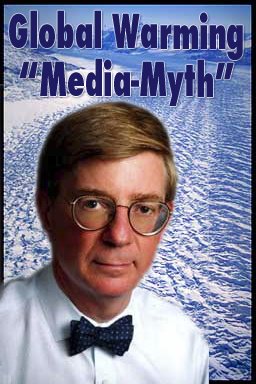
Graphic by Larry Ray / The Rag Blog.

Will says there is no man made global warming, and that it is all going to be OK? All the scientific warming measurements for 2008 are inconsequential? And he is called the most influential writer in America?

By Larry Ray / The Rag Blog / January 22, 2009

I sometimes read Newsweek magazine’s back page column by George F. Will because he can be a fine writer. In 1977, Will won a Pulitzer Prize for Commentary. Heretofore, I usually have been only mildly irritated by his generally conservative timbre and his trademark tendency toward sesquipedalian prose. But with his PhD from Princeton and his M.A. from Oxford, he instinctively must scatter about long, generally unfamiliar words like journalistic territorial scent marks on the page. Will has been called, perhaps “ … the most influential writer in America” by the Washington Post writers group. And that is what troubles me.

Will’s recent column in the January 26th edition of Newsweek see-saws between tepid stamps of approval for George W. Bush’s spare positive moves, and a final verbal lashing for his incompetence and failed leadership. His latest column artfully winds its way through his assessments of the name, “Operation Iraqi Freedom,” to the failures of hurricane Katrina disaster assistance, the failed Supreme Court nomination of Harriet Miers, and then in a seeming involuntary, uncontrollable Tourette Syndrome burst of keyboard tapping, this paragraph is awkwardly forced into the column:

Within the lifetimes of most Americans now living, today’s media-manufactured alarm about man-made global warming might be an embarrassing memory. The nation will then be better off because Bush—during whose administration the embarrassing planet warmed not at all—refused to be stampeded toward costly “solutions” to a supposed crisis that might be chimerical, and that, if real, could be adapted for considerably less cost than will be sunk in efforts at prevention.

Wait, did I just read that? Yep. Will says there is no man made global warming, and that it is all going to be OK? All the scientific warming measurements for 2008 are inconsequential? And he is called the most influential writer in America?

Will chooses his words carefully. He qualifies his claims with “man-made,” “supposed crisis” and “if real,” all code that positions him way to the right. But then he suggests the supposed crisis “might be chimerical” (imagine your own mythical fire-belching she-goat animal made from mismatched body parts) to remain true to his logocentrism, while leaving a door open for maybe, kinda, sorta some kind of climate change. The derailing of his column’s train of thought from reviewing Bush’s two-term presidency to suddenly, jarringly pitching his denial of global warming is what troubles me.

Ultraconservative eagerness to jump on most any convenient juicy liberal-bashing rumor and rush it to press showed itself, sadly, in Will’s Washington Post column this past June when he wrote that “Drilling is underway 60 miles (97 km) off Florida. The drilling is being done by China, in cooperation with Cuba, which is drilling closer to South Florida than U.S. companies are.” Dick Cheney, and GOP House leader, John Boehner both cited the same wild claim to the press, wanting to believe the right wing fiction. All three were forced to offer retractions after Democats and energy experts pointed out the gross error. But the egg had already dried on their faces by then.

A little more poking around shows that George F. Will is, in fact, a darling of man-made global warming denier web sites like climatechangefraud.com who declare they are, “dedicated to debunking, reviewing, and responding to the shrill cries of the media and the global warming zealots who have embraced anthropogenic global warming (AGW) as an eco-religion and not as a scientific endeavor for answers.” I wonder if Will wrote that paragraph for their web site? Most folks just say manmade instead of anthropogenic.

All the debunkers hate Al Gore with a frightening, almost pathological stridency. The professed belief that carbon dioxide has nothing to do with global warming is almost like a secret fraternity handshake among rabid ultraconservatives. In a December 29th, 2007 column Will wrote, “Al Gore won the Nobel Peace Prize that should have gone to nine-time Grammy winner Sheryl Crow, who proposed saving the planet by limiting—to one—”how many squares of toilet paper can be used in any one sitting.”

And from that strange, tasteless toilet paper comparison, Will also has sweepingly minimized concerns of the world’s top atmospheric and environmental scientists with observations like, “The warming that is reasonably projected might be problematic, although not devastating, for the much-fretted-about polar bears, but it will be beneficial for other species. The Arctic Climate Impact Assessment anticipates increasing species richness.”

George’s father, Frederick L. Will, was a professor of philosophy, and specialized in epistemology, at the University of Illinois. Ironically, Will certainly must know that epistemology is the investigation of what distinguishes justified belief from opinion. Today Will sadly seems to be unable or unwilling to make that distinction in his writing.

[Retired journalist Larry Ray is a Texas native and former Austin television news anchor. He also posts at The iHandbill.]

The Rag Blog

Posted in Rag Bloggers | Tagged , , | 5 Comments

Rabbi Arthur Waskow : Religious Leaders Reflect on King’s Vision, Obama’s Promise

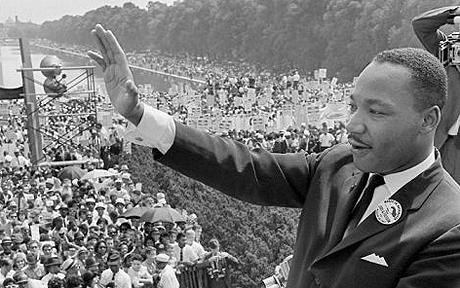
Martin Luther King: Can Obama fulfill his mission?

Our Monday gathering was surcharged with the sense that change had already begun in America, and that beginning at noon Tuesday, we could work toward making King’s vision a reality.

By Rabbi Arthur Waskow / The Rag Blog / January 22, 2009

On Monday evening, one thousand people jammed All Souls Church in Washington, DC, for our renewal of the teachings of Martin Luther King in his Riverside Church speech of April 4, 1967 — exactly one year before his death. He spoke about undoing racism, militarism, and materialism in American society and moving to create the Beloved Community.

Our Monday gathering was surcharged with the sense that change had already begun in America, and that beginning at noon Tuesday, we could work toward making King’s vision a reality –- instead of struggling desperately as we have the last eight years to prevent America from descending further into war, torture, starker class divisions, and shredding the web of life on earth.

This effort began with a flash of thought that The Shalom Center brought to The Tent of Abraham, Hagar, and Sarah last spring. The Tent enriched and developed it, and then the Washington event was imagined and organized by the Olive Branch Interfaith Peace Partnership.

We intend to revitalize Dr. King’s vision as a guide to “We the People” — for as President Obama said on Tuesday in his Inaugural Address, it is WE, not him, who will make change happen. Below you will find some passages from both speeches. We suggest comparing them to see whether and how Dr. King’s vision can become a yardstick to measure change in these next years.

[We are posting on You-Tube some of the Monday talks as swiftly as we can get the videos together (and special thanks to Charles Lenchner for his work on that). The first two items are my talk in two parts here and Source and here. ]

Monday’s array of religious leadership and passion was extraordinary. It stretched from the heads of the National Council of Churches, the Islamic Society of North America, the Council on American-Islamic Relations, the Unitarian Universalist Association, Common Cause, and the Fellowship of Reconciliation to institutional leaders like Sammi Moshenberg of the National Council of Jewish Women to prophetic figures like Rev. Andrew Marin (an evangelical minister committed to the full inclusion of gay and lesbian sexuality in God’s love), Marie Dennis, Rabbi Michael Lerner, Sahima Faheem Sundas, Rev. Rita Nakashima Brock, Rev. Joan Brown Campbell, Rev. Jim Forbes, Dr. Vincent Harding, Monsignor Ray East, Rev. Osagyefo Sekou, Rabia Harris, and Celeste Zappala. There was music by the All Souls Choirs and by Sweet Honey in the Rock member Ysaye Barnwell. There was a litany of “Ashes, Stones, and Flowers” written by Rev. Patricia Pearce of Philadelphia.

Prayers of heart and soul, wisdom of the intellect, song-filled throats, and dancing bodies joined to celebrate God and the renewal of America. Two of my grandkids – eight and four years old — were there. A specially made videotape from 93-year-old activist Grace Boggs of Detroit was there.

We were not alone. In places as disparate as Judson Memorial Church in New York City and Interfaith Paths to Peace in Louisville, hundreds gathered, studied Dr. King’s Riverside Church speech of April 4, 1967, and pledged themselves to work for the revolution of values he had envisioned.

Below you will find my own connections and comparisons between several passages in Dr. King’s Riverside speech and passages in President Obama’s inaugural address.

They seem to share a strong commitment to ending the sharp divide between the wealthy and the poor, though Dr. King’s remarks are much more pointed.

They share a desire for more diplomacy in world affairs and less dependence on military force – though Dr. King is much stronger in conviction that war will not work to advance our freedom or the world’s. [It is an interesting exercise to insert the word “terrorism” wherever King has “communism.” How does this make us think and feel?]

The President raises an issue that was not on Dr. King’s radar screen a generation ago: the dangers our use of fossil fuels is posing to the web of life itself.
King’s Vision as a Yardstick To Measure Obama’s Policy

MLK: I am convinced that if we are to get on the right side of the world revolution, we as a nation must undergo a radical revolution of values. We must rapidly begin the shift from a “thing-oriented” society to a “person-oriented” society. When machines and computers, profit motives and property rights are considered more important than people, the giant triplets of racism, materialism, and militarism are incapable of being conquered.

…True compassion is more than flinging a coin to a beggar; it is not haphazard and superficial. It comes to see that an edifice which produces beggars needs restructuring.

A true revolution of values will soon look uneasily on the glaring contrast of poverty and wealth.

Obama: Nor is the question before us whether the market is a force for good or ill. Its power to generate wealth and expand freedom is unmatched, but this crisis has reminded us that without a watchful eye, the market can spin out of control — and that a nation cannot prosper long when it favors only the prosperous.

The state of the economy calls for action, bold and swift, and we will act — not only to create new jobs, but to lay a new foundation for growth. We will build the roads and bridges, the electric grids and digital lines that feed our commerce and bind us together. We will restore science to its rightful place, and wield technology’s wonders to raise health care’s quality and lower its cost. We will harness the sun and the winds and the soil to fuel our cars and run our factories. And we will transform our schools and colleges and universities to meet the demands of a new age. All this we can do. And all this we will do…

MLK: A true revolution of values will lay hands on the world order and say of war: “This way of settling differences is not just.” This business of burning human beings with napalm, of filling our nation’s homes with orphans and widows, of injecting poisonous drugs of hate into veins of people normally humane, of sending men home from dark and bloody battlefields physically handicapped and psychologically deranged, cannot be reconciled with wisdom, justice and love. A nation that continues year after year to spend more money on military defense than on programs of social uplift is approaching spiritual death.

[…]

There is nothing, except a tragic death wish, to prevent us from reordering our priorities, so that the pursuit of peace will take precedence over the pursuit of war. […]

This kind of positive revolution of values is our best defense against communism. War is not the answer. … We must not engage in a negative anti-communism, but rather in a positive thrust for democracy, realizing that our greatest defense against communism is to take offensive action in behalf of justice. We must with positive action seek to remove those conditions of poverty, insecurity and injustice which are the fertile soil in which the seed of communism grows and develops.

Obama: To the people of poor nations, we pledge to work alongside you to make your farms flourish and let clean waters flow; to nourish starved bodies and feed hungry minds. And to those nations like ours that enjoy relative plenty, we say we can no longer afford indifference to suffering outside our borders; nor can we consume the world’s resources without regard to effect. … With old friends and former foes, we will work tirelessly to lessen the nuclear threat, and roll back the specter of a warming planet…. For the world has changed, and we must change with it…

MLK: Our only hope today lies in our ability to recapture the revolutionary spirit and go out into a sometimes hostile world declaring eternal hostility to poverty, racism, and militarism. With this powerful commitment we shall boldly challenge the status quo and unjust mores and thereby speed the day when “every valley shall be exalted, and every mountain and hill shall be made low, and the crooked shall be made straight and the rough places plain.”

Obama: Recall that earlier generations faced down fascism and communism not just with missiles and tanks, but with sturdy alliances and enduring convictions. They understood that our power alone cannot protect us, nor does it entitle us to do as we please. Instead, they knew that our power grows through its prudent use; our security emanates from the justness of our cause, the force of our example, the tempering qualities of humility and restraint.

I hope you will use this information for study and for developing approaches to action. I would very much like to hear your responses.

Shalom, salaam, peace,

Arthur

The Rag Blog

Posted in Rag Bloggers | Tagged , , , , , | 2 Comments

Tom Hayden : Is Obama Rethinking Afghanistan?


‘Obama seems to be repositioning himself in the direction of Afghanistan diplomacy while not retreating from his campaign rhetoric.’

By Tom Hayden / January 20, 2009

President Obama pledged to “forge a hard-earned peace on Afghanistan” today, a potentially significant reformulation of his war aims.

Peace advocates favoring a diplomatic solution in Afghanistan and Pakistan can be cautiously hopeful as they step up criticism of the expanding war in Afghanistan and Pakistan.

As a candidate, Obama continually pledged to escalate the military conflict by sending at least 20,000 more US troops. That will not change. But there is a major difference between an open-ended occupation and a presidential commitment to a “hard-earned peace.”

The attention of the global peace movement is sure to focus now on the substance of that diplomatic settlement.

The next days also will reveal the President’s level of commitment to a 16 month troop withdrawal from Iraq and the closure of the Guantanamo prison facility.

Source / The Huffington Post

Also see Memo to Obama : We Must Rethink Afghanistan Policy by Sherman DeBrosse / The Rag Blog / Jan. 21, 2009

Thanks to Carl Davidson / The Rag Blog

Posted in RagBlog | Tagged , , | Leave a comment

Great Job, Junior!

Creator’s Syndicate / The Bush Legacy / About.com.

‘I mean, how incompetent do you have to be to send truckloads of ice to Maine and Montana while Hurricane survivors are still without power in Mississippi and Louisiana?’

By Steve Russell / The Rag Blog / January 22, 2009

AIDS in Africa.

I recently made the bald unsupported assertion that Bush II must have been correct about something or done something right.

Directing serious resources to fighting AIDS in Africa. Serious problem to which Clinton gave lip service but Bush gave money. An expenditure that has no short term benefit for the US.

Yes. Bush did something right.

It only took me two days to come up with that.

When I look back on the last eight years, I am flabbergasted at how God-awful the Bush Administration was in every sense. I thought Reagan was the Prince of Darkness but at least he put some people in high positions who were fundamentally competent, so you knew basic stuff would get done even if the government overall was steering in a direction you did not like.

I mean, how incompetent do you have to be to send truckloads of ice to Maine and Montana while Hurricane survivors are still without power in Mississippi and Louisiana?

And how can you look back on it and regret an unfortunate photo? Land Air Force One? What about a few pallets of bottled water and MRE’s for the people in the Superdome? How stupid is that?

Heckuva job, Bushies!

The Rag Blog

Posted in Rag Bloggers | Tagged | Leave a comment

Frank Cieciorka’s Self-Inscribed Eulogy

Frank Cieciorka

In Memoriam: Frank Cieciorka
By Bruce Anderson / December 3, 2008

Frank Cieciorka died [at the end of November 2008] at his home in Alderpoint, Southern Humboldt County. A modest, soft-spoken man whose passing will sadden everyone who knew him, Frank was born in 1939 in Binghamton, New York but grew up in nearby Johnson City, a town then dominated by a shoe factory where the artist first experienced the world of work. Frank was an early hero of the Civil Rights Movement, and had been a radical of the best independent type America can produce all of his adult life, a skeptic for justice, a resistor of all the oppressive little orthodoxies, some of the smallest ones oppressing us right here in Ecotopia.

I’m happy he lived long enough to see Obama elected president, not that Frank would, or could, switch off his critical faculties. Frank became a well-known artist, best known for his lesser work, his art for the emblematic, pivotal events of the 1960s. None of the obituaries I’ve seen mention his wonderful paintings of the people and land in and around Alderpoint, the very best I know of in inland Northern California.

I knew Frank wasn’t well. The last time I saw him in Garberville he could barely get up the stairs to Andy Caffrey’s place. The emphysema that finally carried him off had cost him most of his lung capacity. He said he hadn’t stopped smoking soon enough for his lungs to regenerate.

I hope what follows, most of it in Frank’s own words, will serve as the obituary this remarkable man deserves.

* * *

“My parents were first-generation Americans. My grandfather immigrated from Poland, an area near the Russian border, to escape being drafted into the Russian army, a 25-year hitch under the Czar. ‘Cieciorka’ is Russianized Polish that was something like Cicherski in the old country. To pronounce ‘Cieciorka’ substitute the letter h for both the i’s.”

“My first hero and role model was Doc Ricketts in Steinbeck’s novel, Cannery Row. That book made me realize I was a bohemian at heart.”

Accepted as an art student at the Pratt Institute in the big city but unable to attend because tuition was beyond his 18-year-old ability to pay, Frank headed west to San Jose.

“My father was working for IBM in their warehouse at Binghamton, and when IBM opened up their plant in San Jose they wanted experienced workers to staff it so they offered to help with moving expenses for anybody willing to transfer to California. This was early IBM, 1957. My parents jumped at the chance and moved to California. But the move was so expensive they had to pilfer my college savings account. I’d worked all through high school, mostly at the shoe factory where I started when I was 14. I made a dollar an hour, but I paid my parents $5 a week room and board from the time I was 15 until I graduated from high school. It was the way they were raised. My father always told me about how he turned over his whole paycheck to his mother when he was a kid and she’d give him 50¢ back from his paycheck. On his wedding day he turned over his last paycheck to his mother and got his last 50¢ back. My father said his parents had a clothesline in the attic, one for each kid, and every time they spent any amount on the kid, including the cost of his birth at the hospital, they would take a clothespin and hang the receipt up on the clothesline. The last receipt on the clothesline was the one for the lunch bucket they bought for the kids when they went to work. My father said after he was married he had to buy back all the receipts on his clothesline!”

In sunny California, the times were a-changin’…

“They sure were, and me with them. My parents were pretty much apolitical. They were nominal Democrats but voted for Ike. They wholeheartedly disapproved of my political activities. It got to the point where we were semi-estranged for a while. I was drafted in 1961. I took the physical at the Oakland Induction Center and passed that. The last thing we were supposed to do in the process was sign the loyalty oath after looking over a questionnaire prepared by the Attorney General. I looked it over and raised my hand and said, ‘You’re asking me about my political beliefs and associations here, which I have a constitutional right to, and which are none of your business. I’m not going to sign this. The sergeant or whatever he was said, ‘All right, you go to that group on that bench over there. And then the Army kidnapped me. They took me to a motel and held me there overnight before they let me go. Army counterintelligence investigated me for a year and a half and finally cleared me of whatever it was they were investigating me for. The FBI, on two occasions, went to my father’s workplace and asked the manager if they could talk to him. They would interview him while he was on the job and make him look bad in front of his fellow workers. My father was very unhappy with me. It wasn’t until I went to Mississippi and my name got into the paper in a positive story about Freedom Summer that my parents finally decided that I wasn’t such a bad guy after all. The president of IBM himself walked into the warehouse where my father worked to shake my father’s hand for having such a great son.”

He was hanging out with all the wrong people by ’61 or so.

“People forget that there weren’t that many radicals at that time, and that the individual police departments of the Bay Area had what they called ‘red squads.’ They kept files on the people who showed up for demonstrations, small as those numbers were, and if you showed up in the wrong places often enough you got yourself a red squad file and an FBI file.

“The Communist Party in San Jose called themselves a club. They had meetings on Sunday mornings so it would look like they were going to church. I worked with a lot of them. I was pretty close to them. I also worked for CORE and Friends of SNCC. So I’m sure when the FBI was investigating me when they came across these associations. I considered myself a radical revolutionary communist with a small c. I’d read a lot of Marx and Lenin and all the things you were supposed to read to keep up with the people involved in these groups. In fact, I organized the first W.E.B. Dubois Club in San Jose. Terrence Hallinan — K.O. Hallinan — got me to do that. He was the main organizer of young people in the Bay Area for the old CP. He called me one day and said they wanted to get a W.E.B. Dubois club going in San Jose, but they didn’t want a party member to do it; they wanted a fellow traveler, who couldn’t get smeared as a… And basically that was my role, to be a fellow traveler, and to do things that an actual party member couldn’t do without being smeared. So I did it. I formed the W.E.B. Dubois Club. I applied for membership in the party, and even got an interview with a party member, a printer, a guy I’d worked with a lot. He did the official interview, but towards the end of it he said, ‘You know, intellectually you may be a Marxist, but in your heart you’re an anarchist. You wouldn’t be happy in the party.’ I got a dozen or so people on campus to join, but it collapsed when there was some kind of convention or congress where a resolution was proposed to throw all the Trotskyites out of the club. There was an acrimonious discussion, arguments, fistfights — and 9 of the 12 members from San Jose walked out in disgust, leaving only the three Trotskyites. And that pretty much ended the Dubois Club in San Jose.

“It was a great time, though, and I loved college. I liked it so much I spent 7 years getting a four year degree. I took all kinds of courses: literature, film, music, biology, history, philosophy, logic, political science, economics and, of course, the art courses I needed for my art major. My favorite class was Professor Richard Tansey’s art history course. He gave me a lasting appreciation of the art and culture of Western Civ that’s withstood the current political rectitude. I lived in apartments right off campus close to downtown. My roommate during my last year was Luis Valdez, who went on to become a well-known movie director. We shared an apartment above the Jose Theater — three movies for a dollar.

“I’d been very active in Friends of SNCC for about a year before Freedom Summer, mostly in fundraising and general support. I knew a lot of the people who were active in SNCC. When they announced Freedom Summer I applied and was accepted, but that was also the summer that the Progressive Labor Party was organizing a trip to Cuba, and I applied for that too, and was accepted for the Cuba trip. Luis had applied for the Cuba trip and he decided to go to Cuba and I decided to go to Mississippi.

“To go with SNCC to register voters in Mississippi, we had to first go to Oxford, Ohio, for a week of orientation. I was assigned to Holly Springs in the northern part of Mississippi, about 50 miles south of Memphis. It was the largest voter registration project in Mississippi. We covered about five different counties from our headquarters in Holly Springs. In fact, Goodman and Schwerner had gone down to Holly Springs a couple of days before the rest of us, then to Philadelphia, Mississippi, to check out a church burning there. And just as we were getting loaded on the chartered buses to go to Mississippi from Ohio, we got the word that Goodman, and Schwerner and Cheney were missing.

“I immediately ran to the bathroom with diarrhea. What have I gotten myself into here? But we drove down overnight, arriving at Holly Springs at 3 in the morning.

“Holly Springs was a good sized town of 20,000 or so. It had a nice downtown, a courthouse square with old trees, civil war statues ringed by stores. The further away from the center of town you got the more seedy it got. And rundown. And of course we were living in the black part of town, which was pretty decrepit.

“Whenever we walked downtown to go shopping, we’d get all kinds of dirty looks. We wore chinos and white shirts, the standard uniform for white SNCC people. The blacks all wore bib overalls. The whites looked like college students pretty much. But they knew who we were. You had to register your car within 30 days of arriving in the state and you had to get Mississippi license plates. They had reserved a particular sequence of numbers for civil rights workers. Our cars would be recognized anywhere in the state by our license plate numbers. There was no way we could be anonymous. Younger black people were all for us; they’d cross the street to shake our hand. But the older ones were very wary of us. We’d try to organize a mass meeting by going door to door and people would just nod and agree with us — ‘Yeah, I’ll be there. You can count on us.’ But only a few older people would show up.

“The one time I got beat up it was by a couple of beefy young guys. But usually you could walk down the street and feel fairly safe. You’d get insults tossed at you, but you never thought somebody was going to just come out and sucker punch you. At our meetings, that’s when it would get hairy sometimes. There was one meeting at a black church at night out in the woods that I won’t forget. As the meeting was breaking up and people were leaving, the Klan showed up. They were in street clothes but somebody recognized them, or at least some of them, as being members of the Klan. As we drove out of the parking area, they drove in. So we drove like hell and got out of there, and were back on the highway before we realized we’d left a guy behind, a black guy named Elwood Berry. I think he was from Cornell. Some of us had to go back. We snuck back through the woods; we could hear the Klan stomping all over the place, looking for anybody left behind. There were at least a dozen of them.

“We assumed they were armed. That was always the assumption. We found Berry hiding in the woods, and we got him out of there. The time I got beat up I had just been put on staff as a field secretary. It was the end of summer and volunteers were going home and going back to school. I said I wanted to stay on so they made me field secretary. $10 a week was the pay.

“An election was coming up, and just across the river in Arkansas a black candidate was running for the Agricultural Board. It was very powerful position because the commissioners assigned cotton allotments; they told farmers how much cotton they could grow. It was important to black sharecroppers to be represented on this board. A black candidate was running and a big a turnout of black voters was needed to elect him. A lot of sharecroppers lived way out in the boonies and didn’t have transportation to the polls. So a whole bunch of SNCC field secretaries from Mississippi were brought in to help out with the logistics of the election. My job was to drive out to certain plantations, fill the car with sharecroppers and anybody else who was eligible to vote, drive them to town, wait until they voted, and drive them home again. And then take another load into town and back — all day. One group I brought in, I dropped off at the polling place to vote, then I parked in the parking lot across the street from the polling place to wait for them to drive them home again when they were finished voting. There were a bunch of people milling around outside. The chief of police was there. I was sitting there in my car, a SNCC car. Two guys came up and opened the doors, both doors, and jumped and squeezed me in the middle and started beatin’ on me inside the car. They couldn’t haul off and slug me because there wasn’t enough room to do that in the front seat, so they dragged me out of the car, took my glasses off and proceeded to beat me. I assumed the fetal position on the ground, and they proceeded to kick me and stomp me and were bending over to punch me. But they were frustrated because they couldn’t really get at me, so a couple times they picked me up in the air and lifted me up over their heads and just threw me down, which would break open my fetal position so they could get in a couple good punches before I could curl back up again. For me, it was one of those rare out of body experiences. I felt like I was somehow hovering about six or eight feet above my body watching these two guys beat me up, feeling no emotion. I remember thinking to myself, ‘Well, the chief of police is across the street watching this, so they’re not going to kill me.’ And I was clearly thinking ahead. ‘Let’s see, I’m supposed to be in Gulfport tomorrow morning for a staff meeting. I’m obviously going to be too damaged to drive so I’m going to have to drive with somebody else.’ While these guys are just pummeling me! Finally the chief of police walked over and said, ‘OK boys, we’ve had enough fun now’ and arrested me for failure to yield the right of way.” (Laughs)

“He took me to jail. A SNCC officer called the SNCC office in Atlanta. Atlanta called Friends of SNCC in San Jose, San Jose SNCC called my congressman, Don Edwards, who is a really good guy. And Edwards called the Sheriff’s Department in Grove, Arkansas. I was in jail for 20 minutes. The chief of police comes in and says to me, ‘You must be hot shit. I just got a call from your congressman who said if we don’t take you down to the hospital and get you checked out for injuries he’s going to have a Congressional committee down here tomorrow morning investigating us.’ They took me to the hospital and cleaned up my cuts and bruises and checked me for broken bones, and I got bailed out. I was amazed at how quickly they reacted.

“I’m glad I had the Congressman I had at the time. I forfeited bail. Five bucks for failure to yield right of way. But the worst jail I was in was the one in Holly Springs. It had been condemned; the toilet was plugged up and the place stunk something fierce. Steel bunk, no mattress. I was the only guy in it. They didn’t put me in the main jail. The walls were just covered with graffiti. There was a rag in the sink and I wet it and washed off a spot on the wall and wrote some freedom slogans on it. When I finally got bailed out, I was walking down the steps, and the sheriff comes running down and grabs me by the collar and says, ‘You son of a bitch! You can’t write that stuff on the walls of my jail! You’re under arrest!’ I was charged with defacing the Marshall County jail.

“The best jail I was in down there was in Oxford, Mississippi, home of Ol’ Miss and William Faulkner. I was in that jail for five days. It was very clean and the jailer’s wife was a great cook. That was some of the best food I had the year I was in Mississippi.

“I didn’t tell the other inmates that I was a civil rights worker. I guess the sheriff in the jail in Oxford didn’t either, although by the end of it one guy figured it out. He let me know he knew why I was there. But he was more curious than hostile. He couldn’t understand why someone would risk going to jail for registering black people to vote. He was a young guy, about my age. And there was one old guy of about 60 who was in jail because he had a 13 year old girlfriend. She’d stand out in the parking lot and wave to him, and he’d stand on this bench and look out the window and wave back.

Frank Cieciorka

“I was in the Oxford jail for the crime of carrying a placard. It was an 8×11 sheet of paper pinned to my shirt that said I was a voter registration worker. This is a funny story itself. We were going to have a big freedom day. Everybody would gather at this church and then the people who were going to attempt to register to vote would march up to the courthouse and try to register to vote. They wanted a SNCC worker to lead the parade, as it were. ‘It’s an absolute certain arrest,’ they said. ‘We need a volunteer to be arrested.’ I had just received another draft notice and was supposed to show up in Memphis the next day to be inducted into the Army. So when they said it was a sure arrest, and they wanted a volunteer, I raised my hand — anything to avoid the Army. So they taped this paper to my chest and I led a group of about 20 or so people down to the courthouse; as soon as I walked into the registrar’s office they arrested me. I did five days on that one. Paul Krassner bailed me out.

“When Friends of SNCC read that I was in jail and my bail was $500, they called Krassner and asked him to make a donation. He had re-produced a poster of my cartoon, “One Nation Under God,” and had been selling them for $1 each in The Realist since March of ’64, and I was arrested this time in July of ’64, only a few months later. Anyway, he sent $500 down, which he said were proceeds from the sale of the poster. I’ll be damned, I said. It had made at least $500 in only two months. Krassner stipulated that when the bail was returned it should be considered a donation to SNCC.

“Even when you tried to get away from it the violence kind of followed you around. One time we had a staff meeting down in Gulfport; then we decided to go to New Orleans for a party. An interracial group of us went on into New Orleans. Just walking down the street we got chased by a bunch of young thugs until we finally got to a crowded street where we could split up and mingle with the crowd. We thought that New Orleans was more sophisticated than that!

“And another occasion, Halloween, somebody drove by in the middle of the night and fired a couple of shotgun rounds into our house. A black guy who was going to run for some office in the Holly Springs area was found dead in a field. He’d been run over repeatedly by pickup trucks. There was always something. A lot of people on our side had guns, too. You could hardly blame them.

Occasionally there’d be a federal marshal present if we had announced an event likely to result in an incident. If we announced a Freedom Day or a mass registration, something like that, a federal marshal or FBI agent would show up to observe. That’s all they would do — observe. At one attempted registration people were getting beat up on the courthouse steps by the cops using clubs as a couple FBI agents stood there watching. We ran up and said, ‘Hey! Look! Our civil rights are being violated! We’re being beaten up by the cops for trying to register to vote. Do something! They said, ‘We can’t do anything. We’re the Federal Bureau of Investigation, all we can do is investigate. We have no power to make arrests.

“Stokely Carmichael’s famous Black Power declaration was in the summer of ’65, a couple of months after I left Mississippi, but I was still considered to be on staff. A lot of the freedom school teachers were saying that what they needed was some material on black history that was accessible to people with limited reading skills….. My wife at the time and I wrote it and illustrated it. We finished that and felt we’d pretty much done what we could in Holly Springs. We went back to San Francisco and started work on The Movement newspaper, which had begun as a Friends of SNCC newsletter. It was mostly concerned with the Civil Rights Movement.

“I was Stokely’s driver on a couple occasions. I was considered one of the better drivers in tight situations because I had gotten people out of scrapes by my recklessness behind the wheel. I was his bodyguard on two occasions when he came to speak in San Francisco. Once was in Oakland at a Black Panther meeting. I had a Colt .45 ‘Commander.’ The short one. I tucked it in my pants in the small of my back. San Francisco SNCC needed two or three guys to be bodyguards so I volunteered. We got to the auditorium where Stokely was going to speak and the Panthers are searching everybody as they go in, patting them down. I got to the door and the guy pats me down and never touches the small of my back. And after it was over and we were leaving I went over to the guy who frisked me and turned around and flipped up my shirt and showed him the gun and said, ‘Next time, pat the small of the back, too.’

“Another time Stokely was speaking at the Fillmore auditorium. There was going to be a dance, a fundraiser. Hugh Masekela was going to entertain. Stokely was going to speak and I was one of the bodyguards. They had rent-a-cops also for security. We approached the rent-a-cops beforehand and said, ‘Look, we three guys are armed. We’re Stokely’s bodyguards. If anything goes down, know that we’re on your side. The rent-a-cops said, OK, but if anything happens, we’re trained professionals. Anyway, later on in the evening I’m out on the dance floor twisting and turning and jumping all over when all of a sudden this 45 comes out of the small of my back and clatters across the floor. The crowd just rolled their eyes. I liked Stokely a lot. At the time I supported his position. I thought that the black nationalist movement at the time was healthy. I still do to some extent. The last time I saw him was around ’67 or so. I did a photo shoot with him for the newspaper and that was the last I saw of him.

“And the Haight. I thought it was great. Just the sheer energy that they had. I thought, ‘God! This is where we should be proselytizing, propagandizing, try to harness this energy and develop some political consciousness. But the left for the most part just held the hippies in disdain. I also thought it was sort of schizophrenic — camping, smokin’ pot, droppin’ acid, working on the newspaper, going to demonstrations. In fact, it resulted in a major psychotic break for me in 1969. People’s Park was it. When that was over I cracked completely. I was really nutso for several months. People were taking care of me. In and out of the hospital. Bouncing me around. I’d get so outrageous and so out of control that my friends finally decided they couldn’t handle me and they busted me into Mt. Zion. I spent two weeks there and realized that I had to get my act together or I’d spend a lot longer time there. I got out and more or less kept it together. I decided I’d get back in the movement and back into political activity rather than leave town as a basket case. And I did for another two years. I helped form an organization called People’s Press, a collective of about a dozen people who produced and printed and distributed our own material. We started with a pamphlet on the history of Vietnam. Terry Cannon wrote it. I illustrated it. We printed it. We had our own printing press, our own darkroom. Our group was more than half women, too. Each member apprenticed him or herself to a printer to learn the trade. I apprenticed myself to a guy named Earl Hendra who had a big dark room in the Mission District. I learned all the camera work necessary for printing. Then I bought a camera, a huge camera 16 feet long. I built a darkroom around it and taught everybody else how to use it. Several women apprenticed themselves to printers and learned how to run first the multilith and then the bigger presses and came back and taught everybody else how to run them. That’s how we learned the trade, by teaching each other. It worked very well.

“By 1972, I was pretty much back together. But I realized that I just didn’t have the enthusiasm for the political work that I had before. The war was still going on. Nixon was re-elected. I had become a backpacking fanatic shortly before that. Part of my therapy in getting back together was some friends took me backpacking, and I realized that when I was out in the wilderness, like the Sierras, or the Trinity Alps, I felt totally, absolutely sane. Then we’d be driving back to the city after spending four or five days out in the wild and just that sea of red tail lights heading into the city would make me just feel the panic rising in me. So I went backpacking every chance I could get. Then it occurred to me that I should just move to the country and go backpacking every day if I wanted to. I’d met some people from Alderpoint and they invited me up for a visit. I liked the town and thought, ‘Gee, this is as good a place as any if I’m going to move to the country.’ I asked if there was any place available I might rent, and they pointed me in the direction of a little three-room cabin for $25 a month. I had about $50 to my name at the time, but I went up and rented it, drove back to the city, and within a month I closed up all my urban business and got in my Volkswagen bus and started a new life in Alderpoint. I purchased this property Karen and I live on now shortly after I got here in ’72. I asked the owner in Santa Rosa if he wanted to sell it and he said, ‘Yeah. Sure. $1500.’ Half an acre with a three-room cabin on it. I borrowed $1500 from my parents and bought it.

“I borrowed some more money to get the initial building materials to get started on my studio. I learned enough carpentry working with an architect who was remodeling a ranch house out here to pick up enough work to buy another batch of materials to work on my own place. When the materials and money ran out I’d go hustle some more carpentry work. And I picked up a little freelance commercial art work from the city now and then to supplement that. All the hippies moved west of 101. Redway and west of there to Whale Gulch and that area. Hardly anybody of the back-to-the-land type came this far east of 101.

“In 1978 a CHP officer busted me for cultivation. I had finished building my house, but I couldn’t afford to live in it so I rented it out to a woman on welfare with three kids. Her rent was just enough for me to make my loan payments that I couldn’t quite afford to make at my income level at the time. I was still living in the old three room cabin down below the house I’d built on my half-acre. I decided that the only way I could pay off this place and live in it was to grow some pot. I planted a bunch of plants in with my tomatoes, and planted a row of sunflowers along the garden edge to act as a screen so it couldn’t be seen from the road. This woman who rented my house had a ten year old boy who was riding a motorcycle around Alderpoint one day. The kid was stopped by a CHP cop who brought him home. It was July 3rd, 1978. My sunflower screen had only grown about shoulder high. As the officer was escorting the kid down the path from the parking area to the house he looked over at the tomato patch and saw the pot plants. He went back to his car and radioed the sheriff’s department to come and bust me. They did, and they took me off to jail in Eureka.

“The two deputies got here in a hurry. They roared up and said, ‘All Right! What’s happening?’ The CHP officer says, ‘We’ve got these people here and they have some pot plants. The woman and her kid are in the house.’ One of the deputies said, ‘Why did you call in, Officer needs assistance? We thought you were in trouble! I ran somebody off the road trying to get here!’ The CHP guy, an old sergeant who everybody around here hated, says, ‘Well, you know how tough these feminists can be these days.’ I told the deputy, ‘Look. I own this property. She’s my tenant. I’m totally responsible for anything that happens here.’ She wasn’t arrested. I was. I spent the weekend in jail because it was the July 4th weekend. My bail was $2100. I couldn’t afford it. The guy in the next cell asked me, ‘What’s your bail? I said, $2100. He said, ‘What are you in for?’ I said I was in for cultivation. He said, ‘Jesus! I’m in here for assault with a deadly weapon and my bail is only $700!’ Finally the judge got back to town after the weekend and let me out on my own recognizance.

“It took me eight court appearances and the better part of a year before it was finally dismissed as an illegal search and seizure. The CHP officer had no business bringing the kid home. Their own rules in cases involving minors say they are supposed to choose the option that least restricts the freedom of the minor. He’d thrown the kid in his patrol car and driven him home. So, the judge decided that was illegal search and seizure.

“I met Karen in ’79. Mutual friends had been suggesting we meet each other because we’re both artists. I had seen some of her stained glass work and really liked it. Then somebody needed to get a newspaper article to me and she lived way out in the boonies and she said I’ll just leave it with Karen Horn who lives in Redway and the next time you’re in town you can stop by and pick it up. So I went to her house and she asked me to have a cup of tea. We sat around and talked and I liked her. We went out to dinner and we started seeing each other regularly. We had a long distance relationship for four years. She was in Redway I was in Alderpoint. Every Thursday, my town day, I would go to town, take care of business and she would cook dinner and I’d spend the night. And then on Saturday she and her daughter Zena would come to Alderpoint and I would cook dinner for her and Zena and they’d spend the night and go back to Redway on Sunday. After four years of that we decided we should try living together. In ’84 Karen moved in with me. By then I was in the big new house with the big new studio and we thought we’d be able to share the studio because it was 16 x 32 feet. But we soon found we both needed more space than that. So we built the new studio.

“I’ve learned a lot from Karen. My strong suit is drawing. I’m only OK in color and not good at composition. My favorite compositional device was a vignette with things just sort of fading out at the edges. I wasn’t worried about squares and rectangles and so forth. Karen is very rigorous in her compositions.

“At San Jose I kind of coasted on my drawing ability. I probably could have gotten a lot more out of the art department if I’d applied myself more. But I was too much into political activity. That took up most of my time. And I was just overwhelmed by all the possibilities for learning… everything! Here you are at a university that teaches classes in science and literature and history and I wanted it all. So between politics and the liberal education, I’d say I slighted the art more than I should have.”

Lincoln Cushing asked Frank about Frank’s famous clenched fist woodcut.

“Moving leftward from my infatuation with Ayn Rand as a freshman, I became active in the peace movement around 1959. When the House Committee on Un-American Activities held their hearings in San Francisco in May 1960 I joined the 5,000 strong demonstration in front of City Hall motivated mostly by civil liberties and free speech. There was a sizable group of Communists, Trotskyists, Anarchists, and other assorted reds off to one side thrusting fists into the air and chanting radical slogans. I remember feeling somewhat uncomfortable being associated with this group who seemed to be much more radical than I and I moved to another part of the crowd. I didn’t attend the next day, May 13, because I had an important art history mid-term that I didn’t want to miss. That night watching the news on TV I was outraged at seeing my friends washed down the City Hall steps with fire hoses. The next day I joined the demonstration and this time positioned myself in the midst of the reds and had my fist in the air with the rest of them. Thus I can pinpoint my radicalization to Friday, May 13, 1960. Shortly after that I joined the Socialist Party and, having turned 21 that year, voted for Norman Thomas in the November election. It wasn’t all that long before I was voting for Archie Brown and Gus Hall. From that time the fist was one of my fave icons and I used it in cartoons and posters whenever I could. When I got back from Mississippi in ’65 the fist was a natural for the first woodcut in a series of cheap prints. It wasn’t until we made it into a button and tossed thousands of them into crowds at rallies and demonstrations that it really became popular. When I visited the lefty button maker in Berkeley who made them he showed me his wall of all the buttons he’d ever made. Literally dozens of organization had either incorporated the woodcut into their logos or used it in some fashion to promote some cause or issue.”

Frank is survived by his wife, Karen Horn of Alderpoint; his step-daughter, Zena Goldman Hunt of Italy; and his brother, James Cieciorka of San Jose.

Source / Anderson Valley Advertiser

Please also see James Retherford : Steven Heller, The New York Times, and our Little ‘Blog of Record’ / The Rag Blog / Nov. 28, 2008.

And also see Legendary Artist of the New Left : Frank Cieciorka Dead at 69 / The Rag Blog / Nov. 26, 2008.

Many thanks to Marilyn Buck for sharing this article with us / The Rag Blog

Posted in RagBlog | Tagged , , , , , , , | 3 Comments

Ridenour Reports on Mexico City Anti-Imperialist Inauguration Day Activities


Obama vs. Palestine, Afghanistan and Iraq
By Ron Ridenour / The Rag Blog / January 21, 2008

Muntazer al Zaidi, the Iraqi shoe thrower, was the champion on presidential inauguration day not Barack Obama, whom 1000 Mexican demonstrators criticized for not having protested Zionist Israel’s invasion of Gaza.

The “embajada de muerte” (Embassy of Death) was attacked with a torrent of shoes as speakers denounced US imperialism for supporting Israeli genocide. The protest was organized by the Mexican Movement in Solidarity with Palestine and the microphone was open to all.

Member groups of the umbrella organization identified Israel as a tool for US domination of the Middle East and especially its fuel. The movements for the emancipation of women and for revolutionary vendors spoke of the authentic struggles for national liberation of the Palestinians as well as the Afghans, Iraqis and the Basques.

Another group, Machetearte, explained that Obama won the elections precisely because the peoples of Iraq and Afghanistan have resisted imperialism­’s invasion and are beating back the mercenary soldiers.

A religious group pointed out that Gaza is a new Auschwitz and those responsible should be brought before a new Nuremberg. They pointed out that Obama must honor his words, the “US is a friend of all nations,” and thus pull out invading and occupying troops throughout the world.

The organizers took on their own neo-liberal government for timidity before the slaughter of innocent Palestinians. Mexico’s government is a lackey still of US imperialism, they said, while much of Latin America is breaking its dependency. The governments of Venezuela and Bolivia were praised for ending diplomatic relations with Israel; organizers called upon their own government to do the same.

For a veteran of protests against imperialism, this manifestation before the embajada de muerte in this city of nearly ten million people reminded me of another one a dozen years ago when some 50,000 of us took the entire eight lane Reforma avenue in support of the Contadora process aimed at kicking the warring United States out of Central American. Now the wars here are over and anti-imperialist governments are in power in some countries. Some are aligned in the new ALBA regional economic pact which operates outside of US imperialism. This is the case in Nicaragua, partially so in Honduras and Guatemala. And in El Salvador, the transformed FMLN guerrilla groups look forward to winning the upcoming presidential elections.

Although US imperialism will remain an active force for some time, it will not take another dozen years for the invaded Middle East to win its sovereignty.

The Rag Blog

Posted in RagBlog | Tagged , , , | Leave a comment

David P. Hamilton : The Remarkable Promise of Barack Obama

Aleesha Chaney, of Springfield, Ill. is seen during the inaugural ceremonies on the National Mall Tuesday, Jan. 20, 2009, before the swearing-in ceremony of President-elect Barack Obama. Photo by Matt Rourke / AP.

These are terrible times and the great demands for change are so glaringly apparent. World capitalism is sinking economically and its continued unrestrained operation is threatening the viability of the planet as a place fit for human society. The situation is becoming desperate and the hopes of much of the world are being placed on Obama’s shoulders.

By David P. Hamilton / The Rag Blog / January 21, 2009.

“I’ve always introduced myself as a black American. From now on, I’m just an American.” — Forest Whitaker.

What does the election of Barack Obama as the president of the United States already mean and what does it promise? There are many correct answers. The following are what I believe to be among the most significant.

What Obama’s election means already was reflected most clearly in the faces of African-Americans attending his inauguration. They bought flags and waved them proudly, sang “The Star Spangled Banner” lustily and tears ran down their faces. This was a pinnacle moment of victory in the history of African-Americans on the scale of the Emancipation Proclamation and the 14th Amendment in the 1860’s and the passage of the Civil Rights and Voting Rights Acts in the 1960’s. Without going so far as saying that racism is dead in America, Obama becoming president went far to rectify a great historical injustice and American racism seems now resolutely defeated.

For the first time in US history, it is confirmed with finality that we are no longer a white society with people of color secondary. Now we are quite officially a multi-racial, multi-ethnic society and arguably the human society that has gone the furthest toward the resolution of racial issues. Whites who have in some way contributed to this struggle, especially those of us who have done so throughout our adult lives, also justly feel a great sense of satisfaction and validation.

Although I have many demands yet unmet and progress is still largely only a promise, I have never in my 65 years felt so hopeful and, although not yet entirely proud, at least less embarrassed to be American. That feeling reflects a great healing that has already been achieved. The ideological foundations of the American Revolution inspired the French Revolution and freedom movements ever since, including that of Ho Chi Minh. Undeniable American progress in racial issues, symbolized by the election of and broad popular support for this African-American president, will reverberate throughout all humanity, influencing racial politics globally henceforth.

We must also recognize the meteoric ascendancy of Barack Obama, which has few historical equivalents. Five years ago, he was a little known state senator in Illinois. Today, he is the most powerful and admired politician in the world, arguably more so on this day than any previous figure on the world stage. He is an avatar, a phenomenon, having risen suddenly to a pinnacle perhaps never previously achieved. He has transformed in an instant the president of the US from the world’s most vilified individual to its most respected. This ascendancy is due not only to his amazing political gifts, but also the world’s neediness. Much of the world beseeches him for leadership. In his inaugural address he forthrightly asserts that a new era in US relations with the world is upon us. The old equations have changed and the world must adjust. For example, I soon expect the delivery of a verbal olive branch from Caracas.

He has an opportunity to globalize leadership, to influence national politicians with his own popularity and credibility among their citizens. The responsibilities heaped upon him are worldwide, truly awesome and unprecedented. Into this role the American people have thrust a relatively young but exceptionally gifted African-American with an African Muslim name. Only a historical moment ago, that was inconceivable.

The transformation embodied by Obama succeeding Bush is stunning. Bush left office with the lowest approval ratings of any US president – ever. Even Nixon resigning in disgrace was more popular. Obama enters office with the highest approval ratings ever polled for an incoming president, higher than Bush at his peak after 9/11. At this moment, these public opinions are held not only in this country, but worldwide. The current good will toward him is almost boundless. His political enemies are cowed, forced to wish him well and not appear obstructionist.

Obama takes over a powerfully unified government. His party’s congressional majorities are dominant. Although they lack one vote from having a filibuster-proof majority in the Senate, three Republican senators are from states where Obama won by greater than 10 per cent. He’ll have a majority on the Supreme Court eventually and will seat a new generation of federal judges in the meantime who will starkly contrast with those appointed during recent decades of Republican rule. He has already displayed copious skills as a consensus builder. His potential opposition is in disarray.

The Republicans have been laid low. The pillars of their power for the past 40 years have been racism, unregulated market fundamentalism, anti-choice on abortion, small government, unprogressive taxes and a militaristic, unilateral foreign policy. These positions are now all political losers. George W. Bush’s failures only amplified their degeneration. I find it hard to imagine how the Republicans reconfigure themselves so as not to become a historic anachronism.

What does Barack Obama promise?

If Obama is to be successful, he will have to become the first “socialist” president of the US and an inspirational leader of the world. If so, he will be a “socialist” in action although not in name, and not because he is an ideologically committed socialist, but because the objective conditions demand solutions that involve and benefit the entire society, a mobilization into a common cause and an augmentation of the commons. If Barack Obama is pragmatic, he will demand solutions in those terms. This is certainly not to say that he will abandon capitalism. To succeed Obama will have to become a social democrat in the European tradition, an FDR and a Leon Blum. The American model of free market fundamentalism, of laissez-faire capitalism, much as Marx predicted, is conspicuously expiring from the weight of its own inherent contradictions and will have to be seriously restructured. That restructuring will have to be in the direction of internationalism, egalitarianism and conservation if it is to seriously address the problems that face us.

The Rag Blog

Posted in Rag Bloggers | Tagged , , , , | 2 Comments

Rabbi Arthur Waskow on the Inauguration : The God of Peace Fared Well

The Rev. Joseph E. Lowery gives the benediction at the end of the swearing-in ceremony at the U.S. Capitol in Washington, Tuesday, Jan. 20, 2009. Photo by Ron Edmonds / AP.

As for President Obama himself, any God worth the salt that was spread upon the Temple offerings would have smiled benignly as he mentioned ‘Christians and Muslims, Jews and Hindus — and non-believers.’

By Rabbi Arthur Waskow / The Rag Blog / January 21, 2009

I thought God — the real God, the One Who cares passionately about justice, peace, and diversity — came out rather well in the Inaugural ceremonies.

God’s official spokespersons did better than I had expected. Rev. Rick Warren –- whose choice I had strongly criticized because of his views about gay and lesbian sexuality –- did far better than I had feared. I was especially moved by his speaking, in English, the Jewish “Sh’ma” about God’s Unity and the Muslim “Bismillah Er Rachman Er Rahim” — “In the name of God Who is Compassionate and Merciful.” I doubt that most Christians knew what he was doing in either case, but Jews and Muslims did.

And I respected his going out of his way to affirm that he spoke in Jesus’ name not as if Jesus were the self-evidently, universally accepted God Incarnate but rather, explicitly that Jesus is the aspect of God that Warren himself feels called by.

I also appreciated his effort to contextualize Jesus as both actually a Jew and in Muslim eyes a prophet by saying his name in both Hebrew and Arabic as well as the Greek by which most of the Christian world knows him.

And though Warren did not confess and repair the sin of his attacks on gay sexuality, his words were in general pacific.

As for Rev. Lowery: he moved me to tears and to delighted laughter too. Tears when he began with a passage from a poem/song by James Weldon Johnson, “Lift Every Voice and Sing,” long known as the “Negro National Anthem.” Not only the words of the song but its melody move back and forth from grief to hope, as they reflect on the past and future of Black life in America.

I know the song and so do my adult children, who learned it in mostly Black schools in the District of Columbia when they were growing up. Indeed, I sang it last Sunday morning when I preached on Martin Luther King and the American future at Old South Church in Boston, and the church leadership chose it from the hymnal of the United Church of Christ to end the service. I thought then, “Every Black church in America is also singing that song this very morning!” But it had not occurred to me that Rev. Lowery might use it.

I am sure that few American whites know it, or understood what Lowery was doing. But practically every Black American did.

I laughed out loud when Lowery then turned upside down the despairing and cynical old Black patter about “black, brown, yellow, red, white.” Who could have imagined these in-group cultural artifacts, these nearly secret rituals of Black life, coming out of the closet in such a public way on this most broadly American occasion?

As for President Obama himself, any God worth the salt that was spread upon the Temple offerings would have smiled benignly as he mentioned “Christians and Muslims, Jews and Hindus — and non-believers.” Monotheists, polytheists, and atheists all included in our community. (Maybe Obama, like many Buddhists, sees Buddhism as a philosophy, not a religion.)

As for much of the content of Obama’s speech –- for example — “A nation cannot prosper long when it favors only the prosperous”: it seemed secular on the surface but at least to my ears bespoke an implicitly religious sensibility. Some of the immediate post-ceremony TV commentary heard the speech as prose rather than poetry; but as I read it later, that line and others seemed to me to glow and chime as poetry. God shining through.

Shalom, salaam, shantih, namaste, peace…

Rabbi Arthur Waskow

The Rag Blog

Posted in Rag Bloggers | Tagged , , , , | 5 Comments

Who Needs Dubya? Texas Still Has John Cornyn to Embarass Us

Where’s Waldo? Hillary Clinton, center, being crushed on the House floor, with Texas Sen. John Cornyn directly behind her. Photo by Reuters.

‘His petty little snit in holding up the appointment of Hillary Clinton to State for an extra day just offers a sniff of dumbness to come.’

By Thorne Dreyer / The Rag Blog / January 21, 2009

See ‘John Cornyn’s True Nature Comes Out of the Closet,’ Below.

Dubya may be gone (though certainly not forgotten), but his erstwhile lapdog continues to howl. How in the world did Texans reelect Sen. John “Corn Dog” Cornyn, our sad sack of a Republican embarassment? His petty little snit in holding up the appointment of Hillary Clinton to State for an extra day just offers a sniff of dumbness to come.

Sarito Neiman wrote from New York: “Can’t you guys get rid of this turkey?”

Well, he ain’t going anywhere soon.

The following comes from boadicea at Texas Kaos.

John Cornyn’s True Nature Comes Out of the Closet
January 21 / 2009

As the Republican Party leaders do their damndest to reduce their relevance and constituency by being institutional assholes, John Cornyn’s ambition and true nature assert themselves.
By voting against confirmation for Hillary Clinton on the day of President Barack Obama’s inauguration he proved that the only thing Big about “Big John” is his pettiness.

Oh, and his ego. With John McCain back to his “I’m not any Republican, I’m a MAVERICK” schtick, and Sarah Palin back in Alaska, John figures he’s the next up for a national profile, and he used his vote in the Foreign Relations committee to get him some face time with reporters.

As the GOP’s new point man on Senate elections, Cornyn faces a daunting task. His party lost eight seats in November and is currently down to 41 out of 100 – a 28-year low.

But he offered a relatively upbeat assessment in his first roundtable with reporters since colleagues picked him to lead the National Republican Senatorial Committee in November.

Foremost, he said, Democrats badly mishandled the Illinois seat left open by Obama. Roland Burris – chosen by Gov. Rod Blagojevich, who has been impeached for allegedly trying to sell the job – will be sworn in today.

Cornyn called the situation “a national embarrassment” that could open a GOP opportunity in a state Republicans would ordinarily have written off next year.

Really, a Texas Republican is going to try to make the case for a “national embarrassment”? The party of Tom Delay, Tom Craddick, George W. Bush, Alan Keyes, Sarah Palin, Larry “Wide Stance” Craig, and Ted Stevens is gonna make the case the the Republicans are the sane, non-embarrassing party?
That should be amusing.

The only thing Cornyn’s going to confirm is that he can be counted on-whether from Terri Schiavo, Box Turtle Love, or bipartisan leadership at a critical time for the American people-to be the biggest asshole in the room.

Libby Shaw added a comment at Texas Kaos:

Let’s give him hell.

I know we are stuck with him for the next six years but this does not mean Cornyn should be able to do whatever he wants whenever. He represents all Texans, not just his base of fat cats and right wingers.

Every time Cornyn does something stupid and embarrassing, which will be most of the time, let’s blast him with messages of protest. I posted the info below yesterday in comments on BOR on Daily Kos after reading about Cornyn’s embarrassing stunt.

We pay his salary – that dude works for us and we should remind him of that on a daily basis.

To contact Cornyn, go here.

You can also fax him at 202-228-2856 or call 202-224-2934.

The Rag Blog

Posted in Rag Bloggers | Tagged , , | 1 Comment

Memo to Obama : We Must Rethink Afghanistan Policy

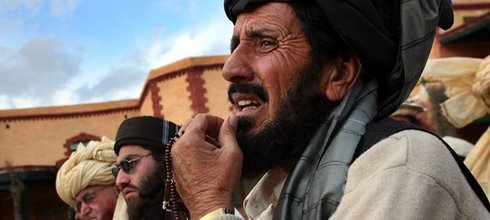
Afghani Taliban: closer ties with Al Qaeda.

Americans need an open and full discussion of the grim situation in Afghanistan, and the Obama administration needs to set very limited objectives. The public needs to know that the situation in Afghanistan is far worse and more complicated than that in Iraq.

By Sherman DeBrosse / The Rag Blog / January 21, 2009

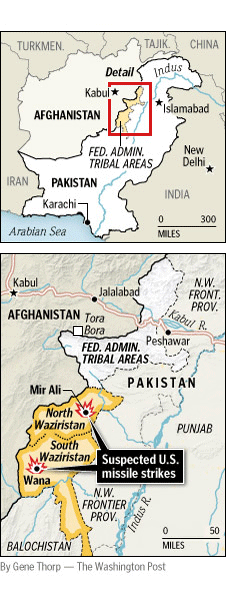
Barack Obama and progressives were correct to say that the war in Afghanistan was a necessary war because Al Qaeda’s headquarters are there or in nearby northwest Pakistan. The problem is that it was the necessary war in 2003, but the situation has since spun out of control. The Bush administration effort lost momentum when it failed to use American troops to nail Osama Bin Laden at Tora Bora. Then it diverted crucial resources away from Afghanistan to Iraq.

Americans need an open and full discussion of the grim situation in Afghanistan, and the Obama administration needs to set very limited objectives. The public needs to know that the situation in Afghanistan is far worse and more complicated than that in Iraq.

The regime we installed in Kabul is a vast kleptocracy, that is despised by the people. There was so much talk about helping the country on to the path of democracy and modernity. Now they execute people for converting to Christianity, and the role of women has only improved slightly. War lords regained power in the provinces, and narcofarmers and others restored the poppy crop that the Taliban outlawed. A reinvigorated Taliban now taxes the crop. Forget about nation-building there.

There has been a revival of the Taliban, and the new Taliban are not just seminarians; they are rebels of all sorts, bandits and ethnic rebels. They effectively employ roadside bombs, suicide bombers and other Iraqi tactics. Once seemingly revived by the ISI, the Pakistani Intelligence agency, or by rogue elements within it, the Afghan Taliban recently have begun working in concert with Taliban from the tribal areas of northwest Pakistan. These elements now take on Pakistani forces and Afghan forces in small formations of 500 or 600. President Hamid Karzai has offered to open talks with Mullah Omar, but the Taliban leader did not respond affirmatively.

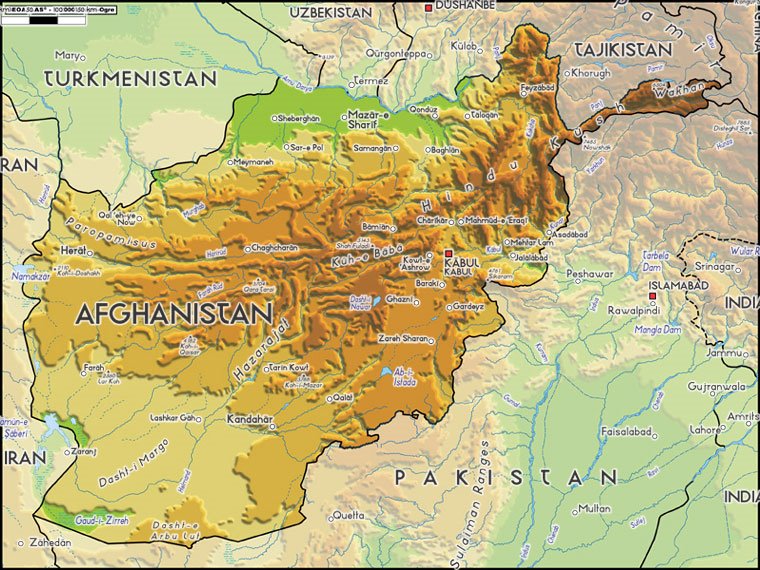
Now there are tribal insurgencies in the south that the Karzai regime cannot contain. In all, there are fourteen important insurgent organizations in Afghanistan. The country is a little over half Pashtuns (which includes the Taliban), and other large groups re the Uzbeks, Hazaras, and Tajiks. Warlords are the traditional leaders, and they are now fighting over control of the drug trade.

The situation there now has so deteriorated that it cannot be greatly improved by the application of American military might. Afghanistan has all the ingredients of a major military disaster. There is no silver bullet military solution; the rugged terrain is a guerilla’s paradise. Remember the British experience there in the late 19th century and the Russian military’s meltdown there in the 1980s. There are multiple factions, unbelievable geographical obstacles, and very tough logistical hurdles. American abuse of detainees and bombings has turned much of the population against us. Obama correctly noted the counterproductive effects of the bombings.

There are now 32,000 American troops there as well as another 30,000 allied troops. Our NATO allies are becoming discouraged and impatient, and their continued presence cannot be expected. We need to persuade NATO to remain longer and to consider introducing troops from Muslim nations, such as Jordan, Egypt, Morocco, and Algeria. The United States is now repositioning another 30,000 troops to Afghanistan, which should satisfy Obama’s pledge to send more troops there.

Long-term pacification would take between 200,000 and 400,000 troops over a ten year period. The allies will not remain there that long. It is almost impossible to imagine how this option could be carried out.

Our goal cannot extend much beyond buying enough time for one last shot at bringing some stability to the country. The best approach would be to address it as part of a regional diplomatic effort that would bring greatly improved relations between India and Pakistan, give Afghanistan a coalition government, and mend our relations with Iran, because they are in a position to see that our withdrawal from Afghanistan would be very painful. Hamid Karzai may have to be replaced with someone more acceptable to Pakistan, who almost inevitably will plan a major role in Afghan affairs. This optimum solution would require some help from Russia, China, and the “-stans.”

The ideal regional solution may well not be possible, and the US may have to settle for simply weakening the insurgencies enough to allow what passes for a central government to keep security manageable. Warlords must be bought off and not be rearmed. Far more Afghan troops must be recruited and trained. Corruption must be sharply curbed or the current regime will not even be able to hang on to Kabul.

The Biden-Lugar-Obama Bill, that promises $1.5 billion a year in developmental aid for ten years should be passed and vigorously implemented. That annual amount is much less than we spend there per month. This exercise of soft power should emphasize training teachers and nurses and building schools and health centers. These activities should be focused in the areas where the US plans to build twin gas and oil pipelines. Economic development money should also be spent in these areas.

This exercise of soft power should emphasize training teachers and nurses and building schools and health centers. Economic development money should also be spent in these areas.

A foundation stone of our policy there should be Obama’s comment that , ” …the Karzai government has not gotten out of the bunker and helped organize Afghanistan and [the] government, the judiciary, police forces, in ways that would give people confidence.” If the corruption does not end and the regime cannot win over the populace by providing a multiplicity of services, nothing the US attempts will work.

While we are there in reinforced numbers, American special forces can use the secret base the US is building in Pakistan to launch multiple operations against Al Qaeda. It should not be used for attacks by Americans against Taliban forces in northwestern Pakistan. It is paramount that we avoid creating supporters for Al Qaeda. Clearly, it would be beneficial to Al Qaeda if the US prolonged its presence in Iraq and Afghanistan. Continuing the level of bombings that injure civilians is also a way of creating more Al Qaeda recruits. We are now seeing signs of closer ties between Al Qaeda and the Taliban — something experts thought could not happen. The US must find ways to avoid bringing them together.

It also must be kept in mind that Pakistan is an even greater problem — prone to violence and instability. We must do nothing to destabilize her more. Pakistan faces a radical Islamic insurgency and there is the remote possibility that nuclear weapons and/or the technology of A.Q. Khan could fall into the hands of Wahabi radicals. Pakistan has a strategic reason to gain the upper hand in Afghanistan, as it needs influence in that country as part of its regional strategy of counterbalancing India. For that reason we have to assume that the ISI, or elements within it, are assisting the Taliban. There will be no increase in stability until Pakistan gets what it wants there.

Some European writers complain that the Afghan national forces are rarely used in the south, where most of the Taliban is. It is also said that there is very little coordination between Allied forces and Pakistani forces on the other side of the border. Brits complain that the US might want them out of their old sphere of influence in Pashtun country. They suggest that the US wants to continue the instability there so it can use Afghanistan as a base for continuing US influence in Central Asia. It is probably more likely that the Afghan national army is simply not ready. As for dreams of being a Central Asian power — we should look at our finances, manpower problems, and the logistical difficulties of keeping a large force there over an extended period.

Dreams of greatly expanding US power in Central Asia are unrealistic. To obtain assistance from Russia and China in bringing a settlement to Afghanistan, the US must reconsider its plans to disrupt the Collective Security Treat Organization (CSTO), led by Russia, and the Shanghai Cooperation Organization (SCO). Given our present economic circumstances, there are strong reasons to work out an amicable arrangement with the China-led SCO. The price for Russia’s help might be pulling back on NATO membership for Georgia, a move many of our allies would applaud. In both cases, there should be ways to see that the US gets its share of Caspian energy.

[Sherman DeBrosse, the pseudonym for a retired history professor, is a regular contributor to The Rag Blog and also blogs at Sherm Says and on DailyKos.]

The Rag Blog

Posted in Rag Bloggers | Tagged , , , , , | Leave a comment

Ten Ideas for Barack and the Rest of Us to Work On


A Starter Plan for Obama: A Ten-Point Solar Agenda
By Harvey Wasserman / January 20, 2009

Amidst the ecstasy of the Obama Inauguration, there lurks great danger.

Merely with his swearing in, our nation has broken an epic racial barrier. We are losing our worst president and getting one who was actually elected.

But the promise of change is not change itself. Inaugurating a brilliant young leader who speaks in complete sentences can only be good. But it is a fatal delusion to think this means we have gotten where we need to go.

Here are ten early tangibles that will be accomplished ONLY if we push:

1) Revise the Corporation: Corporations have hijacked the electoral process, the legal system, the 14th Amendment, the environment. They have human rights but no human responsibilities. They must be re-chartered and made to serve the public, rather than the other way around.

2) Restore the Bill of Rights: The first ten amendments to the US Constitution comprise a great guide for guaranteeing our basic human rights and liberties. The Constitutional lawyer entering the White House understands the issues; he need to be pushed to make sure these rights are enforced, including equal justice for racial/ethnic minorities and women, and reproductive freedom.

3) US out of Iraq and Afghanistan: These wars must end. The healing—moral, spiritual, economic, and in terms of violence—can only begin when the US leaves these useless battlefields and dismantles its global network of intrusive bases.

4) Slash Military Spending: We cannot continue to spend untold billions on detrimental weaponry. A 75% cut would be a good start; 95% would be a reasonable ultimate target.

5) Rid the World of Nuclear Weapons: Atomic bombs are instruments of mass suicide and of no tangible use. Even their production and maintenance is unsustainable.

6) TOTAL conversion to renewables and efficiency: We have the technology to run this Earth COMPLETELY on Solartopian green energy, with no fossil/nuclear fuels whatsoever. This means restoration of mass transit, and NO public funding, from taxpayers or ratepayers, for new atomic reactors or coal burners.

7) End Hemp/Marijuana Prohibition: This ancient plant holds the key to bio-fuels, as well as to sustainable paper production and much more, and must be restored to full production. And prohibition of a medicinal substance used by tens of millions of citizens makes for a police state. Pot must be legal; control of other substances must shift to treatment. The prison-industrial complex is as unsustainable as is the military.

8) National Health Care: Appropriate prevention and treatment is a basic human right. We must find the way to provide it.

9) Universal Hand-Counted Paper Ballots: Electronic voting machines are the nukes of the electoral process. Universal automatic registration, handcounted paper ballots (on recycled hemp paper) and workable campaign finance regulations are essential to the future of democracy.

10) Universal Free Education: In an information age, education through a college degree is essential to a sustainable society. Our public schools from K to the BA must be funded on a level now wasted on the military.

There is of course much more. But the greatness of this moment will be measured in history only by the extent to which we actually win on tangible issues.

This brief wish list should get us going. Send us more! But above all: remember that even with Barack Obama in the White House (and George Bush OUT of it) none of them will come without our hard—hopefully joyful—work.

[Harvey Wasserman, a co-founder of Musicians United for Safe Energy, is editing the nukefree.org web site. He is the author of SOLARTOPIA! Our Green-Powered Earth, A.D. 2030, is at www.solartopia.org. He can be reached at: Windhw@aol.com.]

Source / CounterPunch

The Rag Blog

Posted in RagBlog | Tagged , , , , | Leave a comment

Bernard Lafayette: Martin Luther King’s Disciple

Bernard LaFayette recounts his experiences during the Civil Rights Movement in Birmingham, Alabama on January 10, 2009. Photo: Reuters/Pamela Zappardino/Handout/United States.

Activist spreads King’s teachings on nonviolence
By Andrea Shalal-Esa / January 19, 2009

WASHINGTON (Reuters) – Bernard LaFayette, beaten and arrested 27 times during the civil rights movement, has spent his life working toward a goal the movement’s leader Martin Luther King shared with him hours before he was killed.

“I devoted my life to fulfilling Martin Luther King’s last request,” said LaFayette, who said King had been gearing up to take his teachings on nonviolence around the world and ensure that became fully embedded in society.

King would have been heartened by the inauguration of Barack Obama as the first black U.S. president, but his dream was focused on a bigger goal of curing economic disparities and ending what he called “the curse of war,” said LaFayette.

A trained minister and professor at Atlanta’s Emory University, LaFayette said Obama’s election underscored a desire for change at a time when the United States was again mired in an unpopular war and facing huge economic challenges.

“They didn’t vote for him because he was black. They voted for him … because they saw some hope and the possibility of change,” he said, adding that Obama embodied King’s principle of reaching out to one’s enemies and seeking reconciliation.

“They wanted to be part of something,” LaFayette added, remembering his own involvement as a young college student in peaceful sit-ins at white lunch counters, bus rides to integrate transportation in the segregated South, and later, voter drives to ensure all African-Americans could vote.

After King’s assassination in April 1968, violence and riots in more than 125 cities left 46 people dead and 2,600 injured in an outpouring of African-American outrage that flew in the face of King’s work on nonviolence, but made LaFayette even more determined to continue that mission.

Forty-one years later, LaFayette estimates he has trained and certified over 20,000 individuals in King’s six principles of nonviolence, including 3,000 Miami police officers and hundreds of inmates in one of Colombia’s most violent prisons.

He has helped set up 22 nonviolence centers in poor areas of the United States and places like Palestine and Nigeria,

“In the places where we’ve been able to institutionalize it, we’ve seen some dramatic results,” he said, citing a bill introduced in the Colombian parliament that would mandate nonviolence training in all schools, from kindergarten on.

LaFayette also worked with prisoners to dramatically reduce violence at the Bellavista prison in Colombia where inmates once cut off a guard’s head and played soccer with it.

In Miami, nonviolence training helped police avert riots in 1992 after an all-white jury acquitted four policemen accused of beating black motorist Rodney King, LaFayette said. By contrast, Los Angeles had its worst riots since 1965.

Source / Reuters

The Rag Blog

Posted in RagBlog | Tagged , , | Leave a comment