Singin’ on Sunday – Kelley Johnson

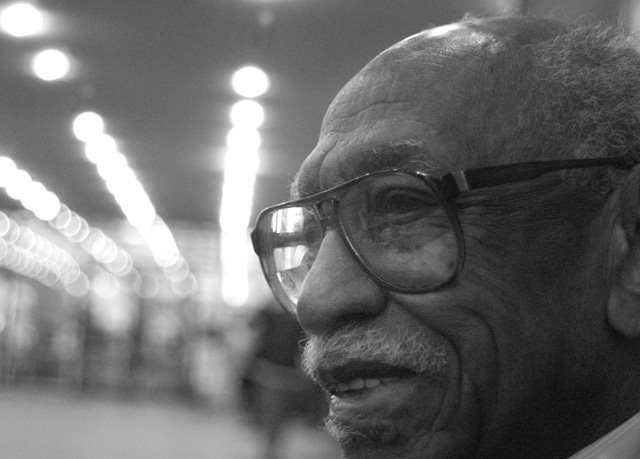
Photo: Steve Robinson

I learned of Kelley Johnson rather accidentally when I was leaving for Austin the next day and needed some dinner and (I hoped) good music. Found both at a little club in Belltown, Seattle named Tula’s. Kelley is a joy live, easy with her audiences, a great stage presence and voice. She has four albums out. Here is Make Someone Happy, from the album of the same name.

Richard Jehn / The Rag Blog

Kelley Johnson reaches her audience with storytelling, subtlety, soulfulness and swing. Twice chosen to be a Musical Ambassador abroad, her quartet auditioned live and was chosen by Wynton Marsalis and Lincoln Center in 2007, and the Kennedy Center in 2004 for lengthy tours for the US State Department. Kelley is the 2003 first place winner of the International Jazzconnect Vocal Competition, and the Jazz Education Journal listed her “Live at Birdland” as a Blue Chip Jazz Vocal album of 2004. Most recently, the CD recording “Music is the Magic” with it’s passionate world-view and original spoken-word, rose to#15 on the national jazz radio chart, Jazzweek. Kelley’s lithe velvety voice mixes with a feisty delivery, tricky colorful arrangements and spirited players like Geoffrey Keezer, Ingrid Jensen, John Hansen, and Brian Lynch. The result is music that is personal and moving.

Kelley Johnson grew up all over the place, but mostly she grew up in Ironwood, Michigan. Surrounded by the sounds of music, her mother was a painter who filled the studio with the music of the 60s, 70s, R&B, country, jazz and especially the blues. When her mother was severely injured in a tragic auto accident, her family took in boarders to make ends meet. Among their guests were singers, songwriters, actors, and comedians who introduced Kelley to more music. Around the time that she and her mother and sister moved to Milwaukee, Wisconsin, she began to absorb Billie and Miles records. “Jazz had become a beacon for me”, she says. She began hanging out at Milwaukee’s Jazz Gallery learning the vernacular from Brian Lynch, David Hazeltine and the cats while studying Betty Carter five nights in a row on her annual visit to town. Her education grew to be both formal (Magna Cum Laude from the Wisconsin Conservatory of Music) and informal (gigging in Milwaukee jazz clubs). This two-fold education and her subsequent career experience produced a schooled musician who was growing into a jazz singer.

Read the rest of her bio here. And here is Kelley’s Web site.

The Rag Blog

Posted in RagBlog | Tagged | 3 Comments

Life in American Prisons: Radicalizing the Masses


The Radicalization Of An American Prisoner
By George Peter Jr. / December 5, 2008

During a hearing before the Senate Intelligence Committee in 2006, high- ranking F.B.I. officials testified that the Bureau considered U.S. prisons to be “fertile grounds for extremists”, and that they were in the process of developing “threat assessments” for those individuals who may have become “radicalized” during their incarceration.

Listening to those officials postulate a variety of theories as to the perceived radicalization of American prisoners since 9/11, ranging from a misguided identification with terrorist leaders such as Osama bin Laden, to the radical preachings of jailhouse religious leaders, it became readily apparent that today’s F.B.I. is as out of touch with reality as the one headed by J. Edgar Hoover, which for decades denied the existence of the mafia.

As one who has been confined in the Illinois Department of Corrections since 1967, I myself have observed a change in the attitudes and political philosophy of the average American prisoner, shaped not because of an external event occurring in some distant land, or the importation of some radical religion; but instead, due to the unrelenting assault upon prisoners by state houses around the nation, the unwillingness and/or inability of states to protect those who are imprisoned in their penal systems, the dual-standard of justice imposed upon prison guards who commit criminal acts against prisoners, and the daily vilification and demonization of those caught up in the criminal justice system, best exemplified in such television shows as “Cops”, “Nancy Grace”, and MSNBC’s “Lockup” the ultimate in reality programming.

To help one get a clearer understanding of this issue, let us utilize the eyes of a hypothetical prisoner (we’ll call him “Tony”) returning to the Menard Correctional Center, after living in the outside world for the last decade; what would he observe? Probably the first thing he would sense is a feeling of abandonment, due to the near complete abolishment of any meaningful rehabilitative programming. Thanks to the efforts of William Jefferson Clinton, the college classrooms have been long shuttered, as have the vocational schools, due to the elimination of prisoner access to the federal government’s Pell Grants.

Tony would further note that the prison has abolished every organizational recreational activity previously used to release tension and help maintain control of the facility. Now he would find himself confined in a space 4′ 3″ by 10′, with another prisoner, for a minimum of 159 hours a week, with little but a television set to help while away the hours. His cell is so small that it contains no table or chair, and the space between the bunks is so small 26″ that he must sit on the toilet if he wishes to write a letter. Other than that, his only options are to lie down, or stand up.

Although lockdowns occurred during Tony’s previous incarceration, they were primarily used in response to large-scale confrontations between various factions of the prison community, and to conduct periodic searches for contraband. He will now see that they are routinely scheduled to facilitate employee absences over the Thanksgiving and Christmas holidays, as well as the annual deer-hunting season.

When he walks into the dining room, he will discover he is now allotted only ten minutes to eat a barely palatable meal, but due to the miniscule portions, that will be more than a sufficient amount of time. Surprisingly, he will learn that the prison guard’s union has publicly described the food served as “barely edible1.”

If he believes that the conditions he is confined under are unconstitutional, this is probably at least partially attributable to the fact that the federal enforcement of civil rights laws has dropped precipitously since 1999. According to the Transactional Records Access Clearinghouse at Syracuse University, the Justice Department has seen the prosecution of civil rights cases fall by one-third through 2005. Additionally, the state statute that allowed clergy and attorneys to monitor the constitutional rights of prisoners was repealed.

Borrowing some reading material from a neighbor, Tony reads multiple examples of the duplicitous nature of the criminal justice system, how it inflicted Draconian penalties upon those who committed trivial offences during incarceration, while those employed by the government would receive, at worst, a mere slap on the wrist, when discovered abusing those under their control. The penalty imposed upon Colorado prisoner Douglas Wilson for passing out an extra cheese sandwich to fellow convicts was three additional years in prison; while in May 23, 2006 Illinois prison guard Clarence Howard was sentenced to two years probation for smuggling drugs into the facility where he worked.2 When Pennsylvania prisoner Darren Miller threw urine on a guard, he had 15 more years tacked onto his sentence, whereas Hawaiian prison guard Brian Freitas was placed on one year’s probation for his rôle in the murder of prisoner Antonio Revera.3

However, what Tony found the most appalling were the direct assaults upon the minimal rights of those confined all around the country. When inmates had the audacity to actually seek the protection of laws enacted by state legislatures, they discovered the courts unwilling to ensure the safeguarding of these basic rights. When the mother of a Connecticut prisoner sued the state for the failure to treat her son in accordance with the state’s “Patient’s Bill of Rights”, the prison system did not deny the allegations; rather they claimed in court that the Bill of Rights did not apply to prisoners. The state’s supreme court agreed.

After receiving numerous complaints of employee misconduct against youths confined in Oklahoma’s maximum security prison for youthful offenders, the state’s attorney general’s office declined to investigate, citing budgetary woes. This is the same state that chose to expend millions of dollars to secure additional life sentences against Timothy McVie’s co-defendant, Terry Nichols, after he had already received a life sentence in federal court.

Closer to home, Tony gained a degree of understanding as to why Illinois’ prisons appeared to be in a state of mismanagement. This came to light as he read about the investigation of the March 2, 2006 murder of an inmate at the Muddy River Correctional Center, where it was discovered that assistant warden Julie Wilkerson’s only apparent qualifications for her job were the campaign contributions she made to Governor Rod Blagojevich. Ms. Wilkerson is a former music teacher, with no prior prison experience.

Tiring of this self-flagellation, Tony turns on the television, where he discovers that law and order shows appear to be the flavor of the day. As he looks in on “The Nancy Grace Show”, he quickly discerns that Miss Grace routinely projects an attitude of unbridled anger and animosity towards anyone who disagrees with her prosecutorial mindset. Most frightening in her telecasts are the incessant and one-sided diatribes spewed forth against whichever criminal defendant she is focusing on in that particular episode. While her viewers may not be cognizant of her ability to appreciate the finer points of due process, the Georgia Supreme Court has, as it rebuked her on multiple occasions for her “unethical behavior” in securing criminal convictions. In comparison to this bubble-headed bleach blonde, Ann Coulter is a flaming liberal.

Flipping the dial, in search of something less intense, Tony tunes into “Cops”, a program devoted almost entirely to showing slow-footed African and Appalachian Americans attempting to out-run the police unsuccessfully, I might add and then being body slammed to the ground when they get caught. While not a serious show, it still serves to humiliate and dehumanize those appearing on it.

Lastly, he tunes into MSNBC’s “Lockdown”, undoubtedly the most insightful of the crime programs he has seen, as the camera takes the viewer into prisons across the nation mostly maximum and super-maximum security for an up-close and personal view. Unfortunately, what it so clearly displays is the rampant brutality and stifling isolation these human beings are exposed to, year after year. Little mention is made to explain how these prisoners could possibly be expected to successfully re-enter society after surviving this man-made hellhole.

As this story comes full circle, Tony wishes that for just one day, those high-ranking F.B.I. officials could experience what prisoners around the nation have to live with on a daily basis. Only then could they begin to conceptualize the mis-treatment being inflicted upon those incarcerated in America’s prisons, and the anger it breeds. Perhaps at this juncture they would realize that while there is a definite undercurrent of alienation and animosity within the country’s prison population, it is not a radicalization born from the exposure to the vitriolic venom spewing from the mouths of psychotic mass murderers such as Osama bin Laden, an individual I would happily speed on the way to his reward of 72 virgins.

No, my “radicalization” as you describe it, has been incubated and nurtured by this cesspool you call a penal system, and every day your brutality adds yet another name on the rolls. At what point will you sit up and take note?

Notes

1. “Maximum Insecurity”, at www.afscme31.org
2. Prison Legal News, June 2006, p. 42
3. Prison Legal News, June 2006, p. 35

Source / Information Clearing House

The Rag Blog

Posted in RagBlog | Tagged , , | 6 Comments

The Secret Laos Bombing and Legacies of War


Drawing the Future from the Past
By Channapha Khamvongsa / December 5, 2008

The bombing was relentless. From 1964 to 1973, the United States dropped more than 2 million tons of ordnance on Laos. That’s a planeload of bombs every eight minutes, 24 hours a day, for nine years. Laos has the unfortunate distinction of being the most heavily bombed country in the history of the world.

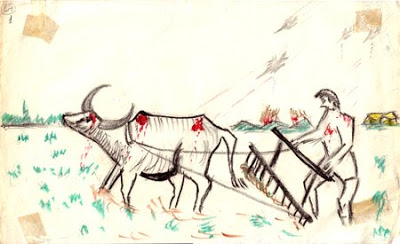
“In the area of Xieng Khoang, the place of my birth, there was health, good earth, and fine weather,” one survivor, a 33-year-old man, recalls of that period. “But then the airplanes came, bombing the rice fields and the forests, making us leave our land and rice fields with great sadness. One day a plane came bombing my rice field as well as the village. I had gone very early to harrow the field. I thought, ‘I am only a village rice farmer, the airplane will not shoot me.’ But that day truly it did shoot me and wounded me together with my buffalo, which was the source of a hundred thousand loves and a hundred thousand worries for me.”

For nearly three decades, the U.S. secret war in Laos and the impact of the most massive bombing campaign in the world was nearly forgotten. For those who remembered, the events seemed surreal. They witnessed the reckless destruction of a people and their land, and careful efforts by the U.S. government to conceal it. For those too young to know, gathering information and knowledge of this history was scattered and fragmented. It seemed the secret war in Laos and its aftermath would remain a secret.

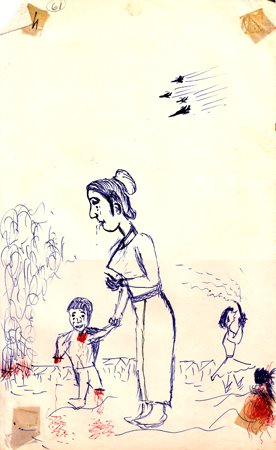
But then a remarkable set of drawings and eyewitness accounts came to light. Laotian villagers put their memories on paper in the 1970s to depict the secret bombing of their country. This trove of reminiscences became the inspiration for Legacies of War. Founded by Laotian Americans in 2004, the project raises awareness about the history of the Vietnam War-era bombing in Laos. Using a unique combination of art, culture, education, community organizing, advocacy, and dialogue, Legacies of War also works for the removal of unexploded bombs in Laos, to provide space for healing the wounds of war, and to create greater hope for a future of peace.

A Secret War, a People Scattered

When the United States withdrew from Indochina, the “Secret War” in Laos was lost to history. But the legacy of the war lives on. Up to 30% of the cluster bombs dropped by the United States in Laos failed to detonate, leaving extensive contamination from unexploded ordnance (UXO) in the countryside. That translates into 78 to 130 million unexploded bomblets. Over one-third of the land in Laos is contaminated. These “bombies,” as the Lao now call them, have killed or maimed more than 34,000 people since the war’s end, and continue to claim more innocent victims every day. About 40% of accidents result in death, and 60% of the victims are children. UXO remains a major barrier to the safety, health, livelihoods, and food security of the people of Laos.
The war also displaced up to one-third of the Lao population. Nearly 750,000 would eventually become refugees in France, Australia, and Canada, among other countries. Over 350,000 refugees from Laos came to the United States after having experienced war, destruction, death, imprisonment, family separation, loss of homeland, loss of identity, and loss of control over their destinies. Many had undiagnosed post-traumatic stress disorder. But these weren’t things Laotian refugees had the luxury to contemplate, for basic economic survival trumped all other needs.

Drawing on the Past

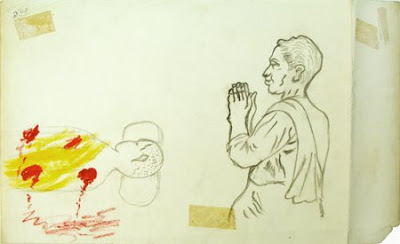
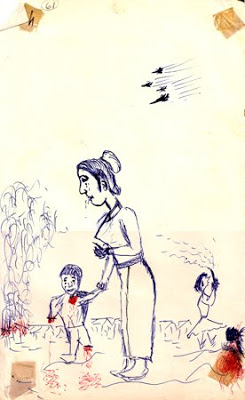
Between December 1970 and May 1971, Fred Branfman, an American, and Boungeun, a Lao man, collected illustrations and narratives in the Vientiane refugee camps, where bombing victims fled. The drawings and narratives represent the voiceless, faceless, and nameless who endured an air war campaign committed in secrecy. Drawn in pencil, pens, crayons, and markers, they are raw and stark, reflecting the crude events that shaped their reality. The simplicity of the narration and drawings emphasize the illustrators’ identities as ordinary villagers who bore witness to a devastating event.

For instance, an 18-year-old woman remembers, “In the year 1967, my village built small shelters in the forest and we had holes in the bamboo thicket on top of the hill. It was a place to which we could flee. But there were two brothers who went out to cut wood in the forest. The airplanes shot them and both brothers died. Their mother and father had just these two sons and were both in the same hole with me. I think with much pity about this old father and mother who were like crazy people because their children had died.”

Each of the illustrations demonstrates the violence of warfare. However, the images of blood and death are contradicted by the memories of the scenic and peaceful village life these survivors once lived. Scenes show farmers tending to their rice fields, monks praying at the temple, women going to the market, and children playing in the schoolyard. The drawings capture the very moments when their lives and society were forever altered. The illustrations and narratives are at the heart of the Legacies of War National Traveling Exhibition, which is accompanied by historical photos, maps and other relevant documents to give context to the decade-long bombings.

Only a small circle of individuals knew of the existence of these illustrations. The pictures hadn’t been seen in decades, not since the end of the war. A fortuitous meeting between me and Institute for Policy Studies director John Cavanagh led to the return of the illustrations to the Lao American community. In the last several years, thousands of visitors have seen the illustrations through the Legacies of War traveling exhibit and other community forums. Although most Laotian Americans didn’t experience the same horrors depicted in the drawings, the illustrations invoke memory of their own stories of refuge, survival, and resilience.

The reaction to the drawings was instructive to Legacies’ work. Initially considered an artifact, the illustrations have become a living document. One at a time, each drawing tells the story of a survivor. Although the illustrations were from four decades ago, they inspire others to share their stories, contributing to a collective narrative that began long ago in Laos, but continues today through the voices of Laotian Americans.

Following a viewing of the illustrations at an exhibit in Lowell, Massachusetts, a Lao woman in the audience stood up to speak at a community forum, “The illustrations made me remember. I have not shared, not even with my family because I didn’t think it was important. When I was a young woman in Laos, I worked as a nurse to help people hurt by the bombing. Every day, the airplanes would come: Boom! Boom! Boom! And then one day, it came so close to us, we had to hide in the cave and we hear right outside the cave, the sound so loud. It scared me so much. I feel so lucky I did not die. The pictures made me remember. I am so sad that today, people in Lao are still being hurt and dying from these bombs.” The woman, whose husband had spoken on several occasions about his experience, had never shared hers. The illustrations and community forum gave her a chance to tell her story for the first time in 30 years. Today, she remains engaged in educating people in the Boston-area about the bombing and its aftermath.

These new voices and stories are captured in various ways through Legacies of War: interactive exhibition pieces, community programs, oral history interviews, theater performance pieces, and new commissioned works of art. Based on oral histories collected from Laotian refugees and their descendents, the Refugee Nation theater piece reveals connections between U.S. and Southeast Asian history, and the unique challenges faced by political refugees and their American children. Touching on themes of identity, globalization, and activism, it brings a Laotian voice to a growing part of the Asian-American Diaspora that is yet to be included in the American experience.
The integration of storytelling, art, and performance are critical in breaking the silence. By creating multiple access points of engagement, Legacies of War facilitates the connection of personal stories to a collective experience in recognition that we are not alone in our experiences, that we are connected to a larger narrative and a larger context. The acknowledgement of a shared journey and struggle could lead to collective strength and power.

Since the end to the U.S. wars in Southeast Asia, many other wars have been waged, in other parts of the world, in new terrain, villages, and communities. Yet, the wars in Southeast Asia lingers. And for the people living in Laos as well as those who became refugees, the lingering impact of war remains ever present in their daily lives. Although war and conflict created the refugee community, they don’t have to define it. Through the transformative power of stories, art, and performance, Laotian Americans are evolving from victim to agency of change. “Now that I know about the secret war,” said a Lao American student in Seattle, “I have to do something about the horrible things that are still happening to people. As Americans, we must do something.”

Another victim, a 37-year old woman, reflects, “Our lives became like those of animals desperately trying to escape their hunters . . . Human beings, whose parents brought them into the world and carefully raised them with overflowing love despite so many difficulties, these human beings would die from a single blast as explosions burst, lying still without moving again at all. And who then thinks of the blood, flesh, sweat and strength of their parents, and who will have charity and pity for them?…In reality, whatever happens, it is only the innocent who suffer. And as for other men, do they know all the unimaginable things happening in this war?”

[Channapha Khamvongsa, the executive director of Legacies of War, is a Foreign Policy In Focus contributor. Editor: John Feffer.]

Source / Foreign Policy in Focus

The Rag Blog

Posted in RagBlog | Tagged , , , | 1 Comment

Russell Weiner : This Rockstar Hits Sour Notes


‘He is a “chip off the old block” and donates significantly (using his Rockstar profits) to many many many far right causes.’
By Thomas Cleaver / The Rag Blog / December 7, 2008

It’s always amazing what you can discover, reading the celebrity real estate pages in the Los Angeles Times.

Like the fact that Russell Weiner, the creator of “Rockstar” energy drink, is the son of Michael Weiner – better known as right wing hate radio propagandist “Michael Savage.” Russell, proving that the seed doesnt fall far from the bush, tried to run as a right-wing Republican for a California Assembly seat (financed with Rockstar) eight years ago and lost. But he is a “chip off the old block” and donates significantly (using his Rockstar profits) to many many many far right causes.

Mmmmm…. shade-grown/fair-trade Central American coffee, grown as a product of the project by the Nature Conservancy to help stop the deforestation of the Cloud Forest by giving the people who live in the forest an economic reason to believe in conservation just tastes better and better.

Please pass this far and wide through the left – kicking fascists in their billfolds is the best place (other than planting a .45 caliber hole in the “third eye,” which is illegal, not to mention a felony, and you never heard me advocate such a thing).

Mr. Weiner already had to drop the overpriced sale price of his home overlooking Sunset Boulevard 50% in order to sell it (taking a $2 million hit on what he paid two years ago). Perhaps we can help his balance sheet in other ways??

The Rag Blog

Posted in RagBlog | Tagged , , | 3 Comments

‘Socialized Medicine’ : It Works for Others


‘Sweden and other European countries have some of the best health care in the world and provide it at a cost far less than in America.’
By Hosea W. McAdoo M.D. / The Rag Blog / December 7, 2008

[President-elect Barack Obama has asked the public for input on health care reform. These are Dr. McAdoo’s suggestions.]

I am a physician who has been involved in private health care as well as short stints in VA and Navy medicine. During my career over thirty years I have seen Medicare evolve, seen the resistance to both Medicare and Medicaid. I have seen medicine change from being physician centered to business centered.

With the new medicine I have seen costs soar, malpractice become an industry and seen many patients (NOT CLIENTS) find it impossible to get any kind of care. This in spite of the frightening misinformation presented by both President Bush and McCain’s health care adviser that all Americans really have health insurance by just going to emergency rooms. When leaders give such atrocious advice it is clear why America is near the bottom ranking in health care.

During the campaign McCain made a statement that we don’t want health care like Sweden that is socialized. This is another incredibly stupid remark as Sweden and other European countries have some of the best health care in the world and provide it at a cost far less than in America. Remember, a socialized system seems to work for President Bush, Vice President Cheney and Sen. McCain since they go to the National Naval Medical Center or similar hospitals and seem to like it. They just don’t want the rest of us to have it.

The incredible controversy about “socialized medicine” is a false argument revealing little understanding of health care delivery here and abroad. The word, “socialized,” is used more for it’s emotional charge than as a part of logical argument. It is true that the UK is very close to socialized, but provides excellent medicine in spite of the slander about long waits etc. Have you tried to get an appointment with a new primary care physician or specialist? Note, the UK far outranks our system in bottom line results, much better than America. Canada has a system similar in many ways to our Medicare and also provides better care than we do and at far less cost but is not socialized at the level of delivery. There is freedom of choice. Unlike Medicare, each province manages its own system although they are quite similar and care is given across Canada. There seems to be much dislike for the Canadian system in America, but Canadians almost universally like the system with far fewer complaints than here. The misinformation about these other systems seems to be very common in those who accept whatever rumor is being spread.

In America, we have the potential for giving excellent care but our main failure is cost and the inability to give care for all. We also have too few physicians and nurses and they are allocated in inefficient ways. Physician reimbursement always seems to be a place to shave costs, but when the costs of education and the number of hours of work, office overhead and malpractice insurance costs are factored in, reimbursement may be one reason many students choose fields with “gimmicks” that make time more valuable such as endoscopy and surgery. This leaves primary care and other fields that bill by time rather than by procedure in worsening straits.

Many people have told me that they don’t want government interference in their choice of a physician. A moment’s thought will reveal the absurdity of this view. Medicare allows almost total choice of physician and choice of hospital where that physician is on staff.

Private insurance will give you a book of preferred providers, actually should be called, “if you don’t go here we won’t pay and may not anyway.”

I do not trust government to run things but we are already socialized in many aspects from our military, police, fire protection, highways, FAA, the VA system and education as well as in many others. Most of these work reasonably well and it us unlikely that private industry can do better and still provide for stockholders and high salaries.

Medicare operates with an overhead of about 3% while private insurance with its various rules, uncertain payment and limited physician choice charge about 30%. That’s TEN times as much. This means that for each health care dollar under Medicare 27 cents more is available for patient care and better provider reimbursement and lower cost overall. Just look at the medicare Advantage boondoggle to see how private insurance milks the system, something Medicare can do far cheaper.

My recommendations are:

1. Much more use of nurse practitioners and physician assistants. Their schooling is shorter and cheaper. They seem to be more compulsive with exams and protocols. This would build the base of primary care. I do think they should operate with some physician guidance as their training is less extensive in diagnosis and treatment of less common problems.

2. Anything short of a single payer system will fail. We can pussyfoot around trying this and that to continue the welfare to insurance companies but these 30% gifts will continue to break the system, restrict access, fail to cover pre-existing illness, limit physician choice and force higher office overhead and cost physician time dealing with 3,000 plus providers. I understand that telling the insurance companies bye bye will be hard for our indebted and spineless politicians. It only makes sense to model ourselves after systems that work and work well rather than sticking to a system we know is broken just to make life easier for a few at the expense of the people. (I know. that’s how politics works but it is time for CHANGE!)

3. COST, that is a problem. We can see instantly a 27% savings by going to a Medicare system and that alone will come close to covering all those now left out. There will be cost savings to physicians by lowering overhead now taken by large insurance departments, accounts payable and stumbling blocks used by companies to avoid or delay payment. When used properly, Medicare is amazingly smooth and fast paying and since private insurance usually is tied to Medicare Usual and Customary payments the payments are similar.

At present, money flows into the health care system from many sources, private pay, the Federal government via medicare, Medicaid, VA , USPHS, Military medicine, research grants and others. States provide via Medicaid, public health, public and teaching hospitals and others. Private insurance covered by private and employer premiums is a large part. Since this amount already flows into the medicine by a multitude of confusing, inefficient and possibly dishonest methods why couldn’t the same amount be collected by other means and used to finance a Medicare for all?

In America it would be very helpful to look at other working systems. The other systems have many problems and surely are not perfect but their bottom line concerning access, longevity, neonatal mortality, chronic illness, preventative medicine, lower cost, absent paperwork would seem to me to be worthwhile even if some misinformed call it socialist. Health care is too important to ration it based on finances. These other countries base it on medical need.

[These comments were also posted on the Progressives for Obama listserv.]

The Rag Blog

Posted in RagBlog | Tagged , , , | 1 Comment

Richard Rodriquez : Why Churches Fear Gay Marriage

Author Richard Rodriguez is Mexican-American, gay and a practicing Catholic. Photo by Christine Alicino / salon.com.

As the American family fractures and the majority of women choose to live without men, churches are losing their grip on power and scapegoating gays and lesbians for their failures.

By Jeanne Carstensen

For author Richard Rodriguez, no one is talking about the real issues behind Proposition 8.

While conservative churches are busy trying to whip up another round of culture wars over same-sex marriage, Rodriguez says the real reason for their panic lies elsewhere: the breakdown of the traditional heterosexual family and the shifting role of women in society and the church itself. As the American family fractures and the majority of women choose to live without men, churches are losing their grip on power and scapegoating gays and lesbians for their failures.

Rodriguez, who is Mexican-American, gay and a practicing Catholic, refuses to let any single part of himself define the whole. Born in San Francisco in 1944 and raised by his Spanish-speaking Mexican immigrant parents to embrace mainstream American culture and the English language, he went on to study literature and religion at Stanford and Columbia. His first book, “The Hunger of Memory: The Education of Richard Rodriguez,” explores his journey from working-class immigrant to a fully assimilated intellectual — angering many Latinos with his view that English fluency is essential. “Days of Obligation: An Argument With My Mexican Father,” which was a Pulitzer Prize finalist in 1993, continued his investigation into how family, culture, religion, race, sexuality and other strands of his life all contribute to the whole, a complex “brownness” of contradictions and ironies. “Brown: The Last Discovery of America” completes the trilogy — but not his insatiable intellectual curiosity, which he is now shining on monotheism.

Rodriguez’ stinging critiques of religious hypocrisy are all the richer for his passionate love of Catholicism and the Most Holy Redeemer parish in San Francisco, where he and his partner of 28 years are devoted members. Today, Rodriguez is at work on a new book about the monotheistic “desert religions” — Christianity, Judaism and Islam. Ever since Sept. 11, “when havoc descended in the name of the desert God,” Rodriguez said in one of his Peabody Award-winning radio commentaries for PBS’s News Hour, he has been trying to understand the strands of darkness that run through these religions.

Salon spoke to Richard Rodriguez by phone at his home in San Francisco.

What was your reaction to California voters’ going heavily for Obama and also passing Proposition 8, banning gay marriage?

I was like a lot of other Americans at the moment when the West Coast tipped the balance in favor of Obama. I didn’t so much think it represented the end of racism but the possibility of change. At the same time, I also knew that large numbers of Californians in religious communities were voting against gay marriage and that Latinos and blacks were continuing to take part in this terribly tragedy. We persecute each other. The very communities that get discriminated against discriminate against other Americans.

The Spanish language newspaper La Opinión called the results an “embarrassment,” saying “California still has two faces.” Do you agree?

La Opinión represents the opinion of a lot of Latinos who are more educated and — what should I say? — more cosmopolitan. But Latinos in both my family and the Catholic Church belong to a more traditional America. This is a troubling aspect of the way our country is formed right now. It is a time of great change but also a time when people are afraid of change.

You said recently the real issue behind the anti-gay marriage movement is the crisis in the family. What do you mean?

American families are under a great deal of stress. The divorce rate isn’t declining, it’s increasing. And the majority of American women are now living alone. We are raising children in America without fathers. I think of Michael Phelps at the Olympics with his mother in the stands. His father was completely absent. He was negligible; no one refers to him, no one noticed his absence.

The possibility that a whole new generation of American males is being raised by women without men is very challenging for the churches. I think they want to reassert some sort of male authority over the order of things. I think the pro-Proposition 8 movement was really galvanized by an insecurity that churches are feeling now with the rise of women.

Monotheistic religions feel threatened by the rise of feminism and the insistence, in many communities, that women take a bigger role in the church. At the same time that women are claiming more responsibility for their religious life, they are also moving out of traditional roles as wife and mother. This is why abortion is so threatening to many religious people — it represents some rejection of the traditional role of mother.

In such a world, we need to identify the relationship between feminism and homosexuality. These movements began, in some sense, to achieve visibility alongside one another. I know a lot of black churches take offense when gay activists say that the gay movement is somehow analogous to the black civil rights movement. And while there is some relationship between the persecution of gays and the anti-miscegenation laws in the United States, I think the true analogy is to the women’s movement. What we represent as gays in America is an alternative to the traditional male-structured society. The possibility that we can form ourselves sexually — even form our sense of what a sex is — sets us apart from the traditional roles we were given by our fathers.

I think Proposition 8 was also galvanized by insecurity around gay families.

I agree. But the real challenge to the family right now is male irresponsibility and misbehavior toward women. If the Hispanic Catholic and evangelical churches really wanted to protect the family, they should address the issue of wife beating in Hispanic families and the misbehaviors of the father against the mother. But no, they go after gay marriage. It doesn’t take any brilliance to notice that this is hypocrisy of such magnitude that you blame the gay couple living next door for the fact that you’ve just beaten your wife.

The pro-8 campaign calls itself the Protect Family Movement, even though the issue of family was the very reason gays needed to have marriage. There are partners in gay unions now who have children, and those children need to be protected. If my partner and I had children, either through a previous marriage or because we adopted them, I would need to be able to take them to the emergency room. I would need to be able to protect them with the parental rights that marriage would give me. It was for the benefit of the family that marriage was extended to homosexuals.

Religions have the capacity for being noble and ennobling but they are also the expression of some of the darkest impulses in us — to go after the “other.” For Christians, if the other isn’t the Muslim, it’s the homosexual. That is the most discouraging part.

Speaking of hypocrisy, churches have plenty of sexual skeletons in their closet.

Right. The Mormon Church has this incredible notoriety in America for polygamy and has been persecuted because of it. The very church that became notorious because of polygamy is now insisting that marriage is one man and one woman. That is, at least, an irony of history. But as a number of Mormon women friends of mine say, the same church that espouses the centrality of family in their lives is also the church that urges them to reject their gay children.

Then there is the Roman Catholic Church, my own church, which has just come off this extraordinary season of sexual scandal and misbehavior in the rectory against children. The church is barely out of the court and it’s trying to assume the role of governor of sexual behavior, having just proved to America its inability to govern its own sexual behavior.

Look at the evangelicals. In their insistence that people be born again, they know Americans are broken. In their circus-tent suburban churches, you find 10,000 people on a Sunday morning. You find people who have been divorced, people who have had drug experiences, people who have been in jail. These churches touch upon a dream that people can put our lives back together again.

Now these churches are going after homosexuals as a way of insisting on their own propriety. They are insisting that they have a role to play in the general society as moral guardians, when what we have seen in the recent past is just the opposite. I mean, it’s one thing for the churches to insist on their right to define the sacrament of marriage for their own members. But it’s quite another for them to insist that they have a right to define the relationships of people outside their communities. That’s really what’s most troubling about Proposition 8. It was a deliberate civic intrusion by the churches.

I wonder if these churches sense they’re losing some of the influence they’ve had for the past eight years.

To my knowledge, the churches have not accepted responsibility for the Bush catastrophe. Having claimed, in some cases, that Bush was divinely inspired and his election was the will of God, they have failed to explain why the last eight years have been so catastrophic for America.

Now I think evangelicals are falling back on issues that have been reliable for them in the past. Mike Huckabee, a Baptist minister, who said that children of immigrants should be educated, was essentially frightened away from that position by Mitt Romney. The tentativeness of the evangelicals on immigration only allowed them to be more vociferous on the gay issue. That’s traditionally easy for them — to go after the sinner. But it doesn’t convince me of their ascendancy; it merely convinces me that they are retreating. They don’t know how to extend their agenda beyond gay marriage and abortion.

There’s going to be an ongoing legal battle over Proposition 8. How do you think gay activists should proceed?

I think gay activists should be very careful with this issue. We should not present ourselves as enemies of religion. I am not prepared to leave the Roman Catholic Church over this issue. The Catholic Church is my church. I was a little concerned about the recent protests outside the Los Angeles Mormon temple. I’ve seen this sort of demonstration escalate into a sort of deliberate exercise of blasphemy.

For example, in the most severe years of the AIDS epidemic, activists from ACT UP went into St. Patrick’s Cathedral, took the communion wafer and threw it on the ground. That is exactly the wrong thing to do. One should be respectful of the religious impulse in the world. If we decide to make ourselves anti-religious, we will only lose.

But religious communities must be challenged too. I was in Jerusalem a couple of years ago for Gay Pride. All the leaders of religious communities — Muslim, Jew and Christian — were brought together by their mutual animosity toward gay activism to protest the parade. There was the grand patriarch of the Eastern churches, the high rabbi of Jerusalem, the Roman Catholic archbishop, the mullahs, and they were all united in one cause. The police outnumbered the parade participants. One marcher was attacked and stabbed by an Orthodox Jew.

We have to be very clear about male violence within the monotheistic religions. This is a failure within churches and we can’t be casual about it. But we can’t be casual about the importance of religion either. We need to be both respectful of religion and critical of religion. Otherwise I suspect we won’t get very far at all.

What do you think about gay rights as universal rights? Many argue that it’s a cultural issue and that specific communities, such as Latinos and blacks, have their own understanding of homosexuality and shouldn’t be messed with.

In my own my family, and my parents were not well educated, it would have been impossible for them to have dealt with the words “gay” or “homosexual” in my relationship with them. But there was no way for them to reject me either. I was a member of the family and I couldn’t sin my way out of it.

Once my partner became part of my life, he became part of their life too. They didn’t want it said, they didn’t want it named or defined, but they assumed it and accepted it. At family events, when my partner wasn’t there, my mother would get on the phone and call him and insist he come over.

These communities have very intricate ways of dealing with these things and they are not necessarily the highly politicized tactics that you see in traditional middle-class society in America.

I have not been to a Mexican family without some suspicion of homosexuality in children or grandchildren. But people deal with it within the larger context of family. That’s why I suspect the revolution will come not from the male church but from how women treat their children, and whether or not women are willing to reject their children. I don’t think they are. I saw too many times during the AIDS epidemic that when death came and the disease took its toll, if one parent was there, it was almost always the mother and not the father. That bond is so powerful.

I also think about the role of gays as caregivers to the elderly parent while siblings are too busy with their children. At the Most Holy Redeemer Church in San Francisco, which is the gay Roman Catholic parish, a number of old Irish women essentially adopted the gay parishioners, and were adopted by them, because their children had moved to the suburbs, or Pennsylvania, or Orlando, and were no longer in a position to care for them. That’s a bond that no one really talks about.

My partner has taken care of many elderly people over the years. They know who he is and they know who I am. But it’s unspoken. I don’t know how they voted on Tuesday, but I do think that it is their responsibility now to speak out.

Are you saying individual relationships will ultimately be more powerful than organized religion?

Well, I’m working right now in the Middle East on monotheistic religions because I’m very worried about the direction of religion. Ever since Sept. 11, when I heard that prayer being spoken at the moment the planes hit the World Trade Centers, I realized how much darkness there is in religion compared to how much light there is. I am very much concerned with whether or not these religions can be feminized.

The desert religions — Judaism, Christianity and Islam — are male religions. Their perception is that God is a male god and Allah is a male god. If the male is allowed to hold onto the power of God, then I think we are in terrible shape. I think what’s coming out of Colorado Springs right now, with people like Tony Perkins of the Family Research Council, is either the last or continuing gasp of a male hierarchy in religion. That’s what’s at stake. And women have a determining role to play. Are they going to go along with this, or are they going to challenge the order?

Well, yes, but then we have the rise of someone like Sarah Palin, who is just one example of how complicated things get in this issue.

Yes, you have Sarah Palin. But you also have women deciding to leave marriages. When a woman decides to leave the kitchen and seek a career outside the family, when a woman decides not to take on the name of her husband, when a woman wants to be more than simply the mother of children, when she wants to have some place in the world that is not defined by her family or her husband, that seems to suggest something comparable to what gays experience when they come out of the closet. Notice that both those metaphors of getting out of the kitchen and getting out of the closet are domestic images.

But are you saying Palin represents this?

I’m not that kind of optimist!

It does seem she wants to have a career separate from the family, but in many ways she embodies the old conservative order.

Clearly, what you say is true. I don’t see women challenging the male order of things in every case. Wives tolerate all kinds of behavior of fathers toward their children. But I do think it’s important that some woman are starting to challenge that. The divorce rate suggests that women are not happy with the relationship they have with men. And whatever that unhappiness is, I would like people to know that, as a gay man, I’m not responsible for what’s wrong with heterosexual marriage. On the other hand, whatever is wrong with the heterosexual marriage does have some implication for the world I live in. Women are redefining sexuality in a way that’s going to make it easier for me to be a gay man.

The formal role of women is also undergoing change in some churches, right?

That’s right. The Episcopal Church in America is now under the leadership of a woman. Feminism is going to change a great deal. The most radical people in the Roman Catholic Church are women. They’re challenging everything from the priesthood to the male God to what it means to be married. I don’t expect to see gay marriage enter these conservative institutions in my lifetime. But I do see change.

I belong to a Catholic parish in San Francisco, where my partner and I are acknowledged by the other people in the parish as a couple. We take communion together, the priests know who we are, they’re supportive of who we are, and what we are, and they see us in various roles — giving eulogies to dead friends but also helping to baptize little babies. We’re very much a part of that community. That’s why I’m not prepared to lose it because some archbishop in Colorado or cardinal in Los Angeles is behind Proposition 8. It is not my church that they’re talking about, it’s not even my experience of love.

Source / salon.com / Nov. 25, 2008

Thanks to Jeff Jones / The Rag Blog

Posted in RagBlog | Tagged , , , , , , , , | 1 Comment

The Real Bill Ayers Stands Up

I was cast in the ‘unrepentant terrorist’ role; I felt at times like the enemy projected onto a large screen in the ‘Two Minutes Hate’ scene from George Orwell’s ‘1984,’ when the faithful gathered in a frenzy of fear and loathing.

By William Ayers / December 5, 2008

IN the recently concluded presidential race, I was unwillingly thrust upon the stage and asked to play a role in a profoundly dishonest drama. I refused, and here’s why.

Unable to challenge the content of Barack Obama’s campaign, his opponents invented a narrative about a young politician who emerged from nowhere, a man of charm, intelligence and skill, but with an exotic background and a strange name. The refrain was a question: “What do we really know about this man?”

Secondary characters in the narrative included an African-American preacher with a fiery style, a Palestinian scholar and an “unrepentant domestic terrorist.” Linking the candidate with these supposedly shadowy characters, and ferreting out every imagined secret tie and dark affiliation, became big news.

I was cast in the “unrepentant terrorist” role; I felt at times like the enemy projected onto a large screen in the “Two Minutes Hate” scene from George Orwell’s “1984,” when the faithful gathered in a frenzy of fear and loathing.

With the mainstream news media and the blogosphere caught in the pre-election excitement, I saw no viable path to a rational discussion. Rather than step clumsily into the sound-bite culture, I turned away whenever the microphones were thrust into my face. I sat it out.

Now that the election is over, I want to say as plainly as I can that the character invented to serve this drama wasn’t me, not even close. Here are the facts:

I never killed or injured anyone. I did join the civil rights movement in the mid-1960s, and later resisted the draft and was arrested in nonviolent demonstrations. I became a full-time antiwar organizer for Students for a Democratic Society. In 1970, I co-founded the Weather Underground, an organization that was created after an accidental explosion that claimed the lives of three of our comrades in Greenwich Village. The Weather Underground went on to take responsibility for placing several small bombs in empty offices — the ones at the Pentagon and the United States Capitol were the most notorious — as an illegal and unpopular war consumed the nation.

The Weather Underground crossed lines of legality, of propriety and perhaps even of common sense. Our effectiveness can be — and still is being — debated. We did carry out symbolic acts of extreme vandalism directed at monuments to war and racism, and the attacks on property, never on people, were meant to respect human life and convey outrage and determination to end the Vietnam war.

Peaceful protests had failed to stop the war. So we issued a screaming response. But it was not terrorism; we were not engaged in a campaign to kill and injure people indiscriminately, spreading fear and suffering for political ends.

I cannot imagine engaging in actions of that kind today. And for the past 40 years, I’ve been teaching and writing about the unique value and potential of every human life, and the need to realize that potential through education.

I have regrets, of course — including mistakes of excess and failures of imagination, posturing and posing, inflated and heated rhetoric, blind sectarianism and a lot else. No one can reach my age with their eyes even partly open and not have hundreds of regrets. The responsibility for the risks we posed to others in some of our most extreme actions in those underground years never leaves my thoughts for long.

The antiwar movement in all its commitment, all its sacrifice and determination, could not stop the violence unleashed against Vietnam. And therein lies cause for real regret.

We — the broad “we” — wrote letters, marched, talked to young men at induction centers, surrounded the Pentagon and lay down in front of troop trains. Yet we were inadequate to end the killing of three million Vietnamese and almost 60,000 Americans during a 10-year war.

The dishonesty of the narrative about Mr. Obama during the campaign went a step further with its assumption that if you can place two people in the same room at the same time, or if you can show that they held a conversation, shared a cup of coffee, took the bus downtown together or had any of a thousand other associations, then you have demonstrated that they share ideas, policies, outlook, influences and, especially, responsibility for each other’s behavior. There is a long and sad history of guilt by association in our political culture, and at crucial times we’ve been unable to rise above it.

President-elect Obama and I sat on a board together; we lived in the same diverse and yet close-knit community; we sometimes passed in the bookstore. We didn’t pal around, and I had nothing to do with his positions. I knew him as well as thousands of others did, and like millions of others, I wish I knew him better.

Demonization, guilt by association, and the politics of fear did not triumph, not this time. Let’s hope they never will again. And let’s hope we might now assert that in our wildly diverse society, talking and listening to the widest range of people is not a sin, but a virtue.

[William Ayers, a professor of education at the University of Illinois at Chicago, is the author of “Fugitive Days” and a co-author of the forthcoming “Race Course.”]

Source / The New York Times

Thanks to Jim Retherford / The Rag Blog

Posted in RagBlog | Tagged , , , , , , , , | 1 Comment

If We Do Not Change the Way We Produce Food, There Will Be Crisis Within Ten Years


‘Yes We Can’ Create a Sane Food Policy in the US
By Bruce Friedrich / December 6, 2008

Two extensive reports released in April indicate that our current method of devising food policy is broken and that the current system is doing tremendous harm in many areas, including those that are of particular interest to President-elect Obama: human health, the environment, and global poverty.

The first of these reports, “Putting Meat on the Table: Industrial Farm Animal Production in America,” was produced by the Pew Commission on Industrial Farm Animal Production, a major project of the Pew Foundation and the Johns Hopkins Bloomberg School of Public Health. The Commission comprised 15 members, including ranchers and health-focused professors (e.g., Marion Nestle) as well as a former governor of Kansas (John Carlin), a former secretary of agriculture (Dan Glickman), a former assistant surgeon general/chief of staff to the surgeon general, and the president of the Western Montana Stockgrowers Association. After more than two years of research, which included heavy lobbying by the meat industries, the Commission released its report explicitly comparing the state of agriculture today to the “military industrial complex” feared by Dwight Eisenhower. Upon investigation, the Commission found what it calls an “agro-industrial complex—an alliance of agricultural commodity groups, scientists at academic institutions who are paid by the industry, and their friends on Capitol Hill.”

One of the truisms of Washington politics is that agribusiness won’t allow a sane food policy in the U.S. This sad fact is just as true of Democratic as of Republican administrations, as detailed by investigative journalist Eric Schlosser and the Center for Public Integrity (CPI). Both wrote their strongest exposés about the issue during the Clinton administration. And although I’m currently discussing the executive branch, the problem infects Congress as well-whether under Democratic or Republican control (as documented by the Pew Commission, Schlosser, and the CPI).

The results of the farmed-animal industry’s self-governance have been disastrous. As the Commission explains, “Our diminishing land capacity for producing food animals, combined with dwindling freshwater supplies, escalating energy costs, nutrient overloading of soil, and increased antibiotic resistance, will result in a crisis unless new laws and regulations go into effect in a timely fashion. … This process must begin immediately and be fully implemented within 10 years” [emphasis added]. In its executive summary, the Commission writes, “Commissioners have determined that the negative effects of the [factory animal farming] system are too great and the scientific evidence is too strong to ignore. Significant changes must be implemented and must start now.”

A similar report (“CAFOs Uncovered: The Untold Costs of Confined Animal Feeding Operations“) by the Union of Concerned Scientists (UCS) was also released in April, reaching similar conclusions and making similar recommendations.

In addition to the other issues, the UCS report details the tens of billions of dollars the meat industry receives in taxpayer subsidies every year. Remarkably, factory farms are so economically inefficient that factory farm representatives claim the entire meat industry would cease to exist if forced to pay even a tiny fraction back in the form of meaningful clean-air legislation.

Sadly, but not surprisingly, not one of either reports’ recommendations was included in either the House or Senate versions of the Farm Bill—or even meaningfully discussed.

In January—another Obama first—we will have a president who has shown a keen interest in the problem: The Obamas famously shop at Whole Foods and eat organic vegetables—so the president-elect has his personal house in order. Impressively, he also understands and cares about the broader implications of our food policy.

On August 1, at a forum in St. Petersburg, Florida, Obama discussed (watch video) the fact that funneling grains through animals is inefficient, which is contributing to food shortages and even food riots in the developing world. At home, he pointed out that agribusiness subsidies are vastly inefficient, that they neglect the healthiest foods, and that American health would benefit from a change in diet. He declared that we need “to reexamine our overall food policy ….”

The issue was still on his mind when he spoke with Joe Klein from Time magazine in October, when he brought up Michael Pollan’s recent New York Times Magazine letter to the “farmer in chief.” Obama discussed food policy like a pro, arguing that the U.S. needs—but doesn’t have—a comprehensive policy approach. Obama explained that our lack of a sane and coherent food policy poses significant environmental, health, and national security problems.

Of course, understanding the problem and fixing it are two very different things.

First, Obama must pick a secretary of agriculture who does not have ties to agribusiness and who has not spent her or his career defending the status quo. Three names that are being discussed in the media—Charlie Stenholm, Colin Peterson, and John Salazar—would be horrible choices, as these men have supported the status quo consistently and would be very unlikely to support even the most modest of reforms. Even on noncontroversial animal welfare measures, they have gone against the will of the American people to support the worst policies imaginable—including horse slaughter and the sport-hunting of polar bears—even when the vast majority of Congress, including Sen. Obama, were going the other way.

Second, PETA is recommending the creation of a National Food Policy Council (NFPC) to coordinate food policy, which is currently far too disparate to be efficient or wise. We have the National Economic Council, now run by Larry Summers, that looks at interagency economic policy, with a focus on efficiency and sound policy. And we expect that Obama will follow the advice of John Podesta, who recommends a cabinet-level “Department of International Development” in his superb book, The Power of Progress. Similarly, we desperately need a food-policy council, which could include Rep. Rosa DeLauro’s proposal for a food-safety agency but with a broader mission.

One specific policy initiative that the new NFPC should address is the placement of the National School Lunch Program (NSLP) in the USDA. The current situation represents a conflict of interest that is harming the health of our nation’s young people. Because the USDA exists to promote U.S. agriculture—not to improve human health—the NSLP has become a dumping ground for the meat and dairy industries at the expense of children’s health.

A similar issue exists regarding poverty alleviation. Currently, the Women, Infants, and Children (WIC) program provides women with up to 28 quarts of milk or 4 pounds of cheese per month, both of which are high in saturated fat and cholesterol. However, the program skimps on vegetables, allowing a monthly total of only 2 pounds of carrots (for breast-feeding women only) and 1 pound of beans—no other whole vegetables or fruits are allowed. The WIC program should be administered by the Department of Health and Human Services, not the USDA, for the same reasons that there should be a shift for the NSLP.

The president-elect has committed to implementing sweeping changes that will improve the nation’s health, protect the global environment, and address the problems of domestic and global poverty. He should start by appointing an independent-minded secretary of agriculture who shares his concern for our nation’s youth, our national health, global development, the environment, and animals, and he should create a National Food Policy Council and appoint a food-policy “czar” to oversee and coordinate a comprehensive and forward-thinking policy.

[Bruce Friedrich is vice president of policy and government affairs for People for the Ethical Treatment of Animals. He has been a progressive activist for more than 20 years.]

Source / Common Dreams

The Rag Blog

Posted in RagBlog | Tagged , , | 1 Comment

Indictments Expected in 2007 Blackwater Shooting

This actually comes as quite a surprise, since we’re dealing with the Bush administration and the myriad declarations of immunity that Jerry Bremer left behind in Baghdad. I won’t be holding my breath expecting these men to serve any prison time, that’s for sure.

Richard Jehn / The Rag Blog

Click on graphic to enlarge it. Graphic courtesy Washington Post. SOURCES: Staff reports, satellite image by DigitalGlobe via GoogleEarth | Photos By Sudarsan Raghavan, The Washington Post – October 04, 2007.

Blackwater Guards Indicted in Iraq Deaths
By Matt Apuzzo and Lara Jakes Jordan / December 5, 2008

WASHINGTON — Five Blackwater Worldwide security guards have been indicted and a sixth was negotiating a plea with prosecutors for a 2007 shooting that left 17 Iraqis dead and became an anti-American rallying cry for insurgents, people close to the case said Friday.

Prosecutors obtained the indictment late Thursday and had it put under seal until it is made public, perhaps as early as Monday. All who discussed the case did so on condition of anonymity because the matters remain sealed.

Six guards have been under investigation since a convoy of heavily armed Blackwater contractors opened fire in a crowded Baghdad intersection on Sept. 16, 2007. Witnesses say the shooting was unprovoked but Blackwater, hired by the State Department to guard U.S. diplomats, says its guards were ambushed by insurgents while responding to a car bombing.

Young children were among the victims and the shooting strained relations between the U.S. and Iraq. Following the shooting, Blackwater became the subject of congressional hearings in Washington and insurgent propaganda videos in Iraq.

The exact charges in the indictment were unclear, but the Justice Department has been considering manslaughter and assault charges against the guards for weeks. Prosecutors have also been considering bringing charges under a law, passed as part of a 1988 drug bill, that carries a mandatory 30-year prison sentence for using a machine gun in a crime of violence.

The Justice Department has ordered five of the six guards to surrender Monday to the FBI, but details of where and precisely what time were still being worked out Friday, according to those people close to the case.

The remaining guard has been negotiating to reduce the charges against him in return for cooperation. If completed, such a deal could provide prosecutors with a key witness against the other five. Others in the convoy have already testified before a federal grand jury about the shooting.

Justice Department spokesman Dean Boyd declined comment.

Blackwater spokeswoman Anne Tyrrell said, “We’ve consistently said that we do not believe the guards acted unlawfully. If it is determined they did, we would support holding them accountable.”

Regardless of the charges they bring, prosecutors will have a tough fight. The law is unclear on whether contractors can be charged in the U.S., or anywhere, for crimes committed overseas. The indictment sends the message that the Justice Department believes contractors do not operate with legal impunity in war zones.

Based at a sprawling compound in Moyock, N.C., Blackwater itself is not a target of the FBI investigation. Company officials have cooperated with the investigation.

To prosecute, authorities must argue that the guards can be charged under a law meant to cover soldiers and military contractors. Since Blackwater works for the State Department, not the military, it’s unclear whether that law applies to its guards.

Further complicating the case, the State Department granted all the Blackwater guards limited immunity in exchange for their sworn statements shortly after the shooting. Prosecutors will need to show that they did not rely on those statements in building their case.

The State Department declined to comment and referred questions to the Justice Department.

Copyright 2008 The Associated Press.

Source / America On Line

The Rag Blog

Posted in RagBlog | Tagged , , , , | Leave a comment

Sorry Hillary : Obama Boys Behaving Badly

Jon Favreau, left, and unidentified friend with Sen. Hillary Clinton cutout. From the “44” Blog / Washington Post.

‘Asked about the photos, Favreau, who was recently appointed director of speechwriting for the White House, declined comment. A transition official said that Favreau had “reached out to Senator Clinton to offer an apology.”‘ (What woe…)

By Frank James / December 5, 2008

A colleague tipped me to a Washington Post posting from the “44” blog which reports on an incident which is like something from a “West Wing” episode.

As the WaPo’s Al Kamen writes, Jon Favreau, 27, who President-elect Obama has named his speechwriting chief, did something really dumb at a party:

… Some interesting photos of a recent party he attended — including one where he’s dancing with a life-sized cardboard cut-out of secretary of state-designate Sen. Hillary Rodham Clinton, and another where he’s placed his hand on the cardboard former first lady’s chest while a friend is offering her lips a beer — popped up on Facebook for about two hours. The photos were quickly taken down — along with every other photo Favreau had of himself on the popular social networking site, save for one profile headshot.

Asked about the photos, Favreau, who was recently appointed director of speechwriting for the White House, declined comment. A transition official said that Favreau had “reached out to Senator Clinton to offer an apology.”

Considering the photo, I don’t think I would have used the phrase “reached out to Sen. Clinton” in that statement.

Could you imagine being Favreau and having to apologize to the president-elect or Sen. Hillary Clinton for this? And you thought you were having a bad day.

Reminds me of that line President Bush used when he was running for the White House in 2000: “When I was young and foolish, I was young and foolish.”

Source / The Swamp / Chicago Tribune

Thanks to Harry Edwards / The Rag Blog

Posted in RagBlog | Tagged , , | 1 Comment

Academic Study : Hot Sounds, Cool Stock Market

Dan Burrows: ‘Sir Mix-a-Lot’s “Baby Got Back” beat variance is as smooth as, well, a baby’s bottom. Maybe that’s why there was mad volatility on the market’s dance floor.’

‘When the stock market endures periods of high volatility — such as the one we’re in right now — chart-topping songs tend to have low “beat variance,”’ according to research by New York Poly’s Phil Maymin.

By Dan Burrows / December 5, 2008

Investors have sought portents of the market’s future in everything from the length of ladies’ hemlines to which NFL conference wins the Super Bowl. Now — in the midst of the financial crisis — here’s a new theory on where to find omens: the Billboard music charts.

Phil Maymin, an assistant professor of finance and risk engineering at the Polytechnic Institute of New York University, has crunched 50 years worth of stock-market data — along with more than 5,000 hit songs. And he says he’s found an inverse correlation between stock-market volatility and whether the hot music of the moment is frenetic or steady.

What that means: When the stock market endures periods of high volatility — such as the one we’re in right now — chart-topping songs tend to have low “beat variance,” according to Maymin’s research. The opposite is also true, he says. Low-volatility markets correlate with music showing high beat variance. (Read the abstract of Maymin’s paper.)

It isn’t a question of whether the music is fast or slow, but instead how much the pace varies within a song. Some of the highest beat-variance marks in Maymin’s work came from crooners like Bobby Vinton and Barbra Streisand (think of how “The Way We Were” starts off slow and then speeds up). And while Billy Idol may have rocked the “Cradle of Love,” the beat he pounded out was steady — giving his hits a low beat-variance score.

Maymin says he doesn’t know whether the music is the chicken or the egg when it come to market volatility, only that a relationship exists. Maybe it’s just that people need to chill out when the market’s behaving like Spinal Tap on tour.

“What music do you listen to when you freak out?” Maymin asks. “Do you listen to crazy, volatile music? Or do you listen to Rick Astley’s ‘Never Gonna Give You Up’ to kind of calm yourself down?” (Memo to Ben Bernanke: Maybe you should try rickrolling the economy.)

It’s a bit counterintuitive at first. During periods when market volatility is relatively benign — such as in the early ’80s, ’90s and 2000s – music with higher average beat variance has been more popular. “That’s when people have more of an appetite for something like Alice Cooper,” Maymin says.

What’s more, Maymin says that it appears as if musical tastes can predict future market volatility. A strategy based on predicting market volatility from past beat variance appears profitable, on average. “The model predicts that realized volatility next year will be lower than it was this year,” he says. “So if I could sell implied volatility for one year in the high 40s, I would.”

So will reading Billboard magazine help you make a killing on the VIX, betting on market volatility through contracts on the Chicago Board Options Exchange? Finance blogger Paul Kedrosky called Maymin’s work “one of the stranger financial research papers I’ve seen in a long time.”

Maymin, whose resume includes advanced degrees from the University of Chicago and Harvard (along with a three-year stint with Long-Term Capital Management), says his trading model based on year-end Billboard charts and year-end average stock volatility has been very profitable. And — guess what? — its best year was 1987, our last great market crash.

Most investors, of course, shouldn’t play around with super-sophisticated trading strategies based on volatility implicit in the prices of near-term S&P 500 options and exhaustive regression analyses of beat variances of songs in the Billboard Top 100 since 1958 vs. the standard deviation of the stocks in the S&P over the same time frame. Still, it has given us an idea for Wall Street’s next hit band. Vixie Chicks, anyone?

Source / SmartMoney

See slideshow of Money to Buy, Sell or Hold By.

Thanks to Steve Russell / The Rag Blog

Posted in RagBlog | Tagged , , , | Leave a comment

Foodie Friday: Champandongo and Black-Eyed ‘Peans’

High time we resurrected the “Foodie Friday” tradition with the Rag Blog. I was doing this in the early days of the blog, but let it slip as political events overtook us. Now we bring it back in all its earlier glory and more (pictures!). If you have a recipe you would like to appear here, please use the e-mail link in the sidebar to submit it to us for consideration.

Richard Jehn / The Rag Blog

Champandongo. Photo: Madeleine Cocina.

Champandongo
By Richard Jehn / The Rag Blog / December 5, 2008

1 medium yellow onion, diced
2 teaspoons olive oil
1/2 pound ground pork
1/2 pound ground beef
3 tablespoons cumin
1 tablespoon sugar
1 large ripe tomato, finely chopped
3 tablespoons diced candied citron
3 tablespoons chopped almonds
3 tablespoons chopped walnuts

Sauté the onion in olive oil until just turning transparent, then add the meats, the cumin, sugar, and salt and pepper to taste. Brown meat until only one or two tablespoons of liquid remain in the pan, then add the chopped tomato, citron, and chopped nuts. Simmer slowly for about 10 minutes, then set aside to cool.

1/4 cup heavy cream
1/2 cup dark, earthy mole *
1/4 pound cotija cheese, crumbled (or use queso manchega for a very different flavour)
4 tortillas
Duck or chicken stock (only if required)

Preheat oven to 350° F. Pour the cream into a ceramic baking dish, then layer first 2 tortillas, then half the meat mixture, then half the mole and last half the cheese, repeating one more time in the same order until everything has been used. Finally, pour chicken stock into the dish to moisten everything well, but only if you need more liquid. Bake, covered, for about 30 minutes, then remove cover and bake for another 10 or 15 minutes until cheese is golden brown and dish is bubbling vigorously.

Serve with Black-Eyed Peans (see below).

* Note: my recipe for a dark, earthy mole:

2 dried ancho chiles, stemmed, seeded, and sliced in half
1 clove elephant garlic (or equivalent), finely diced
3 or 4 shallots, diced
3 Roma tomatoes
1/2 teaspoon oregano
1/4 teaspoon thyme
1/4 teaspoon marjoram
1/4 teaspoon cinnamon
1/4 teaspoon coriander
3/4 teaspoon cumin
1/4 teaspoon fresh ground pepper
3/4 to 1 cup of chicken or duck stock
1/3 cup of toasted and salted pumpkin seeds (pepita’s)
1 (1 ounce) block of semi-sweet chocolate, chopped
A dash or two of salt
Juice of 1 lime

In a small pot, sauté the finely diced shallots and garlic in a tablespoon of olive oil, while you are rehydrating the chiles in hot water and roasting the tomatoes in a very hot oven. Add all the spices to the frying shallots, then immediately add the now much softened and roasted tomatoes. Smash the tomatoes a bit with your wooden spoon to get some liquid in the pot. Add the duck (or chicken) stock to the stuff in the pot, then add the pumpkin seeds.

By now, the anchos are nicely rehydrated and should be chopped into small bits and added to the mixture, along with the soaking water. Simmer for 40 to 45 minutes, then stir in the chopped chocolate and keep stirring until it melts. [A word about the two recommended chocolates – Baker’s is truly semi-sweet and I prefer it for this recipe, while Ibarra is a Mexican sweet, sugary chocolate, and will still give a result, but too sweet and rather undesirably different, in my opinion.]

This should be a wonderful smelling, earthy, rich, deep reddish-brown sauce. Pour it into a blender, perhaps after it has cooled for a few minutes, adding the salt and lime juice, then pulse until it turns into a pasty liquid. Strain if desired.

Laura Esquivel’s Recipe for a Dark Mole

This recipe requires a glass of lime water with sage to cool the passions. Squeeze the juice of half a lime into a tall glass of (icy) cold spring water and stir in 1/4 teaspoon of minced fresh sage leaves.

Regarding the turkey stock, Tita fed the turkeys only corn and water, until 15 days before slaughter, when she added 1 walnut on T-minus 15 only for the “target” turkey, 2 walnuts on T-minus 14, 3 walnuts on T-minus 13, and so on. It is important that the targeted turkey continue eating corn and drinking plenty of water, also.

1/4 mulato chile
3 ancho chiles, seeds and stems removed, and lightly toasted in lard
3 pasilla chiles
A handful of almonds, lightly toasted
A handful of sesame seeds, lightly toasted
Turkey stock
A hard roll
Peanuts
1/2 onion, chopped
Wine
2 squares of chocolate
Anise
Cloves
Cinnamon
Pepper
Sugar
Seeds from the chiles
5 cloves garlic

Grind the toasted sesame seeds and almonds together, then add to the turkey stock, adding salt to taste. Grind the cloves, cinnamon, anise and pepper in a mortar, adding the roll last, which has been fried in lard with the onion and garlic. Combine the spices and hard roll with the wine, mixing thoroughly. The final step is adding the chocolate and a little sugar to taste, and baking in an earthenware dish until the mixture thickens.

So there, and this was a very difficult tiny project to write up, Tita’s Turkey Mole. Tita says, “the secret is to prepare the mole with a lot of love.” You figure out what to do with the listed ingredients that are not in the instructions…

If you don’t believe me, then read the book: Like Water for Chocolate, written by Laura Esquivel, copyright 1989 (and watch the movie, as well, to see if you can find any hints). “To the table or bed, you must come when you are bid.” The recipe for Tita’s turkey mole is in Chapter 4 – April.

Black-Eyed “Peans”

It’s a little difficult to decide whether these things are beans or peas, so I compromised. I suppose you could also call them “beas,” but it might create confusion.

1/2 cup dried black-eyed peas
Fresh-ground pepper to taste

Place peas and pepper in a small pot and cover with water plus one inch. Bring to a boil, then simmer for about 1-1/4 to 1-1/2 hours, until tender. Drain and place into a bowl, reserving cooking water.

1 to 2 tablespoons grapeseed oil
3 or 4 shallots, cleaned and minced
2/3 cup minced green bell pepper
1/3 cup minced red bell pepper
3 cloves garlic, minced
5 large button mushrooms, cleaned and diced
2 medium tomatoes, chopped
1 to 2 teaspoons crushed fresh-dried thyme
1/2 teaspoon fresh-ground pepper
1/2 teaspoon hot pepper sauce

In a large sauté pan, heat the oil on medium heat. Toss in the shallots, peppers and garlic and stir well. When things are going swimmingly, add the mushrooms, tomatoes and spicing. Stir again, to incorporate. Keep simmering and stirring for 20 minutes, then add cooked peas plus a little of the cooking water, mixing it all up and cooking for 5 more minutes to heat peans thoroughly.

The Rag Blog

Posted in RagBlog | Tagged | 4 Comments