Juan Cole’s Requiem for Iraq

And he shreds the MSM while he enumerates the litany of horrors and grief in Iraq. It is disgusting how the American press chooses the things we are allowed to know. And their complicity in the lead up to this war of lies is criminal in every respect. No one should dare have any sympathy.

Richard Jehn / The Rag Blog

The Real State of Iraq
By Juan Cole / June 22, 2008

By now, summer of 2008, excess deaths from violence in Iraq since March of 2003 must be at least a million. This conclusion can be reached more than one way. There is not much controversy about it in the scientific community. Some 310,000 of those were probably killed by US troops or by the US Air Force, with the bulk dying in bombing raids by US fighter jets and helicopter gunships on densely populated city and town quarters.

In absolute numbers, that would be like bombing to death everyone in Pittsburgh, Pa. Or Cincinnati, Oh.

Only, the US is 11 times more populous than Iraq, so 310,000 Iraqi corpses would equal 3.4 million dead Americans. So proportionally it would be like firebombing to death everyone in Chicago.

The one million number includes not just war-related deaths but all killings beyond what you would have expected from the 2000-2002 baseline. That is, if tribal feuds got out of hand and killed a lot of people because the Baath police were demobilized or disarmed and so no longer intervened, those deaths go into the mix. All the Sunnis killed in the north of Hilla Province (the ‘triangle of death’) when Shiite clans displaced from the area by Saddam came back up to reclaim their farms would be included. The kidnap victims killed when the ransom did not arrive in time would be included. And, of course, the sectarian, ethnic and militia violence, even if Iraqi on Iraqi, would count. And it hasn’t been just hot spots like Baghdad, Basra, Mosul and Kirkuk. The rate of excess violent death has been pretty standard across Arab Iraq.

As for the Iraqis killed by Americans, like the 24 civilians in Haditha, the survivors are not going to be pro-American any time soon. The US can always find politicians to come out and say nice things on a visit to the Rose Garden. But the people. I don’t think the people are saying nice things in Arabic behind our backs.

The wars of Iraq– the Iran-Iraq War, the repressions of the Kurds and the Shiites, the Gulf War, and the American Calamity, may have left behind as many as 3 million widows. Having lost their family’s breadwinner, many are destitute.

Although it is very good news that the number of Iraqis killed in political violence fell in May to 532 according to official sources, the number was twice that in March and April. And,it should be remembered that independent observers have busted the Pentagon for grossly under-reporting attacks and casualties. If someone shows up dead and they aren’t sure exactly why, it isn’t counted as political violence, just as an ordinary murder. Attacks per day are measured by whether the mortar shell scratches any US equipment when it explodes. If not, it didn’t happen. McClatchy estimated a year and a half ago that attacks were being underestimated by a factor of 10.

By the way, isn’t is a little odd that the death rate fell in the month of the Great Mosul Campaign? I conclude that either it can’t have been much of a campaign or someone is cooking the death statistics.

Read all of it here. / Informed Comment

The Rag Blog

Posted in RagBlog | Tagged , , | Leave a comment

Blessed are the Peacemakers

Members of the Austin peace movement demonstrate outside the Texas state capitol Friday afternoon, June 20, 2008. The vigil, organized by CodePink and MDS/Austin, was part of the monthly Iraq Moratorium demonstrations held around the country. Photo by Heidi Turpin / The Rag Blog.

The Rag Blog / Posted June 22, 2008

Posted in RagBlog | Tagged , , , , , | 1 Comment

Inside the Solar-Hydrogen House : No More Power Bills–Ever

Power Plant: Computers, inverters and other controls help Strizki harvest as much as 90 kilowatt-hours of electricity on a sunny June day. Photo by David Biello / Scientific American.

A New Jersey resident generates and stores all
the power he needs with solar panels and hydrogen

By David Biello / June 19, 2008

EAST AMWELL, N.J.—Mike Strizki has not paid an electric, oil or gas bill—nor has he spent a nickel to fill up his Mercury Sable—in nearly two years. Instead, the 51-year-old civil engineer makes all the fuel he needs using a system he built in the capacious garage of his home, which employs photovoltaic (PV) panels to turn sunlight into electricity that is harnessed in turn to extract hydrogen from tap water.

Although the device cost $500,000 to construct, and it is unlikely it will ever pay off financially (even with today’s skyrocketing oil and gas prices), the civil engineer says it is priceless in terms of what it does buy: freedom from ever paying another heating or electric bill, not to mention keeping a lid on pollution, because water is its only by-product.

“The ability to make your own fuel is priceless,” says the man known as “Mr. Gadget” to his friends. He boasts a collection of hydrogen-powered and electric vehicles, including a hydrogen-run lawn mower and car (the Sable, which he redesigned and named the “Genesis”) as well as an electric racing boat, and even an electric motorcycle. “All the technology is off-the-shelf. All I’m doing is putting them together.”

“I’m a self-sufficiency guy,” he adds. Strizki, a civil engineer, has been interested in alternative energy sources since 1997 when he began working on vehicles fueled by alternative means during his tenure with the New Jersey Department of Transportation.

Strizki’s two-story colonial on an 11-acre (4.5 hectare) plot 12 miles (19 kilometers) north of Trenton is the nation’s first private hydrogen-powered house, which he now shares with his wife, two dogs and a cat. (His two daughters and son, all in their 20s, have left the nest.) It has been running entirely on electricity generated from the sun and stored hydrogen since October 2006, when Strizki—in a project that his wife Ann fully supports—built an off-grid energy system with $100,000 of his own cash and $400,000 in grants from the New Jersey Board of Public Utilities, along with technology from companies such as Sharp, Swagelok and Proton Energy Systems.

The Strizki’s personalized home-energy system consists of 56 solar panels on his garage roof, and housed inside is a small electrolyzer (a device, about the size of a washing machine, that uses electricity to break down water into its component hydrogen and oxygen). There are 100 batteries for nighttime power needs along the garage’s inside wall; just outside are ten propane tanks (leftovers from the 1970s that are capable of storing 19,000 cubic feet, or 538 cubic meters, of hydrogen) as well as a Plug Power fuel cell stack (an electrochemical device that mixes hydrogen and oxygen to produce electricity and water) and a hydrogen refueling kit for the car.

On a typical summer day, the solar panels drink in and convert sunlight to about 90 kilowatt-hours of electricity, according to Strizki. He consumes about 10 kilowatt-hours daily to run the family’s appliances, including a 50-inch plasma television, along with his three computers and stereo equipment, among other modern conveniences.

The remaining 80 kilowatt-hours recharge the batteries—which provide electricity for the house at night—and power the electrolyzer, which splits the molecules of purified tap water into hydrogen and oxygen. The oxygen is vented and the hydrogen goes into the tanks where it is stored for use in the cold, dark winter months. From November to March or so Strizki runs the stored hydrogen through the fuel cell stacks outside his garage or in his car to power his entire house—and the only waste product is water, which can be pumped right back into the system.

“I can make fuel out of sunlight and water—and I don’t even use the water,” he notes. “If it’s raining, it’s fuel. If it’s sunny, it’s fuel. It’s all fuel.”

The modular home—built in 1991—looks like a typical suburban house; its top-of-the-line insulation and energy-efficient windows look no different, and the facade hides the hydrogen-powered clothes dryer and geothermal system for heating and cooling, which pumps Freon gas underground to harvest heat in winter and cool in summer.

“Geothermal is another piece of free energy,” Strizki says, noting that he dug eight feet (2.4 meters) down into the granite under his home to take advantage of the constant 56-degree Fahrenheit (13-degree Celsius) temperature underground. In summer he can use the lower temperatures underground to cool his entire house, and in winter he can capture those warmer temperatures, supplementing them with a heat pump powered by electricity from hydrogen. “Nothing goes to waste.”

This year, Strizki is hardly running his $78,000 Hogen electrolyzer (manufactured by Proton Energy Systems in Connecticut, a company that makes hydrogen-generation equipment) because last year’s mild winter left him with full tanks. When he does turn it on, the excess hydrogen vents from a small pipe on the roof with the sound of an impolite burp.

That vented hydrogen speeds at 45 miles (72 kilometers) per hour through the atmosphere on its way off the planet—one of only two gases, the other being helium, that escapes into space entirely because it is lighter than air. In fact, Strizki’s quarter-inch thick propane tanks weigh less when filled with hydrogen than when depleted.

Of course, hydrogen is a highly flammable gas, but its quick escape eases Strizki’s fears that it might ignite or explode. It “disperses faster than any other gas,” he notes. “Hydrogen won’t sit around waiting for a flame.”

The final piece of Strizki’s energy solution is dubbed “Genesis,” his $3-million aluminum Mercury Sable, one of 10 that carmaker Ford produced in the 1990s to test how well the lighter metal would fare in crash tests. Ford gave Strizki the special model to drive in the Tour de Sol solar car race in New Jersey in 2000. Strizki installed a 104-horsepower electric engine (compared with a Toyota Prius’s 44-horsepower motor) that can reach speeds of 140 miles (225 kilometers) per hour. Pop the hood and next to the electric engine sit two fuel cell stacks that convert hydrogen and oxygen into water and electricity, propelling the electric engine forward smoothly and quickly.

The car never competed because it was not ready in time, but the unique vehicle does hold the world record for farthest travel on a single charge: 401.5 miles (646.2 kilometers), a distance which Strizki drove in December 2001. Today, Genesis shares the road with a variety of less costly fuel cell cars: Honda’s new hydrogen-powered FCX Clarity, which hit the market this week leasing for $600 a month, as well as the hydrogen-powered Chevrolet Equinox test-vehicle fleet from General Motors—part of a pilot program that aims to determine how hydrogen cars might function in everyday life. Both the Japanese and U.S. automakers are betting that these nonpolluting cars will one day replace the internal combustion engine.

Hydrogen car: This AIV (aluminum-intensive vehicle) from Ford, dubbed “Genesis,” was personally retrofitted to run on hydrogen by Strizki in 2000, when it set a range record of 401.5 miles (646.2 kilometers)Photo by David Biello / Scientific American.

GM is committed to building a “mass volume” of its hydrogen fuel cell powered Equinoxes in coming years, according to Larry Burns, GM’s vice president of research and development, but only if a way to refuel them exists. As it stands, the entire nation has just 122 hydrogen stations—compared with 170,000 gasoline and diesel stations.

This is part of the reason that not everyone is a fan of hydrogen. Former U.S. Department of Energy official Joseph Romm, a physicist, notes that it’s a waste of time and electricity to split water into hydrogen and oxygen instead of just using the electricity directly in an all-electric, plug-in hybrid car. The debate boils down to whether batteries or hydrogen are a better way to store and deliver electrical energy.

But Strizki argues that hydrogen offers benefits that batteries do not. For example, GE Global Research found that hydrogen might prove a better way to store electricity generated by renewable resources in remote areas—such as wind farms in North Dakota or solar arrays in New Mexico—than building expensive and costly electric transmission lines. Instead, the hydrogen generated in such locations could be pumped nationwide through existing natural gas pipelines, providing fuel for a fleet of hydrogen-powered vehicles.

Regardless of whether those future vehicles are powered by hydrogen or rechargeable batteries, both would move using an electric motor that does not require polluting (and newly expensive) fossil fuels. And they would come with another important extra benefit: the batteries or hydrogen fuel cells that run the car could also serve as a backup energy source for the home. “I can plug this car into my home and run it,” Strizki notes.

Strizki is now working to bring the price down enough to make homes powered by the sun and hydrogen affordable for average consumers. He says that he can build a solar-hydrogen system for as little as $90,000, thanks to dipping costs for solar panels and lessons learned in building his home. Even at that price, however, the off-grid system would be expensive compared with annual electric bills in New Jersey that average $1,500, although that number has been increasing every year, including a jump of as much as 17 percent this year.

But add gasoline costs to that—which average more than $3,000 annually, according to the U.S. Energy Information Administration—and the price becomes more reasonable, particularly because the EIA figures were calculated back when gasoline was $2 per gallon rather than the present $4. “It didn’t make sense when gas was $1 but now at $4? A lot of things that didn’t make sense, now make a lot of sense,” Strizki says.

He is already overseeing construction of the second such home-energy system—estimated to cost $150,000—for a wealthy client in the Caribbean.

The backyard tinkerer is also working with several potential clients to construct off-grid homes in New Jersey, New York State and even Colorado, and has quit his most recent job as an installer of solar energy systems to concentrate full-time on the company he co-founded to promote the homes: Renewable Energy International. The key to bringing the price down will be newer, better generations of the component technology, particularly the electrolyzer. Fuel cell manufacturers such as ReliOn in Spokane, Wash., are already taking a page from the computer industry—employing removable individual fuel cells, known as “blades,” similar to the computer blades in data centers, that can be changed individually if problems occur.

Ultimately, this suburban home may become the first of a coming hydrogen-electric economy—one that eliminates or sharply reduces the greenhouse gas emissions causing climate change—or merely another technological dead end, like Buckminster Fuller’s geodesic dome or dymaxion car.

“The only way to get a zero-carbon footprint is to grab the big power plant in the sky,” Strizki says. “Maybe [the solar-hydrogen house] is too expensive, maybe not as efficient as they like, but no one is saying it doesn’t work.”

Source. / Scientific American

Thanks to Kathy / The Rag Blog

Posted in RagBlog | Tagged , , , , | Leave a comment

The Return of the Neocons

Former Undersecretary of Defense for Policy Douglas Feith, an architect of the neocon philosophy. Illustration by Paul Giambarba / Courtesy truthout.

Bush Hawks Aggressively Working to
Rewrite Accepted Iraq War History

By James Risen / June 19, 2008

Ever since the Rumsfeld era at the Pentagon ended abruptly in the aftermath of the Democratic victory in the 2006 mid-term elections, the civilian hawks who ruled the Defense Dept. during the early years of the Iraq war have remained largely silent. They have not engaged publicly even as their culpability for the Iraq war’s myriad failures has congealed into accepted wisdom.

But for the Pentagon troika most identified with Iraq – former Defense Secretary Donald Rumsfeld, former Deputy Secretary of Defense Paul Wolfowitz and former Undersecretary of Defense for Policy Douglas Feith — silence has not equaled happiness. It certainly has not meant acceptance of their fate at the hands of the many journalists, former generals and assorted ex-members of the Bush administration who have taken to the cable talk fests and the nation’s media outlets to reject and denounce them. Nor does it mean they walk the aisles at Barnes & Noble with equanimity while scanning shelves filled with books that lay the fault for George W. Bush’s failed presidency at their doorstep.

This anti-Pentagon historical narrative is straightforward and seems well established: Wolfowitz and Feith ran a neoconservative frat house while an arrogant, fiddling Rumsfeld roared against anyone who dared try to bring him the truth.

Neoconservatives — a loose association of pundits, politicians and analysts who put a right-wing spin on American exceptionalism and coupled that with an embrace of the doctrine of pre-emptive war — began pushing for regime change in Iraq in the 1990s. Wolfowitz and Feith brought this desire to oust Saddam Hussein with them when they joined the Bush administration.

After 9/11, neoconservatives inside and outside the administration argued for war; Washington must act because Saddam had weapons of mass destruction and might share them with terrorists. Inside the government, Rumsfeld, not a neoconservative himself, embraced and advanced these arguments, following the lead of President George W. Bush and Vice President Dick Cheney. Perhaps Rumsfeld also sensed that the war in Afghanistan had been too quick and remote to serve as a true demonstration of U.S. power in the Middle East.

And so, during the critical 18 months between the Sept. 11 attacks and the invasion of Iraq, Rumsfeld, Wolfowitz and Feith were united at the forefront of the administration’s march to war.

Five years later, 4,000 young Americans have died. No Pentagon leaders have been so thoroughly repudiated since the days of Robert McNamara and the Vietnam War.

When the Iraq war was young, and they were at the height of their power, few men in America seemed less concerned by or more disdainful of their public critics. The image created by a compilation of Rumsfeld’s most famous quotations, words that will surely appear in the first paragraphs of his obituary — “stuff happens,” “democracy is messy,” “You go to war with the Army you have” — is of a man too busy and important to do anything other than casually mock the little people getting in his way.

Perhaps being out of power makes one more susceptible to the slings and arrows; perhaps at night they wake with visions of a future in which some young filmmaker comes to them with a request to remake “The Fog of War.” For whatever reason, it is clear that the incoming fire from the left, right and center has finally gotten to be too much. Feith, in particular, is now willing to reveal how much it all has hurt.

“You wind up having the first, second and third drafts of history shaped by the first set of leaks,” Feith lamented. “You can imagine, from my point of view, that is grim to see.”

Now, the Rumsfeld team is starting to fight back. Rumsfeld recently announced that he is writing his memoirs, while Feith’s account, “War and Decision: Inside the Pentagon at the Dawn of the War on Terrorism,” came out this spring.

In a series of lengthy interviews over several weeks, Feith explicitly stated that his objective in writing his book was to start the process of altering the accepted history of the Iraq war, to adjust the Rumsfeld team’s place in history. He wants to change the narrative — before it is too late.

Feith sees his book as nothing less than the opening salvo in what he and many of his allies hope will be a major and prolonged campaign by Bush administration hawks to develop a new school of revisionist history of the early 21st century, in which they will be heroes, rather than the villains. They see this fight for historical dominance as the last battle of the war in Iraq.

How far this devolves into the “stabbed in the back” school of history remains to be seen. But the outlines are already clear.

Feith argues that the Pentagon team’s historical standing has been victimized by its unilateral disarmament in the leak and access wars of the Bush administration, even as their foes at the State Dept. and the Central Intelligence Agency whispered to the press about the evil men at the Pentagon. Rumsfeld so hated leaks and leakers, Feith says, that the Pentagon team allowed themselves to be Swiftboated by the forces under Secretary of State Colin L. Powell and CIA Director George Tenet.

“It caused enormous damage to me personally,” Feith said. “I wasn’t in a position to contradict false and damaging things said about me.”

And yet, he added, top State and CIA officials were too cowardly to raise any objections to the war during White House meetings.

Feith does not view this as journalists did at the time — which was that many in the Bush administration were reluctant to criticize Iraq policy out of fear of retribution from a powerful vice president and an intimidating secretary of defense. He sees hypocrites who went along with the war, who told the president to his face that they supported his policies, but then through bureaucratic petulance made sure that critical decisions were never made, that paralysis was the order of the day. Meanwhile, they sought to convince friends outside the administration that they were not really allied with the neoconservatives.

“What I find interesting is that they chose to not take on the strategic questions in the Situation Room when they had a chance,” says Feith. “If Powell or Tenet, or somebody like that, wanted more meetings, more debates, they could have had them.”

Instead, State and CIA sulked and pouted and refused to collaborate, effectively sabotaging post-war planning, Feith says. The best-laid plans for Iraq’s political reconstruction put forth by the Pentagon were left stillborn in a confused inter-agency process in the weeks leading up to the invasion, he argues; and no one, certainly not National Security Adviser Condoleezza Rice, ever tried to bring order out of the bureaucratic chaos.

Yet it is Rumsfeld, Wolfowitz and Feith who were left holding the bag for the failures in Iraq, while pretty much everyone else seems to have skated from the judgment of history, Feith seethes. “The now-standard story portrays the president and his supporters in the administration as militaristic and reckless, closed-minded and ideological, thoughtless at best and even dishonest – and hell bent on war with Iraq from the administration’s inception,” he writes in his book. It is a false narrative, he writes, that “has swept the field.”

Other top officials from Rumsfeld’s inner circle agree that the truth is far more complex and has yet to come out. “The pundits have it pretty much wrong about Rumsfeld,” said retired Air Force Gen. Richard Meyers, chairman of the joint chiefs during Rumsfeld’s tenure, who is now also writing his memoirs. “I think they have it 85 percent wrong. Not many people who have written about Rumsfeld have worked with him and been in the room. I don’t think anybody has captured it yet.”

Feith and former Deputy Secretary of Defense Paul Wolfowitz.

Wolfowitz is pleased that the counter-offensive has begun, noting that he believes that Feith, through his book, finally, “explodes some of the myths that have become conventional wisdom.” Wolfowitz added, “it’s a beginning point,” for a serious discussion.

As the first out of the gate with a book, Feith is setting the tone for the Pentagon counter-campaign. He begins by recognizing the need to tackle big, damning issues head on. So he focuses on what he describes as the most damaging lie — that the Pentagon team was trying to anoint Ahmed Chalabi as ruler of Iraq.

“I’m putting out a bold challenge – I have gone through the documents, senior level Pentagon documents, and I can’t find any documents supporting the extremely important conspiracy charge that we were plotting to anoint Chalabi,” said Feith. “It is frustrating to me to deal with these canards, because no senior person at the Pentagon was proposing that.”

As head of the largest Iraqi exile group operating in the West in the years before the invasion, Chalabi had gained prominence through his success at convincing key political leaders in Washington and London of the rightness of ousting Saddam. Yet he had also won powerful enemies, notably at the CIA, where officers who worked with Chalabi had concluded that he was a liar and a crook. During the run-up to the 2003 invasion, Chalabi’s group, the Iraqi National Congress, began to force-feed Washington many Iraqi “defectors,” who claimed to have information about Saddam’s supposed weapons of mass destruction. His information found its way through the Pentagon right to the president, and was crucial in bolstering the public case for war.

But Chalabi’s star began to fall when it turned out that there were no weapons of mass destruction in Iraq, and that his defectors had been feeding disinformation to the U.S. intelligence community. The Americans broke with him in 2004, when the CIA and the National Security Agency alleged that he had told Iran that the United States had broken their codes.

His relations with the Bush administration have run hot and cold since. But it is now clear that the men who ran the Pentagon at the time of the invasion are eager to disown Chalabi.

That is easier said than done. Feith recognizes that the notion the Pentagon wanted Chalabi to rule Iraq is not only accepted as fact today, it was conventional wisdom within large swaths of the Bush administration during the run-up to the war. And the impression that Pentagon neoconservatives were pushing a huckster destroyed the Rumsfeld team’s ability to gain acceptance of its post-war plans throughout the administration, he argues.

“The view that we were doing that was enormously important in influencing policy at the time,” Feith said, “because the State Department and CIA opposed a series of specific measures that were designed to facilitate the political transition and general reconstruction of Iraq because they saw them all through their particular prism of antagonism to Chalabi. Every time we denied that we were trying to anoint Chalabi, people at State or CIA would say that was just part of the cover-up of our conspiracy.”

Feith adds that the Pentagon leadership was actually agnostic about Chalabi. “We didn’t think of ourselves as pro-Chalabi,” Feith insisted, “but we didn’t think of ourselves as anti-Chalabi, either.”

Rather than simply pushing to anoint Chalabi, Feith says his office developed a formal plan for political reorganization built around an entity to be known as the Iraq Interim Authority. The plan — abandoned by the White House in the immediate aftermath of the invasion — called for a temporary government that would include U.S. officials, leading Iraqi exiles and Iraqis who had remained in Iraq during Saddam Hussein’s rule. Chalabi was to be among the exiles playing a leading role, but Feith insists that no one in the Pentagon leadership ever sought to impose Chalabi as the leader.

He says that the Chalabi conspiracy charge can be disproven by the fact that the two men sent to run the post-war reconstruction – former general Jay Garner, followed by former ambassador L. Paul Bremer – were never given orders to anoint Chalabi. “If they were not told to favor Chalabi, then there couldn’t have been a conspiracy,” Feith said. “Then there was no drive shaft connecting the engine to the wheels.”

Both Garner and Bremer said in interviews that they were never given directions by the Pentagon to anoint Chalabi. Garner, briefly in charge of reconstruction in Iraq after the invasion, said, “I heard Rumsfeld say several times I have no candidate,” for ruler of Iraq. “I never saw any inclination he was pushing Chalabi.”

Garner observed that “Feith, I think, was a friend of Chalabi. And he took me through the positives and negatives of the exiles and candidates, but he never told me to appoint Chalabi. It never happened that he said, ‘Make Ahmed the premier.’ But he respected him. He told me that he, Perle (Richard Perle, former chairman of the Defense Policy Board for Rumsfeld) and Wolfowitz had met frequently with Chalabi in the past to discuss the freedom of Iraq.”

“For me, I don’t like Chalabi,” Garner volunteered. “He and I instantly disliked each other. He’s a crook, a man who can’t be trusted.”

Bremer added, “Nobody ever said to me the plan was for Chalabi to have the job. Nobody ever told me to put Chalabi in power.”

In an interview from Baghdad, Chalabi also insisted, “I know of no discussion at all between me and the Pentagon or any one in the U.S. government and anyone close to me, to install me in any capacity in Iraq.” He complained that “the adversaries of Feith and Wolfowitz seemed to fear that I would emerge as a leader in post-war Iraq, and so they had an ABC doctrine — ‘Anybody But Chalabi.’”

But while Feith sees this as solid evidence dispelling the Chalabi conspiracy charge, his legion of critics from the Bush administration remain unconvinced. They say these arguments – no orders to Garner and Bremer, no Pentagon documents supporting Chalabi’s ascension — are only used by Feith as part of a legalistic effort to obscure what happened.

“Do you really think they would have written it down?” asked one former senior administration official.

The critics say that, to varying degrees, Wolfowitz and Feith at the Pentagon, Cheney at the White House, and Perle on the outside all promoted Chalabi before the war. But, they were unable to convince either Rumsfeld or, more important, Bush.

“Bush was very clear,” said one former top administration official, critical of the neoconservatives, “he said, I will not put my thumb on the scales. He wasn’t going to favor one guy.”

And no matter how badly Wolfowitz, Feith and the others might have wanted Chalabi, they didn’t have the power to install him.

Perle, perhaps Chalabi’s most vocal and influential patron in Washington at the time of the invasion, said in an interview that he believes that the fact that Rumsfeld was never a Chalabi supporter was critical — since that meant the Pentagon was not going to push him on Bush.

“Rumsfeld’s view was that the cream will rise to the surface,” recalled Perle. “He did not want to get into the business of picking leaders for Iraq, although I don’t think he ever thought that meant Iraq would be leaderless. But Rumsfeld never fought for Chalabi. The idea that he was the Pentagon’s boy is wrong. One person made decisions at the DOD, and that was Don Rumsfeld. Those people who kept saying the Pentagon’s policy was Chalabi didn’t understand how DOD worked.”

Asked whether he thought Feith and Wolfowitz would have installed Chalabi if they had been in charge, Perle said: “Early on, they would have supported a government-in-exile and the INC [the Iraqi National Congress, Chalabi’s group] would certainly have been at the center of it. And to do it right there would have had to have been a transparent process. …They certainly thought that Chalabi was, if not the most competent Iraqi, at least in the top two or three.”

But Chalabi was not installed, and a U.S. occupation, through Bremer’s Coalition Provisional Authority, was launched instead.

An anti-American insurgency followed, and now, five bloody years later, Rumsfeld, Wolfowitz and Feith are just beginning their long struggle for historical redemption.

[James Risen is an investigative reporter for The New York Times and the author of “State of War: The Secret History of the CIA and the Bush Administration.” He won a Pulitzer Prize for national reporting, for his pieces about government surveillance programs.]

Source. / The Washington Independent

The Rag Blog

Posted in RagBlog | Tagged , , , , , , , , , , , | Leave a comment

Peak Copper in New Mexico


Not Worth a Pretty Penny
By Gerry Storm / The Rag Blog / June 22, 2008

Prices of all metal are skyrocketing these days as investors realize that peak copper, peak nickel, peak silver, peak gold, have likely already occurred. China will buy any and all metals for premium prices.

The county in which I reside [in southwest New Mexico] is copper country. Huge pits in the Earth all around here, have been for hundreds of years. When this was Mexico they operated the mines and hauled the paydirt south. Even the mines that played out are under scrutiny again as the price soars. There is a process in which copper can be recovered from old tailings which are tower tall and miles long in this part of the country. So they are both mining and recovering it as fast as they can.

The copper mines are the main economic resource and biggest employer in the county. County government thrives on their production, all the business’ boom when the mines are in full operation. Lots of new Chevy pickups in the WalMart parking lot these days. Peak employment in the area. I have seen it when just the opposite was true. Makes the recession even stranger, local economy booming while the national economy struggles. I don’t believe the real estate prices have fallen, certainly not much. The food prices have soared. Gas is holding temporarily at $4.09.

There were gold mines in this area a long time ago. They didn’t mine all the gold, cut back on production when they got to the veins that were difficult to extract, prices went down and they left it alone. Now there are towns sitting atop those old veins…and rumblings about their value.

Did you know that a penny is worth $0.017 cents. All our coinage is worth more than the face value. The mints can’t find cheap metals to make it from. Next thing you know the prospectors will be back in the hills again, this time driving 4 wheelers and using electronic devices.

On my, the future looks so complicated. We were lucky to have been around for the best days of all, economically. I dare say all of us had a bit of wealth come our respective ways at one time or another, far more than most of the occupants of the planet ever saw. But toward the end of the journey it becomes clear that our dues have not been paid. The last chapter is going to be strange.

What you say is undoubtedly true. I say that after I have thought it over from four directions.

Clearly one we need is cheaper money. We could make pennies into nickels, but why not make biodegradable pennies, understanding that pennies could have a cool rainbow hologram of an eagle on each one.

Like lets keep the penny but lets make it biodegradable like cardboard core with with shiny holograms on the surface. That way you could carry around a whole pocket full of pennies without feeling weighted down too bad, enough to buy a candy bar maybe.

Better government is on the way.

Roger Baker / The Rag Blog

The Rag Blog

Posted in Rag Bloggers | Tagged , , | Leave a comment

Doug Zachary in the 70s : Girls Say Yes to Men Who Say NO


Confessions of an ex-Marine on Acid
By Doug Zachary
/ The Rag Blog / June 22, 2008

It is 1970, I am 20 years old, and I have been out of the Marine Corps for about a year. Finally, women are paying attention to me. I’m a fuckin’ Hero, having “won” a discharge as a Conscientious Objector. I am attending school at the University of Texas in Arlington and have become a piece of the pro-peace community there. I am an activist with the Vietnam Veterans Against the War (VVAW) and I write an entirely nonsensical article for The Free University Press (Arlington’s very tame Rag) from time to time.

Remember “Girls say Yes to Men who say NO!”? A young woman who had been born a few days before me but who was easily 20 years my elder (in experience) takes me home on my 21st Birthday and shows me “everything you’ll ever need to know about women, Doug.” Life is good. We, the VVAW, get the pick of the crop.

I have become a favorite of Dr. Suzanne Katsikas, a Post-Marxist eco-feminist (“Whut da hell is that, Zachary?” — this from my VVAW comrades). Suzanne teaches International Theory and has very little respect for other academics (“Hacks, Apologists, all of them”), nurturing a special repugnance for anyone who would want to call our field “political science”. She also holds in utter disdain not just the right wing and the Rockefeller Republicans in the department; she also disrespects the old liberals and teaches her small core of “visionaries” to do so.

By the end of my sophomore year I have learned quickly and I am grading the graduate level theory essays for Suzanne. I get some evil kind of pleasure giving failing grades to all the Dallas commuter students who would not find the time to read Das Kapital or anything the least bit challenging. I am dissing anyone and everyone in sight who is not on the unofficial Central Committee, including the Detroit White Panthers who come to town armed to the teeth and move in next door to our grocery coop in a Black church on the Hill (Arlington’s ghetto). Smart — and smart-ass — mutha-fucker, I am. There is this one ol’ boy, Sam Hamlett, who had been a guerilla warrior on some island near Austrailia for two years during WWII, a man who detested state violence… I never slow down enough to hear his story and gain his wisdom. Ten years later I will return to seek him out and listen.

I am running a weekly coffee shop called “The Belly of The Whale” which takes place in the Wesley Foundation, an ecumenical building just off campus. Each Friday night I handle anywhere from fifty to 500 hits of LSD (the record was about 1,000 hits of this particularly powerful Orange Barrel stuff) in the upstairs library while my girlfriend watches the door and sends a message should any “adult” start up the stairs. Our house band, “The Saint James Version,” — so named as to pull the wool over the eyes of the progressive pastors who fund our activities — holds forth every Friday with a rockin’ blend of blues and psychedelia, although when they began to peak they often walk, or fall, off the stage before finishing the first set. One night I count 300 trippers on the dance floor and two nervous pastors and a priest sitting near the door as if planning their escape.

I have absolutely no respect for anyone in a suit, which is defined as a shirt with a collar and/or buttons and a full-length pair of pants without holes, but I have somehow become the go-between for the Freaks and the Liberal Establishment. One story that will haunt (and entertain) me many years later: I have been convinced to initiate a study group which will watch and critique Ingmar Bergman films (an easy three college credits, I figured). After the first of six films, I drop one, two … is it three?… hits of window pane and set off hitchhiking for California one Friday at noon, straight into the first winter cold front, bare-footed and dressed only in a T-shirt and a pair of cut off shorts. Damn, we must be a bunch of idiots, if I am the one who teaches Hitchhiking (and Shoplifting) in the Free University. I damn near freeze to death in a ditch in near-west Texas and hitch a ride back to Ft Worth the next day with a Charlie Manson-looking bunch; four in the cab and six in the bed of an old pickup, this smelly crew makes me feel like a runway model.

That semester and the next I make 1,000 promises, each one of which I fail to keep, let the Police confiscate an ol’ ’54 Ford in pristine condition, spend a night in the Arlington city jail with thirteen friends tripping and singing Kris Kristofferson and Willis Alan Ramsey songs, get summarily dismissed by three of the most delightful women I will ever have the privilege of knowing, and “earn” the 30 semester hours of “Fs” that bring my GPA from a 3.99 to a 3.22 upon graduation four years later.

I won’t go on any longer; just wanted to point out that because I remember ME, I have a hard time judging these young people today. I get my feelins hurt. I get tired from the constant vigilance I have to exercise to see that they show up for anything. I am often hurt by the not-all-together things they say about me and my generation. Overall, though, they seem to have more sense, and greater sensibilities, than I did at their age.

Respectfully … after all these years,

Doug

[Doug Zachary, who has grown up a little, is president of the Austin chapter of Veterans for Peace and is a regular contributor to The Rag Blog]

The Rag Blog

Posted in Rag Bloggers | Tagged , , , , , , , , , , | 1 Comment

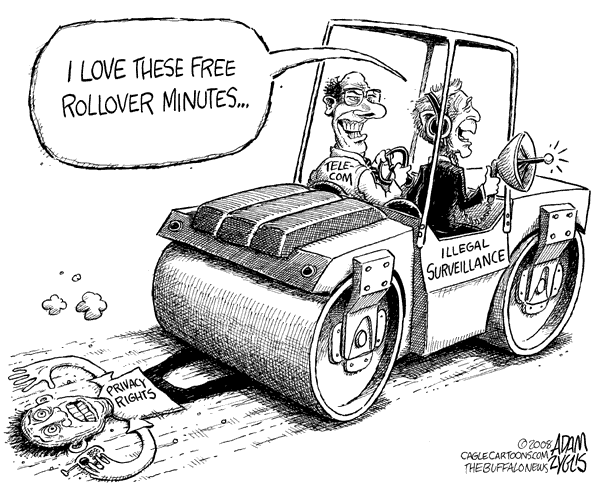
More to This Spying Business Than Meets the Eye


NSA’s Domestic Spying Grows
As Agency Sweeps Up Data

By Siobhan Gorman

Mike Hanks called our attention to the following article from the March 10, 2008, Wall Street Journal. Read it! All our attention may be focused on the Congressional vote on FISA and the shameful cave job by the Democrats on that issue, but there’s a lot more going on with the NSA and it’s ever-growing assault on our privacy and our civil liberties.

Thorne Dreyer / The Rag Blog / June 21, 2008

WASHINGTON, D.C. — Five years ago, Congress killed an experimental Pentagon antiterrorism program meant to vacuum up electronic data about people in the U.S. to search for suspicious patterns. Opponents called it too broad an intrusion on Americans’ privacy, even after the Sept. 11 terrorist attacks.

But the data-sifting effort didn’t disappear. The National Security Agency, once confined to foreign surveillance, has been building essentially the same system.

The central role the NSA has come to occupy in domestic intelligence gathering has never been publicly disclosed. But an inquiry reveals that its efforts have evolved to reach more broadly into data about people’s communications, travel and finances in the U.S. than the domestic surveillance programs brought to light since the 2001 terrorist attacks.

Congress now is hotly debating domestic spying powers under the main law governing U.S. surveillance aimed at foreign threats. An expansion of those powers expired last month and awaits renewal, which could be voted on in the House of Representatives this week. The biggest point of contention over the law, the Foreign Intelligence Surveillance Act, is whether telecommunications and other companies should be made immune from liability for assisting government surveillance.

Largely missing from the public discussion is the role of the highly secretive NSA in analyzing that data, collected through little-known arrangements that can blur the lines between domestic and foreign intelligence gathering. Supporters say the NSA is serving as a key bulwark against foreign terrorists and that it would be reckless to constrain the agency’s mission. The NSA says it is scrupulously following all applicable laws and that it keeps Congress fully informed of its activities.

According to current and former intelligence officials, the spy agency now monitors huge volumes of records of domestic emails and Internet searches as well as bank transfers, credit-card transactions, travel and telephone records. The NSA receives this so-called “transactional” data from other agencies or private companies, and its sophisticated software programs analyze the various transactions for suspicious patterns. Then they spit out leads to be explored by counterterrorism programs across the U.S. government, such as the NSA’s own Terrorist Surveillance Program, formed to intercept phone calls and emails between the U.S. and overseas without a judge’s approval when a link to al Qaeda is suspected.

The NSA’s enterprise involves a cluster of powerful intelligence-gathering programs, all of which sparked civil-liberties complaints when they came to light. They include a Federal Bureau of Investigation program to track telecommunications data once known as Carnivore, now called the Digital Collection System, and a U.S. arrangement with the world’s main international banking clearinghouse to track money movements.

The effort also ties into data from an ad-hoc collection of so-called “black programs” whose existence is undisclosed, the current and former officials say. Many of the programs in various agencies began years before the 9/11 attacks but have since been given greater reach. Among them, current and former intelligence officials say, is a longstanding Treasury Department program to collect individual financial data including wire transfers and credit-card transactions.

It isn’t clear how many of the different kinds of data are combined and analyzed together in one database by the NSA. An intelligence official said the agency’s work links to about a dozen antiterror programs in all.

A number of NSA employees have expressed concerns that the agency may be overstepping its authority by veering into domestic surveillance. And the constitutional question of whether the government can examine such a large array of information without violating an individual’s reasonable expectation of privacy “has never really been resolved,” said Suzanne Spaulding, a national-security lawyer who has worked for both parties on Capitol Hill.

NSA officials say the agency’s own investigations remain focused only on foreign threats, but it’s increasingly difficult to distinguish between domestic and international communications in a digital era, so they need to sweep up more information.

The Fourth Amendment

In response to the Sept. 11 attacks, then NSA-chief Gen. Michael Hayden has said he used his authority to expand the NSA’s capabilities under a 1981 executive order governing the agency. Another presidential order issued shortly after the attacks, the text of which is classified, opened the door for the NSA to incorporate more domestic data in its searches, one senior intelligence official said.

The NSA “strictly follows laws and regulations designed to preserve every American’s privacy rights under the Fourth Amendment to the U.S. Constitution,” agency spokeswoman Judith Emmel said in a statement, referring to the protection against unreasonable searches and seizures. The Office of the Director of National Intelligence, which oversees the NSA in conjunction with the Pentagon, added in a statement that intelligence agencies operate “within an extensive legal and policy framework” and inform Congress of their activities “as required by the law.” It pointed out that the 9/11 Commission recommended in 2004 that intelligence agencies analyze “all relevant sources of information” and share their databases.

Two former officials familiar with the data-sifting efforts said they work by starting with some sort of lead, like a phone number or Internet address. In partnership with the FBI, the systems then can track all domestic and foreign transactions of people associated with that item — and then the people who associated with them, and so on, casting a gradually wider net. An intelligence official described more of a rapid-response effect: If a person suspected of terrorist connections is believed to be in a U.S. city — for instance, Detroit, a community with a high concentration of Muslim Americans — the government’s spy systems may be directed to collect and analyze all electronic communications into and out of the city.

The haul can include records of phone calls, email headers and destinations, data on financial transactions and records of Internet browsing. The system also would collect information about other people, including those in the U.S., who communicated with people in Detroit.

The information doesn’t generally include the contents of conversations or emails. But it can give such transactional information as a cellphone’s location, whom a person is calling, and what Web sites he or she is visiting. For an email, the data haul can include the identities of the sender and recipient and the subject line, but not the content of the message.

Intelligence agencies have used administrative subpoenas issued by the FBI — which don’t need a judge’s signature — to collect and analyze such data, current and former intelligence officials said. If that data provided “reasonable suspicion” that a person, whether foreign or from the U.S., was linked to al Qaeda, intelligence officers could eavesdrop under the NSA’s Terrorist Surveillance Program.

The White House wants to give companies that assist government surveillance immunity from lawsuits alleging an invasion of privacy, but Democrats in Congress have been blocking it. The Terrorist Surveillance Program has spurred 38 lawsuits against companies. Current and former intelligence officials say telecom companies’ concern comes chiefly because they are giving the government unlimited access to a copy of the flow of communications, through a network of switches at U.S. telecommunications hubs that duplicate all the data running through it. It isn’t clear whether the government or telecom companies control the switches, but companies process some of the data for the NSA, the current and former officials say.

On Friday, the House Energy and Commerce Committee released a letter warning colleagues to look more deeply into how telecommunications data are being accessed, citing an allegation by the head of a New York-based computer security firm that a wireless carrier that hired him was giving unfettered access to data to an entity called “Quantico Circuit.” Quantico is a Marine base that houses the FBI Academy; senior FBI official Anthony DiClemente said the bureau “does not have ‘unfettered access’ to any communication provider’s network.”

The political debate over the telecom information comes as intelligence agencies seek to change traditional definitions of how to balance privacy rights against investigative needs. Donald Kerr, the deputy director of national intelligence, told a conference of intelligence officials in October that the government needs new rules. Since many people routinely post details of their lives on social-networking sites such as MySpace, he said, their identity shouldn’t need the same protection as in the past. Instead, only their “essential privacy,” or “what they would wish to protect about their lives and affairs,” should be veiled, he said, without providing examples.


Social-Network Analysis

The NSA uses its own high-powered version of social-network analysis to search for possible new patterns and links to terrorism. The Pentagon’s experimental Total Information Awareness program, later renamed Terrorism Information Awareness, was an early research effort on the same concept, designed to bring together and analyze as much and as many varied kinds of data as possible. Congress eliminated funding for the program in 2003 before it began operating. But it permitted some of the research to continue and TIA technology to be used for foreign surveillance.

Some of it was shifted to the NSA — which also is funded by the Pentagon — and put in the so-called black budget, where it would receive less scrutiny and bolster other data-sifting efforts, current and former intelligence officials said. “When it got taken apart, it didn’t get thrown away,” says a former top government official familiar with the TIA program.

Two current officials also said the NSA’s current combination of programs now largely mirrors the former TIA project. But the NSA offers less privacy protection. TIA developers researched ways to limit the use of the system for broad searches of individuals’ data, such as requiring intelligence officers to get leads from other sources first. The NSA effort lacks those controls, as well as controls that it developed in the 1990s for an earlier data-sweeping attempt.

Sen. Ron Wyden, an Oregon Democrat and member of the Senate Intelligence Committee who led the charge to kill TIA, says “the administration is trying to bring as much of the philosophy of operation Total Information Awareness as it can into the programs they’re using today.” The issue has been overshadowed by the fight over telecoms’ immunity, he said. “There’s not been as much discussion in the Congress as there ought to be.”

Opportunity for Debate

But Sen. Kit Bond of Missouri, the ranking Republican on the committee, said by email his committee colleagues have had “ample opportunity for debate” behind closed doors and that each intelligence program has specific legal authorization and oversight. He cautioned against seeing a group of intelligence programs as “a mythical ‘big brother’ program,” adding, “that’s not what is happening today.”

READ THE RULING

While the Fourth Amendment guarantees “[t]he right of the people to be secure in their persons, houses, papers, and effects, against unreasonable searches and seizures,” the legality of data-sweeping relies on the government’s interpretation of a 1979 Supreme Court ruling allowing records of phone calls — but not actual conversations — to be collected without a warrant. Read the ruling.

The legality of data-sweeping relies largely on the government’s interpretation of a 1979 Supreme Court ruling allowing records of phone calls — but not actual conversations — to be collected without a judge issuing a warrant. Multiple laws require a court order for so-called “transactional'” records of electronic communications, but the 2001 Patriot Act lowered the standard for such an order in some cases, and in others made records accessible using FBI administrative subpoenas called “national security letters.”

A debate is brewing among legal and technology scholars over whether there should be privacy protections when a wide variety of transactional data are brought together to paint what is essentially a profile of an individual’s behavior. “You know everything I’m doing, you know what happened, and you haven’t listened to any of the contents” of the communications, said Susan Landau, co-author of a book on electronic privacy and a senior engineer at Sun Microsystems Laboratories. “Transactional information is remarkably revelatory.”

Ms. Spaulding, the national-security lawyer, said it’s “extremely questionable” to assume Americans don’t have a reasonable expectation of privacy for data such as the subject-header of an email or a Web address from an Internet search, because those are more like the content of a communication than a phone number. “These are questions that require discussion and debate,” she said. “This is one of the problems with doing it all in secret.”

Gen. Hayden, the former NSA chief and now Central Intelligence Agency director, in January 2006 publicly defended the activities of the Terrorist Surveillance Program after it was disclosed by the New York Times. He said it was “not a driftnet over Lackawanna or Fremont or Dearborn, grabbing all communications and then sifting them out.” Rather, he said, it was carefully targeted at terrorists. However, some intelligence officials now say the broader NSA effort amounts to a driftnet. A portion of the activity, the NSA’s access to domestic phone records, was disclosed by a USA Today article in 2006.

The NSA, which President Truman created in 1952 through a classified presidential order to be America’s ears abroad, has for decades been the country’s largest and most secretive intelligence agency. The order confined NSA spying to “foreign governments,” and during the Cold War the NSA developed a reputation as the world’s premier code-breaking operation. But in the 1970s, the NSA and other intelligence agencies were found to be using their spy tools to monitor Americans for political purposes. That led to the original FISA legislation in 1978, which included an explicit ban on the NSA eavesdropping in the U.S. without a warrant.

Big advances in telecommunications and database technology led to unprecedented data-collection efforts in the 1990s. One was the FBI’s Carnivore program, which raised fears when it was in disclosed in 2000 that it might collect telecommunications information about law-abiding individuals. But the ground shifted after 9/11. Requests for analysis of any data that might hint at terrorist activity flooded from the White House and other agencies into NSA’s Fort Meade, Md., headquarters outside Washington, D.C., one former NSA official recalls. At the time, “We’re scrambling, trying to find any piece of data we can to find the answers,” the official said.

The 2002 congressional inquiry into the 9/11 attacks criticized the NSA for holding back information, which NSA officials said they were doing to protect the privacy of U.S. citizens. “NSA did not want to be perceived as targeting individuals in the United States” and considered such surveillance the FBI’s job, the inquiry concluded.

FBI-NSA Projects

The NSA quietly redefined its role. Joint FBI-NSA projects “expanded exponentially,” said Jack Cloonan, a longtime FBI veteran who investigated al Qaeda. He pointed to national-security letter requests: They rose from 8,500 in 2000 to 47,000 in 2005, according to a Justice Department inspector general’s report last year. It also said the letters permitted the potentially illegal collection of thousands of records of people in the U.S. from 2003-05. Last Wednesday, FBI Director Robert Mueller said the bureau had found additional instances in 2006.

It isn’t known how many Americans’ data have been swept into the NSA’s systems. The Treasury, for instance, built its database “to look at all the world’s financial transactions” and gave the NSA access to it about 15 years ago, said a former NSA official. The data include domestic and international money flows between bank accounts and credit-card information, according to current and former intelligence officials.

The NSA receives from Treasury weekly batches of this data and adds it to a database at its headquarters. Prior to 9/11, the database was used to pursue specific leads, but afterward, the effort was expanded to hunt for suspicious patterns.

Through the Treasury, the NSA also can access the database of the Society for Worldwide Interbank Financial Telecommunication, or Swift, the Belgium-based clearinghouse for records of international transactions between financial institutions, current and former officials said. The U.S. acknowledged in 2006 that the CIA and Treasury had access to Swift’s database, but said the NSA’s Terrorism Surveillance Program was separate and that the NSA provided only “technical assistance.” A Treasury spokesman said the agency had no comment.

Through the Department of Homeland Security, airline passenger data also are accessed and analyzed for suspicious patterns, such as five unrelated people who repeatedly fly together, current and former intelligence officials said. Homeland Security shares information with other agencies only “on a limited basis,” spokesman Russ Knocke said.

NSA gets access to the flow of data from telecommunications switches through the FBI, according to current and former officials. It also has a partnership with FBI’s Digital Collection system, providing access to Internet providers and other companies. The existence of a shadow hub to copy information about AT&T Corp. telecommunications in San Francisco is alleged in a lawsuit against AT&T filed by the civil-liberties group Electronic Frontier Foundation, based on documents provided by a former AT&T official. In that lawsuit, a former technology adviser to the Federal Communications Commission says in a sworn declaration that there could be 15 to 20 such operations around the country. Current and former intelligence officials confirmed a domestic network of hubs, but didn’t know the number. “As a matter of policy and law, we can not discuss matters that are classified,” said FBI spokesman John Miller.

The budget for the NSA’s data-sifting effort is classified, but one official estimated it surpasses $1 billion. The FBI is requesting to nearly double the budget for the Digital Collection System in 2009, compared with last year, requesting $42 million. “Not only do demands for information continue to increase, but also the requirement to facilitate information sharing does,” says a budget justification document, noting an “expansion of electronic surveillance activity in frequency, sophistication, and linguistic needs.”

Source. / Wall Street Journal

Thanks to William Michael Hanks / The Rag Blog

Posted in RagBlog | Tagged , , , , , , | 1 Comment

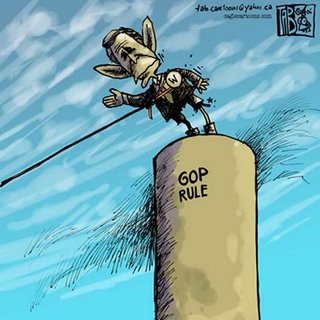
Washington Beheading

Thanks to Harry Edwards / The Rag Blog

Posted in RagBlog | Tagged , , , , | Leave a comment

Mesmo’s Reflections on the Sixties

Janis Joplin, folksinger. Austin, Texas, 1965, at The 11th Door on Red River Street. Photo by Bob Simmons / The Rag Blog.

Gerry Storm wrote the following reminiscence on Austin music in the sixties for the Texas Ghetto website in 2000. Austin was a center of the era’s dynamic counterculture and a point of origin for psychedelic rock.

Gerry writes “Mesmo’s Desert Diary” on a reliably irregular basis for The Rag Blog. “A septuagenarian desert rat” who now lives in Southwest New Mexico, Gerry Storm is a former student at the University of Texas in Austin who was a peace activist in the Vietnam era and a noted rock musician during the sixties and seventies. He has added a brief afterthought at the end of this article.

Thorne Dreyer / The Rag Blog / June 21, 2008

The Way We Were
Austin Music : 1965-1969

By Gerry Storm / The Rag Blog

There was no great migration to Austin in 1965. New arrivals were usually headed for the University of Texas, a place in the state bureaucracy, or they were new personnel assigned to Bergstrom Air Force Base. Austin had the reputation of being a beautiful, rather colonial place, with no industry and low pay. U.T. graduates used to lament this situation as they packed their bags and headed for promising, good paying jobs in Dallas and Houston.

Those of us with friends in River City liked to visit because it was always a place to have a good time. It was a city of state drones and school teachers, politicos and lawyers, academics and professional students. It was a place that rich kids preferred to congregate as they waited for their inheritances. It was said to be rather snobbish, a city of tea sippers. But on all social levels, it was a good place to party.

Being the State Capitol and home of the state’s largest and most prestigious university, there was an underground of irreverent scholars, artists, and politicos–some of them with national reputations–that you don’t find in any city. Although they were tolerated in Austin, they hardly dominated the scene. For the most ambitious, Austin was only a stepping stone to the West Coast or the Northeast. That was one of the appealing facets of the town that survives today: It is a good place for a smart kid with ambition and talent but no money to start a reputation.

Night life? No, there wasn’t much of that either. The Club Caravan in the Villa Capri Motel was the only place with a full-time band. The few rock clubs in town changed owners and formats regularly and enforced strict dress codes. There was a big country and western joint near Round Rock, Big G’s, but you wouldn’t have mistaken Austin for Nashville.

You couldn’t buy a drink of hard liquor legally unless you were a member of a private club but you could buy whiskey by the half-pint to gallon, bring it into any beer joint and drink it all.

The veterans of World War II and the Korean Conflict who had flocked to U.T. to cash in on the GI Bill, were gone by the early ’60’s. Their departure had left a definite social vacuum on the night life. The barracks erected for them and other students who couldn’t afford a dorm had been razed, and that area of the south campus had been landscaped to feature the oil rig, Santa Rita Number 1.

The University and public places in Austin had been integrated quickly after Lyndon Johnson a few years earlier decided to run for President, without much fanfare or tumult, prompting black residents to ask, “If it was so easy why didn’t they do it a long time ago?” But it was still a southern town. The only place with any sizeable mixing of the races was Charlie’s Showcase, an East Austin rhythm and blues joint that served as a gathering place for the adventurous.

This was an era when the big happenings were private parties. The times seemed to dictate this social preference, and (as any college-age Texas kid, legislative aide or local dandy could tell you) there were plenty of these. Until a new resident found his or her social group, however, Austin could be a dead town.

Lyndon B. Johnson, longtime resident of the little city and owner of the broadcasting monopoly which controlled the town’s major radio and only TV stations, was now President of the United States; his long time crony, John Connally, was Governor of the State of Texas; Frank Erwin, a member of the Johnson team, was running the University of Texas through the Board of Regents. The Johnson machine was housed in Austin and its power players exerted tremendous influence over not only the city and the state, but the world.

Mother U.T. ruled the cultural life by booking virtually all the name, live, entertainment through the Cultural Entertainment Committee. She was showing off her new art building by lining up one impressive exhibit after another. Gregory Gymnasium served double duty as the Longhorn basketball arena and the campus concert hall. The all-white Longhorn football teams were on a long roll under Coach Darrell Royal, necessitating major expansion of the football stadium. In fact “expansion” was a key a word on campus as the inevitable invasion of the Baby Boomer generation which would eventually double the enrollment was in its early stages. There were no women’s sports teams at the university and coeds could not wear slacks or shorts or jeans to class but they could and did wear mini-skirts, much to the delight of girl watchers.

There was a fair amount of vice in the little city, presided over by a group of bank robbers and hard-core thugs known as The Overton Gang.

The Hill Country west of the city was still unspoiled and largely undiscovered, although the national press covering Lyndon at home had found it and been properly seduced. They regaled over the rides between Austin, Johnson City, and a Highland Lake called “Lake Granite Shoals” (soon to be renamed “The Lyndon B. Johnson Reservoir”). This was the preferred playground of the Johnson clan.

Although the influence of this political machine on the little city was well-known to and weathered by the populace, chances are the Overton Gang was more popular and, perhaps, more ethical.

Some of the best attended musical events were the “Folk Sings” on campus. These were strictly acoustic events featuring students. The repertoire was primarily traditional folk although some of the performers wrote compelling songs of their own.

Bob Dylan was the hero of the day to most folk music fans. His music could be heard in the neighborhoods around the campus, coming from students rooms and over the little local radio station KAZZ. He had managed to crack the pop music Top 10 with his ballad “Like a Rolling Stone”.

The would-be professional rock musicians were playing the “English Sound” and some of them had affected the English look with “Mod” clothing and hair that was a little longer than normal (normal was quite short at the time).

There was a distinct difference between folk fans and rock fans, the former being more altruistic and the latter more animated. It came as quite a shock, therefore, when Dylan appeared at the Newport Folk Festival that summer with a rock group. In succeeding interviews he revealed that he felt like electric music was more suited to the times and that he planned to make all his future appearances with an amplified band as backup.

Folk purists were aghast, they felt betrayed. But young men of his generation got the point, there was a new fear sweeping this group. President Johnson had announced that American forces in Viet Nam would be increased by several hundred thousand, by one million inside a year. The young men understood that they would soon be called upon to put their lives on the line for their country. Many of them did not like the idea of forced inscription to defend a corrupt government thousands of miles away in Asia. None of them liked the idea of dying.

This was the source of the new angst in the music. Folk musicians throughout the country started “going electric”, buying pickups for their acoustic guitars and little amplifiers to go with them. They still differed from the rock musicians in that they were usually rank amateurs when it came to playing in bands. But the music most of the rock musicians played was covers of current and past hits-nothing original. And the folk players wrote almost all their own music, the lyrics to which were now reflecting their discomfort with the growing war and its ramifications. With amplification, one could protest louder. The rock musicians were also feeling the cold wind of the draft in their lives, and they heard the voices of protest.

In September of 1965 Bob Dylan appeared in Austin at the Palmer Auditorium. It was a seminal event in the history of music in “River City”. So great was the response to this music that hundreds of would be protest rock musicians went home and started trying to write songs for this genre. They also started letting their hair grow. Dylan’s attitude and appearance seemed to serve as the signs of the new times and his message was loud and clear: don’t go away like lambs to slaughter, stick together, fight the system.

There was a curious scene on San Jacinto street, a block up from the historic Sholtzgarten. On the corner was The Jade Room, a dress code night club which featured English copy bands, go-go girls, and dancing. In mid block was a nondescript little hole in the wall called variously “The Library” or “Fred”. It featured folk singers, no dancing. Since these were the days before liquor-by-the-drink was legal in Texas, both places were basically beer joints. The Jade Room was very formal, run like a tight ship by its owner/manager, one Marge Funk. The Library/Fred was barely managed at all and had a succession of lessees and would be impresarios, barely keeping afloat.

On some nights there were dozens of performers who wanted to sing but not all of them made it to the mike before closing time. These performers had at least one thing in common, they were no slaves to fashion. Being unkempt was part of the scene at this club, performers and audience alike sharing this mindset. Performers from Fred did not play at The Jade Room nor vice-versa. But there was talent at both places.

The Thirteenth Floor Elevators — Tommy, Bennie, Rocky and Stacy — at the New Orleans Club in Austin, Texas, 1965. Photo by Bob Simmons / The Rag Blog.

Austin’s first nationally famous rock band grew from a combination of these two scenes, the English copy bands and the folkies, the boys at The Jade Room and those at The Library/Fred. The driving force behind the marriage was one Tommy Hall, leader of the first Austin band to find success in the rock business. He was originally from Houston, an English major. In the family who hung out around the Ghetto, he was called “Turn On Tommy”. He was a fast talker, a hustler, a jive artist, a rapper, a believer, a fanatic, a salesman, and sometimes a bore. Originally he had been a Young Republican but had switched allegiances when he became infatuated with music. He was also a good student in his early years at U.T., a quite literate young fellow with English language skills. He could not play a musical instrument so he took up the jug. He could not play the jug very well either, at least not in the traditional sense.

Unknown, unheralded and largely unheard at the folk sings was a skiffle group called “The Lingsmen”. Skiffle was a bastard stepchild of folk and acoustic blues which had a brief fling on the hit parade with an English group led by one Lonny Donegan. Leader of The Lingsmen was Tommy Hall. If you had heard The Lingsmen then and been told they would be the band that would put Austin, Texas on the map as a center of pop music, you could have been forgiven if you had laughed.

In the summer of 1965 when Dylan shocked his followers by going electric, Hall got the message. The Lingsmen played that summer in Corpus Christi. They were no longer a skiffle group. They were covering the rock and roll songs of English bands and surfer music in a decidedly electric format. The group consisted of two boys from Kerrville, Stacey Sutherland and John Ike Walton on guitar and drums, respectively, and Austinite Benny Thurman on bass. None of them was much of a singer. None of them was much of a rock musician either, although Sutherland had some experience. Hall acted as manager of the group but did not play.

Another rising star on the scene in Austin was one Roger Erickson, Jr., the son of an architect/engineer father and frustrated opera singer mother. Rocky, as he was called, had an abiding love for the blues and a good collection of blues records which he learned to imitate quite well. He also had inherited his mother’s voice, a powerful, intense instrument. He had received early musical training and was a competent guitar player. While still a student at Austin High he made a reputation by being expelled for refusing to cut his long, black, wavy hair. Rocky was a good-looking, very likeable fellow. He had plenty of charisma. He was a budding star. His debut on the Austin scene (while still in his teens) came when he put together a band he called “Rocky and The Spades”.

They appeared at The Jade Room and were by most accounts a decent band, and a very loud one. They did not last for long and did not develop a large following. However, in Rocky, Tommy Hall saw the vocalist that he had been searching for to front The Lingsmen. Throw into this mix a lot of spooky mysticism, a little LSD, plenty of pot, other chemicals, sex, an amplifier for Hall’s jug, the literary talents of Clementine Hall, Tommy’s wife at the time and the author of most of the band’s better lyrics, alienation, angst, and a “can do” attitude and you have the recipe that created the Thirteenth Floor Elevators. Hall had become an erstwhile “Acid Guru”, an individual who guided others through LSD trips. In San Francisco, in Boston, and in Austin these individuals were forming groups of followers who believed that their guides (Gurus, masters, etc.) were disciples of God (or The Man himself) sent to lead them into a greater glory. Charles Manson fit this mold. It is said that Tommy Hall had this kind of power over Rocky Erickson and others. For better of worse, it was under this veil of mysticism that Austin’s first successful rock band emerged.

© Gerry Storm 2000

Afterthought.

The real story of the Austin scene was beneath the surface in the pot biz. Well into the ’80’s it was the dealers who financed the shows and various other businesses, bailed out buddies, financed bands, etc. You gotta have some capital to create a scene! The first upscale hippy businesses that morphed into the 6th Street scene were financed by the pot trade. Whole Foods? Dell? There was no grand conspiracy or cartel, just some guys and gals who figured out a way to cross and deliver it to a waiting buyer, and resist bragging about it. Lots of them figured it out and made it work for a time. I’d guess that they are still at it, although growing on this side of the border seems to be more common these days.

Gerry / June 21, 2008

Source. / Texas Ghetto

The Rag Blog

Posted in Rag Bloggers | Tagged , , , , , , , | 1 Comment

Iraq: The Never-Ending (Dismal) Story


Witnesses Link Chemical to Ill US Soldiers: Highly toxic substance used at Iraq plant
By Farah Stockman / June 21, 2008

WASHINGTON – US soldiers assigned to guard a crucial part of Iraq’s oil infrastructure became ill after exposure to a highly toxic chemical at the plant, witnesses testified at a Democratic Policy Committee hearing yesterday on Capitol Hill.

“These soldiers were bleeding from the nose, spitting blood,” said Danny Langford, an equipment technician from Texas brought to work at the Qarmat Ali Water treatment plant in 2003. “They were sick.”

“Hundreds of American soldiers at this site were contaminated” while guarding the plant, Langford said, including members of the Indiana National Guard.

Langford is one of nine Americans who accuse KBR, the lead contractor on the Qarmat Ali project and one of the largest defense contractors in Iraq, of knowingly exposing them to sodium dichromate, an orange, sandlike chemical that is a potentially lethal carcinogen. Specialists say even short-term exposure to the chemical can cause cancer, depress an individual’s immune system, attack the liver, and cause other ailments.

Yesterday’s hearing – one among several organized to hold contractors accountable for alleged malfeasance in Iraq – was chaired by Senator Byron Dorgan, a North Dakota Democrat. “Hundreds of US troops, who may not even know of their exposure to sodium dichromate that could one day result in a horrible disease, cancers, and death,” he said.

Roughly 250 American soldiers were believed to have come in contact with the chemical, according to Defense Department documents. Sodium dichromate is the same substance that poisoned residents in Hinkley, Calif., an incident made famous by the movie “Erin Brockovich” in 2000.

In Iraq, the chemical was used as an antirust coating for pipes that supply water to the oil fields. After the 2003 US-led invasion, looters raided the Qarmat Ali facility; afterward, the chemical was found strewn around the facility and its grounds.

Langford and his former colleagues have said KBR supervisors initially told them the chemical was a “mild irritant.” The company, however, eventually acknowledged that sodium dichromate was a potentially deadly substance and moved to clean up the site.

KBR has denied any wrongdoing in the matter. The company has insisted the safety of its workers and the troops they work with are its “highest priority.”

After KBR began cleaning up the site, it tested its workers for exposure. The US military also took blood and urine samples from 137 soldiers and civilians who were at the plant. Ten soldiers declined to be tested, and 14 were unavailable, according to the congressional testimony about the exposure provided by officials from the Department of Defense.

The Pentagon has said that the troops’ exposure to sodium dichloride at the Iraqi facility did not appear to pose any long-term threat.

Last year, Ellen Embrey – deputy assistant defense secretary for Force Pealth Protection and Readiness, an office set up specifically to deal with such long-term health issues – told a congressional subcommittee that the test results from the soldiers showed “no specific abnormalities” and that “no long-term health effects are expected” from the exposure.

Dr. Michael Kilpatrick, the Deputy Director for Force Health Protection and Readiness, told the Globe in an interview earlier this year that the samples from the soldiers were brought to the US Army Center for Health Promotion and Preventive Medicine in Aberdeen, Md., and that 98 percent showed the “normal range” of chromium. Yesterday, Kilpatrick said physical exams on the soldiers showed “no definitive signs or symptoms . . . that would indicate chromium exposure.”

In yesterday’s hearing, however, Langford described for the first time how soldiers guarding the facility had the same symptoms as those who had dangerous levels of exposure to the chemical, complaints that are the foundation for the workers’ lawsuit.

“The chromium of Iraq is going to be the same thing as Agent Orange of Vietnam,” Langford said after the hearing. “I want something done for them.”

Edward Blacke, who served as KBR’s health, safety, and environmental coordinator for the Qarmat Ali project, said he saw soldiers with “continuous bloody noses, spitting up of blood, coughing, irritation of the noses, eyes, throat, and lungs, shortness of breath.”

Max Costa, chairman of the Department of Environmental Medicine at New York University, told the committee that ordinary blood and urine tests would not have detected heavy levels of sodium dichromate exposure after a few days. He said that the military would have had to conduct a highly specialized red blood cell test within four months of the exposure to determine the soldiers’ risk of illness.

“Most people don’t get it right,” said Costa, after the hearing. “It is not an established test that medical labs normally do.”

It was not clear yesterday whether the more specialized tests were conducted on the soldiers. The Army lab in Aberdeen is not accredited to conduct those tests, but may have sent the samples elsewhere, according to Defense officials familiar with the procedures there.

Kilpatrick has said his office is keeping records so that any soldier with medical problems that appear to be related to sodium dichromate exposure could make a case for receiving free care from a veterans hospital.

But Dorgan said yesterday that the Pentagon has not done enough to monitor the health of the soldiers and ensure that KBR and other contractors are putting safety first.

“It is almost unbelievable,” the senator said during the hearing. “We know that there has been exposure of workers and soldiers to a deadly chemical, and there has been, in my judgment, lack of accountability by those who caused the exposure and lack of accountability at the Department of Defense, regrettably.”

Dorgan began investigating the workers’ allegations of sodium dichromate exposure after The Boston Globe reported on the case in March.

© Copyright 2008 Globe Newspaper Company

Source / Boston Globe / Common Dreams

The Rag Blog

Posted in RagBlog | Tagged , , | Leave a comment

Jazz : The Colossus


Sonny Rollins, Take One
By Ishmael Reed

Bebop was my generation’s hip-hop. It was more than a pastime; it was an obsession. I used to play trombone with bebop groups. When I turned sixty, I enrolled in Berkeley’s Jazz School, where I studied with jazz pianist Susan Muscarella for nearly five years. I’ve continued with jazz pianist Mary Watkins. When I met Max Roach, I thanked him for keeping me out of reform school; we were too busy listening to bop to get into trouble. We’d spend hours at each others’ homes listening to the latest recordings. We dressed like beboppers. We were clean. We went around looking like Gregory Peck in The Man in the Gray Flannel Suit. Our idea of a party was where they’d play “Moody’s Mood for Love.” We knew all the words.

Bebop musicians didn’t walk. They came at you, dancing. When Sonny Rollins descended from his studio after our interview, he was wearing this great greenish raincoat that hit him near the ankles. Rollins, who had turned sixty-six when this interview took place, said that when he was a teenager, he was impressed with the way an older trumpet player shined his shoes. Beboppers were sharp, and we were their acolytes.

Theodore Walter “Sonny” Rollins first picked up the sax in 1944 as a sophomore in high school. By the 1950s he had come into his own, playing tenor with a variety of all-time jazz greats, including Art Blakey, Bud Powell, Thelonious Monk and Miles Davis. When he left the Max Roach Quintet in 1957, Rollins created his own unique trio (sax, bass and drums) that spotlighted the versatility of his solos and hard bop style. Several years later, in an attempt to regain inspiration in his playing, he stopped recording and began practicing regularly while walking along New York’s Williamsburg Bridge; his triumphant return took place in 1962 with an album titled simply The Bridge.

Rollins’ early recording styles show him developing what would become the Rollins style: a broad repertoire including blues, standards and even spirituals and an intense devotion to melody. No matter how abstract his solos become, one is always mindful of the tune with which he started out—a trait he shares with Thelonious Monk.

Though jazz solos may sound spontaneous, many are rehearsed and memorized. Some musicians are still recycling solos originated by Charlie “Bird” Parker. Rollins, on the other hand, is known for pure improvision. He has a dedicated following but fame in the United States has been slow to come. For some of the white critics, who form the largest segment of the fraternity of jazz critics, Rollins has an attitude. He is recognized as one of the first artists to make reference to the growing militancy of the 1960s with his Freedom Suite.

Both the Yoruba and biblical traditions hold that sometimes your worst adversary is inside your family—in this case, American fans and critics. The prophet is no honored in his own country. Abroad, though, it’s different. Rollins’ Saxophone Colossus is a best-seller in Japan, which he has visited nineteen times and where he has appeared in computer commercials. At seventy-six, he still continues his vigorous touring.

But Rollins doesn’t have to go anywhere, if he doesn’t want to. He’s come a long way since his mother bought him that first Zephyr tenor. He can kick around his Germantown, New York farm and continue to develop his music.

Rollins has accumulated a catalogue of close to fifty albums. More importantly, he’s one of the only surviving icons left from an era in jazz when genius was the norm and musicians like Miles Davis, John Coltrane and Thelonious Monk were not only changing music but also affecting black culture and American society. When members of my generation tried to break away from the linear forms of novel writing, we did so because we were trying to keep up with the musicians and painters. How would it look if I did some refried Faulkner and Hemingway, when I lived in a community on the Lower East Side that included Joe Overstreet, Sun Ra and Cecil Taylor? Kenny Dorham and I used to drink together at a dive named the Port of Call, and Albert Ayler and his brother were guests in my home. It’s appropriate that the central image of associated with Rollins is a bridge, because the beboppers, like the hip-hoppers, those who are not pushed into music that degrades by avaricious record producers, have established a bridge that reaches back thousands of years to the sound of the mother drum, the root of all black music. But sometimes it seems that in a white supremacist society, constantly on guard against minorities gaining the upper hand, even the creators of one form of homegrown music are denied credit for their invention. American Experience, on PBS, ran a program about the history of New Orleans. Based on the visuals, one would gain the impression that whites invented jazz. Photos of great black musicians like Jelly Roll Morton, Louis and Lil Armstrong, King Oliver and others roll by without the musicians being identified. All one has to do is notice the names associated with the production to realize the problem.

Reed: There aren’t many survivors from the great bebop revolution. Who is still left?

Rollins: Well, J.J. Johnson [who, since this interview, has died], Milt Jackson [died], Percy Heath [died], and his little brother Jimmy. There’s not many of us left. Art Farmer, who I guess would be about my age. Johnny Griffin. [Since the interview was conducted, bop pioneer Jackie MacLean also died.]

Reed: Do you guys have a survivor’s guild? (Laughter)

Rollins: No, we don’t have one. We should have something like that, ‘cause in the old days in Harlem, they used to have all these clubs and everyone would be together, to help guys. There should really be some kind of federation. But people just see each other now and then, you know.

Reed: You’ve said your mind is like a computer—you have different programs and you snatch from everyplace. Tin Pan Alley, country and western—very eclectic. Do you consider your music to be at all political or satirical, like poking fun at institutions that take themselves too seriously?

Rollins: Yeah, oh sure. Of course. I got a lot of criticism for The Freedom Suite, especially when I went down South on tour and we were playing mainly white colleges. A lot of people had me against the wall, asking, “What did you mean by that?”

Reed: We still get that with gangsta rap, and I remember the horrible things they used to say about bebop. When middle-class black people listened to bebop, they said the music was strange. They didn’t like the culture, they didn’t like the style; just a lot of hate.

Rollins: In a way, because of the guys in that day using drugs and stuff, they might have associated the music with that culture. So maybe I can cut them a little slack.

Reed: Let’s talk about the music here. One critic, Gunther Schuller, said that your method of playing, through melody rather than running harmonic changes, was a radical concept. What did he mean by that?

Rollins: I guess what he’s talking about is thematic improvisation. In other words, if I played “Mary Had a Little Lamb” [sings the melody], I might play for two hours from that same song, variations on that theme. What he meant was that I didn’t just play the melody of “Mary Had a Little Lamb” and go into the chord changes. I kept it as a theme. I think that’s what he meant. But at the time he wrote that, I didn’t know what he meant. I might have understood it, but it was so strange to have someone tell me what I was doing that it sort of tricked me for a minute.

Reed: Describe your apprenticeship with Coleman Hawkins. I know he influenced you a great deal.

Rollins: I would say Monk was more like that. Coleman, he was sort of—I didn’t really work with him. He was just my adult. But I actually used to go to Monk’s house after school and rehearse with his band and stuff, so with him I would say it was more of a real apprenticeship. He was like my guru. Monk would say, “Yeah, man, Sonny is bad. Cats have to work out what they play; Sonny just plays that shit out of the top of his head.”

Reed: In the old days, the players and the gangsters were the real patrons of the art. And if you had talent, they would get you gigs in their clubs. Then a new kind of drug came on the scene. What was the impact of heroin on the jazz scene?

Rollins: Devastating. Devastating.

Reed: When you got in trouble, was that peer group stuff?

Rollins: To an extent, but you know, Bird [Charlie Parker] was doing it, Billie Holiday was doing it, but especially Bird. That’s why Bird was such a distraught figure. Because cats were copying him, and he knew it was wrong but he couldn’t stop. So we figured, Yeah, man, Bird is doing it, let’s go and get high. And I got strung out. I got fucked up. I mean, that’s normal when you don’t know better.

Reed: But you overcame it.

Rollins: That was a rough one. The person that gave me pride to overcome it—besides Bird—was my mother, who stood by me after I had nobody. After I had ripped everybody off. People would see me coming down the street, they’d run. But my mother stayed with me all the way. And Charlie Parker.

Reed: You had a great reputation, but you went to Chicago and worked as a laborer. How did you feel about that?

Rollins: Well, I had messed myself up so bad and burned all these bridges, so when I went to Chicago, I went there to kick my habit.

Reed: And then you went to the government rehab center in Lexington, Kentucky. And afterward made your comeback.

Rollins: I came out and I was thinking about Bird, and what happened when I was in there. I thought, boy, wait till I come out. I’ma show Bird that I’m cool. And then he died while I was still in there. But anyway, I came out and still had to struggle with cats saying, “Hey, man, come on, let’s step out.” But I won that struggle. I wanted to work, and I had to come all the way back out myself. I knew how far down I’d been; I did janitor work and all of this—well, what else was there to really do?

Reed: What about your relationship with club owners?

Rollins: I was blackballed by a lot of these people.

Reed: Why?

Rollins: Because I was what you would call an uppity nigger or whatever. So a lot of these cats were keeping me from playing festivals and shit. This was for acting up and asking for money. Some cats be so glad to play that they don’t say nothing.

Reed: People are so happy to play that they lower the standards?

Rollins: It’s not just in the past, either. I’m going through this shit all the time. They just called me to do a commercial for this car, Infiniti. They wanted us to go to Czechoslovakia to shoot it. There were no speaking parts. It would be this actor and myself sitting down in a jazz club at a table, and there’ll be some Czech jazz musicians up there playing and then a voice-over about Infiniti. Something like that. So naturally I didn’t do it. I mean, for me to just be validating white jazz music. I’m not going to put myself in that position. I’m glad they still think I’m viable, but I’m not gonna do that shit, man.

I did one commercial some time ago, where I was playing on the bridge for Pioneer. They said, “Sonny Rollins really went to practice on the bridge and became excellent, like our product.” Something like that was cool, where I’m identified and the people know it’s me playing. But to sit down and validate someone else’s shit, it’s just not right. It would get me a lot of exposure, it would be cash, of course, but I reached the conclusion a long time ago that I’m not rich. I’m not going to get rich, I just want to make enough to make it. Fuck trying to get into that race. I don’t want it; I don’t even want to speak to those people about it ‘cause I don’t like them.

Reed: Was that like a revelation—some sort of spiritual thing that led you to do that?

Rollins: It happened because I was getting a lot of publicity at the time. I had a band with Elvin Jones and I was playing these places, and I remember the place I played in Baltimore and people really didn’t get it, so I said, “Man, I’m not really doing it. I got to get myself together. First of all, I’ma go back to the woodshed.” That’s why I went on the bridge. Some cat, a writer, was up across the bridge one day and saw me playing, but nobody would have even known it if it hadn’t been for him. That’s how it happened. It didn’t have anything to do with trying to make it public.

Reed: Why are you so hard on yourself?

Rollins: I’m hard on myself because maybe I been around a lot great musicians, and I don’t think I’ll ever be at the level of some of the people I been around. So I’m trying to reach that level. I’m trying to reach a level of performance, and that’s what it’s about.

Reed: They used to hose something called the “Pat Juba” in slavery days: the white slave owners made two black guys beat each other up and one survives, and the masters stand around and watch. I think that still goes on. When it comes to blacks it always seems to be a competition, fighting to see who’s going to be the diva, like they’re having a diva war to see who’s going to be accepted. There can only be one dancer, one writer, one musician. They tried to do that with you and Coltrane, to play you against each other.

Rollins: We didn’t react to it. Coltrane was beautiful, a very spiritual person. He was like a minister. We were thinking about music. It was the writers who influenced the friends who….

Reed: Was it just a few writers who did this?

Rollins: Probably. Remember when Coltrane and I came out. I was popular before Coltrane. We used to be referred to as the angry young tenors—we were against, like, the Stan Getzes, the Birth of the Cool; we were sort of a reaction against that. That was still going on at that time, so we were the angry tenors and nobody was thinking about that shit. But I noticed that withour even realizing that’s what they were doing in slavery days. I noticed that you could never have more than one person up there at a time.

Reed: Let me ask you about gangsta rap.

Rollins: I like the content of rap because it’s the black experience; what they’re saying is the truth. Not everything—I’m talking about the political stuff, of course. We have to accept that ‘cause that’s what’s happening.

Reed: What about the style, all this mixing and sampling and stuff they do?

Rollins: Well, they sampled some of my stuff. This group Digable Planets did some of my stuff. I heard it in a store. I heard somebody playing some of my stuff.

Reed: How do you feel about that?

Rollins: It’s okay, it’s alright. I just don’t want to be ripped off. I need my money. So I like the political thing and I like some of the rhythms them cats are playing. I can use it. I’m not an old fogy. I think jazz has done so much to bring people together, but jazz is only an art form. You can’t change a society with jazz. The society is still backward on racial matters. I like to be democratic; I have a white boy playing in my band right at the moment. But it’s not a personal thing. I find people personally who are great, but the oppressive society just makes it impossible to be real with people. It always fucks everything up.

[This essay is excerpted from Ishmael Reed’s new collection, Mixing It Up: Taking On the Media Bullies and Other Reflections. It is reprinted with permission of the author.

Ishmael Reed is a poet, novelist and essayist who lives in Oakland. His novels include, Mumbo Jumbo, the Freelance Pallbearers and The Last Days of Louisiana Red.]

Source. / CounterPunch / Posted June 15, 2008

Thanks to Carlos Lowry / The Rag Blog

Posted in RagBlog | Tagged , , , | Leave a comment

Journalism : OUT OF PRINT!

Arianna Huffington questions newspapers’“veneer of unassailable trustworthiness.” Drawing courtesy of New Yorker.

The death and life of the American newspaper
By Eric Alterman

The following article on the state of the newspaper in America today first appeared in the March 31, 2008 edition of The New Yorker. For those interested in the future of journalism as we know it, this is a must read.

The American newspaper has been around for approximately three hundred years. Benjamin Harris’s spirited Publick Occurrences, Both Forreign and Domestick managed just one issue, in 1690, before the Massachusetts authorities closed it down. Harris had suggested a politically incorrect hard line on Indian removal and shocked local sensibilities by reporting that the King of France had been taking liberties with the Prince’s wife.

It really was not until 1721, when the printer James Franklin launched the New England Courant, that any of Britain’s North American colonies saw what we might recognize today as a real newspaper. Franklin, Benjamin’s older brother, refused to adhere to customary licensing arrangements and constantly attacked the ruling powers of New England, thereby achieving both editorial independence and commercial success. He filled his paper with crusades (on everything from pirates to the power of Cotton and Increase Mather), literary essays by Addison and Steele, character sketches, and assorted philosophical ruminations.

Three centuries after the appearance of Franklin’s Courant, it no longer requires a dystopic imagination to wonder who will have the dubious distinction of publishing America’s last genuine newspaper. Few believe that newspapers in their current printed form will survive. Newspaper companies are losing advertisers, readers, market value, and, in some cases, their sense of mission at a pace that would have been barely imaginable just four years ago. Bill Keller, the executive editor of the Times, said recently in a speech in London, “At places where editors and publishers gather, the mood these days is funereal. Editors ask one another, ‘How are you?,’ in that sober tone one employs with friends who have just emerged from rehab or a messy divorce.” Keller’s speech appeared on the Web site of its sponsor, the Guardian, under the headline “NOT DEAD YET.”

Perhaps not, but trends in circulation and advertising––the rise of the Internet, which has made the daily newspaper look slow and unresponsive; the advent of Craigslist, which is wiping out classified advertising––have created a palpable sense of doom. Independent, publicly traded American newspapers have lost forty-two per cent of their market value in the past three years, according to the media entrepreneur Alan Mutter. Few corporations have been punished on Wall Street the way those who dare to invest in the newspaper business have. The McClatchy Company, which was the only company to bid on the Knight Ridder chain when, in 2005, it was put on the auction block, has surrendered more than eighty per cent of its stock value since making the $6.5-billion purchase. Lee Enterprises’ stock is down by three-quarters since it bought out the Pulitzer chain, the same year. America’s most prized journalistic possessions are suddenly looking like corporate millstones.

Rather than compete in an era of merciless transformation, the families that owned the Los Angeles Times and the Wall Street Journal sold off the majority of their holdings. The New York Times Company has seen its stock decline by fifty-four per cent since the end of 2004, with much of the loss coming in the past year; in late February, an analyst at Deutsche Bank recommended that clients sell off their Times stock. The Washington Post Company has avoided a similar fate only by rebranding itself an “education and media company”; its testing and prep company, Kaplan, now brings in at least half the company’s revenue.

Until recently, newspapers were accustomed to operating as high-margin monopolies. To own the dominant, or only, newspaper in a mid-sized American city was, for many decades, a kind of license to print money. In the Internet age, however, no one has figured out how to rescue the newspaper in the United States or abroad. Newspapers have created Web sites that benefit from the growth of online advertising, but the sums are not nearly enough to replace the loss in revenue from circulation and print ads.

Most managers in the industry have reacted to the collapse of their business model with a spiral of budget cuts, bureau closings, buyouts, layoffs, and reductions in page size and column inches. Since 1990, a quarter of all American newspaper jobs have disappeared. The columnist Molly Ivins complained, shortly before her death, that the newspaper companies’ solution to their problem was to make “our product smaller and less helpful and less interesting.” That may help explain why the dwindling number of Americans who buy and read a daily paper are spending less time with it; the average is down to less than fifteen hours a month. Only nineteen per cent of Americans between the ages of eighteen and thirty-four claim even to look at a daily newspaper. The average age of the American newspaper reader is fifty-five and rising.

Philip Meyer, in his book “The Vanishing Newspaper” (2004), predicts that the final copy of the final newspaper will appear on somebody’s doorstep one day in 2043. It may be unkind to point out that all these parlous trends coincide with the opening, this spring, of the $450-million Newseum, in Washington, D.C., but, more and more, what Bill Keller calls “that lovable old-fashioned bundle of ink and cellulose” is starting to feel like an artifact ready for display under glass.

Taking its place, of course, is the Internet, which is about to pass newspapers as a source of political news for American readers. For young people, and for the most politically engaged, it has already done so. As early as May, 2004, newspapers had become the least preferred source for news among younger people. According to “Abandoning the News,” published by the Carnegie Corporation, thirty-nine per cent of respondents under the age of thirty-five told researchers that they expected to use the Internet in the future for news purposes; just eight per cent said that they would rely on a newspaper. It is a point of ironic injustice, perhaps, that when a reader surfs the Web in search of political news he frequently ends up at a site that is merely aggregating journalistic work that originated in a newspaper, but that fact is not likely to save any newspaper jobs or increase papers’ stock valuation.

Among the most significant aspects of the transition from “dead tree” newspapers to a world of digital information lies in the nature of “news” itself. The American newspaper (and the nightly newscast) is designed to appeal to a broad audience, with conflicting values and opinions, by virtue of its commitment to the goal of objectivity. Many newspapers, in their eagerness to demonstrate a sense of balance and impartiality, do not allow reporters to voice their opinions publicly, march in demonstrations, volunteer in political campaigns, wear political buttons, or attach bumper stickers to their cars.

In private conversation, reporters and editors concede that objectivity is an ideal, an unreachable horizon, but journalists belong to a remarkably thin-skinned fraternity, and few of them will publicly admit to betraying in print even a trace of bias. They discount the notion that their beliefs could interfere with their ability to report a story with perfect balance. As the venerable “dean” of the Washington press corps, David Broder, of the Post, puts it, “There just isn’t enough ideology in the average reporter to fill a thimble.”

Meanwhile, public trust in newspapers has been slipping at least as quickly as the bottom line. A recent study published by Sacred Heart University found that fewer than twenty per cent of Americans said they could believe “all or most” media reporting, a figure that has fallen from more than twenty-seven per cent just five years ago. “Less than one in five believe what they read in print,” the 2007 “State of the News Media” report, issued by the Project for Excellence in Journalism, concluded. “CNN is not really more trusted than Fox, or ABC than NBC. The local paper is not viewed much differently than the New York Times.” Vastly more Americans believe in flying saucers and 9/11 conspiracy theories than believe in the notion of balanced—much less “objective”—mainstream news media. Nearly nine in ten Americans, according to the Sacred Heart study, say that the media consciously seek to influence public policies, though they disagree about whether the bias is liberal or conservative.

No less challenging is the rapid transformation that has taken place in the public’s understanding of, and demand for, “news” itself. Rupert Murdoch, in a speech to the American Society of Newspaper Editors, in April, 2005—two years before his five-billion-dollar takeover of Dow Jones & Co. and the Wall Street Journal—warned the industry’s top editors and publishers that the days when “news and information were tightly controlled by a few editors, who deigned to tell us what we could and should know,” were over. No longer would people accept “a godlike figure from above” presenting the news as “gospel.” Today’s consumers “want news on demand, continuously updated. They want a point of view about not just what happened but why it happened. . . . And finally, they want to be able to use the information in a larger community—to talk about, to debate, to question, and even to meet people who think about the world in similar or different ways.”

One month after Murdoch’s speech, a thirty-one-year-old computer whiz, Jonah Peretti, and a former A.O.L. executive, Kenneth Lerer, joined the ubiquitous commentator-candidate-activist Arianna Huffington to launch a new Web site, which they called the Huffington Post. First envisaged as a liberal alternative to the Drudge Report, the Huffington Post started out by aggregating political news and gossip; it also organized a group blog, with writers drawn largely from Huffington’s alarmingly vast array of friends and connections. Huffington had accumulated that network during years as a writer on topics from Greek philosophy to the life of Picasso, as the spouse of a wealthy Republican congressman in California, and now, after a divorce and an ideological conversion, as a Los Angeles-based liberal commentator and failed gubernatorial candidate.

Almost by accident, however, the owners of the Huffington Post had discovered a formula that capitalized on the problems confronting newspapers in the Internet era, and they are convinced that they are ready to reinvent the American newspaper. “Early on, we saw that the key to this enterprise was not aping Drudge,” Lerer recalls. “It was taking advantage of our community. And the key was to think of what we were doing through the community’s eyes.”

On the Huffington Post, Peretti explains, news is not something handed down from above but “a shared enterprise between its producer and its consumer.” Echoing
Murdoch, he says that the Internet offers editors “immediate information” about which stories interest readers, provoke comments, are shared with friends, and generate the greatest number of Web searches. An Internet-based news site, Peretti contends, is therefore “alive in a way that is impossible for paper and ink.”

Though Huffington has a news staff (it is tiny, but the hope is to expand in the future), the vast majority of the stories that it features originate elsewhere, whether in print, on television, or on someone’s video camera or cell phone. The editors link to whatever they believe to be the best story on a given topic. Then they repurpose it with a catchy, often liberal-leaning headline and provide a comment section beneath it, where readers can chime in. Surrounding the news articles are the highly opinionated posts of an apparently endless army of both celebrity (Nora Ephron, Larry David) and non-celebrity bloggers—more than eighteen hundred so far. The bloggers are not paid. The over-all effect may appear chaotic and confusing, but, Lerer argues, “this new way of thinking about, and presenting, the news, is transforming news as much as CNN did thirty years ago.” Arianna Huffington and her partners believe that their model points to where the news business is heading. “People love to talk about the death of newspapers, as if it’s a foregone conclusion. I think that’s ridiculous,” she says. “Traditional media just need to realize that the online world isn’t the enemy. In fact, it’s the thing that will save them, if they fully embrace it.”

It’s an almost comically audacious ambition for an operation with only forty-six full-time employees—many of whom are barely old enough to rent a car. But, with about eleven million dollars at its disposal, the site is poised to break even on advertising revenue of somewhere between six and ten million dollars annually. What most impresses advertisers—and depresses newspaper-company executives—is the site’s growth numbers. In the past thirty days, thanks in large measure to the excitement of the Democratic primaries, the site’s “unique visitors”—that is, individual computers that clicked on one of its pages––jumped to more than eleven million, according to the company. And, according to estimates from Nielsen NetRatings and comScore, the Huffington Post is more popular than all but eight newspaper sites, rising from sixteenth place in December.

Arthur Miller once described a good newspaper as “a nation talking to itself.” If only in this respect, the Huffington Post is a great newspaper. It is not unusual for a short blog post to inspire a thousand posts from readers—posts that go off in their own directions and lead to arguments and conversations unrelated to the topic that inspired them. Occasionally, these comments present original perspectives and arguments, but many resemble the graffiti on a bathroom wall.

The notion that the Huffington Post is somehow going to compete with, much less displace, the best traditional newspapers is arguable on other grounds as well. The site’s original-reporting resources are minuscule. The site has no regular sports or book coverage, and its entertainment section is a trashy grab bag of unverified Internet gossip. And, while the Huffington Post has successfully positioned itself as the place where progressive politicians and Hollywood liberal luminaries post their anti-Bush Administration sentiments, many of the original blog posts that it publishes do not merit the effort of even a mouse click.

Additional oddities abound. Whereas a newspaper tends to stand by its story on the basis of an editorial process in which professional reporters and editors attempt to vet their sources and check their accuracy before publishing, the blogosphere relies on its readership—its community—for quality control. At the Huffington Post, Jonah Peretti explains, the editors “stand behind our front page” and do their best to insure that only trusted bloggers and reliable news sources are posted there. Most posts inside the site, however, go up before an editor sees them. Only if a post is deemed by a reader to be false, defamatory, or offensive does an editor get involved.

The Huffington Post’s editorial processes are based on what Peretti has named the “mullet strategy.” (“Business up front, party in the back” is how his trend-spotting site BuzzFeed glosses it.) “User-generated content is all the rage, but most of it totally sucks,” Peretti says. The mullet strategy invites users to “argue and vent on the secondary pages, but professional editors keep the front page looking sharp. The mullet strategy is here to stay, because the best way for Web companies to increase traffic is to let users have control, but the best way to sell advertising is a slick, pretty front page where corporate sponsors can admire their brands.”

This policy is hardly without its pitfalls. During the Hurricane Katrina crisis, the activist Randall Robinson referred, in a post, to reports from New Orleans that some people there were “eating corpses to survive.” When Arianna Huffington heard about the post, she got in touch with Robinson and found that he could not support his musings; she asked Robinson to post a retraction. The alacrity with which the correction took place was admirable, but it was not fast enough to prevent the false information from being repeated elsewhere.

Read all of it here: Source. / New Yorker

Thanks to Mercedes Lynn de Uriarte / The Rag Blog

Posted in RagBlog | Tagged , , , | Leave a comment