Bob Feldman : Texas Still Ranks High in Poverty and Segregation by Race and Income, 1964-2012

Poverty in Texas has continued to grow in recent years. Image from WebGovernments.

The hidden history of Texas

Conclusion: 1996-2012/Final Section — Texas still ranks high in poverty and segregation by race and economic status and low in health care and education.

By Bob Feldman | The Rag Blog | June 19, 2013

[This is the final section of the conclusion to Bob Feldman’s Rag Blog series on the hidden history of Texas.]

Despite the surplus wealth accumulated by some ultra-rich folks in Texas between 1996 and 2011, the number of people living in poverty also continued to increase during these same years. The University of Texas’ Texas Politics website indicates the extent to which the economic, educational, and health care needs of large numbers of people in Texas are still not being met by Texas society in the 21st-century:

In 2007 Texas ranked second among all the states in the percent of its populace that was poor… The poverty rate for Texas in that year was 16.5 percent. The only other state that had higher poverty rates was Mississippi (20.1 percent)… Texas…clearly has the highest poverty rate of any large industrial state… Its poor population in absolute numbers: 3.934 million people… California…is the only state with a larger number of poor people…than Texas…

Texas therefore has both a large number of poor people and a high percentage of its population living in poverty. In 2007, Texas ranked 9th in the poverty rate for the elderly; it ranked 49th in the percentage of its adult population with a high school diploma; and it ranked first, at 24.4 percent, in the percent of the populace with no health insurance…

Of the Anglo population, 8.4 percent is poor, while 23.8 percent of the African-American and 24.8 percent of the Hispanic populations are poor. In other words, the rate of poverty among the two minority groups is three times greater than among the Anglo population… If we take the entire poor population of Texas (some 3.9 million people)…23.8 percent of all poor Texans are Anglo, and 15.8 percent are African-American, but well over half (53 percent) are Hispanic…

…in the entire United States, the two absolutely poorest [counties]… were both along the Texas-Mexico border — Cameron County and Hidalgo County… Cameron and Hidalgo were the only two counties in the United States with median household incomes under $25,000… Cameron and Hidalgo counties also had the highest poverty rates of any counties in the United States; each had a rate of about 41 percent…

El Paso had a poverty rate of 29 percent… Of the 10 poorest counties in the United States, Texas had El Paso (sixth) and Lubbock (tenth) in addition to Cameron and Hidalgo. Texas was the only state to have more than one of the poorest ten counties nation-wide…

And according to a recently-released report of Austin’s Center for Public Policy Priorities, titled “The State of Texas Children 2011,” 24 percent of all children in Texas and 22.2 percent of all children in Austin were now living in poverty in 2009, while the poverty level for the total population in Texas increased to 17.1 percent in 2009 (even before the state’s official jobless rate reached 8 percent in December 2010) and 16 percent of all people living in Austin were now economically impoverished.

A May 5, 2011, issue brief of the Economic Policy Institute, titled “Distressed Texas,” also noted that “the African-American unemployment rate in Texas rose from 8.1 percent at the beginning of the Great Recession to a high of 14.8 percent in the second quarter of 2010,” and “in 2010, 13.6 percent of African-Americans and 9.6 percent of Hispanics were unemployed, compared with 6.0 percent of white non-Hispanic Texans.”

And, according to “Ongoing Joblessness in Texas,” a May 16, 2013, report from the Economic Policy Institute, “In Texas, where the overall unemployment rate was 6.3 percent in the fourth quarter of 2012 (compared with a national average of 7.8 percent), African American and Hispanic families continue to bear the brunt of that economic pain.”

In a February 1, 2003, speech before the W.H. Passion Historical Society at Austin’s Southgate-Lewis House, former Austin SNCC activist Larry Jackson made the following observation about the extent of perceived white racism in 21st-century Austin, a town otherwise known as a progressive enclave:

Austin, Texas has been and still it is, I think, a place that is hung up in the late ’40s. I think Austin is a very racist city. Matter of fact, even though I have received a lot of the goodness that Austin offers, and I have been blessed, I find Austin to be a real racist place. And I was born in Hearne, Texas, and I know racism when I see it. And it is here [in Austin] greater than it exists anywhere else in this state.

And there’s just a different kind of a slave mentality here than just other places. There’s also more opportunity here than in most other places. But people here are so hell-bent on seeing themselves a little bit better than the people in Elgin and Giddings because that’s their yardstick. So you don’t have to be a lot better; all you have to be is just alive.

Though there are towns in Texas where racism is certainly more blatant, Austin is a very segregated city and is experiencing substantial displacement of blacks and Hispanics due to gentrification. More overt racism may be found elsewhere in the state, especially in towns like Vidor and Jasper in East Texas that have struggled to overcome histories of KKK-dominated racial violence.

An April 25, 2013, article in Business Insider on the 21 most segregated cities in the U.S. included only Houston (at 20th) among Texas cities. But an August 2, 2012, feature in the same publication, citing a study by the Pew Research Center, called Houston “America’s most economically segregated city,” citing that “Houston leads the way among the nation’s 10 largest metropolitan areas when it comes to affluent folks living among others who are affluent, and poor living with poor.”

In Houston, according to the article, “the percentage of upper-income households in census tracts with a majority of upper-income households increased from 7 in 1980 to 24 in 2010. Likewise, low-income households in majority low-income tracts jumped from 25 to 37.” Of the nation’s 30 top metropolitan areas, San Antonio, Houston, and Dallas topped the Pew study’s  “Residential Income Segregation Index.”

According to the Sentencing Project website’s most recent figures, for every 100,000 African-Americans who live in Texas, 3,162 are now imprisoned, while the rate of incarceration for white people in Texas is currently 667 per 100,000. And since 1995 the total number of people of all races locked up inside state and federal prisons in Texas has increased from 127,766 to 162,186 (including 11,620 female prisoners).

There are some positive signs on the horizon, with major demographic changes likely to transform the state’s political complexion. With rapid growth in youth, African-American, and Hispanic populations, and increased clout for the state’s urban areas, Texas is projected to change political colors in the next decade or two. As the Center for American Progress Action Fund put it, “changing demographics will have significant impact on [Texas’s] social, economic, and political landscape.”

But for now, as we enter the post-2012 period of Texas history (and a possible post-2017 “Perry Era” of right-wing political resurgence in U.S. history), the anti-democratic direction of recent Texas history has not been reversed and the people of the state continue to be economically exploited and politically dominated by the white corporate power structure and political establishment of Texas — which has been the story for the last 190 years of the hidden history of Texas.

[Bob Feldman is an East Coast-based writer-activist and a former member of the Columbia SDS Steering Committee of the late 1960s. Read more articles by Bob Feldman on The Rag Blog.]

The Rag Blog

Posted in Rag Bloggers | Tagged , , , , , , , , | 2 Comments

Robert Jensen : The Craziest Person in the Room

The craziest person in the room:
Reflections on how a mediocre
white guy can try to be useful

It’s the job of people with critical sensibilities — those who consistently speak out for justice and sustainability, even when it’s difficult — not to back away just because the world has grown more ominous.

By Robert Jensen | The Rag Blog | June 18, 2013

[This is an edited version of a talk given at the annual National Conference on Race and Ethnicity in American Higher Education (NCORE) in New Orleans on June 1, 2013.]

I recognize that the title for this presentation — “The Craziest Person in the Room: Reflections on How a Mediocre White Guy Can Try to Be Useful” — is not particularly elegant or enticing, maybe not very clear or even coherent. So, let me begin by explaining what I mean by some of these terms.

First, the “white guy”: For some years now, I’ve begun talks on injustice and inequality by acknowledging my status: White, male, educated, comfortably middle class, and born in the United States — in short, a privileged citizen of a predatory imperial nation-state within a pathological capitalist economic system. Borrowing a line from a friend with the same profile, I observe that, “If I had been born good-looking, I would have had it all.”

That approach communicates to people in this room who don’t occupy these categories that I recognize my unearned privilege and the unjust systems and structures of power from which that privilege flows. (It also indicates that I am not afraid to look in a mirror.)

But today I won’t offer much more of that reflexive white liberal/progressive/radical genuflecting, which while appropriate in many situations increasingly feels to me like a highly choreographed dance that happens in what we might call “social-justice spaces.” In rooms such as this, such a performance feels like that — just a performance.

So, yes, there are some things I don’t know and can’t know because I’m a white guy, and that demands real humility, a recognition that people on the other end of those hierarchies have different, and typically deeper, insights than mine. But after 25 years of work to understand the world in which I live, there are some things I am confident that I do know and that are more vitally important than ever.

This confidence flows from an awareness that I am mediocre.

About “mediocre”: Don’t worry, I don’t have a self-esteem problem. I am a tenured full professor at a major state research university, a job that I work hard at with some success. This is not false modesty; I believe I’m an above-average teacher who is particularly good at expressing serious ideas in plain language.

I describe myself as mediocre because I think that, whatever skills I have developed, I’m pretty ordinary and I think that most of us ordinary people are pretty mediocre — good enough to get by, but nothing special. If we put some effort into our work and catch a few breaks (and I’ve had more than my share of lucky breaks), we’ll do OK. Too many bad breaks, and things fall apart quickly. I think this is an honest, and healthy, way to understand ourselves.

So, for me, “coming out” as mediocre is a way of reminding myself of my limits, to help me use whatever abilities I do have as effectively as possible. I’ve spent a quarter-century in academic and political life, during which time I’ve met some really smart people, and I can tell the difference between them and me. I have never broken new theoretical ground in any field, and I never will. I probably have never had a truly original idea. I’m a competent, hard-working second-tier intellectual and organizer.

As a result, I’ve focused on trying to get clear about basic issues: Why is it so difficult for U.S. society to transcend the white-supremacist ideas of its founding, even decades after the end of the country’s formal apartheid system? Why do patriarchal ideas dominate everywhere, even in the face of the compelling arguments of feminists?

Why do we continue to describe the United States as a democratic society when most ordinary people feel shut out of politics and the country operates on the world stage as a rogue state outside of international law? Why do we celebrate capitalism when it produces a world of unspeakable deprivation alongside indefensible affluence?

And why, in the face of multiple cascading ecological crises, do we collectively pretend that prosperity is just around the corner when what seems more likely to be around the corner is the cliff that we are about to go over?

Those are some really heavy questions, but people don’t have to pretend to be something special to deal with these challenges. We can be ordinary, average — mediocre, in the sense I mean it — and still do useful things to confront all this. Instead of trying to prove how special and smart we are, it’s fine to dig in and do the ordinary work of the world.

But people like me — those of us with identities that come with all that unearned privilege — do have one opportunity to do at least one thing that can be special: We don’t have to pretend to be the smartest, but we can strive to be the craziest person in the room.

Third, and final, clarification, about “crazy”: In this context, I mean crazy not in a pejorative but in an aspirational sense. I want to be as crazy as I can, in the sense of being unafraid of the radical implications of the radical analysis necessary to understand the world.

When such analysis is honest, the implications are challenging, even frightening. It is helpful to be a bit crazy, in this sense, to help us accept the responsibility of pushing as far and as hard as is possible and productive, in every space.

I take that to be my job, to leverage that unearned privilege to create as much space as possible for the most radical analysis possible, precisely because in some settings I am taken more seriously than those without that status.

If it’s true that white people tend to take me more seriously than a non-white person when talking about race, then I should be pushing those white folk. If I can get away with talking not just about the need for diversity but also about the enduring reality of racism — and in the process, explain why the United States remains a white-supremacist society — then I should talk “crazy” in that way, to make sure that analysis is part of the conversation, and to make it easier for non-white people to push in whatever direction they choose.

Once I’ve used the term “white supremacy,” it’s on the table for others who might be dismissed as “angry” if they had introduced it into the conversation.

If it’s true that men tend to take me more seriously than a woman when talking about gender, then I should be pushing the envelope. If I can get away with talking not just about the importance of respecting women but also about the enduring reality of sexism, then I should talk “crazy” about how rape is not deviant but normalized in a patriarchal culture, about how the buying and selling of women’s bodies for the sexual pleasure of men in prostitution, pornography, and stripping is a predictable consequence of the eroticizing of domination and subordination.

I should talk about the violent reality of imperialism, not just questioning the wisdom of a particular war but critiquing the sick structure of U.S. militarism. I should talk not just about the destructive nature of the worst corporations but also about the fundamental depravity of capitalism itself.

As someone with status and protection, I should always be thinking: What is the most radical formulation of the relevant analysis that will be effective in a particular time and place? Then I should probably take a chance and push it a half-step past that. I should do all this without resorting to jargon, either from the diversity world or the dogmatic left. I should say it as clearly as possible, even when that clarity makes people — including me — uncomfortable.

Outside of overtly reactionary political spaces, most people’s philosophical and theological systems are rooted in basic concepts of fairness, equality, and the inherent dignity of all people.

This isn’t always as difficult or risky as it seems. Outside of overtly reactionary political spaces, most people’s philosophical and theological systems are rooted in basic concepts of fairness, equality, and the inherent dignity of all people. Most of us endorse values that — if we took them seriously — should lead to an ethics and politics that reject the violence, exploitation, and oppression that defines the modern world.

If only a small percentage of people in any given society are truly sociopaths — incapable of empathy, those who for some reason enjoy cruel and oppressive behavior — then a radical analysis should make sense to lots of people.

But it is not, of course, that easy, because of the rewards available to us when we are willing to subordinate our stated principles in service of oppressive systems. I think that process works something like this:

  • The systems and structures in which we live are hierarchical.
  • Hierarchical systems and structures deliver to those in the dominant class certain privileges, pleasures, and material benefits, and some limited number of people in subordinated classes will be allowed access to most of those same rewards.
  • People are typically hesitant to give up privileges, pleasures, and benefits that make us feel good.
  • But, those benefits clearly come at the expense of the vast majority of those in the subordinated classes.
  • Given the widespread acceptance of basic notions of equality and human rights, the existence of hierarchy has to be justified in some way other than crass self-interest.
  • One of the most persuasive arguments for systems of domination and subordination is that they are “natural” and therefore inevitable, immutable. There’s no point getting all worked up about this — t’s just the way things are.

If this analysis is accurate, that’s actually good news. I would rather believe that people take pains to rationalize a situation they understand to be morally problematic than to celebrate injustice. When people know they have to rationalize, it means they at least understand the problems of the systems, even if they won’t confront them.

So, our task is to take seriously that claim: Is this domination/subordination dynamic natural? Yes and no. Everything humans do is “natural,” in the tautological sense that since we do it, human nature obviously includes those particular characteristics. In that sense, a pacifist intentional community based on the collective good and a slave society based on exploitation are both natural.

We all know from our own experience that our individual nature includes varied capacities; we are capable of greedy, self-interested behavior, and we also can act out of solidarity and compassion. We make choices — sometimes consciously, though more often without much deliberation — within systems that encourage some aspects of our nature and suppress other parts.

Maybe there is a pecking order to these various aspects of human beings — a ranking of the relative strength of these various parts of our nature — but if that is the case, we know virtually nothing about it, and aren’t likely to know anytime soon, given the limits of our ability to understand our own psychology.

What we do understand is that the aspect of our nature that emerges as primary depends on the nature of the systems in which we live. Our focus should be on collective decisions we make about social structure, which is why it’s crucial to never let out of our sights the systems that do so much damage: white supremacy, patriarchy, imperialism, capitalism.

There are serious implications to that statement. For example, I do not think that meaningful social justice is possible within capitalism. My employer, the University of Texas at Austin, doesn’t agree. In fact, some units of the university — most notably the departments of business, advertising, and economics — are dedicated to entrenching capitalism. That means I will always be in a state of tension with my employer, if I’m true to my own stated beliefs.

Education and organizing efforts that stray too far from this focus will never be able to do more than smooth the rough edges off of systems that will continue to produce violence, exploitation, and oppression — because that’s what those systems are designed to do.

If we are serious about resisting injustice, that list of systems we must challenge is daunting enough. But it is incomplete, and perhaps irrelevant, if we don’t confront what in some ways is the ultimate hierarchy, the central domination/subordination dynamic: the human belief in our right to control the planet.

Let me put this in plain terms: We live in a dead world. Not a world that is dying, but a world that is dead — beyond repair, beyond reclamation, perhaps beyond redemption.

Let me put this in plain terms: We live in a dead world. Not a world that is dying, but a world that is dead — beyond repair, beyond reclamation, perhaps beyond redemption. The modern industrial high-energy/high-technology world is dead. I do not know how long life-as-we-know-it in the First World can continue, but the future of our so-called “lifestyle” likely will be measured in decades not centuries.

Whatever the time frame for collapse, the contraction has begun. I was born in 1958 and grew up in a world that promised endless expansion of everything — of energy and material goods, of democracy and freedom. That bounty was never equitably distributed, of course, and those promises were mostly rhetorical cover for power. The good old days were never as good as we imagined, and they are now gone for good.

If that seems crazy, let me try again: The central illusion of the industrial world’s extractive economy — propped up by a technological fundamentalism that is as irrational as all fundamentalisms — is that we can maintain indefinitely a large-scale human presence on the earth at something like current First-World levels of consumption.

The task for those with critical sensibilities is not just to resist oppressive social arrangements, but to speak a simple truth that almost no one wants to acknowledge: This high-energy/high-technology life of affluent societies is a dead end. We can’t predict with precision how resource competition and ecological degradation will play out in the coming decades, but it is ecocidal to treat the planet as nothing more than a mine from which we extract and a landfill into which we dump. We cannot know for sure what time the party will end, but the party’s over.

Does that still sound crazy? Look at any crucial measure of the health of the ecosphere in which we live — groundwater depletion, topsoil loss, chemical contamination, increased toxicity in our own bodies, the number and size of dead zones in the oceans, accelerating extinction of species, and reduction of biodiversity — and ask a simple question: Where are we heading?

Remember also that we live in an oil-based world that is rapidly depleting the cheap and easily accessible oil, which means we face a major reconfiguration of the infrastructure that undergirds daily life. Meanwhile, the desperation to avoid that reconfiguration has brought us to the era of “extreme energy,” using more dangerous and destructive technologies (hydrofracturing, deep-water drilling, mountaintop coal removal, tar sands extraction). Instead of gently putting our foot on the brakes and powering down, we are slamming into overdrive.

And there is the undeniable trajectory of global warming/global weirding, climate change/climate disruption — the end of a stable planet.

Scientists these days are talking about tipping points (June 7, 2012, issue of Nature) and planetary boundaries (September 23, 2009, issue of Nature), about how human activity is pushing Earth beyond its limits. Recently 22 top scientists warned that humans likely are forcing a planetary-scale critical transition “with the potential to transform Earth rapidly and irreversibly into a state unknown in human experience,” which means that “the biological resources we take for granted at present may be subject to rapid and unpredictable transformations within a few human generations.” (Anthony Barnosky, et al, “Approaching a state shift in Earth’s biosphere,” (Nature, June 7, 2012.)

That conclusion is the product of science and common sense, not supernatural beliefs or conspiracy theories. The political/social implications are clear: There are no solutions to our problems if we insist on maintaining the high-energy/high-technology existence lived in much of the industrialized world (and desired by many currently excluded from it).

Many tough-minded folk who are willing to challenge other oppressive systems hold on tightly to this lifestyle. The critic Fredric Jameson wrote that, “It is easier to imagine the end of the world than to imagine the end of capitalism,” but that’s only part of the problem — for some, it may be easier to imagine the end of the world than to imagine the end of air conditioning.

I’m not moving into rapture talk, but we do live in end-times, of a sort. Not the end of the world — the planet will carry on with or without us — but the end of the human systems that structure our politics, economics, and social life.

All this matters for anyone concerned not only about the larger living world but also the state of the human family. Ecological sustainability and social justice are not separate projects. One obvious reason is that ecological crises do not affect everyone equally — as those in the environmental justice movement say, the poor and oppressed of the planet tend to be hit “first and worst, hardest and longest” by ecological degradation.

These ecological realities also affect the landscape on which we organize, and progressive and radical movements on the whole have not spent enough time thinking about this.

First, let me be clear, even though there is no guarantee we can change the disastrous course of contemporary society, we should affirm the value of our work for justice and sustainability. We take on projects that we realize may fail because it’s the right thing to do, and by doing so we create new possibilities for ourselves and the world. Just as we all know that someday we will die and yet still get out of bed every day, an honest account of planetary reality need not paralyze us.

Then let’s abandon worn-out clichés such as, “The American people will do the right thing if they know the truth,” or “Past social movements prove the impossible can happen.” There is no evidence that awareness of injustice will automatically lead U.S. citizens, or anyone else, to correct it. When people believe injustice is necessary to maintain their material comfort, some accept those conditions without complaint.

Social movements around race, gender, and sexuality have been successful in changing oppressive laws and practices, and to a lesser degree in shifting deeply held beliefs. But the movements we most often celebrate, such as the post-World War II civil rights struggle, operated in a culture that assumed continuing economic expansion.

We now live in a time of permanent contraction — there will be less, not more, of everything. Pressuring a dominant group to surrender some privileges when there is an expectation of endless bounty is a very different project than when there is intensified competition for increasingly scarce resources. That doesn’t mean nothing can be done to advance justice and sustainability, only that we should not be glib about the inevitability of it.

Never in human history have potential catastrophes been so global; never have social and ecological crises of this scale threatened at the same time; never have we had so much information about the threats we must come to terms with.

If all this seems like more than one can bear, it’s because it is. We are facing new, more expansive challenges. Never in human history have potential catastrophes been so global; never have social and ecological crises of this scale threatened at the same time; never have we had so much information about the threats we must come to terms with.

It’s easy to cover up our inability to face this by projecting it onto others. When someone tells me “I agree with your assessment, but people can’t handle it,” I assume what that person really means is, “I can’t handle it.” But handling it is, in the end, the only sensible choice. To handle it is to be a moral agent, responsible for oneself and one’s place in a community.

Mainstream politicians will continue to protect existing systems of power, corporate executives will continue to maximize profit without concern, and the majority of people will continue to avoid these questions. It’s the job of people with critical sensibilities — those who consistently speak out for justice and sustainability, even when it’s difficult — not to back away just because the world has grown more ominous.

Facing this doesn’t demand that we separate from mainstream society or give up ongoing projects that seek a more just world within existing systems. I am a professor at a university that does not share my values or analysis, yet I continue to teach.

In my community, I am part of a group that helps people create worker-cooperatives that will operate within a capitalist system that I believe to be a dead end. I belong to a congregation that struggles to radicalize Christianity while remaining part of a cautious, often cowardly, denomination. We do what we can, where we can, based on our best assessment of what will move us forward.

That may not be compelling to everyone. So, just in case I have dug myself in a hole with some people, I’ll deploy a strategy well known to white people talking about social justice: When you get in trouble, quote an icon from the civil-rights movement. In this case, I’ll choose James Baldwin, from a 1962 essay about the struggles of artists to help a society, such as white-supremacist America, face the depth of its pathology.

On this question of dealing honestly with hard truths, Baldwin reminds us, “Not everything that is faced can be changed; but nothing can be changed until it is faced.” In that essay, titled “As Much Truth as One Can Bear,” Baldwin suggested that a great writer attempts “to tell as much of the truth as one can bear, and then a little more.” (James Baldwin, “As Much Truth As One Can Bear,” in Randall Kenan, ed., The Cross of Redemption: Uncollected Writings [New York: Pantheon, 2010], pp. 28-34.)

He was speaking about the struggle for justice within the human family, but if we extend that spirit to the state of the larger living world, the necessary formulation today would be “to tell as much of the truth as one can bear, and then all the rest of the truth, whether we can bear it or not.”

By avoiding the stark reality of our moment in history we don’t make ourselves safe. All we do is undermine the potential of struggles for justice and sustainability and guarantee the end of the human evolutionary experiment will be ugly beyond our imagination. We must remember, as Baldwin said, “that life is the only touchstone and that life is dangerous, and that without the joyful acceptance of this danger, there can never be any safety for anyone, ever, anywhere.”

This article was also published at Racism Review.

[Robert Jensen is a professor in the School of Journalism at the University of Texas at Austin and board member of the Third Coast Activist Resource Center in Austin. His latest books are Arguing for Our Lives: A User’s Guide to Constructive Dialogue and We Are All Apocalyptic Now: On the Responsibilities of Teaching, Preaching, Reporting, Writing, and Speaking Out. His writing is published extensively in mainstream and alternative media. Robert Jensen can be reached at rjensen@austin.utexas.edu. Read more articles by Robert Jensen on The Rag Blog.]

The Rag Blog

Posted in Rag Bloggers | Tagged , , , , , , , , , , | 4 Comments

RAG RADIO / Thorne Dreyer : Mother Jones’ Tom Philpott on Big Ag and the Politics of Food


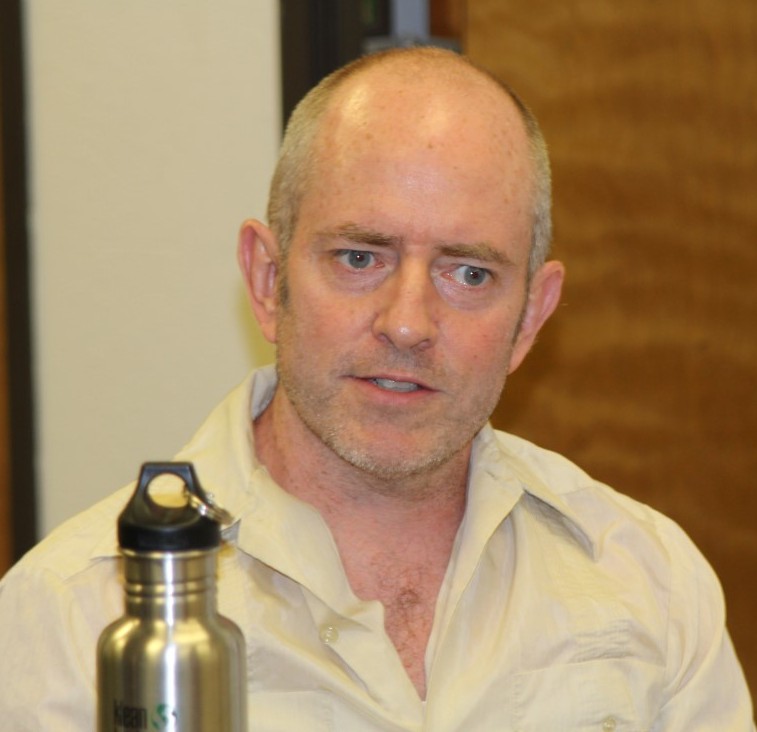
Sustainable food writer Tom Philpott at the studios of KOOP-FM in Austin, Texas, June 7, 2013. Photo by William Michael Hanks / The Rag Blog.

Rag Radio podcast:
Mother Jones‘ Tom Philpott on
sustainable ag and the politics of food

“As a writer for Grist and now Mother Jones, Tom Philpott draws links between your kitchen, your food sources, your government, and the earth. An organic farmer, he knows how to pull weeds as well as yank the chain of Big Ag. ” — Utne Reader

By Rag Radio | The Rag Blog | June 13, 2013

Tom Philpott, sustainable food and agriculture correspondent for Mother Jones magazine, was Thorne Dreyer’s guest on Rag Radio, Friday, June 7, 2013.

Rag Radio is a syndicated radio program produced at the studios of KOOP 91.7-FM, a cooperatively-run all-volunteer community radio station in Austin, Texas.

Listen to or download our interview with Tom Philpott here:


Tom Philpott writes about sustainable agriculture and the politics of food for Mother Jones and is the cofounder of Maverick Farms, a center for sustainable food education in Valle Crucis, North Carolina. As Utne Reader said, Philpott “knows how to pull weeds as well as yank the chain of Big Ag.”

Among the issues Philpott addresses on Rag Radio are the extensive abuses of big agribusiness, especially in the meat industry and in the GMO seed business — and the failure of government oversight in both. On the positive side, he points to the growing role played by community farming and cooperatives.

For five years, Tom Philpott served as a columnist, food editor, and senior food writer for the online environmental site Grist. His work on food politics has appeared in The New York Times, Newsweek, Orion, OnEarth, Gastronomica, and the Guardian, and he has been interviewed by Terry Gross on Fresh Air. Philpott also worked as a financial journalist in Mexico City and New York, most recently for Reuters.com.

Tom Philpott.

Maverick Farms has been featured in Gourmet and The New York Times, and in September 2008, Food & Wine named Philpott one of “ten innovators” who “will continue to shape the culinary consciousness of our country for the next 30 years.” In 2011, Utne Reader named him one of “25 Visionaries Who Are Changing Your World.”

A graduate of the University of Texas, where he co-founded and ran the radical investigative magazine Polemicist in the late ’80s/early ’90s, Philpott currently divides his time between Austin and the farm in North Carolina.

Leslie Hatfield wrote at EcoCentric: “A path that led from a restaurant kitchen in Austin eventually took Tom Philpott — by way of Mexico City and Brooklyn, New York — to North Carolina’s Blue Ridge Mountains, where he now serves as co-founder/core group member at Maverick Farms, while also dishing out what may be the most consistently awesome food policy reporting in the blogosphere.”

Tom Philpott and the Real Food Media Project’s Anna Lappé spoke on “Busting Food Myths” at the 5604 Manor Community Center in Austin, Friday, June 7, 2013.

Rag Radio is hosted and produced by Rag Blog editor and long-time alternative journalist Thorne Dreyer, a pioneer of the Sixties underground press movement.

The show has aired since September 2009 on KOOP 91.7-FM, an all-volunteer cooperatively-run community radio station in Austin, Texas. Rag Radio is broadcast live every Friday from 2-3 p.m. (CDT) on KOOP and is rebroadcast on Sundays at 10 a.m. (EDT) on WFTE, 90.3-FM in Mt. Cobb, PA, and 105.7-FM in Scranton, PA.

The show is streamed live on the web by both stations and, after broadcast, all Rag Radio shows are posted as podcasts at the Internet Archive.

Rag Radio is produced in association with The Rag Blog, a progressive Internet newsmagazine, and the New Journalism Project, a Texas 501(c)(3) nonprofit corporation. Tracey Schulz is the show’s engineer and co-producer.

Rag Radio can be contacted at ragradio@koop.org.

Coming up on Rag Radio:
THIS FRIDAY,
June 14, 2013: Peruvian social psychologist Cristina Herencia, official observer at the United Nations Permanent Forum on Indigenous Issues.
Friday, June 21, 2013: Bill Fletcher Jr., African-American scholar, writer, and union organizer.

The Rag Blog

Posted in Rag Bloggers | Tagged , , , , , , , , , , , | Leave a comment

Michael James : California or Bust in a Hot Rod Ford

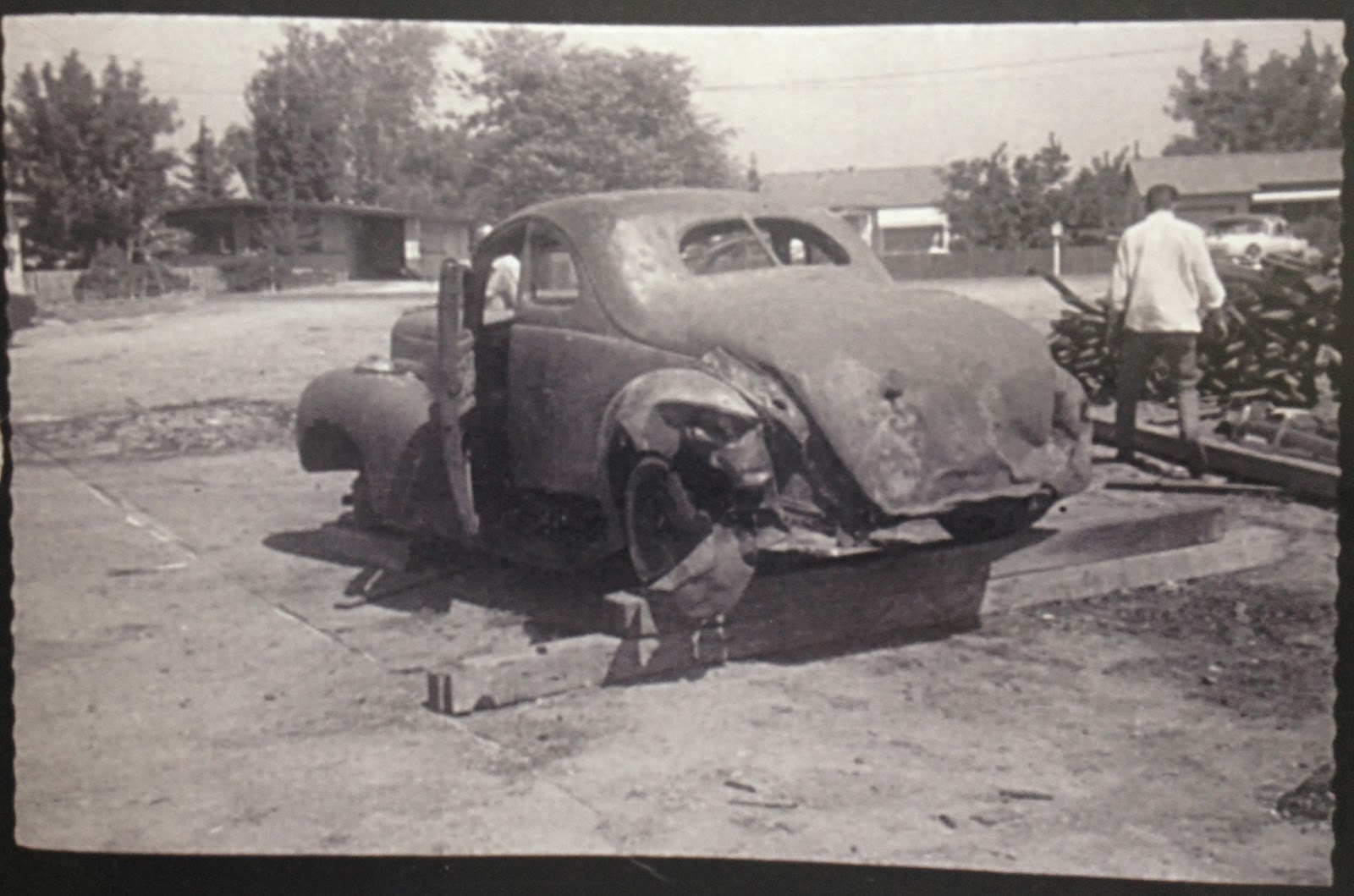
California AND bust: Michael’s 1940 hot rod Ford, San Jose, California, 1960. Photo by Michael James from his forthcoming book, Michael Gaylord James Pictures from the Long Haul.

Pictures from the Long Haul:
California or bust, 1960

I went to the junkyard and sadly looked over the remains of my beloved Ford.

By Michael James | The Rag Blog | June 26, 2013

[In this series, Michael James is sharing images from his rich past, accompanied by reflections about — and inspired by — those images. This photo will be included in his forthcoming book, Michael Gaylord James’ Pictures from the Long Haul.]

The night before I left for my post-high school graduation summer job at a Libby cannery in Sunnyvale, California, I went to see Psycho with my high school sweetheart. Even after a good amount of hugging and kissing goodnight I was still scared shit.

The next morning Buzz Willhauer (a fellow Downshifter Hot Rod Club member) and I leave our Connecticut homeland and head west. We roll through the exhaust-filled tunnels on the Pennsylvania Turnpike and love the raspberry ice cream at the Howard Johnson’s. We’re riding in my 1940 hot rod Ford with “California or Bust” written on the trunk. It’s very hot rolling across Ohio, Indiana, and into Illinois; no AC then and the ’53 Olds engine sends heat and fumes through the floorboards.

By late afternoon we’re at Lake Forest College for a friendly meeting with the Director of Admissions, a Mr. Gilmore. Then we head down Route 66 and cross the Mississippi at St. Louis on the old Chain of Rocks Bridge, and race ahead of the sunrise as we roll through the Ozarks, passing signs for Merrimac Caverns, and slogans on signs at regular intervals that culminate with a Burma-Shave sign. We stop now and then at Stuckey’s restaurants and Texaco gas stations.

The Ford’s been overheating. We stop at a gas station in Joplin, Missouri — home to Mickey Mantle and Langston Hughes (birthplace), and the scene of both striking miners blocking Route 66 in the ’50s and Bonnie and Clyde stick-ups in the 1930s. I’m unscrewing the radiator cap as Buzz comes bopping over with a “what’s happening?” The cap shoots off and the boiling liquid explodes, hitting Buzz in the face.

The last time I saw Buzz he was in a hospital bed all gauzed up. The hospital was cool, breezy, and white on a hot Missouri Wednesday. Time for me to go; I’ve got to go, got to get to the job my dad got me through his connects to Grandpa’s cohorts at Libby McNeil and Libby that starts on Monday morning.

I take the Will Rogers Turnpike to Oklahoma City. I remember taking a shower with my back to the wall, fists ready, the Psycho memory really with me, and I’m thinking this motel is on the same road as the Bates Motel in that scariest of flicks.

I get some work done on the Ford’s radiator, then head west, through Amarillo and the Texas panhandle and into New Mexico. I pass through a crossroads with a town of shacks, my first contact with an Indian reservation, and along the way pick up a hitchhiker, a Southern kid heading to San Diego to join the Marine Corps, something I too will do — briefly — in a couple of years.

I let him off when I turn left and head southwest for Las Cruces and Tucson. I drive through the night and I welcome the trucks, feeling a sense of camaraderie out on the lonesome highway when they are present, following them closely, letting them pull me with their draft. I like the Campbell 66 Express, with its cartoon camel, and the words “Humpin’ to Please.”

With the sun coming up on Friday morning I’m in White Sands, New Mexico, military land, with barbed wire along the sides of the road. The hot rod is overheating, and I stop at a little shack providing shelter to a lone soldier with a rifle. I ask, “How far to the next gas station?” “Eight miles over the top of the mountain.”

I fill the steaming and bubbling radiator with my last water from a five-gallon can and floor it! This car is fast and I speed across the desert and up the eastern slope. Up and over the top, the car steaming, I turn off the motor and cruise to the first gas station.

By late afternoon I’m in Tucson, meeting with the Director of Admissions at the University of Arizona. I’m flat out of money, and he cashes a check for a buck and a quarter ($125) I had received from Rodding and Restyling Magazine for a photo piece I had done on an East Braintree, Massachusetts, hot rod and custom car show.

I stop at the Tucson post office to pick up a general delivery letter from my girlfriend Susan. I read it, shed a few lonely and lack of sleep induced tears, observe the Indians hanging round, and then drive on through another night. I am mentally pushed and prodded, driven to keep driving, knowing I have to show up at the Sunnyvale cannery by Monday morning.

Saturday morning and I’m digging the scene, the vibes, at a truck stop in El Centro. I remember hearing a song I know — Gene Autry’s version of “Mexicali Rose.” The place is comfortable, nurturing, refreshing, with a parking lot full of trucks and palm trees, the chill of the night giving way to that California warmth as dawn breaks. Travelers and truckers emerge, including some Mexicans and black people. The coffee and pancakes are good.

I drive through the Southern California desert, through San Bernardino, and get to Hollywood late Saturday morning. Nobody is home at the offices of Hot Rod Magazine. I get back in the Ford along with the Downshifters Hot Rod Club scrapbook I had intended to share with anyone at this Mecca of the hot rod world.

At a garage in Riverside a fellow hot rodder helps me install his radiator in my car, with a handshake and agreement to return it once I get to Sunnyvale. I drive north on Highway 101, already infamous in my mind from the Big Bopper’s song with the line “the fool was the terror of Highway 101.”

I pick up another hitchhiker, this time a cowboy headed to a rodeo in Monterrey. I let him off near Bakersfield. Later I pick up still another hitchhiker, this time a migrant worker headed to Fresno to pick peaches.

Late at night near the cutoff to San Jose I stop to let him off. The hot rod stalls and we push it. I jump in, disengaging the clutch, putting the transmission in gear, popping the clutch to start it.

I wake up, or come to as they say. I am on the shoulder of the west side of 101. There are people around. Across the four lane highway are two cars in flames. One of them is mine. I yell out “there’s a guy in that car,” and the truck driver, who had pulled me out of the car, is holding me back and says: “If he is, he’s dead now.”

I am taken to a hospital emergency room. I learn that the migrant worker was not in the car, that the police found him up the road and got his take on the accident. I am glad he is OK, and am eternally grateful to the truck driver who happened on the scene and pulled me from the burning Ford coupe.

I am rescued and nurtured by the Jo and Burke Mathews family in Los Gatos, teachers who knew people my dad knew. I learn later through them that I was hit by a car full of teachers they knew who were returning from a wedding.

I showed up for my cannery job on Monday morning, and life’s reality gave me a lesson. Lots of people — white, Mexican, Black, and Asian — are standing in line, trying to get a job. And here comes me, a kid from Connecticut with a family connection, and I have a job waiting for me, yet another life experience teaching me about class, privilege, and the role of connections in the workings of the world.

I worked in the garbage dump, the freezing units, and other parts of the cannery in a little team that included three young guys: me, a Mexican, and a black guy, a little early-on version of the “rainbow coalition.” I lived in a rooming house in San Jose, visited San Francisco, went to the drag races, met my first Mormons, and danced my ass off to a live Ray Charles at the Pan Pacific Auditorium.

I went to the junkyard and sadly looked over the remains of my beloved Ford. The radiator was unharmed and I shipped it back to the friendly lender. All my clothes, including a madras sport jacket, had burned up; my 12-pound high school shot put and a sword I intended to use as a gearshift lever had both melted.

Quite a trip, quite a summer: I made it to California and busted. I headed back east to Lake Forest College, much closer to my squeeze at U Conn then Arizona would have been. Four years later I’ll return to California. I’ll experience another bust, that next one during the wonderful days of the Berkeley Free Speech Movement.

[Michael James is a former SDS national officer, the founder of Rising Up Angry, co-founder of Chicago’s Heartland Café (1976 and still going), and co-host of the Saturday morning (9-10 a.m. CDT) Live from the Heartland radio show, here and on YouTube. He is reachable by one and all at michael@heartlandcafe.com. Find more articles by Michael James on The Rag Blog.]

The Rag Blog

Posted in Rag Bloggers | Tagged , , , , | 1 Comment

Type your summary here

Type rest of the post here

Source /

The Rag Blog

Posted in RagBlog | Leave a comment

BOOKS / Ron Jacobs : Smith’s ‘Nuclear Roulette’ Makes the Case for ‘No Nukes’

Gar Smith makes the case:
‘No Nukes’ is still the right call

The collection of facts, figures, and overall documentation of the industry’s lies, foibles, miscalculations, and just plain duplicity should insure the addition of more to the ranks of the anti-nuclear forces.

By Ron Jacobs | The Rag Blog | June 12, 2013

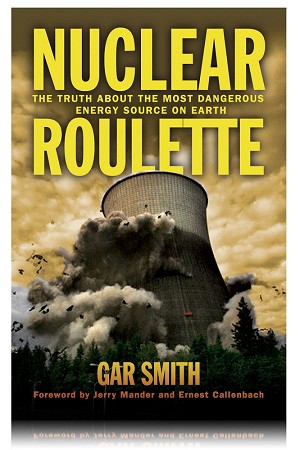
[Nuclear Roulette: The Truth about the Most Dangerous Energy Source on Earth by Gar Smith (2012: Chelsea Green); Paperback; 320 pp; $19.95.]

Despite spending several days in detention facilities in the late 1970s and early 1980s because of my opposition to nuclear power and its consequent dangers and debris, I honestly never thought nuclear power would be gone by 2013. The setup for the industry was just too sweet of a deal.

However, I did have hope that nuclear power’s reputation would be so tainted that no new plants would ever be considered. Unfortunately, even those hopes were for naught. To make matters even worse, nuclear power — perhaps the most wasteful and most dangerous form of power generation — is actually being touted as a “green” source of power.

This support is not just coming from the industry, either. One-time opponents like Whole Earth Catalog editor Stewart Brand and former Greenpeace president Patrick Moore are now on record as supporters of a power source and industry they used to oppose vehemently. When considering these retreats, the phrase “two steps forward, one step back” comes to mind.

Fortunately, a recently published book by journalist Gar Smith provides those who still oppose nuclear power with a valuable text filled with arguments and facts designed to convince any thinking citizen of earth about nuclear energy’s intrinsic manifestation of Thanatos and his kingdom.

Furthermore, the collection of facts, figures, and overall documentation of the industry’s lies, foibles, miscalculations, and just plain duplicity should insure the addition of more to the ranks of the anti-nuclear forces.

If one adds the truths of what has seen regarding the industry (most recently in Fukushima, Japan), the hopes for a revived movement in the streets opposed to nuclear power seem legitimate. Indeed, as I write this, news of a massive protest against the restarting of Japan’s nuclear plants is reaching my newsfeed.

Like other books of its kind, Smith’s book, Nuclear Roulette: The Truth About the Most Dangerous Energy Source on Earth, provides an unrelenting litany of accidents and near catastrophe hidden, falsified, and supported by the agencies supposedly set up to protect the public from nuclear power’s inherent dangers.

What is presented here is the story of these agencies’ longtime collusion with and intentional lying for the industry. The health and environmental reasons to oppose nuclear energy are manifold. Even if some can never be proven, there are enough instances available to make any argument for continuing this folly moot.

Unfortunately, as I noted before, this has not been the case. So, to those who would deny the negative effects to health and environment, it would seem that the cozy and corrupt relationship between the nuclear industry, the war machine, and elected U.S. officials would be reason enough to oppose (or at least critically examine) the reasons this expensive, wasteful, and anti-democratic energy product continues to receive taxpayers’ money.

Nuclear Roulette does a great job enumerating this dynamic. The payoffs to politicians in the form of campaign contributions and subsequent legislation creating a liability cap for the industry are but the most obvious ways in which the energy industry has seduced and simultaneously reduced the role of the NRC to one that goes beyond sycophancy and into the realm of subservience.

Even when state governments have demanded the shutdown of plants inside their borders, the federal government has overridden those decisions. If that isn’t a denial of the people’s will, then nothing is. Smith enumerates other instances of the government not doing its job when it comes to overseeing the industry.

As Smith writes when discussing the NRC, “If you don’t look for problems, you won’t find them.” In essence, this is the approach the NRC has taken for decades. Of course, such an approach creates a false sense of security and enhances any potential dangers that might be present.

One of the more interesting aspects of Nuclear Roulette is when the author discusses the costs of nuclear energy in relation to the cost of solar, wind, and other alternative forms. It is Smith’s contention that we are near (if not at) the point where alternative forms are more cost effective, even in the short run.

In other words, even when one leaves out the long-term environmental costs of nuclear energy, the cost to build and maintain non-nuclear alternative forms is equal or less than those required for nuclear. This is good news. The bad news is that the industry opposes the best solution — decentralized power such as rooftop panels and turbines — precisely because it is decentralized.

Although the book focuses primarily on the United States, there are plenty of words devoted to Japan and Europe.

If Nuclear Roulette were a fiction book, it would be classified somewhere between crime and horror fiction. Unfortunately, it is all too real. However, the reality it discusses is still both a crime and a horror.

[Rag Blog contributor Ron Jacobs is the author of The Way The Wind Blew: A History of the Weather Underground. He recently released a collection of essays and musings titled Tripping Through the American Night. His novels, All the Sinners Saints, The Co-Conspirator’s Tale, and Short Order Frame Up were published by Fomite Press. Ron Jacobs can be reached at ronj1955@gmail.com. Find more articles by Ron Jacobs on The Rag Blog.]

The Rag Blog

Posted in Rag Bloggers | Tagged , , , , , , , , | Leave a comment

Alan Waldman : Helen Mirren Won Top Awards for TV Movie Series ‘Prime Suspect’

Waldman’s film and TV
treasures you may have missed:

Mirren plays Brit cop Jane Tennison, who fights serious sexism while solving big crimes and facing personal challenges.

By Alan Waldman | The Rag Blog | June 11, 2013

[In his weekly column, Alan Waldman reviews some of his favorite films and TV series that readers may have missed, including TV dramas, mysteries, and comedies from Canada, England, Ireland, and Scotland. Most are available on DVD and/or Netflix, and some episodes are on YouTube.]

Prime Suspect is a great series of nine British TV cop movies in which my favorite actress, Helen Mirren, plays a Scotland Yard police detective who fights sexism and her own demons while leading a team that solves major crimes. It ran from1991 through 2006 and was so good that it won 28 major awards, including 12 BAFTAs, three Edgars, two Emmys and a Peabody.

Helen Mirren took 11 of her 76 major awards for this series. She earned an Oscar for The Queen, four BAFTAs, four Emmys, four SAGs and three Golden Globes, as well as 61 more nominations for works including Cal, The Madness of King George, Gosford Park, and The Last Station.

Most of the Prime Suspect movies were 3-1/2 hours long and aired on PBS’s Mystery! in two-to-four parts. Prime Suspect 4 was an exception, consisting of three separate mysteries and running slightly more than five hours total.

Technical advisor on Prime Suspect was Jackie Malton, who, when the series began, was one of only four female DCIs (Detective Chief Inspectors) in Britain. The writer of the first and third series (and the story for the second) was prominent scribe Linda La Plante, who earned the 1993 Edgar award from the Mystery Writers of America for the first one. Allan Cubbit’s teleplay for Prime Suspect 2 won the show another Edgar for “Best TV Feature or Miniseries.”

Prime Suspect was voted 68th on the British Film Institute’s list of “100 Greatest British Television Programs,” and in 2007 it was listed as one of Time magazine’s “100 Best TV Shows of All-TIME.” All episodes are available on Netflix and YouTube.

In the first series, sexism in the workplace was a significant subplot and barrier to the investigation. Sequels tend to downplay this theme, relying on straight procedure or on other subplots — for example, racism in Prime Suspect 2 and pedophilia, child abuse and prostitution in Prime Suspect 3.

Tennison’s difficulty in achieving a balance between her work and her life outside the job as well as her difficulty in maintaining stable relationships are recurring issues. As the series progresses, she increasingly relies upon alcohol to help her cope.

The first five series were produced at a steady pace of one roughly every 18 months, until Mirren left the role to avoid typecasting. She returned to the character after a seven-year gap.

Helen Mirren.

In the first Prime Suspect, DCI Jane Tennison, who has been passed over many times, takes over the case of a rape-murder of a young woman from a fellow DCI who had a heart attack just before he’s ready to charge their prime suspect. The murder squad she takes over is hostile to her; the men upstairs are eager to pull the plug on her investigation; her personal relationships suffer from her obsession with work, and the prime suspect remains elusive. This one won four BAFTAs, including one for Mirren.

In Prime Suspect 2, a body is found in the backyard of a home in an Afro-Caribbean neighborhood of London, and Tennison has to tread carefully in her investigation because of racial tension surrounding unsolved crimes in the region. Colin Salmon co-stars as a black officer with whom Tennison has an affair, and when that fact is disclosed in the media, it threatens her position. Mirren took another “Best Actress” BAFTA and the film won an “Outstanding Miniseries” Emmy.

While she is working in the vice squad targeting Soho, Tennison’s Prime Suspect 3 investigation takes her into a child prostitution and pornography ring following the death of a young male hooker in the home of a female impersonator. The episode guest stars Tom Bell, David Thewlis, Ciarán Hinds, Peter Capaldi, Mark Strong, James Frain, and Jonny Lee Miller. The show won an Emmy and a BAFTA, and Mirren also won a BAFTA.

Prime Suspect 4 was three separate 102-minute episodes. The Lost Child is a sex murder that points to a convicted child molester, but Tennison, now promoted to Superintendent, uncovers links to dark deeds involving local government.In Inner Circles (see episode here), Tennison uncovers a possible political scandal when probing the murder of a country club manager. Mirren won her first-ever “Outstanding Lead Actress” Emmy for The Scent of Darkness, in which the killer from the first Prime Suspect is suspected of a series of murders.

Series 5, 6 and 7 involve a drug dealer murder, the killing of a Bosnian refugee and the slaying of a teenage girl. The latter won Emmys for Mirren, the writer, and the director.

All nine of these mysteries are truly outstanding, and Helen Mirren is consistently terrific in them.

Let me end with a personal Mirren story. Decades ago, during an L.A. concert intermission, my wife pointed out Helen Mirren, standing in the lobby with a white-bearded man who looked like singer Kenny Rogers. (He was her future husband and Oscar-winning Ray director Taylor Hackford.)

I rushed over and gushed, “Pardon me for interrupting, but I think you are the greatest actress on the planet, and I love everything you do!” Big stars hear this kind of thing a lot, but Helen was so classy that she leaned over and kissed me on the cheek. Pointing to that facial part, I exclaimed: “I’ll never wash again!,” to which my wife replied,” Oh, yes you will.”

[Oregon writer and Houston native Alan Waldman holds a B.A. in theater arts from Brandeis University and has worked as an editor at The Hollywood Reporter and Honolulu magazine. Read more of Alan Waldman’s articles on The Rag Blog.]

The Rag Blog

Posted in Rag Bloggers | Tagged , , , , , , | 1 Comment

Type your summary here

Type rest of the post here

Source /

The Rag Blog

Posted in RagBlog | Leave a comment

Type your summary here

Type rest of the post here

Source /

The Rag Blog

Posted in RagBlog | Leave a comment

Dick J. Reavis : Diverse ‘Moral Monday’ Movement Captures Imagination in North Carolina

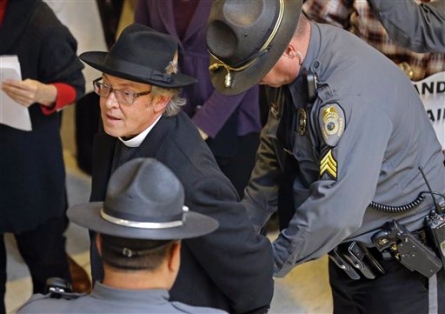
Demonstrator being arrested during a protest at the Legislative Building in Raleigh, N.C., Monday, May 6, 2013. Photo by Gerry Broome / AP.

‘Moral Monday’:
Diverse NAACP-led movement
‘achieves mass’ in North Carolina

“When I got to an A.M.E. [African Methodist-Episcopal] church for a meeting called by the NAACP and saw that 70 percent of my audience was white, I knew that something was happening in North Carolina!” — Rev. William Barber

By Dick J. Reavis | The Rag Blog | June 6, 2013

RALEIGH, North Carolina — Four weeks ago, on Monday, April 29, an encouraging but puzzling progressive movement was born in an unlikely locale, North Carolina.

It calls itself “Forward Together” or sometimes, “Moral Monday.” It is led by the National Association for the Advancement of Colored People (NAACP) and it began when a group of 17, thoroughly integrated by age, sex, and race, refused to disperse during a protest inside the state’s General Assembly.

The “Moral Monday” protests have continued, and, at last notice, are gaining ground. On June 3, as a crowd estimated as high as 1,600 gathered, 151 demonstrators repeated the offense of the 17, bringing the total number of arrests to 309.

Most media observers believe that when and if the total surpasses 500, the campaign will attract significant national attention. Already the local press has got it right. “Moral Monday Achieves Mass” said the headline on a June 4 front-page story in the Raleigh News & Observer.

The movement is unquestionably onto something, but it’s also a puzzler in several ways. In the context of state politics, it is essentially a racial and Democratic rising. In 2008, by the narrowest of margins, a majority of North Carolinians voted to elect Barack Obama. The state hadn’t gone Democratic in a national election since 1976. The outcome was in part a reflection of racial demography: African Americans account for 22 percent of the state’s population, nine points above the national average.

North Carolina had long been governed by “moderate” Democrats, but Obama’s victory set off a white backlash that led to twin Republican victories, first in 2010 legislative races. In 2012, the state favored Romney and gave the GOP — including numerous economic libertarians and Tea Party cranks — veto-proof strength in both its legislative chambers.

Pat McCrory, an ostensibly business-as-usual Republican and mayor of Charlotte, the “Wall Street of the South,” won the governor’s race — and immediately revealed an alliance with the ultra-right.

In a virtual blitzkrieg of activity, the General Assembly has passed or soon will pass bills whose consequences will upset almost everyone: measures to shorten the duration and amount of unemployment insurance payments, to impose a sales tax on medicines and groceries, and to abolish an enrollment cap on elementary classrooms.

Measures nixing federal funds to expand Medicaid, requiring voter IDs, and trimming voting hours are a part of the package, as is a bill to abolish inheritance taxes on estates of more than $5 million. The ultra-right’s push has suffered only one setback: a bill declaring Christianity as the state’s official religion didn’t get out of committee.

Rev. William Barber.

North Carolina is the least-unionized state in the nation and its white Democrats are led by Blue Dogs; fervent opposition wasn’t expected and hasn’t come from either quarter. Inspiration has instead come from the Rev. William Barber, an African-American backcountry preacher, not so polished as the grave and decorous Martin Luther King, but nearly as rousing, more eclectic or inclusive, and, odd as it may seem — funnier!

Barber is a Baptist who, noting that one of the legislative proposals currently threatening the state is called House Bill 666, quipped that, “Some of y’all liberals won’t believe me, but I believe that even the computers numbering those bills are guided by the Word of God!” But Monday he turned his podium over to an LGBT spokesperson — a white lesbian mother whose partner is black. Barber’s style may be archaic, but his message isn’t, as the old song says, “Gimme that old-time religion / It’s good enough for me.”

Internally, Barber’s movement is more akin to King’s Southern Christian Leadership Conference (SCLC) — with an emphasis on “Christian” and “Leadership” — than to that of the Student Nonviolent Coordinating Committee (SNCC) or Students for a Democratic Society (SDS).

The freewheeling debates of the Occupy movement, in which even fools could speak, are not a part of the scene. Instead, a coterie, including legendary white civil rights worker Bob Zellner and lawyer Al McSurely — an organizer whose home was in 1967 bombed by the sheriff’s department in Harlan County, Kentucky — plan what the movement will do from day to day.

The puzzling thing is that the response to their call has not been what anyone anticipated. While rallies in support of the cause are more representative of the state’s population, most of the movement’s arrestees — including this reporter — have been whites older than 50, most of them, college-educated — Mother Jones and MSNBC fans. Physicians, professors, and even a few locally-elected officials are in their ranks.

Ten days ago, to build support for Moral Monday, Barber and his closest aides began a statewide speaking tour. “When I got to an A.M.E. [African Methodist-Episcopal] church for a meeting called by the NAACP and saw that 70 percent of my audience was white, I knew that something was happening in North Carolina!” Barber declared. But he wasn’t speaking in what we call “all seriousness”: he was noting an irony that puzzled, and maybe amused him, too.

Nobody has yet been able to fully explain the arrest-sheet demographics. Cuts in unemployment insurance don’t take effect until July 1: maybe the unemployed don’t yet know what’s in store, some people say. Others point out that today mugshots of the arrestees are posted within hours on the Internet, from which they are universally available, maybe forever.

Twenty years ago, only lawmen could tap such information electronically. Knowing this, college students are justifiably afraid that an arrest record will follow them for the rest of their lives. A few people complain about the dominance of god talk in Moral Monday speeches, but outspoken atheists are still beyond the pale here.

The commentary is not always doubtful, however. Ever since the fall of Reconstruction, a consensus has prevailed among Southern radicals. The greatest obstacle to the region’s progress, they’ve said, has been that whites were unwilling to follow black leadership. Barber’s rise as the head of a mostly white army has broken that taboo.

Because its demographics are new and could shift in unpredictable ways, no one is really predicting Moral Monday’s future, and I think there’s a good reason why. Nearly 50 years ago, I was an SCLC volunteer. One of my first duties was to redirect traffic from a parking lot at one venue to another, for a speech by Dr. King.

I resented the assignment because it meant that I wouldn’t get to hear him. But when I complained to a veteran field staffer, he imparted a bit of wisdom that’s still good coin. “Dr. King and them aren’t going to talk about anything but where the Movement is going,” he said. “But if anybody knew, this wouldn’t be a movement!”

[Dick J. Reavis is an associate professor of English at North Carolina State University. A former senior editor at Texas Monthly magazine and the author of six books, Reavis was a contributor to the original Rag in Austin and was active in the civil rights and anti-war movements. He may be reached at dickjreavis@yahoo.com. Read more articles by Dick J. Reavis on The Rag Blog.]

The Rag Blog
Posted in Rag Bloggers | Tagged , , , , , , , , | Leave a comment

RAG RADIO / Thorne Dreyer : Philosophy Scholar Bill Meacham on ‘How to Be an Excellent Human’

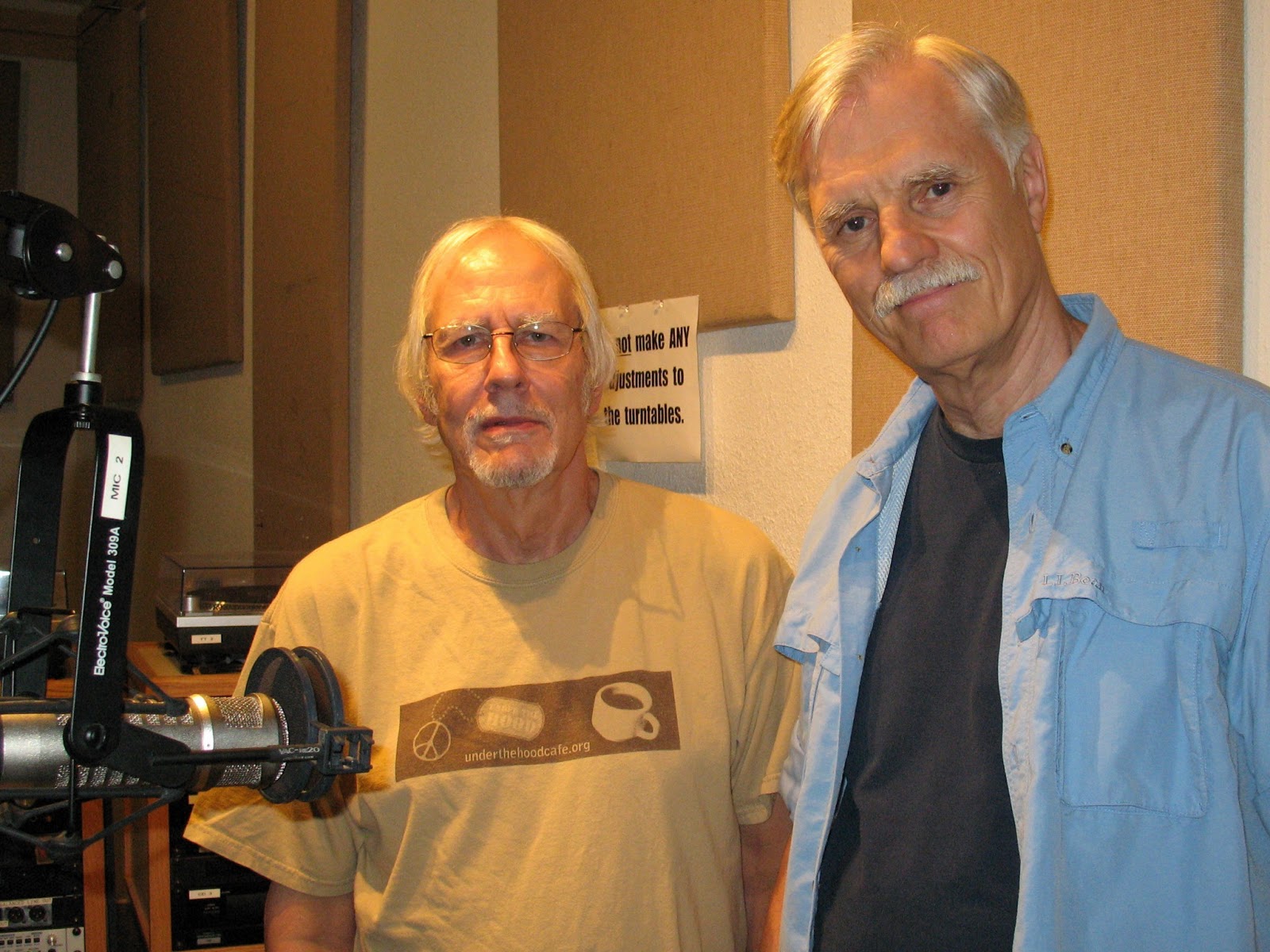
Bill Meacham, right, with Rag Radio host Thorne Dreyer in the studios of KOOP Radio in Austin, Texas, Friday, May 31, 2013. Photo by Tracey Schulz / Rag Radio.

Rag Radio podcast: 
Philosophy scholar Bill Meacham,
author of ‘How to Be an Excellent Human’

“By working for the good — that is, the healthy functioning — of the world around us, we nourish that which nourishes us, and we thrive.” — Bill Meacham

By Rag Radio | The Rag Blog | June 6, 2013

Also find the podcast of our May 24, 2013, Rag Radio interview with counterculture legend John Sinclair, below.

Philosophy scholar and activist Bill Meacham, the author of How to Be an Excellent Human: Mysticism, Evolutionary Psychology and the Good Life, was Thorne Dreyer’s guest on Rag Radio, Friday, May 31, 2013.

Rag Radio is a syndicated radio program produced at the studios of KOOP 91.7-FM, a cooperatively-run all-volunteer community radio station in Austin, Texas.

Listen to or download our interview with Bill Meacham here:


On the show we discuss issues raised in Bill’s book, How to Be an Excellent Human and in his essay, “Imagine There’s No Morality,” posted at The Rag Blog. We talk about how to use the discipline of philosophy to address questions like what it means to be a human and how we can live good and fulfilling lives; how we can make ethical and moral decisions; and the ethical implications and motivations involved in working for social change.

Bill also contrasts what he poses as the “Goodness” paradigm vs. the “Rightness” paradigm, and addresses metaphysical issues like “panpsychist” mysticism and the mystical concept of “Oneness” — and how quantum physics may be seen to inform that concept.

Bill Meacham is an independent scholar in philosophy. Also an activist and former staffer at Austin’s ’60s-‘70s underground paper, The Rag, Bill studied philosophy at Williams College, Columbia University, and the University of Texas at Austin where he received his Ph.D. Meacham also spent many years working as a computer programmer, systems analyst, and project manager. He blogs at Philosophy for Real Life and The Rag Blog, and his writings can also be found at What’s What.

John Sinclair.

Rag Radio podcast:
Sixties counterculture legend John Sinclair

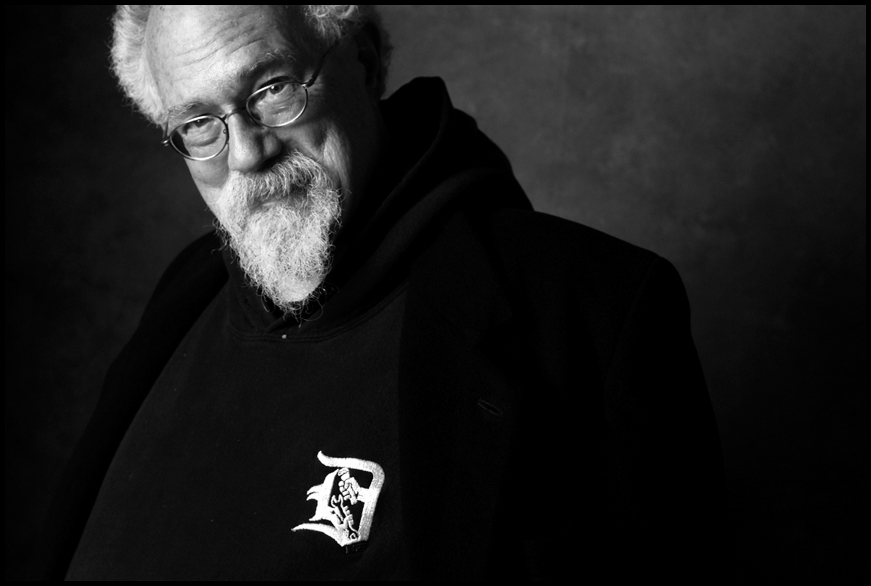
Also listen to our Rag Radio interview with Amsterdam-based poet John Sinclair. A legendary counterculture figure from the ’60s and ’70s, Sinclair founded the White Panther Party in Detroit in 1968, managed the historic “avant-rock” proto-punk band, the MC5, worked with the underground newspaper, the Fifth Estate, and founded the Detroit Artists Workshop.

Find our May 24, 2013 interview with John Sinclair here:


After John Sinclair was sentenced to 9-1/2-10 years in prison for giving two joints to an undercover policewoman, John Lennon celebrated him with the song “John Sinclair.”

A 29-month campaign to gain his freedom climaxed in a mammoth eight-hour “John Sinclair Freedom Rally” in Ann Arbor, where John Lennon and Yoko Ono, Stevie Wonder, Allen Ginsberg, Phil Ochs, Bobby Seale, and others performed and spoke in front of 15,000 people. Three days after the concert, the Michigan Supreme Court released Sinclair, and later overturned his conviction.

Sinclair moved to New Orleans in 1991, where he was named the city’s most popular disc jockey by OffBeat Magazine five years in a row, and moved to Amsterdam in 2003. Since the mid-’90s, John Sinclair has performed spoken-word poetry with his band, The Blues Scholars. One of the pioneers of podcasting, his weekly internet program, the John Sinclair Radio Show, is the flagship of Radio Free Amsterdam.

Rag Radio is hosted and produced by Rag Blog editor and long-time alternative journalist Thorne Dreyer, a pioneer of the Sixties underground press movement.

The show has aired since September 2009 on KOOP 91.7-FM, an all-volunteer cooperatively-run community radio station in Austin, Texas. Rag Radio is broadcast live every Friday from 2-3 p.m. (CDT) on KOOP and is rebroadcast on Sundays at 10 a.m. (EDT) on WFTE, 90.3-FM in Mt. Cobb, PA, and 105.7-FM in Scranton, PA.

The show is streamed live on the web by both stations and, after broadcast, all Rag Radio shows are posted as podcasts at the Internet Archive.

Rag Radio is produced in association with The Rag Blog, a progressive Internet newsmagazine, and the New Journalism Project, a Texas 501(c)(3) nonprofit corporation. Tracey Schulz is the show’s engineer and co-producer.

Rag Radio can be contacted at ragradio@koop.org.

Coming up on Rag Radio:
THIS FRIDAY,
June 7, 2013: Mother Jones correspondent Tom Philpott on agricultural sustainability and the “Politics of Food.”

The Rag Blog

Posted in Rag Bloggers | Tagged , , , , , , , , , , , , | Leave a comment

Tom Hayden : Can Obama ‘Rein In’ His Presidency?

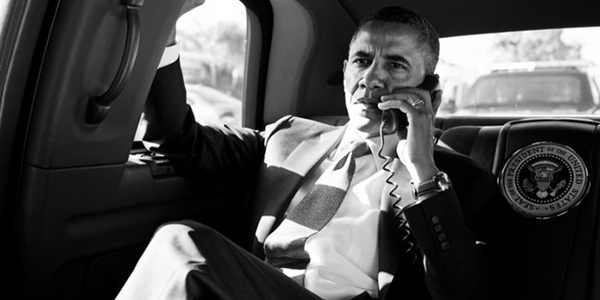
Obama: Who’s making the call? Image from TomHayden.com.

Competing forces at play:
Can Obama ‘rein in’ his presidency?

Obama often follows a confusing pattern of leaning toward the military’s preference while planning in his private chambers to later change course.

By Tom Hayden | The Rag Blog | June 6, 2013

President Barack Obama’s important speech at the National Defense University on deescalating his drone war should be seen as a window into the state of play among competing forces in the national security state.

Obama is trying, in his own words, to “rein in” the vast executive power directing the secret operations of the Long War, which was originally unleashed by George Bush after 9/11. Obama ended the Iraq phase of American combat and has promised the same by 2014 in Afghanistan while sharply escalating the drone war and special operations in Pakistan, Yemen, Libya, Somalia, and beyond.

So far he has avoided direct intervention in Syria, which would require ground troops, and Iran, which would ignite an unpredictable storm.

In the process, Obama has grown a cancer on his presidency in the form of tens of thousands of disgruntled and difficult-to-control Special Forces, CIA personnel, a legion of spies and mercenaries, mainly in the Middle East and South Asia, but including also a steel defensive ring along the U.S. border with Mexico and Central America.

The apparatus of this Long War is well described by Jeremy Scahill in Dirty Wars: The World Is a Battlefield, and his previous work, Blackwater: The Rise of the World’s Most Powerful Mercenary Army. Their numbers are classified but, according to Nick Turse, the Special Ops are 60,000 or more, with their personnel deployed abroad quadrupled since 9/11; their budget jumping from $2.3 billion after 9/11 to $6.3 billion today, not including funds for the wars in Iraq and Afghanistan.

Additionally there are 7,000 armed border patrol agents and thousands more in the DEA.

These forces constitute the cancer, and they may not be willing to follow a presidential command to wind it down. They might fight back to the end. According to Bob Woodward’s book, Obama’s Wars, the generals tried to manipulate Obama into escalating Afghanistan into a “forever war.” The same forces undoubtedly have their objections to much of Obama’s recent speech as well.


Pentagon objections

The purposes of the Obama speech, as parsed by The New York Times on May 28, were to scale back the use of drones, target only those who actually threaten the U.S., remove the CIA from drone and targeting killing, and end the paradigm of the Global War on Terrorism.

The speech and its policies were “two years in the making,” reflecting the depth of unresolved tensions surrounding the administration. Obama, himself, first spoke of “reining in” the national security state in a Jon Stewart interview in October 2012.

There is no doubt that criticisms by Obama supporters, civil liberties lawyers, and many mainstream journalists helped the administration change its calculations. But greater pressures were exerted behind the scenes by the advocates of drones and counterterrorism.

  • Obama kept secret until the day before the speech that he was lifting the moratorium on repatriating Guantanamo detainees, many of them on hunger strike, to Yemen, and appointing a new lead person to implement the transfers. Similarly, in 2009, when Obama announced his 33,000 troop escalation in Afghanistan, he slipped in a paragraph at the last minute pledging to begin his withdrawals in 18 months. The military objected.
  • Against CIA objections, Obama decided to declassify the fact that U.S. drone strikes had killed Anwar al-Awlaki and three other Americans who “were not intentionally targeted.”
  • The CIA and Pentagon “balked” at tighter restrictions on drones, and the CIA’s counterterrorism center resisted the president’s proposal “to take its drones away.”
  • A fierce debate broke out over whether “signature strikes” would continue, the drone war version of racial profiling. The new Obama policy remains murky as a result of internal compromise, and the CIA reportedly succeeded in keeping control of the drone war in Pakistan through 2014.
  • The criterion for drone strikes was modified from targets that are “significant threats to U.S. interests” to targets representing “a continuing, imminent threat to U.S. persons.” No sooner was the tighter standard announced than the CIA killed a Pakistan Taliban leader in apparent revenge for his organizing a suicide bombing which killed seven CIA operatives. Ignored in the militarized targeting criteria was the fact that the same figure was considered a “moderate” Taliban leader favoring a peaceful settlement of Pakistan’s internal bloodshed.
  • Obama was unable to use his own speech to endorse a mechanism to carry forward an independent review of how and when drone attacks would occur. He could achieve no consensus in the administration.

Enlisting public opinion

Many will see these compromises and deferrals as evidence of Obama indecisiveness. But this is a leader who campaigned like a man of steel in 2008 and 2012, so the problem more likely lies in the nature of the state itself and the permanent forces contesting for power. If that is so, the Obama speech was designed to enlist public opinion in the internal arguments to come.

Obama often follows a confusing pattern of leaning toward the military’s preference while planning in his private chambers to later change course. Obama escalated in Afghanistan, then deescalated. He escalated the drone attacks, then sharply reduced them this past year.

He escalated deportations, then sued Sheriff Joe Arpaio and legalized the status of 1 million Dreamers by executive order. He dispatched DEA and even CIA agents in Mexico’s bloody drug war, then called for a new “conversation” about shifting to a harm-reduction approach.

In this zigzagging course Obama has sent thousands of largely clandestine troops and police into battles they could not win, causing enormous potential resentment and pushback. When the union representative of 7,000 border patrol agents testifies in defiance against Obama’s relaxed enforcement policies, you can assume that many in the national security state are considering forms of refusal to obey their commander-in-chief. Many will not deescalate quietly or loyally.

There is a disturbing analogy here with the 1960-63 John F. Kennedy era. JFK campaigned on a Cold War pledge to fight a long twilight struggle against communism. Like Obama, JFK became enthralled with special forces as a secret counterforce against radical insurgencies in Latin America.

The counterterrorism policies unleashed by JFK would lead eventually to the CIA’s tracking down Che Guevera, whose assassination was witnessed by a CIA agent in 1967, a parallel with Obama’s raid that killed Osama bin Laden.

Kennedy gradually evolved toward a greater wisdom in the three years of his presidency; antagonizing many in what Dwight Eisenhower called the military-industrial complex. At first, Kennedy went along with the 1961 Bay of Pigs operation, conceived by the CIA under Eisenhower. But Kennedy refused to be drawn into sending American ground troops, which doomed the invasion of Cuba and provoked a violent right-wing Cuban backlash in Miami. Those Cuban exiles remained a virulent force in American politics down through the present time.

Then, after the near-apocalypse of the Cuban missile crisis, Kennedy moved steadily toward ending the nuclear arms race with the Russians, and turned instead to supporting the domestic goals of the 1963 March on Washington. JFK sent advisers to South Vietnam but showed a strong reluctance to dispatch American ground troops. In November 50 years ago, he was dead, to the unforgettable cheers of the John Birchers and the Cuban exiles, and to the more muted satisfaction of elements in the CIA and military-industrial complex.

It is by no means inevitable or even likely that Obama will meet JFK’s fate, although even the Homeland Security Agency has reported rising assassination threats due to the election of a black president and economic depression for many in the white working class. What is most important is to realize that change can evolve unexpectedly, due first to the experiences of a president while in office — JFK regarding Cuba and nuclear weapons — and the persistent pressure of activists demanding change — the Freedom Riders, SNCC, and Dr. Martin Luther King, Jr.

At the same time, the reaction against the “threat” of change is relentless and explosive — the Goldwater movement, the Reagan presidency.

In the Republicans’ seemingly crazed opposition to everything Obama represents, and their well-organized “fixes” to their electoral deficit — Citizens United, voter suppression, a partisan Supreme Court, reapportionment to gain Electoral College advantage, etc. — there is a pattern of resistance that Obama himself may have underestimated.

The Republican intransigence is at least, on the surface, something that can be seen and confronted. But it is also connected to the cancerous tumors of the security state, which citizens hardly encounter and cannot easily access.

The question at hand is what force can be strong enough to offset the power of those wishing to trap Obama in the legacy of an Imperial Executive he does not want to pass to an unpredictable successor. And if there is not a civic power strong enough to put the cancer in remission, what does that say about the state of American democracy?

This article was also published at TomHayden.com.

[Tom Hayden is a former California state senator and leader of Sixties peace, justice, and environmental movements. He currently teaches at Pitzer College in Los Angeles. His latest book is The Long Sixties. Hayden is director of the Peace and Justice Resource center and editor of The Peace Exchange Bulletin. Read more of Tom Hayden’s writing on The Rag Blog.]

The Rag Blog
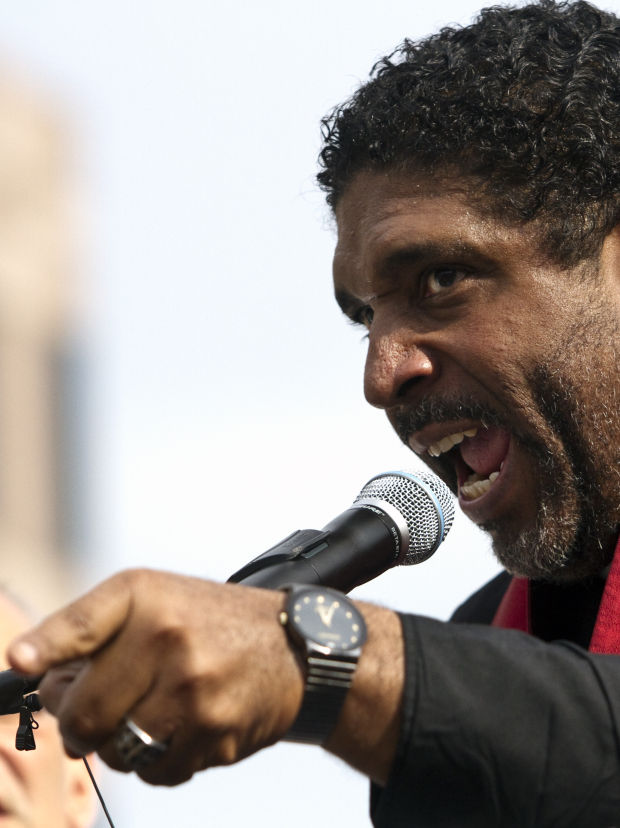
Posted in Rag Bloggers | Tagged , , , , , , , , | 2 Comments