Marilyn Katz : Hathaway’s Nipples and a Congressional Primary

Anne Hathaway at the Academy Awards. Image from HaveUHeard.

Signs of the times?
Hathaway’s nipples and
a Congressional primary

Has the liberal media switched sides in the war against women?

By Marilyn Katz / The Rag Blog / March 27, 2013

CHICAGO — I generally have ignored the growing number of articles raising alarm about a widespread war against women, comfortable in my confidence that women have long exercised power in this nation — perhaps not as much as we should — but increasingly at the ballot box, in the workplace and in the home.

I have had little interest in the debates about “leaning in or out” or whether the White House has a sufficiency of women. (Anyone who doesn’t believe that Valerie Jarrett is among, if not the most powerful person in Washington should have their head examined.)

That said, comments not from the misogynist Right but from the liberal media about two successful women have made me reconsider my dismissive attitude.

The first — while seemingly trivial — is Anne Hathaway’s supposed nipple problem at the Academy Awards. Personally I neither noticed, nor would I have cared about being able to see the outline of her nipples — I just thought it was a great dress worn by a woman with a really good back.

What I found disturbing was the ensuing media storm. Why were men looking at her nipples rather than listening to what she had to say? Why is this a topic for discussion? Provocative? Improper? According to whom?

The criticism was silly, but it also reminded me of my recent experiences in the Middle East. In the once-modern Egypt, where today women no longer venture onto the streets at night, and among even young college students are pressured to hide their hair under a head scarf, while others wear the hijab and gloves, in the name of modesty or because it makes them feel more secure and less likely to be verbally or physically attacked as a temptress.

And in Israel where, when I was there last year, I was shocked to find that in Jerusalem, women’s images had been forbidden on billboards, women’s voices banned on some radio stations and in certain neighborhoods women were literally relegated to the back of the bus — all in the name of ensuring appropriate modesty.

The second instance, which would also be laughable in another era, concerns Robin Kelly, who won the Illinois’ 2nd Congressional District Democratic primary on February 26. News coverage in Chicago and across the country, and mostly written by progressive journalists with comments from progressive “reformers,” has asserted that her win was really not her own.

Usually spot-on writers like James Warren credit Michael Bloomberg’s $2.4 million expenditure on attack ads aimed at one opponent’s ties to the NRA. Well-respected election activist Cindy Canary agreed, telling Warren that Bloomberg’s money suppressed voter activity and turnout.

Yet the facts suggest otherwise. In the last Illinois special election, in 2009, when Rahm Emanuel resigned from Congress to join President Obama in the White House, there were 54,856 votes cast for the 12 candidates in the Democratic primary. Now-Rep. Mike Quigley won the primary with 12,100 votes — or 22.1 percent of the total cast. In contrast, 59,593 votes were cast in the 16-person 2nd Congressional District Democratic primary this year, with Kelly garnering 30,872 or 51.8 percent of the vote, and Debbie Halverson coming in a distant second with 14,533 votes.

Looking through the archives, no one thought that a 50,000-person turnout in the 5th Congressional District was unusual. Why then did scores of reporters, along with such usually thoughtful people such as Warren, legal scholar Geoff Stone, and Canary, founder of the Illinois Campaign for Political Reform, parrot the line that participation was depressed?

Further, while we need look no further back than the November elections when Sheldon Adelson’s and the Koch brothers’ millions could not salvage a Romney victory, there are plenty of other examples, the most striking being the 1989 New York City mayoral contest in which Estee Lauder heir Ronald Lauder spent $14 million in his attempt to win the Republican primary. Despite the money, he garnered only 38,000 votes, at a cost of $363 each, and lost to Rudy Giuliani.

Anne Hathaway and all women have a right to dress as we like, for ourselves, knowing that we have good sense, and most of us good taste. If men are distracted, by the outline of a breast or excited by the shape of a hand, that’s their problem — and perhaps they should try blinders.

Robin Kelly, like all women who take that treacherous path of running for public office, is a study in courage — and most of all, a hard worker. There are no shortcuts to raising funds, learning the issues, building the organization necessary to get out the vote. Ask any woman legislator out there and she’ll tell you the same.

Women have to work harder, run faster, and make more calls than do their male counterparts for every dollar raised and every vote garnered. To ascribe her win to the largesse of a rich man or a depressed vote is an insult both to her and the voters of the 2nd District.

Are these aberrations or do they indicate a growing attempt to undermine the strides that women have made?

While many may have found Seth MacFarlane’s “boob song” amusing, seen nothing untoward in engaging in the Twitter frenzy about Hathaway’s dress, or felt all right about dismissing Robin Kelly, they are mistaken.

These incidents, while seemingly trivial, belittle women, their judgment, and their independent agency. Each incident echoes, in its own way, the more serious assaults women have endured this year — from the congressional committee that had the chutzpah to disallow a woman to speak about restricting access to birth control — saying she lacked expertise on the issue — to the 19 states that voted last year to severely restrict women’s rights to make their own reproductive health decisions.

Last week the male-dominated state legislature in North Dakota authorized the use of vaginal probes to ensure that most pregnancies cannot be terminated after six weeks. To those who would without question object to the right wing’s intrusive mandates, I’d suggest perhaps it’s time to stop looking under our skirts to see if we’re wearing underwear or being held up by someone else’s strings.

This article was cross-posted to In These Times, where it also appears.

[An anti-war and civil rights organizer during the Vietnam War, Marilyn Katz helped organize security during the August 1968 protests at the Democratic National Convention. Katz has founded and led groups like the Chicago Women’s Union, Reproductive Rights National Network, and Chicago Women Organized for Reproductive Choice in the 1960s and 1970s, and Chicagoans Against War in Iraq in 2002. The founder and president of Chicago-based MK Communications, Katz can be contacted at mkatz@mkcpr.com. Read more articles by Marilyn Katz on The Rag Blog.]

The Rag Blog

Posted in Rag Bloggers | Tagged , , , , , , , | Leave a comment

BOOKS / Ron Jacobs : Justin Hart and William Blum on Exporting Democracy

Spreading the word:
‘Democracy, we deliver’

In his inimitable style, Blum rips into the lie of U.S. propaganda and takes Hart’s academic discussion into the streets.

By Ron Jacobs | The Rag Blog | March 26, 2013

Empire of Ideas: The Origins of Public Diplomacy and the Transformation of U.S. Foreign Policy by Justin Hart (2013: Oxford University Press); Hardcover; 296 pp.; $34.95.

America’s Deadliest Export: Democracy – The Truth About U.S. Foreign Policy and Everything Else by William Blum (2013: Zed Books); Paperback; 304 pp.; $19.95.

A frequent target of antiwar protests when I lived in Frankfurt am Main, Germany, was the local Amerika Haus. These buildings existed in several European cities and were essentially outposts of the United States Information Agency, which was part of the propaganda wing of the United States government and under the aegis of the CIA.

As the U.S. war in Vietnam grew in intensity and scope, their presence became a sore point among leftists and other war opponents in the countries that hosted them. At the same time, the Frankfurt Amerika Haus was where I heard Kurt Vonnegut give a lecture that did not support the war in Vietnam.

In Justin Hart’s new book Empire of Ideas: The Origins of Public Diplomacy and the Transformation of U. S. Foreign Policy, Amerika Haus and many other aspects of Washington’s propaganda machine are addressed. This history of the origins of the current government propaganda machine in Washington covers the years 1936-1953 and presents the debates, uncertainties, and ultimate use of that machine as an important tool in the proliferation and maintenance of U.S. markets overseas.

After watching Michelle Obama’s presentation of the award for Best Picture to a film praising the CIA from the White House, it’s somewhat difficult to believe that there was a time when politicians and government officials questioned the usefulness of propaganda in the battle for U.S. hegemony. Yet, that is exactly where Hart’s story begins.

In a rather interesting tale, he presents the beginnings of what is euphemistically called public diplomacy in Franklin Roosevelt’s Good Neighbor Policy towards Latin America. It represented a new understanding that spreading U.S. culture helped open markets overseas while simultaneously justifying the growing U.S. Empire to the domestic audience, an audience which to that point was mostly isolationist in its outlook.

This new approach was not without its detractors. Most of them came from the extreme right, who saw propaganda as communist-inspired, given its use by the new Soviet government in Russia. This concern was also related to the fact that cultural diplomacy (another euphemism for propaganda) was championed primarily by liberals and progressives with Henry Wallace leading the charge.

The presence of liberal elements at the forefront of this movement lends further credence to the argument that it was liberals and progressives who were at the forefront of the U.S. hegemonic endeavor. It’s obvious from Hart’s telling that the inclusion and acceptance of propaganda as a useful tool for those interested in building the U.S. Empire (pretty much every official in Washington) was not without its ups and downs. However, by the time Harry Truman was president, it was clear that its role was accepted and certain to expand.

Of course, when propaganda failed, the iron fist became ungloved. By 1950, the U.S. military was engaged in a brutal war in Korea whose aim was similar to the efforts of the cultural propaganda committee. In other words, to keep the Soviets from expanding into markets Washington had defined as its own. Meanwhile, the Marshall Plan, hyped as bringing democracy, was underway in Europe and part of the same process.

As William Blum makes clear in his latest collection, America’s Deadliest Export: Democracy – The Truth About U.S. Foreign Policy and Everything Else, the folks that truly benefited from the Marshall Plan were the U.S. corporations that rebuilt Europe. Just like the so-called reconstruction funds apportioned to Kosovo after its “liberation” and Iraq after the U.S. invasion, the truth about those reconstructions is that they were primarily a means to move taxpayer dollars from the U.S. treasury into the coffers of a few giant corporations.

Blum’s new book is a collection of commentary exposing the true nature of Washington’s ongoing campaign to spread its democracy around the world. While reading it I was reminded of the t-shirt that shows a photograph of a U.S. bomber plane dropping bombs on some city somewhere on planet earth. Inscribed above the photograph are the words “Democracy, We Deliver.”

America’s Deadliest Export explores the lies involved in this campaign and exposes the brutality and associated arrogance. In his inimitable style, Blum rips into the lie of U.S. propaganda and takes Hart’s academic discussion into the streets, simultaneously pointing out the hypocrisy of U.S. democracy and indicting it for the fraud it is, not only abroad but at home, as well.

While Hart’s text looks primarily at the role of U.S. propaganda overseas, Blum’s tends to focus on how it is utilized to manipulate domestic public opinion. He takes the concept that Washington and its military act only for the good of the world and traces its history from the “Good War” to the “humanitarian” intervention in Libya, and the “liberation” of Iraq.

Along the way, he not only shows the lie behind the concept but how that concept is accepted by most U.S. citizens in the same way Christians accept the immaculate conception of the Virgin Mary.

These two books provide a complementary narrative on U.S. foreign policy. While Hart’s book examines the development of the U.S. imperial propaganda machine, Blum’s looks at its growth and also the brutality of the military about whose operations the propaganda seeks to misinform.

As we move into an age where the only victims of U.S. wars are those whom our propaganda claims to be freeing and the assumption of our national goodness is enforced and reinforced to the point of overkill, the understanding these two books provide is more crucial than ever.

[Rag Blog contributor Ron Jacobs is the author of The Way The Wind Blew: A History of the Weather Underground. He recently released a collection of essays and musings titled Tripping Through the American Night. His novels, The Co-Conspirator’s Tale, and Short Order Frame Up will be republished by Fomite in April 2013 along with the third novel in the series All the Sinners Saints. Ron Jacobs can be reached at ronj1955@gmail.com. Find more articles by Ron Jacobs on The Rag Blog.]

The Rag Blog

Posted in Rag Bloggers | Tagged , , , , , , , | Leave a comment

Alan Waldman : ‘Inspector Morse’ and Sequel ‘Inspector Lewis’ are Smart, Taut British Mystery Series

Waldman’s film and TV
treasures you may have missed:

The great John Thaw and amiable Kevin Whately star in two gripping series from respected mystery writer Colin Dexter.

By Alan Waldman | The Rag Blog | March 26, 2013

[In his weekly column, Alan Waldman reviews some of his favorite films and TV series that readers may have missed, including TV dramas, mysteries, and comedies from Canada, England, Ireland, and Scotland. Most are available on DVD and/or Netflix, and some episodes are on YouTube.]

Inspector Morse is a truly splendid English crime/mystery series that ran for 33 episodes and 12 seasons (1987-2000), until author Colin Dexter killed off the brilliant, crusty Oxford police chief inspector in a poignant final episode. Not too long thereafter, superb star John Thaw passed away, at only 61.

Six years later, the excellent sequel Inspector Lewis, starring Kevin Whately (Morse’s former right-hand man and now replacement), began a seven-series/30-episode run that is scheduled to conclude in 2013.

Inspector Morse won five BAFTA awards and garnered 11 more nominations. Two wins went to Thaw as Best Actor and two more were for Best Drama Series. The show won two Writers Guild “Best Original Drama Series” honors, and Thaw earned “Most Popular Actor” at the National Television Awards.

More than 96.3% of the 2,865 viewers rating it at imdb.com gave it thumbs-up, and 33.8% consider it a perfect 10. Inspector Morse’s six writers include Oscar-winning director Anthony Minghella (The English Patient) and its directors include Oscar winner Danny Boyle (Slumdog Millionaire) and Oscar nominee John Madden (Shakespeare in Love). Scores of Britain’s top actors guested in the series as victims, suspects, or murderers.

The sequel.

Inspector Morse and Inspector Lewis are smarter, twistier and much better written and produced than most cop shows, with no fights, chases, or on-screen violence. The tales are set in and around Oxford University, so they deal with real issues, assorted intellectual matters, and nefarious university politics. My various wives and I found the 60 episodes released so far in the U.S. (usually on PBS’s Masterpiece Mystery) compelling and fascinating. I sometimes check them out of my local library and enjoy them again.

Many of the episodes are taken from the Morse novels of Colin Dexter, who makes Hitchcock-like cameo appearances in 30 episodes. His writing and plotting are very good.

Inspector Morse is an odd duck. He is cynical and acerbic and loves opera, “real ale,” cryptic crossword puzzles, and his classic red and black Jaguar Mark 2. He is a very astute detective, although he sometimes arrests the wrong suspect. He is a frustrated romantic, gently flirting with and sometimes dating witnesses, colleagues, and murder suspects.

In Morse, Lewis is a quiet, conscientious sergeant and loving family man, although he is a widower in his own series. The Morse-Lewis relationship is a fascinating one, as is Lewis’s with his partner Detective Sergeant Hathaway (Laurence Fox) in the sequel.

Composer Barrington Pheloung (BAFTA-nominated for both Inspector Morse and the good 1998 film Hilary and Jackie) has a flute play the word “M.O.R.S.E.” in Morse code in the show’s theme music at the beginning and end of episodes. Sometimes that flute also plays the name of the murderer in code, although after savvy viewers figured that out he began spelling out the names of other suspects to fool them.

All 33 Morse episodes are available on DVD and Netflix, and 20 episodes of Lewis are on Netflix — including 15 that can be streamed on Netflix Instant. Many episodes of both series can be seen on YouTube. Morse may be the most enjoyable mystery series I have watched, Lewis is very good, and I firmly believe you would greatly enjoy them both.

[Oregon writer and Houston native Alan Waldman holds a B.A. in theater arts from Brandeis University and has worked as an editor at The Hollywood Reporter and Honolulu magazine. Read more of Alan Waldman’s articles on The Rag Blog.]

The Rag Blog

Posted in Rag Bloggers | Tagged , , , , , | Leave a comment

Lamar W. Hankins : Texas’ Pedernales Electric Coop Violates Cooperative Values

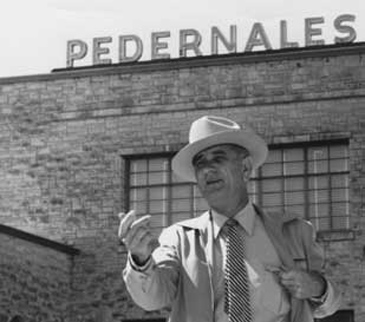
Then Vice President Lyndon B. Johnson at PEC headquarters in Johnson City, Texas, in 1961.

PEC violates cooperative values
and principles of liberty

Perhaps the greatest irony about membership in the PEC is that I have no choice about being a member if I want to purchase electricity.

By Lamar W. Hankins | The Rag Blog | March 26, 2013

SAN MARCOS, Texas — In 2006, my wife and I built our retirement home in the City of San Marcos, but within a small area of the city where electric service is provided only by Pedernales Electric Cooperative (PEC). We had no choice about whom we bought electric service from — it was PEC or no electricity. Had we been able to get service from the City of San Marcos, as our neighbors a few blocks away do, we would have been able to pay about half of what we currently pay for electric service.

PEC is unique among member-owned electric utilities. It is the largest electric cooperative in the nation and has operated for over 75 years in Central Texas, now serving more than 200,000 members over 8,100 square miles.

PEC’s service area is vast: it extends from Lampasas in the north, Liberty Hill and Manchaca in the east, Canyon Lake and Bulverde in the south, and Johnson City to the west, and includes a large area around Junction and Rocksprings farther west that is not contiguous with the rest of its service area.

It serves all or part of 24 Texas counties: Bell, Bexar, Blanco, Burnet, Caldwell, Comal, Edwards, Gillespie, Guadalupe, Hays, Kendall, Kerr, Kimble, Kinney, Lampasas, Llano, Mason, Menard, Real, San Saba, Schleicher, Sutton, Travis, Williamson. It boasts that its service area is larger than the state of Massachusetts.

Ever since PEC corruption was exposed in 2007, I have kept a closer watch on what PEC does, but it is not easy to accomplish. Until the reforms that began in 2008, PEC spent lavishly on its chief officials, including board members, whose median pay in 2006 was over $50,000 each; and the board president was paid $190,000 per year for minimal work (no office, no staff, no regular hours, no specific duties).

Spouses were taken on official trips at co-op expense. Travel for some was first class. The organization hired public relations services at considerable annual expense, lobbyists were used regularly at great expense, health insurance was provided to PEC board members and their families at PEC expense. In 2006, the 17-member co-op board paid itself over $1 million in compensation and benefits.

To put this situation in perspective, it may help to understand that most cooperatives are a special kind of nonprofit organization, operating under unique tax and legal requirements. They are supposed to exist for the benefit of their members. I have had experience throughout my adult life with service on nonprofit boards and organizing committees, including cooperatives, and have helped create several cooperatives. While I am not an expert, I have learned a few things about the responsibilities of nonprofit and co-op board members in the last 45 years.

The National Cooperative Business Association (NCBA), the leading national association dedicated to the creation and support of cooperatives, identifies the values that should guide all cooperatives:

Cooperatives are based on the values of self-help, self-responsibility, democracy, equality, equity and solidarity. In the tradition of their founders, cooperative members believe in the ethical values of honesty, openness, social responsibility and caring for others.

In 1999, PEC was protected from the legislation that permitted many Texans to choose where they would buy their electric service. The inaptly named Electric Choice Act of 1999 was implemented throughout Texas in 2002 — a time when PEC was mired in corruption, which is why it is no surprise that the PEC board then would not allow its captive members to choose another electricity provider. But we are in a different era now according to the current PEC board. However, we still don’t have the opportunity to choose a different electricity provider.

Randy Claus, a PEC member since 1990, pointed out in a recent letter that, “The sole business purpose of an electric cooperative is to provide safe, reliable and low cost electricity, but it’s not happening (with PEC).” The PEC board seems horrified by the idea of giving those living in its designated service area a choice of electricity providers.

Earlier this year, when Chris Perry, a PEC board member, wrote an op-ed favoring choice and introduced a resolution before the board that would have allowed choice, the board asked Perry to resign from the board, according to an article in the Austin American-Statesman.

The board then stripped Perry of his position as the board’s secretary-treasurer on the grounds that his article “violated the board’s code of conduct, communications policy and statutory fiduciary duties.” So much for openness (the freedom to speak one’s mind), social responsibility, and caring for others.

Perhaps the greatest irony about membership in the PEC is that I have no choice about being a member if I want to purchase electricity. Such a circumstance does not square easily with PEC’s principles that are explained in several of its organization documents that provide, in part:

Cooperatives are independent, private and not-for-profit organizations owned by the members they serve. The priorities of PEC’s members are represented through a democratic process, and every member is encouraged to monitor and regulate the business of our cooperative . . . Cooperatives such as Pedernales Electric are rooted in the Cooperative Principles first established by the Rochdale Society of Equitable Pioneers in 1844. As one of more than 900 members of the National Rural Electric Cooperative Association, PEC is guided by these seven principles.

These seven principles have been adopted, also, by the International Co-operative Alliance (ICA), which grew out of the movement begun by the Rochdale pioneers in the late 1800s. The ICA provides this definition of cooperatives, which comes directly from the seven principles: “A co-operative is an autonomous association of persons united voluntarily to meet their common economic, social, and cultural needs and aspirations through a jointly-owned and democratically-controlled enterprise. [Emphasis added]

The first principle that all of these organizations claim as their own provides that cooperatives, by their very nature, have “open and voluntary” membership, something no one now living in a PEC service area can have if it wants electric service, since PEC has a monopoly on providing electricity in its service area. I and others are involuntary members because PEC wants to keep it that way, though it doesn’t have to. We are pressed into involuntary servitude by virtue of where we live and PEC’s policies and practices.

Of course, PEC claims that it has debt and contractual obligations that must come before the liberty concerns of its captive customers. If PEC had clean hands, that argument might have merit, but its hands are far from clean considering the millions of dollars it squandered during decades of prodigal spending and opulent operations that benefited the few at the expense of the members.

It is past time to free the citizens living in PEC’s service area and permit them a choice of electricity providers. The liberty that we have come to expect as our birthright is held captive by the power given to PEC by the Texas Legislature to make its involuntary customers pay exorbitant prices created by PEC’s own past corruption.

[Lamar W. Hankins, a former San Marcos, Texas, city attorney, is also a columnist for the San Marcos Mercury. This article © Freethought San Marcos, Lamar W. Hankins. Read more articles by Lamar W. Hankins on The Rag Blog.]

The Rag Blog

Posted in Rag Bloggers | Tagged , , , , , | Leave a comment

Harry Targ : The Destruction of Public Institutions

Image from econoclass.com.

One by one:
On the road to
destroying public institutions

In the dystopian society the rich and powerful wish to create there will be education, health care, physical security, and a sustainable and fulfilling quality of life for those who can pay for it.

By Harry Targ | The Rag Blog | March 26, 2013

I’ve traveled round this country
From shore to shining shore
It really made me wonder
The things I heard and saw

I saw the weary farmer
Plowing sod and loam
l heard the auction hammer
A knocking down his home

l saw the seaman standing
Idly by the shore
l heard the bosses saying
Got no work for you no more

I saw the weary miner
Scrubbing coal dust from his back
I heard his children crying
Got no coal to heat the shack

But the banks are made of marble
With a guard at every door
And the vaults are stuffed with silver
That the miner sweated for

I’ve seen my brothers working
Throughout this mighty land
l prayed we’d get together
And together make a stand

— from “The Banks are Made of Marble,”
written by Les Rice and sung by Pete Seeger and the Weavers

Mike Pence, Indiana’s recently elected governor, published an editorial in the Lafayette Indiana Journal and Courier (March 22, 2013) proposing a 10 percent “across the board” cut in state income taxes. He claimed that this tax cut would put money back into households that can better spend it than government. State financial reserves remain flush, he said, because of the wise management of public funds of the prior governor, and now Purdue University president, Mitch Daniels, and the state legislature.

Pence defends his tax cut proposal with the old tired mantra of making the Indiana economy more competitive even though he does admit that “Indiana’s economy is still struggling… with unemployment… stubbornly above 8 percent.” Apparently, the downsizing of government, building a budget surplus, privatizing schools and highways, and giving tax breaks to the wealthier sectors of the Hoosier population have not worked so far.

Even though the 30-year campaign (since Reaganomics) to cut taxes, reduce the size of government, and privatize public services has clearly reduced rates of economic growth, increased unemployment, cut real wages, and made access to health care and education less affordable for more Americans, the Daniels/Pence-type economic programs are being expanded in virtually all the “red” states and most of the “blue” ones. The pressure to impose economic austerity has profoundly affected conflicts over federal policies as well.

The gridlock over economic policy at the national level and states where control of the government is shared by the two parties is driven by debates between so-called Keynesians, who support “mixed” state/ market policies, versus Hayek/Friedman supporters who believe, as former President Reagan declared, “government is not the solution, government is the problem.”

However, beyond the debate about economic theory is a sustained, well-funded campaign by the Koch Brothers, the American Legislative Exchange Council (ALEC), conservative and even liberal think tanks, and most politicians to destroy public institutions that masses of working people have struggled to construct since the industrial revolution. These include libraries, public schools, parks, roads, mail service and other forms of communication, social safety nets for the needy, and the guarantee through public institutional scrutiny basic rights-to vote, to form trade unions, to have safe work places, to be secure in one’s home and on the streets. Governments even were assigned the tasks of research and development to promote the common good and improve the physical and social quality of life.

All of these services were demanded by the vast majority of Americans because they knew that such tasks could not be done individually. All of these benefits provided by public institutions are in danger of being destroyed by the tax cutters, the privatizers, and the deregulators such as reflected over the last decade in policies instituted by governors and legislatures in states like Indiana.

The Center on Budget and Policy Priorities (CBPP) issued a report last week on the devastating consequences of these policy shifts on one public sector, higher education (“Recent Deep State Higher Education Cuts May Harm Students and the Economy for Years To Come”). One example has been the 28 percent cut per student in state expenditures on higher education over the last five years in all 50 states. Eleven states cut their support for higher education by more than one-third. In Governor Daniels’ Indiana higher education funding declined by 17.2 percent between fiscal year 2008 and 2013 ($1,240 per student).

CBPP pointed out that these cuts in public support for higher education have dramatic negative consequences. “States (and to a lesser extent localities) provide 53 percent of the revenue that can be used to support instruction at these schools. When this funding is cut, colleges and universities generally must either reduce spending, raise tuition to cover the gap, or both.”

In response to declining state support for higher education, tuition increases since 2007-2008 have exceeded 27 percent nationally. (In Indiana tuition has risen by 15.1 percent or $1,142 per student). Many colleges and universities have cut teaching staff, increased class size, reduced course and program offerings, shut down computer and library facilities, and eliminated branch campuses.

Debates abound in state legislatures about the impacts of recession on public financing of higher education. Legitimate arguments are raised about the pattern of bloated and unnecessary administrative expansion in colleges and universities and administrative salaries that are extraordinarily out of line with the norms of public service.

But there is a deeper meaning to the CBPP report, the Pence-proposed tax cuts, and the downsizing of support for public-supported higher education. That is, powerful economic and political actors, representing what the Occupy Movement called the one percent and their allies among traditional conservatives and right-wing populists, are on a campaign to destroy public institutions which for the most part serve the interests of the vast majority of the population of the United States.

In the dystopian society the rich and powerful wish to create there will be education, health care, physical security, and a sustainable and fulfilling quality of life for those who can pay for it but for the rest of us, the 99 percent, life will become harsh and painful. More and more it is becoming clear that politics must be about saving those public institutions that workers, women, people of color, marginalized peoples of all kinds struggled for a long time to secure and are now in danger of losing.

[Harry Targ is a professor of political science at Purdue University and is a member of the National Executive Committee of the Committees of Correspondence for Democracy and Socialism. He lives in West Lafayette, Indiana, and blogs at Diary of a Heartland Radical. Read more of Harry Targ’s articles on The Rag Blog.]

The Rag Blog

Posted in Rag Bloggers | Tagged , , , , , , , | 1 Comment

RAG RADIO / Thorne Dreyer : Legendary Music Producer Chris Strachwitz and Filmmakers Maureen Gosling & Chris Simon

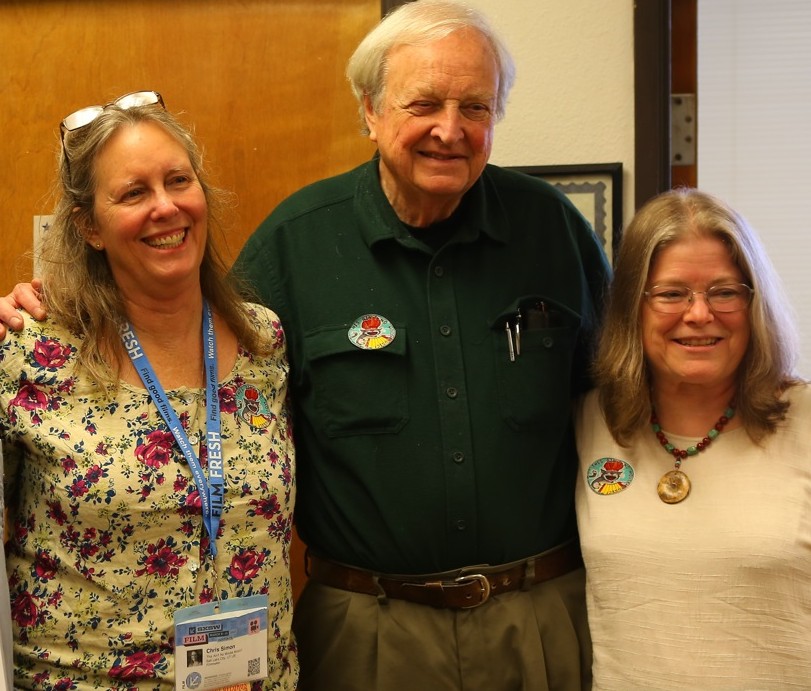
From left: Chris Simon, Chris Strachwitz, and Maureen Gosling at the studios of KOOP-FM in Austin, Texas, Friday, March 15, 2013. Photo by Bob Simmons / The Rag Blog.

Rag Radio podcast:
Arhoolie Records founder Chris Strachwitz,
filmmakers Maureen Gosling & Chris Simon

This Ain’t no Mouse Music! paints a “vivid portrait of an obsessive sonic sleuth” as the film takes “a hip-shaking stroll from New Orleans to Appalachia and right into the very DNA of rock’n’roll.”

By Thorne Dreyer | The Rag Blog | March 21, 2013

See Bob Simmons’ YouTube videos from the show, Below.

Legendary blues and roots music producer Chris Strachwitz, founder of Arhoolie Records, and filmmakers Maureen Gosling and Chris Simon, whose This Ain’t no Mouse Music! about Arhoolie premiered at SXSW in Austin, were our guests on Rag Radio, Friday, March 15, 2013. Rag Radio is a syndicated radio program produced at the studios of KOOP 91.7-FM in Austin, Texas.

Listen to or download our interview with Chris Strachwitz, Maureen Gosling, and Chris Simon here:

Born to an aristocratic family in a section of Germany that is now part of Poland, Chris Strachwitz came to the United States after World War II. He developed a love for roots and blues music and in 1960 established the extremely influentual indie record label, Arhoolie.

As the producers of This Ain’t no Mouse Music! put it, Strachwitz “traveled to plantations and prisons, roadhouses and whorehouses, churches and bayou juke joints, and returned with recordings that would revolutionize the sound of popular music.”

Chris Strachwitz brought performers like Texas bluesmen Mance Lipscomb and Lightnin’ Hopkins, Tejano musicians Flaco Jiménez and Lydia Mendoza, Cajun greats Michael Doucet and the Savoy Family, and Zydeco king Clifton Chenier — and many more — into world prominence. And, in collaboration with filmmaker Les Blank, he made the classic film Chulas Fronteras about Norteño music.

Bonnie Raitt said, “It’s impossible to look at the history of blues, Cajun and Zydeco music without looking at Chris Strachwitz’ role. He’s a monumental figure.”

Maureen Gosling and Chris Simon produced and directed This Ain’t No Mouse Music! which tells the amazing story of Chris Strachwitz and Arhoolie Records. The film premiered with several screenings at this year’s SXSW Film Festival in Austin.

Jeffrey St. Clair called Mouse Music a “vivid portrait of an obsessive sonic sleuth” in which the filmmakers “take a hip-shaking stroll from New Orleans to Appalachia and right into the very DNA of rock’n’roll. In this beautifully shot film, we come face to face with the creators of indigenous music…”

“I guess I’m just a rootin’ groundhog,” Strachwitz told the Rag Radio audience. “If I can’t find musicians, I just hunt records wherever I go. I should have probably opened a detective agency.”

“I fell in love with all these different regional musics,” he said, “not just with blues. New Orleans jazz was one of my first loves… and hillbilly music. There was this amazing array of extraordinarily powerful and emotional music.”

Noted Musicologist Mack McCormick — who “knew Texas, the vernacular Texas, better than any other human being” — suggested the name “Arhoolie” for the new record company. Strachwitz’ response? “Ar-what?” “Arhoolie” was a variation on a term meaning a “field holler,” sung by workers in the cotton fields. “I figured… it’s a catchy name. What the heck.”

In This Ain’t no Mouse Music!, Chris explains his approach to the business like this:

Most record companies, they record everything that they think is commercial. I didn’t want to record stuff I don’t like… My stuff isn’t produced. I just catch it as it is… I knew the music I liked was all over the place. Especially in Texas and Louisiana and Mississippi and god knows where… I don’t know why I like it so much. It’s just got some guts to it. It ain’t wimpy, that’s for sure. It ain’t no mouse music…

About making the film with Strachwitz, Maureen Gosling said on Rag Radio, “We had the amazing experience of hanging around with him and going on the road with him and being able to be with all these people.”

Chris Simon added, “We saw a whole other side of Chris, and the passion that he brings to his work is extraordinary. Going around, knocking on strangers’ doors, saying, do you know where this person lives? It’s inspiring. And I hope that that’s one of the things that young people get out of the film. If you have a vision, just do it.”

The film, which includes narration from Bonnie Raitt, Ry Cooder, Taj Mahal, Richard Thompson, and folklorist Archie Green, features a wide range of musical performance including valuable archival footage of Lightin’ Hopkins, Mance Lipscomb, Big Mama Thornton, and others.

Maureen says, “We filmed a lot of things live, like the Treme Brass Band in New Orleans, Michael and David Doucet performing together, No Speed Limit, a bluegrass band in Virginia… and Santiago Jiménez, Jr. here in Texas, as well as Flaco Jiménez, and many, many others…”

And, she added, “We filmed at the Savoy family annual boucherie — and that’s just a perfect setting for the movie because it’s just people jamming and eating and having a good time and it’s a beautiful way to see music in the context of the culture. And not just set up on a stage…”

Maureen Gosling, who graduated from the University of Michigan with a degree in social anthropology and who lived in Austin in the ’70s, has been a documentary filmmaker for more than 30 years. Her work has often focused on themes of people and their cultural values, music as cultural expression, and the changing gender roles of men and women.

Chris Simon, who is also a folklorist, has been an award-winning filmmaker for more than 25 years, producing independent documentaries through her Sageland Media. Gosling and Simon met while working with acclaimed documentary filmmaker Les Blank, with whom they collaborated on classic films such as Gap-Toothed Women and Burden of Dreams.

This Ain’t No Mouse Music! on Rag Radio

Video by Bob Simmons / The Rag Blog.

Rag Radio has aired since September 2009 on KOOP 91.7-FM, an all-volunteer cooperatively-run community radio station in Austin, Texas. Hosted and produced by Rag Blog editor and long-time alternative journalist Thorne Dreyer, a pioneer of the Sixties underground press movement, Rag Radio is broadcast every Friday from 2-3 p.m. (CDT) on KOOP, and is rebroadcast on Sundays at 10 a.m. (EDT) on WFTE, 90.3-FM in Mt. Cobb, PA, and 105.7-FM in Scranton, PA.

The show is streamed live on the web by both stations and, after broadcast, all Rag Radio shows are posted as podcasts at the Internet Archive.

Rag Radio is produced in association with The Rag Blog, a progressive Internet newsmagazine, and the New Journalism Project, a Texas 501(c)(3) nonprofit corporation. Tracey Schulz is the show’s engineer and co-producer.

Rag Radio can be contacted at ragradio@koop.org.

Coming up on Rag Radio:
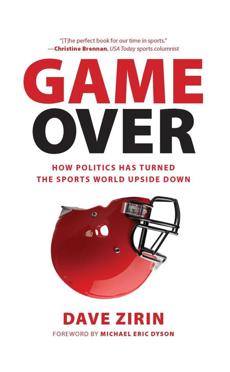
THIS FRIDAY, March 22: Progressive sportswriter Dave Zirin, Sports Editor at The Nation and author of Game Over: How Politics Has Turned the Sports World Upside Down.
Friday, March 29:
“Bronx Butch” poet, performance artist, and memoirist Annie Rachele Lanzillotto.
Friday, April 5: Anti-violence activists John Woods and Claire Wilson James about the issue of guns in schools and on college campuses.
Friday, April 12: Sixties activists and Yippie founders Judy Gumbo Albert and Nancy Kurshan.

The Rag Blog

Posted in Rag Bloggers | Tagged , , , , , , , , , , , , , | Leave a comment

Dave Zirin : Steubenville and the Bond Between Jock Culture and Rape Culture

Image from Serious Insanity.

The verdict:
Steubenville shows the bond
between jock culture and rape culture

”I think that if rape is inevitable, relax and enjoy it.” — Bob Knight, Hall of Fame basketball coach, 1988.

By Dave Zirin / TThe Rag Blog / March 21, 2013

Progressive sportswriter Dave Zirin will be Thorne Dreyer‘s guest on Rag Radio, Friday, March 22, 2013, 2-3 p.m. (CDT), on KOOP 91.7-FM in Austin and streamed live on the Internet. The show will be rebroadcast on WFTE-FM in Mt. Cobb and Scranton, PA, Sunday at 10 a.m. (EDT). Zirin will speak live at Chicago’s Heartland Cafe, Sunday, March 24, at 3 p.m., and at the Belo Center for New Media on the University of Texas campus in Austin, Monday, April 1, from 7-9 p.m., an event sponsored by the Texas Program in Sports and Media.

As a sportswriter, there is one part of the Steubenville High School rape trial that has kept rattling in my brain long after the defendants were found guilty. It was a text message sent by one of the now convicted rapists, team quarterback Trent Mays. Mays had texted a friend that he wasn’t worried about the possibility of rape charges because his football coach, local legend Reno Saccoccia, “took care of it.” In another text, Mays said of Coach Reno, “Like, he was joking about it so I’m not worried.”

In this exchange we see an aspect of the Steubenville case that should resonate in locker rooms and athletic departments across the country: the connective tissue between jock culture and rape culture. Rape culture is not just about rape. It’s about the acceptance of women as “things” to be used and disposed of, which then creates a culture where sexual assault — particularly at social settings — is normalized.

We learned at the Steubenville trial that not only did a small group of football players commit a crime, but 50 of their peers, men and women, saw what was happening and chose to do nothing, effectively not seeing a crime at all.

We need to ask the question whether the jock culture at Steubenville was a catalyst for this crime. We need to ask whether there’s something inherent in the men’s sports of the 21st century, which so many lionize as a force for good, that can also create a rape culture of violent entitlement. I am not asking if playing sports propels young men to rape. I am asking if the central features of men’s sports — hero worship, entitlement and machismo — make incidents like Steubenville more likely to be replicated.

There are many germs in the Petri dish of sports. Growing up I had the great fortune of big-hearted, politically-conscious coaches, some of whom patrolled sexism in the locker room with a particular vigilance. As the great Joe Ehrmann has written so brilliantly, a “transformational coach” can work wonders. But different germs also exist. Ken Dryden, Hall of Fame NHL goalie, once said, ”It’s really a sense of power that comes from specialness… anyone who finds himself at the center of the world they’re in has a sense of impunity.”

On colleges, there is reason to believe that the same teamwork, camaraderie and “specialness” produced by sports can be violently perverted to create a pack mentality that either spurs sexual violence or makes players fear turning in their teammates. A groundbreaking 1994 study showed that college athletes make up 3.3 percent of male students but 19 percent of those accused of sexual assault. One of the study’s authors, Jeff Benedict, said,

Does this study say participation in college sports causes this? Clearly, no. We’re not saying that. We just think that at some point there is an association between sports and sexual assault… the farther you go up, the more entitlements there are. And one of those entitlements is women.

That was two decades ago but there is no indication that anything has changed. A February 2012 Boston Globe article about sexual assault charges levied against members of the Boston University hockey team, reporter Mary Carmichael wrote about the findings of Sarah McMahon, “a Rutgers University researcher who studies violence against women.”

McMahon “said it is unclear whether college athletes are more likely to commit sexual crimes than other students. But she said her work had found a unique sense of entitlement, sexual and otherwise, among some male college athletes, especially those in high-profile or revenue-producing sports like BU hockey.”

You can’t extricate the entitlement at the heart of jock culture from McMahon’s comments about its particular prevalence in revenue-producing sports. The insane amounts of money in so-called amateur athletics and the greasy desire of adults in charge of cash-strapped universities to get their share also must bear responsibility for rape culture in the locker room.

They have created a system where teenage NCAA athletes can’t be paid for what they produce so they receive a different kind of wage: worship. Adults treat them like heroes, students treat them like rock stars, and amidst classes, club meetings, and exams, there exists a gutter economy where women become a form of currency. You’re a teenager being told that you are responsible for the economic viability of your university and everything is yours for the taking. This very set-up is a Steubenville waiting to happen.

If people think that this doesn’t translate to high school, they’re wrong. I spoke with Jon Greenberg, an ESPN journalist and also a graduate of Steubenville High. He describes a school “with a pretty high poverty rate” that was still able to get state funds to build “a swimming pool, a new on-campus gym, cafeteria and more.” The dynastic “Big Red” football program drove those changes.

As Greenberg says,

The football players themselves, at least in my experience, weren’t treated as heroes or above the law, but the team itself was put on a pedestal, especially when they were good… There are some very good people who played Big Red football and coached football. But there needs to be some changes, most importantly a very serious seminar, for all male students, on the definition of rape and similar curriculum.

In thinking about Steubenville, thinking about my own experiences playing sports, thinking about athletes I’ve interviewed and know, I believe that a locker room left to its own devices will drift toward becoming a breeding ground for rape culture. You don’t need a Coach Reno or a Bob Knight to make that happen. You just need good people to say or do nothing.

As such, a coach or a player willing to stand up, risk ridicule, and actually teach young men not to rape, can actually make all the difference in the world. We need interventionist, transformative coaches in men’s sports who talk openly about these issues. We need an economic setup in amateur sports that does away with their gutter economy. But most of all, we need people who recognize the existence of rape culture, both on and off teams, to no longer be silent.

As for Steubenville, Coach Reno needs to be shown the door, never to be allowed to mold young minds again. Football revenue should go toward creating a district-wide curriculum about rape and stopping violence against women. And “Jane Doe,” the young woman at the heart of this case, should be given whatever resources she and her family needs to move if they choose, pay for college, or just have access to whatever mental health services she and her family may need.

After the trial, testimony and verdict, they deserve nothing less.

This article was also posted to and first published at The Nation.

[Dave Zirin is sports editor at The Nation and the author of the new book, Game Over: How Politics Has Turned the Sports World Upside Down (The New Press). Receive his column every week by emailing dave@edgeofsports.com. Contact him at edgeofsports@gmail.com. Read more articles by Dave Zirin on The Rag Blog.]

See “Dave Zirin, the Man Who Politicized the Sports Pages” — Ron Jacobs’ review of Zirin’s latest book, Game Over: How Politics Has Turned the Sports World Upside Down — on The Rag Blog.

The Rag Blog

Posted in Rag Bloggers | Tagged , , , , , , , | 7 Comments

Johnny Rustywire : The Hitchhiker

Window Rock, Arizona, Navajo Nation. Image from Flickriver.

 The hitchhiker

I thought it must be an old person, since the figure was small in size and wrapped in a blanket head to toe. I could see the person standing in my headlights, wrapped against the blowing crystals of cold snow.

By Johnny Rustywire | The Rag Blog | March 21, 2013

I was on the road near Woodsprings, west of Window Rock, headed toward Ganado. It was cold and the wind was blowing the snow in swirls.

I hadn’t seen anyone on the road since I left St. Michaels. I was in a police unit, Navajo PD, headed out to the Joint Use Area, Second Mesa — Hopiland. Those were the days of border disputes and they were taking Navajo cattle and we were on 24-hour patrol driving the back roads from Jeddito to Pinon then west to Hard Rock, Dinnebito and Big Mountain then South to Sand Springs along the Turquoise Trail then to Coal Mine Mesa, a 48 hour shift, 300-400 miles along dirt roads.

As I was driving along, there was a lone stick figure, a dark shape on the road, someone walking out there late and a long ways from anywhere. I stopped and went back to pick them up.

I thought it must be an old person, since the figure was small in size and wrapped in a blanket head to toe. I could see the person standing in my headlights, wrapped against the blowing crystals of cold snow.

She stood by the door to the police unit and couldn’t open the door. Her fingers were too cold, so I opened the door and said in Navajo: “It is too cold. Get in, Grandmother. I am headed to Dinnebito and can give you a ride.”

She didn’t say anything. She just got in and we headed down the road. My unit was warm, I had a shotgun mounted in the middle, was wearing my sidearm, had a .223 with a scope in the trunk. The unit was marked and I was in uniform. A green down jacket with good boots. I was warm and ready for anything.

She didn’t say anything to me. Sometimes hitchhikers are too tired to talk, and it was cold out so I could see why. She looked from the size of her to be an old woman, but I couldn’t see her face.

I drove on down the road, passed Morgan Shell, Ganado, Burnside Junction, and Whipporwill turnoff, Steamboat, Toyei, and Beshbito, passed Jeddito and into Keams Canyon, where I gassed up. I got some strange looks from the Bureau of Indian Affairs cops from North Dakota. They were sent to watch the Navajos and their errant cattle. They watched me as I watched them.

The old woman was asleep. Some of the BIA cops in their blue uniforms were looking inside my unit as I was paying for the gas. They didn’t say anything to me when I got outside. Even though we were cops, we were on different sides, in a way. They didn’t talk to me. They were looking at the old woman.

I drove off through Hopiland, passed Second and Third Mesas, and then got to Dinnebito turnoff. I stopped by the road and the old hitchhiker just sat there. I said, “I am going to Hard Rocks from here.”

She didn’t say anything… just motioned with one arm to go ahead. I left the paved highway and headed north on the bumpy washboard road leading to Big Mountain. I drove 30 miles, went past the boarding school and thought to myself, I wonder if she knows where she is going? Maybe she has no place to go and just wants to ride around in a warm car.

“Where are you going, Grandmother?” She said nothing, just motioned with her covered arm to go forward. Way out in the middle of nowhere, there is a mission surrounded by small houses. It was foggy and dark. There were no lights on in any of the houses.

The only light was from a glowing cross on the church, a green neon cross that seemed to float above the fog; it glowed strangely in the dark. There was a mist on the ground.

There was a pickup that had been following me for some time, and the lights appeared in my rearview mirror. I parked by the mission, turned my lights off, and waited for the pickup.

Who would be following me around this place? I waited with my quiet rider and then I saw it was two BIA cops. They looked lost and so I got out and went to talk to them.

They were surprised to see my flashlight come on as I approached them. They rolled down their windows.

“What’s going on, guys?” I had a thermos in one hand and offered them a cup of coffee. They looked at one another, as if wondering whether to take it? If worse came to worse, we could be trying to arrest each other over the JUA. Maybe, maybe not, who knew what was to happen?

“There isn’t another cup of hot coffee anywhere for a hundred miles,” I said. They took the thermos and poured themselves a cup.

It broke the ice. We talked a little bit about our work, the cold, and things cops talk about.

I told those two to head east into to the dark. They would pass Wepo Wash of Hillerman fame and then would come across a dirt road headed south that would take them back to Second Mesa. It would take them past Awatovi, the site of a Hopi village massacred by the other villages way back in the 1600s. I told them not to stop there since there were some strange things known to happen to people who went there, especially this time of night. They just looked at one another and I left them there.

I got back to my unit and the old one was gone. The door was left open and she was nowhere to be seen. As I looked around all I saw were the dark shapes of the houses and not one had a light on. A chill went up my spine.

I switched radio channels and called out “820 to Kayenta; 820 to Kayenta.” All I heard was static. “820 to Kayenta,” I called out. After a little bit. I heard Rose, the dispatcher.

“Is that you, Sgt. Rustywire?”

“It’s 820.” We were supposed to be professional on the airwaves and, besides, the other guys were listening.

“I’m coming in for a cup. I am at Black Mesa and will see you in an hour.”

“I will brew some up for you.” I thanked her and told her I just dropped off a skinwalker. “Maybe I can find one for you?”

She double clicked the mike, meaning “OK” and I laughed as I drove North through Black Mesa heading toward sunrise.

© Johnny Rustywire, 2013. All rights reserved.

[Johnny Rustywire is Folded Rocks Clan People on his mother’s side, and born for Tsinahbiltnii, the Mountain People Clan on his father’s side. He comes from Toadlena-Two Gray Hills, New Mexico, where the mountain is cracked and the water flows. He is a father of six and grandfather of 12. He attended Indian boarding schools and grew up on the Navajo Reservation, and has been married to the same woman for 40 years, a Ute from Fort Duchesne, Utah.]

The Rag Blog

Posted in RagBlog | Tagged , , | 2 Comments

Michael James : Pictures from the Long Haul

Menominee Boys at the Battle of Mole Lake Historic Marker Crandon, Wisconsin, 1978. Photo by Michael James from his forthcoming book, Michael Gaylord James’  Pictures from the Long Haul.

Pictures from the Long Haul:
Duane and the Menominee warriors

Duane was a fast runner, and he was the guy who came through the woods, through the snow, bringing and giving out the word that the Menominee Warrior Society had taken over the Alexian Brother’s Abbey.

By Michael James | The Rag Blog | March 20, 2013

[In this series, Michael James is sharing images from his rich past, accompanied by reflections about — and inspired by — those images. This photo will be included in his forthcoming book, Michael Gaylord James’ Pictures from the Long Haul.]

Back in the 1970’s I founded a newspaper and political organization called Rising Up Angry (1969-1975).

We were part of an inspirational coalition, dubbed the Rainbow Coalition by Black Panther leader Fred Hampton. It initially included the Black Panther Party, Young Lords Organization, Young Patriots, and then Rising Up Angry. We claim the Rainbow Coalition laid the groundwork for the election of the late Chicago Mayor Harold Washington. It was his election, and the coalition he put together, that brought the young Barack Obama to Chicago.

I spent a lot of time selling our newspaper, hanging out in parks, neighborhoods, food joints, bars, and schools. We would talk, we would cool out fights, and we promoted the revolution and all issues before us: police brutality, war, racism, imperialism, sexism, health care, legal rights, etc.

Sometime in the early 1970’s I was at the statue-monument in the Logan Square neighborhood where young people would hang out, and it was there I met a Menominee Indian by the name of Daryl. He took me to his house nearby, where I met his brother Duane, who was in the act of butchering a live chicken he found who-knows-where.

I’m not sure if it was because I had helped the farmer down the road as a kid in Connecticut, butchering both cows and pigs, and had also worked in a butcher shop at age 14, but in any event, Duane and I became fast friends. We shared our histories, partied together, and I followed his adventures as he and other young natives toured around the country in those wild days of the American Indian Movement (AIM).

I visited Duane and his extended family on numerous occasions up in Neopit, Wisconsin on the Menominee Reservation. We had some great times living on black coffee, canned vegetables, white bread, and meat, taking sweats, and jumping in the Wolf River. In altered states we climbed the fire towers in the night, and chased porcupines near the garbage dump overrun with deer. I was encouraged to get some porcupine quills by hitting the animal with the swing of a t-shirt, a little scary in that altered state even though I knew then that they do not shoot the quills!

Duane was a fast runner, and he was the guy who came through the woods, through the snow, bringing and giving out the word that the Menominee Warrior Society had taken over the Alexian Brother’s Abbey in January 1975. Back in those militant days the MWS claimed the Abbey was on Menominee tribal land. Marlon Brando came to the Abbey to help find a peaceful solution.

A couple of years later Duane got himself in a legal jam over in Shawano County, or maybe in Green Bay, neither place known then for good vibes with their Native American neighbors. Duane was sent on a little vacation to the McNaughton Correctional Center in Lake Tomahawk.

I took a run up to the res and picked up his sister Rory and three of his kids, and we went to the facility near Crandon for a wonderful afternoon visit. En route to or from we stopped at a Wisconsin Historical Marker commemorating the battle for the local rice beds between the local Sokoagon Band of Chippewa and Sioux from the west. Over 500 warriors were killed and are buried there.

Shown above are three of my pal Duane’s kids at the marker. The photo is included in my forthcoming book, Michael Gaylord James’ Pictures from the Long Haul.

[Michael James is a former SDS national officer, the founder of Rising Up Angry, co-founder of Chicago’s Heartland Café (1976 and still going), and co-host of the Saturday morning (9-10 a.m. CDT) Live from the Heartland Show, here and on YouTube. He is also president of the local progressive 49th Ward Democratic Party, a member of the Screen Actors Guild, a board member of Athletes United for Peace, and on the advisory panel of the organic watchdog organization, The Cornucopia Institute. He is reachable by one and all at michael@heartlandcafe.com. Find more articles by Michael James on The Rag Blog.]

The Rag Blog

Posted in Rag Bloggers | Tagged , , , , , , , , , , | 1 Comment

Type your summary here

Type rest of the post here

Source /

The Rag Blog

Posted in RagBlog | Leave a comment

Lamar W. Hankins : The Delusions of War Ten Years and Counting

Austin activist David Hamilton demonstrates against the Iraq War in December 2008. Photo by Sally Hamilton / The Rag Blog

The delusions of war ten years 
after the bombing of Iraq began

Only the willingly deceitful claim anymore that the war was for some noble purpose.

By Lamar W. Hankins | The Rag Blog | March 20, 2013

For most of us, the last 10 years have not involved the personal agony of U.S. troops killed in Iraq (nearly 4500), wounded (perhaps as many as 100,000), suffering brain injuries (320,000), and suffering the psychological effects of war (about 250,000, counting those who served also in Afghanistan).

And we haven’t been affected by the more than one million Iraqis who died between March 2003 and August 2007 (according to the Opinion Business Research survey). Nor have we been affected by the over 2 million Iraqi refugees reported by the BBC.

Only the willingly deceitful claim anymore that the war was for some noble purpose. My activity against the war started in August 2002 when I first became aware of the propaganda from our government. I began writing then to Sen. John Kerry reminding him of the misadventure called Vietnam in which he had participated and about which he became a fierce critic.

Those exchanges were to no avail. Even a warrior who once saw the light could not resist the lure of an easy victory against Saddam Hussein’s pitiful forces that would assure the U.S. of all the oil we needed for the foreseeable future, give us a permanent foothold in the Middle East, and demonstrate our military might for the world to fear. What an easily deluded species we are.

Kerry’s justifications for voting for war in Iraq were not much different from the views of most of those who supported the war, but all those excuses amounted to little more than we should do it because we can and Saddam Hussein is a bad guy (a judgment I have no quarrel with).

That’s what powerful nations do. Kerry and all the others voted to give the President a power that Abraham Lincoln warned us against: “When you allow (the President) to make war at (his) pleasure, study to see if you can fix any limit to his power and disrespect.”

Senator Robert Byrd got it right when he said during the debate on the war resolution that “…nowhere in this constitution is it written that the President has the authority to call forth the militia to preempt a perceived threat.” And those words are just as relevant when applied to the weaponized drones that we are now using wherever the President wants to use them to kill the bad guys, along with 10 times as many innocent men, women, and children.

About the time I started communicating with Sen. Kerry and other politicians, I began an email correspondence with a group of friends and acquaintances. I considered it my Committee of Correspondence Against the Iraq War. My wife June and I joined Military Families Speak Out (MFSO).

Seven years earlier, our only child, after graduating from college, joined the U.S. Army, where she served at Ft. Campbell, Kentucky, with the 101st Airborne for five years. At the start of the Iraq War she was in the National Guard. Her husband had been in the Armed Services for over 15 years. When the war started, he was in a Special Forces unit somewhere in Iraq, preparing for an expected 50 mph dust storm.

On March 24, 2003, we wrote a statement which I read to our city council in opposition to a resolution it was considering that featured praise for President Bush, while offering words of support for our troops. We asked the city council to do more for our troops, but it refused. Unfortunately, the San Marcos, Texas, City Council passed the resolution unanimously after many powerful and heartfelt statements by a handful of citizens opposed to this war, as well as the usual jingoistic support for the war by many other citizens.

Kerry, the San Marcos City Council, and many others proved that Hitler’s understudy Hermann Goering understood something vital about human psychology when he said in an interview over 65 years ago:

…it is the leaders of the country who determine the policy and it is always a simple matter to drag the people along, whether it is a democracy, or a fascist dictatorship, or a parliament, or a communist dictatorship. Voice or no voice, the people can always be brought to the bidding of the leaders. That is easy. All you have to do is tell them they are being attacked, and denounce the peacemakers for lack of patriotism and exposing the country to danger. It works the same in any country.

If anything, Goering overestimated the difficulty of convincing the American people to go to war.

It is worth remembering who was on that city council 10 years ago. It included the then-Mayor Robert Habingreither, our recent Congressional candidate Susan Narvaiz, Bill Taylor, Jacob Montoya (who quoted the Bible in support of the war), Ed Mihalkanin, Paul Mayhew, and Martha Castex Tatum. Their resolution was intended to show that war is patriotic.

But not one of these pro-war people, any other San Marcos supporter of the War in Iraq, or more than a handful of others around the nation has issued a public apology for their disastrous mistake in supporting this war, about which they had no doubts. Apparently none have crossed their minds, or perhaps they are incapable of honest reflection.

Almost all of both Democrats and Republicans in office 10 years ago were willing to both go to war in Iraq and fund it to the tune of over $812 billion, a figure that is still increasing at the rate of about $19,000 a minute — more than $27 million a day.

Our military budget is more than the combined military expenditures of the next 14 highest-spending countries in the world. But Paul Ryan and other delusional politicians as well as many of our citizens who are screaming about deficits never said a word about the costs of war adding to that deficit. After all, wars are so patriotic, especially when God is on our side, that spending should not be a concern.

When most people sign up to serve their country in the military, they do so so because they want to protect the American people from attack by our enemies. They believe, as I do, that we should have a strong military to deter aggression against the United States and protect our shores, our homes, our friends, and our families from attack by foreign foes.

But many become disillusioned by the tasks they are required to perform. As one Gulf War Veteran put it: “American soldiers should protect America, not attack other nations.” What our service men and women do not sign up for is to have their lives put at risk for the political ambition of a corrupt administration, or to fight wars of preemption in violation of the U.S. Constitution, international laws, and treaties.

Americans have not fought a war on our land for nearly 150 years. As a result, most of us do not appreciate what war is all about. That void has been filled by a recently published book about the Vietnam War by Nick Turse, Kill Anything That Moves: The Real American War in Vietnam. It is based on extensive research in Vietnam War archives over the last 12 years.

In a review of the book, author Chris Hedges observes:

The almost unfathomable scale of the slaughter, the contribution of our technical, industrial and scientific apparatus to create deadlier weapon systems, implicates huge sections of our society in war crimes. The military and weapons manufacturers openly spoke of the war as a “laboratory” for new forms of killing. Turse’s book obliterates the image we have of ourselves as a good and virtuous nation. It mocks the popular belief that we have a right to impose our “virtues” on others by force. It exposes the soul of our military, which has achieved, through relentless propaganda and effective censorship, a level of public adulation that is terrifying.

Turse reminds us who we are. And in an age of expanding wars in the Middle East, routine torture, murderous air and drone strikes and targeted assassinations, his book is not so much about the past as about the present. We have worked, consciously and unconsciously, to erase the terrible truth about Vietnam and ultimately about ourselves. This is a tragedy. For if we were able to remember who we were, if we knew what we were capable of doing to others, then we might be less prone to replicating the industrial slaughter of Vietnam in Iraq, Afghanistan, Pakistan, Somalia and Yemen.

One of the problems with having a volunteer military is that many people see those service men and women as disposable, to be used for whatever purpose the President has in mind. After all, they volunteered for military service.

Such a view is, of course, callous and indifferent to human life, and stands in stark contrast to the view of Karen Kwiatkowski, a retired U.S. Air Force Lieutenant Colonel, who said, “If you join the military now, you are not defending the United States of America, you are helping certain policy-makers fulfill an imperialist agenda.”

To read a confirmation of this view by a U.S. Marine who fought in the second siege of Fallujah, go here.

I don’t claim to know all the truth about war, but I find the phrase “industrial slaughter” apt based on what some of our soldiers have revealed to me about our wars in Vietnam, Iraq, and Afghanistan. Mostly, what I try to do is question the actions of our public officials because I have learned that they are only as good as we require them to be. We haven’t been requiring much lately of our national leaders.

In spite of their deceit, ignoring of the constitutional requirement that only Congress can declare war, pandering to emotion, rewarding their supporters with ever more lucrative contracts and giveaways, manipulation of information about what they do, failure to adequately support veterans, failure to adequately equip our soldiers sent to Iraq and Afghanistan, and, finally, their ability to convince a majority that “War is Peace” and “Ignorance is Strength,” we continue to allow them to destroy all of the best values that we as Americans claim are ours.

If we don’t try to become informed and have the courage to act on that information, it doesn’t matter whether “Big Brother is Watching” or not. When we are complacent in our ignorance or cowardly in our actions, politicians can have their way with us without the need for Blackshirts. I hope that soon all our citizens can put aside brand loyalty, face the facts wherever they may lead, and act to hold public officials accountable, something this president is unwilling or unable to do.

After all the phony reasons for war in Iraq were found wanting, Bush and his neoconservative advisers and supporters resorted to saying that the venture was a humanitarian mission to free the Iraqis.

It is now obvious instead that it became a humanitarian nightmare, mainly because in the throes of American arrogance, our “leaders” never understood much about the culture of Iraq, the schism between the two main Islamic groups, the geopolitical relations between the Sunnis and the Saudis and between the Shiites and the Iranians, the desires of the Kurds for autonomy, the nationalism felt by most Iraqis, the hatred engendered toward the U.S. by years of sanctions and killings in the north and south no-fly zones, and the complete folly of occupation by foreign and hostile armies.

Now, some neocons (found in the American Enterprise Institute, for example) are claiming that despite all the lies that led us to invade Iraq, it was worth it because Iraq might have become like Syria, and what a mess that would have been. Such thinking is delusional, after-the-fact speculation based on nothing.

It is time for the American people to find and follow our own moral compasses and say that we will never again be led down the path of grotesque violence that creates its own kind of terror for both those we kill and those we pay to do the killing. But I fear that most Americans will not find their moral compasses. It is too convenient to ignore morality and legality when what we want most is to win and show the world who is boss.

[Lamar W. Hankins, a former San Marcos, Texas, city attorney, is also a columnist for the San Marcos Mercury. This article © Freethought San Marcos, Lamar W. Hankins. Read more articles by Lamar W. Hankins on The Rag Blog.]

The Rag Blog

Posted in Rag Bloggers | Tagged , , , , | Leave a comment

Harry Targ : Expanding the ‘Iraq Syndrome’

Image from Democratic Underground.

Cooperation over conflict:
We need to expand the ‘Iraq Syndrome’

As we reflect on the 10-year anniversary of the launching of the Iraq War, the madmen inside the beltway are talking about increasing U.S. military involvement abroad.

By Harry Targ | The Rag Blog | March 20, 2013

In a November/December 2005 Foreign Affairs article, “The Iraq Syndrome,” I argued that there would likely be growing skepticism about the notions that “the United States should take unilateral military action to correct situations or overthrow regimes it considers reprehensible but that present no immediate threat to it, that it can and should forcibly bring democracy to other nations not now so blessed, that it has the duty to rid the world of evil, that having by far the largest defense budget in the world is necessary and broadly beneficial, that international cooperation is of only very limited value, and that Europeans and other well-meaning foreigners are naive and decadent wimps.”

Most radically, I went on to suggest that the United States might “become more inclined to seek international cooperation, sometimes even showing signs of humility.”

— John Mueller, “The Iraq Syndrome Revisited,” Foreign Affairs, March 28, 2011

David Halberstam reported in his important book,The Best and the Brightest, that President Roosevelt directed his State Department to develop a position on what United States foreign policy toward Indochina should be after the World War in Asia was ended. Two choices were possible in 1945: support the Vietnamese national liberation movement that bore the brunt of struggle against Japanese occupation of Indochina or support the French plan to reoccupy the Indochinese states of Vietnam, Cambodia, and Laos.

As the Cold War escalated the United States rejected Ho Chi Minh’s plea for support for independence and began funding the French in their effort to reestablish colonialism in Indochina. When the French were defeated by the Viet Minh forces in 1954, the United States stepped in and fought a murderous war until the collapse of the U.S. South Vietnamese puppet regime in 1975.

Paralleling the struggle for power in Indochina, competing political forces emerged on the Korean Peninsula after the World War. With the Soviet Union and China supporting the North Koreans and the United States supporting a regime created by it in the South, a shooting war, a civil war, between Koreans ensued in 1950 and continued until an armistice was established in 1953. That armistice, not peace, continues to this day as a war of words and periodic provocations.

Political scientist John Mueller analyzed polling data concerning the support for U.S. military action in Korea and Vietnam, discovering that in both wars there was a steady and parallel decline in support for them. Working class Americans were the most opposed to both wars at every data point. Why? Because working class men and women were most likely to be drafted to fight and their loved ones the most likely to suffer the pain of soldiers coming home dead, scarred, or disabled.

Polling data from the period since the onset of the Iraq war followed the pattern Mueller found in reference to Korea and Vietnam. In all three cases levels of support for U.S. war-making declined as the length of the wars increased and casualties rose. The American people typically gave the presidents some flexibility when the wars started and the rally-round-the-flag phenomenon prevailed. But then resistance grew.

Throughout the period from the end of the Vietnam War until the 1990s, each presidential administration was faced with what foreign policy elites called “the Vietnam Syndrome.” This was a pejorative term these elites used to scornfully describe what they correctly believed would be the resistance to foreign military interventions that they periodically wished to initiate.

President Reagan wanted to invade El Salvador to save its dictatorship and to overthrow the Sandinista regime in Nicaragua. He would have preferred to send troops to Angola to defend the anti-communist forces of Jonas Savimbi of UNITA.

To overcome the resistance to launching what could become another Vietnam quagmire, policymakers had to engage in “low intensity conflict,” covert operations that would minimize what the American people could learn about what their government was doing and who it was supporting. Reagan did expand globally and sent troops to tiny Granada, but even Reagan’s globalism, militarism, and interventionism were somewhat constrained by the fear of public outrage.

President George Herbert Walker Bush launched a six-month campaign to convince the American people that military action was needed to force Iraqi troops out of Kuwait. Despite a weak endorsement of such action by the Congress, the American people supported Gulf War I because casualties were small and the war lasted only a month. During a press conference announcing the Gulf War’s end in February 1991, Bush proclaimed that “at last we licked the Vietnam Syndrome.”

Clinton knew better. He limited direct U.S. military action to supporting NATO bombing in the former Yugoslavia in 1995, bombed targets in Iraq in so-called “no-fly zones in 1998,” bombed Serbia in a defense of Kosovo in 1999, and used economic embargoes to weaken so-called “rogue states” throughout his eight years in office.

It was President George Walker Bush who launched long and devastating wars in Afghanistan in 2001 and Iraq in 2003. The Bush administration used the sorrow and anger of the American people after the 9/11 terrorist acts to lie, deceive, aggress, and qualitatively increase the development of a warfare state.

As Mueller has suggested, an “Iraq Syndrome” had surfaced by 2005 as the lies about that war became public, the war costs were headed toward trillions of dollars in expenditures, and troop deaths and disabilities escalated. And of course an historically repressive society, Iraq, was so destroyed that U.S. troops left it in shambles with hundreds of thousands dead, disabled, and in abject poverty.

As we reflect on the 10-year anniversary of the launching of the Iraq War in March 2003, the madmen inside the beltway are talking about increasing U.S. military involvement in Syria, not “taking any options off the table” in Iran, and threatening North Korea.

Meanwhile the United States is beefing up its military presence in the Pacific to “challenge” rising Chinese power, establishing AFRICOM to respond to “terrorism” on the African continent, and speaking with scorn about the leadership in Latin America of recently deceased Hugo Chavez.

The American people must escalate commitment to its “syndromes,” demanding in no uncertain terms an end to United States militarism. Mueller’s call for a U.S. foreign policy that emphasizes cooperation over conflict motivated by humility over arrogance is the least the country can do to begin the process of repairing the damage it has done to global society.

[Harry Targ is a professor of political science at Purdue University and is a member of the National Executive Committee of the Committees of Correspondence for Democracy and Socialism. He lives in West Lafayette, Indiana, and blogs at Diary of a Heartland Radical. Read more of Harry Targ’s articles on The Rag Blog.]

The Rag Blog

Posted in Rag Bloggers | Tagged , , , , , , | Leave a comment