MUSIC / Ron Jacobs : Punk, Politics, and the 1980s

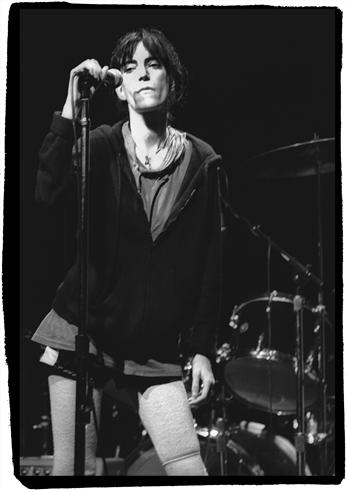
Patti Smith, New York, circa 1976. Photo © Stephanie Chernikowski.

Punk, Politics, and the 1980s

Rock music historians and critics generally agree that punk was a reaction to the gaudiness of 1970s stadium rock and the creation of rock royalty like the Rolling Stones and Led Zeppelin.

By Ron Jacobs / The Rag Blog / January 7, 2013

My introduction to punk rock shows was less than auspicious. I did see the Clash on their first U.S. tour in 1977, yet the venue for that show was a rock festival in Monterey that attempted to bring together punk, reggae, and psychedelic music. The endeavor failed financially but did afford those who attended with the opportunity to hear plenty of great music: Country Joe and the Fish, Peter Tosh, The Clash, just to name a few.

It’s not that the festival was a bad idea. It was just ahead of its time.

Anyhow, back to that first genuine punk show experience. The Stranglers were playing at a UC Berkeley housing coop down the street from where I lived. I think The Mutants opened. During the opening set I somehow ended up in the mosh pit and got hit pretty hard. I moved away and my spot was taken over by a couple friends who had transitioned from hippie to punk a few months earlier. They beat the shit out of some guy they knew from previous mosh pits who hated hippies.

That was the consciousness back then. Hippies were supposed to hate punks and punks were supposed to hate hippies. Even though we got harassed by the same cops for different reasons (punks didn’t smoke much weed), we were supposed to hate each other.

For those of us who lived on the street — sharing seedy hotel rooms and couches, squatting in buildings, and just living in general — we couldn’t afford the same media-induced feud the suburban members of either subculture could.

Fortunately, that quarrel went the way of most media-induced music feuds; Beatles vs. the Stones, soul vs. rock, mod vs. rocker, etc. The result, at least in the Bay Area, was an understanding that the music was bigger than any particular person or subculture.

Punk could not have existed without what came before it in rock and roll. Likewise, anything that came later would be influenced by the attitude and the musical qualities that punk brought to the dance floor. This understanding came about in no small part because of two bands in particular. Those bands were the Patti Smith Group and The Clash.

Patti Smith was already a punk demigod by 1980 — and this in a culture that destroyed gods and goddesses. Her legend was greater than her music and her charisma outdid them both. Politically, she stood with the anarchism of the Yippies. Artistically, she wrote verses that brought to mind the Song of Solomon, Howl, The Mask of Anarchy and more.

All of that was matched to a three-chord progression, a voice that borrowed from Bob Dylan, Janis Joplin, and Robert Plant, and a swagger that put Mick Jagger to shame. In addition, she just plain emanated an attitude that said fuck you — an essential part of rock and crucial to the format known as punk.

I have to share a couple experiences involving Patti Smith. I was a college freshman in 1973 in New York City. Somehow — not because I was that hip — I ended up at a poetry reading in St. Mark’s Church. Patti Smith was one of the poets. She took the stage with a guitarist and a drummer in between a couple other poets and proceeded to blow my mind with a rendition of her song Piss Factory.

Once I saw that, I can honestly say my definition of rock expanded beyond the boundaries that had already been stretched innumerable times. I wanted a recording and I wanted to see and hear her more. Unfortunately, I would have to wait until 1975 when she released her first album on Arista. Titled Horses, it changed the meaning of rock.

Like Bob Dylan’s Highway 61 Revisited, Jimi Hendrix’s Electric Ladyland, or the Beatles’ Revolver (to name a mere three of rock’s boundary-expanding recordings), after one listened to Horses, everything else would be compared to that experience.

I saw her at Georgetown University’s McDonough Arena a few months later. She writhed onstage in a worn t-shirt and kept the crowd on its feet for the entire show. I don’t know if it was punk, but it was definitely rock and roll. (The Patti Smith Group would be one of those bands that, despite being originally labeled as punk, would transcend that label and, like The Clash, ultimately become a great rock band.)
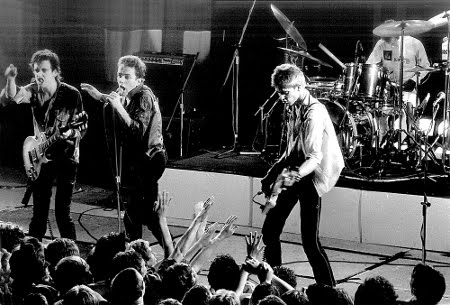
The Clash, Live at the Paladium, September 21, 1979. Image from The Soundboard.

Then there is The Clash. Their music was always overtly political. Their version of  “Police on Our Backs” was the theme song for those of us who hung out on Telegraph Avenue in Berkeley and drank beer in People’s Park. Their working class anger against the system that intentionally ignored youth without money and used the police to keep them on the run hit a chord with anyone the police harassed. Plus, just like Patti Smith, they knew how to create good rock and roll. I wrote in a piece published a year or two ago about the album London Calling:

A few days before Christmas, while the sounds of Pink Floyd’s The Wall reverberated in our apartment on Berkeley’s Dwight Way from the building next door a friend walked in the door with a double album from the Clash titled London Calling. This album was not only the best punk album of the year. It was the best album, period. From the first cut called “London Calling” to the final cut “Train In Vain,” this work had everything a rock album could hope to contain. Rebellion, reggae, and straight-out rock and roll. Armageddon, the street, and the essence of love. When our friends who didn’t really like punk took a listen to this album, it changed their minds.

In other words, The Clash kicked ass. They celebrated revolution and did what they could to foment one of their own. Their concerts were an anarchic celebration of the passion and power rock and roll can create.

Anyhow, back to San Francisco. The band that set the tone for all San Francisco punkers was the Dead Kennedys. In a town filled with great music and plenty of places to enjoy it in, DK shows were among the best. Raucous, political and crowded.

Their first single was called California Uber Alles. A satirical poke at the bullshit liberalism of then Governor Jerry Brown and his sophistry, the song laid bare the viciousness that lay behind the smiley face of California’s pseudo-hip establishment. In the remake of the song a year later, the title was changed to “We’ve Got a Bigger Problem Now.” This version revised the lyrics to fit the new political mood in the United States after Ronald Reagan’s election to the White House.

The transition from gentle smiley-face fascism to the great communicator channeling Josef Goebbel’s lessons in propaganda meant the shit was about to hit the fan, especially for those not with the program. The Dead Kennedys were definitely a necessary part of the soundtrack.

Indeed, 1984 brought the Democratic Party to San Francisco for their quadrennial convention. This was the year that Jesse Jackson made a serious run at the nomination, running on a fairly radical platform. His campaign was knocked off its pace when Zionists in the party leaked evidence that Jackson had once called New York “Hymietown.” The Zionists were afraid of Jackson’s Palestinian-friendly statements and wanted him out of the running. The ticket ended up being composed of the washed-up liberal Walter Mondale and the first female on a national ticket, Geraldine Ferraro.

This convention also saw the first use of “free speech zones” created for public protest. That’s where the Dead Kennedys came in. On the third or fourth day of the convention, a number of anti-authoritarian groups staged a series of sit-ins and street blockades to protest the complicity between banks, the war industry, the Democratic Party, and the ongoing low-intensity conflicts taking place in Central America, Afghanistan, and elsewhere around the world.

The San Francisco police and other law enforcement agencies, who had been hoping for some action all week long, let loose and busted a few hundred people. While the cops finished up their operation, the Dead Kennedys played a set in the free speech zone. Someone notified them about the arrests and they rallied the crowd to march to the city jail after the show.

Before that, however, a small number of Nazi skinheads jumped on the stage and tried to attack the band. Without missing a beat, Jello Biafra and the band jumped into their song “Nazi Punks Fuck Off.” Soon, the members of the mosh pit were onstage and dealing with the Nazi skinheads, who left rather quickly.
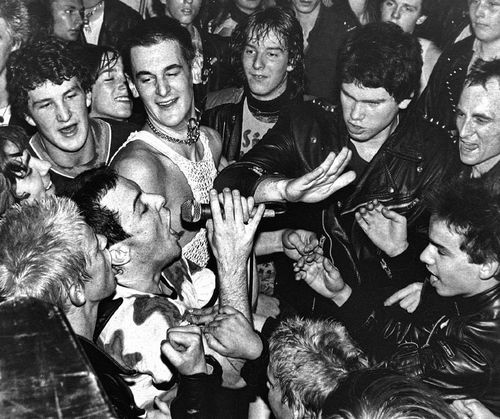
Dead Kennedys. Image from last.fm.

The best punk was political punk. Whether the lyrics themselves were political or the musicians involved made clear their political positions via statements they made or by rallies they played at. Some musicians actually formed organizations to promote certain agendas. Perhaps the best known of these was Rock Against Racism (RAR).

Originating in Britain as a reaction to the growth in racist Oi bands and other such elements in the punk scene, and various racist attacks and statements by some public figures attacking immigrants, this movement eventually came to the United States, which has its own well-documented problems with racism. In the U.S., RAR teamed up with the Yippies in some parts of the country (mostly urban) to put on shows and organize rallies. Mark Huddle describes it like this in the March 10, 2009, issue of Verbicide:

In the U.S., Rock Against Racism was always a decidedly local affair — a true grassroots “movement.” There were dozens of benefits across the country but no national organization. Anyone who hated the violence and mindless hatred evinced by too many young kids floating around the margins of punk could organize a show; shows which almost always became sites for political networking and community building. From Anti-Racist Action in Minneapolis to the Ska Against Racism tours in the ‘90s, the punk scene became a laboratory for those who understood that every once in a while you have to police your space.

By this time, the Yippies had moved far away from their hippie roots (although a number of them still liked to smoke weed and eat acid) and were well into showcasing politically charged punk bands and working with punk street kids. The first indication of this shift could be seen in the Smoke-Ins on July 4th in DC in the late 1970s and in the comparable Pot Parades in Manhattan.

Their newspaper, Yipster Times (later Overthrow), featured a manifesto for freedom and free speech written by Patti Smith and titled “you can’t say fuck in radio free America.” This was published after a New York FM radio station refused to air a concert of hers precisely because she wanted to say “fuck.”

Rock music historians and critics generally agree that punk was a reaction to the gaudiness of 1970s stadium rock and the creation of rock royalty like the Rolling Stones and Led Zeppelin. In San Francisco, it was also understood to be a reaction to the longhair drug culture represented by the Grateful Dead. This didn’t mean that punkers didn’t do drugs, but that their consumption was not a requirement.

Other musical reasons for punk would most certainly be the 1970s popularity of bands like Journey, Kansas, and Foreigner that played a particular inconsequential type of rock that strayed into schlock all too often. Then there was disco; an extension of the music known as funk (which had its own roots and street credibility), disco quickly became the equivalent to the 1960s music known as bubblegum.

In other words, it was easy to ignore but still catchy with about as much substance as the inside of a ping pong ball. From its roots in the urban black ghetto, disco became the symbol of the rich cocaine-fueled subculture symbolized best by Manhattan’s Studio 54. The BeeGees were the masters of this beat in its worst incarnations. Vapidity defined.

I like to see punk as a phenomenon as old as rock and roll and kind of like street basketball. Instead of the extravagant overpriced stages of the Rolling Stones or Pink Floyd, punks brought their instruments to whatever dive they could get into. There were no soaring scales up and down the fretboard like Jimmy Page and no special orders for green M&Ms in the dressing room.

Like the garage bands of yore, punk rockers were without frills. Even the music was stripped down; sometimes it wasn’t even music except in a John Cage sort of way. Just like low-income street kids could afford to shoot hoops even though they had no cash, so could street kids start up a punk band. Plus, it kept them out of trouble.

I was never a punk rocker. My subcultural roots went back to the days when hippies became yippies and freaks. In other words, I was too political and angry to be a hippie, but liked their styles and their music. Yet, as soon as I heard the first few bars of the Sex Pistols’ “Anarchy in the UK,” I knew the times were a changin’.

My eardrums were battered by many a punk band in the late 1970s and early 1980s. I had lots of fun and rarely stood still at those shows. Punkers were some of the most energetic organizers I knew when we fought against gentrification and racism in the Bay Area. They were also, along with various older street people, the fiercest fighters against the police when the shit did hit the fan. Plus, punk beat the hell out of the fucking Bee Gees.

A version of this article appeared in Red Wedge Magazine.

[Rag Blog contributor Ron Jacobs is the author of The Way The Wind Blew: A History of the Weather Underground. He recently released a collection of essays and musings titled Tripping Through the American Night. His latest novel, The Co-Conspirator’s Tale, is published by Fomite. His first novel, Short Order Frame Up, is published by Mainstay Press. Ron Jacobs can be reached at ronj1955@gmail.com. Find more articles by Ron Jacobs on The Rag Blog.]
The Rag Blog

Posted in Rag Bloggers | Tagged , , , , , , | 1 Comment

The Hemorrhaging of America:
From Charles Whitman in Austin to Adam Lanza in Newton

By Jonah Raskin / The Rag Blog /

Shortly after last Thanksgiving, I was asked to write a piece about 2012, the year just ending. I got as far as the title and the first sentence, then gave up because I thought I was wandering too far into the fields of metaphor for my own good and for the good of the essay itself.

The title I gave the unborn essay was “The Hemorrhaging of America.” I thought of it when I read the news that Adam Lanza, a gunman in Connecticut, opened fire and killed 20 elementary school children, plus eight adults including his mother, Nancy Lanza, who taught at Sandy Hook Elementary School. Lanza had killed his mother before he took her car and drove to the school, where according to reporters he choose his victims and killed them “with brutal efficiency.”

According to reports from rural Newton, Connecticut, Mrs. Lanza owned the weapons — semi-automatic pistols and semiautomatic rifles — that her son used to slaughter 28 people, most of them between the ages of five and ten. The school psychiatrist and the school principal, who buzzed Mr. Lanza into the building because she recognized him, were also killed. Many of the children were killed at point-blank range, “execution style.” The whole event reads like a symbolic tale for Christmas: a killer named Adam and a town named Newtown — how more American could any story be?

In the wake of the massacre it’s hard to know what to say that might be helpful, though I can think of a lot of things to say including, “I knew it was going to happen,” “I called it,” “A nation that lives by the gun dies by the gun,” and “America is as violent as cherry pie.”

It’s hard to avoid clichés such as that last one, attributed to H. Rap Brown, a black militant in the 1960s, now serving a life sentence for shooting two Fulton County, African-American sheriff’s deputies, one of whom died. For a time, Brown, who was born Hubert Gerold Brown and who wrote an autobiography entitled Die Nigger Die!, wanted a violent revolution in America.

Like many would-be violent revolutionaries, Brown found that the State was a lot more powerful than he realized.

The comments that I considered are, I know, clichés, but that doesn’t discount them. Clichés contain kernels of truth. I did sense intuitively than there would soon be another out-burst of violence. One doesn’t have to be a psychic or clairvoyant to know that a killer is capable of striking any day and anywhere. Guns do kill people, though loyal National Rifle Association (NRA) members insist, “Guns don’t kill people, people kill people.”

As long as Americans can buy guns legally and fairly easily over the counter, Americans will kill other Americans and kill themselves, too. Like many other assailants, Mr. Lanza turned a weapon on himself and pulled the trigger. News stories reported that he “committed suicide.” I would say that he added his own body to the pile of corpses. The same stories reported that the authorities had no idea what Mr. Lanza’s motives might have been.

Too bad the school psychiatrist isn’t alive and can’t help to identify the killer’s motives. I know that’s a cruel, sardonic comment but I couldn’t resist making it. In the wake of the tragedy, tears are appropriate, but so is the cold light of reason.

It seems to me that we don’t really need psychiatrists. We might need sociologists and historians who can illuminate the social and historical roots of the slaughter in Newtown, Connecticut, not far from the site where English colonists slaughtered hundreds of Indian men, women, and children in a bloodbath in 1637, almost 400 years ago. The American novelist, James Fenimore Cooper wrote in his 1827 novel The Last of the Mohicans that the “soil” itself was “fattened with human blood.”

American soil has been fattened with human blood from the very beginning. American playgrounds, classrooms, and college campuses have been fattened with blood, too. The first slaughter on a college campus that I know of, took place in and around the Tower at the University of Texas on August 1, 1966, when Charles Whitman, an engineering student there and a former U.S. Marine, opened fire, killing 13 people, including an unborn child, and wounding 32 others.

I went to the tower not long ago and surveyed the scene. It had been closed for years and was reopened to visitors such as myself and the woman who accompanied me and who had been a student at UT, where Whitman’s name is still remembered. The UT Tower still haunts me.

Whitman’s name was not mentioned in the news stories that I read about Adam Lanza, though Whitman and Lanza belong together in the violent annals of American history. I’m afraid that we don’t want to remember Whitman and others like him — all men, apparently, though not all white men. I’m also afraid that if we kill our own memories of our violent past we will also terminate our future, much as Whitman ended the future of the unborn child he murdered when he shot the mother.

Ending the 400-plus years of violence on American soil will not be easily achieved and it will not happen overnight. Americans are too devoted to violence and to guns to break those addictions in one sudden change of heart At the least, however, what we might now do, immediately, is act to abolish all weapons in every school, college, and university in the U.S., and to make it impossible to bring weapons to any campus or school.

Can we at least make schools safe grounds for students, parents, and teachers? Can we please take guns away from sons such as Adam Lanza and from mothers such as Nancy Lanza, and can we begin to see that violence is a deep-seated American family value that very much needs to be cleansed nonviolently and as humane possible.

[Jonah Raskin, a frequent contributor to The Rag Blog, is the author of For the Hell of It: The Life and Times of Abbie Hoffman, American Scream: Allen Ginsberg’s “Howl” and the Making of the Beat Generation, and the editor of The Radical Jack London. Read more articles by Jonah Raskin on The Rag Blog.]

Type rest of the post here

Source /

The Rag Blog

Posted in RagBlog | Leave a comment

Type your summary here

Type rest of the post here

Source /

The Rag Blog

Posted in RagBlog | Leave a comment

Alan Waldman: ‘Rumpole of the Bailey’ is Superior Legal Britcom

Waldman’s film and TV
treasures you may have missed:

Rumpole of the Bailey, a classic British TV legal series, delighted 95% of viewers.

By Alan Waldman | The Rag Blog | December 28, 2012


[In his weekly column, Alan Waldman reviews some of his favorite films and TV series that readers may have missed, including TV dramas, mysteries and comedies from Canada, England, Ireland and Scotland. Most are available on DVD and/or Netflix, and some episodes are on YouTube.]

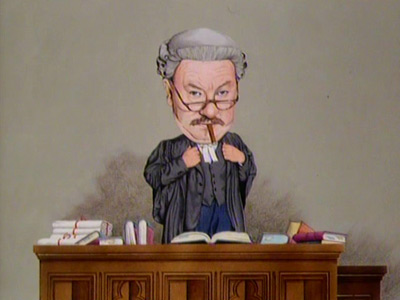
Rumpole of the Bailey was a much-beloved comic English legal drama, starring the superb Leo McKern and marvelously written by creator John Mortimer. It ran for 43 episodes in seven seasons, between 1978 and 1992 (although it is set between 1967 and 1992).

Horace Rumpole is a clever, cynical, larger-than-life barrister who defends all comers but refuses to plead guilty — or to prosecute — at central London’s legendary criminal court, the Old Bailey. He is dominated by his steamship of a wife, Hilda (played first by Peggy Thorpe-Bates and later by Marion Mathie), whom he refers to as “She Who Must Be Obeyed.” (Tee shirts bearing this logo are worn by some American wives.)

After work, Rumpole repairs to Pomeroy’s Wine Bar, where he quaffs a vin rouge he calls “Chateau Thames Embankment.”

Mortimer was an Old Bailey barrister for 36 years, defending accused criminals and often fighting against famous obscenity prosecutions. He was also an excellent screenwriter (1965’s Bunny Lake is Missing and 1999’s Tea With Mussolini) and playwright (whose touching, autobiographical A Voyage Round My Father, televised in 1984, starred a magnificent Laurence Olivier as Mortimer’s blind, opinionated father).

The series was widely acclaimed and was nominated for 10 top British and American Awards, including three “Best Actor” BAFTAs for McKern, an Edgar and a BAFTA for Mortimer, and two “Best Miniseries” Emmys. More than 94.5% of viewers rating it at imdb.com gave it thumbs-up, and 47.2% considered it 10 out of 10. Everyone I know who has ever seen Rumpole declares that they loved it, as my three wives and I did.

All seven Rumpole seasons are available on DVD and Netflix, and many episodes are on YouTube. Rumpole also stars in many charming novels and short stories by Mortimer and a great number of British radio programs.

[Oregon writer and Houston native Alan Waldman holds a B.A. in theater arts from Brandeis University and has worked as an editor at The Hollywood Reporter and Honolulu magazine. Read more of Alan Waldman’s articles on The Rag Blog.]

The Rag Blog

Posted in Rag Bloggers | Tagged , , , , , , | 1 Comment

Paul Krassner : My Tweets of 2012

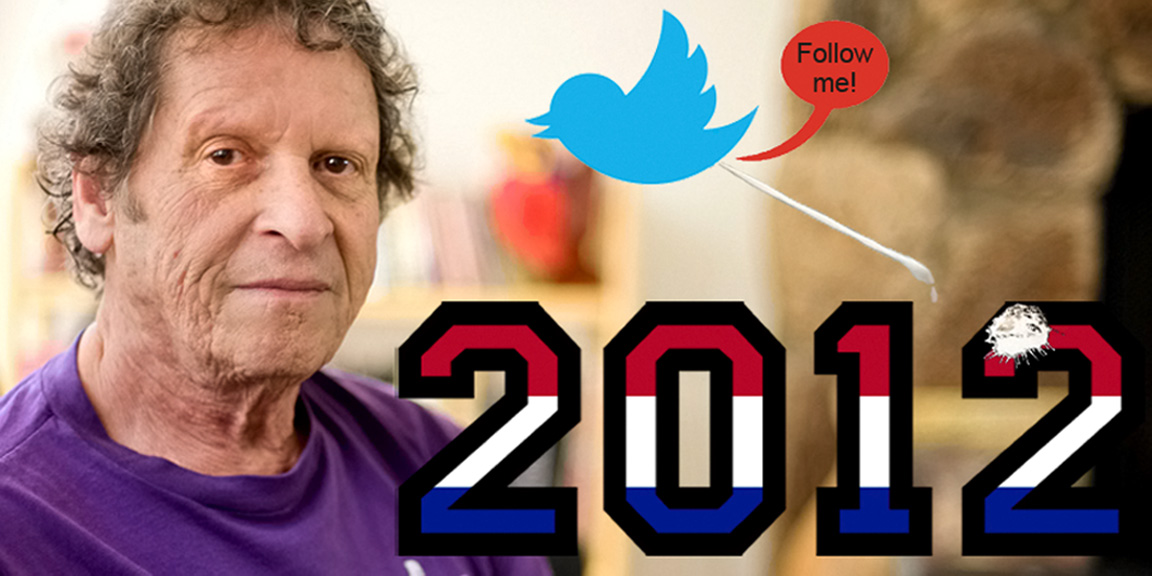
Paul Krassner tweets @ZenBastard. Graphic by James Retherford / The Rag Blog.

Paul Krassner’s Tweets of 2012

By Paul Krassner | The Rag Blog | December 27, 2012

This is my first tweet. I have Writer’s Block. I mean Twitter’s Block. I’m waiting for a cure to be developed.

A minimalist summation of American culture in the Los Angeles Times on Conan O’Brien: “The Masturbating Bear will remain the intellectual property of NBC.”

Perhaps Toyota should borrow a slogan from McDonalds: “You deserve a brake today.”

Texting while having sex? Two thumbs up.

Double standard: Charles Rangel pays restitution for unpaid taxes; Wesley Snipes is sentenced to a few years behind bars for a similar response.

Excuse me, I have to take a Wiki-leak.

Join me in signing a letter to stop the inhumane detention of Private Bradley Manning.

I saw the movie The King’s Speech and was disappointed that it didn’t end with Porky Pig saying, “Th-th-the-that’s all, folks!”

Steve Jobs’ legacy is a form of alchemy — he transformed planned obsolescence into a virtue.

Poor Rick Santorum, he’s afraid that if Roe vs. Wade isn’t overturned by the Supreme Court, there will an epidemic of recreational abortions.

I stopped channeling Lenny Bruce the day he reminded me, “C’mon, Paul, you know you don’t believe in that shit.”

Today marks the 15th anniversary of Allen Ginsberg’s death; he once told me he smokes not to get high, but rather because he likes to cough.

I went to the dentist today, and the hygienist gave me a choice of X-rays or a pat-down.

Summing up the presidential campaign: It’a battle between “Keep the government out of my Medicare” and “Keep the government out of my vagina.”

I covered the Dan White trial and coined “the Twinkie defense.”

The world desperately needs a campaign beginning with Kickstarter to raise funds to build an Iron Dome for the Palestinians.

Plan B has been aborted.

I voted for Barack Obama again, and yet now, although he wept for the loss of 20 kids, he never wept for the 178 kids killed by U.S. drones in Yemen and Pakistan.

The digitally colored edition of the infamous Disneyland Memorial Orgy poster by Mad magazine artist Wally Wood is available only at paulkrassner.com.

Have a Merry War on Christmas and a Happy, Snappy and Fulfilling New Year.

[Paul Krassner edited The Realist, America’s premier satirical rag and was an original Yippie. Krassner’s latest book is an expanded and updated edition of his autobiography, Confessions of a Raving, Unconfined Nut: Misadventures in the Counterculture, available at paulkrassner.com. Read more articles by Paul Krassner on The Rag Blog.]

The Rag Blog

Posted in Rag Bloggers | Tagged , , , | Leave a comment

Bob Feldman : Race, Unions, and the Booming Texas Oil Business, 1920-1930

Burkburnett oil field, Burkburnett, Texas, circa 1920. Image from Texas in the 1920s.

The hidden history of Texas

Part 10: 1920-1930/2 — Race, exploitation of workers, and the booming oil business

By Bob Feldman | The Rag Blog | December 27, 2012

[This is the second section of Part 10 of Bob Feldman’s Rag Blog series on the hidden history of Texas.]

In 1920 over 741,000 African-Americans lived in Texas. But given the level of KKK influence in Texas and the limited political and economic opportunities that white supremacist and institutionally racist Texas society generally provided most African-Americans between 1920 and 1930, “a good many African-Americans,” not surprisingly, “left the state in the 1920s,” according to Randolph Campbell’s Gone To Texas.

But between 1920 and 1930 the number of Latinos in Texas of Mexican descent increased from over 251,000 to nearly 684,000, and by 1930, 10 percent of Austin’s population was now of Mexican descent.

Although the number of African-Americans who worked for wages as farm laborers in Texas decreased from 75,000 to 41,000 between 1910 and 1930 (due, in part, to the increasing mechanization of agricultural work), 20,000 African-Americans in Texas still owned their own farms (on which most grew cotton) in 1930.

Yet between 1900 and 1930, the number of African-Americans in Texas who were now just tenant farmers increased from 45,000 to 65,000; and 70 percent of all African-American farmers in Texas were just tenant farmers by 1930. In addition, about 64 percent of African-Americans who worked for wages were at this time employed in non-agricultural work in Texas, mostly as servants or unskilled laborers.

Most workers in Texas — whether white, African-American, or of Mexican descent — who attempted to organize themselves into unions were apparently exploited or repressed between 1920 and 1930 by the white corporate power structure in Texas. As F. Ray Marshall’s Labor in the South recalled:

The anti-union campaign was particularly vigorous in Texas. In San Antonio, for example, the chamber of commerce ran a free employment agency which placed over 2,000 non-union workers in 1920, by which time it had become almost impossible for union carpenters to get jobs. Mexican workers were brought in by the thousands, and special schools were set up to train non-union workers.

In San Antonio, the program defeated union electricians, carpenters, planning mill operators, butchers, printers and others. Beaumont, which had been a strong union town, became almost “open shop” after the anti-union attacks led by a member of the National Metal Trades Association. The anti-union forces in Dallas imported 1,500 strikebreakers, and even the printers were forced to accept non-union conditions. The Southwest Open Shop Association opened a trade school at Dallas to supply workers and persuaded the governor to send militia to Galveston to break the 1920 longshoremen’s strike.

But although “the ILA locals at Galveston surrendered their chapter in 1922, and company union was chartered in 1924” (and miners in Texas also “lost a 1926 strike against a 25 percent wage cut, and the United Mine Workers [then] disappeared” from Texas), “the open-shop movement” during the Roaring Twenties “was not completely successful, however, because the unions at Fort Worth and Houston were able to survive,” according to the same book.

Although most Texas farmers and workers in Texas did not enjoy much economic prosperity between 1920 and 1930, by 1928, “Texas for the first time led all other states in oil production with… nearly 20 percent of the total for the entire world,” according to Gone To Texas.

Besides producing super-profits for out-of-state, eastern corporate interests like the Mellon family and for some local Texas businessmen, politicians, and investors, Texas’s booming oil industry in the 1920s also began to produce super-profits for the “non-profit” University of Texas in Austin (a university that still discriminated against African-American people in the 1920s). As the same book observed:

Development of the Permian Basin… made the University of Texas… rich. The two million acres of land donated to the Permanent University Fund [PUF] in the 19th century had generated little income… But then in 1923 drillers brought in the Santa Rita wells on university lands in Reagan County…

According to David Humphrey’s Austin: An Illustrated History, “the income from the Permanent University Fund… in 1925… amounted to $225,000, gained largely from grazing leases on University of Texas’s 2 million acres in West Texas;” but “by 1927 revenues from oil leases on University of Texas’s West Texas lands poured into the Permanent University Fund at a rate of almost a quarter of a million dollars a month.”

Yet, although Austin’s “non-profit” University of Texas began to accumulate a lot of surplus wealth from its Texas oil industry property by 1927, in 1930 about 25 percent of Austin homes still had no indoor toilets, tubs, or showers, according to the same book.

[Bob Feldman is an East Coast-based writer-activist and a former member of the Columbia SDS Steering Committee of the late 1960s. Read more articles by Bob Feldman on The Rag Blog.]

The Rag Blog

Posted in Rag Bloggers | Tagged , , , , , | Leave a comment

Jack A. Smith : What’s Behind America’s Gun Violence?

Image from Black Youth Project.

Remember the children…
What’s behind America’s gun violence?

In recent decades — despite the fact that last year there were over 11,000 murders by firearms in the U.S. and another 20,000 gun deaths from accidents and suicide — the great majority of American politicians have been too gutless to fight for tougher laws.

By Jack A. Smith | The Rag Blog | December 20, 2012

There is more than the act of one individual involved in the mass gun killings that take place in America — the most recent being the massacre of 20 young children and seven school workers at the Sandy Hook Elementary School in Newtown, Conn., December 14.

The main culprit, of course, is the late killer, Adam Lanza, 20. But such events occur within a context of shared responsibility for the unparalleled number of mass and individual shooting deaths that take place in the United States every year. This includes the political system and politicians, the National Rifle Association and other gun lobbies, and federal, state and local governments. Each has played an indirect role in the latest and earlier slaughters.

Of these other responsible parties, one is our political system that refuses to strengthen absurdly deficient federal and state restrictions on the possession of various types of arms. Another is the irresponsible politicians who make it relatively easy for criminals, people with mental problems, and those who are unfit to possess weapons for other reasons to accumulate a private arsenal.

In recent decades — despite the fact that last year there were over 11,000 murders by firearms in the U.S. and another 20,000 gun deaths from accidents and suicide, not to mention many more injuries — the great majority of American politicians have been too gutless to fight for tougher laws.

President Obama was moved to tears in announcing the deaths of 6- and 7-year old children in Newtown, and said he might take “meaningful action” of an undefined nature. But Obama is risk averse and has shown a disinclination to tangle with the pro-gun lobbies throughout his first term — so there’s a chance all we’ll get is tears and rhetoric even though 80% of the American people want gun owners to secure police permits, and nearly 90% would require background checks on all gun sales.

On the other hand, the fact that 20 youngsters were massacred has shocked the nation to the extent that it may be politically advantageous for the White House and Congress to pass token legislation. Most conservative Republicans will do whatever is possible to block progress on gun control, but they may be less obstructive if a proposed law is weak and limited. No major changes are anticipated.

At one time, the Democratic presidents were willing to support gun control measures, in contrast to the recalcitrant rightists, but that’s changed in recent years. President Lyndon Johnson in the 1960s was a strong advocate, seeking passage of national legislation demanding that firearms owners obtain licenses registering all guns and rifles. It failed.

After a mass shooting in the early 1990s President Bill Clinton fought for and won two gun control laws. The Democrats were quiet during George W. Bush’s eight years and silent during the last four.

Next in responsibility for the murders is the National Rifle Association and other gun owner or industry lobbies such as the Gun Owners of America, which sports an executive director, Larry Pratt, who actually made this comment soon after the school killings:

Gun control supporters have the blood of little children on their hands. Federal and state laws combined to insure that no teacher, no administrator, no adult had a gun at the Newtown school where the children were murdered. This tragedy underscores the urgency of getting rid of gun bans in school zones.

The well-funded and fanatically supported gun lobbies greatly influence the politicians through payoffs and the threat of uncompromising electoral opposition. In order to fulfill its function as the propaganda instrument of the firearms owners and industry, the NRA argues disingenuously that the slightest regulation will eventually lead to banning of all guns for civilians, including those for home defense, hunting, and target shooting.

A large percentage of Americans appear to believe the lobby’s extremist propaganda and oppose efforts to strengthen gun laws. They seem to think a constitutional amendment provides them the right to convert society into a modern version of the Wild West, where we can “stand our ground” with bullets even against the innocent and unarmed if we claim to have been threatened.

In this regard, writes Zack Beauchamp Dec. 14 in AlterNet:

The Second Amendment prohibits strict gun control. While the Supreme Court ruled in D.C. v. Heller that bans on handgun ownership were unconstitutional, the ruling gives the state and federal governments a great deal of latitude to regulate that gun ownership as they choose. As the U.S. Second Court of Appeals put it in a recent ruling upholding a New York regulation, “The state’s ability to regulate firearms and, for that matter, conduct, is qualitatively different in public than in the home.” Heller reinforces this view. In striking D.C.’s handgun ban, the Court stressed that banning usable handguns in the home is a “policy choice” that is “off the table,” but that a variety of other regulatory options remain available, including categorical bans on firearm possession in certain public locations.

The federal government, too, must assume responsibility for creating a national culture of guns and violence that leads to continuing mass murders and individual killings. They averaged 30 a month last year. For every 100,000 residents, the U.S. averages five murders. In England it’s 1.2 murders; in Japan it’s 0.5.

The U.S., working with the arms industry, is the biggest seller of weapons worldwide, mostly to foreign militaries. It also entertains the greatest military arms budget in global history. And by its glorification of the military and of war Washington has contributed mightily to the sense that we are a gun-slinging people, at home as well as abroad, on Main Street USA as well as al Rasheed Street Baghdad.

America is the most violent country of all the advanced industrialized nations in the Organization for Economic Co-operation and Development (OECD). From slavery to the displacement and annihilation of the original peoples in order to seize the entire continent, to modern day wars, regime changes, and torture overseas, “violence is as American as cherry pie,” as H. Rap Brown once reminded us.

On July 30, Mother Jones magazine informed its readers that, in the U.S. during the last 30 years, there “have been at least 62 mass murders carried out with firearms across the country, with the killings unfolding in 30 states from Massachusetts to Hawaii.” This includes 2012’s “horrific mass murder at a movie theater in Colorado on July 20, another at a Sikh temple in Wisconsin on August 5, another at a manufacturer in Minneapolis on September 27 — and now the unthinkable nightmare at a Connecticut elementary school.”

State and local governments must assume responsibility as well for contributing toward a violent and gun-loving society. Considerable moves toward militarizing the police have taken place in recent decades as a result of the exaggerated drug wars and hyped-up terrorism wars. In the 20 years leading up to 2007 (the latest figures), special weapons and tactics teams (SWAT) have increased 1,500 percent.

Police brutality is a frequent reality — mostly but not exclusively in urban areas and at political, worker, or popular protests and occupations. We’ve handed our police departments a huge array of violent instruments that are, to say the least, disproportionate to most situations. Here is some of their equipment:

For elite SWAT teams in their Darth Vader uniforms: submachine guns, automatic carbines or rifles, semiautomatic combat shotguns, sniper rifles, gas, smoke and flashbang grenades. For regular police: handguns, concealable off-duty handguns, shotguns and/or semiautomatic rifles, tactical batons, nightsticks, electroshock guns (Tasers), mace pepper spray, tear-gas. beanbag shotgun rounds, body armor, and loud noise devices. Beginning to arrive: aerial surveillance drones, soon to be widespread and weaponized.

In combination — weak gun laws and a compliant political system fearful of powerful lobbies; a national history of violence, militarism, and frequent aggressive wars against smaller nations; and the gradual militarization of police — these are factors that have significantly helped create the gun culture in the United States.

It’s time to change all of this, but it’s not on the immediate horizon. Enhanced gun control, however, has a chance over the next several years. The great majority of Americans call for expanded gun control. Today, 40% of gun owners have not even been subjected to a background check. It should be everyone. Every gun owner should also have a license from whatever authority issues them. At present, trade shows and private sellers don’t need registration or license information. This must change. And it would be good if there was one overall national law instead of different state laws.

Obviously there should be a reduction in the number of guns in the U.S. The purchase of assault weapons, and automatics with large magazines should be banned, as should large private arsenals. There used to be a law regulating assault rifles but it expired. It was very weak with many loopholes and a new one should be much tougher. A number of people think assault rifles should be completely banned.

Some gun control advocates see no need for concealed handguns at all on the streets at all, much less efforts to allow them in schools, sporting events, bars and elsewhere.

The American people are not seeking to place impossible obstacles in the way of gun ownership. They want tighter regulation and licensing. Banning all guns except for those possessed by the military and the police will never pass, and shouldn’t for a number of reasons including the fact that political systems can and do go wrong. At times, an armed citizenry is most necessary.

There are a number of good gun control groups in the U.S., such as the well-known Brady Campaign to Prevent Gun Violence, but they are small with not much clout. It is time for the American people, especially the liberals, progressives, and the left, to unify in action on this issue and organize mass political and electoral activism for as long as it takes to vastly reduce gun violence in America.

Postscript: 

I’m sure we all agree with these lines from an editorial in The New York Times the day after the shooting in Newtown: “There is no crime greater than violence against children, no sorrow greater than that of a parent who has lost a child, especially in this horrible way.”

It is good to remember this in terms of all children, not just our own. According to the UN, a half-million children, many even younger than those at the Sandy Hook Elementary School, died as a result of Washington’s 1990-2003 sanctions against Iraq. We don’t have the child death figures from the wars in Afghanistan an Iraq but we do have some regarding Vietnam from various online sources:

  1. Ten percent of the child population of North Vietnam was killed, mainly by U.S. bombers. Another 400,000 suffered birth defects because of the U.S. Agent Orange defoliation campaign. Untold thousands continue to die to this day from accidentally detonating unexploded American land mines.
  2. According to American estimates (the Pepper Report) there have been 250,000 children killed, 750,000 wounded and invalided for life in a South Vietnam of 14,000,000 inhabitants. The great majority were killed by U.S. bombers, which decimated (allied) South Vietnam in efforts to destroy the liberation army and its many millions of southern supporters. More than 10,000 sorties by B-52s of the U.S. Strategic Air Command have been carried out over South and North Vietnam, each plane capable of dropping over 30 tons of bombs; that the number of bombs dropped monthly by American planes exceeds that dropped by U.S. planes in the European and Mediterranean theatres in the Second World War.
  3. On 27 September 1967 at 7:30 a.m., the day after classes reopened following the summer recess, while the children were happily bent over their first lessons, four U.S. jets, swooping in from the sea, fired rockets and dropped four CBUS (about 2,400 pellet bombs) on the first and second degree schools of Ha Fu (Ha Trung district of Thanh Hoa province) killing 33 pupils from eight to 12 years and wounding 30 more, including two teachers.

Remember the children — from Newtown to Vietnam!

[Jack A. Smith was editor of the Guardian — for decades the nation’s preeminent leftist newsweekly — that closed shop in 1992. Smith now edits the Hudson Valley Activist Newsletter. Read more articles by Jack A. Smith on The Rag Blog.]

The Rag Blog

Posted in Rag Bloggers | Tagged , , , , , , , | 2 Comments

RAG RADIO / Thorne Dreyer : Interviews with Author John H. Slate & Singer-Songwriter Barbara K

Author-archivist John H. Slate on Rag Radio, Friday, Dec. 14, 2012, in the studios of KOOP-FM in Austin, Texas. Photo by Carlos Lowry / The Rag Blog.

Rag Radio podcasts:
Lost Austin author John H. Slate
and singer-songwriter/activist Barbara K

By Rag Radio | The Rag Blog | December 20, 2012

Dalas City Archivist John H. Slate, the author of Lost Austin, was our guest on Rag Radio, Friday, December 7, 2012. Lost Austin — a recently published volume in the “Images of America” series — records some of the rich and unique history that shaped Austin’s special character.

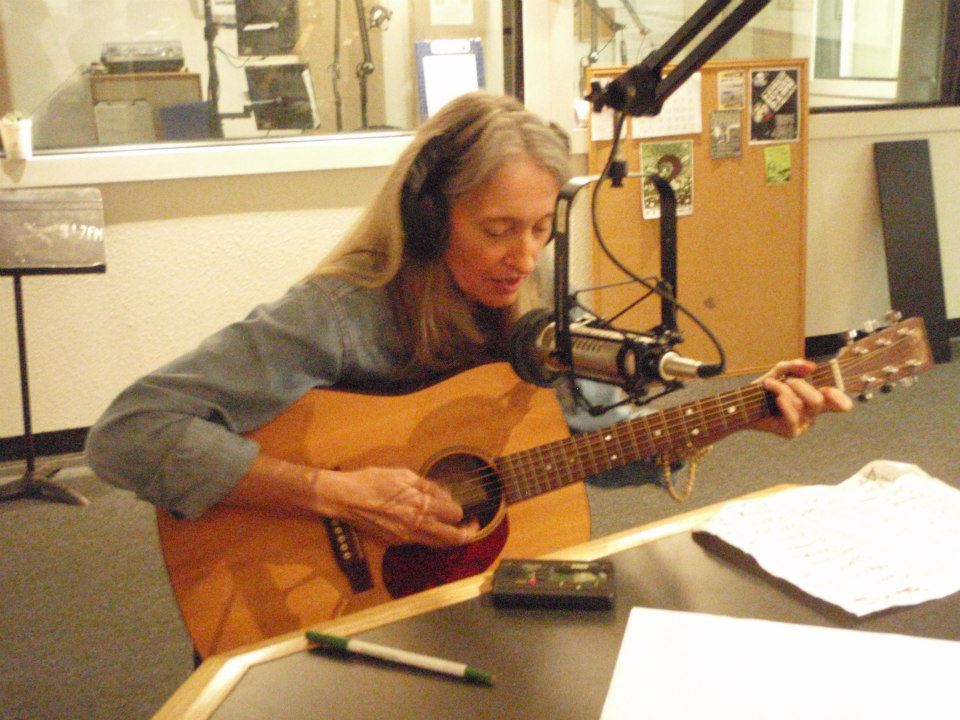
And on Friday, December 14, Singer-Songwriter Barbara K (Barbara Kooyman) — joined by New Orleans poet Don Paul — discussed her group, Artists for Media Diversity, and A4MD’s new “virtual album,” “Artists for Vieques.” Barbara also performed live, accompanied by Richard Bowden on violin and Gerald Torres on harmonica.

Listen to Thorne Dreyer’s interview with John Slate here:


And listen our show with Barbara K., Don Paul, et al here :


Rag Radio is a syndicated radio show produced in the studios of KOOP-FM, a cooperatively-run all-volunteer community radio station in Austin, Texas. It is broadcast live Fridays at 2 p.m. (CST) on KOOP, 91.7-FM in Austin, and streamed live on the Internet, and is rebroadcast on WFTE-FM in Mt. Cobb and Scranton, PA., on Sunday mornings at 10 (EST).

John H. Slate is the archivist for the City of Dallas, where he is responsible for historic city government records in the Dallas Municipal Archives. Slate’s recently-published book, Lost Austin, features images of iconic Austins institutions, most of which no longer exist.

On the show, John discusses the role of the archivist in the preservation of local history, the historical importance of alternative journalism, and — joined by our Carlos Lowry — reminisces on early Austin and especially its punk and other seminal music scenes. Interesting irony: John Slate appeared in Richard Linklater’s iconic indie film, Slacker, as a JFK conspiracy nut. Now, as Dallas municipal archivist, he coordinates the files on the Kennedy assassination.

Slate is a member of the Academy of Certified Archivists, has a BS from UT-Austin and a Masters in Library and Information Science, worked at the Center for American History at UT-Austin for 13 years, was curator/librarian at the Hertzberg Museum of the San Antonio Public Library, and was archivist at the Texas African American Photography Archive in Dallas.

He is past chair of the Government Records and the Visual Materials Sections of the Society of American Archivists and served as president of the Society of Southwest Archivists 2010-11. He is a member of the Texas State Library and Archives’ Historical Records Advisory Board.

Singer-songwriter Barbara K. performs on Rag Radio, Friday, Dec. 14, 2012. Photo by Tracey Schulz / Rag Radio.

Barbara K was half of the recording act Timbuk3, whose 1986 song, “The Future’s So Bright, I Gotta Wear Shades” was a big pop chart hit in the U.S. and England. The group traveled with Bob Dylan, Sting, and Jackson Browne, appeared on Saturday Night Live, and was nominated for a Grammy for Best New Artist in 1987. Barbara performs on the show with Austin violinist and activist, Richard Bowden, and Gerald Torres, who — in his other hat — holds the Bryant Smith Chair in Law at UT-Austin.

Barbara Kooyman helped create Artists for Media Diversity (A4MD), to protect freedom of speech through the funding of services for alternative non-commercial media sources, to foster independent media voices, and to promote musical and cultural diversity.

Artists for Vieques,” was produced by AM4D in collaboration with the Latino Public Radio Consortium and the National Federation of Community Broadcasters, and features recording artists from Puerto Rico and Austin — like Willie Nelson, Los Lonely Boys, and the popular Puerto Rican band Calle 13 — supporting the construction of WVQR-FM, which will be the only public radio station on the small Puerto Rican island of Viques that the U.S. Navy used as a bombing range and testing ground until protests forced its closure in 2003.

Don Paul is a New Orleans-based poet, recording artist, and activist, and the author of more than 20 books, including four novels and four books of poems. In 1971, at age 20, Don Paul was the youngest winner of a Stegner Fellowship in Creative Writing at Stanford University (other winners include Ken Kesey and Larry McMurtry).

Rag Radio features hour-long in-depth interviews and discussion about issues of progressive politics, culture, and history. The show, which has aired since September 2009, is produced in association with The Rag Blog, a progressive internet newsmagazine, and the New Journalism Project, a Texas 501(c)(3) nonprofit corporation.

The host and producer of Rag Radio is Rag Blog editor and long-time alternative journalist Thorne Dreyer, a pioneer of the Sixties underground press movement. Tracey Schulz is the show’s engineer and co-producer.

All Rag Radio shows are posted as podcasts and can be listened to at the Internet Archive.

Rag Radio can be contacted at ragradio@koop.org.

Coming up on Rag Radio:
THIS FRIDAY, December 21, 2012: Sixties rock legends, Powell St. John and Charlie Prichard.

The Rag Blog

Posted in RagBlog | Tagged , , , , , , , , | Leave a comment

Alan Waldman : Canada’s Two ‘Da Vinci’ Series Are Dramatic and Powerful

Waldman’s film and TV
treasures you may have missed:

Canadian genius writer-producer Chris Haddock hit the bullseye with excellent procedurals Da Vinci’s Inquest and Da Vinci’s City Hall.

By Alan Waldman | The Rag Blog | December 20, 2012


[In his weekly column, Alan Waldman reviews some of his favorite films and TV series that readers may have missed, including TV dramas, mysteries, and comedies from Canada, England, Ireland, and Scotland. Most are available on DVD and/or Netflix, and some episodes are on YouTube.]

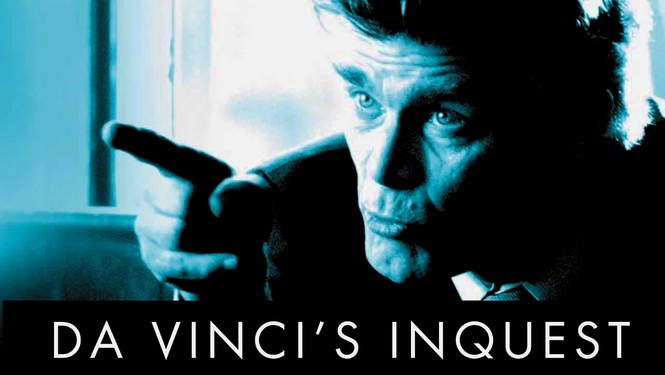
The terrific 1998-2005 Canadian TV series Da Vinci’s Inquest and its 2005-2006 spinoff Da Vinci’s City Hall were smart, gritty, honest, and eminently watchable. Largely based on actual Canadian criminal cases and social issues, both series were inspired by the career and exploits of Vancouver chief coroner-turned-mayor Larry Campbell. The title role, however, was written for actor Nicholas Campbell, who is just great in it.

Inquest ran for 91 episodes (seven seasons), and City Hall followed with 13 more. My wife Sharon and I saw most of them on U.S. TV and found them fascinating. Brilliant Canadian creator-writer-producer Chris Haddock followed the two fine Da Vinci series with the extraordinarily good, short-lived, drug- and corporate-crime series Intelligence, which I previously reviewed here.

The first three seasons of Inquest are available on Netflix, and episodes of both series can be seen on YouTube.

The two series were nominated for 61 major Canadian awards, winning 35. Inquest won the country’s top honor (the Gemini) for best dramatic series and best writing, for six of its seven seasons. The cast was very talented, and acting awards went to Campbell, Ian Tracey, Donnelly Rhoades, Venus Terzo, Duncan Fraser, Colin Cunningham, and Keegan Connor Tracy. More than 91.5% of the 602 viewers rating it at imdb.com gave it thumbs-up, and 41% rated it 10 out of 10.

Butting heads with bureaucracy in both series, Dominic Da Vinci strives to bring criminals to justice and mount needed social change. In City Hall, he locks horns with the police chief, while striving to implement controversial reforms, including a safe red-light district, help for the homeless, a safe injection site for addicts, and cross-training for Police and Fire & Rescue.

The first three episodes of Inquest dealt with a real case: the mysterious disappearance of numerous Vancouver prostitutes and the eventual arrest of a local pig farmer for multiple murder.

The drama of episodes is heightened by the evil of the villains and particularly that of a sly, crooked, and manipulative city cop. There is also much humor in character interactions, particularly in the running badinage between Da Vinci and an older cop played by Eugene Lipinski.

[Oregon writer and Houston native Alan Waldman holds a B.A. in theater arts from Brandeis University and has worked as an editor at The Hollywood Reporter and Honolulu magazine. Read more of Alan Waldman’s articles on The Rag Blog.]

The Rag Blog

Posted in Rag Bloggers | Tagged , , , , | Leave a comment

Howard Wooldridge : Rocky Mountain High / 2

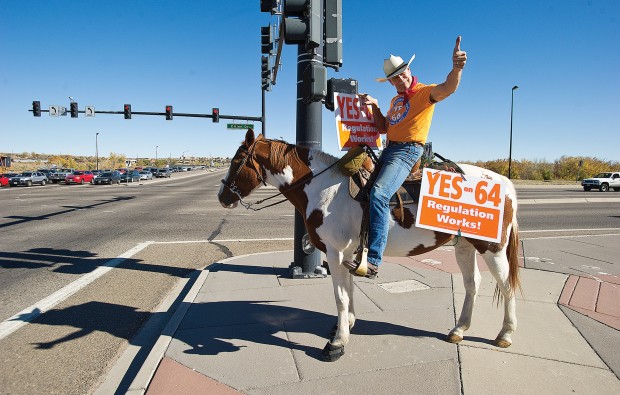
Howard Wooldridge and Misty in Pueblo, Colorado. Image from The Pueblo Chieftain.

Misty and me:
Fighting pot prohibition in Colorado, Part II

By Howard Wooldridge / The Rag Blog / December 20, 2012

Howard Wooldridge was Thorne Dreyer’s guest on Rag Radio, produced in the studios of KOOP 91.7-FM in Austin, Texas, on Friday, November 30, 2012. You can listen to the podcast here:

Howard “Cowboy” Wooldridge, the founder and director of Citizens Opposing Prohibition (COP), is a Texan since 1994 and a former Michigan police officer and detective. His experience in law enforcement taught him that arresting people for drug use is a faulty proposition: it doesn’t work and is a waste of police resources.

Wooldridge has become one of the most effective advocates in Washington, D.C., for ending marijuana prohibition and the “war on drugs.” Howard — with his horse (and “partner in politics”) Misty — took part in the successful Colorado campaign in support of Amendment 64, to legalize cannabis for recreational and industrial purposes there.

This is the second in a three-part series written for The Rag Blog.

I used the local McDonald’s railing in Sterling as a hitching post, tying Misty up while I went inside to buy lunch. A crowd had already gathered when I returned a few minutes later.

We were a combination “petting zoo” and political statement, as everyone took pictures of their kids with Misty. Her “64” signs would show up along with my t-shirt all over social media in the Sterling area. One guy boasted of having 3,000 Facebook friends and said he would make multiple posts.

Yes, adults were nearly as eager to have a picture of the horse as the kids. By the end of this Saturday, Misty and I were both approaching exhaustion. She was actually falling asleep on the corner. We took the next day off. I took Misty to a large park and let her roam loose for several hours.

On the 22nd of October we started our long march down the I-25 corridor, spending our day in Longmont. The gods of weather smiled upon us again with sunshine and high 60s. A reporter spent nearly an hour with us, asking almost as many questions about riding across America as our efforts for Amendment 64. The drivers and passengers gave us hundreds of honks, thumbs, and smiles, while the cell phone cameras kept taking our pictures.

I strongly believe we helped fire up the base to vote, even as we confounded the stereotype that only “stoners” were voting “yes.” The COP t-shirt and large pistol on my hip certainly set me apart from many. Note: My wife Karen insisted I take and wear the gun in case the Cartels tried to shoot me. Am I a lucky guy or what?!

Misty caught a break that night, sleeping in a paddock with two llamas. Bo and Betsy Shaffer of Erie put us up the next three nights, as we worked in Loveland. Bo had given us shelter in 2005 during our second ride across America. Nothing like a home-cooked meal and good conversation.

The enthusiasm for 64 exceeded that we received in our sojourn across California in 2010. The polls reflected us holding steady at 51% and, as we entered our last two weeks, I believed our efforts were helping the numbers. According to the election experts, turning out your supporters is crucial to any win. And Misty made people smile, even if they disagreed with the signs on her side.

The Front Range received 4-6 inches of snow on Wednesday evening, which meant Thursday was a snow day. I would never trailer Misty in snow. I took advantage of the off-day to visit my brother in the Denver area, had dinner with my ‘”librarian” Karen Bary and ended our day off doing a radio show in south Denver.

Colorado Springs in El Paso County — which is home to many mega-churches — was my last challenge. Bob Wiley not only arranged for a stall for Misty, he and his wife Rita put me in their guest bedroom, making our stay like heaven. Misty was able to take a load off. Sleeping on the ground left her markedly more rested and alert during her work time. The Wileys’ good food, drink, and conversation improved my morale, just as the grind of work and being on the road were wearing me down.

We worked a bit of the traffic going to the Air Force Academy football game, before the police forced us to leave… The officer told us he was voting for 64, which tells you how pleasant the whole thing went. In the next 10 days we worked every day at different intersections. On Saturday the local ABC TV station did a nice report on us. A few days later we made a side trip to the police station where a local medical cannabis patient was supposed to receive his five pounds and 60 plants back (he had been found not guilty). This resulted in me being quoted in the local daily paper.

Again the honks and smiles seemed to increase. People rolled down their windows to shout they had already voted YES on 64.

On Saturday, November 1, we worked the crowd going to the Romney rally at the Colorado Springs airport. The traffic was only averaging about two MPH into the parking lot area, so everyone saw the signs for a solid minute. Some of the Republicans were angry and abusive but overall the crowd seemed about 50-50. It was another good day in the saddle. Fire the base and confront the opposition is my strategy.

We made a two-day, 60 mile trip down to Pueblo to work their mall intersection. Again the media gods smiled on us, as we made the local paper, including a nice big picture. Mall security was an off-duty cop who was a bit nasty ordering me to leave his parking lot. Luckily across the street the Goodwill folks said we could park there.

Though tired, we decided to work Sunday in Colorado Springs. And it was lucky that we did. An off-duty Fox reporter saw us and said, “There is a story.” We made the local Fox news that night. Better, Fox national picked it up and we aired on all Fox channels on the Monday before the election, as the report went national.

After four more hours in Castle Rock on Monday, I bought a last, five-pound bag of carrots for Misty and pointed us home, our work done. Though invited to the victory party in Denver, attending would have meant a delay of 36 hours before being with my long-suffering Karen.

Near midnight on Tuesday, as we rolled into the Motel 6 in Indianapolis, I got the call from Bob that we had won with about 53% (the final total was 55%). I nearly cried with joy, knowing this was the beginning of the end of our national nightmare of marijuana prohibition. Late the next day we arrived at the ranch where Misty joined the herd of 50 on 80 acres. Later I learned that El Paso County voted in favor of Proposition 64 by a margin of 10 votes. Congratulations all around!

Ode to Misty: In August she thought, “Uh-ohh. Howard has ridden me three times this week. We are going someplace.” And with that realization, Misty had to prepare herself, mentally and physically, for yet another long ride in the trailer and upon arrival, to stand nearly motionless on one busy street corner after another. She knew that foul-smelling diesel smoke would mix with gasoline fumes to make her days less than pleasant. She knew she would be spending all night in her tight little trailer while Howard slept at the motel. Misery was spelled: “Howard-on-the-road-for-politics.”

Misty has carried the anti-prohibition message on her back since 2001. She carried my little butt across America twice, while I wore the COP T-shirt. She spent two months in California for Proposition 19; now one month for Amendment 64. Through it all she did not complain, act up, or be anything other than my magnificent, Texas horse and partner. Her good looks made her a TV star and allowed our message to be seen my millions.

She has done enough. I will ask no more of my Misty. She is retired from politics. I let her know this as I turned her out into the paddock back in Maryland.

To be continued…

[Harold Wooldridge, who was a Michigan police officer and detective for 18 years, co-founded Law Enforcement Against Prohibition (LEAP) and is executive director of Citizens Opposing Prohibition (COP).]

The Rag Blog

Posted in Rag Bloggers | Tagged , , , , , , , , | 1 Comment

Kate Braun : Will Winter Solstice Bring New Cosmic Balance?

Galactic Synchronization or end of the world? This illustration shows how some project the planets in the Milky Way to be aligned on the Winter Solstice, December 21, 2012. Image from About2012.

Winter Solstice 2012:
Will planetary alignment
bring new cosmic balance?

By Kate Braun | The Rag Blog | December 19, 2012

“I’m pickin’ up Good Vibrations…”

Friday, December 21, 2012, is Yule, the Winter Solstice. This year, according to the Mayan Calendar, a major cycle concludes, which is said to prompt major changes in the spiritual collective consciousness.

No, the world is not going to end; no, the X-Files prognostications of an alien invasion are not for real. But this year’s Galactic Synchronization, when lore says that the planets will come into alignment not only with themselves but also with the center of the Milky Way, implies a shift in the cosmic resonance that should affect all beings on Planet Earth.

Consider this: each planet in our solar system vibrates to a specific frequency which may be expressed as a musical note; when all the planets are in alignment, they vibrate in harmony; not dissonance, but harmony. The Galactic Synchronization brings this “harmony of the spheres” to the entire galaxy, creating a symphony of celestial vibrations attuned to balance in all things.

Weather permitting, I recommend you spend some time outdoors on Solstice Night. Open your senses. Breathe deeply and evenly; seven yoga-breaths (in through the nose to fill all the empty spaces in your body such as sinus cavities and the spaces between spinal vertebrae, hold a short time before releasing the breath slowly and evenly through a slightly open mouth) will put you in an Alpha-rhythm and open you to the meditative state.

Observe the moon, the stars, whatever planets may be visible in your area, and the night sky. Listen to the wind, to birdsong, to animals bustling through the brush, to whatever your ears notice. Pay attention to your dreams this night; you may receive insights that will prove helpful to you as we move forward into not only a New Year but also a New Balance.

Winter Solstice is a reestablishing of balance. We will notice the hours of daylight increasing daily as Planet Earth awakens from her deep meditative state to the new beginning that is 2013. What this New Year will bring is yet to be revealed. Each individual will have an individual response to the Galactic Synchronization, and while general trends will move us collectively to a better balance, each individual will still be walking an individual path to achieve that balance.

My feeling is that there will be a greater sense of responsibility to Planet Earth and that there will be a movement toward greater harmony in life, work, and play. My hope is that Yuletide 2012, truly marks the beginning of a more harmonic relationship between not only individuals but also nations, cities and their inhabitants, politicians and their constituents, and humans and their environment.

May each of you enjoy a Merry Christmas, Happy Yuletide, Serene Solstice, and Prosperous New Year.

[Kate Braun‘s website is www.tarotbykatebraun.com. She can be reached at kate_braun2000@yahoo.com. Read more of Kate Braun’s writing on The Rag Blog.]

The Rag Blog

Posted in Rag Bloggers | Tagged , , , , , | Leave a comment

Harry Targ : In Times Like These

“In Times Like These” performed by Arlo Guthrie.

In times like these:
Give peace a chance

By Harry Targ / The Rag Blog / December 19, 2012

In times like these when night surrounds me
And I am weary and my heart is worn
When the songs they’re singing don’t mean nothing
Just cheap refrains play on and on…

When leaders profit from deep divisions
When the tears of friends remain unsung
In times like these it’s good to remember
These times will go in times to come
I see the storm clouds rise above me
The sky is dark and the night has come
I walk alone along this highway
Where friends have gathered one by one

I know the storm will soon be over
The howling winds will cease to be
I walk with friends from every nation
On freedom’s highway in times like these.

Arlo Guthrie, “In Times Like These.”

All year we have been celebrating the 100-year anniversary of the birth of Woody Guthrie. “This Land is Your Land” has become the new national anthem, particularly for the 98 per cent of the population, mostly the American working class.

Singers now sing the forbidden verses challenging the rights of private property and choruses of cheering people, young and old, black and white, straight and gay, join in. It is a song of struggle, pride, and recognition that this world belongs to everybody.

Although the song has inspired us all as we sing it, sometimes we forget that the trajectory toward progressive change is not smooth. Guthrie’s friend and voice of our times, Pete Seeger, reminds us that “it is darkest before the dawn.”

Perhaps the anthem of these times, after hundreds of domestic instances of violence from Columbine to Newtown, from Trayvon Martin to Jordan Davis, to the streets of Chicago, is most poignantly articulated by Arlo Guthrie. And it is an anthem that peace activists should sing as we struggle against bombings, drones, economic blockades, covert interventions, assassination lists, killer teams, wars on drugs, huge appropriations of human resources to kill, violent video games, war toys, endless television shows and films that portray and normalize killings, as well as the tragedies such as at Newtown.

Major targets of violence and murder are educational institutions and particularly students. It is ironic that it is in these institutions that some of the most creative debates ensue around direct, or physical, violence and structural, or economic, sexual, and racial, violence.

After World War II, scholar/activists concerned about atomic war, arms races, and war on poor countries introduced Peace Studies into university and public school curricula. Educators and activists had studied and advocated for peace for hundreds of years, but in the environment of the Cold War distinguished academics demanded that the tools of modern research and education be applied to war, the social cancer of our time.

Peace Studies programs since the 1950s have taken many forms. Some concentrate on the “war problem” and engage it through studies of philosophy, social theory, and theology. Others, using modern statistical techniques, gather data on war and other forms of violence and test hypotheses about causes.

And finally, others, the “radical peace educators,” argue that research and teaching should use all available techniques to study violence. In addition, we should include in our study of violence, the violence of exploitation, discrimination, the prerogatives of institutionalized power, and the manipulating of minds as well as bodies.

These latter peace research/educators also argue that a connection needs to be made between theory and practice, reflection and action, studying causes and working to eliminate them.

Today there are some 250 peace studies programs. Some emphasize one or another or all of the three approaches. Despite efforts of rightwing political forces to eliminate Peace Studies programs, they persist. They persist because university alums, professors, teachers, and students remain committed to addressing the problems of violence in the 21st century.

So researchers continue to learn more about the problem of violence, teachers (kindergarten through college) try their best to develop curricula that celebrate the preciousness of all human beings, and activists continue to struggle to eliminate institutions and cultures of violence.

In sum, in the midst of our deep sorrow, we remember Arlo Guthrie’s words. “In times like these,” despite the emotional energy and time spent achieving some electoral, labor and Occupy victories, we get weary and our “heart is worn.” While we see the “storm clouds rise above,” we should remember that “the storm will soon be over.” Why? Because “I walk with friends from every nation, on freedom’s highway in times like these.”

[Harry Targ is a professor of political science at Purdue University who lives in West Lafayette, Indiana. He blogs at Diary of a Heartland Radical — and that’s also the name of his book from Changemaker Press which can be found at Lulu.com. Read more of Harry Targ’s articles on The Rag Blog.]

The Rag Blog

Posted in Rag Bloggers | Tagged , , , , , , | 1 Comment