RAG RADIO / Thorne Webb Dreyer : ‘Texas Jewboy’ Kinky Friedman Mulls Second Run for Governor’s Mansion

Rag Radio podcast: The Kinkster talks music and politics and second run for Texas governor

Kinky Friedman in the studios of KOOP-FM in Austin, Texas, Friday, October 19, 2012. Photo by William Michael Hanks / The Rag Blog.

By Thorne Webb Dreyer | The Rag Blog | October 25, 2012

Noted Texas Singer-songwriter, mystery writer, and social satirist Kinky Friedman of “Texas Jewboys” fame — and a former independent candidate for governor of Texas — said on Rag Radio, Friday, October 19, that he’s seriously considering a second run for governor in 2014, this time as a Democrat.

On the show, Kinky speculated about his political future; discussed his musical past and current “BiPolar World Tour”; related his experiences with musicians like Willie Nelson and Bob Dylan; and talked about his latest books, Heroes of a Texas Childhood, and Roll Me Up and Smoke Me When I Die, written with Nelson, and his views on such topics as “political correctness” — a tenet that he has happily violated in the past.

Kinky also performed three songs live during the show.

Rag Radio is a syndicated radio show produced in the studios of KOOP-FM, a cooperatively-run, all-volunteer community radio station in Austin, Texas. You can listen to the podcast of Thorne Dreyer’s interview with Kinky Friedman here.


Rag Radio features hour-long in-depth interviews and discussion about issues of progressive politics, culture, and history. It is broadcast live on KOOP Fridays at 2 p.m. (CDT) and streamed live on the Internet, and is rebroadcast on WFTE-FM in Mt. Cobb and Scranton, PA., on Sunday mornings at 10 (EDT).

Kinky Friedman, who ran for Texas governor as an independent in 2004, received some 600,000 votes, about 13 percent of the total cast, and raised more money than Democratic candidate Chris Bell. Kinky — whose campaign slogan in 2004 was “Why the Hell not?” — said if he runs next time, it will be as an “old-fashioned Harry Truman Democrat… a real happy-warrior blue-dog Democrat.”

Counting such Texas Democratic legends as Barbara Jordan, Molly Ivins, and Ann Richards as his political models, Kinky said he thinks he could not only win the Democratic primary, but also gain substantial support among independents and even Libertarians and Tea Party-types in the general election.

Concerning the often sardonic approach of his last run, Friedman said, “I’ve evolved.” During his 2004 campaign, “People asked, ‘Do we want a comedian in the Governor’s mansion? Do we want a clown?’ Now they realize we’ve had one for nearly 12 years,” he said with a wry smile, referring to multiple-term Texas Governor (and failed presidential candidate) Rick Perry.

Kinky was roundly criticized by progressives after he wrote an article about Rick Perry for The Daily Beast on August 24, 2011 — which the Beast headlined “Kinky for Perry.” In the feature, Friedman answered his own hypothetical question — “Would I support Rick Perry for president?” — with a resounding “Hell, yes!”

On Rag Radio, Kinky said he never intended to actually endorse Perry, whom he characterized as his “political nemesis,” and meant the article to be humorous. “I’m not in the business of endorsing people,” he told us. “I’m a musician, which is a much higher calling than a politician.”

“Perry’s not a bad guy,” he said, and he’s “given us the best business climate in the country,” though he added that that probably would have happened even “if a blue-buttocked baboon were governor.” He criticized Perry for cutting funding for education, an issue which he said “isn’t even on Perry’s radar.”

“I don’t think that Perry and [Lt. Gov. David] Dewhurst have done anything in 12 years for the people, except they’ve both gotten rich,” Kinky said.

Kinky Friedman sings “Autograph,” dedicated to the late Levon Helm, on Rag Radio, Friday, October 19, 2012. Filmed by William Michael Hanks, The Rag Blog.

Kinky Friedman is a country-rooted singer-songwriter, a novelist whose witty detective stories gained him a wide audience and critical notice, and an edgy humorist and social satirist. He first gained fame with his band, Kinky Friedman and the Texas Jewboys, whose 1973 Vanguard album, Sold American — which featured songs like “They Ain’t Making Jews Like Jesus Anymore” and his feminist lampoon, “Get Your Biscuits in the Oven and Your Buns in the Bed” — was a masterwork of social commentary and raucous humor.

In the mid-1970s Kinky toured with Bob Dylan and the Rolling Thunder Review. In the ‘80s he was a mainstay at New York’s legendary Lone Star Café, where his shows featured guests like Robin Williams and John Belushi. He was a musical guest on Saturday Night Live in its first season and claims to have been the first “full-blooded Jew” to appear at the Grand Ole Opry.

Kinky Friedman’s droll and highly engaging detective novels feature a fictionalized version of himself solving crimes in New York City. He has also written books about everything from social mores to armadillos, and was a columnist for Texas Monthly magazine.

A 2007 compilation album called Why the Hell Not… featured artists like Willie Nelson, Lyle Lovett, Dwight Yoakum, and Asleep at the Wheel covering Friedman’s songs.

Kinky’s latest CD, Live from Woodstock, was recorded on the “first American leg” of his “BiPolar World Tour.” In March 2013 the tour will take him to Europe and Australia, where he will do “35 shows in 36 days, each one in a different city.”

Kinky was in Austin October 19 to perform live with rising country star Jesse Dayton at the Cactus Café, in a feisty (and often raunchy) showcase gig filmed for later broadcast by ESPN’s Texas Network. Dayton — known for his work with Waylon Jennings and Johnny Cash (and horror filmmaker Rob Zombie) — recently recorded an album of Friedman’s songs titled Jesse Does Kinky. Dayton also starred as Friedman in road productions of Becoming Kinky, by noted playwright Ted Swindley.

Kinky also told the Rag Radio audience that a Russian filmmaker is currently making a movie of his detective book, Kill Two Birds and Get Stoned. “It’s about three Merry Prankster types who are trying to bring down a Starbucks in New York City. It’s a counterculture type of book. They’re doing it with a very European sensibility,” he said.

Kinky Friedman lives in Kerrville, Texas, at the Echo Hill Ranch, a summer camp for kids run by his family since 1952. He also runs the Utopia Animal Rescue Ranch at the same location. “We take in stray and abused animals,” he said. “We’ve been doing it for 14 years now, and we’ve adopted thousands of animals.”

And that experience has taught Kinky an important life lesson: “Money can buy you a fine dog, but only love can make him wag his tale.”

Rag Radio, which has aired since September 2009, is produced in association with The Rag Blog, a progressive internet newsmagazine, and the New Journalism Project, a Texas 501(c)(3) nonprofit corporation.

The host and producer of Rag Radio is Rag Blog editor and long-time alternative journalist Thorne Dreyer, a pioneer of the Sixties underground press movement. Tracey Schulz is the show’s engineer and co-producer.

All Rag Radio shows are posted as podcasts and can be found at the Internet Archive.

Rag Radio can be contacted at ragradio@koop.org.

Coming up on Rag Radio:
THIS FRIDAY, October 26, 2012: Historian Martin Duberman, author of Howard Zinn: A Life on the Left.
November 2, 2012: Jan Reid, author of Let the People In: The Life and Times of Ann Richards.

The Rag Blog

Posted in Rag Bloggers | Tagged , , , , , , , , , , | 1 Comment

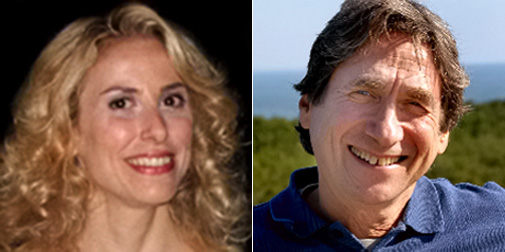
Author Tova Andrea Wang and journalist Harvey Wasserman were Thorne Dreyer’s guests on Rag Radio, produced in the studios of KOOP-FM in Austin, on Friday, Oct. 5, 2012.

Rag Radio podcast:
Tova Andrea Wang and Harvey Wasserman
on voter suppression in America

By Thorne Webb Dreyer | The Rag Blog | October 11, 2012

Texas Singer-songwriter, mystery writer, and social satirist Kinky Friedman of “Texas Jewboys” fame, said on Rag Radio Friday, October 19, 2012, that he’s seriously considering a second run for governor of Texas in 2014, this time as a Democrat. On the show, Kinky speculated about his political future, discussed his musical past and current “BiPolar World Tour,” discussed his experiences with musicians like Willie Nelson and Bob Dylan, his latest book, Roll Me Up and Smoke Me When I Die – written with Nelson – and his views on such topics as “political correctness” – a tenet that he has happily violated in the past. Kinky also performed three songs live during the show. Rag Radio is a syndicated radio show produced in the studios of KOOP-FM, a cooperatively-run, all-volunteer community radio station in Austin, Texas. You can listen to the podcast here.
Listen to Thorne Dreyer’s Rag Radio interview with Tova Andrea Wang and Harvey Wasserman here.


Rag Radio features hour-long in-depth interviews and discussion about issues of progressive politics, culture, and history. It is broadcast live on KOOP Fridays at 2 p.m. (CDT) and streamed live on the Internet, and is rebroadcast on WFTE-FM in Mt. Cobb and Scranton, PA., on Sunday mornings at 10 (EDT).

Tova Andrea Wang, a nationally-known expert on election reform and political participation, is Senior Democracy Fellow at Demos. She was Executive Director of the Century Foundation’s Post-2004 Election Reform Group, and was staff person to the National Commission on Federal Election Reform. She is the author of The Politics of Voter Suppression: Defending and Expanding Americans’ Right to Vote, a Century Foundation Book published this year by Cornell University Press.

Wang told the Rag Radio audience that “voter fraud at the polling places is virtually nonexistent, as has been proven time and time again,” but that efforts at voter suppression, especially on the part of Republican-led state legislatures,  “has been extraordinary. An assault on voting rights that we haven’t seen in many years. Probably not since the civil rights movement in the Sixties.”

She also pointed to right-wing groups like the Houston-based True the Vote (“a bunch of white people going primarily to African-American precincts and challenging people”) that is “vowing to recruit a million people to go to the polls” and harass potential voters.

“Of course, historically, race has been a factor,” in voter disenfranchisement, she said. “But it has always been to some degree coupled with partisanship. It’s no secret to anyone that African-Americans vote overwhelmingly for Democrats. And so, from the Republican perspective, if you’re willing to go to any lengths to win an election, then excluding blacks from the voting process is part of your campaign strategy.”

And now, with polls showing that Latinos are going “probably more than two-to-one” for the Democrats, they “have a big target on them, as people that the Republicans will want to keep from voting,” Wang said. “And it all gets tied up in anti-immigrant rhetoric… to make people fearful, even people who are lawful citizens.”

Tova Andrea Wang’s commentary on election reform has appeared in The New York Times, The Washington Post, and numerous other print outlets, and she has frequently appeared on national radio and television programs, including NBC’s Today Show and ABC’s Nightly News and Good Morning America, and on CBS, CNN, MSNBC, and NPR.

Joining Wang on Rag Radio was longtime alternative journalist Harvey Wasserman, who is the author or co-author of a dozen books. With Bob Fitrakis, he broke a number of stories about the alleged theft of the 2004 presidential election in Ohio. Their investigative reporting at www.freepress.org prompted Rev. Jesse Jackson to call them “the Woodward and Bernstein of the 2004 election.” Will the GOP Steal America’s 2012 Election? is their fifth book on election protection.

Wasserman believes that, “unless Barack Obama is way, way ahead on election day… it is a virtual guarantee that Mitt Romney is going to become president — because of the voter suppression that could eliminate 10 million or more likely Democratic voters,” as has been estimated by the Brennan Center at New York University, and because of “the relative ease by which the electronic voting machines can be flipped” in nine key states with Republican governors.

“We saw it happen in 2004 in Columbus, Ohio. John Kerry was ahead by four points on election night,” he said, “and then there was a so-called glitch in the vote count, and the tallies stopped coming. And then suddenly at two in the morning George W. Bush was ahead by two points. That was a flip of six points which is a virtual statistical impossibility.”

Wasserman says that electronic voting machines are a special danger because “legitimate monitoring” of them “is not physically possible,” and that most “are owned and operated by Republican companies.” He thinks that there should at least “be paper ballots as a backup at every polling station.”

Another related issue, according to Wasserman, is the Electoral College (“the only college in which George Bush actually excelled”). “We still have in place this anachronism that allows the guy who comes in second to become president,” he said. “The electoral college narrows down the number of states you have to steal or buy in order to put someone in the White House,” and it discourages political involvement in parts of the country that aren’t in play in the presidential election.

“No one else has an electoral college like this. It’s a holdover from slavery.”

Harvey Wasserman is also a political activist who, with Bonnie Raitt, Jackson Browne, Graham Nash, and others, helped found www.nukefree.org. His writing is published at The Huffington Post, BuzzFlash, and CounterPunch, and his reports on election theft and nuclear power issues appear regularly on The Rag Blog.

The news isn’t all bad, according to Tova Wang. “A coalition of civil rights groups has been able to have a great impact over the last year, and were able to get a number of governors to veto voter ID laws,” she said. “And in some places, like Virginia for example, we were able to soften the type of ID law.”

“But there is tremendous confusion” about the laws, and, “between now and election day, we need to educate, educate, educate.”

“We have had some success in the courts” against repressive ID laws, Wang says, but “it’s kind of sad that we’re back to relying on the courts for voting rights.”

Harvey Wasserman adds, “It’s part of our American heritage that people have the right to vote, and we need to get people to come out to be poll workers,” and to make sure that potential voters aren’t intimidated.

And Tova Wang points out that “we were all excited with a 61 percent turnout in 2008. That’s terrible.”

“The problem in this country is that not enough people vote. Let’s talk about what we’re going to do about that, which is the real crisis in our democracy.”

Rag Radio, which has aired since September 2009, is produced in association with The Rag Blog, a progressive internet newsmagazine, and the New Journalism Project, a Texas 501(c)(3) nonprofit corporation.

The host and producer of Rag Radio is Rag Blog editor and long-time alternative journalist Thorne Dreyer, a pioneer of the Sixties underground press movement. Tracey Schulz is the show’s engineer and co-producer.

All Rag Radio shows are posted as podcasts and can be found at the Internet Archive.

Rag Radio can be contacted at ragradio@koop.org.

Coming up on Rag Radio:
THIS FRIDAY, October 12, 2012: Peace and Justice activist Tom Hayden speaks on “The Peace Movement, the Drug War, and the Legacy of Port Huron.”
October 19, 2012: Singer-Songwriter, Satirist, Mystery Writer, and Politician Kinky Friedman.
October 26, 2012: Historian Martin Duberman, author of Howard Zinn: A Life on the Left.

The Rag Blog

Type rest of the post here

Source /

The Rag Blog

Posted in RagBlog | Leave a comment

BOOKS / Mike Davis : The Reds Under Romney’s Bed

The reds under Romney’s bed

The image of the Red Cavalry going into battle with the Book of Mormon in their saddlebags is quite a stretch; most of us, on the contrary, would probably vote for Mormon ‘socialism’ as the ultimate oxymoron.

By Mike Davis | The Rag Blog | October 24, 2012

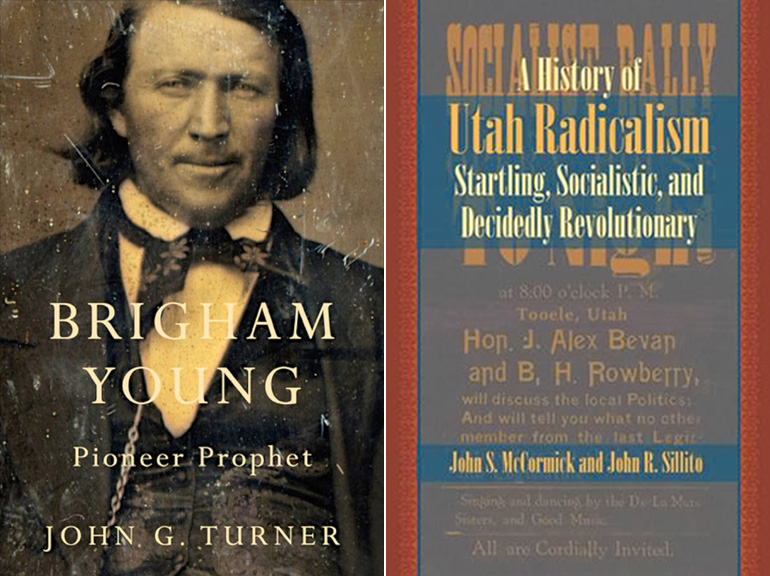
Brigham Young: Pioneer Prophet, by John G. Turner (2012: Belknap Press, Harvard Univ); Hardcover; 512 pp; $35.
History of Utah Radicalism: Startling, Socialistic, and Decidedly Revolutionary, by John S. McCormick and John R. Sillito (2011: Utah State University Press); Hardcover; 456 pp; $39.95.

In 1884 the journalist Edward Bellamy, struggling with an idea for a utopian novel, visited the only actually-existing communist society on earth: Utah. More precisely he spent a week in Brigham City, seat of Box Elder County, where Apostle Lorenzo Snow, who would later become the fifth LDS president (and the last to have personally known Joseph Smith), showed him the workings of a dynamic community based on pooled wealth, producer and consumer cooperatives, and the use of labor scrip instead of money.

Bellamy, like many previous Gentile visitors, was greatly impressed by the Mormon gift for disciplined cooperation. A decade earlier the celebrated explorer-scientist, John Wesley Powell, had championed the Mormon principle of communal water-management in his landmark but controversial Report on the Lands of the Arid Region of the United States. But Bellamy — like Lincoln Steffens returning from Russia in 1921 — was even more enthusiastic: he had seen the future and it worked.

Looking Backward (1888), Bellamy’s portrait of a prosperous but authoritarian socialist America in the year 2000, became a bestseller and seeded the “Nationalist” club movement that was an immediate precursor of the Socialist Party of America. (The iconic Bradbury Building in downtown Los Angeles was built by a wealthy Bellamy supporter as an anticipation of the architecture of that socialist future.)

The similarities between Bellamy’s collective commonwealth and the Mormon ideal of “consecrated” community, as well his “Industrial Army” and the semi-military organization of Young’s Deseret, have ignited controversy for more than a century. Indeed one rabidly anti-Mormon website currently makes the claim that as Brigham City influenced Looking Backward, so did Bellamy’s novel influence Bolshevism, thus implicating the Romneys through their church in “the horrors of communism.”

But the image of the Red Cavalry going into battle with the Book of Mormon in their saddlebags is quite a stretch; most of us, on the contrary, would probably vote for Mormon “socialism” as the ultimate oxymoron. But millenarian ideologies — whether the Sermon on the Mound, the revelations of Joseph Smith, or the ideas of Karl Marx — have an unfortunate tendency to be coopted by advocates of antithetical values.

John G. Turner’s new biography of Brigham Young — a scholarly and judicious book that is unlikely to be burned in Temple Square — portrays a social experiment, the most ambitious in American history, that until Young’s death in 1877 explicitly rejected the core values of Victorian capitalism: possessive individualism and Darwinian competition.

He emphasizes, for instance, that while “the nexus of American evangelicalism was individual salvation, Young’s theology, like that of Joseph Smith, centered around extended families.” “For Brigham Young, like Joseph Smith, the chief end of humankind was eternal fellowship and familial glory. ‘[If] men are not saved together, they cannot be saved at all.’” And Smith famously vowed that he would rather go to hell with the Saints than to heaven without them. [161]

Moreover classical Mormonism, like Pentecostalism in the twentieth century, was a religion of the poor and the ruined: hard-scrabble farmers, rural laborers, artisans and downwardly mobile craftsmen, failed small businessmen, and, most strikingly, an army of refugees from England’s Satanic mills that Young and others led to America.

Dickensian England was the major target of early Mormon proselytism. Young arrived in Manchester, capital of the Industrial Revolution, in 1840 in time to witness the formation of the National Charter Association, the first working-class political party, amidst epic social turmoil.

Like Friedrich Engels two years later, Young was appalled by the living and working conditions of the factory working class as well as the servility of the poor. Lancashire, Turner tells us, was already over-run with itinerant preachers and tiny sects broken from Methodism, but Young and his companions were more eloquent egalitarians, offering economic as well as spiritual solutions to proletarian misery.

“Mormon missionaries focused on evangelicalism rather than on politics or socioeconomic analysis, but with no ties to British elites or the established order they unflinchingly lamented the poverty of the labouring, classes, denounced the monarchy’s conspicuous consumption, and promised their converts land and employment in Illinois.” [70]

After the exodus to the Great Basin and the establishment of the briefly independent state of Deseret, Young tirelessly preached the impossibility of coexistence between the communitarian values of Zion and the greed-driven capitalism of Babylon (the United States). Indeed even before the Saints’ wagons had reached Salt Lake City he had repulsed mutineers who wanted to keep going to fat valleys and gold fields of California, straight into the open maw of Mammon.

The driving of the Golden Spike in 1869, however, flooded Utah with cheap Eastern goods as well as outlaws, mineral prospectors, and Gentile immigrants. A few years later the Crash of 1873 demonstrated that Utah was no long insulated from what Young denounced as “the oppression of monied monopolies.”

“The sooty misery of working-class England,” Turner explains,” had left Young with a lingering belief that capitalism could produce an existence worse than chattel slavery.” Convinced that the Kingdom of Saints was now threatened with moral and economic absorption into a society run by Robber Barons and stock jobbers, Young launched a Mormon Cultural Revolution: the United Order of Enoch.

Under the Order, “the Latter-Day Saints would consecrate their property and resources to common management, divide labor according to specialized ability, and eliminate disparities of wealth.” (399) Young, although old, fat, and in declining health, spent most of 1874 and 1875 passionately — and sometimes threateningly — shepherding his people into lives of deeper generosity and unity. The original template was Brigham City, but some of the poorer frontier Mormons “attempted to fully live out Young’s communitarian vision.” (399)

The most complete embodiment was Orderville, east of Zion National Park, where private property had been abolished, members ate in a common hall, and there was no trade with the Gentile world. Turner quotes Wallace Stegner’s estimation of Orderville as a “communism of goods, labor, religion, and recreation such as the world has seen only in a few places and for very short times.” [400]

Although Orderville, Brigham City, and a handful of other Mormon kibbutzes survived through 1880s, the United Order encountered intractable resistance from an emerging upper class of Saints, some of them in lucrative business partnerships with Gentiles. A mining boom, meanwhile, diverted the loyalties of many working-class Mormons. Despite Young’s ceaseless campaigning, public enthusiasm for the United Order died within a few years.

This was the major political and spiritual defeat of Young’s reign. At the dedication of a new temple in St. George, the same southern Utah town where he had launched the United Order only three years earlier, the LDS President gave a fierce speech against the corruption of the Morman soul by capitalism, railroads, and mines. He warned his People that they would “go to Hell” unless they repented materialism and greed. For emphasis he pounded the pulpit with his gnarled hickory cane. Six months later, in August 1877, he died.

MacCormick and Sillito’s fascinating history of the Utah Socialist Party in the early twentieth century (it won 115 state and local elections ) includes a detailed account of the Church’s eventual embrace, after Young’s death, of the capitalist civilization and rule of money that he and Smith had so abhorred. This great U-turn was partly driven by heightened inequality, even class conflict within late-Victorian Mormon society. It was also compelled by the Edmunds-Tucker Act of 1887 which confiscated the Church’s assets, as well as disenfranchising women in the territory (they had won the vote in 1870) and disinheriting the children of plural marriages.

Washington’s message to the LDS was simple and implacable: abandon polygamy and open the doors to eastern capital or face destruction. Brigham Young doubtlessly would have defied the Republicans in Congress, taking his people into the mountains or moving to Mexico, but his successors capitulated: abolishing plural marriage in 1890 and sending church leader Heber J. Grant to Wall Street to establish a credit line for the Church. After statehood, moreover, they moved the LDS hierarchy into the ranks of its former archenemy, the Republican Party.

“Thereafter,” write MacCormick and Sillito, “Church leaders would not only feel increasingly at ease with the ways of American capitalists, but they would be beholden — at least in the short run — for their services. Within another decade these influences would go so far that muckraking journalists would begin to cast the Church in the role of a Wall Street plutocrat.” [383]

After three generations of persecution, migration, and backbreaking labor to achieve an egalitarian Zion, the conservative reformation in Salt Lake City was deeply disorienting to many Mormons. As original research for Utah Radicalism has established, at least 40 percent of the Socialist Party membership in Utah before 1920 were Mormons, most of them devout.

Many were the children of the United Order, like Lillie Engle who grew up in Orderville and became a Socialist candidate in Emery County in 1912. (In a poignant reminiscence, she equated the “sorrows that only the domestic servant, the widow, the ‘Mormon,’ the unpopular socialist, and the poor oppressed workers of the world know.”)

Despite increasing attacks by the Church on “satanic” socialism, a number of well-known Socialists were able to play prominent roles in both of their faiths, like Bishop Alexander Matheson in Cedar City or Gottlieb Berger, a Socialist who served on the Murray City commission from 1911 to 1932 while president of his ward’s High Priest Quorum. But the most potent individual link between repressed Mormon communism and Debsian socialism was Virginia Snow Stephen, the daughter of Lorenzo Snow of Brigham City fame, who campaigned to save the life of Joe Hill in 1915.

Gentiles, especially evangelical Christians, have obsessed for 175 years about the occult internal doctrines and practices of the Mormons. But secret handshakes and passwords can be found in any Moose Lodge, weird underwear is widely en vogue, and washings, annoitings, and sealings are just so much boilerplate religious mumbo jumbo. The real scandal of the modern Church is that its so-called Prophets refuse to hear Brigham Young, hammering on the ceiling of his tomb with his hickory cane and demanding the overthrow of Babylon.

A version of this article will be published by the Los Angeles Review of Books.

[Mike Davis is a Distinguished Professor in the Department of Creative Writing at the University of California, Riverside. An urban theorist, historian, and social activist, Davis is the author of City of Quartz: Excavating the Future in Los Angeles and In Praise of Barbarians: Essays against Empire. Read more articles by Mike Davis on The Rag Blog.]

The Rag Blog

Posted in Rag Bloggers | Tagged , , , , , , , | Leave a comment

Controversial “Religious Virus” Scientists Win Nobel By James McEnteer / The Rag Blog / October 24, 2012 STOCKHOLM — The Nobel Prize Committee announced it is awarding the 2012 prize for bio-chemistry to Dr. Lazlo Schitkov of Hungary and Dr. Irene Pisher of the United States for their work in identifying and isolating the so-called “religious pathogen” within the human nervous system. The Nobel Committee noted what it called “the great spiritual importance of this discovery, which revolutionizes our sense of humanity’s place in the universe and has the potential to end religious conflict as we know it.” The Committee’s announcement praised the bravery of the researchers, who have endured numerous death threats for the nature of their work. Schitkov and Pisher were both in New York when they learned of the award. “We are gratified,” said Pisher, a professor of molecular biology at Cornell Medical School in New York City. “We appreciate the Swedish academy recognizing the significance of our work.” “Perhaps now our findings will be seen in more scientific, less emotional terms,” added Schitkov, professor of neurology at the University of Budapest. The scientists set out to discover why some devout individuals – whether Christian, Muslim or Buddhist – try to live according the highest precepts of their faith, while others who profess a similar degree of fervor speak and act in ways that appear to contradict and undermine those same principles. “We examined the neural pathways of self-described ‘highly religious’ people, comparing them with those of atheists or religious adherents of less passionate conviction,” said Pisher. “The results were dramatic and unequivocal. “We found unusual electrical activity and development within a particular area of the brains of the faithful. But we encountered two structural variants there, causing the dramatically different behaviors of what we have come to call the ‘true believers’ and the ‘false believers.’ “Both groups consider themselves true believers, of course, but only one of them, of a much smaller sample size, has the genetic marker of the true believer. The false believers, while equally stimulated neurologically, are actually self-deluded, though they are at least as zealous as true believers and often more so.” Pisher and Schitkov characterize true believers as those who adhere to the moral admonitions of their faith and try to emulate the exemplary lives of their spiritual leaders: Jesus Christ, the Prophet Mohammed or Buddha, as the case may be. False believers tend to cloak their reprehensible behaviors in religious trappings. The scientists caution that their physiological discoveries should not be confused with the innate spiritual impulses we all possess, that help to define us as human beings. Nor do their findings confirm or deny the existence of the so-called “God gene,” first postulated by geneticist Dean Hamer in 2005. Hamer hypothesized that spirituality is quantifiable and inherited through a gene he called VMAT2, as part of natural selection. How to predict which religious practitioners may become true or false believers, Schitkov and Pisher are as yet unable to say. Some people may be born with one predilection or the other, as some of us are more prone to diabetes or alcoholism. Both scientists hope that further research will allow them to identify, predict and perhaps even modify the markers for false believers. Each of the scientists came to this research in very different ways. For Dr. Schitkov the decisive factor was a trip he took to Thailand in the early 1980s. He was amazed, then amused and finally appalled by the tens of thousands of Buddha images of all shapes and sizes, from the miniscule to the gargantuan. “Of course I found it ironic that devotees of the Buddha, celebrated for his personal spiritual connection to divine wisdom, would eschew that direct connection in their own lives, opting instead to worship golden idols. The Buddha himself would surely be saddened by this turn of events. “Subsequent studies reveal that for every Buddhist who seeks that direct spiritual connection through meditation and prayer – the true believers – there are approximately ten thousand who think burning incense and pasting gold leaf to Buddha images constitutes serious religious practice. These are the false believers, deluding themselves or going through the motions for social reasons.” For Irene Pisher, it was the ugly behavior of self-identified Christians which first drew her to question the authenticity of religious belief. “Bigotry of whatever kind contradicts and subverts the teachings of Jesus Christ, who taught love and compassion and forgiveness,” said Pisher. “Yet here in America we have Christian pastors and leaders spewing violent hate speech against homosexuals and racial minorities and women, not to mention followers of other religions or even different Christian sects. I thought, how can this be? “For me the true Christian is one who tries to help the less fortunate. You know, as Jesus said, ‘as ye do unto the least of these, so you do unto me.’ That seems pretty clear. Help the poor. Tend the sick, whether of body or heart. Albert Schweitzer and Mother Teresa. Not ‘Onward Christian Soldiers.’ “In a way it’s been a comfort for me to learn there’s a physiological basis for this epidemic of false believers. Otherwise you’d have to conclude that there are simply too many wrong-headed, self-righteous assholes running around who ought to know better. They say that patriotism is the last refuge of a scoundrel. It often seems that religion is the first.” Drs. Pisher and Schitkov continue to live and work in secrecy as the FBI and local police monitor and evaluate the many death threats against them.

Type rest of the post here

Source /

The Rag Blog

Posted in RagBlog | Leave a comment

Jonah Raskin : ‘Uncle Tom’ Vs. Simon Legree, 2012

Uncle Tom and Simon Legree. Image from Uncle Tom’s Cabin Reconsidered.

Election 2012:
‘Uncle Tom’ Obama 
Vs. ‘Simon Legree’ Romney

Ironically, on the eve of the 150th anniversary of Lincoln’s Emancipation Proclamation, modern-day Americans are once again in need of emancipation and without an emancipator anywhere in sight.

By Jonah Raskin | The Rag Blog | October 24, 2012

From the wilds of northern California, which is solidly Democratic, it looks and sounds to me, a registered Democrat, that the main issues of the 2012 presidential election are gas, guns, and what might be called gender.

Drivers here don’t like the fact that they’re paying higher prices for gas than ever before at the pump. They don’t like the fact that the U.S. ambassador to Libya, Chris Stevens, was gunned down, or that U.S. guns ended up in the hands of Mexican drug lords in a botched operation known as “Fast and Furious.”

The price of gas close to home, the death of an ambassador far away, and guns spilling over the border with Mexico have all added to the sense of unease and anxiety that voters feel. On gender issues such as abortion and a woman’s right to choose, northern Californians are also anxious because they feel that a Romney victory would give conservatives the upper hand and leave women at the mercy of religious Catholics like Paul Ryan and religious Mormons like the Republican party candidate for president.

Not surprisingly they’re talking about fleeing to Canada.

The televised encounters between Obama and Romney have also multiplied anxieties. In the first debate, Obama’s body language, tone of voice, and facial expressions suggested a candidate who had lost a sense of direction and urgency.

In the town hall meeting with questions from the audience he was agile on his feet and in his head, and in the last debate when it came to foreign policy he had more facts and a more comprehensive view than Romney. He sounded like the black emperor of the American Empire.

For Democratic voters here in Northern California, however, the President has seemed all too often ineffectual, burned-out, and like a man running scared. Sometimes he has seemed just plain silly as when he talked about “Big Bird” and funding for public TV as though he could simply ridicule Romney out of the race.

Voters here see Romney as energized, aggressive, and self-confident — a man who plays on basic fears and whips them up, too. Northern Californians view Romney as an actor playing the part of a grandfatherly, paternalistic plantation owner and slick salesman who claims to know what’s best for the citizens who are slaves to their cars, to gas, to guns, and more.

They see the president himself as all too meek in the presence of the white plantation owner and when confronted with Wall Street plutocrats. Granted, he talks about the middle class, but he never talks about blue collar workers, pink collar workers, or about African Americans. Our African-American president seems to have forgotten about his own African-American roots, though I will still vote for him. I will cast my ballot for Obama and criticize him, too.

I know that the term “Uncle Tom,” which comes from Harriet Beecher Stowe’s 1852 novel Uncle Tom’s Cabin has rarely been used fairly when applied to African Americans who have survived injustice, discrimination, and more for centuries. And with a sense of real dignity, too.

Still, Obama seems more than a little like an Uncle Tom: an African American who is meek and deferential when it comes to rich, powerful white men. Romney, with his size and shape, skin-color and smile, seems more than a little like a confident contemporary incarnation of Simon Legree, Harriet Beecher Stowe’s representation of the evil, insidious slave owner.

Stowe’s best-selling novel has long been credited with starting the American Civil War. When Lincoln met the author in 1862 he apparently said, “so you are the little woman who wrote the book that started this great war.” There is no book today that expresses anywhere near the equivalent of the moral force of Uncle Tom’s Cabin; there is no movie or manifesto that has woken the conscience of the country to the current crisis.

Ironically, on the eve of the 150th anniversary of Lincoln’s Emancipation Proclamation, modern-day Americans are once again in need of emancipation and without an emancipator anywhere in sight. Our Uncle Tom president might take a page from history and learn from Lincoln himself, before the country, which is already deeply divided, descends even further into cultural and political warfare which would benefit no one.

Meanwhile, women voters — the moral descendants of Harriet Beecher Stowe — will have the power on Election Day to decide, more than any other single group, the fate of the nation.

[Jonah Raskin, professor emeritus at Sonoma State University is an author and a frequent contributor to The Rag Blog. Read more articles by Jonah Raskin on The Rag Blog.]

The Rag Blog

Posted in Rag Bloggers | Tagged , , , , , , | 2 Comments

Alan Waldman : NBC’s Short-Lived ‘Life’ Is Smart, Quirky Cop Show

Waldman’s film and TV
treasures you may have missed:

Short-lived NBC cop show Life is smart, quirky, and gripping. Damian Lewis is wonderful as the LAPD cop, falsely imprisoned for murder, who pursues the real killer and conspirators.

By Alan Waldman | The Rag Blog | October 24, 2012


[In his weekly column, Alan Waldman reviews some of his favorite films and TV series that readers may have missed, including TV dramas, mysteries, and comedies from Canada, England, Scotland, and Ireland. Most are available on DVD and/or Netflix.]

In May 2009, after 32 episodes, NBC cancelled the terrific policier Life, starring the hugely talented British thespian Damian Lewis. With a flawless American accent, he played an LAPD cop who returned to work after serving 12 years in prison for a triple murder he didn’t commit.

Over the course of the series, Lewis’s character Charlie Crews solves that crime and pursues the crooked cops who set him up. He and his female partner also crack interesting criminal cases each week.

Having lost his wife, his friends, his job and most contact with the outside world, Crews emerges as a follower of Zen with an amusing fixation on fresh fruit. Critics have compared Lewis’s character with the idiosyncratic protagonists of House and Monk.

Damian Lewis won this year’s best-actor Emmy for Homeland and was previously nominated for three other honors for Band of Brothers. He is delightful in this droll, offbeat role. The Life cast also includes Sarah Shahi, Donal Logue (The Tao of Steve), Adam Arkin (four award nominations for Chicago Hope) and Brent Sexton (The Killing).

Several good actors play villains — especially Titus Welliver and Garret Dillahunt. A consistently amusing subplot involves the doings of Arkin’s character Ted Early, Crews’ housemate, financial advisor, and former prison pal. He develops a crush on Charlie’s father’s fiancée, played by Christina Hendricks (three-time Emmy nominee for her memorable role as the redhead sexpot on Mad Men).

The whole series has aired in Australia, Italy, and Lithuania and is available here on Netflix instant streaming.

[Oregon writer and Houston native Alan Waldman holds a B.A. in theater arts from Brandeis University and has worked as an editor at The Hollywood Reporter and Honolulu magazine. Read more of Alan Waldman’s articles on The Rag Blog.]

The Rag Blog

Posted in Rag Bloggers | Tagged , , | Leave a comment

Lamar W. Hankins : Texas Cheerleaders for Jesus

Kountze High School cheerleaders with banner at football game. Image from Atheist Camel.

Cheerleaders for Jesus:
Texas politicians jump
on religion bandwagon

Can cheerleaders who represent the Kountze Independent School District, while acting in their official capacities as school cheerleaders, promote their personal religious views?

By Lamar W. Hankins | The Rag Blog | October 24, 2012

SAN MARCOS, Texas — It seems that it is still popular to beat up on atheists and agnostics in Texas, in spite of gains in acceptance of both groups. At least, politicians have found that they can stir emotions and benefit politically from standing up for God and Jesus, whether or not God and Jesus want their help.

Governor Rick Perry and Attorney General Greg Abbott recently jumped on the religion bandwagon yet again to denounce atheists and, by implication, their partners in non-belief — agnostics, freethinkers, infidels, and secular humanists. Abbott directly attacked the Freedom From Religion Foundation (FFRF) as an organization from out of state.

While it is true that FFRF’s headquarters are in Wisconsin, FFRF has 700 members in Texas, including me. At its recent annual conference, there were members from 46 states in attendance. It is a national organization with affiliated groups in Texas and members from virtually every state.

The “outside agitator” description has been used forever to denounce anyone or any group that is not from the particular community where a controversy has arisen. In this case, the community involved is Kountze, Texas, located in Hardin County between Beaumont and Woodville, in the heart of what is known as the Big Thicket, an ecologically diverse and sensitive part of southeast Texas.

There is even a national park located there dedicated to preserving the unique natural environment of the area. Members of my family have lived in Hardin County for over 50 years, and I have done legal work there.

The current controversy in Kountze concerns a straight-forward constitutional question: Can cheerleaders who represent the Kountze Independent School District, while acting in their official capacities as school cheerleaders, promote their personal religious views?

Reasonable people might differ on their answer to this question (more about that later), but there is nothing reasonable about Perry and Abbott, both of whom have used religion to gain political advantage. On October 17, Perry and Abbott held a joint press conference to proclaim their undying support for Jesus and the Kountze cheerleaders’ right to press their religious beliefs on everyone attending football games while representing Kountze High School.

Gov. Rick Perry said, “We will not allow atheist groups from outside of the State of Texas to come into the state, to use menacing and misleading intimidation tactics, to try to bully schools to bow down at the altar of secular beliefs.”

Attorney General Abbott chimed in with, “After receiving a menacing letter from an organization with a reputation for bullying school districts, the Kountze [school superintendent] improperly prohibited high school cheerleaders from including religious messages on their game day banners.”

FFRF does not bully anyone. What it does is routinely send letters to governments after receiving a complaint about practices that violate the separation of religion and state, practices which are prohibited by the U.S. Constitution. In response to such a letter from FFRF, the Kountze ISD sought legal advice and concluded that because the cheerleaders were representing the school when they placed bible verses and religious messages on a banner prepared for the football team to burst through at the beginning of each school-sponsored game, the practice should stop.

The cheerleaders, through their parents, then sued the school district in state district court, represented by the Liberty Institute, a fundamentalist legal organization in Plano, Texas, that seeks to inject religion into government at all levels. FFRF is not involved in that law suit, but the group makes a handy whipping boy for political gain by Perry and Abbott. FFRF explained the issue this way:

The Constitution and FFRF are not “preventing freedom of expression,” we are defending freedom of conscience. The Constitution differentiates government (public school) speech from individual speech. Those cheerleaders are free to worship as they like, go to the church of their choice, but not to exploit a public school event, and their school-sponsored podium, to push their personal religious views on an entire stadium. That’s just plain bad manners.

Dan Barker, co-president of FFRF, added,

Since the state’s top law enforcer, Attorney General Greg Abbott, and its highest executive officer, Gov. Rick Perry, have openly expressed contempt for atheists and the Establishment Clause, this leads to a climate of intolerance. It takes courage to face down the full apparatus of state government, but we need those brave few to contact FFRF. Don’t let collusion, politicking, and religious fervor in Texas destroy respect for keeping public schools free of religious divisiveness.

Most people seem not to understand that the Constitution is not a self-enforcing document. Unless there is someone willing to ask a judge to determine whether a constitutional violation has occurred, the violation will continue unabated, sometimes for decades or centuries. We had segregated schools until the mid-50s, when several parents stepped forward to contest the separate and unequal public educations afforded their children.

Unless someone is willing to challenge government practices, most politicians are too unprincipled to stand up for the Constitution and end unconstitutional practices, especially when those practices are popular with a vocal group. When it comes to government support of religious practices, fundamentalist and evangelical citizens make their voices heard, and politicians usually acquiesce to their vehemence and emotion.

The closest case to the Kountze cheerleader situation involves having public prayer at football games sponsored by the school district — a government entity established by the state. The U.S. Supreme Court recognized the importance of preserving the secular nature of such high school functions in Santa Fe ISD v. Doe, 530 U.S. 290 (2000).

Santa Fe ISD is a school district near Houston. The school had a policy of electing a Santa Fe High School student to serve as student council chaplain, who would deliver a Christian prayer over the public address system at the beginning of home football games. As explained by FFRF,

One Mormon and one Catholic family filed suit challenging this and related practices as violations of the Establishment Clause, because the policy clearly favored the predominant Protestant viewpoint to the effective exclusion of non-evangelical students and audience members.

Justice John Paul Stevens wrote the majority opinion in Santa Fe ISD, which held that student-led, student-initiated prayer at school events violates the Establishment Clause. The school had claimed that the prayers were a student choice, and that attendance at an extracurricular event like a football game is voluntary. The Court found this rationalization unpersuasive because the prayers were authorized by the public school and took place on public school property at a school-sponsored event.

These salient facts lead a reasonable person to conclude that the school endorses the message of the students, making the students’ remarks public speech, not private religious expressions. Proponents of student-led prayer believe that students should have to choose between attending school functions or not attending to avoid school-sponsored prayer. The Supreme Court disagreed, writing,

The Constitution, moreover, demands that the school may not force this difficult choice upon these students for it is a tenet of the First Amendment that the State cannot require one of its citizens to forfeit his or her rights and benefits as the price of resisting conformance to state-sponsored religious practice.

An earlier U.S. Supreme Court case in 1992 affirmed nearly four decades of court precedent against school prayers. In Lee v. Weisman, 505 U.S. 577, the court held that prayers at public school graduations are an impermissible establishment of religion. Justice Anthony Kennedy wrote for the majority, “if citizens are subjected to state-sponsored religious exercises, the State disavows its own duty to guard and respect that sphere of inviolable conscience and belief which is the mark of a free people.”

While neither of these cases is exactly like the Kountze situation, they raise such similar issues and arise from such similar facts that it is logical to conclude that they control the behavior of the Kountze cheerleaders when they act in an official capacity on behalf of the Kountze ISD. Attorney General Abbott has not explained why these cases should not apply to the Kountze controversy, but he jumped at the chance to intervene officially in the case.

FFRF has noted these two cases, as well as six others that seem to provide adequate precedent to conclude that what the Kountze cheerleaders are doing violates the rights of other students. They include cases concerning prayer at high school graduations, prayer in public schools, devotional Bible-reading in public schools, and pre-football game invocations at public high school football games.

Clearly, the U.S. Supreme Court and lower courts have concluded that public schools have a legal duty to remain neutral toward religion. If the Kountze ISD allows official school representatives — the cheerleaders in this case — to promote religion through the display of signs that include both Bible verses and religious admonitions much like prayers, the Kountze ISD fears that it will be seen as promoting religion. For now, the state district court has ruled that the religious banners can continue. A trial on the issue is set for next summer.

For those people who want government to promote religion, court interventions are a hindrance to their theocratic ambitions. But there is no excuse for the Governor and the Attorney General of Texas to play politics with government promotion of religion. They know what the federal courts have held, but they choose to ignore the holdings — a sort of modern day interposition and nullification intended to undermine the U.S. Constitution, which both have sworn to uphold.

[Lamar W. Hankins, a former San Marcos, Texas, city attorney, is also a columnist for the San Marcos Mercury. This article © Freethought San Marcos, Lamar W. Hankins. Read more articles by Lamar W. Hankins on The Rag Blog.]

The Rag Blog

Posted in Rag Bloggers | Tagged , , , , , , | 1 Comment

Gerry Bello, Bob Fitrakis, and Harvey Wasserman : Do the Romneys Own Your E-Vote?

Photo by Brian Snyder / Reuters / Salon.

Does the Romney family
now own your e-vote?

A candidate for the presidency of the United States — and his brother, wife, and son — have a straight-line financial interest in the voting machines that could decide this fall’s election.

By Gerry Bello, Bob Fitrakis, and Harvey Wasserman | The Rag Blog | October 23, 2012

See Thorne Dreyer’s interview with journalist Harvey Wasserman and author Tova Andrea Wang about voter suppression and election theft, and listen to the podcast of the October 5 Rag Radio show with Wasserman and Wang.

Will you cast your vote this fall on a faulty electronic machine that’s partly owned by the Romney Family? Will that machine decide whether Romney will then inherit the White House?

Through a closely held equity fund called Solamere, Mitt Romney and his wife, son, and brother are major investors in an investment firm called H.I.G. Capital. H.I.G. in turn holds a majority share and three out of five board members in Hart Intercivic, a company that owns the notoriously faulty electronic voting machines that will count the ballots in swing state Ohio November 7. Hart machines will also be used elsewhere in the United States.

In other words, a candidate for the presidency of the United States — and his brother, wife, and son — have a straight-line financial interest in the voting machines that could decide this fall’s election. These machines cannot be monitored by the public. But they will help decide who “owns” the White House.

They are especially crucial in Ohio, without which no Republican candidate has ever won the White House. In 2004, in the dead of election night, an electronic swing of more than 300,000 votes switched Ohio from the John Kerry column to George W. Bush, giving him a second term.

A virtual statistical impossibility, the 6-plus percent shift occurred between 12:20 and 2 a.m. election night as votes were being tallied by a GOP-controlled information technology firm on servers in a basement in Chattanooga, Tennessee. In defiance of a federal injunction, 56 of Ohio’s 88 counties destroyed all election records, making a recount impossible. Ohio’s governor and secretary of state in 2004 were both Republicans, as are the governors and secretaries of state in nine key swing states this year.

As we have previously reported, H.I.G. Capital has on its board of directors at least three close associates of the Romney family. H.I.G. Capital directors John P. Bolduk and Douglas Berman are major Romney fundraisers. So is former Bain and H.I.G. manager Brian Shortsleeve. H.I.G. employees have contributed at least $338,000 to Romney’s campaign. Fully a third of H.I.G.’s leadership previously worked at Romney’s old Bain firm.

But new research now shows that the association doesn’t stop with mere friendship and business associations. Mitt Romney, his wife Ann Romney, and their son Tagg Romney are also invested in H.I.G. Capital, as is Mitt’s brother G. Scott Romney.

The investment comes in part through the privately held family equity firm called Solamere, which bears the name of the posh Utah ski community where the Romney family retreats to slide down the slopes.

Unlike other private equity firms, Solamere does not invest in companies directly. Instead, Solamere invests in other private equity funds, like H.I.G. Capital. Solamere calls them partners. These partners, like H.I.G., then invest in various enterprises, like Hart Intercivic, the nation’s third-largest voting machine manufacturer.

As reported by Lee Fang of The Nation, Solamere was founded by Tagg Romney and Spencer Zwick, Papa Romney’s campaign finance chair. Ann Romney and Mitt’s brother G. Scott Romney are also invested. Mitt himself threw in $10 million “seed money” to get the fund going, and spoke personally to its first full investors conference.

Solamere’s public web presence has been reduced to a front page only, so a complete list of it’s partners can not be found. But reportage by The New York Times, Boston Globe, Esquire, and The Nation have slowly given us a partial picture of which funds are being funded by Solamere. Some $232 million has been raised so far, according to SEC filings and industry publications.

In addition to Romney’s finance chair Spencer Zwick, Solamere has also provided the campaign with its finance director, Richard Morley, and a western regional finance coordinator, Kaitlin O’Reilly. O’Reilly is listed as an executive assistant at Solamere, and also at SJZ LLC, which was founded by her boss Spencer Zwick.

The SJZ LLC campaign finance consulting firm has billed Mitt’s campaign over $2 million this election cycle as well as doing another $9,687,582 in billing to various Congressional Campaigns. The host of the private fundraiser at which Romney made his infamous “47%” speech was Marc J. Leder, co-CEO of Sun Capital, another “partner” of the Solamere fund.

As in virtually every close presidential race, Ohio may well hold the key to the Electoral College decision as to who will become the nation’s next chief executive. The presence of Hart Intercivic machines in Hamilton County, home to Cincinnati, means there is a high likelihood the votes that will decide the presidency will be cast on them. Major media like CBS have begun reporting that Cincinnati could be “ground zero” in this year’s election.

But these Hart machines are deeply flawed and widely know to be open to a troubling variety of attacks and breakdowns. There is no legal or other means to definitively monitor and re-check a tally compiled on Hart or other electronic voting machines. Ohio’s current governor and secretary of state are both Republicans.

Does this mean the Romney investment in Hart Intercivic through H.I.G. Capital and Solamere will yield it not only financial profits but the White House itself?

Tune in during the deep night of November 7, when the electronic votes in swing state Ohio are once again opaquely reported to the nation and the world, without meaningful public scrutiny or legal recourse.

[Gerry Bello is chief researcher for Free Press. Bob Fitrakis and Harvey Wasserman are co-authors of five books on election protection, including Will the GOP Steal America’s 2012 Election?, an e-book at freepress.org. Read more of Harvey Wasserman and Bob Fitrakis’ writing on The Rag Blog.]

Also see:

The Rag Blog

Posted in Rag Bloggers | Tagged , , , , , , , | 1 Comment

>>> Does the Romney Family Now Own Your E-Vote? >>>>>> by Gerry Bello, Bob Fitrakis & Harvey Wasserman >>>>>>>>> Will you cast your vote this fall on a faulty electronic machine that’s partly owned by the Romney Family? Will that machine decide whether Romney will then inherit the White House? >>>>>> Through a closely held equity fund called Solamere, Mitt Romney and his wife, son and brother are major investors in an investment firm called H.I.G. Capital. H.I.G. in turn holds a majority share and three out of five board members in Hart Intercivic, a company that owns the notoriously faulty electronic voting machines that will count the ballots in swing state Ohio November 7. Hart machines will also be used elsewhere in the United States ( http://www.hartintercivic.com ). >>>>>> In other words, a candidate for the presidency of the United States, and his brother, wife and son, have a straight-line financial interest in the voting machines that could decide this fall’s election. These machines cannot be monitored by the public. But they will help decide who “owns” the White House. They are especially crucial in Ohio, without which no Republican candidate has ever won the White House. In 2004, in the dead of election night, an electronic swing of more than 300,000 votes switched Ohio from the John Kerry column to George W. Bush, giving him a second term. A virtual statistical impossibility, the 6-plus% shift occurred between 12:20 and 2am election night as votes were being tallied by a GOP-controlled information technology firm on servers in a basement in Chattanooga, Tennessee. In defiance of a federal injunction, 56 of Ohio’s 88 counties destroyed all election records, making a recount impossible. Ohio’s governor and secretary of state in 2004 were both Republicans, as are the governors and secretaries of state in nine key swing states this year ( http://www.freepress.org/departments/display/19/2012/4724 ). >>>>>> As we have previously reported, H.I.G. Capital has on its board of directors at least three close associates of the Romney family. H.I.G. Capital directors John P. Bolduk and Douglas Berman are major Romney fundraisers. So is former Bain and H.I.G. manager Brian Shortsleeve. H.I.G. employees have contributed at least $338,000 to Romney’s campaign. Fully a third of H.I.G.’s leadership previously worked at Romney’s old Bain firm. >>>>>> But new research now shows that the association doesn’t stop with mere friendship and business associations. Mitt Romney, his wife Ann Romney, and their son Tagg Romney are also invested in H.I.G. Capital, as is Mitt’s brother G. Scott Romney. >>>>>> The investment comes in part through the privately held family equity firm called Solamere, which bears the name of the posh Utah ski community where the Romney family retreats to slide down the slopes. >>> Unlike other private equity firms, Solamere does not invest in companies directly. Instead, Solamere invests in other private equity funds, like H.I.G. Capital. Solamere calls them “partners.” These partners, like H.I.G., then invest in various enterprises, like Hart Intercivic, the nation’s third-largest voting machine manufacturer. >>>>>> As reported by Lee Fang of the Nation (http://www.thenation.com/article/170470/tagg-team-romney-family-recipe-crony-capitalism# ), Solamere was founded by Tagg Romney and Spencer Zwick, Papa Romney’s campaign finance chair. Ann Romney and Mitt’s brother G. Scott Romney are also invested. Mitt himself threw in $10 million “seed money” to get the fund going, and spoke personally to its first full investors conference. Solamere’s public web presence ( http://www.solameregroup.com/page/1/strategy ) has been reduced to a front page only, so a complete list of it’s “partners” can not be found. But reportage by the New York Times, Boston Globe, Esquire and the Nation have slowly given us a partial picture of which funds are being funded by Solamere. Some $232 million has been raised so far, according to SEC filings and industry publications. >>>> In addition to Romney’s finance chair Spencer Zwick, Solamere has also provided the campaign with its finance director, Richard Morley, and a western regional finance coordinator, Kaitlin O’Reilly. O’Reilly is listed as an “executive assistant” at Solamere, and also at SJZ LLC, which was founded by her boss Spencer Zwick. The SJZ LLC campaign finance consulting firm has billed Mitt’s campaign over $2 million this election cycle as well as doing another $9,687,582 in billing to various Congressional Campaigns. The host of the private fundraiser at which Romney made his infamous “47%” speech was Marc J. Leder, co-CEO of Sun Capital, another “partner” of the Solamere fund. >>>>>> As in virtually every close presidential race, Ohio may well hold the key to the Electoral College decision as to who will become the nation’s next chief executive. The presence of Hart Intercivic machines in Hamilton County, home to Cincinnati, means there is a high likelihood the votes that will decide the presidency will be cast on them. Major media like CBS have begun reporting that Cincinnati could be “ground zero” in this year’s election ( http://www.freepress.org/departments/display/19/2012/4742 ). >>>>>> But these Hart machines are deeply flawed and widely know to be open to a troubling variety of attacks and breakdowns ( http://www.bradblog.com/?p=9628 ). There is no legal or other means to definitively monitor and re-check a tally compiled on Hart or other electronic voting machines. Ohio’s current governor and secretary of state are both Republicans. >>>>>> Does this mean the Romney investment in Hart Intercivic through H.I.G. Capital and Solamere will yield it not only financial profits but the White House itself? >>>>>> Tune in during the deep night of November 7, when the electronic votes in swing state Ohio are once again opaquely reported to the nation and the world, without meaningful public scrutiny or legal recourse. ——————————— Gerry Bello is chief researcher for www.freepress.org. Bob Fitrakis and Harvey Wasserman are co-authors of five books on election protection, including WILL THE GOP STEAL AMERICA’S 2012 ELECTION? an e-book at www.freepress.org.

Type rest of the post here

Source /

The Rag Blog

Posted in RagBlog | Leave a comment

Thomas McKelvey Cleaver : George McGovern, the Most Decent Man in Politics

George McGovern during the 1972 presidential campaign. Photo from SIPA / REX.

George McGovern:
The most decent man in politics

McGovern, who flew 35 missions as pilot of a B-24, took what he had learned in those deadly skies and put it into his politics, caring for his country the way he cared for his crew…

By Thomas McKelvey Cleaver | The Rag Blog | October 22, 2012

In 1972, my then-boss met with then-presidential candidate Senator George McGovern, and thus I also got to meet him. The most decent guy I ever met in politics.

To me George McGovern and Richard Nixon perfectly illustrate the basic difference between the two parties, and the point is nowhere better made than to look at their respective careers in the Second World War:

Richard Nixon, who arrived on Guadalcanal a year after all the fighting was done, spent his time in the rear with the gear as a supply officer who played poker well enough to come home at the end of the war with the money for a down payment on his first home. Out for himself, from the git-go.

George McGovern, who flew 35 missions as pilot of a B-24 operating out of Italy, facing the chance of being blown out of the sky 35 times (flak was far more deadly to B-24s than fighters), who cared for his crew, men who loved him all the rest of their lives, who took what he had learned in those deadly skies and put it into his politics, caring for his country the way he cared for his crew, using that courage that had to sustain him then, to take the most unpopular position a politician could take: to oppose the war created by the president of his party, and make the issue stick.

Blue skies, Captain McGovern, sir.

Conor Friedersdorf, no Democrat or liberal, had this to say on McGovern’s passing:

Over the course of his career, McGovern made a lot of arguments that I personally find unpersuasive. But he sure did get the most important issue of his time right. Think of all the Americans who’d be alive today if the country had listened to McGovern rather than his opponents about the Vietnam War. Think of all the veterans who’d have been better off. Think of how many Vietnamese civilians would’ve been spared death by napalm.

From Hunter S. Thompson’s legendary Fear and Loathing on the Campaign Trail ‘72:

The tragedy of all this is that George McGovern, for all his mistakes… understands what a fantastic monument to all the best instincts of the human race this country might have been, if we could have kept it out of the hands of greedy little hustlers like Richard Nixon.

[Vietnam veteran Thomas McKelvey Cleaver is an accidental native Texan, a journalist, and a produced screenwriter. He has written successful horror movies and articles about Second World War aviation, was a major fundraiser for Obama in 2008, and has been an activist on anti-war,  political reform, and environmental issues for almost 50 years. Read more articles by Thomas Cleaver on The Rag Blog.]

The Rag Blog

Posted in Rag Bloggers | Tagged , , , , , , , | Leave a comment

Ron Jacobs : Reflecting on George McGovern

Former presidential candidate and Sen. George McGovern in 2007. Photo by Tim Sloan / AFP / Getty Images..

Come home, America:
Reflecting on George McGovern

I was a senior in high school in 1972. I listened to his acceptance speech while working my summer job and campaigned for McGovern on the military base where my school was located.

By Ron Jacobs | The Rag Blog | October 22, 2012

Like many people of my generation, it is with a certain regret that I read about George McGovern’s passing. His campaign for the presidency was, with the possible exception of Jesse Jackson’s 1984 run, the last radical run for the White House by any member of either mainstream political party.

Made possible by changes in the way Democrats chose their candidate, George McGovern’s ascent to the Democratic Party nomination in 1972 represented the best of the United States. His campaign promises were simple. He would end the Vietnam War within 90 days of his inauguration; he would guarantee every U.S. citizen a livable income; he would limit the income of the richest Americans through taxation; and he was a fervent believer in accessible health care for all.

His first brush with presidential politics occurred in 1968 when supporters of Robert F. Kennedy approached him to replace Kennedy after he was killed in June 1968. McGovern held fast to the platform plank demanding a withdrawal from Vietnam. Unfortunately, that plank was defeated by the Humphrey apparatchiks in the party.

His opposition to the Vietnam War was the key aspect of his campaign and the reason he was supported by most people in the antiwar movement, including Yippies Abbie Hoffman and Jerry Rubin and (secretly) members of the Weather Underground.

I was a senior in high school in 1972. I listened to his acceptance speech while working my summer job and campaigned for McGovern on the military base where my school was located. Organized by a couple of civilian employees of the Defense department working in Frankfurt am Main, we were mostly high school students and recent graduates opposed to the war. Plus, we hated Richard Nixon.

In the months leading up to the election, we would station ourselves just outside the property lines of the Army’s Post Exchange (a shopping center for military personnel and their dependents) several days a week. Passing out campaign literature, bumper stickers, and buttons, we were amazed at how well we were received. GIs of all skin colors took extra copies of our literature to distribute at their barracks.

Military wives took buttons and literature and asked us not to tell their husbands. Germans walking by would take a button and tell us they hoped McGovern would win.

Of course, we also had our detractors. There was more than one time a lifer (a career military man) called me a commie and a faggot. There were even a couple times I was shoved around by a right wing GI or NCO. Officers would argue with us, telling me and my fellow campaigners that we were just naïve and should leave politics to the professionals.

My most memorable interaction was with the wife of my dad’s commanding officer (a career officer). This woman, who had been a family friend since I was a kid, came up to me one afternoon and asked quietly if she could have a McGovern button. I gave her one immediately. She made me promise I wouldn’t mention it to my father or her husband. I smiled and told her I wouldn’t.

I did ask her if she was going to vote for McGovern. Of course, she replied. I don’t want my son (who was a freshman in college) to go to war. I’ve had enough of that with my husband. She hugged me and left.

As we know, George McGovern lost that election. Richard Nixon won by a landslide. The war in Southeast Asia went on for another three years despite the faux peace treaty signed in 1973. Richard Nixon and his administration continued to develop a police state apparatus that has only been improved on in the decades since.

In a piece of poetic justice, that very same administration crumbled by 1974 because of its criminality, corruption, and arrogance. In a moment that I celebrate every August, Richard Nixon resigned from the presidency to avoid going to trial. Dozens of his co-conspirators went to prison. As for the Democrats, they changed the rules once more to prevent a candidate like McGovern from ever gaining the party’s nomination again.

The news of Mr. McGovern’s declining health made me ask a question I hadn’t asked since the day after Nixon was re-elected in 1972. What would have happened if George McGovern had won?

[Rag Blog contributor Ron Jacobs is the author of The Way The Wind Blew: A History of the Weather Underground. He recently released a collection of essays and musings titled Tripping Through the American Night. His latest novel, The Co-Conspirator’s Tale, is published by Fomite. His first novel, Short Order Frame Up, is published by Mainstay Press. Ron Jacobs can be reached at ronj1955@gmail.com. Find more articles by Ron Jacobs on The Rag Blog.]

The Rag Blog

Posted in Rag Bloggers | Tagged , , , , , , , | Leave a comment

Roger Baker : Which Side Are You On, Austin?

Most Austin City Council members are elected from four affluent zip codes, in red above.

Which side are you on?
The people’s plan versus the politicians’ plan

The struggle for populist control of the City of Austin government by means of 10 independent district elections can be seen as the 1960s struggle for civil rights brought up to date.

By Roger Baker | The Rag Blog | October 18, 2012

[I make no claim to be unbiased. I fully support and have worked for Proposition 3, which I believe to be the best option to bring more democratic government to Austin. (I also recommend The Austin Bulldog — Austin’s current gold standard for local political reporting — as the best source to learn more about this issue.) Those who want to participate in what can be a historic victory should contact the 10-1 office — to make sure that the advantage of people power gets translated into distributed door hangers and yard signs. — R.B.]

AUSTIN — Which side are you on? A historic grassroots fight for district representation in Austin, supported by an amazingly broad coalition of citizen groups, has emerged.

It’s about money power versus people power. If Proposition 3 is approved by the voters in November, it will be arguably the most meaningful and important Austin populist political victory in decades: a no-holds-barred fight for democratic control of Austin government.

Currently, Austin government is in the hands of six council members plus a mayor, all elected citywide by all Austin voters. As such, Austin is now the biggest city in the United States without districts to bring representative government down to the local level. With Austin’s current at-large system, big money tends to dominate Austin City Council elections. This is because non-wealthy candidates who might locally be very popular can’t afford the hundreds of thousands of dollars of media buys needed to run big citywide media campaigns.

One result of this is that almost all of the Austin City Council since the 1970s has been elected by a small affluent part of Austin centered in four zip codes — 78701, 78703, 78731, and 78759 — which together comprise only 10% of Austin’s population. Fifteen out of 17 Austin mayors in the last 40 years have come from this area, as have 50% of the City Council members. Meanwhile, the large numbers of voters in the lower income areas of South and East Austin have elected few Council members.

The struggle for populist control of the City of Austin government by means of 10 independent district elections can be seen as the 1960s struggle for civil rights brought up to date. With 10 districts, there would likely be at least two Hispanic seats on the Austin City Council, plus the high probability of an African-American seat.

It all boils down to a populist battle for control of Austin city government that directly challenges Austin’s entrenched political and consultant establishment, largely comprised of Democrats, who have an interest in maintaining control of those who profit from weak development restrictions and growth subsidies. The prevailing interests in Austin government have long favored a banker/developer/land speculator group who profit from suburban sprawl development.

Austin’s “growth at any cost” promoters have been in a political alliance with the Texas Department of Transportation  (TxDOT) and the Texas road lobby, building roads with public money to subsidize private growth, often in satellite cities like Round Rock within easy commuting distance.

There is no economy of scale with growth for a sprawling city the size of Austin. Rapid growth of low density sprawl outside the city limits tends to benefit land developers at the expense of existing city taxpayers. There is a lot of money to be made by perpetuating current pro-developer growth policies, both inside and outside Austin city limits. If snubbed by city growth regulations, developers can sometimes get Austin development restrictions weakened or overturned by the threat of going to the Republican-controlled Texas legislature.

Why now?

The people’s plan, Proposition 3 on the November ballot, got its start as a result of the fact that the Austin City Council set up a new citizen Charter Review Commission. This group can meet as often as every two years to suggest possible changes to Austin’s city charter form of government, subject to subsequent voter approval. When city politicians want to change some basic governance policy, they appoint such a Commission. However there is no guarantee that it will do what they want, or tell them what they want to hear.

Supporters of the 10-1 City Council plan at meeting of Austin’s 2012 Charter Revision Committee, Feb. 2, 2012. Image from Trust Austin.

A core group of mostly liberals and political reformers saw this as an opportunity for reform, including veteran political strategist Peck Young and veteran organizer Linda Curtis, and many others (including the author). This citizen group was later known as Austinites for Geographical Representation (AGR), recently renamed “Trust Austin.”

AGR started meeting about a year ago in response to this citizen input opportunity. Eventually the group agreed to support a 10-district plan, and urged its members to lobby before the Charter Review Commission. The Charter Review Commission itself, including its chair, former Texas Senator Gonzalo Barrientos, finally, approved the 10-1 citizen plan by a narrow vote They then sent their 10-1 majority recommendation to the City Council.

The City Council, however, saw the 10-1 citizen plan more as a threat than an opportunity for reform. What amounts to an Austin shadow government fought back. Support from the Real Estate Council of Austin (RECA) soon led to the submission of a competing 8-2-1 charter proposal by Mayor Lee Leffingwell, who told the Charter Review Commission that this had to be accepted as a compromise. The battle lines were thus drawn.

The same 8-2-1 plan was decisively rejected by the voters 10 years ago, as had been a number of other attempts to get district representation passed over the last several decades. This spurred the effort to gather at least the 20,000 citizen initiative signatures needed to force the Austin City Council to place the 10-1 plan on the ballot. AGR worked from January and way into the summer this year getting the signatures, ending up with over 33,000 signatures, comfortably more than were required.

The citizen plan, Proposition 3, calls for 10 districts plus the mayor. It is being supported by an amazingly wide-ranging coalition of 29 organizations, including the NAACP and LULAC, the League of Women Voters, the Austin Firefighters and Police Associations, and the Austin Neighborhoods Council. Political support ranges from the Travis County Greens, to Democratic Hispanic groups, to the Travis Republicans and the Austin Homebuilders Association. At least two ex-mayors, Frank Cooksey and Bruce Todd, support it.

Political spending on elections is now largely conducted by political action committees or PACs. It costs a lot to get the word out — more than $100,000 to do it right. The Populist 10-1 plan has its “Trust Austin” PAC. The politician’s plan, 8-2-1, is being promoted by the “Austin Community for Change” PAC .

Why doesn’t Austin already have districts?

Austin’s current system of at-large elections originated during the era when Austin was much smaller, and has its roots in a racist past. The near win of a city council seat by popular community leader Arthur B. DeWitty in 1951 caused the city to adopt an at-large system. This was then seen as the best way to keep an African-American from winning a seat on the then effectively segregated Austin City Council. This link tells the story.

During the 1970’s the on-going conflict between the land development interests nnd the environmental community heated up. Groups such as AARO, the Austin Area Research Organization, were organized to promote business and real estate interests that felt threatened by populist politics. Beginning in 1977, and as part of their program, the business interests that benefited from rapid growth provided enough money to make sure that both an African-American and a Hispanic were always elected to the City Council.

This was the basis of the “gentlemen’s agreement,” still in effect. Failing to elect at least one African-American and one Hispanic would trigger federal intervention under the 1965 Voting Rights acts. Since Austin was and still rather narrowly is a white majority city, it took a well-funded effort to always elect two minorities to the City Council in order to legally protect the at-large voting system. Retaining business community control of Austin government required the politically active business interests to always promote the two minority campaigns sufficiently to make sure one of each minority would remain in office.

According to KUT, Austin’s public radio station,

Ed Wendler and Bill Youngblood were two big players in Austin politics in the ’70s. Peck Young says Youngblood was afraid if there wasn’t Hispanic or African-American presence on the council, the city would be open to a federal lawsuit that might force single-member districts. So they came up with an unspoken rule that the Place 5 council was the “Hispanic seat” and Place 6 was the “African-American seat.” But the agreement wasn’t aimed at encouraging council diversity — it was aimed at controlling that diversity. “You have minorities, but you don’t have minorities elected by minority voters,” Young said.

In a number of ways, the current fight recalls the earlier epic “Battle for Barton Springs” in 1991. This earlier citizen-led environmental rebellion also led to a grassroots petition effort that succeeded in forcing the issue of environmental reform onto the ballot. Then, as now, an innocent-sounding proposal was placed on the ballot as competition to try to kill the citizens’ initiative. Despite the business community’s opposition, the 1992 citizens’ initiative won big, with the help of united environmentalist support. This led to a successful ordinance to protect the Edwards Aquifer, Austin’s fragile recreational and groundwater supply aquifer.

San Antonio already has its own 10-1 system of city government in place, and it works to promote popular leaders of modest means. Having districts doesn’t necessarily guarantee good government but it helps. San Antonio’s Democratic Mayor Julian Castro was the keynote speaker at the recent Democratic Party convention in Charlotte NC.

The politicians’ plan, Proposition 4, has a few problems

The 8-2-1 plan, Proposition 4 on the November ballot, is conspicuously less democratic than 10-1. It was put on the ballot with no signatures, and without much popular support. The photo of a racially diverse group of “supporters” featured on their website is a stock photo they bought.

The politicians’ 8-2-1 plan has support from RECA, professional consultants, and political power brokers; it amounts to a full employment act for a handful of campaign consultants. One reason that the current City Council voted to put the politicians’ plan on the ballot is the pressure brought about by political strategist David Butts, a top strategist in the 8-2-1 campaign, who makes his living largely from City Council and other local political races. The way Prop. 4 is written it would allow the council to draw and gerrymander the 8-2-1 districts in such a way as to keep their seats. The current City Council members live relatively close together, and without some creative design of the new districts, many would likely end up within the same districts.

The main Austin media have not been neutral. In July, the Austin Chronicle featured a story by news editor Michael King titled “Point Austin: The Usual Suspects; The argument over council districting takes a nasty turn.” King’s biased political coverage in this case elicited a strong rebuke from UT law professor and national expert on election law, Steve Bickerstaff. He had been a pro-bono adviser for 10-1 on its legality, but had remained otherwise neutral, declining to advocate for either ballot Proposition. Prof. Bickerstaff does believe in fair reporting, however, and the Chronicle spin was too much.

…the Chronicle story was catty, cynical, biased, and poorly reasoned — unlike most articles written by Michael King. AGR has secured more than 33,000 voter signatures on its petition, the support of many different community organizations, and the recommendation of the Charter Revision Committee. Whether or not Mr. King or the Chronicle supports the group’s 10-1 proposal, they should respect this outstanding achievement and laud the vision and hard work evidenced in this exercise of democratic rights.

Council Member Mike Martinez explained his vote in favor of putting this proposal (unchanged) on the ballot as a means of recognizing this group’s achievement. Supporters of an 8-2-1 election system could have used a petition drive to show the degree of public support for their plan; they did not.

Also, I was surprised that the Chronicle, which has been so critical of the gerrymandering and self-interest shown in redistricting by the Texas Legislature, could be dismissive of an independent redistricting commission at the city level. Independent commissions have operated successfully in California at the state level and in a number of cities, such as San Diego and Minneapolis. They can take much of the self-interest and politics out of redistricting.

The Chronicle should be supporting the need for an independent commission in Austin as an essential part of any charter amendment changing from our at-large system. The Charter Revision Committee (13-2) politically endorsed creation of an independent commission. Many of the members of the City Council that the Chronicle identifies as preferring an 8-2-1 plan have voiced support of such a commission. Election district lines should not be drawn by the same politicians who seek election in those districts, or by committees appointed by such politicians.

It might be argued that as a halfway step in the direction of democratic district government, 8-2-1 is better than what we have now. However, its real impact, and the reason for the City Council putting it on the ballot very late in the game, is to act as a sort of a poison pill proposal. It was placed on the ballot in response to wide support for 10-1, with the hope of attracting enough votes away from the 10-1 plan to kill the latter.

The politician’s plan, the 8-2-1 plan, would appear to have one important flaw. It invites a legal challenge since it seems to be incompatible with the Voting Rights Act of 1965. Proposition 4 would be subject to legal challenge because Austin’s African-American population — which is about 7 percent of the city’s total population — has largely been forced out of its historic areas of concentration in East Austin over recent decades by a combination of gentrification and high property taxes.

This means that it will take a lot of districts of equal size, at least 10, to be able to draw one with sufficient African-American concentration to make it reasonably easy to win an election without outside support, particularly from the business community. With any fewer than 10 districts, according to recent census data, no contiguous district can be drawn that would give Austin’s remaining African-American population a legally defensible ability to elect their own representatives.

Bottom Line: Reasons to support Proposition 3 in the November 2012 Austin election, 10-1, the People’s plan:

  1. Citizen Districts: The 10-1 plan would establish a Citizen Redistricting Commission which would exclude city politicians, lobbyists, and consultants. The record shows that political insiders tend to draw gerrymandered district maps that favor their own interests.
  2. The 10-1 plan makes all neighborhoods equal, and ends the current concentration of power in a small part of Austin.
  3. Every vote becomes more important. The more districts, the more the candidate’s merit and local appeal become important.
  4. It is supported by 29 major organizations and 33,000 petition signatures gathered following a year-and-a-half-long transparent process (fully reported in The Austin Bulldog).
  5. At least 10 districts are required for a geographic representation system to be legally defensible for Austin under the Voting Rights Act.
  6. The 10-1 plan ends Austin’s racist “gentleman’s agreement” because minorities can best choose their own representatives.

Reasons to oppose Proposition 4, the 8-2-1 Politician’s plan

  1. Lacking the safeguards in the 10-1 plan, the 8-2-1 plan allows Austin districts to be gerrymandered by politicians, lobbyists, and consultants.
  2. The two at-large districts retain the unequal legacy of the four privileged ZIP codes.
  3. Having only eight districts denies African-Americans an opportunity district, meaning it will very likely be challenged in court.
  4. The mayor and the two at-large council seats will tend to remain controlled by the special interests.
  5. It perpetuates the “gentleman’s agreement” by which African-American and Hispanic seats can be chosen by power brokers.
  6. As a ploy to defeat the people’s plan, the 8-2-1 plan was put on the ballot by politicians with very little grassroots citizen input, even though the same plan failed by a wide margin 10 years ago.

For those who wish to follow the populist fight for Austin district representation in depth, to understand how we got to this point of decision over the past year and a half, the outstanding source is veteran investigative reporter Ken Martin’s pro-bono, online Austin political journal, The Austin Bulldog. There are several dozen Bulldog stories on the citizen meetings that led to the People’s 10-1 district representation plan, dating back to March 2011, linked here.

By contrast, Austin’s daily newspaper, the Austin American-Statesman and Austin’s sporadically liberal alternative weekly, The Austin Chronicle, have offered sparse and politically slanted coverage of the Austin district issue.

[Roger Baker is a long time transportation-oriented environmental activist, an amateur energy-oriented economist, an amateur scientist and science writer, and a founding member of and an advisor to the Association for the Study of Peak Oil-USA. He is active in the Green Party and the ACLU, and is a director of the Save Our Springs Association and the Save Barton Creek Association in Austin. Mostly he enjoys being an irreverent policy wonk and writing irreverent wonkish articles for The Rag Blog. Read more articles by Roger Baker on The Rag Blog.]

The Rag Blog

Posted in Rag Bloggers | Tagged , , , , , , , , | 5 Comments