Don Swift : Paranoid Politics and the Legitimacy Crisis

Graphic from Framing the Dialogue. Inset images below from NeoRepublica and Pushed to the Left.

Paranoid politics:
How the legitimacy crisis helps the Republicans

The growing lack of confidence in government and democracy occurred most with white, blue-collar people. The extent to which this was directly connected to racial antipathy is difficult to sort out.

By Don Swift | The Rag Blog | July 25, 2012

[See earlier articles in this series.]

The Paranoid Style

Throughout American history, there have been numerous highly emotional and somewhat irrational movements that were marked by paranoia, rage, and acceptance of conspiracy theories. They include the McCarthyites of the 1950s, the anti-Catholic “Know-Nothings” of the 1850s, the White Citizens Councils, the anti-Masonic and anti-Illuminati movements, and the populists of the 1890s. The angry farmers in the latter were not right-wingers.

The late Richard Hofstadter, an expert on status politics and the populists, lumped them together under the heading of the “paranoid style in American politics.” They all have in common the fear that they are about to lose or have lost something important, including social status.

He found that these people have a way of projecting their own undesirable traits onto the people they hate. Frequently, there is a hang-up with illicit sex. They are given to paranoid theories and fantasies, and there are “heroic strivings for evidence to prove… the unbelievable.”

Movements that exhibit the paranoid style generate a great deal of emotional energy and commitment among followers, and the Republicans have been the beneficiaries of this sort of zeal and commitment since Richard Milhouse Nixon unveiled his “Southern Strategy.”

To a degree, that strategy was anticipated by Barry Goldwater’s 1961 Atlanta speech in which he said, “We’re not going to get the Negro vote as a block in 1964 or 1968; [we ought] to go hunting where the ducks are.” Both strategies were designed to mine Southern racial antipathies for votes.

Populism — with an emphasis on right-wing populism

Right-wing populism was an even more successful ploy for using hot button issues and cultural differences to recruit voters. Of course, this strategy sometimes overlapped with the Southern Strategy.

The New Right, which includes the Religious Right, is an example of right-wing populism, and it too clearly is an example of the paranoid style. It has added a great deal of heat to the political environment and could well have paved the way for more extreme manifestations of the paranoid style.

The Religious Right draws upon evangelical and conservative Protestants and traditionalist Roman Catholics, and the religious element has allowed them to claim for themselves a special legitimacy that their opponents supposedly lack. The religious dimension has also helped push the Republican Party toward fanaticism.

Retiring Democratic Congressman Gary Ackerman learned from a Republican friend that Republicans in their caucus pray, hold hands, and call upon God to work against measures proposed by their opponents. There is nothing wrong with praying, but it might be more helpful if they preyed for wisdom and open hearts.

Modern day right-wing populism appeals to people who feel dispossessed; they think some sinister elite looks down upon them and has betrayed them. Contemporary right-wing populism appeals to social groups who believe they are losing status and control of the national culture.

Hofstadter’s basic definition of populism still holds, but today’s scholars have rehabilitated the Populist Party of old, choosing to overlook their xenophobia, anti-Semitism, and weakness for conspiracy theories.

His probing of what he called the “reactionary” far right of Joseph McCarthy has been faulted because it could distort people’s understanding of conservatism. His point was that the reactionary far right is not conservative by definition or tradition.

For him, the McCarthyites and John Birch Society were pseudo-conservatives. He noted that the McCarthyites called themselves “conservatives” and usually employed the rhetoric of conservatism. The problem was that they evinced “signs of a serious and restless dissatisfaction with American life, traditions, and institutions.” He called them “pseudo-conservatives.”

Hofstadter, Daniel Bell, and Seymour Martin Lipset clearly indicated that McCarthy, who used some populist rhetoric, was something other than a populist, and this is also true of today’a Tea Party movement.

McCarthyism and the Tea Party are distorted manifestations of extreme nationalism. The identity crisis noted by Huntington helped fuel the movement. It points in the direction of a nationalistic movement rather than populism.

The second development that points to something other than populism is a growing legitimacy, wherein people question the value of our government. It too laid the groundwork for the Tea Party and is known for the kind of anti-government sentiment that marks the Tea Party.

Legitimacy crisis

Political scientist Stanley B. Greenberg relates today’s strong anti-government sentiment to a legitimacy crisis in which more and more people question whether democratic government can work. Scholars have been tracking a legitimacy crisis for decades, and it has recently grown to very substantial proportions as only a quarter of citizens have a positive view of government.

The growing legitimacy crisis made it possible for political fundamentalism in the form of the Tea Party to become a great political force almost overnight. The legitimacy crisis reflects high levels of disenchantment and feelings of betrayal. The term “legitimacy crisis” strictly can mean that a major breaking point has arrived and or that many perceive that the future existence of a healthy state is threatened.

The crisis should be acute rather than chronic, and one would expect it to come in response to dramatic adverse changes. However, scholars have decided not to use the term in its strictest sense because a legitimacy crisis can be relative and exist for some people and not others. If people perceive that a legitimacy crisis exists, then it exists for them.

Pollsters like Daniel Yankovich have been tracking ebbing confidence in our institutions since the last half of the 1960s, and it has only recently gathered critical mass. Declining confidence led to dissatisfaction and alienation. President Jimmy Carter’s pollster, Pat Caudell, thought the problem was so great that he persuaded the president to give an ill-advised television speech on the subject in 1979.

Carter was careful in the way he broached his topic, and he never used the word “malaise” but an effective opposition information strategy made that word the keep to the speech and Carter’s tone was even switched from cheerleading and optimism to that of gloom and doom. The problem after that was unaddressed by public officials.

By 1980, there were many scholarly references to a legitimacy problem. President Ronald Reagan, whose job should have been to help our political system work, perhaps unwittingly contributed to greater skepticism about its value. Today, some of these anti-government themes are standard Republican talking points, and some people who were once in the extremist fringe groups are now recognized Republican leaders.

Reagan taught people to believe that government helped folks conservatives thought irresponsible, not hard-working dutiful people like themselves. In 2011, only 25% of the American people expressed confidence in the future of the American system of government.

Anti-government rhetoric

Much of the anti-government rhetoric now spouted by the Tea Party members can be traced to the various fringe movements of the recent past — the militias, the Constitutionalists, the Alaska Independence Party, the Christian Identity movement, the West Virginia Mountaineer Militia, and others.

All these communities of resistance and defiance of change have authoritarian and nativist characteristics. The two go hand in hand. Above all, they react against change. They see the government as an agent of unwanted change and they set out to disrupt and replace it. 

They are serious about destroying government as it is and are attracted by the anti-government tactics of Republican politicians who claim to hate government but really want to control it.

Retired Republican Congressional aide Mike Lofgren wrote that several years ago a superior explained to him that it was Republican strategy to obstruct and disrupt government. By damaging the reputation of government, the Republican Party will benefit at the polls because it is programmatically against government.

A few months ago, he was told that the party would create an artificial debt limit crisis for the same reason, to win votes by making government look bad.

Though academicians and pollsters have been tracking declining confidence in our system for a long time, it was only in 1974 that ABC began asking about confidence in the future of democracy and liberalism. People identified the Democrats and liberalism with government, so distrust of government hurt the Democrats and made it easier for Republicans to make liberalism a dirty word.

Most Democrats had little idea that any of this was going on, and they suffered electoral disasters in 1972 and 1984 in part because many voters thought they were more concerned about helping those not working than those who were.

Compared to today, the situation in 1980 now does not appear very serious and the scholars who addressed it look like alarmists. British and European social scientists seem to think legitimacy problems grow out of the conditions of late capitalism that produce status stress and challenging economic conditions for middle class people.

That explanation is a bit difficult to apply to the United States where most people are impatient with talk about growing economic inequality. Some tie the growing lack of confidence to increasing social and cultural fragmentation. There is less cohesiveness, which in the past generated civility and sympathy across various cultural and social boundaries.

An essential characteristic of this growing sentiment was the idea that our political system was becoming increasingly illegitimate because it did not respond to what voters wanted. It appeared that government had become a powerful entity that was somehow removed from the voters who were supposed to control it.

Blaming the Democrats

This building sentiment doubtless helped pave the way for the Tea Party movement. The Greenberg study found that people who doubted the legitimacy of government associated the Democrats with big government and blamed the Democrats for the nation’s problems. A majority of people interviewed, who reflected a deep legitimacy crisis, agreed with Democratic positions on the issues but believed the party simply could not deliver on its promises.

They saw the venality of many progressive leaders, who valued contributions, perks, and reelection over serving the middle class. They came to think that representative government no longer worked and they gave up on the Democrats.

After the bailout of Wall Street, many of them moved to the right and into the Tea Party. This is probably when a full-blown legitimacy crisis arrived, because so many people had suspected for so long that government was some sort of evil, alien force.

Dismay with Wall Street over the financial collapse was brief. A retired University of North Carolina history professor accompanied Tea Party people on a bus trip to the Capitol and had a chance to explore their thought. He found that Tea Party folks blamed everything wrong, including the financial crisis, on government. They saw Washington in the same way many viewed Moscow in the Cold War era. Perhaps the Cold War conditioned many to see all problems coming from a single evil source.

Somehow, they had been persuaded not to blame the bankers. It was government regulations. Distrust of government had been growing for so long among these people that they readily accepted the view that government caused the financial crash.8

Greenberg did not think they would take a favorable view of the Democrats until that party moved to get big money out of politics and prove they put the middle class over Wall Street and big business. So long as national politics remains dysfunctional and the economy is weak, these people will not back Democrats, and their distrust of government will continue to help the Republicans.

They see Democrats as wanting to grow a government that does not work. These people are weary and impatient and not likely to see through the Republican tactic of using across the board obstructionism to prevent passage of economic stimulus legislation. They are still likely to blame the Democrats for not rescuing the economy overnight.

Blaming the poor

Focus group research shows that many of the most disaffected citizens lump together the poor, Wall Street, and big business among the irresponsible elements that Ronald Reagan warned about.

As these people on the Right focused more on what they thought was wrong, they exaggerated how dire the situation was. They equated programs to assist the poor with government’s illegitimacy. When William Jefferson Clinton became president, a legitimacy crisis occurred for them in an ideological and cultural sense, and they set out to remove Clinton from office.

It is not difficult to see how the crisis mentality mounted for people on the Right. What was occurring was that the Republican Party was becoming the home for people deeply affected by the legitimacy crisis and also for people on the Religious Right who were disturbed that they had lost control of American culture.

In time, beginning in the Reagan years, many came to see the Republican party as their primary identity group. Increasingly they would come to assess what was fact and “true” according to this primary identity and what the admired leaders of their political identity group said and thought. It was quite different from the 19th century, when ethnic and religious identities usually came first.

An interesting phenomenon appeared among gay Republicans who were members of the Abraham Lincoln Society. With time, the party became more and more anti-gay and homophobic, but the Abraham Lincoln people continued to be active Republicans, placing their primary identity over that of being gay.

Thinking about poverty seems to have shifted over 50 years and has contributed to the mounting legitimacy crisis. When Michael Harrington published The Other America: Poverty in the United States, many shared his desire to deal with the problem. He wrote about a “culture of poverty,” which was the product of poverty and included emphasis on short-term gratification, low expectations, and a variety of social pathologies.

Lyndon Johnson made headway in addressing the problem, but too many Americans bought Charles Murray’s claim that Johnson’s War on Poverty had been a failure. Even worse, Murray successfully sold the idea that the poor are trapped by an unhealthy culture, which then produces poverty. Murray said welfare programs only make things worse, abetting more dependency.

In other words, Murray managed to turn Harrington’s careful findings upside down. As a result, many saw the poor as responsible for their own problems. Murray’s research was not all that strong or convincing but people were increasingly receptive to it in a harsher America where people were less inclined to respond positively to their better instincts.

Republicans and victimhood

For people who increasingly saw government as illegitimate, Barack Obama’s Affordable Health Care Act set off two major alarms. They saw government getting larger and more powerful, and they saw billions being spent to help poor people and the likelihood that taxes would eventually be increased to cover the costs. People who distrusted government and doubted its legitimacy simply went into orbit.

Republicans came to see themselves as the honest taxpayers who were victims of a State that did too much for the poor. By 2012, this concept of victimhood was expanded to seeing taxpayers as victims of greedy public employee unions.

Beginning in 2010, some states like Minnesota and Wisconsin stripped public employees of the right of collective bargaining. Other states followed, and some states slashed pension benefits for new public employees. This was followed by the beginning of efforts to slash pensions of public employees who were already retired.

Increasingly Republicans, who had long defended the contract clause rights of corporations, were saying that retired public employees had no contractual rights because their pensions seemed overly-generous.

The growing lack of confidence in government and democracy occurred most with white, blue-collar people. The extent to which this was directly connected to racial antipathy is difficult to sort out.

When Barack Obama led the Democratic ticket in 2008, it lost among white working class voters by 18 points. Two years later, when the Great Recession had not yet abated, the Democrats lost among these people by 30%. 

The Gallup organization found that the number of Americans who called themselves conservative grew from 37% in 2007 to 41% in 2011, suggesting that the Great Recession has helped theRepublicans.12

Ours is not a direct democracy; it is a representative democracy. Most voters pay little attention to the details of politics. When things are not going well, the “throw the bums out” mechanism kicks in. This mechanism can be gamed and can be used in combination with a legitimacy crisis.

Newt Gingrich took a decade to end Democratic rule in the House by creating havoc in the chamber and convincing voters that the institution had lost legitimacy, and in 1994 the voters pitched the bums out. After the death of Ted Kennedy, Barack Obama lost the ability to pass recovery measures in the Congress. Republicans stonewalled him and slowed recovery.

Frustrated that he had not worked an economic miracle, the voters punished the Democrats in 2010, and the voters gave the Republicans a huge victory in the House and six more seats in the Senate. The same strategy is at work in 2012, and the Republicans are banking on the voters not being very attentive to detail.

Romney, like Tom Dewey in 1948, is being vague and misleading. Things were very unsettled in 1948, and people blamed Truman. This time, we have lingering unemployment, due largely to Republican policies and obstruction.

Truman in 1948, had a badly divided party and was not well-funded, but he managed to educate the voters and carry the battle to the GOP. In 2012, the question is whether the voters are as educable as those in 1948. Can Obama catch Truman’s fire and persuasiveness?

[Don Swift, a retired history professor, also writes under the name Sherman DeBrosse. Read more articles by Don Swift on The Rag Blog.]

The Rag Blog

Posted in Rag Bloggers | Tagged , , , , , , , , | 3 Comments

Larry Ray : The Duchess of Romney and ‘You People’

The Duchess of Romney. Graphic by Larry Ray, with apologies to Quentin Matsys.

Dispatch from the ‘uncanny valley’:
The Duchess of Romney and ‘you people

Phony and snobby aloofness doesn’t play well with Americans.

By Larry Ray | The Rag Blog | July 25, 2012

Mitt Romney really, really wants to win the presidency this November. And his loyal wife Ann, already a potential First Lady, really wants him to win it too. But neither one of them wants to deal with average working Americans who have a few questions for them.

Reasonable questions for a potential White House occupant like, “How much money have you made, and how much tax have you paid on it over the years?” President Obama started the call for that basic information and was immediately assailed by Mr. Romney who huffily asked for a “public apology” for his even suggesting such a thing.

But Mr. Obama not only didn’t apologize, he turned up the heat and has been joined by a growing chorus of demands to see those tax returns, coming from both sides of the aisle. Several have suggested that Romney simply show us the same 20-plus years of IRS returns he showed when he was being vetted for Vice President by the McCain campaign in 2008.

Wife Ann really threw down the gauntlet recently on ABC news when Robin Roberts asked her about releasing the tax returns. Ms. Romney sidestepped answering the question; instead she glowingly reported on how fair her husband is. Robin followed up, asking “Why not show that, then?” — suggesting that we could all “move on” if her husband would simply make his returns public.

Sweet Ann lost her cool, shooting back, “Because there are so many things that will be open again for more attack… and that’s really, that’s just the answer! And we’ve given all you people [our emphasis] need to know and understand about our financial situation and about how we live our life.”

The Duchess, in Chapter 9 of Alice in Wonderland, speaking to Alice, could be explaining how Romney and his lovely wife want to be seen by ordinary wage earning commoners in America:

“I quite agree with you,” said the Duchess; “and the moral of that is — ‘Be what you would seem to be’ — or if you’d like it put more simply — ‘Never imagine yourself not to be otherwise than what it might appear to others that what you were or might have been was not otherwise than what you had been, would have appeared to them to be otherwise.'”

The Romneys’ labyrinthian verbal escape chute is not going to lose many Americans in the twists and turns of his misdirection and obfuscation. The average working American may not be able to quote Hamlet, but he or she sure as shootin’ can tell you what “The lady doth protest too much, methinks” means, even if they occasionally misquote it!

Phony and snobby aloofness doesn’t play well with Americans. And political affiliations aside, few find Mitt Romney to be a relaxed down-to-earth kind of person. His almost manic smile and disingenuous interaction with people at his campaign stops have been dubbed “the uncanny valley,” a hypothesis from robotic studies holding that when human replicas look amazingly real, but not exactly like actual human beings, it causes a response of unease and revulsion among human observers.

This was addressed by Andrew Sullivan in The Daily Beast:

I was chatting with a Mormon friend the other day and asking him what Mormons make of Mitt on this “uncanny valley” question. The phrase he came up with is “the Mormon mask.” It’s the kind of public presentation that a Mormon with real church authority deploys when dealing with less elevated believers, talking to them, and advising them. The cheery aw-shucks fake niceness in person is a function in part, some believe, of the role he has long played in the church: always a leader.

Mitt is not only counting on the “Mormon Mask” as a shield to take with him to election day, he also has the broad donor base of big-buck Mormon families who share his “common values.” Bloomberg Businessweek just reported on the Mormon Church’s recent opening of a $2 billion megamall right across the street from their vaulting temple in Salt Lake City. Its 100 stores include a Tiffany’s.

But it seems that ordinary tithing members of the church, who give 10% of their earnings, cannot find out how much money the church has, or what it spends on what. Only its appointed president, Thomas S. Monson, whom Mormons believe to be a living prophet, really knows the bottom line figure.

But Romney, a former Mormon Bishop, knows much more than common church members, whom he greets with his “Mormon Mask.” That may explain the cavalier air of superiority he and his wife exhibit publicly.

Combine that divine secrecy with Mitt Romney’s wooden personality and try to picture him and his feisty elitist wife in the White House facing international press scrutiny. This would not be a brief titular undertaking like his work “saving” the 2002 Olympics in Salt Lake City.

And today he is frantically distancing himself from his signature achievement as a state governor in Massachusetts: the implementing of his universal health care reform plan. He is shamefully attempting to escape the “Romneycare” tag.

Perhaps more appropriately, the tag of “political prostitute” — from his long history of flip-flopping on his earlier support for major issues like abortion rights — might stick. Consider his quote from his 1994 campaigning against Ted Kennedy regarding the Kennedy fortune: “The blind trust is an age-old ruse.”

Recent reports of Romney’s money sheltered in the Cayman Islands, his Swiss bank account, and who knows what else, makes many wonder if Romney’s supposed blind trust is, indeed, the age-old ruse he seems to know so much about.

Folks must realize Romney would be the new face of America in these globally uncertain times. Last time the GOP won they put a genial dolt at the helm of our ship of state for eight long years, and he ran America up on the rocks with his two unfunded wars and his embarrassingly profound lack of leadership ability.

With a clearer picture of the “real Romney” emerging every day, we can only hope that America sees through his thick fog of untruth and misrepresentation when they vote in November.

Mark Twain is credited with the quote, “It is easier to fool people than to convince them that they have been fooled.” In that regard, Mitt Romney becomes more convincing every day.

[Retired journalist Larry Ray is a Texas native and former Austin television news anchor who now lives in Gulfport, Mississippi. He also posts at The iHandbill. Read more articles by Larry Ray on The Rag Blog.]

The Rag Blog

Posted in Rag Bloggers | Tagged , , , , | 1 Comment

Kate Braun : Lammas is the First Harvest

Lammas: the First Harvest. Image from Cambridge Community Television.

You can burn your regrets on
Lammas, the First Harvest

By Kate Braun | The Rag Blog | July 24, 2012

“The corn is as high as a elephant’s eye…”

Tuesday, July 31 or Wednesday, August 1, 2012, is a good time to celebrate Lammas, First Harvest. Lord Sun is in Leo and Lady Moon is in her second quarter in Aquarius. As both Leo (Fire) and Aquarius (Air) are masculine signs, I encourage you to incorporate the feminine elements Water and Earth into your celebrations. This will create a better balance.

Use the colors red, gold, orange, yellow, bronze, citrine, green, and grey in your dress and decor. Lammas means “Loaf Mass” and refers to the first loaf of bread (or cornbread) made from the first-harvested grain of the season, so serving your guests foods that use corn, rye, and/or wheat in their composition is appropriate. Some possibilities are: gingerbread, cornbread, and popcorn.

In addition, include any locally grown produce that is in season, berries and berry pies, roast lamb, ale, and fruit wine, according to your budget and preference.

Begin your feast by giving thanks for the positive things in your life. Encourage your guests to do the same. Honor grain goddesses such as Ceres and Tonantzin. Tonantzin was an Aztec goddess of corn and the earth. Lore says that after the conquistadores destroyed Tonantzin’s temple, the Virgin Mary appeared to Juan Diego and told him to build a shrine where the destroyed temple had stood.

The story of Juan Diego’s efforts to do so, the appearance of the Virgin on his cape, and the eventual building of the shrine, is well-known; what is not so well-known is that many Indians took the Virgin Mary to be another aspect of Tonantzin. Their allegiance to this representation of a familiar goddess is, therefore, not surprising.

If you bake a loaf of bread for this occasion, do not slice it but let each guest tear off a bit of bread from the loaf and feed it to the person sitting to their right while saying “May food be always on your table,” “May you never go hungry,” and other phrases to that effect. Be sure to reserve part of the loaf to be thrown in the ceremonial fire. Bless the tools of your trade in the smoke of the fire (you may add some herbs or incense if you like). This is said to ensure prosperity and positive action in the coming year.

Encourage your guests to tell and retell tales of and myths of Grain Goddesses. The story of Demeter, Hades, and Persephone is but one. You and your guests may also write down words or symbols of things you regret on a piece of paper, wrap the paper in corn husks, and toss into the fire. As these regrets burn to ashes they are released into the air and drift away, leaving you and your guests with the opportunity to begin anew.

[Kate Braun‘s website is www.tarotbykatebraun.com. She can be reached at kate_braun2000@yahoo.com. Read more of Kate Braun’s writing on The Rag Blog.]

The Rag Blog

Posted in Rag Bloggers | Tagged , , , , , , , | Leave a comment

Harry Targ : Fairness in Hypocrisy Valley

Image from Occasional Links and Commentary.

Fairness in Hypocrisy Valley

Since elections, the public expression of political power, are significantly determined by millionaires, trustees at Hypocrisy Valley usually are the wealthy and powerful.

By Harry Targ | The Rag Blog | July 24, 2012

I have spent much of my adult life in Hypocrisy Valley, a small community which is the regional center of commerce, agriculture, and modest industrialization. It also is the home of a major university, Hypocrisy Valley State University, which has a reputation, we are told, in agriculture, engineering, and science. As a state supported institution it is obliged to serve the research and educational needs of the citizens of the state.

The faculty size of the university and the student population has grown by 25 percent in 40 years. The university is the largest employer in the county, and many workers say that while they receive low wages, are not treated with particular respect (except for the annual spring fling distribution of free hot dogs), they work at the university because of the health and retirement benefits, which exceed benefits from other employers in the area. Of course, state law prohibits Hypocrisy Valley employees from organizing staff or faculty unions.

Hypocrisy Valley historically has had mediocre sports teams but from time to time they defeat the other major state universities. Masses of alumni do descend on the university during the football season to drink, eat, and watch Hypocrisy Valley players suffer defeat. Unrelated to performance levels, football and basketball coaches make huge salaries, as is common in collegiate sports, and the Director of Athletic Programs makes hundreds of thousands of dollars in salary and perks and participates in several academic decisions at the university.

Over the last 25 years, the number and cost of higher administrative personnel have grown enormously. In addition, selected “star” faculty have enjoyed huge raises. Gaps between the salaries of high-tech, big business, drug company researchers and professors of liberal arts, education, and the pure sciences have grown as well. But all celebrate the fact that Hypocrisy Valley has developed a world reputation, even ranked highly by U.S. News and World Report, the arbiter of quality in higher education.

Presidents at Hypocrisy Valley have served one or more five-year terms before retiring and being replaced. Ordinarily, these presidents are celebrated for their historic contributions to the evolution of the university, only to be all but erased from the University’s history upon retirement. Often the Board of Trustees, the big business elites appointed by Governors to rule the university, name buildings or roads after retired university presidents.

This gets to the heart of academic rule at Hypocrisy Valley. The Board of Trustees makes major decisions about the character and future of the university, including faculty and staff employment. Generally, high-paid administrators accept decisions as they are announced. And since the Board is appointed by sitting Governors, higher education policy is directly related to the distribution of political power in the state.

In addition, since elections, the public expression of political power, are significantly determined by millionaires, trustees at Hypocrisy Valley usually are the wealthy and powerful. Often Trustees come from multinational corporations, banks, and real estate interests in the state and the country. And this influence “trickles down” from the selection of higher levels of administration at Hypocrisy Valley, to curricula, to admissions policy, staff and faculty salaries, and student tuitions.

Recently, decisions at Hypocrisy Valley generated more commentary than usual. The outgoing president, who served one five-year term was encouraged to retire. She was granted a $500,000 severance payment, a continuation of her tenured position in an academic department related to her expertise, and a full-paid sabbatical leave, while she serves on boards of distinguished national scholarly institutions.

Information about the severance payment was reported, in the usually pliant local newspaper, the Hypocrisy Journal. The Journal reported also that the Board is reconfiguring faculty and staff health care costs, including increasing recipient co-payments. The severance package of $500,000 will be paid out of university discretionary funds. Increased health care costs for Hypocrisy Valley employees will be paid for by them.

In addition, with the impending retirement of the University president, a nationwide search for a successor was carried out. A search firm, a faculty staff committee, and the Board of Trustees, after extensive work decided that the best candidate to be the next president of Hypocrisy Valley was the outgoing governor of the state, who in fact appointed the Board of Trustees which now decided that he, the governor with no academic experience, was the best candidate to be the next president.

In addition to the appearance of political skullduggery, the governor had already cut higher education budgets, helped establish an online university as an alternative to traditional higher education, supported the privatization of public education from K to grade 12, opposed women’s access to reproductive health, and signed anti-labor legislation. Some of his strongest defenders argue that having a new president with no higher education administrative experience might make him best equipped to run this world-class institution.

Meanwhile, the Hypocrisy Journal, while publishing a few opinion pieces criticizing the appointment of the outgoing governor as the new president, shifted most of its editorializing to strong support for the appointment, despite a few well-researched stories about the less transparent aspects of the appointment.

I am sure that Hypocrisy University will survive the moral and political corruption of the presidential appointment. Major changes in university policy will not occur. Big corporations and banks will continue to be served by the bulk of ongoing research and teaching. The Board of Trustees will continue to rule in relative secrecy.

Faculty, in the main, will complain in the corridors but will not think of organizing. Students will endure higher tuition to pay for administrative salaries. Growing numbers of young people from around the state, often minorities and working class kids, will search for alternatives to the prohibitively expensive education costs at Hypocrisy Valley.

As Hoosier novelist, Kurt Vonnegut once wrote: “So it goes.”

[Harry Targ is a professor of political science at Purdue University who lives in West Lafayette, Indiana. He blogs at Diary of a Heartland Radical — and that’s also the name of his new book which can be found at Lulu.com. Read more of Harry Targ’s articles on The Rag Blog.]

The Rag Blog

Posted in Rag Bloggers | Tagged , , , , , | Leave a comment

Philip L. Russell : Who Won the Mexican Election?

Protesters from Yosoy132 hold a mock funeral for “domocracia” during march in Mexico City, Saturday, July 14. Photo by Bernardo Montoya / Reuters.

An observers’ manual:
Who won the Mexican election?

Charges of vote-buying and exceeding campaign spending limits notwithstanding, there are positive signs for Mexico’s nascent democracy.

By Philip L. Russell | The Rag Blog | July 19, 2012

Anyone who hasn’t been deliberately ignoring the news knows by now that PRI candidate Enrique Peña Nieto “won” the July 1 Mexican presidential election with 19.2 million votes compared to 15.8 million for the runner-up.

That however isn’t the case, since legally speaking there is a victor in Mexican elections only when a special electoral court issues an unappealable ruling that a candidate a) received more votes than any other and b) the complaints filed against the apparent winner are without merit. The court is legally required to issue its ruling by September 6.

Just as occurred in the 2006 presidential election, the candidate who was declared to have received the second highest number of votes has challenged the victory of the candidate with the most votes. In both 2006 and 2012, the candidate with the second highest vote total was Andrés Manuel López Obrador (AMLO), of the center-left Party of the Democratic Revolution (PRD).

On July 12 AMLO challenged Peña Nieto’s electoral victory, filing a 638-page document alleging that the election failed to meet the standards set by the Mexican constitution. Article 41 stipulates that elections be “free and fair (libres y auténticas).” López Obrador based his challenge on the following:

Charge #1: The Peña Nieto campaign spent far in excess of the established legal limit. Financial accounting for the sprawling, decentralized PRI campaign isn’t even due until after the electoral court issues its final unappealable ruling. The charge is very likely true, given the massive spending which was evident during the campaign.

The only PRI campaign for which accurate spending figures are available is the 1994 gubernatorial campaign in Tabasco. In that case, the PRI spent $72 million to get its candidate elected, more than 60 times the legal limit. The exact spending total is known, not due to close auditing, but because someone leaked detailed accounts of PRI expenses. Photos of the 1,600 buses parked at a soccer stadium for Peña Nieto’s closing rally have become a symbol of the PRI’s extralegal extravagance.

Charge #2: The PRI won by buying votes. This is clearly illegal and if shown to have swung the election, would be grounds for annullment. At a press conference, AMLO exhibited 3,500 pre-paid gift cards redeemable at a big box retail store in a slum on the east edge of Mexico City. He charged the cards had been supplied by PRI operatives in exchange for PRI votes.

In other areas AMLO charged that the PRI bought votes by passing out debit cards, food baskets, construction materials, and fertilizer. Vote buying is a firmly entrenched practice in Mexico. However, providing legal proof that sufficient votes were bought to swing the election is a daunting challenge.

Charge #3: Peña Nieto’s campaign received money through illegal channels. By law, all campaign spending must be channeled through recognized political parties. AMLO charged the Peña Nieto campaign used funds outside the party structure to make massive buys of pre-paid gift cards and debit cards which were distributed to sway votes. Other funds illegally used by the campaign came from PRI-controlled state governments and from abroad.

Charge #4: Polls indicating that Peña Nieto had an overwhelming lead over AMLO served to create the impression that a Peña Nieto victory was inevitable. While the polls were portrayed as impartial, they were paid for by the PRI to bolster Peña Nieto’s candidacy.

Charge #5: The broadcast media — radio and television — illegally provided de facto support for Peña Nieto by casting as news stories programming produced to further the Peña Nieto campaign.

Charge #6: During the course of the campaign the PRD pointed out the violations of election law noted above. Both the government agency charged with organizing the election and the agency charged with prosecuting electoral crime ignored PRD complaints during the election when action could have been taken to ensure electoral fairness.

The Mexican electoral court has two possible courses of action. After examining complaints it can rule that regardless of what irregularities were proven, the election still met the “free and fair” standard. It can also rule, based on Article 41, that the election should be nullified.

The court is not legally empowered to disqualify an individual candidate, as Tour de France officials can when an individual rider is found to have used illegal drugs.

Peña Nieto will almost certainly be declared the winner. If the election were overturned it would be a much greater decision than Bush v. Gore. In the U.S. case, there were two candidates, each ready and willing to move into the White House. In the Mexican case, overturning the election would mean starting the whole complex election process over again.

Since this process cannot be completed before the end of incumbent President Calderón’s term on November 30, the incoming congress would have to select an interim president until the new election selected someone to serve as president until 2018.

Even though it appears AMLO won’t gain the presidency, he did surprisingly well. He shook off the negative image created by his massive 2006 post-electoral protests and received more votes in 2012 than he did in 2006. Also, he was the only major candidate who gained ground during the course of the campaign, at the expense of both Peña Nieto and Josefina Vázquez Mota, the candidate of the incumbent PAN.

The left in general also made important gains. The PRD candidate for Mexico City mayor, a position generally regarded as the second most important in the country, received a whopping 44% more votes than the PRI candidate. The left also emerged as the second largest force in the Chamber of Deputies.

Charges of vote-buying and exceeding campaign spending limits notwithstanding, there are positive signs for Mexico’s nascent democracy. For the third presidential election in a row, citizen-volunteers manned polling places and counted votes with minimal controversy. Voters frequently voted for one presidential candidate and for a congressional candidate from a different party. Finally the election gave birth to the #yosoy132 student movement.

Just as the Occupy Movement in the U.S. highlighted wealth inequality and the recent Chilean student movement highlighted the inequality in educational opportunity, Mexican students focused unprecedented public scrutiny on the de facto political power of Mexico’s television duopoly.

[Austin-based writer Philip L. Russell has written six books on Latin America. His latest is The History of Mexico: From Pre-Conquest to Present (Routledge). ]

Also read Philip Russell’s earlier Rag Blog reports on the Mexican elections.

The Rag Blog

Posted in Rag Bloggers | Tagged , , , , , | 2 Comments

IDEAS / Bill Meacham : Intelligence

Image from A Blog for English Lovers.

Intelligence

Cognition is how we acquire knowledge. Intelligence is what we do with it.

By Bill Meacham / The Rag Blog / July 19, 2012

Cognition, which I talked about last time, is how we acquire knowledge. Intelligence is what we do with it. Human intelligence — and, I assume, the intelligence of some other species such as apes, dolphins and whales — consists in the ability to entertain in thought something that is not happening at the moment and consequently to tailor behavior to the specific features and nuances of a particular situation. Less intelligent animals have far less flexibility.

A gazelle on the plains of Africa has, we can imagine, quite a vivid appreciation of its surroundings. What looks to us like uniform grasslands is to it a rich tapestry of differentiated food patches. In this sense its visual cognition is rich. But it has only a limited repertoire of what to do with that richness, a repertoire evolved to be universal to the species and applicable uniformly across the environment in which it lives.

By contrast a bushman hunting the gazelle uses arrows that are tipped with a poison found only on the larvae of a certain beetle. Cosmides and Tooby say, “Whatever the neural adaptations that underlie this behavior, they were not designed specifically for beetles and arrows, but exploit these local, contingent facts as part of a computational structure that treats them as instances of a more general class.”(1)

In contrast to non-human animals, we have the ability to improvise our behavior in response to local, contingent facts, facts most likely not true for all humans and in all the environments in which humans find themselves. Eskimos hunting seals have no knowledge of poisonous beetles.

The capacity of other animals to process information is limited. It has evolved to handle features of the world that were true across the species’ range and throughout many generations, enough that they selected for the adaptations we find in such animals today. “These constraints narrowly limit the kinds of information that such adaptations can be designed to use: the set of properties that had a predictable relationship to features of the species’ world that held widely in space and time is a very restricted one.”(2)

We humans, in contrast, can recognize and respond to a far greater set of environmental cues. We can envision far more possibilities and are far more flexible in our behavior. In short, humans can plan. Humans, say Tooby and Cosmides, are “intelligent, cultural, conscious, planning animals.”(3)

By planning, we mean creating cognitive representations of past, present and future states of the world, evaluating alternative courses of action by representing consequences and matching these against goals…(4)

More succinctly, psychologist Steven Pinker gives this definition of intelligence:

…the ability to attain goals in the face of obstacles by means of decisions based on rational (truth-obeying) rules.(5)

Intelligence requires three things:

  • A goal or goals to be obtained.
  • Knowledge about how the world works, beliefs that turn out to be true and workable in practice. These provide rules of inference that guide thinking.
  • The ability to apply the knowledge in flexible ways, depending on circumstances, to reach the goals.

Planning — the application of intelligence — is an evolved adaptation for improvising novel sequences of behavior to reach targeted goals. Human intelligence widens the range of environments in which we can survive and reproduce.

The scope problem

Planning involves imagining different scenarios and, importantly, the ability to distinguish imagined, remembered, and anticipated scenarios from what is actually happening in the present situation. Cosmides and Tooby call this the “scope problem,” how to distinguish facts and valid inferences that are true within a certain imagined scenario from those that are true in other scenarios or in the actual world.(6) In the language of computation, this means

the capacity to carry out inferential operations on… suppositions or propositions of conditionally unevaluated truth value, while keeping their computational products isolated from other knowledge stores until the truth or utility of the suppositions is decided, and the outputs are either integrated or discarded.(7)

Our ability to keep things separate in this way enables all sorts of advanced behavior:

This capacity is essential to planning, interpreting communication, employing the information communication brings, evaluating others’ claims, mind-reading [the ability to understand others’ beliefs, intentions and desires], pretence, detecting or perpetrating deception, using inference to triangulate information about past or hidden causal relations, and much else that makes the human mind so distinctive.(8)

Cosmides and Tooby postulate a capacity they call “scope representation,” the ability to identify under what conditions information can be treated as accurate and inferences as valid.(9) Because we can represent their scope independently, we do not confuse our considerations of possible strategies, memories of past situations, anticipations of the future, imaginings of possible scenarios and the actual conditions we find ourselves in.

Those who do confuse these things we readily identify as aberrant. Schizophrenia can be interpreted as a failure of mental boundaries in which, for example, a person experiences their desire to do something as a command to do it.(10)

The capacity to represent the scope of our plans, perceptions and imaginations separately is at the foundation of literature, and story-telling generally. Humans in all cultures love stories. In stories we can mentally rehearse or represent various social situations without having to actually encounter them. We can find out how others — the characters in the stories — handle these situations and hence learn successful and unsuccessful strategies for ourselves.

As Cosmides and Tooby put it, “individuals are no longer limited by the slow and erratic flow of actual experience compared to the rapid rate of vicarious, contrived, or imagined experience.”(11)

This ability to decouple various scope representations enables quite a number of human faculties, including the following:

  • Theory of mind [see below] and prediction of behavior, the ability to guess with some accuracy what another person is thinking or feeling and to anticipate correctly what they will do. Motives, feelings, beliefs and perceptions imputed to the other are decoupled from our own.(12)
  • Representation of goals. The goal state is decoupled from the present state of affairs.(13)
  • Making plans to accomplish goals. Plans for the future are decoupled from the present.(14)
  • Simulating the physical world. Simulations are decoupled from the actual world.(15)
  • Creating and enjoying fiction. The fictional world is decoupled from the real world.(16)
  • Remembering episodes of our own past and maintaining a sense of our identity through time. Memories are decoupled from our present experience of the actual world, and personal memories are decoupled from general knowledge gained through other means.(17)

Theory of Mind

Of these, theory of mind is one of the most interesting, because it entails much that is strikingly human. Humans have been called “ultrasocial”(18) and “obligatorily gregarious.”(19) We live in large cooperative societies in which hundreds or thousands of people enjoy the benefits of division of labor. We must have ongoing and extensive contact with our fellows in order to survive and thrive.

To succeed at this we must understand our fellow humans as having subjectivity like our own. The term “Theory of Mind” refers to the ability to attribute mental states — beliefs, intentions, desires, pretense, knowledge, etc. — to ourselves and others and to understand that others have beliefs, desires, and intentions that are different from our own.(20)

We do this all the time. We see someone striding purposefully and assume they are going somewhere to do something they consider important. We see a smile and assume the person is pleased, or a scowl and assume they are displeased. We see someone cross the street to avoid a barking dog, and we understand that they do so precisely in order to avoid the dog.

We assume that the salesperson in the store will sell us the goods we want, and that other people walking on the sidewalk with us will generally stay on the sidewalk. Depending on context, we view the offer of candy as friendly or a threat.

Philosophers may ponder how we can have knowledge of other people’s mental states, to which we have no direct access, but in fact we assume such knowledge all the time and life together would be impossible without it. Of course we can be mistaken or deceived, but mistakes and deception would not be possible without familiar assumptions that most often turn out to be correct.

Researchers have found several stages in the development of theory of mind in infants and young children as well as animals.(21)

  • If something appears to move on its own, our minds interpret it as an agent.
  • If it appears to move toward something, we take that thing to be its goal.
  • If it changes direction flexibly in response to what is happening in its environment, we take it to have some degree of rationality or intention (in the sense of intending to accomplish something).
  • If its action is followed closely in time by another object’s action, we take the second action to be a socially-contingent response to the first.
  • And if something is a goal-directed agent that shows some degree of flexible response, then we know that it can cause harm or comfort to other agents and possibly to ourselves.

These judgments are automatic, a form of hot cognition, not something we stop to think about. They form the basis of our well-developed ability to get along in groups of others like us. We, like all social animals, have the skills to detect who cooperates and who cheats, who is kind and who is dangerous, who is dominant and who is submissive. Humans have these skills to a greater degree and have the ability to fine-tune them with greater precision than other animals.

Where chimps and bonobos can understand that individual A knows where some food is hidden and individual B doesn’t and consequently expect different behavior from the two,(22) humans can easily grasp much more complicated scenarios. We quite understand that when Hermia loves Lysander but has been commanded to wed Demetrius; and Demetrius wants Hermia; and Helena, Hermia’s friend, wants Demetrius; but a magic potion causes Lysander to fall in love with Helena rather than Hermia, then much hilarious confusion can ensue.(23) No ape could possibly keep up.

(To be continued …)

[Bill Meacham is an independent scholar in philosophy. A former staffer at Austin’s ’60s underground paper, The Rag, Bill received his Ph.D. in philosophy from the University of Texas at Austin. Meacham spent many years working as a computer programmer, systems analyst, and project manager. He posts at Philosophy for Real Life, where this article also appears. Read more articles by Bill Meacham on The Rag Blog.]

Notes
1) Cosmides and Tooby, “Consider the source,” pp. 53-54.
(2) Ibid., p. 54
(3) Tooby and Cosmides, “The Past Explains the Present”, p. 420.
(4) Ibid. p. 406.
(5) Pinker, How the Mind Works, p. 62.
(6) Cosmides and Tooby, “Consider the source,” pp. 57-58.
(7) Ibid., pp. 59-60.
(8) Idem.
(9) Ibid., p. 64.
(10) Ibid., p. 80.
(11) Ibid., p. 74.
(12) Ibid., pp. 74 ff.
(13) Ibid., pp. 79 ff.
(14) Ibid., pp. 82 ff.
(15) Ibid., pp. 85 ff.
(16) Ibid., pp. 89 ff.
(17) Ibid., pp. 93 ff.
(18) Haidt, The Happiness Hypothesis, pp. 47 ff.
(19) de Waal, Primates and Philosophers, p. 4.
(20) Wikipedia, “Theory of Mind.”
(21) Hauser, Moral Minds, pp. 313-322. Also Steen, “Theory of Mind.”
(22) Hauser, Moral Minds, pp. 337-341.
(23) Shakespeare, A Midsummer Night’s Dream. Plot summary at http://en.wikipedia.org/wiki/A_Midsummer_Night’s_Dream as of 30 Nov. 2010.

References
Cosmides, Leda, and Tooby, John. “Consider the source: The evolution of adaptations for decoupling and metarepresentation” in Metarepresentations: A Multidisciplinary Perspective, pp. 53-115, ed. Sperber, Dan. New York: Oxford Press, 2000. Also available as an on-line publication, URL = http://www.psych.ucsb.edu/research/cep/metarep.html as of 25 May 2009.
de Waal, Frans. Primates and Philosophers: How Morality Evolved. Princeton: Princeton University Press, 2006.
Haidt, Jonathan. The Happiness Hypothesis: Finding Modern Truth in Ancient Wisdom. New York: Basic Books, 2006.
Hauser, Marc D. Moral Minds: The Nature of Right and Wrong. New York: Harper Perennial, 2006.
Pinker, Steven. How the Mind Works. New York: W. W. Norton & Company, 1997.
Steen, Francis F. “Theory of Mind: A Model of Mental-state Attribution”. On-line publication, URL = http://cogweb.ucla.edu/CogSci/ToMM.html as of 25 August 2009.
Tooby, John, and Cosmides, Leda. “The Past Explains the Present: Emotional Adaptations and the Structure of Ancestral Environments.” In Ethology and Sociobiology, 11, 375-424. New York: Elsevier Science Publishing Co., 1990. Available as an on-line publication, URL = http://www.psych.ucsb.edu/research/cep/publist.htm as of 26 May 2009.
Wikipedia. “Theory of Mind.” On-line publication, URL = http://en.wikipedia.org/wiki/Theory_of_mind as of 25 August 2009.

The Rag Blog

Posted in Rag Bloggers | Tagged , , , , | 1 Comment

Harry Targ : Broad Opposition to Grotesque Military Spending

“Miss Corporate America” and the “Bloated Military Budget” at Tax Day action in Eugene, Oregon, 2008. Image from NWTRCC.

Grotesque military spending
is broadly opposed

Now is a good time for peace activists to expand education about the history of unchallenged military spending… A progressive peace majority might be ready to listen and act.

By Harry Targ | The Rag Blog | July 19, 2012

Like a festering cancerous growth that has not been exorcised from the body politic for over 60 years, militarists continue to defend escalating military spending. This time it is former Vice President Dick Cheney visiting Washington to encourage his fellow Republicans in the House of Representatives to stand tall and oppose any cuts in military spending.

Of course, military imperatives have a long history. NATO was formed in 1949 and the United States militarily and financially was its anchor. National Security Document 68 in 1950 called for military spending to be every president’s top priority. With subsequent “crises” in Korea, the Persian Gulf, the Caribbean, Indochina, Southern Africa, Iraq, and Afghanistan, military spending continued to grow, taking up about half of all discretionary government spending.

Anticipating changes in challenges to U.S. global hegemony, President Carter in 1980 called for the establishment of a “Rapid Deployment Force” which could quickly move into trouble spots to address threats to allied regimes. Such a RDF might have prevented the overthrow of the Shah of Iran, Carter’s advisers argued. President Reagan, of course, boosted military spending beyond the costs of the entire historical period before he came into office. And President Clinton, remained committed to being able to fight one and half wars and to be able to engage in “humanitarian interventions.”

The Bush Administration began a shift in defense doctrine even before the 9/11 tragedy was used to justify two huge, long, and unwinnable wars. Defense intellectuals warned of an “arc of instability” all along the equator from the northern portion of Latin America, to North Africa, the Persian Gulf, and East Asia. With this new threat the military needed to be transformed into a new high speed force to move on a moment’s notice to any threatened area; a new high tech RDF.

After 9/11 the Bush Doctrine considered any military action as justified if the U.S. perceived that an enemy, state, or non-state actor might be considering an attack on the United States. The new high tech RDF required literally hundreds of military installations on every continent. Given the new technology, these bases did not have to be mini-cities like the old Cold War military installations of the past. And as Chalmers Johnson, Nick Turse, and others have documented, close to 1,000 military bases were in place before Bush left office.

David Vine, an anthropologist, (“The Lily-Pad Strategy: How the Pentagon Is Quietly Transforming Its Overseas Base Empire and Creating a Dangerous New Way of War,” at TomDispatch.com , July 17, 2012) uses an interesting metaphor, the lily-pad, to describe the latest generation of U.S. global military bases. The metaphor, Vine says, comes from the military who conceptualize bases as lily-pads, where like frogs, troops alight then jump across a pond to attack their prey. Vine describes the “lily-pads” as “small, secretive, inaccessible facilities with limited numbers of troops, spartan amenities, and prepositioned weaponry and supplies.”

He points out that while hundreds of bases in Iraq and Afghanistan are being closed, the lily-pads are expanding. Consequently, the U.S. today still has some kind of military presence in 150 countries on every continent, 11 aircraft carrier task forces, and untold space-based military capabilities. So while the troops are being brought home, unbeknownst to the American people, the U.S. global military presence is growing.

In Vine’s words:

Beyond their military utility, the lily-pads and other forms of power projection are also political and economic tools used to build and maintain alliances and provide privileged U.S. access to overseas markets, resources, and investment opportunities.

Although this story is not new, Vine suggests that opposition to military doctrine and spending is growing, an opposition that peace activists might use.

…overseas bases have recently begun to generate critical scrutiny across the political spectrum from Republican Senator Kay Bailey Hutchison and Republican presidential candidate Ron Paul to Democratic Senator Jon Tester and New York Times columnist Nicholas Kristof. With everyone looking for ways to trim the deficit, closing overseas bases offers easy savings. Indeed, increasingly influential types are recognizing that the country simply can’t afford more than 1,000 bases abroad.

A recent survey sponsored by the Program of Public Consultation, the Stimson Center, and the Center for Public Integrity reinforces the argument Vine is making about military spending. In April 2012 a representative sample of respondents from Democratic and Republican (Blue and Red) districts were asked their opinions about cutting military spending in 2013. Respondents were given arguments in support of and opposition to such spending before they answered questions.

In so-called Blue districts 80 percent of respondents supported defense spending cuts and 74 percent of those in Red districts also supported the cuts. In addition, respondents in Congressional districts that received high levels of defense spending contracts were as supportive of the cuts as those in districts where DOD spending was lower.

The director of the Program for Public Consultation, Steven Kull, said that, “The idea that Americans would want to keep total defense spending up so as to preserve local jobs is not supported by the data.”

Perhaps more Americans than one expects are aware of the fact that military spending, as economists have claimed, is a job killer. United For Peace and Justice, advocating active opposition to reversing the military spending cuts agreed to by Congress in 2011, has pointed out that $1 billion in government spending for the military creates 11,200 jobs, while an equal amount spent for creating clean energy would create 16,800 jobs, and education 26,700 jobs.

Now is a good time for peace activists to expand education about the history of unchallenged military spending, continued military basing all across the globe, the use of high technology and mobile troop formations to intervene everywhere, the consequences of military spending for making the world a more dangerous place, and the costs, not only in lives overseas but to a basic standard of living at home. The survey data indicates that a progressive peace majority might be ready to listen and act.

[Harry Targ is a professor of political science at Purdue University who lives in West Lafayette, Indiana. He blogs at Diary of a Heartland Radical — and that’s also the name of his new book which can be found at Lulu.com. Read more of Harry Targ’s articles on The Rag Blog.]

The Rag Blog

Posted in Rag Bloggers | Tagged , , , , | Leave a comment

Jim Simons reflects on his life and times with former law partner, Cam Cunningham, who died earlier this month, and their work defending Movement activists, anti-war GIs, and others in the heady late ’60s and ’70s. In 1971, Jim remembers, “we cleaned out our firm bank account” and went to the May Day action in Washington to “shut down D.C. in protest against the Vietnam war,” but “wound up lawyering to get our comrades out of jail.”

Posted in RagBlog | Leave a comment

JIm Simons : Remembering Cam Cunningham

Former Movement lawyer Cam Cunningham passed away this month. Photo by Alan Pogue / The Rag Blog.

Defending the Movement:
Remembering Cam Cunningham

In 1971 we cleaned out our firm bank account and took off by car to the May Day action in Washington, D.C., where we started out as participants… to ‘shut down D.C.’ in protest against the Vietnam war and wound up lawyering to get our comrades out of jail.

By Jim Simons | The Rag Blog | July 15, 2012

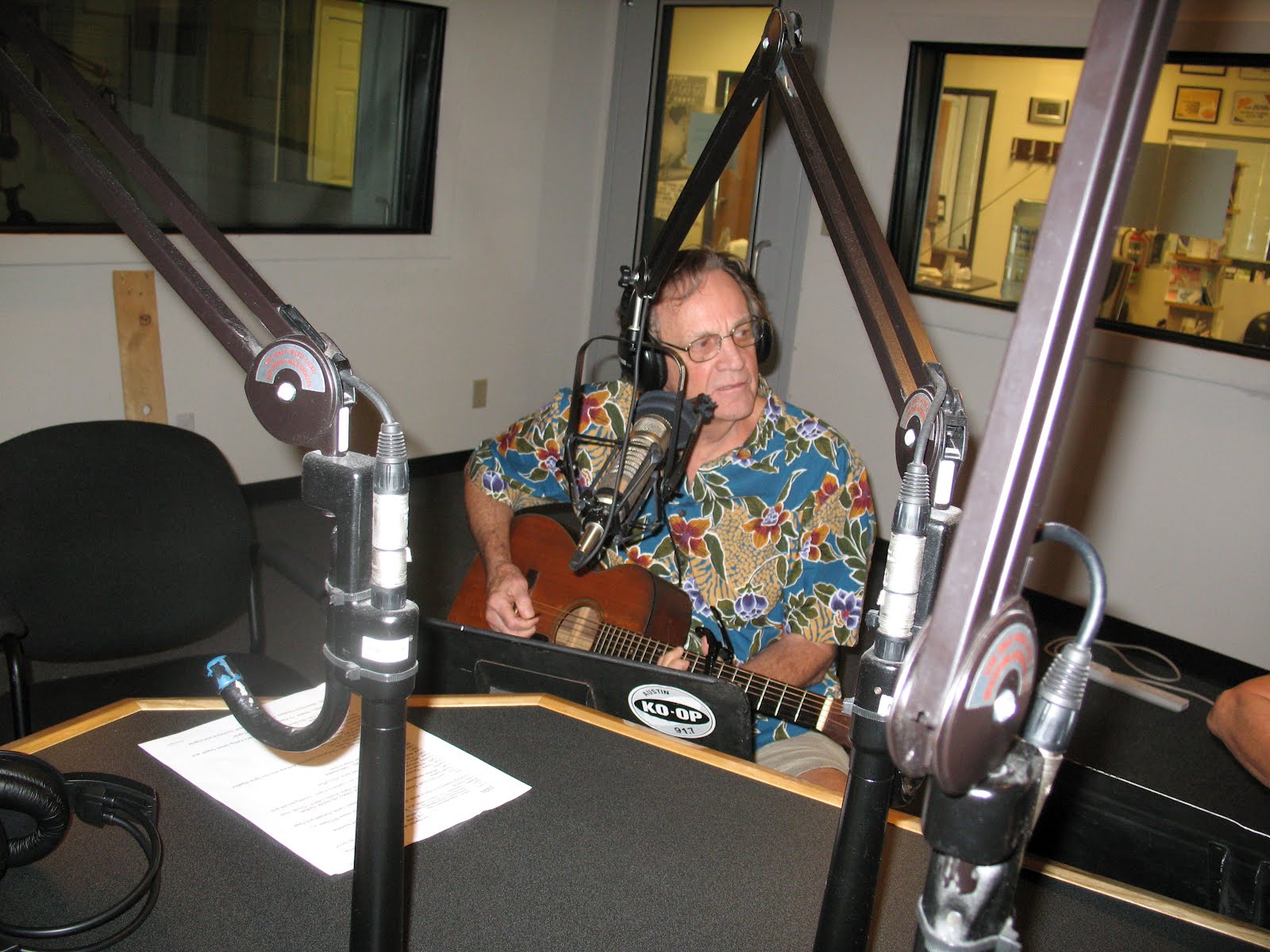
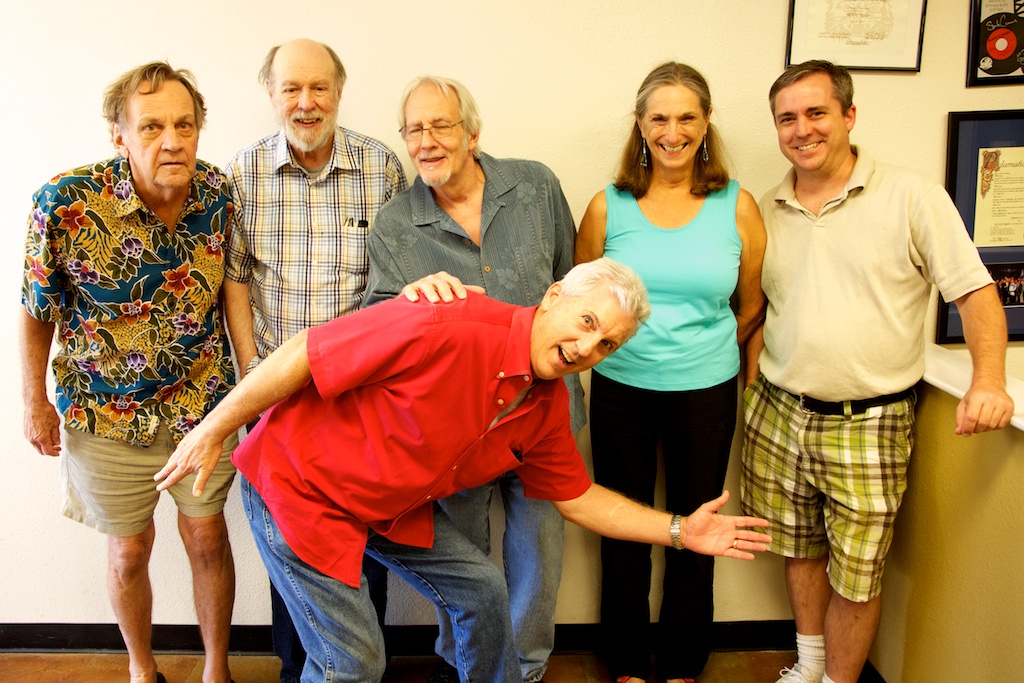
Jim Simons will join his former Movement law partner Brady Coleman (now an actor and musician) and Brady’s band, The Melancholy Ramblers (who will perform live) as Thorne Dreyer‘s guests on Rag Radio, Friday, July 27, 2-3 p.m., on KOOP 91.7-FM in Austin, and streamed live on the Internet.

AUSTIN — Cameron McPherson Cunningham was a lawyer nonpareil. Although he succumbed to cancer in July 2012, he will be long remembered in Texas and California, even on the national stage, because he chose to be a lawyer for the people, not for the corporations.

It is not so uncommon now for young lawyers to go into public interest law, or legal services, or even to become radical lawyers, as Bill Kunstler described himself in his memoir. When I was Cam’s law partner for the early years in Austin — 1969 to 1978 — we both thought of ourselves and self-identified as radical lawyers. As did other partners who came aboard the rollicking ship of our law firm, unlike most all the legal vessels of the time. We meant it to be that way. And I can tell you it was damn good fun in addition to being deadly serious politics.

It all started in Montreat, North Carlolina, in late August or early September 1969. Cam had graduated from the University of Texas Law School in 1967. He received a Reginald Heber Smith fellowship which paid all or part of his salary at a designated legal services program. For him it was the DNA Navajo legal services program, federally funded as part of the War on Poverty, located in the four corners in Arizona. DNA is an acronym for the Navajo phrase Dinébe’iiná Náhiitna be Agha’diit’ahii — which means “attorneys who work for the economic revitalization of The People.”

I had met Cam when he was still in law school and I was with the OEO Regional Office in Austin. (OEO being the federal agency that ran the War on Poverty). Over the next couple of years we became friends. The Movement had galvanized a large segment of young people in the U.S. I opened my solo practice in 1968 and was immediately swamped with cases arising from anti-war demonstrations, the military draft, and civil rights.

Austin’s Movement lawyers: From left, Cam Cunningham, Jim Simons, and Brady Coleman, at Austin’s Saxon Pub for the first public performance by The Melancholy Ramblers in 1991. Photo by Tom Moriarty.

In December of 1968 Austin activists, including Martin Wiginton and Greg Calvert, with input from Cam in Arizona, organized a conference of lawyers and Movement people at a dude ranch in Wimberley, Texas, just outside of Austin. The purpose was to nudge fee-charging lawyers into pro bono representation of the multitude of arrestees and military resisters.

As a result of the conference, Cam was “hired” as a roving organizer or liaison with the progressively-inclined lawyers in Texas identified at Wimberley. I doubt that much money for living expenses was ever paid but at some point Cam left the legal services program to take on his new task.

He and his wife, Cris, moved into the rented house where my wife and I lived on the east side of Austin. We became closer friends, so to speak. But we did enjoy the companionship and it was the Sixties. I recall that Cam got a part-time position at the law school with the penal code revision project, in part thanks to law professor and friend, Fred Cohen, known facetiously by other faculty folk as “Fred the Red.”

By 1969 Cam was committed to devoting his considerable energies and abilities to Movement law. At summer’s end we got wind of the lawyers’ confab known as the Southern Legal Action Movement (SLAM) to be held at Black Mountain near Montreat, North Carolina. Cam convinced me to go although I had been in informal rehab from the law that summer.

Like Wimberley, the Montreat conference was wild and wooly. All the Movement lawyers we ever heard of were there. From the New York Law Commune we found a model for what Cam wanted to do in Austin: a law commune. And so it was born in the wee hours one night in a long whiskey conversation between the two of us. He had the vision and I at least had some experience in such cases, which did not make me enthusiastic at first. We followed the New York lawyers up to New York after the conference and learned a lot.

Those idealistic principles seem a tad naive now. Like income limitation, legal workers and lawyers all with the same say and voice in the operation, fee cases to pay the way for Movement work, and so on. By the time we got back to Austin I did share Cam’s zeal to proceed with it; he had won me over. We rented a small suite near the University of Texas campus. We had one legal worker, Julie Howell (she is a lawyer now). But it really did not go too well.

Cam was trying to keep the penal code revision job and still practice law. We did defend Richard Chasein at a general court-martial at Fort Hood, after he declined training for riot control in American cities. This was a Movement case we did without fees. Other cases that should have generated fees didn’t. Money was a big problem that fall. I took a job at Dallas Legal Services Project in the spring of 1970. Cam soldiered on. In a few months I returned.

That summer the Radical Lawyers Caucus was formed for a run at the State Bar of Texas convention. With Bill Kunstler as our main speaker and other speeches by Maury Maverick, Jr. and Warren Burnett — both great progressive Texas lawyers — we made a splash at the convention. Before the convention the bar’s official journal declined to accept our paid ad about the Radical Lawyers Caucus. The suit we wanted to file was sent to Cam in Austin. I came back in time to brief the law and try the case which we won in federal court.

Our early struggles, stops and starts, changed for the better when a trial lawyer from East Texas contacted us — or we contacted him after we saw his ad in the Texas Observer. In the fall of 1970 Brady Coleman became the third musketeer and our course was set. For the next couple of years we three were very close. We joked that we were closer to each other than to our wives, which was probably no joke. All three marriages ended in divorce in the early ‘70s.

In court: Com Cunningham, center, in beard, with Brady Coleman, right, successfully defended John Kniffen, left, a former Vietnam Marine who was beaten by Austin cops at an anti-Vietnam war demonstration. Photo by Alan Pogue / The Rag Blog.

Brady had a lot of trial experience and he and Cam became a lethal trial team. Cases all around the state sent us into battle: Dallas, Houston, South Texas, and West Texas. Fort Hood kept us hopping. Busts on a large scale happened around the university. Cam was loving the practice of Movement law. He especially took to the criminal law. He and I defended a black activist charged with setting the UT ROTC building on fire.

Cam and Brady tried some murder cases (not political) and we all represented those charged with drugs. Brady and I tried civil cases against the city, police, even one against Ma Bell, the proceeds of which funded a great party that we dubbed the Last Annual Ma Bell Counter-Ripoff Wild Boar Feast.

In 1971 we cleaned out our firm bank account and took off by car to the May Day action in Washington, D.C., where we started out as participants in the action to “shut down D.C.” in protest against the Vietnam war and wound up lawyering to get our comrades out of jail. Later that summer we went to the riotous National Lawyers Guild convention in Boulder, Colorado, where it was decided amid great controversy that legal workers, jail house lawyers, and law students could be members of the previously all-lawyer Guild, the progressive bar association through the decades representing the Movement.

One thing we always did on these trips: have a big old good time. Cam was the leader of this fun, with all of us singing at the top of our lungs, quaffing any available spirits, toking and talking the talk, later recalling the great stories repeatedly even when they made us look bad — especially when they made us look bad! We were doing exactly what we wanted to do in a time when it counted for more than any other time.

If Cam was the leader of merriment, Brady was the provider of mellow entertainment with his guitar and voice. I tried to crack jokes, often so droll Cam did not recognize the joke and took it literally, as a Midwesterner is wont to do. (He often spoke of growing up in Detroit.) This was the beginning I guess of small rifts between us.

One night sitting at the old Villa Capri Motel dining room in Austin, Cam excoriated both Brady and me for the conventional, sell-out law we had been guilty of prior to coming under his tutelage. It got so bad we all three slammed out of there in different directions. At a time when there was definitely a bit of tension, we were saved again by adding legal ballast to the firm. We were lucky enough to gain two great new partners, Bobby Nelson and John Howard in fall 1972 at the old 15th Street law office. And soon we were back to doing what we set out to do, representing the Movement.

Anti-war GI’s and other activists gathered at the Oleo Strut GI Coffee House in Killeen, Texas, 1971. Cam Cunningham, in inset at right, with long dark hair. Brady Coleman is to his right. Photo by Alan Pogue / The Rag Blog.

In 1972 Cam and Brady were part of the legal team that represented the Vietnam Veterans Against the War (VVAW) in a trial in Gainesville, Florida. The Gainseville 8 were charged with conspiring to blow up the Republican convention. In 1974 John Howard and I represented a defendant in the Wounded Knee occupation (as we might call it now). There had been a siege of 71 days to a standoff with blazing guns. The Indians and their allies who held the store against the FBI were charged with multiple felonies in federal court.

I am unsure of the year, but in that same period, Bobby Nelson was part of a delegation to Cuba. We all had our Movement cases in and around Austin involving defense of GI’s, SDS members, civil rights activists, lawsuits concerning women’s rights, gay rights, and the counterculture in myriad legal battles. The law firm was an institution in the community of Movement groups and people from that Montreat beginning — Cam’s vision and determination — to the end of the firm in 1977, the year Cam moved to the Bay Area of California.

[Jim Simons practiced law in Austin for 40 years, representing many movement activists, including anti-war GIs. Jim served as a counsel for members of the American Indian Movement who were arrested at Wounded Knee in 1974. After he retired he published his memoir Molly Chronicles in 2007. Read more articles by Jim Simons on The Rag Blog.]

The Rag Blog

Posted in Rag Bloggers | Tagged , , , , , , , , , , | 7 Comments

Jack A. Smith : America’s Conservative Era

Image from Research Digest.

The election reflects
America’s conservative era

As the Republicans moved ever further to the right… so too did the Democrats. This leaves the U.S. as the world’s only rich capitalist state without a mass party left of center to at least offer some protection to working families.

By Jack A. Smith | The Rag Blog | July 15, 2012

This year’s presidential campaign is taking place within an extremely conservative era in American political history that will substantially influence the domestic and foreign priorities of the next administration, regardless of whether it’s headed by Democrat Barack Obama or Republican Mitt Romney.

Romney and his party, of course, embrace rigid right wing politics influenced by Tea Party extremism, while Obama and the Democrats — campaign rhetoric aside — basically echo the now extinct “moderate Republicans” of a quarter-century ago in a number of particulars.

A case in point about our decades-long conservative era is the Obama Administration’s major “progressive” achievement — the Affordable Care Act (ACA) health insurance plan, which was upheld by the Supreme Court two weeks ago.

The ACA, which congressional Republicans fought furiously to oppose when put forward by President Obama, was devised nearly 20 years ago by the conservative Heritage Foundation and implemented in Massachusetts by Romney when governor in 2006.

In his column in The New York Times June 29, the liberal Keynesian economist Paul Krugman pointed out that the act, which he supports, is “not perfect, by a long shot — it is, after all, originally a Republican plan, devised long ago as a way to forestall the obvious alternative of extending Medicare to cover everyone.”

A page one news analysis in the Times has referred to the measure as “the most significant piece of social legislation since the New Deal,” ignoring Medicare, Medicaid, food stamps, and the civil rights achievements of the 1960s in order to embellish its significance.

Doubtless, the new health measure contains several important new benefits, as well as several key shortcomings. (For details and analysis of the ACA by Physicians for a National Health Program, go here.)

Many liberals are now suggesting the ACA — which will still leave over 25 million people without insurance and may deprive millions more poor families of Medicaid as well (thanks to a ruling by arch-conservative Chief Justice John Roberts allowing states to reject enlarging the program) — is a first step toward the development of a truly inclusive national healthcare system. The second step, however, may be decades in coming, if ever, given probable conservative attempts to repeatedly weaken the ACA, much less allow an expansion.

Another of President Obama’s major first term “progressive” initiatives was taken from the conservatives as well. This was his proposal for a cap-and-trade system to reduce carbon dioxide emissions in the atmosphere, where they contribute to global warming. This flexible market-based program allowed high greenhouse gas emitters to buy the right to continue polluting the atmosphere from companies with low emissions.

Cap-and-trade was a less stringent alternative to tougher regulations sought by environmentalists and it was supported by Republican Presidents Ronald Reagan, George H.W. Bush (who adopted a similar measure in the early 1990s to curb acid rain), and by George W. Bush.

By the time Obama took office, the Republicans had lurched further to the right and corporate interests, led by Big Oil and Dirty Coal, were campaigning passionately against cap and trade. Conservatives scuttled the legislation in the Senate.

In both instances progressive legislation far more appropriate to healthcare and environmental needs was waiting in the wings but Obama — a champion of bipartisanship despite continual humiliating rebuffs — opted for the moderate Republican plans. When cap and trade failed, Obama in effect abandoned the fight against global warming rather than introduce progressive alternatives and fighting for them.

[One of America’s best known environmentalists and outspoken climate scientist, James Hansen, head the NASA Goddard Institute for Space Studies, has been leading a campaign against cap-and-trade for several years, charging it “does little to slow global warming or reduce our dependence on fossil fuels.” Some groups fighting climate change support the measure as a first step.]

The White House didn’t even allow the labor movement’s most important legislative request — the Employee Free Choice Act that would have removed roadblocks to union organizing — to come to a vote in the first term when the Democrats controlled both congressional chambers. A probable reason is that Blue Dog conservative Democrats would have voted with the minority to quash the measure.

Today’s conservative era is the product of an unrelenting drive for strategic ideological dominance by the right wing and its big business and financial sector allies for almost four decades. It is a reaction to the liberal reforms of the post-World War II era and social advances from the mass popular struggles of the 1960s-early ’70s period.

As the Republicans moved ever further to the right in the intervening years, so too did the Democrats, now situated in the center-right of the political spectrum. This leaves the U.S. as the world’s only rich capitalist state without a mass party left of center to at least offer some protection to working families.

The conservative assault accelerated with the implosion of the USSR and the dismantling of most socialist societies two decades ago. The existence of extensive social welfare programs, first in the Soviet Union and then in various socialist countries after World War II, obliged the capitalist “West” to implement reforms lest its own working classes be attracted to “the communist menace.” The ending of the Cold War also ended the adoption of significant social programs in America, and the weakening of existing benefits.

Many conservative goals have already been attained since the mid-’70s, and a number of them have taken place with partial or complete support of the Democratic party. They include:

The severe weakening of the labor union movement; the redistribution of massive wealth to the already rich through individual and corporate tax cuts while the standard of living for most Americans is in decline; off-shoring of manufacturing to enhance corporate profits; increased wage exploitation; deregulation of the financial economy, enhancing its casino configuration; privatization of government services; the elimination of social programs for the multitudes; threatened cuts in Medicare, Medicaid and Social Security are now “on the table,” says Obama; the fact that about half the American people receive low wages or live in poverty; inaction on needed tax increases for the wealthy; undermining the U.S. educational system; setbacks for civil liberties; and a massive increase in the prison population.

The conservatives made considerable progress during the presidencies of Reagan (1981-89), Bush I (1989-93) and Bush II (2001-2009). But rightist policies also spread during the Democratic administrations of Bill Clinton (1993-2001) and incumbent Obama from 2009.

Clinton’s two principal domestic achievements during eight years in office weakened two key Democratic reforms, much to the delight of the Republicans. In 1996 he conspired with conservatives to dismantle “welfare as we know it” by passing the “Personal Responsibility and Work Opportunity Reconciliation Act.”

In 1999, Clinton joined forces with the congressional right wing to repeal of the Glass-Steagall Act — a decision that in large part was responsible for the Great Recession and several more years of economic stagnation, unemployment, and some six million home foreclosures.

Obama’s first term in office is most noteworthy for his continual concessions to the right wing and refusal to fight for progressive goals, leading his wavering centrist party to the right of center in the process. He demobilized his enthusiastic and massive 2008 constituency upon taking office, evidently because he didn’t want a large activist organization in the streets pushing toward the liberalism many Democratic voters incorrectly believed he embodied.

The conservative campaign for even more control of the political system was signaled by the emergence of the activist right wing populist Tea Party soon after Obama took power. The political impact of this nationwide organization of older white conservatives, libertarians, and the religious right — bankrolled in part by billionaires — has been considerable, not least because no mass activist liberal movement was available to challenge Tea Party activism or put forward a progressive counter-agenda.

The liberal rank and file has been isolated by the party leadership, as have liberals in Congress. The few remaining center-left politicians have been objects of criticism from the White House and Democratic big wigs.

The Tea Party added a new element to the decades-long conservative campaign for dominant power in the U.S. Now the GOP isn’t just ideologically driven right-wing politicians, their business backers, and the wealthy 1% who finance their campaigns, but grassroots activists with their own selfish axes to grind.

Some are fuming because their taxes help the “undeserving” poor. Some think immigrants are “freeloaders.” Some are racists who do not accept a black president in the White House. Some will not abide gays and lesbians. Some reject separation of church and state. Some want to subvert the hard-earned rights of American women.

The conservatives rage against “big government” and “wasteful spending,” but this is demagogic rhetoric convincing or confusing a sector of the electorate largely ignorant of history and the details of current events. Both the Reagan and Bush II administrations — vocal proponents of a smaller state and lower spending — increased the size of government and created huge deficits.

The real Republican objective isn’t a “smaller” government per se but a government driven by free market laissez-faire capitalism and entirely controlled by monopoly corporations, Wall Street financiers, and the 1% ruling class. In the process, most government regulation of the economy and financial system will be eliminated, social programs will wither along with collective bargaining and the trade union movement, and key services will be transferred to profit-driven corporations.

Since the Affordable Care Act or cap-and-trade are conservative initiatives to begin with, why did congressional Republicans and the entire right wing, including arch opportunist Romney, fight against them?

The conservative movement has gravitated further to the right than it was five years ago, and the Democrats have moved in tandem, perhaps a dozen steps behind and two or three to the left, but quite distant from the domestic liberalism of the 1960s and the 1930s. The last significant social programs took place during conservative Republican President Richard M. Nixon’s first term (1969-72) — a product of the still popular though fading liberal era of social reform that he could not ignore. The conservative era began soon afterward.

Experience has taught the Republicans that the modern Democratic Party — particularly during the centrist Clinton and center-right Obama incarnations — hastily retreats and offers remarkably big concessions when confronted with obdurate opposition from the right. This is one reason why Republicans have adopted a policy of non-cooperation with Obama and Democrats in Congress. Even when the right-wing political resistance doesn’t get everything it seeks, it always seems to get something.

For instance, to gain big business and conservative backing for the healthcare act, Obama first rejected the progressive option of a less expensive and far more inclusive universal Medicare (single payer) covering all Americans, then dropped the liberal halfway notion of a “public option” in favor of the Republican plan.

He then privately reached agreements with the major pharmaceutical and health insurance companies and hospitals, assuring them of huge profits for many years to come. Lastly he made further concessions to Republicans and Blue Dog Democrats.

The Republican leaders who demonize “Obamacare” are well aware of its limited nature but the absurdly characterized “socialist” ACA will remain a useful conservative target for years to come as long as the opposition party would rather compromise than fight for genuine progressive objectives.

Had President Obama initiated a hard-fought populist educational campaign for single payer, he may have lost the vote but he could have won many additional supporters and tried again and again until victory. Medicare for all has important advantages in addition to covering everyone. Overhead is only 3% compared to about 30% for the profit making insurance companies.

Single-payer type health coverage exists in virtually all the leading industrialized capitalist countries of the world but will remain ridiculously overdue in the U.S. until a mass progressive movement or party takes up the challenge. By not daring to struggle, the Democrats don’t dare to win.

One of the major conservative strengths, despite various internal factions, is that the Republicans entertain several concrete long-range political and ideological goals and are willing to fight for them over the years. And their dishonest, obstructionist politics during Obama’s tenure have paid conservative dividends, even at the expense of deepening the nation’s economic crisis and further burdening workers and the unemployed by refusing to finance recovery.

The Democrats have no such long range progressive goals — or any serious progressive goals, for that matter — and the party seems to have forgotten how to fight.

Even the staunchly pro-Democratic liberal magazine The Nation noted June 25 that aside from populist campaign speeches, Obama

will offer no transformational agenda, no new foundation for an economy that works for working people, no plan for reviving the middle class. And no matter who wins, only sustained popular pressure will forestall a debilitating “grand bargain” that will further undermine the middle class and the poor…

Americans understand that the system is broken — and rigged against them. They increasingly see both parties as compromised, and they have little sense of an alternative and even less of a sense that anyone is prepared to fight for them. Progressives must therefore be willing to expose the corruption and compromises of both parties. This requires not only detailing the threat posed by the right but honestly about the limits of the current choice.

These are extremely sharp words from a publication that virtually worshiped Obama during the last campaign and has often offered excuses for him since then.

It is clear today that as a result of conservative gains in recent decades the United States has become much more of a plutocracy than a democracy, the electoral system is now utterly corrupted by big money, gross inequality is our capitalist system’s norm, and civil liberties are being shredded.

Public consciousness of this reality has been expanding in recent years, particularly since the onset of the Great Recession — an unusually severe periodic economic failing that “officially” ended three years ago but remains a disaster for the over 60% of the U.S. labor segment who constitute the working class. But the two mass ruling parties, each rejecting or ignoring progressive goals in favor of Republican “heavy” or Democratic “lite” conservative politics, cannot fight the plutocrats or urgently reconstruct what is left of American democracy.

Only a left of center contending party or a truly mass and activist movement that puts forward a fighting progressive program has a chance of dumping the conservative era. The Democrats may be several political degrees better than the Republicans, but they have been gradually tilting toward the right without respite since the demise of the party’s final center-left manifestation 44 years ago. They now appear to be hopelessly stagnant and ideologically ill-equipped to transform the conservative era they helped create, even if Obama is reelected in November.

[Jack A. Smith was editor of the Guardian — for decades the nation’s preeminent leftist newsweekly — that closed shop in 1992. Smith now edits the Hudson Valley Activist Newsletter. Read more articles by Jack A. Smith on The Rag Blog.

The Rag Blog

Posted in Rag Bloggers | Tagged , , , , , , | 2 Comments

FILM / Jonah Raskin : Oliver Stone’s Over-the-Top ‘Savages’

Savages:
Oliver Stone’s over-the-top 
stoner picture

Good and bad run along parallel tracks in Savages, which might well be described as Butch Cassidy and the Sundance Kid meets The Last of the Mohicans.

By Jonah Raskin | The Rag Blog | July 14, 2012

“In a bad, bad world, drugs are good,” the narrator of Savages, Oliver Stone’s new, explosive pot picture, says near the start of the non-stop action.

The world in Savages, which is mostly Southern California and Northern Mexico, is a very bad place, indeed. The DEA agent, played by John Travolta, is very bad. The gangsters, thugs, and killers in the Mexican cartels are bad, too, though, of course, not everyone in Savages is equally bad. The narrator, Ophelia, better known as “O,” is good, though she does bad things, and her two boy friends and lovers, Ben and Chon, are also good, though they also do bad things.

It’s a long, long way from the Cheech & Chong comedies, such as Up in Smoke, and, though Stone himself smokes dope and apparently enjoys smoking it, in Savages he doesn’t indulge in the playful, the innocent, and the goofy. He’s hard-edged, hardboiled, and just plain hard.

The good characters do bad things for good reasons and the bad characters do bad things for bad reasons. , with Ben and Chon as drug dealing versions of Butch and the Kid, as well as latter-day versions of James Fenimore Cooper’s gun-toting frontiersmen.

The ugly Mexican drug dealers are the bad savages. The beautiful Californian weed growers and distributors are the good savages. Stone makes it very simple, though in the spirit of duality, he provides two endings to the picture, one happy and the other unhappy.

The Mexicans are dark and the Californians are blond. The head of one of the Mexican cartels is a dark-skinned, dark-haired, darkly sinister beauty named Elena, played by sexy Salma Hayek.

Ben is a latter-day, idealistic hippie, though in a bloodbath, he learns that to survive he has to kill. His buddy and pal, Chon, is a veteran of the war in Iraq and an expert in sabotage, explosive devices, and hand-to-hand combat. His skills comes in handy when he, Ben, and their gang take on the Mexicans.

The New York Times film critic, A. O. Scott, calls the picture a “mess,” but it’s a very tidy mess, with parallel construction, and nice neat dualities, including two kidnappings and a final meeting in the desert in which Elena’s dark-skinned daughter, Madga, is exchanged for the fair-haired blonde, Ophelia.

The movie feels like a replay of the kidnapping, and the subsequent freeing, of the hostages held by the savages that takes place in James Fenimore Cooper’s 1826 novel, The Last of the Mohicans, and in hundreds of similar cinematic scenes in which hostages are freed.

There are no pot doctors in Savages, no medical marijuana patients, and no activists eager to make weed legal. Needless to say, Stone hasn’t made a documentary that accurately reflects the world of weed today, but a moralist tale that seems to say that if you want to survive in the bad, bad world you have to do bad things, and you have to execute them better than the worst of the bad guys. Hey, blowing stuff up can be a fun adventure!

The ending isn’t ever really in doubt. Stone loves his beautiful savages, Olivia, Ben, and Chon, too much to let them perish, though he puts them through the wringer. Ben grows and sells drugs to help poor people in Africa and Asia; Chon sells and deals because he’s a veteran of combat and needs to decompress from the war zone in Iraq. Weed, sex, and hi-jinks are his therapy. Olivia smokes weeds because she’s a spoiled rich girl who never has had any parenting, not until she meets Elena.

The ugly savages, including the sadistic Lado, played beautifully by Benicio del Toro, are too ugly and too evil to get away with their despicable deeds. Stone won’t let them. You can’t accuse him of being soft on crime, or letting the real criminals get away with illegal activity.

The characters smoke dope and try to act as though they’re stoned, though they’re unconvincing. There are also marijuana plants on screen. They’re clearly not real plants, but rather the artificial variety probably made with silk and bamboo.

Ophelia provides the audience with background information about weed in her voiceovers, but much of it is woefully out-of-date. In California, top-drawer weed does not sell anywhere near $6,000 a pound, as she suggests, but more like $1,500. That’s because there’s a glut on the market in California, with more people growing more marijuana than ever before, and supply out-distancing demand by the ton, despite the recent (2012) wave of raids by the Feds on marijuana dispensaries and marijuana plantations.

In Savages, all of the criminals and all of the dealers have computers and cell phones, but nearly everyone does these days whether they’re in remote Mexican villages or in big cities on both sides of the border. Still, it’s fun to watch the druggies use the latest technology.

Dennis, the double-dealing, triply-corrupt DEA agent, tells Ben and Chon, “It’s only a matter of time before they legalize it.” Savages doesn’t suggest how that might happen, and how much time it might take.

What’s more, the Obama White House, the DEA, and all the drug warriors, show no signs whatsoever of planning to end the war on marijuana or any other drug. It’s a savage war that has taken the lives of tens of thousands of people, both Mexicans and Americans, and, in an election year in which every vote counts, Obama seems to be betting than the war on marijuana will win him more votes than it will lose him. He’s probably right.

Don’t expect the civilized savagery on both sides of the border to let up anytime soon. In the meantime, Oliver Stone’s dualistic drama offers viewers two distracting, suspenseful hours that will probably keep them on the proverbial edge of the seat, wondering who might be wacked next and who might survive the bad, bad world.

[Jonah Raskin is the author of Marijuanaland: Dispatches from an American War and a regular contributor to The Rag Blog. Read more articles by Jonah Raskin on The Rag Blog.]

The Rag Blog

Posted in Rag Bloggers | Tagged , , , , , | Leave a comment

FILM / William Michael Hanks : ‘Anne Braden: Southern Patriot’

Anne Braden: Southern Patriot:
A film by Anne Lewis and Mimi Pickering

By William Michael Hanks | The Rag Blog | July 14, 2012

“The meaning of life is in that struggle which human beings have always been able to do — to envision something better… that’s what makes human beings divine.” — Anne Braden

If you find yourself in Austin Wednesday, July 18, be sure to see the screening of Anne Braden: Southern Patriot. This significant new documentary — directed by Anne Lewis and Mimi Pickering and released by Appalshop Films — is being  presented by the Austin Film Society and The Texas Observer at the Alamo Drafthouse South, 1120 South Lamar in Austin, at 7 p.m.

Anne Lewis, who is a senior lecturer at the University of Texas at Austin and a contributor to The Rag Blog, will be at the screening to discuss the film. There have also been recent screenings of Anne Braden: Southern Patriot in San Jose and San Francisco, California.

Who is a “patriot”? The Minute Men, the Continental Army in Valley Forge, Jefferson and Adams debating on the floor of Congress, or maybe the volunteer who serves her country in time of war?

Perhaps, but the one thing that all patriots share is a love of their country and the courage to fight for what they believe in — to fight for their personal vision of a better America. That is, and will always be, the definition of true American patriotism.

At the close of World War II, America needed patriots. The poor and people of color were on the bottom rung of the ladder with no hope of advancement — America was an apartheid state. True American patriots who would see a better way and risk their blood and treasure to move us towards a better world were needed more than ever.

America’s pastime, baseball, was integrated in 1946 when Branch Rickey signed Jackie Robinson to play for the Brooklyn Dodgers. But racism in America was far from over. Two years later, Anne McCarty married Carl Braden and they began a lifetime of activism together. Through the lens of Anne Braden’s life we see the challenges and victories of the civil rights movement.

(Along with her husband Carl, Anne Braden, who died in 2006, edited the iconic Southern Patriot newspaper, published by the Southern Conference Educational Fund.)

In 1954 Anne and Carl bought a house for a black family in a white neighborhood. That set in motion an unimaginable sequence of events that swept Anne into the spotlight, accused of being a communist, and sent her husband, Carl, to prison for sedition against the state. In time it was held that sedition was a federal crime, not prosecutable by the state, and Carl was set free. But, by then, Anne Braden had a glimpse of a better America and worked tirelessly throughout her life to see it became a reality.

There are several remarkable things about this documentary. The technique of the first person narrative is used throughout the film and it flows seamlessly from one person to another as the story of the civil rights struggle throughout the South unfolds. Iconic footage of civil rights demonstrations is intercut with reflections by Anne Braden and other civil rights workers, former co-workers, and scholars — including Cornel West and Angela Davis — descriptions of how they were vilified and branded “communists” for trying to realize a better vision of America.

The first-person technique requires rigorous discipline in editing to keep the narrative flowing through the voices of different persons. Anne Braden: Southern Patriot is an outstanding example of that challenging form. Anne Lewis and Mimi Pickering are both award-winning filmmakers and this film is a landmark work in both content and style.

Who was Anne Braden? In the 1950’s she was a young woman with a determination to follow her conscience. She was born in Louisville, Kentucky, and moved with her family to Alabama where she enjoyed the privileged life of a child of the middle class. As a young girl, she began to notice the disparities in race relations and she began to develop an active social conscience. A conscience that would not let her stand by and look the other way. Her life is an example of right action — pursuing the vision of a better world.

Anne Braden:

The meaning of life is in that struggle which human beings have always been able to do — to envision something better… that’s what makes human beings divine.

Anne Braden’s life touched others and inspired them to action. Bob Zellner describes his first experience as an organizer in the South:

My first job at SNCC was to head a campus traveling program. The first staff meeting I went to was in McComb, Mississippi, where a freedom march was being planned. I joined the march and was beaten, arrested, and almost lynched that first meeting. They kept calling me a god-damned, nigger-lovin’, son of a bitch Jew from New York. And I said well, nine out of 10 is not bad but I’m not from New York!

Anne had taught us you could be for an open political discussion… you can be for integration… and you could still be a good person… a normal person. If it was Rosa Parks and Martin Luther King who convinced me to join the struggle, it was Anne Braden who showed me how to do it.

Anne Braden:

The real danger comes from people in high places, from the halls of Congress to the boardrooms of our big corporations, who tell white people that if their paychecks are eaten up by taxes it’s not because of our bloated military budget but because of government programs that benefit black people. If young whites are unemployed, it’s because blacks are getting all the jobs. Our problem is the people in power who are creating a scapegoat mentality. That’s what is creating the danger of a fascist movement in America.

Anne Braden sensed that what she faced in Alabama was the same fascism that the Allies had just announced a victory over in WWII. In an eerie echo of the recent past, the words of Herman Goering, Hitler’s Third Reich Marshall at the Nuremberg trials offer a key to understanding the dynamics in Alabama. He speaks of “war” but substitute any government policy and the formula still works:

Naturally, the common people don’t want war, but after all it is the leaders of a country who determine the policy. And, it is always a simple matter to drag people along, whether it is a democracy or a fascist dictatorship, or a parliament, or a communist dictatorship, voice or no voice, the people can always be brought to the bidding of the leaders. This is easy. All you have to do is tell them they are being attacked and denounce the pacifists for lack of patriotism and exposing the country to danger. It works the same in every country.

This simple, age-old, and effective strategy has been used by our leaders, particularly since WWII and the “Communist threat,” to suppress dissent and silence voices of righteous anger. But, it did not silence Anne Braden.

Faced with an intractable segregationist power structure in Alabama, Anne and Carl Braden set about doing what they could for social justice in spite of it. Nothing seemed to stop her. She was inspired by a glimpse of something better — a better life for blacks and whites — and she saw no reason why it should not be.

When she heard Martin Luther King portrayed as a “dreamer,” Anne insisted that “Martin Luther King was not a dreamer, he was a revolutionary.” and she would quote MLK’s Riverside Church speech: “True compassion is more than flinging coins to a beggar… true compassion realizes that a society that produces beggars needs to be entirely restructured.”

Anne Braden: Southern Patriot is a wellspring of intellectual reason, a blueprint for action, and it includes some of the most iconic footage from the civil-rights movement ever seen. Here Anne Braden describes her discovery of a simple but effective strategy:

If you use every attack as a platform, they can’t win and you can’t lose. If they leave you alone you keep on organizing, if they attack you, you have a platform to reach a lot more people, so you really can’t lose.

In 1965 President Lyndon Johnson signed the most sweeping civil rights legislation in U.S. history and Dr. Martin Luther King won the Nobel Peace Prize. But civil rights workers were murdered in Mississippi, and beaten in Birmingham and Selma. The struggle goes on. Each generation must shoulder the responsibility of providing oversight to their government. And if we don’t, the inexorable concentration and abuse of power will continue.

Anne Braden and Cornel West.

Jackie Robinson retired after the 1956 season, before the Dodgers left Brooklyn for Los Angeles. Twenty five years after his historic debut, Jackie Robinson, the grandson of a slave, agreed to throw out the first ball of the 1972 World Series. He was dissatisfied with the progress of race relations. “As I write this 20 years later, and sing the anthem, I cannot salute the flag. I know that I am a black man in a white world. In 1972, in 1947, at my birth in 1917, I knew that I never had it made.”

So, what do we do if our founders do not rise from the grave to set our country right? We do what they intended us to do — rise from our slumber and act — if we have the conscience and the fortitude — if we have the guts.

The ills that are imbedded in the darker angels of human nature, are in turn reflected in society. We may trace the disease of social oppression through history. And, as certainly as a physical disease diminishes the body, so do societal ills diminish the body politic.

It’s not surprising that most of our so-called leaders are afflicted with pride, avarice, and self interest; that is to be expected — power corrupts. But it is for that very reason that the conscience of the people must call on the brighter angels of our nature.

We are at a crossroads in America — a crises of conscience. Fortunately, there is a simple, effective cure. Really, all we have to do is follow the example of Anne Braden.

Anne Braden: Southern Patriot, a documentary by Anne Lewis and Mimi Pickering, will screen at the Alamo Drafthouse South, 1120 S. Lamar, Austin, Texas at 7 p.m., Wednesday, July 18. Don’t miss it.

For ticket information: The Austin Film Society.

[William Michael Hanks has written, produced, and directed film and television productions for the National Aeronautics and Space Administration (NASA), the U. S. Information Agency, and for Public Broadcasting. His documentary film, The Apollo File, won a Gold Medal at the Festival of the Americas. Mike, who worked with the original Rag in Sixties Austin, lives in Nacagdoches, Texas. Read more articles by Mike Hanks on The Rag Blog.]

The Rag Blog

Posted in Rag Bloggers | Tagged , , , , , , , | 3 Comments