Harry Targ : NATO: From Fighting Socialism to Global Empire

The Big Three at Yalta, February 1545: Winston Churchill, prime minister of the United Kingdom; Franklin D. Roosevelt, president of the United States; and Joseph Stalin, Premier of the Soviet Union. Image from U.S. Department of Defense / Wikimedia Commons.

NATO:
From fighting socialism to global empire

Leaders of the three states celebrated a post-war world order in which they would work through the new United Nations system to modulate conflict in the world.

By Harry Targ | The Rag Blog | May 17, 2012

During World War II an “unnatural alliance” was created between the United States, Great Britain, and the former Soviet Union. What brought the three countries together — the emerging imperial giant, the declining capitalist power, and the first socialist state — was the shared need to defeat fascism in Europe.

Rhetorically, the high point of collaboration was reflected in the agreements made at the Yalta Conference, in February 1945, three months before the German armies were defeated.

At Yalta, the great powers made decisions to facilitate democratization of former Nazi regimes in Eastern Europe, a “temporary” division of Germany for occupation purposes, and a schedule of future Soviet participation in the ongoing war against Japan.

Leaders of the three states returned to their respective countries celebrating the “spirit of Yalta,” what would be a post-war world order in which they would work through the new United Nations system to modulate conflict in the world.

Within two years, after conflicts over Iran with the Soviet Union, the Greek Civil War, the replacement of wartime President Franklin Roosevelt with Harry Truman, and growing challenges to corporate rule in the United States by militant labor, Truman declared in March, 1947 that the United States and its allies were going to be engaged in a long-term struggle against the forces of “International Communism.”

The post-war vision of cooperation was reframed as a struggle of the “free world” against “tyranny.”

In addition to Truman’s ideological crusade, his administration launched an economic program to rebuild parts of Europe, particularly what would become West Germany, as capitalist bastions against the ongoing popularity of Communist parties throughout the region.

Along with the significant program of reconstructing capitalism in Europe and linking it by trade, investment, finance, and debt to the United States, the U.S. with its new allies constructed a military alliance that would be ready to fight the Cold War against International Communism.

Representatives of Western European countries met in Brussels in 1948 to establish a program of common defense and one year later with the addition of the United States and Canada, the North Atlantic Treaty Organization (NATO) was formed. The new NATO charter, inspired largely by a prior Western Hemisphere alliance, the Rio Pact (1947), proclaimed that “an armed attack against one or more of them… shall be considered an attack against them all…” which would lead to an appropriate response.

The Charter called for cooperation and military preparedness among the 12 signatories. After the Soviet Union detonated its first atomic bomb and the Korean War started, NATO pushed ahead with the development of a common military command structure with General Eisenhower as the first “Supreme Allied Commander.”

After the founding of NATO and its establishment as a military arm of the West, the Truman administration adopted the policy recommendations in National Security Council Document 68 (NSC 68) in 1950 which declared that military spending for the indefinite future would be the number one priority of every presidential administration.

As Western European economies reconstructed, Marshall Plan aid programs were shut down and military assistance to Europe was launched. Greece and Turkey joined NATO in 1952, and, fueling the flames of Cold War, West Germany was admitted to NATO in 1955. (This stimulated the Soviet Union to construct its own alliance system, the Warsaw Pact, with countries from Eastern Europe.)

During the Cold War NATO continued as the only unified Western military command structure against the “Soviet threat.”While forces and funds only represented a portion of the U.S. global military presence, the alliance constituted a “trip wire” signifying to the Soviets that any attack on targets in Western Europe would set off World War III. NATO thus provided the deterrent threat of “massive retaliation” in the face of first-strike attack.

With the collapse of the former Warsaw Pact regimes between 1989 and 1991, the tearing down of the symbolic Berlin Wall in 1989, and finally the collapse of the Soviet Union itself in 1991, the purpose for maintaining a NATO alliance presumably had passed. However, this was not to be.

In the next 20 years after the Soviet collapse, membership in the alliance doubled. New members included most of the former Warsaw Pact countries. The functions and activities of NATO were redefined.

NATO programs included air surveillance during the crises accompanying the Gulf War and the disintegration of the former Yugoslavia. In 1995, NATO sent 60,000 troops to Bosnia and in 1998-99 it carried out brutal bombing campaigns in Serbia with 38,000 sorties. NATO forces became part of the U.S.-led military coalition that launched the war on Afghanistan in 2001. In 2011 a massive NATO air war on Libya played a critical role in the overthrow of the Gaddafi regime.

An official history of NATO described the changes in its mission: “In 1991 as in 1949, NATO was to be the foundation stone for a larger, pan-European security architecture.” The post-Cold War mission of NATO combines “military might, diplomacy, and post-conflict stabilization.”

The NATO history boldly concludes that the alliance was founded on defense in the 1950s and détente with the Soviet Union in the 1960s. With the collapse of Communism in the 1990s it became a “tool for the stabilization of Eastern Europe and Central Asia through incorporation of new Partners and Allies.”

The 21st century vision of NATO has expanded further: “extending peace through the strategic projection of security.” This new mission, the history said, was forced upon NATO because of the failure of nation-states and extremism.

Reviewing this brief history of NATO, observers can reasonably draw different conclusions about NATO’s role in the world than from those who celebrate its world role.

First, NATO’s mission to defend Europe from aggression against “International Communism” was completed with the “fall of Communism.” Second, the alliance was regional, that is pertaining to Europe and North America, and now it is global. Third, NATO was about security and defense. Now it is about global transformation.

Fourth, as its biggest supporter in terms of troops, supplies and budget (22-25%), NATO is an instrument of United States foreign policy. Fifth, as a creation of Europe and North America, it has become an enforcer of the interests of member countries against, what Vijay Prashad calls, the “darker nations” of Asia, Africa, and the Middle East. Sixth, NATO has become the 21st century military instrumentality of global imperialism.

And finally, there is growing evidence that larger and larger portions of the world’s people have begun to stand up against NATO.

[Harry Targ is a professor of political science at Purdue University who lives in West Lafayette, Indiana. He blogs at Diary of a Heartland Radical — and that’s also the name of his new book which can be found at Lulu.com. Read more of Harry Targ’s articles on The Rag Blog.]

The Rag Blog

Posted in Rag Bloggers | Tagged , , , , , , | Leave a comment

Lamar W. Hankins : A Texas Funeral and the Failure of Regulation

A “Heritage of Service”: Sunset Memorial Funeral Home in Odessa, Texas. Image from website.

A Texas funeral:
A case study in the failure of regulation

By Lamar W. Hankins | The Rag Blog | May 16, 2012

[Regular Rag Blog contributor Lamar Hankins has for over 20 years served as an advocate for families who have to deal with the funeral industry. Most of that work has been done with the Austin Memorial and Burial Information Society (AMBIS) and with the national organization with which it is affiliated, the Funeral Consumers Alliance (FCA). He has written about this subject previously on The Rag Blog. ]

In 1984, sweeping new regulations written by the Federal Trade Commission (FTC) went into effect. The regulations, which are referred to as the Funeral Rule, were intended to keep funeral homes from engaging in deceptive practices in their dealings with the public.

Many states, including Texas, adopted the same or similar regulations and were charged by state law with enforcing these regulations. That task in Texas is the responsibility of the Texas Funeral Service Commission (TFSC). Unfortunately, the FTC takes no enforcement actions in response to most complaints.

A recent experience showed me that federal and state regulations aren’t worth John Nance Garner’s proverbial “bucket of warm spit” because state officials will not protect families from abuse by the funeral industry.

The funeral home that carried out my father-in-law’s 2010 funeral hid important and legally required information from my family, lied to them in order to up-sell them to a more expensive casket, shut out the pallbearers from performing their duties, and then lied to the state regulatory investigators when we complained.

Much worse, though, was the flaccid response from the TFSC. Instead of compelling the funeral home to address our grievances, which the TFSC agreed were valid, it allowed the business to misrepresent the facts and skate free with a classic “no-apology” apology, and a tap on the wrist for good measure.

Failure at the funeral home

In 2010, after the death of my father-in-law, his funeral was held at Sunset Memorial Funeral Home in Odessa, Texas. The business is a combination funeral home and cemetery, with the funeral home located on the same property as the cemetery.

Just under two years earlier, my mother-in-law had died and her services were held at the same location. Everyone in the family was pleased with her services, so we expected that everything would go just as well with my father-in-law’s services. Unfortunately, that was not the case.

I waited until four months after the services to write the funeral home and file a complaint with the TFSC about both the violations of federal and state regulations, and the poor funeral practices we experienced. Sunset had committed three flagrant violations of the Funeral Rule that I knew about.

1. The funeral home did not provide a Statement of Goods and Services selected (an itemized receipt and contract for the funeral transaction) until after the funeral, even though regulations clearly require that this occur before the funeral.

About an hour after my father-in-law’s burial concluded, a funeral director appeared at my father-in-law’s home, where the family had gathered to visit and share our memories. The funeral director met with my brother-in-law and requested that he sign the Statement of Goods and Services and pay for the funeral at that time. He was not willing at that time to break away from other family members to take care of this commercial transaction and told the funeral director that he would take care of the bill the next day.

My brother-in-law signed the Statement of Goods and Services and the funeral director left. The total amount billed — $8,177 — was paid the next day.

2. The most egregious violation of regulations — it can only be called fraud — is that the funeral director falsely dated the Statement of Goods and Services to a date that preceded the funeral by three days, falsely indicating that the Statement had been received and signed before the funeral. This incident was witnessed by my sister-in-law, and recounted to me, my wife, and her sister soon afterward.

3. Contrary to law and regulation, a funeral director from Sunset told my family that so-called “cremation” caskets could not be used for burial. This is a flagrant violation of the federal and state regulations that prohibit making false, deceptive, or misleading statements about the sale or use of merchandise.

Faced with this deception at a time of great stress, my family chose a more expensive “burial” casket rather than prolong the arrangement conference over this issue.

In addition to these three violations of the Funeral Rule, numerous other matters were mishandled by the funeral home staff. They demonstrate that a funeral home that does a good job one day can perform like uncaring amateurs on another, especially when making as much money as possible takes precedence over serving a grieving family.

When the staff picked up my father-in-law’s body at his home on the day of his death, my family was asked to sign a form giving permission to embalm the body, and they wanted to know when the funeral would be held.

The three surviving children had not had time to consider questions about the funeral arrangements so soon after the death and refused to sign the permission to embalm form, considering it inappropriate and insensitive to be asked about embalming when the body was being picked up and details of the funeral had not been determined.

Attempting to force such quick decisions on grieving families is an affront to human decency, but I know from experience that it is a technique funeral directors use to increase the cost of funerals.

As it turned out, my father-in-law’s body was not embalmed and the family paid $495 for refrigeration for five days. While all funeral homes can charge whatever amount they want, charging $495 for refrigeration — a service that costs no more than $1.00 a day (according to the manufacturers of funerary refrigeration equipment) — is outrageous price-gouging.

And the family was charged $495 for “other preparation” of the body. However, there was no “other preparation” to be done to my father-in-law’s body since it was not an open casket service and his body was not viewed at the visitation.

On the day that the obituary needed to be filed, the funeral director did not notify the family of a 2 p.m. deadline set by the local newspaper until a few hours before the deadline, though he had known of the deadline when he agreed to handle the funeral.

This created unnecessary grief and anxiety as the survivors scrambled to make sure the notice would appear in time for friends and acquaintances to learn of the death and know when and where the funeral would be held.

A visitation with family and friends was scheduled for the evening before the funeral service. The funeral director promised that the service program would be available for proofreading no later than the time of the visitation, but it wasn’t.

As a result, corrections were being made to the service program the next day, after guests had arrived for the funeral service. Astonishingly, the names of all the pallbearers had been omitted from the program.

And there were other problems, such as the incorrect spelling of my father-in-law’s name on a DVD of family pictures prepared by the funeral home, and the backward display on the casket of a blanket that included the logo of my father-in-law’s alma mater.

At the cemetery, the funeral director gave no instructions to the pallbearers. To the family’s shock and dismay, the pallbearers were not allowed to act as pallbearers at all: The funeral director told some cemetery grounds workers to place my father-in-law’s casket on top of a small green garden wagon and wheel it to the gravesite, some 300 feet from the chapel where the service was held.

The cemetery workers were wheeling the casket to the gravesite as we exited our cars that had been in the funeral procession following a winding route through the cemetery. The pallbearers did not even have an opportunity to get to the hearse before the garden wagon was loaded by the workers. The family could not imagine why the funeral director did not allow the pallbearers to perform their expected role.

Finally, the funeral home’s itemized receipt for goods and services (in reality, a contract) included a provision under the heading “TERMS AND CONDITIONS,” that requires arbitration of “ANY CLAIM OR CONTROVERSY” or “ANY CLAIM OR DISPUTE BETWEEN OR AMONG THE SELLER, YOU AS THE PURCHASER, ANY PERSON WHO CLAIMS TO BE A THIRD PARTY BENEFICIARY OF THIS AGREEMENT… .” In plain language, the receipt, which the family was required to sign, forces customers to give up the right to sue the funeral home.

Furthermore, the arbitration provision in the contract appears to be intended to prevent families from making complaints to appropriate authorities. If so, this is a violation of both state and federal regulations pertaining to funeral service. All consumers are allowed by federal and state law to lodge complaints against a funeral service for its misconduct, including violations of pertinent federal and state regulations.

Families should complain about such provisions to regulatory authorities and refuse to sign the agreement until the provisions are struck from the contract. Since I was not a party to the contract, nothing prevented me from filing a complaint.

I have attended many funerals in my life, given the eulogy at several, and have arranged more funerals than have most people. Never have I attended a funeral that was handled as ineptly as was my father-in-law’s funeral. The funeral home did not earn the amount it charged for nearly every service paid for. The casual, incompetent, and insolent behavior of the staff was inexcusable and does a disservice to those funeral establishments that fulfill their duty to families to honor and respect their loved ones.

Sunset funeral home told the TFSC that it would send a letter of apology to the family concerning the rules violations it committed. The letter, however, does not apologize for the rules violations. It apologizes for not “meeting the family’s expectations.” At no time did Sunset ever admit that it committed any rules violations, nor did it admit even to performing poorly.

Regulatory indifference

To its credit, the Texas Funeral Service Commission found that the funeral home did violate federal and state regulations pertaining to the Statement of Goods and Services’ falsification and presentation after the funeral, as well as the claim that a cremation casket cannot be used for burial, for which two Letters of Warning were issued.

In addition, the TFSC investigator discovered that Sunset had overcharged for the placement of the two obituaries and had not returned the excess money. The TFSC found that this was a separate violation and required the repayment of the overcharge to the family. A third Letter of Warning was issued for this violation of regulations. But Sunset then took credit in its refund letter to the family for discovering the over-payment for the obituaries, another falsification of the facts by Sunset.

While Sunset was not required to pay a fine or penalty, it was required to provide to the TFSC “a written report that describes the measures taken to implement corrections” of the violations found to have been committed by Sunset. The written reports were to include “the dates those measures were implemented.”

On October 12, 2011, the general manager of the funeral home, Bill Vallie, and the funeral director in charge of my father-in-law’s services, Dudley Chandler, submitted a letter outlining their compliance with the Commission’s requirements. The letter clearly indicates that they did not comply with the Commission’s directives. T

he letter states that they have periodic training for staff, but there was no indication in their letter that any compliance actions related to the Letters of Warning were taken after the Letters of Warning were sent to them. No dates were provided about when any corrective actions were taken.

After spending 20 years working to educate families about their rights and how to avoid unscrupulous behavior by some funeral directors, it is clear to me that unless funeral homes have to pay substantial monetary penalties for their misconduct, there is little incentive for them to stop their unlawful and deceptive practices.

The fact that there had been no other formal complaints against this funeral home in 30 years (a factor considered by the TFSC) means very little when one considers what it takes for families to make formal complaints. Four family members had to travel substantial distances to Austin to attend an informal conference with the TFSC staff as part of its investigation of this complaint, an investigation that took nearly a year and a half.

Most funeral homes can easily calculate their funeral prices against the likelihood that violations of the rules will result in substantial penalties. Naturally, many decide that it pays in the long run for them to ignore any rules that are inconvenient. This cost-benefit calculation is found in all regulated industries. The only way to overcome it is to base penalties, in part, on the profits made from violating the rules.

The funeral home demonstrated that it has little respect for the authority of the TFSC or the concerns of the family. Sunset funeral home has thumbed its nose at the TFSC and the family by its impudence and noncompliance in responding to the Commission’s decisions.

And why shouldn’t they? The Commission was unwilling to take any action to enforce its orders against the funeral home after I pointed out to the Commission’s Executive Director the failure of Sunset to comply.

To add insult to injury, I had to make a Public Information Act request to learn the details of the TFSC’s actions against this funeral home 18 months after I filed the initial complaint.

Because the TFSC refused to make public its findings that the funeral home officials lied about what really happened, the funeral home knows that its tactics have worked and they have skated through this matter with relative ease. The TFSC even allows funeral homes in Texas to use documents they trick families into signing to avoid their compliance with the federal and state regulations. Once funeral homes learn of these regulatory omissions, it is no wonder that many of them use obfuscation and deceit as regular practices in their dealings with Texas families.

As further evidence of the funeral home’s utter indifference to its actions and their effect on grieving families, the funeral home alleged in its communications with the TFSC that I am an “anti-industry advocate.” Even if this were true it is beside the point and an argumentum ad hominem attack, a favorite tactic of scoundrels who have been caught in malfeasance.

In fact, I am a pro-family advocate who believes in holding deceitful funeral homes to account for their wrongdoing.

Clearly, TFSC did not hold this funeral home to account in a fair, satisfactory, or effective manner. The families of Texas deserve better treatment than my family received from either the funeral home or the regulators who are supposed to protect the public. The length of the investigation, the inconvenience to the family, the inadequate penalty, the failure to compel the funeral home to comply with the TFSC’s orders, and Sunset’s violations of rules that have been in effect now for 28 years are all matters that should be remedied by the Texas Legislature.

 It remains to be seen whether there is anyone in that institution who cares enough about Texas families to find remedies to these problems.

[Lamar W. Hankins, a former San Marcos, Texas, city attorney, is also a columnist for the San Marcos Mercury. This article © Freethought San Marcos, Lamar W. Hankins. Read more articles by Lamar W. Hankins on The Rag Blog.]

The Rag Blog

Posted in Rag Bloggers | Tagged , , | Leave a comment

Rick Ayers and Bill Ayers : Really Show Teachers the Love

Reframe the education debate:
How we can show teachers the love

Don’t allow education to be defined as an endless Social Darwinist competition.

By Rick Ayers and Bill Ayers / The Rag Blog / May 14, 2012

Last week (May 7-11, 2012) was Teacher Appreciation Week. Which got Rag Blog contributors — and education reform activists — Rick and Bill Ayers to thinking.

Let’s stop the hype and the hypocrisy: a nice note, a flower, a Starbucks card, and a week when we all go smooshy over Miss Brody or Mr. Escalante can’t possibly counter 51 weeks of official disdain and a continuing frontal assault from the powerful. Lots of cynical similes filled teachers’ in-boxes last week: Teacher Appreciation Week feels a lot like Turkey Appreciation Week at Thanksgiving, or Deer Appreciation Week during hunting season — and we’re the turkeys!

Teaching involves engaging real students every day, nurturing and challenging the vast range of people who actually appear before us, solving problems, making connections, putting in 70-hour weeks and spending our own money on supplies; and it means listening to every two-bit politician, the bought media, and big money misrepresent what we do, and attack us shamelessly every day.

Want to appreciate teachers?

Don’t allow education to be defined as an endless Social Darwinist competition: nation against nation, state against state, school against school, classroom against classroom, and child against child.

Education, like love, is one of the fundamentals of life — give it away generously and lose nothing — and school is where we can work out the meaning and the texture of democracy — coming together to explore the creation of community, pursuing the hard and challenging questions, and imagining new ways to be in balance with the earth and in harmony with each other.

Good teaching deals with the real — honor teachers for that.

Reframe the debate

We are insistently encouraged to think of education as a product like a car or a refrigerator, a box of bolts or a screwdriver — something bought and sold in the marketplace like any other commodity.

The controlling metaphor for the schoolhouse is a business run by a CEO, with teachers as workers and students as the raw material bumping along the assembly line while information is incrementally stuffed into their little upturned heads.

It’s rather easy to think within this model that “downsizing” the least productive units, “outsourcing” and privatizing a space that was once public, is a natural event; that teaching toward a simple standardized metric, and relentlessly applying state-administered (but privately-developed and quite profitable) tests to determine the “outcomes,” is a rational proxy for learning; that centrally controlled “standards” for curriculum and teaching are commonsensical; that “zero tolerance” for student misbehavior as a stand-in for child development or justice is sane; and that “accountability,” that is, a range of sanctions on students, teachers, and schools—but never on lawmakers, foundations, corporations, or high officials — is logical and level-headed.

This is in fact what a range of wealthy “reformers,” noisy politicians, and their chattering pundits in the bought media call “school reform.”

Oppose the “reform” policies that will add up to the end of education in and for democracy: replacing the public schools with some sort of privately-controlled administration, sorting the winners relentlessly from the losers — test, test, TEST! (and then punish), and destroying teachers’ ability to speak with any sustained and unified voice.

The operative image for these moves has by now become quite familiar: education is an individual consumer good, not a public trust or a social good, and certainly not a fundamental human right. Management, inputs and outcomes, efficiency, cost controls, profit and loss — the dominant language of this kind of reform doesn’t leave much room for doubt, or much space to breathe.

Note that good working conditions are good teaching conditions, and that good teaching conditions are good learning conditions, and that teachers’ independent and collective voice is essential in determining these conditions.

Fight for smaller class size, limited standardized tests, enhanced arts programs at all levels and in every area, equitable financing, and a strong teachers contract that protects intellectual freedom, due process of law, benefits (from pensions to health care) negotiated in good faith, and encourages collegiality and collaboration.

Throw in a note or a flower if you like.

Missing the mark

Secretary of Education Arne Duncan’s open letter to teachers, his idea of a public appreciation, missed the mark badly even as it regurgitated every silly cliché rehearsed by opportunist politicians everywhere: my mom wuzza teacher, my sister wuzza teacher, my wife wuzza teacher — all the wuzzas feel our pain. He went on:

“I have worked in education for much of my life.” [And some of his best friends are… you know.]

“I have a deep and genuine appreciation for the work you do.” [Thanks, boss.]

“Many of the teachers I have met object to the imposition of curriculum that reduces teaching to little more than a paint-by-numbers exercise. I agree.” [And your “Race to the Top” program is paint-by-the-numbers on steroids.]

“You have told me you believe that ‘No Child Left Behind’ has prompted some schools — especially low-performing ones — to teach to the test, rather than focus on the educational needs of students… [It] has narrowed the curriculum.” [So now you’re telling us what we’ve been telling you?]

“You deserve to be respected, valued, and supported.” [Just do it!]

Arne Duncan acts like a junior foundation officer dispensing grants, rather than someone whose responsibility is the education of every child in a democracy.

On the bright side, Duncan recently announced that he supports same-sex marriage — perhaps we should all gay-marry immediately, and hope that at last he’ll show us some love.

[Rick Ayers was co-founder of and lead teacher at the Communication Arts and Sciences small school at Berkeley High School, and is currently Professor in Teacher Education at the University of San Francisco. William Ayers is Distinguished Professor of Education and Senior University Scholar at the University of Illinois at Chicago. Rick and Bill Ayers co-authored Teaching the Taboo: Courage and Imagination in the Classroom, published by Teachers College Press. Read more articles by Rick Ayers and Bill Ayers on The Rag Blog.]

The Rag Blog

Posted in Rag Bloggers | Tagged , , , , | 2 Comments

Austin native Marilyn Buck, who spent 25 years as a federal political prisoner, wrote this collection of “spare… but flagrant” poetry — much of it about “how the human mind can escape the sterility of prison” — while “racing against uterine cancer until her death.” Her long-time friend and fellow poet and political activist Mariann Wizard says the serving of 63 often jazz-cadenced poems presents Buck as “much more than a one-dimensional icon” and “will give general poetry lovers their first real opportunity to savor her body of work.” Mariann’s review includes samples of Buck’s increasingly-celebrated work.

Posted in RagBlog | Leave a comment

Fascinating stuff! From my interview with Chris Mooney, author of “The Republican Brain: The Science of Why They Deny Science — and Reality.” Post includes the podcast of our hour-long interview. In his work, Mooney taps scientific research ranging from social psychology and cognitive neuroscience to genetics, and concludes that “political conservatives seem to be very different from political liberals at the level of psychology and personality” — that they simply see the world differently!

Posted in RagBlog | Leave a comment

RAG RADIO / Thorne Webb Dreyer : Chris Mooney Dissects the Republican Brain

Author and Rag Radio guest Chris Mooney, shown researching the Republican brain. Photo illustration by James Retherford / The Rag Blog.

Rag Radio:
Chris Mooney dissects the Republican brain

By Thorne Webb Dreyer | The Rag Blog | May 11, 2012

Chris Mooney surgically dissected the Republican brain on Rag Radio with the assistance of host Thorne Dreyer.

Mooney, who is the author of The Republican Brain: The Science of Why They Deny Science — and Reality, and of the 2005 New York Times bestseller, The Republican War on Science, was Dreyer’s guest Friday, May 4, 2012, on Rag Radio, an hour-long interview show that first airs Friday afternoons on KOOP 91.7-FM — a cooperatively-run community radio station in Austin, Texas — and is rebroadcast Sunday mornings on WFTE-FM in Scranton and Mt. Cobb, PA.

The show is also streamed to a live audience on the Internet by both stations.

You can listen to Rag Radio’s interview with Chris Mooney here.


Scientific American calls Chris Mooney “one of the few journalists in the country who specialize in the now dangerous intersection of science and politics.” Mooney also hosts the “Point of Inquiry” podcast, writes the “Intersection” blog for Science Progress, and has written for Mother Jones, American Prospect, Harper’s, The Washington Post, USA Today, and Slate.

In The Republican Brain, Mooney explores brain scans, polls, and psychology experiments “to explain why conservatives today believe more wrong things; appear more likely than Democrats to oppose new ideas and less likely to change their beliefs in the face of new facts; and sometimes respond to compelling evidence by doubling down on their current beliefs.”

Mooney wrote that, “As I began to investigate the underlying causes for the conservative denial of reality that we see all around us, I found it impossible to ignore a mounting body of evidence — from political science, social psychology, evolutionary psychology, cognitive neuroscience, and genetics — that points to a key conclusion.”

“Political conservatives,” he wrote “seem to be very different from political liberals at the level of psychology and personality. And inevitably, this influences the way the two groups argue and process information.”

“At first I didn’t want to believe this,” Mooney said on Rag Radio, but added that there is now so much research on the “differences between liberals and conservatives” that, “if you start to seep yourself in it, you’ll never really look at politics in the same way again.”

“I used to think that conservatives do what they do because they’re either in hock to corporate America or, you know, it’s just religion,” he said. “I still hear my fellow liberals say, ‘Follow the money,'” Mooney said, acknowledging that environmental factors do play a major role in the development of people’s politics. And there’s a legitimate argument, he says, “that these [personality] traits don’t matter in comparison to the incredible influence of media [and] political polorazition.”

But “there’s just a huge body of research, now,” Mooney said, that backs up the premise of his most recent book. “There can be any number of things wrong with any one study [but] when it works in a lot of different disciplines, when they’re all coalescing on the same information, that’s when you know you’re really not fooling yourself.”

The research is branching into fields like genetics, “which is controversial and drives conservatives absolutely crazy.” That’s because “they misunderstand it,” he says. According to Mooney, current research shows “that something like 40 percent of your political views” appear to be genetically transmitted. “There’s not a Republican gene or a Democrat gene,” he stresses. Just genes “that basically predispose you towards certain traits.”

Mooney said that, while liberals are much more willing to change and “to listen to people who say different things,” conservatives “are the kind of people who want certainty, who want stability, who resist change, who don’t like ambiguity, and who don’t like situations that are grey rather than black and white.”

“So that certainly pushes them towards religion,” he says,” and “pushes them towards traditionalist views about how the economic marketplace should work.”

Mooney says that “you’ve got conservatism, and fundamentalist religion, and authoritarianism — all wrapped up in a ball in the United States. And they’re all closely connected to one another. And I think that the underlying theme is need for certainty, need for closure, need for fixed beliefs…”

“And then, once you’ve got that, you limit your search for information, you try to find information that agrees with you, that makes you feel sure of yourself.” Which has led conservatives — even highly-educated conservatives — to believe things that require “such weird and outlandish rationalization, like global warming denial, that I think you really need a psychological explanation.”

Conservatives tend to be authoritarians, “people who view the world in black and white,” Mooney told the Rag Radio audience. “They think that there’s only two sides, and that they’re on the right side, and that everybody else is on the wrong side.”

And, he pointed out, “conservatives more than liberals view the distinction between what you might call the ‘in group’ and the ‘out group,'” acknowledging that this can result in ethnic prejudice and racial chauvanism. “Oh, absolutely,” he said. “This is the most explosive part of the story.”

According to Mooney, when these conservatives “see someone that’s a different color than them, essentially, they’re more vigilant about their risk, as they perceive it.” “The whole ‘Obama’s a Muslim’ thing, is clearly a kind of xenophobia, as well as misinformation,” he said.

Conservatives are very supportive of authority and hierarchy, Mooney said, and social structures “in which one group of people have more power.” And, he said, “they think that that’s great and they think that that’s fair. And usually those people are male, white, and straight.”

“Liberals,” on the other hand, “test high on a trait called ‘openness to experience,’” he says. “It’s about being willing to try new things, meet new people, try out new ideas.” Liberals “are okay with nuance and complexity and sort of taking a lot of time seeing the pattern.”

One of the most consistent themes the researchers have found “has to do with this relationship between conservativism and fear. And it’s not just that they’re cowering in their boots. It’s more like they’re kind of militaristic in the sense that they’re searching around the environment for threats, and trying to be ready, trying to be vigilant, so that they can defend themselves.”

The conservatives interpret his work “as an attack on them,” Mooney says, “even though a lot of this research makes them look good and makes liberals look really undisciplined and not very good at politics.” In an article titled “The Republican Brain on ‘The Republican Brain’,” written for Truthout and also published on The Rag Blog, Mooney reported that “even before the book was out, conservatives were attacking it without reading it.”

In the article he describes how the National Review previously attacked a study “on the psychological underpinnings of political ideology” by calling it the “Conservatives are Crazy” study. “But,” Mooney said, “the study did not ever assert that conservatives are crazy or claim anything of the kind.”

His favorite reaction to that study came from right-wing doyenne Ann Coulter who said, “Whenever you have backed a liberal into a corner — if he doesn’t start crying — he says, ‘It’s a complicated issue.’ Loving America is too simple an emotion. To be nuanced you have to hate it a little. Conservatives may not grasp ‘nuance,’ but we’re pretty good at grasping treason.”

“That’s a hilarious passage,” he chuckles, “because she’s writing about nuance without nuance. And her idea of nuance, you know, is that you either love America or you hate it.”

Mooney claims he’s not saying that conservatives are dumb or crazy. “There’s enough evidence now to say that we can link liberals and conservatives broadly to a set of strategies, both of which look like they should make evolutionary sense,” he says, and that “liberalism and conservatism essentially reflect strategies for dealing with reality.”

In fact, Mooney says liberals may have something to learn from conservatives, especially in the political arena. “Conservatives have got this great strength of unity and shared purpose,” he says. “And I would say, lets try to figure out how we can be more unified. Let’s follow the conservatives, not in substance, but in style a little bit.”

Liberals “need to get out of that habit of tearing each other to pieces over these little differences,” he says. And we need “leaders who understand that those [differences] are not what matter.”

Mooney suggests that liberals might take the advice of Yoda, the wizened old Jedi Master from Star Wars, who said, “‘You must unlearn what you’ve learned.’

“I’m supporting Yoda on this,” Mooney told us.

Rag Radio, which has aired since September 2009 on KOOP 91.7-FM, a cooperatively-run all-volunteer community radio station in Austin, Texas, features hour-long in-depth interviews and discussion about issues of progressive politics, culture, and history.

Hosted and produced by Rag Blog editor and long-time alternative journalist Thorne Dreyer, a pioneer of the Sixties underground press movement, Rag Radio is broadcast every Friday from 2-3 p.m. (CST) on KOOP and streamed live on the web. Rag Radio is also rebroadcast on Sundays at 10 a.m. (EST) on WFTE, 90.3-FM in Mt. Cobb, PA, and 105.7-FM in Scranton, PA.

Rag Radio is produced in the KOOP studios, in association with The Rag Blog, a progressive internet newsmagazine, and the New Journalism Project, a Texas 501(c)(3) nonprofit corporation. Tracey Schulz is the show’s engineer and co-producer.

After broadcast, all episodes are posted as podcasts and can be downloaded at the Internet Archive.

[Thorne Dreyer, a pioneering Sixties underground journalist, edits The Rag Blog, hosts Rag Radio, and is a director of the New Journalism Project. He can be contacted at editor@theragblog.com. Read more articles by and about Thorne Dreyer on The Rag Blog.]

The Rag Blog

Posted in Rag Bloggers | Tagged , , , , , , , , | Leave a comment

BOOKS / Mariann G. Wizard : ‘Inside/Out’: The Poetry of Marilyn Buck

‘Inside/Out’:
The poetry of Marilyn Buck
 
By Mariann G. Wizard | The Rag Blog | May 10, 2012

The Rag Blog‘s Mariann Wizard will join fellow poets Czarina Aggabao Thelen, Lilia Rosas, Jorge Renaud, Michelle Mejia, and Jane Madrigal (San Quilmas) at “Inside/Out: a Reading and Celebration of a new poetry book by former political prisoner Marilyn Buck,” presented by Red Salmon Arts at 7 p.m., Wednesday, May 16, 2012, at Resistencia Book Store, 1801-A South First St., Austin.

[Inside/Out: Selected Poems by Marilyn Buck;  Foreword by David Meltzer (2012: City Lights Books, San Francisco); Paperback; 128 pp.; $13.95.]

Marilyn Buck’s fellow poet and mentor David Meltzer writes that once when he was visiting her in Dublin Federal Correctional Center (prison), she expressed a desire to be known “not as a political prisoner poet, but simply as a poet.”

For this collection, racing against uterine cancer until her death, she and a small group of now-surviving artistic and political friends (Meltzer, Felix Shafer, and Miranda Bergman, with poet Jack Hirschman and City Lights publisher Elaine Katzenberger) selected 63 poems that will give general poetry lovers their first real opportunity to savor her body of work.

Marilyn Buck was a Ragstaffer in Austin and Newsreel activist in San Francisco before becoming active in the Black Liberation movement. She died in August, 2010, in her 63rd year, after 25 years in federal prison and 19 days of freedom.

She began writing poetry in prison as one of the few means of self-expression open to her. As she wrote in her Master’s thesis, On Becoming a Poet and Artist: Beyond Censorship to Re-Imagination (New College of California, Fall 1999, author’s copy), “I was a censored person by virtue of being a political prisoner. Ironically, defiance of State censorship reduced me to self-censorship. Nevertheless, I needed to affirm myself… I turned to poetry, an art of speaking sparely, but flagrantly.”

Buck’s earlier collections (a chapbook, Rescue the Word [San Francisco and New York: Friends of Marilyn Buck, 2001], and a CD, Wild Poppies [San Francisco: Freedom Archives, 2004]), and other published works, while including poems that didn’t spring from political or criminal convictions or fugitive experience, leaned heavily in that direction and by her choice.

While Inside/Out certainly doesn’t slight her political and prison-related work, we may also see several other facets of a woman who was much more than a one-dimensional icon. In almost all, she preserves her hallmark “spare… but flagrant” style.

Some selections will be familiar to Buck’s readers, and already beloved. “Clandestine Kisses” celebrates love against the rules with defiant elán. Like many of her poems, it summons a vision of irrepressible life finding a foothold in a world of steel and concrete.

“Woman with Cat and Iris” is another understated, sleight-of-hand creation: a tranquil Sunday morning illusion of normalcy dissolves in clanging steel doors and the shouts of guards, but the cat and flower linger, Cheshire-like, in the mind.

Marilyn wrote often about how the human mind can escape the sterility of prison, even for a moment; road maps, perhaps, for other prisoners, of whatever barred crucible, with “Gone” the most direct. “Night Showers,” celebrating washing off the pain and grief of each day along with its grit and grime, and “Woman’s Jazz Band Performs at Women’s Theater” also mine this theme.

Incarceration is in large part a punishment because of its sensory deprivation. Deprivation from color, movement, textures, tastes, rain, the moon, etc., loom large in Buck’s work, but as Meltzer notes, it also bursts with music.

The jazz cadences of her longer poems beg for a saxophone’s honk and moan, a conga’s quick counterpoint. The centrality of music and poetry in liberation struggles past and present, personal and political, is never lost on her. Here are a few lines from the previously unpublished “Reading Poetry”:

Chao Ut reads Vietnamese poetry
I tell her she reads well
she smiles…

she reads another poem
                          it sounds like music, I say
       yes I’ll read it again
                 the way we everyday talk
she reads
            do you hear?
                      yes, I say…

Or this, from “Boston Post Road Blues”:

…I wait in the car’s darkness I count
minutes and coins
            11:00 I step through blinking neon
             into the vacant booth drop coins
             and hear a click

the plum-colored voice
             Baby I’m here
trumpet notes tap along my spine
my delight a waterfall
             blues turn bold
                       intimate in the dark…

Buck had a dry, playful wit, well-known to friends but seldom given rein in her published work. It’s nice to find it here in a few poems such as “Definition”:

when I was much younger
than I am now
my mom told me
look out for tall dark strangers
I thought she meant
look for one

Many poems seen for the first time in this collection are intensely personal. “Our Giant” recalls the darker side of Marilyn’s father. Louis Buck was defrocked as an Episcopal priest for opposing segregation. Crosses were burned on the family’s lawn during Marilyn’s childhood.

A courageous, outspoken crusader to the world, he was a controlling tyrant to his wife and children, demanding perfection, as he defined it, from each of them:

brooding Irish Atlas
props long-legged baby
in the window of a ’47 car
(a car I remember better
than my father’s sweet attentions)
the only clue left of kindness
             a bled-orange Kodacolor

a handsome rundown football player
like a thundering giant
he dangled our lives from his fingertips
            four morsels
we hovered over the chasm of his rage
our tears seasoned his wounds
swallowed whole
           we were regurgitated
                     each daybreak…

When Marilyn’s increasing radicalism led to her involvement in Black Liberation groups embracing armed self-defense, their estrangement increased. After she became a fugitive from the law, she and her father had no contact for many years.

Yes Louis’ uncompromising ideals and stubborn courage clearly informed much of her own conduct, including, some might say, the self-destructive parts. Their reconciliation before his death was extremely important to Marilyn. Here she expresses the terror, admiration, and eventual compassion he inspired:

…he was our giant, defrocked
he stomped in “jesus sandals”
stained the silken robes
           of rich men’s hypocrisy
a jeremiah in farmboy overalls
           and starched Mexican wedding shirt

titanic storms flayed his flesh
too angry to leave this too-small world…

Her mother, Virginia, to whom the volume is dedicated, is also recalled in “Loss.” Her death from the same type of cancer that would claim Marilyn was not only a grievous loss in itself, but a blow to the hope that Marilyn might survive to a healthy old age in freedom.

Virginia Buck defied (and eventually divorced) Louis, visiting as often as possible the daughter she “could not save… from vengeful-suited men nor from myself.” Marilyn was not allowed to attend either parent’s funeral, another deprivation that took a deep emotional toll.

Besides her poetry, much still uncollected, Marilyn Buck over time developed her ability to express herself “sparely yet flagrantly,” making significant contributions to radical and liberation theory and discussion, contributing to numerous journals and publications.

She taught herself Spanish, and in 2008 City Lights published her translation of exiled Uruguayan poet Cristina Peri Rossi’s collection, State of Exile, in a bilingual volume.

In prison, Marilyn became a certified literacy instructor and taught hundreds of women to read. She learned and taught yoga, became an advocate for women’s healthcare, and organized AIDS education and prisoner fundraising activities. She mentored uncountable prisoners, prisoners’ family members, and poets around the world. She was a voracious reader who maintained a vast and varied correspondence, including with my grateful self.

One fault with Inside/Out is that is doesn’t tell when the poems were written, except those with dates in their titles. This would have been useful not only to academic readers but to friends and fellow poets who will long to know when such epic works as “Blake’s Milton: Poetic Apocalypse” and “Revelation” were composed. Much longer than most of her other poems, these works blaze with intense visions wherein prison walls have neither substance nor meaning, such as these lines from “Revelation”:

…Do you see demons and desolation, hear sounds
of screams, wailing? Or smell sulfur burn
behind your tongue – a taste of wormwood
and aloes? Or encounter the touch as a torch upon the skin?
           You imagine fire but it might be ice…

There are no apologies here, no appeals for special consideration. As she rejected white-skin privilege in life, binding herself to oppressed people in words and deeds, Marilyn Buck sought no deathbed, deus ex machina salvation from prison, cancer, or the condemnation of the self-righteous.

For those who loved and miss her, Inside/Out is a special gift, long dreamed-of. For those who don’t know her, or who’ve had limited knowledge of her as person or poet, here she is at last free to speak outside State restraints. No more bars, shackles, solitary confinements, or super-max jails.

The last poem included is “The First Year You Learn to Wear the Robes”:

his teacher told him on stepping into the Zen priesthood

to wrap one robe and then another, is not as simple as it looks
rather this is not a simple matter of getting dressed, not a covering
a process of finding oneself inside one’s situation,
revelation

a prisoner must learn to wear robes of absence
prepared to live this day

In my heart, I see Buck’s eager spirit wearing new robes now, a rebel angel inspiring poets and activists around the world to work compassionately yet relentlessly for justice, peace, and freedom. She lives this day, and tomorrow, in the words left behind.

[Mariann G. Wizard, a Sixties radical activist and contributor to The Rag, Austin’s underground newspaper from the 60s and 70s, is a poet, a professional science writer specializing in natural health therapies, and a regular contributor to The Rag Blog. Read more poetry and articles by Mariann G. Wizard on The Rag Blog.]

Inset art above: Hand-rubbed woodcut print of Marilyn Buck by Chicana artist Jane Madrigal, from her forthcoming collaborative project/exhibition: “Revolutionary Women Woodcuts.”

Read articles (and poems) by and about Marilyn Buck on The Rag Blog.

The Rag Blog

Posted in Rag Bloggers | Tagged , , , , , , , | 2 Comments

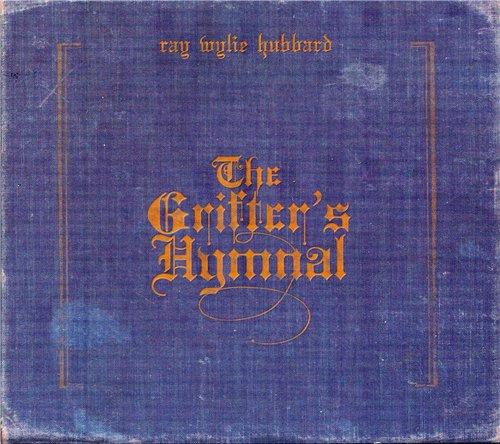
MUSIC / Greg Moses : ‘Grifter’s Hymnal’ is Ray Wylie Hubbard on the Cosmic Sly

Tricked out tunes on the cosmic sly:
Ray Wylie Hubbard’s ‘Grifter’s Hymnal’

From the beats of the opening bar of the opening track you can tell that Ray Wylie is in a mood to groove right through this millennial year of long reputed doom.

By Greg Moses | The Rag Blog | May 10, 2012

So there I was hearing nothing but this wicked whirring Bandit Model Whole Tree Chipper rammed up against a load of Bibles, books, old newspapers, and brown-paper-covered magazines piled high as the Davis Mountains being scooped up and fed to the chipper by a Cat Ultra High Demolition Hydraulic Excavator.

And with the backup alarm blaring from a 469 horsepower Segmented Ejector Truck moving relentlessly into loading position I was finally able to focus my attention on the dusted vinyl lettering that marked every piece of equipment as the property of Ray Wylie Hubbard, Unlimited.

Because when you tune into the opening tracks of Hubbard’s freshly released Grifter’s Hymnal (2012: Bordello Records) you can’t help but thrill to the sound of re-shredding everything you thought you knew.

From the beats of the opening bar of the opening track you can tell that Ray Wylie is in a mood to groove right through this millennial year of long reputed doom. After all, there’s nothing at risk if your gods are archaic enough to come from places that can’t be undone. And all powers of such antiquity have something to say about eternal slyness and the essence of trickery that goes by the name of existence.

Go ahead, I dare you, roll tape, then see if you don’t start smiling right away, finding yourself snakebit before you hear the first warning rattle.

Mirothane is one word you might study up on in preparation for track number one. As defined by its inventors at Mirotone.com, Mirothane PU (TM) is a “flexible sealer with good clarity, superior chemical resistance and resistant to white marking under sharp impact.” Might be a sign of Hubbard’s acquired taste for custom interiority. Might not.

By the time we get to track two, we’re tuned up, warmed over, and rockin’, but not at one of those smokeless, sober, early venues like the kind they put Hubbard through at SXSW. No, no. Here we are full tilt throttled for that wide open midnight threshold where everybody grabs everybody else and jumps into the future unknown, crossing over into some other life that may or may not catch you just in time. Yes, yes.

Then, long after the midnight hour, some random mirror catches you reflecting on life and death. And if you’ve been reading Gloria Anzaldua lately, you’ll have some additional enrichment to draw upon as Wylie Hubbard sings in track number four about life up against the memory of Lazarus, who only died twice, not five times like Gloria did.

Track four finds us lighting up and looking around on “New Year’s Eve at the Gates of Hell,” somewhat like Dante, finding all these familiar faces and refusing to be all that repentant about it. So another year comes and goes and we’re still looking at all the souls who haven’t yet been sorted where they’re supposed to be. As our judgment turns on its own temper, lookout Ma, ain’t nothin all right now.

Nahuatl poetry is what you might be thinking about while you’re listening to track number five. Indigenous juxtapositions of beauty and death. The song is called “Moss and Flowers” so you have to know that if eternity is what you’re after then it’s not the kind of eternity that can be measured with an infinity of clocks. You get a very nice experience of duet here, with the harmonies on the guitar parts split between the buds of your Skullcandy (TM).

While speaking of death, “Red Badge of Courage” takes us into war zones of the mind where we have sent our kids these past decades. Somehow, you know the song already. It’s just a matter of hearing it played for the first time. Track six is an excursion into protest music, with the weariness of our war habits sounding deep down.

“It’s unbelievable” is how I want to sing the opening stanza of track seven’s “Train Yard,” and we are indeed treated to an unbelievable metaphorical trip involving a red hot penny. Even the great Yeats would nod to the greatness of this hot penny poem, looped in the loops of its steam-powered grip.

“Coochy Coochy” is a plain song of desire with a profoundly felt absence of the one thing that makes everything else sweat. It’s a fun song, simple, and I reckon it may begin to replace “Snake Farm” as a crowd sing-along favorite the next place Ray Wylie Hubbard plays. One more sing-along song is not surprising from Mr. Hubbard who, as we say in Texas, writes sing-along songs, “so well, so well, so well.” Thing is, this sing-along song was written by Ringo.

If we find ourselves lost in a mood for another Hubbard Mother song, track nine is called “Mother Blues.” It’s the longest track on the album and may be properly styled epic. The thing about Hubbard’s Mother songs is you can’t help but find yourself laughing from the gut. You may want to get yourself checked for hernia after this track, and if a professional is unhandy, perhaps a lay practitioner will have to do.

The genre that Hubbard works in is listed on my iTunes spreadsheet as “Country,” so you’ll not find it out of place for Mr. Hubbard to sing a little song about a rooster, some chickens, foxes, a blackbird, and the way truth stains our memories like wood. The song is called “Henhouse,” but the whole family is here, including a grandpa with Dixie roots.

The blackbird from “Henhouse” reprises its appearance in track 11. “Count My Blessings” is a song that weaves a grifter’s autobiography with reflections on the death of Sam Cooke. The grifter assures us that three card monty is a lucrative occupation if you keep the game moving fast enough. And the grifter somehow can’t forget how the jury acquitted Sam Cooke’s killer in 15 minutes flat. In such a fast-paced world, an ironic sense of gratitude can some days help a living body try to get by.

Pretty much everything I know about country music is what I’ve learned from Willie Nelson shows, so when country music concerts end with gospel tunes I think of young Willie playing honky tonks all night Saturday and then staying up to play church Sunday morning. Somewhere the line between Saturday night and Sunday morning gets crossed, you might say.

So when Ray Wylie Hubbard ends this Dionysian romp with a song about God’s light, it’s like we’ve all stayed up through sunrise. To our day-people’s routines we have been re-delivered. Nor have we forgotten to tip the night people for the things they come to do.

[Greg Moses is editor of the Texas Civil Rights Review and author of Revolution of Conscience: Martin Luther King, Jr. and the Philosophy of Nonviolence. His entries on King and Racism appear in the Encyclopedia of Global Justice. He can be reached at gmosesx@gmail.com. Read more articles by Greg Moses on The Rag Blog.]

The Rag Blog

Posted in Rag Bloggers | Tagged , , , , , | Leave a comment

Harvey Wasserman : Nuclear Industry Meltdown in Japan, France

Participants hold a traditional “Koinobori” carp-shaped banner for Children’s Day during anti-nuke march in Tokyo Saturday, May 5, 2012. Photo by Itsuo Inouye / AP.

Nuclear industry melts in Japan, France;
opposition heats up in United States

This weekend’s message from Japan and France could not be more clear: at nuclear power’s historic core, the collapse has come.

By Harvey Wasserman / The Rag Blog / May 10, 2012

There are zero commercial reactors operating in Japan today. On March 10, 2011, there were 54 licensed to operate, well over 10% percent of the global fleet. But for the first time in 42 years, a country at the core of global reactor electricity is producing none of its own.

Worldwide, there are fewer than 400 operating reactors for the first time since Chernobyl, a quarter-century ago.

And France has replaced a vehemently pro-nuclear premier with the Socialist Francois Hollande, who will almost certainly build no new reactors. For decades France has been the “poster child” of atomic power. But Hollande is likely to follow the major shift in French national opinion away from nuclear power and toward the kind of green-powered transition now redefining German energy supply.

In the United States, a national grassroots movement to stop federal loan guarantees could end new nuclear construction altogether. New official cost estimates of $9.5 to $12 billion per reactor put the technology off-scale for any meaningful competition with renewables and efficiency.

In India, more than 500 women have joined an ongoing hunger strike against construction of reactors at Koodankulam. And in China, more than 30 reactors hang in the balance of a full assessment of the true toll of the Fukushima disaster.

But it seems to have no end. Three melted cores still smolder. New reports from U.S. Senator Ron Wyden (D-OR), confirm that at least one spent fuel pool suspended 100 feet in the air, bearing tons of hugely toxic rods, could crash to the ground with another strong earthquake — a virtual certainty by most calculations.

Those uncovered fuel rods contain radioactive cesium and other isotopes far beyond what was released at Chernobyl. A fire could render vast stretches of Japan permanently uninhabitable (if they are not already). The death toll could easily claim millions worldwide, including many of us here, where the cloud would come down within a week.

Japan’s total shutdown cuts to the core of the historic industry. The globe’s primary reactor designers, General Electric and Westinghouse, are now primarily Japanese-owned. Pressure vessels, steam generators, and much more of the industry’s vital hardware have long been manufactured in Japan.

But the archipelago’s antinuclear movement also has deep roots. In 1975-6, large, angry crowds I spoke to were already demanding the end of Fukushima and other reactor projects. They warned that all Japanese reactors were vulnerable to earthquakes and tsunamis, and that disasters on par with what happened at Fukushima were essentially inevitable. Now that it’s happened, the public rage in what has been a traditionally conservative, authoritarian society is almost unfathomable.

Along the way, local governments did win the right (not enjoyed in the United States) to keep shut nearby reactors that were closed for repairs and refueling. On Saturday, May 5, a deep-rooted, highly focused grassroots movement shut the archipelago’s last operating nuke. It’s bound and determined to keep them that way.

As summer air conditioning demand skyrockets, Japan’s Prime Minister will try to prove that atomic power is essential. But an efficiency-oriented public has dealt very well with cutbacks in supply since Fukushima. Each potential restart will have its own dynamic.

Japan’s stunning reality is that its gargantuan capital investment in more than 50 commercial reactors is now dead in the water… and being irradiated by its own deadly fallout. That can only drag the global industry closer to oblivion at a moment when the public’s financial and political commitments to renewables and efficiency are deepening daily.

Likewise the demise of Nikolas Sarkozy. His allies at France’s nuclear-commited utility, EDF, have been Europe’s primary pushers of the “Peaceful Atom.” Now his Socialist rival is running the country, backed by a constituency largely supportive of a green conversion to parallel the one in neighboring Germany.

America’s green activists also want atomic power ended. In Vermont, New Jersey, New York, Florida, Ohio, Texas, and elsewhere, escalating grassroots campaigns have put the future of 104 licensed reactors in doubt.

The confrontation may be most immediate at San Onofre, on the Pacific shore between Los Angeles and San Diego. Faulty steam generator tubes have forced two reactors shut. As in Japan, the industry loudly warns of shortages when summer hits. It wants at least one reactor back by June. But experts warn that San Onofre’s design deficiencies threaten the public safety, as does its uninsured vulnerability to earthquakes and tsunamis.

The battle parallels the one over new construction. Already plagued with faulty concrete and design-deficient rebar steel, two reactors at Georgia’s Vogtle still await final agreement on federal loan guarantees granted by President Obama last year.

But Progress Energy’s guess that its own double-reactor proposal for Florida’s Levy County could cost a staggering $24 billion casts a long shadow over Vogtle, where tax/ratepayers are already being stuck with huge bills for a project that could be vastly underfunded. A national petition drive has been fired up to stop the guarantees from going through.

And while India’s growing nonviolent army of nuclear opponents vow to fast to the death, the global reactor industry awaits word from China on how many new reactors it thinks it will build. The world will then watch with bated breath as the Middle Kingdom’s own nascent anti-nuclear movement gathers strength in the inevitable race to shut the local reactor before it melts.

But for now, this weekend’s message from Japan and France could not be more clear: at nuclear power’s historic core, the collapse has come. Humankind is running ever-faster toward a green-powered Earth, desperate to win before the next Fukushima strikes.

[Harvey Wassermansoc edits www.nukefree.org. His Solartopia! Our Green-Powered Earth is at www.solartopia.org. The Solartopia Green Power and Wellness Show airs at www.progressiveradionetwork.com. Read more of Harvey Wasserman’s writing on The Rag Blog.]

The Rag Blog

Posted in Rag Bloggers | Tagged , , , , , , | 1 Comment

Lamar W. Hankins : Bogus Republican Values on Texas Primary Ballot

Art by DonkeyHotey / Flickr.

Texas ballot initiatives
illustrate bogus Republican values

The propositions fit into the typical Republican mindset — they tend to see things in black and white, without the ambiguities and complexities that exist in the real world.

By Lamar W. Hankins | The Rag Blog | May 9, 2012

AUSTIN — When I look at the most pressing issues of our time, I see the following: the economy is running barely above the stagnation level; we continue to drain our treasury of hundreds of billions of dollars in overseas wars; we continue to operate overseas prisons that are more reminiscent of gulags than they are of institutions that reflect purported American values; we continue to allow torture (indirectly if not directly); teachers have been laid off by the hundreds of thousands; and the Congress is not even a shadow of the institution our founders created.

But when the Republican Party of Texas looks at the most pressing public issues, it sees the need to focus on giving public money to religious schools, depriving 50 million Americans of vitally-needed healthcare, having government officials promote the practice of Christianity, and preventing the government from responding to fiscal emergencies.

Clearly, the Republican leaders of Texas have standards of morality different from those I find important and try to honor.

On December 3, 2011, the State Republican Executive Committee (SREC) voted to place on the Republican Primary Ballot the following propositions:

  1. School Choice: The state should fund education by allowing dollars to follow the child instead of the bureaucracy, through a program which allows parents the freedom to choose their child’s school, public or private, while also saving significant taxpayer dollars. Yes or No.
  2. Repealing Obamacare:Congress should immediately repeal the Patient Protection and Affordable Care Act (otherwise known as Obamacare) and reject the rationing of healthcare by government or the intrusion by government into the doctor-patient relationship. Yes or No.
  3. Public Prayer:Government should be prohibited from restricting the content of public prayer. Yes or No.
  4. Balanced Budget / Combining Government Growth:Out of control spending should be stopped at all levels of federal and state government through constitutional amendments limiting any increase in government spending to the combined increase of population and inflation without voter approval. Yes or No.

These four propositions illustrate as well as anything the nature and character of the Republican Party in Texas, as well as the Republican Party nationwide. It wants to take state tax dollars and divert them from public education to private, mostly religious education programs. The public money cannot be given directly to religious institutions for religious education because the Constitution prohibits that, but it can be given to parents in the form of vouchers.

Those parents will be free to give those publicly-funded vouchers to the school of their choice, which data from areas where some form of voucher system has been used show will be mainly to religious schools — at the rate of 85% to 95%.

As Barry Lynn, executive director of the Americans United for Separation of Church and State, has said about such propositions: ”Taxpayers shouldn’t be forced to pay for religious schools. The principal purpose of a religious school is to spread its teachings, whether they be the Gospel of Jesus Christ or the words of Mohammed. They are specific teachings from ministries of religious denominations.”

The ballot proposition is worded in a way that few people would disagree with. But it is all deceptive. We all hate bureaucracies. Who would want to give them more money? Yet, we do so constantly, apparently unaware that sociologists for at least 50 years have found that all bureaucracies, government or private sector, have the same characteristics.

If you have ever had a bad experience with a telephone corporation, a banking corporation, or a private health insurance corporation, you will understand why I have found them no less difficult to deal with than government bureaucracies. Actually, signing up for both Social Security and Medicare were among the most positive experiences I have ever had with bureaucracies.

Of course, who wouldn’t like the freedom to choose the schools our children attend, but if you believe that this system will save “significant taxpayer dollars,” you might want to consider investing in a group organizing to buy the Brooklyn Bridge. The history of public funding of education has not shown that funneling public money to the private sector for education is cost-effective.

Our public schools are already underfunded. This proposition will only exacerbate that problem. And public schools accept everyone regardless of disabilities, test scores, religion, or other factors. Private schools can discriminate in selecting students, easing their performance burden, while increasing the burden on the public schools.

School vouchers are bad public policy as well as a thinly-veiled way around the Constitution, which requires that church and state remain separate.

The second proposition, which cleverly injects the name Obamacare to refer to the PPACA, could just as accurately be called the national version of Romneycare, which was the model used to create the PPACA. But Republicans are all about bashing Obama, so it is better from their point of view to use his name derisively.

But the healthcare act that will cover at least 50 million more people in the U.S. does not ration healthcare and does not intrude the government into the doctor-patient relationship. It is the private insurance companies that do that, as anyone who has used private health insurance has learned.

They require approval before being referred to a specialist, they require medically-unnecessary procedures before approving some treatments, and they reject drugs that my doctor wants to prescribe. Appealing any adverse decisions about these matters requires an enormous waste of medical staff’s and patients’ time.

The PPACA was not my choice of programs to provide healthcare services to all Americans because it does not do so in the most direct way or at the lowest cost — Medicare for all would do a much better job of satisfying those goals.

And the PPACA has taken a bad rap on the issue of being the only time in our history when the government has mandated that individuals must buy some product in the private sector. As Einer Elhauge, a professor at Harvard Law School, has shown, this assertion is not true, no matter what Justice Antonin Scalia says:

The founding fathers, it turns out, passed several mandates of their own. In 1790, the very first Congress — which incidentally included 20 framers — passed a law that included a mandate: namely, a requirement that ship owners buy medical insurance for their seamen. This law was then signed by another framer: President George Washington. That’s right, the father of our country had no difficulty imposing a health insurance mandate.

That’s not all. In 1792, a Congress with 17 framers passed another statute that required all able-bodied men to buy firearms. Yes, we used to have not only a right to bear arms, but a federal duty to buy them. Four framers voted against this bill, but the others did not, and it was also signed by Washington. Some tried to repeal this gun purchase mandate on the grounds it was too onerous, but only one framer voted to repeal it.

Six years later, in 1798, Congress addressed the problem that the employer mandate to buy medical insurance for seamen covered drugs and physician services but not hospital stays. And you know what this Congress, with five framers serving in it, did? It enacted a federal law requiring the seamen to buy hospital insurance for themselves. That’s right, Congress enacted an individual mandate requiring the purchase of health insurance. And this act was signed by another founder, President John Adams.

But perhaps the most hypocritical part of Proposition 2 is the language used to suggest that the PPACA would intrude the government into the doctor-patient relationship. That is exactly what virtually every Republican officeholder at every level of government has tried to do with a woman’s right to choose healthcare options when she is pregnant, or even if she wants to prevent pregnancy. The new Republican goal seems to be to turn back the clock even on contraception.

The third Republican proposition is arguably the most dishonest and deceptively worded of the four. Of course, the government should have nothing to say about how anyone prays, whether the prayer is done in private (as Jesus recommended) or in public (as the Pharisees preferred). But knowing Republicans as I do, I suspect what they intend by this proposition is to both promote government-sponsored prayer and keep the government from insisting that such prayer be non-sectarian, as most courts have held that it should be.

By using the words “public prayer,” rather than “government prayer,” they have created a proposition that will mean nothing to those of us who understand the distinction.

Anyone who wishes to pray at non-government public events or out on the public street corner should feel free to pray to any god they choose, whether Jehovah or Allah or Krishna or whomever or whatever. But if the Republicans are setting us up to argue that sectarian prayers at government meetings are OK with their constituency, they have worded the proposition incorrectly to make such an interpretation valid. The ambiguity of their wording makes any conclusion about the voting on this proposition without merit.

In some ways, the Republicans’ fourth proposition is the least troubling, but it is too brief to be useful in making public policy. In unusual times, it may be necessary for the federal government to borrow money to prevent a calamity — like the collapse of the banking system. Republicans and Democrats alike found this to be the case in 2008. What they did was not as effective as other actions they could have taken, but the course they pursued required spending money that wasn’t available in the treasury. There was no time to have a national referendum on the subject.

I would like to have a balanced federal budget, as we had in 2000, at the end of Bill Clinton’s two terms, and I would like to stop out-of-control spending, but there is no simple formula to get us there. A contrived ballot proposition is useless in achieving those goals.

The Republican propositions on the primary ballot this year fit into the typical Republican mindset — they tend to see things in black and white, without the ambiguities and complexities that exist in the real world. Their concerns do not reflect the moral imperatives that used to be common among nearly all Americans. Instead, the Republican Party of today represents the narrow, selfish, parochial interests and concerns of most of the evangelical community and the libertarians of the Ayn Rand mold.

If Republicans want to be taken seriously, they need to stop insulting everyone’s intelligence with deceptive and dishonest ballot propositions, something the Democrats (as well as most politicians) have done in the past with equal fervor. At least this year Texas Democrats don’t have any ballot propositions for voters to understand, or misunderstand.

[Lamar W. Hankins, a former San Marcos, Texas, city attorney, is also a columnist for the San Marcos Mercury. This article © Freethought San Marcos, Lamar W. Hankins. Read more articles by Lamar W. Hankins on The Rag Blog.]

The Rag Blog
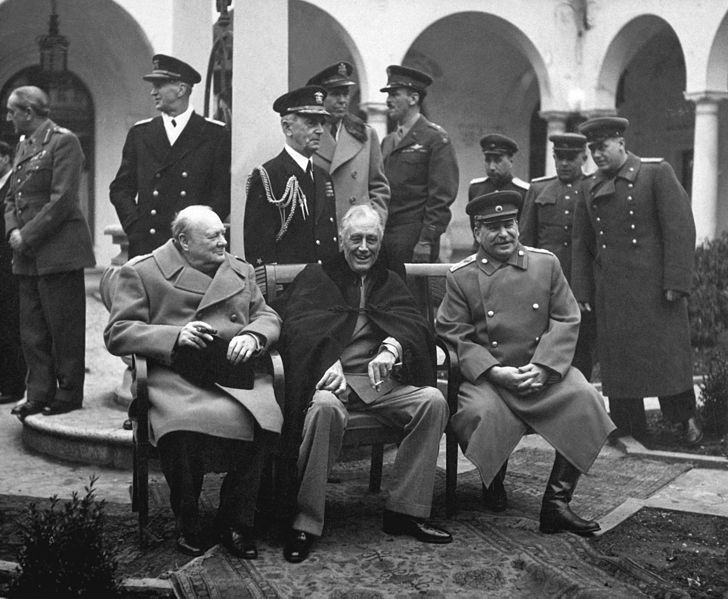
Posted in Rag Bloggers | Tagged , , , , , | 1 Comment

Danny Schechter : The Big Money That Is Sinking Democracy

Titanic: Iceberg ahead. Image from Luther, Out of Station.

Iceberg ahead:
The big money that is sinking democracy

It is hard to wrap your head around the scale and immediacy of this danger.

By Danny Schechter | The Rag Blog | May 9, 2012

I keep thinking of that clear April night 100 years ago when the unsinkable HMS Titanic steamed towards New York. It was actually on its way to dock just a few blocks from where I live at what are now the Chelsea Piers. There was a sense of optimism abroad as a new record for a speedy transatlantic passage was about to be set.

There was music, dancing, and fine wine. That is, until they saw that iceberg high in the water. The Captain and his mates were aware that 80 percent of it was underwater and out of sight. They didn’t react in time.

Everyone knows the story — most recently recreated in 3D — but the lesson is really not just about that great ship that went down, or even the company that bypassed safety regulations, or even the hubris of the owners whose greed sent so many passengers to that legendary “watery grave.”

It was also about not seeing the dangers in front of us.

That’s the real story of this moment in our political lives, as the 2012 elections begin in earnest, and we ignore, to our detriment, that vast iceberg of money, stacked in the billions, that threatens to sink what’s left of our democracy.

It is hard to wrap your head around the scale and immediacy of this danger.

And it’s not just about the Citizens United decision of the Supreme Court. It’s about the way Democrats think and Republicans act. It’s about the growing way money has been allowed to dominate politics in a game both parties play.

It is an outgrowth of our vast economic inequality and the policies that promoted it. Its about state laws limiting the franchise in the name of fighting voter fraud with so-called Voter ID laws, and ordinary Americans becoming so tired of electoral lies and the arrogance of power that they don’t vote.

Mary Boyle, a vice president of Common Cause is concerned about that, telling me,

one of the dangers, particularly around this campaign, is you read these headlines from people who aren’t really engaged in politics. You just read headlines about “super PACS raking in millions of dollars” or “outside groups spending 10 million dollars on negative ads.” And for a lot of Americans that’s just kind of background noise that makes them go, “Uh, they’re at it again.” And it does make people cynical. It makes them tune out and that is a huge concern because then that leads to people not voting and that’s a bad thing.

This information overload is a product of a media ecology that tunes us out and a news business that avoids truth at all costs. It’s about analysis that leads to paralysis and cynicism that allows political manipulators to prevail in league with a media system that simplifies, scandalize, and spins news to advance partisan agendas.

I recently sat in a lecture at the New School on “The Anatomy Of Campaign Finance,” featuring two experts, Professor Jacob Hacker of Yale and journalist Joe Hagen who writes for New York Magazine and described what he saw in Karl Rove’s living room.

They painted a picture of a vast organizational imbalance between the parties.

The lectures took place on May Day just as the impressive citizen “armies” of Occupy Wall Street were leaving Union Square for the trek to Wall Street.

Obama’s funding base is not, said Hacker, even comparable to the treasure chest that Rove has mobilized.

One factor: The Bush tax cuts have permitted the right to amass a major war chest, in part because the average Republican-leaning millionaire became $300,000 to $500,000 richer, 53 percent of all after tax gains went to the rich, the top 10 percent of 1 percent. 60 percent of corporate money comes from the finance sector.

The beneficiaries of this transfer of wealth to the top understood that their windfall came about through politics, and to keep it they have to invest more in politics. Says Hacker, “Everyone can vote but not everyone can donate. Money changes the relationship between the politicians and donors. Money has a ‘distortion effect’ on what politicians focus on.”

This is why the former Obama Chief of Staff and now Chicago Mayor Rahm Emanuel said famously, You need three things to win in politics: money, money and money.

Chicago Magazine explained his well-honed technique back when he worked for Bill Clinton:

Here’s how to be the most effective fund-raiser in politics today: Plaster a phone to your ear. Speak rapidly, in barely restrained tones of impassioned outrage. Tell the important person on the other end of the line that the large check he’s just written for your candidate’s campaign isn’t large enough. Say this: “Five thousand dollars? You, you, you — I wouldn’t embarrass you by having it listed that you only gave $5,000? You’re a $25,000 person; better to give nothing and say you were out of town. If you want to give $5,000, fine, but don’t call me when people start asking you if you’re going bankrupt. People of your stature are giving $50,000.

The Republicans have more donors in it for the ideology, not the ego. They don’t have to be begged. Their greed, animus towards Obama, and sense of self-interest is their driver.

The effect of all this money has been different for Democrats and Republicans, “ says Hacker. Repubs have moved further to the right than Dems to the left. Money is not neutral in effect. Republicans have been emboldened.

On the basis of his reporting, Hagen notes how politics has become an industry with an orientation towards raising and managing money. It deploys its millions not only supporting candidates but backing the disciplined infrastructure led by professional political consultants who plan the strategies and run the show, coordinating the Super-posses and orchestrating the troops.

This fraternity, he says, convinces politicians that they are the “tool” they need to win, and get paid huge amounts of money.

He says that together they form a “presidential election industrial complex.” He says its point is destruction, with opposition research driving negative ads and vitriolic campaigns.

That’s one academic and media view. What about the people who are monitoring this madness, like Sheila Krumholz, the director of the Center for Responsive Politics, who posts data money in politics on the must-read website, Open Secrets.org.

She told me recently:

There’s been a seismic shift in money’s influence in politics and on legislation and policy, ultimately. Primarily because of the Citizen’s United decision taken by the Supreme Court in January of 2010, which opened wide the flood gates on money — and for the first time arguably in decades or even a century allows this money to come directly from corporate and labor union treasuries and trade associations — to be spent to influence the election of federal candidates.

I asked her, “Does this mean that American voters have less and less influence on what’s actually happening in America?”

Her response:

It certainly means that American voters have less information about the organizations which are trying to influence who wins office, and ultimately what laws get passed. Does it then take away some of the influence that they have? Yes, because they’re making decisions in the dark.

And there we are, back in the dark. On the edge of an abyss, as the Iceberg looms and many of us want to look the other way,

[News Dissector Danny Schechter blogs at Newsdissector.net. His recent books are Occupy: Dissecting Occupy Wall Street and Blogothon (Cosimo Books). He hosts News Dissector Radio on PRN.fm Fridays at 1 p.m. His latest film is Plunder: The Crime of Our Time. Email Danny at dissector@mediachannel.org. Read more articles by Danny Schechter on The Rag Blog.]

The Rag Blog

Posted in Rag Bloggers | Tagged , , | 2 Comments

BOOKS / Ron Jacobs : Rules are Rules: ‘The Passion of Bradley Manning’

Rules are rules as any fool can see: 
‘The Passion of Bradley Manning’

By Ron Jacobs | The Rag Blog | May 9, 2012

[The Passion of Bradley Manning: The Story of the Suspect Behind the Largest Security Breach in U.S. History by Chase Madar (2012: OR Books); Paperback; 190 pp.; $15.]

I remember the very first time I saw the Wikileaks-released video filmed from a U.S. gunship showing the murder of a dozen unarmed civilians including two journalists. The video proved the true brutality of the U.S. occupation of Iraq and the distressing disregard for human life common among U.S. soldiers.

Sadly, I wasn’t shocked or surprised at what I saw. Even after having heard about such incidents in conversations with returning veterans, the visual evidence was still quite disturbing to watch.

That video was the first time most Americans had heard about Wikileaks. Not long after, the name of Bradley Manning also entered the U.S. consciousness. He would be accused of releasing that video and thousands of other documents relating to the U.S. wars on Iraq and Afghanistan, along with thousands of diplomatic cables describing in oftentimes explicit detail the crimes and morally questionable actions and words of Washington officials.

Soon, Mr. Manning would be charged with treason and aiding the enemy (among other charges) for his actions. He is currently on trial in a U.S. military court located at Fort Meade, MD. and faces life imprisonment. It is my belief that only an immense and broad popular movement could possibly change that fate.

Bradley Manning’s decision and the subsequent reaction is the subject of a newly published book by civil rights attorney and commentator Chase Madar. This book, titled The Passion of Bradley Manning: The Story of the Suspect Behind the Largest Security Breach in U.S. History, presents Manning’s decision in the context it was meant to be understood: as a political act by a man who saw his duty to humanity to be greater than his orders to protect the Pentagon and politicians that sent him and thousands of other GIs to war.

Madar attacks the very system of secrecy Manning is charged with violating. He details the overzealous use of secret and top secret classifications by government officials, calling it a “tragic, bloated farce.” He questions the use of the Espionage Act to charge Manning and other men whose actions are not about aiding the enemy, but about exposing the misdeeds of the U.S. government.

In discussing the frequent use of strategic leaks by government officials to get a piece of legislation approved, Madar surmises that Manning’s biggest mistake is that, unlike those government officials, he didn’t break the law properly.

What did the documents Manning sent to Wikileaks contain? While it is impossible to even begin to summarize the millions of words in those documents in the brief space of Madar’s text, he does list the basics of some of the content.

The documents showed a brutal pacification campaign in Afghanistan where civilian deaths were all too common and sometimes intentional. They acknowledged massive civilian casualties from U.S. fire in Iraq and detailed Washington’s retail diplomacy with the Vatican hoping to convince the Holy See to call the U.S. wars just.

 In other areas, the diplomatic cables exposed the role of the U.S. Embassy in Haiti in fighting attempts to raise the minimum wage there to 61 cents an hour and U.S. complicity in covering up Israeli atrocities in Gaza.

Yet, despite the revelations they contained, the U.S. government has been unable to prove that the leaks harmed any individual. Unfortunately, neither have they changed the essence of U.S. policy.

After acknowledging this, Madar writes about two leaks that probably did matter. One was a 1968 leak by Daniel Ellsberg to presidential candidate Robert F. Kennedy that detailed the Johnson administration’s plans to expand the U.S. war to Laos and Cambodia. The leak and Kennedy’s revealing it probably prevented that expansion under LBJ. Of course, Nixon wasted little time in doing exactly what Johnson didn’t do.

Another more recent example occurred in 2003 when the national intelligence assessment of Iran’s nuclear weapons capability was leaked. This document stated clearly that Iran had no nuclear weapons and was not building any at the time. That leak probably prevented the U.S. from attacking Iran.

Like it or not, since his arrest Manning’s treatment has been shameful. His imprisonment, which includes solitary confinement and forced nakedness, is nothing short of torture. Indeed it has been condemned as such by the German Bundestag and several other individuals in European governments and even some high ranking U.S. officials.

Madar’s discussion of Manning’s treatment is revealing and likely to garner a number of denials by liberals and neocons in the halls of power. This is especially true when he argues against the view promulgated by U.S. liberals that the treatment is an aberration.

The fact is, writes Madar, the abuses experienced by Manning and by prisoners in U.S.-run prisons in Guantanamo Bay, Iraq, and Afghanistan are also commonplace in U.S. prisons. Furthermore, torture is a common occurrence in U.S. jails at all levels of the penal system.

In the early 1970s Kris Kristofferson recorded a song whose chorus includes the lines, “The law is for protection of the people/ Rules are rules as any fool can see…” The song proceeds to show the use of this maxim by the powers that be to lock up those that disrupt their rule. The sarcasm of the lyrics continues, pointing out how laws are not only applied unequally, but are often written only to protect the wealthy and powerful. If Kris Kristofferson were to add a verse to his tune in 2012, it could be about Bradley Manning.

When pressed to explain the charges arrayed against Manning, the reason given most often is that he broke the rules regarding classified information and that is reason enough. As Madar points out over and over in his book, these rules are broken quite often by government officials in the pursuit of certain policies and those violations are rarely challenged.

Furthermore, and considerably more appalling, is the reality that the atrocities and diplomatic maneuverings revealed in the documents Manning released are not illegal. Why? Simply put, because the laws are written by the warmakers and profiteers. So, those who reveal the machinations of the powerful are more likely to go to prison than those who kill, torture, bribe, and steal in the name of empire.

Simultaneously an indictment of a government obsessed with secrecy and a nation addicted to war, The Passion of Bradley Manning is also a concise and clear explanation of who Bradley Manning is. It explains why he risked his life and future by committing the overtly political act of exposing his government’s crimes and lies.

Perhaps most importantly, it is a call to us to act not only in defense of Manning, but in defense of our futures.

[Rag Blog contributor Ron Jacobs is the author of The Way The Wind Blew: A History of the Weather Underground. He recently released a collection of essays and musings titled Tripping Through the American Night. His latest novel, The Co-Conspirator’s Tale, is published by Fomite. His first novel, Short Order Frame Up, is published by Mainstay Press. Ron Jacobs can be reached at ronj1955@gmail.com. Find more articles by Ron Jacobs on The Rag Blog.]

The Rag Blog

Posted in Rag Bloggers | Tagged , , , , , , , , | Leave a comment