IDEAS / Bill Meacham : Birth Control and the ‘Goodness’ Paradigm

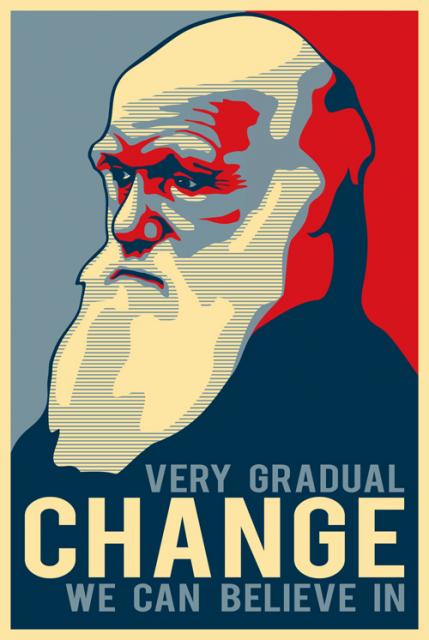
Image from Dippity.

‘Goodness’ Vs. ‘Rightness’:
The ethics of birth control

There is a systematic way to find out what the benefits and harms are: observe reality carefully.

By Bill Meacham | The Rag Blog | January 31, 2012

A current New York Times article describes controversy over birth control pills at Roman Catholic colleges.(1) The difference between two ways of thinking about ethics, the Goodness paradigm and the Rightness paradigm, could not be illustrated more starkly.

The U.S. Health Care Reform legislation mandates that employer-funded insurance plans cover birth control for employees, including students at Catholic colleges, according to a recent ruling from the Obama administration. Catholic institutions are howling in protest, claiming that to do so would force them to violate their religious beliefs.

The ruling is based on recommendations of the Institute of Medicine, an independent group of doctors and researchers that concluded that birth control is not just a convenience but is medically necessary to ensure women’s health and well-being.

Providing birth control would likely lower both pregnancy and abortion rates. And women with unintended pregnancies are more likely to be depressed and to smoke, drink, and delay or skip prenatal care, potentially harming fetuses and putting babies at increased risk of being born prematurely and having low birth weight.(2)

In other words, providing birth control provides unmistakable benefits to women and avoids harm to infants. This way of thinking is the hallmark of the Goodness paradigm, evaluating choices on the basis of the benefits and harms expected from the various alternatives.

If you allow birth control, you increase the chances for women’s health and reduce the chances for the depressing consequences of unintended pregnancy. If you forbid it, you do the opposite. In the former case, more good ensues; in the latter, more harm.

Opposed to this is the Rightness paradigm, evaluating choices on the basis of moral rules regardless of consequences. The Catholic Church considers it morally wrong to prevent conception by any artificial means, including condoms, IUDs, birth control pills, and sterilization. So Catholic college administrators don’t want to prescribe birth control pills even though according to Catholic doctrine itself abortion is a graver sin than contraception, and banning contraceptives would most likely increase abortions.

So how should we adjudicate this? I am thoroughly in the Goodness camp here. There is no systematic way to find out what the moral rules are. In the case of the Catholic church, all it can do is appeal to authority. But there is a systematic way to find out what the benefits and harms are: observe reality carefully. So I find the Goodness paradigm far preferable. for this and several other reasons outlined in my paper on the subject, “The Good and the Right.”(3)

The Catholic Church is being obstructionist. The law already exempts churches and other religious institutions from having to provide contraceptive coverage for their employees.(4) The issue here is Catholic schools. You can make the case that if someone joins the church they are agreeing that the church’s moral rules apply to them. But you can’t make the same case for someone who merely attends a church college.

A lot of philosophical controversy is rightly regarded as abstruse, theoretical, and of little practical import. But not this one. Where you come down on the Goodness vs. Rightness question has profound consequences not only for your own actions but for societal policies that impact millions of people.

[Bill Meacham is an independent scholar in philosophy. A former staffer at Austin’s 60s underground paper, The Rag, Bill received his Ph.D. in philosophy from the University of Texas at Austin. Meacham spent many years working as a computer programmer, systems analyst, and project manager. He posts at Philosophy for Real Life, where this article also appears. Read more articles by Bill Meacham on The Rag Blog.]

References:

(1) Grady, Denise, “Ruling on Contraception Draws Battle Lines at Catholic Colleges.” New York Times, 29 January 2012. On-line publication, URL = http://www.nytimes.com/2012/01/30/health/policy/law-fuels-contraception-controversy-on-catholic-campuses.html.

(2) “Excerpts From a Report on Women’s Health.” New York Times, 29 January 2012. On-line publication, URL = http://www.nytimes.com/2012/01/30/health/policy/excerpts-from-a-report-on-womens-health.html.

(3) Meacham, Bill. “The Good and the Right.” On-line publication, URL = http://www.bmeacham.com/whatswhat/GoodAndRight.html.

(4) “A New Battle Over Contraception.” New York Times, 5 November 2011. On-line publication, URL = http://www.nytimes.com/2011/11/06/opinion/sunday/a-new-battle-over-contraception.html as of 29 January 2012.

The Rag Blog

Posted in Rag Bloggers | Tagged , , , , | 1 Comment

Harry Targ : Indiana’s ‘Super Bowl’ of Anti-Worker Legislation

David Johnson, an organizer for the Sheet Metal Worker’s International Association, carries a sign during demonstration at the Indiana Statehouse. Image from NUVO.

Right to Work (for less) in Indiana:
The Super Bowl of anti-worker legislation

By Harry Targ | The Rag Blog | January 30, 2012

“The heart of the Super Bowl action will be in downtown Indianapolis at the three-block interactive fan environment known as Super Bowl Village. AFC and NFC fans, families, visitors and locals alike can enjoy this ultimate, free fan zone that spans from Bankers Life Fieldhouse all the way to the NFL Experience at the Indiana Convention Center via the newly redesigned Georgia Street.

In addition to endless entertainment, interactive games, Tailgate Town, live concerts on two different stages, bars and other attractions, fans can also fly over Super Bowl Village with four zip lines that traverse Capitol Avenue.” — VisitIndy.com

WEST LAFAYETTE, Indiana — One hundred passionate activists from labor and occupy groups around the state of Indiana assembled at the State House on Saturday, January 28, to continue opposition to the pending “Right-to-Work-for-Less” bill which appears to be close to final endorsement by the legislature and Indiana Governor Mitch Daniels.

Ironically, Alcoa Corporation just announced the expansion of plant facilities in Lafayette, Indiana, prior to the passage of the odious anti-worker bill that Governor Daniels has claimed will bring more jobs to Indiana. A plant in Iowa, a Right-to-Work State, lost its bid for the Alcoa plant expansion to Indiana, not yet such a state.

Workers in the Lafayette plant are represented by United Steel Workers of America Local 115.

The Indiana House of Representatives last week voted 54-44 to endorse a Right-To-Work bill (several Republicans voted “no” with their Democratic colleagues). Now the bill returns to the Indiana Senate for discussion of amendments to the bill and final passage before it goes to the desk of the Governor for his signature. Despite the fact that he had promised labor in the past that he would not support such a bill, the Governor made it his top priority item in the 2012 legislative session.

The intense political battle over RTW has occurred in the context of enormous celebration of the impending arrival of 150,000 NFL fans to the Super Bowl which will be played in Indianapolis on Sunday, February 5. Indianapolis big money interests have been lobbying for this event for years, hoping to put the city on the map for hosting huge money-making events such as the football classic.

Two buses of RTW protesters traveled from Lafayette, Indiana, and Purdue University, 65 miles away, to the rally. After spirited speeches, including remarks from three state legislators, representatives from building trades unions, students, and professors, rally organizers led a march through the Super Bowl village in downtown Indianapolis. Marchers were seen by thousands of Super Bowl celebrants who were roaming around the village spending money in dozens of food and entertainment venues.

Demonstrators encountered some hostile reactions, including physical jostling, but also numerous thumbs up and clenched fists in support of protestors carrying placards demanding “Kill the Bill,” “Workers United Will Prevail,” and “Occupy Purdue.”

Opposition to Right-to-Work has a decade-long history around the state since the governorship and the Indiana House of Representatives has shifted from Republican to Democrat and then Republican control. The Republicans, for their part, are committed to destroying the labor movement not only to reduce labor costs but also to end political opposition to their domination of state government.

Among the responses has been the Indiana Coalition for Worker Rights initiated by the Northwest Central Labor Council, AFL-CIO, in 2006, “to educate and mobilize workers to demand and defend worker rights.” It pledged itself to:

  1. educate union members and the public about the negative consequences of “Right-to-Work (for Less)” legislation;
  2. challenge the general shift toward privatization of public institutions such as schools, libraries, and health care delivery systems;
  3. mobilize citizens to support a living wage for all workers, affordable health care and education, and greater worker rights to participate in the workplace and the political system;
  4. and work with others to create a coalition of informed citizens “who believe that the protection of workers’ rights is the bedrock of our democratic society.”

In the summer of 2011, a coalition representing various progressive groups in the Greater Lafayette community formed to work on reproductive health care, civil liberties, peace, and labor rights. The new organization, the Indiana Rebuild the American Dream Coalition, held jobs and justice rallies in downtown Lafayette in November.

Parallel to these developments the Tippecanoe Building and Construction Trades AFL-CIO and Occupy Purdue and Occupy Lafayette have mobilized around Right to Work and a whole range of issues that concern the 99 per cent.

It is clear from the experiences of small communities such as those in Tippecanoe County (Lafayette and West Lafayette are the population centers) and various other communities all across Indiana that so-called “outside” and “inside” strategies are needed to fight back against the draconian efforts to destroy worker rights, to promote acceptable living conditions for all, and to begin to create a better world.

Outside strategies include mass mobilizations, protests, educational forums, and dramatic public displays of peoples’ views in venues such as the Super Bowl celebrations.

Jim Ogden, Lafayette, union electrician from IBEW Local 668, articulated a strategy of how best to connect the mass mobilizations to electoral work, a so-called “inside strategy”:

We realize that at this point where it’s at in the legislation. We probably will not stop this.

At this point, I think we’re looking at this as a kickoff for the elections in November. And trying to do whatever we can to get the Republicans that had voted for this, to get them out of office. (Journal and Courier, January 29, 2012)

It is clear that the electoral process cannot alone defend workers rights. However, in the context of the immediate needs of the 99 percent, elections, in conjunction with massive public expressions of protest, must constitute a critical component of the work of progressives in the months ahead.

[Harry Targ is a professor of political science at Purdue University who lives in West Lafayette, Indiana. He blogs at Diary of a Heartland Radical — and that’s also the name of his new book which can be found at Lulu.com. Read more of Harry Targ’s articles on The Rag Blog.]

The Rag Blog

Posted in Rag Bloggers | Tagged , , , , , , | Leave a comment

Lamar W. Hankins : The American Values of Saul Alinsky

Community organizer Saul Alinksy. Image from Addicting Info.

Saul Alinsky’s American values

‘The Radical… is that person to whom the common good is the greatest personal value. He is that person who genuinely and completely believes in mankind.’ — Saul Alinsky

By Lamar W. Hankins | The Rag Blog | January 30, 2012

These days, I don’t often think of Saul Alinsky, but now that Alinsky’s name has been used to slur President Obama in frequent speeches by self-promoting historian Newt Gingrich, it’s time to look at who Alinsky was and the values he stood for.

Gingrich obviously knows little about Alinsky, who died almost 40 years ago. Certainly, the only two things Barack Obama and Saul Alinsky have in common is that both lived in Chicago and Obama did some work as a community organizer, but he was hardly the sort of community organizer Alinsky was.

At recent campaign stops in Florida, Gingrich said,

We need somebody who is a conservative and who can stand up to him (Obama) and debate and who can clearly draw the contrast between the Declaration of Independence and the writings of Saul Alinsky… The centerpiece of this campaign, I believe, is American exceptionalism versus the radicalism of Saul Alinsky… President Obama believes in Saul Alinsky’s radicalism [and] a lot of strange ideas he learned at Columbia and Harvard.

Unfortunately, this is the exact opposite of reality.

In 1970, I was able to participate in a small community organizing training session in Austin conducted by Alinsky. Although I never worked full time as a community organizer, I found his ideas profoundly democratic, egalitarian, compassionate, realistic, and in keeping with every enlightened attitude expressed in this nation’s founding documents.

Without doubt, Alinsky saw himself as a radical, but not in the revolutionary or pejorative sense of that word. Alinsky wanted to get at the root of societal problems, not overturn our democratic system of government. In fact, Alinsky believed in and practiced democracy more fervently than any candidate now in the race for president.

Alinsky had the same vision and love of America found in Walt Whitman’s poetry. What Whitman was to poetry, Alinsky was to making democratic institutions serve the interests of the 99%. In the first chapter of his seminal book, Reveille for Radicals, published in 1945, Alinsky warmly identified with the diverse masses of the American people. He wrote that “During Jefferson’s lifetime the words Democrat and Radical were synonymous.”

Democrats and radicals were the few “who really liked people, loved people — all people,” no matter their race, ethnicity, religion — and were proud to be branded “radicals.”

They were the human torches setting aflame the hearts of men so that they passionately fought for the rights of their fellow men, all men… They fought for the right of men to govern themselves, for the right of men to walk erect as free men and not grovel before kings, for the Bill of Rights, for the abolition of slavery, for public education, and for everything decent and worth while. They loved men and fought for them. Their neighbor’s misery was their misery. They acted as they believed.

(Using the vernacular of the time, “men” meant humankind and was not intended to omit women.)

Alinsky identified America’s radicals as Patrick Henry, Sam Adams, Tom Paine, John Brown, Thaddeus Stevens, Horace Mann, Wendell Phillips,, Peter Cooper, Walt Whitman, Henry George, Edward Bellamy, John P. Altgeld, Henry D. Lloyd, Lincoln Steffans, Upton Sinclair, Bishop Bernard Sheil, and many others who stood with the masses of people fighting for the general welfare of all:

What is the American Radical? The Radical is that unique person who actually believes what he says. He is that person to whom the common good is the greatest personal value. He is that person who genuinely and completely believes in mankind. The Radical is so completely identified with mankind that he personally shares the pain, the injustices, and the suffering of all his fellow men. He completely understands and accepts to the last letter those immortal words of John Donne (that “no man is an island”)…

[The Radical] wants a world in which the worth of the individual is recognized. He wants the creation of a kind of society where all of man’s potentialities could be realized; a world where man could live in dignity, security, happiness and peace — a world based on a morality of mankind.

Alinsky dedicated his life to working for a society that would eradicate “all those evils which anchor mankind in the mire of war, fears, misery, and demoralization.” He fought for economic welfare; for the freedom of the mind; for political and social freedom; for “a high standard of food, housing and health” for all; for placing human rights “far above property rights”; for “universal, free public education,” which he saw “as fundamental to the democratic way of life”; for social planning that came from the bottom up, rather than from the top down.

Alinsky believed that jobs should be both economically rewarding and personally satisfying to the creative spirit, what he called “a job for the heart as well as the hand.”

Most of all, Alinsky fought against privilege and power “whether it be inherited or acquired by any small group, whether it be political or financial or [from] organized creed.” To Alinsky, the American Radical “will fight any concentration of power hostile to a broad, popular democracy, whether he finds it in financial circles or in politics.”

Alinsky disdained both conservatives and liberals. Liberals he saw as mostly hypocritical people who espoused his values, but did not live according to them. Liberals paralyze themselves into immobility by their inability to take a stand for political and economic justice based on true democracy. For Alinsky, it was essential to be partisan for the people; otherwise, for whom are you partisan?

Alinsky did not try to explain conservatives. He thought they were not worth explaining because they did not accept the American values he saw as essential for democracy. For Alinsky, only the Radical got it right: “The Radical does not sit frozen by cold objectivity. He sees injustice and strikes at it with hot passion. He is a man of decision and action.”

He described liberals as people who “fear power or its applications”:

They labor in confusion over the significance of power and fail to recognize that only through the achievement and constructive use of power can people better themselves. They talk glibly of a people lifting themselves by their own bootstraps but fail to realize that nothing can be lifted or moved except through power.

Now conservatives are the ones who talk this way.

Alinsky spent most of his life helping organize together the existing organizations in a community to find the power to change the lives of the people in that community. But during World War II, Alinsky’s disdain for fascism took him away from domestic organizing for a time. He described his war role in a Playboy Magazine interview shortly before his death:

I divided my time between a half-dozen slum communities we were organizing, but then we entered World War Two, and the menace of fascism was the overpowering issue at that point, so I felt Hitler’s defeat took temporary precedence over domestic issues. I worked on special assignment for the Treasury and Labor Departments; my job was to increase industrial production in conjunction with the C.I.O. [Congress of Industrial Organizations] and also to organize mass war-bond drives across the country.

It was relatively tame work for me, but I was consoled by the thought I was having some impact on the war effort, however small… The Assistant Secretary of State blocked [direct military service for me] because he felt I could make a better contribution in labor affairs, ensuring high production, resolving worker-management disputes, that sort of thing.

Alinsky’s first community organizing effort started with the Back of the Yards area of Chicago — the area where the meatpacking industry was located. My friend the late Paul Gorton Blanton, in his unpublished work The Outside Agitator, adapted from his doctoral dissertation, described the Back of the Yards area when Alinsky started organizing there in 1938:

Even for this late stage of the depression, unemployment was high. Street gangs ran wild. Racketeers were regarded by many as folk heroes. Police protection was rare. The filth of the neighborhood’s broken streets and alleys added to the environment of decay and despair. Garbage was commonly tossed into the alleys, and was later collected by a man with a shovel, a wagon, and a team of horses.

Neighborhood banks often failed during these depressed thirties, resulting in the loss of savings by many poor families. Mortgage foreclosures were frequent. Health care was grossly inadequate, particularly for children and the elderly. The inevitable cycles of poverty and disease brought about a neighborhood mood of hopelessness.

Alinsky organized disparate groups, even those who saw themselves as natural enemies, such as the C.I.O.’s Packinghouse Workers union and the Catholic Church, into an organization of organizations that identified the community’s most pressing problems and devised ways to eliminate them.

According to Blanton, “Clusters of families, groups, clubs, businesses, and economic enterprises, through which individuals in the community found their own identity” became, together, The Back of the Yards Neighborhood Council. Over several years, the Council took on and solved problems in health care, unemployment, education, nutrition, sanitation, fire safety, juvenile delinquency, and other matters.

The creation of a credit union that offered 1% loans drove most loan sharks and small finance companies out of the neighborhood. As a result of health services introduced by the Council, in just over one year infant mortality dropped from 10% to 1.5%, a free chest x-ray program was established to fight tuberculosis, a free dental program was developed, and water fluoridation was achieved.

Through other efforts, 2400 new jobs were created for neighborhood residents. Later, a free lunch program was created. Over the years, the Council lobbied successfully in both the Illinois state capital and before Congress for school-based food programs, including a free or reduced-price milk program that Congress instituted in 1955.

Part of Alinsky’s success was his brilliance at devising strategies and tactics that moved the power elites to respond to the demands of the people. He was able to analyze those in power and take advantage of their vulnerabilities, often by exposing their hypocrisy and corruption, and by using ridicule.

Once, when the first Mayor Daley who ran Chicago calculated that he could back out of some agreements he had made with another organization Alinsky had created in Chicago — The Woodlawn Organization (TWO) — Alinsky devised a strategy to embarrass Daley by creating havoc in Daley’s pride and joy — the O’Hare Airport.

Some TWO members researched the number of toilets and urinals at O’Hare and determined they could recruit 2,500 people to occupy all the toilets and line up four or five people at each urinal, and then rotate from urinal to urinal, making it impossible for most passengers just arriving at O’Hare to use a restroom.

When the word of this plan leaked to Daley, he had visions of vast numbers of travelers, desperate to relieve themselves, urinating in his pot plants at the airport. Daley capitulated instantly and TWO never again had problems with getting him to fulfill his promises to them.

Alinsky and his acolytes organized similar groups in many locations throughout the country. Their organizational efforts and tactics weren’t always successful, but most of them were.

Whatever Obama may have learned about organizing has not manifested itself in the partisan politics he has pursued since the time he worked in Chicago as a community organizer. Nothing in his manner or actions leads me to think that he is a follower of Saul Alinsky. Obama was still nine years old when Alinsky died. There is no evidence that he ever met Alinsky or was influenced by him.

I devoutly wish that Obama had Alinsky’s mindset, values, instinct, and creativity, and would use those characteristics against those who want the government to fail in its stated goal of securing the blessings of liberty for all the American people. But Obama has failed to be the sort of person I once thought he was. Still, there is no one else in the running for president who will come close to doing better.

Once again, Newt Gingrich has proven his ignorance about a historic figure that he claims to understand and about whom he likes to pontificate. Ironically, one group that is proving to be a strong supporter of both Gingrich and Ron Paul has also heaped praise on Alinsky. The Tea Partiers are studying Alinsky’s second book, Rules for Radicals, as they attempt to influence the political system to do their bidding.

They have had minimal success following Alinsky’s example, probably because they lack Alinsky’s aplomb and creativity, but mostly because they don’t share Alinsky’s values. This irony further exposes Gingrich as a faux historian who invents narratives to advance his political ambitions. He will never understand that Alinsky’s values can be traced directly back to the spirit of 1776.

[Lamar W. Hankins, a former San Marcos, Texas, city attorney, is also a columnist for the San Marcos Mercury. This article © Freethought San Marcos, Lamar W. Hankins. Read more articles by Lamar W. Hankins on The Rag Blog.]

The Rag Blog
Posted in Rag Bloggers | Tagged , , , , , , | 1 Comment

New Left icon Tom Hayden, one of America’s leading progressive activists and thinkers, was Thorne Dreyer’s guest on Rag Radio for two one-hour discussions about the legacy of the Sixties era, and about contemporary American society, foreign policy, and progressive politics. This post includes highlights from the discussion and embedded players for listening to podcasts of the two shows. According to The Atlantic’s Nicholas Lemann, “Tom Hayden changed America.” Hayden was a driving force in SDS, and the civil rights and anti-Vietnam War movement, and was the primary author of the legendary and inspirational Port Huron Statement, which is now being celebrated on the occasion of its 50th anniversary.

Posted in RagBlog | Leave a comment

Thorne Webb Dreyer : Peace and Justice Activist Tom Hayden on Rag Radio


As Port Huron turns 50:
Peace and justice activist
Tom Hayden on Rag Radio

By Thorne Webb Dreyer | The Rag Blog | January 26, 2012

Peace and justice activist Tom Hayden, a driving force in SDS and the Sixties New Left, was our guest on Rag Radio on January 6 and January 20, 2012. On the two hour-long programs we discussed the legacy of SDS and Sixties activism, as well as contemporary American society, foreign policy, and progressive politics.

The shows can be heard here and here.

Progressive Activist and SDS Pioneer Tom Hayden
on Rag Radio with Thorne Dreyer, Jan. 6, 2012:


Progressive Activist Tom Hayden on Current Issues
on Rag Radio with Thorne Dreyer, Jan. 20, 2012:


Rag Radio, which has been aired since September 2009 on KOOP 91.7-FM, a cooperatively-run all-volunteer community radio station in Austin, Texas, features hour-long in-depth interviews and discussion about issues of progressive politics, culture, and history. It is hosted by Rag Blog editor and SDS veteran Thorne Dreyer.

Tom Hayden was the primary author of the Port Huron Statement, SDS’ 1962 “Agenda for a Generation,” the legendary SDS manifesto that is celebrating its 50th anniversary this year with events at UCLA, UC-Santa Barbara, NYU, MIT, and the University of Michigan, and at the Los Angeles Times Book Festival. Historian James Miller called the Port Huron Statement “one of the pivotal documents in post-war American history.”

Ken Handel, writing in The Rag Blog on July 19, 2011, said that, “The 59 SDS members who assembled in the small Michigan town of Port Huron in June 1962 could not accept a status quo that tolerated the possibility of nuclear annihilation, state-sanctioned racism, and a nation suffering from extensive poverty amidst affluence.”

The Port Huron Statement — which brought the term “participatory democracy” into the common parlance — begins in words familiar to most anyone who was active in the era. “We are people of this generation, bred in at least modest comfort, housed now in universities, looking uncomfortably to the world we inherit.” It concludes: “If we appear to seek the unattainable, as it has been said, then let it be known that we do so to avoid the unimaginable.”

In the Rag Radio interviews, Hayden compared the era in which the Port Huron Statement was written with the world today: “The Cold War is gone, but not the threat of nuclear weapons, and I think the Cold War has been replaced as a template by the global war on terrorism, which requires secrecy, excessive military spending, and the shrinking of civil liberties.”

“So many of the issues that plagued us as young people then, plague students today,” Hayden said, “but I think the big difference is the economic recession and the gloom.” We are moving, he said, into a “whole new period of conflict and threats involving the possible use of force with China, and that’s going to be the next generation’s issue.”

Reflecting on Port Huron, Hayden said that “these crazy, inspired, visionary documents often come from the young and liberated and innocent. Most of us who wrote it were 21 years old and it remains to be seen whether such a document materializes again…” But, he added, “It’s a little uncanny how the words of the Port Huron Statement echo today, as it’s used in classes and a lot of the students can’t tell when it was written.”

According to Nicholas Lemann of The Atlantic, “Tom Hayden changed America.” Hayden was a Freedom Rider in the deep South, a community organizer in Newark, N.J., and one of the most visible and articulate opponents of the War in Vietnam. He was one of the Chicago Seven, arrested during demonstrations at the 1968 Chicago Democratic Convention. Richard Goodwin, an advisor to presidents Kennedy and Johnson, said Hayden “created the blueprint for the Great Society programs.”

Hayden later organized the grassroots Campaign for Economic Democracy in California, and served for 18 years in the California State Assembly and Senate. At that time, The Sacramento Bee called Hayden “the conscience of the Senate.”

Tom has recently taught at Scripps College and Pitzer College, Occidental College, and Harvard University’s Institute of Politics; and is currently teaching a class at UCLA on protest movements from Port Huron to the present.

Hayden, who is the author or editor of 19 books and serves on the editorial board of The Nation, is a leading progressive activist and an outspoken critic of the Pentagon’s “Long War.” He was an initiator of Progressives for Obama, a group that offered critical support for Barack Obama during his initial campaign for the presidency. Hayden is director of the Peace and Justice Resource Center in Culver City, California, edits the Peace Exchange Bulletin, and organizes anti-war activities for the Progressive Democrats of America (PDA).

On Rag Radio, Tom Hayden discussed his work with the Peace and Justice Resource Center, explaining that its mission is to provide “original research and reporting and networking principally around the ending of the wars in Iraq and Afghanistan and Pakistan, and the ‘Long War’ doctrine behind them, and the war on the border that we share with California, Texas, and Mexico where 47,000 people have died since 2006.”

He said it’s important that we realize that Obama’s ending the war in Iraq was a victory for the anti-war movement, and he expresses serious concern over the possibility of war with Iran, even though he doesn’t believe such a war would be in the United States’ “imperial interests.” Hayden recently wrote that “rational self interest is not always enough to prevent what Barbara Tuchman has called the ‘march to folly.’”

He fears things could be getting out of control “because it’s an election year in America.” Obama “doesn’t exactly need a war in the election year because it will drive up oil prices,” he said. “He’s looking at the Democratic Party and they’re pretty limp… the doves in the Democratic Party are not exactly flapping.”

“You see the right wing Israeli government of Netanyahu very intertwined with Romney and Gingrich. And they’re pounding on Obama to do something,” he says.

“It’s sort of stunning. I didn’t know until last year that Romney was in business with Netanyahu. They were business partners in a consulting firm… And Gingrich. The guy that bailed him out, Adelson, the casino billionaire, is very, very close to Netanyahu. Adelson owns newspapers in Israel that support Netanyahu. And both of them [Romney and Gingrich] are for a war with Iran, if need be, or forcing Iran to essentially submit to regime change.”

Hayden said that Obama was responding to pressure from environmentalists in postponing the Keystone Pipeline. “Bill McKibben, whose credentials as an environmental fighter go unchallenged, actually said on Pacifica… that he thought that the president’s decision was bold and brave.”

Looking to the 2012 elections, Hayden said, “My philosophy is that there’s no one prescription for the vast diversity of protesters, progressives, and radicals, and movement activists in this country…”

He believes we should take a “pluralistic approach where we should look to the federal government to protect certain basic standards but also allow cities and states to take more progressive steps where they can, so that we’re not bound by the lowest possible standard.”

“You could start with state initiatives, the way California has done for decades, on energy efficiency, on solar power, anti-Nuke, and fuel efficiency standards for automobiles. And linking up with other states, they begin to create a powerful political and economic force for an alternative,” he said. “I think we win by building progressive power in certain areas of the country and then eventually the federal government is forced to go along.”

Hayden suggests “we should study more how our victories are won and how our defeats are suffered, and learn more about the interaction between social movements and electoral politics and this president… We’ve had a couple of years to see what works and what doesn’t and we need to move forward…”

He also says we should “focus more on Citizens United and taking down the infernal power of finance capital and the corporations over the campaign contributions.”

Hayden believes we need to reelect Obama, “hopefully elect Elizabeth Warren as a symbolic crusader against Wall Street in Massachusetts… [and] at all costs, do not lose the presidency and the Senate and the House to the Republicans, unless you’re ready for a juggernaut backed by a crazy right-wing U.S. Supreme Court.”

As far as Obama’s performance: “Do I think that he has performed less well than I would have hoped? Yes, absolutely. But it’s an experiment, it’s a learning enterprise… he’s always going to be a disappointment as a centrist because he needs to have a left against him in order to counterbalance the right.”

Hayden believes that Wisconsin has been the site of “the single most important political and economic struggle in the country… [Wisconsin] was the spearpoint of the Tea Party governors who wanted to destroy labor — public sector unions — and the spear got broken by the Wisconsin opposition.”

“If we ever mark a time when the Tea Party started to be repelled and pushed back, I think it started in Wisconsin.”

Hayden notes that Wisconsin Gov. Scott Walker offered the police and the firefighters a deal “to exempt them from his attack on public sector workers, because he wanted to go after the teachers’ unions and so forth — and they said no.”

“If you go out there to Wisconsin to this day you’ll find the fife and drum corps of the firefighters, dressed in kilts, playing their instruments and leading the crowds into the state capitol, where they take the place over for an hour a day and sing all these very lively, energized radical labor songs.”

Hayden’s not sure how powerful the Occupy movement is. “They had a surprising beginning, amazing acceleration and spread, they had tremendous media impact on the income equality issues, but they don’t have the Tea Party’s resource base or political base.”

But, “as long as we have our economic misery and Wall Street is out there as a big fat plutocratic target, I think Occupy will keep coming back in different forms.”

“These movements always come like the wind, they come out of nowhere, they come by surprise. It’s very hopeful, and it’s become a universal consensus that they’ve changed the dialogue to income inequality and poverty.”

And, “If you read the manifesto of Occupy Wall Street, the very first principle in their statement of principles is a transparent ‘participatory democracy.'” The Occupy movement is clearly “carrying on the participatory democracy tradition.”

Port Huron lives. Fifty years and counting.

Rag Radio — hosted and produced by Rag Blog editor Thorne Dreyer — is broadcast every Friday from 2-3 p.m. (CST) on KOOP 91.7-FM in Austin, and streamed live on the web. After broadcast, all episodes are posted as podcasts and can be downloaded at the Internet Archive. Tracey Schulz is the show’s engineer and co-producer.

Rag Radio is also rebroadcast on Sundays at 10 a.m. (EST) on WFTE, 90.3-FM in Mt. Cobb, PA, and 105.7-FM in Scranton, PA. Rag Radio is produced in the KOOP studios, in association with The Rag Blog, a progressive internet newsmagazine, and the New Journalism Project, a Texas 501(c)(3) nonprofit corporation.

[Thorne Dreyer was a prominent Sixties activist and underground journalist. Active with SDS in Austin and nationally, Dreyer was a founding editor of The Rag in Austin and Space City! in Houston, was on the editorial collective of Liberation News Service (LNS) in New York, and was manager of Pacifica Radio’s KPFT-FM in Houston. He now edits The Rag Blog, hosts Rag Radio on KOOP 91-7-FM in Austin, and is a director of the New Journalism Project. Read more articles by and about Thorne Dreyer on The Rag Blog.]

Coming up on Rag Radio:

Jan. 27, 2012: Authors Kim Simpson and Jan Reid discuss the American radio revolution of the ’60s and ’70s.
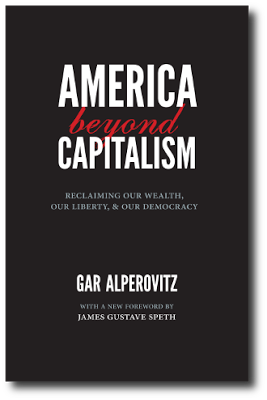
Feb. 3, 2012: Historian and political economist Gar Alperovitz, author of
America Beyond Capitalism.

The Rag Blog

Posted in Rag Bloggers | Tagged , , , , , , , , , , | 1 Comment

BOOKS / Bob Simmons : Two on the American Radio Revolution


Dead Air and Early ’70s Radio:
The formatting revolution
in American radio

By Bob Simmons | The Rag Blog | January 26, 2012

Kim Simpson, author of Early ’70s Radio, and Jan Reid, editor of Bill Young’s Dead Air, will be Thorne Dreyer‘s guests on Rag Radio, Friday, January 27, 2012, 2-3 p.m. (CST), on KOOP 91-7-FM in Austin and streamed live to the world. They will discuss the American radio revolution of the ’60s and ’70s. Rag Radio is rebroadcast on WFTE-FM in Scranton and Mt. Cobb, PA, Sunday at 10 a.m. (EST).

Dead Air: The rise and demise of music radio, by Bill Young, edited by Jan Reid. (CreateSpace, 2011); Paperback, 302 pp., $19.95.

Early ’70s Radio: The American Format Revolution, by Kim Simpson (New York: Continuum, 2011); Paperback, 288 pp., $32.95.

Two books about media, radio in particular, have recently been released for the public’s consideration: Kim Simpson’s Early 70’s Radio The American Format Revolution and Bill Young’s Dead Air: The rise and demise of music radio, edited by Jan Reid.

Both books cover roughly the same era of American radio broadcasting: the turbulent late 60’s and the decade of the 1970’s. Early 70’s Radio is more of a weighty cultural criticism full of well-researched information from those decades. Dead Air, on the other hand, is a personal memoir and first-hand tale from someone who fought in the trenches of the media war and lived.

If you’re a student of American media or cultural analysis of the period, then these books may be worth your time to explore.

For those too young to remember, or who need to be reminded, the 60’s and 70’s were times of tectonic shifts in American culture and society. You know, assassinations, Vietnam, black power, feminism, energy crises, impeachments, etc. It was a rockin’ time for sure. In the middle of it all, jockeying for position, or just to stay alive like Eliza on the Ice, was the medium of radio, trying to lead, hoping to follow, and to continue to be or become a key part of its listener’s lives.

In those days radio wanted to be, and perhaps was, a “social network” — before there was any concept of such a thing. Radio sought to be more than just a medium, radio wished to mediate the culture around it.

In the 60’s and 70’s, radio went wherever we went — in our cars, in our homes, at our work. Our little buddy was there, talking to us, playing the tunes that defined our hearts, blabbing about the navel lint of our lives, shocking us, informing us, and cajoling us to buy some product that likely as not we were better off without. Waterbeds! Hot tubs! A Mercury Montego!

That box was more than just another media choice. We didn’t have 500 channels of TV, we didn’t have the Internet. We didn’t have PDA’s and cell phones. We only had… that little radio and some guy sitting on top of an Astrodome or flagpole telling us what it was like. We could take it with us, in our car, to the beach, to the mountains, in our bedrooms at our most intimate moments. Radio could be there, defining us, refining us, and perhaps keeping us from the loneliness of just being alive in our skins.

A stupid disk jockey might irk us, please us, or maybe clue us in about an event that simply should not be missed. We could dial up our tastes — country, rock ‘n roll, hit music, the marischino strings, music and news from dusk till dawn — helping to release endorphins in our brain.

Mood elevators? Who needed Miltown or Prozac? We had K-Lite or K-Life or K-Whatthehell to keep us in the corral. Let it snow, let it snow I’ve got my radio to keep me warm. Radio made us feel like we belonged to something. It wasn’t a country club, it wasn’t a sorority or fraternity, but dammit, we belonged to… something. Good morning, sunshine… we’re here to getcha’ goin’. Looks like it’s gonna be breezy so wear a slip, OK?

Talk about pressure! As they used to say in Creem magazine: Boy Howdy!

Imagine what it must have been like to be the guy in charge of remaining relevant to an audience of some 20,000 people at any given moment, to do something to maintain your “cume” (your listening audience’s total numbers) of one or two hundred thousand people a week. Do you think you might feel a little, um, squeezed, a little apprehensive?

Pity the poor PD (Program Director) of a major city radio station. His DJ’s hate him, his manager beats him like a rented mule, the sales department thinks he is a tyrant and a stubborn jerk for not allowing some manufacturer of specialty latex products to be advertised on the air.

The league of decency is on the phone, the record promo men are in the hall with the latest directive and LP from Columbia’s Clive Davis. Atlantic’s Ahmet Ertegun says play this, or we break your legs. What is your weakness pal? You like girls? You like drugs? Money? As PD, you are the key to all their locks, and they are going to find a way to pick you.

Out there in the street are listeners who depend on you. They don’t know it, but they do. You’re the gatekeeper, you are the chef, you are the culture cop protecting them from inferior or bogus goods. You are the juggler trying to keep six things in the air: a chocolate cake, a running chainsaw, a medicine ball, your kid’s birthday, your wife’s anniversary.

David Bowie once sang, “It ain’t easy to go ahead when you’re goin’ down.” On top of all that was the fact that your audience was shifting and changing more than a woman looking at her closet before church.

Gordon McLendon on the air at KLIF in Dallas, 1948 / History of KLIF.

Top 40 or “All hit Radio” was the invention of a couple of guys, mainly one Todd Storz, who had noticed back in Omaha in 1955 or so, that people would put quarters in jukeboxes and play the same song over and over. People didn’t get tired of the song and move on. Listeners were getting some kind of rush from the repetition.

Storz had the revelation that most people don’t listen for more than an hour or two at a time. A radio station could repeat itself as much as it wanted. In fact, repetition was good, not bad, as had been thought before. People liked knowing what they were going to hear.

Hit radio was born and prospered like an army base hooker. This of course led to competition. But for years Storz and his buddy, Gordon McClendon, made millions on that simple idea.

Dead Air: The rise and demise of music radio is about Bill Young’s experience from inside that radio circus — from its rosy innocence in 1955 to the days of deepening cynical market research in the late 70’s and beyond. Young worked the wheelhouse of a couple of Gordon McClendon’s flagship stations in Dallas and Houston, leading them to top ratings and helping to maintain McClendon’s fortunes, until the day the music, or more accurately, the music machine, began to cough, sputter, and spit parts out on the highway.

Call it a challenge? I think so.

Once the format was discovered in 1955, radio operators had it pretty easy until the late 60’s and early 70’s when Americans began to evolve into walled off cells of opinion, class, and age. Marketers who kept their fingers on the pulse of the tastes and desires of the public noted with great interest the erosion of our “one nation indivisible under God” into increasingly distinct demographic and psychographic profiles. Market consultants and psychiatrists started testing “consumers” from behind one-way glass to try to figure it out.

The teenagers were coming of age. That wise guy Bugs Bunny was growing a beard, smoking pot, and singing, “I ain’t marching any more.” The kids that had liked Mickey were now on a C-131 headed for Nam. Black guys who had watched the news from Birmingham in the 60’s were wearing berets and saying things like, “By any means necessary.”

Pity the poor radio stations trying to figure out where their audiences were going. Again, “Boy howdy.”

By the late 70’s it was estimated that over 100 different radio “formats” had evolved. It had Bill Young scratching his head along with several hundred other radio programmers and tipsters around the country. What the hell should I play? To whom am I playing it? Teens, young adults, housewives?

Dead Air is a self-published work edited by historian, novelist, journalist Jan Reid, and is the story of Bill Young’s relationship with hit radio in Texas at Houston’s KILT, Dallas’ KLIF, Waco’s WACO, etc., and the myriad of people with whom he came in contact. Personal saga time.

You know the plot line. Youthful yearning hick shows up on doorstep of local East Texas radio station, and uses wits and pluck to work his way up to… Waco. And from then on folks, it’s all history. Bright lights, big city. Houston, Dallas, um, Tyler.

This is not to denigrate those accomplishments, given that succeeding in popular radio, whether in Mid-America or on the more sophisticated East or West Coasts, was akin to scaling icy mountains or driving in a Grand Prix race where all the cars were driven by psychotics who would just as soon run into you as win the race. Becoming a success in Top 40 was not easy for the men at the top, middle, or bottom.

Bill Young gives us a taste of what that long-gone world was like, a whiff from the inside of the glass-windowed rooms where the mics were live and the air had better not be “dead.” Young was behind the mic in Dallas the day they killed the President, he was on stage when the Rolling Stones wondered if they should flip their cigarette butts at the audience before they started playing. He crawled atop the Astrodome as his deejay pal finished his 400th hour living up there.

It might be said that Dead Air‘s virtues are also its limitations. As a personal memoir it is a success; as an inside history of the game, it works too; but as a book for the reader who is trying to understand media and its relationship to the broader culture, well, don’t look for much of that here, folks.

A lot of Dead Air is a list of names who are only familiar to people from within “the industry” whose careers were important to trade publications like Billboard, Cashbox, and Advertising Age. Sure, some were hometown hero DJ’s to teenaged listeners. But the other names like Bill Drake, Buzz Bennett, Bill Stewart, Don Keyes, Claude Hall? Who they?

Radio cognoscenti know them; most people though, didn’t then, and still don’t. Fame is so fickle, especially in the world of pop music and radio. Who remembers Jobriath, David Blue, Frankie Ford, Nervous Norvus? One of these days no one will know who Howard Stern was. Praise Jesus!

KILT disc jockeys. Bill Young is second from left.

It was said by someone somewhen, that radio was/is the bottom rung of the show business ladder, and one wishes in a way that Dead Air covered a bit more of the “up-close-and-personal” of what it was like to be a deejay at the time. You know, the “cleaning up after the elephants” stuff.

Maybe Bill Young should have included some vignettes of what it was like to “work in the window,” with the DJ on display as listeners drove past the studios, where DJ’s might be threatened with a stick of dynamite, or had to worry about someone taking a pot shot at them?

A portrait here and there of the radio guy who lived with a U-haul trailer on reserve for the day when he would be transferred to another city or be fired and forced to move from Oklahoma City to Detroit inside of two weeks. DJ’s? Born to be fired. (Radio bums!)

Or maybe a story about the vicious RKO Radio program director who installed sun lamps in the studio so that when an announcer wasn’t up to snuff he could turn the lamps on remotely to make him sweat. At the end of the week, the DJ with the best tan was on the shitlist.

Or saddest of all, maybe something about all the losers who forewent college to be in the “entertainment business” and found themselves burned out and tossed out of media at the ripe old age of 40 with a taste for the fast life and no skills to back it up? Being a deejay might have offered brief fame, but for many it was a one way ticket to Palookaville. Mama told you not to join the circus.

Young talks a bit about the development of innovations like hot clocks, stop sets, day-parting of music, limited rotation, “jingle packages,” etc., which may be of some interest to media junkies, but in the long run were only about how thick or thin to slice the baloney and still make people think they were getting a sandwich. Just how many ways could one devise to play the same 30 records anyway?

Flagpole sitting DJs might promote the call letters of the station so their station would be remembered in the listener surveys and make a strong showing in Pulse or the Arbitron ratings, but they made the real rubber meet the road by simply playing the artists who were the rage of the moment.

Picking hits with a tip sheet and sales charts? Could Donald Duck have done it as well? Who knows? But when it came to self-promotion and log rolling, the guys mentioned in Young’s world were tops. And that programmer who came up with a new innovation about how to arrange a limited play list of 30 hits and a hundred oldies in some new manner? He was the “genius” of the month… Ok, ok, of the year?

Big bucks would be dangled by one of several radio group owners. Gordon McClendon, Todd Storz, Don Burden, and the others would hire this “programmer of the year” or subscribe to the tip sheet that seemed to offer insight into which way the ever-skittish crowd would respond to certain sounds.

Advertising fortunes rode on being right. Pimple cream merchants and Ford dealers waited for the ratings to offer the big payoff to the stations that could pick the ponies. “I want men, 18-34 goddammit. I want housewives who like those Saturday sales. We’ve rented balloons and searchlights, some people better show up or it’s your ass.”

But Young does make a good argument that the showcase for the music counted for something. The frame around the picture made the music more important, and since this was his world, one should not expect that he would not emphasize that.

And a wild bunch some of those handmaids to the music were. What a gang of cut-ups! Setting each other’s news copy on fire while on the air! Ha ha. And consorting with record promo men who wanted to (gasp!) give them money to play records! Never mind that Nixon was being impeached, or that Jimmy Smith from down the street just got his ass shot off in Veetnam.

One can’t help but notice from the blurbs on the back of the book that the same cast of mutual backslappers is still at it. Kent Burkhart, Chuck Blore, Ron Alexenburg, Sonny Melendrez all have comments about this book “written by a radio legend.” These guys could promote a dust bunny from under your bed. Of course it would have to be a “good” dust bunny. In fact a dust bunny with legs! “This dust bunny is breaking wide at 18 with a bullet. Got your finger on my trigger, now pull it.” Those guys are going to be promoting each other’s coffins.

Always lurking in the background of Young’s story is the doppelganger image of Herb Tarlek — with his plaid jacket and white tasseled shoes — from WKRP in Cincinnati, anxious to promote turkey giveaways dropped from helicopters like bombs in a parking lot at the A and Poo Feed Store. But admit it, if you liked WKRP, you liked Herb Tarlek (played by Frank Bonner.) “I swear, I thought turkeys could fly!”

Herb Tarlek of WKRP in Cincinnati, played by Frank Bonner.

While reading Young, the older reader’s mind wanders back to the time of the dreaded teenagers to whom the radio dial had been abandoned while mom and dad watched the glowing tube in the main rooms of the house. Junior and Missy retired to their rooms to listen to Danny and the Juniors, Earth Angel, and Connie Francis, germinating their own world that would eventually lead to the fragmenting of both the culture and the audiences into worlds that not even the most statistically minded sociologists could predict. (Think Married With Children.)

England? The Beatles, the Rolling Stones, Bob Dylan? What would those voices mean to someone who was playing the music of Leslie Gore, “It’s my party, and I’ll cry if I want to?”

But Bill Young was there, caught in the middle of it, “too cool for the room, too square to be rare,” helming one of Gordon McClendon’s ships-of-the-line through the stormy media waters. “You may fire when ready, Gridley. Damn the torpedos.” Don’t worry about that FM program director Tom Donahue declaring in Rolling Stone that, “Top 40 is dead and its rotting corpse is stinking up the airways.”

And it did take another five years to die and for the culture to morph into Disco, Contemporary Hit Radio, Middle of the Road, AOR, Urban, Country, and News/Talkers, and all their subgenres. It also took an assassination of a president, his brother, and a civil rights giant, a horrible and unjust war, the popularization and mass use of drugs (both legal and illegal), the rise of FM radio, LP records, and cable television to split the listenerships into microsegments that became an advertiser’s nightmare of demographics, psychographics, and statistical weighting.

Bill Young was there and lived to tell the tale for students of mid-America, mid-century, and media-as-a-message. If that stuff interests you, then dig right in.

Working the same fields, but plowing much more refined furrows, is the book by Kim Simpson, Early 70’s Radio The American Format Revolution.

Simpson, also a musician and a host of folk music shows on Austin’s KUT and KOOP, is from a different generation than Bill Young, and approaches the period as a historian and studious cultural critic. Born in 1969, Simpson experiences the 70’s mainly as research first begun in his dad’s stashed archives of old Billboards, Cash Boxes, and Record Worlds. Curiosity led him further.

He was fascinated by the genesis of the idea of “formatting” — that is, the process of trying to design a medium to fit the perceived preferences of a preselected “target audience.” It was an idea that was in its complete infancy in the early 70’s, and Simpson thought that he could follow its development and demonstrate that a study of “hit radio formats” could provide a unique and useful means for examining and understanding the period and the culture as a whole.

In Simpson’s words:

Radio historians, having recognized the early 70’s as a watershed in the medium’s history, refer to the era as the “format explosion,” the “crossover explosion” or the “FM revolution,” among similar descriptions. These all fit the bill — if commercial radio’s format offerings numbered in the single digits at the beginning of the decade, they had multiplied, according to a Broadcasting magazine tally, to an industry-wide cornucopia of 133 formats by the end of the decade, all but six of which could be classified as “Popular music” in one sense or another.

[….] the radio business’s formatting efforts were a cultural phenomenon that mirrored the identity issues with which the nation as a whole, had been grappling. It was no mere coincidence that this change in the radio landscape toward audience segmentation occurred in a period rife with heated politics, identity anxiety, and social fragmentation amid a steady stream of large scale disappointments and chronically insoluble social problems (Vietnam, OPEC, Inflation, and Watergate to name just a few).

In this light, commercial music radio formats, however industry driven, served two cultural functions, both of which appear as recurring themes throughout this book: (1) they provided a means whereby radio listeners could reimagine and renegotiate identity be it their own or another’s; and (2) the formats acted as coping mechanisms. For example, they could serve as escape hatches through which radio listeners might opt out of the social turmoil and anxieties of the day, while functioning for others as well-defined identity headquarters that offered meaning and resolve in equal measures to their corresponding demographics.

“Boy Howdy!” Once again, you just said a mouthful.

Well, is/was it true? Is that what music radio formatting was/is all about? Bubblegum, heavy metal, folk-rock, singer-songwriters, jazz, country, light-country, mellow, elevator music, classical, AOR, AAOR, MOR, Urban, Quiet Storms, Indie/College, Bluegrass, and so on through the spectrum of bins at your local music store? What the hell does all that mean? What do those tea leaves mean, Gypsy woman?

Well bless Mr. Simpson, he tries to make heads or tails of this ball of confusion of cultural demarcation. Genre’s, sub-genre’s, incongruent glops of cross-referential music emerging from the variety of eras and socioeconomic partitions, divided by race, culture, age, background, geography, and whatever other cultural identifiers offered for a lost people to grasp to find a sense of themselves.

Once, in Bill Young’s day — what Simpson (and others) call the days of “Unformatted Innocence” — radio and other media were broadcast out over the broad waters of the American landscape as though there was one body with one set of ears.

In the early 70’s, right about the same time people started recognizing the significance of Marshall McCluhan’s Understanding Media, the advertising world and the broadcasting world, moving in lockstep, recognized that the stuff they used to do was hopelessly naive and ineffective in reaching the people they wanted to motivate to do the things they wanted them to do. And what they wanted was for people to buy products, not to mention to buy the products that were luring them to buy more products.

(One of the great ironies of music radio was that probably the most salient merchandise that they were selling was not the “products” they were advertising with the “commercial spots,” but was the very program material they were playing on the air. The recordings from the major and minor labels were ads for themselves! This hasn’t changed a bit and continues to this day unabated.)

No wonder the major record companies vied so heavily for airplay. Their “product” was being used to advertise itself. The promo men from Atlantic, CBS, Warner Brothers, and from Hi, and Sarg, London, and from the local one-stop distributor lined up at the radio programmer’s door. “Pleeeze, play my record.”

And if the product was good, and was played in the right way, to the right audience, then listeners would tune in, and the station could sell more actual advertising to local merchants and manufacturers of goods and services. Maybe it was as the Marquis de Sade who once said, “All of them engaged in happy mutual robbery.”

Pity the poor programmer who had to negotiate among all these competing interests. (Wait, is that a spot or a song? Are they selling “Lady Came from Baltimore” or Lady Schick Razors? How do you know? Is the DJ talking to me, or selling me something?)

And pity the poor cultural critic who has to parse this into its constituent pieces. Boy howdy!

Progressive radio pioneer Tom Donahue. Image from Bay Area Radio.

So there goes Kim Simpson with his fine book, to make his contribution to the understanding of media and of pop culture. Watching Scotty Grow, Soul Crisis and Crossover, MOR and Soft Rock, Casey Kasem, Robert Plant, Country Music, oh hell, it’s all here.

I am here to warn you, this book is not light reading. It is deeply researched, it is thoughtful, it is rich with facts and insights of both Simpson’s and of the ideas from the source material.

Since he is doing his work from archives, from studies, and from interviews with the personalities of the times, he occasionally makes an error. He talks about the original FM revolution which ostensibly started in San Francisco, where he gives credit to Tom Donahue for “owning” the first “underground” FM station, KMPX. Simpson missed the fact that Donahue owned nothing and went on strike with his staff against the station owner who refused to share in the new gold mine that Tom and his rag-tag staff were creating.

But Simpson bravely wades into the fray. He covers every aspect of the culture — feminism, religious broadcasting, news, racism in media — from Olivia Newton-John to Frank Zappa, Black Sabbath to Merle Haggard. He studies all of the musical genres that are covered by bellwether artists and tries to give context and meaning about how they fit into the wider culture. It is a staggeringly difficult thing to do, but somehow he seems to pull it off.

And what does he predict from all this? More of the same of course. (Satellite radio, mood oriented. Terrestial radio, demographic oriented — but radio still needed, ostensibly for its “communal listening experience.”) But in further fragments and segments, maybe even a segment that goes back to the unformatted innocence of music that is incongruously served up as a bunch of this and that. Only in a highly segmented spectrum could an unsegmented format be included. It’s full circle time.

And all of it exists and continues to morph because of the wild multiplication of technical media delivery systems. Cable, Internet, over-the-air FM and AM, TV carriers and sub-carriers, satellite radio like Sirius, ad infinitum. Anyone need an all-Dolly Parton station? Technical change allows, nay, demands cultural change. Napster becomes Pandora, Pandora becomes Spotify. Next please! Everybody into the ditch!

So, Dead Air, and Early 70’s Radio. Both recommended for people who like this kind of stuff. But as they said about the Magic Theatre in Steppenwolf: “Not for Everybody.”

[Bob Simmons has been a radio producer and personality, oil biz entrepreneur, video maker, voice talent, construction worker, newspaper publisher, writer, and sports editor. Simmons has a storied career in radio, where he was a pioneer in the underground format, and has been a producer and personality at legendary stations — including KUT, KPFA, KSAN, KKSN, and KFAT — in places like San Francisco, Austin, and Portland. Read more articles by Bob Simmons on The Rag Blog.]

The Rag Blog

Posted in Rag Bloggers | Tagged , , , , , , | 3 Comments

Carl Davidson : Shameless Republicans and the State of the Union

Newt and the “Food Stamp President.” Image from The Economist / Keep on Keepin’ On!

We’re all in the same boat?
On the topic of Obama, the
GOP can’t even blush anymore

By Carl Davidson | The Rag Blog | January 25, 2012

If Hollywood gave Oscars for shamelessness, the Republican responses to President Obama’s State of the Union speech last night, Tuesday, January 24, would have swept the field.

Take Indiana’s Gov. Mitch Daniels, who gave the official GOP response:

“No feature of the Obama presidency has been sadder than its constant efforts to divide us, to curry favor with some Americans by castigating others,” he said. “As in previous moments of national danger, we Americans are all in the same boat.”

Amazing. One top GOP candidate, Newt Gingrich, is running around the country attacking Obama as the “Food Stamp President,” while the other, Mitt Romney, whose newly released tax returns show he takes in more in a day than a well-paid worker does in a year, critiques Obama’s business skills using a shuttered factory as a stage prop.

Obama, of course, never shut down a single factory, yet that was precisely the business Mitt Romney — and his outfit, Bain Capital — was famous for, including shutting down a factory in Florida, where his video message was being recorded.

“All in the same boat” and “castigating others” indeed. Governor Daniels uttered these words as the state he presides over is currently engaged in a notorious “right-to-work-for-less” battle to strip Indiana’s workers of their ability to bargain collectively.

Like many Americans, I watched the President’s speech with a critical eye. As he detailed a number of manufacturing and alternative energy industrial policies, I thought, finally, he’s giving some voice to his “inner Keynesian” and forcing a crack in the neoliberal hegemony at the top. I cheered when he took aim at Wall Street and declared, “No more bailouts, no more handouts, and no more cop outs.”

On the other hand I winced more than once at the glorification of militarism and the defense of Empire — I’m one quick to oppose unjust wars and who has long believed a clean energy/green manufacturing industrial policy needs to trump a military-hydrocarbon industrial policy.

This speech was also Obama in campaign mode. One thing we’ve learned over the last four years is that his governing mode is not the same thing, and requires much more of us in terms of independent, popular, and democratic power at the base to make good things happen.

But one thing is clear. My critical eye has nothing in common with what’s coming from the GOP and the far right. The first Saturday of every month, the pickup trucks from the local hills and hollows, growing numbers of them, fill the parking lot of the church on my corner, picking up packages from the food pantry to help make ends meet.

In these circumstances and lacking better practical choices, I’ll go with the “Food Stamp President” any day of the week.

[Carl Davidson is a national co-chair of the Committees of Correspondence for Democracy and Socialism, a national board member of Solidarity Economy Network, a writer for Beaver County Blue, the website of PA’s 4th CD Progressive Democrats of America, and a member of Steelworkers Associates. He is the author of several books, including New Paths to Socialism, available online. In the 1960s, he was a national leader of SDS and a writer and editor for the Guardian newsweekly. This article was also published at Carl’s blog, Keep On Keepin’ On!. Read more articles by Carl Davidson on The Rag Blog.]

The Rag Blog
Posted in Rag Bloggers | Tagged , , , , | Leave a comment

Robert Jensen : The Plow and the iPhone

Free market Egyptian plow, circa 1200 BC. Image from Wikimedia Commons.

The plow and the iPhone:
Conservative fantasies about
the miracles of the market

As is often the case in faith-based systems, reconciling doctrine to the facts of history can be tricky.

By Robert Jensen / The Rag Blog / January 25, 2012

A central doctrine of evangelicals for the “free market” is its capacity for innovation: New ideas, new technologies, new gadgets — all flow not from governments but from individuals and businesses allowed to flourish in the market, we are told.

That’s the claim made in a recent op/ed in our local paper by policy analyst Josiah Neeley of the Texas Public Policy Foundation, a conservative think-tank in Austin. His conclusion: “Throughout history, technological advances have been driven by private investment, not by government fiat. There is no reason to expect that to change anytime soon.”

As is often the case in faith-based systems, reconciling doctrine to the facts of history can be tricky. When I read Neeley’s piece, I immediately thought of the long list of modern technological innovations that came directly from government-directed and -financed projects, most notably containerization, satellites, computers, and the Internet.

The initial research-and-development for all these projects so central to the modern economy came from the government, often through the military, long before they were commercially viable. It’s true that individuals and businesses often used those innovations to create products and services for the market, but without the foundational research funded by government, none of those products and services could exist.

So I called Neeley and asked what innovations he had in mind when he wrote his piece. In an email response he cited Thomas Edison and the Wright brothers. Fair enough — they were independent entrepreneurs, working in the late 19th and early 20th century. But their work came decades after the U.S. Army had provided the primary funding to make interchangeable parts possible, a transformative moment in the history of industrialization.

In the “good old days,” government also got involved.

As Naomi Oreskes and Eric Conway explain in their book Merchants of Doubt, the U.S. Army’s Ordinance Department wanted interchangeable parts to make guns that could be repaired easily on or near battlefields, which required machine-tooled parts. That research took nearly 50 years, much longer than any individual or corporation would support.

The authors make the important point clearly: “Markets spread the technology of machine tools throughout the world, but markets did not create it. Centralized government, in the form of the U.S. Army, was the inventor of the modern machine age.”

That strikes me as an important part of the story of the era of Edison and the Wrights, but one conveniently ignored by free-marketeers.

Even more curious in Neeley’s response were the two specific products he mentioned in his email: “The plow wasn’t created by government fiat, and neither was the iPhone.”

The plow and the iPhone are the best examples of innovations in the private sphere? The plow was invented thousands of years ago, in a world in which governments and economic systems were organized in just slightly different ways, making it an odd example for this discussion of modern capitalism and the nation-state. And the iPhone wouldn’t exist without all that government R&D that created computers and the Internet.

Neeley didn’t try to deny the undeniable role of government and military funding; for example, he mentioned the Saturn V rocket (a case made even more interesting, of course, because Nazi scientists were brought into the United States after World War II to work on the project). “But the driver of these advances’ adoption and relevance outside the realm of government fiat has always been the private sphere,” he wrote in his response.

Neeley is playing a painfully transparent game here. He acknowledges that many basic technological advances are driven by government fiat in the basic R&D phase, but somehow that phase doesn’t matter. What matters is the “adoption and relevance” phase. It’s apparently not relevant that without the basic R&D in these cases there would have been nothing to adopt and make relevant for the market.

We’re in real Wizard of Oz territory here — pay no attention to the scientists working behind the curtain, who are being paid with your tax dollars. Just step up to the counter and pay the corporate wizards for their products and services, without asking about the tax-funded research on which they rely.

There are serious questions to be debated about how public money should be spent on which kinds of R&D, especially when so much of that money comes through the U.S. military, whose budget many of us think is bloated. More transparency is needed in that process.

But anyone who cares about honest argumentation should be offended on principled grounds by Neeley’s sleight of hand. His distortion of history is especially egregious given the context of his op/ed, which argues against public support for solar energy in favor of the expansion of oil and gas drilling. Neeley focuses on the failure of Solyndra — the solar panel manufacturer that filed for bankruptcy after getting a $535 million federal loan guarantee — in trying to make a case against government support for alternative energy development.

When public subsidies fail, there should be a vigorous investigation. But the failure of one company, hitched to a highly distorted story about the history of technological innovation, doesn’t make for a strong argument against any public support for solutions to the energy crisis, nor does it cover up the fact that the increasing use of fossil fuels accelerates climate change/disruption.

The larger context for this assertion of market fundamentalism is the ongoing political project to delegitimize any collective action by ordinary people through government. Given the degree to which corporations and the wealthy dominate contemporary government, from the local to the national level, it’s not clear why elites are so flustered; they are the ones who benefit most from government spending.

But politicians and pundits who serve those elites keep hammering away on a simple theme — business good, government bad — hoping to make sure that the formal mechanisms of democracy won’t be used to question the concentration of wealth and power.

Throughout history, the political projects of the wealthy have been driven by propaganda. There is no reason to expect that to change anytime soon, which means popular movements for economic justice and ecological sustainability not only have to struggle to change the future but also to tell the truth about the past.

[Robert Jensen is a journalism professor at the University of Texas at Austin, where he teaches courses in media law, ethics, and politics — and a board member of the Third Coast Activist Resource Center in Austin. His books include All My Bones Shake: Seeking a Progressive Path to the Prophetic Voice, and Getting Off: Pornography and the End of Masculinity. His writing is published extensively in mainstream and alternative media. Robert Jensen can be reached at rjensen@uts.cc.utexas.edu. Read more articles by Robert Jensen on The Rag Blog.]

The Rag Blog

Posted in Rag Bloggers | Tagged , , , | 3 Comments

Jack A. Smith : Tough Times Ahead

Embattled Captain America. Cartoon by Bryant Arnold / CartoonADay.com.

A new year of tough times ahead

It is certainly legitimate to worry about the direction in which American politics is heading domestically, coupled with a probable global future of more wars, more poverty, and environmental disaster.

By Jack A. Smith | The Rag Blog | January 24, 2012

The new year has dawned upon a deeply troubled America. Times are not good in the “best of all possible” nation states, which has suddenly discovered that the seven league boots with which it is accustomed to stride the globe have become ill-fitting and down at the heels.

In recent years, particularly since the onset of the Great Recession, it has become clear to many Americans that their country is composed of two different societies with clashing interests — a very small minority in possession of great wealth and power, and everyone else, with some getting by and many falling by the wayside.

As a consequence, large numbers of people now perceive to one degree or another that big money not only manipulates most elections but influences a great many of the politicians and bureaucrats who craft legislation and execute the policies of the U.S. government. Awareness is spreading that crony capitalism — the corporations, banks and Wall Street — controls the economic system which shapes the political system where decisions are made.

But the beat goes on, of course, until mass consciousness transforms into mass action.

In domestic politics, 2012 opened with the Republican Party’s three-ring circus in Iowa, New Hampshire, and South Carolina, the initial contests to select a presidential nominee. On display is the most bizarre collection of clowns in recent political history. At this stage the battle is between Newt Gingrich and Mitt Romney, who is still favored for now. The struggle within the GOP between ultra right and ultra right “lite” will be determined soon, signaling the start of the best election money can buy.

Which ever party wins in November — and we think President Barack Obama will be reelected — the contest is not between right and left but between right/far right and center right. No matter what the result, progressive change will not be the product. The best outcome might simply be keeping the crazies at bay.

In international affairs, the year opened with U.S. cannon shots aimed just above the heads of America’s evidently multifarious enemies, identified as being mainly in Asia and the Middle East, warning them not to mess with Uncle Sam, as though they were about to.

As the shots reverberated, the American people were told:

Good morning, everybody. The United States of America is the greatest force for freedom and security that the world has ever known. And in no small measure, that’s because we’ve built the best-trained, best-led, best-equipped military in history — and as Commander-in-Chief, I’m going to keep it that way…

These “reassuring” but misleading hyper-nationalist words from the Commander-In-Chief were expressed January 5 during a visit to the Pentagon to explain Washington’s dangerous new war policy. A secondary purpose of the plan is to facilitate Pentagon spending cuts in the next decade, but future allocations will not drop one penny below George W. Bush’s bloated war budgets.

Abruptly, the U.S. is supposed to be confronted with a “threat” from China, necessitating that the Pentagon surround that country with even more of its far superior weaponry, more troops, battle fleets heading in closer proximity, surveillance aircraft, space weapons, and long range nuclear missiles.

All this is part of Obama’s recent “pivot” to Asia, as though we ever left, the main goal being to weaken China within its own natural sphere of interest in order to secure Washington’s need to remain global top dog. China is no military threat to the U.S. today or in the future, given the Pentagon’s two-decade head start in all the technologies of conflict, and the fact that America’s war budget is and will remain many times that of China’s.

In addition, there seems to be an imminent “threat” to our way of life from Iran, as well as the continuing “threat” to U.S. democracy from some poor tribes in Afghanistan.

Actually, according to “Sustaining U.S. Global Leadership: Priorities for 21st Century Defense,” the document explaining the new war plan, the U.S. faces additional “threats” throughout the world, specifically including (aside from those mentioned): Pakistan, Afghanistan, Yemen, Somalia, and “elsewhere” (our guess is Africa, where Obama’s already inserting troops). Primary regions to worry about, says the Pentagon plan, are South Asia, Middle East, Asia-Pacific, Northeast Asia, Eurasia, Southeast and East Asia, plus future, unforeseen demands.

Despite all these “threats,” which are largely invented to justify war spending and keep the American people supportive of the militarism that now pervades our society, Obama twice mentioned in his speech that the “tide of war” is receding.

But if that is true, why station 40,000 troops in countries around Iraq after withdrawal? Why deploy attack-ready bombers and Navy aircraft carriers near Iran? Why keep nearly 100,000 troops in Afghanistan and make demands on Kabul to allow thousands more to remain indefinitely after the planned “withdrawal” in 2014?

The U.S.-Israeli crusade against Iran may result in an attack this year. The New York Times reported Jan. 12 on an “accelerating covert campaign against Iran consisting of assassinations and bombings. The campaign, which experts believe is being carried out mainly by Israel, apparently claimed its latest victim January 11 when a bomb killed a 32-year-old nuclear scientist in Tehran’s morning rush hour.”

On January 14, Iran charged that the U.S. and Israel were behind the scientist’s murder. That same day The Wall Street Journal reported that the White House was worried that Israel will attack Iran before the U.S. gives a go-ahead. But four days later the Times reported Israeli Defense Minister Ehud Barak declared “any decision on a possible preemptive military strike on Iranian targets was ‘very far off.'” Stay tuned, the year’s just started.

The American people are supposed to be safer this new year because President Obama just signed into law the National Defense Authorization Act allocating $662 billion in military spending in 2012 (plus an equal amount for other “national security” purposes in other budgets).

Civil liberties groups criticize the Pentagon bill because it also authorizes an “indefinite detention” clause that is one more step toward a police state. Obama’s civil liberties record is worse than that of his predecessor because he retained Bush’s excesses and added his own.

A few days after Obama’s bragging about the “best-trained” military, the Pentagon and the secretaries of defense and state were forced to publicly apologize in the wake of an international uproar over circulation of a video showing four U.S. Marines jovially urinating on the corpses of Taliban suspects.

A couple of days later a U.S. military legal officer recommended that PFC Bradley Manning face a court martial for transferring documents including evidence of U.S. war crimes to the whistle-blowing website WikiLeaks. And so it goes, day by day into 2012.

Washington maintains that the Great Recession ended in June 2009 and the economy is on the mend. Stock prices are up, corporate profits are zooming, and the wealthy are exhausting the nation’s supply of money bags.

The corporations, banks and Wall Street have been abundantly helped through the tough times by the Obama Administration, but little help has trickled down to average working families. Recession conditions will continue in 2012 for much of the “bottom” 80% of the U.S. population, including high unemployment, more foreclosures, and stagnant wages. Half the families in our Land of Opportunity are low income or poor.

Early in January, the new Pew Research Center survey of 2,048 adults contained a most unusual result. It found that 66% of the people in our “classless society” believe there are “very strong or strong conflicts between the rich and the poor” in the U.S. This is big news, evidently based on growing comprehension of what are in fact class differences.

The top 1% now possess more than 50% of all privately held assets in the U.S. (Assets are everything you own including cash, car, and house minus debts.) The top 20% possess 85% of all assets. This means the bottom 80% of the people have accumulated only 15% of the assets (including the bottom 40%, who have no assets at all because they owe more than they own).

However, there is one aspect of our system that is said to prove beyond doubt that all Americans — rich and poor alike — are actually equal in our society where it really counts. We speak of each citizen’s right to vote in the quadrennial selection of a Commander-in-Chief, known popularly as the presidential election.

President Obama has transformed his rhetoric into that of liberal populism for the duration of the campaign. He now talks about having government intervene to help reduce inequality and help build a more “equitable” society, not that it’s going to happen. He now even tut-tuts about crony capitalism.

Obama sure sounds even more progressive than when he was a “change-we-can-believe-in” candidate in 2008. This was before governing as a center-right patron of the ruling establishment for the last three years, ignoring poor, low income, and minority Americans as though they didn’t exist, initiating a completely failed program for the millions who have been foreclosed on, and changing little to nothing, even in his first two years when the Democrats controlled the House as well as the Senate.

Probable opponent Romney has undergone a similar opportunist transformation in the opposite direction in order to obtain the GOP nomination. He’s now campaigning as a right/far right populist this year after governing Massachusetts as a healthcare moderate conservative and who earlier supported abortion, and gun control, among many flip-flops. Gingrich has always been an ultra-reactionary hypocrite going back to the early 1990s in the House, and hasn’t seen the need to adopt a new persona for 2012.

The main reason we believe Obama will be reelected has nothing to do with his record as president. It is that the Republicans have gone so far to the political right, and have acted like such obstructionist buffoons in Congress, that the crucial independent vote will lean toward the center-right.

The Democratic leadership hopes Gingrich becomes the candidate because he’ll campaign as a far rightist while they fear Romney may moderate some of his rhetoric. But even so, Obama’s nearly $1 billion war chest should finish him off.

Assuming Obama does return to power, we know now, as in the 2008 campaign, that a “liberal” will not be occupying the Oval Office for the next four years. The pro-99% rhetoric will stop at the second term White House door.

American politics is quite different today than when the Democratic Party adopted a center left configuration for a few years in the 1930s and 1960s. However, in terms of the gradations of political “evil,” the center right is a “lesser evil” to the right/far right, given the two conservative options for electing a president offered the American people by those who run the show, though it’s a dismal commentary on democracy.

In the present era it is certainly legitimate to worry about the direction in which American politics is heading domestically, coupled with a probable global future of more wars, more poverty, and environmental disaster. We worry deeply about the problems that will confront our and all today’s children and grandchildren.

However, we retain unshakable confidence in what the masses of people can accomplish under difficult conditions when they become united, organized, disciplined, and committed to the struggle for a better, equal, and cooperative society, and a peaceful, environmentally sustainable world.

This option for substantive transformation beckons. It is the objective requirement of our times if we are to avoid a catastrophe down the road. A decisive turn to the left is essential and possible. It could revolutionize society and change the world to benefit all the people.

[Jack A. Smith was editor of the Guardian — for decades the nation’s preeminent leftist newsweekly — that closed shop in 1992. Smith now edits the Hudson Valley Activist Newsletter, where this article was also posted. Read more articles by Jack A. Smith on The Rag Blog.

The Rag Blog

Posted in Rag Bloggers | Tagged , , | Leave a comment

A new year of tough times ahead

It is certainly legitimate to worry about the direction in which American politics is heading domestically, coupled with a probable global future of more wars, more poverty, and environmental disaster.

By Jack A. Smith | The Rag Blog | January 24, 2012

The new year has dawned upon a deeply troubled America. Times are not good in the “best of all possible” nation states, which has suddenly discovered that the seven league boots with which it is accustomed to stride the globe have become ill-fitting and down at the heels.

In recent years, particularly since the onset of the Great Recession, it has become clear to many Americans that their country is composed of two different societies with clashing interests — a very small minority in possession of great wealth and power, and everyone else, with some getting by and many falling by the wayside.

As a consequence, large numbers of people now perceive to one degree or another that big money not only manipulates most elections but influences a great many of the politicians and bureaucrats who craft legislation and execute the policies of the U.S. government. Awareness is spreading that crony capitalism — the corporations, banks and Wall Street — controls the economic system which shapes the political system where decisions are made.

But the beat goes on, of course, until mass consciousness transforms into mass action.

In domestic politics, 2012 opened with the Republican Party’s three-ring circus in Iowa, New Hampshire, and South Carolina, the initial contests to select a presidential nominee. On display is the most bizarre collection of clowns in recent political history. At this stage the battle is between Newt Gingrich and Mitt Romney, who is still favored for now. The struggle within the GOP between ultra right and ultra right “lite” will be determined soon, signaling the start of the best election money can buy.

Which ever party wins in November — and we think President Barack Obama will be reelected — the contest is not between right and left but between right/far right and center right. No matter what the result, progressive change will not be the product. The best outcome might simply be keeping the crazies at bay.

In international affairs, the year opened with U.S. cannon shots aimed just above the heads of America’s evidently multifarious enemies, identified as being mainly in Asia and the Middle East, warning them not to mess with Uncle Sam, as though they were about to.

As the shots reverberated, the American people were told:

Good morning, everybody. The United States of America is the greatest force for freedom and security that the world has ever known. And in no small measure, that’s because we’ve built the best-trained, best-led, best-equipped military in history — and as Commander-in-Chief, I’m going to keep it that way…

These “reassuring” but misleading hyper-nationalist words from the Commander-In-Chief were expressed January 5 during a visit to the Pentagon to explain Washington’s dangerous new war policy. A secondary purpose of the plan is to facilitate Pentagon spending cuts in the next decade, but future allocations will not drop one penny below George W. Bush’s bloated war budgets.

Abruptly, the U.S. is supposed to be confronted with a “threat” from China, necessitating that the Pentagon surround that country with even more of its far superior weaponry, more troops, battle fleets heading in closer proximity, surveillance aircraft, space weapons, and long range nuclear missiles.

All this is part of Obama’s recent “pivot” to Asia, as though we ever left, the main goal being to weaken China within its own natural sphere of interest in order to secure Washington’s need to remain global top dog. China is no military threat to the U.S. today or in the future, given the Pentagon’s two-decade head start in all the technologies of conflict, and the fact that America’s war budget is and will remain many times that of China’s.

In addition, there seems to be an imminent “threat” to our way of life from Iran, as well as the continuing “threat” to U.S. democracy from some poor tribes in Afghanistan.

Actually, according to “Sustaining U.S. Global Leadership: Priorities for 21st Century Defense,” the document explaining the new war plan, the U.S. faces additional “threats” throughout the world, specifically including (aside from those mentioned): Pakistan, Afghanistan, Yemen, Somalia, and “elsewhere” (our guess is Africa, where Obama’s already inserting troops). Primary regions to worry about, says the Pentagon plan, are South Asia, Middle East, Asia-Pacific, Northeast Asia, Eurasia, Southeast and East Asia, plus future, unforeseen demands.

Despite all these “threats,” which are largely invented to justify war spending and keep the American people supportive of the militarism that now pervades our society, Obama twice mentioned in his speech that the “tide of war” is receding.

But if that is true, why station 40,000 troops in countries around Iraq after withdrawal? Why deploy attack-ready bombers and Navy aircraft carriers near Iran? Why keep nearly 100,000 troops in Afghanistan and make demands on Kabul to allow thousands more to remain indefinitely after the planned “withdrawal” in 2014?

The U.S.-Israeli crusade against Iran may result in an attack this year. The New York Times reported Jan. 12 on an “accelerating covert campaign against Iran consisting of assassinations and bombings. The campaign, which experts believe is being carried out mainly by Israel, apparently claimed its latest victim January 11 when a bomb killed a 32-year-old nuclear scientist in Tehran’s morning rush hour.”

On January 14, Iran charged that the U.S. and Israel were behind the scientist’s murder. That same day The Wall Street Journal reported that the White House was worried that Israel will attack Iran before the U.S. gives a go-ahead. But four days later the Times reported Israeli Defense Minister Ehud Barak declared “any decision on a possible preemptive military strike on Iranian targets was ‘very far off.'” Stay tuned, the year’s just started.

The American people are supposed to be safer this new year because President Obama just signed into law the National Defense Authorization Act allocating $662 billion in military spending in 2012 (plus an equal amount for other “national security” purposes in other budgets).

Civil liberties groups criticize the Pentagon bill because it also authorizes an “indefinite detention” clause that is one more step toward a police state. Obama’s civil liberties record is worse than that of his predecessor because he retained Bush’s excesses and added his own.

A few days after Obama’s bragging about the “best-trained” military, the Pentagon and the secretaries of defense and state were forced to publicly apologize in the wake of an international uproar over circulation of a video showing four U.S. Marines jovially urinating on the corpses of Taliban suspects.

A couple of days later a U.S. military legal officer recommended that PFC Bradley Manning face a court martial for transferring documents including evidence of U.S. war crimes to the whistle-blowing website WikiLeaks. And so it goes, day by day into 2012.

Washington maintains that the Great Recession ended in June 2009 and the economy is on the mend. Stock prices are up, corporate profits are zooming, and the wealthy are exhausting the nation’s supply of money bags.

The corporations, banks and Wall Street have been abundantly helped through the tough times by the Obama Administration, but little help has trickled down to average working families. Recession conditions will continue in 2012 for much of the “bottom” 80% of the U.S. population, including high unemployment, more foreclosures, and stagnant wages. Half the families in our Land of Opportunity are low income or poor.

Early in January, the new Pew Research Center survey of 2,048 adults contained a most unusual result. It found that 66% of the people in our “classless society” believe there are “very strong or strong conflicts between the rich and the poor” in the U.S. This is big news, evidently based on growing comprehension of what are in fact class differences.

The top 1% now possess more than 50% of all privately held assets in the U.S. (Assets are everything you own including cash, car, and house minus debts.) The top 20% possess 85% of all assets. This means the bottom 80% of the people have accumulated only 15% of the assets (including the bottom 40%, who have no assets at all because they owe more than they own).

However, there is one aspect of our system that is said to prove beyond doubt that all Americans — rich and poor alike — are actually equal in our society where it really counts. We speak of each citizen’s right to vote in the quadrennial selection of a Commander-in-Chief, known popularly as the presidential election.

President Obama has transformed his rhetoric into that of liberal populism for the duration of the campaign. He now talks about having government intervene to help reduce inequality and help build a more “equitable” society, not that it’s going to happen. He now even tut-tuts about crony capitalism.

Obama sure sounds even more progressive than when he was a “change-we-can-believe-in” candidate in 2008. This was before governing as a center-right patron of the ruling establishment for the last three years, ignoring poor, low income, and minority Americans as though they didn’t exist, initiating a completely failed program for the millions who have been foreclosed on, and changing little to nothing, even in his first two years when the Democrats controlled the House as well as the Senate.

Probable opponent Romney has undergone a similar opportunist transformation in the opposite direction in order to obtain the GOP nomination. He’s now campaigning as a right/far right populist this year after governing Massachusetts as a healthcare moderate conservative and who earlier supported abortion, and gun control, among many flip-flops. Gingrich has always been an ultra-reactionary hypocrite going back to the early 1990s in the House, and hasn’t seen the need to adopt a new persona for 2012.

The main reason we believe Obama will be reelected has nothing to do with his record as president. It is that the Republicans have gone so far to the political right, and have acted like such obstructionist buffoons in Congress, that the crucial independent vote will lean toward the center-right.

The Democratic leadership hopes Gingrich becomes the candidate because he’ll campaign as a far rightist while they fear Romney may moderate some of his rhetoric. But even so, Obama’s nearly $1 billion war chest should finish him off.

Assuming Obama does return to power, we know now, as in the 2008 campaign, that a “liberal” will not be occupying the Oval Office for the next four years. The pro-99% rhetoric will stop at the second term White House door.

American politics is quite different today than when the Democratic Party adopted a center left configuration for a few years in the 1930s and 1960s. However, in terms of the gradations of political “evil,” the center right is a “lesser evil” to the right/far right, given the two conservative options for electing a president offered the American people by those who run the show, though it’s a dismal commentary on democracy.

In the present era it is certainly legitimate to worry about the direction in which American politics is heading domestically, coupled with a probable global future of more wars, more poverty, and environmental disaster. We worry deeply about the problems that will confront our and all today’s children and grandchildren.

However, we retain unshakable confidence in what the masses of people can accomplish under difficult conditions when they become united, organized, disciplined, and committed to the struggle for a better, equal, and cooperative society, and a peaceful, environmentally sustainable world.

This option for substantive transformation beckons. It is the objective requirement of our times if we are to avoid a catastrophe down the road. A decisive turn to the left is essential and possible. It could revolutionize society and change the world to benefit all the people.

[Jack A. Smith was editor of the Guardian — for decades the nation’s preeminent leftist newsweekly — that closed shop in 1992. Smith now edits the Hudson Valley Activist Newsletter, where this article was also posted. Read more articles by Jack A. Smith on The Rag Blog.

The Rag Blog

Posted in RagBlog | Leave a comment

Bob Feldman : Segregation and Lynchings in Texas, 1890-1920

Unidentified African-American man lynched in Texas, 1910. Image from Legends of America.

The hidden history of Texas

Part IX: 1890-1920/1 — Segregation and lynchings in Texas

By Bob Feldman / The Rag Blog / January 24, 2012

[This is the first section of Part 9 of Bob Feldman’s Rag Blog series on the hidden history of Texas.]

Between 1890 and 1920, the number of people who lived in Texas increased from 2,235,000 to 4,663,000. Yet 66 percent of Texans still lived in rural towns with populations below 2,500. But by 1920, over 100,000 people now lived in Dallas, in Fort Worth, in San Antonio, and in Houston — although only 34,800 people yet lived in Austin and only 77,500 people in El Paso.

After 1900, “’immigrants’ from Mexico began to arrive in significant numbers for the first time since the Texas Revolution” in 1836, but “Texans of Mexican descent, `immigrants’ and native-born combined,” still “amounted to only about 10 percent of the state’s population in 1920,” according to Randolph Campbell’s Gone To Texas. According to the same book, in 1920 “most new arrivals” from Mexico “lived in South Texas and El Paso.”

Between 1890 and 1920, the number of people of African descent who lived in Texas also increased from about 448,000 to 741,000, while the number of people of Jewish background in Texas in 1920 was still only about 30,000.

By 1920, the total value of crops produced by farmers and of cattle raised on ranches in Texas was more than the total value of crops or cattle raised in any other state in the USA. Yet between 1890 and 1920 racial “segregation… became commonplace,” as well as “disfranchisement” of African-Americans, and “physical intimidation occurred regularly and too often ended in the horror of lynching,” according to Gone To Texas.

The same book recalled that “between 1890 and 1920, Texans lynched 309 men, 249 (81 percent) of whom were black,” and “lynching generally followed the accusation of an assault on a white woman and involved sickening torture as well as hanging and burning the victim.”

According to Alwyn Barr’s Black Texans, “between 300 and 500 Negroes met deaths by lynching in the late 19th century in Texas,” although after an anti-lynching law was passed by the Texas state legislature in 1897, “the rate of lynching declined from 18 per year in the 1890s to 10 per year from 1899 to 1903.”

Texas Southern University Professor of History Merline Pitre’s 1999 book, In Struggle Against Jim Crow: Lulu B. White and the NAACP, 1900-1957, also recalled that “at the dawn of the twentieth century, East Texas was notorious for lynching and was considered one of the worst regions in the state, leading the state in 1908 with 24 deaths.” The book said that in 1910 “more than 100 blacks had been lynched in the Lone Star State,” with most of the lynchings still happening in East Texas — which ranked third of all regions of the USA in which lynchings took place at that time.

In 1891, the Texas state legislature made racial segregation on railways in Texas mandatory and “in 1903 several Texas cities… joined a southern trend that required separate seating on streetcars,” according to Black Texans. In response, “Black leaders [in Texas] protested first before organizing boycotts which lasted several months in Houston and San Antonio.” The Texas legislature “required streetcar segregation on a statewide basis in 1907,” according to the same book.

In the view of Texas Tech University Professor of History Alwyn Barr, “this act, which brought transportation segregation to the local level where it affected large numbers of Negroes, marked a crucial stage in the development of segregation in Texas.” By 1909, railroad station waiting rooms and amusement parks in Texas were all required to be racially segregated by the Texas legislature.

According to David Humphrey’s Austin: An Illustrated History, “at the opening of the twentieth century, separation of blacks and whites already characterized many aspects of Austin’s life.” “Blacks and whites attended separate public schools as mandated by Texas law and worshipped at separate churches,” the University of Texas “admitted only whites” and “many a prominent gathering place catered to whites only, such as Scholz Beer Gardens.”

The same book also recalled that “the first quarter of the twentieth century witnessed a hardening of the lines” of racial “separation” in Austin, and that in 1906 the Austin “city council passed an ordinance requiring separate compartments for blacks and whites on streetcars.” In 1906, according to Austin: An Illustrated History, Austin’s African-American community responded in the following way:

The Black community reacted angrily. Seeking repeal of the ordinance before it went into effect in 90 days, blacks organized a streetcar boycott that was almost completely effective within three weeks. Black domestics informed employers that they would resign rather than ride segregated trolleys. Several blacks started hack lines that provided boycotters with alternate transportation.

But the streetcar boycott apparently ended after Austin police “threatened to arrest `agitators’ who dissuaded blacks from riding the [now-segregated] streetcars,” according to the same book.

Although African-Americans had lived in “virtually every city neighborhood” in Austin in the early 1880s, “by 1910 black homes [in Austin] had become more concentrated on the eastern side of the city” and “other neighborhoods grew more consciously segregated,” according to Austin: An Illustrated History. The same book also noted that “Monroe Shipe openly promoted [Austin’s] Hyde Park as a residential community `Exclusively For White People,’ while deed restrictions that prohibited blacks from renting or buying property provided a… decisive means to achieve the same goal.”

[Bob Feldman is an East Coast-based writer-activist and a former member of the Columbia SDS Steering Committee of the late 1960s. Read more articles by Bob Feldman on The Rag Blog.]

The Rag Blog

Posted in Rag Bloggers | Tagged , , , , , | Leave a comment

Leonardo Boff : Will It All End in Greece Where it Began?

Dualism via Magritte. Image from Natalie Sanders.

It all began in Greece.
Will it all end in Greece?

By Leonardo Boff / The Rag Blog / January 24, 2012

Our Western civilization, now globalized, has its historic origins in ancient Greece, during the VI Century, before the current era.

The world of myth and religion, which was then the organizing principle of society, collapsed. To bring order into that critical moment, over a period of about 50 years, one of the greatest intellectual creations of humanity took place. The era of critical reason appeared, expressed through philosophy, democracy, theater, poetry and aesthetics.

Socrates, Plato, Aristotle and the sophists were paradigmatic figures who gave birth to the architecture of knowledge, underlying the paradigm of our civilization; there were Pericles, the governor at the head of the democracy; Phidias, of the elegant aesthetics; the great tragic writers, such as Sophocles, Euripides, and Aeschylus; the Olympic Games, and other cultural manifestations, too numerous to list here.

The new paradigm is characterized by the predominance of a type of reason that omits any awareness of the Whole, any sense of the meaning of the unity of reality, that characterized the so-called pre-Socratic thinkers, founders of the original thinking.

In this moment the famous dualisms were introduced: world/God, man/nature, reason/sensibility, theory/practice. Reason created metaphysics, that in Heidegger’s understanding objectifies everything, and sets itself as the holder of power over that object. The human being no longer felt he was part of nature, but placed himself above her, and subjected nature to his will.

This paradigm reached its highest expression one thousand years later, in the XVI century, with Descartes, Newton, Bacon, and others, founders of the modern paradigm. The dualist and mechanical world view was consecrated by them: nature on one side and the human being on the other, prior to and above nature, as her “teacher and owner” (Descartes), the crown of creation in function of which everything exists.

The ideal of boundless progress was developed, that assumes that progress can continue infinitely into the future. In recent decades, greed to accumulate transformed everything into merchandise, to be negotiated and consumed. We have forgotten that the goods and services of nature are for everyone and cannot be appropriated only by a few.

After four centuries of applying this metaphysics, this way of being and seeing, we see that nature has paid a high price for this model of growth/development. We are now reaching the limits of her possibilities. The scientific-technological civilization has reached a point where it can destroy itself, profoundly degrading nature, eliminating a great part of the life-system and, eventually, eradicating the human species. It could result in an eco-social armagedon.

It all began in Greece thousands of years ago. And now it looks as though it all will end in Greece, one of the first victims of the economic horror, whose bankers, to salvage their profits, have pushed the entire society into desperation. It has reached Ireland, Portugal, and Italy. It could extend to Spain and France, and perhaps to the entire world order.

We are witnessing the agony of a millenarian paradigm that is apparently completing its historic trajectory. It can still be delayed for a few decades, in a moribund state that resists death, but the end is predictable. It cannot reproduce itself with its own resources. 


We must find another way of relating to nature, another form of production and consumption. It must develop an awareness of dependency with the community of life and of collective responsibility for our common future. If this change does not begin, we will be sentencing ourselves to extinction. Either we transform ourselves, or we will disappear.

I make my own the words of the economist-thinker Celso Furtado:

The people of my generation have shown that it is within the reach of human ingenuity to lead humanity to suicide. I hope the new generation shows that it is also within the reach of the human being to open a path to a world where compassion, happiness, beauty and solidarity prevail.

If, that is, we change paradigms.

Translated into English by Melina Alfaro, Refugio del Rio Grande, Texas.

[A Brazilian theologian, philosopher, educator, and author of more than 60 books, Leonardo Boff lives in Jardim Araras, an ecological wilderness area in the municipality of Petrópolis, Rio de Janeiro. Boff is Professor Emeritus of Ethics, Philosophy of Religion, and Ecology at the State University of Rio de Janeiro. A former Franciscan priest with a doctorate from the University of Munich, Boff was an early advocate of liberation theology. In 1991, after a series of clashes with the Vatican, Boff renounced his activities as a priest and “promoted himself to the state of laity.” See more articles by Leonardo Boff on The Rag Blog.]

The Rag Blog

Posted in Rag Bloggers | Tagged , , , , , | Leave a comment