James Noland : Sarah Palin and JFK’s Houston Speech

John F. Kennedy, then a candidate for president of the United States, speaks before a group of Protestant ministers at Houston’s Rice Hotel, September 12, 1960. Photo from AP.

Palin wrong about JFK:
Kennedy’s famous speech on church and state

As the clergyman primarily responsible for inviting Kennedy to speak before Houston ministers, I take issue with Ms. Palin.

By James Noland / The Rag Blog / January 6, 2011

I need to set the record straight. In her new book, America by Heart, Sarah Palin discusses John Kennedy’s speech before the Ministerial Association of Greater Houston on September 12, 1960.

Palin admits that the speech was given before she was born, but she claims to have studied it and has some serious issues with Kennedy. In her critique, she takes his address out of context and distorts what he said.

Palin puts Kennedy down while elevating Mitt Romney. She writes that Kennedy’s speech “was irrelevant to the kind of country we are.” While praising Mormon Romney, she attacks Catholic Kennedy by saying his speech “did not resolve the issue” and “dodged the crucial question.”

The crucial question to Palin was Kennedy’s embrace of what nearly every Protestant clergyman holds dear — namely, that the church is a separate and independent institution from any form of government.

Palin believes that Kennedy made a fundamental error when he affirmed: “I believe in an America where the separation of church and state are absolute.”

As the clergyman primarily responsible for inviting Kennedy to speak before Houston ministers, I take issue with Ms. Palin. She does not seem to realize that in 1960 Kennedy was burdened by what was known as “the Catholic problem.” Many ministers in Houston and throughout the United States agreed with Dr. Norman Vincent Peale, author of The Power of Positive Thinking, when he charged:

Faced with the election of a Catholic, our culture is at stake. It is inconceivable that a Roman Catholic president would not be under extreme pressure by the hierarchy of his church to accede to its policies with respect to foreign interest.

He went on to say that the election of a Catholic might even end free speech in America.

To me this argument was appalling and personally offensive. To eliminate any candidate from running for President because of his or her religious beliefs is a violation of the constitutional guarantee that there shall be no religious test for public office.

I am a graduate of Yale Divinity School and a Methodist minister. In 1960 I was the head of an interchurch agency charged with promoting Protestant ecumenism in Houston, Texas, and I felt bold steps needed to be taken to confront the growing bitterness among my fellow clergymen.

Luckily, I was able to persuade the Ministerial Association to ask both Kennedy and his opponent, Richard Nixon, to speak before the ministers of this area. Nixon declined but Kennedy accepted.

On the evening of the meeting, clergymen filled the Rice Hotel Ballroom. Many were vehemently opposed to this Roman Catholic. Some said that, if elected, Kennedy would move the Pope from Rome and install him in the White House. At the very least, they felt that Kennedy’s religion would affect his decision making.

Kennedy began by outlining critical issues facing his campaign:

…the spread of Communist influence… hungry children… in West Virginia… old people who cannot pay their doctors bills… families forced to give up their farms — an America with too many slums, with too few schools, and too late to the moon and outer space… war and hunger and ignorance and despair know no religious barrier.

Next he argued:

I believe in an America where the separation of church and state is absolute; where no Catholic prelate would tell the President — should he be Catholic — how to act, and no Protestant minister would tell his parishioners for whom to vote; where no church or church school is granted any public funds or political preference, and where no man is denied public office merely because his religion differs from the President who might appoint him, or the people who might elect him.

Palin recoils at Kennedy’s “repeated objection to governmental assistance to religious schools.” What is the alternative to the absolute separation of church and state? Does she want church schools to be granted public funds? She makes it clear that this is her preference and she seems eager to blur the demarcation between the federal government and organized religion.

Contrary to Palin’s critique, the speech I heard did not dodge the issues that Kennedy had to confront to be the first and only Roman Catholic to be elected President of the United States since the country started in 1789. Every minister present wanted to hear Kennedy acknowledge that he believed in a complete and unqualified partition between the national government and religious institutions.

Palin unfavorably compares Kennedy to Romney. She writes that Kennedy was “defensive” and “seemed to want to run away from religion.” Then she praises Romney for saying: “Freedom and religion endure together, or perish alone.”

The truth is that Kennedy was on the offensive. He had to take a strong stand on the position that religious institutions that use government power in support of themselves and force their views on persons of other faiths, or of no faith, undermine all our civil rights.

Erecting the wall of separation between church and state, to Kennedy, was absolutely essential in a free society. “I am not the Catholic candidate for President. I am the Democratic Party’s candidate for President who also happens to be a Roman Catholic. I do not speak for my church on public matters — and the church does not speak for me.”

Palin feels that Romney was “relevant” when he exclaimed that religious liberty is “fundamental to America’s greatness,” while Kennedy “assured voters that your faith will have nothing to do with your presidency.”

Palin is disappointed that Kennedy did not “tell the country how his faith had enriched him.” Rather, he dismissed it as “a private matter.”

Those who doubt the wisdom of Kennedy’s decision to keep his religious faith private should remember that he was not a Pharisee, whom Christ censured. I applaud the fact that Thomas Jefferson attacked those “fallible and uninspired men (who) have assumed dominion over the faith of others, setting up their own opinions and modes of thinking as the only true and infallible…”

Why did Sarah Palin condemn John Kennedy? Is she trying to position herself to make a run for the presidency with Romney as her partner?

Would Palin disagree with Kennedy when he advocated:

I believe in an America where religious intolerance will someday end, where all men and all churches are treated as equals, where every man… has the same right to attend or not to attend the church of his choice… where Catholics, Protestants, and Jews… will refrain from those attitudes of disdain and division… and promote instead the American ideal of brotherhood.

How effective was Kennedy’s speech? To answer this question, l refer you to Sargent Shriver, Kennedy’s brother-in-law, who was manager of Kennedy’s political campaign and later became director of the anti-poverty program known as the Office of Economic Opportunity.

After the election I was invited to the White House and given the red carpet treatment. Then the executive assistant with whom I visited sent me in a limousine to see Sargent Shriver, who was waiting for me when I arrived and proclaimed:

Mr. Noland, I personally want to thank you for what you did to organize the Houston ministers meeting. Jack and I feel that this was the turning point in our campaign. It was a very rough session and the auditorium was dripping with fear, prejudice, and sheer disdain for Roman Catholics.

“Those in attendance seemed to be unaware that the meeting was being televised and being shown simultaneously all over the United States. Also, we videotaped the entire program and selectively showed it again and again in heavily Roman Catholic areas and this helped to galvanize Catholics’ commitment to go to the polls. This carried the day for us. Thank you!

In summary, I am glad to have had a minor role in helping John F. Kennedy to move into 1600 Pennsylvania Avenue. I especially appreciate his defense of the separation of church and state. He did not forget Jefferson’s maxim: “The price for freedom is eternal vigilance.”

In addition, Thomas Jefferson cautioned against those who fallaciously judge the religious sentiments of others “only as they square or differ from his own…” This certainly seems to be the case with Ms. Palin.

[James Noland worked with Federal Judge Woodrow Seals and the Ministerial Association of Greater Houston to bring presidential candidate John F. Kennedy to Houston to speak before the South Texas Protestant clergymen, where JFK gave his famous speech on the separation of church and state. Noland later taught at Rice University, the University of Houston, and St. Thomas University, and served as Assistant to the Mayor of Houston.]

Rare video of John F.Kennedy’s speech in Houston, Sept. 12, 1960

The Rag Blog

Posted in Rag Bloggers | Tagged , , , , , , , | 4 Comments

Glenn W. Smith : Aristotle and the Cyberpoke

Photo of cyberpoke by Willie Pipkin / DogCanyon.

Making real connections:
Aristotle and the cyberpoke

By Glenn W. Smith / The Rag Blog / January 6, 2011

Democratic political consultant and progressive Texas blogger Glenn W. Smith will be Thorne Dreyer’s guest on Rag Radio, Friday, Jan. 7, 2011, 2-3 p.m. (CST), on KOOP 91.7 FM in Austin. To stream Rag Radio live on the internet, go here. To listen to this interview after it is broadcast — and to other shows on the Rag Radio archives — go here.

WEST TEXAS — I’m partial to the desert mountains of West Texas, but on my frequent visits out here I’m always surprised — and touched — by the strong spirit of friendship and community that marks the place.

“Friendship holds political communities together,” said Aristotle, and he was on to something. American political culture has deteriorated as the various perils of modernity weakened the role of friendship in our political life. It’s a weighty, complicated topic. I just don’t want to be friendly with Glenn Beck.

It seems appropriate to kick off the New Year with a reminder that “concord” — the word Aristotle used — is instrumental to a community’s pursuit of justice. The loss of some sense of reciprocity and mutual concern for others is a dangerous consequence of a political culture lost in myths of hyper-individuality and zero-sum thinking in which one’s gains seem to depend upon the losses of others.

Out here for a West Texas New Years with large groups of friends from all over America, I find a common understanding of our absolute dependence upon one another. And this is a place our myths tell is a veritable source of the independent rugged individualist.

There are some rugged folks, and they understand that concord doesn’t mean conformity. But by God if your truck breaks down, they’re there to help you, and they expect the same in return.

Every year some of my friends and I give a small New Years Eve country concert on the front porch of the old Stillwell Store not far from the Rio Grande and Big Bend National Park. Ranch folk come from all over. The Stillwell family puts out a nice spread of food. We hail from very different worlds, but those differences disappear on this day because we’re all here for one reason: a shared moment of concord.

Look at the picture above. This old cyberpoke is taking advantage of the wireless on the patio the Marathon Motel (you might have seen it Wim Wenders 1984 film, Paris, Texas). He was sittin’ there at his computer when we checked in early last week.

It’s a cool picture (taken by Austin guitarist Willie Pipkin), and it tells us something. The possibilities for connection among us are nearly infinite, even though it sometimes seems like the web adds a bit of fragmentation, isolation, and loss of real-world community.

We tend to gather on the web with those we’re pretty sure will agree with us, and we lose (if it’s all we do) the wordless, emotional lessons of connections with strangers, with different others who, say, work a mountain ranch while we race around our cities.

Aristotle said true friendship transcends simple utilitarian relations, making justice possible and the political community stronger. And that’s another danger of distant internet connections: it often seems to come with a utilitarian end in mind. We need to take this action, make this point, cause this political consequence.

But these downsides and dangers are outweighed, I think, by the magnified possibilities of authentic connection — and even concord. But it will take an effort, maybe a special effort, to bring such a spirit to the digital world.

By the way, the thin gruel of what’s called “bipartisanship” shouldn’t be mistaken for authentic friendship. Real friendship requires moral steadfastness and honesty. I may not win the given political argument, but if I’m to be a friend to others, the least they should expect is sincerity and moral courage.

[Austin’s Glenn W. Smith, according to Daily Kos founder Markos Moulitsas, is a “legendary political consultant and all-around good guy.” His excellent blog on politics and culture is DogCanyon, where this article also appears.]

The Rag Blog

Posted in Rag Bloggers | Tagged , , , , , | Leave a comment

Alan Waldman : My 10 Favorite Films of 2010

Scene from City Island with Emily Mortimer, Andy Garcia. Image from Rotten Tomatoes.

City Island tops the list:
My 10 favorite films of 2010

By Alan Waldman / The Rag Blog / January 6, 2011

Many people believe The King’s Speech is the best film of 2010, but at this writing it has not come to my town, so I will consider it for next year’s list. Over the decades that I have been compiling my lists of favorites, they have ranged from 15 movies to 30.This year there were fewer good films, but then I went to theaters less and spent more time watching excellent older films on Netflix (see below).

My top 10:

  1. CITY ISLAND is a wonderful comedy drama about keeping secrets from your family. It only played briefly in theaters, but it is a real treasure that I am 99% certain you will love. Andy Garcia, Julianna Margulies, Emily Mortimer, Alan Arkin, and three unknowns are absolutely terrific. The script is great — funny, insightful, surprising, sweet, offbeat, warm-hearted, and thoroughly enjoyable.
  2. INSIDE JOB accomplishes the difficult task of making the labyrinthine financial crisis of 2008-2009 understandable — and therefore infuriating. At a worldwide cost over $30 trillion, the great economic crime put millions of people out of work, just so a handful of greedy banks could further enrich themselves. The film is smart, brilliantly edited, and compelling. It includes succinct interviews with top financial insiders, politicians, journalists, and academics. Despite the seemingly dry subject matter, it never stalls out but keeps driving forward. At rottentomatoes.com, 97% of the 92 critics surveyed gave it thumbs-up.
  3. IN THE LOOP is one of the most hilarious films of the decade. I seriously recommend watching it on DVD with the English subtitles. It is in English, but the jokes and funny insults come so fast and furiously that you sometimes have to back up and read them to catch everything. Scottish actor Peter Capaldi steals the film with his astonishing range of insults and wisecracks, but the fine American/British cast also includes James Gandolfini, Tom Hollander, Gina McKee, and some funny folks with whom we are unfamiliar. The plot deals with the efforts of British and American bureaucrats and officials to try and prevent their countries from getting into a Middle East war. Fully 94% of 150 reviewers liked this film.
  4. THE SOCIAL NETWORK is great for several reasons, but most of all for Aaron Sorkin’s brilliant, brilliant script. The film deals with the creation of Facebook by a couple of Harvard undergraduates. At first it was just a way to evaluate datable girls, but it has since grown to a global phenomenon with 500 million users. The journey to that success is highly entertaining, and the bright young cast adds a lot. At Rotten Tomatoes, 97% of 258 critics liked this one.
  5. FAIR GAME is both a gripping thriller and a true history of how Karl Rove and other Bush Administration officials, to cover up their lies about Niger yellowcake uranium allegedly sent to Iraq, outed CIA undercover agent Valerie Plame (well created by Naomi Watts) and demonized her husband, Joe Wilson (nicely limned by Sean Penn). The film has lots of compelling detail that was not in the news, such as the fact that the Bushies’ illegally identifying Plame directly cost the lives of 18 Iraqi nuclear scientists she was trying to help escape. This is a supremely well-made film that grabs you early and doesn’t let up.
  6. THE SECRET IN THEIR EYES is an outstanding Argentinean film noir murder mystery that justifiably won the 2010 Oscar for best foreign-language picture. Dealing with an investigation into a murder 25 years earlier, it is a gripping, complex, fascinating thriller (and love story), enriched by the performance of great Argentine actor Ricardo Darin (also terrific in the fine films Nine Queens and Son of the Bride). This one was a hit with 91% of 126 critics.
  7. THE GIRL WITH THE DRAGON TATTOO is an electrifying Swedish revenge thriller, based on one book of the global best-selling trilogy of novels by the late Stieg Larsson. A disgraced financial journalist and a brilliant-but-troubled computer hacker investigate the disappearance of a woman 40 years before and dig up all kinds of dark family secrets. There is lots of graphic violence, but the quality of the drama will justify it for most viewers.
  8. PASSING STRANGE is Spike Lee’s film of the extraordinary Broadway musical of the same name by writer/singer/composer Stew. All 24 critics tallied at Rotten Tomatoes liked it. It combines superb songs, imaginative staging, fine performances and splendid stage and film direction to tell a story that captures a lot of a young black men’s experience, going from a religious youth to mind-boggling political and sexual adventures in Europe. This one is a real hidden treasure.
  9. SOUTH OF THE BORDER is a solid Oliver Stone documentary that incisively refutes Bush Administration and Fox News lies about Venezuela’s President Hugo Chavez and several other Latin American leaders who have bravely freed themselves from U.S. and International Monetary Fund dominance. Full of provocative insights, it includes fascinating interviews with the gutsy presidents of Argentina, Bolivia, Cuba, Ecuador, Paraguay and Brazil.
  10. DATE NIGHT is a very funny mistaken-identity comedy with splendid performances from Tina Fey and Steve Carrell.

My wife Sharon and I Netflixed many good older films, including Elsa and Fred, For Roseanna, The Memory of a Killer, Understanding Betty, Boogie Man: The Lee Atwater Story, Charlie Chan in Reno, Vantage Point, The Assignment, Me and Orson Welles, Wasabi, James Taylor: A Musicares Tribute, Cream: Disraeli Gears, You Don’t Know Jack, Good Hair, Bill Maher: But I’m Not Wrong, Yoo Hoo Mrs. Goldberg, Sneakers, and Owl and the Sparrow.

We also enjoyed Netflixing lots of great (primarily British) TV. These recommendations are in addition to our perennial favorites, including the legendary comedies The Thin Blue Line, The Vicar of Dibley, Blackadder, Absolutely Fabulous, Fawlty Towers, League of Gentlemen, Not Going Out and Gavin & Stacey, and the great Brit mysteries, including A Touch of Frost, Midsomer Murders, Cracker, Inspector Morse (followed by Inspector Lewis), Poirot, Miss Marple, New Tricks, Inspector Lynley Mysteries, and Jonathan Creek.

We watched and enjoyed episodes of each of these Brit series in 2010: Trial & Retribution, The Rivals of Sherlock Holmes, Life on Mars, The Last Detective, The Commander, Wycliffe, and Judge John Deed.

We also thoroughly enjoyed the Brit series Desperate Romantics, about the Pre-Raphaelite Brotherhood, the Henry VIII saga The Tudors, the small-town comedy/drama Doc Martin, and episodes of the excellent U.S. series Damages, Nurse Jackie, The Job, and Leverage.

[Houston native Alan Waldman is a former editor at Honolulu Magazine and The Hollywood Reporter.]

The Rag Blog

Posted in Rag Bloggers | Tagged , , , | 2 Comments

Lamar W. Hankins : ‘Death Panel’ Hysteria Gets New Life

Cartoon by Steve Sack / Minneapolis Star-Tribune / GoComics.

Tales from the crypt, dept.
A new attack on end-of-life counseling

By Lamar W. Hankins / The Rag Blog / January 5, 2011

Charles Krauthammer, the right-wing political columnist, ended 2010 with an old, noxious story-line dressed up in new clothing. In a December 31 column, Krauthammer negates the value of end-of-life planning done with the assistance of physicians who might be paid by Medicare for their advice.

He loads his rhetorical shotgun with words and phrases intended to alarm, scare, and misdirect readers into ignoring the truth, including “notorious (provision),” “administrative fiat,” “nicely buried,” “another power grab,” “Obama bureaucrat.”

Krauthammer’s new screed opposes giving physicians permission to bill Medicare for providing end-of-life counseling to their Medicare patients. Recently-issued regulations would allow physicians to be reimbursed for counseling Medicare patients about end-of-life decision-making. Doctors counsel patients about managing their diabetes, managing their weight, managing their medicines, exercising, and dozens of other medical matters for which Medicare pays the bill.

It is only when it comes to deciding how to manage end-of-life care that America’s troglodytes believe that paying doctors for their time spent in counseling a patient is wrong.

Krauthammer suggests that counseling about end-of-life care is such “a possible first slippery step on the road to state-mandated late-life rationing that the Senate never included it in the final health-care law.” Of course, mandatory end-of-life rationing of health care has nothing whatever to do with end-of-life planning, as Krauthammer should know.

He is a graduate of the Harvard Medical School and was a trained psychiatrist before working for the Jimmy Carter administration as a psychiatric researcher. If anyone should understand the importance of end-of-life health care planning, Krauthammer should.

Seventeen years ago, my parents read a Dear Abby column in which she advocated the use of advance directives to make clear one’s wishes about end-of-life care. My mother was then a retired RN and my father a retired machinist. They thought that making one’s own choices about end-of-life care made a great deal of sense. Placing those choices in writing makes clear to one’s family, physicians, and health care agent (for those who have one) exactly what should be done if a person’s health deteriorates at the end of life and that person is unable to make clear his or her wishes because of mental disease or incapacity.

Of course, my parents were practical people, not political ideologues like Krauthammer. They did not know the history of end-of-life decision-making, but they had had enough experience with death and dying to know that making such decisions in advance, to the extent that is possible, is wise.

It helps remove a burden that often falls on family members. It allows people to decide their own views on the end of life. If they do not want to be maintained by medical regimens that do not afford meaningful life, they can say so. If they want every medical procedure that can be applied regardless of its efficacy, that too is their decision. My parents liked the idea that they could choose what sort of care they would receive at the end of life.

As it turned out, my mother did not want feeding tubes and other measures that would prolong the functioning of her organs without any meaningful ability to participate in life. Her wishes were carried out with the assistance of hospice. Her last few weeks were pain-free. She died at home, with care provided in those last weeks by family, friends, hospice, and other care-givers.

My mother’s choices may not be yours, but we all have the right to make those decisions for ourselves. Virtually every legislature in every state in the nation has accepted the importance of such end-of-life decision-making by adopting standard forms that can be used to make one’s end-of-life medical decisions known.

By law, these decisions must be honored. If a physician will not honor them, we all have the right to have a physician who will follow our wishes. And we all have the right to write out our own wishes without regard to the state forms, and to supplement the state forms with additional choices.

Directives about life-sustaining medical treatment were first proposed and promoted in this country in the 1930s, but did not begin to fully develop until the 1960s, and were boosted by the Karen Ann Quinlan case, decided by the New Jersey Supreme Court in 1976, when Quinlan’s parents were given the right to make end-of-life medical decisions for her since she had no written directives.

The Nancy Cruzan case, decided by the U.S. Supreme Court in 1990, made clearer the law on end-of-life care, recognizing important rights. Cruzan, age 25, was injured in a car accident in Missouri and drifted into a persistent vegetative state. She was provided artificial nutrition and fluids through a gastrostomy tube (commonly called a feeding tube).

After four and a half years, her parents sought to have the tube removed through a court order. After a hearing and an appeal, the case was heard by the U.S. Supreme Court, which held that in the absence of an advance directive, a person’s wishes about medical treatment, including receiving artificial nutrition and fluids, must be proved by “clear and convincing evidence.”

The court recognized a constitutional right of an individual to make decisions about life-sustaining medical treatment and held that that right did not end if the person became incompetent.

After another court hearing in Missouri, that court found that there was “clear and convincing evidence” that Nancy Cruzan would not want to be fed permanently through a gastrostomy tube. The tube was removed, and Nancy Cruzan died 12 days later, nine years after her accident.

The Cruzan decisions predated by 15 years the death of Terry Schiavo, the Florida woman who was maintained by a “feeding” tube from 1990 until her death in 2005, after the tube was removed, yet ideologues like Krauthammer tried to make the Schiavo tragedy into something it never was. It was a case about what one person’s end-of-life decisions were. Now, Krauthammer is trying to convince us that there is something sinister in paying doctors to give counseling and advice to their patients as they try to make their own end-of-life decisions.

The Quinlan, Cruzan, and Schiavo rulings, along with others made by courts all over the country, confirm that we all have the constitutional right to decide the kind of health-care treatment we want before we need it, and to appoint a surrogate to make health-care decisions for us if we become incapable of making them ourselves. In the absence of such written directions, courts will direct these medical decisions as best they can.

While all three cases clarified the law on end-of-life care, they also illustrate the tragedy of not having end-of-life medical care plans, no matter one’s age. Quinlan was 21 when she experienced the medical emergency that left her in a persistent vegetative state; Cruzan, as noted above, was 25 when injured; Schiavo was 26 when she experienced cardiac arrest which led to massive brain damage.

Most people would not want to spend years in a persistent vegetative state like these three young women did, or suffer for years from other conditions that make life impossible to enjoy and participate in when all medical treatments are futile to restore them to functioning human beings. But whatever your feelings about these matters, advance directives give all mentally competent adults a way to make their views known about these medical issues before they confront a serious medical problem. Such decisions are in the control of each individual who uses advance directives.

In “Perspectives on Death and Dying,” authors Gere Fulton and Eileen Metress explain the importance of advance directives: “First, they help ensure that your wishes concerning treatment options will be respected. Second, they protect your family members, health care professionals, and others from the stress and potential conflict of making critical decisions without sufficient information concerning your wishes if you are incompetent.”

The federal Patient Self-Determination Act was signed into law in 1990 by President George H. W. Bush. It requires all health care facilities and programs serving Medicare and Medicaid patients to establish written policies and procedures to determine their patients’ wishes about end-of-life care and to make sure these wishes are honored.

Such facilities and programs must also implement ways to educate their staff and community about advance directives. This is why most hospital patients are asked if they have advance directives when they enter the hospital.

It would be unreasonable to expect doctors to provide medical advice and counseling about the use of these forms without being paid for their time. It is a measure of the bankruptcy of our political system that it has taken 20 years since the inception of the Patient Self-Determination Act to implement a rational system for providing medical advice and counseling about such matters. Though the system recently promulgated is limited to Medicare recipients, as noted earlier, all people, no matter their age, should do end-of-life planning.

While Krauthammer’s attack was aimed at President Obama for deciding to pay physicians for rendering a valuable medical service through the Medicare program, it is irresponsible, demonstrates a disregard for the welfare of Medicare recipients, and has the potential for causing great harm. His musings are a complete fabrication and serve to scare the elderly, the disabled, and the sick, as well as their family members.

Regulations that promote counseling about end-of-life care are supported by the American Medical Association, the National Hospice and Palliative Care Organization, Consumers Union (the publisher of Consumer Reports) and the AARP, among other widely respected organizations.

[Lamar W. Hankins, a former San Marcos, Texas, city attorney, is also a columnist for the San Marcos Mercury. This article © Freethought San Marcos, Lamar W. Hankins.]

The Rag Blog

Posted in Rag Bloggers | Tagged , , , | 3 Comments

Dr. Stephen R. Keister : Rheumatoid Arthritis and Medical Arrogance

Dr. William Osler:”We are here to add what we can to life…” Image from The Arts, Sciences and Medicine.

Adding what we can to life:
Treating rheumatoid arthritis,
and fighting medical arrogance

By Dr. Stephen R. Keister / The Rag Blog / January 5, 2011

[Dr. Keister’s lastest dispatch is, in part, a response to David P. Hamilton’s December 15, 2010, Rag Blog article, “My Remission and the Business of American Medicine.” Dr. Keister is himself a retired rheumatologist.]

Sir William Osler once observed, “We are here to add what we can to life, not to get what we can from it.”

I now will deviate from my usual rantings about the inferior state of medical care in the United States, and the sociological and political implications of same, and take a look into the actual practice of clinical medicine.

There is among many physicians in the United States an arrogance that is difficult to understand. We who were informed by Dr.Osler’s thinking and consider our mission to be caring for the sick are angered when we read the kinds of things reported by David P. Hamilton in his article, “My Remission and the Business of American Medicine,” published recently on The Rag Blog. It is a revealing article by an intelligent, inquisitive academic who found all manner of problems when he was diagnosed with “rheumatoid arthritis.”

I feel that the essence of David’s problem, which surely was not of his making, is described in the fourth paragraph of his article:

The diagnosis of RA is not made in a casual manner. It is quite “scientific” (quotation marks are mine) and quantifiable on the basis of a blood test to determine your “rheumatoid factor.” For men, above the score is positive. At one point I was 176. Once you’re positive, it is “standard medical practice” to never test for that factor again, based on the assumption that the disease is always chronic, so further tests would be superfluous.

I say “poppycock”: The various types of arthritic diseases, and there are over 100 entities, or subsets, are largely diagnosed by listening to the patient, questioning him/her, and doing a detailed physical examination. We are currently caught up in a culture that encourages our seeing as many patients per day as we can, and attempting to allow the laboratory or radiology departments to make the diagnosis.

Let me go back to the days when we were treating ailing human beings and not practicing production line medicine under the oversight of the health insurance cartel and our financial adviser.

First of all, any rheumatologist should be versed in the writings of Dr. Hans Selye about the effect of “stress” in the production of disease. Selye defines “stress” broadly as an initiating factor in any number of illnesses. He is not referring to what we currently think of as emotional stress and I would suggest that those interested can find his voluminous writings by Googling his name. If he were to comment on the excellent exposition in David Hamilton’s article, Selye would reference a total hip prosthesis as “stress.”

I practiced rheumatology for 40 years and found that I could be 90% sure of an individual’s diagnosis after the initial hour’s interview. Then, and only then, would we undertake basic testing to confirm, or deny, my initial impression.

For instance a lady, aged 33, appeared with a history of generalized joint aching for the past several months. She was stiff upon arising in the morning. There was general fatigue and loss of grip strength. There was swelling of her knuckles and the first joints of her hands. (Merely observing the hands during the interview was a great help in the diagnosis.) She noted that her wrists and knees would swell at times and that there was tenderness of the balls of her feet. After a complete physical examination, including checking mobility of the various joints, one could pretty well conclude that this lady had early RA.

What then?

Basic laboratory work was ordered, including a complete blood count since anemia can accompany RA. The rheumatoid factor in most instances would be positive, BUT in a small percentage of cases could be negative — the so called “seronegative RA.” After basic clinical lab studies to ascertain kidney and liver function come the treatment phase.

Then we would discuss at length the implications of the disease and the prognosis, informing the patient that a certain number of folks would go into spontaneous remission after a length of time. We discussed the various facets of treatment, the non-steroidal anti-inflammatory drugs — or, rarely, short term corticosteroids — for relief, and in my latter years of practice methotrexate to try and induce remission. In the case of an especially painful joint we could inject it with medrol after freezing the skin with ethyl chloride.

As few words about methotrexate since Hamilton discussed it in his article. Methotrexate was originally an anti-cancer medication, but certain researchers felt it might help the skin condition psoriasis, which indeed it did, and concurrently gave great relief to the arthritis than may accompany psoriasis. Thus, certain rheumatologists, including The Cleveland Clinic (and I was among them) began to judiciously use it to treat RA. On a reasonably small dosage, given once a week, most patients began to experience relief within 1-2 months. It frequently would bring about early remission.

Before starting treatment with the drug we had a long discussion with the patient about the need for certain changes in lifestyle, including no alcohol use, and we educated the patient about warning signs for side effects, and the need for certain laboratory studies once a month to check for changes in blood count or liver function.

Each patient that started the medication was given detailed written instructions as well as an Arthritis Foundation booklet describing their specific arthritic disorder. Regular follow-up appointments were made and the patient was instructed to call if experiencing problems or having questions. I would point out that complications are much more common with the non-steroidal anti-inflammatory drugs than with judiciously used methotrexate.

Rheumatoid arthritis is statistically much more common in younger women than men. There is a variant known as Polymyalgia Rheumatica, usually seen after the age of 70 — and though also more common in women, it is much more frequently encountered in men than is RA. The onset of this condition is relatively sudden, with multiple joint involvement, with swelling and pain, but here there is much less tendency for the joints to swell or deform.

Fatigue is common. Headache may be a concurrent symptom since half the patients have concurrent inflammation of the artery in the temple. The physician must be alert to this because temporal arteritis causes blindness in certain individuals. The laboratory test that tends to confirm the diagnosis is a high sedimentation rate (over 100). The rheumatoid factor is USUALLY not positive but may be positive in certain instances. The disease is usually self-limited, 1-2 years in duration, and is followed by complete remission.

PMR is usually treated with low-dose prednisone since prednisone will usually abort the temporal arteritis. If the dose is low enough, over a limited period of time, the patient will be able to avoid the often frightening side effects of high dose prednisone therapy. Again, this must be discussed in detail with the patient, with reading matter provided, and regular follow-up arranged.

I could go on forever discussing systemic lupus, scleroderma, ankylosing spondylitis, psoriatic arthritis, degenerative arthritis, etc. If interested, the reader can find detailed and reliable information on the website of the Arthritis Foundation. The main point I want to get across is that a conscientious physician will devote an adequate amount of time to the patient, and will discuss in detail the type of arthritis involved and its treatment. We are here to provide relief, both physical and emotional, and not to be “pure scientists.”

Another saying of Dr.Osler: “There is no more difficult art to acquire than the art of observation, and for some men it is quite as difficult to record an observation in brief and in plain language.”

As my regular readers well know, I believe that responsibility for the deterioration of medical care in this country does not lie solely with the physicians, but much of the problem stems from a societal loss of vision. The underlying problem in our culture is worship of the golden calf, the desire to make money regardless of the costs to our neighbors.

The co-opting of the medical profession by the health insurance cartel has transformed many physicians into little more than businessmen. With our government dominated by the corporations and their prostituted legislators in Washington, with a mainstream media that pays deference to the powers that be, and a disinterested public that listens to and accepts propaganda and then votes against its own best interests, I can see little hope.

Meanwhile, while realizing that we can expect little more than cursory medical care for ourselves, we must continue to remember the 50 million of our citizens totally without medical care. We cannot spend our resources on empire-building and still be prepared to provide for the welfare of our citizens.

I wish to extend thanks to the editors of ProPublica for their extensive and excellent reporting of pharmaceutical company financial infiltration of the medical profession and of the medical schools. Please check out “Dollars for Docs: What Drug Companies are Paying Your Doctor” and “Med Schools Flunk at Keeping Faculty Off Pharma Speaking Circuit.”

And finally, our absurd approach to health care and other social issues is made abundantly clear in two other recent articles: “America in Decline:Why Germans Think We’re Insane” from AlterNet, and an excellent piece from The Independent also published on The Rag Blog, “Cuban Medics in Haiti put the world to shame.”

I join with all the Rag Blog community in hoping for a reasonably healthy and sane New Year.

[Dr. Stephen R. Keister lives in Erie, Pennsylvania. He is a retired physician who is active in health care reform and is a regular contributor to The Rag Blog.]

The Rag Blog

Posted in Rag Bloggers | Tagged , , , , | 1 Comment

The blue afterwards:
Mourning for Marilyn

By Felix Shafer / The Rag Blog /

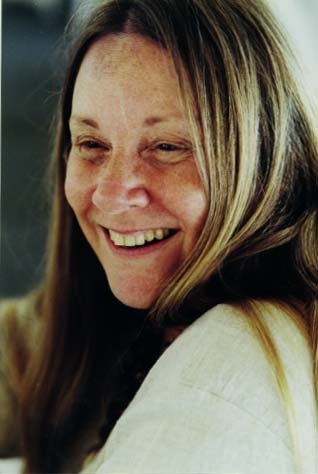
On December 13, Marilyn Buck, U.S. anti-imperialist political prisoner, acclaimed poet, former Austinite, and former original Ragstaffer, would have been 63 years of age. Scheduled for parole last August after nearly 30 years in federal prisons, Marilyn planned to live and work in New York. She looked forward to trying her hand at photography again, taking salsa lessons, and simply being able to walk in the park and visit freely with friends.

Instead, after 20 days of freedom, Marilyn died of a virulent cancer.

Her death was a great blow to her friends and supporters, to fellow poets around the world, and to the many women she mentored while a prisoner, teaching literacy, solidarity, and survival skills without condescension or pride. In Oakland and in New York last month, hundreds gathered to mourn her and to celebrate her life. As a poet of oppression, as a friend, and in fortitude and selflessness, she had no peer.

Yet the acts of violence for which she was sent to prison cloud Marilyn Buck’s revolutionary legacy. Was she a mixed-up kid who had good intentions but fell in with the wrong crowd? Was she a cold-blooded terrorist? Will she be remembered only for her remarkable empathy with the oppressed? Or will she come to be seen as a revolutionary icon worthy of respect for her mind as well as her heart?

Here, a long-time friend and artistic collaborator sets out to mourn Marilyn in a manner appropriate to her life, placing her in the context of her times and showing how she rose above the crowd.

This is the first of three parts.

— Mariann G. Wizard / The Rag Blog

You’ve gone past us now.

beloved comrade:
north american revolutionary
and political prisoner
My sister and friend of these 40 years,
it’s over
Marilyn Buck gone
through the wire
out into the last whirlwind.

With time’s increasing distance from her moment of death on the afternoon of August 3, 2010, at home in Brooklyn, New York, the more that I have felt impelled to write a cohesive essay about Marilyn, the less possible such a project has become. She died at 62 years of age, surrounded by people who loved and still love her truly. She died just 20 days after being released from Carswell federal prison in Texas. Marilyn lived nearly 30 years behind bars. It was the determined effort of Soffiyah Elijah, her attorney and close friend of more than a quarter century that got her out of that prison system at all.

Her loss leaves a wound that insists she must be more than a memory and still so much more than a name circulating in the bluest afterwards. If writing is one way of holding on to Marilyn, it also ramifies a crazed loneliness. Shadows lie down in unsayable places. I’m a minor player in the story who wants to be scribbling side by side with her in a cafe or perched together overlooking the Hudson from a side road along the Palisades.

This work of mourning is fragmentary, impossible, subjective, politically unofficial, lovingly biased, flush with anxieties over (mis)representation, hopefully evocative of some of the ‘multitude’ of Marilyns contained within her soul, strange and curiously punctuated by shifts into reverie and poetic time.

It’s my hope that others, who also take her life and death personally, will publish rivers of articles, reminiscences, essays, tributes, poems, in print and online. May the painters paint, the ceramicists shape clay, and the doers do works and with her spirit! Will someone come to write a book-length biography, one capable of fairly transmitting Marilyn Buck’s many sided significance: her character, political commitments, creative accomplishment, and all-too-human failings, to people who never knew about her life? Is such a work possible about someone who lived nearly 30 years behind bars?

Shift: From the back pews of reverie a tinny reel-to-reel replays my voice in 1975 chanting the words of the legendary early 20th century labor organizer and member of the Industrial Workers of the World (IWW), Joe Hill: “Don’t mourn, Organize!” But right now, across the cemetery of dogmas, I have neither strength nor militant nostalgia for any such renunciation of mourning. Others may, but I cannot exhort myself or anyone else to refuse the dolorous walk.

Her precise twang shreds the air: cautioning against overindulgence saying, Felix, brother, you better chill. I know you’re sentimental just don’t you dare go too far. It’s true. I’m from schmaltzy Brooklyn and she’s straight out of the lanky plains of west Texas (as her friends say: “the Buck started here”).

Parts of this piece are written with a 1960s-1970s vocab and it’s more my own writerly failing than anything else, because for sure she’s not a relic of the bygone at all. If I write that she was amazing would it be better to say awesome?

Marilyn was a writer, a dialectical materialist, a freedom fighter, yoga teacher and Buddhist meditator, who did not suffer fools gladly. She was modest and graceful. Behind the wall she was a teacher and a mentor to young women new to being locked up. Decade after decade in the drab visiting rooms of MCC-NY, DC Jail, Marianna Florida, Dublin-Pleasanton California, dressed first in her own clothes — then later in mandatory uniform khaki — she emanated dignified Marilynness: that unforgettable, natural style.

Nowadays, when things go inexplicably lost in the house or pictures fall from the walls of her studio my partner Miranda (who was Marilyn’s commune roommate in 1969-1970) says… oh that’s Marbu moving stuff around again… one night in late September, I dreamed that a note was slipped under our front door. It read:

Dear anguish, you know an end is not the end it’s never only an end at all

When I woke up I wrote: Keywords: woman, sister, freedom lover, contra racismo y sexismo, yogi, theorist from internal exile, poet, collective worker, student, madrina, artist, reader/writer, comrade-compañera, john brown, antigone, she who cuts through revolutionary enemy of the state

Accounts of mourning sometimes cross over or, more accurately because mourning is a resistant, and achingly tender verb, create a transient bridge from the bereaved privacy of the self — to some sense of shared community. Some will, accurately, point out that this human connection is always a bridge-too-far but even so, gaps and all, it’s what we have.

While she was alive and even more humbly now, I find myself in far reaching debt to Marilyn Buck and hope through the process of writing to move closer to what this relation means and might aspire to. Debt implies relationship. In ancient times, the symbol of suspended balance scales signified a weighing of life/death, good/evil and justice/injustice, not money-debt. It’s no accident that in western myth and culture these scales are balanced by the figure of a woman — often blindfolded to signify impartiality and holding a sword, which represents the power to enforce justice (re-balance).

In her fascinating 2008 non-fiction book, Payback (Debt and the Shadow Side of Wealth) Margaret Atwood clarifies that in ancient Egyptian Africa a miniature of the goddess Ma’at (or her feather — representing justice and truth) was used on the cosmic scale to weigh good and evil in the heart of one who has died. The heart needed to be as light as a feather for the soul to be granted eternal life.

Atwood goes on to say that, along with justice and truth, Ma’at meant balance, the proper comportment towards others and moral standards of behavior. I don’t know if Marilyn ever read about Ma’at, but she tried her best to embody these principles in steady resistance to our death-driven culture, which equates human value with money.

In our culture, psychologically “normal” citizens are produced to be consumers in the market. That’s the bottom line for this dang shabang. Wrap around, cradle-to-the grave conditioning (branding) creates a default position for the self that our worth=money. People are left fearful, commodified, and habitually driven: hating the never-ending lack (of money, power, status, looks, products & sex) in themselves and envying one another.

Marxists refer to this as commodity fetishism. The tragic human dimension of vulnerability, loss, failing, mortality, and mourning, which is also at the core of our being, is manically denied.

Remember how after the terror attacks of September 11, 2001, the government exhorted everyone to go out shopping to show that our society was unbowed? Then we were taken into a seemingly endless series of wars. Without the humility of mourning there is no learning from experience. Along with the three interlocking oppressions more traditionally named by the left: race, class, and gender, envy and the avoidance of mourning constitute a base from which evil acts and fascist movements spring.

Marilyn worked to renounce this deathly dynamic and sustained, in her everyday life, a radical ethic of gratitude, care, and equality among people. She studied history/herstory and understood that human rights must be fought for and defended if they are to exist at all. There was nothing bogus about her.

I do not believe that I’m alone, among the many, many people who visited and who she befriended after she was captured, in this feeling of a political and personal obligation to, or better to say: with Marilyn.

Those of us fortunate enough to have known her before she became “notorious” and “iconic” — representations that never sat well with her and which being in Marilyn’s presence were easily dispelled — remember how serious, determined, outspoken, beautiful, and far from perfect she was. It’s no secret that she made political mistakes along the way. The collective political-resistance project she was part of was defeated. Its members paid and some are still paying a very high price.

She came of age in the red-hot crucible of the 1960s and ’70s when large movements from every corner of the earth were on the upsurge, challenging capitalist-imperialism with demands for revolution. It was an era of overturnings and extremes. Marilyn grew up in Texas — where racist and sexist dominator culture combined the toxic violence of america’s segregated south and cowboy west. She witnessed racism everyday and, by high school and college, grew determined to do something to help bring an end to war and white supremacy.

Keywords: Mercurial time, oh old space Capsule: Go ahead crack the kernel’s hard discontinuous shell; revisit our more innocent and less destitute history with this bite-sized Almanac backgrounder:

When Marilyn left home to find her way into the popular movement(s), Dylan was singing The Times They Are A Changin’ & Masters of War, the SNCC Freedom Singers, Motown, R&B galore and Nina Simone’s thunderous Mississippi Goddamn! got people up and moving.

It was the overflowing era of Vietnam, Black, Brown, Native, and Asian people’s power movements, the war of the cities: Watts, Detroit, Newark, and hundreds of urban rebellions brought the fire this time.

Draft cards were torched and many G.I.’s revolted against the war. Feminism and Gay liberation insisted that the personal-is-political. Student and youth cultural revolt(s) on a worldwide scale (including, although quite uniquely, the massive Chinese cultural revolution) had not yet been pacified and co-opted by the market.

National liberation movements in Southern Africa were bringing an end to direct, foreign, and settler-colonial domination of their countries. The Palestinian people began asserting their national rights. Revolutionary organizations and guerrilla movements, partly inspired by the Cuban example, were organizing above and below ground to strike against ‘imperialismo yanqui‘ in Latin America. Radicals spoke of creating “2,3 many Vietnams” against empire.

Inside the United States, the vital foundation of all radical cultural and political developments was the civil rights and Black liberation struggle. Black people sang, “I aint scared of your jail ’cause I want my freedom!” This movement’s organizing cry of Black Is Beautiful and Black Power! actually inspired people all over the world to throw off internalized oppression and fight the power.

Marilyn joined SDS (Students for a Democratic Society — the country’s largest student organization), worked for The Rag in Austin, and helped edit the SDS newspaper: New Left Notes in Chicago. She stood up against sexism in the organization.

Moving to the Bay Area in late 1968, Marilyn joined in building the San Francisco Newsreel collective, which, like its counterpart in New York, made and distributed radical film documentaries about contemporary struggles. Some influential S.F. Newsreel films taught people about the Black Panther Party, the San Francisco State student strike (led by a coalition of Third World organizations, this was the longest student strike in U.S. history), “On Strike” — about the Richmond California oil refinery worker’s strike, Mission High School Rebellion, and many others. These films, used by organizers spreading news across the country, were an important part of an alternative press movement made up of hundreds of underground newspapers, radio, and press services.

In western Europe and the USA, especially, white people in motion mainly expressed a middle class idealism, rage, and utopian aspiration. Some younger white folks were learning that struggling in alliance with Third World peoples at home and abroad could actually help end the genocidal war in Vietnam, and advance civil and human rights. A new left was born.

For many radical activists, leadership flowed-not from the Democratic Party — but from movements of color and figures like Dr. King, Rosa Parks, Malcolm X, Fannie Lou Hamer, Cesar Chavez. Importantly, we worked with and looked to grassroots leaders of color — in our schools, workplaces, and communities — for direction. We challenged our personal racism and the social system of white supremacy. Consciousness raising and women’s liberation broke through to identify and challenge patriarchy. By the later 1960s, lesbian and gay liberation was gathering force.
This was a cultural revolution(s) involving radically new, alternative sources of authority and legitimation which threatened the (mostly white, male, straight) powers that be. The rejection of 1950’s jim crow apartheid/segregation and northern white suburbia, begun by the civil rights movement in the south, communist resisters to McCarthyism, early 2nd wave feminism and artists from the beat/hip/hippie generation(s) ignited a mix and mojo that many people, including yours truly, embraced.

You might say, without falling for romantic nostalgia, that a historical crack opened up through which it seemed just possible to break through the myopia, prejudice and privilege of empire into a better world. Or put it another way we, and this was by no means limited or merely conditioned by the exuberance of youth, had the experience of being deeply engaged with living history.

Even as society was fast becoming more of a spectacle, during this brief pre-postmodern, pre-internet era, we knew that we wanted to be more than spectators. It was as if sleepwalkers in death’s hollow empire were suddenly waking up.

In the advanced capitalist areas of Europe, Japan, and the U.S. anti-empire activity led some small yet significant sectors of the new lefts to move towards increased clandestine militancy, including bombings and armed actions against their repressive governments.* Inside the U.S. solidarity with Black, Puerto Rican, Native American, Chicano/ Mexicano as well as international liberation movements, were a powerful motivating force for Marilyn and others.
The spirit of this global, historical moment is revealed by Karma Nabulsi, a Palestinian, writing about being a young revolutionary in the 1960s and 70s working to free his country:

The experience of revolutionary life is difficult to describe. It is as much metaphysical as imaginative, combining urgency, purposefulness, seriousness and hard work, with a near celebratory sense of adventure and overriding optimism – a sort of carnival atmosphere of citizens’ rule. Key to its success is that this heightened state is consciously and collectively maintained by tens of thousands of people at the same time. If you get tired for a few hours or days, you know others are holding the ring. (2)

keywords: the hammer this time

Within the Unites States, all movements, organizations, and individuals ranging from Dr. King to Malcolm X, from artists Nina Simone to John Lennon were targeted because they inspired people to organize for real change. Under the rubric of FBI-COINTELPRO (short for Counter-Intelligence Program) a vast campaign of ruthless and unconstitutional counter-insurgency against the people was sanctioned by both Democratic and Republican Whitehouses.

Far from a “rogue” program led by a “racist and demented” J. Edgar Hoover, what we call Cointelpro grew to involve the coordination of Pentagon, CIA, local and state police as well as the FBI. Its mandate was destroy/neutralize radical leaders, organizations and grass roots people through assassinations, fratricidal murders, frame-ups, psychological warfare and forced exile.(3)

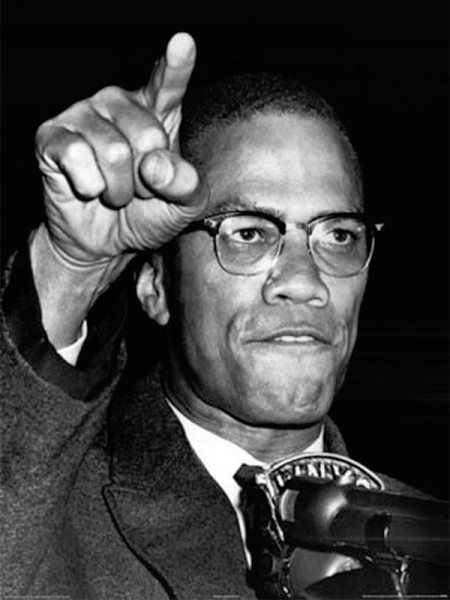
Malcolm X, Martin Luther King Jr., Fred Hampton, scores of Panthers and American Indian Movement members were assassinated as were some key members of the Chicano/Mexicano and Puerto Rican movements. Several Black Panther members were tortured so badly in New Orleans — in a manner consistent with current government torture practices — that trial courts threw out cases against them.

The federal government unleashed a wave of high profile conspiracy trials, most of which, after sowing fear and draining resources, ended in acquittals. Nasty blackmails and bribery were used to recruit informers. This low intensity warfare, along with inner city drug plagues, wars on drugs leading to criminalization of Black and Brown youth, concessionary pacification (i.e., temporary poverty programs) and the end of the Vietnam war, succeeded in halting much of our forward motion. We were young idealists and we didn’t see this coming.

Vastly expanded federal and state prison systems became the leading form of long-term social control over people of color. Today, with at least 2 million people warehoused under criminal justice control, the U.S. has the world’s highest incarceration rate. One result of the hidden, domestic war is that there are over 100 political prisoners, essentially COINTELPRO captives of the FBI, courts and prisons, who have remained locked up for the past 25-40 years. They are some of the longest held political prisoners on earth.(4)

There are also people in permanent foreign exile, one of whom died this month at 63 years of age in Zambia. Michael Cetewayo Tabor was a former Black Panther leader in New York, a member of the Panther 21 conspiracy case (for which all were acquitted) and author of the incisive pamphlet: “Capitalism Plus Dope Equals Genocide.” While countries the world over have released their political prisoners from the 1960s and 70s, some through amnesty and others paroled after serving long sentences, the U.S. still refuses to do so.

All this was a long time ago, but I believe that in many telling ways, when applied to empire and resistance, what the writer, William Faulkner, said in another context is true:

The past is not dead. In fact, it isn’t even past.

In the introductory essay to her translation of Christina Peri Rossi’s poetry book, State of Exile(5) Marilyn writes of the trauma of
imprisonment as an exile:

Exile may also be collective, as in the case of the Palestinian people, forced from their homeland, or the people of Darfur, murdered and driven from their lands. And there is another form of exile as well–internal exile–in which one is taken from the location of one’s home and life and is transported to some other outlying, isolated region of their own country. We think of the gulags of the former Soviet Union, for example, or stories from centuries past, but the fact is that internal exile exists here and now, in the United States a country of exiles, refugees and survivors. Prison is a state of exile.
…I a political militant did not choose external exile in time and was captured. I became a U.S. political prisoner and was sentenced to internal exile, where I remain after more than twenty years.

(1)This is a very incomplete and utterly heterogeneous list. UK: The Angry Brigade; France: Accion Directe; West Germany: Red Army Faction & Revolutionary Cells; Italy: Red Brigade & Prima Linea. Japan: United Red Army; The IRA in Ireland and the Basque ETA in Spain (both larger and with more support) grew out of centuries long colonization. Within the U.S. some of the revolutionary armed organizations were: Black Liberation Army, Fuerzas Armadas de Liberacion Nacional & EPB-Macheteros(Puerto Rico), Weather Underground, Symbionese Liberation Army, New World Liberation Front, George Jackson Brigade, Red Guerilla Resistance and United Freedom Front. To my knowledge, there has been no serious historical study of this global phenomenon

(2)London Review of Books, Vol. 32, No. 20 21 October 2010

(3)See the books: Agents of Repression & The Cointelpro Papers, by Ward Churchill and Jim Vander Wall. The Reports of the U.S. Senate Hearings (The Church Committee) 1975, U.S. Government Printing Office. And, the new film, Cointelpro 101 available from www.freedomarchives.org

(4)The Jericho Amnesty Campaign: www.TheJerichoMovement.com has been involved in efforts to win amnesty for many years. A campaign is underway to win the release of N.Y. State political prisoners.

(5)City Light Books Pocket Poets Series Number 58. San Francisco 2008


Type rest of the post here

Source /

The Rag Blog

Posted in RagBlog | Leave a comment

Jeff Biggers : Thousands Honor Environmental Visionary Judy Bonds

Julia ‘Judy’ Bonds. Painting by Robert Shetterly from his Americans Who Tell the Truth series.

Coalfield visionary:
Thousands pay tribute to Judy Bonds

She has been to the mountaintop, and now we must fight harder to save it.

By Jeff Biggers / CommonDreams / January 4, 2011

She was a tireless, funny, and inspiring orator, and a savvy and brilliant community organizer. She was fearless in the face of threats. As the godmother of the anti-mountaintop removal movement, she gave birth to a new generation of clean energy and human rights activists across the nation. In a year of mining disasters and climate change setbacks, she challenged activists to redouble their efforts.

As one of the great visionaries to emerge out of the coalfields, Julia “Judy” Bonds reminded the nation that her beloved Appalachians had been to the mountaintop — and in her passing last night, thousands of anti-mountaintop removal mining and New Power activists from around the country are reminding the Obama administration and the country’s environmental justice movement of Bonds’ powerful legacy and parting words to “don’t let up, fight harder and finish off” the outlaw ranks of Big Coal and end the egregious crime of mountaintop removal.

In a special email message last night, Coal River Mountain Watch director Vernon Haltom announced the passing of Bonds, the Goldman Prize winner and Executive Director of Coal River Mountain Watch. Bonds, 58, had battled advanced stage cancer over the past several months. “One of Judy’s last acts was to go on a speaking trip, even though she was not feeling well, shortly before her diagnosis,” Haltom wrote.

“I believe, as others do, that Judy’s years in Marfork holler, where she remained in her ancestral home as long as she could, subjected her to Massey Energy’s airborne toxic dust and led to the cancer that wasted no time in taking its toll. Judy will be missed by all in this movement, as an icon, a leader, an inspiration, and a friend.”

Here’s a clip from a special tribute to Judy by On Coal River filmmakers Adams Wood and Francine Cavanaugh:

Judy Bonds from On Coal River on Vimeo.

Judy Bonds from On Coal River on Vimeo.

A little more than a decade ago, sitting on the coal dust-swept front porch with her grandson — the ninth generation of their family to reside in Marfork Hollow in West Virginia — Bonds was outraged to hear her 7-year-old grandson describe an escape route should a nearby massive coal waste dam break and flood their valley. “I knew in my heart there was really no escape,” Bonds told an interviewer in 2003. “How do you tell a child that his life is a sacrifice for corporate greed? You can’t tell him that, you don’t tell him that, but of course he understands that now.”

Forced by an encroaching strip mine to move from her family’s ancestral land, Bonds spent the next decade as a full-time crusader (and coal miner’s daughter) to bring her grandson’s message of central Appalachia’s role as a national sacrifice zone from the devastating impact of mountaintop removal strip mining to millions of Americans across the country.

Judy Bonds delivering a speech in Washington, D.C. 2002
calling for the end to mountaintop removal. Photo by Deana Steiner Smith / Living on Earth.

For fellow activist Bo Webb, who went to jail and organized side-by-side with Bonds for years in the Coal River Valley, Judy was one of the better angels of our nature:

Judy was one of God’s most loyal and dedicated Angels in the battle of good vs. evil. I will miss her, we will all miss her. After much suffering, she now stands before God, without doubt holding a very special place in His heart. May God bless and comfort those that love and adore Judy. May God bless and comfort her wonderful family, and may God give us the unity and conviction to fight on in her honor and His name.

“Judy Bonds was our Hillbilly Moses,” added Bob Kincaid, president of the Coal River Mountain Watch board. “She knew better than anyone that we WILL make it to the Promised Land: out of the poisonous bondage of coal companies. She will not cross over with us on that great day, but her spirit will join us, and inform the freedom that sings from our hearts. Mother Jones, meet Judy. Judy, Mother.”

In a special Living on Earth radio interview with Jeff Young in 2003, Bonds recalled her grandson holding a handul of dead fish contaminated by coal waste. “And I looked around him and there were dead fish laying all over the stream. And that was a slap in the face.”

From the United Nations to the halls of Congress, and at universities and conferences from Maine to California, Bonds testified to the ravages of strip mining on her community’s waterways, economy and culture. Her riveting speeches galvanized activists from the hollers to the urban neighborhoods, and among national environmental organizations.

“Judy was a strong, powerful voice that always sang wisdom, inspiration, passion and determination to my soul,” wrote Chris Hill, the National Field Organizer for the Hip Hop Caucus in Washington, DC. “She was a voice that will forever speak volumes to the reasons why I fight for justice from the mountains to the inner cities.”

“Judy often remarked how she proudly stood shoulder to shoulder with outside groups like Rainforest Action Network,” added Scott Parkin, Senior Campaigner for RAN’s Coal Campaign.

“During an E.P.A. action last March, I saw her beaming with a big smile and much excitement as we worked together to make mountaintop removal a national issue and take the fight to end it out of the hills and hollers of Appalachia into offices of the power-holders in Washington D.C.”

“She inspired thousands in the movement to end mountaintop removal and was a driving force in making it what it has become,” Haltom wrote in his email message to national activists.

“I can’t count the number of times someone told me they got involved because they heard Judy speak, either at their university, at a rally, or in a documentary. Judy endured much personal suffering for her leadership. While people of lesser courage would candy-coat their words or simply shut up and sit down, Judy called it as she saw it. She endured physical assault, verbal abuse, and death threats because she stood up for justice for her community.”

“One of the happiest days of my life was when we announced the funding for a new school to replace Marsh Fork Elementary,” said filmmaker and activist Jerry Cope, who worked with Coal River Valley residents to move a school imperiled by coal dust and a dangerous coal slurry impoundment. “Without Judy’s inspiration, I would have never become involved and she will forever be a source of inspiration to me.”

In a special tribute to Judy by filmmakers Jordan Freeman and Mari-Lynn Evans, Judy asked for the right to go home. “I miss my home,” she pleaded. “I want to go home.”

Like generations before her, Judy Bonds has finally gone home to her Marfolk Holler.

And thousands of coalfield residents, activists and leaders will continue the battle to ensure that Coal River Mountain — the last mountain — remains in her view, and mountaintop removal is abolished once and for all.

[Jeff Biggers is an award-winning journalist and cultural historian. He is the author of Reckoning at Eagle Creek: The Secret Legacy of Coal in the Heartland, winner of the 2010 David Brower Award for Environmental Reporting and the Delta Award for Literature. This article was published and distributed by CommonDreams.]

The Rag Blog

Posted in RagBlog | Tagged , , , , | Leave a comment

Robert Jensen : ‘Greatest Nation’ Rhetoric Comes Roaring Back

The burden of being exceptional. Captain America graphic from Statue Marvels.

American exceptionalism:
‘Greatest nation’ rhetoric roars back

By Robert Jensen / The Rag Blog / January 4, 2011

My greatness as a writer is simply a fact.

You don’t agree? Well, then obviously you are churlish or malevolent.

If I were serious about such a claim of superiority, now would be the time to stop reading — on the reasonable assumption that I’m a dull-witted bore with no capacity for critical self-reflection. What applies to individual declarations is also true of nations, yet in the United States such statements about our greatness are common.

Rich Lowry of the National Review closed out 2010 with a particularly bombastic piece reasserting U.S. greatness. Though Lowry is a conservative, his argument is conventional: The United States has brought prosperity to the world, protecting all that is decent against evil. Yes, we’ve had to muscle others out of the way on occasion, but that was necessary to bring order and liberty. Yes, we’ve made some mistakes along the way, but those are all safely in the past and, besides, they have to understood in context.

His conclusion: “Our greatness is simply a fact. Only the churlish or malevolent can deny it, or even get irked at its assertion.” (“Yes, the Greatest Country Ever.”)

This expression of American exceptionalism is unexceptional in U.S. political history, but it roared back stronger than ever in 2010, especially in the rhetoric of the Tea Party movement. As it becomes harder to ignore the United States’ decline as an economic power — which will limit the capacity for imperial marauding around the world — the inclination of most mainstream politicians to assert our greatness will intensify.

Those of us with radical or progressive politics need to challenge these kinds of slogans when we talk with friends, family, and co-workers. In my 2004 book Citizens of the Empire: The Struggle to Claim Our Humanity, I offered common-sense responses in plain language, and as we get ready for a more right-wing Congress and the political discussions that lie ahead, I thought it would be helpful to revisit some of those points.

With the permission of publisher City Lights Books, I have posted online two chapters from that book — one that deconstructs “the greatest nation” rhetoric and another that challenges the concept of patriotism.

It is neither churlish nor malevolent to want to honestly assess the accomplishments and failures of one’s country. Rather, it is the obligation of every citizen.

[Robert Jensen is a journalism professor at the University of Texas at Austin and board member of the Third Coast Activist Resource Center in Austin. He is the author of All My Bones Shake: Seeking a Progressive Path to the Prophetic Voice, (Soft Skull Press, 2009) and Getting Off: Pornography and the End of Masculinity (South End Press, 2007); Jensen is also co-producer of the documentary film Abe Osheroff: One Foot in the Grave, the Other Still Dancing, which chronicles the life and philosophy of the longtime radical activist. Robert Jensen can be reached at rjensen@uts.cc.utexas.edu.]

Source

The Rag Blog

Posted in Rag Bloggers | Tagged , , , | 8 Comments

Ray Reece : The Hard Landing of a Radical in Austin, 1967

Image from McMaster University Digital Collection.

Desecration of the Violet Crown:
The hard landing of a radical in Austin, 1967

By Ray Reece / The Rag Blog / January 4, 2011

A few months ago, editor Thorne Dreyer invited us Rag Blogsters to submit sketches of our adventures in the political movements of the 60’s and 70’s. I offer herewith an excerpt from “Almost No Apologies: The Desecration of the Violet Crown,” an essay of mine that was published in No Apologies: Texas Radicals Celebrate the ‘60s, a book released by Eakin Press in 1991 as a tribute to the late Michael Eakin, co-founder of the Austin Sun in 1974 and former editor of the UT/Austin Daily Texan. My essay concerns not only my political radicalization in the 1960’s but also my take on the destruction of Austin in the 1980’s by a corporate “development” boom that continues to ravage the city and its environs today.

Through the fall and winter of 1966, I continued to write my stories and explore the city that had stolen my heart. I was still oblivious, by and large, to the growing clamor of opposition to the war in Vietnam.

By the early summer of 1967 — the Summer of Love and “Sergeant Pepper” — I had enrolled for the fall semester in the UT English Department, planning to work on a Ph.D. I had also made friends with two Austin characters, in particular, who were going to have an enormous influence on my evolution as a political being.

One was Mark Parsons, a gentle giant from far west Texas who introduced me to Bob Dylan’s music, the magic of cannabis and a passionate reverence for living things — especially nonhuman living things — that I had never encountered before. The second character was Ran Moran, a native Texan who had lived for years in New York City and there had become a fervently committed Marxist revolutionary, a fellow traveler with the Trotskyist Socialist Workers Party.

It was Ran’s influence that moved me first. He was in Austin for just a few months to abet the efforts of the SWP in an organizing drive against the Vietnam War, and he caught me, frankly, in his eloquent web. I found myself sitting beneath the live oaks at Scholz’s beer garden, listening to Ran discuss the prospects for world revolution against the tyranny of the capitalist state.

He cited the teachings not only of Marx, Lenin, and Trotsky, but of Mao Tse-tung and Ho Chi Minh, Benito Juarez, Ché Guevara, and Malcolm X. He drew a graphic parallel between the exploitation of U.S. workers by the ruling class — especially workers who were black and Hispanic — and the exploitation of Third World nations like Mexico, Bolivia, and Vietnam.

He portrayed American fighting men as corporate pawns in a war for new markets in Southeast Asia. Since half of those soldiers were black and Hispanic, the capitalist rulers in effect were using the domestic victims of a racist America to slaughter and subjugate millions of foreign nonwhite victims. Meanwhile, the rulers themselves and their privileged sons relaxed in the comfort of corporate boardrooms and country estates.

Ran’s analysis touched me deeply. It gave me a coherent, systematic framework in which to place my own indignation at racial oppression in the United States. It added the element of class oppression, thus to make me a budding Marxist. And finally, inexorably, his arguments drove my anger to the point where I was ready to join the revolution. Or thought I was.

My friend Moran awoke me one morning with a predawn phone call, breathlessly urgent, to insist that I join a hurried demonstration at Central Texas College in Killeen. This was a campus that had just been established across the highway from Fort Hood, a major Army training base.

LBJ shows his scar. Political cartoon by David Levine / New York Review of Books.

Ran and his comrades had somehow discovered that Lyndon Johnson, the president, was due to address the student body at 10 a.m. He informed me that I had to come, indeed in my car, since he and the others needed a ride. And quick, he said — the campus was 70 miles north. “Shit,” I groused to my ladyfriend. This would mean losing a morning of pay at the book wholesaler where I worked part-time. It could mean something worse, I feared, but Genie suggested I do it anyway. So I did. And I was correct in my intuition of pending disaster.

Six of us raced in my old blue Falcon up 1-35 to Killeen. We reached the campus at about 9:30 and there observed, from the safety of the car, a massive contingent of uniformed soldiers milling around in anticipation of the president’s speech. Obviously, the brass at Fort Hood had mobilized the troops and sent them over to welcome Mr. Johnson to Central Texas.

I had not expected this. Neither had Ran and the other cadres, all of whom, save the accountant, were frumpy intellectuals with facial hair. I questioned the wisdom of pressing on. Ran just smiled, his brown eyes fierce through rimless glasses, and climbed from the car with a hand-painted sign: “U.S. Troops Out of Vietnam!” The others followed, each with a message certain to inflame. I was given my own crude sign, and I had little choice, it seemed to me, except to march forth to my first demonstration against the war.

It lasted as long as it took our party to reach the perimeter of the crowd. The first of the soldiers to spot us coming let out a whoop of immense displeasure. This attracted an instant mob of other soldiers, half of them black and Hispanic, of course, who set upon us with curses and fists.

I was struck on the side of the face, my glasses dislodged, my sign ripped away and torn to shreds. I retreated at once, having lost sight of my comrades, and staggered to the car on legs that threatened to buckle with terror — a nasty feeling that I would experience many times in the years to come. I gasped and trembled as I waited in the car, thanking God I wasn’t dead.

Soon I was joined by two of the other demonstrators. One was bleeding at the corner of his mouth, the second nursing a swollen cheek. They told me the others had been arrested. Then we noticed a pack of soldiers headed noisily and very rapidly in our direction. We rolled up the windows in the August heat, and I prayed for deliverance as I hit the ignition.

The Falcon often failed to start. But today she sang, and we broke away to the open road as one of the soldiers bounced a rock off the trunk of the car. We were back in Austin by noon, with Ran and the others back by four — I don’t recall how or in what condition, except that no one was permanently maimed.

Thus had I been christened by GI fists into the maelstrom of the antiwar movement: I was a radical, though I had no card, and though it would be another two months before I challenged authority again. Not long after the aborted demonstration, in fact, Ran moved back to New York City — suggesting I come to visit him there — while I accompanied my friend Mark Parsons on a five-day foray into the rugged Devil’s River country, 300 miles west of Austin.

Mark was employed as an archaeologist by the Texas Memorial Museum. He had invited me to come have a look at an ancient Indian pictograph site, and I had agreed, thinking I could use a vacation prior to the start of my doctoral program at the university. The trip was to prove as formative an experience, in its quiet way, as the hours I had spent in Marxist tutelage with Ran Moran.

Summer of Love, 1967. Photo by Robert Altman / summeroflove.org.

During our drive through the stunning wilds of the Texas Trans-Pecos, and then as we pored over Indian paintings on the walls of caves and rock shelters, Mark explained a cosmology to me — a view of the world in its universe — that he had derived in part from his studies of primitive Texas Indian cultures.

It was based primarily on the notion that Earth and her systems of natural life are unified and sacrosanct. Her sky and seasons, her soil and water, plants and trees, her fish, her insects, birds and animals all are united in a provident whole. It is this whole, an organic totality of interlocked parts, that constitutes existence itself — the ground of being and consciousness.

The whole of Earth is therefore inviolable. No one part can be torn from the whole and deemed more perfect than another part. The humblest beetle on a blade of grass is no less valuable than the human being who crushes that beetle.

There are laws, moreover, that govern this arrangement — natural laws that must be obeyed on penalty of death, including the death of the planetary whole. The ancient Texas Indian cultures understood and obeyed these laws. For thousands of years, they lived in a state of unity and peace with the natural world. Indeed, they worshiped as gods the natural systems that sustained their lives — the sun and rain, the moon and wind, the corn and bison and boulders of flint. They took from the earth no more than they needed for simple subsistence, and when they took, they prayed in thanksgiving and hope for renewal of what had been lost.

As Mark explained these things to me, it became clear that he believed them as profoundly as the ancient Indians had. He shared a spiritual bond with the Indians that was almost alarming in its intensity. He was angry and sick with grief at what the Europeans had done to them, at the brute extermination of tribe after tribe of deeply reverent Indian souls.

He viewed the rise of the modern techno-industrial state — with its sprawling cities and automobiles, its asphalt deserts and obsessive consumption and carbon-spewing infrastructure — as a gross compounding of the massive crime against the Indians themselves. He viewed this pillage as a reckless violation of the laws of nature and therefore of God, a violation born of hubris, of men so consumed with crude self-interest and egotism that they are willing to torture the planet to achieve their ends.

Mark confessed more than once to me his somber conviction that the human race was doomed to perish for its modern crimes. “The sooner the better,” I believe I heard him say.

It would take years, unfortunately, for me to connect what I had learned at the Devil’s River with what I had felt on Mount Bonnell in Austin, when I first witnessed the violet crown. I had been changed by both experiences. I had been radicalized by them no less than by the teachings of Ran Moran.

But once I returned to Austin that fall, I was so swept up in the quickening tide of the anti­war movement, on top of my work at the university, that I wasn’t able to assimilate the meaning of what I had learned at the canyon with Mark. I failed, therefore, to apply that lesson to the task of fighting the approaching devastation of my own community. I failed to notice the approaching devastation.

It never occurred to me, amidst my growing political vigilance, to investigate the structure of political power in Austin itself or to ask hard questions regarding the future of the Hill Country — a lapse I find appalling in retrospect.

[Ray Reece is affiliated with the World Coalition for Local and Regional Self-Reliance. He is a former columnist for The Budapest Sun and author of The Sun Betrayed: A Report on the Corporate Seizure of U.S. Solar Energy Development, among other published works. His most recent book is Abigail in Gangland, a novel. He is a former resident of Austin currently based in Cagli, Italy. The entire essay from which this article was excerpted can be found on Ray’s website.]

The Rag Blog

Posted in Rag Bloggers | Tagged , , , , , , , , | 4 Comments

Harry Targ : Words Still Matter

Dwight D. Eisenhower. Photo by George Skadding / Time & Life Pictures / Getty Images.

Words still matter:
Speeches that speak to our times

By Harry Targ / The Rag Blog / January 3, 2011

This conjunction of an immense military establishment and a large arms industry is new in the American experience. The total influence — economic, political, even spiritual — is felt in every city, every State house, every office of the Federal government. We recognize the imperative need for this development. Yet we must not fail to comprehend its grave implications. Our toil, resources and livelihood are all involved; so is the very structure of our society.

In the councils of government, we must guard against the acquisition of unwarranted influence, whether sought or unsought, by the military/industrial complex. The potential for the disastrous rise of misplaced power exists and will persist.

We must never let the weight of this combination endanger our liberties or democratic processes…

Today, the solitary inventor, tinkering in his shop, has been overshadowed by task forces of scientists in laboratories and testing fields. In the same fashion, the free university historically the fountainhead of free ideas and scientific discovery, has experienced a revolution in the conduct of research… a government contract becomes virtually a substitute for intellectual curiosity…

The prospect of domination of the nation’s scholars by Federal employment, project allocations, and the power of money is ever present and is gravely to be regarded.

Yet, in holding scientific research and discovery in respect, as we should, we must also be alert to the equal and opposite danger that public policy could itself become the captive of a scientific/technological elite.

— Dwight D. Eisenhower, January 17, 1961

Words still matter

We have become so drugged by politicians that we often fail to reflect on the power of their words. Seeing books on library shelves with titles like “Speeches of Great Americans” culls up in our minds Readers Digest, the History Channel, Sunday morning sermons, and all the crap that passes for political discourse in the 21st century. Even profound speeches, and the lives of profound political actors, are transformed, debased and normalized, such that the power of words or deeds becomes acceptable to ruling classes and even made to have commercial value.

Every once in a while though a politician or activist says something that is rich with theoretical insight and inspiration and begs for action. The power of the words cannot be demeaned, delegitimized, or made palatable to all. And, it behooves progressives to revisit those words and use them for practical political work.

The Military/Industrial Complex

When President Eisenhower gave his final address to the nation on January 17, 1961, 50 years ago, he warned of “the acquisition of unwarranted influence” of a military/industrial complex. He originally included the word “academic” but later eliminated it, probably for reasons of length. He was alerting Americans to the breadth and scope of military power over the world and American society.

The President’s words constituted a shocking challenge to the soon-to-be Kennedy era defense intellectuals who criticized the outgoing president’s reluctance to spend even more than the $40 billion he invested on the military. Even his direct orders to subordinates to overthrow Guatemala’s President Jacob Arbenz and Iran’s Prime Minister Mohammed Mossadegh and his declaration of the Middle East as a free-world sanctuary was not enough for the 1960s theorists and practitioners of “modernization,” “development,” and “democracy.”

Although Eisenhower warned us of the impacts of the military/industrial complex, he could not foresee the magnitude of the controls on America’s public life that soon resulted.

First, he only dimly saw the changes that would occur in the techniques of empire. CIA money ensured election outcomes in other countries. American intelligence and military forces engineered brutal military coups. Military advisors revamped armies and repressive police forces in countries threatened by revolutionary change. The United States used “low intensity conflict” to train anti-government reactionaries.

And then to mollify domestic critics, the U.S. initiated the privatization and outsourcing of the military as an adjunct to the over 700 U.S. military bases in more than 40 countries. Most recently, high tech weapons, unmanned aerial vehicles, are used to kill people without endangering U.S. soldiers. Technological advances and the globalization of U.S. violence continue.

Eisenhower was inalterably opposed to the militarization of the U.S. economy. While he was willing to allot $40 billion in 1950s currency, he resisted the demands from Beltway liberals and defense contractors to double military spending. By the 1960s, half of the federal budget began to go to the military and one in 10 workers derived wages from defense contracts. And that continues, but with less public criticism.

Finally, Eisenhower spoke to the militarization of American culture. The university became a research arm of the complex. Students were taught about the virtues of military “readiness,” “the communist threat,” the problem of “human nature” and perpetual war, and, more recently, the endless danger of “terrorism.”

Virtually every large corporation, producing such products as toothpaste, toys, breakfast cereal, medications, automobiles, electronics, or energy, is steeped in military contracts. The public airwaves, the internet, movies, and sports are laced with war, violence, killing, and competition. As Eisenhower put it: “Our toil, resources, and livelihood are all involved: so is the very structure of our society.”

Dr. Martin Luther King, Jr. Image from Dr. Martin Luther King.net.

Somehow this madness must cease. We must stop now. I speak for those whose land is being laid waste, whose homes are being destroyed, whose culture is being subverted. I speak for the poor of America who are paying the double price of smashed hopes at home and death and corruption in Vietnam. I speak as a citizen of the world, for the world as it stands aghast at the path we have taken

Dr. Martin Luther King, Jr., April 4, 1967


Making war overseas and advancing hunger at home

In April, 1967 Dr. Martin Luther King spoke at Riverside Church in New York City and made it crystal clear that wars elsewhere not only kill the designated enemies, but impoverish poor working people at home. Dr. King made a critical contribution to the discussion of the link between war and foreign policy and people’s lives. Killing in other lands is an immoral abomination. While that needs to be critically understood, the unequal distribution of wealth and income within the United States is stark and is intimately connected to foreign adventures. And, in fact, the more resources that are allocated for killing others, the less there are to serve the needs of those at home.

President Lyndon Johnson, who increased the U.S. troop commitment from 16,000 in 1963 to 540,000 in 1968 and who launched daily bombing of targets in North and South Vietnam in 1965 that went unabated until 1968 tried to create a “war” on poverty at home. Dr. King knew that this country could not do both: that there was an inverse relationship between war-making and domestic prosperity. As he put it: “I speak for the poor of America who are paying the double price of smashed hopes at home and death and corruption in Vietnam.”

And as the years unfolded and the United States shifted from a military draft to a volunteer army, there was an increase in the percentage of those who could not find jobs and earn a decent income and became the foot soldiers for future wars.

Jimmy Carter. Image from Wikimedia Commons.

In a nation that was proud of hard work, strong families, close-knit communities, and our faith in God, too many of us now tend to worship self-indulgence and consumption. Human identity is no longer defined by what one does, but by what one owns. But we’ve discovered that owning things and consuming things does not satisfy our longing for meaning. We’ve learned that piling up material goods cannot fill the emptiness of lives which have no confidence or purpose.

What you see too often in Washington and elsewhere around the country is a system of government that seems incapable of action. You see a Congress twisted and pulled in every direction by hundreds of well-financed and powerful special interests. You see every extreme position defended to the last vote, almost to the last breath by one unyielding group or another. You often see a balanced and a fair approach that demands sacrifice, a little sacrifice from everyone, abandoned like an orphan without support and without friends.

— Jimmy Carter, July 15, 1979

Corporate/financial elites and the creation of self-indulgence

Perhaps the least known of the prophetic speeches cited here is the one presented on television in July, 1979 by President Jimmy Carter. He was called to speak about the growing energy crisis, dramatic increases in the price of oil, growing dependency on foreign oil, concentrated economic power in Washington, and the celebration of a culture of self-indulgence, consumerism, materialism, and competition.

While this speech did not address foreign and military policy as directly as the other two, it warned the American people about the dangers of war, foreign dependency on oil, and an international system driven by oil giants and oil-rich countries. He linked these to a domestic culture that defined its success on the basis of how much it could consume.

President Carter challenged the basic precept of the corporate culture that evolved out of industrial and monopoly capitalism in the twentieth century; its basic paucity of meaning and purpose. “But we’ve discovered that owning things and consuming things does not satisfy our longing for meaning. We’ve learned that piling up material goods cannot fill the emptiness of lives which have no confidence or purpose.”

What can we learn from these famous speeches?

We should bring to our political work the idea that words still matter. In addition, we must reflect upon the possibility that mainstream politicians, presidents for example, may say things that should and could be appropriated to build a progressive agenda. And, perhaps more difficult, we need to cut through the propaganda which often leads political figures to be lionized and thus transformed into everyday icons.

Dr. King was a radical, against racism, sexism, and classism. He opposed war. He saw the vital interconnections between massive governmental waste and human suffering. And he saw that the direction U.S. society was heading in was pure “madness.”

Substantively, we should revisit these speeches to raise again our opposition to war and empire and military spending. We need to stand with our brothers and sisters who are demanding jobs and justice. And we must stand with those, whether secular or religious, who argue against a self-indulgent, consumption-based and competitive society.

[Harry Targ is a professor of political science at Purdue University who lives in West Lafayette, Indiana. He blogs at Diary of a Heartland Radical.]

The Rag Blog

Posted in Rag Bloggers | Tagged , , , , , , | Leave a comment

Ralph Solonitz : Year of the Rabbit!

Cartoon by Ralph Solonitz / The Rag Blog / December 31, 2010.

The Rag Blog

Posted in Rag Bloggers | Tagged , , | 1 Comment

Danny Schechter : The Media Hit Job on Helen Thomas

Former White House correspondent Helen Thomas. Image from Mediate.com.

Media hit job of 2010:
The vitriolic treatment of White House
correspondent Helen Thomas

She may be a critic of Israel but never a hater of Jews, a distinction the world recognizes, but that right-wing backers of the Israel lobby refuse to accept.

By Danny Schechter / The Rag Blog / December 31, 2010

In 1960, I co-founded a student magazine at Cornell University called Dialogue. I was a wannabe journalist, fixated on emulating the courageous media personalities of the times from Edward R. Murrow to a distinctive figure I came to admire at Presidential press conferences, a wire service reporter named Helen Thomas.

In recent years, my faith in the power of dialogue in politics has been severely tested — as, no doubt has hers — in an age where diatribes and calculated demonization chill debate and exchanges of opposing views.

Once you are labeled and stereotyped, especially if you are denounced as an anti-Semite, you are relegated to the fringes, pronounced a hater beyond redemption, even beyond explanation.

You have been assigned a scarlet letter as visible as the Star of David the Nazis made Jews wear.

My career path took me from covering civil rights activism in the streets to later working in the suites of network power. I went from the underground press to rock and roll radio to TV reporting and producing at CNN and ABC.

As a member in good standing of an activist generation, I saw myself more as an outsider in contrast to Helen’s distinctive credentials as an insider, as a White House bureau chief, and later as the dean of the White House Correspondents Association.

Yet, beneath her establishment credentials and status, she was always an outsider too — one of nine children born to a family of Lebanese immigrants in Winchester, Kentucky, who despite their Middle East origins, were Christians in the Greek Orthodox Church.

She became a pioneering woman, a modern day Helen of Troy, who broke the glass ceiling, infiltrating the clubby, mostly male, inside-the-beltway world of big egos and self-important media prima donnas, most supplicants to power, not challengers of it.

Her origins were more modest. She grew up in an ethnic neighborhood in Detroit, a city I later worked in as an intern in the Mayor’s office (I was in a Ford Foundation education in politics program in the Sixties that also boasted a fellow fellow in another city, Richard B. Cheney. Yes, the one and the same.)

Helen received her bachelor’s degree from Wayne State University in 1942, the year I was born. Earlier this year, her alma mater, which had taken so much pride in her achievements, withdrew an award in her name in a striking gesture of cowardice and submission to an incident blown out of all proportions that instantly turned Helen from a shero to a zero in a quick media second.

The Simon Wiesenthal Center — not, by the way, linked to the legendary Nazi Hunter (who was unhappy with its work), put her on their top-10 list of anti-Semites after angry remarks she made about Israel went viral and blew up into one of the major media stories of 2010.

President Obama saluted Thomas on her birthday. Photo by Smialowski / Getty Images.

President Barack Obama, who cheerfully brought her a birthday cake, hailing her long years of service to the American people, later labeled her remarks “reprehensible.” You would think that given all the vicious slurs, Hitler comparisons, and put-downs directed at him, he would be more cautious tossing slurs at others.

But no, all politicians pander to deflect criticism whenever they fear the winds of enmity will blow their way.

But now it was Helen who was being compared to Hitler in a new furor over the Fuhrer even though she says she grew up in a home that despised him, and from which her two brothers joined the army in World War ll. She says now, “We didn’t do enough to expose Hitler early on. He was not just anti-Jewish. He was anti-American!”

I might add that I grew up in a Jewish family and am proud of that identity, our culture and traditions. But that was no big thing to Helen who worked alongside Jews all of her life in the media world, many as close friends. Her main concern as a child was with non-Jews who baited her in school as a “garlic eater,” a foreigner.

She may be a critic of Israel but never a hater of Jews, a distinction the world recognizes, but that right-wing backers of the Israel lobby (and the media that backs it) refuse to accept in the name of a black/white “you are with us or ag’in us” ideological agenda which has no tolerance for critics, differences of opinion, or the anger of the dispossessed.

They only see themselves as victims, never the people they victimize. Prejudice often infects those who live in glass houses and who are quick to condemn others.

For many years, I admired Helen from afar, and later gave her an award for Truth In Media voted by my colleagues on Mediachannel.org. She was an institution, an icon of honor. We were impressed by her history of asking tough questions even when they embarrassed Presidents.

Then, suddenly last June I, like everyone in the world of media, was stunned to witness her public fall from grace, partly self-inflicted, perhaps because of inelegant language used in response to an ambush interview by provocateur father-son Israeli advocates posing as journalists

They were following in the footsteps of the vicious comments by Ann (“You will find liberals always rooting for savages against civilization”) Coulter who earlier denounced her as an “old Arab” sitting yards from the President, as if she was threatening him. She refused to dignify that smear with a response.

I didn’t know until she told me that she had also been hounded for years by Abe Foxman, a leader of the Anti-Defamation League, who demanded she explain 25 questions she asked Presidents over the decades, “I didn’t answer,” “she told me, “because I don’t respond to junk mail.”

Foxman then sent the questions to her employer trying to get her fired, she says. Later, he recruited former Bush Press Secretary Ari Fleisher in his crusade against her. Ari and his boss disliked her “hostile” questions about Iraq on official claims that have since been unmasked as lies.

Reporter Helen Thomas asks President Obama a question at a May 27, 2010, news conference. Photo by Roger L. Wollenberg / UPI.

Helen always stuck to her guns. She was considered the grand dame of White House journalists. Presidents respected her. She went to China with Nixon. You don’t survive in that highly visible pit of presidential polemics for as long as she did by backing down. Many correspondents assigned there turn into bulldogs for the camera. Maybe that’s why Helen can appear abrupt at times.

She has, however, always been polite enough to try to answer questions from strangers without always realizing who she was dealing with in a new world of media hit jobs, where “GOTCHA” YouTube videos thrive on recording embarrassing moments, what we used to call “bloopers.”

In her senior years, she was brought down by a kid looking for a marketable soundbyte like the one he extracted — as if he was a big game hunter in Africa who bagged a lioness. She had been baited and took the bait. Unaware of how the video could be used, she ventilated and then regretted doing so. It was too late. That one media hit job triggered millions of online video hits.

Helen later apologized for how she said what she did without retracting the essence of her convictions. But by then, it was too late. Her long career was instantly terminated. The perception became everything; the context nothing.

She tried to be conciliatory, saying, “I deeply regret my comments I made last week regarding the Israelis and the Palestinians. They do not reflect my heart-felt belief that peace will come to the Middle East only when all parties recognize the need for mutual respect and tolerance. May that day come soon.”

Those remarks were derided and dismissed, with the pundits and papers demanding her scalp. She had no choice but to resign after her company, her agent, her co-author, and many “friends” started treating her like a pariah.

“You cannot criticize Israel in this country and survive,” she says now. She believes the Israel lobby controls the discourse on Israel. She cited, as an example, CNN firing a veteran editor in Lebanon for praising a popular cleric for his support for woman after he died. (CNN had no problems hiring Wolf Blitzer, a former executive director of AIPAC.)

I didn’t ask her but I am sure she is sympathetic to President Carter for speaking out on the issue the way he has, despite the way he was later dumped on. Once the predictable vitriolic attack began, even he was forced to back away from some of his positions.

Helen Thomas was forced into retirement and thrown to the wolves in a media culture that relishes stories of missteps personal destruction. It’s the old “the Media builds you up before they tear you down” routine.

As blogger Jamie Frieze wrote, “I don’t think she should have been forced to resign. After all, the freedom of speech doesn’t come with the right to be comfortable. In other words, the fact that you’re uncomfortable doesn’t trump my free speech. Thomas made people uncomfortable, but that doesn’t mean her speech should be punished.”

But punished she was.

As a veteran of one kind of real journalism, she may have been inexperienced in dealing with our volatile media culture that now thrives on hostile “drive-by” attacks and putdowns.

When I called Helen Thomas to ask if she might be willing to share some of her thoughts on what happened, I found her as eloquent as ever, supportive of Wikileaks, critical of Grand Jury harassment in the Midwest against Palestinian supporters, and angry with President Obama for his many right turns and spineless positions.

This clearly was not a mea culpa moment for her, but what has she learned from this ordeal?

While she hasn’t written about the incident she did speak to me about it for publication.

I first asked her for her view about what happened?

She was, she said, on a path outside the White House on a day in which Jewish leaders were being honored inside, at American Jewish Heritage Celebration Day, an event she said she was unaware of. A rabbi, David Nesenoff, asked to speak to her, and introduced his two sons who he said wanted to become journalists. (One was actually a friend of his son Adam, also his webmaster.)

“People seeking advice come to me a lot,” she explained, “and I told them about my love of journalism and that they should pursue their goals. I was gracious, and told them to go for it.”

Then the subject abruptly changed. “What do you think of Israel?” they asked next. It was all very pleasant and I don’t blame them for asking,” she told me. But, then, she admitted, she didn’t know the people who then “shoved a microphone in my face like a jack knife.”

A young Helen Thomas with President Jack Kennedy.

It wasn’t just any rabbi making conversation. Nessensoff is an ardent pro-Israel supporter who runs a website called Rabbi Live and can be a flamboyant self-promoter. He says, “even though I was born in Glen Cove and grew up in Syosset Long Island, Israel is my Jewish homeland. It is the homeland for all Jewish people.”

The Jewish Forward newspaper would later report,

Nesenoff came under scrutiny for appearing in a video depicting a man of Mexican descent pretending to give a weather forecast while a bearded rabbi in a black hat and coat stands nearby.

The four-and-a-half-minute video, titled “Holy Weather,” features Nesenoff dressed as “Father Julio Ramirez,” an outsize caricature of a Mexican priest. The rabbi makes statements that fuel stereotypes, painting Mexican laborers as dishwashers.

He speaks in an exaggerated rasp of a Mexican accent, saying, among other things: “The last time I saw a map like that I was in an immigration office with three gringos down on the Mexican border, you know, right near New Mexico.”

Fractured Spanish pops up from time to time, as when Nesenoff says the rabbi’s tendency to get better assignments is “no mucho bueno picnic.”

Though some critics used the skit as ammunition to portray him as a hypocrite and a racist, Nesenoff said he was dressed up because it was Purim.”

God, he said, likes humor.

Israeli officials were not in a laughing mood during this period for other reasons. Fox News reported:

A senior Israeli politician tells Fox News that Israel is currently in the midst of its worst international crisis since the creation of the Jewish state. The politician, who asked not to be named in order to speak more candidly, added that for the first time Israel’s legitimacy is being questioned by many in the international community.

The official believes the lack of a viable peace process, combined with last week’s Gaza-bound flotilla incident, which killed nine, has brought Israel to this situation. The Israeli public doesn’t understand the severity of the situation, according to the politician. The official believes that Israelis should not react in a nationalistic way to recent events, because it is only weakening the Jewish state in this process.

I don’t know If any of this was weighing on Helen’s mind but I do know that criticism of Israel was soon at an all time fever pitch because of the Gaza Aid Flotilla which left Turkey on the day of the “interview.”

Supporters of the humanitarian project feared Israel would attack the ships as they soon did. For media spin, Tel Aviv righteously and loudly defended its violent interception of the non-violent convoy as an act of legitimate self-defense but, later, quietly, paid compensation to the victims when the world media turned against them.

Soon, there would be protests worldwide and furious exchanges in the media. Much of it was very emotional. There was also anger at President Obama for not denouncing Israel’s intervention on the high seas. But, by that time, Helen Thomas was silenced and silent.

(In some outlets, the incident “outing” Helen was used, bizarrely, as pro-Israel “balance” to show why Israel must act tough.)

Back at the North Lawn that day at the White House, Helen, who must have been following these evolving events, blew a fuse, or at least lost her usually professional demeanor. Here’s the now infamous exchange videotaped by an amateur cameraman, offering a deliberately unflattering and extreme tight close up of an 89 year-old woman.

Nesenoff: Any comments on Israel? We’re asking everybody today, any comments on Israel?

Thomas: Tell them to get the hell out of Palestine.

Nesenoff: Oooh. Any better comments on Israel?

Thomas: Remember, these people are occupied and it’s their land. It’s not German, it’s not Poland…

Nesenoff: So where should they go, what should they do?

Thomas: They go home.

Nesenoff: Where’s the home?

Thomas: Poland, Germany, and America and everywhere else.

Nesenoff: So you’re saying the Jews go back to Poland and Germany?

Thomas: And America and everywhere else. Why push people out of there who have lived there for centuries? See?

Nesenoff does not repeat her use of America, but only of Poland and German. He has nothing to say about her reference to occupation,

Clearly, the question triggered something deeper in Helen, feelings that she had perhaps bottled up for many years in the White House where every reporter has a built in radar that teaches them to be careful about what they say and how they say it, especially on a subject like Israel that Helen considers a “third rail,” almost an “untouchable issue.”

She earlier told one college audience, “I censored myself for 50 years when I was a reporter.” (She was then an opinion columnist and perhaps freer to speak her mind.)

Israel was not a new subject for her to comment on either. Anyone from the Arab world tends to have a very different understanding of the history there, a perspective that we rarely hear or see. It’s a narrative driven by anger at unending Palestinian victimization.

She told me she had been in Israel in 1954 and visited the Palestinian village of Kibia that was invaded by Israel — in which local residents were driven out and many killed. She told me she personally met many Palestinians forced from their homes. She is not the only one angry about this often hidden legacy, especially because many Israelis justify expelling Palestinians in biblical terms and are supported by Christian evangelicals in doing so.

That’s ironic, isn’t it, because in our media, fanatical fundamentalists are only pictured as Muslims, rarely as Jews.

Her historic memory was clearly triggered although her views are hardly extreme. She says Israel has a right to exist, and so do Jews, “like all people. But not the right to seize other’s lands.” She says Israel has defied 65 UN resolutions on these issues. She was frustrated when so many presidents danced around the issues and — in her view — “caved” on human rights.

To Nesenoff and many viewers oriented to see the world only through an unflinching pro-Israel narrative, Helen had crossed the line from being anti-Israel to being anti-Semitic. The reason: the inclusion of Poland and Germany into the mix were considered “obviously anti-Semitic.”

She agrees that by citing Germany, she opened the door to accusations of insensitivity, lumping her in with holocaust deniers, but denies being one, or hating Jews. She says she was startled by that charge because she is, she says, a Semite — so how can she be ant-Semitic?

(Another irony: Jewish emigration to today’s Germany has increased 10-fold since the fall of the Berlin Wall to 200,000 with many leaving Israel. This “reverse exodus” troubles Israeli officials.)

Helen Thomas with Ronald Reagan. Photo from the Ronald Reagan Presidential Library and Museum.

Helen told me her thinking on this subject goes back to being moved by a rabbi who spoke alongside Martin Luther King, Jr., at the March on Washington in 1963. I was there also, and heard him speak too, and so I looked him up,

It was Joachim Prinz of the American Jewish Congress who made a speech that influenced a younger Helen Thomas. He said,

When I was the rabbi of the Jewish community in Berlin under the Hitler regime, I learned many things. The most important thing that I learned under those tragic circumstances was that bigotry and hatred are not the most urgent problem. The most urgent, the most disgraceful, the most shameful, and the most tragic problem is silence.

Helen says her whole career has been about combating the sin of silence. She says she has now been liberated to speak out. And “all I would like is for people to know what I was trying to say, that Palestinians are living under tyranny and that their rights are being violated. All I want is some sympathy for Palestinians.”

Had she said it like that, if she had perhaps made a distinction between Israel as a state and its settlers on occupied lands, she might still have her job. Unfortunately, what she did say, and how she said it, brought all the attention on her, not the issues she was trying to expose.

Now it’s the holiday season, allegedly a time of peace and forgiveness when presidents issue pardons to convicted criminals and reflection is theoretically permitted, a time when its been suggested that even a State Department hawk like Richard Holbrooke could, on his deathbed, call for an end to the Afghan war that he had dogmatically supported.

Over recent years, we have watched the rehabilitation of so many politicians who have stumbled, taken money, or disgraced themselves in sex scandals — including senators, even presidents.

Helen Thomas is not in that category.

Yet, many of those “fallen” are back in action, tarnished perhaps, but allowed to recant, to work, and then appear in the media.

But, to this day, there has been almost no compassion, empathy, or respect shown for one of our great journalists, Helen Thomas, who has been presumed guilty and sentenced to oblivion with barely a word spoken in her defense. She admittedly misspoke and is now officially “missing” like some disappeared priest in Argentina

A whole world may be critical of Israel. Millions may believe that the occupiers should withdraw or that that Israeli rejectionism of the peace process must end. But when a “mainstream” American reporter of great stature touches these sentiments, she is consigned to Dante’s inferno, and turned into a non-person.

How can we expect Israelis and Palestinians to reconcile if our media won’t set an example by reconciling with Helen Thomas?

[“News Dissector” Danny Schechter is a journalist, author, Emmy award winning television producer, and independent filmmaker. Schechter directed Plunder: The Crime of Our Time, and a companion book, The Crime of Our Time: Why Wall Street Is Not Too Big to Jail. Contact him at dissector@mediachannel.org.]

The Rag Blog

Posted in Rag Bloggers | Tagged , , , , , | 2 Comments