The Blue-Green Alliance, and the Threat from the Populist Right


Van Jones and the Green Jobs Initiative

By Carl Davidson / The Rag Blog / June 13, 2009

[Prepared as a Memo for the Working Class Studies Association Conference, June 6-8 2009, at the University of Pittsburgh.]

1. One of the more important progressive measures launched in the first 100 days of the Obama administration is the Green Jobs Initiative within the broader Economic Recovery Act. There is substantial money allocated to it, and the appointee brought on to shepherd its development, Van Jones, is one of the few Obama appointees clearly from the left. Green Jobs is also a product of the Blue-Green Alliance, a joint effort by labor unions and environmental groups, which has funded advocacy for the program for years.

2. There are two aspects to Green Jobs, the immediate and the structural. The immediate has to do with bringing living-wage employment with a future to those who need it most, the unemployed and under-employed youth of the inner city. The structural has to do with Green Jobs being part of a larger effort to shift the country’s energy system from one based on burning carbon and uranium to one based on sustainable renewables — solar, wind, wave, hydro and geothermal. All these require major upgrading of the country’s infrastructure and a retooling of its manufacturing for more advanced products and production. Both aspects require a new Green industrial policy, alongside an erosion of the country’s traditional military-industrial policy and more recent neoliberal market fundamentalism.

3. The neoliberal diehards in the House and Senate GOP, together with the right-wing populism stirred up by the Fox-Limbaugh-Hannity media reactionaries, are preparing an all-out attack of Green Jobs on several fronts. First, they attack the whole concept that there is any urgency to anything Green. In their view, global warming and climate change are simply left-wing hoaxes used as a cover to attack the free market and promote government planning, leading to socialism. Second, they attack it as affirmative action for people of color, supposedly masking moral failure and public schools as the real reason for the problems of the inner city. Third, they are preparing a red-baiting campaign against Van Jones in particular, as part of a wider effort to red-bait Obama and deny the legitimacy of his election.

4. Green Jobs will require more than White House and Congressional Democrat support in order to survive this resistance and counter-attack. Getting a program adopted by Congress is only the first step on a long road to its deployment. Community and youth organizations, environmental groups and the trade unions are facing the task of launching a social movement to see to it that Green Jobs is not gutted, delayed or otherwise sabotaged.

5. Green Jobs can be undermined indirectly as well. The program ultimately has to be deployed locally, and pass through state, county and city governments and their hangers-on. Left to their own inclinations, funds for Green Jobs may be diverted to parks or highway projects that shore up existing government worker payrolls with little new employment of those most in need. Alternately, new construction can be turned over to firms importing non-union labor, or using labor at minimum wage rather than living wage standards. Only local coalitions mobilized with some clout at the base can prevent this, and the ball is in the court of the left to organize them.

6. Green Jobs is a natural for the left to build coalitions of diversity in working-class and low-income communities. Start with organizations close to those who need Green Jobs most-inner city youth service agencies, neighborhood churches and their youth groups, sports groups-then approach others needed to make a collaborative work, such as trade union apprenticeship programs, community college trade skills teachers, local home building or remodeling companies looking for new projects. With this assembled, find the local political incumbents, especially at the state level, ready to go to bat for your project. Connect with Green for All, Van Jones’ group, if it’s in a major city near you, for advice.

7. The left has its own approach to bring to the Green Jobs table, apart from being a catalytic organizer. Green Jobs can be implemented in a “low road” way, by giving funds to contractors who hire youth at minimum wage, who in turn winterize a few public buildings, bypass the unions and dump the youth when it’s over. Obviously, this is to be avoided. But there’s a high road, solidarity economy approach that builds a stakeholder collaborative on businesses, unions, credit unions and schools, with a strategic view of a lasting green construction worker cooperative as an outcome, together with higher-tech career paths through community college partnership with high-tech green firms. The solidarity economy, in turn, serves as a way to educate concretely about the prospects for a socialist future.

8. Green Jobs is a product of a long and complex series of working-class and youth struggles. One part reaches back to the global justice battles in the streets of Seattle more than a decade ago. The unions joined this to battle NAFTA, and the youth came out of green and global justice concerns. Both found themselves on the same side of the barricades battling police in the streets — ‘Teamsters and Turtles Forever!’ was a spontaneous slogan. Some in the Steelworkers’ Union and the Sierra Club took it further, and in a paradigm shift, began to see each other as natural allies rather than natural adversaries. The tons of steel and 19,000 machined parts in every wind turbine had to be manufactured and assembled somewhere, after all. This was formally put together and funded as the Blue-Green Alliance. The other component came from the anger of inner city youth facing jails and police harassment and brutality. Demanding jobs for youth was not new and often ignored, but when Van Jones in Oakland put out “Green Jobs, Not Jails” to put kids to work insulating buildings and installing solar panels, he suddenly had people listening in a new way. There is more to the story, but this is the heart of it, and organic development from class struggle, labor-community alliances and youth insurgency. There will be more battles, but with this energy to build on, the prospects are very bright.

[Carl Davidson is webmaster for SolidarityEconomy.net, a national committee member of the Committees of Correspondence for Democracy and Socialism, and a coordinating committee member of the US Solidarity Economy Network. Together with Jerry Harris, he is author of Cyber-Radicalism: A New Left for a Global Age, available at lulu.com. This article was also posted to Keep on Keeping On.]

The Rag Blog

Posted in Rag Bloggers | Tagged , , | 5 Comments

Susan Van Haitsma : Biker Chick for Peace

Bikers parade down Congress Ave. in Austin during 2008 Republic of Texas Biker Rally. Photo from Panaramio.

Roll on, Bikers

I held a sign reading ‘Biker Chicks for Peace’… As the bikers passed by, the majority flashed peace signs back at us, smiling and nodding in response.

By Susan Van Haitsma / The Rag Blog / June 13, 2009

[The Republic of Texas Biker Rally brings tens of thousands of motorcyclists to Austin yearly. Friday night, June 12, 15,000 motorcycles of all shapes and sizes roared down Congress Avenue as massive crowds cheered them on. Then stunt legend Robbie Knievel jumped over two Budweiser trucks with pyrotechnics, thunderclouds, and the Texas State Capitol as a backdrop. The Rag Blog’s Susan Van Haitsma was there with a contingent from CodePink of Austin.]

Maybe I was a biker chick in a former life. Maybe I am one now. In either case, it was pretty thrilling to be standing at the corner of Cesar Chavez and Congress Avenue last evening as the thousands of bikers turned the corner onto our main drag along their parade route from the Exposition Center. Even inhaling all that exhaust seemed worth being that close to the rumble.

In fact, a group of us dressed in pink biker duds and pink police uniforms were part of the spectacle. We decided to bring a Peace/Stop War message to the biker audience to see how it played. And we were heartened by the overwhelmingly positive reaction from the crowd that rolled by.

I held a sign reading “Biker Chicks for Peace” along with our black, denim and pink-clad entourage, and two of us wore pink police uniforms and held a large “Stop War” sign in the shape of a stop sign. As the bikers passed by, the majority flashed peace signs back at us, smiling and nodding in response. The women, especially.

Now, we did have our eyes peeled for even one pair where the woman drove and the man sat in back. We spotted one three-wheeler with a woman at the throttle and a man in back, but he seemed to be a designated videographer, so we weren’t sure that counted. One of these days, there’s going to be a brave pair who will break the taboo — and then, maybe the dam will break and real men everywhere will want to prove their manliness by handing the controls to a woman — and not back-seat drive, either….

Hey, a biker chick can dream. And we did see quite a few women riding solo.

I was impressed with the care bikers had to take to ride so close to each other in a parade of that size. And, as I walked up and down Congress afterward to take a closer look at the bikes, I marvelled at how they kept their machines so shiny and pristine, many of the bikers having traveled many dusty miles to attend the rally.

There’s certainly an allure to the motorcycle and the open road. Maybe it’s also the artistry of the bikes, and the riskiness of the ride. A bike that got a lot of attention was toting a trailer in the shape of a coffin that had, “A Ride To Die For” written in script on the side. Riders are both extra tough and extra vulnerable, as the tragic accident later that night on US 290 attests.

As I rode home on my trusty bicycle, I did appreciate the quietness of my ride and the lack of fumes. I’m most in love with my green machine. But, I wish the best for the bikers who roll a different way.

[Susan Van Haitsma, a regular contributor to The Rag Blog, is active in Austin with Nonmilitary Options for Youth and CodePink. She also blogs as makingpeace at Statesman.com and at makingpeace.]

The Rag Blog

Posted in Rag Bloggers | Tagged , , | Leave a comment

Cindy Sheehan : The ‘Myths of the Robber Class’

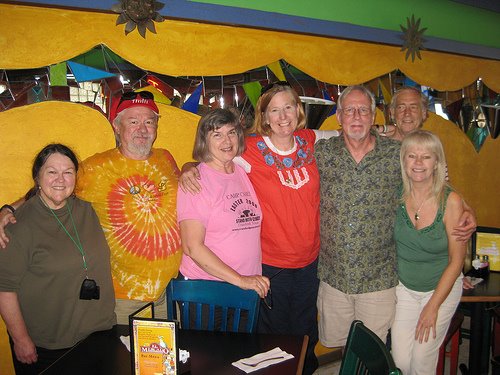
Rag Bloggers meet with Cindy Sheehan, June 11, 2009. From left, Former Camp Casey organizer Patrice Schexnayder, The Rag Blog’s Jim Retherford and Alice Embree, Cindy Sheehan, Rag Blog co-editor Thorne Dreyer and correspondent David MacBryde, and Chris Hargreaves of the New Journalism Project.

Cindy Sheehan in Austin

…her message is also about the community she knows that you can believe in. That community surrounded her in Crawford, Texas. and still appreciates her courage.

By Alice Embree / The Rag Blog / June 13, 2009

See ‘Dueling Protests Square Off Near Bush’s Dallas Home’ by Anna M. Tinsley, Below.

Cindy Sheehan came to Austin promoting her new internet book, Myth America: 10 Greatest Myths of the Robber Class and the Case for Revolution. She spoke at the Unitarian Universalist Church on Wednesday and came from the Alex Jones show to El Mercado to meet with Rag Bloggers at a south Austin restaurant on Thursday afternoon.

On August 6, 2005, Cindy Sheehan went to Crawford, Texas with a question for President George W. Bush. Her son, Casey had been killed in Iraq on April 4, 2004. When twelve Marines were killed in Iraq on August 3, 2005, she heard Bush tell the nation they had died for a “noble cause.” The question Cindy Sheehan brought to Bush’s vacation ranch was “For What Noble Cause?”

The simple question resonated with the authority of a mother’s grief. Sheehan had become active in Military Families Speak Out and helped found Gold Star Families for Peace. But it was camping out in a Crawford ditch that brought her international attention. Her direct action galvanized a peace movement that had succumbed to near-terminal low morale from the double dose of “shock and awe” and a Bush second term.

From the initial seven campers in that ditch, Camp Casey grew into a tent city, able to spring up repeatedly when Bush took his many vacations. Camp Casey attracted thousands of peace activists to Crawford. The experience was profoundly moving. [See Alice Embree: Easter Weekend at the Ranch,The Rag Blog.] Peace activists, veterans and active-duty soldiers were welcomed there. Camp Casey was where the war was personal and not the forgotten, barely noticed background noise on the national news.

Plunged into the limelight, Cindy Sheehan found herself criticized for occupying that limelight. Taking the antiwar message to Congress, she heard from Democrats that a majority was needed in the House to challenge war funding and hold the policy makers accountable. When that Democratic majority was achieved in 2006, she heard that a Senate majority was needed. Nothing changed. Entirely disillusioned with the Democratic Party, Cindy Sheehan decided to run against House Speaker Nancy Pelosi as an independent. Sheehan’s progressive platform had strong labor, environmental and foreign policy planks. She advocated single payer health insurance and legalizing marijuana. She got little media attention as a candidate and a lot of flack from Democrats and came in second in the race.

Barrack Obama had emerged as a presidential candidate, benefiting greatly from the energy of peace activists. When he became President, his promise of ending the war morphed into the withdrawal of troops from Iraqi cities, the maintenance of permanent bases and the re-deployment of the military to another war zone.

Now Cindy Sheehan hosts a weekly internet radio show,Cindy Sheehan’s Soapbox. The Nobel Peace prize nominee had three published books before she released the internet book, Myth America, available on her website. She does not believe the Democratic Party offers alternatives. She advocates change on a smaller scale where people forge community to strengthen each other, where they forge common ground around sustainable agriculture, buying locally, minimizing consumption, forgoing credit and moving their money from the mega-banks into not-for-profit credit unions.

Cindy Sheehan was in Dallas before she came to Austin. There, she led a demonstration to the barricades in front of George W. Bush’s new suburban home. She drew fire from the right (“News Flash, Cindy. There’s a new President.”) She has written a small, downloadable book — more of a pamphlet — on the myths you can’t believe in about America. But, her message is also about the community she knows that you can believe in. That community surrounded her in Crawford, Texas. and still appreciates her courage.

[To find Myth America: 10 Greatest Myths of the Robber Class and the Case for Revolution by Cindy Sheehan, go here.]

Cindy Sheehan at Dallas protest. Photo by Brandon Wade / special to the Ft. Worth Star-Telegram.

Dueling Protests Square Off Near Bush’s Dallas Home

By Anna M. Tinsley / June 9, 2009

DALLAS – Eighth-grader Steven Rasansky had a front-row seat for a government lesson Monday.

Sitting at his friends’ lemonade stand across the street from former President George W. Bush’s new home, he watched anti-war protesters and Bush supporters square off with only a city street dividing them.

Front and center in the sweltering 90-degree heat was Cindy Sheehan, the California mother who drew national attention in recent years with her protests near Bush’s Crawford ranch as she demanded to speak to him about her son’s death in Baghdad.

“George Bush and his administration are mass murderers,” she told the crowd, using a loudspeaker. “People say, ‘Cindy, get over it.’ Well, there are still two wars raging. I don’t have an option of getting over it. . . . We have to keep it up so things like this don’t happen again.”

Anti-war protesters say they want Bush and his administration investigated and prosecuted for war crimes and crimes against humanity. Sheehan has also demonstrated against President Barack Obama because the Democrat has continued the wars.

During the more than half-hour protest, which included a nearly mile-long march to the neighborhood, protesters yelled, “Don’t wait, investigate.” Pro-Bush supporters chanted “USA” for the former president whom they say did a good job.

“I think this is crazy,” said Rasansky, 13, whose friends had hoped to make some money selling pink lemonade and chocolate chip cookies. “I didn’t think it would end up like this.”

Bearing signs with slogans ranging from “No war criminals in my neighborhood” and “W = War Crimes” to “Don’t Mess with Bush” and “They did not die in vain,” more than a hundred people turned out on both sides of the issue.

Dozens of police officers and Secret Service agents blocked the entrance to the Bush neighborhood and patrolled the area. An officer who declined to give his name said there had been no arrests and no problems.

Erika Davis drove from Fort Worth to join the protest against Bush.

“Just because we have a new president, people say you should forget about it,” said Davis, a 62-year-old counselor in Fort Worth. “I don’t believe anyone is above the law.”

Charlotte and Chuck Herman of Dallas turned out to support Bush, holding a sign that read “Bush saved you cowards.”

“We think he made a great president and we’re glad he moved back here to Dallas,” said Charlotte Herman, 64. “We want him to retire in peace.”

Marla Kilday, who lives near Bush in Dallas, was also there to support him.

“I think this is inappropriate,” she said. “The man has given his eight years in office and we just want the neighborhood to be peaceful and quiet.”

Sheehan’s son, Army Spc. Casey Sheehan, died in a 2004 ambush in Baghdad. She said she can’t allow Bush’s “crimes” to be forgotten just because he is no longer in the White House.

“You can bet your whatever that every time I’m in Dallas, I’ll be out here holding a picture of my son.”

Source / Ft. Worth Star-Telegram / truthout

Also see Cindy Sheehan Visits Austin by Susan Van Haitsma / Makingpeace / June 12, 2009

The Rag Blog

Posted in Rag Bloggers | Tagged , , , , , , , | Leave a comment

Foodie Friday: Fixing the Broken US Agriculture System

Will Allen was named a MacArthur Fellow in 2008, the honor popularly known as the “genius grant.”

A Good Food Manifesto for America
By Will Allen / May 2009

I am a farmer. While I find that this has come to mean many other things to other people – that I have become also a trainer and teacher, and to some a sort of food philosopher – I do like nothing better than to get my hands into good rich soil and sow the seeds of hope.

So, spring always enlivens me and gives me the energy to make haste, to feel confidence, to take full advantage of another all-too-short Wisconsin summer.

This spring, however, much more so than in past springs, I feel my hope and confidence mixed with a sense of greater urgency. This spring, I know that my work will be all the more important, for the simple but profound reason that more people are hungry.

For years I have argued that our food system is broken, and I have tried to teach what I believe must be done to fix it. This year, and last, we have begun seeing the unfortunate results of systemic breakdown. We have seen it in higher prices for those who can less afford to pay, in lines at local food pantries, churches and missions, and in the anxious eyes of people who have suddenly become unemployed. We have seen it, too, in nationwide outbreaks of food-borne illness in products as unlikely as spinach and peanuts.

Severe economic recession certainly has not helped matters, but the current economy is not alone to blame. This situation has been spinning toward this day for decades. And while many of my acquaintances tend to point the finger at the big agro-chemical conglomerates as villains, the fault really is with all of us who casually, willingly, even happily surrendered our rights to safe, wholesome, affordable and plentiful food in exchange for over-processed and pre-packaged convenience.

Over the past century, we allowed our agriculture to become more and more industrialized, more and more reliant on unsustainable practices, and much more distant from the source to the consumer. We have allowed corn and soybeans, grown on the finest farmland in the world, to become industrial commodities rather than foodstuffs. We have encouraged a system by which most of the green vegetables we eat come from a few hundred square miles of irrigated semi-desert in California.

When fuel prices skyrocket, as they did last year, things go awry. When a bubble like ethanol builds and then bursts, things go haywire. When drought strikes that valley in California, as is happening right now, things start to topple. And when the whole economy shatters, the security of a nation’s food supply teeters on the brink of failure.

To many people, this might sound a bit hysterical. There is still food in the suburban supermarket aisles, yes. The shelves are not empty; there are no bread lines. We haven’t read of any number of Americans actually starving to death.

No, and were any of those things to happen, you can rest assured that there would be swift and vigorous action. What is happening is that many vulnerable people, especially in the large cities where most of us live, in vast urban tracts where there are in fact no supermarkets, are being forced to buy cheaper and lower-quality foods, to forgo fresh fruits and vegetables, or are relying on food programs – including our children’s school food programs – that by necessity are obliged to distribute any kind of food they can afford, good for you or not. And this is coming to haunt us in health care and social costs. No, we are not suddenly starving to death; we are slowly but surely malnourishing ourselves to death. And this fate is falling ever more heavily on those who were already stressed: the poor. Yet there is little action.

Food won’t have to travel, losing flavor, texture and vitamins, if we grow it where we live, making our cities into true concrete jungles.

Many astute and well-informed people beside myself, most notably Michael Pollan, in a highly persuasive treatise last fall in the New York Times, have issued these same warnings and laid out the case for reform of our national food policy. I need not go on repeating what Pollan and others have already said so well, and I do not wish merely to add my voice to a chorus.

I am writing to demand action.

It is time and past time for this nation, this government, to react to the dangers inherent in its flawed farm and food policies and to reverse course from subsidizing wealth to subsidizing health.

We have to stop paying the largest farm subsidies to large growers of unsustainable and inedible crops like cotton. We have to stop paying huge subsidies to Big Corn, Big Soy and Big Chem to use prime farmland to grow fuel, plastics and fructose. We have to stop using federal and state agencies and institutions as taxpayer-funded research arms for the very practices that got us into this mess.

We have to start subsidizing health and well-being by rewarding sustainable practices in agriculture and assuring a safe, adequate and wholesome food supply to all our citizens. And we need to start this reform process now, as part of the national stimulus toward economic recovery.

In my organization, Growing Power Inc. of Milwaukee, we have always before tried to be as self-sustaining as possible and to rely on the market for our success. Typically, I would not want to lean on government support, because part of the lesson we teach is to be self-reliant.

But these are not typical times, as we are now all too well aware.

As soon as it became clear that Congress would pass the National Recovery Act, I and members of my staff brainstormed ideas for a meaningful stimulus package aimed at creating green jobs, shoring up the security of our urban food systems, and promoting sound food policies of national scope. The outcome needed to be both “shovel-ready” for immediate impact and sustainable for future growth.

We produced a proposal for the creation of a public-private enabling institution called the Centers for Urban Agriculture. It would incorporate a national training and outreach center, a large working urban farmstead, a research and development center, a policy institute, and a state-of-the-future urban agriculture demonstration center into which all of these elements would be combined in a functioning community food system scaled to the needs of a large city.
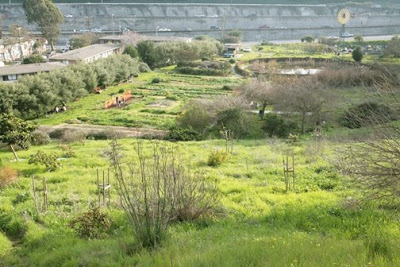
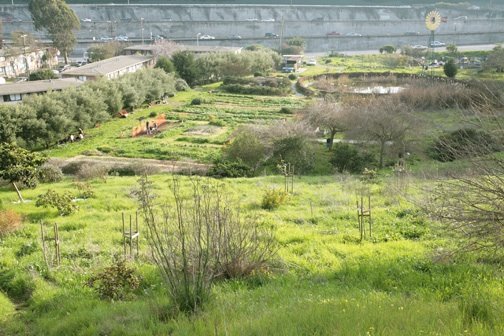
Alemany Farm is a project of the Alemany Resident Management Corp., founded by the residents of the public housing complex that lies alongside it, located next to a major freeway in the city of San Francisco. On this beautiful farm, children from the housing complex learn to grow crops and sell their produce in farmers’ markets.

We proposed that this working institution – not a “think tank” but a “do tank” – be based in Milwaukee, where GrowingPower has already created an operating model on just two acres. But ultimately, satellite centers would become established in urban areas across the nation. Each would be the hub of a local or regional farm-to-market community food system that would provide sustainable jobs, job training, food production and food distribution to those most in need of nutritional support and security.

This proposal was forwarded in February to our highest officials at the city, state and federal level, and it was greeted with considerable approval. Unfortunately, however, it soon became clear that the way Congress had structured the stimulus package, with funds earmarked for only particular sectors of the economy, chiefly infrastructure, afforded neither our Congressional representatives nor our local leaders with the discretion to direct any significant funds to this innovative plan. It simply had not occurred to anyone that immediate and lasting job creation was plausible in a field such as community-based agriculture.

I am asking Congress today to rectify that oversight, whether by modifying the current guidelines of the Recovery Act or by designating new and dedicated funds to the development of community food systems through the creation of this national Centers for Urban Agriculture.

Our proposal budgeted the initial creation of this CUA at a minimum of $63 million over two years – a droplet compared to the billions being invested in other programs both in the stimulus plan and from year-to-year in the federal budget.

Consider that the government will fund the Centers for Disease Control at about $8.8 billion this year, and that is above the hundreds of millions more in research grants to other bio-medical institutions, public and private. This is money well spent for important work to ensure Americans the best knowledge in protecting health by fighting disease; but surely by now we ought to recognize that the best offense against many diseases is the defense provided by a healthy and adequate diet. Yet barely a pittance of CDC money goes for any kind of preventive care research.

In 2008, the Department of Homeland Security approved spending $450 million for a new National Bio and Agro-Defense Facility at Kansas State University, in addition to the existing Biosecurity Research Institute already there. Again, money well spent to protect our food supply from the potential of a terrorist attack. But note that these hundreds of millions are being spent to protect us from a threat that may never materialize, while we seem to trivialize the very real and material threat that is upon us right now: the threat of malnourishment and undernourishment of very significant number of our citizens.

Government programs under the overwhelmed and overburdened departments of Agriculture and of Health and Human Services do their best to serve their many masters, but in the end, government farm and food policies are most often at odds between the needs of the young, the old, the sick and the poor versus the wants of the super-industry thatagriculture has become.

By and large, the government’s funding of nutritional health comes down to spending millions on studies to tell us what we ought to eat without in any way guaranteeing that many people will be able to find or afford the foods they recommend. For instance, food stamps ensure only that poor people can buy food; they cannot ensure that, in the food deserts that America’s inner cities have become, there will be any good food to buy.

We need a national nutrition plan that is not just another entitlement, that is not a matter of shipping surplus calories to schools, senior centers, and veterans’ homes. We need a plan that encourages a return to the best practices of both farming and marketing, that rewards the grower who protects the environment and his customers by nourishing his soil with compost instead of chemicals and who ships his goods the shortest distance, not the longest.

If the main purpose of government is to provide for the common security of its citizens, surely ensuring the security of their food system must be among its paramount duties. And if among our rights are life, liberty and the pursuit of happiness, we are denied all those rights if our cities become prisons of poverty and malnutrition.

As an African-American farmer, I am calling on the first African-American president of the United States to lead us quickly away from this deepening crisis. Demand, President Obama, that Congress and your own Administration begin without delay the process of reforming our farm and food policies. Start now by correcting the omission in your economic stimulus and recovery act that prevented significant spending on creating new and sustainable jobs for the poor in our urbancenters as well as rural farm communities.

It will be an irony, certainly, but a sweet one, if millions of African-Americans whose grandparents left the farms of the South for the factories of the North, only to see those factories close, should now find fulfillment in learning once again to live close to the soil and to the food it gives to all of us.

I would hope that we can move along a continuum to make sure that all of citizens have access to the same fresh, safe, affordable good food regardless of their cultural, social or economic situation.

[Will Allen is the founder and chief executive officer of Growing Power, 5500 W. Silver Spring Dr., Milwaukee WI 53218, www.growingpower.org. He can be reached at will@growingpower.org.]

Source / San Francisco Bay View

Thanks to Janet Gilles / The Rag Blog

Posted in RagBlog | Tagged , , | 1 Comment

Vigil at T. Don Hutto Center on June 20th

As ICE cynically says on their Web site, “The facility provides an effective and humane alternative to maintain the unity of alien families as they await the outcome of their immigration hearings or the return to their home countries.”

Family Friendly Lockups?
By Diana Claitor / The Rag Blog / June 12, 2009

Central Texas is one of two places in the entire U.S. where the federal immigration people are experimenting with family detention. The other is Pennsylvania.

Now, I don’t know about you, but I think we Austinites need to take every chance to show the feds and the world that we don’t approve, that we are not okay with refugee mamas and their babies and kids being incarcerated in a prison camp while their cases are decided.

The T. Don Hutto Center is not actually in Austin, but on the railroad tracks on the edge of nearby Taylor (about 30 miles east of Austin) and it is run by the Corrections Corporation of America (CCA), a for-profit adult corrections company.

On Saturday, June 20th, organizations from across Texas will be joined by Amnesty International and National LULAC in a vigil honoring World Refugee Day in front of the T. Don Hutto family detention center in Taylor, Texas.

A caravan will leave Austin from 2604 E. Caesar Chavez at 11:30 am. The vigil will begin with a 1pm walk from Heritage Park in Taylor. Protestors will gather for a vigil at the T. Don Hutto detention center at 1001 Welch from 2-4pm.

Warning: Get a map online beforehand, because it’s off the beaten track.

There will be speakers, music, art and a lot of that big red sun, so I will not do the walk but instead will go straight to the vigil at 2 p.m. and wear a hat. It would be good to see a strong Austin contingent there in light of the national visitors. Maybe some of us ex-Rag, ex-Sun and early Chron people want to say “Ya basta!” to this whole idea for detaining children.

Family detention is not a simple subject—check out the New Yorker article and see the two exceptional documentaries on Hutto—but one basic truth applies: it’s just not right. More humane and less-costly alternatives exist that keep families together and out of prison-like detention centers. A study by the Vera Institute found that more than 90% of immigrants on a supervised release program attended their immigration hearings. The average cost of a supervision program is $12 a day compared to reportedly over $200 a day to detain a person at Hutto.

And listen to the nine-year-old kid from Canada when he says, “I don’t like to stay in this jail …. this place is not good for me.”

Check out tdonhutto.blogspot.com for more information. Or call Bob Libal of Grassroots Leadership at (512) 971-0487 or Diana Claitor of Texas Jail Project at (512) 597-8746.

Source /

The Rag Blog

Posted in RagBlog | Tagged , , | Leave a comment

Nima Shirazi: Analysing the Iranian Elections


On the Table & Off the Map: Threats, Lies, and Iranian Elections
By Nima Shirazi / The Rag Blog / June 11, 2009

Eight days after Barack Obama delivered his much-touted speech in Cairo, Iranians are going to the polls to vote for their own president. Although reelection for incumbent Mahmoud Ahmadinejad seemed to be guaranteed just a few weeks ago, there now appears to be growing potential for an upset victory by challenger Mir Hossein Mousavi, who has been running a campaign as the candidate of change.

Mousavi is no new-comer to the Iranian political stage. He held the now-defunct post of Prime Minister from 1981 to 1989 (which was, at the time, an executive position much akin to the current presidency) during Iran’s brutal eight-year war with Iraq. Currently the president of the Iranian Academy of Arts, the trilingual Mousavi – Farsi, Arabic, and English – served as a presidential adviser from 1989 to 2005 and held a position on the Expediency Council, Iran’s highest arbitration body.

In the American and European mainstream media, Iranian supporters of Mousavi are routinely referred to as “more educated,” “better off,” and “pro-Western” than their counterparts who support Ahmadinejad. The Iranian economy, which has seen rising inflation and slowed growth in the past four years, has become a major point of contention during the campaign process and recent debates. The President has been blamed for three rounds of UN Security Council sanctions, diminishing Iranian prestige and reputation internationally, and Mousavi even chided him as arrogant and driving Iran toward “dictatorship.”

Ahmadinejad’s detractors point to all these factors as proof of his failed leadership; however, a closer look into the accusations may reveal a different story – or, at least, a different perspective.

Ahmadinejad is a populist who is seen as having “a deep sympathy for the poor” and has worked very hard to redistribute wealth across the wide range of socioeconomic tiers of Iranian society. He has helped the poor and lower middle class by increasing pensions (sometimes by more than doubling them), loans, and government workers’ wages, also increasing and maintaining financial support for the families of those killed or wounded during the Iran-Iraq War. The New York Times reports that Ahmadinejad “has also handed out so-called justice shares of state firms that are selling stock to the public, and provided low-interest loans to young married couples and entrepreneurs.”

Still, opponents claim that his focus on redistribution, rather than creation, of wealth within Iran has harmed the Iranian economy and has resulted in increased unemployment, especially in Iran’s vast young population. Nevertheless, his supporters disagree. “Who says Ahmadinejad created unemployment?” twenty-five year old market worker Hamid Nassiri told the Times. “It’s not true at all. He is from the people, and he attends to the people’s needs.”

In fact, even though discussion of the Iranian economy seems to be working against Ahmadinejad, Kelly Campbell of the U.S. Institute of Peace has thoroughly debunked many of the myths about Iranian economic turmoil, explaining that the country has “actually performed well in aggregate terms, with a moderate rate of growth in the last ten to fifteen years, including healthy GDP and per capita growth in investment. In the last three years, Iran’s actual growth rate has averaged 5.8 percent.” Kelly continues,

Nor do economic indicators support assertions by some observers that inflation is much higher than the rate stated by the Iranian government. In the last fifteen years, the consumer price index (CPI) has increased by a factor of forty-two; if the inflation rate were actually twice the reported rate, the CPI would have increased by a factor of 950. Prices have increased by a factor of five in the last ten years, not twenty, as some claim. While this rate of inflation is cause for concern, it is in line with the depreciation of the exchange rate.

[Another] myth is that Iran suffers from widespread poverty and rising inequality. The poverty rate actually declined throughout the 1990s and continues to fall, and is low by international standards—especially when compared to that of other developing countries. Government public service and social assistance programs have helped to reduce poverty, particularly in rural areas. In addition, economic inequality throughout Iran has remained fairly stable and does not appear to be increasing.

Over the past few years, Ahmadinejad has also courted economic alliances with a number of Latin and South American nations, promising $1 billion to help develop Bolivia’s oil and gas sector, opening a trade office in Ecuador, and entering into various agreements with Nicaragua, Cuba, Paraguay, Brazil and, of course, Venezuela. Surprisingly, however, not all of these overtures have to do with oil trade. In 2007, Nicaragua received a loan of over $200 million from Iran to build a hydroelectric dam and, in August of last year, Ahmadinejad donated $2 million for the construction of a hospital. The Council of Hemispheric Affairs‘ Braden Webb reports that “Venezuela and Iran are now gingerly engaged in an ambitious joint project, putting on-line Veniran, a production plant that assembles 5,000 tractors a year, and plans to start producing two Iranian designed automobiles to provide regional consumers with the ‘first anti-imperialist cars.'”

Ahmadinejad’s inroads into Latin and South American, in order to act as “counter-lasso” to the United States, have certainly upped his anti-imperialism credentials – so much so, in fact, that Secretary of State Hillary Clinton has called the strong relations “disturbing.”

Mousavi, on the other hand, has set his sites closer to home, attacking Ahmadinejad for focusing on the Americas rather than “investing in Iran’s neighboring countries…the President has obviously failed to get his priorities right.” Mousavi, on the other hand, favors increased privatization and foreign investment. “We should create an economic revolution to fight inflation,” he said during a televised debate. “The private sector is a vital part of our plans to revive the country’s economy.” Believing that Ahmadinejad squandered excess oil revenue while in office, Mousavi insists, “The oil industry should improve. Right now our economy is solely restricted to oil exports without realizing that the oil industry is dependent on other economic sectors” and that “stable economic policies will help Iran to attract foreign investment.”

As a self-described reformist, Mousavi has rallied a strong following by calling for more freedom of the press, freedom of information, more professional opportunities for women, the abolition of the so-called “Morality Police,” as well as noting that “blinkered attitudes and false interpretations of Islamic teachings do not satisfy public interests and only trigger the country’s backwardness.” He wishes to push for more personal freedoms, lifting the state ban on private television stations, and also believes that the supervision of police and law enforcement forces should be handed over to the President, rather than remaining in the hands of Iran’s Supreme Leader, Ayatollah Ali Khamenei.

As to Mousavi’s claims that Ahmadinejad is dictatorial, the fact that Ahmadinejad has no control over Iran’s military, doesn’t have final say on foreign policy matters, has no power over the nuclear energy program, and has often been challenged by both the Majlis (Parliament) and Judiciary, quickly exposes those accusations as campaign rhetoric and name-calling. In fact, the Iranian legislature rejected more than two-thirds of Ahmadinejad’s recommendations for ministers which resulted in it taking almost a year before his Cabinet was fully staffed. Hardly the trajectory of a tyrant.

The view from the United States appears to be that, with a Mousavi win on Friday, relations between Iran and America will improve. Mousavi clearly strikes a more conciliatory tone when discussing international affairs than does Ahmadinejad, who has always been consistent in his insistance that Iran has every legal right to enrich uranium under the protocols of the Nuclear Non-Proliferation Treaty and that sanctions against Iran imposed by UN Security Council resolutions are themselves illegal.

“Our country was harmed because of extremist policies adopted in the last three years…My foreign policy with all countries will be one of detente,” Mousavi said after first announcing his candidacy. “We should try to gain the international community’s trust while preserving our national interests.” He has also said, “In foreign policy we have undermined the dignity of our country and created problems for our development.”

Nevertheless, the former prime minister insists that “Iran will never abandon its nuclear right” and echoes the statements of both Khamenei and Ahmadinejad when saying, “If America practically changes its Iran policy, then we will surely hold talks with them.”

It is clear that an electoral victory for Mousavi would be seen as a political victory for Barack Obama as well. It is assumed that Mousavi is more “rational and reasonable” than Ahmadinejad and would therefore be more amenable to Washington’s demands, regardless of how illegal and hypocritical those demands may be. As such, he is the preferred candidate by Western analysts and politicians.

But how different would the United States treat Iran, really?

Back in 2003, soon after the invasion of Iraq, the Iranian government sent a “proposal from Iran for a broad dialogue with the United States” and the fax suggested everything was on the table – including full cooperation on nuclear programs, acceptance of Israel and the termination of Iranian support for Palestinian militant groups.” Flynt Leverett, a senior director on the National Security Council staff at the time, described the Iranian proposal as “a serious effort, a respectable effort to lay out a comprehensive agenda for U.S.-Iranian rapprochement.” A Washington Post report from 2006 revealed that the document listed “a series of Iranian aims for the talks, such as ending sanctions, full access to peaceful nuclear technology and a recognition of its ‘legitimate security interests.’ Iran agreed to put a series of U.S. aims on the agenda, including full cooperation on nuclear safeguards, ‘decisive action’ against terrorists, coordination in Iraq, ending ‘material support’ for Palestinian militias and accepting the Saudi initiative for a two-state solution in the Israeli-Palestinian conflict. The document also laid out an agenda for negotiations, with possible steps to be achieved at a first meeting and the development of negotiating road maps on disarmament, terrorism and economic cooperation.”

The proposal was roundly rejected by the Bush administration.

The then-government of reformist Iranian President Mohammad Khatami – now a Mousavi supporter – even voluntarily suspended uranium enrichment from 2003 to 2005 and still received nothing but lies and threats from the United States and its European allies. As Ahmadinejad recently pointed out, “There was so much begging for having three centrifuges. Today more than 7,000 centrifuges are turning,” and then asking, “Which foreign policy was successful? Which one created degradation? Which one kept our independence more, which one gave away more concessions but got no results?”

Many commentators point to a new approach from Barack Obama’s Washington, which they believe should be reciprocated from Tehran. Apparently, Obama’s recent Cairo speech appealed to many Iranians, even government officials. Ali Akbar Rezaie, the director-general of Iran’s foreign ministry’s office responsible for North America commended the new tone coming from the US president, saying, “Compared to anything we’ve heard in the last 30 years, and especially in the last eight years, his words were very different…People in the region received the speech, from this angle, very positively, with sympathy.” He added that the upcoming Iranian election would set the stage for a new chapter in US-Iran relations. “After the election we will be in a better position to manage relations with the United States,” he said. “We’ll be at the beginning of a new four-year period, and the political framework will be clear.”

But what has Obama said to or about Iran that should prompt such positive and optimistic responses? Not a whole lot.

Exactly one year to the day before his Cairo speech, and the day after clinching the Democratic nomination for president, Obama stood before the American Israel Public Affairs Committee and stated that “There is no greater threat to Israel — or to the peace and stability of the region — than Iran.” He said this about a country that has not threatened nor attacked any other country in centuries and harbors absolutely no ambitions of territorial expansion. The same can obviously not be said about Israel, or the United States. Obama continued,

The Iranian regime supports violent extremists and challenges us across the region. It pursues a nuclear capability that could spark a dangerous arms race and raise the prospect of a transfer of nuclear know-how to terrorists. Its president denies the Holocaust and threatens to wipe Israel off the map. The danger from Iran is grave, it is real, and my goal will be to eliminate this threat.

Obama threatened Iran with ratcheted up pressure, if it did not bend to American demands – demands based on unfounded accusations and outright lies. This pressure would not be limited to “aggressive, principled diplomacy” but would include “all elements of American power to pressure Iran.” Just to be clear, Obama promised his audience to “do everything in my power to prevent Iran from obtaining a nuclear weapon.”

In his inaugural address, Obama seemed to calm down and offered the Muslim world “a new way forward, based on mutual interest and mutual respect.” A week later, during an interview with Al Arabiya TV, the new president reiterated his insistence that the US was now “ready to initiate a new partnership [with the Muslim world] based on mutual respect and mutual interest.”

Two months later, in March, Obama addressed the Iranian people and government directly by releasing a taped message on the occasion of the Iranian New Year. The message urged a “new beginning” in diplomatic relations. Obama said,

“My Administration is now committed to diplomacy that addresses the full range of issues before us, and to pursuing constructive ties among the United States, Iran, and the international community. This process will not be advanced by threats. We seek, instead, engagement that is honest and grounded in mutual respect.”

Obama’s emphasis on “mutual respect” is striking considering the near constant usage of that phrase in Iranian overtures for years. Many Iranian officials, including UN ambassador Javad Zarif, former president Rafsanjani, and Foreign Ministry spokesman Hamidreza Assefi, have been calling for international relations based on “mutual respect.” The Mossadegh Project‘s Arash Norouzi points out, as far back as February 2000, then President Khatami was saying, “We believe in existing alongside, and forging relations with, all countries…on the basis of mutual respect and interests.” Then, in early 2004, then Foreign Minister Kamal Kharazzi said, “We call for positive and constructive dialogue on the basis of mutual respect.” In December 2007, Foreign Minister Manouchehr Mottaki stated, “As senior Iranian officials have reiterated, we welcome any rational approach that is based on mutual respect.”

Ahmadinejad himself has used the phrase a number of times ever since he was the mayor of Tehran and running for president. More recently, in a July 2008 interview with NBC News, Ahmadinejad wondered if the United States was finally beginning “a new approach; in other words, mutual respect, cooperation, and justice? Or is this approach a continuation in the confrontation with the Iranian people but in a new guise?”

Some say that where Ahmadinejad is confrontational, Mousavi will be more mollifying. But Ahmadinejad has always been ready for diplomatic engagement with the United States, despite what you may hear constantly in the mainstream media. In fact, the day after Obama’s Al Arabiya interview, Ahmadinejad delivered a speech in the Iranian town of Kermanshah. This is how his speech ended:

We welcome change but on the condition that change is fundamental and on a right course, otherwise the world should know, that anyone with the same speaking manner of Mr. Bush, same language of Mr. Bush, the same spirit of Mr. Bush, adventurism of Mr. Bush, even using new words to speak to the nation of Iran, the answer is the same Mr. Bush and his lackeys received over the years.

We hear that they are making plans for Iran. We in turn wait patiently, listen carefully to their words, carefully assess actions under the magnifying glass and if a real change occurs in a fundamental way, we shall welcome it.

In May, at the request of Barack Obama, the Pentagon updated its plans for using military force against Iran. Secretary of Defense Robert Gates explained that “as a result of our dialogue with the president, we’ve refreshed our plans and all options are on the table.” So much for not advancing threats.

Obama’s appointment of Hillary Clinton as Secretary of State and long-time AIPACer Dennis Ross as top Iran advisor is also troubling. Clinton once threatened to “totally obliterate Iran” if it ever attacked Israel with the nuclear weapons it doesn’t have and has suggested that negotiations with Iran, while doubtfully being fruitful, will be primarily useful to garner support for more “crippling” multilateral sanctions. Also, it has long been said that Ross has advocated an “engagement with pressure” strategy of dealing with Iran which, as Ismael Hossein-Zadeh explains, “means projecting or pretending negotiation with Iran in order to garner broader international support for the US-sponsored economic pressure on that country.” In a recent New York Times Op-Ed, former National Security Council staff members Flynt Leverett and Hillary Mann Leverett relate what Ross revealed to them regarding his cynical strategy:

In conversations with Mr. Ross before Mr. Obama’s election, we asked him if he really believed that engage-with-pressure would bring concessions from Iran. He forthrightly acknowledged that this was unlikely. Why, then, was he advocating a diplomatic course that, in his judgment, would probably fail? Because, he told us, if Iran continued to expand its nuclear fuel program, at some point in the next couple of years President Bush’s successor would need to order military strikes against Iranian nuclear targets. Citing past “diplomacy” would be necessary for that president to claim any military action was legitimate.

They also make it clear that, “the Obama administration has done nothing to cancel or repudiate an ostensibly covert but well-publicized program, begun in President George W. Bush’s second term, to spend hundreds of millions of dollars to destabilize the Islamic Republic. Under these circumstances, the Iranian government — regardless of who wins the presidential elections on June 12 — will continue to suspect that American intentions toward the Islamic Republic remain, ultimately, hostile.”

Even more recently, during his speech in Cairo, Obama, after once again mentioning “mutual respect,” said that “any nation – including Iran – should have the right to access peaceful nuclear power if it complies with its responsibilities under the Nuclear Non-Proliferation Treaty.” Whereas this sounds like an unprecedented admission by a sitting US president, it’s important to remember what Bush said to Charlie Gibson back in 2002 during an ABC News interview: “Matter of fact, I said this in a press conference, that it’s the sovereign right of Iran to have civilian nuclear power, and I agree, and I believe that.”

As Iran Affairs‘ Cyrus Safdari points out, “Arguably, Bush’s statement is more sweeping than Obama’s…compare ‘may have some right’ to ‘has a sovereign right’.” He continues,

In any case, Iran’s absolute and unqualified and unquestionable right to access the full nuclear fuel cycle is based on international law and not for Obama or Bush to decide. Iran has the same rights to nuclear technology (or any other technology) as Japan, Argentina, Brazil, the USA…

Nor is it up to Iran to “prove that its aspirations are peaceful” (code words for “must give up enrichment and forever rely on us to power their economy”.) Iran has signed the NPT and after years of inspections, no evidence has been found of any weapons program. The burden is therefore on Iran’s accusers to prove their allegations, and not vice versa.

Meanwhile, not only is Iran’s nuclear program legal, it is under heavy scrutiny by the IAEA. Just recently, Iran’s ambassador to the IAEA, Ali-Asghar Soltaniyeh, confirmed Tehran’s continued cooperation with the UN nuclear agency while at the same time it continues its uranium enrichment activities. He told reporters, “After six years of intrusive and robust inspection and issuance of 24 reports, the director general has once again reported to the world that there is no evidence of any diversion of nuclear material or case of prohibitive nuclear activities.“

Nevertheless, Obama presented Iran on Sunday with a “clear choice” of halting its nuclear and missile activity or facing increased isolation.

Maybe the US just doesn’t like Ahmadinejad, what with his deliberately being mistranslated and intentionally misquoted by Western media. Blamed for threatening to “wipe Israel off the map” (an idiom that doesn’t even exist in Farsi), Ahmadinejad is constantly called a Holocaust denier for questioning why the horrific Nazi genocide of European Jews resulted in the violent displacement and ethnic cleansing of the Palestinian people. Ahmadinejad has never threatened to attack Israel, but rather hopes that the people of Palestine can all – Jews, Christians, and Muslims – vote for whatever type of government system they are to live under. Ahmadinejad’s willingness to bring up issues pertaining to Zionism without worrying about the delicate sensibilities of Western audiences has made him a pariah.

Obviously, it is seldom remembered that, in 2001, the former Iranian president and putative moderate, Hashemi Rafsanjani, who is now heavily supporting Mousavi’s run for office, declared that although Israel would be destroyed by an atomic bomb, the Muslim world would only be damaged by one and therefore “such a scenario is not inconceivable.” Nevertheless, the LA Times noted back in 2006, “four years later, when Rafsanjani was running for president, Washington and its European allies were eagerly hoping that he would win.” Apparently, an actual threat of nuclear destruction didn’t seem to bother Western powers at the time. Now all they talk about is a fictitious one.

Still, hopes are that Mousavi will be more tactful in his discussion of Zionism and Israel’s reliance on the Holocaust for its own existential validation. Recently, when asked about his views on the Holocaust, Mousavi said: “Killing innocent people is condemned. The way the issue [Holocaust] was put forward [by Ahmadinejad] was incorrect,” but continued in a manner almost identical to the incumbent president, “Of course the question could be that why Palestinians should be punished for a crime committed by Germans?”

As millions of Iranians flood to the polls today to vote, it may become clear that a vote for Ahmadinejad is more a vote for continued Iranian resistance to US influence and hegemony in the region, whereas a vote for Mousavi is a vote for possible reconciliation based on Iranian fears, American demands, and Israeli paranoia and deception.

And so, it seems that the more things change, the more they stay the same.

[Nima Shirazi was born and raised in Manhattan. He now lives in Brooklyn and writes the weblog Wide Asleep In America under the moniker Lord Baltimore. He can be reached at wideasleepinamerica@gmail.com.]

This article also appeared on Nima’s blog, Wide Asleep in America.

The Rag Blog

Posted in Rag Bloggers | Tagged , , , | Leave a comment

Suddenly Becoming Aware of the Incline

A woman walked past the sculptures, from left, of “Tall Woman III”, “Walking Man II” and “Monumental Head” by Alberto Giacometti at the Fondation Beyeler, Switzerland, in May 2009. Photo: Christian Hartmann/Reuters.

Blind Spot
By Mark Dow / June 11, 2009

Several years ago I walked into a room of Giacometti figures at the Museum of Modern Art and suddenly understood how to see sculpture. Gaunt and insistent, the figures drew everything unessential from what surrounded them. The negative shape of the space between the figures became a positive space.

That Giacometti’s true subject is the lone figure deep in the vortex only became clear to me, though, in the portrait paintings, such as those of the prostitute Caroline and of the artist’s mother, and this allowed me to see the frail indomitability of the sculpted figures in a new light.

I say “light” here metaphorically, of course.

When I lived on Miami Beach, a man named Simcha was often in the parking lot of the Publix Supermarket near the Talmudic University on Alton Road. “Simcha” wasn’t the name his parents gave him. He had re-named himself Simcha after he heard someone say “simcha,” Hebrew for happiness, and felt something positive — maybe a light, he said — inside his body.

Tall and skinny, not young and not old, a dirty beard down to his chest, wearing well-fitting, unwashed clothes and a skullcap on his noodle, Simcha smiled a lot and seemed to have several rows of bad teeth. First time we saw each other was on Ocean Drive when he was carrying a hand-lettered sign through nightclub crowds that were replacing the old people sitting on patio chairs and watching the sea. Simcha’s sign said, “I’ll answer any question.” I declined, but we chatted, and then one day on Lincoln Road, on a pedestrian mall, heard:

Mark! What does it mean that we’re meeting here right now? I’ll tell you what I think it means.

That morning I’d been working on a poem about a man named George. George and I had lived in the same building in Santa Ana, Calif. George used to spend his days on a hemorrhoid donut cushion in his easy chair, watching TV and hoping for a re-run of “The Russians Are Coming, The Russians Are Coming,” in which he had been an extra 20 years before. That morning, I had noticed how many times I’d repeated the word “stairs” in just a few lines of the poem. I hadn’t told Simcha any of this when he asked what it meant that we were meeting, then tapped a thick notebook under his arm and said he was writing a poem about stairs.

A few years earlier, while climbing a flight of stairs, he had suddenly become aware of the incline. He indicated the incline by holding his hand at an angle, long fingers outstretched. He felt the incline in his body, felt as if his insides were going in different directions, coming apart from each other. He had had to lie down, and claimed not to have used stairs since. Simcha told me that according to the Talmud according to one of his friends at Talmudic U., a building shouldn’t have more than two stories, and to reach the second story a Jew should use a ladder, not stairs. He asked: Does this have something to do with construction? Then he answered: No. It has to do with the concept. Jewish tradition is concerned with concepts, he said. He didn’t say what the stair concept was, but he did say that he had once met an autistic boy in New York who drew a box with a diagonal across it, but that since the boy had done this without any concept attached, it was a oneness without unity. Jews have lost the ability to feel the unity, he said.

Simcha had once watched as a woman drew a profile with a horizontal line behind her subject, and he found this disturbing because the horizon appeared to go through the subject. Then an artist taught him that by dropping the horizontal, by making it discontinuous so that it doesn’t appear to bisect the figure, he could make the vertical look more real. But right angles, he warned, can be dangerous.

A few weeks later, I was reaching into one of the yellow metal Miami Herald vending machine boxes on Alton Road, just down from Talmudic U., when Simcha approached and said he was looking for a student to study the philosophy of news. It was unclear whether he recognized me. My blue Cavalier wagon was idling at the curb. As the sharp-edged spring-hinged door of the Herald machine slammed shut, Simcha snapped:

Why did you close it?! I wanted a paper! How many times have you lost money in that machine? Why take a chance?!

I moved toward my car. He tried to be calm but couldn’t be:

We can discuss the paper. Don’t walk away from this!

There’s a blind spot where the optic nerve meets retina, or where the retina becomes optic nerve, one might say. The blind spot is normal because the retinal surface cannot register light at the spot where it is interrupted by the optic nerve that transports the registered information. A blind spot at the center is what the kabbalists must have had in mind when they said that God had to withdraw to create the world. If there were no blind spot at one’s own center, one would be, if there were a God, God.

Over the next few months, I’d often see Simcha standing near the Herald dispenser near Talmudic U. The last time I saw him at all, I was exiting I-395, the Julia Tuttle Causeway, which crosses Biscayne Bay from Miami to Miami Beach, and looping along the concrete clover leaf past Mount Sinai Hospital, south onto Alton Road. Simcha was sitting on the hilly embankment between freeway and entrance/exit ramps. His legs were straight out in front of him. His arms were also extended, hands holding at eye level what looked like a single page from a glossy magazine. He was either looking at one side of the page or showing the other to motorists too far away to see it.

[Mark Dow’s essays and poems have appeared in The Paris Review, PN Review (UK), Mudlark, Killing the Buddha, and SLAM! Wrestling. He is the author of “American Gulag: Inside U.S. Immigration Prisons,” and teaches English at Hunter College. He is working on a short book that touches on most of what he’s ever thought about.]

Source / New York Times

The Rag Blog

Posted in RagBlog | Tagged , , | Leave a comment

The Forest Meets the Information Age … And It Isn’t Pretty

Thanks to Diane Stirling-Stevens / The Rag Blog

Posted in RagBlog | Tagged , | 1 Comment

Real Life Education Through YouTube

Sarah Griffith with her husband, Brian Mclean, and sons Declan, 8, and Bastian, 18 months. Photo: Erik S. Lesser/New York Times.

Lights, Camera, Contraction!
By Malia Wollan / June 10, 2009

BY her eighth month of pregnancy, Rebecca Sloan, a 35-year-old biologist living in Mountain View, Calif., had read the what-to-expect books, taken the childbirth classes, joined the mommy chat rooms and still had no idea what she was in for. So, like countless expectant mothers before her, Ms. Sloan typed “childbirth” into YouTube’s search engine. Up popped thousands of videos, showing everything from women giving birth under hypnosis, to Caesarean sections, to births in bathtubs.

“I just wanted to see the whole thing,” Ms. Sloan said. And see it she did, compliments of women like Sarah Griffith, a 32-year-old from the Atlanta area who, when she gave birth to her son Bastian, invited her closest friends to join her. One operated the camera, capturing Ms. Griffith’s writhing contractions, the baby’s crowning head and his first cries. Afterward, Ms. Griffith posted an hour of footage on YouTube in nine installments, which have since been watched more than three million times. “Childbirth is beautiful, and I’m not a private person,” Ms. Griffith said.

Mom-and-pop directors like Ms. Griffith think of their home movies as a way to demystify childbirth by showing other women — and their weak-kneed husbands — candid images they might not otherwise see until their contractions begin. If YouTube can illustrate how to solve a Rubik’s Cube, pick a lock and poach an egg, maybe it can also demonstrate how to give birth. Recently, a British couple became tabloid fodder after the woman gave birth, assisted only by her husband using a YouTube birthing video as tutorial.

Inevitably most childbirth videos are graphic, challenging not just YouTube’s rules but also societal conventions on propriety.

“Nudity is generally prohibited on YouTube,” said Victoria Grand, the site’s head of policy. “But we make exceptions for videos that are educational, documentary or scientific.” YouTube employees regularly review graphic videos and, depending on the content, may decide to leave a video up, restrict access to those 18 and older or remove the video altogether. Explicit medical videos are among the exceptions, allowing cyberpatients and other viewers 18 and over to watch videos of colonoscopies, appendectomies and open-heart surgery. Most childbirth videos are age restricted.

At first Ms. Sloan says she felt timid watching. She remembers one video featuring a couple speaking Dutch or German in which the man embraced the woman gently from behind while she crouched and swayed. Soon, Ms. Sloan was in tears. “It was really moving,” she said. “The videos are so unsensational, they’re largely unedited and people aren’t making money off of their videos. And so the purpose seems very genuine.”

Women logging onto YouTube to watch birth is a natural inclination, said Eugene Declercq, a professor at the Boston University School of Public Health. “A hundred and fifty years ago women viewed birth on a pretty regular basis — they saw their sisters or neighbors giving birth,” he said, adding that it wasn’t until the late 19th century that birthing moved out of living rooms and bedrooms and into hospitals. “But now, with YouTube, we’ve come back around and women have this opportunity to view births again.”

Every day Ms. Griffith signs into YouTube to answer comments and questions that viewers post in response to her videos of Bastian’s birth. She says her comments section breaks down like this: excited and apprehensive moms-to-be; a few comments so obscene she refuses to post them; and lastly, comments from those Ms. Griffith calls “repetitive guys.” “They’re always like, ‘Whoa, I’m so glad I’m not a woman,’” she said.

Ms. Griffith’s footage is difficult to watch. Bastian weighed almost 11 pounds at birth, and she did not edit out the close-ups, the screaming, groaning and cussing. “My goal is not to scare anybody,” she said. “But if someone is pregnant and they haven’t wrapped their head around the fact that there is pain involved, then they might want to start.”

The graphic nature of public childbirth videos makes them controversial. In an online forum run by Parenting Magazine, a user recently posted the question, “Mom Debate: Birth Videos on YouTube? What do you think — great, or gross?” Responses split between the gross (“My question is why do these people feel the need to post it on the Internet?!”), and the great (“I think it’s great for moms to see all the different and real ways women give birth”).

Childbirth videos have been screened at birthing classes since the 1970s. But those videos tend to be highly edited, and they can be dated, says Jeanette Schwartz, president of the International Childbirth Education Association, which certifies childbirth class instructors. YouTube videos could change the way classes are taught, Ms. Schwartz said: “This creates a wonderful opportunity to show free, real life, candid videos in a classroom setting.”

The majority of childbirth videos on YouTube are home births, recorded inside living rooms, bedrooms or bathtubs. In the United States, many hospitals and doctors forbid patients to record births because of liability concerns, so few American hospital birth videos appear on YouTube.

The thousands of online childbirth videos, garrulous mommy chat rooms and endless pregnancy blogs are changing the dynamic between pregnant women and their attendant medical professionals.

“The more information you have, the more sources you have, the more informed you are, the better questions you ask,” said Eileen Ehudin Beard, an adviser for the 6,500-member American College of Nurse-Midwives. But videos of complicated or difficult births could be detrimental, Ms. Beard said, especially if they made women more fearful of delivering a baby.

Providence Hogan insists she is “not a YouTube person.” Still, Ms. Hogan, 42, who owns a day spa in Brooklyn, has been logging long hours watching birthing videos in preparation for the August arrival of her second child. If Ms. Hogan’s birth goes as planned (at home in a birthing tub), she intends to have her 7-year-old daughter, Sophia, present. After prescreening videos on YouTube and another site, birthvideos.tk, Ms. Hogan started showing Sophia the less graphic ones.

“At first she was like, ‘That’s weird, that’s ugly,’ ” said Ms. Hogan of her daughter’s response. “Now it’s ‘Oh, what a cute baby!’ ”

Eleven months ago in Mountain View, Ms. Sloan recorded the birth of her son, Urban. She says she feels a little squeamish about putting it on YouTube, and she’s not sure what her husband would say. Still, eventually she thinks her video will become one more public testament to the agony and beauty of birth.

“I found it so helpful to see those videos,” Ms. Sloan said, “and I am so grateful to the families that shared them I feel like I want to return the favor.”

Source / New York Times

The Rag Blog

Posted in RagBlog | Tagged , , | Leave a comment

Rabbi Arthur Waskow : Murders in the ‘Cathedral’

The US flag flies at half staff outside the US Holocaust Museum, a day after a security guard was killed. Photo from AFP.

Murders in the ‘Cathedral’

It is clear that we need to strengthen that twinge of horror at ‘religious violence’ into a torrent.

By Rabbi Arthur Waskow / The Rag Blog / June 11, 2009

The Holocaust Museum murder and the murder of Dr. Tiller at his church in Wichita share several characteristics:

1. Both men who have been accused of the murders have long histories of involvement with ultra-right-wing political-religious groups like the Christian Identity movement.

2. Both might, therefore, have been labeled “Christian terrorists” as various other murderers have been labeled “Muslim terrorists.” So far as I know, this has not happened. I might add, “Thank God” for this restraint IF this meant we were abandoning that kind of labeling for every such incident. But on the other hand, there is a seed of truth in the labels — if we applied them to the majority religion as well to as the others. There is, after all, a strand of blood woven in the fabrics of all religious traditions.

3. Not only did the alleged perpetrators base some claim to legitimacy in their religious beliefs, but both attacks were aimed at sacred places: the Lutheran church in Wichita, one formally designated “sacred” by our customs; the other, the Holocaust Museum, treated essentially as a place of pilgrimage and awe even more than as a place of education.

4. So in a deeper sense than the labels, we see that the mysterium tremendum that is at the heart of religious experience is somehow engaged in these murders.

We call it “playing God” when people kill other people. (Does anyone call it “playing Satan?”) Even though all our religious traditions (even Buddhism: see under “Sri Lanka”) have streaks and strands of blood woven in their fabrics, even though we often pretend “our own” is exempt, most of us experience a special twinge of horror when religion is invoked as the justification for murder and when a “sacred” place is the scene for murder.

How can both these impulses — the impulse to celebrate our own “god” through murder and our impulse to be horrified by violence in God’s Name or in God’s Place — co-exist within us?

It is because each tradition passionately teaches community in celebration of the One. Then proponents of each tradition meet other folks who claim also to be honoring The One but have a totally different set of words, symbols, metaphors, practices. THEY must not only be wrong about their connection with the One; they must be lying about it. Demonic falsehood!

It is clear that we need to strengthen that twinge of horror at “religious violence” into a torrent. Every one of our traditions needs first to unpeel the truth of its own bloody streaks — in bloody texts and bloody actions — and do penance for them.

Not only apologize, but publicly mourn the deaths it has caused as well as the deaths it has suffered. Lutherans horrified by the murder of a Lutheran in a church on Pentecost Sunday need to grieve the deaths of Jews who were demonized by Luther and murdered by Lutherans. Jews outraged by a murderous attack on the Holocaust Museum and by murderous attacks on civilians in Sderot need to mourn the deaths of hundreds of Palestinian civilians killed by Jewish bombs.

And after looking our selves in the mirror, each of our traditions, our communities, needs to make much clearer its prohibition on violence not only within the circle of its family but toward us all, each other. No more chaplains hired by the military, but independent clergy challenging each soldier to stop killing. Congregations that observe Memorial Days and Armistice Days by mourning not only the dead but the system that killed them — not by whipping up the glamorous sentiments intended to shovel still more bodies into a future furnace.

May the One Who makes harmony in the ultimate reaches of the universe teach us to make some harmony within ourselves, among ourselves, for our own tribe and for all the unique and glorious tribes that You have shaped upon our planet.

[Rabbi Arthur Waskow, a regular contributor to The Rag Blog, is director of The Shalom Center; co-author, The Tent of Abraham; author of Godwrestling — Round 2, Down-to-Earth Judaism, and a dozen other books on Jewish thought and practice, as well as books on U.. public policy. The Shalom Center voices a new prophetic agenda in Jewish, multireligious, and American life. To receive the weekly on-line Shalom Report, click here.]

The Rag Blog

Posted in Rag Bloggers | Tagged , | 1 Comment

Harvey Wasserman : The GOP’s Radioactive Nuclear Power Plan

A portion of a cooling tower at Vermont Yankee in Vernon, Vt, just after its collapse in August 2007. Earlier this year Vermont Yankee cut its power back 60% due to a radioactive leak.

The GOP’s 100-Reactor/Trillion-Dollar Energy Plan Goes Radioactive

With this proposed legislation the GOP makes atomic energy the centerpiece of its strategy to deal with climate change.

By Harvey Wasserman / The Rag Blog / June 11, 2009

As the prospective price of new reactors continues to soar, and as the first “new generation” construction projects sink in French and Finish soil, Republicans are introducing a bill to Congress demanding 100 new nuclear reactors in the US within twenty years. It explicitly welcomes “alternatives” such as oil drilling in the Arctic National Wildlife Refuge and “clean coal.” Though it endorses some renewables such as solar and wind power, it calls for no cap on carbon emissions.

According to the New York Times, this is the defining GOP alternative to a Democratic energy plan headed for a House vote later this month.

But niggling questions like who will pay for these reactors, who will insure them, where will the fuel come from, where will waste go and who will protect them from terrorists are not on the agenda. Given recent certain-to-prove-optimistic estimates of approximately $10 billion per reactor, the plan envisions a trillion-plus dollar commitment to a newly nuke-centered nation.

With this proposed legislation the GOP makes atomic energy the centerpiece of its strategy to deal with climate change.

Nuclear power requires energy-intensive activities such as uranium mining, milling, fuel enrichment, plus other carbon expenditures for plant construction, waste management and more. Reactors also convert buried uranium ore into huge quantities of heat, much of which becomes hot water and steam emitted into the environment. Reactors in France and elsewhere have been forced to shut because adjacent rivers have been taken to 90 degrees Farenheit by hot water dumped from reactor cooling systems.

None of this troubled GOP hearings this week on the future of atomic energy. There were no answers to how new reactors would be insured. Since 1957 the federal treasury has been the underwriter of last resort for potential reactor disasters. Renewed in the 2005 Bush energy plan, the commitment applies to all new reactors.

So reactors licensed to operate through 2057—as would be virtually certain under the GOP plan—would extend to a full century the atomic industry’s inability to cover its own risks. Neither the Obama Administration nor the GOP has presented detailed plans for dealing with such disasters, or explained how they would be paid for.

Despite the GOP’s endless focus on the terror attacks of 9/11/2001, no significant structural upgrades have been made to protect the currently licensed 104 US reactors from an air attack. The new reactors will be required to demonstrate an ability to resist a jet crash, but testing that requirement remains an open issue.

The ability to fuel this new fleet of reactors remains questionable. Reprocessing used fuel into re-usable Mixed Oxide rods has proven dirty, expensive and dangerous.

The initial experience with building new reactors runs parallel. As reported in the New York Times and elsewhere, French-financed construction projects at Flamanville, France, and at Okiluoto in Finland have soared hugely over budget and behind schedule. Much of the economically catastrophic experience endured by utilities and rate payers in building the first generation of reactors in the 1960s-1990s appears to be repeating itself with even bigger deficits. The French government’s front-group Areva, which is building the new plants, has sunk into serious financial and political chaos, with potentially devastating implications for this much-touted “new generation” technology.

Recent radioactive leaks in Vermont and Illinois have underscored bitter disputes over re-licensing the 104 “first generation” US reactors. Some could now operate past the 60-year mark, even though most were originally designed to operate just 30, and all have serious issues ranging from frequent leaks to structural decay, unworkable evacuation plans and much more.

Meanwhile, with the apparent cancellation of the proposed Yucca Mountain nuclear waste dump, the industry is no closer to dealing with its radioactive waste than it was 50 years ago.

None of which seems to daunt the industry or the Nuclear Regulatory Commission, which has yet to turn down a proposed re-licensing. Two states—Florida and Georgia—have now passed rate hikes aimed at funding new reactor construction. And Obama’s Department of Energy may soon dole out $18.5 billion in construction loan guarantees put in place by the Bush 2005 Energy Plan. The DOE has identified four prime candidates for the money.

Nonetheless, since 2007 reactor opponents have three times defeated proposals for $50 billion in loan guarantees for new reactor construction. There is no indication from Wall Street and what’s left of the private banking community that without heavy government guarantees, investments in nuclear power plants are at all attractive.

But while billing itself as the party of free enterprise—especially when it comes to health care—the GOP has made itself the unabashed champion of a technology that can’t raise private capital without taxpayer backing, can’t get private insurance, can’t manage its wastes, and shows no sign of offering a meaningful solution to the problem of carbon emissions.

What the nuclear power industry does seem to have, however, is unlimited funding to push its product in the corporate media and Congress. This latest GOP proposal for 100 new nukes may not fly in this House session.

Sadly, Democratic-sponsored legislation is not nuke-free. The situation in Congress remains fluid and unpredictable, often changing from day to day. Various aspects of bills supported by various Democrats include hidden subsidies, disguised loan guarantees, counting nuclear power as “green” in proposed renewable portfolio standards, backdoor handouts and more. Sometimes the boosts are buried in obscure corners of sub-clauses that border on the indecipherable.

But surface they do, again and again. Thus far the anti-nuclear movement has done a remarkable job of blocking the worst of them. Continuing to do that will require eternal vigilance, endless grassroots action and the steadfast belief that in the long run, our species has the will and foresight to somehow avoid radioactive self-extinction.

[Harvey Wasserman’s Solartopia! Our Green-Powered Earth is at www.solartopia.org. Nirs.org, BeyondNuclear.org and nukefree.org are among the websites to consult for further action.]

The Rag Blog

Posted in Rag Bloggers | Tagged , , | Leave a comment

Israeli Government Minister Calls for Sanctions Against the US

What’s so striking about this report is the brief mention of “intervening in American congressional races to weaken Obama and asking American Jewish donors not to contribute to Democratic congressional candidates.” As if the Israeli lobby doesn’t already do stuff like this. Whatever …

Richard Jehn / The Rag Blog

Likud Minister Without Portfolio Yossi Peled.
Photo: Ariel Jerozolimski.

Peled proposes Israeli sanctions on US
By Gil Hoffman and Hilary Leila Krieger / June 10, 2009

In a sign of growing concern in Prime Minister Binyamin Netanyahu’s government over US President Barack Obama’s Middle East policies, Minister-without-Portfolio Yossi Peled proposed Israeli sanctions on the US in a letter to cabinet ministers on Sunday.

In the 11-page letter, obtained by The Jerusalem Post from a minister on Monday, Peled recommends steps Israel can take to compensate for the shift in American policy, which he believes has become hostile to Israel.

“Obama’s ascendance represents a turning point in America’s approach to the region, especially to Israel,” he wrote in the letter. “The new administration believes that in order to fight terror, guarantee stability and withdraw from Iraq, a new diplomatic slant is needed involving drastic steps to pacify the Muslim world and the adoption of a more balanced approach to Israel, including intensive pressure to stop building in settlements, remove outposts and advance the formation of a Palestinian state.”

Peled added that faced with an American government with an activist agenda that does not mesh with Israel’s, traditional reactions are no longer relevant. He said he expected that Obama would eventually realize that appeasement and dialogue with countries that support terror would not have positive results.

But in the interim, the minister suggests reconsidering military and civilian purchases from the US, selling sensitive equipment that the Washington opposes distributing internationally, and allowing other countries that compete with the US to get involved with the peace process and be given a foothold for their military forces and intelligence agencies.

Peled said that shifting military acquisition to America’s competition would make Israel less dependent on the US. For instance, he suggested buying planes from the France-based Airbus firm instead of the American Boeing.

In what may be his most controversial suggestion, Peled recommends intervening in American congressional races to weaken Obama and asking American Jewish donors not to contribute to Democratic congressional candidates. He predicted that this would result in Democratic candidates pressuring Obama to become more pro-Israel.

Peled called for the formation of a new body intended to influence American public opinion. The groups he suggests courting include Hispanic Americans and Labor unions in industries that benefit from Israeli military acquisitions.

A former OC Northern Command, Peled is considered part of the left flank of the Likud that includes ministers Dan Meridor and Michael Eitan. Unlike Environment Minister Gilad Erdan, he does not have a history of openly criticizing American policies and unlike Finance Minister Yuval Steinitz, he does not have personal ties to the Republican Party.

Peled told the Post on Monday that he still hoped common ground could be found with the Obama administration, but just in case that did not happen, Israel must be ready.

“We must make every effort to maintain our relationship with the US and I respect Obama, but Israel has its own interests and we have to know what our alternatives are,” Peled said. “I don’t think what I suggest is vengeful. I just think that even a superpower must behave like a partner.”

Peled personally gave the letter to Netanyahu at Sunday’s cabinet meeting and urged him to take it seriously. But a source close to the prime minister reacted to it with scorn and stressed that none of Peled’s suggestions would be implemented.

“The government’s goal is to cooperate with the US,” an official in the Prime Minister’s Office said. “Jerusalem and Washington have a special relationship and we expect that relationship to continue to be strong, intimate and cooperative.”

Shoshana Bryen, the senior director for security policy at the Jewish Institute for National Security Affairs in Washington, said she could understand Peled’s perspective but worried about its consequences.

“If what he’s doing is expressing the frustration that after being a good friend and ally, as Israel has been, he feels like Israel is being stepped on, then he’s right,” she said, adding that it was appropriate to make America aware of those feelings.

But she warned that such expressions could “take on a life of their own,” and that some of Peled’s policy prescriptions could be less than helpful for the Jewish state.

For instance, while Bryen said it made sense for Israel to diversify its military sales partners in any case, relationships with European and Russian companies and countries were likely to be subject to some of the same issues.

In addition, she noted, America might not be pleased.

“If you take on a big country when you’re a small country, you have to be very, very cognizant of the ways a big country can respond,” she said.

The State Department did not immediately respond to a request for comment on Peled’s letter.

But Democratic political activists in Washington dismissed out of hand Peled’s suggestions, saying that such an approach would have little chance of influencing Congress’s posture on Israel.

“It shows Yossi Peled is terribly uninformed about US politics,” said National Jewish Democratic Council Executive Director Ira Forman. “He doesn’t understand the politics of the American Jewish community. He doesn’t understand the politics of the Democratic party.”

Forman argued that Republicans had long tried to use the issue of Israel to peel Jews away from the Democratic Party with limited success, as the constituency continued to vote overwhelmingly Democrat.

He predicted that such efforts, if attempted, would neither shift congressional support away from Obama nor boomerang to hurt Israel’s backing on Capitol Hill.

“Any such efforts would be so quixotic, would be so insignificant, would be so non-workable that I don’t think it would have an impact either way,” he said.

But other Jewish leaders were concerned that Peled’s recommendations might create negative repercussions.

“Just as it is inadvisable and inappropriate for the United States government to interfere in the domestic political affairs of the State of Israel, it is totally wrong-headed and dangerous for the Government of Israel to attempt to inject itself into American electoral politics,” said William Daroff, director of the United Jewish Communities’ Washington office.

“I have no doubt that Prime Minister Netanyahu did not know in advance about this proposal, and that he would reject it as outlandish.”

Source / Jerusalem Post

Thanks to Jeffrey Segal / The Rag Blog

Posted in RagBlog | Tagged , , | 1 Comment