Single Payer Health Insurance: Ending a Parade of Preventable Misery

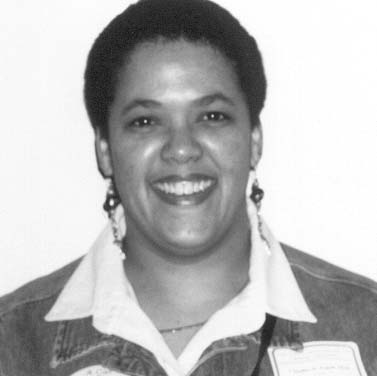
Dr. Claudia Fegan.

Single-payer health insurance is way to go
By Don Terry / May 14, 2009

An army of lawyers and lobbyists is gathering along the Potomac.

The upcoming battle in Washington over national health care reform is going to be fierce.

Billions of dollars are at stake.

There will be blood.

So, I called a doctor.

About 70 percent of the patients who Dr. Claudia Fegan treats at her South Side clinic don’t have health insurance — like the housekeeper whose breasts were purple and rock-hard from cancer.

“She was just waiting at home to die,” Fegan says. “She didn’t have insurance. She didn’t know what to do. Her daughter finally brought her in.”

Fegan, past president of Physicians for a National Health Program, has seen cases like that again and again. A parade of preventable misery. That’s why she supports a single-payer system that would essentially expand Medicare coverage to include every American, regardless of age.

Under such a plan, the government would pay the health-care bills of all Americans. Advocates say the somewhat higher taxes that result would be offset by massive savings in administrative costs rung up by the scores of private insurance companies that dominate the current system.

Yet health-care services would remain private. People would still get their choice of doctors and hospitals — which isn’t always permitted under some of today’s insurance plans.

A single-payer system is not socialism, as its wackier opponents contend. But the S-word has become the far right’s boogey- man of the moment.

No wonder. Big money is at stake. America spends more on health care than any country in the world, about $7,200 a year for every man, woman and child.

France, Germany and Switzerland rank higher than the U.S. in overall health care yet spend only about $3,400 per capita. Like most of the developed world, those countries have single-payer health-care systems.

Under a single-payer system, the private insurance industry would be largely out of the health-care business. That’s what’s keeping them up at night — and at the White House just the other day, when they made sketchy promises to help cut costs.

A single-payer system would do it for them. Fegan says the program would save the country $400 billion a year in administrative costs and other waste. That’s a lot of foreclosed homes and jobs that could be saved.

“The current system,” she says, “allows insurance companies to dictate who gets care and what kind of care they get. We shouldn’t allow the insurance companies to practice medicine without a license.”

Before Barack Obama went to Washington, he supported a single-payer system. He has since backed off that position.

He has proposed a somewhat vague public/private system that would keep the insurance companies in the game — and in the money. That’s the most politically feasible option, he contends.

He barely gives single-payer advocates the time of day and begrudgingly included them at a recent White House health-care reform conference.

“I’m sorry to say, like many before him, Obama is worried about the awesome clout of the insurance industry,” says Dr. Quentin Young, a Hyde Park neighbor of Obama and a physician for more than 50 years. “The fix is in.”

“The economy can’t tolerate this market-based system. There’s a growing awareness that single-payer is the way to go,” says Young, national coordinator for Physicians for a National Health Program.

Fegan says more pressure has to be put on Obama and other officials to support a single-payer plan. “We have to create a movement. . . . He’s still making politically feasible arguments instead of doing what he knows to be right. Issues of social justice are never politically feasible.”

Fegan makes a lot of sense.

Remember, electing a black man from the South Side of Chicago president wasn’t politically feasible, either.

Source / Chicago Sun Times

Thanks to Jeffrey Segal / The Rag Blog

Posted in RagBlog | Tagged , , | 2 Comments

Venezuela Seizes Non-Compliant Cargill Plant

Last March President Chavez nationalised Cargill’s rice plant.

Venezuela seizes US pasta company

Venezuelan officials accompanied by soldiers have seized “temporary” control of a US-owned pasta producer.

Venezuela says the plant, owned by the big US firm Cargill, had violated regulations on price controls intended to guarantee cheap food for the poor.

The move further increases President Hugo Chavez’s hold on the economy, after a series of recent take-overs of private and foreign-owned businesses.

They include a Cargill rice plant, and services companies in the oil industry.

Deputy Food Minister Rafael Coronado said the government would run the factory for 90 days, and would reassess the situation after that.

He said it has not been producing sufficient quantities of a type of pasta sold at cheap, government-established prices.

Price control

A rice mill owned by Cargill was taken over earlier this year, on the grounds that it was not producing rice at government-set prices.

Cargill had said it did not break the government’s pricing rules on rice because the mill did not produce the plain rice which is regulated.

Venezuela has set quotas and prices for 12 basic foods including rice, powdered milk, cheese and tomato sauce.

Under the measure, 80% of all rice produced must be basic white rice. The measure also includes 95% of all cooking oil, coffee and sugar.

Last week Mr Chavez sent troops to take over oil service companies including hundreds of supply boats, and two American owned gas facilities.

He nationalised Venezuela’s oil reserves, one of the largest in the Americas, two years ago.

Source / BBC News

Thanks to Deva Wood / The Rag Blog

Posted in RagBlog | Tagged , , , | Leave a comment

Lest We Forget the Horror That Is Iraq


Statistics
By Dr.Mohammed / May 15, 2009

Yesterday, I was chatting with my colleague about the situation in Iraq and specially regarding the social aspect…we both reached an agreement that we would witness a social crisis or a disaster…the Iraqis’ ethics and manner have really changed in the years after the war…so many people lost the good sides of the Iraqi manners.

And since he is much older than me, he said that after each war Iraqis losses some of their good manners, and I think he is right.

And today I received an email with some very interesting statistics that are gathered together…and I thought those statistics would be a great way to show my point.

1,000,000 widowed women according to a statistic published by the Iraqi woman’s ministry in 2008

4,000,000 orphan child (estimated by the ministry of planning if the average of the Iraqi family is 4-6 children)

2,500,000 killed (according to the statistics of the Iraqi ministry of health and the forensic medicine (morgues) till December 2008)

800,000 missing (according to the ministry of anterior till December 2008)

320,000 prisoners inside the USA and government jails (the USA announced the presence of 120,000 prisoners inside their jails)

4,500,000 refugees outside Iraq (according to the statistics of people who requested the new passport G)

2,500,000 displaced inside Iraq (according to the Iraqi ministry of immigration and refugees)

76,000 cases of HIV (according to the Iraqi ministry of health) (it was 114 cases before the war)

40% of the Iraqi people are under the line of poverty (according to the statistics of the Iraqi human rights’ ministry)

126 foreign security companies (registered at the Iraqi ministry of anterior)

43 armed militias (registered at the Iraqi ministry of anterior and ministry of defense)

Well, it’s really frightening. Just look well at the numbers of orphans, widowed, killed and missing and you would certainly know why I said where are going to have a social crisis.

May God be with you.

Source / Last of the Iraqis

The Rag Blog

Posted in RagBlog | Tagged , , , , | 2 Comments

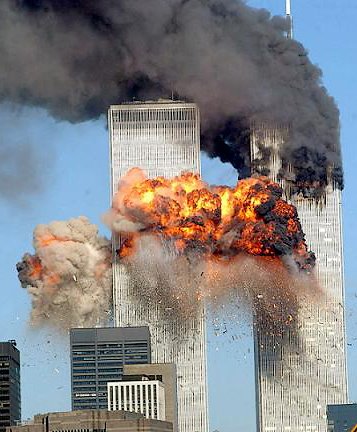
How Much of the Official 911 Story Is Really True?

With ongoing revelations like these, we cannot be surprised at the continuing influence the 9-11 truth folks have, and are gaining. My suspicious little mind begins to wonder if the REASON the authorities obfuscated and bullshitted from the get-go was not only to cover their own asses (the prime directive of bureaucrats and make-work artists the world over) but maybe… on some level… somewhere… just so people like Alex Jones would gain credibility….. And I’M ONE OF THE RATIONAL PEOPLE!!!

Mariann Wizard / The Rag Blog


Official story of 9/11 ‘almost entirely untrue’
By Inky99 / May 16, 2009

Now, before you get your panties in a bunch, this is about a new book, titled “The Ground Truth: The Story Behind America’s Defense on 9/11.”

And before you get all outraged (The FAQ! The FAQ!), here is the author of the book, John Farmer:

John Farmer served as Senior Counsel to the 9/11 Commission, where his areas of responsibility included assessing the national response to the terrorist attacks and evaluating the current state of national preparedness for terrorist attacks and natural disasters, he also served as attorney general of New Jersey (1999-2002), as chief counsel to Governor Whitman, and as a federal prosecutor. He recently served as a subject matter/rule of law expert on security to the special envoy for Middle East regional security. He is currently a partner of a New Jersey law form and an adjunct professor of national security law at Rutgers University Law School. His editorials and articles have appeared in The New York Times and elsewhere.

And my diary title are the words of Farmer’s publisher, Houghton Mifflin.

I wrote a couple of nights ago, here — “9/11 Commission Report — Info Obtained Through Torture” — as to how much of what was published in the 9/11 Commission report was obtained through torture, and is therefore completely without credibility.

Scandalous enough, right?

Well, it gets worse.

The above described James Farmer has just come out with his new book. It was released April 14. I have not read it (I just heard about it maybe ten minutes ago) and it is difficult to find any reviews of it by any mainstream book reviewers (gee, what a surprise!).

But according to the publisher, it’s quite a bombshell:

Description:

As of the 9/11 Commission’s one of the primary authors report, John Farmer is proud of his and his colleagues’ work. Yet he came away from the experience convinced that there was a further story to be told, one he was uniquely qualified to write.

Now that story can be told. Tape recordings, transcripts, and contemporaneous records that had been classified have since been declassified, and the inspector general’s investigations of government conduct have been completed. Drawing on his knowledge of those sources, as well as his years as an attorney in public and private practice, Farmer reconstructs the truth of what happened on that fateful day and the disastrous circumstances that allowed it: the institutionalized disconnect between what those on the ground knew and what those in power did. He reveals — terrifyingly and illuminatingly — the key moments in the years, months, weeks, and days that preceded the attacks, then descends almost in real time through the attacks themselves, revealing them as they have never before been seen.

Ultimately Farmer builds the inescapably convincing case that the official version not only is almost entirely untrue but serves to create a false impression of order and security. The ground truth that Farmer captures tells a very different story — a story that is doomed to be repeated unless the systemic failures he reveals are confronted and remedied.

So let me just repeat that to let it sink in …. The official story is “almost entirely untrue.” So what IS true? Hell if I know.

And check this out:

Farmer himself states that “at some level of the government, at some point in time … there was an agreement not to tell the truth about what happened.”

So let’s let that sink in …. there was an agreement not to tell the truth about what happened.

This link also develops the story further:

In August 2006, the Washington Post reported, “Some staff members and commissioners of the Sept. 11 panel concluded that the Pentagon’s initial story of how it reacted to the 2001 terrorist attacks may have been part of a deliberate effort to mislead the commission and the public rather than a reflection of the fog of events on that day, according to sources involved in the debate.”

The report revealed how the 10-member commission deeply suspected deception to the point where they considered referring the matter to the Justice Department for criminal investigation.

“We to this day don’t know why NORAD told us what they told us,” said Thomas H. Kean, the former New Jersey Republican governor who led the commission. “It was just so far from the truth. . . . It’s one of those loose ends that never got tied.

Wow. Let’s go to that Washington Post story now, shall we?

It’s 9/11 Panel Suspected Deception by Pentagon, from August 1, 2006:

For more than two years after the attacks, officials with NORAD and the FAA provided inaccurate information about the response to the hijackings in testimony and media appearances. Authorities suggested that U.S. air defenses had reacted quickly, that jets had been scrambled in response to the last two hijackings and that fighters were prepared to shoot down United Airlines Flight 93 if it threatened Washington.

In fact, the commission reported a year later, audiotapes from NORAD’s Northeast headquarters and other evidence showed clearly that the military never had any of the hijacked airliners in its sights and at one point chased a phantom aircraft — American Airlines Flight 11 — long after it had crashed into the World Trade Center.

Maj. Gen. Larry Arnold and Col. Alan Scott told the commission that NORAD had begun tracking United 93 at 9:16 a.m., but the commission determined that the airliner was not hijacked until 12 minutes later. The military was not aware of the flight until after it had crashed in Pennsylvania.

These and other discrepancies did not become clear until the commission, forced to use subpoenas, obtained audiotapes from the FAA and NORAD, officials said. The agencies’ reluctance to release the tapes — along with e-mails, erroneous public statements and other evidence — led some of the panel’s staff members and commissioners to believe that authorities sought to mislead the commission and the public about what happened on Sept. 11.

Farmer was quoted in this story as well. And according to the one review I did find:

Make no mistake, Farmer is not saying that 9/11 was an inside job …

I’m sure I’ll get flamed by a lot of people who don’t even read that quote. But whatever.

Like I said, I haven’t read the book myself, seeing as I just found out about it. But it sure looks interesting.

Sure would be nice to find out what really happened that day. And left wondering HOW such a monumentally huge fuck-up, at every level imaginable, both during the attacks, and after, and during the investigation that followed, could have possibly happened in this country. And why people were tortured to deliberately give false information that could be used in a report everybody knew was bogus anyway.

And why we are now involved in two wars, both unnecessary and without end …

And why we’re being lied to about it all, to this day.

Source / Daily Kos

Thanks to Mariann Wizard / The Rag Blog

Posted in RagBlog | Tagged , , , | 1 Comment

Cheney’s Chief Assassin to Head Afghan Effort

Here’s a little more of that blessed change from the Obama administration. The more things change, the more they look the same.

Richard Jehn / The Rag Blog

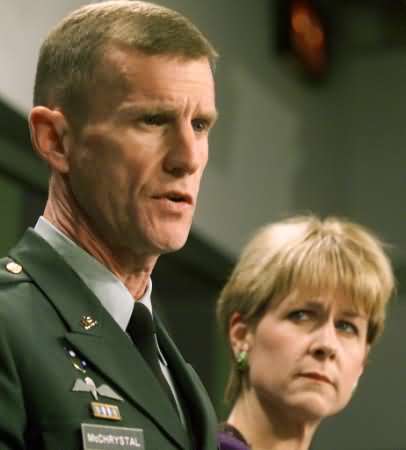
General Stanley McChrystal and Tory Clark during Gulf War II.

McChrystal was Cheney’s chief assassin
May 15, 2009

Seymour Hersh says that Dick Cheney headed a secret assassination wing and the head of the wing has just been named as the new commander in Afghanistan.

In an interview with GulfNews on May 12, 2009 Pulitzer prize-winning American investigative journalist, Seymour Hersh, said that there is a special unit called the Joint Special Operations Command (JSOC) that does high-value targeting of men that are known to be involved in anti-American activities, or are believed to be planning such activities.

According to Hersh, the Joint Special Operations Command (JSOC) was headed by former US vice president Dick Cheney and the former head of JSOC, Lieutenant General Stanley McChrystal who has just been named the new commander in charge of the war in Afghanistan.

McChrystal, a West Pointer who became a Green Beret not long after graduation, following a stint as a platoon leader in the 82nd Airborne Division, is currently director of Staff at the Pentagon, the executive to Joint staff to the Joint Chiefs of Staff.

Most of what General McChrystal has done over a 33-year career remains classified, including service between 2003 and 2008 as commander of the Joint Special Operations Command, an elite unit so clandestine that the Pentagon for years refused to acknowledge its existence.

On July 22, 2006, Human Rights Watch issued a report titled “No blood, no foul” about American torture practices at three facilities in Iraq. One of them was Camp Nama, which was operated by the Joint Special Operations Command (JSOC), under the direction of then Major General Stanley McChrystal.

McChrystal was officially based at Fort Bragg in North Carolina, but he was a frequent visitor to Camp Nama and other Special Forces bases in Iraq and Afghanistan where forces under his command were based.

An interrogator at Camp Nama known as Jeff described locking prisoners in shipping containers for 24 hours at a time in extreme heat; exposing them to extreme cold with periodic soaking in cold water; bombardment with bright lights and loud music; sleep deprivation; and severe beatings.

When he and other interrogators went to the colonel in charge and expressed concern that this kind of treatment was not legal, and that they might be investigated by the military’s Criminal Investigation Division or the International Committee of the Red Cross, the colonel told them he had “this directly from General McChrystal and the Pentagon that there’s no way that the Red Cross could get in.”

In the July 2, 2006 report, When Human Rights Watch asked whether the interrogator knew whether the colonel was receiving orders or pressures to use the abusive tactics, Jeff said that his understanding was that there was some form of pressure to use aggressive techniques coming from higher up the chain of command; however neither he nor other interrogators were briefed on the particular source.

“We really didn’t know too much about it. We knew that we were only like a few steps away in the chain of command from the Pentagon, but it was a little unclear, especially to the interrogators who weren’t really part of that task force.”

The interrogator said that he did see Gen. Stanley McChrystal, commander of US Joint Special Operations forces in Iraq, visiting the Nama facility on several occasions. “I saw him a couple of times. I know what he looks like.”

The International Committee of the Red Cross (ICRC) is the international body charged under international law with monitoring compliance with the Geneva Conventions, and it, therefore, has the right to inspect all facilities where people are detained in a country that is at war or under military occupation.

To hide prisoners or facilities from the ICRC or to deny access to them is a serious war crime. But many US prisons in Iraq have held “ghost” prisoners whose imprisonment has not been reported to the ICRC, and these “ghosts” have usually been precisely the ones subjected to the worst torture. Camp Nama, run by McChrystal’s JSOC, was an entire “ghost” facility.

The decision by Obama’s administration to appoint General McChrystal as the new commander in charge of the war in Afghanistan and retaining the military commission for the US war-on-terror detainees held in the Guantanamo Bay prison are the latest examples of the new US administration walking in Bush’s foot steps with regards to torture and denial of habeas corpus.

Source / Press TV

And then there’s this:

Caught in a Lie: US is Using White Phosphorus in Afghanistan as a Weapon
By Dave Lindorff / May 16, 2009

When doctors started reporting that some of the victims of the US bombing of several villages in Farah Province last week—an attack that left between 117 and 147 civilians dead, most of them women and children—were turning up with deep, sharp burns on their body that “looked like” they’d been caused by white phosphorus, the US military was quick to deny responsibility.

US officials—who initially denied that the US had even bombed any civilians in Farah despite overwhelming evidence to the contrary, including massive craters where houses had once stood—insisted that “no white phosphorus” was used in the attacks on several villages in Farah.

Official military policy on the use of white phosphorus is to only use the high-intensity, self-igniting material as a smoke screen during battles or to illuminate targets, not as a weapon against human beings—even enemy troops.

Now that policy, and the military’s blanket denial that phosphorus was used in Farah, have to be challenged, thanks to a recent report filed from a remote area of Afghanistan by a New York Times reporter.

C.J. Chivers, writing in the May 14 edition of the NY Times, in an article headlined “Korangal Memo: In Bleak Afghan Outpost, Troops Slog On,” wrote of how an embattled US Army unit in the Korangal Valley of Afghanistan, had come under attack following a morning memorial service for one of its members, Pfc. Richard Demeter, who had been killed the day before by a mine.

Chivers wrote:

“After the ceremony, the violence resumed. The soldiers detected a Taliban spotter on a ridge, which was pounded by mortars and then white phosphorus rounds from a 155 millimeter howitzer.

“What did the insurgents do? When the smoldering subsided, they attacked from exactly the same spot, shelling the outpost with 30-millimeter grenades and putting the soldiers on notice that the last display of firepower had little effect. The Americans escalated. An A-10 aircraft made several gun runs, then dropped a 500-pound bomb.”

It is clear from this passage that the military’s use of the phosphorus shells had not been for the officially sanctioned purpose of providing cover. The soldiers had no intention of climbing that hill to attack the spotter on the ridge themselves. They were trying to destroy him with shells and bombs. In fact, the last thing they would have wanted to do was provide the enemy spotter with a smoke cover, which would have helped him escape, and which also would have hidden him from the A-10 ground attack planes which had been called in to make gun runs at his position. Nor was this a case of illuminating the target. The incident, as Chivers reports, took place in broad daylight.

Clearly then, this article demonstrates that it is routine for US soldiers to call in phosphorus rounds to attack enemy soldiers, which is supposed to be against US military policy for this material. Whoever was manning the howitzer had a stock of the weapons on hand, and was ready to fire them.

The US initially flatly denied using white phosphorus weapons in Iraq, when reports first began to come out, including from US troops themselves, that they had been used extensively against insurgents defending the city of Fallujah against US Marines in November 2004. Under mounting pressure, the Pentagon first admitted that it had used the chemical in Fallujah but only “for illumination.” Later, the Pentagon added that it had used phosphorus as a “screen” to hide troops. But finally, in 2005, the Pentagon was forced to admit that it had also used white phosphorus directly as a weapon against enemy Iraqi troops in the assault on Fallujah, a city of 300,000 that still held many civilians.

The same pattern of denial and eventual admission regarding the use of this controversial and deadly weapon by US forces now seems to be repeating itself in Afghanistan.

It is odd that given the controversy over the use of white phosphorus weapons, which result in terrible wounds and eventual death as phosphorus particles burn their way down through flesh to the bone and sometimes straight onward through a body, leaving a charred channel of destruction, the New York Times’ Chivers—or more likely his editors back in New York?—ignored any mention of the issue while reporting on the use of the chemical rounds to attack a lone spotter on the ridge.

Given the current controversy over whether the US used white phosphorus shells or bombs in Falah Province only days before, it is hard to understand why the issue wasn’t mentioned in this particular article. Indeed, in the online version of the story, the word phosphorus is set as a hotlink to an article on the controversy over the battlefield use of phosphorus, indicating that at least someone at the Times has integrity and a good news sense.

As for the US government and the Pentagon, it is clear that they know the weapon is a vicious and controversial one, and that besides causing horrific and painful wounds, it is profoundly dangerous for innocent civilians, particularly when used in town or village settings.

It is bad enough that the US is using this weapon. It is even worse that it is forced to lie about it.

Surely if the goal of US policy is to win the hearts and minds of Afghanistan’s people, it shouldn’t be using a weapon that causes such terrible and indiscriminate wounds. Then again, maybe winning those hearts and minds isn’t really the goal. Maybe, as in the so-called “Pacification Program” applied by US forces in rural South Vietnam, the goal is to terrorize Afghan villagers in Taliban-dominated regions into rejecting the Taliban in their midst.

Requests for answers from the press office at the Pentagon, and at military headquarters in Afghanistan, regarding US policy on the use of white phosphorus, and on the specific use of the shells mentioned in the New York Times article were ignored.

[Dave Lindorff is a Philadelphia-based journalist and columnist. He is author of Marketplace Medicine: The Rise of the For-Profit Hospital Chains (BantamBooks, 1992), and his latest book “The Case for Impeachment” (St. Martin’s Press, 2006). His work is available at www.thiscantbehappening.net.]

Source / Common Dreams

The Rag Blog

Posted in RagBlog | Tagged , , | 1 Comment

SCIENCE / Next Generation Lighting on the Horizon

OLED light sources. The devices are flat – another reason they are desirable as light sources.

Flat-screen light bulbs switch on
By Jason Palmer / May 15, 2009

Researchers have demonstrated white, organic light-emitting diode (OLED) sources with the same efficiency as fluorescent light bulbs.

The result brings closer the prospect that OLEDs will be the flat-screen light sources of choice in the future.

The limited lifetime of the blue-emitting part of the devices means they survive for just hours, but new blue-emitting materials are on the horizon.

The results are published in the journal Nature.

There has been significant work in OLEDs in recent years, so that small displays and even televisions based on the technology are beginning to come to market.

Though much of the technology would be the same for lighting, the key word for light bulbs is efficiency – and OLEDs had not, until now, passed the efficiency benchmark set by fluorescent bulbs.

Two different types of organic polymers can be used in the devices: phosphorescent and fluorescent.

While fluorescent materials – the kind used in OLED displays and televisions – are significantly longer-lived, they are only one-fourth as efficient.

Recent research has therefore focused on optimising the efficiency and lifetime of devices based on phosphorescent materials.

“I think if you went back five or 10 years and said this is where we’re going to end up, there would’ve been all-round scepticism.” John de Mello, Imperial College London

Profit and loss

Now, Karl Leo of the Institute for Applied Photophysics in Dresden and his colleagues have made the first devices to outperform fluorescent bulbs in the efficiency stakes.

To do that they had to reduce the sources of loss – stages in which electrical energy goes in but does not exit in the form of usable light.

They did this first by optimising the design in the emitter layer, where losses happen because charge carriers recombine rather than dumping their energy into the polymers that give rise to coloured light.

Another significant source of loss happens at the edge of the diode structure where the light is actually produced; if it is not extracted efficiently, photons can bounce around inside it or be re-absorbed.

The team solved that problem by designing a particularly efficient, nano-structured interface to suck out more light than previous efforts.

“The combined result is that we achieve an efficiency which is for the first time higher than a fluorescent tube,” Professor Leo told BBC News.

Also, unlike previous white OLEDs, that efficiency does not decrease as the devices are turned up to produce higher-intensity light.

Very much like prior white OLEDs, however, the significant problem is that the devices degrade within an hour or two, because the polymers that produce the blue part of the light are unstable.

However, Professor Leo said that promising first results on stable, phosphorescent blue polymers are starting to emerge.

“I’m personally convinced that it may take a few years, but chemists will solve this problem and find materials which are stable enough,” he said.

Energy saving bulbs (AP). Fluorescent bulbs have long held the title of most efficient lighting.

Roll call

John de Mello, an optoelectronics expert at Imperial College London, described the work as “impressive”.

“I think if you went back five or 10 years and said this is where we’re going to end up, there would’ve been all-round scepticism,” he said.

“But they’ve shown that by taking existing materials and known methods, tweaking them a little bit, and addressing several issues in parallel you really can bring efficiencies up to parity with fluorescent tube lighting.”

Professor Leo suggested that by further improving the design of the part of the OLEDs that whisks the light out, efficiencies up to twice that of fluorescent bulbs could be reached.

For the moment, the devices are comparatively expensive because of the manufacturing methods the group employs.

But OLEDs, when the materials and designs are right, can be produced in so-called “roll-to-roll” manufacturing in which vast sheets are made, making them economical on a commercial scale.

“Commercially this is really an opportunity,” said Professor Leo.

“I’m pretty convinced that in a few years OLEDs will be a standard in buildings.”

Source / BBC News

Thanks to Deva Wood / The Rag Blog

Posted in RagBlog | Tagged , | 1 Comment

The Right Wing Vision of the Future

I received this unsolicited from someone identified as Linda Hunnicutt. I thought it suitable to share because it is such a fear-filled (and racist) image that the right insists on painting. Some of the statements are truly remarkable.

Richard Jehn / The Rag Blog


Buddy’s Brother

Forget about Conservatism vs Liberalism and look at some historically verifiable facts.

If the Conservative states seceded, there would be about 20 Liberal states and 30 Conservative states.

The Liberal states would comprise a half million square miles, and Conservative states would comprise two and a half million.

Their murder rate per 100,000 would be 13.2, and ours would be 2.1.

To pay taxes, their workers would have to work five months per year, and ours would have to work two.

Their industries would be over-taxed and over-regulated and ours would thrive.

Their public schools would indoctrinate, and ours would educate.

Their disruptive students would get counseled, and ours would get spanked.

Their murderers would get free room and board, and ours would get executed.

They’d welcome illegal aliens, and we’d deport them.

Their military would grow weak, and ours would grow strong.

They’d be energy-DEpendent, and we’d be energy INdependent.

History has shown us that the above would almost surely happen.

The following would PROBABLY happen. Most of their married mothers would have to work, and ours could stay home and raise children.

Their towns would have lots of pawn shops and porn shops, and ours would have lots of thriving businesses and churches.

They’d have mosques full of subversives, and we’d have churches full of patriots.

Their citizens would not have guns, and ours would. (Yamamoto, after Pearl Harbor, said, “You cannot invade America. There would be a gun behind every blade of grass.”)

SECESSION SOUNDS GOOD TO ME AT THIS POINT

Let the Liberals have their states and people that want a nanny state completely controlled can move to those states. Give us our Freedom and let us regain our self respect and live by the rules set forth in the Constitution.

Source / Freedom Is Not Dead

The Rag Blog

Posted in RagBlog | Tagged , , | 6 Comments

Afghanistan: Needless Civilian Death Continues

It is time to start acknowledging the lies of the Obama administration. They will close Guantanamo, but the military tribunals will resume shortly (they will be more “humane and effective”). They will stop the Iraq war, but the civilian murders in Iraq and Afghanistan especially, with concomitant lies about responsibility, will continue. They will reform health care, but only with the blessings of the insurance industry and big pharma. They will bring us change.

I have been blinded by Barack Obama’s “change.”

Richard Jehn / The Rag Blog

A 12-year-old recovered at a hospital in Herat, Afghanistan, from burns suffered during an American airstrike on her village. Photo: Joao Silva for The New York Times.

Afghan Villagers Describe Chaos of U.S. Strikes
By Carlotta Gall and Taimoor Shah / May 14, 2009

FARAH, Afghanistan — The number of civilians killed by the American airstrikes in Farah Province last week may never be fully known. But villagers, including two girls recovering from burn wounds, described devastation that officials and human rights workers are calling the worst episode of civilian casualties in eight years of war in Afghanistan.

“We were very nervous and afraid and my mother said, ‘Come quickly, we will go somewhere and we will be safe,’ ” said Tillah, 12, recounting from a hospital bed how women and children fled the bombing by taking refuge in a large compound, which was then hit.

The bombs were so powerful that people were ripped to shreds. Survivors said they collected only pieces of bodies. Several villagers said that they could not distinguish all of the dead and that they never found some of their relatives.

Government officials have accepted handwritten lists compiled by the villagers of 147 dead civilians. An independent Afghan human rights group said it had accounts from interviews of 117 dead. American officials say that even 100 is an exaggeration but have yet to issue their own count.

The calamity in the village of Granai, some 18 miles from here, illustrates in the grimmest terms the test for the Obama administration as it deploys more than 20,000 additional troops here and appoints a new commander, Lt. Gen. Stanley A. McChrystal, in search of a fresh approach to combat the tenacious Taliban insurgency.

It is bombings like this one that have turned many Afghans against the American-backed government and the foreign military presence. The events in Granai have raised sharp questions once again about the appropriateness and effectiveness of aerial bombardment in a guerrilla war in which the insurgents deliberately blend into the civilian population to fight and flee.

Taliban insurgents are well aware of the weakness and are making the most of it, American and Afghan officials say. Farah, a vast province in the west, contains only a smattering of foreign special forces and trainers who work among Afghan police and army units. Exploiting the thin spread of forces, the insurgents sought to seize control of Granai and provoke a fierce battle over the heads of the civilian population, Afghan and American officials say.

After hours of fighting and taking a number of casualties, the American forces called in their heaviest weapon, airstrikes, on at least three targets in the village.

The rapid mass burial of the victims and the continuing presence of insurgents in the area have hampered investigations. Journalists were advised against visiting Granai. Villagers were interviewed here in Farah, the provincial capital, where they came to collect compensation payments, and in the neighboring province of Herat, where some were taken for treatment.

Much of the villagers’ descriptions matched accounts given by the United States military spokesman, Col. Greg Julian, and the provincial police chief, Col. Abdul Ghafar Watandar. But they differed on one important point: whether the Taliban had already left Granai before the bombing began.

There was particular anger among the villagers that the bombing came after, they say, the Taliban had already left at dusk, and the fighting had subsided, so much so that men had gone to evening prayers at 7 p.m. and returned and were sitting down with their families for dinner.

The police chief said that sporadic fighting continued into the night and that the Taliban were probably in the village until 1 a.m.

Whatever the case, American planes bombed after 8 p.m. in several waves when most of the villagers thought the fighting was over; and whatever the actual number of casualties, it is clear from the villagers’ accounts that dozens of women and children were killed after taking cover.

One group went to a spacious compound owned by a man named Said Naeem, on the north side of the village, where the two girls were wounded. Only one woman and six children in the compound survived, one of their fathers said.

Another group gathered in the house of the village imam, or religious leader, Mullah Manan. That, too, was bombed, causing an equally large number of casualties, villagers said. Colonel Julian, the American military spokesman, said that the airstrikes hit houses from which the Taliban were firing. The enormous explosions left such devastation that villagers struggled to describe it. “There was someone’s legs, someone’s shoulders, someone’s hands,” said Said Jamal, an old white-bearded man with rheumy eyes, who lost two sons and a daughter. “The dead were so many.”

A joint government and United States military delegation visited Granai last week but came back sharply divided in their conclusions. The Afghan government said that 140 civilians were killed and 25 wounded, and that 12 houses were destroyed.
Skip to next paragraph
Multimedia
Recovering From the AirstrikesSlide Show
Recovering From the Airstrikes

The United States military said the Afghan numbers were far too high. This week, a senior military investigator, Brig. Gen. Raymond A. Thomas III of the United States Army, arrived to conduct an in-depth inquiry for the region’s overall military commander, Gen. David H. Petraeus.

An independent Afghan organization, Afghanistan Rights Monitor, said Wednesday that at least 117 civilians were killed — including 26 women and 61 children — drawing on interviews with 21 villagers and relatives of the dead. The group criticized both the Taliban for fighting among civilians, and the United States military for using excessive force.

The police chief, Colonel Watandar, confirmed much of the villagers’ accounts of the fighting. A large group of Taliban fighters, numbering about 400, they estimated, entered the village and took up positions at dawn on May 4. By midmorning, the Taliban began attacks on police posts on the main road, just yards from the village, they said.

The fighting raged all day. The police called in more police officers, Afghan Army units and an American quick reaction force from the town of Farah as reinforcements.

By midafternoon, the exchanges escalated sharply and moved deeper into the village. Taliban fighters were firing from the houses, and at one point a Marine unit called in airstrikes to allow Marines to go forward and rescue a wounded Afghan soldier, said Colonel Julian, the United States military spokesman. After that, Taliban fire dropped significantly, he said.

A villager named Multan said that one house along the southern edge of the village was hit by a bomb and that one Taliban fighter was killed there. But villagers did not report any civilian casualties until the American planes bombed that night.

Tillah, the 12-year-old girl, whose face bears the scars of a scorching blast, still twisted in pain from the burning in her leg at the provincial hospital in Herat, where she and other survivors were taken to a special burn unit. Her two sisters, Freshta, 5, and Nuria, 7, were barely visible under the bandages swathing their heads and limbs.

The three girls were visiting their aunt’s house with their mother when a plane bombed the nearby mosque, around 8 p.m., Tillah said. That is when they fled to Said Naeem’s seven-room home.

“When we reached there we felt safe and I fell asleep,” Tillah said. She said she heard the buzzing noise of a plane, but then only remembers coming to when someone pulled her from the rubble the next morning.

A second girl, Nazo, 9, beside her in another hospital bed, said she saw two red flashes in the courtyard that kicked up dust seconds before the explosion.

“I heard a loud explosion and the compound was burning and the roof fell in,” she said. Seven members of the family with her died, and four were wounded, her father, Said Malham, said.

“Why do they target the Taliban inside the village?” he asked wearily. “Why don’t they bomb them when they are outside the village?”

“The foreigners are guilty,” he continued. “Why don’t they bomb their targets, but instead they come and bomb our houses?”

[Eric Schmitt contributed reporting from Washington.]

Source / New York Times

The Rag Blog

Posted in RagBlog | Tagged , , , | Leave a comment

Life During Wartime : Ode to a Changed Mind

Political cartoon by Joshua Brown / Historians Against the War / The Rag Blog

Thanks to Dr. S.R. Keister /The Rag Blog

Posted in RagBlog | Tagged , , , , | 1 Comment

Who’s Minding the Store? $9 Trillion in Mystery Money!

This single class of mystery money isn’t a lot less than the entire US yearly GNP, commonly cited as being about $14 trillion.

By Roger Baker / The Rag Blog / May 15, 2009

In this video, we have the top Federal Reserve Inspector General, the federal watchdog responsible for big bank oversight. She is admitting under oath before Congress that she has no idea of just what to think about a mysterious $9 trillion worth of off-balance-sheet bank transactions. This is a figure cited by a Bloomberg article, and information that one would imagine a person in her position would soon know about. This single class of mystery money isn’t a lot less than the entire US yearly GNP, commonly cited as being about $14 trillion.

That being the case, her testimony describes federal oversight over some of the most important issues that any official could ever deal with, since it could put every US citizen on the hook for something close to $30,000 per person. But we have no idea of what these federally sanctioned taxpayer guarantees are actually propping up.
Given the current bottomless pit credit situation, the biggest investment banks probably don’t want anyone examining their total debt risk too closely. Meaning they are never going to permit the Federal inspectors they hire to operate very independently, without prior orders to audit or inspect.

Are the investment banks better termed ‘robber banks’, gorging themselves on public bailout guarantees because they’re too big to fail? If so, what happens when Obama finds out?

The Rag Blog

Posted in Rag Bloggers | Tagged , , , | Leave a comment

Sy Hersh : Children Sodomized at Abu Ghraib as Mothers Watched

Updated May 18, 2009

Journalist Seymour Hersh says there were ‘horrible things done to children of women prisoners, as the cameras run.’

Hersh gave a speech. . . to the ACLU making the charge that children were sodomized in front of women in the prison, and the Pentagon has tape of it.

By Geraldine Seale

[This story was posted by Alex Koppleman. It was originally published on Thursday, July 15, 2004.]

After Donald Rumsfeld testified on the Hill about Abu Ghraib in May, there was talk of more photos and video in the Pentagon’s custody more horrific than anything made public so far. “If these are released to the public, obviously it’s going to make matters worse,” Rumsfeld said. Since then, the Washington Post has disclosed some new details and images of abuse at the prison. But if Seymour Hersh is right, it all gets much worse.

Hersh gave a speech last week to the ACLU making the charge that children were sodomized in front of women in the prison, and the Pentagon has tape of it. The speech was first reported in a New York Sun story last week, which was in turn posted on Jim Romenesko’s media blog, and now EdCone.com and other blogs are linking to the video. We transcribed the critical section here (it starts at about 1:31:00 into the ACLU video.) At the start of the transcript here, you can see how Hersh was struggling over what he should say:

“Debating about it, ummm … Some of the worst things that happened you don’t know about, okay? Videos, um, there are women there. Some of you may have read that they were passing letters out, communications out to their men. This is at Abu Ghraib … The women were passing messages out saying ‘Please come and kill me, because of what’s happened’ and basically what happened is that those women who were arrested with young boys, children in cases that have been recorded. The boys were sodomized with the cameras rolling. And the worst above all of that is the soundtrack of the boys shrieking that your government has. They are in total terror. It’s going to come out.”

“It’s impossible to say to yourself how did we get there? Who are we? Who are these people that sent us there? When I did My Lai I was very troubled like anybody in his right mind would be about what happened. I ended up in something I wrote saying in the end I said that the people who did the killing were as much victims as the people they killed because of the scars they had, I can tell you some of the personal stories by some of the people who were in these units witnessed this. I can also tell you written complaints were made to the highest officers and so we’re dealing with a enormous massive amount of criminal wrongdoing that was covered up at the highest command out there and higher, and we have to get to it and we will. We will. You know there’s enough out there, they can’t (Applause). …. So it’s going to be an interesting election year.”

Notes from a similar speech Hersh gave in Chicago in June were posted on Brad DeLong’s blog. Rick Pearlstein, who watched the speech, wrote: “[Hersh] said that after he broke Abu Ghraib people are coming out of the woodwork to tell him this stuff. He said he had seen all the Abu Ghraib pictures. He said, ‘You haven’t begun to see evil…’ then trailed off. He said, ‘horrible things done to children of women prisoners, as the cameras run.’ He looked frightened.”

So, there are several questions here: Has Hersh actually seen the video he described to the ACLU, and why hasn’t he written about it yet? Will he be forced to elaborate in more public venues now that these two speeches are getting so much attention, at least in the blogosphere? And who else has seen the video, if it exists — will journalists see and report on it? did senators see these images when they had their closed-door sessions with the Abu Ghraib evidence? — and what is being done about it?

(Update: A reader brought to our attention that the rape of boys at Abu Ghraib has been mentioned in some news accounts of the prisoner abuse evidence. The Telegraph and other news organizations described “a videotape, apparently made by US personnel, is said to show Iraqi guards raping young boys.” The Guardian reported “formal statements by inmates published yesterday describe horrific treatment at the hands of guards, including the rape of a teenage Iraqi boy by an army translator.”)

Source / War Room / salon.com

Thanks to Harry Edwards / The Rag Blog

Posted in RagBlog | Tagged , , | 8 Comments

Singin’ on Thursday: Leonard Cohen, Poetic Master

Thank You Leonard Cohen
By Joel Hirschhorn / May 14, 2009

The other night I went to a Leonard Cohen concert. I have never seen a huge audience over a very broad age spectrum so completely enraptured, impassioned and wild over an entertainer, especially one that has never in a very long career been embraced by the mainstream music industry. At age 75 Cohen is absolutely remarkable in his stubborn individualism, his refusal to do anything but his own poetry and visions about love, hate, humankind and society. He still has unbounded charisma and sings with total commitment to his music and lyrics.

In the 1960s and 1970s I satisfied myself with every poem, novel and song by Cohen. He was for me, and I think millions of others, a profound influence on my intellectual development, personality and commitment to stay true to my own values and visions. He was pure genius. He remains so.

He always seemed a tortured soul working hard to find love and beauty in a very disappointing world. Maybe that is why so many of us have related to his music and words for over half a century. When you listen to his songs you want to savor every word. You often may want to cry because he is saying something that cuts to the very heart and soul of human existence.

If you have an opportunity you definitely should see him in concert, or at least get his DVD Leonard Cohen: Live in which pretty much is what I expect every one of his concerts is like these days. To see and hear this 75-year old legend work hard for several hours should give all of us the courage and will to stay enthusiastically alive for a long time. Among his many, many albums you can choose do not overlook Leonard Cohen: Ten New Songs, a number of which he performs in current concert tour. What is so impressive is that he has the talent to write great new songs.

What also struck me about Cohen in his older years is his humility and his gracious appreciation for his fans and supporters, as well as his repeated praise for the musicians and singers that accompany him. Like him, they are remarkable. He seems a little amazed that so many of us have stayed with him over so many decades and even that younger people have come to appreciate his individualistic genius. One thing is for sure, Leonard Cohen will live on forever through his songs, as he should. Everybody knows.

As Cohen sings, there ain’t no cure for love, and certainly not for the enduring love of his fans that still find his unique style both joyous and meaningful. He has always shared his personal emotions, thoughts and agony with us in ways few entertainers are able to do. For that we must all be eternally grateful.

Source / Search Warp

The Rag Blog

Posted in RagBlog | Tagged , , , | 2 Comments