Financial Meltdown : The 12 Corrupt Deals That Caused it

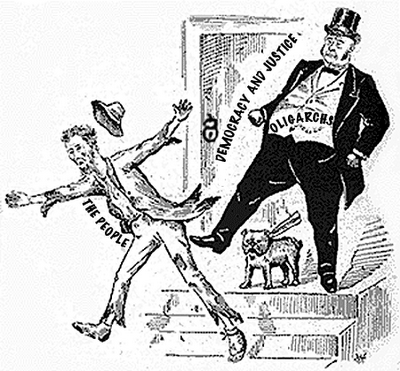
Graphic from The Energy Source.

$5 billion in lobbying for 12 corrupt deals caused the multi-trillion dollar financial meltdown. It got the finance industry lucrative legislative favors that paved the way for Wall Street’s devastating collapse.

By Robert Weissman / March 9, 2009

What can $5 billion buy in Washington?

Quite a lot.

Over the 1998-2008 period, the financial sector spent more than $5 billion on U.S. federal campaign contributions and lobbying expenditures.

This extraordinary investment paid off fabulously. Congress and executive agencies rolled back long-standing regulatory restraints, refused to impose new regulations on rapidly evolving and mushrooming areas of finance, and shunned calls to enforce rules still in place.

“Sold Out: How Wall Street and Washington Betrayed America,” a report released by Essential Information and the Consumer Education Foundation (and which I co-authored), details a dozen crucial deregulatory moves over the last decade — each a direct response to heavy lobbying from Wall Street and the broader financial sector, as the report details. (The report is available here.) Combined, these deregulatory moves helped pave the way for the current financial meltdown.

Here are 12 deregulatory steps to financial meltdown:

1. The repeal of Glass-Steagall

The Financial Services Modernization Act of 1999 formally repealed the Glass-Steagall Act of 1933 and related rules, which prohibited banks from offering investment, commercial banking, and insurance services. In 1998, Citibank and Travelers Group merged on the expectation that Glass-Steagall would be repealed. Then they set out, successfully, to make it so. The subsequent result was the infusion of the investment bank speculative culture into the world of commercial banking. The 1999 repeal of Glass-Steagall helped create the conditions in which banks invested monies from checking and savings accounts into creative financial instruments such as mortgage-backed securities and credit default swaps, investment gambles that led many of the banks to ruin and rocked the financial markets in 2008.

2. Off-the-books accounting for banks

Holding assets off the balance sheet generally allows companies to avoid disclosing “toxic” or money-losing assets to investors in order to make the company appear more valuable than it is. Accounting rules — lobbied for by big banks — permitted the accounting fictions that continue to obscure banks’ actual condition.

3. CFTC blocked from regulating derivatives

Financial derivatives are unregulated. By all accounts this has been a disaster, as Warren Buffett’s warning that they represent “weapons of mass financial destruction” has proven prescient — they have amplified the financial crisis far beyond the unavoidable troubles connected to the popping of the housing bubble. During the Clinton administration, the Commodity Futures Trading Commission (CFTC) sought to exert regulatory control over financial derivatives, but the agency was quashed by opposition from Robert Rubin and Fed Chair Alan Greenspan.

4. Formal financial derivative deregulation: the Commodities Futures Modernization Act

The deregulation — or non-regulation — of financial derivatives was sealed in 2000, with the Commodities Futures Modernization Act. Its passage orchestrated by the industry-friendly Senator Phil Gramm, the Act prohibits the CFTC from regulating financial derivatives.

5. SEC removes capital limits on investment banks and the voluntary regulation regime

In 1975, the Securities and Exchange Commission (SEC) promulgated a rule requiring investment banks to maintain a debt to-net capital ratio of less than 15 to 1. In simpler terms, this limited the amount of borrowed money the investment banks could use. In 2004, however, the SEC succumbed to a push from the big investment banks — led by Goldman Sachs, and its then-chair, Henry Paulson — and authorized investment banks to develop net capital requirements based on their own risk assessment models. With this new freedom, investment banks pushed ratios to as high as 40 to 1. This super-leverage not only made the investment banks more vulnerable when the housing bubble popped, it enabled the banks to create a more tangled mess of derivative investments — so that their individual failures, or the potential of failure, became systemic crises.

6. Basel II weakening of capital reserve requirements for banks

Rules adopted by global bank regulators — known as Basel II, and heavily influenced by the banks themselves — would let commercial banks rely on their own internal risk-assessment models (exactly the same approach as the SEC took for investment banks). Luckily, technical challenges and intra-industry disputes about Basel II have delayed implementation — hopefully permanently — of the regulatory scheme.

7. No predatory lending enforcement

Even in a deregulated environment, the banking regulators retained authority to crack down on predatory lending abuses. Such enforcement activity would have protected homeowners, and lessened though not prevented the current financial crisis. But the regulators sat on their hands. The Federal Reserve took three formal actions against subprime lenders from 2002 to 2007. The Office of Comptroller of the Currency, which has authority over almost 1,800 banks, took three consumer-protection enforcement actions from 2004 to 2006.

8. Federal preemption of state enforcement against predatory lending

When the states sought to fill the vacuum created by federal non-enforcement of consumer protection laws against predatory lenders, the Feds — responding to commercial bank petitions — jumped to attention to stop them. The Office of the Comptroller of the Currency and the Office of Thrift Supervision each prohibited states from enforcing consumer protection rules against nationally chartered banks.

9. Blocking the courthouse doors: Assignee Liability Escape

Under the doctrine of “assignee liability,” anyone profiting from predatory lending practices should be held financially accountable, including Wall Street investors who bought bundles of mortgages (even if the investors had no role in abuses committed by mortgage originators). With some limited exceptions, however, assignee liability does not apply to mortgage loans, however. Representative Bob Ney — a great friend of financial interests, and who subsequently went to prison in connection with the Abramoff scandal — worked hard, and successfully, to ensure this effective immunity was maintained.

10. Fannie and Freddie enter subprime

At the peak of the housing boom, Fannie Mae and Freddie Mac were dominant purchasers in the subprime secondary market. The Government-Sponsored Enterprises were followers, not leaders, but they did end up taking on substantial subprime assets — at least $57 billion. The purchase of subprime assets was a break from prior practice, justified by theories of expanded access to homeownership for low-income families and rationalized by mathematical models allegedly able to identify and assess risk to newer levels of precision. In fact, the motivation was the for-profit nature of the institutions and their particular executive incentive schemes. Massive lobbying — including especially but not only of Democratic friends of the institutions — enabled them to divert from their traditional exclusive focus on prime loans.

Fannie and Freddie are not responsible for the financial crisis. They are responsible for their own demise, and the resultant massive taxpayer liability.

11. Merger mania

The effective abandonment of antitrust and related regulatory principles over the last two decades has enabled a remarkable concentration in the banking sector, even in advance of recent moves to combine firms as a means to preserve the functioning of the financial system. The megabanks achieved too-big-to-fail status. While this should have meant they be treated as public utilities requiring heightened regulation and risk control, other deregulatory maneuvers (including repeal of Glass-Steagall) enabled them to combine size, explicit and implicit federal guarantees, and reckless high-risk investments.

12. Credit rating agency failure

With Wall Street packaging mortgage loans into pools of securitized assets and then slicing them into tranches, the resultant financial instruments were attractive to many buyers because they promised high returns. But pension funds and other investors could only enter the game if the securities were highly rated.

The credit rating agencies enabled these investors to enter the game, by attaching high ratings to securities that actually were high risk — as subsequent events have revealed. The credit rating agencies have a bias to offering favorable ratings to new instruments because of their complex relationships with issuers, and their desire to maintain and obtain other business dealings with issuers.

This institutional failure and conflict of interest might and should have been forestalled by the SEC, but the Credit Rating Agencies Reform Act of 2006 gave the SEC insufficient oversight authority. In fact, the SEC must give an approval rating to credit ratings agencies if they are adhering to their own standards — even if the SEC knows those standards to be flawed.

From a financial regulatory standpoint, what should be done going forward? The first step is certainly to undo what Wall Street has wrought. More in future columns on an affirmative agenda to restrain the financial sector.

None of this will be easy, however. Wall Street may be disgraced, but it is not prostrate. Financial sector lobbyists continue to roam the halls of Congress, former Wall Street executives have high positions in the Obama administration, and financial sector propagandists continue to warn of the dangers of interfering with “financial innovation.”

Source / Multinational Monitor / AlterNet

Thanks to David Hamilton / The Rag Blog

Posted in RagBlog | Tagged , , , , , | 1 Comment

Cheap Labor: The Common Thread of the South


Southern Oligarchy and the Labor Unions
By Joseph B. Atkins / February 2009

OXFORD, Miss. — Cheap labor. Even more than race, it’s the thread that connects all of Southern history—from the ante-bellum South of John C. Calhoun and Jefferson Davis to Tennessee’s Bob Corker, Alabama’s Richard Shelby and the other anti-union Southerners in today’s U.S. Senate.

It’s at the epicenter of a sad class divide between a desperate, poorly educated workforce and a demagogic oligarchy, and it has been a demarcation line stronger than the Mason-Dixon in separating the region from the rest of the nation.

The recent spectacle of Corker, Shelby and Mitch McConnell of Kentucky leading the GOP attack on the proposed $14 billion loan to the domestic auto industry—with 11 other Southern senators marching dutifully behind—made it crystal clear. The heart of Southern conservatism is the preservation of a status quo that serves elite interests.

Expect these same senators and their colleagues in the US House to wage a similar war in the coming months against the proposed Employee Free Choice Act authorizing so-called “card check” union elections nationwide.

“Dinosaurs,” Shelby of Alabama called General Motors, Ford, and Chrysler as he maneuvered to bolster the nonunion Mercedes-Benz, Hyundai and other foreign-owned plants in his home state by sabotaging as many as three million jobs nationwide.

Corker, a multi-millionaire who won his seat in a mud-slinging, race-tinged election in 2006, was fairly transparent in his goal to expunge what he considers the real evil in the Big Three and US industry in general: unions. When the concession-weary United Auto Workers balked at GOP demands for a near-immediate reduction in worker wages and benefits, Corker urged President Bush to force-feed wage cuts to UAW workers in any White House-sponsored bailout.

If Shelby, Corker, and McConnell figured they were helping the Japanese, German and Korean-owned plants in their home states, they were seriously misguided. The failure of the domestic auto industry would inflict a deep wound on the same supplier-dealer network that the foreign plants use. The already existing woes of the foreign-owned industry were clearly demonstrated in December when Toyota announced its decision to put on indefinite hold the opening of its $1.3 billion plant near Blue Springs in northeast Mississippi.

The Southern Republicans are full of contradictions. Downright hypocrisy might be a better description. Shelby staunchly opposes universal health care—a major factor in the Big Three’s financial troubles since they operate company plans—yet the foreign automakers he defends benefit greatly from the government-run health care programs in their countries.

These same senators gave their blessing to hundreds of millions of dollars in subsidies to the foreign automakers to open plants in their states, yet they were willing to let the US auto industry fall into bankruptcy.

In their zeal to destroy unions and their hard-fought wage-and-benefits packages, the Southern senators could not care less that workers in their home states are among the lowest paid in the nation. Ever wonder why the South remains the nation’s poorest region despite generations of seniority-laden senators and representatives in Congress?

Why weren’t these same senators protesting the high salaries in the financial sector when the Congress approved the $700 billion bailout of Wall Street? Why pick on blue-collar workers at the Big Three who last year agreed to huge concessions expected to save the companies an estimated $4 billion a year by 2010? These concessions have already helped lower union wages to non-union levels at some auto plants.

The idea of working people joining together to have a united voice across the table from management scares most Southern politicians to death. After all, they go to the same country clubs as management. When Mississippi Republican Roger Wicker warned of Democratic opponent Ronnie Musgrove’s ties to the “Big Labor Bosses” in this year’s US Senate race, he was protecting the “Big Corporate Bosses” who are his benefactors.

The South today may be more racially enlightened than ever in its history. However, it is still a society in which the ruling class—the chambers of commerce that have taken over from yesterday’s plantation owners and textile barons—uses politics to maintain control over a vast, jobs-hungry workforce. After the oligarchy lost its war for slavery—the cheapest labor of all—it secured the next best thing in Jim Crow and the indentured servitude known as sharecropping and tenant farming. It still sees cheap, pliable, docile labor as the linchpin of the Southern economy.

In 1948, when the so-called “Dixiecrats” rebelled against the national Democratic Party, Strom Thurmond of South Carolina declared war on “the radicals, subversives, and the Reds” who want to upset the Southern way of life.

Seven years later, Mississippi’s political godfather, the late US Sen. James O. Eastland, told other prominent Southern pols during a meeting at the Peabody Hotel in Memphis that the South will “fight the CIO” (Congress of Industrial Organizations) and unionism with just as much vehemence and determination as it fights racial integration.

Eastland, Thurmond and their friends lost the integration battle. Their successors are still fighting the other enemy.

[Joseph B. Atkins is a veteran journalist, professor of journalism at the University of Mississippi and author of Covering for the Bosses: Labor and the Southern Press (University Press of Mississippi, 2008), a book that details the Southern labor movement and its treatment in the press. A version of this column appeared in the Hattiesburg (Miss.) American and the Jackson (Miss.) Clarion-Ledger.]

Source / The Progressive Populist

Thanks to Jeffrey Segal / The Rag Blog

Posted in RagBlog | Tagged , , | 1 Comment

Hawai‘i : Runaway Technology Vs. the Good Food Revolution

Hawaiian taro patch. Photo by Kirk Lee Aeder / HVCB Image Library.

The Good Food Revolution

On Kaua‘i, too, there are people engaged in remembering and reconnecting. Unlike the dry west side of the island, the North Shore is a lush place of almost heartbreaking beauty with a vibrant, racially mixed local culture.

By Claire Hope Cummings / March 9, 2009

The lush landscape of Hawai‘i once offered abundant food. What can these islands teach us about food and sufficiency?

The island of Kaua‘i is one of the most beautiful and fragile places on earth. From above, it looks like a vibrant green flower, lush and pulsing with life, floating in the middle of the Pacific Ocean. The Hawaiian tourist industry calls it “The Garden Isle,” comparing it to the Garden of Eden. The image of Hawai‘i has always been sold as a “paradise.” But there is another side to life on this island, one that visitors rarely see.

The west side of this tiny island is home to the U.S. military’s Pacific Missile Range and testing grounds, part of the longstanding military occupation of the Hawaiian islands, and to the headquarters of giant agrochemical corporations Syngenta and Dupont. These corporations test and produce genetically modified crops on former sugar plantation lands here and throughout Hawai‘i, along with toxic herbicides, insecticides, and fertilizers. It is the very worst of America’s “agrochemical military industrial complex,” imposed on the ancient homelands of a rich traditional farming and fishing culture, in the midst of some of the world’s most precious biodiversity.

When I visited the west side of Kaua‘i in 2006, the local newspapers were full of reports of children from Waimea Canyon School who had been sickened by chemicals used on nearby test plots. As many as 60 people were affected, including teachers and staff. It happened again in 2007, with school children suffering nausea, headaches, and dizziness. In 2008, for the third time in three years, chemicals being tested for industrial agriculture sickened children and adults and sent them to clinics and the emergency room with tears in their eyes, holding their heads in their hands, or vomiting. The corporations responsible for the tests deny any role in the incidences. But the open air testing of chemicals and genetically modified crops is a now a persistent worry for people living in this small rural community. Local activists have suggested that the welcome sign at the Kaua‘i airport be changed to warn tourists of what is going on there: “Welcome to the Mutant Garden Island.” Instead of being a source of health and well-being for the land and people, the American system of industrial agriculture has become a source of problematic food and even fear.

The connection to the military is the key to understanding how this tragedy came about. Most of the toxic chemicals used in agriculture came from the implements of war, such as nerve poisons and defoliants developed during World War II. And our military has been repeatedly used to impose our system of industrial agriculture on other lands, depriving traditional farmers of their livelihoods and redirecting their natural resources to the use of U.S. business interests. American plantation owners used the military to force the monarchy of Hawai‘i out of power. The takeover of Hawai‘i—the imposition of plantation agriculture on Hawai‘i’s traditional system and the conversion of the Hawaiian people to a Western lifestyle—is a case history and a warning for all of us concerned about the future of food. We are facing an urgent problem: Given global warming, growing populations, and declining natural resources, how will we feed ourselves?

Before colonization, Hawaiians had a sophisticated system of land, water, and ocean resource use that fed populations equal to or even greater than those on several of the islands today (excluding the urban populations of O‘ahu). Now, residents of Hawai‘i import 85 percent of their food. The descendants of the first Hawaiians, like most native peoples who have been colonized, suffer from some of the worst poverty and diet-related health problems of anyone living in the United States.

The food being imported into Hawai‘i is produced, processed, packaged, and transported using enormous amounts of fossil fuels. By one measure, the current U.S. food system uses 10 times more energy than it produces in the form of food calories. Even if you like industrial agriculture, its built-in obsolescence is a problem. When oil production peaks, and prices rise again, as they inevitably must, food in Hawai‘i will become unaffordable. What will happen when the gas pumps and grocery store shelves are empty? This is a question all of us will face, sooner or later, since we are all on what David Brower called “Earth Island,” a small planet floating in a sea of space.

A Storied Land

Mythologists like Joseph Campbell tell us that many creation myths are stories about how a food plant or animal came to people, usually as a gift from their creator. But invariably, these gifts came with instructions about maintaining respect for and reciprocity with the sources of one’s food, to assure its continuing productivity. These stories are central to the formation of a culture’s core values. And they affect us now, not just in how we feed ourselves, but in how we relate to the natural world and each other.

A Hopi creation story, as told by Frank Waters in The Book of the Hopi, is a good example, illustrating the values inherent in the choices we make. As Waters explains, the continuity of the Hopi people comes from these values and the way corn forms the sacred center of their lives, kept alive in ritual and practices to this day.

Since the beginning of their existence, the Hopi have emerged through several worlds. Whenever they were overwhelmed by wickedness or corruption, their world would be destroyed. Later, they would emerge into the next world. At each emergence, the Creator would give them corn for sustenance. When the people entered the Fourth World, the one we are living in now, the Creator decided to find out how much greed and ignorance there still was among these humans. Many ears of corn were laid out of all different shapes, sizes, and colors. The people had divided into many races, and each was told to choose, according to its wisdom, the corn they would take with them into the Fourth World. They rushed forward and took different corn ears—long ears, fat ears, and ears of different colors. The Hopi held back and waited. All that was left for them was the smallest ear. But, they said, it was like “the original humble ear given them on the First World.” They recognized that this corn would be the best one to help them survive the harsh desert climate where they now lived.

Traditional people worldwide have developed long-standing symbiotic relationships among themselves, their homelands, and their foods. And their farming practices are intimately adapted to the places they inhabit. All over the Americas, people developed corn varieties that were finely tuned to local conditions. According to Boone Hallberg, a botanist and one of the world’s experts on corn, some of these varieties were drought-resistant; some withstood wind, crowding, local pests, and different soils; and some even fixed their own nitrogen. These plants are evidence of an incredible genius at work in the reciprocal relationships among people, plants, and place. New Mexican activist Miguel Santistevan describes how, in the Pueblos, each type of corn “drank” from its own river, producing seed that was specific to its own watershed.

One of the world’s most influential creation stories comes from the Book of Genesis in the Bible. It is often told incorrectly, without the warnings and prohibitions that are in the story—as if the children of Adam and Eve were entitled to control creation. Whether you read this story literally or metaphorically, it has had a powerful impact on Western thought. Many scholars believe that our current environmental conditions came about because our society interpreted this story as a license to dominate nature. When told this way, the development of our military-industrial system of agriculture makes sense. We can see the long arc of history, the search-and-destroy missions throughout the ages, including manifest destiny and the conquest of native peoples, their lands, and their well-developed integrated food systems.

And the good, no, the really wonderful news, is that all over the world, people are engaged in relearning traditional ways, weaving them into new life-enhancing technologies, and making essential ecological and economic reconnections.

We can see the gradual and painful dismembering of North America. Europeans brought with them a fragmented system of agriculture, breaking the sod, fencing, and buying and selling parcels of land. Piece by piece, they went about destroying the natural systems that gave this land its enormous fertility. Their ancestors had deforested many European countries, and they continued seeking sustenance by taking more than was returned, depleting the resources they used, and then moving on. After using up the larger landscapes, they now have turned to smaller frontiers—genes and molecules.

Genetic engineering in agriculture was developed as a way to squeeze more from corn, wheat, and rice, turning these plants into little machines. We demanded that these plants put out more and more for us, and pumped them full of chemicals and hormones. Now, almost 80 percent of corn grown in the United States is genetically modified. The rest is contaminated with GMOs, and the parent seed lines of corn are privately owned by the agrochemical companies. If we cared to learn, corn would have been able to teach us about generosity, adaptability, and resiliency. But rather than learn from nature, we still believe that our limited human imagination is sufficient and that we can solve systemic problems in mechanistic ways.

This approach is fundamentally flawed. Production-based solutions to hunger have failed miserably. And yet the urge to control nature seems unbounded. Farmers at the beginning of the 20th century could make a decent living. They saved and exchanged seeds, and bred their own crop varieties.

Then, in the 1920s and 1930s, a growing private seed industry used the new medium of radio advertising to heavily promote commercial hybrid seeds as the way to increase production. Hybrids can be bred to increase vigor, but they do not produce seed that is “true,” meaning that each year new hybrid seeds have to be purchased and planted. On-farm seed saving and plant breeding began to go out of fashion. Not content with just a good share of the seed market, seed companies began pushing for changes to the law, and by the end of the 20th century, farm-based seed saving and plant breeding ended. Now, sexually reproducing, living plants can be patented—a moral, biological, and legal outrage.

American commodity agriculture has become a bloated industrial machine dependent on chemical inputs and government subsidies to survive. Commodity farming is not about food for people. It’s an extractive industry, often compared to mining. It mines the soil and pollutes the water and creates mountains and rivers of waste. Soil regenerates on a slow natural timescale, about one inch of topsoil in every 500 years. The United States is losing topsoil 13 times faster than it can be replaced, costing the nation an estimated $37.6 billion in productivity losses each year. According to a recent U.S. Geological Survey, the one billion pounds of pesticides that American farmers use every year have contaminated almost all of the nation’s streams and rivers, as well as the fish living in them, with toxic cancer-causing chemicals. Fertilizers pour off farms into the Mississippi watershed, stimulating algae blooms in the Gulf of Mexico and creating a “dead zone” where nothing lives.

If science had remained publicly funded and in the hands of land grant universities committed to conducting research in the public interest, production-based innovations might have added another useful tool to farm technology. Instead, private commercial interests hijacked the research agenda and privatized its technologies. Corporations and a few foundations took over the social mechanisms for problem solving, leaving us with only for-profit solutions in the form of products. Government not only deregulated many toxic technologies; it abdicated its responsibility to protect our health and safety.

There are no brakes on this runaway technology train. The continual expansion of corporate power poses even greater looming dangers. Biotechnology, especially as used in agriculture, has been harmful enough, but nanotechnology and synthetic biology, now being developed for biofuels, promise to do far more harm than good.

Industrial agriculture contributes almost 17 percent of all greenhouse gases, along with accelerating deforestation, desertification, and profligate water use. A study released in January this year in the journal Science predicts that half of the world’s population will face food shortages by the end of this century as rising temperatures, drought, and loss of soil moisture depress crop production. Who, indeed, will be feeding us then? Monsanto, with its patented “climate-ready” crops, or the organic farmer who sells at your local farmers market?

As a Native American friend of mine used to say, “Here’s a little bit of native wisdom: If we don’t change direction pretty soon, we’ll end up right where we’ve been headed!”

Severing and Remembering

Another way to look at this rather dismal story is this: At every step of the way, we have disconnected and dismembered the intricate relationships that form the web of life. Recombinant DNA technology, for instance, cuts a genome, inserts foreign material, and severs the original evolutionary lineage of that organism.

The solution to all this severing and disconnection is re-membering, meaning “to put back together.” This is the fundamental lesson traditional peoples keep trying to teach us. They often say that they are minding the rituals that hold the world together. They say that if we want to save the places, peoples, and plants we love, we have to remember their stories. They know that the answers we seek are already available, once we begin reweaving the social and biological webs that sustain us.

Independent science supports this interconnected approach to solving problems. The biotechnology industry asked several major international institutions like the U.N. and the World Bank to study how best to feed the world. After a four-year global study, 400 experts prepared a peer-reviewed report, adopted by 60 countries, known as The International Assessment of Agricultural Knowledge, Science and Technology for Development. Ironically, the report said biotechnology cannot feed the world. There is now a consensus in government and the scientific community that small-scale farming, traditional knowledge, and a focus on local economic vitality and adaptable agro-ecological methods are the optimal way forward.

And the good, no, the really wonderful news, is that all over the world, people are engaged in relearning traditional ways, weaving them into new life-enhancing technologies, and making essential ecological and economic reconnections. Young farmers, urban activists, cooks and chefs, teachers and students, community organizers, and faith groups are bringing local organic food, seed saving, and sustainable work projects into the mix. The values of the natural world—diversity, integrity, adaptability, and resiliency—are reemerging and re-entering the cultural exchange, just when we need them the most.

On Kaua‘i, too, there are people engaged in remembering and reconnecting. Unlike the dry west side of the island, the North Shore is a lush place of almost heartbreaking beauty with a vibrant, racially mixed local culture. There, the Waipa Foundation hosts a weekly farmers market selling organic local food to support its work reviving traditional foodways. Like many Native Hawaiian organizations, they have a Hawaiian-language immersion school that integrates traditional food, farming, and fishing into their curriculum. They connect local farmers with schools, which are getting young people out of the classroom and into the mud of the taro patch. Activists on the island and throughout Hawai‘i are working toward food security. They achieved a ban on genetically modified coffee and are bringing back the original “gift economy” of exchanging traditional varieties of taro.

Just up the road from the Waipa farmers market, Limahuli Garden is restoring the traditional Hawaiian land-use system called an ahupua‘a. Kawika Winter, an engaging young ethnobotanist, Native Hawaiian, and the garden’s director, says the name lima huli means “turned hand.” It refers to a Hawaiian proverb which, roughly translated, says, “If your hand is turned up, you will be hungry; if your hand is turned down, toward the soil, your belly will be full.” The up-turned hand, Winter says, is not a positive symbol for Hawaiians. It is a sign of supplication. The down-turned hand, however, represents the hard work of cultivating the land.

Winter explains that the work they are doing there is all about remembering that the land is our ancestor. “We know that the way to get through difficult times is to use what was left to us—our land and our traditional knowledge. That will carry us into the future,” he says. “This is also our gift to the world.”

[Claire Hope Cummings wrote this article as part of Food for Everyone, the Spring 2009 issue of YES! Magazine. Claire is an environmental lawyer, journalist, and the author of Uncertain Peril: Genetic Engineering and the Future of Seeds (Beacon Press, 2008).]

Source / Yes! Magazine

The Rag Blog

Posted in RagBlog | Tagged , , , , , | 3 Comments

Tom Hayden : Congressional Hearings on Afghanistan and Pakistan a Must


Proposed Focus of Congressional Hearings on Afghanistan and Pakistan

As Obama inherits Bush’s wars, this is an important moment for Congress to assert a new role in critical oversight and not repeat the dysfunctional deadlocks between the executive and legislative branches which led to so much secrecy, false accounting and mismanagement in Iraq.

By Tom Hayden / March 9, 2009

President Obama is about to complete his Afghanistan review, and already has proposed $144 billion for Iraq/Afghanistan in FY2009, $130 in FY2010, and $50 billion as a place marker for FY2011 and beyond. These figures are optimistic and not yet broken down between Iraq and Afghanistan/Pakistan. But Afghanistan funding from 2001 into 2009 has been $173 billion overall, according to the Congressional Research Service, and is certain to rise.
Two facts loom: if Obama sinks into a quagmire in Afghanistan/Pakistan, at the current rate of spending these wars will cost over one trillion in taxpayer dollars -direct and indirect- at the end of his first term. If American casualties continue increasing, they could be approaching a death toll of one thousand at the end of that term as well.

As Obama inherits Bush’s wars, this is an important moment for Congress to assert a new role in critical oversight and not repeat the dysfunctional deadlocks between the executive and legislative branches which led to so much secrecy, false accounting and mismanagement in Iraq. If the current Congress actively pursues oversight and insists on transparency and accountability, the media, interested public and peace movement will have the information necessary to play their critical functions in wartime.

Already there are some signs of a greater openness in the Obama era with the Justice Department’s disclosure of the Bush-era memos on presidential powers, permission for photo coverage of returning military coffins, and the promise to include war costs in the regular budgetary process. These are important steps away from the past. But make no mistake, the administration is expanding our military commitments in both Afghanistan and Pakistan without President Obama having completed his policy review. While few in Congress are ready to oppose the president over Afghanistan and Pakistan, now is the time for an independent review before the escalation deepens any further.

Congressional hearings are urgently needed on at least the following:

[1] EXIT STRATEGY AND TIMELINES. What goals will the administration set for Afghanistan and Pakistan, what measurements of progress will the administration employ, and who will monitor that progress? In the case of Afghanistan, the administration appears to be setting diplomatic/political goals, using military means; in Pakistan, the administration is setting certain military goals, especially the defeat of al-Qaeda, as well as diplomatic/political ones. Under the Bush presidency, Congress demanded exit strategies, timelines, and regular progress reports [benchmark assessment reports]. This Congress should require this administration to accurately measure progress towards its goals and be held accountable for that progress. Over time, the Congress will be divided between those who oppose and those who support the wars, but they should be united in expecting open debate, full disclosure, and standards of accountability from the new administration. Respected anti-war experts like Chalmers Johnson, William Polk, Juan Cole, Andrew Bacevich and Robert Fisk should be among those invited to testify.

[2] TRANSPARENT BUDGETING. The true costs of these wars should be readily available to Congress and the public, not hidden and minimized as during the Bush years. Experts like Joseph Stiglitz and Linda Bilmes should be asked to prepare testimony suggesting the best methodologies for estimating the direct and indirect costs of these wars over time, and the administration and Congress should adhere to those models in preparing and disclosing their budgets.

[3] DISCLOSURE OF CASUALTIES. The Bush administration was successful in blurring, hiding and downplaying estimates of civilian and military casualties, even American ones. As a result, there was never an agreed consensus on real casualty figures, and public outrage was hobbled. For these wars, rational guidelines for establishing casualty numbers should be agreed in the new Congress. John Tirman at MIT, the authors of the 2006 Johns Hopkins reports and the British Lancet surveys should be called to testify as to comprehensive and honest reporting methodologies for casualties – killed and wounded – among all civilians as well as military forces.

[4] CORRUPTION IN CONTRACTING. For Iraq, Congress finally created a special unit, the Special Inspector General for Iraq Reconstruction [SIGIR], to monitor and report on billions of tax dollars lost on criminal waste, fraud and abuse. Will Congress extend the Special Inspector General’s mandate to Afghanistan and Pakistan, and provide greater oversight powers as needed? It should.

[5] HUMAN RIGHTS AND TORTURE. The prison at Bagram Airbase already is suspected of being another Abu Ghraib in the making. The administration should describe how its recent executive order on torture at Guantanamo applies to Afghanistan/Pakistan, how human rights standards will be enforced and funded, whether human rights lawyers and media will be allowed independent contact with detainees, and what limits if any will be placed on policies such as “preventive incarceration” and extra-judicial targeted assassinations which have been employed in Iraq. Critics of the Bush policies from the Center for Constitutional Rights, Human Rights Watch, ACLU, and reporters like Jane Mayer and Mark Danner should testify on transparency and accountability on human rights issues.

These are some examples of process reforms, as distinct from questions of whether these wars are in our interest and should be funded in the first place. Both tracks should be pursued at the same time. But since it is doubtful that the Democratic Congress, except for a prophetic few, will oppose the wars and cut funding anytime in the near future, the questions of greater disclosure, transparency and accountability become all the more important in the immediate furture. One can only hope that truth will not be the first casualty in the Obama wars. The peace movement, which was a major constituency in the 2006 and 2008 elections, has a right to expect a more open, evidence-based, legal and accountable set of policies in the coming wars than in the disgracefully-manipulated Iraq war. If the truth is fully disclosed, the American people will be better able to decide on whether to support these wars in the days ahead

Source / TPM Cafe

Thanks to Carl Davidson / The Rag Blog

Posted in RagBlog | Tagged , , , | 1 Comment

David P. Hamilton : Sea Change


Sea Change.

Future debates will be over how fast and how far to push change, primarily involving the conversion of private to public, not whether change is desirable. Maintaining the status quo is almost an irrelevant position.

By David P. Hamilton / The Rag Blog / March 9, 2009

We now live in a new era. Since the stock market peaked in October, 2007, the world has fundamentally changed. During this period, the hegemony of unfettered capitalism has collapsed, especially in its heartland, the United States. Its demise was triggered by the maturation of capitalism’s fundamental contradictions combined with shockingly inept and corrupt leadership in Washington and on Wall Street.

Over the past 18 months, the world’s collective stock markets have lost over half their value. Tens of trillions of dollars in paper assets have vanished into thin air. Most major U.S. banks are technically insolvent, many in Europe as well. The U.S. gross national product (GDP) declined 6.2% in the last quarter of 2008, the steepest drop in decades. Tens of millions of Americans are losing their homes to foreclosure and tens of millions more are paying more for their houses than their current market value, which continues to drop rapidly. During this same period, roughly five million U.S. jobs have disappeared, with 50 million estimated worldwide. The official unemployment rate just hit 8.1%, a 25 year high, while the real rate is closer to 18% and rising at a rate of 20,000 jobs a day.

President Obama just hosted a conference to reform the U.S. health care system because the private for-profit one has failed, not covering nearly 50 million Americans, inadequately covering another 50 million and costing Americans 50% more per capita than citizens of any other nation. These events are unprecedented since the Great Depression. The New Deal and WWII bailed out capitalism then, but employing the same Keynesian measures today will be the economic equivalent of the classic military mistake of fighting the last war over again.

So far, Obama has resisted obvious and cheaper socialist solutions to the economic crisis. The government has poured $180 billion into AIG while its stock value has descended to les than a dollar a share with a total market value of less than one billion dollars. General Motors executives beg for twenty billion in loans while the corporation’s total stock value is less than five billion. Obama struggles to patch a broken, for-profit health care system that won’t really be fixed without a government run single payer system, while, by any objective measure, Americans receive care that is inferior to the socialist systems of Canada or most of Europe.

The evolution of the political consciousness of the American citizenry continues to run well ahead of its politicians, limited as the latter are by corporate patronage. Polls now show a growing majority of Americans favor nationalization of the banks and single payer health insurance. Unimaginable a decade ago, this leftward shift of American public opinion is itself evidence of a profound transformation. It was primarily the deepening economic crisis that propelled the public’s consciousness change that put an African American liberal in the White House with a mandate.

Capitalism will not disappear due to this crisis. Any desirable economic system features a mix of healthy public and private sectors. But, what Europeans have long called “the American model” of capitalist development has conspicuously failed and will never again dominate the economic landscape. It is no longer a credible option. This American model, ironically known by the French term, laissez faire (roughly translated,”let it happen”), featured minimal regulation and taxation of capital together with political rule by the upper echelons of the capitalist class greedily pursuing their own narrow interests.

These practices were sanctified by “supply side/trickle down” economists to justify greed as a public good. It also featured the exaltation of individualism and unbridled consumerism, the subjective component of which is the promotion of personal fulfillment through infinite consumption. This model depended on continuously expanding consumption and, in the absence of higher wages, ever greater debt. Unregulated capitalism must either grow or perish and some of the natural limits to its growth have been reached.

The resuscitation of the “American model” is impossible. Such a recovery is precluded by the inability of human society to survive on this planet given unrestrained capitalism’s continued onslaught on its resources. The hyper-leveraged financial sector, the auto industry and car-centric culture, the housing industry with its atomized sprawl, the exploitation of health care as a commodity, even the lifestyle of the ruling class itself have all fallen into widespread disrepute. The failure of these major private sector institutions will dictate that these sectors give up much of their role to the public sector.

The alternatives to the government taking over a bankrupt GM and running it in the public interest are becoming increasingly untenable. Neither idle factories with millions more unemployed nor perpetually pouring public money into essentially defunct operations is an outcome the Obama government can long allow.

Pumping ever more public money into corporate corpses like GM, Citibank and AIG will increasingly appear unreasonable. The U.S. government is now the 40 percent owner of Citibank whose stock is trading for less than $2 a share, yet so far it rejects exercising the control that the public rightfully owns. Public controlling ownership would cost significantly less than perpetual cash transfusions of taxpayers money to maintain the malefactors most personally responsible for the current debacle and their shareholders wishing to socialize their private loses.

Someday, parts of these institutions may return to private hands as the public-private equation is adjusted. But never again will we see the deification of the market as the solution for all economic issues taken seriously.

In the short term, the “American Model” will be replaced in the US by its principal alternative, the “European Model.” This model features partial government ownership of essential industries, more strict controls of capital and the more equitable distribution of wealth — social democracy, the concept that true democracy has both economic and political components. This model focuses relatively more resources on the development of the commons. It incorporates the concept of solidarity, i.e., that we are all mutually responsible for the group as a whole. The European Model has also been associated with pan-national integration and an aversion to militarism. These, too, are likely components of America’s future simply because the principal problems are global in scope and unilateral military measures typically don’t produce the desired political objectives. The cost of maintaining an empire has become unsustainable.

This conversion to the European model of development will, however, likely be insufficient to meet the very fundamental economic, climatic and ultimately lifestyle challenges facing us. Given the global magnitude of the issues, solutions will also have to be global and multi-national, leading to the possibility of an era of potential conflict between emerging international institutions and recalcitrant nations not acting in the general interest. Nationalism is henceforth increasingly obsolete and dysfunctional.

Merely changing from the American to the European model of development will also very likely be insufficient to address climate change. Climatic factors trump the perpetual growth required by unregulated market capitalism. The future must emphasize sustainability and conservation, if not austerity, but not growth. These requirements are only consistent with a more equitable distribution of wealth, the enhancement of public facilities and a return to greater simplicity in life style. Few Western politicians will as yet mention this likelihood.

One aspect of this sea change will be the demise of the Republican Party. Its ideology of racism, anti-feminism, homophobia, small government, unregulated capitalism and fealty to the very rich has been seriously eroded by the economic crisis and an African-American president with superstar political talent. In last November’s presidential election, they lost 2 to 1 among voters under 30. They face perpetual regional minority party status. The emergence of Rush Limbaugh as their de facto party leader is stark evidence of their diminution. The only way they could win national election again would be as a result of a split in the Democratic Party. But a possible left split from a Democratic administration that remained militaristic and excessively beholden to private sector interests is conceivable.

Future debates will be over how fast and how far to push change, primarily involving the conversion of private to public, not whether change is desirable. Maintaining the status quo is almost an irrelevant position. Change will continue to be propelled by the unfolding economic and climatic crisis. The challenges we face require global solidarity, collective and international solutions. Easily apparent realities will make ideologies that glorify individualism, private gain and the waste of resources increasingly be seen as selfish, unreasonable and outmoded

The Rag Blog

Posted in Rag Bloggers | Tagged , , , | 3 Comments

Skateboarders, Bloggers and Cops : One Little Victory for the People

No Skateboards / calaggie.

Gerry Storm, aka Dr. Mesmo, is a former Austin musician, activist and union leader who now lives in rural New Mexico. His interests combine the political with the spiritual.

He recounts here a triumphant parable of skateboarders and cops, and the role local bloggers play in one little victory for the people.

Gerry’s dispatch grew out of an exchange on the Rag Blog Group, a listserv that brings together contributors to and followers of The Rag Blog in a spirited discussion of our little mag, its role and potential in the besieged world of today’s journalism.

Thorne Dreyer / The Rag Blog / March 9, 2009

‘All the cops are fat, some are really fat, in tight shiny black outfits with bright buttons which reveal their waistlines and fat asses, with not quite shaved heads, and utility belts that include a pistol, handcuffs, etc.’

By Gerry Storm / The Rag Blog / March 9, 2009

I live in (or rather, outside) a small community (10,000) in New Mexico that has a regular blog with activists using it, sometimes quite effectively. Lots of posts announcing local events, political rants, newcomers getting acquainted, the High Desert Gardening Club, various Messiahs, and healers, etc. Desert people’s activism often involves long rides but events are often well attended. Recently a city council meeting drew an over capacity crowd (over 200) on an issue that was talked up on the blog. There was open discussion of the council members and their reputations, times and places to be, names to remember, agendas, etc. Much of the fervor that was whipped up can be credited to the blog.

Last year the state came up with some money and built a skateboard park in Silver City. It is an attractive design, naturally landscaped, big curves with concrete surfaces, very nice shadows. The kids love it, first time they have seen government work for them personally; it built them a place to play. It cost over $700,000, a big deal in this little town. The old park had been a disgrace, rickety wooden ramps, the ramshackle wooden and concrete fence and all other paintable surfaces covered with less than artistic graffiti.

This is a town with almost equally sized Mexican American and Anglo communities. It has a sizeable retiree population. The white kids are about equally divided between straight and hippie origins. Home schooling is quite common, especially among families that live a good distance from town. The Mexican kids are generally from families that work at the copper mine which has been supporting the community for well over 100 years. There is little tension between the communities and much inbreeding over the years. The county has voted Democratic forever and the mine has had a powerful union presence for generations.

Meanwhile, back at the new skateboard park, the local constabulary moves in. As is the custom in places that are dominated by Mexican American traditions, the law operates under wide suspicion. Some of the cops have old family issues and allegiance to traditions that they remain more loyal to than their badges, not to mention their image. The park is too popular and they have to claim it. It is too free.

Couple of cop cars pull up and announce that they are enforcing the “helmet law,” everyone must wear a helmet. Of course helmets are a symbol of sissyhood among the boys. Morning after the announcement, a Saturday, a cop car shows up and busts a kid for not wearing a helmet. He attempts to handcuff the prisoner who resists. The cop tackles the kid (about 13) and attempts to straddle him. Kid’s big brother is watching. He blindsides the cop. Brothers run away. Within minutes there are a dozen cop cars on the scene, lights flashing. One of the brothers is located and arrested for whipping a cop’s ass. The park is closed. Next day kids are arrested for trespassing when they attempt to skate. Kids are very disappointed, can’t use their park. What government giveth, government taketh away. But wait…

Among the skateboarders are sharp kids who attend hippie schools. They do their research and discover that the “law” being enforced is the Child Helmet Safety Act of 2007. This act is designed to persuade and educate bicycle riders and other riders of recreational vehicles to wear helmets. Yes, even though it was designed for bicycle safety, it applies to skateboards as well. What is the sentence for violators under this law? A $10 fine.

Turns out that someone at city hall feared for the potential of a law suit by a party injured at the skateboard park and instructed to police to enforce the helmet law. The police, ignorant of the intent of the law and seeing an opening to establish a presence at the park, simply overreacted. They made up their own law.

There is an annual downtown puppet parade shortly after the attempted arrest. The boys from the skateboard park show up carrying signs — “Save Our Park,” “Police Brutality,” etc. This appearance not only stirs up the cops who raid the parade, cornering and bluffing the protestors, forbidding them the right to march, but inflames much of the crowd which includes activists, it stirs up old resentments against the cops in general.

Who is the old papa-san witnessing much of this through the window of the cafe, a sidewalk away from the action? My goodness, it’s Dr. Mesmo in a rare visit to town on a Saturday and even rarer visit to the restaurant which revived all the reasons why these visits are rare. But history was being made and there I was with a ring side seat. All the cops are fat, some are really fat, in tight shiny black outfits with bright buttons which reveal their waistlines and fat asses, with not quite shaved heads, and utility belts that include a pistol, handcuffs, etc. Ninety percent are Hispanic. At first I thought they were a comedy act, a part of the parade. Then I realized that they were real, disgustingly real.

They were trying to run but could only shuffle forward, what a strange dance, quite entertaining. The most shocking thing about the spectacle to me was how small the boys are, none of them over 18 and many only 13 or 14. I have been proclaiming for some time now that the kids born in the early ‘90’s will change it all when they come of age. The most amazing generation since the kids born in the early 1940’s, they have a Neptune/Uranus conjunction, a very rare and powerful aspect that has not been seen on Earth for hundreds of years. Sure enough, here they are, in Silver City no less, demonstrating for a cause, in the face of the local police. Their face is the skateboarder cult. How appropriate! And they are as non-violent as Martin Luther King in Selma.

The local blog comes alive with indignation over the affair. All the details are revealed, freedom of speech, etc. For all I know the kids have their own blog. Anyway, on the adult blog it looks like MoveOn.com. People are really inflamed. By the time the city council meets the next week the cops are on the spot. Overflow crowd, dozens turned away. Citizens testify and ask hard questions, some of the boys testify (eloquently). The consensus is that cops are a general pain in the ass, bullies with bad attitudes who need to be taken down a few notches, given a crash course in the constitution, and that the park should be opened immediately and the cops should forget the helmet law. It also turns out that the city already has insurance that will cover any lawsuit over injuries at the park. In general the council and chief of police apologize and free the park.

Charges against the brothers and trespassers are dropped. Couple of local attorneys put up $10,000 to pay for educating the kids on helmet safety and provide them with free helmets. The park is livelier than ever, now, no doubt, the place to find kids who are simpatico. Democracy in action. It is on my weekly route so I have watched it develop, albeit at a distance. Now I am proud of it too.

Without the community blog, it is doubtful that the rescue would have happened. It took years for the blog to develop but one man in particular, a devotee of community awareness, stuck with it and made it into a rather impressive forum. No big deal, but well done.

To tell the truth I find the blog to be quite boring most of the time. There are more than a few crazies among the membership, people who live in isolation in the desert and develop some extreme ideas about society and community, some very spiritual with a broad understanding of the natural and others who are seemingly always looking for a fight…not always the brightest lights in the block and easy to inflame.

So I skim it very rapidly as a rule. But I do value it and can see its potential as an organizing forum of progressive thinkers and activists. Communication, Communication, Communication. And I pray that these kids, raised on cell phones and international connections, myspace and ipods, completely at home with computers and skateboards, inheriting a society which is coming apart in an economic crisis, will have the awareness and the courage that will enable them to create a new way, an alternative and constitutional society.

The Rag Blog

Posted in Rag Bloggers | Tagged , , | 1 Comment

Medical Ethics : The Campus Invasion of Big Pharma

Graphic by Mike Licht / NotionsCapital

Big Pharma and Medical Ethics

Drug companies are ‘funneling money through universities for advertising and trying to disguise it as education.’

Dr. Gerry Lower / The Rag Blog / March 9, 2009

The New York Times reports that “In a first-year pharmacology class at Harvard Medical School, Matt Zerden grew wary as the professor promoted the benefits of cholesterol drugs and seemed to belittle a student who was concerned about side effects.”

Zerden did a bit of Google searching online and he began sharing his findings with classmates. The professor was not only a full-time member of the Harvard Medical faculty, but a paid consultant to 10 drug companies, including five makers of cholesterol treatments.

David Tian, 24, a first-year Harvard Medical student, said: “Before coming here, I had no idea how much influence companies had on medical education. And it’s something that’s purposely meant to be under the table, providing information under the guise of education when that information is also presented for marketing purposes.”

This is the unjustifiable degree to which corporate influence has invaded even our medical schools in the U.S. Zerden’s minor stir four years ago has since grown into a full-blown movement with more than 200 Harvard Medical School students and sympathetic faculty, “intent on exposing and curtailing the industry influence in their classrooms and laboratories.”

Big Pharma does not have a very good reputation in testing new drugs for safety and it has no interest in and does not do a very good job of assessing relative efficacy, i.e., CER, comparative effectiveness research), mostly out of fear of losing market share.

As argued in Newsweek, “doctors have long resisted having science guide their practice. That’s obvious from the disparity in clinical practices from one region of the U.S. to another.”

One solution?

“An unbiased source of data, not drug companies, could really help us in primary care. There have to be allowances for individual differences, but you need standards.”

No kidding.

In dealing with this extraordinary lapse in medical ethics, one approach is to deal with the symptoms of the problem, e.g., pass laws forbidding contributions from Big Pharma to medical school faculty members so as to curtail the conflicts of interest that would not exist without Big Pharma.

Consider that drug companies are “funneling money through universities for advertising and trying to disguise it as education. For example, from 2002 until 2008, Wyeth funded an online course promoting hormone therapy at the University of Wisconsin. Thousands of physicians took the course, backed by a $12 million grant.

The course “touted the benefits of hormone therapy and downplayed its risk” in a program described as “pure, undisguised marketing.” The increased risks we are talking about here are an increased risk of breast cancer, heart disease, stroke and blood clots.

Even the director of the course, on the take to Wyeth, admitted that the hormone material was “presented in a more positive light” than she would have preferred. But, what the hell is one supposed to do?

Dealing with symptoms, of course, has never cured anything, providing only relief at best, because we need to be dealing with the cause of the symptoms. In getting to the core of this problem in medical ethics, it must be pointed out that this scenario did not “just happen.” It was overtly promoted under the dominion of greed-driven capitalism.

It is not individuals who are unethical by nature, it is the entire capitalist socioeconomic system that is unethical by design, as well as being immoral on the international front (e.g., the Bush administration’s preemptive attack on Iraq). It is best all left behind.

The fact that right wing Roman politics have been “voted to the edge of political irrelevance,” must be taken into consideration here as well. If the Republican Party fails utterly, as it seems destined to do under the “leadership” of Rush Limbaugh, the world will have to fill the void with human rights and democracy. That would be our only chance to get medicine back into the hands of physicians and government back into the hands of the People.

“Physician, Heal Thyself.”

Please see the following references for this story:

The Rag Blog

Posted in Rag Bloggers | Tagged , , , | 3 Comments

Hirschhorn Suggests Some Obama Integrity Checks


Four Integrity Tests for President Obama
By Joel S. Hirschhorn / March 8, 2009

A great smile does not make a truth teller. A talker of change does not define a reformer. Make no mistake, for the good of the nation I want President Obama to succeed in getting us out of the scandalous economic meltdown we are immersed in. But I do not like many of his actions, policies and strategies for accomplishing this, nor does the stock market.

I always had my doubts that he was a true agent of change and reformer when it came to the structure of the political and government system. He took an awful lot of money from the very rich and powerful in his campaign. Sure, with his superb speaking skills he has the capacity to win public approval, but most Americans are not deep, critical thinkers, nor do most have the best detailed information. What if he is just another untrustworthy politician? What if he does not keep his promises? With these questions in mind, I have examined four areas where I find President Obama’s behavior disappointing.

Most distressing is that he put people in power who failed to prevent the economic disaster, notably the Treasury Secretary. As someone with significant experience in government, I was appalled that President Obama has selected so many experienced people for his cabinet and high level White House positions who previously had powerful positions in government or the financial sector but failed to prevent the economic meltdown that is still worsening. Or even sound loud alarms about what was profoundly wrong with economic system. Why not look hard for people that had been criticizing various aspects of the mortgage and financial areas? People from the academic world, watch dog groups and public interest organizations that might have worked previously in government could bring more creativity to the problems. For someone who made a big campaign deal of being against politics as usual, Obama has shown precious little evidence that he wants true outsiders to steer his administration. His chief of staff Rahm Emanuel is the epitome of a protector of the status quo political system. Rather than selecting many big name Democrats and a few Republicans, why not seek out independents, whistle blowers and reformers to fix the economic meltdown?

Accepting a huge spending bill loaded with pork earmarks it starkly contradictory to what Obama promised during the campaign. During the campaign this is what candidate Obama said: “We need earmark reform. And when I’m president, I will go line by line to make sure we’re not spending money unwisely.” He has talked repeatedly about fiscal responsibility and real change in politics. Talk is cheap. This spending bill is not. Not with over 9,000 earmarks totaling some $12 billion. It is sheer nonsense for him and his supporters to say shamelessly that the spending bill is something left over from the Bush administration. Well, so is the Iraq war, but Obama certainly was ready to make changes with it. Why not have the integrity and courage to veto this spending bill and send it back to Congress with the mandate to cut out the pork? Why should we believe promises to wait until he cuts earmarks from future spending bills when clearly Congress, both Democrats and Republicans, are not willing to give up earmarks. And why won’t they? Simple, they create earmarks as part of the legal corruption that allows campaign contributors to get the earmarks they want.

Consider this example. Representative Anthony Weiner, Democrat, New York, received more than $160,000 in campaign contributions from for the Sephardic Addiction and Family Education (SAFE) Foundation in Brooklyn, New York, which has an earmark from him for $238,000. He was also sole sponsor on a $300,000 earmark for Brooklyn’s Ohel Children’s Home and Family Services, whose board members and employees have also given him money; its director has personally given $6,240. And the bill includes 14 earmarks requested by lawmakers for projects sought by PMA Group, a lobbying company used by all sorts of entities to get earmarks, which is at the center of a federal corruption investigation.

And consider this: Not supporting congressional efforts to form a truth commission to look into Bush administration misdeeds, such as allowing torture of supposed terrorists, secret detention, and domestic spying, is also hard to fathom. Obama keeps up the malarkey about wanting to look forward, not backward. But the pursuit of justice and discovering how our Constitution has been flagrantly violated by President George W. Bush and others are imperative tasks for a real democracy. “Nothing has done more damage to America’s place in the world than the revelation that this nation stretched the law and the bounds of executive power to authorize torture and cruel treatment. Such a commission of inquiry would shed light on what mistakes were made so that we can learn from those errors and not repeat them,” said Patrick Leahy, chairman of the Senate Judiciary Committee, the chief advocate for a commission.

Significantly, a USA Today/Gallup poll in February found that 62 percent of Americans favor a criminal investigation or an independent panel to look into the use of torture, illegal wiretapping, and other alleged abuses of power by the Bush administration. So how can we understand why Obama does not passionately support doing this? I like what Georgetown University professor David Cole said: “in the face of credible evidence that high-level Bush administration officials authorized torture, a crime against humanity, the least we should do is undertake a serious, independent investigation.” What is scary is that perhaps Obama fears one day facing something similar for his misdeeds as president. It all comes down to this simple but profoundly important idea that Americans are supposed to embrace: absolutely no one should be above the law.

That President Obama has expressed no interest in a new 9/11 investigation reveals a lack of truth-seeking by someone who surely knows just how corrupt, unethical and dishonest the Bush administration was. The nationwide 9/11 truth movement is alive and well, because the vast majority of Americans still have many doubts about the official stories of what happened on 9/11, especially when it comes to the sudden collapse of three World Trade Center buildings, one of which was not even hit by an airplane. Countless scientists, engineers and architects have seriously examined mountains of data and evidence and come to the disheartening conclusion that something besides the official story must explain what happened. We are still paying an insane price in money and blood for the unjustified Iraq war that was largely justified by Bush because of 9/11. Searching for the truth about 9/11 is not about conspiracy theories; it is all about discovering if our government somehow had a hand in causing 9/11 in a so-called false flag operation. If it did, then the way to prevent any future such government action requires discovering the truth about 9/11. Why wouldn’t President Obama support this?

[Contact Joel S. Hirschhorn through delusionaldemocracy.com.]

Source / Nolan Chart

The Rag Blog

Posted in RagBlog | Tagged , , | Leave a comment

Porno and Politics : Mapping America

Graphic from Gallop Poll.

Three of the five red Republican states top the list of states with the highest number of people who subscribe to online pornography sites.

By Larry Ray / The Rag Blog / March 8, 2009

Political party advantage shifted strongly toward the Democratic party in a large-sample Gallup poll released at the end of January, 2009. Gallup pollsters tell us, “One would have to go back to 1983, when Democrats held a decisive 19-point advantage in party identification (43% to 24%), to find a significantly better showing for the Democratic Party in any Gallup polling.”

The map above tells an interesting story. Solidly Democratic states are in light blue, dark blue indicates states leaning Democratic, the neutral gray states are considered “competitive,” the dark red state, Nebraska leans Republican, and the remaining four states are Solidly Republican.

Those few bright red states are also at the center of another study making headlines in today’s newspapers. Three of the five red Republican states top the list of states with the highest number of people who subscribe to online pornography sites. The study, “Red Light States: Who Buys Online Entertainment?” is the work of Harvard professor, Benjamin Edelman, Ph.D, whose scientific study from 2006 to 2008 utilized information from a top 10 seller of adult entertainment.

Mormon-dominated Utah tops the list as the number one state for porno surfing. Sarah Palin’s Alaska is a close second, followed in third place by Former Republican National Committee Chairman, Governor Haley Barbour’s Mississippi. Alaska and Mississippi also make the top of Gallup poll’s list of “highly religious” states.

There seems to be several reasons for the penchant for porno. Anonymity and ease of high speed broadband internet is one possibility. Census numbers indicate Utah and Alaska are in the top 10 in percentage of households with high-speed Internet access, but Mississippi ranks near the bottom. Mississippi frequently ranks near or at the bottom of lists, but they make it almost to the top of this one. With a will there is a way.

I had to wonder what religion’s role may be in this commonality for lusty sexual voyeurism. Forbidden fruit versus God-given sexual drive? Could very conservative political views also be linked to these jarring findings? These outwardly very religious and Republican states have clearly repressed desires that even Rush Limbaugh can not satisfy. Is this an hypocrisy of horniness?

Pornography has deviled religion for a very long time. From Pompeii to Provo, the faithful who partake of varying versions of Debbie doing Dallas are condemned as sinners. The Southern Baptists never miss an opportunity to use even the very word pornography as an attack weapon.

Confirmation of Obama Department of Justice nominee David Ogden, whose previous representation of pornographers as an attorney, has pro-family religious groups up in arms. Richard Land, president of the Southern Baptist Ethics & Religious Liberty Commission, told “Baptist Press” regarding Ogden’s defense. “… A person’s views on pornography are a window to a person’s worldview.”

So, using Brother Land’s reasoning, professional defense attorneys defending serial murderer, Jeffery Dahmer, would have held positive views on chopping up street hustlers if we looked into their worldview window. Actually, Brother Land has other real world worries right outside his window.

“The Christian Post” reports. “Half of males who apply to serve as a missionary for the Southern Baptist Convention’s international mission agency are turned down, according to a Baptist pastor. The primary reason is the use of internet porn.”

And right up there with internet porn is the way one prays. “The Christian Post” continues, “Both pornography and a private prayer language are treated as activities from which a person must repent in order to serve as a Southern Baptist missionary.”

It took a little research to get a handle on ‘private prayer language’ but it is Southern Baptist code-speak for glossolalia, the speaking in tongues when the holy spirit takes over some folks, like we have seen in the videos from Sarah Palin’s little church in Wasilla, Alaska.

As far as Utah’s Mormons topping the list of internet porno subscribers, there are some real conflicts going on there. Pillars of the Mormon Church and top tithers, the Marriott hotel family, are an example of that conflict. In 2007, “Morality in Media” blasted then CEO Bill Marriott for their in-room pay-TV “Adults Only” offerings like “XXX Fantasies” and “Sophomore Sluts” which reportedly produce hundreds of millions of dollars yearly for the hotel chain.

Nonetheless, all the Marriott family hotel magnates are listed as “Famous Mormons in Business” by the church. Time Magazine declared in their cover story on Mormons, “The church’s material triumphs rival even its evangelical advances.

Whether Mitt Romney, Glen Beck and Orrin Hatch’s magic underwear acts as a Mormon porno shield, I just won’t hazard a guess. However, sanctimonious, bible thumping right wing conservatives pietists who rail against godless, irresponsible liberals day and night on cable TV would better first lecture their own.

[Retired journalist Larry Ray is a Texas native and former Austin television news anchor. He also posts at The iHandbill.]

The Rag Blog

Posted in Rag Bloggers | Tagged , , , | 2 Comments

Obama’s New Drug Czar: The Good, The Bad, …

Gil Kerlikowske, Seattle Police Chief, Obama Drug Czar.

Cop Swap
By Geov Parrish / March 5, 2009

Here’s the good, the bad, and the ugly regarding Seattle police chief Gil Kerlikowske’s nomination to become the Obama administration’s new “Drug Czar.”

First, the good: Kerlikowske is about as good a pick as can be imagined for a federal job whose very conception–promotion of the deeply flawed “War on Drugs”–is problematic. Unlike his SPD predecessor, Norm Stamper, who has since gone on to become one of the country’s leading law enforcement critics of the War on Drugs, Kerlikowske is no abolitionist. But in his decade on the job in Seattle he has overseen some remarkably progressive drug policies.

Kerlikowske has championed “drug court” and other reforms that have diverted nonviolent drug offenders out of the justice system and, when appropriate, into treatment. That approach recognizes drug abuse as a public health problem, not a law enforcement one, and has not only helped improve thousands of lives, but saved them from being wrecked by our pointlessly punitive drug laws. Unlike City Attorney Tom Carr, Kerlikowske did not campaign against I-75, the voter-sponsored initiative that made marijuana possession SPD’s lowest enforcement priority; and, when I-75 overwhelmingly passed, he honored it. And Hempfest, the nation’s largest annual pro-pot festival, has evolved in the last decade from being at perpetual war with SPD to having cops and toking festival-goers freely mingle.

It’s hard to imagine a more tolerant attitude filling the federal office that, under both Dubya and his predecessors, routinely pumped out ludicrously hysterical anti-drug propaganda and persecuted states that tried to question the War on Drugs’ rationale or tactics. The irony, of course, is that those federal efforts only undermined any chance of dealing constructively with the very real societal problems that drug abuse poses. Rather than scaring kids straight, it encouraged them to blow off the dangers–of both the drugs and, far more often, the drug laws that have filled the country’s jails with nonviolent offenders.

A fresh approach couldn’t come sooner–and with Kerlikowske, Obama has picked someone with both local federal law enforcement background, and someone who’s no wild-eyed radical–someone, in other words, with both the credentials and the chops to make a shift in priorities happen. He is a fine choice.

That’s the good. However, Kerlikowske’s overall record running SPD is more mixed; and, in gushing over his pick and his tenure, local pols and media have been happy to overlook the bad. Most notably, Kerlikowske was ferociously resistant to meaningful civilian oversight of SPD, and was involved in a number of incidents where his discipline of misbehaving officers amounted to little more than a slap on the wrist. Between that tendency and a number of shootings of unarmed civilians (often non-white), especially earlier in his reign, Kerlikowske’s SPD has not had a good or trusting relationship with many in Seattle’s minority communities. In recent years the force has also been short-staffed at times, leaving SPD to defund community policing and to simply push drug and prostitution problems from neighborhood to neighborhood rather than having any real impact.

But that is little compared to the truly ugly: After eight years on the job, mayor Greg Nickels will now get to pick his own police chief.

What do we know about Nickels’ priorities? As I mentioned last issue, it can pretty much be summed up in the phrase “class war”: gentrification good, poor and downtrodden bad. Given that much of what a modern urban police force does is dealing with the folks who’ve fallen through our society’s frayed safety net, therein lies a lot of potential for a problematic pick. Nickels’ wars on the homeless, on nightclubs that cater to the “wrong” people, and on local neighborhood concerns will be that much worse if he picks a new chief that will be an enthusiastic enforcer of his priorities. For the last 15 or more years–even through the “civility law” era of former city attorney Mark Sidran–SPD has always been run by a chief that mostly steered clear of political posturing. That could change. Tellingly, Nickels’ current budget included massive cuts for Kerlikowske’s highly successful drug diversion programs. It would be naive not to expect a mayor who politicizes everything (much like our recently departed President) not to demand that a new pick for chief hew to his class-war priorities.

Moreover, Nickels’ pick will need to be confirmed by city council. Unlike, say, two years ago, when Nick Licata headed the public safety committee, the lead councilman for law enforcement now is ex-cop Tim Burgess. In his 15 months on council, Burgess has dismayed local police accountability activists, who had welcomed his relatively thoughtful campaign rhetoric, by displaying a strong law-and-order streak once in office. Our conflict-averse council is likely to defer to his sensibilities on Nickels’ pick. And Burgess, arguably the council’s most conservative member, pulled his name out of this year’s mayoral race only a week after forming an exploratory committee–strongly suggesting a back room deal with Nickels that might well include both SPD issues and future mayoral aspirations.

In other words, don’t expect any meaningful opposition from city council if Nickels’ choice veers sharply from SPD’s recent history in its top position. Gil Kerlikowske’s nomination as Drug Czar is great news for our country’s drug policies. What it means going forward for Seattle is a very different matter.

Source / Eat the State

The Rag Blog

Posted in RagBlog | Tagged , , | Leave a comment

International Women’s Day: Not Much to Celebrate in Many Parts of the World

An Indian vendor waits for customers in Mumbai. Conceived in 1910, International Women’s Day serves as a reminder that women are still battling for fundamental rights and remain victims of violence and enduring inequalities. Photo: Sajjad Hussain/AFP.

Women’s Day Marks Crisis of Poverty, Violence for Some
March 8, 2009

NEW DELHI – Indian activists marked International Women’s Day on Sunday by protesting over a spate of violent attacks launched on women by religious extremists in the name of “moral policing.”

A collective formed by residents in Bangalore, in India’s south, met in parks and open areas where young Hindu extremists have targeted women for wearing jeans, or being seen in public with men.

While women from Australia to Liberia gathered to hail achievements and to campaign on issues such as work equality, voting rights and abortion access, there was little to celebrate for the female population in many parts of the world.

Women are still forced into marriages or subjected to domestic violence in countries like Afghanistan, Pakistan and Bangladesh, activists say.

In Iraq, according to aid agency Oxfam, they are trapped in a “silent emergency” of poverty.

An Iraqi woman walks at a garbage dump in the outskirts of Baghdad on March 8, 2009. Photo: Getty Images.

Despite the billions of dollars poured into Iraq’s reconstruction, many women – especially those widowed – are too poor to provide families with basic nourishment, health and education, according to a report by the agency, published to mark International Women’s Day.

Yet Iraq’s minister for women’s rights, who resigned in despair over lack of support last month, has not been replaced.

“I was convinced that I could improve conditions for women, but I ran into a wall,” Nawal al-Samarrai said.

Another female politician who has risen to the top in a male-dominated society, Shukria Barakzai, an Afghan member of parliament, also lamented her gender’s plight.

She is campaigning against forced and child marriages – practices still common in Afghanistan – after her husband took a second spouse.

“It is very painful for me that my husband has another wife. I myself am a victim of male violence against women in this country. My husband married his second wife without even telling me,” she said.

Under Afghanistan’s sharia law, men are allowed up to four wives.

The strict Islamic law also curtails the rights of women in Pakistan’s Swat valley, where the government last month signed an agreement with Taliban rebels who promised peace in exchange for the law.

Militants have destroyed 191 schools in the valley, 122 of them for girls, local officials say, and women are only allowed out if heavily veiled and accompanied by a male relative.

Muslim women around the world are facing a “growing crisis” as Islamic governments fail to honour commitments to end inequality and violence against them, a senior UN official warned.

Yakin Erturk, the UN’s rapporteur on violence against women, told a weekend conference in Malaysia that women must demand their governments carry out pledges to grant them equal rights and ensure their safety.

The theme of this year’s International Women’s Day is “women and men united to end violence against women and girls.”

UN Secretary General Ban Ki-moon said this week one woman in five around the globe has been a victim of rape or attempted rape, and that in some countries one woman in three has been beaten or subjected to some kind of violent act.

At a conference of more than 400 high-profile women in Liberia on Saturday, female leaders pressed for equal rights and highlighted the role better political representation can play in reducing violence.

But Margot Wallstrom, vice-president of the European Commission told the conference that despite being better off than their peers in much of the world, women in the West struggle to have their voices heard in the corridors of power.

“Still today in governments and parliaments, less than a quarter of members are women,” she said.

“One half of the population is seriously under-represented.”

Source / Agence France Presse / Common Dreams

The Rag Blog

Posted in RagBlog | Tagged , , | 2 Comments

Environmental Fears Are Driving Youth Protests


This is not youthful rebellion. We see the catastrophe ahead
By Joss Garman / March 8, 2009

Great Britain: Climate change has provoked a war between the generations. Younger members of the government need to choose their side.

Lily Kember is 21 years old. Late last year, with 50 other activists, she shut down Stansted airport, in the process preventing thousands of tonnes of CO2 being released into the atmosphere. A few minutes before her arrest she told listeners of the Today programme: “We’re here because our parents’ generation has failed us and it’s now down to young people to stop climate change by whatever peaceful means we have left.”

She was by no means the youngest person who cut through the security fence that December morning – one of her co-protesters was born in 1991. You might conclude something extremely interesting is happening when kids are bunking off school not to play the arcades but instead to risk jail by invading runways to indict an entire generation. Last week it was my friend Leila Deen throwing custard over Peter Mandelson and twentysomethings in Aberdeen getting on to another runway to protest against airport expansion. In the summer 29 others will go on trial for hijacking a train that was carrying coal to Drax power station. Meanwhile in the US 12,000 young people last week marched on the coal plant that provides power to congress to demand that the new president act on his promise to “roll back the spectre of a warming planet”.

Contrast this explosion of determined political activity by society’s youngest voters with the image of Mandelson banging his head on the cabinet table. He was, according to the newspapers, frustrated that some of his younger colleagues had failed to grasp the ineluctable logic of his argument in favour of making Heathrow airport the biggest single point-source of carbon in the UK. The intergenerational gap articulated so poignantly by Lily Kember most certainly exists, and it’s getting wider.

‘This is not a fad’: one of the activists at last summer’s climate change camp protesting against plans for a third runway at Heathrow. Photograph: Graeme Robertson.

Some social commentators have placed this burgeoning carbon movement in the same bracket as earlier social movements populated by young people. They say the Sixties was the anti-war decade; the Seventies saw marches against racism at home and apartheid abroad; if it’s the Eighties it must be Ban the Bomb and Maggie Out!; the Nineties was roads and anti-globalisation; and the Noughties, this decade, is about climate change. We’ll soon be on to something else, right?

Wrong. We’re not the Noughties. This isn’t the next fad. The naive popular narrative that “every generation has their thing” and that climate is ours – that we’re the “Facebook generation” – simply does not hold. This isn’t about being disaffected and rebellious without a cause. This isn’t about dropping out, rejecting the norm, culture jamming and hacking the system. This isn’t even about altruism. It’s not just about defending the rights and lives of those who are less fortunate than us, and it certainly isn’t about polar bears. This is about us. For the millennial generation the patronising cliches fall apart, because this isn’t about ideals so much as hard science and the terrifying reality that what the scientists have been warning us all about for years – those sea level rises, catastrophic droughts and melting ice caps – will now happen in our lifetimes.

So we become angry when we witness the same generation which let the economic system collapse, and that is leaving my generation with an unfathomable burden of debt – Brown and Mandelson and the old men of politics – now knowingly setting us on another disastrous course. We know how this story ends, but not because we’ve read obscure economic treatises or dense theories from Friedman and Hayek or Hobsbawm and Marx. We know because scientists are providing measurable objective evidence that the high-carbon economic model has an in-built self-destruct mechanism.

The only difference between capitalism in crisis and the climate crisis is that almost nobody predicted the economic collapse, whereas almost every single qualified expert predicted with steady and unerring accuracy the effect that carbon dioxide is having on the climate. Now compare the reactions of our leaders to the two crises. If the world was a bank, Brown would have saved it already. Instead it is my generation, with our taxes for decades to come, which is bankrolling a bail-out that ranks at the bottom of the developed world for its focus on greening the economy. For us it’s all pain and no gain.

For us there’s no difference between the scant regard paid by President Bush for the victims of Hurricane Katrina, and the attitude taken by these British baby-boomer politicians who gave us dodgy Saudi arms deals then blocked the inquiry because they value oil over truth. They stole our right to protest outside parliament and now they try to mollify us with sombre talk of “tough decisions for turbulent times” before attacking us for “silly stunts” (as Geoff Hoon did last week) when we get a bit uppity about climate change. Increasingly, as I can testify, his generation even resorts to political policing and legal injunctions.

Yet against this gloomy backdrop emerges what US marketers Eric Greenberg and Karl Weber have called “history’s most active volunteering generation” – or “Generation We”. Independent of the old ideologies and tribal loyalties that have stained mainstream politics in Britain, we’re determined to capture the moment. We believe 2009 can be a transformative year, that the economic crisis presents an opportunity to reject old assumptions just as the ecological crisis focuses minds on the last chance UN climate summit in Denmark in December. The Copenhagen meeting has the potential – more than any gathering of human beings before it – to affect how our civilisation develops. This is Westphalia, Versailles and Bretton Woods rolled into one, and it’s happening this year.

Some of you who have read this far will by now be sniggering with cynicism, and when this article is published online many of the comments will exhibit a similar scorn. But with respect to the keyboard commandos, we’ll take our cue instead from Professor James Hansen, director of Nasa’s Goddard Institute for Space Studies who said: “In the nuclear standoff between the Soviet Union and United States, a crisis could be precipitated only by the action of one of the parties. In contrast, the present threat to the planet and civilisation requires only inaction in the face of clear scientific evidence of the danger.”

So inaction is the greatest threat, and that’s why young people are breaking through airport fences and shutting down coal plants. Because rather like the Israeli government building West Bank settlements on land that’s supposed to be under negotiation in an effort to scupper a Middle East peace deal, our own governments are creating “facts on the ground” in the run up to Copenhagen – at Heathrow and Kingsnorth for example – which will destroy what hope we have of striking a deal in December. And we won’t let them get away with it.

Ed Miliband, the energy and climate change secretary, is 39 years old. He is closer in age to Lily Kember than he is to Gordon Brown, and on his desk today sits the Kingsnorth decision which, according to Professor Hansen, has “the potential to influence the future of the planet”. Our best chance of arresting runaway climate change, says Hansen, is to rule out new coal plants unless all of their emissions are captured and buried. If Miliband stands up to his older colleagues and demands – on pain of resignation – that the UK, the nation where the industrial revolution was born, the nation with a greater historical per capita responsibility for climate change than any other, will no longer emit CO2 from coal, then we might have found a British politician we can finally believe in.

It’s time for Ed Miliband to decide which generation he is with. Ours, or Brown’s.

[Joss Garman is co-founder of Plane Stupid and a columnist for the Ecologist.]

Source / The Guardian – Comment Is Free

The Rag Blog

Posted in RagBlog | Tagged , , , | Leave a comment