Tom Hayden on Barack Obama and the Slippery Slope


Barack at Risk
By Tom Hayden / July 4, 2008

Call him slippery or nuanced, Barack Obama’s core position on Iraq has always been more ambiguous than audacious. Now it is catching up with him as his latest remarks are questioned by the Republicans, the mainstream media, and the antiwar movement. He could put his candidacy at risk if his audacity continues to shrivel.

I first endorsed Obama because of the nature of the movement supporting him, not his particular stands on issues. The excitement among African-Americans and young people, the audacity of their hope, still holds the promise of a new era of social activism. The force of their rising expectations, i believe, could pressure a President Obama in a progressive direction and also energize a new wave of social movements.

And of course, there is the need to end the Republican reign that began with a stolen election followed by eight years of war and torture, corporate gouging, environmental decay, domestic spying and right-wing court appointments, just in case we forget who Obama is running against.

Besides the transforming nature of an African-American presidency, the issue that matters most to me is achieving a peaceful settlement of the wars in Iraq and Afghanistan – and preventing American escalations in Iran and Latin America. From the beginning, Obama’s symbolic 2002 position on Iraq has been very promising, reinforced again and again by his campaign pledge to “end the war” in 2009.

But that pledge also has been laced with loopholes all along, caveats that the mainstream media and his opponents [excepting Bill Richardson] have ignored or avoided until now. As I pointed out in Ending the War in Iraq [2007], Obama’s 2002 speech opposed the coming war with Iraq as “dumb,” while avoiding what position he would take once the war was underway. Then he wrote of almost changing his position from anti- to pro-war after a trip to Iraq. He never took as forthright a position as Senator Russ Feingold, among others. Then he adopted the safe, nonpartisan formula of the Baker-Hamilton Study Group, which advocated the withdrawal of combat troops while leaving thousands of American counter-terrorism units, advisers and trainers behind.

That would mean at least 50,000 Americans, including back up forces, engaged in counter-insurgency after the withdrawal of combat troops, a contradiction the media and Hillary Clinton failed to explore in the primary debates. To his credit, Obama said that these American units would not become caught up in a lengthy sectarian civil war, leaving the question of their role unanswered.

The most shocking aspect of Samantha Powers’ forced resignation earlier this year was not that she called Hillary Clinton a “monster” off-camera, but that she flatly stated that Obama would review his whole position on Iraq once becoming president. Again, no one in the media or rival campaigns questioned whether this assertion by Powers was true. Since Obama credited Powers with helping for months in writing his book, The Audacity of Hope, her comments on his inner thinking should have been pounced upon by the pundits.

Finally, it has taken the pressure of the general election to raise questions about whether his parsed and lawyerly language is empty of credible meaning. Consider carefully his July 4 statements:

The first one, promising a “thorough reassessment” of his Iraq position later this summer:

“I’ve always said that the pace of our withdrawal would be dictated by the safety and security of our troops and the need to maintain stability” – two conditions that could justify leaving American troops in combat indefinitely. “And when I go to Iraq and have a chance to talk to some of the commanders on the ground, I’m sure I’ll have more information and will continue to refine my policies” – another loophole which could allow the war to drag on.

Then there came the later “clarification”:

“Let me be as clear as I can be” [not, “let me be absolutely clear”].

“I intend to end this war.” [intention only].

“My first day in office I will bring the Joint Chiefs of Staff in, and I will give them a new mission, and that is to end this war – responsibly, deliberately, but decisively.” [ Sounds positive, but “decisively” can mean by military threat in the worst case. And it’s pure theatre, borrowed from Clinton, since the plans most likely will be drafted and finalized immediately after the November election.]

“And I have seen no information that contradicts the notion that we can bring our troops out safely at a pace of one or two brigades a month…” [but what if the military commanders on the ground assert that it is too dangerous to pull out those troops?]

Obama’s position, which always left a trail of unasked questions, now plants a seed of doubt, justifiably, among the peace bloc of American voters who harbor a legacy of betrayals beginning with Lyndon Johnson’s 1064 pledge of “no wider war” through Richard Nixon’s “secret plan for peace” to Ronald Reagan’s Iran-Contra scandal and the deep complicity of Democrats in the evolution of the Iraq War.

It is difficult to understand Obama’s motivation. Perhaps it is his lifetime success at straddling positions and disarming potential opponents. Perhaps it is a lawyer’s training. Perhaps being surrounded by national security advisers who oppose what they call “precipitous withdrawal”, and pragmatic Democrats distinctly uncomfortable with their antiwar roots.

What is clear is that Obama is responsive to pressures from the grass-roots base of a party that is overwhelmingly in favor of a shorter timetable for withdrawal than his, and favoring diplomatic rather than military solutions in Afghanistan and Pakistan. At a time that public interest in the war is receeding before economic concerns, it is time for the strongest possible reassertion of voter demands for peace.

The challenge for the peace and justice movement is to avoid falling into Republican divide-and-conquer traps while maintaining a powerful and independent presence in key electoral states, including Congressional battlegrounds, between now and November. There should be at the least:

– A demand that Obama talk to legitimate representatives of the peace movement, not simply hawkish national security advisers.

– A Democratic platform debate and plank that is unequivocal in pledging to end the war and avoid military escalation elsewhere.

– An energized antiwar voter education campaign that builds towards a clear November peace mandate to end the military occupation and shifr to political and diplomatic approraches.

– An organizational strategy to widen the base of the antiwar movement through the presidential campaign in preparation for a massive peace mobilization in early 2009.

Grass-roots people power is the only force that can keep alive the astute sense of pragmatism that led Obama to criticize the coming war in 2002. The stakes are higher now, and the enemies far more shrewd, wishing to rip asunder the Obama coalition. The peace movement assumption should be that there is no one in Obama’s inner circle of advisers to be counted on, no mainstream columnist to catch his eye with a persuasive column favoring withdrawal. They never have. Only the voice of the peace voters – and the countless activists who have volunteered on his behalf – can command his attention now.

Source. / Progressives for Obama

Thanks to Carl Davidson / The Rag Blog

Posted in RagBlog | Tagged , , , , , | Leave a comment

Reborn on the Fourth of July or Patriotism Once More Revisited

Fading Glory

On Patriotism.
[revised annually on the 4th of July]
By David Hamilton / The Rag Blog / July 4, 2008

Defending the patriotism of America’s internal critics is a time honored ritual, necessary because the warmongers invariably call it into question. Barack Obama is embroiled in this exercise now. The assumption shared by all parties in this debate is that being unpatriotic is a most odious characteristic. But patriotism is typically just a euphemism for nationalism. It is exemplified by the unqualified stance that right or wrong, one supports one’s country’s actions in the international arena. Nationalism was once progressive in relation to colonialism, but the era in which it is a force for good ended long ago.

Support of your country’s actions irrespective of the consequences for others is immoral. Germans are particularly well schooled on this point. Hitler was rabidly patriotic, and in reaction to the horrors he instigated under that banner, Germans are now the world’s most avid internationalists, and along with France, the nucleus of the European Union, the world’s most successful example of the transcendence of nationalism

Nationalism may be justifiably seen as the root cause for the loss of 100 million lives in wars of the 20th century. It was the central issue in both WWI and WWII. As the result of the excesses of nationalism, in 1945 Europe lay in ruins with over 50 million people having died unnecessarily in the preceding 5 ½ years.

Using patriotism to mask aggression is now virtually monopolized by the USA. During the past 40 years, instances of countries other than the US invading another country are rare. Saddam Hussein’s Iraq did invade Kuwait after the US ambassador told him the US would have no problem with such a move. The US client state, Israel, has occupied the territory of all of its Arab neighbors, although in some cases they were attacked first. Turkey, another close US ally, has occupied part of Cyprus and attacked Kurdish rebels in the border area with Iraq. During the same period, the USA has attacked Iraq twice, Panama, Nicaragua, Grenada, Vietnam, Cambodia, Laos, Sudan, Afghanistan, Somalia, Serbia and Libya. Now the US is threatening Iran and bombing along the Pakistan border.

This list does not include lethal CIA operations in many other countries. During this same period, Europe, the cradle of nationalism, has transcended it by establishing the European Union. As a result, there have been decades of peace between European nations, a historically unprecedented feat. A war in Europe is now almost unthinkable.

Patriotism is very often no more philosophical than the unity among Crips and Bloods or Longhorns and Aggies. Such tribal allegiance is based more on the male competitive instincts, testosterone run amuck, than on principle. Although it might be praiseworthy to go to war in support of values such as freedom, justice and democracy, in war these are typically just propaganda themes brandished by warmongers as rationalizations for aggression.

Hopefully, in the 21st century human society will evolve to the point where allegiance to universal human rights transcends allegiance to country and where international institutions will be the sole legitimate agencies to enforce international law. Such laws would include prohibitions against unilateral military actions by one country against another under any circumstances. Use of military force would only be legitimate if authorized and controlled by a United Nations reformed to remove the victors of WW II from their undemocratic dominance within it.

The Rag Blog

Posted in Rag Bloggers | Tagged , , , | Leave a comment

I Have Added My Signature : Will You ??


A Declaration Of Independence From The Government Of The USA
By Anonymous

Through my signature below I hereby withdraw my consent to be ruled by the organization that has called itself the Government of the United States of America.

A government is empowered through the consent of the governed to serve a sacred purpose, namely, to create a bright and sustainable future for its people and a biodiverse garden of its region. This purpose is possible.

If a government no longer serves its intended purpose then it is proper that each individual formally withdraw his or her consent to be ruled by that government.

Through a consistent stream of actions the United States Government has proved itself to be corrupt, having turned away from serving its original purpose. The United States Government has therefore failed, and is de facto illegitimate. Consequently, all of its authorities over me are hereby removed and the United States Government is hereby disbanded in its entirety. All branches, the legislative, executive and judicial branches, including all offices and resources, political, military, informational and financial, are hereby disenfranchised and replaced by local, self-organizing, bioregional governments and currencies that promote sustainable infrastructures and demonstrably serve the principles of integrity, transparency, interdependence, consciousness and the sustainable well being of their entire ecology.

Human beings carry an inalienable responsibility for choosing to whom or what they pledge their allegiance. From this moment forward I no longer pledge my allegiance to the organization that has called itself the Government of the United States of America. We are dissociated. I disallow that organization to legislate, adjudicate, use money, or make agreements in my name, either nationally or internationally. I hereby withdraw my franchise from the United States Government and I no longer submit myself to its authority. I hereby abandon my United States Passport as worthless, null and void because through its own actions the United States Government has invalidated itself.

This document recognizes that the United States Government has

Irredeemably abolished itself by no longer fulfilling its true purpose. This document announces that I take my authority back from that failed organization. The United States Government no longer has authority to represent me, tax me, detain me, question me, or in any way rule over me. It can no longer take any actions in my name. From this moment forward I take back my autonomy. I hereby declare my independence from the organization that has called itself the Government of the United States of America.

Although I alone, without reason or circumstance, am responsible for my decision to withdraw my franchise and allegiance from the organization that has called itself the Government of the United States of America, I am willing to name examples of how this organization has betrayed the purpose for which it was originally created:

1. The Government of the United States of America (herein referred to as the Government) has consistently legislated in favor of a carbon-based economy that multiplies corporate profits while disregarding the increases in greenhouse gas concentrations to the point where the future of all of humanity is now seriously threatened by the consequences of global warming.

2. The Government has promoted the use of nuclear powered electric generation plants creating millions of tons of lethal nuclear waste products that can never be safely stored, and creating decommissioned power plants that remain radioactive for eternity.

3. The Government has abused its leadership position in the world by promoting fear-based military force as the international culture of America, rather than a culture of innovation, compassion, respect, and mutual support of humanity.

4. The Government over and over again, and still now is using illegal DU (Depleted Uranium) weapons and devices in direct opposition to signed United Nations agreements, degrading the United States of America to a renegade country, likely to have its leadership regime brought to war crimes trials and capitally punished.

5. The Government has promoted an unsustainable consumerism culture that multiplies corporate profits while devouring the future’s natural resources and producing mountains, rivers and seas of toxic unrecyclable wastes. The consumer economy never did have a future and still the government promoted it wholeheartedly.

6. The Government has promoted covert military actions and subterfuge that includes traffic in illegal drugs, illegal weapons trade, assassinations, illegal takeovers of corporations and governments, and ruthless competition rather than intelligent cooperation or creative collaboration.

7. The Government has allowed itself to be infiltrated and corrupted by corporate and elite regimes that now direct the branches of Government to serve purposes contrary to the true and proper purpose of government.

8. The Government has turned over control of the currency of the United States of America (the original world currency) to private individuals who manipulate it for their own personal benefit rather than for the benefit of the world.

9. The Government has promoted a system of education that keeps people stupid rather than developing their innate potential and well being so they can create satisfying lives, fulfilling relationships and loving families in the 21st Century. The Government has allowed corporations and organized religions to control school curriculums, and has permitted drugs, gangs and guns to define the school experience for many children.

10. The Government has promoted economy over humanity in a value system that shamelessly sponsors injustice, inequity, and slavery, not only in America but around the world, regarding people in developing nations not as brothers and sisters but as sweatshop slaves for producing cheap clothes and the latest technological devices.

11. The Government has designed cities and towns around automobiles and roads rather than around people, cutting people off from their own community and trapping people in suburbs that are not sustainable.

12. The Government has consistently sponsored an imbalanced budget and has accrued a national debt over one trillion dollars that future generations must somehow pay back, meanwhile losing track of an additional trillion dollars.

13. The Government has greedily destroyed the future of civilization by developing an infrastructure, energy, food, housing and transportation systems relying entirely on consuming vast quantities of hydrocarbons that exist in limited supply, thus building a dangerous house of cards that will now tumble down as oil, gas and coal supplies dwindle. If half of the war budget would have been redirected towards developing renewable power for the last twenty years, the entire country would be oil free by now.

14. The Government has promoted a diet of fat-saturated fast-foods, and hormone and antibiotic saturated beef, pigs, poultry, and dairy products that endanger the health and general well being of its people, ground water and farmlands. The Government has also promoted fishing grounds to be exhausted to near extinction, and promotes deforestation and dependence on pesticides and fertilizers that undermine foreign economies but makes huge profits for corporations.

15. The Government has promoted the so-called patenting and engineering of the genetic designs of life forms to be used for the profit of corporations while endangering the future of the humanity.

16. The Government has promoted the introduction of genetically modified organisms into the general food chain for the profit of corporations while endangering the future of humanity.

17. The Government has used military force, assassination, and political manipulation to overthrow other governments as a desperate attempt to control remaining oil supplies for the purpose of maintaining the illusionary value of a world petro-dollar to assure profit for the corporations rather than assuring a bright future for the people.

18. The Government has promoted a medical establishment that profits pharmaceutical corporations and has blocked the development of less profitable but more humanistic, holistic and intuitive healing modalities.

19. The Government has persistently implemented legislation and presidential orders to override constitutional rights, and has built and staffed over 600 new prison camps across the country prepared to imprison citizens who might be regarded as the enemy of Government.

These and other actions reveal that the United States Government has irredeemably abolished itself by no longer fulfilling its original and true purpose.

This article is from an anonymous woman now living in South Africa. It was sent to me by a third party, and I have no reason to believe that it’s bogus. In any case, I believe its relevance to the present moment is stunning. — Carolyn Baker

Source / Carolyn Baker / Speaking Truth to Power / Posted July 2, 2008

The Rag Blog

Posted in RagBlog | Tagged , | 1 Comment

Quote of the Day

We are here to help each other get though this thing, whatever it is.

Mark Vonnegut

Thanks to Duncan Echelson / The Rag Blog

Posted in RagBlog | Leave a comment

John McCain : "He Did Not Tell the Truth"

Tran Trong Duyet claims no torture was carried out at Hoa Lo

‘When John McCain was my captive’
By Andrew Harding

Tran Trong Duyet – a sprightly retiree and amateur ballroom dancer – must rank as one of John McCain’s more unlikely supporters.

Four decades ago, during the Vietnam war, Mr Duyet was in charge of the notorious Hoa Lo prison – the place where Mr McCain says he was brutally beaten and tortured during five-and-a-half years as an American prisoner of war.

“McCain is my friend,” said 75-year-old Mr Duyet as he feeds the caged birds he now keeps in his garden in this coastal city.

“If I was American, I would vote for him.”

Informal chats

Navy pilot John McCain was shot down during a bombing raid over the North Vietnamese capital, Hanoi, in 1967.

He ejected from his aircraft and parachuted into a city lake – only to be dragged out by an angry crowd, barely conscious, and with two broken arms and a broken leg.

From there he was taken to Hoa Lo prison, known to its American military inmates as the “Hanoi Hilton”.

McCain has since described enduring months of solitary confinement and systematic torture which drove him to try to kill himself.

John McCain at Hoa Lo

“I don’t know how he’d react if he met me again,” said Mr Duyet, flicking through old black and white photographs of himself and his American prisoners at Hoa Lo.

“But I can confirm to you that we never tortured him. We never tortured any prisoners.”

Mr Duyet reminisces instead about how he often summoned the future US presidential candidate to his private office for informal chats.

“We used to argue about the war – about whether it was right or wrong,” he says.

“He is a very frank man – very conservative, and very loyal to his country and the American ideal.

“He had a very interesting accent and sometimes he taught me words in English and corrected my accent. I have followed his career since he left prison.”

Rapprochement

So is Mr Duyet implying that that Senator McCain lied about his treatment at the Hanoi Hilton?

“He did not tell the truth,” he says.

“But I can somehow sympathise with him. He lies to American voters in order to get their support for his presidential election.”

But Mr Duyet’s propaganda-perfect version of events is impossible to verify – and should be treated with caution in a country where the Communist authorities still keep a tight control over the media.

Relations between Vietnam and the United States have improved dramatically in recent years, following the normalisation of ties between the former enemies in 1995.

Mr McCain played a crucial role in bringing about that initial rapprochement – a fact which helps explain Mr Duyet’s enthusiastic support for the McCain presidential campaign.

“I wish him success in the presidential election,” he says.

“Of course the Americans started the war in Vietnam and killed so many people – but now we want to leave the past behind.

“So now I consider John McCain my friend because he did much to mend relations between our two countries. And if he becomes president he will do more to improve those ties.”

Source / BBC News / June 23, 2008

The Rag Blog

Posted in RagBlog | Tagged | Leave a comment

Sheriff Takes Aim at Florida Peace Protesters

“If you can’t stand behind our troops, do us all a favor and stand in front of them.”
–Text on t-shirt given away by Florida Sheriff. (See video.)

It is absolutely NO stretch whatsoever to say that this so-called public servant is advocating that misguided citizens kill peace activists.

Doug Zachary / The Rag Blog / July 4, 2008

Florida sheriff gives out shirts with violent message

ST. JOHNS COUNTY, Fla. — A T-shirt controversy in St. Johns County has prompted critics to question the actions of Sheriff David Shoar.

The controversy began when the sheriff donated several T-shirts at a gathering of military veterans. However, the slogan on the shirts upset some anti-war protesters.

Mary Lawrence won a shirt at the event, but she said she was upset by its message.

Lawrence said she never wins anything, so she was very happy when she won a gift bag at a veteran’s event.

“Later on, I won one of the raffle bags and took it home. That night, when I opened it, I discovered the shirt and my head just exploded. I couldn’t believe the sheriff was passing out this shirt,” Lawrence said.

On the front of T-shirt there is an image of a marksman aiming a rifle. The back of the shirt states, “If you can’t stand behind our troops, do us all a favor and stand in front of them.”

The sheriff said the intention of the shirts was not to upset people but to help veterans.

For Lawrence, the message was disturbing because she said she’s an anti-war protester. She told Channel 4 that she believes the message gives people permission to attack her and her friends.

Lawrence said she could not believe the sheriff had donated the shirts.

“To have that other concern of somebody maybe being trigger happy and being spurred by the message on that T-shirt is a real concern,” Lawrence said.

A spokesman for the sheriff’s office said the sheriff purchased the shirts with his own money to support local veterans. He thought a veterans meeting was one way to pass out the shirts.

“The sheriff bought the shirts. He didn’t design the shirts. He hasn’t done anything to promote the shirts. He’s just handed a few out after he purchased them to help them raise money and support a local family,” said St. Johns County Sheriff’s Office spokesman Sgt. Chuck Mulligan.

The sheriff’s office said the sheriff is not supporting or promoting violence. They said he’s just supporting the troops.

Several members of St. Augustine’s People for Peace and Justice have written the sheriff to voice their concerns.

“He is advocating whatever the real message is. That could be interpreted a lot of ways — not all good. But, he is advocating this as the sheriff,” said Terry Buckenmeyer.

The sheriff said he has talked to several people on the phone and returned some e-mails about the shirts. He said he plans to meet with the people next week to discuss their concerns.

Source. / news4jax.com

The Rag Blog

Posted in RagBlog | Tagged , , | 1 Comment

This From the "Too Little, Too Late" Department

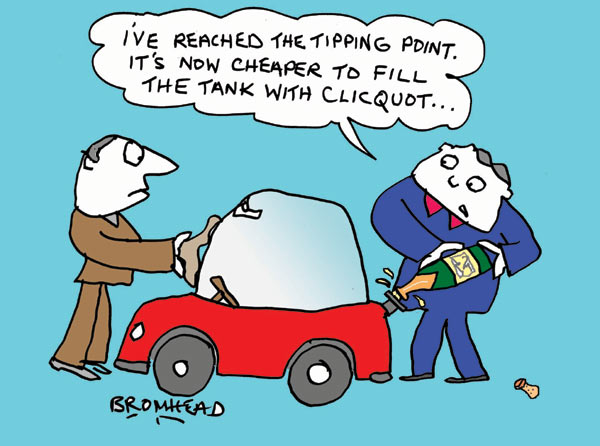
You’ve got to admire these essentially brainless politicians for being so remarkably and densely persistent. Oil production is consistently decreasing year over year, but they know how to resolve the issue: lower the speed limit, again !!!

I’ve withdrawn my support for any of these morons a long time ago. When one of them begins to talk seriously and meaningfully about sustainability, perhaps I will listen. In the meanwhile, good luck in the ensuing chaos.

Richard Jehn / The Rag Blog

Should There Be a National Speed Limit?
By H. Josef Hebert / July 3, 2008

WASHINGTON – An influential Republican senator suggested Thursday that Congress might want to consider reimposing a national speed limit to save gasoline and possibly ease fuel prices.

Sen. John Warner, R-Va., asked Energy Secretary Samuel Bodman to look into what speed limit would provide optimum gasoline efficiency given current technology. He said he wants to know if the administration might support efforts in Congress to require a lower speed limit.

Congress in 1974 set a national 55 mph speed limit because of energy shortages caused by the Arab oil embargo. The speed limit was repealed in 1995 when crude oil dipped to $17 a barrel and gasoline cost $1.10 a gallon.

As motorists headed on trips for this Fourth of July weekend, gasoline averaged $4.10 a gallon nationwide with oil hovering around $145 a barrel.

Warner cited studies that showed the 55 mph speed limit saved 167,000 barrels of oil a day, or 2 percent of the country’s highway fuel consumption, while avoiding up to 4,000 traffic deaths a year.

“Given the significant increase in the number of vehicles on America’s highway system from 1974 to 2008, one could assume that the amount of fuel that could be conserved today is far greater,” Warner wrote Bodman.

Warner asked the department to determine at what speeds vehicles would be most fuel efficient, how much fuel savings would be achieved, and whether it would be reasonable to assume there would be a reduction in prices at the pump if the speed limit were lowered.

Energy Department spokeswoman Angela Hill said the department will review Warner’s letter but added, “If Congress is serious about addressing gasoline prices, they must take action on expanding domestic oil and natural gas production.”

The department’s Web site says that fuel efficiency decreases rapidly when traveling faster than 60 mph. Every additional 5 mph over that threshold is estimated to cost motorists “essentially an additional 30 cents per gallon in fuel costs,” Warner said in his letter, citing the DOE data.

Source. / America On Line

The Rag Blog

Posted in RagBlog | Tagged , , | 1 Comment

Barack Obama on FISA, Telecoms

Today, in response to those of us who have strongly disagreed with his position on the FISA legislation, Barack Obama posted the following message on mybarackobama.com.

My position on FISA
By Barack Obama / July 4, 2008

I want to take this opportunity to speak directly to those of you who oppose my decision to support the FISA compromise.

This was not an easy call for me. I know that the FISA bill that passed the House is far from perfect. I wouldn’t have drafted the legislation like this, and it does not resolve all of the concerns that we have about President Bush’s abuse of executive power. It grants retroactive immunity to telecommunications companies that may have violated the law by cooperating with the Bush administration’s program of warrantless wiretapping. This potentially weakens the deterrent effect of the law and removes an important tool for the American people to demand accountability for past abuses. That’s why I support striking Title II from the bill, and will work with Chris Dodd, Jeff Bingaman and others in an effort to remove this provision in the Senate.

But I also believe that the compromise bill is far better than the Protect America Act that I voted against last year. The exclusivity provision makes it clear to any president or telecommunications company that no law supersedes the authority of the FISA court. In a dangerous world, government must have the authority to collect the intelligence we need to protect the American people. But in a free society, that authority cannot be unlimited. As I’ve said many times, an independent monitor must watch the watchers to prevent abuses and to protect the civil liberties of the American people. This compromise law assures that the FISA court has that responsibility.

The Inspectors General report also provides a real mechanism for accountability and should not be discounted. It will allow a close look at past misconduct without hurdles that would exist in federal court because of classification issues. The recent investigation (PDF) uncovering the illegal politicization of Justice Department hiring sets a strong example of the accountability that can come from a tough and thorough IG report.

The ability to monitor and track individuals who want to attack the United States is a vital counter-terrorism tool, and I’m persuaded that it is necessary to keep the American people safe — particularly since certain electronic surveillance orders will begin to expire later this summer. Given the choice between voting for an improved yet imperfect bill, and losing important surveillance tools, I’ve chosen to support the current compromise. I do so with the firm intention — once I’m sworn in as president — to have my Attorney General conduct a comprehensive review of all our surveillance programs, and to make further recommendations on any steps needed to preserve civil liberties and to prevent executive branch abuse in the future.

Now, I understand why some of you feel differently about the current bill, and I’m happy to take my lumps on this side and elsewhere. For the truth is that your organizing, your activism and your passion is an important reason why this bill is better than previous versions. No tool has been more important in focusing peoples’ attention on the abuses of executive power in this administration than the active and sustained engagement of American citizens. That holds true — not just on wiretapping, but on a range of issues where Washington has let the American people down.

I learned long ago, when working as an organizer on the South Side of Chicago, that when citizens join their voices together, they can hold their leaders accountable. I’m not exempt from that. I’m certainly not perfect, and expect to be held accountable too. I cannot promise to agree with you on every issue. But I do promise to listen to your concerns, take them seriously, and seek to earn your ongoing support to change the country. That is why we have built the largest grassroots campaign in the history of presidential politics, and that is the kind of White House that I intend to run as president of the United States — a White House that takes the Constitution seriously, conducts the peoples’ business out in the open, welcomes and listens to dissenting views, and asks you to play your part in shaping our country’s destiny.

Democracy cannot exist without strong differences. And going forward, some of you may decide that my FISA position is a deal breaker. That’s ok. But I think it is worth pointing out that our agreement on the vast majority of issues that matter outweighs the differences we may have. After all, the choice in this election could not be clearer. Whether it is the economy, foreign policy, or the Supreme Court, my opponent has embraced the failed course of the last eight years, while I want to take this country in a new direction. Make no mistake: if John McCain is elected, the fundamental direction of this country that we love will not change. But if we come together, we have an historic opportunity to chart a new course, a better course.

So I appreciate the feedback through my.barackobama.com, and I look forward to continuing the conversation in the months and years to come. Together, we have a lot of work to do.

Source. / The Huffington Post

The Rag Blog

Posted in RagBlog | Tagged , , , , , , , | Leave a comment

FILM : Gonzo: The Life and Work of Dr. Hunter S. Thompson


Bedtime for “Gonzo”
By Andrew O’Hehir / July 4, 2008

Gonzo journalism pioneer Hunter S. Thompson and documentary filmmaker Alex Gibney don’t seem like the most natural pairing, at least at first. Gibney’s films, including the Oscar-winning “Taxi to the Dark Side” (which has produced an ugly dispute between Gibney and the film’s distributor) and the Oscar-nominated “Enron: The Smartest Guys in the Room,” essentially present old-school investigative journalism, filtered through a pop sensibility. Gibney himself has compared his research-intensive work to archaeology, and I doubt anyone has ever described Thompson’s work in those terms.

Without question one of the most influential journalists of the past 50 years, Thompson was both immensely talented and immensely undisciplined. His bookend masterpieces “Fear and Loathing in Las Vegas” and “Fear and Loathing: On the Campaign Trail ’72,” permanently changed the relationship between the reporter, the self and the subject in American journalism. Even in his best work, Thompson walked a thin line between honesty and fatal self-indulgence, and over the last 30 years of his life he gradually slid into booze-hound, gun-crazed, paranoid self-caricature, closer to the Uncle Duke of “Doonesbury” than to the lacerating wit who ripped through the mendacious superficiality of American political and civic life.

Gibney’s immensely funny and sad new motion picture “Gonzo: The Life and Work of Dr. Hunter S. Thompson” — the “Dr.” was a mail-order divinity degree — is principally intended to rehabilitate Thompson and introduce his work to a new audience. The primary focus of Gibney’s mixture of interviews, archival footage and imaginative re-creation is the years from 1965 to 1975, when Thompson rose from obscurity to become a highly paid Rolling Stone correspondent and counterculture hero and wrote almost all his best stuff. Yet even at the end of his life, as Gibney reminds us, Uncle Duke had his moments of seeing through the charade and glimpsing the machinery grinding away beneath it.

In the fall of 2001, when the towers fell in Lower Manhattan, Thompson was writing an online sports column for ESPN. Of course he couldn’t be expected to stay on topic, and while his column published on Sept. 12 is full of inaccuracies — he estimated that more than 20,000 people were killed in the attacks — it has weathered better than most of the mystified, pseudo-patriotic drivel written in the immediate aftermath of the disaster. Gibney has Johnny Depp, who appears throughout the film as a narrator cum Thompson impersonator, read excerpts in an early scene:

The towers are gone now, reduced to bloody rubble, along with all hopes for Peace in Our Time, in the United States or any other country. Make no mistake about it: We are At War now — with somebody — and we will stay At War with that mysterious Enemy for the rest of our lives … It will be a Religious War, a sort of Christian Jihad, fueled by religious hatred and led by merciless fanatics on both sides. It will be guerrilla warfare on a global scale, with no front lines and no identifiable enemy.

We are going to punish somebody for this attack, but just who or what will be blown to smithereens for it is hard to say. Maybe Afghanistan, maybe Pakistan or Iraq, or possibly all three at once. Who knows? Not even the Generals in what remains of the Pentagon or the New York papers calling for WAR seem to know who did it or where to look for them.

This is going to be a very expensive war, and Victory is not guaranteed — for anyone, and certainly not for anyone as baffled as George W. Bush. All he knows is that his father started the war a long time ago, and that he, the goofy child-President, has been chosen by Fate and the global Oil industry to finish it Now. He will declare a National Security Emergency and clamp down Hard on Everybody, no matter where they live or why. If the guilty won’t hold up their hands and confess, he and the Generals will ferret them out by force.

I think that stands among the most lucid and penetrating passages of Thompson’s entire career. If he had been able to write and think that clearly most of the time — possibly by staying off the Scotch and the coke for longer than a day at a time — he might not have ended up shooting himself at his Colorado home in February 2005. (Some 9/11 conspiracy theorists have contended that Thompson was working on an exposé about the World Trade Center attack and was murdered to hush him up. Thankfully, Gibney does not go there.)

It probably took someone as professional and level-headed as Gibney to get this movie made at all. He got full cooperation from Thompson’s widow, ex-wife and son and unearthed treasures from the author’s collection of audiotapes and home movies. We see early and late Thompson TV appearances, and interviews with Hells Angels, former presidents and candidates, political friends and foes, reporting colleagues and rivals. It’s an amazing all-star cast, from Jimmy Carter and George McGovern (perhaps the only two politicians to evade Thompson’s wrath) to Rolling Stone publisher Jann Wenner, unlikely drinking buddy Pat Buchanan, and “New Journalism” competitor Tom Wolfe.

There are snippets about Thompson’s unhappy early life in Kentucky and his semi-depraved later life in Rocky Mountain isolation (in a 2003 interview with Salon, he called himself “an elderly dope fiend living out in the wilderness”). But most of Gibney’s material is meant to celebrate the meteoric and unlikely rise of a logorrheic autodidact who made his own flaws and excesses part of every story he wrote and who loved America so passionately that he felt the need at every opportunity to “piss down the throats of these Nazis” who ran the place.

Between 1965 and 1975, Thompson published his breakthrough book “Hell’s Angels: The Strange and Terrible Saga of the Outlaw Motorcycle Gangs,” a mordantly funny and insightful work that nearly got him killed; a derisive article about the Haight-Ashbury that made the San Francisco neighborhood internationally famous; the article “The Kentucky Derby Is Decadent and Depraved,” with which the gonzo tradition was born; the mind-bending memoir-novel “Fear and Loathing in Las Vegas,” which probably did more to make drug abuse seem cool than anyone or anything else since Ken Kesey, Timothy Leary and the Merry Pranksters (coincidentally or not, the subjects of an upcoming Alex Gibney film); and the epoch-making “Fear and Loathing: On the Campaign Trail ’72,” a book that reshaped political journalism in its own image. As Gibney captures hilariously in the film, in 1970 Thompson also ran and nearly won a patently ridiculous “Freak Power” campaign for sheriff in Pitkin County, Colo., where he lived.

Especially in the ’70s and ’80s, Thompson spawned legions of journalistic imitators, and it was almost always a bad idea. (The same could be said about Stanley Booth’s book “The True Adventures of the Rolling Stones,” probably the best thing ever written about 1960s rock ‘n’ roll culture — and a massively terrible example for younger rock journalists.) Most of that emulation was a matter of run-on sentences and substance abuse, when what today’s journalism really needs is a fraction of Thompson’s unjaded ferocity and righteous anger. As Gibney has said, Raoul Duke’s spirit seems to live on largely among comedians like Jon Stewart, Stephen Colbert and Bill Maher, not among the so-called professionals.

I recently joined Alex Gibney for breakfast at the Regency Hotel in Manhattan, one of those media-centric whoremonger power lounges that would have fascinated and appalled Hunter Thompson, and where he might have needed “two bags of grass, seventy-five pellets of mescaline, five sheets of high-powered blotter acid, a salt shaker half full of cocaine, and a whole galaxy of multi-colored uppers, downers, screamers [and] laughers” just to start the day. We had none of those things, sad to tell, and I had to begin by quizzing Gibney a little about his teapot-tempest dispute with ThinkFilm, the distributor of “Taxi to the Dark Side,” which recently prompted a front-page story in the New York Times. Listen to the interview here.

Alex Gibney, director of “Gonzo: The Life and Work of Dr. Hunter S. Thompson.”

I don’t want to eat up too much of our time talking about your last film instead of your new one, but “Taxi to the Dark Side” has been in the news lately. So let’s review: You won the Oscar for best documentary, but then the film failed to return the dividends that everyone involved was hoping for. You ended up grossing less than $300,000, which I’m sure was a big disappointment. And now you’re in arbitration with ThinkFilm, trying to get the distribution rights back and also some payment for damages. You’re actually arguing that they mishandled the film to the point of fraud?
Well, I would divide it into two parts. I think they did a reasonable job up to the point we won the Oscar. And the whole strategy, which was a sensible strategy for a film about such a difficult and dark topic, was to win awards and capitalize on those awards, which give people permission to go see the film. But after we won the Oscar, nothing happened. In fact, the Web site was taken down and we didn’t know why. We were mystified, and then over time we learned that they hadn’t paid any of the vendors. They hadn’t paid the labs, so they couldn’t manufacture more prints. They hadn’t paid the Web site people, so the site was taken down. All the publicists didn’t get paid; one single mom was owed $100,000. Clearly, they weren’t putting anything in advertising. One week when the movie was playing in New York at the Quad Cinema, I looked in the New Yorker, New York magazine and Time Out. Never mind the fact that there weren’t any ads. There weren’t even any listings.

So the only way that you knew about the movie is if you happened to walk by the marquee, and generally speaking, that’s not a good strategy — to rely on foot traffic for advertising. Our view is that ThinkFilm didn’t disclose their financial condition to us, and they certainly didn’t disclose it to us as we’re coming in to Oscar time. I don’t want to get too much into the weeds with this, but [ThinkFilm president] Mark Urman was quoted saying how he tried extra hard to move the film to HBO at great cost to Think. How was it at great cost to them? HBO paid them a large sum of money in order to delay the DVD release, and ThinkFilm demanded that they be paid instantly. Like, they had to be wired the money within hours of signing the contract, probably so they could use it for another film.

So it was very disappointing. You know, I respect Mark’s taste in films, but he should have said to his financiers, “Look, you’re gonna have to pay all the people we owe all this money to.” It was embarrassing, because there were a lot of people who gave breaks to the film because they believed so strongly in the message. To see them get stiffed, that was a bitter pill to swallow. We are trying to compensate some of the vendors. It’s ThinkFilm that owes them money, and we’re trying to help them out. So the idea that we’re somehow being greedy is ridiculous. We’re looking for a businesslike relationship, and we don’t feel like we got it.

This whole affair seems like unfortunate testimony to the problems the whole independent film business is having right now. We’ve got an Oscar-winning independent filmmaker and a respected indie distributor, most likely with similar political and artistic visions of the world, at each other’s throats.

Well, Hunter Thompson put it in perspective. Let’s see if I can get this right. He said the entertainment business is a cruel and shallow money trench, a long plastic hallway where pimps and thieves run free and good men die like dogs. There was also, said Hunter, a negative side.

Yeah, let’s turn to Thompson and “Gonzo,” which you premiered at Sundance to a very strong response, and which opens in a whole bunch of cities on the Fourth of July. Is it a patriotic film?

Absolutely. We’re celebrating American independence.

For people who know your work, not just “Taxi to the Dark Side” but your hit film from a few years ago, “Enron: The Smartest Guys in the Room,” this might seem like a departure. It’s lighter subject matter, at least in some ways.

Well, look, someone in Australia described “Enron” as a comedy that turns to farce and ends in horror. Because it was a story about fraud and illusion, it had a certain amount of laughs in it, even though it ends rather darkly. I think of “Gonzo” as a dark comedy. There’s certainly a lot of political content, but there are also a lot of laughs in there. I needed those, and Hunter — I think his great talent was to take this anger he had and to turn it into comedy. That was his weapon.

Yeah, it’s a dark comedy about somebody who was clearly a revolutionary writer and journalist and also somebody who wound up…

Blowing his brains out.

Yeah, a dysfunctional alcoholic, drug addict and suicide. What drew you to Thompson in the first place? Were you a fan?

I was a fan, but let’s say I wasn’t one of those people that read every semicolon. I read “Vegas.” I read “Campaign Trail.” And I read the reprint of “The Derby.” But I hadn’t dug into Thompson in a long time. I had read a lot of his later stuff and I was always amused by Garry Trudeau’s version in “Doonesbury.” I followed the exploits of the good doctor from time to time, but this movie gave me the opportunity to kind of dig in.

As Frank Rich pointed out in a piece not long after Hunter committed suicide — you remember that guy Jeff Gannon, the sometime male prostitute who was somehow, mysteriously, given a White House press badge? Whenever Scott McClellan or anyone else would get into trouble, Gannon would wave his hand and say, “I think it’s terrible. These people are running down this administration. They’re trying to do such good.” They were getting actors to pose as journalists, and at a time like that, you need somebody who’s going to ruthlessly start goring some sacred cows.

I definitely felt, when I watched the film, that Thompson provides an instructive example to today’s journalists. Maybe both a positive and a negative example.

A lot of positive and a lot of negative. You can’t really imitate Hunter. He was unique, but there were times when he got it dead-on. What was it Frank Mankiewicz [who directed George McGovern’s 1972 campaign] said in the film? Hunter’s coverage of the ’72 campaign was the least factual, but most accurate coverage.

Yeah. At his best, he was able to do that. Highly personal commentary that captured the spirit of things better than objective reporting.

Sometimes even flying into fantasy is useful. Ed Muskie was a peculiar guy, and he had this kind of stone face that would occasionally erupt into rage, or in one famous incident, crying. Hunter’s way of dealing with that was not simply to say “Mr. Muskie, with his long, drawn-out face,” but was to imagine that somehow Ed Muskie was hooked on this strange Congolese hallucinogen called Ibogaine. He had all the hallmarks of Ibogaine addiction! Rage, a stone face, you know. They said he was deep into it. And then some people in the media picked it up and actually treated it as a story, and I think if you read it in the original, it’s pretty clear it’s a tall tale in the Mark Twain tradition.

As Hunter says in the movie, when somebody’s asking him about it, “Well, I didn’t say he was taking anything. I said there was a rumor in Milwaukee that he was taking something, and that was true. Of course, I started the rumor in Milwaukee.” So he was playing with all sorts of conventions and having a good time.

Yeah, it was almost like the Onion before its day. Newsweek or Time picked up the story and ran it as if it was for real. And suddenly Ed Muskie was a drug addict.

Right. “It’s trouble on the Congo for the senator from Maine!”

Your approach to storytelling, to documentary film, is closely based on hard-hitting investigative journalism. It’s really different from Thompson’s approach, which is highly personal and deliberately outrageous.

It is different, but it’s liberating to think about. And there are moments, I would argue, when my work exhibits, in a formal way, the playfulness of Hunter. In “Enron,” there is a moment when we’re talking about the enormous risks these guys were taking. And then we cut to this skydiver falling through space. Well, that’s not Ken Lay! That guy doesn’t work for Enron! We had fun with all these wacky Motocross and extreme-sports things that they were doing. We used bits from horror movies as a playful way of saying, of expressing, what is supposed to be expressed in monotone, third-person narration that dutifully explains the facts. Sometimes if you cut to a guy in the basement of some horror film, pulling these levers, that says more about what these loonies at Enron were saying or doing than describing the details of mark-to-market accounting.

In the Thompson film we also tried to have fun with the tall-tale thing, in a formal way. We found this audiotape of Hunter and [longtime sidekick] Oscar Acosta at a taco stand, where they ask this woman, “We’re looking for the American dream. We don’t know where it is.” And she says, “Well, I think it’s over by the psychiatrist’s office on State Street.” We have the original audiotape, which is fantastic. It was a great find. It’s published in the “Vegas” book verbatim, which I didn’t even realize. He was tripping, but that was true. But the way we filmed it was, we got some actors and we made it look like a home movie. At first, it plausibly could be. Then suddenly the scene opens up and you’re seeing the taco stand from three or four different angles — inside, outside — and it’s clearly a movie, it’s fiction.

Early on in the film, you see this photo of Hunter pointing a gun at a typewriter. We zoom in to his hand holding the gun, and then suddenly the hand becomes real and the gun shoots. It was a way of saying we’re going to have some fun, a little bit like Thompson did. I approach this stuff by playing with the form, but being straight about the facts.

Here’s one question that I come away with after seeing this film: How much of Thompson’s wild-man persona was an act, and how much was it real? You know, he writes about staying up all night in a San Francisco motel, doing crank and typing out the manuscript of “Fear and Loathing: On the Campaign Trail ’72.” How much is he kind of fronting and playing with that, and how much is he recording what really happened?

It’s hard to answer that. I mean, I think he was doing speed in tremendous amounts and going on these binges, but earlier on it was more of an act and less of the real McCoy. He kind of descended into his own character later in life. He was doing all the drugs and all the alcohol all the time, and it started to slow him down. Rather than pretending that he was always on speed, maybe he was on speed a lot of the time. He used to have this big pill bottle. Tim Crouse [Thompson’s Rolling Stone reporting partner] talks about how he would gently say, like a father figure, “Don’t go for too many of those gray ones, Tim. Those are for people like me, not for you.”

So there’s no question that he was doing the drugs, but I think there was an act to it, too. He was creating a kind of action-hero figure for himself, and he was pretty serious about the writing. If you look at his output from ’65 to ’75, it’s extraordinary. Somebody who was high all the time just can’t crank it out like that.

You know, when I went back to Thompson’s work after seeing your film, I read “Campaign Trail” for a piece I was writing about this year’s campaign. And one thing that surprised me is that, on the one hand, he’s totally spoofing the traditions of campaign journalism and ridiculing his fellow reporters, and on the other hand, he’s capable of some remarkable feats of completely mainstream reporting.

Like at the Democratic convention.

Right, that’s played completely straight. And sometimes he’ll startle you with the things he pulls off. You remember the episode in 1968, when he somehow gets himself into the back seat of a limousine with Richard Nixon and they talk about football the whole way?

Sure, and that was a great credit to Hunter. Unlike a lot of the bloviators on TV today, Hunter was always interested in talking to people outside his tribe, to anybody really. So he pestered Pat Buchanan to get a ride with Nixon, he got in the limo, and for an hour he talks football with Nixon.

And as much as Thompson clearly hated Nixon, he gives him credit: Well, he did know a lot about football!

He describes these little details that Nixon clearly knew about the game, where certain pro players came from, and where they had gone to college. He was impressed.

Speaking of Pat Buchanan: He’s in your film, and you might not automatically think of him as one of Thompson’s friends. They were diametrically opposed, at least politically, but it’s clear that Buchanan respected and liked him.

No question. He loved Hunter. They used to battle it out late at night over a bottle of Wild Turkey.

I bet Buchanan could put it away, too.

I think he could. They would get hammered together and scream at each other about the Cold War. Buchanan’s a smart guy, and I think he really was amused by Hunter. He loved him. He also points out that while Hunter was of the left, if you want to put it that way, he leveled some of his hardest hits on liberals, people like Hubert Humphrey and Ed Muskie. He was a pomposity deflater. He went after everybody. Well, he was pretty gentle on George McGovern. Buchanan really liked the way Hunter captured how ridiculous the whole process is. People who are inside the process really do, at heart, understand what a ridiculous thing this political pageant is.

You’re right in saying that Thompson arguably had a lot more distaste for mainstream liberals than, in some cases, for right-wingers. He hated Hubert Humphrey so much. Many Democrats felt very wounded by that. You know, Humphrey was a civil rights leader in the Senate, a loyal party soldier. And you have Thompson writing that he was addicted to some exotic kind of speed.

Wallet, he called it. He said they should stuff Hubert Humphrey in a bottle and let him float out in the Pacific Ocean on the Japan Current.

Thompson never stipulated whether there was any truth to that one, but it probably belongs in the same category…

As the stuff he wrote about Muskie. Again, though, it kind of captured something. If you see Humphrey, he’s kind of artificially perky all the time.

I felt like we badly needed Hunter this year. I don’t know what he would have made out of Clinton vs. Obama, or exactly what outrageous lies he’d be spreading about John McCain. But they’d be merciless.

I agree, but we needed the early Hunter, not the late Hunter. A guy operating at the peak of his powers.

That’s right. Your movie is clearly an appreciation, but it’s not a hagiography. You depict the decline in his later years, and it’s not pretty. Was it the drinking and drugs finally catching up with him, or do you think those things were symptomatic of something else?

At the end of the day, the drinking really did him in. Whether it was the image that he had become obsessed with — everyone was counting on him to be this gonzo character — or whether he was afraid he was going to lose his muse if the drugs and drinking stopped, I’m not sure. Because I do think the drugs early on kind of loosened him up. You can see the writing change after the drugs start — in an interesting way, in a good way. But at the end of the day, he couldn’t kick the booze. It was destroying him. His health got worse and worse and worse, and he wasn’t ready for that. It wasn’t pretty at all.

I can come up with all these rationalizations for him. People are amused by you for keeping it up, for getting up at one o’clock in the afternoon or whatever with your tumbler of Chivas Regal and your little packet of cocaine. It is amusing, but living that life every day takes its toll.

One of the most upsetting things in your film is this moment when you see the wheels fall off for Thompson. It happens when he goes to Zaire to cover the Ali-Foreman fight in 1974. Such a delicious subject for Hunter Thompson, such a strange cultural event and enormous athletic event. The conflict between the wily veteran and the young giant, with an ending that shocked the world. A fight that itself became the subject of a great documentary.

“When We Were Kings.” Which we quote in the film.

And he never wrote anything about it, not a word. What the hell happened?

Well, I think he’d already become something else, you know. It was like when we hear athletes talk about themselves in the third person. Hunter had become more important than the story. He was clearly high as a kite, snorting coke the whole time. They had these huge duffle bags full of marijuana. While the fight was going on, he playfully emptied one into the pool and just watched the dope go through the drains while he was sipping his Scotch. So he was high, way high, and there was a mixture of narcissism and a growing disability, where he was just having too much fun not doing his work.

But I also think something weird happened there, and this is just a guess. But by all accounts, he loved Muhammad Ali, and he was a guy who wore his heart on his sleeve. He was thinking, you know, about all these people he had backed, all the noble losers who had lost. And coming into the fight. everybody said Foreman was just going to take Ali apart. Here was a guy who was so big, and so brutal. He had demolished Joe Frazier. So maybe Hunter decided that this is not going to be any kind of fight and so screw it.

And after the fight happened, it must have had a peculiar effect on his psyche. It’s like, once you stop believing, and then what you formerly believed in wins — it’s like being a Red Sox fan for 20 years and thinking, Oh, I’m so tired of this now. And then you start rooting for the Yankees, just so that they’ll win. Right? And then the Red Sox beat the Yankees? Well, you can’t take any pleasure in that anymore. It’s kind of debilitating. It shows a loss of faith, and I think Hunter had that. There was a moment when he just lost faith, and that was hard for him to reckon with.

So he got fucked up there. And then he didn’t recover from that, I think. Not only did he not file anything — I mean, zippo — but I think he had also undermined his own sense of commitment to the other side of the American psyche. To the sense of possibility, rather than the fear and loathing.

[“Gonzo: The Life and Work of Dr. Hunter S. Thompson” opens July 4 in New York, Atlanta, Baltimore, Boston, Chicago, Dallas, Denver, Houston, Los Angeles, Minneapolis, Philadelphia, Portland, Ore., San Francisco, Seattle, Washington and Austin, Texas; July 11 in Cleveland, Detroit, Santa Cruz, Calif., Santa Fe, N.M., St. Louis, Columbus, Ohio and San Antonio, Texas; and July 18 in Bend, Ore., Chapel Hill, N.C., Charlotte, N.C., Durham, N.C., Eugene, Ore., Indianapolis, Kansas City, Madison, Wis., Nashville, New Haven, Conn., North Falmouth, Mass., and Dayton, Ohio, with more cities to follow.]

Source. / salon.com

The Rag Blog

Posted in RagBlog | Tagged , , , , , , , , | Leave a comment

World Petroleum Congress : Pointing the Finger


OPEC: It’s the speculators!
By Roger Baker / The Rag Blog / July 4, 2008

The world economy depends on cheap oil. So when it disappears it is
understandable that there is dissension and finger pointing among the
sellers.

Nevertheless, when the guys selling you the fluid to which you are
addicted tells you to back off, it is wise to listen. OPEC is trying
to promote the idea that speculators are driving up oil prices.

The OPEC desire to shift the focus to speculation as a reason for high
oil price ignores the fact that OPEC is running out of capacity at the
same time as world oil demand keeps rising along with population and
the growing Chinese economy. In other words the producer nations are trying to trick the oil consumer nations into relying on them to sell oil forever, by saying the apparent oil shortage causing a price rise is imaginary.

But we’re wise to OPEC’s lies. Speculation could never be a factor
without smart rich investors predicting even worse oil shortages and
buying up oil futures in preparation as world oil production peaks and
declines. Financial speculation is a financial symptom of a much worse problem; permanent oil shortages.

Worried oil chiefs fail to find consensus
By Adam Plowright / July 3,2008

One of the energy industry’s biggest gatherings ended Thursday in the shadow of record crude prices, with concern growing about a third oil shock but with little consensus about what to do about it.

Divisions between consumer and producer countries on who is to blame for 140-dollar oil appeared to sharpen at the World Petroleum Congress, which brought together political and corporate oil bosses for four days of talks.

Saudi Arabia, the world’s leading oil exporter, expressed concern on Thursday about new records for benchmark crude of 146 dollars a barrel and again said it was committed to dialogue between consumers and producers.

But those discussions show no sign of finding a solution to market tension, with both sides citing different reasons: consumers underline supply shortage fears while producers blame financial speculators and the falling dollar.

“We are concerned about high prices,” Saudi Arabian Oil Minister Ali al-Nuaimi said on the sidelines of the meeting here, adding that Saudi “King Abdullah is leading the effort” for dialogue.

Top officials from consumer and producer countries met in Jeddah, Saudi Arabia on June 22 for talks on the problem of the runaway oil market, but prices have risen since then.

Benchmark prices of oil in New York and London set new record highs around 146 dollars a barrel on Thursday and the head of Russian energy giant Gazprom forecast they would “very soon” rise to 250 dollars.

Since the beginning of this week, as an estimated 3,000 delegates gathered here, prices have hit almost daily new records, with comments by Iran’s oil minister that the country would react “fiercely” to an attack stoking tension.

In one of the final speeches, Nuaimi defended the industry against attacks from “politically popular” environmentalists, saying alternative energy sources could never replace carbon-based fuels.

“The fact is carbon-based fossil fuels still are the cheapest, most efficient and most reliable energy sources for our mobile society,” Ali al-Nuaimi said.

“Nevertheless, it is politically popular these days to extol the virtues of so-called alternative fuels because of their lower carbon emissions.”

Despite booming conditions in the industry, there was a notable lack of optimism, with those old enough to remember previous oil shocks recalling the busts that followed afterwards.

The executive director of the International Energy Agency, Nobuo Tanaka, reminded everyone on Tuesday that “with oil prices hitting 140 dollars, we are clearly in the third oil shock.”

The head of Brazilian oil group Petrobas, which hopes to become a new powerhouse after announcing huge oil discoveries, said Thursday that no-one should expect a return to low oil prices, however.

“For the future we should not expect a dramatic fall in price,” said Sergio Gabrielli, who explained this was because of rising production costs that would underpin the market.

The head of French group Total, Christophe de Margerie, had said earlier in the week that 80 dollars a barrel was likely to be a ceiling for prices for this reason.

There was also open disagreement between the Organisation of Petroleum Exporting Countries and the International Energy Agency, which represents the interests of rich, consumer nations.

In a look at the medium-term outlook for the industry, the IEA predicted a tight market for the next five years on Tuesday and warned of looming tensions from 2010 as demand for oil from Asia and the Middle East continues to grow.

It also went to great lengths to refute the notion that speculators were to blame.

“Seventy percent of crude contracts on the Nymex are held by speculators… Some form of regulation is needed,” OPEC secretary general Abdallah El-Badri replied on Wednesday, referring to the US commodity futures exchange.

“The market has no shortage of physical crude.”

He also called on the United States to stop “harassing OPEC countries.”

OPEC president Chakib Khelil also called on the US to stop the fall of the dollar to stabilise oil prices and knocked back suggestions the cartel should increase production.

Source. / AFP / Yahoo News

The Rag Blog

Posted in Rag Bloggers | Tagged , , , | Leave a comment

A Little Kick-Ass, Unpoetic Poem from Juan Cole

Photo: Jackie Blight

Your Fourth of July and My Fourth of July
By Juan Cole / July 4, 2008

Your Fourth of July is blood for oil.

My Fourth of July is the pure sunbeam of peace.

Yours is the imperial presidency and “so what?” to public opinion.

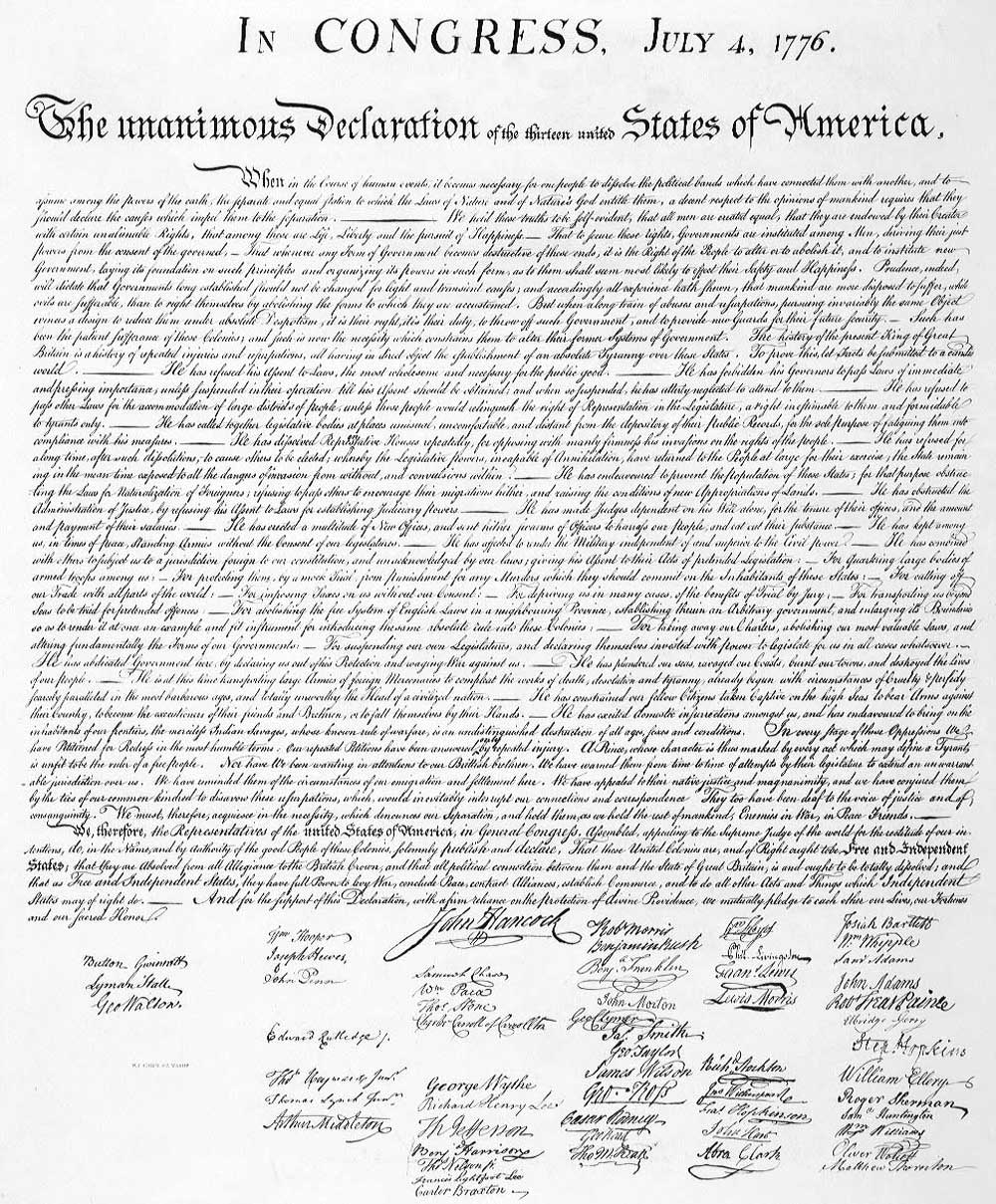
Mine is “deriving their just powers from the consent of the governed”

Yours is profiling and discrimination.

Mine is “all men are endowed by their Creator with certain inalienable rights.”

Yours is “My country right or wrong.”

Mine is avoiding “Offences against the Law of Nations”

Yours is the veto of child health care and rejection of Kyoto,

Mine is an America that cares about the wellbeing of our children.

Yours is a monarchical presidency above the law.

Mine is, with Tom Paine, “in free countries the law ought to be king; and there ought to be no other.”

Yours is aggressive invasions of countries that did not attack us first.

Mine is “and hold them, as we hold the rest of mankind, Enemies in War, in Peace Friends.”

Yours is water-boarding and electrocution.

Mine is the prohibition on cruel and unusual punishment.

Yours is the stench of a million moldering corpses, military rule over 27 million, and the creation of oceans of misery.

Mine is “life, liberty and the pursuit of happiness.”

Yours is off-shore drilling, coddling polluters, ‘heckuva job Brownie.’

Mine is a stewardship of America the beautiful for succeeding generations.

Yours is the privatization of war and the deployment of whole divisions of “contractors . . .

Mine is an America where privates do not risk their lives for a tenth of what a mercenary is paid by the Pentagon.

Yours is the erection of protest zones as zoos for citizens.

Mine is, “or the right of the people peaceably to assemble, and to petition the Government for a redress of grievances.”

Yours is the swagger of the flight jacket and the bombs raining down.

Mine is the schooling of the next global generation.

Mine is America, the pure sunbeam of peace.

—–
With apologies to Kahlil Gibran.

Source / Informed Comment

The Rag Blog

Posted in RagBlog | Tagged | Leave a comment

Fourth of July Fireworks

Celestial Stripe. This image of a delicate ribbon of gas, taken by NASA’s Hubble Space Telescope, reveals a very thin section of a supernova remnant caused by a stellar explosion that occurred more than 1,000 years ago. Photo courtesy of NASA/ESA/Hubble Heritage Team.

Celestial Stars and Stripe Revealed in Hubble Image
Irene Klotz / July 3, 2008

About 700 years before the birth of America, a dying star exploded, creating a shock wave that blasted through space at nearly 20 million m.p.h. for the next thousand years.

Initially, the burst of light was so bright that it could be seen in daylight on Earth, nearly 7,000 light-years away in a constellation known as Lupus.

Radio telescopes picked up its trail in the 1960s with the discovery of a nearly circular ring of material in the general area of where the supernova had occurred. It wasn’t until 1976 that astronomers had a powerful enough observatory in the southern hemisphere and the good luck to pick up another visual.

On the northwest edge of the radio ring, the shock wave had reached a part of space sprinkled with hydrogen atoms, causing them to radiate in visual light.

“It’s kind of like a sonic boom,” said astronomer Frank Winkler with Middlebury College in Vermont. “Your ears clearly detect that as a change in pressure. In the case of the supernova, this shock wave has been propagating outward from the site of the explosion for a little more than 1,000 years now.

“One of really interesting things that happens is that behind the shock wave, some of these hydrogen atoms, which are essentially bare nuclei, are really fast-moving — a few thousand kilometers per second — so if you have a collision between one of these and an unsuspecting neutral hydrogen atom that suddenly finds itself right behind the shock wave, they can trade electrons,” he said. “The fast-moving one gloms on to the other’s electron and that leads to the emission of a photon.”

The Hubble Space Telescope picked up the trail 30 years later with a series of observations, culminating in the release this week of a picture to mark Independence Day.

The celestial version of the stars and (a) stripe show orange-hued points of light that are background galaxies and white dots which are background and foreground stars in our own Milky Way.

The bold red ribbon of light is a tiny portion of the tenuous hydrogen gas being heated by the supernova blast wave. The bright spots are areas where the shock wave is edge-on to our line of sight. Hydrogen’s glow is mostly in a deeper red hue so the Hubble team shaded it a bit more orange to make it easier to see.

The supernova, known as SN 1006, is 60 light-years in diameter and still growing at a rate of about 6 million m.p.h.

Source. / Discovery News

The Rag Blog

Posted in RagBlog | Tagged , , , | Leave a comment