Corporate Amerikkka – Killing Off the Web


Google Ordered to Share YouTube Logs
By Anick Jesdanun / July 3, 2008

NEW YORK – Dismissing privacy concerns, a federal judge overseeing a $1 billion copyright-infringement lawsuit against YouTube has ordered the popular online video-sharing service to disclose who watches which video clips and when.

U.S. District Judge Louis L. Stanton authorized full access to the YouTube logs after Viacom Inc. and other copyright holders argued that they needed the data to show whether their copyright-protected videos are more heavily watched than amateur clips.

The data would not be publicly released but disclosed only to the plaintiffs, and it would include less specific identifiers than a user’s real name or e-mail address.

Lawyers for Google Inc., which owns YouTube, said producing 12 terabytes of data – equivalent to the text of roughly 12 million books – would be expensive, time-consuming and a threat to users’ privacy.

The database includes information on when each video gets played, which can be used to determine how often a clip is viewed. Attached to each entry is each viewer’s unique login ID and the Internet Protocol, or IP, address for that viewer’s computer.

Stanton ruled this week that the plaintiffs had a legitimate need for the information and that the privacy concerns are speculative.

Stanton rejected a request from the plaintiffs for Google to disclose the source code – the technical secret sauce – powering its market-leading search engine, saying there’s no evidence Google manipulated its search algorithms to treat copyright-infringing videos differently.

The court has yet to rule on Google’s requests to question comedians Jon Stewart and Stephen Colbert of Viacom’s Comedy Central.

Viacom is seeking at least $1 billion in damages from Google, saying YouTube has built a business by using the Internet to “willfully infringe” copyrights on Viacom shows, which include Comedy Central’s “The Daily Show with Jon Stewart” and Nickelodeon’s “SpongeBob SquarePants” cartoon.

The lawsuit was combined with a similar case filed by a British soccer league and other parties.

Together, the plaintiffs are trying to prove that YouTube has known of copyright infringement and can do more to stop it, a finding that could dissolve the immunity protections that service providers have when they merely host content submitted by their users.

Though Google said giving the plaintiffs access to YouTube viewer data would threaten users’ privacy, Stanton referred to Google’s own blog entry in which the company argued that the IP address alone cannot identify a specific individual.

In a statement, Google said it was “disappointed the court granted Viacom’s overreaching demand for viewing history. We are asking Viacom to respect users’ privacy and allow us to anonymize the logs before producing them under the court’s order.”

Google did not say whether it would appeal the ruling or seek to narrow it.

Stanton’s ruling made only passing reference to a 1988 federal law barring the disclosure of specific video materials that subscribers request or obtain.

Kurt Opsahl, a senior staff attorney with the Electronic Frontier Foundation, said Stanton should have considered that law along with constitutional free-speech rights, including a right to read or view materials anonymously.

He said a user’s ID can sometimes include identifying information such as a first initial and last name.

Viacom said it isn’t seeking any user’s identity. The company said any data provided “will be used exclusively for the purpose of proving our case against YouTube and Google (and) will be handled subject to a court protective order and in a highly confidential manner.”

This is not the first time Google has fought the disclosure of user information it had been stockpiling. While gathering evidence for a case involving online pornography, the U.S. Justice Department subpoenaed Google and other search engines for lists of search requests made by their users.

After Google resisted, a federal judge ruled that Google was obliged to turn over only a sample of Web addresses in its search index, not the actual search terms requested.

Copyright 2008 The Associated Press.

Source / America On Line

The Rag Blog

Posted in RagBlog | Tagged , , | Leave a comment

Cartoon Thursday – Charlie Loving

The Rag Blog

Posted in Rag Bloggers | Tagged | Leave a comment

Barack Obama and the Tradition of Community Organizing

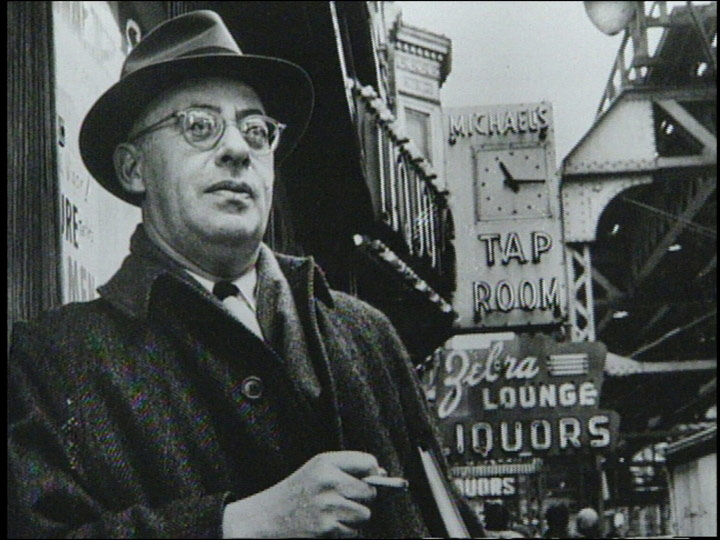
Saul Alinsky, a major architect of the community organizing concept. Photo from cover of Let Them Call Me Rebel: Saul Alinsky, His Life and Legacy by Sanford D. Horwitt.

The following article by Peter Drier from Dissent online discusses the history of community organizing and how Barack Obama fits into that tradition. It fleshes out Obama’s community organizing background, how that has influenced his campaign and how it might inform his presidency.

Thorne Dreyer

Will Obama Inspire a New Generation of Organizers?
By Peter Dreier

Americans are used to voting for presidential candidates with backgrounds as lawyers, military officers, farmers, businessmen, and career politicians, but this is the first time we’ve been asked to vote for someone who has been a community organizer. Of course, Barack Obama has also been a lawyer, a law professor, and an elected official, but throughout this campaign he has frequently referred to the three years he spent as a community organizer in Chicago in the mid-1980s as “the best education I ever had.”

This experience has influenced his presidential campaign. It may also tell us something about how, if elected, he’ll govern. But, perhaps most important, there has not been a candidate since Bobby Kennedy and Eugene McCarthy who has inspired so many young people to become involved in public service and grassroots activism.

Through his constant references to his own organizing experience, and his persistent praise for organizers at every campaign stop, Obama is helping recruit a new wave of idealistic young Americans who want to bring about change. According to surveys and exit polls, interest in politics and voter turnout among the millennial generation (18-29) has increased dramatically this year. But Obama isn’t just catalyzing young people to vote or volunteer for his campaign. Professors report that a growing number of college students are taking courses in community organizing and social activism. According to community organizing groups, unions and environmental groups, the number of young people seeking jobs as organizers has spiked in the past year in the wake of Obama’s candidacy.

Whether or not he wins the race for the White House, Obama, through his own example, has already dramatically increased the visibility of grassroots organizing as a career path, as well as a way to give ordinary people a sense of their own collective power to improve their lives and bring about social change.

Obama’s Organizing Experience

In 1985, at age 23, Obama was hired by the Developing Communities Project, a coalition of churches on Chicago’s South Side, to help empower residents to win improved playgrounds, after-school programs, job training, housing, and other concerns affecting a neighborhood hurt by large-scale layoffs from the nearby steel mills and neglect by banks, retail stores, and the local government. He knocked on doors and talked to people in their kitchens, living rooms, and churches about the problems they faced and why they needed to get involved to change things.

As an organizer, Obama learned the skills of motivating and mobilizing people who had little faith in their ability to make politicians, corporations, and other powerful institutions accountable. Obama taught low-income people how to analyze power relations, gain confidence in their own leadership abilities, and work together.

For example, he organized tenants in the troubled Altgelt Gardens public housing project to push the city to remove dangerous asbestos in their apartments, a campaign that he acknowledges resulted in only a partial victory. After Obama helped organize a large mass meeting of angry tenants, the city government started to test and seal asbestos in some apartments, but ran out of money to complete the task.

Obama often refers to the valuable lessons he learned working “in the streets” of Chicago. “I’ve won some good fights and I’ve also lost some fights,” he said in a speech during the primary season, “because good intentions are not enough, when not fortified with political will and political power.” (Recently, right wing publications, radio talk shows, and bloggers, such as the National Review and the American Thinker, have sought to discredit Obama as a “radical” by linking him to ACORN and other community organizing groups.)

The American Organizing Tradition

The roots of community organizing go back to the nation’s founding, starting with the Sons of Liberty and the Boston Tea Party. Visiting the U.S. in the 1830s, Frenchman Alexis de Tocqueville, author of Democracy in America, was impressed by the outpouring of local voluntary organizations that brought Americans together to solve problems, provide a sense of community and public purpose, and tame the hyper-individualism that Tocqueville considered a threat to democracy. Every fight for social reform since then—from the abolition movement to the labor movement’s fight against sweatshops in the early 1900s to the civil rights movement of the 1960s to the environment and feminist movements of the past 40 years—has reflected elements of the self-help spirit that Tocqueville observed.

Historians trace modern community organizing to Jane Addams, who founded Hull House in Chicago in the late 1800s and inspired the settlement house movement. These activists—upper-class philanthropists, middle-class reformers, and working-class radicals—organized immigrants to clean up sweatshops and tenement slums, improve sanitation and public health, and battle against child labor and crime.

In the 1930s, another Chicagoan, Saul Alinsky, took community organizing to the next level. He sought to create community-based “people’s organizations” to organize residents the way unions organized workers. He drew on existing groups—particularly churches, block clubs, sports leagues, and unions—to form the Back of the Yards Neighborhood Council in an effort to get the city to improve services to a working-class neighborhood adjacent to meatpacking factories. Alinsky’s books, Reveille for Radicals (1945) and Rules for Radicals (1971), became the bible for several generations of activists. including the civil rights movement, the environmental movement, and many other reformers.

There are currently at least 20,000 paid organizers in the United States,according to Walter Davis, executive director of the National Organizers Alliance. (Nobody knows for sure, since “organizer” is not an occupation listed by the Census Bureau). They work for unions, community groups, environmental organizations, women’s and civil rights groups, tenants organizations, and school reform efforts. Unlike traditional social workers, organizers’ orientation is not to “service” people as if they were clients, but to encourage people to develop their own abilities to mobilize others. They identify people with leadership potential, recruit and train them, and help them build grassroots organizations that can win victories that improve their communities and workplaces. According to organizer Ernesto Cortes, they help people turn their “hot” anger into “cold” anger—that is, disciplined and strategic action.

The past several decades has seen an explosion of community organizing in every American city. There are now thousands of local groups that mobilize people around a wide variety of problems. With the help of trained organizers, neighbors have come together to pressure local governments to install stop signs at dangerous intersections, force slumlords to fix up their properties, challenge banks to end mortgage discrimination (redlining) and predatory lending, improve conditions in local parks and playgrounds, increase funding for public schools, clean up toxic sites, stop police harassment, and open community health clinics. A key tenet of community organizing is developing face to face contact so people forge commitments to work together around shared values. (The Internet has become a useful tool to connect people in cyberspace and then bring them together in person).

For years, critics viewed community organizing as too fragmented and isolated, unable to translate local victories into a wider movement for social justice. During the past decade, however, community organizing groups forged links with labor unions, environmental organizations, immigrant rights groups, women’s groups, and others to build a stronger multi-issue progressive movement. For example, the Los Angeles Alliance for a New Economy (LAANE) has created a powerful coalition of unions, environmental groups, community organizers, clergy, and immigrant rights groups to change business and development practices in the nation’s second-largest city. At the national level, the Apollo Alliance – a coalition of unions, community groups, and environmental groups like the Sierra Club – is pushing for a major federal investment in “green” jobs and energy-efficient technologies.

Although most community organizing groups are rooted in local neighborhoods, often drawing on religious congregations and block clubs, there are now several national organizing networks with local affiliates, enabling groups to address problems at the local, state, and national level, sometimes even simultaneously. These groups include ACORN, the Industrial Areas Foundation (IAF), People in Communities Organized (PICO), the Center for Community Change, National People’s Action, Direct Action Research and Training (DART), and the Gamaliel Foundation (the network affiliated with the Developing Communities Project that hired Obama). These networks as well as a growing number of training centers for community organizers—such as the Midwest Academy in Chicago, the Highlander Center in Tennessee, and a few dozen universities that offer courses in community and labor organizing—have helped recruit and train thousands of people into the organizing world and strengthened the community organizing movement’s political power.

The “living wage” movement is an example of both coalition-building and linking local and national organizing campaigns. In 1994, BUILD—a partnership of a community organization and a local union—got Baltimore to enact the first local law, requiring companies that have municipal contracts and subsidies to pay its employees a “living wage” (a few dollars above the federal minimum wage). Since then, more than 200 cities have adopted similar laws, helping lift many working families out of poverty. Most of their victories grew out of coalitions between community organizing groups, labor unions, and faith-based groups. These coalitions have gotten more than 20 states to raise their minimum wages above the federal level. These efforts helped build political momentum for Congress’ vote last year to raise the federal minimum wage for the first time in a decade.

Organizing and the Obama Campaign

Although he didn’t make community organizing a lifetime career—he left Chicago to attend Harvard Law School—Obama often says that his organizing experience has shaped his approach to politics. After law school, Obama returned to Chicago to practice and teach law. But in the mid-1990s, he also began contemplating running for office. In 1995, he told a Chicago newspaper, “What if a politician were to see his job as that of an organizer—as part teacher and part advocate, one who does not sell voters short but who educates them about the real choices before them?” Since embarking on a political career, Obama hasn’t forgotten the lessons that he learned on the streets of Chicago.

This is reflected in his campaign for president. Community organizers distinguish themselves from traditional political campaign operatives who approach voters as customers through direct mail, telemarketing, and canvassing. Most political campaigns immediately put volunteers to work on the “grunt” work of the campaign—making phone calls, handing out leaflets, or walking door to door. According to Temo Figueroa — Obama’s national field director and a long-time union organizer—the Obama campaign has been different. “When I came on board what attracted me was his history as an organizer,” says Figueroa, who was working as AFSCME’s assistant political director. “At the time I wasn’t sure I was joining the winning team. Most of us thought we were jumping on the little engine that could. We were believers. We wanted something bigger than ourselves. A movement.”

Obama enlisted Marshall Ganz, a Harvard professor who is one of the country’s leading organizing theorists and practitioners, to help train organizers and volunteers as a key component of his presidential campaign. Ganz was instrumental in shaping the volunteer training experience.

Many Obama campaign volunteers went through several days of intense training sessions called “Camp Obama.” The sessions were led by Ganz and other experienced organizers, including Mike Kruglik, one of Obama’s organizing mentors in Chicago. Potential field organizers were given an overview of the history of grassroots organizing techniques and the key lessons of campaigns that have succeeded and failed.

“Organizing combines the language of the heart as well as the head,” Ganz says, reflecting on his experiences as an organizer with SNCC in the civil rights movement and as a key architect of the United Farmworkers’ early successes. Not surprisingly, compared with other political operations, Obama’s campaign has embodied many of the characteristics of a social movement—a redemptive calling for a better society, coupling individual and social transformation. This is due not only to Obama’s rhetorical style but also to his campaign’s enlistment of hundreds of seasoned organizers from unions, community groups, churches, peace, and environmental groups. They, in turn, have mobilized thousands of volunteers—many of them neophytes in electoral politics—into tightly knit, highly motivated and efficient teams. This summer, the campaign created an “Obama Organizing Fellows” program to recruit college students to become campaign staffers.

This organizing effort has mobilized many first-time voters, including an unprecedented number of young people and African Americans during the primary season. Now that Obama is the presumed Democratic nominee, he faces pressure to resort to more traditional electoral strategies, but so far Obama and top campaign officials have continued to emphasize grassroots organizing. It is evident in Obama’s speeches, his continued use of the UFW slogan, “Yes, we can/Si se puede,” his emphasis on “hope” and “change,” and the growing number of experienced organizers drawn into the campaign.

Obama’s stump speeches typically include references to America’s organizing tradition. “Nothing in this country worthwhile has ever happened except when somebody somewhere was willing to hope,” Obama explained. “That is how workers won the right to organize against violence and intimidation. That’s how women won the right to vote. That’s how young people traveled south to march and to sit in and to be beaten, and some went to jail and some died for freedom’s cause.” Change comes about, Obama said, by “imagining, and then fighting for, and then working for, what did not seem possible before.”

In town forums and living-room meetings, Obama says that “real change” only comes about from the “bottom up,” but that as president, he can give voice to those organizing in their workplaces, communities, and congregations around a positive vision for change. “That’s leadership,” he says.

Organizer-in-Chief?

If elected president, will Obama’s organizing background shape his approach to governing?

Obama can certainly learn valuable lessons from President Franklin Roosevelt, who recognized that his ability to push New Deal legislation through Congress depended on the pressure generated by protestors and organizers. He once told a group of activists who sought his support for legislation, “You’ve convinced me. Now go out and make me do it.”

As depression conditions worsened, and as grassroots worker and community protests escalated throughout the country, Roosevelt became more vocal, using his bully pulpit—in speeches and radio addresses—to promote New Deal ideas. Labor and community organizers felt confident in proclaiming, “FDR wants you to join the union.” With Roosevelt setting the tone, and with allies in Congress like Senator Robert Wagner, grassroots activists won legislation guaranteeing workers’ right to organize, the minimum wage, family assistance for mothers, and the 40-hour week.

After his election in 1960, President John Kennedy encouraged baby boomers to ask what they could do for their country. At the time, JFK meant joining the Peace Corps and the VISTA (Volunteers in Service to America) program. He could not have anticipated the wave of protest and activism—around civil rights, Vietnam, and later feminism and the environment—that animated the sixties and seventies.

President Lyndon Johnson was initially no ally of the civil rights movement. However, the willingness of activists to put their bodies on the line against fists and fire hoses, along with their efforts to register voters against overwhelming opposition, pricked Americans’ conscience. LBJ recognized that the nation’s mood was changing. The civil rights activism transformed Johnson from a reluctant advocate to a powerful ally. LBJ’s “Great Society” program—although criticized as too tame by United Auto Workers leader Walter Reuther and other progressives—provided some community organizing positions with anti-poverty agencies, job training groups, and legal services organizations in urban and rural areas. Many of today’s veteran activists got their first taste of grassroots organizing in the anti-poverty, civil rights, and farmworker movements.

Now comes Obama, a one-time organizer, who consistently reminds Americans of the importance of grassroots organizing. If he’s elected president, he knows that he will have to find a balance between working inside the Beltway and encouraging Americans to organize and mobilize. He understands that his ability to reform health care, tackle global warming, and restore job security and decent wages will depend, in large measure, on whether he can use his bully pulpit to mobilize public opinion and encourage Americans to battle powerful corporate interests and members of Congress who resist change.

For example, talking about the need to forge a new energy policy, Obama explained, “I know how hard it will be to bring about change. Exxon Mobil made $11 billion this past quarter. They don’t want to give up their profits easily.” Another major test will be whether he can help push the Employee Free Choice Act (EFCA)—a significant reform of America’s outdated and business-oriented labor laws—through Congress against almost unified business opposition. If passed, EFCA will help trigger a new wave of organizing that will require enlisting thousands of young organizers into the labor movement.

If Obama wins the White House, progressives within his inner circle will look for opportunities to encourage his organizing instincts to shape how he governs the nation, whom he appoints to key positions, and which policies to prioritize. Meanwhile, a new generation of volunteer activists and paid organizers will be looking to join President Obama’s progressive crusade to change America. But if it appears that is veering too far to the political center, they will—inspired in part by Obama’s own example, and perhaps with his covert support—mobilize to push him (and Congress) to live up to his progressive promise.

[Peter Dreier is professor of politics and director of the Urban & Environmental Policy program at Occidental College, where he teaches a course on community organizing. He is coauthor of The Next Los Angeles: The Struggle for a Livable City, Place Matters: Metropolitics for the 21st Century, and several other books.]

Source. / Dissent

The Rag Blog

Posted in RagBlog | Tagged , , , , , | Leave a comment

That’s Not Our Policy; That’s Not What We’re About


Ex-Agent Says CIA Ignored Iran Facts
By Joby Warrick / July 1, 2008

A former CIA operative who says he tried to warn the agency about faulty intelligence on Iraqi weapons programs now contends that CIA officials also ignored evidence that Iran had suspended work on a nuclear bomb.

The onetime undercover agent, who has been barred by the CIA from using his real name, filed a motion in federal court late Friday asking the government to declassify legal documents describing what he says was a deliberate suppression of findings on Iran that were contrary to agency views at the time.

The former operative alleged in a 2004 lawsuit that the CIA fired him after he repeatedly clashed with senior managers over his attempts to file reports that challenged the conventional wisdom about weapons of mass destruction in the Middle East. Key details of his claim have not been made public because they describe events the CIA deems secret.
ad_icon

The consensus view on Iran’s nuclear program shifted dramatically last December with the release of a landmark intelligence report that concluded that Iran halted work on nuclear weapons design in 2003. The publication of the National Intelligence Estimate on Iran undermined the CIA’s rationale for censoring the former officer’s lawsuit, said his attorney, Roy Krieger.

“On five occasions he was ordered to either falsify his reporting on WMD in the Near East, or not to file his reports at all,” Krieger said in an interview.

In court documents and in statements by his attorney, the former officer contends that his 22-year CIA career collapsed after he questioned CIA doctrine about the nuclear programs of Iraq and Iran. As a native of the Middle East and a fluent speaker of both Farsi and Arabic, he had been assigned undercover work in the Persian Gulf region, where he successfully recruited an informant with access to

sensitive information about Iran’s nuclear program, Krieger said.

The informant provided secret evidence that Tehran had halted its research into designing and building a nuclear weapon. Yet, when the operative sought to file reports on the findings, his attempts were “thwarted by CIA employees,” according to court papers. Later he was told to “remove himself from any further handling” of the informant, the documents say.

In the months after the conflict, the operative became the target of two internal investigations, one of them alleging an improper sexual relationship with a female informant, and the other alleging financial improprieties. Krieger said his client cooperated with investigators in both cases and the allegations of wrongdoing were never substantiated. Krieger contends in court documents that the investigations were a “pretext to discredit.”

Krieger maintains that his client is being further punished by the agency’s decision prohibiting him from fully regaining his identity. “He is not even allowed to attend court hearings about his own case,” Krieger said.

CIA spokesman Paul Gimigliano declined to comment on the specifics of the case but flatly rejected the allegation that the agency had suppressed reports. “It would be wrong to suggest that agency managers direct their officers to falsify the intelligence they collect or to suppress it for political reasons,” he said. “That’s not our policy. That’s not what we’re about.”

Source / The Washington Post

The Rag Blog

Posted in RagBlog | Tagged , , | Leave a comment

Fort Hood’s top NCO says he doesn’t want to fight

Command Sgt. Maj. Neil L. Ciotola, 1st Cavalry Division command sergeant major, participates in the casing of his division’s colors with Maj. Gen. Peter Chiarelli, 1st Cav. commanding general, during a Transition of Authority ceremony at the parade grounds
in Baghdad.

“We, the Army, have been rode hard and put up wet,”
July 1, 2008

KILLEEN, Texas — A three-decade Army veteran called a “steel spine” by the defense secretary says he and most other soldiers would prefer never to deploy and fight again because they are tired, undermanned and under-equipped.

said Command Sgt. Maj. Neil L. Ciotola, Fort Hood’s senior noncommissioned officer. “We’re catching ourselves coming and going. … In all honesty, ladies and gentlemen, I and the majority of us in uniform, and those that repeatedly support us are tired.”

Ciotola spoke at the Central Texas-Fort Hood Chapter of the Association of the United States Army where he was given an award for leadership Monday night.

Ciotola, who led III Corps in Iraq from late 2006 to early this year with Lt. Gen. Raymond T. Odierno, was called Multinational Corps’ “steel spine” during its 14 months in Iraq by Defense Secretary Robert Gates in February.

Ciotola said tens of thousands in uniform feel like he does about never wanting to deploy and fight again. Too many have “seen too much of death, sacrifice that cannot be measured on any scale, evil that cannot be comprehended by those who have not looked it in the eye.”

“Yet I willingly embrace the reality we still have confronting us; this is a long war, an era of persistent conflict and much is expected of us, both in and out of uniform,” Ciotola said, the Killeen Daily Herald reported in Tuesday editions.

Officials are well aware of the Army’s shortfalls: the lack of equipment, troops and recovery time before the next deployment, he said.

But America at large has failed to realize that the Army is resolute and not willing to throw in the towel, he said.

“Yet there is reason to allow one’s chest to swell with pride, reason to revel in all that we’re confronted with,” Ciotola said. “Yup — we’re tired; we’re undermanned, under-equipped … but again, we are resolute.”

Ciotola said families and community leaders also shoulder the burden of the war. They “sustain us, comfort us, encourage us,” he said.

Source. / Houston Chronicle

Thanks to Greg Olds / The Rag Blog

Posted in RagBlog | Tagged , , , | Leave a comment

Shade Tree

when you come to my house

you are allowed to plant a tree

and after you leave

I will water it along

and nurture it well

as it reaches toward the light

and keep it safe from harm

even if you don’t return

but if you ever do

we will sit beside your tree

and celebrate life

in all its many forms

and watch your tree grow

and shelter under its boughs

Shade Tree

Larry Piltz
May 26, 2008

Indian Cove / Austin, Texas

The Rag Blog / Posted July 3, 2008

Posted in Rag Bloggers | Tagged , | Leave a comment

Telling Doctors What To Think


South Dakota’s unbelievable new abortion law
By Emily Bazelon / July 2, 2008

In 2005, South Dakota passed an unprecedented abortion law. The statute purports to be about ensuring that patients give informed consent. Planned Parenthood characterizes it differently: as an intrusion on the doctor-patient relationship, forcing doctors to give inaccurate medical facts and to be the state’s ideological mouthpiece. Now, following a ruling by the U.S. Court of Appeals for the 8th Circuit, the law is about to go into effect for the first time. And the question is how it will change the experience of going to get an abortion—and whether it will open a new front in the abortion wars by encouraging other states to follow suit.

The South Dakota law requires doctors to give patients who come for an abortion a written statement telling them that “the abortion will terminate the life of a whole, separate, unique, living human being,” and that they have “an existing relationship with that unborn human being” that is constitutionally protected. (What does the constitutionally protected part mean? Who knows.) In addition, doctors are ordered to describe “all known medical risks of the procedure and statistically significant risk factors,” including “depression and related psychological distress” and “increased risk of suicide ideation and suicide.”

The idea behind the statute is that if you force women to confront the implications of an abortion, they’ll be less likely to go through with it. That’s what the “whole, separate, unique, living human being” language is about. In Roe v. Wade, the Supreme Court ruled that a fetus is not a person, in the legal sense of the word, which is to say it doesn’t have the same rights. So South Dakota couldn’t order doctors to tell women that to have an abortion is to kill a person. But human being is a different term that’s up for grabs, the drafters of the legislation decided.

This was the insight of a smart New Jersey lawyer named Harold Cassidy, who has represented women who’ve accused abortion providers of malpractice, and who helped draft South Dakota’s statute. Cassidy also helped persuade state lawmakers that women might be scared out of having abortions if doctors were forced to enumerate the procedure’s medical risks. This is where the idea of linking abortion to depression and increased risk of suicide comes in. Never mind that the weight of the medical evidence tilts heavily against the increased-suicide tie or that there’s more evidence of a link between depression and unintended pregnancy—or simply giving birth—than between depression and abortion, according to most of the literature.

If you care about doctors’ freedom of speech, or their responsibility to give accurate information to patients, the South Dakota statute looks pretty alarming. And yet by a vote of seven judges to four, the U.S. Court of Appeals for the 8th Circuit managed to weave its way around these concerns last week. After sitting on the case for more than a year, the court instructed abortion clinics (actually, clinic, since there’s only one in South Dakota) to put the law into effect in mid-July.

In a majority opinion by Judge Raymond Gruender, the court ruled only on the “human being” part of the statute—a challenge to the suicide provision is still pending before a lower court. (Planned Parenthood decided it could live with the depression provision because the law doesn’t claim that abortion increases that risk.) Planned Parenthood argued that the state is legislating morality because to call a fetus a “whole, separate, unique, living human being” is an ideological statement, not a medical one. The Supreme Court has told the states that it’s not for them to resolve when life begins—and it should certainly follow from this that they can’t force any such resolution on doctors. As the 8th Circuit dissent by Judge Diana Murphy points out, the question “in some sense encompass[es] the whole philosophical debate about abortion.”

But none of this swayed the majority. They bought the state’s argument that the statute circumvents ideology by defining “human being,” elsewhere in the statute, as “an individual living member of the species Homo sapiens, including the unborn human being during the entire embryonic and fetal ages from fertilization to full gestation.” Presto, said the majority—with that definition, the “truthfulness and relevance” of the provision “generates little dispute.” Yes, this logic is as tautological as it sounds. The legislature basically defined “human being” to include unborn human beings.

The idea that a fetus is whole and separate will probably be news to a lot of women who have carried one. But what’s more distressing, because the majority’s reasoning is so strained, is the assertion that by defining a phrase one way, a state can erase its ambiguity and the variety of perceptions people bring to it. It’s one thing to say—as the case law the majority relies on here does—that a statutory definition binds judges and their interpretation of language. It’s another entirely to say that when doctors tell women they are carrying a human being, that women will think, Oh, right, that means only the long, convoluted thing that the state says it does. Most patients won’t think that, because they won’t necessarily define “human being” the way the statute does. As Yale law professor Robert Post says in a 2007 article (PDF) in the University of Illinois Law Review, “If South Dakota were to enact a statute requiring physicians to inform abortion patients that they were destroying the ‘soul’ of their unborn progeny, and if it were explicitly to provide in the statute that ‘soul’ is defined as ‘human DNA,’ the evasion would be obvious.” Instead, South Dakota has co-opted human being and attached its own meaning to it.

The 8th Circuit’s decision to uphold the South Dakota law, even though it compels doctors to say things they don’t believe, is in part the fault of Justice Anthony Kennedy. In his 2007 decision banning a method of late-term abortion, Kennedy worried a lot about women who regret having abortions. With paternalistic abandon, he wrote about their “distress” in terms of their “lack of information” about abortion. Kennedy was talking, in graphic specifics, about lack of information on the way a so-called partial-birth abortion unfolds. Whether or not he’s right, these details have nothing to do with philosophical musings about whether the fetus is a human being. But that didn’t stop the 8th Circuit from quoting him at length in the very different context of the South Dakota law.

The fraught claim that abortion harms women, which I’ve written about before, was languishing in legal Nowheresville until Kennedy unexpectedly raised it up and blessed it. Now that notion, and the small minority of women who attest to it, are a handy new tool for abortion opponents. The 8th Circuit includes six other states—Arkansas, Iowa, Minnesota, Missouri, Nebraska, and North Dakota. Laws that compel doctors’ speech, as this one does, would now be legal in all those places, should state legislators adopt them. And if states in other regions want to try passing such laws, they’ll have a great precedent to cite to the other circuit courts.

In the meantime, Planned Parenthood’s lawyers and the state’s lone abortion clinic in Sioux Falls have two more weeks to figure out what its doctors can legally and ethically say to the women they treat. “Our doctors are now being asked to say things they do not believe are true,” says Sarah Stoesz, the head of Planned Parenthood in South Dakota, North Dakota, and Minnesota. Whatever you think about abortion, how is that a good thing?

Source. / Slate.com

The Rag Blog

Posted in RagBlog | Tagged , , , , | Leave a comment

Rush Limbaugh Gets $400 Million Deal

Rush Limbaugh: Not just blowing smoke.

“I’m Not Retiring Until Every
American Agrees With Me”

July 3, 2008

On his radio show Wednesday, Rush Limbaugh commented on the news of his astronomical new contract estimated at $400 million. Limbaugh told his audience, “I’m not retiring until every American agrees with me.” The deal pays Limbaugh to keep dishing his views through 2016.

The New York Times has more on how Limbaugh’s windfall stacks up against other conservative hosts.

Mr. Limbaugh is not the only radio star who is busy pumping his franchise. Sean Hannity, the country’s No. 2 host according to Talkers Magazine, is in contract talks with his current syndication company, ABC Radio, as well as Premiere, for a potential three-way deal, according to two sources close to the negotiations. They requested anonymity because the deal had not been signed.

Glenn Beck, another popular host, signed a new contract with Premiere last year that will pay him $10 million a year through 2012.

Mr. Hannity and Mr. Beck each appear on radio while hosting television shows, writing books and staging nationwide tours. Other media personalities, including Oprah Winfrey and Mr. Seacrest, also have radio engagements that feed into their cross-platform brands. But Mr. Limbaugh sticks to his self-proclaimed “golden E.I.B. microphone” — E.I.B., for excellence in broadcasting — and his associated Web site.

Source. / The Huffington Post

Also see Rush Limbaugh: Radio’s $400M man / By Jessica Heslam / MediaBiz / BostonHerald.com

The Rag Blog

Posted in RagBlog | Tagged , , , , | 1 Comment

McCain Denies Roughing Up Sandinista

Republican presidential candidate Sen. John McCain, R-Ariz. and his wife Cindy McCain attend a press conference in Cartagena, Colombia, Wednesday, July 2, 2008. Photo by Fernando Vergara / AP.

Incident detailed by Sen. Thad Cochran, R-Miss
By Beth Fouhy / July 2, 2008

CARTAGENA, Colombia — John McCain denied a Republican colleague’s claim that he roughed up an associate of Nicaraguan President Daniel Ortega on a diplomatic mission in 1987, saying the allegation was “simply not true.”

Sen. Thad Cochran, R-Miss., told a Mississippi newspaper that he saw McCain, during a trip to Nicaragua led by former Sen. Bob Dole, R-Kan., grab an Ortega associate by his shirt collar and lift him out of his chair.

The Republican presidential contender, who is known for his hot temper, was questioned about the alleged incident at a news conference Wednesday here. He noted that at the time, he had been asked to co-chair a Central American working group in the Senate with Democrat Chris Dodd, D-Conn., and had made several trips to the region in that role.

“I had many, many meetings with the Sandinistas,” McCain said. “I must say, I did not admire the Sandinistas much. But there was never anything of that nature. It just didn’t happen.”

His comments did not square with Cochran’s detailed recollection of the alleged incident.

“McCain was down at the end of the table and we were talking to the head of the guerrilla group here at this end of the table and I don’t know what attracted my attention,” Cochran said in an interview with The Sun Herald in Biloxi, Miss. “But I saw some kind of quick movement at the bottom of the table and I looked down there and John had reached over and grabbed this guy by the shirt collar and had snatched him up like he was throwing him up out of the chair to tell him what he thought about him or whatever …

“I don’t know what he was telling him but I thought, ‘Good grief, everybody around here has got guns and we were there on a diplomatic mission.’ I don’t know what had happened to provoke John, but he obviously got mad at the guy … and he just reached over there and snatched … him.”

Asked why Cochran raised the incident now, his spokeswoman, Margaret McPhillips, told The Associated Press on Wednesday:

“I think Sen. Cochran went in to as much detail Monday as is necessary to make the point that, though Sen. McCain has had problems with his temper, he has overcome them.”

“Decades have passed since then and he wanted to make the point that over the years he has seen Sen. McCain mature into an individual who is not only spirited and tenacious but also thoughtful and levelheaded,” McPhillips added. “He believes Sen. McCain has developed into the best possible candidate for president.”

Cochran, who has complained about McCain’s temper before, said only a handful of senators took part in the trip, including former Sen. Steve Symms of Idaho. He said he didn’t know who the man McCain grabbed was except that he was an associate of Ortega.

The newspaper posted the audio of its interview on its Web site.

Lorne Craner, 49, a former foreign policy aide to McCain who took part in the trip to Nicaragua, told The Associated Press that he doesn’t recall the incident Cochran described.

“Honestly, if my boss had grabbed a foreign government official like that and lifted him up I would certainly remember that,” said Craner, who is president of the International Republican Institute, which McCain chairs.

Craner said he also doesn’t recall whether the senators met with Ortega during the trip but believes they met with the Sandinista government’s foreign minister or interior minister. He said the trip was one of several to Nicaragua made by McCain and other members of Congress around that time.

McCain has battled for years with Cochran, a senior member of the Senate Appropriations Committee, over pet projects or “earmarks” inserted by committee members into spending bills.

McCain sought to smooth things over with Cochran this year after the Mississippi senator said the idea of McCain as the GOP presidential nominee sent a chill down his spine.

Ortega, who once allied himself with Fidel Castro and the Soviet Union, headed the leftist Sandinista government and battled U.S.-backed Contra forces in the 1980s. He won re-election as Nicaragua’s president in 2006.

Source. / AP / The Huffington Post

Go here for video of Sen. Cochran discussing the incident.

The Rag Blog

Posted in RagBlog | Tagged , , , , , | Leave a comment

Journalist Dahr Jamail Discusses the Media and the Occupation of Iraq

Journalist Dahr Jamail

Reporting from a sense of duty and mission…
by D.Tyhacz / July 3, 2008

Dahr Jamail is an award-winning freelance journalist. His reporting from Iraq has earned him numerous awards, including the prestigious 2008 Martha Gellhorn Award for Journalism, the James Aronson Award for Social Justice Journalism, the Joe A. Callaway Award for Civic Courage, and four Project Censored awards. His stories have been published with The Nation, The Sunday Herald in Scotland, DemocracyNow.com, Al-Jazeera, and The Guardian to name a few, and he’s appeared on NPR and is a special correspondent for Flashpoints.

A fourth-generation Lebanese-American, Dahr Jamail grew up in Houston. He has spent a total of eight months in Iraq, and in the Middle East, and he’s reported from Syria, Lebanon, Jordan, as well as the region for five years. He has a new book out called Beyond the Green Zone which is a chronological collection of his dispatches from Iraq. His reporting is un-apologetic, and he isn’t afraid to go where the story is.

JNOW: You arrived in Iraq in the Winter of 2003 as a freelance journalist a few months before the fall of Falluja. What were your first impressions upon arriving there?

My first impressions upon arriving in Baghdad in November 2003 were largely chaos and lack of reconstruction. The streets were jammed, there was no order to anything, already most Iraqis I spoke with were complaining of lack of electricity and water, and there was much confusion. While most Iraqis I spoke with had no illusions about what the invasion and occupation were really about, they still had hoped for some improvements, regarding the promises of reconstruction and a better life.

Not only were there no signs of this happening, seven months into the occupation, things were going backwards. It was a time of a mixture of hope for a better future, fear of an uncertain future, and a growing concern for the chaos that appeared to rule the day. It is also important to mention that I had only been in Baghdad a few days before hearing about U.S. soldiers/mercenaries torturing Iraqis in U.S. detention facilities up and down the country.

JNOW: Your book Beyond The Green Zone consists of compiled writings from your time spent in Iraq. Was the ritual of writing these articles a combination of therapy and/or a sense of mission?

My initial reporting from Iraq was more from a sense of duty and mission. Beyond the Green Zone was more of a personal catharsis. It was a difficult book to write, in that several people in the book are now dead, and most of the others I knew in Baghdad have become refugees in Syria or Jordan. The contrast of the Baghdad I knew in the early chapters of the book to what that city has become today is shocking. Yet writing the book certainly was therapeutic, and was instrumental in helping me deal with my own PTSD from my time in Iraq and other war zones. It was only by writing the book have I been able to reconcile much of what I saw and where it has led Iraq, in addition to helping me move on into continued reporting from the Middle East.

JNOW: You’ve reported on some of the dialogue by the current Presidential candidates regarding Iraq, and you’ve noted their “silence” on this issue. Do you see this changing in the months leading up to the election?

I really don’t. The bottom line is this: until Obama, McCain, and Clinton address the need to change the U.S. National Security Strategy and the goals for the U.S. military outlined in the Quadrennial Defense Review Report, both of which are clear about U.S. control of the natural resources of key countries in the Middle East and the shipping lanes of said resources, it’s a mute point. The fact that most mainstream reporters choose not to ask these questions of the candidates, and instead allow them to gloss over Iraq without giving a firm timetable for withdrawal, and whether or not they intend on providing compensation to the Iraqi people. I expect this to become even more heavily censored as the election nears.

JNOW: The website JustForeignPolicy recently reported that 1.2 million plus Iraqis have been killed since the US invasion. Why hasn’t the mainstream US Media done their part in reporting this?

One could write a book about this question, and some have, like Noam Chomsky with Manufacturing Consent. To answer this one must look at the fact that the mainstream media (ie-corporate media) in the U.S. is owned by many of the same corporations which back the power brokers in D.C. For example, when we have weapons manufacturers funding and/or owning a media outlet, like NBC being owned by GE, it doesn’t exactly behoove GE to have a national television network airing footage of what happens when their products destroy human beings. Then we have direct state pressure on the media….exemplified by the edict from Rumsfeld that the media stop showing pictures of coffins of U.S. soldiers after the Washington Post printed a photo of flag-draped coffins of American soldiers. Most of the media have complied with this edict, and continue to do so to this day.

Then, worst of all, we have the most insidious form of censorship-self-censorship by the “journalists” within the corporate media. They have learned not to pursue stories that their editors/owners of the outlet will likely not run…so they simply stop covering them. This would apply to the lack of coverage of the fact that over one million Iraqis are dead, in the last five years, as a result of U.S. foreign policy.

JNOW: Do you see reporting on the Middle East becoming less of a taboo-subject for our media here or do you see it becoming more of a challenge in the years to come?

I think it will become more of a challenge in the coming years. Because I think the trends I just mentioned will increase with time, in addition to a continued projection of U.S. power deeper into the region. When the U.S. (or Israel) begins to bomb parts of Iran, and the region is set aflame, I expect we’ll see broad-brush stroke type of “reporting”, but still no critique of why the Quad. Defense Review report calls for “full spectrum dominance” by the U.S. military across the globe, or why it’s alright for the U.S. to occupy a foreign country or two half way around the world, and certainly no discussion about the lies and manufacturing of consent we’ve seen leading up to this bombing to date.

I believe it’s a lost cause to attempt to reform the mainstream media of the U.S. This is media that has been bought and sold, and is filled, with few exceptions, of journalists who lack a clear idea of what real journalism even looks like. What happened to monitoring the centers of power? What happened to asking the tough questions and not letting the power-brokers dodge them? What happened to sticking with a story? The answer is simple-the media have become more concerned with turning a profit than with conducting legitimate journalism. And nowhere is this as apparent as in the “coverage” they provide of the Middle East.

JNOW: Regarding the war in Iraq, has the US media blurred the lines between “news” and “entertainment” in your opinion?

Of course. First-why is it called a “war”? It’s an occupation. But war sells, occupation does not. War is sexy. Occupation is oppression and repression. Look at the “coverage” of the invasion. It was like watching a video game. The pundits and so-called news anchors were cheerleaders for war. I remember, clearly, several times watching “journalists” on TV drooling over slick computer graphics of helicopters, missiles, and jet fighters. Showing that, and not showing real war-headless bodies, dead babies, destroyed cities…is propaganda of the worst kind. How can one glamorize war?

JNOW: The former US Press Secretary Scott McClellan is now claiming the White House press corps was too easy on the administration during the run-up to the war. What is your opinion on this matter & the White House reaction?

It’s always in the memoirs, isn’t it? What if McClellan had stood up at a press conference he was holding and say this then? But now, it’s nice media for him and it’s shot his book right up to the number one seller on Amazon. He issues his critique now when it costs him nothing. I still feel it’s good that he has come out and said this, but he doesn’t appear to take any personal responsibility for being the lead propagandist. Why not? And the White House reaction of snubbing him and dismissing it-par for the course.

JNOW: What would you like to see happen regarding the US media’s journalistic approach to Iraq and the Middle East in general?

Real journalism would be a good start. Asking various members of this and the first Bush Administration pointed questions about international law. Showing the occupation-showing what the inside of a Humvee looks like after the four soldiers in it have just been hit by a roadside bomb (it looks like spaghetti sauce with bits of skin). Show the dead babies and report, repeatedly, the fact that it is likely that well over one million Iraqis have been killed by the invasion and occupation, and that half of all U.S. taxpayer monies go to fund a military that has more funding already than every other country on the globe’s militaries combined.

People here need to see, read and feel the stories of the human beings who are affected by U.S. foreign policy. And they need a clear picture of what it is costing this country-both in terms of human lives, financially, and world standing (lack thereof).

As journalists our job is to report what is happening as accurately as possible. That means reporting on the occupation of Iraq every day, because that is what is happening. Scores of Iraqis are dying every single day, and it is because of the U.S. occupation of their country. It is not our job to report, instead, on stories that sell, and stories that are sexy, or stories that we think the viewer/reader/listener might prefer to hear about. That’s what movies and Hollywood are for, not journalism.

JNOW: You’ve recently won some prestigious journalism awards this year. What are your plans for the future in terms of reporting?

I’m currently working on a book about resistance within the U.S. military to the occupation of Iraq. In addition, this winter I have plans to return to the Middle East…where specifically will be determined by what happens with U.S./Israeli policy regarding Iran.

For more on Dahr Jamail, you can see his website here.

Source. / Journalism Now

Also see “The So-Called Success of the Surge” by Dahr Jamail / The Rag Blog / March 17, 2008

Thanks to Roger Baker / The Rag Blog

Posted in RagBlog | Tagged , , , , , | Leave a comment

The Uniqueness of Israel’s Democracy

Mohammed Omer

From Triumph to Torture
By John Pilger / July 03, 2008

Israel’s treatment of an award-winning young Palestinian journalist is part of a terrible pattern

Two weeks ago, I presented a young Palestinian, Mohammed Omer, with the 2008 Martha Gellhorn Prize for Journalism. Awarded in memory of the great US war correspondent, the prize goes to journalists who expose establishment propaganda, or “official drivel”, as Gellhorn called it. Mohammed shares the prize of £5,000 with Dahr Jamail. At 24, he is the youngest winner. His citation reads: “Every day, he reports from a war zone, where he is also a prisoner. His homeland, Gaza, is surrounded, starved, attacked, forgotten. He is a profoundly humane witness to one of the great injustices of our time. He is the voice of the voiceless.” The eldest of eight, Mohammed has seen most of his siblings killed or wounded or maimed. An Israeli bulldozer crushed his home while the family were inside, seriously injuring his mother. And yet, says a former Dutch ambassador, Jan Wijenberg, “he is a moderating voice, urging Palestinian youth not to court hatred but seek peace with Israel”.

Getting Mohammed to London to receive his prize was a major diplomatic operation. Israel has perfidious control over Gaza’s borders, and only with a Dutch embassy escort was he allowed out. Last Thursday, on his return journey, he was met at the Allenby Bridge crossing (to Jordan) by a Dutch official, who waited outside the Israeli building, unaware Mohammed had been seized by Shin Bet, Israel’s infamous security organisation. Mohammed was told to turn off his mobile and remove the battery. He asked if he could call his embassy escort and was told forcefully he could not. A man stood over his luggage, picking through his documents. “Where’s the money?” he demanded. Mohammed produced some US dollars. “Where is the English pound you have?”

“I realised,” said Mohammed, “he was after the award stipend for the Martha Gellhorn prize. I told him I didn’t have it with me. ‘You are lying’, he said. I was now surrounded by eight Shin Bet officers, all armed. The man called Avi ordered me to take off my clothes. I had already been through an x-ray machine. I stripped down to my underwear and was told to take off everything. When I refused, Avi put his hand on his gun. I began to cry: ‘Why are you treating me this way? I am a human being.’ He said, ‘This is nothing compared with what you will see now.’ He took his gun out, pressing it to my head and with his full body weight pinning me on my side, he forcibly removed my underwear. He then made me do a concocted sort of dance. Another man, who was laughing, said, ‘Why are you bringing perfumes?’ I replied, ‘They are gifts for the people I love’. He said, ‘Oh, do you have love in your culture?’

“As they ridiculed me, they took delight most in mocking letters I had received from readers in England. I had now been without food and water and the toilet for 12 hours, and having been made to stand, my legs buckled. I vomited and passed out. All I remember is one of them gouging, scraping and clawing with his nails at the tender flesh beneath my eyes. He scooped my head and dug his fingers in near the auditory nerves between my head and eardrum. The pain became sharper as he dug in two fingers at a time. Another man had his combat boot on my neck, pressing into the hard floor. I lay there for over an hour. The room became a menagerie of pain, sound and terror.”

An ambulance was called and told to take Mohammed to a hospital, but only after he had signed a statement indemnifying the Israelis from his suffering in their custody. The Palestinian medic refused, courageously, and said he would contact the Dutch embassy escort. Alarmed, the Israelis let the ambulance go. The Israeli response has been the familiar line that Mohammed was “suspected” of smuggling and “lost his balance” during a “fair” interrogation, Reuters reported yesterday.

Israeli human rights groups have documented the routine torture of Palestinians by Shin Bet agents with “beatings, painful binding, back bending, body stretching and prolonged sleep deprivation”. Amnesty has long reported the widespread use of torture by Israel, whose victims emerge as mere shadows of their former selves. Some never return. Israel is high in an international league table for its murder of journalists, especially Palestinian journalists, who receive barely a fraction of the kind of coverage given to the BBC’s Alan Johnston.

The Dutch government says it is shocked by Mohammed Omer’s treatment. The former ambassador Jan Wijenberg said: “This is by no means an isolated incident, but part of a long-term strategy to demolish Palestinian social, economic and cultural life … I am aware of the possibility that Mohammed Omer might be murdered by Israeli snipers or bomb attack in the near future.”

While Mohammed was receiving his prize in London, the new Israeli ambassador to Britain, Ron Proser, was publicly complaining that many Britons no longer appreciated the uniqueness of Israel’s democracy. Perhaps they do now.

Source / Z-Net

The Rag Blog

Posted in RagBlog | Tagged , , | Leave a comment

From the "Why Aren’t We Surprised?" Department

Police ‘Torture’ Videos Spark Uproar
By Traci Carl / July 2, 2008

MEXICO CITY – Videos showing Leon police practicing torture techniques on a fellow officer and dragging another through vomit at the instruction of a U.S. adviser created an uproar Tuesday in Mexico, which has struggled to eliminate torture in law enforcement.

Two of the videos – broadcast by national television networks and displayed on newspaper Internet sites – showed what Leon city Police Chief Carlos Tornero described as training for an elite unit that must face “real-life, high-stress situations,” such as kidnapping and torture by organized crime groups.

But many Mexicans saw a sinister side, especially at a moment when police and soldiers across the country are struggling with scandals over alleged abuses.

“They are teaching police … to torture!” read the headline in the Mexico City newspaper Reforma.

Human rights investigators in Guanajuato state, where Leon is located, are looking into the tapes, and the National Human Rights Commission also expressed concerned.

“It’s very worrisome that there may be training courses that teach people to torture,” said Raul Plascencia, one of the commission’s top inspectors.

One of the videos, first obtained by the newspaper El Heraldo de Leon, shows police appearing to squirt water up a man’s nose – a technique once notorious among Mexican police. Then they dunk his head in a hole said to be full of excrement and rats. The man gasps for air and moans repeatedly.

In another video, an unidentified English-speaking trainer has an exhausted agent roll into his own vomit. Other officers then drag him through the mess.

“These are no more than training exercises for certain situations, but I want to stress that we are not showing people how to use these methods,” Tornero said.

He said the English-speaking man was part of a private U.S. security company helping to train the agents, but he refused to give details.

A third video transmitted by the Televisa network showed officers jumping on the ribs of a suspect curled into a fetal position in the bed of a pickup truck. Tornero said that the case, which occurred several months earlier, was under investigation and that the officers involved had disappeared.

Mexican police often find themselves in the midst of brutal battles between drug gangs. Officials say that 450 police, soldiers and prosecutors have lost their lives in the fight against organized crime since December 2006.

At the same time, several recent high-profile scandals over alleged thuggery and ineptness have reignited criticisms of police conduct. In Mexico City last month, 12 people died in a botched police raid on a disco.

The National Human Rights Commission has documented 634 cases of military abuse since President Felipe Calderon sent more than 20,000 soldiers across the nation to battle drug gangs.

And $400 million in drug-war aid for Mexico that was just signed into law by President George W. Bush doesn’t require the U.S. to independently verify that the military has cleaned up its fight, as many American lawmakers and Mexican human rights groups had insisted.

The videos may seem shocking, but training police to withstand being captured is not unusual, said Robert McCue, the director of the private, U.S. firm IES Interactive Training, which provides computer-based training systems in Mexico.

“With the attacks on police and security forces in Mexico that have increased due to the drug cartel wars, I’m not surprised to see this specialized kind of training in resisting and surviving captivity and torture,” he said.

Source / America On Line

The Rag Blog

Posted in RagBlog | Tagged , , | 1 Comment