Dan Rather Slams Corporate News


Texas’ Rather speaks to media reform group

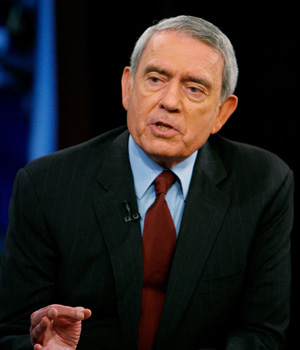
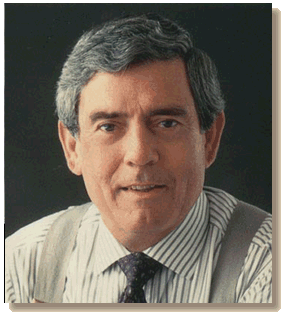
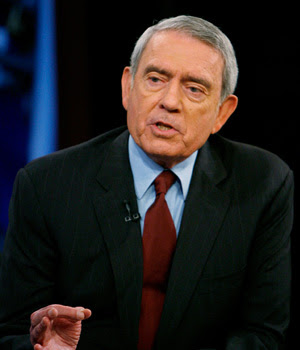
Former CBS News anchor Dan Rather delivered a blistering critique of corporate news on Saturday night at the National Conference for Media Reform hosted by Free Press.

The following are Dan Rather’s prepared remarks:

I am grateful to be here and I am, most of all, gratified by the energy I have seen tonight and at this conference. It will take this kind of energy — and more — to sustain what is good in our news media… to improve what is deficient… and to push back against the forces and the trends that imperil journalism and that — by immediate extension — imperil democracy itself.

The Framers of our Constitution enshrined freedom of the press in the very first Amendment, up at the top of the Bill of Rights, not because they were great fans of journalists — like many politicians, then and now, they were not — but rather because they knew, as Thomas Jefferson put it, that, “If a nation expects to be ignorant and free… it expects what never was and never will be.”

And it is because of this Constitutionally-protected role that I still prefer to use the word “press” over the word “media.” If nothing else, it serves as a subtle reminder that — along with newspapers — radio, television, and, now, the Internet, carry the same Constitutional rights, mandates, and responsibilities that the founders guaranteed for those who plied their trade solely in print.

So when you hear me talk about the press, please know that I am talking about all the ways that news can be transmitted. And when you hear me criticize and critique the press, please know that I do not exempt myself from these criticisms.

In our efforts to take back the American press for the American people, we are blessed this weekend with the gift of good timing. For anyone who may have been inclined to ask if there really is a problem with the news media, or wonder if the task of media reform is, indeed, an urgent one… recent days have brought an inescapable answer, from a most unlikely source.

A source who decided to tell everyone, quote, “what happened.”

I know I can’t be the first person this weekend to reference the recent book by former White House Press Secretary Scott McClellan, but, having interviewed him this past week, I think there are some very important points to be made from the things he says in his book, and the questions his statements raise.

I’m sure all of you took special notice of what he had to say about the role of the press corps, in the run-up to the war in Iraq. In the government’s selling of the war, he said they were — or, I should say, we were “complicit enablers” and “overly deferential.”

These are interesting statements, especially considering their source. As one tries to wrap one’s mind around them, the phrase “cognitive dissonance” comes to mind.

The first reaction, a visceral one, is: Whatever his motives for saying these things, he’s right — and we didn’t need Scott McClellan to tell us so.

But the second reaction is: Wait a minute… I do remember at least some reporters, and some news organizations, asking tough questions — asking them of the president, of those in his administration, of White House Press Secretary Ari Fleischer and — oh yes — of Scott McClellan himself, once he took over for Mr. Fleischer a few months after the invasion.

So how do we reconcile these competing reactions? Well, we need to pull back for what we in television call the wide shot.

If we look at the wide shot, we can see, in one corner of our screen, the White House briefing room filled with the White House press corps… and, filling the rest of the screen, the finite but disproportionately powerful universe that has become known as “mainstream media” — the newspapers and news programs, real and alleged, that employ these White House correspondents — the news organizations that are, in turn, owned by a shockingly few, much larger corporations, for which news is but a miniscule part of their overall business interests.

In the wake of 9/11 and in the run-up to Iraq, these news organizations made a decision — consciously or unconsciously, but unquestionably in a climate of fear — to accept the overall narrative frame given them by the White House, a narrative that went like this: Saddam Hussein, brutal dictator, harbored weapons of mass destruction and, because of his supposed links to al Qaeda, this could not be tolerated in a post-9/11 world.

In the news and on the news, one could, to be sure, find persons and views that did not agree with all or parts of this official narrative. Hans Blix, the former U.N. chief weapons inspector, comes to mind as an example. But the burden of proof, implicitly or explicitly, was put on these dissenting views and persons… the burden of proof was not put on an administration that was demonstrably moving towards a large-scale military action that would represent a break with American precedent and stated policy of how, when, and under what circumstances this nation goes to war.

So with this in mind, we look back to the corner of our screen where the White House Press Corps is asking their questions. I have been a White House correspondent myself, and I have worked with some of the best in the business. You have an incentive, when you are in that briefing room, to ask the good, tough questions: If nothing else, that is how you get in the paper, or on the air. There is more to it than that, and things have changed since I was a White House correspondent — something I want to talk about in a minute. But the correspondents — the really good ones — these correspondents ask their tough questions.

And these questions are met with what is now called, euphemistically and much too kindly, what is now called “message discipline.”

Well, we used to have a better and more accurate term for “message discipline.” We called it “stonewalling.”

Now, cut back to your evening news, or your daily newspaper… where that White House Correspondent dutifully repeats the question he asked of the president or his press secretary, and dutifully relates the answer he was given — the same non-answer we’ve already heard dozens of times, which amounts to a pitch for the administration’s point of view, whether or NOT the answer had anything to do with the actual question that was asked.

And then: “Thank you Jack. In other news today… .”

And we’re off on a whole new story.

In our news media, in our press, those who wield power were, in the lead-up to Iraq, given the opportunity to present their views as a coherent whole, to connect the dots, as they saw the dots and the connections… no matter how much these views may have flown in the face of precedent, established practice — or, indeed, the facts (as we are reminded, yet again, by the just-released Senate report on the administration’s use of pre-war intelligence). The powerful are given this opportunity still, in ways big and small, despite what you may hear about the “post-Katrina” press.

But when a tough question is asked and not answered, when reputable people come before the public and say, “wait a minute, something’s not right here,” the press has treated them like voices crying in the wilderness. These views, though they might be given air time, become lone dots — dots that journalists don’t dare connect, even if the connections are obvious, even if people on the Internet and in the independent press are making these very same connections. The mainstream press doesn’t connect these dots because someone might then accuse them of editorializing, or of being the, quote, “liberal media.”

But connecting these dots — making disparate facts make sense — is a big part of the real work of journalism.

So how does this happen? Why does this happen?

Let me say, by way of answering, that quality news of integrity starts with an owner who has guts.

In a news organization with an owner who has guts, there is an incentive to ask the tough questions, and there is an incentive to pull together the facts — to connect the dots — in a way that makes coherent sense to the news audience.
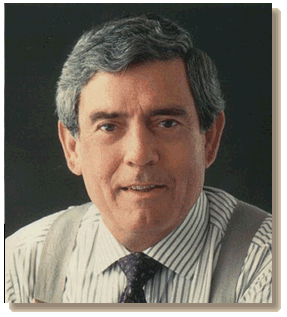
Dan Rather worked in Houston at the Houston Chronicle, KTRH radio and as anchor at KHOU-TV before becoming CBS News anchor.

I mentioned a moment ago that things have changed since I was a White House correspondent. Yes, presidential administrations have become more adept at holding “access” over the heads of reporters — ask too tough a question, or too many of them, so the implicit threat goes, and you’re not going to get any more interviews with high-ranking members of the administration, let alone the president. But I was covering Presidents Johnson and Nixon — men not exactly known as pushovers. No, what has changed, even more than the nature of the presidency, is the character of news ownership. I only found out years after the fact, for example, about the pressure that the Nixon White House put on my then-bosses, during Watergate — pressure to cut down my pieces, to call me off the story, and so on… because, back then, my bosses took the heat, so I didn’t have to. They did this so the story could get told, and so the public could be informed.

But it is rare, now, to find a major news organization owned by an individual, someone who can say, in effect, “The buck stops here.” The more likely motto now is: “The news stops… with making bucks.”

America’s biggest, most important news organizations have, over the past 25 years, fallen prey to merger after merger, acquisition after acquisition… to the point where they are, now, tiny parts of immeasurably larger corporate entities — entities whose primary business often has nothing to do with news. Entities that may, at any given time, have literally hundreds of regulatory issues before multiple arms of the government concerning a vast array of business interests.

These are entities that, as publicly-held and traded corporations, have as their overall, reigning mandate: Provide a return on shareholder value. Increase profits. And not over time, not over the long haul, but quarterly.

One might ask just where the news fits into this model. And if you really need an answer, you can turn on your television, where you will see the following:

Political analysis reduced to in-studio shouting matches between partisans armed with little more than the day’s talking points.

Precious time and resources wasted on so-called human-interest stories, celebrity fluff, sensationalist trials, and gossip.

A proliferation of “news you can use” that amounts to thinly-disguised press releases for the latest consumer products.

And, though this doesn’t get said enough, local news, which is where most Americans get their news, that seems not to change no matter what town or what city you’re in… so slavish is its adherence to the “happy talk” formula and the dictum that, “If it bleeds, it leads.”

I could continue for hours, cataloging journalistic sins of which I know you are all too aware. But, as the time grows late, let me say that almost all of these failings come down to this: In the current model of corporate news ownership, the incentive to produce good and valuable news is simply not there.

Good news, quality news of integrity, requires resources and it requires talent. These things are expensive, these things eat away at the bottom line.

Years ago, in the eighties and the nineties, when the implications of these cost-trimming measures were becoming impossible to ignore, and the quality of the news was clearly threatened, I spoke out against this cutting of news operations to the bone and beyond. Even then, though, I couldn’t have imagined that the cost-cutting imperatives would go as far as they have today — deep into the marrow of what was once considered a public trust.

But since the financial resources always seem to be available for entertainment, promotion, and — last but not least — for lobbying… perhaps there is an even more important reason why the incentive to produce quality news is absent, and that is: quality news of integrity, by its very nature, is sure to rock the boat now and then. Good, responsible news worthy of its Constitutional protections will, in that famous phrase, afflict the powerful and comfort the afflicted.

And that, when one feels the need to deliver shareholder value above all, means that good news… may not always mean good business — or so goes the fear, a fear that filters down into just about every big newsroom in this country.

Now, I have spent my entire life in for-profit news, and I happen to think that it does not have to be this way. I have worked for news owners who, while they may have regarded their news divisions as an occasional irritant, chose to turn that irritant into a pearl of public trust. But today, sadly, it seems that the conglomerates that have control over some of the biggest pieces of this public trust would just as soon spit that irritant out.

So what does this mean for us tonight, and what is to be done?

It means that we need to be on the alert for where, when, and how our news media bows to undue government influence. And you need to let news organizations know, in no uncertain terms, that you won’t stand for it… that you, as news consumers, are capable of exerting pressure of your own.

It means that we need to continue to let our government know that, when it comes to media consolidation, enough is enough. Too few voices are dominating, homogenizing, and marginalizing the news. We need to demand that the American people get something in exchange for the use of airwaves that belong, after all, to the people.

It means that we need to ensure that the Internet, where free speech reigns and where journalism does not have to pass through a corporate filter… remains free.

We need to say, loud and clear, that we don’t want big corporations enjoying preferred access to — or government acting as the gatekeeper for — this unique platform for independent journalism.

And it means that we need to hold the government to its mandate to protect the freedom of the press, including independent and non-commercial news media.

The stakes could not possibly be higher. Scott McClellan’s book serves as a reminder, and the current election season, not to mention the gathering clouds of conflict with Iran, will both serve as tests of whether lessons have truly been learned from past experience. Ensuring that a free press remains free will require vigilance, and it will require work.

Please, take tonight’s energy and inspiration home with you. Take it back to your desks and your workplaces, to your colleagues and your fellow citizens. magnify it, multiply it, and spread it. Make it viral. Make it something that cannot be ignored — not by the powers in Washington, not by the owners and executives of media companies. Write these people. Call them. Send them the message that you know your rights, you know that you are entitled to news media as diverse and varied as the American people… and that you deserve a press that provides the raw material of democracy, the good information that Americans need to be full participants in our government of, by, and for the people.

There is energy here, that can be equal to that task, but this energy must be maintained… if the press — if democracy — is to be preserved.

Thank you very much, and good night.

Source. / freepress.net

Also at the National Conference for Media Reform:

Bill Moyers Addresses Conference

The Rag Blog

Posted in RagBlog | Tagged , , , , , | Leave a comment

will.i.am? john.he.is!

The first video below is the will.i.am video, which many of you have probably seen ages ago. The second is the john.he.is takeoff.

Even if you’ve seen the first video before, I recommend playing it again as a refresher to better appreciate the second video.

Allan Campbell / The Rag Blog

Yes We Can Obama Song by will.i.am

AND: john.he.is

The Rag Blog / Posted June 8, 2008

Posted in RagBlog | Tagged , , , , , | Leave a comment

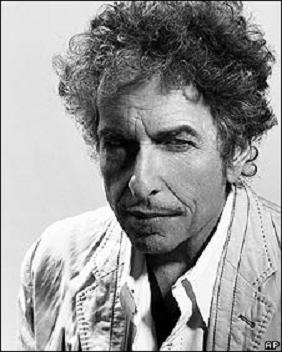
Bob Dylan Endorses Obama; Discusses Upcoming Art Show


Bob Dylan says Barack Obama is ‘changin’ America
By Alan Jackson and David Byers

See entire Times Online interview with Bob Dylan, about his upcoming London art show and much more, at end of this article.

His 1964 track ‘The Times They are a-Changin’ became the anthem for his generation, symbolising the era-defining social struggle against the establishment.

Now Bob Dylan – who could justifiably claim to be the architect of Barack Obama’s ‘change’ catchphrase – has backed the Illinois senator to do for modern America what the generation before did in the 1960s.

In an exclusive interview with The Times, published today, Dylan gives a ringing endorsement to Mr Obama, the first ever black presidential candidate, claiming he is “redefining the nature of politics from the ground up”.

Dylan, 67, made the comments when being interviewed in Denmark, where he stopped over in a hotel during a tour of Scandinavia.

Asked about his views on American politics, he said: “Well, you know right now America is in a state of upheaval. Poverty is demoralising. You can’t expect people to have the virtue of purity when they are poor.

“But we’ve got this guy out there now who is redefining the nature of politics from the ground up…Barack Obama.

“He’s redefining what a politician is, so we’ll have to see how things play out. Am I hopeful? Yes, I’m hopeful that things might change. Some things are going to have to.”

He added: “You should always take the best from the past, leave the worst back there and go forward into the future.”

Dylan’s endorsement contains much symbolic significance. The legendary singer-songwriter, who has an art exhibition opening in London next week, became a focal point for young people worldwide when he released the album ‘The times they are a-changin’,” including the famous song of that name, in 1964.

The track, which he wrote as the social liberation of the ’60s astonished politicians and parents, included lines urging people to accept and embrace what was happening around them.

Memorable lines included: “Come senators, congressmen, please heed the call. Don’t stand in the doorway, don’t block up the hall,” and: “Come mothers and fathers throughout the land, and don’t criticise what you can’t understand. Your sons and your daughters are beyond your command. Your old road is rapidly agin’.”

Source. / Times Online, UK / June 5, 2008

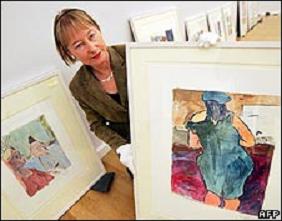
Artwork by Bob Dylan.

Bob Dylan: He’s got everything he needs, he’s an artist, he don’t look back

By Alan Jackson

The legendary singer/songwriter has an art exhibition opening in London next week and loves to talk about it. But you risk his 1,000-yard stare if you touch on his personal life

Odense, Denmark, and the not-quite-grand hotel that for the next two nights will be a home away from home for Bob Dylan. He arrived here from Reykjavik, four days after his 67th birthday and in the first stages of a lengthy itinerary that will take him through Scandinavia, the Baltic states, Austria, Italy, France, Andorra, Spain and Portugal between now and mid-July. To his irritation, others long ago gave this ongoing schedule the title of The Never-Ending Tour (habitually, he plays upwards of 100 concerts each year, often considerably more). As he prefers to see it: “I’m just making my living by plying a trade.”

Achieving my promised audience with the legendary singer-songwriter and now exhibited painter proves to be a two-step process. First, his road manager takes me from the lobby to a darkened, sparsely furnished meeting room in which an orange-haired woman is sitting straight-backed and reading a novel. “If you could just wait here,” he begins, then disappears, his mobile clamped to his ear. Left alone, I introduce myself to the woman but she merely smiles enigmatically and continues with her book. Who is or was she? I still have no idea.

Minutes later I am collected, taken up a flight of stairs and ushered towards a door that is ajar. As I approach it is opened by Dylan, who welcomes me inside with a soft handshake and a volley of courtesies: “How have you been?” [I have interviewed him twice before, in 1997 and 2001], “What’s been going on in your life?” and “Are you OK with the dark [here in what appears to be his bedroom, all the curtains have been drawn]?”

My eyes adjusting to this premature twilight, I take in the fact that he is wearing boots, jeans and a loose sweatshirt, its sleeves pushed up above the elbows. That famous face is heavily lined and pale, but always warm and quick to smile. As we take seats at right angles to each other, he presses his fingertips into his grey-flecked curls and vigorously rubs his scalp, as if to do so will focus his mind.

I place on the low table between us the book that I have brought with me. “Heh, heh, heh!” Dylan chuckles, reaching out for it. “This is pretty handsome stuff.” He is looking at a straight-from-the-presses copy of The Drawn Blank Series, produced by the Halcyon Gallery to coincide with the exhibition of that name in Bruton Street, Mayfair. Will he visit the show itself? “I don’t know,” he says, seemingly transfixed by the book’s cover, his voice the familiar rasp that has inspired a million amateur impressionists. “I have all these dates to play. It might not be possible. I’d like to. We’ll have to see.”

The haphazard process leading to the London show began nearly 20 years ago when he was approached by an editor at the American publishing company Random House. “They’d seen some of my sketches somewhere and asked if I’d like to do a whole book. Why not, you know? There was no predetermined brief. ‘Just deal with the material to hand, whatever that is. And do it however you want. You can be fussy, you can be slam-bang, it doesn’t matter.’ Then they gave me a drawing book, I took it away with me and turned it back in again, full three years later.”

Published in 1994 under the abbreviated title Drawn Blank, the resultant images had been executed both on the hoof while he was touring and in a more structured way in studios, using models (“Just anyone who’d be open to doing it”) and lights. What was going on in his life during that three-year period to inform or provide a back story to the work? “Just the usual,” Dylan shrugs, fixed in the hunkered-forward, hands-clasped position he will maintain for most of our time together. “I try to live as simply as is possible and was just drawing whatever I felt like drawing, whenever I felt like doing it. The idea was always to do it without affectation or self-reference, to provide some kind of panoramic view of the world as I was seeing it.”

Built up of work that is often contemplative, sometimes exuberant but consistently technically accomplished and engaging, that view is of train halts, diners and dockyards, barflies, dandies and uniformed drivers glimpsed in New Orleans or New York, Stockholm or South Dakota. And of women. We’re left in no doubt that Dylan likes women. “They weren’t actually there at the same time,” he notes quickly, pointing, when his page-turning reveals the painting Two Sisters, its subjects lounging, one clothed, the other naked but for her bra. “They posed separately and I put them together afterwards.”

There was little precedent within his own family for this talented eye, it seems. “Instead of playing cards, my maternal grandmother would do these little still lives, but I can’t really say that had any influence on what I’ve done.” Art formed no part of his formal education and he recalls there being no public galleries in the Minnesotan communities (first Duluth, then Hibbing) of his youth. “I was in my teens before I started to see books of paintings in the school library – frescoes or the work of Michelangelo, that kind of thing. And I didn’t really see the stuff that properly had an impact on me – Matisse, Derain, Monet, Gauguin – ’til later on, when I was in my twenties.”

By then, Dylan the university dropout and fledgeling folk performer had gravitated to New York, where he quickly discovered the Metropolitan Museum of Art. “It was overwhelming for me at the time, the immensity and sheer variety of stuff on display. The first exhibition I saw there was of Gauguin paintings and I found I could stand in front of any one of them for as long as I’d sit at the movies, yet not get tired on my feet. I’d lose all sense of time. It was an intriguing thing.” It was as his music career gathered pace that he found himself first trying his own hand at drawing. “Mostly when I was on a train or in a café, just to make sense of what was in my immediate world. I found it relaxed me. Some of the stuff I kept, some I didn’t.”

It was sketches completed in this manner and spirit that, years later, came to the attention of Random House and led to that commission. However, little accord was given to the book on its eventual publication. “The critics didn’t want to review it. The publisher told me they couldn’t get past the idea of another singer who dabbled. You know, like, ‘David Bowie, Joni Mitchell, Paul McCartney…Everyone’s doing it these days.’ No one from the singing profession was going to be taken seriously by the art world, I was told, but that was OK. I wasn’t expecting anything phenomenal to happen. It’s not like the drawings were revolutionary. They weren’t going to change anyone’s way of thinking.”

But years later there came an approach from the Chemnitz City Art Gallery in Germany. Ingrid Mossinger, its director and a fan of the 1965 album Bringing it all Back Home, had felt it likely that someone as adept as Dylan in the use of metaphoric and abstract language might also draw or paint. Her research led her to the book Drawn Blank, in the preface of which Dylan wrote of hoping to “eventually complete” its collection of sketches. She encouraged him to do just that.

The method used to turn them into the paintings about to go on exhibition in London involved making digital scans of the original drawings and enlarging and then transferring them on to heavy paper ready for reworking. Dylan then experimented with treating individual images with a variety of colours. “And doing so subverted the light. Every picture spoke a different language to me as the various colours were applied.”

Attempts have been made to pin down and name his influences. When I mention this, Dylan wrongly takes it as a suggestion that the work is pastiche or somehow derivative. “I haven’t trained in any academy where you learn how to do something in the style of Degas or Van Gogh, or how to copy Da Vinci,” he retorts. “I don’t have that facility to copy note for note. Influenced by? If I had the ability to paint like any of those guys I might see the similarity, but I don’t. If there is anything it’s just by accident and instinctive.” Which is all that any critic was suggesting, after all. But, it seems, he is as uncomfortable at having his paintings deconstructed as he is his songs.

Of the latter process, he said on our last meeting: “These so-called connoisseurs of Bob Dylan music? I don’t feel they know a thing or have an inkling of who I am and what I’m about. That such people have spent so much time thinking about who? Me? Get a life, please.”

Today he expresses similar impatience with the critics who have read into his art a variety of underlying feelings – anonymity, transience, rootlessness, even loneliness. Reaching again for the Halcyon book. “Let’s have a look, shall we [the pages fall open at Woman in Red Lion Pub, her dress executed in a vivid yellow]? Do you see loneliness in that? Or that [Six Women]? I don’t. And this one’s just a pastoral scene [Sunday Afternoon]. What’s rootless, transient and lonely about that? It’s a mystery why anybody would say or think such a thing.”

And the idea that, in framing various images with windows and doors, he is revealing himself as a perennial outsider, forced by his name and status to observe the world rather than connect directly with it? Dylan rolls his eyes. “I just find it to be less satisfying to have the ends [by which he means the edges of the image] being endless, so I’ll put a window there or block it in some way. It just looks better to me that way.” So he would prefer a purely emotional, instinctive response to the work rather than any searching for themes and insights? “If it pleases the eye of the beholder…There’s no more to it than that, to my mind. Or even if it repels the eye. Either one is fine.”

On both our previous meetings, Dylan voiced his disdain for those completists who wish to see every scrap of paper he has written on or hear every studio out-take that he has rejected. With that in mind, I ask if it was a big deal for him to sign his name on each of the Drawn Blank paintings. “Yes!” he exclaims, laughing. “I finally grew into it, but yes, it was.” And did he perhaps practise his signature in advance? “I did, because it’s tricky getting it just right. Finally you think, ‘Oh, to hell…’ and just go for it, like you’re writing a cheque or something.” He has, he says, no particular favourite among the images. “It’s the same as with the early songs…In the Sixties, by the time they came out we were way past the recorded versions and were saying, ‘No, don’t release that. We are playing it this way now.’ So it is with the art. I find myself thinking, ‘I could have done this or that to make it better’. In the end, though, you’ve just got to let the work go and hope you’ll know to do better next time.”

When I ask if he finds the art establishment preferable to the one he is more used to, Dylan grins and pulls a face of mock disgust. “The music world’s a made-up bunch of hypocritical rubbish. I know from publishing a memoir [2004’s Chronicles Volume One] that the book people are a whole lot saner. And the art world? From the small steps I’ve taken in it, I’d say, yeah, the people are honest, upfront and deliver what they say. Basically, they are who they say they are. They don’t pretend. And having been in the music world most of my life [he laughs again], I can tell you it’s not that way. Let’s just say it’s less…dignified.”

He tells me that he continued to draw for his pleasure after the Random House commission was fulfilled. “Not as intensely but yes, I have sketchbooks from the years since then. Of course, what I release to the public and what I keep for myself are two different things.”

He has had proposals for two future series of paintings, the first of which would involve having celebrities sit for him. “I could pick the names but don’t want to. I’d rather be given a list and have someone else contact the people to find out if they’re up for it. So I’m waiting to see who they might be thinking of. I assume it’s movers and shakers. You know, inventors, mathematicians, scientists, business people, actors…We’ll see.

“But what interests me more is the idea of a collection based on historically romantic figures. Napoleon and Josephine, Dante and Beatrice, Captain John Smith and Pocahontas, Brad and Angelina [here he laughs]… I could use my own imagination for that. It wouldn’t have to be the actual people, obviously.” But the latter two might be delighted to sit for him, no? Dylan chuckles at the possibility. “Maybe. Who knows? All I’ll say is that I’m intrigued by the basic idea. Whether or not it comes to fruition, time will tell. This [The Drawn Blank Series] was easy to do because it didn’t clash with any other commitments. If something does, then I simply cannot do it.”

By commitments, one presumes Dylan means not just his touring schedule but also his personal and familial relationships. Only the bald facts are known in this regard. He has four grown-up children (Jesse, Anna Lea, Samuel and rock singer Jakob) from a ten-year marriage to former model Sara Lowndes that ended in divorce in 1977. And in 2001 it was revealed by a biographer that he was married from 1986 to 1992 to one of his former backing singers, Carol Dennis, and has another daughter, Desiree, also now an adult, from the union.

But inquiries about his non-work life causes him to shut down. Not even a fact as basic as that of where he lives (his main home is believed to be a mansion on the coast beyond Los Angeles) receives ready validation, and when I ask if he has a studio in which he worked on the paintings, he will offer only, “Well, there are spaces in some of the properties where I can do just about any old thing”, before looking off into the middle distance, awaiting the next question.

Such reticence has earned him a reputation as rock’s grumpy old man, a curmudgeon who refuses to appear grateful that he is revered and adored. But whether or not he intends it to do so, such determined self-protection merely enhances the myth and mystery. Today and after spending much of the 1980s through to the mid-1990s out in the critical cold, Dylan’s star is higher than at any time since the 1960s, the decade with which he is most closely associated (erroneously in his view). Honours, awards and citations all but rain down upon him these days: it is as if we have all awoken to the fact that we will not see his like again. Not that anyone doubts that he has a long life still to live. “Well, thank you for that!” he notes with a laugh.

For any further insights into his private world we must wait to see if any crumbs are thrown in the next instalment of the intended three-book Chronicles (“I could do more. It wouldn’t be a problem in terms of material”), at which he is already at work. Yes, he allows, he was gratified by the critical and commercial success of Volume One. “Especially given the effort that went into it. Writing any kind of book is a lonely thing. You cut yourself off from friends and family to find that necessarily quiet place in your mind. You have to disassociate and detach yourself from just about everything and everybody. I didn’t like that part of it at all.

“It took me maybe two years in total. I was touring so much in the beginning, on days off or on a bus, I’d write my thoughts out in longhand or on a typewriter. It was the transcribing of the stuff, the rereading and retelling of it, that was time-consuming and I came to figure that there had to be a better way. I know what that is now. You need a full-time secretary so that you can get the ideas down immediately, then deal with them later.”

Meanwhile, there is the continuing delight that is his own radio show (he smiles at the mention of it), Theme Time Radio Hour with your Host Bob Dylan, the brainchild of America’s XM Satellite Radio and now broadcast weekly here on Radio 2. And later this year he will release a further volume within the ongoing Bob Dylan Bootleg Series, featuring previously unreleased or rare material alongside alternative versions of existing tracks recorded between 1989 and 2006.

Coming on top of the recent award to him of a special Pulitzer prize recognising “his profound impact on popular music and American culture, marked by lyrical compositions of extraordinary poetic power” (“I hope they don’t ask for it back!”), all of this would suggest that he has arrived at a very creative but also contented period within his life.

“I’ve always felt that,” he says. “It’s just sometimes I’ve got more going on than at other times.” But life is good? “To me, it’s never been otherwise.”

My time with Dylan is up and we stand in preparation for my leaving the room. As a last aside, I ask for his take on the US political situation in the run-up to November’s presidential election.

“Well, you know right now America is in a state of upheaval,” he says. “Poverty is demoralising. You can’t expect people to have the virtue of purity when they are poor. But we’ve got this guy out there now who is redefining the nature of politics from the ground up…Barack Obama. He’s redefining what a politician is, so we’ll have to see how things play out. Am I hopeful? Yes, I’m hopeful that things might change. Some things are going to have to.” He offers a parting handshake. “You should always take the best from the past, leave the worst back there and go forward into the future,” he notes as the door closes between us.

For more, see www.halcyongallery.comand www.bobdylanart.com

Source. / Times Online, UKThe Rag Blog

Posted in RagBlog | Tagged , , , , , , , | 1 Comment

Blackmailing Iraq – Just Another Day at BushCo


US issues threat to Iraq’s $50bn foreign reserves in military deal
By Patrick Cockburn / June 6, 2008

Under the planned pact, reported in The Independent yesterday, US soldiers in Iraq will enjoy legal immunity

The US is holding hostage some $50bn (£25bn) of Iraq’s money in the Federal Reserve Bank of New York to pressure the Iraqi government into signing an agreement seen by many Iraqis as prolonging the US occupation indefinitely, according to information leaked to The Independent.

US negotiators are using the existence of $20bn in outstanding court judgments against Iraq in the US, to pressure their Iraqi counterparts into accepting the terms of the military deal, details of which were reported for the first time in this newspaper yesterday.

Iraq’s foreign reserves are currently protected by a presidential order giving them immunity from judicial attachment but the US side in the talks has suggested that if the UN mandate, under which the money is held, lapses and is not replaced by the new agreement, then Iraq’s funds would lose this immunity. The cost to Iraq of this happening would be the immediate loss of $20bn. The US is able to threaten Iraq with the loss of 40 per cent of its foreign exchange reserves because Iraq’s independence is still limited by the legacy of UN sanctions and restrictions imposed on Iraq since Saddam Hussein invaded Kuwait in the 1990s. This means that Iraq is still considered a threat to international security and stability under Chapter Seven of the UN charter. The US negotiators say the price of Iraq escaping Chapter Seven is to sign up to a new “strategic alliance” with the United States.

The threat by the American side underlines the personal commitment of President George Bush to pushing the new pact through by 31 July. Although it is in reality a treaty between Iraq and the US, Mr Bush is describing it as an alliance so he does not have to submit it for approval to the US Senate.

Iraqi critics of the agreement say that it means Iraq will be a client state in which the US will keep more than 50 military bases. American forces will be able to carry out arrests of Iraqi citizens and conduct military campaigns without consultation with the Iraqi government. American soldiers and contractors will enjoy legal immunity.

The US had previously denied it wanted permanent bases in Iraq, but American negotiators argue that so long as there is an Iraqi perimeter fence, even if it is manned by only one Iraqi soldier, around a US installation, then Iraq and not the US is in charge.

The US has security agreements with many countries, but none are occupied by 151,000 US soldiers as is Iraq. The US is not even willing to tell the government in Baghdad what American forces are entering or leaving Iraq, apparently because it fears the government will inform the Iranians, said an Iraqi source.

The fact that Iraq’s financial reserves, increasing rapidly because of the high price of oil, continue to be held in the Federal Reserve Bank of New York is another legacy of international sanctions against Saddam Hussein. Under the UN mandate, oil revenues must be placed in the Development Fund for Iraq which is in the bank.

The funds are under the control of the Iraqi government, though the US Treasury has strong influence on the form in which the reserves are held.

Iraqi officials say that, last year, they wanted to diversify their holdings out of the dollar, as it depreciated, into other assets, such as the euro, more likely to hold their value. This was vetoed by the US Treasury because American officials feared it would show lack of confidence in the dollar.

Iraqi officials say the consequence of the American action was to lose Iraq the equivalent of $5bn. Given intense American pressure on a weak Iraqi government very dependent on US support, it is still probable that the agreement will go through with only cosmetic changes. Grand Ayatollah Ali al-Sistani, the immensely influential Shia cleric, could prevent the pact by issuing a fatwa against it but has so far failed to do so.

The Grand Ayatollah met Abdul Aziz al-Hakim, the leader of the Islamic Supreme Council of Iraq (ISCI), which is the main supporter of the Iraqi government, earlier this week and did not condemn the agreement or call for a referendum. He said, according to Mr Hakim, that it must guarantee Iraqi national sovereignty, be transparent, command a national consensus and be approved by the Iraqi parliament. Critics of the deal fear that the government will sign the agreement, and parliament approve it, in return for marginal concessions.

Source / The Independent

The Rag Blog

Posted in RagBlog | Tagged , , | Leave a comment

Reagan Didn’t Win the Cold War, the Hippies Did


Old Myths From the Age of Idiocy (the One We’re in Now) to Be Replaced by: New Truths for the Age of Reality (the One We Hope to Enter)
by Larry Beinhart

The Great Republican Disaster, from Reagan to Bush the Lesser, has been the Time of the Unreal. (Yes, people possessed by the unreal are very much like the undead. They’re mindless, lethal, they infect others, they’re very hard to stop, and their existence is a complete surprise to people who live in the real world.)Those forces of darkness derive their power from their Great Myths.

No matter how powerful a myth is, if it is essentially false, reality has certain methods fighting back. It uses Failure, If failure fails, it moves on, through Fiasco, to Disaster.

Recently there have been signs of hope.

Yes. Hope means Obama. He speaks of reality, whether it’s about race or a gas tax holiday.

Lo and behold, people actually have heard, listened, and agreed.

Let us seize the time and create New Truths, based on Reality, to replace the Old Myths based on Bullshit.

Old Myth: 9/11 was an Act of War.
New Truth: 9/11 was a Criminal Act.

Osama bin Laden was not a head of state or an agent of a state. He was a religion crazed gangster with a relatively small gang. His acts were crimes.

To elevate them to acts of war was to elevate him.

Worse, it created the wrong response. So wrong that he’s still out there. Proof that you can commit a mass murder against the United States and get away with it.

Only when we redefine it, will we be able to figure out a sane response to replace the current insanity.

Old Myth: The War On Terror
New Truth: The War on Terror is Bogus

There is no War on Terror. It was a PR ploy to invade a country that annoyed George Bush and Dick Cheney, to transfer mad amounts of money to the military-industrial complex, to win elections, and to allow George to play dress up.

Old Myth: The War in Iraq was Not a War of Choice.
New Truth: The War in Iraq was a War of Choice.

Even if someone actually believed that Saddam Hussein was a dangerous man with weapons of mass destruction, the problem was solved the moment that the weapons inspectors got full access to all sites in Iraq.

At that point, going to war was like the police going into a man’s house to look for guns, then shooting him while he is sitting on the couch, because they couldn’t find them and were tired of looking.

Old Myth: The War in Iraq Can be Won.
New Truth: The War in Iraq Was Lost Years Ago.

It was lost through belief in stupid mythologies and the failure to heed reality. It was lost through poor planning and worse execution.

The administration does not have a plan, the means, or the will to win in Iraq. Their only plan, their only goal, is to pass the problem on, so they can blame the next president for their failure.

Old Myth: If We Leave Iraq, Chaos Will Ensue.
New Truth: Iraq is Now in Chaos.

George Bush, and his gang, created the chaos. They applied everything they believed in — force as foreign policy, that the whole world wants to be like us, free marketeering, no government, crony appointments — to Iraq. It demonstrates the bankruptcy of their entire theology.

Old Myth: Free Markets are the Best Solution to Everything.
New Truth: Markets are Good for Cheap Consumer Goods, but Bad for Health.

They’re bad for individual health, for health care systems, for the health of our work force, for the health of the environment. Unchecked and unbalanced, they’re bad for the health of our economy.

Old Myth: All Regulation is Bad. Remove Regulation and the Free Markets Will Make Everything Better.
New Truth: An Economy Without Regulations is like a Baseball Game Without Umpires.

The cheaters take over and chaos ensues.

Old Myth: Tax Cuts Stimulate the Economy.
New Truth: The Wrong Tax Cuts Can Ruin the Economy.

The truth is that the American economy has often thrived with high tax rates. Since WWII, it has never done as badly as it has under Bush, with the most cuts and lowest rates.

Old Myth: Reagan won the Cold War.
New Truth: The hippies won the Cold War.

Reagan told Gorbachev, “Tear down that wall.” But Gorbachev didn’t. Reagan built up the military, but that didn’t change anything. The people who tore down the Berlin Wall did so because they wanted to wear jeans and listen to rock ‘n’ roll and say rude things about their government. Like the hippies.

Old Myth: The Media Lost the War in Vietnam
New Truth: (A restatement of an Old Truth). The War in Vietnam was a Stupid, Useless Mistake.

Bad politics, bad military strategy, and bad tactics made it worse. America’s leaders and America’s generals lost the war in Vietnam.

There are recordings of Richard Nixon and Henry Kissinger privately admitting that the Vietnam War could not be won. Then deciding not to end it, to keep it going, so Nixon could win re-election.

This is important because after Bush leaves office someone else will have to get us out of Iraq. The myth makers will rush in to say that Bush policies could have won and his successor lost the war.

Old Myth: George Bush is the Problem.
New Truth: The entire Republican Agenda Has Been Revealed as Bankrupt.

George Bush acted out an agenda. It was enthusiastically backed by a Republican congress. And acquiesced to by Democrats like Hillary Clinton, who were terrified by the Republican’s Big Bad Myths.

Old Myth: Religious Faith is a Good Way to Judge a Leader.
New Truth: The Way People Deal With Reality Is the Way to Judge a Leader.

The spectacle of our candidates groveling on TV over how religious they are is appalling.

“If there is one thing for which we stand in this country, it is for complete religious freedom, and it is an emphatic negation of this right to cross-examine a man on his religion before being willing to support him for office.” – Theodore Roosevelt (Republican)

Old Myth: Being Intelligent is Elitist. And That’s Bad.
New Truth: Lord, oh Lord, We’re Tired of Stupid Leaders Who Can’t Do Anything Right.

Larry Beinhart is the author of Wag the Dog, The Librarian, and Fog Facts: Searching for Truth in the Land of Spin. All available at nationbooks.org. His new novel, Salvation Boulevard, will be published in September, 2008, by Nation Books.

Source / Common Dreams

The Rag Blog

Posted in RagBlog | Tagged , , | Leave a comment

Booksigning at Threadgill’s – Sunday, 8 June

The Rag Blog

Posted in RagBlog | Tagged , | Leave a comment

Marilyn Buck Book Party, Sunday June 8, 6 PM

Marilyn will not, of course, be able to attend this event, as she is still confined in federal prison, the longest-held woman political prisoner in the US. But if any RagReaders are in NYC this Sunday, try to stop by; you are guaranteed a wonderful literary treat!

Mariann Wizard / The Rag Blog

Marilyn Buck book party / poetry reading Sunday June 8

Sunday, June 8 @ 6:00 pm

Reading and discussion of Cristina Peri Rossi’s “State of Exile,” translated by U.S. political prisoner Marilyn Buck.

Bluestockings Bookstore – 172 Allen Street, New York City, New York
F train to 2nd Ave. Free.

U.S. political prisoner and poet Marilyn Buck translated and wrote a nuanced introduction to “State of Exile,” an essay and poems by Uruguayan Cristina Peri Rossi, now exiled in Barcelona. Join the New York Friends of Marilyn Buck for readings by Asha Bandele and Nuris Rodriguez, and talks by Soffiyah Elijah, Susan Rosenberg, and Laura Whitehorn.

“State of Exile is a haunting work that sat for decades, awaiting, like cicadas, its proper season. That time is now.” — Mumia Abu-Jamal

For more information, see marilynbuck.com.

For background on Marilyn Buck’s life of anti-imperialist struggle and her other writings in prison, go to this Web site.

Free All Political Prisoners!
nycjericho@riseup.nethttp://www.jerichony.org/

The Rag Blog

Posted in Rag Bloggers | Tagged | Leave a comment

Global Economy in an Inverted World

Guys shooting craps in musical “Guys and Dolls.”

The Stock Market :
Shooting Craps From the Left

By Steve Russell / The Rag Blog / June 5, 2008

[The following comments by Rag Blog contributor Steve Russell are followed by an Op-Ed piece from the New York Times by Roger Cohen titled “The World is Upside Down.”]

The left should pay more attention to stock markets. The markets have tales to tell even for people who have no interest in investments, who think the whole idea of pooling capital (the therefore stock) is immoral.

My own take is that stock ownership is no more inherently immoral than shooting craps and has the advantage that, unlike shooting craps, it can actually be constructive. I’ve been fooling with it as a retirement hobby.

I have some paper losses but the only realized loss I have was a Latin American mineral exploration stock that I dumped for a purposeful loss when two countries were massing troops on their common border. I figured their stocks tanking might help settle things down.

Conventional wisdom is that 1/5 to 1/3 of one’s portfolio should be outside the US. In fact, there are many economies growing much faster than the US. Peru was the winner last year. But for a balance of growth and managed risk, the happening thing is BRIC—Brazil, Russia, India, China.

I’m trying to avoid China and Russia because they are still struggling with a rule of law, and investment where there is no rule of law is worse than a crapshoot. As to China, there’s another problem. The price of oil is eating up China’s price advantage in manufacturing. This does not affect Russia because it has oil and it does not affect Brazil or India because the basis for their growth is internal, servicing their rising middle class. China is more dependent on trade and the trade is getting hammered by transportation costs.

So I own a few shares of Tata Motors, which makes the cheapest car in the world and the only one that runs on compressed air, and Sify Technologies, which is building internet cafes all over India. I also own some shares of Brazilian iron ore.

Funny, I still don’t feel like a capitalist, but I do feel that watching business news gives me information I’m not used to having. Below, a great metropolitan newspaper opines about the fall of the American Empire.

The World Is Upside Down
By Roger Cohen / May 2, 2008

RIO DE JANEIRO — For a while the world was flat. Now it’s upside down.

To understand it, invert your thinking. See the developed world as depending on the developing world, rather than the other way round. Understand that two-thirds of global economic growth last year came from emerging countries, whose economies will expand about 6.7 percent in 2008, against 1.3 percent for the United States, Japan and euro zone states.

The sharp rise in prices for energy, commodities, metals and minerals produced mainly in the developing world explains part of this shift. That has created the balance of payments surpluses fueling dollar-dripping sovereign wealth funds in the gulf and East Asia. They amuse themselves picking up a stake in BP here, a chunk of Morgan Stanley there, and why not a sliver of Total.

We of the developed-world Paleolithic species are fair game for the upstarts now, our predator role exhausted. The U.S. and Europe may one day need all the charity they can get.

To place this inversion in focus, it helps to be in Brazil, where winter (so to speak) arrives with the Northern Hemisphere summer, and economic optimism, as exuberant as the vegetation, increases at the same brisk clip as U.S. foreclosures.

Huge offshore oil finds, a sugarcane ethanol boom, vast reserves of unused arable land, mineral wealth and abundant fresh water contribute to Brazilian buoyancy. But natural resources are only part of the story. As in China and India, an expanding internal market is bolstering growth. So is increasing corporate sophistication and global ambition.

At the annual National Forum, a gathering of business leaders, I felt like a first-world pipsqueak as leaders of the national energy company Petrobras (bigger than BP, Shell and Total) and Companhia Vale do Rio Doce, or C.V.R.D. (the world’s second largest mining company), reeled off head-turning statistics.

Petrobras, which has spearheaded Brazil’s push to self-sufficiency from heavy dependence on imported oil 30 years ago, will more than double oil production to 4.2 million barrels a day in 2015 from 1.9 million barrels today.

“With the latest discoveries, the South Atlantic will become a huge oil producer,” predicted Jose Sergio Gabrielli de Azvedo, its chief executive.

Roger Agnelli of C.V.R.D. waved away the United States (“It’s full of debt”) to focus on the company’s ambitions in Asia. It was imperative to be there, he said, because that’s where growth, capital and ambition are. China, he noted, will account for 55 percent of iron ore consumption, 31.6 percent of nickel, and 42 percent of aluminum by 2012. Case closed.

Like many other big emerging-market corporations, C.V.R.D. has been on a buying spree. It’s not just sovereign wealth funds that are acquiring first-world companies these days. It’s the new giants of the NAN (Newly Acquisitive Nations).

Emerging-market mergers and acquisitions are up 17 percent this year to $218 billion, while for the rest of the world they’re down 43 percent to $991 billion, according to Thomson Reuters.

The 2007 Unctad World Investment Report said developing-world direct foreign investment totaled $193 billion in 2006, compared with a 1990s annual average of $54 billion. The U.S. 2006 figure was $216.6 billion.

C.V.R.D. bought Canada’s Inco, a nickel miner, for $17 billion in 2006. It came close to acquiring the Anglo-Swiss miner Xstrata for $90 billion this year. Just last week, India’s Vedanta Resources reached a $2.6 billion deal to buy U.S. copper miner Asarco.

That deal is being challenged by Grupo Mexico, creating a Latin-American-Asian fight for a U.S. company.

If you have trouble getting your mind around that, try standing on your head.

That’s also a good position from which to view India’s Tata Motors agreeing to buy Land Rover and Jaguar from Ford for $2.3 billion, or Tata Steel’s acquisition last year of the Anglo-Dutch Corus Group steel company for $12 billion.

Globalization is now a two-way street; in fact it’s an Indian street with traffic weaving in all directions.

“In an inverted world, not only have developing economies become dominant forces in global exports in the space of a few years, but their companies are becoming major players in the global economy, challenging the incumbents that dominated the international scene in the 20th century,” said Claudio Frischtak, a Brazilian economist and consultant.

A shift in economic power is under way to which the developed world has not yet adjusted. Of course the G-8 and the permanent membership of the U.N. Security Council need to be expanded to reflect this change. The 21st century can’t be handled with 20th-century institutions.

That’s obvious. Less obvious is how the United States, which underwrites global security at vast expense, begins to share this burden, so that the new multi-polarity of wealth is reflected in a multipolarity of security commitments.

Headstands are in order for the next U.S. president.

Source. / New York Times

The Rag Blog

Posted in Rag Bloggers | Tagged , , , | 3 Comments

Alton Kelley : Master of Psychedelic Art

Alton Kelley, 1967. Photo by Bob Seidemann.

Alton Kelley, 67, Artist of the 1960s Rock Counterculture, Dies
By William Grimes / June 4, 2008

Alton Kelley, whose psychedelic concert posters for artists like the Grateful Dead, Jimi Hendrix, and Big Brother and the Holding Company helped define the visual style of the 1960s counterculture, died on Sunday at his home in Petaluma, Calif. He was 67.

The cause was complications of osteoporosis, said his wife, Marguerite Trousdale Kelley.

Mr. Kelley and his longtime collaborator, Stanley Mouse, combined sinuous Art Nouveau lettering and outré images plucked from sources near and far to create the visual equivalent of an acid trip. A 19th-century engraving from “The Rubaiyat of Omar Khayyam” inspired a famous poster for a Grateful Dead concert at the Avalon Ballroom in 1966 that showed a skeleton wearing a garland of roses on its skull and holding a wreath of roses on its left arm.

Grateful Dead poster designed in 1966 by Alton Kelley. Courtesy Rhino Entertainment Company.

The Grateful Dead later adopted this image as its emblem. Mr. Kelley and Mr. Mouse also designed several of the group’s album covers, including “American Beauty” and “Workingman’s Dead.”

Mr. Kelley was born in Houlton, Me., and grew up in Connecticut, where his parents moved to work in defense plants during World War II. His mother, a former schoolteacher, encouraged him to study art, and for a time he attended art schools in Philadelphia and New York, but his real passion was racing motorcycles and hot rods. He applied his artistic training to painting pinstripes on motorcycle gas tanks.

After working as a welder at the Sikorsky helicopter plant in Stratford, Conn., he moved to San Francisco in 1964, settling into the Haight-Ashbury neighborhood. With a group of friends he helped stage concerts at the Red Dog Saloon in Virginia City, Nev., by the Charlatans, a electric folk-rock band. On returning to San Francisco, he became a founding member of the Family Dog, a loose confederation of artists, poets, musicians and other free spirits who put on the some of the earliest psychedelic dance concerts, first at the Longshoremen’s Hall and later at the Avalon Ballroom.

Mr. Kelley was in charge of promoting the concerts with posters and flyers, but his drafting ability was weak. That shortcoming became less of a problem in early 1966, when he teamed up with Stanley Miller, a hot-rod artist from Detroit who worked under the last name Mouse. The two formed Mouse Studios, with Mr. Kelley contributing layout and images and Mr. Mouse doing the distinctive lettering and drafting work. Often, they took trips to the public library in a search for images from books, magazines and photographs.

“Stanley and I had no idea what we were doing,” Mr. Kelley told The San Francisco Chronicle last year. “But we went ahead and looked at American Indian stuff, Chinese stuff, Art Nouveau, Art Déco, Modern, Bauhaus, whatever.”

One of their first posters, for a concert headlined by Big Brother and the Holding Company, reproduced the logo for Zig-Zag cigarette papers, used widely for rolling marijuana joints.

“We were paranoid that the police would bust us or that Zig-Zag would bust us,” Mr. Mouse said.

From 1966 to 1969, Mr. Kelley worked on more than 150 posters for concerts at the Avalon Ballroom and the Fillmore, publicizing the most famous bands and artists of the era, among them Quicksilver Messenger Service, the Butterfield Blues Band and Moby Grape, as well as the Dead, Big Brother and the Holding Company, Jimi Hendrix, and Country Joe and the Fish. They created three posters for concerts headlined by Bo Diddley, who died on Monday.

With time, Mr. Kelley’s drawing improved, and the partners virtually fused into a poster-generating unit.

“Kelley would work on the left side of the drawing table and Mouse on the Right,” said Paul Grushkin, the author of “The Art of Rock: Posters From Presley to Punk” and a longtime friend of both men. “They turned out a poster a week.”

At the time, the posters were put up on telephone poles. Everyone who attended a concert at the Avalon received a free poster advertising the next show on the way out the door. Some were sold in head shops for a few dollars. Today, mint-condition posters by Mr. Kelley and Mr. Mouse can command prices of $5,000 or more.

With the waning of the 1960s, Mr. Kelley and Mr. Mouse diversified. They formed Monster, a T-shirt company, in the mid-1970s. They also designed the Pegasus-image cover for the Steve Miller album “Book of Dreams” and several albums for Journey in the 1980s.

In their final collaboration, in March of this year, they contributed the cover art for the program at the induction ceremony at the Rock and Roll Hall of Fame. On his own, Mr. Kelley designed posters and created hot-rod paintings that he transferred to T-shirts.

In addition to his wife, Mr. Kelley is survived by three children, Patty Kelley of San Diego, Yossarian Kelley of Seattle and China Bacosa of Herald, Calif.; two grandchildren; and his mother, Annie Kelley, and a sister, Kathy Verespy, both of Trumbull, Conn.

“Kelley had the unique ability to translate the music being played into these amazing images that captured the spirit of who we were and what the music was all about,” said the Grateful Dead drummer Mickey Hart. “He was a visual alchemist — skulls and roses, skeletons in full flight, cryptic alphabets, nothing was too strange for his imagination to conjure.”

Source. / New York Times

Thanks to Jim Retherford / The Rag Blog

Posted in RagBlog | Tagged , , , , , , , | Leave a comment

BushCo Crimes Build a Mountain

George Bush with General David Petraeus at Al-Asad Air Base in Anbar Province, Iraq, last year; JIM WATSON/AFP/Getty Images

Revealed: Secret plan to keep Iraq under US control
By Patrick Cockburn / June 5, 2008

Bush wants 50 military bases, control of Iraqi airspace and legal immunity for all American soldiers and contractors

A secret deal being negotiated in Baghdad would perpetuate the American military occupation of Iraq indefinitely, regardless of the outcome of the US presidential election in November.

The terms of the impending deal, details of which have been leaked to The Independent, are likely to have an explosive political effect in Iraq. Iraqi officials fear that the accord, under which US troops would occupy permanent bases, conduct military operations, arrest Iraqis and enjoy immunity from Iraqi law, will destabilise Iraq’s position in the Middle East and lay the basis for unending conflict in their country.

But the accord also threatens to provoke a political crisis in the US. President Bush wants to push it through by the end of next month so he can declare a military victory and claim his 2003 invasion has been vindicated. But by perpetuating the US presence in Iraq, the long-term settlement would undercut pledges by the Democratic presidential nominee, Barack Obama, to withdraw US troops if he is elected president in November.

The timing of the agreement would also boost the Republican candidate, John McCain, who has claimed the United States is on the verge of victory in Iraq – a victory that he says Mr Obama would throw away by a premature military withdrawal.

America currently has 151,000 troops in Iraq and, even after projected withdrawals next month, troop levels will stand at more than 142,000 – 10 000 more than when the military “surge” began in January 2007. Under the terms of the new treaty, the Americans would retain the long-term use of more than 50 bases in Iraq. American negotiators are also demanding immunity from Iraqi law for US troops and contractors, and a free hand to carry out arrests and conduct military activities in Iraq without consulting the Baghdad government.

The precise nature of the American demands has been kept secret until now. The leaks are certain to generate an angry backlash in Iraq. “It is a terrible breach of our sovereignty,” said one Iraqi politician, adding that if the security deal was signed it would delegitimise the government in Baghdad which will be seen as an American pawn.

The US has repeatedly denied it wants permanent bases in Iraq but one Iraqi source said: “This is just a tactical subterfuge.” Washington also wants control of Iraqi airspace below 29,000ft and the right to pursue its “war on terror” in Iraq, giving it the authority to arrest anybody it wants and to launch military campaigns without consultation.

Mr Bush is determined to force the Iraqi government to sign the so-called “strategic alliance” without modifications, by the end of next month. But it is already being condemned by the Iranians and many Arabs as a continuing American attempt to dominate the region. Ali Akbar Hashemi Rafsanjani, the powerful and usually moderate Iranian leader, said yesterday that such a deal would create “a permanent occupation”. He added: “The essence of this agreement is to turn the Iraqis into slaves of the Americans.”

Iraq’s Prime Minister, Nouri al-Maliki, is believed to be personally opposed to the terms of the new pact but feels his coalition government cannot stay in power without US backing.

The deal also risks exacerbating the proxy war being fought between Iran and the United States over who should be more influential in Iraq.

Although Iraqi ministers have said they will reject any agreement limiting Iraqi sovereignty, political observers in Baghdad suspect they will sign in the end and simply want to establish their credentials as defenders of Iraqi independence by a show of defiance now. The one Iraqi with the authority to stop deal is the majority Shia spiritual leader, Grand Ayatollah Ali al-Sistani. In 2003, he forced the US to agree to a referendum on the new Iraqi constitution and the election of a parliament. But he is said to believe that loss of US support would drastically weaken the Iraqi Shia, who won a majority in parliament in elections in 2005.

The US is adamantly against the new security agreement being put to a referendum in Iraq, suspecting that it would be voted down. The influential Shia cleric Muqtada al-Sadr has called on his followers to demonstrate every Friday against the impending agreement on the grounds that it compromises Iraqi independence.

The Iraqi government wants to delay the actual signing of the agreement but the office of Vice-President Dick Cheney has been trying to force it through. The US ambassador in Baghdad, Ryan Crocker, has spent weeks trying to secure the accord.

The signature of a security agreement, and a parallel deal providing a legal basis for keeping US troops in Iraq, is unlikely to be accepted by most Iraqis. But the Kurds, who make up a fifth of the population, will probably favour a continuing American presence, as will Sunni Arab political leaders who want US forces to dilute the power of the Shia. The Sunni Arab community, which has broadly supported a guerrilla war against US occupation, is likely to be split.

Source / The Independent

The Rag Blog

Posted in RagBlog | Tagged , , | Leave a comment

And Why, Exactly, Is This Man Still in Office?


Libby Links Cheney to Plame Leak
by Jason Leopold / June 4, 2008

FBI documents obtained by a congressional committee indicate that Vice President Dick Cheney may have authorized his former deputy to leak the identity of covert CIA operative Valerie Plame Wilson.

In a June 3 letter sent to Attorney General Michael Mukasey, Rep. Henry Waxman, Democratic chairman of the House Oversight and Government Reform Committee, called on the Justice Department to release transcripts of interviews that Special Prosecutor Patrick Fitzgerald conducted with President George W. Bush and Cheney about the leak of Plame’s identity.

Waxman said the Justice Department has turned over to his committee redacted transcripts of interviews that federal investigators conducted with former White House political adviser Karl Rove and Cheney’s former chief of staff I. Lewis “Scooter” Libby.

According to those transcripts, Libby told federal investigators that Cheney may have told him to leak Plame’s association with the CIA to reporters, Waxman said in the letter to Mukasey.

“In his interview with the FBI, Mr. Libby stated that it was ‘possible’ that Vice President Cheney instructed him to disseminate information about Ambassador [Joseph] Wilson’s wife to the press. This is a significant revelation and, if true, a serious matter. It cannot be responsibly investigated without access to the Vice President’s FBI interview,” Waxman wrote.

Waxman’s office would not release copies of the Libby-Rove transcripts or describe the contents in any detail. Fitzgerald’s investigative interviews with Bush and Cheney — asking how much knowledge the President and Vice President had about the Plame leak — have not been disclosed.

The scandal revolves around actions taken in June and July of 2003 when Rove, Libby and other administration officials leaked information to reporters aimed at discrediting Ambassador Wilson, who had challenged the truthfulness of Bush’s pre-invasion claims that Iraq had purchased yellowcake uranium from Niger.

Read the rest of it here. / Dissident Voice

The Rag Blog

Posted in RagBlog | Tagged , , , | Leave a comment

Quote of the Day: Jon Stewart


Is America ready for a woman or a black President?

A succinct analysis:

In Larry King’s interview with Jon Stewart, Larry brought up the subject of the primaries and asked him if America was ready for a woman or a black president.

Jon looked at him quizzically and said,

This is such a non-question. Did anyone ask us in 2000 if Americans were ready for a moron?

Thanks to Mariann Wizard / The Rag Blog

Posted in RagBlog | Tagged , | Leave a comment