Anne Lewis : Women Who Misbehave (in Texas!)

Texas Sen. Wendy Davis speaks to a crowd of thousands at the Texas State Capitol, Austin, Texas, July 1, 2013. Photo by Phillip Martin / The Frisky.

Deep in the heart of Texas:
Women who misbehave

The Gallery erupted when Dewhurst ruled in Campbell’s favor. We yelled ‘Shame’ and ‘Let her speak.’

By Anne Lewis | The Rag Blog | July 4, 2013

“They never preached or sat in a deacon’s bench. Nor did they vote or attend Harvard. Neither, because they were virtuous women, did they question God or the magistrates. They prayed secretly, read the Bible through at least once a year, and went to hear the minister preach even when it snowed. Hoping for an eternal crown, they never asked to be remembered on earth. And they haven’t been. Well-behaved women seldom make history; against Antinomians and witches, these pious matrons have had little chance at all.” — Laurel Thatcher Ulrich, 1976

AUSTIN — Recent experience in Texas gives both the well-known quote and its context new meaning. Jodie Laubenberg (R-Parker) sits alongside those virtuous and unquestioning women. When Senfronia Thompson (D), a wire coat hanger hanging from the podium, called for the exemption of victims of rape and incest from the anti-abortion bill that Laubenberg had filed, Laubenberg objected, “In the emergency room they have what’s called rape kits where a woman can get cleaned out.” She instantly became the subject of national ridicule.

Laudenberg speaks for more than Christian fundamentalists in the Texas House. She is the Texas State Chair of the American Legislative Council (ALEC) — a behind-the-scenes organization that is anti-union, anti-choice, anti-environment, and anti-immigrant. ALEC is responsible for the “shoot first” legislation that in part caused the killing of Trayvon Martin.

I went to the Capitol on Sunday and stood in the hallway leading to the House Gallery. A few “pro-life” people had also gathered to greet the Representatives with tape over their mouths, I suppose pretending to be fetuses. One miserable-looking man in a shiny blue shirt and black tie shouldered me aside.

When they began humming Amazing Grace, I could bear it no longer and began to talk about the meaning of the hymn written by a reformed slave trader, sung by the Cherokee on the Trail of Tears, brought to life by Mahalia Jackson for use in both the mass Civil Rights movement and in opposition to the Vietnam War, and a source of inspiration on union picket lines. The man’s lips began to puff up around his taped mouth.

Demonstrators fill the Capitol stairs. Photo by Anne Lewis / The Rag Blog.

Finally inside the House Gallery I heard the beautifully articulated amendment to SB5 by Donna Howard (D-Austin). Supported by the Journal of the American Medical Association, the Texas Medical Association, and the Texas Hospital Association, Howard wanted to strike language that might keep doctors and nurses from acting in the best interest of both mother and fetus.

Laubenberg got up to state her opposition, was asked simple questions about her bill by Lon Burnham (D-Ft Worth), and mumbled something about it gutting the bill. Burnham persisted with specifics. As a result Laubenberg moved to table all subsequent proposed amendments to the bill without returning to the microphone.

This included an amendment by Mary González (D-El Paso) who spoke eloquently of the disproportionate impact on women in her community who would have to travel 600 miles each way to the nearest abortion clinic in San Antonio.

We sat in the gallery, occasionally giving voice but quickly silenced by Planned Parenthood and Democratic Party organizers. A succession of amendments by House Democrats and procedural issues delayed voting on the bill into early Monday morning, giving the Senate filibuster a chance to succeed.

Like many, I returned to the Capitol Tuesday evening and became part of a long line trying to get into the Senate Gallery to observe Wendy Davis’ filibuster. We snaked in circles and I was thrilled to see students and former students — many young women who I had never thought of as radical — in the crowd. Once more we were told to be quiet and follow the rules of decorum — the time would come to make noise. And we did, for the most part, remain quiet and contained.

Wendy Davis during filibuster..

I tried to think about some comparison to the mass civil rights movement — or to the movement that ended the war in Vietnam. I thought about that moment when our relatively minor differences go away, when we act in one loud clear voice against a system of oppression, when we are willing to be obnoxious or even go to jail for our deep-felt beliefs. As Joe Begley from the eastern Kentucky coalfields put it: “Everyone should go to jail for a night or two.”

The third strike against the Wendy Davis’ filibuster took place at 10 p.m., filed by Donna Campbell (R-New Braunfels) who said that the sonogram bill had nothing to do with abortion. I was in the Senate Gallery. Campbell stood down below us, the sharpness of her features complemented by a thoroughly unpleasant expression. A man near me said, “And I always liked going to New Braunfels.”

The Gallery erupted when Dewhurst ruled in Campbell’s favor. We yelled “Shame” and “Let her speak.” I remember a man with a shoe in his hand and an older woman pointing down at the legislators and yelling at them. Both were removed along with nearly all the people who happened to be nearest the door.

Every time the door opened we could hear the crowd outside. They yelled, “Let us in.” The troopers locked the door and the only way out was through the Senate Chambers.


“Let her Speak” June 25 2013 10 07 to 10 10 Texas Capitol from Anne Lewis on Vimeo.

I leave it to my friends who know more about Texas traditions to explain some of the more sadistic rules of decorum in the Senate chambers, which includes the need for Depends. Having stood in line for three hours followed by an hour and a half in a Senate Gallery seat, considering what might happen if I peed in the Gallery, I could stand it no longer and removed myself to the Rotunda where facilities awaited. So did the largest, most energetic, and by far noisiest indoor rally I’ve ever seen.

At 11:50 p.m. we began to scream and didn’t stop until after midnight. It felt as though the entire Capitol was vibrating. On Wednesday, June 26, after calling a new special session to pass the anti-abortion bill, Texas Governor Rick Perry presided over Texas’ 500th execution since 1982 — his 261st. Kimberly McCarthy, an African-American woman was put to death for the robbery/murder of a 71-year-old neighbor.

Protesters outside the Huntsville Unit in Huntsville,Texas, Wednesday, June 26, where Kimberly McCarthy was the 500th person executed by the State of Texas. Photo by Otis Ike / The Rag Blog.

Just hours later, Perry spoke at the National Right to Life Convention in Dallas saying, “Texans value life and want to protect women and the unborn. “ He attacked Wendy Davis, “It’s just unfortunate that she hasn’t learned from her own example: that every life must be given a chance to realize its full potential and that every life matters.” I wonder at his inconsistencies and the political opportunism of priorities that shift so quickly from pro-life to pro-death.

(insert side by side pictures from Patrick)

There’s an element in Perry’s and the other Republican legislators’ reactions to Wendy Davis that remind me of the way white supremists branded white Southerners who took up the banner of racial equality as “race traitors.” How could she, a white woman, betray him. But it wasn’t mainly white women who stood up to the majority in the Legislature.

Senfronia Thompson, Leticia Van de Putte, Dawnna Dukes, Mary Gonzales, Alma Allen, Judith Zaffirini, Yvonne Davis, and others proved themselves smarter than all of those right-wing men put together and far more competent to govern. I remember seeing this man with a wooden stick poking around while Wendy Davis filibustered hour after hour — not allowed to eat, drink, sit down, or use the bathroom. He might as well have been jerking off.

And it’s not just the Republican men but also those infantilized right-wing women. Baby dolls that men protect and control, they are sanctimonious, hidden, and vicious when someone calls them out — very much Ulrich’s well-behaved pious matrons. It’s all about the white man’s party and its ability to rule.

At 11:45, fifteen minutes before the end of the session, Leticia Van de Putte (D-San Antonio) — who had returned from her father’s funeral in order to be heard – stood to demand that her colleagues recognize her. It was not the first time she had defied those in power. In response to the sonogram bill, she said, in parody of Grover Norquist’s promise to shrink government to a size that could fit in a bathtub, “”Texas is going to shrink government until it fits into a woman’s uterus.” On Tuesday night she said, “At what point must a female senator raise her hand or her voice to be recognized over her male colleagues?”

That line — so solidly expressive of misuse of power and male supremacy — was the cue for the Gallery. They yelled and chanted and took over the Chamber.

We could hear the Gallery through the locked door. The whole Capitol filled with a giant roar. We cheered, yelled, and chanted.

“Vote Stopped by Protesters” Texas Capitol June 25, 2013 11:50pm to June 26, 2013 12:01am from Anne Lewis on Vimeo.

Last Tuesday night at around midnight, thousands of Texans took their Capitol. A crowd of predominantly young women defied a group of sour and narrow legislators by screaming at them until they stopped. What a wonderful night of misbehavior it was!

[Anne Lewis, a senior lecturer at the University of Texas and a member of TSEU-CWA Local 6186 and NABET-CWA, is an independent filmmaker associated with Appalshop. She is co-director of Anne Braden: Southern Patriot, associate director of Harlan County, U.S.A, and the producer/director of Fast Food Women, To Save the Land and People, Morristown: in the air and sun, and a number of other social issue and cultural documentaries. Her website is annelewis.org. Read more articles by and about Anne Lewis at The Rag Blog.]


Type rest of the post here

Source /

The Rag Blog

Posted in RagBlog | Leave a comment

Van Gosse : What Would an American Left Look Like?

Radical reconstruction: root and branch. Image from en.academic.ru.

Begin the walk:
What would an American Left look like?

I propose that a consequential Left can only proceed as a project for reconstructing American democracy, root and branch.

By Van Gosse | The Rag Blog | July 7, 2013

Begin with what could be, ask what has been, and finish with what should be done now, to move forward.

What could be is relatively simple. The term “an American Left” should mean a convergence of movements and institutions capable of generating permanent change, rather than the current de facto Left, a hodge-podge of defensive, issue-focused groups, focused on immediate problems, with little unity.

What has been is evident. There is ample precedent for revolutionary change in this country. At decisive points, powerful movements generated the institutions that won a “transformative egalitarian order,” in the words of the political scientists Rogers Smith and Desmond King, describing the antislavery movement that birthed the Republican Party.

After decades of defeat, in the 1930s the radicalized labor movement took advantage of the New Deal to organize the industrial working classes, then at the center of our political economy, altering the balance of power in U.S. politics.

Most recently, between the 1930s and the 1970s, what the historian Jacqueline Dowd Hall calls “the long civil rights movement” broke up the South’s white supremacist oligarchy, and ushered in a new democratic order which has spread out to include every caste, ethnicity, sex, or gender formerly denied equal citizenship.

What is to be done? We are not finished with making this country a real democracy. We need to complete the process of Radical Reconstruction that began after the Civil War, and stalled until the Second Reconstruction of the mid-twentieth century. A Third Reconstruction is required to sweep away the power of deeply-entrenched racial and regional minorities, which sharply skews the U.S.’s political system in their favor.

As these references suggest, a strong dose of history is called for, to escape the trap of “presentism,” the fixation with our own time. Since the 1970s, American radicals have been plagued by two tendencies — either despair about the thuggish, backwards nature of this country, or a pollyanna-ish optimism presuming the nation needs only to be returned to its true self — the Popular Front delusion.

Both are versions of romanticism, the opposite of historical consciousness. Instead of these romantic illusions, a real American Left will proceed from a grounded historical understanding that is neither dystopian, as in “this is the worst of all possible countries,” nor subject to the utopian fantasy that American Democracy was always just about to be perfected.

To remove a perennial sticking point, we should dispense with the old debate over parliamentary versus extra-parliamentary strategies. To be viable, an American Left needs a long-term electoral strategy, not occasional gambits focused on charismatic leaders, but a plan to compete at all levels: town and city; county and state; finally, the federal and national.

Whether that option is in or out of the Democratic Party is a secondary question, because the Tea Party’s rise has made it evident that our “parties” are vessels waiting to be filled, and what you put in will determine what you can get out.

But however necessary, electoral power never will be sufficient. We must be inside the state, making “the long march through the institutions,” as Italian communists proposed back in the 1970s, but at the same time, working outside and even against the state.

A permanent Left will consistently mobilize non-electoral pressure, moving back and forth with agility rather than fetishizing particular tactics, whether nonviolent action, mass demonstrations, lobbying, or occupying and “sitting-in.” Keeping one leg outside will avoid the snare of submergence in parliamentarianism, where what matters is holding onto office, although this danger will never go away as long as we are serious about taking and maintaining governance.

A coherent electoral strategy and a multi-pronged swarm of tactics for popular mobilization will be nothing, however, without a long-term project. So what is it? Where to start?

I propose that a consequential Left can only proceed as a project for reconstructing American democracy, root and branch. What we have right now are the seductive shreds of cultural and political democracy, bits and pieces of power without actually threatening the core structures of political and economic authority.

We need to focus on how to turn this vast, polyglot nation-of-sorts into a genuine social, economic, and popular democracy based on majority rule, a free and fair ballot available to every citizen (a profoundly radical move in America’s historical context), and the application of the one-person, one-vote principle at all levels of government.

The latter alone would immediately overturn the main anti-democratic feature of our constitutional order: the composition of the Senate and, in turn, the Electoral College.

Why should democracy be the focus for making revolutionary change, rather than the depredations of corporate capitalism? Because until we deal with the former, we’ll never be able to tackle the latter. Despite the “Rights Revolution” extending from “Seneca Falls to Selma to Stonewall,” in Obama’s evocative phrase, this is still a halfway-democratic state pockmarked by anti-popular legal structures and anti-majoritarian exceptions and exclusions, many of them dating from the nineteenth century, if not before.

The problem is and always has been federalism, so-called, or “states’ rights,” which is to say, a license for local oligarchies to maintain their control. There is not now, nor has there ever been, a federally-guaranteed uniform right to vote in this country, other than the negative prescriptions of the Fifteenth Amendment in 1870, and the Nineteenth Amendment exactly 50 years later, which barred the explicit use of race or gender (or previous condition of servitude) to prevent someone from voting.

From the republic’s founding, state legislatures have tinkered with their own state’s voting regulations, and county and township officials have interpreted those regulations as they see fit, ignoring the ones they don’t like, based on which construction of state law will serve partisan interests.

We justly celebrate Brown v. Board of Education, but the Supreme Court’s 1962 Baker v. Carr decision, invalidating imbalanced legislative districting in the states (to minimize the potential black or city vote) and insist on “one-person, one-vote” proportionality of representation was, in its own way, just as radical. Along with the Voting Rights Act of 1965, it’s one of the few instances where the national government has intervened to invalidate the mechanisms used to block the popular democratic will.

A perfect contemporary example of how to trump basic democratic rights is the summary refusal of students’ right to vote where they attend school. Even though the Supreme Court ruled as far back as 1979, in Symm v. United States, that local or state officials could not use student status to deny someone’s right to vote, massive evidence from many states demonstrates that this right is largely dependent on the whim of whichever of the three thousand county boards of elections supervises the local process.

Just as some secretaries of state (the chief elections officials in most states) proclaim, as did Maine’s in 2012, that they did not consider students to be legal residents of their state, others issue new regulations about which forms of identification will be accepted at the polls, or where the polls will be located, or when they will open and close.

A different case in point: this is a twenty-first century nation-state with more technological and material resources than any government in history. It can find and kill with surgical precision anywhere in the world. Yet it still finds it either difficult or unnecessary to count votes quickly and accurately.

President Obama’s victory margin in the popular vote has grown substantially since election night, when it was reckoned at 2.3%, or about three million votes. As of now, it is almost 3.9%, about five million votes. Imagine if the election had been really close, what it would mean to somehow not get around to counting two million ballots: Mitt Romney declared the winner of the popular vote, and based on extremely incomplete returns, of the Electoral College. Does anyone imagine he or any other “conservative” would truly abide by the law, if two million votes were duly counted for their opponent in the weeks after Election Day?

Arizona is even more to the point. Long after Election Day, 600,000 ballots were still being processed in that state, enough to change many local and state races, and only militant mobilization by the state’s Latino citizens got those votes tabulated.

In these instances, as in so many other ways, ours is a deeply, consciously undemocratic system, since the failure to count votes immediately and transparently is the oldest trick in the book of electoral manipulation — “counting them out,” whether in Alabama and Mississippi in the 1890s, or Mexico City in 1988, control of the official tabulation and how it is reported is ultimately decisive.

To get to a true, deep democracy, so that the whole people participate in making a new society together, we need to focus sharply on how state power is articulated in our particular state, with its origins in the late eighteenth century, and its archaic system of gerrymandering in favor of small rural areas and states, so that a citizen residing in North Dakota or Vermont has effectively 50 times the electoral and legislative weight of a Californian.

At every point in our history, the net effect of this arrangement has been to protect various forms of racial and ethnic privilege. The United States was organized as a racial state, and despite the massive changes and the effective democratization of much of that state, it remains one today, because of the bulkheads of white privilege guaranteed by federalism. Until we overcome that problem, everything else we try will be hamstrung, stymied and defeated by the white super-minority using the tools of our antiquated state system.

Embodying the SNCC imperative of “move on over or we will move on over you,” we must confront the federal character of the American state order, and either reform its profoundly undemocratic features, or wall-off and disempower those polities (e.g. the Deep South states) which we cannot control and which, much of the time, rule over us.

Our majorities, when we achieve them, must not be blocked by arbitrary devices. “One-person, one-vote” must be fully extended in all respects, to guarantee equality of power between all citizens. Systematic electoral reform mandating a universal, binding processes, and the banning of the many forms of quasi-legal voter suppression, is an imperative demand.

At the most basic level, to trump the ability of reactionaries to set up roadblocks to democracy, we should start with a constitutional amendment specifying that “the absolute right to vote of all citizens, born or naturalized in the United States, 18 years of age or older on the day of election, shall not be abridged on any grounds, including but not limited to residency, student status, employment, proof of age or identity, or any previous conviction for a crime.”

In addition, a new Voting Rights Act should guarantee early voting procedures and a uniform national voter registration process, incorporating portability.

Moving beyond that premise is the biggest boulder in the road: the Senate. Remember that for the majority of our history, this was an openly undemocratic body, insulated from any form of popular control. Party caucuses made deals with each other in state legislatures, and sent a grab bag of hacks and genuine leaders to Washington, including many who never could have won an actual election.

Finally, exactly 100 years ago, progressives in both parties pushed through the Seventeenth Amendment, providing for the direct election of senators. What we need now is an amendment guaranteeing each state representation (one senator) and additional seats on a proportional basis, by expanding the body and dividing up the seats.

For those who say it is impossible to imagine such a constitutional reform achieving sufficient support to pass, consider how far we have come on the question of the Electoral College, once considered sacrosanct. After a series of elections whose results (as in 2000), and process (ever since then) have made a mockery of popular democracy, we are moving steadily towards a consensus that, in one way or another, it must be abolished or reformed into irrelevance, such as by a compact between a majority of the states to instruct their Electors to vote for the candidate who has received the highest number of votes nationally.

What is keeping us from getting there?

Our own ignorance or arrogance, functionally the same thing. What the glum, dystopian liberal intelligentsia and impatiently radical, often anarchistic youth have in common in the Obama era is an impatience with the challenge of understanding their country, the notion that it is too provincial to be worth really studying, coupled to the well-founded sense that as citizens of a profoundly chauvinistic world empire, we have an obligation to learn about the world.

But study the U.S. we must, the way people like Karl Rove have done in their diligent exploitation of its dark side, its fears, if we want to bend it towards the arc of justice.

Never mind loving “America” or feeling patriotic, we had better get a handle on what is effectively not one but five or six nations defined by specific geographies, political economies, and regional cultures, tied together mainly by power and self-interest.

Right now, the level of uninformed distance on the Left from this political and cultural complexity is profound. Few progressives get further than wondering. “What’s the matter with Kansas?” If they are serious, they might read about “America in the King Years,” but that still only addresses the second half of the last century. Anything before that is treated as the dead hand of the past.

That Lincoln is the only real revolutionary to hold power in our history; that the high tide of American radicalism came before the Civil War, not after; that for most of its history, the Democratic Party existed to defend white men’s privilege — this makes no sense to people who think that “the Left” can only be seen through the prism of a European-style Marxist party (or a Third World-style national liberation front).

A big caveat: among people of color, these strictures do not hold, at least not to the same degree. African Americans, Chicanos, Native Americans, Puerto Ricans, Asian Americans — they can’t afford to live in a fantasy world where history either doesn’t exist or is made up to justify unearned privilege. Adopting the stance of “I’m not really an American, I just live here,” so proudly articulated by white progressives, doesn’t work for peoples who have had to fight every inch of the way to enjoy some of the basic rights of Americans.

Sooner or later, refusing to acknowledge one’s membership in this polity looks like just another species of privilege, the political equivalent of being a tax exile.

Which of these problems are self-inflicted and subject to our agency? What strengths do we have to call upon?

  1. We, as leftists, liberals, and progressives, can educate ourselves politically and historically; we can find a common ground about what’s deeply wrong with the United States, and what is worth building upon, celebrating, or reviving. We lack the will, not the means.
  2. We have, collectively, the active or passive affiliation of tens of millions of people, in local community and environmental organizations, public sector institutions like libraries, hospitals, schools, colleges and universities, unions and cooperatives, and a vast array of issue-based lobbies.
  3. We raise and spend billions of dollars, and have the capacity to raise and spend far more, entirely apart from the multi-billion dollar major donors like George Soros, and their philanthropic apparatuses.
  4. We are the legatees of extraordinary movements, not just for abolition and civil or union rights, but feminism’s second wave that began in the 1960s and continues unabated today, the remarkable movement for gay and lesbian equality which has generated a revolution in gender and sexuality in just the past ten years, and the post-Vietnam campaigns for solidarity and global justice in South Africa, Central America, and now Israel-Palestine.

What are those factors for which we must account but which are out of our control?

  1. We will have no capacity to shape the international political economy for a long time to come; all we can do, for now, is to (like the rest of our fellow citizens) seek to weather its storms, and lobby for the least punitive response globally and at home, and equally shared burdens via sharply progressive taxation policies.
  2. There will be massive demographic changes in the U.S. for the foreseeable future, akin in their scope to the suburbanization of the post-1945 era, and later, the transfer of populations, production, and wealth to the Sunbelt. It is impossible to predict what these shifts, premised on increasing multi-racialization of the U.S. population, will mean politically, and it would be optimistic in the extreme to think that a new non-ethnic right, premised on the mystique of “free markets” and entrepreneurialism, was impossible.
  3. Finally, unlike much of Europe, most of Latin America, and parts of Asia, we do not have deeply-rooted traditions of a “statist” provision of public goods, transcending divisions between left and right. So let’s stop pretending that the New Deal and the Great Society, a thirty-year lurch in that direction, is the equivalent of those traditions. What we do have are the legacy of the Declaration of Independence, the egalitarian implications of birthright citizenship and due process built into the Fourteenth Amendment, and the world’s oldest systems of free public schools.

What, therefore, should be our program?

That is entirely the wrong question to be asking, if a radical reconstruction of American democracy is the task ahead. Yet it’s the question we on the Left keep mistakenly answering, proposing lists of substantive or even revolutionary reforms.

Instead of demanding this or that, we should focus on empowering the great mass of citizens — both the 40 percent who never vote, and the 60 percent who only vote in presidential elections — to think for themselves what this country needs, what they need.

Do we trust the alienated, desperate, disfranchised poor and working-classes of the United States to work out their own revolution? We had better trust them, because their solutions will probably be less orthodox and more radical than any of us can imagine right now.

So rather than invoking any of our genuine radical heroes, whether Dr. King, Ella Baker, Frederick Douglass, Eugene V. Debs, or Dorothy Day, I will conclude by quoting a revolutionary thinker from a different part of America, the Brazilian Paolo Freire, who urged us to “make the road by walking,” by engaging in the struggle itself rather than laying out a plan for revolution.

That is really what we need to do — begin the walk.

[Van Gosse is an Associate Professor of History at Franklin and Marshall College and author of numerous books and articles on U.S. politics. He has been active in antiwar and solidarity politics since 1982. His historical and political writing can be found at his website, www.vangosse.com. He is co-founder of the Post-Capitalist Project, a cooperative, nonsectarian venture of Left journals, popular education centers, and electronic media, and blogs on The Huffington Post.]

The Rag Blog

Posted in Rag Bloggers | Tagged , , , , , , | 3 Comments

Tom Hayden : Does Egyptian Coup Augur an Arab Winter?

Throngs in Cairo celebrate the military’s overthrow of Mohamed Morsi, July 3, 2013. Photo by Amr Nabil / AP.

An Arab winter?
The coup in Egypt

If Morsi couldn’t create a new center, the reason might not have been because he was paranoid or heavy-handed but because there is for now no viable center as Egypt emerges from decades of dictatorship.

By Tom Hayden | The Rag Blog | July 6, 2013

The U.S. doesn’t classify the Egyptian military’s overthrow of the Morsi regime as a “coup” since that would suspend $1.3 billion in aid to country’s armed forces. Honduras in 2009 was a similar case, where President Obama’s initial description of the military coup was retracted so that aid could continue flowing to the newly-installed rump government there.

A similar Orwellian logic led our security hawks to scorn the several democratic election of Hugo Chavez in Venezuela as “illegitimate” while obscuring the American role in the attempted coup of 2002. In Haiti, the 2000 election of Jean-Bertrande Aristide was denounced as “illegitimate,” while the 2004 coup, in which Aristide says he was “kidnapped” by the U.S., was described as a necessary transition in official speak.

Under the Helms-Burton law, normalization of relations with Cuba depends on the removal of the Castros and the Communist Party and guarantees of a market economy before there can be legitimate elections. Before this latest round, the U.S. instigated infamous coups against the democratically-elected governments of Guatemala and Iran in the 1950s.

That’s why our U.S. officials — and the voices of the mainstream media — are so tongue-twisted in describing Egypt. A coup is never a coup until the powerful name it so.

One must conclude either that the U.S. knew all about the planned coup in Cairo (unlikely), or that our “best and brightest” intelligence experts knew almost nothing in spite of that $1.3 billion arrangement with Egypt’s military.

“So what?” some are asking. Weren’t Morsi and the Brotherhood a clique of undemocratic thugs? And shouldn’t Americans, especially during the July 4th holidays, join the celebrations we see on CNN? Doesn’t the fact that millions are seen rejoicing in Morsi’s fall mean that this was a popular uprising and not a coup?

Let’s untangle the web.

First, certainly the Muslim Brotherhood has authoritarian tendencies and an ambition to use power for itself. These arise from successfully surviving as an underground during many decades of torture, imprisonment, infiltration and banning by the U.S.-supported Mubarak dictatorship. It is associated with religious fundamentalism as well.

Such clandestine movements often fail in the attempted transition to more open and democratic settings, or fragment and split apart. Having been banned for years, their aspiration for recognition is all-important. But legitimacy is precisely what their defeated foes refuse to grant.

For a parallel example, consider how many white right-wing Americans refuse to accept Barack Obama’s legitimacy as our elected president. The same is true in Egypt for foes of Morsi and the Brotherhood. The standoff which results is toxic to systems which rely on mutual recognition and coexistence; in the analysis of the International Study Group it becomes a self-fulfilling prophecy:

…the more the opposition obstructs and calls for Morsi’s ouster, the more it validates the Islamists’ conviction [that] it will never recognize their right to govern; the more the Brotherhood charges ahead, the more it confirms the others’ belief of its monopolistic designs over power. Even if leaders back away from the brink, this could quickly get out of hand… [February 4, 2013]

In this context, two sets of facts are of utmost importance. First, the Brotherhood won the democratic parliamentary elections of 2011-12, Morsi won the presidential election of June 2012, and the December 2012 referendum on the new constitution. These real victories might be qualified as being less than strong mandates but more than legitimate by accepted standards of democracy.

Morsi, for example, won the presidency by only 51 percent. The turnout for approving the new constitution was only 32 percent, with 56% of Cairo residents voting against, though the measure passed 64%-36%. Those are signs of a country impossibly divided, even broken, but they are legitimate electoral outcomes.

There is really no basis for recognizing the new regime or the process by which the generals have seized power, except by a convoluted fudging of these facts. For example, the U.S.’ FY 2013 appropriations bill requires that, as a basis of military and economic funding, the U.S. “shall certify that the Government of Egypt [1] has completed the transition to civilian government, including holding free and fair elections; and [2] if is implementing policies to protect freedom of expression, association or religion, and due process of law.”

The conditions can be waived by the White House only “in the national security interests of the United States” and with a detailed justification to Congress. That may be why Sen. Patrick Leahy is temporarily suspending action on the appropriations measure.

Second, it is claimed by the anti-Brotherhood forces that Morsi turned dictatorial last Nov. 22 when declaring himself temporarily immune from judicial review. That act triggered formation of the new National Salvation Front led by several former presidential candidates.

Morsi’s dilemma was that he faced absolute opposition from the Mubarak-era judiciary, and so circumvented their obduracy to push the constitutional measure as a voter referendum. From his point of view, Morsi had no choice. From the opposition view, he became the new Mubarak. The heart of the dispute was the Brotherhood’s quest for a more Islamic form of governance against the opposition’s implacable opposition to the Brotherhood’s having any legitimacy.

But if Morsi was wrong in sending the constitution to a popular vote, his maneuver was ratified by a democratic vote. On the other hand, the new “tamarod” [rebellion] movement, which claims to have collected 20 million petitions, had no constitutional basis whatever for petitioning the Supreme Constitutional Court for a presidential recall.[Congressional Research Service report, June 27].

It doesn’t seem to matter now that their entirely novel proposal has been bypassed by the generals who, in turn, are scrambling to justify their deeds.

It is almost certain that the U.S. funding will keep flowing to the generals and whatever “technocratic government” they install. Without the funding, Egypt will collapse. Only with the funding does the United States have leverage. The lobbyists for the beneficiaries (among them, General Dynamics, Lockheed Martin, the Federal Reserve Bank of New York) will make certain that the spigots are kept open.

The levels of U.S. funding are based on formulas agreed to as part of the 1979 Camp David Agreement. In general, they favor Israel by a 3:2 ratio despite the vast difference in size of the two countries. Egypt ranks fifth in U.S. foreign assistance behind [1] Israel, [2] Afghanistan, [3] Pakistan, and [4] Iraq.

Since 2009 Egypt has received approximately $250 million yearly in “economic” assistance compared to $1.3 billion yearly for its military. The economic assistance has been cut by more than half the amount which was allocated during the Mubarak years, despite the evidence that the Egyptian economy today is a basket case (malnutrition and poverty rising, crime spiking, a stagnant GDP of 2.2% last year).

The U.S. and Western powers are seeking an IMF austerity program that would cut subsidies for food and gas, steps that might cause a total implosion. Foreign exchange reserves are nearing rock bottom. As a matter of fact, they were projected to run out in June. [CRS report on Egypt and the IMF, R43053].

For the moment, the mainstream media and many progressives might be celebrating the exuberant street protests as evidence of a “second chance” for democracy in Egypt. Certainly Egyptian liberals, revolutionaries, Facebook bloggers, womens’ rights groups and others have reason to feel heady, even ecstatic, at the experience of accomplishing another revolution from below so quickly.

But sooner rather than later, the headaches will return. The country is paralyzed by division: the Islamists split between Brotherhood and Salafists; the secular liberals, students, women, and intellectuals representing only 20 percent of the population; the self-interested, US-financed Army a force serving its own interests.

If Morsi couldn’t create a new center, the reason might not have been because he was paranoid or heavy-handed but because there is for now no viable center as Egypt emerges from decades of dictatorship. If no one can rule and power-sharing is impossible, what then? Another Syria or Algeria, countries going through long civil wars?

Since American [and Israeli] policy for decades has been to maintain a cold peace on the Egyptian front, what now? Morsi and the Brotherhood were always more than the Israelis and the neo-conservatives wanted to accept. But from a rational perspective of national interests, Morsi was an independent and constructive force.

Morsi was a mediator between Israel and Hamas in the cease-fire agreement of 2012. He also tried to mediate indirect Israel-Hamas discussions after the cease-fire, and the talks among the Palestinian factions aimed at closing the gap between Fatah and Hamas. Two-thirds of Israelis in late 2012 said Morsi had a positive impact on diminishing Gaza violence.

In the long run, however, the rise of Morsi and the Brotherhood — along with the Arab Spring — have implied a new center of gravity in the Middle East, one more favorable to Palestinian interests and the brokering of a statehood agreement.

The few Americans — some of them in high places — who believe that deepening chaos in the Arab world is somehow good for the Israelis, and therefore good for the United States, tend also to indulge in visions of Armageddon and the Apocalypse. They may be quietly rejoicing now, but the future they fantasize is one of perpetual war with its inevitable blowback.

Their less-religious brethren in the national security state have a parallel preference for maintaining sectarian divisions, or sometimes sectarian dictatorships, against the perceived threat of nationalist unity anywhere in the Third World.

They are pleased, on the whole, that their bloody Mubarak era has passed without giving rise to a unified nationalist Egyptian state standing up in the midst of the seething Arab world, one that would make the Arab oil monarchies tremble on their thrones and even force the Israelis to face a formidable new ally for the Palestinians at the tables of negotiation.

The gates of Hell are swinging loose.

[Tom Hayden is a former California state senator and leader of Sixties peace, justice, and environmental movements. He currently teaches at Pitzer College in Los Angeles. His latest book is The Long Sixties. Hayden is director of the Peace and Justice Resource center and editor of The Peace Exchange Bulletin. Read more of Tom Hayden’s writing on The Rag Blog.]

The Rag Blog

Posted in Rag Bloggers | Tagged , , , , , , , , | 2 Comments

Todd Gitlin : The Wonderful World of Informers and ‘Agents Provocateurs’

Old school spying. Image from Outside the Beltway.

Close encounters of the lower-tech kind:
The wonderful American world of
informers and agents provocateurs

Here is a preliminary attempt to sort out some patterns behind what could be the next big story about government surveillance and provocation in America.

By Todd Gitlin | The Rag Blog | July 4, 2013

Sociologist, mass media critic, and political writer Todd Gitlin will discuss issues raised in this article and more with Rag Blog editor Thorne Dreyer on Rag Radio, Friday, July 19, 2013, from 2-3 p.m. (CDT) on KOOP 91.7-FM in Austin, and streamed live to the world. The show is rebroadcast by WFTE-FM in Mt. Cobb and Scranton, PA, Sunday mornings at 10 a.m. (EDT), and all podcasts are posted at the Internet Archive.

Only Martians, by now, are unaware of the phone and online data scooped up by the National Security Agency (though if it turns out that they are aware, the NSA has surely picked up their signals and crunched their metadata). American high-tech surveillance is not, however, the only kind around. There’s also the lower tech, up-close-and-personal kind that involves informers and sometimes government-instigated violence.

Just how much of this is going on and in how coordinated a way no one out here in the spied-upon world knows. The lower-tech stuff gets reported, if at all, only one singular, isolated event at a time — look over here, look over there, now you see it, now you don’t.

What is known about such surveillance as well as the suborning of illegal acts by government agencies, including the FBI, in the name of counterterrorism has not been put together by major news organizations in a way that would give us an overview of the phenomenon. (The ACLU has done by far the best job of compiling reports on spying on Americans of this sort.)

Some intriguing bits about informers and agents provocateurs briefly made it into the public spotlight when Occupy Wall Street was riding high. But as always, dots need connecting. Here is a preliminary attempt to sort out some patterns behind what could be the next big story about government surveillance and provocation in America.


Two stories from Occupy Wall Street

The first is about surveillance. The second is about provocation.

On September 17, 2011, Plan A for the New York activists who came to be known as Occupy Wall Street was to march to the territory outside the bank headquarters of JPMorgan Chase. Once there, they discovered that the block was entirely fenced in. Many activists came to believe that the police had learned their initial destination from e-mails circulating beforehand. Whereupon they headed for nearby Zuccotti Park and a movement was born.

The evening before May Day 2012, a rump Occupy group marched out of San Francisco’s Dolores Park and into the Mission District, a neighborhood where not so many 1-percenters live, work, or shop. There, they proceeded to trash “mom and pop shops, local boutiques and businesses, and cars,” according to Scott Rossi, a medic and eyewitness, who summed his feelings up this way afterward: “We were hijacked.” The people “leading the march tonight,” he added, were

clean cut, athletic, commanding, gravitas not borne of charisma but of testosterone and intimidation. They were decked out in outfits typically attributed to those in the “black bloc” spectrum of tactics, yet their clothes were too new, and something was just off about them. They were very combative and nearly physically violent with the livestreamers on site, and got ignorant with me, a medic, when I intervened… I didn’t recognize any of these people. Their eyes were too angry, their mouths were too severe. They felt “military” if that makes sense. Something just wasn’t right about them on too many levels.

He was quick to add,

I’m not one of those tin foil hat conspiracy theorists. I don’t subscribe to those theories that Queen Elizabeth’s Reptilian slave driver masters run the Fed. I’ve read up on agents provocateurs and plants and that sort of thing and I have to say that, without a doubt, I believe 100% that the people that started tonight’s events in the Mission were exactly that.

Taken aback, Occupy San Francisco condemned the sideshow: “We consider these acts of vandalism and violence a brutal assault on our community and the 99%.”

Where does such vandalism and violence come from? We don’t know. There are actual activists who believe that they are doing good this way; and there are government infiltrators; and then there are double agents who don’t know who they work for, ultimately, but like smashing things or blowing them up.

By definition, masked trashers of windows in Oakland or elsewhere are anonymous. In anonymity, they — and the burners of flags and setters of bombs — magnify their power. They hijack the media spotlight. In this way, tiny groups — incendiary, sincere, fraudulent, whoever they are — seize levers that can move the entire world.

On May Day 2012, an Occupy rump group trashed San Francisco’s Mission District, instigated and led, many were convinced, by agents provocateurs. Image from The Wren Project

The sting of the clueless bee

Who casts the first stone? Who smashes the first window? Who teaches bombers to build and plant actual or spurious bombs? The history of the secret police planting agents provocateurs in popular movements goes back at least to nineteenth century France and twentieth century Russia. In 1905, for example, the priest who led St. Petersburg’s revolution was some sort of double agent, as was the man who organized the assassination of the Czar’s uncle, the Grand Duke.

As it happens, the United States has its own surprisingly full history of such planted agents at work turning small groups or movements in directions that, for better or far more often worse, they weren’t planning on going. One well-documented case is that of “Tommy the Traveler,” a Students for a Democratic Society (SDS) organizer who after years of trying to arouse violent action convinced two 19-year-old students to firebomb an ROTC headquarters at Hobart College in upstate New York. The writer John Schultz reported on likely provocateurs in Chicago during the Democratic National Convention of 1968.

How much of this sort of thing went on? Who knows? Many relevant documents molder in unopened archives, or have been heavily redacted or destroyed.

As the Boston marathon bombing illustrates, there are homegrown terrorists capable of producing the weapons they need and killing Americans without the slightest help from the U.S. government. But historically, it’s surprising how relatively often the gendarme is also a ringleader. Just how often is hard to know, since information on the subject is fiendishly hard to pry loose from the secret world.

Through 2011, 508 defendants in the U.S. were prosecuted in what the Department of Justice calls “terrorism-related cases.” According to Mother Jones‘s Trevor Aaronson, the FBI ran sting operations that “resulted in prosecutions against 158 defendants” — about one-third of the total. “Of that total, 49 defendants participated in plots led by an agent provocateur — an FBI operative instigating terrorist action. With three exceptions, all of the high-profile domestic terror plots of the last decade were actually FBI stings.”

In Cleveland, on May Day of 2012, in the words of a Rolling Stone exposé, the FBI “turned five stoner misfits into the world’s most hapless terrorist cell.” To do this, the FBI put a deeply indebted, convicted bank robber and bad-check passer on their payroll, and hooked him up with an arms dealer, also paid by the Bureau. The FBI undercover man then hustled five wacked-out wannabe anarchists into procuring what they thought was enough C4 plastic explosive to build bombs they thought would blow up a bridge. The bombs were, of course, dummies. The five were arrested and await trial.

What do such cases mean? What is the FBI up to? Trevor Aaronson offers this appraisal:

The FBI’s goal is to create a hostile environment for terrorist recruiters and operators — by raising the risk of even the smallest step toward violent action. It’s a form of deterrence… Advocates insist it has been effective, noting that there hasn’t been a successful large-scale attack against the United States since 9/11. But what can’t be answered — as many former and current FBI agents acknowledge — is how many of the bureau’s targets would have taken the step over the line at all, were it not for an informant.

Perhaps Aaronson is a bit too generous. The FBI may, at times, be anything but thoughtful in its provocations. It may, in fact, be flatly dopey. COINTELPRO records released since the 1960s under the Freedom of Information Act (FOIA) show that it took FBI Director J. Edgar Hoover until 1968 to discover that there was such a thing as a New Left that might be of interest.

Between 1960 and 1968, as the New Left was becoming a formidable force in its own right, the Bureau’s top officials seem to have thought that groups like Students for a Democratic Society were simply covers for the Communist Party, which was like mistaking the fleas for the dog. We have been assured that the FBI of today has learned something since the days of J. Edgar Hoover. But of ignorance and stupidity there is no end.


Trivial and nontrivial pursuits

Entrapment and instigation to commit crimes are in themselves genuine dangers to American liberties, even when the liberties are those of the reckless and wild. But there is another danger to such pursuits: the attention the authorities pay to nonexistent threats (or the creation of such threats) is attention not paid to actual threats.

Anyone concerned about the security of Americans should cast a suspicious eye on the allocation or simply squandering of resources on wild goose chases. Consider some particulars which have recently come to light. Under the Freedom of Information Act, the Partnership for Civil Justice Fund (PCJF) has unearthed documents showing that, in 2011 and 2012, the Department of Homeland Security (DHS) and other federal agencies were busy surveilling and worrying about a good number of Occupy groups — during the very time that they were missing actual warnings about actual terrorist actions.

From its beginnings, the Occupy movement was of considerable interest to the DHS, the FBI, and other law enforcement and intelligence agencies, while true terrorists were slipping past the nets they cast in the wrong places. In the fall of 2011, the DHS specifically asked its regional affiliates to report on “Peaceful Activist Demonstrations, in addition to reporting on domestic terrorist acts and ‘significant criminal activity.’”

Aware that Occupy was overwhelmingly peaceful, the federally funded Boston Regional Intelligence Center (BRIC), one of 77 coordination centers known generically as “fusion centers,” was busy monitoring Occupy Boston daily. As the investigative journalist Michael Isikoff recently reported, they were not only tracking Occupy-related Facebook pages and websites but “writing reports on the movement’s potential impact on ‘commercial and financial sector assets.’”

It was in this period that the FBI received the second of two Russian police warnings about the extremist Islamist activities of Tamerlan Tsarnaev, the future Boston Marathon bomber. That city’s police commissioner later testified that the federal authorities did not pass any information at all about the Tsarnaev brothers on to him, though there’s no point in letting the Boston police off the hook either. The ACLU has uncovered documents showing that, during the same period, they were paying close attention to the internal workings of… Code Pink and Veterans for Peace.

Public agencies and the ‘private sector’

So we know that Boston’s master coordinators — its Committee on Public Safety, you might say — were worried about constitutionally protected activity, including its consequences for “commercial and financial sector assets.” Unsurprisingly, the feds worked closely with Wall Street even before the settling of Zuccotti Park. More surprisingly, in Alaska, Alabama, Florida, Mississippi, Tennessee, and Wisconsin, intelligence was not only pooled among public law enforcement agencies, but shared with private corporations — and vice versa.

Nationally, in 2011, the FBI and DHS were, in the words of Mara Verheyden-Hilliard, executive director of the Partnership for Civil Justice Fund, “treating protests against the corporate and banking structure of America as potential criminal and terrorist activity.” Last December using FOIA, PCJF obtained 112 pages of documents (heavily redacted) revealing a good deal of evidence for what might otherwise seem like an outlandish charge: that federal authorities were, in Verheyden-Hilliard’s words, “functioning as a de facto intelligence arm of Wall Street and Corporate America.”

Consider these examples from PCJF’s summary of federal agencies working directly not only with local authorities but on behalf of the private sector:

  • “As early as August 19, 2011, the FBI in New York was meeting with the New York Stock Exchange to discuss the Occupy Wall Street protests that wouldn’t start for another month. By September, prior to the start of the OWS, the FBI was notifying businesses that they might be the focus of an OWS protest.”
  • “The FBI in Albany and the Syracuse Joint Terrorism Task Force disseminated information to… [22] campus police officials… A representative of the State University of New York at Oswego contacted the FBI for information on the OWS protests and reported to the FBI on the SUNY-Oswego Occupy encampment made up of students and professors.”
  • An entity called the Domestic Security Alliance Council (DSAC), “a strategic partnership between the FBI, the Department of Homeland Security, and the private sector,” sent around information regarding Occupy protests at West Coast ports [on November 2, 2011] to “raise awareness concerning this type of criminal activity.” The DSAC report contained “a ‘handling notice’ that the information is ‘meant for use primarily within the corporate security community. Such messages shall not be released in either written or oral form to the media, the general public or other personnel…’ Naval Criminal Investigative Services (NCIS) reported to DSAC on the relationship between OWS and organized labor.”
  • DSAC gave tips to its corporate clients on “civil unrest,” which it defined as running the gamut from “small, organized rallies to large-scale demonstrations and rioting.” It advised corporate employees to dress conservatively, avoid political discussions and “avoid all large gatherings related to civil issues. Even seemingly peaceful rallies can spur violent activity or be met with resistance by security forces.”
  • The FBI in Anchorage, Jacksonville, Tampa, Richmond, Memphis, Milwaukee, and Birmingham also gathered information and briefed local officials on wholly peaceful Occupy activities.
  • In Jackson, Mississippi, FBI agents “attended a meeting with the Bank Security Group in Biloxi, MS with multiple private banks and the Biloxi Police Department, in which they discussed an announced protest for ‘National Bad Bank Sit-In-Day’ on December 7, 2011.” Also in Jackson, “the Joint Terrorism Task Force issued a ‘Counterterrorism Preparedness’ alert” that, despite heavy redactions, notes the need to ‘document…the Occupy Wall Street Movement.’”

Sometimes, “intelligence” moves in the opposite direction — from private corporations to public agencies. Among the collectors of such “intelligence” are entities that, like the various intelligence and law enforcement outfits, do not make distinctions between terrorists and nonviolent protesters.

Consider TransCanada, the corporation that plans to build the 1,179 mile Keystone-XL tar sands pipeline across the U. S. and in the process realize its “vision to become the leading energy infrastructure company in North America.“ The anti-pipeline group Bold Nebraska filed a successful Freedom of Information Act request with the Nebraska State Patrol and so was able to put TransCanada’s briefing slideshow up online.

So it can be documented in living color that the company lectured federal agents and local police to look into the use of “anti-terrorism statutes” against peaceful anti-Keystone activists. TransCanada showed slides that cited as sinister the “attendance” of Bold Nebraska members at public events, noting “Suspicious Vehicles/Photography.”

TransCanada alerted the authorities that Nebraska protesters were guilty of “aggressive/abusive behavior,” citing a local anti-pipeline group that, they said, committed a “slap on the shoulder” at the Merrick County Board Meeting (possessor of said shoulder unspecified). They fingered nonviolent activists by name and photo, paying them the tribute of calling them “’Professionals’ & Organized.”

Native News Network pointed out that “although TransCanada’s presentation to authorities contains information about property destruction, sabotage, and booby traps, police in Texas and Oklahoma have never alleged, accused, or charged Tar Sands Blockade activists of any such behaviors.”

Centers for fusion, diffusion, and confusion

After September 11, 2001, government agencies at all levels, suddenly eager to break down information barriers and connect the sort of dots that had gone massively unconnected before the al-Qaida attacks, used Department of Homeland Security funds to start “fusion centers.” These are supposed to coordinate anti-terrorist intelligence gathering and analysis. They are also supposed to “fuse” intelligence reports from federal, state, and local authorities, as well as private companies that conduct intelligence operations. According to the ACLU, at least 77 fusion centers currently receive federal funds.

Much is not known about these centers, including just who runs them, by what rules, and which public and private entities are among the fused. There is nothing public about most of them. However, some things are known about a few. Several fusion center reports that have gone public illustrate a remarkably slapdash approach to what constitutes “terrorist danger” and just what kinds of data are considered relevant for law enforcement.

In 2010, the American Civil Liberties Union of Tennessee learned, for instance, that the Tennessee Fusion Center was “highlighting on its website map of ‘Terrorism Events and Other Suspicious Activity’ a recent ACLU-TN letter to school superintendents. The letter encourages schools to be supportive of all religious beliefs during the holiday season.” (The map is no longer online.)

Fusion command center.

So far, the prize for pure fused wordiness goes to a 215-page manual issued in 2009 by the Virginia Fusion Center (VFC), filled with Keystone Kop-style passages among pages that in their intrusive sweep are anything but funny. The VFC warned, for instance, that “the Garbage Liberation Front (GLF) is an ecological direct action group that demonstrates the joining of anarchism and environmental movements.” Among GLF’s dangerous activities well worth the watching, the VFC included “dumpster diving, squatting, and train hopping.”

In a similarly jaw-dropping manner, the manual claimed — the italics are mine — that “Katuah Earth First (KEF), based in Asheville, North Carolina, sends activists throughout the region to train and engage in criminal activity. KEF has trained local environmentalists in non-violent tactics, including blocking roads and leading demonstrations, at action camps in Virginia. While KEF has been primarily involved in protests and university outreach, members have also engaged in vandalism.” Vandalism! Send out an APB!

The VFC also warned that, “[a]lthough the anarchist threat to Virginia is assessed as low, these individuals view the government as unnecessary, which could lead to threats or attacks against government figures or establishments.” It singled out the following 2008 incidents as worth notice:

  • At the Martinsville Speedway, “A temporary employee called in a bomb threat during a Sprint Cup race… because he was tired of picking up trash and wanted to go home.”
  • In Missouri, “a mobile security team observed an individual photographing an unspecified oil refinery… The person abruptly left the scene before he could be questioned.”
  • Somewhere in Virginia, “seven passengers aboard a white pontoon boat dressed in traditional Middle Eastern garments immediately sped away after being sighted in the recreational area, which is in close proximity to” a power plant.

What idiot or idiots wrote this script?

Given a disturbing lack of evidence of terrorist actions undertaken or in prospect, the authors even warned:

It is likely that potential incidents of interest are occurring, but that such incidents are either not recognized by initial responders or simply not reported. The lack of detailed information for Virginia instances of monitored trends should not be construed to represent a lack of occurrence.

Lest it be thought that Virginia stands alone and shivering on the summit of bureaucratic stupidity, consider an “intelligence report” from the North Central Texas fusion center, which in a 2009 “Prevention Awareness Bulletin” described, in the ACLU’s words, “a purported conspiracy between Muslim civil rights organizations, lobbying groups, the anti-war movement, a former U.S. Congresswoman, the U.S. Treasury Department, and hip hop bands to spread tolerance in the United States, which would ‘provide an environment for terrorist organizations to flourish.’”

And those Virginia and Texas fusion centers were hardly alone in expanding the definition of “terrorist” to fit just about anyone who might oppose government policies. According to a 2010 report in the Los Angeles Times, the Justice Department Inspector General found that “FBI agents improperly opened investigations into Greenpeace and several other domestic advocacy groups after the Sept. 11 terrorist attacks in 2001, and put the names of some of their members on terrorist watch lists based on evidence that turned out to be ‘factually weak.’”

The Inspector General called “troubling” what the Los Angeles Times described as “singling out some of the domestic groups for investigations that lasted up to five years, and were extended ‘without adequate basis.’”

Subsequently, the FBI continued to maintain investigative files on groups like Greenpeace, the Catholic Worker, and the Thomas Merton Center in Pittsburgh, cases where (in the politely put words of the Inspector General’s report) “there was little indication of any possible federal crimes… In some cases, the FBI classified some investigations relating to nonviolent civil disobedience under its ‘acts of terrorism’ classification.”

One of these investigations concerned Greenpeace protests planned for ExxonMobil shareholder meetings. (Note: I was on Greenpeace’s board of directors during three of those years.) The inquiry was kept open “for over three years, long past the shareholder meetings that the subjects were supposedly planning to disrupt.” The FBI put the names of Greenpeace members on its federal watch list. Around the same time, an ExxonMobil-funded lobby got the IRS to audit Greenpeace.

This counterintelligence archipelago of malfeasance and stupidity is sometimes fused with ass-covering fabrication. In Pittsburgh, on the day after Thanksgiving 2002 (“a slow work day” in the Justice Department Inspector General’s estimation), a rookie FBI agent was outfitted with a camera, sent to an antiwar rally, and told to look for terrorism suspects. The “possibility that any useful information would result from this make-work assignment was remote,” the report added drily.

The agent was unable to identify any terrorism subjects at the event, but he photographed a woman in order to have something to show his supervisor. He told us he had spoken to a woman leafletter at the rally who appeared to be of Middle Eastern descent, and that she was probably the person he photographed.

The sequel was not quite so droll. The Inspector General found that FBI officials, including their chief lawyer in Pittsburgh, manufactured postdated “routing slips” and the rest of a phony paper trail to justify this surveillance retroactively.

Moreover, at least one fusion center has involved military intelligence in civilian law enforcement. In 2009, a military operative from Fort Lewis, Washington, worked undercover collecting information on peace groups in the Northwest. In fact, he helped run the Port Militarization Resistance group’s Listserv. Once uncovered, he told activists there were others doing similar work in the Army. How much the military spies on American citizens is unknown and, at the moment at least, unknowable.

Do we hear an echo from the abyss of the counterintelligence programs of the 1960s and 1970s, when FBI memos — I have some in my own heavily redacted files obtained through an FOIA request — were routinely copied to military intelligence units? Then, too, military intelligence operatives spied on activists who violated no laws, were not suspected of violating laws, and had they violated laws, would not have been under military jurisdiction in any case.

During those years, more than 1,500 Army intelligence agents in plain clothes were spying, undercover, on domestic political groups (according to Military Surveillance of Civilian Politics, 1967-70, an unpublished dissertation by former Army intelligence captain Christopher H. Pyle). They posed as students, sometimes growing long hair and beards for the purpose, or as reporters and camera crews. They recorded speeches and conversations on concealed tape recorders. The Army lied about their purposes, claiming they were interested solely in “civil disturbance planning.”

Years later, I met one of these agents, now retired, in San Francisco. He knew more about what I was doing in the late 1960s than my mother did.

Squaring circles

In 2009, President Obama told the graduating class at the Naval Academy that, “as Americans, we reject the false choice between our security and our ideals.” Security and ideals: officially we want both. But how do you square circles, especially in a world in which “security” has often enough become a stand-in for whatever intelligence operatives decide to do?

Obama at Naval Academy.

The ACLU’s Tennessee office sums the situation up nicely: “While the ostensible purpose of fusion centers, to improve sharing of anti-terrorism intelligence among different levels and arms of government, is legitimate and important, using the centers to monitor protected First Amendment activity clearly crosses the line.”

Nationally, the ACLU rightly worries about who is in charge of fusion centers and by what rules they operate, about what becomes of privacy when private corporations are inserted into the intelligence process, about what the military is doing meddling in civilian law enforcement, about data-mining operations that Federal guidelines encourage, and about the secrecy walls behind which the fusion centers operate.

Even when fusion centers do their best to square that circle in their own guidelines, like the ones obtained by the ACLU from Massachusetts’s Commonwealth Fusion Center (CFC), the knots in which they tie themselves are all over the page. Imagine, then, what happens when you let informers or agents provocateurs loose in actual undercover situations.

“Undercovers,” writes the Massachusetts CFC, “may not seek to gain access to private meetings and should not actively participate in meetings… At the preliminary inquiry stage, sources and informants should not be used to cultivate relationships with persons and groups that are the subject of the preliminary inquiry.” So far so good. Then, it adds, “Investigators may, however, interview, obtain, and accept information known to sources and informants.” By eavesdropping, say? Collecting trash? Hacking? All without warrants? Without probable cause?

“Undercovers and informants,” the guidelines continue, “are strictly prohibited from engaging in any conduct the sole purpose of which is to disrupt the lawful exercise of political activity, from disrupting the lawful operations of an organization, from sowing seeds of distrust between members of an organization involved in lawful activity, or from instigating unlawful acts or engaging in unlawful or unauthorized investigative activities.” Now, go back and note that little, easy-to-miss word “sole.” Who knows just what grim circles that tiny word squares?

The Massachusetts CFC at least addresses the issue of entrapment: “Undercovers should not become so involved in a group that they are participating in directing the operations of a group, either by accepting a formal position in the hierarchy or by informally establishing the group’s policy and priorities. This does not mean an undercover cannot support a group’s policies and priorities; rather an undercover should not become a driving force behind a group’s unlawful activities.”

Did Cleveland’s fusion center have such guidelines? Did they follow them? Do other state fusion centers? We don’t know.

Whatever the fog of surveillance, when it comes to informers, agents provocateurs, and similar matters, four things are clear enough:

  • Terrorist plots arise, in the United States as elsewhere, with the intent of committing murder and mayhem. Since 2001, in the U.S., these have been almost exclusively the work of freelance Islamist ideologues like the Tsarnaev brothers of Boston. None have been connected in any meaningful way with any legitimate organization or movement.
  • Government surveillance may in some cases have been helpful in scotching such plots, but there is no evidence that it has been essential.
  • Even based on the limited information available to us, since September 11, 2001, the net of surveillance has been thrown wide indeed. Tabs have been kept on members of quite a range of suspect populations, including American Muslims, anarchists, and environmentalists, among others — in situation after situation where there was no probable cause to suspect preparations for a crime.
  • At least on occasion — we have no way of knowing how often — agents provocateurs on government payrolls have spurred violence.

How much official unintelligence is at work? How many demonstrations are being poked and prodded by undercover agents? How many acts of violence are being suborned? It would be foolish to say we know. At least equally foolish would be to trust the authorities to keep to honest-to-goodness police work when they are so mightily tempted to take the low road into straight-out, unwarranted espionage and instigation.

[Note: Thanks to the ACLU’s Michael German and Matt Harwood and TomDispatch’s Nick Turse, for research help on this piece.] 

This article was cross-posted to and originally published at TomDispatch. Copyright 2013 Todd Gitlin.

[Todd Gitlin is a professor of journalism and sociology at Columbia University, the chair of the PhD program in communications, and the author of The Whole World Is Watching: Mass Media in the Making and Unmaking of the New Left; The Sixties: Years of Hope, Days of Rage; and Occupy Nation: The Roots, the Spirit, and the Promise of Occupy Wall Street.]

The Rag Blog

Posted in RagBlog | Tagged , , , , , , , , , , | 2 Comments

RAG RADIO / Thorne Dreyer : Progress Texas’ Glenn Smith Talks Wendy Davis, Rick Perry, and More

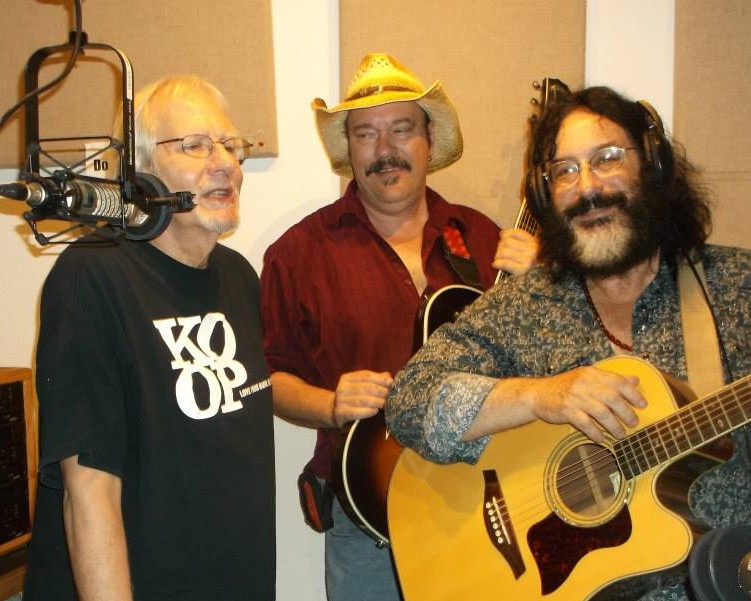
Democratic political consultant Glenn Smith in the studios of KOOP-FM in Austin, Texas, June 28, 2013. Photo by Roger Baker / The Rag Blog.

Rag Radio podcast:
Talking politics with Glenn Smith,
director of Progress Texas PAC

Glenn Smith, who organized Ann Richards’ successful campaign for governor of Texas, talks about Rick Perry, Wendy Davis, and the Texas Legislature, and the prospects for Texas turning blue.

By Rag Radio | The Rag Blog | July 2, 2013

Progressive writer and political consultant Glenn Smith, director of the Progress Texas PAC, was Thorne Dreyer’s guest on Rag Radio, Friday, June 28, 2013.

Rag Radio is a syndicated radio program produced at the studios of KOOP 91.7-FM, a cooperatively-run all-volunteer community radio station in Austin, Texas.

Listen to or download our interview with Glenn Smith here:

 
Glenn W. Smith managed Ann Richards’ successful campaign for governor of Texas in 1990. A former reporter for the Houston Chronicle and Houston Post, Smith is the author of the highly regarded book, The Politics of Deceit: Saving Freedom and Democracy from Extinction. Smith, who served as a senior fellow at George Lakoff’s Rockridge Institute in Berkeley, currently is director of Progress Texas PAC, “helping the Texas progressive movement develop and deliver disciplined, effective messages.”

On the show we talk politics — with special focus on the phenomenal developments in the special session of the Texas Legislature, June 23-25, where Sen. Wendy Davis filibustered Rick Perry’s draconian anti-abortion legislation. We also discuss the Supreme Court’s landmark decisions on voting rights and gay marriage, the status of immigration reform, and the prospects for Texas turning blue (or at least purple) in the reasonably near future.

We also discuss the efforts of Progress Texas, the progressive multi-issue organization with which Smith works — and the under-the-radar work of Battleground Texas, the group that’s busy applying the Obama campaign’s grassroots organizing techniques to the state of Texas.

Daily Kos founder Markos Moulitsas called Glenn Smith a “legendary political consultant and all-around good guy.” Listen to Smith’s earlier appearances on Rag Radio, at the Internet Archive.

Rag Radio is hosted and produced by Rag Blog editor and long-time alternative journalist Thorne Dreyer, a pioneer of the Sixties underground press movement.

The show has aired since September 2009 on KOOP 91.7-FM, an all-volunteer cooperatively-run community radio station in Austin, Texas. Rag Radio is broadcast live every Friday from 2-3 p.m. (CDT) on KOOP and is rebroadcast on Sundays at 10 a.m. (EDT) on WFTE, 90.3-FM in Mt. Cobb, PA, and 105.7-FM in Scranton, PA.

The show is streamed live on the web by both stations and, after broadcast, all Rag Radio shows are posted as podcasts at the Internet Archive.

Rag Radio is produced in association with The Rag Blog, a progressive Internet newsmagazine, and the New Journalism Project, a Texas 501(c)(3) nonprofit corporation. Tracey Schulz is the show’s engineer and co-producer.

Rag Radio can be contacted at ragradio@koop.org.

The Rag Blog

Posted in Rag Bloggers | Tagged , , , , , , , , , | Leave a comment

Robert Jensen : Expanding the Dead-End Debate over Abortion

Editorial cartoon by Dick Wright / Columbus Dispatch. Image from Lukas Mikelionis. 

Expanding the dead-end debate over abortion

Rather than settling for simplistic answers or ignoring the question, we can recognize the confusion many of us feel in the face of such a vexing problem.

By Robert Jensen | The Rag Blog | July 3, 2013

The abortion debate in Texas — and throughout the country — has dead-ended: pro-life v. pro-choice, saving the unborn child v. protecting the rights of the mother, responsibility v. freedom. Every encounter leaves each side more dug in.

As the Texas Legislature takes up abortion bills in its second special session, we can deepen that debate simply by recognizing the complexity of the issue, which usually is plowed under in the short-term goal of passing or defeating a particular bill. That’s politics, but beneath are deeper questions.

I am a firm supporter of abortion rights for women. So, let’s take that side first. By framing the issue in terms of women’s right to choose, abortion-rights supporters typically minimize or avoid the question of the moral status of the fetus, which can’t be taken lightly.

Simply asserting that life begins at conception feels like an inadequate answer, but we can’t pretend that viability — the ability of the fetus to survive outside the womb — is the obvious point at which a fetus becomes a person. Rather than settling for simplistic answers or ignoring the question, we can recognize the confusion many of us feel in the face of such a vexing problem.

For the anti-abortion side: It is time to recognize that this debate takes place in a male-dominated society in which women are routinely at risk, including at home. Though many think it’s an old-fashioned word, the United States is a patriarchal society, and in patriarchy women are not safe from men’s control and men’s violence.

A continuum of domination — from subtle forms of harassment and coercion, to physical assault and rape — means that many women become pregnant under conditions in which meaningful options are severely limited. To further constrain women by limiting access to abortion further entrenches male dominance.

We should recognize that the abortion debate is also a debate — overtly or covertly — about sexual behavior. Abortion opponents often are critical of practices such as premarital or gay/lesbian sex. Abortion supporters typically support an expanded conception of acceptable sexual practices. Again, we routinely get locked into a dead-end debate — “family values” v. “sexual liberation” — and, again, the tendency to caricature the other side can obscure deeper questions.

I am a firm supporter of encouraging healthy sexual exploration for everyone, not limited just to heterosexuals who are married. In short, I’m against patriarchal sexual rules that are harsh and life-denying.

But I am a critic of the way in which the liberal approach to sex has led to an increasingly coarse sexual culture, seen most glaringly in the routine objectification and degradation of women in pornography, stripping, and prostitution. In short, I’m against liberalized sexual norms that also can be harsh and life-denying.

Acknowledging the complexity of the moral question doesn’t automatically mean we should outlaw abortion. Acknowledging the brutality of patriarchy doesn’t mean we cannot consider some limits on abortion. Recognizing that the abortion debate embroils us in equally contentious debates about sexual behavior doesn’t magically clear up the issue.

My political positions are rooted in a feminist analysis that highlights the destructive nature of patriarchy. While I don’t expect everyone to agree with me, I hope it’s possible to disagree more constructively.

The United States is a deeply religious country committed to secular government. No single authority can produce easy answers to problems that are morally and politically complex. My hope is that whichever side “wins” any specific political struggle, all sides can recognize that victory does not put to rest questions that should trouble us all.

[Robert Jensen is a professor in the School of Journalism at the University of Texas at Austin and board member of the Third Coast Activist Resource Center in Austin. His latest books are Arguing for Our Lives: A User’s Guide to Constructive Dialogue and We Are All Apocalyptic Now: On the Responsibilities of Teaching, Preaching, Reporting, Writing, and Speaking Out. His writing is published extensively in mainstream and alternative media. Robert Jensen can be reached at rjensen@austin.utexas.edu. Read more articles by Robert Jensen on The Rag Blog.]

The Rag Blog

Posted in Rag Bloggers | Tagged , , , , , , | 2 Comments

Lamar W. Hankins : Women’s Freedom and Texas Republicans

Demonstrator at the Texas State Capitol, Austin, Texas, July 1, 2013. Photos by Deborah Kirksey Coley / The Rag Blog.

Women’s freedom and Texas Republicans

A political party that actually loves liberty would not seek to deny it to any of our citizens, especially pregnant women who may be vulnerable and in need of compassion.

By Lamar W. Hankins | The Rag Blog | July 3, 2013

Any reader of this column is undoubtedly aware of the actions last week of Texas State Senator Wendy Davis, who successfully filibustered the anti-abortion bill known as SB 5, filed in the first 2013 special session of the Texas Legislature called by Gov. Rick Perry.

Gov. Perry has now called another special session to give the Legislature another chance to pass this anti-abortion legislation. What Davis did was try to stop a bill that not only would deprive Texas women of their reproductive freedom without improving women’s health services, but was a clear violation of the Supreme Court’s 1973 decision in Roe. v. Wade.

While there are many opinions about when and if a pregnancy should be terminated, I won’t dwell on that debate because a woman’s right to an abortion is settled constitutional law. The Supreme Court held 40 years ago that a woman’s right to privacy, guaranteed by the Due Process clause of the 14th Amendment, allows her to decide when and if to terminate a pregnancy.

The court established a trimester framework for state regulation of abortion that was not based on the best medical knowledge at the time, and has been widely criticized by both proponents and opponents of abortion.

Clearly, though, under our constitution, a state cannot completely deny a woman the right to terminate a pregnancy. But under Roe v. Wade and its successor cases, states have a legitimate interest in protecting a woman’s health when she undergoes medical procedures, and states have an interest in protecting the potentiality of human life depending on how far along the fetal development is.

These two matters have been the focus of most abortion rights battles over these past four decades.

Under the trimester approach of the court, a state’s regulatory authority over abortions is restricted. During the first trimester (approximately 13 weeks), a state cannot regulate abortion. During the second trimester (weeks 14 through 26), a state may focus on its concerns for the health of a pregnant woman by regulating abortion procedures that can reasonably affect the woman’s health. During the third trimester, a state may regulate or prohibit abortion except when it is necessary to protect the life or health of a pregnant woman.

Opponents of abortion rights have argued that abortion is unsafe and expanded medical protocols are necessary to protect women. But according to research by the Guttmacher Institute, a research, policy-analysis, and educational organization, “Abortion is one of the safest surgical procedures for women in the United States. Fewer than 0.5% of women obtaining abortions experience a complication, and the risk of death associated with abortion is about one-tenth that associated with childbirth.”

Media Matters reports that “Associations representing the OB/GYNs and hospitals of Texas say that a Texas bill mandating new restrictions on doctors and clinics that provide abortions does nothing to improve women’s health care and has no medical basis…”

In SB 5, abortion opponents decided to focus their anti-abortion efforts on trying to severely reduce the number of clinics where women can seek an abortion by requiring such facilities to be upgraded by adding expensive services and equipment that do not appear justified by any concern for women’s health. The effect of these new requirements would reduce the number of available clinics, thus limiting abortion facilities to only the most populated metropolitan areas of Texas.

In 2008, there were 67 abortion providers in Texas, and 92% of Texas counties had no abortion provider, according to the Guttmacher Institute. The number and distribution of abortion providers severely impedes access to abortions for one-third of Texas women. Now there are 47 abortion clinics in the entire state of 254 counties. A report from Media Matters concludes that the proposed law Rep. Davis filibustered would reduce abortion clinics in Texas to five.

The old SB 5 and the new HB 2 require that a physician who performs an abortion or induces one with drugs must have “active admitting privileges at a hospital” that is no more than 30 miles from where the abortion or induction is performed. Further, the hospital must provide obstetrical or gynecological health care services that are not offered by all hospitals in Texas.

Oddly, the legislation also requires that the patient be given a telephone number to contact health care personnel 24 hours a day after the procedure, and requires providing the name and telephone number for the hospital nearest to the home of the patient in case emergency care is needed after the abortion is performed. In my experience, providing contact information after a medical procedure or surgery is standard medical practice in Texas, though most physicians may assume that their patients know where the nearest emergency room can be found.

The Texas Hospital Association states that the anti-abortion legislation does nothing to improve women’s health because emergency room physicians would be the ones treating a woman who needs emergency care due to complications from an abortion. Emergency room physicians can contact the physician who performed the abortion by telephone, regardless of whether that physician has privileges at the hospital providing the emergency room treatment or how far away the physician may be.

The requirement that an abortion provider have hospital privileges at a hospital 30 miles from where the abortion is performed does nothing to assure that women “receive high-quality care and that physicians (are) held accountable for acts that violate their license.”

Some of the most severe restrictions on physicians in the legislation, which are contrary to practices approved by the Food and Drug Administration (FDA), concern the administration of “abortion-inducing drugs.” Those FDA-approved practices allow the administration of such drugs (namely, what is called the “Mifeprex regimen” and often referred to as RU-486) in a physician’s office or clinic.

Texas State Capitol.

The legislation, however, allows the administration of the Mifeprex regimen only “at an abortion facility” licensed under the Texas Health & Safety Code. This interference in a physician’s normal practice of medicine and a woman’s right to seek the treatment is not justified by FDA regulations, nor by any concern for pain felt by a fetus since the drug regimen is approved only for use within 49 days (seven weeks) of conception. Abortion opponents claim that a fetus can feel pain at 20 weeks, which justifies further regulation of abortion at that point in a pregnancy, but not before then.

The only purpose of this Mifeprex regimen provision is to interfere with the constitutional right of a woman to terminate a pregnancy within seven weeks of pregnancy — a period well within Roe’s 13-week time frame during which states may not regulate the right to an abortion. And it prevents her from using the services of her primary care physician unless he or she works at an abortion clinic and has privileges at a nearby hospital that provides obstetrical or gynecological health services.

Such a blatant violation of Roe. v. Wade is a sufficient reason, standing alone, to oppose the legislation.

The Texas District of the American Congress of Obstetricians and Gynecologists has found that SB 5 is “not based on sound science” and is an “attempt to prescribe how physicians should care for their individual patients.” Without question, the organization of OB/GYNs is, as it describes itself, “the Nation’s leading authority in women’s health.”

Its “role is to ensure that policy proposals accurately reflect the best available medical knowledge.” Its conclusion about this legislation is clear: “(The bill) will not enhance patient safety or improve the quality of care that women receive…(and it) does not promote women’s health, but erodes it by denying women in Texas the benefits of well-researched, safe, and proven protocols.”

Republican claims that the anti-abortion legislation the party is pushing enhances women’s heath are dishonest and bogus.

The way the Republican Party has been behaving, especially in Texas, demonstrates that (to paraphrase the words of George W. Bush) they hate American women for their freedoms. The GOP has become the domestic political equivalent of al-Qaeda when it comes to women’s health care and the right to terminate a pregnancy.

The party of Lincoln constantly conspires to reduce the freedom and liberty interests of Texas women. It works with anti-abortion activists to terrorize Texas women who want to terminate their pregnancies, as well as the physicians who provide them health services.

Rep. Wendy Davis’s valiant filibuster and the efforts of her supporters in the closing hours of Gov. Perry’s first called special session of the Texas Legislature show that many women and men in Texas will not sit idly by while the tribe of Texas Republicans maneuver to take away the constitutional rights of women.

A political party that actually loves liberty would not seek to deny it to any of our citizens, especially pregnant women who may be vulnerable and in need of compassion, understanding, and unfettered medical assistance.

[Lamar W. Hankins, a former San Marcos, Texas, city attorney, is also a columnist for the San Marcos Mercury. This article © Freethought San Marcos, Lamar W. Hankins. Read more articles by Lamar W. Hankins on The Rag Blog.]

The Rag Blog
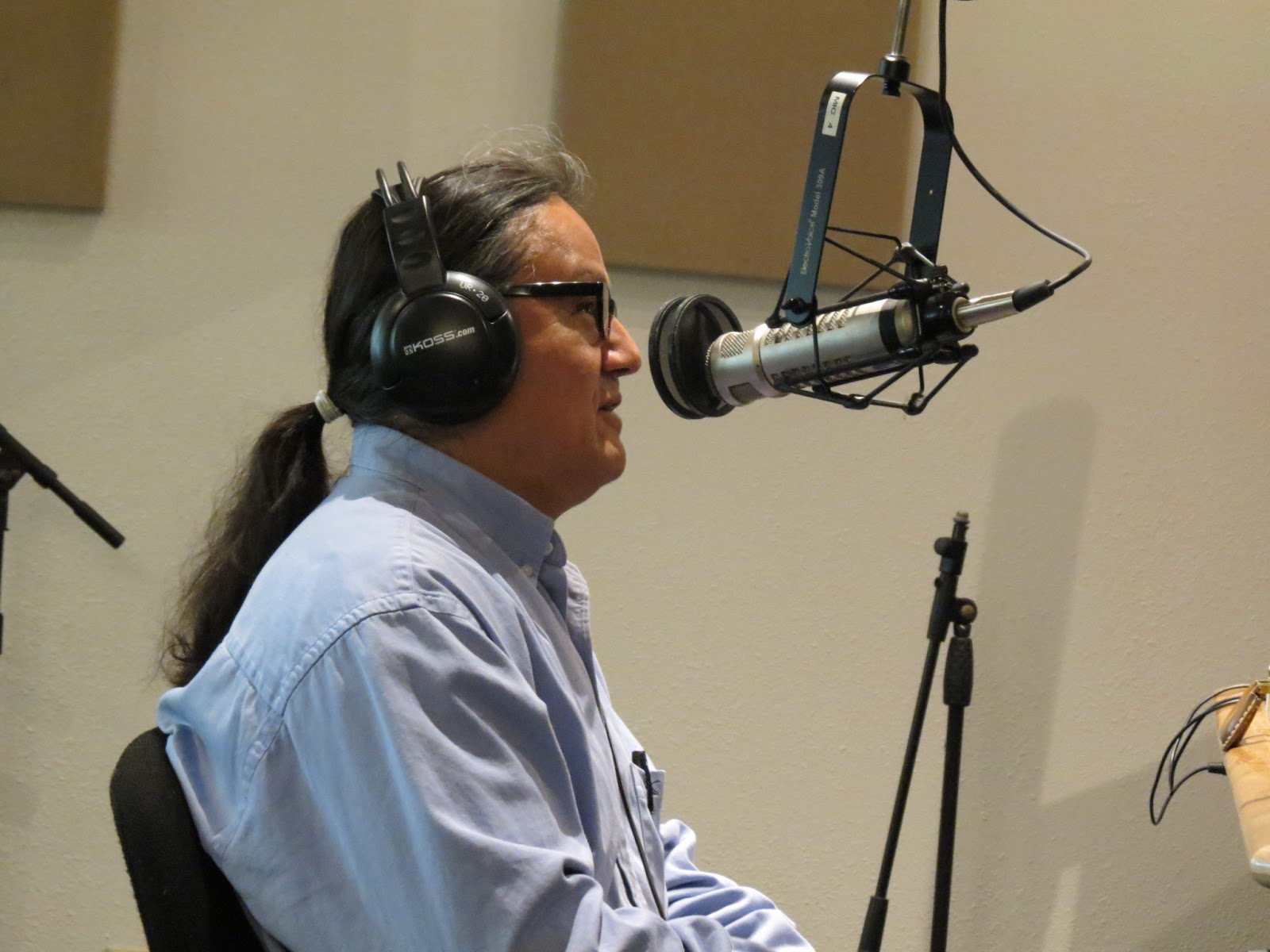
Posted in Rag Bloggers | Tagged , , , , , , , | Leave a comment

HISTORY / Bob Feldman : A People’s History of Egypt, Part I, 525 BC-641 AD

Cleopatra VII and her son Caesarion at the Temple of Dendera. Image from Wikimedia Commons.

A people’s history:
The movement to democratize Egypt

Part 1: 525 BC to 641 AD period — From the Persian invasion to the Byzantium Empire

By Bob Feldman | The Rag Blog | July 3, 2013

[As literally millions demonstrate in Egypt in an attempt to bring down the Mohammed Morsi government, and as the Egyptian military appears poised to take action against the Morsi regime, we begin Bob Feldman’s Rag Blog “people’s history” series, “The Movement to Democratize Egypt.” Also see Feldman’s series on The Rag Blog.]

Most people in the United States now realize that most Egyptians want to see their society politically and economically democratized. But most people in the U.S. may not know much about the history of the over 83 million people who currently live in Egypt, beginning in 525 BC when the country was invaded by the army of the Persian Empire, led by Cambyses II, the son of Cyrus II (“Cyrus the Great”).

As The Rough Guide To Egypt observed, “the Persian invasion of 525 BC began…rule by foreigners” in Egypt that essentially lasted until 1952.

Despite a number of unsuccessful revolts by people in Egypt against their Persian rulers during the next two centuries, “Egypt remained under Persian control until 332 BC, when their entire empire succumbed to Alexander [the Great]” of Greece, according to The Rough Guide To Egypt.

And according to Jason Thompson’s A History of Egypt, “so detested was the Persian yoke that when Alexander the Great arrived in Egypt, he was welcomed as a savior.” Initially, there was no resistance by people in Egypt to the rule of Alexander and — following Alexander’s death in 323 BC — to the rule of the Greek Ptolemaic Dynasty of General Ptolemy Soter I and his descendants between 322 and 30 BC.

But according to A History of Egypt, “the population of Ptolemaic Egypt consisted of a comparatively small number of relatively privileged Greeks superimposed onto the great masses of native Egyptians, most of whom lived around subsistence level but whose back-breaking labor supported Ptolemaic society and government;” and, not surprisingly, “Ptolemaic rule…became highly resented over time.”

As the same book recalled:

There were numerous rebellions, especially during the second and third centuries BC. Most may have resulted from economic desperation or lax central control because of dynastic infighting, but some…expressed a longing for the glorious past when Egyptians ruled Egyptians. A distinctly “nationalistic” literature appeared… Government officials extorted everything they could from the peasantry, frequently leaving them insufficient means to sustain themselves. Famine, inflation, banditry, and flight are all too abundantly attested during the later Ptolemaic Period…

The last representative of the Ptolemaic Dynasty to rule Egypt, Cleopatra VII, was made queen by the Roman General Julius Caesar after his troops killed her brother and rival for the Egyptian throne, Ptolemy XIII, in 47 BC.

But, according to A History of Egypt, Cleopatra was “so unpopular that Caesar permanently stationed three legions in Egypt ” and “when he departed in spring 47 BC to new conquests…Cleopatra was pregnant.” Then, after Julius Caesar was assassinated in 44 BC, Cleopatra formed a similar political/sexual alliance with Mark Antony.

But, after Octavius Caesar’s Roman forces defeated Antony and Cleopatra’s forces in 31 BC at the Battle of Actium (and both Antony and Cleopatra committed suicide), Egypt became a province of the Roman Empire in 30 BC.

As part of the pre-partitioned Roman Empire until 395 AD, Egypt was exploited as the grain-producing “breadbasket” of Rome; and during the 30 BC to 395 AD period of rule by Romans and their Roman legions, “vast amounts of Egyptian land” that had been owned by the state under the Greek Ptolemaic dynastic rule “were now mostly sold to private individuals, some of whom acquired extensive estates,” according to A History of Egypt.

As a result, “small landholders, though comprising a large proportion of the population, were increasingly hard-pressed;” and “many became little better than serfs and slaves on the estates of the privileged, who assumed powers that previously had belonged to the state, giving them even greater control over the peasantry,” according to the same book.

In 330 AD, Roman Emperor Constantine founded Constantinople; and when the Roman Empire was partitioned for the last time into East and West in 395 AD, Egypt became a province of the Constantinople-based eastern Byzantium Empire until 641 AD; and during this period “Egypt’s grain and revenue remained extremely important to Constantinople,” according to A History of Egypt.

But the same book also notes that, “the Byzantine yoke became so odious to Egyptians, both politically and religiously…that they were not averse to the change of rule that came in the seventh century.”

[Bob Feldman is an East Coast-based writer-activist and a former member of the Columbia SDS Steering Committee of the late 1960s. Read more articles by Bob Feldman on The Rag Blog.]

The Rag Blog
Posted in Rag Bloggers | Tagged , , | Leave a comment

RAG RADIO / Thorne Dreyer : Author and Labor/Social Justice Activist Bill Fletcher Jr.

Rag Radio podcast:
Noted author and activist Bill Fletcher Jr.

Bill Fletcher Jr. is a longtime author, commentator, and labor, racial justice and social/economic justice activist, and an international solidarity leader.

By Rag Radio / The Rag Blog / July 2, 2013

Noted author and activist Bill Fletcher Jr., was Thorne Dreyer’s guest on Rag Radio, Friday, June 21, 2013.

Rag Radio is a syndicated radio program produced at the studios of KOOP 91.7-FM, a cooperatively-run all-volunteer community radio station in Austin, Texas.

Listen to or download our interview with Bill Fletcher Jr. here:


Bill Fletcher Jr. is a Senior Scholar with the Institute for Policy Sudies, an editorial board member and columnist for BlackCommentator.com, and past president of TransAfrica Forum. A graduate of Harvard University, Fletcher is a longtime labor, social and economic justice, and racial justice activist and an international solidarity leader.

After graduating from college, he went to work as a welder in a shipyard and has worked for several labor unions and served as a senior staffer for the national AFL-CIO. Over the years he has been active in workplace and community struggles as well as electoral campaigns.

Fletcher is the author of “They’re Bankrupting Us” and Twenty other Myths about Unions, co-author (with Peter Agard) of The Indispensable Ally: Black Workers and the Formation of the Congress of Industrial Organizations, 1934-1941, and the co-author (with Dr. Fernando Gapasin) of Solidarity Divided: The Crisis in Organized Labor and a New Path toward Social justice.

He is a syndicated columnist and a frequent commentator on radio, television, and the Internet. Find articles by Bill Fletcher Jr. on The Rag Blog.

Rag Radio is hosted and produced by Rag Blog editor and long-time alternative journalist Thorne Dreyer, a pioneer of the Sixties underground press movement.

The show has aired since September 2009 on KOOP 91.7-FM, an all-volunteer cooperatively-run community radio station in Austin, Texas. Rag Radio is broadcast live every Friday from 2-3 p.m. (CDT) on KOOP and is rebroadcast on Sundays at 10 a.m. (EDT) on WFTE, 90.3-FM in Mt. Cobb, PA, and 105.7-FM in Scranton, PA.

The show is streamed live on the web by both stations and, after broadcast, all Rag Radio shows are posted as podcasts at the Internet Archive.

Rag Radio is produced in association with The Rag Blog, a progressive Internet newsmagazine, and the New Journalism Project, a Texas 501(c)(3) nonprofit corporation. Tracey Schulz is the show’s engineer and co-producer.

Rag Radio can be contacted at ragradio@koop.org.

The Rag Blog

Posted in Rag Bloggers | Tagged , , , , , , , | Leave a comment

Michael James : Kids at Chicago’s New True Vine Church, 1961

Kids at the New True Vine MB Church, Chicago, 1961. Photo by Michael James from his forthcoming book, Michael Gaylord James Pictures from the Long Haul.

Pictures from the Long Haul:
Kids at the New True Vine Church  
in 1961 Chicago

I take their pictures, and I realize now that things are beginning to come together: people of different colors, poverty, photography, Chicago, and change. I am in the early stages of my own new true vine.

By Michael James | The Rag Blog | July 2, 2013

[In this series, Michael James is sharing images from his rich past, accompanied by reflections about — and inspired by — those images. This photo will be included in his forthcoming book, Michael Gaylord James’ Pictures from the Long Haul.]

Early September 1960 and I’m out on the highway again, heading across Pennsylvania-Ohio-Indiana and into Chicago, then the “hog butcher to the World.” This time I’m in a yellow and black 1957 Desoto convertible with my folks, Hal and Florence James.

Day breaks and we pull up to the Executive House on Wacker Drive. At noon we wind our way up Sheridan Road and I begin going through the final steps to be a college student; I’m a brand new freshman at the small Presbyterian-affiliated Lake Forest College just outside Chicago.

Incoming Foresters are given a red and black beanie with class of 1964 stitching. I was already partial to red and black, they being the colors of my earlier teen years passion, the Downshifters Hot Rod Club. Later I’ll learn red and black are anarchist colors, a political stripe I have affinity with, though I end up being closer to democratic centralism in my street fighting and community organizing days.

Later I will reluctantly return to my early Democratic Party political roots; thanks Mom and Dad, and Go, Adlai Stevenson. These days I see involvement in the progressive wing of the Democratic Party as analogous to Mao working with Chiang Kai-shek to hold back the Japanese. There’s a lot (!!!) to be desired about the Democratic Party, but stopping right wing Republicans and the rise of fascism is high priority.

I’m not about to wear a beanie, even when Dad says he doesn’t think things have changed since his days at the University of Chicago. And I’m certainly not going to wear it after a guy from the Kappa Sig fraternity tells me to put it on. I’m all about school spirit but was voted “coolest” in my Staples senior class and I’m not about to compromise on this headwear.

After a goodbye to the folks it’s on to meeting people and checking out the new scene. I have my first Commons aka cafeteria experience. On Monday I’m a walk-on and become a member of the Foresters football team. I’ll develop good relations with the cafeteria workers. I have fond memories of running wind sprints in crisp fall weather at dusk, then words from the coaches, loving the hot shower, and loving even more extra plates of food in the Commons.

The football games and their bus rides take me to new places, playing schools previously unknown to me. We’re talking Augustana, Carthage, Millikan, North Central, Illinois Wesleyan, Monmouth, Elmhurst, and Hamline. I will break four bones in my right hand when hitting a tree, on an angry spree, after returning from a game in Rock Island by bus and my girlfriend Lucia hadn’t signed out for an overnight (with me).

In the fall of 1963 the University of Chicago is bringing back football, and we play their club team. My dad  played a year there under the legendary coach Alonzo Stagg. Wasylik, Hanke, and Triptow are my coaches. This game would be my last, following a halftime challenging-authority altercation with coach Nick Wasylik, who actually was a fine guy.

The world continues to open up for me. I discover sociology (or sociology discovers me); I thought that was how one became a social worker. A professor encourages me to think about the big picture and the social-economic-political forces and conditions that shape peoples’ lives. I’ll head off to University of California Berkeley on a Woodrow Wilson Fellowship in 1964 and on a return visit to LFC my professor-sociologist-hero Dr. Don Roos and I argue over the Vietnam War. I was so disappointed!

History professor Carl Perrini, who studied with UW Madison’s William Appleman Williams (a founder of Studies on the Left), shows me the Autobiography of Big Bill Haywood; I read my first book about radicals, learning about the Western Federation of Miners and the Industrial Workers of the World (IWW).

From Haywood I pick up a tip. When Rockefeller’s Pinkertons and the FBI were after Big Bill it was the local cops who tipped him off. I’ve been friendly with local cops even during wild rebellious times. One was the late Maurie Daley of Chicago’s infamous Red Squad. He harassed, spied-on and chased many a radical, but was certainly a more likeable Red Squad pig than the Eastern European dudes.

Maurie’s kid also played football at LFC, a fact I learn while talking to Daley when I spot him sitting in a van on a drug stakeout. Earlier he had made contact after being transferred to the 24th District, leaving a message for me at the Heartland Café saying he was “Che Guevara’s nephew!”

I develop admiration for many teachers at LFC. Gerry Gerasimo turns me on to issues of social class, status, and conflict; George Tomashevich introduces me to Africa’s depth, the Ashanti, and African independence movements. Sculptor Helmut Van Flein transfers my hot rod welding skills into making sculpture.

Sam Pasiencier, mathematician turned spiritual guy, helps me develop my Mexico 1962 photos after I drive my Triumph motorcycle to Mexico. And Alan Bates tells me I need to rewrite, that my words aren’t golden the first time out. He also turns me on to Lawrence Ferlinghetti and his way-cool Coney Island of the Mind.

Dr. Smucker is the College Chaplin and teaches a Christian Ethics class. He initiates my interest in Christian communal sects like the Amana Colonies and New Harmony, Indiana. A Mennonite and a wonderful guy, he returns a paper I had written on Gandhi that ended with an upbeat paragraph about truth and goodness triumphing in the end.

Donovan Smucker says: “not necessarily,” and gives examples of unfortunate endings to human struggles. He calls me a “meliorist” and I confess that to this day I still believe conditions for people can and should improve. It’s up to us to make it happen.

The class takes a field trip. We visit various housing sights in Chicago. We look at Lake Meadows and its’ three large “integrated” buildings; the lower income building is 70% black, while the highest-rent abode building is 70% white. The midrange-rent building is 50% white and 50% black. And we visit the Cabrini Green Projects.

Now I had been in situations where I was one of a handful of whites among blacks — on visits to the Apollo Theater in Harlem, going to see Mahalia Jackson, the Swan Silvertones, and the Dixie Hummingbirds et al at Madison Square Garden, Ray Charles at the Pan Pacific Auditorium in San Jose, and a high school graduation party in Norwalk, Connecticut.

However, being a white guy with a busload of white students, I find myself wandering behind the class. That’s when I run into the kids outside the New True Vine MB Church. I take their pictures, and I realize now that things are beginning to come together: people of different colors, poverty, photography, Chicago, and change. I am in the early stages of my own new true vine.

[Michael James is a former SDS national officer, the founder of Rising Up Angry, co-founder of Chicago’s Heartland Café (1976 and still going), and co-host of the Saturday morning (9-10 a.m. CDT) Live from the Heartland radio show, here and on YouTube. He is reachable by one and all at michael@heartlandcafe.com. Find more articles by Michael James on The Rag Blog.]

The Rag Blog

Posted in Rag Bloggers | Tagged , , , , , , , , | Leave a comment

Alan Waldman : ‘Waking the Dead’ is an Excellent Brit Cold-Case Series

Waldman’s film and TV
treasures you may have missed:

Cops, a profiler, and a forensic scientist crack old murder cases.

By Alan Waldman | The Rag Blog | July 2, 2013

[In his weekly column, Alan Waldman reviews some of his favorite films and TV series that readers may have missed, including TV dramas, mysteries, and comedies from Canada, England, Ireland, and Scotland. Most are available on DVD and/or Netflix, and some episodes are on YouTube.]

Waking the Dead won a 2004 “Best Drama Series” International Emmy, the “Best TV Crime Program” award from Britain’s Television and Radio Industries Club, and nominations for a “Best Television Episode Teleplay” Edgar and another International Emmy.

It aired 46 two-part episodes between 2000 and 2011 over nine seasons — five of which are currently on Netflix. It starred Trevor Eve as the head of a fictional cold case unit, Sue Johnston as its profiler, and Wil Johnson as a police officer.

In seasons 1-5 they were teamed with Holly Aird as a forensic scientist, and in seasons 1-4 Claire Goose was a police partner on the team. Others replaced the latter pair in subsequent series, including Tara Fitzgerald (Brassed Off, Sirens), who briefly headed the six-episode spinoff series The Body Farm, after Eve left the show.

The cold-case team uses new evidence, including DNA, to re-open and solve old cases. Here is an episode.

Eve’s character, Detective Superintendent Peter Boyd, is sometimes stern, angry, and unorthodox, whereas Johnston’s Dr. Grace Foley is calming and reasonable.

Episodes deal with murders, kidnapping, sexual child abuse, arson, mysterious disappearances, gangsters, and more.

Series producer Colin Wratten said about the research and grisly special effects on Waking the Dead: “With the amount of gruesome script research I’ve done on my BBC computer, I’m probably on every government watch list.”

This is a compelling, dramatic cop series, and it had a nice long run.

[Oregon writer and Houston native Alan Waldman holds a B.A. in theater arts from Brandeis University and has worked as an editor at The Hollywood Reporter and Honolulu magazine. Read more of Alan Waldman’s articles on The Rag Blog.]

The Rag Blog
Posted in Rag Bloggers | Tagged , , , , | Leave a comment

Ted McLaughlin : Wendy Davis, Energized Dems Deal Blow to Texas GOP and War on Women

Pro-choice demonstrators at the Texas State Capitol in Austin, Sunday, June 23, 2013. More than 1,000 packed the place on Sunday and the numbers kept growing during the week. Photo by Alan Pogue / The Rag Blog.

A new day for Democrats in Texas:
New political stars and a raucous crowd
deal blow to GOP’s insidious attack on choice

By Ted McLaughlin | The Rag Blog | June 27, 2013

[The Week that Was! As the Supreme Court made landmark decisions about voting rights (two thumbs down) and gay marriage (it’s about time!), thousands of cheering pro-choice Texans — wearing orange shirts that read “Stand With Texas Women” and rooted on by Planned Parenthood president Cecile Richards, daughter of the late and great Texas Gov. Ann Richards — filled the rotunda and packed the galleries of the State Capitol of Texas in Austin for their own marathon filibuster. The enthusiasm was intoxicating.

It was a massive three-day show of opposition to Texas Republicans’ attack on women’s health in the form of a draconian new abortion law — and of support for Texas Sen. Wendy Davis and her dramatic filibuster in the Senate chambers. Davis has emerged as a superstar and a legitimate candidate for higher office in Texas. The events captured the imagination of the nation. As MSNBC’s Rachel Maddow said Tuesday night: “Texas: Who knew!” Oh, and coming next week: “Kill the Bill, Volume 2.” See you there. — Thorne Dreyer / The Rag Blog]

AUSTIN, Texas — The teabagger governor of Texas announced Wednesday, June 26, 2013, that he is calling a second special session of the Texas legislature. Three issues are on the agenda — transportation funding and juvenile justice (both of which died in the last session because Republicans wasted the whole 30-day session trying to shut down the state’s abortion clinics), and, of course, the same old anti-choice legislation that was filibustered to death in that first special session.

Perry seems determined to keep the issue alive, and give Democrats something to make sure their supporters remain energized and engaged.

Texas Democrats have been a dispirited bunch for a long time now. It has been more than 20 years since a Democrat held statewide office, and prospects for the future seemed dim because there were really no politicians in the party with true statewide appeal.

That changed dramatically on Tuesday night, when a couple of female State Senators put themselves in the limelight to stop (at least temporarily) an odious anti-choice bill that would almost certainly close 37 out of 42 clinics in the state that do abortion procedures — and in the process they inspired and renewed thousands of Democrats across the state.

Texas Senators Wendy Davis, left, and Leticia Van de Putte in the Texas Senate Chamber, Tuesday, June 26, 2013. Photo from Jobsanger.

The new Texas political stars are Sen. Wendy Davis and Sen. Leticia Van de Putte. Davis got the ball rolling by declaring she would filibuster the bill (which had to be approved by midnight, when the session ended, or it would die).

She got the floor about 11:15 a.m. and began her filibuster — and then she held the floor for over 10 hours. She was helped by the other 11 Democratic senators who lobbed her “softball” questions to keep her filibuster growing, but the real work of the filibuster was on her capable shoulders — and she performed admirably.

With only a couple of hours to go before midnight, the Republican majority was able to stop her by claiming for the third time that she was not being germane to the bill with her discourse. It was arguably not true, but truth or rules have never been very important to Texas Republicans. The other 11 Democratic senators stepped forward with a barrage of parliamentary maneuvers (points of order, parliamentary questions, etc.).

One of the most prominent of these senators who sprang to the defense of Sen. Davis was Sen. Van de Putte. And with only about 15 minutes until midnight, she challenged the Senate president by demanding to know, “At what point must a female senator raise her hand or her voice to be recognized over her male colleagues?” The crowd in the gallery began to applaud her, and that applause turned into more than 20 minutes of shouting and applauding that delayed a vote on the GOP bill.

With time running out, the GOP tried to hold their vote — but as Democratic senators pointed out, the vote was not finished before midnight, and by Texas law, the session was over at midnight. This caused a big mess — as Republicans claimed the bill was passed, since the vote started before midnight, and the Democrats claimed the bill was dead since the vote was not finished before midnight.

The official senate record backed Democrats, showing the bill was passed on 6/26 and not on 6/25 as required. The Republicans then tried to fix that by illegally altering the senate record (see below).

The top picture shows the original Senate log, and the bottom one shows the log after being altered by Republicans. The senators then argued among themselves for a while — and at about 3 a.m. the Republicans backed down and admitted the bill had been passed after midnight, which means the bill was DEAD.

The governor will call another special session and most likely get the bill passed (even if they have to lock the public out and do it in secret). But for right now, the bill is dead. And the Republicans did nothing good for their image, since their shenanigans were observed by hundreds of thousands of Texans and other Americans.

I watched the proceedings on the Texas Tribune‘s live YouTube feed. More than 182,000 people watched on that stream, but that was just a portion of those watching the proceedings, since there were approximately 199 other live feeds — not to mention all the traffic on social media like Twitter and Facebook.

And while the Republicans were humiliated, thousands of Texas Democrats (and others) were energized — and Sen. Wendy Davis and Sen. Leticia Van de Putte were able to increase their political capital immensely. They are now both credible candidates for statewide office. And combined with the new statewide Democratic effort to register new voters, and the added impact of changing demographics, this means Democratic prospects in Texas are brighter than they have been in many years.

To put it bluntly, it was a great night for Texas Democrats and a terrible night for Texas Republicans.

[Amarillo resident Ted McLaughlin, a regular contributor to The Rag Blog, also posts at jobsanger. Read more articles by Ted McLaughlin on The Rag Blog.] 

Photos by Alan Pogue / The Rag Blog:


The Rag Blog

Posted in Rag Bloggers | Tagged , , , , , , , , , , | 3 Comments