|
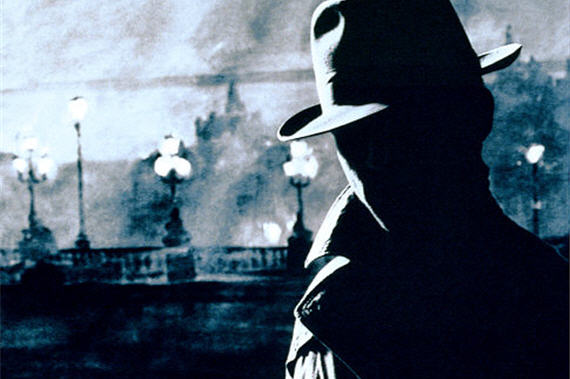
| Old school spying. Image from Outside the Beltway. |
Close encounters of the lower-tech kind:
The wonderful American world of
informers and agents provocateurs
Here is a preliminary attempt to sort out some patterns behind what could be the next big story about government surveillance and provocation in America.
By Todd Gitlin | The Rag Blog | July 4, 2013
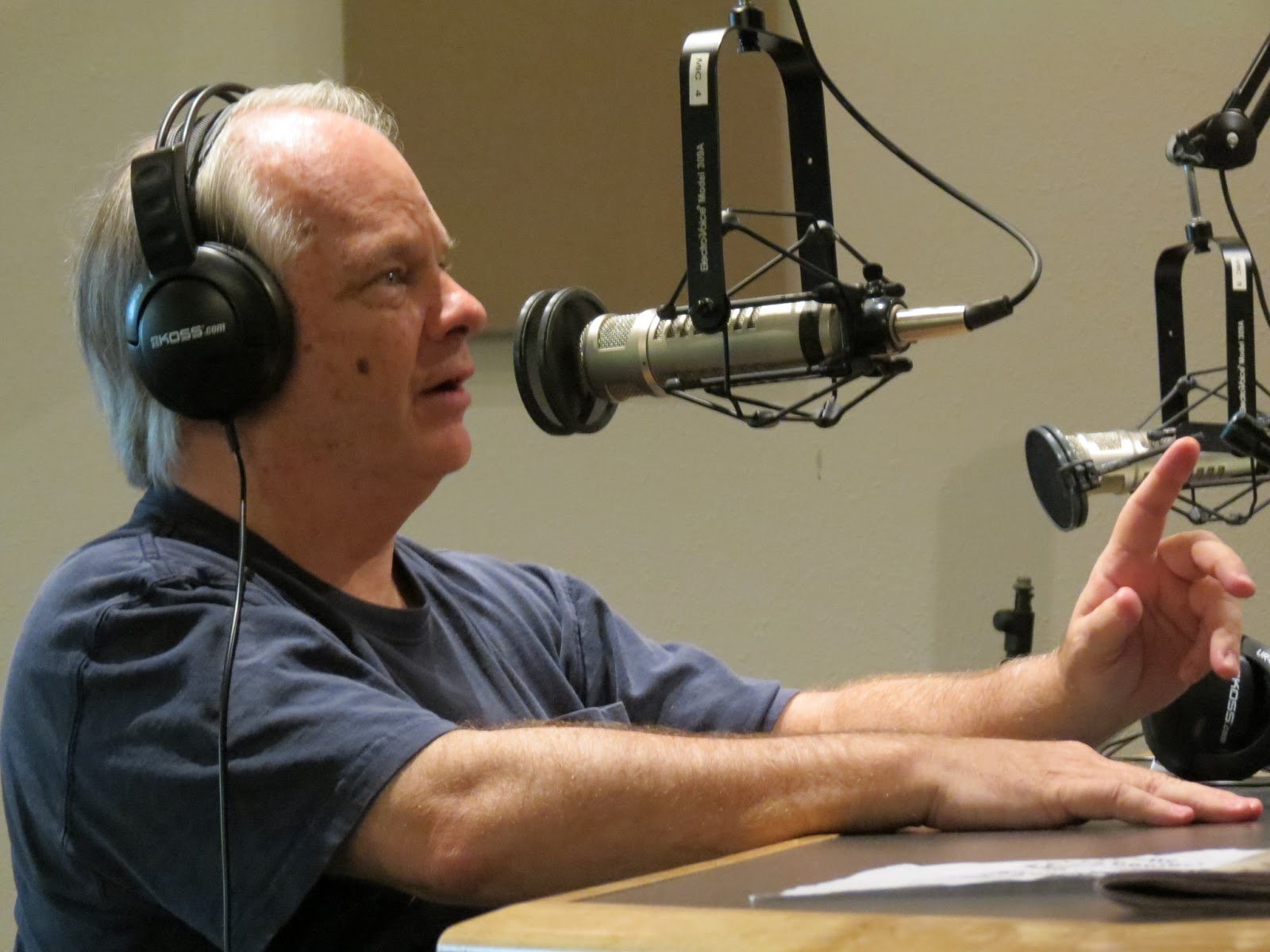
Sociologist, mass media critic, and political writer Todd Gitlin will discuss issues raised in this article and more with Rag Blog editor Thorne Dreyer on Rag Radio, Friday, July 19, 2013, from 2-3 p.m. (CDT) on KOOP 91.7-FM in Austin, and streamed live to the world. The show is rebroadcast by WFTE-FM in Mt. Cobb and Scranton, PA, Sunday mornings at 10 a.m. (EDT), and all podcasts are posted at the Internet Archive.
Only Martians, by now, are unaware of the phone and online data scooped up by the National Security Agency (though if it turns out that they are aware, the NSA has surely picked up their signals and crunched their metadata). American high-tech surveillance is not, however, the only kind around. There’s also the lower tech, up-close-and-personal kind that involves informers and sometimes government-instigated violence.
Just how much of this is going on and in how coordinated a way no one out here in the spied-upon world knows. The lower-tech stuff gets reported, if at all, only one singular, isolated event at a time — look over here, look over there, now you see it, now you don’t.
What is known about such surveillance as well as the suborning of illegal acts by government agencies, including the FBI, in the name of counterterrorism has not been put together by major news organizations in a way that would give us an overview of the phenomenon. (The ACLU has done by far the best job of compiling reports on spying on Americans of this sort.)
Some intriguing bits about informers and agents provocateurs briefly made it into the public spotlight when Occupy Wall Street was riding high. But as always, dots need connecting. Here is a preliminary attempt to sort out some patterns behind what could be the next big story about government surveillance and provocation in America.
Two stories from Occupy Wall Street
The first is about surveillance. The second is about provocation.
On September 17, 2011, Plan A for the New York activists who came to be known as Occupy Wall Street was to march to the territory outside the bank headquarters of JPMorgan Chase. Once there, they discovered that the block was entirely fenced in. Many activists came to believe that the police had learned their initial destination from e-mails circulating beforehand. Whereupon they headed for nearby Zuccotti Park and a movement was born.
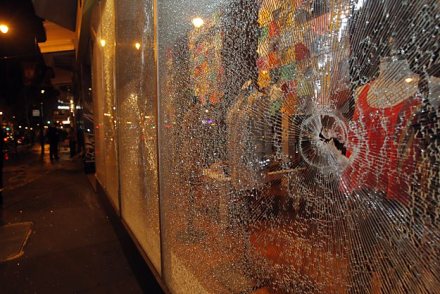
The evening before May Day 2012, a rump Occupy group marched out of San Francisco’s Dolores Park and into the Mission District, a neighborhood where not so many 1-percenters live, work, or shop. There, they proceeded to trash “mom and pop shops, local boutiques and businesses, and cars,” according to Scott Rossi, a medic and eyewitness, who summed his feelings up this way afterward: “We were hijacked.” The people “leading the march tonight,” he added, were
clean cut, athletic, commanding, gravitas not borne of charisma but of testosterone and intimidation. They were decked out in outfits typically attributed to those in the “black bloc” spectrum of tactics, yet their clothes were too new, and something was just off about them. They were very combative and nearly physically violent with the livestreamers on site, and got ignorant with me, a medic, when I intervened… I didn’t recognize any of these people. Their eyes were too angry, their mouths were too severe. They felt “military” if that makes sense. Something just wasn’t right about them on too many levels.
He was quick to add,
I’m not one of those tin foil hat conspiracy theorists. I don’t subscribe to those theories that Queen Elizabeth’s Reptilian slave driver masters run the Fed. I’ve read up on agents provocateurs and plants and that sort of thing and I have to say that, without a doubt, I believe 100% that the people that started tonight’s events in the Mission were exactly that.
Taken aback, Occupy San Francisco condemned the sideshow: “We consider these acts of vandalism and violence a brutal assault on our community and the 99%.”
Where does such vandalism and violence come from? We don’t know. There are actual activists who believe that they are doing good this way; and there are government infiltrators; and then there are double agents who don’t know who they work for, ultimately, but like smashing things or blowing them up.
By definition, masked trashers of windows in Oakland or elsewhere are anonymous. In anonymity, they — and the burners of flags and setters of bombs — magnify their power. They hijack the media spotlight. In this way, tiny groups — incendiary, sincere, fraudulent, whoever they are — seize levers that can move the entire world.
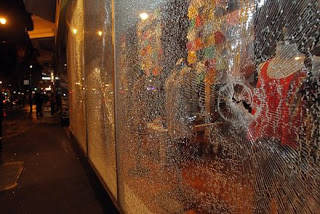 |
| On May Day 2012, an Occupy rump group trashed San Francisco’s Mission District, instigated and led, many were convinced, by agents provocateurs. Image from The Wren Project |
The sting of the clueless bee
Who casts the first stone? Who smashes the first window? Who teaches bombers to build and plant actual or spurious bombs? The history of the secret police planting agents provocateurs in popular movements goes back at least to nineteenth century France and twentieth century Russia. In 1905, for example, the priest who led St. Petersburg’s revolution was some sort of double agent, as was the man who organized the assassination of the Czar’s uncle, the Grand Duke.
As it happens, the United States has its own surprisingly full history of such planted agents at work turning small groups or movements in directions that, for better or far more often worse, they weren’t planning on going. One well-documented case is that of “Tommy the Traveler,” a Students for a Democratic Society (SDS) organizer who after years of trying to arouse violent action convinced two 19-year-old students to firebomb an ROTC headquarters at Hobart College in upstate New York. The writer John Schultz reported on likely provocateurs in Chicago during the Democratic National Convention of 1968.
How much of this sort of thing went on? Who knows? Many relevant documents molder in unopened archives, or have been heavily redacted or destroyed.
As the Boston marathon bombing illustrates, there are homegrown terrorists capable of producing the weapons they need and killing Americans without the slightest help from the U.S. government. But historically, it’s surprising how relatively often the gendarme is also a ringleader. Just how often is hard to know, since information on the subject is fiendishly hard to pry loose from the secret world.
Through 2011, 508 defendants in the U.S. were prosecuted in what the Department of Justice calls “terrorism-related cases.” According to Mother Jones‘s Trevor Aaronson, the FBI ran sting operations that “resulted in prosecutions against 158 defendants” — about one-third of the total. “Of that total, 49 defendants participated in plots led by an agent provocateur — an FBI operative instigating terrorist action. With three exceptions, all of the high-profile domestic terror plots of the last decade were actually FBI stings.”
In Cleveland, on May Day of 2012, in the words of a Rolling Stone exposé, the FBI “turned five stoner misfits into the world’s most hapless terrorist cell.” To do this, the FBI put a deeply indebted, convicted bank robber and bad-check passer on their payroll, and hooked him up with an arms dealer, also paid by the Bureau. The FBI undercover man then hustled five wacked-out wannabe anarchists into procuring what they thought was enough C4 plastic explosive to build bombs they thought would blow up a bridge. The bombs were, of course, dummies. The five were arrested and await trial.
What do such cases mean? What is the FBI up to? Trevor Aaronson offers this appraisal:
The FBI’s goal is to create a hostile environment for terrorist recruiters and operators — by raising the risk of even the smallest step toward violent action. It’s a form of deterrence… Advocates insist it has been effective, noting that there hasn’t been a successful large-scale attack against the United States since 9/11. But what can’t be answered — as many former and current FBI agents acknowledge — is how many of the bureau’s targets would have taken the step over the line at all, were it not for an informant.
Perhaps Aaronson is a bit too generous. The FBI may, at times, be anything but thoughtful in its provocations. It may, in fact, be flatly dopey. COINTELPRO records released since the 1960s under the Freedom of Information Act (FOIA) show that it took FBI Director J. Edgar Hoover until 1968 to discover that there was such a thing as a New Left that might be of interest.
Between 1960 and 1968, as the New Left was becoming a formidable force in its own right, the Bureau’s top officials seem to have thought that groups like Students for a Democratic Society were simply covers for the Communist Party, which was like mistaking the fleas for the dog. We have been assured that the FBI of today has learned something since the days of J. Edgar Hoover. But of ignorance and stupidity there is no end.
Trivial and nontrivial pursuits
Entrapment and instigation to commit crimes are in themselves genuine dangers to American liberties, even when the liberties are those of the reckless and wild. But there is another danger to such pursuits: the attention the authorities pay to nonexistent threats (or the creation of such threats) is attention not paid to actual threats.
Anyone concerned about the security of Americans should cast a suspicious eye on the allocation or simply squandering of resources on wild goose chases. Consider some particulars which have recently come to light. Under the Freedom of Information Act, the Partnership for Civil Justice Fund (PCJF) has unearthed documents showing that, in 2011 and 2012, the Department of Homeland Security (DHS) and other federal agencies were busy surveilling and worrying about a good number of Occupy groups — during the very time that they were missing actual warnings about actual terrorist actions.
From its beginnings, the Occupy movement was of considerable interest to the DHS, the FBI, and other law enforcement and intelligence agencies, while true terrorists were slipping past the nets they cast in the wrong places. In the fall of 2011, the DHS specifically asked its regional affiliates to report on “Peaceful Activist Demonstrations, in addition to reporting on domestic terrorist acts and ‘significant criminal activity.’”
Aware that Occupy was overwhelmingly peaceful, the federally funded Boston Regional Intelligence Center (BRIC), one of 77 coordination centers known generically as “fusion centers,” was busy monitoring Occupy Boston daily. As the investigative journalist Michael Isikoff recently reported, they were not only tracking Occupy-related Facebook pages and websites but “writing reports on the movement’s potential impact on ‘commercial and financial sector assets.’”
It was in this period that the FBI received the second of two Russian police warnings about the extremist Islamist activities of Tamerlan Tsarnaev, the future Boston Marathon bomber. That city’s police commissioner later testified that the federal authorities did not pass any information at all about the Tsarnaev brothers on to him, though there’s no point in letting the Boston police off the hook either. The ACLU has uncovered documents showing that, during the same period, they were paying close attention to the internal workings of… Code Pink and Veterans for Peace.
Public agencies and the ‘private sector’
So we know that Boston’s master coordinators — its Committee on Public Safety, you might say — were worried about constitutionally protected activity, including its consequences for “commercial and financial sector assets.” Unsurprisingly, the feds worked closely with Wall Street even before the settling of Zuccotti Park. More surprisingly, in Alaska, Alabama, Florida, Mississippi, Tennessee, and Wisconsin, intelligence was not only pooled among public law enforcement agencies, but shared with private corporations — and vice versa.
Nationally, in 2011, the FBI and DHS were, in the words of Mara Verheyden-Hilliard, executive director of the Partnership for Civil Justice Fund, “treating protests against the corporate and banking structure of America as potential criminal and terrorist activity.” Last December using FOIA, PCJF obtained 112 pages of documents (heavily redacted) revealing a good deal of evidence for what might otherwise seem like an outlandish charge: that federal authorities were, in Verheyden-Hilliard’s words, “functioning as a de facto intelligence arm of Wall Street and Corporate America.”
Consider these examples from PCJF’s summary of federal agencies working directly not only with local authorities but on behalf of the private sector:
- “As early as August 19, 2011, the FBI in New York was meeting with the New York Stock Exchange to discuss the Occupy Wall Street protests that wouldn’t start for another month. By September, prior to the start of the OWS, the FBI was notifying businesses that they might be the focus of an OWS protest.”
- “The FBI in Albany and the Syracuse Joint Terrorism Task Force disseminated information to… [22] campus police officials… A representative of the State University of New York at Oswego contacted the FBI for information on the OWS protests and reported to the FBI on the SUNY-Oswego Occupy encampment made up of students and professors.”
- An entity called the Domestic Security Alliance Council (DSAC), “a strategic partnership between the FBI, the Department of Homeland Security, and the private sector,” sent around information regarding Occupy protests at West Coast ports [on November 2, 2011] to “raise awareness concerning this type of criminal activity.” The DSAC report contained “a ‘handling notice’ that the information is ‘meant for use primarily within the corporate security community. Such messages shall not be released in either written or oral form to the media, the general public or other personnel…’ Naval Criminal Investigative Services (NCIS) reported to DSAC on the relationship between OWS and organized labor.”
- DSAC gave tips to its corporate clients on “civil unrest,” which it defined as running the gamut from “small, organized rallies to large-scale demonstrations and rioting.” It advised corporate employees to dress conservatively, avoid political discussions and “avoid all large gatherings related to civil issues. Even seemingly peaceful rallies can spur violent activity or be met with resistance by security forces.”
- The FBI in Anchorage, Jacksonville, Tampa, Richmond, Memphis, Milwaukee, and Birmingham also gathered information and briefed local officials on wholly peaceful Occupy activities.
- In Jackson, Mississippi, FBI agents “attended a meeting with the Bank Security Group in Biloxi, MS with multiple private banks and the Biloxi Police Department, in which they discussed an announced protest for ‘National Bad Bank Sit-In-Day’ on December 7, 2011.” Also in Jackson, “the Joint Terrorism Task Force issued a ‘Counterterrorism Preparedness’ alert” that, despite heavy redactions, notes the need to ‘document…the Occupy Wall Street Movement.’”
Sometimes, “intelligence” moves in the opposite direction — from private corporations to public agencies. Among the collectors of such “intelligence” are entities that, like the various intelligence and law enforcement outfits, do not make distinctions between terrorists and nonviolent protesters.
Consider TransCanada, the corporation that plans to build the 1,179 mile Keystone-XL tar sands pipeline across the U. S. and in the process realize its “vision to become the leading energy infrastructure company in North America.“ The anti-pipeline group Bold Nebraska filed a successful Freedom of Information Act request with the Nebraska State Patrol and so was able to put TransCanada’s briefing slideshow up online.
So it can be documented in living color that the company lectured federal agents and local police to look into the use of “anti-terrorism statutes” against peaceful anti-Keystone activists. TransCanada showed slides that cited as sinister the “attendance” of Bold Nebraska members at public events, noting “Suspicious Vehicles/Photography.”
TransCanada alerted the authorities that Nebraska protesters were guilty of “aggressive/abusive behavior,” citing a local anti-pipeline group that, they said, committed a “slap on the shoulder” at the Merrick County Board Meeting (possessor of said shoulder unspecified). They fingered nonviolent activists by name and photo, paying them the tribute of calling them “’Professionals’ & Organized.”
Native News Network pointed out that “although TransCanada’s presentation to authorities contains information about property destruction, sabotage, and booby traps, police in Texas and Oklahoma have never alleged, accused, or charged Tar Sands Blockade activists of any such behaviors.”
Centers for fusion, diffusion, and confusion
After September 11, 2001, government agencies at all levels, suddenly eager to break down information barriers and connect the sort of dots that had gone massively unconnected before the al-Qaida attacks, used Department of Homeland Security funds to start “fusion centers.” These are supposed to coordinate anti-terrorist intelligence gathering and analysis. They are also supposed to “fuse” intelligence reports from federal, state, and local authorities, as well as private companies that conduct intelligence operations. According to the ACLU, at least 77 fusion centers currently receive federal funds.
Much is not known about these centers, including just who runs them, by what rules, and which public and private entities are among the fused. There is nothing public about most of them. However, some things are known about a few. Several fusion center reports that have gone public illustrate a remarkably slapdash approach to what constitutes “terrorist danger” and just what kinds of data are considered relevant for law enforcement.
In 2010, the American Civil Liberties Union of Tennessee learned, for instance, that the Tennessee Fusion Center was “highlighting on its website map of ‘Terrorism Events and Other Suspicious Activity’ a recent ACLU-TN letter to school superintendents. The letter encourages schools to be supportive of all religious beliefs during the holiday season.” (The map is no longer online.)
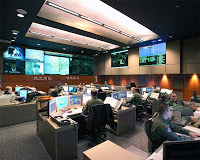 |
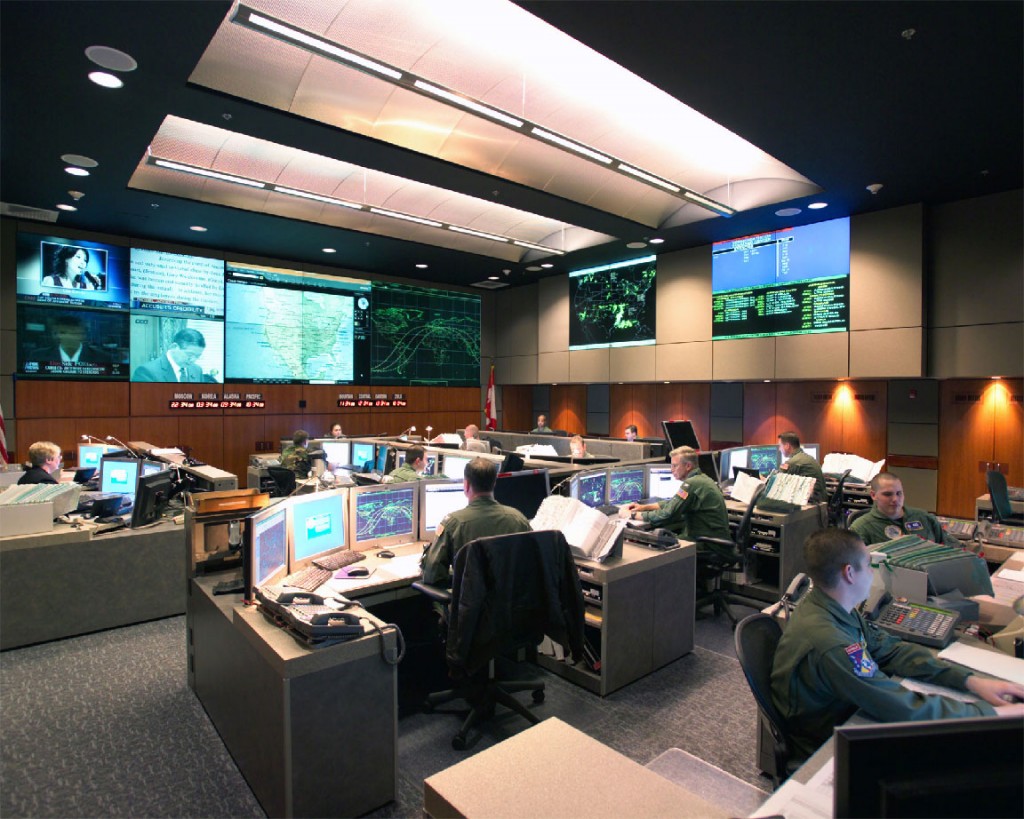
| Fusion command center. |
So far, the prize for pure fused wordiness goes to a 215-page manual issued in 2009 by the Virginia Fusion Center (VFC), filled with Keystone Kop-style passages among pages that in their intrusive sweep are anything but funny. The VFC warned, for instance, that “the Garbage Liberation Front (GLF) is an ecological direct action group that demonstrates the joining of anarchism and environmental movements.” Among GLF’s dangerous activities well worth the watching, the VFC included “dumpster diving, squatting, and train hopping.”
In a similarly jaw-dropping manner, the manual claimed — the italics are mine — that “Katuah Earth First (KEF), based in Asheville, North Carolina, sends activists throughout the region to train and engage in criminal activity. KEF has trained local environmentalists in non-violent tactics, including blocking roads and leading demonstrations, at action camps in Virginia. While KEF has been primarily involved in protests and university outreach, members have also engaged in vandalism.” Vandalism! Send out an APB!
The VFC also warned that, “[a]lthough the anarchist threat to Virginia is assessed as low, these individuals view the government as unnecessary, which could lead to threats or attacks against government figures or establishments.” It singled out the following 2008 incidents as worth notice:
- At the Martinsville Speedway, “A temporary employee called in a bomb threat during a Sprint Cup race… because he was tired of picking up trash and wanted to go home.”
- In Missouri, “a mobile security team observed an individual photographing an unspecified oil refinery… The person abruptly left the scene before he could be questioned.”
- Somewhere in Virginia, “seven passengers aboard a white pontoon boat dressed in traditional Middle Eastern garments immediately sped away after being sighted in the recreational area, which is in close proximity to” a power plant.
What idiot or idiots wrote this script?
Given a disturbing lack of evidence of terrorist actions undertaken or in prospect, the authors even warned:
It is likely that potential incidents of interest are occurring, but that such incidents are either not recognized by initial responders or simply not reported. The lack of detailed information for Virginia instances of monitored trends should not be construed to represent a lack of occurrence.
Lest it be thought that Virginia stands alone and shivering on the summit of bureaucratic stupidity, consider an “intelligence report” from the North Central Texas fusion center, which in a 2009 “Prevention Awareness Bulletin” described, in the ACLU’s words, “a purported conspiracy between Muslim civil rights organizations, lobbying groups, the anti-war movement, a former U.S. Congresswoman, the U.S. Treasury Department, and hip hop bands to spread tolerance in the United States, which would ‘provide an environment for terrorist organizations to flourish.’”
And those Virginia and Texas fusion centers were hardly alone in expanding the definition of “terrorist” to fit just about anyone who might oppose government policies. According to a 2010 report in the Los Angeles Times, the Justice Department Inspector General found that “FBI agents improperly opened investigations into Greenpeace and several other domestic advocacy groups after the Sept. 11 terrorist attacks in 2001, and put the names of some of their members on terrorist watch lists based on evidence that turned out to be ‘factually weak.’”
The Inspector General called “troubling” what the Los Angeles Times described as “singling out some of the domestic groups for investigations that lasted up to five years, and were extended ‘without adequate basis.’”
Subsequently, the FBI continued to maintain investigative files on groups like Greenpeace, the Catholic Worker, and the Thomas Merton Center in Pittsburgh, cases where (in the politely put words of the Inspector General’s report) “there was little indication of any possible federal crimes… In some cases, the FBI classified some investigations relating to nonviolent civil disobedience under its ‘acts of terrorism’ classification.”
One of these investigations concerned Greenpeace protests planned for ExxonMobil shareholder meetings. (Note: I was on Greenpeace’s board of directors during three of those years.) The inquiry was kept open “for over three years, long past the shareholder meetings that the subjects were supposedly planning to disrupt.” The FBI put the names of Greenpeace members on its federal watch list. Around the same time, an ExxonMobil-funded lobby got the IRS to audit Greenpeace.
This counterintelligence archipelago of malfeasance and stupidity is sometimes fused with ass-covering fabrication. In Pittsburgh, on the day after Thanksgiving 2002 (“a slow work day” in the Justice Department Inspector General’s estimation), a rookie FBI agent was outfitted with a camera, sent to an antiwar rally, and told to look for terrorism suspects. The “possibility that any useful information would result from this make-work assignment was remote,” the report added drily.
The agent was unable to identify any terrorism subjects at the event, but he photographed a woman in order to have something to show his supervisor. He told us he had spoken to a woman leafletter at the rally who appeared to be of Middle Eastern descent, and that she was probably the person he photographed.
The sequel was not quite so droll. The Inspector General found that FBI officials, including their chief lawyer in Pittsburgh, manufactured postdated “routing slips” and the rest of a phony paper trail to justify this surveillance retroactively.
Moreover, at least one fusion center has involved military intelligence in civilian law enforcement. In 2009, a military operative from Fort Lewis, Washington, worked undercover collecting information on peace groups in the Northwest. In fact, he helped run the Port Militarization Resistance group’s Listserv. Once uncovered, he told activists there were others doing similar work in the Army. How much the military spies on American citizens is unknown and, at the moment at least, unknowable.
Do we hear an echo from the abyss of the counterintelligence programs of the 1960s and 1970s, when FBI memos — I have some in my own heavily redacted files obtained through an FOIA request — were routinely copied to military intelligence units? Then, too, military intelligence operatives spied on activists who violated no laws, were not suspected of violating laws, and had they violated laws, would not have been under military jurisdiction in any case.
During those years, more than 1,500 Army intelligence agents in plain clothes were spying, undercover, on domestic political groups (according to Military Surveillance of Civilian Politics, 1967-70, an unpublished dissertation by former Army intelligence captain Christopher H. Pyle). They posed as students, sometimes growing long hair and beards for the purpose, or as reporters and camera crews. They recorded speeches and conversations on concealed tape recorders. The Army lied about their purposes, claiming they were interested solely in “civil disturbance planning.”
Years later, I met one of these agents, now retired, in San Francisco. He knew more about what I was doing in the late 1960s than my mother did.
Squaring circles
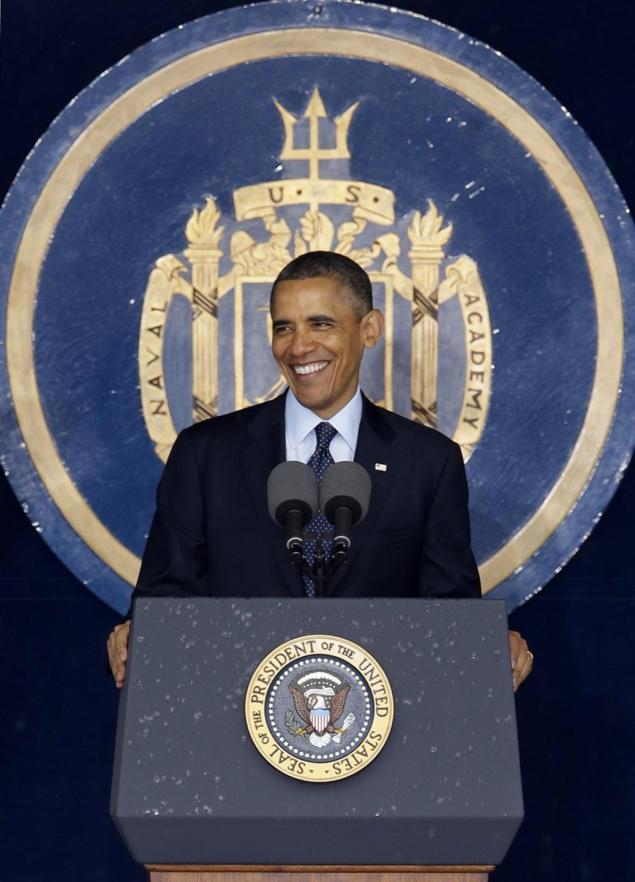
In 2009, President Obama told the graduating class at the Naval Academy that, “as Americans, we reject the false choice between our security and our ideals.” Security and ideals: officially we want both. But how do you square circles, especially in a world in which “security” has often enough become a stand-in for whatever intelligence operatives decide to do?
 |
| Obama at Naval Academy. |
The ACLU’s Tennessee office sums the situation up nicely: “While the ostensible purpose of fusion centers, to improve sharing of anti-terrorism intelligence among different levels and arms of government, is legitimate and important, using the centers to monitor protected First Amendment activity clearly crosses the line.”
Nationally, the ACLU rightly worries about who is in charge of fusion centers and by what rules they operate, about what becomes of privacy when private corporations are inserted into the intelligence process, about what the military is doing meddling in civilian law enforcement, about data-mining operations that Federal guidelines encourage, and about the secrecy walls behind which the fusion centers operate.
Even when fusion centers do their best to square that circle in their own guidelines, like the ones obtained by the ACLU from Massachusetts’s Commonwealth Fusion Center (CFC), the knots in which they tie themselves are all over the page. Imagine, then, what happens when you let informers or agents provocateurs loose in actual undercover situations.
“Undercovers,” writes the Massachusetts CFC, “may not seek to gain access to private meetings and should not actively participate in meetings… At the preliminary inquiry stage, sources and informants should not be used to cultivate relationships with persons and groups that are the subject of the preliminary inquiry.” So far so good. Then, it adds, “Investigators may, however, interview, obtain, and accept information known to sources and informants.” By eavesdropping, say? Collecting trash? Hacking? All without warrants? Without probable cause?
“Undercovers and informants,” the guidelines continue, “are strictly prohibited from engaging in any conduct the sole purpose of which is to disrupt the lawful exercise of political activity, from disrupting the lawful operations of an organization, from sowing seeds of distrust between members of an organization involved in lawful activity, or from instigating unlawful acts or engaging in unlawful or unauthorized investigative activities.” Now, go back and note that little, easy-to-miss word “sole.” Who knows just what grim circles that tiny word squares?
The Massachusetts CFC at least addresses the issue of entrapment: “Undercovers should not become so involved in a group that they are participating in directing the operations of a group, either by accepting a formal position in the hierarchy or by informally establishing the group’s policy and priorities. This does not mean an undercover cannot support a group’s policies and priorities; rather an undercover should not become a driving force behind a group’s unlawful activities.”
Did Cleveland’s fusion center have such guidelines? Did they follow them? Do other state fusion centers? We don’t know.
Whatever the fog of surveillance, when it comes to informers, agents provocateurs, and similar matters, four things are clear enough:
- Terrorist plots arise, in the United States as elsewhere, with the intent of committing murder and mayhem. Since 2001, in the U.S., these have been almost exclusively the work of freelance Islamist ideologues like the Tsarnaev brothers of Boston. None have been connected in any meaningful way with any legitimate organization or movement.
- Government surveillance may in some cases have been helpful in scotching such plots, but there is no evidence that it has been essential.
- Even based on the limited information available to us, since September 11, 2001, the net of surveillance has been thrown wide indeed. Tabs have been kept on members of quite a range of suspect populations, including American Muslims, anarchists, and environmentalists, among others — in situation after situation where there was no probable cause to suspect preparations for a crime.
- At least on occasion — we have no way of knowing how often — agents provocateurs on government payrolls have spurred violence.
How much official unintelligence is at work? How many demonstrations are being poked and prodded by undercover agents? How many acts of violence are being suborned? It would be foolish to say we know. At least equally foolish would be to trust the authorities to keep to honest-to-goodness police work when they are so mightily tempted to take the low road into straight-out, unwarranted espionage and instigation.
[Note: Thanks to the ACLU’s Michael German and Matt Harwood and TomDispatch’s Nick Turse, for research help on this piece.]
This article was cross-posted to and originally published at TomDispatch. Copyright 2013 Todd Gitlin.
[Todd Gitlin is a professor of journalism and sociology at Columbia University, the chair of the PhD program in communications, and the author of The Whole World Is Watching: Mass Media in the Making and Unmaking of the New Left; The Sixties: Years of Hope, Days of Rage; and Occupy Nation: The Roots, the Spirit, and the Promise of Occupy Wall Street.]
The Rag Blog