Lamar W. Hankins : We Must Heal Our Wounded Vets

Wounded Army vet waiting for a prescription for anti-seizure medication at a Colorado Springs doctor’s office. Photo by Michael Ciaglo / Colorado Springs Gazette.

We must ‘heal the wounded’:
The military’s abuse of enlistees

At this point, almost a decade since his last combat, it is unclear whether Jim will ever recover from his injuries. His treatment by the military has been callous and devastating for his family as well as for him.

By Lamar W. Hankins | The Rag Blog | May 30, 2013

This Memorial Day my thoughts went back to about 10 years ago, when I learned as close to first-hand as one can get, short of being in the Army, just how abusive and uncaring the military establishment can be. A close family member was deployed to Iraq to fight in “Shock and Awe,” George W. Bush’s destabilizing effort to free Iraqis from the rule of Saddam Hussein. I’ll call him Jim.

Jim had been in Special Forces for most of his 18 years in the military. He had fought in the first Iraq War and had participated in many classified operations. His missions and training had caused him chronic pain and other long-term problems — skin cancers, unexplained neurological symptoms, and a back injury that required surgery.

When Jim was deployed to Iraq for George W. Bush’s war, he had not fully recovered from his back surgery and had not been released for full active duty. He required regular pain medicine to cope with his recovery from the surgery. Nevertheless, he was sent to fight with his unit in Iraq.

During the worst of Jim’s pain, he sought a private doctor to prescribe pain medication so that he could avoid letting his command know how bad his back was. He did not want to appear weak. He was strongly motivated to continue to be a part of his unit. He knew that if he let his next-in-command know of his condition, he would no longer be allowed to continue in his Special Forces unit. His “band of brothers” feelings were strong.

About six weeks into his deployment to Iraq, Jim’s dependency on drugs for pain control became so apparent that he was sent home from Iraq before his unit returned. As I learned eventually, in addition to physical pain, Jim suffered from post-traumatic stress disorder (PTSD). He had trouble sleeping, exhibited startle responses frequently both when asleep and when awake, had nightmares and flashbacks, was uncomfortable in crowds, had an uneven temperament, was often agitated, and had trouble concentrating.

Soon after Jim returned home, military doctors sent him to Walter Reed Army Hospital (now phased out of service) for another back surgery. I accompanied him for the surgery and stayed with him for several days afterward, including driving him home after he was released from Walter Reed. On this trip, I observed most of the symptoms mentioned above.

But these were the least of Jim’s troubles. Soon after returning to his base at Fort Bragg, North Carolina, his command started court martial proceedings, intent on washing him out of the Army because of his dependence on pain medication. They wanted to give him a bad conduct discharge. After he hired (at great expense) a civilian attorney with extensive military law experience, his punishment became a general discharge. He was not allowed to retire, though he had 19 years in the service.

After he was discharged, he filed for VA benefits and another struggle ensued, during which he had to prove that his disability was service connected. His attorney proved his high fees were worth the cost. With much support also from his family, eventually, Jim prevailed and received VA benefits and continues his recovery from his 19 years in the military.

At this point, almost a decade since his last combat, it is unclear whether he will ever recover from his injuries. His treatment by the military has been callous and devastating for his family as well as for him.

Unfortunately, Jim’s story is not unique or even a worst-case example of what the military does to men and women who join up. Those in the armed servies suffering from Traumatic Brain Injury (TBI) and PTSD are commonly dumped into the civilian sector without benefits — no pension, no health insurance, no support.

According to the Department of Defense, these conditions together likely affect more than half a million veterans of the last 11 years of American wars in the Middle East. They represent about one-quarter of all those who have served during this period.

As reported by Dave Phillips in the Colorado Springs Gazette, what happened to Jim seems to be standard operating practice for today’s volunteer military:

After the longest period of war in American history, more soldiers are being discharged for misconduct than at any time in recent history, and soldiers with the most combat exposure are the hardest hit. A Gazette investigation based on data obtained through the Freedom of Information Act shows the annual number of misconduct discharges is up more than 25 percent Army-wide since 2009, mirroring the rise in wounded.

At the eight Army posts that house most of the service’s combat units, including Fort Carson in Colorado Springs, misconduct discharges have surged 67 percent. All told, more than 76,000 soldiers have been kicked out of the Army since 2006. They end up in cities large and small across the country, in hospitals and homeless shelters, abandoned trailers and ratty apartments, working in gas fields and at the McDonald’s counter. The Army does not track how many, like Alvaro, were kicked out with combat wounds.

Figures supplied by the Army Human Resources Command indicate that soldiers discharged for alleged misconduct rose by about 63% during the six-year span between 2006 and 1012. Mark Waple, a civilian attorney who handles military cases and a retired Army officer told The Gazette: “I’ve been working on this since the ’70s, and I have never seen anything like this. There seems to be a propensity to use minor misconduct for separation, even for service members who are decorated in combat and injured.”

Politicians are quick to declare our duty to provide support for our troops, including when they return. Last October, President Barack Obama called it “the single most sacred obligation this country has.” More recently, Colorado Sen. Mark Udall said, “The American people have an unbreakable covenant with our veterans and we must provide them the very best health care.”

But the military and the VA seem unable to provide that support and recognize that what we require volunteer service men and women to do leads directly to PTSD and often causes them to be wounded in ways that are not immediately apparent.

Jack Nicholson’s character in A Few Good Men, Colonel Nathan R. Jessup, told the attorney prosecuting two Marines for the murder of another Marine, “You can’t handle the truth.”

At least in part, what Col. Jessup refers to is the perceived need to do horrible things in the service of this country, as well as actually taking actions that would be perceived by most people as despicable — killing children, bombing families going peacefully about their daily lives, destroying homes. Sometimes such deeds are purposeful, other times accidental. But all take a toll on the human psyche.

Our fighting men and women are not super humans, unfazed by what they do as members of the military. They are not playing video games for the highest score. They are placed in life-and-death situations in the service of their country.

What they do sometimes makes them lose their moorings. Sometimes it makes them sick. Sometimes it leads them to make wrong choices. No matter what some military leaders may claim, they are not weaklings or cowards if their mental and physical health deteriorates. They are human.

Twenty-two veterans of our wars commit suicide each day. That should be sufficient for anyone to understand how wrong it is to compel our military men and women to do what we have made them do, and then discard them.

It is long past time to start treating our service men and women as the sentient human beings they are. We should not expect more from them than the human mind and body can be reasonably expected to endure. When we do ask them to commit horrible deeds, we need to expect that some of them will not respond to their experiences well.

For these, and all the rest, we need a system that is compassionate, not one that is operated by the self-righteous and arrogant. We need to stop punishing people for the logical consequences of what we require them to do.

If our politicians really care about the service and sacrifice of our military members, they will change a system that is unfair, degrading, and inhumane into one based on what we know about human psychology, neurology, and physiology. We will stop treating these service men and women as automatons and recognize that what they have become is partly, if not largely, a result of what we had them do.

We will take some responsibility for their circumstances and do our best to make up for our own transgressions manifest in the tasks we gave them. It is the very least that should be expected of a great country.

As many veterans of Iraq and Afghanistan said one year ago at a rally in Chicago, it is long past the time that we should “Honor the Dead, Heal the Wounded, Stop the Wars.”

[Lamar W. Hankins, a former San Marcos, Texas, city attorney, is also a columnist for the San Marcos Mercury. This article © Freethought San Marcos, Lamar W. Hankins. Read more articles by Lamar W. Hankins on The Rag Blog.]

The Rag Blog

Posted in Rag Bloggers | Tagged , , , , , , | 1 Comment

Jean Trounstine : Italian Prison Inmates Perform Theatre Behind Bars

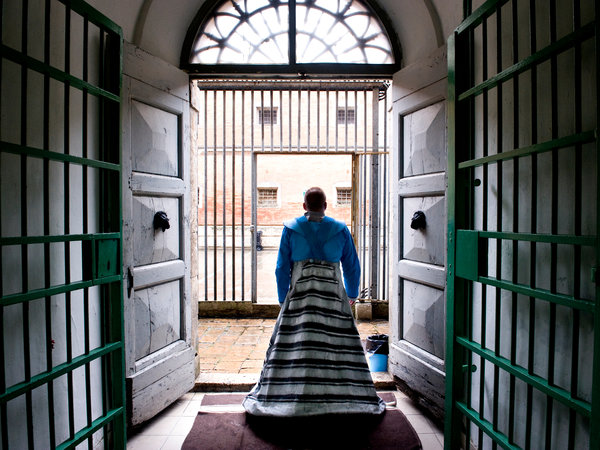
Italian prison inmate performing in Romeo and Juliet: Mercutio Does Not Want to Die. Photo by Clara Vannucci for The New York Times.

Compagnia della Fortezza:
Theatre in an Italian prison

Punzo says that it is not therapy that drives him but creating good theatre.

By Jean Trounstine | The Rag Blog | May 30, 2013

I’ve been interested for years in the Italian prison theatre company recently featured in a The New York Times report. Since 1988, Compagnia della Fortezza, the company named after the Medici-era fortress that houses the Volterra jail where the men are imprisoned, has performed a variety of Italian spectacles and tragedies.

From Alice in Wonderland, a Theatrical Essay on the End of a Civilization to Romeo and Juliet: Mercutio Does Not Want to Die, director Amando Punzo has dedicated himself to art behind bars.

The photo above is one of many in the photo essay by Clara Vannuci, an Italian photographer who has documented in amazing pictures the essence of Punzo’s vision.

For 21 years, working five hours a day, six days a week, Punzo has embarked on a challenging repertoire for the company, including, per the Times, in an article from 2009, “plays based on works by Brecht, Peter Handke, and even the tale of Pinocchio.” He says that it is not therapy that drives him but creating good theatre.

I too felt that way during the run of eight plays I directed behind bars. The idea was not to go after building self-esteem — although that happened — but to go after revealing the truth of the play and getting the women to be the best they could be at portraying their roles.

We did plays at Framingham Women’s Prison in Massachusetts that expanded the women’s horizons and gave them access to literature — ranging from Shakespeare to Aristophanes.

Here is Dolly dressed as a Suffragette in Lysistrata, the famous play where women refuse to have sex with their spouses until they end war:

Scene from Lysistrata, performed at Framingham Women’s Prison in Massachusetts.

Punzo says, “It’s not about giving the inmates an outlet or a recreational break. It’s work.” The side effects of theatre programs behind bars are self-respect, community building, and a love for the stage.

In the United States, it is a struggle to get plays inside, in fact to create anything worthwhile. The goal of prison is repression. The goal of education is expansion and opening one’s mind to the world. The goal of art is freedom and beauty.

But the Italians love art so much, the rumor goes, that prisons would rather risk an arrest than not show their performances to other Italians. Many plays tour and many prisoners work outside during the day. And believe it or not, over half the 205 prisons in Italy have acting companies.

Compagnia della Fortezza has won some of Italy’s most prestigious theatre awards and houses a gourmet restaurant where prisoners work and serve food to the public.

The 2009 production of Alice in Wonderland, a Theatrical Essay on the End of a Civilization (photo below) was loosely based on Lewis Carroll’s masterwork, but the text wove in soliloquies from other authors, in this case Shakespeare (predominantly Hamlet) but also Genet, Pinter, Chekhov, and Heiner Müller.

Inmates perform in Alice in Wonderland, a Theatrical Essay on the End of a Civilization. Photo by Sondro Michalles for The International Herald Tribune.

While Punzo, who has an acting background, creates a new play every July, his dream is to create a stable repertory company, with a winter season and a permanent theater, which would allow him to pay the actors. Ah Italy!

Photographer Vannuci relayed in the Times article how she asked a prisoner why no one tried to escape. The response reflected how much theatre has the potential to change lives: “Why should I run? Where would I go? Twenty years I’ve lived in prison. Now I have something to live for. Life has meaning.”

[Jean Trounstine is an author/editor of five published books and many articles, professor at Middlesex Community College in Massachusetts, and a prison activist. For 10 years, she worked at Framingham Women’s Prison and directed eight plays, publishing Shakespeare Behind Bars: The Power of Drama in a Women’s Prison about that work. She blogs for Boston Magazine and takes apart the criminal justice system brick by brick at jeantrounstine.com where she blogs weekly at “Justice with Jean.” Find her other contributions to The Rag Blog here.]

The Rag Blog

Posted in Rag Bloggers | Tagged , , , , , , | Leave a comment

Type your summary here

Type rest of the post here

Source /

The Rag Blog

Posted in RagBlog | Leave a comment

RAG RADIO / Thorne Dreyer : Economist Gar Alperovitz Asks, ‘What Then Must We Do?’

Rag Radio podcast: 
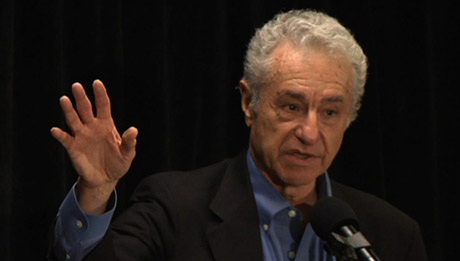
Political economist Gar Alperovitz,
author of ‘What Then Must We Do?’

“Like a picture slowly developing in a photographer’s darkroom, the potential elements of a new system, of something meaningful and very American, are beginning to emerge.” — Gar Alperovitz

By Rag Radio | The Rag Blog | May 30, 2013

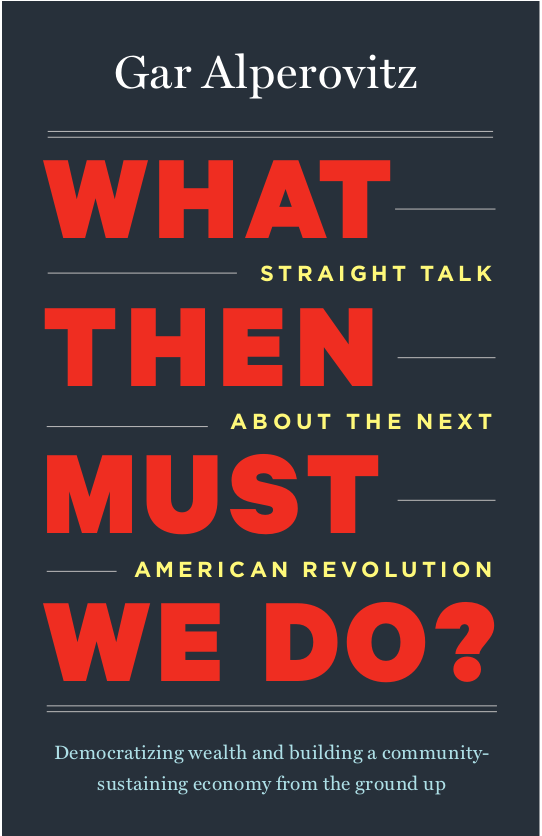
Political economist Gar Alperovitz, whose new book is What Then Must We Do?: Straight Talk About the Next American Revolution, was our guest on Rag Radio, Friday, May 10, 2013. Rag Radio is a syndicated radio program produced at the studios of KOOP 91.7-FM, a cooperatively-run all-volunteer community radio station in Austin, Texas.

Listen to or download our interview with Gar Alperovitz here:


On the show, Alperovtitz talks with host Thorne Dreyer and The Rag Blog‘s Roger Baker about issues raised in his new book, What Then Must We Do?.

In the book, Alperovitz speaks about “why the time is right to democratize the ownership of wealth to strengthen our communities and our nation, through local cooperatives, worker-owned companies, and independent business, as well as larger publicly-owned enterprises and reinvigorated institutions.”

Alperovitz told the Rag Radio audience that “we are living in a systemic crisis, not simply a political crisis… You see that the long, long trends — for 30 years or more — simply don’t much change if you elect this politician or that politician.”

“Over the last 30 years,” he said, “real wages for most people have simply not moved up or down more than a few pennies. The top one percent has increased its income share over that 30-year span, from 10 percent to more than 20 percent. Over 30 years the top 1 percent has taken just about all of the gains of the economic system.”

And, he added, “That’s extraordinary.”

The new book, he says, documents “trend after trend after trend where the big picture keeps getting worse — or nothing gets better. Poverty increases, the incarceration rate has gone up dramatically… CO2 production has gone up 30 percent… On many many fronts, the trends don’t much change, and things get worse, and that tells you that something deeper in the system is at work.”

“And,” Alperovitz said, “I don’t think its going to change until we actually begin slowly but steadily evolving… and moving towards what can only be called a different system in the United States, something different from corporate capitalism. And certainly different from state socialism or communism. Something that has an American flavor and development.”

“And,” he added, “the book suggests that, partly because of the pain levels, and because things aren’t working for people, if you look closely there’s a lot of developments that are going in a new direction. And a lot that the press certainly doesn’t report on.”

Alperovitz believes that many encouraging things are happening largely under the radar in this country, including the burgeoning workers’ cooperative movement and other public experiments that are addressing democratization of the economy.

“Like a picture slowly developing in a photographer’s darkroom, the potential elements of a new system, of something meaningful and very American, are beginning to emerge,” he writes.

According to Daniel Ellsberg, “For decades, Gar Alperovitz has been at the forefront of attempts to understand what could lie beyond our increasingly broken system of corporate capitalism,” and his new book “offers by far the most serious, intellectually grounded strategy for system-changing yet to appear.”

University of Texas economist James Galbraith calls Alperovitz’s book a “cooperative and democratic manifesto,” and says, “May his ideas and ideals flourish.”

And Bill Fletcher Jr. wrote in a review of What Then Must We Do?, published on The Rag Blog, that Alperovitz “proceeds to identify actual examples of different struggles and projects that have been undertaken by progressives that show that a different way of organizing life and the economy is not only a great idea, but living reality.”

Fletcher writes that, “The reforms proposed are both clear and compelling and, in many cases, achievable.”

But he also suggests that Alperovitz’s strategy as incomplete: “The struggle for structural reforms and survival presented by Alperovitz is essential in cornering the political Right and changing the ‘common sense’ of the U.S. political arena. But it is not enough to wound the rabid beast; one must ultimately bring it down.”

According to Fletcher, “Alperovitz’s platform is at best one component in a much more long-term socialist strategy.”

Gar Alperovitz has had a distinguished career as a historian, political economist, activist, writer, and government official. He is currently the Lionel R. Bauman Professor of Political Economy at the University of Maryland; was co-founder of the Democracy Collaborative; and is a former Fellow of Kings College, Cambridge University, Harvard’s Institute of Politics, and the Institute for Policy Studies; and a Guest Scholar at the Brookings Institution.

He is the author of critically acclaimed books including America Beyond Capitalism and The Decision to Use the Atomic Bomb, and his articles have appeared in The New York Times, the Washington Post, The Los Angeles Times, the New Republic, The Nation, and the Atlantic, among other popular and academic publications.

Also see Roger Baker’s review of Alperovitz’s earlier book, America Beyond Capitalism, at The Rag Blog, and listen to the podcast of our February 3, 2012, Rag Radio interview with Gar Alperovitz.

Rag Radio is hosted and produced by Rag Blog editor and long-time alternative journalist Thorne Dreyer, a pioneer of the Sixties underground press movement.

The show has aired since September 2009 on KOOP 91.7-FM, an all-volunteer cooperatively-run community radio station in Austin, Texas. Rag Radio is broadcast live every Friday from 2-3 p.m. (CDT) on KOOP and is rebroadcast on Sundays at 10 a.m. (EDT) on WFTE, 90.3-FM in Mt. Cobb, PA, and 105.7-FM in Scranton, PA.

The show is streamed live on the web by both stations and, after broadcast, all Rag Radio shows are posted as podcasts at the Internet Archive.

Rag Radio is produced in association with The Rag Blog, a progressive Internet newsmagazine, and the New Journalism Project, a Texas 501(c)(3) nonprofit corporation. Tracey Schulz is the show’s engineer and co-producer.

Rag Radio can be contacted at ragradio@koop.org.

Coming up on Rag Radio:
THIS FRIDAY,
May 31, 2013: Philosophy scholar Bill Meacham, author of How to Be an Excellent Human.
Friday, June 7, 2013: Mother Jones correspondent Tom Philpott on agricultural sustainability and the “Politics of Food.”

The Rag Blog

Posted in Rag Bloggers | Tagged , , , , , , | 1 Comment

Harry Targ : Benghazi is the Perfect ‘Scandal’

Political cartoon by Daryl Cagle / Cagle Cartoons.

Benghazi:
The perfect ‘scandal’

The real ‘scandal’ is the cover-up of what the U.S. was doing in Libya.

By Harry Targ | The Rag Blog | May 30, 2013

On the night of September 11, 2012, an armed group attacked a diplomatic post in the city of Benghazi in eastern Libya. The next morning a CIA annex was attacked. Out of these two attacks four United States citizens were killed including U.S. Ambassador Christopher Stevens.

According to a November 2012 Wall Street Journal article (quoted by Conor Friedersdorf in The Atlantic, May 13, 2013):

The U.S. effort in Benghazi was at its heart a CIA operation, according to officials briefed on the intelligence. Of the more than 30 American officials evacuated from Benghazi following the deadly assault, only seven worked for the State Department. Nearly all the rest worked for the CIA, under diplomatic cover, which was a principal purpose of the consulate, these officials said.

On March 17, 2011, the United Nations Security Council passed Resolution 1973 authorizing humanitarian intervention in Libya. It endorsed “Member States, acting nationally or through regional organizations or arrangements, to take all necessary measures to protect civilians under threat of attack in the country, including Benghazi, while excluding a foreign occupation force of any form on any part of Libyan territory…” Five Security Council members abstained from support of this resolution: Brazil, China, Germany, India, and Russia.

Passage of the resolution was followed by a NATO-led air war on targets in that country. The North Atlantic Treaty Organization was established in 1949 as a military alliance to defend Europe from any possible aggression initiated by the Soviet Union. If words mattered, NATO should have dissolved when the Soviet Union collapsed.

The United States, so concerned for the human rights of people in the Persian Gulf and Middle East, including in Libya, was virtually silent as nonviolent revolutions overthrew dictatorial regimes in Tunisia and Egypt earlier in 2011.

The United States continued to support regimes in Bahrain and Yemen in the face of popular protest and violent response and remained the primary rock-solid supporter of the state of Israel as it continued to expand settlements in the West Bank and blockaded the transfer of goods to Palestinians in Gaza.

And, of course, in the face of growing ferment in the Middle East and Persian Gulf for democratization not a word was said by way of criticism of the monarchical system in Saudi Arabia.

So as the Gaddafi regime in Libya fought its last battles, leading ultimately to the capture and assassination of the Libyan dictator, the NATO alliance and the United States praised themselves for their support of movements for democratization in Libya.

What seemed obvious to observers except most journalists was the fact that the overthrow of the Libyan regime, for better or worse, could not have occurred without the massive bombing campaign against military and civilian targets throughout Libya carried out by NATO forces.

From the vantage point of the Benghazi crisis of September 11, 2012, humanitarian intervention, which in Benghazi included 23 (of some 30) U.S. representatives who were CIA operatives, suggests that the attacks on U.S. targets might have had something to do with the history of U.S interventionism in the country. Great powers, such as the United States, continue to interfere in the political life of small and poor countries. And, the mainstream media continues to provide a humanitarian narrative of imperialism at work.

The post-9/11 Benghazi story is one of Republicans irresponsibly focusing on inter-agency squabbles and so-called contradictory Obama “talking points” after the killings of the four U.S. representatives in Benghazi. They chose not to address the real issue of the United States pattern of interference in the internal affairs of Libya.

And the Obama Administration defends itself by denying its incompetence in the matter, desperately trying to avoid disclosing the real facts in the Benghazi story which might show that the CIA and the Ambassador’s staff were embedded in Benghazi to interfere in the political struggles going on between factions among the Libyan people.

As Alexander Cockburn put it well in reference to the war on Libya in The Nation in June 2011:

America’s clients in Bahrain and Riyadh can watch the undignified pantomime with a tranquil heart, welcoming this splendid demonstration that they have nothing to fear from Obama’s fine speeches or Clinton’s references to democratic aspirations, well aware that NATO’s warplanes and helicopters are operating under the usual double standard — with the Western press furnishing all appropriate services.

If Cockburn were alive today he would have added that the Libyan operation was about U.S. covert interventionism, anger on the part of sectors of the Benghazi citizenship, and not about the United States encouraging “democratic aspirations” of the Libyan people.

Neither Republicans nor Democrats want to have a conversation about U.S. interventionism but prefer to debate about a “scandal.” The real “scandal” is the cover-up of what the U.S. was doing in Libya.

[Harry Targ is a professor of political science at Purdue University and is a member of the National Executive Committee of the Committees of Correspondence for Democracy and Socialism. He lives in West Lafayette, Indiana, and blogs at Diary of a Heartland Radical. Read more of Harry Targ’s articles on The Rag Blog.]

The Rag Blog

Posted in Rag Bloggers | Tagged , , , , , , , , , | 1 Comment

IDEAS / Bill Meacham : Imagine There’s No Morality

Art from Duck Soup.

Imagine there’s no morality

The philosophical question becomes an empirical one: what enables us to flourish?

By Bill Meacham | The Rag Blog | May 30, 2013

Bill Meacham will discuss issues raised in his new book, How to Be An Excellent Human, with Rag Blog editor Thorne Dreyer on Rag Radio, Friday, May 31, 2013, from 2-3 p.m. (CDT) on KOOP 91.7-FM in Austin, and streamed live to the world. The show will be rebroadcast by WFTE-FM in Mt. Cobb and Scranton, PA, Sunday morning, June 2, at 10 a.m. (EDT), and the podcast will be posted at the Internet Archive.

Here is a thought experiment for you: What if there aren’t really any moral rules? What if moral rules, unlike physical objects and events, do not actually exist independently of us?

What if God (however you conceive that entity) does not exist and hence can give us no commands? (This is the view of the atheists.) Or, if God does exist, what if God does not command us to do (or not do) anything? (This is the view of many deists.) Or what if there is in principle no way of knowing whether God exists and hence no way of knowing what the divine commands might be? (This is the view of the agnostics.)

Furthermore, what if there is no unseen realm of moral rules, obligations, rights, and responsibilities existing independently of us? (This is the view called “moral anti-realism.”) What if morality is only constructed socially; and, being socially constructed, can be socially deconstructed if we like?

How then should we figure out how to live our lives? Or, since “should” often refers to a moral rule or obligation, what would be the best way or even a pretty good way to figure out how to live our lives?

In the absence of moral rules we would have to use a form of reasoning I call ethical inference to argue from factual premises to recommendations. For example:

  • People who eat a balanced, nutritious diet are healthier than people who don’t.
  • Sarah wants to be healthy.
  • Therefore, Sarah should eat a balanced, nutritious diet.

That “should” is a recommendation of prudence, not a moral command. It is in what I call the “goodness paradigm” of language instead of the “rightness paradigm.”(1) The goodness paradigm makes recommendations instead of giving commmands; and it does so on the basis of the observable effects of our actions, rather than an appeal to moral rules.

Such recommendations do not follow with deductive certainty, but are the result of practical reasoning. If the premises are true, reasonable and appropriate, then the conclusion follows with enough practical credence to warrant acting on it.

The first premise of the ethical inference is factual. We can assess its truth by making observations, administering surveys, performing scientific experiments and so forth. That is one of the advantages of the goodness paradigm, that its claims can be objectively verified.

The second premise is also factual, but it pertains to a person’s desires or intentions. If Sarah has no desire to be healthy, then she has no reason to follow the advice.

So the philosophical question becomes, what should we desire? Or, if we don’t like the term “should,” what is the best thing (or even a pretty good thing) to desire with sufficient intensity that we are moved actually to strive to achieve it?

The ancient Greeks had an answer: eudaimonia, often translated as “flourishing,” “happiness,” or “fulfillment.” What we all by nature want and try to achieve is to survive, thrive, and feel happy and fulfilled. Thinkers as diverse as Kant and Socrates agree that this desire is fundamental and essential to all humans as rational beings that have needs.(2)

And if you disagree and think something else is more to be desired, then consider that in order to fulfill that desire, you would have to survive and thrive at least enough to be able to attain it. (And once you attained it, you would, I presume, feel happy and fulfilled.) So functioning well enough to survive and thrive is the fundamental aim of all of us.

Given that premise, the philosophical question becomes an empirical one: what enables us to flourish? How are we constituted, how do we function, what is good for us and what are we good for and good at? In short: What is human nature?

We can answer the question about human nature in two ways, idiosyncratically and generically.

By “idiosyncratically” I mean that each of us has certain talents and abilities, and it makes sense for us to pursue and nurture the talents we have, and not the ones we don’t. If someone has a talent for music but not much athletic ability, that person will be more successful in life and happier by practicing music than by practicing basketball. The opposite would be true for a musically inept athlete.

By “generically” I mean that there are certain functions and abilities we all have by virtue of being human. Hence, it makes sense for us to nurture and expand those functions and abilities. And what are they? Well, I have written a whole book about the subject; it’s a bit much to summarize here. But one thing is common to both the idiosyncratic and generic approaches: self-knowledge.

Inscribed on the temple to Apollo at Delphi were the words “Know Thyself.”(3) That’s not a moral command; it’s just good advice. And it is probably the best advice any of us will ever receive.

[Bill Meacham is an independent scholar in philosophy. A former staffer at Austin’s ’60s underground paper, The Rag, Bill received his Ph.D. in philosophy from the University of Texas at Austin. Meacham spent many years working as a computer programmer, systems analyst, and project manager. He posts at Philosophy for Real Life, where this article also appears. Read more articles by Bill Meacham on The Rag Blog.]

Notes
(1) Meacham, “The Good and the Right.”
(2) Versenyi, “Is Ethical Egoism Really Inconsistent?”
(3) Wikipedia, “Delphi.”

References
Meacham, Bill. “The Good and the Right.” Online publication http://www.bmeacham.com/whatswhat/GoodAndRight.html.
Versenyi, Laszlo. “Is Ethical Egoism Really Inconsistent?” Ethics, Vol. 80, No. 3 (April, 1970), pp. 240-242. Online publication http://www.jstor.org/stable/2380274 as of 12 October 2010.
Wikipedia. “Delphi.” Online publication http://en.wikipedia.org/wiki/Delphi as of 10 May 2013.

The Rag Blog

Posted in Rag Bloggers | Tagged , , , , | Leave a comment

Type your summary here

Type rest of the post here

Source The Rag Blog

Posted in RagBlog | Leave a comment

Tom Hayden : Is President Taking New Tack on Counterterrorism?

President Obama speaks about his administration’s counter-terrorism policy at the National Defense University in Washington, May 23, 2013. Photo by Larry Downing / Reuters.

Obama responding to critics:  
Tide turning on counterterrorism secrecy

While defending his military policies as constitutional, the president was promising to wind down the ‘forever war,’ sharply reduce drone attacks, repatriate detainees to Yemen, and move again to close Guantanamo.

By Tom Hayden | The Rag Blog | May 29, 2013

President Barack Obama’s speech at the National Defense University on counterterrorism revealed a commander-in-chief increasingly worried about political criticism of his Guantanamo detentions, his penchant for secrecy, and his drone warfare policies. Where Obama has shielded his policies on the basis of external terrorist threats, he now is responding to critics who threaten to upset domestic support for those policies abroad.

In past years, Obama has defended himself against attacks from neoconservative hawks and senators like John McCain, Joe Lieberman, and Lindsay Graham, who charged him with being “soft” on terrorism. But on May 23, while defending his military policies as constitutional, the president was promising to wind down the “forever war,” sharply reduce drone attacks, repatriate detainees to Yemen, and move again to close Guantanamo.

When disrupted by CodePink’s Medea Benjamin, Obama spontaneously said that Benjamin was “worth paying attention to,” and that he was “willing to cut the young lady who interrupted [him] some slack because it’s worth being passionate about.”

Such a gesture will hardly pacify CodePink or the president’s antiwar critics. But their criticisms have become a factor in the national debate. To criticize the president’s speech as “nothing new” is to miss the primary reason for which the speech was given: to explain a careful withdrawal from the Global War on Terrorism paradigm, the heinous impasse at Guantanamo, and the massive secrecy around drones.

The President was cautious in explaining his pivot toward deescalation, mindful that incidents like Benghazi or the Boston Marathon bombings can block his deescalation path, or at least complicate it severely.

The speech, along with Attorney General Eric Holder’s letter and background briefings, for the first time revealed the following:

  • Obama let it be known that the CIA will cede its control of the drone war to the Pentagon in six months, opening the way to greater public transparency and overdue congressional debate — Pentagon budgets can be amended while CIA items are unmentionable secrets in Washington;
  • Obama called the 2001 Authorization for the Use of Military Force “near obsolete” and proposed its eventual repeal;
  • Clarified that drones will not be used after American ground forces leave Afghanistan, a signal the Taliban and Pakistan will hear;
  • Vowed to “limit the use of lethal force” to only those targets considered to be ”continuing, imminent threat(s) to Americans,” which could “signal an end” (according to The New York Times) of so-called “signature strikes” or where the threats are to partner-states but not American personnel;
  • Acknowledged for the first time that U.S. drone attacks have killed civilians;
  • Declassified the official information that the U.S. killed Anwar al-Awlaki and three other Americans;
  • Dropped its judicial effort to block a California lawsuit seeking materials related to al-Awlaki’s killing;
  • Announced consultations with the media and a report on new whistleblower guidelines by July 12;
  • Appointed a new State Department official “to achieve the transfer” of Yemeni detainees from Guantanamo.

The ramifications of the Obama speech and Holder letter will be felt in the weeks ahead. Asked if there will be effects on existing human rights cases, Vincent Warren, executive director of the Center for Constitutional Rights (CCR) said, “It does, because they never admitted to killing Abdul Rahman, the teenager, in the court papers, nor did they acknowledge that they killed people that they were not targeting. I have a sense that their legal justifications are going to shift, but not sure to what. [It] may be clearer in the coming weeks.”

In a related development, federal judge Rosemary Collyer required the Justice Department to report in two weeks on how the admissions affected the legal issues in the case. While defining al-Awlaki as a justifiable security threat, the administration now says the other three deaths, including aw-Awlaki’s 16-year old son, were not specifically targeted, raising the question of whether the administration will be held accountable in the federal court.

This article was also published at TomHayden.com.

[Tom Hayden is a former California state senator and leader of Sixties peace, justice, and environmental movements. He currently teaches at Pitzer College in Los Angeles. His latest book is The Long Sixties. Hayden is director of the Peace and Justice Resource center and editor of The Peace Exchange Bulletin. Read more of Tom Hayden’s writing on The Rag Blog.]

The Rag Blog

Posted in Rag Bloggers | Tagged , , , , , , , | 4 Comments

Michael James : Late Summer Sundown on the Karma Farm

Late summer sundown on the Karma Farm, New Lisbon, Wisconsin 1981. Photo by Michael James from his forthcoming book, Michael Gaylord James’ Pictures from the Long Haul.

Pictures from the Long Haul:
Late summer sundown on the Karma Farm

To other people who talked of ‘moving to the country’ I would say ‘stay in the city but spend some time in the country: think, nourish yourself, and come back to the city to fight the imperialist ogre from within the belly of the beast.’

By Michael James | The Rag Blog | May 29, 2013

[In this series, Michael James is sharing images from his rich past, accompanied by reflections about — and inspired by — those images. This photo will be included in his forthcoming book, Michael Gaylord James’ Pictures from the Long Haul.]

Old man Burtchie had been a Seabee during World War II, a member of the U.S. Navy’s construction battalion. When I knew him he was a plumber and small farmer.

His son Vic went off to Korea and when he returned in 1951 I was a nine-your-old living up the Red Coat Road in my Connecticut hometown. The name of the road is derived from the British Red Coats who marched nearby on their way to burning the hat factories in Danbury during the Revolutionary War. We played “fight the British”! Victor had a Harley and I had the pleasure of getting to ride with him around hilly and curvy Berkshire foothills, on Connecticut back roads. I was the kid on the back, the third rider on occasion.

Victor give me a winged-wheel Harley hat and also instructed me not to let on to the current woman on the machine between him and me that there had been another woman in that very position cruising with the group of riders earlier in the day.

Besides motorcycles, my close proximity to the farm gave me an early hit of agricultural life. I hung around the barn and did what I was told. I remember a lot of commotion when a Ford pickup truck showed up with a bull with a ring in his nose that was released into a pasture of about six cows. And I helped out when the old man butchered chickens, pigs, and heifers.

Back up the road I helped my dad plant our first garden. The corn grew high as an elephant’s eye, or at least twice as high as I stood back in 1949. My younger brother Beau and I both had the farm vibe and became members of the Green Farmers, a 4H club in the Greensfarms part of Westport.

I loved the 4H club and still spout its “head, heart, hand and health.” We went to the Grange fair in Easton and took in the livestock exhibits at the Danbury State Fair and the Eastern States Exposition. We took it all in — the food, the rides, the carnie strip and all its sideshows. Mostly we loved the animals,

In 1952 we moved a half-­mile away to a pre-­revolutionary war onion farm on the Wilton Road. Over the years our stock included Harvey the rabbit, King pigeons, Muscovy ducks, African Tumbler pigeons, and Bantam chickens. In 1962 Beau upped the ante and brought in a couple of sheep. Years later my step dad Shookie planted a sizable garden. When visiting I picked the oh-­so-­fresh tomatoes and ate them with a dose of salt.

Beau was a tractor freak with a collection of John Deer toy tractors. He got our mom to drive him to a tractor dealer and lot where he could look over and learn about these groundbreaking machines. He married and moved to Vermont for a time, starting a sod farm and raising kids and some animals. I visited once and went to the Bondville Fair where I recall watching drunk rural dudes climbing out of an old Plymouth — deer antlers mounted on the hood, with beer cans in hand.

After moving to and taking various stands in Chicago, I cherish my short-­term escapes to the Karma Farm up in New Lisbon, Wisconsin. To other people who talked of “moving to the country” I would say “stay in the city but spend some time in the country: think, nourish yourself, and come back to the city to fight the imperialist ogre from within the belly of the beast.” I am glad I knew the hippie families that tried to make a go of rural life there.

I would haul myself up north, visit and make plans with my friend Lester Doré. Lester, the agriculturally knowledgeable son of an oil field worker family, came out of New Iberia, Louisiana (think Tabasco) and grew up in Tulsa. He ended up in Chicago where he did artwork for The Seed, designed Rising Up Angry‘s logo, did the original artwork for the Heartland Café, and was the art director of the Heartland Journal.

He also did an artwork stint on the old San Francisco Oracle, designed rolling paper logos, and did a famed piece of design work picturing a marijuana leaf and a peace symbol. He did a series of great jazz t-shirts under the label Bird Lives that were printed at the Farm’s little t-shirt factory.

My sojourns to the Karma Farm in beater trucks and cars were peaceful, enlightening, comforting, educational, and fun. These small adventures to the Karma Farm and beyond often found me returning to Chicago with “the goods” for the Heartland Cafe — t-shirts, firewood, an old wood burning stove, food and maple syrup. I am grateful for those times.

Thank you oh great Mother Earth for the good things you give and the good times you bring.

[Michael James is a former SDS national officer, the founder of Rising Up Angry, co-founder of Chicago’s Heartland Café (1976 and still going), and co-host of the Saturday morning (9-10 a.m. CDT) Live from the Heartland radio show, here and on YouTube. He is reachable by one and all at michael@heartlandcafe.com. Find more articles by Michael James on The Rag Blog.]

The Rag Blog

Posted in Rag Bloggers | Tagged , , , , , , , | 1 Comment

Type your summary here

Type rest of the post here

Source The Rag Blog

Posted in RagBlog | Leave a comment

Alan Waldman : Clive Owen is Excellent in Four ‘Second Sight’ TV Movies

Waldman’s film and TV
treasures you may have missed:

Owen plays a police chief detective who strives to solve murders while covering up the fact that he’s going blind.

By Alan Waldman | The Rag Blog | May 29, 2013

[In his weekly column, Alan Waldman reviews some of his favorite films and TV series that readers may have missed, including TV dramas, mysteries, and comedies from Canada, England, Ireland, and Scotland. Most are available on DVD and/or Netflix, and some episodes are on YouTube.]

Clive Owen (who was outstanding in the 1998 film Croupier, which I previously reviewed for The Rag Blog) is once again terrific in the four Second Sight TV movies that are available on DVD and Netflix.

The shows aired on PBS’s Mystery! from 1999 to 2001 and were some North Americans’ initial introduction to the handsome, rugged Englishman Clive Owen. Three of the Second Sight films were penned by talented Paula Milne, who earned two major awards for The Politician’s Wife and seven nominations for other works. Her father was blind.

In the first film, Second Sight, Detective Chief Inspector Ross Tanner (Owen) and his deputy Catherine Tully (Claire Skinner) investigate the brutal murder of a 19-year-old boy. Tanner’s skills are tested to the maximum, because he is experiencing hallucinations and a frightening loss of sight and is hiding the fact from his superiors. Tully helps him cover up his handicap.

In the second movie, Second Sight: Hide and Seek, Tanner is put in charge of The Special Murder Unit, dealing with high-profile crimes. He and his team investigate the death of a prominent violinist, and the key to solving it is getting her traumatized, non-communicative 9-year-old son, who watched the death, to open up. Prime suspects are the ex-husband and the ex-lover (Art Malik). During the case, Tully is transferred out of the unit, so Tanner needs to mislead another team member into keeping his secret.

The third film, Second Sight: Parasomnia, deals with a female sleepwalker. Her fiancée has been murdered and she is found with her nightgown covered in blood. Her father is played by the fine Brit actor Michael Kitchen.

In the final film of the series, Second Sight: In the Land of the Blind, Tanner, who continues to lose his eyesight, investigates the murder of a black youth leader. Peter Vaughn is very good as a racist gangster who has also gone blind.

In 2013, an American version of these films, set in New Orleans and starring Jason Lee and Kim Dickens, is being shot.

[Oregon writer and Houston native Alan Waldman holds a B.A. in theater arts from Brandeis University and has worked as an editor at The Hollywood Reporter and Honolulu magazine. Read more of Alan Waldman’s articles on The Rag Blog.]

The Rag Blog

Posted in Rag Bloggers | Tagged , , , , , | Leave a comment

Bob Feldman : Regressive Taxation and Limited Unionization in Texas, 1996-2011

Staff and supporters of Texas’ Workers’ Defense Project perform at Texas state Capitor inside Capitol at event commemorating Texas workers who have died on the job. Photo by  Jason Cato / Workers Defense Project. Image from the Texas Observer.

The hidden history of Texas

Conclusion: 1996-2011/2 — Regressive taxation and limited unionization mark era in Texas

By Bob Feldman | The Rag Blog | May 29, 2013

[This is the second section of the conclusion to Bob Feldman’s Rag Blog series on the hidden history of Texas.]

Between 1990 and 2000, the number of people living in Texas increased from 16,986,510 to 20,851,820; and by 2010 the total was 25,145,661 — an increase of 20.6 percent over the population in 2000. Austin’s population jumped from 656,562 to 790,390 between 2000 and 2010 — an increase of 20.4 percent. And although there were still 228,300 farmers in Texas in 2000, by 2007 about 86 percent of all residents of Texas now lived in urban areas.

During the first decade of the 21st century, the number of Latinos living in Texas increased by 42 percent, the number of African-Americans living in Texas increased by 22 percent and the number of white Anglos living in Texas increased by just 4 percent. In Austin, for example, the Latino population grew by 45 percent between 2000 and 2007.

An estimated 215,000 Native Americans or people of partial Native American descent still lived in Texas in 2000; and between 120,000 and 131,000 people of Jewish background currently live in Texas in the 21st century. And according to 2010 census figures, 11.8 percent of Texans are now African-American, 37.6 percent are Latino, 3.8 percent are Asian-American, and 45.3 percent are white Anglo.

One apparent reason a few ultra-rich residents of Texas are able to accumulate surplus wealth decade after decade is that wealthy people in Texas (unlike wealthy people in states like New York) still don’t have to  pay any state tax on their personal income, to help finance a state government that still generally serves their special class and corporate interests.

Since the ultra-rich folks in Texas, who have dominated the state’s politics for most of Texas’s history, still  don’t want to pay a fair share of taxes to the state government, Texas has the nation’s fifth most regressive tax structure among the 50 states, according to United For A Fair Economy analyst Karen Kraut.

So, not surprisingly, in February 2011 the Texas Forward coalition of politically dissatisfied Texas residents and activist groups called for the creation of new sources of revenue that are more equitable than Texas’s current tax structure and for the elimination of unwarranted tax exemptions, in order to help finance those state government programs that actually benefit people in Texas.

Other reasons a few ultra-rich Texans are able to accumulate so much surplus wealth might be that: (1) many workers in Texas are still not unionized; (2) the hourly median wage rate of Texas workers has continued to be lower than the national average; and (3) the special  needs of economically-impoverished people in Texas are still  being ignored and neglected in the 21st century by the state’s white corporate power structure and its right-wing political establishment.

According to the Texas AFL-CIO website:

Texas has more than 1,300 local unions. The largest Texas AFL-CIO affiliates in the state (membership above 5,000) are the Texas AFT, Communication Workers of America, American Federation of Government Employees, United Steel Workers, International Brotherhood of Electrical Workers, Fire Fighters, UAW, Transport Workers Union, International Association of Machinists and United Transportation Union.

The same website also notes that in Texas, “some medical professionals, including podiatrists, doctors and nurses have joined unions;” and the Central Labor Councils in Austin, Coastal Bend, Dallas, El Paso, Galveston, Harris County, San Antonio, and Smith County each protect the economic interests of 5,000 or more labor union members.

Yet in 2011 less than 20 percent of Texas public sector workers are covered by union contracts. In addition, of the 10,526,000 people who work in Texas only 220,000 are members of Texas AFL-CIO-affiliated unions, although “Texas has substantial union membership that does not affiliate or pay dues to the Texas AFL-CIO” and “if you add non-affiliates about 500,000 union members work in Texas,” according to the Texas AFL-CIO.

The hourly median wage for Texas workers in 2003 of $12.01 was also still just 88 percent of the national average in 2003, according to an Economic Policy Institute study. And the median income in Texas in 2005 of $42,131 was less than the national median income at that time of $46,242, according to the Texas Politics website. In addition, according to a May 5, 2011, study of the Economic Policy Institute :

Texas is tied with Mississippi in having the largest share (9.5 percent) of hourly workers earning at or below the federal minimum wage. This compares with just 6 percent nationally…12.6 percent of U.S. workers earning the minimum wage or less work in Texas… Between 2009 and 2010, the number of people working at or below the minimum wage in Texas grew to 76,000.

A 2009 study by the Austin-based Workers Defense Project, titled “Building Austin, Building Injustice: Working Conditions in Austin’s Construction Industry,” found that in Austin (where the proportion of Latino/a construction workers grew by 13 percent between 2000 to 2007), “50 percent of surveyed construction workers reported not being paid overtime,” and “45 percent earned poverty level wages,” according to an article by Carlos Perez de Alejo that appeared in Dollars & Sense magazine.

As this same study revealed:

…50,000 Austin residents work in the construction industry… Texas construction workers earn 2 to 3 dollars less than their counterparts in other states who performed the same skilled work… One in five workers reported being denied payment for their construction work in Austin…The large majority of construction workers lacked health insurance (76%), pensions (81%), sick days (87%) or vacation days (73%)… In 2007, 142 construction workers died in Texas, more than any other state in the country… In 2008…construction laborers…earned a median wage of only $10.68 per hour.

[Bob Feldman is an East Coast-based writer-activist and a former member of the Columbia SDS Steering Committee of the late 1960s. Read more articles by Bob Feldman on The Rag Blog.]

The Rag Blog

Posted in Rag Bloggers | Tagged , , , , , , , , | Leave a comment