Michael James : Moving Right Along

rolling wheels photo

Rapid rolling wheels at U.S. Track and Field Championships, Haywood Field, Eugene, Oregon, 1993. Photo by Michael James from his forthcoming book, Michael Gaylord James’ Pictures from the Long Haul.

Rapid rolling wheels at U.S. Track and Field Championships, Haywood Field, Eugene, Oregon, 1993. Photo by Michael James from his forthcoming book, Michael Gaylord James’  Pictures from the Long Haul.

Pictures from the Long Haul:
Rapid rolling wheels and
the momentum of Boston

For me the Boston bombings have kindled memories, images, and observations of people who — despite their challenges — go about their lives with an apparent good attitude.

By Michael James | The Rag Blog | April 18, 2013

[In this series, Michael James is sharing images from his rich past, accompanied by reflections about — and inspired by — those images. This photo will be included in his forthcoming book, Michael Gaylord James’ Pictures from the Long Haul.]

I am truly inspired by the outpouring of concern, support, and action over the bombings at the Boston Marathon. Many incidents and events have saddened me, but his one is leaving a big impact — on many of us. This morning on AOL’s top stories there was a picture of a disabled athlete offering to counsel those injured in Boston. It triggered finding and posting this picture of athletes in their rapid rolling wheels.

For me the Boston bombings have kindled memories, images, and observations of people who — despite their challenges — go about their lives with an apparent good attitude.

I remember a trip to the old Soviet Union and seeing a woman with no legs, but moving around on a small wooden platform with tiny wheels. There were no banked inclines on sidewalks there.

I recall a trip with my son Jesse James to Oaxaca in the 1980’s where we hung out with a man from Los Angeles who lived most of his waking hours in a wheel chair. For a week I watched and admired him — his mental, spiritual, and upper-arm strength in going through his daily activities. At Loyola Park in Chicago I have watched the so-impressive full tilt basketball games played by 10 guys in wheel chairs. I remember the marathons I’ve run, and those I’ve watched, and seeing the disabled athletes who compete.

I am thinking now about people I’ve observed — whether physically-, emotionally-, spiritually-, or economically-challenged — who go about their lives with a strong will and positive attitude. Everywhere I’ve been and gone I am impressed too by old folks carrying on in their backside of the mountain years.

I was at the U.S. Track and Field Championships at Haywood Field, Eugene, Oregon in 1993. All the athletes inspired me, but especially those in the rapid rolling wheels. My pal Gordon Thomson, then the track and field coach at Loyola University, had invited me to the Championships. Haywood Field was the home track of the legendary runner Steve Prefontaine, who was tragically killed in a car accident in the hills above Haywood after a track meet. We visited the accident site and paid our respects.

Power to the people, especially those many who carry on through thick and thin. Thank you. Thanks too to all who inspire!

[Michael James is a former SDS national officer, the founder of Rising Up Angry, co-founder of Chicago’s Heartland Café (1976 and still going), and co-host of the Saturday morning (9-10 a.m. CDT) Live from the Heartland radio show, here and on YouTube. He is also president of the local progressive 49th Ward Democratic Party, a member of the Screen Actors Guild, a board member of Athletes United for Peace, and on the advisory panel of the organic watchdog organization, The Cornucopia Institute. He is reachable by one and all at michael@heartlandcafe.com. Find more articles by Michael James on The Rag Blog.]

The Rag Blog

Posted in Rag Bloggers | Tagged , , , , , , , , | Leave a comment

Ed Felien : Komen and Cancer: Cause and Effect?

These women are protesting the Komen Foundation’s defunding of Planned Parenthod — later retracted — at headquarters in Dallas,  February 7, 2012. But there may be other reasons to say “Shame on Komen!” Photo by Rex C. Curry / AP. Image from PBS.

Komen Foundation:
Is the ‘Race for the Cure’
actually a ‘Race to Obscure?

Even more troubling than the revelation of their right-wing anti-choice agenda was the realization among many critics that principal sponsors of the Race for the Cure produce or use products that actually cause cancer.

By Ed Felien | The Rag Blog | April 18, 2013

MINNEAPOLIS — Last year the Komen Foundation, the chief sponsor of Race for the Cure, pulled $700,000 in funding from Planned Parenthood for breast cancer screening and service grants as part of the right-wing attempts to defund and destroy Planned Parenthood. A storm of protest forced them to retract their move and apologize to Planned Parenthood, but damage to their brand may have already been done.

But, even more troubling than the revelation of their right-wing anti-choice agenda was the realization among many critics that principal sponsors of the Race for the Cure produce or use products that actually cause cancer. A race for the cure might be a way to run away from an honest disclosure of the causes of cancer. A Race for the Cure might just be a Race to Obscure.

The national Komen Foundation Partners include American Airlines, BMW, and Ford Motor Company. In an article, “Relationship Between Genetic Damage from PAH in Breast Tissue and Breast Cancer,” F. Perera and others in Carcinogenesis, July 2000, say Polcyclic aromatic hydrocarbons (PAH) are widespread environmental contaminants that are generated by gasoline and oil combustion and also are found in cigarette smoke and broiled meat. In lab experiments, PAH cause mammary cancer in animals.

Another Komen Foundation Partner is OxyChem. They manufacture bonding resins, chlorine, polyuerethane chain extenders, and solvents. The American Journal of Industrial Medicine in 1991 noted that breast cancer mortality was 1.64 times higher among pharmaceutical workers and 1.51 times higher among electrical equipment manufacturing workers who are often exposed to high levels of solvents.

Last year one of the local platinum sponsors was C. H. Robinson, a freight forwarder that used mostly diesel powered 16-wheelers to transport 11.5 million shipments. But diesel fumes cause lung cancer, the World Health Organization declared in June of 2012, and experts said they are more carcinogenic than secondhand cigarette smoke. “There is a clear association, a causal role, of diesel engine exhaust, particularly with lung cancer in humans,” according to Dr Kurt Straif.

Over 10 years ago, the Minneapolis Women’s Cancer Resource Center sponsored “The Toxic Industry Tour — Stop Cancer Where it Starts.” Their first stop was the downtown garbage burner because of its dioxin emissions. From their report:

The Hennepin County Incinerator located in downtown Minneapolis emits dioxin, which causes cancer. Dioxin is a by-product of burning chlorine-based products such as #3 polyvinyl chloride (PVC) plastic in children’s toys, bottles, and paper and wood products. Plastic wraps such as Saran Wrap are particularly toxic.

Dioxin is a known carcinogen as classified by the U. S. EPA. Dioxin is the most harmful substance known to humankind. The U. S. EPA Dioxin Reassessment Report issued after years of study found dioxin to be 10 times more harmful to human health than originally reported.

Municipal incinerators like HERC are the major air polluters emitting dioxin, followed by hospital incinerators. The pulp and paper making industry is another major polluter of the air and rivers and ultimately fish and humans.

The most common form of dioxin is a byproduct of the bleach used to make paper white. When that paper is burned, dioxin is released. Winona LaDuke wrote in The Circle, in August 2001, “With the help of new sophisticated tracking mechanisms, it is found that the residue of our own garbage is what is in the breast milk of Alaskan women.” Of the top 10 sources of dioxin in the breast milk of Inuit women in a remote Canadian village, two came from Minnesota.

In their pamphlet “Dioxin Phase-out — Why we can’t wait,” the Women’s Cancer Resource Center says,

Most Americans get 280 times the EPA’s “safe” amount of dioxin daily. We’re exposed to 95% of the dioxin through meat and dairy products. That’s because airborne dioxin coming from incinerators or factories can travel 1,000 miles, settling onto plants, soil and water. Grazing animals eat the plants and store the dioxin in their fats and internal organs. As we eat full-fat milk, cheese, or fatty meats or fish, we take in dioxin.

Hennepin County Environmental Services says it does the following with:

  • Poison, such as pesticides, insecticides, etc.  (“incinerate them at very high temperatures”)
  • Corrosive products (acids and bases), such as lime remover, oven cleaner, etc.(“these wastes are incinerated”)
  • Flammable solids, such as adhesives, driveway sealer, roofing tars, etc. (“high temperature incineration”)
  • Oxidizers, such as bleach, hardeners, etc. (“high temperature incineration”)

Incineration doesn’t get rid of the problem, it just puts it into the air.

The Toxic Industry Tour made two other stops.

They stopped at the corporate offices of TruGreen-Chemlawn because the company uses dicamba, a known carcinogen, the organochlorine 2,4-D (the same compound as Agent Orange sold as Trimec). The National Cancer Institute found children are 6.5 times more likely to develop leukemia if their parents used pesticides.

They stopped at Koch Refinery because they emit benzene. Benzene is the same carcinogen in cigarettes. The company has since seen fit to comply with Minnesota Pollution Control Agency regulations and stop their emissions.

Carol Johnson, the environmental program coordinator at the Women’s Cancer Resource Center, said in 2006, “In 1940 1 in 20 women had breast cancer; in 1972 it was 1 in 14; today it is 1 in 8. Are we willing to accept 1 in 4? Because that’s where we’re headed.”

Barbara Ehrenreich, speaking about the Komen Foundation and Race for the Cure in a speech at the 2002 Breast Cancer Action Town Meeting, said: “While they want a cure — we ALL do — they say almost nothing about the need to find the CAUSE of breast cancer, which is very likely environmental. This omission makes sense: Breast cancer would hardly be the darling of corporate charities if its complexion changed from pink to green.”

[Ed Felien is publisher and editor of Southside Pride, a South Minneapolis monthly where this article was also published. Read more articles by Ed Felien on The Rag Blog.]

The Rag Blog

Posted in Rag Bloggers | Tagged , , , , , , , , , | Leave a comment

Type your summary here

Type rest of the post here

Source /

The Rag Blog

Posted in RagBlog | Leave a comment

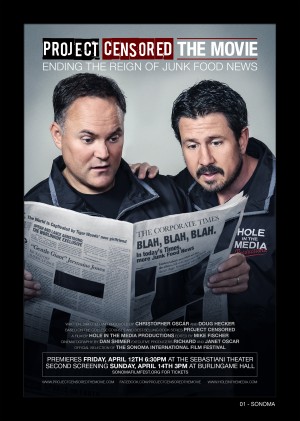
INTERVIEW / Jonah Raskin : Documentary Filmmakers Doug Hecker and Christopher Oscar Dish on ‘Junk Food News’

Documentary filmmakers Christopher Oscar, left, and Doug Hecker.

Doug Hecker and Christopher Oscar:
Documentary filmmakers on media,
civil liberties, and ‘Project Censored

“The corporate rules are simple: tell the news the way you’re told to tell the news or ratings will decline and you’ll be out of a job.” — Doug Hecker, Co-Producer, Co-Director, Co-Writer, ‘Project Censored: The Movie’

By Jonah Raskin | The Rag Blog | April 18, 2013

Filmmaker, Doug Hecker, 47, was born and raised in San Francisco, California. His pal and cinematic collaborator, Christopher Oscar, 42, hails from Montclair, New Jersey.

Six years ago, they met in the town of Sonoma, California, and ever since then — with time off for good behavior — they’ve worked on a documentary about the media watchdog group, Project Censored, founded by Carl Jensen in the wake of Watergate.

Hecker and Oscar are both college grads and they’re both the kinds of grads that teachers will practically die for — which means they’re committed to critical thinking, life-long learning, and social responsibility.

When they graduated from college — Oscar from C.W. Post University on Long Island, New York, Hecker from Sonoma State University in California — their studies just began.

Their new 60-minute documentary, Project Censored: The Movie, Ending the Reign of Junk Food News, informs, entertains, and riles up citizen activists, too, about the loss of civil liberties in the United States today and the rise of what they regard as a police state.

The talking heads who speak in the movie — historian Howard Zinn, all-around gadfly Noam Chomsky, poet Amiri Baraka, UCLA Professor Nora Barrows-Freeman, and more — make far more sense than the talking heads on ABC, CBS, NBC, and Fox.

“Human consciousness,” Zinn says “is hard to fathom, but every so often it breaks to the surface.” Hecker and Oscar know that the media puts humanity to sleep all day and all night, and that the media can also wake humanity from its slumber.

Mickey Huff, the current director of Project Censored, points out that there’s more information available these days thanks to the Internet, but that, paradoxically, there’s also greater misinformation. Movie producer, director, and cinematographer Haskell Wexler suggests that in our peculiar form of democracy, Americans may not want to known the truth. Hecker and Oscar hope that’s not true.

Their rousing picture about Project Censored and the state of the media in America today is also a wake-up call to viewers sickened by the steady diet of junk food news dished out by corporate media.

The interview with both Hecker and Oscar took place two days after I saw their movie.

Jonah Raskin: Can you say something about an exact moment when the proverbial light went on in your head?

Doug Hecker: The light went on for me when I was enrolled in communications classes. As a student in Project Censored, we constantly discussed the spin that corporate media uses when reporting the news.

Christopher Oscar: For me, it was when I was an investigative journalism major and writing a story about the fact that crime was down 30%, but crime coverage increased 70%.

In your own life have you noticed a strong urge to censor?

Hecker: I choose my words wisely, but I tend not to censor myself. I could lose some business as a realtor because of the movie. If a client chooses not to work with me because I believe the press should be free and should present news that lead to social change, I’d rather not work with that person.

As a father with children, what kinds of limits if any do you set for them about TV and the Internet?

Hecker: I prefer to discuss topics on TV and the Internet and to help create awareness and media literacy in my children. However, I do limit violence, foul language, and sexual content.

Oscar: It’s very rare that we find a program that is suitable for my children to watch. My kids don’t use the Internet. They are eight and five years old. If and when we find a child-friendly program, we limit viewing.

Your documentary shows that when there’s war there’s censorship and when there’s censorship there’s war.

Hecker: Censorship leads to war. War doesn’t benefit anyone except those in power. It’s corrupt and it’s brought about by power, money, greed, religion, politics, ignorance, and stupidity.

Doug, you grew up in a small California town. Did you buy into the official story disseminated by the media?

Hecker: I did for years. I began reading newspapers in high school and believed what I read. However, once I got to college I realized that a majority of U.S. news is designed to control the population, shape public policy, and instill fear into citizens.

Oscar, what about you?

Oscar: What I witnessed was that my parents watched tons of fear. I could never understand why they were so hypnotized by it. As I grew older, I found that I enjoyed investigative news shows like 60 Minutes. It wasn’t until college that I became a critic of corporate media.

Looking at the global picture, would you say censorship is better or worse in the U.S. than in say, China, Russia, or Iran?

Hecker: I would say it’s not better or worse, but different. U.S. censorship is subtle — not the dictatorship-style where the consequences are prison or death. However, the attack on journalists and the First Amendment is increasing in the U.S. Under the guise of protecting us against terrorism, we’re losing civil liberties.

Oscar: The majority of people don’t even know censorship is there. Next thing you know, America will be back in another illegal war.

In the U.S. if you want to play the corporate media game I guess you have to play by the corporate rules — or get out.

Hecker: The corporate rules are simple: tell the news the way you’re told to tell the news or ratings will decline and you’ll be out of a job.

Oscar: Reporters should investigate the owners of their own stations.

Where you live in California, what local stories and truths do you think are hidden from citizens now?

Hecker: GMOs, pesticides, farm animal abuse, the ever-increasing rise of health care, petroleum products, pollution, lobbyists, government corruption, etc.

Fear is a big factor in our society isn’t it? Reporters are afraid and citizens are afraid. How do we overcome fear?

Hecker: Fear-based news leads to higher ratings, which leads to increased ad revenue. To change fear-based news you need to start at the grassroots with programs like Project Censored and other alternative media sources that have validated news and fact-based reporting.

Oscar: People glued to the nightly news are bombarded and besieged with violence and destruction. The message you get is that people are out to get you so you better watch out. We need a media system that shines light on the good that people are doing in the world to create a more harmonious planet.

There still are people who are courageous, such as the Australian, Julian Assange, founder of Wikileaks, who released on the Internet confidential U.S. documents. Did he go too far?

Hecker: We need more people like Assange, Daniel Ellsberg, Bradley Manning who realize that sacrifice may be necessary to expose human rights abuses, corruption, and environmental damage.

Oscar: Hopefully, governments will think twice about their actions now that there is a Julian Assange out there. It’s surprising, though, how little attention it’s really gotten. You would think more people would be upset about the failure of the news to dig for truth.

What gives you hope for a world in which your kids are grown up?

Hecker: Without hope no future is possible. We made this film to help future generations and to point out that social change is needed and that the people of the world need to put an end to complacency and become active and involved citizens both politically and socially in order to end the human and environmental atrocities that plague our world.

[Jonah Raskin, a regular contributor to The Rag Blog, is  a long-time journalist and author. Read more articles by Jonah Raskin on The Rag Blog.]

The Rag Blog

Posted in Rag Bloggers | Tagged , , , , , , , , , | 1 Comment

Shirley Youxjeste : Mexican Feds Crack Down on Teachers Protesting Educational ‘Reform’

Mexican federal police confront protesting teachers in Chilpancingo, Guerrero, on April 4, 2013. Photo by  EFE / STR. Image from La Prensa (San Antonio).

Mexican teachers take the streets
against standardized tests

Teachers in Guerrero, tired of the hostility of the business class, shut down two department stores in Chilpancingo for eight hours, using shopping carts as barricades.

By Shirley Youxjeste | The Rag Blog | April 18, 2013

GUERRERO, Mexico — The image had an impact in and out of Mexico: an older man with the appearance of a campesino, surrounded and subdued by five federal police officers who employed fists, boots, and three fire extinguishers. The man’s crime was to attend a demonstration in support of his children’s teachers in Chilpancingo, capital of the state of Guerrero.

Guerrero is home to tourist centers like Acapulco and Zihatanejo/Ixtapa, but the rest of the state is among the poorest places in the Western Hemisphere. It is here where resistance to the attempt to convert teachers into test preparers is strongest.

In December, Enrique Peña Nieto was inaugurated president after controversial elections led to the return of the traditional ruling party, the PRI (Partido de la Revolución Institucional) after 12 years out of office. Within days, Peña Nieto had rammed an educational “reform” package with the assent of all registered political parties.

The new law forces even more standardized testing for teachers and students and facilitates the firing of teachers whose students don’t “perform” as expected.

The march of April 5 in which the above-described incident took place was the first of many attempts to occupy the Autopista del Sol, the freeway that runs from Mexico City to Acapulco during the final days of school vacations, when traffic tie-ups were sure to be more severe.

About 3,000 teachers and supporters kept it blocked for a few hours until police moved in and used violent tactics to subdue demonstrators. This spot on the freeway, incidentally, is where state police killed two protesting education students in a similar blockade in December 2011.

Most news media reported the April 5 protest as a gathering of “lazy and violent” teachers; the more violent police actions have been publicized mainly through social networks. Teachers responded with  more marches the following Wednesday, with an estimated 100,000 marching in Chilpancingo (whose total population is not much more than that), and teachers in the neighboring states of Oaxaca, Morelos, and Michoacán also demonstrated.

Among the marchers in Chilpancingo and other cities in Guerrero, in addition to teachers, parents, students, and members of other unions, were members of various Policía Comunitaria organizations, grassroots defense groups that have more in common with the Black Panthers than with the real police.

Shopping cart barricades

On Saturday, April 13, teachers in Guerrero, tired of the hostility of the business class, shut down two department stores in Chilpancingo, Wal Mart and Liverpool, for eight hours, using shopping carts as barricades to prevent people from entering.

On April 25-27, the CNTE (Coordinadora Nacional de Trabajadores de la Educación), the dissident caucus within the dominant teachers’ union, will hold a national conference on alternative education in Mexico City.

Business organizations have reacted with extreme hostility toward the teachers, with executives and business owners offering themselves as scabs so classes can take place. Other business groups (apparently more local) and, of course, groups of parents have expressed support for the teachers.

[Shirley Youxjeste is a retired Wisconsin teacher now living in southern Mexico.]

The Rag Blog

Posted in Rag Bloggers | Tagged , , , , , , , | Leave a comment

BOOKS / Ron Jacobs : ‘Love Goes to Buildings on Fire’

Love Goes to Buildings on Fire:
New York City, just like I pictured it

From the steamy streets of the South Bronx and the future that would become hip-hop to the steamier bathhouses and clubs in lower Manhattan that became world-famous dens of disco, Hermes relates his tale.

By Ron Jacobs | The Rag Blog | April 17, 2013

Love Goes to Buildings On Fire: Five Years in New York That Changed Music Forever by Will Hermes (2012: Faber and Faber); Paperback (Reprint Edition); 384 pp; $16.

My stated reason for being in New York in 1973 was to go to school, but my real intent was to immerse myself in leftist politics and rock and roll culture. Almost every weekend I headed to the Village and Lower East Side in search of weed and music or politics.

There were plenty of protests even after the heyday of 1968-1972 and the issues were still the same. Imperialism, war, poverty, racism, and police brutality. The music, however, was starting to change. There were rumblings of something new in the dives and occasional street fair.

I remember seeing a band (I think it was the New York Dolls or their predecessor) near St. Mark’s Place one Saturday afternoon. I was not into the poor quality of the music, but found the presentation fascinating and unlike anything I had seen before. Still, though, my primary musical preferences were Bob Dylan, the Stones, the Grateful Dead and the Beatles.

One weekend a friend and I saw a poster for a rock show at the Hotel Diplomat near Times Square. The show featured a woman whose book of poetry I had just bought on the Lower East Side. The book was called Witt and the poet’s name was Patti Smith. The show I remember I remember because of Smith. The hotel I remember because it’s where Abbie Hoffmann got busted for coke and then went underground.

I was a scholarship student at Fordham University in the Bronx. So was almost everyone else on the floor of my dorm. There were only a couple of us white-skinned guys on that floor. The rest were Puerto Rican and African-American. I heard more salsa than I knew existed. Smoking pot, discussing Marxism and Eddie Palmieri was how I spent many Saturday nights.

Sometimes, nobody in the dorm would go home for the weekend. On those weekends, the music leaking under the dorm room doors with the pot smoke included the Allman Brothers, the aforementioned Palmieri, Earth, Wind and Fire, Sly and the Family Stone, the Dead, and Bob Dylan.

I left New York after seven short months. A floormate from Teaneck, New Jersey, had just introduced me to a new band on the scene known as Bruce Springsteen and the E Street Band. I saw him in Maryland a few months later.

Love Goes to Buildings on Fire.

The changes I felt were soon to rule the world of popular music. This is the story rock music writer Will Hermes tells in his 2011 book Love Goes to Buildings On Fire: Five Years in New York City That Changed Music Forever. Recently released for the first time in paperback, Hermes’ text is more than a look at music in New York. It is a history of the city during the period covered that rarely mentions economics and politics yet ekes them.

From the steamy streets of the South Bronx and the future that would become hip-hop to the steamier bathhouses and clubs in lower Manhattan that became world-famous dens of disco, Hermes relates his tale. Like his namesake, he carries the message that punk rock shouted and salsa sang. The period herein may have been the last time New York mattered as much as it did in the world of popular culture.

Jay-Z may still be there, but there is no creative center any more. In fact, the dispersion of that center into the global world may have been the unforeseen result of the bands, beats, and jazzmen Hermes writes about so wonderfully.

Lurking behind Hermes’ tales of Patti Smith and Richard Hell; Afrika Bambaata and David Murray; and the multitude of others that star in this book is the spectre of corporate greed destroying culture and pretty much anything else it touched. Indeed, this included an attempt by Gerald Ford and Donald Rumsfeld to make Manhattan default. Yet, while this attempt to force austerity on the world’s cultural capital ultimately succeeded only partially, the mélange of cultural mixes did create what became termed world music.

This is a book about Debbie Harry and Eddie Palmieri; Bruce Springsteen and Grandmaster Flash; Abe Beame and CBGBs; Miles Davis and Anthony Braxton. It’s a book about the clubbers and the brothers and sisters attending the DJ contests in the Bronx and the punkers bleeding in the Bowery. The names are so familiar that some are forgotten.

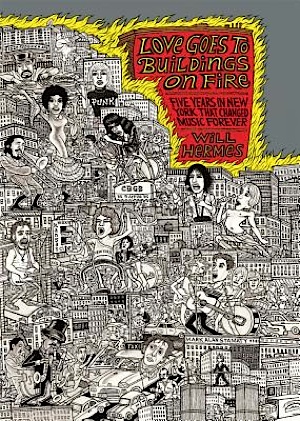
The cover art is by Mark Stamaty, formerly of the Village Voice (back before Murdoch destroyed it). He is also the author and illustrator of one of my favorite children’s books, Who Needs Donuts? The drawings he does are cartoonish, encompassing and busy, as if he was on stimulants. They are the artistic representation of the story Hermes has written down.

In a nutshell, that story is about the birth of hip hop via the transition of the beat; the C-section that was punk and the future of rock and roll that was Bruce Springsteen. Love Goes to Buildings On Fire isn’t about passing a torch. It’s about that torch enveloping the past and the future of popular music in its flames.

[Rag Blog contributor Ron Jacobs is the author of The Way The Wind Blew: A History of the Weather Underground. He recently released a collection of essays and musings titled Tripping Through the American Night. His novels, The Co-Conspirator’s Tale, and Short Order Frame Up will be republished by Fomite in April 2013 along with the third novel in the series All the Sinners Saints. Ron Jacobs can be reached at ronj1955@gmail.com. Find more articles by Ron Jacobs on The Rag Blog.]

The Rag Blog

Posted in Rag Bloggers | Tagged , , , , , , , | Leave a comment

FILM / Dave Zirin : ’42’ is Jackie Robinson’s Bitter Pill

A Review of ’42’:
Jackie Robinson’s bitter pill

This was a man tortured by the fact that his own experience was used as a cudgel against building a public, fighting movement against racial injustice.

By Dave Zirin | The Rag Blog | April 17, 2013

See “Dave Zirin Writes from the Busy Intersection of Sports and Politics” by Thorne Dreyer at Truthout, and listen to Dreyer’s March 22, 2013, interview with Zirin on Rag Radio.

This week in Major League Baseball was Jackie Robinson Day. This is when Commissioner Bud Selig honors the man who broke the color line in 1947 and pats MLB on the back for being “a leader in the Civil Rights Movement.” It’s possible to appreciate that Selig honors one of the 20th Century’s great anti-racist heroes. It’s also possible, out of respect for Jackie Robinson, to resent the hell out of it.

Ignored on Jackie Robinson Day are baseball’s decades of racism before Jackie broke the color line. Ignored are Robinson’s own critiques of baseball’s bigoted front office hiring policies. Ignored is the continuance of the racism that surrounds the game in 2013. Ignored is the fact that today in Arizona, Latino players live in fear of being stopped by police for not having their papers in order.

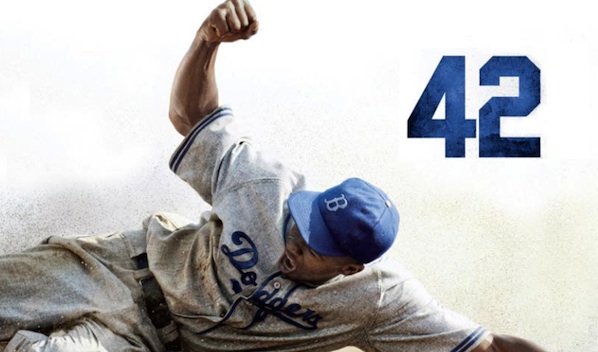
The recent film 42 about Jackie Robinson’s entry into the Major Leagues shares this contradiction. I can certainly understand why many people I respect love this film. I can understand why a teacher I know thinks it’s a great primer for young people who don’t know Jackie’s story. I understand why, given the high production values and loving depictions, Jackie Robinson’s family has been outspoken in their appreciation.

But I didn’t like it, and with all respect, I want to make the case that I don’t believe Jackie Robinson would have liked it either.

Early in the film, Jackie Robinson, played by newcomer Chadwick Boseman, says, “I don’t think it matters what I believe. Only what I do.” Unfortunately that quote is like a guiding compass for all that follows. The filmmakers don’t seem to care what Robinson — a deeply political human being — thought either. Instead 42 rests on the classical Hollywood formula of “Heroic individual sees obstacle. Obstacle is overcome. The End.”

That works for Die Hard or American Pie. It doesn’t work for a story about an individual deeply immersed and affected by the grand social movements and events of his time. Jackie Robinson’s experience was shaped by the Dixiecrats who ruled his Georgia birthplace, the mass struggles of the 1930s, World War II, the anti-communist witch-hunts, and later the Civil Rights and Black Freedom struggles. To tell his tale as one of individual triumph through his singular greatness is to not tell the story at all.

This is particularly ironic since Jackie Robinson spent the last years of his life in a grueling fight against his own mythos. He hated that his tribulations from the 1940s were used to sell a story about an individualistic, Booker T. Washington approach to fighting racism.

As he said in a speech,

All these guys who were saying that we’ve got it made through athletics, it’s just not so. You as an individual can make it, but I think we’ve got to concern ourselves with the masses of the people — not by what happens as an individual, so I merely tell these youngsters when I go out: certainly I’ve had opportunities that they haven’t had, but because I’ve had these opportunities doesn’t mean that I’ve forgotten.

This was a man tortured by the fact that his own experience was used as a cudgel against building a public, fighting movement against racial injustice.He wanted to shift the discussion of his own narrative from one of individual achievement to the stubborn continuance of institutionalized racism in the United States. The film however is a celebration of the individual and if you know how that pained Mr. Robinson, that is indeed a bitter pill.

The film’s original sin was to set the action entirely in 1946 and 1947. Imagine if Spike Lee had chosen to tell the story of Malcolm X by only focusing on 1959-1960 when he was a leader in the Nation of Islam, with no mention of his troubled past or the way his own politics changed later in life. Malcolm X without an “arc” isn’t Malcolm X. Jackie Robinson without an “arc” is just Frodo Baggins in a baseball uniform.

The absence of an arc, means we don’t get the labor marches in the 1930s to integrate baseball. We don’t get his court martial while in the army (alluded to in the film without detail). We don’t get Jackie Robinson’s testimony in 1949 at the House Un-American Activities Committee against Paul Robeson. We don’t get his later anguish over what he did to Robeson. We don’t get his involvement in the Civil Rights Movement when he was a barnstorming speaker across the south.

We don’t get his public feud with Malcolm X, where Malcolm derided him as a “White man’s hero” and he gave it right back saying, “Malcolm is very militant on Harlem street corners where militancy is not that dangerous. I don’t see him in Birmingham.” We don’t get his daring, loving obituary to Malcolm after his 1965 assassination at a time when the press — black and white — was throwing dirt on his grave.

We don’t get his support of the 1968 Olympic boycotters. We don’t get the way his wife Rachel became an educated political figure who cared deeply about Africa, as well as racial and gender justice in America. We don’t get the Jackie Robinson who died at 52, looking 20 years older, broken by the weight of his own myth. We don’t get Raging Bull. We get Rocky III.

But if the focus of 42 is only going to be on 1946 and 1947, then there is still a lot to cover: namely Brooklyn Dodgers owner Branch Rickey, Jackie Robinson, and their relationship to the Negro Leagues. Rickey — with Robinson’s support — established a pattern followed by other owners (with the notable exception of Bill Veeck), of refusing to compensate them for their players.

On the day Robinson signed with the Dodgers, Rickey said, “There is no Negro League as such as far as I’m concerned. [They] are not leagues and have no right to expect organized baseball to respect them.” This led to the destruction of the largest national black-owned business in the United States.

You would never know this from 42. Instead the film chooses to affix a halo to Branch Rickey’s head. Instead, under a prosthetic mask, Harrison Ford plays Rickey as a great white savior, and not even Han Solo can make that go down smoothly.

Fairing better than Ford is the terrific performance of Chadwick Boseman as Robinson. Jackie Robinson could be sensitive about his voice, which was clipped and somewhat high-pitched. Boseman’s voice is so smoky it could cure a ham and his eyes and manner give hints of an internal life the film otherwise ignores.

There is no doubt in my mind that Jackie Robinson, if alive, would call on Bud Selig and Major League Baseball to stop using his history as an excuse to do nothing about the racial issues that currently plague the game. But there is also no doubt in my mind that Jackie Robinson, ever the pragmatist, also would support this film publicly.

He was an honorable person who would have been humbled by the effort made to make him look like a hero. He would have seen the value in being a role model of pride and perseverance for the young. But at home, alone, he would have thought about it. And he would have seethed.

This article was also posted at The Nation blog.

[Dave Zirin is sports editor at The Nation and the author of the new book, Game Over: How Politics Has Turned the Sports World Upside Down (The New Press). Receive his column every week by emailing dave@edgeofsports.com. Contact him at edgeofsports@gmail.com. Read more articles by Dave Zirin on The Rag Blog.]

The Rag Blog
Posted in Rag Bloggers | Tagged , , , , , , , , , | Leave a comment

Bob Feldman : Civil Rights, SDS, and Student Activism in Austin, Texas, 1954-1973

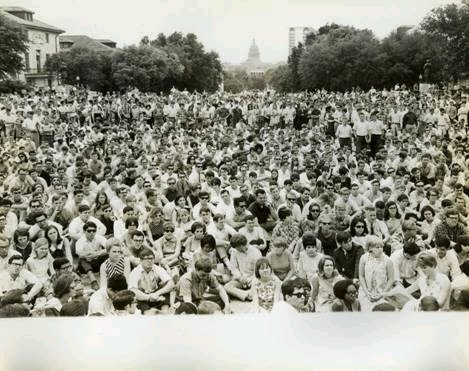
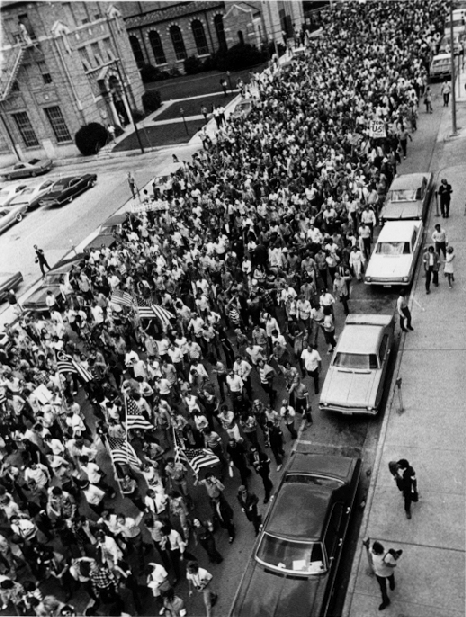
Massive march against the War in Vietnam, Austin, Texas, May 8, 1970. Image from The Rag Blog.

The hidden history of Texas

Part 13: 1954-1973/2 — Student Activism and the Anti-War Movement at the University of Texas

By Bob Feldman | The Rag Blog | April 17, 2013

[This is the second section of Part 13 of Bob Feldman’s Rag Blog series on the hidden history of Texas.]

Inspired by the early 1960s Civil Rights Movement protests of groups like the Congress of Racial Equality [CORE], the Southern Christian Leadership Council [SCLC], and the Student Nonviolent Coordinating Committee [SNCC], and in response to the 1965 escalation of the Pentagon’s War in Viet Nam, an increasing number of students and non-students in Austin, Texas, became involved in New Left and countercultural groups like SDS and in underground press journalism during the 1960s.

There was substantial New Left activity in other Texas cities, including Houston where underground newspaper Space City! helped pull together an active movement community, but Austin — which had always been a center for cultural and political iconoclasm — would become one of the nation’s New Left hot spots.

As Beverly Burr observed in her thesis, “History of Student Activism at the University of Texas at Austin (1960-88)”:

The Students for a Democratic Society [SDS] formed a chapter in the early spring of 1964. From 1964-7, the UT chapter of SDS began to build the local white, radical student movement. Alice Embree, one of the early participants in SDS at UT, said that when she went through registration at the beginning of the Spring 1964 semester, there was an SDS information table. She conjectured that 4 or 5 people started the group.

The early focus of the group was participating with black student activists in the sit-ins at downtown Austin restaurants… In mid-October 1965, SDS held a death march protesting U.S. policy toward Vietnam. This protest was apparently the first antiwar demonstration on the campus during the 1960s. About 70 students participated in the march and rally… SDS had attempted to get a parade permit to march on the streets during the rally but the permit had been refused by the City Council…

SDS held its first fall 1966 meeting in late October [1966]… At the same time, students organized an underground newspaper called The Rag… Most of the staffers were SDSers who created the paper not only to publicize issues of importance to the movement but also in reaction to the corporate controlled mainstream media… During the fall [of 1966] 10 SDS and Rag women… held a sit-in protesting the draft at the Selective Service in Austin. In January of 1967 several demonstrations were held against Secretary of State Dean Rusk while he was in town… Over 200 came to the second protest which succeeded in canceling Rusk’s dinner at the UT Alumni Center…

The first conflict between SDS and the University occurred later in the spring of 1967 during Flipped-Out Week… SDS had planned a week of activities including a speech by… Stokely Carmichael…, an anti-war march to the Capitol, and Gentle Thursday… The activities attracted several thousands… The week after Flipped-Out Week, SDS distributed flyers… to plan a Monday protest against Vice President Hubert Humphrey who would be speaking at the Capitol… On Monday, about 150 students protested at the Capitol against the war in Vietnam. Later that day, UT withdrew recognition of SDS as a campus organization…

UT initiated disciplinary proceedings against 6 students involved in the anti-war protest… against Hubert Humphrey… Simultaneously the UT administration… called for the arrest of George Vizard, a non-student. Vizard was arrested by Austin police… The police brutally arrested him in the Chuckwagon, a café and radical hangout in the Student Union… Over 250 outraged students and faculty members… founded the University Freedom Movement [UFM].

University Freedom Movement rally,
UT campus, 1967. Photo from
The Rag.

But despite subsequently well-attended free speech rallies and extralegal campus protests by UFM supporters during the rest of April 1967, the six anti-war students who were being disciplined by the UT administration were all placed on probation for their political activity on May 1, 1967. Yet the anti-war countercultural movement in Austin continued to gain more local popular support, and in October 1969, around 10,000 people protested in Austin against the Republican Nixon Administration’s failure to end the Pentagon’s War in Vietnam .

African-American student and non-student Movement activists also continued to organize anti-racist protests during the late 1960s in Austin. As the “History of Student Activism at the University of Texas at Austin ” thesis also noted:

In 1966, the Negro Association for Progress [NAP] was formed… During the spring of 1967, NAP… members converged on the office of… athletic director and… football coach Darrell Royal to find out why UT was not accepting or recruiting black athletes… In October [1967]… NAP held an illegal demonstration for black student rights… In the spring of 1968 NAP was replaced by the Afro-Americans for Black Liberation [AABL]…

In May [1968]… the owner of a Conoco station… attacked a black musician… Larry Jackson of Austin SNCC and Grace Cleaver, chair of AABL, called on all persons opposed to racism to picket [and to boycott the station]… Jackson requested that SDS participate in the action and the group agreed. The students held several sit-ins at the gas station. City police arrested about 50 in the demonstrations… That fall AABL won 2 academic programs in Afro-American Studies…

And in a Feb. 1, 2003, speech before the W.H. Passion Historical Society at the Southgate-Lewis House in Austin, former Austin SNCC activist Larry Jackson also recalled how a SNCC chapter came to be formed in Austin during the late 1960s:

I was born in central East Texas, a little town called Hearn… And that’s the place I first began my activities in civil rights… I first got involved in a lot of civil rights activities when I was in high school in Hearne, Texas. And I was trying to integrate the pool… I left Hearne, Texas because I was involved with so much strife there…

And in Houston I became very active in school activities at Texas Southern… And what really got me here in Austin was I had previously worked on the Martin Luther King speech day in Houston… And at the music hall, outside of the TSU people and a few whites to hear Martin Luther King speak, there was not 200 people there. And this happened in 1967… And I ended up coming here on a speaking deal with Stokely Carmichael and Rap Brown. That’s how I got to Austin , Texas… And so he was speaking out there at the University of Texas. So I stayed on here because I was gonna form a SNCC chapter here in Austin…”

Austin was also a center for the fast-growing women’s liberation movement and, according to Jo Freeman in Women: A Feminist Perspective, the landmark Supreme Court decision on abortion, Roe v. Wade, “was the project of a small feminist group in Austin, Texas and the lawyer [Sarah Weddington] who argued Roe before the Supreme Court was one of its participants.”

[Bob Feldman is an East Coast-based writer-activist and a former member of the Columbia SDS Steering Committee of the late 1960s. Read more articles by Bob Feldman on The Rag Blog.]

The Rag Blog

Posted in Rag Bloggers | Tagged , , , , , , , , , , , , , | Leave a comment

Alan Waldman : ‘A Touch of Frost’ Was Excellent, Clever British Cop Series

Waldman’s film and TV
treasures you may have missed:

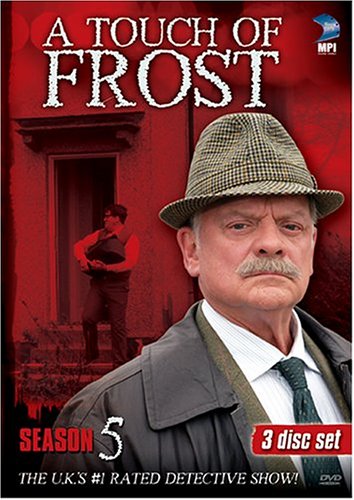
Beloved comedy star David Jason achieved new and long-running acclaim as crusty, amusing detective inspector Frost.

By Alan Waldman | The Rag Blog | April 16, 2013

[In his weekly column, Alan Waldman reviews some of his favorite films and TV series that readers may have missed, including TV dramas, mysteries, and comedies from Canada, England, Ireland, and Scotland. Most are available on DVD and/or Netflix, and some episodes are on YouTube.]

A Touch of Frost is an outstanding, fun British cop series that aired 42 exciting episodes from 1992 to 2010 (all of which are on Netflix and Netflix Instant, and many of which can be seen on YouTube). Here is the first episode.

Beloved Britcom star David Jason (Only Fools and Horses, The Darling Buds of May, Open All Hours) was asked by the show’s producers to star in a detective drama series, and only after he accepted did they decide to base it on R.D. Wingfield’s Frost novels.

The show was a long-running hit and won 11 awards and 13 other nominations (11 for Best or Most Popular Drama and 12 for Jason himself). Before and after A Touch of Frost, Jason earned 11 other top awards and five more noms for six other series. In the 2002 National Television Awards, Jason won both the “Most Popular Actor” award for A Touch of Frost and the “Most Popular Comedy Performance” honor for Only Fools and Horses (which a 2004 national poll chose as the best Britcom ever).

The series has aired in more than 20 countries, including Croatia, Lithuania, Finland, Japan, Brazil, and New Zealand. More than 92.8% of the 2,267 viewers who rated it at imdb.com gave it thumbs up, and 25.4% consider it a perfect 10.

In the fictional town of Denton (somewhere in Oxfordshire), Jason plays police detective inspector “Jack” Frost, an observant, acerbic, old-school, nonconformist investigator who has an unsatisfying home life but who is greatly respected by those who work under him. He is assisted by able, loyal detective sergeant George Toolan (John Lyons) and is often thwarted by his ambitious, social climbing, bureaucratic-minded boss, detective superintendant Norman Mullett (Bruce Alexander), with whom he has a consistently humorous (uncooperative) relationship.

Those were the only three characters who ran through all 15 seasons of Frost, but in every episode Frost was teamed with a different assistant, and his verbal byplay with them was always interesting and entertaining. Inspector Frost is full of wisecracks, and Jason handles the consistently clever dialogue masterfully.

Many talented and subsequently popular young actors had their major debuts as supporting cast in the show, including Neil Stuke (Reggie Perrin), Nathaniel Parker (Inspector Lynley), Colin Buchanan (Dalziel and Pascoe) and Marc Warren (Hustle, The Vice).

Between takes, the cast (particularly David Jason) and crew were forever playing pranks on John Lyons (DS Toolan). They devised fake scripts which Lyons had to learn at short notice, involving ludicrous situations. Once they made his character wear a neck brace; another time they made him ferret around in a smelly rubbish bin, looking for evidence. Each time, Lyons vowed “You won’t catch me out like that again,” but he always fell for the next prank.

Because the Frost mysteries are so well written and played, and because Jason is so entertaining in the lead role, I have gone to Netflix Instant to enjoy them again. There is a very good chance that you will enjoy them too.

[Oregon writer and Houston native Alan Waldman holds a B.A. in theater arts from Brandeis University and has worked as an editor at The Hollywood Reporter and Honolulu magazine. Read more of Alan Waldman’s articles on The Rag Blog.]

The Rag Blog
Posted in Rag Bloggers | Tagged , , , , , | Leave a comment

RAG RADIO / Thorne Dreyer : Anti-Gun Violence Activists John Woods & Claire Wilson James

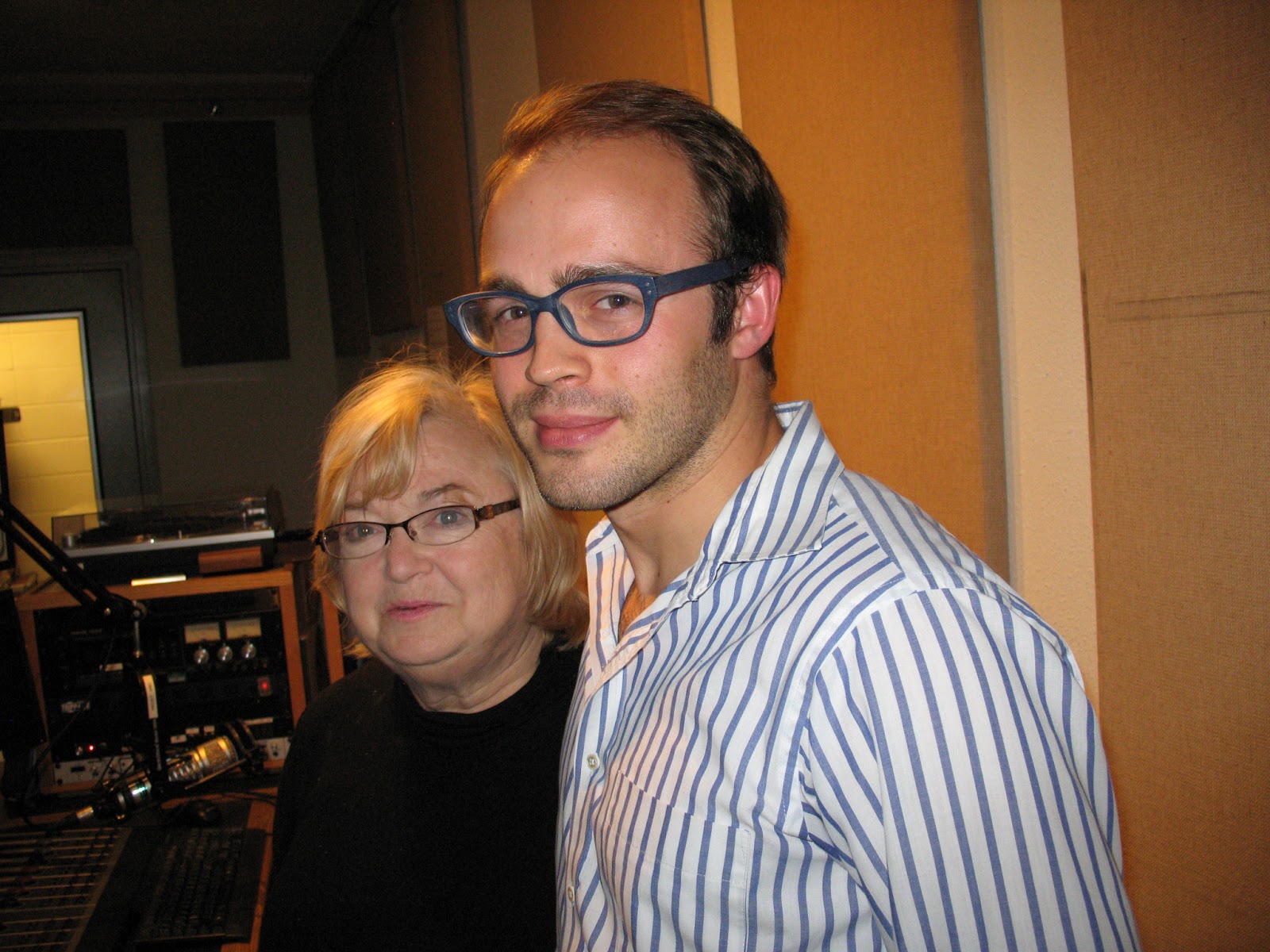
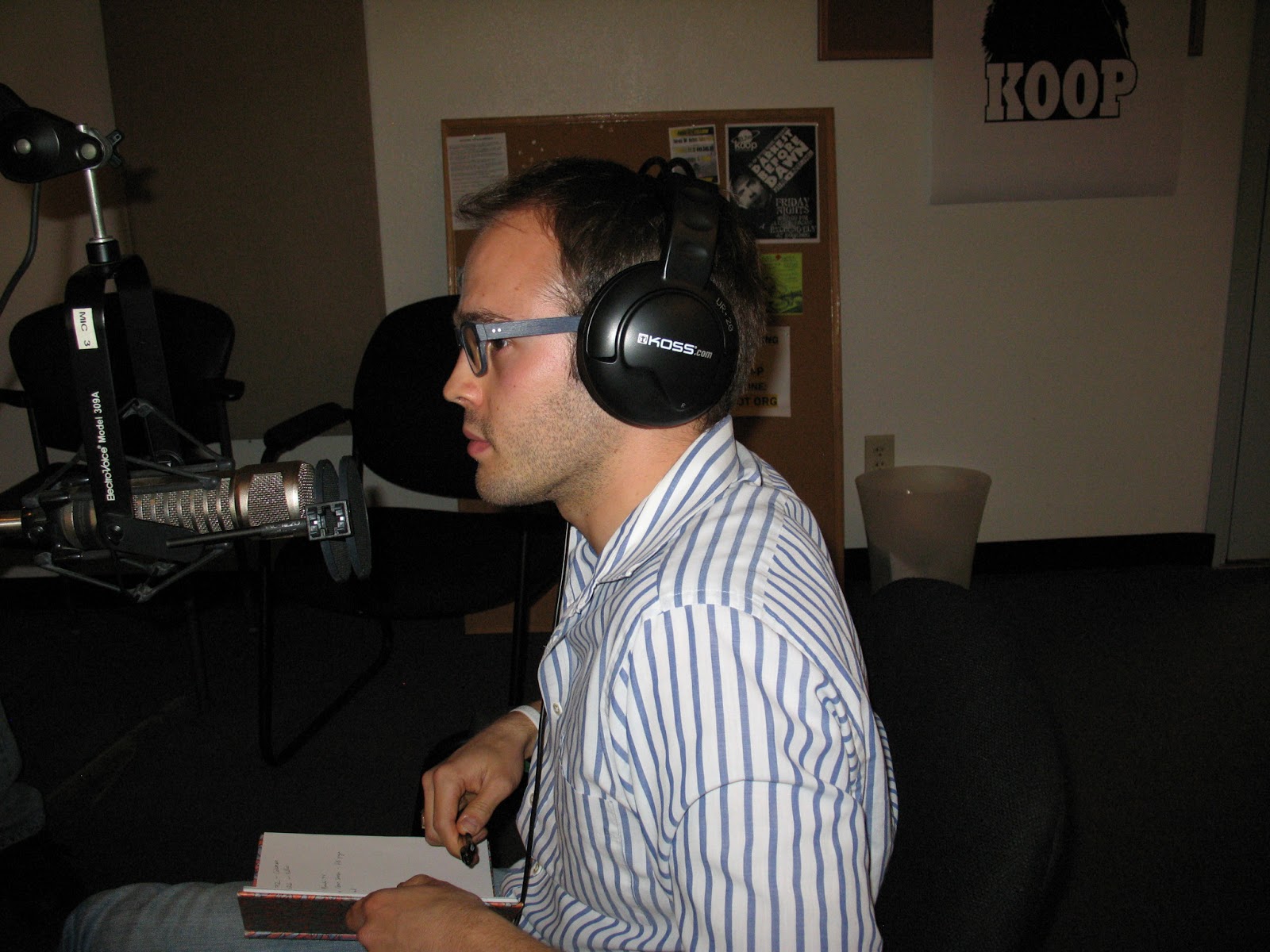
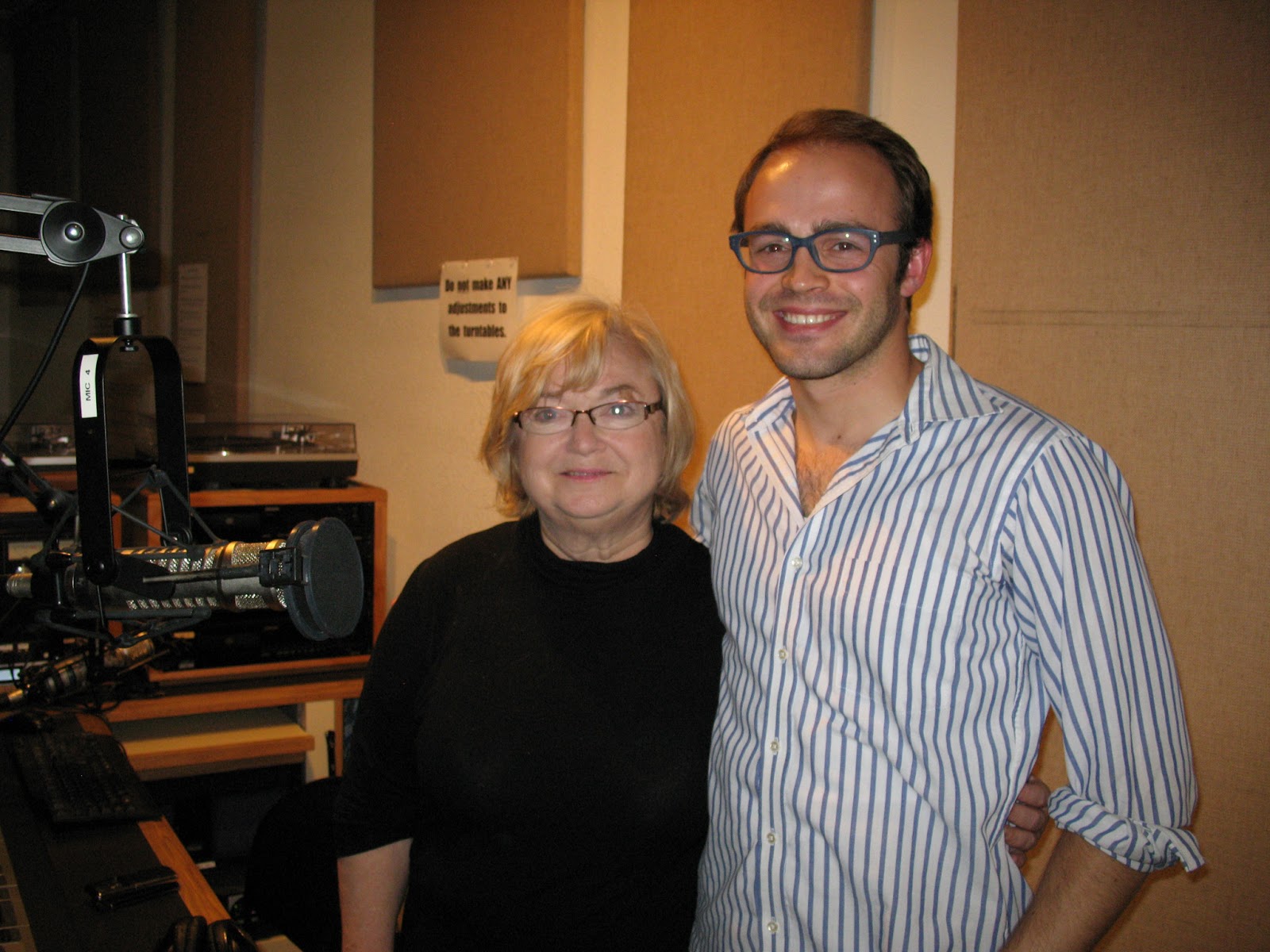
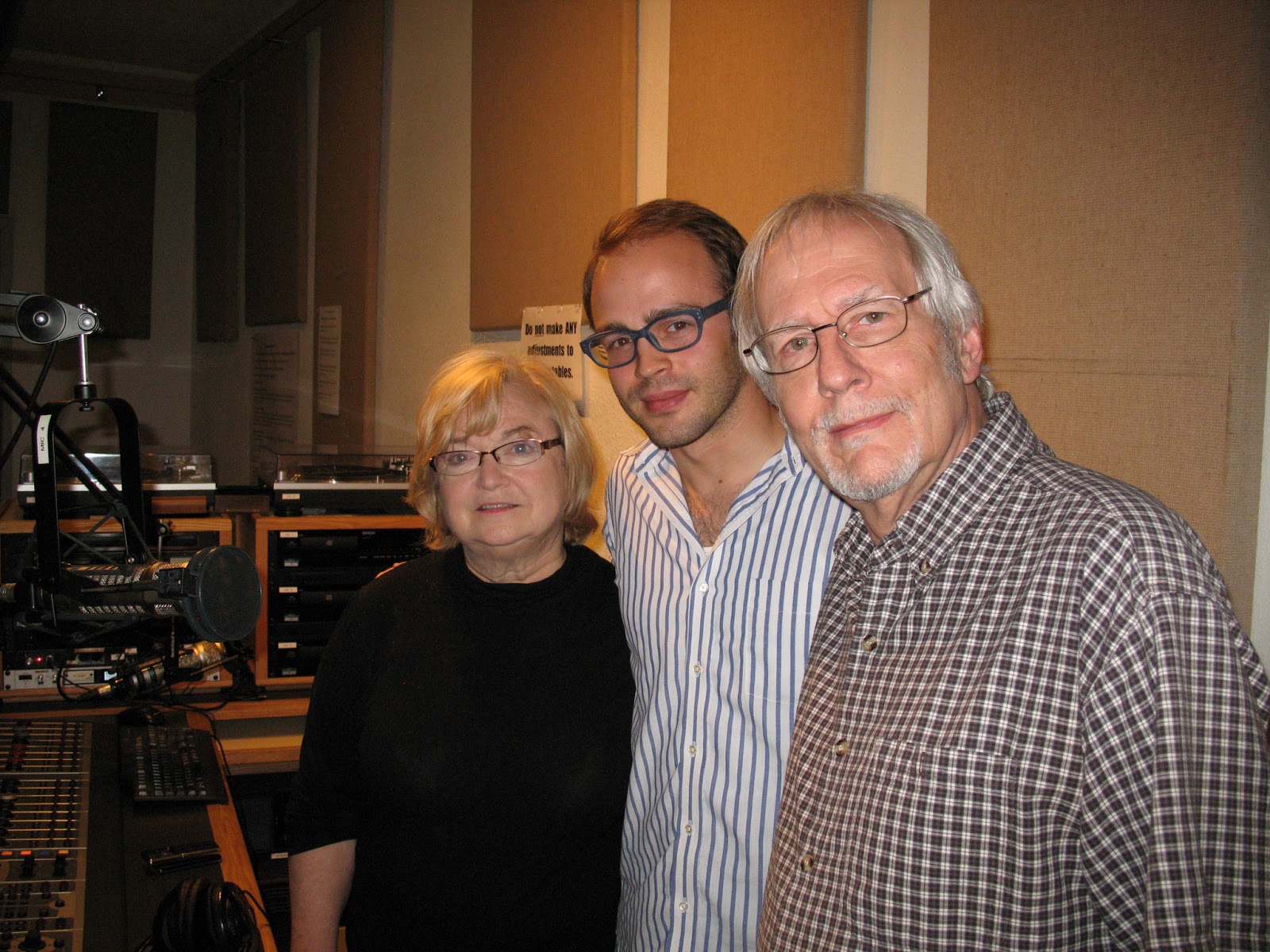
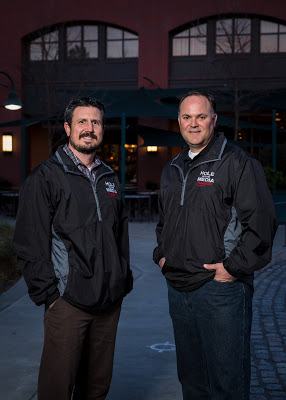
Claire Wilson James and John Woods at the KOOP studios in Austin, Texas, April 5, 2013. Photo by Thorne Dreyer / The Rag Blog.

Rag Radio podcast:
Anti-gun violence activists
John Woods and Claire Wilson James

John’s girlfriend was killed at Virginia Tech in 2007 and Claire was shot by UT tower sniper Charles Whitman in Austin in 1966, losing her unborn child.

By Rag Radio | The Rag Blog | April 16, 2013

Amsterdam-based poet and legendary countercultural figure John Sinclair will be Thorne Dreyer‘s guest on Rag Radio, Friday, April 19, 2013, from 2-3 p.m. (CDT) on KOOP 91.7-FM in Austin, Texas, and streamed live. Sinclair founded the White Panther Party in Detroit in 1968, was involved with the underground newspaper, The Fifth Estate, and was the manager of the historic proto-punk band, the MC5. John Lennon celebrated him in song after Sinclair was sentenced to 10 years for giving two joints to an undercover cop in 1969. Since the mid-’90s he has performed spoken-word poetry with his band, The Blues Scholars.

John Woods was a student at Virginia Tech on April 6, 2007, when gunman Seung-Hui Cho killed 32 people on campus, including his girlfriend, Maxine Turner.

Claire Wilson James was shot and seriously wounded by tower sniper Charles Whitman on August 1, 1966, on the University of Texas campus. James, then an 18-year-old anthropology student, spent three months in the hospital and lost her eight-month-old unborn child. Her boyfriend, Tom Eckman, was among Whitman’s victims.

Woods and James, who are now both active in the movement against gun violence, were Thorne Dreyer’s guests on Rag Radio, April 5, 2013. Rag Radio is a syndicated radio program produced at the studios of KOOP 91.7-FM in Austin, Texas.

Listen to or download our interview with John Woods and Claire Wilson James here:


Born in Alexandria, Virginia, John Woods was a National Merit Scholar who graduated magna cum laude from Virginia Tech in 2007 — after his girlfriend was shot and killed during the deadliest shooting incident by a single gunman in U.S. history.

Woods moved to Texas to begin his doctoral work in molecular biology at UT-Austin, where he is a National Science Foundation Fellow. John was a founder of Students for Gun-Free Schools in Texas and is now a board member of Texas Gun Sense, an organization that opposes allowing guns on campus while stressing its belief in an individual’s right to bear arms. The Austin Chronicle named Woods Austin’s “best activist” in its 2011 “Best of Austin” awards.

Claire Wilson James, who teaches elementary school in Texarkana, was a student activist at the University of Texas in 1966, involved with SDS and the civil rights and anti-war movement, when the Whitman shootings occurred. She was Whitman’s first target in a spree that left 17 dead and 72 wounded.

James, who has recently joined in the fight for sensible gun control, testified before the Texas Legislature in March 2013, in opposition to a bill that would allow the carrying of weapons into college buildings.

Rag Radio has aired since September 2009 on KOOP 91.7-FM, an all-volunteer cooperatively-run community radio station in Austin, Texas. Hosted and produced by Rag Blog editor and long-time alternative journalist Thorne Dreyer, a pioneer of the Sixties underground press movement, Rag Radio is broadcast every Friday from 2-3 p.m. (CDT) on KOOP, and is rebroadcast on Sundays at 10 a.m. (EDT) on WFTE, 90.3-FM in Mt. Cobb, PA, and 105.7-FM in Scranton, PA.

The show is streamed live on the web by both stations and, after broadcast, all Rag Radio shows are posted as podcasts at the Internet Archive.

Rag Radio is produced in association with The Rag Blog, a progressive Internet newsmagazine, and the New Journalism Project, a Texas 501(c)(3) nonprofit corporation. Tracey Schulz is the show’s engineer and co-producer.

Rag Radio can be contacted at ragradio@koop.org.

Coming up on Rag Radio:
THIS FRIDAY, April 19:
Amsterdam-based poet John Sinclair, legendary founder of the White Panther Party and former manager of the MC5.
Friday, May 3, 2013: Free-form radio pioneer Bob Fass of Pacifica Radio’s WBAI-FM in New York, with filmmaker Paul Lovelace (Radio Unnameable).

The Rag Blog

Posted in Rag Bloggers | Tagged , , , , , , , , , , | Leave a comment

Type your summary here

Type rest of the post here

Source /

The Rag Blog

Posted in RagBlog | Leave a comment

Lamar W. Hankins : Fear and the NRA

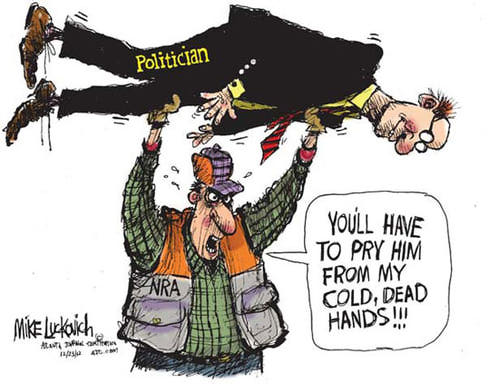
Political cartoon by Mike Luckovich / Atlanta Journal-Constitution / SECFanatics.com.

The NRA:
Perpetrator of ‘fear itself’

McClatchy reports that for the last 40 years the NRA has succeeded in limiting and now even preventing research into the effects of gun use, sales, and crime.

By Lamar W. Hankins | The Rag Blog | April 16, 2013

For most of my life, the NRA (National Rifle Association) has seemed inconsequential to me. But in the last few years, I have become more interested in its views, especially after the Supreme Court held in 2008 that Washington, D.C., could not prohibit hand guns.

Of course, the Supremes (in a majority opinion written by Antonin Scalia) had to ignore normal grammatical forms to conclude that the prefatory clause, “A well-regulated militia being necessary to the security of a free state” did not affect the meaning of the second phrase: “the right of the people to keep and bear arms shall not be infringed.”

But I don’t want to quibble about grammar when bigger issues are at stake. Three concerns about gun regulation are at the forefront of the gun debate being dominated by the NRA:

  1. Should the federal government conduct research into the public welfare aspects of guns?
  2. Should all gun sales and transfers require a background check?
  3. Should all guns be registered?

Out of fear — real or imagined — the NRA answers “no” to all three questions. Regarding the first question, McClatchy reports that for the last 40 years the NRA has succeeded in limiting and now even preventing research into the effects of gun use, sales, and crime:

Each year, lawmakers quietly tuck language into spending bills that restricts the ability of the federal government to regulate the firearms industry and combat gun crime. It’s the reason the Centers for Disease Control and Prevention can’t research gun violence, the Federal Bureau of Investigation can’t use data to detect firearms traffickers, and the Bureau of Alcohol, Tobacco, Firearms and Explosives can’t require background checks on older guns.

The Center for American Progress and Mayors Against Illegal Guns have identified the following major efforts to prevent gun-related research and study, as well as the use of information found in government files, by the Bureau of Alcohol, Tobacco, Firearms and Explosives (ATF) and other federal agencies and entities:

  • 1979 – a ban on centralizing firearm sales records of federally licensed gun dealers
  • 1994 – a ban on transfer of functions, missions or activities of ATF to another agency or department
  • 1996 – a prohibition on the Centers for Disease Control and Prevention to advocate or promote gun control
  • 1996 – a prohibition on placing records from federally funded gun dealers that go out of business in an electronic, searchable database
  • 1996 – a prohibition on redefining “curio or relic” gun, and prohibiting a curio or relic from being removed from the ATF list
  • 2004 – a requirement that records from approved instant background checks must be destroyed within 24 hours
  • 2004 – a prohibition on gun trace data being subject to subpoena for any state license revocation, civil lawsuit, or other proceeding unless filed by ATF
  • 2004 – a ban on requiring federally licensed gun dealers to keep a physical inventory
  • 2004 – a ban on allowing ATF to deny an application or renewal for a federally licensed gun dealer due to lack of activity
  • 2005 – a ban on allowing ATF to deny an application for a permit to import “curio or relic” firearms
  • 2005 – a prohibition on the admission of gun trace data in evidence
  • 2005 – a ban on the need for an export license to export certain firearms parts or accessories to Canada
  • 2011 – a denial of the right of the National Institutes of Health to advocate or promote gun control

What the NRA has to fear from public policy research or access to government information is beyond my imagination. But fear is the primary currency they use to buy the support of our politicians for their views and to frighten gun owners.

Research is intended to discover something new, inform citizens and lawmakers, and then use the new knowledge to promote the betterment of us all. But these goals do not serve the interests of the NRA’s primary beneficiary, the gun manufacturers and related industries, which have given almost $15 million to the NRA since 2005.

The NRA spent over $231 million in 2011 on its various activities (including lobbying), and contributes millions to political campaigns every election cycle. Its 4.5 million members, by virtue of their money and organization, dominate the other 310 million people who live in the U.S. to the point that only the NRA’s fears matter.

It is fair to say that the NRA leadership is ruled by people who are selected in a far from democratic process. A person has to be a member of the NRA for five years before becoming eligible to vote on any NRA governance matter or policy. A secretive nine-member board controls who can be nominated for positions of leadership.

Only about seven percent of NRA members participate in its elections, an indication that voting is an exercise in futility because of the tight controls on who gets nominated. Leadership is pretty much a closed shop, where outsiders are unwelcome. But most gun owners and NRA members, unlike the NRA leadership, have no quarrel with the common sense policies that most Americans support.

The second and third questions posed above are linked, at least in the fearful mind of the NRA’s Executive Vice-President Wayne LaPierre. In February, he said that background checks seem reasonable, but what they are really about is registering guns, and that concept is anathema. LaPierre believes that names and addresses of gun owners cannot be kept secret and would be published for people everywhere to see.

This happened to gun permit holders in two New York counties last December. LaPierre sees this as something approaching Armageddon. He imagines that gun owners would then be targeted by criminal elements intent on stealing the guns from law-abiding citizens, or by foreign governments intent on taking us over.

I find it difficult to imagine this as a reasonable fear because we have had car registration, for instance, almost as long as we have had cars. Cars usually are stolen while they are somewhere out in public, often because they are left unlocked or with the keys in them, not because they are registered. And we register constantly for gym memberships, Facebook, medical services, and a host of other activities with no thought of fear of harm.

Our houses are listed on public records that give their approximate value, but so far as we know, those public records have not led criminals to choose to break into them because of their value. Criminals rarely pick houses based on that criterion. They tend to pick houses to burglarize based on how easy it will be to enter them and get away with a burglary. Far more houses are burglarized during publicly-announced events like funerals and weddings than they are because they are on the tax roles for all to see.

And the government has done a good job preventing access to the home addresses of police officers, for instance, so they and their families will not be harmed by a criminal seeking retribution. It seems reasonable that gun registration data bases could be secured as well. But LaPierre fears that those data bases could easily be hacked and published for all to see.

In contrast to LaPierre’s fear-based views, a 2012 poll by Republican pollster Frank Luntz found that 82% of gun owners, 74% of whom either were or had been NRA members, favored background checks for purchasers of guns. A New England Journal of Medicine poll conducted this past January had almost identical results except that the figure for gun owners favoring background checks was 84%.

Another January poll by the Pew Research Center found that 85% of gun owners were in favor of making all gun sales, including those sold privately and at gun shows, subject to background checks — what is usually termed “universal background checks.” A CBS/New York Times poll, also in January, found that 85% of those polled who live in a household with an NRA member supported the kind of universal background checks LaPierre finds abhorrent.

Among Americans in general, the Pew poll found 85% in favor of universal background checks, whether the person was Republican, Democrat, or Independent. A CBS/New York Times poll found that that 92% favored universal background checks. Even a Fox News poll conducted in January found that 91% of respondents favored universal background checks.

What LaPierre really fears, based on an interview he gave to Fox News, is that universal background checks, along with registration, would lead to the confiscation of guns by the government. While this could be true for certain types of weapons — such as assault rifles or large gun clips — general confiscation of guns would violate the Constitution, something that LaPierre knows well.

LaPierre seems to believe that since we have the Second Amendment in the Constitution giving the people the right to own guns, this should trump the ability of the Congress to require that those constitutionally-approved guns be registered. This is a strange notion, considering that various other constitutional amendments also provide for the right to vote, but people are required in all jurisdictions to register to exercise that right.

Gun registration seems to be well within the parameters of Constitutional governance if only we had a Congress in tune with the will of the people. But we do not.

[Lamar W. Hankins, a former San Marcos, Texas, city attorney, is also a columnist for the San Marcos Mercury. This article © Freethought San Marcos, Lamar W. Hankins. Read more articles by Lamar W. Hankins on The Rag Blog.]

The Rag Blog
Posted in Rag Bloggers | Tagged , , , , | 2 Comments