Bob Feldman : Population Growth and Civil Rights Victories in Texas, 1940-1953

Herman Sweatt was the first African American to attend the University of Texas after a 1950 Supreme Court decision. Photo courtesy of UT Press / Daily Texan.

The hidden history of Texas

Part 12: 1940-1953/2 — Population growth and some significant civil rights victories.

By Bob Feldman | The Rag Blog | February 18, 2013

[This is the second section of Part 12 of Bob Feldman’s Rag Blog series on the hidden history of Texas.]

As Texas’s manufacturing industry expanded to produce more weapons and supplies for U.S. government needs during World War II, the need for factory workers in Texas increased; and more people in Texas moved from rural areas into cities and towns between 1940 and 1953.

By 1950, over 7.7 million people now lived in Texas and around 60 percent of all people in Texas now lived in urban areas. By 1950, for example, 596,163 people lived in Houston, 434,462 in Dallas, 408,407 in San Antonio, and 278,728 in Fort Worth; however, Austin’s population was still only 132,459 in 1950.

According to Alwyn Barr’s Black Texans, “World War II almost doubled the number of black industrial workers” in Texas — from 159,000 to a peak of 295,000 in 1943. But during World War II “the Consolidated Vultee plant” still “segregated its assembly line; and Baytown oil refineries paid blacks less than whites for the same work,” according to Randolph Campbell’s Going To Texas.

Many Texas-born African-Americans continued to leave white supremacist Texas society between 1940 and 1953 for states in the Northeast, Midwest, or West in which racial segregation was not legalized and where they had often been able to find factory jobs during World War II. But in Houston — where the total population had grown from 384,514 to 596,163 between 1940 and 1950 — the “black population increased from 86,302 to 125,400” during the 1940s, according to Merline Pitre’s In Struggle Against Jim Crow.

And — despite an anti-black riot by white racist Texans that occurred on June 15, 1943, in Houston — African-American civil rights activists in Houston and elsewhere in Texas between 1940 and 1953 began to win a few victories in their campaigns for an end to legalized racial discrimination, white supremacy, institutional racism, and interpersonal racism in Texas society and daily life.

In 1943, for example, a Houston NAACP “boycott against Winegarten Store [Sic: Correct spelling is “Weingarten’s”] led to the dismissal of one of the store’s security guards, who had struck a black customer” and “an NAACP-led demonstration made it possible for blacks to attend a production of Porgy and Bess at the Houston Music Hall and be seated on the same floor levels as whites,” according to In Struggle Against Jim Crow.

In addition, “on Apr. 6, 1943… representatives of the Negro Committee of the Houston Teachers Association presented the school board with a petition for pay equalization” and “on Apr. 13, 1943, rather than take a chance on a… lawsuit, the Houston school board agreed to make the salaries of black teachers and principals equal to those of their white counterparts who possessed the same credentials and performed the same duties,” according to the same book.

Then in 1944, the U.S. Supreme Court declared Texas’s white Democratic primary law to be illegal in its Smith v. Allwright decision in a legal case that African-American civil rights groups in Texas had initiated. And in 1946 — when 5,000 new members were recruited into the Houston chapter of the NAACP — African-American civil rights activists in Texas began to challenge the racist admissions policy of the University of Texas in Austin.

As In Struggle Against Jim Crow recalled:

Lulu B. White… executive secretary of the NAACP’s Houston branch, and the NAACP’s state director… led fight…to integrate the University of Texas… Urged on by the NAACP and accompanied by Lulu White and other supporters, Herman Sweatt attempted to register at UT in Austin on Feb. 26, 1946. After a discussion with [then-University of Texas] President Theophilus Painter and other university officials, Sweatt left his application at the campus and returned to Houston… Sweatt sued university officials on May 16, 1946 for denying him admission…

In April 1949, Joseph J. Rhoades, president of Bishop College, organized a mass registration attempt sending 35 black college seniors from across the state to apply to various professional programs at UT… When they arrived at the registrar’s office seeking admission, they were told that they could apply at TSUN [Texas State University for Negroes; later renamed Texas Southern University]. These students then decided to stage a demonstration, marching from the university to the State Capitol. They carried placards… One sign read, “Texas Can’t Afford a Dual System of Graduate and Professional Education” Another proclaimed, “Separate and Equal Education Is a Mockery.”…

The Supreme Court announced its findings in Sweatt v. Painter on June 5, 1950. In a unanimous decision the Court ordered Sweatt admitted to UT.

Also, “during the summer of 1946… the death of a black man gave rise to the largest mass protest demonstration that the city of Houston had ever witnessed” and “the NAACP… converted the funeral for Berry Branch, killed by a white bus driver, into a rally” in which “all labor unions in the city were represented,” according to the same book.

Yet despite the legal victories, there was still a poll tax in Texas that was utilized to block many African-Americans from being able to vote and the “only civil service positions” African-American residents were allowed to hold in Houston before 1945 “were in the post office,” according to In Struggle Against Jim Crow.

In addition, in 1948 only 15 of Houston’s 503 police officers were African-Americans and the “custom” of “the most blatant among the Houston companies” in its discriminatory policies between 1940 and 1953 — Hughes Tool — was still “to hire whites at 60 cents an hour and blacks at 50 cents an hour, although they were performing the same tasks,” according to the same book.

And,  “Austin in 1951 changed its city council representatives from geographical districts to an at-large basis which guaranteed control of all seats by the white majority,” according to Black Texans.

The number of African-Americans who lived in Texas only increased from 924,391 to 977,458 between 1940 and 1950, as many African-Americans left Texas for the West Coast, Midwest, or Northeast; and as late as 1945 there were still only about 45,000 people of Jewish religious background who lived in Texas.

But by 1950, the number of Latinos of Mexican descent living in Texas — 1 million — now exceeded the number of African-Americans who lived in the state.

[Bob Feldman is an East Coast-based writer-activist and a former member of the Columbia SDS Steering Committee of the late 1960s. Read more articles by Bob Feldman on The Rag Blog.]

The Rag Blog

Posted in Rag Bloggers | Tagged , , , , , , | Leave a comment

Mike Davis : Christopher Dorner and the Exterminating Angels

“Exterminating angel” overlooking a Gothic cemetery in Comillas, Cantabria. Image from Nitehawk Hatched.

Exterminating angels

If Dorner had been standing on a skyscraper ledge or holding Rupert Murdoch hostage, the world might have paid more attention to the injustices that he chronicles.

By Mike Davis | The Rag Blog | February 15, 2013

Racism, as readers of Richard Wright and Chester Himes know, sometimes drives its victims homicidally mad as in the cases of Bigger Thomas in Native Son or the anonymous sniper in Himes’ extraordinary short story “Prediction.”

But then again, “mad” may be a cowardly liberal euphemism for a radical defiance that would rather kill and die than submit to further lies and humiliation. Both stories are so unsettling because they leave the reader to divide unendurable injustice by the horror of its redress and then ponder the terrifying quotient.

Christopher Dorner’s Facebook “Manifesto,” the product we’re told of the acute depression that descended on the author after his dismissal from the LAPD, veers between bipolar extremes. In one section, Dorner taunts his former comrades in sneering acronyms that boast his expertise: “Your APC is defunct… My POA is always POI.”

But the rant is followed by sentimental acknowledgements to friends and several pages of fan notes to eclectic heroes who include Hilary Clinton (his first choice for president in 2016), Chris Christie (his second choice), Dave Brubeck, General Petraeus, and Ellen DeGeneres. He also passionately advocates (and provides an argument for) gun control.

Perhaps his brain synapses were misfiring for a long time, but the core of Dorner’s Manifesto is a coherent account of how a police Explorer Scout realized his life’s dream as a LAPD rookie and then had his reputation and career destroyed for being an honest cop. He debunks the myth — propagated by the Times, Los Angeles Mayor Villaraigosa, and most of the city’s liberal establishment — that thanks to Saint William Bratton (its former chief) a kinder, gentler, and more diverse LAPD now protects and serves Los Angeles.

Indeed Dorner’s eyewitness account of routine sadism, racism, and conspiracy in the department is totally in line with its historical institutional culture and was inadvertently fact-checked by the LAPD’s wild shooting of two innocent women and Chief Beck’s knee-jerk exculpation of the officers involved. (Those who think that there are no more Rodney Kings should look carefully at the case of the LAPD cop who killed a mentally-ill woman last summer by stomping on her genitals.)

If Dorner had been standing on a skyscraper ledge or holding Rupert Murdoch hostage, the world might have paid more attention to the injustices that he chronicles. But he chose instead to make his enemies’ homes his “war space” and their families his targets. Thus his spree began — not with his Barrett ’50 aimed at LAPD headquarters — but with the chilling murder of a cop’s adult daughter and her fiancée.

Outlaw heroes are not this pitiless and there is no warrior honor in killing helpless family members. So who was Dorner? He will undoubtedly be buried in multiple coffins by competing theories and explanations. Some will fit him for serial killer lunatic, while on the AM dial he’ll be denounced as liberalism’s Timothy MacVeigh. Obama will be blamed.

But I’m haunted by an eerie precedent to Dorner’s story: the legend of Mark Essex.

Essex was a monster in the same mould as Dorner: his rage at injustice and humiliation grew into annihilating violence. A young Black Navy veteran who, unlike Dorner, had almost no formal weapons training, Essex boldly attacked the headquarters of the New Orleans Police Department on New Years Eve, 1972. After killing a Black police cadet and wounding a white lieutenant, Essex escaped to a nearby warehouse where he ambushed a K-9 unit and killed another cop.

For a week he eluded a vast manhunt before suddenly reappearing in the Downtown Howard Johnson Hotel across the street from City Hall. Going floor to floor, always warning the housekeepers to flee, he shot down hotel managers and white guests, setting rooms afire as he climbed toward the roof.

The New Orleans police rushed the hotel, but Essex with uncanny accuracy shot cops off fire ladders, mowed them down in stairwells and killed them as they stepped out of elevators or got out of their cars in the streets below.

By nightfall on 7 January 1973, Essex — now bunkered on the roof of Howard Johnson — had militarily defeated the entire New Orleans Police Department. He had shot 10 police officers (killing five, including a deputy chief) and 11 white civilians (killing four) while withstanding thousands of rounds of police fire without a wound.

Ultimately a Marine helicopter was brought in and after taking numerous hits from Essex in three runs at the hotel, a police sharpshooter finally killed the one-man Black liberation army. When the coroner received what remained of Essex he counted 200 bullet wounds.

Throughout his lonely combat Essex was probably inspired by the example of a spiritual grandfather, Robert Charles. In 1900, the capstone year of Jim Crow legislation in Louisiana, Charles had been attacked by a New Orleans cop, whom he wounded in self-defense. A proud Black nationalist and supporter of return to Africa, Charles refused to turn himself over to a lynch mob.

In four days of gun battles with an army of 1,000 police and even larger groups of white vigilantes, he shot 27 whites, including 16 police, before being killed as he emerged from his burning hiding place. Ida B. Wells, the pioneer African-American journalist and anti-lynching activist, wrote a brave account of Charles’ martyrdom. (Mob Rule in New Orleans: Robert Charles and his Fight to the Death [1900] available at Project Gutenberg.)

Mark Essex.

Essex’s Armageddon was the subject of Peter Hernon’s superb A Terrible Thunder: The Story of the New Orleans Sniper, first published in 1978, but still in print. Indeed Hernon anticipates some of the key questions that may confront Dorner’s biographer. Essex grew up in Emporia, Kansas, the child of a blue-collar Black family in an otherwise almost all white town. (Dorner emphasizes that he was the only Black child in his classes until middle school.)

Hernon finds nothing traumatic or disturbed in Essex’s life until he joins the Navy in the late 1960s and trains in San Diego as a dental technician with the hope of someday going to dental school. The white Navy dentist whom Essex assisted recalls him rather fondly to Hernon as a cheerful 19-year-old from Kansas.

But the Navy in 1969 was anything but cheerful. In the white ranks there was seething hostility against promotion of Blacks and race riots had erupted on the flight decks of the big carriers. Many Black sailors, as well as a minority of whites, are alienated by the War in Vietnam and the Nixon backlash at home.

Essex was stationed at a small naval base in Imperial Beach (last exit before Tijuana and the site of the hugely subversive and accordingly short-lived HBO series, John from Cincinnati) where he and other Blacks were constantly taunted by racist CPOs. (Hernon quotes one as loudly proclaiming “God, it must have been beautiful 20 or 30 years ago. When a nigger went to sea it was below the decks, in the galley.”) Finally after one slur too many, Essex decked a white sailor.

He was doomed. Like Bob Jones, the Black shipyard worker, in Chester Himes’ ferocious 1945 novel If He Hollers Let Him Go, a single misstep and his life spiraled downward. In face of unfair punishments and continuing abuse, Essex lost faith in a naval career. After going AWOL he was kicked out of the service. Unlike Dorner however, Essex was able to place injustice in a political framework; there are plenty of radical cats in the Navy in 1970 and he ultimately gravitated toward the Black Panthers, first in New York and then in New Orleans.

Police attacks on the Desire projects and the killing of local activists convinced Essex that it was time for war. Hernon is very clear, however, that this was a solo project, “revolutionary suicide” in the terminology of the time. But Essex didn’t die entirely alone. As he killed cops from the rooftop of the Howard Johnson, young Black people in the street cheered him.

If few actually cheered Dorner, public sympathy with his grievances has stunned the LAPD and its supporters. Over the last week, Police Chief Charlie Beck and Mayor Villaraigosa repeatedly went to the podium to remind viewers that Dorner was the bad guy not the hero. Mysterious posters appeared with Dorner’s photo and the word: HOPE. The blogosphere is crowded with personal testimonies about police brutality and the fraud of LAPD reform.

Dorner, however horrible his method, reopened the debate. He was Rodney King in body armor.

In the last hours of his life, he declined the opportunity to take a hostage, telling a white guy in a pick-up truck to simply take his dog and walk away. A few minutes later he shot two San Bernardino County sheriffs. Then like “Mad Dog” Roy Earle, played by Humphrey Bogart in Raoul Walsh’s High Sierra (1941), he hunkered down to die.

The San Bernardino SWAT Team ultimately chose to “burn the motherfucker” by lobbying pyrotechnic military CS gas canisters into the cabin where Dorner was making his last stand. The resulting inferno resurrected dark memories of the LAPD’s incineration of six members of the Symbionese Liberation Army in South Central L.A. in 1975 and the FBI’s auto de fe of Branch Dravidians at Waco in 1993. (CS grenades — notorious fire starters — were used in both cases.)

Disturbing new precedents have also been set. The use of heat-imaging reconnaissance drones to hunt for Dorner — who was repeatedly categorized as a “domestic terrorist” (eve, in one blog, a homegrown “Bin Laden”) — opens the way to Predators, Hellfire missiles, and domestic kill lists. The attempted murder of three innocent civilians (two women and a white guy) by the LAPD and the Torrance police prefigures the likely “collateral damage” that will be tolerated in future American Afghanistans.

In any event, Christopher Dorner’s ghost will be around for a very long time.

[Mike Davis is a Distinguished Professor in the Department of Creative Writing at the University of California, Riverside. An urban theorist, historian, and social activist, Davis is the author of City of Quartz: Excavating the Future in Los Angeles and In Praise of Barbarians: Essays against Empire. Read more articles by Mike Davis on The Rag Blog.]

The Rag Blog

Posted in Rag Bloggers | Tagged , , , , , , , | 3 Comments

Steve Russell : The Unlikely Story of Dr. Wahoo, Professor Illiniwek, and RGIII

Chief Illiniwok, the long-embattled mascot of the University of Illinois at Urbana-Champaign, was retired in 2007. Illiniwok was opposed by American Indian groups and others for perpetuating cultural stereotypes. Native American caricatures live on as mascots in Cleveland and Washington, D.C. Image from The Society Pages.

The unlikely story of Dr. Wahoo,
Professor Illiniwek, and RGIII

We Indians cut our own throats when we discourage academic ambition, but it’s time that non-Indians understand when they tolerate Indian mascots, they cut our children’s throats with imaginary tomahawks.

By Steve Russell | The Rag Blog | February 15, 2013

Lots of things have followed me into my second retirement. Some, like continuing work with Indian graduate students, are a source of delight. Others less so. I am reminded that I failed to change the world.

The National Science Foundation just sent me the 2011 report on earned PhDs. I immediately headed for the graph that breaks down the numbers by race/ethnicity.

Like all credentials, the PhD can represent more aspiration than reality, but the aspiration is worthy by any measure. The objective of a doctoral dissertation is to add to the total store of human knowledge in a measurable way.

It’s true that some PhD granting schools are more rigorous than others, the same as undergraduate schools.

My claim is not that the credential is infallible evidence of the accomplishment it is supposed to represent. We all know better than that. But it’s also more than just the union card for the professoring trade, and the more tribal citizens with advanced degrees — PhD, MD, JD, or others — the more 21st century possibilities are open to the tribe, not just the individuals who get the degrees. So, yes, if my academic career has involved advancing Indians on the micro level, one student at a time, I remain highly interested in the macro level.

I remember a discussion about the minimum number of Indian lawyers it would take to form a section of the American Bar Association and realizing it would require us to literally sign up every known Indian with a law degree (at the time) to what is a voluntary and quite expensive organization (to which I currently do not belong). I remember talking with a non-Indian MD who was working off his school debts with the Indian Health Service and coming to the realization that he did not think much of Indians. I don’t like the view at the bottom of the barrel.

In the 2011 numbers, I noted that Hispanics, at 2,006 new PhDs, surpassed African-Americans, at 1,953. This has been a continuing trend because Hispanics (16.7% of the population) outnumber blacks (13.1%). American Indians, even by the expansive new definition that doubled the numbers, and even adding Native Hawaiians, are only 1.4% of the population. Number of new PhDs? 136.

Let’s review.

African-Americans are about 13.1% of the population and produced about 6.14% of the new PhDs.

Hispanics are about 16.7% of the population and produced 6.31%.

Indigenous persons are, on paper, 1.4% of the population, a number that is greatly overstated by self-reporting from the Elizabeth Warrens of the world. We produced .43% of the new PhDs.

I watched similar numbers for years involving the JD degree. We are growing in absolute numbers, and we’ll continue to get better because education is as hereditary as lack of education. I am a first generation college student and all four of my kids went to college. So, are we satisfied?

I’m not satisfied, and every time I hear a bright Indian kid accused of “thinking white” for the sin of thinking, I want to revert to savage stereotype.

When Indians do something positive, we are quick to offer cultural explanations for our superiority. It’s about time culture took some of the rap for our academic underperformance.

You want more evidence? Asians are about 5% of the population and snagged over 9% of the new PhDs. I’ve never heard of an Asian kid being accused of “thinking white” or of trying to elevate herself above her peers.

Speaking of savage stereotypes, some people would say that the problem of our lack of success in education is a problem way bigger than, say, Indian mascots.

With that painful sight of Robert Griffin III going down on his knee the wrong way, I was reminded that I care about him as an exciting rookie player from my neck of the woods while I root for the Washington team to lose, always.

RGIII played his high school ball at Copperas Cove and his college ball at Baylor. He’s one of those new wave running quarterbacks. You never know if he is going to hand it to the running back, throw it, or take off. More to the point, neither does the defense.

So why, oh why, did he have to get drafted by the Washington team?

In 2008, a refereed article appeared in the journal Basic and Applied Psychology, “Of Warrior Chiefs and Indian Princesses: The Psychological Consequences of American Indian Mascots.” Like most science, it contains more mathematics than opinions, but I’ll skip the math and go to the money shot in the abstract:

We suggest that American Indian mascots are harmful because they remind American Indians of the limited ways others see them and, in this way, constrain how they can see themselves.

We Indians cut our own throats when we discourage academic ambition, but it’s time that non-Indians understand when they tolerate Indian mascots, they cut our children’s throats with imaginary tomahawks.

The public Indian comes in two versions, primitive relic or romantic warrior, both doomed. Historical figures, feared in the past, pitied in the present, irrelevant to the future.

When I was a professor at the University of Texas-San Antonio, they still had an affirmative action plan. It did not call for the recruitment of Indians, citing the lack of Indian PhDs in the talent pool. There was a hiring goal for Asian males, but none for Indians of any gender.

There were two Indians on the faculty. The other guy did not get tenured. I did, but I took an offer at a Research I school… where I was one of two Indians. Again, I was the only one of the two of us to get tenured, but they hired three more and we discovered another who had never before made himself known. Two of the three hires left by the time I did.

If Indian students did not get mentored by non-Indians, they would never get mentored. Not that the lack of mentors is the major problem. The major problem is that most research universities contain more dead Indians as “scientific data” than live Indians as students.

I was born in a small town in Oklahoma where the most numerous minority was Indians. Only one in my age cohort finished high school. I myself made it only to the ninth grade. We expected no more of ourselves than the public schools expected of us, and we had no educated role models.

That has not changed, and we’ve had about all the “honoring” by turning us into mascots that we can stand.

I wish RGIII all the best for a quick recovery, and for the day he plays for a team that does not disadvantage Indian children.

[Steve Russell lives in Sun City, Texas, near Austin. He is a Texas trial court judge by assignment and associate professor emeritus of criminal justice at Indiana University-Bloomington. Steve was an activist in Austin in the sixties and seventies, and wrote for Austin’s underground paper, The Rag. Steve, who belongs to the Cherokee Nation of Oklahoma, is also a columnist for Indian Country Today. He can be reached at swrussel@indiana.edu. Read more articles by Steve Russell on The Rag Blog.]

The Rag Blog

Posted in Rag Bloggers | Tagged , , , , , , | Leave a comment

SPORT / Dave Zirin : The Rockets’ Royce White Is Rebel with a Cause

The Houston Rockets’ Royce White. Image from Hoopspeak.com.

Mental health revolutionary:
The Houston Rockets’ Royce White

White has become a crusader for change, calling out the NBA for disregarding mental illness and treating him like ‘a commodity.’

By Dave Zirin | The Rag Blog | February 14, 2013

Read Ron Jacobs’ Rag Blog review of Dave Zirin’s new book, Game Over: How Politics Has Turned the Sports World Upside Down.

This week, the most famous NBA player yet to play in the NBA finally took the court. Royce White, rookie forward for the Houston Rockets, suited up for their D-League team, the esteemed Rio Grande Valley Vipers. In 18 minutes, he had seven points, eight rebounds, and four assists.

But the bigger story was that White played at all. For months, the 21-year-old has been sitting out the season in protest: a rebel with a cause. White has been battling the Rockets over how they would deal with issues surrounding his mental health. The first-round-draft-pick has an anxiety disorder that affects how he handles everything from flying to practices.

He has made it clear amidst an avalanche of criticism that his mental health is more important that his contract or career. Throughout this difficult fall, White has become a crusader for change, calling out not just the NBA for disregarding mental illness and treating him like “a commodity,” but also the fans that have sent him “hundreds” of violent and especially homophobic threats. White isn’t gay but apparently, for some, caring about your mental health is the equivalent.

Until a recent interview, however, it wasn’t clear just how politically thoughtful, serious, and even revolutionary an athlete we have in Royce White. For White, this isn’t just about his struggle or changing how NBA teams treat mental illness. It’s about something far greater. In his interview on the ESPN spin-off site Grantland with journalist Chuck Klosterman, White said that the question we are scared to ask in the United States is, “How many people don’t have a mental illness?” Klosterman responded, “Why wouldn’t we want to talk about that?”

White’s reply is one for the ages:

Because that would mean the majority is mentally ill, and that we should base all our policies around the idea of supporting the mentally ill because they’re the majority of people. But if we keep thinking of them as a minority, we can say, “You stay over there and deal with your problems over there.”…

[T]he problem is growing, and it’s growing because there’s a subtle war  —  in America, and in the world — between business and health. It’s no secret that 2 percent of the human population controls all the wealth and the resources, and the other 98 percent struggle their whole life to try and attain it. Right? And what ends up happening is that the 2 percent leave the 98 percent to struggle and struggle and struggle, and they eventually build up these stresses and conditions.

As if this wasn’t enough for one interview, White also said that he wants to use basketball as a platform to fight for universal mental health coverage with clinics in every community. He claimed that he is willing to “die for this.”

When athletes use their hyper-exalted positions to fight for something greater than themselves they are, consciously or not, laying claim to a powerful tradition. It’s a tradition marked by people like Billie Jean King, Bill Russell, an, of course, Muhammad Ali.

In listening to White, I was reminded of something Ali once said:

All of my boxing, all of my running around, all of my publicity, was just the start of my life. Now my life is starting — fighting injustice, fighting racism, fighting crime, fighting indecency, fighting poverty. Using this face that the world knows through fame and going out and representing truth.

White as well is that rare person who wants to use his fame to represent truth. There is, of course, an ocean of difference between Royce White and Muhammad Ali in terms of athletic accomplishment and cultural capital. But there’s a subtler difference as well. Ali at his political apex was part of a massive anti-war wave. Even though the boxing establishment and much of the media despised him, he had an army of supporters.

Contrast that to today. There is no wave of people standing up for the rights of the mentally ill. There is no one in mainstream politics talking about the mental health crisis that pulses beneath daily life in this country. There is no one on Capitol Hill pointing out what’s in plain sight every day.

Think about all the massive attention we are paying to gun violence and the absence of attention to what makes people crack and become violent in the first place. Think about the tragic shootings in Chicago and the absence of discussion about the poverty and racism that define the parts of that city where the murders are taking place. Think about the mental stress that precedes so much of the violence in communities around the country.

This is the discussion Royce White wants us to have and the 21-year-old seems like the only person in public life who wants to have it. In other words, if Ali, like no one else, brilliantly rode the rapids of a tumultuous era, Royce White is attempting something far for daunting. He’s trying to change the direction of the whole damn river.

This article was also posted at The Nation blog.

[Dave Zirin is the author of the new book Game Over: How Politics Has Turned the SportsWorld Upside Down (The New Press). Receive his column every week by emailing dave@edgeofsports.com. Contact him at edgeofsports@gmail.com. Read more articles by Dave Zirin on The Rag Blog.]

The Rag Blog

Posted in RagBlog | Tagged , , , , , , , | Leave a comment

RAG RADIO / Thorne Dreyer : Civil Liberties Lawyer and Author Marjorie Heins

‘First Amendment Hero’ Marjorie Heins.

Rag Radio podcast:
Civil liberties lawyer Marjorie Heins,
author of ‘Priests of Our Democracy

By Rag Radio | The Rag Blog | February 14, 2013

Coming next week: Jonah Raskin reviews Priests of Our Democracy.

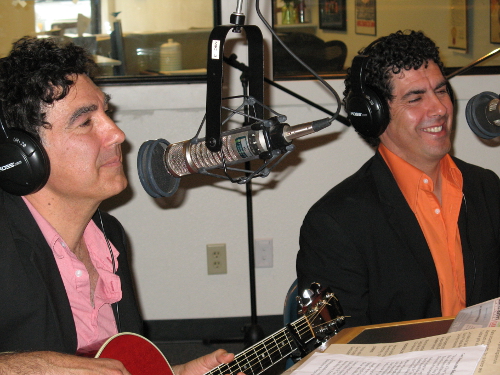
Marjorie Heins, a civil liberties lawyer, writer, and teacher — and author of the new book, Priests of Our Democracy: The Supreme Court, Academic Freedom, and the Anti-Communist Purge — was Thorne Dreyer’s guest Friday, February 8, 2013, on Rag Radio, a syndicated radio show produced at the studios of KOOP 91.7-FM in Austin, Texas.

Priests of Our Democracy.

Heins’ new book, Priests of Our Democracy, “tells of the teachers and professors who resisted the witch hunt of the early ’50s, those who collaborated, and those whose battles led to landmark Supreme Court decisions.” The book tells how the anti-communist excesses of the 1950’s “impoverished political discourse in ways that are still being felt,” and how “First Amendment academic freedom… is in peril today.”

Listen to or download Thorne Dreyer’s interview with Marjorie Heins, here:


Marjorie Heins founded and directed the ACLU’s Arts Censorship Project and was the founding director of the Free Expression Policy Project. She twice was named a “First Amendment Hero” by the Boston Coalition for Freedom of Expression and won the Luther McNair Award from the Civil Liberties Union of Massachusetts for significant contributions to civil liberties.

Her earlier book, Not in Front of the Children, won the American Library Association’s 2002 Eli Oboler Award for best published work in the field of intellectual freedom. Her other books include Strictly Ghetto Property: The Story of Los Siete de la Raza; Cutting the Mustard: Affirmative Action and the Nature of Excellence; and Sex, Sin, and Blasphemy: a Guide to America’s Censorship Wars

A graduate of Harvard Law School, Heins has taught as a visiting professor at Boston College Law School, Florida State University Law School, the University of California-San Diego, New York University, Tufts University, and the American University of Paris.

Marjorie Heins was also active in the ‘60s-‘70s New Left and underground press movement and was a contributor to New York’s RAT and a staff writer at the San Francisco Express-Times.

Rag Radio has aired since September 2009 on KOOP 91.7-FM, an all-volunteer cooperatively-run community radio station in Austin, Texas. Hosted and produced by Rag Blog editor and long-time alternative journalist Thorne Dreyer, a pioneer of the Sixties underground press movement, Rag Radio is broadcast every Friday from 2-3 p.m. (CST) on KOOP, and is rebroadcast on Sundays at 10 a.m. (EST) on WFTE, 90.3-FM in Mt. Cobb, PA, and 105.7-FM in Scranton, PA.

The show is streamed live on the web by both stations and, after broadcast, all Rag Radio shows are posted as podcasts at the Internet Archive.

Rag Radio is produced in association with The Rag Blog, a progressive internet newsmagazine, and the New Journalism Project, a Texas 501(c)(3) nonprofit corporation. Tracey Schulz is the show’s engineer and co-producer.

Rag Radio can be contacted at ragradio@koop.org.

Coming up on Rag Radio:
THIS FRIDAY, February 15, 2013:
Musician and Music Journalist Hector Saldaña of The Krayolas.

The Rag Blog

Posted in Rag Bloggers | Tagged , , , , , , , , | Leave a comment

Type your summary here

Type rest of the post here

Source /

The Rag Blog

Posted in RagBlog | Leave a comment

Alan Waldman : ‘MI-5’ is a Gripping, Timely Brit Counterspy TV Series

Waldman’s film and TV
treasures you may have missed:

Enjoy 10 seasons of a great, well-made thriller ripped from the headlines.

By Alan Waldman | The Rag Blog | February 13, 2013

[In his weekly column, Alan Waldman reviews some of his favorite films and TV series that readers may have missed, including TV dramas, mysteries, and comedies from Canada, England, Ireland, and Scotland. Most are available on DVD and/or Netflix, and some episodes are on YouTube.]

For many Americans — me included — the finest recent British drama or crime series is MI-5, which deals with crises faced by the English intelligence agency which is the equivalent of the FBI (and which also has some of the responsibilities of the CIA). This brilliantly produced, acted, and written TV series is titled MI-5 in the U.S., Canada, and France; Spooks in the UK; Erikoisioukke in Finland and Tainiacy in Poland.

Due to its glossy high production values, outstanding scripts and rapidly paced spy intrigue and action-adventure story lines, it has been a critical and popular success for a decade. It has screened in 25 countries, including India, Serbia, Iceland, and Brazil.

Before its cancellation in 2011, it aired 86 exciting episodes over 10 seasons — all of which are available on Netflix, DVD, and Netflix Instant. Here is the first 60-minute episode.

Over the decade, MI-5 has seen several major cast changes, but it has always featured outstanding talents, including Matthew MacFadyen, Keeley Hawes, Nicola Walker, David Oyelowo, Jenny Agutter, Andy Serkis, and Hugh Laurie. It has been nominated for 36 major honors, winning eight — including six Best Drama Series awards and acting statuettes for Hermione Norris and Rupert Penry-Jones. Acting noms went to Richard Armitage, Gemma Jones, and series lead Peter Firth. It has had 24 gifted writers and 26 directors.

It was interesting watching Firth and Agutter work together on TV, 26 years after seeing them perform nude on Broadway in Equus.

More than 94.7% of viewers gave MI-5 thumbs-up at imdb.com, and more than 40.2% rated it 10 out of 10. The series has a great contemporary feel, as it deals convincingly with today’s real security threats, including arms smuggling, terrorism, assassination attempts, race riots, drug trafficking, protecting a visiting U.S. president, hostage crises, Hindu nationalist plots to attack Muslims, bank robbery, and CIA-MI-5 tensions.

This smart, outstanding series is highly enjoyable on many levels, and I heartily recommend it to you.

[Oregon writer and Houston native Alan Waldman holds a B.A. in theater arts from Brandeis University and has worked as an editor at The Hollywood Reporter and Honolulu magazine. Read more of Alan Waldman’s articles on The Rag Blog.]

The Rag Blog

Posted in Rag Bloggers | Tagged , , , , | Leave a comment

BOOKS / Ron Jacobs : The Panthers and ‘Black Against Empire’

Black Against Empire:
The legacy of the Black Panther Party

“We didn’t preach to the people, we worked with them.” — Former Black Panther Mumia Abu Jamal

By Ron Jacobs | The Rag Blog | February 12, 2013

[Black against Empire: The History and Politics of the Black Panther Party by Joshua Bloom and Waldo E. Martin Jr. (George Gund Foundation Imprint in African American Studies) (2013: University of California Press); 560 pp; $34.95.]

Once again, it’s Black History Month in the United States. Since the inception of this celebration, its meaning has unfortunately been diminished as the myth of post-racialism becomes gospel, even though it shares none of a gospel’s truths.

In schools and libraries, well-meaning teachers and library workers create displays, bring in speakers, and teach lessons on the history of African-Americans. All too often, this means a look at the words of Martin Luther King, Jr., a discussion of the Emancipation Proclamation, and maybe a lesson about Rosa Parks. Only rarely, do students and library patrons get a look beyond these conventional topics that are usually taught in a manner that highlights white America’s tolerance and sense of fair play.

This is why books like the recently released Black Against Empire: The History and Politics of the Black Panther Party are so important. They remove the pretense that the Black liberation movement in the United States was something everyone except the KKK and its allies supported. Books like this tell the truth. Blacks Against Empire does so concisely, engagingly, and honestly.

Black Against Empire is a political history that is simultaneously objective and radical. Despite the efforts of historians to obfuscate and obliterate the party from history, describing it as a hate group and gun-obsessed when mentioning it at all, the fact is the Panthers’ legacy is unique and important to not only the history of Black America, but to the history of the entire United States. It is best described in the words of Mumia Abu Jamal: “We didn’t preach to the people, we worked with them.”

The relationship between the primarily white New Left and the Panthers is explored in a fair-minded and realistic manner, as is the relationship between the Panthers and other Third World revolutionary organizations, both in the United States and around the world. The authors expand the narrative of the movement against the U.S. war in Vietnam, showing clearly the early involvement of black organizations, especially that of the Student Nonviolent Coordinating Committee (SNCC). It was this organization that actually began resisting the draft, months before the predominantly white anti-war movement.

Furthermore, as the authors make clear, opposition to the U.S. war in Vietnam was one of the Black Panthers’ fundamental positions.

Like most revolutionary organizations the Panthers struggled with issues of gender and sexuality. While the participation of men in the breakfast programs sensitized them to the realities of child-rearing and associated aspects of human life (think of the film Salt of the Earth, when the women replace men on the picket lines and the men take over household tasks forcing them to see the relationship of domestic tasks to the capitalist dynamic), the living situations of many Panthers reinforced traditional gender roles.

Joshua Bloom and Waldo E. Martin, Jr., the authors of Black Against Empire, have written a comprehensive and compelling history of the Black Panther Party. As close to complete as one text can possibly be, it is the book I would recommend to anyone wanting to read just one book about the Black Panthers. The book concludes with a chapter speculating as to why the Black Panthers developed when they did, why they commanded the support they did, and why their influence waned so quickly.

Of course, the role of the government counterinsurgency program called COINTELPRO is discussed; the frame-ups, misinformation, jacketing, and murders. In light of current concerns about domestic “terrorists,” one wonders if the Panthers would be considered drone assassination targets under the current Justice Department guidelines if they were around today?

Other reasons provided by the authors for the Panthers’ demise borrow from the Italian Antonio Gramsci’s thoughts on revolutionary movements and end up asking more questions than they answer.

Long Distance Revolutionary

Back to Mumia Abu Jamal. One of the youngest Panthers in the nation, he continued his revolutionary activism and reportage long after the Black Panthers had become history. Indeed, his post-Panther trajectory could serve as a microcosm of many leftist revolutionaries who came of age during the Panthers’ heyday.

He didn’t give up his radicalism while pursuing a career after the Party. Because of this, he ended up paying for his history and his refusal to compromise. He continues paying even today. For those who have forgotten (or never paid attention), Mumia has been on Pennsylvania’s death row for more than two decades. Accused and convicted of killing a Philadelphia policeman in a prosecution involving the sketchiest of evidence and numerous prosecutorial and judicial missteps, Mumia’s life and situation is the subject of a new feature film titled Long Distance Revolutionary.

When I was helping organize antiwar activities in the late 1990s and the 2000s, I learned that many of the younger radicals I was working with came to their politics after learning of Mumia’s case. Thanks in no small part to his eloquence and the support of popular musicians like Rage Against the Machine, these young people saw through the intense desire of the State to keep Jamal in prison and kill him. This understanding opened their eyes to the realities of the system and made them radical.

As the film shows, this trajectory is similar to Jamal’s. Mumia is a political prisoner. The Panthers were a political organization. The story of both is a story that needs to be heard. The film is part biography, part commentary from supporters and Jamal himself, and part drama. The sum of these parts is a film that provokes and entertains.

The Black Panthers were bold. The Black Panthers were smart. The Black Panthers were anti-imperialists. The Black Panthers were revolutionaries. This book and this film remind us of that. They also remind us that this world, this nation, could use something with the Panthers’ appeal and power now. Read this book, ask your library to buy it; watch this film.

Black history isn’t just for black people. It’s for everyone who wants to understand the history of the United States.

[Rag Blog contributor Ron Jacobs is the author of The Way The Wind Blew: A History of the Weather Underground. He recently released a collection of essays and musings titled Tripping Through the American Night. His latest novel, The Co-Conspirator’s Tale, is published by Fomite. His first novel, Short Order Frame Up, is published by Mainstay Press. Ron Jacobs can be reached at ronj1955@gmail.com. Find more articles by Ron Jacobs on The Rag Blog.]
The Rag Blog

Posted in Rag Bloggers | Tagged , , , , , | Leave a comment

Harry Targ : Celebrate the ‘Historical Revisionists’ / 1

Historian William Appleman Wiliams circa 1986. Image from Oregon State University Libraries Special Collections / Daily Barameter / The Nation.

Celebrate the ‘Historical Revisionists’ / 1

William Appleman Williams’ classic text, The Tragedy of American Diplomacy, broke new ground in the early 1960s as opponents of the Cold War and the escalating Vietnam War policy began to challenge reigning orthodoxy.

By Harry Targ / The Rag Blog/ February 12, 2013

First of a two-part series.

The first modern organized opposition to U.S. global expansion began with the war on the Philippines in 1898. The Anti-Imperialist League, with such distinguished spokespersons as Mark Twain, decried United States expansion to Asia, the Pacific, and the Caribbean. Later, critics of U.S. foreign policy, such as Eugene V. Debs, opposed President Woodrow Wilson’s decision to enter World War I in 1917. In the 1930s journalists and activists raised concerns about the United States role in world affairs, particularly its seeming indifference to the rise of fascism in Italy, Spain, and Germany.

After World War II, skeptics about a U.S. policy that was leading to Cold War with the Soviet Union arose, coalescing around the third party presidential candidacy of Henry Wallace. After President Truman won election in 1948, opposition to the direction the United States was taking in the world was steadily silenced. A virulent anti-communist repressive environment in academia, the media, and electoral politics ensued. By the 1950s analyses of United States foreign policy that focused on the U.S. as an imperial power virtually disappeared.

The Wallace candidacy which was soundly defeated was followed by the 1949 purge of 11 unions from the Congress of Industrial Organizations (CIO) for their left-wing politics and during the 1950s anti-communist purges in radio, television, the movies and educational institutions. Labor organizers, cultural performers, educators, government employees and others tarnished with the charge of being “communists” lost jobs, livelihoods, and access to broad publics.

Academic fields were transformed to provide training grounds and ideological support for America’s mission in the world. In history and social science new scholarly works emphasized consensus versus class struggle, pluralist democracy rather than political elitism, and groups and political activity rather than class and class interests. Few remaining critical analysts of United States foreign policy highlighted economic interest, the pursuit of empire, or over-reaction to a Soviet threat.

However, some academic programs, such as the Department of History, University of Wisconsin, began to educate young scholars to examine the economic taproots of United States foreign policy. William Appleman Williams’ classic text, The Tragedy of American Diplomacy, broke new ground in the early 1960s as opponents of the Cold War and the escalating Vietnam War policy began to challenge reigning orthodoxy.

Williams, for many budding anti-war activists, provided information about an American empire that had grown ever since the end of the civil war. He and his students connected U.S. empire building with the conquest of the North American continent, the slaughter of millions of Native people, the taking of large amounts of the land mass from Mexico, and global expansion from the Philippines to the Caribbean and Central America.

In The Tragedy of American Diplomacy, The Contours of American History, and The Roots of the Modern American Empire, Williams elaborated on the rise of agricultural production and the need for the American economy to find markets overseas. In addition, domestic outlets for U.S. productivity had been capped with the end of the “frontier.” Drawing upon Frederick Jackson Turner’s “frontier thesis,” U.S. leaders, he wrote, believed that a new global American empire was needed to sell products, secure natural resources, and find investment opportunities.

Williams claimed that the so-called “open door” policy toward China proclaimed in the 1890s signified what the U.S. imperial vision was to be. This policy resulted from the disintegration of and civil war in China which was used as an opportunity by European powers and Japan to establish their own spheres of influence on the Asian mainland.

In response to the nations that were carving up Chinese territory, the U.S. Secretary of State, John Hay, issued a warning to Europe demanding the right to have open access to markets in China. By implication the closing of such markets to U.S. goods might lead to confrontation.

For revisionists, such as Williams, the Open Door Notes illustrated the emerging U.S. global imperial vision. The demands that the world respect the U.S. right to penetrate economies everywhere would become the standard for the U.S. role in the world ever since.

Again, the driving force behind the image of the Open Door was economics. Some of Williams’ writings seemed to emphasize material reality, the needs of capitalism. Other of his writings implied that United States behavior was motivated by elite beliefs that markets were a necessity.

In the 1960s several newer scholars began publishing their research emphasizing the connections between the necessities of U.S. capitalism and expansion or the belief foreign policy elites had that such expansion was necessary for economic survival.

Gabriel Kolko who authored The Politics of War, and co-authored with Joyce Kolko, The Limits of Power: United States Foreign Policy From 1945 to 1954, presented in compelling, graphic, and precise terms the material underpinnings of United States Cold War policy. The Kolkos emphasized the threat to the West that international communism, particularly the example of the Soviet Union and popular Communist parties in Europe, represented to the reconstruction of a global capitalist empire after World War II.

According to the Kolkos and other revisionists, the expansion of socialism constituted a threat to capital accumulation. After World War II, wartime demand for U.S. products might decline, leaving in its wake economic stagnation and a return to the economic depression of the 1930s. The Marshall Plan, applauded as a humanitarian economic assistance program for the reconstruction of war-torn Europe, was really a program to increase demand for U.S. products.

With an engineered international communist threat, military spending, another source of demand, would help maintain customers, including the government itself, for U.S. products. The idea of empire, stressed in Williams’ work, was underscored by the materiality of capitalist dynamics.

The Kolkos described the motivations of the Soviet Union and the United States. The former was not driven by a demonic ideology to dominate the world, they said. In addition, United States foreign policy was not driven by principle. As to the former: “The Soviets played an essentially opportunistic, non-ideological role in Eastern Europe’s initial postwar development. They cared little about the previous policies or the ideology of the men in power in the coalition governments so long as they were not anti-Soviet in the post war period.”

And the United States made “a sincere effort to secure the area for its framework of multilateral trade and an open door for American investment.” When this failed the Kolkos said, the United States “chose instead a policy of harassment and employed the image of an iron curtain to blur, for strictly political purposes, the variations in an area whose political experiences at the time ranged from pluralist Czechoslovakia to Bolshevik Yugoslavia.”

To expand the reach of post-war U.S. capitalism and oppose any resistance to it, the East-West conflict “became a self-fulfilling prophecy.”

“Celebrate the Historical Revisionists: Part 2” will discuss the enduring significance of their findings for understanding the United State’ role in the world today.  

[Harry Targ is a professor of political science at Purdue University and is a member of the National Executive Committee of the Committees of Correspondence for Democracy and Socialism. He lives in West Lafayette, Indiana, and blogs at Diary of a Heartland Radical. Read more of Harry Targ’s articles on The Rag Blog.]

The Rag Blog

Posted in Rag Bloggers | Tagged , , , , , , , , , , | Leave a comment

Lamar W. Hankins : Drone Assassinations and Our Misguided Foreign Policy

Political cartoon from AFP / Getty Images.

Drone assassinations:
The latest misguided U.S. foreign policy

The American belief in technology as our savior, even in carrying out assassinations, knows no bounds.

By Lamar W. Hankins | The Rag Blog | February 11, 2013

Ever since homo sapiens walked in East Africa 200,000 years ago and feared the rustling in the grass, we have known that this is a dangerous world. If we are lucky, we are taught by those who raise us how to avoid the dangers or deal effectively with them.

Now that we have “advanced” civilizations, we deal with the world’s dangers at many levels. Danger is no longer a problem of the individual, the family, the clan, the village, or the city-state; it is now a problem for the country in which we live.

I have no illusions about the dangers in the world, though as an American living in a small city, I have to worry less about those dangers on a day-to-day basis than do my relatives and friends who live in major cities and metroplexes. But worrying about dangers for the country as a whole is a far different problem. One of the factors that makes this problem more different than it has to be is an assumption that has driven American foreign policy at least since World War II.

We decided after Hitler had his day and lost it and the Japanese acted recklessly and paid a terrible price, that the U.S. had to have a hand (if not a fist) in running the affairs of the entire world — so that we would never have to fight another world war and so that our corporations could get access to all of the products, goods, and resources they needed to prosper.

We decided that too few people in the world would make the civilized decisions that Americans would make. Most of the rest of the world could not be trusted to let us exploit their natural resources and their people, so we had to intervene forcefully almost everywhere on a regular basis.

For many years, the U.S. had an official policy prohibiting assassination as a tool of this foreign policy, but a practice of planning and/or doing precisely what we officially condemned. There is little evidence that assassination has had any lasting benefits. What it requires is more and more assassinations, all of which violate our own legal principles.

As Thomas Jefferson School of Law professor Marjorie Cohn has written: “Targeted or political assassinations — sometimes known as extra-judicial executions — run afoul of the Geneva Conventions, which include willful killing as a grave breach. Grave breaches of Geneva are punishable as war crimes under the U.S. War Crimes Act.”

So widespread have U.S. assassinations become that Prof. Gordon L. Bowen, a political science professor at Mary Baldwin College in Virginia, teaches an entire course on America’s targeted assassination programs. The killings of elected Guatemalan President Jacobo Arbenz Guzman and others were discussed within the CIA as early as 1951. Arbenz resigned from office in 1954. Assassination planning proceeded to the point of drawing up “hit lists” of Guatemalan officials, selecting assassins, and beginning their training.

The U.S. Senate’s Church Committee reported in 1975 that at least five foreign leaders were targeted for assassination, including Fidel Castro of Cuba, Patrice Lumumba of the Congo, and Rafael Trujillo of the Dominican Republic. Just before the Church Committee’s Report, Chile’s President Salvador Allende and Armed Forces Chief of Staff Rene Schneider were assassinated with the assistance of U.S. officials, though the CIA blamed Schneider’s death on others.

After the report, President Gerald Ford issued an executive order banning such assassinations. This order was renewed by both Presidents Jimmy Carter and Ronald Reagan. In 1995, President Bill Clinton approved creation of a list of foreign terrorists who were to be captured or killed, and the use of lethal force was authorized against Osama bin Laden and several others in his organization. In 1998, a Tomahawk missile was fired into a training camp in Afghanistan in an attempt to kill bin Laden.

Between 1949 and 2011, according to author and U.S. foreign policy critic William Blum, the U.S. planned to assassinate or did assassinate at least 40 foreign leaders, including Kim Koo, Korean opposition leader (1949); Chou En-lai, prime minister of China (1950s); Sukarno, president of Indonesia (1950s); Kim Il Sung, premier of North Korea (1951); Mohammed Mossadegh, prime minister of Iran (1953); Jawaharlal Nehru, prime minister of India (1955); Gamal Abdul Nasser, president of Egypt (1957); Brig. Gen. Abdul Karim Kassem, leader of Iraq who was succeeded by Saddam Hussein (1960); José Figueres, president of Costa Rica (two attempts on his life — 1950s to 1970s); Ngo Dinh Diem, president of South Vietnam (1963); Che Guevara, Cuban leader (1967); Mobutu Sese Seko, president of Zaire (1975); Miguel d’Escoto, foreign minister of Nicaragua (1983); and the nine comandantes of the Sandinista National Directorate in Nicaragua (1984), among others.

In Confessions of an Economic Hitman, author John Perkins not only details the schemes to make third-world countries so indebted that they could not repay loans and would be at the mercy of U.S. corporations in collaboration with U.S. intelligence agencies and the World Bank, he also explains how assassinations throughout the world were used to eliminate political leaders who would not bend to the will of the U.S. and U.S. corporations.

Assassinations have a long history in U.S. policy. They are accomplished by a lone assassin, by teams of assassins, through the use of missiles, or through the use of drones. The current discussion of drone assassinations is but one aspect of that broader policy to use assassinations to kill political figures who impede U.S. political and economic interests, especially those in the Middle East.

A widely-accepted view, sometimes expressed during the confirmation hearings for John Brennan to head the CIA, is that our assassination policy via drones is counterproductive. That is, it results in many more enemies than we eliminate because we kill many innocents when we take out a targeted person. But Brennan believes we are getting better at killing our presumed enemies with drones, so presumably we will be making fewer enemies in the future.

The American belief in technology as our savior, even in carrying out assassinations, knows no bounds. However, even the staid New York Times editorial board is against this policy:

We do not buy the administration’s claim to have the authority to kill Americans, and other suspects, far beyond any battlefield with no oversight and no review. Mr. Brennan’s assertions that the government only resorts to lethal force when “there is no other alternative” is at odds with reports of vastly increased drone strikes.

But some, for instance commentator David Brooks, have bought into the notion that in all the drone attacks since the program started, we have killed only three innocents as he said on NPR last week. And both the administration and Sen. Diane Feinstein claim that the attacks have led to the deaths of innocents in the single digits. However, Medea Benjamin of Code Pink and nearly three dozen other Americans went to Pakistan recently and talked to the families of 176 children slain in U.S. drone attacks there.

And then there is the policy of killing American citizens who are alleged to have encouraged terror by words and/or by deeds. The administration will not release the evidence to support conclusions of their guilt, so there is no way to judge the conduct of assassinating American citizens while they are on foreign soil except to note that the 4th, 5th, and 8th Amendments to the Constitution seem to forbid such conduct.

But, at the least, there should be a high burden of proof required for assassinating at a cafe in Yemen a 16-year old American such as Abdulrahman al-Awlaki, born in New Mexico, who had no ties to terrorism that have been made public or claimed by the administration. All we know is that his father, Anwar al-Awlaki, had been killed by a drone attack two weeks earlier because of alleged terrorist activities and that the son had been trying to find him before his assassination.

Because John Brennan, who worked in the war on terror for President George W. Bush, will not even acknowledge that waterboarding is torture, his statements on other matters are suspect. I find it difficult to accept that Brennan, as he claims, really “agonizes” about each and every drone assassination he has recommended to President Obama.

It is more difficult still to believe that he agonizes for the hundreds of innocent men, women, and children who are killed at restaurants, weddings, and funerals and have become the collateral damage of this policy that Brennan glibly supports, implements, and lies about openly before the Senate.

Those with real moral scruples would talk and act more like Dietrich Bonhoeffer than Dick Cheney. John Brennan is an immoral actor in an amoral world. We should not have someone with his callousness running the CIA, but he is Barack Obama’s choice, and that choice says as much about Obama as it does about the nominee.

The history of American assassination policy may be the best example to show that the slippery-slope theory sometimes is a reality. What began as assassination planning in 1949 has grown to periodically carrying out assassinations for U.S. policy purposes, and then funding major operations so that surrogates do the killing, and now, because of missile and drone technology, making them easy and widespread to do directly. It may have taken 50 years to achieve the same number of assassination-related deaths, collateral and otherwise, that we now achieve each week.

There is no better way to end this column than to quote from Bill Moyers’ brief comment made at the end of his broadcast last Friday:

This week, The New York Times published a chilling account of how indiscriminate killing remains bad policy even today. This time, it’s done not by young G.I.’s in the field but by anonymous puppeteers guiding drones by remote control against targets thousands of miles away, often killing the innocent and driving their enraged families and friends straight into the arms of the very terrorists we’re trying to eradicate.

The Times told of a Muslim cleric in Yemen named Salem Ahmed bin Ali Jaber, standing in a village mosque denouncing Al Qaeda. It was a brave thing to do — a respected tribal figure, arguing against terrorism. But two days later, when he and a police officer cousin agreed to meet with three Al Qaeda members to continue the argument, all five men — friend and foe — were incinerated by an American drone attack.

The killings infuriated the village and prompted rumors of an upwelling of support in the town for Al Qaeda, because, the Times reported, “such a move is seen as the only way to retaliate against the United States.” Our blind faith in technology combined with a sense of infallible righteousness continues unabated. It brought us to grief in Vietnam and Iraq and may do so again with President Obama’s cold-blooded use of drones and his seeming indifference to so-called “collateral damage,” otherwise known as innocent bystanders. By the standards of slaughter in Vietnam the deaths by drone are hardly a blip on the consciousness of official Washington.

But we have to wonder if each one — a young boy gathering wood at dawn, unsuspecting of his imminent annihilation, the student picking up the wrong hitchhikers, that tribal elder standing up against fanatics — doesn’t give rise to second thoughts by those judges who prematurely handed our president the Nobel Prize for Peace. Better they had kept it on the shelf in hopeful waiting, untarnished.

Moyers’ comment may be President Obama’s Walter Cronkite moment — when a respected journalist declares that a misguided foreign policy needs to end. Let’s hope it doesn’t take another six or seven years for that to happen.

[Lamar W. Hankins, a former San Marcos, Texas, city attorney, is also a columnist for the San Marcos Mercury. This article © Freethought San Marcos, Lamar W. Hankins. Read more articles by Lamar W. Hankins on The Rag Blog.]

The Rag Blog

Posted in Rag Bloggers | Tagged , , , , | 2 Comments

Bob Feldman : Union Growth in Texas Followed by Crackdown, 1940-1953

After a 1953 CIO-led strike in Port Arthur, Texas Gov. Allan Shivers, here shown addressing a campaign rally in Austin, led a move to make membership in the Communist Party illegal. Image from AlternativeHistory.com.

The hidden history of Texas

Part 12: 1940-1953/1 — Union growth followed by backlash against collective bargaining.

By Bob Feldman | The Rag Blog | February 11, 2013

[This is the first section of Part 12 of Bob Feldman’s Rag Blog series on the hidden history of Texas.]

Between 1939 and 1953 the percentage of non-agricultural workers in Texas who were members of labor unions increased from 10.3 to 16.8 percent; and 375,000 workers in Texas were labor union members by 1953. Between 1941 and 1945, CIO-affiliated labor unions “gained nearly 40,000 members in 4 years,” according to F. Ray Marshall’s Labor in the South. The same book also recalled:

Membership expansion occurred in petroleum refining, and in the Dallas-Fort Worth area, where, in 1945, the CIO claimed 25,000 new members in one year. Important victories there included the organization of the huge North American Aviation Company to the UAW, the Armour plant by the packinghouse workers, Conroe Manufacturing by the ACWA, and several steel fabricators by the steelworkers. PWOC Local 54 and storehandlers’ Local 59 acquired bargaining rights under a master agreement with Armour. During the war [World War II], the packinghouse workers’ strength in Texas was confined largely to this plant.

The CIO had 115 locals in Texas in March 1944, the most numerous of which were: autoworkers, 8 locals; oil workers, 30 locals; and steelworkers, with 12 locals. The textile workers had only two locals in Texas in 1944…

By the 1942 convention, the oil workers’ organization committee had achieved significant results. The most important victory was the Texas Company at Port Arthur… In March 1942, the OWIU won an election at the Southport refinery in Texas City… It also signed up 84 percent of the workers at Standard of New Jersey’s Humble refinery at Baytown, Texas…

The UCAPAWA (Canning, Agricultural, Packing and Allied Workers)’s strongest base in Texas was in Houston, where it had 5 contracts covering over 600 Negro and Mexican-American workers, organized by March 1942. UCAPAWA contracts in Houston covered about 150 employees at the Houston Millinery Company and 400 Negro and Spanish-speaking workers in 4 cotton companies, three of which were owned by the Anderson Clayton company… In addition, UCAPAWA had locals among pecan workers at San Antonio, spinach workers at Mathis, and cannery workers at Sugarland…UCAPAWA…organized fruit and vegetable workers in the Rio Grande Valley of Texas, where its contracts covered 1,000 employees during peak seasons.

As Randolph Campbell’s Gone To Texas observed, “under the auspices of the National War Labor Board,” Texas labor movement “organizers unionized more of the state’s industries by 1945…” And during World War II, “workers at Shell in Pasadena, Texas” even “struck spontaneously” in June 1943 “to secure the reinstatement of a discharged union member,” according to Labor in the South; and there was also a strike by workers at a B.F. Goodrich plant in Texas in February 1944.

The white corporate power structure in Texas (and its ultra-conservative, white supremacist Texas political establishment in Austin) apparently then began to feel that this growing militancy and level of unionization of workers in Texas threatened both its class interests and its ability to continue to economically exploit and politically dominate most people who lived in Texas.

So after the CIO organized plant after plant across Texas in 1946-47,” the Texas “legislature responded in early 1947 by passing a right-to-work law that prohibited requiring union membership as a condition of employment,” according to Gone To Texas, and “the legislature also passed other anti-union laws, including one that prohibited pickets at strikes from being within 50 feet of each other or the entrance of the plant being picketed.”

Public employees in Texas were also denied the right to bargain collectively in 1947. And following a 1953 CIO-led strike in Port Arthur, the then-Democratic Texas Governor Allan Shivers even “called a special session of the legislature in the spring of 1954, which passed a bill making membership in the Communist Party a felony punishable by a fine of $20,000 and 20 years in the penitentiary,” according to the same book.

Coincidentally, according to Ronnie Dugger’s The Politician: The Life and Times of Lyndon Johnson, in Texas “the program of lobbying against labor was carried forward and financed largely by allies of Lyndon Johnson.” As The Politician recalled:

The public did not know about an even more significant business convert to Johnson, anti-union contractor Herman Brown who, with his brother George, ran the contracting and engineering firm of Brown & Root… A stream of gifts from the Browns to the Johnsons can be traced through the decade starting in 1940… Lyndon was Brown & Root’s kept politician…

By 1947 Brown & Root was so powerful in Texas it led a many-aspected campaign against unions which made Texas one of the most anti-union states in the Union and the only major industrial state that had a law prohibiting workers from voting to be all-union… The Brown brothers were largely responsible for the enactment from 1947 on, of the state’s anti-union laws.

War Department or Department of Defense contractors like Brown & Root apparently made a lot of money during World War II and the Korean War of the early 1950s from the U.S. government contracts that were thrown their way. But at the same time, “22,022 Texans died or suffered fatal wounds in battle” during World War II and “the Texas Division suffered one of the highest casualty rates of any in the Army — 3,717 killed, 12,685 wounded, and 3,064 missing in action,” according to Going To Texas.

In addition, “the 19th Division, a Texas unit… suffered nearly 18,500 casualties, including 2,963 killed, many of the deaths coming in close fighting in the hedgerow country of Normandy,” according to the same book. And around 1,800 people from Texas were also killed in action after the Democratic Truman Administration decided to intervene militarily on the side of the right-wing Syngman Rhee dictatorship during the civil war in Korea .

Of the 750,000 people from Texas who served in the U.S. military during World War II, about 88,000 were African-Americans from Texas and about 12,000 were women from Texas; and “Texas, which had 5 percent of the nation’s population, provided 7 percent of those who served,” with most Texans serving in the army and air force and “about one-quarter” serving in the navy, marines and coast guard, according to Going To Texas.

[Bob Feldman is an East Coast-based writer-activist and a former member of the Columbia SDS Steering Committee of the late 1960s. Read more articles by Bob Feldman on The Rag Blog.]

The Rag Blog

Posted in Rag Bloggers | Tagged , , , | 1 Comment

Anne Lewis : UT-Austin Ponders Privatizing Staff

Members of the Make UT Sweatshop-Free Coalition gather at the UT-Austin Tower Wednesday, February 6, to protest the University’s consideration of job privatization for staff members. Photo by David Maly / The Horn.

‘Culture war’ at UT-Austin: 
President Powers considers privatization

The most deeply-rooted problem with Powers’ plan for cost cutting through privatization, consolidation, and commercialization is that it does not respect the rights of workers.

By Anne Lewis | The Rag Blog | February 8, 2013

AUSTIN, Texas — On January 29, 2013, University of Texas at Austin President Bill Powers convened the UT-Austin community to make recommendations about increasing our efficiency that would include job privatization for university staff.

President Powers’ speech led to despair, anger, and confusion across our campus. Despair and anger came from threatened loss of health care, state pensions, jobs, and community; confusion from the contradiction posed by the projected image of Powers as our defender against the likes of Governor Rick Perry and the University of Texas Board of Regents.

Powers is presented as an administrator who wants both affordability and high quality in a February 2, 2013, Associated Press article, “Texas Fight Highlights Higher Ed Culture Clash.” The article — which says that, “If colleges were automobiles, the University of Texas at Austin would be a Cadillac: a famous brand, a powerful engine of research and teaching” — defines Texas as ground zero in a culture war to preserve educational quality and research, but degenerates towards the end when it quotes Peter Flawn, our emeritus president:

“Universities are by their very nature elite,” he said. “Their job is to separate the sheep from the goats and the goat-sheep from the sheep-goats, and try to produce people who are knowledgeable and can reason, think and solve problems.”

And that, it seems, is the intellectual quality of this particular thread of discussion. I would not characterize my students as sheep, goats, sheep-goats, goat-sheep, nor would I consider the role of a university to be a sorter of the forenamed critters. It is not true that the enemy of our enemy is our friend. I think it’s critical that we look hard at what President Powers said.

The United Nations Declaration of Human Rights, which lays the groundwork for “an existence worthy of human dignity,” states in Article 23:

Everyone has the right to work, to free choice of employment, to just and favorable conditions of work and to protection against unemployment. Everyone has the right to form and to join trade unions for the protection of his interests.

The most deeply-rooted problem with Powers’ plan for cost cutting through privatization, consolidation, and commercialization is that it does not respect the rights of workers.

The plan is based on a report from the Committee on Business Productivity which convened for the first time in April 2012. Committee Chair Steve Rohleder is part of the executive leadership of Accenture, a global outsourcing company that cost the state of Texas more than $800 million in a failed effort to privatize food stamp and TANF eligibility. Other members of the committee are tied to equity firms TPG, Capital Royalty, HM Capital, Falconhead Capital, and Bull Ventures; and to Boeing, StarTex, Dell, and Susser.

President Powers says that the only way that UT-Austin can become “the very best public university in America” is to operate like a business through outsourcing and privatization of services; market costs to students for meal plans, housing, and parking; job reductions through consolidation of human resources, technology, and financial processing; and commercialization of intellectual property. He calls this a moral imperative.

President Powers states, “We’ve been outsourcing all along: we don’t have a fleet of airplanes used by faculty to get to meetings; we use Southwest Airlines.”

UT probably should not own a fleet of airplanes and pay the pilots with public funds. But the relationship of pilots to our university is quite different from that of workers who serve food, clean buildings, support our offices and technical facilities, and generally keep the university running.

These workers (who include many students) will lose and lose big — guaranteed pay levels and advancement possibilities, state pensions and benefits, safety and environmental standards, rules against discrimination in employment, and the right to join a union.

I also question the assumption that cost-saving experiments endorsed by finance capital are best for the citizens of Texas. Accenture’s failed contract needlessly increased the suffering of thousands of poor and working class Texans and their children. The attempt to take over management of the Kerrville State Hospital last year by Geo Group, the private prison corporation, was resolved when State Health Commissioner David Lakey stated that reductions in staffing would put both the patients and the State of Texas at risk.

The notion that a business model is the only way for human endeavors to succeed seems strange at best. Cost cutting business practices have contributed to economic inequality, disregard of safety and environmental standards, and discrimination in employment. It’s why we need laws, government regulation, and labor unions where workers can have a collective voice.

It’s often more — not less — expensive when neoliberals turn not-for-profit into profit-making ventures. The savings that come from lower pay, lower health care costs, and erosion of pensions for workers will most likely benefit the company more than our university. That’s part of the margin of profit. The other part is increased cost for services.

We already see Powers’ suggestion that students should pay the market value — 50% more for their privatized meal plans; 113% more for privatized parking for staff and students; more for privatized student housing — all going towards the profits of contracted corporations and none benefiting our community.

President Powers boasts that “over the past five years, some 4,000 people left the payroll voluntarily. That’s 20 percent of UT’s core staff workforce.” Those jobs and positions have not been replaced. The thought of an additional 20 percent cutback is feared not only by workers who may not leave voluntarily but also by their co-workers who have added workloads and sometimes have impossible jobs.

Go to any office in our university at 7 p.m. and you will find workers who have been there since 8 a.m.. The work of support staff is necessary for the university to function properly. It’s wrong to balance a budget on job loss and inadequate staffing.

Finally, in an unfortunate example, President Powers compares the effort, which will be led by Chief Financial Officer Kevin Hegarty, to the Pope moving an obelisk in 1586. As a union woman who respects the dignity of work both intellectual and manual, I ask who exactly carried that 344-ton obelisk and under whose organizational authority.

We’re sure that Mr. Hegarty would agree that he has none of the moral authority of a pope. Our university is not a 344-ton obelisk. We who devote our intellect, energy, and care to UT should have a voice in these decisions that so deeply impact our lives, our families, and our community.

I would suggest another approach. President Powers should go to the Texas legislature and demand that Texas pay its share with the same force he used to promote Austin taxpayer funding of a new medical school.

The Texas Constitution (1876) states:

The Legislature shall establish, organize and provide for the maintenance, support and direction of a university of the first class, styled “The University of Texas.”

Thirty years ago, Texas funded more than half of the budget of UT-Austin. It’s now down to 13%. President Powers should join us at the Capitol on April 10 for a march and rally in defense of the public good and public workers.

Will Rogers once said, “When you’re in a hole, stop digging.”

[Anne Lewis, a senior lecturer at the University of Texas and a member of TSEU-CWA Local 6186 and NABET-CWA, is an independent filmmaker associated with Appalshop. She is co-director of Anne Braden: Southern Patriot, associate director of Harlan County, U.S.A, and the producer/director of Fast Food Women, To Save the Land and People, Morristown: in the air and sun, and a number of other social issue and cultural documentaries. Her website is annelewis.org.]

The Rag Blog

Posted in Rag Bloggers | Tagged , , , , , , , , | 4 Comments