Type your summary here

Type rest of the post here

Source The Rag Blog

Posted in RagBlog | Leave a comment

Jaron Lanier and “digital Maoism”

JARON LANIER – Photo by Robert Holmgren for Smithsonian Magazine January 2013

By Larry Ray / The Rag Blog / January 17, 2013

Internet visionary and guru, Jaron Lanier, was central to the early development of the faster, more capable Web 2.0, which enlivened the World Wide Web and made possible the eventual virtual interconnection of everyone to everything… instantly.

But Lanier, who is sought after worldwide as a lecturer, high octane teacher, and consultant, has now become a “defector.” He is a severe critic of the dangers of burgeoning social media like Facebook, Twitter, and similar instant sharing enablers which he labels as “spy agencies.”

These addictive apps encourage the propagation of every thought, photo, video, or whim from people who blithely post and forward potentially damaging personal information which is then mined and sold to be marketed, stored and available for eons in the social media “Cloud.”

All this has developed what Lanier now calls “the hive mind” which he warns will become a “social catastrophe.” After reading a recent interview of Lanier in Smithsonian Magazine and discussing it with friends, a few thoughts have come to me.

We have, in fact, already watched the development of Lanier’s “hive mind” in the last two years or so as malcontent, poorly informed, angry, non-intellectually curious, and fearful “wanna-bees” have been fed the nectar of nonsense, nonstop.

Energizing but artificially sweet flowers, trees, and grasses were quietly planted and brought to bloom by the billionaire Koch brothers whose well-paid worker bees then spread out to do intricate cyber-bee dances across America to waiting wanna-bee colonies.

The wanna-bee hives are uniformly narrow, have a reddish tinge and are easy to identify. The messenger bees did their wireless waggle dance to indicate the direction and amount of Koch nonsense nectar to all the narrow interconnected, and like-thinking wanna-bee hives.

Once all fattened on the free Koch nonsense-nectar, the wanna-bees didn’t even notice as the Koch smoke was also slowly being blown up their apian arses.

In an astonishingly short period of time the idealistic and ignorant worker wanna-bees were stocking their hives and providing their queen wanna-bees not only with nonsense-nectar but with their discovery of a the new artificially sweetened, free wireless high speed connections to the buzz from all the other hives.

All this nourishment and new social interconnection was courtesy of the calculating Koch brothers, though few of the wanna-bees had ever heard of them. Now all queen bees could coordinate the coming swarms across their states. And when the swarms began with the wanna-bees adopting, curiously, tea bags as their rallying symbol, the nation’s TV camera crews swarmed after them.

Now, it seemed, the wanna-bees for the first time in their lives were able to buzz and be heard far and wide. Some of them were actually able to deliver an occasional sting from their normally vestigial stingers. It had cost the Koch brothers hundreds of millions of dollars but they had finally started the swarm they had long dreamed of right from their own exclusive titan hive of contrarian apians.

The vast social networking interconnections among the wanna-bees soon became a threat to the balance of the long standing nectar chain feeding the head hive located inside the unmistakable huge marble dome up near the Potomac river.

The “hive mind” had been born. Now everyone could potentially have their own bully pulpit. It was easy and empowering to rant, obfuscate, delay, confuse and frustrate others with a flap of a wing … or the click of a mouse key. The sense of order and government as we had always know it, was already being threatened by an early form of Lanier’s feared “digital Maoism.”

And the cranky Koch creation was abuzz with a large hive of wanna-bees already gnawing off tiny pieces of the Constitution, laboring busily, using their bitter saliva to glue those pieces together so to form their own huge, narrow mega-hive up near the Potomac.

But the central life-giving nonsense nectar source would slowly become harder and harder to find as the seasons changed. The bright blooms covering the Koch brothers’ groves and meadows seemed to disappear as quickly as they had appeared. Nonsense-nectar, it seems, almost always comes only from annuals not perennials.

However, wanna-bees will now still always be able to find something or someone to feed them, but perhaps not quite as bountifully. At least it is much easier to find and share their beloved nonsense-nectar with established wanna-bee hives which are now all interconnected and abuzz, all in a twitter, day and night.

Some of the queen wanna-bees are already laying eggs double time in preparation for another planned mega swarm just two years from now.

The coming “social catastrophe” Lanier describes already seems to be faintly visible through that seemingly innocent, sweet smoke.

[Retired journalist Larry Ray is a Texas native and former Austin television news anchor who now lives in Gulfport, Mississippi. He also posts at The iHandbill. Read more articles by Larry Ray on The Rag Blog.]

*READ Smithsonian Magazine interview

Type rest of the post here

Source /

The Rag Blog

Posted in RagBlog | Leave a comment

RAG RADIO / Thorne Dreyer : Black Feminist Author Beth E. Richie on Gender Violence and ‘Arrested Justice’

Rag Radio podcast:
Black feminist academic and activist
Beth E. Richie, author of ‘Arrested Justice

By Rag Radio | The Rag Blog | January 16, 2013

Black feminist academic and author Beth E. Richie was Thorne Dreyer’s guest Friday, January 11, 2013, on Rag Radio,  a syndicated radio show produced at the studios of KOOP-FM in Austin, Texas.

Listen to the interview, here:


Beth E. Richie is Director of the Institute for Research on Race and Public Policy, and Professor of African American Studies and Criminology, Law, and Justice at the University of Illinois at Chicago. Professor Richie has been an activist and an advocate in the movement to end violence against women for the past 25 years.

Her newest book is Arrested Justice: Black Women, Violence, and America’s Prison Nation. In the book, through the compelling stories of Black women who have been most affected by racism, persistent poverty, and class inequality, she shows that Black women in marginalized communities are uniquely at risk of battering, rape, sexual harassment, stalking, and incest.

Richie is also the author of “Compelled to Crime: The Gender Entrapment of Battered Black Women.”

Rag Radio has aired since September 2009 on KOOP 91.7-FM in Austin. Hosted and produced by Rag Blog editor and long-time alternative journalist Thorne Dreyer, a pioneer of the Sixties underground press movement, Rag Radio is broadcast every Friday from 2-3 p.m. (CST) on KOOP, and is rebroadcast on Sundays at 10 a.m. (EST) on WFTE, 90.3-FM in Mt. Cobb, PA, and 105.7-FM in Scranton, PA.

The show is streamed live on the web by both stations and, after broadcast, all Rag Radio shows are posted as podcasts at the Internet Archive.

Rag Radio is produced in association with The Rag Blog, a progressive internet newsmagazine, and the New Journalism Project, a Texas 501(c)(3) nonprofit corporation. Tracey Schulz is the show’s engineer and co-producer.

Rag Radio can be contacted at ragradio@koop.org.

Coming up on Rag Radio:
THIS FRIDAY, January 18, 2013:
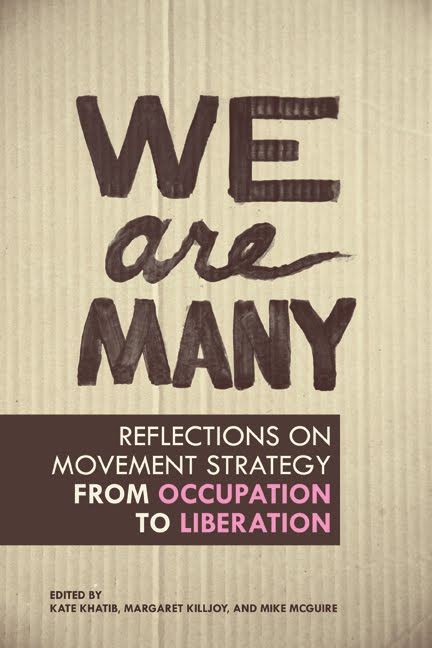
Activist and writer Lisa Fithian, and editor Mike McGuire: We Are Many: Reflections on Movement Strategy from Occupation to Liberation.
January 25, 2013: Robert Pollin, author of Back to Full Employment.

The Rag Blog

Posted in Rag Bloggers | Tagged , , , , , , , , | Leave a comment

RAG RADIO / Thorne Dreyer : Black Feminist Author Beth E. Richie on Gender Violence and ‘Arrested Justice’

Type your summary here

Type rest of the post here

Source /

The Rag Blog

Posted in RagBlog | Leave a comment

Alan Waldman : ‘Chef!’ is One of the Funniest Sitcoms Ever

Waldman’s film and TV
treasures you may have missed:

Lenny Henry is astonishingly good as the overbearing chef on a classic BBC comedy.

By Alan Waldman | The Rag Blog | January 16, 2013

[In his weekly column, Alan Waldman reviews some of his favorite films and TV series that readers may have missed, including TV dramas, mysteries, and comedies from Canada, England, Ireland, and Scotland. Most are available on DVD and/or Netflix, and some episodes are on YouTube.]

One of the most brilliant, hilarious performances I ever saw was Lenny Henry as arrogant, acerbic, condescending restaurant owner and top cook Gareth Blackstock in the 20 episodes of the BBC’s wonderful 1993-1996 series Chef! Eight episodes were written by Henry himself and nine others came from super-talented scribe Peter Tilbury (who co-wrote the very, very funny 2006-2012 series Not Going Out).

Chef! was nominated for the 1994 Best Comedy Series BAFTA award, and it was critically highly acclaimed for its “its high production values, its comic-drama scripts, and its lead performances” (according to the Museum of Broadcast Communications). More than 94.5% of viewers rating it at imdb.com gave it thumbs-up, with 30.2% calling it a perfect 10.

What really set Chef! apart from other sitcoms are the endlessly inventive strings of insults that Gareth unloads on his staff and some customers. In one case he tells a subordinate, “Let me explain the order of things to you. There’s the aristocracy, the upper class, the middle class, working class, dumb animals, waiters, creeping things, head lice, people who eat packet soup, and then you.”

Chef Blackstock serves eclectic French cuisine at his gourmet restaurant Le Chateau Anglais. His search for perfection makes him ride his hapless staff hard — particularly his fellow Jamaican exile, sous chef Everton Stonehead (wonderfully played by Roger Griffiths). Caroline Lee-Johnson is very enjoyable as Gareth’s clever wife.

All three seasons of Chef! are on video and Netflix, and several episodes, such as this one can be enjoyed on You Tube.

[Oregon writer and Houston native Alan Waldman holds a B.A. in theater arts from Brandeis University and has worked as an editor at The Hollywood Reporter and Honolulu magazine. Read more of Alan Waldman’s articles on The Rag Blog.]

The Rag Blog

Posted in Rag Bloggers | Tagged , , , | 1 Comment

Robert Jensen : Jim Koplin: Living Your Life Honestly

James Henry Koplin, 1933-2012. Image from JimKoplin.com.

Jim Koplin:
Living your life honestly

By Robert Jensen | The Rag Blog | January 16, 2013

“Good teaching is living your life honestly in front of students.”

I don’t recall exactly when Jim Koplin first told me that, but I know that he had to say it several times before I began to understand what he meant. Koplin was that kind of teacher — always honing in on simple, but profound, truths; fond of nudging through aphorisms that required time to understand their full depth; always aware of the connection between epistemology and ethics; and patient with slow learners.

But, I’m getting ahead of myself. Some background: Jim Koplin was, by way of a formal introduction, Dr. James H. Koplin, granted a Ph.D. in psychology from the University of Minnesota in 1962 with a specialization in language acquisition, tenured at Vanderbilt University and later a founding faculty member of Hampshire College, retired early in 1980 to a rich life of community building and political organizing.

I never took a class from him, though in some sense the 24 years I knew him constituted one long independent study. That finally ended on December 15, 2012, not upon satisfactory completion of the course but when Jim died at the age of 79. He left behind a rich and diverse collection of friends, all of whom have a special connection with him. But I hang onto the conceit that I am his intellectual heir, the one who most directly continued his work in the classroom.

So, with that conceit firmly in place and his death fresh in my mind, it seems proper and fitting that I offer lessons learned from Koplin to the world outside his circle of students and friends.

I’ve spent a considerable amount of time in my 20 years of teaching at the University of Texas at Austin reflecting on Jim’s core insight, that good teaching is living your life honestly in front of students.

The first, and most obvious, implication is a rejection of the illusory neutrality that some professors claim. From the framing of a course, to the choice of topics for inclusion on the syllabus, to the selection of readings, to the particular way we talk about ideas — teaching in the social sciences and humanities is political, through and through.

Political, in this sense, does not mean partisan advocacy of a particular politician, party, or program, but rather recognizing the need to assess where real power lies, analyze how that power operates in any given society, and acknowledge the effect of that power on what counts as knowledge.

Every professor’s “politics” in this sense has considerable influence on his/her teaching, and I believe it is my obligation to make clear to students the political judgments behind my decisions. The objective is not to strong-arm students into agreement, but to explain those choices and defend them when challenged by students. At the end of a successful semester, students should be able to identify my assumptions, critique them, and be clearer about their own.

I would recommend this approach for all faculty members, but it has been particularly important for me because I am politically active in fairly public ways, which students often learn about through mass media and the internet. To make clear the difference between the goals of Jensen-in-the-classroom (encouraging critical thinking) and Jensen-in-public (advocating political positions), I have taken extra care to be transparent in front of students.

This also was a product of my time with Jim, who insisted that if intellectual inquiry led one to conclusions about what is needed to advance social justice and ecological sustainability, then one should contribute to those projects. Jim’s life offered me a model for how intellectual work need not be separated from community and political work.

In one of my early conversations with Jim about this balance, he referred me to one of his elders, Scott Nearing, who said that three simple principles guided his life: the quest “to learn the truth, to teach the truth, and to help build the truth into the life of the community.” Each of those endeavors feeds the other two; scholarship, teaching, and community engagement are a package deal for me. But Jim always reminded me that what one does in front of students is not the same as what one does in front of a crowd at a rally, or in an organizing meeting.

Perhaps Jim’s most important contribution to my development as a teacher came in his advocacy of interdisciplinary undergraduate education. In the contemporary academy, the reward system and culture tend to push professors toward intellectual specialization over the big picture, and toward working with graduate students over undergraduate teaching. In my connection with Jim, I saw the importance of — and joy in — a truly interdisciplinary approach to knowledge that took as its primary task teaching at the most basic levels.

The first course I taught in the university-wide program called First-Year Seminars, “The Ethics and Politics of Everyday Life,” was straight out of Koplin: I had students read five books that touched on the political, economic, and ecological implications of our choices in our daily lives. Every time I worried that I would be pushing students too far, Jim would tell me that the students were hungry for honest, jargon-free radical talk, and he was right.

I devised my current interdisciplinary course, “Freedom: Philosophy, History, Law,” in conversation with Jim. As it came into focus, I told Jim that I wanted the course to not only challenge the culture’s simplistic definition of freedom but to undermine the confidence of anyone who thinks the term can be easily defined.

On the first day of class, I tell students that the minute they think they have nailed down a definitive definition of freedom, some new experience will force them to modify that. It is the struggle to understand the concept that matters, and I am just another person struggling with them, albeit with the advantage of more extensive reading and experience.

That reflects another of Jim’s other lessons, the understanding that a good teacher learns alongside students. That doesn’t mean pretending that students have as much to teach me as I have to teach them (if that were the case, why am I the one getting paid?); the excitement comes from genuinely being open to that discovery with students.

As a teacher, I shape — but cannot control — the experience. There’s always a certain kind of thrill in that process, especially in front of a class of 300. There are days when I feel a bit like I am doing an intellectual high-wire act. Those tend to be my favorite classes.

That thrill is rooted in another Koplin lesson: Good teaching is based in recognizing our intellectual limits, our ignorance. By that, he did not just mean that any single teacher can’t know everything. Instead, Jim meant that we humans are always more ignorant than knowledgeable, that even in fields in which we have dramatically deepened our understanding of the world, there is — and always will be — far more that we do not know than we do know.

I have come to realize that the longer I teach, the more I know and the less certain I am about what I know. The more aware I am of the limits of my knowledge, the better teacher I become.

Jim also believed that all teaching required an appreciation of the arts, and he taught me to look for wisdom in poetry. To the best of my knowledge, Jim never wrote a line of poetry in his life, but that made him only more appreciative of the form.

I cannot remember if I shared this poem with him or vice versa; at some point, as it is with a good teacher, the flow of information and insight was two-way and impossible to track. Whomever it came from first, Jim and I came across the poem “Dropping Keys” by Hafiz, the 14th century Sufi poet from Persia.

The small person
Builds cages for everyone
She
Sees.

Instead, the sage,
Who needs to duck her head,
When the moon is low,
Can be found dropping keys, all night long
For the beautiful,
Rowdy,
Prisoners.

For too many students, education too often feels like a cage. If we aren’t careful, we teachers can find ourselves building cages, guarding cages, and then locking ourselves inside those cages.

Jim Koplin never stopped dropping keys for me. To honor his memory, I will try to do the same for my students.

This article was also published at New Left Project.

[Robert Jensen is a professor in the School of Journalism at the University of Texas at Austin and board member of the Third Coast Activist Resource Center in Austin. He is the author of Arguing for Our Lives: Critical Thinking in Crisis Times (City Lights, coming in 2013). His writing is published extensively in mainstream and alternative media. Robert Jensen can be reached at rjensen@uts.cc.utexas.edu. Read more articles by Robert Jensen on The Rag Blog.]

The Rag Blog
Posted in Rag Bloggers | Tagged , , , , , , | Leave a comment

IDEAS / Bill Meacham : Speaking of Consciousness

Image from TZA’s photostream / Flickr.

Speaking of consciousness

The cardinal sin of philosophy, committed all too often, is to use terms that are ambiguous.

By Bill Meacham | The Rag Blog | January 15, 2013

The philosophy club is currently studying Philosophy of Mind, a topic fraught with ambiguity. People use terms such as “mind,” “consciousness,” “awareness,” “experience,” and so forth as if everyone knows what they mean. But they can mean very different things to different people; and the cardinal sin of philosophy, committed all too often, is to use terms that are ambiguous.

You start out talking about one thing and end up talking about something else even though you are using the same word. That’s called equivocation, and it is bad because it promotes confusion rather than clarity.

One of the things philosophers claim to be good at is logical definition and clarification of terms, so in this essay I propose some definitions of salient terms. I do not claim that these are the only correct definitions. I merely claim that if we all agree to use words the same way, we’ll have a productive conversation rather than talking past each other, and that this is the way I recommend. Don’t expect any grand conclusions, just (I hope) some clarity.

Proposed definitions

Of all the concepts relating to mind, I propose that we use experience as the most inclusive. It means the subjective aspect of a person’s taking into account his or her world. By subjective I mean detectable or observable in principle by only one person, the one who is taking his or her world into account. This is in contrast to objective, by which I mean detectable or observable by more than one person.

This definition of “experience” is a bit circular, as “detect” and “observe” are, if not synonyms, perhaps subsets of “experience.” That’s unavoidable. I can’t give an ostensive definition of “experience” because our experience (the experience that each of us has) is private; it can’t be observed or pointed to by anyone else.

At any rate, “experience” is the broadest category, including everything from being awake, focused and alertly paying attention (to something) down to hazily and dimly having a feeling (of something) in the background, so to speak, even so far in the background that it is not present to our attention at all. The latter is what some call “non-conscious experience.”

Consciousness is a subset of “experience.” I prefer to use the phrase “being conscious,” because “consciousness,” a noun, implies something fixed and substantial, but our experience is ever changing. Being conscious involves the following:

  • The world is presented to you with vividness or intensity; in other words, you are paying attention to some aspect of the world; and
  • At the same time at some level you notice, or think about, what you are paying attention to; and
  • All this happens with sufficient intensity to leave a memory.

Being conscious entails some degree of complexity of interiority, both paying attention to the world and thinking about it or at least having some mental representation of what you are paying attention to. What we call conscious experience has some element of thinking about what we are paying attention to.

Consciousness happens when attention is focused on something — that is, something is present vividly — and at the same time there is some thinking about that same thing. Without the thinking, there is experience, but it is not memorable enough to be called conscious experience.

Being acutely conscious is one end of a spectrum of kinds of experience. I use the terms awareness or being aware for the entire spectrum, particularly the less vivid and acute end.

To point out what I mean: until I called it to your attention, you were probably not conscious of the chair pressing against your seat and back. You were not conscious of it, i.e., you were not attending to it; but nevertheless you were aware of it, it was present in your experience.

Consider the so-called consciousness of animals. We cannot know for sure, but we can imagine that the world is presented quite vividly to a dog, but we doubt that the dog thinks about it much. The dog’s attention seems to shift quite rapidly as it sniffs at one thing and then barks at another with no behavioral evidence of there being any connection between the two.

Consider highway hypnosis, times when the driver is unable to recall specific moments or events during extended periods of driving. Certainly the driver is aware of — n the sense of being responsive to — his or her surroundings, the other cars on the road, the turns and intersections and so forth; but he or she drives automatically or habitually, without thinking about it.

In both cases I would rather say that the dog or person is aware, rather than conscious, of its or his or her surroundings. Others may use the term “awareness” differently. This is how I recommend using it. Because “being conscious” ordinarily connotes clarity and distinctness of perception, I would like to use “being aware” to denote the broad spectrum of ways we experience and take into account our environment, from clear and distinct perception of publicly-observable things or our private ideas to vague and obscure presentations of moods, bodily sensations, the not-fully-attended-to physical environment, etc.

Let’s reserve “being conscious” for wakingly and explicitly being aware.

My point is that clear and distinct perception is not the only form of being aware; in fact is it only one end of a continuum, at the other end of which are vague and indistinct presentations, emotional and physical feelings, and finally subliminally or subconsciously presented objects of which we can only with the greatest of difficulty become explicitly conscious.

That’s how I would like to use these terms. But there are other uses, and it is useful to take a look at them so you can recognize them when you come across them. Particularly slippery is the term “consciousness.”

Other uses: ‘conscious’ and ‘consciousness’

The literature on consciousness contains many different meanings of the term. A very good list is found in Consciousness, A User’s Guide, by Adam Zeman. Zeman says that the origin of the term is the Latin scio, meaning “I know” and cum, “with.” This implies that consciousness is “knowledge with,” shared knowledge, knowledge shared with another person or knowledge shared with yourself (as when you talk to yourself). The Latin conscientia means a witness to the facts, whether external or in the workings of the mind.(1)

The first sense of the term “conscious” is simply being awake. When you are awake you are capable of making a well-integrated response to your environment. Humorously we can say that consciousness is that annoying interlude between naps.

The second sense of “conscious” is being aware. To be conscious is to be aware of something. In this sense, “consciousness” is ordinary experience, which is always experience of something, such as people, trees, books, food — all the things around us — or of subjective things such as bodily sensations, thoughts, feelings, etc., the contents of consciousness.

Zeman says, “The interplay of sensation, memory, emotion and action is the foundation of ordinary experience.”(2) He quotes William James in Principles of Psychology, as saying that consciousness is “the current content of perceptual experience.”

However — and here is where the definition of the term gets slippery — sometimes the term “consciousness” means not the content but the container, that which holds or includes the content. Consider phrases such as “It was not in my consciousness” and “expanding your consciousness.” Clearly the metaphor is that consciousness contains something else, and if consciousness is expanded it can contain more things or perhaps the same things more vividly.

As quoted in Zeman, James lists several characteristics of consciousness.(3) In the following list, substitute for “consciousness” “the content of perceptual experience”. If the sentence does not make sense, substitute “the container of perceptual experience”.

  • Consciousness is stable for short periods of time, up to a few seconds. [Content]
  • Consciousness is changeful over time. [Content]
  • Consciousness is selective, with a foreground and a background, and a limited capacity. [Container, that which has capacity. But also content, in that foreground and background are contents.]
  • Attention can be directed, one can shift the focus of consciousness. [Container. The container focuses on some of the contents to the exclusion of others.]
  • Consciousness ranges over innumerable contents. [Container]
  • Consciousness is continuous over time, in the sense that memory allows one to connect what one is conscious of in the present with what one was conscious of in the past. [Container. Certainly the contents vary over time.]
  • Consciousness is “intentional,” in that it is of something, directed at something. [Container]
  • Consciousness is aspectual, with a limited point of view, conditioned by the perspective of your viewpoint. [Container]
  • Consciousness is personal, involving a subject. [This is the most problematic of these assertions. Is the container the subject? Or are some of the contents the subject?]

Yet another meaning of the term “consciousness” is mind or the subjective, interior aspect of the human being. Zeman says, ”…’conscious’ in this third sense can be used to report our acquaintance with any state of affairs whatsoever….”(4), whether public or private. In this sense you are conscious of anything that passes through your mind, and the term “conscious” means “knowing.”

Consciousness in this sense (the state of knowing) is related to intentions and purposes, as in “a conscious attempt to influence the proceedings.”(5) There is a link between consciousness and volition, the act of willing, or its outcome, deliberate action. This sense of “consciousness” bridges perception and action. You do something deliberately when you know that you are doing it and plan and intend to do it.

Another meaning is the way you interpret your world in a more global sense, particularly politically. Marxists talk about “bourgeois consciousness” or “proletarian consciousness,” meaning the categories people in those economic classes use to think about economic or political events or their place in the social order, particularly if those categories are not examined but instead are used uncritically. In this sense “consciousness” refers to characteristics of the container. The container is like a filter or colored lens, such that you pay more attention to certain contents than to others without realizing that you are doing so.

Finally, the term may be used to refer to a conscious being such as a person or even a deity: “He could sense a consciousness somewhere in the distance” or “a vast consciousness watching over us.” Such figurative speech — technically called synecdoche, using a part to represent the whole — is not at all how discussions of mind would use the term, however.

‘Self-conscious’ and ‘self-consciousness’

The relationship between consciousness and self-consciousness is as confused as the meaning of “consciousness.” Some say that self-consciousness is an essential component of consciousness and other say it is not. They are using the terms “consciousness” and “self-consciousness” in different senses.

Zeman helpfully lists several common meanings of the term “self-conscious.”(6) The first is awkward or prone to embarrassment. Self-consciousness is excessive sensitivity to the attention of others when it is directed towards us. An essential element of self-consciousness in this sense is knowing that others are conscious of us.

Another sense of ”self-conscious” is self-detecting. We can detect things that are happening to us or are caused by us, as opposed to happening to or caused by someone else. We ascribe this knowledge in greater and greater degree to children as they grow out of infancy. The infant, we surmise, has little self-consciousness in the sense of being able to detect what happens as a result of its own activity as opposed to someone else’s. As children grow older they acquire self-consciousness in this sense.

An elaboration of this sense of self-consciousness is self-recognizing. When you are self-conscious, the contents of your experience include a concept or idea of yourself, a self-representation. This gives rise, says Zeman, to second-order evaluative emotions such as envy, pride, guilt, and shame, which require a sense (concept) of yourself as the object of others’ attentions. First-order emotions, such as joy, anger, sadness, interest, disgust and fear, do not presuppose any self-representation.

Having an idea of yourself, you can then pay attention to your experience in a different way, knowing that it is subjective. This is another meaning of “self-conscious”: knowing that you are conscious and paying attention, not just to the contents of consciousness, but to the fact of being conscious as well (which then becomes one of the contents of consciousness).

You distinguish between things that are open to public inspection, such as physical things, and things that are private, such as dreams. You conceive of yourself as subject of experience, not just as a person being observed by others. You pay attention to the subjectivity of experience in addition to the other objects of experience.

Finally, you can speak of being self-conscious in a broader sense as having self-knowledge, your knowledge of the entire psychological and social context in which you come to know yourself.

Consciousness and self-consciousness

Sometimes being conscious entails thinking about your subjective experience while experiencing something, rather than — or in addition to — thinking about the thing itself. You put some attention on the fact that attention is focused, i.e., that you are conscious of something, as well as on the thing itself. That this type of experience is always vivid and leaves memories leads some to believe that consciousness always entails some degree of self-consciousness.

However I think this is not the case. We need to be careful about the meaning of our words here. Certainly you do not have to have self-knowledge in order to be awake and responsive to your surroundings. The question is whether ordinary human experience always contains some element — sometimes more pronounced and sometimes less so — of knowledge that you are conscious. I think careful observation of experience will show that sometimes it does and sometimes it does not, but I am open to discussion about the matter.

What we call conscious experience often, but not always, has some element of knowing that you are conscious, of paying attention to what you are doing. What is always present in vivid experience that leaves memories is, in addition to the object being paid attention to, thinking that is vivid enough to be noticed and that bears some relation to the object of attention.

The more such thinking is present, the more vivid is your ordinary experience and the stronger your memory. The thinking may be about the object or it may be about the subjectivity of your experience or both. But it is not necessary that it be about your subjectivity. It is enough that it be about the object.

Intentionality

Being conscious or being aware always entails being conscious or aware of something. This “ofness” is called “intentionality” in the philosophical literature, and the meaning of “intention” is different from its meaning in ordinary usage. “Intention” in the normal sense means your plan to make something happen. It is more than just desire; it entails some degree of determination to make it happen and thus some amount of thinking about how to accomplish it. The technical term means something else. Here are two explanations:

“Intentionality” is a technical term used by philosophers to refer to that capacity of the mind by which mental states refer to, or are about, or are of objects and states of affairs in the world other than themselves. … The English technical term comes not from the English “intention” but from the German Intentionalität and that in turn from Latin.(7)

The standard philosophical term for aboutness is intentionality, and … it “comes by metaphor” from the Latin intendere arcum in, which means to aim a bow and arrow at (something). This image of aiming or directedness is central in most philosophical discussions of intentionality.(8)

Well, that’s all folks. As I said, I have no profound insights to pass on, only recommendations for using language in a mutually agreeable way.

But I will say this: If it is important to know ourselves, as Socrates and the Oracle at Delphi advised, then being able to speak without ambiguity about mind, experience, consciousness and so forth is not just a good intellectual exercise. It is important for self-understanding and hence for self-improvement as well.

[Bill Meacham is an independent scholar in philosophy. A former staffer at Austin’s ’60s underground paper, The Rag, Bill received his Ph.D. in philosophy from the University of Texas at Austin. Meacham spent many years working as a computer programmer, systems analyst, and project manager. He posts at Philosophy for Real Life, where this article also appears. Read more articles by Bill Meacham on The Rag Blog.]

Notes
(1) Zeman, p. 15.
(2) Ibid, p. 18.
(3) Ibid., pp. 18-19.
(4) Ibid., p. 20.
(5) Ibid., p. 21.
(7) Ibid., pp. 21-29.
(7) Searle, p. 28.
(8) Dennett, p. 333

References
Dennett, Daniel C. Consciousness Explained. Boston: Little, Brown and Company Back Bay Books, 1991.
Searle, John R. Mind: A Brief Introduction. Oxford: Oxford University Press, 2004.
Zeman, Adam. Consciousness, A User’s Guide. New Haven: Yale University Press, 2002.

The Rag Blog

Posted in Rag Bloggers | Tagged , , , , , | 1 Comment

Handgun control

By Tony Bouza / The Rag Blog / January 15, 2013

MINNEAPOLIS — As a result of Roe v. Wade, welfare reform, and contraceptive availability, the population of young criminals you and I shaped through the hopelessness of racism, joblessness, and no education has been reduced, producing a peace dividend of low street crime not seen since the ’40s and ’50s. New York City reached murder levels of over 2,000 per year in the ’80s, now reduced to one-fourth of that total. The trend is national and under-appreciated.

Driving deaths are down as a result of MADD’s efforts, seat belts, DUI enforcement, and other debate-produced precautions.

Smoking is way down. Advertisements are off our screens. A vigorous debate on restrictions did a trick many thought impossible. Who smokes these days?

But guns kill about 30,000 Americans yearly. Control of firearms in any form is the third rail of Minnesota politics.

The National Rifle Association has forgotten its middle name.

The issue is not rifles or hunting. Machine guns have been banned for over 70 years. Nobody has ever shot an assailant — notwithstanding the NRA’s efforts to arm children. Four-year-olds have shot their two-year-old brothers. Grandfathers have shot grandchildren, and teens have had horrible accidents.

In the ’80s, as Chief of Police in Minneapolis, I would not grant a permit to have a handgun unless need and proficiency were first established. That is now history — gone the way of practically all restrictions on all firearms. All in the name of the Second Amendment, but any freedom has to be legally restricted. If you don’t believe tha, try inciting to riot or adopting ritual human sacrifice in your new religion.

The NRA loves to cite Norway and its tragedy, but the event is most notable for its rarity. No other First-World country awakens to the shooting nightmares we do. Any disturbed maniac can literally execute his (and it’s invariably a he) sickest fantasies anytime he likes. And he targets — as in the movie house, Virginia college, Arizona political meeting, or any mall — an unexpected group usually unconnected to a specific grievance. The constant is the need to transmit pain.

So, we get into a debate about mental health, but we’ve closed the institutions, medicated (or tried to) the sufferers, and imprisoned the rest. That’s been our answer. And most of the mentally disturbed don’t shoot innocents.

The NRA is nasty.

They bully, buy, and badger pusillanimous politicians to do their bidding. I once convinced Daryl Gates, LAPD’s Chief, to take out a full-page ad in the New York Times to ban assault weapons (paid for by Handgun Control, Inc., where I’d been president of the Center to Prevent Handgun Violence). Daryl, a real friend of the NRA, thought the initiative pretty tepid and was shocked by the reactions. The NRA dubbed him one of America’s 10 foremost “gun-grabbers.” Catchy term.

Now, of course, there are basically no controls and any initiatives are attacked. The Bureau of Alcohol, Tobacco and Firearms has led an utterly beleaguered existence. The BATF should be the national clearing house for gun information — as the FBI is for crime — but the NRA has neutered it.

What should be done?

The central question is concealable firearms such as handguns. They must be controlled — licensed, proficiency and need established.

The issue of long guns centers on semi-automatic status and huge magazines, and these must be addressed by legislators.

The notion of focusing on bullets and their control and registry is, I think, a diversion that weakens the argument against weapons meant only to kill or maim humans. The NRA loves to fight the peripheral issues, which leaves their core values untouched.

This strikes me as a now-or-never moment. The Newtown tragedy reflects the utter nuttiness of the nation’s surrender to the NRA — starkly revealed.

Now the U.S.A. faces itself. Shall those babies have died in vain? Will we bestir ourselves to undertake measures that will make these innocents safer? Or will we wait for the moment to pass, for the wound to scab over and for the NRA to resume its triumphant march?

From a single crime know a nation. —Virgil

A publisher’s afterthought The supreme legal authority that guides the passing and enforcement of laws at all levels is the U.S. Constitution, and the guiding principles that inform all legislation and administration is the Bill of Rights. That is the basis for our understanding of our political system. You cannot operate without it, and you cannot talk about guns and the right to bear arms without talking about the Second Amendment: “A well regulated militia being necessary to the security of a free state, the right of the people to keep and bear arms shall not be infringed.” And you cannot understand this amendment without understanding the historic context and the rest of the Constitution. Everyone should understand that the reason there was a need for a “well regulated militia” was because the founding fathers (and probably their more enlightened mothers) believed there should be no standing army. Article. I. Section. 8. I.e. The U.S. Constitution clearly dictates that there will be no standing army in the U.S. other than when Congress declares war, which shall not be for more than two years: “To declare War, grant Letters of Marque and Reprisal, and make Rules concerning Captures on Land and Water.” “There shall be no standing army but in time of actual war.” —Thomas Jefferson: Draft Virginia Constitution, 1776. Papers 1:363 “The Greeks and Romans had no standing armies, yet they defended themselves. The Greeks by their laws, and the Romans by the spirit of their people, took care to put into the hands of their rulers no such engine of oppression as a standing army. Their system was to make every man a soldier and oblige him to repair to the standard of his country whenever that was reared. This made them invincible; and the same remedy will make us so.” —Thomas Jefferson to Thomas Cooper, 1814. ME 14:184 I would happily agree to an unrestricted interpretation of the Second Amendment, if the supporters of that amendment would support the rest of the Constitution and do away with a standing army. Withdraw all foreign military bases, eliminate the standing armies and rely entirely for our self-defense on a well-armed citizen’s militia. That would eliminate our deficit by cutting our federal budget almost in half. And, if we do return to constitutional purity, and the mad proliferation of Glocks, Sauers and Bushmasters would then increase, then why should I not be allowed to build an atomic bomb? This article also appears in the January issue of Southside Pride, a South Minneapolis monthly edited by regular Rag Blog contributor, Ed Felien. [Anthony V. (Tony) Bouza was born on April 10, 1928 in El Ferrol, Spain. A 40-year veteran of municipal police including an extended stint as a New York detective, Bouza served as Minneapolis police chief from 1980 to 1989. He is the author of six books.

Type rest of the post here

Source /

The Rag Blog

Posted in RagBlog | Leave a comment

Lamar W. Hankins : Obama Continues Immoral Bush Policies

Four more years. Image from NewsOne.

Obama embraces five
immoral Bush policies

“History will have to record that the greatest tragedy of this period… was not the strident clamor of the bad people, but the appalling silence of the good people.” — Martin Luther King, Jr.

By Lamar W. Hankins | The Rag Blog | January 14, 2013

Looking back over the last four years, it has become clear that President Barack Obama has enthusiastically continued (and expanded in at least one case) five troubling policies of George W. Bush: foreign interventionism, the use of armed drones, extraordinary rendition, torture, and incarcerating alleged terrorists in Guantanamo.

Foreign adventurism encompasses the wars in Iraq and Afghanistan and the continued and expanded use of armed drones to kill people President Obama and his staff (including especially Obama’s new nominee to head the CIA, John Brennan) believe should die for their actions. Reportedly, Brennan maintains a “kill list” approved by President Obama. These drone killings occur throughout the Middle East, but particularly in Afghanistan, Pakistan, Yemen, and Somalia.

Killing in a war zone is relatively easier to justify under international legal principles to which the United States subscribes, such as the International Covenant on Civil and Political Rights, than are killings elsewhere. But under Bush’s view, which relies on the Authorization for Use of Military Force passed by the Congress seven days after 9/11, the “international war on terror” justifies killing anyone who the President and his agents believe is a terrorist, wherever they may be. Obama has accepted that view.

Under the International Covenant, lethal force by our military against enemy fighters in an armed conflict is permitted if done for military necessity, and if impact on civilian lives and property will not be disproportionate to the military objective. Currently, that limits such actions to Afghanistan, which we attacked because of its relationship to al Queda, the group responsible for the terrorist attack on 9/11.

Self-defense is also permitted by the International Covenant against another state that is responsible for an attack against the U.S. Drone attacks other than in Afghanistan appear to violate the International Covenant, no matter what the Congress may have authorized in 2001.

CNN reports that 4,400 people have been killed in U.S. drone attacks since 2002, most in Pakistan. Obama has ordered six times more drone attacks than Bush ordered. Of those 4,400 deaths, about 25% have been civilians, including over 200 children. Because the CIA is responsible for most of these attacks, confirming these data through the government is impossible.

John Brennan has denied that there have been any civilian deaths. According to his reasoning, any male of combat age is a terrorist, yet drone attacks have killed those attending funerals and weddings, as well as 16-year-old Tariq Aziz and his 12-year-old cousin who had been learning how to take video of drones that constantly circled their village in Pakistan, and at least two American citizens in Yemen who were not in a war zone.

In 2011, Anwar al-Awlaki, described as an al Qaeda propagandist, was killed in a drone attack in Yemen. Two weeks later, his 16-year-old son was killed in a separate drone attack.

Esquire‘s Tom Junod described the killing of Abdulrahman al-Awlaki this way:

He was a boy who hadn’t seen his father in two years, since his father had gone into hiding. He was a boy who knew his father was on an American kill list and who snuck out of his family’s home in the early morning hours of September 4, 2011, to try to find him.

He was a boy who was still searching for his father when his father was killed, and who, on the night he himself was killed, was saying goodbye to the second cousin with whom he’d lived while on his search, and the friends he’d made. He was a boy among boys, then; a boy among boys eating dinner by an open fire along the side of a road when an American drone came out of the sky and fired the missiles that killed them all.

Before the drone attacks began and before 9/11, during the Clinton administration, the U.S. government began the practice, in a limited way, of extraordinary rendition, which has been described as “the apprehension and extrajudicial transfer of a person from one country to another.” After 9/11, the practice increased dramatically as a way to engage in torture away from the eyes of Americans and the media.

The CIA, along with other U.S. government agencies, has attempted to gather intelligence from foreign nationals suspected of involvement in terrorism by taking them to countries where U.S. and international legal safeguards do not apply, at least so far as the CIA is concerned.

These suspects are detained and interrogated by U.S. personnel at U.S.-run detention facilities outside U.S. territory or are handed over to foreign agents for interrogation. Such people are subjected to torture as that is defined by U.S. and international law.

While President Obama promised to end such practices, what his administration has done is put lipstick on the proverbial pig. Obama now assures us that the U.S. will not render a person to another country for detention and interrogation unless that country promises not to torture the suspect. While his administration has ceased using the worst practitioners of torture used by Bush (Syria, Egypt, and Libya), it has instead engaged the services of other countries to directly take such suspects into custody so that the U.S. will not be tainted by how the suspects are treated.

In spite of the evidence we now have of the wrongness of the invasion and occupation of Iraq, those Americans who spoke out from the beginning, as well as those who quickly realized the sham of the Iraq war, continue to be ridiculed. The most recent public example of the latter group is former senator Chuck Hagel, who has been named to become Obama’s next Secretary of Defense.

The interventionism recognized and opposed by Hagel and others is not evidence of an exceptional nation, but of one that has long ago forgotten the vision of its founders that we would not have a standing army, nor would we intervene in the affairs of other nations.

Finally, the interventions we have engaged in since 9/11 have led to the creation of a special prison at the Guantanamo Bay Naval Base, at the southeastern end of Cuba, which has been widely condemned around the world, by both allies and enemies.

The deathly and desolate place known simply as Guantanamo should sicken every American of good will and normal sensibilities. Many of the people incarcerated and tortured there were turned over to the U.S. in return for the payment of bounties, and many were not involved with terrorism. Right now, the Obama administration has determined that 86 men incarcerated at Guantanamo are guilty of nothing and should be repatriated to their home countries. But actions of the administration and Congress have worked together to ensure that the 86 will remain incarcerated indefinitely.

Four years ago, President Obama pledged to close the prison. Yet, he recently signed into law the National Defense Authorization Act for 2013, which will prevent any of the 166 men now incarcerated at Guantanamo from leaving for at least another year, including 56 men the government has listed as having been “cleared for transfer,” a process that requires the approval of many U.S. agencies and foreign governments. No one knows when these wrongfully incarcerated men will be allowed to return to their homes.

One of the most egregious human rights violations involving Guantanamo occurred to Al Jazeera journalist Sami al-Hajj, who was taken into custody at the Pakistani border after unknown individuals were paid a bounty by the U.S. for anyone they claimed to be a terrorist, but he was guilty of nothing related to terrorism.

The credentials of Sami al-Hajj as a journalist could not have been clearer when he was taken into custody. Amy Goodman, the primary host of Democracy Now!, recently summarized what Sami al-Hajj, now the head of Al Jazeera’s human rights and public liberties desk, endured at Guantanamo for six years:

The Al Jazeera cameraman was arrested in Pakistan in December of 2001 while traveling to Afghanistan on a work assignment. Held for six years without charge, al-Hajj was repeatedly tortured, hooded, attacked by dogs and hung from a ceiling. Interrogators questioned him over 100 times about whether Al Jazeera was a front for al-Qaeda. In January 2007, he began a hunger strike that lasted 438 days until his release in May 2008.

Recently, one innocent prisoner from Yemen — Adnan Farhan Abdul Latif — died in Guantanamo after nearly 11 years in captivity, leaving a wife and 14-year old son to mourn. He should never have been sent to America’s special prison, but someone was paid a $5,000 bounty to turn him in. He, too, was guilty of nothing related to terrorism. Mystery surrounds the circumstances of his death. U.S. authorities have told different stories about how he died, which should remind us all of the absolute truth of journalist I. F. Stone’s admonition that “All governments lie!”

When it comes to foreign adventurism, whether in the Middle East or elsewhere, the U.S. is well-positioned to take military action from its wide-spread collection of cruisers, submarines, dock landing ships, amphibious transport docks, amphibious assault ships, and aircraft carriers, which together number around 135, with others under construction.

In addition and of equal importance, the U.S. maintains over 1,000 overseas military bases according to David Vine, an assistant professor of anthropology at American University, in Washington, DC, who has published one book on such facilities and nearly completed another on the subject.

While the Iraq war is over for the U.S. military, around 15,000 military contractors reportedly still operate there on behalf of U.S. interests, and perhaps as many as 300 troops train Iraqi security forces. Plans to withdraw troops from Afghanistan include provisions to leave several thousand troops to continue training, provide support for the Afghan military, and perform counterinsurgency tasks.

Right now over 117,000 military contractors are in Afghanistan. No one outside of the government knows how many will be left in place once most U.S. troops have left, nor do we know how many CIA operatives will remain engaged there.

Mentioning the CIA inevitably brings up the question of torture. The evidence of torture by agents of the United States should be well-known by anyone who has read the newspapers since 9/11. That evidence spreads from Abu Ghraib, to extraordinary rendition sites, to Guantanamo, to our own military prisons in the U.S., where Bradley Manning was held for over a year in conditions and under treatments that violate the standards of decency which we claim to uphold.

Thomas Jefferson School of Law professor Marjorie Cohn wrote recently:

Torture is illegal in all circumstances. The Convention Against Torture and Other Cruel, Inhuman or Degrading Treatment or Punishment, a treaty the United States ratified which makes it part of U.S. law, states unequivocally: “No exceptional circumstances whatsoever, whether a state of war or a threat of war, internal political instability or any other public emergency, may be invoked as a justification of torture.”

The prohibition of torture is absolute and unequivocal. Torture is never lawful. … Yet despite copious evidence of widespread torture and abuse during the Bush administration, and the Constitution’s mandate that the President enforce the laws, Obama refuses to hold the Bush officials and lawyers accountable for their law breaking.

For nearly 60 years, at least since President Eisenhower authorized a coup in 1953 that brought the Shah of Iran (Mohammad Reza Pahlavi) into power in place of the democratically-elected Dr. Mohammad Mosaddegh, the role the United States has played in the Middle East has been a tragedy.

What Martin Luther King, Jr. said about another tragedy is equally appropriate about our role not only in the Middle East, but in most of the world, where we have tried to control events and people with the armaments of war: “History will have to record that the greatest tragedy of this period… was not the strident clamor of the bad people, but the appalling silence of the good people.”

Deadly drones, foreign interventionism, extraordinary rendition, torture, and the legacy of Guantanamo require that more Americans speak out against the policies and practices of our government, hold officials accountable for their misdeeds, and find new ways to live in the only world we know. To do otherwise would allow both the bad people and the silent good people together to squander the promise of our great nation.

[Lamar W. Hankins, a former San Marcos, Texas, city attorney, is also a columnist for the San Marcos Mercury. This article © Freethought San Marcos, Lamar W. Hankins. Read more articles by Lamar W. Hankins on The Rag Blog.]

The Rag Blog

Posted in Rag Bloggers | Tagged , , , , , , , , | 1 Comment

Bob Feldman : Texas During the Great Depression, 1930-1940

Jobless men picket at San Antonio City Hall, c. 1932. Image from the San Antonio Light Collection, UT Institute of Texan Cultures.

The hidden history of Texas

Part 11: 1930-1940/1 — Economic survival difficult during Great Depression

By Bob Feldman | The Rag Blog | January 14, 2013

[This is the first section of Part 11 of Bob Feldman’s Rag Blog series on the hidden history of Texas.]

The oil industry of Texas continued to produce a lot of wealth for out-of-state Eastern investors, some local Texas businessmen, politicians, and investors, and the “non-profit” University of Texas during the Great Depression of the 1930s. But for most people who lived in Texas as farmers or workers between 1930 and 1940, economic survival continued to be difficult.

In an essay, “Women and Work During the Great Depression in Texas,” that appeared in the 2002 book that Donald Willett and Stephen Curley edited, titled Invisible Texans: Women and Minorities in Texas History, Baylor University Oral History Program Director Rebecca Sharpless described what life was like for most people who lived in Texas between 1930 and 1940:

Cotton families made up most of the rural population in Texas… In 1932, cotton prices hit a low of 5 cents a pound… Farmers spent more money raising their crops than they received for the sale. West Texans, furthermore, endured the miserable conditions known as the Dust Bowl. Between 1933 and 1936, drought scorched the land… Only the fortunate minority had running water in the house. Most rural families used outdoor toilets, known as privies… Most rural and town women still cooked on wood stoves… .

The majority of Texas farmers worked land owned by someone else… Many landowners… turned their tenants off the land… Between 1930 and 1940 the number of tenants in some parts of the state dropped by half… Many unemployed farmers were forced to go on government relief… By mid-1932, an estimated 400,000 Texans were out of work…

During the 1930s, more than half a million Texas women worked for wages. In urban areas, this group encompassed about 25 percent of Anglo women, about 25 percent of Mexican women, and 55 percent of African-American women… In 1932, researchers for the Women’s Bureau of the U.S. government found that women in Texas industries worked for the lowest wages in the nation… More than three-quarters of employed African-American women in Texas worked as domestic servants throughout the 1930s.

According to Randolph Campbell’s Gone To Texas:

The value of farms in Texas would fall from $3.6 billion in 1930 to $2.6 billion in 1940… The state had fewer manufacturing establishments in 1939 than in 1929, and workers… received less in wages. As late as 1940 more than 300,000 Texans had no employment in private enterprises… Black tenants… decreased in number from 65,000 to 32,000… Unemployment among black farm laborers probably ran as high as 90 percent by 1935… An estimated 250,000 Mexicans… left the state between 1929 and 1939.

Most of the Latino people of Mexican descent in Texas who left the state during the 1930s moved to Mexico, and “many left because they were denied access to government relief programs or fell victim to an intense federal repatriation program,” according to the same book.

Around 20,000 African-Americans who lived in Texas also left the state between 1930 and 1940; and “as late as 1937 Negroes formed 25 percent of all unemployed persons” in Texas, though they only “composed 14 percent” of the state’s population, according to Alwyn Barr’s Black Texans.

In San Antonio, most of the white Anglo women who had jobs between 1930 and 1940 either worked in shops as sales clerks or in offices as clerical workers, while most of the Latina women of Mexican descent who had jobs worked in light industries, the food canning industry, garment factories, cigar rolling firms, pecan shelling firms or as seamstresses.

Although Houston’s unemployment rate in January 1931 was around 23 percent, “Austin, cushioned by the presence of state government employees and the University of Texas probably suffered the least among major cities” in Texas, according to Gone To Texas. So, not surprisingly, during the 1930s the number of people who lived in Austin increased by 66 percent; and by 1940, 88,000 people now resided in Austin. As the “Women and Work During the Great Depression in Texas ” essay recalled:

In Austin… young white women could find employment in the state capital, in various places: state institutions and agencies, the telephone exchange, local mercantile establishments, chain variety stores, laundries, hotels and cafes, beauty parlors, canning factories, or binderies…”

But “black women could find jobs only in laundries, domestic service, and sometimes hotels as `scrub women’ or chamber maids,” “Mexican women could gain employment in canning factories, domestic services, laundries, and occasionally as seamstresses in dry goods stores,” and “the supply of rural women wanting work became so great that the local telephone service began to requiring applicants to have a high school diploma and a year of residence in Austin,” according to the same essay.

[Bob Feldman is an East Coast-based writer-activist and a former member of the Columbia SDS Steering Committee of the late 1960s. Read more articles by Bob Feldman on The Rag Blog.]

The Rag Blog
Posted in Rag Bloggers | Tagged , , | Leave a comment

Steve Russell : Hiding Behind a Girl

We are all Malala. Photo from Reuters.

I am Malala:
Hiding behind a girl

By Steve Russell | The Rag Blog | January 10, 2013

It is we sinful women
who come out raising the banner of truth
up against barricades of lies on the highways
who find stories of persecution piled on each threshold
who find that tongues which could speak have been severed.

— Kishwar Naheed (Urdu-to-English translation by Ruksana Ahmed)

In the time suck that is Facebook, I changed my profile picture to one of Malala Yousafzai. Besides improving the visual appeal of the page, what was I trying to accomplish?

Malala is a 15-year-old student from the Swat Valley in Pakistan, an area formerly ruled by the Taliban, Islamic fundamentalists who believe that educating girls is sinful. This policy, coming from God, is not negotiable. Enforcement of the policy is up to any devout Muslim, as the God the Taliban follow is apparently too puny to enforce its own rules.

Enforcement in areas infested by the Taliban has included burning of schools and throwing acid on girls seeking to study.

At age 11, Malala began a blog published in English and Urdu by the BBC called “Diary of a Pakistani Schoolgirl” under the nom de plume Gul Makai (Corn Flower). When the Taliban fled, Malala’s identity became common knowledge. Fluent in English, the girl appeared on British and American television advocating that Islam does not ban education of women.

What does this have to do with us?

In Afghanistan, American troops have been dying in the longest war in the history of this nation. It began in 2001 when the Taliban refused to surrender the leader of Al Qaeda, Osama bin Laden.

Our troops ran the Taliban out of the cities and into the Pashtun tribal area along the Afghanistan/Pakistan border. The Taliban had the support of the Pakistani government until we started shooting at the Taliban and demanded that the Pakistanis choose a side.

While Pakistan ostensibly chose our side, the Taliban are still a potent political force. We’ve seen this movie before. Only the Pashtun people can root out the Taliban insanity. Not the Pakistani army, and certainly not the U.S. army.

On October 9, a Taliban gunman attacked a school bus and shot Malala Yousafzai in the head. Two other girls were critically injured, but Malala was the target. “Malala was using her tongue and pen against Islam and Muslims,” the Taliban said, “so she was punished for her crime by the blessing of the Almighty Allah.”

So far, it appears that this crime has not received the blessing of the Pashtun people. Within the week, street demonstrations in Pakistani cities were displaying pictures of Malala.

Many years ago, world opinion was outraged when the Taliban destroyed ancient Buddhist statutes. The banning of television, sports, and music upset even local opinion. But by attempting to kill a young girl for the crime of wanting to go to school, the Taliban may finally have put themselves in a place where no decent person will shelter them.

What does this have to do with me, other than the fact that my son is a GI?

I would hope that no man with daughters would ask that question. Both of my daughters are well educated, and I’m proud of them. Two of my granddaughters are in college right now. One granddaughter is a toddler with a twin brother. While I know I will not live to see what they become, I have dreams for them both, no greater for the boy than for the girl. And there is another granddaughter who is Malala’s age.

I hate to trouble children with the existence of evil, but I hope my grandchildren will identify with Malala, with her courage and her ambition. They are Malala; all of our daughters are Malala. And so I am Malala.

Malala’s pen name, Gul Makai, comes from the heroine of a Pakistani folk tale, a Romeo and Juliet story, where the lovers meet at school. The romance between Gul Makai and her lover, Musa Khan, creates a war between their tribes.

Gul Makai goes to the religious leaders and persuades them, by reference to the Holy Quran, that the grounds for the war are “frivolous.” Inspired by the teachings of a girl, the leaders place themselves between the warring parties, holding the Quran over their heads, and persuade the two sides as Gul Makai has persuaded them. To seal the peace, the lovers are united in marriage.

According to the English translation by Masud-Ul-Hasan, “Most of the love stories generally have tragic ends; in the case of… Musa Khan and Gul Makai… events took a different turn. The credit for this goes to Gul Makai. She did not rest content to love, and die. She was a woman of action; she loved, won, and lived.”

Until Gul Makai, Malala Yousafzai, the lover of knowledge, is out of the hospital, this old retired teacher will hide behind the face of a brave young girl. I am Malala.

UPDATE ON January 4, 2013. I’m happy to report that people happening on my Facebook page will once more have to endure my mugshot, as Malala was released from the hospital today.

In the meantime, the Pakistani government has been moved by the international reaction to Malala’s shooting to publicly commit to girls’ education. Of course, like any other government, what the commitment means will depend on who is watching and who the players in government are from time to time, but saying as a matter of public policy girls can expect to be educated is a colossal step in the opposite direction from the one the Taliban were demanding when they tried to kill her.

Finally, Malala Yousafzai has been nominated for the Nobel Peace Prize. She would be the first child to win that honor. I hope all of us with daughters are rooting for her.

[Steve Russell lives in Sun City, Texas, near Austin. He is a Texas trial court judge by assignment and associate professor emeritus of criminal justice at Indiana University-Bloomington. Steve was an activist in Austin in the sixties and seventies, and wrote for Austin’s underground paper, The Rag. Steve, who belongs to the Cherokee Nation of Oklahoma, is also a columnist for Indian Country Today. He can be reached at swrussel@indiana.edu. Read more articles by Steve Russell on The Rag Blog.]

The Rag Blog
Posted in Rag Bloggers | Tagged , , , , , , , , , | 2 Comments

Alan Waldman : My Favorite Films (and TV Shows) of 2012

Les Misérables was Alan’s top pick.

My 13 favorite films
(and 43 TV shows) of 2012

Les Miz‘ was #1 and ‘I Am‘ was #2.

By Alan Waldman | The Rag Blog | January 10, 2013

  1. Les Misérables (U.K.) is a magnificent movie! I consider the stage version to be the greatest musical ever (followed by Phantom of the Opera, Miss Saigon, and Sweeney Todd). Despite the bland singing of Russell Crowe, the film of Les Miz features moving, amusing, rousing, and achingly beautiful songs, nicely sung by Hugh Jackman, Anne Hathaway, Amanda Seyfried, Samantha Barks, Eddie Redmayne, Helena Bonham Carter, Sacha Baron Cohen, Colm Wilkinson (the original 1985 Jean Valjean) and young Isabelle Allen and Daniel Huttlestone. The direction, by 2011’s Oscar-winner Tom Hooper (The King’s Speech), is masterful. The acting is fine, many of the visuals are stunning and the timeless Victor Hugo story of a convict chased for 17 years by a vengeful flic drives us through the full range of moviegoer emotions.
  2. I Am, winner of this year’s Humanitas prize, is a rich documentary in which Tom Shadyac, the director of many silly comedies (Ace Ventura: Pet Detective, The Nutty Professor), talks to intellectual and spiritual leaders about what’s wrong with the world and how we can improve it and the way we live in it. This is a smart, insightful, revealing study, with many fascinating and surprising facts and observations. More than 88% of those rating it at imdb.com gave it thumbs-up, and 36.3% consider it a perfect 10. I believe many people — particularly veterans of the 1960s — will love this film.
  3. The Flowers of War (China) is a lush, dramatic, moving film set during the 1937 Japanese occupation of Nanking. It is yet another masterpiece from China’s greatest director, Zhang Yimou (Raise the Red Lantern, Ju Dou). It stars Christian Bale and an outstanding Chinese cast (many in their first roles ever). Bale is an undertaker seeking refuge in a church with 13 young convent students and a group of refugee prostitutes. The visuals are astonishing, and the many DVD extras on how the film was made are fascinating. A gem.
  4. The Island President is an outstanding documentary about President Mohamed Nasheed’s dramatic quest to persuade world leaders at a Copenhagen international environmental conference to institute the carbon emissions regulations needed to save his country, The Maldives (the lowest-lying nation in the world), from being permanently extinguished when the Indian Ocean rises another three feet. This film is compelling, surprising, and highly informative. More than 89.2%viewers rating it at imdb.com gave it thumbs-up, and more than 50% give it 10 out of 10.
  5. My Afternoons with Margueritte (France) stars Europe’s greatest actor, Gérard Depardieu, as an illiterate, lonely peasant who befriends and is taught to read by a cultured little old lady (the wonderful Gisele Casadesus). The unlikely friendship that develops between teacher and student is life-affirming. The French cast is fine, the characters are compelling, and the cinematography is lovely. This won Best Foreign Film at the 2011 Newport Beach Film Festival. More than 90.3% of those rating it at imdb.com liked it, as did 84% of the 57 critics polled at rottentomatoes.com.
  6. Lincoln deals with President Abraham Lincoln’s 1865 struggle to persuade Congress to emancipate the slaves. It is extremely well directed by Steven Spielberg, and Daniel Day Lewis is exceptionally good in the title role. Both of them and the film itself should be shoo-ins for Oscars. Well written by Tony Kushner (winner of six top awards so far for Munich, Lincoln, and Angels in America), it is rich in character, drama and period detail. The stellar cast includes Tommy Lee Jones, Sally Field, David Strathairn, Tim Blake Nelson, Hal Holbrook, and James Spader.

  7. The Women of the 6th Floor (France) is a very enjoyable film about a wealthy couple who live in a large building whose top floor is occupied by a group of Spanish housemaids. Fabrice Luchini is excellent as the bored, dull stockbroker who falls in love with his maid and everything Spanish. The maids are very diverse and entertaining. Among them is the great Carmen Maura, who added France’s highest Best Actress Award (the Cesar) for this performance to her 33 other major international honors.
  8. Oranges and Sunshine (U.K.) is a provocative, well-crafted documentary about a Nottingham, England, social worker who accidentally discovered that poor English children — 150,000 of them! — had been forcibly separated from their parents and deported to Australia, New Zealand, and Rhodesia, where they were told their parents had died. The film deals with hundreds of them who were sent to Australia, where many were physically and sexually abused by a Roman Catholic Christian Brothers group. The British and Australian governments hushed this up for decades. Emily Watson and Hugo Weaving head a strong cast.
  9. The Best Exotic Marigold Hotel (U.K.) has a dream cast of seven of Britain’s finest actors (Judi Dench, Maggie Smith, Bill Nighy, Penelope Wilton, Tom Wilkinson, Celia Imrie, and Ronald Pickup), plus Dev Patel who was nominated for 26 awards (winning 10 so far) for this and for Slumdog Millionaire. They all do a terrific job, and the Indian locations are very absorbing. This is a charming, funny, marvelously detailed film about a group of British retirees who go to a supposedly refurbished hotel in India and get into all kinds of enjoyable or dramatic interrelations. So far this film has 12 major award nominations (for director John Madden, writer Ol Parker and the eight lead actors). Madden, who was Oscar-nominated for Shakespeare in Love, is at the top of his game here.       [Insert second photo here.]
  10. Salmon Fishing in the Yeman (U.K.) is a fun, quirky romantic comedy-drama from Norwegian master director Lasse Hallstrom (My Life as a Dog, Chocolat, The Cider House Rules, and Once Around) and Oscar-winning scribe Simon Beaufoy (Slumdog Millionaire). Ewan McGregor plays a British fisheries expert who is hired by an eccentric Yemeni sheik to introduce fly fishing to his desert land. His budding romance with Emily Blunt is sweet and charming.
  11. To Rome with Love is a very cute Woody Allen comedy which follows the predicaments, romances and adventures of various Romans and tourists played by Roberto Benigni, Judy Davis, Alec Baldwin, Penelope Cruz, Ornella Muti and a passel of Italians. Fun stuff.
  12. Argo is the exciting, dramatized true story of a CIA agent (played by director Ben Affleck) who rescues six Americans hiding in the Canadian Ambassador’s residence in revolutionary 1979 Tehran by pretending to use them as the crew of a Star Wars-type movie he wants to shoot there. Excellent comic relief is provided by Alan Arkin and John Goodman, who, however, can’t stop repeating “Argo fuckyourself.”
  13. The Dictator is an amazingly funny comedy written by and starring Sacha Baron Cohen as Middle Eastern despot Hafez Aladeen of Wadiya, who unexpectedly finds himself working behind the counter of a Manhattan bakery. Although there is much crude, sexist, racist, and stereotypic humor in it, this is actually the most accessible of Baron Cohen’s films. Unlike Borat and Bruno, which consist entirely of crazy pranks he plays on unsuspecting dupes (like Pamela Anderson and Ron Paul), this movie is completely scripted, so the comedy is less outrageous and mean-spirited.

As was the case in each of the past 31 years, much of the year’s best writing was on television, rather than in the movies. The 21 American series I liked most were (more or less in order of preference): The Newsroom, Boardwalk Empire, Dexter, Homeland, House, Suits, White Collar, Tremé, House of Lies, Flight of the Conchords, Justified, Law & Order SVU, C.S.I., Elementary, Blue Bloods, Covert Affairs, Vegas, Burn Notice, Californication, Tilt, and Playmakers.

Here are the 22 non-American series I enjoyed most in 2012. Some of them are older, but I watched them last year because my local library offers lots of British DVDs. Unless indicated otherwise, all are British: Little Dorrit (miniseries), MI-5, Inspector Morse, A Touch of Frost, Luther, The Hour, Corner Gas (Can.), Midsomer Murders, Inspector Lynley Mysteries, Dalziel & Pascoe, Downton Abbey, Whitechapel, George Gently, Rebus, The Border (Can.), DNA, Murphy’s Law, Kavanagh Q.C., Lilyhammer (Nor.), Spiral (Fra.), The Eagle (Den.), Judge John Deed, and Vera.

[Houston native Alan Waldman is a former editor at Honolulu Magazine and The Hollywood Reporter. Read more of Alan Waldman’s articles on The Rag Blog.]

The Rag Blog

Posted in Rag Bloggers | Tagged , , , , , | 1 Comment