RAG RADIO / Thorne Dreyer : Chicano Activist and Filmmaker Carlos Calbillo


Chicano community activist and
filmmaker Carlos Calbillo on Rag Radio

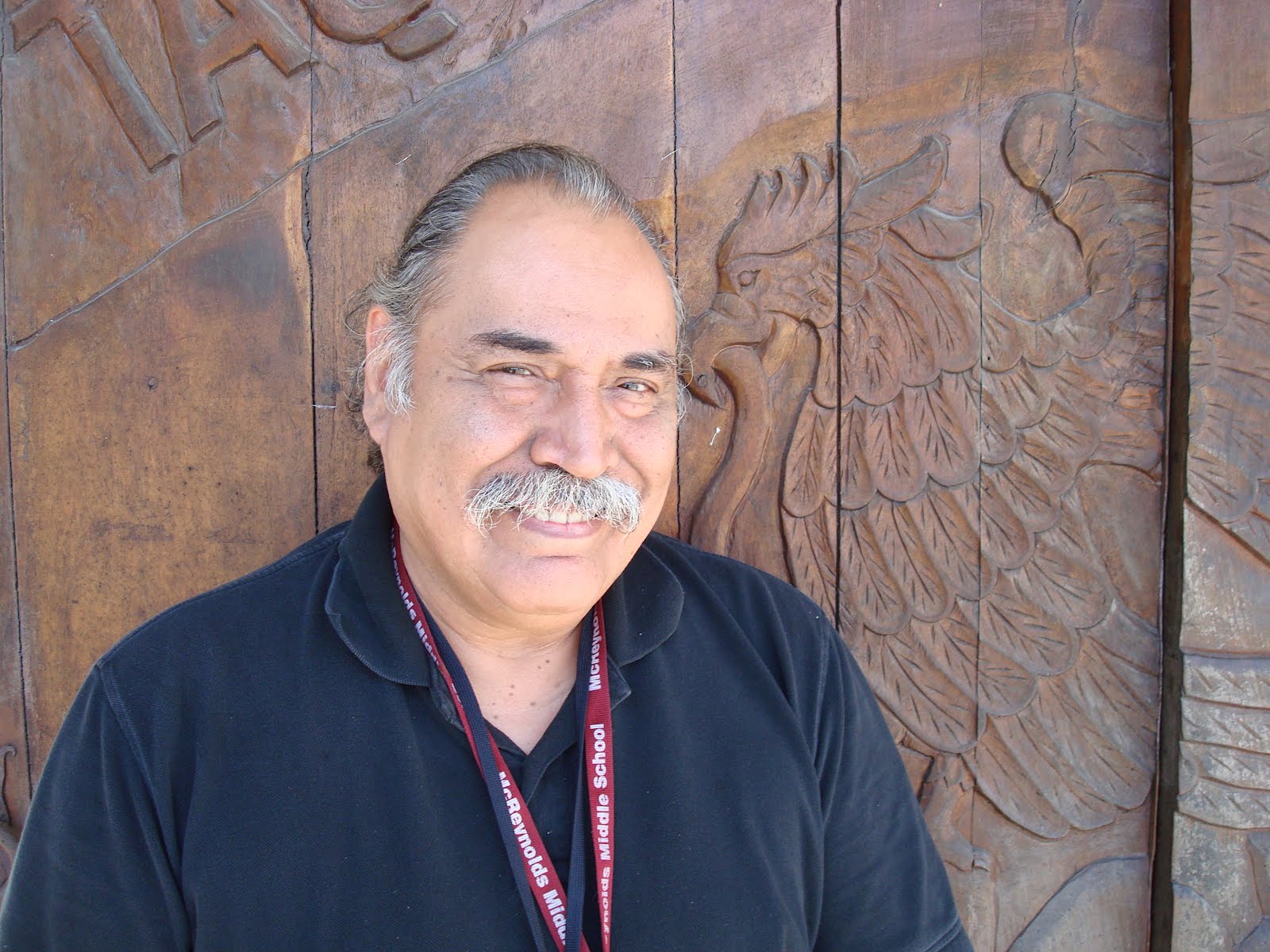
Carlos Calbillo, an award-winning filmmaker and longtime Houston Chicano community activist, was Thorne Dreyer’s guest on Rag Radio, Friday, March 30, 2012, on Austin community radio station KOOP 91-7-FM, and streamed live on the Internet.

You can listen to the show here.


Carlos Calbillo was active with SDS and the Mexican-American Youth Organization (MAYO) in Texas in the ’60s and ’70s, and edited the Houston Chicano newspaper, El Papel.

He has worked in film and television and has produced numerous short films on subjects ranging from community activism to musical documentaries on Texas and Chicano/Latino musicians, including Doug Sahm, Freddy Fender, Mance Lipscomb, Little Joe y La Familia, and ZZ Top. His film, The Case of Joe Campos Torres, documented one of the most infamous cases of police misconduct in Houston history.

Carlos is the Artist-in-Education at the Southwest Alternate Media Project in Houston, and teaches filmmaking at the Raul Yzaguirre School for Success in Houston’s East End.

In addition to covering Carlos Calbillo’s work as an activist and filmmaker — and the underrecognized legacy of Chicano activism in Houston, Texas, and the Southwest — we discuss the new Tejano Monument on the Texas Capitol grounds and the role of Tejanos in Texas history.

Rag Radio, which has aired since September 2009 on KOOP 91.7-FM, a cooperatively-run all-volunteer community radio station in Austin, Texas, features hour-long in-depth interviews and discussion about issues of progressive politics, culture, and history.

Hosted and produced by Rag Blog editor and long-time alternative journalist Thorne Dreyer, a pioneer of the Sixties underground press movement, Rag Radio is broadcast every Friday from 2-3 p.m. (CST) on KOOP and streamed live on the web. Rag Radio is also rebroadcast on Sundays at 10 a.m. (EST) on WFTE, 90.3-FM in Mt. Cobb, PA, and 105.7-FM in Scranton, PA.

Rag Radio is produced in the KOOP studios, in association with The Rag Blog, a progressive internet newsmagazine, and the New Journalism Project, a Texas 501(c)(3) nonprofit corporation. Tracey Schulz is the show’s engineer and co-producer.

After broadcast, all episodes are posted as podcasts and can be downloaded at the Internet Archive.

Coming up on Rag Radio:

THIS FRIDAY, April 6, 2012: Progressive populist writer, commentator & orator Jim Hightower.
April 13, 2012: Sustainability activist Bill Neiman of Native American Seeds.

The Rag Blog

Posted in RagBlog | Tagged , , , , , | Leave a comment

BOOKS / Robert Jensen : Prophets of the Fourth Estate


The corporate media crisis:
Everything old is new again

By Robert Jensen | The Rag Blog | April 4, 2012

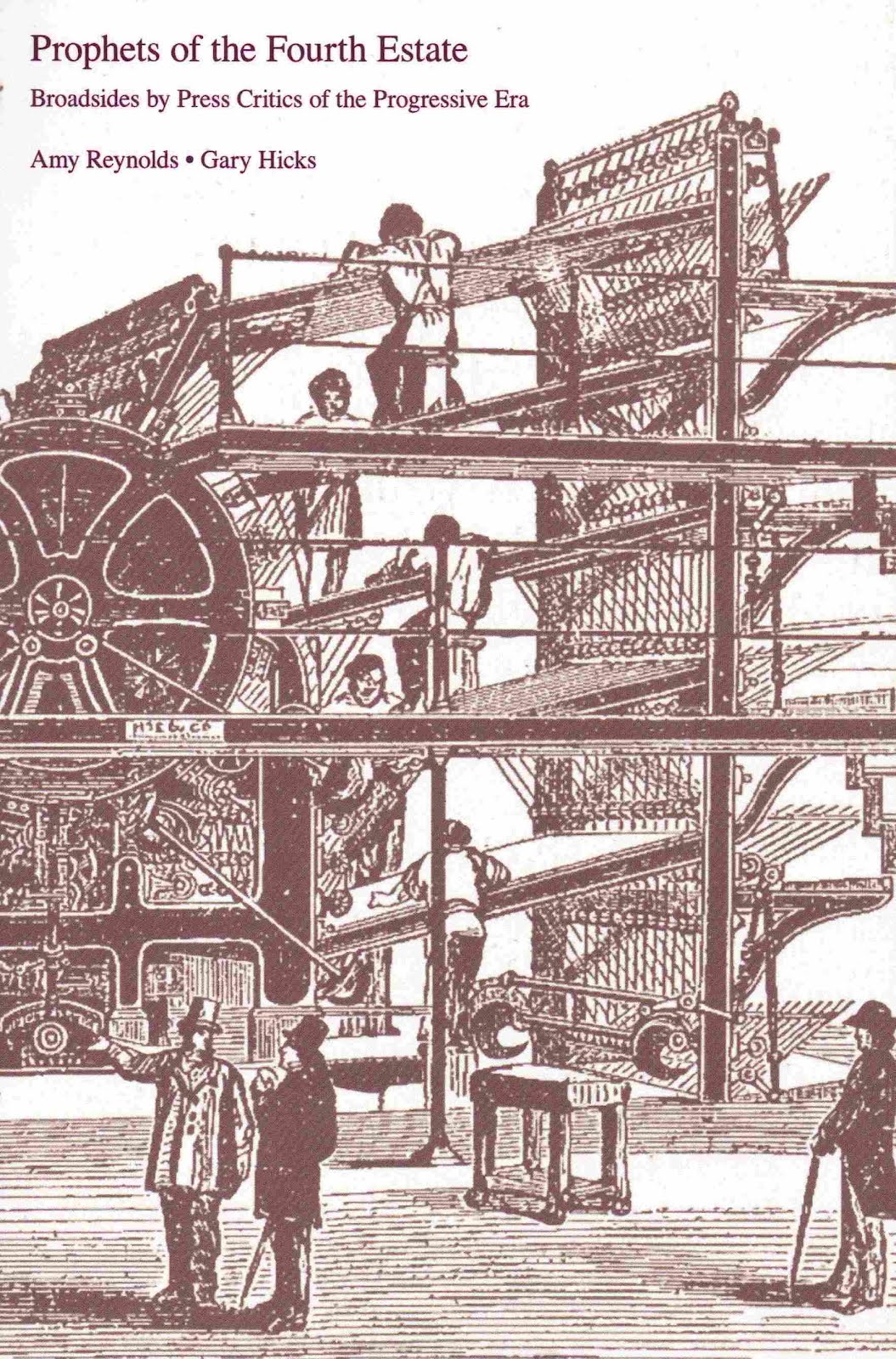
[Prophets of the Fourth Estate: Broadsides by Press Critics of the Progressive Era, edited by Amy Reynolds and Gary Hicks; Foreword by Robert Jensen (2012: Litwin Books); Paperback; 218 pp.; $28.]

These days there’s one political point on which one can usually get consensus: Mainstream journalists are failing. In common parlance, most everyone “hates the media.” But there is little agreement on why journalism might be inadequate to the task of engaging the public in a democratic society. More than ever, it’s important to understand the forces that constrain good journalism.

In Prophets of the Fourth Estate: Broadsides by Press Critics of the Progressive Era, editors Amy Reynolds and Gary Hicks look back to the press criticism of the Progressive Era for help in that project. In the material they’ve collected and analyzed, we can see how the problems of a corporate-commercial media system go back more than a century.

In my foreword to the book, posted below, I try to identify some of the key limitations of the contemporary media system and emphasize the importance of this work to the project of deepening democracy.

The managers of commercial news organizations in the United States love to proclaim their independence from the corporate suits who sign their paychecks. Extolling the unbreachable “firewall” between the journalistic and the business sides of the operation, these editors and news directors wax eloquent about their ability to pursue any story without interference from the corporate front office.

“No one from corporate headquarters has ever called me to tell me what to run in my paper,” one editor (let’s call him Joe) told me proudly after hearing my critique of the overwhelmingly commercial news media system in the United States.

I asked Joe if it were possible that he simply had internalized the value system of the folks who run the corporation (and, by extension, the folks who run the world), and therefore they never needed to give him direct instructions.

He rejected that, reasserting his independence from any force outside his newsroom. I countered:

“Let’s say, for the purposes of discussion, that you and I were equally capable journalists in terms of professional skills, and we were both reasonable candidates for the job of editor-in-chief that you hold. If we had both applied for the job, do you think your corporate bosses would have ever considered me for the position given my politics? Would I, for even a second, have been seen by them to be a viable candidate for the job?”

Joe’s politics are pretty conventional, well within the range of mainstream Republicans and Democrats — he supports big business and U.S. supremacy in global politics and economics. In other words, he’s a capitalist and imperialist. I am on the political left, anti-capitalist and critical of the U.S. empire. On some political issues, Joe and I would agree, but we diverge sharply on the core questions of the nature of the economy and foreign policy.

Joe pondered my question and conceded that I was right, that his bosses would never hire someone with my politics, no matter how qualified, to run one of their newspapers. The conversation trailed off, and we parted without resolving our differences.

I would like to think my critique at least got Joe to question his platitudes, but I never saw any evidence of that. In his subsequent writing and public comments that I read and heard, Joe continued to assert that a news media system dominated by for-profit corporations was the best way to produce the critical, independent journalism that citizens in a democracy needed.

After he retired from the paper, he signed on as a “senior adviser” with a high-powered lobbying/public relations firm, apparently without a sense of irony, or shame.

The collapse of mainstream journalism’s business model has given news managers less time to pontificate as they scramble to figure out how to stay afloat, but the smug, self-satisfied attitude hasn’t changed much.

As a former journalist, I certainly understood Joe’s position. When I was a working reporter and editor, I would have asserted my journalistic independence in similar fashion, a viewpoint that reflected the dominant assumptions of newsroom culture.

We saw ourselves as non-ideological and uncontrolled. We knew there were owners and bosses whose political views clearly were not radical, and we knew we worked in a larger ideological system. But we working journalists were convinced that we were not constrained.

It was not until I got some critical distance from the daily grind of journalism that I learned there were compelling analyses of the news media that questioned those assumptions I had taken for granted. That media criticism, which had taken off in the 1970s on the heels of the progressive and radical social movements of the ‘60s, was a rich source of new insights for me, first as a graduate student and later as a professor.

But that was only part of my education about the political economy of journalism. As is so often the case, I needed to look to the past to better understand the present. While I had immersed myself in contemporary criticism, I had been slow to look at history, and turning to the critiques of journalism from the progressive/populist era of the early 20th century proved fruitful.

Early critics of the commercial news media were pointing out the ways that media owners’ interest in profit undermined journalists’ desire to serve the public interest. Owners and managers are interested in news that serves the bottom line, while journalists are supposed to be pursuing news that serves democracy.

The writings collected and analyzed in this volume provide that historical context. This material is important for the ways it reminds us of a simple truth: An overwhelmingly commercial, for-profit media system based on advertising will never adequately serve citizens in a democracy.

But while history helps us recognize simple truths, it does not lead to simplistic predictions — we study history not only to identify the continuities, but also to help us understand the effects of the inevitable changes in institutions and systems.

Indeed, news media and society as a whole have changed over the century. Most obvious are the recent economic changes that have undermined the business model of commercial media. Newspapers and broadcast television stations were wildly profitable through the 20th century, which subsidized an annoying cockiness on the part of owners, managers, and working journalists.

Competition from digital media has wiped that smug smile off the face of mainstream journalism, leaving everyone scrambling to come up with a new model. But to focus only on the recent economic crisis would be to miss other trends in the past century that are at least as important.

Reporters who were once members of the working class have become quasi-professionals, and that professionalization of journalism has had effects both positive (elevating ethical standards) and negative (institutionalizing illusory claims to neutrality).

Too often journalists in the second half of the 20th century acted as part of the power structure rather than critics of it, as reporters and editors increasingly identified with the powerful people and institutions they were covering rather than being true adversaries.

In the 21st century, the idea of professional journalism — whatever its problems and limitations — is under assault from a pseudo-journalism driven by right-wing ideology. The assertion that the problem with media is that they are too liberal is attractive to many ordinary people who feel alienated from a centrist/liberal elite, which appears unconcerned with their plight. But the right-wing populism offered up by conservatives obscures the way in which elites from that perspective are equally unconcerned with the struggles of most citizens.

So, we sit at a strange time: Professional journalism is inadequate because of its ideological narrowness and subordination to power, but the attacks on professional journalism typically are ideologically even narrower and are rooted in a misguided analysis of power.

Some of us are tempted to applaud the erosion of the model of professional journalism we find inadequate for democracy, but a more politicized model for journalism likely will follow the right-wing propaganda that has dominated in the United States in recent decades.

Does history offer insights as we struggle to create a more democratic news media? My reading of the past century leaves me focused on two points.

First, we have to be clear about what we mean by “democracy.” The elites in the United States prefer a managerial conception of democracy based on the idea that in a complex society, ordinary people can participate most effectively by choosing between competing groups of political managers.

A participatory conception understands democracy as a system in which ordinary people have meaningful ways to participate in the formation of public policy, not just in the selection of elites to rule them.

Second, we must recognize that expansions of individual freedom do not automatically translate into a deepening of democracy. Though legal guarantees of freedom of expression and political association are more developed today, there is less vibrant grassroots political organizing compared with the United States of the late 19th and early 20th centuries.

In other writing I have referred to this as the “more freedom/ less democracy” paradox, and it is central to understanding the perilous political situation we face. (See Citizens of the Empire: The Struggle to Claim Our Humanity [San Francisco: City Lights Books, 2004], Chapter 4, “More Freedom, Less Democracy: American Political Culture in the Twentieth Century,” pp. 55–76.)

The lesson I take away: Real democracy means real participation, which comes not from voting in elections or posting on blogs, but from a lifelong commitment to challenging power from the bottom up.

The problem, in short, is not just a media that doesn’t serve democracy, but a political, economic, and social system that doesn’t serve democracy. Paradoxically, radical movements have over the past century won an expansion of freedom, but much of the citizenry has become less progressive and less politically active at the grassroots.

Concentrated wealth has adapted, becoming more sophisticated in its use of propaganda and skillful in its manipulation of the political process.

Journalism’s claim to a special role in democracy is based on an assertion of independence. The corporate/commercial model puts limits on journalists’ ability to follow crucial stories and critique systems and structures of power. Flinging the doors open to a more ideological journalism in a society dominated by well-funded right-wing forces will not create the space for truly independent journalism that challenges power.

The simple truth is that a more democratic media requires a more democratic culture and economy. The media critics in this volume articulated that idea in the context of their time. We need to continue that tradition.

[Robert Jensen is a journalism professor at the University of Texas at Austin, where he teaches courses in media law, ethics, and politics — and a board member of the Third Coast Activist Resource Center in Austin. His books include All My Bones Shake: Seeking a Progressive Path to the Prophetic Voice, and Getting Off: Pornography and the End of Masculinity. His writing is published extensively in mainstream and alternative media. This article was first published at Truthout. Robert Jensen can be reached at rjensen@uts.cc.utexas.edu. Read more articles by Robert Jensen on The Rag Blog.]

The Rag Blog

Posted in Rag Bloggers | Tagged , , , , , , | Leave a comment

Van Jones : What Went Wrong in the Age of Obama

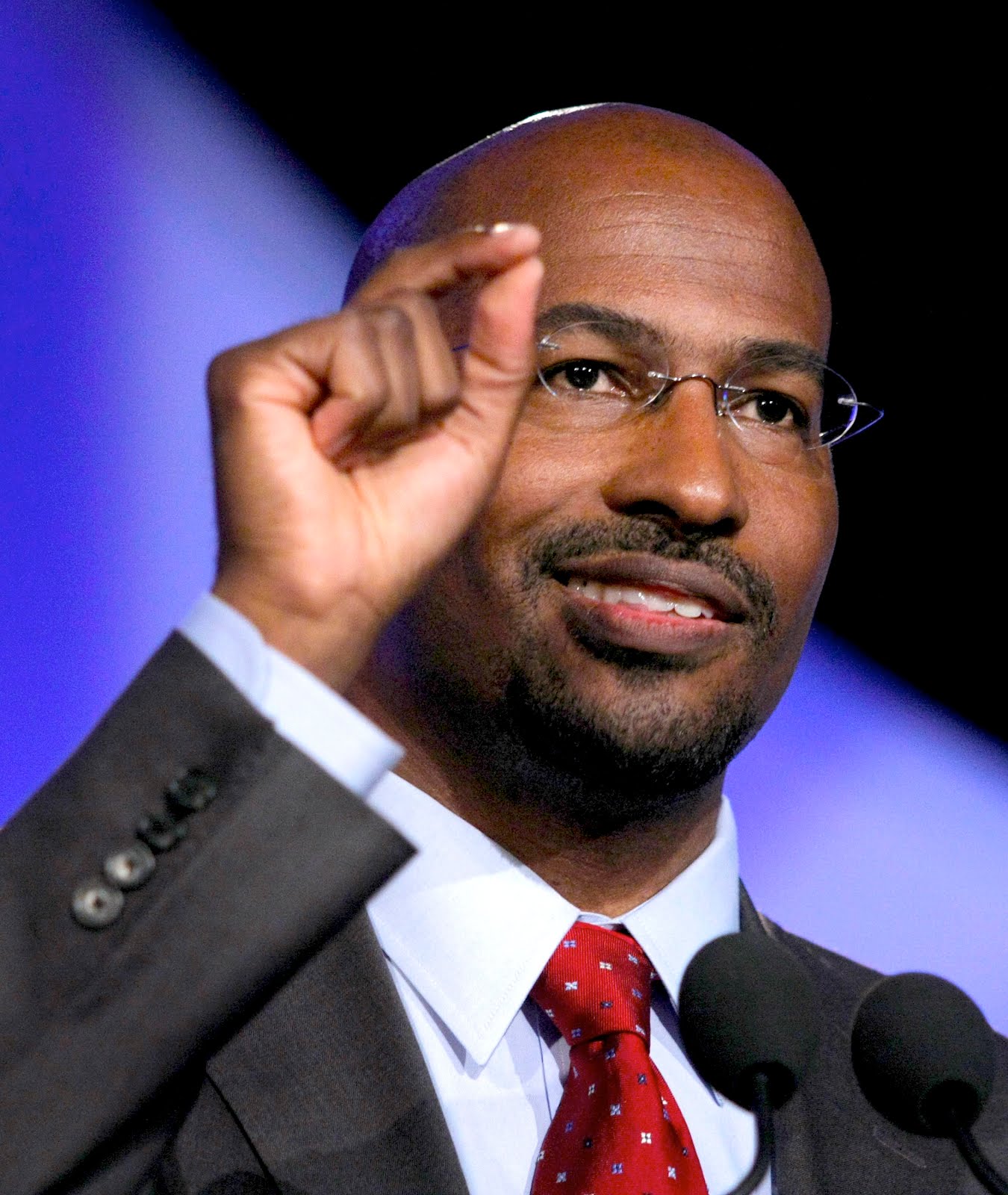
Van Jones. Photo by Bill Pugliano / Getty Images.

The Age of Obama:
What went wrong (and how to fix it)

By Van Jones / Progressive America Rising / April 3, 2012

[This article is adapted from Van Jones’ new book, Rebuild the Dream.]

The 2008 campaign was a campfire around which millions gathered. But after the election, it was nobody’s job or role to tend that campfire. The White House was focused on the minutiae of passing legislation, not on the magic of leading a movement. Obama For America did the best that it could, but the mass gatherings, the idealism, the expanded notions of American identity, the growing sense of a new national community, all of that disappeared.

It goes without saying that clear thinking and imaginative problem solving are easier in hindsight, away from the battlefield. I was in the White House for six months of 2009, and I was outside of it afterward. I had some of the above insights at the time, but many did not come to me in the middle of the drama and action. Most are the product of deeper reflection, which I was able to do only from a distance.

Nonetheless, the exercise of trying to sort out what might have been and trying to understand why nobody was able to make those things happen in real time has informed this book and shaped my arguments going forward.

I say Obama relied on the people too little, and we tried to rely on him too much.

Let me speak personally: looking back, I do not think those of us who believed in the agenda of change had to get beaten as badly as we were, after Obama was sworn in. We did not have to leave millions of once-inspired people feeling lost, deceived, and abandoned. We did not have to let our movement die down to the level that it did.

The simple truth is this: we overestimated our achievement in 2008, and we underestimated our opponents in 2009.

We did not lose because the backlashers got so loud. We lost because the rest of us got so quiet. Too many of us treated Obama’s inauguration as some kind of finish line, when we should have seen it as just the starting line. Too many of us sat down at the very moment when we should have stood up.

Among those who stayed active, too many of us (myself included) were in the suites when we should have been in the streets. Many “repositioned” our grassroots organizations to be “at the table” in order to “work with the administration.” Some of us (like me) took roles in the government. For a while at least, many were so enthralled with the idea of being a part of history that we forgot the courage, sacrifices, and risks that are sometimes required to make history.

That is hard, scary, and thankless work. It requires a willingness to walk with a White House when possible — and to walk boldly ahead of that same White House, when necessary. A few leaders were willing to play that role from the very beginning, but many more were not. Too many activists reverted to acting like either die-hard or disappointed fans of the president, not fighters for the people.

The conventional wisdom is that Obama went too far to the left to accommodate his liberal base. In my view, the liberal base went too far to the center to accommodate Obama. The conventional wisdom says that Obama relied on Congress too much. I say Obama relied on the people too little, and we tried to rely on him too much.

Once it became obvious that he was committed to bipartisanship at all costs, even if it meant chasing an opposition party that was moving further to the right every day, progressives needed to reassess our strategies, defend our own interests, and go our own way. It took us way too long to internalize this lesson — and act upon it.

The independent movement for hope and change, which had been growing since 2003, was a goose that was laying golden eggs. But the bird could not be bossed. Caging it killed it. It died around conference tables in Washington, D.C., long before the Tea Party got big enough to kick its carcass down the street.

The administration was naïve and hubristic enough to try to absorb and even direct the popular movement that had helped to elect the president. That was part of the problem. But the main problem was that the movement itself was naïve and enamored enough that it wanted to be absorbed and directed. Instead of marching on Washington, many of us longed to get marching orders from Washington. We so much wanted to be a part of something beautiful that we forgot how ugly and difficult political change can be.

Somewhere along the line, a bottom-up, largely decentralized phenomenon found itself trying to function as a subcomponent of a national party apparatus. Despite the best intentions of practically everyone involved, the whole process wound up sucking the soul out of the movement.

As a result, when the backlash came, the hope-and-changers had no independent ground on which to stand and fight back. Grassroots activists had little independent ability to challenge the White House when it was wrong and, therefore, a dwindling capacity to defend it when it was right.

We need a president who is willing to be pushed into doing the right thing, and we need independent leaders and movements that are willing to do the pushing.

The Obama administration had the wrong theory of the movement, and the movement had the wrong theory of the presidency. In America, change comes when we have two kinds of leaders, not just one. We need a president who is willing to be pushed into doing the right thing, and we need independent leaders and movements that are willing to do the pushing. For a few years, Obama’s supporters expected the president to act like a movement leader, rather than a head of state.

The confusion was understandable: As a candidate, Obama performed many of the functions of a movement leader. He gave inspiring speeches, held massive rallies, and stirred our hearts. But when he became president, he could no longer play that role.

The expectation that he would or could arose from a fundamental misreading of U.S. history. After all, as head of state, President Lyndon Johnson did not lead the civil rights movement. That was the job of independent movement leaders, such as Martin Luther King Jr., Ella Baker, Bayard Rustin, and Fannie Lou Hamer.

There were moments of conflict and cooperation between Johnson and leaders in the freedom struggle, but the alchemy of political power and people power is what resulted in the Civil Rights Acts of 1964 and the Voting Rights Act of 1965.

As head of state, Franklin Delano Roosevelt did not lead the labor movement. That was the job of independent union leaders. Again, the alchemy of political power and people power resulted in the New Deal.

As head of state, Woodrow Wilson did not lead the fight to enfranchise women. That was the role of independent movement leaders, such as suffragettes Susan B. Anthony and Ida B. Wells. The alchemy of political power and people power resulted in women’s right to vote.

As head of state, Abraham Lincoln did not lead the abolitionists. That was the job of independent movement leaders Frederick Douglass, John Brown, and Harriet Tubman. The alchemy of political power and people power resulted in the emancipation of enslaved Africans.

As head of state, Richard Nixon did not lead the environmental movement. That was the job of various environmental organizations, such as the Sierra Club, and other leaders, like those whom writer Rachel Carson inspired. Once again it was the alchemy of political power and people power that resulted in the Clean Air Act, the Clean Water Act, and the Environmental Protection Agency

The biggest reason for our frustrations and failures is that we have not yet understood that both of these are necessary — and they are distinct. We already have our head of state who arguably is willing to be pushed. We do not yet have a strong enough independent movement to do the pushing. The bulk of this book makes the case for how and why we should build one.

[Van Jones, a former adviser to President Obama and a former contributing editor to YES! Magazine, is the co-founder of Rebuild the Dream, a platform for bottom-up, people-powered innovations to help fix the U.S. economy. He is also the co-founder of the Ella Baker Center for Human Rights, Color of Change, and Green for All. This article was adapted by Jones for YES! Magazine, a national, nonprofit media organization that fuses powerful ideas with practical actions, from his new book, Rebuild the Dream. It was first published at YES! Magazine and was also published at and distributed by Progressive America Rising.]

The Rag Blog

Posted in RagBlog | Tagged , , , | Leave a comment

BOOKS / Ron Jacobs : Papa Had a Brand New Bag


Papa had a brand new bag:
James Brown was ‘The One’

By Ron Jacobs | The Rag Blog | April 3, 2012

[The One: The Life and Music of James Brown, by RJ Smith (2012: Gotham); Hardcover; 464 pp.; $27.50l.]

When I was in junior high back in 1967-68, many of my Saturday afternoons were spent at the outdoor basketball courts across the highway from my house. These courts were where I learned about many things besides basketball, which I was never very good at.

Sex, beer, and music were the three favorite subjects of conversation. By music, I mean everything from the Beatles to Led Zeppelin, Joe Tex to James Brown.

The blacktop courts were midway between the lily-white suburban development I lived in and the so-called “colored” section of town. That asphalt served as a neutral zone for anyone who wanted to play ball.

Like I said before, I was never very good at basketball (or any other sport for that matter) but was appreciated for my smart ass banter and musical knowledge. These were the days before iPods or even boom boxes. Hell, 8-tracks had barely made an impression on our youthful culture back then. The only source of music that was portable was the transistor radio.

In the Baltimore-Washington, D.C.area, there were three or four stations that played the songs people were listening too. WPGC-FM and WCAO-AM played the Top 40 hits of the day while WOOK and WUST played soul and R&B. While radio was not as divided into niche markets then as it is today, the fact is that the very few performers were heard on both stations. For example, Led Zeppelin and the Beatles were never heard on the soul stations, while Bobby Blue Bland and Joe Tex were rarely heard on the Top 40 stations.

There was one man, however, who was heard quite often on both formats back then. His name was James Brown. We would choose our teams and play pickup game after pickup game. Since there were usually more than 10 kids hanging around, the odd guys out chose the music (unless we were convinced otherwise).

Whenever the current hit by Brown came on the brothers would start vamping. Doing the slide step as they neared a basket or attempting a split at mid court. Then they would tell us lighter skinned guys to not even try. We knew we couldn’t dance like Mr. Brown. That particular period of time was when James Brown truly was the King of Soul, when he really was The One.

This was also a period when racism had very few shadows to hide it. Black men were subject to whatever wrath a white man felt like imposing on him. Black men with money and power like James Brown felt that wrath perhaps less often but in greater measure when they did feel it.

When he released his single “Say It Loud (I’m Black and I’m Proud)”, Brown was making it clear: he didn’t really give a shit about racists keeping him from his music, money, and people. Never much of a militant, James Brown was always proud, even as a street urchin cum hustler in Augusta, GA.

A new biography of Brown, titled The One: The Life and Music of James Brown, places that pride in the context of the black freedom struggle in the United States. It opens with the story of the 1739 Stono Rebellion in colonial Georgia that saw slaves killing slave owners and increasing their ranks as they marched through the area just south of Charleston, S.C. beating their drums, singing and dancing in rebellion. Forty slaves and 20 whites were killed during that rebellion and never again did Georgia legally import slaves from the African continent.

With the story of the slave rebellion as his jumping-off point, biographer RJ Smith writes a tale that evokes Mr. Brown’s insistence on freedom, his pride, innate musicality, and the high-energy life that helped earn him the title of the hardest working man in show business.

Smith gives the reader a fantastic story: from Brown’s roots in Augusta, where he entertained soldiers on weekend passes with his dancing while hustling them down to the brothel where he lived with his aunt, to his casket’s tour of three cities after Brown’s death in 2006. The text details the complexities of a man who, with this bandmates, created a signature musical style that many have used as inspiration but none have successfully duplicated.

It also traces the political journey of a black man in the United States during a time when the world of Black America underwent a sea change. Never a militant, but always an individual proud of his racial and personal identity, Brown’s politics included Martin Luther King and Richard Nixon; Elijah Muhammad and Strom Thurmond.

His support for Nixon’s 1972 campaign led to a boycott attempt by several African-American organizations and individuals that had some success. Smith relates a tale of 10,000-seat arenas with less than 2,000 concertgoers. When I thought about seeing a concert of his in Frankfurt, Germany, in 1972, my African-American comrades convinced me not to go because of Brown’s support of Nixon (it didn’t take much — I hated Nixon). They passed out leaflets in the parking lot discouraging attendance. At the same time, Brown’s singles were still being played on the radio and still selling.

At a recent anti-racism rally in Burlington, VT. held in the wake of the murder of Trayvon Martin, a black teen talked about his struggle to maintain a positive self-identity in a culture that insists on labeling him and other black males in as negative of a light as possible.

I will paraphrase his statement here: I am going to be me. Part of that is saying “Hi” to my neighbors even if they won’t say”Hi” to me. Part of that is dating who I want. Part of that is being black. I am going to be me.

James Brown would have agreed with that young man. His political actions, his insistence on doing things his way musically and otherwise — all of these actions, writes Smith, stem from a combination of Brown’s ego, mistrust, and determination.

To hear Smith tell it, James Brown definitely did not come from comfortable beginnings. He movingly describes just how tough it was. Anything that came easy made Brown suspicious. This didn’t seem to change as he grew older and developed into one of the world’s best-known people — his fame in Africa rivaled that of boxer Muhammad Ali, while in the United States very few acts sold more records than Brown.

Never one to rest on his laurels, Brown gave hundreds of shows every year, went through wives and mistresses almost as quickly as he did towns and cities when he was on tour, and spent money quicker than he could count it. The magic of Smith’s writing is that Brown’s life is told in as captivating a manner as Brown lived it. This is a classic rags-to-riches Horatio Alger story, but with a twist: it’s Alger’s “Ragged Dick” as an African-American bootblack who rises above his station.

Smith, who is also the author of The Great Black Way: L.A. in the 1940s and the Last African American Renaissance, and a former music writer for the Village Voice and Spin magazine, has done a public service by writing this biography. His approach to the narrative does more than detail the life of James Brown. It captures the essence of a James Brown performance and manipulates that essence — its franticness, its passion, and its sheer jubilation — into a story about one of the world’s greatest musicians and performers ever.

In Smith’s telling, it becomes clear that James Brown’s myth was not only larger than life, so was James Brown himself.

[Rag Blog contributor Ron Jacobs is the author of The Way The Wind Blew: A History of the Weather Underground. He recently released a collection of essays and musings titled Tripping Through the American Night. His latest novel, The Co-Conspirator’s Tale, is published by Fomite. His first novel, Short Order Frame Up, is published by Mainstay Press. Ron Jacobs can be reached at ronj1955@gmail.com. Find more articles by Ron Jacobs on The Rag Blog.]

The Rag Blog

Posted in Rag Bloggers | Tagged , , , , , , | Leave a comment

Ted McLaughlin : The GOP’s Biggest Mistake

Mike Luckovich political cartoon from The Friends of Jake.

GOP’s biggest mistake:
The anti-woman agenda

By Ted McLaughlin | The Rag Blog | April 3, 2012

I can understand some of the actions of Republicans, even though I vociferously disagree with them. I understand the racist policies of the party. They probably weren’t going to get very many African-American or Hispanic votes anyway, and those policies play well to their base of white male voters (many of whom still harbor racist fantasies).

In fact, to my great shame as a white male, the Republicans can probably count on a significant majority of the white male vote.

And that is probably where things will still stand when the general election comes around in November. The Republicans will get a majority of the white male vote, and the Democrats will get an even larger share of the minority vote — and the two groups will virtually cancel each other out. But there is another voting group that is even larger than white males or minorities — the women of America.

And if the Republicans want to have a chance of winning in November, they must split the women’s vote with the Democrats. If they can get around 50% of the women’s vote, they stand a very good chance of winning (both the White House and Congress). This is no secret. Anyone with even a rudimentary knowledge of American politics can easily figure this out. That’s why it’s so difficult to understand the recent actions of elected Republican officials (both on the state and federal level).

In recent years, the Republicans have pushed an anti-woman agenda. They have opposed equal pay for women in the workplace. They have pushed a religious agenda that says women should be subordinate to men. And they have opposed the right of women to have control over their own bodies. This has resulted in a small majority of women supporting the Democratic Party, but it has not been a big enough majority to deny Republicans a chance of winning.

But recently the Republicans have doubled-down on their anti-woman actions. They have opposed the extension of the Violence Against Women Act, which protects women against domestic violence. They claim their opposition is due to the law being widened to include domestic violence among same-sex couples and among undocumented immigrants. Even if that is true (and their position ideologically pure), the opposition will do nothing except increase the incidence of domestic violence against women.

They have also made it their party’s position to oppose the free and easy access to contraception for all American women. They have tried to cloak this opposition to contraceptive access as a religious argument. It is not. It is just one more attempt to keep women in a second-class status in this country — barefoot and pregnant and in the kitchen.

There is no doubt that easy access to contraception has been one of the most important developments in women’s fight for equality in the United States — second only to women securing the right to vote. It has given women the ability to have control over their entire lives, and the ability to plan how those lives will unfold. And women know this. Between 95% and 99% of all American women are either using, or have used, contraception (regardless of their religious affiliation).

All the Republicans have done with these new attacks on women is to emphasize their opposition to the equality of women in this society. It is, in effect, a “war on women.” And more women than ever are beginning to realize this.

A new Pew Research Center survey shows that women are abandoning the Republican Party in droves. In the 2008 election, Barack Obama got 56% of the women’s vote (about a 12% gap between Obama and McCain). That was significant, and helped the president to roll to an easy victory. But he could easily do much better among women this year. Look at the current numbers for women voters:

Obama……………58%
Romney……………38%

That’s a 20% gap for the president.

Obama……………61%
Santorum……………35%

That’s a 26% gap for the president.

And it’s not just the president who is benefiting from the anti-woman attitude of the GOP. The Democratic Party is doing well also. About 52% of women now identify themselves as Democrats (or leaning Democratic), while only 43% say they are Republicans (or lean toward Republicans). That’s a 9% gap and growing. The gap is larger among single women than married women, but Democrats lead among both groups. Here are those numbers:

Married Women

Democrat……………48%
Republican……………45%

Single Women

Democrat……………62%
Republican……………31%

The Republicans didn’t just shoot themselves in the foot with their recent anti-woman actions. They’ve filled both feet with bullet holes. Can they turn this around before election day? It’s very doubtful. It would require they abandon the positions they have taken, and that is something the right-wing ideologues running the party are loath to do. Even if they did, I doubt they could convince the women they’ve angered that their change was real (and not just to win an election).

The Republicans have made a serious mistake in waging their war on women. Maybe their biggest mistake ever.

[Ted McLaughlin also posts at jobsanger. Read more articles by Ted McLaughlin on The Rag Blog.]

The Rag Blog

Posted in Rag Bloggers | Tagged , , , , , | Leave a comment

The Rag Blog : ‘Old Skool’ Will Be in Session on April Fool’s Day

Famed Austin surrealist graphic artist Jim Franklin designed a special commemorative poster for the event.

‘Feed Your Head’ on April Fool’s Day:
Legendary Austin Bands at Rag Blog Bash

A Rag Blog Benefit Bash with
Shiva’s Headband, Greezy Wheels & Jesse Sublett
Jovita’s, 1619 S. First St., Austin
Sunday, April 1, 2012, 6-9 p.m.
$10 Suggested Donation

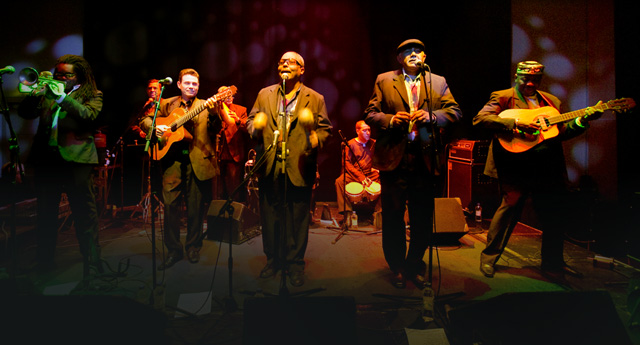
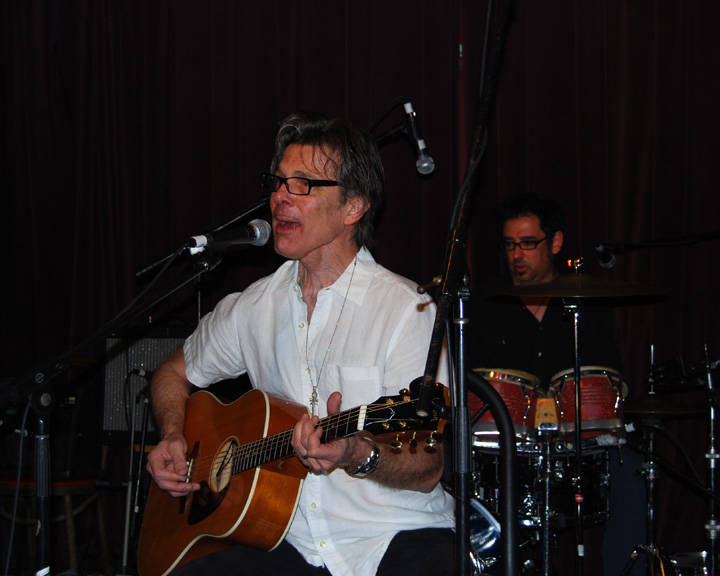
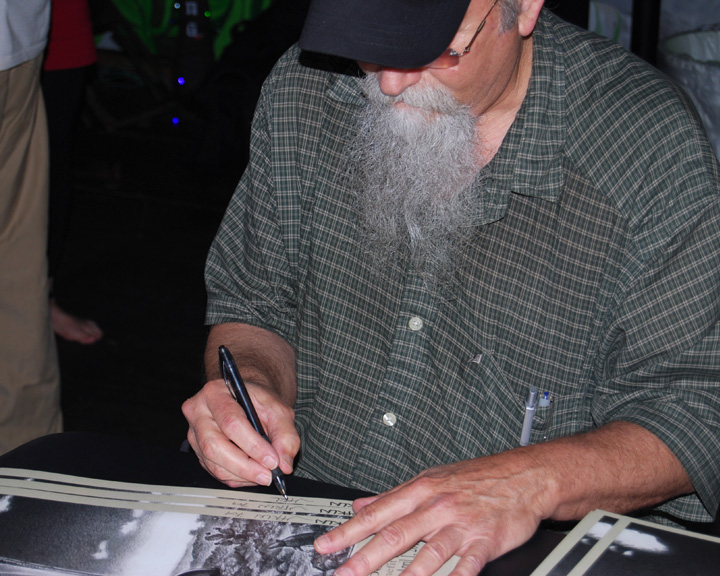
“Old Skool” will be in session on April Fool’s Day at Jovita’s in Austin, when The Rag Blog invites you to “Feed Your Head.” A big slice of Austin music and countercultural history will be on display at the event, which will feature performances by Shiva’s Headband, Greezy Wheels, and Jesse Sublett. Austin surrealist artist Jim Franklin will sign a commemorative poster he designed for the occasion.

The event, scheduled for 6-9 p.m., Sunday, April 1, at Jovita’s, 1619 S. First St. in Austin, will benefit The Rag Blog, an Austin-based progressive Internet news magazine published by the New Journalism Project, a Texas 501(c)(3) nonprofit corporation.

The Rag Blog traces its roots to Austin’s legendary underground newspaper, The Rag, which was published from 1966-1977. Also with ties to the original Rag is Rag Radio, a weekly public affairs program broadcast on Austin’s KOOP 91.7-FM and hosted by Rag Blog editor Thorne Dreyer.

The bands

Psychedelic rockers Shiva’s Headband, founded in 1967 by Spencer Perskin, a classically trained violinist, served as the house band at Austin’s Vulcan Gas Company, and was the first group to perform at Austin’s iconic Armadillo World Headquarters. The Shiva’s Headband album, Take Me to the Mountains, was the first nationally released album by an Austin rock band.

Pioneers of the “progressive country” movement in the 1970s, Greezy Wheels was for years the unofficial house band at the Armadillo. Guitarist and writer Cleve Hattersley and “fiddler extraordinaire” Mary Hattersley, led the group that, according to the Austin Chronicle’s Margaret Moser, “owned Austin” in the mid-70s.

Bassist Jesse Sublett — also an Austin-based mystery writer and visual artist — founded the legendary alt-punk band, The Skunks, which debuted at Austin’s Raul’s in 1978, and Sublett continued to be a mainstay on the Austin music scene.

Jim Franklin’s poster

Austin surrealist artist Jim Franklin has designed a limited edition poster which he will sign at the Rag Blog event. Franklin, as house artist at the Armadillo World Headquarters, helped turn the lowly armadillo into an internationally recognized symbol for the Texas counterculture. His artwork graced the landmark Shiva’s Headband album, Take Me to the Mountains, and his surrealist armadillos appeared on several covers of the original Rag.

Graphic designer James Retherford has designed a new Rag Blog t-shirt, which will also be unveiled at the Jovita’s event.

Proceeds from “Feed Your Head” benefit the New Journalism Project, the nonprofit corporation that publishes The Rag Blog. Suggested donation is $10. Jovita’s has a full bar and food menu. There is a Facebook event page for the Rag Blog benefit.

The Rag and The Rag Blog

The Rag Blog, founded in 2006 after a lively reunion of staffers from the original Rag, features commentary on news, politics, and cultural affairs. The Rag Blog, which has developed a worldwide following and has become an influential force in the progressive blogosphere, has received a million and a half unique visits in its short lifetime. Many of The Rag Blog‘s contributors are veterans of The Rag and of the Sixties underground press.

Rag Radio features hour-long in-depth interviews with newsmakers, artists, and leading thinkers from Austin and around the country, and its archived podcasts are creating a significant oral history library — much of it previously undocumented — that includes unique profiles from Austin’s countercultural history. Broadcast Fridays from 2-3 p.m. (CDT) on Austin’s KOOP 91.7-FM, a cooperatively run all-volunteer community radio station, Rag Radio also streams live to a widespread Internet audience, and is rebroadcast on Sundays at 10 a.m. (Eastern) by WFTE-FM in Mt. Cobb and Scranton, PA.

Rag Blog editor and Rag Radio host Thorne Dreyer was a pioneering Sixties underground journalist and New Left activist who was a founding editor of The Rag in Austin and Space City! in Houston. Dreyer was also an editor at Liberation News Service (LNS) in New York, was general manager of KPFT, Houston’s Pacifica radio station, and worked with the early Texas Monthly magazine.

Where it all started

The Rag, called “one of the few legendary undergrounds” by historian Laurence Leamer, first hit the streets in Austin on October 6, 1966. The Rag was one of the earliest of the Sixties underground papers, was the first underground paper in the South, and was a model for many papers that followed it.

According to author John McMillian, whose definitive work on the Sixties underground press, Smoking Typewriters, was published in 2011 by Oxford University Press, The Rag “was a spirited, quirky, and humorous paper, whose founders pushed the New Left’s political agenda even as they embraced the counterculture’s zeal for rock music, psychedelics, and personal liberation.” According to historian McMillian, the underground tabloid was regarded by the Austin community as “a beautiful and precious thing.”

Austin — and especially the University of Texas campus — played a major role in the development of the Sixties counterculture in the United States. Austin was a center for civil rights, anti-war, student power, and New Left activity, and was a major player in the early “psychedelic” music scene — incubating talents like Janis Joplin and the Thirteenth Floor Elevators — and in the underground comix and poster art movements — with Franklin’s armadillos and Gilbert Shelton’s “Fabulous Furry Freak Brothers” gaining iconic status.

The Rag Blog

Posted in RagBlog | Tagged , , , , , , , , | 1 Comment

Carl Davidson : Trayvon Martin, Newt Gingrich, and the ‘Race Card’

Demonstrators call for justice for Trayvon Martin. Image from AllVoices.

Tragedies, crimes, and Trayvon Martin:
How Newt Gingrich played the ‘race card’

By Carl Davidson | The Rag Blog | March 29, 2012

Every so often an outrage happens that lights up the sky, like when lighting strikes at night, and all of a sudden everything previously hidden in darkness and shadow stands out in sharp, bright relief.

The murder of Trayvon Martin was such an event, even though it took a while for the rolling thunder of its full impact to spread across the country. Slowly at first, and then in greater leaps, the news media, after being nudged, picked it up.

I have one quarrel with most of the reports and statements. This was not so much a tragedy as a crime. It was an old-fashioned lynching dressed up with modern-day “gun rights” being exercised in today’s gated communities.

But put that to the side. Most everyone now has dutifully called it a tragedy, called for an impartial investigation to “get to the bottom” of it and see that “justice is served.” Even President Obama finally spoke up, with the proper caveats against prejudging “current investigations,” but adding that if he had a son, he would look like Trayvon, a point he made to show empathy with the Martin family.

Then we have our former House Speaker and GOP presidential candidate, Newt Gingrich, who, after deploring the tragedy, came up with this attack on Obama in an interview with Sean Hannity:

“It’s not a question of who that young man looked like. Any young American of any ethnic background should be safe, period. We should all be horrified no matter what the ethnic background,” Gingrich said. “Is the President suggesting that if it had been a white who had been shot that would be OK because it didn’t look like him?”

“That’s just nonsense dividing this country up. It is a tragedy this young man was shot,” Gingrich continued on Hannity’s show.

“It would have been a tragedy if he had been Puerto Rican or Cuban or if he had been white or if he had been Asian-American of if he’d been a Native American. At some point we ought to talk about being Americans. When things go wrong to an American, it is sad for all Americans. Trying to turn it into a racial issue is fundamentally wrong. I really find it appalling.”

Newt, I have news for you. There’s something truly appalling here; in fact it stinks to high heaven. But it’s not Obama, and if you want to see the source of it, look in the mirror.

Gingrich fancies himself an historian, even something of an expert of the Civil War and its aftermath. He should then know something about lynching. If so, he would know that when the Reconstruction governments were overthrown, the KKK terror started in South Carolina by lynching nearly as many poor whites as Black Freedmen.

The aim was to deeply drive home the wedge of the original “Southern Strategy” aimed at dividing the working class in the South and elsewhere. But as lynching rolled on over the decades, tens of thousands of Blacks bore the brunt of it. Anti-lynching laws, also for decades, were promoted mainly by Blacks and a few radical allies, while white reactionaries blocked them.

There is nothing colorblind about lynching. It never ceases to amaze me when Republicans claim to be color-blind lovers of Dr. King, while being “appalled” at what they consider the main racists in high places, who are the African Americans supposedly “playing the race card.”

The trade union movement over the years has paid some high tuition to learn that mutual respect among nationalities is not rooted in being “blind” to each other’s distinctiveness. Solidarity with a white top and a Black bottom simply doesn’t get the job done.

But the race card is indeed being played against us. It’s been constantly played by those who would keep us under their thumbs, from Jamestown, Virginia, in 1619 up to a “gated community” in Stanford, Florida.

If you want to see it in action, for starters, watch Fox News or the GOP campaign any day of the week — then to oppose it, gather up some friends to attend a “Justice for Trayvon” rally and work to defeat every candidate and incumbent of the party of the Southern Strategy in November.

[Carl Davidson is a national co-chair of the Committees of Correspondence for Democracy and Socialism, a national board member of Solidarity Economy Network, a writer for Beaver County Blue, the website of PA’s 4th CD Progressive Democrats of America, and a member of Steelworkers Associates. He is the author of several books, including New Paths to Socialism, available online. In the 1960s, he was a national leader of SDS and a writer and editor for the Guardian newsweekly. This article was first published at the United Steelworkers’ blog. Read more articles by Carl Davidson on The Rag Blog.]

The Rag Blog

Posted in Rag Bloggers | Tagged , , , , | 4 Comments

From NYPD Spying to Trayvon Martin

Current Policing Makes Us Less Safe

By Jordan Flaherty

A version of this article was originally published on The Progressive: http://progressive.org/nypd_spy_victim_sounds_off.html

When I heard that my name was featured in a New York City Police Department report, I should have been outraged. I had followed revelations of NYPD spying, but it hadn’t occurred to me that they would come to New Orleans to watch me speak at a film festival.

However, I also knew that the NYPD, in their crusade under the guise of safety, had gone whitewater rafting with college students and aggressively monitored and infiltrated mosques and Muslim businesses. They operate in at least 9 foreign countries, so why shouldn’t they come to New Orleans, listen to me say a few words at a public event, and write a classified report about it?

Perhaps the only strange thing about the case is that I don’t fit their regular profile. As a white US citizen, I feel my case is a bit of an anomaly for a department that has developed a reputation for targeting immigrants and communities of color. My privilege has given me a certain amount of security and expectation of privacy that many others simply don’t experience.

Recent revelations about NYPD abuses go beyond spying. The notorious stop-and-frisk program, which has led to the criminalization of virtually an entire generation of young men of color in the city, is one example. The New York Civil Liberties Union reported that more than 4 million stops and interrogations from 2004 through 2011 led to no evidence of any wrongdoing — about 90% of all stops.

Other recent revelations about NYPD abuses have included arrest quotas, sexual assaults, and the harassment and arrest of an officer who had turned whistleblower. So my little brush with violation of privacy was just a small taste of what is possible from a police department that never met a boundary it didn’t want to cross.

The Occupy movement – now just over six months old – first captured mainstream attention when police were filmed pepperspraying young white women on a New York sidewalk. Subsequent instances of police violence, such as the wounding of former Marine Scott Olsen in Oakland, and the nonchalant pepperspraying of UC Davis students, brought more public outrage and attention. The response from many in the Black community has been, “welcome to our world.”

Step-by-step, we have seen any idea of privacy disappear – everything we do is the business of police. This has always been true for communities of color; now the scope has simply gotten wider. While law enforcement representatives defend the presence of officers filming at every protest around the country as harmless public safety measures, there is no doubt this has had a chilling effect on dissent.

It is not just in New York that there is a divide in how people see – and experience – police. The national outrage over the killing of Trayvon Martin shows that his death – and the continued freedom of his killer – has struck a nerve among Black communities nationwide.

Here in New Orleans, public outrage has been mounting over the abuses carried out by our own city’s police department. More than a dozen officers have faced charges for their involvement in the murder of unarmed civilians in the aftermath of HurricaneKatrina, most notoriously in the Danziger Bridge shootings. In that incident, two families fleeing the storm’s devastation were attacked under a hail of police gunfire that left four wounded and two dead, including Ronald Madison, a mentally challenged 40-year-old, and James Brissette, a sixteen-year-old who had been called nerdy and studious by friends. Most alarmingly, our local media, district attorney, and other systems of accountability mostly failed in their oversight – it was not until the US Justice Department became involved in 2009 that the officers faced charges. The next year, a Justice Department investigation of the NOPD found “reasonable cause to believe that patterns and practices of unconstitutional conduct and/or violations of federal law occurred in several areas.”

In the latest outrage, during the first week of March, two young Black men were killed by New Orleans police in separate incidents. One of the victims, Justin Sipp, was shot by officers during a traffic stop. The other youth, 20-year-old Wendell Allen, was shot in his own home by an officer executing a warrant. Allen was apparently unarmed and only partially dressed. Allen’s killer remains free, as does George Zimmerman, who killed Trayvon.

This week, it was revealed that one of the officers who killed Sipp recently wrote a racist rant about Trayvon Martin on a news website, saying the young man deserved to die, and is now “in hell.”

I am disappointed that the NYPD choose to make me a target – however peripheral – of their spying. But I am truly angered by the role that police play in communities of color, at the criminalization of young Black children wearing a hooded sweatshirts. These latest revelations have had the effect of renewing my commitment to fighting for a system that knows that true safety and security comes from providing justice, liberation, and human rights for all; not in the harsh and violent justice of law enforcement.

Jordan Flaherty is a journalist based in New Orleans, and the author of Floodlines: Community and Resistance From Katrina to the Jena Six.


Type rest of the post here

Source /

The Rag Blog

Posted in RagBlog | Leave a comment

Harry Targ : U.S. Imperialism and Our ‘Special Relationship’ With Iran

An artist’s take on U.S. imperialism. Cartoon from Iran Review.

Targets of U.S. imperialism
and the danger of war with Iran

Given the troubled history of U.S./Iranian relations spanning at least 60 years, the current threats of war expressed by both Israel and the United States are not surprising.

By Harry Targ | The Rag Blog | March 28, 2012

U.S. Imperialism in the beginning

Modern imperialism is intimately connected to the globalization of capitalism, the quest for enhanced military capabilities, geopolitical thinking, and ideologies of national and racial superiority.

The rise of the United States empire occurred as the industrial revolution spread to North America after the civil war. Farmers began to produce agricultural surpluses requiring overseas customers, factories were built to produce iron, steel, textiles, and food products, railroads were constructed to traverse the North American continent, and financiers created large banks, trusts, and holding companies to parley agricultural and manufacturing profits into huge concentrations of cash.

Perhaps the benchmark of the U.S. emergence as an imperial power was the Spanish/Cuban/American war. The U.S. established its hegemony in the Western Hemisphere, replacing the Spanish and challenging the British, and became an Asian power, crushing rebellion and planting its military in the Philippines. The empire has grown, despite resistance, to this day.

While U.S. expansion occurs wherever a vacuum of power exists, and an opportunity to formally or informally control a regime and/or territory, particular countries have had enduring salience for the U.S. Iran is such a country.

Scale of significance for U.S. imperialism

To help understand the attention U.S. policy-makers give some countries, it is possible to reflect on what is called here the Scale of Significance for U.S. Imperialism (SSUSI). The SSUSI has three interconnected dimensions that relate to the relative importance policymakers give to some countries compared to others.

First, as an original motivation for expansion, economic interests are primary. Historically, United States policy has been driven by the need to secure customers for U.S. products, outlets for manufacturing investment opportunities, opportunities for financial speculation, and vital natural resources.

Second, geopolitics and military hegemony matter. Empires require ready access to regions and trouble spots all around the world. When Teddy Roosevelt, as Assistant Secretary of the Navy, Vice President, and President of the United States, articulated the first warning of the need for global power he spoke of the development of a “two-ocean” navy.

The U.S., he said, must become an Atlantic and a Pacific power, thus prioritizing the projection of military power in the Western Hemisphere and Asia. If the achievement of global power was dependent upon resources drawn from everywhere, military and political hegemony in the Persian Gulf, the Middle East, and parts of Africa also required attention.

Third, as the imperial project grows, certain political regimes and cultures take on particular importance for policymakers and the American people. Foreign policy elites claim that the U.S. has a special responsibility for them. If these roles are rejected by the targeted country, the experience burns itself into the consciousness of the people.

For example, Cuba was seen by U.S. rulers as far back as Thomas Jefferson as soon to be part of the United States. Cuba’s rejection of this presumption of U.S. tutelage has been a scar on the U.S. sense of itself ever since the spread of revolutionary ferment on the island.

The danger of war with Iran today

Reflecting on the SSUSI adds to the discussion about current United States foreign policy toward Iran. The history of U.S./Iranian relations has been long and painful. Before the dramatic United States involvement in that country, Iran’s vital oil resource had been under control of the weakening British empire. In 1901 the Anglo-Iranian Oil Company (now British Petroleum) consolidated control of much of the production, refining, and export of Iranian oil. Local oligarchs received only 16 percent of the oil revenue from the global sale of the oil.

After World War II, with a young monarch Mohammad Reza Shah serving as the Iranian ruler and Iranian masses living in poverty, Iranian nationalists mobilized to seize control of their valuable resource. Upper class nationalist Mohammed Mossadegh became Prime Minister and asserted the power of the parliament over the monarchy. The parliament voted to nationalize the Anglo-Iranian Oil Company.

The British government enlisted the United States in 1953 to overthrow the Mossadegh regime using covert operations directed by the CIA. After Mossadegh was imprisoned and the Shah given full power to impose his will on an angry population, a new oil consortium agreement was established in 1954 which allowed five U.S. oil companies to gain a 40 percent share of Iranian oil. Anglo-Iranian would retain another 40 percent, and the rest would be given to rich Iranians.

Over the years, the Shah’s regime became the bulwark of U.S. power in the increasingly vital Persian Gulf region. In the Nixon period, Iran was defined as a key “gendarme” state, which would serve as a surrogate western police power to oversee the region. Presumably Iran would protect the flow of Gulf oil to the United States, Europe, and Japan. By the 1970s, the Shah’s military was the fifth largest in the world.

To the great surprise of left critics of the Shah’s dictatorship, the CIA, and the Carter administration, the Shah’s regime began to crumble in the summer of 1978 as large strikes were organized by oil workers against the regime. In January, 1979 secretly organized massive street protests led by the religious community doomed the regime.

As Iranian soldiers refused to fire upon street demonstrators, President Carter’s National Security Advisor, Zbigniew Brzezinski, urged the president to send troops to Iran to save the U.S. regional policeman, the Shah, from overthrow. That proposal was rejected by Carter.

After jockeying for power in the post-revolutionary period, religious leaders consolidated their power over the political system. To add embarrassment to loss of economic and geopolitical control over the vital Persian Gulf region, Iranian students took 52 U.S. diplomats and military attaches hostage and held them for 444 days.

In 1980 Carter authorized a military rescue effort that failed. The bungled military operation further damaged the image of infallibility that American foreign policy elites, and the public, held about the nation’s power and destiny.

In the 1980s, to challenge Iran’s potential for becoming the hegemonic power in the Gulf, the Reagan administration sided with Iraq in the brutal war between it and Iran. In 1988, shortly before the end of the Iraq/Iran war, U.S. planes shot down a civilian Iranian airliner killing 290 people aboard.

Subsequent to the ignoble history of U.S. support for the Shah’s dictatorship, militarization, the overthrow of Mossadegh, the embarrassment of the hostage taking, funding Iraq in the brutal Gulf war of the 1980s, the United States has maintained hostility to Iran despite occasional signals from the latter of a desire to establish better relations.

U.S. policy has included an economic embargo, efforts to create region-wide opposition to the regime, expressions of support for a large and justifiable internal movement for democracy and secularization in the country, and encouragement, more or less, for growing Israeli threats against Iran.

Given this troubled history of U.S./Iranian relations spanning at least 60 years, the current threats of war expressed by both Israel and the United States are not surprising.

Returning to SSUSI and Iranian relations

As an emerging global power, United States needs for natural resources, customers for consumer and military products, investment opportunities, and outlets for energy companies grew throughout the twentieth century. One of the significant historical junctures in the transfer of economic and geopolitical power in the world from the declining British empire and the rising U.S. empire was the agreement to redistribute control of Iranian oil in 1954. The Anglo-Iranian Oil Company was obliged to share Iranian oil with the then five U.S. oil giants.

As U.S. oil needs and those of its friends in Europe increased, control of the Persian Gulf region and access to its oil became more vital. Furthermore, since a hostile Iran could control the Strait of Hormuz, the Iranian revolution of 1979 posed an increasing geopolitical problem for American dominance.

The impulse in 1979 to send U.S. troops to save the Shah’s regime was driven by both economics and geopolitics. It was only because other Carter advisers disagreed with the National Security Advisor on the possibility of saving the Shah that a U.S. intervention stalled in 1979. But in 1980 an Iraq/Iran war provided an opportunity, it was hoped, to weaken Iran’s potential control of the region.

Finally, the U.S. decision-makers since 1953 saw a special relationship between this country and Iran. The U.S. put the Shah in power, plied him with enormous military power, encouraged and facilitated significant cultural exchanges, and defined his regime as a junior partner in policing the region.

The rapidity of the Shah’s overthrow and the anger expressed by the Iranian people about its historic relationship to the American people communicated to the world declining U.S. power. Consequently, U.S. hostility to Iran in subsequent decades using a variety of issues including processing uranium is not surprising.

[Harry Targ is a professor of political science at Purdue University who lives in West Lafayette, Indiana. He blogs at Diary of a Heartland Radical — and that’s also the name of his new book which can be found at Lulu.com. Read more of Harry Targ’s articles on The Rag Blog.]

The Rag Blog

Posted in Rag Bloggers | Tagged , , , , | Leave a comment

MEASURING TARGETS OF US IMPERIALISM: HISTORY, ECONOMICS, GEOPOLITICS, CULTURE AND IRAN

Measuring targets of U.S. imperialism:
History, economics, geopolitics, culture, and Iran

By Harry Targ | The Rag Blog | March 27, 2012

U.S. Imperialism in the Beginning

Modern imperialism is intimately connected to the globalization of capitalism, the quest for enhanced military capabilities, geopolitical thinking, and ideologies of national and racial superiority.

The rise of the United States empire occurred as the industrial revolution spread to North America after the civil war. Farmers began to produce agricultural surpluses requiring overseas customers, factories were built to produce iron, steel, textiles, and food products, railroads were constructed to traverse the North American continent, and financiers created large banks, trusts, and holding companies to parley agricultural and manufacturing profits into huge concentrations of cash.

Perhaps the benchmark of the U.S. emergence as an imperial power was the Spanish/Cuban/American war. The U.S. established its hegemony in the Western Hemisphere, replacing the Spanish and challenging the British, and became an Asian power, crushing rebellion and planting its military in the Philippines. The empire has grown, despite resistance, to this day.

While U.S. expansion occurs wherever a vacuum of power exists, and an opportunity to formally or informally control a regime and/or territory, particular countries have had enduring salience for the U.S. Iran is such a country.

Scale of significance for U.S. imperialism

To help understand the attention U.S. policy-makers give some countries, it is possible to reflect on what is called here the Scale of Significance for U.S. Imperialism (SSUSI). The SSUSI has three interconnected dimensions that relate to the relative importance policymakers give to some countries compared to others.

First, as an original motivation for expansion, economic interests are primary. Historically, United States policy has been driven by the need to secure customers for U.S. products, outlets for manufacturing investment opportunities, opportunities for financial speculation, and vital natural resources.

Second, geopolitics and military hegemony matter. Empires require ready access to regions and trouble spots all around the world. When Teddy Roosevelt, as Assistant Secretary of the Navy, Vice President, and President of the United States, articulated the first warning of the need for global power he spoke of the development of a “two-ocean” navy.

The U.S., he said, must become an Atlantic and a Pacific power, thus prioritizing the projection of military power in the Western Hemisphere and Asia. If the achievement of global power was dependent upon resources drawn from everywhere, military and political hegemony in the Persian Gulf, the Middle East, and parts of Africa also required attention.

Third, as the imperial project grows, certain political regimes and cultures take on particular importance for policymakers and the American people. Foreign policy elites claim that the U.S. has a special responsibility for them. If these roles are rejected by the targeted country, the experience burns itself into the consciousness of the people.

For example, Cuba was seen by U.S. rulers as far back as Thomas Jefferson as soon to be part of the United States. Cuba’s rejection of this presumption of U.S. tutelage has been a scar on the U.S. sense of itself ever since the spread of revolutionary ferment on the island.

The danger of war with Iran today

Reflecting on the SSUSI adds to the discussion about current United States foreign policy toward Iran. The history of U.S./Iranian relations has been long and painful. Before the dramatic United States involvement in that country, Iran’s vital oil resource had been under control of the weakening British empire. In 1901 the Anglo-Iranian Oil Company (now British Petroleum) consolidated control of much of the production, refining, and export of Iranian oil. Local oligarchs received only 16 percent of the oil revenue from the global sale of the oil.

After World War II, with a young monarch Mohammad Reza Shah serving as the Iranian ruler and Iranian masses living in poverty, Iranian nationalists mobilized to seize control of their valuable resource. Upper class nationalist Mohammed Mossadegh became Prime Minister and asserted the power of the parliament over the monarchy. The parliament voted to nationalize the Anglo-Iranian Oil Company.

The British government enlisted the United States in 1953 to overthrow the Mossadegh regime using covert operations directed by the CIA. After Mossadegh was imprisoned and the Shah given full power to impose his will on an angry population, a new oil consortium agreement was established in 1954 which allowed five U.S. oil companies to gain a 40 percent share of Iranian oil. Anglo-Iranian would retain another 40 percent, and the rest would be given to rich Iranians.

Over the years, the Shah’s regime became the bulwark of U.S. power in the increasingly vital Persian Gulf region. In the Nixon period, Iran was defined as a key “gendarme” state, which would serve as a surrogate western police power to oversee the region. Presumably Iran would protect the flow of Gulf oil to the United States, Europe, and Japan. By the 1970s, the Shah’s military was the fifth largest in the world.

To the great surprise of left critics of the Shah’s dictatorship, the CIA, and the Carter administration, the Shah’s regime began to crumble in the summer of 1978 as large strikes were organized by oil workers against the regime. In January, 1979 secretly organized massive street protests led by the religious community doomed the regime.

As Iranian soldiers refused to fire upon street demonstrators, President Carter’s National Security Advisor, Zbigniew Brzezinski, urged the president to send troops to Iran to save the U.S. regional policeman, the Shah, from overthrow. That proposal was rejected by Carter.

After jockeying for power in the post-revolutionary period, religious leaders consolidated their power over the political system. To add embarrassment to loss of economic and geopolitical control over the vital Persian Gulf region, Iranian students took 52 U.S. diplomats and military attaches hostage and held them for 444 days.

In 1980 Carter authorized a military rescue effort that failed. The bungled military operation further damaged the image of infallibility that American foreign policy elites, and the public, held about the nation’s power and destiny.

In the 1980s, to challenge Iran’s potential for becoming the hegemonic power in the Gulf, the Reagan administration sided with Iraq in the brutal war between it and Iran. In 1988, shortly before the end of the Iraq/Iran war, U.S. planes shot down a civilian Iranian airliner killing 290 people aboard.

Subsequent to the ignoble history of U.S. support for the Shah’s dictatorship, militarization, the overthrow of Mossadegh, the embarrassment of the hostage taking, funding Iraq in the brutal Gulf war of the 1980s, the United States has maintained hostility to Iran despite occasional signals from the latter of a desire to establish better relations.

U.S. policy has included an economic embargo, efforts to create region-wide opposition to the regime, expressions of support for a large and justifiable internal movement for democracy and secularization in the country, and encouragement, more or less, for growing Israeli threats against Iran.

Given this troubled history of US/Iranian relations spanning at least 60 years, the current threats of war expressed by both Israel and the United States are not surprising.

Returning to SSUSI and Iranian relations

As an emerging global power, United States needs for natural resources, customers for consumer and military products, investment opportunities, and outlets for energy companies grew throughout the twentieth century. One of the significant historical junctures in the transfer of economic and geopolitical power in the world from the declining British empire and the rising U.S. empire was the agreement to redistribute control of Iranian oil in 1954. The Anglo-Iranian Oil Company was obliged to share Iranian oil with the then five U.S. oil giants.

As U.S. oil needs and those of its friends in Europe increased, control of the Persian Gulf region and access to its oil became more vital. Furthermore, since a hostile Iran could control the Strait of Hormuz, the Iranian revolution of 1979 posed an increasing geopolitical problem for American dominance.

The impulse in 1979 to send U.S. troops to save the Shah’s regime was driven by both economics and geopolitics. It was only because other Carter advisers disagreed with the National Security Advisor on the possibility of saving the Shah that a U.S. intervention stalled in 1979. But in 1980 an Iraq/Iran war provided an opportunity, it was hoped, to weaken Iran’s potential control of the region.

Finally, the U.S. decision-makers since 1953 saw a special relationship between this country and Iran. The U.S. put the Shah in power, plied him with enormous military power, encouraged and facilitated significant cultural exchanges, and defined his regime as a junior partner in policing the region.

The rapidity of the Shah’s overthrow and the anger expressed by the Iranian people about its historic relationship to the American people communicated to the world declining U.S. power. Consequently, U.S. hostility to Iran in subsequent decades using a variety of issues including processing uranium is not surprising.

[Harry Targ is a professor of political science at Purdue University who lives in West Lafayette, Indiana. He blogs at Diary of a Heartland Radical — and that’s also the name of his new book which can be found at Lulu.com. Read more of Harry Targ’s articles on The Rag Blog.]

The Rag Blog

Posted in RagBlog | Leave a comment

Larry Ray : America’s Gas Pains

Gasoline pump, Naples Italy, March 11, 2012 Photo from la Republica. Graphic by Larry Ray / The Rag Blog.

Reality check:
America’s gas pains?

Most Americans have not lived anywhere other than in America, and many still live not too far from the gas pumps in the towns where they were raised.

By Larry Ray | The Rag Blog | March 27, 2012

GULFPORT, Mississippi — A March 11, 2012, front page story in the Italian daily, la Republica, detailed a new record high for gasoline prices in Naples, Italy. While drivers were wailing about gasoline being $3.58 a gallon here on the Mississippi Gulf Coast, Neapolitans were upset over regular gasoline being priced at what would be $9.58 per U.S. gallon.

Gasoline in Italy is priced per liter. A liter, for those not metrically inclined, is a little less than 34 ounces or 1.1 quart. The pump in the photo above shows a price of 1.917 Euros per liter, or close to U.S. $2.53 a quart, at the conversion rate on March 11, 2012. Try to picture filling your family or business vehicle a quart at a time at $2.53 a quart.

I looked up the cost of a gallon of gas across Europe in March 11, 2012 when Naples hit the $9.58 a gallon record:

  1. Belgium 1.68 euros per liter – $9.08 USD/gal.
  2. Florence, Italy, 1.55 euros per liter – $8.38 USD/gal.
  3. Luzerne, Switzerland 1.97 franc per liter- $8.86 USD/gal.
  4. Netherlands 1.42 euro per liter – $7.68 USD/gal.
  5. Fountain Bleu, France 1.62 euro per liter – $8.75 USD/gal
  6. Munich, Germany 1.64 per liter – $8.86 USD/gal.

Gasoline has always been more expensive in Europe for a number of reasons. But the specter of $4 a gallon gasoline in the USA has caused a real uproar with cable news talking heads threatening the unimaginable possibility of four-buck gasoline before the end of this year. They are even calling for opening our strategic emergency oil reserves with the threat of four-buck gas. Breaking news folks today rarely consult even recent history.

We had $4 a gallon gas back in June of 2008 as speculators pushed up the price of crude oil just like we are seeing today. But by the end of December 2008, the bubble popped and crude oil prices plummeted to less than $37 a barrel. The U.S. average price for a gallon of regular unleaded gasoline fell to an amazing 5-year low of $1.61.

That we were paying only two-fifty something a gallon here on the Gulf Coast just a few months ago is an interesting historical benchmark. Consider that in May of 2005 they were paying U.S. $5.96 a gallon in bella Napoli. Their good old days. It will be interesting to see how far gasoline prices fall after the current 2012 bubble pops. And it will… after November.

Gasoline prices in the USA have gone up in the past few months just as in 2008 almost completely as a result of unregulated Wall Street futures traders and speculators artificially forcing up the cost of a barrel of oil. Today they are using worries about economic and political instability in Europe and the Middle East and the unreality of a presidential election year to inflate their bubble. A bubble that is forcing drivers already facing tough economic times to pay for this uncontrolled speculation which had a barrel of oil up to $112.61 last month.

America actually has a surplus of refined petroleum products in the USA today because of more fuel efficient cars and a serious change in driving habits here after similar gasoline price spikes in 2008. U.S. refineries are actually exporting refined gasoline abroad. Refinery inventory figures indicate no gasoline shortage in the USA.

However, never one to miss a play in fantasy politics, as gasoline prices have moved upwards in recent months, Newt Gingrich trotted out a new campaign promise to bring Americans gasoline for $2.50 a gallon “when he is elected.” And there are many, many voters who cling to that same fantasy.

Most Americans have not lived anywhere other than in America, and many still live not too far from the gas pumps in the towns where they were raised. Folks my age still remember gas for 25 cents a gallon when we were kids. This older generation, soon retiring or already retired, will always want gasoline to be a couple or three bucks a gallon.

The present administration is being ridiculously blamed by strident GOP critics for the annual increase in gasoline prices which we have seen many times before, under many U.S. administrations in years past. Here’s a quick reality check:

Filling up that 25 gallon tank on a big tricked-out Ford F150 8 cyl 4WD pickup that gets 13MPG, or any other vehicle for that matter, at Naples gas prices it would be around $240 U.S. for a fill-up.

Filling up that same 25 gallon tank in the U.S. even with $4.00 a gallon gasoline would be $100. And don’t look for gas to come back to a couple of bucks a gallon this time.

Reality Check over.

Conversion to the price per U.S. gallon:
As of March 11, 2012 the 1.917 Euros / liter = $2.53 U.S. Dollars / liter
One U.S. Gallon = 3.7854118 liters
$2.53 X 3.7854118 = $9.57709185 or $9.58 a gallon

[Retired journalist Larry Ray is a Texas native and former Austin television news anchor who now lives in Gulfport, Mississippi. He also posts at The iHandbill. Read more articles by Larry Ray on The Rag Blog.]

The Rag Blog

Posted in Rag Bloggers | Tagged , , , | 2 Comments

BOOKS / Lamar W. Hankins : ‘The Fox Effect’ Poisons Public Discourse


The Fox Effect:
Disinformation that poisons public discourse

By Lamar W. Hankins | The Rag Blog | March 26, 2012

[The Fox Effect, by David Brock, Ari Rabin-Havt, and Media Matters for America (2012: Anchor); Paperback; 336 pp; $15.]

Sometimes education is not the answer, at least if the question is one that involves politics. A 2008 Pew report supports this proposition. What one believes about political issues is determined more by one’s view of the world than by facts.

There is more emotion involved with political beliefs than reasoning says the Pew study and another study by Dan Kahan at Yale University. Researcher and author George Lakoff suggests that people with authoritarian and individualistic orientations are less likely than others are to accept facts that are contrary to their emotional state.

More education does not fix this disconnect. Other researchers from Dartmouth and George Washington University have found that better-educated Republicans are more resistant to facts that aren’t emotionally satisfying than are their less well-educated compatriots.

Examples of this include the widespread (and false) belief among conservatives that the 2010 healthcare bill included “death panels,” the ridiculous proposition that Barack Obama is a Muslim, and the widespread right-wing fabrication that Obama is not a U.S. citizen. We’ll get to global warming in a minute.

Now, we have a new book that argues that the deliberate misrepresentation of facts by Fox News strengthens the conservative views of Republicans and poisons our political discourse.

The title of the new book by Ari Rabin-Hayt, David Brock, and their colleagues at Media Matters for America explains clearly its premise: “The Fox Effect: How Roger Ailes Turned a Network into a Propaganda Machine.” In case you were wondering whether these authors are nothing but a bunch of lefties and Democrats, the personal journey of David Brock might convince you otherwise.

Brock has worked for The Washington Times and The American Spectator, and he was one of the key people financed by Richard Mellon Scaife to look for heinous crimes committed by Bill and Hillary Clinton in Arkansas in an attempt to destroy Clinton’s presidency. He termed Clarence Thomas’s accuser during Thomas’s Supreme Court nomination hearings, Anita Hill, “a little bit nutty, a little bit slutty” in a book he wrote touching on Hill’s allegations of sexual harassment of her by Thomas.

Before Clinton’s presidency was over, Brock had his own Damascus Road experience and denounced his right-wing colleagues and himself for their sewer antics and dishonesty. Since that time, he has devoted himself to exposing conservative disinformation and misinformation, and was a founder of Media Matters for America.

Brock and Rabin-Hayt’s new book draws from memos leaked by disaffected Fox News employees to show that Fox is not just another news organization, but a propaganda mill whose purpose is to change the Republican Party into a political institution that satisfies the basest instincts of the neoconservatives who embody Fox News.

The Fox News Channel is in a real sense the alter ego of its president, Roger Ailes, who began his political career working for Richard Nixon and George H. W. Bush, for whom he produced the misleading, but politically brilliant, Willie Horton ad that shut down any chance Michael Dukakis may have had to become President.

To understand how close Fox News and Roger Ailes are to Republican Party politics, consider that in the week leading up to the first Tea Party events, Fox ran 100 promotional spots, all free. This largess fits in with Ailes’s desire to turn the party over to anti-government, libertarian, neoconservative forces. What Fox supports and promotes influences Republicans’ political beliefs more than the facts do. A clear example of this is the debate about global warming.

A University of Maryland poll shows that Fox News viewers believe overwhelmingly that there is no scientific consensus that we are experiencing man-made climate change. Notice that this proposition is not focused on what the viewers believe about man-made climate change, but on what they believe about the scientific consensus on that matter.

Their views have been so shaped by disinformation and propaganda broadcast by Fox News that they think there is no scientific consensus about climate change, a demonstrably untrue assertion. Now, the scientific consensus could be wrong, but there can be no doubt that such a consensus exists. Only dishonest reporters claim otherwise.

Fox viewers also believe that their taxes have increased under Barack Obama’s presidency, another position easily refuted, but one repeated so often on Fox that its viewers accept it as true. As Ari Rabin-Hayt says, all they need do is look at their own tax returns and they will see this proposition is false.

In a very real sense, Fox News is like the older brother of a friend of mine. When they argued as they were growing up, the older brother would make up facts so that he could win the argument. It didn’t matter to him that what he said was pure make-believe. He insisted that it was true, that he had read it somewhere, or that someone in authority provided the information — so he could win the argument.

The authors of The Fox Effect acknowledge that Roger Ailes is brilliant as a producer of Fox News. But he has devoted his brilliance to harming the world by poisoning the arena where much public discourse occurs today — the air waves of cable television.

Fox’s productions are excellent largely because Ailes insists on having high production values, utilizing great graphics and sets. Rabin-Hayt says that Fox News is more visually and auditorily appealing than other cable outlets.

Fox was the originator of the now-ubiquitous crawl — the news ticker that appears at the bottom of television screens during shows. Ailes created the crawl in the aftermath of the 9/11 tragedy when the news was coming in too fast to cover in only one way.

According to the authors of The Fox Effect, Fox News presenters and commentators don’t present false information by accident. They do so intentionally. The head of Fox’s news division in Washington, Bill Sammon, has acknowledged that five days before the 2008 election, he went on air and called Obama a socialist even though he knew it wasn’t true.

This false allegation was repeated on 30 Fox segments just before the election. If the essence of good journalism is presenting the truth, what can you say about someone who has acknowledged in writing that he lied for political purposes on a news show?

The authors of The Fox Effect believe that the fundamental problem with Fox News is that it destroys our national debate because its commentators and producers refuse to stipulate what the known facts are.

For instance, we can’t debate about whether the cost of fixing climate change will be worth the expense of transforming our economy in fundamental ways, if that would be necessary to correct the problem of global warming, because Fox (and its adherents) will not stipulate the scientific consensus about the fact that we have man-made climate change.

Whether we should move our economy, for instance, away from carbon-based energy can’t be discussed because Fox will not acknowledge the core facts that would lead to that discussion.

According to the authors, Fox doesn’t necessarily create lies — like the one about death panels during the health care debate — but it amplifies and gives a forum to such lies. In Rabin-Hayt’s view, Fox “launders” the lies.

Because Fox’s lies have been exposed, Fox now has as much credibility as a political party has; that is, it is suspect. Fox has been the key propaganda arm of the Republican Party for many years and gave the Tea Party element of the Republicans more cachet than the Tea Party would ever have mustered on its own.

As a letter-writer to The New York Times put it:

“By passing off conservative jihadism as ‘fair and balanced’ reporting, Ailes and Fox have diminished the journalistic enterprise itself, contributing mightily to a communications universe in which research, facts and dialogue are seen as soft, boring and ineffectual compared with fear-mongering, Bible-thumping and race-baiting. Honest debate becomes impossible, and the entire marketplace of ideas on which a functioning democratic society depends is put at risk.”

Just the point made by The Fox Effect.

This is why I have jokingly said that “friends don’t let friends watch Fox News,” at least not without adult supervision.

[Lamar W. Hankins, a former San Marcos, Texas, city attorney, is also a columnist for the San Marcos Mercury. This article © Freethought San Marcos, Lamar W. Hankins. Read more articles by Lamar W. Hankins on The Rag Blog.]

The Rag Blog

Posted in Rag Bloggers | Tagged , , , , , , , , , | 1 Comment