Bruce Melton : Bat Out of Climate Hell

Photo by Bruce Melton / The Rag Blog.

Like a bat out of climate Hell:
Alaska and the Amazon are done

By Bruce Melton / The Rag Blog / February 2, 2011

Because we as a society have refused to listen to our climate scientists, Mother Nature is now in the driver’s seat.

I have been really busy lately with my new HD film about the pine beetle pandemic in the Rocky Mountains of North America. Current social and geopolitical issues however have allowed (demanded) that I take the time to remind everyone of the profound importance of climate change to the human species.

We know why Wisconsin, Tunisia, Egypt, Libya, Bahrain, Iran, (and the rest of us) are in such a mess. It is the same reason as why we were in such a mess in the U.S. in the 1960s, the 1920s, and the 1860s. Powerful groups of people then decided that “all” of us should behave the same way: “their” way. The result? Civil liberties are (were) disrupted, wars erupted.

“Things” however, need to be put into perspective. Because we as a society have refused to listen to our climate scientists for the last 30 years, Mother Nature is now in the driver’s seat. Our climate has changed. It has changed greatly, profoundly and irreversibly in time frames that matter to us humans. Impacts today are affecting societies around the world — all societies. Wars, drought, food shortages, extreme weather events including massive snowstorms and floods, all are being blamed in part or in whole on climate change.

The extreme ranges of the climate modeling projections — between 1.4 and 11.5 degrees of warming over the next century — have a meaning that has been utterly and completely lost on our society. The 1.4 degrees of warming was how much our climate would change in a perfect world where there were no messy feedback mechanisms and the entire spectrum of scientific guesses were correct.

The 11.5 degrees of warming included some of those messy feedback mechanisms, but climate scientists were quick to remind us, repeatedly, that there were unknown unknowns out there that they did not take into account. They also told us that some things, like dynamical ice sheet disintegration of the Greenland and Antarctic ice sheets were also not represented in the models because they were known unknowns. The scientists knew about them, but they did not know enough to make educated decisions, so they left them out.

Three decades of intensive scientific research, possibly more science than on any one issue ever, is now being radically realized in the physical world. Climate change is happening now. It is large and violent. It is happening at the upper limits of the science projections, which means it is happening sooner, faster, and with greater impacts than the “average” scenarios told us about.

Adaptation is simply too late for what has already happened. We cannot undo the vast amount of damage we are discovering. Adaptation was something viable for the low and middle ranges of the projections. These are not my words, but words that have been repeated over and over again.. But we as a society chose not to listen.

This is not to say that many individuals haven’t indeed heard what is being said. A significant portion of society certainly understands the seriousness of the situation that our scientists have been telling us about for decades; when will the rest of use listen? We have been warned that adaptation will only be possible if we act soon to limit warming to the low end of the projections. Remember? That was 20 years ago when Kyoto was created!

NASA Earthlights: Satellite images now help scientists adjust for the urban heat island effect to make their global temperature evaluations more accurate.

Beyond dangerous climate change:

An article in the prestigious Philosophical Transactions of the Royal Society (founded by King Charles II in 1660, the United Kingdom’s national academy of sciences) tells the story of exactly how critical the climate crisis has so rapidly become.

These researchers from the Universities of Manchester and East Anglia tell us that the 2 degrees C threshold to prevent dangerous climate change (3.6 degrees F above pre-industrial times, about 1.8 or 2.0 degrees F warmer than now), beyond which we can consider changes to be dangerous, should no longer be seen as such.

Because evidence shows very distinctly that our climate is changing at the very high end of the range of projections, faster and with greater impacts already occurring, this 2 degrees C threshold should be considered the tipping point beyond which “Extremely Dangerous Climate Change” (not my words, the scientists’ words) will take place. (1)

Another Article in Philosophical Transactions, by researchers whose alma maters include Oxford, the University of Arizona, and the Tyndall Center for Climate Research, reminds us that, “Most analysts would agree that the current state of [most of the] efforts to reduce greenhouse gases make the chances of keeping below 2 degrees C extremely slim.” (2)

In the far north, because of warming that is two to four times greater than Earth’s average warming, forest fires have doubled since the 1960s.

The carbon that the world forgot:

We have all heard that the Amazon is a very important place when it comes to climate. We know that the Amazon is a global climate regulator that we cannot live without. It stores incredible amounts of carbon to help regulate the temperature of Earth. It generates rainfall and water. It cools the planet with its greenness and humidity.

One of the first things that our climate scientists recognized three decades ago was that the interior of continents would dry with warming and that this would mean bad things for the Amazon. But it also would mean bad things for the interior of other continental locations.

One thing that we did not know 30 years ago was how much carbon is stored in the northern forests of the world. The forests of the north, the boreal or taiga, hold nearly twice the amount of carbon as do the tropical forests of the world.

In Alaska, as reported in Nature Geoscience in December, the boreal forest has changed from a carbon sink to a carbon source. The boreal forests spread across 4.2 billion acres in the furthest northern reaches of the world. Nearly one quarter of Earth’s land is covered by boreal forests. Alaska’s boreal forests are in trouble, and if the rest of the world’s boreal forests, with nearly twice the carbon as the world’s tropical forests, have not already behaved similarly to Alaska’s boreal, they soon will.

In the far north, because of warming that is two to four times greater than Earth’s average warming, forest fires have doubled since the 1960s. Not only this, but large fires have doubled in frequency as well. Warming is the cause. Warming means drought, even if rainfall is normal, a warmed climate evaporates more — a lot more. More importantly though, it is not just the trees that burn and release their carbon back to the atmosphere. The soils are burning too.

Previous photo: Boreal forest and black spruce underlain by permafrost, typically found with thick water-saturated moss and lichen ground vegetation. Central Alaska. Above: Boreal region ground vegetation. Photos by Bruce Melton / The Rag Blog.

Northern forest soils are chock full of carbon. Because of the slow decomposition rate in the north country (which is ice- and snow-covered much of the year) organic material decomposes slowly. In addition, a great deal of the northern forest is underlain by melting permafrost.

This investigation, carried out by the University of Guelph in Ontario, the U.S. Geologic Survey, U.S. Forest Service, and the University of Maryland, looked at the predominant boreal forest type in Alaska, made up mostly of black spruce. This type of forest is struggling on the edge of survival in the far north. It is generally sparse, short, ragged, twisted, leaning, and gnarly. To compound the drying because of a longer warm season caused by climate change, permafrost is melting. Its water drains away and leaves soils even dryer.

Much of the melting permafrost is made of peat or peat-like material. Much of peat is made up of that wonderful matt of mosses and lichens that grows on the ground in the North. These peats only partially decompose when they die because they become entombed in ice before the decomposition process can complete and there they stay for thousands of years Once melted and dried, if fires do not release their carbon, decomposition does.

Burn in the Boreal Forest. This fire was not extreme because the smallest branches on these black spruce have not burned. Burning of the forest floor is evident in this scene in the middle lower right where some charring still shows. The green moss at bottom was not burned. Also evident is the change from lichens and mosses to grasses. Photo by Bruce Melton / The Rag Blog.

So we have several things going on here to cause the north, the great boreal forest, to change from a carbon sink to a carbon source — and a big carbon source at that. More fires are burning more trees. These trees are burned up and are not sequestering carbon. Late season fires, that burn deeper into peat rich soils because late in the season those soils are at their driest, have increased four fold since the 1960s, and more large fire are burning deeper into carbon rich peat soils that are no longer entombed in ice because the permafrost is melting. (3)

Drought is rapidly increasing in the Amazon. The rain forest is dying off. A hundred year drought is not an easy thing to live through if you are a tree.

Billions of trees are dead in the Amazon — now:

From the University of Leeds in the United Kingdom, published in the journal Science this month: In 2005, the Amazon had a 100-year drought. An event like this is supposed to be a once in a hundred-year occurrence; more accurately, an event like this has a one percent change of occurring in any one given year. So the chance that the Amazon would have another such event five years later is quite low. Except during an abrupt climate change. Not only has it happened, but the 2010 drought was likely more than half again as extreme as the 2005 drought.

What has been projected in the models is happening now. Drought is rapidly increasing in the Amazon. The rain forest is dying off. A hundred year drought is not an easy thing to live through if you are a tree. The 2005 event was devastating to the Amazon forest. But the death of trees is just the beginning. What does this mean for the critical climate control system that is the Amazon rain forest? You know, the one that sequesters so much CO2 that it is indispensable?

The authors say: “Having two events of this magnitude in such close succession is extremely unusual, but is unfortunately consistent with those climate models that project a grim future for Amazonia.”

Photo by Bruce Melton / The Rag Blog.

They also tell us that their analysis does not consider forest fires caused by the drought conditions. In an article in the U.K. Guardian, Lewis is quoted as saying the number of trees that died in the 2010 drought alone was “in the low billions of trees.”

These researchers from the University of Leeds in the UKL estimate that the 2010 drought will be responsible for 8 billion tons of CO2. The Amazon biosystem normally sequesters 1.5 billion tons of CO2 per year. Along with the 2005 drought, the Amazon forest was responsible for 13 to 14 billion tones of CO2 emissions, or will be over the next dozen or so years as the trees decay. Thirteen billion tons of CO2 is almost a decade’s worth of sequestration from one of the largest single sinks in the world. Thirteen billion tons is also two years worth of CO2 emissions from all of the U.S. Thirteen billion tons is 42 percent of mankind’s annual global CO2 emissions. (4)

From the Leeds University press release:

Two unusual and extreme droughts occurring within a decade may largely offset the carbon absorbed by intact Amazon forests during that time. If events like this happen more often, the Amazon rainforest would reach a point where it shifts from being a valuable carbon sink slowing climate change, to a major source of greenhouse gasses that could speed it up.

These two massive carbon sinks, the boreal forests of the North, and the Amazon, representing the majority of carbon sinks on land and about a quarter of Earth’s carbon sinks, were not even dreamed of flipping so soon.

Climate scientists have been telling us that the impacts are more severe, longer lasting, and even permanent on time scales that matter to humans.

Like a bat out of climate Hell:

Climate scientists have been telling us since the turn of the 21st century that climate change is worse than they thought; that their models were conservative, climate was changing faster than they understood, the changes were greater than they projected. They have been telling us that the impacts were (are) more severe, longer lasting, and even permanent on time scales that matter to humans.

They have been telling us that Earth’s environmental systems are at risk, that the functioning of our planet, that functionality that fostered complex human society, would forever change, in time frames that mattered to the human race. They have been telling us that the time frame is getting shorter too, and that it matters now to our generation, the current generation, not to our children’s or our grandchildren’s generations.

They have been telling us that insect infestations would be greater on a warmer planet. The forests of the world are in a shambles because of warming. Just in the Rocky Mountains of North America, 64 million acres are dead or dying from the attack of a native bark beetle.

The mountain pine beetle is out of control because its only enemy is extreme cold. The extremes of cold required to kill the beetle have disappeared in the Rockies because of warming that is greater than twice the world average. This outbreak is 20 times larger than anything ever before, is still underway, and is in fact out of control. Forest professionals say that they see no reason why the attack will not entirely circumnavigate the North American continent, to the Atlantic Ocean and the Gulf of Mexico. (5)

Photo by Bruce Melton / The Rag Blog.

Greenland melt and ice discharge have more than tripled since the 1990s. (6) Antarctica was not supposed to begin losing ice until 2100, but has now caught up with Greenland. (7) Arctic sea ice is melting 70 years ahead of schedule. (8) Carbon dioxide emissions are rising faster than the long-term average for the last 610 million years, since plants colonized land. (9) Current CO2 atmospheric concentrations are as high as any time in the last 15 million years. (10) Global temperature is within one degree C of being as high as it has been in 1.35 million years. (11)

The last time it was as warm as it will be by mid century, sea level was 70 feet higher. The last time it was as warm as it will be by 2100, even with serious and aggressive greenhouse gas emission reductions, sea level was 200 feet higher. (12) CO2 emissions are rising faster than the IPCC worst-case scenario. (13) The last time Arctic sea ice was absent from the Arctic was 14 million years ago. (14)

Sea level was virtually static for most of the last 2,000 years, but now is rising 20 to 25 times faster than it was during most of the 19th and 20th centuries, at 3.4 to 3.7 mm per year. (15) When sea level rise reaches 7 mm per year, our barrier islands and coastal wetlands will disappear irreversibly. (16)

Sea level jumped 10 feet in a century or maybe 50 years or less during the last interglacial warm period 121,000 years ago, because of the collapse of the West Antarctic Ice Sheet, when Earth was within 1 degree C of being as warm as it is today. (17) Warming ocean currents in the Antarctic are melting the underside of the exposed part of the West Antarctic Ice Sheet so alarmingly fast (say the scientists) that it has allowed cryologists (ice scientists) to speculate that the a current collapse may already be underway. (18)

Seventy-five percent of complex Caribbean reefs were destroyed over the last 20 years by warmer waters and higher acidity and 2010 saw the worst bleaching events across the world that have ever been recorded. (19)

This is the melting Greenland Ice Sheet on the west coast of Greenland. Dust deposition is revealed as the ice melts rapidly. This photo was taken about one mile onto the ice sheet, near Kangerlussaug, August 2000. Photo by Bruce Melton / The Rag Blog.

Methane venting from vast storage of Pleistocene deposits in the Arctic Ocean north of Siberia, frozen during the last 3 million years of ice ages, has now reached a level that is equal to all other methane venting from all of Earth’s oceans combined. (20)

Primary productivity in our oceans has declined 40% since 1950. (21) The life of carbon dioxide in our atmosphere has increased significantly because of warming. About half of CO2 will stay in our skies for 300 years. Half of the remaining will stay there for 10,000 years and the other half will stay there forever, or hundreds of millions of years, whichever comes first. (22)

The Proceedings of the National Academy of Sciences of the United States of America, in an article published in April of 2010, says that 97 to 98 percent of climate scientists consider the tenets of the IPCC to be valid. Of the 2 to 3 percent that do not, 80 percent have published fewer than 20 papers on climate change, whereas in the 97 to 98 percent group only 10 percent have published fewer than 20 papers. (23)

The latest discoveries show in terrifying detail that we are straddling the worst-case scenario modeled so far.

The result?

Climate scientists, economists and sociologists have been telling us that climate change would create wars across the world over oil, water, and food. They have been telling us that environmental systems would fail, breadbaskets would change to deserts, that sea level rise would displace hundreds of millions, that anarchy would rein. They have been telling us that economies would collapse, social systems would no longer function, and that the basics of society would fail. That’s the good news.

The latest discoveries show in terrifying detail that we are straddling the worst-case scenario modeled so far. But things are not going as we thought. Our society generally has the understanding that we can easily conquer climate change through green behavior. The changes we have been told would happen assume that our society will aggressively reduce our collective carbon footprints and by so doing, impacts would fall along the lower end of the range of damages.

Adaptation is a familiar part of the discussion. We can all adapt to different situations easily enough. It all seems so plausible. But earth systems have already been impacted, and as most of us have previously understood, according to the projections, these things were supposed to happen generations in the future.

What have we learned from climate scientists?

Every time (or uncomfortably often) that climate change specialists across this great planet tell us something about climate change, those things turn out to be understatements. They end up being conservative. The results end up being more extreme, they happen sooner with greater impacts, and with more unexpected surprises: bad surprises.

So really: What have we learned from climate scientists?

Climate change has destroyed the functionality of two of the greatest carbon sinks on the planet, generations ahead of what we understood to be the schedule. The additional carbon added to the atmosphere every year caused by the destruction of the forest carbon sinks, in a feedback loop of planetary scale, is larger than the annual greenhouse gas emissions from the United States.

The minimum target warming of 2 degrees C, that we thought we were shooting for to prevent dangerous climate change, is now out of reach. And most important, as a society we have dismally failed to act soon enough to limit impacts to the low end of the spectrum.

We cannot put the forests back together again in time frames that matter, but we may be able to prevent what will inevitably be greater impacts.

Despair or act?

If most of us jump off of a cliff right now, maybe we can bring our greenhouse gas emissions under control. Or maybe there is a better way to fix our climate. The challenge we face is no greater than challenges our society has faced before. An extremely controversial example that illustrates this point well is the means by which we ended World War II.

Hypothetical knowledge concerning the atomic bomb was available to scientists long before WWII. It took a very large amount of effort to bring this hypothetical knowledge into existence, but it was a task deemed worthy because of the great risks perceived at the time.

Climate scientists understood the risks and impacts of climate change literally decades ago. It is now becoming apparent that the current impacts reveal the risks from climate change may be far greater than those posed by world domination by oppressive leadership. Extremely Dangerous Climate Change is real. We cannot put the forests back together again in time frames that matter, but we may be able to prevent what will inevitably be greater impacts.

The solutions to fix climate change exist in academia already, as they did with the solutions to fix WW II prior to the war. All we need are a few “Manhattan Projects” to realize these solutions. And like the atomic bomb, it is inevitable that such great leaps in scientific knowledge will prove highly valuable to our society. Not so much like the actual bomb itself; it was the great advances in our society allowed by the greater understanding of atomic physics that was so enlightening.

[Bruce Melton is a registered professional engineer, environmental researcher, trained outreach specialist, and environmental filmmaker. He has been translating and interpreting scholarly science publications for two decades. His main mission is filming and reporting on the impacts of climate changes happening now, unknown to the greater portion of society. Austin, Texas is his home. His writing and films are on his website.]

References:

Please read some of these yourselves. Most of them are not that difficult to comprehend, although there are always a few that are difficult. Reading these findings in the academic journals themselves lends an enormous amount of credibility to the issue. There is also an enormous amount of information that is included in these findings that is not included in my writing. Fascinating is a poor descriptor for these discoveries, and the volume of new and almost completely never heard of knowledge coming from our climate science community today, that is so, so little picked up in the popular media, is simply astounding.

1) Extremely Dangerous Climate Change beyond 2 degrees C … Anderson and Bows, Beyond dangerous climate change: emission scenarios for a new world, Philosophical Transactions of the Royal Society, December, 2010.
http://rsta.royalsocietypublishing.org/content/369/1934/20.full
2) Extremely slim chance of holding to 2 degrees C … New et. al., Four degrees and beyond: the potential for a global temperature increase of four degrees and its implications, Philosophical Transactions of the Royal Society, December, 2010.
http://rsta.royalsocietypublishing.org/content/369/1934/6.full
3) The boreal forest in Alaska has changed from carbon source to sink … Turetsky, et. al., Recent acceleration of biomass burning and carbon losses in Alaskan forests and peatlands, Nature Geosciences, December 2010.

http://www.geog.umd.edu/news/turetsky_nature_geo_2010.pdf

Kasischke and Turetsky, Recent changes in the fire regime across the NA boreal region – spatial and temporal patterns of burning across Canada and Alaska, Geophysical Research Letters, May 2006.
http://www.uoguelph.ca/~mrtlab/mrtlab/Publications_files/Kas%20Tur%20GRL%202006.pdf
Zhuang et. al., Net Emissions of CH4 and CO2 in Alaska – Implications for the regions greenhouse gas budget, Ecological Applications, Volume 17, 2007.
http://www.lter.uaf.edu/dev2009/pdf/1037_Zhuang_Melillo_2007.pdf
Kurz et. al., Mountain pine beetle and forest carbon feedback to climate change Nature April 2008. http://www.macroecology.ca/spatial/kurz.pdf
4) The Amazon Droughts … Lewis et. al., The 2010 Amazon Drought, Science, February 2011
http://www.sciencemag.org/content/331/6017/554.abstract
Press Release: http://www.leeds.ac.uk/news/article/1466/
Guardian Article http://www.guardian.co.uk/environment/2011/feb/03/tree-deaths-amazon-climate
Phillips, et. al., Drought Sensitivity of the Amazon Rainforest, Science 323, 1344-1347 (2009). http://www.sciencemag.org/content/323/5919/1344.abstract Marengo, J. A., et al. The Drought of Amazonia in 2005, Journal of Climate, 21, 495-516. Link
5) Rocky Mountain pine beetle pandemic … British Columbia Ministry of Forests Mines and Lands. http://www.for.gov.bc.ca/hfp/mountain_pine_beetle/facts.htm The Rockies have seen more than twice the average global warming… Hotter and Drier: The West’s Changed Climate, Rocky Mountain Climate Organization, February, 2008. http://www.rockymountainclimate.org/website pictures/Hotter and Drier.pdf Spread across the continent… Risk assessment of the threat of mountain pine beetle to Canada’s boreal and eastern pine forests, Canadian Forest Service, 2008. http://dsp-psd.pwgsc.gc.ca/collection_2009/nrcan/Fo143-2-417E.pdf Massive simultaneous outbreaks… Jesse A. Logan and James A. Powell, “Ecological Consequences of Climate Change Altered Forest Insect Disturbance Regimes, USDA Rocky Mountain Research Station, 2005. http://www.usu.edu/beetle/documents/Logan-Powell2005.pdf

6) Greenland’s ice melt discharge has more than tripled … Velicogna, Increasing rates of ice mass loss from the Greenland and Antarctic ice sheets revealed by GRACE, Geophysical Research Letters, October 2009. Link.
Rignot, et. al., Change in the Velocity structure of the Greenland Ice Sheet, Science, February 2006. http://www.sciencemag.org/content/311/5763/986.full (free registration required)
IPCC, 2001: Climate Change 2001: Synthesis Report. A Contribution of Working Groups I, II, and III to the Third Assessment Report of the Intergovernmental Panel on Climate Change [Watson, R.T. and the Core Writing Team (eds.)]. Cambridge University Press, Cambridge, United Kingdom, and New York, NY, USA, 398 pp. See page 9 to start with. http://www.grida.no/climate/ipcc_tar/vol4/english/pdf/spm.pdf

7) Antarctica was not supposed to begin losing ice until 2100 – has now caught up with Greenland … IPCC, 2001: Climate Change 2001: Synthesis Report. A Contribution of Working Groups I, II, and III to the Third Assessment Report of the Intergovernmental Panel on Climate Change [Watson, R.T. and the Core Writing Team (eds.)]. Cambridge University Press, Cambridge, United Kingdom, and New York, NY, USA, 398 pp. see page 9 top start with. Velicogna, Increasing rates of ice mass loss from the Greenland and Antarctic ice sheets revealed by GRACE, Geophysical Research Letters, October 2009. Link.
8) Arctic Sea Ice Crash … Haas et. al., Reduced ice thickness in Arctic Transpolar Drift favors rapid ice retreat, Geophysical Research Letters, Sept 2008.
http://www.agu.org/pubs/crossref/2008/2008GL034457.shtml
Maslowski, Ebb and Flow Arctic Sea Ice, Challenges, Arctic Regions Supercomputing Center, April 2008. http://www.arsc.edu/challenges/2008/ice_cover.html
Maslowski, Fresh Nor Conference in NUUK, August 2009. http://www.dmi.dk/dmi/handout_freshnor_4.pdf
Stroeve, et. al., Arctic Sea Ice Extent: Decline Faster than Forecast, American Geophysical Letters, 2007. http://www.ualberta.ca/~eec/Stroeve2007.pdf
October 2010, National Snow and Ice Data Center. http://nsidc.org/arcticseaicenews/2010/100410.html

9) CO2 is changing 14,000 times faster than the long-term average for the last 610,000 million years … Zeebe, Richard E., and Ken Caldeira. Close mass balance of long-term carbon fluxes from ice-core CO2 and ocean chemistry records. Nature Geoscience, Advance Online Publication, April 27, 2008. Press Release: http://www.hawaii.edu/news/article.php?aId=2272
10) CO2 concentration is as high any time in 15 million years … Tripati, et. al., Coupling of CO2 and Ice Sheet Stability Over Major Climate Transitions of the Last 20 million years, Science Express October 8, 2009. http://www.sciencemag.org/content/326/5958/1394.full

11) Average Earth temperature within 1 degree C of being the warmest in 1.35 million years… Hansen, et. al. Global temperature change, Proceedings of the National Academy of Sciences, September, 2006. http://www.pnas.org/content/103/39/14288.full

12) With temperatures similar to what we expect by mid century, sea level was 70 feet higher … Hansen, Scientific Reticence and Sea Level Rise, Environmental Research Letters, April – June 2007 http://iopscience.iop.org/1748-9326/2/2/024002/fulltext
13) CO2 emissions are worse than the worst-case scenario developed by the IPCC … Synthesis Report, Climate Change, Global Risks, Challenges and Decisions, Climate Change Congress, International Alliance of Research Universities, University of Copenhagen, March 2009. http://climatecongress.ku.dk/pdf/synthesisreport, Raupach, et. al., Global and regional drivers of accelerating CO2 emissions, PNAS, April 2007.
14) Arctic Sea Ice has not been absent in 14 million years … Darby, Arctic perennial ice cover over the last 14 million years, Paleoceanography, February 2008. Link.
Perovich and Richter-Menge, Loss of Sea Ice in the Arctic, Annual Review of Marine Science, October 2008. Link.
15) Sea level rise is greater than 20 times faster than it was for most of the 19th and 20th Centuries … Rahmstorf, A semi empirical approach to projecting sea level rise, Science, January 2007. http://www.sciencemag.org/content/315/5810/368.full Church and White, A 20th century acceleration in global sea-level rise, Geophysical Research Letters, 2006. Link
Church et. al., Ice and Sea Level Change, Australia’s Commonwealth Scientific and Industrial Research Organization (CSIRO, NASA) 2007. Link
16) Barrier island and coastal wetland regeneration threshold of 7 mm per year…US Geological Survey, Environmental Protection Agency, National Oceanic And Atmospheric Administration and Department of Transportation Report, U.S. Climate Change Science Program Coastal Sensitivity to Sea Level Rise: A Focus on the Mid-Atlantic Region, November 2009. http://www.climatescience.gov/Library/sap/sap4-1/final-report/

17) Sea level rise of over 10 feet in a century or maybe less than fifty years … Blanchon, et. al., Rapid sea level rise and reef back stepping at the close of the last interglacial highstand, Nature, April 2009. http://www.springerlink.com/content/3371754158280v84/fulltext.pdf

18) Collapse of the West Antarctic Ice Sheet may already be underway … Katz and Worster, Stability of ice sheet grounding lines, Proceedings of the Royal Society, January 2010. http://rspa.royalsocietypublishing.org/content/466/2118/1597.full

19) Eighty percent of the complex coral reefs of the Caribbean are dead … Paddack, et. al., Recent Region-wide Declines in Caribbean Reef Fish Abundance, Current Biology, April 2009. Link

20) Methane venting in the Arctic Ocean north of Siberia equals all methane venting from the world’s oceans combined … National Science Foundation: Methane Releases From Arctic Shelf May Be Much Larger and Faster Than Anticipated http://www.nsf.gov/news/news_summ.jsp?cntn_id=116532 Study: Arctic seabed methane stores destabilizing, venting University of Alaska Fairbanks. http://www.uaf.edu/files/news/a_news/20100303192545.html Shakhova, et. al., Extensive methane venting to the atmosphere from sediments of the East Siberian Arctic Shelf, Science, March 2010. http://www.sciencemag.org/cgi/content/abstract/327/5970/1246

21) Primary productivity declined 40% since 1950… Boyce et. al., Global Phytoplankton decline over the past century, Nature, July 2010. Press Release: Phytoplankton in retreat, Dalhouse University.
22) Greenhouse gases stay in our skies for 300 years … Archer, Fate of fossil fuel CO2 in geologic time, Journal of Geophysical Research, vol. 110, 2005. Link

23) Among climate scientists, 97 to 98 percent support the tenets of the IPCC … Anderegg, et. al., Expert Credibility in climate change, PNAS April 2010. http://www.pnas.org/content/107/27/12107.full

The Rag Blog

Posted in Rag Bloggers | Tagged , , , , , | 2 Comments

Susan Van Haitsma : Austin’s ‘Day of the Fallen’

Remembering fallen construction workers in Austin. Photo by Susan Van Haitsma / The Rag Blog.

‘Day of the Fallen’:
Honoring construction workers killed on the job

By Susan Van Haitsma / The Rag Blog / March 3, 2011

See more photos below.

AUSTIN — The Workers Defense Project organized a march and rally yesterday called ‘Day of the Fallen” to commemorate the deaths of construction workers in the state of Texas. We began the march at the Federal Building Plaza and carried 138 black coffin replicas to the steps of the Texas Capitol.

Although the coffins were built lightly of foam core board and contained only air, I felt the heaviness of the sadness we were conveying.

People had come for the march from as far away as El Paso, Houston, Dallas, and San Antonio. We numbered about 300, I think. Included were union members and family members of construction workers who had died on the job.

Jim Hightower spoke, and Eliza Gilkyson sang. Rev. Jim Rigby emceed. There were prayers in English and in Espanol, gospel music and a singalong of “If I had a hammer,” led by a young trio.

We stood with our CodePink banner in solidarity, and I watched legislators and their aides come out of the capitol, skirting our demonstration, looking sideways at the coffins. I wanted them to stop and listen, but they walked quickly on.

On my way home, I looked out the bus window at the beautiful buildings in our downtown, the new lofts and storefronts. Most of the people who built them can not afford to live in them. Some of the people who built them were injured on the job. Some were not paid for their work. When I pass the spot on Rio Grande where three immigrant men fell to their deaths because of faulty equipment, I sense their spirits are present, asking me why. The chic little shop that opened a few feet from where the men hit the earth is called, “Bodega on Rio.”

[Susan Van Haitsma is active in Austin with Sustainable Options for Youth and CodePink. She also blogs at makingpeace.]


Photos by Susan Van Haitsma / The Rag Blog.

The Rag Blog

Posted in Rag Bloggers | Tagged , , , | 5 Comments

Bob Fitrakis and Harvey Wasserman : First Blood in Ohio

Ohio firefighters join thousands of demonstrators in opposing Senate Bill 5 that takes away collective bargaining rights from public workers. Photo from Cleveland Leader.

Senate Bill 5 squeaks by in Columbus:
Corporate union busters draw first blood in Ohio

By Bob Fitrakis and Harvey Wasserman /The Rag Blog / March 3, 2011

COLUMBUS, Ohio — The national corporate campaign to destroy America’s public sector unions has drawn first blood in Ohio.

But a counterattack centered on one or more statewide initiatives or constitutional amendments has become highly likely.

While thousands of protesters chanted, spoke and sang inside and outside the statehouse for the past two weeks, the Ohio Senate voted 17-16 on Senate Bill 5, a bill that will slash collective bargaining for state workers by banning strikes and giving local officials the right to settle disputes. The bill, among other things, also eliminates all paid sick days for teachers.

The vote came amid shouts of “shame on you” and widespread booing from the diverse crowd of teachers, police, firefighters, construction workers, state employees, and more.

The bill decimates a legal framework in place since 1983. The vote was surprisingly close as six Republicans joined 10 Democrats in opposition. The 17 yes voters were all Republicans.

In order to vote the bill out of committee, Republican Senate president Tom Niehaus had to remove two key Republican senators who opposed the bill from crucial committees. Both Senators Scott Oelslager of Canton and Bill Seitz of Cincinnati were yanked from their posts. The removal of Seitz broke a committee stalemate and allowed the bill to come to the floor with a 7-5 vote.

Ultraconservative Senator Timothy Grendell of rural Chesterland, Ohio denounced the bill as”unconstitutional” pointing out that it prohibits union members from talking with elected public officials during negotiations and labels such activity as an unfair labor practice. Seitz echoed this theme: “It’s an unfair labor practice if they exercise their First Amendment right to call up their councilman.”

The bill now goes to the Ohio House, where it is fast-tracked and anticipated to pass by mid-March. In the House, the passage is being orchestrated by House Speaker Bill Batchelder. The Free Press has reported in the past of Batchelder’s ties to the secretive Council for National Policy.

Chip Berlet of Political Research Associates describes CNP members as not only traditional conservatives, but also nativists, xenophobes, white racial supremacists, homophobes, sexists, militarists, authoritarians, reactionaries and “in some cases outright neo-fascists.”

The Democrats do not hold enough seats in either house to deny the GOP a quorum, as is being done in Wisconsin and Indiana.

Ohio’s multimillonaire Governor John Kasich, who got rich selling junk assets to public pensions in Ohio as a managing partner for Lehman Brothers , will sign the bill as soon as he gets it. Kasich is a former Fox news commentator who was elected last November with a large last-minute contribution from Rupert Murdoch.

Kasich has blamed budget problems on state workers. But a rich person’s repeal of Ohio’s estate tax has cost the state a long-standing multimillion-dollar revenue stream. Like Governor Scott Walker of Wisconsin, Kasich also has rejected a big federal grant ($400 million) to upgrade the state’s passenger rail system, which would have created at least a thousand direct jobs and thousands more indirectly, along with a jump in state tax revenue.

Kasich meanwhile has given his chief of staff a substantial pay hike over that of his predecessor. He has hired at least four commissioners to sit on a “job creation” panel with annual salaries of roughly $150,000 each. The commission has been structured to operate without formal accountability to the legislature or taxpayers of the state. Kasich has already succeeded in privatizing the state’s department of development.

Kasich tried to ban the media and the public from his inauguration. He has warned opponents that they had better “get on the bus or get run over by the bus.”

Unlike Wisconsin, Ohio has no recall law. The only apparent route to overturning this union-busting legislation may be with a statewide initiative or a constitutional amendment. As the statehouse filled with union protestors, talk spread of how and when that might be done.

Polls are showing overwhelming support for public workers, in part due to the blatant attack on Ohio’s police and firefighters who are now barred from negotiating on safety issues. The bill bans binding arbitration used in the past to settle negotiations, and instead allows management to pick the settlement it wants.

Ohioans may also consider a constitutional amendment to guarantee hand-counted paper ballots. Electronic voting is dominated here by the successor to the Ohio-based Diebold corporation and the ES&S corporation, and other Republican-controlled voting machine companies. The privatization of Ohio’s voting and voter registration rolls corresponded with a 5.4% shift to the Republican Party not predicted by the exit polls in the 2010 election. Exit polls showed Kasich losing the election.

Overall the architectural map of the Ohio election system appears to give private voting companies contracted to the Secretary of State’s office — currently headed by John Husted, a Republican — the ability to electronically select state office winners in a matter of a few minutes on election night.

Husted has already introduced legislation to restrict voting rights through demands for photo ID and other measures aimed at students, the elderly, poor, and other Democratic-leaning citizens. Without universal voter registration and hand-counted paper ballots, the Ohio Democratic party has little chance of winning statewide office for the foreseeable future, or of turning back legislative union busting.

Key to the national corporate strategy now playing itself out in Ohio is the destruction of the Democratic Party’s traditional base. It is also about trashing teachers, firefighters, police, and other citizens who choose to work for the general good rather than individual profit. As Nina Turner, a Senate Democrat told The New York Times, “This bill seeks to vilify our public employees and turn what used to be the virtue of public service into a crime.”

It’s widely believed Kasich will next assault Ohio’s pubic school system, whose funding mechanisms have been repeatedly ruled unconstitutional by state courts. Kasich is a cheerleader for private charter schools. The GOP is expected to push a voucher program that would use taxpayer money to subsidize private schools for the rich.

David Brennan, owner of White Hat Management, a chain of private charter schools, has consistently been the leading donor to the Ohio Republican candidates. Former Ohio Attorney General Richard Cordray filed a legal complaint against Brennan alleging that “White Hat’s management agreements with the schools are invalid because the public charter schools handed over nearly all funding — 96 percent — to White Hat and were given essentially no accountability or transparency as to how the funds were spent.”

Kasich and the GOP have already moved to gut environmental regulations and turn the state’s park system over to corporate extractors. He is also expected to attack legislation mandating advances in renewable energy while pushing for a new nuclear plant to be built in southern Ohio by corporations poised to cash in on massive federal subsidies being proposed by President Obama.

While the mood of demonstrators yesterday at the statehouse was angry and defiant, there are no illusions about the stakes in this battle. Governor Kasich and his wholly owned Republican legislature are born of unlimited Citizens United corporate cash and rigged electronic voting machines.

It’s thus no surprise that the first serious blood drawn in this latest corporate campaigns to finally wipe labor unions off the American map has come in the Buckeye State.

The question now: can the unions effectively fight back, in Ohio and nationwide?

[Bob Fitrakis & Harvey Wasserman have co-authored four books on election protection at www.freepress.org , where Bob’s Fitrakis Files books appear. Harvey Wasserman’s History of the United States is at harveywasserman.com.]

The Rag Blog
Posted in Rag Bloggers | Tagged , , , , | 2 Comments

Bruce Melton : Like a Bat Out of Climate Hell


Like a bat out of climate Hell:
Alaska and the Amazon are done

By Bruce Melton / The Rag Blog / February 2, 2011
I have been really busy lately with my new HD film about the pine beetle pandemic in the Rocky Mountains of North America. Current social and geopolitical issues however have allowed (demanded) that I take the time to remind everyone of the profound importance of climate change to the human species.

We know why Wisconsin, Tunisia, Egypt, Libya, Bahrain, Iran, (and the rest of us) are in such a mess. It is the same reason as why we were in such a mess in the U.S. in the 1960s, the 1920s, and the 1860s. Powerful groups of people then decided that “all” of us should behave the same way: “their” way. The result? Civil liberties are (were) disrupted, wars erupted.

“Things” however, need to be put into perspective. Because we as a society have refused to listen to our climate scientists for the last 30 years, Mother Nature is now in the driver’s seat. Our climate has changed. It has changed greatly, profoundly and irreversibly in time frames that matter to us humans. Impacts today are affecting societies around the world — all societies. Wars, drought, food shortages, extreme weather events including massive snowstorms and floods, all are being blamed in part or in whole on climate change.

The extreme ranges of the climate modeling projections — between 1.4 and 11.5 degrees of warming over the next century — have a meaning that has been utterly and completely lost on our society. The 1.4 degrees of warming was how much our climate would change in a perfect world where there were no messy feedback mechanisms and the entire spectrum of scientific guesses were correct.

The 11.5 degrees of warming included some of those messy feedback mechanisms, but climate scientists were quick to remind us, repeatedly, that there were unknown unknowns out there that they did not take into account. They also told us that some things, like dynamical ice sheet disintegration of the Greenland and Antarctic ice sheets were also not represented in the models because they were known unknowns. The scientists knew about them, but they did not know enough to make educated decisions, so they left them out.

Three decades of intensive scientific research, possibly more science than on any one issue ever, is now being radically realized in the physical world. Climate change is happening now. It is large and violent. It is happening at the upper limits of the science projections, which means it is happening sooner, faster, and with greater impacts than the “average” scenarios told us about.

Adaptation is simply too late for what has already happened. We cannot undo the vast amount of damage we are discovering. Adaptation was something viable for the low and middle ranges of the projections. These are not my words, but words that have been repeated over and over again.. But we as a society chose not to listen.

This is not to say that many individuals haven’t indeed heard what is being said. A significant portion of society certainly understands the seriousness of the situation that our scientists have been telling us about for decades; when will the rest of use listen? We have been warned that adaptation will only be possible if we act soon to limit warming to the low end of the projections. Remember? That was 20 years ago when Kyoto was created!

Beyond dangerous climate change:

An article in the prestigious Philosophical Transactions of the Royal Society (founded by King Charles II in 1660, the United Kingdom’s national academy of sciences) tells the story of exactly how critical the climate crisis has so rapidly become.

These researchers from the Universities of Manchester and East Anglia tell us that the 2 degrees C threshold to prevent dangerous climate change (3.6 degrees F above pre-industrial times, about 1.8 or 2.0 degrees F warmer than now), beyond which we can consider changes to be dangerous, should no longer be seen as such.

Because evidence shows very distinctly that our climate is changing at the very high end of the range of projections, faster and with greater impacts already occurring, this 2 degrees C threshold should be considered the tipping point beyond which “Extremely Dangerous Climate Change” (not my words, the scientists’ words) will take place. (1)

Another Article in Philosophical Transactions, by researchers whose alma maters include Oxford, the University of Arizona, and the Tyndall Center for Climate Research, reminds us that, “Most analysts would agree that the current state of [most of the] efforts to reduce greenhouse gases make the chances of keeping below 2 degrees C extremely slim.” (2)

The carbon that the world forgot:

We have all heard that the Amazon is a very important place when it comes to climate. We know that the Amazon is a global climate regulator that we cannot live without. It stores incredible amounts of carbon to help regulate the temperature of Earth. It generates rainfall and water. It cools the planet with its greenness and humidity.

One of the first things that our climate scientists recognized three decades ago was that the interior of continents would dry with warming and that this would mean bad things for the Amazon. But it also would mean bad things for the interior of other continental locations.

One thing that we did not know 30 years ago was how much carbon is stored in the northern forests of the world. The forests of the north, the boreal or taiga, hold nearly twice the amount of carbon as do the tropical forests of the world.

In Alaska, as reported in Nature Geoscience in December, the boreal forest has changed from a carbon sink to a carbon source. The boreal forests spread across 4.2 billion acres in the furthest northern reaches of the world. Nearly one quarter of Earth’s land is covered by boreal forests. Alaska’s boreal forests are in trouble, and if the rest of the world’s boreal forests, with nearly twice the carbon as the world’s tropical forests, have not already behaved similarly to Alaska’s boreal, they soon will.

In the far north, because of warming that is two to four times greater than Earth’s average warming, forest fires have doubled since the 1960s. Not only this, but large fires have doubled in frequency as well. Warming is the cause. Warming means drought, even if rainfall is normal, a warmed climate evaporates more — a lot more. More importantly though, it is not just the trees that burn and release their carbon back to the atmosphere. The soils are burning too.

Northern forest soils are chock full of carbon. Because of the slow decomposition rate in the north country (which is ice- and snow-covered much of the year) organic material decomposes slowly. In addition, a great deal of the northern forest is underlain by melting permafrost.

This investigation, carried out by the University of Guelph in Ontario, the U.S. Geologic Survey, U.S. Forest Service, and the University of Maryland, looked at the predominant boreal forest type in Alaska, made up mostly of black spruce. This type of forest is struggling on the edge of survival in the far north. It is generally sparse, short, ragged, twisted, leaning, and gnarly. To compound the drying because of a longer warm season caused by climate change, permafrost is melting. Its water drains away and leaves soils even dryer.

Much of the melting permafrost is made of peat or peat-like material. Much of peat is made up of that wonderful matt of mosses and lichens that grows on the ground in the North. These peats only partially decompose when they die because they become entombed in ice before the decomposition process can complete and there they stay for thousands of years Once melted and dried, if fires do not release their carbon, decomposition does.

So we have several things going on here to cause the north, the great boreal forest, to change from a carbon sink to a carbon source — and a big carbon source at that. More fires are burning more trees. These trees are burned up and are not sequestering carbon. Late season fires, that burn deeper into peat rich soils because late in the season those soils are at their driest, have increased four fold since the 1960s, and more large fire are burning deeper into carbon rich peat soils that are no longer entombed in ice because the permafrost is melting. (3)

Billions of trees are dead in the Amazon — now:

From the University of Leeds in the United Kingdom, published in the journal Science this month: In 2005, the Amazon had a 100-year drought. An event like this is supposed to be a once in a hundred-year occurrence; more accurately, an event like this has a one percent change of occurring in any one given year. So the chance that the Amazon would have another such event five years later is quite low. Except during an abrupt climate change. Not only has it happened, but the 2010 drought was likely more than half again as extreme as the 2005 drought.

What has been projected in the models is happening now. Drought is rapidly increasing in the Amazon. The rain forest is dying off. A hundred year drought is not an easy thing to live through if you are a tree. The 2005 event was devastating to the Amazon forest. But the death of trees is just the beginning. What does this mean for the critical climate control system that is the Amazon rain forest? You know, the one that sequesters so much CO2 that it is indispensable?

The authors say: “Having two events of this magnitude in such close succession is extremely unusual, but is unfortunately consistent with those climate models that project a grim future for Amazonia.”

They also tell us that their analysis does not consider forest fires caused by the drought conditions. In an article in the U.K. Guardian, Lewis is quoted as saying the number of trees that died in the 2010 drought alone was “in the low billions of trees.”

These researchers from the University of Leeds in the UKL estimate that the 2010 drought will be responsible for 8 billion tons of CO2. The Amazon biosystem normally sequesters 1.5 billion tons of CO2 per year. Along with the 2005 drought, the Amazon forest was responsible for 13 to 14 billion tones of CO2 emissions, or will be over the next dozen or so years as the trees decay. Thirteen billion tons of CO2 is almost a decade’s worth of sequestration from one of the largest single sinks in the world. Thirteen billion tons is also two years worth of CO2 emissions from all of the U.S. Thirteen billion tons is 42 percent of mankind’s annual global CO2 emissions. (4)

From the Leeds University press release:

Two unusual and extreme droughts occurring within a decade may largely offset the carbon absorbed by intact Amazon forests during that time. If events like this happen more often, the Amazon rainforest would reach a point where it shifts from being a valuable carbon sink slowing climate change, to a major source of greenhouse gasses that could speed it up.

These two massive carbon sinks, the boreal forests of the North, and the Amazon, representing the majority of carbon sinks on land and about a quarter of Earth’s carbon sinks, were not even dreamed of flipping so soon.

Like a bat out of climate Hell:

Climate scientists have been telling us since the turn of the 21st century that climate change is worse than they thought; that their models were conservative, climate was changing faster than they understood, the changes were greater than they projected. They have been telling us that the impacts were (are) more severe, longer lasting, and even permanent on time scales that matter to humans.

They have been telling us that Earth’s environmental systems are at risk, that the functioning of our planet, that functionality that fostered complex human society, would forever change, in time frames that mattered to the human race. They have been telling us that the time frame is getting shorter too, and that it matters now to our generation, the current generation, not to our children’s or our grandchildren’s generations.

They have been telling us that insect infestations would be greater on a warmer planet. The forests of the world are in a shambles because of warming. Just in the Rocky Mountains of North America, 64 million acres are dead or dying from the attack of a native bark beetle.

The mountain pine beetle is out of control because its only enemy is extreme cold. The extremes of cold required to kill the beetle have disappeared in the Rockies because of warming that is greater than twice the world average. This outbreak is 20 times larger than anything ever before, is still underway, and is in fact out of control. Forest professionals say that they see no reason why the attack will not entirely circumnavigate the North American continent, to the Atlantic Ocean and the Gulf of Mexico. (5)

Greenland melt and ice discharge have more than tripled since the 1990s. (6) Antarctica was not supposed to begin losing ice until 2100, but has now caught up with Greenland. (7) Arctic sea ice is melting 70 years ahead of schedule. (8) Carbon dioxide emissions are rising faster than the long-term average for the last 610 million years, since plants colonized land. (9) Current CO2 atmospheric concentrations are as high as any time in the last 15 million years. (10) Global temperature is within one degree C of being as high as it has been in 1.35 million years. (11)

The last time it was as warm as it will be by mid century, sea level was 70 feet higher. The last time it was as warm as it will be by 2100, even with serious and aggressive greenhouse gas emission reductions, sea level was 200 feet higher. (12) CO2 emissions are rising faster than the IPCC worst-case scenario. (13) The last time Arctic sea ice was absent from the Arctic was 14 million years ago. (14)

Sea level was virtually static for most of the last 2,000 years, but now is rising 20 to 25 times faster than it was during most of the 19th and 20th centuries, at 3.4 to 3.7 mm per year. (15) When sea level rise reaches 7 mm per year, our barrier islands and coastal wetlands will disappear irreversibly. (16)

Sea level jumped 10 feet in a century or maybe 50 years or less during the last interglacial warm period 121,000 years ago, because of the collapse of the West Antarctic Ice Sheet, when Earth was within 1 degree C of being as warm as it is today. (17) Warming ocean currents in the Antarctic are melting the underside of the exposed part of the West Antarctic Ice Sheet so alarmingly fast (say the scientists) that it has allowed cryologists (ice scientists) to speculate that the a current collapse may already be underway. (18)

Seventy-five percent of complex Caribbean reefs were destroyed over the last 20 years by warmer waters and higher acidity and 2010 saw the worst bleaching events across the world that have ever been recorded. (19)

Methane venting from vast storage of Pleistocene deposits in the Arctic Ocean north of Siberia, frozen during the last 3 million years of ice ages, has now reached a level that is equal to all other methane venting from all of Earth’s oceans combined. (20)

Primary productivity in our oceans has declined 40% since 1950. (21) The life of carbon dioxide in our atmosphere has increased significantly because of warming. About half of CO2 will stay in our skies for 300 years. Half of the remaining will stay there for 10,000 years and the other half will stay there forever, or hundreds of millions of years, whichever comes first. (22)

The Proceedings of the National Academy of Sciences of the United States of America, in an article published in April of 2010, says that 97 to 98 percent of climate scientists consider the tenets of the IPCC to be valid. Of the 2 to 3 percent that do not, 80 percent have published fewer than 20 papers on climate change, whereas in the 97 to 98 percent group only 10 percent have published fewer than 20 papers. (23)

The result?

Climate scientists, economists and sociologists have been telling us that climate change would create wars across the world over oil, water, and food. They have been telling us that environmental systems would fail, breadbaskets would change to deserts, that sea level rise would displace hundreds of millions, that anarchy would rein. They have been telling us that economies would collapse, social systems would no longer function, and that the basics of society would fail. That’s the good news.

The latest discoveries show in terrifying detail that we are straddling the worst-case scenario modeled so far. But things are not going as we thought. Our society generally has the understanding that we can easily conquer climate change through green behavior. The changes we have been told would happen assume that our society will aggressively reduce our collective carbon footprints and by so doing, impacts would fall along the lower end of the range of damages.

Adaptation is a familiar part of the discussion. We can all adapt to different situations easily enough. It all seems so plausible. But earth systems have already been impacted, and as most of us have previously understood, according to the projections, these things were supposed to happen generations in the future.

What have we learned from climate scientists?

Every time (or uncomfortably often) that climate change specialists across this great planet tell us something about climate change, those things turn out to be understatements. They end up being conservative. The results end up being more extreme, they happen sooner with greater impacts, and with more unexpected surprises: bad surprises.

So really: What have we learned from climate scientists?

Climate change has destroyed the functionality of two of the greatest carbon sinks on the planet, generations ahead of what we understood to be the schedule. The additional carbon added to the atmosphere every year caused by the destruction of the forest carbon sinks, in a feedback loop of planetary scale, is larger than the annual greenhouse gas emissions from the United States.

The minimum target warming of 2 degrees C, that we thought we were shooting for to prevent dangerous climate change, is now out of reach. And most important, as a society we have dismally failed to act soon enough to limit impacts to the low end of the spectrum.

Despair or act?

If most of us jump off of a cliff right now, maybe we can bring our greenhouse gas emissions under control. Or maybe there is a better way to fix our climate. The challenge we face is no greater than challenges our society has faced before. An extremely controversial example that illustrates this point well is the means by which we ended World War II.

Hypothetical knowledge concerning the atomic bomb was available to scientists long before WWII. It took a very large amount of effort to bring this hypothetical knowledge into existence, but it was a task deemed worthy because of the great risks perceived at the time.

Climate scientists understood the risks and impacts of climate change literally decades ago. It is now becoming apparent that the current impacts reveal the risks from climate change may be far greater than those posed by world domination by oppressive leadership. Extremely Dangerous Climate Change is real. We cannot put the forests back together again in time frames that matter, but we may be able to prevent what will inevitably be greater impacts.

The solutions to fix climate change exist in academia already, as they did with the solutions to fix WW II prior to the war. All we need are a few “Manhattan Projects” to realize these solutions. And like the atomic bomb, it is inevitable that such great leaps in scientific knowledge will prove highly valuable to our society. Not so much like the actual bomb itself; it was the great advances in our society allowed by the greater understanding of atomic physics that was so enlightening.

[Bruce Melton is a registered professional engineer, environmental researcher, trained outreach specialist, and environmental filmmaker. He has been translating and interpreting scholarly science publications for two decades. His main mission is filming and reporting on the impacts of climate changes happening now, unknown to the greater portion of society. Austin, Texas is his home. His writing and films are on his website.

References:

Please read some of these yourselves. Most of them are not that difficult to comprehend, although there are always a few that are difficult. Reading these findings in the academic journals themselves lends an enormous amount of credibility to the issue. There is also an enormous amount of information that is included in these findings that is not included in my writing. Fascinating is a poor descriptor for these discoveries, and the volume of new and almost completely never heard of knowledge coming from our climate science community today, that is so, so little picked up in the popular media, is simply astounding.

1) Extremely Dangerous Climate Change beyond 2 degrees C … Anderson and Bows, Beyond dangerous climate change: emission scenarios for a new world, Philosophical Transactions of the Royal Society, December, 2010.
http://rsta.royalsocietypublishing.org/content/369/1934/20.full

2) Extremely slim chance of holding to 2 degrees C … New et. al., Four degrees and beyond: the potential for a global temperature increase of four degrees and its implications, Philosophical Transactions of the Royal Society, December, 2010.
http://rsta.royalsocietypublishing.org/content/369/1934/6.full

3) The boreal forest in Alaska has changed from carbon source to sink … Turetsky, et. al., Recent acceleration of biomass burning and carbon losses in Alaskan forests and peatlands, Nature Geosciences, December 2010.
http://www.geog.umd.edu/news/turetsky_nature_geo_2010.pdf

Kasischke and Turetsky, Recent changes in the fire regime across the NA boreal region – spatial and temporal patterns of burning across Canada and Alaska, Geophysical Research Letters, May 2006.
http://www.uoguelph.ca/~mrtlab/mrtlab/Publications_files/Kas%20Tur%20GRL%202006.pdf
Zhuang et. al., Net Emissions of CH4 and CO2 in Alaska – Implications for the regions greenhouse gas budget, Ecological Applications, Volume 17, 2007.
http://www.lter.uaf.edu/dev2009/pdf/1037_Zhuang_Melillo_2007.pdf
Kurz et. al., Mountain pine beetle and forest carbon feedback to climate change Nature April 2008. http://www.macroecology.ca/spatial/kurz.pdf
4) The Amazon Droughts … Lewis et. al., The 2010 Amazon Drought, Science, February 2011
http://www.sciencemag.org/content/331/6017/554.abstract
Press Release: http://www.leeds.ac.uk/news/article/1466/
Guardian Article http://www.guardian.co.uk/environment/2011/feb/03/tree-deaths-amazon-climate
Phillips, et. al., Drought Sensitivity of the Amazon Rainforest, Science 323, 1344-1347 (2009). http://www.sciencemag.org/content/323/5919/1344.abstract Marengo, J. A., et al. The Drought of Amazonia in 2005, Journal of Climate, 21, 495-516. Source Link
5) Rocky Mountain pine beetle pandemic … British Columbia Ministry of Forests Mines and Lands. http://www.for.gov.bc.ca/hfp/mountain_pine_beetle/facts.htm The Rockies have seen more than twice the average global warming… Hotter and Drier: The West’s Changed Climate, Rocky Mountain Climate Organization, February, 2008. http://www.rockymountainclimate.org/website pictures/Hotter and Drier.pdf Spread across the continent… Risk assessment of the threat of mountain pine beetle to Canada’s boreal and eastern pine forests, Canadian Forest Service, 2008. http://dsp-psd.pwgsc.gc.ca/collection_2009/nrcan/Fo143-2-417E.pdf Massive simultaneous outbreaks… Jesse A. Logan and James A. Powell, “Ecological Consequences of Climate Change Altered Forest Insect Disturbance Regimes, USDA Rocky Mountain Research Station, 2005. http://www.usu.edu/beetle/documents/Logan-Powell2005.pdf

6) Greenland’s ice melt discharge has more than tripled … Velicogna, Increasing rates of ice mass loss from the Greenland and Antarctic ice sheets revealed by GRACE, Geophysical Research Letters, October 2009. Source Link
Rignot, et. al., Change in the Velocity structure of the Greenland Ice Sheet, Science, February 2006. http://www.sciencemag.org/content/311/5763/986.full (free registration required)
IPCC, 2001: Climate Change 2001: Synthesis Report. A Contribution of Working Groups I, II, and III to the Third Assessment Report of the Intergovernmental Panel on Climate Change [Watson, R.T. and the Core Writing Team (eds.)]. Cambridge University Press, Cambridge, United Kingdom, and New York, NY, USA, 398 pp. See page 9 to start with. http://www.grida.no/climate/ipcc_tar/vol4/english/pdf/spm.pdf

7) Antarctica was not supposed to begin losing ice until 2100 – has now caught up with Greenland … IPCC, 2001: Climate Change 2001: Synthesis Report. A Contribution of Working Groups I, II, and III to the Third Assessment Report of the Intergovernmental Panel on Climate Change [Watson, R.T. and the Core Writing Team (eds.)]. Cambridge University Press, Cambridge, United Kingdom, and New York, NY, USA, 398 pp. see page 9 top start with. Velicogna, Increasing rates of ice mass loss from the Greenland and Antarctic ice sheets revealed by GRACE, Geophysical Research Letters, October 2009. Source Link
8) Arctic Sea Ice Crash … Haas et. al., Reduced ice thickness in Arctic Transpolar Drift favors rapid ice retreat, Geophysical Research Letters, Sept 2008.
http://www.agu.org/pubs/crossref/2008/2008GL034457.shtml
Maslowski, Ebb and Flow Arctic Sea Ice, Challenges, Arctic Regions Supercomputing Center, April 2008. http://www.arsc.edu/challenges/2008/ice_cover.html
Maslowski, Fresh Nor Conference in NUUK, August 2009. http://www.dmi.dk/dmi/handout_freshnor_4.pdf
Stroeve, et. al., Arctic Sea Ice Extent: Decline Faster than Forecast, American Geophysical Letters, 2007. http://www.ualberta.ca/~eec/Stroeve2007.pdf
October 2010, National Snow and Ice Data Center. http://nsidc.org/arcticseaicenews/2010/100410.html

9) CO2 is changing 14,000 times faster than the long-term average for the last 610,000 million years … Zeebe, Richard E., and Ken Caldeira. Close mass balance of long-term carbon fluxes from ice-core CO2 and ocean chemistry records. Nature Geoscience, Advance Online Publication, April 27, 2008. Press Release: http://www.hawaii.edu/news/article.php?aId=2272
10) CO2 concentration is as high any time in 15 million years … Tripati, et. al., Coupling of CO2 and Ice Sheet Stability Over Major Climate Transitions of the Last 20 million years, Science Express October 8, 2009. http://www.sciencemag.org/content/326/5958/1394.full

11) Average Earth temperature within 1 degree C of being the warmest in 1.35 million years… Hansen, et. al. Global temperature change, Proceedings of the National Academy of Sciences, September, 2006. http://www.pnas.org/content/103/39/14288.full

12) With temperatures similar to what we expect by mid century, sea level was 70 feet higher … Hansen, Scientific Reticence and Sea Level Rise, Environmental Research Letters, April – June 2007 http://iopscience.iop.org/1748-9326/2/2/024002/fulltext
13) CO2 emissions are worse than the worst-case scenario developed by the IPCC … Synthesis Report, Climate Change, Global Risks, Challenges and Decisions, Climate Change Congress, International Alliance of Research Universities, University of Copenhagen, March 2009. http://climatecongress.ku.dk/pdf/synthesisreport, Raupach, et. al., Global and regional drivers of accelerating CO2 emissions, PNAS, April 2007.
14) Arctic Sea Ice has not been absent in 14 million years … Darby, Arctic perennial ice cover over the last 14 million years, Paleoceanography, February 2008. Link.
Perovich and Richter-Menge, Loss of Sea Ice in the Arctic, Annual Review of Marine Science, October 2008. Link Link.
15) Sea level rise is greater than 20 times faster than it was for most of the 19th and 20th Centuries … Rahmstorf, A semi empirical approach to projecting sea level rise, Science, January 2007. http://www.sciencemag.org/content/315/5810/368.full Church and White, A 20th century acceleration in global sea-level rise, Geophysical Research Letters, 2006. LinkLink
Church et. al., Ice and Sea Level Change, Australia’s Commonwealth Scientific and Industrial Research Organization (CSIRO, NASA) 2007.
16) Barrier island and coastal wetland regeneration threshold of 7 mm per year…US Geological Survey, Environmental Protection Agency, National Oceanic And Atmospheric Administration and Department of Transportation Report, U.S. Climate Change Science Program Coastal Sensitivity to Sea Level Rise: A Focus on the Mid-Atlantic Region, November 2009. http://www.climatescience.gov/Library/sap/sap4-1/final-report/

17) Sea level rise of over 10 feet in a century or maybe less than fifty years … Blanchon, et. al., Rapid sea level rise and reef back stepping at the close of the last interglacial highstand, Nature, April 2009. http://www.springerlink.com/content/3371754158280v84/fulltext.pdf

18) Collapse of the West Antarctic Ice Sheet may already be underway … Katz and Worster, Stability of ice sheet grounding lines, Proceedings of the Royal Society, January 2010. http://rspa.royalsocietypublishing.org/content/466/2118/1597.full

19) Eighty percent of the complex coral reefs of the Caribbean are dead … Paddack, et. al., Recent Region-wide Declines in Caribbean Reef Fish Abundance, Current Biology, April 2009. Link

20) Methane venting in the Arctic Ocean north of Siberia equals all methane venting from the world’s oceans combined … National Science Foundation: Methane Releases From Arctic Shelf May Be Much Larger and Faster Than Anticipated http://www.nsf.gov/news/news_summ.jsp?cntn_id=116532 Study: Arctic seabed methane stores destabilizing, venting University of Alaska Fairbanks. http://www.uaf.edu/files/news/a_news/20100303192545.html Shakhova, et. al., Extensive methane venting to the atmosphere from sediments of the East Siberian Arctic Shelf, Science, March 2010. http://www.sciencemag.org/cgi/content/abstract/327/5970/1246

21) Primary productivity declined 40% since 1950… Boyce et. al., Global Phytoplankton decline over the past century, Nature, July 2010. Press Release: Phytoplankton in retreat, Dalhouse University.
22) Greenhouse gases stay in our skies for 300 years … Archer, Fate of fossil fuel CO2 in geologic time, Journal of Geophysical Research, vol. 110, 2005. Link

23) Among climate scientists, 97 to 98 percent support the tenets of the IPCC … Anderegg, et. al., Expert Credibility in climate change, PNAS April 2010. http://www.pnas.org/content/107/27/12107.full

The Rag Blog
Posted in RagBlog | Leave a comment

Dr. Stephen R. Keister : American Health Care and the ‘Banality of Evil’

The banality of evil. Graphic from Death and the Maiden.

The ‘banality of evil’:
Health care and the ethical void

By Dr. Stephen R. Keister / The Rag Blog / March 2, 2011
“Banality of evil” is a phrase coined by Hannah Arendt. She contends that the great evils in history in general, and the Holocaust in particular, were not executed by fanatics or sociopaths, but rather by ordinary people who accepted the premises of their state and therefore participated with the view that their actions were normal.

In the United States we see examples of this embodied in the Tuskegee syphilis study, the Guatemala syphilis study, the malaria studies at the University of Minnesota in 1940, the 1950s gonorrhea prison inmate study, the Milgram obedience experiment, and the Stanford prison experiment. More recently we have observed torture, supervised by physicians and psychologists, at the various military prisons that grew up as an aftermath of the 9/11 attacks.

Thus, if professionals can be so possessed, we can begin to comprehend the ethical void, the lack of human understanding, the absence of compassion in some of our lay political groups diligently working away in the United States today. With the Republican control of Congress these folks are once again on the attack.

They pretend to despise “big government” but are quite willing to use government regulation when it suits their specific purposes. Worsening the situation is the subservience of Republicans — and some Democrats — to quasi-religious groups that chose to interfere in our health care and other personal decisions in collusion with PhARMA and the health insurance industry.

The Republicans posture at being “pro-life”; however, this attitude solely refers to a fetus in utero. Once the child is born they have little or no concern. Witness that the United States now has the highest infant mortality rate in the developed world according to data from the World Bank. Much of that mortality is due to absent pre-natal care under our insurance cartel-dominated health care system.

It is possible that this will worsen in light of the $50 million in cuts proposed by the Republicans for the federal Maternal and Child Health Block Grant, and the $1 billion in cuts to programs at the National Institutes of Health (NIH) that support lifesaving biomedical research aimed at finding the causes of and developing strategies for preventing preterm birth. Further, they are proposing $1 billion in cuts for the Centers for Disease Control and Prevention (CDC) for preventive health programs, largely for children.

It is difficult for me to understand where these folks are coming from. Where are all of these “Right to Life” advocates and their political prostitutes when it comes to real life child health and welfare? Where are these folks who march on Washington with “baby killer” on their lips and placards while they stand by in complete silence as babies and children die from disease or starvation in the United States due to our extremely flawed health care system. Where are their voices as infants and children are killed by bombs dropped by U.S. warplanes in the Middle East and West Asia?

Two efforts to provide Medicare end-of-life counseling in the recently passed Patient Protection and Affordable Care Act (PPACA) went for naught because of distortions perpetrated by the Republicans who characterized the efforts as “death panels.” Of course this was balderdash intended to confuse the uninformed.

The alleged “death panels” were in fact a program wherein a family doctor would sit with a family and discuss in detail an individual’s preferences concerning terminal care, as provided in a Living Will, health care power of attorney, or plans for hospice care.

Those interested in learning more about this subject may visit the National Hospice and Palliative Care Organization at www.caringinfo.org. Any loving, caring family should think about, and discuss, this very real subject before being faced with a real life situation when judgment may be clouded by grief or guilt. I — at the age of 89 and with cancer of the prostate — have meticulously researched and arranged for hospice care. It is my decision, and my decision alone, and not that of some group political charlatans.

To confuse the issue further the anti-choice folks are now inserting themselves into your decisions about how to die, according to an excellent article in The Nation. These folks want to tell you how you should die, even if that means dying in agony. They would repeal the Death With Dignity laws in Oregon, Washington, and Montana.

This drive — and this should surprise no one — is headed by Operation Rescue, the Beverly LeHaye Institute, and the Family Research Council. The contend that everything should be done to sustain life — and thereby increase the sense of guilt for those who chose to control the way they end their lives.

Not only are we in the United States saddled with a far-from-perfect health care law, which continues to provide no care to millions, has no inherent cost controls, and much of which does not take effect for three more years — provided the whole thing isn’t repealed by the Republicans — but we also face an increasing doctor shortage in the primary care specialities.

More and more our care will fall to nurse practitioners or physician’s assistants. The day of the family doctor sitting at your bedside or stopping in the kitchen for a cup of coffee at the end of a house call are gone. We in the United States, as opposed to the European and certain Asian nations, do not provide government subsidy for primary care doctors. If you want a house call, settle in France!

And if you feel that health care is overly costly, you are correct. A friend was recently billed $2,000 under Medicare for a CT Scan of the chest that took 10 minutes. In Europe this would cost a fixed fee. depending on country, of the equivalent of $200-$400. (See “Paying an Arm and a Leg” in Mother Jones.)

Of course, if the current Republicans have their way (see Wisconsin for example), medical costs will worsen as benefits for the sick, the poor, and the disadvantaged are cut, and the rich and the corporations are blessed with further tax cuts.

Not only will the health insurance cartel benefit further under the Republicans, with aid from a great number of weak-kneed (or well paid off Democrats), but the pharmaceutical industry will do just fine.

Now it appears that the DEA will legalize the psychoactive chemical in marijuana as a Schedule III drug. This will allow the pharmaceutical companies to market the drug while common recreational use is still penalized. The psychoactive chemical in marijuana, delta-9-tetrahydrocannabinol, is currently schedule I, the most restricted schedule with the greatest criminal penalties. Under schedule III it would be placed in the same classification as hydrocodone and could be prescribed with impunity. As a result, the pharmaceutical industry can increase its profit while we maintain our privatized prisons full of those folks arrested for possession!

I would also like to call attention to the Public Citizen’s Health Letter, suggesting that there is some justice in the world. The pharmaceutical industry is the biggest defrauder of the federal government under the False Claims Act. The study found that pharmaceutical cases accounted for at least 25% of all federal FCA payouts over the past decade compared with 11% by the defense industry.

Of the 165 pharmaceutical industry settlements comprising $19.8 billion in penalties during the past 20 years, 73% of the settlements and 75% of the dollar amount have occurred during the past five years. More than half the fines were paid by GlaxoSmithKline, Pfizer, Eli Lilly, and Schering-Plough. Please keep this in mind as you watch the interminable pharmaceutical ads on television.

Finally, remember that Physicians for a National Health Program is still carrying on the fight to some day bring our country a system of health care just as good as that in every European nation.

In the meanwhile we must stand by our unionized workers. I am quite sensitive to this issue, having been reared among the coal fields in the 1920s: the company towns, the company stores, the 12-hour days, the children headed to the coal pits at age 18. And, oh yes, the coal barons with their 18-acre walled estates, on the periphery of the mining area. It was even then basically a two class society.

[Dr. Stephen R. Keister lives in Erie, Pennsylvania. He is a retired physician who is active in health care reform and is a regular contributor to The Rag Blog.]

The Rag Blog
Posted in Rag Bloggers | Tagged , , , | 2 Comments

Think Progress : The Koch Brothers’ War on Mainstreet

Charles and David: The brothers Koch. Image from AlterNet.

The Kochs vs. Mainstreet:
The right-wing billionaires’
open war on everyday Americans

By Think Progress / AlterNet / March 2, 2011

Koch Industries, the private company of the billionaire Koch brothers Charles and David, is an oil and gas, chemicals, cattle, forestry, and synthetics giant — and also a major force for punishing Main Street Americans. Charles and David Koch (pronounced “coke”) have directed many millions of their shared $43 billion net worth into a vast propaganda machine that’s corrupting American politics in order to reward their pollution-based enterprise.

The Koch brothers have played an integral role in provoking Wisconsin Republican Gov. Scott Walker’s notorious attempt to crush Wisconsin’s public sector unions. Koch Industries contributed $43,000 to Walker’s gubernatorial campaign, and Koch political operatives encouraged the newly elected governor to take on the unions. Koch Industries is a major player in Wisconsin: Koch owns a coal company subsidiary with facilities in Green Bay, Manitowoc, Ashland, and Sheboygan; six timber plants throughout the state; and a large network of pipelines.

Since the showdown began two weeks ago, Koch-funded front groups like Americans for Prosperity (AFP) — which is chaired by David Koch — and the American Legislative Exchange Council have organized counter-protests, prepped GOP lawmakers with anti-labor legislative talking points, and even announced an anti-union advertising campaign. For now, however, the AFP message doesn’t appear to be resonating: Koch-backed pro-Walker demonstrations have had low attendance and were dwarfed by pro-union supporters in Madison this week.

Knee-capping unions

In a speech earlier this month at the Conservative Political Action Conference (CPAC), Americans For Prosperity-Michigan Executive Director Scott Hagerstrom revealed the true goal of his group and allies like Walker.

Speaking at CPAC’s “Panel for Labor Policy,” Hagerstrom said that even more than cutting taxes and regulations, AFP really wants to “take the unions out at the knees .” Knee-capping free labor has long been a goal of the Koch brothers and their many front groups. In the run-up to the 2010 elections, the Kochs worked with other anti-labor billionaires, corporations, and activists to fund conservative candidates and groups across the country.

Now after viciously opposing pro-middle class policies for years, Koch Industries is trying to eliminate the only organizations which serve as a counterweight to its well-oiled corporate machine. Believing he was talking with David Koch, Walker told a prankste about his plans to crush the unions. Koch’s AFP operatives are now working with “state officials in Indiana, Ohio, and Pennsylvania to urge them to duplicate Walker’s crusade in Wisconsin.”

Pushing poison

According to EPA databases, Koch businesses are huge polluters, emitting thousands of pounds of toxic pollutants. As soon as he got into office, Walker started cutting environmental regulations and appointed a Republican known for her disregard for environmental regulations to lead the Department of Natural Resources. In addition, Walker has stated his opposition to clean energy jobs policies that might draw workers away from Koch-owned interests.

The Koch political poison has spread across the nation. Robocalls from Koch’s Americans for Prosperity group flooded New Hampshire in support of a bill that would repeal participation in the Regional Greenhouse Gas Initiative (RGGI), which has cut greenhouse pollution and created 1,130 jobs as a result of energy efficiency benefits.

AFP climate deniers in New Jersey are trying to kill RGGI there as well. Koch’s main man in Congress, Rep. Mike Pompeo (R-KS), inserted an amendment to slash EPA funding in the House GOP’s already wildly anti-environment budget. Koch’s many subsidiaries have filed challenges against health and environmental rules from toxic chemical disclosure to dumping in streams.

Rich Fink defends Kochs

Even while local business leaders have called for Walker to end his assault on Wisconsin unions, Koch executives have said that they “will not step back at all” and have pointed to the importance of their “grassroots” group, saying, “it is good to have them on the ground, in the battle, trying to help out.” Rich Fink, the executive vice president of Koch Industries who oversees their ideological campaigns, defended the billionaire brothers in an interview with the National Review Online by blaming “the Left.”

With the Left trying to intimidate the Koch brothers to back off of their support for freedom and signaling to others that this is what happens if you oppose the administration and its allies, we have no choice but to continue to fight.

The Koch brothers, who have been increasing their personal wealth by billions even as they have fired thousands of workers, are really just victims of a vast left-wing conspiracy, Fink claims.

This is part of an orchestrated campaign that has been going on for many months. It involves the Obama administration, the Center for American Progress, aligned left-wing groups, and their friends in the media. This is just the latest salvo in their attacks on the Koch brothers and Koch Industries. But it is an escalation — they’re now bringing in some labor groups, which they have not done before.

Somehow, Rich Fink seems unaware that his own operatives have declared open war on American workers.

[This story was originally published by Think Progress and was distributed by AlterNet.]

The Rag Blog
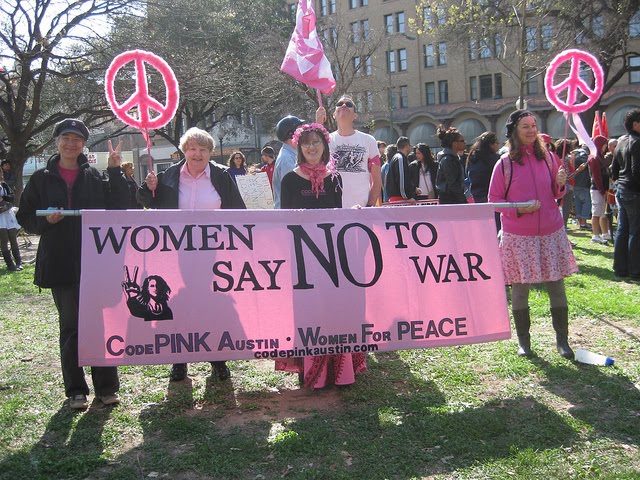
Posted in RagBlog | Tagged , , , , , , , , | 1 Comment

FILM / Robert Ovetz : Looking for an ‘Honest Man’


Looking for an ‘Honest Man’:
The self-destruction of R. Budd Dwyer

By Robert Ovetz / The Rag Blog / March 2, 2010

[Honest Man: The Life of R. Budd Dwyer. Directed by James Dirschberger; Co-Produced by Matt Levie & James Dirschberger. Running time 75 minutes. 2010 theatrical and DVD release.]

When Tom “The Hammer” DeLay, former Republican Majority Leader in the U.S. House, was sentenced to federal prison in January 2011, it recalled the story of Budd Dwyer. How indelibly written are the brutal images of the fateful day in 1987 when TV news stations across the country blared unedited footage of then scandal-plagued Pennsylvania Secretary of State Dwyer shooting himself in the head at a press conference.

It’s not too often that politicians play judge let alone jury and executioner — for themselves. Tom DeLay, take note.

Honest Man stirs up the dust on the Dwyer story at just the opportune moment. Although Dwyer’s self-destruction is an obscure tragic episode in the larger scheme of American political corruption, Honest Man succeeds in making him the everyman with whom you can empathize even if you cannot fully grant him the benefit of the doubt of his guilt.

A ring of scandals and faux scandals have wracked the highest reaches of the U.S. House of Representatives for the past few decades — taking down two speakers, two majority leaders, and countless rank and file just in the past decade. DeLay may be serving with some of them in prison.

Scandals abound at the state level as well, felling governors, legislators, and even judges, and most recently resulting in jail time in Dwyer’s own Pennsylvania for Democratic Party ballot tampering in an attempt to keep venerable public interest advocate Ralph Nader off the 2008 presidential ballot.

The film is a compelling and at times heart-wrenching story that artfully weaves together the narrative of Dwyer’s rise from public school teacher to Republican Party leader with national aspirations. With the film drawing from home movies, photographs, and clippings as well as interviews with his wife, children, sister — and friends and foes alike — Dwyer comes across as a likable if tragic figure.

Honest Man’s portrayal of Dwyer as having befriended a shadowy and untrustworthy businessman simplifies a convoluted state contracting kickback deal gone haywire in the context of his falling out with then Republican Governor Dick Thornburgh — without passing judgment.

I appreciated the open-ended recounting of the scandal since it provided context for what was at best misguided personal judgment and at worst a minor pig in a poke as far as scandals akin to the S&L bailout, Keating 5, Iran Contra, Blackwater, Halliburton, Vice President Cheney, torture memos, and the recent $13 trillion bank bailout go.

Throughout the film, the viewer is asked to sit in judgment of Dwyer’s tragic if not entirely unquestionable record. But by the end of Honest Man one has to wonder if the director, through skillful editing and artful storytelling, is really asking the audience to sit in judgment of our political system.

From Dwyer to DeLay, justice is not always on the menu when it’s most required to save our political system from caving in upon the weight of its own voracious greed and conflicts of interest.

[Robert Ovetz, Ph.D. is an adjunct professor of political science at several San Francisco Bay Area community colleges. Full disclosure: he is a cousin of co-producer Matt Levie.]

The Rag Blog

Posted in Rag Bloggers | Tagged , , , | 1 Comment

The Ten Reasons The Banksters Get Away With It

The Wall Street Crime Syndrome Goes Deeper Than We Think:
Q. Why No Jailings? A: It’s The System, Not Just The Prosecutors

By Danny Schechter

Hats off to writer Matt Taibbi for staying on the Wall Street crime beat, asking in his most recent report in Rolling Stone: “Why Isn’t Wall Street in Jail?”

“Financial crooks,” he argues, “brought down the world’s economy — but the feds are doing more to protect them than to prosecute them.”

True enough, but that’s only part of the story. The Daily Kos called his investigation a “depressing read” perhaps because it suggests that the Obama Administration is not doing what it should to rein in financial crime.

Many of the lawyers they call on to act come from big corporate law firms and buy into their worldview. They have no appetite to go after executives they know and naively hope will help speed our economic “recovery.”

The Daily Kos should be more depressed by the failure of the progressive community — their own readers — to focus on these issues, and for not pressing the government to do the right thing. Without pressure from below, there is often little action from above.

There is no doubt that Administration policy gave crooks great latitude, as financial journalist Yves Smith explains, “The overly generous terms of the TARP, and the failure of Team Obama to force management changes on the industry in early 2009 was a fatal error. It has embedded and emboldened a deeply corrupt plutocracy.”

There is, however, much more to this story. It’s also more about institutions than individuals, more about a captured system that enables and covers up crime and, then, deflects attention away from the deeper problem.

Ten problems

You could see that when television host Bill Maher pressed Taibbi to name the biggest Wall Street crooks, he didn’t fully understand what we are really up again.

Here are 10 factors that help explain the procrastination and rationalization for inaction. The government is not just to blame either. Several industries working together, through their firms and associations, associates, and well-paid operatives, collaborated over years to financialize the economy to their own benefit.

Personalizing bad guys makes for good TV without offering a real explanation.

When financial institutions and services became the dominant economic sector, they, effectively, took over the political system to fortify their power. It was done incrementally, over years, with savvy, foresight, and malice.

First, many of those who might later be charged with financial crimes and criminal fraud invested in lobbying and generous political donations to insure that tough regulations and enforcement were neutered before the housing bubble they promoted took off.

They did so in the aftermath of the jailing of hundreds of bankers after the S&L crisis, to guarantee that could never happen again when the next crisis hit.

In effect, their deregulation strategy also deliberately “decriminalized” the environment to make sure that practices that led to high profits and low accountability would be permissible and permitted.

Presto: The once illegal soon became legal.

The cops and watchdogs were taken off the beat. They engineered a low-risk crime scene in the way the Pentagon systematically prepares its battlefields. This permitted illicit practices, to be encouraged by CEOs in a variety of control frauds to keep profits up so that the executives could extract more revenue with obscene bonuses and compensation schemes.

Today’s proposed Republican cutbacks for the funding of regulatory bodies aims to undercut recently passed financial reforms. Warns one Commissioner of the Commodity Futures Trading Commission, if the budget is slashed, “there would essentially be no cop on the beat…we could once again risk another calamitous disintegration.” He added, according to a New York Times report, “the process will mean nothing, squat, diddley … if we get cut we’re going to be in a world of hurt.” The GOP knows exactly what the intended consequences of its plans are.
Second, the industry invented, advertised and rationalized exotic financial instruments as forward looking ‘innovation” and “modernization” to disguise their intent while enhancing their field or maneuver. This was part of creating a shadow banking system operating below the radar of effective monitoring and regulation. There was no focus on controlling the out of control power of the leverage-hungry gamblers at unregulated hedge funds.
Third, the industry promulgated economic theories and ideologies that won the backing of the economics profession which largely did not see the crisis coming, making those who favored a crackdown on fraud appear unfashionable and out of date. As economist James Galbraith testified to Congress:
“…The study of financial fraud received little attention. Practically no research institutes exist; collaboration between economists and criminologists is rare; in the leading departments there are few specialists and very few students. Economists have soft-pedaled the role of fraud in every crisis they examined, including the Savings & Loan debacle, the Russian transition, the Asian meltdown and the dot.com bubble. They continue to do so now.”
Foxes guarding the chicken coop

Fourth, prominent members of the financial services industry were appointed to top positions in the government agencies that should have cracked down on financial crime, but instead looked the other way. The foxes were indeed guarding the chicken coop guiding institutions that tolerated, if not enabled, an environment of criminality.
Alan Greenspan and Ben Bernanke were repeatedly warned by underlings at the Federal Reserve Bank about pervasive predatory practices in the mortgage and Subprime markets and they chose to do nothing. Now Greenspan acknowledges pervasive fraud but decries the lack of enforcement while Bernanke wants to run a Consumer Protection Agency after ignoring consumer complaints for years. Even as the FBI denounced “an epidemic of mortgage fraud” in 2004, their white-collar crime units were downsized.
Fifth, the media was complicit, seduced, bought off and compromised. As the housing bubble mushroomed in the very period that the media was forced to downsize, dodgy lenders and credit card companies pumped billions into advertising in radio, television and the internet almost insuring that there would no undue media investigations Financial journalists increasingly embedded themselves in the culture and narrative of Wall Street by hyping stocks and CEOs\
The “guests” routinely chosen by media outlets to explain the crisis were often part of it, charges Jim Hightower, “Many of the ‘experts’ whom I read or see on TV seem clueless, full of hot air. Many of their predictions turn out wrong even when they seem so self-assured and well-informed in making them.”
His advice: “Don’t be deterred by the finance industry’s jargon (which is intended to numb your brain and keep regular folks from even trying to figure out what’s going on.”
Sixth, politicians and corporate lawyers fashioned settlements of abuses that were exposed rather than prosecutions.
The government benefited by getting large fines while businessmen avoided jail. When exposed, this led to practices such as the deliberate engineering of mortgages to fail” being written off as a cost of doing business.
Financial executives were often rewarded with bonuses and huge compensation for practices that skirted or crossed the line of criminality.
Intentional violations of the spirit and letter of laws were justified because “everyone does it” by high priced legal firms that often doubled as lobbyists. Conflicts of interest were sneered at. Judges, dependent on industry donations for reelection looked the other way.
Seventh, as the economy changed and industries that were once separated began working together, regulations were not changed. In A FIRE economy, financial institutions worked closely with Insurance companies and real estate firms. Yet law enforcement did not recognize this new reality.
Financial crime was still seen almost entirely under the framework of securities laws that are designed to protect investors, not workers or homeowners who suffered far more in the collapse. Cases are framed against individuals with a high standard of proving intent, not under RICO laws used to prosecute organized crime and conspiracies.
By defining crimes narrowly, prosecutions became few and far between, reports Reuters:
“Cases against Wall Street executives can be difficult to prove to the satisfaction of a jury because of the mind-numbing volume of emails, prospectuses, and memos involved in documenting a case.”
Criminal minds
Convicted financial criminal Sam Antar who appears in my film Plunder is contemptuous of how government tends to proceed in these cases, in part because they don’t seem to understand how calculated these crimes and their cover-ups are. He told me. “Our laws—innocent until proven guilty, the codes of ethics that journalists like you abide by limit your behavior and give the white-collar criminal freedom to commit their crimes, and also to cover up their crimes.

“We have no respect for the laws. We consider your codes of ethics, and your laws, weaknesses to be exploited in the execution of our crimes. So the prosecutors, hopefully most prosecutors, are honest if they’re playing by the set of the rules; they’re hampered by the illegal constraints. The white-collar criminal has no legal constraints. You subpoena documents, we destroy documents; you subpoena witnesses, we lie. So you are at a disadvantage when it comes to the white-collared criminal. In effect, we’re economic predators. We’re serial economic predators; we impose a collective harm on society; time is always on our side, not on, not on the side of justice, unfortunately.”

Eighth, even as the economy globalizes, and US financial firms spread their footprint worldwide, there was little internationalization of financial rules and regulations. Today, even as the French and the Germans propose such rules, Washington still opposes a tough and coordinated global regime of enforceable codes of conduct to insure ethical standards.

Overseas, in Greece and England, and other parts of Europe, there’s been an indictment of American corporate predators, especially Goldman Sachs. They are being denounced as “financial terrorists” and discussed in terms of their links to various elite business formations like the Bilderberg Group.

Ninth, with the exception of a few polite inquiries by a softball Financial Crisis Inquiry Commission, there has been no hard-hitting intensive investigation in the United States of these crimes. While Senator Levin of Michigan did spend a day aggressively grilling Goldman Sachs on one deceptive practice, their defense was more telling about the real nature of the problem: ‘everyone did it.” (Almost ten times as much money was spent investigating Bill Clinton’s sex scandal.)

The case for criminality has still not achieved critical mass as an issue or become a dominant explanation for why the economy collapsed.

In fact, the “crime narrative” is still being sneered at or ignored even as the public in many surveys feel they have been robbed.

Finally, tenth, a big disappointment in my countdown, is the role of the progressive critics of the crisis who also largely ignore criminality as a key factor and possible focus for a populist organizing effort.
They treat the crisis as if they are at a financial seminar at Harvard, focusing on the complexities of derivatives; credit default swaps and structured financial products in language that ordinary people rarely can penetrate. They argue that banks that should not be too big to fail, but rarely they are not too big to jail.
Few of the progressive activist groups stress the immorality of these practices, much less its criminality after all these years! There is little active solidarity even in the progressive community with the newly homeless or jobless.
Where are the active empathy, compassion and the caring for the many victims of financial crimes?
The response to the crisis has been muted. There is little pressure from below in part because unions stress their own issues and tail after the Administration. The talk about the American dream, not Wall Street’s scheme. The financial crimes task force that the Administration set up seems to mostly go after small fry
It is as if this crime crisis within the financial crisis does not exist.
Curiously, even as most media outlets and politicians refuse to discuss the pervasive fraud that did occur, the Administration is using the threat of prosecutions as a way of pushing a “global settlement” of all housing fraud to get the issue off the table. They are proposing a $20 billion dollar deal to bury the problem.
The banks are saying this will hurt their investors and not bring relief to those facing the highest foreclosure rate in recent history. At the same time, as a quid pro-quo, there will be no major trials.
What should be done? By all means, workers should rally to protect their rights to have unions as they have in Wisconsin, but they should also realize that it is the banks that are ultimately to blame for the financial pressures behind the attacks they face. Pension funds have lost billions because of Wall Street scams. State governments have taken a big hit. The unions didn’t cause the problem.
At the same time, why have the unions and left groups been mostly silent on this key issue? Perhaps it is because they are fighting to keep what they have. The failure to press for economic justice for everyone makes their claims seem to be one only of self-interest. They need a broader view.
Ironically, the economic justice issues appeals to the anger in many diverse constituencies and could enlarge a real movement for financial accountability.
Even after the markets melted down, even after Wall Street bonus scandals and bailout disgraces, Wall Street has hardly been humbled. It is still spending a fortune on PR and political gun slinging with 25 lobbyists shadowing every member of Congress to scuttle real reform. Its arrogance is evident in an email the Financial Times reported was “pinging around” trading desks. It reads in part:
“We are Wall Street: It’s our job to make money. Whether it’s a commodity, stock, bond, or some hypothetical piece of fake paper, it doesn’t matter. We would trade baseball cards if it were profitable… Go ahead and continue to take us down, but you’re only going to hurt yourselves. What’s going to happen when we can’t find jobs on the Street anymore? Guess what: We’re going to take yours.
… We aren’t dinosaurs. We are smarter and more vicious than that, and we are going to survive.”’
Perhaps it’s not surprising, that in an act of preemptive anticipation, some years ago, Wall Street firms began financing companies that built and ran privatized prisons. As long as they can avoid incarceration, they can profit from the mass jailing of the poor..
When will we call a crime a crime? When will we demand jail-out, not just more bailouts? Unless we do, and until we do, the people who created the worst crisis in our time will, in effect, get away with the biggest plunder in history.
News Dissector Danny Schechter made the film Plunder The Crime of our Time. (Plunderthecrimeofourtime.com) Parts of this essay appear in his companion book The Crime of Our Time (Disinfo Books) Comments to Dissector@mediachannel.org

Type rest of the post here

Source /

The Rag Blog

Posted in RagBlog | Leave a comment

SPORT / Dave Zirin : Strange Bedfellows in Wisconsin

Packers union rep Charles Woodson: Standing with organized labor in Wisconsin. Photo by Gay /AP.

Strange bedfellows:
Why the Packers back the protesters

By Dave Zirin / The Rag Blog / March 1, 2011

After a 30-year erosion of power, influence, and numerical strength, a period of reckoning has arrived for organized labor, and the terms of the debate couldn’t be starker. It’s not wages or benefits that are being negotiated in the twenty-first century. It’s whether labor unions — and the basic protections they bring — will exist at all.

This can be seen dramatically in the two most high-profile labor disputes in the country, disputes that on their face couldn’t seem more different. There are the public-sector workers of Wisconsin — the teachers, ambulance drivers, and child-care workers — trying to fend off Governor Scott Walker’s efforts to legislate them out of existence. Then there are the N.F.L. players, facing an imminent lockout if they don’t accept massive wage cuts and a longer season.

It seems almost comical to compare the two: after all, in Wisconsin, public-sector workers are attempting to defend decent-paying jobs that they can keep for decades and then retire with a sense of security. In the N.F.L., the Players Association is attempting to defend lucrative careers that last on average three and a half years, have a hundred per cent injury rate, and will statistically result in death 20 years earlier than the typical American male.

But both face someone across the negotiating table — Governor Walker or N.F.L. Commissioner Roger Goodell — who questions their right to exist and their right to organize. They are reading from the same neoliberal playbook, and the only difference is that Goodell actually has a college degree and is probably just savvy enough not to take a prank call supposedly from one of the Koch brothers. (When I was in Madison last week, I saw 20 eight-year-olds with a banner that read, “Scotty is as smart as my potty.”)

Goodell and the N.F.L. owners are guaranteed network-television and sponsorship money whether there are any games this year or not. That’s why the owners, with nary a dissent, have announced that they are ready and willing to lock the doors, even if it forces the union to decertify and they lose the season.

But repression creates bizarre bedfellows. And one of the most bizarre, at least superficially, has been the support for the striking public workers from the N.F.L. Players Association and the Green Bay Packers.

The Packers won the Super Bowl a few weeks — and for the state, several lifetimes — before the explosion in Wisconsin. Scott Walker, just days before he threatened to call in the National Guard on the state’s workers, immediately declared February “Packers month.”

But the Packers are more than the closest thing the state has to an official religion. They are the only non-profit, fan-owned team in all of major U.S. professional sports. This is a team with 112,000 owners. When they won the Super Bowl, their coach, Mike McCarthy, said, “We’re a community-owned football team, so you can see all the fingerprints on our trophy.”

Several players took the Green Bay ethos to heart and immediately backed the workers. Current players Brady Poppinga and Jason Spitz, and former Packers Curtis Fuller, Chris Jacke, Charles Jordan, Bob Long, and Steve Okoniewski said,

We know that it is teamwork on and off the field that makes the Packers and Wisconsin great. As a publicly owned team we wouldn’t have been able to win the Super Bowl without the support of our fans. It is the same dedication of our public workers every day that makes Wisconsin run…

But now in an unprecedented political attack Governor Walker is trying to take away their right to have a voice and bargain at work. The right to negotiate wages and benefits is a fundamental underpinning of our middle class. When workers join together it serves as a check on corporate power and helps ALL workers by raising community standards.

Rookie tight end Tom Crabtree tweeted, “i fully support wi unions and i think Gov. Walker is out of his damn mind.”

None of these players has a particularly high profile. But as the struggle intensified, the team’s defensive captain, Charles Woodson, couldn’t stay silent, as I reported in The Nation.

A former Heisman trophy winner at the University of Michigan, N.F.L. defensive player of the year, and perennial pro-bowler, Woodson is also the team’s co-captain and union rep. His words landed in sports pages around the country:

Thousands of dedicated Wisconsin public workers provide vital services for Wisconsin citizens. They are the teachers, nurses and child care workers who take care of us and our families. These hard working people are under an unprecedented attack to take away their basic rights to have a voice and collectively bargain at work.

It is an honor for me to play for the Super Bowl Champion Green Bay Packers and be a part of the Green Bay and Wisconsin communities. I am also honored as a member of the NFL Players Association to stand together with working families of Wisconsin and organized labor in their fight against this attempt to hurt them by targeting unions. I hope those leading the attack will sit down with Wisconsin’s public workers and discuss the problems Wisconsin faces, so that together they can truly move Wisconsin forward.

Immediately, across Web message boards came the familiar notion that he should just “shut up and play.” As one person wrote, “Stay out of it, Charles. Keep your mouth shut and do what you do best — just win.”

But as Woodson must realize, and as the wise, august message-board commenter clearly does not, this isn’t a moment for any pro football player to just know his place and shut his mouth. It’s about solidarity that both sides desperately need. Two very different labor forces both are facing battles for their respective futures against bosses that see them as expendable. It’s the twenty-first-century fight: from the Governor’s office to the gridiron.

[Dave Zirin is the author of Bad Sports: How Owners are Ruining the Games we Love (Scribner) and just made the new documentary Not Just a Game. Contact him at edgeofsports@gmail.com. This article also appears in The New Yorker blog, The Sporting Scene.]

The Rag Blog

Posted in Rag Bloggers | Tagged , , , , , | 2 Comments

Robert Jensen : Consciousness Rising, World Fading

Image from photobucket.

Accepting the reality of decline:
Consciousness rising, world fading

By Robert Jensen / The Rag Blog / March 1, 2011

Our stories of awakenings — whether moral, intellectual, religious, artistic, or sexual — are tricky. Honest self-reflection doesn’t come easy, and self-satisfied accounts are the norm; we love to be the heroes of our own epics.

That’s true of accounts of political awakening as well, especially for those of us born into unearned privilege as a result of systems of illegitimate authority. Not only do we love to tell stories in which we come out looking good, but we know how to decorate the narrative with the trappings of humility to avoid seeming arrogant. We use our failures to set up the story of our transformation; even when we speak of our limitations we are highlighting our wisdom in seeing those limitations.

So, when I got a request from a researcher to tell my story about how my political consciousness was raised, I was hesitant. I don’t like feeling like a fraud, and something always feels a bit fraudulent about my account, even when I am being as honest as I can. But, like most people, I feel driven to tell my story, mostly to try to explain myself to myself. So, here I go again:

As a teenager coming of age in the 1970s in mainstream culture in the upper Midwest, I missed the United States’ radicalizing movements by a decade and several hundred miles. I developed conventional liberal politics in reaction to the conventional conservative politics of my father and his generation. But in a more basic sense, I grew up depoliticized — like most contemporary Americans, I was never taught to analyze systems and structures of power, and so my banal liberal positions seemed like cutting edge critique to me.

After college I worked as a journalist at mainstream newspapers, which further retarded my ability to think critically about power; reporters who don’t have a political consciousness coming into the field are unlikely to develop one in an industry that claims neutrality but is fanatically devoted to the conventional wisdom.

The raising of my consciousness began when I started a journalism/mass communication doctoral program in 1988, a time when U.S. universities were somewhat more intellectually and politically open than today. After years of the daily grind in newsrooms, I felt liberated by the freedom to read, think, and talk to others about all the new ideas I was encountering.

My study of the First Amendment led me to the feminist critique of pornography, which at the time was an important focus for debate about the meaning of freedom of expression. My first graduate courses were taught by liberal defenders of pornography, who were the norm in the academy then and now.

But I also began talking with activists in a local group that was fighting the sexual-exploitation industries (pornography, prostitution, stripping), and I realized there was a rich, complex, and exciting feminist critique, which required me to rethink what I thought I knew about freedom, choice, and liberation.

As a result of those first conversations, I started reading feminist work and taking feminist classes, and I kept talking with folks from the community group, which led me to get involved in their educational activities. I didn’t make those choices with any sense that I was constructing a radical philosophical and political framework. I was just following the ideas that seemed the most compelling intellectually and the people who seemed the most decent personally. Those ad hoc decisions changed my life, in two ways.

First, they opened up to me an alternative to the suffocating conventional wisdom, in which liberals and conservatives argue within narrow ideological boundaries. This exposure to feminist thinking, especially those people and ideas most commonly described as radical feminist, allowed me to step outside those boundaries and ask two simple questions: Where does real power lie and how does it operate, in both formal institutions and informal arrangements?

Second, they helped me realize the importance of always having a political life outside the university. Instead of putting all my energy into my teaching and research, I was anchored in a community project and connected to people who weren’t preoccupied with publishing marginally relevant research in marginally relevant academic journals.

Although I had to publish scholarly articles for my first six years as an assistant professor, once I got tenure and job security I immediately returned to community organizing and ignored the pseudo-intellectual pretensions that dominate in most of the so-called scholarly world in the social sciences and humanities. I had developed respect for rigorous and relevant scholarship but had come to realize how little of it there was in my fields in the contemporary academy.

From those first inquiries into the sexual-exploitation industries and the role of a pornographic culture in men’s violence, I continued to think about how power is organized and operates around other dimensions of our identities and statuses in the world. After opening the gender door, it was inevitable that I would have to open the race door.

From there, questions about the inherent economic injustice in capitalism and the violence required for U.S. imperial domination of the world became central. Finally, I began thinking more about how human domination of the living world is destroying the ecosphere’s capacity to sustain life as we know it.

All of those inquiries led me to the same conclusion: We live in a world structured by illegitimate hierarchies and based on a domination/subordination dynamic. For those of us with unearned privilege, the rewards for ignoring this conclusion are whatever status and money we can squeeze out of the system, while the cost of capitulation to power is a surrender of some essential part of our humanity.

More than 20 years after embarking on this investigation, I can see that clearly. But when I first started confronting these issues, I only knew that the conventional wisdom seemed inadequate, that the platitudes uttered by people in power seemed empty, and that the rationalizations offered by the intellectuals in the service of power seemed self-serving. I didn’t know what I wanted, but I knew I didn’t want that kind of career or life.

All that seems clear to me now, but it wasn’t at the start. The researcher’s query that prompted this essay asked about my “earliest consciousness-raising memory.” I have no simple answer, because my awakening was such a gradual process.

But there were some moments along the way, such as the day I read Andrea Dworkin’s 1983 speech entitled “I Want a Twenty-Four-Hour Truce During Which There Is No Rape,” in which she asked men for “one day in which no new bodies are piled up, one day in which no new agony is added to the old.”[1] In that speech she pointed out that feminists don’t hate men, but instead “believe in your humanity, against all the evidence.”[2]

I also remember the crucial role of one friend in the anti-pornography group, a white man who was older than I and was a part of not only the feminist movement but the civil-rights, anti-war, and environmental struggles. He provided me with a model for how someone with privilege could contribute to radical politics in a principled fashion. In my book on pornography, I wrote about one particularly important moment with Jim Koplin, when we talked about my motivation in volunteering with the group.

“If you want to be part of this because you want to save women, we don’t want you,” he said. At first I was confused — wasn’t the point of critiquing the sexual exploitation of women in pornography to help women? Yes, Jim explained, but too many men who get involved in such work see themselves as knights in shining armor, riding in like the hero to save women, and they usually turn out not to be trustworthy allies. They are in it for themselves, not to challenge masculinity but to play out the role of heroic man in a new, pseudo-feminist context. You have to be in it for yourself, but in a different way, he said.

“You have to be here to save your own life,” Jim told me.

I didn’t understand exactly what he meant at that moment, but something about those words resonated in my gut. This is what feminism offered men — not just a way to help those being hurt, but a way to understand that the same system of male dominance that hurt so many women also made it impossible for men to be fully human.[3]

Jim challenged me to ask myself why I was there and what I hoped to gain, and I came to understand that my interest in feminist politics was driven in large part by my own alienation from traditional definitions of masculinity. For me to tell a simple story about doing the right thing, implying nobility on my part wasn’t going to cut it.

More than 20 years later, I’m still wrestling with these questions about why I make the choices I make. I am a man who is part of a feminist movement and a white guy who critiques the white supremacy deeply embedded in mainstream culture. I am an American who opposes U.S. imperial foreign policy and a middle-class academic working with a local group that organizes immigrant workers.

For these efforts, I get attention and praise that is disproportionate to my effort and ability, a fact I point out as often as possible. People sometimes listen to me not because I’m smarter than feminist women, but because I am a man. My writing on race is not better than the work of non-white authors, but I’m appreciated because I’m white.

This is the tricky part of my awakening story. I was lucky to learn to see the world from the point of view of those who struggle against power, and I’m rewarded in many ways when I speak, write, or act in public in these movements. But I recognize that those rewards are unfair, and so my professed humility becomes another mark of my alleged sophistication.

Yet if I were to refuse to use my privilege — if I dealt with this angst by fading into the background — I would be throwing away resources that come with my position in the world and which I can offer to these movements.

I am trapped, yet I am trapped in a system that makes my life relatively easy. Even when there is some threat of punishment for my political activities, such as during the fallout from critical essays about U.S. war crimes that I wrote after 9/11, I have so much support from outside the power structure and so much privilege as an educated white guy that I never really felt threatened. Even if I had been fired from my university position after 9/11, I likely would have landed on my feet.

I realize not all who adopt a critical perspective, even those in privileged categories, fare as well as I have. But in recent decades in the United States, in which dissent by people who look like me is mostly tolerated, there has been no widespread repression of people in the privileged sectors.

People in targeted groups (particularly immigrants, Muslims, Arabs) have had to be careful, and there’s no guarantee that a more widespread repression won’t return to the United States, especially as U.S. power continues to decline around the world and elites get nervous.

But for now, white men with U.S. citizenship are pretty safe. We may risk losing a job, but that’s trivial compared with the fates suffered by radicals in other eras in U.S. history or in other places today.

So, here’s my consciousness raising story summarized: I wandered through the first 30 years of my life mostly oblivious to the workings of power, protected by my privilege. For the past 20 years I’ve been struggling to contribute to a variety of movements for social justice and ecological sustainability, getting my consciousness raised on a regular basis whenever I seek out new experiences that push me beyond what I have come to take for granted (lately for me that has been happening at 5604 Manor, our progressive community center in Austin, Texas).

Although I love teaching and put considerable energy into my job as a professor, my community and political activities are just as important to me — and a greater source of intellectual vitality. If consciousness-raising is an ongoing project, it’s not likely to happen in moribund institutions such as universities but will come through engagement with people taking real risks in political work.

That’s as accurate an account as I can offer about how I became, and continue becoming, the political person I am. But telling this story always makes me a bit queasy; I have yet to find a way to describe my political development that doesn’t sound self-aggrandizing, as if I am casting myself as an epic hero.

That longstanding discomfort in telling my story is further complicated by new concerns in the past few years. More than ever I’m aware that no matter how high anyone’s consciousness in the United States is raised, there may be very little we can do to reverse the consequences of modern industrial society’s assault on the living world.

I don’t mean that there is nothing we can or should do to promote ecological sustainability, but only that the processes set in motion during the industrial era may be beyond the point of no return, that the health of the ecosphere that makes our own lives possible may be compromised beyond recovery.

In contemporary left/progressive organizing, we typically focus on those small victories we achieve in the moment and on a vision for social change that sustains us over the long haul. With no revolution on the horizon, we pursue reforms within existing systems but hold onto radical ideals that inform those activities.

We are willing to work without guarantees, bolstered by a faith that, as Martin Luther King, Jr. put it, “the arc of the moral universe is long, but it bends toward justice.”[4] That’s supposed to get us through; even if our movements don’t prevail in our own lifetime, we contribute to a better future.

But what if we are no longer bending toward justice? What if the arc of the moral universe has bent back and the cascading ecological crises will eventually overwhelm our collective moral capacities? Put bluntly: What if homo sapiens are an evolutionary dead-end?

That’s the central problem with my consciousness-raising story. When I was politicized 20 years ago, I made a commitment to facing the truth to the best of my ability, even when that truth is unpleasant and painful.

My ideals haven’t changed and my commitment to organizing hasn’t waned, but the weight of the evidence suggests to me that our species is moving into a period of permanent decline during which much of what we have learned will be swamped by rapidly worsening ecological conditions. I think we’re in more trouble than most are willing to acknowledge.

This is not an argument for giving up on or dropping out of radical politics. It’s simply a description of what seems true to me, and I can’t see how our movements can afford to avoid these issues. I’m not sure I’m right about everything, though I am sure this analysis is plausible and should be on our agenda. Yet it’s my experience that most people want to push it out of view.

In trying to make sense of my political consciousness-raising, I try to avoid the temptation to cast myself as an epic hero who overcomes adversity to see the truth. That’s a struggle but is possible when one is part of a vibrant political community in which people hold each other accountable, and for all my fretting in this essay, I think I’ve done a reasonably good job of keeping on track. We can overcome our individual arrogance.

More difficult is facing the possibility that the human species has been cast as a tragic hero. Tragic heroes aren’t characters who have just run into a bit of bad luck but are protagonists brought down by an error in judgment that results from inherent flaws in their character. The arrogance with which we modern humans have treated the living world — the hubris of the high-energy/high-technology era — may well turn out to be that tragic flaw.

Surrounded by the big majestic buildings and tiny sophisticated electronic gadgets created through human cleverness, it’s easy for us to believe we are smart enough to run a complex world. But cleverness is not wisdom, and the ability to create does not guarantee the ability to control the destruction we have unleashed.

Not every human society has gone down this road, but we live in a world dominated by those who not only exhibit that arrogance but embrace it, refusing to accept the reality of decline. That means our individual awakenings may be taking place within a much larger dying. To face that is to live in a profound state of grief. To stay true to a radical political consciousness is to face that grief.

[Robert Jensen is a journalism professor at the University of Texas at Austin and board member of the Third Coast Activist Resource Center in Austin. He is the author of All My Bones Shake: Seeking a Progressive Path to the Prophetic Voice, (Soft Skull Press, 2009) and Getting Off: Pornography and the End of Masculinity (South End Press, 2007); Jensen is also co-producer of the documentary film Abe Osheroff: One Foot in the Grave, the Other Still Dancing, which chronicles the life and philosophy of the longtime radical activist. Robert Jensen can be reached at rjensen@uts.cc.utexas.edu. This article was also posted at The Progressive Christian.]

References

[1] Andrea Dworkin, Letters from a War Zone: Writings 1976-1987 (London: Secker & Warburg, 1988/Chicago: Lawrence Hill Books 1993), pp. 170-171.

[2] Ibid., pp. 169-170.

[3] Robert Jensen, Getting Off: Pornography and the End of Masculinity (Boston: South End Press, 2007), p. 9.

[4] “Where Do We Go From Here?” (annual report to the Southern Christian Leadership Conference), August 16, 1967. http://www.stanford.edu/group/King/publications/speeches/Where_do_we_go_from_here.html

The Rag Blog

Posted in Rag Bloggers | Tagged , , , , | 2 Comments

Tom Miller : Phil Ochs: Sensitive in a Parking Lot

Phil Ochs in New York in 1965. Still image from Phil Ochs: There But for Fortune / First Run Features.

Phil Ochs: Sensitive in a parking lot

By Tom Miller / The Rag Blog / February 28, 2011

Show me a prison, show me a jail
Show me a prisoner whose face has grown pale

And I’ll show you a young man
With so many reasons why
And there but for fortune, may go you or I

— Phil Ochs

[There But for Fortune, the new documentary about folksinger Phil Ochs, provoked this piece by Rag Blog contributor Tom Miller]

Phil Ochs was singing from the back of a flatbed truck in a Florida parking lot to 80 people at a benefit concert supporting defendants in the 1973 “Gainesville Eight” trial. The eight had been charged with conspiring to disrupt the previous summer’s political conventions in Miami, and Ochs volunteered to sing on their behalf.

The sound system was awful, the afternoon sun was sweltering, and people slowly drifted away. In the middle of Ochs’ poignant ballad, “Pleasures of the Harbor,” a two-ton truck revved up, parting the slim audience as it left. Uninterrupted, Ochs finished the song to light, half-hearted applause. “You know,” he said softly, “it’s tough to be sensitive in a parking lot.”

It was illustrative of Phil Ochs’ life, which ended abruptly at the age of 35 on April 9, 35 years ago. Ochs, one of the prominent topical singers from the fertile Greenwich Village folkie scene of the early ‘60s, carved a niche for himself by consciously blending a politically radical awareness with an appreciation of mainstream American culture.

His was the face you saw on television screens singing at civil rights and anti-war rallies, lending cultural affirmation to what we knew was right. Dry politicos never understood his constant allusions to mythic movieland characters; loyalists booed him at a 1970 concert when he mixed songs by Merle Haggard, Buddy Holly, and Elvis Presley with his own. He exploited this contradiction, seldom losing his socialist vision.

Among his best-known anti-war melodies are “I Ain’t Marchin’ Any More” and “I Declare the War is Over,” But Phil’s perspective was wide, and he wrote about other American misadventures, too, using sarcasm, outrage and irony to clarify confusion and dilute the obvious. As a troubadour he affected the collective consciousness of an era with songs mocking wishy-washy liberals, intervention in Caribbean islands, and political fear.

Ochs occupied a position of major influence in a decade of dramatic upheaval, a role with a rich history in most revolutionary societies. He felt a special kinship with Chilean poet Victor Jara whom he met in a 1972 visit to Chile; it was Jara’s death during Augusto Pinochet’s September 1973 military coup that sparked Ochs’ most ambitious project — organizing a Madison Square Garden concert in support of Chilean refugees and the underground freedom-fighters they left behind.

The concert, a sloppy and joyous affair, included Arlo Guthrie, Pete Seeger, Bob Dylan, Dave Von Ronk, and scores of others paying tribute to the fallen Allende government. The benefit was a smashing success, raising money and consciousness for the cause, using folk-art as the medium. It was, by his own admission, the high point of Ochs’ life.

One of Phil’s lifetime goals was to visit every country in the world; at the time of his death he was one-third there. He had traveled extensively through Europe and Africa, mixing courtesy calls on music industry personnel alongside meetings with revolutionary forces in the same countries.

It was an intoxicating mix of acquaintances, equaling the engaging blend his own writing produced. He could write moving tributes to migrant labor (“Bracero”) on one album and show self-deprecation (“Bach, Beethoven, Mozart, and Me”) on another.

Movies played a large part in Phil Ochs’ life and his songs. In his movie-going prime, he took in twenty films a month. For a short while he wrote a movie column for the L.A. Free Press, juxtaposing Marxism with Bruce Lee shows, all of which he had seen. He knew theater schedules in both New York and Los Angeles, where he kept sloppy apartments, and was known to time his flights between the two cities to catch movies within an hour of arrival. Because Arizona churns out “B” movies like few other places, we talked now and then about him coming out for a month just to watch them in production, but it was mainly just talk.

When his career was at its peak, when he played gatherings like the Newport Folk Festival, circumstances wrote his songs. He was in the creative vanguard, maintaining high energy for himself and those he sang for. Less acknowledged but quite good were his nonpolitical works on later albums.

The catalyst for his creativity was the friction produced by civil rights activity and support for countries the U.S. was invading. When that friction took other forms, Phil’s sensitivity remained, but there was little to write about. Sparks of ideas would come and he’d write them in his journal, but no songs came forth.

His record company was content to keep him on, knowing that if he ever wrote again his material would surely be successful. They even printed buttons reading INSPIRE PHIL OCHS. During Watergate he released a 45 rpm record, a remake of his early civil rights song called “Here’s to the State of Mississippi,” with “Richard Nixon” substituted for “Mississippi.” But he wasn’t fooling anyone.

In the two years following the Chile benefit Ochs went through manic-depressive cycles, sometimes obnoxious and arrogant to those he was close to, then retreating into himself for long periods. A few months before he died I found him living at a New York City flophouse. He told me that in the previous months he had been careening around the country in and out of jails under various names, drunk and involved in outrageous scams with unbelievable characters of high and low life.

His name was prominent among those considered for Bob Dylan’s famous Rolling Thunder Review. He had had an off and on relationship with Dylan over the years, but his unpredictability got him axed from the tour before it began.

At this point friends had been suggesting various therapies but he never really followed through. When we spoke last he was living in Queens, Long Island, with his sister’s family, and it sounded like his depression was bottoming out. His suicide a few weeks later ended the pain.

A month after Ochs hanged himself, New York’s Felt Forum filled with thousands of his fans for “An Evening with Phil Ochs and Friends.” As he had at the Allende affair, Dave Van Ronk sang “He Was a Friend of Mine.” After the show, family and friends gathered at a Village bar to toast our friend and brother. We raised our glasses: “There but for fortune,” we agreed.

[Tom Miller’s 10 books include Revenge of the Saguaro: Offbeat Travels Through America’s Southwest.” His web site is www.tommillerbooks.com.]

‘There But for Fortune’ — Phil Ochs, Live at the Bitter End

‘I Ain’t Marching Anymore’ — Phil Ochs

The Rag Blog

Posted in Rag Bloggers | Tagged , , , , , | 1 Comment

Joshua Brown : Life During Wartime: Puppet Master

Political cartoon by Joshua Brown / The Rag Blog / February 28, 2011.

CLICK ON IMAGE TO ENLARGE.

The Rag Blog

Posted in Rag Bloggers | Tagged , , , , | Leave a comment