Ted McLaughlin : Equal Rights? Don’t Ask, Don’t Think

Ignorance is bliss. Image from Rosemblumtv.

Equal rights in America:
The legacy of the Fourteenth Amendment

A misguided and wrong-headed Dred Scott-type decision by the Supreme Court could set [gay rights] back by many years…

By Ted McLaughlin / The Rag Blog / September 26, 2010

The fight for equal treatment for all Americans by their government has been a long and hard-fought battle, and it still has not been won. Although our Founding Fathers loved to talk about democracy and equal rights, the country they created did not initially give equal rights to all of its citizens. In fact, the only people who could vote in the newly-created nation were white male property-owners.

Fortunately they gave us not only a dream of equality, but also a Constitution that could be interpreted and amended to further the cause of granting equality to all citizens. After the Civil War, the Constitution was amended for the fourteenth time. That Fourteenth Amendment not only guaranteed that former slaves were to be guaranteed the full rights of an American citizen, but has also been used by the Supreme Court since that time to guarantee the rights of many others.

Thanks to the Fourteenth Amendment and Supreme Court decisions regarding it, most Americans now accept that things like race, ethnicity, sex, and age should not bar any citizen from equal protection and equal rights in America (although some battles are still being fought to fully realize these rights). The newest battle for equal rights is now being fought over sexual preference. There are many in this country, especially religious fundamentalists, who still believe that gays and lesbians should not share the same rights as other Americans.

I know that most of these people use their religion as an excuse to deny rights to other Americans, but I tend to think that there are just some that need to have another group of people to look down on — maybe to boost their own feelings of inadequacy. After all, religion was also used to deny equality to minorities and women. Those “religious beliefs” have fortunately been largely overcome, and now the battle is being fought over extending full equal rights to American homosexuals.

Currently the battle is being waged on two fronts — equality in the military and equal marriage rights. Recently the right-wingers in the United States Senate (mostly Republicans) refused to allow a Defense Appropriation bill to come up for a vote by invoking cloture (ending unlimited debate). T

hey did this because the bill included a provision that would end the “don’t ask, don’t tell” policy (DADT) of the United States military. DADT is a military policy that dictates the expulsion of gays/lesbians who don’t hide their sexual preference from their fellow soldiers and the military command structure.

Homosexuals have always served proudly and bravely in the military of the United States. To force them to hide their sexual preference and live a lie is a basic denial of their equal rights as citizens of this country. It also denies this country the service of many qualified and valued military professionals simply to satisfy the bigotry of some Americans — people who would not be affected in the least manner by granting homosexuals the right to serve their country (the same right all others, including non-citizens, are granted).

But I think the DADT policy will soon be a thing of the past. We may have to wait until the election is over, since many right-wingers and “blue dogs” are currently playing to their base of social conservatives, but it will end. A clear majority of people in America are opposed to DADT and its days are numbered.

The much harder fight is over granting gays/lesbians the right to marriage (with all its legal and social ramifications). Several states have granted this right but many others have not, and of those who haven’t many are refusing to grant the constitutional “full faith and credit” recognition to legal marriages conducted in states that allow homosexual marriage. This is a question that will soon be decided by the United States Supreme Court.

Library of Congress / Wikimedia Commons.

Sadly, it seems that some right-wing Supreme Court justices are already positioning themselves to deny equal rights to homosexuals — sort of a latter-day Dred Scott decision. One justice, Antonin Scalia, recently declared that the Fourteenth Amendment does not cover or grant equal rights to women. He said the amendment was only meant to grant equal rights to former slaves when passed in the late 1800s, and therefore should be limited to that purpose.

Scalia went on to say that he was in favor of equal rights for women, but it should be done through state or federal law and not because these rights are covered by the Fourteenth Amendment. Unfortunately, he is not the only justice that feels this way (in spite of many Supreme Court decisions to the contrary). The past decisions and writings of Justices Thomas, Alito, and Roberts show that they also would be open to a similar interpretation of the Fourteenth Amendment.

Now I don’t think any of these justices, including Scalia, are actively trying to deny equal rights to women (although a decision that the Fourteenth Amendment referred only to former slaves could be used that way in the future). What they are really trying to do is justify a decision that the Fourteenth Amendment does not grant equal rights to those discriminated against because of their sexual preference. If they can deny women’s coverage by the Fourteenth Amendment, that makes it easy to deny coverage to homosexuals.

I am an optimist. I believe that full equal rights will someday be granted to all American citizens — including homosexuals (and bisexuals and trans-gendered individuals). It is simply the right thing to do. But a misguided and wrong-headed Dred Scott-type decision by the Supreme Court could set this back by many years (and even open up opportunities for legal discrimination against other groups).

It is conceivable that the court is just one vote away from severely restricting the scope of the Fourteenth Amendment. At this point all we can do is cross our fingers and hope that wisdom prevails on the court. The alternative would be a huge step backwards for America.

Why is the concept of equality for all so hard to understand for many Americans?

[Rag Blog contributor Ted McLaughlin also posts at jobsanger.]

The Rag Blog

Posted in Rag Bloggers | Tagged , , , , , , | 1 Comment

Conscientious Objection in Colombia

By Val Liveoak

I had lunch this week with Alejo, I can say his name without worrying that he’ll be moved up higher on a target list because he, and the group he works with, the Conscientious Objectors’ Collective, are already sooooo out there, I doubt anything could add to their profile. (One public act a few years ago was to follow a military parade with brooms, and “sweep up the trash the Army left” while handing out antiwar pamphlets. In Bogota! Remember, there’s a war on in Colombia.)

Alejo is around 25 and he’s been with the Collective for at least 8 years. He’s finished a university degree but because he has not served in the military, nor gone through a process that would allow him to buy an official exemption–as he says, “This would also give the government more money to continue the war,”–so he has not received his degree.

The COs’ Collective is a group of young men and women in Colombia who work to promote a nonviolent lifestyle–not only do they oppose the obligatory military service required of all young Colombian men, but also the other sorts of violence that young people get involved with: gangs, guerrilla and paramilitary groups, drug traffickers, and so forth. They currently are working in High Schools in 7 cities to help young people understand the option to be a CO, and have just won their first Supreme Court decision supporting the rights of COs. They have organized networks in other cities, too, and now have ID cards from War Resister’s International (WRI) identifying them as COs, so that when the military stops a bus, and checks all the young men for their draft cards (libreta in Spanish), with the intention to take all youths who have not served to the base for immediate induction, they are left alone, mostly, because, “They know it’s not worth it to take one of us in, because we have a network that will respond immediately, and the publicity is very bad for them.”

Small victories, perhaps, but important ones. I know there are young people (and not so young ones, too) in the US who are looking for ways to carve out lives not beholden to the military-industrial complex. I’d love to hear their stories.

Type rest of the post here

Source /

The Rag Blog

Posted in RagBlog | Leave a comment

OPPOSING EQUAL RIGHTS IN AMERICA

By Ted McLaughlin / The Rag Blog / September 25, 2010

The fight for equal treatment for all Americans by their government has been a long and hard-fought battle, and it still has not been won. Although our Founding Fathers loved to talk about democracy and equal rights, the country they created did not initially give equal rights to all of its citizens. In fact, the only people who could vote in the newly-created nation were white male property-owners.

Fortunately they gave us not only a dream of equality, but also a Constitution that could be interpreted and amended to further the cause of granting equality to all citizens. After the Civil War, the Constitution was amended for the fourteenth time. That Fourteenth Amendment not only guaranteed that former slaves were to be guaranteed the full rights of an American citizen, but has also been used by the Supreme Court since that time to guarantee the rights of many others.

Thanks to the Fourteenth Amendment and Supreme Court decisions regarding it, most Americans now accept that things like race, ethnicity, sex and age should not bar any citizen from equal protection and equal rights in America (although some battles are still being fought to fully realize these rights). The newest battleground for equal rights is now being fought over sexual preference. There are many in this country, especially religious fundamentalists, who still believe that gays and lesbians should not share the same rights as other Americans.

I know that most of these people use their religion as an excuse to deny rights to other Americans, but I tend to think that there are just some that need to have another group of people to look down on and fell that they are better than — maybe to boost their own feelings of inadequacy. After all, religion was also used to deny equality to minorities and women. Those “religious beliefs” have fortunately been largely overcome, and now the battle is being fought over extending full equal rights to American homosexuals.

Currently the battle is being waged on two fronts — equality in the military and equal marriage rights. Just yesterday, the right-wingers in the United States Senate (mostly Republicans) refused to allow a Defense Appropriation bill to come up for a vote by invoking cloture (ending unlimited debate). They did this because the bill included a provision that would end the “don’t ask, don’t tell” policy (DADT) of the United States military. DADT is a military policy that dictates the expulsion of gays/lesbians who don’t hide their sexual preference from their fellow soldiers and the military command structure.

Homosexuals have always served proudly and bravely in the military of the United States. To force them to hide their sexual preference and live a lie is a basic denial of their equal rights as a citizen of this country. It also denies this country the service of many qualified and valued military professionals simply to satisfy the bigotry of some Americans — people who would not be affected in the least manner by granting homosexuals the right to serve their country (the same right all others, including non-citizens, are granted).

But I think the DADT policy will soon be a thing of the past. We may have to wait until the election is over, since many right-wingers and “blue dogs” are currently playing to their base of social conservatives, but it will end. A clear majority of people in America are opposed to DADT and its days are numbered.

The much harder fight is over granting gays/lesbians the right to marriage (with all its legal and social ramifications). Several states have granted this right but many others have not, and of those who haven’t many are refusing to grant the constitutional “full faith and credit” recognition to legal marriages conducted in states that allow homosexual marriage. This is a question that will soon be decided by the United States Supreme Court.

Sadly, it seems that some right-wing Supreme Court justices are already positioning themselves to deny equal rights to homosexuals — sort of a latter-day Dred Scott decision. One justice, Antonin Scalia, recently declared that the Fourteenth Amendment did not cover or grant equal rights to women. He said the amendment was only meant to grant equal rights to former slaves when passed in the late 1800s, and therefore should be limited to that purpose.

Scalia went on to say that he was in favor of equal rights for women, but it should be done through state or federal law and not because these rights are covered by the Fourteenth Amendment. Unfortunately, he is not the only justice that feels this way (in spite of many Supreme Court decisions to the contrary). The past decisions and writings of Justices Thomas, Alito and Roberts show that they also would be open to a similar interpretation of the Fourteenth Amendment.

Now I don’t think any of these justices, including Scalia, are actively trying to deny equal rights to women (although a decision that the Fourteenth Amendment referred only to former slaves could be used that way in the future). What they are really trying to do is justify a decision that the Fourteenth Amendment does not grant equal rights to those discriminated against because of their sexual preference. If they can deny women’s coverage by the Fourteenth Amendment, that makes it easy to deny coverage to homosexuals.

I am an optimist. I believe that full equal rights will someday be granted to all American citizens — including homosexuals (and bi-sexuals and trans-gendered individuals). It is simply the right thing to do. But a misguided and wrong-headed Dred Scott-type decision by the Supreme Court could set this back by many years (and even open up opportunities for legal discrimination against other groups).

It is conceivable that the court is just one vote away from severely restricting the scope of the Fourteenth Amendment. At this point all we can do is cross our fingers and hope that wisdom prevails on the court. The alternative would be a huge step backwards for America.

Why is the concept of equality for all so hard to understand for many Americans?

Type rest of the post here

Source /

The Rag Blog

Posted in RagBlog | Leave a comment

Roger Baker, The Rag Blog’s resident economist and peak oil expert speculates that we may be facing a similar global peak in world food production. He analyses global food production trends, which are moving in the wrong direction — and points out that food prices have been increasing, on average, by more than 10 percent per year. He discusses the causes for the rise in food prices, and throws in peak oil as a wild card. He projects that, even if we could assume ample supplies of liquid fuel, a food price crisis could return by 2014, especially when you factor in major food market speculation as happened in 2007.

Posted in RagBlog | Leave a comment

Ross continues his remarkable reporting from Mexico City (“El Monstruo”) with the revelation that the next Mexican Revolution may already be upon us. “Don’t look now,” he says, “but the long-awaited resurgence of the Mexican Revolution has already begun.” There have been some indications of legitimate guerrilla activity, but for the most part the rebellion is nonideological and lacks class orientation. It’s the narco-insurrection that has led to the mobilization of 140,000 of Mexican Army troops and large detachments of Naval Marines — as the government fears the possibility of a “symbiosis” of drug gangs and armed political guerrillas.

Posted in RagBlog | Leave a comment

Roger Baker : ‘Peak Food’ Next Global Crisis?

Image from Care2.

The next global crisis:
Will ‘peak food’ follow ‘peak oil’?

By Roger Baker / The Rag Blog / September 23, 2010

Will we soon experience a global peak in food production, similar to peak oil?

It is too difficult and too soon to predict a global peak in world food production, but it is easy to see that some such event cannot be delayed much longer, and is quite likely to occur within the next five years. This despite the fact that global grain reserves seem to be adequate for now.

The World Bank writes that “it is too early to make conclusive statements on the impact of the very recent global wheat price spikes at the national and household level.” The FAO has likewise stated that there does not currently appear to be a crisis, but that it is concerned about the amount of volatility in food markets. And that volatility might bode ill for progress toward overcoming challenges like those laid out in the Millennium Development Goals being discussed at the U.N. this week.

“These recent global staple price increases raise the risk of domestic food price spikes in low income countries and its consequent impacts on poverty, hunger and other human development goals,” according to the Bank.

Peak food is pretty hard to determine compared to peak oil, partly since so much of its production is local. Global food demand can restructure in its demand over time to accommodate a reduction in food supply. Those who are hungry will tend to shift their consumption to cheaper calories, often at the expense of its nutritional content. Globally, the wealthier tend to favor animal protein produced from grain, foods imported from afar, and in general less energy efficient foods.

Grains are the most important global food commodities to focus on because they provide such a large percentage of the world’s total food calories, and because they can be stored and traded to reduce local food shortages. Wheat and rice are the top human food grains by tonnage. Other commonly used animal feed grains like corn are termed coarse grains. Wheat tends to be more used globally to prevent regional hunger, whereas rice provides cheaper food calories but is more often produced and consumed locally.

Since food is so vital for survival, those who are hungry will try to shift their spending to food if they are able. Intensive urban or backyard agriculture can help some. The suburbs of today may be the produce gardens of tomorrow. If animals are fed less, then humans can eat considerably more. Biofuels like corn ethanol are mostly an energy waste, so that in response to high fuel prices, food can probably outbid biofuel production in competition for arable cropland.

The economics of the food marketplace is obviously a lot different for affluent countries when compared to poor countries struggling to feed themselves. If food prices rise, the world’s affluent can eat less beef in exchange for eating more of the the corn previously fed to the cow. However, many of the world’s poor may already spend a lot of their total income on grain, or they may suffer from local production crises complicated by poor transportation, as is the case with Pakistan. Localized food shortages are likely to increase.

The big picture in terms of global food production is that the healthy survival of adults requires about 2,500 food calories per day for each person, in order to feed roughly 6.8 billion people. Since global population is increasing at about 1.17% per year, this means food production needs to increase accordingly to hold food prices constant, assuming the same food production and consumption patterns.

The global food production trends
are moving in the wrong direction

Looking at this food price chart (below), over the span of about a decade we see a trend line increase of over 10 percent per year.

Food price chart from IndexMundi.

CLICK ON IMAGE TO ENLARGE

If we ignore the late 2007 to early 2009 price spike and the brief below the trend line decline, we see a recent return to the long range upwards trend. We need to examine the various factors that affect the global food price index, and how they are likely to influence the total average cost of food.

If we extend the 10 percent yearly food price index increase trend line, we find that the previous price pain level is likely to be reached again by about 2014. We might anticipate about the same unhappy result if average food costs reach the 2008 peak while average earnings remain stagnant. This situation was painful enough to cause food riots in about 30 countries around the world, as well as encouraging speculation in food commodities.

The immediate causes of the protests in Mozambique’s capital, Maputo, and Chimoio about 500 miles north, are a 30% price increase for bread, compounding a recent double-digit increase for water and energy. When nearly three-quarters of the household budget is spent on food, that’s a hike few Mozambicans can afford.

Deeper reasons for Mozambique’s price hike can be found a continent away. Wheat prices have soared on global markets over the summer in large part because Russia,the world’s third largest exporter, has suffered catastrophic fires in its main production areas. These blazes, in turn, find their origin both in poor firefighting infrastructure and Russia’s worst heatwave in over a century. On Thursday, Vladimir Putin extended an export ban in response to a new wave of wildfires in its grain belt, sending further signals to the markets that Russian wheat wouldn’t be available outside the country. With Mozambique importing over 60% of the wheat its people needs, the country has been held hostage by international markets.

This may sound familiar. In 2008, the prices of oil, wheat, corn and rice peaked on international markets — corn prices almost tripled between 2005-2008. In the process, dozens of food-importing countries experienced food riots…

Dr. Tad Patzek is Chairman of the Petroleum and Geosystems Engineering Department at The University of Texas at Austin. Besides working on fossil fuels, Patzek is studying the thermodynamics and ecology of human survival, and the food and energy supply for humanity. He spoke at a September 14 meeting of the Austin Sierra Club and provided the following abstract of some of his studies on food crops, which indicate that per capita food production is likely already peaking:

The main staples I have looked at are wheat, rice, barley, potatoes, and rye. The world’s production of these staples is not keeping up with population growth. Their production is stagnant or declining, and crop areas are declining. Per capita production (kg per person) and per capita yield (kg per person per ha) are declining.

We are witnessing a global failure of modern food supply and inflation of food prices. This inflation became hyperinflation in 2007 and 2008, because of the massive, destructive speculation on wheat and other staple futures by Goldman Sachs and international investors.

The main energy crops I have looked at are maize, sugarcane, soybeans, and oil palms. The world’s production of these crops is rapidly expanding. Their crop areas are increasing (exponentially for soybeans and oil palms in the tropics). Per capita production is increasing, but per capita yields are declining. We are witnessing a global move away from food to energy crops. Diverting more land to pure energy crops, switchgrass, etc., will only deepen the food supply crisis, especially in the poorest countries.

Genetically modified plants, while easier to grow, and very profitable for the seed manufacturers, create problems with yields, water, and fertilizer requirements, and cause a fast-spreading resistance of weeds and pests. So, is there a solution? Perhaps, but it would require a change in the current paradigm of industrial agriculture.

Image from Green Assassin Brigade.

What causes food prices to rise?

How do we explain the steady upwards food price trend and then the sudden spike and decline in 2007-2009? I believe there are three basic and somewhat interacting factors at play.

The first factor is the declining per capita food production discussed above. It is primarily this factor that causes the steady upward trend line. If per capita food production is really decreasing, it could hardly be otherwise. The other two important factors are peak oil, and finally, food market speculation.

When we try to discount the early 2008 food price spike tied to oil oil costs, and to speculation, we see the longer term food price index rise of more than 10 percent a year. This trend line looks like it will intersect its previous price 2008 peak before 2014, if not before.

Since the last few years have been a period of global recession, we can probably assume that average global per capita purchasing power for food has been been almost flat during the last three years, as it has been in the USA. Furthermore, we can probably anticipate that given a globally depressed economy, there is scant prospect for a real earnings increase in the near future.

It makes sense to imagine that over a period on the order of a decade, and discounting speculation, the various roughly linear factors like population increase, global warming, water constraints, urbanization of arable land, and rising energy price increases will continue to work together to restrain an increase in the global food supply.

The rise in food prices has a natural component related to its steadily rising difficulty of production in the face of increasing demand. The steady component of the rise in the food index increase is due to the combined effects of these factors, well outlined here.

Nomura Group is confident that this is a long-term macro trend that will continue in the years ahead:

We expect another multi-year food price rise, partly because of burgeoning demand from the world’s rapidly developing — and most populated — economies, where diets are changing towards a higher calorie intake. We believe that most models significantly underestimate future food demand as they fail to take into account the wide income inequality in developing economies.

The supply side of the food equation is being constrained by diminishing agricultural productivity gains and competing use of available land due to rising trends of urbanization and industrialization, while supply has also become more uncertain due to greater use of biofuels, global warming and increasing water scarcity.

Feedback loops also seem to have become more powerful: the increasing dual causation between energy prices and food prices, and at least some evidence that the 2007-08 food price boom was exacerbated by trade protectionism and market speculation…

Meanwhile, global warming is lowering food production and raising food prices in a way that can be roughly quantified on average, though it is seen locally as an unpredictable increase in weather volatility like droughts, floods, and heat waves:

The two scientists analyzed six of the most widely grown crops in the world — wheat, rice, maize, soybeans, barley and sorghum. Production of these crops accounts for more than 40 per cent of the land in the world used for crops, 55 per cent of the non-meat calories in food and more than 70 per cent of animal feed.

They also analyzed rainfall and average temperatures for the major growing regions and compared them against the crop yield figures of the Food and Agriculture Organization for the period 1961 to 2002.

“To do this, we assumed that farmers have not yet adapted to climate change, for example by selecting new crop varieties to deal with climate change,” Dr Lobell said.

“If they have been adapting, something that is very difficult to measure, then the effects of warming may have been lower,” he said.

The study revealed a simple relationship between temperature and crop yields, with a fall of between 3 and 5 per cent for every 0.5C increase in average temperatures, the scientists said…

Image from treehugger.

The looming wild card:
How peak oil can spike food prices

Peak oil is already a serious problem that affects food prices in many ways. Parts of the slowly depleting Ogallala Aquifer in the U.S. Midwest have been so heavily pumped so far below the ground level, that the rising cost of diesel fuel to pump aquifer water up to the surface has eliminated the profit to be made on the irrigated crops.

The food price index has a strong tendency to echo the price of petroleum, in common with many other traded commodities. Global oil prices are currently fluctuating within a band of about $70-$80 a barrel, held down for now largely by a depressed world economy.

A major oil price increase is also partly being restrained by the buffering effect of the untapped reserve capacity of OPEC, estimated at about 5 million barrels per day.This reserve capacity is mostly within Saudi Arabia, which is suspected of exaggerating this reserve capacity.

We are already well past a global peak in conventional oil production on dry land. Oil is getting harder and harder to produce. If we are not yet peaking in liquid fuel production, we are probably within five years of such a peak in all liquid fuels. These fuels are vital for portable power and transportation needed for food production and distribution. Robert Hirsch is a top oil analyst who argues that the politicians who understand the energy situation are mostly unwilling to discuss the true implications publicly.

Since food production and distribution are both energy intensive, any return of the 2008 oil price spike would necessarily be soon reflected in another spike in global food prices. With the end of an undulating global oil production plateau we have been experiencing since 2004, and facing a significant decline in liquid fuel production, we face a steep increase in the cost of fuel embedded in the price of food. Another oil price spike is nearly certain to bring in its wake another food price spike, and the return of widespread hunger and political unrest.

Food speculation: Another Bubble?

The threat of another food speculation bubble

Even if we could somehow assume perfectly ample supplies of liquid fuel, the trend line shows that various other factors inhibiting food production increases are probably enough to cause the return of a food price crisis widely felt by about 2014.

Such an increase is likely to encourage some nations to stockpile reserves of their national production. This may be quite rational given the key importance of food security to national economies, but it would also tend to encourage the return of global food speculation. We can see the speculative bubble in the sharp food price rise above and subsequent fall beneath the trend line, during the period from 2007-2009.

The exponential food price rise seen during 2007 seems to be a speculative bubble because it soars far above the decade long trend line before collapsing. Part of this sudden price increase was due to rising oil price, and some was due to food market speculation.

We now know that Goldman Sachs and others were strongly involved in food price speculation, anticipating profit from a sharp rise in food price:

In early 2008, everything boiled to the surface. The banks were fueling this artificial demand, and speculation drove wheat prices out of control. This spurred riots in more than thirty countries and drove the world’s food insecure to over one billion people. Somehow, this so-called fabulous investment was causing some serious trouble…

This far away world of high finance and commodities trading impacted the price of bread, cooking oil, butter, and other items all over the world. This is when the price of food gets scary — it’s as if the masters of high finance have the ability to reach down and take the food right off of the tables of the poor. For most of the readers of this blog, you are maybe spending 15 or 20% of your income on food. But most people on this planet are spending upwards of 50% of their daily earnings on food. For many, the food bubble pushed that up to 80%, and right into the arms of food insecurity, malnutrition, and starvation…

Food reserves have always been by nature conducive to hedging, hoarding, and speculation. Countries that experience shortages tend to try to secure food reserves in advance. Russia is now embargoing its wheat, which is raising its price globally. A rise in price tends to encourage further speculation.

Food is naturally and historically conducive to stockpiling reserves in anticipation of possible crop failure. If the price of a basic food crop rises, there is a natural tendency to buy some in reserve, which then causes the price to rise further.

This may be rational behavior for individuals, who may decide to stockpile a few months supply of grain for their family. However if this difficult-to-control behavior becomes widely practiced, it can easily lead to serious food shortages becoming a lot worse, which in turn is likely to force food rationing, other than by price.

[Roger Baker is a long time transportation-oriented environmental activist, an amateur energy-oriented economist, an amateur scientist and science writer, and a founding member of and an advisor to the Association for the Study of Peak Oil-USA. He is active in the Green Party and the ACLU, and is a director of the Save Our Springs Association and the Save Barton Creek Association in Austin. Mostly he enjoys being an irreverent policy wonk and writing irreverent wonkish articles for The Rag Blog.]

The Rag Blog

Posted in Rag Bloggers | Tagged , , , , , , | 5 Comments

Carl Davidson : Mondragon Diaries II: It Starts With a School

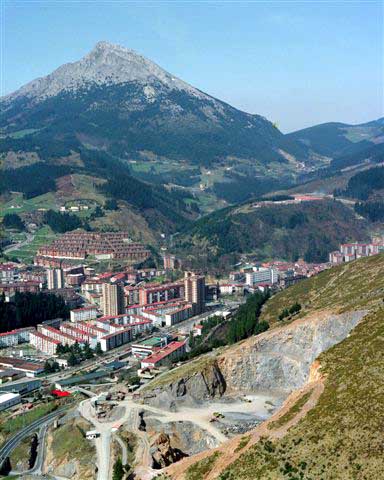
Mondragon Cooperative Corporation in Basque Country. Image from PermcultureCooperative.

Mondragon Diaries, Day Two
It starts with a school:
Knowledge and the path to workers power

By Carl Davidson / The Rag Blog / September 23, 2010

[This is the second of a five-part series by Carl Davidson about the Mondragon Cooperative Corporation, a 50-year-old network of nearly 120 factories and agencies, involving nearly 100,000 workers — centered in the the Basque Country but now spanning the globe. Go here for “Mondragon Diaries I: Bridges to Socialism.”]

BASQUE COUNTRY, Spain — This bright and sunny morning in the Basque Country mountain air again begins with our bus slowly winding up the mountain slopes. But this time it’s a short ride. We stop at ALECOP, a unique worker-student cooperative that is at once part of Mondragon’s production units and its educational system. Think of it as a small worker-owned community college, but with technology shops that actually produce items for sale in industrial markets, and you won’t be far off.

Once we get settled in a classroom, our MCC mentor, Mikel Lezamiz, introduces us to a young 30-something worker-technician who is going to explain ALECOP to us, and a good deal more.

“First of all, we are a mixed cooperative,” he states. “This means we are made up of both worker-owners and students. There are 59 worker members and about 300 student members. Some of our students also work in other coops part-time, but our students are mainly working as part of their studies, and to earn a little money to support themselves as students.”

He goes into some history, reminding us that MCC started back in the 1940s, with the polytechnical school started by Father Arizmendi, the innovative priest who envisioned MCC, as his very first effort to help the war-torn Basque workers find a path out of the devastation of World War II. The first school’s students helped form the first factory, but the school also continued, and over the decades, it evolved into what is now ALECOP, several more coop high schools, and what is now Mondragon University.

“To democratize the power, we have to share the knowledge,” interjected Mikal, summarizing Arizmendi’s theories. “Thus continual study throughout life must not only be for the rich, but also for the workers.”

What kind of jobs do the ALECOP students have? Our young guide shows us a list: R & D assistant, storekeeper, publisher, process technician, electronic assembler, and several others

What kind of products do they make? “Most important, we design educational tools, to help in teaching electricity, electronics, automation, telecommunications, and other subjects needed in high schools and in factory training. But we are also a nonprofit. We make money, but our hope is mainly to cover our expenses. He goes on to describe a list of ‘competencies’ that they hope to instill in the students, so they can go to work in FAGOR or other MCC factories with a good degree of skill.

It all becomes much clearer once he takes the 25 of us out into the shop area. As someone who taught computer repair to inner city youth and ex-offenders by recycling old computers, I step away from the group and examine some of the teaching stations.

Teaching stations at Mondragon worker-student cooperative. Image from The Syndicalist.

They are large panels with, for example, critical automotive parts on one side, connected with various testers and gauges. I examine the back side and find the motherboards and circuitry connecting them all. A student who wanted to become an auto mechanic, for example, could test and work through the key components of dozens of vehicles on the front side, while the programming embedded in the back side would give him or her the proper positive or negative training responses.

Very cool, I thought. Even cooler was the fact that the students not only used these machines for their own learning, they also made the circuit boards and wrote the software to make these instructional learning tools in quantity, ready to be sold and used anywhere.

After ALECOOP, our bus makes a quick stop at Mondragon University’s top-line coffee bar. We’re in a hurry, so Mikel gets busy: How many with milk? How many black espresso? He turns in the bulk order, and with our caffeine fixes, we’re back on the road in 20 minutes.

The late morning session is at Mondragon Assembly, a mind blowing and thought bending state-of-the art high-tech and high-design worker cooperative competing on a world scale. Its products are the software and hardware of room-sized automatic assembly machines making solar photovoltaics and many varieties of electronic components for robotics.

“It’s rather easy to design a machine that can make a switch or solar cell every 1.8 seconds,” explains a young coop member. “But it’s very hard to make the same switch or cell in 1.2 seconds. Yet that is what our clients are demanding of us, and it changes every six months, with higher and faster standards. We either do very well, and make lots of money for the cooperative, or we fail and we lose a lot.

“But this is what we want to be doing,” he adds. “We don’t have too many workers in this coop in the 40 to 55 age range. We’re all younger. Some say we try to make up in attitude and spirit what we lack in experience!” This brings a round of laughter, but we all know exactly what he means. He goes on to describe the global market for these advanced means of production, with China leading the way in many of them.

“We can’t just produce for the Basque Country, or even Spain and Europe. We have clients everywhere, and we are setting up factories everywhere — Germany, Mexico and China, too.” While owned by MCC, none of these abroad are yet full worker-owned coops. But neither are they sweatshops; they are very advanced production units with skilled workers.

Still, it is a contradiction, and MCC’s aim is to eventually convert them all to cooperatives. But they have to move in accordance with the host country’s laws and customs on the matter. Or simply make the decision to abandon proposed startup projects in that region to other regular capitalist firms.

How are his clients spread around? “Right now, we have 85 here in Spain, 30 in Mexico, 25 in France, six in China and 20 in Germany. For this kind of equipment, you don’t get a large number of orders. Maybe 10 a year. But each one is worth millions, but only if we are successful! But keep in mind that for every two jobs we create globally on the outside, we also create one new job here inside MCC.”

As we left, many in our group were debating the pros and cons of global economic justice. I shared their concerns, but I also saw something else. Here were the beginnings of some of the most advanced productive forces in the world, the means of both economies of abundance and the means of clean and safe renewable energies and far lighter ecological footprints.

n any dynamic socialism of the 21st century, these young people and their creative efforts would be invaluable. I would want to shape their boundaries, but I would not want to stifle them or just send them off to work for the neoliberal globalists. We needed them with us.

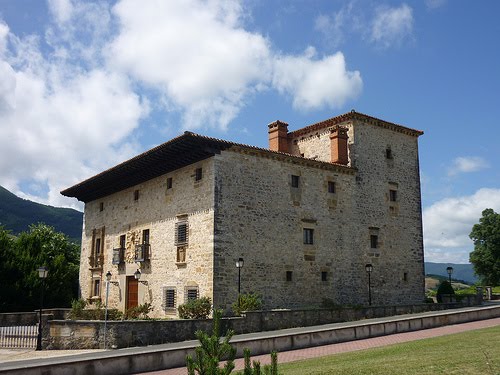
As is the custom in this part of the world, our main meal was a long mid-day “lunch,” really a dinner. We were driven higher up into the mountains on a winding road to an immense building that looked like a blockhouse or small fortress of stone. “When was it built?” someone asked. We checked the carvings, and translated. Around 1400 to 1500, before the time of Columbus. But now it was updated into long stone-walled dining rooms, with a conference center on the upper floors. Needless to say, lunch was exquisite and Basque cuisine deserves its reputation.

In our last session for the afternoon, Mikel gives us all a detailed technical talk about cooperative structures, how they can vary, and especially, how they are financed and governed.

“People are the core, not the capital. This is the main point,” he starts off. “If capital has the power, then labor is simply its tool. But if labor has the power, then capital is subordinate. It becomes our tool.”

This is part of Father Arizmendi’s 10 principles, which he presented yesterday. “Labor is sovereign” is one of them. “This means one worker, one vote — whether you have more money or less or anything else, it doesn’t matter. You have an equal voice and the access to knowledge and transparent information.

“One journalist once said back in the 1970s that Father Arizmendi had created a progressive economic movement that was anchored in an educational institutions. When Arizmendi heard it, he said, ‘No, its just the reverse. We are creating an educational movement for social change, but with anchors in economic institutions.’”

It’s the whole of humanity that matters most.

[Carl Davidson is a national co-chair of the Committees of Correspondence for Democracy and Socialism, a national board member of Solidarity Economy Network, and a local Beaver County, PA member of Steelworkers Associates. His website is Keep on Keepin’ On, where this series also appears. Davidson is also available to speak on the topic. Contact him at carld717@gmail.com. For more info on these tours, go here.]

Also see:

The Rag Blog

Posted in Rag Bloggers | Tagged , , , , , , , | Leave a comment

Dr. Stephen R. Keister : Calvinism, Pride in Ignorance, and Health Care Reform

John Calvin: Some are blessed by God.

Reflecting on the health care law:
Flawed bill fixes some problems

By Dr. Stephen R. Keister / The Rag Blog / September 23, 2010

There has been time for reflection about the health care legislation — the Patient Protection and Affordable Care Act (PPACA) — since its passage this year. My thoughts were called into focus this past week after I attended a seminar led by Chuck Pennacchio who heads the movement for single payer health care in Pennsylvania.

There is a reasonable possibility that such a plan will be passed before the current governor departs office. The program is all-inclusive and will reduce health care costs for ALL members of the Commonwealth, including municipalities and employers, by some 30-40 percent.

At the seminar, I had a discussion with a retired professor of political science. We talked about why decent, low priced health care seems unobtainable in the United States, considering that such systems are alive and well in virtually every other civilized nation in the world. In two nations that actually have “socialized medicine — the United Kingdom and Canada – the percentage of patient satisfaction, according to polling, runs in the 90’s.

In all the European nations, plus Japan, Korea, and Taiwan, insurance coverage is provided at a reasonable price. My colleague pointed out two salient differences between our society and those of the European countries: the European insurance companies see themselves as providing a public service rather than being vehicles for profit for their executives and stock-holders; and the European consumer looks at the welfare of the community rather than just looking out for himself, and thus is willing to share the costs and benefits.

I discussed this further with a sociologist, an ex-Jesuit, who pointed out another factor to me: the wide spread Calvinistic influence in the United States and the pervading idea of predestination — the assumption that there are those who are born blessed by God, and those who are destined to be poor and inferior.

Thus, there is little reason for those who have the ability to pay their way to help out those who cannot. Why argue with divine will. Why deprive yourself of a Florida golf vacation to succor some poor inner city family with three children and no jobs due to the fact that their employer moved his production to China. (They probably are not of white Anglo-Saxon heritage in any event.)

Of course this thinking helps explain the “tea-bagger” opposition to health care for all and reinforces the conclusions of Sherman DeBrosse in his article about the psyche of the political right that recently appeared in The Rag Blog. It also further explains why PPACA has been a flawed bill from the beginning, as it is merely a national version of the poorly conceived Massachusetts health care plan put in place by then governor Mitt Romney.

It appears that President Obama and Congress passed all that was possible under the circumstances. Those circumstances being that the big corporations overtly and covertly lead the discussion, excluding the medical profession and the public from any meaningful input.

And, of course, the discussion of health care becomes confused by the interjection of the abortion issue, led by the Council of Bishops, spurred on by the insurance and pharmaceutical industries. I may note that I am a member of Physicians for A National Health Program and have never seen the question of abortion mentioned in thousands of pages of literature about how we can best take care of the sick, the disabled, and the infirm.

The health care legislation that was passed may have the following positive results:

  1. Many low income families will receive subsidies to help buy private insurance and Medicaid will be expanded.
  2. The “doughnut hole” in medicare prescription drug coverage will begin to close.
  3. Some provisions will help expand primary care coverage.
  4. There will be limited insurance reforms including elimination of “pre-existing conditions” and lifetime limits on coverage. (It should be noted that these benefits will vary from state to state, based on the numbers of folks enrolled.)
  5. Children will gain a few years coverage on their parents’ policies.

Yet many problems will continue to exist:

  1. 45 million Americans will be left uninsured or underinsured.
  2. Health care costs will increase, not decrease.
  3. Insurance companies will still control the healthcare market and reap enormous profits.
  4. Millions of people will be required to buy private insurance or face thousands of dollars in fines.
  5. Insurance will cost more for families and employers.
  6. We will continue to have severe shortages of primary care doctors as the bill did nothing to support a funded program of medical education.
  7. America will continue to spend twice what other countries spend for healthy care.

I joined the Rag Blog family at age 87 and now face my 89th birthday. I have never been so discouraged about this nation, which my ancestors helped build starting prior to The French and Indian War. The United States has become a corporatocracy with a populace interested primarily in their own well being and in the acquisition of wealth.

I watch the street demonstrations peopled by folks who take pride in their own ignorance, holding the educated person up to derision. This in turn influences our failing educational system. I see an increasing injection of “faith” into politics. I think of Glenn Beck speaking in front of the Lincoln Memorial, and I’m reminded of another speech:

My feelings as a Christian points me to my Lord and Savior as a fighter. It points me to the man who once in loneliness, surrounded by a few followers, recognized these Jews for what they were and summoned men to fight against them and who, Gods truth was greatest not as a sufferer but as a fighter.

In boundless love as a Christian and as a man I read through the passage that tells us how the Lord at last rose in His might and seized the scourge to drive out of the Temple the brood of vipers and adders… Today, after two thousand years, with deepest emotion I recognize more profoundly than ever before the fact that it was for this that He had to shed his blood upon the Cross.” — Adolph Hitler, speech on April 12, 1922.

Of course unlike Hitler, Glenn Beck, standing at the Lincoln Monument, was speaking about our Moslem brethren and not about the Jews.

[Dr. Stephen R. Keister lives in Erie, Pennsylvania. He is a retired physician who is active in health care reform.]

The Rag Blog

Posted in Rag Bloggers | Tagged , , , , , | 2 Comments

Heidi Turpin : Peace for the People of…

Susan Van Haitsma and Jim Turpin of CodePink Austin outside Austin City Hall on International Day of Peace, September 21. Photo by Heidi Turpin / The Rag Blog.

Rain doesn’t dampen the desire for peace…

By Heidi Turpin / The Rag Blog / September 22, 2010

AUSTIN — “Neither rain, nor snow, nor sleet, nor hail…” an expression that doesn’t just apply to postal workers anymore. This Tuesday, September 21st — a stormy day in Austin — was the International Day of Peace established by the United Nations in 1982 as a global holiday when individuals, communities, nations, and governments highlight efforts to end conflict and promote peace.

At a time when our own government is occupying Iraq and Afghanistan, drone bombing the people of Pakistan, and supplying weapons to Israel for its war on the Palestinian people, CodePink Austin stood outside of City Hall, during an afternoon downpour, sending a hopeful message that peace is possible.

A sign standing five feet tall simply stated “Peace for the People of…” and included names of countries involved in armed conflict around the world. Sadly, there was barely room to include the 43 countries currently affected. A peace symbol, five feet in diameter and surrounded by feathers stood as a bright spot on an otherwise dreary afternoon. Many passersby showed their appreciation with honks and peace signs. Rain doesn’t seem to dampen the desire for peace!

The Rag Blog

Posted in Rag Bloggers | Tagged , , , | 1 Comment

Harry Targ : Obama and Latin America Just More of the Same

Early promise: Barack Obama, shown addressing the Cuban American National Foundation on Cuba and Latin American policy at a Cuban Independence Day Celebration in Miami in 2008, loosened travel restriction for Cuban Americans. Photo from AP.

Promise unfulfilled:
A progressive response
to Obama’s Latin American policy

By Harry Targ / The Rag Blog / September 22, 2010

Hopes for change in United States relations with Latin America

Progressives were more hopeful about a change in United States foreign policy toward Latin American than any place else as Barack Obama assumed office in January 2009. Even though the nation’s attention was appropriately fixated on two wars, Iraq and Afghanistan, and a deepening threat of war in the Middle East, they thought that the new administration could most easily begin to reshape the image of the United States role in the world in the Western Hemisphere.

Many scholar/activists urged the new administration to reverse the history of U.S. imperial rule in the Western Hemisphere by recognizing spreading populist politics in Venezuela, Bolivia, Ecuador, Paraguay, Uruguay, Nicaragua, El Salvador, Honduras, and in Argentina, Brazil, and Chile.

Also, most commentators on Latin America proclaimed that it was time to end the 50-year blockade of Cuba, advocating that the United States reestablish formal diplomatic relations with the Hemisphere’s first Socialist country, and endorsing the right of any nation to choose its own destiny. Particularly, this principle should be applied to United States relations with the new populist regimes and particularly Venezuela as it pursues what it calls “21st century socialism.

In addition, many observers assumed that the United States would use its influence and resources to reduce the bloody violence in the 50-year civil war in Colombia and in the process reverse war-like hostilities between Venezuela, Colombia, and Ecuador. “The war on drugs,” the latest rallying cry for continuing U.S. military intervention in the region, would be reversed.

Progressives expected that United States material and diplomatic resources in the Hemisphere would shift from military transfers to multilateral economic assistance to facilitate continued economic development in the region. The United States, from this perspective, would respect those nations who chose to reject the neoliberal model of development based upon privatization of public institutions, reductions in government participation in local economies, and the promotion of exports at the expense of production for domestic needs.

In conjunction with declining advocacy of neoliberal policies, it was hoped that the United States in the new administration would move toward an immigration reform policy that recognizes the connections between harsh and austere economic policies forced on Latin American countries and the migration of people, desperately seeking work, to other countries.

In a January, 2010 document the Council on Hemisphere Affairs (COHA) summarized the condition of United States/Latin American relations when President Obama came into office:

Productive cooperation on a variety of shared regional concerns had been all but ignored by a Bush administration completely distracted by the Iraqi War, and in favor of an approach characterized by confrontation, diplomatic bullying, and the continued pursuit of policies detrimental to the abiding interests of both Latin America and the United States. Apparently recognizing this, Obama brought with him a promise to begin a “new chapter in the story of the Americas,” in which the U.S. leader would follow an inclusive and relevant approach to regional diplomacy, coupled with a pledge to begin matching rhetoric with deeds.” (COHA, January 2010)

Early positive policy initiatives

Some administration initiatives in 2009 indicated that the Obama administration would begin the process of transforming the history of relations with the region. First, the administration loosened restrictions on Cuban American travel to the island, including giving them more rights to transfer funds to their families on the island. This reversed the Bush administration’s policies which reduced rights of travel and monetary transfer of funds from U.S. citizens of Cuban heritage to their relatives.

Second, the word inside the beltway was that this initial policy change on Cuba would be followed in short order by the end of the United States blockade of Cuba.

Third, at a meeting of Hemisphere leaders, President Obama was photographed shaking hands with Venezuelan President Hugo Chavez. Neoconservatives used the image to prove that Obama was capitulating to Venezuelan Socialism, which was part of the new Cuban/Venezuelan cabal. Moderate observers of U.S. policy, on the other hand, perceived the photo op as an example of the maturing United States policy

Fourth, when military officers and economic elites in Honduras carried out a coup, ejecting one of their own who had begun to improve ties to the Venezuelan-led reform currents in the Hemisphere, the Obama administration, as virtually every regime in the Hemisphere, condemned the military coup. The United States made it clear that military coups, while part of the old political ways in the region, were no longer acceptable. The Organization of American States ejected the illegal regime from the regional grouping.

Colombia: Red carpet for U.S. military bases. Photo from MOIR.

United States Latin American policy:
The more things change the more they stay the same

Much of the Latin American foreign policy agenda progressives expected of the new administration has not been implemented. Despite growing pressure from the left and right, agricultural and tourist interests and spokespersons from major business groups, the blockade of Cuba has not been ended.

The Cuban Five, Cuban citizens tried and convicted illegally for working to uncover terrorist plots targeted against their country, remain in prison. Despite rumors of change, policies prohibiting hundreds of university and high school educational exchanges with Cuba are still in place.

Public statements from foreign policy spokespersons today directed against Cuba have the same Cold War character as those in the past. And the mainstream media continue to characterize the island nation as an archaic dictatorship surviving only because of Venezuelan oil money.

The United States, after the dramatic Obama/Chavez handshake, has continued to publicly condemn the influence of Venezuela in the region, and, by beefing up the Colombian military, has increased tensions between the two neighboring nations.

After an initial credible statement condemning the coup in Honduras, the United States worked to circumvent the ousted Honduran leader from reassuming office and supported a flawed election that the coup plotters orchestrated in November, 2009. Meanwhile violence inside Honduras, targeting anti-government activists and journalists, has risen significantly.

Beltway influentials close to the Honduran business class and Secretary of State Hillary Clinton have worked to undermine the continued condemnation of the Honduran coup around the Hemisphere.

The United States has escalated its military presence in the region.

First, the United States and the government of Colombia have initiated a deal to create seven new military bases in Colombia. This clear tilt toward the latter has increased tensions between Colombia and her neighbors to the east and west, Venezuela and Ecuador. The “war on drugs” continues.

Second, with a curious shift in Costa Rican policy, that country has authorized a large U.S. naval presence in Central American coastal waters.

Finally, the pattern of United States economic and military assistance in the region reflects more continuity in U.S. policy than change. For example, COHA points out that between 2008 and 2010 there has been a substantial increase in military and police assistance to the region (from $1.13 billion in 2008 to $1.4 billion in 2010) and a modest decline in economic assistance (from $1.7 in 2008 to $1.64 billion in 2010).

With the establishment of seven new bases in Colombia and the presence of a U.S. naval fleet in the Caribbean, COHA argues, Latin American countries, fearful of declining regional security may be enticed or frightened to purchase more arms, setting off an arms race in the region.

For many years national defense budgets remained virtually unchanged in South America, but reports are surfacing about significant new arms purchases by Brazil, Venezuela, Ecuador, Chile, and Colombia, among others in South America. Whether or not you call it an arms race, the increase is substantial. Led by arms purchases, South America’s defense spending increased by 30 percent from 2007 to 2008, reaching $50 billion.

A progressive agenda for United States foreign policy
in the Western Hemisphere

The vision of a progressive foreign policy agenda for Latin America is clear. The United States must move away from a five hundred year policy of colonialism and neocolonialism; by the Spanish, the Portuguese, the British, and most recently the United States.

The imperial program that emerged with the U.S. occupation of Cuba in the late 19th century to the support of the repressive Colombian regime and the successors to the military junta in Honduras today must be rejected.

Latin American nations must be allowed to choose their own agenda. In fact, experiments with democracy, populism, and 21st century Socialism are experiments from which the United States could learn.

Specifically a progressive Latin American policy should include:

  • an end to arms transfers
  • the elimination of U.S. bases and naval maneuvers in the region
  • withdrawal of support from the corrupt and violent government of Colombia
  • opening up serious dialogue with Venezuela, Ecuador, Bolivia and other regimes which have rejected the IMF neo-liberal policies
  • establishing full diplomatic and economic relations with Cuba
  • exonerating the Cuban Five
  • working with Hemisphere nations to develop comprehensive immigration reform that provides work and humane living conditions for migrant workers everywhere
  • establishing dialogue with Hemisphere economic and political institutions that have been created to protect the rights of national self-determination of participating countries

With the changing global role of the United States in the international system and the growing international connections being established between countries of the Global South, including Latin America, progressives must demand that United States foreign policy no longer stand against historical demands for progressive social change.

[Harry Targ is a professor of political science at Purdue University who lives in West Lafayette, Indiana. He blogs at Diary of a Heartland Radical.]

The Rag Blog

Posted in Rag Bloggers | Tagged , , , , , | 1 Comment

Ivan Koop Kuper : KFMK-FM Was Houston’s ‘Mother Radio’

Bumper Sticker design for FM radio station KFMK. Graphic © Joel R. Cheves 1965 – 2008. Image from OmegaGraphix.

Progressive Radio Roots:
KFMK-FM was part of a radio revolution

By Ivan Koop Kuper / The Rag Blog / September 22, 2010

Long before the Internet provided user access to virtually every genre of music ever recorded, before the advent of multi-channel satellite radio, and before corporate mergers and buyouts created today’s mass media monopolies, Houston’s first commercial 24-hour FM rock station provided free-form music with an anything-goes format.

The forerunner of all rock-formatted radio stations to follow in the Texas marketplace, independently owned KFMK-FM promoted itself as “Mother Radio,” and targeted Houston’s burgeoning baby boomer counterculture in the late-1960s.

“We were starving for music and information back then,” said Bill Bentley, director of A & R for Vanguard Records in Los Angeles and former Houstonian. “When the station went on the air, it was a real godsend. I bought an FM radio for that very reason. Houston was no longer a desert wasteland because up until that time we only listened to AM radio on our transistors.”

Broadcasting at 97.8 on the FM dial, Mother Radio was one of many radio stations that sprang up across America during the summer of 1967, just as the colorful new underground papers were popping up all over the country. These stations were all inspired by San Francisco’s underground flagship alternative, KMPX-FM, whose format was the creation of California radio visionary, Tom “Big Daddy” Donahue.

According to Bentley, KFMK was not only a media innovation, it was a lifestyle and cultural phenomenon that influenced a generation of Houston listeners. “The radio station was our beacon,” Bentley said. “It was a soundtrack for the new counterculture, a place we could listen in. Back-to-back, every song was great. It was like we died and went to heaven. The format fit the music, and it was cultural evolution. The DJs had the power to pick the songs, and treated the music with total respect. They believed in the music as much as the audience did.”

Up to this time, mainstream “terrestrial” radio historically broadcast on the AM frequency and only in less-than-glorious monophonic sound. Early FM stations broadcast in stereo but were limited to classical music, easy listening or “elevator music,” and foreign language broadcasts.

Listeners tuned in to Top-40 AM radio to hear contemporary pop music. Then as now, the disc jockeys were loud and chatty, the music was repetitive, and the medium catered to listeners with short attention spans.

Graphic from ad for KFMK-FM in Larry Sepulvado’s underground music publication, Mother Magazine, Issue #3, 1968, Houston, Texas.

Mother Radio changed all the rules, according to former KFMK production director, Stephen Nagel. “We called ourselves ‘free-form radio’ and ‘progressive radio’ because the term ‘album-oriented radio’ hadn’t been invented yet. The whole thing was completely DJ-programmed. I don’t ever remember attending a programming meeting where I was told what I had to play. That was the whole idea; it was ‘free-form’ and there was no format I had to follow,” said Nagel.

KFMK and stations like it created a new kind of relationship between radio and listener. The announcer’s delivery was relaxed, the spinning of album tracks was innovative, and the multi-genre music was programmed in a manner that the songs segued and flowed into each other, attracting listeners who tuned in for hours.

“This is how we approached it,” explained Nagle. “We were going to play the tracks from the albums that AM radio didn’t play that we thought were just as cool as the tracks that AM radio was playing to death. We also weren’t going to yell at our audience but talk to them like they were our friends that knew something about the music we were playing and we weren’t going to play the same songs over and over again or limit ourselves to the ‘hit’ singles.”

A typical KFMK broadcast hour consisted of uninterrupted rock, blues, folk, and jazz music of the era, as well as Indian sitar ragas. At the top of the hour, the station played several commercials, followed by the daily horoscope, and a rip-and-read newscast that always ended with the DJ telling his listeners: “And the war drags on,” a line borrowed from a popular folk song that referred to America’s on-going involvement in Indochina.

All good things must come to an end and Mother Radio was no exception. Handicapped by a failure to attract a substantial market share of the Houston audience, an ineffective low-power transmitter and the bottom-line economics of inadequate advertising revenue, Mother Radio ceased broadcasting by mid-1969 and closed its doors. (According to the historical website, 1960’s Texas Music, pressure from the Houston Police was also a factor in the station’s closing.)

“KFMK was ahead of its time but under-capitalized for the Houston marketplace,” said Nagle who now makes his living practicing law in Austin. “The station owners misjudged what a cultural impact and profit-making potential commercial FM stations like KFMK would have in the future.”

By 1970, a new era of rock radio activity swept over Houston’s media landscape. Privately-held and substantially funded KLOL-FM competed with ABC Radio owned, KAUM-FM, for positioning and a slice of the new demographic pie with their versions of free-form formats. KILT-FM (“Radio Montrose”) as well as KRBE-FM also experimented briefly with progressive rock programming before transitioning into safer and more pop-oriented amalgamations.

(KAUM-FM, unique among the progressive radio stations, also had a large and innovative news department, rivaling even the AM news stations.)

1970 was also the year that Houston’s new listener sponsored, community radio station, KPFT-FM, signed on the air. The Pacifica radio affiliate came the closest to duplicating Mother Radio’s original concept, but only late at night, after prime time when its news and public affairs programming ended.

[Ivan Koop Kuper is a graduate student at the University of St. Thomas, Houston, Texas, and maintains a healthy diet of music, media and popular culture. He can be reached at kuperi@stthom.edu. Find more articles by Ivan Koop Kuper on The Rag Blog]

The Rag Blog

Posted in Rag Bloggers | Tagged , , , , , , , , | 4 Comments

John Ross : The Next Mexican Revolution

Liberation Army of the South, led by Emiliano Zapata, fought the government forces of Gen. Porfirio Diaz, in the state of Morelos, Mexico. Photo from Wikimedia Commons.

The next Mexican Revolution:

Don’t look now but the long-awaited resurgence of the Mexican Revolution has already begun.

By John Ross / The Rag Blog / September 22, 2010

MEXICO CITY — As the 100th anniversary of the Mexican revolution steams into sight, U.S. and Mexican security agencies are closely monitoring this distant neighbor nation for red lights that could signal renewed rebellion.

The most treacherous stretch for those keeping tabs on subversion south of the border is between September 15th, the recently celebrated bicentennial commemorating the struggle for Mexico’s independence from Spain, and November 20th, the day back in 1910 that the liberal Francisco Madero called upon his compatriots to take the plazas of their cities and towns and rise up against the Diaz government.

At least 10 and as many as 44 armed groups are currently thought to be active in Mexico and the two months between the 200th anniversary of liberation from the colonial yoke and the 100th of the nation’s landmark revolution, the first uprising of landless farmers in the Americas and a precursor of the Russian revolution, is a dramatic platform from which to strike at the right-wing government of President Felipe Calderon.

Among the more prominent armed formations is the Popular Revolutionary Army (EPR) which rose against the government in 1996 and is based in Guerrero and Oaxaca, and three distinct split-offs: the Democratic Revolutionary Tendency (TDR); the Justice Commandos – June 28th, thought to be linear descendents of the followers of guerrilla chieftain Lucio Cabanas who fought the government along the Costa Grande of Guerrero in the 1970s; and the Revolutionary Army of the Insurgent Peoples (ERPI) which also espouses Cabanas’s heritage and is active in the Sierra of Guerrero where Lucio once roamed.

Others on the list released two years ago by the CISEN, Mexico’s lead anti-subversion intelligence-gathering apparatus, include the largely-disarmed Zapatista Army of National Liberation (EZLN), an indigenous formation that rose in Chiapas in 1994; the Jose Maria Morelos National Guerrilla Coordinating Body, thought to be based in Puebla; and the Jaramillista Justice Commandos that takes its name from Ruben Jaramillo, the last general of revolutionary martyr Emiliano Zapata’s Liberating Army of the South gunned down by the government in 1964, which has taken credit for bombings in Zapata’s home state of Morelos.

The TAGIN or National Triple Indigenous and Guerrilla Alliance, thought to be rooted in southeastern Mexico, boasted in a e-mail communiqué at the beginning of the year that a coalition of 70 armed groups have agreed on coordinated action in 2010.

Also in the revolutionary mix are an unknown number of anarchist cells, at least one of which takes the name of Praxides G. Guerrero, the first anarchist to fall 100 years ago in the Mexican revolution.

Primarily operating in urban settings, anarchist cells have firebombed dozens of ATM machines and banks, new car showrooms, bullrings, and slaughterhouses (many anarchists are militant vegans) in Mexico City, Mexico state, Guadalajara, San Luis Potosi, and Tijuana. The U.S. Attorney General Eric Holder has just added Mexican anarchist groups to the Obama government’s terrorist lists.

Thus far, no group in this revolutionary rainbow has struck in 2010, and the window is narrowing if Mexico’s twin centennials are to be a stage upon which to launch new uprisings. If this is to be the year of the next Mexican revolution, the time to move is now.

Objective conditions on the ground are certainly ripe for popular uprising. At least 70% of the Mexican people live in and around the poverty line while a handful of oligarchs continue to dominate the economy — Mexico accounts for half of the 12 million Latin Americans who have fallen into poverty during the on-going economic downturn.

Despite Calderon’s much scoffed-at claims that the recession-wracked economy is in recovery, unemployment continues to run at record levels. Hunger is palpable on the farm and in the big cities. Indeed, the only ray of light is the drug trade that now employs between a half million and a million mostly young and impoverished people.

Labor troubles, always a crucible of revolutionary dynamics, are on the rise. A hundred years ago, conditions were not dissimilar. The fallout from the 1906-7 world depression that saw precious metal prices, the nation’s sustenance, fall off the charts sent waves of unemployment across the land and severely impacted conditions for those still working.

As copper prices bottomed, workers at the great Cananea copper pit scant miles from the Arizona border in Sonora state, went out on strike and owner Colonel William Green called in the Arizona Rangers to take the mine back. Twenty six miners were cut down and the massacre gave birth to the Mexican labor movement.

In March 2010, President Calderon dispatched hundreds of federal police and army troops to Cananea to break a protracted, nearly two-year strike at the behest of the Larrea family, the main stockholders in Grupo Mexicano Industrial which was gifted with the copper pit, the eighth largest in the world, after it was privatized by reviled ex-president Carlos Salinas in 1989. Calderon’s hard-nosed labor secretary Javiar Lozano has threatened arrest of miners’ union boss Napoleon Gomez Urrutia, now in self-exile in Vancouver, Canada.

Lozano is also deeply embroiled in take-no-hostages battles with the Mexican Electricity Workers Union (SME) over privatization of electricity generation here that has cost the union, the second oldest in the country founded during the last Mexican revolution, 44,000 jobs. A near death hunger strike by the displaced workers failed to budge the labor secretary and SME members now threaten to shut down Mexico City’s International Airport.

History is often colored with irony. The first important battles in the Mexican revolution were fought around Ciudad Juarez, Chihuahua, a key railhead on the U.S. border and a commercial lifeline to El Norte for dictator Porfirio Diaz. In skirmish after skirmish, the irregulars of Francisco Villa and Pascual Orozco challenged and defeated the dictator’s Federales and began the long push south to hook up with Emiliano Zapata’s southern army in Morelos state on the doorstep of the capitol.

Ciudad Juarez was devastated by the cruel battles between the revolutionaries and the dictator’s troops. Dead wagons plied the dusty streets hauling off the bodies of those who had fallen to be burnt out in the surrounding desert. Today, once again, Ciudad Juarez is the murder capitol of Mexico.

Mexican troops, mobilized to fight the narco-insurrection. Image from. Mcauley’s World’s Webblog.

Over 1,800 have been killed in this border city so far in 2010, a record year for homicides, as the homegrown Juarez drug cartel and its local enforcers, the “La Linea” gang, try to defend the “plaza,” the most pertinent drug crossing point on the 1964 mile border, from the Sinaloa cartel under the management of “El Chapo” Guzman, and his local associates, “Gente Nueva” (“New People”).

Much as today when the narco kings like “El Chapo” or his recently slain associate “Nacho” Coronel are vilified by the Mexican press and President Calderon as “traitors” and “killers” and “cowards,” 100 years back revolutionaries were cast as villains and vandals hell-bent on tearing down the institutions of law and order.

Pancho Villa was universally dissed as a cattle rustler, a “bandido,” “terrorista,” and rapist. When Zapata, “the Attila of the South,” and his peasant army came down to Mexico City in 1914 to meet with Villa, the “gente decente” (decent people) locked up their homes and their daughters to protect them from the barbarian hordes.

Similarly, in 2010, the corporate press lashes out at the cartels and their pistoleros as crazed, drug-addled mercenaries who will shoot their own mothers if enough cash and cocaine are offered. Villa’s troops were no strangers to such accusations. “La Cucaracha,” the Villista marching song, pleads for “marijuana para caminar” (“marijuana to march”).

All this duel centennial year, ideologically driven leftists here have been waiting with baited breath for a resurgence of armed rebellion such as in 1994 when the EZLN rose up against the “mal gobierno” in Chiapas, or in 1996 when the EPR staged a series of murderous raids on military and police installations — but the leftists may be barking up the wrong tree.

If revolution is to be defined as the overthrow of an unpopular government and the taking of state power by armed partisans, then the new Mexican revolution is already underway, at least in the north of the country where Calderon’s ill-advised drug campaign against the cartels (in which according to the latest CISEN data 28,000 citizens have died) has morphed into generalized warfare.

Although the fighting has been largely confined to the north, it should be remembered that Mexico’s 1910 revolution began in that geography under the command of Villa and Orozco, Venustiano Carranza, Alvaro Obregon, and Francisco Madero, and then spread south to the power center of the country.

Given the qualitative leap in violence, Edgardo Buscaglia, a keen analyst of drug policy at the prestigious Autonomous Technological Institute of Mexico now describes Calderon’s war as a “narco-insurgency” — a descripton recently endorsed by U.S. Secretary of State Hillary Clinton. Daily events reported in the nation’s press lend graphic substance to the terminology.

Narco-commandos attack military and police barracks, carrying off arms and freeing prisoners from prisons in classic guerrilla fashion. As if to replay the 1910 uprising in the north, the narco gangs loot and torch the mansions of the rich in Ciudad Juarez. The narcos mount public massacres in northern cities like Juarez and Torreon that leave dozens dead and seem designed to terrorize the local populous caught up in the crossfire and impress upon the citizenry that the government can no longer protect them, a classic guerrilla warfare strategy.

One very 2010 wrinkle to the upsurge in violence: car bombs triggered by cell phones detonate in downtown Juarez, a technology that seems to have been borrowed from the U.S. invasion of Iraq (El Paso just across the river is home to several military bases where returning veterans of that crusade are housed). Plastique-like C-4 explosives used in a July 15th car bombing that killed four in downtown Juarez are readily available at Mexican mining sites.

Further into the interior, commandos thought to be operating under the sponsorship of the Zetas cartel, have repeatedly shut down key intersections in Monterrey, Mexico’s third largest city and the industrial powerhouse of the nation, with stolen construction equipment and stalled buses and trailer trucks purportedly to clear surrounding highways of traffic for the movement of troops and weaponry into this strategic region.

Now the narco-insurrection has invaded the political realm as manifested by the assassination of the one-time ruling PRI party’s front-running candidate for governor of Tamaulipas state in July 4th elections. But party affiliation doesn’t seem to be a determining factor in this ambience of fear and loathing. The kidnapping of right-wing PAN party Padrino Diego Fernandez de Cevallos, one of the most powerful politicos in Mexico and a possible presidential candidate in 2012, must send chills up and down the spines of Calderon and his associates.

Who actually put the snatch on “El Jefe” Diego remains murky. The Attorney General’s office is now pointing fingers at the Popular Revolutionary Army, which is active in the Bajio region where the PANista was taken last May 14th. In 2007, the EPR claimed credit for the bombing of PEMEX pipelines in Guanajuato and Queretero in retaliation for the disappearances of two of its historical leaders.

The Mexican military has long calculated the eventual “symbiosis of criminal cartels with armed groups that are disaffected with the government” (“Combat Against Narco-Traffic 2008″ issued by the Secretary of Defense).

Fifty thousand of the Mexican Army’s 140,000 troops and large detachments of Naval Marines are currently in the field against the narco-insurrectionists. With an eye to the eventual “symbiosis” of the drug gangs with armed guerrilla movements, the U.S. North Command which is responsible for keeping the North American mainland free of terrorists and regards Mexico as its southern security perimeter recently sent counterinsurgency trainers here to assess threats — their visit was confirmed at a Washington D.C. press conference July 21st by Under-secretary of Defense William Wechsler.

Meanwhile, the military is setting up new advance bases in regions where there have been recent guerrilla sightings such as the Sierra Gorda, strategically located at the confluence of Queretero, Guanajuato, and San Luis Potosi states.

Leftists who have been awaiting a more “political” uprising in 2010 are not convinced by Buscaglia’s nomenclature. A real revolution must be waged along ideological and class lines which the narco-insurrection has yet to manifest. Nonetheless, given the neoliberal mindset of a globalized world in which class dynamics are reduced to market domination, the on-going narco-insurrection may well be the best new Mexican revolution this beleaguered nation is going to get.

[An abbreviated version of “The Next Mexican Revolution” appeared in the Guardian (London, U.K.) September 13, 2010. Note: John Ross’s cancer has returned and he is suspending publication of his column while he undergoes chemotherapy in San Francisco. He can be reached at johnross@igc.org. Readers who crave Ross’s words are advised to consult El Monstruo: Dread and Redemption in Mexico City (Nation Books 2010), available at your local independent bookstore.]

The Rag Blog

Posted in Rag Bloggers | Tagged , , , , | Leave a comment