Greg Moses : Capitalism, Race Relations, and Tea Party Denial

Cartoon by Bennett / Chattanooga Times Free Press / Motor City Liberal.

A national conversion in race relations?
Beyond Tea Party denial, mockery, and deceit

By Greg Moses / The Rag Blog / July 26, 2010

Call me evangelist for anti-racist conversion and apologist for conversations that would get us there.

“Well, let’s face it,” says John McWhorter of the Manhattan Institute speaking Sunday on CNN’s State of the Union with Candy Crowley, “when people say that they are supposed to be in a national conversation on race, they do not mean an exchange of the kind that we are having right now. What they mean is a conversion.

“Nobody puts it in so many words,” says McWhorter, “but the way that conversation is supposed to go is that white America is supposed to realize that the civil rights revolution wasn’t enough, that structural racism, et cetera, still remains prevalent, and that there is still more admitting that needs to be done and probably some sort of second civil rights revolution.

“That is the basis for what the supposed national conversation about race would be,” says McWhorter. “And I don’t think that white people are interested anymore. I don’t think that most black people are interested anymore. And I don’t think it corresponds to modern reality.”

McWhorter was careful not to include all Black people in his review of those who are no longer interested in a national conversion. If structural racism does not correspond to modern reality what is McWhorter’s account for why CNN needs him on camera this week? Or why Latino activists are stretched between Phoenix and Washington this week trying to push back an anti-civil rights stampede?

This month’s national conversation — not conversion — has to do with two swift responses to NAACP President Ben Jealous, who raised the question: is Tea Party racism structural or accidental? In reply, the National Tea Party Federation “flatly rejected” the charges made by Jealous, inferring that he was the one guilty of racism. Then two prominent Tea Party activists retaliated against the NAACP.

In the first case of retaliation, a prominent Tea Party organizer put out a minstrel-style parody of Jealous. In the second case, a prominent Tea Party propagandist found video from an obscure NAACP address in Georgia, sliced the message up, and provoked reflexive national denunciations of a Black woman who had actually said something quite profound.

Meanwhile, the National Tea Party Federation, three days after flatly rejecting any knowledge of racism in its ranks whatsoever, announced that it had just expelled the cross-country Tea Party Express for refusing in turn to expel a minstrel wannabe.

What the Tea Party has proven in this July heat wave is that its members share an impulse to fight back against the NAACP through mockery, deceit, and denial. To put the case more plainly, the Tea Party movement has amply answered the question that Ben Jealous posed. Its racism cannot pass for accidental.

According to McWhorter, however, white people should never have been expected to take interest in manifesting their anti-racist conversion because the structure of racism is no longer a significant part of modern reality. And so we wonder, does McWhorter’s reading of modern reality include this kind of white intransigence.

Notice the way that McWhorter uses the term “white people” in the development of an analysis that purports to deny structural racism. If “white people” and “most black people” have joined together to disavow the need for conversations that would lead to structural conversion how is this alliance of interest to be understood? Is it structural?

In his CNN appearance McWhorter conceptualized racism as “skin color animus” or what used to be called prejudice. Of course, prejudice would seem to have very little explanatory power in describing the way Shirley Sherrod was treated by the Obama administration or by Jealous when she was denounced and forced into retirement on the basis of a three-minute video clip.

This leaves us to ask whether the actions of the Tea Party, the Obama administration, and the NAACP leadership could be coherently illuminated by some recognition that racism in the real world is structural.

Sherrod herself was caught in the act of trying to accentuate the reality of economic class conflict. She tried to explain to her NAACP audience how the salience of economic class came to play a more effective role in her understanding of the real world. Yet she insisted at the same time that her understanding of economic class inequality did not overturn or negate her appreciation of racism in that same real world.

Even many people who recognize the structural racism of the Tea Party movement want to sympathize with its apparent defense of common folk against the elite powers of Wall Street and Washington. But historians of the movement may not want to forget how the Tea Party movement was sparked into visibility by a ruckus that was televised from the floor of the Chicago Board of Trade (CBT).

“Are you listening Mr. Obama?” shouted the eminently charismatic Rick Santelli over the groans of CBT floor traders in Feb. 2009, as the daytime audience of the Capitalism Knows Best Channel (CNBC) was galvanized into a pro-capitalist protest against “public options” for housing and health care.

In its inception the Tea Party was a movement by “water carrying” mortgage holders against their own “loser neighbors” who were nothing but “water drinkers.” There was a slippery slope from the philosophy of mortgage relief and public health assistance straight down into the universal poverty of Castro’s Communist Cuba. Don’t forget that Obama had already been in office for several weeks.

Capitalist affirmation at Tea Party gathering in San Francisco, 2009. Photo from The City Square.

Now what provoked so much fear from Chicago in the midst of a historic financial crash, as Washington and Wall Street hinted that they might have to appease the mortgage crisis? And how does our understanding of this fear relate to that thing we call the real world? The fear that ignited the Tea Party was founded upon a perception that with the Obama years we were about to experience a national lack of discipline.

From the floor of the CBT, their neighbors’ lack of mortgage discipline was intuitively extended across the crashed economy as its primary cause. Finally, the force opposed to this looming lack of discipline was named “capitalism” which was melded at gut level into the sovereign meaning of the Fourth of July. In capitalism there would be national discipline. Public options on the other hand would only bring ruin.

Soon enough the Tea Party Express was traveling across the country denouncing the kind of laxity that accompanies people who are sick, poor, and barely making rent. And where was the discipline to be found? In “free market capitalism,” of course, to which all contributors to CNBC are apparently obliged to swear loyalty oaths on videos that are played nightly on the Kudlow report.

So it’s capitalism is it? Let’s see. What does Black history have to say about the discipline of capitalism’s free market? What would a former slave have to say to Your Tea Party on any given Fourth of July? To make the claim that Fourth of July Capitalism is tantamount to moral discipline is already to expose a mind frame that is willfully negligent of Black history.

What about the moral discipline that faced down capitalism’s addiction to slave labor? The moral discipline that faced down the business district of Birmingham, Alabama? The moral discipline that organized poor farmers white and black so that they could learn how to keep themselves from getting plowed under by capitalism’s advance over land? The moral discipline of farm aid, food aid, rent control, Medicare, Medicaid, public schools, state universities, land grant colleges, head start programs, legal aid services.

What about the moral discipline with which A. Philip Randolph organized Black railroad attendants so that decent wages would be paid? What about the moral discipline with which James Farmer, Jr. desegregated private transportation systems? And what about the moral discipline of today’s hotel and motel workers who stand up for livable wages as they are asked to take responsibility for all that wonderful service that capitalist and administration elites expect to receive?

Now the point I want to make after all this recollection is actually not to be confused with anti-capitalism, because after thinking about the question for 20 years I’m not sure what the essence of capitalism comes down to. But what I do want to say is that when a movement picks up the term capitalism as the full meaning of moral discipline then what they are calling “capitalist” I am definitely against.

What Shirley Sherrod witnessed in the relationship between a poor, white farmer and a semi-wealthy white lawyer is what more people who work at the CBT need to get out and see first hand. Because if the Tea Party had been built upon experience like that, then there would be much less to worry about in terms of complicity with structural racism in the real world.

I suppose that anybody who swears by “free market capitalism” and who knows history intends to signify something in the term “capitalism” that is different from anything we have quite yet seen. They are appealing to an ideal of discipline and fairness that a “free market” would make manifest if it were allowed to exist in pure form.

But the problem with “pro-capitalist” movements is that they practically — which is to say structurally — support the existing corruptions of capitalist institutions which have nothing to do with discipline or fairness. Ask any business student what they imagine they would do if some small risk of cheating had some larger likelihood of reward. In capitalism as a lived experience, there is an expectation that because others are out to cheat you, you may hold your own buyers accountable if they do not beware.

If pro-capitalist movements practically and structurally empower further expectations of unfair actualities such as predatory mortgage lending, and if they willfully talk about history as if the unfairness of capitalism means nothing so long as we’re thinking about the mere case of Black History, then we have in a Tea Party movement what many white folks recognize intuitively as a mob to keep your distance from.

McWhorter may be correct to divide the Black community between those who are interested in the conversion of structural racism and those who are not. But he is wrong to ignore the divisions in the white community that continue to mark the Tea Party as a splinter movement from which progressive whites tend to keep their distance. The latest poll shows Harry Reid’s appeal is rising, which in Nevada means that the Tea Party Express is not a train most white folks want to ride.

In the televised hugs between Sherrod and the white farmer she saved we see what a real Tea Party movement would look like. It would be a movement where the unfairness of capitalism is recognized across the racial divides and where struggles of moral discipline remain in tearful embrace.

It is not altogether an anti-capitalist movement unless you first allow the term capitalism to be defined by the Tea Party in their supremacist way. A pure anti-capitalist movement would never attempt to save the farm for the farmer. In the hug between Sherrod and her beloved white farmer, at last, the theories of Thomas Jefferson outlive his practice.

Look again at the Global Dow. On April 15, 2010 the Tea Party movement had a hundred pro-capitalist rallies announcing to the world what would be their effective definition of capitalism here on out. Investors, who are only human after all, have been taking their money out of that capitalist system ever since.

Do we need a conversion? If you accept a deeper moral realism along the lines professed by Martin Luther King, Jr., then we know that the contradictions of class and race domination shall never have the strength to live on their own. They are contradictory to the plain meaning of what a “free market” means to a liberated mind. Therefore, if there is a Tea Party that is not playing games with minstrelized concepts, or that does not put profound conclusions in the take-out bin, and that is therefore truly interested in discipline and fairness for all, then yes of course a conversion is still needed.

The plain history of our July 4 system is a story of moral discipline breathing new life into the Constitution generation after generation. Any movement that claims—as did the Tea Party movement of 2009—that the economic survivors of that year were the only ones who actually deserved to survive have revealed only their supremacist foundations. Their conversion is therefore necessary, morally and historically. Nor will there be any national progress unless those conversions are evangelized, over and over again.

[Greg Moses is editor of the Texas Civil Rights Review and author of Revolution of Conscience: Martin Luther King Jr and the Philosophy of Nonviolence. He can be reached at gmosesx@gmail.com.]

The Rag Blog

Posted in Rag Bloggers | Tagged , , , , , | 1 Comment

CAB POVERTY BE ELIMINATED ?

Poverty is one of those social evils that has been around as long as civilization has been. It seems like there have always been a societal division into those who have and those who don’t — the haves and have-nots. And for just as long there has been a discussion on how to eliminate poverty (or whether to even try to eliminate it). Some people and some religions don’t believe poverty can be eliminated, and say all that can be done is to offer a little help whenever possible.

Part of the discussion is whether government should do anything to try and alleviate or eliminate poverty. Some economic systems, such as unrestrained capitalism, would have the government do nothing. Those who believe in that system would put the entire burden of fighting poverty on individuals and religious institutions. This has proven to be a massive failure since unrestrained capitalism creates far more poverty than individuals and private aid organizations can handle.

Here in the United States we have developed a system of regulated capitalism (although the amount of regulation varies over time) and made it a government responsibility to to try and alleviate poverty. This has worked better than unrestrained capitalism in providing basic needs to those in poverty, but has done little to actually eliminate it — mostly because the will of the people to spend enough to eliminate poverty has waxed and waned over time, but never “waxed” for long enough to do the job.

The economic system that has been the most successful in eliminating poverty has been democratic socialism (as exhibited in countries like Norway and Sweden). Although not perfect, this system has brought social justice and equality much closer to truly being realized, and has closed the gap between the haves and have-nots.

But whether it is regulated capitalism or democratic socialism, these systems have had little effect outside of the country in which they reside. Too often, while providing a measure of social justice for their own citizens, these countries continue to steal the wealth, resources and labor of third world countries and contribute to the serious and growing poverty that exists there. Their own wealth is much more important to them than making a real effort to eliminate world poverty, and because of that they continue to exacerbate that growing poverty problem.

The fact is that this earth that we all share has a finite amount of resources. In a fair and just world those resources would be shared equally by all peoples of the world, but human greed has prevented that. For some inexplicable reason we have decided it is OK for a few wealthy people to own far too much of the world’s wealth and resources, and to exploit those who have too little of that wealth. This even seems to be OK with many religious people who claim to believe that we are or brothers keeper.

Can poverty be eliminated? I honestly don’t know. What I do know is that we have yet to make a real effort to do so. To make a serious effort at eliminating poverty, those in the richer countries are going to have to be willing to share more and even alter their own lifestyles so they are not using more than their fair share of this earth’s resources. So far, they have been unwilling to do that.

There is a documentary (and accompanying website) called The End of Poverty that has, through consultation with economic experts, come up with a reasonable way to attack the problem of world poverty. They are asking people to sign their petition and get on board with their efforts to address this problem. They also ask people to boycott corporations that will not endorse their 10-point plan to end poverty and to not vote for any politician who will not endorse and support at least half of those points. I have listed their 10-point plan below. What do you think of it? Are you willing to do your part?

  1. The full equality between men and women in public as well as private areas of life, a worldwide minimum wage of $20 per day and the end of child labor under the age of 16 with the creation of a subsidy for scholarship.
  2. The guarantee of shelter, healthcare, education, food and drinking water as basic human rights that must be provided free to all.
  3. A total redistribution of idle lands to landless farmers and the imposition of a 50% cap on arable land devoted to products for export per country, with the creation of a worldwide subsidy for organic agriculture.
  4. An end to private monopoly ownership over natural resources, with a minimum of 51% local communal ownership in corporations, which control such resources as well as the termination of intellectual property rights on pharmaceutical drugs.
  5. The cancellation of third world debt with no reciprocal obligations attached and the payment of compensation to Third World countries for historical as well as ecological debt
  6. An obligation of total transparency for any corporation with more than 100 employees and a 1% tax on all benefits distributed to shareholders of corporations to create unemployment funds.
  7. The termination of tax havens around the world as well as free flow of capital in developing countries.
  8. The cancellation of taxes on labor and basic consumption, the creation of a 2% worldwide tax on property ownership (expect basic habitation for the poor) and the implementation of a global 0.5% flat tax on all financial transactions with a total prohibition of speculation on food products.
  9. An equal voting for developing countries in international organizations such as IMF, World Bank, WTO, and the termination of veto right for the permanent members of the UN Security Counsel.
  10. A commitment by industrialized countries to decrease carbon emission by 50% over a ten-year period as well as reducing by 25% each developed country’s consumption of natural resources.

[Rag Blog contributor Ted McLaughlin also posts at jobsanger.]

The Rag Blog

Posted in RagBlog | Leave a comment

CAB POVERTY BE ELIMINATED ?

By Ted McLaughlin / The Rag Blog / July 26, 2010

Poverty is one of those social evils that has been around as long as civilization. It seems like there has always been a societal division between those who have and those who don’t — the haves and have-nots. And for just as long there has been a discussion on how to eliminate poverty (or whether to even try to eliminate it). Some people and some religions don’t believe poverty can be eliminated, and say all that can be done is to offer a little help whenever possible.

Part of the discussion is whether government should do anything to try to alleviate or eliminate poverty. Some economic systems, such as unrestrained capitalism, would have the government do nothing. Those who believe in that system would put the entire burden of fighting poverty on individuals and religious institutions. This has proven to be a massive failure since unrestrained capitalism creates far more poverty than individuals and private aid organizations can handle.

Here in the United States we have developed a system of regulated capitalism (although the amount of regulation varies over time) and made it a government responsibility to try to alleviate poverty. We have succeeded in providing basic needs to those in poverty, but have done little to actually eliminate the problem — mostly because the will of the people to spend enough to eliminate poverty has waxed and waned over time, but never “waxed” for long enough to do the job.

The economic system that has been the most successful in eliminating poverty has been democratic socialism (as exhibited in countries like Norway and Sweden). Although not perfect, this system has come much closer to realizing the goal of social justice and equality, and has closed the gap between the haves and have-nots.

But whether it is regulated capitalism or democratic socialism, these systems have had little effect outside of the country in which they reside. Too often, while providing a measure of social justice for their own citizens, these countries continue to steal the wealth, resources, and labor of Third World countries and contribute to the serious and growing poverty that exists there. Their own wealth is much more important to them than making a real effort to eliminate world poverty, and because of that they continue to exacerbate that growing poverty problem.

The fact is that this earth that we all share has a finite amount of resources. In a fair and just world those resources would be shared equally by all peoples of the world, but human greed has prevented that. For some inexplicable reason we have decided it is OK for a few wealthy people to own far too much of the world’s wealth and resources, and to exploit those who have too little of that wealth. This even seems to be OK with many religious people who claim to believe that we are or brothers keeper.

Can poverty be eliminated? I honestly don’t know. What I do know is that we have yet to make a real effort to do so. To make a serious effort at eliminating poverty, those in the richer countries are going to have to be willing to share more and even alter their own lifestyles so they are not using more than their fair share of this earth’s resources. So far, they have been unwilling to do that.

There is a documentary (and accompanying website) called The End of Poverty that has, through consultation with economic experts, come up with a reasonable way to attack the problem of world poverty. They are asking people to sign their petition and get on board with their efforts to address this problem. They also ask people to boycott corporations that will not endorse their 10-point plan to end poverty and to not vote for any politician who will not endorse and support at least half of those points. I have listed their 10-point plan below. What do you think of it? Are you willing to do your part?

  1. The full equality between men and women in public as well as private areas of life, a worldwide minimum wage of $20 per day and the end of child labor under the age of 16 with the creation of a subsidy for scholarship.
  2. The guarantee of shelter, healthcare, education, food, and drinking water as basic human rights that must be provided free to all.
  3. A total redistribution of idle lands to landless farmers and the imposition of a 50% cap on arable land devoted to products for export per country, with the creation of a worldwide subsidy for organic agriculture.
  4. An end to private monopoly ownership over natural resources, with a minimum of 51% local communal ownership in corporations, which control such resources as well as the termination of intellectual property rights on pharmaceutical drugs.
  5. The cancellation of third world debt with no reciprocal obligations attached and the payment of compensation to Third World countries for historical as well as ecological debt
  6. An obligation of total transparency for any corporation with more than 100 employees and a 1% tax on all benefits distributed to shareholders of corporations to create unemployment funds.
  7. The termination of tax havens around the world as well as free flow of capital in developing countries.
  8. The cancellation of taxes on labor and basic consumption, the creation of a 2% worldwide tax on property ownership (expect basic habitation for the poor) and the implementation of a global 0.5% flat tax on all financial transactions with a total prohibition of speculation on food products.
  9. Equal voting for developing countries in international organizations such as IMF, World Bank, WTO, and the termination of veto right for the permanent members of the UN Security Counsel.
  10. A commitment by industrialized countries to decrease carbon emission by 50% over a ten-year period as well as reducing by 25% each developed country’s consumption of natural resources.

[Rag Blog contributor Ted McLaughlin also posts at jobsanger.]

The Rag Blog

Posted in RagBlog | Leave a comment

A People’s Folk Music History of the United States

If you’re a Rag Blog reader who’s into either urban protest folk music or anti-corporate country music, you might be interested in listening for free to “A People’s Folk Music History of the United States” by clicking on the music links for the following public domain folk songs:

1. “Living On Stolen Goods” is a protest folk song from the early 1970s that summarizes the history of U.S. settler-colonialism and U.S. imperialism. http://www.last.fm/music/Bob+A.+Feldman/Protest+Folk+Songs/Livin%27+on+Stolen+Goods

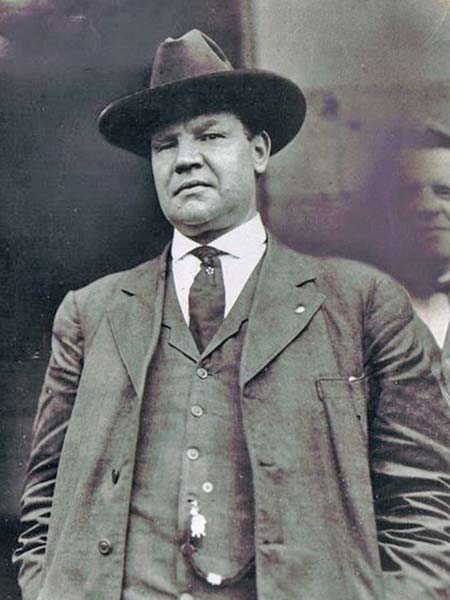
2. “Big Bill Haywood” tells the story of the IWW “Wobbly” leader.

http://www.last.fm/music/Bob+A.+Feldman/Biographical+Folk+Songs/Big+Bill+Haywood

3. “Remember Sacco and Vanzetti” recalls the Sacco and Vanzetti Case of the 1920s.

http://www.last.fm/music/Bob+A.+Feldman/Biographical+Folk+Songs/Remember+Sacco+and+Vanzetti

4. “Upton Sinclair” is a folk song about the muckraking author of “The Jungle” novel.

http://www.last.fm/music/Bob+A.+Feldman/More+Biographical+Folk+Songs/Upton+Sinclair

5. “They Drove Woody Guthrie,” “The Hollywood Ten,” The Ballad of John Garfield,” “They Killed The Rosenbergs,” and “Ben Davis” are folk songs about political repression during the late 1940s and 1950s McCarthy Era.

http://www.last.fm/music/Bob+A.+Feldman/Biographical+Folk+Songs/They+Drove+Woody+Guthrie+to+His+Grave

http://www.last.fm/music/Bob+A.+Feldman/Protest+Folk+Songs/The+Hollywood+Ten

http://www.last.fm/music/Bob+A.+Feldman/Biographical+Folk+Songs/Ballad+of+John+Garfield

http://www.last.fm/music/Bob+A.+Feldman/Biographical+Folk+Songs/They+Killed+the+Rosenbergs

http://www.last.fm/music/Bob+A.+Feldman/More+Biographical+Folk+Songs/Ben+Davis

6. “Kerouac and Cassady” is a folk song about the Beat Generation.

http://www.last.fm/music/Bob+A.+Feldman/More+Biographical+Folk+Songs/Kerouac%2B%2526%2BCassidy

7. “The People’s Folksinger” is about 1960s protest folk singer Phil Ochs.

http://www.last.fm/music/Bob+A.+Feldman/Biographical+Folk+Songs/The+People%27s+Folksinger+%28for+Phil+Ochs%29

8. “Richard Farina Is Gone” is a eulogistic folk song about the author of the 1960s book “Been Down So Long It Looks Like Up To Me.”

http://www.last.fm/music/Bob+A.+Feldman/More+Biographical+Folk+Songs/Richard+Farina%27s+Gone

9. “Bloody Minds” is a folk song that protested against Columbia University’s Institute for Defense Analyses [IDA] institutional affiliation and Columbia’s collaboration with the Pentagon during the 1960s.

http://www.last.fm/music/Bob+A.+Feldman/Protest+Folk+Songs/Bloody+Minds

10. “Ted Gold’s Wisdom” is a folk song about former Columbia SDS Vice-Chairman Ted Gold.

http://www.last.fm/music/Bob+A.+Feldman/More+Biographical+Folk+Songs/Ted+Gold%27s+Wisdom

11. “Enemy Number One” is a folk song about the Weather Fugitives from the 1970s.

http://www.last.fm/music/Bob+A.+Feldman/Protest+Folk+Songs/Enemy+Number+One

12. “Dhoruba” is about the case of a former Panther 21 political prisoner.

http://www.last.fm/music/Bob+A.+Feldman/Biographical+Folk+Songs/Dhoruba

13. “At Age 42” is a folk song about the negative effects of the celebrity star system in the Corporate Music Industry.

http://www.last.fm/music/Bob+A.+Feldman/More+Biographical+Folk+Songs/At+Age+42

14. “Ballad of Harvey Milk” is a folk song about the San Francisco activist and elected official who was slain in the 1970s.

http://www.last.fm/music/Bob+A.+Feldman/Biographical+Folk+Songs/Ballad+of+Harvey+Milk

15. “Their Armored Brink’s Truck” is an outlaw folk song about the 1981 incident in Nyack, New York. http://www.last.fm/music/Bob+A.+Feldman/Protest+Folk+Songs/Their+Armored+Brink%27s+Truck

16. “Prisoner In Auburn” is a folk song from the 1980s about U.S. political prisoner David Gilbert.

http://www.last.fm/music/Bob+A.+Feldman/Biographical+Folk+Songs/Prisoner+in+Auburn+%28for+David+Gilbert%29

17. “The Marines Have Captured Grenada” is about the Pentagon’s 1983 invasion of that island.

http://www.last.fm/music/Bob+A.+Feldman/Protest+Folk+Songs/The+Marines+Have+Captured+Greneda

18. “Free Leonard Peltier!” is a 1990s folk song about the Leonard Peltier Case.

http://www.last.fm/music/Bob+A.+Feldman/More+Biographical+Folk+Songs/Free+Leonard+Peltier%21

19. “Marilyn Buck” is a 21st-century folk song from a few years ago about a recently released U.S. political prisoner.

http://www.last.fm/music/Bob+A.+Feldman/Biographical+Folk+Songs/Marilyn+Buck

20. “Die To Defend Exxon” is an anti-war and anti-recruitment folk song from the early 1980s.

http://www.last.fm/music/Bob+A.+Feldman/Protest+Folk+Songs/Die+to+Defend+Exxon

21. “Let Me Tell You About 9-11” raises some questions about the Big Media’s official version of what happened on September 11, 2001.

http://www.last.fm/music/Bob+A.+Feldman/Protest+Folk+Songs/Let+Me+Tell+You+about+9-11

22. “Destroyed By A Rising Flood” is about the 2005 Katrina disaster in New Orleans.

http://www.last.fm/music/Bob+A.+Feldman/Protest+Folk+Songs/Destroyed+by+a+Rising+Flood

23. “Let the Big Banks Fail” is a folk song that protests against the use of public funds to bail out the Wall Street big banks in 2008.

http://www.last.fm/music/Bob+A.+Feldman/Protest+Folk+Songs/Let+the+Big+Banks+Fail

24. “High Technology Homeless” is a folk song from the 1980s that looks at how high technology has affected the quality of life of some folks in the USA.

http://www.last.fm/music/Bob+A.+Feldman/Protest+Folk+Songs/High+Technology+Homeless


Type rest of the post here

Source /
The Rag Blog

Posted in RagBlog | Leave a comment

Kate Braun : Lammas Celebrates the First Harvest

Celebrating Lammas. Image © flaming crones.

Thanksgiving, sacrifice, and celebration…
Lammas is a fire festival of the First Harvest

By Kate Braun / The Rag Blog / July 26, 2010

“If a body meet a body comin’ through the rye…”

Saturday, July 31, 2010, is a good day to celebrate Lammas, a fire festival also known as First Harvest, Harvest Home, and Lughnasadh. This celebration centers energies on the themes of thanksgiving, sacrifice, and celebration. We give thanks for the good things in our lives and the food Mother Earth has provided for us; we sacrifice the first harvest of grain with the goal of strengthening the land, which promotes fertility and a bountiful harvest in the future; we celebrate the harvest with gusto, recognizing that it feeds our souls as well as our bodies.

Choose among your preferred shades of red, gold, orange, yellow, bronze, citrine, gray, and green, and incorporate your choice of sickles, scythes, corn dollies, sun-wheels, breads, and fresh fruits and veggies in your decorations. If possible, celebrate outdoors and build a fire. Remember that fire-pits, cauldrons, and outdoor barbecue grills will generate positive fire-energy just as well as a bonfire.

Bread and all dishes whose primary ingredient is grain should be the focus of your menu. Granola, pasta and rice salads, tabooli, and cornbread are but a few examples. Berry pies, locally grown seasonal produce, roast lamb, fruit wine, and ale all provide a tasty compliment for your enjoyment.

You and your guests may enjoy playing outdoor games of strength, or you may prefer to tell and retell the stories of various grain goddesses (Ceres is but one suggestion); but whatever activities you choose to pursue, be sure to include time for each guest to give thanks at the beginning and end of your celebration for whatever each considers deserves thanks.

Another useful activity is to write down on a piece of paper things you regret doing or thinking or saying during the past 12 months (you may draw a symbol that represents them if you prefer) and burn that paper in the ceremonial fire. This activity represents not only acknowledging where you got off track and could do better, but it also releases that energy, opening you to positive improvements during the next 12 months. Remember that the first step toward improvement is recognizing that there is room for improvement.

Share the leftover food with your guests. If you have made this a pot-luck gathering, be sure that each guest takes home some of someone else’s donation, not just their own. By sharing in this way, you are creating more energy for positive growth in the future.

[Kate Braun’s website is www.tarotbykatebraun.com. She can be reached at kate_braun2000@yahoo.com. Kate will be participating in a Metaphysical Fair on Saturday and Sunday, August 14-15, 2010, at the Holiday Inn (formerly the Radisson) at 6000 Middle Fiskville Rd. in Austin (between Highland Mall and Lincoln Village).]

The Rag Blog

Posted in Rag Bloggers | Tagged , , , , , | 1 Comment

Jack A. Smith : Israel and Palestine After the Flotilla / 4

The two wild cards. Iran’s Parliament Speaker Ali Larijani shown with Turkish Prime Minister Recep Tayyip Erdogan in 2009. Photo by Amir Kholoosi / ISNA.

Part 4: Two wild cards, Turkey and Iran
Israel and Palestine after the Flotilla

By Jack A. Smith / The Rag Blog / July 18, 2010

[This is the last in a four-part series in which Jack A. Smith assesses multiple aspects of the situation in Palestine, including the relations between Israel and the U.S., Israel and the Palestine National Authority, the Palestinian split between Fatah and Hamas, the action and inaction of the Arab states, the new role of Turkey, the key importance of Iran, and the future of Washington’s hegemony in the Middle East.]

There are two wild cards in the region — neither of which are Arab — that are capable of complicating the U.S.-Israeli game in the Middle East.

One is Turkey, the militarily strong, largely Westernized, secular democratic republic of nearly 78 million people, with a large Sunni Muslim population. The other is Iran, a largely modernized Islamic republic of just over 67 million people, mostly Shi’ite Muslims. Both are mature societies that have at one time controlled empires — Ottoman and Persian respectively. Both are strategically situated: Turkey between Europe and Asia, Iran between Central Asia and the Middle East.

Turkey, a NATO member and long time close ally of Israel and the United States, had kept to itself for many years. Then in early 2009 the Ankara government of Prime Minister Recep Tayyip Erdogan abruptly stormed onto the regional stage when Turkey sharply condemned Israel’s calculatedly cruel invasion of Gaza.

A few months ago Turkey unexpectedly strode onto the international stage along with partner Brazil, announcing that they had obtained a nuclear fuel swap agreement with Iran that obviated the need for additional U.S.-UN sanctions. They believed, evidently correctly, that they had President Obama’s backing for this independent mission. But when they brought back a deal that was virtually identical to what Obama originally sought, the White House backed off and treated the unofficial intermediaries like unwelcome busybodies.

In our view, what the Obama-Netanyahu cohort really wanted was intensified sanctions, not a nuclear agreement that would remove the pretext for demonizing Iran, probably in preparation for near-future aggression.

Last month — after Israeli commandos cut down nine Turkish members of the humanitarian flotilla — relations between Tel-Aviv and Ankara deteriorated further, and a furious Erdogan withdrew Turkey’s ambassador but did not break diplomatic ties. He called on Israel to apologize for the killings and pay compensation to the nine families involved, but Tel-Aviv has refused, claiming the commandoes were defending themselves.

Erdogan announced that “If the entire world has turned its back on the Palestinians, Turkey will never turn its back on Jerusalem and the Palestinians,” and took some modest steps such as banning Israeli military aircraft from its airspace.

An interview with Prime Minister Erdogan was aired June 29 on the PBS Charlie Rose program. He called Netanyahu “the biggest barrier to peace,” an obvious truth about which the Obama Administration must be abundantly aware, though publicly silent. Most important, Erdogan also added that Turkey remained “a friend to Israel,” but Ankara soon announced that it would break diplomatic relations with Israel unless Tel-Aviv apologized for the flotilla killings or accepted the conclusion of an international inquiry.

The next day, Foreign Minister Davutoglu met secretly in Zurich with Israeli Trade and Labor Minister Binyamin Ben-Eliezer to discuss reducing tensions. Notice of the meeting was leaked by an Israeli TV station. There was no report about the outcome of the conference. Recognizing that he was intentionally kept in the dark by Netanyahu about this important event where he logically should have presided, Foreign Minister Lieberman publicly excoriated his boss for excluding him.

Netanyahu is under pressure from Washington to seek a reconciliation with Erdogan in order to keep strategic Turkey in Washington’s political enclosure. Loud mouth Lieberman probably would have exacerbated tensions had he met with Davutoglu. Netanyahu needs Lieberman’s Yisrael Beiteinu party in his coalition to remain in office, which is the only reason such a hothead became Foreign Minister. Discussing the latest contretemps, the Jerusalem Post opined July 1 that “it is yet another indicator that Israeli diplomatic policy is dysfunctional.”

At this point, no one really knows the extent of Ankara’s geopolitical ambitions, which may determine how far Turkey will distance itself from Israel, and perhaps the U.S. as well. There’s certainly a lack of dynamic leadership in the Middle East that Turkey, which seems to have good relations with all the Muslim countries, might seek to provide.

If Turkey confines itself to supporting the Palestinians and criticizing Israel, that will have an important regional impact — perhaps sufficient to galvanize the Arab countries to take more action on Gaza’s behalf, to give Tel-Aviv pause, and to induce Washington to finally get serious about ending the colonial status of the Palestinian people.

And if Turkey seeks a larger role in regional affairs beyond the Palestinian issue, perhaps in league with a couple of other regional players, this could possibly alter the balance of power in the Middle East, which is now tilted steeply toward the Washington/Tel-Aviv axis.

And where does the other wild card, Iran, fit into this scenario? Various commentators have speculated that the Islamic republic seeks to dominate the Middle East or that it wants to impose Shi’ite beliefs throughout the region, or that it seeks to destroy Israel, among other absurd speculations.

Any objective appraisal of the conditions confronting Teheran today would show that its first priority and nearly total preoccupation is national security, and its military strategy is defensive, not offensive, as Washington and Tel-Aviv are well aware. Consider this:

  • According to news reports, an armada of 11 U.S. Navy warships and one Israeli ship, led by the USS Harry Truman aircraft carrier and its Strike Group of 60 fighter-bombers, passed through the Suez Canal June 18 heading for the Persian Gulf, where they will join other ships positioned near Iran. Navy battle fleets with Cruise and Tomahawk missiles and air wings roam the Arabian Sea, Mediterranean Sea, Gulf of Oman, and Indian Ocean, as well as the Persian Gulf.
  • The immense U.S. base of Diego Garcia in the Indian Ocean is being stocked for possible war against Iran, including nearly 400 so-called bunker-busters for deep ground penetration.
  • The U.S. Air Force is at the ready to quickly thrash Iran when the signal is given.
  • Israel is continually threatening to attack Iran.
  • The American military machine is camped on Iran’s western border (Iraq), and on its eastern border (Afghanistan). The Pentagon’s Special Forces troops have been probing Iran from both directions, looking for vulnerabilities, and getting the lay of the land.
  • For several years during the Bush Administration, news analysts were predicting an imminent attack by the U.S. It didn’t occur, probably because of the quagmire leading to a military stalemate in Iraq. But Teheran knows it likely faces a greater danger today than during the Bush years.
  • Iran is under 24-hour surveillance from U.S. satellite spying and eavesdropping technologies throughout the country that can “see” every part of the country and “hear” every phone conversation, not to mention spies on the ground.
  • Iran has been laboring under ever-tightening U.S. economic and trade sanctions for several decades after the Islamic revolution dispatched Washington’s puppet potentate in Teheran, the dreaded Shah.
  • Iran’s big power friends, Russia and China, just joined the U.S. in imposing the latest UN sanctions, after diluting them (but knowing Washington would add additional sanctions of its own to compensate). This shocked and worried Teheran, though both countries are still considered allies and are not expected to abandon Iran.
  • For the last decade — at least — Washington has been providing material support and encouragement to the anti-regime dissident movement, and the Obama government is no doubt continuing the practice.
  • Washington is trying to create an anti-Iranian coalition composed of several Sunni Arab states, exacerbating ethnic and religious tensions in order to better divide and conquer.
  • America’s medium and long range missiles, with both conventional and nuclear warheads, are on the alert — patiently awaiting the signal.

For its part, Teheran is continuing to support the Hezbollah Shi’ites in Lebanon and Sunni Hamas in Gaza. Hezbollah — a political movement that leads the second largest electoral coalition in Lebanon — criticizes Tel-Aviv as colonialist but its guerrilla defenders usually fight against Israel when it invades Lebanon. Hezbollah fighters were largely responsible for Israel’s decision to withdraw its military forces in May 2000 after a nearly two-decade occupation of Lebanon, and for a second humiliation of the IDF when it returned in 2006 with guns ablaze.

Hamas is a political organization dedicated to liberating the Palestinian people from colonial domination. It is without heavy weapons, tanks, or planes to employ in its liberation struggle against the IDF so it propelled relatively primitive unguided rockets into Israel and killed up to 10 civilians over the last several years. Israel, of course, killed many thousands of Palestinians during that time.

The U.S. and Israel identify both groups as “terrorist” and Iran as “terrorist” for supporting them. In the opinion of many leftists and numbers of people in the developing (third) world, they are resistance fighters against colonial and imperialist oppression.

The government of President Mahmoud Ahmadinejad denies building nuclear weapons and declares its efforts are directed at producing energy for peaceful purposes, not bombs. Even with all the spy techniques at Washington’s command, there is still no evidence to convict Iran on this charge. Yet Israel — which is said to possess some 200 nuclear weapons in defiance of the NPT — poses as Iran’s intended victim. Iran has not engaged in an aggressive war since the first half of the 1800s (a short-lived incursion over the Afghan border), and is absolutely in no position to do so now.

Neither the U.S. nor Israel is actually worried that Iran will in effect commit national suicide by preparing to attack, or actually attacking, the Jewish State — thus triggering a preemptive offensive or instant mass retaliation from Tel-Aviv, with the U.S. near at hand to help out.

There are two other regional concerns for the U.S. and Israel to think about over the longer term:

  • One is the possibility Shi’ite Iran and majority Shi’ite Iraq eventually may bloc together in one type of close relationship or another several years hence. They share a number of interests in addition to their compatible branch of Islam — a minority often held down in Sunni-dominated lands. They both want to be independent of U.S. threats and violence and may conclude that unity enhances their defenses.

    As a team they could more profitably exploit their extraordinarily huge petroleum reserves. And they are both concerned about the Kurdish independence movement, among other factors. Washington will do its best to keep Baghdad and Teheran apart. It plans to retain considerable influence in Iraq after most of America’s foreign legion departs for other battlefields, but the era of puppet governments and colonial masters, despite remnants here and there, is fading into history.

  • The other, perhaps even more nettlesome long term concern for Uncle Sam, is the possibility Iran might bloc with Turkey and Syria to oppose U.S. domination of the Middle East. If Iraq joined in, the four countries would stretch some 2,200 miles from the Dardanelles in the Mediterranean to the Arabian Sea. This might even induce Egypt to get moving again. It’s a long shot, of course, but a potential game changer in the Arab world — which is due for a change.

The Middle East often looks static, with the Americans ruling the roost, but that’s deceptive. No one knows what is going to happen in the next couple of decades with any of the many possibilities for change that are swirling around the Middle East today, particularly as other world nations rise while the U.S. engages in what appears to be the start of a long decline.

Those bold volunteers who took part in the recent humanitarian flotilla have through their deeds obliged Israel to weaken the blockade of Gaza. That’s an important change. And their efforts focused a bright light on the misdeeds perpetrated upon the Palestinians by Israel and its superpower enabler.

That’s a good start toward further change, and may become a transitional moment that in time results not only in fruitful outcomes for the oppressed Palestinian people, but also for the entire region.

[Jack A. Smith was editor of the Guardian — for decades the nation’s preeminent leftist newsweekly — that closed shop in 1992. Smith now edits the Hudson Valley Activist Newsletter, where this series also appears.

  • For the entire series, go here.

The Rag Blog

Posted in Rag Bloggers | Tagged , , , , , , | Leave a comment

Harvey Wasserman : Why Stewart Brand is Wrong on Nukes

Image from Greenopolis.

Reinventing the Brand:
Whole Earth icon is
Dead wrong on nukes


By Harvey Wasserman / The Rag Blog / July 25, 2010

Stewart Brand has become a poster boy for a “nuclear renaissance” that has just suffered a quiet but stunning defeat. Despite $645 million spent in lobbying over the past decade, the reactor industry has thus far failed to gouge out major new taxpayer funding for new commercial reactors.

In an exceedingly complex series of twists and turns, no legislation now pending in Congress contains firm commitments to the tens of billions reactor builders have been demanding. They could still come by the end of the session. But the radioactive cake walk many expected the industry to take through the budget process has thus far failed to happen.

The full story is excruciatingly complicated. But the core reasons are simple: atomic power can’t compete, and makes global warming worse

In support of this failed 20th Century technology, the industry has enlisted a 20th Century retro-hero, Stewart Brand. Back in the 1960s Brand published the Whole Earth Catalog. Four decades later, that cachet has brought him media access for his advocacy of corporate technologies like genetically modified foods and geo-engineering… and, of course, nuclear energy.

In response to a cover interview in Marin County’s Pacific Sun, I wrote the following to explain why Stewart is wrong wrong wrong:

Stewart Brand now seems to equate “science” with a tragic and dangerous corporate agenda. The technologies for which he argues — nuclear power, “clean” coal, genetically modified crops, etc. — can be very profitable for big corporations, but carry huge risks for the rest of us. In too many instances, tangible damage has already been done, and more is clearly threatened.

If there is a warning light for what Stewart advocates, it is the Deepwater Horizon disaster, which much of the oil industry said (like Three Mile Island and Chernobyl) was “impossible.” Then it happened. The $75 million liability limit protecting BP should be ample warning that any technology with a legal liability limit (like nuclear power) cannot be tolerated.

Thankfully, there is good news: We have true green alternatives to these failed 20th-century ideas. They’re cheaper, safer, cleaner, more reliable, and more job-producing than the old ways Stewart advocates.

Stewart and I have never met. But we have debated on the radio and online. Thank you, Pacific Sun, for bringing us to print.

Stewart’s advocacy does fit a pattern. He appears to have become a paladin for large-scale corporate technologies that may be highly profitable to CEOs and shareholders, but are beyond the control of the average citizen, and work to our detriment. Because he makes so many simple but costly errors, let’s try a laundry list:

  1. Like other reactor advocates, Stewart cavalierly dismisses the nuclear waste problem by advocating, among other things, the stuff be simply dumped down a deep hole. This is a terribly dangerous idea and will not happen. Suffice it to say that after a half-century of promises (the first commercial reactor opened in Pennsylvania in 1957) the solution now being offered by government and industry is… a committee!!!

    Meanwhile, more than 60,000 tons of uniquely lethal spent fuel rods sit at some 65 sites in 31 states with nowhere to go. Like the reactors themselves, they are vulnerable to cooling failure, terror attack, water shortages, overheating of lakes, rivers and oceans, flooding, earthquakes, tornadoes and hurricanes, and much more. This is no legacy to leave our children.

  2. Equally disturbing is the industry’s inability to get meaningful private liability insurance. The current federally imposed limit is $11 billion, which would disappear in a meltdown even faster than BP’s $75 million in the Gulf. According to the latest compendium of studies, issued this spring by the New York Annals of Science, Chernobyl has killed some 985,000 people, and is by no means finished. It has done at least a half-trillion dollars in damage. The uninsured death toll and financial costs of a similar-scaled accident in the U.S. are incalculable, but would clearly kill millions and bankrupt our nation for the foreseeable future.
  3. Stewart points out that there are also risks with wind and solar power. But clearly none that begin to compare with nukes, coal, or deep-water drilling. If reactor owners were forced to find reasonable liability insurance, all would shut. A similar demand for renewables and efficiency would leave them unaffected.
  4. Renewable/efficiency technologies today are cheaper, faster to deploy, and more job-creating than nukes. It takes a minimum of five years to license and build a new reactor. The one being done by AREVA in Finland is hugely over budget and behind schedule. There is no reason to expect anything better here. Among other things, the long lead time ties up for too many years the critical social capital that could otherwise go to technology that can quickly let the planet heal.
  5. Like others who doubt the possibility of a green-powered Earth, Stewart posits the straw man of reliance on a deployment of solar panels that would blanket the desert and do ecological harm. In fact, the National Renewable Energy Lab estimates 100 percent of the nation’s electricity could come from an area 90 miles on a side, or a relatively modest box of 8,100 square miles. But as we all know, that’s not how it will be done. Solar panels belong on rooftops, where there is ample area throughout the nation, and an end to transmission costs.

    Likewise, wind farms do not “cover” endless acres of prairie, their tower bases take up tiny spots that remain surrounded by productive farmland. In this case, currently available wind turbines spinning between the Mississippi and the Rockies could generate 300 percent of the nation’s electricity. There’s sufficient potential in North Dakota, Kansas, and Texas alone to do 100 percent. Cost and installation times put nukes to shame.

    The liability is nil, as is the bird kill, which primarily affects obsolete, badly sited fast-spinning machines in places like Altamont Pass. Those must come down, and there will certainly be other surprises along the way. No technology is perfect, and we need to be careful even with those that are green-based. But as we have seen, further threats on the scale of Chernobyl and the Deepwater Horizon cannot be sustained.

  6. As for GMO crops, Darwin was right. Plants evolve to avoid herbicides just as bugs work their way around pesticides (which Stewart correctly decries). Now we see that “super-weeds” are outsmarting the carefully engineered herbicides meant to justify the whole GMO scheme, bringing a disastrous reversion to horrific, lethal old sprays. Chemical farming may be good for corporate profits, but it can kill global sustainability. In the long run, only organics can sustain us.
  7. Stewart mentions that he is paid only for speeches. But a single such fee can outstrip an entire year’s pay for a grassroots organizer or volunteer. What’s remarkable is that the nuclear power industry spent some $645 million lobbying for its “renaissance” over the past decade — more than $64 million/year. It has bought an army of corporate lobbyists and legislators. Yet only a handful of folks with rear guard environmental credentials have stepped forward to fight for the old fossil/nuclear/GMO technologies.

The reinvented Stewart Brand. Photo by Marla Aufmuth / TED.

Stewart is certainly welcome to his own opinions. But not to his own facts. Pushing for a nuclear “renaissance” concedes that it’s a Dark Age technology, defined by unsustainable costs, inefficiencies, danger, eco-destruction, radiation releases, lack of insurance, uncertain decommissioning costs, vulnerability to terrorism, and much more.

That the industry must desperately seek taxpayer help, and cannot find insurance for even this “newer, safer” generation, is the ultimate testimony to its failure. By contrast, renewables and efficiency are booming, and are a practical solution to our energy needs, which the corporate clunkers of the previous century simply cannot provide.

It’s been a long time since the Whole Earth Catalog was published. Its hallowed founder should wake up to the booming holistic green technologies that are poised to save the Earth. They are ready to roll over the obsolete corporate boondoggles that are killing Her. Chernobyl, Three Mile Island, the disasters in the coal mines and the Gulf remind us we need to make that green-powered transition as fast as we possibly can.

[Harvey Wasserman, an early co-founder of the grassroots “No Nukes” movement, is senior adviser to Greenpeace USA, and author of Solartopia! Our Green-Powered Earth.]

The Rag Blog

Posted in Rag Bloggers | Tagged , , , , , , , , | 1 Comment

Marc Estrin : Hingepoint of History


65 years and counting:
Hingepoint of history

By Marc Estrin / The Rag Blog / July 24, 2010

As I write, we are one week past the 65th anniversary of what may be the most important date in the history of the planet. The Planet of the Human Apes.

On July 16th, 1945, Fat Man, aka “the Gadget,” did its early morning, Trinity Test thing, lighting up the sky over Alamogordo, New Mexico.

The U.S. military put out this statement to calm any worried neighbors:

Several inquiries have been received concerning a heavy explosion which occurred on the Alamogordo Air Base reservation this morning. A remotely located ammunition magazine containing a considerable amount of high explosives and pyrotechnics exploded. There was no loss of life or injury to anyone, and the property damage outside of the explosives magazine itself was negligible. Weather conditions affecting the content of gas shells exploded by the blast may make it desirable for the army to evacuate temporarily a few civilians from their homes.

But the sky was not lit up by any considerable amount of high explosives and pyrotechnics. What made the light and blast was the first explosion of a nuclear weapon in planetary history.

And more important than that: what had come to pass was a human call-up of forces beyond control, forces greater than could be imagined, even by the glyph of E = mc2.

They were not only unparalleled physical forces previously sequestered in the infinitesimal. They were forces of human chutzpah, of political and philosophical confusion, of a rape relationship to nature that has never been, can never be, repaired. We have lived since then, and will ever live, in the miasma of that ravishing.

There was one incident at Trinity that seems particularly revealing of the pathology of the perpetrator:

Chief Meteorologist Jack Hubbard, in consultation with every group leader, had early on drawn up a list of the best and worst conditions for the test:

Best conditions for the operation.

A. Visibility greater than 45 miles.
B. Humidity below 85% at all altitudes.
C. Clear skies.
D. Temperature lapse rate aloft slightly stable to prevent dropping of the cloud.
E. Little or no inversion between 5,000 and 25,000 feet to allow cloud to reach maximum altitude.
F. A thick surface inversion or none at all to prevent internal reflections and mirage effects.
G. Winds aloft fairly light, preferred direction from between 6 degrees south of west and 25 degrees south of west. Steady movement desirable to anticipate track of cloud. Horizontal and vertical wind shears desirable for maximum dissipation of the cloud, although such a condition increased the tracking problem.
H. Low-level winds light and preferred drift away from Base Camp and shelters.
I. No precipitation in the area within twelve hours of the operation.
J. Predawn operation desired by the photographic group, although 0930 operation considered best for thermals dissipating the lower levels of the cloud.

Conditions least favorable to the operation.

A. Haze, dust, mirage effects, precipitation, restrictions of visibility below 45 miles.
B. Humidity greater than 85% at the surface or aloft, which might result in condensation by the shock wave.
C. Thunderstorms within 35 miles at the time of operation or for 12 hours following.
D. Rain at the location within 12 hours of the operation.
E. Surface winds greater than 15 mph during and after the operation.
F. Winds aloft blowing toward Base Camp or any population center within 90 miles of the site.Human rationality — even if in service of the irrational.

But instead of tailoring the operation around desired weather, Hubbard was faced with a fait accompli — Truman was in Potsdam, and weather be damned. July 16th was it. “Right in the middle of a period of thunderstorms,” he wrote, “What son-of-a-bitch could have done this?”

Everything unwanted was present: rain, high humidity, inversion layer, and unstable wind. None of the optimum requirements had been met. Rain could scrub the clouds and bring down high levels of radioactivity in a small area. Unstable conditions and high humidity increased the chances that the blast could induce a thunderstorm.

Still, Truman was in Potsdam, and the order was given to proceed with the test. The president needed an ace up his sleeve in his card game with Stalin. Such is the pecking order of politics, war and science.

Hamlet:

What a piece of work is a man, how noble in reason, how infinite in faculties, in form and moving how express and admirable, in action how like an angel, in apprehension how like a god! the beauty of the world, the paragon of animals—and yet, to me, what is this quintessence of dust? Man delights not me…

July 16th, 1945 at Alamogordo was the moment when the human species blew it forever, and our world will never be the same.

After the blast, the “successful” test, Oppenheimer summed it up: “Now I am become Death, the destroyer of worlds.” He was speaking for all of us.

I tell the story of the Manhattan Project and its Trinity Test in great detail in my novel, Insect Dreams: the Half Life of Gregor Samsa. Without blushing, I highly recommend it.

[Marc Estrin is a writer and activist, living in Burlington, Vermont. His novels, Insect Dreams, The Half Life of Gregor Samsa, The Education of Arnold Hitler, Golem Song, and The Lamentations of Julius Marantz have won critical acclaim. His memoir, Rehearsing With Gods: Photographs and Essays on the Bread & Puppet Theater (with Ron Simon, photographer) won a 2004 theater book of the year award. He is currently working on a novel about the dead Tchaikovsky.]

The Rag Blog

Posted in Rag Bloggers | Tagged , , | Leave a comment

Tom Hayden : Sherrod, Obama, and the Strength of Roots

Charles Sherrod and Carl Braden (a civil rights legend, along with his wife Anne), in 1963. Photo from Wisconsin Historical Images.

Collective amnesia

The media have been silent about Shirley Sherrod’s husband, Charles Sherrod, a real hero to many of us in the ’60s for his key role as a leader in SNCC in building an INTER-RACIAL civil rights movement. Charlie left SNCC when Stokely Carmichael took it over, expelled white folks, and adopted “black power” as its ideology, in order to continue building a black-and-white movement in Georgia. The notion that Charlie’s wife could have been guilty of what’s being called “reverse racism” against whites is therefore doubly ludicrous. Some of us who knew Charlie back when, however, haven’t forgotten his shining example.

Doug Ireland / The Rag Blog

Remembering the struggle in rural Georgia:
Sherrod, Obama, and the strength of roots

By Tom Hayden / The Rag Blog / July 23, 2010

See ‘Using Race to Smear Obama,’ by Eugene Robinson, Below.

How would members of the Obama administration have reacted to racist pressure from the Deep South in the early 60s? Would they have fired Justice Department civil rights monitors who antagonized hard-line segregationists?

For those of us with long memories, this is one of the key questions posed by the firing of Shirley Sherrod in a fit of official overreaction to the shameful right-wing blogger Andrew Breitbart. It is true that the administration reversed course quickly after the true story was revealed, but that the Obama administration can be spooked so easily by Glenn Beck and FOX News raises a serious question: if they are so tough on national defense, drugs, and crime, where is their resolve against the deceitful attack dogs of the right?

My introduction to virulent southern racism came in 1961 when I ventured to Albany, Georgia, first to write an article about the Deep South organizing done by the Student Nonviolent Coordinating Committee (SNCC) and, second, to become a freedom rider on a train to Albany that December.

It was then I met, and came to admire, a brave young civil rights worker named Charles Sherrod, whom everyone in the movement simply called “Sherrod.” Albany was a segregated town near Plains, Georgia, and the home of Hamilton Jordan who went on to become Jimmy Carter’s chief of staff. Sherrod was the kind of front-line young militant who eventually brought about the New South of Carter, Bill Clinton, and Al Gore, among others. Sherrod had to face violence, and the possibility of death, every day in his effort to mobilize young people and their parents against the suffocation of fear.

Shirley Sherrod (Center) with Charles Sherrod (to her left) at the Charles Sherrod Civil Rights Park in Albany, Georgia in 2006. Photo from Rural Development.

Sherrod, and his equally committed wife Shirley, made a conscious decision to stay in rural Georgia long after the voting rights laws were passed and the national media departed. I left Albany after my two brief and harrowing experiences in 1961, and never returned until I spoke at a commemoration of the Albany civil rights movement a few years ago. The Sherrods were still there. She was engaged in programs supporting rural farmers, while he had served on the city council and was a minister in a nearby state prison. There were 500 people at the event, the stalwarts of the past.

So Shirley Sherrod’s life cannot be reduced by a dishonest and amoral right-wing blogger into a few seconds of videotape 25 years old. She is one of many thousands who had the force of character to face racist abuse, and seemingly immovable state power, when they were demonized and disenfranchised. They were the trees standing by the water, and they would not be moved. They tried to bring their morality to politics, not accept the politics of Machiavelli.

Our leaders today could learn from this strength of long ago. In fairness, government officials and leaders of large organizations, who are beneficiaries of the Southern civil rights legacy, have institutional reputations to protect. They should avoid needlessly provoking the right, and have every right to pick their fights intelligently.

But years of battering from the right have bred a defensive anxiety in the ranks of too many Democratic liberals. They flinch before they fight. It’s almost as if they internalize the right-wing refrain that they are weak, tea-sipping elitists. They give far greater consideration to conservatives, militarists, and bankers who rarely vote for them than to the millions of activists in social movements who actually made their power possible.

This is a moment when roots should be remembered, recovered from oblivion and venerated, not airbrushed out of history and polished resumes.

[A political activist for more than four decades, Tom Hayden is director of the Peace and Justice Resource Center. A founder of SDS and a former California State Senator, Hayden is the author of The Long Sixties (Paradigm, 2009).]

Image by Lance Page / truthout; Adapted by Christian Haugen / webtreats.

Using race to smear Obama

By Eugene Robinson / July 22, 2010

WASHINGTON — After the Shirley Sherrod episode, there’s no longer any need to mince words: A cynical right-wing propaganda machine is peddling the poisonous fiction that when African-Americans or other minorities reach positions of power, they seek some kind of revenge against whites.

A few of the purveyors of this bigoted nonsense might actually believe it. Most of them, however, are merely seeking political gain by inviting white voters to question the motives and good faith of the nation’s first African-American president. This is really about tearing Barack Obama down.

Sherrod, until Monday an official with the Department of Agriculture, was supposed to be mere collateral damage. Andrew Breitbart, a smarmy provocateur who often speaks at tea party rallies, posted on his website a video snippet of a speech that Sherrod, who is African-American, gave to a NAACP meeting earlier this year. In it, Sherrod seemed to boast of having withheld from a white farmer some measure of aid that she would have given to a black farmer.

It looked like a clear case of black racism in action. Within hours, Agriculture Secretary Tom Vilsack had forced her to resign. The NAACP, under attack from the right for having denounced racism in the tea party movement, issued a statement blasting Sherrod and condemning her attitude as unacceptable.

But Breitbart had overstepped. The full video of Sherrod’s speech showed she wasn’t bragging about being a racist, she was telling what amounted to a parable about prejudice and reconciliation. For one thing, the incident happened in 1986 when she was working for a nonprofit, long before she joined the Obama administration. For another, she helped that white man and his family save their farm, and they became friends. Through him, she said, she learned to look past race toward our common humanity.

Shirley Sherrod, then a former board member of the Farmers Legal Action Group (flag), with husband Charles and retiring board member Betty Bailey, were honored at a FLAG dinner in 2009. Photo from Agricultural Law.

In effect, she was telling the story of America’s struggle with race, but with the roles reversed. For hundreds of years, black people were enslaved, oppressed and discriminated against by whites — until the civil rights movement gave us all a path toward redemption.

With the Obama presidency, though, has come a flurry of charges — from the likes of Breitbart but also from more substantial conservative figures — about alleged incidences of racial discrimination against whites by blacks and other minorities. Recall, for example, the way Obama’s critics had a fit when he offered an opinion about the confrontation between Harvard professor Henry Louis Gates Jr. and a white police officer. Remember the over-the-top reaction when it was learned that Justice Sonia Sotomayor had once talked about how being a “wise Latina” might affect her thinking.

Newt Gingrich called Sotomayor a racist. He was lightning-quick to call Sherrod a racist, too. I’d suggest that the former House speaker consider switching to decaf, but I think he knows exactly what he’s doing.

These allegations of anti-white racism are being deliberately hyped and exaggerated because they are designed to make whites fearful. It won’t work with most people, of course, but it works with some — enough, perhaps, to help erode Obama’s political standing and damage his party’s prospects at the polls.

Before Sherrod, the cause célèbre of the “You Must Fear Obama” campaign involved something called the New Black Panther Party. Never heard of it? That’s because it’s a tiny group that exists mainly in the fevered imaginations of its few members. Also in the alternate reality of Fox News: One of the network’s hosts has devoted more than three hours of air time in recent weeks to the grave threat posed by the NBPP. Actually, I suspect that this excess is at least partly an attempt by a relatively obscure anchor to boost her own notoriety.

The Sherrod case has fully exposed the right-wing campaign to use racial fear to destroy Obama’s presidency, and I hope the effect is to finally stiffen some spines in the administration. The way to deal with bullies is to confront them, not run away. Yet Sherrod was fired before even being allowed to tell her side of the story.

She said the official who carried out the execution explained that she had to resign immediately because the story was going to be on Glenn Beck’s show that evening. Ironically, Beck was the only Fox host who, upon hearing the rest of Sherrod’s speech, promptly called for her to be reinstated. On Wednesday, Vilsack offered to rehire her.

Shirley Sherrod stuck to her principles and stood her ground. I hope the White House learns a lesson.

[Eugene Robinson’s e-mail address is eugenerobinson@washpost.com.]

(c) 2010, Washington Post Writers Group

Source / Truthout

The Rag Blog

Posted in Rag Bloggers | Tagged , , , , , , , , , | 1 Comment

Type your summary here

Type rest of the post here

Source /

The Rag Blog

Posted in RagBlog | Leave a comment

Larry Ray : Hitting the Pause Button


From the land of the ‘oil geezer’:
America’s round-the-clock ‘churnalism’

By Larry Ray / The Rag Blog / July 21, 2010

GULFPORT, Mississippi — This column has been on pause for almost a month.

The disgust and distraction from smelly, greasy petroleum pollution rolling onto beaches and marshes just a mile or so from my home has been mostly responsible for the hiatus. But the general roar of background noise from today’s “news media” is more disgusting, distracting, and off-putting than the BP oil well blowout itself.

Immediately dubbed “the oil spill,” it is not a spill at all. It is a runaway blown-out oil well almost a mile beneath the surface of the Gulf of Mexico that has been pumping an estimated 40-60,000 barrels of oil a day into the Gulf for almost three months. It is a very complex story that requires at least a basic understanding of high school physics and knowledge of basic geology to discuss it in any sort of meaningful way.

It also helps to know something about hydrocarbons and the advanced technology used in oil and gas drilling and producing deep ocean oil wells. But those basic requirements don’t stop pretty news faces from blathering on, basically clueless, reading teleprompter tripe or swapping fuzzy speculation amongst themselves.

The plight of gulf coast residents is heralded by local politicians and a few, including a morbidly obese New Orleans area parish president, have become regulars on national newscasts as they growl and repeat their attacks on BP and the U.S. government. Not that there isn’t plenty to growl about, if you like to listen to it over and over.

In May, immediately after the Deepwater Horizon drilling rig exploded and plunged to the bottom, the short, hyper, bald headed afternoon CNN ringmaster exclaimed breathlessly that they had just discovered a “geezer of oil” coming from the sea floor. And that was before the reporting got really bad.

Nightly stories with video of oil soaked birds and massive pollution of sensitive marine marsh lands requires only a video camera and a talking head reciting the lines of the generic “Gee isn’t this a shame” news story template. Works equally well for earthquakes, floods and raging forest fires.

Mix in the soap opera of BP CEO, Tony Hayward, with his passive Lemur-like gaze and terminal case of foot-in-mouth disease (it has just been announced he is leaving BP in a matter of weeks), then add grimy pre-November election political dirt, tea party racism, and General McChrystal’s inglorious cashiering for trash talking his Commander in Chief, and Arizona’s Nazi immigration law and viola… non-stop, 24-7 all American “churnalism.”

That churnalism, mixed with endless side-effect warnings of 4-hour erections, rashes, and diarrhea from the drug commercials that dominate the evening news and the off switch is the best bet. The New York Times and a cuppa coffee in the mornings along with a visit to the BBC and a couple of Italian major newspapers seems to provide an adequate news balance.

With the dog days of summer spreading record breaking heat and humidity across much of the nation and the threat of an above average hurricane season here where Katrina tore us up almost five years ago, I will probably just keep the pause button pressed and plan to be back, intact, by Thanksgiving or maybe before, hopefully.

[Retired journalist Larry Ray is a Texas native and former Austin television news anchor. He also posts at The iHandbill.]

The Rag Blog

Posted in Rag Bloggers | Tagged , , , , , , | 2 Comments

Chris Hedges : The Attack of the Future Eaters

Image from AppleBazaar.

Calling all future-eaters:
Time is not on our side

By Chris Hedges / July 21, 2010

The human species during its brief time on Earth has exhibited a remarkable capacity to kill itself off. The Cro-Magnons dispatched the gentler Neanderthals. The conquistadors, with the help of smallpox, decimated the native populations in the Americas. Modern industrial warfare in the 20th century took at least 100 million lives, most of them civilians.

And now we sit passive and dumb as corporations and the leaders of industrialized nations ensure that climate change will accelerate to levels that could mean the extinction of our species. Homo sapiens, as the biologist Tim Flannery points out, are the “future-eaters.”

In the past when civilizations went belly up through greed, mismanagement, and the exhaustion of natural resources, human beings migrated somewhere else to pillage anew. But this time the game is over. There is nowhere else to go. The industrialized nations spent the last century seizing half the planet and dominating most of the other half.

We giddily exhausted our natural capital, especially fossil fuel, to engage in an orgy of consumption and waste that poisoned the Earth and attacked the ecosystem on which human life depends. It was quite a party if you were a member of the industrialized elite. But it was pretty stupid.

Collapse this time around will be global. We will disintegrate together. And there is no way out. The 10,000-year experiment of settled life is about to come to a crashing halt. And humankind, which thought it was given dominion over the Earth and all living things, will be taught a painful lesson in the necessity of balance, restraint and humility.

There is no human monument or city ruin that is more than 5,000 years old. Civilization, Ronald Wright notes in A Short History of Progress, “occupies a mere 0.2 percent of the two and a half million years since our first ancestor sharpened a stone.”

Bye-bye, Paris. Bye-bye, New York. Bye-bye, Tokyo. Welcome to the new experience of human existence, in which rooting around for grubs on islands in northern latitudes is the prerequisite for survival.

We view ourselves as rational creatures. But is it rational to wait like sheep in a pen as oil and natural gas companies, coal companies, chemical industries, plastics manufacturers, the automotive industry, arms manufacturers, and the leaders of the industrial world, as they did in Copenhagen, take us to mass extinction? It is too late to prevent profound climate change. But why add fuel to the fire? Why allow our ruling elite, driven by the lust for profits, to accelerate the death spiral? Why continue to obey the laws and dictates of our executioners?

The news is grim. The accelerating disintegration of Arctic Sea ice means that summer ice will probably disappear within the next decade. The open water will absorb more solar radiation, significantly increasing the rate of global warming. The Siberian permafrost will disappear, sending up plumes of methane gas from underground. The Greenland ice sheet and the Himalayan-Tibetan glaciers will melt.

Jay Zwally, a NASA climate scientist, declared in December 2007: “The Arctic is often cited as the canary in the coal mine for climate warming. Now, as a sign of climate warming, the canary has died. It is time to start getting out of the coal mines.”

But reality is rarely an impediment to human folly. The world’s greenhouse gases have continued to grow since Zwally’s statement. Global emissions of carbon dioxide (CO22) from burning fossil fuels since 2000 have increased by 3 per cent a year. At that rate annual emissions will double every 25 years.

James Hansen, the head of NASA’s Goddard Institute for Space Studies and one of the world’s foremost climate experts, has warned that if we keep warming the planet it will be “a recipe for global disaster.” The safe level of CO22 in the atmosphere, Hansen estimates, is no more than 350 parts per million (ppm). The current level of CO22 is 385 ppm and climbing. This already guarantees terrible consequences even if we act immediately to cut carbon emissions.

The natural carbon cycle for 3 million years has ensured that the atmosphere contained less than 300 ppm of CO22, which sustained the wide variety of life on the planet. The idea now championed by our corporate elite, at least those in contact with the reality of global warming, is that we will intentionally overshoot 350 ppm and then return to a safer climate through rapid and dramatic emission cuts.

This, of course, is a theory designed to absolve the elite from doing anything now. But as Clive Hamilton in his book Requiem for a Species: Why We Resist the Truth About Climate Change writes, even “if carbon dioxide concentrations reach 550 ppm, after which emissions fell to zero, the global temperatures would continue to rise for at least another century.”

Copenhagen was perhaps the last chance to save ourselves. Barack Obama and the other leaders of the industrialized nations blew it. Radical climate change is certain. It is only a question now of how bad it will become. The engines of climate change will, climate scientists have warned, soon create a domino effect that could thrust the Earth into a chaotic state for thousands of years before it regains equilibrium.

“Whether human beings would still be a force on the planet, or even survive, is a moot point,” Hamilton writes. “One thing is certain: there will be far fewer of us.”

We have fallen prey to the illusion that we can modify and control our environment, that human ingenuity ensures the inevitability of human progress, and that our secular god of science will save us. The “intoxicating belief that we can conquer all has come up against a greater force, the Earth itself,” Hamilton writes. “The prospect of runaway climate change challenges our technological hubris, our Enlightenment faith in reason and the whole modernist project. The Earth may soon demonstrate that, ultimately, it cannot be tamed and that the human urge to master nature has only roused a slumbering beast.”

We face a terrible political truth. Those who hold power will not act with the urgency required to protect human life and the ecosystem. Decisions about the fate of the planet and human civilization are in the hands of moral and intellectual trolls such as BP’s Tony Hayward.

These political and corporate masters are driven by a craven desire to accumulate wealth at the expense of human life. They do this in the Gulf of Mexico. They do this in the southern Chinese province of Guangdong, where the export-oriented industry is booming.

China’s transformation into totalitarian capitalism, done so world markets can be flooded with cheap consumer goods, is contributing to a dramatic rise in carbon dioxide emissions, which in China are expected to more than double by 2030, from a little over 5 billion metric tons to just under 12 billion.

This degradation of the planet by corporations is accompanied by a degradation of human beings. In the factories in Guangdong we see the face of our adversaries. The sociologist Ching Kwan Lee found “satanic mills” in China’s industrial southeast that run “at such a nerve-racking pace that worker’s physical limits and bodily strength are put to the test on a daily basis.” Some employees put in workdays of 14 to 16 hours with no rest day during the month until payday.

In these factories it is normal for an employee to work 400 hours or more a month, especially those in garment industry. Most workers, Lee found, endure unpaid wages, illegal deductions and substandard wage rates. They are often physically abused at work and do not receive compensation if they are injured on the job. Every year a dozen or more workers die from overwork in the city of Shenzhen alone. In Lee’s words the working conditions “go beyond the Marxist notions of exploitation and alienation.”

A survey published in 2003 by the official China News Agency, cited in Lee’s book Against the Law: Labor Protests in China’s Rustbelt and Sunbelt, found that three in four migrant workers had trouble collecting their pay. Each year scores of workers threaten to commit suicide, Lee writes, by jumping off high-rises or setting themselves on fire over unpaid wages. “If getting paid for one’s labor is a fundamental feature of capitalist employment relations, strictly speaking many Chinese workers are not yet laborers,” Lee writes.

The leaders of these corporations now determine our fate. They are not endowed with human decency or compassion. Yet their lobbyists make the laws. Their public relations firms craft the propaganda and trivia pumped out through systems of mass communication. Their money determines elections. Their greed turns workers into global serfs and our planet into a wasteland.

As climate change advances we will face a choice between obeying the rules put in place by corporations or rebellion. Those who work human beings to death in overcrowded factories in China and turn the Gulf of Mexico into a dead zone are the enemy. They serve systems of death. They cannot be reformed or trusted.

The climate crisis is a political crisis. We will either defy the corporate elite, which will mean civil disobedience, a rejection of traditional politics for a new radicalism and the systematic breaking of laws, or see ourselves consumed.

Time is not on our side. The longer we wait, the more assured our destruction becomes. The future, if we remain passive, will be wrested from us by events. Our moral obligation is not to structures of power, but life.

© 2010 TruthDig.com

[Chris Hedges writes a regular column for Truthdig.com. Hedges graduated from Harvard Divinity School and was for nearly two decades a foreign correspondent for The New York Times. He is the author of many books, including: War Is A Force That Gives Us Meaning, What Every Person Should Know About War, and American Fascists: The Christian Right and the War on America. His most recent book is Empire of Illusion: The End of Literacy and the Triumph of Spectacle.]

Source / TruthDig / Common Dreams

The Rag Blog

Posted in RagBlog | Tagged , , , , , , , , | 4 Comments