Barbara J. Berg : Getting Real about Women’s Progress

Women at work: White Oak Mill in Greensboro, NC. 1909. Photo courtesy of the National Museum of American History.

‘A Women’s Nation Changes Everything’
The (feel-good) Shriver Report

…instead of celebrating how far women have come, we should be asking why, after so many years, we still have so far to go.

By Barbara J. Berg / The Rag Blog / October 22, 2009

Maybe we’re all suffering from bad-news overload. That’s the only explanation I can come up with for the media’s uncritical embrace of the often erroneous feel-good Shriver Report: A Woman’s Nation Changes Everything, essentially declaring an end to “the battle of the sexes.”

Time magazine, writing about the report, claims, “the argument over where women belong is over.” Try telling that to Andrea Wolff-Yakubovich whose boss fired her from her position as finance director for a Denver-based John Elway AutoNation dealership when she disclosed she was expecting, telling her husband, “She should be barefoot, pregnant and at home.” (Really!)

And I seem to remember not too long ago a lot of angry GOP males urging General Stanley McChrystal to put Speaker of the House Nancy Pelosi “in her place,” because of her statements about the war in Afghanistan.

Notwithstanding all the real gains we’ve seen from the second wave women’s movement of the 1970s, the United States ranks 27th out of a total of 130 countries, behind Cuba and Lithuania, according to the World Economic Forum’s Global Gender Gap Report of 2008.

We are the only industrialized nation that doesn’t offer paid maternity leave. And like Wolff-Yakubovich, hundreds of women, in stark violation of the Civil Rights Act of 1964, are being fired when they become pregnant. The United States is one of a very few westernized nations to leave day care almost completely to the unregulated private market. And a new study has just disclosed that more than a quarter of our nation’s schoolchildren are unsupervised and alone after the regular school day because of the scarcity of funded after-school programs.

Unlike some other 145 countries, the United States doesn’t assure all workers paid sick days for their own illnesses or to care for a sick family member, and women pay hundreds of dollars more than men for identical health insurance overage. Our infant mortality rate is appalling — 29th in the world — and although the American Academy of Pediatrics “urges mothers to breastfeed exclusively for six months,” we differ from 107 countries in not protecting a working woman’s right to breastfeed. In our nation’s capital the mortality rate is four times as great for black infants as for white ones.

Unfortunately, it’s not just at hedge funds, as Time suggests, where women are facing strong headwinds. At four year colleges across the nation, women make up 50% of instructors and assistant professors, but are only 27% of tenured faculty. They are 50% of managers and professionals and only 2.6% of CEOs of Fortune 500 companies. The majority of working women in America still work in low-paid service jobs with little flexibility and few benefits. And thanks to the gender pay gap that starts right out of college and continues to grow, a woman working full-time her entire life makes on average $700,000 less than a man.

For the first time since 1918 women’s life expectancy is shortening. Women across the nation are dying from treatable chronic diseases. “[In no state] do women enjoy satisfactory health status,” according to the National Women’s Health Report Card issued by the National Women’s Law Center. Women present with different symptoms and respond to different medicines and therapies in a variety of diseases including strokes and heart attacks, but they are still not included in medical clinical trials.

Intimate partner assaults on women are soaring, yet everywhere we turn — from advertising to electronic gaming — we are bombarded with images of violence against women. We have the highest teen pregnancy rate in the western world and one out of every four adolescent girls has some form of STD.

Our reproductive rights are in jeopardy with the far right waging a quietly successful campaign to have fetuses granted personhood on the state level. If that drive succeeds, then Supreme Court or no Supreme Court, abortion will be declared murder under the U.S. Constitution and will be illegal throughout the land.

So — instead of celebrating how far women have come, we should be asking why, after so many years, we still have so far to go.

[Barbara J. Berg, Ph.D., is the author of Sexism in America: Alive, Well and Ruining Our Future (Chicago Review Press, 2009).]

The Rag Blog

Posted in Rag Bloggers | Tagged , , , | 1 Comment

Faultlines in Honduras : 100 Days of Resistance

Fault Lines — 100 Days of Resistance

One hundred days since the coup d’état that ousted Manuel Zelaya, Fault Lines travels to Honduras to look at polarization and power in the Americas, and finds resistance and repression in the streets. The program includes interviews with Bertha Oliva of the Committee of the Families of the Disappeared-Detained in Honduras and with School of the Americas graduate and military coup leader General Romero Vásquez. It also looks at the elites behind the military coup, the coup plotters connections in the United States and the struggle for real democracy in Honduras.

Click here to see the series of videos.

Honduras and the continuing resistance:
It has historic implications

By Val Liveoak / The Rag Blog / October 22, 2009

This video describes the ongoing resistance to the military coup in Honduras and some of the background to that struggle, one of the most important things going on in the hemisphere this year, I believe.

It offers a number of insights that are important and probably even less-well covered in the U.S. than the coup and the resistance itself. First, both sides (in the video, a spokesperson for the coup leaders says it) see this as a make or break situation, not only for Honduras but for other countries in the region as well.

Second, the objectives of the resistance are not limited to the reinstatement of deposed President Manuel (Mel) Zelaya, but include a continuation of progressive changes, including a re-writing of the Constitution. For this reason, we should be aware that, even if the President is re-instated and the elections scheduled for November are held, they cannot express the legitimate aspirations of the people, and should not be accepted by the world.

I am sure that in that event the resistance will continue its efforts, and it seems likely that the repression that has been in force for the 100 days will continue. I fear that armed insurgency cannot be too far off if these conditions prevail.

Why is this important for the region? This is only the second military coup deposing an elected government since the end of the Cold War and the first in this century. If it succeeds, there’s a likelihood of others following, with El Salvador, Guatemala, and Nicaragua being likely to feel the domino effect in Central America and with Bolivia, Ecuador, and other South American countries likely to follow.

Equally important is the trend that would be set into motion if a nonviolent people’s resistance could win some of the reforms needed in Honduras, the second or third poorest country in the hemisphere.

I urge everyone to view the video in order to get more information about the situation.

[Texan Val Liveoak is a nonviolent activist, currently living in El Salvador and San Antonio. She coordinates Peacebuilding en las Americas, the Latin American Initiative of Friends Peace Teams that also has programs in the African Great Lakes region and in Indonesia.]

Go here to learn about the Mass Mobilization to Shut Down the School of the Americas scheduled for November 20-22 at Fort Benning, Georgia.

The Rag Blog

Posted in Rag Bloggers | Tagged , , , , | 1 Comment

David Richards : The Judge Who Brought Justice to Texas

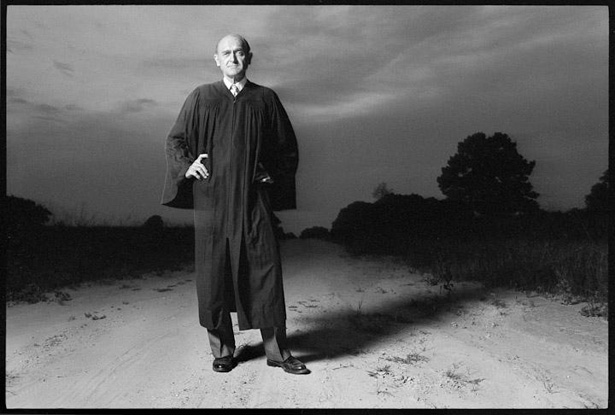
Justice William Wayne Justice. Photo by Michael O’Brien / School of Law / UT Austin

William Wayne Justice, Judge Who Remade Texas, Dies at 89

William Wayne Justice, a federal district judge who ruled on ground-breaking class-action suits that compelled Texas to integrate schools, reform prisons, educate illegal immigrants and revamp many other policies, died [October 13, 2009] in Austin. He was 89.
[….]
Judge Justice was a small-town lawyer active in Democratic Party politics when President Lyndon B. Johnson appointed him to the federal bench of the Eastern District of Texas in 1968. Sitting in Tyler, Tex., he came to be called the most powerful man in Texas by those who agreed with his largely liberal decisions and the most hated by those who differed.

In a 1998 column in The Fort Worth Star-Telegram, Molly Ivins made what she called the “painfully obvious point” that Judge Justice had lived up to his name, saying he “brought the United States Constitution to Texas.”

The same year, Lino Graglia, a constitutional law professor at the University of Texas at Austin, said in an interview with The Dallas Morning News, “He has wreaked more havoc and misery and injury to the people of Texas than any man in the last 25 years.”

— Douglas Martin / New York Times

Judge William Wayne Justice:
A great and courageous man

By David Richards / The Rag Blog / October 22, 2009

Judge Justice’s death has produced an outpouring of admiration, all of it justified and understandable. He was a remarkable figure in the state’s history. The only thing I might add is a bit of historical perspective. I spent many hours in his court and come from the same Texas political generation. Indeed at one point we were friendly rivals for a vacancy on the Fifth Circuit that didn’t come our way, I have always assumed that for differing reasons, we were each too off the wall for the Carter administration.

The Judge grew up in East Texas-Henderson County. These roots are fundamental to understanding his career. He was one of that rare breed of East Texas liberals who opposed the racism that dominated Texas, especially East Texas, in that era. He practiced law in Athens with that great democrat and social renegade, Bill Kugle. The two of them were major activists in the Frankie Randolph-Ralph Yarborough wing of the democratic party, a wing that was decidedly anti-Lyndon Johnson in the 1950’s.

Johnson’s 1968 appointment of Justice to the federal bench has always struck me as a bit of a surprise given Johnson’s reputation for long memory. In all events the Judge hit the ground running, as the sitting federal judge in Tyler, Texas. His predecessor had been a defender of the conservative establishment and civil rights issues had not been welcome in his court.

In that time long hair seemed to threaten all school officials. Tyler Junior College prohibited beards and long hair on male students. In one of his early decisions Justice declared the rules unconstitutional. Shortly thereafter, in another case, he ordered the closing of the Black high school and integration of the students into the all-white schools of Tyler. Although this decision ultimately brought Earl Campbell, and a state football championship, that did nothing to assuage the anger of the white community.

These decisions insured that the Judge became from the get-go a total pariah in his home community, an animosity that endured throughout his life in Tyler. Paul Burka has written movingly on the subject of the ostracism and threats the Judge and his family faced in Tyler. This was not like a judge sitting in some urban metropolis where a degree of anonymity might be available, Judge Justice was exposed on a daily basis to the vitriol and somehow managed to maintain his equilibrium. Indeed his outside family was largely his staff and the young liberal law clerks who clamored for the opportunity to work for him.

In the not so secret world of lawyers, venue is frequently the linchpin of success in litigation. Where a case is tried may be the most important factor in outcome. In short order the handful of Texas civil rights lawyers began to beat a path to Tyler, where the Judge heard every case filed in federal court.

He issued landmark decisions on reform of the Texas juvenile justice system, the Texas prison system and the education of alien school children, to name just a few. Predictably, the Tyler docket became overcrowded and a new judge was assigned to hear a portion of the cases. We were forced to scramble a bit in our venue search; for a while one was assured of getting Judge Justice if you filed in Sherman, Texas, then that forum became uncertain. In my last filing before him I had to pursue the Judge to Paris, Texas, where for a short time he had the entire docket.

Most of my cases before the court involved voting rights, principally concerning the Black community. Judge Justice played a key role in the establishment of single member district representation in the Texas Legislature and in city councils and school boards across the state. In the early 1970’s I filed a series of cases in East Texas challenging city and county election systems. It was my first real exposure to the isolation and victimization of the rural black community of the State.

As a result of Judge Justice’s rulings we had some successes. A Black County Commissioner was elected in Nacogdoches; he was believed to be the first Black elected official since reconstruction in that part of the world. Some other victories followed in Palestine and Lufkin. The striking thing to me was the realization that throughout the East Texas Black community Judge Justice was viewed almost like a Messiah. While he was an anathema to the white establishment, he gave to the beleaguered Black world hope that they had never enjoyed before. Things were never the same again in East Texas.

Wayne Justice was a great and courageous man who chose a lonely and difficult path, and pursued it with good humor and intelligence.

[David Richards is a renowned Texas civil rights lawyer and sometimes writer. He is the author of Once Upon a Time in Texas: A Liberal in the Lone Star State . He lives in Austin.]

See William Wayne Justice / Wikipedia

Read more about the death of Judge William Wayne Justice:

The Rag Blog

Posted in Rag Bloggers | Tagged , , , , , , , , | Leave a comment

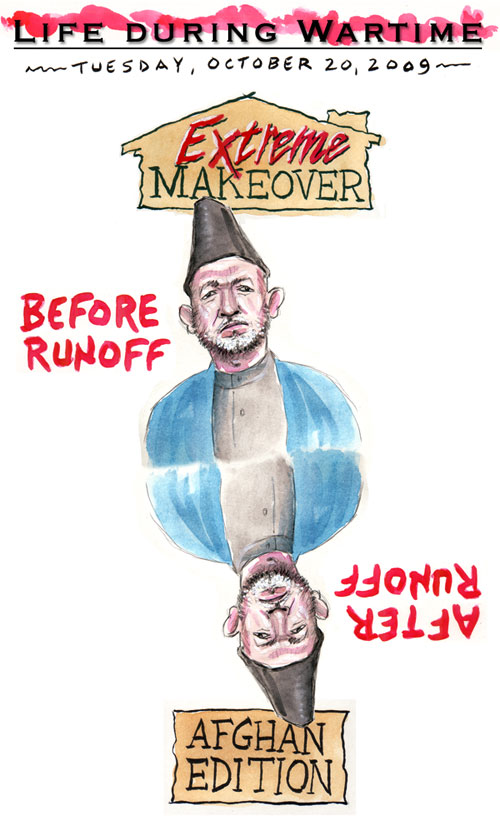
Life During Wartime : Extreme Makeover

Political cartoon by Joshua Brown / Historians Against the War / The Rag Blog

Thanks to Dr. S.R. Keister /The Rag Blog

Posted in Rag Bloggers | Tagged , | 3 Comments

Greg Moses : The Cash Cops of Tenaha, Texas

Welcome to Tenaha! Photo by Exquisitely Bored in Nacogdoches / Flickr.

Bizarre License on Highway 59:
The Cash Cops of Tenaha

By Greg Moses / The Rag Blog / August 20, 2009

It was Friday of the last day of August, 2007 when Arkansas resident James Morrow attempted to mind his own business while driving peaceably through Tenaha, a small East Texas town in Shelby County south of Shreveport and Longview.

According to a federal lawsuit (Morrow v Tenaha) filed by attorneys Tim Garrigan and David Guillory, there was “no legal justification” for what happened next. Morrow was stopped by Tenaha Deputy Marshall Barry Washington and asked to step out of his car. Deputy Washington then searched Morrow’s car.

Then Deputy Washington was joined at the scene by Shelby County Precinct Four Constable Randy Whatley who searched the car with a dog.

Following two searches of his car, Morrow was asked by Deputy Washington if he had any money, and he said yes, he was carrying about $3,900 in his wallet. Deputy Washington promptly seized $3,969 from Morrow, confiscated his two cell phones, and arrested him for “money laundering.”

“Washington had no reason to believe Plaintiff Morrow was guilty of money laundering,” says the federal lawsuit. “Defendants Washington and Russell told Plaintiff Morrow they would hold him prisoner and prosecute him for money laundering unless he would agree to forfeit the $3969. Under this duress and these threats, Defendants Washington and Russell coerced Plaintiff Morrow to execute documents memorializing the forfeiture, and released him, and warned him to not hire a lawyer or try to get his money back.” The “money laundering” charges were subsequently dismissed.

Morrow is a black African American and the lead plaintiff in a case involving eight motorists who claim they were stopped and stripped of their cash for no other provocation than driving or riding through Tenaha while black. The cars they all drove were either rented or displayed out-of-state license plates.

On August 13, 2007, Deputy Washington lifted $50,291.00 from two black African Americans from Washington D.C. and Maryland who were traveling through Texas together.

“Washington threatened Plaintiffs with charges of money laundering and lengthy sentences if they would not execute documents allowing the seizure or if they otherwise contested the seizure,” says the lawsuit. “Washington did not charge Plaintiffs with any criminal offense, nor did he have legal justification to do so.”

On June 11, 2008, Deputy Washington confiscated $13,000 from a black African American from Wisconsin.

“Washington threatened to bring money laundering charges against Plaintiff, and to prosecute him on those charges, if he did not execute documents permitting Defendant Washington’s seizure and forfeiture of the money,” says the lawsuit. “Under this coercion, Plaintiff signed the documents.”

On April 18, 2007, Deputy Washington stopped and detained another pair of black African American motorists, Linda Dorman and Marvin Pearson, both from Ohio. While under detention they were questioned by Shelby County District Attorney Investigator Danny Green. He asked them if they had any money. According to court documents Dorman and Pearson admitted to having $4,500, but after Green confiscated the cash under the usual coercive threats, he handed them a receipt for only $4,000. No charges against Dorman or Pearson were ever filed.

Jennifer Boatwright is a white woman from Texas, but on April 26, 2007 she was driving down Highway 59 near Tenaha with Ronald Henderson, a black African American. They were stopped and detained by Deputy Washington, then questioned by Washington and D.A. Investigator Green.

“Green threatened to bring money laundering charges against Plaintiffs Boatwright and Henderson, and to take their children and put them in foster care if Plaintiffs would not sign papers prepared by Defendant Green to authorize the seizure,” says the lawsuit. “Under coercion, Plaintiffs Boatwright and Henderson complied.” They handed over $6,000 in cash. No charges were ever filed against them.

“Now, under Texas law, if you are pulled over and accused of a real crime, police are permitted to take money and other valuables that you might have used in your crime, or received from your crime,” explains CNN correspondent Gary Tuchman in a May, 2009 blog post at AC360.

As Tuchman explains, the forfeiture law is intended to take bad money and put it to good use, but after an extensive public information request, the CNN team discovered that District Attorney Lynda K. Russell has collected an estimated $3 million in forfeiture funds to purchase such things as $195 for Tootsie Pops, Dum Dums, and Dubble Bubble that she contributed to a poultry festival, $524 for a popcorn machine and popcorn, $400 for barbecue catering, and at least two checks totaling $6,000 to a local Baptist church.

“But this one, this check, really stands out,” reports Tuchman in an archived transcript of the story. “This is the check the DA wrote for $10,000 and paid directly to police officer Barry Washington for what are described as investigative costs.”

With camera rolling, Tuchman asks Russell and Washington for comments, but they both refuse on account of pending litigation. In federal court documents the defendants deny the charges, claim to have no knowledge of alleged facts, claim immunity as officials, and ask that the case be dismissed.

Republican D.A. Russell was elected by 53 percent of the vote against a Democrat opponent in 2000, according to official numbers posted by the Texas Secretary of State. In 2004 she increased her general election share to 59 percent against her predecessor, Democrat Karen S. Price, who tried to stage a comeback after a failed effort to get elected in 2000 as a Republican District Judge. In 2008, D.A. Russell ran unopposed. No one that year could have made a campaign issue of the federal suit that was filed after the spring primary but before the fall general election.

During the summer of 2009, lawyers battled over discovery motions. Plaintiffs are trying to certify a class action lawsuit and therefore want volumes of video and documentation well beyond the eight named cases. On August 20, Federal District Judge T. John Ward largely granted ACLU requests for more materials and clarified the legal path to possible class action certification.

On the defense side, attorneys argued that they should be allowed to discover “travel itineraries, calendars, journals, or other documents reflecting schedule and/or any travel; all credit card bills/receipts; all receipts for hotel, gas, meals, rental cars; and photographs from any trips and of any items seized.” Judge Ward agreed, but only if the records were “readily available.”

Lawyers for the police and D.A.’s office also wanted plaintiffs to turn over bank records, income tax returns, and employment records; in an apparent attempt to revisit the “money laundering” charges that were never filed in the first place. It was a scary request supported by scary argumentation:

“In other words,” argued lawyers for the Shelby County law enforcement establishment in their federal filings, “even if the initial traffic stop lacked probable cause, the forfeiture action could proceed and the State could still meet its civil case burden of proof by a preponderance of the evidence and the property could still be forfeited.”

The authority the cops were seeking was chilling. They could stop people for no reason, take their cash, spend it, meanwhile filing no charges of wrongdoing. All the while, the authorities of East Texas or wherever could count on a federal court order that would allow them to go after the banking, tax, and employment records of their innocent victims if they tried to get their money back. Judge Ward denied those parts of discovery.

The discovery motions also revealed that collection accounts were not always well kept. One front-line collector argued that he kept bulk numbers only and could not provide evidence of how much money was taken on any single occasion. To get your money back from these actors, they may demand that you prove it’s not contraband and then prove how much they took.

But these East Texas law enforcers are not finished grasping at bizarre license to ply their trade as the cash cops of Highway 59. D.A. Russell now seeks to use the forfeiture funds to pay for her defense. In early October the ACLU filed a brief with the Texas Attorney General’s Office to prevent the forfeiture funds from being spent to defend alleged abuse of forfeiture powers.

“Even if it were determined that, under other circumstances, the District Attorney should be permitted to use forfeited assets to pay for legal representation, such an action in this case should be prohibited because it would give the appearance of impropriety,” argues the ACLU brief.

“The Plaintiffs claim the funds were taken illegally. To permit the District Attorney to use them would suggest that law-breakers may profit from ill-gotten gains, the very problem that the asset forfeiture law was created to prevent.”

Cash is a lucrative temptation. Empowering officials to take cash money from passing motorists and give it to attorneys who can help them keep it is a plain recipe for placing law enforcement powers in the hands of highway forfeiture gangs.

[Greg Moses is editor of the Texas Civil Rights Review, author of Revolution of Conscience: Martin Luther King, Jr. and the Philosophy of Nonviolence, and a card carrying member of the ACLU. He can be reached at gmosesx@gmail.com.]

Also see Police in Texas : Property Seizure called ‘Highway Piracy’ by Thorne Dreyer / February 11, 2009

The Rag Blog

Posted in Rag Bloggers | Tagged , , , | 8 Comments

Amazing Grace in North Carolina : Halloween Bible-Burning Bash

Graphic composite by Larry Ray / The Rag Blog.

It’s a Halloween bible roast!
Burning ‘perversions of God’s Word’

By Larry Ray / The Rag Blog / October 19, 2009

The Amazing Grace Baptist Church in Canton, North Carolina, has big plans for Halloween and just might win the “Old-South Small Town Flaming Fundamentalist Award.” The church is planning a really big bible burning, or as they see it, “Burning Perversions of God’s Word.” And as long as the flames are roaring, “We will also be burning Satan’s music such as country, pop, heavy metal, western, soft and easy, contemporary Christian, jazz, soul, oldies but goldies, etc.”

Bluegrass seems to have made it, along with classical music but I bet Pastor Grizzard would toss Offenbach’s “Orpheus in Hades” on his pyre if he knew about classical music.

All this is being done in an attempt to rid the immediate area of all those other bibles that “are not the word of God” and Grizzard has it honed down to anything that is not “based on the TR.” And he is not referring to Teddy Roosevelt or that huge carnivorous dinosaur, T Rex.

The single abbreviation is for “Textus Receptus“, or “Received Text,” the great recitation straight from the mouth of God, AKA the King James Bible, as defined by Pastor Gizzard who coheres to Erasmus’s original Greek Testament. Any other biblical interpretations are flawed and not the word of God according to the Pastor and his 14 church members.

So scholars beware! Check the list, “We are burning Satan’s bibles like the NIV, RSV, NKJV, TLB, NASB, NEV, NRSV, ASV, NWT, Good News for Modern Man, The Evidence Bible, The Message Bible, The Green Bible, ect.(sic)”

However, there are some exceptions, again straight from their web site, “We are not burning Bibles written in other languages that are based on the TR. We are not burning the Wycliffe, Tyndale, Geneva or other translations that are based on the TR. We will be serving Bar-b-Que Chicken, fried chicken, and all the sides.”

To make sure Halloween is clean fun for all, Grizzard’s web site promises a raging fire from other blazing blasphemy penned by the likes of everyone from the Pope to Oral Roberts:

We will also be burning Satan’s popular books written by heretics like Westcott & Hort, Bruce Metzger, Billy Graham, Rick Warren, Bill Hybels, John McArthur, James Dobson, Charles Swindoll, John Piper, Chuck Colson, Tony Evans, Oral Roberts, Jimmy Swagart, Mark Driskol, Franklin Graham, Bill Bright, Tim Lahaye, Paula White, T.D. Jakes, Benny Hinn, Joyce Myers, Brian McLaren, Robert Schuller, Mother Teresa, The Pope, Rob Bell, Erwin McManus, Donald Miller, Shane Claiborne, Brennan Manning, William Young, etc.

Canton, North Carolina, is in the shadow of Cold Mountain, which inspired the 1997 NY Times bestseller of the same name about a post Civil War romance and it seems like a nice enough place. I hope the Amazing Grace Baptist Church makes sure to get a special burning permit, otherwise the fire department might be called out, and fines levied. Or at least that is what Article B, Fire Prevention and Hazards of the Town of Canton, NC Code of Ordinances, seems to say in Section 3-2011: “Open fires prohibited in fire limits. It shall be unlawful for any person to ignite, use or maintain any open or unenclosed fire within the fire limits of the Town.” (Code 1963, Sec. 8-1)

It would just take all the fun out of Halloween not to be able to burn the writings of Mother Teresa and Jimmy Swagart.

[Retired journalist Larry Ray is a Texas native and former Austin television news anchor. He also posts at The iHandbill.]

The Rag Blog

Posted in Rag Bloggers | Tagged , , , | 8 Comments

Playing with Fire : Perry Admits Medina Role in Winningham Execution


Fighting fire with fire:

David Medina played role in execution:
Perry’s counsel was cleared of arson charges

By Glenn W. Smith / October 19, 2009

Dog Canyon’s Glenn W. Smith and Steve Hall of the StandDown Texas Project join Thorne Dreyer on Rag Radio, Tuesday, Oct. 20, from 2-3 p.m. on KOOP, 91.7 FM in Austin. They will discuss Rick Perry’s handling of the Willingham execution and other issues involving criminal justice and Texas politics. To stream Rag Radio, go here.

David Medina, Gov. Rick Perry’s general counsel when Perry denied a stay of execution to Cameron Todd Willingham, was later cleared of arson-related charges in the fire that destroyed his home. Medina is now on the Texas Supreme Court. His wife, Francisca, was cleared of arson charges based on an independent forensic and arson investigator’s report. The expert found the fire might have been accidental.

Willingham was convicted and sentenced to death for a fire that killed his three children. A report from an independent forensic and arson investigator sent to Perry and Medina 88 minutes before the execution said the fire was probably accidental. Perry and Medina ignored it as irrelevant. Perry has subsequently mocked independent scientists.

Now Perry has publicly admitted Medina’s role in the 2004 Willingham execution. There could be no greater or more tragic example of our unequal, two-tiered system of justice. I don’t know if the Medinas set the fire or not. I don’t know if Willingham was guilty, although all the independent experts say the fire wasn’t even arson, meaning no crime was committed.

What I do know is that a scientist’s report in the Medina case was given so much weight that the indictment was dismissed. In the Willingham case, such a report was not deemed important enough to delay an execution. Perry and Medina were not asked to pardon Willingham or find him not guilty. They were asked to wait a while before executing him. That’s all.

Steve Mills of the Chicago Tribune, has listed the deceptions in Perry’s recent responses to the Willingham case:

Charge: On Thursday, officials in Corsicana, Texas, released a sworn affidavit from the brother of Willingham’s wife that he signed shortly before the execution. In it, he claims that Stacy Willingham told her family that her husband confessed to her before the execution.

Fact: In 2004, Stacy Willingham told the Tribune that Willingham never confessed. Earlier this year she told David Grann, a reporter for The New Yorker magazine, that she stood by her statements. She came to believe that Willingham was guilty after she reviewed the case herself.

In addition, on the same day that Stacy Willingham’s brother claimed she told the family that Willingham had confessed, she spoke to the local newspaper, saying that during her last meeting with him, he maintained his innocence.

She did not mention a confession.

Charge: Perry has called the fire scientists and investigators who have reviewed the case “latter-day supposed experts.” He has suggested they were aligned with death penalty opponents. Both statements appear to be efforts to question their impartiality and their credentials.

Fact: The nine scientists and investigators involved, all of whom have found the original investigation flawed, have worked for both defense lawyers and prosecutors, as well as for attorneys in civil litigation. All are considered among the field’s leaders. Some are viewed as prosecution-oriented.

They have no vested interest in the outcome of the debate and are not active in the nation’s ongoing death penalty debate.

“My work was a scientific investigation,” said Craig Beyler, who investigated the case for the Texas Forensic Science Commission. “There’s no political agenda.”

Charge: Perry said recently that there was “clear and compelling, overwhelming evidence” of Willingham’s guilt. He has said more than a dozen courts rejected Willingham’s claims.

Fact: The heart of the case prosecutors brought against Willingham was that the fire was arson. Besides testimony from fire investigators, prosecutors offered a jail inmate who said Willingham told him he set the fire. The inmate, however, was a drug addict who was taking psychiatric medication at the time. Since the trial, he has hinted his testimony was false; even prosecutors have discounted his claims.

Willingham’s appeals did make their way through the state and federal courts, but his claim that the fire investigation was flawed was made just before his execution to a Texas court and a federal appeals court, as well as to the governor and the state’s parole board.

Charge: Perry has called Willingham a “monster.” The man who prosecuted him, John Jackson, suggested in a “Nightline” interview on ABC that Willingham was a devil-worshiper because he listened to heavy-metal music and had a band poster in the house.

Jackson also claimed fire patterns on the floor were in the shape of a pentagram to buttress his contention.

Fact: There is no evidence in court records to support claims that Willingham was involved in any such activities. Fire investigators made no references to the shape of burn patterns.

Source / Dog Canyon

Rick Perry admits David Medina role in execution

For previous Rag Blog posts about Rick Perry’s handling of the Willingham case, go here.

The Rag Blog

Posted in RagBlog | Tagged , , , , | 2 Comments

Austin : Billionaires for Wealthcare!

Healthcare Not Warfare demonstration in Austin. Above: “Billionaires for Wealthcare.” Below, demonstrators stage a “die-in” for peace. Photos by Alan Pogue / The Rag Blog.

Austin rally calls for healthcare reform,
An end to the Afghanistan War

By Alice Embree / The Rag Blog / October 19, 2009

More photos, Below.

A rally for “Healthcare Not Warfare” drew more than 200 people to Austin City Hall on Saturday. An Austin coalition that included Texans for Peace and CodePink called the rally to coincide with the 8th anniversary of the invasion of Iraq. They put out the call to coincide with the anniversary of the beginning of U.S. military action in Afghanistan in 2001. At a time when the Obama administration is talking of expanding the war, the speakers addressed the need to end the Afghan occupation.

Faith leaders Rev. James Rigby and Rev. Roscoe Overton addressed the crowd. Castro’s Beard and Will T. Massey provided music. Cynthia Good and Joe Carr shared poetry. Members of the Iraq Veterans Against the War flanked Bobby Whittenberg, an Iraq veteran, as he spoke. Brian Hannah, also an Iraq veteran, addressed the crowd.

Medea Benjamin, a co-founder of CodePink, spoke about her recent trip to Afghanistan. Her delegation met with Afghan women there. They returned with a petition from those women demanding that peace talks begin and that Afghan women be participants in those talks. At the recent San Francisco fundraiser which Obama attended, Jodie Evans of CodePink was able to hand the petition directly to the President.

On a lighter note, the rally was visited by “Billionaires for Wealthcare.” Dressed elegantly in black dresses and one tuxedo, sporting champagne glasses and one cigar, they urged the crowd to look at the world from their perspective with posters that read: “Do No Harm To My Bottom Line,” and “Cigna and Palin in 2012.”

Demonstrators also staged a “die-in” to honor the war dead.

On Sunday at Cafe Caffeine in Austin, Medea Benjamin spoke at length about the Afghanistan war and the need to advocate for withdrawal of U.S. troops and the initiation of peace talks. United Nations Resolution 1325 calls for women to participate in peace talks and Benjamin said that Obama should earn his Nobel peace prize through a peace process that includes women in accordance with Resolution 1325.

Benjamin talked about the large presence of contractors from KPR, Z (formerly Blackwater) and the Armor Group (whose members were recently photographed in a lewd Embassy hazing party). She spoke of the poverty and dire need for economic development, the rising civilian casualties.

A young Texan for peace. Photo by Alan Pogue/ The Rag Blog.

Charlie Jackson of Texas for Peace. Photo by Alan Pogue / The Rag Blog.

Vet Brian Hannah, flanked by members of Iraq Veterans Against the War. Photo by Alan Pogue / The Rag Blog.

Rev. Jim Rigby of St. Andrews Presbyterian Church in Austin calls for a reexamination of our values. Photo by Alan Pogue / The Rag Blog.

CodePink co-founder Medea Benjamin addresses the crowd. Photo by Alice Embree / The Rag Blog.

Members of Texas CodePink at Cafe Caffeine in Austin. Front row, second from left, is Medea Benjamin. At top right, flashing peace sign, is The Rag Blog’s Alice Embree. Photo by Allan Campbell / The Rag Blog.

The Rag Blog

Posted in Rag Bloggers | Tagged , , , , , , , | 2 Comments

Mariann G. Wizard : Danger Found Code Blue

Cody Ryan Patterson on graduation day from basic training. Family photo.

Army Spec. Cody Ryan Patterson:
Danger found him in his own home

He was a proud, happy soldier of the Imperium when he died, had never been under hostile fire nor killed another human being.

By Mariann G. Wizard / The Rag Blog / October 19, 2009

Those of you who read The Rag Blog compulsively, even unto the Comments, may have seen one or two such in which I’ve mentioned, without naming him completely, my nephew from North Central Texas, serving with the U.S. Army in Iraq.

Army Spec. Cody Ryan Patterson corresponded with his Auntie M. a bit, when he had Internet access. He sent me a piece of spam at one point, an arrogant, militaristic set of instructions to U.S. civilians on how service personnel should be treated when encountered here at home; it basically said that if a person had some issue with the mission, to keep it to him or herself or risk an “ass-kicking.”

I wrote back that I would turn Cody Ryan over my knee when he was home on leave! “If you’re not over there protecting my right to think and say what my conscience tells me, buster, you shouldn’t be wearing the uniform!”

He came right back at me, like a (very young) man, having what may have been one of his first sustained intellectual arguments with an adult relative. I sent him a Rag Blog story about Army resister Victor Agosto, and he was totally appalled by it; felt that Victor must be a coward and was glad he didn’t have anyone who felt that way in his unit, since they would be a danger to him.

He argued for duty and contractual obligation, and I argued for individual responsibility. But we ended each e-mail with hugs and kisses, reminders of the bond we shared.

Cody and I met when my youngest brother married his Mom, who came to us with a son and a daughter. He was a bright, mischievous, totally typical brown-eyed boy, and, like his sister and little-brother-to-come, an outgoing, affectionate kid who never said “Good-bye” to his aunts or his grandma without also saying, “I love you,” and giving a hearty kiss and hug. My affectionate nickname for him became “Code Blue,” for some reason I no longer recall.

He was a natural-born fisherman, but was allergic to fish. I bought him a copy of the first Harry Potter book when it was published, at the apparently perfect time to spark his interest in reading for a while, but it didn’t last. After my brother and Cody’s Mom split up, not what you’d call amicably, I didn’t see much of him.

Later, with no college-oriented funds, prospects, or ambitions, he left high school and went to work, but couldn’t find a job in Hill or Johnson counties that paid enough to get his own place, buy a reliable truck, and do the other things young men need to do. He would have gone to the Marines, but an old eye injury kept him out, and the Army got him instead.

Cody came home on leave a week ago. He was to have deployed to Afghanistan on Oct. 28. I’d hoped to see him and hug his neck before he left Texas again. But danger found him at 5 a.m. Saturday morning in his mother’s house in Blum. Cody was killed by someone he trusted. It was not a member of his family. The murder appears to have been premeditated, and a young woman has been arrested in connection with the crime

Cody was Army strong. He made it to the door of his mother’s room before collapsing against it, calling, “I’ve been shot” as he fell. Cody was dead before the ambulance and the police arrived. His sister and his Mom’s boyfriend both did CPR on him but to no avail.

I could go into a lot more detail here about the regular rural po’folks who are my family, could make it seem even more sordid, senseless, sad. But what is the difference, for a 20-year old boy-man, in dying in a village quarrel in Texas or in one halfway around the world, in somebody else’s village? What is the difference in hearing your son’s last gasps as he dies in your arms and in imagining them every night he is in harm’s way?

Army recruiters sealed their deal with Cody when they had him come to see them in Ft. Worth and put him up on the next-to-penthouse floor of a downtown hotel. He’d never been that far off the ground before.

After basic training, he called my brother, his former step-dad, to thank him for his efforts in requiring young Cody to be responsible, to do chores, and for extensive camping and hunting experiences; he felt infinitely more prepared than some of the guys he’d met in basic, who apparently cried for their blankies at night and ain’t never kilt a rabbit.

He was a proud, happy soldier of the Imperium when he died, had never been under hostile fire nor killed another human being.

No one in Cody’s family can escape knowing that whatever facts may emerge, the young woman arrested is somebody’s child, and also somebody’s mother. We’re not naive enough to seek “closure,” or imagine that further tragedy will mitigate this one. But we will be looking for justice. That may be the only real difference between Blum and any hamlet of 300 souls in “Afraq.”

Some Rag Blog readers who’d read about my recent exchanges with Cody expressed good wishes for his upcoming deployment, that he would come home OK, with both his life and his sacred honor intact. I appreciated those good wishes for this good kid, and wanted to let you know, as his Mom reportedly said yesterday in her grief, that we “don’t have to worry for him anymore.”

[Editor’s note: This article has been revised, and a portion redacted, at the author’s request, due to concerns from the immediate family and in the interest of a continuing criminal investigation.

In the words of Mariann Wizard: “Last night, I made a mistake. I allowed speculation to creep into an otherwise factual story about my nephew’s life and death. I should have waited before submitting this article, should have run it by Cody’s family first, and I apologize for not having done so. I let my emotions carry me away. Thanks to all those who responded.”]

The Rag Blog

Posted in Rag Bloggers | Tagged , , , , | 14 Comments

Health Insurance : Does Baucus Bill Make Things Worse?

Cartoon by David Horsey / Seattle P.I.

Public option a necessity:
Baucus Bill protects insurance companies

By Ted McLaughlin / The Rag Blog / October 19, 2009

There are two especially devious ways that private health insurers use to keep their own profits high (and deny health care to consumers). The first is to cherry pick only healthy people to cover with insurance, and deny insurance to sick people or people with pre-existing conditions.

The second is to deny coverage for specific treatments to those with insurance. It is not uncommon for seriously ill people to find that their private insurance will not cover the treatment they need to get well. In many cases, these people die because they are unable to get the treatment their insurance company has refused to pay for.

The Baucus Bill, the health care reform bill approved by the Senate Finance Committee, would take care of the first problem. Private insurance companies would no longer be able to deny coverage to sick people or those with pre-existing conditions (or price that coverage out of the consumer’s reach). But it does nothing to fix the second problem.

In fact, an excellent article by Lisa Girion in the Los Angeles Times makes the point that the Baucus Bill would only make the second problem worse, and leave consumers no better off than they are now. After all, what good is private insurance coverage if that coverage will not pay for needed treatment?

Since they could not exclude sick people or those with pre-existing conditions, the insurance companies would be left with two choices to maintain their exorbitantly high profits — raise premiums or deny treatment. Of the two choices, the easiest option is to deny treatment — a choice that could easily be hidden in the policy’s fine print.

Considering the fact that private insurers already do this for many expensive procedures, is there any doubt that they would protect their profits by denying coverage even more often? I think that answer is self-evident. But there is a simple solution to this problem.

One might think the solution is to require coverage and payment of any treatment declared necessary by a doctor, but that won’t work. That would just raise the premium cost of private insurance, and in the Baucus Bill there is nothing by private insurance.

The real solution is to include a public option for insurance in the bill. A public option would cover those with pre-existing conditions, cover all necessary treatments and it would keep premium costs low (by significantly lowering overhead among other things). This would force the private insurers to do the same, or lose consumers to the public option.

Senator John D. Rockefeller (D-W. Virginia) says, “We’ve seen all the insurance industry tricks — hiding rules in fine print, cutting people off when they get sick, and refusing to pay for necessary treatment because of pre-existing conditions. This is why I am fighting for a public option — we need an insurance option out there that puts people first, not profits. We need a real public option, one that competes with private insurance companies to keep them honest and accountable.”

There are those who think the public option would drive private insurers out of the health insurance business. Personally, I don’t care. There are plenty of other things they can insure.

It comes down to a choice. Which is more important — protecting private insurers or providing necessary treatment for sick Americans? I choose the latter.

[Rag Blog contributor Ted McLaughlin also posts at jobsanger.]

The Rag Blog

Posted in Rag Bloggers | Tagged , , | 9 Comments

‘Tormenta Electrica’ : Mexico’s Calderon Busts Union, Fires 44,000 Workers

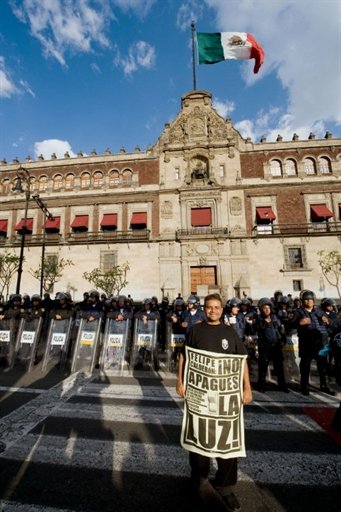
Mexican Electrical Workers Union members protest the summary firing of 44,000 members. Photo: La Jornada. At top, a laid-off worker protests in front of the National Palace in Mexico City. Photo by AFP.

Lightning strikes in Mexico:
Calderon, cops move against electrical workers

‘With one stroke of a pen Calderon has ruined our lives.’

By John Ross / The Rag Blog / October 19, 2009

MEXICO CITY — During the first week of October, the increasingly unpopular government of Felipe Calderon stepped up its ongoing war of words against the Mexican Electricity Workers Union (SME), one of the nation’s oldest labor organizations founded at the apogee of the landmark Mexican Revolution in 1914 when workers repeatedly shut down the Canadian-owned Mexican Light & Power Company.

Now with the centennial of the Revolution on deck in 2010, the SME’s survival as a union is in jeopardy and it may never make it to the birthday party.

Following the nationalization of electricity generation and distribution under President Adolfo Lopez Mateos in 1960, the SME (“Esmay”) won collective bargaining agreements for the newly created Luz y Fuerza Del Centro that distributes about a fifth of the nation’s energy to Mexico City and four surrounding states.

Mexico’s second power utility, the Federal Electricity Commission (CFE), services the rest of the country and its workers are represented by a “charro” (company) union under the thumb of the Institutional Revolutionary Party (PRI) that ran the lives of Mexicans from the cradle to the grave for 71 years until it was displaced from power by Calderon’s rightist PAN in 2000.

Although the SME had longstanding ties to the PRI, it maintained a modicum of critical independence. Communists and Trotskyists wielded influence in union circles and decorated the walls of the union headquarters with proletarian murals. The Sindicato Mexicano de Electricistas has always been good for 40,000 boots on the ground when it comes to social protest.

After the 1985 Mexico City earthquake that took up to 30,000 lives, SME workers rescued victims trapped in the rubble of fallen buildings and worked tirelessly around the clock to restore power in working class colonies. In contrast, the PRI-run government abandoned “los de abajo” (“those down below”) to their own fate.

Three years ago, after hotly contested presidential elections, the SME cautiously lined up with Andres Manuel Lopez Obrador (AMLO) after Calderon was awarded victory over the leftist leader in fraud-marred balloting. Calderon has never forgiven the union’s 66,000 members — 44,000 active workers and 22,000 pensioners — for this partisan sin.

The Sindicato Mexicano de Electricistas is built on a democratic structure although it has not always been a paragon of democracy. Strikes can only be called by referendum and plebecite and negotiated settlements are ratified by general assemblies in which every vote is counted. Union officials and members of its executive board are elected every three years but the vote-taking is staggered and the union always seems to be in the process of electing its officials.

When last spring Martin Esparza, a 45 year-old veteran official, sought a third term as SME secretary-general, he was opposed by union treasurer Alejandro Munoz in an election that was redolent with mudslinging — Esparza accused Munoz of playing footsy with Calderon’s then-personal secretary Cesar Nava, now president of the PAN, and Munoz charged that his rival had pocketed moneys set aside for the construction of a new union office building.

When Esparza was re-elected by a little more than 300 out of 66,000 votes, Munoz appealed to Calderon’s hardnosed Secretary of Labor Javier Lozano not to recognize Esparza as secretary general of the SME. Lozano was eager to comply, refusing to sign a “nota de toma” or official recognition of Esparza’s re-election. As a result, Luz y Fuerza del Centro cut off all check-off dues and subsidies to the SME and the union was unable to meet its payroll.

As is union tradition, Esparza mobilized his loyalists and 10,000 workers encamped outside the Labor Secretariat in the south of the city adjacent to the Periferico or ring road, this megalopolis’s most vital traffic artery, threatening to shut it down. Rumors circulated that SME workers would “baja el switch” (diminish electricity distribution) and security forces were put on alert at the end of September — the criminalization of social protest has been the most salient feature of Calderon’s three rocky years at the wheel of state.

Javier Lozano is Felipe Calderon’s hatchet man. For the past few years, he has been seeking (with little success) to dismember the Miners and Metalworkers Union that, like the SME, dates back to the Mexican revolution. His encounters with the Chinese businessman Ye Gon are the stuff of legend — Mr. Ye alleges that the labor secretary forced him to stash $200 million USD from a Calderon slush fund in his palatial Mexico City mansion, ordering the pharmaceutical kingpin who was granted citizenship by the president’s predecessor Vicente Fox, to either “cooperate” (“coopeles” in fake Mexican Chinese) or have his throat slashed (“cuello.”) When Ye Gon rebelled, he was jailed.

The Lozano-Calderon assault on the SME obeyed the same logic. At the nub of the dispute is 1100 kilometers of fiber optics that would be run through Luz y Fuerza power lines by a private Spanish transnational — the concession was handed down by 1998 by then president Ernesto Zedillo to the Madrid-based WS Communications Corporation whose chief Mexican stockholders are two ex-energy secretaries Ernesto Martens and Fernando Canales Clariond.

For arcane reasons probably related to the reluctance of Carlos Slim, owner of the near-monopoly phone company Telmex and the richest tycoon in Latin America, the concession was repeatedly modified and did not kick in until 2008. By then, Esparza, in his second term as boss of the SME, was proposing that Luz y Fuerza be awarded the fiber optics concession for the so-called “triple play” (telephone, television, and internet) connection.

WS Communications’ legal representative Diego Fernandez de Cevallos, the bristly-bearded PAN fixer and former presidential candidate from whose law firm Calderon has drawn two key cabinet members — Interior Secretary Fernando Gomez Montt, the second most powerful politico in Mexico, and Attorney General Arturo Chavez Chavez — went to work. Calderon and Fernandez offered the union two options: “Cooperate or Cuello.” The stage was set for an epic showdown.

A laid-off worker carries a Mexican flag during a protest at “Luz y Fuerza del Centro.” Photo from AFP.

Saturday, October 10th: Something odd was in the air. Weather forecasts prognosticated a 40% chance of “tormentas electricas” (electrical storms.) That afternoon, Mexico would face off against El Salvador at the mammoth Azteca Stadium in the run-up to next year’s World football Cup in South Africa. The home team had already clinched a ticket to Jo’berg and the outcome against the hopelessly outgunned Central Americans was never in doubt.

Nonetheless, the nation’s two-headed television monster Televisa and TV Azteca, both of which had spent the past week trashing the SME for its workers’ “exorbitant” salaries (6000 pesos a month, about $500 Americano) and Luz y Fuerza’s over-the-top rates (the government sets the rates), launched into hours of relentless ballyhoo replete with Mariachis, fight songs, and scantily-clad cheerleaders.

The contest as expected was no contest with Mexico’s national team pouring in four quick goals. After the lopsided victory, as is traditional is this football obsessed country, tens of thousands of fans descended on the monument to the Angel of Independence on posh Reforma boulevard to celebrate and Mexico City mayor Marcelo Ebrard dispatched city cops to police the party which often gets unruly. Around 11 p.m., the police moved in to wind down the fiesta.

At the same hour and just blocks away, 5000 Army and Federal Police troops (the Federal Police is drawn from the military) were forcing their way into the central Luz y Fuerza installation and 103 other power stations in the capital and adjoining states at gunpoint. They met with little resistance from the SME skeleton crews inside the plants on a Saturday night. One worker, Fernando H., a 22-year veteran of Luz y Fuerza, had only time to grab his jacket before he was pushed into the street, leaving a mountain of memorabilia he had accumulated down the years behind. Once the plants were cleared, the Army threw up metal barricades to keep the workers at bay.

By midnight, an extraordinary edition of the Official Diary (one had never been published on a weekend before) was rolling off government presses containing President Felipe Calderon’s decree dissolving Luz y Fuerza del Centro and, as a consequence, the union that kept the state company running. Striking such a low blow on a Saturday night when no one was watching constitutes a “Sabadazo.” Remember Richard Nixon’s Saturday Night Massacre?

Sunday, October 11th: Word of the takeover flared like wildfire in the colonias where SME workers live. Everyone in Mexico but me has a cell phone now and the shocking news spread from ear to ear. Thousands were gathered outside the Sindicato‘s downtown offices on Antonio Caso Street by 3 a.m.. Martin Esparza closeted with his executive committee to decide on a plan of action. By first light, the crowd had spilled out onto the nearby esplanade of the Monument of the Revolution where the bones of the heroes of that glorious struggle are entombed.

In mid-morning, the Secretary General emerged from his inner sanctum arm-in-arm with his rival Alejandro Munoz and the two led 20,000 SME members to the heavily barricaded Interior Secretariat several blocks away. Fenced off from the old colonial building by thousands of police and army troops, the workers sat down in the street.

Meanwhile, inside the complex, Calderon’s brain trust was trying to put a happy face on the seizure of Luz y Fuerza at a tightly controlled press conference during which only the “prensa vendida” (bought-off press) was allowed to ask questions.

Gomez Montt, Cevallos’s burly law partner, postulated that the President had been forced by limited government resources to shut down the company because it had become a bottomless sinkhole of subsidies in the midst of a crushing economic downturn that had left the government without sufficient funds to even buy a fresh batch of swine flu vaccine.

The President would no longer tolerate throwing good money after bad to sustain the privileges of “elite” workers at the expense of 26,000,000 poverty-stricken Mexicans — the Calderon bureaucracy counts 26,000,000 extreme poor but most workers live in and around the poverty line and would indeed themselves descend into “extreme poverty” if deprived of their jobs as Calderon had just ordered.

Then the 350-pound finance minister Augusto Carstens took the mic to sweeten the pot. Workers who signed off on their own liquidation would receive two and a half years worth of salary — an additional bonus if they did so in the next 30 days. Carstens presented a blizzard of data to justify the 20,000,000 peso boodle that it would cost the government to shut down Luz y Fuerza — the money is thought to be drawn down from nearly a billion dollars in World Bank credits granted last April for environmental mitigation. The World Bank and the International Monetary Fund have a track record for favoring the privatization of state electricity companies in Latin America.

There were few questions from the prensa vendida.

By nightfall, once the workers had retreated from the Interior Secretariat, Felipe Calderon went on national television to explain the flimflam to the nation. His conscience was clear. He was doing the right thing for Mexico — despite the fact that he had just deprived 66,000 workers of their livelihood (the number is closer to 300,000 since each Mexican family has an average five members) in a country that has been whacked by the steepest economic downslide since the Great Depression and where unemployment now exceeds 16%.

SME veteran Fernando H. stood stiffly across the avenue from the central Mexico City Luz y Fuerza plant, staring forlornly at his now police-occupied former place of employment. “With one stroke of his pen, Calderon has ruined our lives.”

To be continued.

[John Ross’s monstrous El Monstruo — Dread & Redemption in Mexico City will be published by Nation Books November 3rd. Northern Californians can get an earful Friday the 13th at Northtown Books in Arcata and Modern Times on the 18th in San Francisco’s Mission District. Ross, who will also be traveling with his recently published Iraqigirl, the highly praised diary of a teenager growing up under U.S. occupation, is scouting venues for 2010. Write johnross@igc.org if you have any bright ideas.]

The Rag Blog

Posted in Rag Bloggers | Tagged , , | 1 Comment

Dick Flacks : Pete Seeger’s Project


Celebrating Pete Seeger:
Our political troubador

More than any other individual, he had conceived and fostered a tradition of protest song that drew from a number of cultural roots, had significant political consequence, and reshaped the forms and content of popular music.

By Dick Flacks

[This article also appears in the Autumn issue of Jewish Currents. A longer version was published on Truthdig.]

Pete Seeger turned 90 on May 3rd, providing the occasion for a huge celebratory concert in Madison Square Garden featuring a wide array of popular musicians. In the two years prior, Pete got more mainstream attention than he’d received in the previous seventy years.

Bruce Springsteen toured internationally with a large band playing material from Pete’s folksong repertory. There was a documentary film in theaters and on public television, Pete Seeger: The Power of Song. Two new biographies are in the stores (“To Everything There Is a Season”: Pete Seeger and the Power of Song, by Allan Winkler, and The Protest Singer: An Intimate Portrait of Pete Seeger, by Alec Wilkinson), and David King Dunaway’s earlier work, “How Can I Keep From Singing”: The Ballad of Pete Seeger, has been updated and republished.

There’s even an ongoing campaign to get Seeger nominated for the Nobel Peace Prize.

The attention he is now getting is certainly deserved, given his life story and his influence on American music. One feature of that story, however, is that he is one of the least-known famous people in America. I use protest music a lot in my teaching about social movements, and over the years I’ve found that fewer than five percent of my students can identify him. Even with the attention he’s received in recent years, he remains paradoxically shadowy, given his political and cultural influence.

This paradox goes to the heart of what his life project has been. One obvious reason for Seeger’s marginalization has been his commitment to the political left.

His father, noted composer and musicologist Charles Seeger, was an important leader of the cultural front fostered by the Communist Party during the 1930s. Charles helped form a composers’ collective that sought to create a new music for revolutionary workers and to preserve and reinvigorate folk and vernacular musics as an alternative to commodified mass culture (its members included Marc Blitzstein, Aaron Copland and other young radical musicians).

So Pete grew up immersed in the left. He joined the Young Communist League during his brief time at Harvard, and was a Communist Party member (according to his biographers) during most of the 1940s. Although he dropped formal membership in the CP in the late 1940s, he was one of the star cultural figures of the communist-oriented left for many years after.

Teenagers like me and my wife (both red-diaper babies) were proud that Pete was “ours,” appearing at the benefits, hootenannies, summer camps and rallies that defined much of our cultural lives during the 1950s, when kids of our background felt pretty isolated from the political and cultural mainstream. His allegiances made him the prototype of the blacklisted entertainer — and it was the blacklist that excluded him from television and blanked him out of the awareness of mainstream America.

That exclusion did not derail Pete’s life project. On the contrary, it compelled him to fulfill that project rather than succumb to temptations or demands that might have come from more conventional commercial success. I want here to spell out what that project was, and how it affected history.

Alec Wilkinson’s new biography defines Seeger as the epitome of the rugged individualist. We see him in very old age, living in a house he built on the banks of the Hudson River. He, his wife Toshi, and their small children moved there in the 1940s, and their lives were indeed rugged — without electricity and running water for a while, they chopped wood and grew food in a clearing in the forest.

Near the end of the book, we see Seeger and members of his clan collecting sap and making maple syrup. Wilkinson appreciates the paradox that this man, long reviled as a communist, has tried to live the American ideal of the self-made, self-sufficient man.

But Seeger was a Communist, and continues to describe himself as a “communist with a small c.” He was raised by his father to see music as a group activity, dependent on the people’s participation, more than as a realm of individual accomplishment dependent on the virtuosity of a few.

“Vernacular” music, said Charles Seeger, is the foundation from which all other musics derive, and music, in turn, should aid in inspiring people “into more independent, capable, and democratic action.” We can read in these lines the principled foundation for Pete Seeger’s seventy years as an artist and political being. They are a primary source for the life project he began to formulate and implement when he was in his early 20s.

I use the word “project” instead of “career” because Seeger himself resisted talking about his “career.” From the outset, he sought to channel his ambition toward social and cultural change and to exorcise his strivings for personal recognition.

In the early 1940s, the Almanacs even performed anonymously (with Pete often using an assumed name), emulating various European artistic collectives of that time. A number of politically committed young musicians were part of the Almanacs collective, but Pete, in his early 20s, was the most disciplined — focused on keeping the group together and achieving its shared purpose, which was to create new songs, rooted in vernacular music, with lyrics that might mobilize political action.

The Almanac Singers, 1941. From left, Bess Lomax, Pete Seeger, Millard Lampell, Woody Guthrie, Arthur Stern, Sis Cunningham.

The Almanacs’ most lasting songs were those like Woody Guthrie’s “Union Maid” that became anthems of the CIO organizing campaigns or spurred anti-Nazi sentiment to support the war effort (“The Sinking of the Reuben James”).

In the entertainment world, there was something new and attractively fresh about the fusion of folk music and contemporary topics. The middle-class Almanacs, especially Seeger, undoubtedly thought that their unprofessional style (they wore blue jeans or overalls, and their performances were deliberately unpolished) would help them forge connections to the working-class audiences they hoped to reach.

That assumption has often been mocked; workers were much more likely to want the polished performances of Tommy Dorsey, Bing Crosby or the Andrews Sisters. But the mockery misses the deeper aim of Seeger’s project, to make space for a popular music created not for the commercial market but for sustaining the “democratic action” envisioned by his father.

The Almanacs’ collective didn’t last long, in part because several members entered the military. While in uniform, Seeger continued his project, recording songs of the Spanish civil war and a number of other topical songs (accompanied by other emerging folksingers such as Burl Ives, Josh White, and Sonny Terry). He served in the Philippines as an entertainer for wounded GIs and learned quite a bit about how music can work to build collective morale. By war’s end, he was certain that making politically relevant music was his life’s work.

After the war, Seeger’s energies turned toward organizational entrepreneurship rather than merely performing. He sparked the formation of a national “People’s Artists” network of leftwing music-makers to serve as a booking agency, a publisher of song-filled newsletters and books, and a support framework for advancing a popular music relevant to political action.

In the immediate postwar period, leftists hoped that the dynamism of the 1930s labor movement would continue and that the social democratic logic of the New Deal would be followed by the post-FDR government. Seeger imagined that his people’s music network would be wedded to the unions and other social movements, providing fertile ground for growing a leftward popular culture.

But a profound split in the union movement on the “Communist” issue dashed such optimism, and the increasing tempo of the Red Scare thoroughly marginalized the network Seeger had worked so hard to build.

Still, his penchant for organizational entrepreneurship was an important dimension of his work that deserves more attention than any of his biographers provide. Seeger’s major successes have included the song magazines Sing Out! and Broadside, which published and publicized the politically conscious new songwriting of the 1960s; the Newport

Folk Festivals of the late ’50s and ’60s, which brought together a new generation of troubadours with a vast array of traditional performers; a book, originally mimeographed, How To Play the 5-String Banjo, which inspired tens of thousands to play this largely forgotten instrument; the formation of the Freedom Singers (Cordell Reagon, Bernice Johnson, Charles Neblett and Rutha Mae Harris), who toured (with Toshi as their agent) to raise awareness and money for the Student Nonviolent Coordinating Committee; and the Clearwater Sloop, which sparked the movement to clean up the Hudson River and became the center of an ongoing environmental education program.

None of these efforts was single-handedly created by Seeger, of course. In fact, his biographers suggest that he was not exactly a detail person. Toshi took on many of the managerial tasks his work required (while managing their household of three children in their log cabin). But Pete always had the ability to make the impossible seem plausible and thereby inspire and goad others to help fulfill his various organizational visions.

It’s a rare thing for an artist to be so aware of the need for institution-building, but Seeger saw from the start that cultural change is inextricably bound up with social organization.

His most promising mainstream venture was the effort by the Almanacs’ successor group, the Weavers, to work commercial venues. The quartet, born out of the People’s Artists cultural left, was discovered and signed by Gordon Jenkins of Decca, one of the largest record labels of the 1940s and ’50s. Jenkins produced a series of enormous hits with the Weavers, and they were booked into many of the leading club and concert venues. Rightwing entrepreneurs quickly went after them, however, largely based on Seeger’s long association with “Communist” politics, and only two years after they had burst on the scene, the Weavers’ commercial career was over.

Seeger quickly embarked on a perpetual tour of America’s college campuses, summer camps, and auditoriums, where he honed a solo performance style and repertory that defined him as a musician. In the process, he brought into being a ragtag army of young fans. His commitment to his project was embodied in his particular performance style: The goal was not to display his own talent, nor to thrill an audience, but to bring songs to people so that they could make them their own.

Every Seeger performance was centered on group singing. Simply getting a mass audience to join in requires skill, but he aimed further — to teach new songs, and to foster singing in harmony. He particularly relished teaching South African songs in their original language (most famously “Wimoweh”) with two or three competing melodic lines.

There is an empowering effect in the very sound of a singing assembly. There is a persuasive effect that can come when audience members sing lyrics expressing a political perspective or commitment. There is a sense of mutual validation when a crowd of people sing together in an attitude of resistance. And once you sing a song, there is a good chance that you will be able to reproduce it by and for yourself, with no need for the professional performer to evoke it.

By working as a song leader and teacher, Pete was achieving Charles Seeger’s wish for a mode of musical performance that had an ability to “aid in the welding of the people into more independent, capable, and democratic action.”

Pete Seeger’s blacklisting by network TV lasted at least fifteen years and made it impossible for him to have access to mass audiences in the U.S. Still, his cultural impact steadily increased during those years. When the Weavers reunited in an historic Carnegie Hall Christmas season concert in 1955 in defiance of the blacklist, the recording of this event on the upstart Vanguard label hit the charts, and the group continued to tour and record for several more years (although Seeger separated from it).

Seeger drew ever larger concert crowds, including many of the young who heard him first at summer camp or college campus. He recorded dozens of albums for Folkways in that period.

Meanwhile, a pop-centered folksong revival became commercially huge. The Weavers’ imitators, led by the Kingston Trio and, later, Peter, Paul and Mary, sold millions of records. The resulting commodification inevitably denatured and contradicted Seeger’s project.

His support of the Newport Folk Festivals helped provide alternative, more authentic access to rooted musics and performers. By the early 1960s, a musical rebellion against pop folk was in the works, as a band of young troubadours, consciously following in Woody and Pete’s footsteps, started singing. Bob Dylan, Joan Baez, Phil Ochs, Odetta and many others performed in new folk clubs, recorded on upstart labels, appeared at civil rights and ban-the-bomb rallies, and dominated the college tours.

The folk music revival became a political as well as cultural phenomenon. The festivals, concerts and clubs where folk fans congregated were among the prime social spaces for shaping awareness and engagement with the civil rights movement and the New Left.

Pete Seeger sings “If I Had a Hammer” at a Student Nonviolent Coordinating Committee (SNCC) rally in Greenwood, MS, 1963. From “Pete Seeger: The Power of Song.”

Pete Seeger’s belief in the power of song derived in large part from the fact that a number of great social movements were fueled by music. There is a tradition of labor song in America, dating from the 19th century, and a number of songs from that tradition continue to this day to help define the identities of labor organizers and raise spirits on the picket line.

Seeger’s dream of a singing mass movement was much more fully realized, however, in the civil rights struggle. As marchers gathered in churches to prepare to challenge segregation with their very bodies, traditional songs and song styles used in African-American churches were turned into hymns of solidarity and shared risk-taking, with lyrics adapted for the occasion.

It was Seeger who had first made “We Shall Overcome” known to civil rights activists in the 1950s, and his concerts in the early ’60s taught the new freedom songs to mass audiences in the north. The music of the southern movement was an important factor in forging a moral identification with it among northern students — an identification that led to a flood of volunteers to southern organizing campaigns.

By his mid-40s, Pete Seeger could take satisfaction that his decision to organize his life around a principled project and disdain a “career” had changed history. More than any other individual, he had conceived and fostered a tradition of protest song that drew from a number of cultural roots, had significant political consequence, and reshaped the forms and content of popular music.

He had revived the social role of the troubadour — a special kind of intellectual, who, as Bruce Springsteen said at Madison Square Garden, pointed a dagger at the heart of Americans’ illusions about their history while telling their stories in song. But Seeger performed in ways that intended, and sometimes succeeded, in empowering audience members to sing their own songs and find capacities for democratic action through that singing.

If he’s often portrayed as a victim of blacklist and censorship, it is clear that his long marginalization from the mainstream was necessary for the fulfillment of his project. When he refused to discuss his political allegiances with the House Un-American Activities Committee in 1955 (basing his non-cooperation on his First Amendment rights rather than on the Fifth Amendment protection against self-incrimination), Seeger’s courageous stance led the committee to charge him with ten counts of contempt of Congress, each punishable by a year in jail.

Trial and appeal of these charges took seven years and reinforced his blacklisting. In the end, the Court of Appeals overturned his conviction. It was in many ways a costly time for the Seegers, yet as a result he came, says Wilkinson, to “typify the principles of all the brave people he sang about.”

In our time, troubadours have become icons of resistance, and Pete Seeger did quite a bit to popularize them, most notably the Wobbly bard Joe Hill and Woody Guthrie. Then, in the 1960s and ’70s, iconic troubadours emerged all over: Bob Marley in Jamaica, Victor Jara in Chile, Vladimir Vysotsky in the Soviet Union, Wolf Biermann in East Germany, Cui Jian in China, Miriam Makeba in South Africa.

Some, like Jara, explicitly used Seeger and Guthrie as models. All were able to achieve iconic stature and profound popular affection despite, and because of, persecution, censorship, martyrdom. Meanwhile, all over the world, many hundreds of other singers have taken on the troubadour role, not as heroes and martyrs, but, like Seeger, as cultural workers pursuing various versions of his project.

Left to right, Joan Baez, Bruce Springsteen, Pete Seeger and Tom Morello celebrate Seeger’s 90th birthday at Madison Square Garden, Sunday, May 3, 2009. Photo by Timothy A. Clary / AFP / Getty.

The Madison Square Garden 90th birthday celebration featured many American musicians of this sort. Some like Bruce Springsteen and Dave Matthews have had enormous commercial success, and most of the others on stage are probably better known to a wider public than Seeger himself. Their participation was evidence of the cultural effect of his project, as each star testified, explicitly or implicitly, to the pull of Seeger’s devotion to social movements and his challenges to the constraints of the culture industry.

That event was the culmination of several years during which the “entertainment industry” and the state not only stopped blacklisting Seeger but bestowed honors on him: enrollment in the Rock and Roll Hall of Fame, the Kennedy Center Award, the President’s Medal of Freedom.

A cynic might say that in America, political troublemakers are marginalized and suppressed, then canonized when they are safely old or dead; that’s how we periodically persuade ourselves that we really are a free country.

At 90, Pete, we imagine, must feel enormous personal fulfillment. How rewarding to get to sing Woody Guthrie’s radical verses to “This Land is Your Land” at the inauguration concert for our first black president, side by side with one of the biggest stars of popular music! Still, I can hear him saying: “Yes, but will the human race survive the 21st century? There’s a fifty-fifty chance. We’ve got a lot of work to do.”

[Dick Flacks is emeritus professor of sociology at University of California, Santa Barbara. His many writings on U.S social movements include Making History: The American Left and the American Mind. He hosts a weekly radio show, “Culture of Protest,” which can be heard on Thursdays 6-7p.M. EST at www.kcsb.org. He has co-authored the forthcoming Playing for Change: Music and Social Movements with Rob Rosenthal, to be published by Paradigm publishers.]

Source / Jewish Currents

The Rag Blog

Posted in RagBlog | Tagged , , , , , , , , , | 5 Comments