Colombian Independence Day : Uribe and the Latin American Left

Colombian President Álvaro Uribe.

Colombia opens bases to U.S. military

Presidents Chavez and Evo Morales of Bolivia have been especially outspoken in their criticism of President Uribe’s decision to allow U.S. bases in Colombia, and at least once he’s been called a ‘traitor to Latin America.’

By Val Liveoak / The Rag Blog / July 27, 2009

BOGOTA — Last Monday was Colombian Independence Day and there were parades and other celebrations throughout the country. President Álvaro Uribe read a long speech in a monotone on TV in the middle of the afternoon. (Doesn’t he have access to, at least, a teleprompter? You could see the papers in his hand and he very seldom even looked up, much less changed the tone of his voice.)

One of the main topics was defending the government’s decision to open three Colombian military bases to US military presence, which he insists is only intended to provide more assistance with the war on drugs. But since two of the bases, (one an air base and one a naval base, I think) are very near the Venezuelan border, President Hugo Chavez is complaining of feeling menaced, and threatening to cut off trade with Colombia. The third base is near the Ecuadoran border, not too far from the U.S. base at Palmerola being closed by Ecuadoran President Correa.

Both countries are part of the Latin American leftist/anti U.S. bloc that includes Bolivia and Cuba, and depending on the issue, Brazil, Chile, Guatemala, Nicaragua, and now El Salvador among others. One of the accusations lodged against President Zelaya of Honduras, deposed last month in a military coup that still has not been resolved, is that he was bringing Honduras into this bloc, too.

Presidents Chavez and Evo Morales of Bolivia have been especially outspoken in their criticism of President Uribe’s decision to allow U.S. bases in Colombia, and at least once he’s been called a “traitor to Latin America.” While some others have not gone so far, it is a problematic policy that he has undertaken.

Within Colombia, several legislators are questioning whether this will impinge on Colombia’s sovereignty, and are criticizing other aspects of the agreement, although there’s little concern expressed about how the U.S. presence is likely to increase aspects of the civil war which damaged civilians, such as attacks by both guerrilla and paramilitary groups, violations of human rights, and the general decay of communities near military bases.

Other news while I have been here has included a video purporting to be a guerrilla comandante bragging about the FARC’s financial support of the electoral campaign of President Correas, and the ties they have with his government. The timing of the release of this news is suspect — it is claimed to have been found on the computer discovered at a guerrilla site just over the border in Ecuador, that was captured last year, after a battle in which several high level commanders were killed.

For months, information from the computer dominated the news, accusing Venezuela and Cuba of material support of the FARC and other governments, including Costa Rica and Nicaragua, were charged with other ties. It does seem curious that only now, many months later, and at the same time as the deal with the US military was announced, the film and accusations have been released. Some of my friends are frankly incredulous; others, noting the timing, are not very concerned about the alleged connections of the Ecuadoran government with the guerrillas.

It seems to me, that in the large cities, at least, the FARC has lost the propaganda war. There’s always a lot of news about kidnapped people being held by the guerrillas. Last week a mother staged a walkathon across a Colombian state to plead for the liberation of her son, a police or army officer, who was captured years ago. There are still sporadic marches with thousands of citizens protesting the continued captivity of hundreds of people held by various units of the FARC.

A congresswoman’s frequent efforts at negotiating the release of captives is covered in great detail, despite the fact that because of her negotiations, she’s portrayed as a guerrilla sympathizer. The occasional attacks on military, police or civilians that can be blamed on the FARC or the other guerrilla group, the ERN, receive days of coverage, including the funerals of victims.

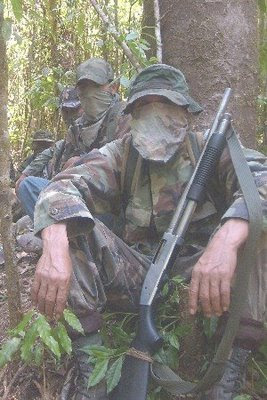
How doe this affect our work? In Monteria, one of the sites where we have an active group of AVP facilitators, corpses appear daily with sign of torture and messages warning of the fate that waits people who try to leave the paramilitary and drug gangs. My colleagues told me that while there were people in a small community that had suffered severe and brutal violence, and that it would be good to visit and offer AVP workshops, but the victims themselves did not think that outsiders, not to mention foreigners, would be safe there. They would risk kidnapping by a gang which would sell the captives to a guerrilla group.

So, although the community is hungry for AVP and especially the trauma healing workshop, they will have to figure out a way to come to a safer site in a larger city.

Since the media is more or less controlled by the government or by the groups that support right wing paramilitaries, few stories emerge that reveal the violence on the other side, although more has come out about the crimes of paramilitary groups in the last few years — a few leaders have even been prosecuted. The polarization is such that almost anyone who criticizes the government, the war, human rights violations and so forth, is likely to be called a “terrorist” whether or not the person involved promotes or uses violent tactics. But many groups rely on nonviolence and launch protests, sit-ins, marches, and so forth in the capital and in other towns.

I especially admire the young conscientious objectors groups, which, in at least 12 cities around the country, promote (and defend) not only conscientious objection to obligatory military service, but also a nonviolent commitment that will keep young people out of gangs, paramilitary groups, and criminal/narcotrafficking groups. Their analysis of the roots of violence in their country go beyond the actions of these groups, and include defending the environment, opposing the programs of “development” fomented by the government and multinational companies, and defending and educating young people about human and civil rights.

[Texan Val Liveoak is a nonviolent activist, currently living in El Salvador and San Antonio. She coordinates Peacebuilding en las Americas, the Latin American Initiative of Friends Peace Teams that also has programs in the African Great Lakes region and in Indonesia.]

The Rag Blog

Posted in Rag Bloggers | Tagged , , | 1 Comment

Investments : Recovery Through Pinpoint Socialism


Pinpoint Socialism:
Recovery through Equities, Tools, and Land

By Greg Moses / The Rag Blog / July 27, 2009

In a Friday morning appearance on Squawk Box at the Capitalism Knows Best Channel (CNBC) Warren Buffett promoted two things: a new cartoon where he plays himself as investor super hero — and equities.

“I would much rather own equities at 9000 on the DOW than have a long investment in govt bonds or a continuously rolling investment in short term money. Now, again I don’t know where it’s going to go next week or next month,” said Buffett in a quote archived at Huffington Post.

“But you still think equities is the place to be?” asked Becky Quick.

“I own them myself,” chuckled Buffett, putting mouth where money is at.

For my part — ignoring for the moment how “media savvy” the Oracle from Omaha can be — I have been paying attention to Buffett because I think what he says can be helpful in trying to understand a way upward in the direction of job growth. Also, with my brief experience in market trading, I think he does have the more sustainable long-term view of market investment. If the market crashes next week, he will still have plenty to work with.

Although I have NO IDEA what people should do with their savings this month, I do think that whenever more people decide to truly invest in equities there will be a greater chance of a recovery based on jobs. The term “jobless recovery” to me has all the charm of fingernails scraping a blackboard. Anyone who speaks seriously about a jobless recovery is only declaring that he belongs to the class which has no Real Jobs to lose.

For the rest of us, the combination of depression and joblessness cannot suggest images of anything resembling recovery. Already the image of Skip Gates in handcuffs warns us how suddenly ugly things can get.

So I am looking for a way to think about the requirements of a recovery “with jobs” and I am following the guidance of San Francisco economist Henry George who argues that workers will create value on the spot so long as they are provided proper tools. From this cue I go looking through Google News for signs of capital expenditures and investments. What’s up with tool development these days?

Notice that I did not begin my search for recovery with “consumer spending,” because I think that the mainstream chatter about this is another way of capitulating to depression. In other words, please tell me why consumers are going to increase spending while they are losing jobs? A labor-centered discussion of recovery would change the language of “jobless recovery” into “capital stagnation” so that we may more forthrightly name the thing that needs to be directly confronted.

The run-up in technology-sector equities these past few months gives us something to work with. This is a prime tooling sector for advancing development along broad dimensions of opportunity. Jim Cramer makes a compelling case that the tech sector is also more free to refresh itself compared to other sectors plundered by pirates of finance. Yet the tech sector is beginning to quiver and quake upon rocking foundations.

The first item I find when looking for “capital investment” is a press release from the National Venture Capital Association announcing that the Biotech sector has attracted a 67 percent increase “in Seed and Early Stage fundings” during Q2. Clean Technology is the next fastest growing venture sector, followed by Software and Medical Devices. Although the raw numbers look hopeful because of very recent increases, the historical levels of capital at play take us back more than a decade, “close to what we saw in 1997 before the Internet bubble.”

Next item on the Capital expenditure front is a pep talk by Andy Rowsell-Jones at Gartner, Inc., who is telling IT directors not to capitulate to cuts in IT budgets.

“While IT expenditure may be a small proportion — ranging from 1.7 percent in the construction and engineering industry to 12.6 percent in the banking and finance sector — budgets have been cut in light of the economic situation. Rowsell-Jones said IT spending has risen every year from 2003, but is being cut for this year, according to a recent Gartner survey.” The banking sector is not even upgrading its own computers? Hold your expletives, and pass the subpoenas…

The third item is from Stockholm, reviewing the quarterly report from Ericsson Telephone: “Several telecom operators have announced plans to reduce investments in order to maintain cash-flow in the economic downturn, a trend that can hurt companies like Ericsson that supply network equipment.”

From this short sample of findings we may draw a preliminary hypothesis that capitalism is in no great position to deliver the tools that will be needed for a speedier economic recovery. And this is why so long as Capitalism Knows Best we are staring at a chasm that is called the jobless recovery.

What is called for is something we might call pinpoint socialism where public resources are put to use injecting support for tool-making in precise contexts. In the case of IT upgrades and telecom network equipment, the needs are “shovel ready.” They have been planned and budgeted. Suppliers are at hand. Only a vicious cycle of “free market cash implosion” has trickled down. If active and sensible agents of public trust were to get busy in these areas, putting our debt bubble to productive use — instead of taking August recesses — jobs could still be “saved or created” in the near term.

As a preliminary parameter for public injections of funds to make new tools, there could be a simple baseline requirement that qualifying companies must state the need in their SEC filings. If the companies are caught lying about their capital investment needs, theoretically there is an agency that could send in the Cambridge Police.

Along a second line of analysis offered by Henry George, successful experiments are taking place in Pennsylvania and Michigan regarding a different approach to land policy. Wikipedia has a good orientation to Land Value Tax (LVT) that gives brief credit to Henry George. The basic idea is to shift the burden of taxation away from capital (capital gains) and labor (income tax) — both of which we need more of — and place the taxation onto land (which is ever in fixed supply).

According to reports archived at earthrights.net:

“Any non-Genesee County residents may acquire LBA property only with an enforceable plan to place the property into immediate productive use (meaning the property is to be occupied immediately or with the immediate commencement of some form of development project that fits our stated mission). This applies to vacant lots as well as properties with structures, residential and commercial properties.”

The LBA principle of land liberation is right out of “Progress and Poverty” by Henry George, which argues at length that labor and capital will keep each other more productive if all unused land is set free. Need we remind ourselves there will never be a cheaper time in our lives to liberate the land monopolists?

Finally, while we’re at it, may I venture to suggest, that wherever today you find people complaining about “Mexican illegals” — tomorrow — with fresh tools and liberated land — everybody will marvel at the rise of cities of gold.

[Greg Moses is editor of the Texas Civil Rights Review and author of Revolution of Conscience: Martin Luther King, Jr. and the Philosophy of Nonviolence. He can be reached at gmosesx@prodigy.net.]

The Rag Blog

Posted in Rag Bloggers | Tagged , , , | Leave a comment

Homeless Vets and Hungry Kids? Empathy Meets Realpolitik

Graphic by Larry Ray / The Rag Blog.

Empathy Meets Realpolitik

How many of our nation’s leaders have ever gone to bed hungry? U.S. Department of Agriculture statistics show that, ‘12.4 million children in the U.S. are “food insecure” — defined as not being able to get enough food to maintain a healthy, active life.’

By Larry Ray / The Rag Blog / July 26, 2009

Summertime and the living is easy… for our elected politicians in Washington D.C.

In just a few days they will suspend their hearings and deadline-driven decision making and return to the voters back home who keep them in office.

Homeless veterans across America, American children who do not have enough to eat, families facing foreclosure and unemployment all will still all be there when this great leadership body returns in a month or so, their campaign cash needs having been firmed up after non stop meetings with their voter base.

Meanwhile, last weekend almost one thousand homeless American military veterans in the San Diego, California, area sought help at a three-day tent city program called “Stand Down.” This volunteer effort has been operating for more than 20 years. It is a three-day chance for homeless veterans, many from the Vietnam era, but with increasing numbers from the wars in Iraq and Afghanistan, to get free housing and social services. Hot food, a haircut, dental work, legal aid and a clean place to sleep in a familiar military camp setting is there to help these souls living on the very edge.

That in the USA we have a thousand former military veterans, down and out in the shadows of one large city should evoke both sadness, and no small amount of outrage and frustration. However, it is not just San Diego. The Department of Veterans affairs estimates that one out of three homeless people across America is a veteran.

How do all the car magnets and lawn signs urging that we “Support Our Troops” somehow exclude those troops who become disabled and fall through the cracks once they get back home? Do we just say tough luck to those who turn to drugs and alcohol, the ones who desperately need extra help? Where is our empathy?

Empathy? Conservative politicians have loudly used that word as a pejorative just recently. The word was invoked by President Obama as a desirable quality in a federal judge. More specifically his nominee to the Supreme Court, Judge Sonia Sotomayor.

Empathy? An effete, bleeding heart label? Hardly. Empathy is simply the ability to understand and share the feelings of another. But in that very definition we see among our elected leaders many who neither understand, nor share the feelings of others than themselves and their starchy conservative cohorts.

Empathy? How many of our nation’s leaders have ever gone to bed hungry? U.S. Department of Agriculture statistics show that, “12.4 million children in the U.S. are ‘food insecure’ — defined as not being able to get enough food to maintain a healthy, active life.”

Food insecure? Kids are hungry, not getting enough to eat. American kids. Using some bureaucratic euphemism does not fill empty tummies. Euphemisms make the reports coming out of Washington agencies look a little less shocking. “Food insecure” doesn’t jump off the page like “starving” or “undernourished,” and helps keep this disgrace beneath the political radar.

Homeless American veterans and American children who never get enough to eat are merely two examples of ongoing problems that many of our politicians somehow must not hear about when they go back home. Our bloated and ineffective health care system is on this long list of old and worsening problems. But as a majority of our politicians work diligently to finally bring forth a new overhauled and affordable universal health plan for all Americans, again conservatives throw up roadblocks.

Conservative protests about leaving huge indebtedness to our grandchildren actually mask a selfish fear of losing votes back home if they support a new, and initially expensive national health care plan. Empathy is absent from this narrow reasoning. Personal political career interests hold hostage the entire inertia and completion of work, particularly in the House of Representatives.

The very politicians now expressing such deep concern for our national debt were deafeningly silent as President Bush raised the national debt each of his eight years in office to a breathtaking record $11.3 trillion.

Properly done, universal health care would eventually greatly reduce soaring insurance and overall medical costs. But initially, funding for such a massive landmark change in the way we take care of America’s health will be expensive and will require political backbone to make it a reality. More backbone will be needed to address the needs of homeless Veterans and our undernourished children.

Approval of long overdue universal health care will require the very two things sorely lacking in current political opponents — statesmanship and empathy. For those lacking these qualities, it is essential that we point them out, on both sides of the aisle, and inundate their offices with email, letters and phone calls demanding that they use their stated concerns for program cost as positive negotiable input to the committees working to craft the final health plan and not as a singular duplicitous barrier to progress.

[Retired journalist Larry Ray is a Texas native and former Austin television news anchor. He also posts at The iHandbill.]

The Rag Blog

Posted in Rag Bloggers | Tagged , , , | 2 Comments

Texas ‘Experts’ : Axe Cesar Chavez and Thurgood Marshall from Textbooks


‘Experts’ hired by Texas State Board of Education:
Chavez and Marshall don’t belong in school books

Evangelical minister Peter Marshall said, ‘To have Cesar Chavez listed next to Ben Franklin is ludicrous.’ [Chavez] is not a role model who ‘ought to be held up to our children as someone worthy of emulation.’

July 25, 2009

The Texas State Board of Education is currently preparing to adopt new social studies curriculum standards. These standards have major national implications as Texas is such a major purchaser of textbooks and their state’s required curriculum drives the content of textbooks produced nationwide.

The Board of Education has hired six “experts” to determine what will be in the books our schools use. Some of these “experts” are arguing that the state’s social studies and history textbooks are giving “too much attention” to some of the most prominent civil rights leaders in US History, namely Cesar Chavez and Thurgood Marshall.

David Barton, one of these “experts,” claimed Cesar Chavez “lacks the stature, impact and overall contributions of so many others.” Another of these “experts” evangelical minister Peter Marshall said, “To have Cesar Chavez listed next to Ben Franklin” — as in the current standards — “is ludicrous.” He went on to say Chávez is not a role model who “ought to be held up to our children as someone worthy of emulation.”

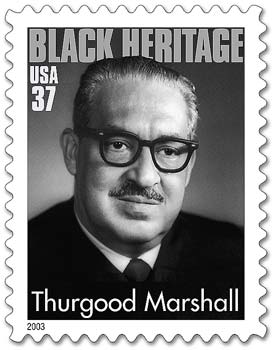
The same “expert” wants to eliminate Thurgood Marshall, a prominent Civil Rights leader who argued the landmark case that resulted in school desegregation and was the first African-American U.S. Supreme Court justice. He wrote that the late justice is “not a strong enough example” of an important historical figure to be presented to Texas students.


Board members and their appointees have complained about an “over representation of minorities” in the current social studies standards. This is ironic in light of the changing demographics of our country [and especially of the state of Texas]. Sadly, Latino and African-American children have the highest dropout rates in the country. It’s essential to ensure schools are providing students with role models and historical figures whose experiences reflect their own.

We must be concerned when the contributions of Cesar Chávez, Thurgood Marshall and other individuals who have contributed so much to the landscape of American democracy are cast aside and ridiculed. We should welcome the inclusion of all Americans who have helped to make this nation great.

It is horrific to discover that the Texas State Board of Education has allowed these panelists to use our children’s social studies curriculum as a platform for their political agendas. Please take action today to stop this travesty from going forward.

To send this message to the Chair of the Texas Board of Education, Gail Lowe (R), and to pass it along to others, go here.

Source / United Farm Workers

The Rag Blog

Posted in RagBlog | Tagged , , , , , , , | 1 Comment

Occupied Palestine: How the West Was Lost (Photo Essay by Bob Simmons)

Damascus Gate, Jerusalem. The West Bank or Judea has always tried to solve things with walls… but somehow they always fail. Photo by Bob Simmons / The Rag Blog.

Occupied Palestine:
How the West Was Lost (A photo essay)

Words and images by Bob Simmons / The Rag Blog / July 24, 2009

Last week I had an opportunity to visit the West Bank (Israel), or its preferred name, Occupied Palestine. I was with a group of doctors called Physicians for Peace who had invited me along to shoot some video and photos.

I was starkly introduced to how the mainstream picture of the area is distorted in the USA media, and how the constant pressure and humiliation that Palestinians have endured for now more than sixty years is deftly avoided in the reports for American consumption.

Stateless inside their own country, the Arabic residents of the former Palestine suffer a gradual but relentless ethnic cleansing effort that keeps them in political and cultural exile. It is something in the USA we used to call “separate and unequal.” One suddenly understands the meaning and the reasons for the word “intifada” or uprising.

Nothing exemplifies this Middle East apartheid better than the West Bank wall that is being built with the assistance of U.S. funds at a rate of $3.5 million dollars a mile. It is a bigger and better, more high tech version of the wall between East and West Berlin that fell at the end of the cold war. It is the symbol and the fact of Israel’s shame. There is almost a hundred miles of it as it dissects and bisects the country as the Israelis build another settlement on an Arab hillside.

What follows are my notes and some photos. If you can’t get there for yourself, perhaps these will give you a tiny taste of why conflict in this area will continue until some form of justice is granted to the Palestinians who remain in the West Bank and who have not yet fled to become second-class refugee citizens all over the Middle East. Or maybe peace will only be achieved when the last suitcase is packed and the last olive grove is dozered under an Israeli tank?

It may be a cliché or a commonplace that Occupied Palestine — or Israel’s “West Bank” — is a land of contrasts and paradoxes, but that fact is never so sharply defined as when one has the opportunity to share the lives of the residents. One won’t really gather a deep understanding in a few days, but the media veil that filters the light from this part of the world can begin to lift, and we can call it a start.

My first impressions of the citizens of Ramallah are of a basically decent people who have been dealt a lousy hand by history. Worse, they haven’t played that hand very well either. In a culture this generous and hospitable, it makes one doubly sad to sense the feelings of resignation and desperation that are cloaked by the smiles. But in the early morning dark when you turn on one of the radio channels and listen to the prayers you can hear the bone deep sadness in the call of the muzzeins. For some reason I kept thinking this is really the blues, and about as soulful as it gets. I wasn’t ready to jump on a rug and devote my life to Allah, but I suddenly understood the urge a little better.

I went to Ramallah with Physicians for Peace, a group of doctors who do missions in a half dozen medically challenged countries. The doctors donate their time and efforts, as well as often pay their own fares and housing costs, in order to help bring modern medicine to places that have limited access to current therapies and techniques. The local populations get the benefit of the procedures and therapies, but more important, the local medical infrastructure gets new training and collegial support from the visiting team. New friends and colleagues are created, and they take another small step, changing the world a few friends at a time.

As for the West Bank and Gaza, many of you know the story of the 1948 partitioning of former Palestine for the creation of the Jewish state of Israel. I won’t dwell on it. There are thousands of papers and histories of the events of that momentous year and its disastrous aftermath. A new nation may have been born, but a very old one was thrown into the dustbin of history, except that there were five or six million quite alive people who found that dustbin an unacceptable place.

Facts about the West Bank

There are approximately 640 checkpoints on roads and intersections in the West Bank. The Israeli Defense Force mans these stations with young soldiers all of whom seem to have a bit of “tude” toward their “customers.”

Palestinians, Arabs, non-Jews have differing status at each of these checkpoints. These differences are carefully delineated and marked on one’s identification documents. Arab descent is glaringly noted; whether you are Jewish, Christian, or other is also noted. Your license plate separates you. If you have a mustache, if you wear European sunglasses or have a woman in the car with you in a hijab scarf you can be sure you will get special attention, meaning that your moment at the checkpoint can stretch into an hour while some detail of your “papers” is gone over, and over, and over. This happens every day. Even a trip to the grocery store can become a hellish experience if the paperwork is outdated or not correct in every detail. It defines the meaning of a police state.

There are close to 600,000 Palestinian displaced refugees living in the West Bank, with a total population of 2.5 million overall, including (not confirmed) approximately 200,000 Israeli settlers occupying hilltops and recently built villages and settlements… this process continues unabated.

Palestinians are not allowed in Israel without a rigorous documenting procedure, and even then only on a limited basis for even the Israeli born. Many, if not the majority, of Palestinian villages and neighborhoods are now separated by the Israeli wall which has been constructed in a strategic manner to divide the Palestinian territory into isolated segments. This dividing line between the two societies almost assures that there can be no peace between the cultures. Dividing a state along race lines is universally condemned in all parts of the world, except Israel. It can be termed by no other name than race warfare and ethnic cleansing.

It is true that the number of suicide bombs in Israel has been much reduced by this policy, but at the same time army assaults on Palestinian civilians in the West Bank continue on a daily basis.

I am in a car with the director of a local hospital. He demonstrates the five pieces of ID that he must show ten to twenty times a day to one “authority” or another in order to simply navigate the streets of East and West Jerusalem and to travel to the West Bank. With his car with green Palestinian plates, there are certain roads that he may not take. No matter that he was born in Jerusalem. He is of Arab descent.

Munir was kind enough to drive us down to Jericho and the Dead Sea. Munir was born in Puerto Rico and is part of the Palestinian Diaspora. He has a U.S. Passport and has returned to live in WB with his family. Munir gave me an earful

This is a section of the Ramallah wall between East Jerusalem and the “no man’s land” and Israel. The balloon graffiti is by the English artist Banksy.

This wall cost approximately $3.5 million per mile to construct. It snakes all over the country, starting and stopping in almost random fashion to the untrained observer. One can be shot, just as they were during the Berlin Wall days, if caught trying to go over it. The amount of U.S. funds that went into the building of this wall is undetermined. One thing for sure, it was not insignificant. Ask Joe Lieberman.

From my little daily journal:

The Palestinians, whether they know it or not have the air of a beaten people. Some have a resigned and philosophical attitude, some are angry with a barely suppressed edge, yet they all struggle on knowing that each day will bring its own set of challenges. These are challenges not put in place by pure chance or life itself, but as though there were an active evil alive in the world that made plans to make them suffer. It is not the indifference of the Universe, but the face of an arrogant and vindictive policy that is put in place in order to subjugate and humiliate a population that is not secretly despised.

This is the situation. The Palestinians know they have lost, at least in any real world way. Now they only want to salvage their lives and dignity and be spared further abuse. Yet each day, the powers that be conspire to divide, conquer, and confiscate land, to pass new discriminatory laws against simply existing. The Israeli settlements bloom. Each month a new hilltop sprouts a few Israeli trailers, followed by construction of houses, then fencing, then a road. Suddenly another fifty acres is added to the archipelago of Israeli islands in the Palestine sea. The pressure mounts as Israel’s plan to push all Arabs out of the former Palestine takes another olive grove. The settler’s attitude is, they are Arabs, they can go to any other Arab country. We are Jews, we have only here to make our stand, and the relentless pressure continues. No matter that the Palestinians have 2,000 years of tenancy, they are being cleansed, family by family, acre by acre.

Checkpoint Ramallah

This checkpoint is a constant traffic jam. It can take 20 minutes or two hours to get through. It is like a country border crossing. Cars are subject to random search. Documents are vetted. Guns are pointed in people’s faces every day.

Says it all.

Over 400 Km of barriers erected to separate the quarrel. It cost more than the entire health budget.

Checkpoint Ramallah A kid hangs out.

More from checkpoint dystopia.

I am not sure what the sign says, hunting supplies perhaps? Actually I think it is a memorial to an Intifada fallen hero.

Kids can get shot doing this. I met one in the hospital who had been shot in the legs 4 times breaking bones and probably crippling him for life. He was 15.

Not all of the wall is bricks and mortar. Some is just wire and sensors.

The slow erosion of Palestinian lands:

My Conclusion (from the journal again)

The wall and the history are irrefutable. The Israelis want it all. Maybe they don’t want it today, but they are patient. They know that they can continue to make life so difficult on the resident Arab population that eventually everyone will just have to leave. It is a two or three hundred year game for the hard Zionists who believe that the homeland is for Jews and Jews alone. The Palestinians I spoke with echoed this sentiment. They know what is happening, and some are determined to make it as difficult as possible. Some are looking for another place to eventually move. They know their chances of actually winning anything back is infinitesimally small. So they send a member of the family out into the world to find a refuge to run to when the day finally comes. A cousin goes to Saudi Arabia, a brother moves to Detroit, sister Reema has married and lives in Southern Brazil… the diaspora slowly grows.

BUT…

Not everyone is in the dumps.

Ramallah skyline from hotel… The large house in the foreground belongs to the local Ramallah Volvo dealer. Obviously not all suffer in the West Bank.

Strangely, in central Ramallah, there is a kind of prosperity that one does not expect. Buildings are going up. Apartment high rises sprout everywhere, and there are many cars on the street. The air might be of resignation, but there are some who are making hay while the sun shines. Though there is a small local economy, much of the income of the West Bank comes from foreign aid. The Palestinian Authority, the inheritors of the Al Fatah seem to be in charge of who gets what, and in so doing, are unequivocally in bed with the Israeli authorities. It is no wonder that Hamas in Gaza gets trusted and the PA seems to be reviled or at best accepted as “the only game in town,” however corrupt it might be. If Amehd wants to get a permit to sell apples, he has to go to the PA, and then the PA asks the Israelis if he can, and Amehd has to pay both of them to get his license. So it goes. Still, in this equation, no one is looking out for the “Palestinian people,” whatever that phrase means.

And the struggle beats on. A Palestinian wedding or 10 seems to happen every night. Cars drive by honking. Finally someone is going to get something they want in this country that finds itself so shut in from so many sides. But if you can have more than one wife… well, personally I don’t like to think about what THAT would be like.

[Bob Simmons is a veteran broadcaster with over 30 years experience in most aspects of radio. He has been everything from deejay to station owner, from talk show host to news writer. He is a graduate of the University of Texas and presently lives in Austin where he has business interests and pursues his longtime avocations of photography and video production.]

The Rag Blog

Posted in Rag Bloggers | Tagged , , , , | 8 Comments

Hoosiers and Health Care : WellPoint’s Susan Bayh

Political wife: Susan Bayh, with husband Evan Bayh, D-Indiana, owns between $500,000 and $1 million in employee stock in health insurance giant WellPoint.

Susan Bayh and WellPoint:
What Hoosiers know about health care

By Harry Targ / The Rag Blog / July 24, 2009

My own preference would be —- and you may have found common ground here this morning on Easter, which is appropriate —- deal with the inefficiencies, figure out a way to make the private marketplace accomplish our public good, only have the government role as a backstop, as a last resort, if the private sector has just failed to meet the challenge. — Evan Bayh on Fox, Sunday, April 12, 2009

Senator Evan Bayh is one of those so-called “blue dog” Democrats who remain ambivalent about parts of the Obama political agenda, particularly the Employee Free Choice Act (despite his long-time popularity with Indiana trade unionists) and health care reform.

Hoosiers see through Bayh’s principles for opposing these centerpieces of economic and social reform. Evidence is particularly clear on what is behind Bayh’s opposition to any change in health care policy in the United States.

For example, Fort Wayne’s Journal Gazette reported on December 15, 2007 (Sylvia A. Smith, Washington editor) that the senator’s wife, Susan Bayh, earned $248,700 from stock options she “earned” from participation on the corporate board of WellPoint, Inc. and sold when the stock was at its highest price. Over the prior four years, the paper reported, Bayh earned money from sales of stocks eight times from Wellpoint, the health insurance giant; Curis Inc., a pharmaceutical developer, and the E-Trade bank. She gained $1.7 million in pre-tax earnings from seven of these transactions.

The story also listed Susan Bayh’s 2007 public transactions including, in January, the purchase of 3,333 shares of WellPoint stock at $44.18 per share and selling them for $78 earning $112,722, and, in May, the acquisition of the same number of shares and selling them for $84.98 per share earning $135,978.In 2006, Bayh bought 20,001 shares of WellPoint and sold them earning $796,078.

The Lafayette Journal and Courier (Maureen Groppe, Gannett Washington Bureau) reported on June 15, 2009 that Susan Bayh owns between $500,000 and $1 million in employee stock in the “Indianapolis-based insurance giant,” WellPoint. WellPoint is one of eight corporate boards she sits on including the Curis, the pharmaceutical developer.

Daniel Lee, Indianapolis Star columnist reported on May 17 that the WellPoint executive board is trying to influence the public debate on health care to forestall the emergence of a “public option.” If that is not possible, Lee suggested, private insurers would want to create a system in which private companies control the public option. Lee quoted Common Cause CEO, Bob Edgar, who said that “many of the corporations who benefit from health care have come around to realize that while they may lose some of the things they were hoping to protect, if they move to universal coverage there will be more money across the board for everybody.”

WellPoint, with 35 million customers, is the largest commercial insurance provider, controlling Blue Cross and Blue Shield. The company made $2.5 billion in profits in 2008. Spokespersons have said that they could support expanding coverage to the 45 million without coverage and even could drop restrictions on coverage to people with pre-existing health problems. Brad Fluegel, Chief Strategy Officer of the company, said that “we can do it in a way that’s fair and equitable for folks. There is no need really for a government-run plan.”

As to WellPoint’s political activity, in 2006 the company gave $430,580 to federal candidates; 16% to Democrats, 82% to Republicans and two percent to Joe Lieberman. Lee indicated that in 2008 WellPoint spent $4.33 million on federal lobbying and made three million calls to consumers.

And then there are critically placed political influentials such as Susan Bayh. Although the Senator is “agnostic” on health care, his aides point out that the couple do not discuss any issues related to WellPoint.

If any one believes these spokespersons, I have a Hoosier bridge I can sell them cheap.

[Harry Tarq is a Hoosier. He is a professor in American Studies who lives in West Lafayette, Indiana. He blogs at Diary of a Heartland Radical, where this article also appears.]

The Rag Blog

Posted in Rag Bloggers | Tagged , , | 3 Comments

Revising History in Texas : Christ in the Classroom

Cartoon from San Francisco Sentinel.

Last week, Stephen Colbert tipped his ironic hat to the Texas State Board of Education. The board had already allowed creationism to be considered in Texas biology classes, the comedian said approvingly, and now it was pushing for more Christianity to be taught in U.S. history. But why stop there? Colbert asked. What about math? Five plus two doesn’t have to equal seven — not if you’re Jesus. And for that matter, what about penmanship? Why not teach students to really CROSS their T’s?

There’s truthiness in those jokes. Of the six people who the board appointed as “experts” to review the current curriculum, three are on record as Christian soldiers, battling to bring back a golden age of God in American government. — Houston Chronicle.

Christian right aims to change history lessons in Texas schools

State’s education board to consider adding Christianity’s role in American history to curriculum

By Chris McGreal / July 23, 2009

The Christian right is making a fresh push to force religion onto the school curriculum in Texas with the state’s education board about to consider recommendations that children be taught that there would be no United States if it had not been for God.

Members of a panel of experts appointed by the board to revise the state’s history curriculum, who include a Christian fundamentalist preacher who says he is fighting a war for America’s moral soul, want lessons to emphasize the part played by Christianity in the founding of the U.S. and that religion is a civic virtue.

Opponents have decried the move as an attempt to insert religious teachings into the classroom by stealth, similar to the Christian right’s partially successful attempt to limit the teaching of evolution in biology lessons in Texas.

One of the panel, David Barton, founder of a Christian heritage group called WallBuilders, argues that the curriculum should reflect the fact that the U.S. Constitution was written with God in mind including that “there is a fixed moral law derived from God and nature,” that “there is a creator” and “government exists primarily to protect God-given rights to every individual”.”

Barton says children should be taught that Christianity is the key to “American exceptionalism” because the structure of its democratic system is a recognition that human beings are fallible, and that religion is at the heart of being a virtuous citizen.

Another of the experts is Reverend Peter Marshall, who heads his own Christian ministry and preaches that Hurricane Katrina and defeat in the Vietnam war were God’s punishment for sexual promiscuity and tolerance of homosexuals. Marshall recommended that children be taught about the “motivational role” of the Bible and Christianity in establishing the original colonies that later became the US.

“In light of the overwhelming historical evidence of the influence of the Christian faith in the founding of America, it is simply not up to acceptable academic standards that throughout the social studies (curriculum standards) I could only find one reference to the role of religion in America’s past,” Marshall wrote in his submission.

Marshall later told the Wall Street Journal that the struggle over the history curriculum is part of a wider battle. “We’re in an all-out moral and spiritual civil war for the soul of America, and the record of American history is right at the heart of it,” he said.

Dan Quinn of the Texas Freedom Network, which describes itself as a “counter to the religious right,” called the recommendations “troubling.”

“I don’t think anyone disputes that faith played a role in our history. But it’s a stretch to say that it played the role described by David Barton and Peter Marshall. They’re absurdly unqualified to be considered experts. It’s a very deceptive and devious way to distort the curriculum in our public schools,” he said.

Quinn says that the issue is likely to lead to a heated political battle similar to the one in which the religious right tried to force creationism onto the curriculum. While it wasn’t able to inject religious theories into the classroom, the Texas school board did make changes to teaching designed to undermine lessons on evolution such as introducing views that the eye is so complex an organ it must have involved “intelligent design”.

“I think, as there was with science, there’s going to be a big political battle,” he said.

Social studies teachers will meet shortly to consider the panel’s views and make their own recommendations to the board of education which has the final say. The board is dominated by conservatives who appointed Barton and Marshall to the panel.

Other states will be watching what happens in Texas carefully as the religious right campaign seeks new ways to insert God into the classroom after the courts limited the extent to which creationist theories could intrude on the teaching of biology. But religion is not kept out of schools entirely. Many children recite the pledge of allegiance in class each morning which includes a reference to the U.S. as “one nation under God.”

The panel made other recommendations.

Barton, a former vice-chairman of the state’s Republican party, said that Texas children should no longer be taught about democratic values but republican ones. “We don’t pledge allegiance to the flag and the democracy for which it stands,” he said.

And while God may be in, some of those he influenced are out.

According to a draft of guidelines for the new curriculum, Washington, Lincoln and Stephen Fuller Austin, known as the Father of Texas after helping to lead it to independence from Mexico, have been removed from history lessons for younger children.

There’s no doubt that history education needs a boost in Texas.

According to test results, one-third of students think the Magna Carta was signed by the Pilgrims on the Mayflower and 40% believe Lincoln’s 1863 emancipation proclamation was made nearly 90 years earlier at the constitutional convention.

Source / Guardian, U.K.

The Rag Blog

Posted in RagBlog | Tagged , , , , | Leave a comment

Kate Braun: Lammas Seasonal Message


Lammas Seasonal Message
By Kate Braun / The Rag Blog / July 23, 2009

“The shadows sway and seem to say Tonight we pray for water…”

Saturday, August 1, 2009, is the celebration of Lammas (First Harvest, Harvest Home, Lughnasadh). This festival can also be celebrated on July 31 or August 2, but the Sun must be in 15° Leo and this is usually nearer August 5. This year, Lammas falls on a Saturday, Saturn’s Day. Saturn moves in direct motion now; there is a stronger sense of purpose and direction, a feeling of responsibility understood and accepted. This is a solemn fire festival made more solemn by the excessively high temperatures and extreme drought in Austin and Central Texas.

Celebrate outdoors if at all possible; build a fire in the grill or barbeque pit and take care no sparks fall – most of the lawns I see are sere and brown; the danger of fire is real. Roast some lamb, ears of corn; skewers of veggies in season, such as zucchini, eggplant, onion, green peppers, summer squash; enjoy foods made using corn, rye, wheat, apples, berries, anything that is in season and, preferably, locally and organically grown. Decorate your dining table and the surrounding area using the colors red, gold, orange, yellow, bronze, citrine, gray, and green. Wear these colors yourself and encourage your guests to do likewise. Decorate with arrangements of fresh fruits and veggies, corn dollies, sun-wheels, sickles, and scythes.

Be sure to bless the tools of your trade by wafting smoke from your fire over them; this will lead to prosperity in your work in the coming year. If you have not made a fire outdoors, light some blessing incense and waft the smoke over your tools with a feather.

Share leftovers with all your guests, but each guest must take another guests leftovers, not his own. This is more ritual for continuing prosperity. If there are fewer guests than leftovers, it is best to give these leftovers to the needy, the homeless. Save and plant seeds from the foods eaten that have seeds. If the seeds germinate, honor the plant.

The spiritual focus of Lammas is on Mother Earth, her health, her status in our lives. Having a story-telling interlude, when all have eaten their fill, letting each guest tell a tale of Demeter, Ceres, Freya, and other Grain Goddesses, will lead thoughts in that direction. One of the rituals associated with this celebration is to bake a loaf of bread in the shape of a man, rather like a gingerbread man, and serve him to the guests, each of whom will tear off a piece of the breadman and feed it to his neighbor at the table, saying “May you never be hungry” or “May food be always at your table”, or some similar blessing. A piece of the breadman is reserved to be thrown into the ceremonial fire as a prelude to another ritual that can be performed: let each guest write their regrets (or symbols of them) on a piece of paper, wrap the paper in corn husks and throw into the fire. The breadman’s burning paves the way for shifting your thoughts from the regretful past to the hopeful future; burning your regrets demonstrates you are ready to move forward.

Reminder: I will be participating in the LSM Metaphysical Fair at the Radisson Hotel, 6000 Middle Fiskville Rd. in Austin, TX, between Highland Mall and Lincoln Village, on Saturday and Sunday, August 22 & 23, 2009. If you come to this fair because you read about it here and choose to get a Tarot reading from me at this fair, mention this newsletter and you will get 5 extra minutes free.

Tarot by Kate 512-454-2293
www.tarotbykatebraun.com
kate_braun2000@yahoo.com

The Rag Blog

Posted in Rag Bloggers | Tagged , | Leave a comment

Sheehan: With an ‘F’ for the First 6 Months, That Leaves Plenty of Room for Improvement


Obama: More Polished Than the Last Puppet
By Cindy Sheehan / July 22, 2009

“When a government lies to you, it no longer has authority over you.” Cindy Sheehan. Dallas, 2005

Okay, so the United States of America has had a new puppet regime for six months now. I was never so much into giving Obama a “chance” and I think it’s way past time to call Obama and his supporters out, like we called Bush and his supporters out. Our Presidents are merely puppets for the Robber Class and Obama is no exception.

I am observing very little “change” in actual policy, or even rhetoric from an Obama regime. Granted, his style and delivery are more polished than the last puppet, but especially in foreign policy, little has changed. Evidently we elect Presidents based on empty rhetoric and if we can find someone who can say very little using many words, that’s better. I knew a year ago when Obama and his ilk were blathering on about “change” that they didn’t mean positive “change” for us, but it’s a shame Obama’s voters didn’t ask him to be a little more specific or demand some good “change.”

Besides foreign policy where he is a complete disaster, it appears Obama’s jobs program is little more than adding tens of thousands of troops to an already bloated military, instead of bringing troops home from anywhere. Billions will go to the money trap of the Pentagon to invest in recruiting, where the budgets of peace groups who do counter recruitment are tanking.

This is the 3rd week in July and already it’s the deadliest month for US and coalition troops deaths in Af/Pak. Who would ever have thought when violence is surged, then deaths would surge, also? I think I’ve seen this movie before.

The blueprint for this disastrous administration came early when O appointed nothing but neocons to his foreign policy team. The Secretary of State and the National Security advisor have even both admitted that the Council on Foreign Relations/Henry Kissinger are calling the shots.

Sec. Clinton at a speech at the new HQ for the Council on Foreign Relations:

I have been often to, I guess, the mother ship in New York City, but it’s good to have an outpost of the Council right here down the street from the State Department. We get a lot of advice from the Council (Council of Foreign Relations), so this will mean I won’t have as far to go to be told what we should be doing and how we should think about the future.

National Security Advisor, James Jones, who also VERY coincidentally, I’m sure, was on the boards of directors of Chevron and Boeing, had this to say earlier this year:

As the most recent National Security Advisor of the United States, I take my daily orders from Dr. Kissinger. Jones was also giving a speech to the Council on Foreign relations at the time. Kissinger is a fabulous role model for war, don’t you think.

How many deaths will Kissinger be forced to atone for when he goes to the same place as McNamara? Wherever prosperous war criminals go to when they die?

As an early, ardent and unapologetic supporter of the Bush Pre-emptive Wars of Aggression Doctrine, Sec. Clinton showed her true colors early on in her tenure as an elected official and, of course, Jones is a war profiteer. Added to this mix is George Bush’s SecDef, Robert Gates, and these are just the main players. Contrary to his “promise” Obama has appointed former lobbyists to key positions in the Pentagon.

We all know all of these things, but the more things “change” the more they stay the same. Apparently the OBots are co-opting the excuses of the BushBots to justify their savior’s surge in Afghanistan and Pakistan and broken promise after broken promise in Iraq.

The other day Howard Dean, on DemocracyNow!, told Amy Goodman that although Iraq was bad, we need to stay in Afghanistan because, first and foremost, for the women:

And if we leave, women will experience the most extraordinary depredations of any population on the face of the earth. I think we have some obligation to try and see if we can make this work, not just for America and our security interests, but for the sake of women in Afghanistan and all around the globe. Is this acceptable to treat women like this? I think not.

Laura Bush earlier this year:

“There’s still a risk to women in Afghanistan. I hope the people of the United States will stay committed. We don’t want to see Afghanistan go back to what it was before.”

I have been on my Myth America Book Tour for three months now and almost everywhere I go, an older white male will stand up and say: “Cindy, we really need to stop allowing Iraq to distract us. Afghanistan always was the place we needed to focus our attentions!” And besides the other neocon reasons given for why US troops need to decimate that country further and kill more innocent women and children is: you guessed it: For the women!

So, we are literally sending in the cavalry to rescue the poor women of Afghanistan, and the patriarchal state apparatus and its zombie adherents don’t care how many women we have to kill to save them.

Disgusting.

I give Obama an “F” for his first six months. There has been nothing to like from his continuing the Bush failed economic policies to excluding single-payer advocates from the table. Not to mention reinforcing and protecting Bush Crimes.

The good news is: He’s got plenty of room for improvement!

Source / Information Clearing House

The Rag Blog

Posted in RagBlog | Tagged , , | 2 Comments

Baghdad Embassy Too Big for Reduced American Mission in Iraq – Duhhhh!!

And how many other King George projects will prove to be just a bit oversized for reality? We won’t be hearing the last of this sort of thing for awhile, me thinks.

Richard Jehn / The Rag Blog


Report: Big cuts needed at huge Baghdad embassy built by Bush
By Warren P. Strobel / July 22, 2009

WASHINGTON — The U.S. Embassy in Iraq, the government’s largest overseas diplomatic mission, is significantly overstaffed and needs to be downsized to reflect the reduced American role in the country, according to a new State Department report.

“There is a clear consensus from the top to the bottom of the embassy: The time has come for a significant rightsizing,” says the report Wednesday by the department’s inspector general.

The report came as President Barack Obama met Iraqi Prime Minister Nouri al Maliki in Washington for talks on the significant changes in the U.S.-Iraqi relationship. American combat troops ceased operations in Iraqi cities on June 30, Maliki’s government has become more assertive about exercising Iraqi sovereignty and Obama has shifted the attention that his predecessor put on Iraq to Afghanistan and Pakistan.

In addition to downsizing the embassy, the report recommends ending the Provincial Reconstruction Teams by 2011, which have been the prime U.S. tool for rebuilding civilian life in Iraq’s provinces.

“For some, it (the downsizing) is much overdue, as they believe the ‘civilian surge’ went too far,” the report says. “For others, it is a necessary result of the now-changed circumstances in Iraq and in our bilateral relationship.”

The American Embassy in Baghdad became a symbol of the Bush administration’s ambitions to remake Iraq. A huge new structure was built on the banks of the Tigris River, at a cost of more than $700 million, and hundreds of civilian experts from agencies across the U.S. government were deployed to help with reconstruction.

The 103-page inspector general’s report gives high marks to embassy personnel for what it calls an exemplary relationship between American civilians and the U.S. military in Iraq.

It also reports that there is “a culture of working seven days a week.” Given the near-constant security threats, “almost any other (American diplomatic) mission would have remained closed,” it says.

The report recommends, however, that the State Department launch a review to downsize the embassy staff. It says that at the new compound, which became fully occupied in January, 1,200 people are “jammed into apartments designed for about 600.”

“After rightsizing, the embassy should be able to carry out its mission in Iraq with a staff able to fit comfortably in 600 apartments,” it says.

A senior State Department official, who spoke only on the condition of anonymity because the official wasn’t authorized to be quoted by name, said that newly arrived U.S. Ambassador Chris Hill was reviewing staffing levels in Baghdad.

The report says that with former President George W. Bush’s emphasis on Iraq, the embassy was permitted to grow largely without regard to the usual budget constraints on U.S. missions overseas.

“Given the high priority placed on Iraq, and the policy of the previous administration to encourage all relevant U.S. agencies to send employees to the embassy and the PRTs, many of the normal limits on staffing have not been imposed,” it says. “Cost has not seemed to be a factor.”

The embassy employs 1,873 people, including locally hired staff, and more than 13,000 contractors, the report says.

Source / McClatchy

Thanks to Juan Cole, especially for the “Duhhh !!” in the headline / The Rag Blog

Posted in RagBlog | Tagged , , | Leave a comment

Witch Doctor Obama : Conservative Activist Circulates Racist Image

Though I am hesitant to forward such horrific racist imagery, I also believe it absolutely necessary for our readers to know that this kind of right wing white supremacist activity is flourishing, even among conservaties who retain a modicum of respectability. It is a frightening and dangerous trend and one to which we must pay attention.

Please let us know if you think the value of alerting the public to this kind of activity outweighs any harm that might be caused by its further circulation.

Thorne Dreyer / The Rag Blog / July 23, 2009

This racist image has been distributed by conservative activist Dr. David McKalip.

On Sunday night, Dr. David McKalip forwarded to fellow members of a Google listserv affiliated with the Tea Party movement the image [at top]. Above it, he wrote: ‘Funny stuff.’

By Zachary Roth / July 23, 2009

The election of our first black president has brought with it a strange proliferation of online racism among conservatives.

And we’ve got the latest example.

On Sunday night, Dr. David McKalip forwarded to fellow members of a Google listserv affiliated with the Tea Party movement the image [above]. Above it, he wrote: “Funny stuff.”

Now, Tea Party activists trafficking in racist imagery are pretty much dog bites man. But McKalip isn’t just some random winger. He’s a Florida neurosurgeon, who serves as a member of the American Medical Association’s House of Delegates.

He’s also an energetic conservative opponent of health-care reform. McKalip founded the anti-reform group Doctors For Patient Freedom, as well as what seems to be a now defunct group called Cut Taxes Now. Last month he joined GOP congressmen Tom Price and Phil Gingrey, among others, for a virtual town hall to warn about the coming “government takeover of medicine.” And in a recent anti-reform op-ed published in the St. Petersburg Times, McKalip wrote that “Congress wants to create larger, government-funded programs for health care and more bureaucracy that ration care and impose cookbook medicine.”

Asked about the email in a brief phone interview with TPMmuckraker, McKalip said he believes that by depicting the president as an African witch doctor, the artist who created the image “was expressing concerns that the health-care proposals [made by President Obama] would make the quality of medical care worse in our country.” McKalip said he didn’t know who created it.

But pressed on what was funny about an image that plays on racist stereotypes about Africans, McKalip declined to say, instead offering to talk about why he opposes Obama’s health-care proposals.

“I have a busy day,” he said eventually, before ending the call.

Source / TPM Muckraker

Thanks to S.M. Wilhelm / The Rag Blog

Posted in RagBlog | Tagged , , , | 11 Comments

COMICS / Paul Buhle : Beyond the Superhero

Pages from Die Stadt (1925), a “novel in woodcuts” by anarchist artist Frans Masereel (1889–1972). Masereel’s novels are not usually treated as “comics.”

Beyond the superhero

With the boom in graphic novels, comics are likely to appear anywhere — sometimes lavish and funded by patrons of the arts, sometimes strictly ephemeral and popular enough to claw back costs.

By Paul Buhle / The Rag Blog / July 23, 2009

Comic art has been global for at least a century. Comic strips have passed from nation to nation through the commercial press and, at least now and then, the socialist and communist countries.

The woodcut novels of Belgian leftwinger Frans Masereel would have been the greatest, but were not usually treated as “comics.”

Until the last couple of decades, most of the exchanges involved European and U.S. exports and imports. Manga from Japan changed things, but so has the work of unique geniuses like Osamu Tezuka, Robert Crumb and Art Spiegelman, joined more recently by Marjane Sartrapi and Alison Bechdel among others.

With the boom in graphic novels, comics are likely to appear anywhere — sometimes lavish and funded by patrons of the arts, sometimes strictly ephemeral and popular enough to claw back costs.

Too often they mirror the violence and racial sentiments of the superhero genre that first made U.S. comic books famous and grandly profitable, providing wartime reading among soldiers a long way from home. But not always, not by a long shot.

The absence of corporate domination of comic art in Canada, experts say, has opened the door to some of the most artistic productions in the English language via Montreal’s Drawn & Quarterly press.

Its publications are not political as such, but the artist known only as Seth, for example, has delivered extended treatments of the essential loneliness of modern middle-class life, looking a few generations back and forward to the present. He also drew and wrote from oral history the saga of his father’s desperately poor 1930s childhood in the maritime provinces.

Louis Riel: A Comic-Strip Biography by Chester Brown.

Highest plaudits must go to Chester Brown’s Louis Riel: A Comic-Strip Biography, which traces the life of the Metis and the curious leader of the resistance during the British invasion of central Canada in the mid-19th century.

Drawn & Quarterly is also the best publisher of admired Chicago artist Chris Ware, an inward and backward-looking artist who nevertheless reveals from time to time how he despises the presumptions of empire and the layers of psychological distortion necessary to keep the citizenry in line.

Then there is Aya by African writer Marguerite Abouet and French artist Clement Oubrerie, a trans-border collaboration of another kind. An adolescence-gender drama that relates daily life in the Ivory Coast of the 1970s, it depicts a recently decolonized society making use — or misuse — of its resources, cutting down the forest for agricultural production and creating a surplus for a degree of comfort for the urban lower-middle classes.

A young woman aspires to be a doctor but finds herself trapped on all sides, helping a friend seek an abortion and then accept the finality of single motherhood instead. Not much else happens out of the everyday. But the color work is lovely to look at and the attempt at realism notable.

Beyond Drawn and Quarterly, there is Nelson Mandela: The Authorised Comic Book, an African but also global story of another kind. First published in South Africa last year and printed in China, like the most lavish comic art these days, it appears this month in a U.S.-British edition released by the Nelson Mandela Foundation.

Researched, storyboarded, drawn and inked by a team so large that no artist’s credit appears on the cover, it is somewhat grey in more than one sense.

The South African Communist Party’s role has been minimized, even though individual Communists achieve heroic status. The art seems to me both stiff and predictable. On the other hand, the saga of struggle against racism, like the courage of the protagonist, should leave an indelible impression on young readers in particular.

There is so much more to say on comics’ global reach. Scratch a little harder and small items like the Canadian Mayday: A Graphic History Of Protest, a lively 24-pager recently published in Vancouver, are likely to turn up. But this column is merely a first look.

[Paul Buhle is an educator and historian and a publisher of left wing comic books. His latest book is The Art Of Harvey Kurtzman (Abrams), an exploration of the genius who created Mad Magazine and brought together John Cleese and Terry Gilliam of Monty Python’s Flying Circus. His writing about comic art and other subjects will continue to appear in The Rag Blog. This article was also published in Morning Star, U.K.]

The Rag Blog

Posted in Rag Bloggers | Tagged , , , | Leave a comment