The End of the Financial Crisis Is Nowhere in Sight


The Global Collapse: a Non-orthodox View
By Walden Bello / February 22, 2009

This is the longer version of an essay by the author released by the British Broadcasting Corporation (BBC) on 6 February 2009.

Week after week, we see the global economy contracting at a pace worse than predicted by the gloomiest analysts. We are now, it is clear, in no ordinary recession but are headed for a global depression that could last for many years.

The Fundamental Crisis: Overaccumulation

Orthodox economics has long ceased to be of any help in understanding the crisis. Non-orthodox economics, on the other hand, provides extraordinarily powerful insights into the causes and dynamics of the current crisis. From the progressive perspective, what we are seeing is the intensification of one of the central crises or “contradictions” of global capitalism: the crisis of overproduction, also known as overaccumulation or overcapacity. This is the tendency for capitalism to build up, in the context of heightened inter-capitalist competition, tremendous productive capacity that outruns the population’s capacity to consume owing to income inequalities that limit popular purchasing power. The result is an erosion of profitability, leading to an economic downspin.

To understand the current collapse, we must go back in time to the so-called Golden Age of Contemporary Capitalism, the period from 1945 to 1975. This was a period of rapid growth both in the center economies and in the underdeveloped economies — one that was partly triggered by the massive reconstruction of Europe and East Asia after the devastation of the Second World War, and partly by the new socioeconomic arrangements and instruments based on a historic class compromise between Capital and Labor that were institutionalized under the new Keynesian state.

But this period of high growth came to an end in the mid-1970s, when the center economies were seized by stagflation, meaning the coexistence of low growth with high inflation, which was not supposed to happen under neoclassical economics.

Stagflation, however, was but a symptom of a deeper cause: the reconstruction of Germany and Japan and the rapid growth of industrializing economies like Brazil, Taiwan, and South Korea added tremendous new productive capacity and increased global competition, while income inequality within countries and between countries limited the growth of purchasing power and demand, thus eroding profitability. This was aggravated by the massive oil price rises of the seventies.

The most painful expression of the crisis of overproduction was global recession of the early 1980s, which was the most serious to overtake the international economy since the Great Depression, that is, before the current crisis.

Capitalism tried three escape routes from the conundrum of overproduction: neoliberal restructuring, globalization, and financialization

Escape Route # 1: Neoliberal Restructuring

Neoliberal restructuring took the form of Reaganism and Thatcherism in the North and Structural Adjustment in the South. The aim was to invigorate capital accumulation, and this was to be done by 1) removing state constraints on the growth, use, and flow of capital and wealth; and 2) redistributing income from the poor and middle classes to the rich on the theory that the rich would then be motivated to invest and reignite economic growth.

The problem with this formula was that in redistributing income to the rich, you were gutting the incomes of the poor and middle classes, thus restricting demand, while not necessarily inducing the rich to invest more in production. In fact, it could be more profitable to invest in speculation.

In fact, neoliberal restructuring, which was generalized in the North and south during the eighties and nineties, had a poor record in terms of growth: Global growth averaged 1.1 percent in the 1990s and 1.4 percent in the ’80s, compared with 3.5 percent in the 1960s and 2.4 percent in the ’70s, when state interventionist policies were dominant. Neoliberal restructuring could not shake off stagnation.

Escape Route # 2: Globalization

The second escape route global capital took to counter stagnation was “extensive accumulation” or globalization, or the rapid integration of semi-capitalist, non-capitalist, or pre-capitalist areas into the global market economy. Rosa Luxemburg, the famous German radical economist, saw this long ago in her classic “The Accumulation of Capital” as necessary to shore up the rate of profit in the metropolitan economies.

How? By gaining access to cheap labor, by gaining new, albeit limited, markets, by gaining new sources of cheap agricultural and raw material products, and by bringing into being new areas for investment in infrastructure. Integration is accomplished via trade liberalization, removing barriers to the mobility of global capital, and abolishing barriers to foreign investment.

China is, of course, the most prominent case of a non-capitalist area to be integrated into the global capitalist economy over the last 25 years.

By the middle of the first decade of the 21st century, roughly 40-50 percent of the profits of US corporations came from their operations and sales abroad, especially in China.

The problem with this escape route from stagnation is that it exacerbates the problem of overproduction because it adds to productive capacity. A tremendous amount of manufacturing capacity has been added in China over the last 25 years, and this has had a depressing effect on prices and profits. Not surprisingly, by around 1997, the profits of US corporations stopped growing. According to one calculation, the profit rate of the Fortune 500 went from 7.15 in 1960-69 to 5.30 in 1980-90 to 2.29 in 1990-99 to 1.32 in 2000-2002. By the end of the 1990s, with excess capacity in almost every industry, the gap between productive capacity and sales was the largest since the Great Depression.

Escape Route # 3: Financialization

Given the limited gains in countering the depressive impact of overproduction via neoliberal restructuring and globalization, the third escape route — financialization — became very critical for maintaining and raising profitability.

With investment in industry and agriculture yielding low profits owing to overcapacity, large amounts of surplus funds have been circulating in or invested and reinvested in the financial sector — that is, the financial sector is turning on itself.

The result is an increased bifurcation between a hyperactive financial economy and a stagnant real economy. As one financial executive noted in the pages of the Financial Times, “there has been an increasing disconnection between the real and financial economies in the last few years. The real economy has grown . . . but nothing like that of the financial economy — until it imploded.” What this observer does not tell us is that the disconnect between the real and the financial economy is not accidental — that the financial economy exploded precisely to make up for the stagnation owing to overproduction of the real economy.

One indicator of the super-profitability of the financial sector is that while profits in the US manufacturing sector came to one percent of US gross domestic product (GDP), profits in the financial sector came to two percent. Another is the fact that 40 percent of the total profits of US financial and non-financial corporations is accounted for by the financial sector although it is responsible for only five percent of US gross domestic product (and even that is likely to be an overestimate).

The problem with investing in financial sector operations is that it is tantamount to squeezing value out of already created value. It may create profit, yes, but it does not create new value — only industry, agricultural, trade, and services create new value. Because profit is not based on value that is created, investment operations become very volatile and prices of stocks, bonds, and other forms of investment can depart very radically from their real value — for instance, the stock of Internet startups may keep rising to heights unknown, driven mainly by upwardly spiraling financial valuations.

Profits then depend on taking advantage of upward price departures from the value of commodities, then selling before reality enforces a “correction,” that is a crash back to real values. The radical rise of prices of an asset far beyond real values is what is called the formation of a bubble.

Profitability being dependent on speculative coups, it is not surprising that the finance sector lurches from one bubble to another, or from one speculative mania to another. Because it is driven by speculative mania, finance-driven capitalism has experienced about 100 financial crises since capital markets were deregulated and liberalized in the 1980s, the most serious before the current crisis being the Asian Financial Crisis of 1997.

Dynamics of the Subprime Implosion

The current Wall Street collapse has its roots in the Technology Bubble of the late 1990s, when the price of the stocks of Internet startups skyrocketed, then collapsed, resulting in the loss of $7 trillion worth of assets and the recession of 2001-2002.

The loose money policies of the Fed under Alan Greenspan had encouraged the Technology Bubble, and when it collapsed into a recession, Greenspan, trying to counter a long recession, cut the prime rate to a 45-year low of 1.0 percent in June 2003 and kept it there for over a year. This had the effect of encouraging another bubble — the real estate bubble.

As early as 2002, progressive economists were warning about the real estate bubble. However, as late as 2005, then Council of Economic Advisers Chairman and now Federal Reserve Board Chairman Ben Bernanke attributed the rise in US housing prices to “strong economic fundamentals” instead of speculative activity. Is it any wonder that he was caught completely off guard when the Subprime Crisis broke in the summer of 2007?

The subprime mortgage crisis was not a case of supply outrunning real demand. The “demand” was largely fabricated by speculative mania on the part of developers and financiers that wanted to make great profits from their access to foreign money — most of it Asian and Chinese in origin — that flooded the US in the last decade. Big ticket mortgages were aggressively sold to millions who could not normally afford them by offering low “teaser” interest rates that would later be readjusted to jack up payments from the new homeowners.

How did problematic mortgages become such a massive problem? The reason is that these assets were then “securitized” — that is converted into spectral commodities called “collateralized debt obligations” (CDOs) that enabled speculation on the odds that the mortgage would not be paid. These were then traded by the mortgage originators working with different layers of middlemen who understated risk so as to offload them as quickly as possible to other banks and institutional investors. These institutions in turn offloaded these securities onto other banks and foreign financial institutions.

The idea was to make a sale quickly, get your money upfront, and make a tidy profit, while foisting the risk on the suckers down the line — the hundreds of thousands of institutions and individual investors that bought the mortgage-tied securities. This was called “spreading the risk,” and it was actually seen as a good thing because it lightened the balance sheet of financial institutions, enabling them to engage in other lending activities.

When the interest rates were raised on the subprime loans, adjustable mortgage, and other housing loans, the game was up. There are about four million subprime mortgages which will likely go into default in the next two years, and five million more defaults from adjustable rate mortgages and other “flexible loans” that were geared to snag the most reluctant potential homebuyer will occur over the next several years. But securities whose value run into as much as $2 trillion had already been injected, like virus, into the global financial system. Global capitalism’s gigantic circulatory system was fatally infected. And, as with a plague, we don’t know who and how many are fatally infected until they keel over because the whole financial system has become so non-transparent owing to lack of regulation.

For Lehman Brothers, Merrill Lynch, Fannie Mae, Freddie Mac, Bear Stearns, Bank of America, and Citigroup, the losses represented by these toxic securities simply overwhelmed their reserves. Iceland’s banks and many European financial institutions have since joined the list of victims. Some, like Lehman Brothers, have been allowed to die, but most have been kept alive with massive injections of taxpayers’ cash by governments that want the banks to lend to keep the real economy going.

Collapse of the Real Economy

But instead of performing their primordial task of lending to facilitate productive activity, the banks are holding on to their cash or buying up rivals to strengthen their financial base. Not surprisingly, with global capitalism’s circulatory system seizing up, it was only a matter of time before the real economy would contract, as it has with frightening speed in the last few weeks. Woolworth, a retail icon, has folded in Britain, the US auto industry is on emergency care, and even mighty Toyota has suffered an unprecedented decline in its profits. With American consumer demand plummeting, China and East Asia have seen their goods rotting on the docks, bringing about a sharp contraction of their economies and massive layoffs.

Globalization has ensured that economies that went up together in the boom would also go down together, with unparalleled speed, in the bust, the end of which is nowhere to be discerned.

[Walden Bello is professor at the University of the Philippines, Diliman; senior analyst at Focus on the Global South; and president of the Freedom from Debt Coalition. He can be reached at waldenbello@yahoo.com. This article was first published by the Philippine Daily Inquirer on 11 February 2009, and it is reproduced here for educational purposes.]

Source / Z-Net

The Rag Blog

Posted in RagBlog | Tagged , , | 1 Comment

Barack Obama: Just Another American War Criminal

This sickens me – Barack Obama is proving himself to be as big a war criminal as George Bush, Dick Cheney, Don Rumsfeld, and the rest of the gang. Let me be the first to call for Barack Obama’s impeachment and prosecution as a war criminal. Closing Guantanamo is just lip service – the real agenda is “stay the course.” Disgusting !!

Richard Jehn / The Rag Blog

As Democratic candidate for the United States presidency last July, Barack Obama posed for this photograph with senior American military staff at the Bagram air base near Kabul in Afghanistan. Photo: Reuters.

Obama, tell us the whole truth
February 22, 2009

‘Having considered the matter, the government adheres to its previously articulated position.” With these words, Acting Assistant Attorney General Michael Hertz ended a dream. The dream that Barack Obama’s presidency would inaugurate a transcendent world order on a new moral plane.

Late on Friday Mr Hertz told the Washington district court that the Obama administration maintained President Bush’s view that prisoners held at Bagram air base in Afghanistan could not challenge their detention in US courts. For the cynics, this is “a previously articulated position you can believe in”.

This newspaper was not so naive as to imagine that President Obama would immediately conform to the most scrupulous interpretation of US and international law. We are pleased that he has ordered the closure within a year of Guantanamo Bay, halted military trials and restricted CIA interrogators to Army Field Manual techniques. But the refusal to grant legal rights to detainees at Bagram is disappointing.

The US Supreme Court ruling in 2004 that prisoners in Guantanamo had the right to take their cases to US courts ended the anomalous status of the prison camp in Cuba. President Bush’s attempt to create a legal limbo outside the American and international legal systems had failed. But he continued to try to deny legal rights to prisoners not just in Guantanamo but in Iraq and Bagram, too.

Mr Obama’s closure of Guantanamo therefore smacks more of fulfilling a symbolic pledge than following it through. The Bush administration’s legal case was transparently unconvincing. It argued that detainees were “enemy combatants” being held until hostilities ceased. If so, they should have been entitled to the protections of the Geneva Conventions on the rights of prisoners of war. Yet President Bush resisted even that, and now President Obama represents continuity with that policy.

Indeed, Elena Kagan, Mr Obama’s nominee for Solicitor General, said during her confirmation hearing that someone suspected of helping to finance al-Qa’ida should be subject to battlefield law – indefinite detention without trial – even if captured in the Philippines, say, rather than a battle zone.

Nor is this the first disappointment of Obama’s presidency. Earlier this month, a government lawyer stuck to the Bush line in a case brought by Binyam Mohamed, the British resident expected home from Guantanamo tomorrow – about whom Clive Stafford Smith writes today. Mohamed and others are suing a subsidiary of Boeing for arranging “extraordinary rendition” flights, by which they were taken secretly to other countries where they say they were tortured.

The Bush administration had argued that the case should be dismissed because discussing it in court could threaten national security and relations with other nations. When the case resumed after President Obama’s inauguration, the judge asked the Justice Department’s lawyer if “anything material” had happened to change that view. “No, your Honour,” came the reply. The position he continued to take, he said, had been “thoroughly vetted with the appropriate officials within the new administration”.

What is more, Leon Panetta, Mr Obama’s nominee as CIA director, charged with ending the use of torture techniques such as waterboarding by US agents, said that the agency is likely to continue to transfer detainees to third countries. It would rely on the same assurances of good treatment on which the Bush administration depended.

The Independent on Sunday supports the military action to defend the people of Afghanistan. We accept that there are some difficult practical issues, not least caused by the impossibility of fair legal proceedings against existing detainees on account of their past mistreatment. And we recognise that, since Mr Obama’s inauguration, the glass of justice is fuller than it was.

But the case for respecting human rights remains unanswerable. Brutality, torture and long detention without trial are all not just morally repugnant but counterproductive. That is an argument President Obama himself made when he was running for office. Yet he has said nothing about the disappointing retreats from those high principles made on his behalf by subordinates in the past three weeks.

Gregory Craig, the White House counsel, said last week that the new President intended to avoid “bumper sticker slogans” in deciding what to do with the counterterrorism policies he inherited. Human rights and the rule of law are not bumper sticker slogans. For the sake of the struggle against extremism, Mr Obama needs urgently to deploy his thoughtfulness and great eloquence in explaining just where he stands.

Source / The Independent

And there’s this:

Obama denies terror suspects right to trial
By Stephen Foley / 22 February 2009

Human rights groups shocked by refusal to reverse Bush policy in Afghanistan

Less than a month after signing an executive order to close the Guantanamo Bay prison camp, President Barack Obama has quietly agreed to keep denying the right to trial to hundreds more terror suspects held at a makeshift camp in Afghanistan that human rights lawyers have dubbed “Obama’s Guantanamo”.

In a single-sentence answer filed with a Washington court, the administration dashed hopes that it would immediately rip up Bush-era policies that have kept more than 600 prisoners in legal limbo and in rudimentary conditions at the Bagram air base, north of Kabul.

Now, human rights groups say they are becoming increasingly concerned that the use of extra-judicial methods in Afghanistan could be extended rather than curtailed under the new US administration. The air base is about to undergo a $60m (£42m) expansion that will double its size, meaning it can house five times as many prisoners as remain at Guantanamo.

Apart from staff at the International Red Cross, human rights groups and journalists have been barred from Bagram, where former prisoners say they were tortured by being shackled to the ceiling of isolation cells and deprived of sleep.

The base became notorious when two Afghan inmates died after the use of such techniques in 2002, and although treatment and conditions have been improved since then, the Red Cross issued a formal complaint to the US government in 2007 about harsh treatment of some prisoners held in isolation for months.

While the majority of the estimated 600 prisoners are believed to be Afghan, an unknown number – perhaps several dozen – have been picked up from other countries.

One of the detainees who passed through the Afghan prison was Binyam Mohamed, the British resident who is expected to return to the UK this week after his release from Guantanamo Bay. Mr Mohamed’s lawyer, Clive Stafford Smith, head of a legal charity called Reprieve, called President Obama’s strategy “the Bagram bait and switch”, where the administration was trumpeting the closure of a camp housing 242 prisoners, while scaling up the Bagram base to house 1,100 more.

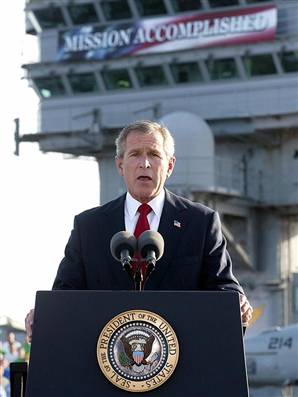
“Guantanamo Bay was a diversionary tactic in the ‘War on Terror’,” said the lawyer. “Totting up the prisoners around the world – held by the US in Iraq, Afghanistan, Djibouti, the prison ships and Diego Garcia, or held by US proxies in Jordan, Egypt and Morocco – the numbers dwarf Guantanamo. There are still perhaps as many as 18,000 people in legal black holes. Mr Obama should perhaps be offered more than a month to get the American house in order. However, this early sally from the administration underlines another message: it is far too early for human rights advocates to stand on the USS Abraham Lincoln and announce, ‘Mission Accomplished’.”

Four non-Afghan detainees at Bagram are fighting a legal case in Washington to be given the same access to the US court system that was granted to the inmates of Guantanamo Bay by a controversial Supreme Court decision last year. The Bush administration was fighting their claim.

Two days into his presidency, Mr Obama promised to shut Guantanamo within a year in an effort to restore America’s moral standing in the world and to prosecute the struggle against terrorism “in a manner that is consistent with our values and our ideals”. But on the same day, the judge in the Bagram case said that the order “indicated significant changes to the government’s approach to the detention, and review of detention, of individuals currently held at Guantanamo Bay” and that “a different approach could impact the court’s analysis of certain issues central to the resolution” of the Bagram cases as well. Judge John Bates asked the new administration if it wanted to “refine” its stance.

The response, filed by the Department of Justice late on Friday, came as a crushing blow to human rights campaigners. “Having considered the matter, the government adheres to its previously articulated position,” it said.

Tina Foster, executive director of the International Justice Network, the New York human rights organisation representing the detainees, warned last night that “by leaving Bagram open, the administration turns the closure of Guantanamo into essentially a hollow and symbolic gesture”.

She said: “Without reconsidering the underlying policy, which has led to the abuses at Abu Ghraib and the indefinite detention of hundreds of people all these years, then we are simply returning to the status quo. The exact same thing that had the world up in arms has been going on at Bagram since even before Guantanamo.

“People have been tortured to the point that they have died; it is a rallying cry for those who oppose the US actions in Afghanistan; it is not strategic for the US; and, more importantly, holding people indefinitely, regardless of who they are and regardless of the facts, is completely inconsistent with everything we stand for as a country.”

The Department of Justice would only say that the legal briefs in the Washington case “speak for themselves”. It says Bagram is a special case because, unlike Guantanamo, it is sited within a theatre of war.

Mr Obama has pushed out the wider questions about the US policy on detaining terror suspects and supporters of the Taliban in Afghanistan until the summer, ordering a review that will take six months to complete.

The administration is weighing the likely increase in prisoners from an expanded fight against the Taliban in Afghanistan and Pakistan, against the international perception that it is embedding extra-judicial detention into its policies for years to come.

Source / The Independent

The Rag Blog

Posted in RagBlog | Tagged , , , | 5 Comments

Iran: No Nuclear Weapons Program, PERIOD

The continued US fear-mongering, as enumerated at the top of Jeffrey Lewis’ article should stop. Iran is not demonstrably pursuing a program to develop nuclear weapons. There is also no evidence whatsoever that Iran intends to start such a weapons program in the future. It is time to cease and desist the false claims in the US press about this matter.

Grow up, Amerikkka !!!

Richard Jehn / The Rag Blog


IAEA Inspectors: Iran not Producing Weapons-grade Uranium
By Juan Cole / February 22, 2009

As I mentioned yesterday, Iran is not producing weapon-grade uranium, and could not easily do so without detection. The Hindu, which despite its name is left of center (and which is one of India’s finest newspapers) writes:

Iran has not converted the low-grade uranium that it has produced into weapon-grade uranium, inspectors belonging to the International Atomic Energy Agency have said.

The Austrian Press Agency quoted an IAEA expert as saying that the uranium substances that Iran has produced at its Natanz enrichment facility have been carefully recorded and remote cameras have been installed to supervise part of the stockpile.

“If the Iranians intend to transport these uranium substances to a secret location for further processing, agency’s inspectors will find out,” he said.

The expert added that “so far, Iran has carried out good cooperation with us in relevant verifications”.

IAEA head Mohamed ElBaradei has said that Iran has slowed down its uranium enrichment programme.

US newspapers are complaining that they are losing money and may not survive. After they put all sorts of falsehoods about Iraq on their front pages, it may be that they fatally wounded their credibility with the US public. In any case, the above report does not show up anywhere on the web or in Lexis that I can find, except here in The Hindu, which tells me that someone is not doing their job.

See also Iran Panic Induced By Lousy Reporting by Dr. Jeffery Lewis, the Arms Control Wonk.

Source / Informed Comment

The Rag Blog

Posted in RagBlog | Tagged , , , | Leave a comment

‘Superpower’ Isn’t a Boast, It’s a Death Warrant

Graphic courtesy of Government Accountability Office.

The Upside of the Downside
By Case Wagenvoord / February 20, 2009

Dear George,

Now ‘tis the season when we reap the bilious harvest of seven decades of hubric delusion. It wasn’t just economic bubbles that kept us afloat, but a bloated military bubble that blinded us to the flaws that ran through our national psyche.

How we crowed when the Soviet Union imploded! With its collapse, we sank further into madness with the boast that we were now “the world’s sole surviving superpower.” The words were no sooner out of our mouths when cracks began to appear. We plunged into the twin quagmires of Iraq and Afghanistan, Wall Street sank further into the wacky world of felonious behavior with its multiple Ponzi schemes, the drones entered into an orgy of debt-driven consumption while the rich got richer and the poor, poorer.

The man who believes himself invincible is a death waiting to happen. The same is true of a nation. “Superpower” isn’t a boast, it’s a death warrant, for once a nation buys into this fantasy, it proceeds to spend itself into bankruptcy just to keep up appearances.

As life as we knew it continues to collapse, a chilling truth is becoming evident. When the Cold War ended, there were two losers, the Soviet Union and us. The only difference being that the Soviet economy hollowed out right away. We managed to stumble along for another decade before ours started hollowing out.

However, there is an upside to all this. The rich may have to sell a villa or two, but they’ll still be rich while the poor will continue to get poorer. The threat of angry mobs wielding pitchforks and torches means we will have to speed up the militarization of our democracy, and that will be a boon to the defense and security industries.

There’s nothing like grinding poverty and brutal oppression to keep the masses in line. Bread lines and hob-nailed boots make for a stable society.

Your admirer,
Belacqua Jones

Source / Open Letters to George W. Bush from his ardent admirer,Belacqua Jones

The Rag Blog

Posted in RagBlog | Tagged , , | Leave a comment

Saucer Specials?

Cartoon by Ralph Solonitz / The Rag Blog.

[Ralph Solonitz’ cartoons also appear on MadasHellClub.net.]

The Rag Blog

Posted in Rag Bloggers | Tagged | Leave a comment

Type your summary here

Who Will Be There For Obusha,

When The Floor Drops Out?

By David Michael Green

February 20, 2009 “Information Clearing House” — -For months now, I’ve been wondering if Barack Obama would turn out to be another FDR – a bold and progressive figure who was the right match to the crises of his time – or another Bill Clinton – a pathetic sell-out who was the right match for little beyond pursuing his personal eight-year joy-ride at 1600 Pennsylvania Avenue.

Now I’m wondering if I haven’t been asking the wrong question altogether. Maybe the real mystery is whether Mr. Yes We Can will be another Bill Clinton or, gulp, another George W. Bush.

It’s true, Obama has already made a few quasi-progressive decisions, such as removing some of the insanity from American foreign aid for reproductive health and beginning the process to close down Guantánamo.

That’s well enough, and I give credit where it’s due – though I wouldn’t exactly describe these as bold moves.

I didn’t have high expectations that Obama would turn out to be Eugene Debs, come back from socialist heaven (Stockholm?), and so I can’t say that I’m surprised he’s not. But I am pretty shocked and disgusted at some of the decisions we’ve seen so far, including many that Dick Cheney would have little problem praising (in some cases, because Cheney made them originally).

That’s just too much. And it’s also insulting to progressives who worked hard to put this guy in office, believing – minimally – that he was a better choice than either another Clinton or anything the Neanderthal Party would drag out. I can’t say that I donated a lot of my hours or cash to Obama’s campaign, and yet – just the same – I’m already feeling cheap, dirty and used by what I’m seeing.

The cabinet is a starting place. Like many of the terminally hopeful, I’ve been saying for a while that it doesn’t matter so much who goes in the cabinet, it matters who makes the decisions. This is mostly true, with about one-and-a-half caveats. The half-caveat is that a smart cabinet secretary can take advantage of a president who is out to lunch, like Bush and Reagan were. I suspect Obama won’t often be accused of that during his presidency, though I’ll confess that looking at the rollout of the economic stimulus program, and the rollout of the administration itself, this last month, I am way less impressed with the basic competence of these folks than I expected to be – whatever their politics.

But, the other major caveat is the symbolism of cabinet choices. Why was it necessary to put three Republicans in it? And, so far, not a single confirmed progressive? Cabinet choices are usually as much emblematic as they are truly administrative. We have to assume that real policy decisions come from the White House, and that most fools in the cabinet will at least be able to get through four years of making speeches without completely crashing the department, while their deputy actually runs the show (notable exceptions noted and excepted, of course). So presidents therefore use their cabinet in part to make a statement, pay off some political debts, and placate groups within their coalition. So far, so bad, ‘cause the main statement I’m getting from the picks of this yet-another-nominally-Democratic president is “Hard to starboard, matey”.

But take a look at some of Obama’s policy decisions in his first month in office, and it gets considerably worse from there. Even today, months after the election is done with, Mr. Obama is out on the stump saying things like, “You didn’t send us to Washington because you were hoping for more of the same. You sent us there to change things.”

That’s a big 10-4, good buddy. So how come, then, you keep turning to Wall Street pirates to run your economic program? It was bad enough that you’ve subjected us to Timothy Geithner to run the Treasury and lead your recovery effort. In addition to being a tax cheat and already demonstrably in over his head, this fool is a protégé of both Henry Kissinger and Robert Rubin. In addition to being part of the brain trust that blew the Lehman Brothers rescue decision, he also presided over the original TARP mass looting of the already stinking corpse of the federal treasury. That would be a pretty impressive resume if one intended to earn his living on his back, wearing a coat and tie. However, I thought we were talking about a Treasury Secretary here?

More to the point, though, this guy is the beginning of this particular ugliness, not the end. Last week, the New York Times reported that, “Senior executives at Citigroup’s Alternative Investment division ran up hundreds of millions of dollars in losses last year on their esoteric collection of investments, including real estate funds and private highway construction projects — even as they collected seven-figure salaries and bonuses. Now the Obama administration has turned to that Citigroup division — twice — for high-level advisers.” Oh boy.

What a shock, then, that even while Obama was pretending to show a wee flash of anger at corporate predators partying on the public nickel the other week, his administration was busy eviscerating the pathetic limitations on compensation it was barely applying in the first place. By the time you get through reading all the caveats, you realize that the $500,000 salary limitation applies to almost no one, and means almost nothing when it comes to those it does apply to. But that’s only the third best part of this charade, however. The second best is that even these absolutely paper-thin sanctions on the compensation of executives of failed corporations now sucking the federal teat first have to be approved by a vote of shareholders in order to apply. But – and this is my very favorite part – did I mention that the vote is non-binding?

It actually gets even worse, yet. Now the AP is reporting that, in the wake of Congress’ stimulus legislation (and you know what bloody socialists those folks are!), the Obama team is looking to play extra-super-double-sweet nicey-nice with the pirates from Corporate Wonderland: “Facing a stricter approach to limiting executive bonuses than it had favored, the Obama administration wants to revise that part of the stimulus package even after it becomes law, White House officials said Sunday”. Obama doesn’t want compensation restrictions to apply to all banks on the government dole. Rather, CEOs who crashed those companies and are now living off the taxpayers they spent decades deriding from the vaunted perch of the free market ideological soapbox can still take all they want, thank you very much, unless they are among the unlucky infinitesimally few getting “exceptional assistance” from Barack, Inc.

Apparently, there is some concern that Obama will take Congress’ bill and just do whatever he wants with it. You know, kinda like what’s-his-name just got done doing for eight years. Never fear, though. Barney “The Enforcer” Frank, and his posse of Democrats led by Sheriff Nancy are on the job. Congressman Frank told CBS the other day: “This is not an option. This is not, frankly, the Bush administration, where they’re going to issue a signing statement and refuse to enforce it.” Given that, seemingly by his own admission, Democrats in Congress will do nothing to reign in imperial presidents, Congressman Frank neglected to mention exactly what would prevent Obama from doing just what Bad Barney had been allowing Belligerent Bush to do for eight years. Call me cynical, but something tells me that a congressman from Massachusetts saying “This is not an option” isn’t going to make the White House tremble in fear, even if they are Democrats there (and only some of them are), and have pretty much long ago gone pro with the whole trembling thing.

Meanwhile, apparently it was young Master Geithner who led the successful battle within the administration not to take away potential third and fourth yachts from the nice men on Wall Street who have caused a global economic holocaust, now reportedly already responsible for 50 million (no, that is not a typo) job losses worldwide. He does make a good point, of course. If you don’t pay these people well, how can you attract such fine talent? Imagine how bad this global depression would be if the average S&P 500 CEO compensation in 2007 had been, say, a mere $12 million, instead of the $14.2 million it actually was! Boy, we’d really have a bad economy now! And don’t you just feel great that Obama is listening to as sharp a mind as Geithner? This is a cat who – in addition to apparently being an arrogant and capricious manager of his staff – opened his mouth for five minutes the other day and caused the stock market’s value to shrink by 4.6 percent. Let’s see here… Arrogance, gross incompetence, flack for the overclass…? Golly, could there actually be four Republicans in the cabinet? Do we actually know for sure that this Geithner guy is a Democrat? Would it matter if he was?

As bad as all this is, I wish I could say that my problem with Obama is just that he is yet another president of the wealthy, by the wealthy, and for the wealthy. Unfortunately, there’s more. There was ol’ Joe Biden, for example, off to Munich for a big security conference, talking about how the Obama administration will continue Ronald Reagan’s dream of missile defense, the ultimate defense industry boondoggle. Never mind that, even if it ever worked, and at astronomical costs which wrecked the lives of tens of millions who didn’t get education or healthcare instead, any terrorist smart enough to build a nuke or determined enough to buy one would also be clever enough to put the thing on a boat and sail it up the Potomac. This is a trillion dollar gift of public funds to the arms industry that just can’t seem to get buried. I think Reagan knew that. But why doesn’t Obama? Or – far worse – likely he does.

Then there’s the undoing of Bush’s faith-based initiative, one of the greatest examples of Constitution shredding out there, from a guy who was the acknowledged master. Obama has now issued new executive rules regarding the relationship between church activities and state money, but declined to actually revoke Bush’s rule, which allows religious organizations to make hiring decisions based on religion, for jobs funded by you and me. I’m not okay with that, and neither is the Constitution. It’s grim enough that we have to endure these assaults when we merely have a reactionary executive and a feeble Congress, especially when the latter is controlled by the alleged opposition party. But must we really put up with more such crimes after sweeping the ‘liberals’ into office?

Still, perhaps the most galling example of Obushism occurred last week in a San Francisco courtroom, where a lawyer from the new (or is it?) Justice Department was asked by the presiding judge whether the government’s position might have changed for any particular reason (wink, wink, nod, nod) since the last time the court was last convened to take up this particular case on the question of extraordinary rendition. Bush’s Justice Department had argued that the state secrets doctrine required the court to dismiss the case without even hearing evidence, effectively giving the president the right to do anything to anybody, without judicial protection or remedy of any sort. You know – kinda like the script for a Dick Cheney porno film. Since candidate Obama had severely criticized such patently and fundamentally unconstitutional concepts, the judges on the Ninth Circuit had good reason to expect that President Obama might reverse the government’s position in this case. They even asked the government’s lawyer a second time, in semi-astonishment, to be sure they were hearing him right. All to no avail. The position of the Obama administration is identical to that of Bush, Cheney, Gonzales and Yoo. The president can order you to be captured, stripped down to diapers, bagged up, tossed on a CIA plane, delivered to Egypt, Bulgaria or Tajikstan, tortured and maybe even killed. All without any scrutiny by anyone.

Maybe it’s just my weak vision, but when I pulled out my copy of the Constitution and pored over it carefully once again, I couldn’t find any language of that sort anywhere. In fact, it almost seemed like that document, and the Declaration of Independence, were written by a bunch of angry patriots pissed off at exactly such behaviors on the part of the British crown. Could President Obama, the former constitutional law professor, really be espousing the same civil liberties policies – hardly exceeded in egregiousness – as those of George III and Bush II? I guess I better re-read those documents yet once more.

Especially since another New York Times article, under the happy title of “Obama’s War on Terror May Resemble Bush’s in Some Areas”, just noted that, “In little-noticed confirmation testimony recently, Obama nominees endorsed continuing the C.I.A.’s program of transferring prisoners to other countries without legal rights, and indefinitely detaining terrorism suspects without trials even if they were arrested far from a war zone”. And, just in case the sum of the above still hasn’t depressed you enough, the piece goes on to remind us of how the new administration recently offered its thanks to the British government when a UK court deferred to American pressure in refusing to release information about the torture of a detainee held by the US. Wow.

If this was just another president doing what presidents do, these developments would merely be disappointing. In fact, they are nearly devastating when considered in context. This is the president who follows the one sure to be known as The Great Trampler, and this is the president who heartily criticized his predecessor’s constitutional calamities just months ago on the campaign trail, and this is the president only weeks in office, finally revealing his policies, not just his promises. If you care about equality, justice and freedom, there is good reason here, one month into the Obama reign, to be heartbroken already.

Look, I don’t expect any president to be one hundred percent in agreement with my positions, brilliant as they universally are on all issues. And least of all did I expect that Barack Obama would be a full-blown lefty, though I still think events might push him in that direction, as they did Franklin Roosevelt. But here’s the thing I’m wondering right now, strictly from the perspective of Obama’s own self-interest: Who’s gonna be there for him when the floor drops out, as it inevitably will at some point? Just who does he think will rally to his support if, for example, a year from now unemployment is up to 15 percent and he has shown no sign of abating this devastating depression?

Will it be the centrist middle class? At some point, they may run well out of patience, their jobs gone, their homes foreclosed upon, their health deteriorating, their hope sagging, and right-wing freaks incessantly screaming in their ears the pounding drumbeat of failed ‘liberal’ policies.

Does he think it will be those very regressives, who one might have expected to be somewhat chastened by their trouncing in two consecutive election cycles? Because when I look at how John McCain and Lindsay Graham and Rush Limbaugh are reacting to the bipartisan olive branch that Obama extended to them, I kinda don’t think so. When I see how many Republicans (three) in both houses of the entire Congress voted for his stimulus bill, I kinda don’t think so.

Does he think it will be progressives? Well, I can only speak for myself, but one month in and I’m already feeling burned by this guy. If he continues to cater to the predatory rich in this country, leaving the rest of us holding the bag, and if he continues to shred the Constitution as if he were George Bush’s kid brother, and if he is nearly as militaristic as the Strangeloves he just ejected from office, then I really won’t care a bit if he gets smashed halfway through his first term. In fact, I might even be happy to see it happen.

So, if it ain’t the right and it ain’t the center and it ain’t the left, just who does Obama think will be there standing with him should his presidency hits the rocks?

When you take away all those folks, just who does he think will have his back in tough times?

The Aryan Nation?

[David Michael Green is a professor of political science at Hofstra University in New York. He is delighted to receive readers’ reactions to his articles (dmg@regressiveantidote.net), but regrets that time constraints do not always allow him to respond. More of his work can be found at his website, www.regressiveantidote.net.]

Source /

The Rag Blog

Posted in RagBlog | Leave a comment

The New Washington Cult: Obushism


Who Will Be There For Obusha, When The Floor Drops Out?
By David Michael Green / February 20, 2009

For months now, I’ve been wondering if Barack Obama would turn out to be another FDR – a bold and progressive figure who was the right match to the crises of his time – or another Bill Clinton – a pathetic sell-out who was the right match for little beyond pursuing his personal eight-year joy-ride at 1600 Pennsylvania Avenue.

Now I’m wondering if I haven’t been asking the wrong question altogether. Maybe the real mystery is whether Mr. Yes We Can will be another Bill Clinton or, gulp, another George W. Bush.

It’s true, Obama has already made a few quasi-progressive decisions, such as removing some of the insanity from American foreign aid for reproductive health and beginning the process to close down Guantánamo.

That’s well enough, and I give credit where it’s due – though I wouldn’t exactly describe these as bold moves.

I didn’t have high expectations that Obama would turn out to be Eugene Debs, come back from socialist heaven (Stockholm?), and so I can’t say that I’m surprised he’s not. But I am pretty shocked and disgusted at some of the decisions we’ve seen so far, including many that Dick Cheney would have little problem praising (in some cases, because Cheney made them originally).

That’s just too much. And it’s also insulting to progressives who worked hard to put this guy in office, believing – minimally – that he was a better choice than either another Clinton or anything the Neanderthal Party would drag out. I can’t say that I donated a lot of my hours or cash to Obama’s campaign, and yet – just the same – I’m already feeling cheap, dirty and used by what I’m seeing.

The cabinet is a starting place. Like many of the terminally hopeful, I’ve been saying for a while that it doesn’t matter so much who goes in the cabinet, it matters who makes the decisions. This is mostly true, with about one-and-a-half caveats. The half-caveat is that a smart cabinet secretary can take advantage of a president who is out to lunch, like Bush and Reagan were. I suspect Obama won’t often be accused of that during his presidency, though I’ll confess that looking at the rollout of the economic stimulus program, and the rollout of the administration itself, this last month, I am way less impressed with the basic competence of these folks than I expected to be – whatever their politics.

But, the other major caveat is the symbolism of cabinet choices. Why was it necessary to put three Republicans in it? And, so far, not a single confirmed progressive? Cabinet choices are usually as much emblematic as they are truly administrative. We have to assume that real policy decisions come from the White House, and that most fools in the cabinet will at least be able to get through four years of making speeches without completely crashing the department, while their deputy actually runs the show (notable exceptions noted and excepted, of course). So presidents therefore use their cabinet in part to make a statement, pay off some political debts, and placate groups within their coalition. So far, so bad, ‘cause the main statement I’m getting from the picks of this yet-another-nominally-Democratic president is “Hard to starboard, matey”.

But take a look at some of Obama’s policy decisions in his first month in office, and it gets considerably worse from there. Even today, months after the election is done with, Mr. Obama is out on the stump saying things like, “You didn’t send us to Washington because you were hoping for more of the same. You sent us there to change things.”

That’s a big 10-4, good buddy. So how come, then, you keep turning to Wall Street pirates to run your economic program? It was bad enough that you’ve subjected us to Timothy Geithner to run the Treasury and lead your recovery effort. In addition to being a tax cheat and already demonstrably in over his head, this fool is a protégé of both Henry Kissinger and Robert Rubin. In addition to being part of the brain trust that blew the Lehman Brothers rescue decision, he also presided over the original TARP mass looting of the already stinking corpse of the federal treasury. That would be a pretty impressive resume if one intended to earn his living on his back, wearing a coat and tie. However, I thought we were talking about a Treasury Secretary here?

More to the point, though, this guy is the beginning of this particular ugliness, not the end. Last week, the New York Times reported that, “Senior executives at Citigroup’s Alternative Investment division ran up hundreds of millions of dollars in losses last year on their esoteric collection of investments, including real estate funds and private highway construction projects — even as they collected seven-figure salaries and bonuses. Now the Obama administration has turned to that Citigroup division — twice — for high-level advisers.” Oh boy.

What a shock, then, that even while Obama was pretending to show a wee flash of anger at corporate predators partying on the public nickel the other week, his administration was busy eviscerating the pathetic limitations on compensation it was barely applying in the first place. By the time you get through reading all the caveats, you realize that the $500,000 salary limitation applies to almost no one, and means almost nothing when it comes to those it does apply to. But that’s only the third best part of this charade, however. The second best is that even these absolutely paper-thin sanctions on the compensation of executives of failed corporations now sucking the federal teat first have to be approved by a vote of shareholders in order to apply. But – and this is my very favorite part – did I mention that the vote is non-binding?

It actually gets even worse, yet. Now the AP is reporting that, in the wake of Congress’ stimulus legislation (and you know what bloody socialists those folks are!), the Obama team is looking to play extra-super-double-sweet nicey-nice with the pirates from Corporate Wonderland: “Facing a stricter approach to limiting executive bonuses than it had favored, the Obama administration wants to revise that part of the stimulus package even after it becomes law, White House officials said Sunday”. Obama doesn’t want compensation restrictions to apply to all banks on the government dole. Rather, CEOs who crashed those companies and are now living off the taxpayers they spent decades deriding from the vaunted perch of the free market ideological soapbox can still take all they want, thank you very much, unless they are among the unlucky infinitesimally few getting “exceptional assistance” from Barack, Inc.

Apparently, there is some concern that Obama will take Congress’ bill and just do whatever he wants with it. You know, kinda like what’s-his-name just got done doing for eight years. Never fear, though. Barney “The Enforcer” Frank, and his posse of Democrats led by Sheriff Nancy are on the job. Congressman Frank told CBS the other day: “This is not an option. This is not, frankly, the Bush administration, where they’re going to issue a signing statement and refuse to enforce it.” Given that, seemingly by his own admission, Democrats in Congress will do nothing to reign in imperial presidents, Congressman Frank neglected to mention exactly what would prevent Obama from doing just what Bad Barney had been allowing Belligerent Bush to do for eight years. Call me cynical, but something tells me that a congressman from Massachusetts saying “This is not an option” isn’t going to make the White House tremble in fear, even if they are Democrats there (and only some of them are), and have pretty much long ago gone pro with the whole trembling thing.

Meanwhile, apparently it was young Master Geithner who led the successful battle within the administration not to take away potential third and fourth yachts from the nice men on Wall Street who have caused a global economic holocaust, now reportedly already responsible for 50 million (no, that is not a typo) job losses worldwide. He does make a good point, of course. If you don’t pay these people well, how can you attract such fine talent? Imagine how bad this global depression would be if the average S&P 500 CEO compensation in 2007 had been, say, a mere $12 million, instead of the $14.2 million it actually was! Boy, we’d really have a bad economy now! And don’t you just feel great that Obama is listening to as sharp a mind as Geithner? This is a cat who – in addition to apparently being an arrogant and capricious manager of his staff – opened his mouth for five minutes the other day and caused the stock market’s value to shrink by 4.6 percent. Let’s see here… Arrogance, gross incompetence, flack for the overclass…? Golly, could there actually be four Republicans in the cabinet? Do we actually know for sure that this Geithner guy is a Democrat? Would it matter if he was?

As bad as all this is, I wish I could say that my problem with Obama is just that he is yet another president of the wealthy, by the wealthy, and for the wealthy. Unfortunately, there’s more. There was ol’ Joe Biden, for example, off to Munich for a big security conference, talking about how the Obama administration will continue Ronald Reagan’s dream of missile defense, the ultimate defense industry boondoggle. Never mind that, even if it ever worked, and at astronomical costs which wrecked the lives of tens of millions who didn’t get education or healthcare instead, any terrorist smart enough to build a nuke or determined enough to buy one would also be clever enough to put the thing on a boat and sail it up the Potomac. This is a trillion dollar gift of public funds to the arms industry that just can’t seem to get buried. I think Reagan knew that. But why doesn’t Obama? Or – far worse – likely he does.

Then there’s the undoing of Bush’s faith-based initiative, one of the greatest examples of Constitution shredding out there, from a guy who was the acknowledged master. Obama has now issued new executive rules regarding the relationship between church activities and state money, but declined to actually revoke Bush’s rule, which allows religious organizations to make hiring decisions based on religion, for jobs funded by you and me. I’m not okay with that, and neither is the Constitution. It’s grim enough that we have to endure these assaults when we merely have a reactionary executive and a feeble Congress, especially when the latter is controlled by the alleged opposition party. But must we really put up with more such crimes after sweeping the ‘liberals’ into office?

Still, perhaps the most galling example of Obushism occurred last week in a San Francisco courtroom, where a lawyer from the new (or is it?) Justice Department was asked by the presiding judge whether the government’s position might have changed for any particular reason (wink, wink, nod, nod) since the last time the court was last convened to take up this particular case on the question of extraordinary rendition. Bush’s Justice Department had argued that the state secrets doctrine required the court to dismiss the case without even hearing evidence, effectively giving the president the right to do anything to anybody, without judicial protection or remedy of any sort. You know – kinda like the script for a Dick Cheney porno film. Since candidate Obama had severely criticized such patently and fundamentally unconstitutional concepts, the judges on the Ninth Circuit had good reason to expect that President Obama might reverse the government’s position in this case. They even asked the government’s lawyer a second time, in semi-astonishment, to be sure they were hearing him right. All to no avail. The position of the Obama administration is identical to that of Bush, Cheney, Gonzales and Yoo. The president can order you to be captured, stripped down to diapers, bagged up, tossed on a CIA plane, delivered to Egypt, Bulgaria or Tajikstan, tortured and maybe even killed. All without any scrutiny by anyone.

Maybe it’s just my weak vision, but when I pulled out my copy of the Constitution and pored over it carefully once again, I couldn’t find any language of that sort anywhere. In fact, it almost seemed like that document, and the Declaration of Independence, were written by a bunch of angry patriots pissed off at exactly such behaviors on the part of the British crown. Could President Obama, the former constitutional law professor, really be espousing the same civil liberties policies – hardly exceeded in egregiousness – as those of George III and Bush II? I guess I better re-read those documents yet once more.

Especially since another New York Times article, under the happy title of “Obama’s War on Terror May Resemble Bush’s in Some Areas”, just noted that, “In little-noticed confirmation testimony recently, Obama nominees endorsed continuing the C.I.A.’s program of transferring prisoners to other countries without legal rights, and indefinitely detaining terrorism suspects without trials even if they were arrested far from a war zone”. And, just in case the sum of the above still hasn’t depressed you enough, the piece goes on to remind us of how the new administration recently offered its thanks to the British government when a UK court deferred to American pressure in refusing to release information about the torture of a detainee held by the US. Wow.

If this was just another president doing what presidents do, these developments would merely be disappointing. In fact, they are nearly devastating when considered in context. This is the president who follows the one sure to be known as The Great Trampler, and this is the president who heartily criticized his predecessor’s constitutional calamities just months ago on the campaign trail, and this is the president only weeks in office, finally revealing his policies, not just his promises. If you care about equality, justice and freedom, there is good reason here, one month into the Obama reign, to be heartbroken already.

Look, I don’t expect any president to be one hundred percent in agreement with my positions, brilliant as they universally are on all issues. And least of all did I expect that Barack Obama would be a full-blown lefty, though I still think events might push him in that direction, as they did Franklin Roosevelt. But here’s the thing I’m wondering right now, strictly from the perspective of Obama’s own self-interest: Who’s gonna be there for him when the floor drops out, as it inevitably will at some point? Just who does he think will rally to his support if, for example, a year from now unemployment is up to 15 percent and he has shown no sign of abating this devastating depression?

Will it be the centrist middle class? At some point, they may run well out of patience, their jobs gone, their homes foreclosed upon, their health deteriorating, their hope sagging, and right-wing freaks incessantly screaming in their ears the pounding drumbeat of failed ‘liberal’ policies.

Does he think it will be those very regressives, who one might have expected to be somewhat chastened by their trouncing in two consecutive election cycles? Because when I look at how John McCain and Lindsay Graham and Rush Limbaugh are reacting to the bipartisan olive branch that Obama extended to them, I kinda don’t think so. When I see how many Republicans (three) in both houses of the entire Congress voted for his stimulus bill, I kinda don’t think so.

Does he think it will be progressives? Well, I can only speak for myself, but one month in and I’m already feeling burned by this guy. If he continues to cater to the predatory rich in this country, leaving the rest of us holding the bag, and if he continues to shred the Constitution as if he were George Bush’s kid brother, and if he is nearly as militaristic as the Strangeloves he just ejected from office, then I really won’t care a bit if he gets smashed halfway through his first term. In fact, I might even be happy to see it happen.

So, if it ain’t the right and it ain’t the center and it ain’t the left, just who does Obama think will be there standing with him should his presidency hits the rocks?

When you take away all those folks, just who does he think will have his back in tough times?

The Aryan Nation?

[David Michael Green is a professor of political science at Hofstra University in New York. He is delighted to receive readers’ reactions to his articles (dmg@regressiveantidote.net), but regrets that time constraints do not always allow him to respond. More of his work can be found at his website, www.regressiveantidote.net.]

Source / Information Clearing House

The Rag Blog

Posted in RagBlog | Tagged , | 2 Comments

Recession: Time to Beat Up Workers Some More

A much better case could be made that American workers are getting the crap beat out them right now, but this article is a beginning. Not only is this financial meltdown not serving up a much-deserved comeuppance to big business, all the government bailout activity may be making the assholes even more arrogant. It is time to take the nation back from the control of only the rich, and return it to the people who truly own it.

Richard Jehn / The Rag Blog


Organizing in a Recession: Using the Crash to Hit Workers
By Dave Lindorff / February 20, 2009

Whatever the truth is about where this economy is heading, one thing is clear: employers are taking every opportunity to slash employment and, if they are unionized, to hammer unions for pay cuts, even when there is no justification for these actions.

Take Safeway Inc., a large national supermarket chain. The company, which had $44 billion in sales in 2007, and which, based upon third quarter figures for 2008 was well on the way to show record sales for 2008, appears to be using the economic downturn as a justification for laying off employees and making remaining employees work harder.

I can only give anecdotal information on this, but the Genuardi’s Family Market store (a Safeway subsidiary) where I live, in Upper Dublin, PA, an upper middle-class suburb north of Philadelphia, according to its employees, has been laying off cashiers, and slashing its night work force—the people who restock the shelves and unload the delivery trucks when the store is closed. The management is doing this not because sales have slumped. They haven’t. People may not be buying new cars, but they are still buying food, and in fact, if they are cutting back on eating out, as restaurant chains are reporting, they are probably actually buying more groceries, not less. Management is making these cuts simply because they can get away with it.

The layoffs, in the face of continued heavy business, means that cashiers are working harder. It means that the night staff, cut by half, is working twice as hard. But with jobs getting scarce, what is their option? If they don’t like the speed-up, where are they going to go in the current environment? Meanwhile, if service gets worse, customers will accept the decline because they’ll blame it on the economy, not noticing that there is really no justification for employee cutbacks at the supermarket.

Temple University, which is a major public higher education institution in Philadelphia, is reportedly telling all departments to make substantial cuts in their budgets . This will inevitably lead to layoffs of faculty and support staff critical to the education mission. And yet, what is the justification for such draconian measures? The governor initially announced plans to cut the state’s contribution to the university’s annual budget for next year by a few million dollars, but the new Economic Recovery Act stimulus package includes huge grants to the states, including Pennsylvania, more than compensating for those cuts. Furthermore, state-funded universities across the country, including Temple, are reporting increased applications and enrollments, as students whose parents cannot afford to send them to private colleges, send them instead to public institutions, and as workers who lose their jobs decide that the economic downturn is a good time to go to college and get an education. That means more tuition revenues coming in. Moreover, student aid, including Pell Grants for lower-income students, have been substantially increased in the stimulus package, meaning more money for public colleges. Money might be marginally tighter at places like Temple (while, as with most public institutions, the university’s endowment is not a significant contributor to the operating budget, small as it is it is certainly significantly reduced because of the market collapse), but it’s certainly not down by enough to put universities in crisis. It may not even be down at all.

It might be understandable that state and local governments would be considering layoffs, or reduced pay and hours for public employees, given the slump in tax revenues from property taxes, sales taxes and income taxes. It is certainly necessary for the auto industry, which has seen sales plummet, to lay off workers. Luxury stores like Circuit City are going bust. But not all employers are hurting alike. Health care industries are still booming. Public colleges are doing fine. Supermarkets are doing well. Energy companies are okay.

Criticism of the nationwide wave of layoffs by companies and employers that really don’t need to beggar their workers or push them out onto the street came from an unusual quarter recently, when Steve Korman, chief executive of a privately held Philadelphia-area company called Korman Communities, blasted corporate executives for laying off workers when they don’t really need to. Korman had gotten upset when he saw Pfizer Inc.’s CEO Jeff Kinder say, on a television business program, that he planned to lay off 8000 workers in anticipation of a merger with Wyeth, another drug company. The layoffs were not being made because Pfizer was losing money or in trouble financially, but rather to improve profits. Korman, who owns stock in Pfizer, got angry and spent $16,000 to run ads in the Philadelphia Inquirer and the New York Times, saying:

I have listened to the executives of many companies say that they are eliminating thousands of jobs to ‘improve the bottom line,’ I own stock in many of these companies and would prefer that the company make a smaller profit and [that] the stock fall, in the short term, rather than affect the lives of our neighbors and their families as jobs are lost.

Please join me in reminding all CEOs that we are not just dealing with numbers and profit, but with real people and real families who need to keep their jobs.

Korman sent individual letters saying much the same thing to 16 companies in which he is an investor, including Federal Express, Google, Cisco Systems, Caterpillar, General Electric, ExxonMobil, Kraft, Nokia, Intel, Johnson&Johnson, Apple, EMC, Chevron, DuPont, Coca-Cola, Oracle and Dow.

If this phenomenon is bad enough that it has upset a prominent capitalist like Korman, it is clearly a major problem.

The irony is that as all these companies slash their workforces, and force remaining workers to work harder, and as public institutions like Temple University and other colleges cut their faculties and increase class sizes for remaining teaching staff, they are undermining any stimulus that taxpayers are subsidizing in the massive stimulus bill, and thus making the recession worse, not to mention wasting the huge deficit-spending measure itself.

Nobody would argue with a company’s laying off of workers when sales collapse and there is no money coming in, but in many cases this is not what has been happening.

One reason there is a tidal wave of layoffs even at viable businesses and institutions across the country is simply the lack of or weakness of labor unions. With workers at most employers unorganized (unions represent only some 8 percent of private employees), it is easy for managers to engender an attitude of fear and passivity among employees, which makes it easier to pick them off, and to make those on the job work ever harder. Furthermore, without labor contracts, there is little workers can do to resist speedups that can seriously threaten their health, safety and well-being.

Only a new militancy and sense of solidarity among American workers, and a revitalization of the nearly moribund labor movement, can rescue this situation, which will only get worse as the economy continues to sink.

[DAVE LINDORFF is a Philadelphia-based journalist. His latest book is “The Case for Impeachment” (St. Martin’s Press, 2006 and now available in paperback edition). His work is available at www.thiscantbehappening.net.]

Source / CounterPunch

The Rag Blog

Posted in RagBlog | Tagged , , | 3 Comments

Binyamin Netanyahu: An Unfortunate Choice


Netanyahu: Train Wreck for Israel, Middle East;
Looming Disaster for United States

By Juan Cole / February 21, 2009

The selection of rightwing expansionist Binyamin Netanyahu to form the next Israeli government is being greeted with dismay by the Egyptian government, which remembers him for having derailed the Oslo peace process in the late 1990s.

Netanyahu has vowed to abandon negotiations with the Palestinians, and says he will expand the program of Israeli colonization of the Palestinian West Bank.

Since even before Netanyahu’s coronation was announced, the Israelis had been busy stealing more Palestinian land and planning more colonies on the purloined territory, Netanyahu will just be accelerating an already inexorable process.

Despite today’s faintly ridiculous attempt in the NYT to depict Netanyahu as a born-again pragmantist, in fact he rejects any withdrawal from the Palestinian West Bank by Israeli squatters, despite Israel’s commitment to pull back in the Oslo accords. Since the West Bank looks like Swiss cheese with regard to administration and settlement patterns, there isn’t a Palestinian state to be had there without an extensive Israeli pullback, and Netanyahu has never shown any interest in either pullback or Palestinian state.

Now his people are trying to revive this bizarre idea of giving Jordan some sort of vague authority over the West Bank Palestinians as a way of denying them statehood in their own right. Jordan’s government has been under severe pressure to expel the Israeli ambassador over the brutal Gaza campaign, and any such active collaboration with Israel to repress the West Bankers would risk toppling the Hashemite throne. King Hussein once accused Netanyahu of single-handedly destroying every positive thing the Jordanian monarch had worked for.

Netanyahu is a train wreck for the Middle East. He is willing to ally with Avigdor Lieberman, an open racist who is gunning for the 20 percent of Israel’s citizen population that is Palestinian. Netanyahu wants a war with Iran, and when the Israeli Right wants a war nowadays, they usually want our children to fight and die in it for them. The 1996 “Clean Break” Neoconservative policy paper advocating a war on Iraq was written for Netanyahu. (They are not satisfied with picking our pockets for their weapons and colonization projects). Netanyahu will further oppress and brutalize the Palestinians, which he will keep in a slave-like condition of statelessness, and from whom he will steal what little property they have left. Last time he was in office he went around poisoning his enemies, for all the world like the Bulgarian KGB in the old days.

Netanyahu is the devil’s gift to international terrorism, which his policies will provoke. Fifty years from now, the turn of Israel to the hard right will be looked back upon as the beginning of the end of Israel, the time when the crucial decisions were made that rendered it impossible for the Israelis to stay in the Middle East in the face of the increasing popular anger Netanyahu will have provoked in 1.5 billion Muslims. No, Israel cannot be defeated on the battleground. But the French colons in Algeria were never really defeated on the battleground, either, nor were the thousands of Britons who had ruled India.

More immediately, all Americans will have reason to rue Netanyahu’s return to power, since the American Israel Public Affairs Committee and other elements of the powerful Israel lobbies will pull Congress around to support Likudnik policies in the next few years.

And it won’t even be allowed to protest where Netanyahu will take America.

Source / Informed Comment

The Rag Blog

Posted in RagBlog | Tagged , , | 1 Comment

Long Strange Trip : Austin’s 13th Floor Elevators and Still Trippin’ Tommy Hall

Tommy Hall in his Tenderloin apartment in San Francisco. Photo by Jamie Soja.
 

The story of the Thirteenth Floor Elevators – Austin’s favorite psychedelic sons – is rich, rowdy and textured. They sparked a counterculture, birthed a sound and inspired a generation of musicians. In fact, their work and their legend continue to serve as inspiration to new artists and to a legion of cult followers.

By Thorne Dreyer / The Rag Blog / February 21, 2009

See ‘A Long, Strange Trip: An originator of acid rock in the ’60s, Tommy Hall used LSD to expand his consciousness. He’s still psychedelic,’ by Jennifer Maerz, Below.

The story of the Thirteenth Floor Elevators – Austin’s favorite psychedelic sons – is rich, rowdy and textured. They sparked a counterculture, birthed a sound and inspired a generation of musicians. In fact, their work and their legend continue to serve as inspiration to new artists and to a legion of cult followers.

The Elevators joined a gang of Austin carpetbaggers – including promoter Chet Helms, musicians Janis Joplin and Powell St. John and the rowdies from Rip Off Press – who played a formative role in the Sixties San Francisco music and counterculture scene. The Elevators headlined the Avalon and Fillmore Ballrooms, the palaces of Sixties rock.

I first saw the Thirteenth Floor Elevators at Jubilee Hall in Houston in the mid Sixties. It was an extraordinary and totally consuming experience. Their live performances are truly a thing of legend.

The Rag Blog reported last year on the death of original Elevators bass player Benny Thurman. And of course the tall but so very true tale of Elevators front man Roky Erickson — his vision, his unforgettable voice and the well-documented battles with his demons — has been told far and wide. (The other prime mover, guitar player Stacy Sutherland, contributed — in the words of S F Weekly’s Jennifer Maerz — the band’s “acid-drenched garage-blues style.”)

Less known is the story of stoned poet Tommy Hall from Houston who introduced acid to the band and the electric jug to the world. The Rag Blog’s Gerry Storm wrote of Tommy Hall: “He was called ‘Turn On Tommy.’ He was a fast talker, a hustler, a jive artist, a rapper, a believer, a fanatic, a salesman, and sometimes a bore.”

The following is a fascinating feature on Tommy Hall, from the Feb. 17, 2009. S F Weekly. Hall now lives in San Francisco’s Tenderloin district where he is still stoned and still creating.

Tommy Hall in the early days. Photo by Bob Simmons / The Rag Blog.

A Long, Strange Trip: An originator of acid rock in the ’60s, Tommy Hall used LSD to expand his consciousness. He’s still psychedelic.

By Jennifer Maerz / February 18, 2009

Tommy Hall is nursing a Coke at a corner table at the Hemlock Tavern, a Polk Street music dive. The guru of ’60s psychedelic rock doesn’t drink alcohol. Booze brings you down, and Hall believes you should always be working on a high.

The jukebox is playing “You’re Gonna Miss Me,” the biggest hit by Hall’s band, the 13th Floor Elevators. The 1966 single made it onto the soundtrack of the film High Fidelity and the prized garage-rock box set Nuggets, helping the group gain massive cred with young garage-rock fiends.

The Elevators’ jug player, philosopher, and lifetime LSD devotee either pretends not to notice his song or genuinely can’t hear it over the din of early arrivers for the club’s headliners, Mammatus. The metal band is one of many local artists whose stoned sound has ancestral ties to Hall’s sonic ideology.

For many of his 66 years, Hall has been pursuing intellectual enlightenment through acid. He began that quest in the mid-’60s with the 13th Floor Elevators. Music scholars now note that the Elevators pushed an aggressive psychedelia that stood out against the feel-good artists of the time, pre-dating both punk and new wave. The band combined lingering, futuristic garage-rock jams with propulsive rock ‘n’ roll rhythms, grooving well with the counterculture’s burgeoning drug experimentation.

Three elements made the Elevators truly transcendent: singer Roky Erickson’s manic, mercurial vocals; Hall’s invention of the electric jug — which made inexplicably cool sound effects based on the reverberations of his voice; and Hall’s beautiful, image-rich lyricism promoting the spirituality of getting high. Of the last, he says now that he was combating the teenybopper attitude prevalent during the British Invasion. “We were trying to get into the results of acid,” he says, “to get into the results of the universe.”

Four decades after the Elevators collapsed, experimental garage rock and metal have enjoyed a huge resurgence in the Bay Area, and many of the leading acts have been influenced by Hall’s band: droning rockers Wooden Shjips, garage punks Thee Oh Sees and Ty Segall, and pop songwriter Kelley Stoltz, to name a few. The Elevators’ cult following is far from regional: Danger Mouse, the producer behind Gnarls Barkley and Beck, told The New York Times that he greatly admired the Elevators’ mix of common melodies and left-field sonic adventures.

When he was playing with the Elevators, Hall made it a rule to drop acid every time someone picked up an instrument. From all reports, he didn’t stop dosing regularly until very recently, when he lost his LSD connection and had to stick with pot. Hall says he’s holding a bag of mushrooms at his apartment, a one-room efficiency in a sketchy Tenderloin residential hotel. He’s saving that stash for the final breakthrough on his current project, a book revealing divine patterns in the solar system he’s been working out in his head for years.

Hall still has very clear ideas about what makes a band psychedelic. That’s why he’s at the Hemlock to see Mammatus, an underground band he first heard at Amoeba Music, and one he believes is carrying on the tradition of trip music. These musicians “flash” to a higher consciousness, he says, darting a chalky hand across his scraggly Merlin beard. “It’s real music,” he adds. “The rest is just a bunch of noise.”

Hall’s offbeat observations about music make him an engrossing conversationalist. He intellectualizes songwriting to levels far beyond the average musician, and gives almost holy meaning to his favorite artists. But he also unleashes a torrent of information independent of whoever is on the listening end, the result of years of sustained drug use. Talking with him is like flipping on multiple public affairs programs midway through the discussion. It’s challenging to comprehend everything he’s saying. Pay attention, though, and you can sort salient points and philosophical nuggets from the sometimes intolerant — and occasionally racist — ramblings.

With a ravenous appetite for higher learning, Hall could have been a flawed yet significant cultural signpost, a rock ‘n’ roll Timothy Leary. Instead his lifestyle teeters closer to another visionary rock ‘n’ roll drug casualty, Pink Floyd’s Syd Barrett.

Despite his struggles, however, Hall is still a fascinating figure in musical history. It’s not often that you encounter someone who so fiercely believes rock ‘n’ roll is a voyage to the beyond. But it’s been a difficult journey, one that isn’t without its casualties.

“Most bands are just in it for entertainment,” music industry vet and Elevators fan Bill Bentley says, “but the Elevators gambled on it with their lives and they got squashed.

If the Great American Music Hall has the equivalent of a VIP section, Tommy Hall is perched in it, a plaid flannel shirt hanging on his hunched frame. It’s the day after Halloween, and Roky Erickson is the headliner.

Erickson’s career as a solo artist was given new life with the 2005 documentary You’re Gonna Miss Me, which propelled the Elevators back into public discourse while showing the damage caused by methodical drug use. Erickson was the group’s most serious victim, and his communication skills are delicate these days. Nonetheless, he’s a cause célèbre in certain rock circles and has sold out the Great American tonight — in part because this performance promises to be a historic one. Erickson’s set list will include 13th Floor Elevators songs, which he hasn’t played live since the late ’60s, when he started forgetting his lyrics onstage and wearing a Band-Aid over the “third eye” on his forehead.

Upstairs, Hall sits incognito near the soundman, flanked by his closest friends, husband and wife George Ripley and Priscilla Lee, who are wearing their 13th Floor Elevators shirts for the occasion.

Ripley warned earlier that Hall had refused to perform tonight. The Elevators’ wordsmith, who invented the electric jug’s spectra effects, is strangely dismissive these days about his role in the group. Hall says it was his limited abilities on a musical instrument that forced him to put everything into the Elevators’ lyrics and ideology. “I was mainly trying to advance a philosophy so I could take over the whole acid thing,” he says. “The jug occupied a position.”

A young Austin band called the Black Angels opens the show with Velvet Underground–aping rock. This same group will double as Erickson’s backing band; singer Alex Maas has learned the electric jug in preparation. After hearing them perform, Hall believes the Black Angels aren’t playing with enough “higher structures.” He’ll later tell the group that there are other psych bands ahead of them, recommending Mammatus, “so they’ll learn.”

When the Texans come onstage for the second time, Erickson is at the mike. The portly singer opens with his ghoul oeuvre — goofy songs about vampires and zombies — before turning toward the Elevators with “You’re Gonna Miss Me.” When he howls, “How could you say you missed my lovin’, when you never needed it?” he sounds equally maniacal and naked. His voice remains a powerful weapon.

Erickson had already written “You’re Gonna Miss Me” when Hall discovered him in 1965, sparking the idea for the first — and only — band Hall put together. The pair quickly formed a bond and traveled into deep hallucinatory space, setting Hall up as a psychotropic prophet on a vision quest from which he has never returned.

Thirteenth Floor Elevaters poster: at Fillmore in SF for a show with Grace Slick’s band, the Great Society.

The need to understand humans was coded into Tommy Hall’s DNA. He was born in Memphis, Tennessee, to a nurse named Margaret “Perky” Perkins and a doctor named Thomas James Hall. But music was also in his blood. He spent his formative years in jug-band country with an ear to the progressive jazz station and a record-collecting habit.

In 1961, Hall enrolled at the University of Texas at Austin, where he studied philosophy and psychology, fascinated with how the mind works. At night, he continued his musical education, hitting blues bars with songwriter — and future Elevators contributor — Powell St. John.

Austin introduced Hall to two future loves: an English major named Clementine Tausch and the drug lysergic acid diethylamide. For years they were a tightly knit trio, but it wasn’t love at first sight. Hall’s slicked-back hair and long beard were a turnoff for Tausch, added to what she calls terrific arrogance: “He was pretentious and always making pronunciamentos,” she says. A shave, a new suit, and Hall’s genuine affection helped change her mind; they married in 1964.

It’s impossible to pinpoint Hall’s first LSD trip; he estimated to Elevators biographer Paul Drummond that he’d dosed 317 times between 1966 and 1970. One of Hall’s initial experiences was profoundly negative. He was given the drug as part of a study at the UT lab, where he freaked out about all the scientists testing his paranoia levels. Hall realized then that chemicals have a valuable effect on the brain, but he was determined to explore LSD in more welcoming environments. This involved turning on the people closest to him, including his mother. (Perky was apparently ecstatic on acid, playing a Mozart record and repeating that she’d never realized the music had “all those things going on in it.”)

Hall was into deep thinkers, including G.I. Gurdjieff, whose philosophical writings had also influenced Bob Dylan. Gurdjieff believed there were four pathways to enlightenment, one of which was interpreted to be paved with drugs. Hall carried the 19th-century writer’s books everywhere, eager to spread Gurdjieff’s gospel. But by the mid-’60s, rock ‘n’ roll was doing the heavy proselytizing to the kids — Hall wanted this access to the masses.

Hall found the vessel for his lysergic prophecies when a friend invited him to a concert by the Spades, featuring 18-year-old frontman Roky Erickson. He heard the future in Erickson’s ravaged, bluesy screams — his singular voice is said to have influenced Texas pal Janis Joplin — and Erickson easily fell under Hall’s mentorship. Hall poached him from the Spades, matching him with a local group he liked called the Lingsmen.

Their first jam session took place in November 1965 at the Hall residence. Tommy doled out the LSD and grabbed a clay whiskey jug, eager to be part of the action. He ushered the instrument into the electric age, holding a mike in one hand and making noises into the jug’s interior, the echoes of his voice producing the Elevators’ ghostly je ne sais quoi. Hall’s primitive sound effects alternately came off like pigeons mating (“Earthquake”), emergency sirens (“Fire Engine”), and carnival rides (“Roller Coaster”).

“The first thing you notice, before anything really, is Tommy Hall’s electric jug sound,” notes Elevators fan Jim Reid of the Jesus and Mary Chain. “Never could quite work out how that sound was made.”

Second to Erickson’s soul-wrecked wail, that jug stamped the Elevators’ signature on the burgeoning psych scene of the mid-’60s. The group’s third charm was guitarist Stacy Sutherland, whose use of heavy reverb gave the group its acid-drenched garage-blues style.

Tausch claims she named the band, joining an “elevating” word with her lucky number 13. But the Elevators were nonetheless a remarkably unlucky act during their brief three-year run. Every time they’d catch a break (1967: lip-synching on Dick Clark’s American Bandstand!), something negative would counter the streak (Dick Clark steals their manager!)

Their biggest problems, however, came from their record label and the law. The Elevators signed to International Artists, a company many say kept the group in the poorhouse. Soon after the band formed, International Artists picked up its first single, “You’re Gonna Miss Me.” In 1966, the song had risen to #55 on the Billboard charts. That same year, the Elevators put their mark on a movement by titling their first official LP The Psychedelic Sounds of the 13th Floor Elevators. It became one of a string of records for which the band saw minuscule royalties.

Psychedelic Sounds’ artwork was unusual for the time, featuring swirls of color with a pyramid and an eye in the middle, a takeoff of the image on the back of the dollar bill. But most importantly for Hall, the record sleeve gave him space to deliver specific, if unsigned, messages about the philosophical quest for “pure sanity” that informed the album. Song titles came with his explanations, such as the revelation on “Reverberation” that you can reorganize your mind against self-doubt. “Tried to Hide” was a dismissal of superficial trippers. And “Splash 1” — a song written by Erickson and Tausch, who played den mother to the band — described the connection felt between two honest seekers.

In his lyrics, Hall penned elegant lines about trust: “Don’t fall down as you lift her/Don’t fall down/She believes in you,” and spiritual bonds: “She’s been always in your ear/Her voice sounds a tone within you/Listen to the words you hear.” There were also, of course, plenty of encouragements to take a magic blotter ride: “You finally find your helpless mind is trapped inside your skin/You want to leave, but you believe you won’t get back again.”

This new musical mysticism attracted a following in Texas. Elevators bassist Ronnie Leatherman remembers Hall hosting weeknight sessions in Houston where he’d play records and deliver his divine philosophies to gathered flocks.

As the band started touring Texas, though, young idealists weren’t the only ones listening. The Elevators lived in a conservative hotbed when, as drummer John Ike Walton tells it, rednecks were really red. The Elevators were seen as threatening to the very moral fabric of the state; their arrests were broadcast on television. Walton says the cops wanted to beat them up, cut off their hair, and throw them in jail. Band members spent time behind bars or were threatened with hard labor on the cotton farm for such minor violations as possession of a joint.

The Elevators decamped to the more supportive environs of San Francisco in 1966. With connections to Joplin and other Lone Star State buddies gone West, the group was quickly playing venues like the legendary Fillmore and the Avalon Ballroom, its audiences growing exponentially. The Elevators shared stages with the popular acts of the time: Big Brother and the Holding Company, Quicksilver Messenger Service, Moby Grape. They were embraced by the locals, despite having much shorter hair — a consequence of going through so many drug trials — and Hall occasionally getting smacked around for taking Richard Nixon’s side in political debates.

They were barely scraping by, though, getting paid $100 each for Avalon gigs, and by the beginning of 1967 they moved back to Texas. Deeper fractures also plagued the group. Hall’s insistence that the band “play the acid” every time they picked up an instrument was at odds with the members who didn’t enjoy the drug, and it was taking its toll on the ones who did.

The Elevators’ last hurrah came in the form of 1967’s Easter Everywhere. The landmark album was littered with allusions to Hall’s Eastern religious studies. The songs were ethereal love ballads lifted by exquisite harmonies (“She Lives (in a Time of Her Own)”); and parables with heavy visual imagery (“If your limbs begin dissolving/In the water that you tread/All surroundings are evolving/In the stream that clears your head”). The record’s lo-fi production value added to its eerie aesthetic, as did Hall’s photo on the back cover. He’s holding a finger to his lips in a warning to handle the mysteries of the universe cautiously.

From that minor peak the band fell mightily, starting in 1968. Erickson’s story became perhaps the most tragic. After becoming increasingly irrational on- and offstage, he cycled through mental institutions and in 1969 was locked up in Rusk State Hospital for the Criminally Insane in Texas on drug charges, the final patch of dirt on the Elevators’ grave. Sutherland also entered dark times: He battled for years with hard drug addiction before being shot to death by his wife, Bunni, in 1978.

Hall’s path became more difficult to trace.

[….]

Read all of this article here / S F Weekly

Also see Austin Musician Benny Thurman Dead at 65 by Thorne Dreyer / The Rag Blog/ June 24, 2008

And Mesmo’s Reflections on the Sixties by Gerry Storm / The Rag Blog / June 21, 2008

Thanks to Bob Simmons / The Rag Blog

Posted in Rag Bloggers | Tagged , , , , , , | 1 Comment

Progress in Iraq: 65 % Unemployment

Layla Anwar’s piece reminds of the tragic toll of the American folly in Iraq over two decades. Millions have been affected and we go on blithely ignoring the mass of this tragedy. Think about 65% unemployment rate; think about half a million kids dead because of the American sanctions through the 1990s; think about 5 million people perhaps permanently displaced from Iraq by our arrogant claim to bring democracy to the Middle East. When is Barack Obama going to start talking about war reparations? When will he well and truly remove the American presence from the Middle East? When will justice be served?

Richard Jehn / The Rag Blog


Behind Walls of Silence…
By Layla Anwar / February 8, 2009

A very sporadic Internet access has been a blessing…it has freed me to pursue other things – away from politics, accursed and damned politics…it has freed me to read, and read and read, watch tons of TV and renew my ties with the real world of the living…as opposed to the dead.

The dead end of politics.

Yet, still, some things keep screaming in your face, and no amount of eyes shutting or plugging cotton wool in your ears, will do.

A profound cry, a deep injustice that refuses to go away, that refuses to sit still, that refuses to be silenced. No amount of books, reading or any mundane activity will quell.

That profound cry, that deep injustice was and remains Iraq.

I am sure you are expecting me to comment on the new democracy, the sham democracy, the fraudulent democracy…

I have a lot to say, essential things to say, that your democracy will not uncover, because your democracy is based on a lie, on a deceptive lie that has cost over a million souls…the democracy of the dead.

They spoke to me…they said they will file a complaint to the supervising electoral bodies because they did not get to cast their votes. They did not get to dip their fingers in a purple ink and plaster a fake smile to the cameras…They said the only thing purple they remember is their purple black corpses murdered by Democracy…

I did not want to reply, I just nodded my head and hoped to fall asleep, hoped that they will fall asleep for good, once and for all…but they kept me awake and gripped my hand with firmness and ordered me to write, to write in the dead end of politics…in the dead end of Arab politics, in the dead end of Western politics…in the dead end of World politics, in the dead end.

So here I am again, the faithful daughter of this land, of this earth…that screams to me at night when all is dead silent…

Who silenced the outrage ? Was there an outrage to start with ?

I am glad that the outrage against the holocaust in Gaza has not ceased. Tons of articles, tons of songs, tons of poems, tons of theatrical plays, tons of speeches, tons and tons…That is very good, very promising. It should continue.

But where is your outrage at over 1 million Iraqis killed by Democracy ?

Where is your outrage at the 5 million refugees who refuse to return to the state of Democracy ?

Where is your outrage at the use of phosphorus bombs, napalm, DU, for well over 15 years against an innocent people ?

Where is your outrage at 13 years of a barbarian embargo that is still not lifted ?

Ban Ki Moon was in Baghdad discussing with the puppet Talabani, what measures he will take to lift the sanctions. Still ? Yes still…

Where is your outrage at the 500’000 Iraqi kids killed by the sanctions ?

Where is your outrage at the demolished homes, buildings, institutions, infrastructure and when Iraqis are still living in tents in their own country and others in slums outside their country ?

Where is your outrage when billion of dollars have been stolen from Iraq and no one is there to prosecute ?

Where is your outrage when militias, the same militias that form the current government who wants to pass itself as non – sectarian, tortured and murdered people and dumped them in mass graves ?

Did you know that some of the Sahwa men in the Anbar province have a new job ? They are fishermen today. Do you know what they fish until this very day ? Corpses from the Diyala river. Not one corpse, not two, but so far over 300 corpses, some of which were women, one in her wedding dress, have been fished from the Tigris and the Euphrates…the rivers of Democracy.

Did you know that still over 65 % of Iraqis are unemployed ?

Did you know that only 10’000 medical doctors are left in Iraq , the rest have been killed or in exile ?

Did you know that 99% of women in Iraq are veiled today, including little girls below the age of 5 ?

Did you know that the medical sector is in total shambles, that there is still no electricity, that the educational system is a total wasteland, that there are no professors left, that there are no teachers left, that that there are no services provided for the average Iraqi ?

Did you know that we still have 5 million orphaned kids and over 3 million widows ?

No they did not disappear with “democracy”

Did you know…did you know ?

Yes you knew…you knew…but you kept silent and you have remained silent.

Where is the same outrage that you showed for Lebanon and Gaza ? Where the fuck is it ?

I suppose we are not as plastically sexy of a cause as the Lebanese nor as romantically nostalgic as that of the Palestinians…

You knew, and you know and you are hiding behind walls of silence. All of you. Iraqis included.

Hiding behind the finger dipped in purple ink, hiding behind the chador of the politically correct, hiding behind the thick curtains of hypocrisy, hiding behind the walls of lies, hiding behind the mass graves of the innocent ones, hiding behind theories and analysis, hiding behind propaganda, hiding behind illusions of change…hiding.

Hiding the corpses that float, hiding the woman in her wedding dress mutilated beyond recognition because she was an Arab and a Sunni, hiding the orphans, hiding the refugees, hiding the torture marks, hiding…

A conspiracy of Silence.

A conspiracy of Silence in the dead end of politics.

Damn them all, the living and the dead. They keep nudging at me, screaming in my face, in the obscurity of the night.

Leave me alone and stop tugging at me with your skeletons.

But their voices are much stronger than mine, their cries much higher than mine and their loud silence much greater than mine…

So here I am again, in between the sporadic access, in between the virtual and the real, in between the living and the dead…Sitting behind a wall, that of your Silence.

Source / An Arab Woman Blues

The Rag Blog

Posted in RagBlog | Tagged , , | Leave a comment

Kyrgyzstan Pulls the Plug on Imperial America


Kyrgyz parliament OKs closing air base that’s crucial to U.S.
By Tom Lasseter / February 19, 2009

BISHKEK, Kyrgyzstan — The Kyrgyz parliament voted Thursday to force the U.S. military to abandon its air base here — part of what many say is a Kremlin-backed initiative — posing a severe setback to American efforts in Afghanistan.

The vote, a resounding 78-1, signaled that Kyrgyzstan’s government is ready to follow through on its president’s threat to close the Manas Air Base.

Now that the parliament has passed the measure, all that remains is for President Kurmanbek Bakiyev to sign it and his government to issue an eviction notice giving the Americans 180 days to pack up.

Officials at the U.S. Embassy in Bishkek and the air base had no comment Thursday. The embassy recently released a statement that said negotiations were ongoing.

Earlier this month, Bakiyev unveiled his plan to shutter the base during a Moscow news conference just after the Russian government pledged more than $2 billion in loans and aid to his Central Asian country. Russian officials have denied any link between the events, but most observers say that it’s part of the Kremlin’s campaign to reduce U.S. influence in the former Soviet sphere.

One Kyrgyz parliament member seemed to suggest that the small country — with a population of some 5.3 million — would take what it could get.

“Our government has the full right, without explaining anything, to terminate this agreement,” said Alisher Sabirov, a deputy with the president’s party. “Our friends are not those who are stronger, but those who help us.”

More than $1.5 billion of the Russian deal is earmarked for a planned hydroelectric project that Kyrgyz officials hope will not only give them more power at home, but also make them a regional broker.

Communist party leader Iskhak Masaliev remarked to his fellow parliament members that, “I think it’s better to build a hydroelectric plant than an air base.”

While Moscow appears to have blocked the United States in Kyrgyzstan, it’s given a green light for American supplies to transit Russia en route to Afghanistan. Several analysts in Moscow and Washington say that the Kremlin is seeking to balance its concerns about a destabilized Afghanistan — which could mean trouble with its Central Asian neighbors to the south — with a desire to control U.S. moves in the region.

U.S. Defense Secretary Robert Gates on Thursday made the harshest remarks yet by an American official about the Russians’ strategy.

“I think that the Russians are trying to have it both ways with respect to Afghanistan in terms of Manas,” Gates said in comments carried by wire services. “On one hand, you’re making positive noises about working with us in Afghanistan, and on the other hand, you’re working against us in terms of that airfield, which is clearly important to us.”

The air base, just outside the capital of Bishkek, is an integral part of the supply chain of soldiers and equipment to Afghanistan, something made more urgent by President Barack Obama’s plans to increase U.S. forces there by up to 30,000 this year.

Only one parliament deputy spoke up Thursday in favor of keeping the base. Bakyt Beshimov, a senior leader of the Social Democratic Party, said the decision was premature and could make the country more prone to terrorist attacks. No one paid attention.

The vote was largely political theater. Most of the deputies in Kyrgyzstan’s parliament are members of the president’s party, Ak Jol, or “bright path.” They spent the afternoon making speeches haranguing the U.S. military presence and asking Foreign Minister Kadyrbek Sarbayev, a Bakiyev loyalist, to further explain the damage that the air base had done to the country.

Bakiyev, who came to power during the 2005 U.S.-backed Tulip Revolution, appeared briefly, sitting to the side by himself in front of a large TV screen and flag. He congratulated the parliament for “working very effectively.”

Before the session began in earnest, the parliament’s vice speaker went through a didactic exchange with the foreign minister to assure the audience that the government wasn’t abandoning ties with the United States.

“Will we be turning our backs on democracy?” Cholpon Baekova asked.

Sarbayev answered that “Having democracy in Kyrgyzstan is the result of having a close relationship with the United States.” With Thursday’s vote, he said, “we are talking about our national interests.”

Sarbayev also repeated the litany of complaints, chief among them the 2006 shooting death of a Kyrgyz driver at the base. American military officials said at the time that a soldier had shot the driver because he had a knife in his hand.

Recent comments by U.S. officials indicated that they were hoping Bakiyev’s stance was just brinksmanship designed to hike up the rent.

Earlier this month, the U.S. spokesman in Afghanistan told the Associated Press that “I think it’s political positioning. . . . We have a standing contract and they’re making millions off our presence there.”

The spokesman, Col. Greg Julian, pointed to the fact that Gen. David Petraeus, the commander of the U.S. Central Command, had just been in Bishkek.

When Petraeus was asked in a January news conference in Bishkek about reports that the government wanted to shut down the air base, he brushed the question aside, saying he’d received high-level assurances that that wasn’t the case.

“It could be that there’s a little bit of Central Asia negotiating going on here through the press,” he said.

If so, most agree, it looks like the negotiations got a lot rougher Thursday.

Source / McClatchy

The Rag Blog

Posted in RagBlog | Tagged , | Leave a comment