Kahlah al-Marri : Supremes May Hear Major Detention Case

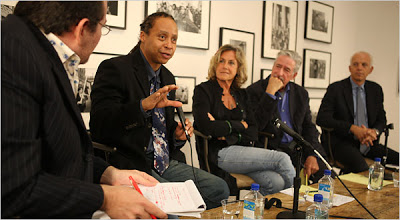
The Supreme court may hear the case of Ali Saleh Kahlah al-Marri who has been detained in a brig in South Carolina for five years. Photo from www.psaonline.

‘The Supreme Court is now being asked to consider the legality of Marri’s detention, which is one of the broadest and most controversial assertions of executive authority since the Sept. 11, 2001, attacks.’
By Jerry Markon / November 9, 2008

Ali Saleh Kahlah al-Marri was close to going on trial for fraud when prosecutors marched into an Illinois courtroom with a demand. Dismiss the charges, they said, because President Bush had just designated the defendant an enemy combatant.

Marri’s attorneys protested, but U.S. Attorney Jan Paul Miller declared that the military had already taken custody of the Qatari national, now deemed an al-Qaeda sleeper agent. “There is no longer a judicial proceeding before this court,” he said.

With that, Marri was whisked to a Navy brig in Charleston, S.C., where he has spent more than five years. His case raises a question with vast implications for presidential power and civil liberties: Can the military indefinitely detain, without charge, a U.S. citizen or legal resident seized on U.S. soil?

The Supreme Court is now being asked to consider the legality of Marri’s detention, which is one of the broadest and most controversial assertions of executive authority since the Sept. 11, 2001, attacks. Marri’s attorneys want the court to overturn an appellate ruling that backed the administration. The final brief is due Monday, and the justices are expected to decide soon whether to take the case.

Bush administration officials argue that the ability to detain Marri — who they say was planning a wave of post-Sept. 11 attacks — is vital to protecting the nation during wartime. “Like the al-Qaeda forces that struck America on the morning of September 11,” Marri “entered the United States to plan and carry out hostile or war-like acts,” they argued in their brief.

Marri’s attorneys say such detention power is unconstitutional and dangerous, raising the possibility that the government could one day snatch anyone off the street, even a political opponent, and lock him up without a trial. A prominent group of former judges and Justice Department lawyers, along with retired military officers, filed briefs backing Marri’s position. They include Maj. Gen. Antonio M. Taguba, who led the Army’s first official investigation into abuses at Abu Ghraib prison in Iraq.

The ruling supporting Bush is “a grave threat to the civil liberties of American citizens,” said the brief submitted by people including former attorney general Janet Reno and former federal judge Abner Mikva, a longtime mentor to President-elect Barack Obama.

The case poses an early test of Obama’s approach to detainee and terrorism issues. Obama’s Justice Department would almost certainly argue before the justices if the court hears the matter, raising the possibility that he could change the government’s position.

While Obama has strongly opposed Bush on terrorism, his views on Marri and enemy combatants held inside the United States are unclear. Obama has promised to abolish military commissions underway at Guantanamo Bay, Cuba, and has said accused terrorists should be tried in civilian courts or military courts-martial.

He has also vowed to aggressively fight terrorism. Obama’s transition office did not return a telephone call Friday seeking insight into his thinking on the Marri case.

Experts said the new president could seek to charge Marri again in federal court but could also back Bush’s position — and conceivably use broad detention authority if the Supreme Court upholds it. Obama’s national security team may persuade Obama “that we have to worry about another attack, and in case of an attack we need this power,” said Stephen A. Saltzburg, a George Washington University law professor and former Justice Department official.

Marri, a graduate student in Peoria, Ill., when he was arrested in December 2001, is the last of three designated enemy combatants held since 2001. His case is most similar to that of Jose Padilla, a U.S. citizen originally accused of attempting to explode a radiological “dirty bomb” in the United States, because both were arrested inside the United States.

But Padilla was transferred to civilian custody to face terrorism charges before the Supreme Court could take up the military’s power to detain him. The Justice Department is now trying to differentiate between holding Marri, a lawful resident, and U.S. citizens. But legal specialists say citizens and residents have the same due process rights — a position the Bush administration itself took earlier in Marri’s case — so any high court ruling would apply to both.

In December 2002, Marri was charged in federal court with lying to the FBI and with using a false name and a stolen Social Security number to apply for bank accounts in Macomb, Ill., for a fictitious business. But on June 23, 2003, Bush ordered the attorney general to turn him over to the military.

The government says Marri trained at an al-Qaeda camp and met Osama bin Laden, and officials have said that the FBI came to think he was al-Qaeda’s senior operative in the United States. His attorneys acknowledge that the allegations are serious but say they must be proved in a civilian court.

A divided U.S. Court of Appeals for the 4th Circuit ruled in July that the president had the power to detain Marri but that he could contest that detention in court. If the Supreme Court declines the case, lawyers say the government could continue to detain people in the Charleston brig because it lies in the 4th Circuit.

Jonathan Hafetz, an attorney with the American Civil Liberties Union who represents Marri, said his client’s detention “is the broadest and most radical assertion of detention power since September 11. That the president can order the military to seize someone from their home, their business, from the streets and lock them up in jail potentially forever, without trial, goes against 230 years of American precedent and the basic idea that this country was founded on.”

Bobby Chesney, a national security law specialist at Wake Forest University, said critics are overstating the potential risk because anyone held could file a court challenge. “The claim isn’t that the president can detain whoever he wants, it’s that he can detain al-Qaeda members,” Chesney said. “This notion that the president is asserting some royal prerogative is silly.”

[Staff researcher Julie Tate contributed to this report.]

Source / Washington Post

Thanks to truthout / The Rag Blog

Posted in RagBlog | Tagged , , , , , , | Leave a comment

MEDIA / Larry Ray : Parsing the Pundits

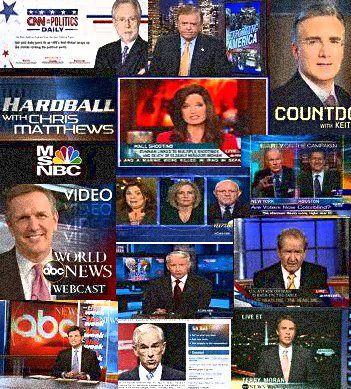
Graphic by Larry Ray / The Rag Blog.

‘Like pond minnows swarming around a morsel tossed into the water, every news outlet on TV, and especially cable talk shows, have a feeding frenzy when a speculative gem is broadcast by any one of them.’
By Larry Ray
/ November 9, 2008

After months of endless guessing, speculating, pontificating, fear mongering and blathering, came the evening of November 4th, and the TV talking heads had spectacularly shown their asses. Ordinary American voters had it right. The talking heads had just been jabbering.

Let’s set this up a little first. As a retired nightly newscaster from the old school, I stayed on the air just into the gender-correct Alphonse and Gaston vaudeville co-anchor era, I know the difference between correct and commercial chowder. I lament what passes for news and commentary today. I wish America’s broadcast and cable news operations were still run by tough-nosed editors, news directors and assignment editors instead of by their corporate headquarters.

Today’s news and commentary offerings, with very few exceptions, are run strictly as major revenue producers. Most are dog food factories with higher paid, better looking employees. Good looks, perfect hairdos and smooth teleprompter reading skills are the hallmarks of “good” today. What they read is second to how it all looks. America’s remaining three major networks, broadcasting over the public airwaves, still have one newscaster sitting in the chair introducing stories beamed in via satellite as 30 second to two minute “packages.” What little network news there is sandwiched between interminable commercial breaks is generally OK, excluding the fluff stories. Cable news has lots more time to fill, and so there is lots more about Paris Hilton than there is about Paris, France, and lots more fluff.

Like pond minnows swarming around a morsel tossed into the water, every news outlet on TV, and especially cable talk shows, have a feeding frenzy when a speculative gem is broadcast by any one of them. In a matter of minutes everyone is doing their own version of the gem. “Bradley effect, is a good example.” “Bradley effect” sent the 20-something desk producers and ‘researchers’ to the Google servers. Faster than you can say “Exclusive,” all news and sorta-news outlets were predicting a dire hidden force eluding the polls that menaced the Obama campaign. In a loud “Not so” to the prognosticating pundits, more white men across the nation, and even into the old South, voted for Obama than for any Democrat since Jimmy Carter. More voted Obama than for Bubba Clinton.

Obama Hussein, the secret Muslim terrorist, was not going to get the Jewish vote, and Florida was portrayed right up to election day as teetering and a toss up. A huge helpless sigh issued from TV sets across America. Ooops. Wolf got blitzed and Olberman was overruled. In a turnout even larger than that for John Kerry, 78 percent of America’s Jews voted for Obama. And endless shuttles to the polls from retirement homes in Florida as well as the Cuban-American vote there helped produce a handy win for Obama.

The ones listening hardest to appellations like terrorist, socialist, most liberal, inexperienced, were apparently the TV pundits who endlessly repeated and combined them ad nauseam. The ones really listening to America’s heartbeat and making their own assessments clearly were average American voters, not the pundits.

There is a lesson in here somewhere for those who fill the time on cable channels and for folks reading teleprompters and doing interviews. Producers and millionaire show “hosts,” why not do your own Google searches for, “initiative,” “resourceful,” “original,” “variety,” “lucid” and “accurate.” We’ll see how you do in four years. Faux News, never mind, you don’t count.

[Retired journalist Larry Ray is a Texas native and former Austin news anchor. He also posts at The iHandbill.]

The Rag Blog

Posted in Rag Bloggers | Tagged , , , , | Leave a comment

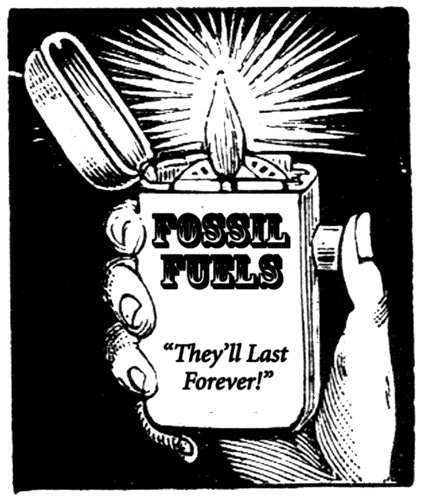
Fossil Fuels : The Crisis Facing Obama

Cartoon by Married to the Sea.

“…The challenge just ahead is going to be the greatest since the Republic was founded. It will dwarf the challenges of the War Between the States, the Great Depression and World War II and will test your leadership to the utmost.”

Tom Whipple

Peak oil and the need to move quickly.
By Roger Baker
/ The Rag Blog / November 9, 2008

See ‘The Peak Oil Crisis: Memorandum for the President-Elect’ by Tom Whipple, Below.

Tom Whipple, as I have noted previously, was a top CIA analyst until he retired. He now writes about energy issues; he fully understands the implications of peak oil and, IMO, is right on target in his comments below. If you want lots of numbers and details to fill the picture, go to The Oil Drum” or “Energy Bulletin”.

It is worthy of note that the International Energy Agency, which advises European governments on energy policy, is just releasing a new report which warns that the world must shift away from fossil fuels as rapidly as possible to avoid crisis.

The IEA report is in executive summary form here.

The Peak Oil Crisis: Memorandum for the President-Elect
by Tom Whipple / November 6, 2008

The way things are shaping up, in less than three months you will be in charge of solving the direst set of crises since the ones faced by Lincoln back in 1861.

In every corner of the world economies are coming unglued. Our major financial institutions are approaching insolvency; unemployment is rising; public confidence in nearly every institution is collapsing; investments and savings are tanking; and to make matters worse, these forces seem to be simultaneously engulfing all the other nations of the world. There clearly are big changes just ahead and probably not for the better – at least not right away.

In sorting through the morass you soon will confront the old conundrum of the urgent vs. the important. From all directions crises are going to come at you. There are wars to settle; frozen finances and plunging markets; shortages and world adversaries seeking advantages. The list of the extremely urgent can only grow and grow for the world has become a populous, complex and interconnected place.

Beyond the obviously urgent, however, come the truly important – the problems that cannot be muddled through or solved quickly with borrowed money. Global warming and methane burps, the social security/Medicare shortfall, evaporation of retirement savings, depletion of easy-to-exploit oil deposits and perhaps a life threatening pandemic or two are examples of the truly important.

Right at the top of the truly important list, and more urgent than you probably realize, is to start the transition of the U.S. economy from fossil fuels – oil, coal, and natural gas – to renewable forms of energy as quickly as possible. If this does not start happening soon, then much of the U.S. and world economy is likely to start grinding to a halt well within the eight years you would like to remain in office. Moreover, if we rush to burn off all the remaining fossil fuel, primarily coal, in the name of economic recovery and growth, the world is likely to end up in a couple of centuries – and here opinions differ – anywhere from an unpleasant place to live to being nearly devoid of the higher forms of life.

We have heard all sorts of talk about energy independence in recent months usually coupled with calls for more domestic drilling, “clean-coal” or more ethanol. Such talk is meaningless since we are almost certain to become energy independent in the next decade or so simply because we won’t be receiving most of the 12 million barrels of crude and oil products a day we are currently importing. They just won’t be for sale, at least not to us.

There clearly has to be some sort of powerful incentive to get your administration, the Congress and the rest of the world’s governments moving more quickly on the transition to a post fossil fuels world. At the minute, the only incentive on the horizon that seems able to get everybody’s attention is high gasoline prices and actual shortages. Earlier this year we were getting close to taking action when oil was pushing $150 a barrel and the campaigns could talk of little else. However the perturbations of the financial crisis intervened and gasoline went back down to last year’s prices.

Nothing stands still these days so by the time you are inaugurated it is a good bet that the OPEC cartel will have managed to cut production enough to start driving prices upwards again, perhaps not to $150, but perhaps enough to get people’s attention and raise fears of inflationary pressures.

Sometime during your first year in office, your new Secretary of Energy is likely to come by and lay out the problem for you – world oil production is going down – perhaps faster than imagined; world oil exports are dropping even faster; prices are rising; and new domestic supplies will never make up the difference. The bottom line will be that the country is going to have to get along with steadily decreasing amounts of oil each year for the foreseeable future and that much will have to change if the economy is to continue to function.

It may take some time before you appreciate all the consequences of oil depletion. They will be everywhere. Transportation costs will go much higher. The GDP will slide. Jobs will disappear, and shortages will develop. At some point there will be a general agreement that looking for more fossil fuels or that a large scale effort to convert coal to liquid fuel is hopeless. A massive overhaul of the U.S. economy including transportation, lifestyles, jobs, agriculture, and industrial production will be necessary if we are going to continue running a civilization with declining quantities of fossil fuel.

This national epiphany will be the beginning of the great transition that will dominate the U.S. government and the world for many decades. New governmental organizations, policies, and procedures will be necessary to effect the transition for it will involve nearly every aspect of modern life. Do not be tempted by the notion that the markets alone can deal with this transition. A few minutes’ reflection on what will be involved in forced reductions in the use of fossil fuels while still maintaining social order and some semblance of 20th century lifestyles will lead to the realization that this can only be accomplished by government coordination. We are no longer in the 19th century living on scattered self-sufficient farms. There are 300 million of us in the United States today, and we are totally, utterly, completely dependent on fossil fuels for our being.

The challenge just ahead is going to be the greatest since the Republic was founded. It will dwarf the challenges of the War Between the States, the Great Depression and World War II and will test your leadership to the utmost.

Source / Energy Bulletin

The Rag Blog

Posted in Rag Bloggers | Tagged , , , | Leave a comment

Mariann G. Wizard :
Marijuana a Winner in 2008 Elections

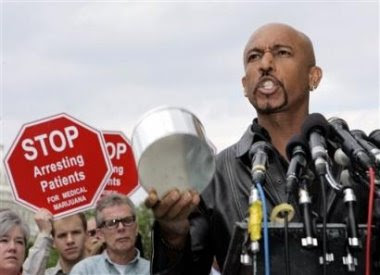
photo of Montel Williams speaking in support of legalization of marijuana for medical uses

Talk show host Montel Williams is shown speaking out in support of legalization of marijuana for medical uses. Williams has described his need for medical marijuana to deal with the pain associated with multiple sclerosis.

Voters say ‘Yes’ in Cannabis-related initiatives.

By Mariann G. Wizard | The Rag Blog | November 9, 2008

Marijuana-related measures on various ballots around the country did fairly well in last Tuesday’s elections.

In Michigan, a medical marijuana initiative passed by 63% to 37%, making MI the 13th state to protect medical marijuana patients from arrest and jail. MI becomes the first medical marijuana state in the Midwest, and the second largest in the country (behind California).

In Massachusetts, a landmark initiative to decriminalize marijuana passed 65% to 35%, removing the threat of arrest for possession of an ounce or less of marijuana, and replacing jail time with a $100 fine, payable through the mail. This is the first time that voters anywhere have passed a statewide decrim initiative! Also in MA, four state House districts passed nonbinding public policy questions directing their representatives to vote for legislation allowing seriously ill patients to use cannabis, with the approval of their doctors.

In California, a measure that would have cut public housing benefits for those convicted of recent drug offenses, increased prison and law enforcement spending, and raised penalties for gang-related activities and other crimes, lost 70% to 30%. However, another measure that would have diverted more drug offenders from prison into treatment and improved the marijuana decrim law enacted by CA’s lege in 1975 went down to defeat, 60% to 40%. Meanwhile, in Berkeley, a measure to expand non-residential zones where medical marijuana dispensaries can locate, issue zoning certificates, and bring the city’s marijuana possession limits into line with recent court rulings passed, 62% to 38%.

Fayetteville, Arkansas and Hawaii County, Hawaii passed measures making adult marijuana offenses the lowest priority for local law enforcement, 66% to 34% in AR and 53% to 39% in HI.

For more information, go to Marijuana Policy Project.

Posted in Rag Bloggers | Tagged , , , , , , | Leave a comment

Morici: The Economy Is a Two Wheel Recession


Gone, Baby, Gone: Another 240,000 Jobs Lost
By Peter Morici / November 7, 2008

The Labor Department reported the economy lost 240,000 payroll jobs in October, after losing 284,000 jobs in September. This was much worse than was expected and represents wholesale capitulation.

The economy is a two wheel recession. The banking meltdown and failure of the Treasury bailout to free up credit are choking the housing market and construction industry, and falling retail sales, month after month, is leaving businesses with unsold goods and forcing layoffs in manufacturing and services alike.

The challenges facing President-elect Barack Obama could not be clearer. He must reverse the hemorrhaging of high quality jobs and declining real wages, and set the course to restore high quality growth. In particular, Obama’s policies must instigate growth that is not founded on excess borrowing by American consumers and from foreigners.

The economy has shed 1.2 million jobs since December, as the full weight of the banking crisis, trade deficit with China and burdens imposed by high-priced imported oil are bearing down on manufacturing, construction and the broader economy with unrelenting pressure.

Unemployment increased to 6.5 percent in October; however, factoring in discouraged workers, unemployment is closer to 8.2 percent. Add workers in part time positions that cannot find full time employment and the hidden unemployment rate is about 12 percent.

Reflecting a weaker job market, the wages of most working Americans lagged inflation through the recent economic recovery, and are now likely to decline further as the economy falls into a recession.

The banking crisis, hidden unemployment and wages lagging inflation made the economy the most important issue in the Presidential campaign. President-elect Obama got traction out of his proposals to redistribute income by raising taxes on the top five percent and cutting taxes for many other Americans. However, cutting the typical worker’s taxes by a few hundred dollars will make them feel better off for only a few months, and redistributionist policies won’t do much to create better paying jobs that have been lost in manufacturing, construction and elsewhere in the economy.

To accomplish lasting prosperity, President-elect Obama will have to fix the banks and the trade deficit. Obama must ensure that the banks use the $700 billion in federal bailout assistance to make new loans to homebuyers and businesses, and not squander federal largess by padding executive bonuses, acquiring other banks and pursuing new high-return, high-risk lines of businesses in merger activity, carbon trading and complex derivatives. Industry leaders like Citigroup have announced plans to move in those directions. Many of these bankers enjoyed influence in and contributed generously to the Obama campaign. Now it remains to be seen if a President Obama can stand up to these same bankers and persuade or compel them to reverse course.

In addition, Obama must address the huge cost of imported oil and trade deficit with China or any effort to resurrect the economy is doomed to create massive foreign borrowing, another round of excessive consumer borrowing, and a second banking crisis that the Treasury and Federal Reserve will not be able to reverse.

Ultimately, reducing the oil import bill will require higher mileage standards for automobiles and assistance to automakers to accelerate the build out of alternative, high mileage vehicles. Fixing trade with China will require a tax on dollar-yuan transactions if China continues to refuse to stop subsidizing dollar purchases of yuan to prop up its exports and shift Chinese unemployment to the U.S. manufacturing sector.

Near term, a stimulus package focused on infrastructure is critical for resuscitating growth. The recent round of tax rebate checks ended up in savings accounts or spent at the Wal-Mart on Chinese goods, and did little to create jobs or accelerate growth. Whereas projects to repair roads, rehabilitate schools and refurbish public buildings would create high-paying jobs at home and provide a legacy in capital improvements that assist growth now and in the future.

Wages and Unemployment

In October, wages rose a moderate 0.4 cents per hour, or 0.2 percent, and not enough to keep up with inflation. Moderate wage increases and decent labor productivity growth should help abate Federal Reserve concerns about inflation. Core inflation—nonfood and nonenergy price inflation—should decline over the remainder of 2008 and settle below 2 percent per year in 2009.

The unemployment rate was 6.5 percent in October, up from 6.1 percent in September. However, these numbers belie more fundamental weakness in the job market. Discouraged by a sluggish job market, many more adults are sitting on the sidelines, neither working nor looking for work, than when George Bush took the helm. Factoring in discouraged workers raises, who have left to workforce, and those forced into part time work, the unemployment rate to about to 12 percent.

During the presidential campaign, declining real wages and fewer adults working gave Barack Obama’s proposals to redistribute income through the tax system a lot of traction. However, those policies will do little to correct the fundamental systemic problems that are destroying good jobs and squeezing middle class families, even if they would make them feel better for a little while.

Going forward, solutions that create better jobs will require cutting the trade deficit by at least half to substantially boost domestic manufacturing, solving the problems of the large money center banks to get mortgage money flowing and housing construction going again, and energy policies that more aggressively develop alternative fuel sources, conserve oil, and open up new domestic fields for conventional oil and gas production. Reducing dependence on foreign oil requires doing all things environmentalists want us to do and all things environmentalists don’t want us to do.

Politically correct promises to create millions of new jobs producing alternative fuels makes effective presidential campaign slogans, but realistic policies for governing require aggressive development of more conventional oil and gas, as well as nonconventional energy sources, and efforts to improve the energy efficiency of personal transportation.

If the Democrats are not willing to drill for more oil off shore and take on the automobile industry’s resistance to significantly higher mileage vehicles, the U.S. economy will be even more indenture to Persian Gulf oil exporters at the end of President-elect Obama’s first term than it is today.

Finally, diplomacy has failed to redress the currency issue with China. If President Obama is not willing to take tough steps to redress the trade imbalance with China and reduce oil imports, together the Persian Gulf oil exporters and China’s sovereign wealth funds may be able to buy the New York stock exchange eight years from now. Americans, outside those working for the New York banks that facilitate this sellout, will find their best futures waiting on tables for Middle East and Chinese tourists.

Manufacturing, Construction and the Quality of Jobs

Going forward, the economy will add some jobs for college graduates with technical specialties in finance, health care, education, and engineering. However, for high school graduates without specialized technical skills or training and for college graduates with only liberal arts diplomas, jobs offering good pay and benefits remain tough to find. For those workers, who compose about half the working population, the quality of jobs continues to spiral downward.

Historically, manufacturing and construction offered workers with only a high school education the best pay, benefits and opportunities for skill attainment and advancement. Troubles in these industries push ordinary workers into retailing, hospitality and other industries where pay often lags.

Construction employment fell by 48,000 in October. This is a terrible indicator for future GDP growth. Retailing shed 38,000 thousand jobs, and financial services lost 14,000 jobs.

Manufacturing has lost 90,000 jobs, and over the last 103 months, manufacturing has shed more than four million jobs. The trade deficit with China and other Asia exporters are the major culprits.

The dollar is too strong against the Chinese yuan, Japanese yen and other Asian currencies. The Chinese government intervenes in foreign exchange markets to suppress the value of the yuan to gain competitive advantages for Chinese exports, and the yuan sets the pattern for other Asian currencies. Similarly, Beijing subsidizes fuel prices and increasingly requires U.S. manufacturers to make products in China to sell there.

Ending Chinese currency market manipulation and other mercantilist practices are critical to reducing the non-oil U.S. trade deficit, and instigating a recovery in U.S. employment in manufacturing and technology-intensive services that compete in trade. Neither President Bush nor Congressional leaders like Charles Rangel and Chuck Schumer have been willing to seriously challenge China on this issue, and Senators McCain and Obama appeared comfortable with continuing their approaches during the campaign.

Now President-elect Barack Obama must alter his position, and get behind a policy to reverse the trade imbalance with China, or preside over the wholesale destruction of many more U.S. manufacturing jobs. These losses have little to do with free trade based on comparative advantage. Instead, they deprive Americans of jobs in industries where they are truly internationally competitive.

In the end, without assertive steps to fix trade with China, as well as fix the banks and curtail oil imports, the Bush years will seem like a walk through the park compared to the real income losses Americans will suffer during the Obama years.

Instead, were the trade deficit cut in half and the banks fixed, manufacturing would recoup at least 2 million jobs, U.S. growth would exceed 3.5 percent a year. Real wages and domestic savings would climb, and the federal government would receive more revenues to balance its budget or address other pressing domestic needs.

The choices for the new president are simple. It’s either renaissance or decline. Fix the banks, trade with China and energy policy or become America’s Nero.

Peter Morici is a professor at the University of Maryland School of Business and former Chief Economist at the U.S. International Trade Commission.

Source / CounterPunch

The Rag Blog

Posted in RagBlog | Tagged , | 2 Comments

The Sunday Funnies


A father asked his 10-year old son if he knew about the birds and the bees.

“I don’t want to know,” the child said, bursting into tears. “Promise me you won’t tell me.”

Confused, the father asked what was wrong.

The boy sobbed. “When I was six, I got the ‘There’s no Easter Bunny’ speech. At seven, I got the ‘There’s no Tooth Fairy’ speech. When I was eight, you hit me with the ‘There’s no Santa’ speech.”

“If you’re going to tell me that grown-ups don’t really get laid, I’ll have nothing left to live for.”

Thanks to Marty van Horn / The Rag Blog

Posted in RagBlog | Tagged | Leave a comment

Singin’ on Sunday – Becca Stevens

Becca Stevens was born into a musical family in North Carolina and was on stage by the age of two performing her father’s music. When she was ten she starred in a year-long national tour of The Secret Garden. Becca graduated from high school at the N.C. School of the Arts as a classical guitar major, and graduated college in ’07 studying vocal jazz and composition at The New School University in Manhattan. Outside school, Becca plays solo performances in New York and writes and arranges music for the Becca Stevens Band (BSB). Aside from her own band, Becca is the regular singer with Travis Sullivan’s Bjorkestra. Becca collaborates with other musicians in the city and has written lyrics for and recorded with Frank LoCrasto on his record “When You’re There” (released in 2006 on Max Jazz), and for Jeremy Pelt’s band “Wired” (also released on Max Jazz, ’07). Becca has also recently recorded with Sam Sadigursky (The Words Project), Andy Milne’s “Dapp Theory”, Travis Sullivan’s Bjorkestra, and on The Solos Unit’s “Electric City” (released in 2007). Becca teaches suzuki guitar and Music-in-the-Box at the Greenwich Suzuki Academy in Connecticut. Music-in-the-Box is a music readiness program for very young children.

To learn more about Becca Stevens, click here or here (MySpace page).

Source / BeccaStevens.com

Thanks to Betsy Gaines / The Rag Blog

Posted in RagBlog | Tagged , | Leave a comment

Is This Another Backroom BushCo Bailout?

Chrysler headquarters

Why the GM/Cerberus/Chrysler Bailout is bad for taxpayers and doomed to fail without the benefits of a Chapter 11 filing for both Chrysler and GM
By Robert Farago / November 6, 2008

[The following analysis was sent to TTAC by a New York City bankruptcy lawyer who wishes to remain anonymous. It’s twice as long as our usual editorial, but I think you’ll find it’s well worth your time. Thanks to you-know-who-you-are.] Cerberus Capital, a highly secretive NYC-based vulture investment fund, wants the U.S. government and taxpayers to bailout its failed investment in Chrysler and its failing investment in GMAC. Its partner in this raid on the US Treasury is General Motors, a woefully insolvent automobile manufacturer whose CEO is paid $40k each day. Here’s why a bailout for GM and/or Chrysler is a bad idea.

Background

Cerberus Capital uses hedge funds as the vehicles in which to invest in various companies. Apparently, the hedge fund known as Cerberus Series 4 is the owner of an 80 percent interest in Chrysler and a related fund owns or controls a 51 percent interest in GMAC. Not surprisingly for a company known for its secrecy, Cerberus has not disclosed which entities actually own the interests in Chrysler and GMAC, has not disclosed what fees Cerberus has taken or accrued from its investments, and has not disclosed what severance payments would have to be made if GM actually acquired Chrysler. For example, would Chrysler CEO Bob Nardelli get another big payday if he’s cut loose in a merger? The interrelationships among GMAC, Chrysler Financial, Cerberus and other entities are also a well-kept secret.

Secrecy, Secrecy, Secrecy

Why is everything so secret? What happened to the idea of open government? A few questions come to mind:

1. Exactly what is the Cerberus/GM proposal to borrow $10b from the US Treasury in order to fund a merger, the terms of which are also secret? Is it in writing? Where is a copy? What were the proposed terms that were rejected by the current US Treasury? Is another proposal in the works? How is the $10b going to be repaid by two insolvent auto manufacturers?

2. Which lobbyists represented GM and Cerberus in getting their loan application before the US Treasury? How much were the lobbyists paid? With whom did GM/Cerberus meet? Where are the notes of any meeting or other communications about the loan proposal?

3. What do we know about the financial condition of the proposed borrowers? Where is Chrysler’s current balance sheet and income statement? Surely Chrysler is insolvent on an equitable basis, and probably insolvent on a balance sheet basis. Why is basic financial information not available for public inspection and comment?

4. Where are the financial statements for the Cerberus Series Four hedge fund? US taxpayers are being asked to bailout the failed auto related investments by Cerberus Series Four, while the profitable investments in the same fund are not being shared with taxpayers.

GM is woefully insolvent and should file Chapter 11

5. As of June 30, 2008, GM had total assets of $136b and total liabilities of $191b, a $55b deficiency. Thus, GM is insolvent. How can GM ever repay a $10b bailout, or any bailout for that matter? As of June 30, 2008, its current liabilities were $70b, dwarfing its current assets of $55b. Moreover, we do not know what deals GM has made to stretch/defer repayment of its account payables.

6. Is Chrysler in any better shape than GM? Probably not, but without a current balance sheet the definitive answer is a secret.

7. Assuming Chrysler is insolvent (liabilities exceed assets), then the equity interest of Cerberus and Daimler (the 20 percent equity owner) are worthless and these entities are not even entitled to a seat at the merger negotiating table. The real economic owners of Chrysler are its creditors and employees, who are also in the dark about the proposed US treasury bailout.

Who really benefits from a GM/Cerberus/Chrysler merger?

8. The US taxpayers can’t benefit since there is no repayment plan. Not surprisingly, Cerberus and its hedge fund are back door beneficiaries, because the 51 percent Cerberus ownership interest in GMAC will increase in value if GM and GMAC survive. Chrysler is a lost cause, but with the value of the Cerberus investment in GMAC also plummeting, Cerberus is trying to prop-up GMAC by helping GM survive. Is Cerberus pledging its equity interest in GMAC to the US Treasury as security for a government loan to GM? Why not? Is GM pledging its 49 percent equity interest in GMAC to secure repayment of any loan by the US Treasury? More secrets kept from the public.

9. The self-dealing by Cerberus extends to wanting to cherry-pick the Chrysler assets and keep the auto financing arm for itself. What is the value of the Chrysler auto financing business, and why should Cerberus benefit?

10. GMAC had negative net income of $3b for the first 6 months of 2008. GM’s ownership interest in GMAC was impaired by at least $2.7b during the same six month period, meaning that Cerberus Series Four hedge fund had suffered a similar loss in value in its investment in GMAC. Why should taxpayers bailout the millionaire investors in the Cerberus hedge funds?

More secrecy and lack of disclosure

11. Does GM plan to make any payments to GMAC, payments that directly benefit Cerberus? As vehicle residual values decrease, GM is obligated to make payments to GMAC under “residual support and risk sharing” agreements. On August 6, 2008, GM paid GMAC/Cerberus $646m, money which could have been used by GM to fund its ongoing operations and its obligations to employees.

12. Should any taxpayer money be used to fund payments to GMAC/Cerberus, whether that money is used directly or indirectly? How much, if anything is Cerberus investing in new money to prop up its investment in GMAC? If it is not investing in Chrysler or GMAC we can reasonably conclude that its analysis shows that the investment is a bad one. What’s bad for Cerberus is bad for the US Treasury.

Although it appears that the Cerberus Series Four has money available to make follow-on investments, it makes no sense to throw good money after bad if you can lobby the US Treasury to make the bad investment for you. A related question is whether the Cerberus equity interests in GMAC are going to be used as collateral for the loans that will be used (albeit indirectly) to bailout GMAC. Why should equity bear none of the risk but get all of the benefit?

More non-disclosure

13. What is Cerberus ResCap Financing LLC and who has seen its financial statements or the agreements relating to the $3.5b secured loan facility? How is this secured loan impacted by the bailout of Cerberus/GM/Chrysler?

Deepening insolvency is likely

14. GM’s current insolvency and continuing losses will trigger additional liabilities, and make it doubtful that GM will be able to make payments promised to employees and former employees or perform its labor agreements. GM’s worsening financial condition also deepens its losses from its derivative contracts. How would a GM/Cerberus Chrysler merger affect these liabilities? Will any government loans be used to reduce the $30b of GM accounts payable, or, in the event of a merger, to pay down Chrysler accounts payable in some still unknown amount? Sadly, we don’t even know what Cerberus proposed as the use of funds and we have no idea how Cerberus will benefit since we have no financial information on Chrysler or Cerberus.

15. As GM and Chrysler idle plants and facilities, more employees are laid off the employee related liabilities of GM/Chrysler will increase by hundreds of millions. Since GM and Chrysler are insolvent, who will pay these increased costs? Can any of these costs be avoided in a Chapter 11 case of Chrysler or GM?

16. Should taxpayer money be used, directly or indirectly, to pay GM and Chrysler obligations that are coming due while these entities are unable to pay from their own assets. Surely not, but what is being proposed, and who will benefit if GM debt is redeemed at par by vulture investors that bought the debt at pennies on the dollar? A related question: will any Cerberus entities benefit from government funded redemptions of auto maker debt? Is it possible that Cerberus is trading in credit default swaps and actually benefiting from the difficulties of Chrysler, GM and GMAC? Yet more items of non-disclosure on a long list of secret items.

Conclusion

17. GM, GMAC and Chrysler are not credit worthy and are unable to borrow money on any basis, secured or unsecured.

What’s Good for GM/Chrysler is a Chapter 11 Filing

18. GM needs to be restructured, which means it must change the terms of its legal obligations to suppliers, bondholders and employees. The only vehicle to accomplish the needed changes is Chapter 11, which lets GM reject unfavorable contracts, renegotiate its debt obligations, defer interest and principal payments and gives it time to fix its business. Without a chapter 11 filing a government infusion of $10b cash will be gone in six months when GM uses the money in 2009 to pay bondholders and employees billions of dollars, payments which do nothing to help GM survive.

19. Chrysler, the stepchild of a distressed debt vulture fund, is also a prime candidate for Chapter 11. But Chrysler should be liquidated, not reorganized. A liquidating Chapter 11 case, expressly permitted by the Bankruptcy Code, can be used to keep Chrysler operating while its divisions are sold. With adequate Chapter 11 funding line workers can keep their jobs and benefits, and non-essential executives can be fired at minimal cost to the Chapter 11 debtor, known as the debtor-in-possession. Trade creditors will continue to ship to Chrysler because their post-petition claims will have a priority in payment. Chapter 11 also lets the Bankruptcy Judge appoint an examiner to conduct an investigation into the financial affairs of Chrysler and its equity owners, and to sue to recover any improper payments. Chapter 11 will also make it clear to Daimler and Cerberus that their investment is worthless and they will not be able to use their position of control to improperly benefit.

20. Cerberus should acknowledge the financial reality and either file a Chapter 11 case for Chrysler or have a federal receiver appointed so that the value of the Chrysler assets can be maximized in an orderly sale procedure. The US government should fund the Chapter 11 case and keep Chrysler operating by giving Chrysler a debtor-in-possession loan having seniority over all other liabilities of Chrysler, thereby assuring taxpayers that the money will be repaid out of the proceeds of asset sales. The US could also give a senior secured loan to GM to help GM acquire assets from Chrysler, but this would require the cooperation of bondholders, cooperation not likely to be forthcoming. On the other hand, if GM is in Chapter 11 then the government could refinance the GM operations without fear that taxpayer money would be diverted to pay existing creditors.

Source / The Truth About Cars

The Rag Blog

Posted in RagBlog | Tagged , | Leave a comment

Barack O.: Mike Albert’s Imagination Run Wild


An Interview I Would Love To Read
By Michael Albert / November 05, 2008

Imagine it is January 2, 2011.

Imagine that Barack Obama has been President of the U.S. for two full years.

Finally, imagine also that the following interview with Obama takes place on prime time TV, as a way of situating what has occurred over those two years and also to foreshadow what is forthcoming.

And since this is all make believe, let’s make believe the interviewer’s name is Barb Walt.

I believe what follows is not an absolutely impossible scenario for all times, though I don’t believe it will happen in the next two years. I don’t believe Barack Obama will take office with the views that I here place in his mouth or with the courage to act on those views I attribute to him. But I could be wrong, and of course I hope I am, and more importantly, it could happen another time.

I know that a great many people, unlike me, believe that Obama is absolutely sincere about empowering the working people, women, minorities, and young people of America, even at the expense of those with wealth and power.

Against all evidence of Obama’s own words, of the forces he is beholden to, of the inclinations of the “experts” he is welcoming into his administration, of the system preserving pressures he feels every day, and of past U.S. history – many people have an elated feeling that this man will transform the country. I fervently hope they are right, but think they are wrong. I offer this essay to indicate what I think would justify their outlook.

Obama will be transformative, or not.

That’s a given, like it will rain tomorrow or not.

So…

Either: like Hugo Chavez in Venezuela, Barack Obama will be a man elected into office with major elite backing, who when he became President was only a sincere reformer, but who was then polarized by elite resistance and inspired by popular activism, to become much more.

Or: unlike Chavez but like every past American President, Obama will not evolve into holding more radical views, will not stand up to conforming pressures, and will not learn from activists, but will instead oppose us.

Since many Obama voters anticipate the former outcome, the imagined interview below reveals what it might be like if things turn out as they hope. It describes what having a radicalized president with great courage might be like.

But if the future holds no interview remotely like the one below, and no Obama transformation remotely like the one described, and no President-inspired uprising like that reported, and if instead Obama becomes an eloquent mainstream solidifier of elite stability, then it will mean Obama has fallen way short of his supporters’ hopes, and it will mean it is incumbent on all who wanted a much more transformative outcome to keep pushing Obama’s administration and to keep building the activist means to move forward even as Obama becomes more of an obstacle than an aid to the task.

Which way will it turn out?

Will Obama galvanize efforts to transform society including becoming a movement builder against elite opposition?

Or will Obama settle into office as a system sustainer, defending elite agendas with only modest (albeit important) variations from recent administrations?

We will see.

Below, we see what the transformative scenario might look like. My point is that we should push as hard as we are able to make the transformative path real, but we should also persist in our movement building even if Obama is more obstacle than ally.

Barb: Mr. President…

Barack: Barb, please, don’t call me that – call me Barack. I think that “Mr. President” stuff is a throwback to Royal pomp. We should get beyond that…

Barb: Okay, sorry, Mr., er, Barack. To get started – I would like to understand your plans and hopes now, but also where you and the country have been over these past two years, and where you are now going. Can you start by telling us your broad goals as they were when you took office, two years ago?

Barack: Sure, Barb, I can summarize my aims as they were then…

Barb: Good, let’s consider it a historical record. After the summary we can address recent changes. How about we start with health care?

Barack: It was my feeling when I took office that a society that doesn’t provide health care for all citizens is dysfunctional. I mean, what would you say about a family that took care of some sick members, but told others, too bad, make do?

And if everyone in a family wanted to take care of all members, except an old curmudgeon granddaddy who said screw those who can’t pay, clearly that old fuddy duddy’s perverse opinion would be ignored, right?

So, by analogy, I felt we should treat all citizens like members of a diverse family, with everyone entitled to health care. And I felt if we raised the moral tone of the country, the curmudgeons opposing universal health care would be ignored.

I also knew health costs were climbing so fast the financial crisis we recently endured would be minor compared to the distributional crisis that would ensue if we left the health system in its prior condition. So I intended to ensure full coverage, but at a cost within our social means, by having everyone together take on the responsibility.

I intended to increase the number of caregivers, reduce their incomes to a sensible level, and in particular, put a low lid on pharmaceutical companies, health care facilities, or other involved firms profiting off disease.

I thought we should have vastly more clinics, too, because how else would people, and especially the poor, have easy access to timely and excellent care.

And, I have to say, I also always wondered, what the hell is the purpose of the incredible pressure that is put on interns? What logic justifies the debilitating hours they are forced to work? I thought that was no way to provide health care, much less to train capable, sensitive doctors, and you know, Michelle in her hospital work, had similar impressions, but I didn’t know what we might do about it.

Barb: What about employment?

Barack: My view about jobs was why should someone who wants to work not be able to? Why should one person be working full time, or even very long hours at multiple jobs, and others not working at all? Why not share however much work needs doing more equally, to everyone’s gain?

I also thought if someone doesn’t have the literacy or other training needed to do work, that would be a fair reason for their not having a job except that almost always a training or knowledge deficit isn’t a revelation about the job applicant, but about a society that denied a capable person of the learning he or she should have had. So I felt that we should redress educational denials rather than penalize their victims with unemployment.

I also wondered why some people suffered very harsh and demanding work conditions, even degrading, dangerous, and damaging conditions – while other people enjoyed much better and sometimes even uplifting conditions. And the former even got less pay. In other words, why did some people work so long and so hard for so little, while other people got off much easier and were paid way more? Was this moral? Was it good economics? I had my doubts.

So, I wanted, even two years ago, full employment plus being sure that people had education and training to enable them to do their jobs well and, down the road, perhaps we could also take a look at how and what people got paid for their efforts.

Barb: Public schooling?

Barack: I wanted the next generation to get an excellent education in a nurturing, supportive, and enjoyable environment. And I wanted the people responsible for conveying that education well provided for, both with equipment and wages. I didn’t want kids bored and intimidated at school, but, instead, inspired and uplifted. No more warehousing; I wanted real teaching.

I knew that richer districts historically had better schools, due to the tax base difference, and I was dead set against that. What sense did it make to have a gap in income between neighborhoods made larger as time passed, rather than being diminished as time passed?

So even on taking office, I rejected saddling youth in poorer neighborhoods with deficits while youth in richer neighborhoods enjoyed advantages. I wanted to universalize the best education.

I also thought we ought to do something for older folks who wanted to make up for prior gaps in their schooling. To have a society with as much functional illiteracy as we had, some say well over 50% of us can’t read a book, was wrong, and should be redressed as a high priority.

While we are on education, I also thought we should make higher education accessible to all who could make good use of it, and simultaneously enrich higher education to graduate the most enlightened and skilled generation we could.

I thought, like many other problems, that our lagging science and our general educational malaise was simply a function of the decades of slash and burn market fundamentalism since Reagan, and certainly those policies did greatly aggravate the situation, but I also had an inkling of a larger insight because I didn’t understand how even Republican market worshipers could not be horrified by the horrendous results of their policies. It was one thing to be wrong, fair enough. But how could they persist despite seeing the horrible schooling that resulted?

Barb: What about your initial take on the legal system?

Barack: Here I knew from lots of personal experience, mine and Michelle’s, that the legal system was a mess. Lawyers and prosecutors, in civil and criminal cases, were engaged in a kind of demented dance, driven more by cronyism, favors, crowded dockets, and prejudice, than by seeking justice, much less rehabilitation, and the price for this dysfunctional chaos was almost always paid by poorer and weaker defendants, not by those with wealth and power.

The criminal justice system was harsh, uncaring, racist, classist, brutal, often without even a semblance of logic. Everyone knows it. In fact, the prison system seemed to me to be almost a school for crime, not a means of redressing and reducing crime. But I didn’t have much notion what to do about it, except, on one front.

Thus, even two years ago, I knew that having the gargantuan levels of arrests that we did, largely for victimless crimes, was horrible for those criminalized and also wasted huge resources in a gargantuan prison system that was eating funds that could go to education, housing, etc. I thought we should look at European procedures and by emulating them we could avoid imprisoning people for victimless crimes, at no loss in justice or prevention.

I knew prison guard unions would oppose reducing incarceration rates, unless we provided new jobs, so we would have to do that too, of course. But I admit I dismissed as paranoid the grass roots formulations I constantly ran into that said, wait, the harsh criminal justice system in poor neighborhoods aren’t just irrational bureaucratic gargoyles. They impose control and repression that prevents the poor from rising and taking a greater share of society’s wealth. Later, I learned from the poor, rather than considering them ignorant.

Barb: Legislation?

Barack: I had no really significant notion of how to do law making differently, even after having served in the Senate, but I did know we had to attain much higher popular participation in lawmaking and redress the power imbalance between normal citizens and lobbyists for the rich and powerful.

We needed some way that everyday folks could have more say, more oversight, more comprehension, but I didn’t have good ideas about what the steps toward that might be.

Barb: Distribution of wealth?

Barack: Perhaps you remember this becoming a mantra for McCain near the end of the campaign? I found it a bit absurd, I have to admit, and yet in retrospect McCain did have a point, though it was a point I didn’t yet see clearly.

I mean, even worse than my not knowing precisely where my views were going to wind up, and therefore not initially accepting and embracing the idea of redistribution – you probably also notice that during the campaign I didn’t talk about my views as I am relaying them to you now. Why was that? Was I a typical political liar not revealing myself fully?

Barb: I admit, I was going to ask you about lying, as you put it, a bit later, after surveying the rest of your initial views…

Barack: Well, I think I should answer that now, and the answer is yes, in some sense I was a political liar. But what choice was there? If I had expressed all the above views which I felt at the time as I am expressing them for you here tonight, however moderate and sensible they were, I would have been skewered into little pieces by CNN and FOX and all the rest of the media.

I knew that much, even before the past two years experience taught me more about the lengths to which various elite sectors will go to prevent changes. I thought then, however, that having to remain quiet about a big part of my beliefs was just a residue of the way media and elections work. It was something to fix later – but certainly not something I could overcome during the campaign itself.

So instead of telling the whole truth, as I have with you, tonight, back during the campaign I felt if I was going to get elected, while I shouldn’t overtly lie, still, I did have to be very judicious about how I expressed myself, always guarding against being misrepresented or even pilloried for views most people would support given time to think them through.

So, I was judicious, and some would say, not without justification, duplicitous. I am not proud of that, though I think a good case can be made that in context it was the right choice. After all, if I had presented my full views like I have been doing to you, tonight, then McCain would have won and the country would be in a very different place now.

But as to McCain’s charge about redistributing wealth, that was incredible. After all, the Republicans had spent decades redistributing wealth upward from working people to owners, and that kind of redistribution was fine with McCain.

I thought instead that we had to give people who had only meager possessions more stake and more comfort, rather than taking wealth from them to give people who already had yachts and mansions even more yachts and mansions.

So yes, I felt that taxing the wealthy was part of what was needed, not least to redress what had occurred for a few decades. I didn’t think of it as redistribution – though of course it is.

Barb: Wages?

Barack: To me it was obscene for wealthy businesses to pay paltry wages to hard working folks on grounds that the workers don’t have the power to take more.

If I own some factory and I can get away with paying my workers less, I will. That’s obscene. What I didn’t really understand two years ago was that it wasn’t just a personal failing of the owner, but was instead systemic. Even a nice and caring owner, and there are plenty of those, had to cut salaries or get out competed.

So, yes, I knew two years ago that I wanted working people to get higher wages for their labor.

Barb: Working conditions?

Again, what possible morality could justify a financially solvent company maintaining horrible conditions, or even opting to make conditions worse, just to cut costs so that owners could do even better?

To me, that was vulgar, but even with my heart in the right place, I was missing that market competition makes it necessary to do this kind of thing to ward off competitive failure, so that it was market competition, not the mindset of the employers, that was the root of the problem.

So, two years back I knew I wanted to promote laws, union activism, etc., to improve people’s lives at work, but I had nothing more than that in mind.

Barb: The general direction of the economy? Were you a socialist two years ago?

Not even close. I felt that since its inception the American political tradition had been reformist, not revolutionary. And that meant to me that for a political leader to get things done, he or she should ideally be ahead of the curve, but not too far ahead. I was just a sincere advocate for the rights and conditions of the worst off folks in society. I wasn’t about eliminating private ownership of workplaces – that never crossed my mind.

I did think markets needed stringent regulation to avoid doing great harm, so I wanted, to shift away from market fundamentalism and toward stewardship by government, but I wasn’t even anti capitalist. In fact, I thought anti capitalists were unrealistic, childish, utopian. Worst of all they were not relevant to our unemployed citizens, or those who have bad jobs, or lack health care, or who breath toxic emissions. It was only later that I came to see things differently, as I guess we are going to come to…

Barb: Yes, we will, but first, what about War and peace?

Such matters seemed pretty simple to me. I mean, I always thought it was ironic for McCain and Palin to say I was untested or inexperienced regarding international relations. Is the horrendous prior behavior that McCain called “experience,” a positive credential? The real issue was orientation.

Am I sane, or not? If I am, then I care about human likes and potentials, and I want peace – and I want it so much that I will go the extra step, indeed a thousand extra steps, to try to get it.

Well, wait, I guess honestly, I have to admit that that is more me now, then it was me back during the election, or at least my public face back then. Because while running I was hawkish about Afghanistan wasn’t I, and even about Pakistan. I think it was part of getting elected, and at the moment to deliver the scary message well, I made myself believe it.

When I took office, however, I did want to initiate negotiations with countries who at that time I thought represented potential and even real problems for us, including North Korea, Iran, Iraq, and the Mideast writ large, China, and Venezuela, though in the campaign I did mostly just talk tough about Venezuela and especially Afghanistan. And when I got elected I did believe we could negotiate sensible relations, at least, and maybe more. Why not?

Barb: But you didn’t see the U.S. as a problem state itself, internationally?

No, not at all.

I thought we made mistakes, sure, even big mistakes, but I didn’t think of us as being a problem rather than a solution – even though I would have agreed we were ham-handed at times. In fact, I think I was incapable of thinking that our motives might not be worthy. That came later…

Barb: What about gender issues?

You know, there is a sense in which I was just a person who cared about people. I know that sounds trite, but it was true. I wasn’t focused on changing basic structures. I just wanted to push policies and provide an example that would elevate people who needed relief.

So, regarding women, I wanted absolute and full equality, fairness in all sides of life, and also dignity, including no more minimization and objectification – and I wanted the same for people with diverse sexual preferences, gays, lesbians, and others.

Thus, I intended to push for serious and effective day care, child leave, and other programs that women seek and need. But I also wanted to provoke a widespread discussion in society, not unlike what happened in the early days of the women’s movement, addressing the causes of women suffering psychologically and materially, and then trying to overcome those causes.

Barb: Issues of race?

Of course no one should suffer in any way, personally or institutionally, due to their race, religion, or any other cultural community they may be part of.

So my views regarding race when I got elected were like my views regarding gender – I wanted to eliminate archaic laws and provisions that interfered with people’s options due to cultural biases.

I also wanted to redress residual inequalities between communities so that all communities would have comparable per capita assets and conditions, of course. I thought affirmative action made sense, but not reparations, at least not at the outset.

Barb: Ecology?

Honestly, I wasn’t much of a student of ecology. I didn’t know much, and I still have a lot to learn.

I did know, however – indeed, how could any sane person not know – that it made no sense to squander resources frivolously, it made no sense to ruin the environment we lived in, it made no sense to ignore climate change and suffer incalculable consequences later.

So I wanted to elevate ecological attention and program to a priority, but I felt we needed to first figure what our ecological program ought to be.

Barb: Okay, when you were elected, two years ago, what was your expectation about fulfilling your aims? What obstacles did you expect to encounter? Did you think you would overcome them?

During the campaign we built an immense apparatus for reaching out to people all over the country and I thought we would use that, and use my access to media and to the public through speeches, etc., to clarify what we sought to do, and to amass huge support for it, and to then implement it.

I knew that many programs would encounter serious opposition. Many wealthy people would oppose paying more taxes, or would oppose having programs that took from the social product on behalf of working people for social services like education and health – though, honestly, I didn’t entirely understand why.

I also knew that many people with strong ideological commitments would oppose my plans around health, science, regulating markets, etc.

But with the tremendous outreach team we had developed in the campaign reconceived to be an activist apparatus for discovering, arousing, and fighting for people’s desires, and with me and other administration members appearing actively on the media and having my own show as well to talk directly to the public, I thought that despite inevitable opposition, the massive ground swell of clarity, excitement, energy, and desire we would unearth and inspire, would be enough to carry the day. Indeed, I thought we would make quick progress.

After all, we had already done the impossible, in the election. This seemed like an easier task, with the White House in hand, not a harder one.

Barb: In hindsight, now, what do you think people expected you to actually do when you took office?

It depends who you are talking about. I think the public, the broad public was a mixed bag on this.

Many working people and especially young people believed and certainly hoped I would do much of what I have mentioned here, and were happy when they began to realize I wanted to do even more.

Many other people, however, doubted anything much would be done, but at least I wouldn’t be McCain or Bush.

For people who voted against me, on the other hand, I think there was confusion, doubt, and sometimes fear and hatred, but I thought we could mostly defuse it and turn it around.

Elites I guess I thought similarly about, but I quickly discovered, instead, that they thought, and this was whether they voted for me or against me, that I would do nothing much different than had been done before. And not only did they think that would be true, they were intent to make it true.

Barb: What did you in fact seek to do, and what did you encounter as a result? How were you surprised? What did it do to your views?

Well, if you remember, the first thing I did was to announce some new cabinet positions – ecology and science. And then I announced a massive campaign around education and health care – with a massive literacy campaign and many new community clinics – and then I started announcing many economic regulations, and urging a campaign for few work hours, and I began undertaking international negotiations. It was just what you would expect, I guess, in light of the things I said above about my views at the outset.

What I encountered, however, came as a big surprise. On the one hand, as you know, there was an incredible outpouring of popular energy and excitement which latched onto what was offered and pushed for much more, as well. These millions of people – the women and men energetically fighting to end the war, to enlarge democracy, to improve people’s lives – not only impressed me, they pushed me, they made me study their sentiments, and made me react to their choices.

But on the other side, the negative response was even more incredible, and at least to me, more surprising, especially the speed and vigor with which I was publicly pilloried, both to my face, at first, in my offices, and then once that failed, all over the media. I was attacked, and attacked, and attacked, as were the emerging movements, too.

At first it was pretty slow and private as people came to see me and talked with me – senators, big industrialists, and so on – but what happened at these sessions was, well, I said back to them, hey, wait a minute. I told you broadly all during the campaign what my priorities were. And yes, my views go somewhat further than what I said in the campaign, but not much. So what’s the problem for you? And I also told them, one after another, that I didn’t get into office to do nothing. I intended to bring changes, just like I said I would. I am no revolutionary, not even a radical, I told them, but we need to act on many fronts, for many constituencies.

Well, once this was conveyed, then the newspapers and talk shows and networks that these folks govern ratcheted up the attacks. And it really went over the top, it went ballistic, you remember, when I met with Chavez and reported that instead of feeling he was some horrible enemy, like I had convinced myself during the campaign, I found that I liked a whole lot of what the Venezuelans were doing, and even wanted to learn from their efforts. At that point, all hell broke lose. The media got really aggressive from then on.

It was incredibly fortunate that we did have a powerful campaign apparatus that we could shift into combating all the lies and calumny these elites were pouring out and, even more important, that the public, all over the country, showed so much support for our new programs.

Indeed, I have to admit, I doubt I would have had the courage or the insight to keep on, except for the huge numbers of folks who took to the streets and went house to house, and otherwise worked tirelessly to keep pushing the debate forward against the elite assault on us. How could I possibly let them down?

Well, okay this went on as everyone knows for months and months, and it still continues, and instead of abating, or becoming civil, it has escalated, and it still is. The more I do in accord with serving the population, the more the elite owned media and talk show hosts and pundits and other politicians attack me in all kinds of ways.

And for your question, from all that, plus the lessons I was finally listening to that movement organizers were teaching, I learned that our society is fundamentally flawed in that it produces people who act as these hostile talk show hosts, newspaper publishers, senators and corporation owners and executives did, and it not only produces them, it elevates them to great power and wealth – indeed, it connects their power and wealth and their attitudes – making each the condition of the other. And so I began to change my views, and from then on the change in my thinking went very quick, I admit, once it got going.

I began to realize that we had bad schools because 80% of each new generation learning mostly to endure boredom and to take orders kept people at the top insulated and advantaged.

I realized that we had bad health care and harsh legality because it weakened most working people, and allowed those above to dominate and claim more for themselves.

I won’t go through everything I learned – but suffice it to say that the irony was that while the owners and the rich labeled me a revolutionary danger when it wasn’t true – back at election time – in a very real sense their behavior helped cause me to become what they feared.

They taught me, by their horrible antics, along with the even more important positive example of the activists who stood up to them, the need to replace failed institutions and not just failed policies.

So, yes, they turned me from a reformer into a revolutionary. I abhor violence and chaos, of course. But I am committed to involving the population in taking control of its own destiny.

And with that shift, I and all the people in our administration began to think, okay, what do we need to construct in place of the old offending and offensive institutions – in place of private ownership of workplaces, market competition, distant and alienated government – to make a really humane society?

And that’s where we are. Our views are changing and growing. We are still learning, especially from grass roots movements, that we are in a vast project or experiment or campaign or struggle – it doesn’t matter what label you use for it – to arrive at a shared vision for our society and to implement it.

Barb: Okay, more specifically, how have your aims changed, as a result of the hostility you faced and lessons from the mass movements, regarding the economy?

Well, right now I am seeking a law forbidding capital export and relocation without community and worker permission to do so, and also a law delineating punishments for employers who impede nationally mandated economic reforms. The idea is to increase worker power, while also making worthy reforms.

For each law, additionally, I want the maximum penalty for owners who violate it to be nationalization of their businesses under the management of currently employed workers.

I am also working explicitly toward reducing inequality, reorienting productive potentials to meet social needs, and enlarging economic democracy in all parts of the economy – workplaces and allocation – all as immediate aims.

For example, to foster equality of wealth and income, I am advocating a sharply progressive property, profit, inheritance, and income tax, with no loopholes, as well as a dramatically-increased minimum wage coupled with a new profit tax that would be specifically coupled to inequities in each firm’s pay scale.

Due to the new minimum wage law, minimum pay would rise dramatically. Due to a new pay equity tax, industries with a more equitable pay scale would have more after-tax profits even as income inequities among employees would decline. Heavier property and other wealth-oriented taxes would provide means to pay for other socially valuable programs as well as dramatically diminish differences in wealth. Not only could more equitably structured and democratically run firms use their extra funds to further improve work conditions and increase their social contribution, they could generally out-compete less socially responsible firms.

I now call all these innovations redistributive and I repeatedly explain why redistribution from the rich to the poor is both morally justified and socially essential. Indeed, as you know, I call it “reclamation of stolen or at least misplaced riches.”

I have also embarked on a comprehensive full employment policy, including a 25% shorter work week but with no reduction in pay for those earning less than $70,000 a year, a 25% pay reduction for those earning up to $150,000 a year, but a 50% pay reduction for all those earning higher still, and a comprehensive adult education and job training program, and a comprehensive social support system for those unable to work, whatever the reason.

More, beyond seeking these immediate improvements in material equity, I now advocate that workers should have work conditions and responsibilities suitable to their personal development and to their responsibility to contribute to society’s well being.

I continually emphasize that attaining equity of life circumstances has to mean not only attaining equity of wealth and pay, but also equity of conditions while at work. Of course this takes time, but there is no reason to put off improving the balance, no reason not to start increasing education, not to start redefining our division of labor.

Indeed, with this principle as a touchstone, I now urge the creation of workers’ councils in private and public workplaces throughout the country, as workers choose, but empowered by federal mandate to develop job redefinition programs and to win increasing say over the pace and goal of work.

All these values, I repeatedly say, require new underlying logic and structure – I am very clearly anti capitalist now, and anti market, and urge the definition of new, self managing, cooperative, and equitable approaches to economic life.

Regarding investment priorities, I am now proposing tax incentives for socially useful production and tax disincentives for wasteful and luxury and socially harmful production. This would limit excessive and also ecologically damaging advertising or packaging and other antisocial behavior. It would help foster production to meet real needs and potentials.

Indeed, my administration intends to regulate, punish, and even legislate out of operation any business or industry deemed by an independent citizens bureau followed by a supporting public plebiscite to be destructive of the public good.

Even more, we are building means for federal and state budgets to be overseen by the public that the expenditures affect, not by political or economic elites that mishandle them.

Of course, the biggest single material change in economic priorities that I am undertaking is a 90 percent cut in the defense budget. To make this worthwhile and not a shock for society, I am proposing that existing military bases be converted to centers for ecological clean-up, to centers to build and house new schools and social centers for local communities, to workplaces to produce low income housing or new means of clean transportation or energy production. Federal funding for these bases would persist, while resident GIs, or others seeking new employment, are, if they so desire, retrained to work in as well as to democratically administer the converted bases. These new projects will move a huge percentage of our social capacity from wasteful military violence to socially valuable production and will also be exemplary in every other respect.

Regarding economic democracy and participation, I am overtly and aggressively assisting the formation of consumer and worker organizations to watchdog product quality, to guard against excessive pricing, to advise about product redefinition for durability, ecological sustainability, and value to the user, and to participate in plant and industry decisions with open books and full investigative rights.

And beyond all these first steps, I am also continually clarifying that my ultimate economic goal, and I think what ought to become society’s ultimate economic goal too, is the full democratization of economic decision making and the initiation of a national public project to develop new institutions for determining work, consumption, and allocation in a non competitive, cooperative, and self managing way.

In short, I am now intent on explaining that the basic problem with our economy is that capitalist institutions make capitalists prefer war production, persistent unemployment, stunted education and health care, repressive legality, homelessness and impoverishment to having a working class that is secure and informed and therefore able to demand a bigger piece of the pie as well as more control over what kind of pie is baked. I am working to propose and win uncompromising changes that redress existing grievances, create conditions more just and humane, and also establish a new balance of power conducive to winning more fundamental changes in the future.

Barb: What about education, as another example?

I have come to realize due to the incredible hostility of my elite critics and the lessons of education and community activists, that while it is often claimed that schools are failing, it really depends on how you look at them.

Existing schools actually succeed at developing, on the one hand, future executives, professionals, intellectuals, and managers by providing them with an empowering environment, diverse skills development, wide-ranging knowledge, an expectation of fulfillment in life, and, it has to be said, a degree of callousness and paternalism and authoritarianism toward those below.

On the other hand, schools also serve to create future workers by providing them the dregs of literacy and maximum training in enduring boredom and obeying orders. From the point of view of elites, these outcomes aren’t sign of failure but of success. Elites like the picture. I find it vile. That’s why they went ballistic when I began to even moderately change the situation and that’s how I learned the need for much more change.

To my new thinking, we have to understand that to make educational change we need to change the context that schools prepare people to enter so that good education for all makes good sense. We need to realize that this requires an economy promising full employment at jobs that require and utilize people’s full capabilities, including their highly developed facility at decision-making, their ample knowledge about society, and their expectations of success and participation.

With those changes underway, we also need to develop a popular movement to seek specific pedagogic changes. To enumerate these pedagogic changes, I am advocating that we have a national debate conducted in schools, with teachers, parents, and students, about curriculum reform, improved teaching methods and teacher-student relations, improved resources for schools, and increased community involvement.

I am already seeking to reduce class size to a maximum of 20 students per teacher in all schools. I am seeking to equalize resources per student across all schools, including architecture, computers, books, and food—and to guarantee education (through college) to anyone who wants it.

I am seeking to provide funds to staff all schools at night for community meetings and remedial and adult education, not just for literacy campaigns, but now also for larger and richer and more diverse adult education as well. And finally, I am advocating and working for education funding to come from new corporate profit taxes to guarantee that regions attain educational parity.

Barb: How about foreign policy?

Well, of course, as everyone knows, I got us out of war in Iraq and have been negotiating a reduction of tensions and an increase in mutual aid in many other places, as well. But on a more broad scale, it is sad but true, as I have come to understand while being bludgeoned by rich people’s media and taught by poor people’s movements, that U.S. foreign aid has heretofore correlated directly with human rights abuses. The more abuses a country practiced, the higher our aid was. More, this was not due to diplomatic stupidity. The practitioners of our policies were not dumb.

So why did we have such horrible policies? Well, the sad truth is that our policy makers viewed aid as a way to maintain a flow of riches and wealth out of other countries and into ours. Call it empire, if you like. It has been around a long time. Indeed, the U.S., had to overcome the British version at our birth, but then, regrettably, we became purveyors too.

Since this rip-off by our country, or more accurately, by our country’s richest and most powerful members, of the assets of other countries requires that the local populations in those other countries submit, of course wherever we give aid, indigenous populations are repressed. That’s the quid pro quo. That’s largely what the aid buys.

The idea is that in return for our “largesse” in providing the tools of repression and authoritarian rule, and propping up vile leaders beholden to us, those elites get to take home an ample bounty of wealth, and our elites get to take home even more. And if something goes wrong, meaning if the populations of other countries try to get out from under our thumb, well, okay, we call in the Marines. And that isn’t a slam at the Marines, it is a slam on our system, and on the people who give the orders.

So I think instead of emphasizing empire our foreign policy needs to respect the integrity of other nations and to reflect, as well, a human-serving domestic economy rather than an incredibly hierarchical one. My overall program internationally, and I certainly admit that my aims change as I learn more, now emphasizes:

· Cessation of all arms shipments abroad. And of course cessation of all our overseas military interventions and actions.

· Cessation of any aid abroad that is likely, by any means, find its way into the hands of police or other potentially repressive agencies in other countries.

· Elimination of all overseas military bases, with half the funds saved from closings returned to the U.S. for solving domestic problems; and half applied to aid to underdeveloped countries in the form of no-strings attached infrastructure improvements, job and skills training, equipment grants, food aid, and privileged buyer status for many goods on the international market.

· Implementation of trade agreements which instead of taking advantage or our greater power and size, apportion the benefits of exchange among ourselves and those we trade with so that the weaker party gets more of the benefits – and the wealth gaps narrow – rather than the stronger party taking more, and the wealth gaps widening. Call it internationalism, if you want, or just plain old morality, either way, it is morally sound despite that it is the antithesis of market exchange.

Barb: We don’t have enough time to run through everything, I guess, but what about health and ecology?

Well, in brief, a civilized health program for our society must involve three main components: prevention, universal care for the ill, and cost cutting. So, in light of lessons I have learned from health movements and workers, I am currently working hard on…

· Improved preventive medicine, including increased public education about health-care risks, a massive campaign around diet, increased cleanliness in hospitals, and large-scale provision of community centers for exercise and public health education.

· Universal health care for the ill, including the government providing comprehensive coverage for all citizens.

· Reassessment of training programs for doctors and nurses to expand the number of qualified health workers and to better utilize the talents of those already trained.

· Civilian review over drug company policies with a stringent cap on profits and remuneration for officials, with violations punished by nationalization – and review of the medical impact of all institutions in society—for example, the health effects of work conditions and product choices, with an eye toward improvements.

I am also seeking sharp limits on the incomes of health professionals and on the profits that pharmaceutical and other medical companies could earn, and of course this is in accord with our new ideas about incomes generally.

To get rich, I have come to realize, is vile. It means one is taking way more than what one’s effort and sacrifice in contributing to the economy warrant – but to get rich off illness, that is especially pernicious. And insofar as we need large scale funding for our health programs, it will come from punitive taxes on unhealthful products such as cigarettes, alcohol, and unsafe automobiles, etc.

As to the ecology, as you know I am establishing a department of ecological stewardship to develop a list of necessary clean-up steps, as well as a policy to preserve the ecology and prevent further global warming.

Beyond this, I argue that funds for clean energy development and deployment, for all kinds of conservation, etc., should come from a tax on current polluters and on prior beneficiaries of unclean industrial operations.

It used to be that for a company if it could produce more cheaply by polluting and not cleaning up the mess and it was not just wise but even essential to do so. Others would pay the costs imposed by the pollution, and you would save. If you didn’t do it, and your competitors in the market place did do it, they would outcompete you with their savings. This is the connection, or one of the connections, between market exchange, profit seeking, and ecological degradation. And so one of our big tasks is to make all these connections clear and to develop insight and activism focused not just on single issues, but on the whole overarching logic of society.

The critical innovation in our approach to ecological sanity is therefore to open a national public debate about the relation between our basic economic and social institutions and the environment. We want to involve the population in clarifying that we need institutions attuned to ecological costs and benefits and that we must experiment with non-market approaches to allocation, rather than trying to police the inevitable ecological disasters that markets routinely produce.

Bard: Okay, what about Race and Gender?

Well, part of it is obvious and basically what I felt on being elected and what I began doing then. But even beyond ensuring that there aren’t vile characterizations and media manipulations, and beyond ensuring that there is proportional representation at all levels of society for the various groups, and beyond redressing, as well, the material and situational residues of past injustices, I have come to realize there is more we have to do.

So to accomplish the above, we have education programs, caucuses giving minorities and women oversight and a room of their own, affirmative action and taxes and reparations and even the new Women’s Bank and Minority Bank to undo past accumulated imbalances, and facilitate new projects, etc.

But I am also eager to initiate, which is why we have the new cabinet positions for gender and sexuality and for race and culture, widespread and deep going discussions aimed at finding the structural relationships inside families and in schooling and in sexual interactivity, and in cultural communities and especially in their interrelations, which tend to produce the distorting and unjust views and practices that we call sexism and racism. I want not only to have programs to redress the symptoms, but also to get at the deepest causes.

In that, my aim for racism and sexism is a bit like it is for the economy. We don’t just say let’s get wealth gaps narrowed, we also say, let’s remove the institutional relations that produce the gaps in the first place, and I think we need to do the same for race and gender, and for politics, too, for that matter – which is why we are embarking on building neighborhood, county, and region based assemblies for direct democratic control over society – and why we intend that in time these will be the seat of political power, not mayor’s offices, governor’s offices, or even my office, for that matter.

Barb: Okay, I know we should go on with this a lot longer, but even our extended time slot is almost up, so to summarize how would you say your overall current program contrasts, broadly, to two years ago?

When I took office, I thought I was going to easily implement modest programs to better the situation of society’s less well off sectors and to improve our health, education, etc.

As you know and as we discussed, I ran into a minefield – really a shit storm – if you will pardon my language – of quite vicious elite opposition.

This was a real eye opener for me, but instead of succumbing, I decided to fulfill my promises.

Of course the situation got more embattled, but it taught me that making society better is not a matter of tweaking this or that lever. It is about completely changing the levers.

So, again, when I took office my program was about alleviating pain, improving institutional efficiency, and generally making the system work better. But now though my program still seeks innovations to better the lot of those worst off and to improve education, health, etc., it is also about enfranchising workers and consumers and empowering all citizens regarding all the decisions that affect them.

So now it is not about making the existing system work better but is instead about discovering what new structures and relations we need to put in place to remove the obstacles that impede the fullest liberation of our talents and the most complete fulfillment of our needs.

We can’t have a social system that produces the behavior I encountered for trying to meet my rather moderate election promises. We can’t have a system that makes people so anti social and so greedy, so ignorant and so violent, and that then gives precisely those people most control. We can’t have a system that robs so many people of their human possibilities.

So now my program is about real change, just like I said in the campaign, but thanks to the opposition I encountered and what it taught me, and thanks even more to the huge numbers of people who allied with my efforts and fought and keep fighting against all obstacles, it is about change that goes way beyond what I was talking about in the election – change in basic relations, in property, in decision making, in the norms governing who gets how much product, how we legislate, how we adjudicate, how we raise the next generation, and so on.

Barb: What about your approach to winning these changes, how is it different now, than before?

Before I thought winning change was about convincing politicians and prominent citizens of the wisdom of my programs. Now I know that it is about amassing popular power, not just votes but sustained activism, sufficient to force our outcomes on the rich and powerful, who are fighting viciously against them.

Before I thought I was the key to it all, honestly with everyone calling me Mr. President, and all. Now I know that while I am important to the process, the real key is public awareness, public insight, public energy, public militancy, public organization, and public action. It isn’t me who is taking over and running organizations throughout society in new ways – it is the public.

You know how politicians used to talk about a war on drugs, a war on terrorism. Well, I don’t like addictions and I sure as hell don’t like terrorism – including inflicted by the US on others – but I also don’t like rich, comfortable, powerful people who want to keep a tight grip on most of society’s wealth and power. Those people need to lose if real freedom and real justice are to blossom. If it is a war that those people want, a war that they thought they could intimidate me with – fine, we will proceed, and it will be a war of justice against greed, of equity against inequality, of solidarity against antisociality, of self management against autocracy. If they know no other language than battle, then even though we want communication and reason, we can battle too, and we will.

Barb: To finish, do you still believe we can have a just, equitable, really participatory society? What is your long run goal?

Yes, I believe it more than ever. In fact, for the first time, I am really coming to understand what such words mean.

I have learned we can’t have a really participatory society, though, if we maintain a few people owning all workplaces and other economic assets. We can’t have it if we maintain elitist decision-making and cultural exclusion or sexism. We can’t have capitalism, I now realize, or patriarchy, or racism, and equity or solidarity. We can’t have capitalism and have democracy much less real participation and self-management. The rich and powerful, trying to intimidate me, instead taught me the need for fundamental change by the way that they rejected even small incursions on their wealth and power.

And I also know that we can’t have participation, real democracy, with government structures that have no roots in the population, but that exist over and above the population. These things I now know, but they don’t cause me to think that a better life, a better world, is impossible. On the contrary, they illuminate the path to that better life and better world.

Are the obstacles to real change larger than I thought they were, larger than I understood them to be? Yes, they are.

But I have also seen poor people, working people, women and men of all races, come to political life, come to activist life, all over our country, these past two years, and as large and intense as the forces of reaction and hostility have been, I have seen that the popular forces that can become aroused and involved for peace and justice are far larger – and we are arousing them and they are getting active. And so we will win.

We have seen such an incredible outpouring of humanity and caring, of sharing and organizing, of innovation and creativity, of learning and doing, and especially of mutual aid in just these two years – just think what we can all together accomplish with more time and with the accelerated momentum that comes with a steady accrual of gains that both improve people’s lives and, with each step, give us more means to go still further.

So yes, I think we can have an economy in which workers and consumers cooperatively self manage economic life without familiar hierarchies of wealth, power, and circumstance, and indeed without class divisions of any kind.

And yes, I think we can continue the long journey of overcoming racial and gender beliefs, structures, and even residual imbalances and hierarchies – both ideological and material – in a society that has ways of living in families, and of birthing and nurturing the next generation, and of celebrating identity, and that has mutual beliefs, and shared language, cuisine, and all the other components of culture – thereby arriving finally at a society that does not mistreat anyone, explicitly or implicitly, for race or gender, or sexuality.

And yes, I think we can have a political system that accomplishes adjudication of disputes, legislation of shared norms, and implementation of collective projects with every citizen having a self managing participatory say in the outcomes, without elitism, without alienation, without injustice.

Yes, I do believe all that.

I am not the same man who ran for office against John McCain two years ago and won. I said then I was not a perfect person and would not be a perfect President. That was true, truer than I knew, even. But I am someone who can learn, and I will not bow to greed and viciousness.

Many deep interpersonal values are the same for me now, as two years ago, yes, but the view of the world that I have, the view of what we need to do, both short term and long term, and the view of the steps required and the tasks we have to undertake that I now have, those have all altered greatly.

I have learned much. What before seemed to me largely irrelevant, now seems to me the core of our future – explicit desires to transform society’s central institutions, explicit desires for revolution in ideas but also in social relations. And what before seemed to me essential, which was convincing elites by reasoned appeal, done largely behind closed doors over the heads of the public, now seems to me both a fruitless pursuit and a horribly repulsive one. The task I see and feel is to address, learn from, and accompany the broad public and its popular movements into a new society that we will all enjoy together.

Barb: Thank you, Mr. President.

Barack: You are very welcome Barb, but mostly the thanks go from me to the public, for waking me up and for making possible the incredible social project we now undertake. And please, it is Barack…

Source / Z-Net

Thanks to Erich Seifert / The Rag Blog

Posted in RagBlog | Tagged | 1 Comment

Suggestive Turnout Numbers in Alaska Polls

Graphic: © The Anchorage Daily News

Alaska’s voting turnout puzzling
By Richard Mauer / November 8, 2008

LESS THAN ’04? Total isn’t in yet but appears below expectations.

Did a huge chunk of Alaska voters really stay home for what was likely the most exciting election in a generation?

That’s what turnout numbers are suggesting, though absentee ballots are still arriving in the mail and, if coming from overseas, have until Nov. 19 to straggle in.

The reported turnout has prompted commentary in the progressive blogosphere questioning the validity of the results. And Anchorage pollster Ivan Moore, who usually works with Democrats, said Friday that “something smells fishy,” though he said it was premature to suggest that the conduct of the election itself was suspect.

With 81,000 uncounted absentee and questioned ballots, some of which will be disqualified, the total vote cast so far is 305,281 — 8,311 fewer than the last presidential election of 2004, which saw the largest turnout in Alaska history. That was the election where Alaska’s selection of George Bush for a second term was a foregone conclusion, though there was an unusually hot Senate race between Sen. Lisa Murkowski and former Gov. Tony Knowles.

Four years later, the lead-in for the 2008 election was extraordinary:

• Unheard of participation in the Democratic caucuses and strong Republican interest in theirs as well.

• A huge registration drive by Democrats and supporters of Barack Obama that enrolled thousands of first-time voters.

• Obama’s historic candidacy.

• Gov. Sarah Palin’s unprecedented bid for vice president as an Alaskan and a woman.

• A race in which Republican Ted Stevens, a 40-year Senate veteran, was facing voters as a recent convicted felon against Anchorage’s popular mayor, Mark Begich, a Democrat.

• A Congressional race in which Republican Don Young, in office almost as long as Stevens, was seeking re-election after a year in which he spent more than $1 million in legal fees defending against an FBI investigation of corruption involving the oil-field services company Veco Corp. Young’s opponent, Democrat Ethan Berkowitz, had been filmed on the state House floor in 2006 demanding an end to Veco’s corrupt practices weeks before the FBI investigation became known. The news clip played over and over as legislators and then Stevens were indicted and convicted, boosting Berkowitz’s status.

“Everyone had a reason to vote,” said Shannyn Moore, whose blog on one of the most popular liberal Web sites in the country, the Huffington Post, suggested the Alaska election was “stolen.”

“Then people were what, listening to the news and couldn’t pull away from their TVs to go vote at the last minute?”

Even conservatives appeared to be short counted, Moore said. The latest tally showed that the McCain-Palin ticket had almost 55,000 fewer votes than Bush-Cheney in 2004, she said.

Moore’s blog, posted Thursday, has already been reposted or commented upon around the Internet. But even Democratic Party officials are saying she’s jumping the gun.

“Nobody is charging ‘shady,’ ” said Bethany Lesser, spokeswoman for the Alaska Democratic Party. But she said she’s also confused about why more Republicans didn’t support Palin, let alone Democrats coming out for Obama, Begich and Berkowitz.

“When I look at that vote, where are the people who are her people?” Lesser said.

While Democrats were charged up by Obama’s candidacy and volunteered to help in Alaska, some of that effort was redirected after Palin’s nomination, when it became obvious that Alaska would vote strongly Republican for president. Lesser said that Obama volunteers in Alaska spent time telephoning voters in swing states like North Carolina and Ohio rather than spend all their time getting out the vote in Alaska.

One volunteer, Jane Burri, said she was asked to address postcards to swing state voters in between registering Alaskans to vote while she attended an Obama rally in Anchorage in October.

“I remember I wrote, ‘It’s a really cold day in Alaska but we’re sitting out there, writing to you, because we need your help,’ ” Burri said. She wrote that Alaska, with only three electoral votes, didn’t amount to much, “but your vote counts.”

Moore, the Anchorage pollster, had predicted a victory for Begich and Berkowitz, as did David Dittman, who usually polls for Republicans.

Moore said he’s seen anecdotal evidence of both strong support for Democrats, and also low turnout at the polls, so he’s waiting for the final count before reaching any conclusions.

Still, with the increase in registration and population since 2004, the total vote this year should have been around 330,000 to 340,000 had it been just an ordinary election, Moore said

“Given that interest in this election could not, under any circumstances, have ever been greater this year than it was in other years, it’s almost inconceivable to imagine that the number of votes cast would drop” from 2004, he said. “It smells to me like you had a really, really, really weird turnout where all the Palin mothers and all the Ted Stevens supporters came flooding en masse out of the woodwork to make a point, and the Dems somehow sat on their hands and enjoyed the presidential news as it filtered up from the Lower 48 through the day.”

Dittman says that seems to have been what happened, though it probably wasn’t Democratic Party members who stayed home — rather independents who may have been leaning that way because of the corruption charges against Young and Stevens.

Polls published just before the election that suggested strong victories for Begich and Berkowitz, plus cold weather and warnings of long lines at polling places, might have suppressed turnout, Dittman said.

“They didn’t see any reasons to endure,” he said.

McHugh Pierre, a spokesman for the Republican Party, said Republicans also had reason to not show up.

“A lot of people were torn: How do I morally vote for someone who is guilty of seven felonies?” he said, referring to Stevens’ conviction a week before the election. “They don’t show up to vote.”

Director Gail Fenumiai of the Alaska Division of Elections said someone sent her Moore’s blog, but she hadn’t had a chance to read it — she’s too busy organizing the effort to count the absentee ballots and the review panels that will look at the questioned ballots. She urged patience before making a judgment on the election process.

“People just need to wait until the last ballot is counted,” Fenumiai said.

Source / Anchorage Daily News

Thanks to Betsy Gaines / The Rag Blog

Posted in RagBlog | Tagged , , | 3 Comments

POETRY / Larry Piltz : Life is Catching

upright and examining rocks
for size, shape, and adaptability of soul
to be set in place where they may belong
when a soft crisp autumn noise above
lifts my attention expectantly upward
in time to catch the last engraved image
of a falling drought-year pin oak leaf snagged
by the vestigial twig of a spindly branch
of a hardy understory tree holding barely on
in the limestone shallows of a parched soil.

crackly shriveled angel
wing tips extended catching hold
of perfectly spaced reaching twiggery
in a perfectly timed gentle breeze
coming to rest for another forever
in tender precipitous pose
having become the perfect form
even in transition to another

motion and sound pause in respect
of a life well and thoroughly lived
in the dazzling bright heights of vigor
and in gentle recedings of shade
splendid in each and sacred
to be given the chance

existence exerts
life is catching

Life Is Catching

Larry Piltz / The Rag Blog
Indian Cove / Austin, texas
November 8, 2008

The Rag Blog

Posted in Rag Bloggers | Tagged , | 3 Comments

Paul Buhle : The American Elections of 2008: A First Take


Banners congratulating president-elect Barack Obama hang Wednesday, Nov. 5, 2008, outside of City Hall and the Cook County Building in downtown Chicago. Photo by José M. Osorio / Chicago Tribune.

‘Obama, former community organizer, is the figure of a new century, with the combination of unprecedented prospects and complications faced by any multi-racial leader.’
By Paul Buhle / The Rag Blog / November. 8, 2008

It was a historical moment not to be forgotten.

So many things about the Grant Park, Chicago, crowd of nearly two hundred thousand on election night, will remain in global memory for a long time. The young people, every skin-color, wildly enthusiastic, overwhelmingly hopeful offered television viewers breath-taking moments, alongside aging African Americans who had been part of the civil rights movement and remembered Chicago as one of the most brutally segregated cities in the US. These older people remembered most vividly the 1983 victory of Harold Washington as the city’s first Black mayor, a victory organized by leftwingers of various ages but notably the old, former organizers of labor and radical movements of the 1930s-40s, still on the job, mobilizing local support among white working class people for a progressive black candidate and against racism one last time.

Until now.

Another political memory of Grant Park is quite different: police rioting against peace demonstrators during the 1968 Democratic convention, just forty years and some months before this year’s post-election events. Now, in 2008, the Chicago police were orderly (some of their former officers are under investigation or indictment for torture). Now, the young people and others were in support of a president coming to power, no longer successfully shut out by the hawks in the Democratic or Republican parties.

American society at large has changed greatly, of course, since the 1960s-70s, and that is no small part of the story. White men over age 60 seem to have voted, in majority, for John McCain, and so did rural counties of whites populations in many places. But first-time voters (68%) and the fastest-growing sectors, Latinos (67%), voters under 30 (66%) and Asians (63%) voted for Obama. The “silent majority” of Nixon and Reagan victories, not to mention the dubious majority of George W. Bush’s victories, had never been a real majority but its votes had been rallied by conservatives, especially Catholics and evangelicals. These are now populations stuck in the past and slipping away, grown increasingly hysterical about “our country” and its demographics, thus eager to take Sarah Palin as their heroine and consolation (nevertheless, 55% of American women voted for Obama).

Beyond all this, the historic role of the Left nationally is crucial to explain and explore here. The New Deal of Franklin D. Roosevelt corresponded, after 1934, with the Popular Front, some of whose local participants had already begun working in alliance with the Roosevelt administration before the global Communist declaration of a new, anti-fascist direction. The re-election of Roosevelt in 1936 was powered by the rise of the Left-led Congress of Industrial Organizations, that is, industrial unions and their voting power; while the cultural wing of the New Deal, its “public face” in the popular arts, was very largely a leftwing operation. Franklin Roosevelt quietly depended upon leftists, and Eleanor Roosevelt (more personally sympathetic) invited them to the White House.

Notwithstanding the “Pact Period” and Communist opposition to Roosevelt in 1940, the momentum of New Deal politics was owed greatly to the rank-and-file activists, the keen political strategists, the Hollywood Left, and all those who articulated and fought for a more egalitarian, inclusive American democracy.

All this seemingly ended in the Cold War era, with the martyred candidacy of former vice-president Henry Wallace in 1948 (supported by young George McGovern and actress Katharine Hepburn, among other notables). It was crushed by avowed warrior Harry Truman and by the anti-communist crusade directed by businessmen and political conservatives along with cooperative liberals, mobilized by Catholic and Protestant conservatives. The Wallace campaign marked the final push against the permanent militarization of the economy, and the rush of American empire-building to replace the fading European colonial powers with US control of the Third World. Afterwards, the defense industry and consumerism, weapons, suburbs, a national highway system and accelerated depredations of the natural environment went hand in hand, actually aided by fears of Atomic war and Communist influences elsewhere in the world. Notwithstanding Elvis Presley and a certain youth uneasiness, the system seemed to have become a self-enclosed loop.

The unlikely revival of peace sentiments during the 1960s, driven by the unpopularity of the Vietnam War and the associated draft, also by youth cultural rebellion, drew upon a new generation but also upon the children and political networks of the veteran leftwing activists driven underground but not quite out of existence. Communists, Trotskyists and others from the “Old Left” continued to have an influence, especially in mobilizing demonstrations, if little actual following. The Democratic party absorbed sections of young idealists uneasily, unwilling to accept peaceniks and quietly determined to preserve its leaders’ own close ties to the military and intelligence agencies.

The collapse of the organized New Left after 1970 found a generation of activists practically stranded, successful in dozens local campaigns or brief and vivid political moments, but forever stymied in any larger visionary agenda. The Clinton years introduced empire-building, civilian population bombings and invasions in a new vein, and exuded confidence in the wake of the East Bloc collapse. Even the run-up to the US invasion of Iraq, one of the most vivid of the anti-war, Left-connected moments in recent history, ended in a practical demobilization. Momentum, as so often, could not be maintained, even as revelations of horrors increased. Minus the draft, minus major US defeats, the wars slipped to the back pages.

Until, that is, the opening of the nomination process in the Winter of 2007-08. Peace activists and others, now linked closely once more with civil rights enthusiasts and prominent African American personalities, seized onto the unlikely campaign for Barak Obama, pouring into it an amazing amount of energy, just as it seemed prepared to take off…or die. Close observers joked that the coalition could be called the “Harry Belafonte Left,” devotees of the aged Caribbean-born actor who had been hugely popular as a singer in the 1950s (many said, the first Black sex symbol in American life), but so committed to militant protest and leftwing activities that he was denied a Hollywood career. Now aged but joined by younger supporters (Danny Glover in the lead) eager to jump into the familiar campaigns against US invasions and for popular mobilizations, Belafonte symbolized all that was vibrant in American radical traditions.

During the process of the election campaign, especially after a hawkish Hillary Clinton had been defeated, Obama eased toward the center on foreign policy as in other issues. And yet, neither conservatives nor liberals could forget his past allies and political friends (the “red flag” for conservatives was William Ayers, former Weatherman, then respectable professor). More important, the more that conservatives appealed to a hard-right following of Sarah Palin, deeply racist and nativist, the more Obama seemed to represent something starkly different.

Newscasters, commentators, bloggers and ordinary people, not only in the US but world-wide, have for some months referred to the 2008 presidential campaign as the “election of a lifetime” or “election of a century.” As the voting approached, forty percent of each body of supporters in the US registered “fear” of the consequences if the other party’s candidate were elected. A degree of cynicism in all this is inevitable. The passions of the election season are highly orchestrated, and many billions of dollars will be rewarded to the winning party by lobbying and “friends” in one way or another. Popular sentiment, however, is unquestionably at its peak since the early 1970s, more widespread than even during the two Reagan election years, 1980 and 1984, when global and domestic policies were correctly seen to be facing drastic conservative changes.

Now looking back at the election season and the election itself, there have been two outstanding and utterly remarkable developments, accelerated over the last months of the campaign. That these events take place against the background of an economic crisis of unknown but vast proportions can be taken up shortly.

The first is doubtless the turnout of crowds, and the demography of crowds, for Obama rallies. While John McCain was forced to bring school children by bus from neighboring towns to bring an Ohio crowd to 20,000, Obama occasions ranged from 10,000 to 100,000 (in St. Louis, historically one of the most racially divided, heavily blue collar cities), with audiences of white, Latino, black and Asian in mixed numbers, age leaving heavily but by no means entirely toward youth. A single shared sentiment: that the direction of the country was, or might be, about to change dramatically, far more dramatically than the cautious candidate himself was likely to seek.

The second is the crowds for Sarah Palin, much smaller in number but no less intense, signaling something very different. In what Palin refers to as ”pro-American” regions of the country, a phenomenon nearly approaching an American fascism could be seen and heard. Among the crowd in Phoenix, at John McCain’s concession speech (as has been widely reported, Palin sought unsuccessfully to inject herself as speaker before McCain), scarcely a nonwhite face could be found, and the white faces were hard. Denied victory, they would be looking for revenge.

That the decisive factor in the popular (but especially “swing”) vote has almost certainly been the state of the economy rather than what could rightly be regarded as a “culture war” between two very different views of the United States and its place in the world, is perhaps the most predictable element of the outcome. But the willingness of large parts of blue collar America to vote against its own financial interests is so much a familiar part of the political landscape since 1980 (and long before, in many ways) that an eclipse of this support has been a shock to the system. In the “battleground” states, one in five votes of self-described conservatives and one in three self-described Evangelicals went for Obama.

Is the US now a “post racial” society? Definitely not. Will the Obama presidency bring changes as sweeping in public welfare, education, health and the environment as the New Deal did during the later 1930s? Probably not, unless allowed and compelled politically to do so by economic crisis and a popular mobilization that goes far beyond voting and may revive third party prospects at the local and state level (the Working Families Party enjoyed some modest advances in several states as part of an Obama team). Will an Obama presidency rein in the American pursuit of total global control and pull back upon the brutal demands of the American empire? That is the biggest question of all.

It should be remembered how ferociously Democratic power-brokers resisted supporting student peace demonstrators in the 1960s and early 1970s, how determinedly Democratic hawks (including the leaders of the American labor movement) deserted George McGovern’s peacenik presidential bid in 1972, and how the same figures schemed, gathered financial resources, and punished peaceniks within the Democratic party, as they returned to power within the Democratic party even before the Reagan years. The successful centralization of power by the Democratic Leadership Council, with its sources in Democrats for Nixon was foreshadowed by Nixon Democrat Daniel Patrick Moynihan’s defeat of antiwar “old left” congresswoman Bella Abzug in the New York Senatorial primary of 1972, and accompanied by the heavily-funded attacks against the Jesse Jackson campaign of 1988. In the same years, Harry Belafonte was widely discussed as a possible Senatorial challenge, from New York against the repellant Republican rightwinger Alfonse D’Amato. He was dropped when the redbaiting by Democrats and Republicans set in. This story, however, brings us up strangely toward a moment, a symbolic image, in the present.

Belafonte, the global citizen dressed in his signature windbreaker on the cover of Life magazine at the end of the 1950s, looked like nothing so much as a late-campaign photo of Obama in the New York Times, dressed in a rain-spattered jacket. They were handsome brown men, almost beyond handsome in their charismatic looks. They were, everybody knew, also really intelligent, measured in their judgment, shrewd in their public personae. Belafonte, who began his activist career under the most difficult possible circumstances of the Henry Wallace campaign, had carried his generation’s message as far as it could go within the deeply racist society and the militarized economy of mid-century. Obama, former community organizer, is the figure of a new century, with the combination of unprecedented prospects and complications faced by any multi-racial (in standard American terms: nonwhite) leader.

Would the Empire drag him down? That was the question as large as the economy, and marked by the same immediate issues of “experts” brought over by the president-elect from the Democratic Clinton years. No presidential aspirant likely to win can avoid promising to defend America’s global supremacy, with the military budget (and near-certain bloodshed) to go along. Would an Obama presidency squander the extraordinary good will of a global population desperately eager for a new path toward peace and some greater degree of cooperation on the environment, health and all the other related issues? Or would some way be found, by Obama and beyond Obama, to make the mobilization across the US become a global mobilization?

These are questions for the near and further future, unavoidable and difficult. For now, the faces of the crowd in Chicago’s Grant Park tell us what we need to know. A new day has arrived.##

[Paul Buhle, publisher of the New Left journal Radical America during the 1960s, has written or edited many books on radicalism and culture. He now organizes leftwing comic books.]

The Rag Blog

Posted in RagBlog | Tagged , , , , , , , , , | 2 Comments