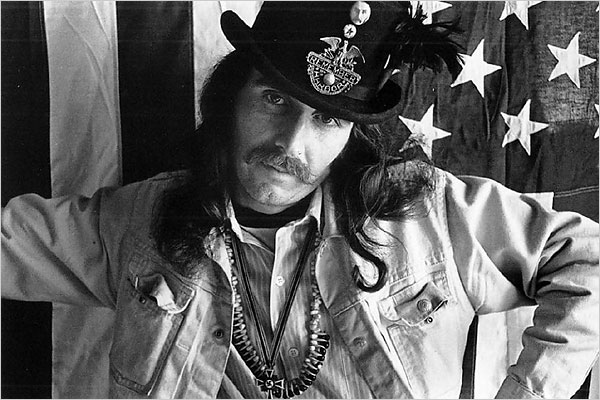
Alton Kelley : Master of Psychedelic Art

Alton Kelley, 1967. Photo by Bob Seidemann.

Alton Kelley, 67, Artist of the 1960s Rock Counterculture, Dies
By William Grimes / June 4, 2008

Alton Kelley, whose psychedelic concert posters for artists like the Grateful Dead, Jimi Hendrix, and Big Brother and the Holding Company helped define the visual style of the 1960s counterculture, died on Sunday at his home in Petaluma, Calif. He was 67.

The cause was complications of osteoporosis, said his wife, Marguerite Trousdale Kelley.

Mr. Kelley and his longtime collaborator, Stanley Mouse, combined sinuous Art Nouveau lettering and outré images plucked from sources near and far to create the visual equivalent of an acid trip. A 19th-century engraving from “The Rubaiyat of Omar Khayyam” inspired a famous poster for a Grateful Dead concert at the Avalon Ballroom in 1966 that showed a skeleton wearing a garland of roses on its skull and holding a wreath of roses on its left arm.
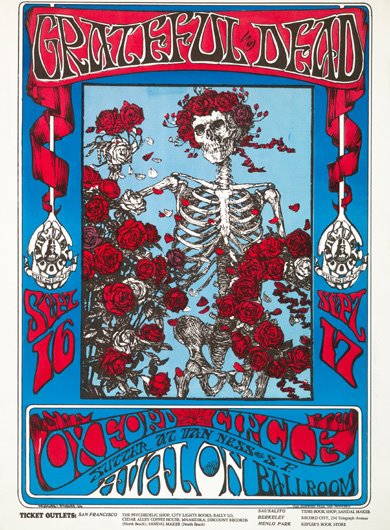
Grateful Dead poster designed in 1966 by Alton Kelley. Courtesy Rhino Entertainment Company.

The Grateful Dead later adopted this image as its emblem. Mr. Kelley and Mr. Mouse also designed several of the group’s album covers, including “American Beauty” and “Workingman’s Dead.”

Mr. Kelley was born in Houlton, Me., and grew up in Connecticut, where his parents moved to work in defense plants during World War II. His mother, a former schoolteacher, encouraged him to study art, and for a time he attended art schools in Philadelphia and New York, but his real passion was racing motorcycles and hot rods. He applied his artistic training to painting pinstripes on motorcycle gas tanks.

After working as a welder at the Sikorsky helicopter plant in Stratford, Conn., he moved to San Francisco in 1964, settling into the Haight-Ashbury neighborhood. With a group of friends he helped stage concerts at the Red Dog Saloon in Virginia City, Nev., by the Charlatans, a electric folk-rock band. On returning to San Francisco, he became a founding member of the Family Dog, a loose confederation of artists, poets, musicians and other free spirits who put on the some of the earliest psychedelic dance concerts, first at the Longshoremen’s Hall and later at the Avalon Ballroom.

Mr. Kelley was in charge of promoting the concerts with posters and flyers, but his drafting ability was weak. That shortcoming became less of a problem in early 1966, when he teamed up with Stanley Miller, a hot-rod artist from Detroit who worked under the last name Mouse. The two formed Mouse Studios, with Mr. Kelley contributing layout and images and Mr. Mouse doing the distinctive lettering and drafting work. Often, they took trips to the public library in a search for images from books, magazines and photographs.

“Stanley and I had no idea what we were doing,” Mr. Kelley told The San Francisco Chronicle last year. “But we went ahead and looked at American Indian stuff, Chinese stuff, Art Nouveau, Art Déco, Modern, Bauhaus, whatever.”

One of their first posters, for a concert headlined by Big Brother and the Holding Company, reproduced the logo for Zig-Zag cigarette papers, used widely for rolling marijuana joints.

“We were paranoid that the police would bust us or that Zig-Zag would bust us,” Mr. Mouse said.

From 1966 to 1969, Mr. Kelley worked on more than 150 posters for concerts at the Avalon Ballroom and the Fillmore, publicizing the most famous bands and artists of the era, among them Quicksilver Messenger Service, the Butterfield Blues Band and Moby Grape, as well as the Dead, Big Brother and the Holding Company, Jimi Hendrix, and Country Joe and the Fish. They created three posters for concerts headlined by Bo Diddley, who died on Monday.

With time, Mr. Kelley’s drawing improved, and the partners virtually fused into a poster-generating unit.

“Kelley would work on the left side of the drawing table and Mouse on the Right,” said Paul Grushkin, the author of “The Art of Rock: Posters From Presley to Punk” and a longtime friend of both men. “They turned out a poster a week.”

At the time, the posters were put up on telephone poles. Everyone who attended a concert at the Avalon received a free poster advertising the next show on the way out the door. Some were sold in head shops for a few dollars. Today, mint-condition posters by Mr. Kelley and Mr. Mouse can command prices of $5,000 or more.

With the waning of the 1960s, Mr. Kelley and Mr. Mouse diversified. They formed Monster, a T-shirt company, in the mid-1970s. They also designed the Pegasus-image cover for the Steve Miller album “Book of Dreams” and several albums for Journey in the 1980s.

In their final collaboration, in March of this year, they contributed the cover art for the program at the induction ceremony at the Rock and Roll Hall of Fame. On his own, Mr. Kelley designed posters and created hot-rod paintings that he transferred to T-shirts.

In addition to his wife, Mr. Kelley is survived by three children, Patty Kelley of San Diego, Yossarian Kelley of Seattle and China Bacosa of Herald, Calif.; two grandchildren; and his mother, Annie Kelley, and a sister, Kathy Verespy, both of Trumbull, Conn.

“Kelley had the unique ability to translate the music being played into these amazing images that captured the spirit of who we were and what the music was all about,” said the Grateful Dead drummer Mickey Hart. “He was a visual alchemist — skulls and roses, skeletons in full flight, cryptic alphabets, nothing was too strange for his imagination to conjure.”

Source. / New York Times

Thanks to Jim Retherford / The Rag Blog
Posted in RagBlog | Tagged , , , , , , , | Leave a comment

BushCo Crimes Build a Mountain

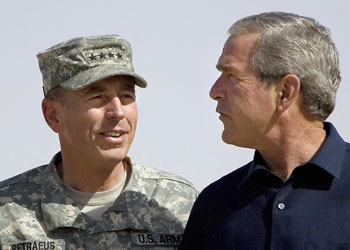
George Bush with General David Petraeus at Al-Asad Air Base in Anbar Province, Iraq, last year; JIM WATSON/AFP/Getty Images

Revealed: Secret plan to keep Iraq under US control
By Patrick Cockburn / June 5, 2008

Bush wants 50 military bases, control of Iraqi airspace and legal immunity for all American soldiers and contractors

A secret deal being negotiated in Baghdad would perpetuate the American military occupation of Iraq indefinitely, regardless of the outcome of the US presidential election in November.

The terms of the impending deal, details of which have been leaked to The Independent, are likely to have an explosive political effect in Iraq. Iraqi officials fear that the accord, under which US troops would occupy permanent bases, conduct military operations, arrest Iraqis and enjoy immunity from Iraqi law, will destabilise Iraq’s position in the Middle East and lay the basis for unending conflict in their country.

But the accord also threatens to provoke a political crisis in the US. President Bush wants to push it through by the end of next month so he can declare a military victory and claim his 2003 invasion has been vindicated. But by perpetuating the US presence in Iraq, the long-term settlement would undercut pledges by the Democratic presidential nominee, Barack Obama, to withdraw US troops if he is elected president in November.

The timing of the agreement would also boost the Republican candidate, John McCain, who has claimed the United States is on the verge of victory in Iraq – a victory that he says Mr Obama would throw away by a premature military withdrawal.

America currently has 151,000 troops in Iraq and, even after projected withdrawals next month, troop levels will stand at more than 142,000 – 10 000 more than when the military “surge” began in January 2007. Under the terms of the new treaty, the Americans would retain the long-term use of more than 50 bases in Iraq. American negotiators are also demanding immunity from Iraqi law for US troops and contractors, and a free hand to carry out arrests and conduct military activities in Iraq without consulting the Baghdad government.

The precise nature of the American demands has been kept secret until now. The leaks are certain to generate an angry backlash in Iraq. “It is a terrible breach of our sovereignty,” said one Iraqi politician, adding that if the security deal was signed it would delegitimise the government in Baghdad which will be seen as an American pawn.

The US has repeatedly denied it wants permanent bases in Iraq but one Iraqi source said: “This is just a tactical subterfuge.” Washington also wants control of Iraqi airspace below 29,000ft and the right to pursue its “war on terror” in Iraq, giving it the authority to arrest anybody it wants and to launch military campaigns without consultation.

Mr Bush is determined to force the Iraqi government to sign the so-called “strategic alliance” without modifications, by the end of next month. But it is already being condemned by the Iranians and many Arabs as a continuing American attempt to dominate the region. Ali Akbar Hashemi Rafsanjani, the powerful and usually moderate Iranian leader, said yesterday that such a deal would create “a permanent occupation”. He added: “The essence of this agreement is to turn the Iraqis into slaves of the Americans.”

Iraq’s Prime Minister, Nouri al-Maliki, is believed to be personally opposed to the terms of the new pact but feels his coalition government cannot stay in power without US backing.

The deal also risks exacerbating the proxy war being fought between Iran and the United States over who should be more influential in Iraq.

Although Iraqi ministers have said they will reject any agreement limiting Iraqi sovereignty, political observers in Baghdad suspect they will sign in the end and simply want to establish their credentials as defenders of Iraqi independence by a show of defiance now. The one Iraqi with the authority to stop deal is the majority Shia spiritual leader, Grand Ayatollah Ali al-Sistani. In 2003, he forced the US to agree to a referendum on the new Iraqi constitution and the election of a parliament. But he is said to believe that loss of US support would drastically weaken the Iraqi Shia, who won a majority in parliament in elections in 2005.

The US is adamantly against the new security agreement being put to a referendum in Iraq, suspecting that it would be voted down. The influential Shia cleric Muqtada al-Sadr has called on his followers to demonstrate every Friday against the impending agreement on the grounds that it compromises Iraqi independence.

The Iraqi government wants to delay the actual signing of the agreement but the office of Vice-President Dick Cheney has been trying to force it through. The US ambassador in Baghdad, Ryan Crocker, has spent weeks trying to secure the accord.

The signature of a security agreement, and a parallel deal providing a legal basis for keeping US troops in Iraq, is unlikely to be accepted by most Iraqis. But the Kurds, who make up a fifth of the population, will probably favour a continuing American presence, as will Sunni Arab political leaders who want US forces to dilute the power of the Shia. The Sunni Arab community, which has broadly supported a guerrilla war against US occupation, is likely to be split.

Source / The Independent

The Rag Blog

Posted in RagBlog | Tagged , , | Leave a comment

And Why, Exactly, Is This Man Still in Office?


Libby Links Cheney to Plame Leak
by Jason Leopold / June 4, 2008

FBI documents obtained by a congressional committee indicate that Vice President Dick Cheney may have authorized his former deputy to leak the identity of covert CIA operative Valerie Plame Wilson.

In a June 3 letter sent to Attorney General Michael Mukasey, Rep. Henry Waxman, Democratic chairman of the House Oversight and Government Reform Committee, called on the Justice Department to release transcripts of interviews that Special Prosecutor Patrick Fitzgerald conducted with President George W. Bush and Cheney about the leak of Plame’s identity.

Waxman said the Justice Department has turned over to his committee redacted transcripts of interviews that federal investigators conducted with former White House political adviser Karl Rove and Cheney’s former chief of staff I. Lewis “Scooter” Libby.

According to those transcripts, Libby told federal investigators that Cheney may have told him to leak Plame’s association with the CIA to reporters, Waxman said in the letter to Mukasey.

“In his interview with the FBI, Mr. Libby stated that it was ‘possible’ that Vice President Cheney instructed him to disseminate information about Ambassador [Joseph] Wilson’s wife to the press. This is a significant revelation and, if true, a serious matter. It cannot be responsibly investigated without access to the Vice President’s FBI interview,” Waxman wrote.

Waxman’s office would not release copies of the Libby-Rove transcripts or describe the contents in any detail. Fitzgerald’s investigative interviews with Bush and Cheney — asking how much knowledge the President and Vice President had about the Plame leak — have not been disclosed.

The scandal revolves around actions taken in June and July of 2003 when Rove, Libby and other administration officials leaked information to reporters aimed at discrediting Ambassador Wilson, who had challenged the truthfulness of Bush’s pre-invasion claims that Iraq had purchased yellowcake uranium from Niger.

Read the rest of it here. / Dissident Voice

The Rag Blog

Posted in RagBlog | Tagged , , , | Leave a comment

Quote of the Day: Jon Stewart


Is America ready for a woman or a black President?

A succinct analysis:

In Larry King’s interview with Jon Stewart, Larry brought up the subject of the primaries and asked him if America was ready for a woman or a black president.

Jon looked at him quizzically and said,

This is such a non-question. Did anyone ask us in 2000 if Americans were ready for a moron?

Thanks to Mariann Wizard / The Rag Blog

Posted in RagBlog | Tagged , | Leave a comment

Ocean Acidification – Elevating the Discourse


Ocean Acidification due to Increases in Atmospheric CO2
By Paul Spencer / The Rag Blog / June 4, 2008

Not to sound alarmist, but sound the alarm anyway just in case – man-made CO2 and NOx and SO2 emissions may be bad for us. Big news, huh? Only problem is that this bad news is separate from: a) Global Warming, b) Acid Rain, and c) general considerations of breathing. Try ocean acidification.

It’s not a brand-spanking-new discovery, but it has seen very limited publicity in this country. In some ways, however, it is the most far-reaching of the effects of fossil-fuel-based energy production. Much of the world depends on sea critters for survival, and this particular aspect of pollution – seawater acidification – may produce some of the most acute and obstinate damage.

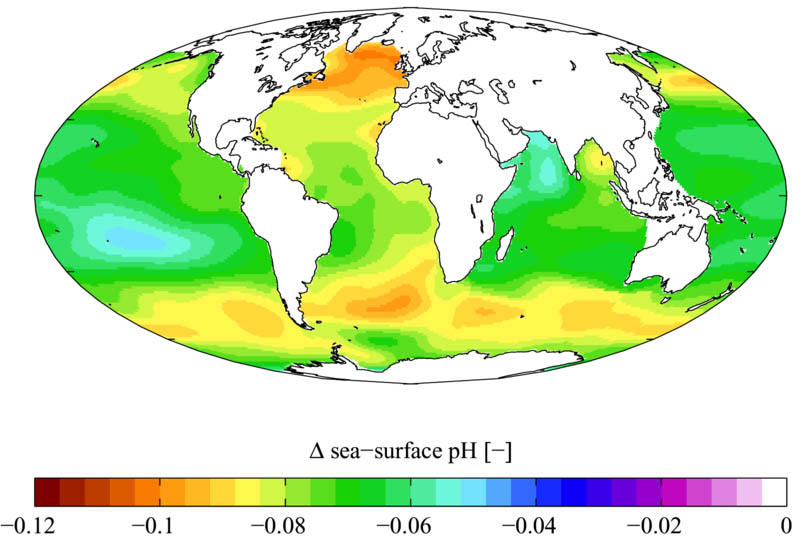
Average ocean pH levels have gone from 8.2 to 8.1 in the last 200 years, according to a recent oceanographic survey. Of course, that sounds like next-to-nothing, but in the context of biochemical reactions that occur in parts-per-thousand to parts-per-million levels, the effect is very large. One of the main chemical events that provide protection for the adults of many marine species (shells, coral) is essentially precipitation of hard solids, guided by organic processes. This precipitation is strongly affected by pH; the ingredients will stay in solution to an increasing extent as the pH is reduced.

If this was just a theoretical discussion, then OK, we’ll get around to actually doing something some day. But that brings us to Australia. Why did the government there suddenly discover the Kyoto Accords about two years ago (even before Bush’ buddy, John Howard, was voted out in favor of Mr. Rudd)? Australia’s cities may be finally seeing the effects of urban pollution, but I think that we all know that people of the governing class are perfectly willing to see the majority of mankind live the last 10 years of their pollution-shortened lives in the misery of gasping for breath due to emphysema, asthma, silicosis, etc.

In my opinion it dawned on Howard, or on his advisors, that there is a problem on the Australian iconic symbol (besides kangaroos and koalas), the Great Barrier Reef. In case you haven’t heard, reefs are dying all over the world. Why?

Of course, there are competing and complementary processes (most of which are exacerbated by the same greenhouse-gas emissions): 1) dilution of the salt content of seawater by the melting of the freshwater glaciers; 2) warming of the surface waters of the oceans; 3) pollution by heavy metals and unoxidized hydrocarbons. What are the salient influences? Probably all of the above. But one of the demonstrated – and somewhat stunning – characteristics of the recession of reefs is the weakening (closer to disintegration) of the coral structures themselves.

This was considered a mystery. Some biologists used to regard it as lack of maintenance by the dead coral creatures inside the structures (so what killed them?). My opinion is that the precipitation mechanism has been altered in the direction of dissolution.

In this regard keep one other feature in mind: the average pH has declined 0.1, but in any given locale the effect can be much larger. Average anything is a function of many samples. In this case the samples come from many different ocean ecologies. I don’t have the data, but I would like to see some pH numbers in and around various reefs – both healthy and unhealthy for comparison.

So – where are we? There are some (few) who argue that all of these effects – warming, acidification, die-offs – are cyclical or buffered or self-correcting in some other way. I agree that there are many such processes, and that they are effective to some degree. However, there are thresholds in every process beyond which reactions go to “completion”, rather than dance around some equilibration level – or, at the least, the process changes equilibration level. The effect of acidification on the bottom (the starting point) of the ocean food-chain is not likely to be easily ameliorated, because there are not a whole bunch of excess hydroxyl molecules out there in nature. There are not a lot of natural processes that create bases; combustion of hydrocarbons produces gaseous acid precursors, while the base precursors tend to be solids (e.g., wood ash) that don’t migrate very far and that are produced in much smaller amounts.

Of course, we are all in hopes that the upcoming election will realign national priorities and redirect financial support. I think that this is one arena in which we can exert influence. We have to write and blog and communicate an urgency with respect to development of renewable-source energy production, public transportation, pollution reduction and control, and international cooperation (Kyoto or Kyoto-type treaties). And, of course, we need to renew and enlarge all of the standard energy conservation measures that we should know and practice by now. The Democrats, I think, see these subjects as their natural advantage. We have to keep after them; we have to elevate these matters to the paramount status that they require – along with, of course, the Middle East situation.

The Rag Blog

Posted in Rag Bloggers | Tagged | 1 Comment

Human Rights Groups Press China on 19th Anniversary of Bloody Crackdown

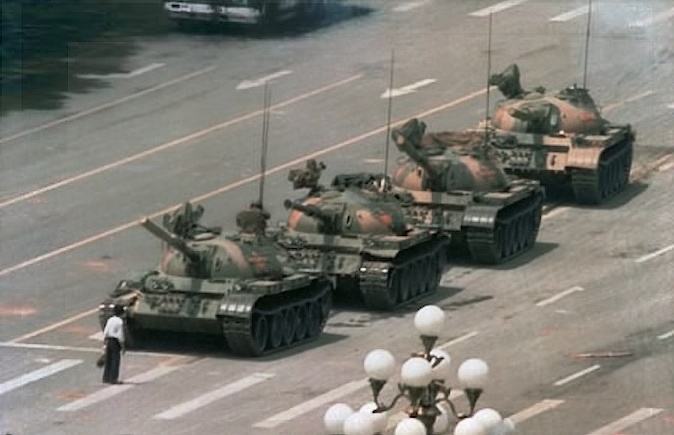
Tiananmen Square, 1989. On the 19th anniversary of China’s bloody crackdown on pro-democracy demonstrations, civil rights activists are calling for the release of more than 100 prisoners from the 1989 protests ahead of this summer’s Olympic Games. Photo by Jeff Widener / AP.

China Urged to Release Tiananmen Square Prisoners
By Jonathan Watts / June 4, 2008

Beijing – Civil rights activists called on the Chinese government today to release more than 100 prisoners from the 1989 Tiananmen Square protests as a sign of its commitment to improve human rights ahead of this summer’s Olympic Games.

On the 19th anniversary of the bloody crackdown by People’s Liberation Army troops, participants and supporters said the recent openness of the Sichuan earthquake relief operation could pave the way for a wider national reconciliation if the events of 1989 are reviewed and those punished are pardoned.

Human Rights Watch said 130 people are still in prison as a result of their roles in the pro-democracy demonstrations, which started in Beijing and spread to several other cities. By freeing them, the group said China could show “the global Olympic audience it is serious about human rights”.

Hundreds, possibly thousands, of pro-democracy demonstrators and their supporters were killed by army tanks and troops in and around Tiananmen Square on June 3 and 4, 1989.

Civic groups and foreign governments – including the US and UK – have called for a full investigation and a pardon for those imprisoned in the crackdown that followed.

The government in Beijing insists the actions were needed to restore order, but it has blocked public debate on the issue.

One of the most prominent activists from 1989, Han Dongfang, said in a statement that the relative transparency shown by the Chinese authorities in their handling of the Sichuan earthquake should be repeated for the political wrongdoings of the past.

“The shift in leadership style shown by the government in response to the earthquake disaster suggests that the time is now right for such a step,” said Han in an essay titled “A Time for Unity, a Time for Reconciliation” that praised the role of the army in the relief effort.

In Tiananmen Square today, the security presence was beefed up, as is usual every year on June 4. Police checked the bags of many visitors entering the area for liquids, banners and petitions.

But most tourists seemed oblivious to the significance of the date, which is a taboo subject in the domestic media.

“It is my first visit to Beijing. The square is far more impressive than I imagined,” said a middle-aged man who had just arrived from Liaoning province with his wife. “I never heard of any trouble here in 1989. We live in a country village. We don’t know about that kind of thing.”

Far from remembering past misdeeds, the government’s focus is on looking forward to future glories. Tiananmen Square is in the midst of a city-wide facelift ahead of the Olympics. Dozens of migrant women in blue tunics were scrubbing the tens of thousands of paving stones with detergent to remove chewing gum and other blemishes.

Many of the approaching streets have been decorated with potted flowers, and construction sites are screened off with giant banners reading “Join hands with the Olympics, make a date with Beijing in 2008”. The countdown clock noted there are only 64 days to go until the start of the Games.

Source. / truthout / The Guardian, UK

The Rag Blog

Posted in RagBlog | Tagged , , , | Leave a comment

H. Rosen : Hillary Missed Her Chance


I Am Not a Bargaining Chip, I Am a Democrat
By Hilary Rosen / June 4, 2008

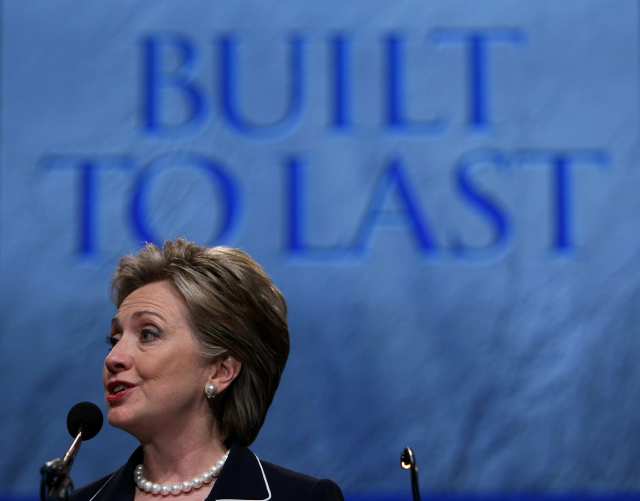
Senator Clinton’s speech last night was a justifiably proud recitation of her accomplishments over the course of this campaign, but it did not end right. She didn’t do what she should have done. As hard and as painful as it might have been, she should have conceded, congratulated, endorsed and committed to Barack Obama. Therefore the next 48 hours are now as important to the future reputation of Hillary Clinton as the last year and a half have been.

I am disappointed. As a long time Hillary Clinton supporter and more importantly, an admirer, I am sad that this historic effort has ended with such a narrow loss for her. There will be the appropriate “if onlys” for a long time to come. If only the staff shakeup happened earlier; if only the planning in caucus states had more focus; if only Hillary had let loose with the authentic human and connecting voice she found in the last three months of the campaign. If only. If only. I have written many times on this site about the talents of Hillary Clinton and why I thought she’d make a great President

After last night’s final primary, she was only about pledged 100 delegates behind him. Ironic that after not wanting to make the decision for so long, it was in fact, the superdelegates who made the decision. But I guess they did so for another reason. It just isn’t her time. It is his time. It’s a new day that offers a freshness to our party that many have longed for. We felt the rush of new voices and a new energy in the Congressional sweep of 2006 and the sweep continues. It has been an organic shift. And a healthy one.

The life’s work of Bill and Hillary Clinton in partnering with so many African Americans uniting our purpose and promoting our mutual issues is as responsible for Barack Obama’s success as our first African American nominee as anyone. And yet, that joy is being denied for them by themselves. It is so sad.

So, I am also so very disappointed at how she has handled this last week. I know she is exhausted and she had pledged to finish the primaries and let every state vote before any final action. But by the time she got on that podium last night, she knew it was over and that she had lost. I am sure I was not alone in privately urging the campaign over the last two weeks to use the moment to take her due, pass the torch and cement her grace. She had an opportunity to soar and unite. She had a chance to surprise her party and the nation after the day-long denials about expecting any concession and send Obama off on the campaign trail of the general election with the best possible platform. I wrote before how she had a chance for her “Al Gore moment.” And if she had done so, the whole country ALL would be talking today about how great she is and give her her due.

Instead she left her supporters empty, Obama’s angry, and party leaders trashing her. She said she was stepping back to think about her options. She is waiting to figure out how she would “use” her 18 million voters.

But not my vote. I will enthusiastically support Barack Obama’s campaign. Because I am not a bargaining chip. I am a Democrat.

Source. / The Huffington Post

The Rag Blog

Posted in RagBlog | Tagged , , , , , | Leave a comment

Who Do You Love?

Who Do You Love?

I wish I could understand
why I know that Bo Diddley
had a one-eyed white bull dog
named Lola,
yet I can’t remember
what year my favorite
grandfather died

Or his age, for that matter

I know that Gram Parsons
was first Ingram Connors
that Elvis had a twin named Jesse
and what the Killer said
when he played piano
right before Little Richard

Yet, I can’t remember
where I put my birth certificate,
when to change the air conditioner filter
or my first husband’s mother’s name

I know that Bo said “Don’t trust
no one but your mama, and look real
hard at her”, but I can’t recall
Christmas when I was six years old

Same for seven, eight, nine and ten

Who do you love?

© Alyce Guynn
June 2, 2008

The Rag Blog

Posted in Rag Bloggers | Tagged , , | 2 Comments

Michael Goldfarb : Scary New McCain Staffer…

Newest McCain official: President has “near dictatorial powers”
By Glenn Greenwald / June 4, 2008

Bill Kristol today proudly announces that one of his Weekly Standard staff members, Michael Goldfarb, was just named the Deputy Communications Director of the McCain campaign. Last April, this newest McCain official participated in a conference call with former Senator George Mitchell, during which Mitchell advocated a timetable for withdrawal from Iraq. Afterwards, this is what Goldfarb wrote about what he thinks are the powers the President possesses in our country:

Mitchell’s less than persuasive answer [to whether withdrawal timetables “somehow infringe on the president’s powers as commander in chief?”]: “Congress is a coequal branch of government…the framers did not want to have one branch in charge of the government.”

True enough, but they sought an energetic executive with near dictatorial power in pursuing foreign policy and war. So no, the Constitution does not put Congress on an equal footing with the executive in matters of national security.

As I noted at the time:

Until the Bill Kristols and John Yoos and other authoritarians of that strain entered the political mainstream, I never heard of prominent Americans who describe the power that they want to vest in our political leaders as “near dictatorial.” Anyone with an even passing belief in American political values would consider the word “dictatorial” — at least rhetorically, if not substantively — to define that which we avoid at all costs, not something which we seek, embrace and celebrate.

And the very idea that the Founders — whose principal concern was how to avoid consolidated power in any one person — sought to vest “near dictatorial power” in the President is too perverse for words. But that’s been the core “principle” driving the destructive radicalism of the last seven years, and it’s an extremist view that is obviously welcomed at the highest levels of the McCain campaign.

Kristol closes his boastful announcement by noting that the pro-dictatorial Goldfarb will return to the Weekly Standard after the campaign ends — “unless he’s appointed national security adviser in the McCain White House.” Somehow, McCain continues to be depicted in the media as a “moderate” and the like despite the enthusiastic support of our nation’s most crazed and unprincipled warmongers. But even more revealing is that McCain is now staffing his communications apparatus at the highest levels by reaching into Bill Kristol’s The Weekly Standard — one of the most deceptive propaganda organs of the Bush years. Does one even need to point out that there are few things more incompatible with one another than “straight talk” and The Weekly Standard?

UPDATE: Michael Goldfarb on waterboarding and other illegal interrogation practices internationally considered to be “torture” (h/t A.L.):

The Times indicts the Bush administration for exposing terrorists captured abroad to “head-slapping, simulated drowning and frigid temperatures.” Boo hoo.

McCain is a deeply principled opponent of torture and waterboarding which is why his new communications official’s view of objections to those techniques is “Boo hoo.”

UPDATE II: Last October, this is what Goldfarb wrote in arguing that telecoms deserve amnesty even if they broke the law in enabling warrantless spying on Americans:

[I]f federal agents show up at a corporate headquarters for a major American company and urgently seek that company’s officers for assistance in the war on terror, the companies damn well ought to give it as a matter of simple patriotism, whether the CIA wants a plane for some extraordinary rendition or help in tracking terrorists via email. . . . [T]o expect a company to resist a plea from the government for help in a time of war is ridiculous.

So, consistent with his President-as-Dictator vision, McCain’s new communications official believes that — as I wrote at the time — when “federal agents” come knocking at your door and issue orders, you better “damn well” obey — you had better not “resist” — even if the orders you’re being given are illegal, even if they’re designed to spy on Americans in violation of the law, and even if they’re intended to facilitate the torture of detainees. That’s what patriotic Americans do — they obey the orders of their near-dictatorial Leader, so sayeth the heel-clicking Michael Goldfarb. That’s a superb, and very mainstream, new addition to the maverick McCain team.

Source. / Salon.com

Thanks to Carl Davidson / The Rag Blog

Posted in RagBlog | Tagged , , | 1 Comment

Medical Marijuana : Things Looking Up

Medical marijuana user.

All Indicators Point to a Softening of America’s Harsh Marijuana Laws
By Alexander Zaitchik / June 3, 2008.

With key medical marijuana ballot initiatives likely to pass, and a more pot-friendly majority in Congress, there is room for optimism.

You have to hand it to the Republican National Committee: Those guys really know how to pick the wrong fight.

John McCain, already running against the public opinion grain in support of the Iraq War and Bush tax cuts, received no help from headquarters last month when the RNC made medical marijuana a campaign issue. After Barack Obama told an Oregon weekly that he would end federal raids on medical marijuana users and providers in states with compassionate use laws, the RNC pounced. Obama’s position, said an RNC statement, “reveals that (he) doesn’t have the experience necessary to do the job of President (and) lacks the judgment to carry out the most basic functions of the Executive Branch.” Because the Supreme Court has ruled that federal drug laws trump state drug laws, the RNC reasons that halting federal raids would be tantamount to ignoring the law.

They’re right. But the RNC might want to get some new pollsters. What they and their candidates don’t seem to realize is that a steadily shrinking minority of Americans oppose the controlled medicinal use of cannabis — around 20 percent, according to the last Gallup poll. It’s a safe bet that an even smaller number considers paramilitary raids on the homes of peaceful cancer patients to be a “basic function of the Executive Branch.” During the New Hampshire primary, every Democratic candidate recognized this political reality by promising to end federal harassment of state-approved medical marijuana facilities and users. Republican candidates Tom Tancredo and Ron Paul pledged the same.

And John McCain? When pressed by activists from the group Granite Staters for Medical Marijuana, the Arizona senator responded in lockstep with most of his GOP peers, sounding less like a maverick than a Reagan-era after-school special. “I do not support the use of marijuana for medical purposes,” McCain said. “I believe that marijuana is a gateway drug. That is my view, and that’s the view of the federal drug czar and other experts.”

Given current trend lines, it may not be long before it’s possible to count McCain’s “other experts” on two hands. In February, the 125,000-member American College of Physicians, the second-largest physicians group in the country, published a position paper endorsing the merits of medical marijuana and recommending the end of marijuana’s classification as a Schedule 1 drug. “The ACP endorsement is massive,” says Bruce Mirken of the Marijuana Policy Project, a Washington, D.C.-based lobbying group. “It blows to splinters the assertion that the medical community doesn’t support medicinal cannabis.”

As goes the ACP, so may go the American Medical Association, an endorsement from which would leave the anti-medical marijuana position of the Food and Drug Administration very lonely indeed.

To its credit, the country has not waited for the medical establishment before moving forward on marijuana policy reform. Over the last decade, support for compassionate use laws and broader decriminalization efforts has been growing, if not at weed’s pace, then fast enough for one veteran marijuana reform lobbyist to now speak of being “within striking distance of a national tipping point.”

Since California passed Proposition 215 legalizing medical marijuana in 1996, an average of one state per year has followed suit, some through ballot initiatives, others through legislation. Even in states that have yet to enact reform, a flurry of bills has been introduced. This activity hasn’t been limited to usual-suspect states like Oregon and Vermont. Recent years have seen medical marijuana laws introduced in Ohio, Alabama, Missouri and Tennessee. In staunchly conservative South Carolina, it was a Republican state senator, whose wife lost a battle with brain cancer, who introduced his state’s medical marijuana bill. In Texas, the state government last year passed a bill that is a halfway house for decriminalization, allowing police to issue citations instead of arresting adults who possess less than 4 ounces of marijuana.

The next big test on the horizon is the Midwestern swing state of Michigan, where voters in November will decide on a medical marijuana law, the first such statewide ballot initiative since South Dakotans narrowly rejected theirs in 2006. If passed, Michigan will be the only state with its geographical and electoral profile to pass a medical marijuana law. According to the Inside Michigan Politics newsletter, polls show two-thirds voter support. “Michigan looks set to become the 13th medical marijuana state this November,” says Rob Kampia, executive director of the Marijuana Policy Project.

The other big initiative in November will appear on ballots in Massachusetts. If passed, the maximum penalty for possession of up to an ounce of marijuana in the Bay State would drop from up to six months in jail and a $500 fine to a $100 civil fine.

There is also still a chance that the New York state legislature will take up medical marijuana this session, a move that would enjoy overwhelming in-state support. Post-Giuliani New York City is the marijuana arrest capital of the world, with nearly 40,000 arrests in 2007 alone. The situation has gotten so out of hand that the New York Times recently urged Gov. David Paterson to take the lead in drug policy reform. Few governors are better positioned to do this than Paterson, who is not only on good terms with state Republican leaders, but has the moral authority that comes from suffering from glaucoma, a painful condition known to be alleviated by marijuana. Before becoming governor, Paterson was a leading activist for drug policy reform and was once arrested protesting the draconian and racially biased Rockefeller Drug Laws, which turn a brittle 35 this year. (Incidentally, the Drug Enforcement Agency is celebrating the same birthday in 2008, its website proudly declaring “35 Years of Excellence.”)

But whatever happens inside Michigan, Massachusetts and New York, the 2005 Supreme Court decision in Gonzales v. Raich still leaves marijuana users open to federal prosecution under the Controlled Substances Act. As highlighted by the RNC statement critical of Obama’s pledge, this decision will continue to undermine state- and local-level reforms until Congress changes federal law. Although only 1 percent of marijuana cases are prosecuted at the federal level, DEA raids on patients, caregivers and providers have been on the rise in states that have passed medical marijuana laws. This is especially true of California and Oregon, where in many cases individual patients have been detained and terrorized. In Los Angeles, the DEA has begun threatening the owners of buildings used for medical marijuana activities with seizure of their property, a development the Los Angeles Times has called “a deplorable new bullying tactic.” According to Mirken, “The DEA has become the single largest obstacle to effective regulation of (medical marijuana) establishments.”

At the moment there are three bills in Congress that seek to put a stop to these raids and set a precedent for federal-level reform.

The young granddaddy of this legislation is the bipartisan Hinchey-Rohrabacher Amendment, which has been introduced every year since 2003. Essentially, the amendment would strip the Department of Justice of funds to prosecute medical marijuana cases in states that have medical marijuana laws on the books. Named after Rep. Maurice Hinchey, D-N.Y., and Rep. Dana Rohrabacher, R-Calif., the legislation wouldn’t legalize marijuana at the federal level or prevent the feds from prosecuting medical marijuana use in states without medical marijuana laws. It would simply enforce respect for state marijuana laws. When first introduced in 2003, Hinchey-Rohrabacher received 152 votes. Last year, that number had risen to 165. Later this summer, Congress will tackle the amendment again when it votes on the Department of Justice Appropriations bill. Reform advocates hope the amendment will benefit from racking up endorsements from groups like the right-leaning Citizens Against Government Waste, which came out in favor of Hinchey-Rohrabacher as a way for Congress to “start sending a signal that its priorities are in order.”

But every year so far has been a 10-yard fight, and its sponsors don’t expect that to change this year. “This will continue to be a tough battle,” says Jeff Lieberson, Hinchey’s spokesperson. “Many politicians are still behind the voters on this issue.” Other analysts also warn against high expectations, pointing out that the timing is especially unfavorable for drug policy reform at the federal level.

“The movement on this issue in 2008 is going to be almost nonexistent because politicians are focused on the election,” says Alex Coolman, a former attorney with the Drug Policy Alliance and author of the Drug Law Blog. “Nobody in Washington wants to do anything that could be perceived as controversial.”

In April, Hinchey-Rohrabacher was joined by two other marijuana policy reform bills, both co-sponsored by Barney Frank, D-Mass., and Ron Paul, R-Texas. HR5842, the Medical Marijuana Patient Protection Act, would deny the federal government the right to employ the Controlled Substances Act to intervene in states that have legalized medical marijuana; it would also remove marijuana from the list of Schedule 1 drugs. HR5843, meanwhile, known as the Personal Use of Marijuana by Responsible Adults Act, would effectively decriminalize possession of up to 1 ounce. “We’re in the early stages here,” says Frank spokesperson Peter Kovar. “Nothing like this ever comes quick.”

But it may be coming more quickly than some people expect. “All the indicators are prompting in the right direction,” says Kampia. “Every major new ballot initiative looks set to pass. Infrastructure is growing: email lists, organizations, allies — it’s across the board. Public opinion is moving steadily in favor of decriminalization. State laws are moving forward, and none are going backward. We’re constantly picking up votes in the House. The 110th is the most supportive Congress we’ve ever had.”

If the RNC keeps attacking Democrats on medical marijuana, the 111th will be that much better.

Source. / AlterNet

Thanks to Steve Russell / The Rag Blog

Posted in RagBlog | Tagged , , , , | Leave a comment

Elvira Arellano on Truth and Hope

Elvira Arellano. Photo by Steve Liss/ Medill.

Elvira Arellano is the immigrant who took sanctuary at the church of Rev. Walter ‘Slim’ Coleman in Chicago, before she was arrested and returned to Mexico. She remains active and a spokesperson for the immigrant rights and social justice movements.

Carl Davidson / The Rag Blog

A Movement of Truth inside a Movement of Hope
By Elvira Arellano

My son Saulito often times tells me he wants to be a great wrestler, a star on luche libre, when he grows up. That is his hope. I don’t want to discourage his hopes, but I try to make him see the truth about Wrestling. O’K Saulito – but you know that that is just a show don’t you? O.K. Saulito, but only a very few Mexican children will get the chance to be stars and make a lot of money, the rest will have to struggle hard all their lives.

All over Mexico – all over Latin America and all over the world – we are watching now as the first African American seems to have a real chance to be President of the United States. We are hopeful and indeed he has sinspired a movement of hope amongst many young people in the United States.

We don’t want to discourage that hope, but we must let people know the truth and build a movement of truth inside the movement of hope. If we don’t we will find that hope, without truth, will turn into despair.

The truth is that Barack Obama must appeal to the majority of voters in the U.S. to be elected President – and we are not yet the majority. That is why he has taken the side of the Israelis against the Palestinians to get the Jewish votes. That is why he has taken the position to keep on with the ridiculous and inhuman blockade against the families and children of the Cuban people. That is why he has had to denounce his own pastor, who only spoke the truth about racism in the United States, and even resign from his own faithful church. And that is why he has been less strong than he should have been on the issue of legalization for the 12 million and a renegotiation of NAFTA which is destroying our communities in Mexico.

We must support Barack Obama and the movement of hope because the alternative is the Movement of Hate which John McCain has embraced. That movement of hate means death through war and free trade and the continued persecution of the 12 million undocumented.

So we choose hope, but not blindly. We must keep the campaign for legalization alive and in the face of the democratic party and the Presidential campaign in the next six months. We must organize with energy and prepare for the first 90 days of a new administration to demand a change in the broken law.

We must Make America see that they must stop the exploitation of Latin America and the Caribbean and support development so we can feed out hungry children and will not have to leave our families and go without papers to works in the north to be exploited and treated like criminals.

We must build a strong movement of truth within the campaign of hope. Organize for hope! Organize for Truth !

Un Movimiento de Verdad Dentro de un Movimiento de Esperanza
Por Elvira Aellano

Mi hijo Saulito me dice muchas veces que cuando sea grande quiere ser campeón de lucha libre. Tal es su gran anhelo, que no quiero desanimarlo pero intento hacerle ver la verdad sobre la lucha libre. “Bien, Saulito, ¿Pero si sabes que eso es puro ‘show’, verdad?” “Muy bien, Saulito, pero son muy pocos los muchachos mexicanos que alcanzan la fama y la fortuna en la lucha libre, los demás tendrán que aceptar una lucha muy dura para toda la vida, como nuestros migrantes que arriesgan su vida para llegar al Norte y trabajar para dar una vida mejor a sus familias y su pago es llamarlo criminal”.

En todo México, América Latina y el mundo entero vemos como el primer Afro Norteamericano parece tener una verdadera oportunidad de ser Presidente de los Estados Unidos. Nosotros somos optimistas y de hecho ha inspirado un movimiento de esperanza entre la juventud en los Estados Unidos.

No queremos desanimar a ese movimiento de esperanza pero tenemos que informar a la gente de la verdad y construir un movimiento de verdad dentro del movimiento de esperanza. Al no lograr eso, es posible que aquella esperanza se convierta, a lo largo, en desesperación.

La verdad es que para salir electo como Presidente, Barack Obama tiene que apelar a la mayoría de los votantes en los Estados Unidos, y los latinos no son la mayoría. Por eso es que Obama se encuentra obligado a tomar la parte de los israelitas en su contienda con los palestinos, porque necesita el voto de la comunidad judía. Por eso es que ha tomado una posición publica a favor de seguir con la estupidez y la inhumanidad del bloqueo en contra de las familias, los niños y el pueblo de Cuba. Por eso es que se vio obligado a denunciar a su propio pastor, cuyo único delito era decir la verdad acerca del racismo en los Estados Unidos, y hasta renunciar a su iglesia. También ha sido muy débil en el asunto de legalizar a 12 millones de indocumentados y la renegociación del TLCAN que está destrozando a nuestras comunidades en México.

Pero en este momento solo hay la opción por Barack Obama y su movimiento de esperanza porque la alternativa es el movimiento de odio abrazado por John McCain. Aquel movimiento significa muerte por medio de las guerras, “libre comercio”, la persecución y terrorismo en contra de 12 millones de indocumentados.

Por lo tanto optamos por la esperanza, pero no con ojos cerrados. Tenemos que mantener viva la campaña a favor de la legalización, retando al partido demócrata y la campaña presidencial en los próximos 6 meses. Tenemos que organizarnos con mucha energía y prepararnos para exigir que en los primeros 90 días de una nueva administración se cambien las leyes injustas de migracion que aterrorizan y separan a nuestras familias.

Tenemos que obligar a los Norteamericanos a ver la necesidad de poner fin a la explotación de América Latina y las Antillas y en lugar de eso, respaldar al desarrollo para que podamos darles de comer a nuestros hijos sin abandonar a nuestras familias para ir a trabajar sin papeles al norte donde nos explotan y nos tratan como criminales.

Tenemos que fomentar un movimiento fuerte a favor de la verdad dentro de la campaña de esperanza. ¡A organizar para la esperanza! ¡A organizar para la verdad!

For information about Elvira Arellano / Wikipedia

Also see Who Would Jesus Deport? by Kimberly Trefilek / Chicago Talks / May 1, 2007

Boston students to ICE: ‘We want our teacher back!’
/ Workers World / May 28, 2008

The Rag Blog

Posted in RagBlog | Tagged , , , , | 1 Comment

Acting Against the Agents of War Crimes


War Criminals Must Fear Punishment: That’s why I went for John Bolton
By George Monbiot / June 3, 2008

As long as the greatest crime of the 21st century remains unprosecuted, we all have a duty to keep the truth alive

I realise now that I didn’t have a hope. I had almost reached the stage when two of the biggest gorillas I have ever seen swept me up and carried me out of the tent. It was humiliating, but it could have been worse. The guard on the other side of the stage, half hidden in the curtains, had spent the lecture touching something under his left armpit. Perhaps he had bubos.

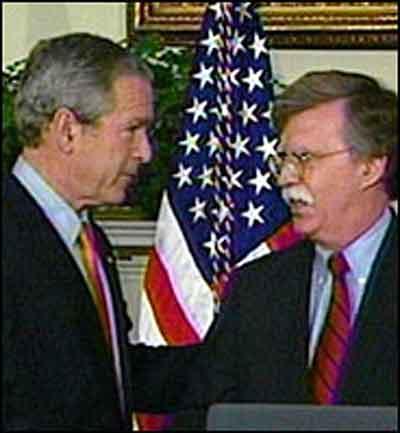
I had no intention of arresting John Bolton, the former under-secretary of state at the US state department, when I arrived at the Hay festival. But during a panel discussion about the Iraq war, I remarked that the greatest crime of the 21st century had become so normalised that one of its authors was due to visit the festival to promote his book. I proposed that someone should attempt a citizens’ arrest, in the hope of instilling a fear of punishment among those who plan illegal wars. After the session I realised that I couldn’t call on other people to do something I wasn’t prepared to do myself.

I knew that I was more likely to be arrested and charged than Mr Bolton. I had no intention of harming him, or of acting in any way that could be interpreted as aggressive, but had I sought only to steer him gently towards the police I might have faced a range of exotic charges, from false imprisonment to aggravated assault. I was prepared to take this risk. It is not enough to demand that other people act, knowing that they will not. If the police, the courts and the state fail to prosecute what the Nuremberg tribunal described as “the supreme international crime”, I believe we have a duty to seek to advance the process.

The Nuremberg principles, which arose from the prosecution of Nazi war criminals, define as an international crime the “planning, preparation, initiation or waging of a war of aggression or a war in violation of international treaties, agreements or assurances”. Bolton appears to have “participated in a common plan” to prepare for the war (also defined by the principles as a crime) by inserting the false claim that Iraq was seeking to procure uranium from Niger into a state department factsheet. He also organised the sacking of José Bustani, the head of the Organisation for the Prohibition of Chemical Weapons, accusing him of bad management. Bustani had tried to broker a peaceful resolution of the dispute over Iraq’s alleged weapons of mass destruction.

Some of the most pungent criticisms of my feeble attempt to bring this man to justice have come from other writers for the Guardian. Michael White took a position of extraordinary generosity towards the instigators of the war. There are “arguments on both sides”, he contended on the Guardian politics blog. Bustani might have received compensation after his sacking by Bolton, “but Bolton says that does not mean much”. In fact, Bustani was not only compensated at his tribunal, he was completely exonerated of Bolton’s accusations and his employers were obliged to pay special damages.

White suggested that Iraq might indeed have been seeking uranium from Niger, on the grounds of a conversation he once had with an MI6 officer. Alongside the British government’s 45-minute claim, this must be the best-documented of all the false justifications for the war with Iraq. In 2002, the United States government sent three senior officials to Niger to investigate the claim. All reported that it was without foundation. The International Atomic Energy Agency discovered that it was based on crude forgeries. This assessment was confirmed by the state department’s official Greg Thielmann, who reported directly to John Bolton. No evidence beyond the forged documents has been provided by either the US or the UK governments to support their allegation.

White also gives credence to Bolton’s claims that the war in 2003 was justified by two UN resolutions – 678 and 687 – which were approved in 1990 and 1991, and that it was permitted by article 51 of the UN charter. The attempt to revive resolutions 678 and 687 was the last, desperate throw of the dice by the Blair government when all else had failed. When it became clear that it could not obtain a new UN resolution authorising force against Iraq, the government dusted down the old ones, which had been drafted in response to Saddam Hussein’s invasion of Kuwait.

This revival formed the basis of Lord Goldsmith’s published advice on March 17 2003. It was described as “risible” and “scrap[ing] the bottom of the legal barrel” by Lord Alexander, a senior law lord. After the first Gulf war, Colin Powell, General Sir Peter de la Billiere and John Major all stated that the UN’s resolutions permitted them only to expel the Iraqi army from Kuwait, and not to overthrow the Iraqi government. Lord Goldsmith himself, in the summer of 2002, advised Tony Blair that resolutions 678 and 687 could not be used to justify a new war with Iraq.

Article 51 of the UN charter is comprehensible to anyone but the lawyers employed by the Bush administration. States have a right to self-defence “if an armed attack occurs against” them, and then only until the UN security council can intervene. On what occasion did Iraq attack the United States? Is there any claim made by the Blair and Bush governments that Michael White is not prepared to believe?

Conor Foley, writing on Comment is free, suggested that my action “completely trivialises the serious case” against the Iraq war and claimed that I was seeking to “imprison … people because of their political opinions”, as if Bolton were simply a commentator on the war, and not an agent. Does he really believe that the former under-secretary did not “participate in a common plan” to initiate the war with Iraq? What other conceivable purpose might the state department’s misleading factsheet have served? And what more serious action can someone who is neither a law lord nor a legislator take? Bolton himself maintains that my attempt to bring him to justice reflects a “move towards lawlessness and fascism”. This is an interesting commentary on an attempt to uphold a law which arose from the prosecution of fascists.

But there is one charge I do accept: that my chances of success were very slight. Apart from the 300-pound gorillas, the main obstacle I faced was that although the crime of aggression, as defined by the Nuremberg principles, has been incorporated into the legislation of many countries, it has not been assimilated into the laws of England and Wales. This does not lessen the crime but it means that it cannot yet be tried here. This merely highlights another injustice: while the British state is prepared to punish petty misdemeanours with vindictive ferocity, it will not legislate against the greatest crime of all, lest it expose itself to prosecution.

But demonstration has two meanings. Non-violent direct action is both a protest and an exposition. It seeks to demonstrate truths which have been overlooked or forgotten. I sought to remind people that the greatest crime of the 21st century remains unprosecuted, and remains a great crime. If you have read this far, I have succeeded.

monbiot.com

Source / Information Clearing House / Guardian

The Rag Blog

Posted in RagBlog | Tagged , | Leave a comment