Mesmo’s Desert Digest : From Austin to Crazy Horse

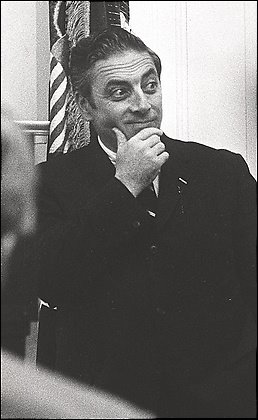
Mesmo’s desert homeboy.

[This is the first installment of a regular feature coming from The Rag Blog’s new desert correspondent, Gerry, aka Mesmo. First: Getting to know you.]

Hello all, I am Gerry, aka Mesmo, a septuagenarian desert rat from Southwest New Mexico.

I live on a fading but functional old estate in the floodplain of the Gila River, near where it flows out of the Mogollon Mountains. Been here for 15 years now. This is the Greater Chihuahuan Desert, hot, dry, rocky, and disarmingly beautiful when it converges with the wilderness known variously as the Gila National Forest and the Gila National Wilderness.

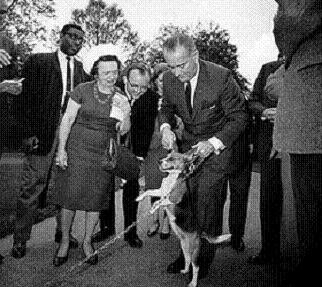
My political life dates back to the mid 1960’s when I was a student at the University of Texas. It all began when I started reading The Rag. I made a complete turnaround in those years, from political naiveté to howling dissent. We had a large contingent of student activists who led protests on campus against the war in Viet Nam and related causes. Most of us had earned our stripes at the LBJ Ranch where we assembled on Sunday afternoons (outside the main gate on a designated road) during his presidency. Activists from all around the state would gather there. Our companions were on the other side of the road, American Nazi Party, Klu Klux Klan, etc. The FBI, Secret Service, and Texas Department of Public Safety troupers were always there to protect us from the opposition, to make sure we didn’t penetrate the borders of the ranch, and to photograph us for their records. We were dedicated pacifists in the mold of Dr. Martin Luther King

We earned our stripes at LBJ Ranch.

By the time the smoke settled we had turned Austin into a haven for the counter culture. I was a musician, did it for 35 years. Played in rock bands in Austin and San Francisco where many of us migrated in the late ‘60’s. Back in Austin in the ‘70’s after adopting the Whole Earth Catalogue way of life, I ran the local musicians’ union and sat for a time on the state labor council. We pioneered big free public concerts in the city parks which featured the best bands in Austin. Drew very large crowds and helped make the town into a choice location for musicians. But I left all that in 1985, moved away from Austin and the musician’s life.

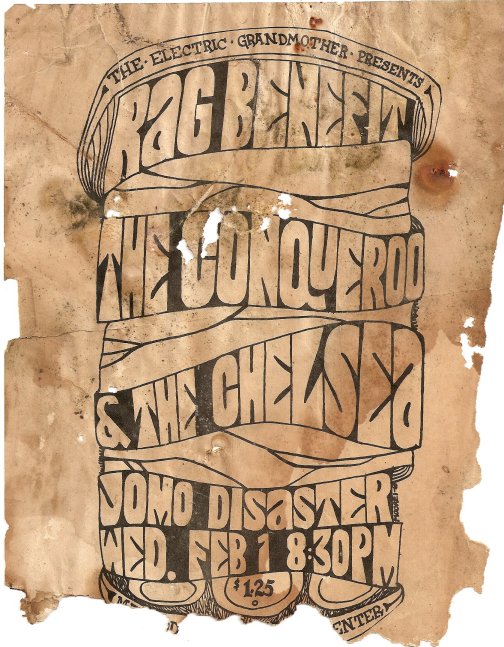
Rag Benefit handbill, 1967, from Vulcan Gas Co. collection.

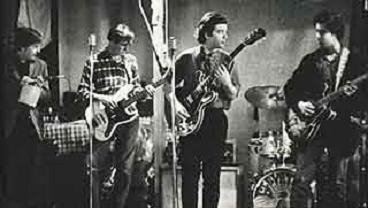
The way we were in Austin: The Thirteenth Floor Elevators, circa 1966.

I came to New Mexico to study herbal medicine with Michael Moore in Silver City. But he had moved so I studied with several graduates of his Southwest School of Botanical Medicine who were in the area. I met the desert plants. That’s how I got started in desert agriculture, a field in which I still spend my quality time, albeit on a very small scale these days. My dues were paid on a farm owned by Seeds of Change in our valley, a seed farm. I did farm work until my 60th year, helping to start a farm from scratch and turning it into a blooming paradise. I am one of those people whose annual rhythms revolve around growing food. Cannot shake the cycle. Do not intend to. I will no doubt write about this subject quite often in this slot.

My heroes include E.F. Schumacher, E.O. Wilson, and Crazy Horse. I suppose I am something of an animist in that I have been very close to the Native American spirituality and its practices which can often go beyond mere science. The future that I would like to see would incorporate Schumacher’s ideas of smallness, collectives of village size, off the grid, connected but independent. And it follows that I would favor a political system leaning heavily on socialism with a touch of libertarianism.

I am something of an animist.

I am equipped with a 512 bps internet connection, follow many blogs and news sources, recently added dish TV. I subscribe to the New Yorker and Netflix. My health care is covered by the VA. I make do mostly on a Social Security check. My approach to retirement is to take advantage of the many programs offered to poor people rather than to try to sock away lots of cash for insurance and a mainstream lifestyle or, heaven forbid, a nursing home. Oh yes, I am a registered, qualified indigent.

Next time around I will contribute something about the immediate effects of global warming or the joys of opiates, perhaps a blog or two on astrological connections with nature or politicians’ horoscopes. No telling really. Might even dedicate a piece to the magic of Mozart or West African rhythms. I promise that I will at all times tell the truth as I see it.

Mesmo / The Rag Blog
Greater Chihuahuan Desert / May 28, 2008

Posted in Rag Bloggers | Tagged , , , , , , , | 1 Comment

Senators Reportedly Briefed on Eminent Iran Attack


Bush ‘plans Iran air strike by August’
By Muhammad Cohen / May 28, 2008

NEW YORK — The George W Bush administration plans to launch an air strike against Iran within the next two months, an informed source tells Asia Times Online, echoing other reports that have surfaced in the media in the United States recently.

Two key US senators briefed on the attack planned to go public with their opposition to the move, according to the source, but their projected New York Times op-ed piece has yet to appear

The source, a retired US career diplomat and former assistant secretary of state still active in the foreign affairs community, speaking anonymously, said last week that the US plans an air strike against the Iranian Revolutionary Guards Corps (IRGC). The air strike would target the headquarters of the IRGC’s elite Quds force. With an estimated strength of up to 90,000 fighters, the Quds’ stated mission is to spread Iran’s revolution of 1979 throughout the region.

Targets could include IRGC garrisons in southern and southwestern Iran, near the border with Iraq. US officials have repeatedly claimed Iran is aiding Iraqi insurgents. In January 2007, US forces raided the Iranian consulate general in Erbil, Iraq, arresting five staff members, including two Iranian diplomats it held until November. Last September, the US Senate approved a resolution by a vote of 76-22 urging President George W Bush to declare the IRGC a terrorist organization. Following this non-binding “sense of the senate” resolution, the White House declared sanctions against the Quds Force as a terrorist group in October. The Bush administration has also accused Iran of pursuing a nuclear weapons program, though most intelligence analysts say the program has been abandoned.

An attack on Iraq would fit the Bush administration’s declared policy on Iraq. Administration officials questioned directly about military action against Iran routinely assert that “all options remain on the table”.

Rockin’ and a-reelin’

Senators and the Bush administration denied the resolution and terrorist declaration were preludes to an attack on Iran. However, attacking Iran rarely seems far from some American leaders’ minds. Arizona senator and presumptive Republican presidential nominee John McCain recast the classic Beach Boys tune Barbara Ann as “Bomb Iran”. Democratic candidate Hillary Clinton promised “total obliteration” for Iran if it attacked Israel.

The US and Iran have a long and troubled history, even without the proposed air strike. US and British intelligence were behind attempts to unseat prime minister Mohammed Mossadeq, who nationalized Britain’s Anglo-Iranian Petroleum Company, and returned Shah Mohammad Reza Pahlavi to power in 1953. President Jimmy Carter’s pressure on the Shah to improve his dismal human-rights record and loosen political control helped the 1979 Islamic revolution unseat the Shah.

But the new government under Ayatollah Ruhollah Khomeini condemned the US as “the Great Satan” for its decades of support for the Shah and its reluctant admission into the US of the fallen monarch for cancer treatment. Students occupied the US Embassy in Teheran, holding 52 diplomats hostage for 444 days. Eight American commandos died in a failed rescue mission in 1980. The US broke diplomatic relations with Iran during the hostage holding and has yet to restore them. Iranian President Mahmud Ahmadinejad’s rhetoric often sounds lifted from the Khomeini era.

The source said the White House views the proposed air strike as a limited action to punish Iran for its involvement in Iraq. The source, an ambassador during the administration of president H W Bush, did not provide details on the types of weapons to be used in the attack, nor on the precise stage of planning at this time. It is not known whether the White House has already consulted with allies about the air strike, or if it plans to do so.

Sense in the Senate

Details provided by the administration raised alarm bells on Capitol Hill, the source said. After receiving secret briefings on the planned air strike, Senator Diane Feinstein, Democrat of California, and Senator Richard Lugar, Republican of Indiana, said they would write a New York Times op-ed piece “within days”, the source said last week, to express their opposition. Feinstein is a member of the Senate Intelligence Committee and Lugar is the ranking Republican on the Foreign Relations Committee.

Senate offices were closed for the US Memorial Day holiday, so Feinstein and Lugar were not available for comment.

Given their obligations to uphold the secrecy of classified information, it is unlikely the senators would reveal the Bush administration’s plan or their knowledge of it. However, going public on the issue, even without specifics, would likely create a public groundswell of criticism that could induce the Bush administration reconsider its plan.

The proposed air strike on Iran would have huge implications for geopolitics and for the ongoing US presidential campaign. The biggest question, of course, is how would Iran respond?

Iran’s options

Iran could flex its muscles in any number of ways. It could step up support for insurgents in Iraq and for its allies throughout the Middle East. Iran aids both Hezbollah in Lebanon and Hamas in Israel’s Occupied Territories. It is also widely suspected of assisting Taliban rebels in Afghanistan.

Iran could also choose direct confrontation with the US in Iraq and/or Afghanistan, with which Iran shares a long, porous border. Iran has a fighting force of more than 500,000. Iran is also believed to have missiles capable of reaching US allies in the Gulf region.

Iran could also declare a complete or selective oil embargo on US allies. Iran is the second-largest oil exporter in the Organization of Petroleum Exporting Countries and fourth-largest overall. About 70% of its oil exports go to Asia. The US has barred oil imports from Iran since 1995 and restricts US companies from investing there.

China is Iran’s biggest customer for oil, and Iran buys weapons from China. Trade between the two countries hit US$20 billion last year and continues to expand. China’s reaction to an attack on Iran is also a troubling unknown for the US.

Three for the money

The Islamic world could also react strongly against a US attack against a third predominantly Muslim nation. Pakistan, which also shares a border with Iran, could face additional pressure from Islamic parties to end its cooperation with the US to fight al-Qaeda and hunt for Osama bin Laden. Turkey, another key ally, could be pushed further off its secular base. American companies, diplomatic installations and other US interests could face retaliation from governments or mobs in Muslim-majority states from Indonesia to Morocco.

A US air strike on Iran would have seismic impact on the presidential race at home, but it’s difficult to determine where the pieces would fall.

At first glance, a military attack against Iran would seem to favor McCain. The Arizona senator says the US is locked in battle across the globe with radical Islamic extremists, and he believes Iran is one of biggest instigators and supporters of the extremist tide. A strike on Iran could rally American voters to back the war effort and vote for McCain.

On the other hand, an air strike on Iran could heighten public disenchantment with Bush administration policy in the Middle East, leading to support for the Democratic candidate, whoever it is.

But an air strike will provoke reactions far beyond US voting booths. That would explain why two veteran senators, one Republican and one Democrat, were reportedly so horrified at the prospect.

Former broadcast news producer Muhammad Cohen told America’s story to the world as a US diplomat and is author of Hong Kong On Air (www.hongkongonair.com), a novel set during the 1997 handover about television news, love, betrayal, high finance and cheap lingerie.

(Copyright 2008 Asia Times Online Ltd.

Source. Asia Times

Thanks to Roger Baker / The Rag Blog

Posted in RagBlog | Tagged , , , | Leave a comment

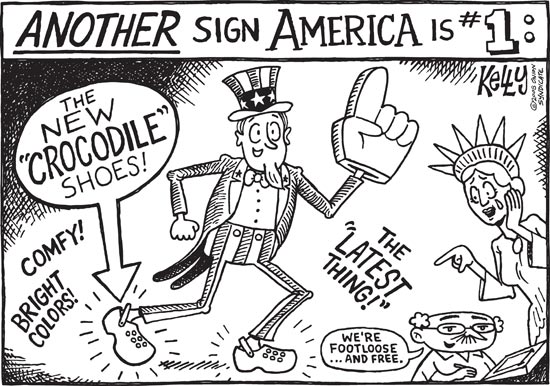
Put Your Best Foot Forward

The Onion. / The Rag Blog

Posted in RagBlog | Tagged , , , , | Leave a comment

Former Press Secy McClellan Bashes Bush in Memoir

President George W. Bush listens as his Press Secretary, Scott McClellan, announces his resignation at the White House April 19, 2006 in Washington, DC. Photo by Win Mcnamee / Getty Images

Politico Exclusive: McClellan whacks Bush, White House
By Mike Allen / May 27, 2008

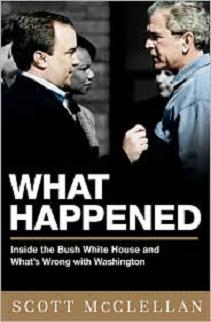
Former White House Press Secretary Scott McClellan writes in a surprisingly scathing memoir to be published next week that President Bush “veered terribly off course,” was not “open and forthright on Iraq,” and took a “permanent campaign approach” to governing at the expense of candor and competence.

Among the most explosive revelations in the 341-page book, titled “What Happened: Inside the Bush White House and Washington’s Culture of Deception” (Public Affairs, $27.95):

• McClellan charges that Bush relied on “propaganda” to sell the war.

• He says the White House press corps was too easy on the administration during the run-up to the war.

• He admits that some of his own assertions from the briefing room podium turned out to be “badly misguided.”

• The longtime Bush loyalist also suggests that two top aides held a secret West Wing meeting to get their story straight about the CIA leak case at a time when federal prosecutors were after them — and McClellan was continuing to defend them despite mounting evidence they had not given him all the facts.

• McClellan asserts that the aides — Karl Rove, the president’s senior adviser, and I. Lewis “Scooter” Libby, the vice president’s chief of staff — “had at best misled” him about their role in the disclosure of former CIA operative Valerie Plame’s identity.

A few reporters were offered advance copies of the book, with the restriction that their stories not appear until Sunday, the day before the official publication date. Politico declined and purchased “What Happened” at a Washington bookstore.

The eagerly awaited book, while recounting many fond memories of Bush and describing him as “authentic” and “sincere,” is harsher than reporters and White House officials had expected.

McClellan was one of the president’s earliest and most loyal political aides, and most of his friends had expected him to take a few swipes at his former colleague in order to sell books but also to paint a largely affectionate portrait.

Instead, McClellan’s tone is often harsh. He writes, for example, that after Hurricane Katrina, the White House “spent most of the first week in a state of denial,” and he blames Rove for suggesting the photo of the president comfortably observing the disaster during an Air Force One flyover. McClellan says he and counselor to the president Dan Bartlett had opposed the idea and thought it had been scrapped.

But he writes that he later was told that “Karl was convinced we needed to do it — and the president agreed.”

“One of the worst disasters in our nation’s history became one of the biggest disasters in Bush’s presidency. Katrina and the botched federal response to it would largely come to define Bush’s second term,” he writes. “And the perception of this catastrophe was made worse by previous decisions President Bush had made, including, first and foremost, the failure to be open and forthright on Iraq and rushing to war with inadequate planning and preparation for its aftermath.”

McClellan, who turned 40 in February, was press secretary from July 2003 to April 2006. An Austin native from a political family, he began working as a gubernatorial spokesman for then-Gov. Bush in early 1999, was traveling press secretary for the Bush-Cheney 2000 campaign and was chief deputy to Press Secretary Ari Fleischer at the beginning of Bush’s first term.

“I still like and admire President Bush,” McClellan writes. “But he and his advisers confused the propaganda campaign with the high level of candor and honesty so fundamentally needed to build and then sustain public support during a time of war. … In this regard, he was terribly ill-served by his top advisers, especially those involved directly in national security.”

In a small sign of how thoroughly McClellan has adopted the outsider’s role, he refers at times to his former boss as “Bush,” when he is universally referred to by insiders as “the president.”

McClellan lost some of his former friends in the administration last November when his publisher released an excerpt from the book that appeared to accuse Bush of participating in the cover-up of the Plame leak. The book, however, makes clear that McClellan believes Bush was also a victim of misinformation.

The book begins with McClellan’s statement to the press that he had talked with Rove and Libby and that they had assured him they “were not involved in … the leaking of classified information.”

At Libby’s trial, testimony showed the two had talked with reporters about the officer, however elliptically.

“I had allowed myself to be deceived into unknowingly passing along a falsehood,” McClellan writes. “It would ultimately prove fatal to my ability to serve the president effectively. I didn’t learn that what I’d said was untrue until the media began to figure it out almost two years later.

“Neither, I believe, did President Bush. He, too, had been deceived and therefore became unwittingly involved in deceiving me. But the top White House officials who knew the truth — including Rove, Libby and possibly Vice President Cheney — allowed me, even encouraged me, to repeat a lie.”

McClellan also suggests that Libby and Rove secretly colluded to get their stories straight at a time when federal investigators were hot on the Plame case.

“There is only one moment during the leak episode that I am reluctant to discuss,” he writes. “It was in 2005, during a time when attention was focusing on Rove and Libby, and it sticks vividly in my mind. … Following [a meeting in Chief of Staff Andy Card’s office], … Scooter Libby was walking to the entryway as he prepared to depart when Karl turned to get his attention. ‘You have time to visit?’ Karl asked. ‘Yeah,’ replied Libby.

“I have no idea what they discussed, but it seemed suspicious for these two, whom I had never noticed spending any one-on-one time together, to go behind closed doors and visit privately. … At least one of them, Rove, it was publicly known at the time, had at best misled me by not sharing relevant information, and credible rumors were spreading that the other, Libby, had done at least as much. …

“The confidential meeting also occurred at a moment when I was being battered by the press for publicly vouching for the two by claiming they were not involved in leaking Plame’s identity, when recently revealed information was now indicating otherwise. … I don’t know what they discussed, but what would any knowledgeable person reasonably and logically conclude was the topic? Like the whole truth of people’s involvement, we will likely never know with any degree of confidence.”

McClellan repeatedly embraces the rhetoric of Bush’s liberal critics and even charges: “If anything, the national press corps was probably too deferential to the White House and to the administration in regard to the most important decision facing the nation during my years in Washington, the choice over whether to go to war in Iraq.

“The collapse of the administration’s rationales for war, which became apparent months after our invasion, should never have come as such a surprise. … In this case, the ‘liberal media’ didn’t live up to its reputation. If it had, the country would have been better served.”

Decrying the Bush administration’s “excessive embrace of the permanent campaign approach to governance,” McClellan recommends that future presidents appoint a “deputy chief of staff for governing” who “would be responsible for making sure the president is continually and consistently committed to a high level of openness and forthrightness and transcending partisanship to achieve unity.

“I frequently stumbled along the way,” McClellan acknowledges in the book’s preface. “My own story, however, is of small importance in the broad historical picture. More significant is the larger story in which I played a minor role: the story of how the presidency of George W. Bush veered terribly off course.”

Even some of the chapter titles are brutal: “The Permanent Campaign,” “Deniability,” “Triumph and Illusion,” “Revelation and Humiliation” and “Out of Touch.”

“I think the concern about liberal bias helps to explain the tendency of the Bush team to build walls against the media,” McClellan writes in a chapter in which he says he dealt “happily enough” with liberal reporters. “Unfortunately, the press secretary at times found himself outside those walls as well.”

The book’s center has eight slick pages with 19 photos, eight of them depicting McClellan with the president. Those making cameos include Cheney, Rove, Bartlett, Mark Knoller of CBS News, former Assistant Press Secretary Reed Dickens and, aboard Air Force One, former press office official Peter Watkins and former White House stenographer Greg North.

In the acknowledgments, McClellan thanks each member of his former staff by name.

Among other notable passages:

• Steve Hadley, then the deputy national security adviser, said about the erroneous assertion about Saddam Hussein seeking uranium, included in the State of the Union address of 2003: “Signing off on these facts is my responsibility. … And in this case, I blew it. I think the only solution is for me to resign.” The offer “was rejected almost out of hand by others present,” McClellan writes.

• Bush was “clearly irritated, … steamed,” when McClellan informed him that chief economic adviser Larry Lindsey had told The Wall Street Journal that a possible war in Iraq could cost from $100 billion to $200 billion: “‘It’s unacceptable,’ Bush continued, his voice rising. ‘He shouldn’t be talking about that.’”

• “As press secretary, I spent countless hours defending the administration from the podium in the White House briefing room. Although the things I said then were sincere, I have since come to realize that some of them were badly misguided.”

• “History appears poised to confirm what most Americans today have decided: that the decision to invade Iraq was a serious strategic blunder. No one, including me, can know with absolute certainty how the war will be viewed decades from now when we can more fully understand its impact. What I do know is that war should only be waged when necessary, and the Iraq war was not necessary.”

• McClellan describes his preparation for briefing reporters during the Plame frenzy: “I could feel the adrenaline flowing as I gave the go-ahead for Josh Deckard, one of my hard-working, underpaid press office staff, … to give the two-minute warning so the networks could prepare to switch to live coverage the moment I stepped into the briefing room.”

• “‘Matrix’ was the code name the Secret Service used for the White House press secretary.”

McClellan is on the lecture circuit and remains in the Washington area with his wife, Jill.

© 2007 Capitol News Company, LLC

Source. / Politico.com

Keith Olbermann and Rachel Maddow on McClellan’s Book

Also see White House ‘puzzled’ by ex-spokesman’s book bashing Bush / CNN

The Rag Blog

Posted in RagBlog | Tagged , , , , | 2 Comments

Can George McGovern’s Left Populism Instruct Obama’s Modest Progressive Vision

Campaign worker Bill Clinton shown with presidential candidate George McGovern in 1972 AP photo.

The American Left: McGovern, Obama, and ‘transformative’ change
By Ken Brociner / May 25, 2008

One of the most common complaints among progressives is that we don’t have a vision of how to actually change the world.

But to paraphrase Marx, it seems to me that our goal shouldn’t be to just change the world (especially given the abuse of the word “change” in the current election cycle). Instead we ought to transform it.

And in fact, in recent months, the word “transformative” has been popping up with some frequency – usually in reference to Barack Obama.

Is there any truth to this claim, or should we just chalk it up to hyperbole? Certainly if Obama is elected, he would steer America in a fundamentally different direction than Bush has taken us these past eight years. And the fact that Obama would be the first black president in American history could result in a transformative shift in the way that our nation deals with racial issues. But if we look at the likely contours of an Obama administration in comparison to, say, Bill Clinton’s eight years in office, can we reasonably expect that Obama might be a “transformative” president?

Apart from Obama’s views on NAFTA and other free-trade agreements – which are more enlightened than President Clinton’s were — the modest nature of his economic program simply doesn’t offer convincing evidence that the Illinois senator would be all that different from Clinton (either Clinton for that matter) when it comes to running the economy or setting the nation’s spending priorities. Similarly, Obama has given little indication that his foreign policy would differ significantly from either Bill Clinton’s or George H.W. Bush’s (whose foreign policy Obama recently praised).

Ironically, the Democratic presidential candidate who can most help progressives bring our vision of transformative change into sharper focus is a man who ran for president 36 years ago. By looking back to the unfulfilled promise of George McGovern’s 1972 presidential campaign, we can learn some valuable lessons for the long journey ahead.

For starters, we can see what a genuinely transformative political program looks like. McGovern’s platform was nothing less than visionary. In fact, McGovern was the most progressive major party candidate for president in American history.

In 1972 McGovern ran on a platform that not only called for an immediate end to U.S. involvement in the war in Vietnam (on Inauguration Day!), the senator from South Dakota also proposed an “alternative military budget” that included deep cuts in military spending – with the bulk of the savings going toward efforts to end poverty and fund programs that would guarantee a decent paying job to every American who wanted to work.

According to a Time magazine story from Feb. 14, 1972: “The heart of McGovern’s platform is a plan for income redistribution and tax reform and an alternative defense budget. Perhaps no presidential aspirant since Huey Long has proposed so sweeping an economic change as McGovern’s tax and income program.”

One of the main reasons the Democratic Party wound up nominating such an overtly left-leaning populist was because McGovern’s insurgent candidacy generated a nationwide grassroots movement that was fueled by opposition to the war. That movement was every bit as politically potent as the one that has mobilized support for Barack Obama in 2008.

For those progressives who fear that without a highly charismatic candidate like Obama, it would be next to impossible to mount a successful, substantive campaign for the Democratic nomination, McGovern’s first-round victory at the Democratic convention in Miami in July 1972 provides concrete evidence that it can be done.

While the 1972 campaign had the potential (if McGovern gone on to defeat Nixon) to radically transform American society while also having significant international impact, an Obama victory in 2008 would lead to important reforms in the years ahead.

Looking further down the road, eight years of a successful Obama presidency could serve as a bridge to another potentially transformative moment in American history – in, say, 2016. But in order to win that election, progressives would have to go into overdrive to lay the ideological and political groundwork needed to achieve such far-reaching changes.

For this to occur, the president who follows Obama would need to be ideologically committed – as McGovern was – to a program that includes deep cuts in military spending along with substantial economic redistribution. With the trillions of dollars that would eventually be freed up because of these new policies, we would finally be able to transform not only American society, but much of the rest of the world as well.

Ken Brociner’s essays and book reviews have appeared in Dissent, In These Times and Israel Horizons. He also has a biweekly column in the Somerville (Mass.) Journal.

Source. / In These Times

Thanks to Carl Davidson / The Rag Blog

Posted in RagBlog | Tagged , , , , | Leave a comment

the Cossacks are coming Hurrah Hurrah

Ilya Repins’s Zaporozhian Cosssacks.

the Cossacks are coming Hurrah Hurrah
the Cossacks are coming for you Grandma
the Cossacks are coming they’re coming Huzzah
the Cossacks are coming for you

the Cossacks are coming in SUVs
the Cossacks are coming get on your knees
the Cossacks are coming say I buh-beg you puh-puh-please
the Cossacks are coming because you’re the disease

the Cossacks are coming unlock your door
the Cossacks are standing on your kitchen floor
the Cossacks are calling your mother a whore
the Cossacks have come cause of the (wink) War

the Cossacks are coming they love their job
the Cossacks are coming they are no snob
the Cossacks will come for any old Bob
the Cossacks are coming for Bob

the Cossacks are coming you won’t know why
the Cossacks are coming they don’t seem shy
the Cossacks are coming to watch you die
the Cossacks are humming and eating your pie

the Cossacks are coming tra la la la
the Cossacks are coming valdaree valdera
the Cossacks are coming obla dee obla da
the Cossacks will come if you leave your cole slaw
the Cossacks are coming what a giant faux pax
the Cossacks are coming for you – et tu
the Cossacks are coming – HEY YOU

Honey, the Cossacks are here

Larry Piltz (in hiding)
October 2007

Indian Cove / Austin, Texas
Posted May 27, 2008 / The Rag Blog

Posted in Rag Bloggers | Tagged | Leave a comment

Books : Dick Reavis Sees John Howard Griffin in Available Light


Pardon for the Cult of Black Like Me
By Dick J. Reavis / The Rag Blog / May 27, 2008

In November, 1959, with the help of doctors and dyes, a white Texan briefly became a black man in Dixie as part of a plan to determine for himself, and to tell others, what the region’s race problem was like. John Howard Griffin’s 1961 account of his six-week undercolor life, Black Like Me, became an American best-seller and in translations, nearly circled the globe.

Thanks in part to Wings Press, a smallish San Antonio outfit dedicated to poetry and to multicultural themes, Griffin’s work has enjoyed a steady, if slow revival over the past dozen years. Last published in 1977, Black Like Me was republished in print and audio editions in 1996, 1999, 2003, 2004, and 2006. It has also thrown off companion volumes: a resurrected Griffin novel, a short biography, and now, Available Light, a 117-page Wings Press book of photographs and journal excerpts, tied together by commentary from his biographer, Robert Bonazzi. The photos and excerpts in the book date to 1960-61, when Griffin lived in a Tarascan village near Morelia, Michoacán.

Most of the pictures in Available Light don’t impress my untutored eyes—except for Griffin’s portraits. They are set in darkness; his subjects are revealed through mere spots of light. They are, in effect, negatives of the too-often-imitated white-background images of New Yorker Richard Avedon.

My preference for the portraits, however, squares with Griffin’s own take: Bonazzi cites him as writing, in 1963, that “nothing really interests me in photography except human faces.” Available Light is an addition to the autopsy of Griffin’s virtues, but it’s Black Like Me that will still be on reading lists 20 years from now.

Driving the revival of interest in Griffin and his work are two generations which did not witness the absurdities and brutalities of Jim Crow. Black Like Me catalogs what bygone segregation meant to daily life, especially for job-seekers and travelers.

Griffin’s writing in the 1961 classic was workmanlike, but not literary. Its lines are stark, muscular and clear, but nothing more: “They called the bus. We filed out into the high-roofed garage and stood in line, the Negroes to the rear, the whites to the front,” is typical of the style.

Griffin’s prose conveyed sincerity and earnestness, virtues in a work devoid of footnotes, statistics, historical references or graphs. He was not out to prove that he was a sage. His message was, “I know that what I write is true because I saw it, heard it, lived it.” By taking a direct, heart-to-heart approach to the racial question of his time and place, Griffin cut through a Gordian knot of disputations that had been nearly fifty years in the making. He did not aspire, as did most journalists of the day, to be a gatekeeper. Instead, he was a guide.

Most of what Griffin did had been done before. In his 1933 Down and Out in Paris and London, George Orwell did for class what Griffin did for race. But nobody had bodily transformed himself for the investigation of racial affairs, and Griffin’s stunt—that he could change his color and pass for black—was a titillation that boosted sales and publicity for his book. How did he accomplish such a thing? Talk show hosts were dying to have him explain.

Sadly, nothing like that book could be funded today. The idea behind it was not PC. Who would believe that a white was more perceptive about the lives of blacks than were blacks themselves? Only whites whose minds were afflicted with doubts about the veracity of blacks! But there were plenty of those, and they made the book a success. Were Black Like Me to be proposed today, it would not be a book, but a “reality series” on TV.

Even in that happier day for print, Griffin’s project was underfinanced. Then a 40-year-old parent and husband in Mansfield, he did not have a publishing contract when he started his sojourn. He made the trip, from Texas to New Orleans, Hattiesburg to Atlanta, in exchange for mere expense money advanced to him by Sepia, a poor man’s Ebony, published in Fort Worth by George Levitan, a white man.

Thomas Merton and Jacques Maritain. Photo by John Howard Griffin, October 1966.

If Griffin got by on slim funding, he worked an even bigger miracle with time. He spent only 42 days in the field for Black Like Me–and only 28 of them “in disguise” as an African-American! The resulting volume is a slim by today’s standards, a mere 63,000 words—but the brevity of his message no doubt added to the book’s appeal.

In later years, Griffin wrote for Ramparts, while it existed, and opposed the Vietnam War, says Bonazzi, a Texas-bred poet who now lives in San Antonio. But Available Light presents excerpts that show Griffin as more conservative than younger radicals of the day.

When Miami Cubans invaded Playa Girón, aka the Bay of Pigs, with American backing in April, 1961, demonstrators in Morelia sacked the offices of an entity called the Mexican-North American Cultural Institute burning its files in the streets. They next turned their glare on Americans who were residing in the region, hoping to harass, uproot or at least embarrass them. Griffin organized the sheltering and defense of his countrymen in the village where he was living, Santa María del Guido, and though few of us would censure that, in the aftermath of the disorders, Bonazzi writes, Griffin met with U.S. embassy personnel—and gave them the names of protest leaders.

Griffin’s opinion of the affair, his journal records, was that “No one in Morelia can now doubt that that this was a plot of international communism—that it was treason committed against Mexico.”

Long live “treason,” if that’s what it was! The government that the demonstrators “betrayed” was in those days a one-party state whose democratic credentials were bracketed by two events: the imprisonment of union leaders Demetrio Vallejo and Valentín Campa, leaders of a 1959 national railway strike, and the Mexican army’s 1962 murder of peasant leader Rubén Jaramillo. Vallejo and Campa were communists, as was Jaramillo and his pregnant wife. I suppose the Jaramillo children, who were also murdered, carried the Bolshevik gene. As Griffin believed, reds no doubt played leading roles in calling Bay of Pigs protests in Morelia, as they probably did across Europe, in China, and even in the supremely menacing Red Republic of North Vietnam.

Bonazzi says that Griffin was not what SDSers called a “CIA liberal,” but a pacifist instead. Fortunately, he didn’t blink, as many in his generation did, when the civil rights movement turned militant as the ‘Sixties came to a close

“For approximately a decade,” he wrote, “black Americans persevered in the dream of non-violent resistance. But its success always depends on the conversion of the hostile white force. … In fact, racists redoubled their efforts in the name of patriotism and Christianity, to suppress not only black people but all non-racists.”

I did not find in the diary excerpts that Bonazzi has variously brought to light that Griffin ever lamented his fate, felt hatred or professed strong regret. In discussing Griffin’s career as a public speaker following the publication of Black Like Me, Bonazzi writes that “He would succeed so well, and with seeming effortlessness, in the public arena because he kept his focus and everyone’s attention on the central issues. Since he never failed at being his own harshest critic, virtually every question asked had been asked over and over in the privacy of conscience.”

The pages of Available Light, and of Bonazzi’s brief biography, The Man in the Mirror, establish that Griffin was a saintly man, a Catholic convert and consort of Merton who, when overwhelmed, sought solace in monasteries. But can it be true that anyone of sound mind has ever been “his own harshest critic”?

But if Bonazzi’s object is to create a cult around Griffin, the raw material is on hand. Griffin, who spent his boyhood in Mansfield, went to high school and began college in France, where briefly worked in the Resistance movement. He enlisted in the Army when he fled home. A combat wound in the Pacific Theater impaired his sight, causing him to go blind in 1947. Griffin penned two novels, married and fathered children despite the handicap. He literally did not see his wife and offspring until ten years after the onset of his blindness, when his vision suddenly returned. His years of darkness probably nurtured the even-handed wisdom he revealed in Black Like Me, and stood at his shoulder for the portraits of Available Light.

Cults, except for those of musical and film stars, are widely frowned upon, but creating one around a guy like Griffin, I’d think, has got to be a forgivable sin.

Available Light: Exile in Mexico by John Howard Griffin, on Amazon.com.
Black Like Me by John Howard Griffin, on Amazon.com.

The Rag Blog

Posted in Rag Bloggers | Tagged , , , , , , , , , | Leave a comment

Doug Zachary on the Passing of Folk Legend Utah Phillips


Reflections on Utah Phillips
By Doug Zachary / The Rag Blog / May 27, 2008

[Singer, songwriter, labor organizer, Korean war vet and man of peace Utah Phillips died of congestive heart failure on May 23 at his home in Nevada City, California. Rag Blogger Doug Zachary of Veterans for Peace, who organized a recent benefit for Phillips in Austin, provides these reflections. Previous posts about the benefit and about Phillips death can be found here.]

I had become close to Utah Philips over the past month as the Neil Bischoff chapter of Veterans For Peace planned the May 18 benefit for him at Jovita’s in Austin. We had several conversations, ranging from ten minutes to an hour, wherein I received the blessing of my life. I felt that Utah was pouring his hard-earned wisdom into all my empty spaces, and I have never felt more loved. Two members of the NB chapter donated a Lifetime Membership in VFP for Utah, which I was moved to have shipped to him Fed Ex overnight; somehow I knew that he was about to jump onto a freight train and disappear from view. He received his VFP Lifetime ID card just before he moved on.

Neil Bischoff and Utah Phillips shared a common story. They both went AWOL while in a theater of war; Utah in Korea and Neil in Viet Nam. One day Utah’s company commander told him that all the mixed-race orphans fathered (so to speak) by U.S. soldiers, although rejected by the Koreans, would eventually be a blessing because they would improve the stock of the Korean people. Utah immediately went over the hill and found the Korea House where folks were working to educate soldiers concerning the humanity of the Korean people. Neil Bischoff’s legend: He decided one day that he would no longer cooperate with the Army; he took his guitar and hopped on a series of helicopters and toured Viet Nam as an AWOL soldier.

I was up at Fort Hood in Killeen, TX, putting flyers on cars at the mall and approaching soldiers inside the mall and at HEB and Target when I received the news that Utah had died. I remembered what another Wobbly had said, “Don’t mourn, Organize!” . . . and I continued with my work throughout the Holiday weekend. Then, this morning, hot on my trail like my daddy’s black ‘n tan hounds, grief ran me to the ground. I have spent some time with that, and now it is “Back to the Barricades!”.

Folks can still make a contribution to Utah by sending a check to Joanne Robinson, Utah’s wife, at PO BOX 1235, Nevada City, CA. 95959.

Grateful beyond my wildest imagination,
Doug Zachary

This is the official Obituary as provided by the family.

Folksinger, Storyteller, Railroad Tramp Utah Phillips Dead at 73
Nevada City, California:

Utah Phillips, a seminal figure in American folk music who performed extensively and tirelessly for audiences on two continents for 38 years, died Friday of congestive heart failure in Nevada City, California a small town in the Sierra Nevada mountains where he lived for the last 21 years with his wife, Joanna Robinson, a freelance editor.

Born Bruce Duncan Phillips on May 15, 1935 in Cleveland, Ohio, he was the son of labor organizers. Whether through this early influence or an early life that was not always tranquil or easy, by his twenties Phillips demonstrated a lifelong concern with the living conditions of working people. He was a proud member of the Industrial Workers of the World, popularly known as “the Wobblies,” an organizational artifact of early twentieth-century labor struggles that has seen renewed interest and growth in membership in the last decade, not in small part due to his efforts to popularize it.

Phillips served as an Army private during the Korean War, an experience he would later refer to as the turning point of his life. Deeply affected by the devastation and human misery he had witnessed, upon his return to the United States he began drifting, riding freight trains around the country. His struggle would be familiar today, when the difficulties of returning combat veterans are more widely understood, but in the late fifties Phillips was left to work them out for himself.

Destitute and drinking, Phillips got off a freight train in Salt Lake City and wound up at the Joe Hill House, a homeless shelter operated by the anarchist Ammon Hennacy, a member of the Catholic Worker movement and associate of Dorothy Day.

Phillips credited Hennacy and other social reformers he referred to as his “elders” with having provided a philosophical framework around which he later constructed songs and stories he intended as a template his audiences could employ to understand their own political and working lives. They were often hilarious, sometimes sad, but never shallow.

“He made me understand that music must be more than cotton candy for the ears,” said John McCutcheon, a nationally-known folksinger and close friend.

In the creation of his performing persona and work, Phillips drew from influences as diverse as Borscht Belt comedian Myron Cohen, folksingers Woody Guthrie and Pete Seeger, and Country stars Hank Williams and T. Texas Tyler.

A stint as an archivist for the State of Utah in the 1960s taught Phillips the discipline of historical research; beneath the simplest and most folksy of his songs was a rigorous attention to detail and a strong and carefully-crafted narrative structure. He was a voracious reader in a surprising variety of fields.

Meanwhile, Phillips was working at Hennacy’s Joe Hill house. In 1968 he ran for a seat in the U.S. Senate on the Peace and Freedom Party ticket. The race was won by a Republican candidate, and Phillips was seen by some Democrats as having split the vote. He subsequently lost his job with the State of Utah, a process he described as “blacklisting.”

Phillips left Utah for Saratoga Springs, New York, where he was welcomed into a lively community of folk performers centered at the Caffé Lena, operated by Lena Spencer.

“It was the coffeehouse, the place to perform. Everybody went there. She fed everybody,” said John “Che” Greenwood, a fellow performer and friend.
Over the span of the nearly four decades that followed, Phillips worked in what he referred to as “the Trade,” developing an audience of hundreds of thousands and performing in large and small cities throughout the United States, Canada, and Europe. His performing partners included Rosalie Sorrels, Kate Wolf, John McCutcheon and Ani DiFranco.

“He was like an alchemist,” said Sorrels, “He took the stories of working people and railroad bums and he built them into work that was influenced by writers like Thomas Wolfe, but then he gave it back, he put it in language so the people whom the songs and stories were about still had them, still owned them. He didn’t believe in stealing culture from the people it was about.”

A single from Phillips’s first record, “Moose Turd Pie,” a rollicking story about working on a railroad track gang, saw extensive airplay in 1973. From then on, Phillips had work on the road. His extensive writing and recording career included two albums with Ani DiFranco which earned a Grammy nomination. Phillips’s songs were performed and recorded by Emmylou Harris, Waylon Jennings, Joan Baez, Tom Waits, Joe Ely and others. He was awarded a Lifetime Achievement Award by the Folk Alliance in 1997.

Phillips, something of a perfectionist, claimed that he never lost his stage fright before performances. He didn’t want to lose it, he said; it kept him improving.

Phillips began suffering from the effects of chronic heart disease in 2004, and as his illness kept him off the road at times, he started a nationally syndicated folk-music radio show, “Loafer’s Glory,” produced at KVMR-FM and started a homeless shelter in his rural home county, where down-on-their-luck men and women were sleeping under the manzanita brush at the edge of town. Hospitality House opened in 2005 and continues to house 25 to 30 guests a night. In this way, Phillips returned to the work of his mentor Hennacy in the last four years of his life.

Phillips died at home, in bed, in his sleep, next to his wife. He is survived by his son Duncan and daughter-in-law Bobette of Salt Lake City, son Brendan of Olympia, Washington; daughter Morrigan Belle of Washington, D.C.; stepson Nicholas Tomb of Monterrey, California; stepson and daughter-in-law Ian Durfee and Mary Creasey of Davis, California; brothers David Phillips of Fairfield, California, Ed Phillips of Cleveland, Ohio and Stuart Cohen of Los Angeles; sister Deborah Cohen of Lisbon, Portugal; and a grandchild, Brendan. He was preceded in death by his father Edwin Phillips and mother Kathleen, and his stepfather, Syd Cohen.

The family requests memorial donations to Hospitality House, P.O. Box 3223, Grass Valley, California 95945 (530) 271-7144 www.hospitalityhouseshelter.org

Go here for previous posts about Utah Phillips on The Rag Blog.

The Rag Blog

Posted in Rag Bloggers | Tagged , , , , , | Leave a comment

Barack Has Annoyed Fidel


Castro Criticizes Obama Over Embargo
By Will Weissert / May 26, 2008

HAVANA — Former President Fidel Castro says Sen. Barack Obama’s plan to maintain Washington’s trade embargo against Cuba will cause hunger and suffering on the island.

In a column published Monday by government-run newspapers, Castro said Obama was “the most-advanced candidate in the presidential race,” but noted that he has not dared to call for altering U.S. policy toward Cuba.

“Obama’s speech can be translated as a formula for hunger for the country,” Castro wrote, referring to Obama’s remarks last week to the influential Cuban American National Foundation in Miami.

Obama said he would maintain the nearly fifty-year-old trade sanctions against Cuba as leverage to push for democratic change on the island. But he also vowed to ease restrictions on Cuban Americans traveling to Cuba and sending money to relatives.

He repeated his willingness to meet with Raul Castro, who in February succeeded his elder brother Fidel to become the nation’s first new leader in 49 years.

Castro said Obama’s proposals for letting well-off Cuban Americans help poorer relatives on the island amounted to “propaganda for consumerism and a way of life that is unsustainable.”

He complained that Obama’s description of Cuba as “undemocratic” and “lacking in respect for liberty and human rights” was the same argument previous U.S. administrations “have used to justify their crimes against our homeland.”

Castro, 81, has not been seen in public since undergoing emergency surgery in July 2006, but he often publishes columns in state newspapers.

Obama’s calls for direct talks with Cuban leaders differ sharply from a more hardline policy favored by current President Bush and Republican presidential candidate John McCain, whom Castro also has criticized.

Castro’s column came three days after a prominent dissident group wrote an open letter to Obama suggesting that his idea of talking directly with Cuban leaders could help win freedom for prisoners.

“We have great hope that you can contribute to the immediate, unconditional liberation” of prisoners, wrote the Ladies in White, a group formed by relatives of people jailed in a government crackdown on political opposition in 2003.

Copyright 2008 The Associated Press.

Source / AOL News

The Rag Blog

Posted in RagBlog | Tagged , | Leave a comment

Lest We Forget the True History of This Day


War Immemorial Day – No Peace for Militarized U.S.
by Bill Quigley

Memorial Day is not actually a day to pray for U.S. troops who died in action but rather a day set aside by Congress to pray for peace. The 1950 Joint Resolution of Congress which created Memorial Day says: “Requesting the President to issue a proclamation designating May 30, Memorial Day, as a day for a Nation-wide prayer for peace.” (64 Stat.158).

Peace today is a nearly impossible challenge for the United States. The U.S. is far and away the most militarized country in the world and the most aggressive. Unless the U.S. dramatically reduces its emphasis on global military action, there will be many, many more families grieving on future Memorial days.

The U.S. spends over $600 billion annually on our military, more than the rest of the world combined. China, our nearest competitor, spends about one-tenth of what we spend. The U.S. also sells more weapons to other countries than any other nation in the world.

The U.S. has about 700 military bases in 130 countries world-wide and another 6000 bases in the US and our territories, according to Chalmers Johnson in his excellent book NEMESIS: THE LAST DAYS OF THE AMERICAN REPUBLIC (2007).

The Department of Defense (DOD) reports nearly 1.4 million active duty military personnel today. Over a quarter of a million are in other countries from Iraq and Afghanistan to Europe, North Africa, South Asia and the rest of the Western Hemisphere. The DOD also employs more than 700,000 civilian employees.

The US has used its armed forces abroad over 230 times according to researchers at the Department of the Navy Historical Center. Their publications list over 60 military efforts outside the U.S. since World War II.

While the focus of most of the Memorial Day activities will be on U.S. military dead, no effort is made to try to identify or remember the military or civilians of other countries who have died in the same actions. For example, the U.S. government reports 432 U.S. military dead in Afghanistan and surrounding areas, but has refused to disclose civilian casualties. “We don’t do body counts,” General Tommy Franks said.

Most people know of the deaths in World War I – 116,000 U.S. soldiers killed. But how many in the U.S. know that over 8 million soldiers from other countries and perhaps another 8 million civilians also died during World War II?

By World War II, about 408,000 U.S. soldiers were killed. World-wide, at least another 20 million soldiers and civilians died.

The U.S. is not only the largest and most expensive military on the planet but it is also the most active. Since World War II, the U.S. has used U.S. military force in the following countries:

1947-1949 Greece. Over 500 U.S. armed forces military advisers were sent into Greece to administer hundreds of millions of dollars in their civil war.

1947-1949 Turkey. Over 400 U.S. armed forces military advisers sent into Turkey,

1950-1953 Korea. In the Korean War and other global conflicts 54,246 U.S. service members died.

1957-1975 Vietnam. Over 58,219 U.S. killed.

1958-1984 Lebanon. Sixth Fleet amphibious Marines and U.S. Army troops landed in Beirut during their civil war. Over 3000 U.S. military participated. 268 U.S. military killed in bombing.

1959 Haiti. U.S. troops, Marines and Navy, land in Haiti and joined in support of military dictator Francois “Papa Doc” Duvalier against rebels.

1962 Cuba. Naval and Marine forces blockade island.

1964 Panama. U.S. troops stationed there since 1903. U.S. troops used gunfire and tear gas to clear US Canal Zone.

1965-1966 Dominican Republic. U.S. troops land in Dominican Republic during their civil war – eventually 23,000 were stationed in their country.

1969-1975 Cambodia. U.S. and South Vietnam jets dropped more than 539,000 tons of bombs on Cambodia – three times the number dropped on Japan during WWII.

1964-1973 Laos. U.S. flew 580,000 bombing runs over country – more than 2 million tons of bombs dropped – double the amount dropped on Nazi Germany. US dropped more than 80 million cluster bombs on Laos – 10 to 30% did not explode leaving 8 to 24 million scattered across the country. Since the war stopped, two or three Laotians are killed every month by leftover bombs – over 5700 killed since bombing stopped.

1980 Iran. Operation Desert One, 8 U.S. troops die in rescue effort.

1981 Libya. U.S. planes aboard the Nimitz shot down 2 Libyan jets over Gulf of Sidra.

1983 Grenada. U.S. Army and Marines invade, 19 U.S. killed.

1983 Lebanon. Over 1200 Marines deployed into country during their civil war. 241 U.S. service members killed in bombing.

1983-1991 El Salvador. Over 150 US soldiers participate in their civil war as military advisers.

1983 Honduras. Over 1000 troops and National Guard members deployed into Honduras to help the contra fight against Nicaragua.

1986 Libya. U.S. Naval air strikes hit hundreds of targets – airfields, barracks, and defense networks.

1986 Bolivia. U.S. Army troops assist in anti-drug raids on cocaine growers.

1987 Iran. Operation Nimble Archer. U.S. warships shelled two Iranian oil platforms during Iran-Iraq war.

1988 Iran. US naval warship Vincennes in Persian Gulf shoots down Iranian passenger airliner, Airbus A300, killing all 290 people on board. US said it thought it was Iranian military jet.

1989 Libya. U.S. Naval jets shoot down 2 Libyan jets over Mediterranean

1989-1990 Panama. U.S. Army, Air Force, and Navy forces invade Panama to arrest President Manuel Noriega on drug charges. U.N. puts civilian death toll at 500.

1989 Philippines. U.S. jets provide air cover to Philippine troops during their civil war.

1991 Gulf War. Over 500,000 U.S. military involved. 700 plus U.S. died.

1992-93 Somalia. Operation Provide Relief, Operation Restore Hope, and Operation Continue Hope. Over 1300 U.S. Marines and Army Special Forces landed in 1992. A force of over 10,000 US was ultimately involved. Over 40 U.S. soldiers killed.

1992-96 Yugoslavia. U.S. Navy joins in naval blockade of Yugoslavia in Adriatic waters.

1993 Bosnia. Operation Deny Flight. U.S. jets patrol no-fly zone, naval ships launch cruise missiles, attack Bosnian Serbs.

1994 Haiti. Operation Uphold Democracy. U.S. led force of 20,000 troops invade to restore president.

1995 Saudi Arabia. U.S. soldier killed in Riyadh, Saudi Arabia outside US training facility.

1996 Saudi Arabia. Nineteen U.S. service personnel die in blast at Saudi Air Base.

1998 Sudan. Operation Infinite Reach. U.S. cruise missiles fired at pharmaceutical plant thought to be terrorist center.

1998 Afghanistan. Operation Infinite Reach. U.S. fires 75 cruise missiles on four training camps.

1998 Iraq. Operation Desert Fox. U.S. Naval bombing Iraq from striker jets and cruise missiles after weapons inspectors report Iraqi obstructions.

1999 Yugoslavia. U.S. participates in months of air bombing and cruise missile strikes in Kosovo war.

2000 Yemen. 17 U.S. sailors killed aboard US Navy guided missile destroyer USS Cole docked in Aden, Yemen.

2001 Macedonia. U.S. military lands troops during their civil war.

2001 to present Afghanistan. Operation Enduring Freedom (OEF) includes Pakistan and Uzbekistan with Afghanistan. 432 U.S. killed in those countries. Another 64 killed in other locations of OEF – Guantanamo Bay, Djibouti, Eritrea, Ethiopia, Jordan, Kenya, Kyrgyzstan, Philippines, Seychelles, Sudan, Tajikistan, Turkey and Yemen. US military does not count deaths of non- US civilians, but estimates of over 8000 Afghan troops killed, over 3500 Afghan civilians killed.

2002 Yemen. U.S. predator drone missile attack on Al Qaeda.

2002 Philippines. U.S. sends over 1800 troops and Special Forces in mission with local military.

2003-2004 Colombia. U.S. sends in 800 military to back up Columbian military troops in their civil war.

2003 to present Iraq. Operation Iraqi Freedom. 4082 U.S. military killed. British medical journal Lancet estimates over 90,000 civilian deaths. Iraq Body Count estimates over 84,000 civilians killed.

2005 Haiti. U.S. troops land in Haiti after elected president forced to leave.

2005 Pakistan. U.S. air strikes inside Pakistan against suspected Al Qaeda, killing mostly civilians.

2007 Somalia. U.S. Air Force gunship attacked suspected Al Qaeda members, U.S. Navy joins in blockade against Islamic rebels.

The U.S. has the most powerful and expensive military force in the world. The U.S. is the biggest arms merchant. And the U.S. has been the most aggressive in world-wide interventions. If Memorial Day in the U.S. is supposed to be about praying for peace, the U.S. has a lot of praying (and changing) to do.

[Bill is a human rights lawyer and law professor at Loyola University New Orleans. His email is quigley77@gmail.com].

Source / Common Dreams

My only objection to this article is that he severely underestimates the body count of civilians in Iraq (90,000? No way), relying on outdated material. I know of several other activists who have written to tell him that, however, and I will probably join them.

Alyssa Burgin / The Rag Blog

The Rag Blog

Posted in RagBlog | Tagged , | Leave a comment

If You Don’t Grow Your Seed, You Lose Your Power

Heather Meek with Quebec-produced Fortin beans at her family’s Ferme de Bullion in St. Andre d’Argenteuil, Quebec. Photograph: Phil Carpenter, Canwest

Family Seed Business Takes On Goliath of Genetic Modification
by Marian Scott

Heather Meek leafs through the seed catalogue she wrote on the family computer, on winter nights after the kids went to bed.There are Kahnawake Mohawk beans and Painted Mountain corn; Tante Alice cucumber and 40 varieties of heritage tomatoes.

Selling seeds is more than just an extra source of income on this organic farm an hour northwest of Montreal.

For Meek and partner Frederic Sauriol, propagating local varieties is part of a David and Goliath struggle by small farmers against big seed companies.

At stake, they believe, is no less than control of the world’s food supply.

Since the dawn of civilization, farmers have saved seeds from the harvest and replanted them the following year.

But makers of genetically modified (GM) seeds — introduced in 1996 and now grown by some 70,000 Canadian farmers, according to Monsanto, the world’s largest seed company — have been putting a stop to that practice.

The 12 million farmers worldwide who will plant GM seeds this year sign contracts agreeing not to save or replant seeds. That means they must buy new seeds every year.

Critics charge such contracts confer almost unlimited power over farmers’ lives to multinational companies whose priority is profit. They say GM seeds are sowing a humanitarian and ecological disaster.

But Trish Jordan, a Canadian spokesman for Monsanto, explains that requiring farmers to sign “technology use agreements” allows companies to recoup the cost of developing products.

“Farmers choose these products because of benefits they provide,” Jordan says. “That’s why we’re successful as a company.”

The debate over GM seeds has come into sharp focus as the world faces a food-price crisis that threatens to push millions into starvation.

In recent months, riots have erupted from Haiti to Bangladesh in the wake of soaring costs for staples like bread, rice and corn.

The crisis has prompted calls to step up investment in biotechnology to improve crop yields in developing countries.

“At a global level, it’s a problem that’s not going to be solved by organics or focusing on local food,” says Douglas Southgate, a professor of agricultural economics at Ohio State University.

“Dealing with the problem on a global scale involves using biotechnology.”

But Ottawa author Brewster Kneen, a fierce opponent of GM seeds, counters that biotechnology, as practised by companies like Monsanto, is not the answer.

“The point was never feeding the world or saving the environment,” says Kneen, author of several books about agriculture and biotechnology, including Farmageddon: Food and the Future of Biotechnology. “It’s about wealth, not about health.”

Developing new seed varieties was long a congenial affair where federal government scientists shared information and distributed samples to farmers for testing, says Kuyek, a researcher for GRAIN, an international non-profit organization that promotes agricultural biodiversity.

But in the 1980s, he says, the federal government began privatizing agricultural research.

Worldwide, GM crops have grown 67-fold in 12 years, now covering 690.9 million hectares in 23 countries, according to the industry’s Council for Biotechnology Information.

Canada is the fourth-largest grower of GM crops, which cover seven million hectares. About half of the corn and soybeans grown in Quebec and Ontario are GM crops.

Sauriol and Meek started their first seedlings 13 years ago in their four-room apartment on de Bullion St. Now, the Ferme de Bullion delivers fresh produce to 200 Montreal families every week.

The tiny leeks, sown in February, poked up through the soil like small blades of grass.

They won’t be ready for harvest until November.

This week, Alexander Muller, assistant director of Food and Agriculture Organization, warned that loss of agricultural biodiversity threatens the world’s ability to survive climate change.

“The erosion of biodiversity for food and agriculture severely compromises global food security,” said Muller, who heads FAO’s Natural Resources Management and Environment Department.

Muller’s words resonate with farmers Meek and Sauriol, whose four daughters help with the painstaking work of cleaning seeds over the winter.

“Growing seed is a big job,” says Meek.

“But if you don’t grow your seed, you lose your power.”

© The Edmonton Journal 2008

Source / Edmonton Journal

The Rag Blog

Posted in RagBlog | Tagged , | Leave a comment

They Went to Washington and Caused a Harangue


Guantanamo’s Day In Court
by James Carroll

TOMORROW a number of the detainees held at Guantanamo Bay will finally get their day in court – although, alas, not literally. Thirty-five Americans who were arrested at the US Supreme Court last January during a demonstration protesting the illegal detention center will go on trial in Washington. They are charged with “causing a harangue.” Instead of entering their own names, each defendant will enter the name of a prisoner held at Guantanamo. Father Bill Pickard, a Catholic priest from Pennsylvania, will identify himself as Faruq Ali Ahmed. “He cannot do it himself,” Pickard says, “so I am called by my faith, my respect for the rule of law, and my conscience to do it for him.”

The protesters acted on Jan. 11, the sixth anniversary of the establishment of the US detention center at Guantanamo. They were demanding the restoration of habeas corpus – the right of the prisoners to have their day in court. Wearing orange jumpsuits and hoods, the protesters were decrying torture and degradation. The sleeplessness, waterboarding, insults to Islam. Some of the arrested were in the act of unfurling a banner that said with eloquent simplicity, “Close Guantanamo.” They broke the law because, despite widespread repugnance at what the Bush administration is doing in Cuba, the laws and institutions of the United States have so far abetted this criminal indecency.

Twice the US Supreme Court has ruled against Bush on Guantanamo (affirming habeas corpus for detainees in 2004, and ruling against military commissions in 2006), but Congress bailed Bush out with the Military Commissions Act in 2006. Over the years, Guantanamo has been criticized by human rights groups, other governments, the United Nations, associations of lawyers, and members of the military’s own judicial system. Secretary of State Condoleezza Rice and even Secretary of Defense Robert M. Gates have both called for the detention center to be shut down. But it does not happen: Today there are nearly 300 prisoners there. Last week, the Justice Department inspector general released a report showing that FBI agents on the scene in Guantanamo have, over years, condemned the interrogation methods as illegal. “We found no evidence,” the report concludes, “that the FBI’s concerns influenced DOD interrogation policies.” No evidence, in sum, that the outrage at Guantanamo is being corrected by business as usual.

That is why, in an image offered by retired admiral John D. Hutson, the former judge advocate general of the Navy, the defendants “called artillery in on their own position” by engaging in civil disobedience at the Supreme Court. It was “heroic action,” Hutson said, “taken in a desperate situation for a greater good. That’s essentially what these 35 courageous Americans are doing.”

Can one break the law to uphold the principle of law? That will cease being the question tomorrow when the names of 35 incarcerated men are stated aloud in a courtroom – names that should have been spoken before a judge years ago. When that happens, the questions will become: Why are those men themselves not before a judge in a US court of law? And why are their torturers not charged with crimes? How is it possible that the American judicial system is itself protecting this rank violation of the American judicial system?

Last December, the Supreme Court heard arguments in Boumediene v. Bush, another case concerning the legal rights of Guantanamo Bay detainees. The ruling is to come, yet another opportunity for decisive intervention. But beyond the arcane, and so far impotent, redress-procedures of government lies the question of the broad US population’s attitude. Is the American commitment to basic rights really so shallow as to allow this travesty to continue? When did torture become acceptable? And once having widely denounced torture, what are citizens to do when it does not stop?

The group that goes on trial tomorrow calls itself “Witness Against Torture.” They are average folks from across the country. They could not stand it anymore. They did the only thing left for them to do. They went to Washington and caused a harangue. They purposely represent individuals held in torture cells. And, perhaps, they represent a lot of their fellow citizens, too. Close Guantanamo.

James Carroll’s column appears regularly in the Globe.

© 2008 The Boston Globe

Source / Common Dreams / Boston Globe

The Rag Blog

Posted in RagBlog | Tagged , , | Leave a comment