Freedom and the Internet


Why The ‘Right’ Gets Net Neutrality Wrong
By Art Brodsky / May 5, 2008

Just in time for the House Telecommunications Subcommittee’s hearing tomorrow (May 6) on Net Neutrality legislation, former House Majority Leader Dick Armey (R-TX) and the American Spectator are out with new attacks on the simple idea that people should not have their Internet experiences subject to the whims of telephone and cable companies.

My day-job employer, Public Knowledge, even achieved a new level of notoriety when we were prominently mentioned in a blog post on the American Spectator, the publication best known for funneling millions of dollars to investigations of Bill and Hillary Clinton.

The April 28 blog post, cleverly headlined, “Public Know Nothings,” — a play on Public Knowledge — read like a basic corporate hit job on Net Neutrality of the kind one might read at any number of blogs or by any columnists in the thrall of the corporate world. But the story, combined with Armey’s April 22 Washington Times headlined “Spare The Net,” raise the inevitable question — what is it about individual freedom that “conservatives” like the Spectator and Armey don’t like?

To be fair, the debate is larger than the Spectator and Armey. Most congressional Republicans oppose the idea of giving consumers freedom on the Internet. They take shelter in their anti-government, anti-regulation rhetoric, preferring to allow Internet freedom to apply to the corporations which own the networks connecting the Internet to consumers, rather than to consumers themselves. There could, of course, be a larger discussion about the meaning of “conservative” and Republican, and whether the two are synonymous.

(To be fairer still, it’s not only Republicans. Many a Democrat also speaks out against Internet freedom. They don’t have the fig-leaf of misbegotten ideology to hide behind, as they largely back worthwhile government action in many other areas. They are simply servants of corporate and/or union interests. The question applies equally: What about freedom don’t they like?)

The clues to discovering how the opposition to individual freedom came about are in the two recently published pieces. Each them, in their own way, shows a tragic misunderstanding of how telecommunications policy, markets and technology worked in the past and how they work today. As a result, their interpretations of Net Neutrality, and the role of government, are also wrong.

At the heart of the opposition is the “mythology of the market,” that once government “got out of the way,” as Armey put it, new technologies emerged. “Telecom became a text-book case demonstrating that markets work and are good for consumers,” as the Internet developed and dial-up modems yielded to broadband connections, Armey wrote.

Similarly, Peter Suderman, writing on the Spectator site, misses his telecom history. He criticized the testimony of actor and Internet entrepreneur Justine Bateman, who spoke to the Senate Commerce Committee about the need for a free and open Internet. Bateman asked whether Google and eBay would have been as successful as they are “without the freedoms we enjoy on the Internet today.”

Suderman’s analysis: “In fact, not only were all of these companies [eBay and Google] born in an era with no mandated net neutrality, it’s utterly unclear that a lack of neutrality would’ve impeded them in any way whatsoever.”
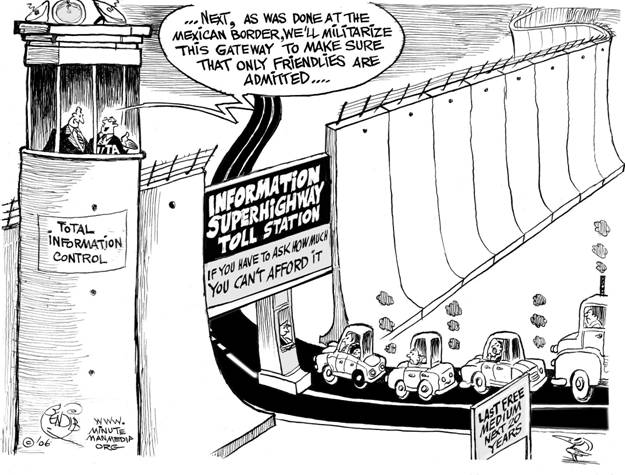

Government Helped Create The Internet

Let us review the history. Even setting aside the very basic fact that the underlying technology for the Internet was created under a government program, and was set free for commercial purposes by Congress, it’s still hard to get away from the reality that the Internet as we know it was started, and flourished, in a regulated environment. While the content that went online, through bulletin boards, America Online, CompuServe, Prodigy and the rest, wasn’t regulated, the telecommunications carriers to a large extent were.

Before the advent of the cable modem, the telephone companies that carried the online traffic not only were under tight rate-of-return regulation, but they were also subject to the sections of the Communications Act barring unreasonable discrimination (Sec. 202). They also had to sell their services wholesale. Amazingly, with all of that regulation, the first iteration of the online world grew, with thousands of local Internet Service Providers able to afford access to the network so they could offer their services to the public.

The new and fancy equipment came because the Federal Communications Commission (FCC) in 1968 broke through the tariff of then Bell System and allowed outside, customer-owned devices to be connected to the network. That decision brought competition in long distance as well as setting the stage for the fax, modem and other gadgets.

For the record, eBay was founded in 1995. Google came along three years later. It wasn’t until 2002 that the FCC under Chairman Michael Powell started the process of classifying nascent cable-modem service as an “information service” under the 1996 Telecommunications Act. Both cable and DSL were taken out from under most regulations by the FCC in 2005, when today’s Internet took shape. That decision, combined with some archaic, in-the-weeds technical matters, combined to wipe out the hundreds of local online and Internet Service Providers along with most of the competition for the telephone companies. One of the rules swept away was the prohibition against unreasonable discrimination — the part of the law that enforced what we now know as Net Neutrality. That’s what the proponents of a free and open Internet are trying to reclaim. It’s very simple — those companies carrying traffic can’t play favorites.

Google’s founders have said repeatedly they wouldn’t have been able to get off the ground if they had been required to pay extra fees for telecommunications services to get onto a “fast lane” of service.

Market-Based Myths Abound

The argument against Net Neutrality really goes off-track when it gets into the nature of private property, the state of competition, and the effect of regulation. That’s more than one track to be thrown off of, so it’s quite the disaster scene. We may need CSI: Telecom to sort it all out.

Public Knowledge earned its headline in the Spectator because of the petition we filed with the FCC asking that companies like Verizon which offer text messaging not be able to decide which groups should be deemed worthy of service and which shouldn’t be.

Read the rest of it here. / The Huffington Post
Also see Net Neutrality by Christopher Kuttruff / truthout

The Rag Blog
Posted in RagBlog | Tagged , , , | Leave a comment

D. Reavis : A Bridge to Earlier Times in Texas

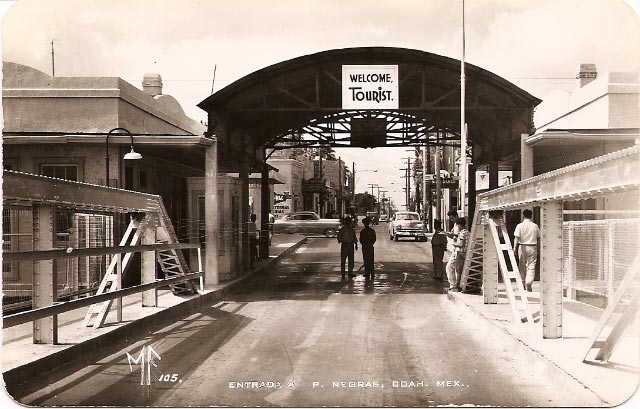
Bridge at Eagle Pass, Texas / Piedras Negras, Coah., Mexico

Postcards and Border Walls
By Dick J. Reavis
/ The Rag Blog / May 5, 2008

In 1986 I drove every mile of every road on the official highway map of Texas: federal, state and interstate highways, Farm-to-Market roads, too. The venture, underwritten by Texas Monthly and billed as “The National Tour of Texas,” covered some 70,000 miles, though because of necessary doubling-back, I had to drive 37,000 more to get the job done. Chevrolet provided advertising and a Suburban, and I spent a year on the road, mostly not on urban loops or thoroughfares, but coursing through the countryside. Nobody before, and nobody since, has seen Texas in quite the same way.

I kept a long, fat book of lined paper, covered in green canvas, that carried instructions from the Houston office of the American Automobile Association. Its pages told me, for example, “SH 78 S to FM 271 appx. 3 mi./ FM271 SE to FM 68 at Gaber 9 mi.”

Each morning I tossed the book onto the car seat and drove until sundown, usually stopping at noontime for a chopped beef sandwich; my ambition, never realized, was to become an authority on Texas barbecue. I stopped and took pictures of every county courthouse, all 254 of them, but my photos were too murky for commercial use. In almost every settlement, I went to a post office and cajoled a clerk into stamping his date-and-place seal onto a page of my book, to prove I’d been to the town.


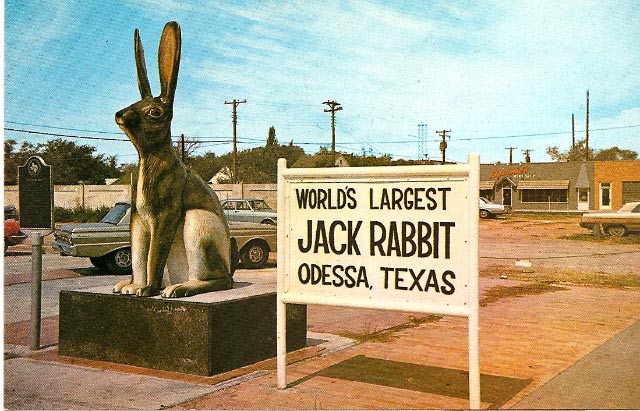
Odessa Jack Rabbit—copyright 1979 SWC Wholesale, Alamogordo, NM

The journey took me to Big Sandy, Big Spring, and Big Wells, to Cross Cut, Cross Plains and Cross Roads (also Crossroads), to Athens, Boston, Detroit, Moscow, New York, Paris, Notrees, Uncertain, Nada, China and even Nigton, whose name is patently offensive.

Everywhere I stopped, I looked for postcards. I bought whatever was available, a collection that fills two shoe boxes. When I look at these cards today, I am overcome with longing, and in regard to one feature of the Texas landscape, with rage.

Postcards were popular before long distance telephone calls became cheap. By 1986, that era was gone. Often those I found on the shelves of cafes and drug stores were ten, even 20, years old; a few were older than that. The cars in their scenes were from bygone days.

The postcards depicted county courthouses and First Methodist churches and places that the locals believed were tourist attractions: monuments, lakes, stadiums and playgrounds.

A few of the cards were fanciful—a cowboy riding a giant jack rabbit, for example—and some were plainly funny, either mistakes or honest-to-goodness fakes, showing trout fishing, mountains and pines, from Stratford-on- the-Panhandle, or birch trees in the environs of Hillsboro.

When I look at them today, some of those cards call forth nostalgia. They show buildings or attractions that have since disappeared from the life of Texas: the Aquarena in San Marcos, the Bon Ton restaurant in La Grange, once a traditional stopover on a Houston-Austin drive.

But one set of the cards turns my geezer’s sentimentality to bile. International bridges are a unique feature of Texas architecture—no other American state has them—and border towns were proud of their crossing points. Regulations were lax, life was friendly, and safe and slow atop those spans. Even the River was placid: as a boy in Del Rio during the ‘Fifties, I sometimes rode my bicycle to the bank of the Rio Grande, just to watch shepherds and their flocks on the southern side. Nobody bothered me.

My postcard collection makes it evident that nothing still extant in Texas has changed so much as our borderland doorways. Today’s scene—spying towers, gas-guzzling behemoths, Border Patrol and DEA stickers on their doors, vertical concrete slabs — is not worthy of a postcard. It is entirely cheerless.

Texas was born of Mexico. Like a headstrong adolescent, it went its own way. But when it reached adulthood, parent and child were frequent, unregistered guests in each other’s homes.

Texas was a striver from infancy, burning to rise above its parentage. As if to legitimize itself by finding father figures, it placed itself under the “protection” of the Union, then the Confederacy, then the Union again. None of these stepfathers showed any respect for Mexico. Now our national government, with mean-spirited logic from afar, has put a wall between us and our mother, keeping her at a distance, under surveillance and the point of a gun.

[Dick J. Reavis, a contributor to The Rag Blog, is an award-winning journalist and author. A native Texan, Reavis teaches journalism at North Carolina State University. He was a civil rights worker in the South in the sixties and then was active with Students for a Democratic Society (SDS) at the University of Texas in Austin. He was a frequent contributor to Austin’s iconic underground newspaper, The Rag, and wrote feature articles for Texas Monthly magazine for 12 years, serving as a senior editor at that publication. Dick Reavis’ book, The Ashes of Waco, about the siege and burning of the Branch Davidian compound, was published by Simon and Schuster and may be the definitive work on the subject.]


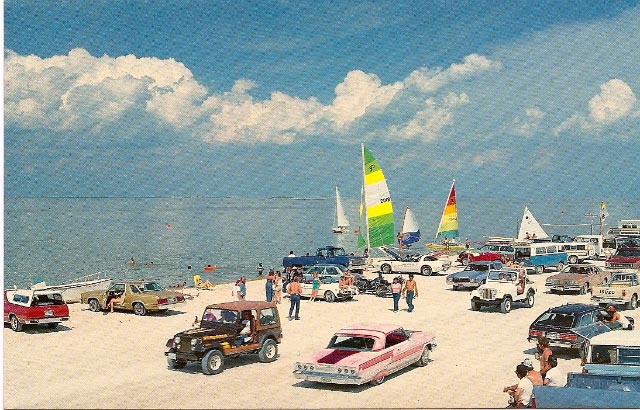
Magnolia beach—Phillip Thomae Photographer, Port Lavaca

To see more of Dick’s postcards, click here.

The Rag Blog

Posted in Rag Bloggers | Tagged , , | 3 Comments

Bill Moyers : A Texan’s Take on the Journalist’s Job

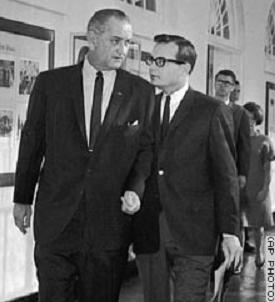
Bill Moyers with Lyndon Johnson

Journalists as Truth Tellers
By Bill Moyers / May 4, 2008

[Texan Bill Moyers delivered these remarks on April 3 in Washington, DC at the fifth annual Ridenhour Prize awards ceremony, sponsored by The Nation Institute and the Fertel Foundation, at which Moyers received the Courage Prize. Moyers, who began his carreer in journalism at 16 as a cub reporter for the Marshall (Texas) News Messenger, served as press secretary to President Lyndon Johnson. In 2006 he was awarded a Lifetime Emmy award for his commentary on public television.

Moyers was introduced by Texas liberal legend Sissy Farenthold.]

Thank you very much, Sissy Farenthold, for those very generous words, spoken like one Texan to another–extravagantly. Thank you for the spirit of kinship. I could swear that I sensed our good Molly Ivins standing there beside you.

I am as surprised to be here as I am grateful. I never thought of myself as courageous, and still don’t. Ron Ridenhour was courageous. To get the story out, he had to defy the whole might and power of the United States government, including its war machine. I was then publisher of Newsday, having left the White House some two years earlier. Our editor Bill McIlwain played the My Lai story big, as he should, much to the chagrin of the owner who couldn’t believe Americans were capable of such atrocities. Our readers couldn’t believe it either. Some of them picketed outside my office for days, their signs accusing the paper of being anti-American for publishing repugnant news about our troops. Some things never change.

A few years later, I gave the commencement at a nearby university, and when I finished the speech, a woman who had just been graduated came up to me and said, “Mr. Moyers, you’ve been in both government and journalism; that makes everything you say twice as hard to believe.” She was on to something.

After my government experience, it took me a while to get my footing back in journalism. I had to learn all over again that what is important for the journalist is not how close you are to power, but how close you are to reality. Over the last forty years, I would find that reality in assignment after assignment, from covering famine in Africa and war in Central America to inner-city families trapped in urban ghettos and middle-class families struggling to survive in an era of downsizing across the heartland. I also had to learn one of journalism’s basic lessons. The job of trying to tell the truth about people whose job it is to hide the truth is almost as complicated and difficult as trying to hide it in the first place. We journalists are of course obliged to cover the news, but our deeper mission is to uncover the news that powerful people would prefer to keep hidden.

Unless you are willing to fight and re-fight the same battles until you go blue in the face, drive the people you work with nuts going over every last detail to make certain you’ve got it right, and then take all of the slings and arrows directed at you by the powers that be–corporate and political and sometimes journalistic–there is no use even trying. You have to love it and I do. I.F. Stone once said, after years of catching the government’s lies and contradictions, “I have so much fun, I ought to be arrested.” Journalism 101.

So it wasn’t courage I counted on; it was exhilaration and good luck. When the road forked, I somehow stumbled into the right path, thanks to mentors like Eric Sevareid, Fred Friendly, Walter Cronkite and scores of producers, researchers and editors who lifted me to see further than one can see unless one is standing on the shoulders of others.


The quintessential lesson of my life came from another Texan named John Henry Faulk. He was a graduate, as am I, of the University of Texas. He served in the Merchant Marines, the American Red Cross and the U.S. Army during World War II, and came home to become a celebrated raconteur and popular national radio host whose career was shattered when right-wingers inspired by Joseph McCarthy smeared him as a communist. He lost his sponsors and was fired. But he fought back with a lawsuit that lasted five years and cost him every penny he owned. Financial help from Edward R. Murrow and a few others helped him to hang on. In the end, John Henry Faulk won, and his courage helped to end the Hollywood era of blacklisting. You should read his book, Fear on Trial, and see the movie starring George C. Scott. John Henry’s courage was contagious.

Before his death I produced a documentary about him, and during our interview he told me the story of how he and his friend, Boots Cooper, were playing in the chicken house there in central Texas when they were about twelve years old. They spotted a chicken snake in the top tier of the nest, so close it looked like a boa constrictor. As John Henry told it, “All of our frontier courage drained out of our heels. Actually, it trickled down our overall legs. And Boots and I made a new door through the hen house.” His momma came out to see what all of the fuss was about, and she said to Boots and John Henry, “Don’t you know chicken snakes are harmless? They can’t hurt you.” Rubbing his forehead and his behind at the same time, Boots said, “Yes, Mrs. Faulk, I know, but they can scare you so bad you’ll hurt yourself.”

John Henry Faulk never forgot that lesson. I’m always ashamed when I do. Temptation to co-option is the original sin of journalism, and we’re always finding fig leaves to cover it: economics, ideology, awe of authority, secrecy, the claims of empire. In the buildup to the invasion of Iraq we were reminded of what the late great reporter A.J. Liebling meant when he said the press is “the weak slat under the bed of democracy.” The slat broke after the invasion and some strange bedfellows fell to the floor: establishment journalists, neo-con polemicists, beltway pundits, right-wing warmongers flying the skull and bones of the “balanced and fair brigade,” administration flacks whose classified leaks were manufactured lies–all romping on the same mattress in the foreplay to disaster.

Five years, thousands of casualties, and hundreds of billion dollars later, most of the media co-conspirators caught in flagrante delicto are still prominent, still celebrated, and still holding forth with no more contrition than a weathercaster who made a wrong prediction as to the next day’s temperature. The biblical injunction, “Go and sin no more,” is the one we most frequently forget in the press. Collectively, we don’t seem to learn that all it takes to transform an ordinary politician and a braying ass into the modern incarnation of Zeus and the oracle of Delphi is an oath on the Bible, a flag in the lapel, and the invocation of national security.

There are, fortunately, always exceptions to whatever our latest dismal collective performance yields. America produces some world-class journalism, including coverage of the Iraq War by men and women as brave as Ernie Pyle. But I still wish we had a professional Hippocratic Oath of our own that might stir us in the night when we stray from our mission. And yes, I believe journalism has a mission.

Walter Lippman was prescient on this long before most of you were born. Lippman, who became the ultimate Washington insider–someone to whom I regularly leaked–acknowledged that while the press may be a weak reed to lean on, it is the indispensable support for freedom. He wrote, “The present crisis of Western democracy is a crisis of journalism. Everywhere men and women are conscious that somehow they must deal with questions more intricate than any that church or school had prepared them to understand. Increasingly, they know that they cannot understand them if the facts are not quickly and steadily available. All the sharpest critics of democracy have alleged is true if there is no steady supply of trustworthy and relevant news. Incompetence and aimlessness, corruption and disloyalty, panic and ultimate disaster must come to any people denied an assured access to the facts.”

So for all the blunders for which we are culpable; for all the disillusionment that has set in among journalists with every fresh report of job cuts and disappearing news space; for all the barons and buccaneers turning the press into a karaoke of power; for all the desecration visited on broadcast journalism by the corporate networks; for all the nonsense to which so many aspiring young journalists are consigned; and for all the fears about the eroding quality of the craft, I still answer emphatically when young people ask me, “Should I go into journalism today?” Sometimes it is difficult to urge them on, especially when serious questions are being asked about how loyal our society is to the reality as well as to the idea of an independent and free press. But I almost always answer, “Yes, if you have a fire in your belly, you can still make a difference.”

I remind them of how often investigative reporting has played a crucial role in making the crooked straight. I remind them how news bureaus abroad are a form of national security that can tell us what our government won’t. I remind them that as America grows more diverse, it’s essential to have reporters, editors, producers and writers who reflect these new rising voices and concerns. And I remind them that facts can still drive the argument and tug us in the direction of greater equality and a more democratic society. Journalism still matters.

But I also tell them there is something more important than journalism, and that is the truth. They aren’t necessarily one and the same because the truth is often obscured in the news. In his new novel, The Appeal, John Grisham tells us more about corporate, political and legal jihads than most newspapers or network news ever will; more about Wall Street shenanigans than all the cable business channels combined; more about Manchurian candidates than you will ever hear on the Sunday morning talk shows.

For that matter, you will learn more about who wins and who loses in the real business of politics, which is governance, from the public interest truth-tellers of Washington than you will from an established press tethered to official sources. The Government Accountability Project, POGO, the Sunlight Foundation, Citizens Against Government Waste, Taxpayers for Common Sense, the Center for Responsible Politics, the National Security Archive, CREW, the Center for Public Integrity, just to name a few–and from whistleblowers of all sorts who never went to journalism school, never flashed a press pass, and never attended a gridiron dinner.

Ron Ridenhour was not a journalist when he came upon the truth of My Lai. He was in the Army. He later became a pioneering investigative reporter and–this is the irony–had trouble making a living in a calling where truth-telling can be a liability to the bottom line. Matthew Diaz and James Scurlock, whom you honored today, are truth-tellers without a license, reminding us that the most important credential of all is a conscience that cannot be purchased or silenced.

So I tell inquisitive and inquiring young people: “Journalism still makes a difference, but the truth matters more. And if you can’t get to the truth through journalism, there are other ways to go.”

To The Nation Institute and the Fertel Foundation, to the Ridenhour judges and to all of you, thank you again for this moment and, above all, for the courage of your own convictions.

Source. / The Nation

The Rag Blog

Posted in RagBlog | Tagged , , , | Leave a comment

Bomb Bomb Iran, Surgical Strike Dept.


United States is drawing up plans to strike on Iranian insurgency camp
By Michael Smith / May 4, 2008

The US military is drawing up plans for a “surgical strike” against an insurgent training camp inside Iran if Republican Guards continue with attempts to destabilise Iraq, western intelligence sources said last week. One source said the Americans were growing increasingly angry at the involvement of the Guards’ special-operations Quds force inside Iraq, training Shi’ite militias and smuggling weapons into the country.

Despite a belligerent stance by Vice-President Dick Cheney, the administration has put plans for an attack on Iran’s nuclear facilities on the back burner since Robert Gates replaced Donald Rumsfeld as defence secretary in 2006, the sources said.

However, US commanders are increasingly concerned by Iranian interference in Iraq and are determined that recent successes by joint Iraqi and US forces in the southern port city of Basra should not be reversed by the Quds Force.

“If the situation in Basra goes back to what it was like before, America is likely to blame Iran and carry out a surgical strike on a militant training camp across the border in Khuzestan,” said one source, referring to a frontier province.

They acknowledged Iran was unlikely to cease involvement in Iraq and that, however limited a US attack might be, the fighting could escalate.

Although American defence chiefs are firmly opposed to any attack on Iranian nuclear facilities, they believe a raid on one of the camps training Shi’ite militiamen would deliver a powerful message to Tehran.

British officials believe the US military tends to overestimate the effect of the Iranian involvement in Iraq.

But they say there is little doubt that the Revolutionary Guard exercises significant influence over splinter groups of the radical cleric Moqtada al-Sadr’s Mahdi Army, who were the main targets of recent operations in Basra.

The CBS television network reported last week that plans were being drawn up for an attack on Iran, citing an officer who blamed the “increasingly hostile role” Iran was playing in Iraq.

The American news reports were unclear about the precise target of such an action and referred to Iran’s nuclear facilities as the likely objective.

According to the intelligence sources there will not be an attack on Iran’s nuclear capacity. “The Pentagon is not keen on that at all. If an attack happens it will be on a training camp to send a clear message to Iran not to interfere.”

President George W Bush is known to be determined that he should not hand over what he sees as “the Iran problem” to his successor. A limited attack on a training camp may give an impression of tough action, while at the same time being something that both Gates and the US commander in Iraq, General David Petraeus, could accept.

Source. / The Sunday Times, U.K.
See Mick Smith’s defence blog.

Thanks to Roger Baker / The Rag Blog

Posted in RagBlog | Tagged , , , | Leave a comment

The Modus Operandi of Our Establishment Press


The Media, The Right and 1988: Endless Deja Vu
by Glenn Greenwald / May 4, 2008

A large bulk of the political and pundit class are forever stuck in 1972, reflexively viewing every political conflict through its myopic prism (any war-opponent-candidate = George McGovern = loser). But as a New York Times article by Robin Toner this morning illustrates, the far more relevant precedent for this year’s election is 1988. Toner quotes something I wrote after Barack Obama’s Philadelphia race speech to define the critical question:

Sometimes, as Senator Barack Obama seemed to argue earlier this year, a flag pin is just a flag pin. But it can never be that simple for anyone with direct experience of the 1988 presidential campaign. That year, the Republicans used the symbols of nationhood (notably, whether schoolchildren should be required to recite the Pledge of Allegiance) to bludgeon the Democrats, challenge their patriotism and utterly redefine their nominee, Gov. Michael S. Dukakis of Massachusetts.

The memory of that campaign — reinforced, for many, by the attacks on Senator John Kerry’s Vietnam war record in the 2004 election — haunts Democrats of a certain generation. . . .

Mr. Obama, of Illinois, has promised a different politics, one that rises above the fray and the distractions of wedge issues. As Glenn Greenwald, a columnist for Salon, recently put it, “The entire Obama campaign is predicated on the belief that it is no longer 1988.”

But is that true?

That is the central question in 2008. For exactly that reason, I devote a substantial portion of Great American Hypocrites to analyzing the twisted, petty personality-based themes that dominated that election — and that led to the victory of an extremely unpopular and distrusted political figure: George Bush the First — because that is when the GOP pioneered the manipulative playbook that they have been using ever since to destroy the “character” and personality of Democratic candidates. And the circumstances that prevailed in the 1988 election make it an almost perfect parallel to this year’s election. Just as is true now, Americans heading into the 1988 election had endured almost two full terms of Republican rule under a President who — contrary to the Myth of the Canonized Ronald Reagan — they had come to distrust and disapprove of. That’s why 1987 and early 1988 polls continuously showed George Bush the First running far behind prospective Democratic challengers — because the GOP brand, like now, was profoundly discredited among the citizenry (though to a lesser extent than it is now). From a March 3, 1987 NYT article by then-reporter E.J. Dionne:

President Reagan’s approval rating has plunged to its lowest level in more than four years, according to the latest New York Times/CBS News Poll. The survey, taken Saturday and Sunday after the release of the report of a Presidential commission on the Iran arms deal, found that 42 percent of those surveyed approved of the way Mr. Reagan was handling his job and 46 percent disapproved.

It was his lowest rating since January 1983, when 41 percent approved of his performance. . . . About half the 1,174 adults interviewed by telephone said Mr. Reagan was lying about key aspects of the Iran arms affair. Only a quarter said he was in charge of what went on in his Administration, down significantly from earlier surveys. . . .

Vice President Bush has also suffered a significant drop in his popularity. This time 32 percent of those surveyed said they had a favorable opinion of him and 19 percent a negative view; in January 43 percent were favorable and 23 percent unfavorable ….

Still, the erosion has clearly hurt Mr. Bush politically. Asked how they would vote if the 1988 election were held now, 47 percent of registered voters said they would back former Senator Gary Hart, the Democrat with the most support in surveys of his party, and only 34 percent chose Mr. Bush ….

But almost every other measure in the survey indicated a deep erosion in Mr. Reagan’s popularity.

Approval of Mr. Reagan’s handling of foreign policy was at the lowest level of his Presidency: only 29 percent of those surveyed approved; 58 percent disapproved.

And, in a response that was tougher on Mr. Reagan than the commission was, a majority of those surveyed said they did not believe Mr. Reagan’s statement that he forgot when he approved the arms sales to Iran. They were asked: “Ronald Reagan has said he does not remember when he approved the arms sales to Iran. Do you think he really does not remember, or is he lying about that?” Thirty-five percent said they believed Mr. Reagan; 51 percent said he was lying. . . .

Half those surveyed thought the affair was at least as serious as Watergate, and about as many said it was of “great importance” to the country, as against a third who thought it had some importance and a sixth who thought it was of little importance.

For those reasons, just as is true now, the GOP operatives running Bush the First’s campaign — Lee Atwater and Roger Ailes — realized that they could never win the election if Americas voted on the basis of substance, policy positions and issues. They thus resolved to shift the playing field away from issues to manipulative, adolescent questions of patriotism, manliness, and personal likability. Hence: Dukakis is an effete elitist who doesn’t believe in the Pledge of Allegiance; he looks dorky bowling wearing a helmet; he proved he wasn’t a man when he failed to show primal rage when asked in a debate about his wife being hypothetically raped, etc. etc. With the help of a media enthralled to such shallow, easy-to-chatter-about attacks, they succeeded in electing a highly unpopular figure from a scandal-plagued, discredited party. And Republicans, with their media partners, have been using that depraved playbook ever since, and will continue to do so this year. For the 1988 election, Reagan’s severe economic mismanagement, his disastrous foreign policy filled with savage covert wars, and widespread perceptions that top Reagan officials had blatantly lied about breaking the law were all just disappeared. Actual issues played virtually no role in George Bush the First’s 40-state triumph.

Read all of it here. / Common Dreams

The Rag Blog

Posted in RagBlog | Tagged , , | Leave a comment

Hope This Makes You Breathe Easier


The Greatest Story Never Told:
Study Says Smoking Pot Doesn’t Cause Cancer — It May Prevent It!
By Fred Gardner / May 4, 2008

Smoking Cannabis Does Not Cause Cancer
Of Lung or Upper Airways, Tashkin Finds;
Data Suggest Possible Protective Effect

The story summarized by that headline ran in O’Shaughnessy’s (Autumn 2005), CounterPunch, and the Anderson Valley Advertiser. Did we win Pulitzers, dude? No, the story was ignored or buried by the corporate media. It didn’t even make the “Project Censored” list of under-reported stories for 2005. “We were even censored by Project Censored,” said Tod Mikuriya, who liked his shot of wry.

It’s not that the subject is trivial. One in three Americans will be afflicted with cancer, we are told by the government (as if it’s our immutable fate and somehow acceptable). Cancer is the second leading cause of death in the U.S. and lung cancer the leading killer among cancers. You’d think it would have been very big news when UCLA medical school professor Donald Tashkin revealed that components of marijuana smoke -although they damage cells in respiratory tissue- somehow prevent them from becoming malignant. In other words, something in marijuana exerts an anti-cancer effect.

Tashkin has special credibility. He was the lead investigator on studies dating back to the 1970s that identified the components in marijuana smoke that are toxic. It was Tashkin et al who published photomicrographs showing that marijuana smoke damages cells lining the upper airways. It was the Tashkin lab reporting that benzpyrene -a component of tobacco smoke that plays a role in most lung cancers- is especially prevalent in marijuana smoke. It was Tashkin’s data documenting that marijuana smokers are more likely than non-smokers to cough, wheeze, and produce sputum.

Tashkin reviewed his findings April 4 at a conference organized by “Patients Out of Time,” a reform group devoted to educating doctors and the public (as opposed to lobbying politicians). Some 30 MDs and nurses got continuing medical education credits for attending.

The National Institute on Drug Abuse supported Tashkin’s marijuana-related research over the decades and readily gave him a grant to conduct a large, population-based, case-controlled study that would prove definitively that heavy, long-term marijuana use increases the risk of lung and upper-airways cancers. What Tashkin and his colleagues found, however, disproved their hypothesis. (Tashkin is to marijuana as a cause of lung cancer what Hans Blick is to Iraq’s weapons of mass destruction -an honest investigator who set out to find something, concluded that it wasn’t there, and reported his results.)

Tashkin’s team interviewed 1,212 cancer patients from the Los Angeles County Cancer Surveillance program, matched for age, gender, and neighborhood with 1,040 cancer-free controls. Marijuana use was measured in “joint years” (number of years smoked times number of joints per day). It turned out that increased marijuana use did not result in higher rates of lung and pharyngeal cancer (whereas tobacco smokers were at greater risk the more they smoked). Tobacco smokers who also smoked marijuana were at slightly lower risk of getting lung cancer than tobacco-only smokers.

These findings were not deemed worthy of publication in “NIDA Notes.” Tashkin reported them at the 2005 meeting of the International Cannabinoid Research Society and they were published in the October 2006 issue of Cancer Epidemiology Biomarkers & Prevention. Without a press release from NIDA calling attention to its significance, the assignment editors of America had no idea that “Marijuana Use and the Risk of Lung and Upper Aerodigestive Tract Cancers: Results of a Population-Based Case-Control Study” by Mia Hashibe1, Hal Morgenstern, Yan Cui, Donald P. Tashkin, Zuo-Feng Zhang, Wendy Cozen, Thomas M. Mack and Sander Greenland was a blockbuster story.

Read all of it here. / CounterPunch

The Rag Blog

Posted in RagBlog | Tagged , , | 3 Comments

Quote of the Day : Cojones

Concerning Hillary and Obama: “If she gave him one of her cojones, they’d both have two.”

James Carville, in Newsweek

Posted in RagBlog | Tagged , , | Leave a comment

a world that can get well

Paul Stanley.

there’s something so wrong about wanting to wake up every day
and the world not be at war somewhere and for people to not be
angry with each other and hate each other and for people, children,
not to be starving, not to be hurting from alienation and violence,
from berating and private closeted acts of harm by family who are
indifferent to their children’s suffering, their own suffering,
about always getting out of bed wanting the world to be a better place
to live and to be, and to want my life, everyone’s life, to be kinder,
maybe easier in some ways, to be more like each of us wants it to be,
however that is, as long as it doesn’t involve hurting anyone else,
or ourselves either, because what is a world where everyone doesn’t
get the life they most want or often even a life they can tolerate,
what is a world that begins every day with wanting a better world
to live in, a world that can get well, a world we can live in,
that we get to live in

a world that can get well


By Larry Piltz
April 8, 2008
Indian Cove / Austin, Texas

Posted May 4, 2008
The Rag Blog

Larry Piltz poetry on The Rag Blog

Posted in Rag Bloggers | Tagged , | Leave a comment

Rev. Hagee : John McCain’s Cross to Bear

John Hagee compares † Roman Church † to Hitler

The All-White Elephant in the Room
By Frank Rich / May 4, 2008

BORED by those endless replays of the Rev. Jeremiah Wright? If so, go directly to YouTube, search for “John Hagee Roman Church Hitler,” and be recharged by a fresh jolt of clerical jive.

What you’ll find is a white televangelist, the Rev. John Hagee, lecturing in front of an enormous diorama. Wielding a pointer, he pokes at the image of a woman with Pamela Anderson-sized breasts, her hand raising a golden chalice. The woman is “the Great Whore,” Mr. Hagee explains, and she is drinking “the blood of the Jewish people.” That’s because the Great Whore represents “the Roman Church,” which, in his view, has thirsted for Jewish blood throughout history, from the Crusades to the Holocaust.

Mr. Hagee is not a fringe kook but the pastor of a Texas megachurch. On Feb. 27, he stood with John McCain and endorsed him over the religious conservatives’ favorite, Mike Huckabee, who was then still in the race.

Are we really to believe that neither Mr. McCain nor his camp knew anything then about Mr. Hagee’s views? This particular YouTube video — far from the only one — was posted on Jan. 1, nearly two months before the Hagee-McCain press conference. Mr. Hagee appears on multiple religious networks, including twice daily on the largest, Trinity Broadcasting, which reaches 75 million homes. Any 12-year-old with a laptop could have vetted this preacher in 30 seconds, tops.

Since then, Mr. McCain has been shocked to learn that his clerical ally has made many other outrageous statements. Mr. Hagee, it’s true, did not blame the American government for concocting AIDS. But he did say that God created Hurricane Katrina to punish New Orleans for its sins, particularly a scheduled “homosexual parade there on the Monday that Katrina came.”

Mr. Hagee didn’t make that claim in obscure circumstances, either. He broadcast it on one of America’s most widely heard radio programs, “Fresh Air” on NPR, back in September 2006. He reaffirmed it in a radio interview less than two weeks ago. Only after a reporter asked Mr. McCain about this Katrina homily on April 24 did the candidate brand it as “nonsense” and the preacher retract it.

Mr. McCain says he does not endorse any of Mr. Hagee’s calumnies, any more than Barack Obama endorses Mr. Wright’s. But those who try to give Mr. McCain a pass for his embrace of a problematic preacher have a thin case. It boils down to this: Mr. McCain was not a parishioner for 20 years at Mr. Hagee’s church.

That defense implies, incorrectly, that Mr. McCain was a passive recipient of this bigot’s endorsement. In fact, by his own account, Mr. McCain sought out Mr. Hagee, who is perhaps best known for trying to drum up a pre-emptive “holy war” with Iran.(This preacher’s rantings may tell us more about Mr. McCain’s policy views than Mr. Wright’s tell us about Mr. Obama’s.) Even after Mr. Hagee’s Catholic bashing bubbled up in the mainstream media, Mr. McCain still did not reject and denounce him, as Mr. Obama did an unsolicited endorser, Louis Farrakhan, at the urging of Tim Russert and Hillary Clinton. Mr. McCain instead told George Stephanopoulos two Sundays ago that while he condemns any “anti-anything” remarks by Mr. Hagee, he is still “glad to have his endorsement.”

I wonder if Mr. McCain would have given the same answer had Mr. Stephanopoulos confronted him with the graphic video of the pastor in full “Great Whore” glory. But Mr. McCain didn’t have to fear so rude a transgression. Mr. Hagee’s videos have never had the same circulation on television as Mr. Wright’s. A sonorous white preacher spouting venom just doesn’t have the telegenic zing of a theatrical black man.

Perhaps that’s why virtually no one has rebroadcast the highly relevant prototype for Mr. Wright’s fiery claim that 9/11 was America’s chickens “coming home to roost.” That would be the Sept. 13, 2001, televised exchange between Pat Robertson and Jerry Falwell, who blamed the attacks on America’s abortionists, feminists, gays and A.C.L.U. lawyers. (Mr. Wright blamed the attacks on America’s foreign policy.) Had that video re-emerged in the frenzied cable-news rotation, Mr. McCain might have been asked to explain why he no longer calls these preachers “agents of intolerance” and chose to cozy up to Mr. Falwell by speaking at his Liberty University in 2006.

None of this is to say that two wacky white preachers make a Wright right. It is entirely fair for any voter to weigh Mr. Obama’s long relationship with his pastor in assessing his fitness for office. It is also fair to weigh Mr. Obama’s judgment in handling this personal and political crisis as it has repeatedly boiled over. But whatever that verdict, it is disingenuous to pretend that there isn’t a double standard operating here. If we’re to judge black candidates on their most controversial associates — and how quickly, sternly and completely they disown them — we must judge white politicians by the same yardstick.

When Rudy Giuliani, still a viable candidate, successfully courted Pat Robertson for an endorsement last year, few replayed Mr. Robertson’s greatest past insanities. Among them is his best-selling 1991 tome, “The New World Order,” which peddled some of the same old dark conspiracy theories about “European bankers” (who just happened to be named Warburg, Schiff and Rothschild) that Mr. Farrakhan has trafficked in. Nor was Mr. Giuliani ever seriously pressed to explain why his cronies on the payroll at Giuliani Partners included a priest barred from the ministry by his Long Island diocese in 2002 following allegations of sexual abuse. Much as Mr. Wright officiated at the Obamas’ wedding, so this priest officiated at (one of) Mr. Giuliani’s. Did you even hear about it?

There is not just a double standard for black and white politicians at play in too much of the news media and political establishment, but there is also a glaring double standard for our political parties. The Clintons and Mr. Obama are always held accountable for their racial stands, as they should be, but the elephant in the room of our politics is rarely acknowledged: In the 21st century, the so-called party of Lincoln does not have a single African-American among its collective 247 senators and representatives in Washington. Yes, there are appointees like Clarence Thomas and Condi Rice, but, as we learned during the Mark Foley scandal, even gay men may hold more G.O.P. positions of power than blacks.

A near half-century after the civil rights acts of the 1960s, this is quite an achievement. Yet the holier-than-thou politicians and pundits on the right passing shrill moral judgment over every Democratic racial skirmish are almost never asked to confront or even acknowledge the racial dysfunction in their own house. In our mainstream political culture, this de facto apartheid is simply accepted as an intractable given, unworthy of notice, and just too embarrassing to mention aloud in polite Beltway company. Those who dare are instantly accused of “political correctness” or “reverse racism.”

An all-white Congressional delegation doesn’t happen by accident. It’s the legacy of race cards that have been dealt since the birth of the Southern strategy in the Nixon era. No one knows this better than Mr. McCain, whose own adopted daughter of color was the subject of a vicious smear in his party’s South Carolina primary of 2000.

This year Mr. McCain has called for a respectful (i.e., non-race-baiting) campaign and has gone so far as to criticize (ineffectually) North Carolina’s Republican Party for running a Wright-demonizing ad in that state’s current primary. Mr. McCain has been posing (awkwardly) with black people in his tour of “forgotten” America. Speaking of Katrina in New Orleans, he promised that “never again” would a federal recovery effort be botched on so grand a scale.

This is all surely sincere, and a big improvement over Mitt Romney’s dreams of his father marching with the Rev. Dr. Martin Luther King Jr. Up to a point. Here, too, there’s a double standard. Mr. McCain is graded on a curve because the G.O.P. bar is set so low. But at a time when the latest Wall Street Journal-NBC News poll shows that President Bush is an even greater drag on his popularity than Mr. Wright is on Mr. Obama’s, Mr. McCain’s New Orleans visit is more about the self-interested politics of distancing himself from Mr. Bush than the recalibration of policy.

Mr. McCain took his party’s stingier line on Katrina aid and twice opposed an independent commission to investigate the failed government response. Asked on his tour what should happen to the Ninth Ward now, he called for “a conversation” about whether anyone should “rebuild it, tear it down, you know, whatever it is.” Whatever, whenever, never mind.

For all this primary season’s obsession with the single (and declining) demographic of white working-class men in Rust Belt states, America is changing rapidly across all racial, generational and ethnic lines. The Census Bureau announced last week that half the country’s population growth since 2000 is due to Hispanics, another group understandably alienated from the G.O.P.

Anyone who does the math knows that America is on track to become a white-minority nation in three to four decades. Yet if there’s any coherent message to be gleaned from the hypocrisy whipped up by Hurricane Jeremiah, it’s that this nation’s perennially promised candid conversation on race has yet to begin.

Source. / New York Times

Thanks to Harry Edwards / The Rag Blog

Posted in RagBlog | Tagged , , , , , | Leave a comment

We Must Also Save Ourselves from Ourselves

The Epitome of Conspicuous Consumption

The Gospel of Consumption
by Jeffrey Kaplan / May 3, 2008

Private cars were relatively scarce in 1919 and horse-drawn conveyances were still common. In residential districts, electric streetlights had not yet replaced many of the old gaslights. And within the home, electricity remained largely a luxury item for the wealthy.

Just ten years later things looked very different. Cars dominated the streets and most urban homes had electric lights, electric flat irons, and vacuum cleaners. In upper-middle-class houses, washing machines, refrigerators, toasters, curling irons, percolators, heating pads, and popcorn poppers were becoming commonplace. And although the first commercial radio station didn’t begin broadcasting until 1920, the American public, with an adult population of about 122 million people, bought 4,438,000 radios in the year 1929 alone.

But despite the apparent tidal wave of new consumer goods and what appeared to be a healthy appetite for their consumption among the well-to-do, industrialists were worried. They feared that the frugal habits maintained by most American families would be difficult to break. Perhaps even more threatening was the fact that the industrial capacity for turning out goods seemed to be increasing at a pace greater than people’s sense that they needed them.

It was this latter concern that led Charles Kettering, director of General Motors Research, to write a 1929 magazine article called “Keep the Consumer Dissatisfied.” He wasn’t suggesting that manufacturers produce shoddy products. Along with many of his corporate cohorts, he was defining a strategic shift for American industry-from fulfilling basic human needs to creating new ones.

In a 1927 interview with the magazine Nation’s Business, Secretary of Labor James J. Davis provided some numbers to illustrate a problem that the New York Times called “need saturation.” Davis noted that “the textile mills of this country can produce all the cloth needed in six months’ operation each year” and that 14 percent of the American shoe factories could produce a year’s supply of footwear. The magazine went on to suggest, “It may be that the world’s needs ultimately will be produced by three days’ work a week.”

Business leaders were less than enthusiastic about the prospect of a society no longer centered on the production of goods. For them, the new “labor-saving” machinery presented not a vision of liberation but a threat to their position at the center of power. John E. Edgerton, president of the National Association of Manufacturers, typified their response when he declared: “I am for everything that will make work happier but against everything that will further subordinate its importance. The emphasis should be put on work-more work and better work.” “Nothing,” he claimed, “breeds radicalism more than unhappiness unless it is leisure.”

By the late 1920s, America’s business and political elite had found a way to defuse the dual threat of stagnating economic growth and a radicalized working class in what one industrial consultant called “the gospel of consumption”-the notion that people could be convinced that however much they have, it isn’t enough. President Herbert Hoover’s 1929 Committee on Recent Economic Changes observed in glowing terms the results: “By advertising and other promotional devices . . . a measurable pull on production has been created which releases capital otherwise tied up.” They celebrated the conceptual breakthrough: “Economically we have a boundless field before us; that there are new wants which will make way endlessly for newer wants, as fast as they are satisfied.”

Today “work and more work” is the accepted way of doing things. If anything, improvements to the labor-saving machinery since the 1920s have intensified the trend. Machines can save labor, but only if they go idle when we possess enough of what they can produce. In other words, the machinery offers us an opportunity to work less, an opportunity that as a society we have chosen not to take. Instead, we have allowed the owners of those machines to define their purpose: not reduction of labor, but “higher productivity”-and with it the imperative to consume virtually everything that the machinery can possibly produce.

FROM THE EARLIEST DAYS of the Age of Consumerism there were critics. One of the most influential was Arthur Dahlberg, whose 1932 book Jobs, Machines, and Capitalism was well known to policymakers and elected officials in Washington. Dahlberg declared that “failure to shorten the length of the working day . . . is the primary cause of our rationing of opportunity, our excess industrial plant, our enormous wastes of competition, our high pressure advertising, [and] our economic imperialism.” Since much of what industry produced was no longer aimed at satisfying human physical needs, a four-hour workday, he claimed, was necessary to prevent society from becoming disastrously materialistic. “By not shortening the working day when all the wood is in,” he suggested, the profit motive becomes “both the creator and satisfier of spiritual needs.” For when the profit motive can turn nowhere else, “it wraps our soap in pretty boxes and tries to convince us that that is solace to our souls.”

There was, for a time, a visionary alternative. In 1930 Kellogg Company, the world’s leading producer of ready-to-eat cereal, announced that all of its nearly fifteen hundred workers would move from an eight-hour to a six-hour workday. Company president Lewis Brown and owner W. K. Kellogg noted that if the company ran “four six-hour shifts . . . instead of three eight-hour shifts, this will give work and paychecks to the heads of three hundred more families in Battle Creek.”

This was welcome news to workers at a time when the country was rapidly descending into the Great Depression. But as Benjamin Hunnicutt explains in his book Kellogg’s Six-Hour Day, Brown and Kellogg wanted to do more than save jobs. They hoped to show that the “free exchange of goods, services, and labor in the free market would not have to mean mindless consumerism or eternal exploitation of people and natural resources.” Instead “workers would be liberated by increasingly higher wages and shorter hours for the final freedom promised by the Declaration of Independence-the pursuit of happiness.”

Read all of it here. / Common Dreams / Onion Magazine

The Rag Blog

Posted in RagBlog | Tagged , | Leave a comment

Winning Hearts and Minds, Yankee Style


Hospital In Baghdad Casualty of US Air Strike
May 3, 2009

A hospital in the Iraqi capital’s Sadr City, a Shiite militia stronghold, was damaged in a US air strike on Saturday, wounding around 20 people, medics and witnesses said.

A medic at the Al-Sadr hospital which was hit said women and children were among the 20 wounded in the strike, which a security official said took place at around 10:00 am (0700 GMT).

The US military confirmed the air strike but said it targeted “known criminal elements”.

“I can confirm that we conducted a strike in Sadr City this morning. The targets were known criminal elements. Battle damage assessment is currently ongoing,” a military spokesman told AFP.

Witnesses said the target of the strike, in which US forces dropped several missiles, was a small house adjacent to Al-Sadr hospital and used as a rest area by Shiite pilgrims.

The impact of the strike damaged more than a dozen ambulances belonging to the hospital, one of the three main medical facilities in the district, and also shattered windows of the building, an AFP reporter at the scene said.

© 2008 Agence France Presse

Source / Common Dreams

Update:

Baghdad hospital damaged by U.S. missile, dozens injured
By Shashank Bengali May 3, 2008

BAGHDAD — A major hospital in Baghdad’s Sadr City slum was damaged Saturday when an American military strike targeted a militia command center just a few yards away, the U.S. military said.

American troops also killed 14 people in separate incidents in and around Sadr City as bloody street battles continued to mark the U.S. effort to rid the area of suspected Shiite Muslim militants, military officials said.

The rocket strike near Sadr Hospital injured 30 people, shattered the windows of ambulances and sent doctors and hospital staff fleeing the scene, hospital officials said.

That hospital and another major facility in Sadr City had already taken in 25 dead bodies between Friday afternoon and 10 a.m. Saturday, when the strike occurred, hospital officials said. None of the injuries was life threatening.

The U.S. military is facing growing criticism over what residents describe as mounting civilian casualties in Sadr City, a densely populated slum of some 2.5 million people, which has seen heavy clashes over the past six weeks between U.S. and Iraqi forces and militiamen loyal to the hard-line Shiite cleric Muqtada al Sadr.

A senior Iranian official accused the U.S. military of attacking Iraqi civilians, telling the official Fars News Agency that Iran would pull out of talks with the United States on Iraqi security unless the attacks stop. The countries held three rounds of talks last year on Iraq — the highest level bilateral talks since 1980 — and are due to meet again this year.

U.S. military officials have repeatedly said they try to avoid civilian casualties. They accuse Iran of arming and training Iraqi militias, a charge that Tehran denies. American officials in Baghdad were reviewing the Iranian report but didn’t immediately comment on it.

Since Iraqi Prime Minister Nouri al Maliki’s Shiite-led government launched an offensive against Sadr’s Mahdi Army militia in the southern port city of Basra in March, Shiite militants have targeted U.S. and Iraqi troops in the sprawling, maze-like slum in northeast Baghdad that is becoming increasingly deadly for American soldiers.

Sadr has called on his followers to end the American occupation of Iraq. American military officials say that militants are using houses in Sadr City as bases from which to fire on U.S. and Iraqi troops and launch mortars into the Green Zone, the heavily fortified seat of government in Baghdad.

Lt. Col. Steve Stover, a U.S. military spokesman, said that the strike near the Sadr Hospital destroyed a house that American intelligence reports described as a command center for militiamen.

“It did not hit the hospital,” Stover said. “Based on the proximity of the house, there may have been shattered windows.”

A hospital official said that the explosion shattered all the windows and sent many doctors running from the building, leaving the emergency ward without enough personnel to deal with injury victims. Television footage showed several ambulances with shattered windows and hospital staff racing through corridors with bleeding victims strapped to gurneys.

“Some of those injured were patients who were on their way into the hospital. Others were just passing by,” said the hospital official, who requested anonymity for security reasons.

McClatchy Newspapers 2008

Source / McClatchy

The Rag Blog

Posted in RagBlog | Tagged , | Leave a comment

A. Embree : 1968 Columbia Student Revolt Remembered in New York

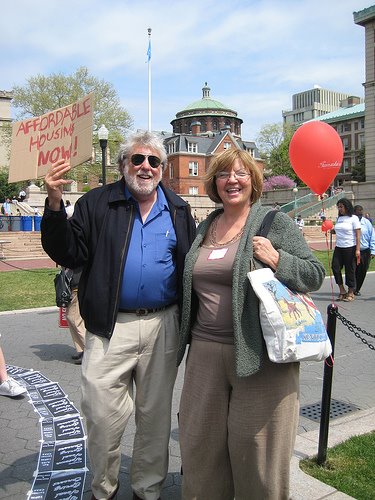
Mark Rudd and Grace (Linda) LeClair, vets of the 1968 Columbia occupation, at 40th anniversary of the uprising in New York. Photo by Alice Embree / The Rag Blog.

Columbia 1968: The View From Texas
By Alice Embree
/ The Rag Blog / May 3, 2008

[Alice Embree is an Austin activist, writer and Ragblogger. She played a major role in Students for a Democratic Society (SDS) in the sixties and seventies, both in Austin and New York, and wrote for underground papers Rat and The Rag.]

In April 1968, Columbia University erupted in protest. Students occupied five buildings. I was there. I wasn’t a Columbia student, but I was there. I worked with the North American Congress on Latin America (NACLA) and caught a briefcase full of documents tossed from the second floor Low Library office of Grayson Kirk’s office that were re-printed in RAT newspaper and used to document the NACLA pamphlet, Who Rules Columbia?

I was at Columbia again April 24-27 for events commemorating the fortieth anniversary of the student uprising. The 1968 occupations were motivated by two major demands – to stop a Morningside Heights gym expansion and sever ties with the Institute for Defense Analysis (IDA). Antiwar passion and black liberation struggle were a potent mix. When the police cleared the buildings forty years ago, they arrested 700 students and left 150 injured. It was a pivotal event for students in a year marked by historic events.

1968 began with the Tet Offensive demonstrating the strength of the Vietnamese national liberation resistance. On April 4, 1968, Martlin Luther King, Jr. was assassinated in Memphis and cities went up in flames. The Columbia strike occurred just weeks before a general strike in Paris. On June 5th Robert Kennedy was assassinated in Los Angeles. In August, tanks rolled into Prague and the National Guard was called up in Chicago where antiwar protestors massed outside the Democratic Convention and were attacked by Chicago police. A student uprising in Mexico City was brutally suppressed in the October 1968.

The Columbia gathering drew several hundred alumni of the protests with their nametags identifying the buildings they occupied: “Hamilton Hall, ’68,” “Mathematics, ’68,” etc. People found old friends and comrades, often needing to be prompted to reconcile gray hair or balding heads with the faces of youth.

On Thursday, the first night, there was a reception followed by a panel on Columbia and the World. Tom Hayden (Mathematics) recalled that year as did Black student activist William Sales (Hamilton Hall). Mark Kurlansky, author of 1968: The Year That Rocked the World, and Victoria de Grasso spoke of the world events that year.

Friday morning, Michael Klare spoke. He was a graduate student in Art History at Columbia when events steered him into research on defense contractors. I worked with him at NACLA. He is the author of Blood and Oil, a professor and defense correspondent for The Nation.

Klare detailed the lessons learned from Vietnam by the Defense Department: to use an all volunteer economic draft, to rely on technology, speed and fire-power, to attempt to reduce U.S. casualties and shorten the military engagement, to outsource military services and carefully control media coverage. He said that Defense Department brass have been extremely critical of the political bungling that has prolonged the military engagement. Many in the military see this as “dishonoring the commitment” of the servicemen and women.

The Friday morning panel also included Tom Engelhardt of the TomDispatch blog and Callie Maidhof, a Columbia student antiwar activist who spoke of the five days of antiwar action undertaken to commemorate the five years of the war. For thirteen hours each day, Columbia antiwar activists read the names of the dead – the known Iraqi dead and the U.S. dead. A gong was sounded for each death. On April 23rd, antiwar activists “hooded” Columbia’s iconic Alma Mater sculpture. With its face covered by black cloth, it appeared as an eerie reminder of Abu Ghraib torture victims.

The first Friday afternoon panel was on Feminist Legacies of 1968. It was a poignant reminder that 1968 preceded the women’s liberation movement. Women who were at Barnard and Columbia forty years ago were often the sandwich-makers, not the speakers. Although 250 women were arrested, their names are not well known. The full effect of the women’s movement can be seen, however, in the current generation of activists where women take leadership roles. The feminist panel included poets, professors, authors and activists. Ti-Grace Atkinson, Rosalyn Baxandall, Elizabeth Diggs, Christine Clark-Evans, Grace (Linda) LeClair, Sharon Olds, Catharine Stimpson participated. They recounted the early days of women’s liberation organizing – picketing the New York Times for gender-segregated want ads, participating in New York Red Stockings and WITCH and the founding of National Organization for Women (NOW).

One of the speakers, Grace (Linda) LeClair, a co-founder of the Calvert Social Investment Fund and Executive Director of NARAL in New Hampshire, was a Barnard student in 1966. She lived off-campus with her boyfriend. When a newspaper reported outed her, she was called before the Barnard president. LeClair was expelled and never graduated. Her boyfriend suffered no such fate, graduating from Columbia.

An afternoon panel on Political Action and Official Response included a judge, law professors and a criminal defense attorney who were veterans of the 1968 protest as well as Lee Bollinger, the President of Columbia. West Harlem organizers infuriated by Columbia’s current expansion plans interrupted Bollinger. A third afternoon panel addressed Race at Columbia, Then and Now, with writer Thulani Davis moderating. It included Manning Marable, a Columbia professor, and two student activists, one representing the Black Student Organization and the other Lucha. Johanna Ocana of Lucha became an activist when the Young Republicans invited a speaker from the Minuteman and students, many of immigrant parents, organized protests.

In the evening a lengthy multi-media event described what happened in April 1968. This was before the era of instant communication, the internet and cell phones with cameras. As pictures projected on huge screens, the occupation story was recounted by Nancy Biberman, Raymond Brown, Leon Denmark, Larry Frazier, Robert Friedman, Stuart Gedal, Juan Gonzalez, Michelle Patrick, Mark Rudd and others. An assistant to New York’s mayor at the time told his side of the story as well.

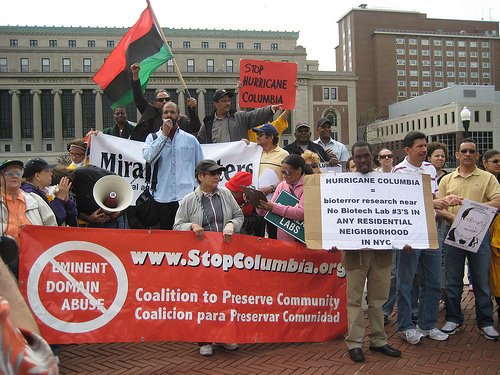
On Saturday, there were movies about 1968 shown and a panel on The Legacy of the Student Movement that included Todd Gittlin, now a Columbia University professor, and John McMillian, a Harvard lecturer. At noon, a Harlem contingent marched up Amsterdam Avenue protesting Columbia’s Manhattanville project. Joined by my daughter and brother-in-law we marched on to campus with them. Although the scheduled events continued, I went to only one more: Organizing, Activism, Engagement, Then and Now at which my daughter and I both spoke.

There was an odd disconnect between those passionate times and the scholarly panel discussions organized by alumni participants. Occasionally, the strident voices of Harlem residents who opposed a current Columbia expansion were reminiscent of that earlier time, particularly when they interrupted President Lee Bollinger. Contemporary Columbia antiwar activists and leaders of the Black Student Organization and Lucha, brought the present tense into discussion.

Many panels were dominated by male voices with credentials – professors and writers. When people lined up for questions, they frequently delivered polemics. It reminded me of being a young Texan in New York on a campus where the elite had been educated to believe they were the center of the known universe. There wasn’t much space for participatory democracy in the rarified Ivy League atmosphere forty years later. Not until the final panel that I attended – an event billed as an intergenerational dialogue – was there a structure that encouraged exchange. A table with microphones set in a circle allowed people to come and go (although some had to be encouraged to speak and then leave). There were more women’s voices and the familiar edge of now. Here, the younger generation showed what is easy to miss: the struggle continues.

Rally during recent Columbia occupation reunion. Photo by Alice Embree / The Rag Blog.

The Rag Blog

Posted in Rag Bloggers | Tagged , , , , | 1 Comment