Winning Hearts and Minds, Yankee Style


Hospital In Baghdad Casualty of US Air Strike
May 3, 2009

A hospital in the Iraqi capital’s Sadr City, a Shiite militia stronghold, was damaged in a US air strike on Saturday, wounding around 20 people, medics and witnesses said.

A medic at the Al-Sadr hospital which was hit said women and children were among the 20 wounded in the strike, which a security official said took place at around 10:00 am (0700 GMT).

The US military confirmed the air strike but said it targeted “known criminal elements”.

“I can confirm that we conducted a strike in Sadr City this morning. The targets were known criminal elements. Battle damage assessment is currently ongoing,” a military spokesman told AFP.

Witnesses said the target of the strike, in which US forces dropped several missiles, was a small house adjacent to Al-Sadr hospital and used as a rest area by Shiite pilgrims.

The impact of the strike damaged more than a dozen ambulances belonging to the hospital, one of the three main medical facilities in the district, and also shattered windows of the building, an AFP reporter at the scene said.

© 2008 Agence France Presse

Source / Common Dreams

Update:

Baghdad hospital damaged by U.S. missile, dozens injured
By Shashank Bengali May 3, 2008

BAGHDAD — A major hospital in Baghdad’s Sadr City slum was damaged Saturday when an American military strike targeted a militia command center just a few yards away, the U.S. military said.

American troops also killed 14 people in separate incidents in and around Sadr City as bloody street battles continued to mark the U.S. effort to rid the area of suspected Shiite Muslim militants, military officials said.

The rocket strike near Sadr Hospital injured 30 people, shattered the windows of ambulances and sent doctors and hospital staff fleeing the scene, hospital officials said.

That hospital and another major facility in Sadr City had already taken in 25 dead bodies between Friday afternoon and 10 a.m. Saturday, when the strike occurred, hospital officials said. None of the injuries was life threatening.

The U.S. military is facing growing criticism over what residents describe as mounting civilian casualties in Sadr City, a densely populated slum of some 2.5 million people, which has seen heavy clashes over the past six weeks between U.S. and Iraqi forces and militiamen loyal to the hard-line Shiite cleric Muqtada al Sadr.

A senior Iranian official accused the U.S. military of attacking Iraqi civilians, telling the official Fars News Agency that Iran would pull out of talks with the United States on Iraqi security unless the attacks stop. The countries held three rounds of talks last year on Iraq — the highest level bilateral talks since 1980 — and are due to meet again this year.

U.S. military officials have repeatedly said they try to avoid civilian casualties. They accuse Iran of arming and training Iraqi militias, a charge that Tehran denies. American officials in Baghdad were reviewing the Iranian report but didn’t immediately comment on it.

Since Iraqi Prime Minister Nouri al Maliki’s Shiite-led government launched an offensive against Sadr’s Mahdi Army militia in the southern port city of Basra in March, Shiite militants have targeted U.S. and Iraqi troops in the sprawling, maze-like slum in northeast Baghdad that is becoming increasingly deadly for American soldiers.

Sadr has called on his followers to end the American occupation of Iraq. American military officials say that militants are using houses in Sadr City as bases from which to fire on U.S. and Iraqi troops and launch mortars into the Green Zone, the heavily fortified seat of government in Baghdad.

Lt. Col. Steve Stover, a U.S. military spokesman, said that the strike near the Sadr Hospital destroyed a house that American intelligence reports described as a command center for militiamen.

“It did not hit the hospital,” Stover said. “Based on the proximity of the house, there may have been shattered windows.”

A hospital official said that the explosion shattered all the windows and sent many doctors running from the building, leaving the emergency ward without enough personnel to deal with injury victims. Television footage showed several ambulances with shattered windows and hospital staff racing through corridors with bleeding victims strapped to gurneys.

“Some of those injured were patients who were on their way into the hospital. Others were just passing by,” said the hospital official, who requested anonymity for security reasons.

McClatchy Newspapers 2008

Source / McClatchy

The Rag Blog

Posted in RagBlog | Tagged , | Leave a comment

A. Embree : 1968 Columbia Student Revolt Remembered in New York

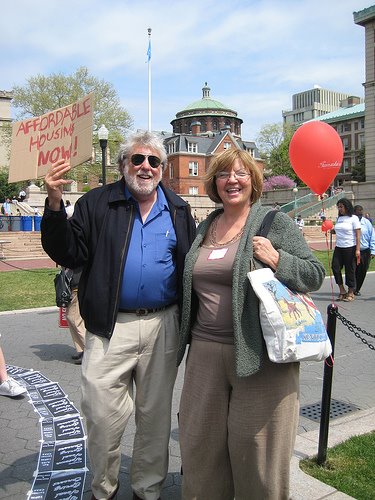
Mark Rudd and Grace (Linda) LeClair, vets of the 1968 Columbia occupation, at 40th anniversary of the uprising in New York. Photo by Alice Embree / The Rag Blog.

Columbia 1968: The View From Texas
By Alice Embree
/ The Rag Blog / May 3, 2008

[Alice Embree is an Austin activist, writer and Ragblogger. She played a major role in Students for a Democratic Society (SDS) in the sixties and seventies, both in Austin and New York, and wrote for underground papers Rat and The Rag.]

In April 1968, Columbia University erupted in protest. Students occupied five buildings. I was there. I wasn’t a Columbia student, but I was there. I worked with the North American Congress on Latin America (NACLA) and caught a briefcase full of documents tossed from the second floor Low Library office of Grayson Kirk’s office that were re-printed in RAT newspaper and used to document the NACLA pamphlet, Who Rules Columbia?

I was at Columbia again April 24-27 for events commemorating the fortieth anniversary of the student uprising. The 1968 occupations were motivated by two major demands – to stop a Morningside Heights gym expansion and sever ties with the Institute for Defense Analysis (IDA). Antiwar passion and black liberation struggle were a potent mix. When the police cleared the buildings forty years ago, they arrested 700 students and left 150 injured. It was a pivotal event for students in a year marked by historic events.

1968 began with the Tet Offensive demonstrating the strength of the Vietnamese national liberation resistance. On April 4, 1968, Martlin Luther King, Jr. was assassinated in Memphis and cities went up in flames. The Columbia strike occurred just weeks before a general strike in Paris. On June 5th Robert Kennedy was assassinated in Los Angeles. In August, tanks rolled into Prague and the National Guard was called up in Chicago where antiwar protestors massed outside the Democratic Convention and were attacked by Chicago police. A student uprising in Mexico City was brutally suppressed in the October 1968.

The Columbia gathering drew several hundred alumni of the protests with their nametags identifying the buildings they occupied: “Hamilton Hall, ’68,” “Mathematics, ’68,” etc. People found old friends and comrades, often needing to be prompted to reconcile gray hair or balding heads with the faces of youth.

On Thursday, the first night, there was a reception followed by a panel on Columbia and the World. Tom Hayden (Mathematics) recalled that year as did Black student activist William Sales (Hamilton Hall). Mark Kurlansky, author of 1968: The Year That Rocked the World, and Victoria de Grasso spoke of the world events that year.

Friday morning, Michael Klare spoke. He was a graduate student in Art History at Columbia when events steered him into research on defense contractors. I worked with him at NACLA. He is the author of Blood and Oil, a professor and defense correspondent for The Nation.

Klare detailed the lessons learned from Vietnam by the Defense Department: to use an all volunteer economic draft, to rely on technology, speed and fire-power, to attempt to reduce U.S. casualties and shorten the military engagement, to outsource military services and carefully control media coverage. He said that Defense Department brass have been extremely critical of the political bungling that has prolonged the military engagement. Many in the military see this as “dishonoring the commitment” of the servicemen and women.

The Friday morning panel also included Tom Engelhardt of the TomDispatch blog and Callie Maidhof, a Columbia student antiwar activist who spoke of the five days of antiwar action undertaken to commemorate the five years of the war. For thirteen hours each day, Columbia antiwar activists read the names of the dead – the known Iraqi dead and the U.S. dead. A gong was sounded for each death. On April 23rd, antiwar activists “hooded” Columbia’s iconic Alma Mater sculpture. With its face covered by black cloth, it appeared as an eerie reminder of Abu Ghraib torture victims.

The first Friday afternoon panel was on Feminist Legacies of 1968. It was a poignant reminder that 1968 preceded the women’s liberation movement. Women who were at Barnard and Columbia forty years ago were often the sandwich-makers, not the speakers. Although 250 women were arrested, their names are not well known. The full effect of the women’s movement can be seen, however, in the current generation of activists where women take leadership roles. The feminist panel included poets, professors, authors and activists. Ti-Grace Atkinson, Rosalyn Baxandall, Elizabeth Diggs, Christine Clark-Evans, Grace (Linda) LeClair, Sharon Olds, Catharine Stimpson participated. They recounted the early days of women’s liberation organizing – picketing the New York Times for gender-segregated want ads, participating in New York Red Stockings and WITCH and the founding of National Organization for Women (NOW).

One of the speakers, Grace (Linda) LeClair, a co-founder of the Calvert Social Investment Fund and Executive Director of NARAL in New Hampshire, was a Barnard student in 1966. She lived off-campus with her boyfriend. When a newspaper reported outed her, she was called before the Barnard president. LeClair was expelled and never graduated. Her boyfriend suffered no such fate, graduating from Columbia.

An afternoon panel on Political Action and Official Response included a judge, law professors and a criminal defense attorney who were veterans of the 1968 protest as well as Lee Bollinger, the President of Columbia. West Harlem organizers infuriated by Columbia’s current expansion plans interrupted Bollinger. A third afternoon panel addressed Race at Columbia, Then and Now, with writer Thulani Davis moderating. It included Manning Marable, a Columbia professor, and two student activists, one representing the Black Student Organization and the other Lucha. Johanna Ocana of Lucha became an activist when the Young Republicans invited a speaker from the Minuteman and students, many of immigrant parents, organized protests.

In the evening a lengthy multi-media event described what happened in April 1968. This was before the era of instant communication, the internet and cell phones with cameras. As pictures projected on huge screens, the occupation story was recounted by Nancy Biberman, Raymond Brown, Leon Denmark, Larry Frazier, Robert Friedman, Stuart Gedal, Juan Gonzalez, Michelle Patrick, Mark Rudd and others. An assistant to New York’s mayor at the time told his side of the story as well.

On Saturday, there were movies about 1968 shown and a panel on The Legacy of the Student Movement that included Todd Gittlin, now a Columbia University professor, and John McMillian, a Harvard lecturer. At noon, a Harlem contingent marched up Amsterdam Avenue protesting Columbia’s Manhattanville project. Joined by my daughter and brother-in-law we marched on to campus with them. Although the scheduled events continued, I went to only one more: Organizing, Activism, Engagement, Then and Now at which my daughter and I both spoke.

There was an odd disconnect between those passionate times and the scholarly panel discussions organized by alumni participants. Occasionally, the strident voices of Harlem residents who opposed a current Columbia expansion were reminiscent of that earlier time, particularly when they interrupted President Lee Bollinger. Contemporary Columbia antiwar activists and leaders of the Black Student Organization and Lucha, brought the present tense into discussion.

Many panels were dominated by male voices with credentials – professors and writers. When people lined up for questions, they frequently delivered polemics. It reminded me of being a young Texan in New York on a campus where the elite had been educated to believe they were the center of the known universe. There wasn’t much space for participatory democracy in the rarified Ivy League atmosphere forty years later. Not until the final panel that I attended – an event billed as an intergenerational dialogue – was there a structure that encouraged exchange. A table with microphones set in a circle allowed people to come and go (although some had to be encouraged to speak and then leave). There were more women’s voices and the familiar edge of now. Here, the younger generation showed what is easy to miss: the struggle continues.

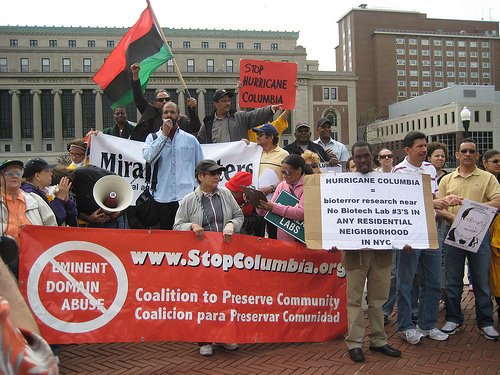
Rally during recent Columbia occupation reunion. Photo by Alice Embree / The Rag Blog.

The Rag Blog

Posted in Rag Bloggers | Tagged , , , , | 1 Comment

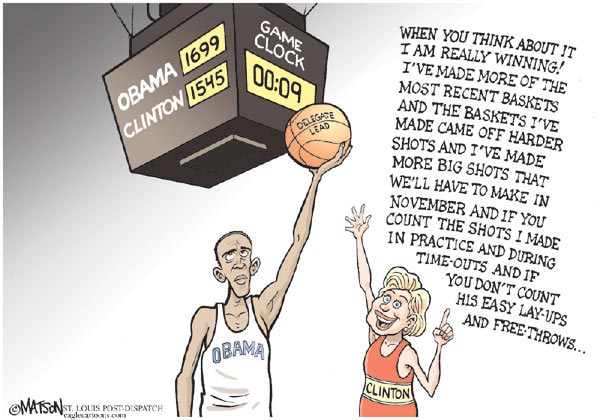
And if we count the exhibition games in Michigan and Florida…

Thanks to Harry Edwards / The Rag Blog

Posted in RagBlog | Tagged , , , , , | Leave a comment

A. Pogue : The Sad Tale of a Good Samaritan

Alan Pogue’s new look: “All I need is the two knobs, one on either side of my neck, for the perfect Halloween mask.” Painful self-portrait by Alan Pogue / The Rag Blog.

“No good deed goes unpunished”: A cautionary tale of east Austin
By Alan Pogue
/ The Rag Blog / May 3, 2008

[Ragblogger Alan Pogue was staff photographer for The Rag, Austin’s legendary underground newspaper, in the late sixties and seventies and has served in the same capacity for The Texas Observer. He began his career while serving in Vietnam in 1967. He later documented Texas farm workers and has photographed in Texas prisons, in Cuba, in Iraq and Pakistan, in Latin America and the Caribbean. His book Witness for Justice was published by the University of Texas Press.

Alan’s work has often placed him in physical danger but, as it turns out, none as dangerous as the corner of Chicon and Rosewood in east Austin, Texas.]

A few nights ago I stopped to help a woman who was being beaten badly by two other women. It was 11 p.m. on Chicon and Rosewood in east Austin. I got the two women off the one on the ground but the pimp for the two women (I hypothesize) snuck up from behind and sapped me. I had to spend a few hours at St. David’s and then Brackenridge hospitals so they could scan my head and put a few stitches in my face. I will recover fully but I will require a bit more surgery on my right eye socket, an “orbital floor fracture”.

Looking on the bright side, the pimp didn’t shoot or stab me. My wallet was taken but somebody found it and called me so I got my ID and checks back. This character was smart enough not to try and cash them. The EMS and emergency people said this type of assault is on the rise. They told me about a man who stopped to help someone with a flat tire only to be beaten very badly. Bad times for good Samaritans, so watch out.

I’ll be back on the job in the middle of next week if all the surgery goes according to plan. I am ok with soup and ice cream. Someone gave me a fine bottle of Scotch but I will have to wait to drink it.

It could be that the beaten woman was on the other womens’ turf and the pimp sent them over to run the third woman off. The beaten woman was very thankful to me. We both answered questions put to us by the police. The pimp was upset that I stopped the beating and wanted to show that he was still in charge. After I was assaulted I drove a short distance to my home and splashed water on my face to check myself out. When I returned to the scene the EMS and police were there. I will work with the detective on the case and try to talk to the woman I kept from further injury. There is the possibility that she too was in on a decoy action. I will know she is not if she was willing to identify the women and/or the pimp.

Darn it, I didn’t have a camera on me because it was a short trip to pick up a book to read, “Can Humanity Change?” by Khrishnamurti, kind of ironic. While taking it easy, as my face returns to its normal shape, my mind looks to the wider social context.

Drug dealing and prostitution are a big feature of the stretch of Chicon between Rosewood and MLK in Austin. There are also many churches in the area. Yet the churches do not minister to those most in need. The epicenter of the drug trade, for the impoverished, is 12th and Chicon. This has been the case for decades, sort of an informal red light district. Indigenous eastsiders have been complaining about this crime scene for many years. The police cruise the area frequently but there seems to be no coordinated social services plan to address the problem at its root. Surprise!. No kind and creative approach has been used. Only a minimalist military mind set has been used by the Austin police to maintain an uneasy status quo for this drug district.

The vacant lots are being filled up with new home construction so the territory for illegal activity is shrinking. Much of it has moved down the alley between 12th and 13th off of Chicon. Some truly dangerous characters hang out in that alley (I spotted a fellow with a 12 gauge pump shotgun under his trench coat), so I have not taken to documenting the culture. The open solicitation for drugs and prostitution rises and falls in an unpredictable tide but the activity is constant. Red is the color of the dominant gang so one sees red pants, red caps, red sweat shirts. This level of organization means that there are other people involved who aren’t there.

I see younger people hanging out at the few public coin-operated phones to take drug orders and pass them on to older people. As Jesse Jackson said, “Fourteen year-olds on street corners are not importing drugs. Bankers are importing drugs.”

Many of the people I see at 12th and Chicon are mentally and /or physically impaired. Old people in wheel chairs often sleep on the street in their wheelchairs. More than once I have been offered sex by psychotic homeless women. In the past none of these people has ever done more than offer me drugs or sex. Once I declined they did not persist. Most of the solicitation is done with subtle eye contact so I have learned not to wave back or make eye contact with the solicitors.

In breaking up a fight among three women I stepped into their culture in a big way. The problem all around is that gentrification is forcing two cultures to overlap. I didn’t see “three prostitutes” fighting over territory, I saw one woman being beaten by two other people. They and the pimp made their activity very public in a new overall environment. I wish for the kind and creative approach but as we have seen in Waco and Eldorado, “Shock and Awe” seem to be the only tactics the authorities care to use. When the territory shrinks a bit more”something will have to be done” about what has been ignored for years. The East Side has been the recipient of planned neglect until such a time that it was worthy of being taken over by the West Side and the real-estate interests, both east and west.

I will try and look into the situation for the young woman I saved from a worse beating than she got. Her story should cast light on many forms of neglect in Texas which is always vying for last place in social services.

The Rag Blog

Posted in Rag Bloggers | Tagged , | 4 Comments

More Lies May Still Take Us to War with Iran

Democrats Okay Funds for Covert Ops: Secret Bush “Finding” Widens War on Iran
By Andrew Cockburn / May 2, 2008

Six weeks ago President Bush signed a secret finding authorizing a covert offensive against the Iranian regime that, according to those familiar with its contents, “unprecedented in its scope.”

Bush’s secret directive covers actions across a huge geographic area – from Lebanon to Afghanistan – but is also far more sweeping in the type of actions permitted under its guidelines – up to and including the assassination of targeted officials. This widened scope clears the way, for example, for full support for the military arm of Mujahedin-e Khalq, the cultish Iranian opposition group, despite its enduring position on the State Department’s list of terrorist groups.

Similarly, covert funds can now flow without restriction to Jundullah, or “army of god,” the militant Sunni group in Iranian Baluchistan – just across the Afghan border — whose leader was featured not long ago on Dan Rather Reports cutting his brother in law’s throat.

Other elements that will benefit from U.S. largesse and advice include Iranian Kurdish nationalists, as well the Ahwazi arabs of south west Iran. Further afield, operations against Iran’s Hezbollah allies in Lebanon will be stepped up, along with efforts to destabilize the Syrian regime.

All this costs money, which in turn must be authorized by Congress, or at least a by few witting members of the intelligence committees. That has not proved a problem. An initial outlay of $300 million to finance implementation of the finding has been swiftly approved with bipartisan support, apparently regardless of the unpopularity of the current war and the perilous condition of the U.S. economy.

Until recently, the administration faced a serious obstacle to action against Iran in the form of Centcom commander Admiral William Fallon, who made no secret of his contempt for official determination to take us to war. In a widely publicized incident last January, Iranian patrol boats approached a U.S. ship in what the Pentagon described as a “taunting” manner. According to Centcom staff officers, the American commander on the spot was about to open fire. At that point, the U.S. was close to war. He desisted only when Fallon personally and explicitly ordered him not to shoot. The White House, according to the staff officers, was “absolutely furious” with Fallon for defusing the incident.

Fallon has since departed. His abrupt resignation in early March followed the publication of his unvarnished views on our policy of confrontation with Iran, something that is unlikely to happen to his replacement, George Bush’s favorite general, David Petraeus.

Though Petraeus is not due to take formal command at Centcom until late summer, there are abundant signs that something may happen before then. A Marine amphibious force, originally due to leave San Diego for the Persian Gulf in mid June, has had its sailing date abruptly moved up to May 4. A scheduled meeting in Europe between French diplomats acting as intermediaries for the U.S. and Iranian representatives has been abruptly cancelled in the last two weeks. Petraeus is said to be at work on a master briefing for congress to demonstrate conclusively that the Iranians are the source of our current troubles in Iraq, thanks to their support for the Shia militia currently under attack by U.S. forces in Baghdad.

Interestingly, despite the bellicose complaints, Petraeus has made little effort to seal the Iran-Iraq border, and in any case two thirds of U.S. casualties still come from Sunni insurgents. “The Shia account for less than one third,” a recently returned member of the command staff in Baghdad familiar with the relevant intelligence told me, “but if you want a war you have to sell it.”

Even without the covert initiatives described above, the huge and growing armada currently on station in the Gulf is an impressive symbol of American power.

Armed Might of US Marred By Begging Bowl to Arabs

Sometime in the next two weeks, fleet radar operator may notice a blip on their screens that represents something rather more profound: America’s growing financial weakness. The blip will be former Treasury Secretary Robert Rubin’s plane commencing its descent into Abu Dhabi. Rubin’s responsibility these days is to help keep Citigroup afloat despite a balance sheet still waterlogged, despite frantic bail out efforts by the Federal Reserve and others, by staggering losses in mortgage bonds. The Abu Dhabi Sovereign Wealth Fund injected $7.5 billion last November (albeit at a sub-prime interest rate of eleven percent,) but the bank’s urgent need for fresh capital persists, and Abu Dhabi is where the money is.

Even if those radar operators pay no attention to Mr. Rubin’s flight, and the ironic contrast it illustrates between American military power and financial weakness, others will, and not just in Tehran. There’s not much a finding can do about that.

Andrew Cockburn is a regular CounterPunch contributor. He lives in Washington DC. His most recent book is Rumsfeld: His Rise, Fall and Catastrophic Legacy.

Source / CounterPunch

The Rag Blog

Posted in RagBlog | Tagged , , , , | Leave a comment

Stop Fighting and Start Talking, Junior

The UK Times Online assesses the success of the Iraq surge

‘US military achievement in Iraq has reached peak’
May 2, 2008

NEW YORK — An international think tank has called for fundamental political changes in Iraq, stressing that the US military surge which contributed to reduction in violence has reached the limit of what it can achieve.

“Without fundamental political changes in Iraq, success will remain fragile and dangerously reversible,” the International Crisis Group (ICG) asserts and emphasizes the importance of devising a different approach that focuses on pressuring the Iraqi government to agree to political compromises, engage in negotiations with fuller range of Iraqi actors, including still active insurgents and alter the regional climate.

The Sunni insurgency, ICG says, has been seriously weakened as previously marginalized Sunni tribes found in the US a new patron and turned against al-Qaeda.

“Increasingly divided and with several important groups co-opted by the US, the armed movements are a shadow of their former selves. As for al-Qaeda in Iraq, it appears in disarray, a victim of US attacks but also of its own brutal excesses,” it says but warns that these trends are not necessarily permanent and hardly equate with durable Sunni Arab acceptance of the political process.

The US policy, it says, is bolstering a set of local actors operating beyond the state’s realm or the rule of law and who impose their authority by force of arms.

“None of these points to progress toward a fully inclusive political process”, says Peter Harling, Crisis Group’s Iraq, Syria and Lebanon Project Director. “The US now seems intent on militarily defeating insurgents who, although they express deep misgivings about the current political system, are eager for genuine negotiations”.

Source / The Hindu News Update Service

The Rag Blog

Posted in RagBlog | Tagged , | Leave a comment

The Unjustly Imprisoned – Sami al-Haj Freed


Al-Jazeera Journalist Freed From Guantanamo After 6 Years
by Mohamed Osman / May 2, 2008

An Al-Jazeera cameraman was released from U.S. custody at Guantanamo Bay and returned home to Sudan early Friday after six years of imprisonment that drew worldwide protests.

Sami al-Haj, who had been on a hunger strike for 16 months, grimaced as he was carried off a U.S. military plane by American personnel in Sudan’s capital, Khartoum. He was put on a stretcher and taken straight to a hospital.

Al-Jazeera showed footage of al-Haj being carried into the hospital, looking feeble and with his eyes closed, but smiling. Some of the men surrounding his stretcher were kissing him on the cheek.

“Thank God … for being free again,” he told Al-Jazeera from his hospital bed. “Our eyes have the right to shed tears after we have spent all those years in prison. … But our joy is not going to be complete until our brothers in Guantanamo Bay are freed,” he added.

“The situation is very bad and getting worse day after day,” he said of conditions in Guantanamo. He claimed guards prevent Muslims from practicing their religion and reading the Quran.

“Some of our brothers live without clothing,” he said.

The U.S. military says it goes to great lengths to respect the religion of detainees, issuing them Qurans, enforcing quiet among guard staff during prayer calls throughout the day. All cells in Guantanamo have an arrow that points toward the holy city of Mecca.

Al-Haj was released along with two other Sudanese from Guantanamo Thursday. He was the only journalist from a major international news organization held at Guantanamo and many of his supporters saw his detention as punishment for a network whose broadcasts angered U.S. officials.

The military alleged he was a courier for a militant Muslim organization, an allegation his lawyers denied.

Al-Haj said he believed he was arrested because of U.S. hostility toward Al-Jazeera and because the media was reporting on U.S. rights violations in Afghanistan.

Read all of it here. / Common Dreams / AP

The Rag Blog

Posted in RagBlog | Tagged , , , , | Leave a comment

Indiana : The Ball’s in Your Court


Homesick Texan on Chicanos and Mexican-hating Hoosiers (Oh, and the presidential match-up)
By Steve Russell / The Rag Blog / May 2, 2008

If it was not already clear to me, the place I lived most of my adult life, Texas, has that feel of home.

The deal below from Huffington Post I can relate to, though, because I’ve been here for seven years. These people have very positive aspects, but they are not exactly my people the way Texans or even Oklahomans are.

I’ve got to give Sen. Clinton a point here.

Maybe she should not have gone on O’Reilly’s show. He’s a pig, period. But he asked her flat out “Would you crack down on illegal aliens.”

She said flat “No.” and then tried to say why.

You’d have to be in Indiana to understand how radically (and uncharacteristically) she refused to pander there.

There is a very strong “hate the Mexicans” streak here in Indiana.

It is something I cannot abide and not just because I don’t care for racism. Going back to when we were all undergraduates, Chicanos (a word you don’t hear in Indiana) were part of the progressive coalition that changed the face of Austin. The Chicano vote made my first career. I suffered with Gonzalo Barrientos when he got racially ambushed in his first attempt to run for the Lege (as did many of you).

It ain’t abstract to me. A blanket attack on persons of Mexican descent is personal to me on a level that even liberal Hoosiers don’t seem tounderstand.

I salute Hillary for choosing up sides against that brand of politics. We long ago defeated it in Austin, and it does not float in Bloomington, where we elected a mayor named Fernandez–but it’s a big deal in the rest of Southern Indiana.

Every time I hear a public expression of anti-Mexican sentiment I am reminded that I’m from Texas and I want to come home.

Four Reasons Why Hoosiers Should Pass the Ball to Obama
By Mike Bonifer / May 2, 2008

My ‘rock road’ cred:

Though I have lived in California for over half my life, I grew up in Indiana, on a farm five miles southwest of Ireland, Indiana, in the southern part of the state. My mom, Fern still lives on the farm. My brothers and cousins are capable of giving me endless grief about what a delicate flower I’ve become (some will tell you I’ve always been) how I’d much rather shoot skeet than deer, how I will goof around with a turtle I find in a field when I should be digging post holes, what a chickenshit I am on the four-wheelers, or how I refuse to drink Pucker — whatever the hell that stuff is. But we will always love each other no matter what, and Indiana, and our farm in particular, is still the land to which my life is rooted.

The smell of new-mown hay, the moonlight on the Wabash, Larry Bird and Oscar Robertson, the taste of real produce grown near Vincennes, the Little Five, Mellencamp’s music, and open-wheeled racing give me pangs of nostalgia to this day.

I am writing this partially in support of Senator Obama, but just as much as an homage to all my deer-hunting, Pucker drinking, four-wheel riding Hoosier homies, many of whom are blood.

Here are four reasons as solid as a John Wooden basketball drill why you should be the ones to put an exclamation point on the Obama campaign by passing him the ball next Tuesday.

Reason One: Caginess. As any Hoosier can tell you, a cager is a basketball player. What they do not tell you, or let on very often, is that Hoosiers are cagey folks. They may come off like rubes to you and smell faintly of something that was not bought in a store, but they cannot be outfoxed. When the NCAA appropriated “March Madness” Sweet Sixteen and “Final Four” from Indiana’s high school basketball tournament for its own use, the city of Indianapolis ended up as the location of the NCAA’s new national headquarters, and all the revenue and jobs it generated for the state.

Obama’s a cager and he is cagey, too. He has not been thrown off his game by Hillary’s Kitchen Sink offense, or by a hot-dogging teammate like Jeremiah Wright who’s taking ridiculous shots from behind the arc when he should be running the offense and playing his role. And he certainly has the game to stuff a two-hand set-shooter like “Branch” McCain, good as the Ol’ Branchster might have been in his day.

Reason Two: Growth Determines Harvest. As any Hoosier can tell you, if you are going to be productive in the fall, you’ve got to work hard and have some luck with the weather in the spring and early summer. Hillary was busy counting her chickens before they hatched on Super Tuesday while Obama was busy lining up caucuses and building his organization. Because he has been so productive early in the growing season, Obama not only has the lead right now, he is the candidate best prepared to reap a bumper crop of votes come November. All he needs is nice steady shower of Hoosier support on May 6.

Reason Three: Patience. As any Hoosier can also tell you, things can take awhile. A quilt gets made one stitch at a time. If you get in a hurry about getting the cow back into the barn, the cow will not go back into the barn. Somewhere on his journey, Obama learned a similar kind of patience. He knows that lasting solutions do not have quick fixes, that they can take awhile. Hoosiers laugh at the idea that a single sandbag like the Clinton-McCain gas relief plan can stop the flood of money going to Arab Emirates and the oil companies. A vote for Obama is a vote acknowledging that Hoosier-style patience and hard work are what it’s going to take to get the economy back on track.

Reason Four: Calmness at Crunch Time. As any Hoosier can tell you, when the game was on the line, Bird was unflappable. He wanted the ball in his hands, and every man, woman and child of us wanted him to have it.

The Clintons are formidable players, make no mistake about that. They are not the kind of players anybody wants to play against, you’d much rather have them on your team. They set a vicious pick. They hustle and scrap hard, and they hold you by the jersey and throw elbows when they think the ref isn’t looking. They are tireless and do not have any quit in their constitutions. Like the Van Arsdale twins they can confuse you as to which of them is which with the old ‘knee-pad switch’ trick.

But when the game is on the line, as it is with this election, we want the ball in Obama’s hands. He has Bird’s unflappable calm, and like Bird, the bigger the game, the more difficult the circumstances, the better he plays. Give Barrack the ball on Tuesday. It will be one hell of an assist.

Source. / The Huffington Post

The Rag Blog

Posted in Rag Bloggers | Tagged , , , , , | Leave a comment

McCain’s Health Care Balancing Act


Wealth Transfer From Voters to Corporations
By R.J. Eskow / May 1, 2008

Health policy proposals can reflect many different ideologies or political philosophies, but John McCain’s plan isn’t so much ideological as utilitarian. There has been a lot of excellent analysis of it in recent days, but one critical aspect has somehow been overlooked: The McCain plan, if enacted, would result in an enormous transfer of wealth from the general public to large American businesses.

In that sense, it reflects a lot of what passes for “conservative” ideology nowadays. There is no underlying belief system, just a mixed bag of policies – some “pro-big government” and some “anti big-government” – that share only the ability to enrich the large corporate donors that finance Republican campaigns.

So Republican political platforms are often little more than ideological smokescreens for policies that benefit these special interests. That’s why large corporate donors support think tanks that do nothing but cook up these kinds of proposals. The “maverick” McCain is now a strict adherent of this pseudo-conservative line, and his health plan reflects that. It’s pro-free-market where that benefits his party’s backers, and anti-free-market where necessary to provide the bill with enough political cover to be palatable.

(I don’t usually sound so populist when reviewing health policies. But it’s good to look at what a plan would actually do if enacted, rather than what its backers say it would do, and this is what was most striking.)

How would this transfer of wealth take place under the McCain plan? First, its important to note that most under-65 Americans with health coverage receive that coverage through their employers. The employers who provide health benefits aren’t small businesses – they’re medium to large companies. While these companies receive a tax break for providing coverage, it isn’t enough to cover their costs.

What would the McCain plan do for them? First, it would destroy the employer-based system by eliminating tax breaks for companies that offer health care. As a result, nobody would have employer coverage anymore. Since businesses are paying far more in premiums than they’re been getting in tax breaks, they’ll save an enormous amount of money. But unlike Sen. Ron Wyden’s plan, for example, the McCain plan would not require these employers to give this sudden windfall back to their employees as salary increases. America’s businesses would enjoy a huge reduction in expense without being asked to give anything back.

In return, individuals and families would be given tax breaks to go out and buy their own health coverage, but without the buying power of larger employers. So here’s what’s likely to happen in the real world under the McCain plan, based on what we’ve learned so far:

1. If a family gets a $5,000 tax break but the typical family premium is $12,000, they’ll either pay $7,000 out of pocket or go without coverage.

2. People with pre-existing conditions won’t be able to get private coverage.

3. McCain will encourage the states to take on people with pre-existing conditions by creating “high-risk pools.”

4. But high-risk pools at the state level haven’t worked very well. So people with pre-existing conditions will either go without insurance, remain uninsured, or state taxes will skyrocket to cover their costs. That means even more money out-of-pocket for individuals, in the form of higher state taxes.

5. Cost controls on premiums are sketchy. That means the $12,000 average premium will probably go up, too.

The end result? More out-of-pocket expenses for individuals, terrible difficulties obtaining coverage if you have a pre-existing condition, and an enormous financial break for larger American businesses.

This plan is more likely to pass than previous Republican proposals, since it includes high-minded suggestions like that state-based “Guaranteed Access Plan” for high-risk people. But if you’ve seen how expensive and unwieldy state risk pools can be, how difficult they are to join (six-month waiting periods, etc.), and the limits to their coverage, you know it’s a plan that provides very little for “the least of us.” Not only that, but by insisting that these high-risk state plans work with insurers, McCain would ensure even more transfer of public revenue to the private sector.

“Guaranteed access” and the other, more palatable plan provisions are left vague, while the windfall effect for business is immediate and specific. The plan would, in the words of Popeye’s pal Wimpy, “gladly pay you Tuesday for a hamburger today.”

That’s enough to persuade The Politico and other observers that McCain is “moving to the middle on health care.” And since politics is a game of expectations, that may be enough. But underneath the centrist rhetoric, the McCain plan will gladly help voters “Tuesday” while it empties out their pockets to give corporate interests a big hamburger today.

Source. / The Huffington Post

The Rag Blog

Posted in RagBlog | Tagged , , , , | Leave a comment

Quote of the Day – Totalitarianism

“When any person is intentionally deprived of his constitutional rights those responsible have committed no ordinary offense. A crime of this nature, if subtly encouraged by failure to condemn and punish, certainly leads down the road to totalitarianism.”

J.Edgar Hoover 1952

Posted in RagBlog | Tagged | Leave a comment

"No Borders!" : May Day in Austin

MDS/Austin and the Rhizome Collective (with papier mache figures) were among dozens of groups participating in Austin May Day activities. Photo by Alice Embree / The Rag Blog.

Hundreds march in Austin for Immigrants’ Rights
By Thorne Dreyer
/ The Rag Blog / May 2, 2008

AUSTIN, Texas — Activists in Austin filled several city blocks in a lively May Day march for immigrants rights on Thursday, May 1, International Workers Day.

An ethnically diverse crowd that grew to about 700 gathered at Austin City Hall for a rally at 4:30 p.m., then marched to the Travis County Jail to protest increased county cooperation with immigration officials. (Immigration and Custom Enforcement [ICE] now has its own office at the county jail.)

They marched past the Governor’s Mansion – Gov. Rick Perry is a vocal advocate of building border walls – and finally to the Texas state capitol building for speechs and musical entertainment.

Carrying banners proclaiming “Todos Son Illegales” and “Unidos Sin Fronteras,” they weaved through downtown Austin, across Lady Bird Lake on Ann Richards Bridge. They marched past legendary music venue Threadgill’s, singing and chanting “No more borders!” and “Sí se puede!”

Organized by the Austin Immigrants’ Rights Coalition (AIRC), the event was considered a success though there were significantly fewer participants than at a similar demonstration in 2007 when several thousand marchers hit the Austin streets. This would appear to mirror a national trend.

Caroline Keating-Guerra of the AIRC, said she was happy with the size of the crowd. “I don’t think it’s any indication that the movement has died down,”

“Our local issue here is the way in which federal immigration policies have been affecting us at a local level, with immigration and customs enforcement in our jails,” Guerra told an Austin radio station.

Leslie Cunningham, of coalition member Texas Labor Against the War, cited as a cause for the smaller turnout the increasingly negative climate for immigrants in this country, and a greater fear of deportation.

Speakers at the rally included Sister Guadalupe of Cristo Rey Church in East Austin, Iraq veteran Hart Viges, high school student Madeleine Santibanez who talked about the recent deportation of her mother, and Maria Martinez of the Workers Defense Project/Proyecto Defensa Laboral, a local Austin group that fights for the rights of immigrant workers.

There were rallies for immigrants throughout the United States Thursday. According to the Chicago Tribune, “Turnout has fallen sharply since the first nationwide rallies in 2006, when more than 1 million people — at least 400,000 in Chicago alone — clogged streets and brought downtown traffic to a standstill. About 15,000 people rallied in Chicago in one of the largest demonstrations of the day.”

Meanwhile, hundreds of thousands of workers across the world took part in celebrations and protests to mark International Workers’ Day on Thursday.

The Rag Blog

Posted in Rag Bloggers | Tagged , , , , | Leave a comment

Debating the Sunni-Shia Rift

Bad rap? Imam Sayyed Hassan al-Qazwini says the Western media focuses only on radicals. Photo courtesy of Adrian Haddad

Is the Sunni-Shiite rift mostly politics and media hype?
By Nicholas Blanford / May 1, 2008

A panel discussion Tuesday in Doha, Qatar, was dominated by the perception that the Western media hypes up tensions by focusing too much on the minority of radicals.

Doha, Qatar – As imam of the largest mosque in North America, Sayyed Hassan al-Qazwini feels the frustration of trying to convey a moderate image of Islam to a Western media seemingly fixated on extremists.

“When I speak, or other moderate Muslim scholars speak, we will not find any outlet for our words,” he says. “But if a grocer in Karachi goes out on the streets and calls for jihad [holy war] against America, he will find many media outlets there ready to cover his insanity.”

A televised public debate Tuesday in this tiny Gulf state was dominated by the perception that it is extremists – whether Islamic militants or anti-Islamic commentators in the West – coupled with a “sensationalist” Western media that set the parameters for defining Islam’s global image.

Mr. Qazwini, the Iraqi-born imam of the Islamic Center of America in Detroit, was one of four panelists debating the motion “This house believes the Sunni-Shiite conflict is damaging Islam’s reputation as a religion of peace.” The event was part of the prominent Doha Debate series, hosted and funded by the Qatar Foundation, an educational nonprofit organization, and broadcast by BBC World.

In a series of separate interviews with the panelists before the televised debate, however, it was evident that all four essentially agreed that the current tensions between Sunnis and Shiites is guided by political forces, rather than religious differences.

Sunnis and Shiites, after all, have learned to “grudgingly” tolerate each other for centuries, despite doctrinal differences, says Hisham Hellyer of the Oxford Center for Islamic Studies and an adviser to the British government on Islamic extremism, who opposed the motion with Qazwini.

“Those differences have never turned into religious wars like we saw in Europe. They never turned into inquisitions, genocides, or anything like that,” he says.

The distinctions between Sunnis and Shiites simply were not an issue during the height of Arab nationalism in the 1950s and 1960s, says Juan Cole, a professor of history at the University of Michigan and author of the influential Informed Comment blog, who defended the motion.

Read all of it here. / The Christian Science Monitor

The Rag Blog

Posted in RagBlog | Tagged , , | Leave a comment