BOOKS / Lamar W. Hankins : America’s ‘Gunfight’ over Gun Control

Gunfights:
America’s conflicts over gun control

Winkler’s research demonstrates clearly that Americans have always had the right to bear arms and the government has always had the right to regulate guns.

By Lamar W. Hankins /The Rag Blog / September 25, 2012

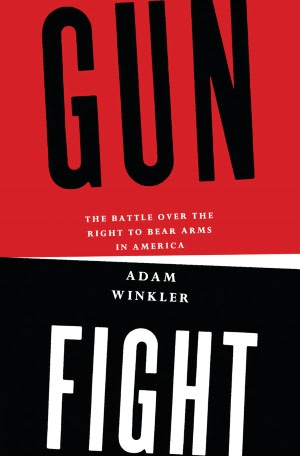
[Gunfight: The Battle over the Right to Bear Arms in America by Adam Winkler (2011: W.W. Norton & Company); 361 pp.; $27.95.]

Freethought groups generally don’t take positions on gun control and the right to bear arms. What freethinkers try to do is understand the evidence about various propositions and draw rational conclusions about those propositions based on the evidence.

For many years, debate has raged between those who oppose gun regulation and those who believe that the government has a role in regulating guns. Much of that debate has been based on myth, legend, erroneous history, and beliefs supported by little, if any, evidence.

Now, thanks to the work of Adam Winkler, a professor of constitutional law at UCLA, we have a book based on careful research that can help us separate fact from fiction when we discuss the right to bear arms and the regulation of that right. Gunfight: The Battle over the Right to Bear Arms in America makes a seminal contribution to the discussion. It will make the most vocal advocates in this debate, no matter their views, either enlightened or angry or both.

Winkler has found that some of our most persistent ideas, especially about the American Wild West, are false. Gunfights were not everyday occurrences, for instance. They happened now and again, but were not the norm, although almost everyone in the West during its developing years owned and carried guns, both rifles and hand guns. They needed to do so because there was danger all around — from outlaws, desperate men, Indians, and wild animals.

But most western towns required that guns be checked when the owner came into town. Dodge City, Kansas, for example, prohibited the carrying of firearms in the 1870s. Most western towns had no murders during those days. The reason for these gun control regulations, according to their advocates (the predecessors to our modern-day Chambers of Commerce), was to create a civilized town that would grow and prosper.

Forty-three states protect the right of individuals to bear arms in their state constitutions, most either from the days of the founding of this country or from the early 1800s. Yet, we also have a gun regulation history that runs side-by-side with the established right to bear arms.

While the founders believed strongly in the private ownership of firearms, they did not believe in a standing army. Instead they supported militias, comprising ordinary citizens, who needed to possess firearms to fulfill their responsibilities. The Second Amendment protects the rights of states to have militias, and thereby the right of the people to possess firearms so they can serve in those militias.

The founders also supported gun control, barring many groups from owning firearms, including slaves, free blacks, and white loyalists — those who did not support the revolution, about 40% of the population of the time. Gun owners were required to appear at mandatory musters of the militias, at which time they would present their guns for inspection, records of which were kept on public rolls. These laws were responses to the needs of the republic as they were perceived at the time.

In 1792, the founders passed an individual mandate that required every free white male between the ages of 18 and 45 to purchase a military style firearm and ammunition. Bird-hunting guns were insufficient to satisfy the requirements of the Uniform Militias Act.

The most prominent opponent of gun control today is the National Rifle Association (NRA). But in the 1920s and 1930s, the NRA led the gun control movement, drafting and promoting laws that restricted carrying guns in public, mainly aimed at restricting the gangsters of that day. Some of those laws still exist, but are opposed by today’s NRA. Winkler traced the militant anti-gun control stance of today’s NRA to an unusual series of events.

In 1966, the Black Panther Party for Self-Defense was created. In 1967, a group of 30 Black Panthers marched into the state capitol of California with loaded guns, rifles, and shotguns displayed openly, and walked into the legislative session then in progress to protest a gun control bill under consideration.

These young black men had been policing the police with their own guns at the ready, following Oakland policemen around to make sure they did not do anything harmful to other black men and giving suspects advice on what they should do. They carried guns openly, holding them pointed toward the ground or toward the sky, both accepted methods of displaying firearms in public.

The actions of the Black Panthers led the California State Legislature to consider and pass laws restricting openly carrying guns in public. Then-Governor Ronald Reagan said on the day of the visit to the capitol by the Black Panthers, “There is no reason why on the street today a citizen should be carrying loaded weapons.”

Gun control and race had been linked before in American history. A key purpose of the Ku Klux Klan, for instance, was gun control. After the Civil War, the Union Army allowed both black and white soldiers to take their guns with them as part of the pay that was owed to them. Some southern blacks bought some of those guns. Black ownership of guns in the south after the Civil War led to laws prohibiting such ownership among blacks. The KKK forcefully disarmed many blacks, intentionally killing some in the process.

In 1967, Detroit and Newark, as well as other urban areas, experienced riots in which guns were used against policemen and National Guardsmen. So-called Saturday Night Specials, cheap handguns, were available to thugs, robbers, and thieves. Many observers believed the easy availability of firearms caused much of the lawlessness, criminal activity, and violence in America’s urban areas.

With so many guns available, many feared that revolution was about to break out. Congress passed the first major gun control law since the 1930s — the Gun Control Act of 1968 — which banned the importation of cheap handguns, expanded licensing for gun dealers, and barred felons from possessing guns. But really the Act was intended more to control blacks than to control guns.

The California law and the Gun Control Act started the modern backlash led by the NRA, whose mostly white, rural members became afraid that while the two laws might have been aimed at blacks, the government would come after their guns next.

In 1975, the City Council of Washington, D. C., enacted a major gun control law. The law prohibited residents from owning handguns, excluding those registered before February 5, 1977. In June 2008, the Supreme Court held that the city’s handgun ban violated individuals’ Second Amendment right to gun ownership.

The opinion, written by Justice Scalia, recognized, however, that gun control laws could be legitimately passed and enforced. The city’s firearm registration and assault weapon ban were allowed to stand, and its laws still prohibit carrying guns, both openly and concealed.

While Scalia based his opinion on his concept of originalism, his reasoning made clear that it was really based on looking at current conditions and determining that such laws could serve legitimate governmental interests. He suggested that laws against machine guns were OK because machine guns are not in wide use, a modern circumstance created by the gun control laws from the gangster years of the 1930s.

Such a finding undercuts his claims that there is an originalist way to interpret the Constitution. When the Constitution was adopted, machine guns did not exist.

Winkler’s research demonstrates clearly that Americans have always had the right to bear arms and the government has always had the right to regulate guns. The biggest problem he found is that much gun control is ineffective, in that only about .5% of guns in America are used for illegal activities. This is why total gun bans, such as the one struck down in the nation’s capitol, don’t have a rational foundation.

Whether you are for or against gun control, Winkler’s book should at least help clarify the issues, so that arguments are not wasted on unfounded ideas and beliefs. We should be debating what gun control regulations will have a positive societal benefit and which are just regulation for regulation’s sake, or are put in place for unsubstantiated reasons.

For example, Winkler has suggested background checks for all gun purchasers, not just for those guns bought from licensed dealers. Such a step would make it harder for criminals to get guns, and would make it clearer how law-abiding citizens with personal guns they want to sell can follow the law.

Recent news suggests that another regulation or law that would be beneficial to society is to prohibit multiple sales of rifles to the same person during a set period of time. The practice of buying 10 or 20 or more semi-automatic rifles at one time has been used in Arizona to smuggle vast quantities of such rifles into Mexico, contributing to the extreme wave of violence that has been going on there for the past year or so, with its blowback on Americans.

Further, a requirement to register all guns would be of great help to law enforcement when they are investigating gun-related crime. If a gun is stolen, law enforcement will have good records about it. Such registration could be no more intrusive than the census.

Some will argue that this will be the first step to confiscation of guns by the government. After the Supreme Court decision in 2008, such an argument should be given no credibility. It is preposterous to argue that the government could confiscate guns when it is now clear that all of us have a constitutional right to own them. It is about as likely that the government will close all the churches.

In either case, massive insurrection would ensue, so this is a far-fetched, if not absurd position.

I hope we continue to debate gun control and finally arrive at sensible, necessary regulations that will make us all safer so that we can enjoy civilized communities that will grow and prosper. This desire has been handed down to us from our forebears. We should be grateful for their wisdom.

[Lamar W. Hankins, a former San Marcos, Texas, city attorney, is also a columnist for the San Marcos Mercury. This article © Freethought San Marcos, Lamar W. Hankins. Read more articles by Lamar W. Hankins on The Rag Blog.]

The Rag Blog

Posted in Rag Bloggers | Tagged , , , , , , | Leave a comment

Danny Schechter : When is a Terrorist No Longer a Terrorist?

Mujahedin-e-Khalq. Image from Institute for the Study of Violent Groups.

Strange story of the Mujahedine-Khalq:
When is a terrorist no longer a terrorist?

The ‘bad guys’ became ‘good guys’ with the swipe of a pen.

By Danny Schechter | The Rag Blog | September 25, 2012

Question: When is a terrorist a terrorist?

Answer: When the U.S. government says so.

When the mujahideen in Afghanistan were assassinating members of their government and the Russian troops dispatched to support it, they were, in Washington’s view, freedom fighters, even as their enemies branded them terrorists.

When they turned against an Afghan government imposed by the United States or revolted against a U.S. invasion, they were once again branded terrorists.

When armed groups battling Gadaffy’s govermment were supported by NATO, they were called freedom fighters. When some recently and allegedly turned violently against the United States, which is now dominating Libyan politics, they are once again castigated as terrorists.

And now, the United States Government, through a decision by Secretary of State Hillary Clinton, has decided that the Iranian group Mujahedeen-e-Khalq, or People’s Mujahedeen, that has been on the U.S. State Department’s terrorist list for years, should been taken off the list.

That means they will no longer face financial and legal sanctions.

One day they were feared terrorists, the next day they are not. The “bad guys” became “good guys” with the swipe of a pen.

The New York Times says this feat was accomplished through what it describes as an “extraordinary” lobbying effort costing millions over many years.

Reports the Times:

The group, known as the M.E.K., carried out terrorist attacks in the 1970s and 1980s, first against the government of the Shah of Iran and later against the clerical rulers who overthrew him. Several Americans were among those killed. In the 1980s, it allied with Saddam Hussein, who permitted it to operate from Camp Ashraf.

But by most accounts, the M.E.K. has not carried out violent attacks for many years. While it is described by some critics as cult-like and unpopular with Iranians both inside and outside the country, the group has been able to gather large crowds at rallies in the United States and Europe to press its bid to reverse the United States’ terrorist designation, imposed in 1997.

The decision comes just before an October 1 cut off date ordered by a Federal appeals court.

US News explains:

As recently as 2007, a State Department report warned that the M.E.K., retains “the capacity and will” to attack “Europe, the Middle East, the United States, Canada, and beyond.”

The M.E.K., which calls for an overthrow of the Iranian government and is considered by many Iranians to be a cult, once fought for Saddam Hussein and in the 1970s was responsible for bombings, attempted plane hijackings, and political assassinations. It was listed as a foreign terrorist organization in 1997.

If the State Department does decide to delist M.E.K., whose name means “People’s Holy Warriors of Iran,” it will be with the blessing of dozens of congressmen.

No less than 99 members of Congress — Democrats and Republican alike — signed to a Congressional resolution to take the “holy warriors” off the list.

Just last week at a rally in Paris, none other than former House speaker and hyper-conservative Republican presidential candidate Newt Gingrich, now scurrying to pay off his campaign debts, was caught on camera bowing to the French-based movement’s leader Maryam Rajavi.

Top lobbying firms have been paid high fees for rounding up support for M.E.K.

Accprdomg to US News:

Victoria Toensing of DiGenova Toensing, a lobbying shop famous for its involvement in the Bill Clinton-Monica Lewinsky scandal, was paid $110,000 in 2011 to lobby for the resolution. The firm Akin, Gump, Strauss, Hauer & Feld dedicated five lobbyists to getting signatures for the resolution, and was paid $100,000 in 2012 and $290,000 in 2011 to do so. Paul Marcone and Association similarly lobbied for the resolution, and received $5,000 in 2010 and $5,000 in 2011 for its efforts.

Glenn Greenwald has reported at Salon.com ,

That close association on the part of numerous Washington officials with a Terrorist organization has led to a formal federal investigation of those officials… paid MEK shill Howard Dean (a former Democratic liberal presidential candidate) actually called on its leader to be recognized as President of Iran while paid MEK shill Rudy Giuliani has continuously hailed the group’s benevolence.

The ProPublica not-for-profit media organization has also revealed that a very prominent liberal journalist known for his Watergate reporting was paid to speak up for M.E.K.

On a Saturday afternoon last February, journalist Carl Bernstein got up on stage at the grand ballroom of the Waldorf Astoria in Manhattan and delivered a speech questioning the listing of an obscure Iranian group called the Mujahedeen-e-Khalq (MEK) on the U.S. government list of officially-designated foreign terrorist organizations.

The speech, before a crowd an organizer put at 1,500, made Bernstein one of the few journalists who has appeared at events in a years-long campaign by MEK supporters to free the group from the official terrorist label and the legal sanctions that come with it. He told ProPublica that he was paid $12,000 for the appearance but that, “I was not there as an advocate.”

Bernstein told the crowd that, “I come here as an advocate of the best obtainable version of the truth” and as “someone who believes in basic human rights and their inalienable status.” He also challenged the State Department, saying that if the agency “has evidence that the MEK is a terrorist organization, have a show-cause hearing in court, let them prove it.”

Listening to the talk was a bipartisan group of prominent pols including ex-New York City Mayor Rudy Giuliani, former congressman Patrick Kennedy, D-R.I., former Attorney General Michael Mukasey, and former House Speaker Dennis Hastert, R-Ill.

This is a lineup that is hard to rent, much less buy, but M.E.K and its well-connected lobbyists have shown how money makes things happen in Washington.

It shows how porous the terrorism issue is, how subject it is to changes in political fashions, how little the media knows or remembers, and how open it is to being influenced by insiders, especially when there’s money to be paid for a few hours work.

It also shows the politics of provocation in action, part of a larger strategy of escalating tensions. The tactics range from sending a naval armada to menace Iran, perhaps in hopes of staging a contemporary “Tonkin Gulf” incident in which any Iranian defensive maneuver — or attack by “militants” — could be projected as an act of aggression justifying air strikes and drone attacks.

Even the decision to refuse visas to Iranians coming to a UN meeting seems part of the same strategy designed to show critics in Israel, and Republicans, that the U.S. is ready to get tough.

The delisting of an Iranian terror group fits right into an approach that could lead to an “October Surprise” designed to get voters to rally behind the flag and their Commander-in-Chief.

[News Dissector Danny Schechter blogs at Newsdissector.net. His latest books are Occupy: Dissecting Occupy Wall Street and Blogothon (Cosimo Books). He hosts News Dissector Radio on PRN.fm. Part of this piece appeared on PressTV.com. Email Danny at dissector@mediachannel.org. Read more articles by Danny Schechter on The Rag Blog.]

The Rag Blog

Posted in Rag Bloggers | Tagged , , , , , | Leave a comment

Daniel Samper Pizano : Here Come the Nuns!

Image from the Brisbane Times.

Here come the Nuns!

They do not preach it from a pulpit, but live it with their example, in miserable hospitals, in shanty towns, schools, jungle dispensaries, and in places of conflict.

By Daniel Samper Pizano | The Rag Blog | September 24, 2012

God knows how to do Divine stuff: the one who doesn’t know is the Pope. In a display of celestial irony, women, traditionally marginalized and turned into nobodies by the Roman Catholic Church, are shaking the foundations of that archaic, machista, and reactionary institution.

From Saint Paul, who ordered the wife’s submission to her husband, to the Councils and Synods that prohibit ordaining women to the priesthood, the Roman Catholic hierarchy has been a powerful club of old bachelors.

Nevertheless, women created the greatest lay schism of recent years when they decided that their bodies were their own and did not belong to the parish priest, and, without rejecting their fundamental religious beliefs, they disobeyed, en masse, the norms of the bedroom ordained by Rome. The pill, divorce, free sexual relations, and recently, abortion, have been flags of independence for Roman Catholic women.

A small volcano is now starting to boil inside the clerical body. It is a volcano that could bring profound internal transformations and retake the values of primitive Christianity. And do you know who is fomenting that significant revolution? The nuns. God certainly knows how to accomplish Divine works.

The incident that widened the gap between the nuns and the hierarchy is a recent communication where the Vatican criticizes a certain North American association, the Leadership Conference of Women Religious, for moving away from the teachings of the bishops, “who are the authentic teachers of faith and morals.” In the same document, the Vatican appoints an archbishop to bring the unruly nuns under control.

The arm of the Vatican for the doctrine and the faith affirms that this association of nuns –1,500 out of a total of 1,800 — disagrees with the papal condemnation of homosexuality and the priesthood of women. Deep down, Rome is upset because the nuns support Barack Obama’s program of public health that, among other benefits, offers assistance in some cases of abortion.

For that also there was a tiron de orejas [slap on the wrist] to another group of North American nuns who were chided because “they are too occupied with issues of poverty and social injustice while they are silent about abortion and same sex marriage.”

More than an accusation, this is an acknowledgement. Jesus of Nazareth never condemned gays or abortion; He did, however, castigate the rich (remember what He said about the camel and eye of the needle?), and He defended the poor and destitute.

That is what thousands of nuns are doing all over the world. They do not preach it from a pulpit, but live it with their example, in miserable hospitals, in shanty towns, schools, jungle dispensaries, and in places of conflict.

It seems like a strange lie that those who tried to cover up the shameful scandal of pedophile priests are now demanding that the nuns abandon their works of mercy and dedicate themselves to promoting sexual causes that are both stale and alien to the feelings of Christians. That is why tens of thousands of lay people signed a letter in support of the nuns.

All this is depressing. But it also offers a little hope for change. Restless nuns are not rare. They are seen from Saint Theresa of Avila up to our strong Leonor Esguerra, nun, teacher, and guerrilla. It just may be that the nuns, together with indignant priests, will retake the true meaning of the Church.

God knows how to do Divine stuff.

[Daniel Samper Pizano is an acclaimed Colombian-born journalist, novelist, and screenwriter who now lives in Madrid.]

Translated from the Spanish by Movimiento Tambien Somos Iglesia-Chile, at Refugio Del Rio Grande, Texas.

The Rag Blog

Posted in Rag Bloggers | Tagged , , , , , | Leave a comment

BOOKS / Ron Jacobs : The Faith and Resistance of the Catonsville Nine

Faith and resistance:
The story of the Catonsville Nine:

Peters’ compelling narrative renders the Catonsville Nine not as saints or as villains, but as human beings who could no longer be silent in the face of injustice and war.

By Ron Jacobs | The Rag Blog | September 24, 2012

[The Catonsville Nine: A Story of Faith and Resistance in the Vietnam Era by Shawn Francis Peters (2012: Oxford University Press); Hardback; 416 pp.; $34.95.]

Fire is a most evocative element. From Hell to the fiery tongues of the Christian Pentecost to the forges of Hephaestus and the Fire Demon of the Bhagavad-gita, the religious meanings attached to fire swirl around the concepts of death, punishment, and rebirth.

On a more real level, fire is an all too familiar part of war, whether it is the Greek fire of Byzantine warfare, the crematoriums of Buchenwald, the firebombing of Dresden and various Japanese cities in World War Two, or the searing death of napalm in Vietnam and white phosphorus in Iraq. The screams of the incinerated are impossible to fathom for those unfamiliar with the horror of war.

On May 17, 1968, several Catholics brought this fact home to U.S. citizens when they stole almost 400 Selective Service files and burned them with napalm in the parking lot of the Catonsville, Maryland, draft board office. That act was to earn them damnation and praise; death threats and calls for sainthood; a trial and prison terms.

I myself was a questioning 13-year old Catholic kid living 20 miles away from the pyre. That action made me see my faith in a new light. Maybe there were those in the Catholic Church who understood the example of Jesus to be a revolutionary example, not an affirmation of the patriarchy and the war machine.

Maybe my occasional consideration of the priesthood might be the way to go. One didn’t have to be like the conservative clerics banning books, movies and music from the pages of the Archdiocese newsweekly or the disapproving priests in our parish who read the Pope’s 1968 encyclical on birth control with what seemed to be woman-hating relish.

Obviously, I didn’t become a priest, although the example of the Catholic anti-warriors and liberation theologians (and the conversation of some Jesuit seminarians and priests during high school) did lead me to spend a couple months in a seminary before I went off to try college at a Jesuit university. Within a year of that endeavor, my hope for the Church was gone, having washed away in a realization that if the Church didn’t hate women, they surely did not trust them.

Like most other anti-warriors, I have worked with priests, nuns, and other Catholics in a number of actions and committees and have usually found them to be sincere and committed people. It is their boss and his pronunciations I can’t abide.

Anyhow, back to the Catonsville Nine. Their action in Catonsville had been preceded by a smaller action in Baltimore that included two of the Catonsville participants: Tom Lewis and Fr. Philip Berrigan. It was followed by a much larger action in Milwaukee that saw the destruction of thousands of draft records.

The Catonsville participants went to trial in 1968 and, thanks to the arguments of their lead attorney William Kunstler and the understanding of the court, the defendants were allowed to bring the questions of the Vietnam War and the draft into the courtroom. The trial was covered by news organizations around the planet. Poet Daniel Berrigan (Philip’s brother and a Jesuit priest) wrote a well-received play titled The Trial of the Catonsville Nine. The play modified the trial transcript and addressed the moral issues involved, alluding to other instances of the struggle between conscience and authority throughout history.

Until recently, it was the play and a couple books that told the story of the Catonsville Nine and their action. Another book has joined the list. Written by The Catonsville Nine: A Story of Faith and Resistance in the Vietnam Era, who was born in Catonsville in 1966 and has two previously published books centering around religion and society, this comprehensive look at the Catonsville Nine is titled The Catonsville Nine: A Story of Faith and Resistance in the Vietnam Era.

While sympathetic to the ideals that drove the Nine to break the law in such a dramatic manner, Peters does not skimp on detailing the criticism levied against the Nine from the outside. Nor does he whitewash the internal doubts and misgivings that took place within the group during the planning, execution, and aftermath of the action.

The reader is left with a tale of commitment, spiritual certainty, and human emotion. Despair, anger, ecstasy, and determination are the ingredients of Peters’ narrative and he combines these ingredients with the skill of a master storyteller.

The personal history of each member of the Nine is presented as a prelude to the central event in the book: the draft board raid and the subsequent trial. Their lives as children brought up in a Catholic church known for its dogma and rigidity is discussed. So is the effect of the liberalization of that church during the brief reign of Pope John XXIII and the Vatican Two conference.

Equally important to many of the protagonists were the words of the Church hierarchy regarding the nature of modern war, colonialism, and imperialism. It was during the post-World War Two period that the Catholic Church became more vocal in its opposition to war, the preparation for war, and the inequality of the ever-growing world capitalist system.

The combination of these words from the hierarchy, the liberalization brought on by Vatican Two, and the desire of more and more Catholic clergy to engage in anti-poverty and antiwar work instead of just ministering to the spiritual needs of their flocks created a critical mass of activism within the Church. This included those members of the Nine whose previous work as missionaries in Latin America had revealed the disconnect between Washington’s words of social justice and the poverty and repression of daily life under U.S.-sponsored regimes. They realized they could no longer not participate in opposing those regimes.

This activism did not sit well with many more conservative church members. Peters relates this aspect of the Nine’s tale well, intertwining the reaction to the Nine and other activist Catholics with the Nine’s frustration with the Church to act on its words about peace and against war.

Although the strongest opposition to the Nine came from law enforcement and those who supported the war, there were many in the Church who had nothing positive to say about the group, either. Indeed, for some members of the Nine, it was the negative response from the Church that bothered them the most.

The Catonsville Nine have always been identified with the Berrigan brothers, Philip and Daniel. In part, this was because the two men were the individuals that the media focused much of their attention on. Another reason was due to the sheer presence of both men. Not to be discounted was the fact that they were both priests, while the other members of the Nine were mostly laypeople, although David Darst was a Christian Brother.

Peters’ book does a wonderful job bringing the other seven members of the Nine alive. His well-researched tale makes each of these other activists fully three-dimensional. By doing so, he creates a picture of the Nine that presents the entity of the Nine as much a part of the actual story as the Catonsville action itself. While drawing this picture, he also provides the reader with a representation of the entire Catholic antiwar movement of the 1960s and 1970s.

The lasting legacy of the Catonsville Nine action is Daniel Berrigan’s play, The Trial of the Catonsville Nine. First published in 1970, this play in free verse used the trial transcript of the Nine as its inspiration. It was produced around the world almost immediately after its publication and was made into a film in 1972, produced by Gregory Peck. I recall seeing it performed on a military base by a community theater group made up of GIs and military dependents.

Incredibly powerful and direct, it is still performed and was republished during the U.S. occupation of Iraq in 2004. Like the draft board raid itself, the play forces the individual, no matter what their faith, to look at their role in the war economy we live in and it asks the audience members/readers what they are going to do about it.

In its own way, The Catonsville Nine: A Story of Faith and Resistance in the Vietnam Era also forces the reader to deal with this modern contradiction. It doesn’t call on the reader to become an activist; it presents them with the compelling story of individuals who did.

This is a must read for people of any faith, whether that faith is in a god or in humanity. Peters’ compelling narrative renders the Catonsville Nine not as saints or as villains, but as human beings who could no longer be silent in the face of injustice and war. They risked everything and, by doing so, gained much more than they ever could have lost.

It is a story older than Antigone but, when told as masterfully as Peters does here, it is a story that never grows old. Nor should it.

[Rag Blog contributor Ron Jacobs is the author of The Way The Wind Blew: A History of the Weather Underground. He recently released a collection of essays and musings titled Tripping Through the American Night. His latest novel, The Co-Conspirator’s Tale, is published by Fomite. His first novel, Short Order Frame Up, is published by Mainstay Press. Ron Jacobs can be reached at ronj1955@gmail.com. Find more articles by Ron Jacobs on The Rag Blog.]

The Rag Blog

Posted in Rag Bloggers | Tagged , , , , , , | Leave a comment

Philip L. Russell : Mexican Elections Widen Political Chasm

Members of #yosoy132 protest alleged election fraud in Mexico. Image from Center for International Policy.

The Mexican elections:
Decision and division

The court decision once again showed how divided Mexico is and how inured to election violations its population is.

By Philip L. Russell | The Rag Blog | September 20, 2012

MEXICO CITY — The 2012 Mexican presidential elections widened the political chasm between the political mainstream (aka. neoliberal) and the Mexican left. A poll taken after the July 1 presidential elections showed that 60% of Mexicans felt that the elections were clean, while 40% declared they were not clean.

Ricardo Monreal, the campaign coordinator for leftist candidate Andrés Manuel López Obrador (AMLO) summarized the position of the 40%: “Torrents of money, from unknown sources, which moved outside normal financial channels, formed the basis of the electoral fraud. We estimate the PRI candidate spent 4.6 billion pesos [$353 million] while the legal campaign limit is 336 million pesos.”

Rather than accepting what they considered to be election fraud, AMLO’s coalition of political parties, the Progressive Movement, filed a 624-page challenge to the election. While acknowledging that the apparent winner, Enrique Peña Nieto of the Revolutionary Institutional Party (PRI), received more votes than AMLO, the challengers declared that the elections should be annulled due to their having failed to meet the constitutional standard of fairness.

The principle challenge to fairness was spending in excess of the legal limit. The $353 million of estimated spending included the cost of an “imperial” fleet of private airplanes and helicopters, massive campaign publicity, and the distribution of millions of items including home appliances, T-shirts, farm animals, and prepaid gift cards.

The challengers also alleged that there was outright vote buying using cash, prepaid phone cards, and other items. Other charges leveled by the Progressive Movement included the use of pre-election polls, not to measure public opinion, but to create the image of an inevitable Peña Nieto victory.

Mexico’s special election court rendered an unappealable decision affirming Peña Nieto’s victory. It ruled that excessive spending had only been suggested but not proved — proof which would not be available until final campaign accounting was due in January.

Similarly it rejected the many items, such as prepaid phone cards, used to show vote buying by declaring that the challengers only showed that the cards existed, not that they were used to buy votes. The other challenges were also dismissed. Flawed polling, the court ruled, was simply an exercise of free speech, not a cause for invalidating the election.

The court decision once again showed how divided Mexico is and how inured to election violations its population is. A poll after the ruling showed that 55% of Mexicans thought the election court made the correct decision, while 71% felt that vote buying had occurred.

The now officially victorious PRI candidate welcomed the decision and set about arranging the political transition. The PAN, the party of incumbent president Felipe Calderón, also accepted the decision but did suggest an obvious change to electoral procedure — requiring parties to submit their records of campaign spending before the election court rules on the validity of an election.

Not surprisingly, the ruling dismayed the progressive intelligentsia. Criticism centered on the court’s failure to use its investigatory power to determine the quantity and origin of the massive campaign spending obvious to everyday Mexicans. This, critics allege, would have likely uncovered money coming from illegal sources (such as drug traffickers), money channeled through illegal channels (by law money must be channeled through political parties), and money being spent in excess of the 336-million-peso limit.

Critics noted requiring those challenging elections to document cash flow constitutes a virtual invitation to illegal spending. Political parties lack the power to subpoena bank records to document cash flow, while the court has full subpoena power. Similarly pundits noted the court set an almost impossibly high bar for proving vote buying since both material objects (as phone cards) and sworn testimony were deemed insufficient evidence to prove vote buying.

Response to the court ruling went beyond the written word. The day after the August 30 court ruling, #yosoy132, the student movement which sprang up to protest the “imposition” of Peña Nieto as president, staged a demonstration. Some 4,000 marched in a Mexico City “funeral procession” for democracy. A sign at the protest summed up the tenor of the march “Those on top say we should give up and accept Peña Nieto as president, those on the bottom say ‘surrender prohibited.’”

The following day another 2,500 turned out to protest as the new members of the Chamber of Deputies were sworn in. In other cities, such as Guadalajara, some 4,000 marched. A sign there read, “We block streets, we unblock minds.”

Andres Manuel Lopez Obrador, former presidential candidate of the Democratic Revolution Party (PRD), gives a thumbs up to his supporters at Mexico City’s Zocalo Plaza, Sept. 9, 2012. Photo by Christian Palma / AP.

Although members of the PRD, the main party of the coalition nominating AMLO, did not welcome the court ruling, the party not only failed to endorse protest demonstrations, but declared it would work within the system. PRD president Jesús Zambrano stated that since it was their duty to serve their citizens, state governors belonging to the PRD would recognize Peña Nieto as president and work with him. Similarly Miguel Barbosa, the PRD Senate leader, declared that the PRD congressional delegation would engage in dialogue with Peña Nieto.

The PRD is pinning its hopes on creating a responsible image and thus building on the 15.9 million votes its candidate received in the 2012 presidential elections. This could position the party to challenge the PRI in the next presidential election in 2018. The best-known potential PRD candidate for 2018 is Marcelo Ebrard, current mayor of Mexico City. He is popular at the end of his six-year term and has already declared that when his term ends in December he will begin campaigning for the presidency.

Another potential PRD candidate for 2018, Miguel Mancera, elected on July 1 to succeed Ebrard. Mancera, who outpolled the PRI mayoral candidate by 44%, faces the immense challenge of enhancing his image while administering the huge city characterized by the late writer John Ross as El Monstruo. While Mancera has to struggle with administering the monster, Ebrard, who will have no official position after December, must keep himself in voters’ minds.

While the PRD vows to work within the system, its 2012 (and 2006) candidate Andres Manuel López Obrador took the opposite course. At a massive September 9 rally in Mexico City’s main plaza he declared, “I am not going to recognize Peña Nieto as president.” He also announced he was resigning from the PRD — a party he had been a member of for 23 years and which he had served as president of.

In the future his political vehicle will be Morena (Movement for National Regeneration) — the grassroots movement he built up to support his 2012 candidacy. He laid out plans to convert Morena into a recognized political party. Rather than retiring from politics, as he had previously announced he would do if he lost the election, he declared, “We will continue to struggle our whole lives until we reach our goal — the transformation of Mexico.”

The rally very much personalized AMLO’s leadership. Speakers warming up the crowd referred to him simply as “the Leader” — as if it were foreordained that he would lead Morena into the future. Similarly, during the rally the crowd repeatedly chanted, “Es un honor luchar con Obrador (It’s an honor to struggle with Obrador).”

The meaning of AMLO’s leaving the PRD is still unclear. It will blur the image of the left. The PRD will attempt to serve as a responsible legislative force worthy of the presidency, while AMLO and Morena have specifically rejected such a course, saying he and his followers would not be errand boys for the Peña Nieto administration.

Looking ahead to 2018, it is hard to see AMLO declining Morena’s presidential nomination. (It should be noted that George Grayson’s biography of AMLO is entitled The Mexican Messiah.) Similarly it seems unlikely that Ebrard would step aside in 2018 for AMLO (as he did in 2012). As columnist Sergio Sarmiento observed, as a result of AMLO’s leaving the PRD, “The left’s possibility of winning the presidency in 2018 was significantly reduced.”

[Austin-based writer Philip L. Russell has written six books on Latin America. His latest is The History of Mexico: From Pre-Conquest to Present (Routledge). Read more articles by Philip L. Russell on The Rag Blog.]

The Rag Blog

Posted in Rag Bloggers | Tagged , , , , , | 3 Comments

Jonah Raskin : The First Amendment Sucks

Cartoon by Ramiro Zardoya / Cartoon Movement.

And it’s not written in stone:
The First Amendment sucks

Once upon a time, I never would have said this. But I am saying it now: we have to watch what we say if we are to live at peace with one another.

By Jonah Raskin | The Rag Blog | September 20, 2012

In the wake of the murders of four Americans in Libya, including U.S. Ambassador J. Christopher Stevens, media pundits have come back again and again to the First Amendment as though it was sacrosanct and inviolable, and as though the First Amendment protects the rights of Americans to say anything they want to say about the prophet Mohammed.

In point of fact, the First Amendment never was, isn’t now, and never will be sacrosanct and inviolable. There has never been absolute freedom of speech and the press in the United States, though some, like Chief Justice William O. Douglas, insisted on it from the sanctity of the Supreme Court.

But did anyone ever stand up before the nine judges, point a finger at Douglas or any of his fellow jurists, and call him a “pimp for the American plutocracy” and a “dirty old man.” I don’t think so. I think he would have bounced them right out of the courtroom.

To this date, they don’t even allow TV cameras in the Supreme Court. How’s that for freedom of speech? Moreover, more to the point, the court has ruled that corporations have freedom of speech, but that high school students who unfurl banners that say “Bong Hits 4 Jesus” don’t. How’s that for logic?

The founding fathers who drafted the First Amendment, which says that Congress can’t abridge freedom of speech, freedom of the press, and the right to gather peacefully and demand change, never intended those freedoms to be enjoyed by everyone. To a man, the founding fathers were white and wealthy and didn’t want African Americans, women, or white men without property to enjoy the same rights that they enjoyed.

They were hypocrites, dear old Tom Jefferson, James Madison, and President John Adams who jailed newspaper editors who criticized him. Jefferson went after journalists, too, once he got into power. It’s all there in the history books — some of them anyway, the ones that haven’t whitewashed our past.

For more than 100 years, Americans who were against chattel slavery, who denounced the subordination of women, and who condemned the system of wage slavery, were blatantly silenced, censored, arrested, jailed, deported, ostracized, and punished every which way.

All through the nineteenth and for much of the twentieth century, Americans took their lives in their hands when they spoke freely. If they were socialists, communists, or civil rights activists, they were spat-on, clubbed, bloodied, bombed, shot, even killed.

Beginning around the time of World War II, it was widely recognized that an individual couldn’t sue and collect damages if he got in the face of someone else and called him or her a fascist, or a mother——, and was punched. The legal concept came to be known as “Fighting Words” and for decades “Fighting Words” were not protected speech.

All of which brings me to words and images that express contempt for the culture, the religion, and the ethnicity of human beings. They are not protected speech, either. They are words that are tantamount to a physical attack.

For decades, too, we’ve had something called “Hate Speech” in the United States and that’s not protected, either. Call a Chinese woman, or a Congolese man a racial epithet and then beat him or her to a pulp and you’ll be charged not only with assault but with “Hate Speech” and find yourself in prison for a long time.

For too long, members of the dominant culture in the United States felt that they could call members of so-called minority groups whatever names they wanted to call them, such as n—–, as a way to keep them down, keep them in place, and give themselves a sense of superiority, however superficial.

Not surprisingly, members of those minority groups, whether they were Irish or Jews, African Americans or Japanese, didn’t like being called those derogatory names, because names hurt. They hurt more than sticks and stones.

Images hurt just as much if not more than names, and in today’s global world what we say and how we express ourselves travels as quickly as a guided missile all around the world. Images that originate in America have sped thousands of miles and have outraged people in Turkey, Iran, Iraq, Afghanistan, and elsewhere.

This has been going on for decades now. To a large extent the mass media has demonized Moslems, Arabs, and whole populations that live in the Middle East. Is that accidental? It’s probably not.

The First Amendment, as I see it, ought to protect citizens against government censorship. I’m against censorship of all kinds including self-censorship, which is especially pernicious because citizens silence themselves. The state doesn’t have to do it to them.

But our words and our images have real consequences.

Once upon a time, I never would have said this. But I am saying it now: we have to watch what we say if we are to live at peace with one another and not incite violent attacks. Everyone deserves the right not to be assaulted by demeaning words and images and if that means that the First Amendment — which has often been a fake anyway — takes a back seat, so be it.

I used to teach a law class at Sonoma State University and one of the things I would say is that whether to speak or not, and what to say, is something that has to be decided and chosen almost day by day. One day, silence might be appropriate, the next day shouting, the day after that guerilla theater.

After more than 200 years of First Amendment history it’s definitely a thorny issue. It’s not static and never has been. It has evolved, changed directions, come to mean different things to different people. The answer to dangerous speech is not to blot it out, but to have more speech and to thoroughly discuss the issues.

That’s difficult in the United States today because on the major television networks and on a lot of cable stations the dialogue is very limited and very safe and rarely wide open, robust, and uninhibited. It looks to me like there are a lot of stations owned by a few major corporations and the stations don’t criticize or look critically at the American political and economic system.

Does any major station really come out and tell the truth about the war on terrorism, or the banks, or the lies of the major parties and their financial donors? I don’t think so. We have a society that gives lip service to the First Amendment and at the same time engages in First Amendment activities in superficial ways.

Yes, the First Amendment is already more than 200 years old, but it’s still in its infancy, learning to walk, and yes, learning to talk. It might help if we don’t think of it as something that’s written in stone, but rather something that needs to be reconsidered and perhaps rewritten.

Americans need to learn about the media, the laws, and the ethics in much the same way that they are learning about fat and sugar and diet and health. If we don’t allow bodies to be poisoned with chemicals, why should we allow minds to be poisoned by toxic messages?

[Jonah Raskin, professor emeritus at Sonoma State University and the author of biographies of Abbie Hoffman, Allen Ginsberg, and Jack London, is a frequent contributor to The Rag Blog. Read more articles by Jonah Raskin on The Rag Blog.]

The Rag Blog
Posted in Rag Bloggers | Tagged , , , , , , | 5 Comments

IDEAS / Bill Meacham : The Human Virtue

Image from The Planning Notepad.

The human virtue

We humans have an ability that goes well beyond what any other animal can do: we can turn our attention to ourselves.

By Bill Meacham | The Rag Blog | September 20, 2012

So far we have seen that humans are like other animals, but amplified significantly. We have greater intelligence and hence greater technology, greater culture, and greater ability to keep track of and get along with others of our species.

We’ve seen how cognition and emotion work, and what intelligence consists of; and it is certainly plausible to think that other animals have rudimentary forms of the same. Our primate cousins, chimps and bonobos, resemble us in many ways. But we are more than just super-apes.

We humans have an ability that goes well beyond what any other animal can do: we can turn our attention to ourselves. Even more than our vast intelligence, the capacity for self-reflection — that we are able to turn our attention to our own experience, to take ourselves as an object of thought and perception — is what makes us uniquely human.

We have seen that humans have far greater intelligence than other animals, that we are the species that makes plans, that imagines states of affairs not immediately present, and targets our behavior to reach envisaged goals.

When this intelligence is directed at affairs in the world, I call it first-order mentation. This can range from the very simple, such as jotting down a grocery list, to the very complex, such as planning a multi-year project encompassing thousands of interrelated tasks. Not only do we make plans, we execute them and accomplish our goals, making corrections along the way to overcome obstacles and take into account changing circumstances.

When this kind of observation, planning, and execution is directed at ourselves, I call it second-order mentation. Others have called it self-consciousness, self-knowledge, or self-reflection (as one examines one’s reflected image in a mirror).

By “mentation” I mean mental — that is, private or subjective — acts of all kinds: thought, imagination, desire, aversion, volition (planning and acting on your plans), direct perception, and so forth. Second-order mentation occurs when we direct these activities toward ourselves. This and previous blog posts are an example: human beings thinking about being human.

Another example is self-knowledge, for example knowing your strengths and weaknesses. Another is paying attention to yourself, whether that be in the awkwardness of social embarrassment or in the focus of learning a new skill. Another is remembering how you interacted with others or mentally rehearsing how you will interact with them in the future.

In these and many other ways we take ourselves as objects of our own cognition.

These forms of self-reflection enable self-transcendence. By this I mean that in “seeing” ourselves as an object, we take a position, as it were, outside of ourselves, and that enables us to alter the self that is “seen.”(1) Of course the self that is “seen” is not different from the self that “sees,” in that both are the interior of the same physical body.

But in another sense, the self that “sees” is different. It has a larger vantage point and is not caught up, or at least not entirely caught up, in the life of the self that is “seen.” By taking a position outside yourself, you can alter yourself.

Harry Frankfurt describes this self-reflective structure of the self in his essay “Freedom of the Will.”(2) Humans, along with all other living beings, have first-order desires, desires to do or to have something. Some animals — chimps and bonobos are good examples, and possibly dolphins and whales — even appear to have the rudimentary ability to anticipate the future and make decisions based on prior thought. But only humans have “the capacity for reflective self-evaluation that is manifested in the formation of second-order desires,”(3) desires to have certain desires.

The second-order self wants the first-order self to want something, typically something different from what the first-order self actually wants. For example, suppose you have a craving for a certain food — something sweet and sugary, say, or full of fat and salt — that tastes good but is not healthy. Realizing that, you may feel bad about the craving and want to want something else to eat. That is a second-order desire.

An even stronger form is second order volition, where you want a certain desire to be your will. By will Frankfurt means a desire that is strong enough to move you to action.(4) In this example, you would not only want to eat something healthy and want not to want the unhealthy food, but would also want the desire to eat healthily to overrule the craving, to be the desire that actually results in action so that you end up eating the healthy food.

Frankfurt regards the capacity for second-order volition to be the essential characteristic of being a person.(5) I regard it as an aspect of the second-order mentation that is uniquely human.(6) For Frankfurt, freedom of the will consists in being able to make second-order volitions effective; that is, to have the second-order volition actually govern the first order such that the preferred first-order desire is what results in action. When that happens we judge that our will is free. “It is in securing the conformity of his will to his second-order volitions… that a person exercises freedom of the will… The unwilling addict’s will is not free.”(7)

Having a free will in this sense is an example of our second-order mentation functioning well. Like any human activity, second-order mentation can be done poorly or skillfully. When we are unable to see the whole picture, when we have false ideas about ourselves, distorted by ignorance or painful emotion, we are doing it poorly. When we are able to observe ourselves carefully over time, identifying and removing preconceptions, we are doing it better.

When we have true ideas about ourselves but are unable to act on them, we are doing it poorly. (This is Frankfurt’s unfree will.) When we are able to use what we find out about ourselves to change for the better how we behave and hence what kind of person we become, we are doing it excellently.

Our capacity for second-order mentation is subject to excess and deficiency. It is excessive when we are too embarrassed to function well socially or too self-conscious to be able to, for instance, swing a golf club properly or do some other task that takes physical skill. It is deficient when we fail to learn from experience. It is deficient when we lose ourselves in what Heidegger calls “the publicness of the ‘they,’”(8) when we just go along with the crowd without thinking about what we are doing. It is deficient in quite a brutal way when we see that we are caught in a repetitive and painful pattern of behavior but lack the skill to get out of it.

But we always have the possibility of doing better. A failure of second-order mentation is a case of failure of intelligence generally, and there are ways to overcome such failures. That, however, is a topic for another time.

What I am suggesting is this: Second-order mentation is the peculiarly human virtue, what we do that other beings don’t. We are all capable of it, and when we do it well we function optimally and are most fulfilled. It is what enables us to achieve the goals we set for ourselves. Second-order mentation gives us mastery, because it enables us to tune the instrument, so to speak, by means of which we exert first-order influence on the world.

Second-order mentation gives us the peculiar sense of self that is expressed in the poem Invictus: “I am the master of my fate: / I am the captain of my soul.”(9) The I to which the poet refers is the coherence of interiority of second-order mentation, the ongoing inner life of how it feels to be operating at that second-order level.

We each (unless we are damaged) have a first-order sense of ourselves as continuous and ongoing entities, as being the same person through time, which comes from familiarity with a point of view, from being within that point of view and seeing the world from it. Within our interior landscape, so to speak, there are certain familiar features — habitual thoughts, feelings, emotions, attitudes, and ways of behaving — that are present all or most of the time. These comprise a sense of how it feels to be oneself.

Much of the self-sense no doubt comes from the experience of being in our body, a particular body that has a particular vantage point on the world. The body changes over time, but gradually enough that we have a sense of continuity. The sense of self is the unity over time of interior background feeling tone; and the sense of self arising from second-order mentation is the same, except it seems more vivid, somehow more real or efficacious. That is because it is more efficacious: you exert control not only over your world but over yourself as well.

And the point of philosophical inquiry to be able to do exactly that: command yourself so as to live well.

[Bill Meacham is an independent scholar in philosophy. A former staffer at Austin’s ’60s underground paper, The Rag, Bill received his Ph.D. in philosophy from the University of Texas at Austin. Meacham spent many years working as a computer programmer, systems analyst, and project manager. He posts at Philosophy for Real Life, where this article also appears. Read more articles by Bill Meacham on The Rag Blog.]

Notes
(1) “See” and its variants are in quotes because the experience is not entirely and not merely visual. We experience ourselves in many modalities.
(2) Frankfurt, The Importance of What We Care About, pp. 11-25.
(3) Ibid., p. 12.
(4) Ibid., p. 14.
(5) Ibid., p. 16.
(6) The distinction between “human” and “person” is just terminological at this point, but if we discover that some non-humans — whales, say, or beings from another planet — have the same capacity for second-order mentation that we do, then, with Frankfurt, we should speak of persons rather than humans.
(7) Frankfurt, The Importance of What We Care About, pp. 20-21.
(8) Heidegger, Being and Time, p. 220.
(9) Henley, Invictus.

References
Frankfurt, Harry. The Importance of What We Care About. New York: Cambridge University Press, 1998.
Heidegger, Martin. Being and Time. Tr. Macquarrie, John, and Robinson, Edward. New York: Harper and Row HarperSanFrancisco, 1962.
Henley, William Ernest. Invictus. Available online, URL = http://www.bartleby.com/103/7.html as of 12 March 2010.

The Rag Blog

Posted in Rag Bloggers | Tagged , , , , , , | Leave a comment

RAG RADIO / Thorne Dreyer : Storied Texas Civil Rights Attorney David Richards

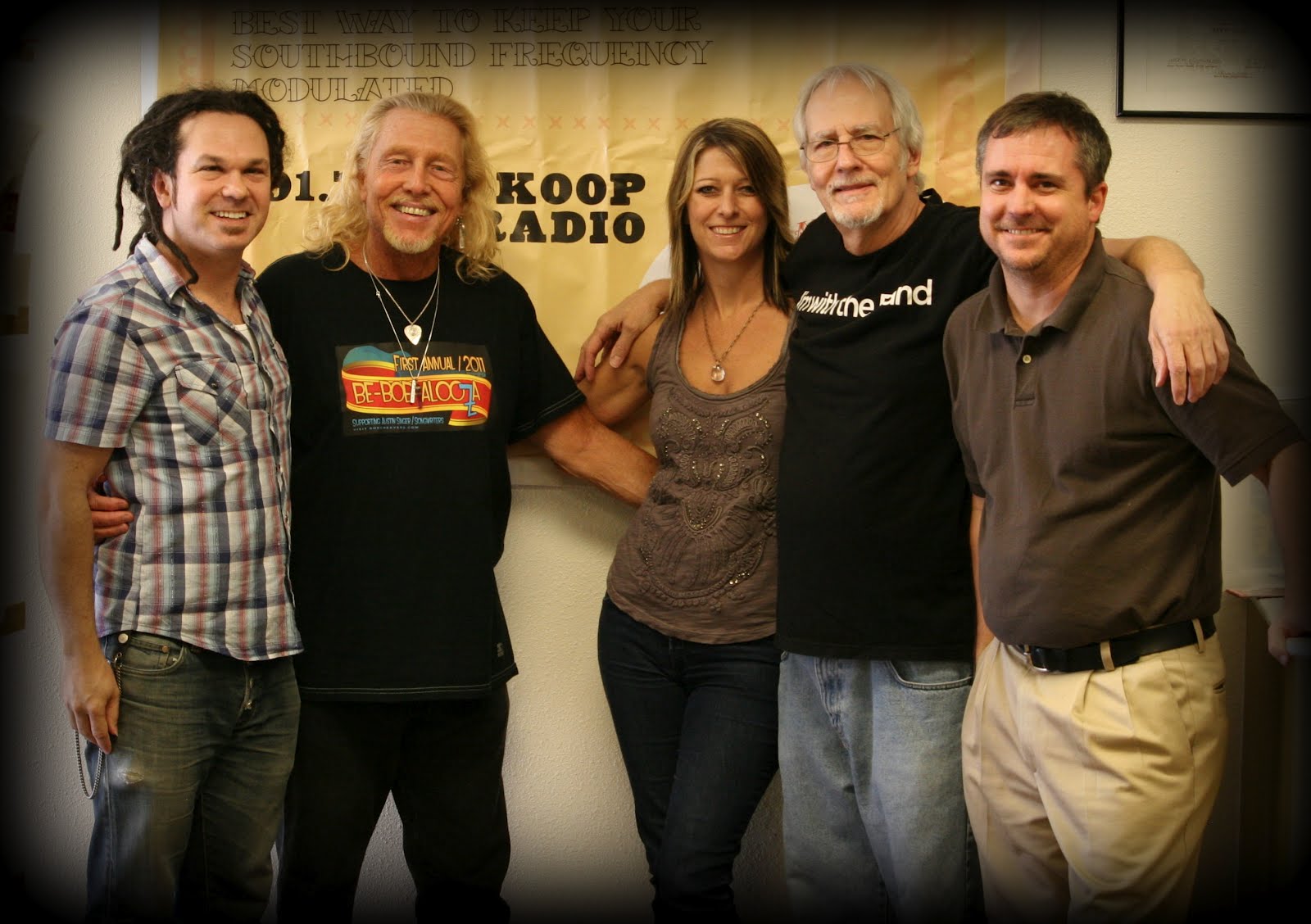
Texas civil rights lawyer David Richards in the KOOP studios in Austin, Friday, Sept. 14, 2012. Photo by Thorne Dreyer / The Rag Blog. Inset below: Richards, right, with Rag Radio host Thorne Dreyer. Photo by Tracey Schulz / Rag Radio.

Rag Radio podcast:
Famed Texas civil rights and
labor lawyer David Richards 

By Rag Radio | The Rag Blog | September 19, 2012

Texas civil rights and labor lawyer David Richards was Thorne Dreyer’s guest on Rag Radio, Friday, September 14, on KOOP 91.7-FM in Austin.

Richards, who is the ex-husband of the late Texas Gov. Ann Richards, has argued extensively before the U.S. and Texas Supreme Courts, including a number of historic landmark cases. According to Texas Monthly magazine, Dave Richards “has earned his place in Texas history” as “a rebel-rousing civil-rights lawyer who fought to make Texas just.”

Listen to Thorne Dreyer’s Rag Radio interview with David Richards here.


Rag Radio features hour-long in-depth interviews and discussion about issues of progressive politics, culture, and history. The syndicated show is produced in the studios of KOOP-FM, Austin’s cooperatively-run all-volunteer community radio station. It is broadcast live on KOOP and streamed live on the Internet, and is rebroadcast on WFTE-FM in Mt. Cobb and Scranton, PA.

On the show we cover Dave Richards’ illustrious legal career — as well as some unique Texas history — as Richards reflects on some of the most memorable figures in Texas liberal politics including Ann Richards; humorist John Henry Faulk (who was blacklisted by Sen. Joe McCarthy); Judge William Wayne Justice (“the judge who brought justice to Texas”); and Texas Observer founder Frankie Randolph. And the late great folk pundit Molly Ivins, with whom Richards rafted the Grand Canyon just weeks before her death from cancer.

Among David Richards’ more notable cases were ones that established single member legislative districts in Texas, that declared the Texas obscenity statute unconstitutional, and that overturned the Texas loyalty oath.

In 1972, representing the ACLU before the U.S. Supreme Court, Richards won the right for the underground newspaper, The Rag, to be distributed on the University of Texas campus. He also sued the Dallas Police on behalf of Stoney Burns, editor of the underground tabloid Dallas Notes, who was busted for obscenity; worked to overturn a vagrancy statute that was used to bust hippies; and sued for the right of students to vote in college communities.

David Richards has also been an adjunct professor of law at the University of Texas Law School; served as an attorney with the U.S. Commission on Civil Rights; was Executive Assistant Attorney General of Texas; and was General Counsel for the Texas AFL-CIO. Richards is the author of Once Upon a Time in Texas: A Liberal in the Lone Star State.

Rag Radio has aired since September 2009 on KOOP 91.7-FM in Austin. Hosted and produced by Rag Blog editor and long-time alternative journalist Thorne Dreyer, a pioneer of the Sixties underground press movement, Rag Radio is broadcast every Friday from 2-3 p.m. (CDT) on KOOP, 91.7-fM in Austin, and is rebroadcast on Sundays at 10 a.m. (EDT) on WFTE, 90.3-FM in Mt. Cobb, PA, and 105.7-FM in Scranton, PA.

The show is streamed live on the web by both stations and, after broadcast, all Rag Radio shows are posted as podcasts at the Internet Archive.

Rag Radio is produced in association with The Rag Blog, a progressive internet newsmagazine, and the New Journalism Project, a Texas 501(c)(3) nonprofit corporation. Tracey Schulz is the show’s engineer and co-producer.

Rag Radio can be contacted at ragradio@koop.org.

Coming up on Rag Radio:
THIS FRIDAY, September 21, 2012: Singer-Songwriters Bob Cheevers and Noëlle Hampton & Andre Moran.
September 28, 2012: Composer, Musician, Conductor, Writer, and Scholar David Amram.

The Rag Blog

Posted in Rag Bloggers | Tagged , , , , , , , , | Leave a comment

Jim Simons : Ralph Nader Was Right

Graphic from AboveTopSecret.com

Ralph Nader was right:
No more voting for the ‘lesser evil’

When will we stop doing the same thing every four years and marveling that the results are not different?

By Jim Simons | The Rag Blog | September 19, 2012

“Sitting on a sofa on a Sunday afternoon
Going to the candidates debate
Laugh about it, shout about it
When you’ve got to choose
Ev’ry way you look at it, you lose”
Simon and Garfunkel (from “Mrs. Robinson”)

[We believe that Jim Simons’ opinion piece published below expresses well how a substantial segment of the left feels about the Obama presidency and the current state of electoral politics in the United States. It does not, however, represent a Rag Blog editorial position on the 2012 presidential election and should not be construed as a recommendation on our part to vote for a third party candidate.]

These words were written 40 years ago or more. I remember I wrote a small piece for The Rag about that time to the effect that we were not going to win anything by electoral politics. Yet, every four years — even today — we forget this historical truth and embrace the lesser of two evils as though a new age is dawning, never so passionately as we did in 2008.

Remember Hope and Change? What changed — or should I ask, what changed for the better? I was as guilty as anyone. My brain told me not to buy into it, my heart took a leap of faith. There was a long fall from that leap as we watched Obama continue Bush’s foreign policy and violate almost every promise the golden tongued orator made, from Gitmo to electronic surveillance in our own country.

Whistle blowers are being prosecuted far more than under Bush, transparency in government undermined at every turn, power usurped by the Republican president is eagerly exercised by the Democrats. A wholesale increase in immigrant summary deportation has occurred. The Democrats and Obama have ignored or capitulated to plunder the environment.

The argument is that we should vote for Obama in spite of his betrayals, none worse than giving up on even the public option for health care, because he is better than Romney, even though from the standpoint of progressives he is at best the lesser of two evils.

This is the ploy that has kept us chained to the pale and lame horse of the Democrats in every race since 1964. Why must we choose from evils? Why can’t we have a real choice? Sallow-faced liberals sigh and say this is the reality, we must face reality. Bosh. Here is the reality: the system is broken; it is rigged to permit only the two wings of essentially the same party to constitute the choice.

I grant the Republicans are bad. That is why we are always backed into the same corner; it is self-perpetuating. When, in what Presidential election, will it be any different? There will always be the argument that we must prevent the really bad guys from getting into office by voting for another candidate who does not represent our views.

At this juncture we are ill-served by the supposedly two-party system. And yes, public funding and shortening the length of campaigns are also essential or all our elections, after Citizens United, will be up for the highest bidder, always big corporations and the 1%.

The only solution to this perennial waltz of the lemmings is to have a choice on the ballot. More and more people (see Bill Moyers’ show — “Challenging Power, Changing Politics” — on PBS of September 7) are recognizing that we need a divorce from the ineffectual, compromising-without-a fight Democrats. We need other parties on the ballot in all 50 states.

There is an array of laws in the states (election law is primarily state law) on ballot access. Not surprisingly, Texas has one of the most draconian laws designed to insure that no third parties will get on the ballot. It will not change until we demand a change and stop blindly supporting any yellow dog Democrat. This is the position of not thinking, simply knee-jerking into the same way of doing things election after election.

I am through (again) voting for Democrats — at least in the presidential election — and being shocked by their retreat and abandonment of progressive principles once elected.

This year I worked briefly to get Rocky Anderson, a true progressive, and his Justice Party on the ballot in Texas. It was too onerous a hurdle with time shortened by redistricting cases. Also, the two parties have all the resources. In other words, there was insufficient money and time to wage a court battle to get Rocky on the ballot. That is what it would have taken, what it has taken in the past in the few instances when a third party succeeded. I have litigated such cases in the past with mixed results.

The first few times out the Justice Party or the Green Party are not going to win and that is not the point. We need to build toward a future when there is a true choice. Strong third party or parties with left politics could also have an effect on the Democrats who would need to appeal to poor (truly the forgotten population) and working class voters, as well as educated liberals in academia and the professions.

I like the two women who are on the Green Party ticket for president and vice-president, Dr. Jill Stein and Cheri Honkala. If I see them on my ballot I will vote for them. I have no idea whether they will be on the ballot in Texas. I hope so but I doubt it. Barring that, I will write in Rocky Anderson.

When foreign countries decree that certain parties or certain candidates may not run for office we say it perverts democracy. Yet that is exactly what is happening here in setting up huge roadblocks to any party that represents liberal or radical views. The faithful, if complacent, remnants of the Democratic Party who still read the Texas Observer and speak in their middle-class dens of the need to change things yet steadfastly go to the polls to vote against the greater evil, are not going to bring about any change unless it is ever moving Democrats rightward.

They don’t seem to realize that they could vote against a McCain or Romney while not rubber-stamping an Obama. The drilled in mind-set is that in order to vote against the bastards, we must vote for the so-in-sos. We must start now, in this election and beyond, to build progressive alternatives and get them on the ballot. And to change ballot access laws. Only a truly independent party based on principle, not one bought off by Wall Street, can create change or even fight for it.

Back in those misty days of the Movement we accepted the mantle of radical because what is wrong in this country will require more — as we have dramatically seen in the last four years — than getting another lesser of two evils elected. Organizing on the basis of issues at the grassroots level is still what will bring real and lasting change.

However, I now believe we don’t have to abandon electoral politics to the likes of the Koch brothers. But the prerequisite for having democratic government is changing the stranglehold the Repubcrats and Democans have on the system which nominates and elects the legislative and executive lawmakers. That could make a big difference.

When will we stop doing the same thing every four years and marveling that the results are not different? Isn’t that the definition of insanity? I am sick of yellow dogs and blue dogs — of government going to the dogs.

[Jim Simons practiced law in Austin for 40 years, representing many movement activists, including anti-war GIs. Jim served as a counsel for members of the American Indian Movement who were arrested at Wounded Knee in 1974. After he retired he published his memoir Molly Chronicles in 2007. Read more articles by Jim Simons on The Rag Blog.]

The Rag Blog
Posted in Rag Bloggers | Tagged , , , , , | 5 Comments

Jim Rigby : Religion is No Longer Adequate

The Dalai Lama. Image from Nulla dies sine linea.

Dalai Lama:
Religion is no longer adequate

There is a growing realization that something is being born in between what we call “religion” and what we call “atheism.”

By Jim Rigby | The Rag Blog | September 19, 2012

Last Monday the Dalai Lama posted on his Facebook blog:

All the world’s major religions, with their emphasis on love, compassion, patience, tolerance, and forgiveness can and do promote inner values. But the reality of the world today is that grounding ethics in religion is no longer adequate. This is why I am increasingly convinced that the time has come to find a way of thinking about spirituality and ethics beyond religion altogether.

Religion has always been the lamp, it has never been the flame. Religion is whatever skillful means we use to remember we are all interconnected. It is whatever practice we use to stay grateful and alert. Unfortunately those who do not fall asleep into religion are rare.

I doubt the Dalai Lama was actually calling for the end to those disiplines that brought him to this clarity, but I do think he was realizing that religion that does not die into compassion, becomes a hindrance. He is calling for a new way of speaking about ethics.

I began this blog in part because I believe we are living at the death of an old worldview and the birth of a new. After Galileo, Darwin, and Einstein, much of what we once called ”religion” lies in ashes. But it is the nature of human understanding to die and then rise from the ashes.

There is a growing realization that something is being born in between what we call “religion” and what we call “atheism.” It is a Colossus with the clarity of a scientist and the reverence of a mystic. We do not yet have words for it, but I personally find it a thrilling time to be alive.

[Rev. Jim Rigby, a human rights activist, is pastor of St. Andrew’s Presbyterian Church in Austin, Texas. Jim Rigby blogs at jimrigby.org. He can be reached at jrigby0000@aol.com, and videos of his sermons are available online here. Read more articles by Jim Rigby on The Rag Blog.]

The Rag Blog
Posted in Rag Bloggers | Tagged , , , , , , | Leave a comment

Harry Targ : It’s Time to Organize Workers

Label of the American Federation of Labor (AFL), circa 1900. Image from Wikimedia Commons.

Lessons from history:
It is time to organize all workers

By Harry Targ | The Rag Blog | September 18, 2012

“Ten thousand times the labor movement has stumbled and bruised itself. We have been enjoined by the courts, assaulted by thugs, charged by the militia, traduced by the press, frowned upon in public opinion, and deceived by politicians. But not withstanding all this and all these, labor is today the most vital and potential power this planet has ever known, and its historic mission is as certain of ultimate realization as is the setting of the sun.” — Eugene V. Debs

After World War I workers believed it was time to unionize everybody who worked. Some organizers came out of the American Federation of Labor (AFL), some were enthusiastic followers of the Industrial Workers of the World (IWW), some were members of the Socialist Party — followers of Eugene V. Debs, and many were inspired by the Bolshevik Revolution. Workers launched two nationwide strikes in steel and meatpacking.

The ruling classes responded with force and fraud. As to the former, they used a multiplicity of means to crush strikes and they jailed and deported known radicals. The United States government participated with other regimes to intervene in the Russian civil war and to isolate the new revolutionary government diplomatically and economically.

As to fraud, corporations initiated various worker-management schemes to mollify worker discontent: from sporting activities, to counselor home visits, to the establishment of human relations departments. Also businesses embarked on a huge campaign to stimulate consumerism, including catalog purchases of products to buying on time to creating an automobile culture.

Force and fraud worked. Labor union membership and worker militancy declined even though wages and working conditions did not improve substantially.

But by the late 1920s strikes in textile and mining occurred. With the onset of the Great Depression, radicals were organizing Unemployment Councils in urban areas. Dispossessed farmers began their long trek to the West Coast seeking agricultural work.

In 1934 alone, general strikes occurred in San Francisco, Minneapolis, Toledo, and Akron, Ohio. In the late 1930s, workers in South Bend, Indiana, and Flint, Michigan, added the “sit-down strike” to the panoply of militant tools used by workers to demand the right to organize unions, fair wages, health and safety at the work place, and pensions.

Many of their goals were achieved by the 1950s. 1953 was the peak year for organized labor. Thirty-three percent of non-agricultural workers were organized. Then union membership began a slow but steady decline. The Reagan “revolution” brought a return to many of the strategies of force and fraud employed in the 1920s. Declining worker power was dramatic.

Both Republican and Democratic administrations used administrative tools, outsourcing of jobs, so-called free trade agreements, and outright banning of rights to collective bargaining in various sectors to crush unions.

But as history shows, workers from time to time fight back, regain the rights they lost in prior eras, and continue the process of pushing history in a progressive direction. The last year has been such a time for fight back. Workers in Cairo, Madison, Madrid, Athens, and Wisconsin, Ohio, Indiana, and all across the globe are rising up.

In the United States the most recent example is that of the Chicago Teachers Union. Public sector workers have been hit very hard in recent years. Government officials rationalized anti-labor legislation as necessitated by fiscal crises. But these fiscal crises lead not to the end to services but to their privatization. Teachers, librarians, firefighters, and others are laid off and replaced or rehired at wages a third less than they made as unionized public sector workers.

Chicago teachers have said no to this scam. They are fighting against the privatization of public schools, demanding the maintenance of job security for teachers so they can continue to meet the needs of children, and are standing up for the principle that all children, not just children of the wealthy, are entitled to the best education that the society can offer. Throughout history workers’ demands have been beneficial for everybody.

Revisiting history can provide useful lessons from the past for the present. They are not specific roadmaps for action. But what the lessons of the past, the militancy of the last year, and the mobilization of Chicago teachers suggest is that now is a good time to think about all workers — in factories, on construction sites, in offices, in universities, everywhere — organizing unions. There is power in the union.

[Harry Targ is a professor of political science at Purdue University who lives in West Lafayette, Indiana. He blogs at Diary of a Heartland Radical — and that’s also the name of his book from Changemaker Press which can be found at Lulu.com. Read more of Harry Targ’s articles on The Rag Blog.]

The Rag Blog
Posted in Rag Bloggers | Tagged , , , , , , | Leave a comment

Lamar W. Hankins : Religious Unrest, Violence, and Intolerance

Demonstrators outside the U.S. Embassy in Cairo, September 11, 2012. Photo from Reuters / MarketWatch.

Religious unrest, violence, and intolerance

A society where great umbrage is taken by large numbers of people to criticism of a particular religion and that umbrage leads to violence is not a free society.

By Lamar W. Hankins | The Rag Blog | September 18, 2012

The killing of a U.S. ambassador in Libya by armed men has become political fodder for Mitt Romney to attack President Obama in an attempt to blame the President for the actions of Islamist reactionaries, perhaps terrorists. All the facts haven’t been sorted out and may never be. What we do know is that religious-based violence and intolerance is nothing new, whether in this country or elsewhere.

I was uncomfortable with Sam Harris’s book The End of Faith when it was released eight years ago. I spoke out against his using so-called holy books, the Koran and the Bible, to define Judaism, Islam, and Christianity. Few people follow literally all of the precepts, examples, and teachings found in either book. But Harris used the words of the books to paint those religions as both absurd and dangerous.

 I certainly agree that some of the adherents of all three of those religions are dangerous, and I find their supernatural beliefs beyond reason, but that is no cause to paint them all with the same brush, as Harris does.

We know that there are many variations of belief among Muslims and among Christians. The World Christian Encyclopedia reports that there are 34,000 separate Christian groups around the globe. There may be as many variations among Muslims, as well. Many such variations arise from disagreements about the meaning of portions of the holy books, from personality differences among adherents, from cultural preferences, and for a multitude of other reasons.

It is not possible to judge the beliefs of any religion by merely reading its holy book, but it is easier to ridicule various religions or condemn them for their beliefs by using their traditional stories, as well as their religious practices, to explain what is wrong with them.

For instance, I’ve never known a Jew or a Christian who was willing to sacrifice his first-born son because of the story about Abraham’s apparent willingness to do so in obedience to a command by God. My view is that any God that would require me to take such an act is not one I could respect or follow.

Extremists will use that story to support absolute adherence to what they think or claim God wants them to do. That is one way some people justify the killing of abortion doctors by some Christian extremists. And portions of the Koran are used by Muslim extremists to justify stonings and murders and terrorism.

The apparent cause of the most recent violence toward the personnel working in the American embassy in Libya is a video clip found on YouTube from a film that purports to tell the truth about Islam and its prophet Muhammed. I watched a few minutes of the video before its absurd, ridiculous, amateur production made me realize what a waste of time it would be to watch the whole 14 minutes.

Apparently, some Islamist extremists took a different view. Outraged, they vented their fury by committing acts of violence against people who had nothing whatever to do with the video, except that they represented the U.S., the country where the video apparently originated, supported by Christian extremists.

The video did not cause the violence. A decision by a group of armed extremists caused the violence. All of us may become outraged occasionally, but if that outrage leads to violent acts, that is the responsibility of those who commit the violence.

It is just as likely, however, that the video was just a convenient excuse for some extremists to engage in violence for their political purposes, completely unrelated to the video. One thing we know for sure: religious liberty is not an ideal prized by all people around the world.

Religious liberty is, however, a fundamental principle of American life. I am not a religious moderate, as Sam Harris likes to call people who accept religious pluralism. I am non-religious, which is a life-stance that is supported by the same precept of religious liberty that supports Jews, Christians in all of their manifestations, Muslims in all their variations, Hindus, Janes, Taoists, Sikhs, Wiccans, and all of the other 19, 20, 21 or 270 identified faith groups, depending on how they are classified.

Worldwide, out of a population of about 7 billion, around 1 billion people follow no religion. In the U.S., I am one of about 50 million non-believers. Since I am in the minority, I am interested in better understanding what other people believe even though I haven’t found their beliefs appealing or convincing so far.

Because religious liberty is such a fundamental value in my life, I don’t try to talk people out of their religious beliefs no matter how I may view those beliefs. This doesn’t mean that I am unwilling to discuss religion. Quite the contrary. Over the past 10 years, I have read and discussed with others as many books about religion as about politics.

This study and the importance of religious liberty in the founding of our nation — a political decision made by our forebears — has led me to want to find ways to mix religion and politics effectively and respectfully.

Recently, the public interest group People for the American Way issued its third edition of a pamphlet, “12 Rules for Mixing Religion and Politics.” It provides a direction that can be useful to the nation and to the world in securing religious liberty for us all.

Author Salman Rushdie expressed his views about mixing religion and politics in an interview with Bill Moyers in 2006 (as quoted in Moyers’ introduction to the “12 Rules”):

Citizens of a free society do not preserve their freedom by pussyfooting around their fellow citizens’ opinions, even their most cherished beliefs. In free societies you must have the free play of ideas, there must be an argument, and it must be impassioned and untrammeled. Free societies are dynamic, noisy, turbulent, and full of radical disagreement. You can’t cry foul when your ideas are challenged, even when you assert your ideas of God.

Rushdie knows something about this topic. Many will remember that in 1989 Iranian leader Ayatollah Ruhollah Khomeini demanded Rushdie’s execution because of the way he portrayed the prophet Mohammed in his novel The Satanic Verses.

Khomeini’s fatwa against Rushdie demonstrates the same extremist impulse that has given rise to countless acts of terrorism by Islamic extremists throughout the world, though I recognize that religious grievances are not the impulse for much of the terrorism. Instead, the interpretation of the Koran by Islamic terrorists is used to justify much of the terrorism instigated for political reasons, sometimes intertwined with religious purposes.

The section of the “12 Rules” about the discussion of religion in the political arena presents several rules that are relevant to much of the religious extremism that manifests itself in violence:

Political discourse should respect religious pluralism.

Political figures and the media should not treat religious constituencies as monolithic; political and religious leaders should not claim to speak for an entire religious community on public policy issues.

Religious and political leaders should not “cry wolf” about religious persecution.

This latter rule involves the hyper-sensitivity to criticism of many religions, especially that manifested by Muslim extremists. A society where great umbrage is taken by large numbers of people to criticism of a particular religion and that umbrage leads to violence is not a free society.

Libya, for instance was under despotic rule for decades. It appears to be in the midst of a religious-driven civil war that will not lead to a free society. The attack on the American embassy seems to have been caused more by Libya’s internal conflicts than by the disrespect shown to Islam and its Prophet promoted by some Christian crackpots in America or by people of other religions who have their own religious and political agendas.

The people who commit unjustified violence for either religious or political reasons should be held accountable. Wherever such violence is a real threat, the U.S. is entitled to protect its citizens. Of equal importance is the need to have a discussion and debate in this country about America’s role in the world. Since World War II, we have not done a good job in the world by using our military dominance to bend the world to our will.

We failed in Korea, Vietnam, Iraq, Afghanistan, and the Middle East at large. The closest we came to a successful conclusion was the limited war directed by George H. W. Bush to push Iraq out of Kuwait.

Maybe there is a lesson there. Maybe U.S. military power will work if used for limited and clear objectives. It has not been effective when used in wars waged with constantly-changing objectives, or launched for bogus motives.

If we apply our own stated values to the rest of the world’s people, we should never again send our troops to mold the world — or a part of it — into our vision of progress or stability, especially when our purpose is often to control natural and economic resources, not to protect human rights.

It is time to stop assuming American exceptionalism, and start dealing with the world with respect for everyone’s rights. This is especially so if you consider them God-given rights.

[Lamar W. Hankins, a former San Marcos, Texas, city attorney, is also a columnist for the San Marcos Mercury. This article © Freethought San Marcos, Lamar W. Hankins. Read more articles by Lamar W. Hankins on The Rag Blog.]

The Rag Blog
Posted in Rag Bloggers | Tagged , , , , , , | Leave a comment